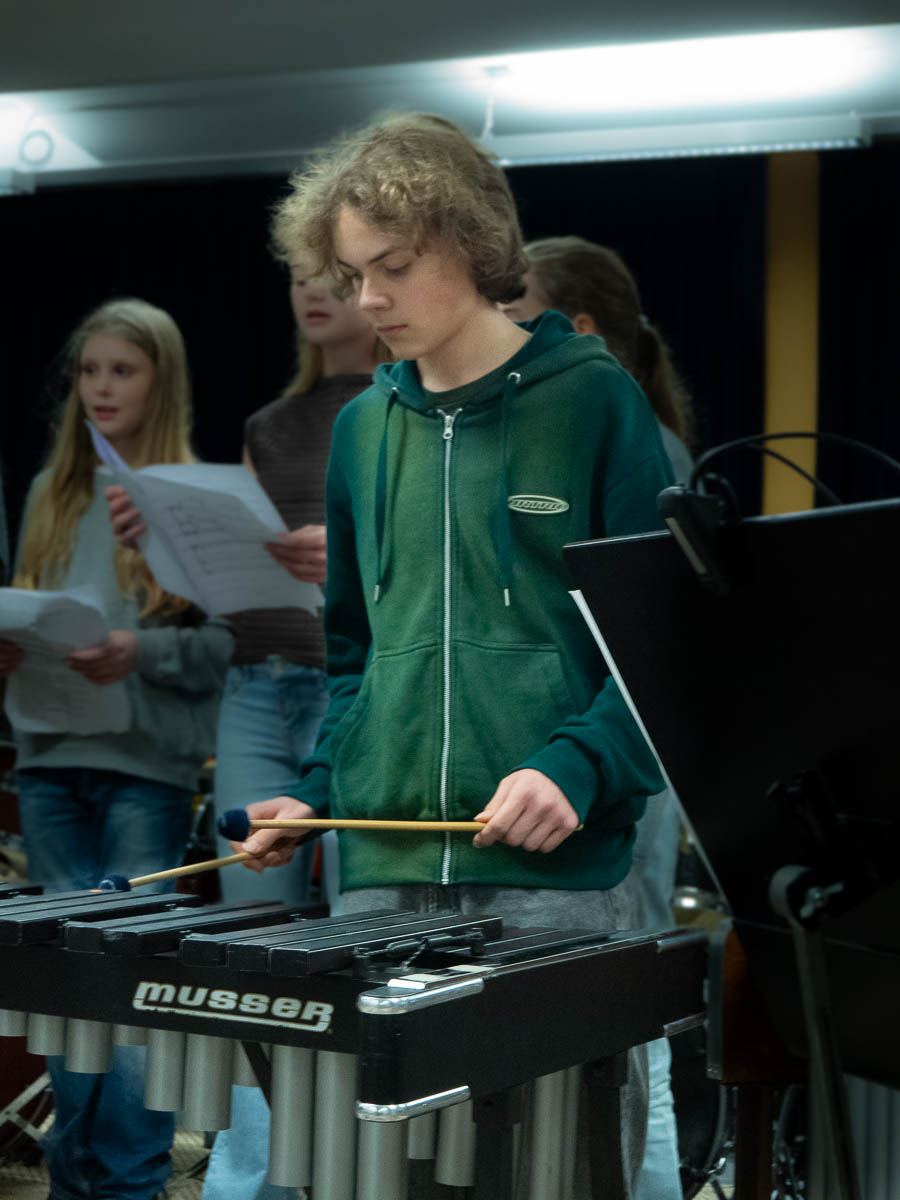
End-of-term concert for Adrian’s percussion class. An eclectic mixture of Christmas music, pop songs, and made-for-drums creations.

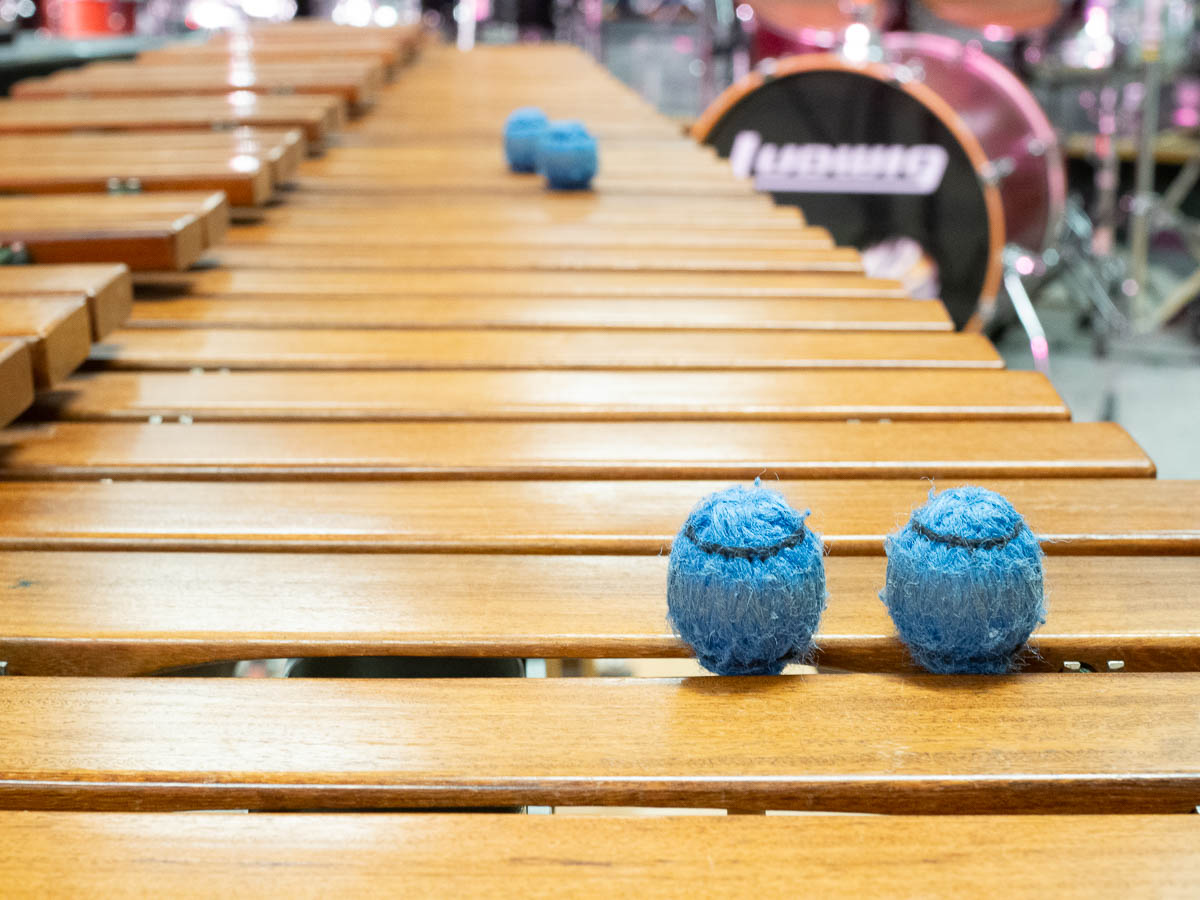
Here’s Adrian expertly playing the marimba.

One of the pieces they played was “Crazy frog” which in its original version is known primarily for how annoying it is. Played by a percussion ensemble with several marimbas, xylophones and vibraphones in the foreground, it was surprisingly pleasant.

The photo is from their final practise run just before the concert. During the concert itself, the lighting was all weird and not at all photo-friendly: red and patchy. Some kids were squinting from having strong lights straight aimed in their faces; others were in total shadow.

After the concert, I tried to figure out what makes the marimba different from the xylophone. I asked a teacher but only got a mostly useless answer. (Yes, I heard that they have different sounds; yes, I can see that the marimba has a wider range.)

I did some reading when I got home and learned that one key difference is how they are tuned (to a different set of overtones) and how the tone plates are shaped. They look like flat pieces of wood at first glance but absolutely aren’t – they’re scooped out underneath into an arch shape, and that’s what changes the pitch. Yamaha has interesting articles about the tuning of marimba tone plates, among others.

The length of the resonators, the different types of mallets used, and the playing technique, all reinforce their characteristic sounds: deep and mellow for the marimba, sharp and bright for the xylophone.

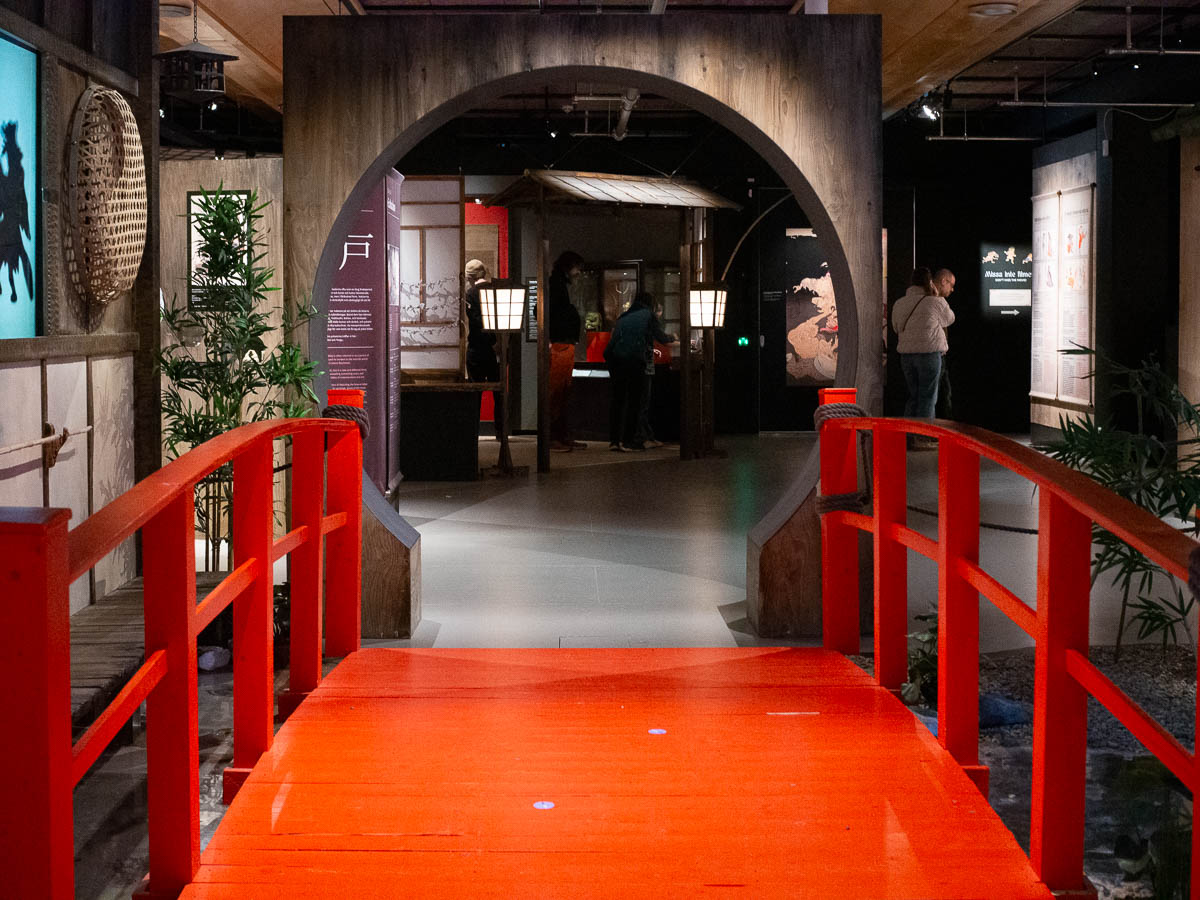
The Museum of Ethnography has an exhibition about yokai, Japanese spirits. It sounded like fun and it’s been on my list for a while.

I misread the dates and thought that this was the last weekend, but that’s actually a year from now. Which is not a reason to go now!

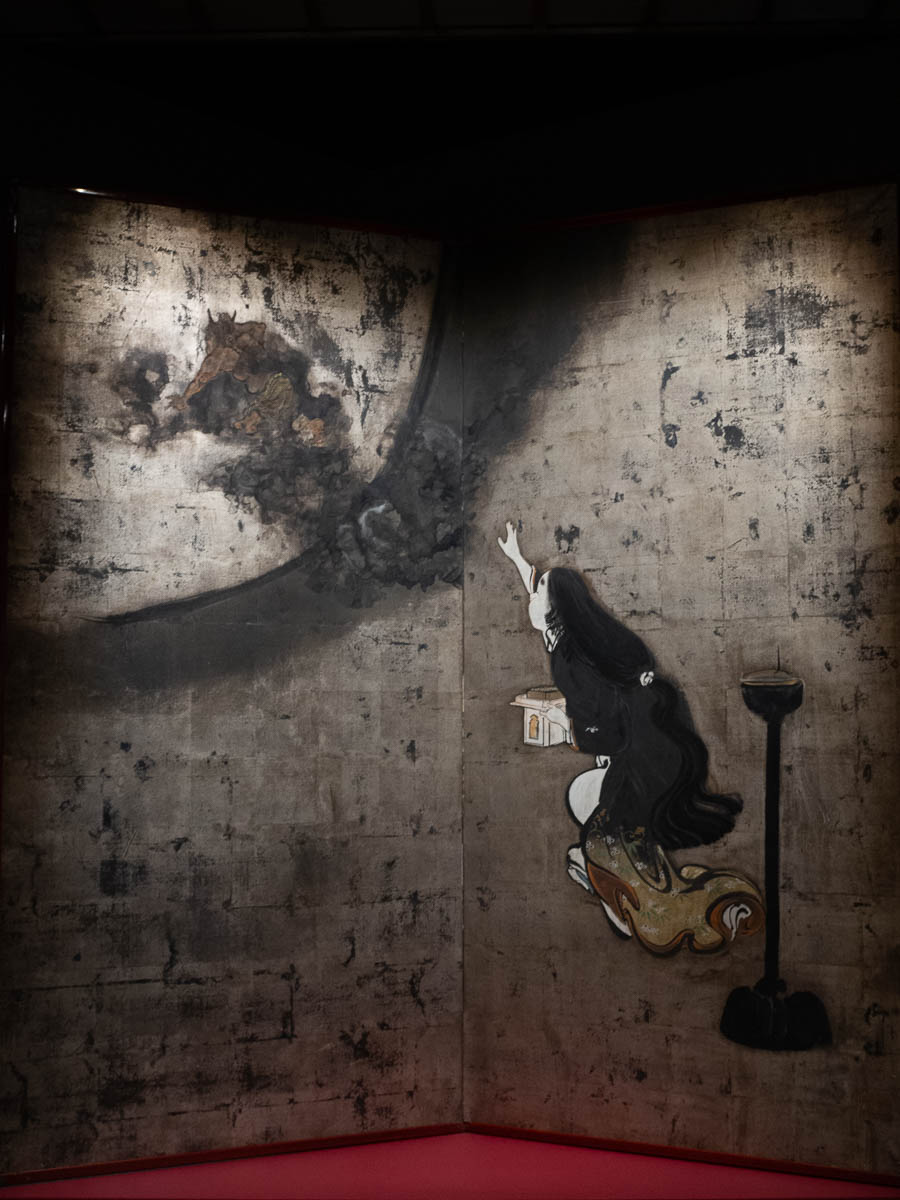
The Japanese sure have a different kind of spirits in their world… and very specific ones. Spirits who lick ceilings and leave sooty smudges behind. Spirits who love to eat cucumbers and human anuses. Shy water spirits whose legs are so long that their knees are above their heads when they sit down. It’s such a different artistic tradition than the Western European one, with a lot more crude humour, overall silliness and inventiveness.

I liked the idea of tsukumogami, inanimate objects that become alive and self-aware because they have served their owners for one hundred years.

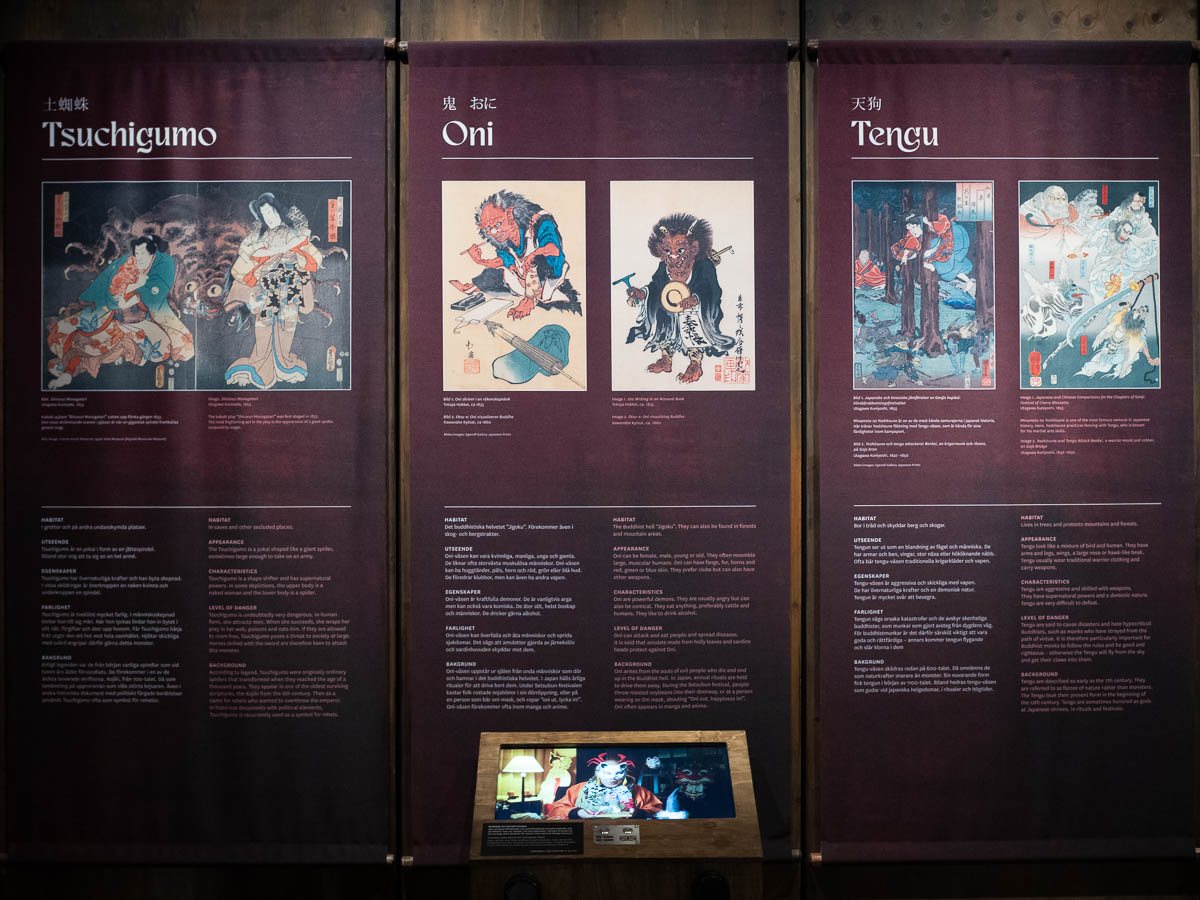
The exhibition as a whole was a bit underwhelming. Interesting information, yes, and the room design was atmospheric, but that on its own doesn’t make a good exhibition. A lot of it was simply posterboards with pictures and text, and just a very few actual original objects, whether paintings or otherwise. 90% of this exhibition could have been a book – or a website.

In the hall outside the exhibition itself, there was a series of AI-generated photorealistic images of yokai in modern settings – a tanaki in a laundromat; an octopus creature at a street food stall. Looked nice, but… was it really necessary to use AI for this? It made the whole experience feel a bit cheap.

Another concert in the baroque series. Händel’s oratorium Il trionfo del Tempo e del Disinganno. And I just could not get into it.

It may not technically be an opera, but it sure walks like an opera and it talks like an opera, apart from lacking a story. I have never learned to enjoyed operas. That way of using the human voice has something about it that just grates on me. I can admire it from an intellectual angle, but I cannot actually enjoy it.

In the interval, I realized I was steeling myself for the second half. That is not a good frame of mind to be in for a concert. I admitted defeat and walked out, feeling like an uncultured philistine.

Had breakfast at Grounded again, even though a breakfast buffet was included in our hotel stay. The buffet was just like the hotel itself: clean, tidy, nothing wrong with it, but very much on the budget end of the scale. For a hotel room, I don’t mind that at all. All I want is a clean room in a safe building, with decent beds. The beds and pillows here were actually really good – many more expensive hotels opt for too-soft everything, and this place had nice, firm ones. But a low-budget breakfast, with the cheapest possible sliced bread and sandwich stuff, and only water and coffee to drink, no juice, is not for me. Even the boiled eggs somehow managed to taste really cheap. If the food isn’t appetizing, I struggle to make myself eat.

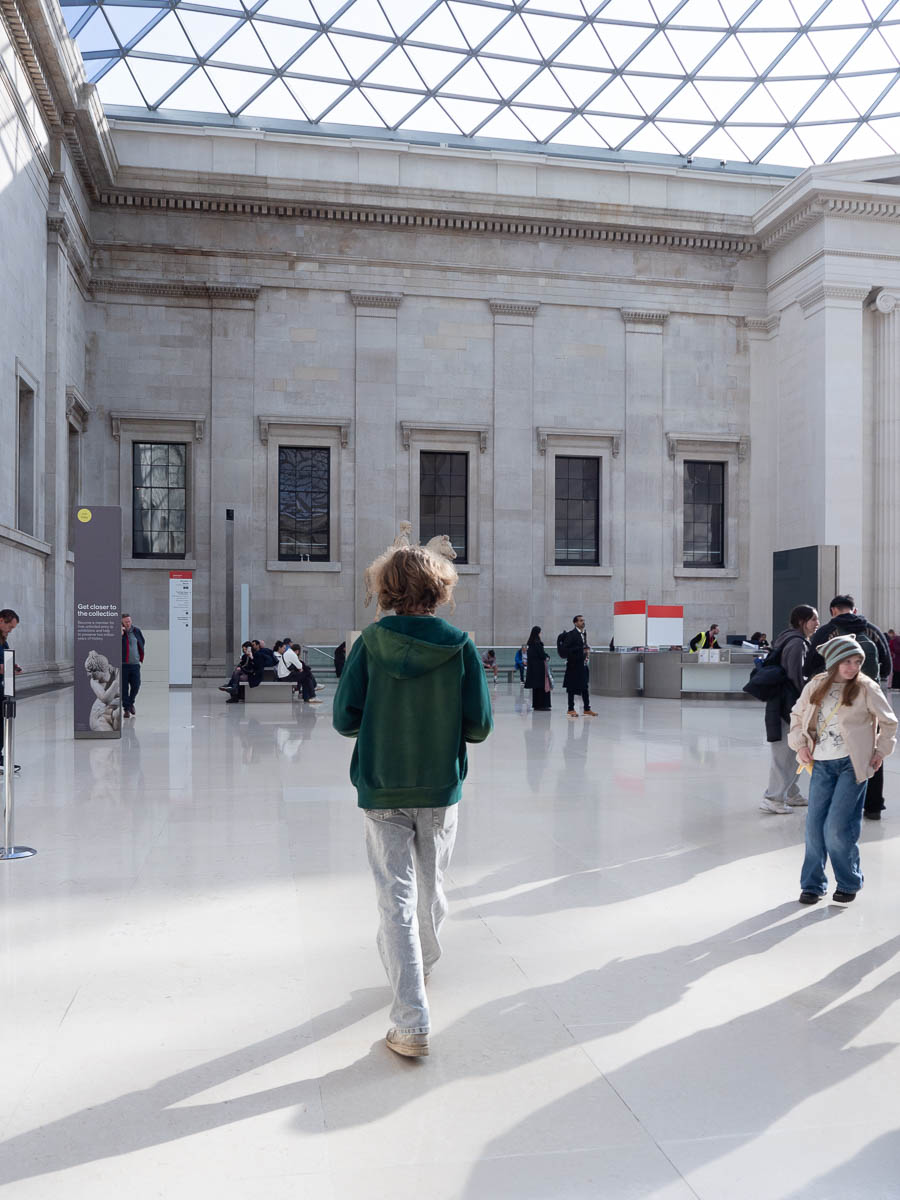
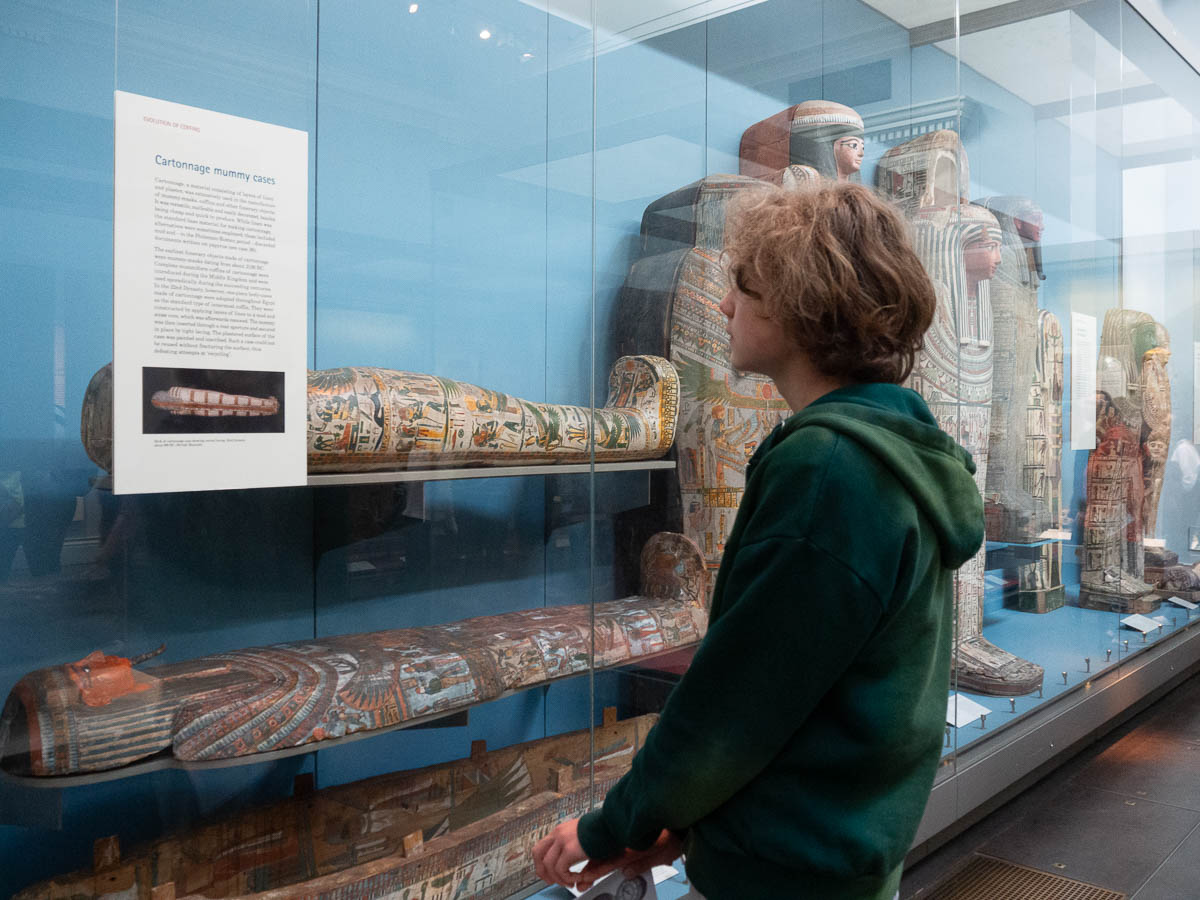
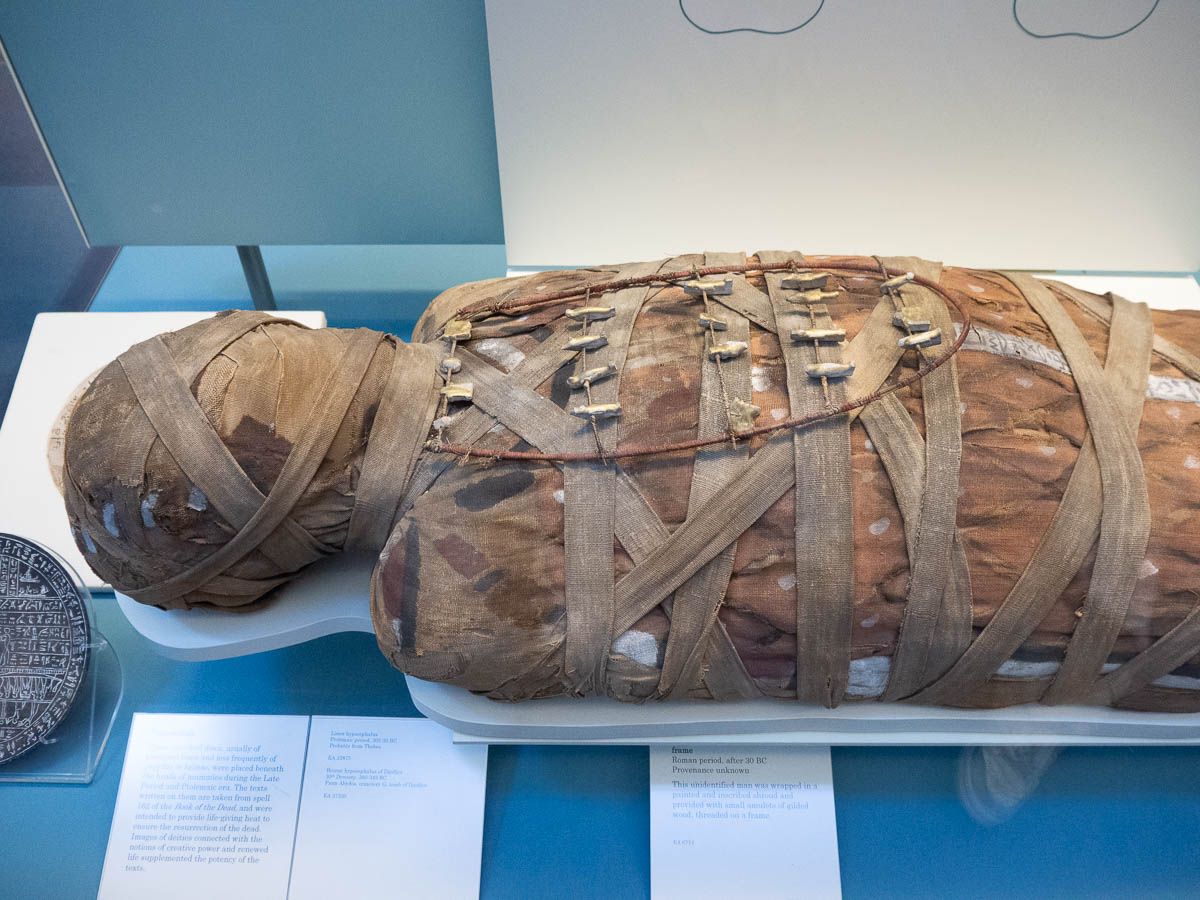
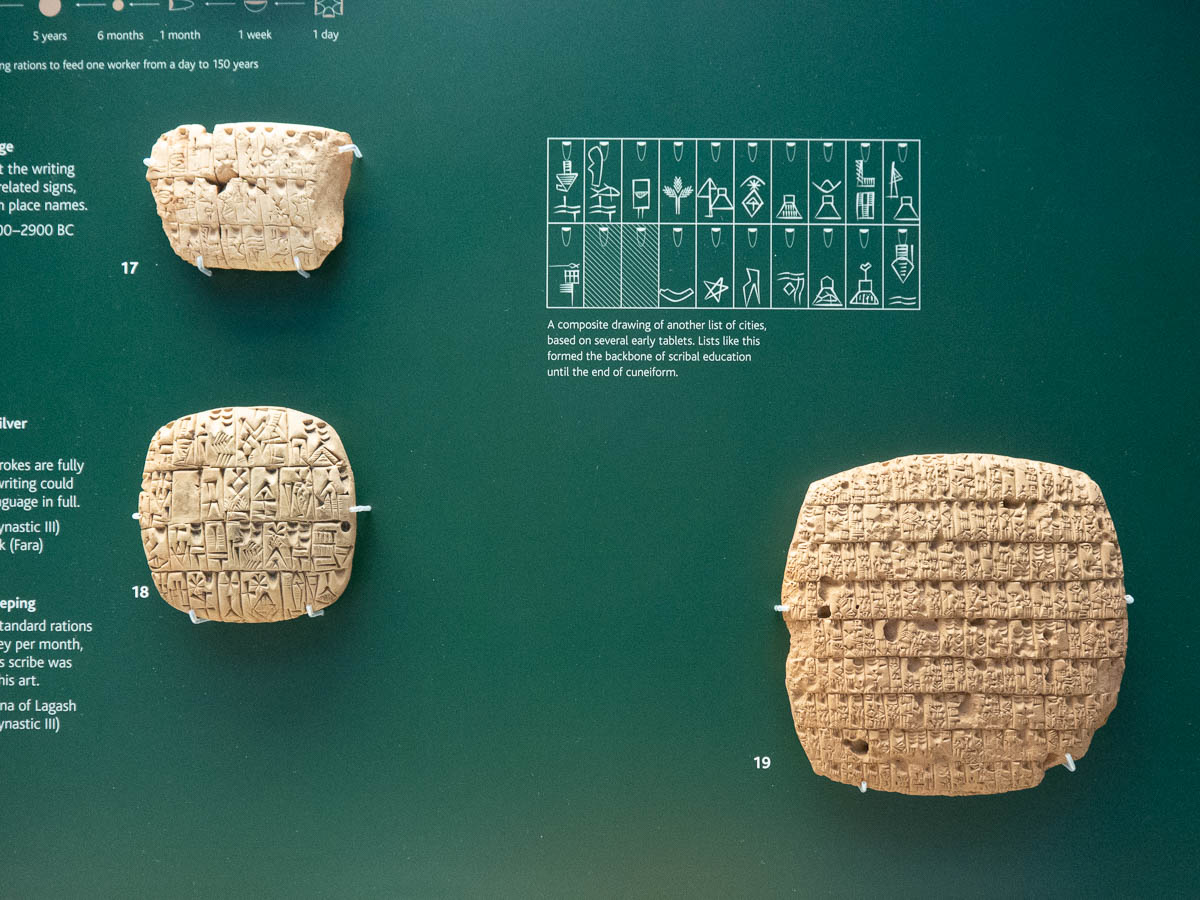
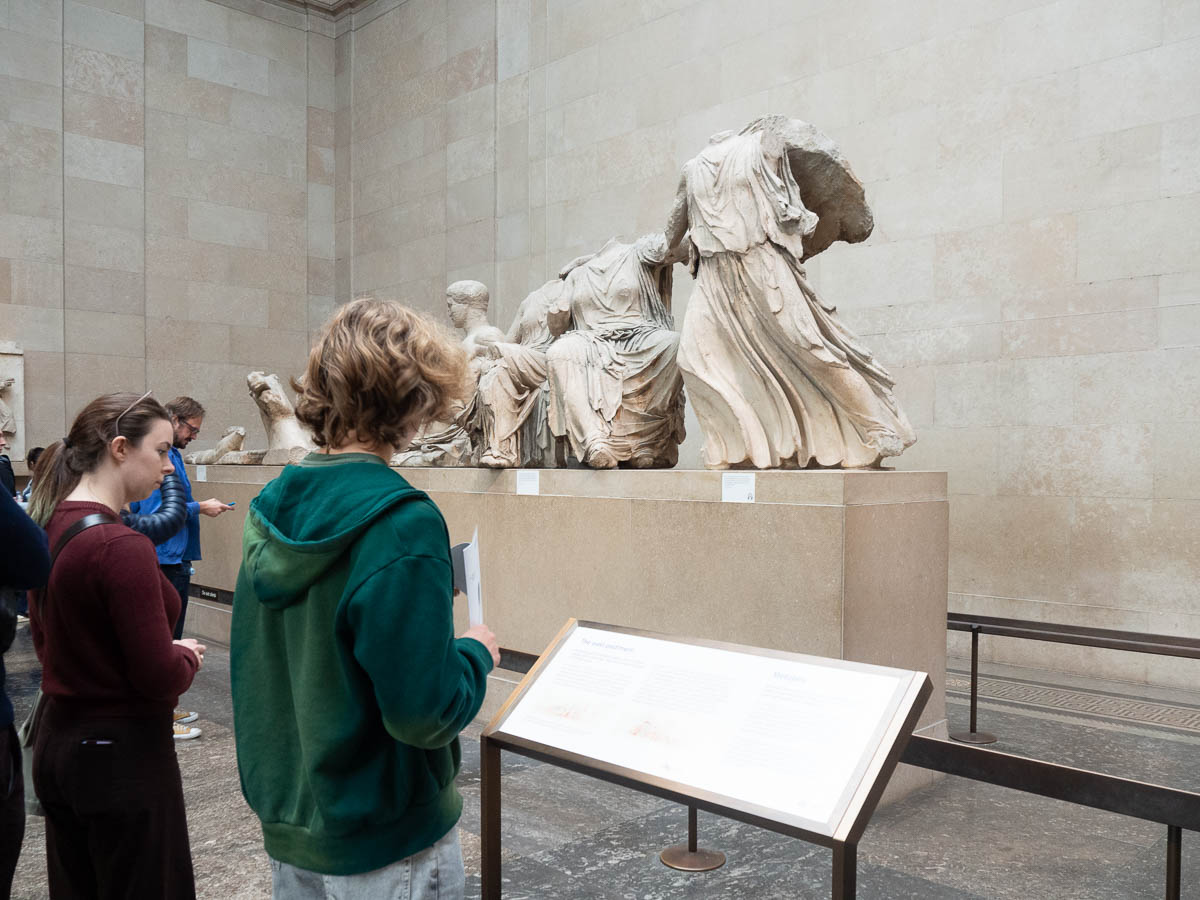
The rest of the morning we spent at the British Museum.

This time we hadn’t booked any tickets in advance, but had no trouble getting in.

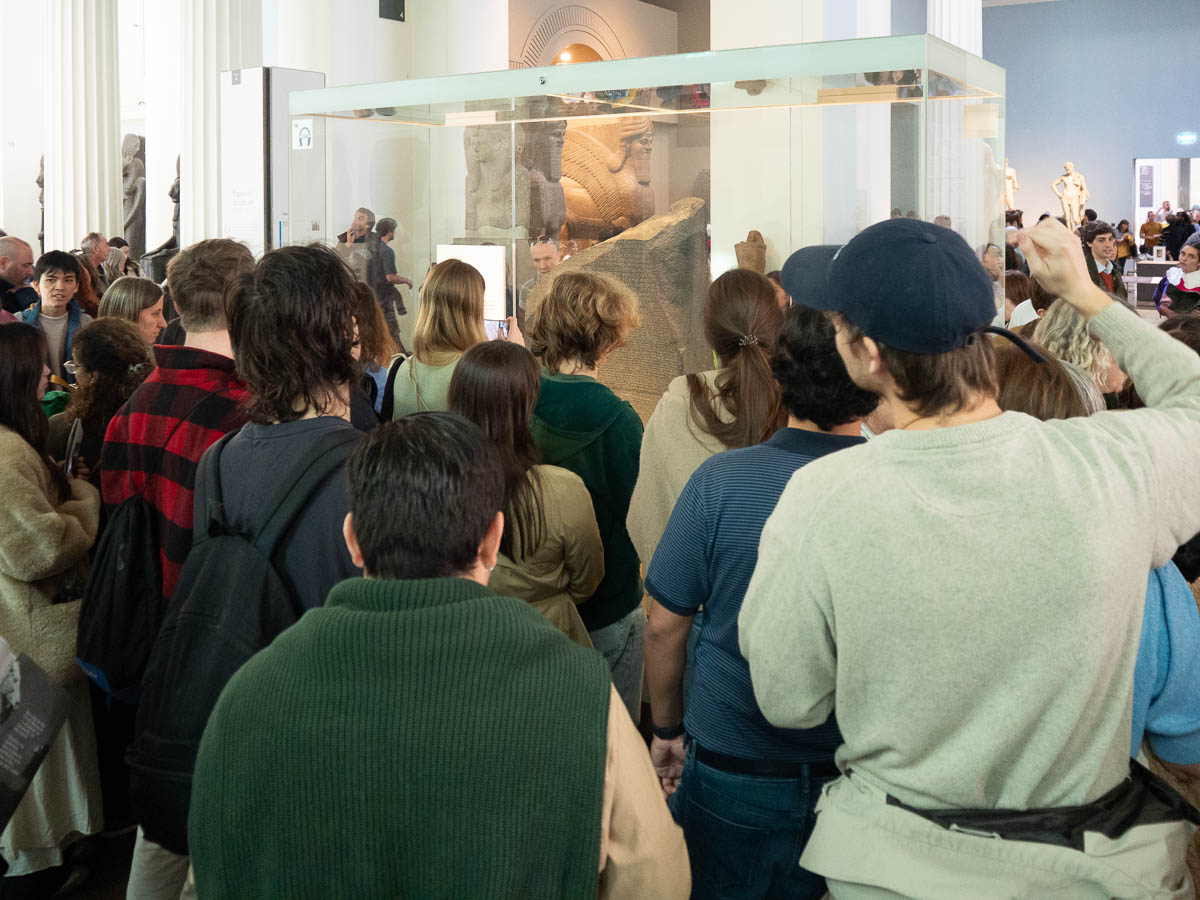
There were quite a lot of people, but they were unevenly distributed. There might be a dense crowd in front of a popular exhibit one moment, only for them all to somehow disappear minutes later and leave us mostly on our own.

Just like at the NHM, we wandered wherever our fancy took us, and looked at whatever we felt like at that moment, without any particular focus. This meant a lot of old Egypt, but also the Parthenon marbles, Mesoamerica, Iron Age Britain, and China.

I have mixed feelings about the collections at the British Museum. On the one hand – amazement and gratefulness that we have all these unique, priceless artefacts from thousands of years ago. That they have been excavated and preserved and exhibited, and that we have learned so much from them. It’s mind-boggling, when I stop to think about it, that we have detailed records about an individual dead person from thousands of years ago, and we know who they where, what they did, how they died, what they were buried with, and why.

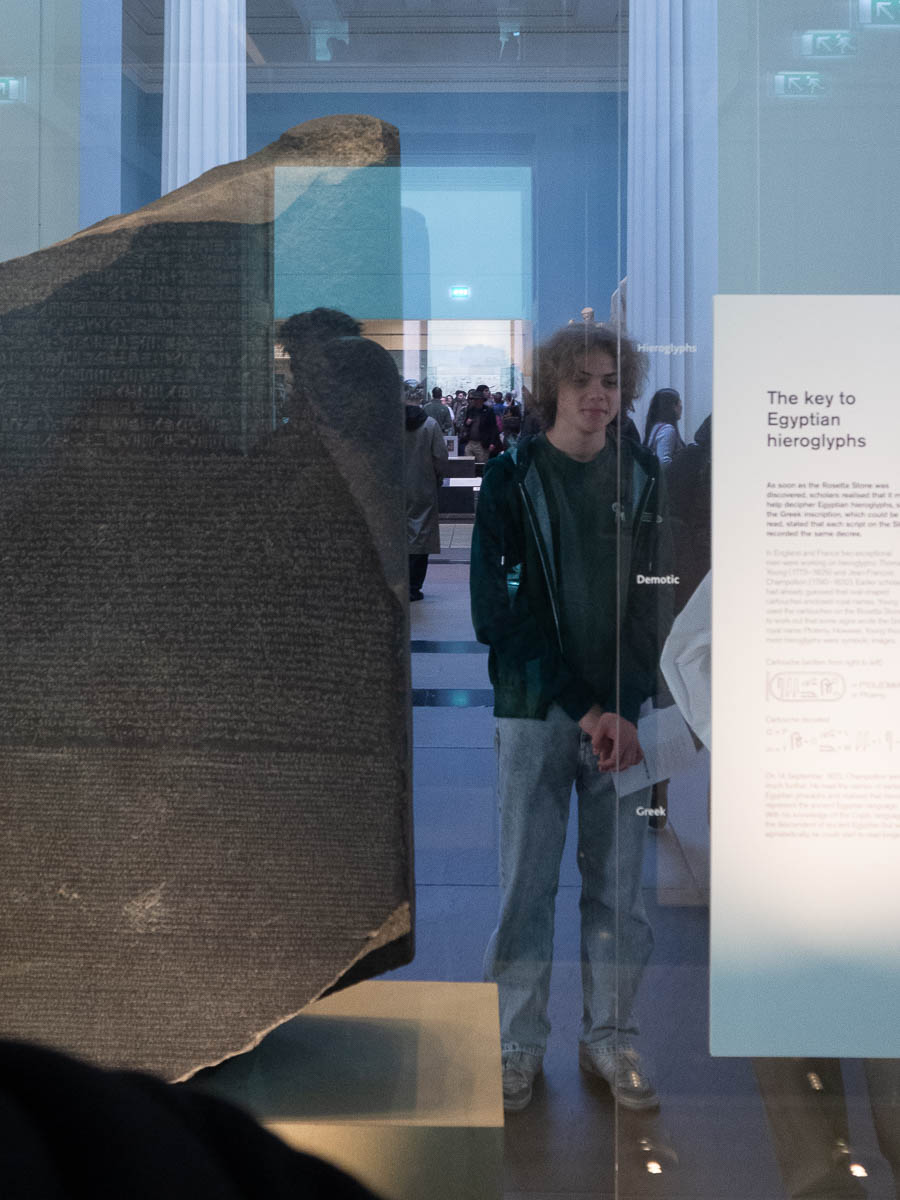
That we have examples of writing from five thousand years ago, and that we have been able to decipher it, and we know how much this merchant owed to that one, or what a mother was writing to their son. That the Rosetta stone was created, and survived, and could be used to decode Egyptian hieroglyphs.

On the other hand… the imperialism and ruthless plundering and the complete disregard for the wishes of the people whose history this is, that enabled this collection.

One could stay here for days and keep discovering more amazing things about the history of human civilization. We could only stay a few hours, though, since we had a flight to catch in the afternoon.

Harrods, V&A, Natural History Museum, food.

We started the day by checking off another food-related wish: an English breakfast, with hash browns, baked beans, mushrooms, sausages, etc., at Grounded. No black pudding, though. I wondered why that was, and realized later that it’s because the food at the café was all halal, and I don’t think you can make black pudding without pork blood.

I am not interested in any part of an English breakfast, really, so I had Eggs Florentine – I like poached eggs but never quite managed to get the hang of making, so whenever we have brunch at a restaurant (which happens maybe once or twice a year) I let them make me poached eggs.
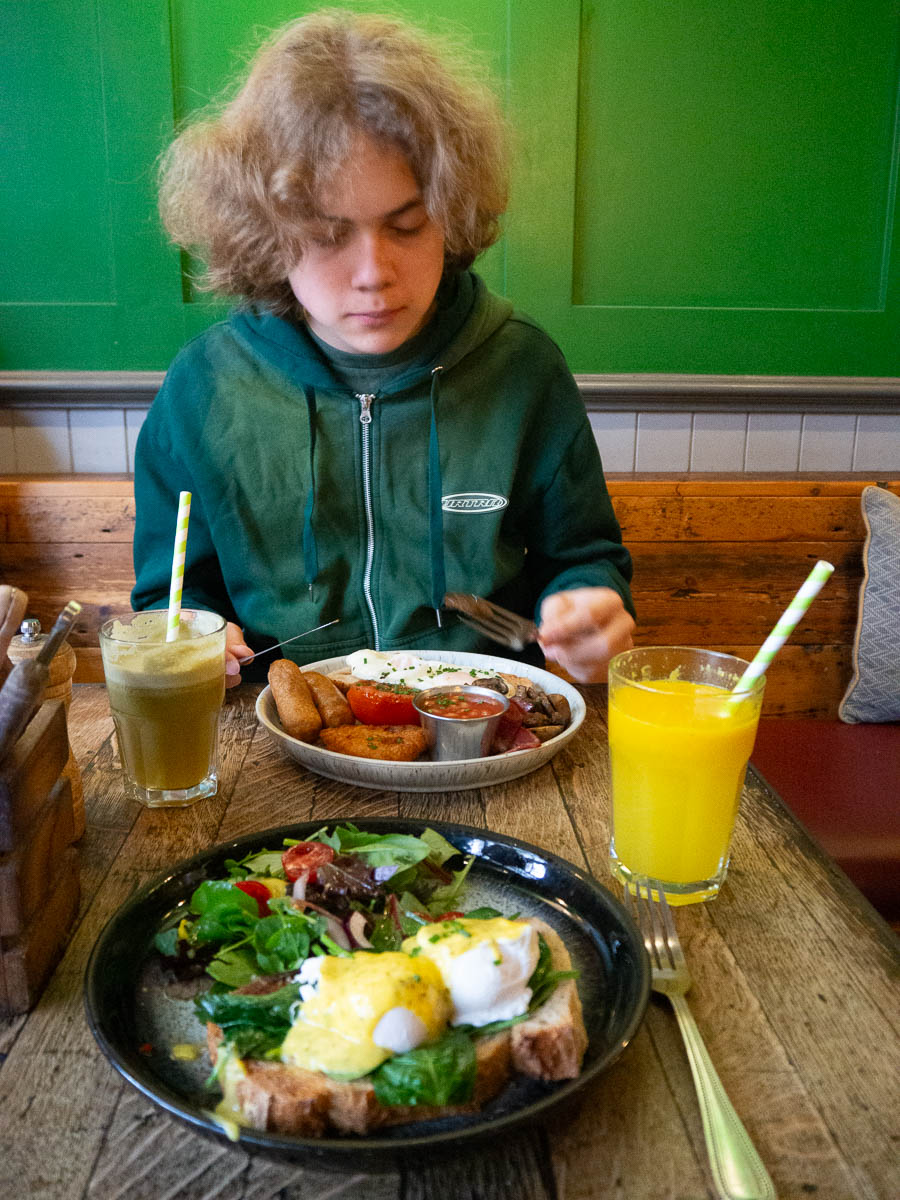
The forecast promised more rain today than yesterday, even though the forecast has been much downgraded from the 18 mm that was promised for today just a week ago, so we had mostly indoors plans. First: a circuit of Harrods, for Adrian.
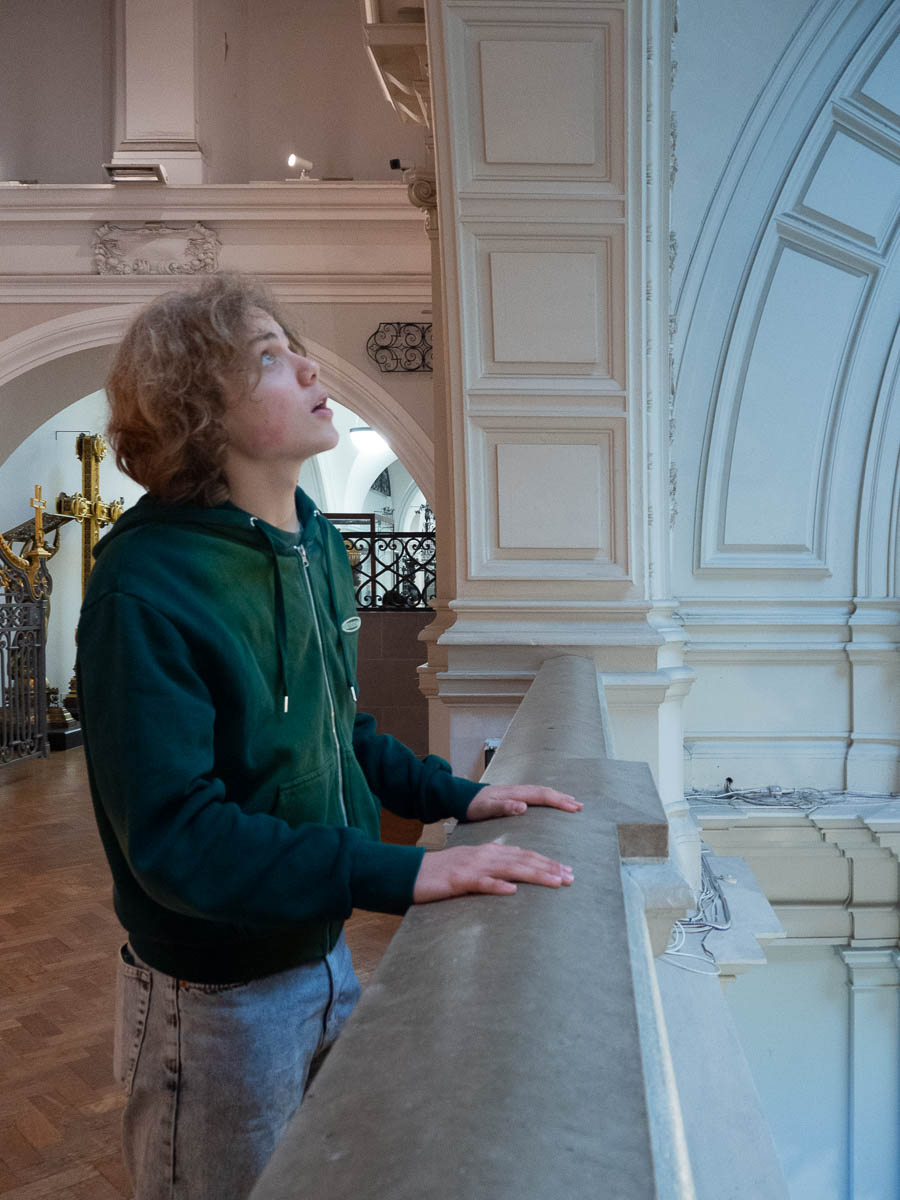
We had a bit of an awkward time to fill between Harrods and our early-afternoon slot at the Natural History Museum. (Timed tickets, again.) I took us to the Victoria & Albert Museum. Partly because of convenience – it’s right next door to the NHM – but also because it’s a lovely museum. There’s something for everyone there.
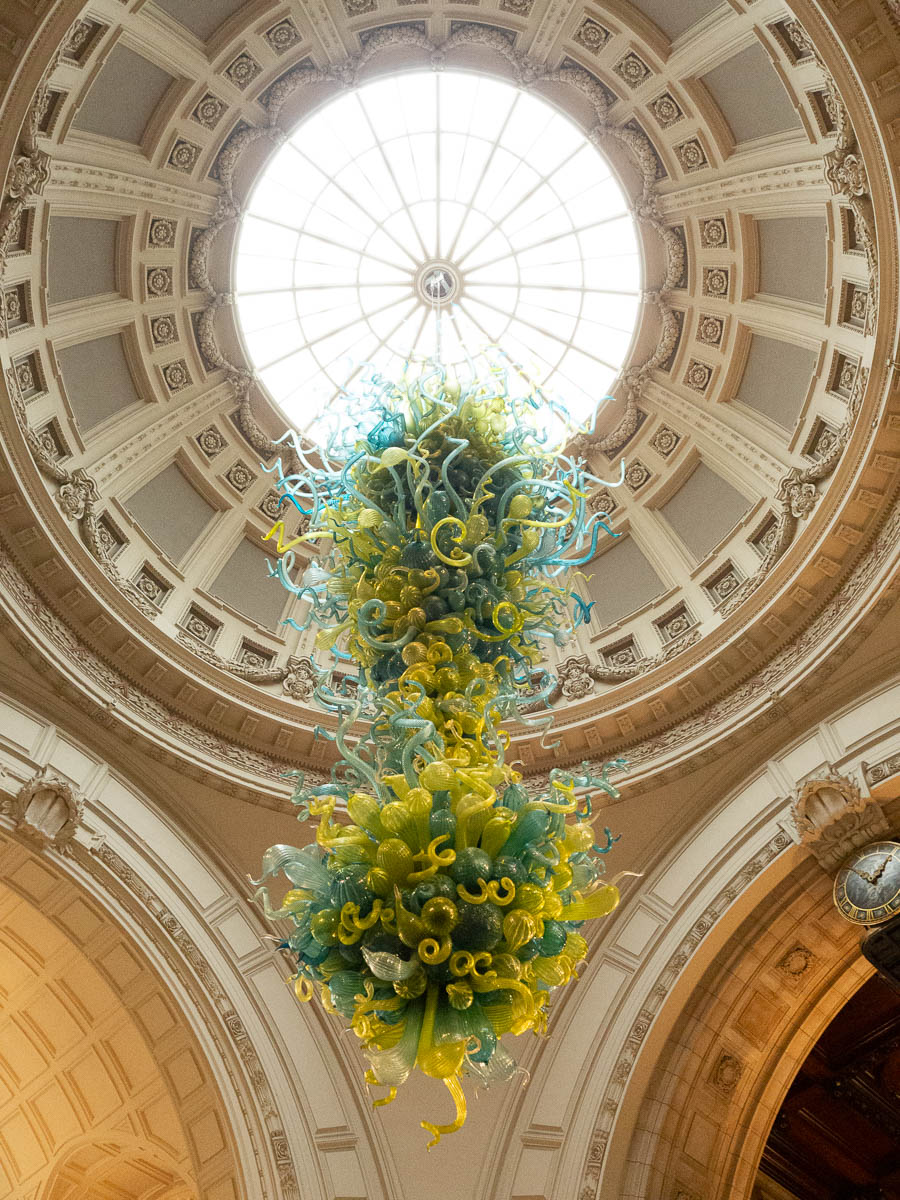
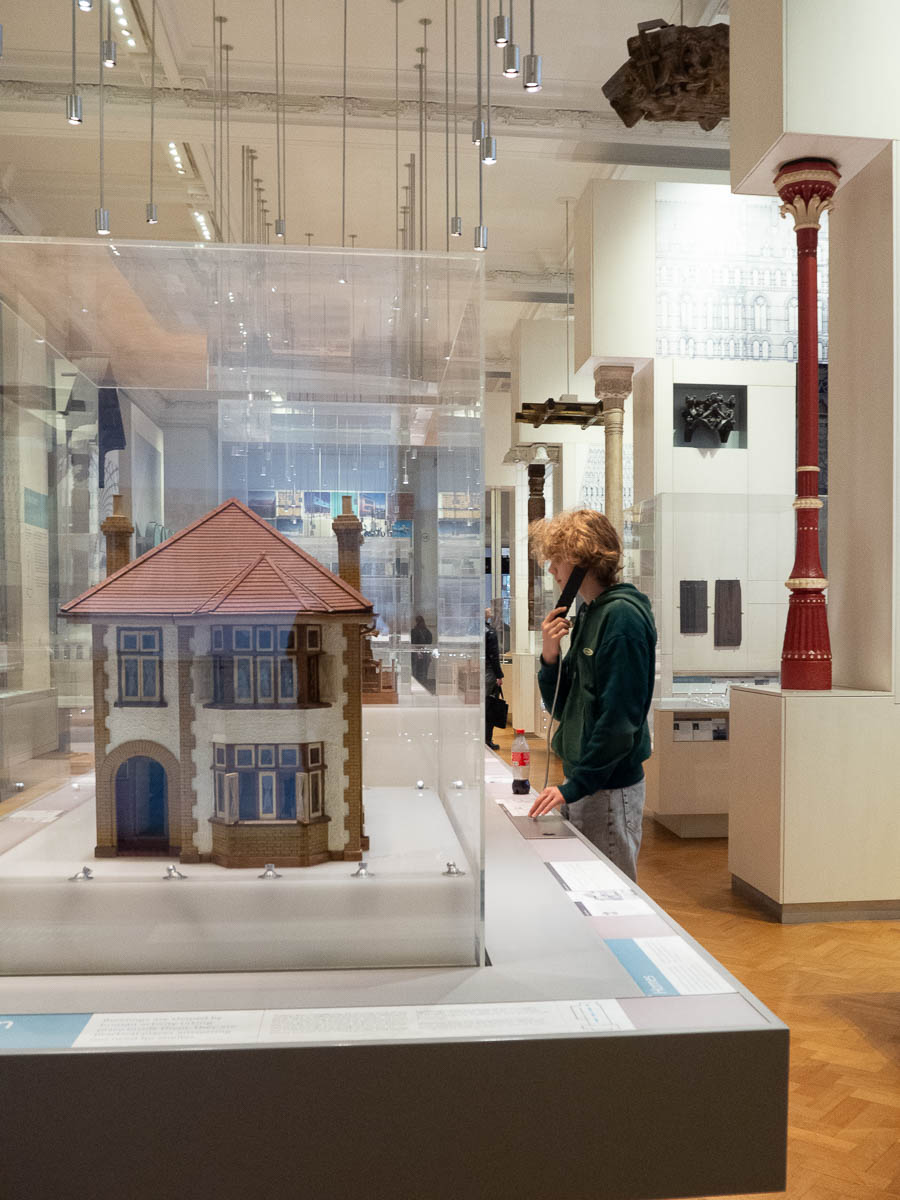
I’d be happy to wander through any and all parts of it, so I let Adrian’s interests guide us, while stopping to look whenever we ran into anything interesting on our way. We ambled past British decorative arts 1760–1900, then a bit of ironwork, to architecture. Down, a brief tour through the Cast Courts, and on to lunch.
Museum restaurants these days usually serve great food, having to compete for visitors’ attention against all sorts of other attractions. The lunch at the V&A café was surprisingly disappointing. The food in and of itself wasn’t bad, but nothing exciting either. The process of getting it was awkward, with flows of people crossing checkout queues, nowhere to rest your tray while queueing, and truly horribly noisy dining rooms. Sumptuous, yes, stylish, yes – but not at all pleasant. I guess it may have been nice a hundred and fifty years ago with half the number of tables, or something.

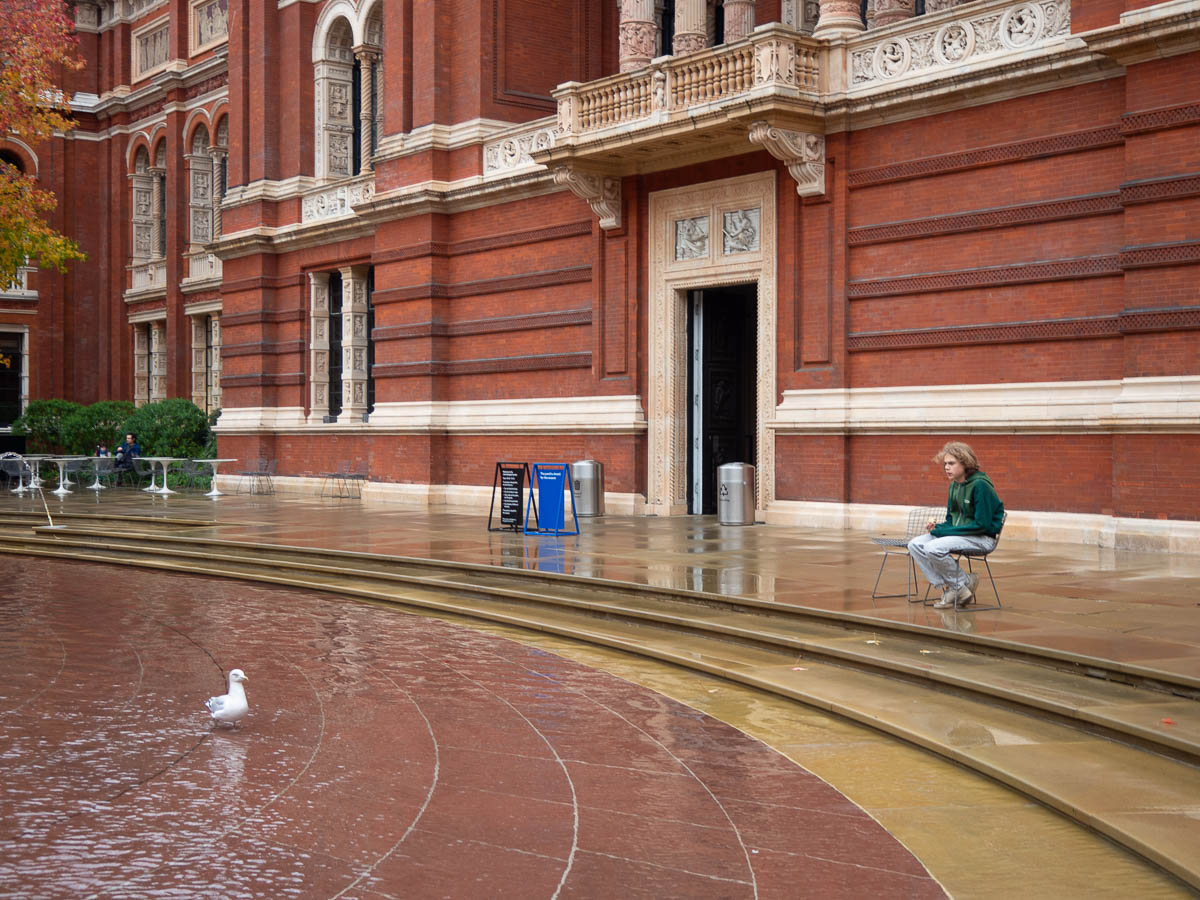
Adrian needed a top-up because his lunch portion wasn’t large enough, so he bought a cinnamon bun – which must have been the world’s worst cinnamon bun ever, for seven pounds – and we went out into the courtyard to rest our senses.
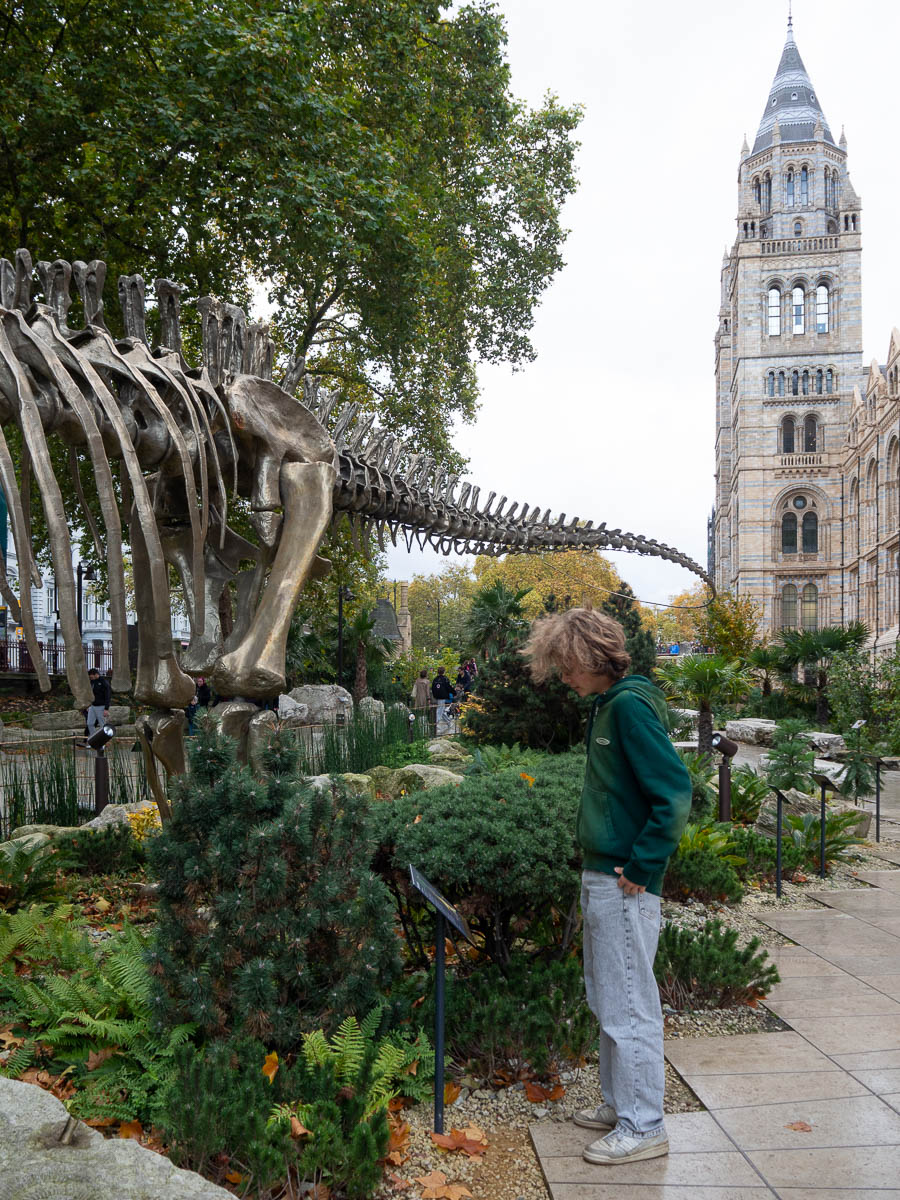
After a browse through the museum shop, we crossed the street to the Natural History Museum. Started with a tour through their garden, with a bronze cast of their famed Diplodocus skeleton (which was apparently technically challenging to make), surrounded with plants similar to what was around during the era of the Diplodocus.
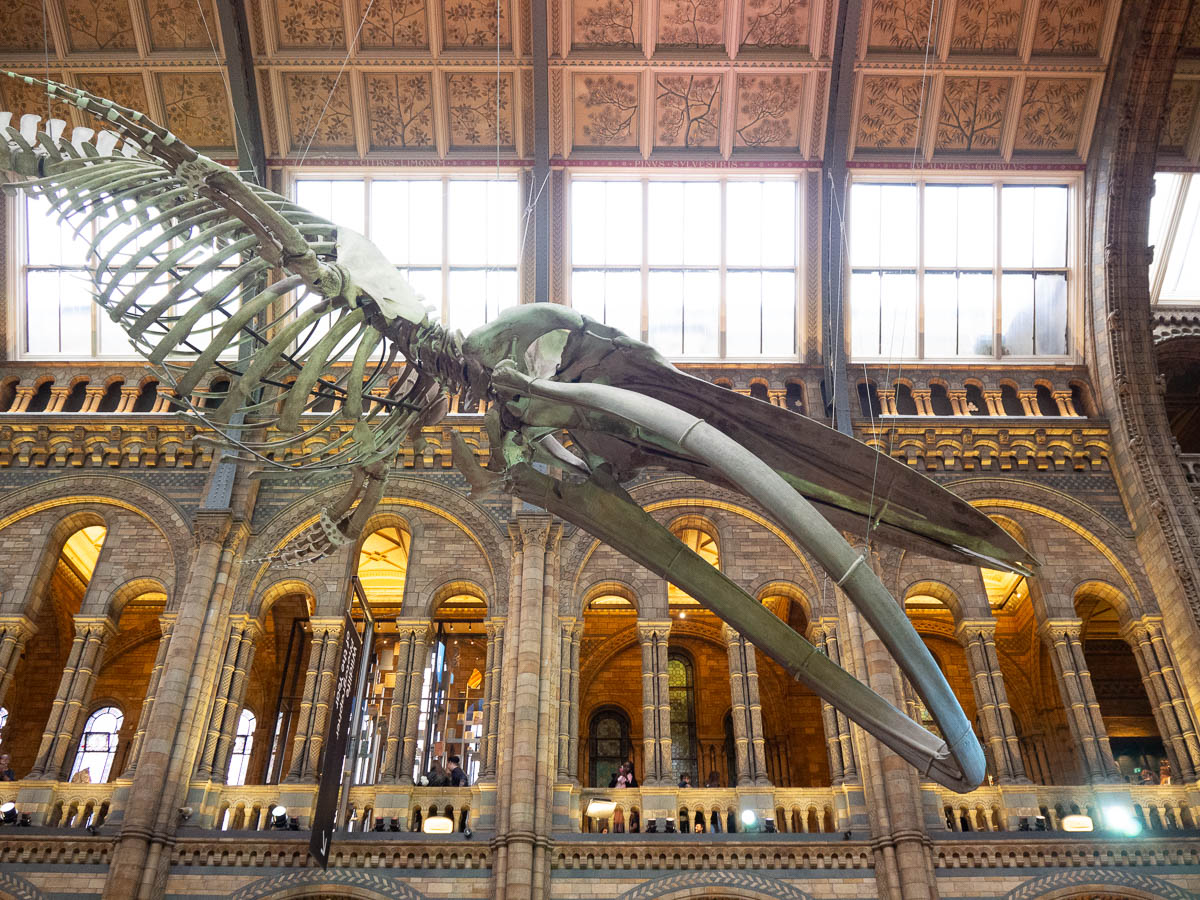
Passed the impressive skeleton of a blue whale inside.
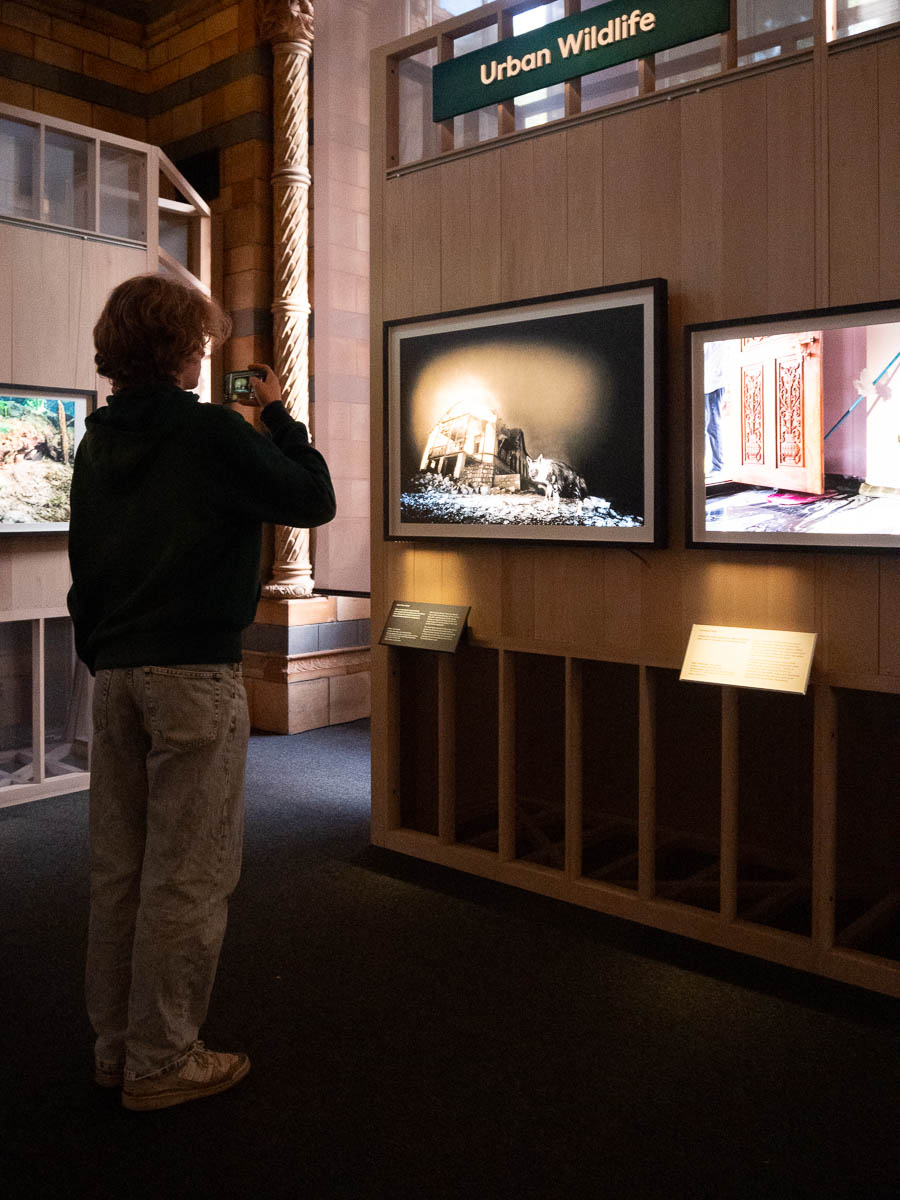
Instead we went to see the Wildlife Photographer of the Year exhibition, which had opened just two weeks earlier. It’s an annual exhibition, but I haven’t seen it since 2007.
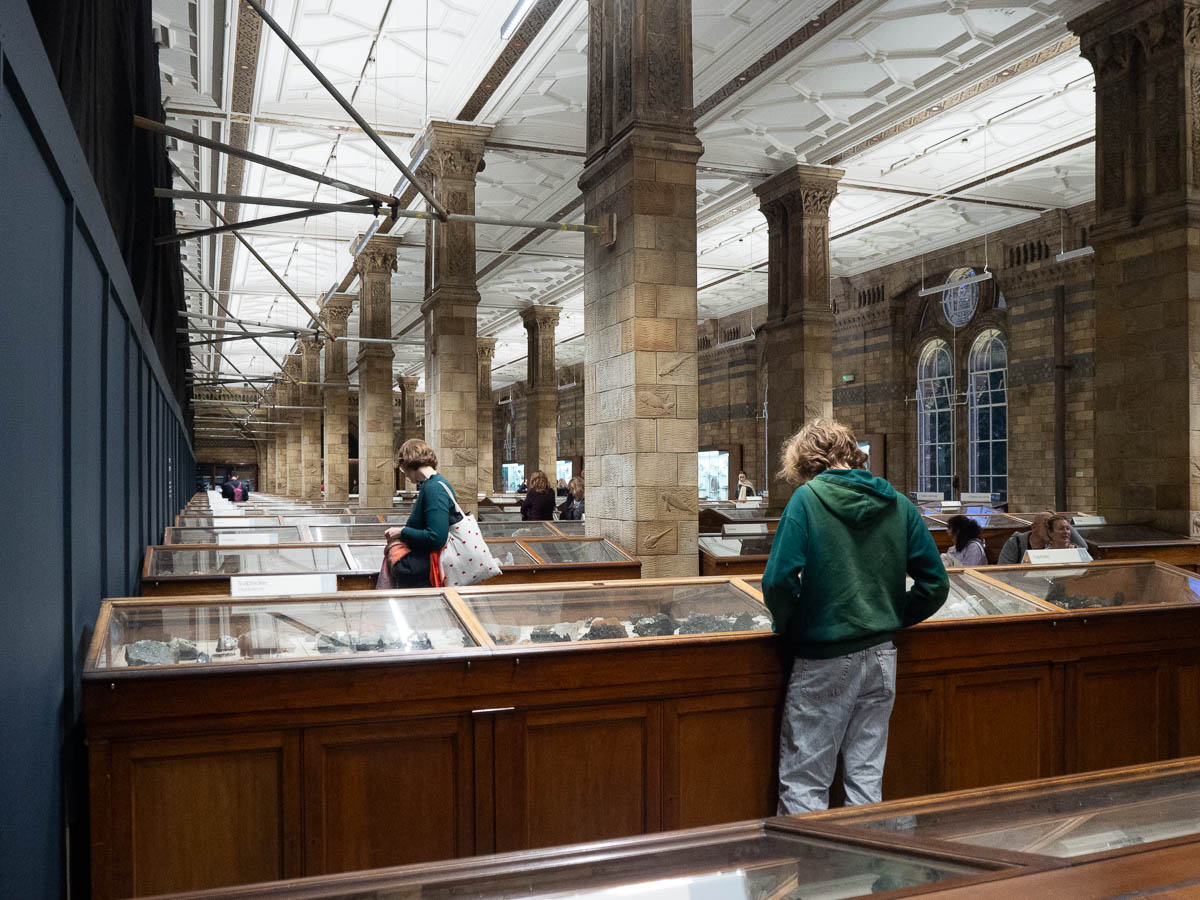
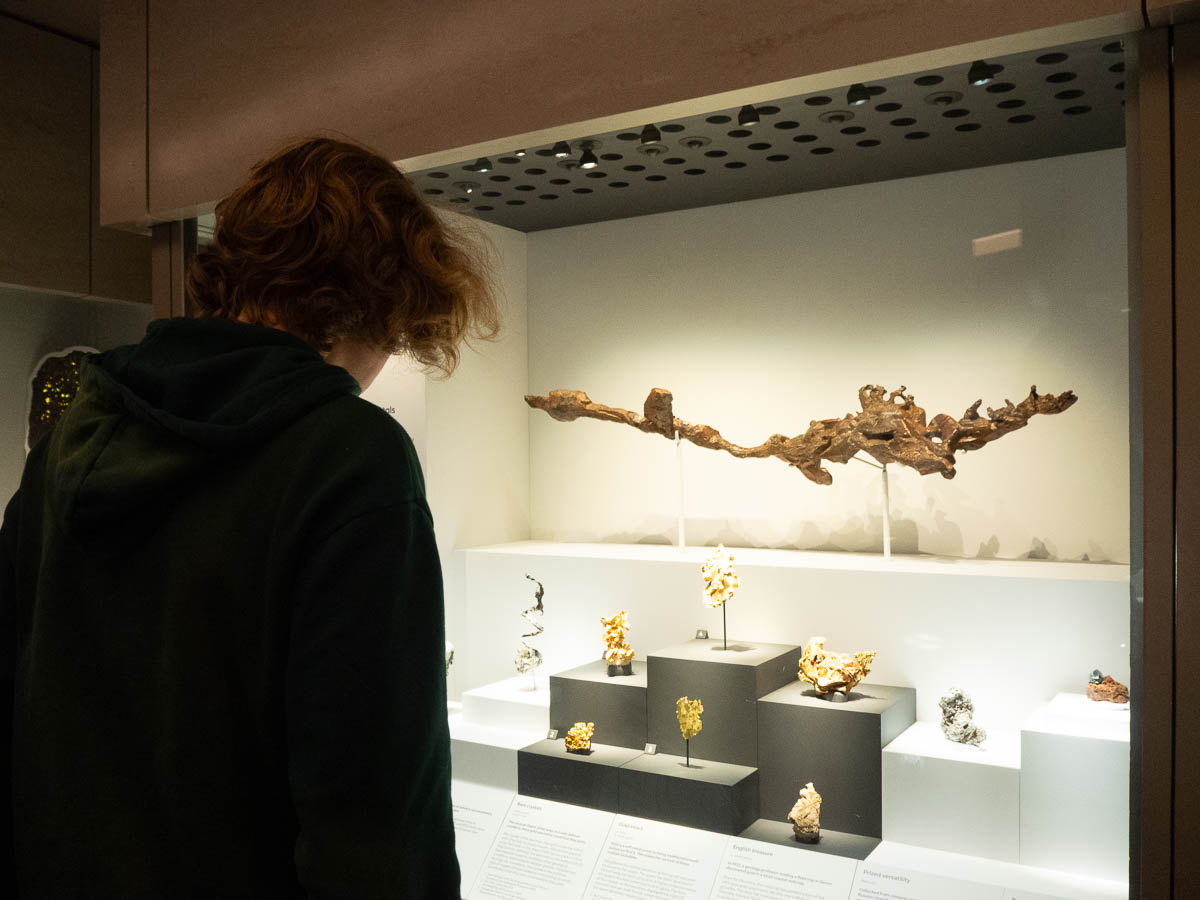
I would have expected Adrian to want to see more skeletons and such, but he opted for geology. I don’t know if I’ve ever visited the crystals and minerals hall of the NHM. It was astoundingly expansive. Several metres of sulphur in various shapes, case after case of copper-base minerals… Crystals, gemstones, natural chunks of pure metallic gold, you name it.
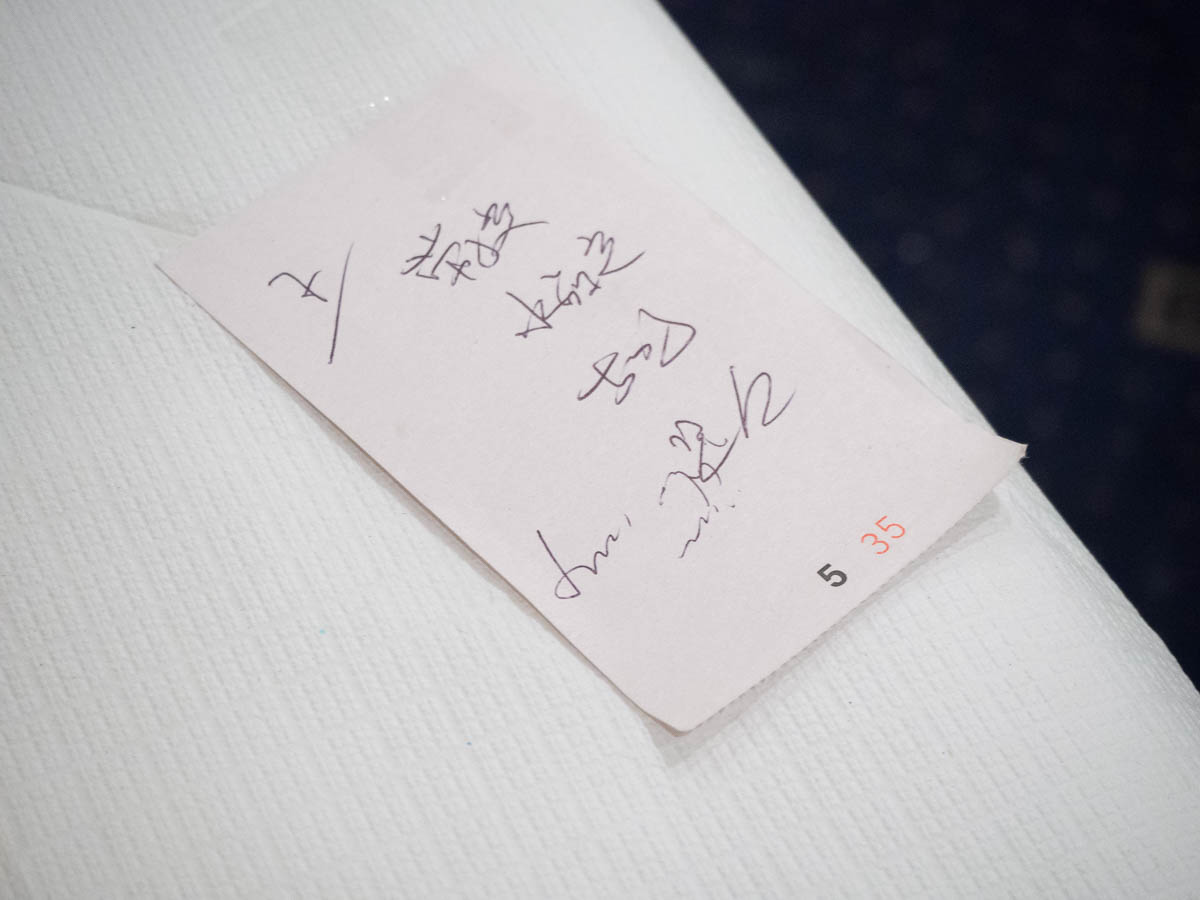
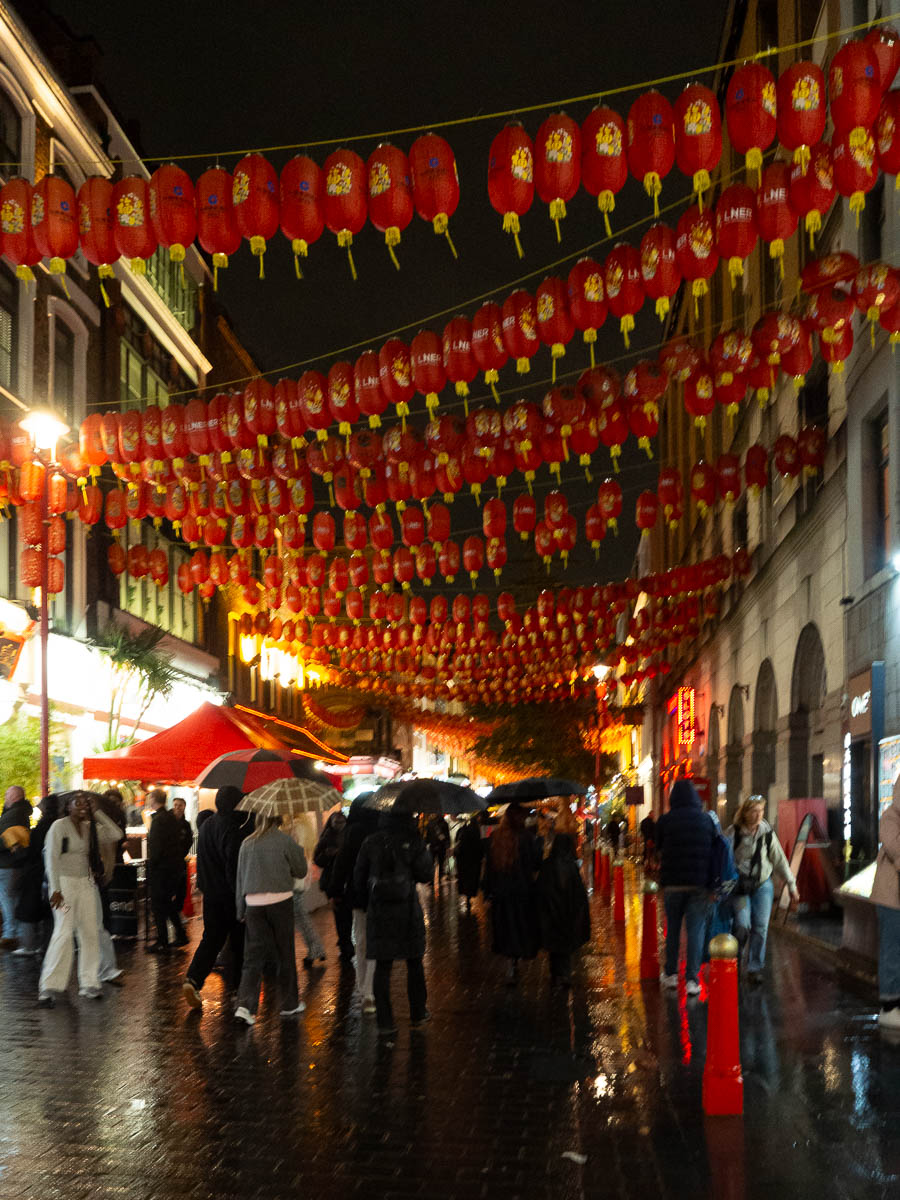
For dinner today we made our way to Chinatown for dim sum. I was too tired to spend much time and energy on choosing a restaurant, so we just picked the first one that looked decent. It turned out to be, indeed, decent.
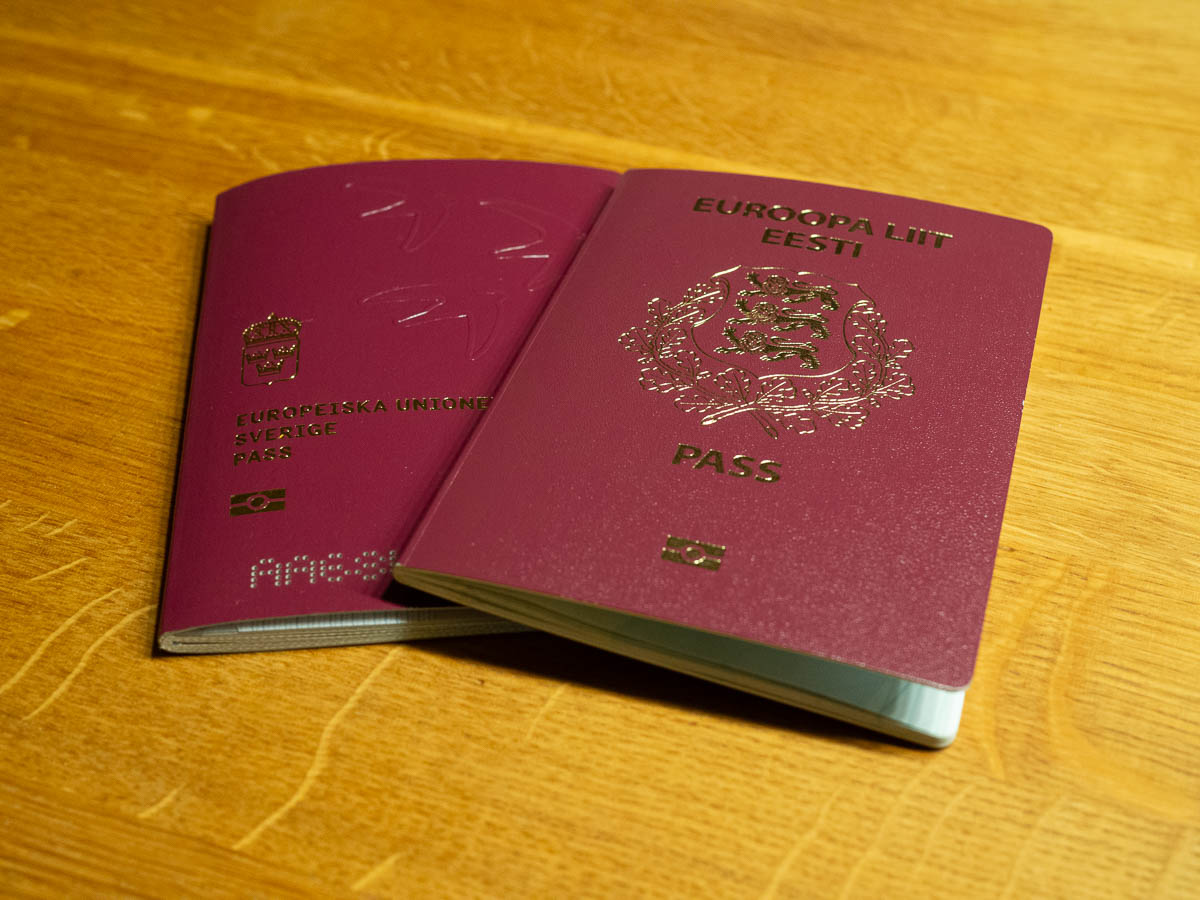
Near miss #1: Adrian and I are going to London for a few days during autumn break, which is this week, and I was this close to missing the fact that you now need a permit to enter the UK. I know they’re out of the EU but for years that didn’t actually mean anything for travel, and somehow I’d missed that this had changed.

The confirmation email from airline even mentioned it, but the new permit thing is called an ETA – a most unfortunate naming choice, I have to say. As I skimmed the email, I saw the term in passing, naturally interpreted it as “Estimated Time of Arrival” in the context of a flight booking, and didn’t pay any more attention to it.

Today I finally noticed it for real and had a minor bout of panic because it can apparently take days to get an ETA (“Electronic Travel Authorization”, why couldn’t they just call it a visa) and we don’t have that many days. Spent a good chunk of the afternoon going through an online application process only to realize, when my payment didn’t go through, that I had landed on a scam website and had to start all over on the real site.

The process required photos and face scans and scans of the passport and whatnot. I got the applications in just before Adrian had to leave for his week at Eric’s, and thankfully got an approval back within 10 minutes, so our trip was saved.

Near miss #2: Due to the ETA panic I nearly forgot the fact that I had a concert ticket for this evening, and almost missed a concert with Grigori Sokolov. Missing it wouldn’t have been quite as sad as missing a London trip, but still, I’m glad I remembered it in the last minute. Beethoven and Brahms. Just the thing I needed to get my adrenaline levels back to normal again.

First concert in one of this season’s series, Orfeus Barock. Solo cello and lute, and the two together. Music by Johann Sebastian Bach, Silvius Leopold Weiss and Domenico Gabrielli.

I love Bach’s cello suites (one of which was included today) and cello music in general, and yet somehow this concert didn’t work for me. It wasn’t bad, in any way, but somehow the music melted into a soothing blanket of sound and the melody got lost.

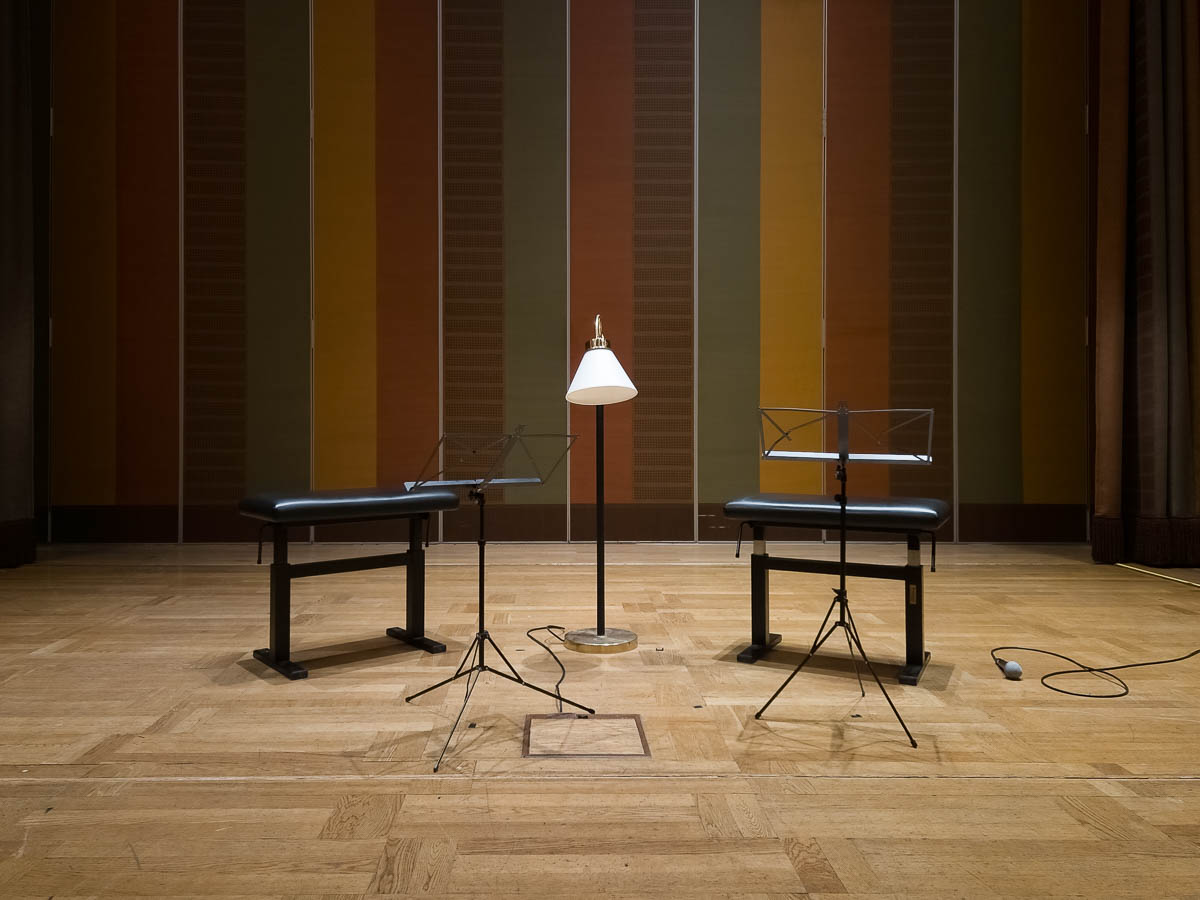
My seat was several rows back and I couldn’t see the musicians very well. The lighting was low, with much of the room quite dim and a single lamp lighting up the sheet music, and the musicians to a certain extent. (In the photo above the main lights have been turned on again; it wasn’t this bright during the concert at all.) The organisers said they wanted to recreate the feeling of being in your own living room, but for me the result was just soporific.

Maybe it was also the performers’ style? I would have wanted to someone else play the same piece directly afterwards, to compare.

Encouraged by Friday’s outing, I went to the city again to see more of Stockholm Craft Week.

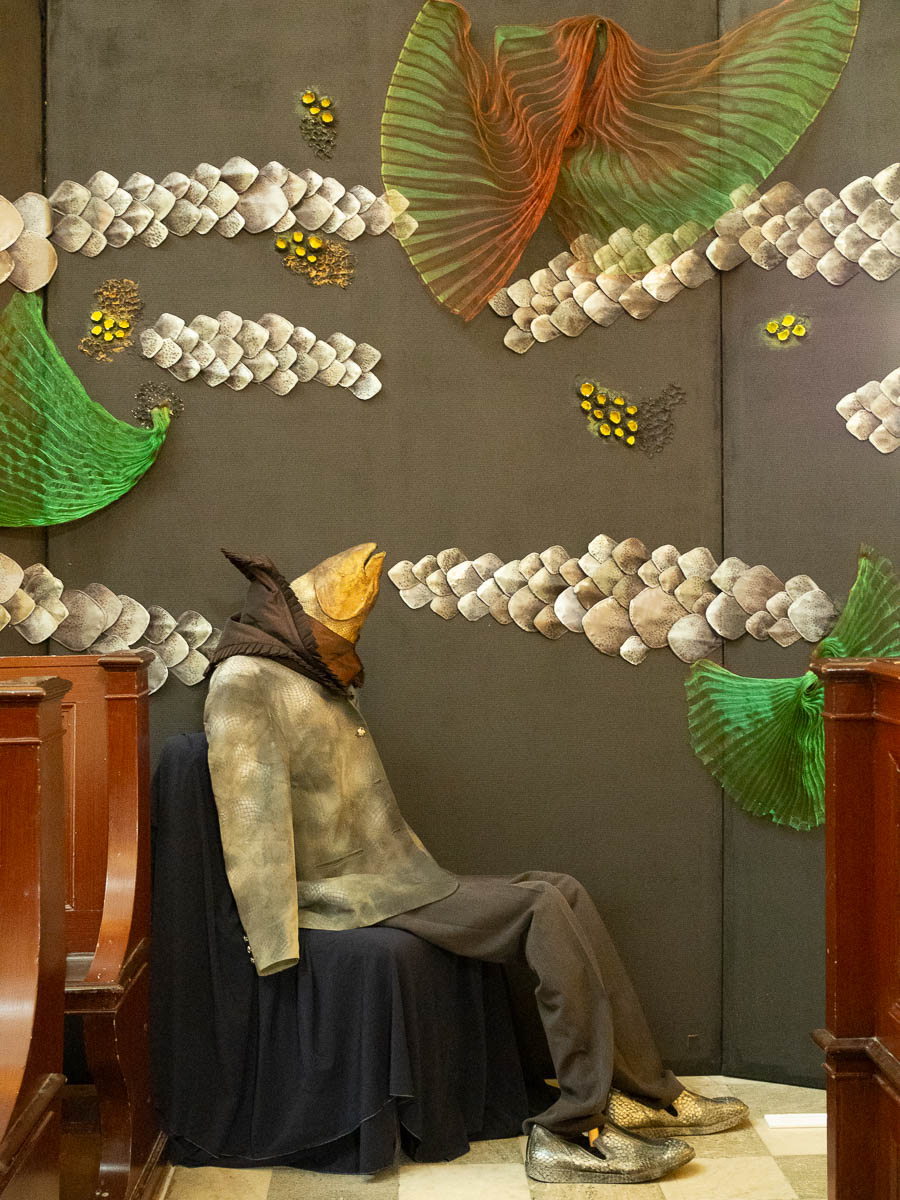
There was a group exhibition in Gustaf Vasa church, of all places, by graduate students in the textiles program at Konstfack. Nice location, but it would also have been nice if the event organizers had taken into account and informed visitors about times when the exhibits could not be visited due to Sunday service. I had to hang around for half an hour before I could enter.

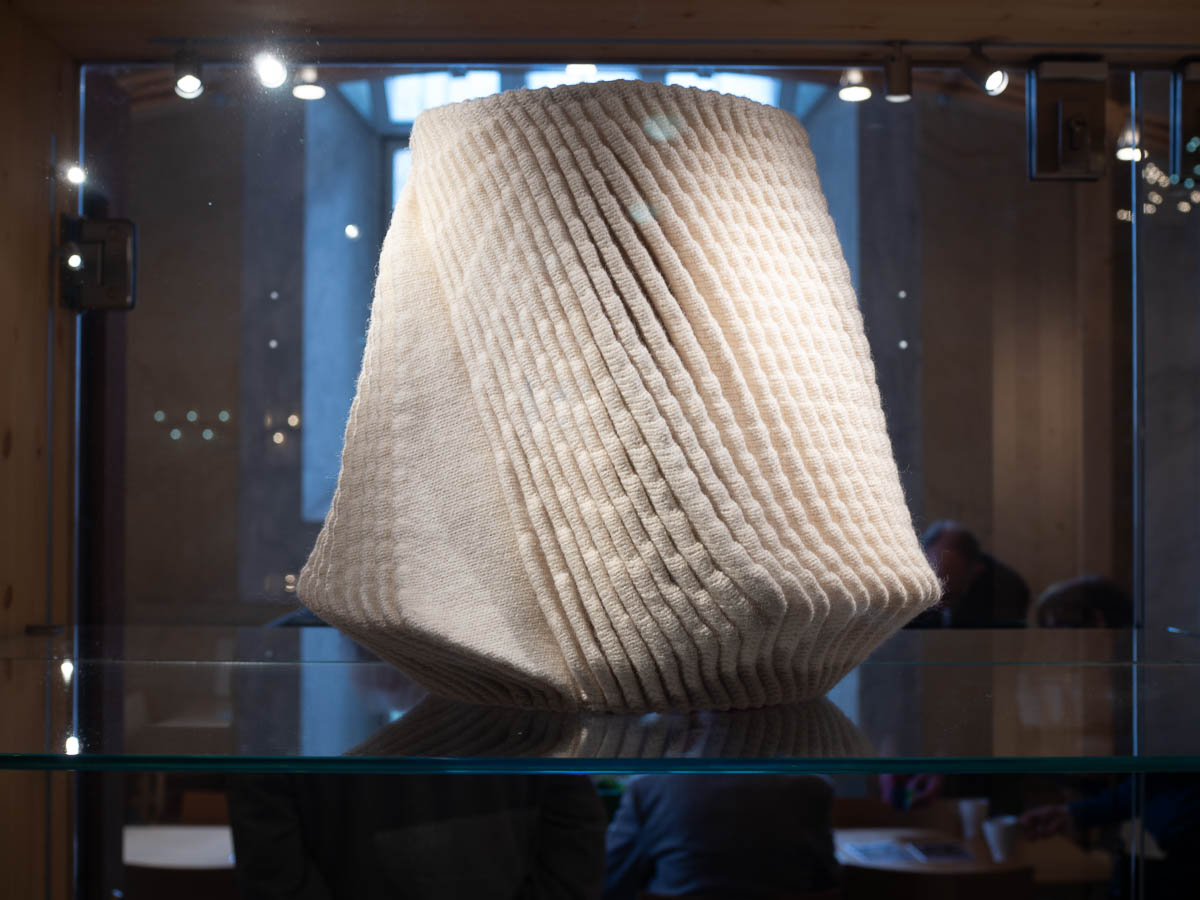
I liked the folded knits by Hanna Åström – very three-dimensional, geometrical and sculptural.

There were all the usual textile crafts – embroidery, pieces of weaving – and then suddenly a sculpture/installation thing depicting an anthropomorphic fish.

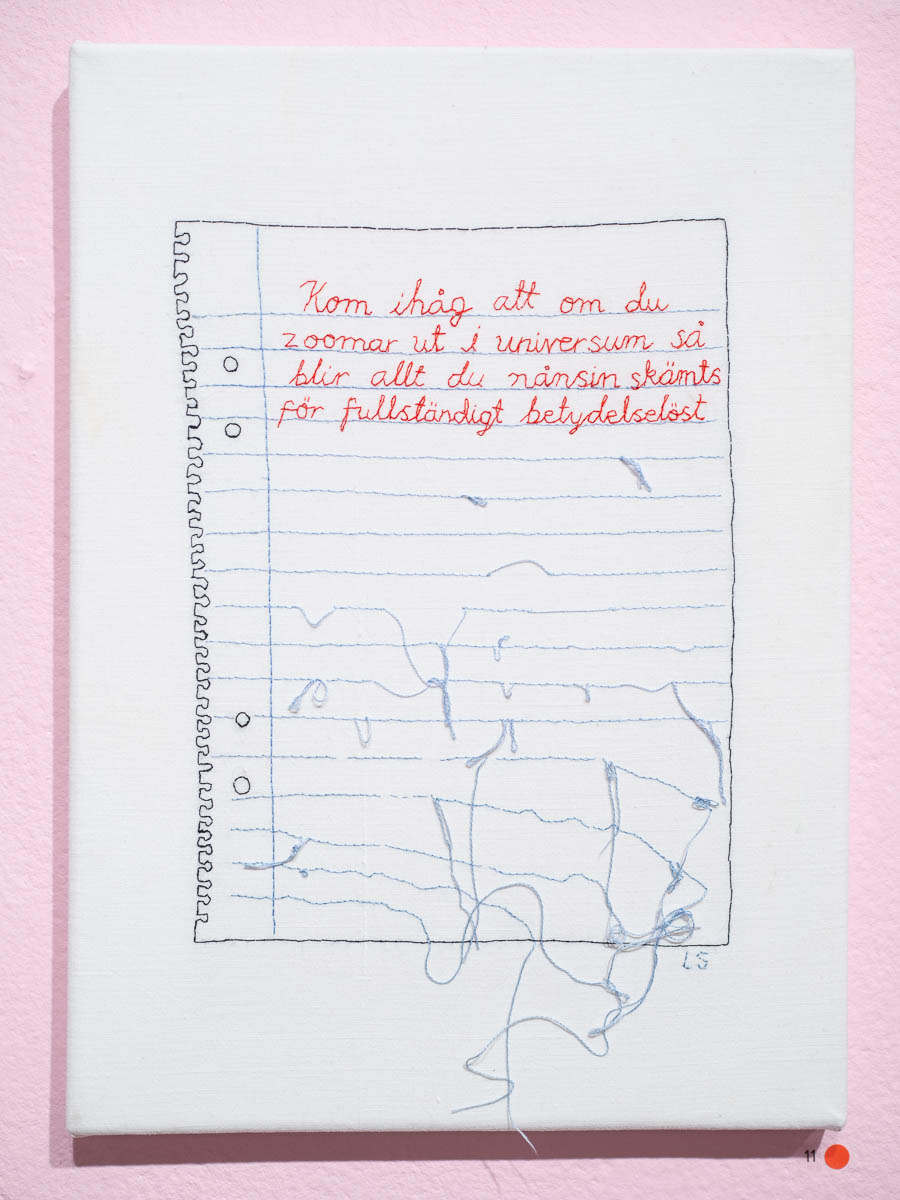
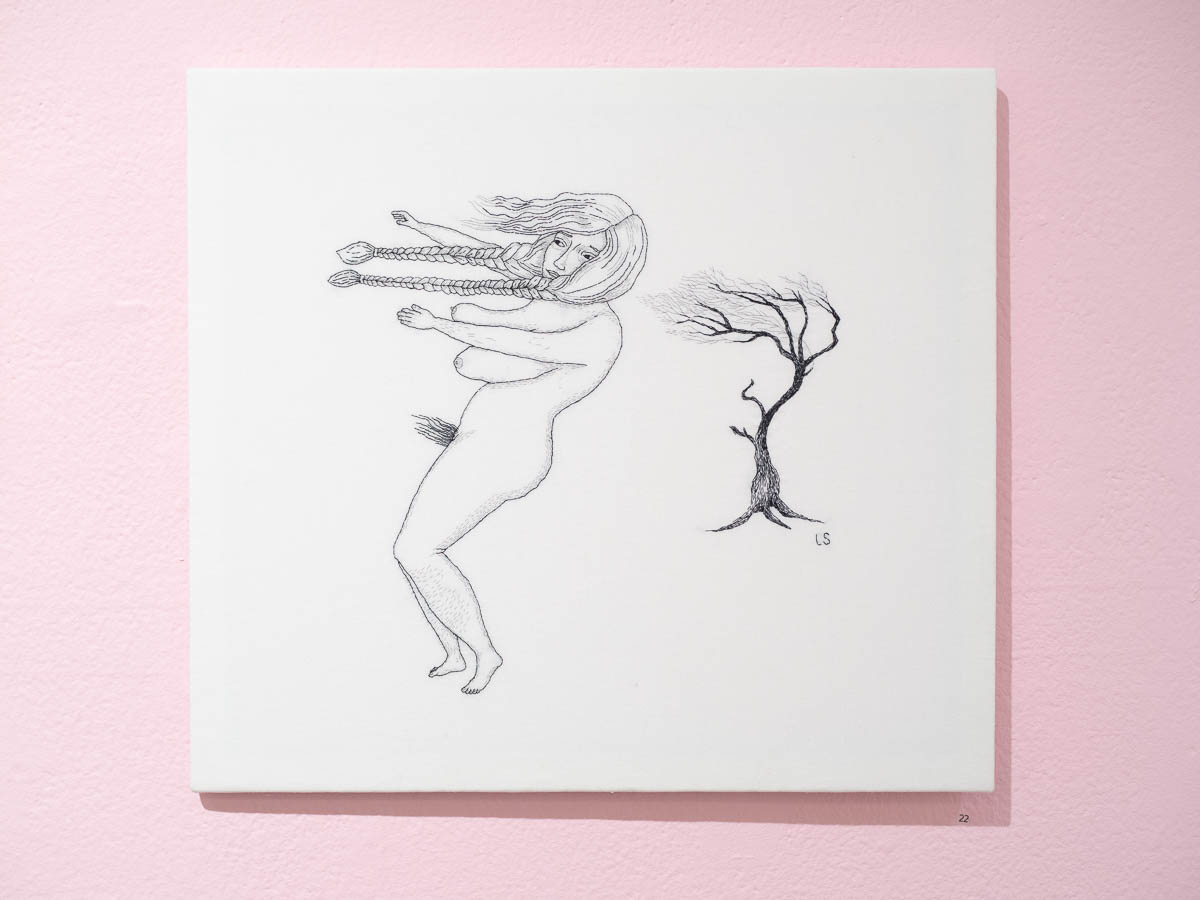
From Gustaf Vasa church I continued onwards to the shop/gallery of Konsthantverkarna where there is an exhibition of embroidered works by Lotta Sjöberg. She is an illustrator and artist, and her textile works are like drawings but in thread on fabric. Often full of wry humour, often about women’s everyday concerns.

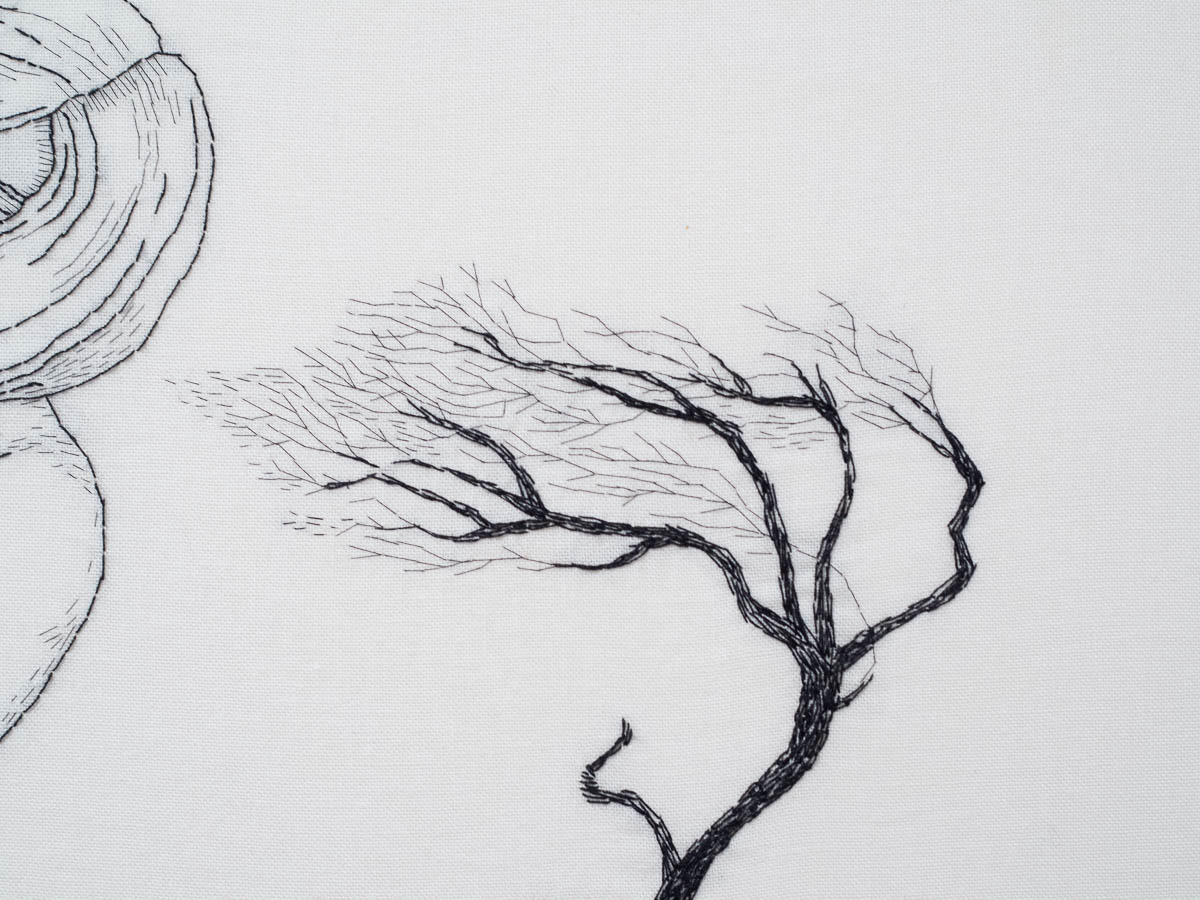
I follow her on Instagram and mostly knew what to expect, but was still surprised. I had gotten a rather misleading impression of how large her embroideries were, based on the size of the stitches in them. What I thought was sewing thread or maybe one strand of embroidery floss, was instead silk organzine, apparently the thinnest thread manufactured. (Since today was the opening day of the exhibit, Lotta Sjöberg was present herself, and I took the opportunity to ask questions.)

It’s like cobweb. Truly, you could only make this in silk, because a thread this thin in any other fibre would break if you tried to use it.

I’ve been aware of Stockholm Craft Week for a few years, and this year got around to visiting some of its activities for the first time.

Kapsylen is a co-owned/co-op space for craftspeople, located in a building that used to house a bottle cap factory (hence the name). During Craft Week they open up some of their spaces for the public to visit. Some of the rooms housed a small exhibition; others were actual workshops.

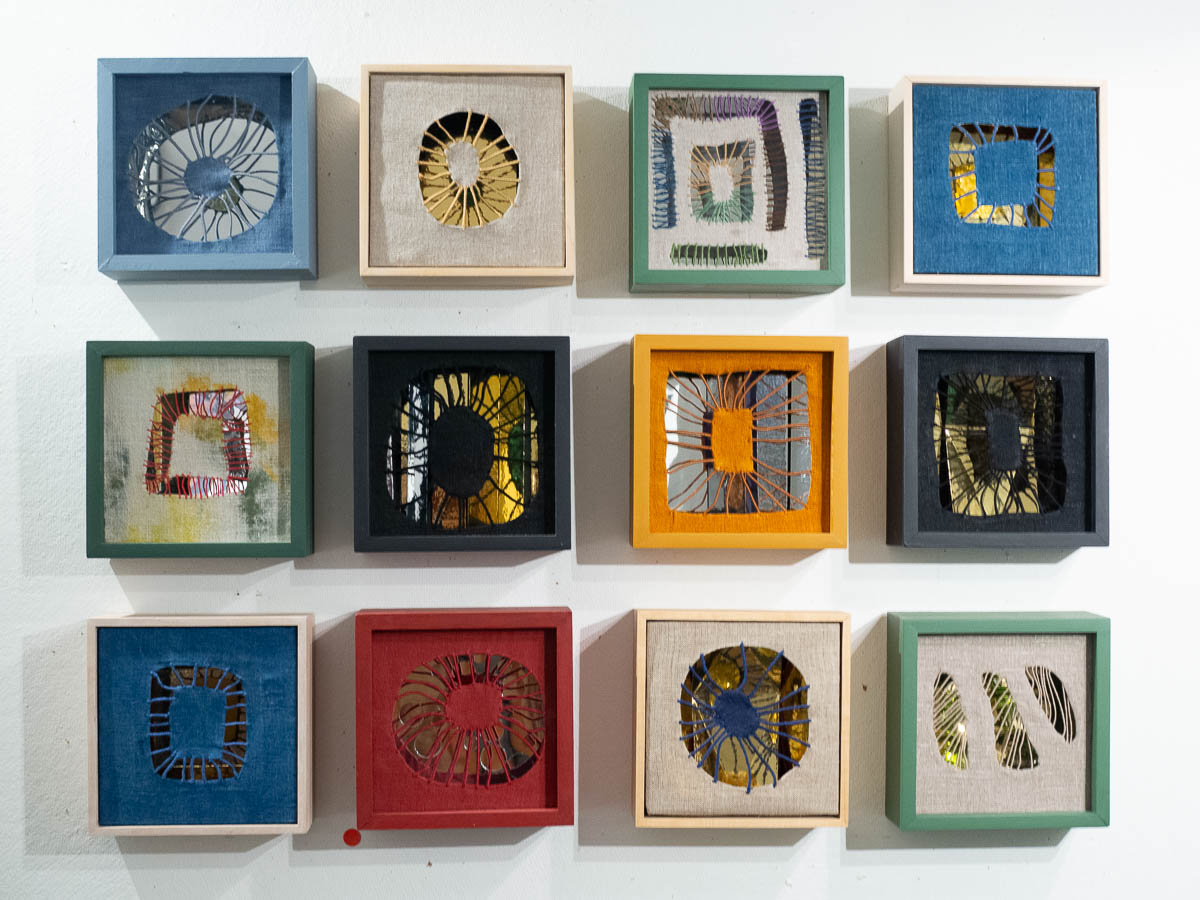
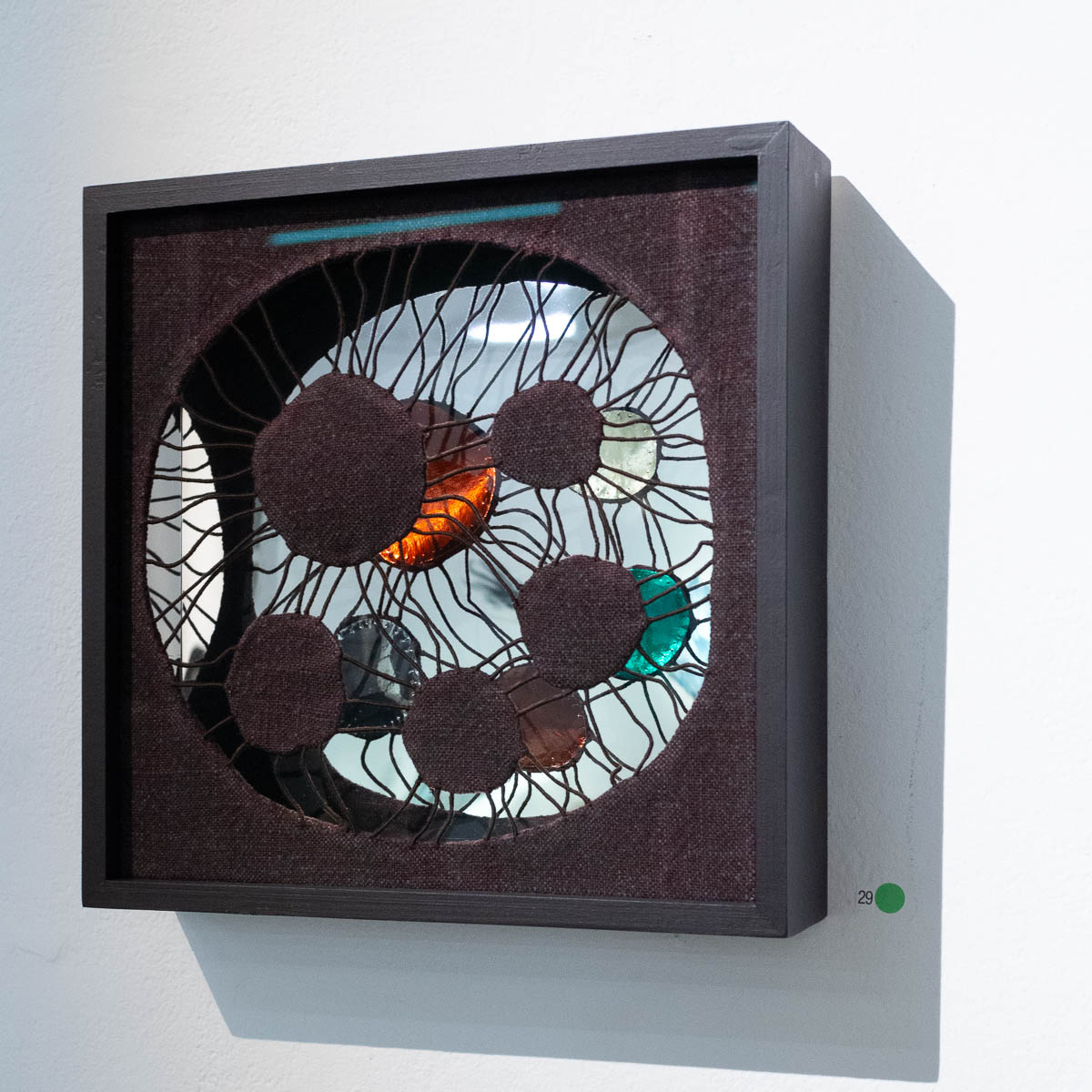
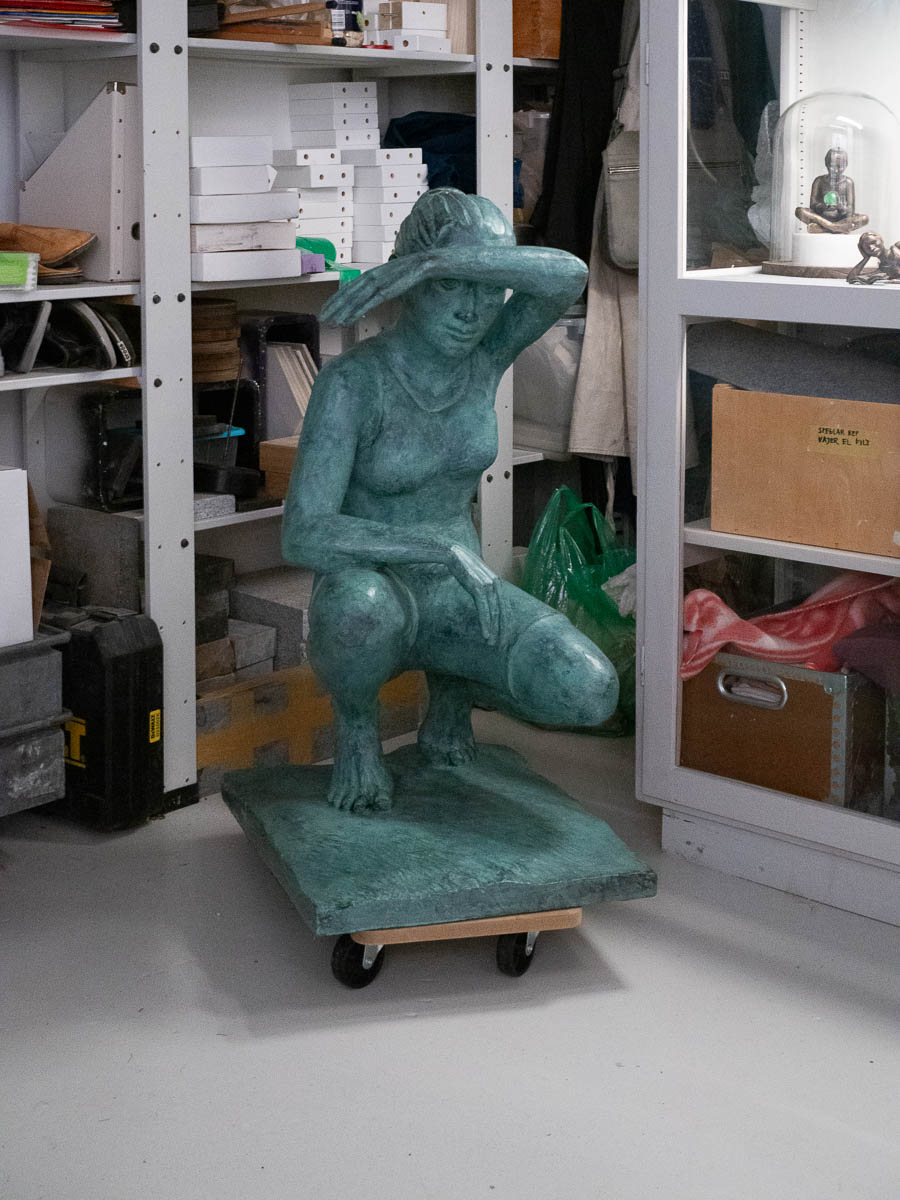
Ingela Friedner had made a series of boxes with a textile layer at the front and a reflective surface at the back, which then reflected the otherwise hidden reverse of the textile layer. Simple but ingenious.

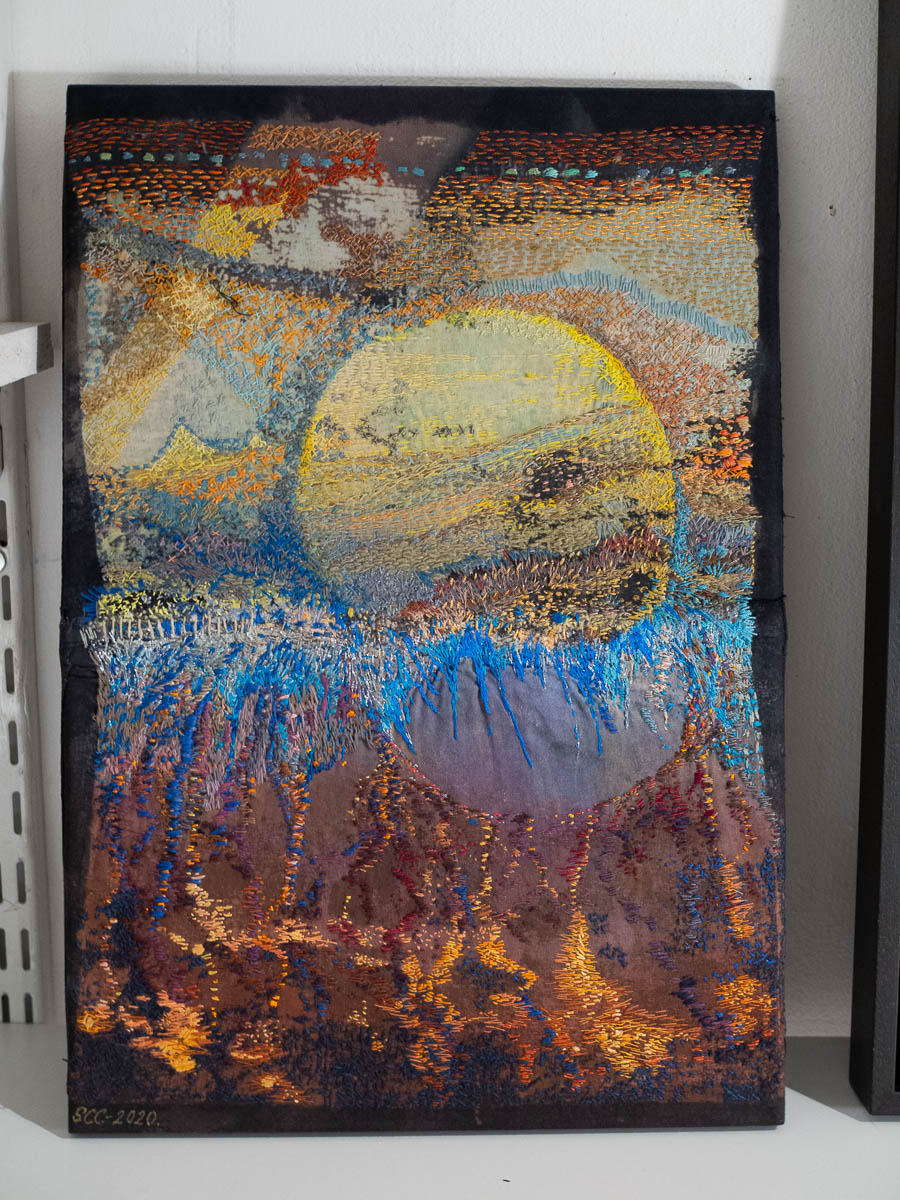
Sara Casten Carlberg embroiders intricate fantasy landscapes on painted and printed fabric.

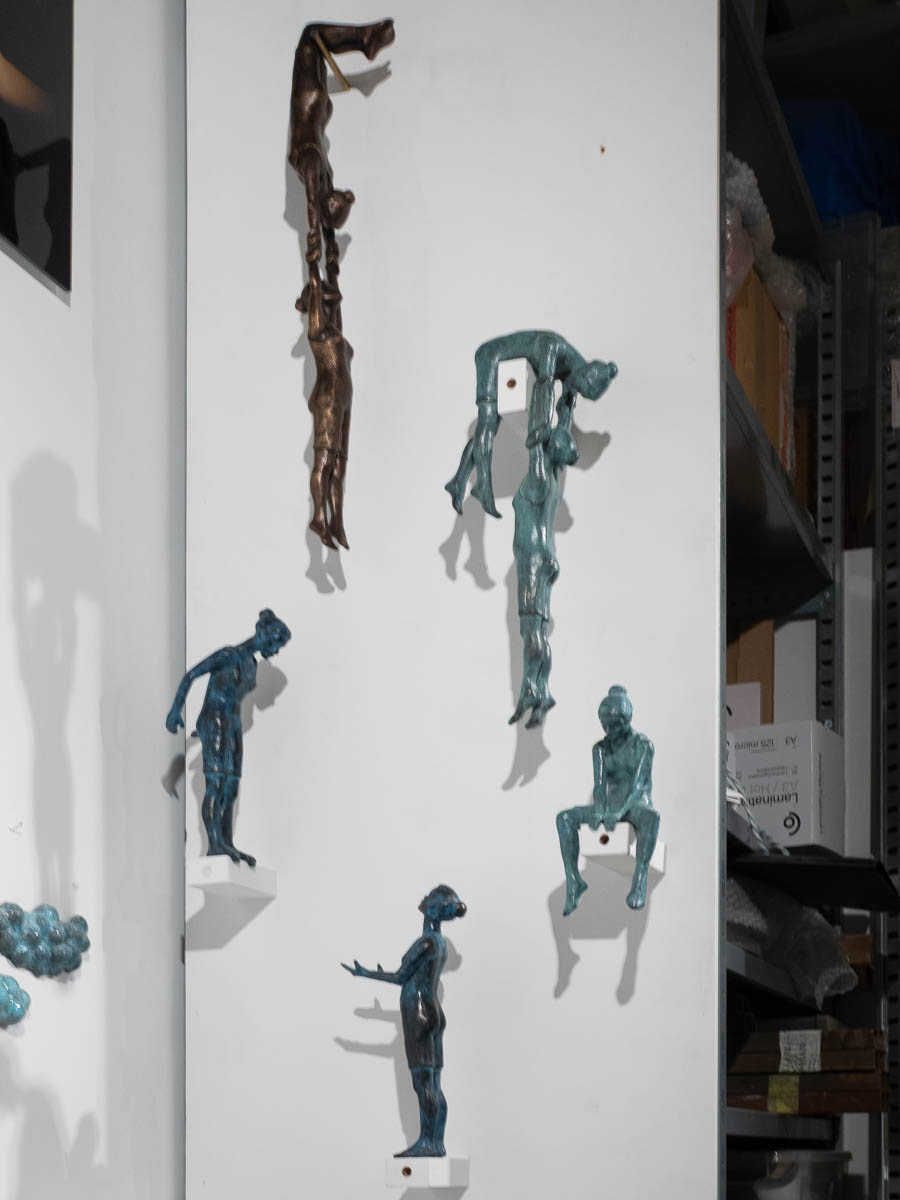
Lovely sculptures of gymnasts in the workshop of Eva Larsson.


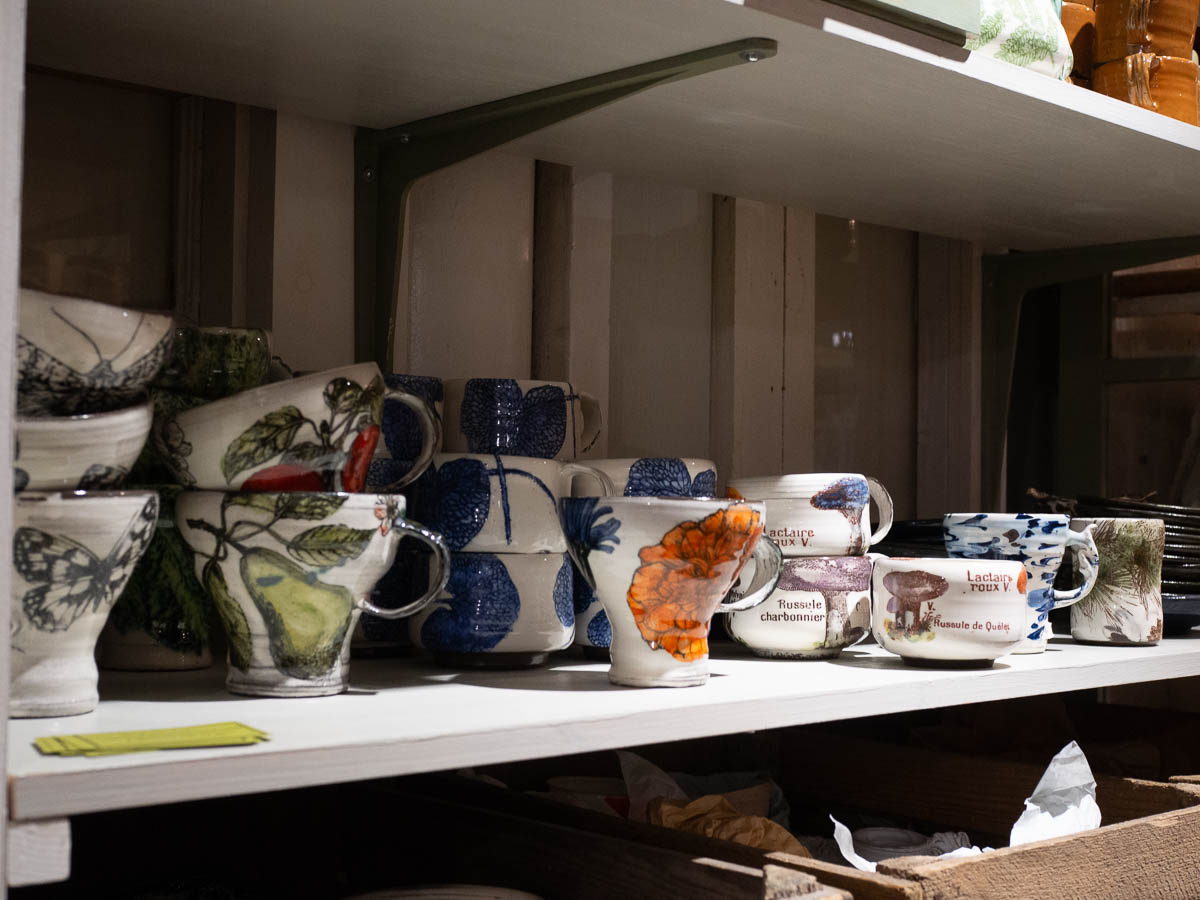
Elisabeth Ottebring was at work in her ceramics workshop, despite the late hour. I learned that most ceramics clay these days is synthetic because there isn’t much natural clay left.

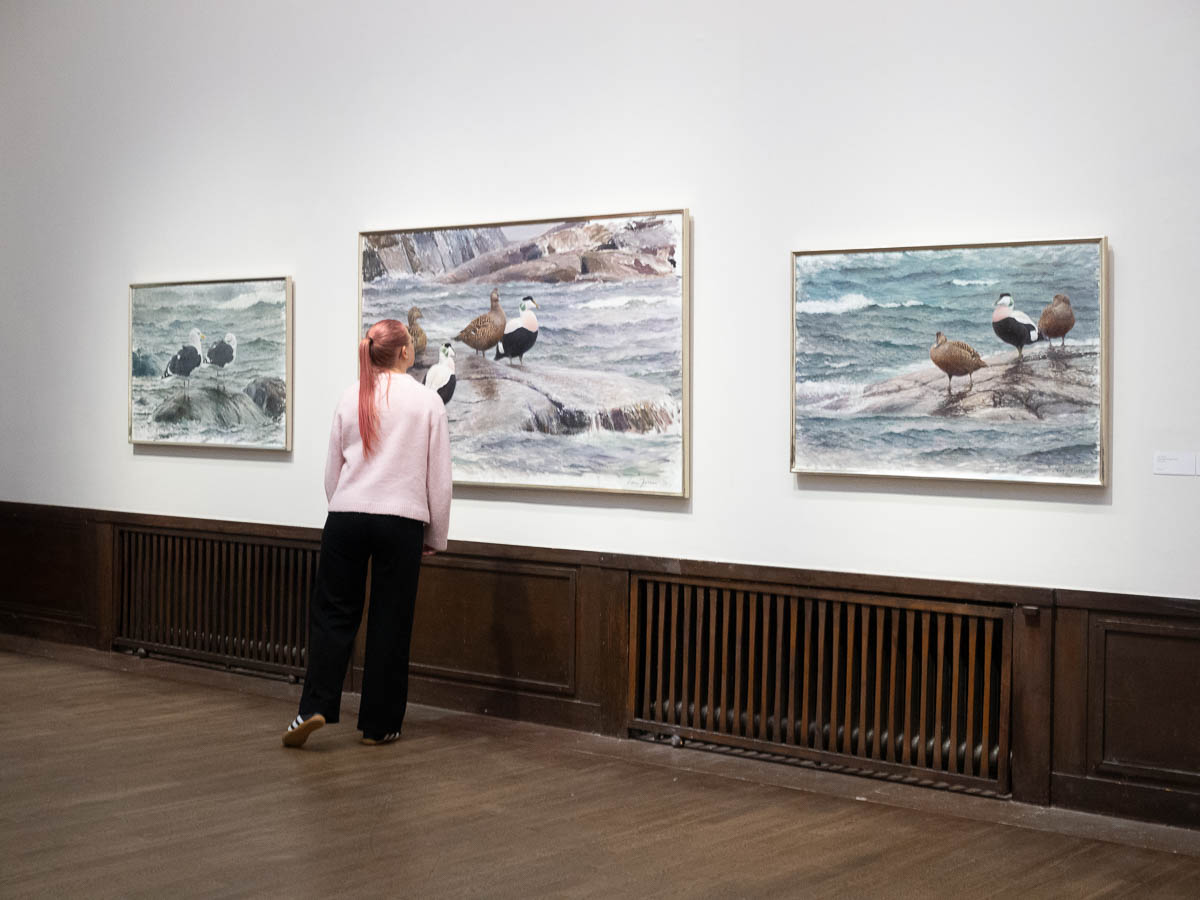
Ingrid and I went to see an exhibition of Lars Jonsson’s drawings and paintings of birds at Liljevalchs.

Exceeded all expectations. We were truly blown away.

Lars Jonsson is an artist and an ornithologist who makes incredibly life-like pictures of birds. Not primarily photorealistic, although some are, but better: where the painting captures not just the typical physical appearance of a species, but also its character and behaviour, and the details of the individual specimen, and the atmosphere of the situation. Some birds in flight are intentionally blurred at the edges; some are captured at an odd angle.

He makes all his sketches and most watercolour paintings out in nature, drawing from life. His birds are not smoothed-out averages but unique individuals.

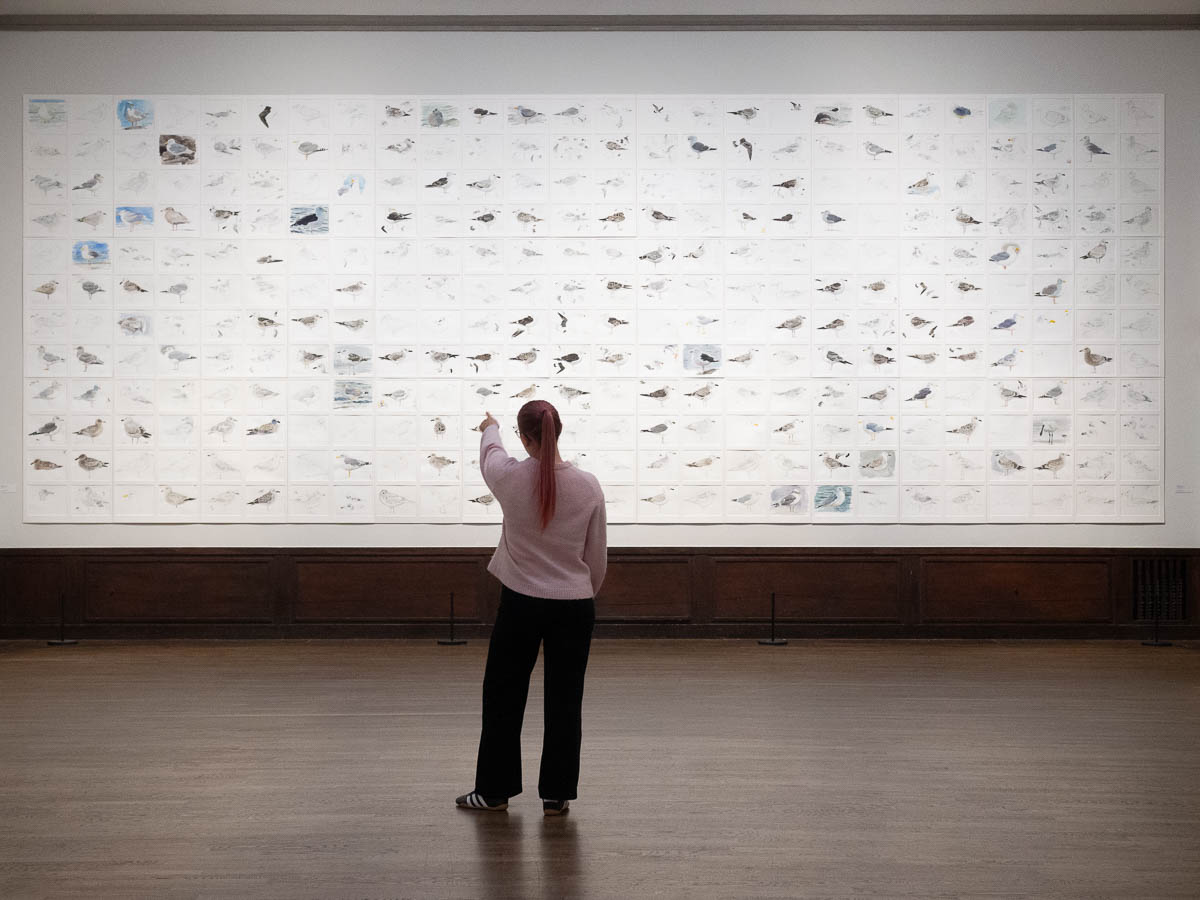
There is literally a wall with just hundreds of sketches of gulls. Some of them are multiple sketches in one: a sheet of paper with just beaks, or with several variations of the striation on their sides.

And you think: he’s able to produce this amazing work because of the decades of practice he’s put in. But then you see that even his early paintings, over forty years old by now, are amazing.

An incredible dedication; almost an obsession. After 50 years of drawing sea birds, how does he not get tired? How can he still see something new in each bird that is worth capturing?

Seeing this exhibition on a weekday evening after work was perfect. Much of the time it was just the two of us; in total I think we saw three or four other pairs of people pass. Large, calm paintings of sea birds, softly lit, in large, quiet rooms – very tranquil. Nobody passing behind us – or in front of us – when we’re backing up to take in a large painting.

If you’re in Stockholm, the exhibition is open for another 10 days, until October 12th. Very much recommended.