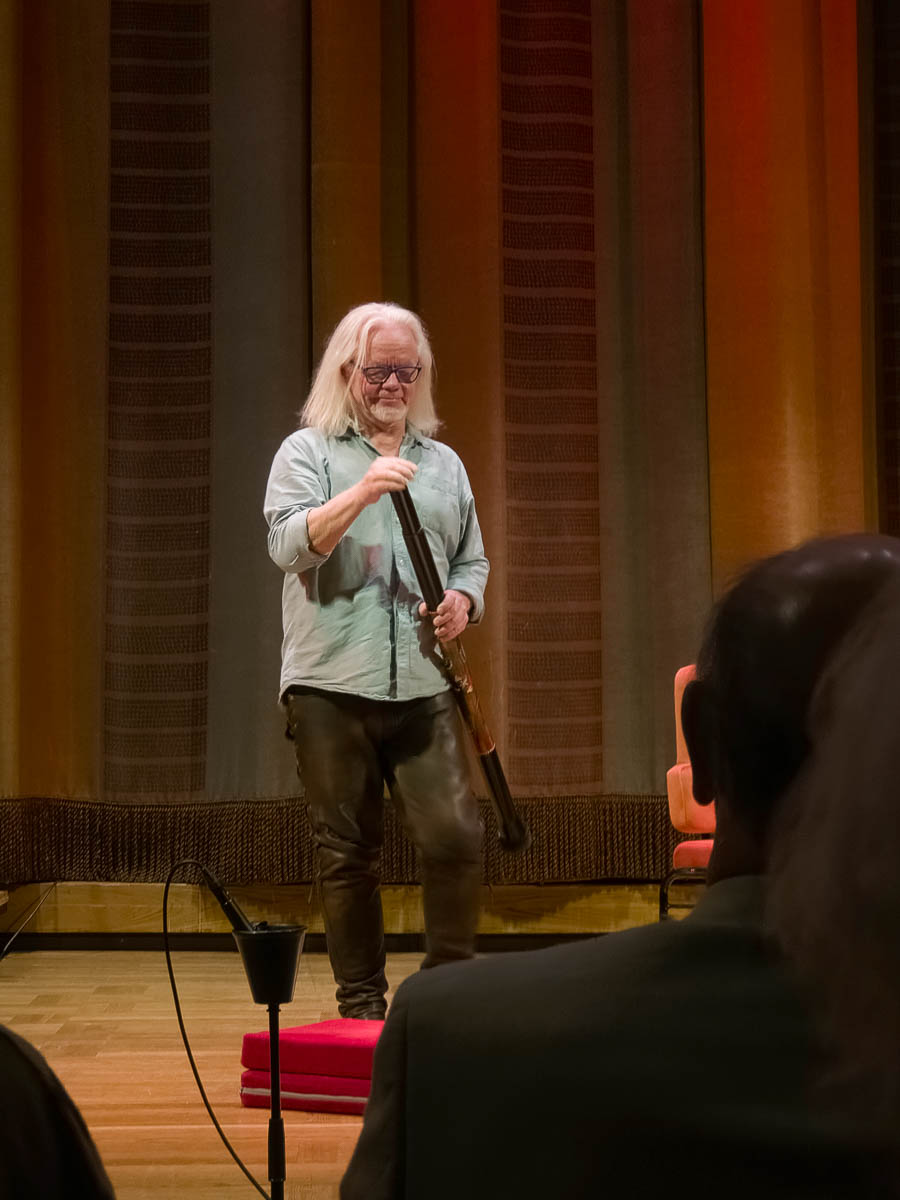
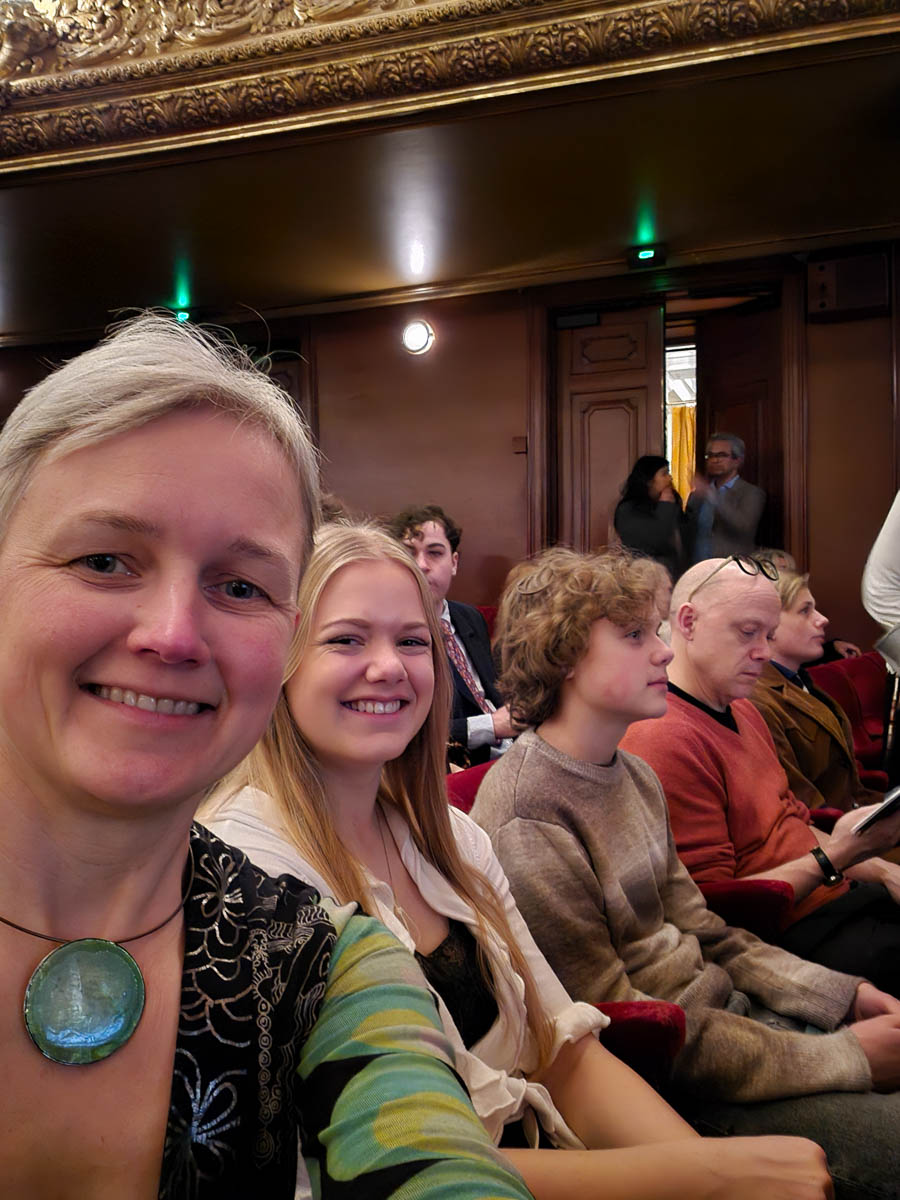
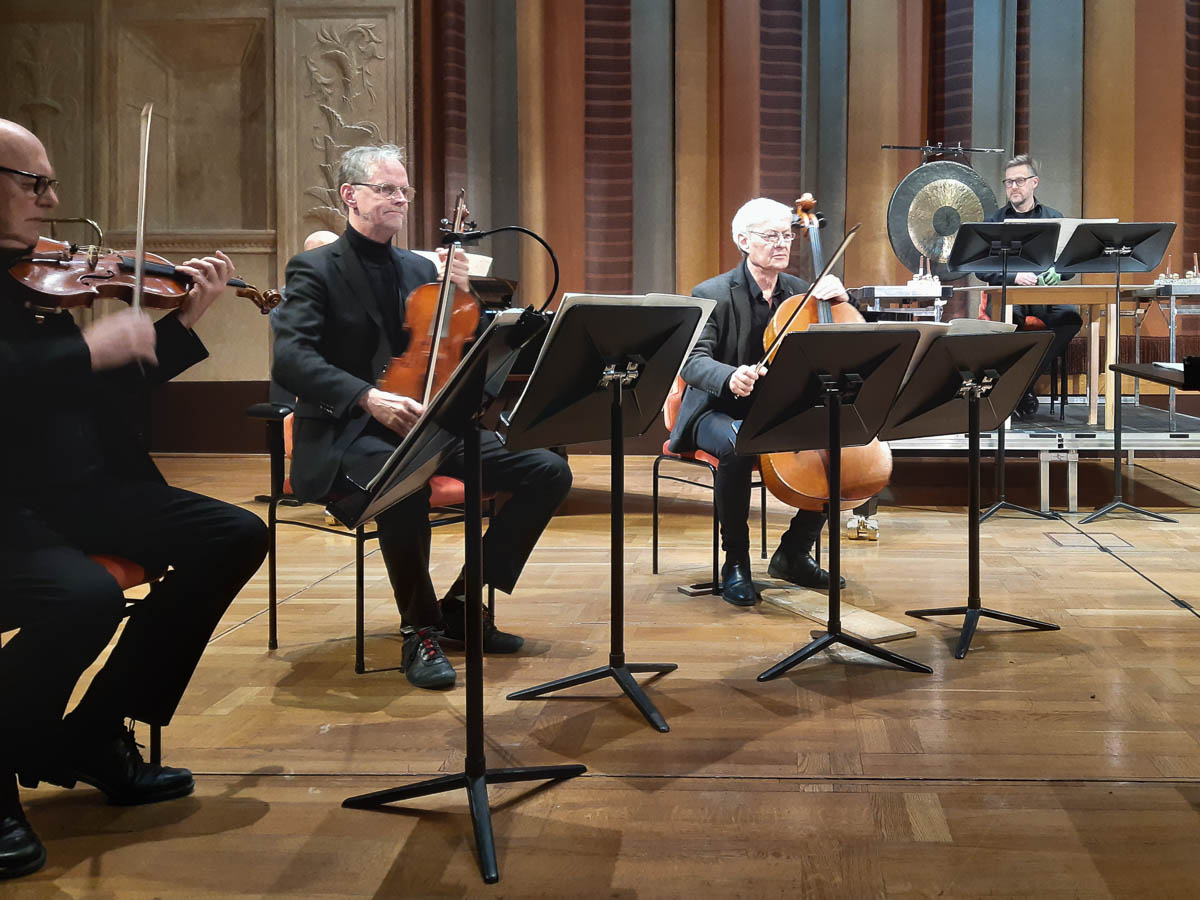
Last Friday I went to the last of the concerts in the “Friday evening new classical” series. The one that made me book tickets to the series to begin with. Strings and a didgeridoo – which was too intriguing to pass on.

For a while it looked like I would miss it because of the conference trip with Active Solution, because that was originally pencilled in for Friday to Sunday. But the dates got changed so I got to do both.

It was… not bad. The strings and the didgeridoo fit together quite well. Especially the cello, which is roughly in the same register as the didgeridoo. But the didgeridoo didn’t stand out as much as I would have wished – it was somewhat drowned by the strings with their stronger, sharper voices.

Not a bad finale for the series, but it confirmed my already quite firm conclusion that this is not the series for me.

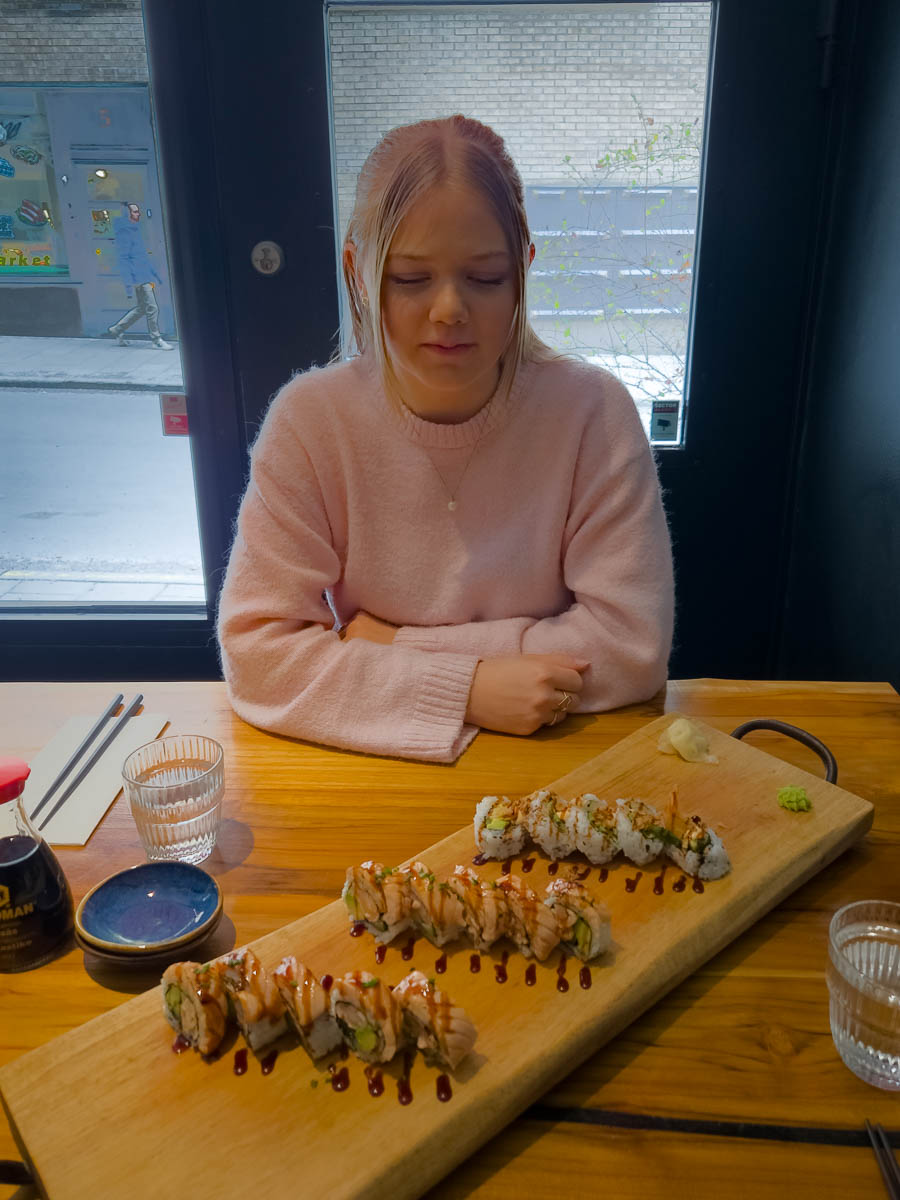
Ingrid and I went to the movies and then for a sushi lunch afterwards. We also bought a saucepan for 30 kr at the flea market on Hötorget and browsed fun shops like Sostrene Grene, and Sudd & Kludd.

We saw Flow, the animated movie about the cat in the flood. It was the first time for Ingrid and the second time for me – I saw it in January, catching it just as it looked like it was ending its run in the cinemas, and liked it enough to be happy to watch it again.

I liked how the animals in the movie are very clearly still animals, even though they’re more intelligent than normal animals – unlike many children’s movies where animals are just humans in other shapes. The dogs here can’t help chasing things, the cat is mesmerised by things swinging back and forth in front of it. The cat makes small meep sounds when distressed, even when nobody is nearby, just like real cats do.

The animals are intelligent enough to understand each other somewhat, even though they don’t have language. I also understand them somewhat, but mostly not all the way. It’s difficult to interpret an unfamiliar animal’s body language. What does the capybara actually think is going on? No idea. Are the other dogs bullies or just clueless? Don’t know. Why are the birds so bothered by one of them helping the cat? Who knows.

A lot of stuff has clearly happened in the world where the story takes place. I wonder how much of an actual back story there is in the creators’ heads, and how much of the world-building is hand-wavy “it just is that way”.

The cat in Flow looks quite similar to Nysse so I couldn’t help imagining Nysse in all those distressing situations. It was a bit like watching movies where kids get hurt, but not quite as bad. (I really struggle with that since having children.) Worse the first time; now at least I knew that it wouldn’t get hurt for real.


Sushi, by the way, is horrendously expensive these days. As is all eating out, really. I thought it was bad when a sushi lunch went up to 130 kr a couple of years ago. Now we’re at 160 for lunch and 200 kr for a la carte. My salary has not gone up 50% in the same time period.

My conclusion from the Friday evening series of new classical music is that modern classical music is often too modern for me. My brain can’t find anything there to hold on to and it just feels like shapeless sounds.

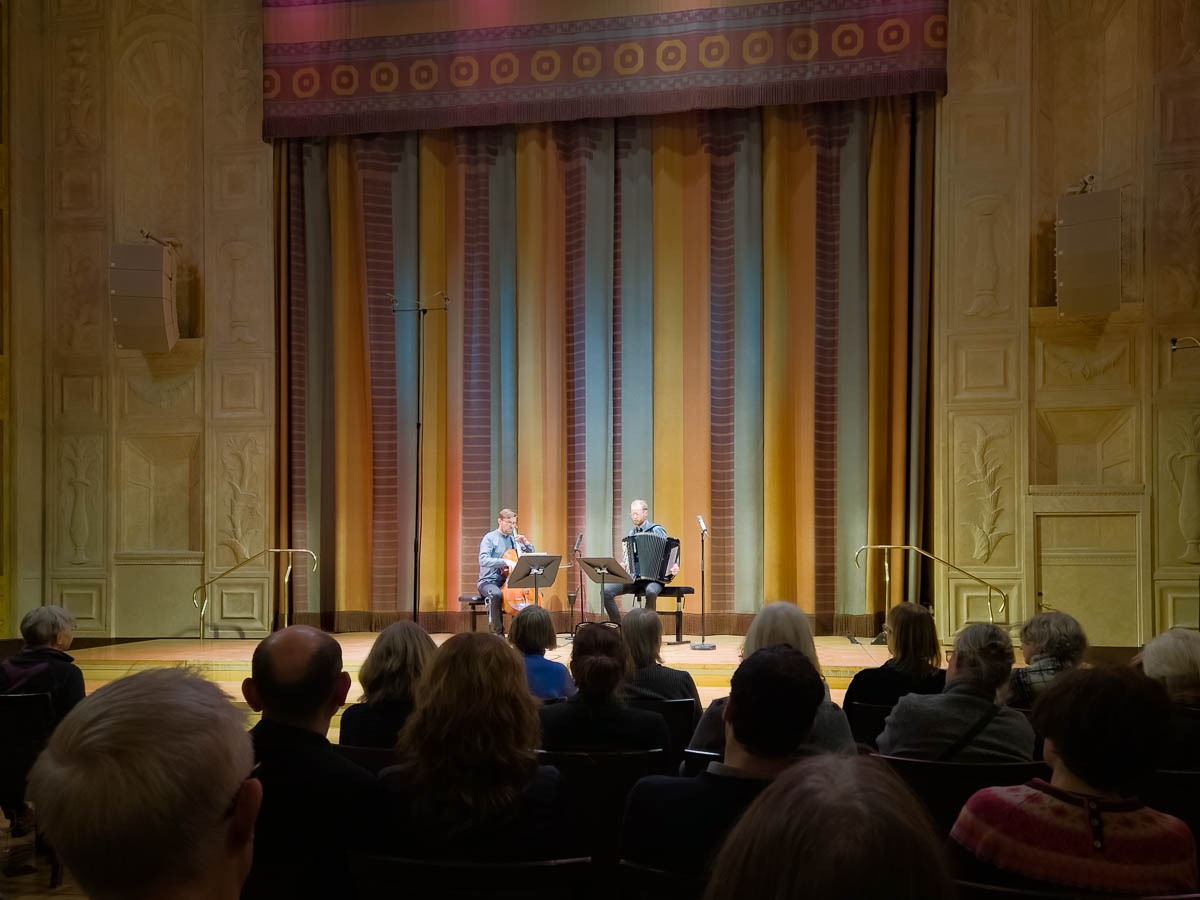
Today’s concert was for the unusual combination of cello and accordion. They alternated between the very old (music by Hildegard von Bingen) and the very new (Jouni Kaipainen, Britta Byström, Sofia Gubajdulina). The very old was excellent; the very new was too much.

This is not a series I will be renewing for the next season.

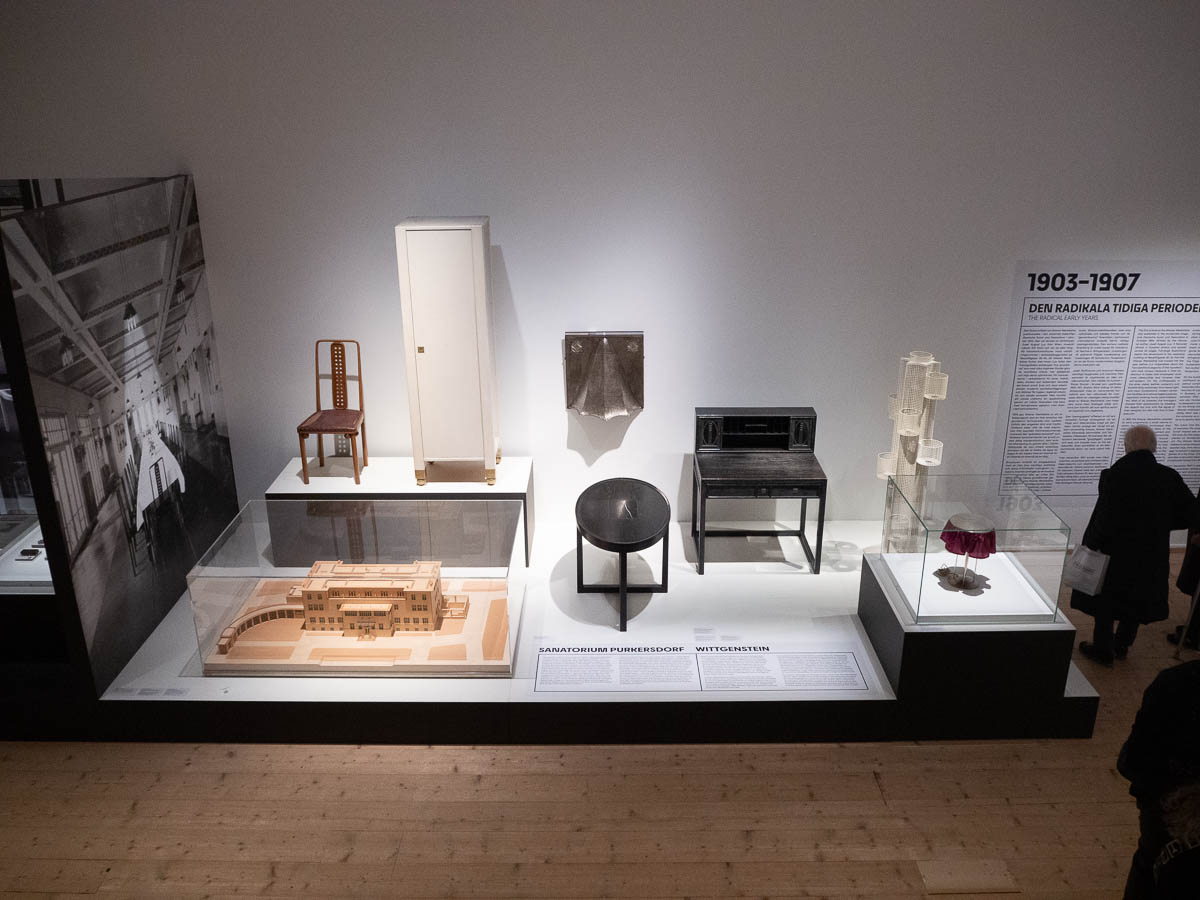
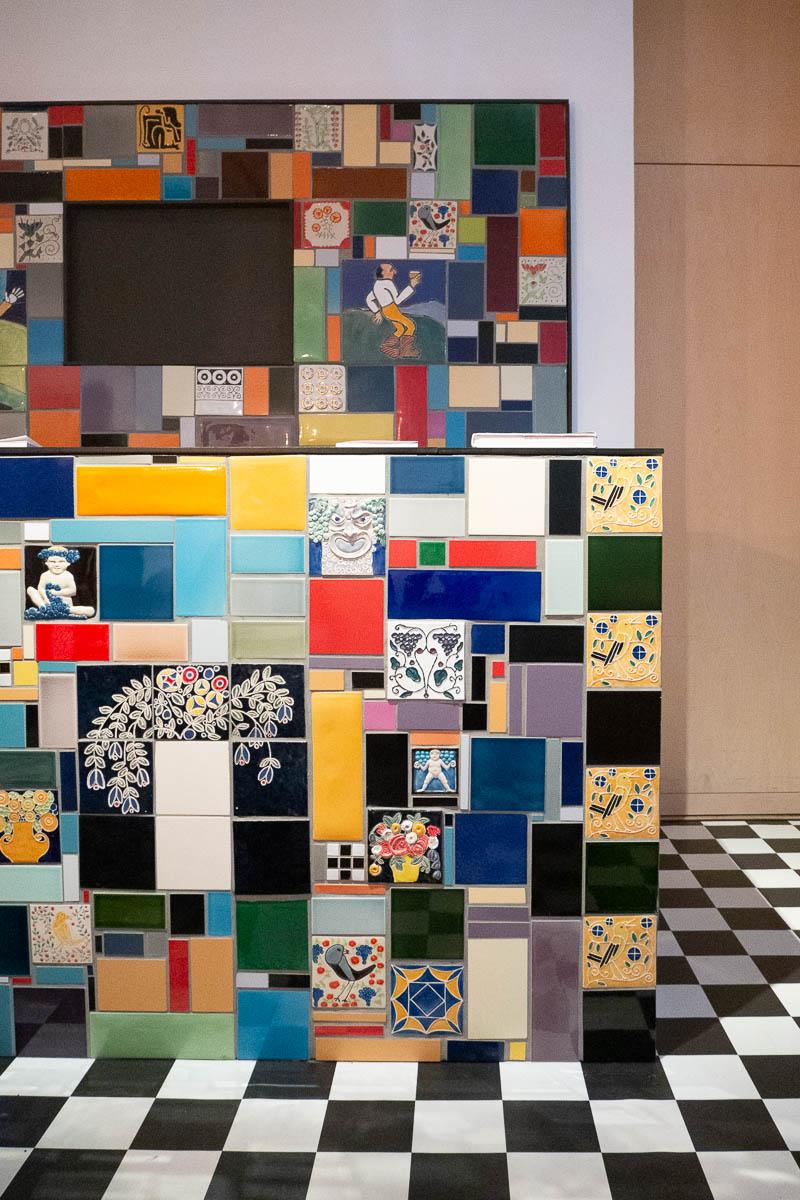
Went to see an exhibition of the work of Wiener Werkstätte, at Millesgården. (A workshop “dedicated to the artistic production of utilitarian items in a wide range of media, including metalwork, leatherwork, bookbinding, woodworking, ceramics, postcards and graphic art, and jewelry”, in Wien from 1903 to 1932.)

The exhibition was full of luxurious, beautiful objects, designed and made for a very different time. Their style must have felt radical back then. But I can see why they went bankrupt.

The story about the cooperative workshop and their ideology of Gesamtkunstwerk and raising design and craftsmanship to be equal with art was interesting. I couldn’t make sense of their actual design principles, though.

The first parts of the exhibition present them as valuing function strictly above ornamentation – furniture with pared-down lines, much black and white, logos and graphical design with pure geometric forms only.

But then the bar of the Fledermaus cabaret – reconstructed in its full glory – is almost psychedelic in comparison.

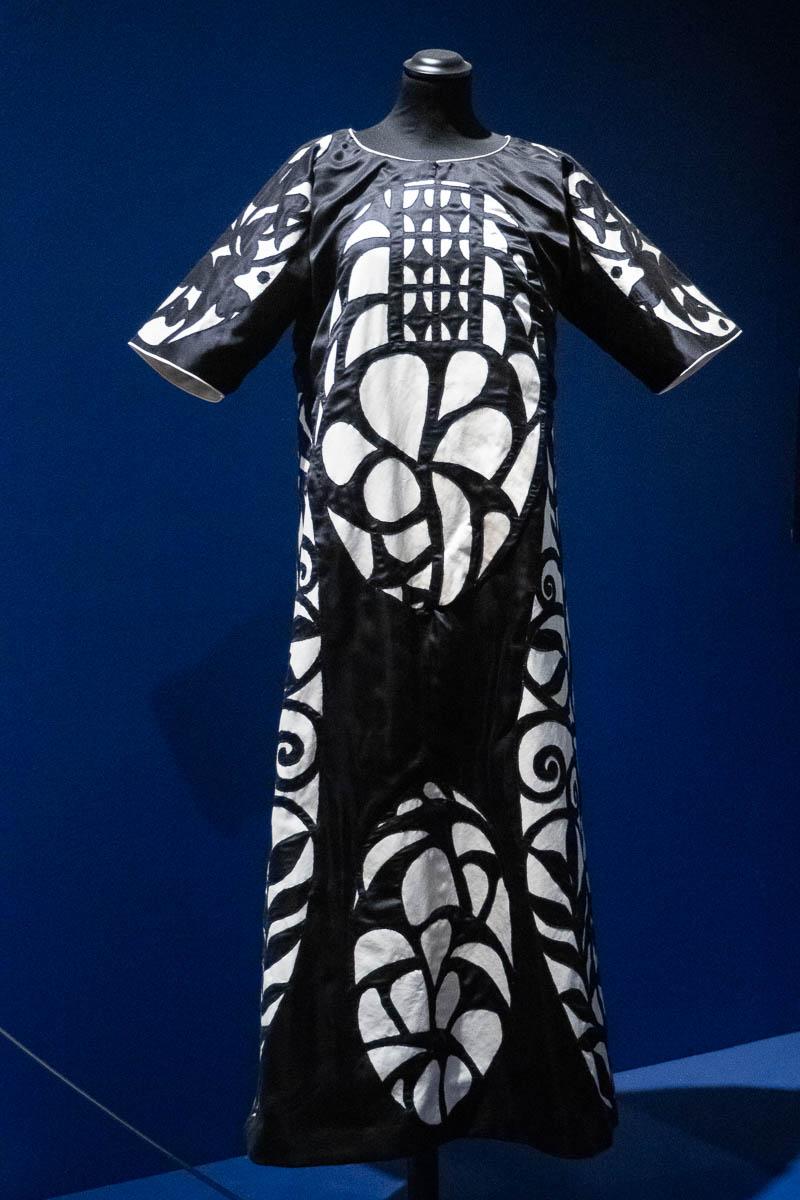
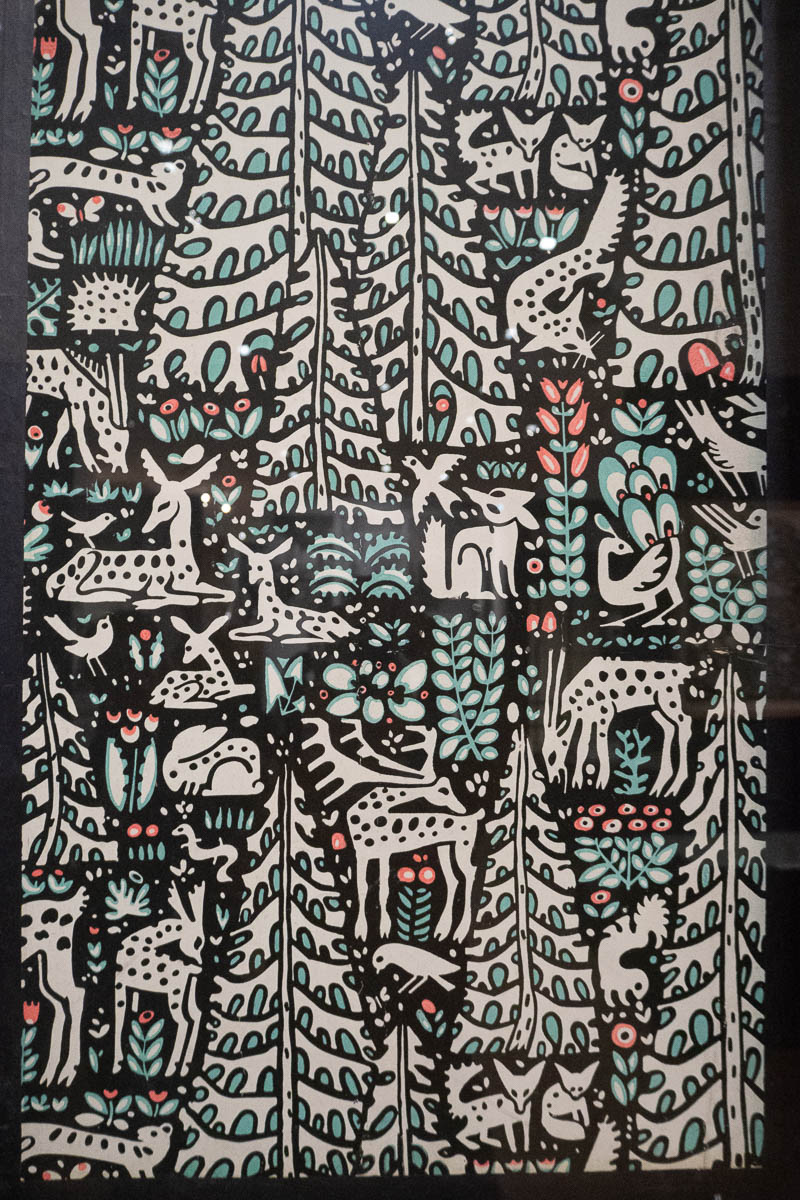
There’s an austere black-and-white masquerade gown, next to a wallpaper embroidery design that is all full of extra everything.

Pretty, but also confusing and thus somehow unsatisfying.

I’ve been thinking of seeing I Follow the Sun at Artipelag since the summer. Was hoping that Ingrid would find time to join me, but she’s been working at least one day every weekend, so I ended up going on my own.

This was my first time at Artipelag. With a new museum, you never know what you’ll get. I came fully prepared for a small provincial art show with a couple of big-name works padded out with unknowns, and was blow away by the whole exhibition. I’ve really been missing out!
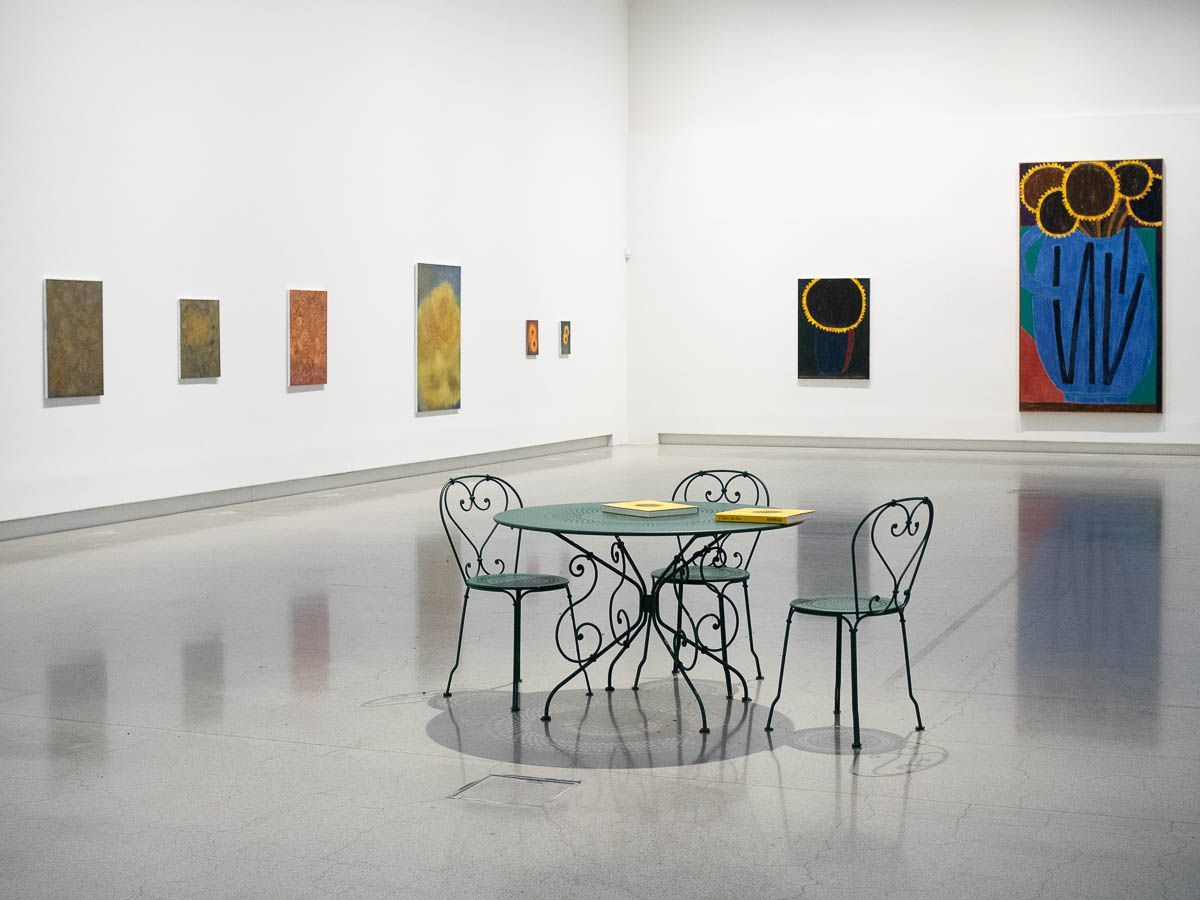
The exhibition was a lot larger than I had hoped for. There were works of Fernand Léger, Emil Nolde, Carl Larsson, Ai Weiwei, etc, and beautiful works of contemporary Nordic artists. No actual Van Goghs, which is understandable. I read in the book accompanying the exhibition that the concept for the exhibition had started years ago with the idea of borrowing Van Gogh’s paintings, but withered away when it turned out to be impossible. The museum staff pivoted and made something different happen instead.

But his paintings are the quintessential images of sunflowers, impossible to avoid. They’re on jigsaw puzzles, mouse pads, mugs, aprons, shopping bags, towels, and everything else you can imagine. I wonder what he would say about how his works have been used.
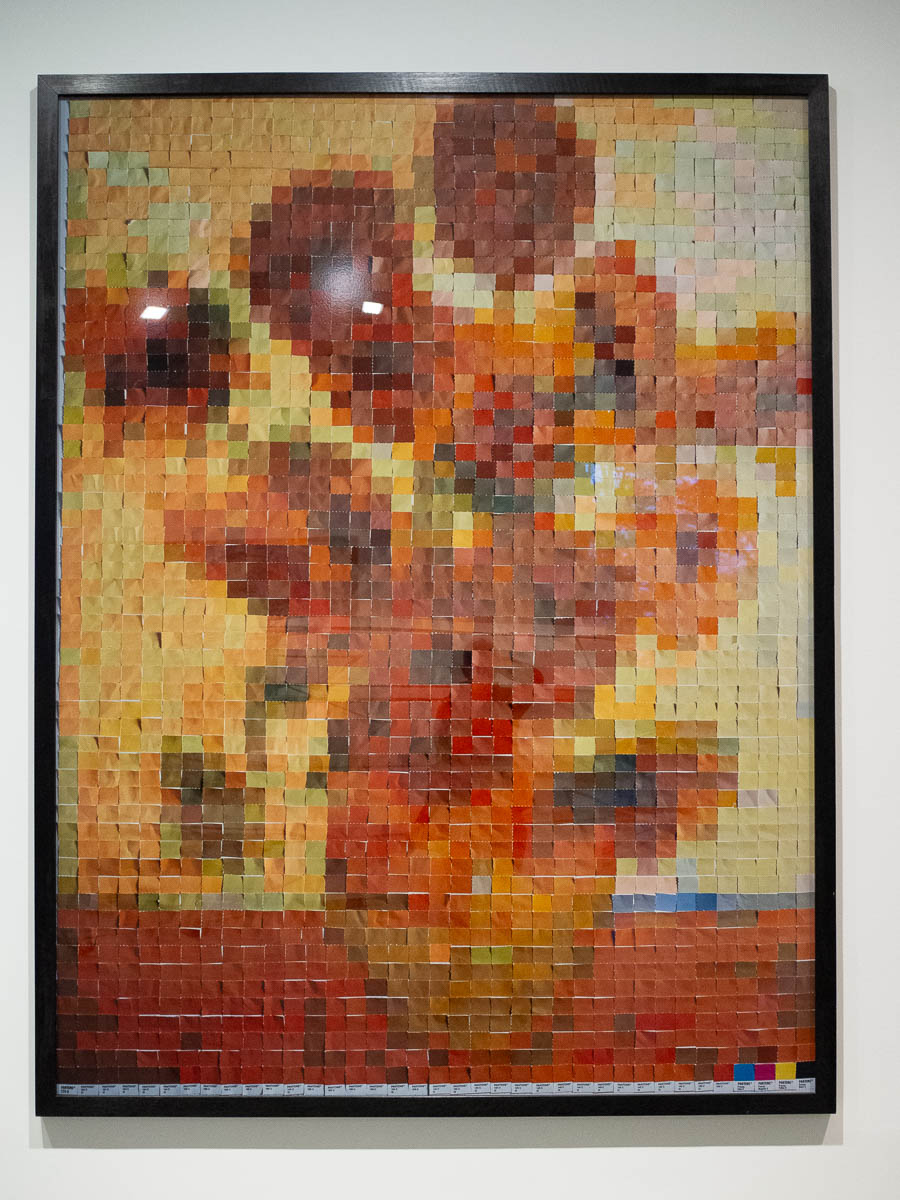
And he was here as well, in the shape of Vik Muniz’s works. He has recreated Van Gogh’s works with pieces of coloured paper. You’re looking at a digital copy of my photo of a print of a photo of a recreation of a painting. How many layers of indirection is that?
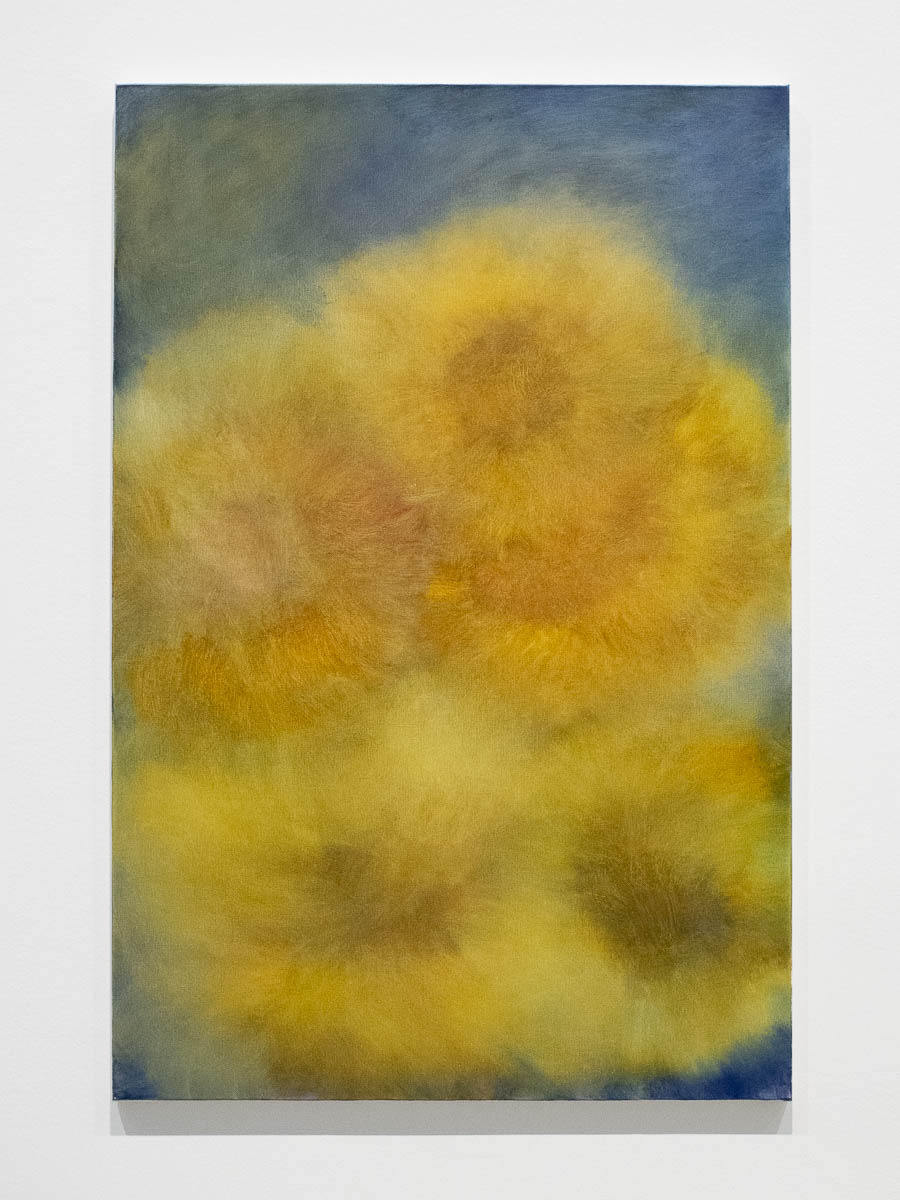
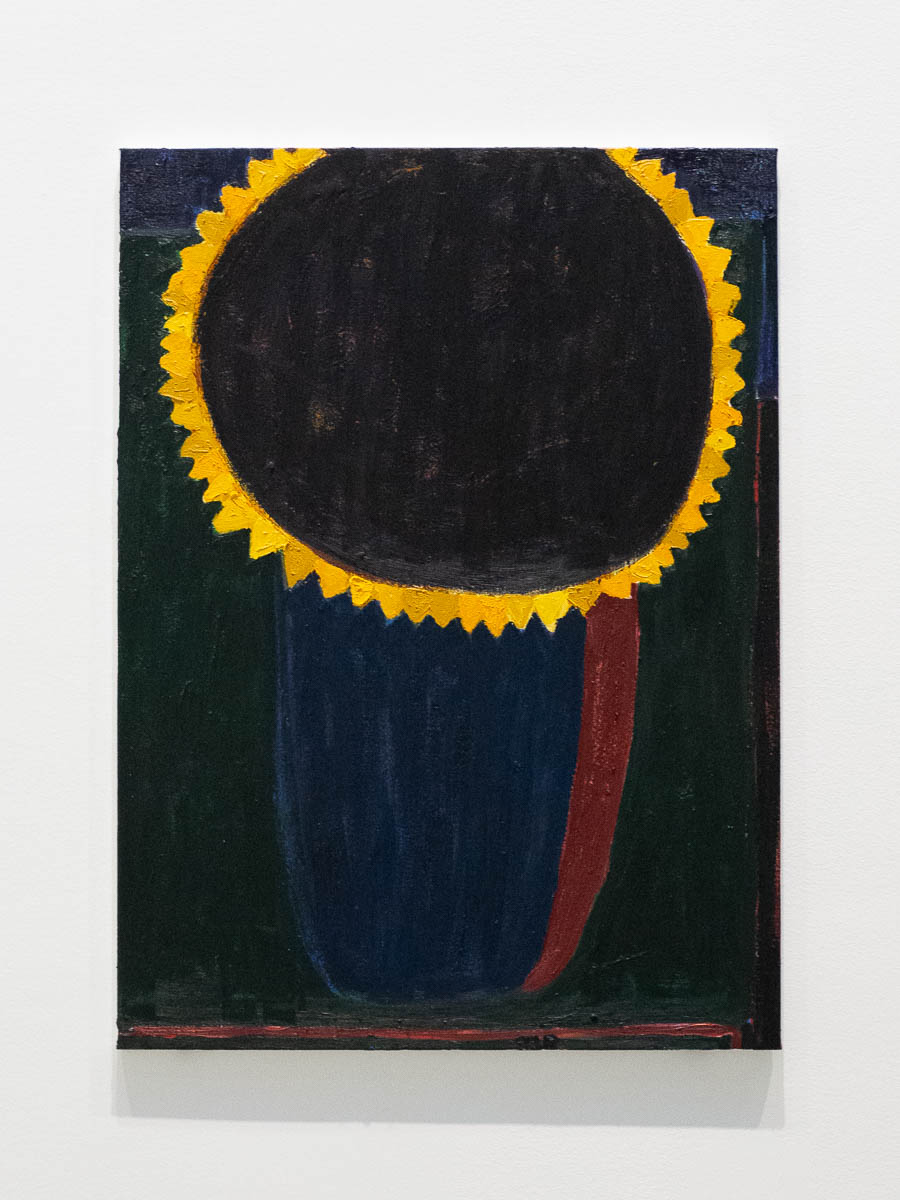
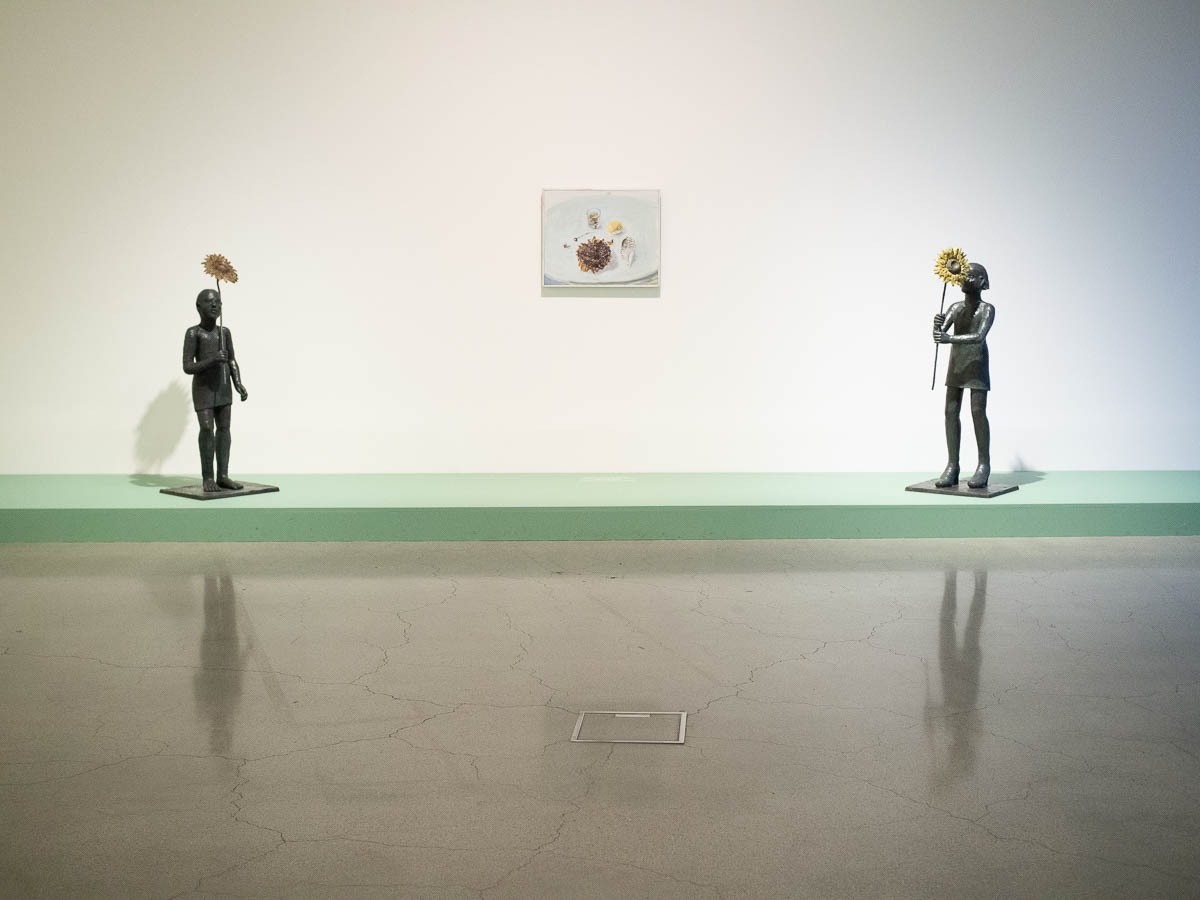
There were very soft, romantic sunflowers, and harsh, stylized sunflowers. (Clara Gesang-Gottoft and Tal R.)

There were works by artists who have made sunflowers their “thing”, and by others who have said that flowers are the worst thing you could possibly paint but then couldn’t help themselves after all.
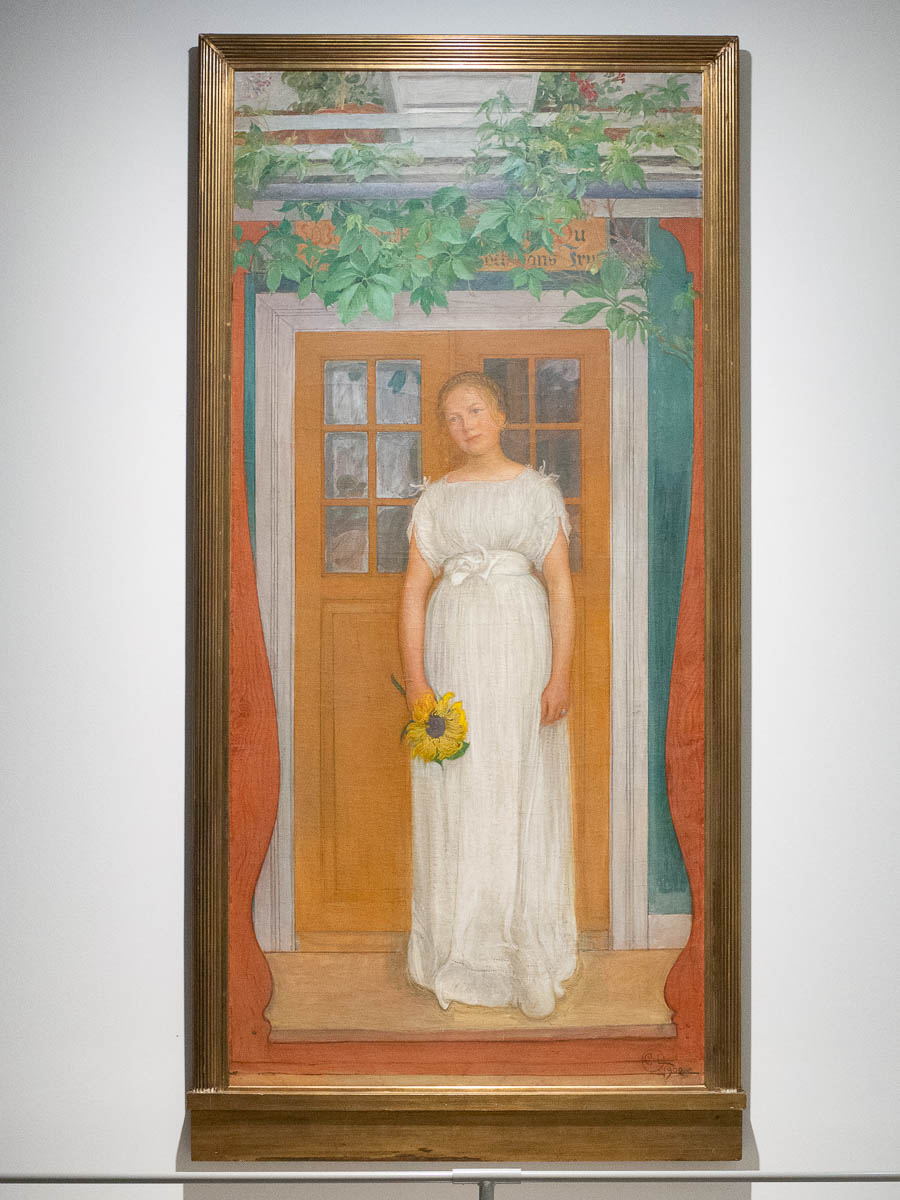
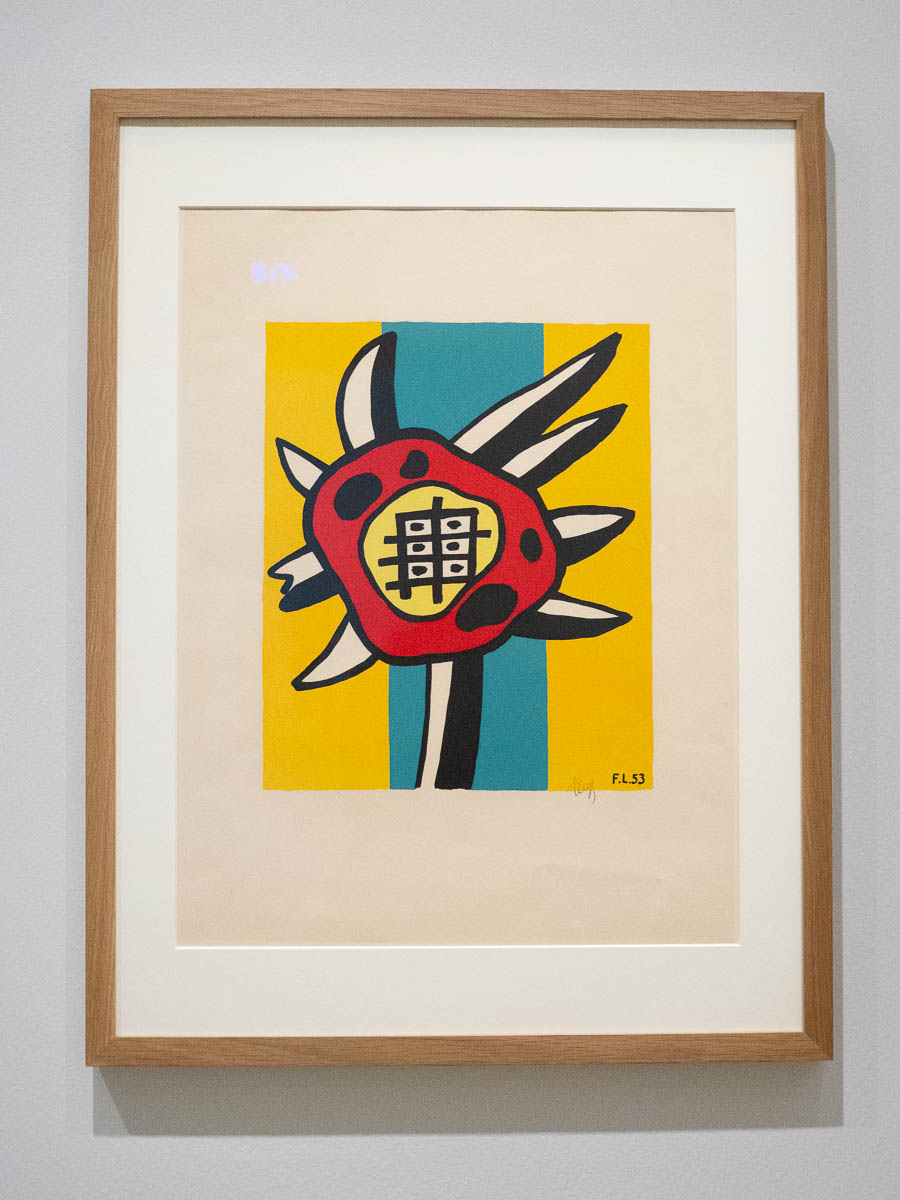
There were sunflowers carrying a heavy load of symbolism, and sunflowers reduced to abstract shapes. (Carl Larsson and Fernand Léger.)

There were colourist sunflowers and pointillist sunflowers and naïve sunflowers.
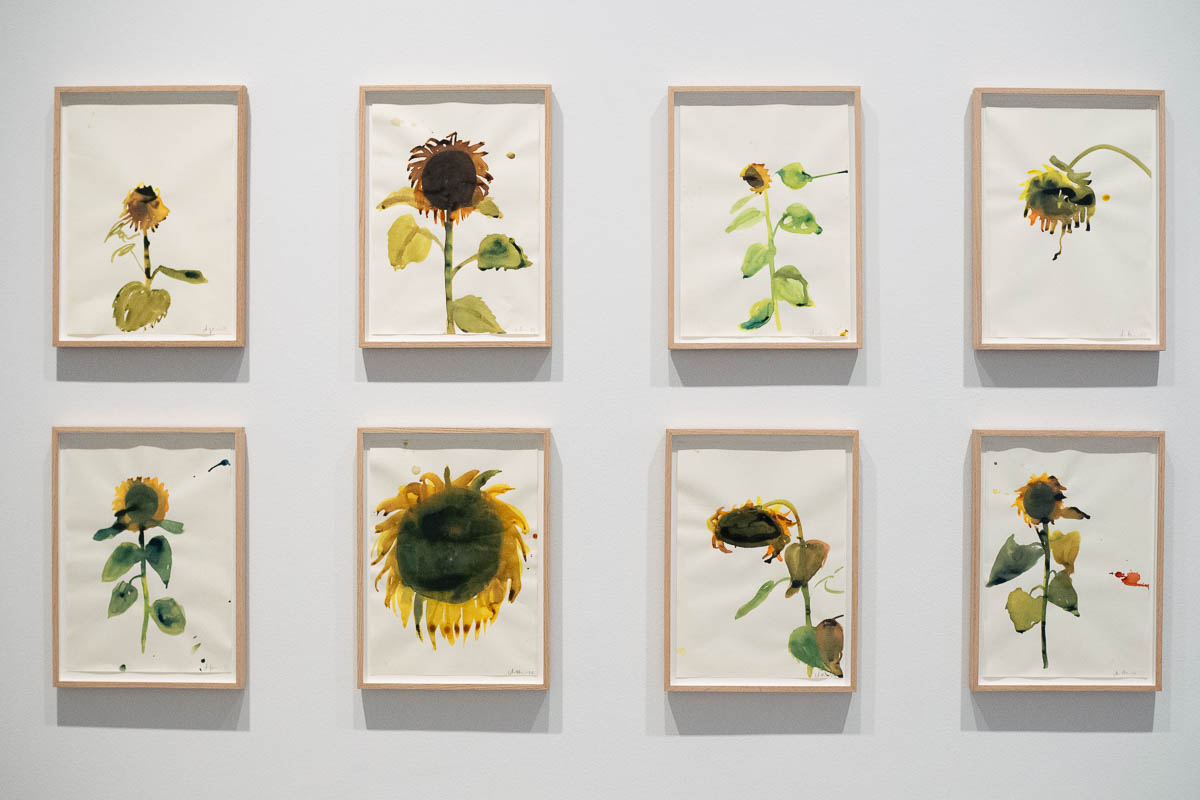
I loved these simple ink paintings by Anna Bjerger.
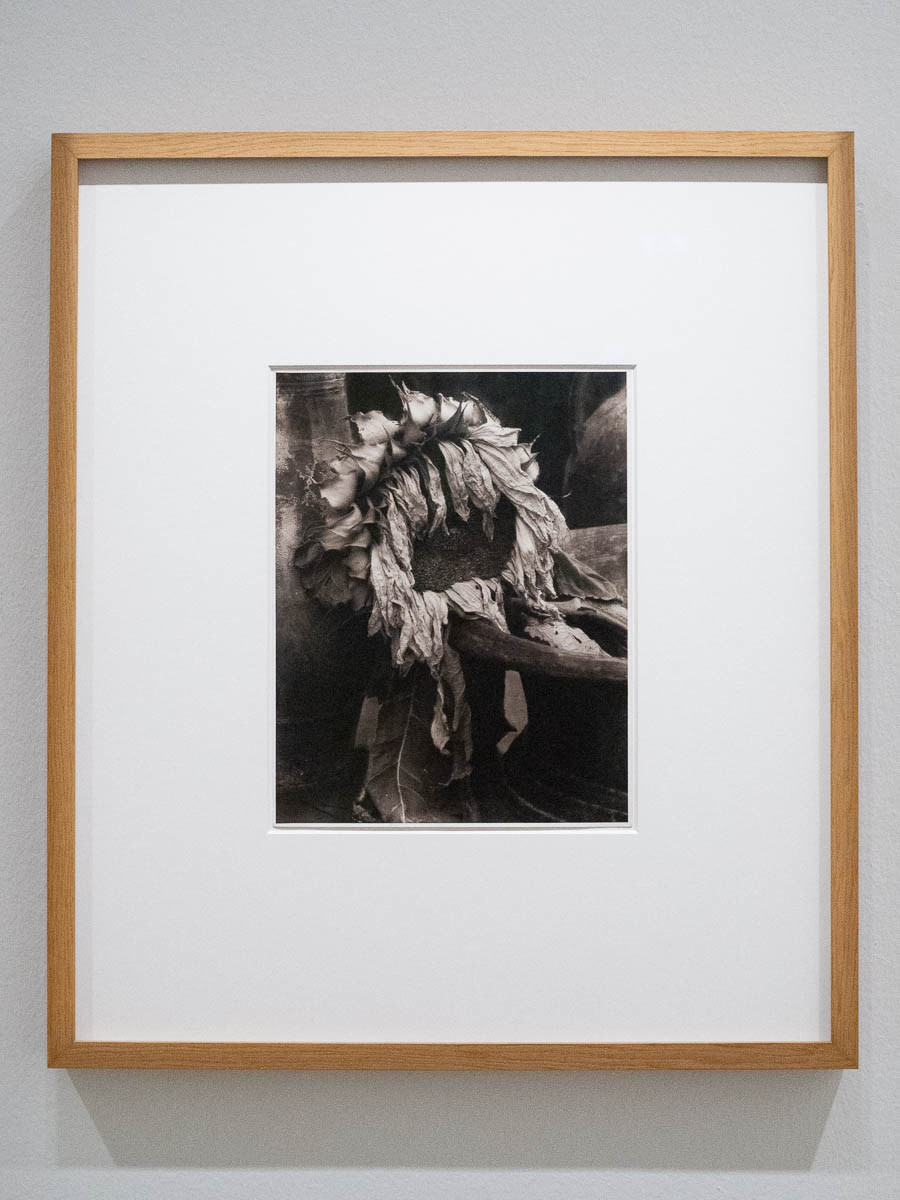
There were also photographs. What struck me about those was their timelessness. A photograph of a sunflower from 1920 is mostly indistinguishable from one taken in 2020.
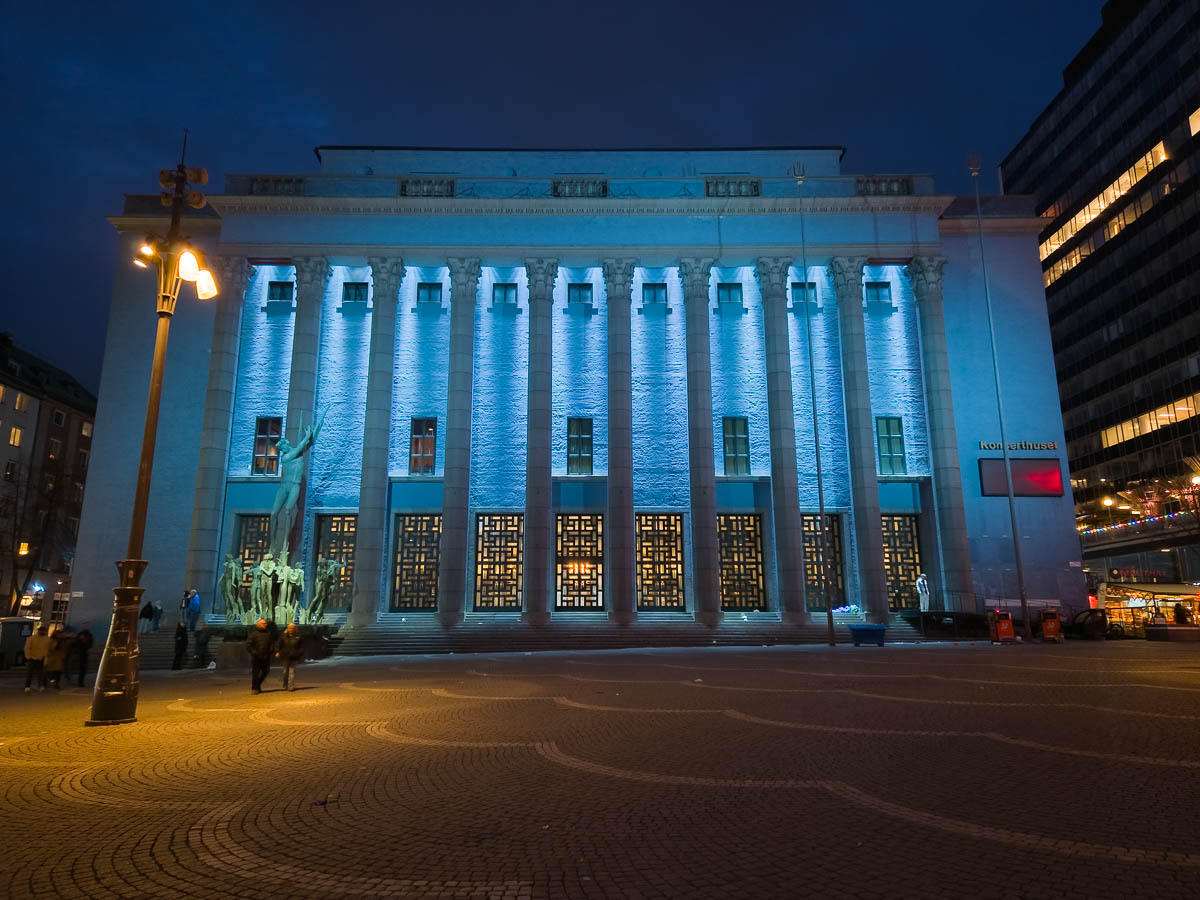
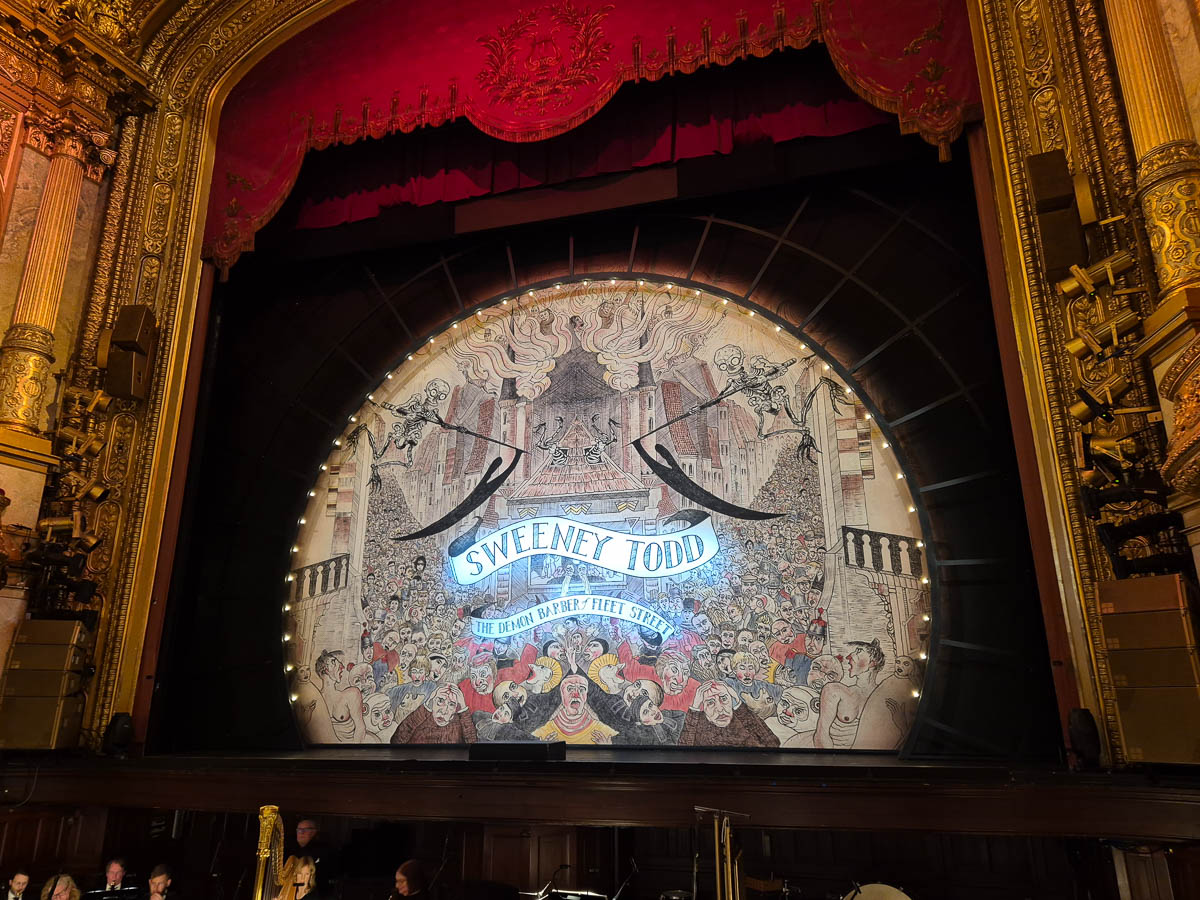
Sweeney Todd at the Royal Opera. Technically a musical, which is nice, because it made the whole thing sound more pop-culture-ish and got the kids to join, but really, what makes this a musical rather than an opera?

I was most impressed by the work of the dialect coach, because Ms Lovett sounded as British as could be, and so did the others.

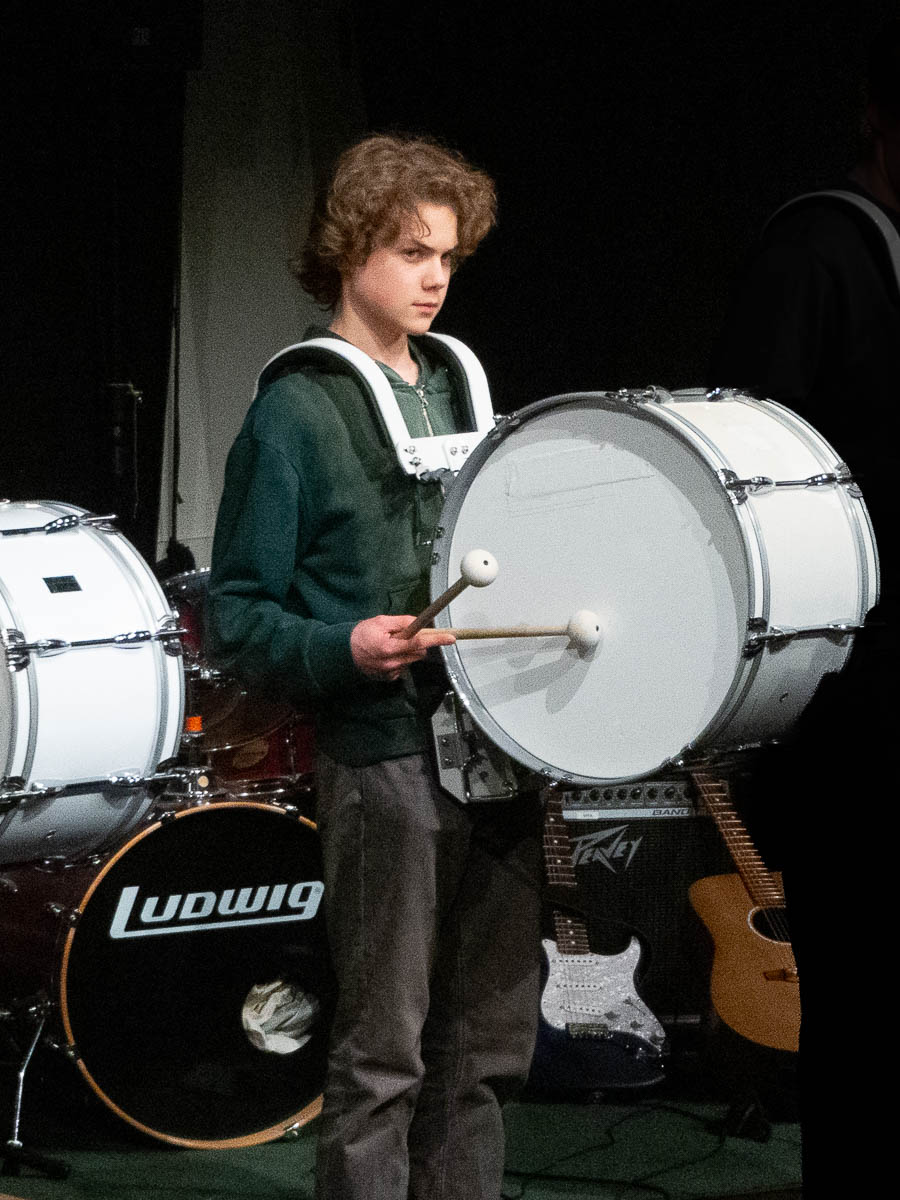
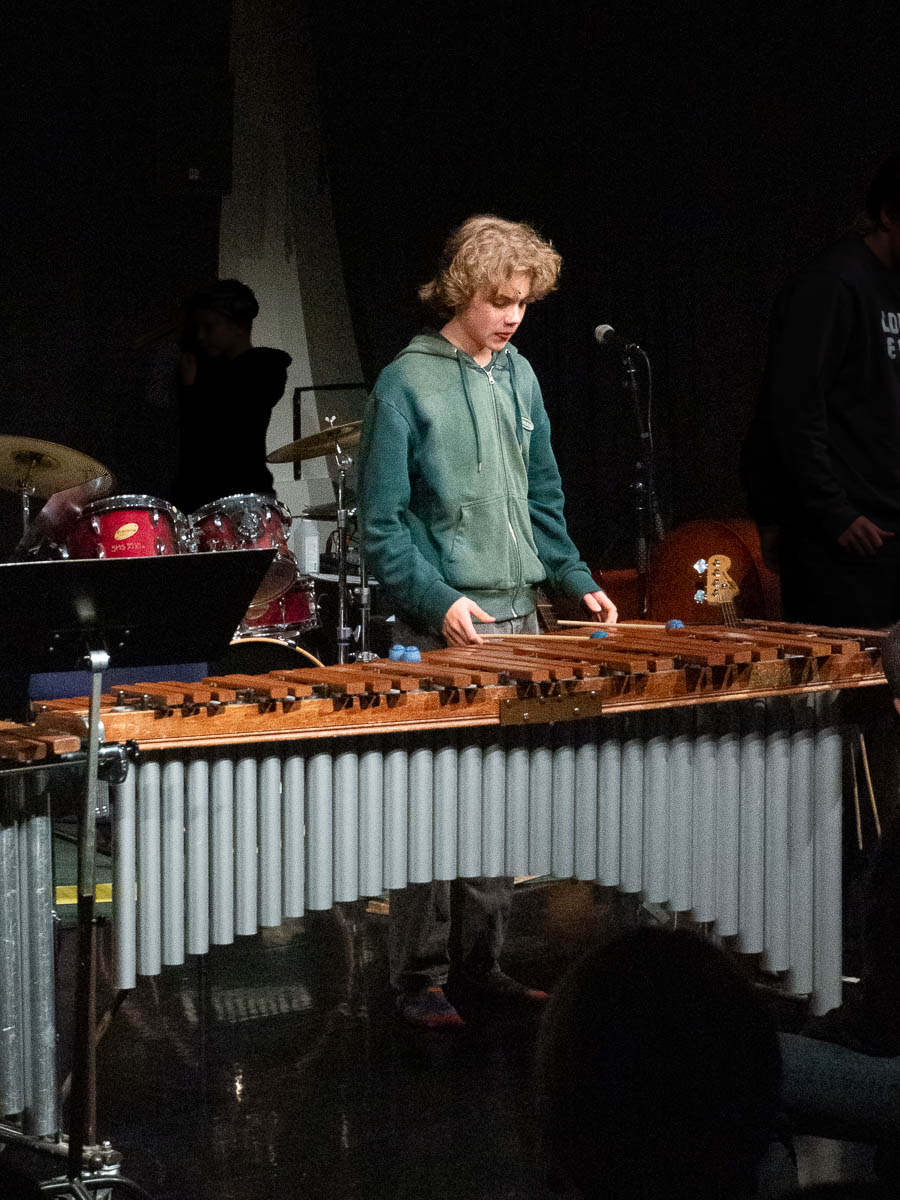
Adrian took up drums again this year. He tried five years ago but lost interest. Now he’s re-found it.

The end-of-term concert was quite a bit longer than I had expected, and a lot of it sounded better than I had expected, too. I guess my expectations were partly still stuck in 2019.

Adrian played the bass drum in a drumline (which was my favourite piece of this evening), the standard drum set in a rock song, and the marimba for Jingle Bells.

If the photos look weird, it’s because I’ve blacked out other kids who were in the frame.


Three concerts in three days is a bit much. It wasn’t intentional, but the two concert series happened to end up on the same weekend. Sara Parkman’s concert came up much later, and I couldn’t just pass it by.

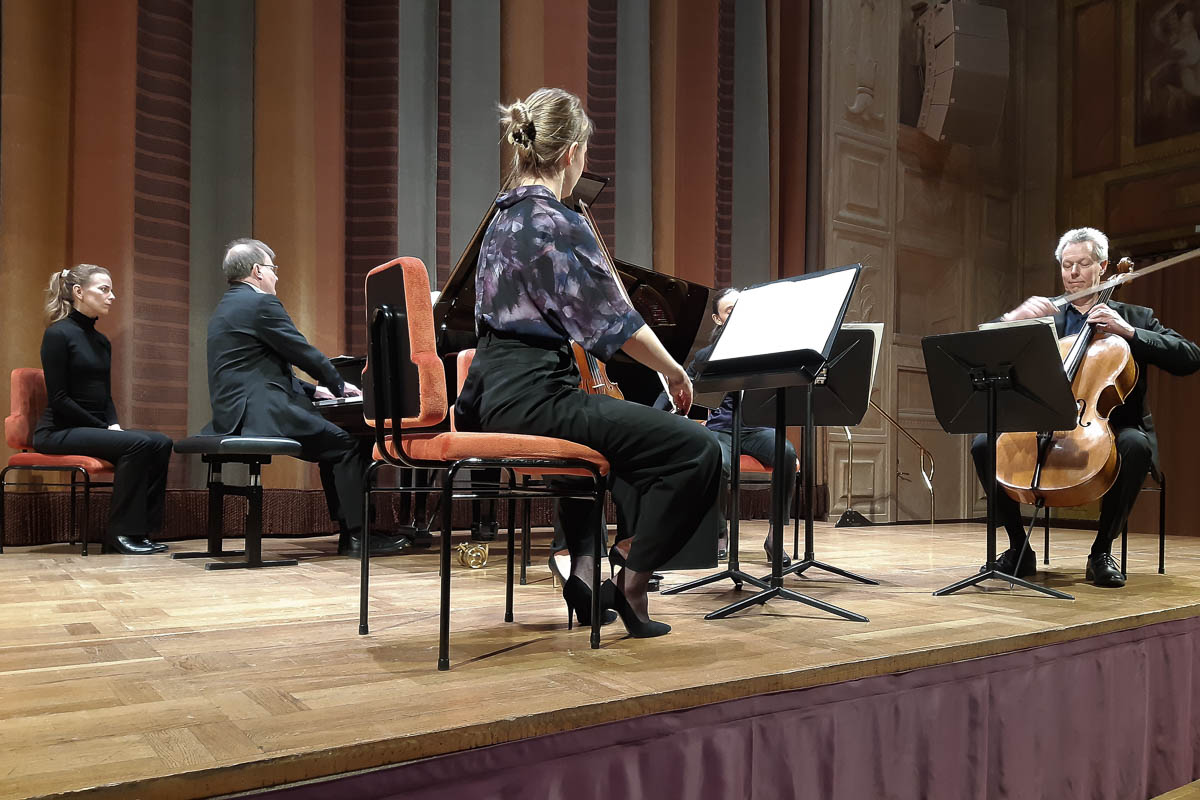
The Sunday afternoon chamber music series is usually nice and cosy. Some pieces are definitely more interesting than others, but if nothing else, it’s a moment of peace. Today’s concert concluded with 45 minutes of a piano quintet by Brahms.

For most instruments, it’s different players each time. The philharmonic orchestra obviously has numerous violinists and so on. But the pianist is often the same – Stefan Lindgren. By now I recognize not only him, but also his loyal page turner, who’s often there with him. The others all manage their own sheet music, physically or digitally, but a pianist’s feet are, obviously, busy with pedals already.

Sara Parkman in concert in Katarina church. The concert was titled Kura skymning.

“Kura skymning” means “huddle [in the] twilight”. I learned that it’s an old Nordic tradition, of taking a moment to sit together in the peace and quiet of twilight, without/before lighting any lamps.

The concert didn’t quite ask the audience to do that, but its lovely candlelit atmosphere came close. The music was beautiful, of course. The acoustics of a church suit her music, both voice and violin, very well. And she is just such a nice, kind, generous person.

She’s now on my list of “buy a ticket whenever she’s nearby, regardless of what she’ll play” list.

I have an extra concert series this year, very much as an experiment – “Ny fredag”, Fridays with new music. I am cautiously intrigued. One of the four concerts in the series promised didgeridoos. Today’s concert was not that one, but KammarensembleN playing “Schnee (10 canons)” by Hans Abrahamsen.

It was… interesting. I can’t honestly say that I liked it, and I will not be listening to it at home, or seeking out more concerts of this composer. But it never felt boring while I was listening.

The musicians got sounds out of their instruments that I never would have imagined. The first part starts with the violins playing a note so high that it sounds like just the bow against the string, a soft whisper that was probably inaudible past the very frontmost rows of seats. Later, the cello makes long wailing sounds, and the piccolo flute likewise sounds barely like music.

The percussionist’s main instruments were two sheets of paper, one in each hand, that he rhythmically pushed around on a flat table, with great focus. While the violinists were preparing by tuning their instruments, he prepared by donning gloves with rubberized fingertips. He had two sets of paper, even, and I suspect the other pair may have been sandpaper, because during the latter part of the piece, his movements were sending up little puffs of dust.

The gong behind the percussionist was hit exactly once.

Overall I like my music more melodious and less dissonant. Some modern classical music is! Like Ylva Skog’s, or Philip Glass or Steve Reich. But many composers really want to be pushing the envelope, and if they can’t find any other direction to push, they push away from melody.