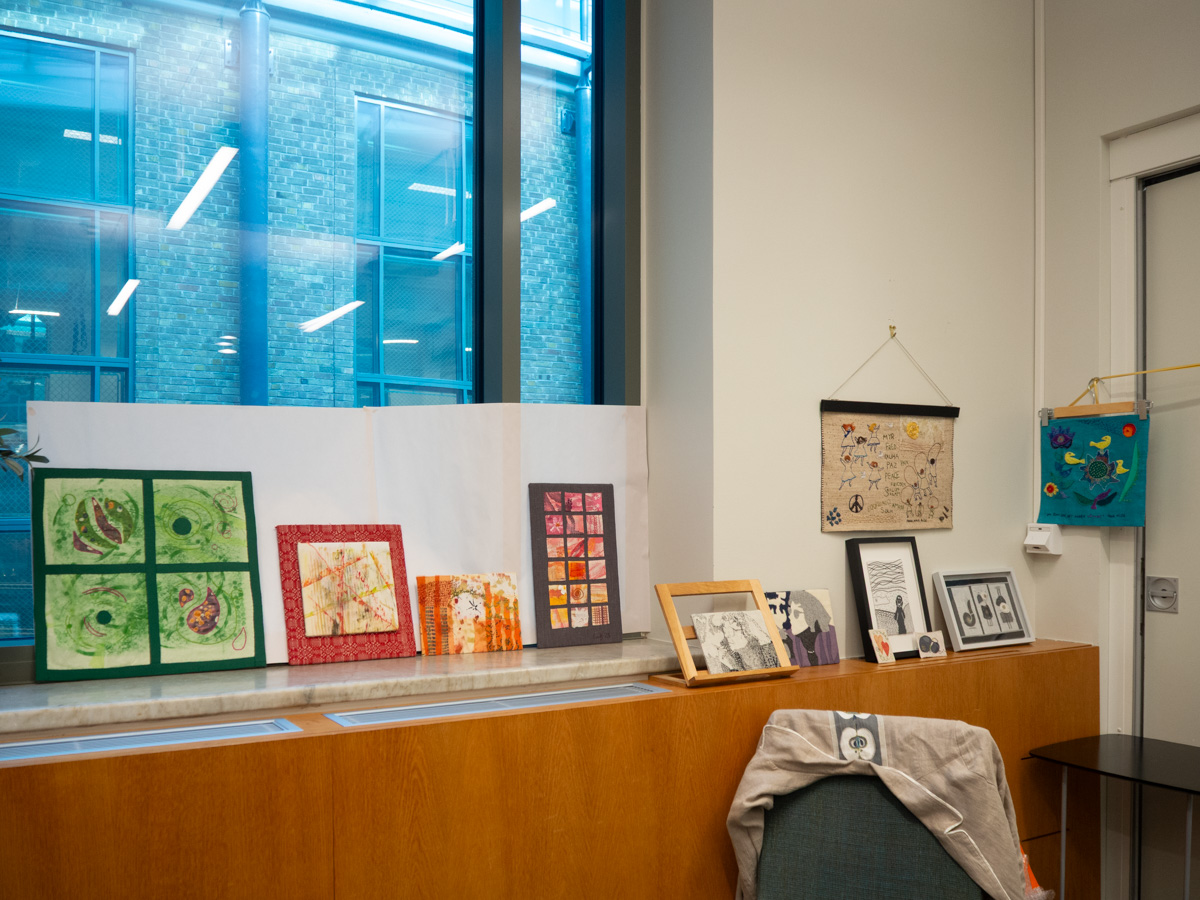
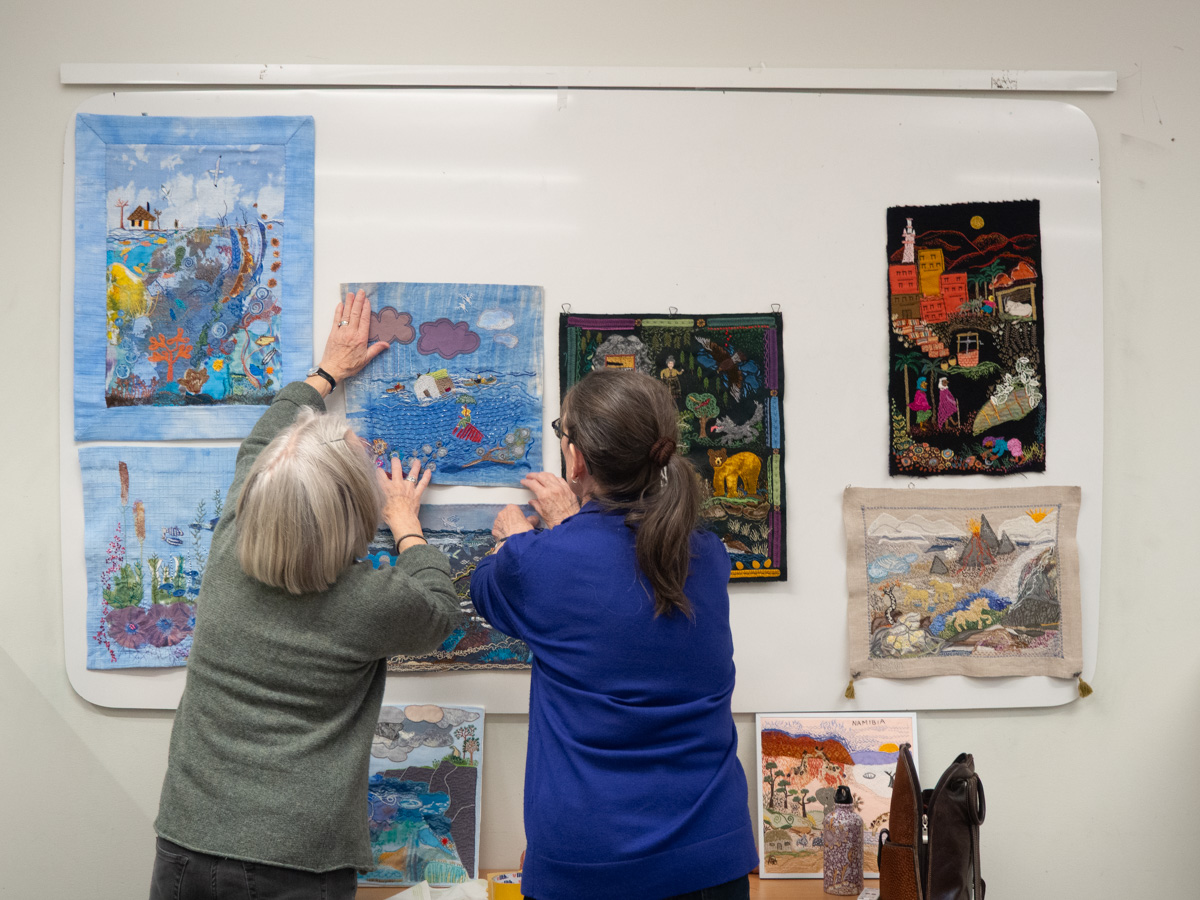
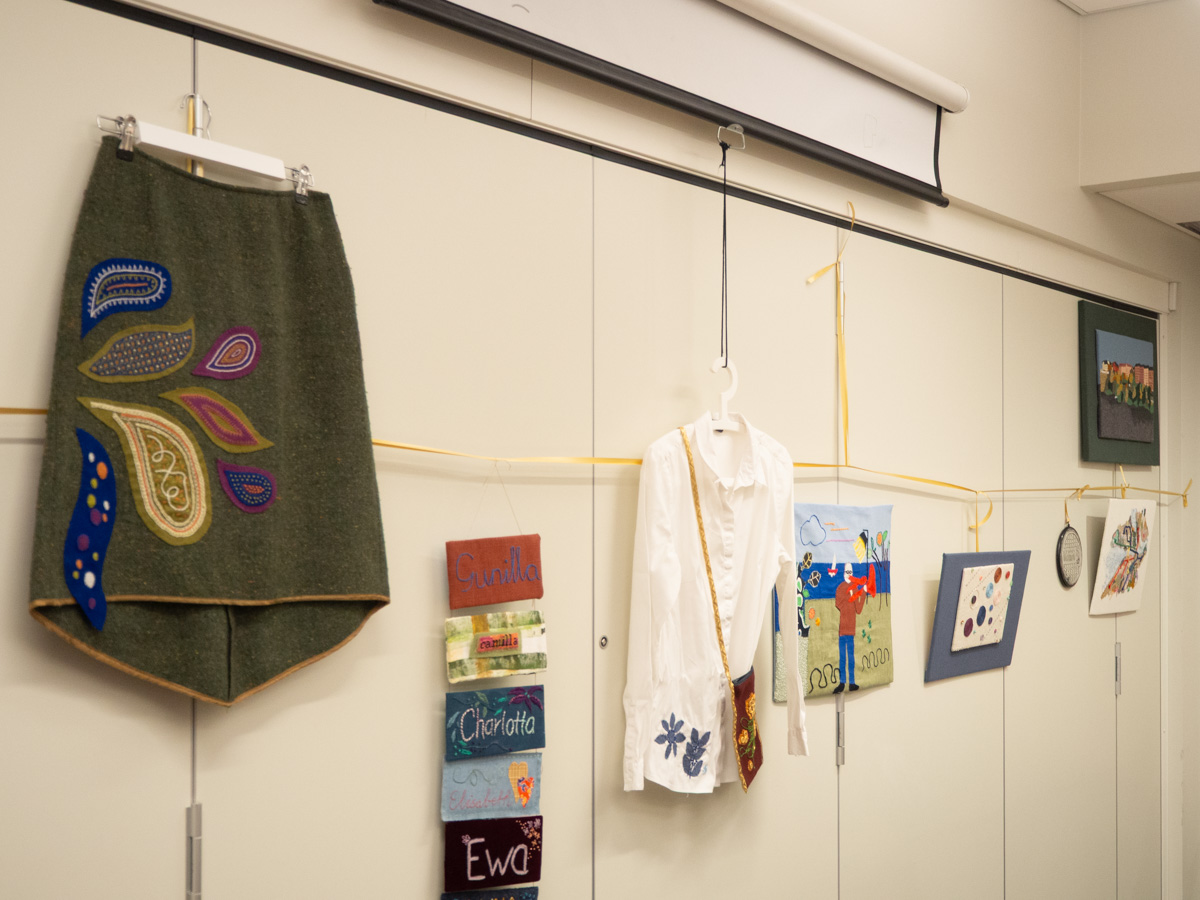
I took the train to work today, too tired to bike. And since I was in town, and actually have a monthly SL card, I took a detour on my way home to see a small embroidery exhibition. It was nice but much smaller than I had expected. Like, this is two of the four walls of the room, and behind me, out of view, is the other half. That’s it.

I do enjoy looking at other people’s embroidery, but also not. The finished piece is often much less interesting than the work of making it, the process of getting there. It’s more fun to look at what the others in the embroidery club are working on, to hear them tell about their choices and decisions. Even though this is the work of a professional and we’re hobbyists of no extraordinary skill.

An exhibition at Waldemarsudde, titled “In Bloom: Art and Botany” – about flowers in art. I like flowers, I like art, sounds nice. Maybe not super exciting (how exciting can a bunch of paintings of flowers be?) but pleasant, I’m sure.

How wrong I was. This was an incredibly varied and interesting exhibition, with so much more than just paintings of flower bouquets.

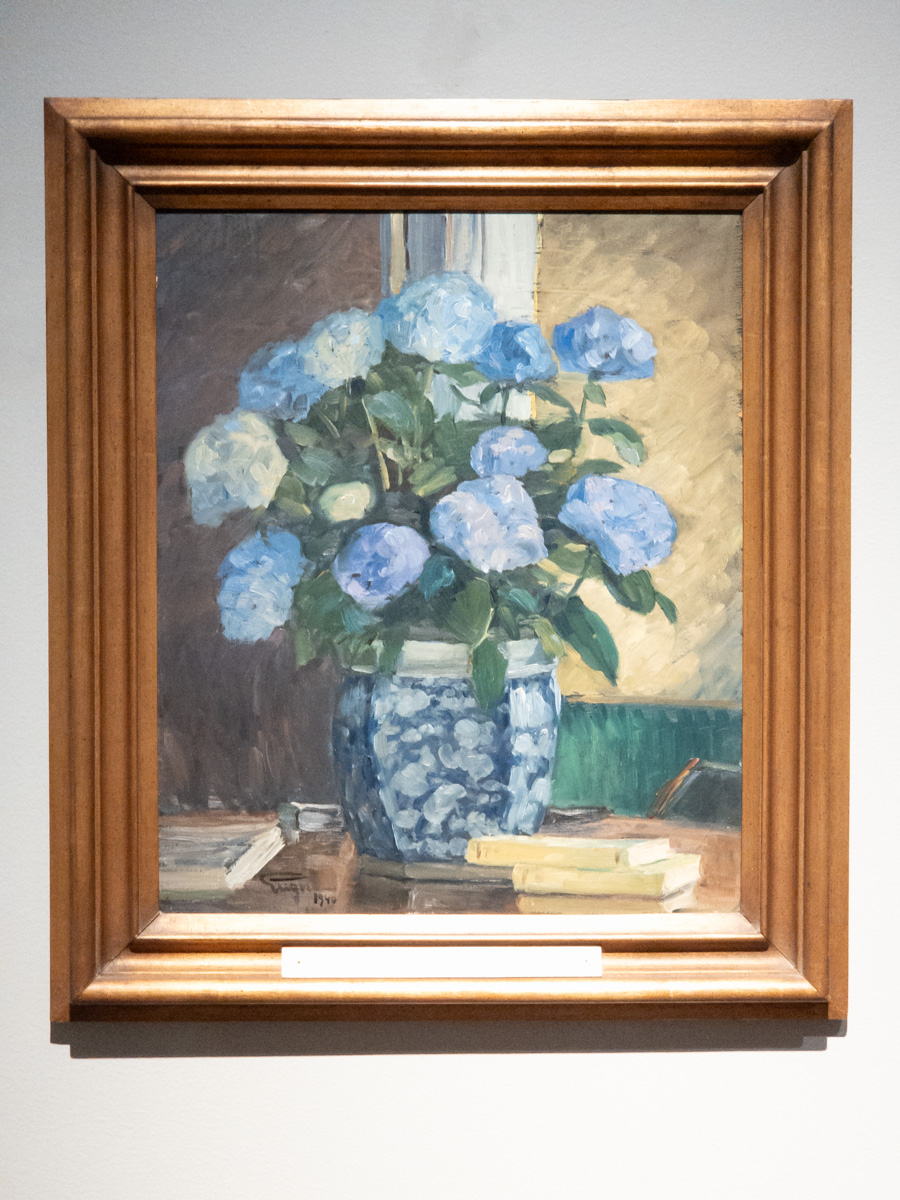
There were a few of those, of course. Prince Eugen, who originally had Waldemarsudde built, was fond of both gardening and painting, and some of his works introduce the theme. This first painting reminds me of one that Ingrid made, that I now realize I don’t have any photos of.

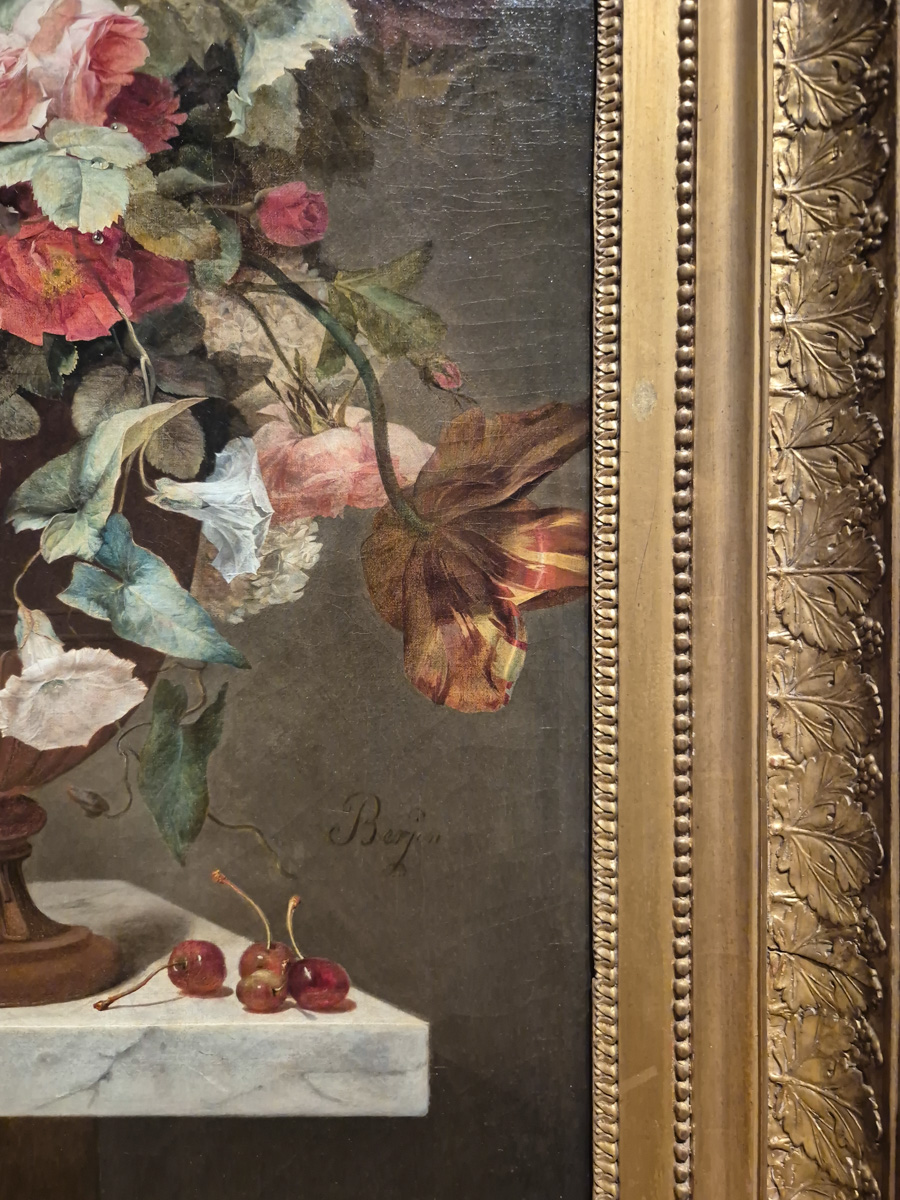
17th-century paintings of flowers were more varied than I had realized. There were paintings of individual varieties of tulips, from the tulip mania era. There were vanitas paintings to remind viewers of their mortality. There were paintings with dozens of individually identifiable species and varieties of flowers, that don’t even all flower at the same time, depicted with complete botanical accuracy

Some were cropped in surprising ways. As a photographer, one of the first things you learn is to be careful about cutting of body parts or other important parts of your subject. Do it intentionally if you want, but watch out for e.g. cropping people’s feet off. And here we have parts of a large blossom cut off. Was it actually painted like this? Was it cropped later? Is the flower behind the edge of the frame, and if yes, why? Surely if you own a painting like this, you can make sure it gets a frame that’s large enough to display all of it.

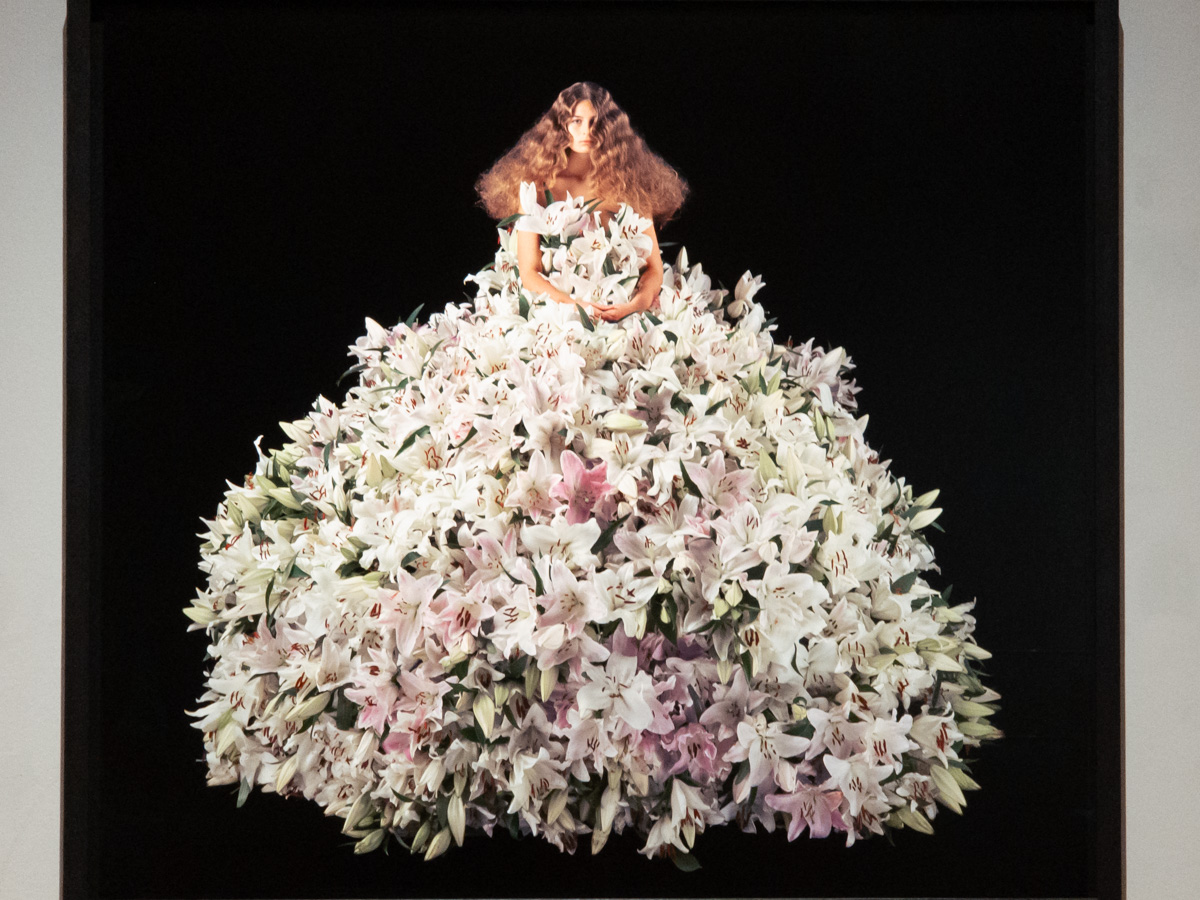
Nathalia Edenmont’s larger-than-life photos of people bedecked in flowers. Hyper-real, to the point that I started doubting whether these were even photos, or if they had been manipulated. This bring to mind 18th-century lavish court dresses, doesn’t it?

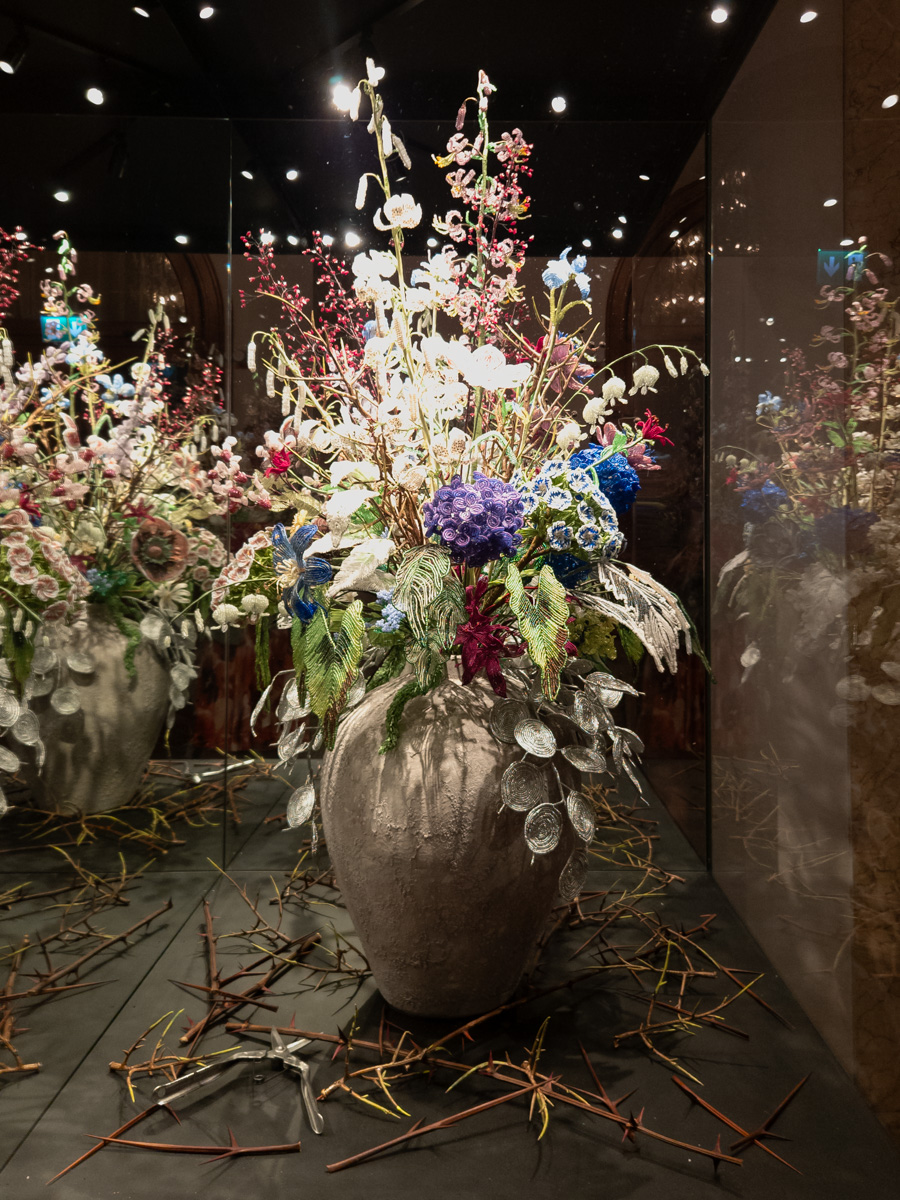
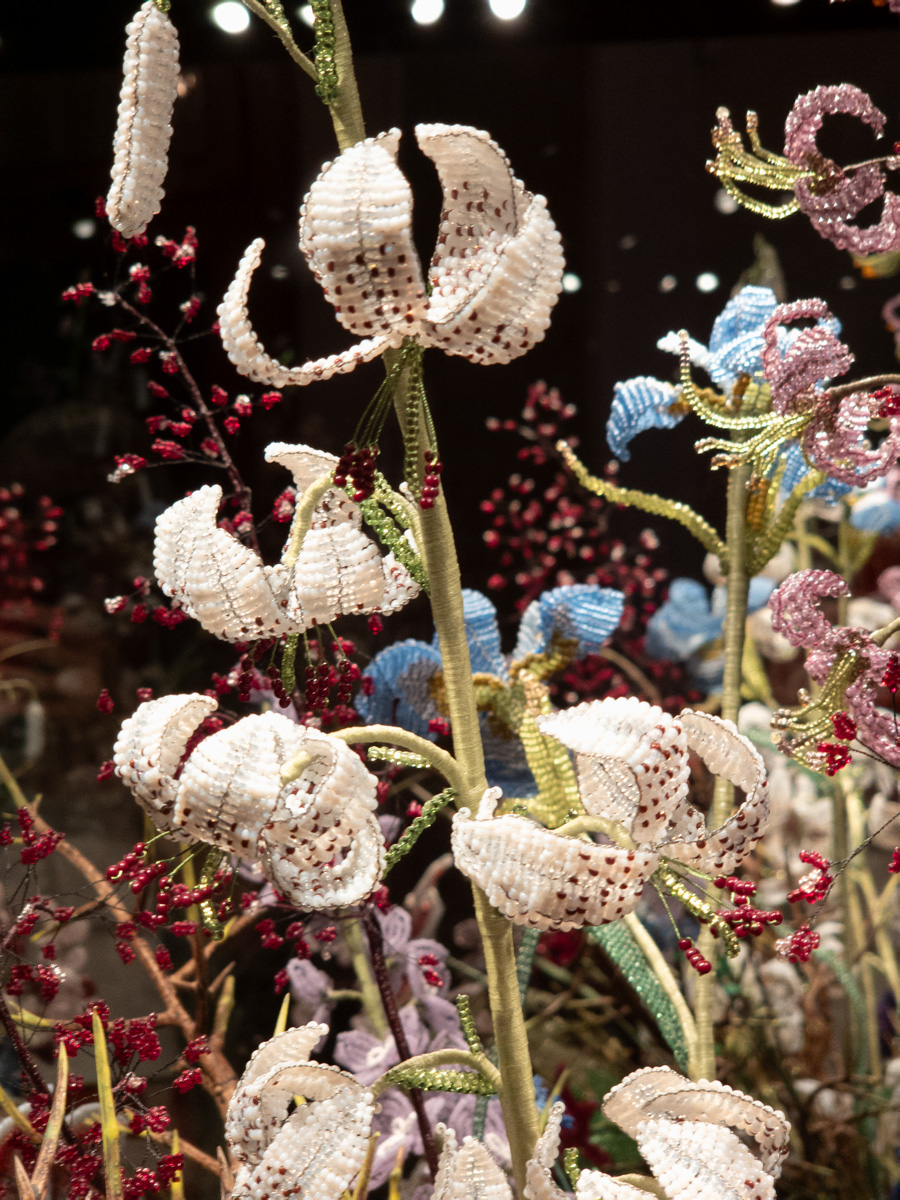
Leaving the room with paintings, there were two amazing arrangements of beaded flowers, by Georg Ragnar Levi. He is a collector of antique and modern flowers made of beads of glass, and these bouquets were made up of flowers by many different craftspeople. Just like the Dutch paintings, these have been made with great attention to botanical detail. If there are two varieties of lilies in the bouquet, then they’re not just of different colour and size, but their petals curve differently, and the proportional length of their stamens is appropriate to each one.


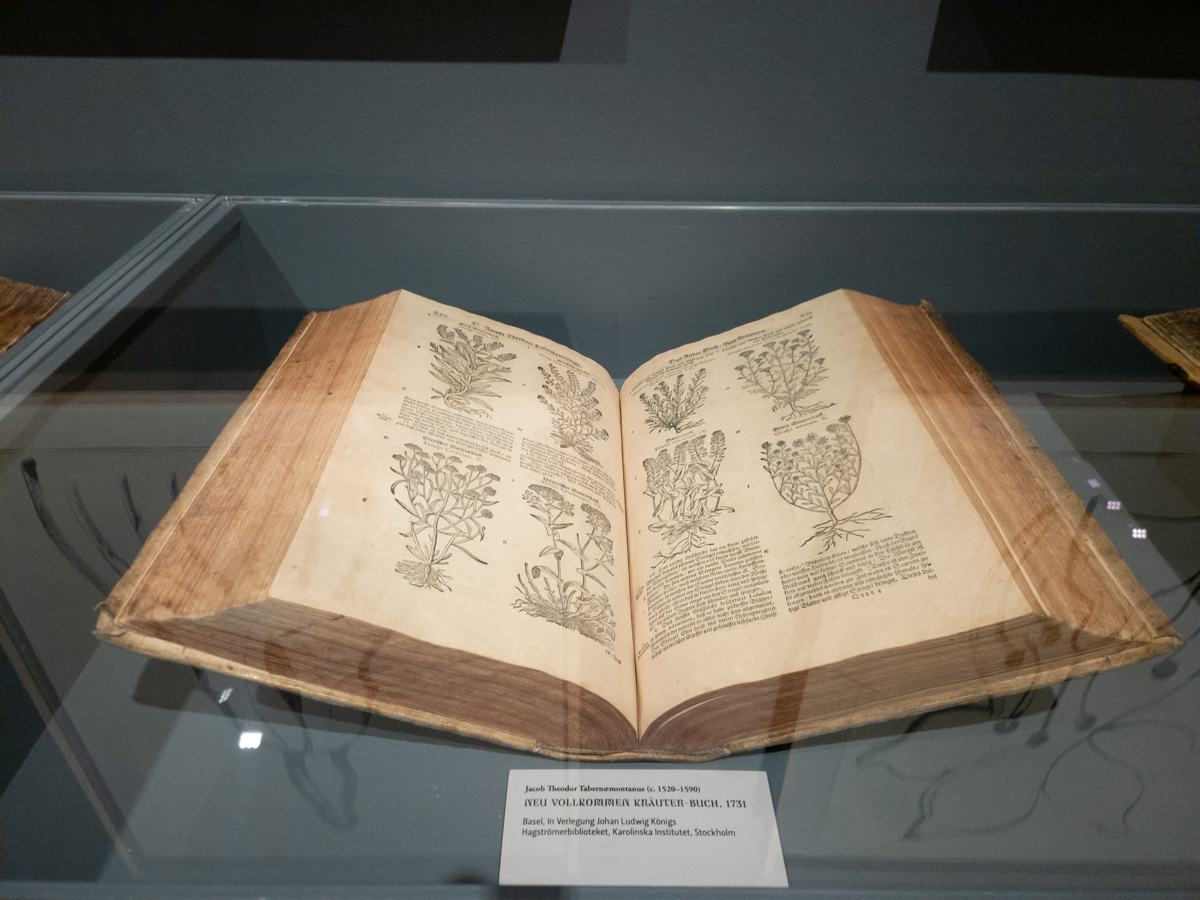
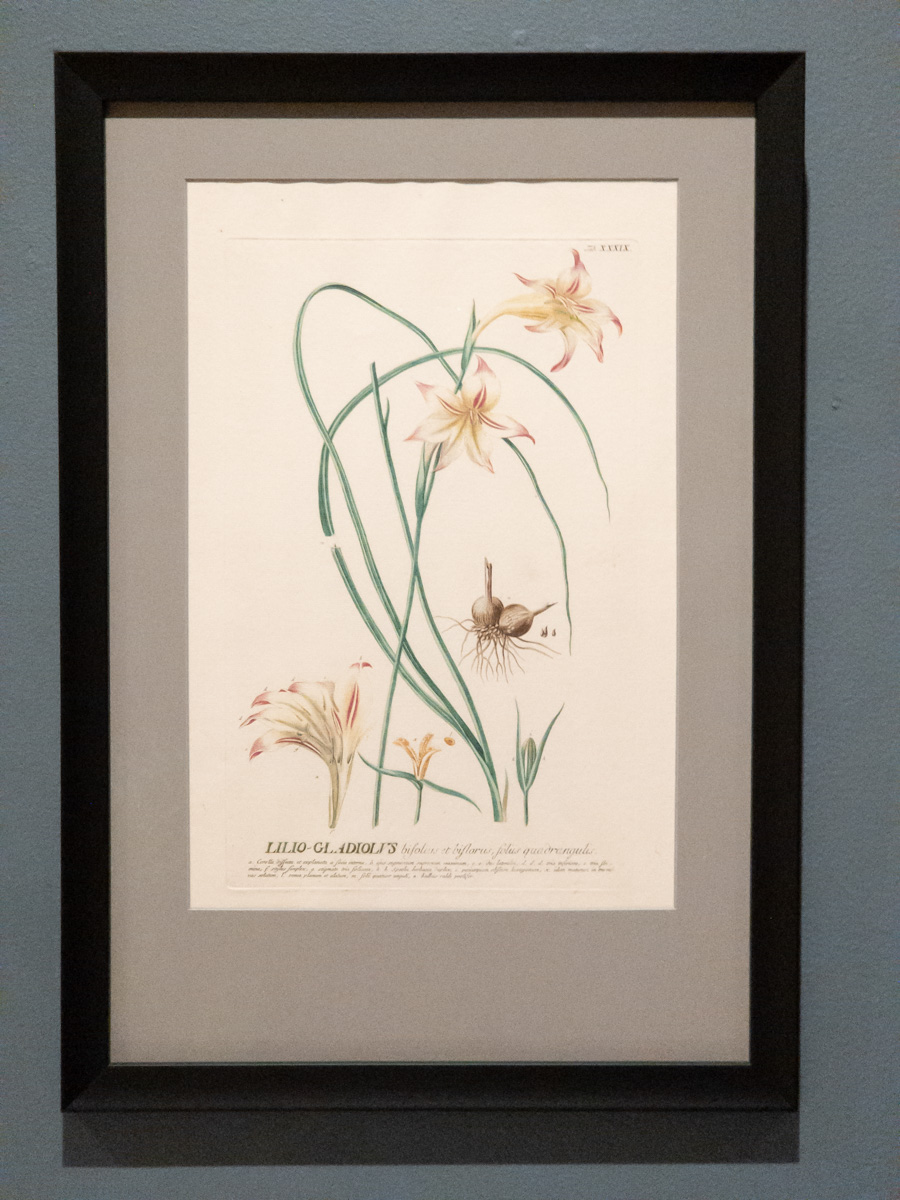
One room was filled with botanical books and prints, and photos of Carl von Linné’s original herbarium pages. The amount of effort that must have gone into these works is amazing.


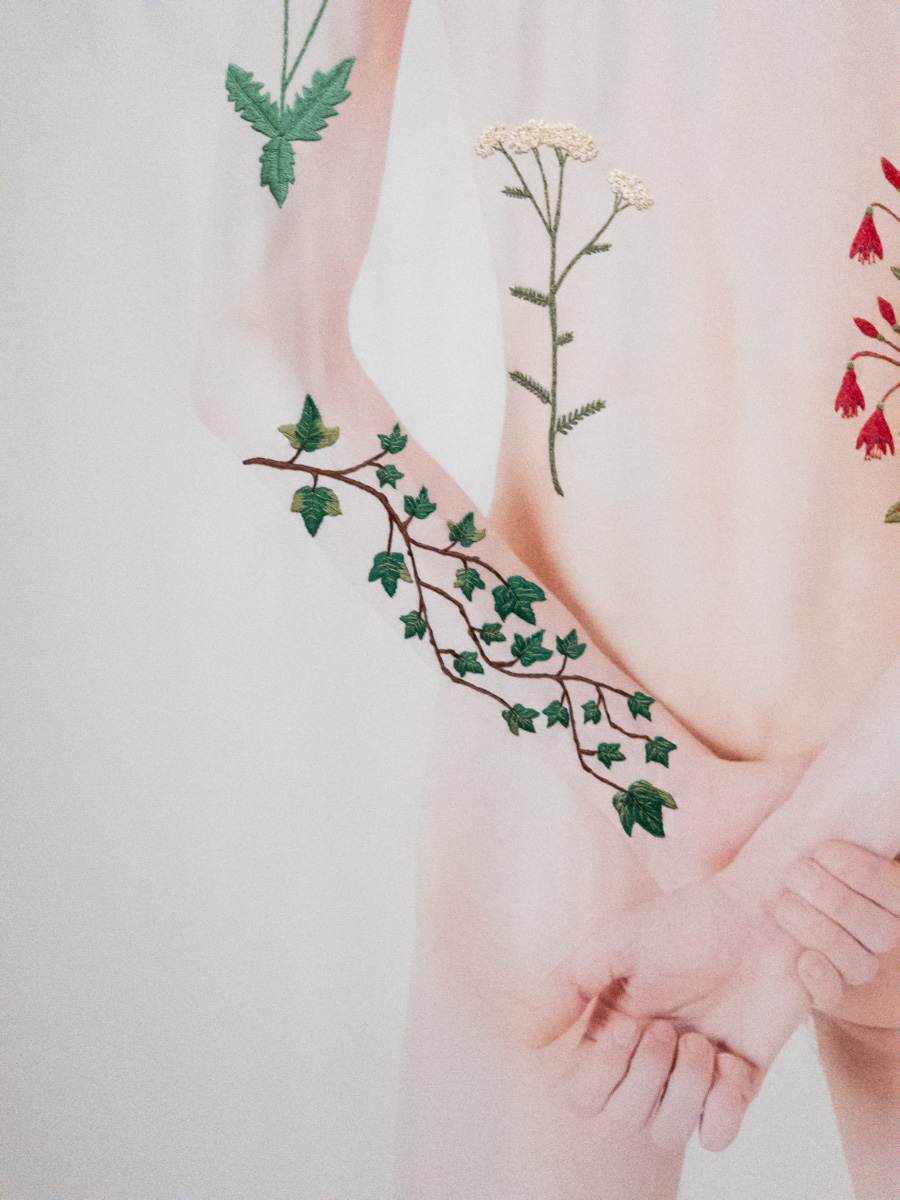
Not just paintings and sculpture, but also embroidered works. My favourite was this one by Maja Stjärna, from a series where she has embroidered flowers on life-size canvas prints of photos of her friends.

It makes me think of tattoos. Sweden is the second most tattooed country in the world – 47% of the people have one, according to a statistic I saw. I can’t really imagine modifying my body in such a permanent way. But if I had to – gun to my head – I’d pick something floral, in a naturalistic style. Or like one of those botanical prints. Some ordinary northern European plant, like a dandelion or a cowslip, or maybe a cornflower.

Went to an exhibition. Was a bit disappointed.

“En svensk klassiker”, the Swedish Classic Circuit, is the challenge of performing a 30-km run, a cycle race around lake Vättern, the Vasaloppet ski race, and a 3-km swim, in one year.

Some years ago, the wife/partner of a man doing the Swedish Classic Circuit wanted something similar for herself. A challenging, limited-time project within her area of expertise, that she could really invest time and energy in, and afterwards feel a true sense of accomplishment. Instead of sports, she had knitting. Thus was born “En svensk stickklassiker”, the Swedish Knitting Classics.

In one year, participants knit four specific projects based on traditional knitting patterns and techniques from different parts of Sweden. There are two sweaters/cardigans, and two glove/mitten projects. I’m not going to go into detail – you can read all about it on their website. Side by side with the main Knitting Classics, there’s also the Mitten Classics, within which people knit five pairs of gloves/mittens from five countries around the Baltic Sea.

Today I went to see an exhibition at the Almgren silk workshop, showing off the creations of people who have completed the Knitting Classics. I was looking forward to admiring their craftsmanship up close, and maybe learning something along the way.

A lot of sweaters and mittens were on display. While they clearly all arose from the same specific traditions, there was also individual variation.

Unfortunately, the works were displayed in a way that made it really hard to appreciate the craftsmanship. Most of the knitted objects were hung way up, close to the ceiling. Some that were at eye height were on a far wall, with old weaving equipment or other furniture between the viewer and the object.

The Mitten Classics were literally hanging from the ceiling, metres above our heads. All you could see was that there was a bunch of nearly-identical mittens, but it was impossible to appreciate the details. Look at these visitors craning their necks, trying to see the mittens! Just… why?

There were some sets of sweaters hung in a way that you could see them up close. The knitting was incredibly fine, and the quality very impressive. On the whole, though, just as with the sports Classic Circuit, it’s impressive in a way that holds no temptation for me. I love knitting, but I am most certain that I would not enjoy knitting these projects – neither the process nor the result. I’ll stick to my admiring.

The younger generation (= Adrian, plus my friends’ kids of roughly similar age) went to an escape room. I wouldn’t have minded joining them – it’s been years since I did that – but groups were limited to 5 persons, so us “adults” had to find alternative entertainment.

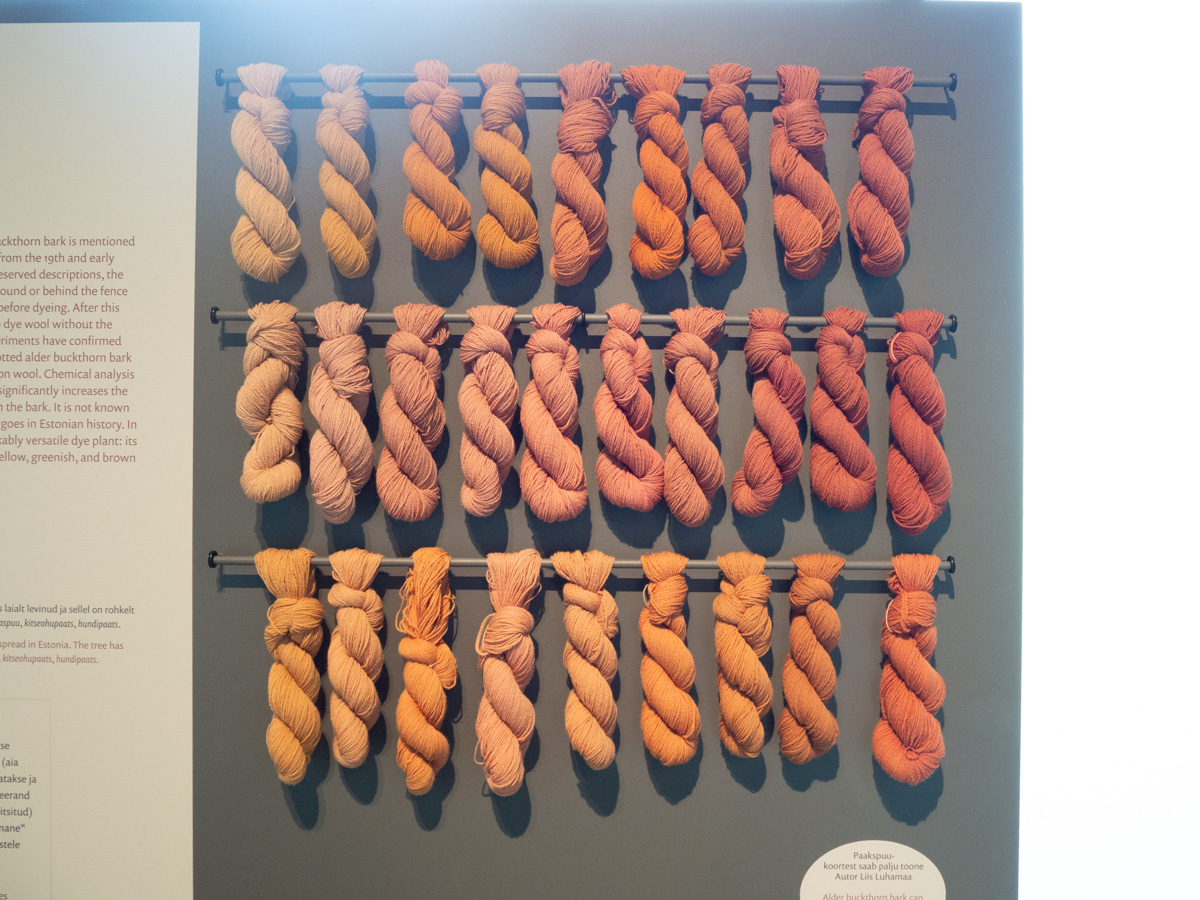
My friend and I went to the Estonian National Museum, primarily to see an exhibition about the dyes historically used for traditional Estonian clothes. An excellent exhibition, with plenty of archive material, as well as modern artefacts to illustrate the dying process, such as indigo-dyed wool showing how later dye baths give a weaker colour, and multiple batches of yarn dyed with the same plant but with subtle variations in the process. There were videos showing just how intricate the dye preparation process could be (how did they even come up with all those steps?) and more videos with deep dives into specific garments in the museum’s archives, that showed just how connected rural Estonia was to the global dye trade even several centuries ago. We spent hours there.


There were a few other textile-oriented temporary exhibitions. One was an embroidered tapestry, which was embroidered by volunteers during 2025 to commemorate the 500th anniversary of the first Estonian-language book. The tapestry wandered throughout Estonia, different people embroidering different parts of it, and my friend even located the part that she had worked on.

(The first Estonian-language book was a protestant tract and was thus burned by the church. The oldest surviving printed material in Estonian dates from 1535.)

Speaking of firsts, one room held the first and original blue-black-white flag. It was buried at the start of the Soviet occupation, then dug up and hidden (in a farmhouse chimney) until 1991, its location known only to a handful of people through all those years.

Kulturnatt Stockholm – Stockholm Culture Night.

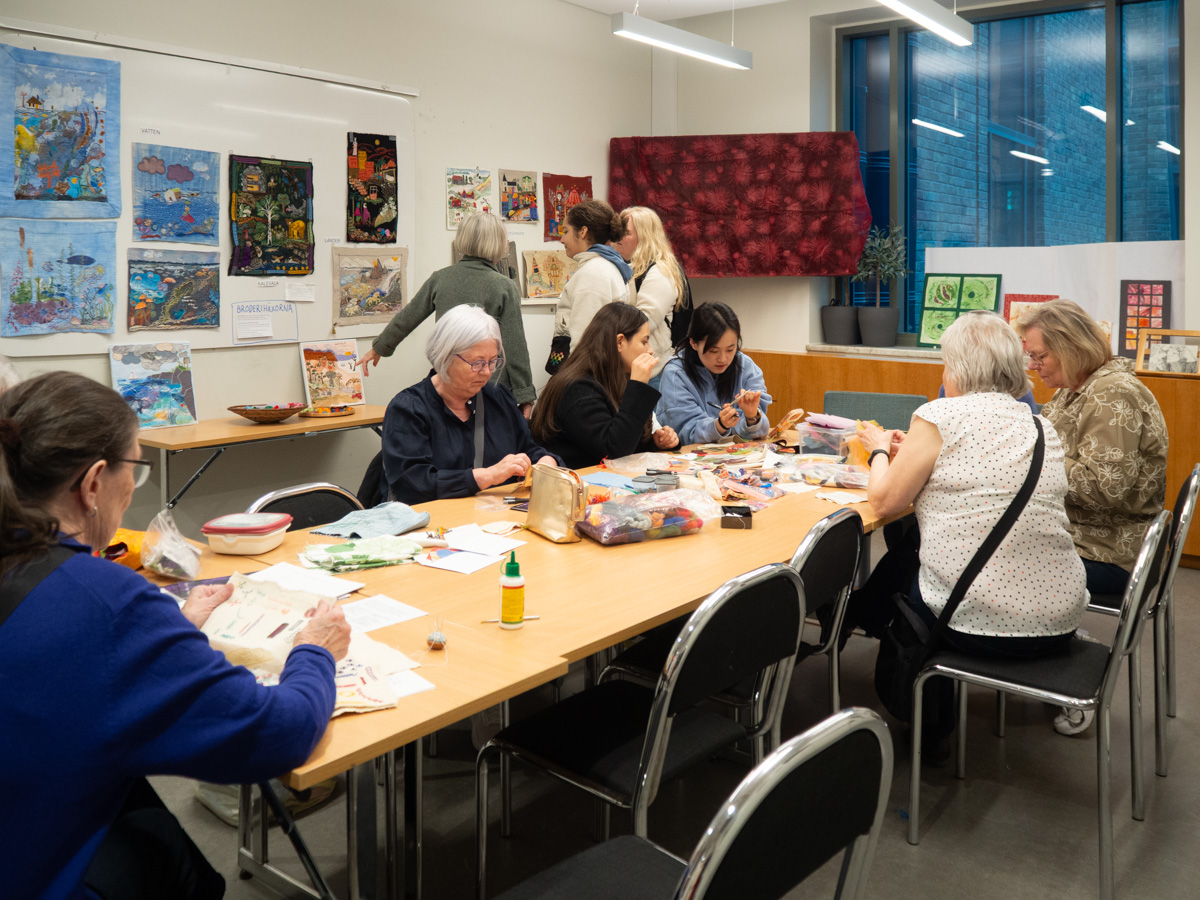
Sensus, the umbrella organization for study circles under whose aegis our embroidery club takes place, participated in the project with a packed programme. Concerts, talks, workshops… including an embroidery exhibition and workshop that we were invited to contribute to. Members from our small club and two others hung our works in the small workshop room where we have our usual Thursday sessions.

One of the other clubs had themed embroideries only, on the theme of “sunrise”. The other had “wandering embroideries” on a couple of themes – a number of people all start work on same-themed, same-sized pieces of same-colour fabric, and then hand them over to the next person in a circular manner, until everyone has worked on every piece.

Our contribution to the exhibit was a mixed bag, which I rather like as a concept. Many embroidery exhibitions are intricate and figurative, which can certainly be impressive and interesting and beautiful, but I wouldn’t want interested newcomers to get the impression that that is the only thing that embroidery can be. I myself don’t much enjoy making those kinds of pieces. We had some figurative works, but also abstract ones, as well as clothes and accessories embellished with embroidery.

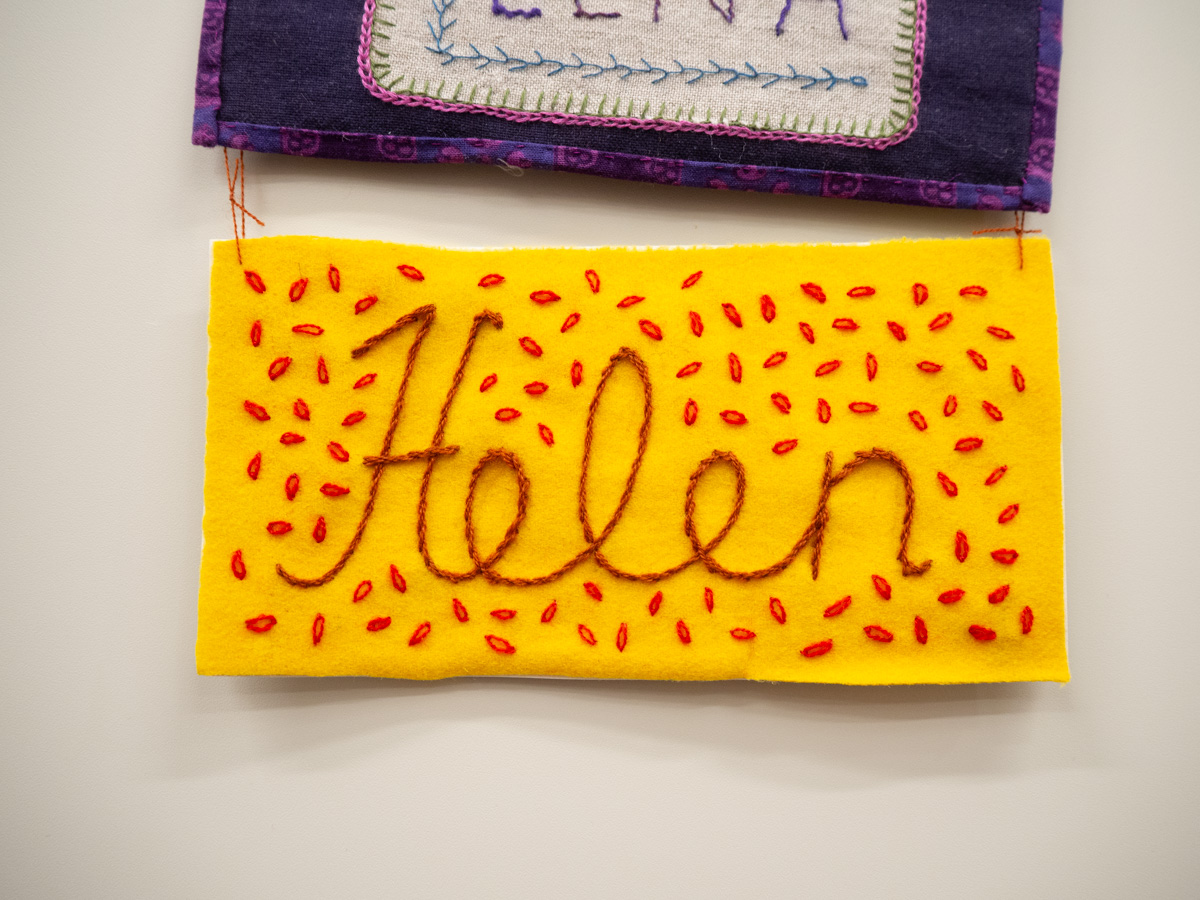
We were supposed to hang up our name signs, for a personal touch, and I had forgotten mine at home. We had plenty of materials that we’d collected for the evening’s workshop, so I sat down and made a new one, in the hour that I had between finishing hanging and before the exhibition officially opened.

I didn’t hang around while the exhibition and workshop were actually open. I heard afterwards that there were so many visitors that at times there weren’t enough seats for everyone who wanted to try it out, so I guess it wasn’t a bad thing that I wasn’t there, taking up another seat.

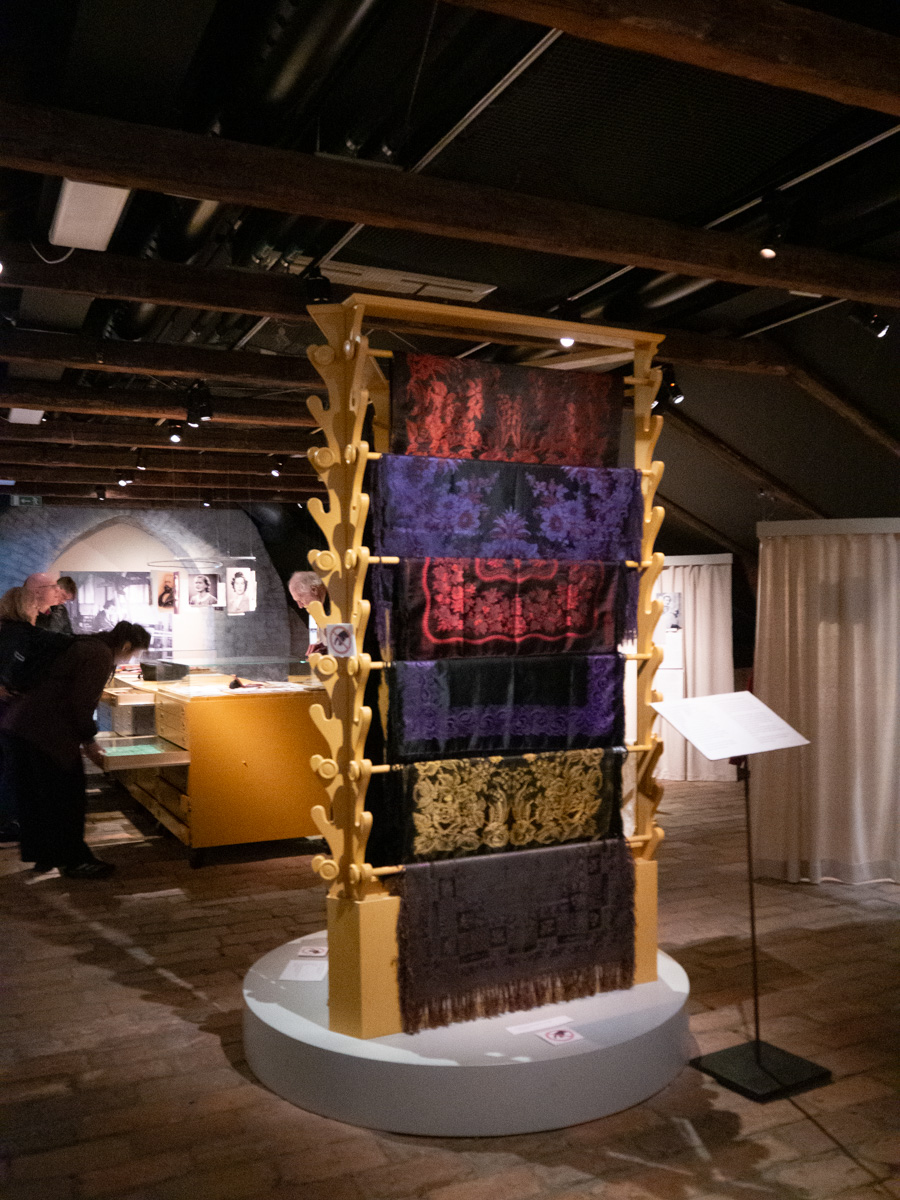
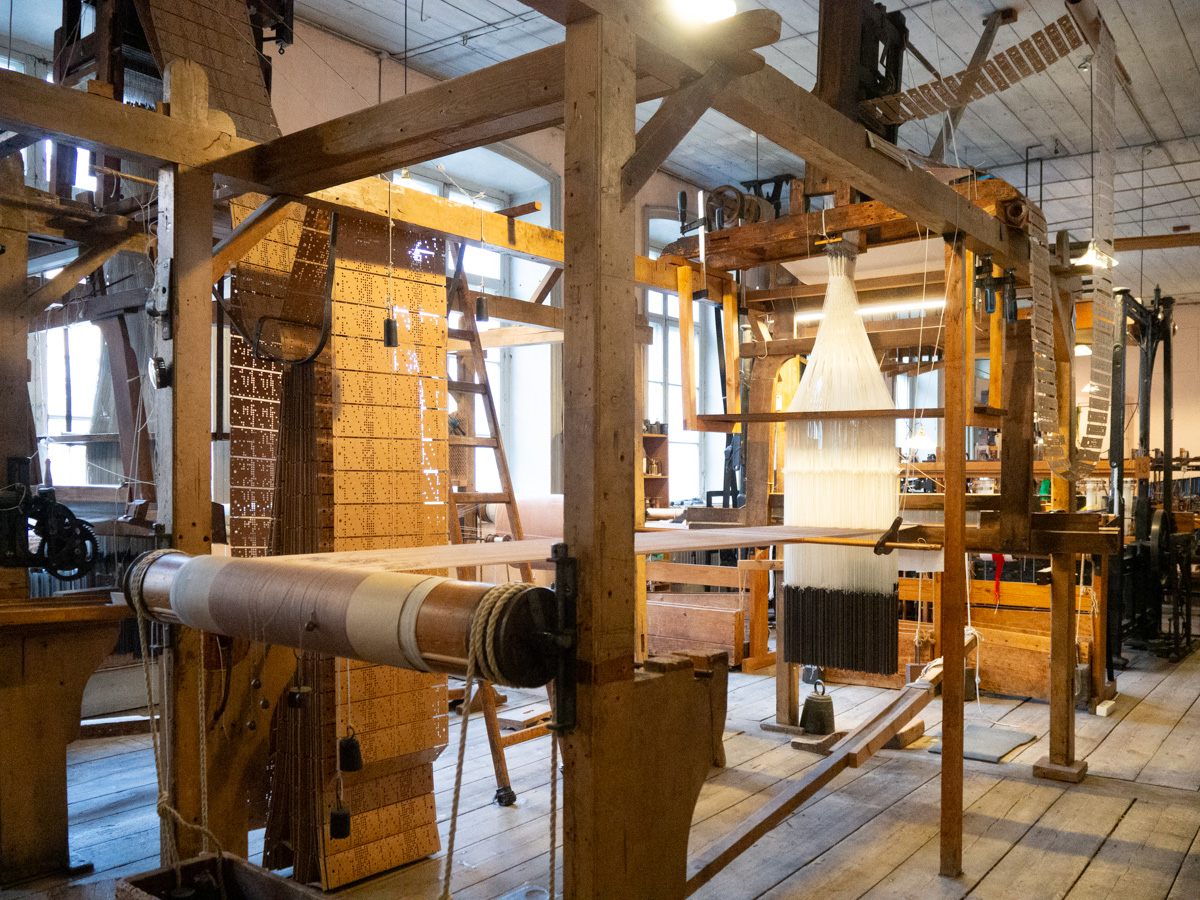
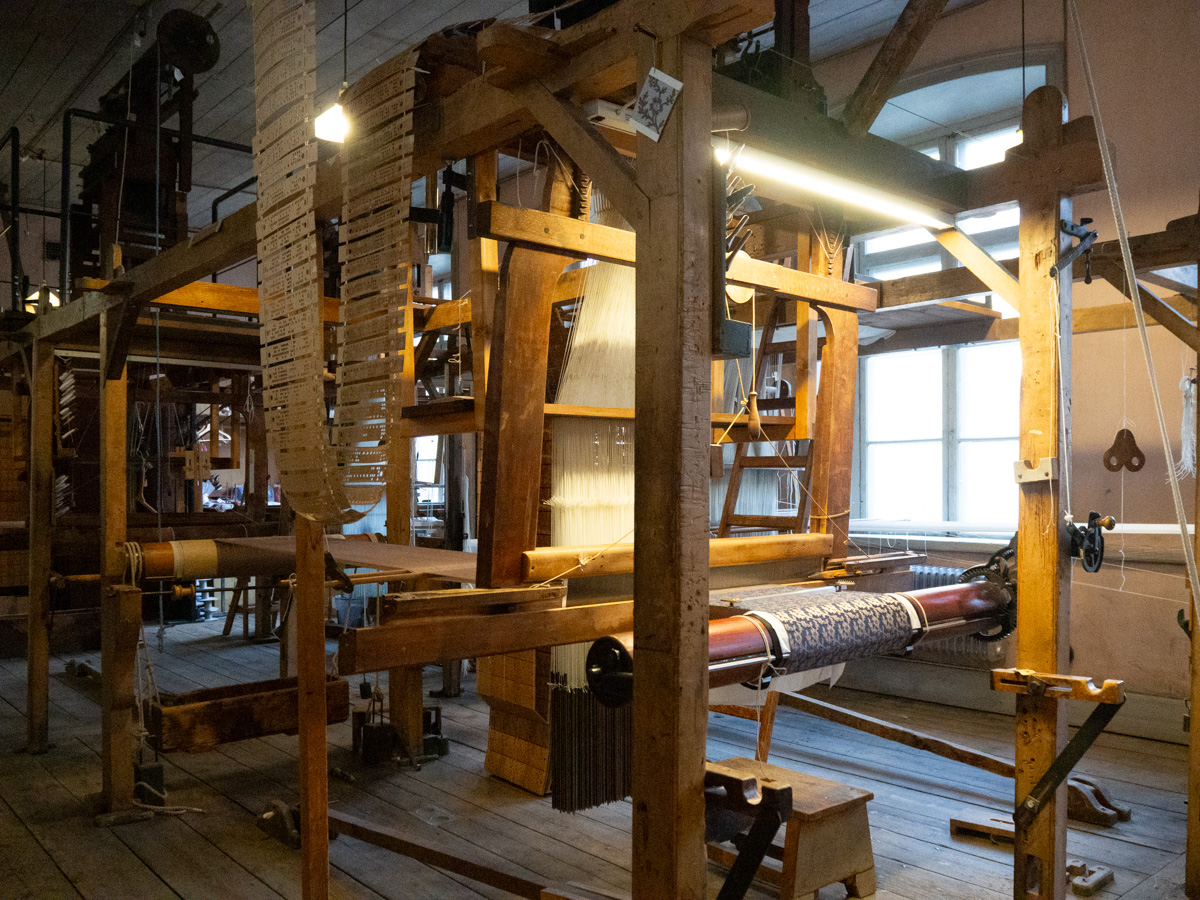
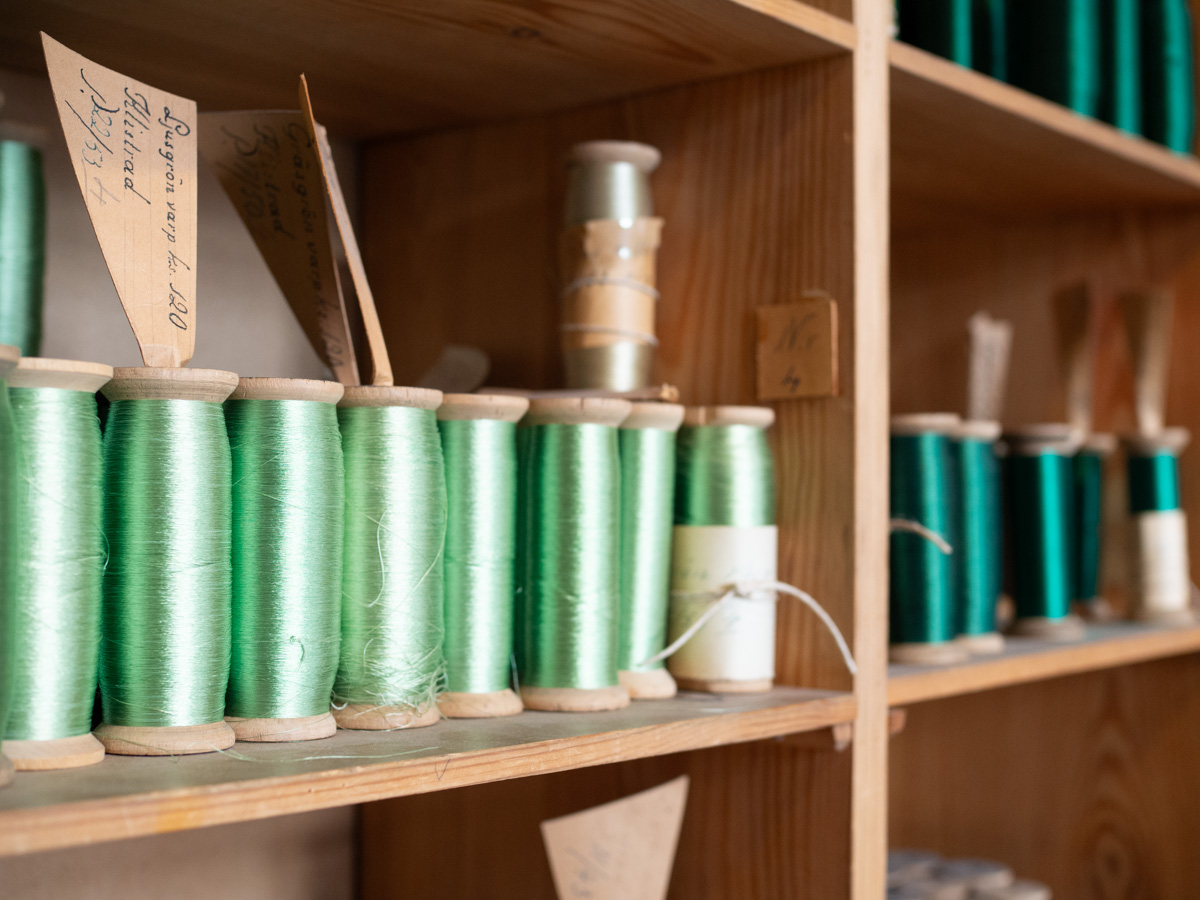
Instead I partook in the event offerings myself. First: K.A. Almgren silk mill, a historical silk weaving factory. The factory has its original jacquard looms from the 1860s – the roots of punch card computer programming. There’s an exhibition about the history of the factory and the people who have worked in it, as well as plenty of examples of fabulous patterned silk fabrics.

The original looms are in full working condition, and at least one person is still employed and working there as a weaver to keep the knowledge alive.


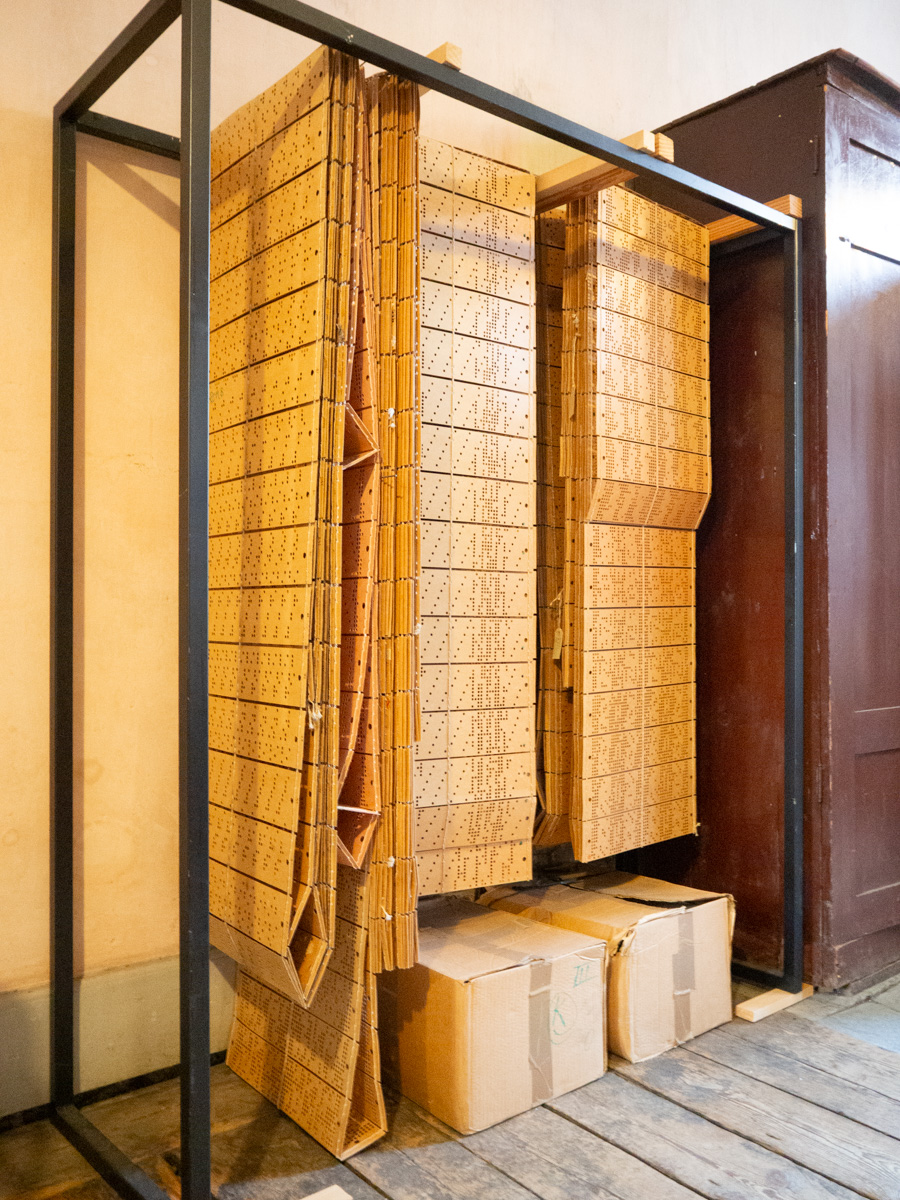
The punch card patterns for some of the more intricate fabrics could be hundreds and hundreds of cards long, each card corresponding to one weft thread.


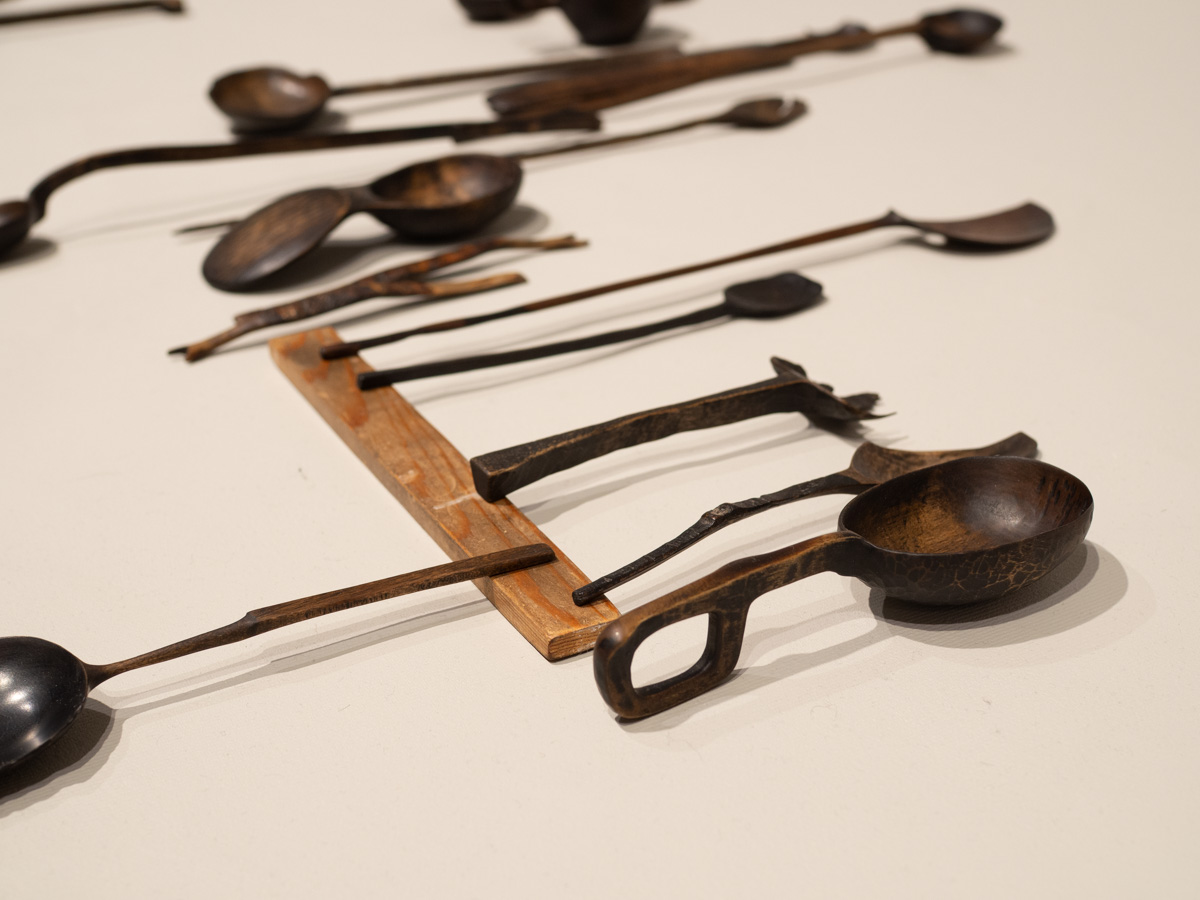
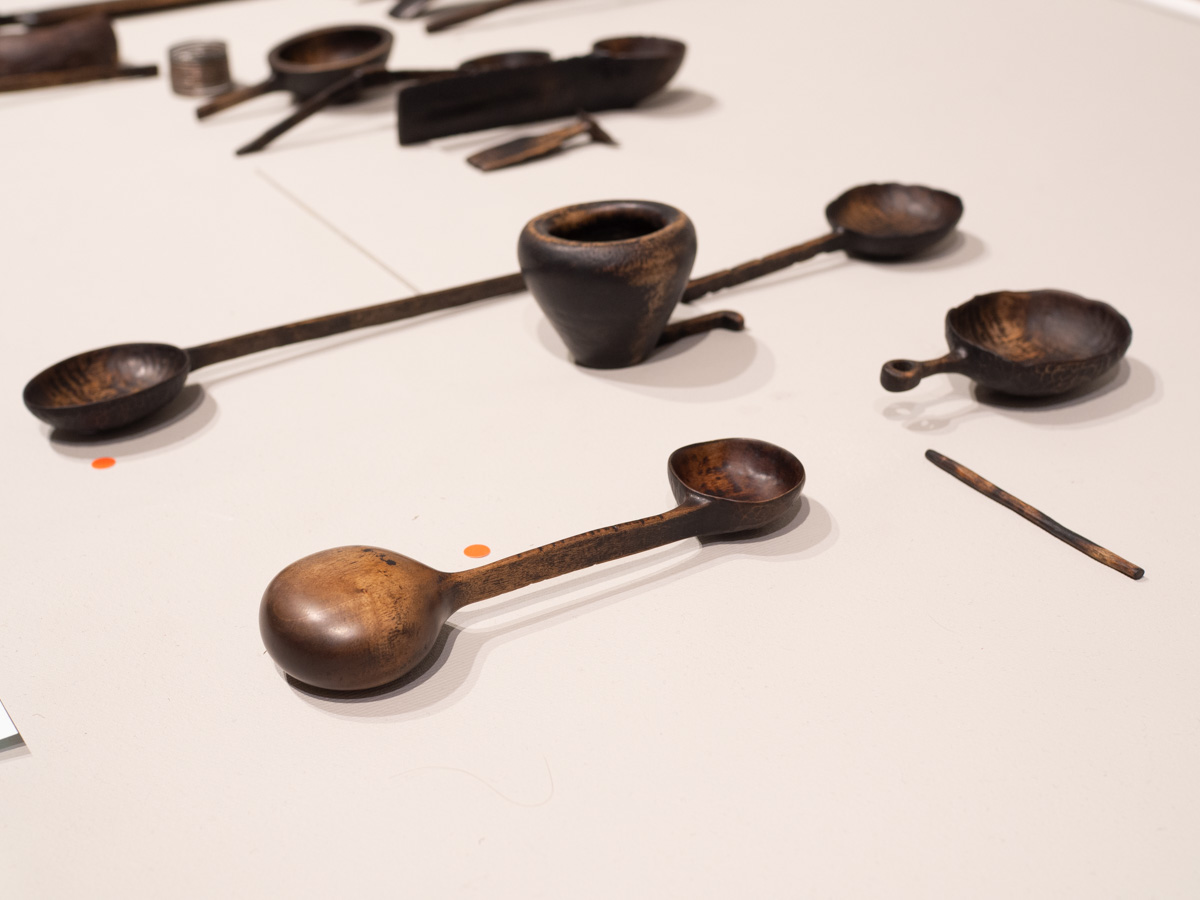
Afterwards I walked to the shop and exhibition room of Konsthantverkarna, a crafts collective. Their current exhibition is Marie Eklund’s They’re spoon-spoons, silly!, a collection of hand-carved spoons, one crazier than the other.

Titeln anspelar på ett citat av David Bowie ”They’re shoe-shoes, silly”, vilket var hans svar på frågan om det är herrskor, damskor eller bisexuella skor han hade på sig. Marie Eklund får ofta frågan vad det är hon sysslar med egentligen. Är skedarna brukbara? Hållbara? Slöjd? Skräp? Konst? Dyra? Till för vem? För vad? Varför då? They’re spoon-spoons, silly!

The title is a play on a quote by David Bowie: “They’re shoe-shoes, silly”, which was his response when asked whether he was wearing men’s shoes, women’s shoes, or bisexual shoes. Marie Eklund is often asked what she’s doing. Are the spoons usable? Durable? Crafts? Rubbish? Art? Expensive? For whom? For what? They’re spoon-spoons, silly!


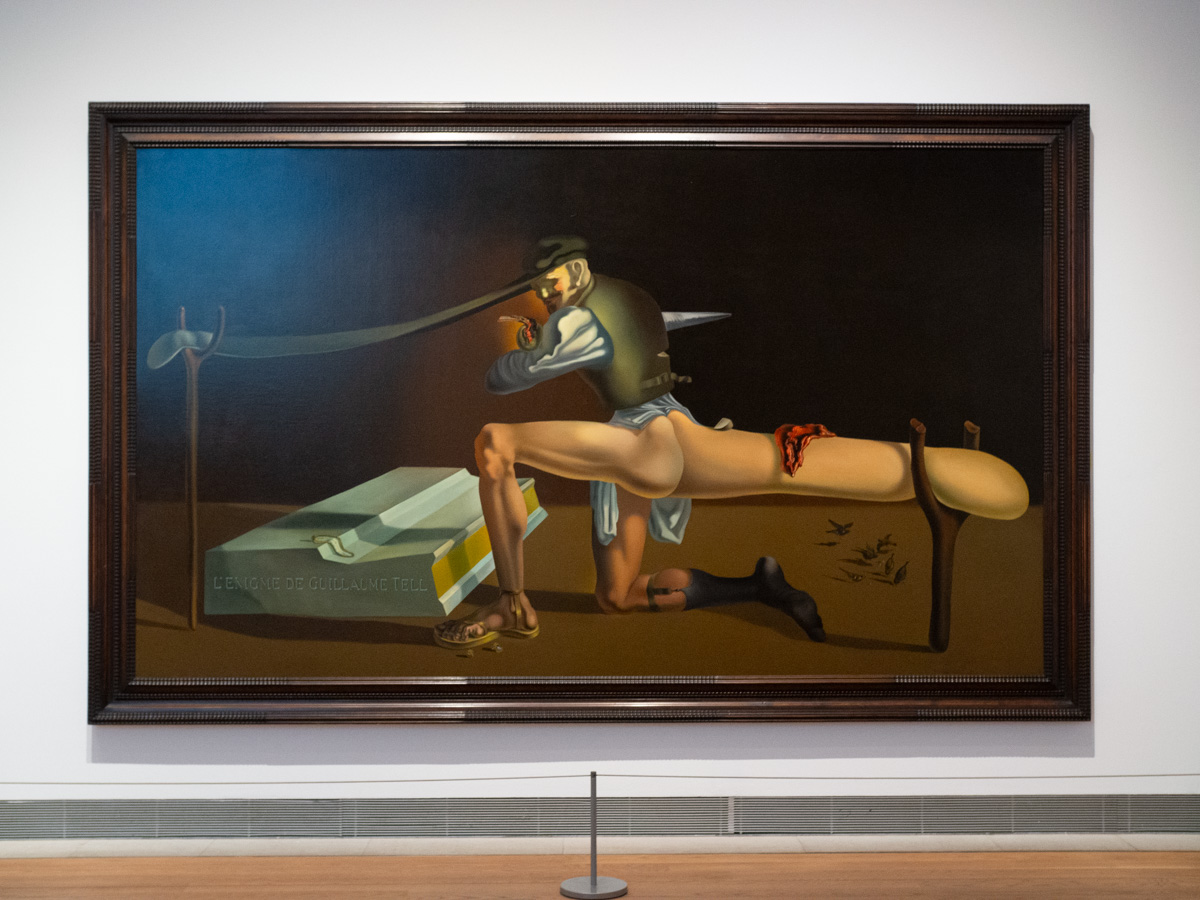
Ingrid and I went to see The Subterranean Sky – surrealist art from the collections of Moderna Museet.

We were confused and disappointed. Most of the works exhibited were not actually examples of surrealism, or at least not what we thought surrealism to be. Maybe we’re not educated enough.

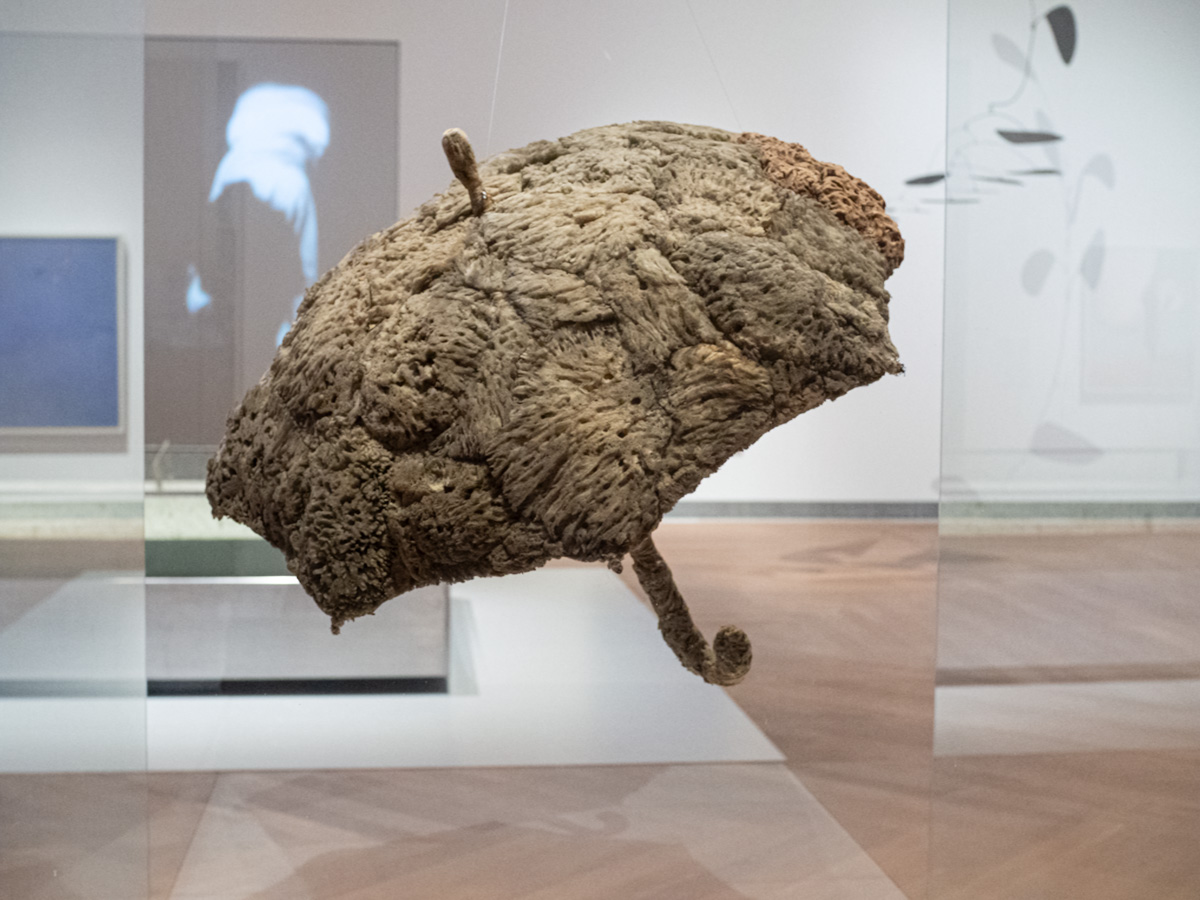
There were some works of obvious, well-known surrealists such as Dali and Magritte, and Bunuel. And a rather bizarre umbrella clad in sponges. I have to wonder if the sponges looked so dead and brown and close to disintegrating into dust when the work was first made.

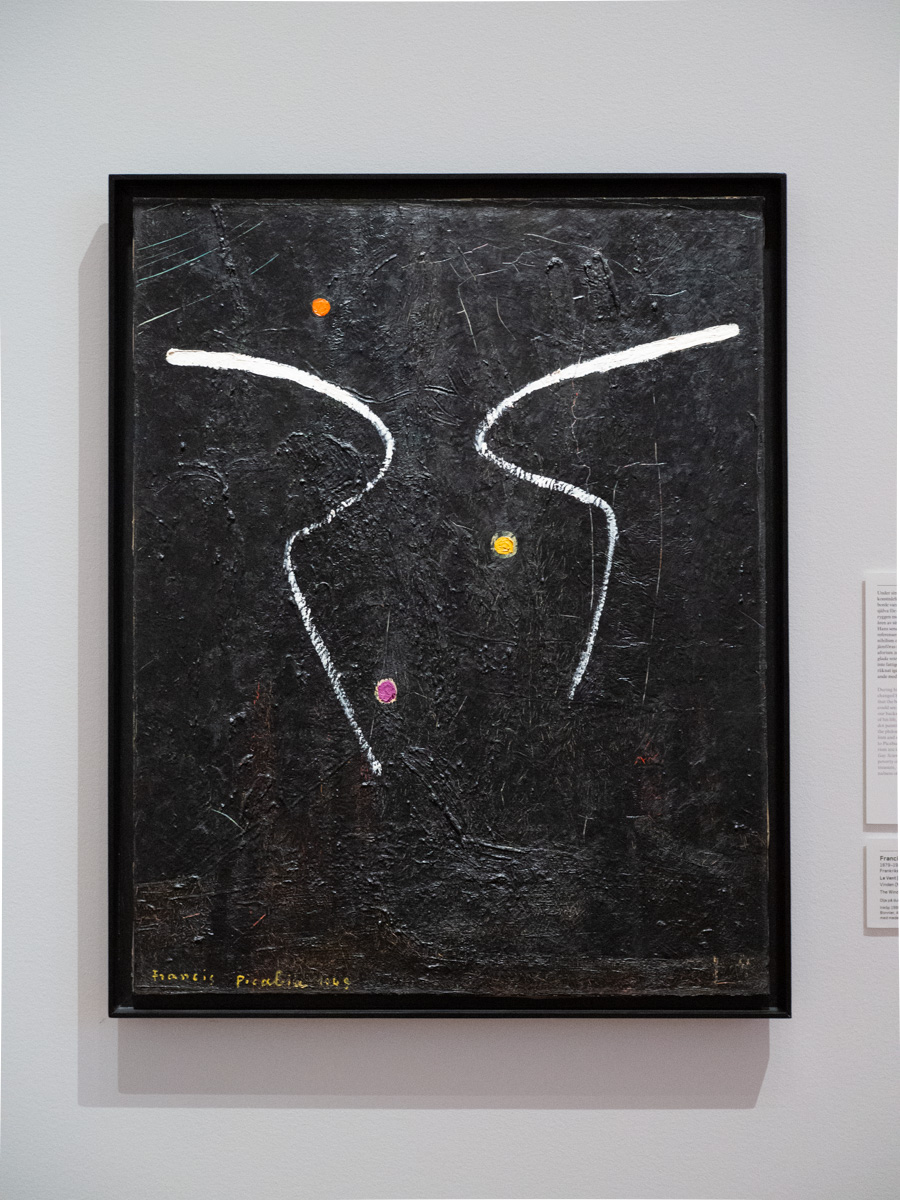
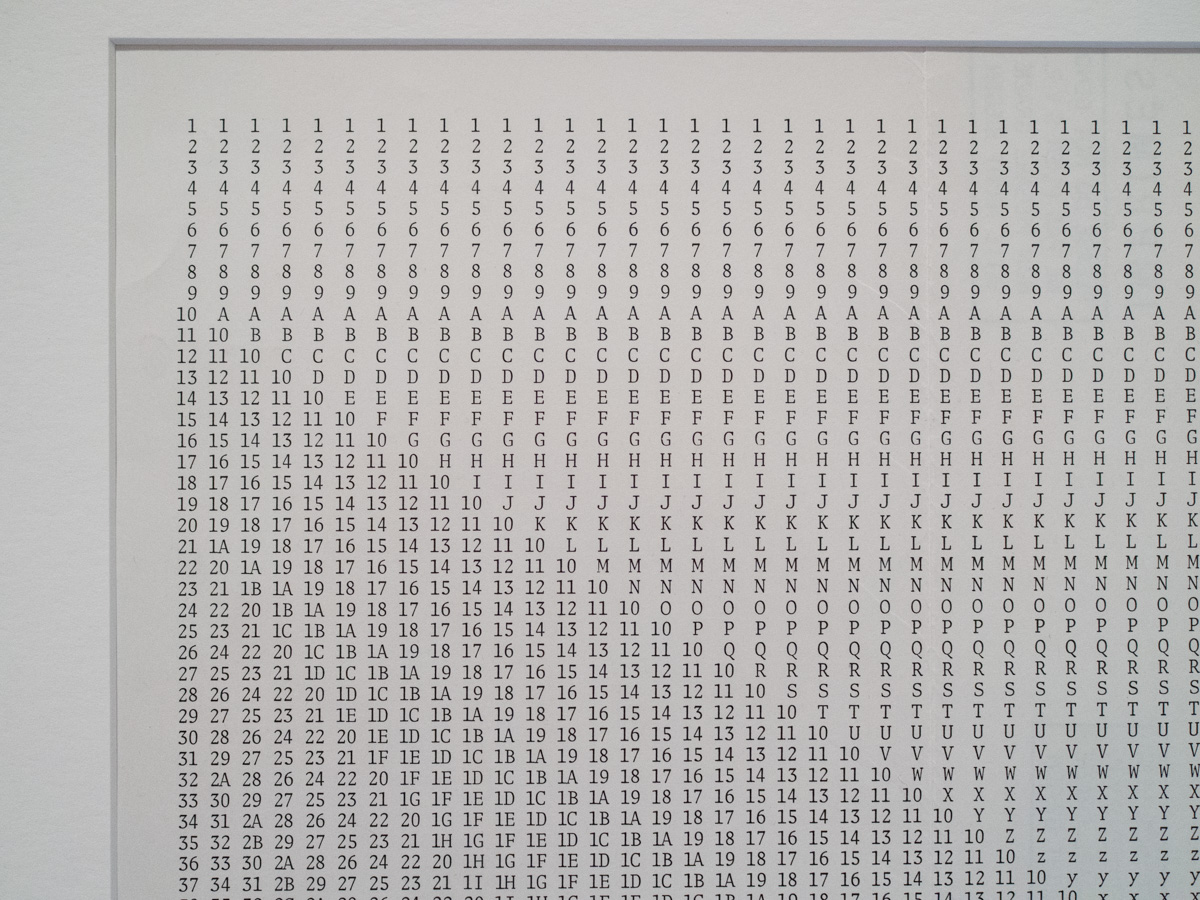
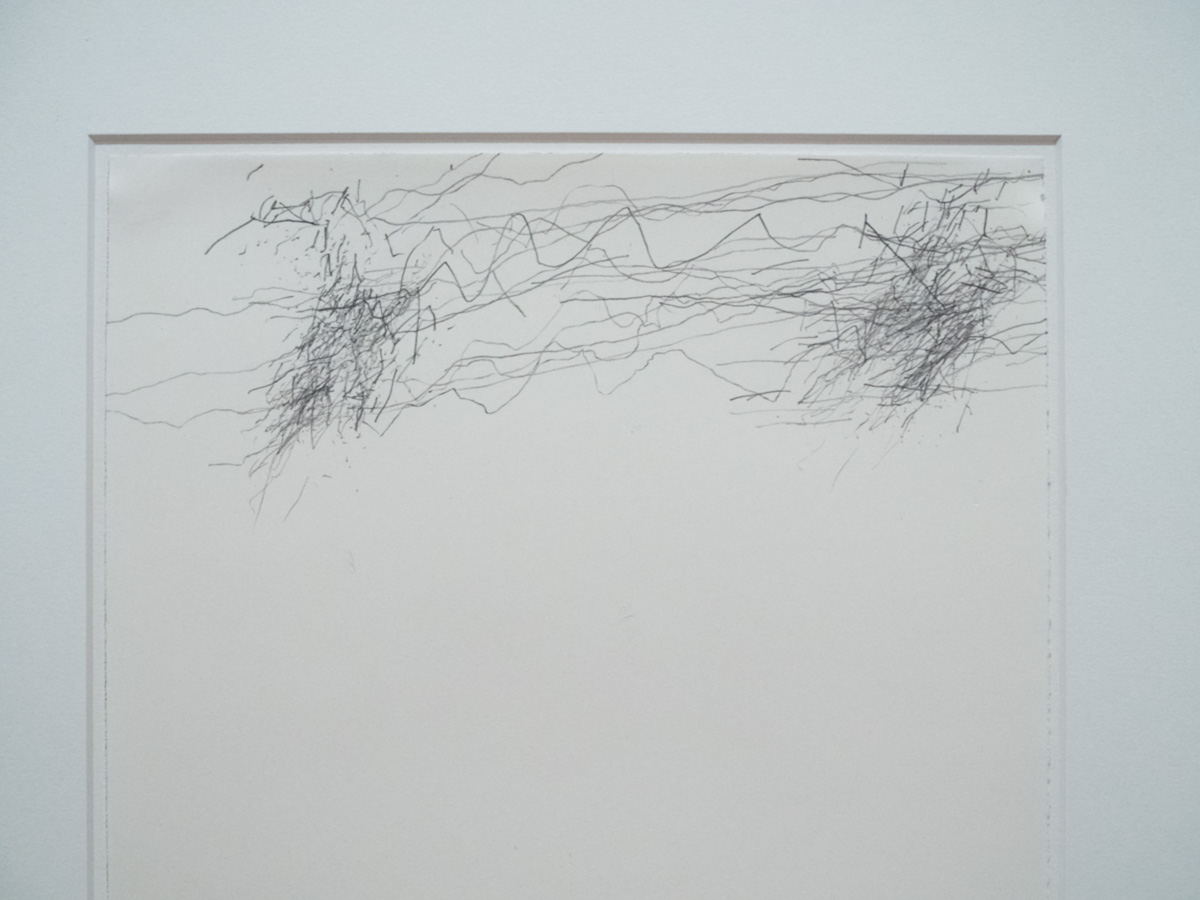
But then a whole lot of what I would have called abstractionism and dadaism: drawings generated automatically by the artist’s hands as they were shaken during a train ride; lines depicting nothing. One of Alexander Calder’s mobiles. Why were they there? No idea.


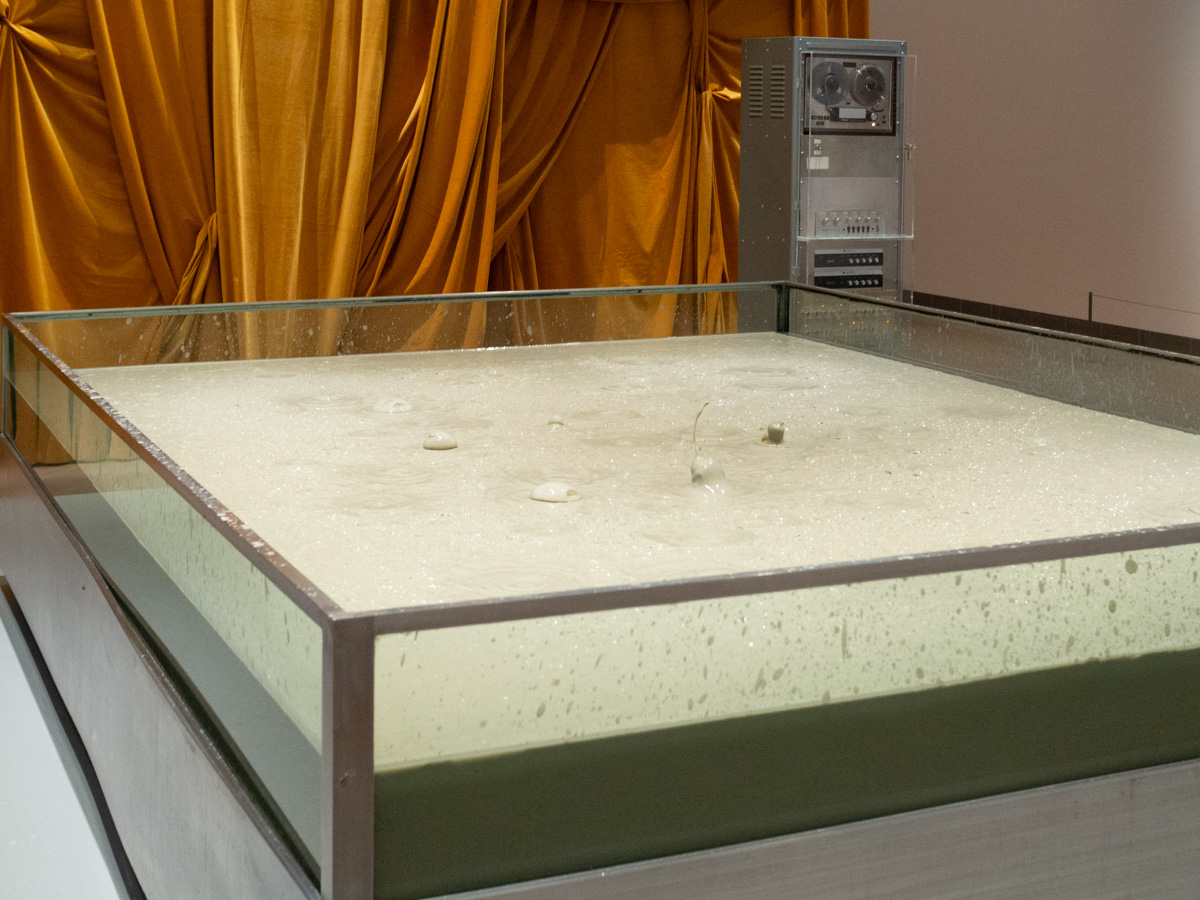
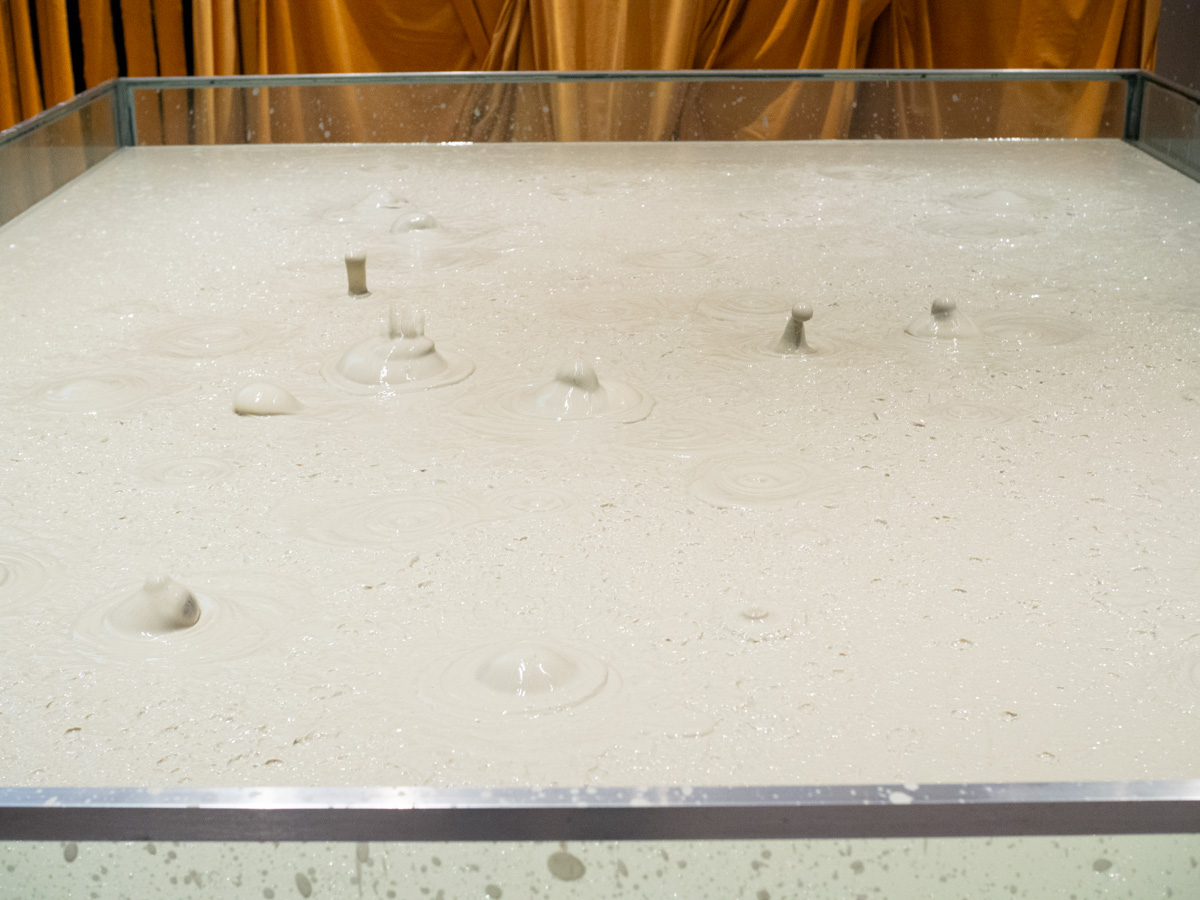
Robert Rauschenbergs “Mud muse” was, in my opinion, also not surrealism, but it was at least kind of fascinating. A pool of liquid mud that bubbled and erupted at seemingly random moments. The eruptions were energetic enough that the pool was surrounded by a splash zone with small dried spots of mud. It turned out to be not random but triggered by sound. I was hoping that meant sound detectors, but no, it was controlled by a recording that was, disappointingly, not even made audible.


So… yeah. Not very impressed.

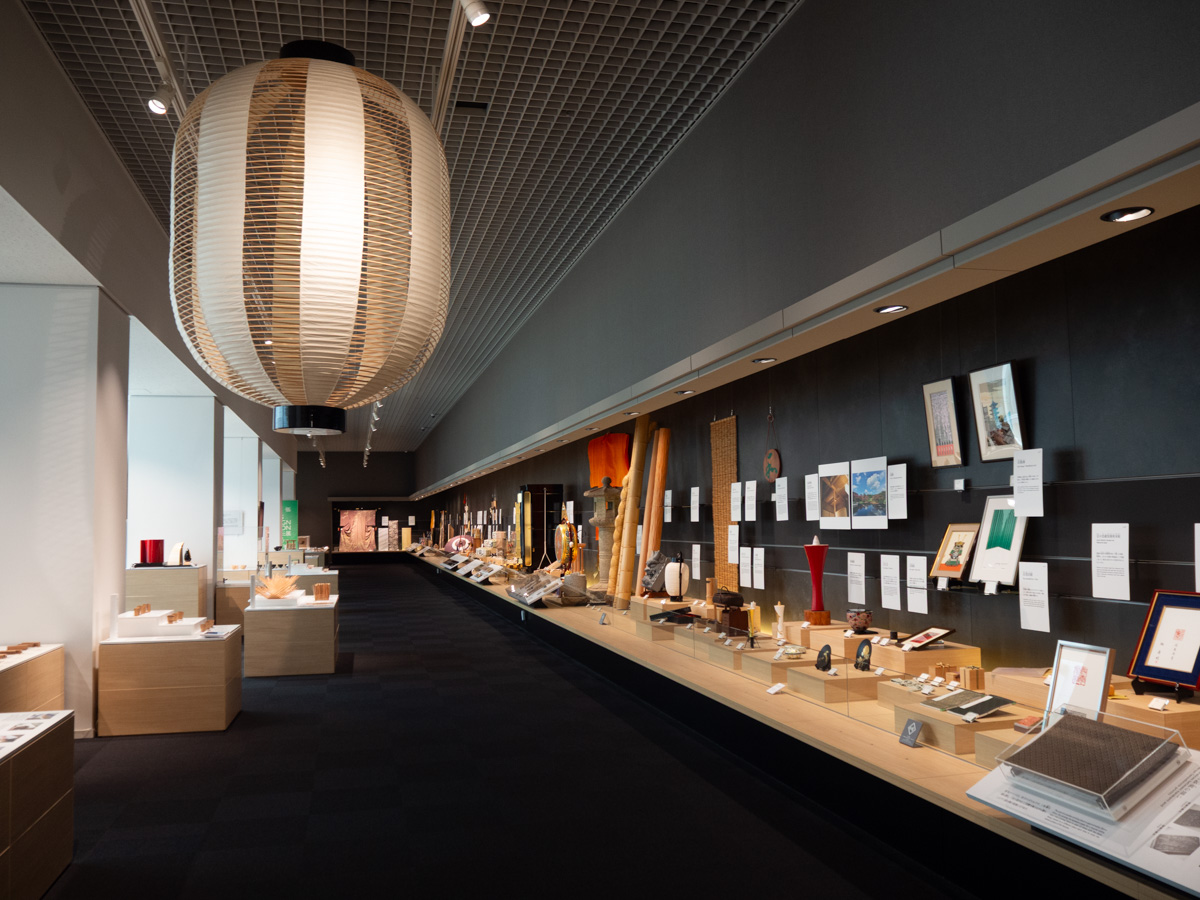
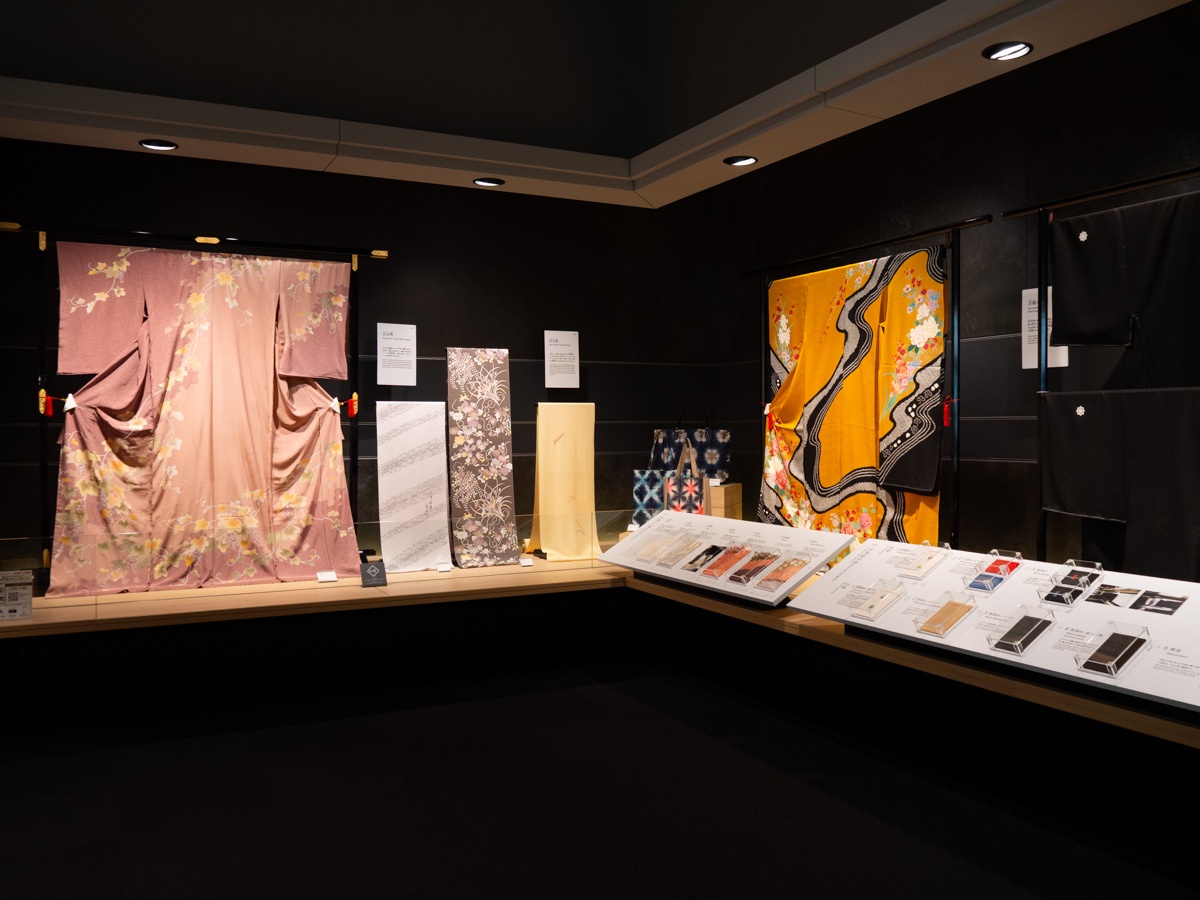
The focus of Kyoto Museum of Crafts and Design is a permanent exhibition of seventy-four traditional crafts of the Kyoto region. These cover a wide range of very different crafts – woodworking, weaving, fabric dying, the making of singing bowls, the carving of funerary sculptures, etc.

With seventy-four crafts to display in a single room, there’s a limit to how much space each one can get. Some are just displays of particularly exquisite examples of the craft, but many are explained in a lot of detail, such as step-by-step displays of the process of making wooden doll, or exhibits showing the various techniques of dying kimono fabric. The focus was on the craftsmanship and the process. I could happily have walked through three times the space to see more detail of each of the crafts.

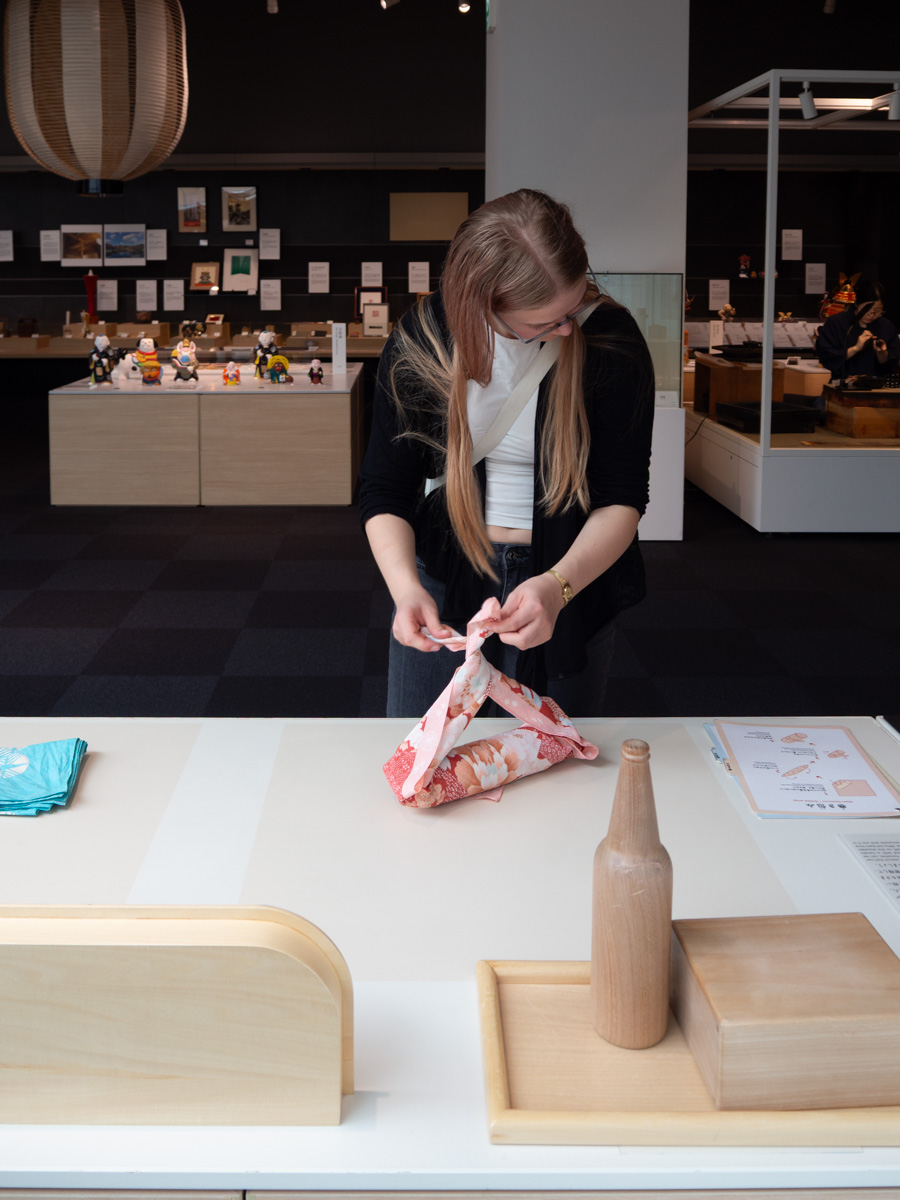
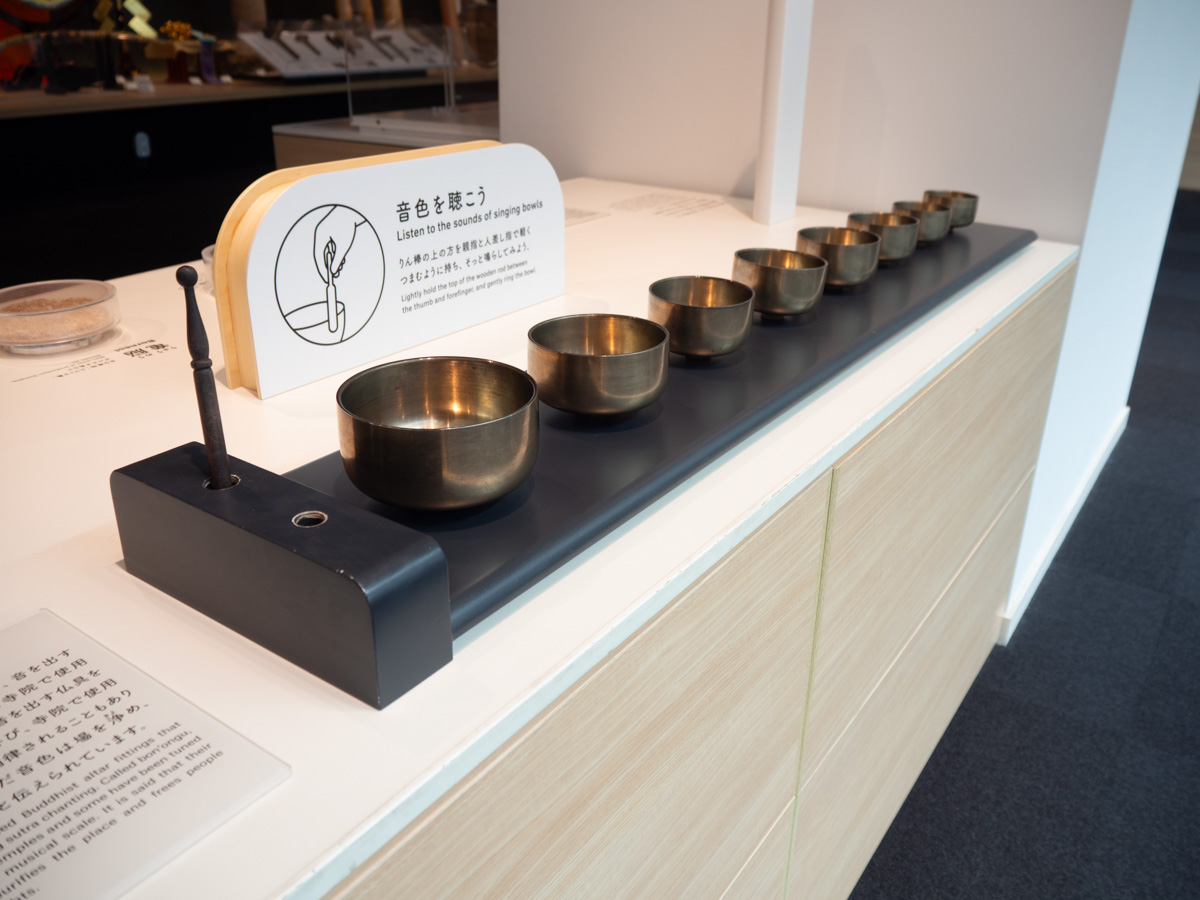
There were also multiple hands-on exhibits, where you could try wrapping different kinds of items in a furoshiki cloth, or enjoy the sounds of a tuned series of singing bowls.

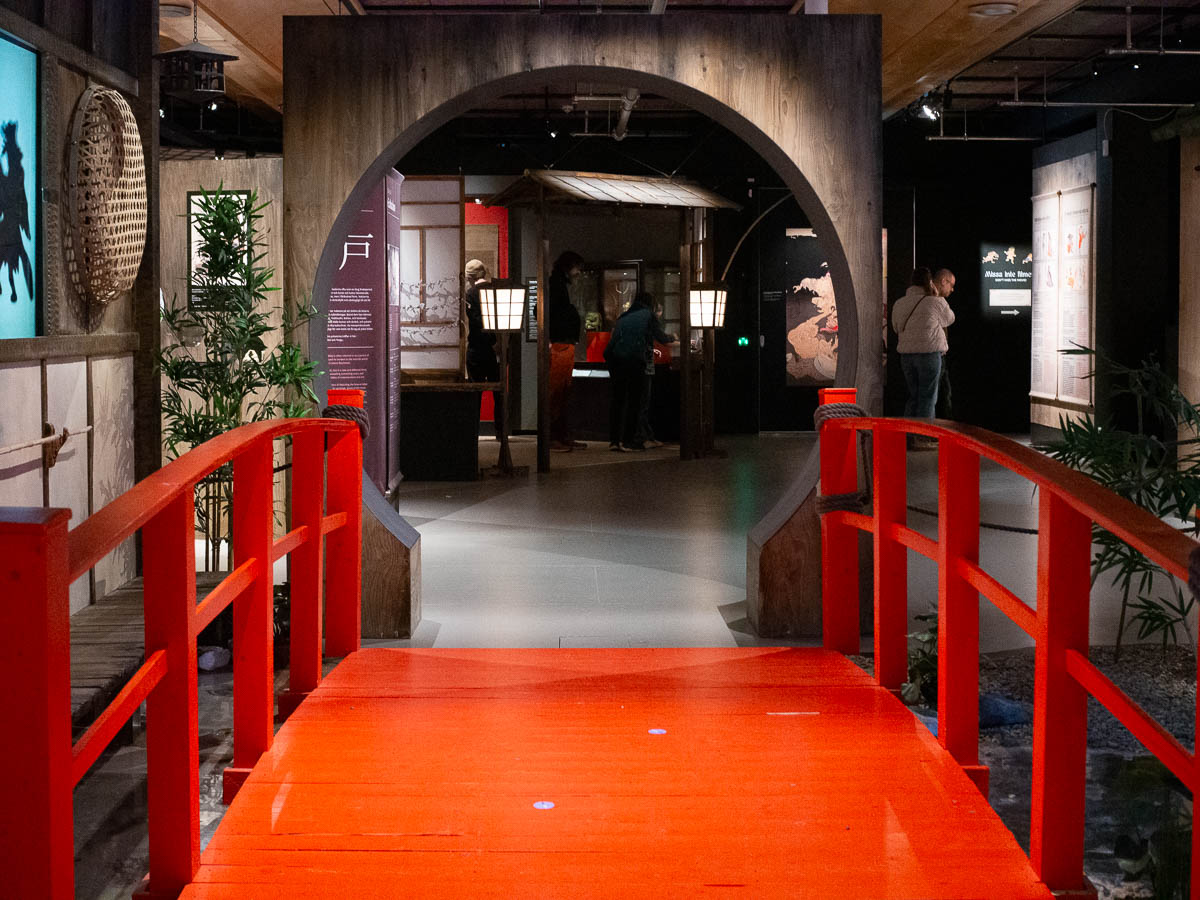
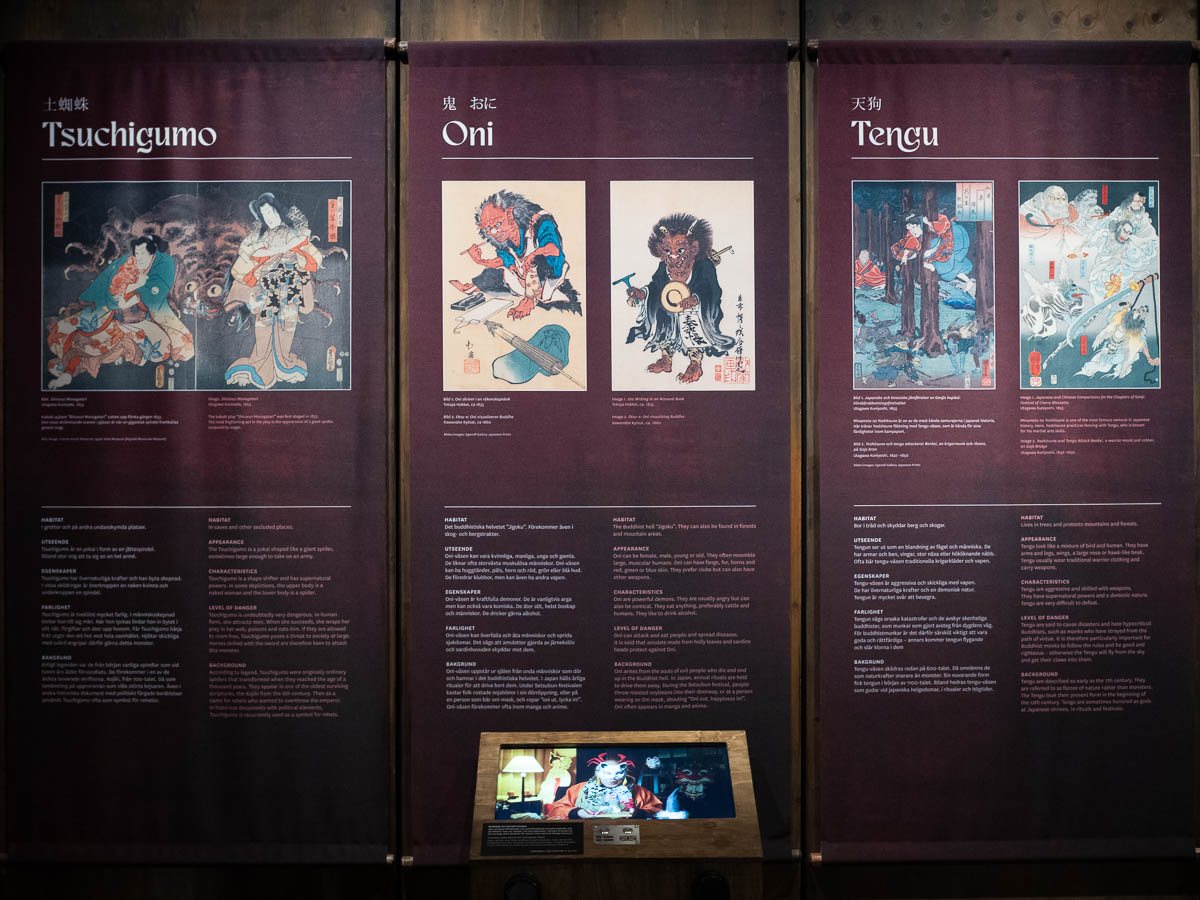
The Museum of Ethnography has an exhibition about yokai, Japanese spirits. It sounded like fun and it’s been on my list for a while.

I misread the dates and thought that this was the last weekend, but that’s actually a year from now. Which is not a reason to go now!

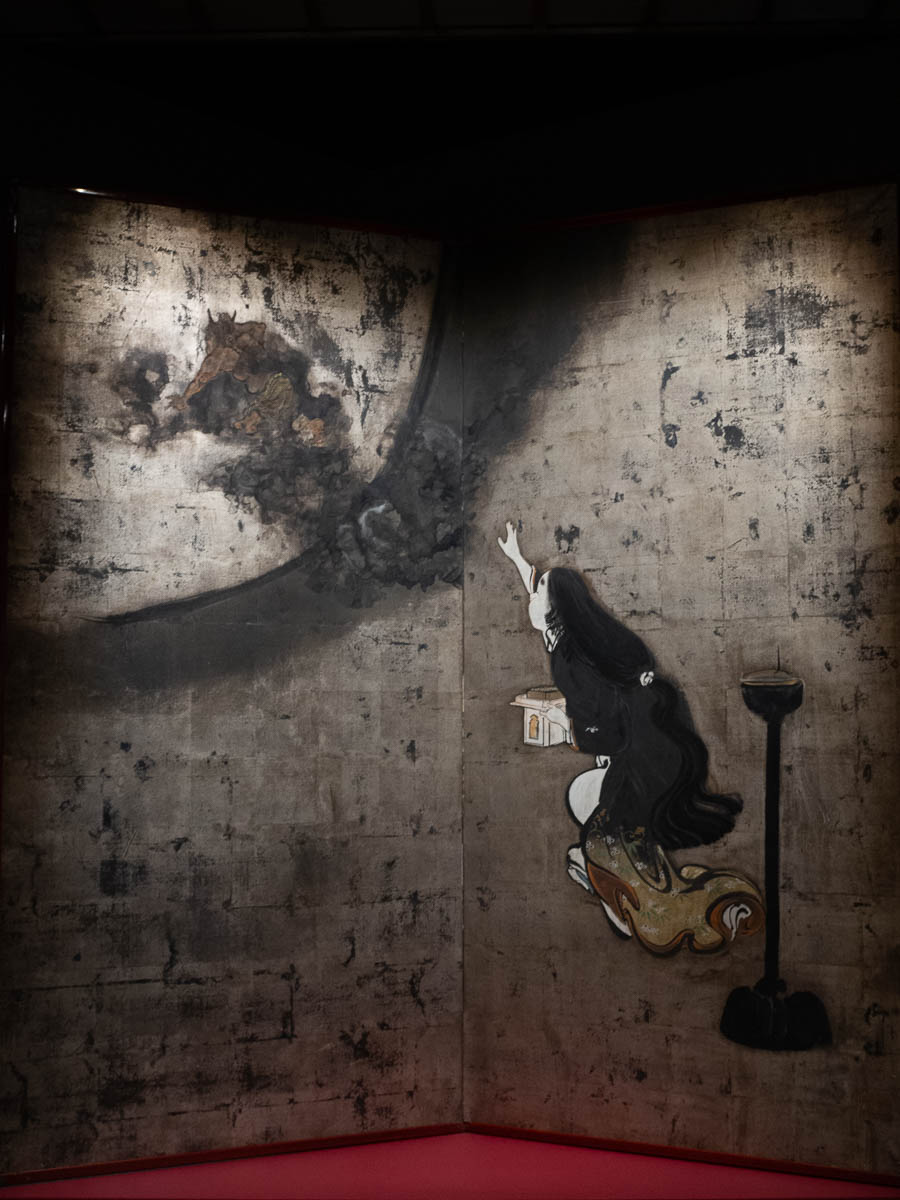
The Japanese sure have a different kind of spirits in their world… and very specific ones. Spirits who lick ceilings and leave sooty smudges behind. Spirits who love to eat cucumbers and human anuses. Shy water spirits whose legs are so long that their knees are above their heads when they sit down. It’s such a different artistic tradition than the Western European one, with a lot more crude humour, overall silliness and inventiveness.

I liked the idea of tsukumogami, inanimate objects that become alive and self-aware because they have served their owners for one hundred years.

The exhibition as a whole was a bit underwhelming. Interesting information, yes, and the room design was atmospheric, but that on its own doesn’t make a good exhibition. A lot of it was simply posterboards with pictures and text, and just a very few actual original objects, whether paintings or otherwise. 90% of this exhibition could have been a book – or a website.

In the hall outside the exhibition itself, there was a series of AI-generated photorealistic images of yokai in modern settings – a tanaki in a laundromat; an octopus creature at a street food stall. Looked nice, but… was it really necessary to use AI for this? It made the whole experience feel a bit cheap.

Harrods, V&A, Natural History Museum, food.

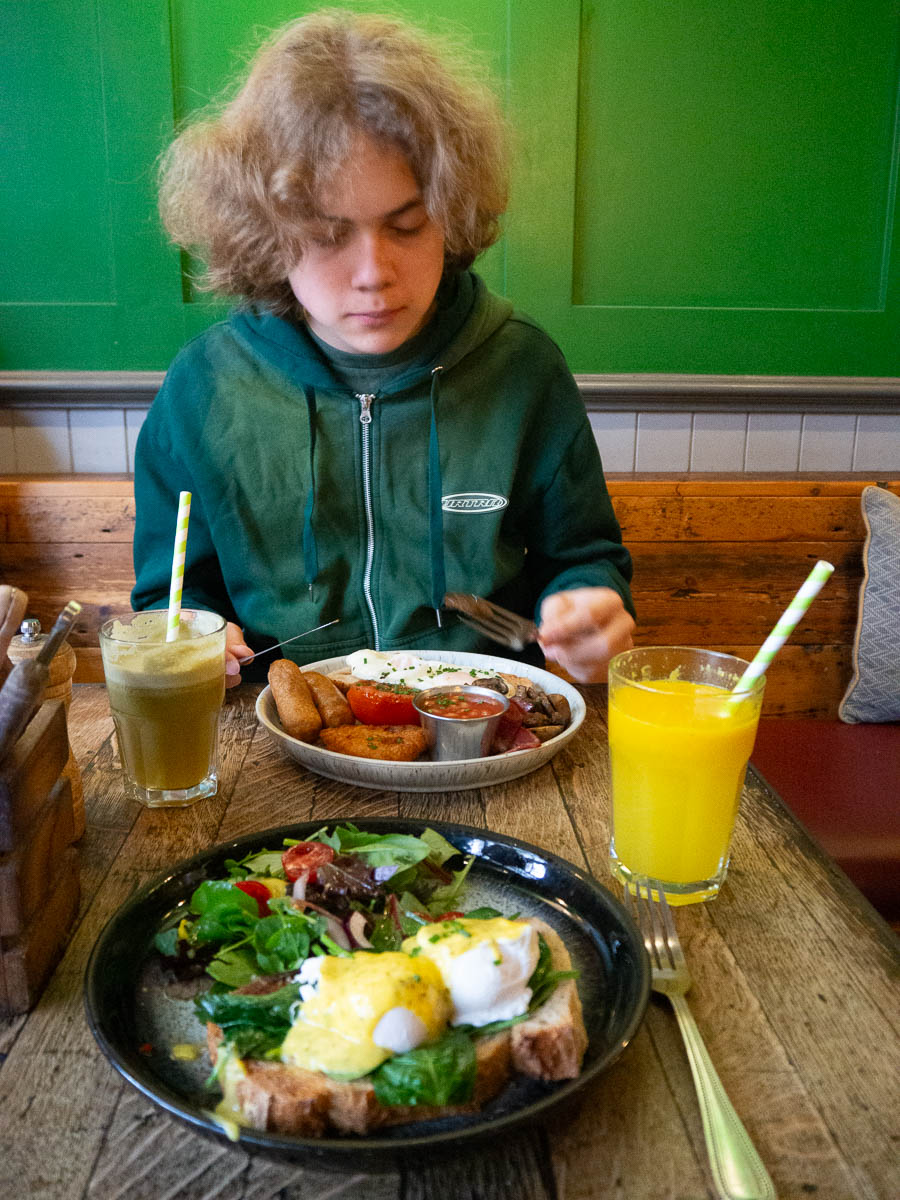
We started the day by checking off another food-related wish: an English breakfast, with hash browns, baked beans, mushrooms, sausages, etc., at Grounded. No black pudding, though. I wondered why that was, and realized later that it’s because the food at the café was all halal, and I don’t think you can make black pudding without pork blood.

I am not interested in any part of an English breakfast, really, so I had Eggs Florentine – I like poached eggs but never quite managed to get the hang of making, so whenever we have brunch at a restaurant (which happens maybe once or twice a year) I let them make me poached eggs.
The forecast promised more rain today than yesterday, even though the forecast has been much downgraded from the 18 mm that was promised for today just a week ago, so we had mostly indoors plans. First: a circuit of Harrods, for Adrian.
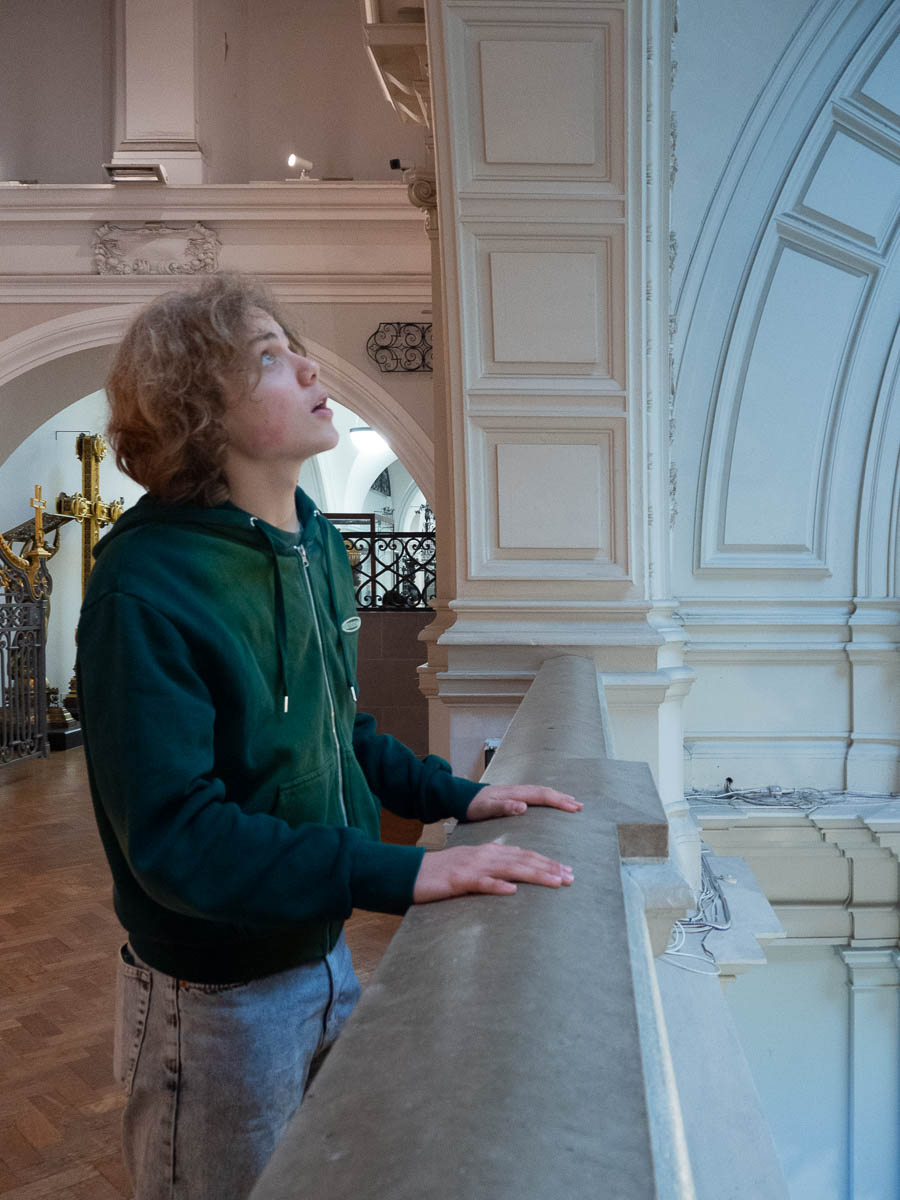
We had a bit of an awkward time to fill between Harrods and our early-afternoon slot at the Natural History Museum. (Timed tickets, again.) I took us to the Victoria & Albert Museum. Partly because of convenience – it’s right next door to the NHM – but also because it’s a lovely museum. There’s something for everyone there.
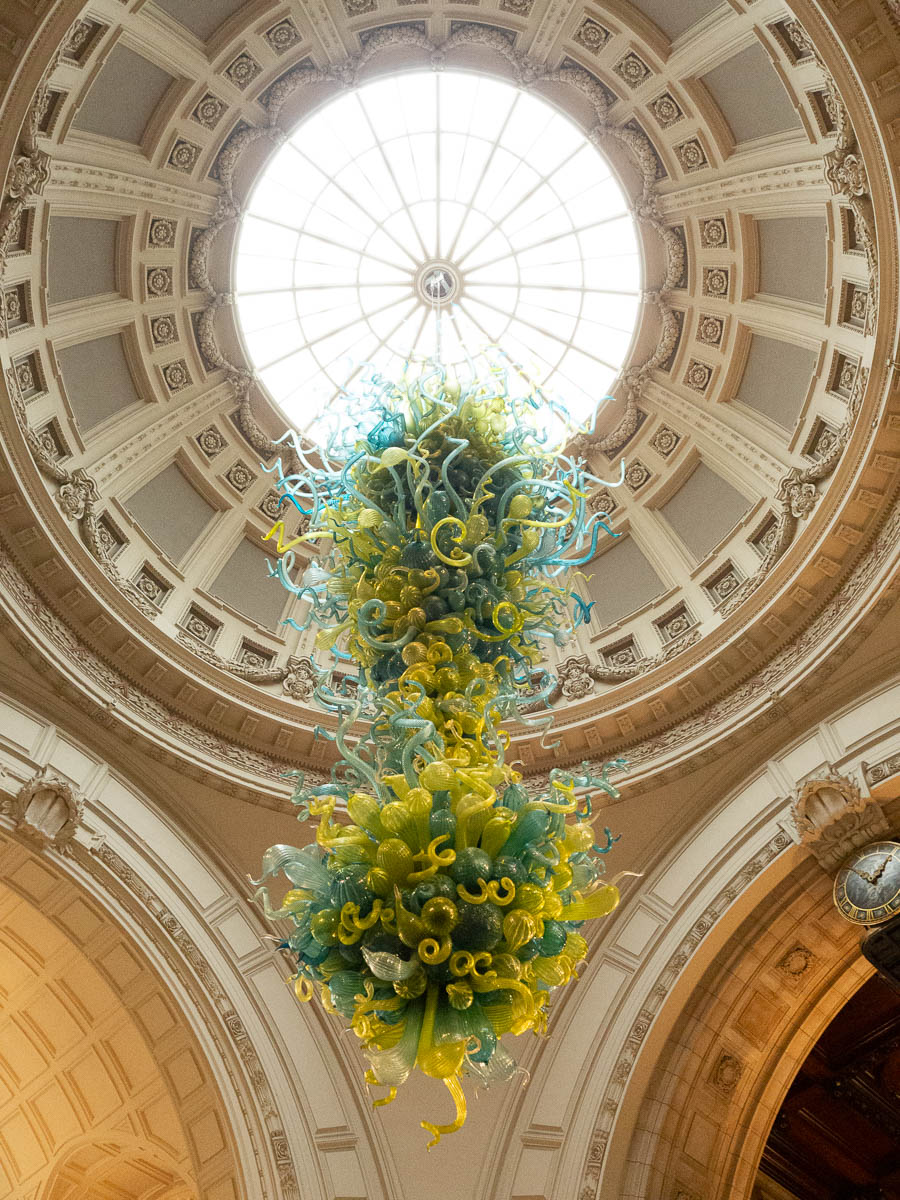
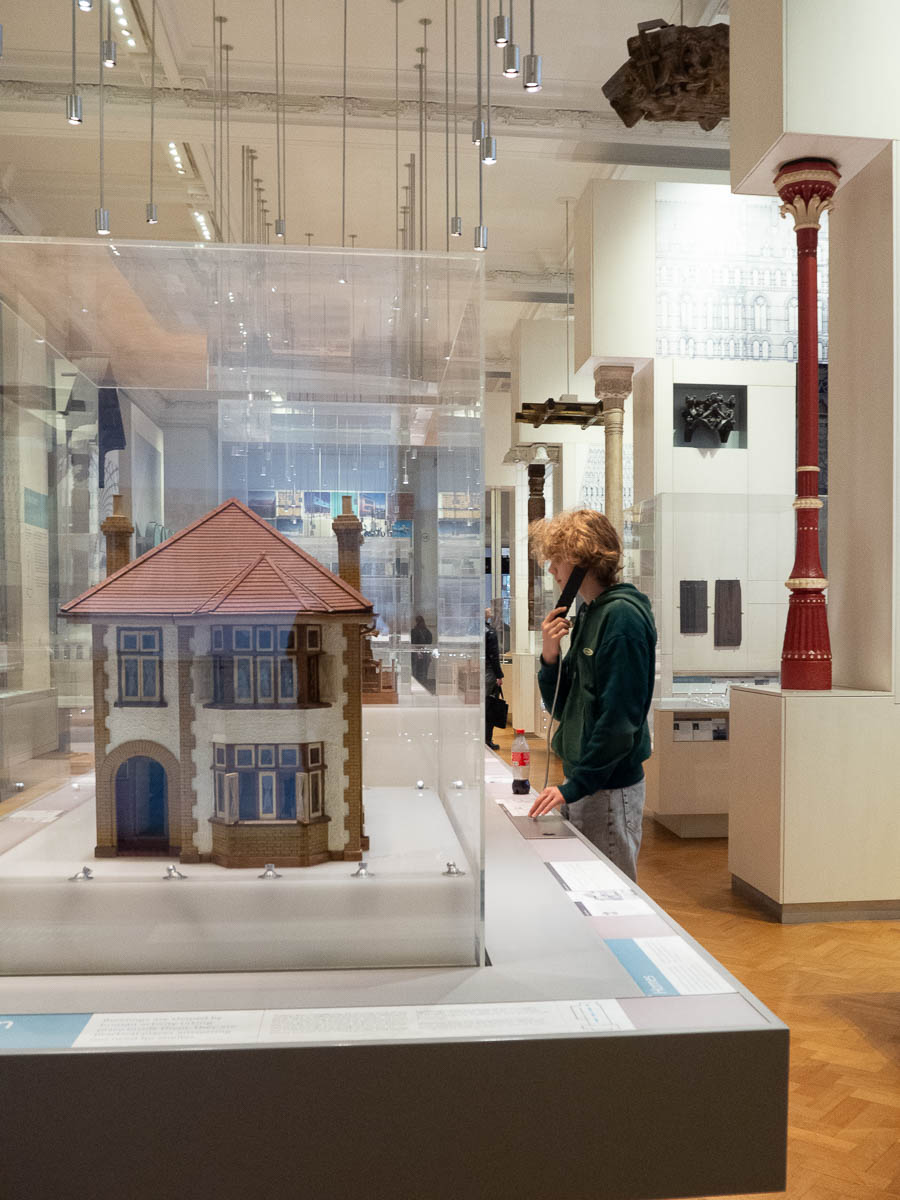
I’d be happy to wander through any and all parts of it, so I let Adrian’s interests guide us, while stopping to look whenever we ran into anything interesting on our way. We ambled past British decorative arts 1760–1900, then a bit of ironwork, to architecture. Down, a brief tour through the Cast Courts, and on to lunch.
Museum restaurants these days usually serve great food, having to compete for visitors’ attention against all sorts of other attractions. The lunch at the V&A café was surprisingly disappointing. The food in and of itself wasn’t bad, but nothing exciting either. The process of getting it was awkward, with flows of people crossing checkout queues, nowhere to rest your tray while queueing, and truly horribly noisy dining rooms. Sumptuous, yes, stylish, yes – but not at all pleasant. I guess it may have been nice a hundred and fifty years ago with half the number of tables, or something.

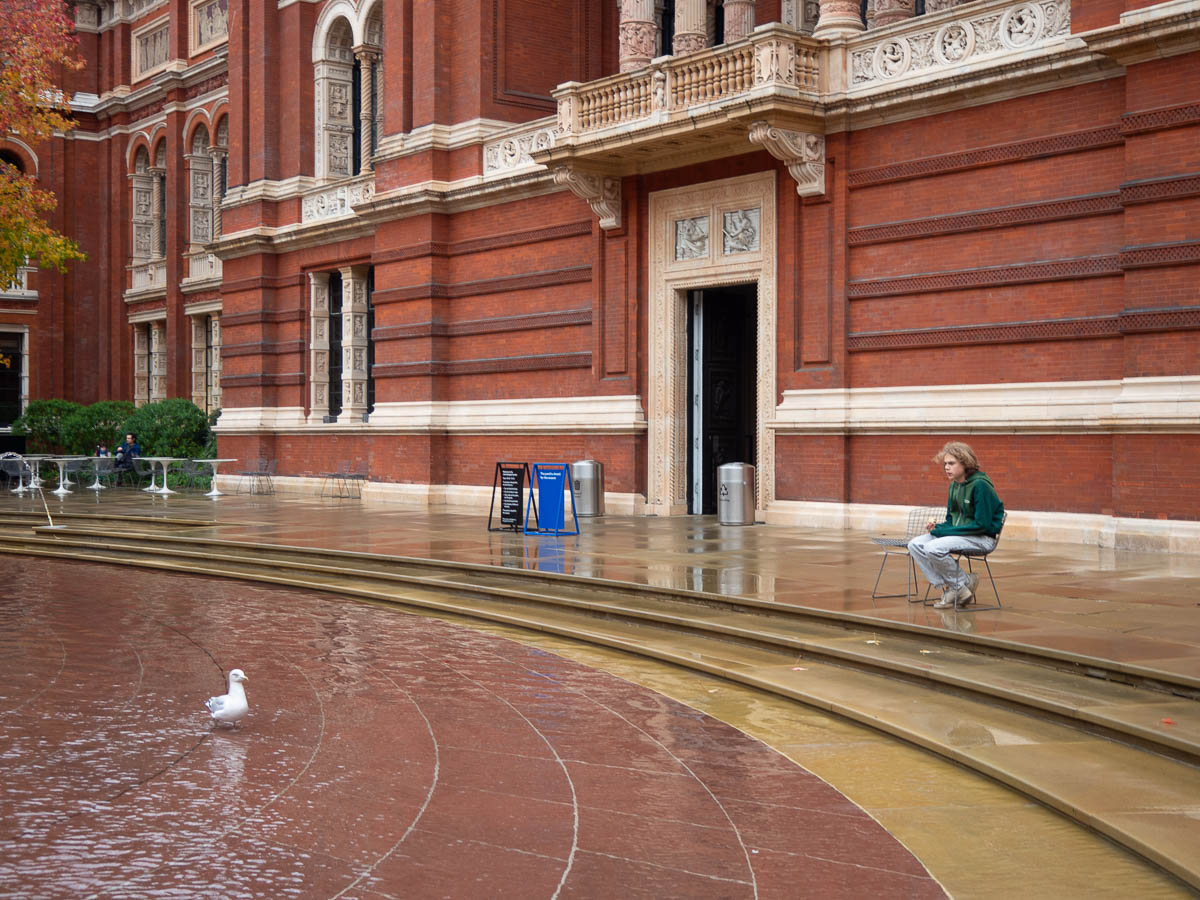
Adrian needed a top-up because his lunch portion wasn’t large enough, so he bought a cinnamon bun – which must have been the world’s worst cinnamon bun ever, for seven pounds – and we went out into the courtyard to rest our senses.
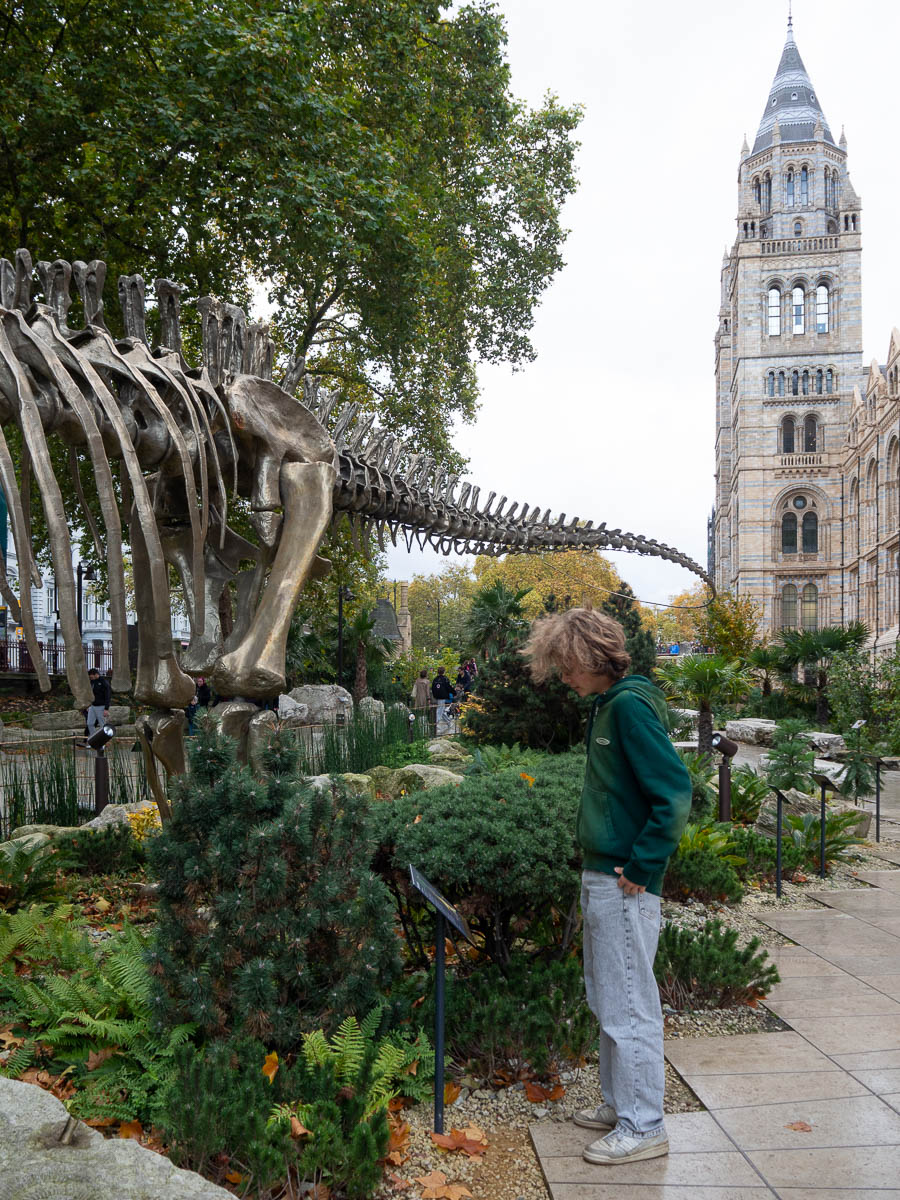
After a browse through the museum shop, we crossed the street to the Natural History Museum. Started with a tour through their garden, with a bronze cast of their famed Diplodocus skeleton (which was apparently technically challenging to make), surrounded with plants similar to what was around during the era of the Diplodocus.
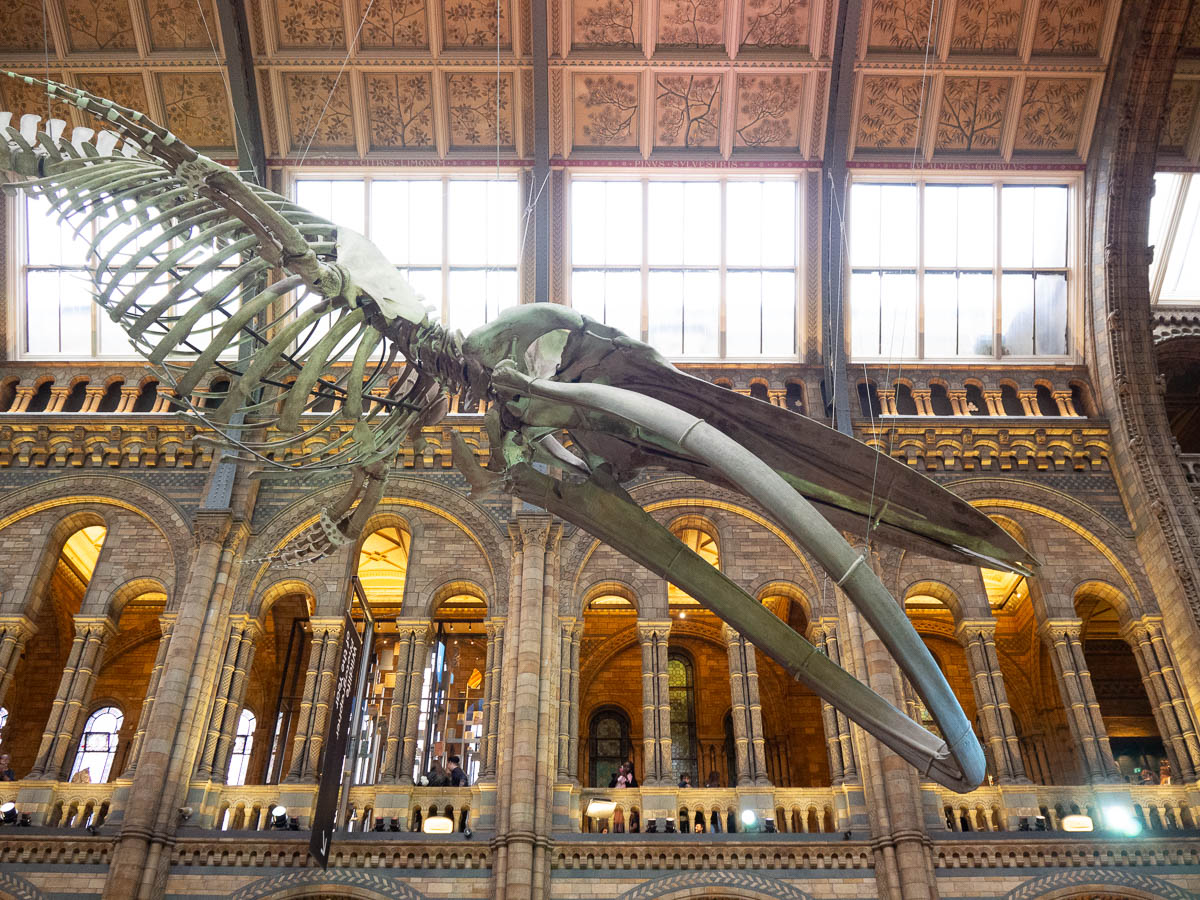
Passed the impressive skeleton of a blue whale inside.
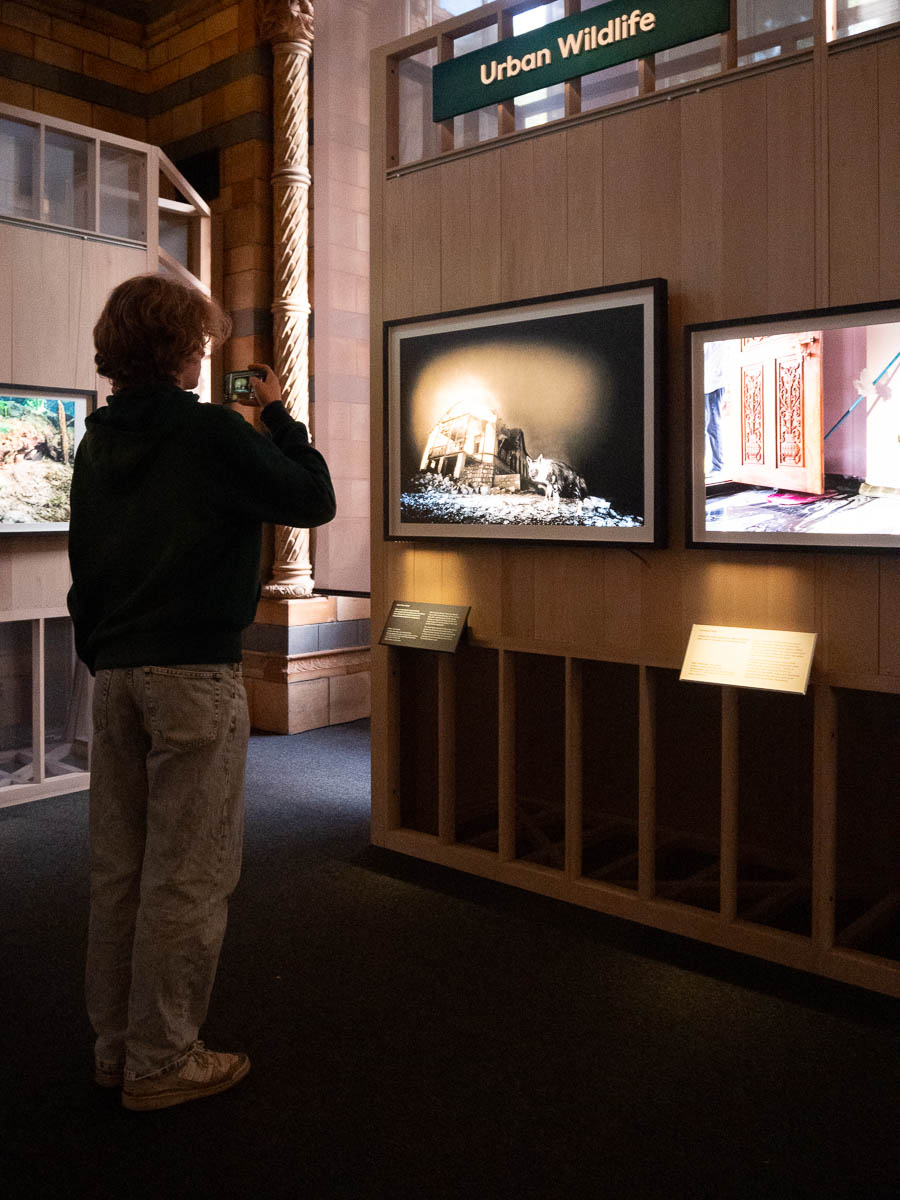
Instead we went to see the Wildlife Photographer of the Year exhibition, which had opened just two weeks earlier. It’s an annual exhibition, but I haven’t seen it since 2007.
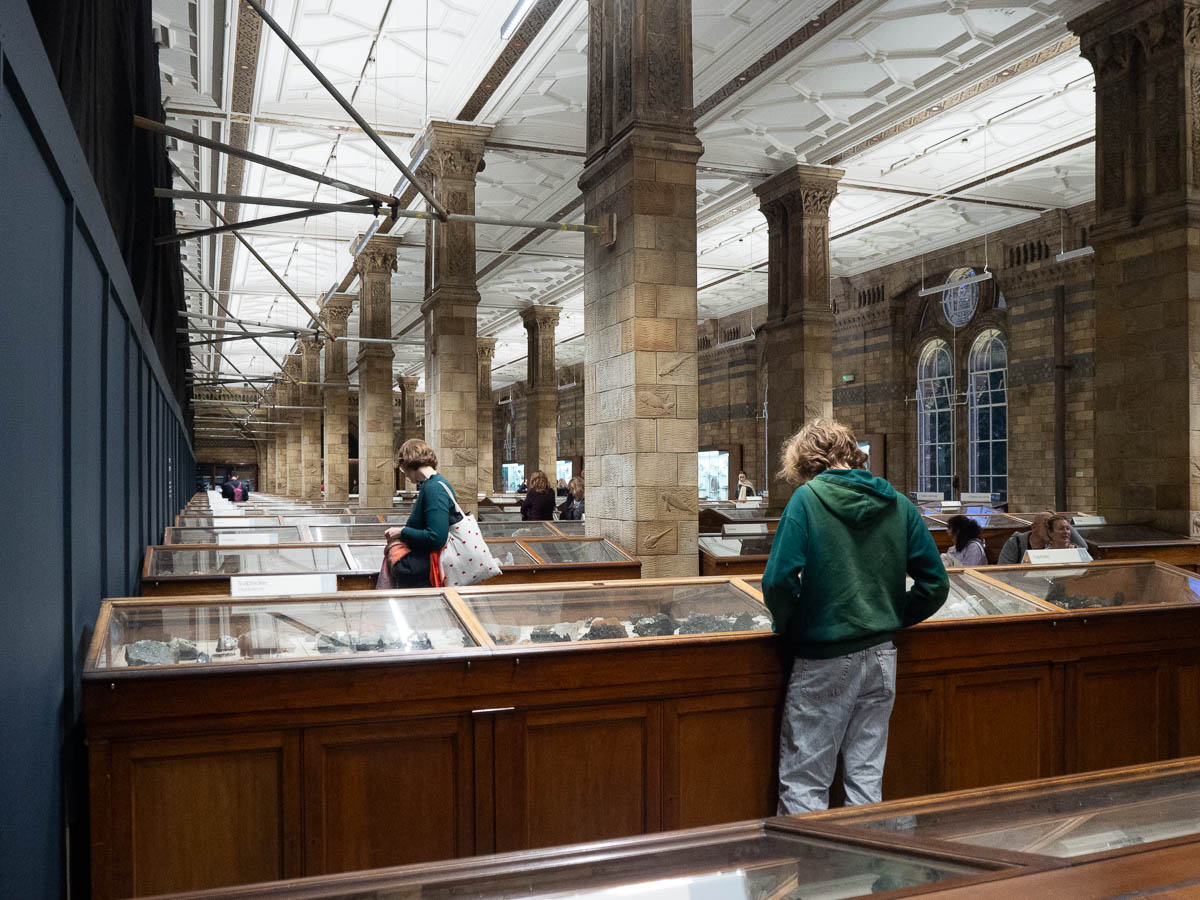
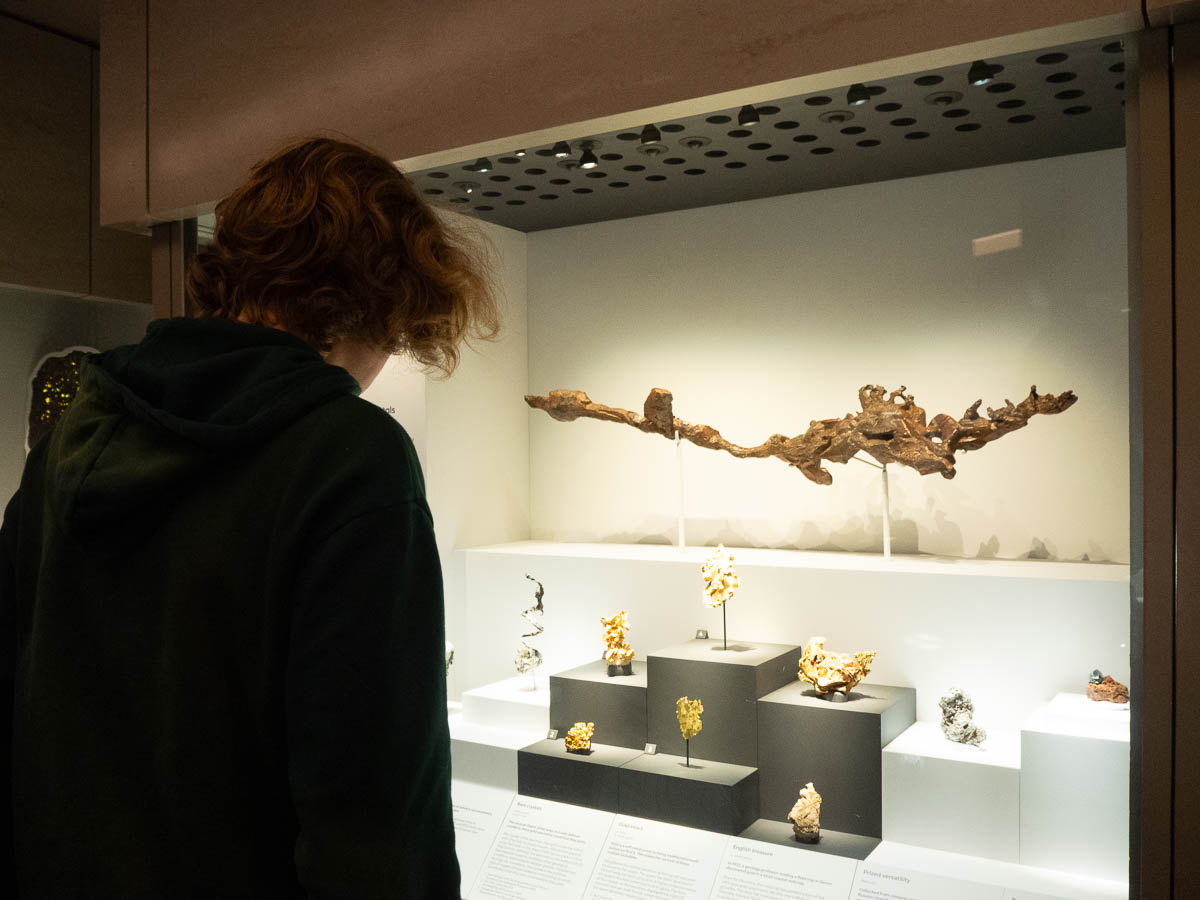
I would have expected Adrian to want to see more skeletons and such, but he opted for geology. I don’t know if I’ve ever visited the crystals and minerals hall of the NHM. It was astoundingly expansive. Several metres of sulphur in various shapes, case after case of copper-base minerals… Crystals, gemstones, natural chunks of pure metallic gold, you name it.
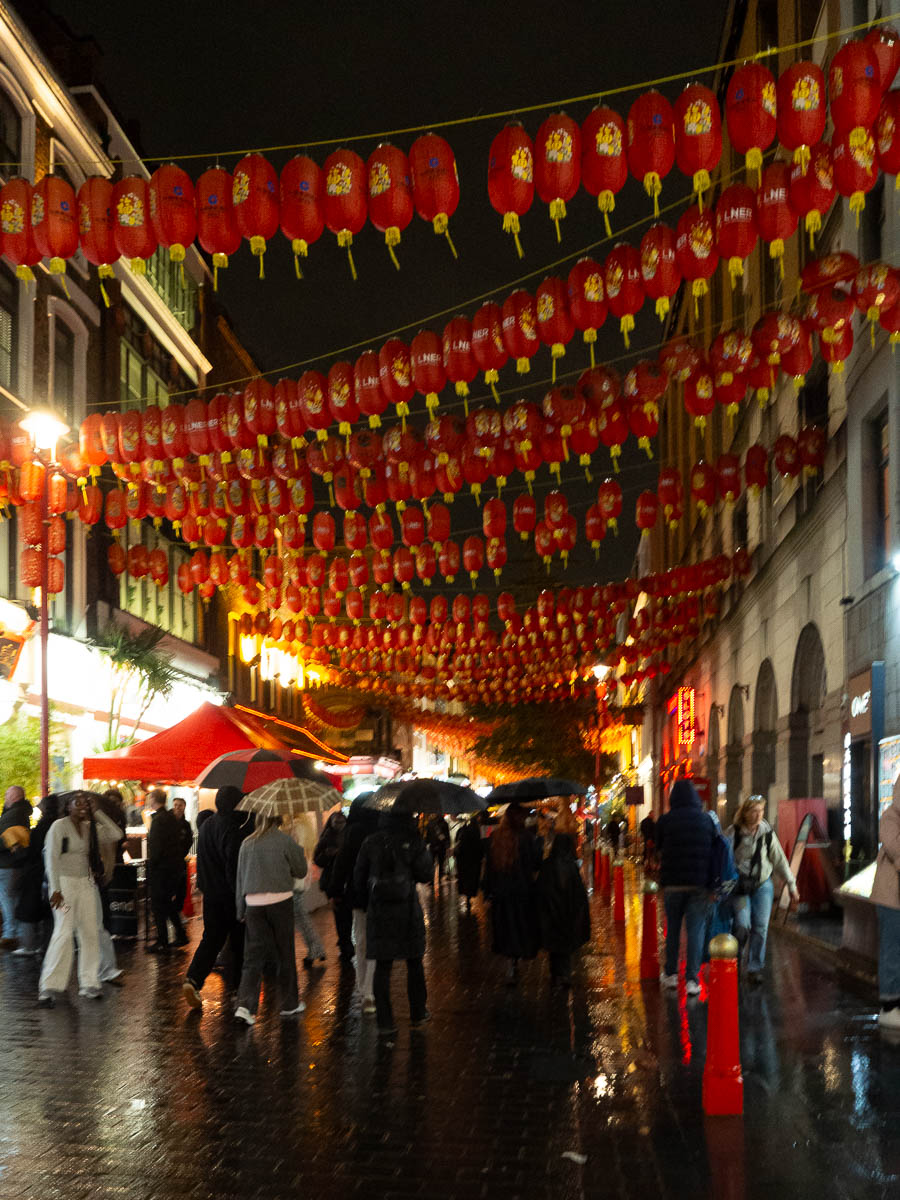
For dinner today we made our way to Chinatown for dim sum. I was too tired to spend much time and energy on choosing a restaurant, so we just picked the first one that looked decent. It turned out to be, indeed, decent.
Encouraged by Friday’s outing, I went to the city again to see more of Stockholm Craft Week.
There was a group exhibition in Gustaf Vasa church, of all places, by graduate students in the textiles program at Konstfack. Nice location, but it would also have been nice if the event organizers had taken into account and informed visitors about times when the exhibits could not be visited due to Sunday service. I had to hang around for half an hour before I could enter.

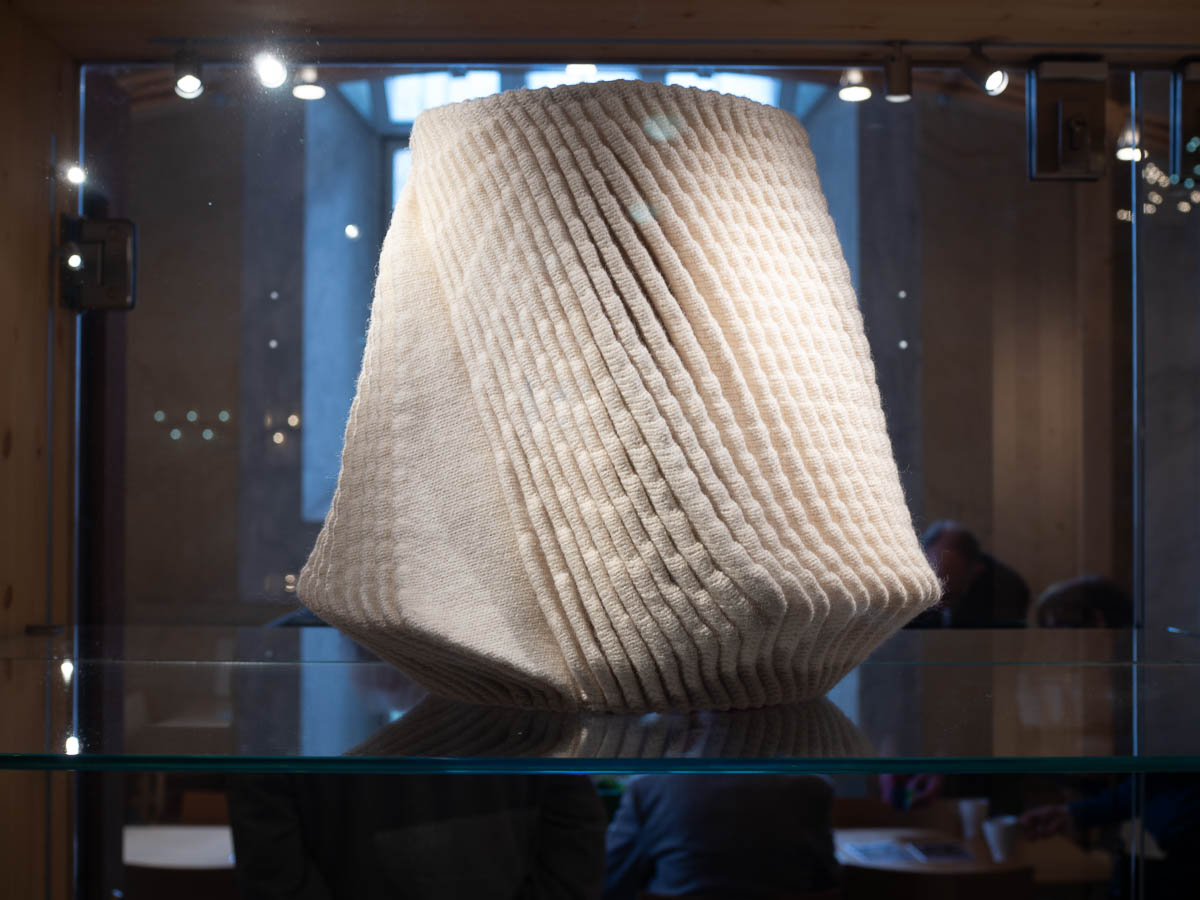
I liked the folded knits by Hanna Åström – very three-dimensional, geometrical and sculptural.

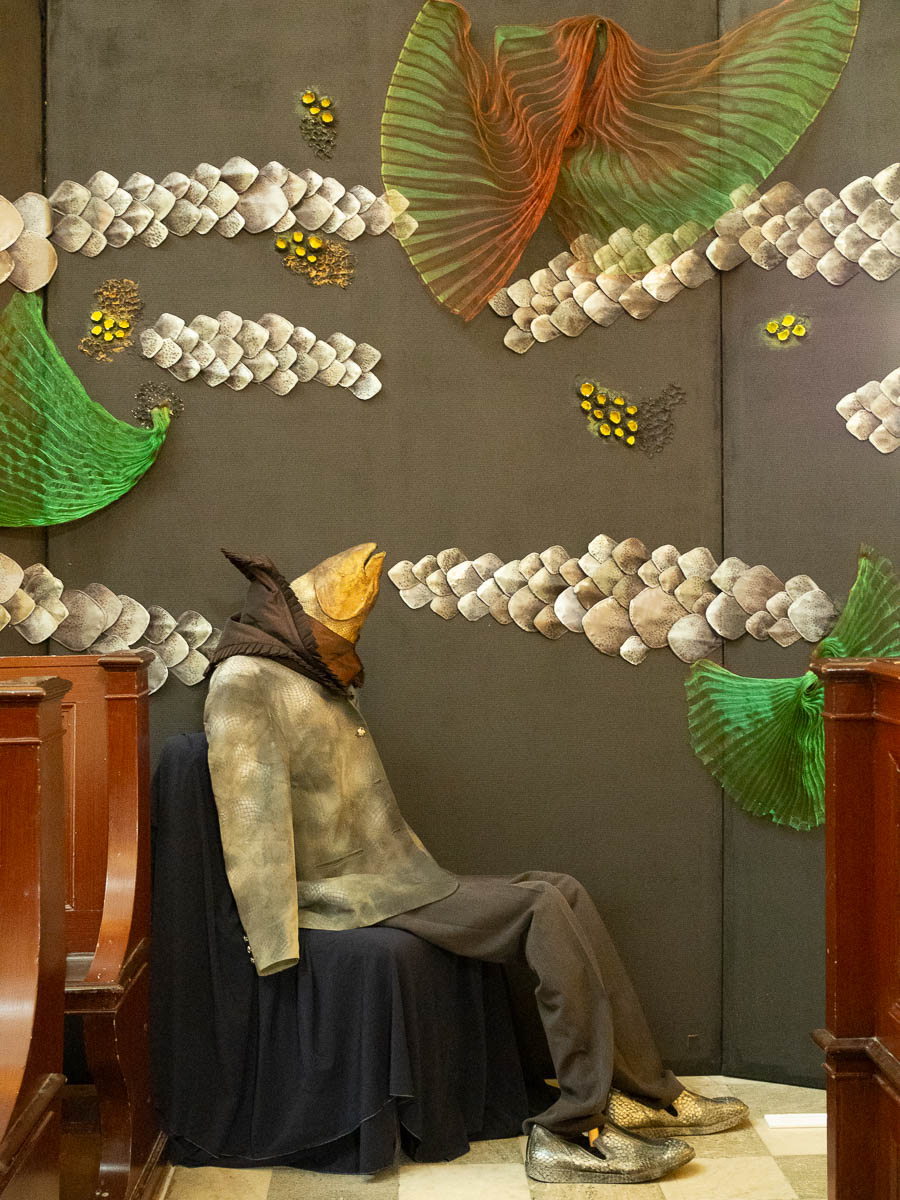
There were all the usual textile crafts – embroidery, pieces of weaving – and then suddenly a sculpture/installation thing depicting an anthropomorphic fish.

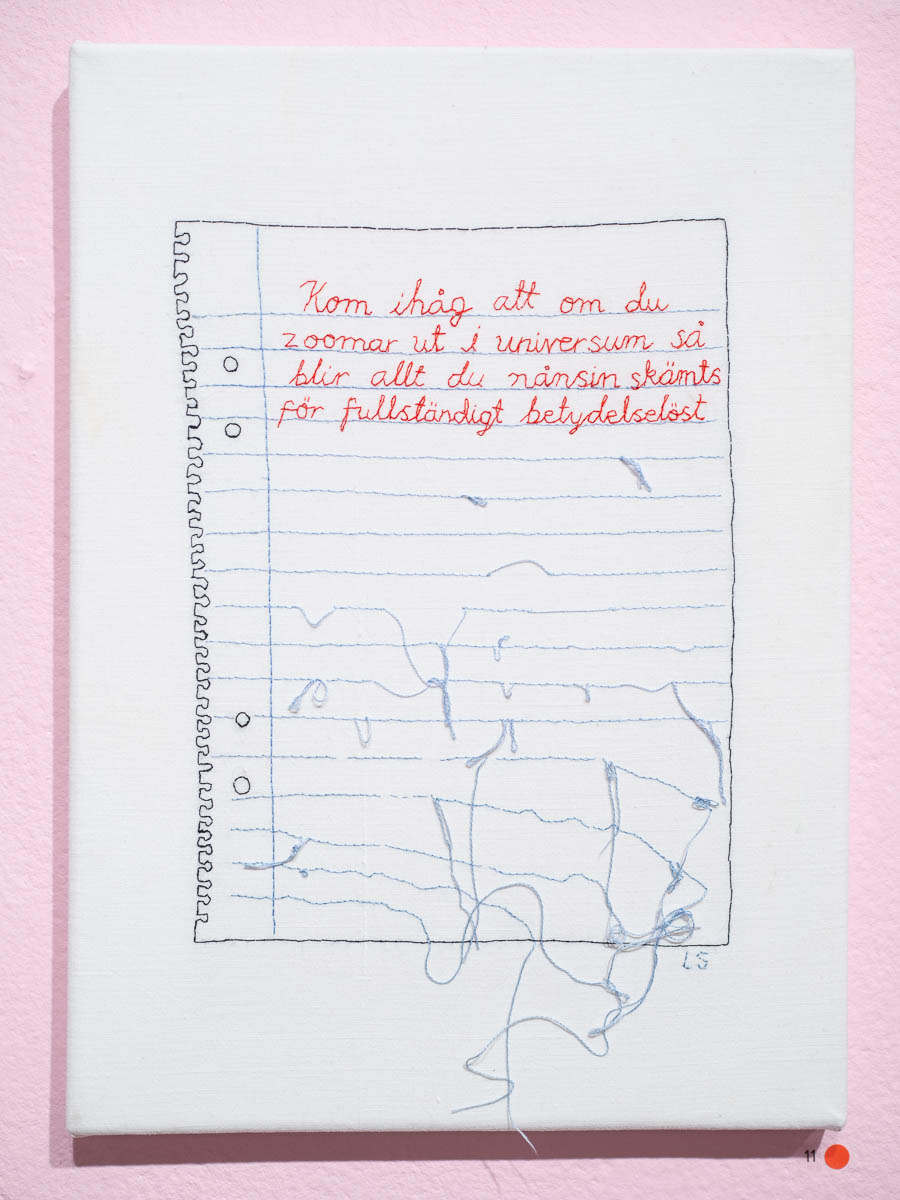
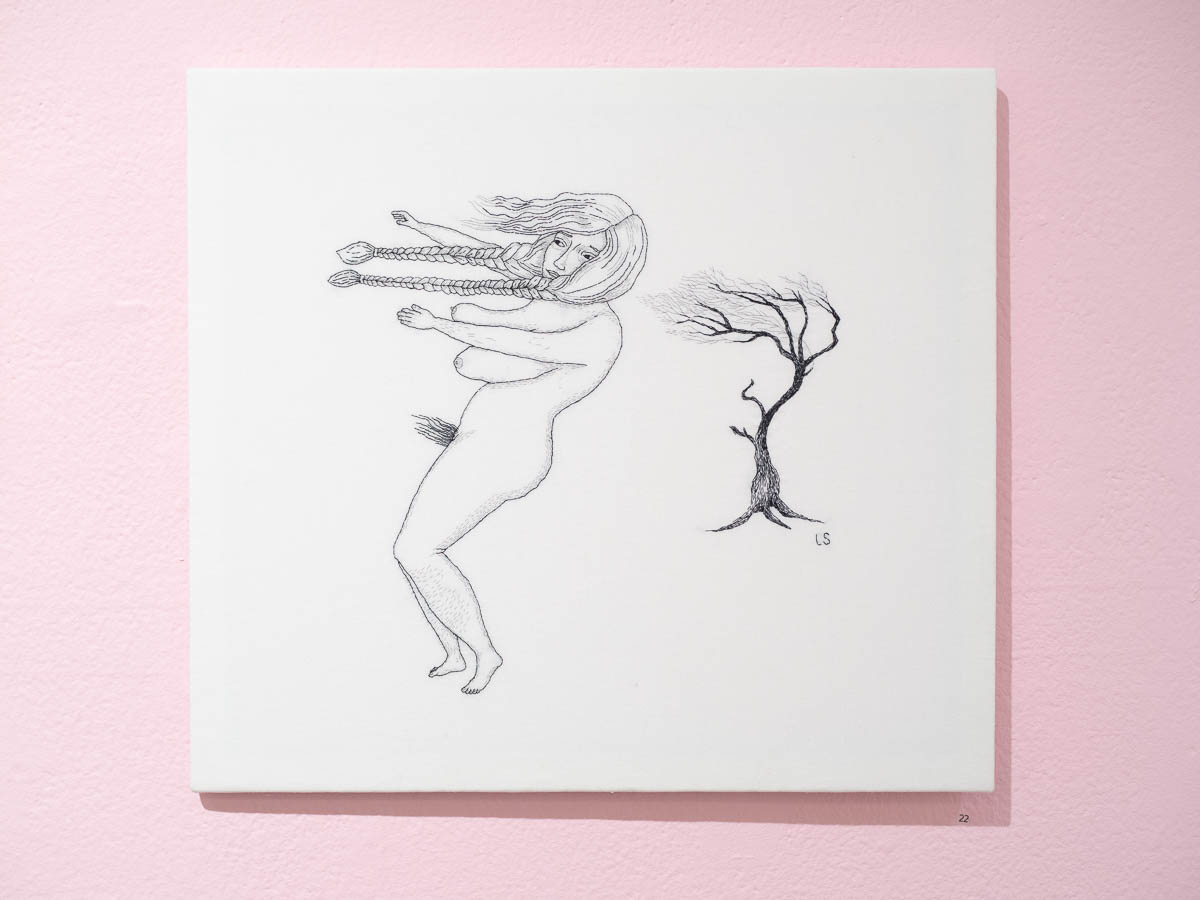
From Gustaf Vasa church I continued onwards to the shop/gallery of Konsthantverkarna where there is an exhibition of embroidered works by Lotta Sjöberg. She is an illustrator and artist, and her textile works are like drawings but in thread on fabric. Often full of wry humour, often about women’s everyday concerns.

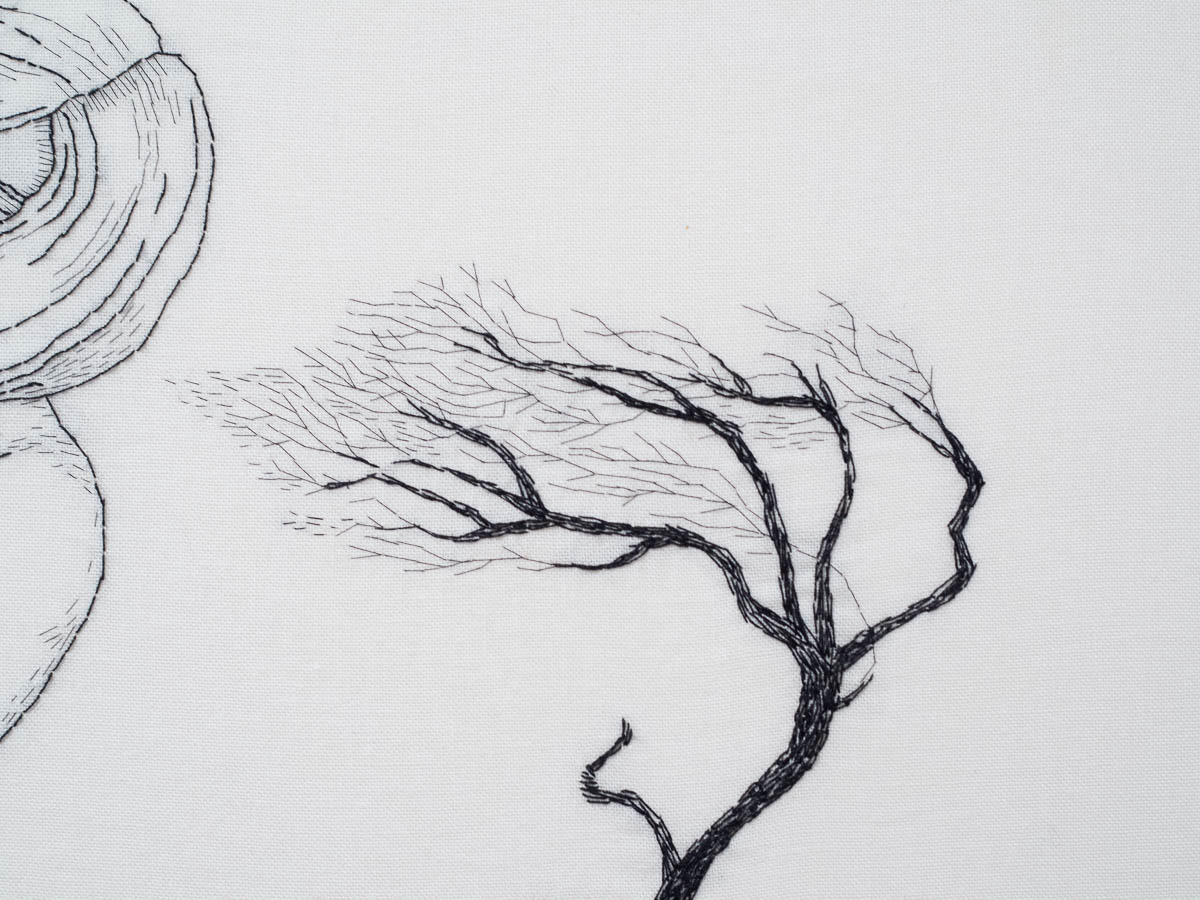
I follow her on Instagram and mostly knew what to expect, but was still surprised. I had gotten a rather misleading impression of how large her embroideries were, based on the size of the stitches in them. What I thought was sewing thread or maybe one strand of embroidery floss, was instead silk organzine, apparently the thinnest thread manufactured. (Since today was the opening day of the exhibit, Lotta Sjöberg was present herself, and I took the opportunity to ask questions.)

It’s like cobweb. Truly, you could only make this in silk, because a thread this thin in any other fibre would break if you tried to use it.