Ingrid is home for a whole ten days. It’s not a week of leave but a week of theoretical studies at home – a 500-page dense brick of a book about “Soldiership in the field” (which you can actually get as a free PDF online), a thinner one about anti-tank grenade launchers, another about working as a security guard at restricted-access sites.

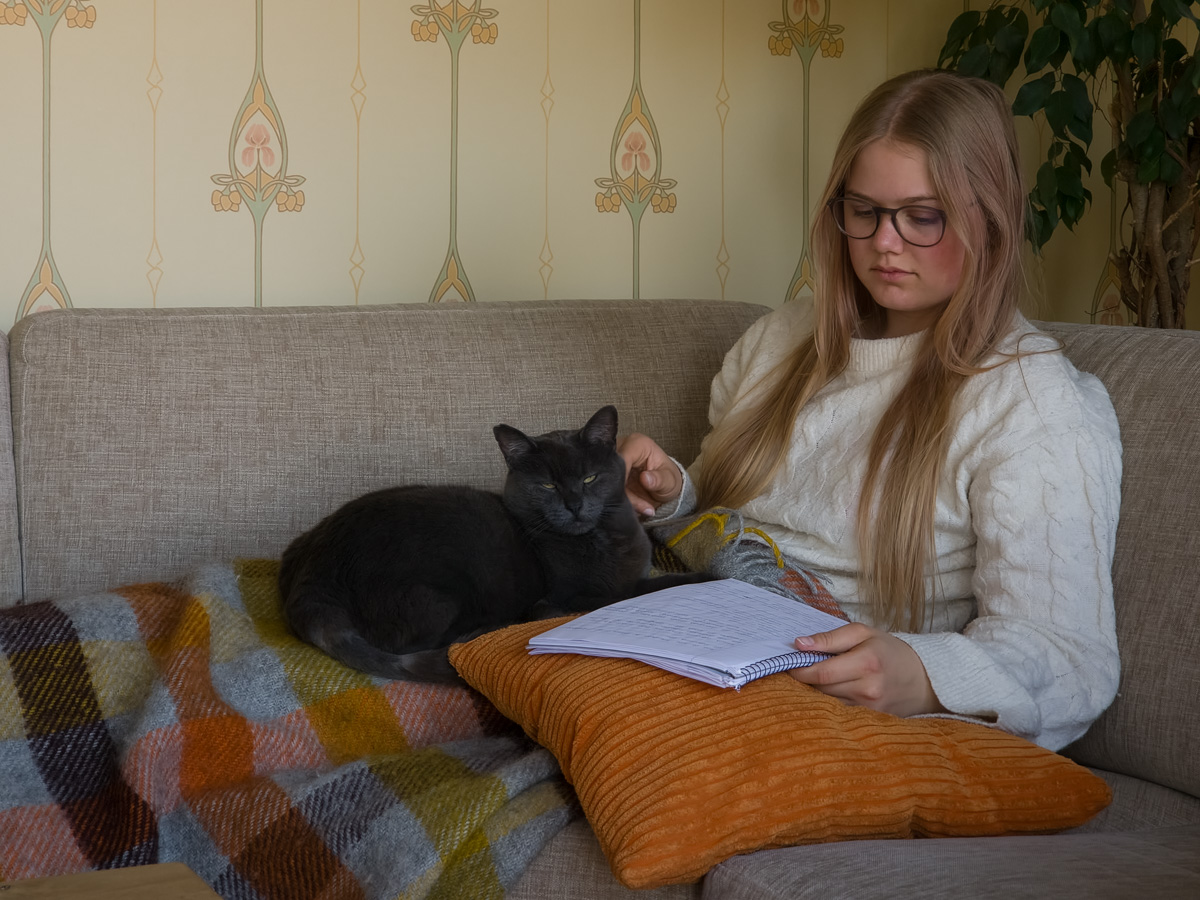
It’s not a week of leave, but at least she can get home-cooked food and pet a cat while studying.

I went to see Liljevalchs’s spring art salon together with Adrian and Ingrid.

I’ve always moved through the rooms in a counter-clockwise direction, because that’s the direction that’s straight forward from the entrance. That’s put the room with the under-eighteens’ works as the first one. Ingrid and Adrian confidently steered us in the opposite direction, because that was obviously the right way to go in their mind. It does actually make more sense this way, because now we started in a spacious hall of eye-catching sculptures and large paintings.
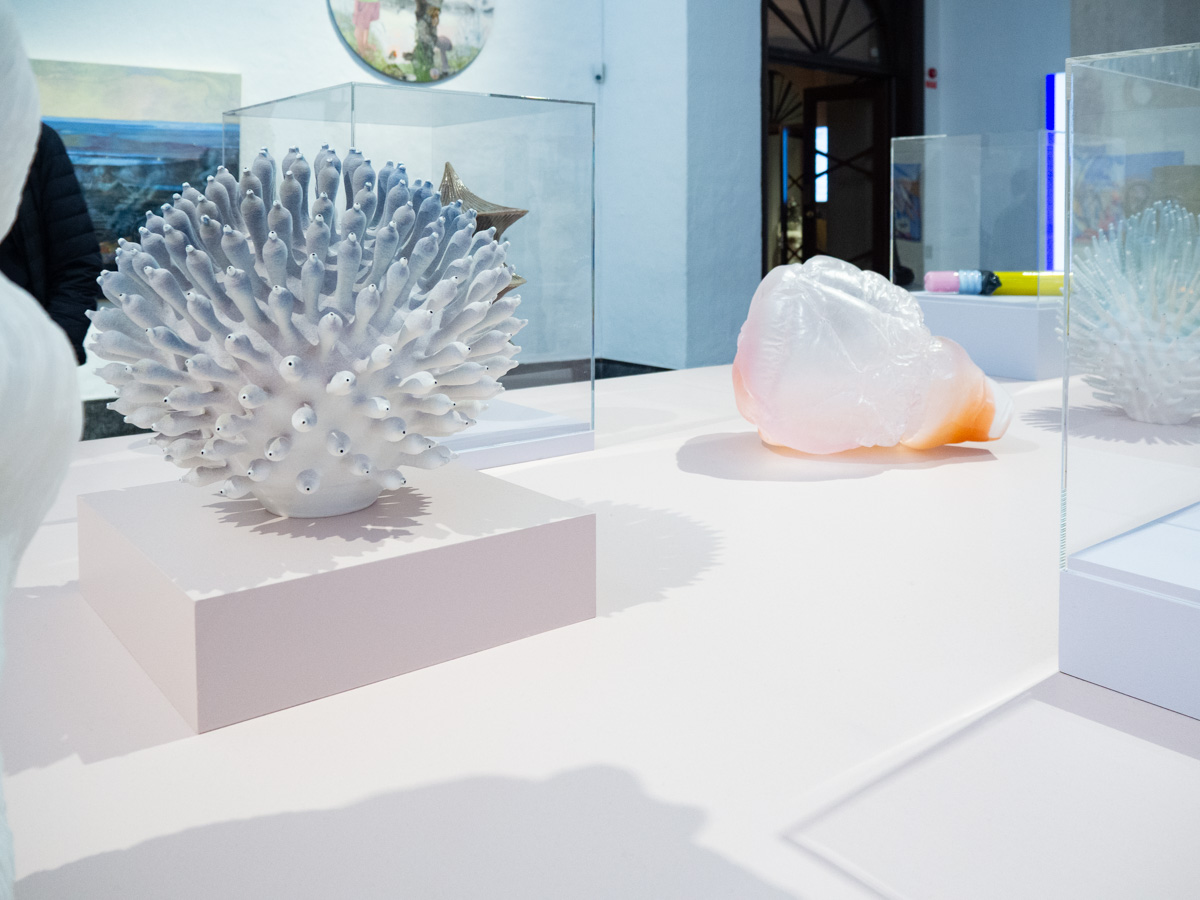
The works at the salon are all for sale, at a price set by the artist. Some, I think, price them so as to be almost sure that they won’t sell. Others are very affordable. Some look expensive to me but then turn out to have been sold nevertheless. (There’s a board in one of the rooms with sticker dots marking what’s been sold and what hasn’t.)

One of glass sculptures above, which I rather liked, had been sold for a sweet 95,000 SEK.
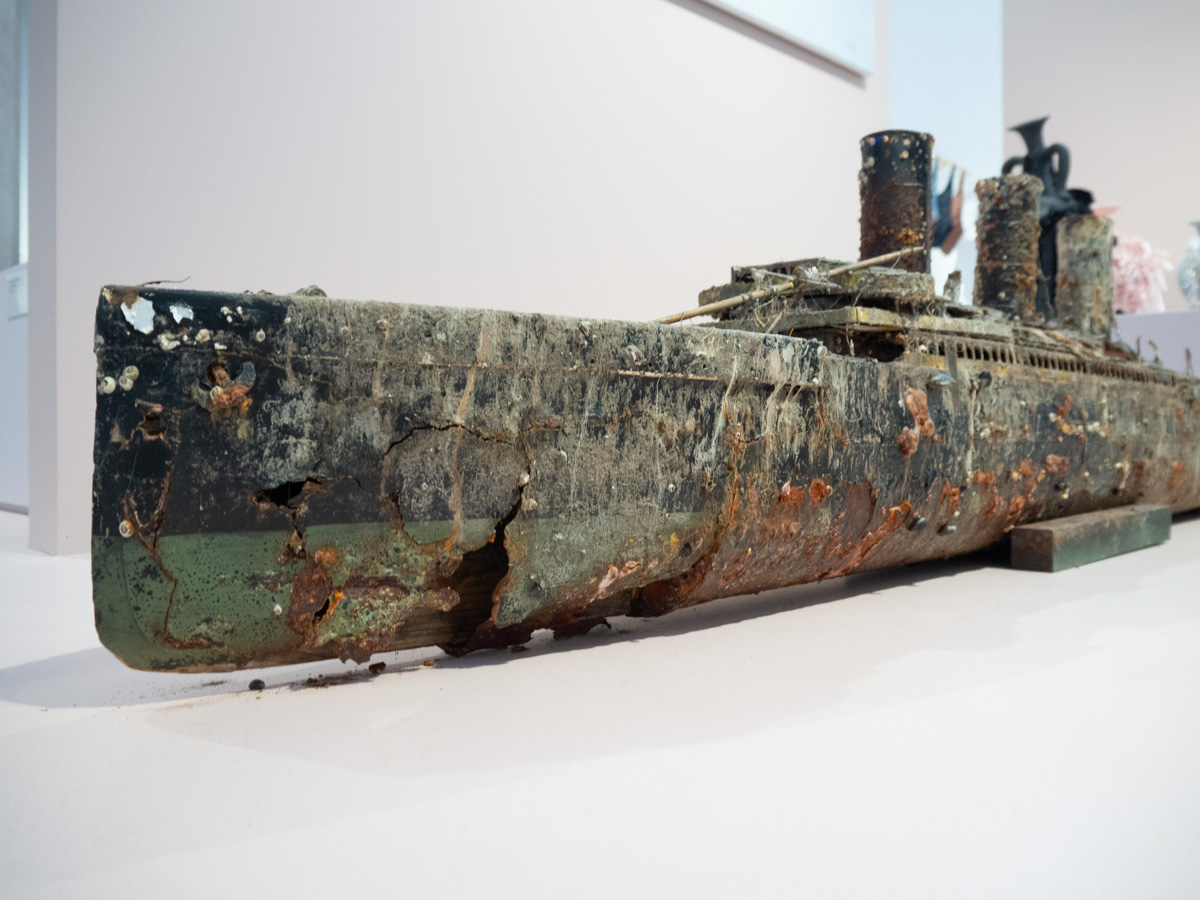
This one-metre sculpture of a submarine was made of metal and wood, and had been aged underwater for three years, according to the label. (Nils Lagergren, “Belgravia”.)
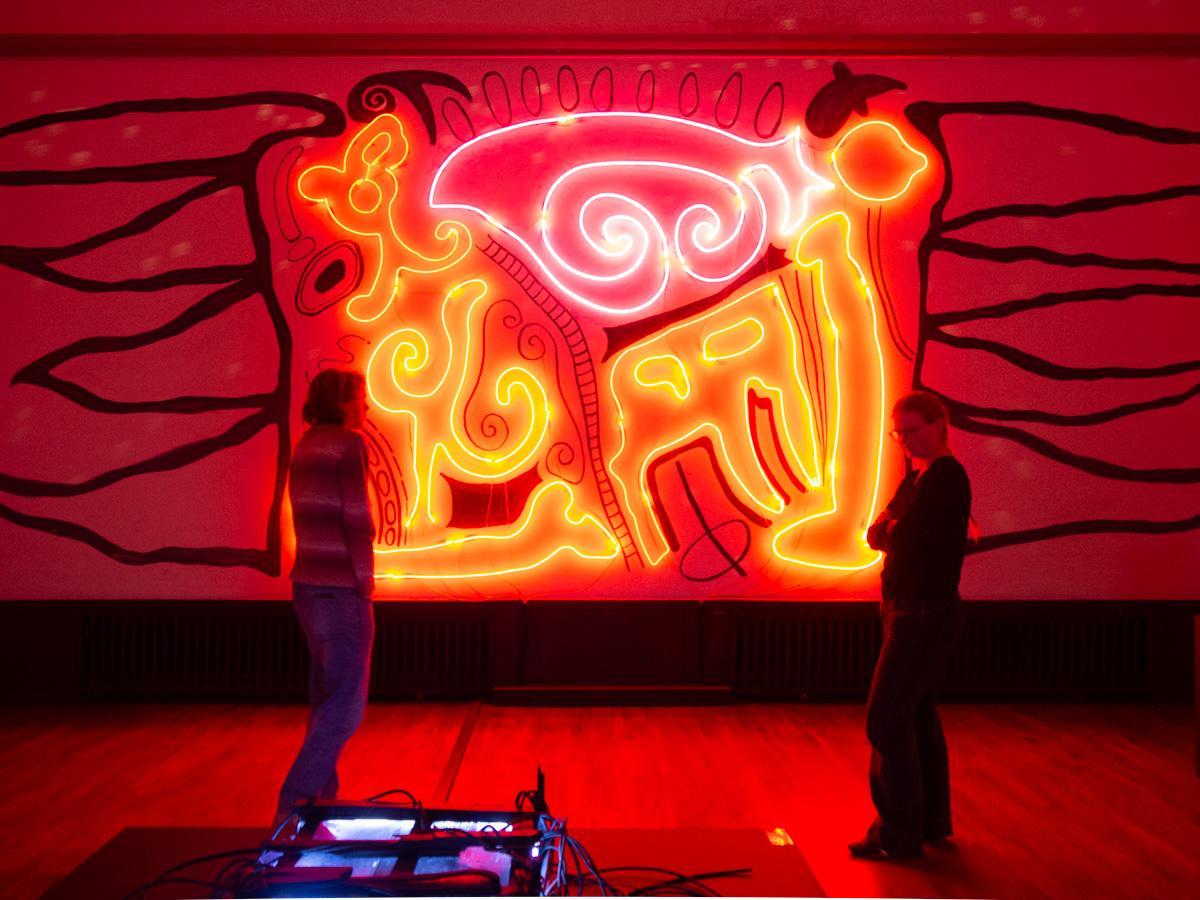
I wonder how this work of neon tubes and black paint on the wall was even presented to the jury, and how it can have been transported here. (Josefin Eklund, “Mysterious goats and geometric heads”.)
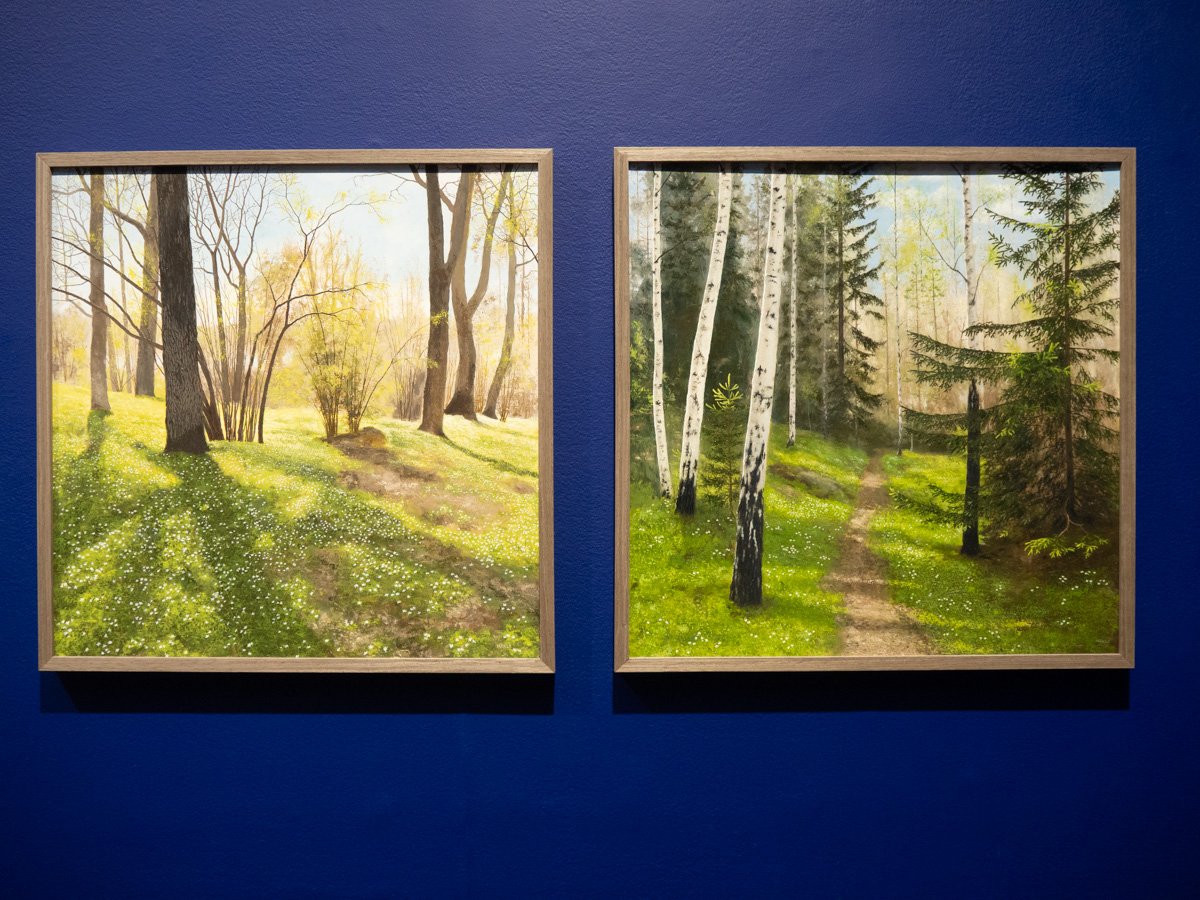
There were of course not just weird sculptures but also paintings of all kinds. I liked this pair of very realistic but dreamy views of a spring forest. (Mats Nörle, “Ekbacken om våren”.)
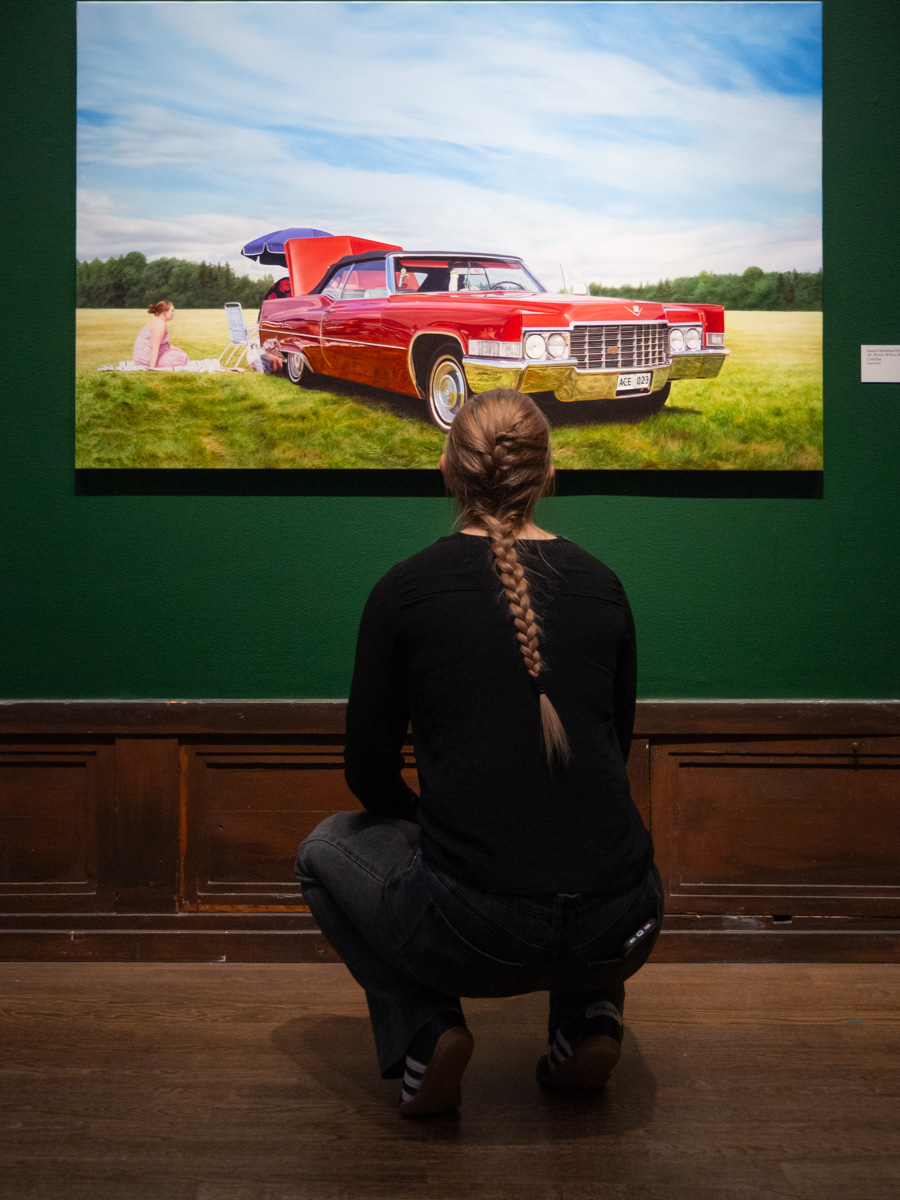
Ingrid taught me about underpainting, and how it is often done in red or orange. (Anna-Christina Eriksson, “Picnic With a Red Cadillac”.)
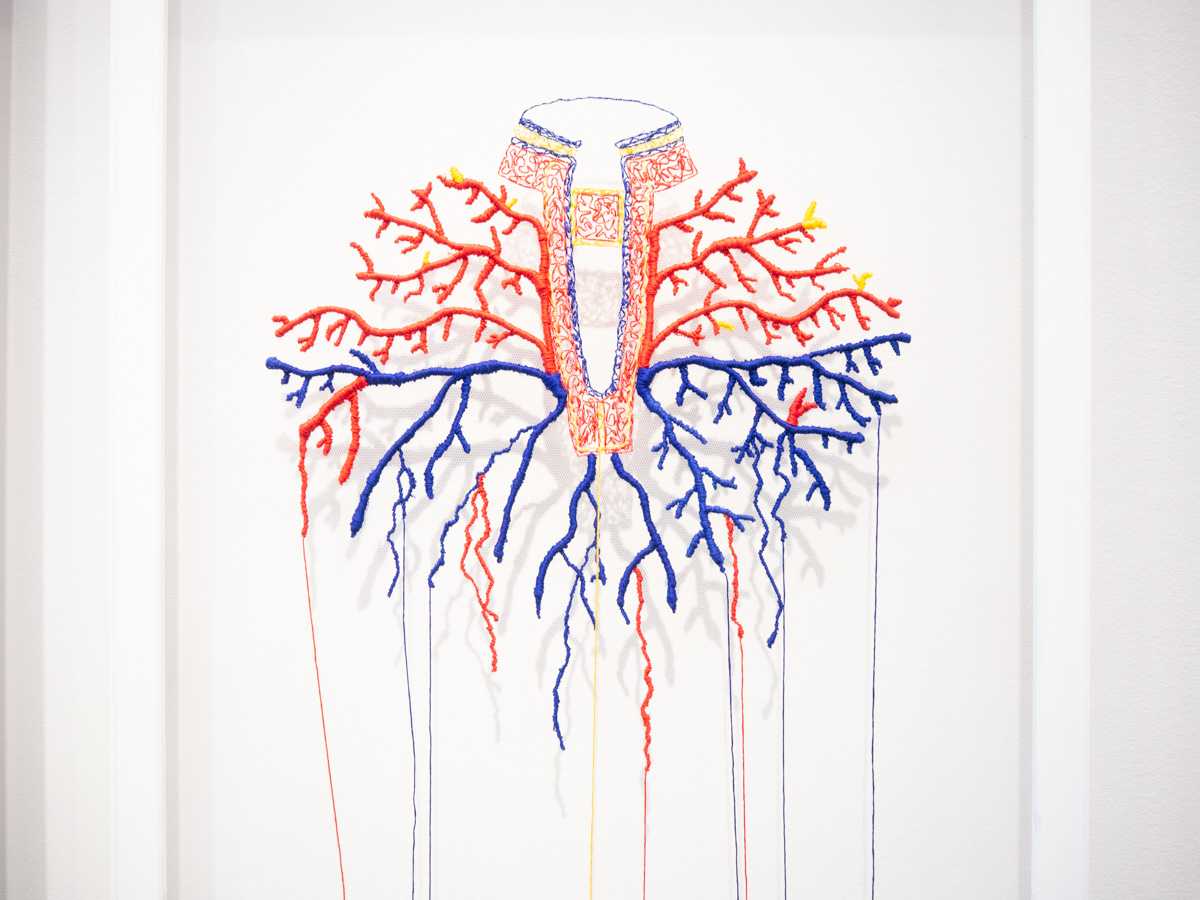
I’m always curious about textile works – there’s almost always some embroidery and textile sculpture, sometimes weaving or crochet or knitting. The embroidery works usually tend to be concrete depictions of people or stories, which, yeah, I know other people like, but it’s not my thing. This year I liked this Sami-inspired piece of embroidery on tulle. (Yvonne Larsson, “Blodsband”.) There were, in general, quite a lot of Sami-themed works.
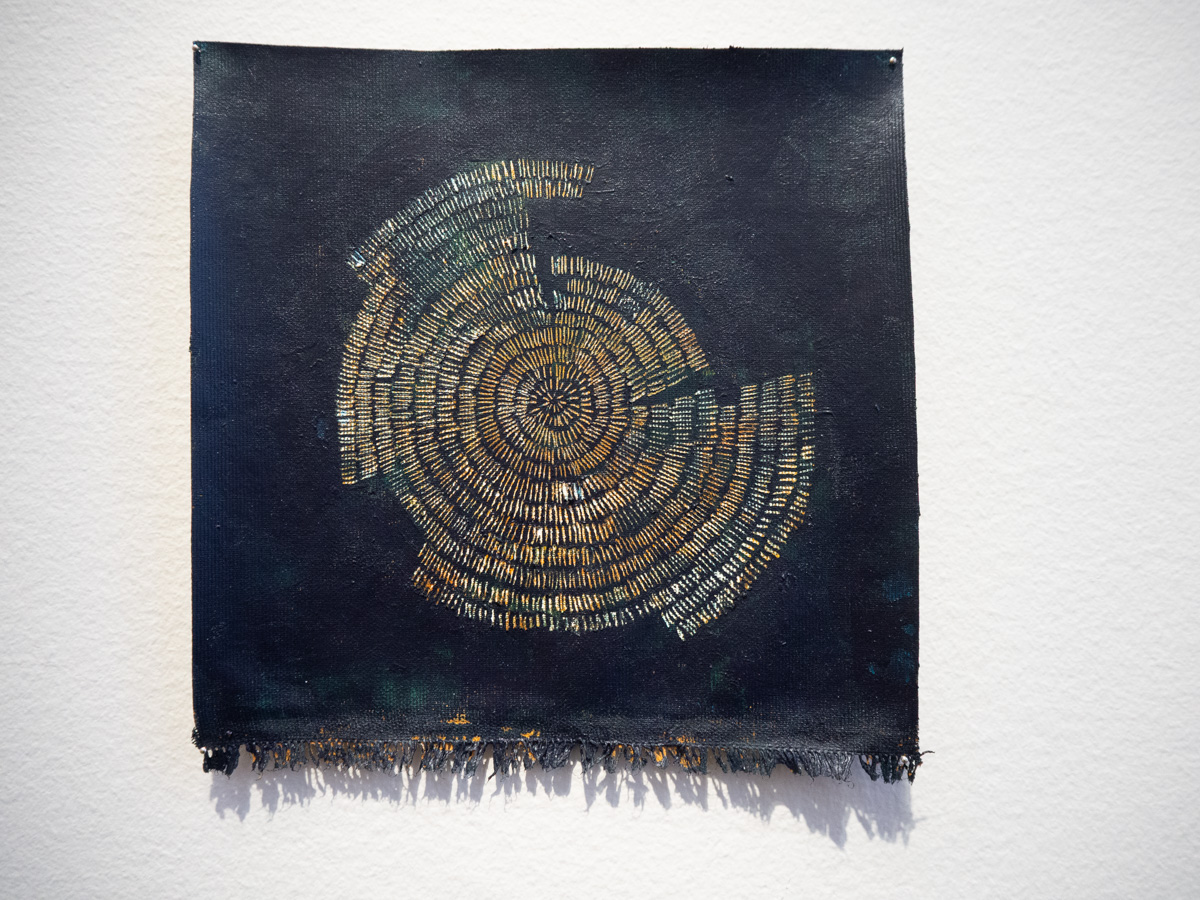
This piece was pleasing in its geometric simplicity. It looked like embroidery at first, but was acrylic paint on fabric. (Juanma Gonzalez, “Död ved ger nytt liv _ ad#07”.)
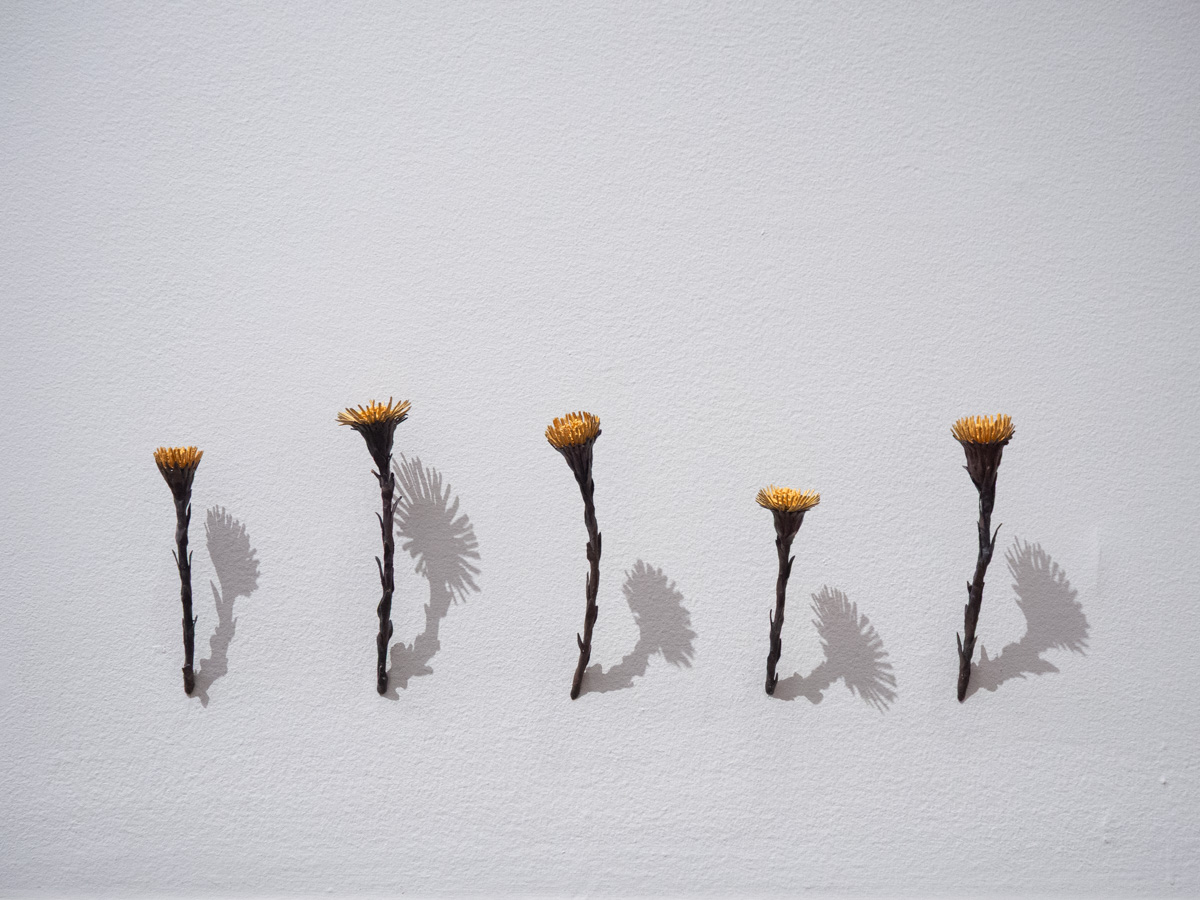
There were several intricate, lifelike bronze sculptures, including these coltsfoot flowers. (Vera Burkhalter Zornat, “Tussilago”.)

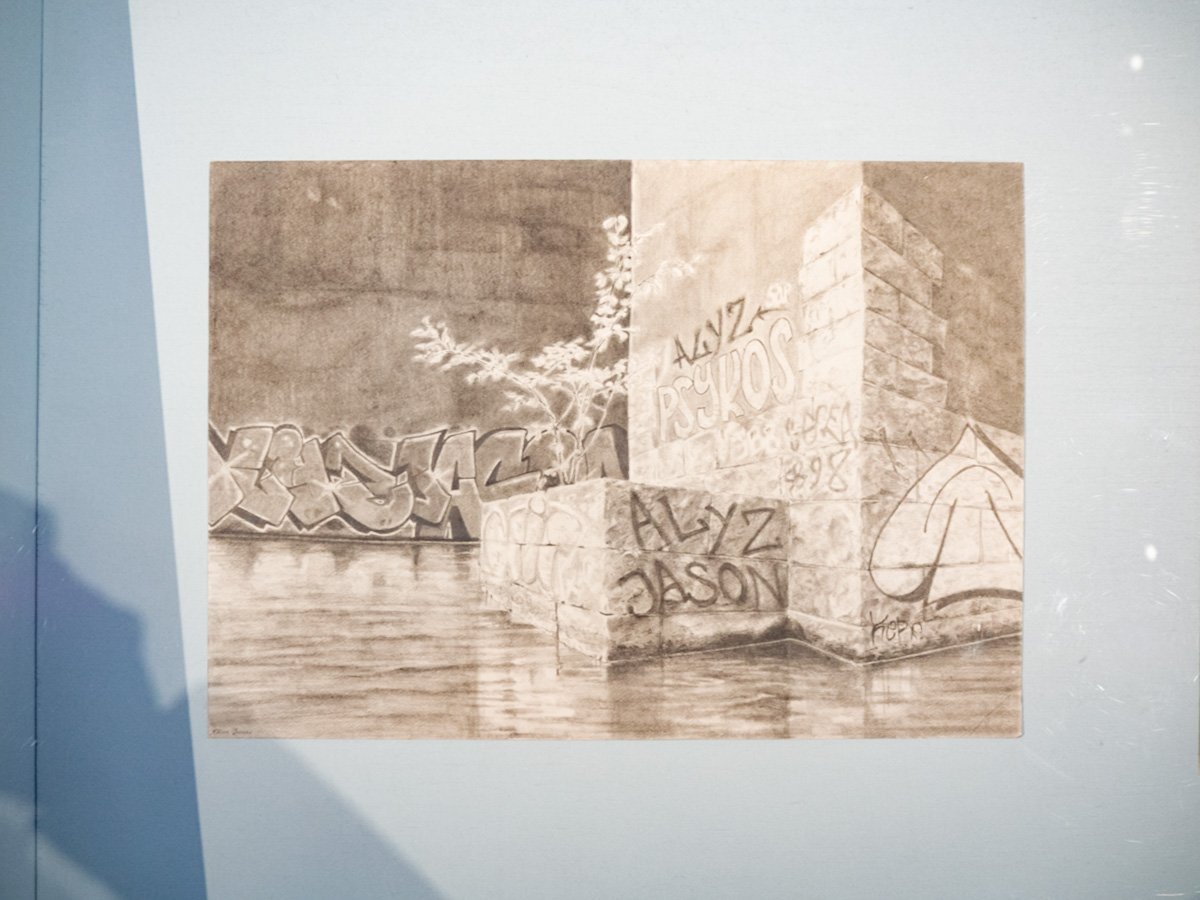
Finally, someone had painted a view of the exact same pillars of the Årstabron bridge that I photographed yesterday.
Easter Sunday, with all its traditions. None of the traditions can be changed at all. Which is a bit boring, but I’m OK with that. Who knows how many more Easter celebrations I will have before Ingrid goes off and starts her own traditions.
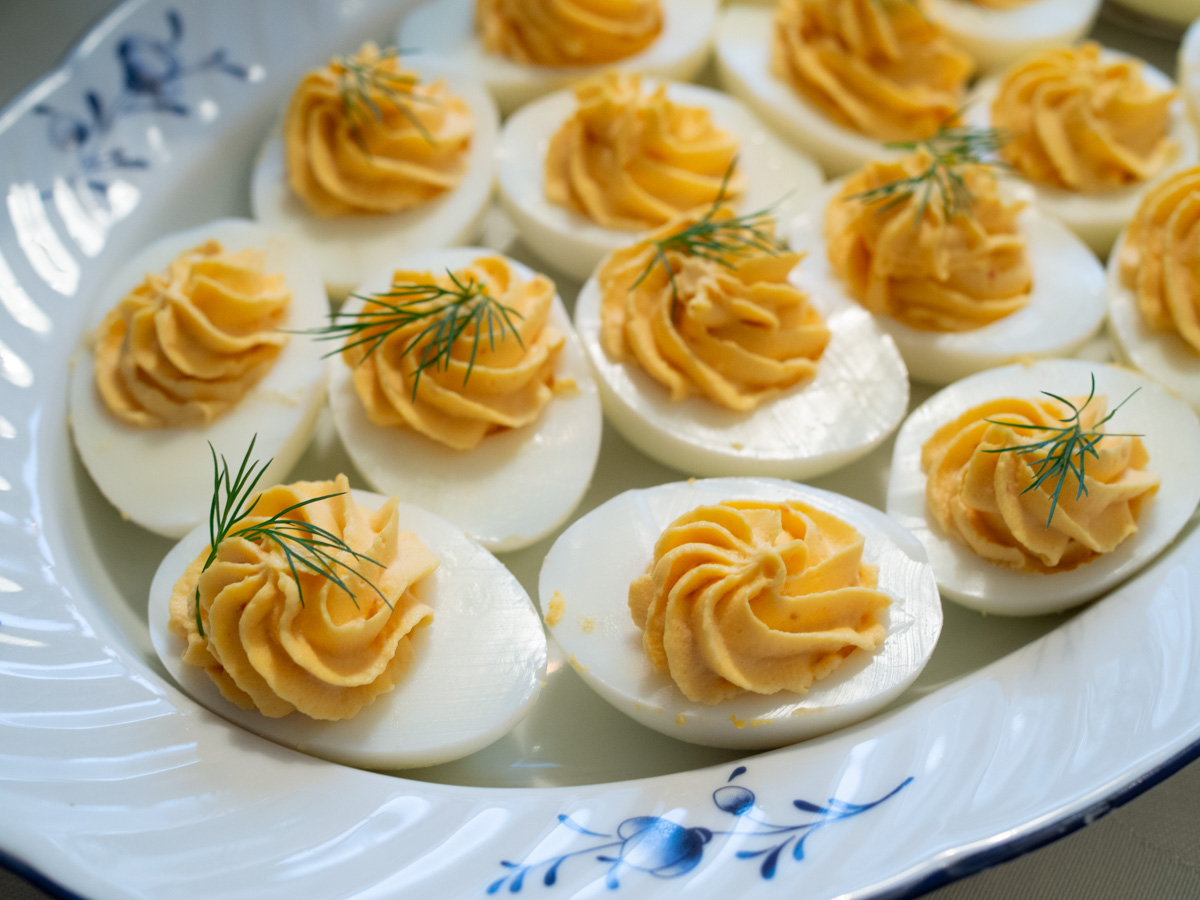
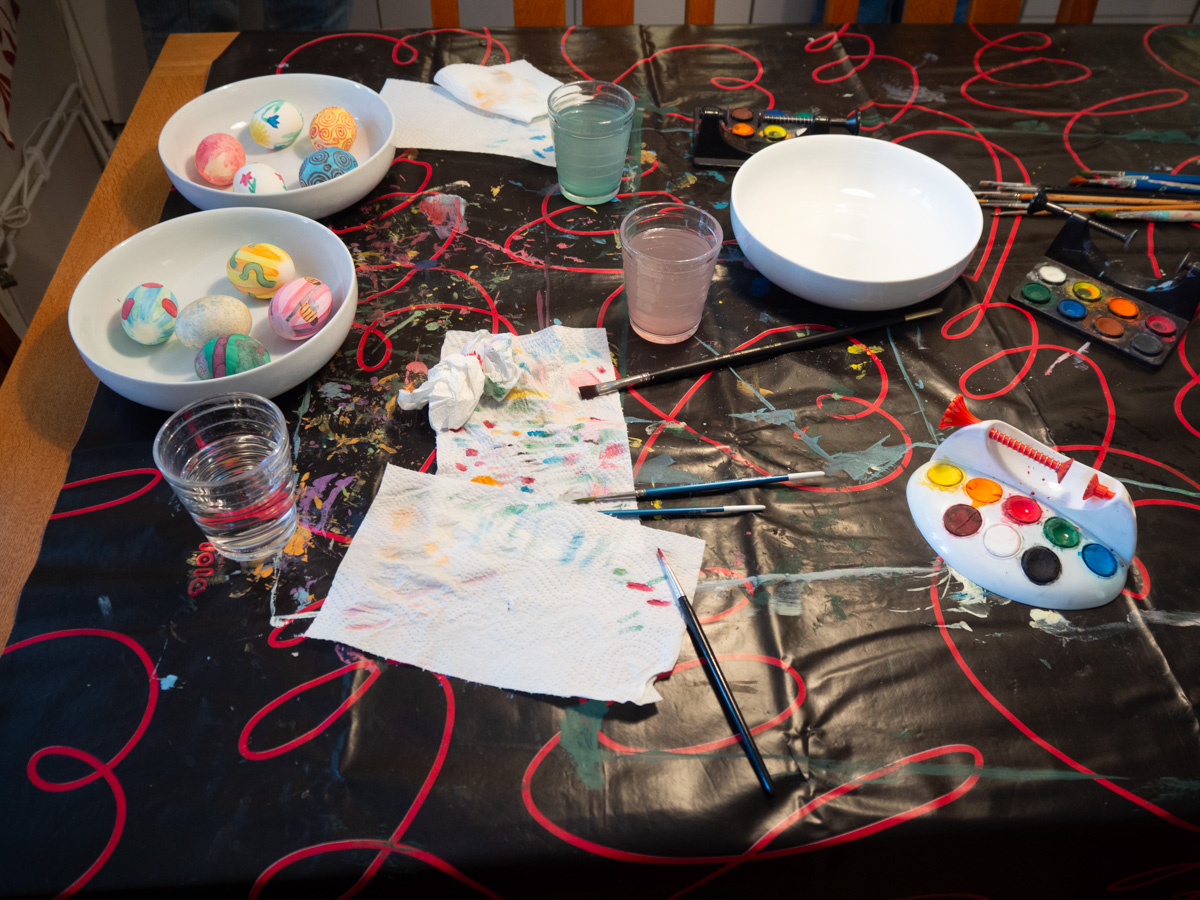
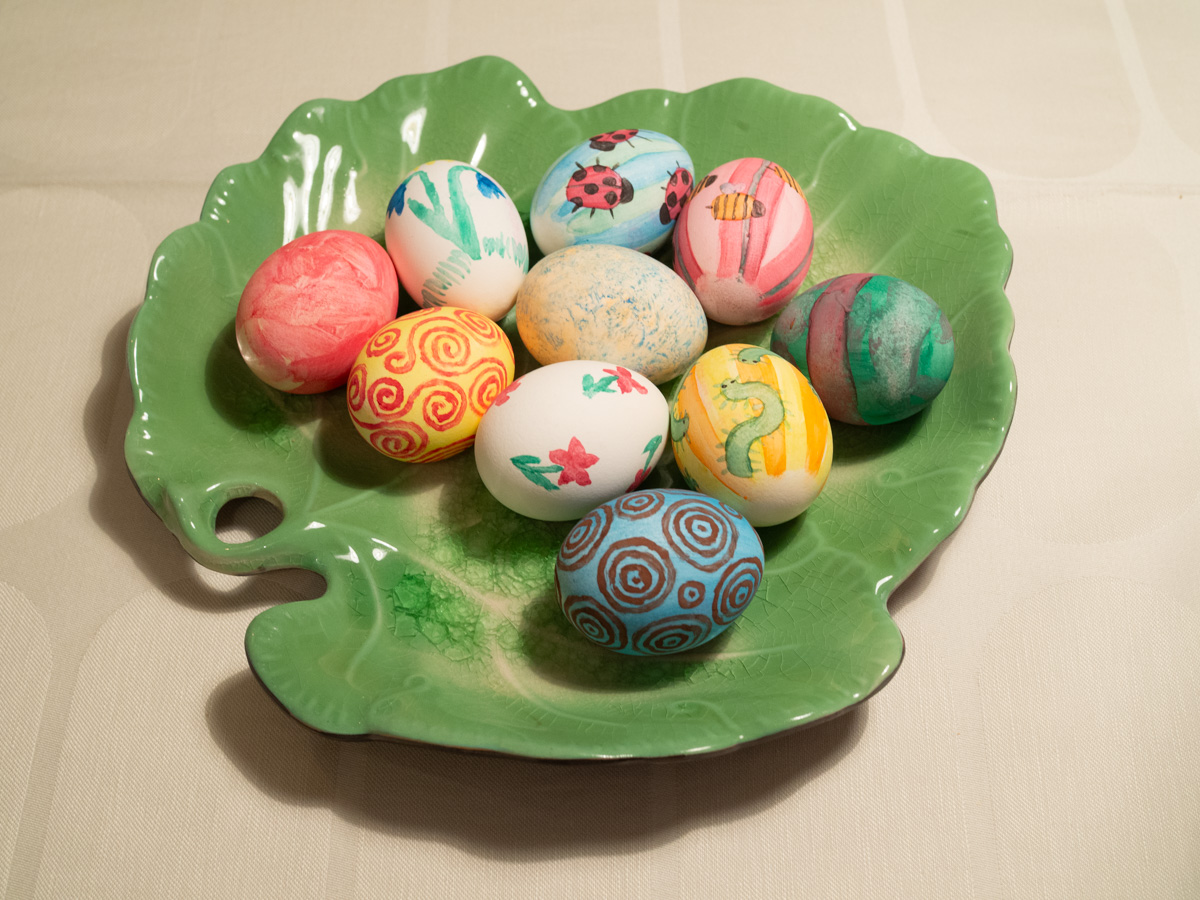
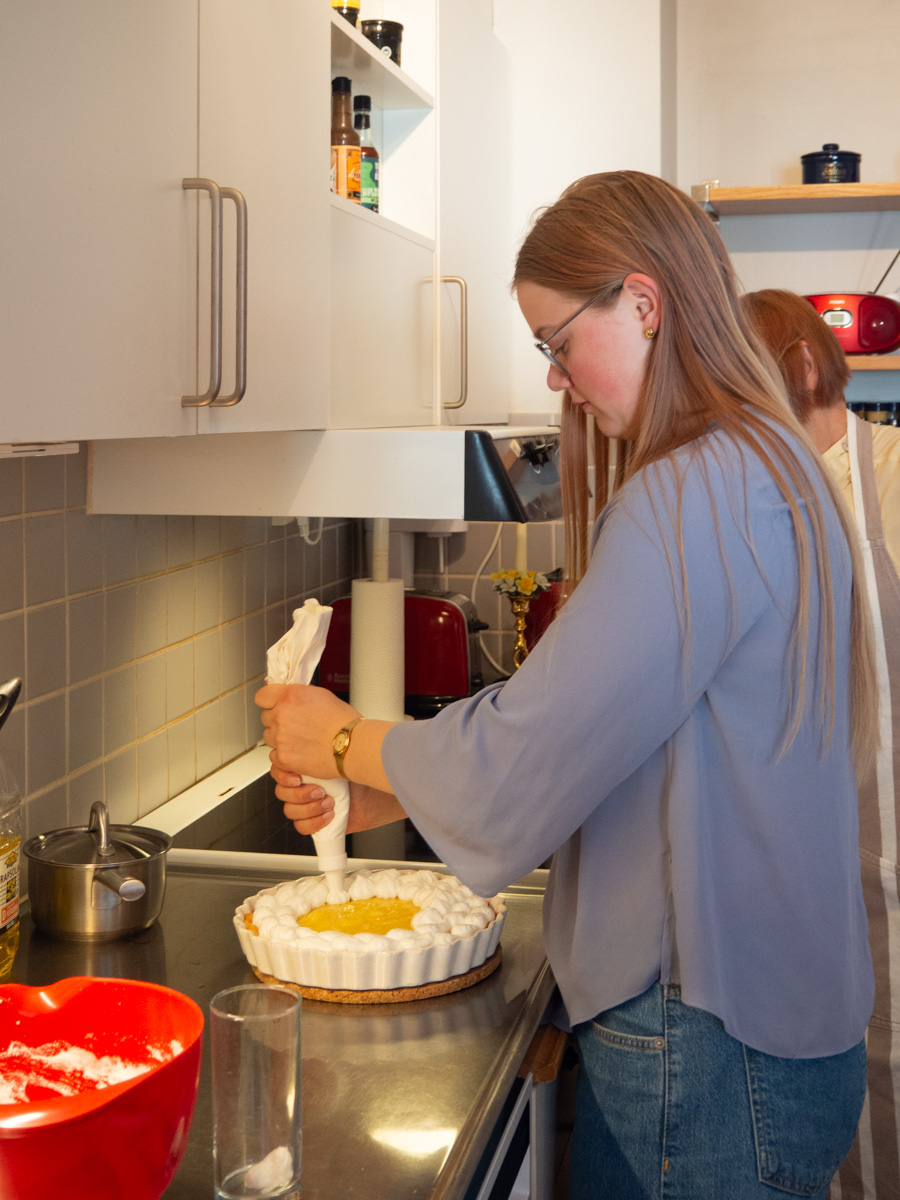
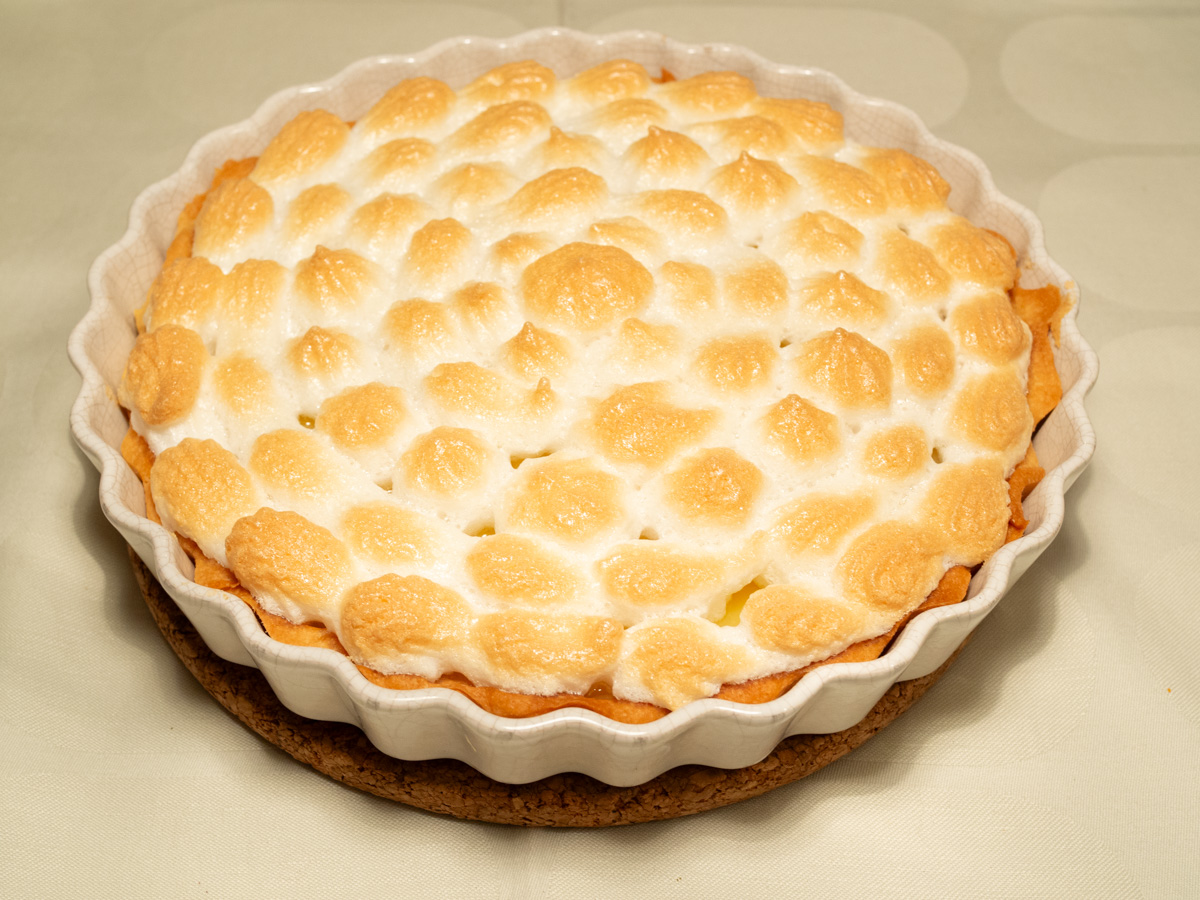
Things that can be varied: What kinds of herring to serve. What topping to use to decorate the devilled eggs. What design to paint on the eggs. What pattern to use for piping the merengue on the pie.


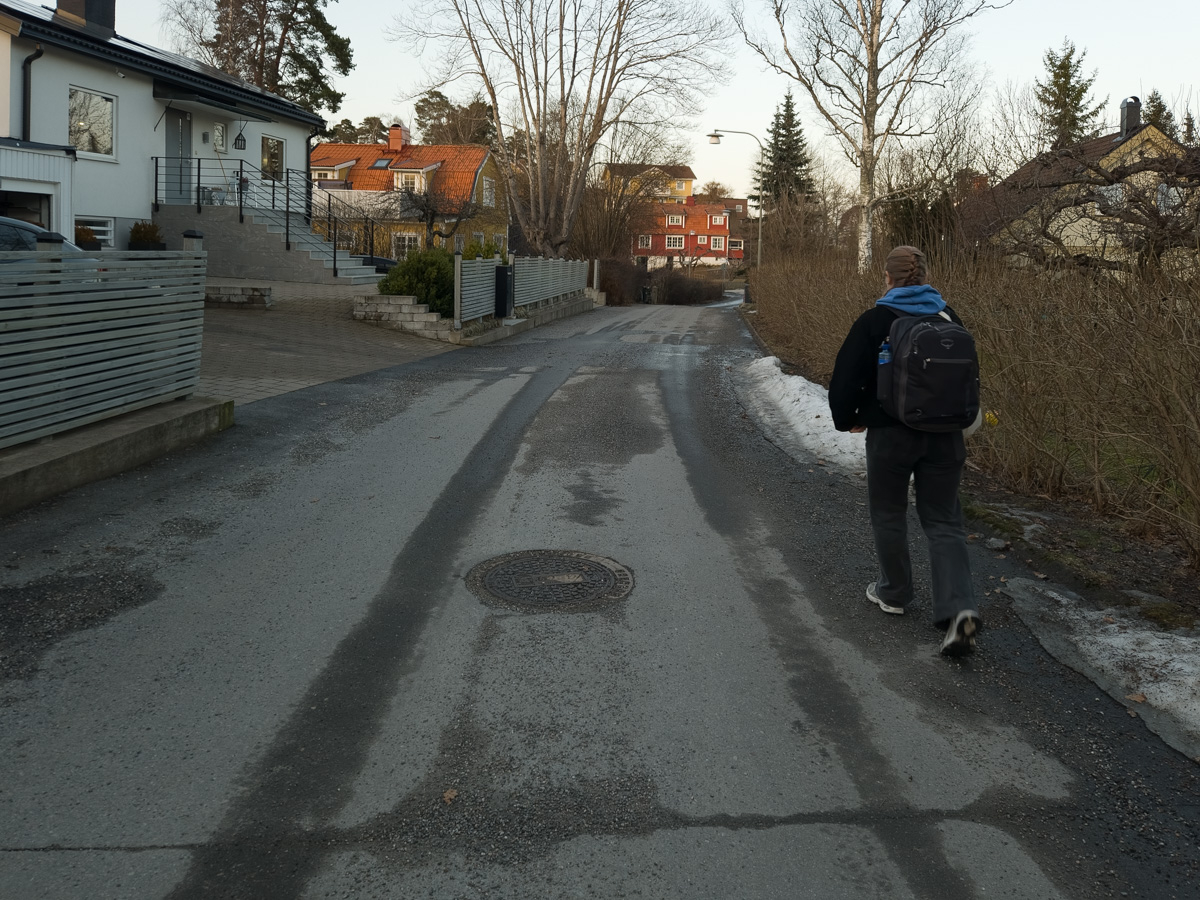
Ingrid is off to Boden, in the far north of Sweden, for fifteen months of military service.

Her position will be gruppchef stridsfordon and I have no idea what the correct English translation is, but it means that she will be leading a small group of soldiers in IFVs, infantry fighting vehicles. The first three months are “just” basic training; the group leader thing will come after.

She’s been looking forward to this for a long time, and working out to be in the best shape she can, but the nerves have been gaining the upper hand in the last week. Now it’s finally happening – a night train to Boden, and tomorrow morning she’ll be presenting herself at the garrison in Boden.

We probably won’t be hearing much from her in the near future, but she will be coming home for a few days already the weekend after next.


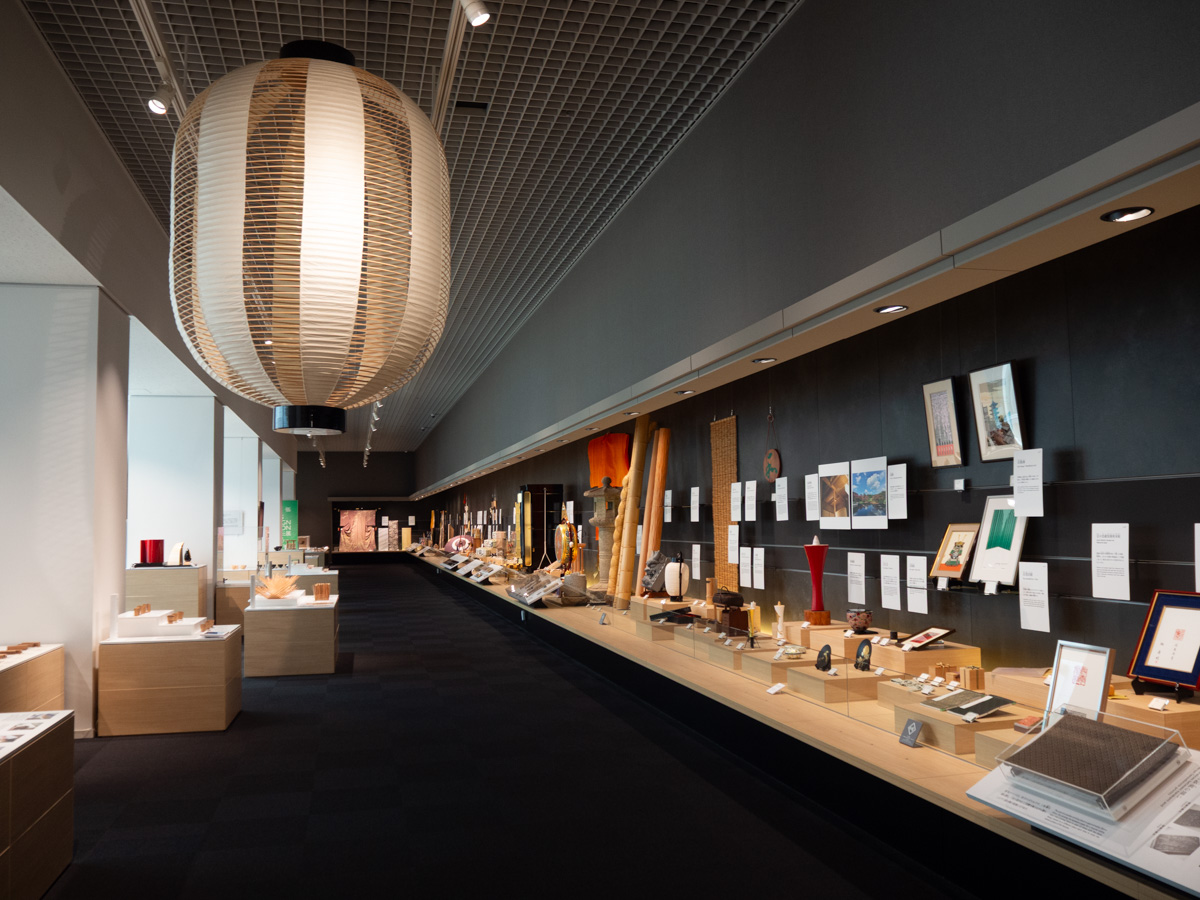
The focus of Kyoto Museum of Crafts and Design is a permanent exhibition of seventy-four traditional crafts of the Kyoto region. These cover a wide range of very different crafts – woodworking, weaving, fabric dying, the making of singing bowls, the carving of funerary sculptures, etc.

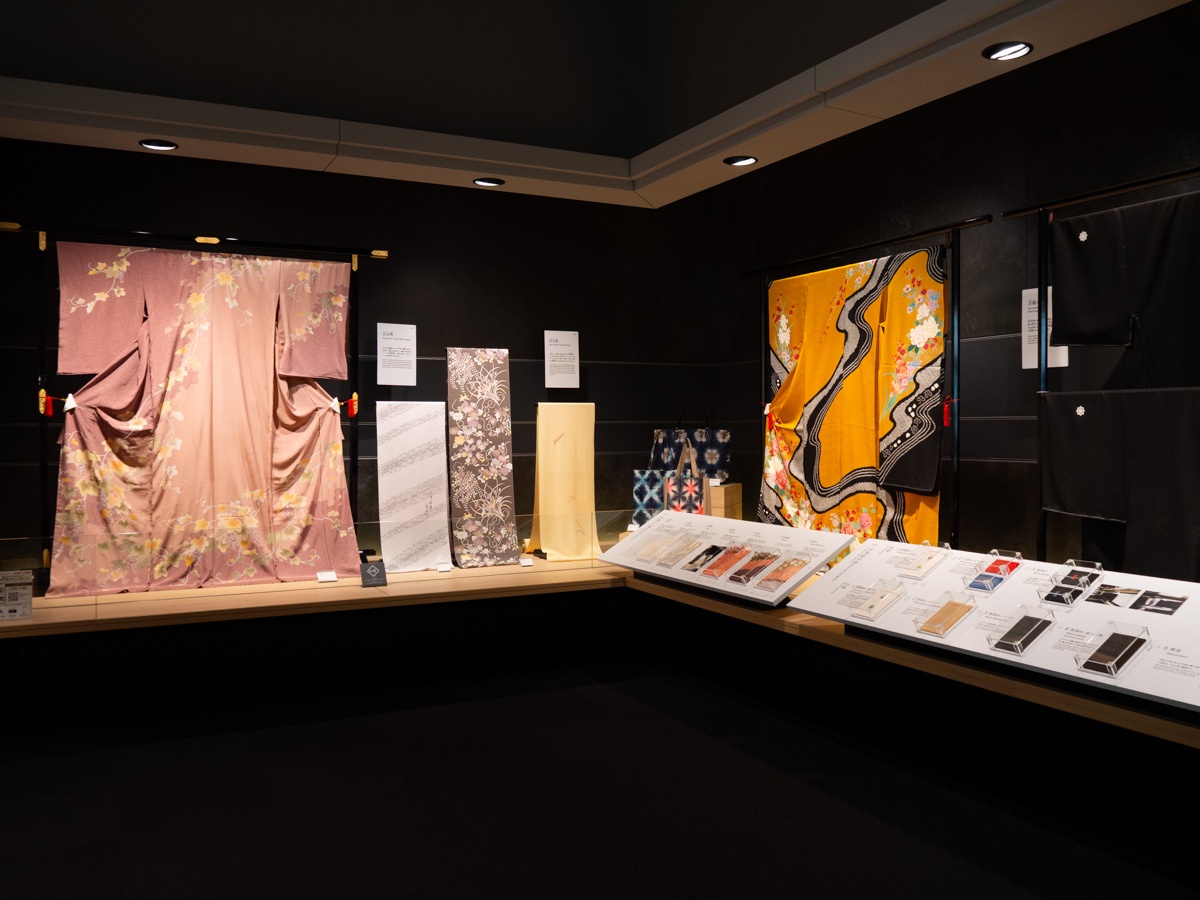
With seventy-four crafts to display in a single room, there’s a limit to how much space each one can get. Some are just displays of particularly exquisite examples of the craft, but many are explained in a lot of detail, such as step-by-step displays of the process of making wooden doll, or exhibits showing the various techniques of dying kimono fabric. The focus was on the craftsmanship and the process. I could happily have walked through three times the space to see more detail of each of the crafts.

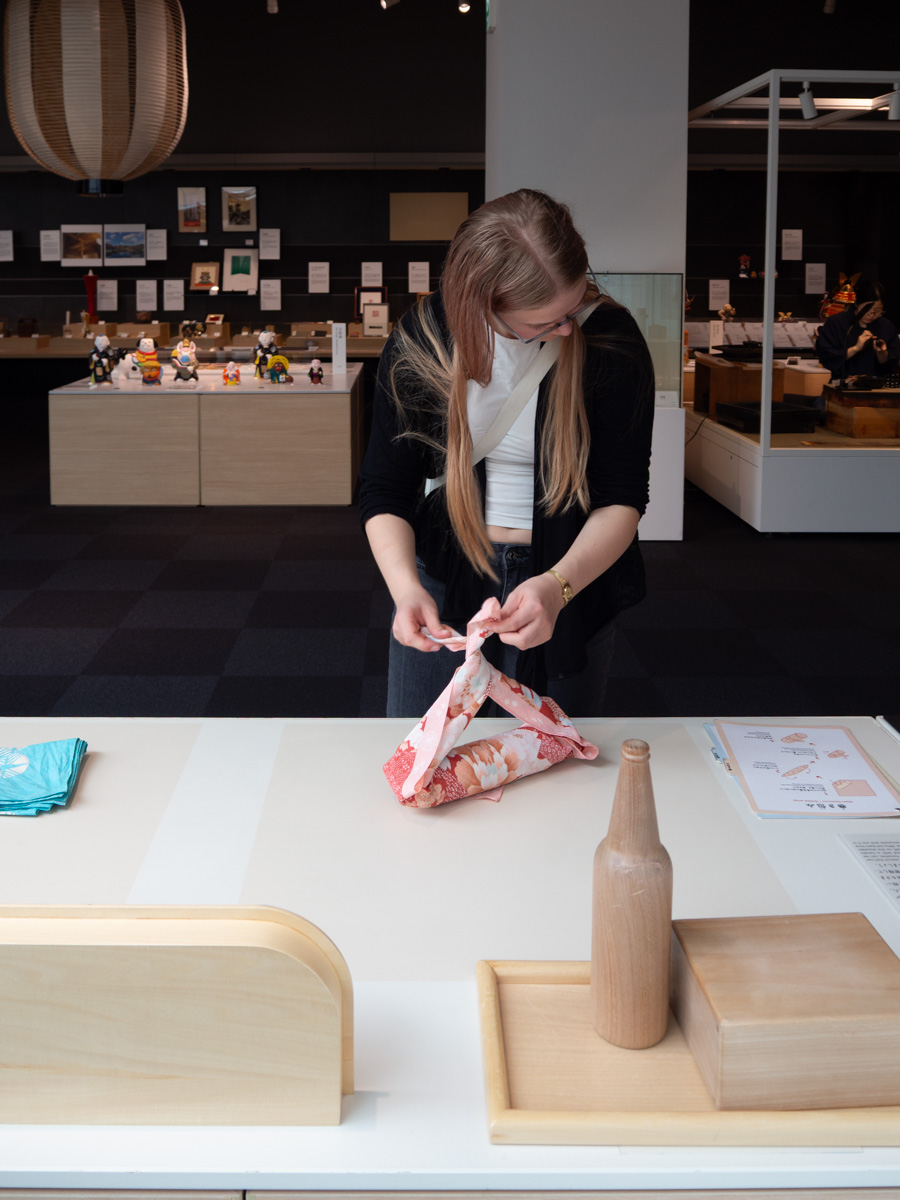
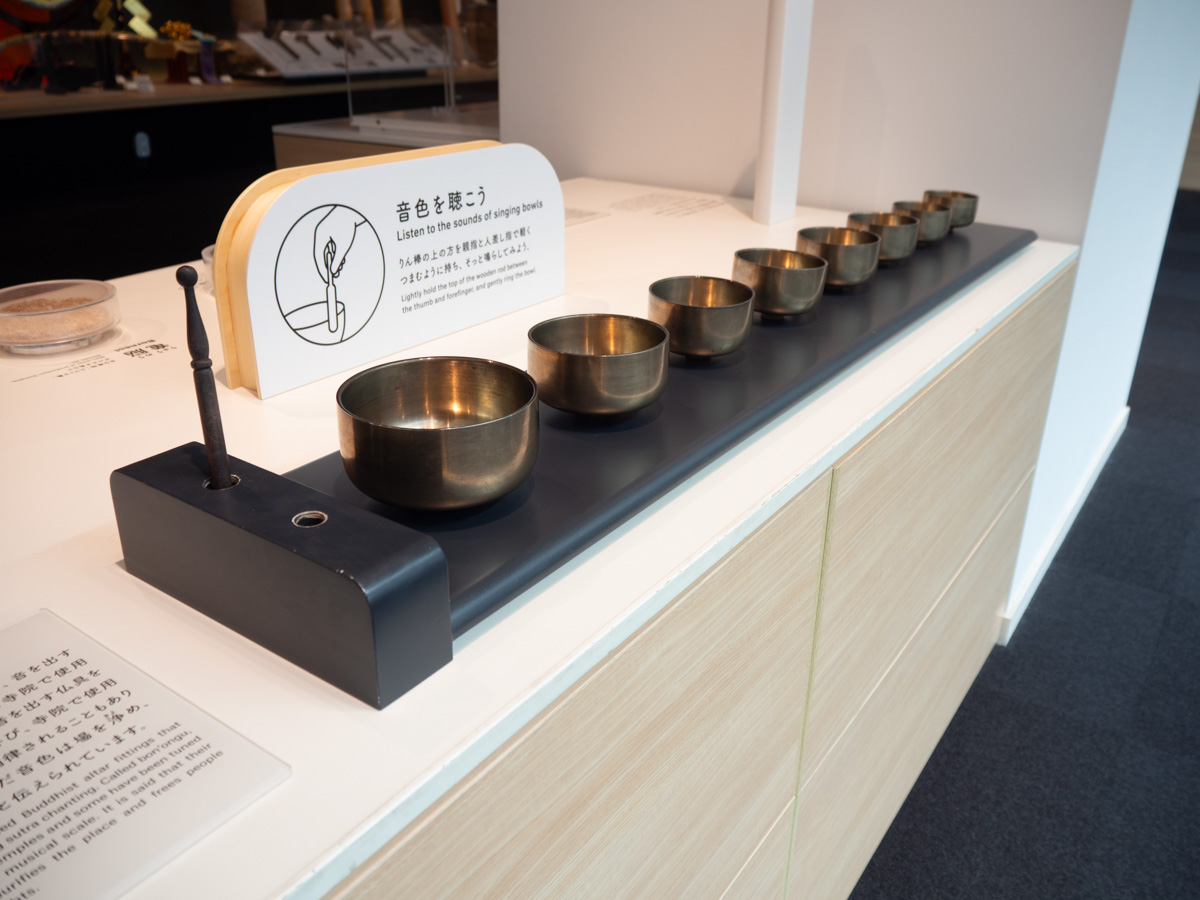
There were also multiple hands-on exhibits, where you could try wrapping different kinds of items in a furoshiki cloth, or enjoy the sounds of a tuned series of singing bowls.