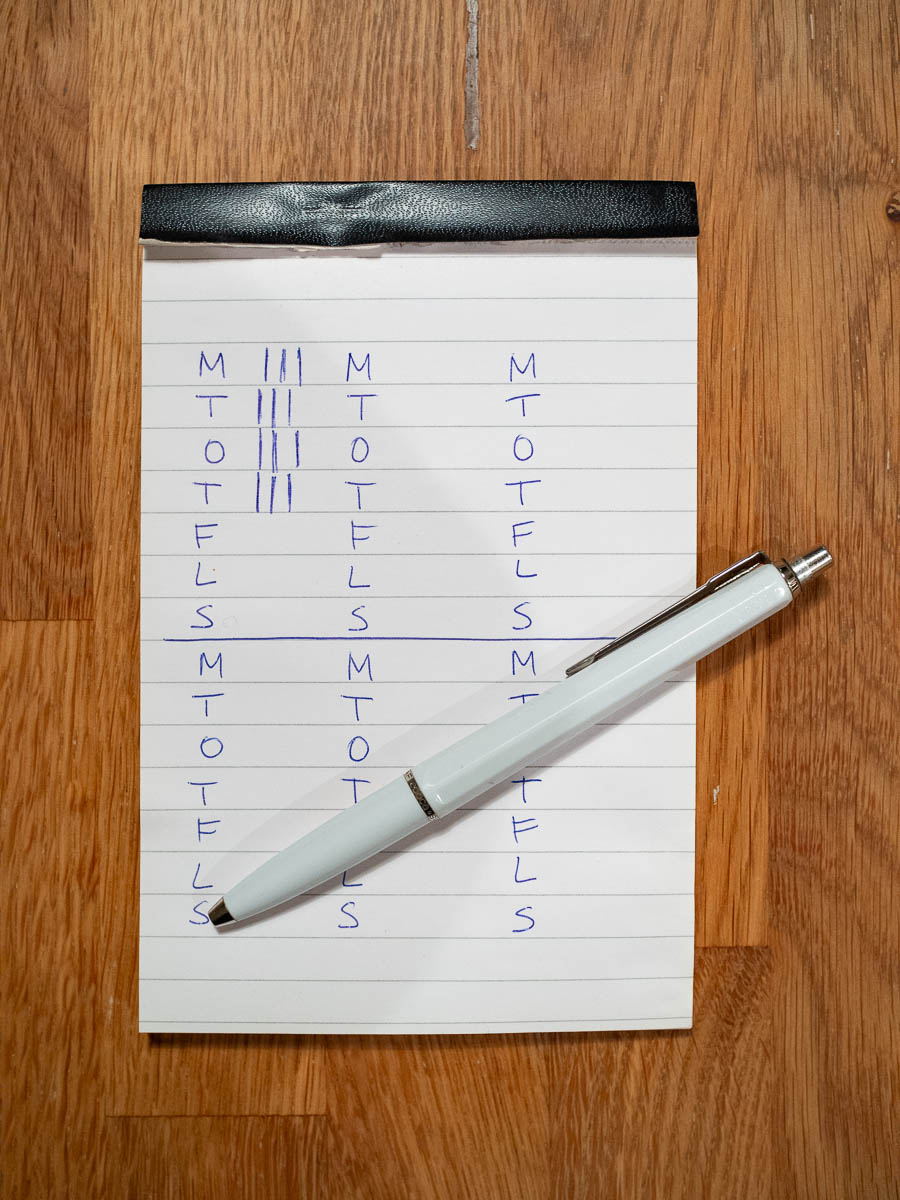
Nysse gets breakfast when the first person in the house wakes up, lunch at noon, and dinner at six in the evening. Except when we’re out of the house, or he’s out of the house, or he’s asleep, or something else happens to disrupt the schedule… Asking around whether anyone had fed Nysse yet got old fast, so we started keeping track. There’s a notepad in the kitchen close to his food tin, and we draw a line for every meal served.

You might think that this shouldn’t be necessary on the weeks when I’m the only human feeding him, but you’d be wrong. I can easily lose track even when it’s just me. The feeding is so routine that the occasions melt together, and I lose count. I remember putting food in his bowl, but was that actually today, or was it yesterday?

Nysse himself is an added source of chaos and uncertainty. He has a way of piteously meowing and crying for attention, especially just after coming inside, as if he’s starving and nobody has fed him for days. If it wasn’t for the notes, I’m sure he’d occasionally fool me.

I can even, apparently, lose count of entire cats. With Nysse I have a signal: I leave the door handle at an angle when I let him out, and straighten it when he comes back in. I have no such routine for Morris, who still comes by now and again. He can hide away in a bedroom and sleep for a few hours, and then I’m unsure whether he’s in or out. This morning he came in and snuck away upstairs and I forgot about him – and was met by two cats instead of one when I came home from the office.
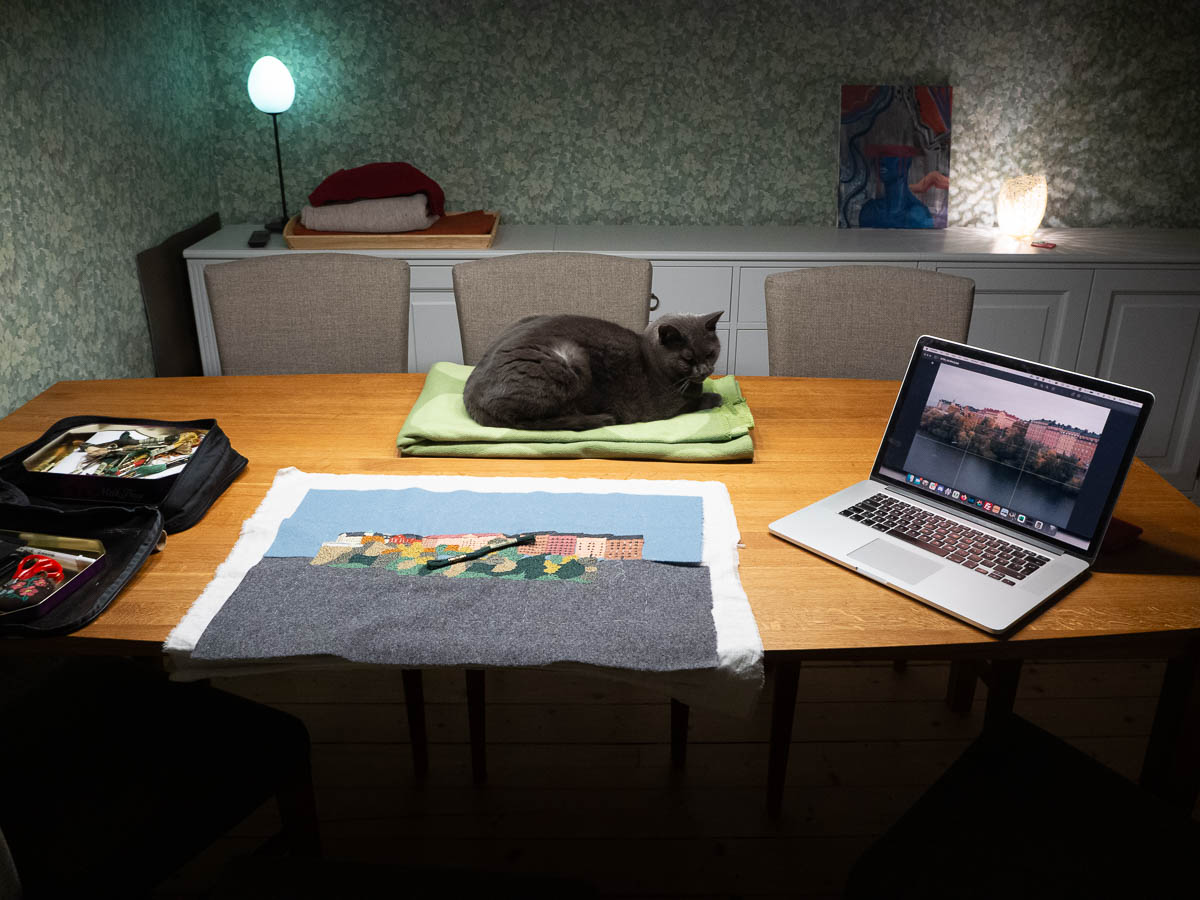
Nysse is surprisingly good at not getting into my yarns and threads. I can knit and embroider right in front of him, and he doesn’t react. Large swathes of soft fabric, though, are tempting. But we reached an understanding: he moved away from my embroidery project when I served up a better, softer cat bed.

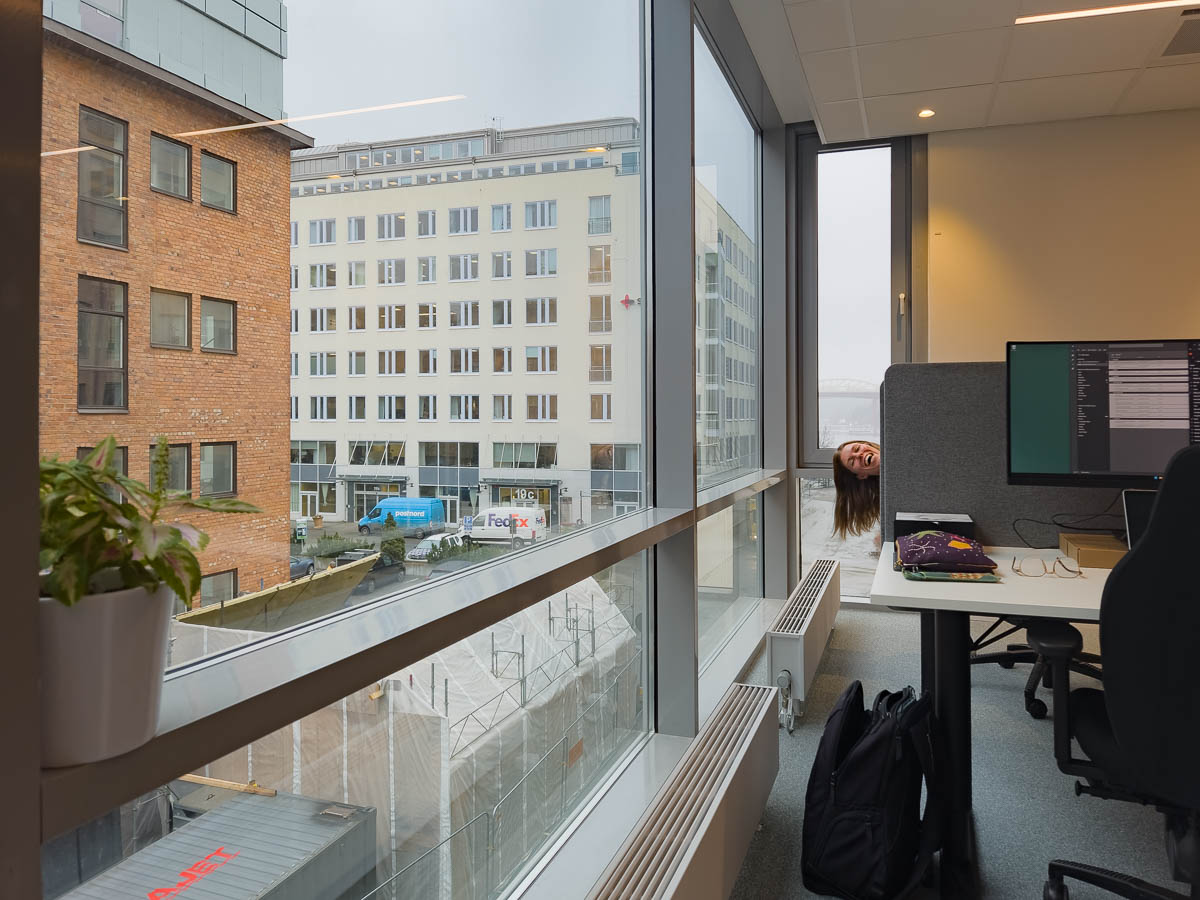
The IT team at Sortera moved from floor 3 down to a new section of floor 2. Sortera used to rent half of floor 2 and a part of floor 3. The tenant occupying the other half of floor 2 moved out some months ago, and Sortera is now taking over. Our team is getting much more daylight, access to more meeting rooms, new furniture, and hopefully better ventilation and temperature control. (Our old space managed to be cold and stuffy at the same time.)

And, last but not least, closer contact with the rest of Sortera. Sitting as we were in a cul-de-sac corner of the office, on a separate floor from most everyone, we were rather cut off from the rest of the company and only saw them when we went downstairs for lunch. Now we’ve actually got people walking past and saying hi.

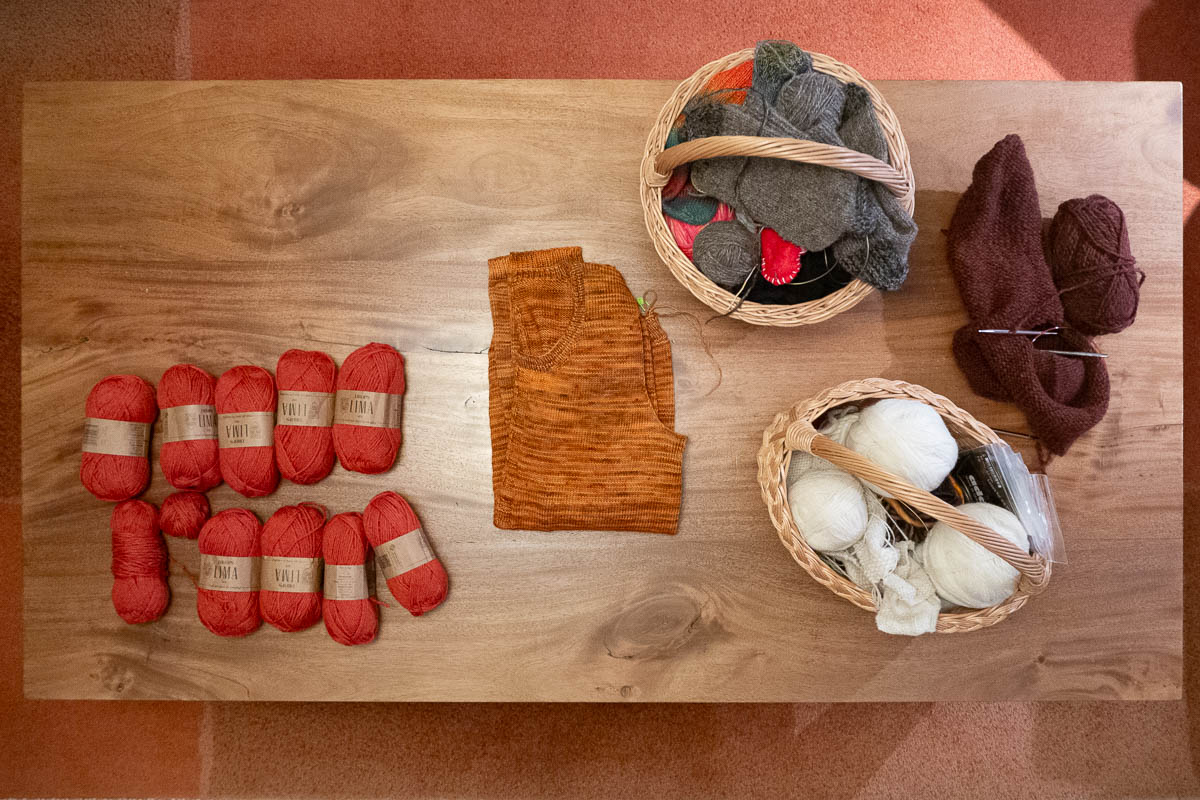
This is what happens when you leave me to my own devices. There are knitting projects all over the coffee table, in all stages of life. They used to fit into a basket or two, but somehow they’ve multiplied and spread out.

The red at the bottom left is an alpaca mix that I, daringly, bought from Tradera. Last time I bought second-hand yarn I ended up sending it back because it smelled so bad. And guess what? This yarn also smells. Luckily not of toilet cleaner this time, just a faint floral soapy smell. I’m hesitating between knitting first and washing when finished, and unwinding it all so I can wash it first.

The white in the basket on the right is one step further along. I’ve started swatching, to get a feeling for the yarn and figure out what it’s best suited for.

The reddish brown on the top right is well underway. It’ll be a pair of felted slippers.

The other basket has all my sock yarns and an ongoing pair of socks.

Finally, in the middle, there’s the sweater that I reknitted the hem for. I’ve just got a few yarn ends to weave in (which I’ll be doing tonight) and then it will be ready for use again, better than before.

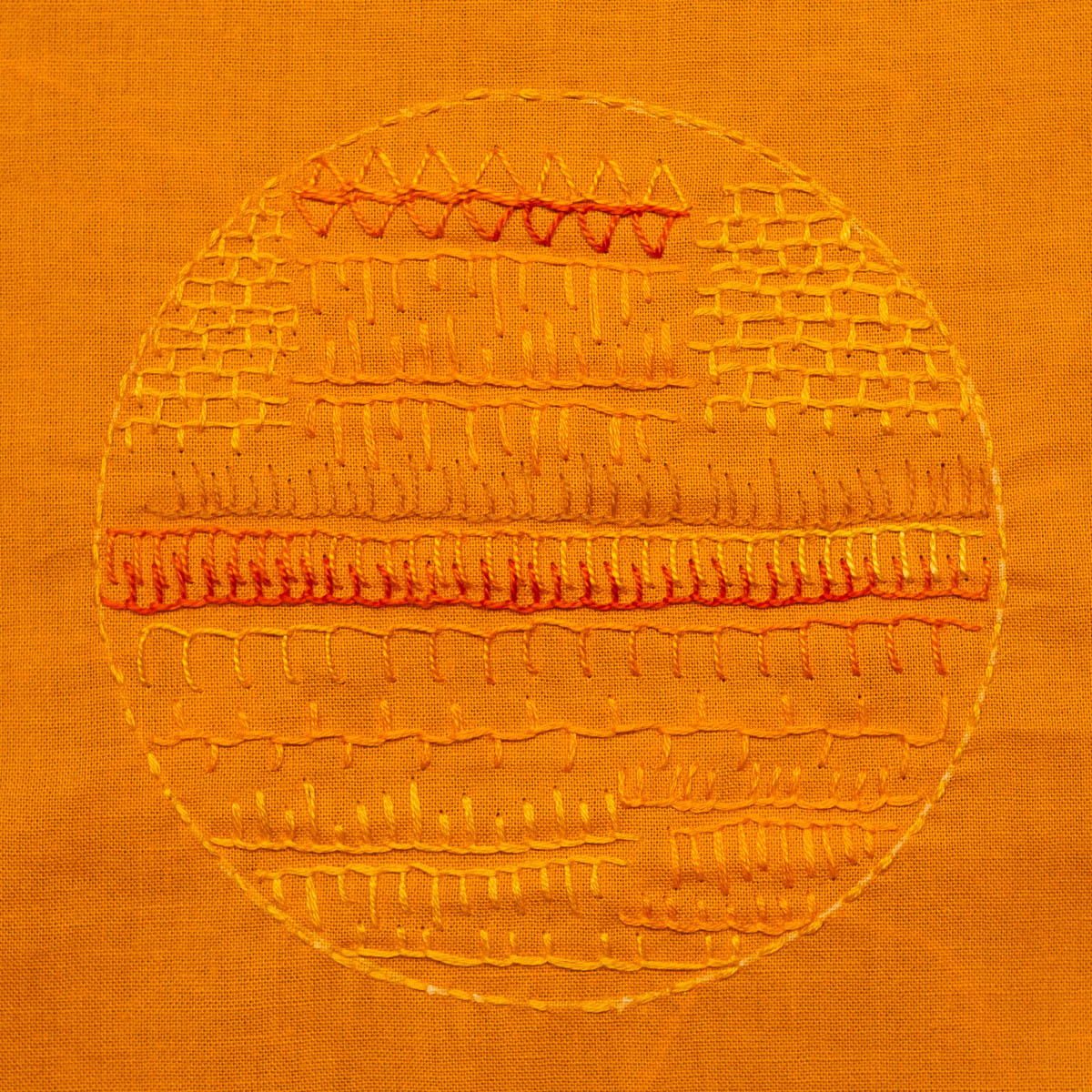
I was going to work on my Stockholm embroidery every day until it is done, and I really have, but I took a cheat day today. I found an active dogma embroidery group on Facebook and jumped right in.

Dogma embroidery is rule-bound, and at the same time the ultimate expression of free embroidery. Or maybe very free-ing. There is no goal to work towards. The thing you embroider isn’t aiming to become anything else. You’re not following anyone’s design, not even your own (if you’re actually following the principles and just doing).

Use fabric in your favourite colour. Use thread in the same colour, but in different qualities and values. Use only blanket stitch, in horizontal lines.

I didn’t have much orange fabric to choose from at home, and not much variety in the way of thread, either. Two kinds of orange DMC embroidery floss, a variegated red-orange-yellow perle cotton, and one wool thread that I remembered as looking orange against other backgrounds but that became more of a muddy red-brown against this bright orange cotton. But it was a pleasant exercise.

A new attempt at sourdough bread. Using the same recipe as last time, and applying all the learnings from that first try, I got even better results. Totally presentable, nice and even in shape and texture, delicious crust, not at all doughy, great flavour. This is very doable.

I think my main challenge will be remembering to feed the sourdough starter so that it can survive from one baking to the next. It’s taken me six weeks to eat the two loaves I made last time. Most days I don’t eat breakfast, and even when I do, I don’t want to eat the same bread every single time, no matter how good it is.

The grocery store’s new international food section has been filled up with more stuff. The Middle Eastern goods are now flanked by others from Poland and Finland.

Middle Eastern bulgur and halva, Polish jams, Finnish mustard and candy.

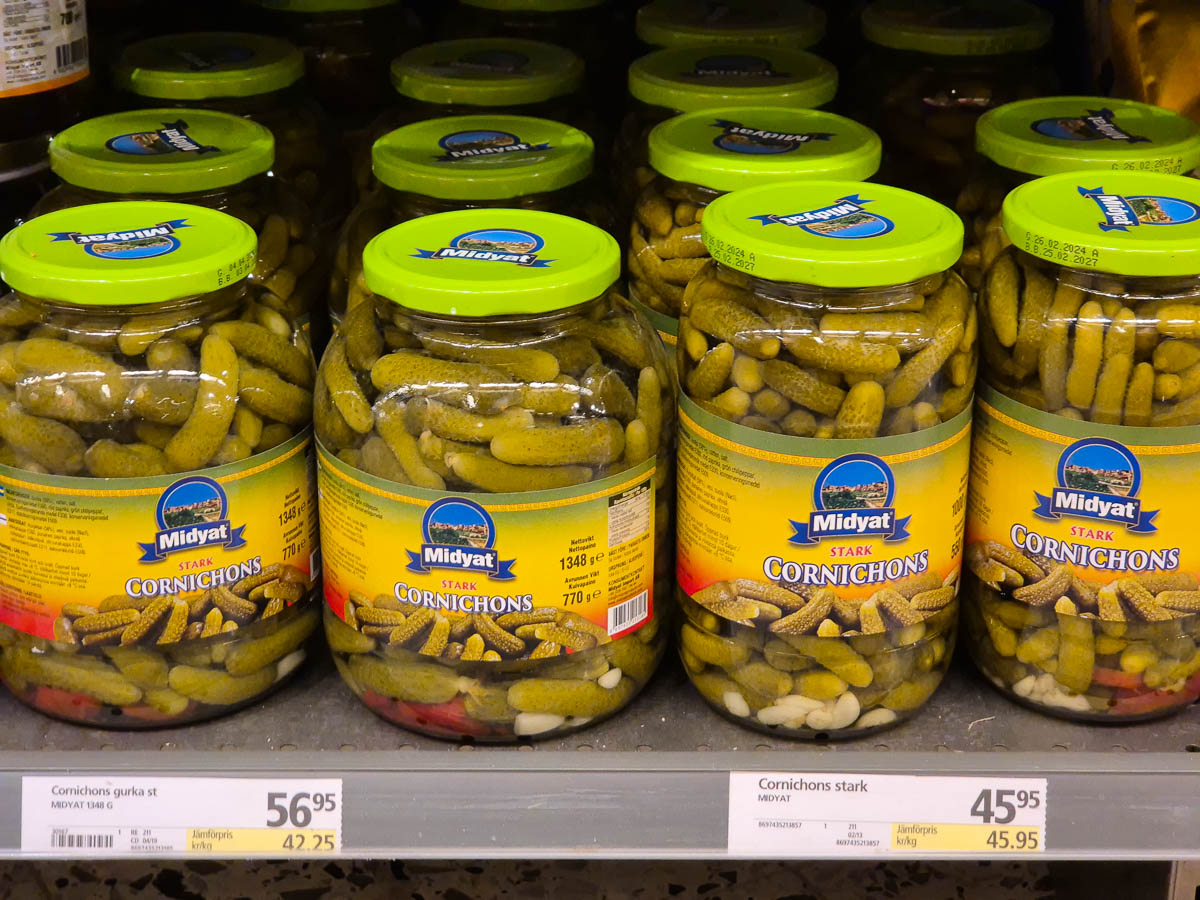
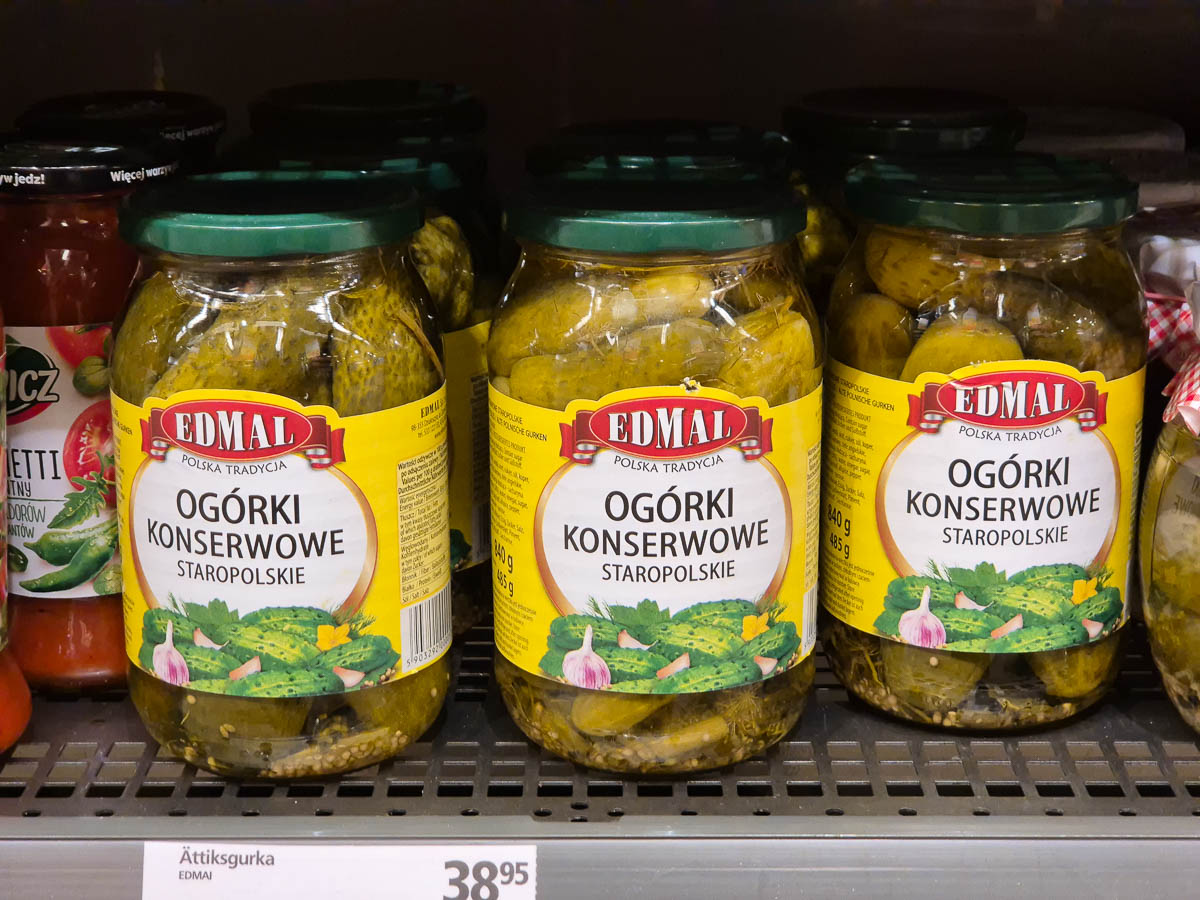
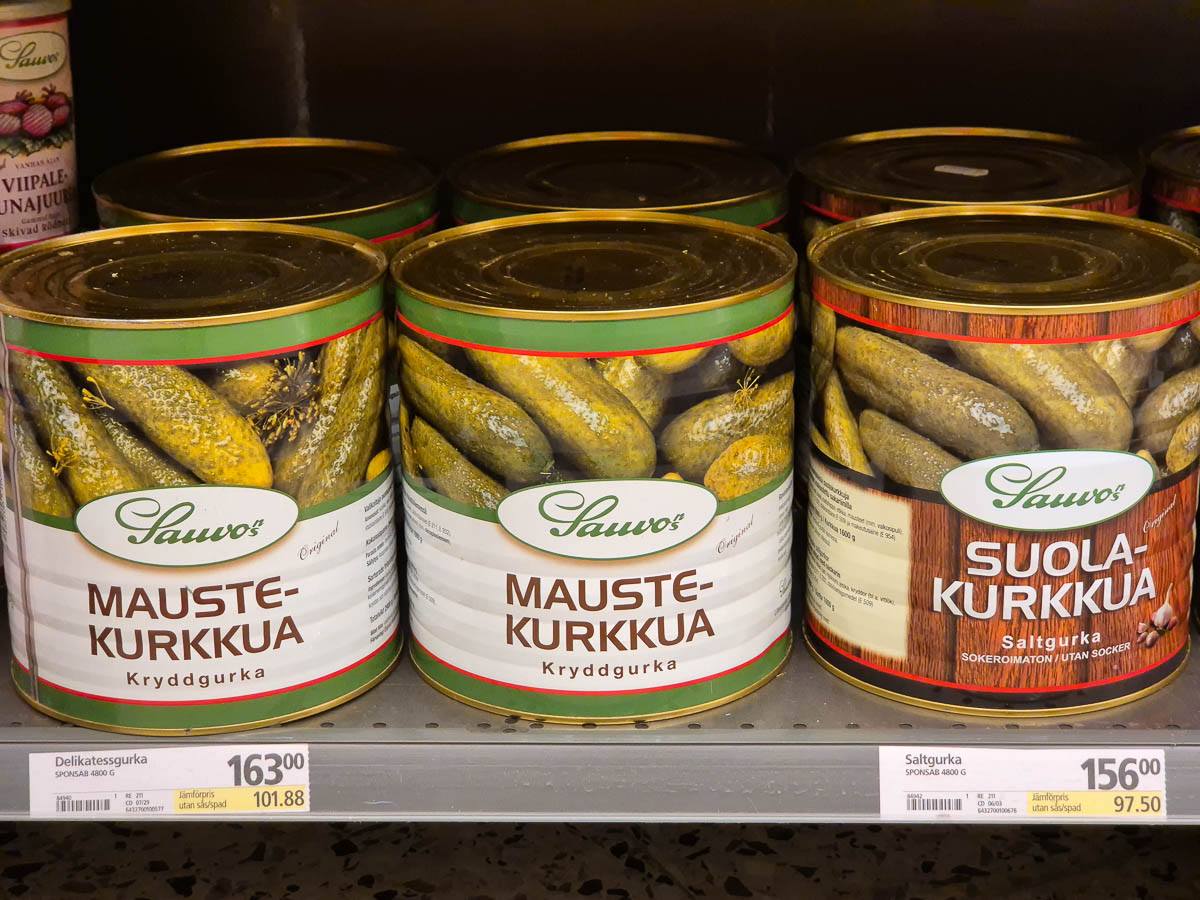
Somewhat bizarrely, each of the three sections allocates a fair bit of shelf yardage to their own kind of pickled cucumbers. And of course there are also Swedish-style pickled cucumbers further away in the usual canned goods section. Clearly each nation wants their pickled cucumbers just so and no other kind is good enough.


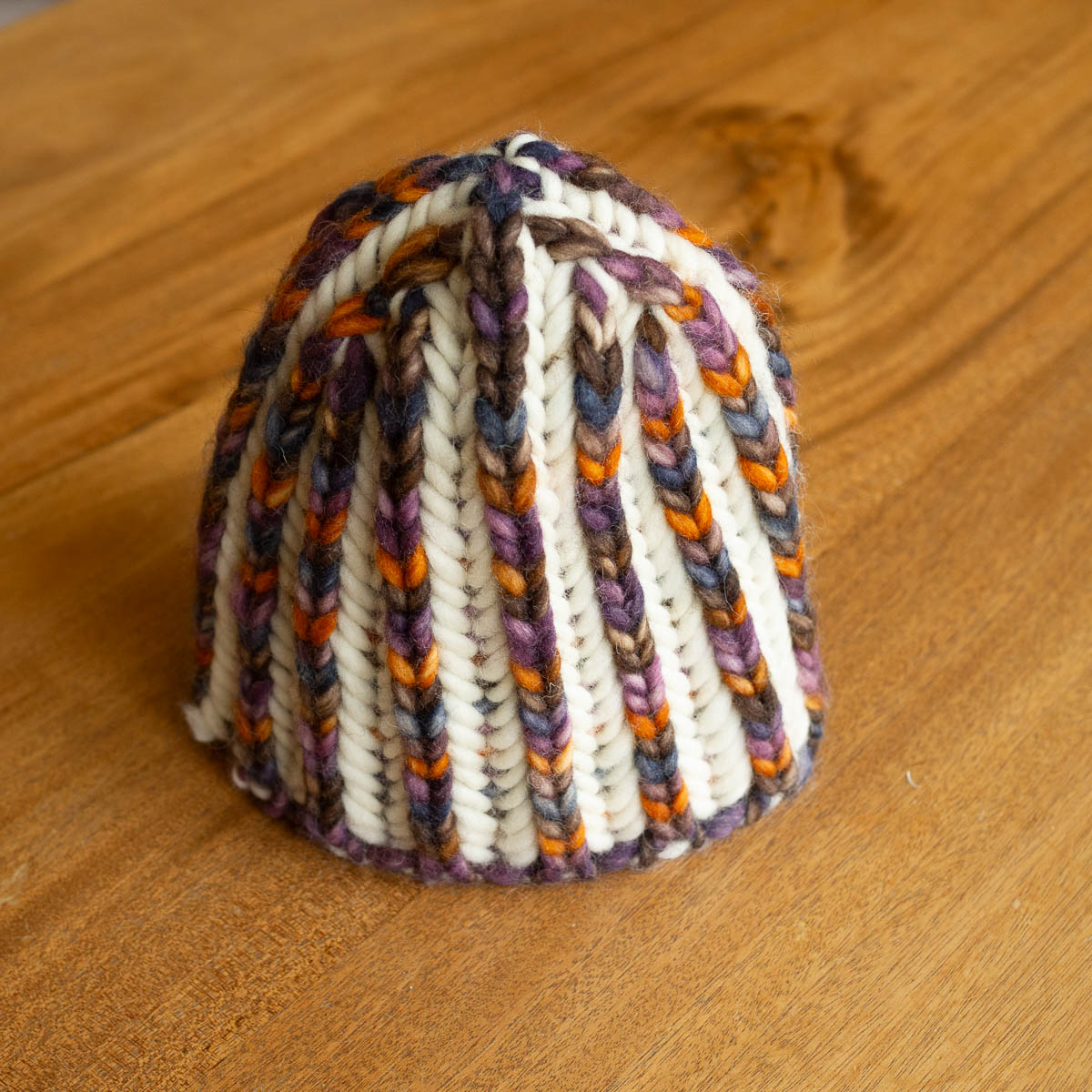
The super fluffy hat is done and has been tested. It was fun to knit, and the yarn still feels like a cloud. It’s the second softest thing I have ever knitted. (The scarves in Malabrigo Rios were even softer, but not as fluffy.)

I had some doubts about its usability, and though I have indeed concluded that it won’t fill the gap I originally wanted to fill, it does fit in elsewhere. It feels perfect for windless days with temperatures around zero, which is what we’re having right now. The yarn has splashes of orange in it, so it goes with my orange shell jacket, as well as brown ones, so I can wear it with my brown winter coat as well. Not bad for an impulse buy.


Our local grocery store – we have several, actually, but I mean the one I usually go to – has been moving things around recently. Bread is now where there used to be napkins and candles, there’s Tex Mex food where bread used to be, and now, in the latest move, a vaguely Middle Eastern/Balkan-inspired section has appeared where the Tex Mex stuff was before. Dry beans, four different grades of bulgur (cracked wheat), tahini, stuffed vine leaves, fig jam, roasted aubergine puree, etc.

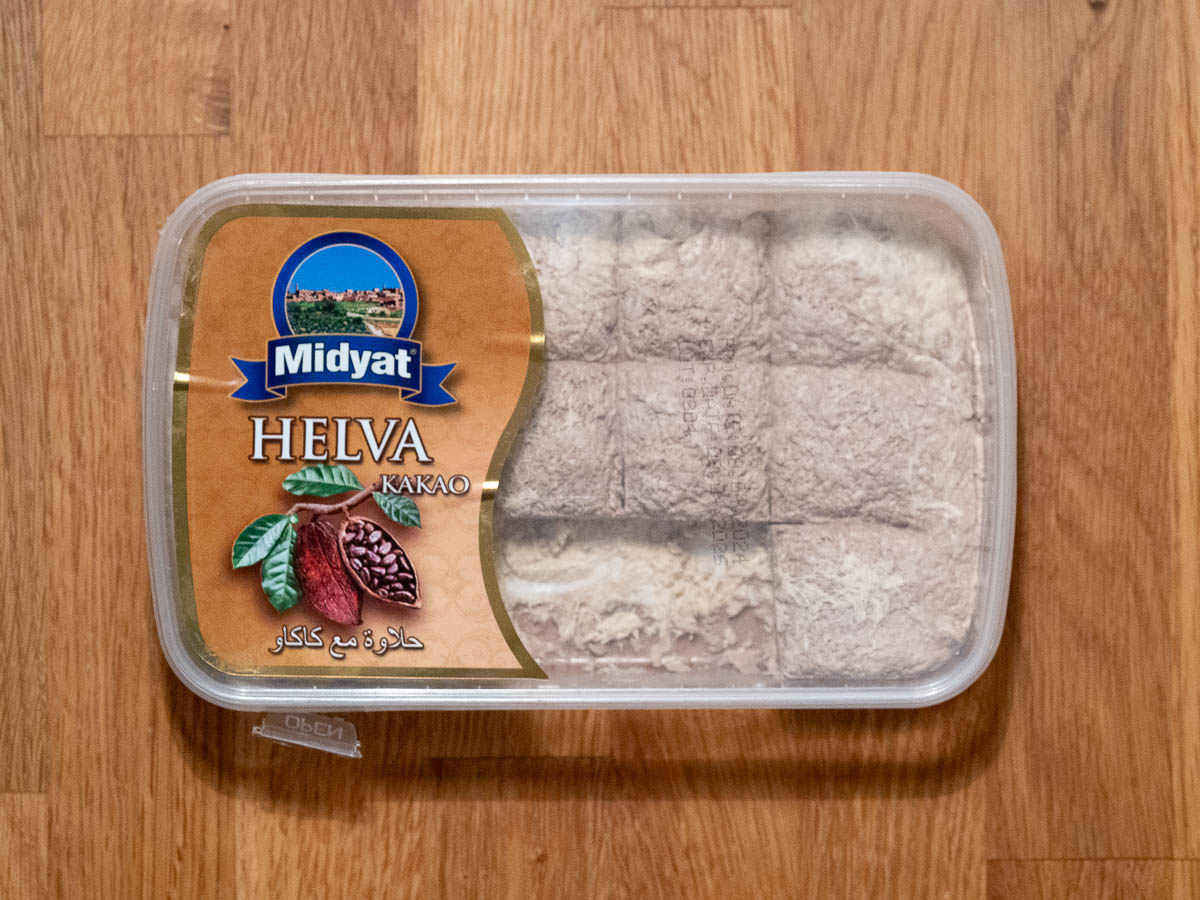
The Tex Mex and Asian food here is all large European brands – Santa Maria, Blue Dragon. In this new section, the dominant brand is Midyat, which I’d never heard of. I thought at first that Coop have actually gone to a Middle Eastern supplier, but Google told me that Midyat is a small company based in Södertälje, a small town just south of Stockholm. So technically Swedish, although I’d guess the sourcing of the food isn’t.

I might have just walked past the new section without paying much attention to the details, but Ingrid sent me a picture. They sell halva!

Halva is one of my childhood nostalgia foods that I sometimes still miss. It’s not a traditional Estonian food at all, but that was one of the few benefits of being in the Soviet Union: exposure to the “brother nations'” food and drink. We had Caucasian šašlõkk/shashlik and Russian seljanka, Ukrainian borš/borsht. We had sõrnik/syrnik and pelmeenid/pelmeni. And halva.

Sesame halva is the most common sort on the internet, but my favourite childhood halva was peanut-based. Dense, crumbly and chewy. Like a dry, grainy, sweet version of peanut butter. I’ve never found anything quite like it in Sweden. Occasionally I’ve tried other kinds, even one that I bought in a Baltic speciality grocery shop in Stockholm, but always been disappointed. (The one from the Baltic shop tasted so wrong that I ended up throwing out.)

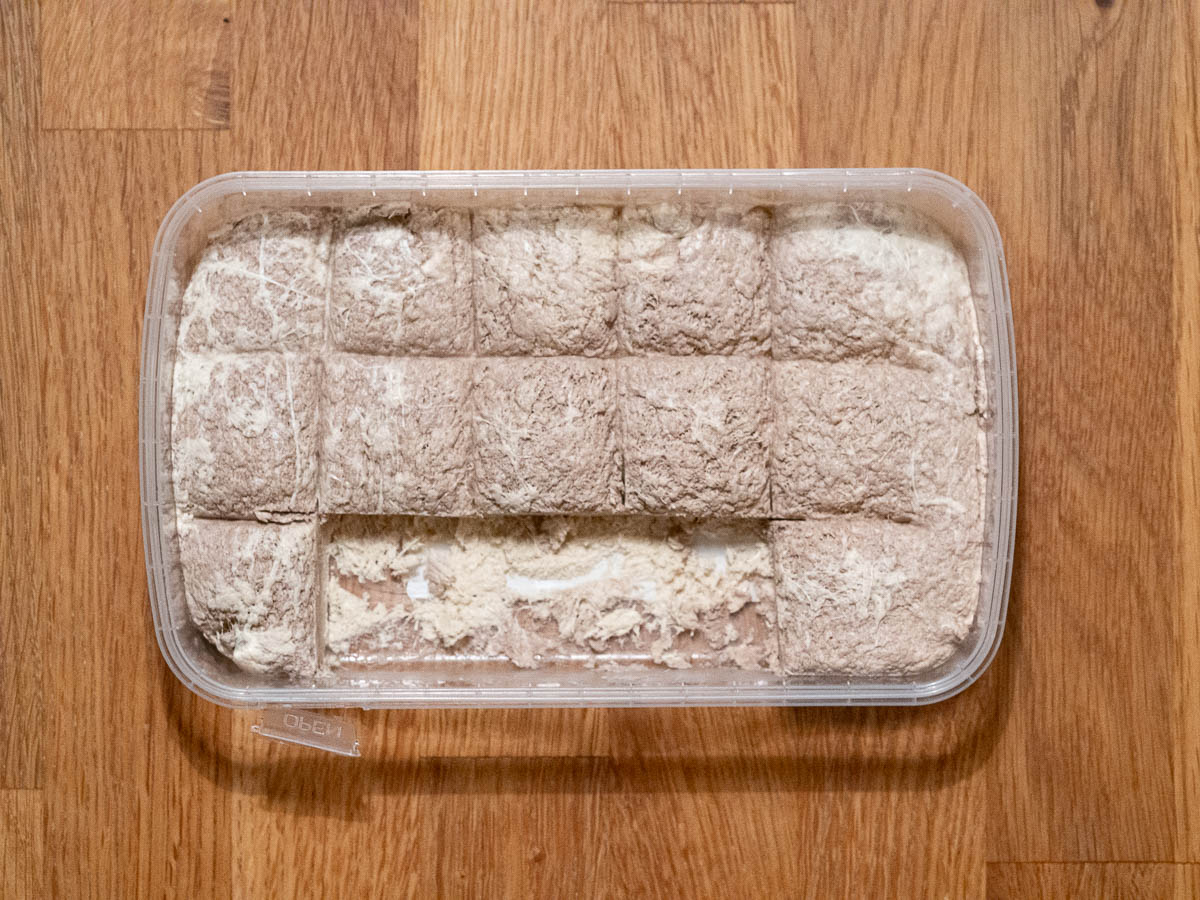
Mostly to make Ingrid happy, I gave this one a try. To my great surprise, I actually liked it. A lot! It’s almost half sugar but somehow the nuttiness of sesame makes it easy to just take one more bite. I couldn’t eat Nutella with a spoon, and milk chocolate is disgustingly sweet, but not this.

I’m now entertaining vague thoughts of making my own peanut halva. It’s such a traditional food that surely it can’t be difficult – if they’ve made it since medieval times, the process can’t be too finicky about exact temperature and such. Or… I just hold out until the summer.

The orange sweater feels great (the yarn is incredibly smooth!), looks great, and fits great. Except for the length. I made it a bit shorter than I usually make my sweaters, because I thought it looked good that way with the straight, slightly boxy fit. Now that I’m wearing it, though, it’s always riding up when I move around, and I don’t like the length.

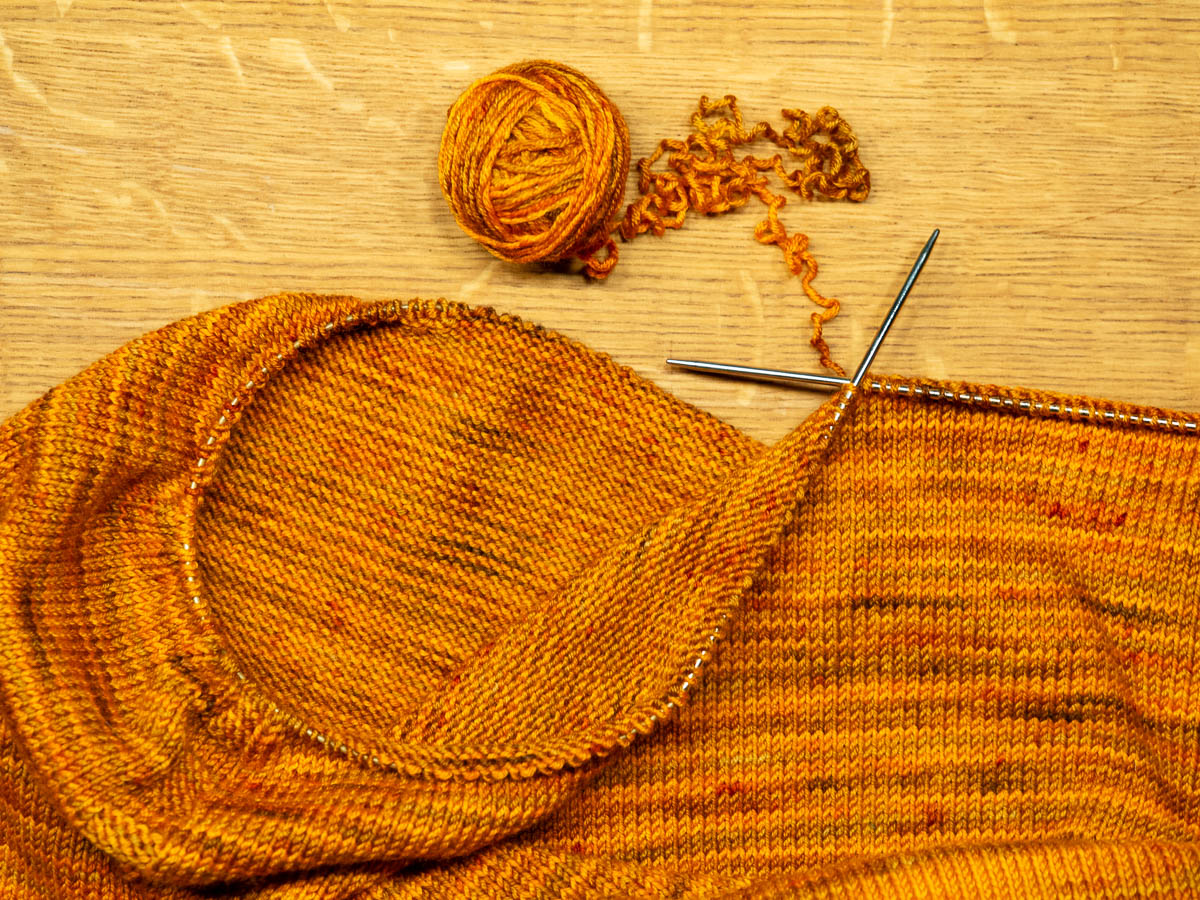
You know what? I have everything that I need to make it fit better. With a hand-knit garment I have all the power. The leftover yarn is still in my knitting basket, and the 2.5mm needles are free. I even have that dash of late-night “just do it” recklessness to just pick out the last yarn end and rip back the ribbed bottom hem.