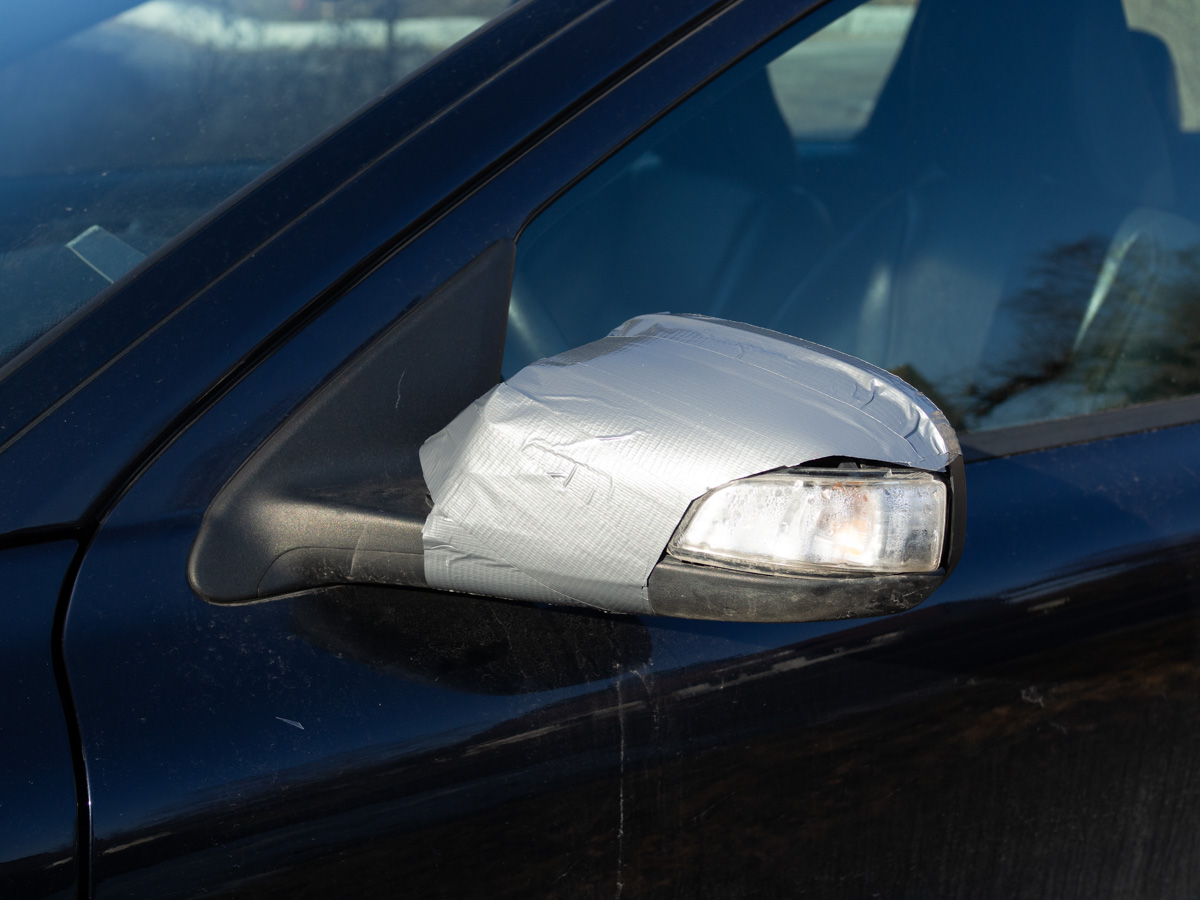
The plastic cover on the driver’s side mirror on my car fell off at some point. It’s done that before, and then Eric found a replacement – for a juicy 900 SEK. Now that replacement has fallen off again and gotten lost, without me even noticing it happening.

When I had the car serviced, the mechanic wasn’t too worried about the mirror being all open to the elements, but it seems like a good idea to keep water and ice (and gravel and dust and whatnot) out of it as much as possible.

This weekend I DIY’d my own side mirror cover out of a plastic folder that I cut to shape and fit into the grooves of the mirror, and then fastened and covered with duct tape. Not entirely watertight, of course, but it seems solid.

Do I feel silly driving around with a duct-taped mirror? Yes. Is it worth 900 SEK for me to have a car that looks whole? Nope.
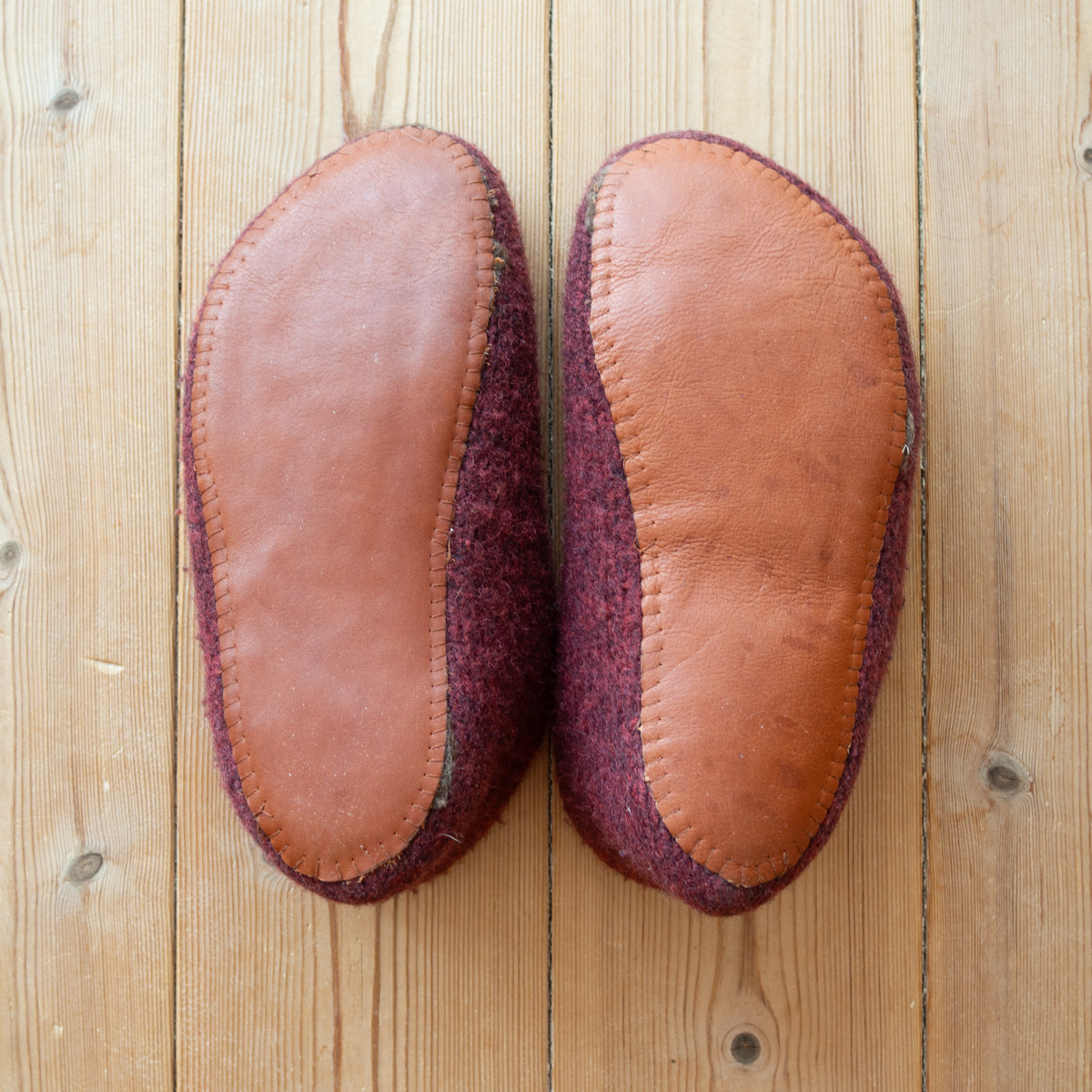
Made soles from leather scraps from the crafts store and sewed them to my slippers. Surely I won’t be able to wear through these any time soon.

At first this seemed like a quick and easy project. Then I got to the toe section. Poking the needle into the cramped space and receiving it with sweaty fingers, without pricking my fingers or getting knots in the thread or losing the thread, did not go very smoothly. I certainly won’t be posting any close-ups of those stitches. I was glad as long as each stitch came out roughly near the edge of the sole, never mind getting them even in size and distance.

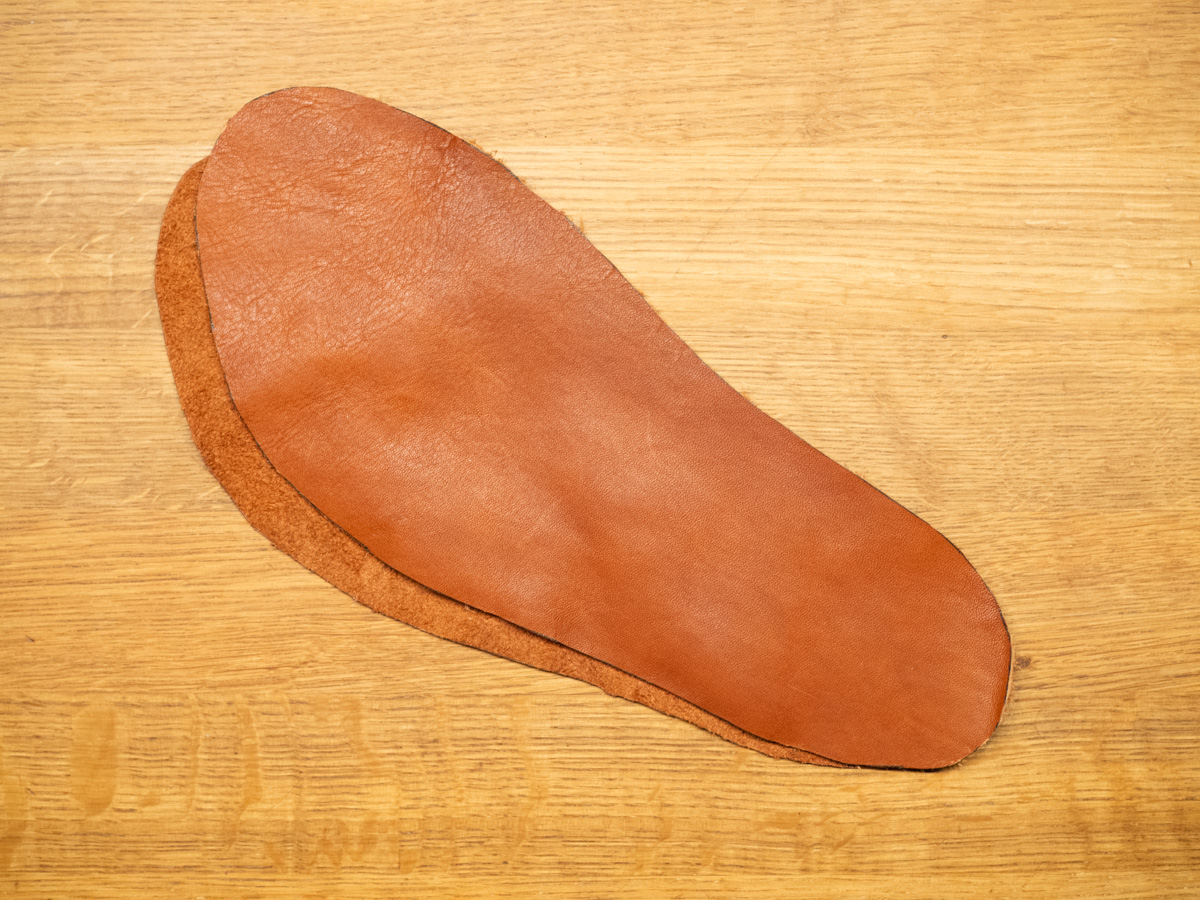
Was going to sole the slippers but didn’t get very far. Made a template, cut out two pieces of leather, but couldn’t find the energy to actually sew them on.

I brought a cold with me from Japan. Runny nose, ticklish throat, tiny bit of a fever, no energy. All I want to do is laze around and do nothing. Preferably even less.

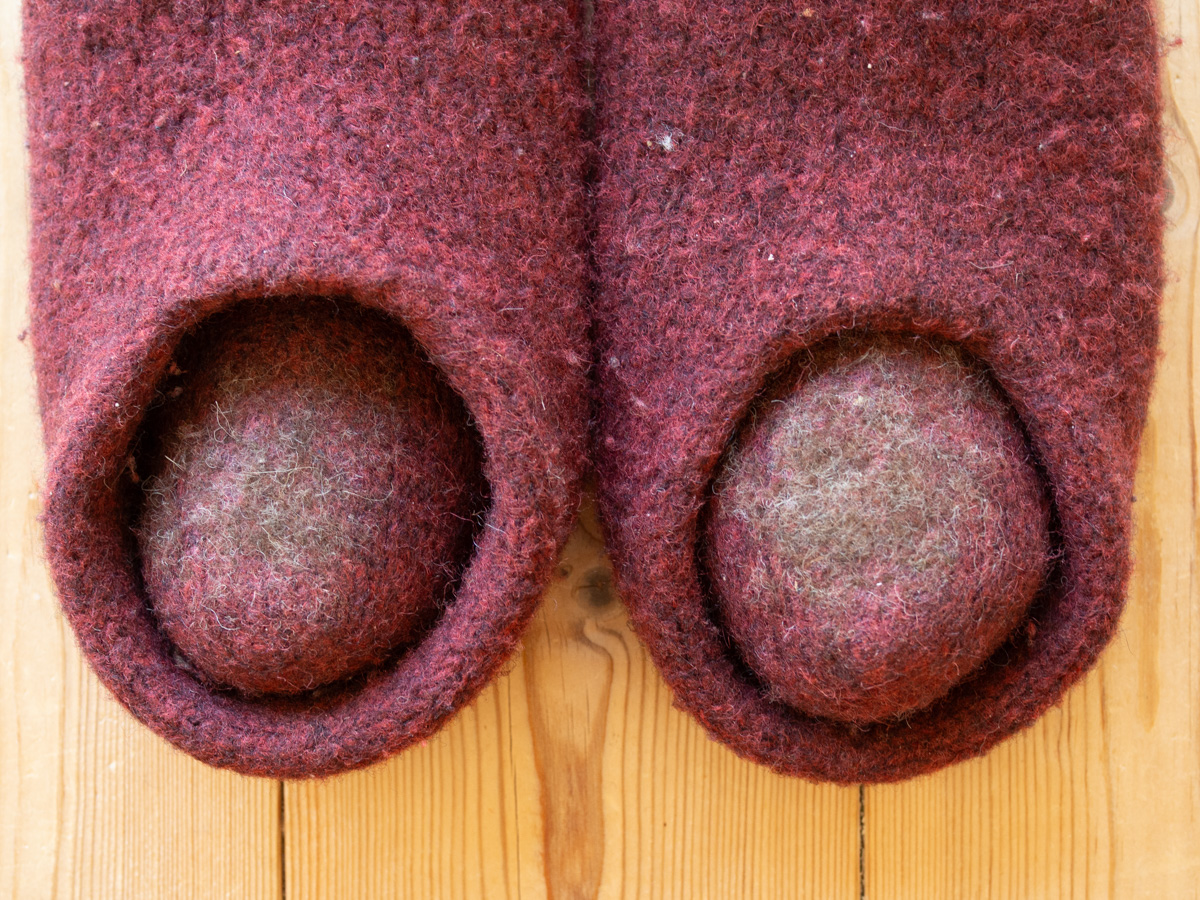
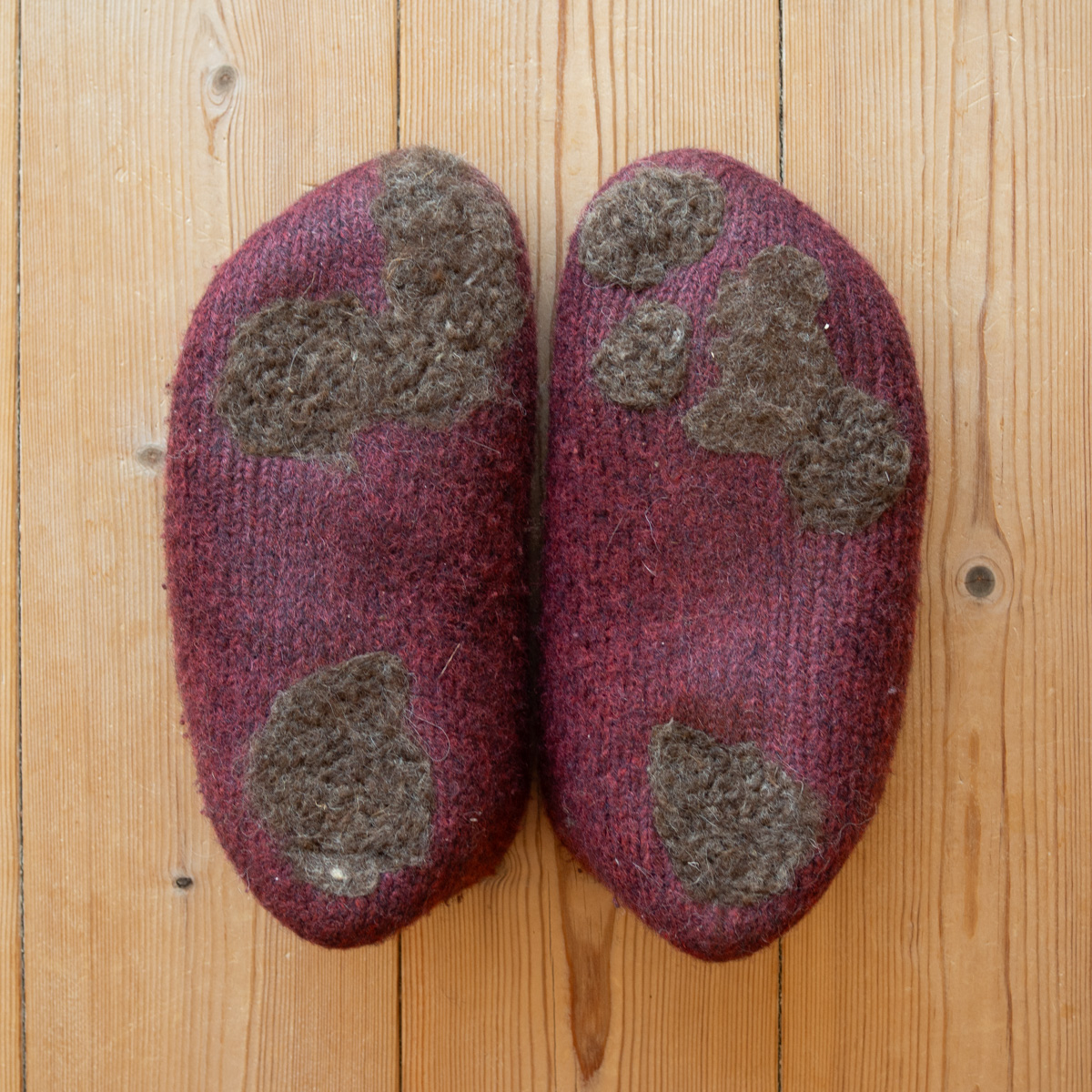
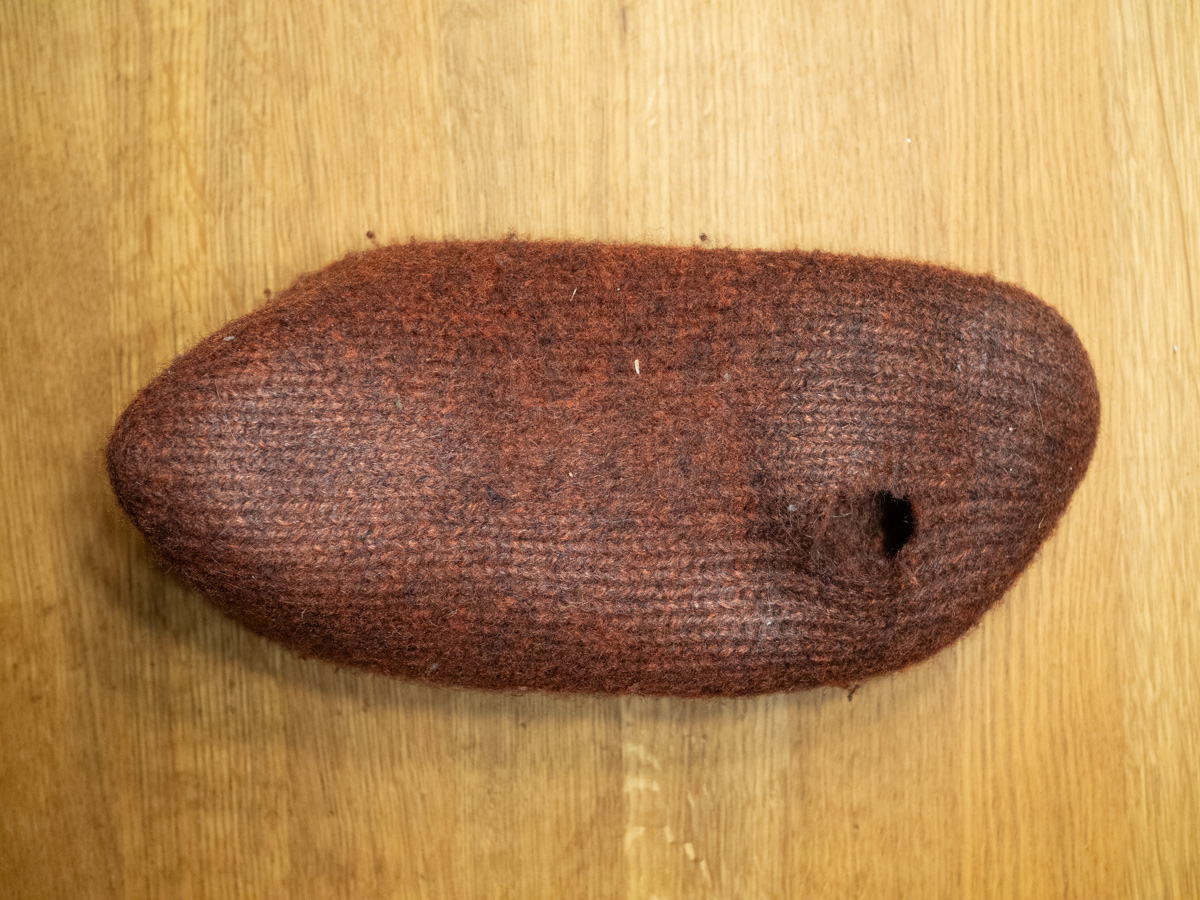
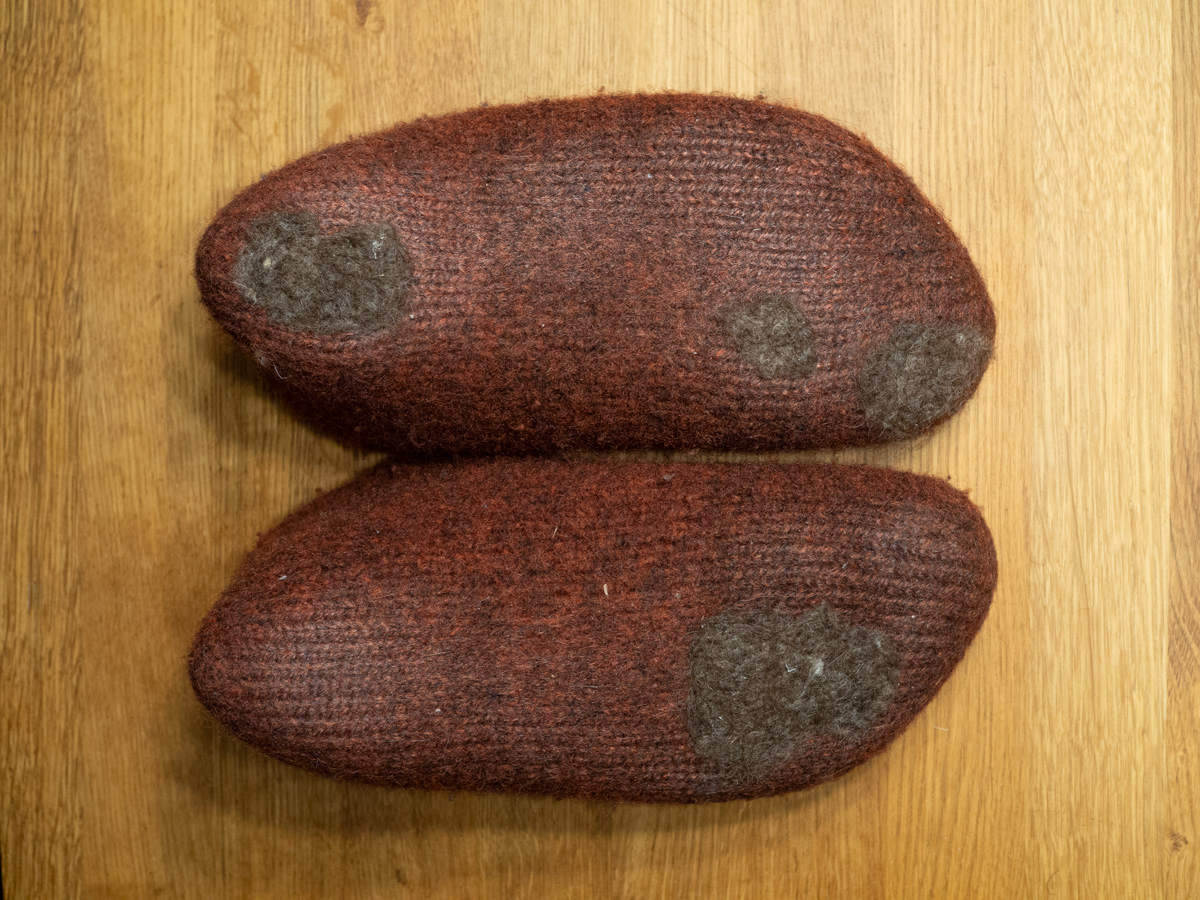
The felted slippers have turned out to be far from hard-wearing. Holes in the soles again. I only just mended them six weeks ago, and three of the past weeks I haven’t even been here to wear them. I’ve needle-felted more wool over the holes and near-holes for now, but this is clearly not sustainable.

A hit of the felted wool shows on the inside of the slippers. Which is logical but still somehow fascinating. The felting needle really pushes the fibres all the way into the existing material and some of it all the way through.

I’ll be wearing these for a day or two just to get the patched bits properly evened out, but after that, I’ll see if I can add proper soles.

My felted slippers didn’t even last a year before getting big holes in them.

I could make new ones – I even have an idea about what I might want to change to make them felt better and last longer – but that seems wasteful. Instead I bought a needle felting kit and some raw wool to patch them up.

I’ve never done any needle felting, and with the waxing experiment fresh in my mind, I was leery of the project. It turned out to be super easy and I was done in no time. The first mend was a bit lumpy but the next ones were better, and even the lumpy one evened out after I walked on it for a bit.

Buying yarn for a new pair of slippers would absolutely have been cheaper. But I’ve learned something new, and hopefully I’ll be able to use this stuff for some other mending project in the future. Or for these same slippers when they get new holes – the way the yarn has gone shiny on the sole, I can see it’s going to happen.

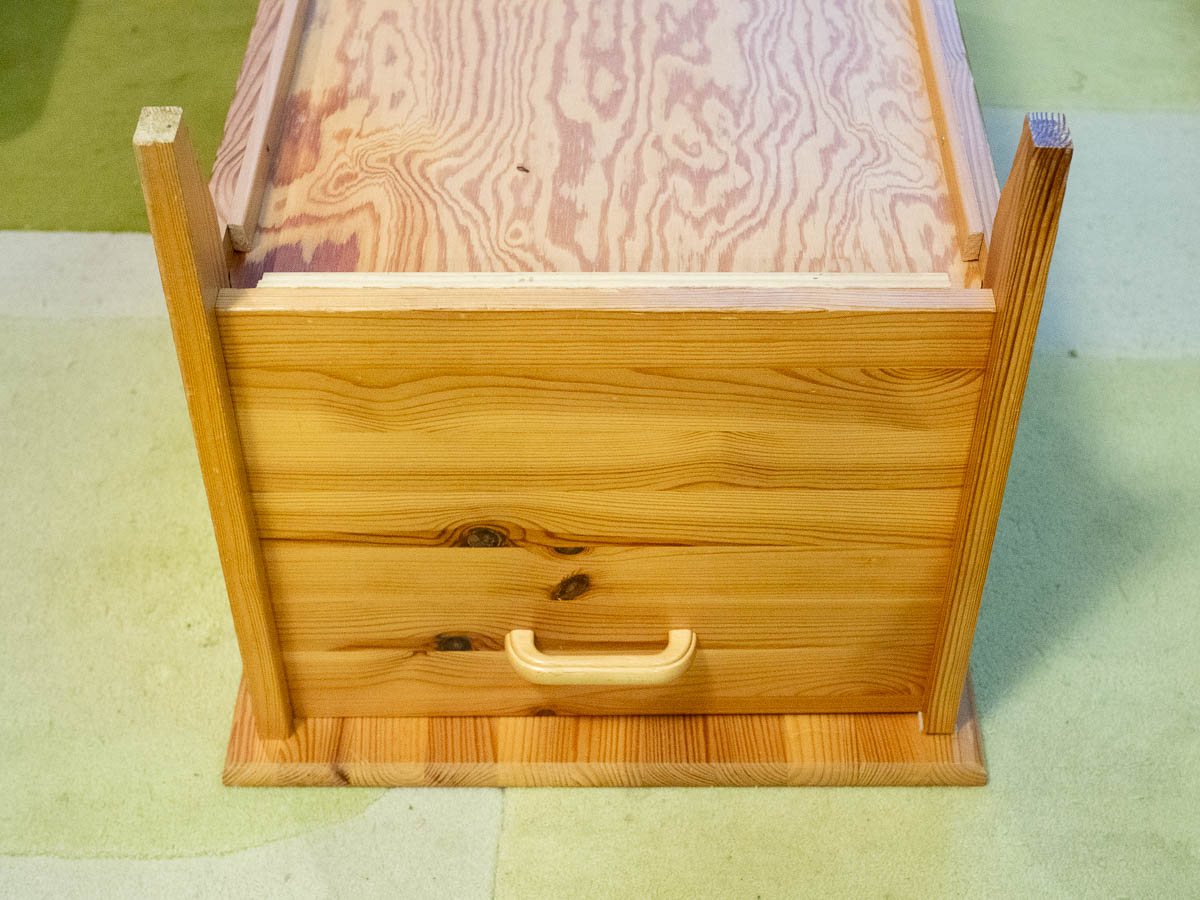
Fixed the chest. It turned out that Eric had already done one round of fixing years before: there were strips of wood attached along the long edges to keep the bottom in place. Now there are similar strips on the short edges, so unless and until the bottom actually cracks under pressure, it should stay in place.

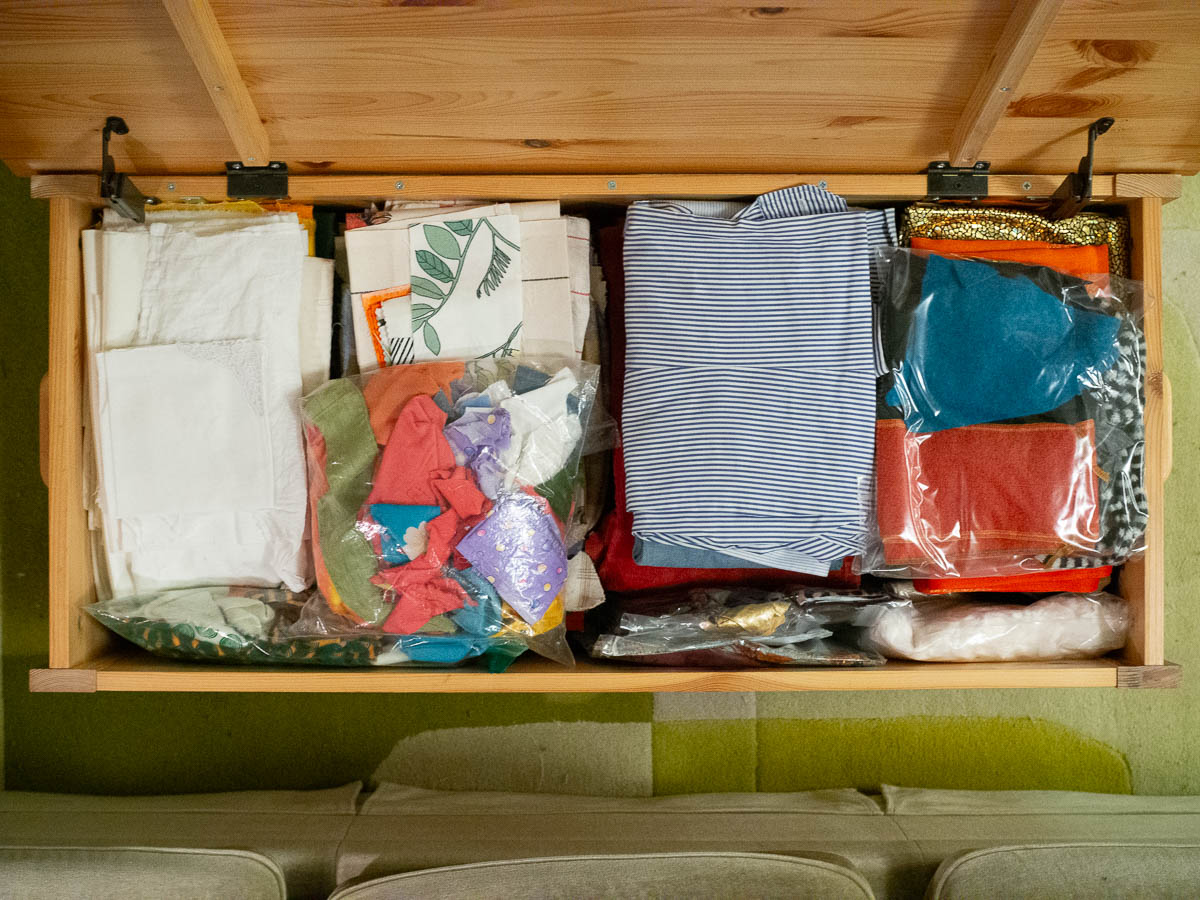
Then I had to fit all the fabric into the chest again. Plus a bit more, because I had one or two recently bought pieces that I hadn’t packed away yet. It was stuffed to the brim before. How will it all fit?

I threw out a very few pieces, and moved scraps that were only good for rags into a separate rag bag. (You never know when you need a soft fabric rag for polishing something.) Re-folded much of the rest into flatter, wider shapes, and somehow managed to fit it all in there again.

Linens and solid woven cottons on the left.

Jerseys and printed cottons next to those.

Upholstery fabric and entire garments (shirts and trousers in good fabrics).

Wools, furs, and shiny fabrics.

Bags of small scraps on top of everything.

I own pieces of actual rabbit fur. Whatever will I use them for? No idea, but they don’t deserve to be thrown away, that’s for sure.

I got tons of mending and alterations done today. A headband, a pair of trousers, an oven mitt, a t-shirt – and a sweater.

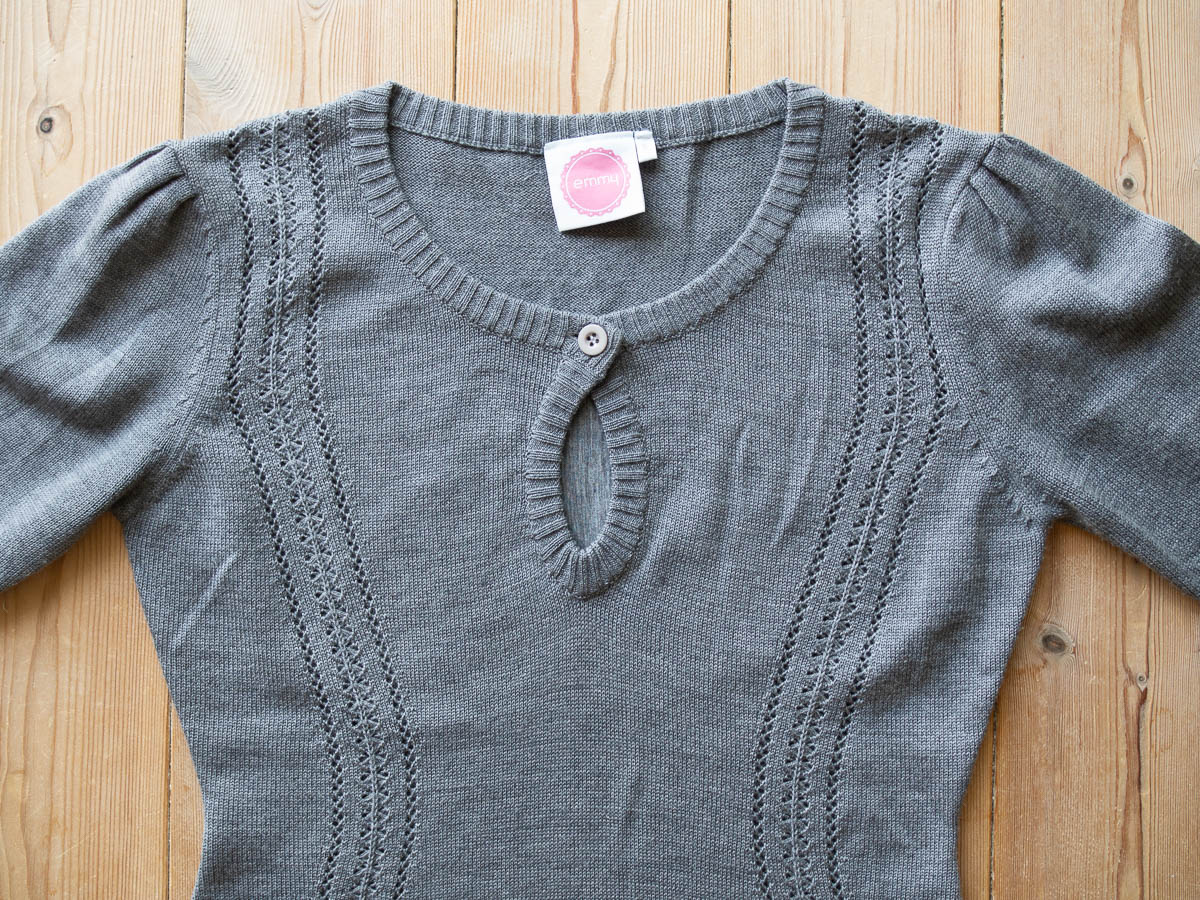
I bought this lovely wool sweater a few years ago. I love the design, and the fit, and the feel of the fabric, and yet I’ve barely worn it.

First I tried wearing it in early autumn, because of the holey design, but it was too warm. All right, 100% wool, soft and warm, perfect for the cold season, then? Well, possibly for a few days when the temperature is just right, but not when the weather gets colder, because the sweater can’t be combined with anything else. I can’t wear anything underneath because everything shows in the “keyhole” in the middle of the chest. It looks lovely in theory but is so impractical.

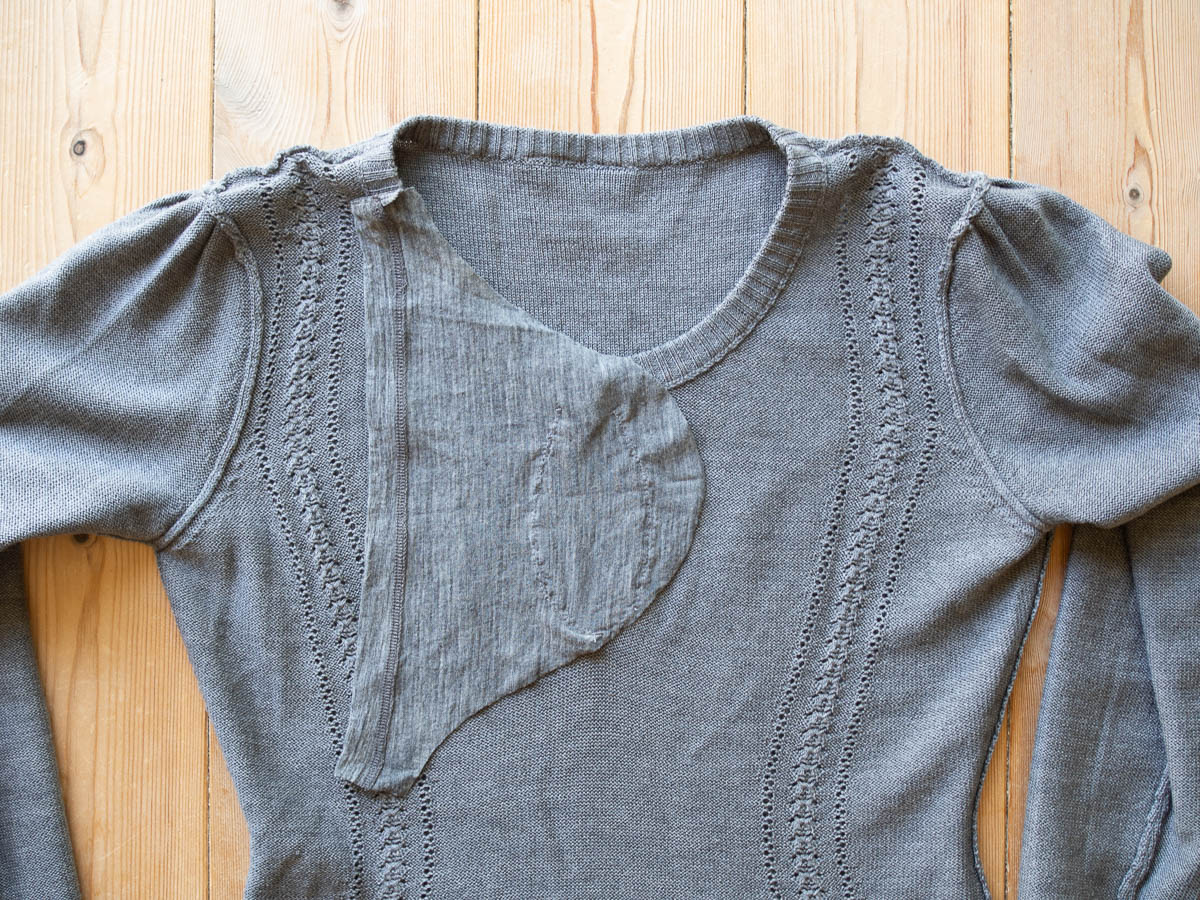
After a few attempts to wear it, the sweater went to the mending and alterations pile. I had vague thoughts of filling in the keyhole somehow, perhaps crocheting something? In a wonderful coincidence, another one of today’s alteration projects was a hiking t-shirt in gray merino wool, with too-narrow sleeves. I cut off its sleeves, leaving me with a sleeveless, hopefully more wearable t-shirt – and two small pieces of thin, gray wool fabric, which matched the sweater almost perfectly in colour. Ta-da! One t-shirt sleeve made a perfect patch for the keyhole. It almost looks like it could have been made this way.


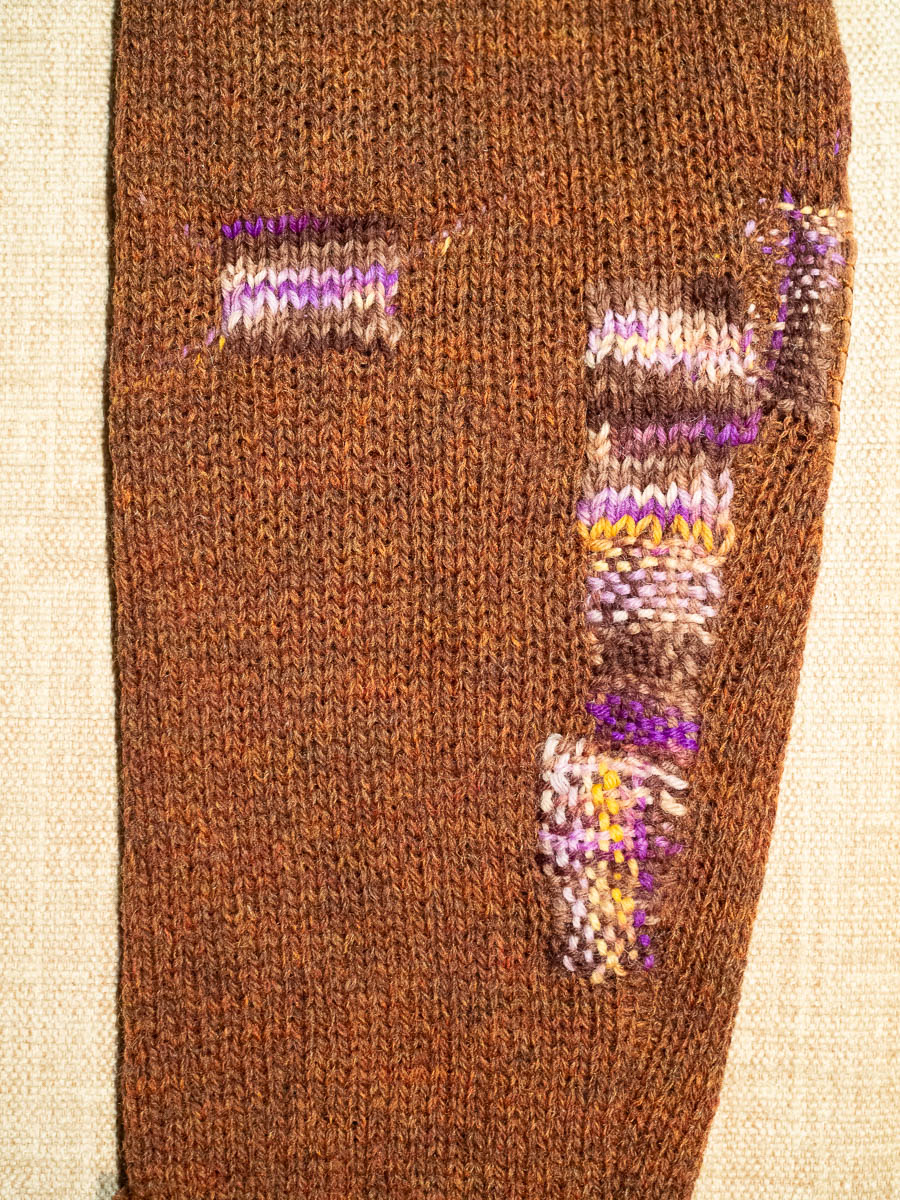
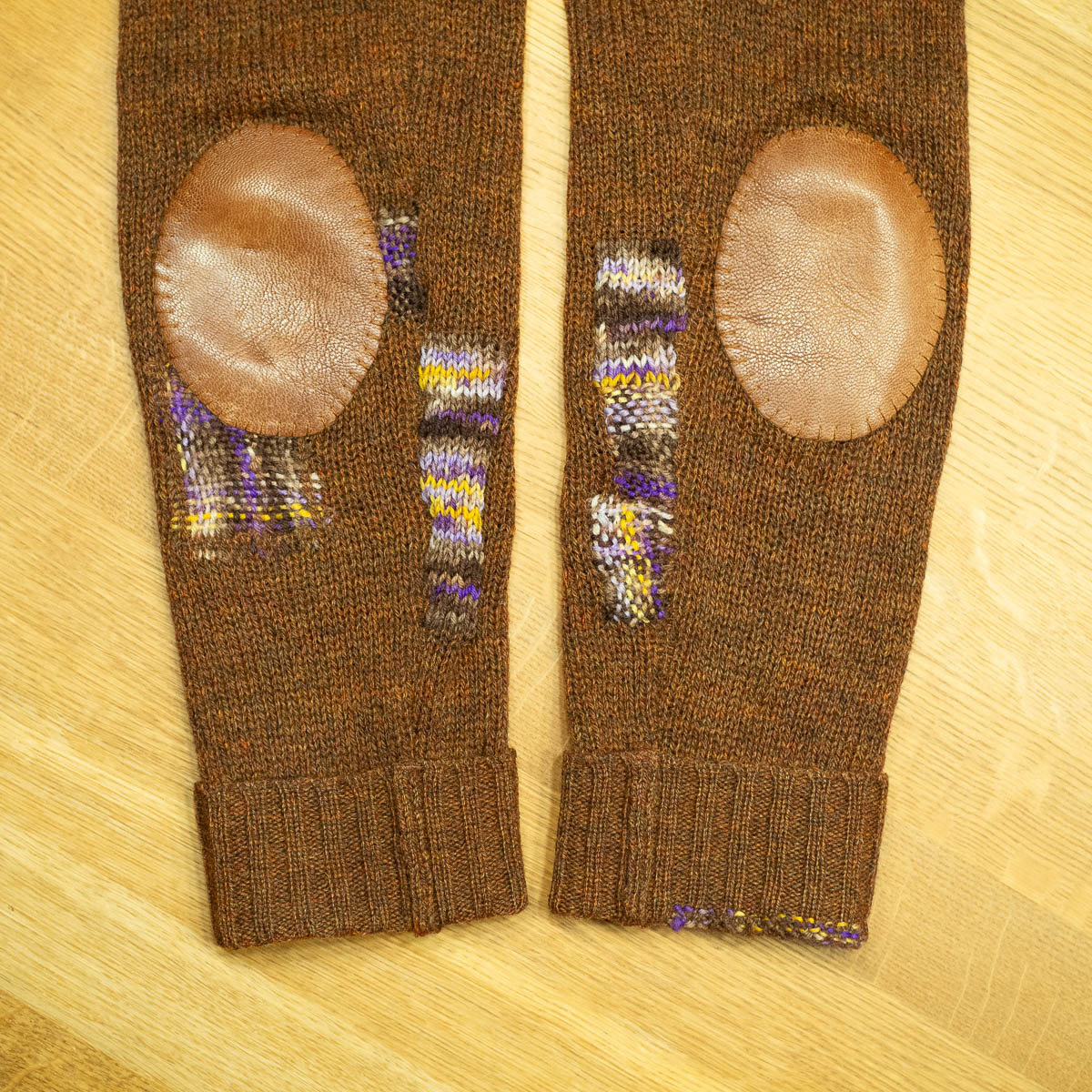
This cardigan is accumulating more and more darned patches. I wear it a few times, and then find another threadbare patch that needs some TLC. They’re very unevenly distributed, and with no thought to what would look good – they just go where the holes are appearing. I’m thinking that maybe I should add more patches elsewhere, not so much to strengthen the fabric but to make it look more cohesive. I have enough of that yarn for a heck of a lot of darning.

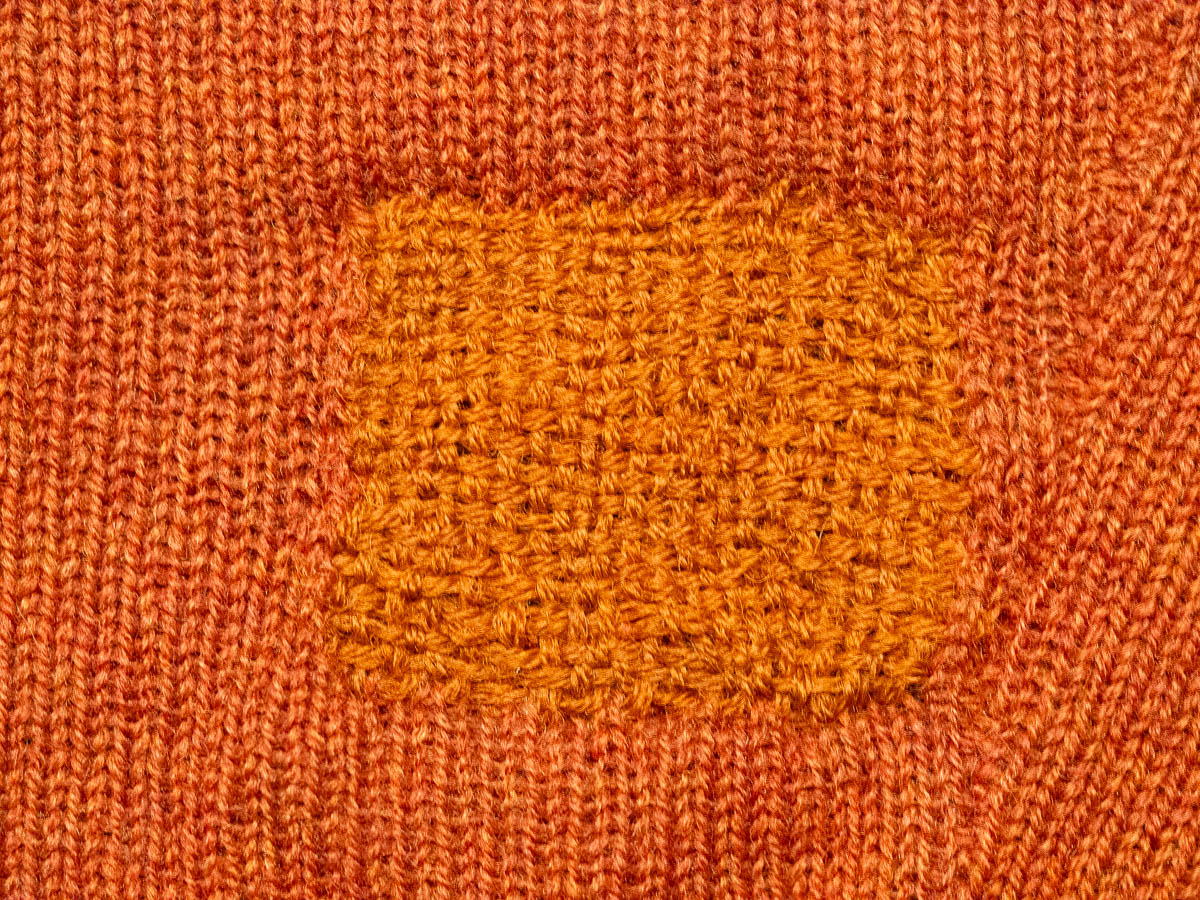
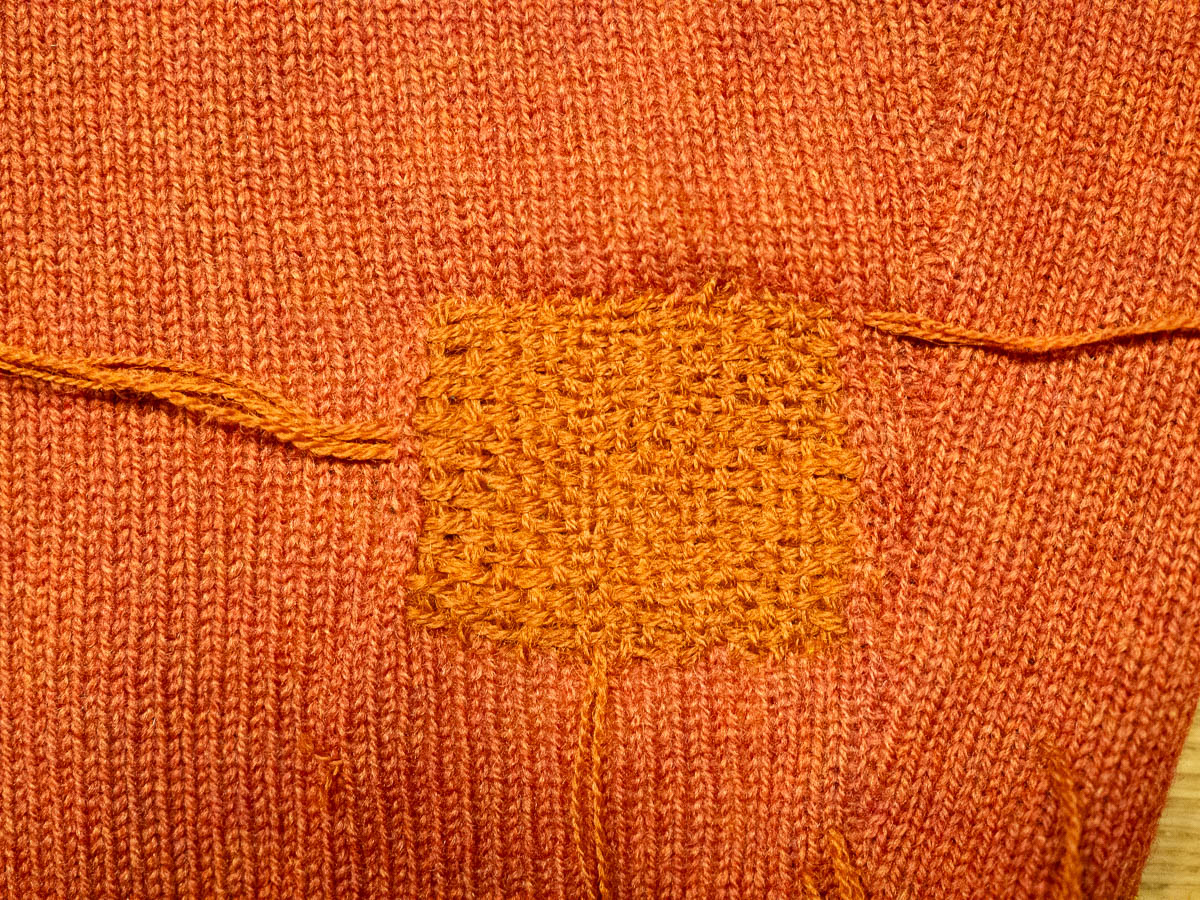
I had the honour of mending one of Eric’s sweaters. His style is definitely more subdued than mine, so there was no doubt that I would aim for a discreet mend. Then I found a near-perfect yarn to match the sweater, and while the result is not invisible, it blends in pretty darn well. I guess if I had endless time and infinite patience, I could have done something even less visible with Swiss darning, but with these tiny stitches? No thank you.

It’s tricky when the yarn thickness doesn’t quite match. Taken singly, the yarn was too thin. Held double, it was thicker than the original, so I made my grid at half the density of the original stitches. Which afterwards turned out to be a bit too sparse, making the result look like a basket rather than an even weave. You can see it in the photo below, on the left side of the mend, if you look really carefully. I went back and wove in more vertical threads between the existing ones here and there – I’m about halfway done in the photo, starting from the right. Inserting extra warp threads was more work than if I’d had them there from the start. But I don’t know how I could have gotten the density right without experimenting.


There’s almost more patch than original material in these cardigan sleeves.