I have – at long last – added notes to all my blog posts from the Japan trip. Yes, it was half a year ago. Better late than never. I got most of it done in April, then forgot about it, then dreaded doing the rest. Today I sat down together with Ingrid (who has her own, physical scrapbook from the trip). We went through our notes together, refreshed our memories, filled in each other’s gaps, and I got it done. Phew.

If you want to have a browse, here are all of the Japan posts. In reverse chronological order, unfortunately. I don’t see any easy way to show them in chronological order; might figure out a technical solution for that some other day.

I seem to have missed my photo today so here’s one from earlier.

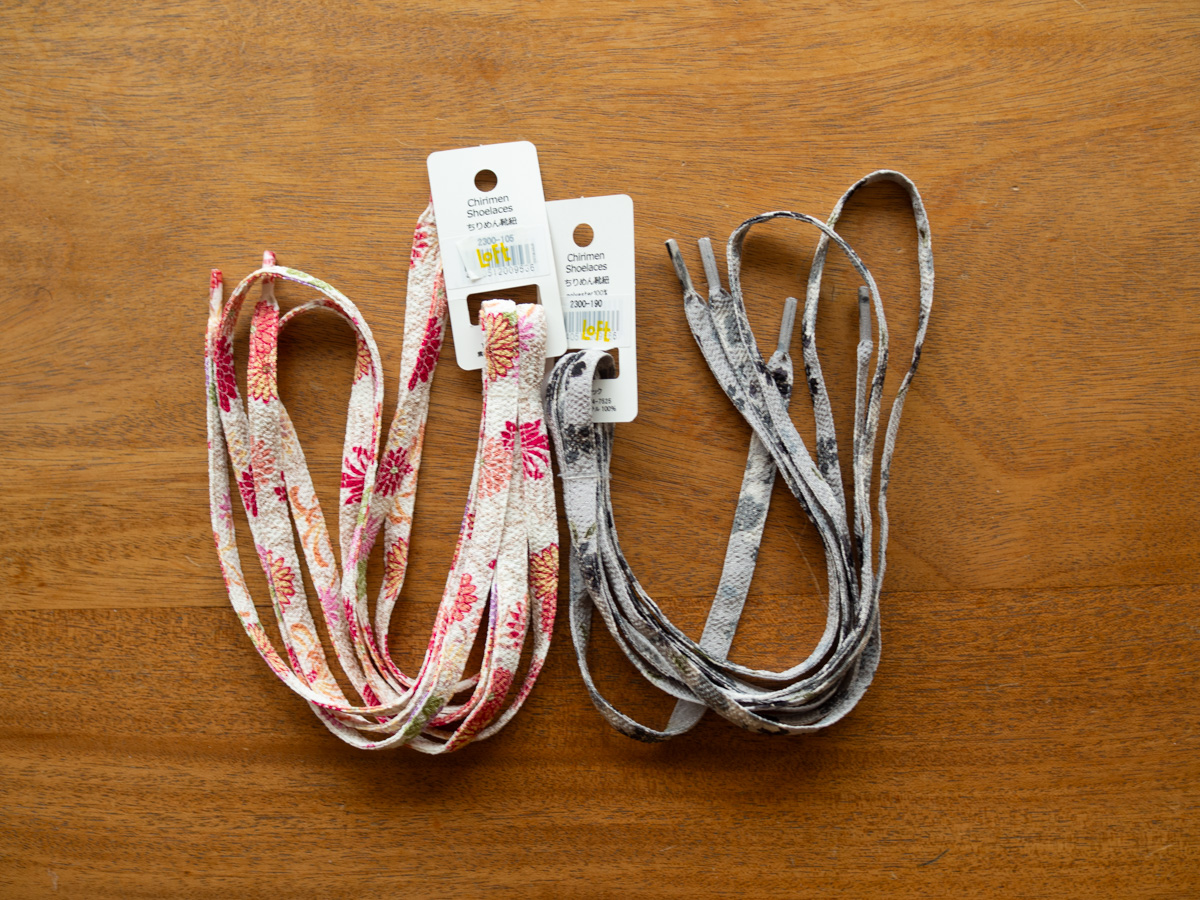
Things I bought in Japan: shoelaces in flower-patterned fabric. A tiny bit of Japan, a tiny piece of beauty that I can sneak into my everyday life. Every time I tie my shoes, I get a little spark of joy.

I don’t usually buy souvenirs or even local crafts that are just for looking at. Instead I look for things that carry with them the character of the place, that I can use, in my daily life rather than on special occasions – even though few such purchases can be used quite this frequently.

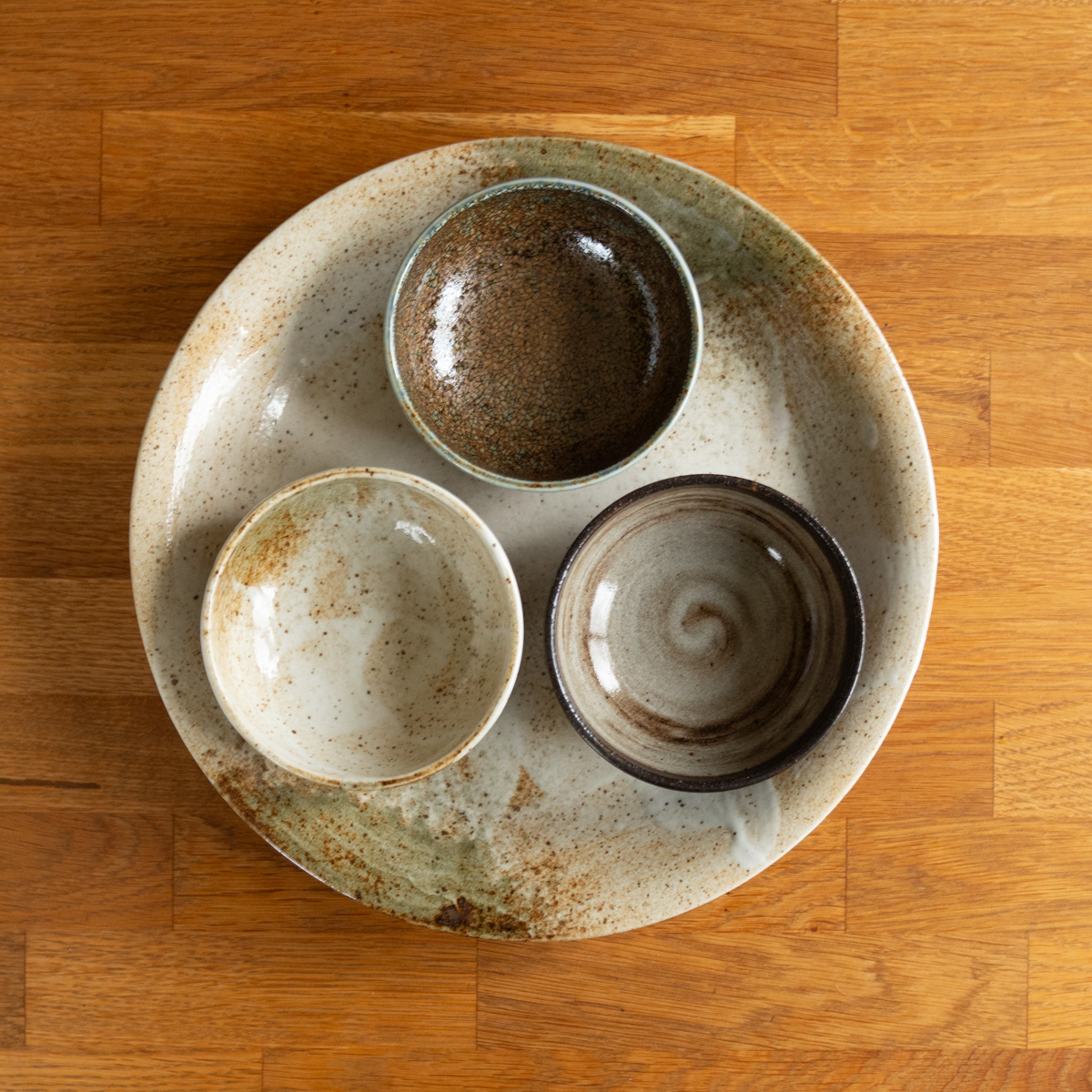
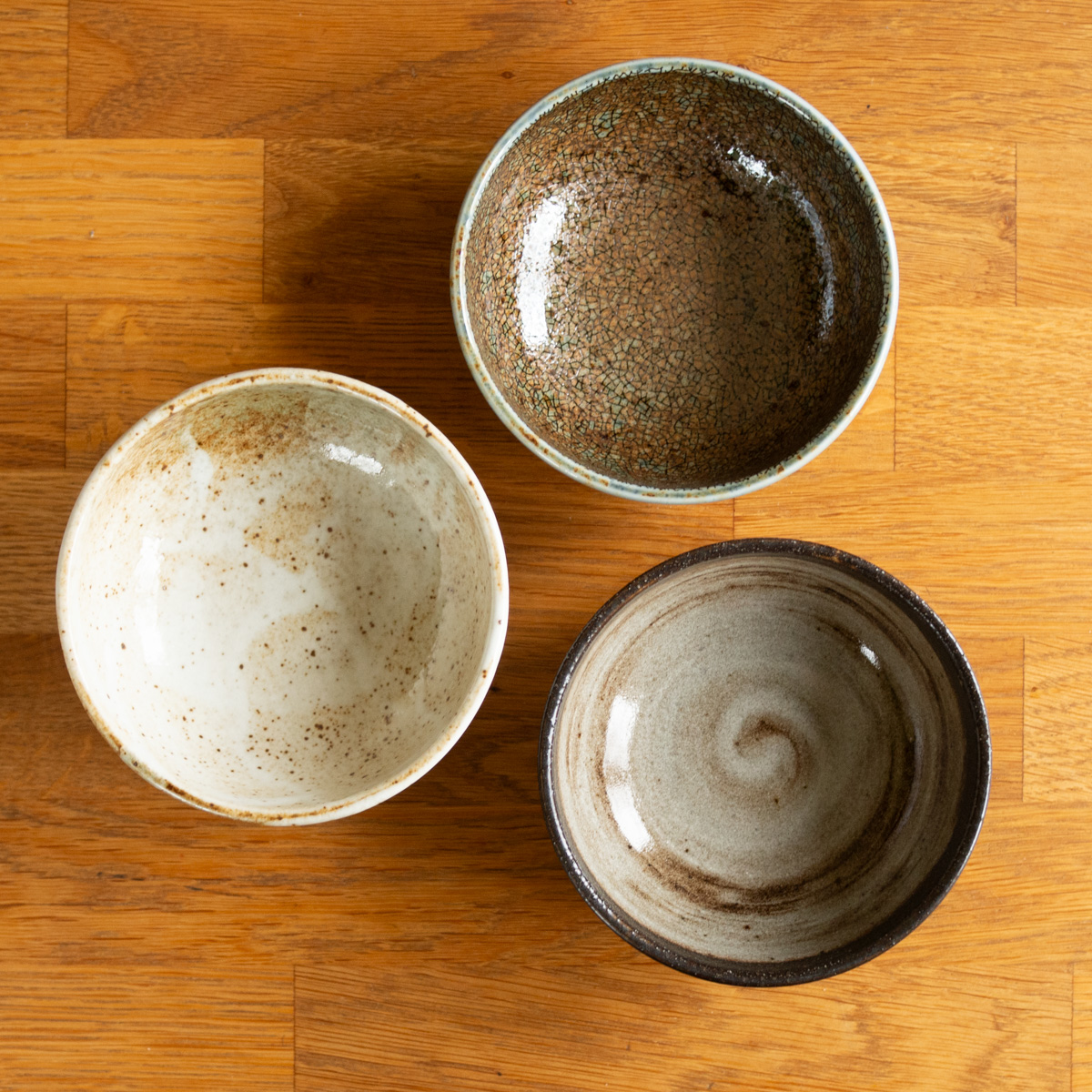
Things I bought in Japan: beautiful bowls.

I have a bit of a weakness for beautiful bowls. I wouldn’t go so far as to say that I collect them, but I occasionally buy some. Especially if they are green. (One of my favourites is the one that broke and managed to mend so well that I’m still using it a decade later.) Whenever I randomly browse the shelves at a thrift shop, I look for (i) wool clothes, (ii) cool fabric scraps, and (iii) interesting small bowls before anything else. I have a tiny souvenir bowl from Venice (from my first visit there in the early 2000s) and an olive wood bowl that I know I also got on a trip but now can’t remember which one.

Ceramics were on my shopping list for the Japan trip, and Ingrid and I visited several ceramics shops.

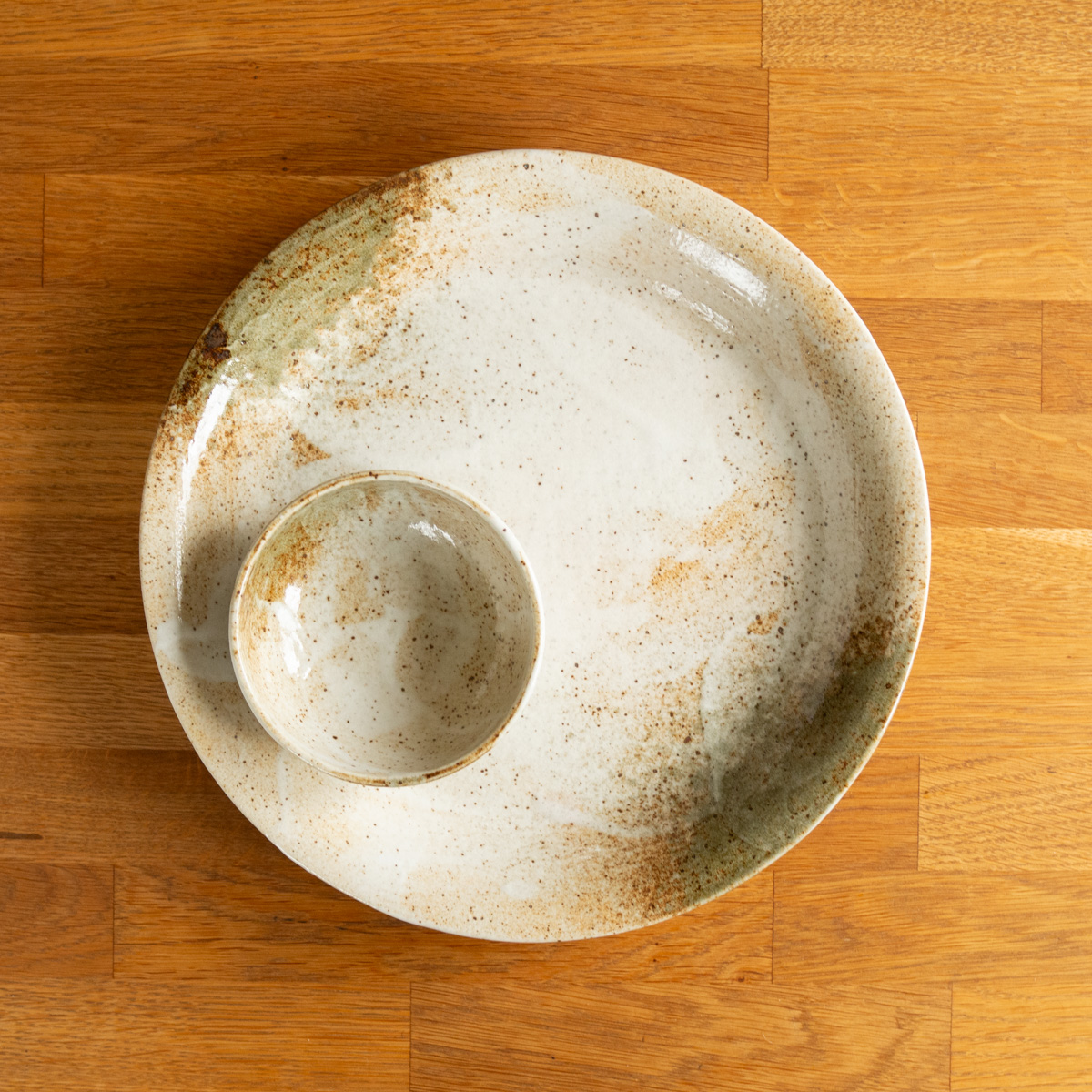
The ones that kept catching my eye were the simplest, cheapest, most rustic ones. Very convenient to have a cheap taste! I came home with one platter and three small bowls, about the size of my palm. The platter matches one of the bowls, and although the three bowls don’t match each other, they have some kind of kinship, still. Maybe they were made at the same workshop? I didn’t check.

The platter will mostly come out as a serving dish for fancier meals, but the bowls are perfect for everyday use: for storing half a lemon, or serving a handful of cherry tomatoes.


I have finally made my way through all the one thousand photos I took in Japan.

With both me and Ingrid interested in taking a lot of pictures, it was a very photo-heavy trip. I think I spent more time photographing than I’ve ever had the chance to do while travelling together with other people. Which felt like a true luxury – it’s so nice that mine and Ingrid’s priorities meshed so well.

On the downside, as I said, a tonne of photos to process afterwards.

One month – to the day – after we came home, I’ve processed them all. Culled and cropped and fixed and sorted and uploaded. There are now a whole lot of posts in the Japan category here on the blog.

It was more work than I had foreseen; this was a whole project. In order to keep it manageable without me buckling under the workload and giving up, I focused on just the photos for now, so there’s no commentary. Yet. I am firmly determined to write about everything as well. I’ll let you know when I’ve done that and then you can scroll through them all again if you want. As usual, my own future self is an important member of the audience here, and even if you all have gone on and lost interest in the Japan posts, I will want to write down my thoughts and memories for her.

Things I bought in Japan: realistic food magnets.
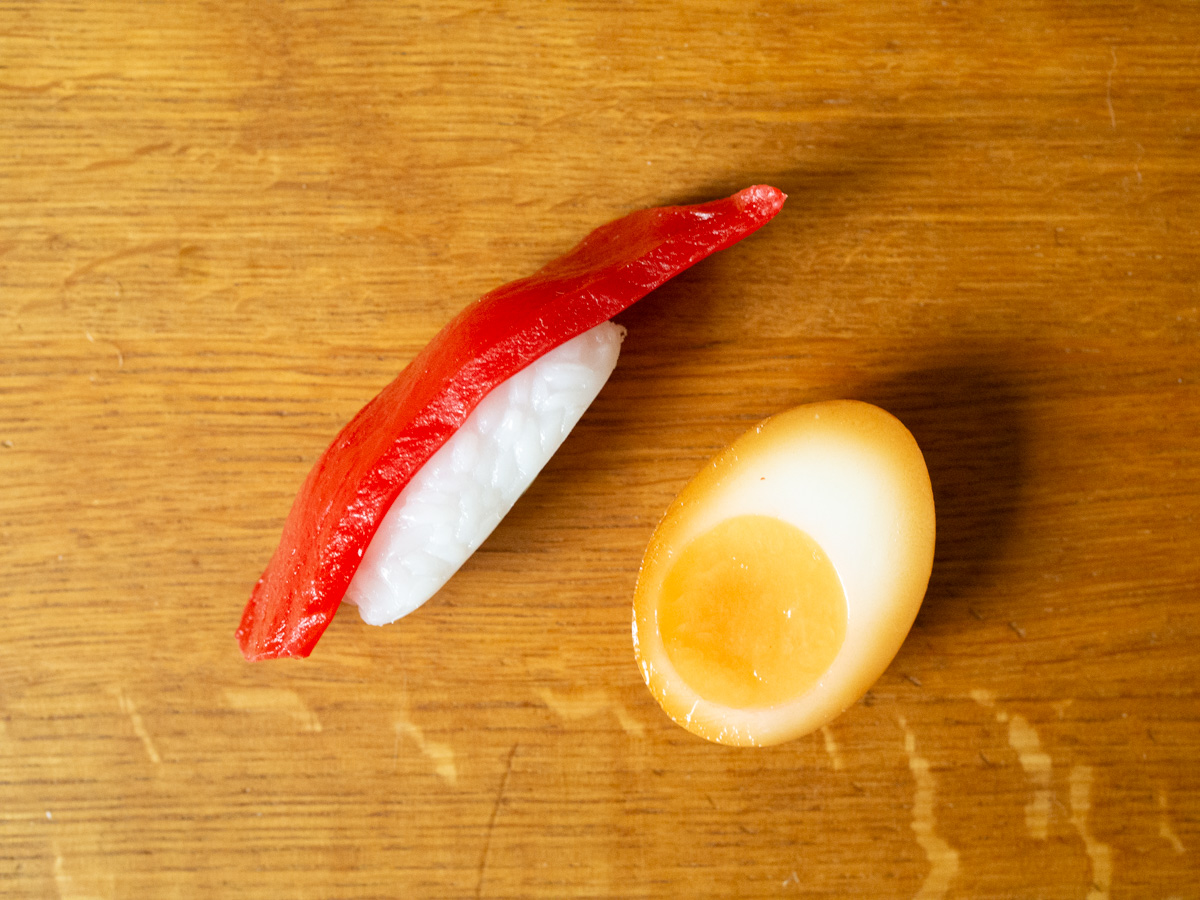
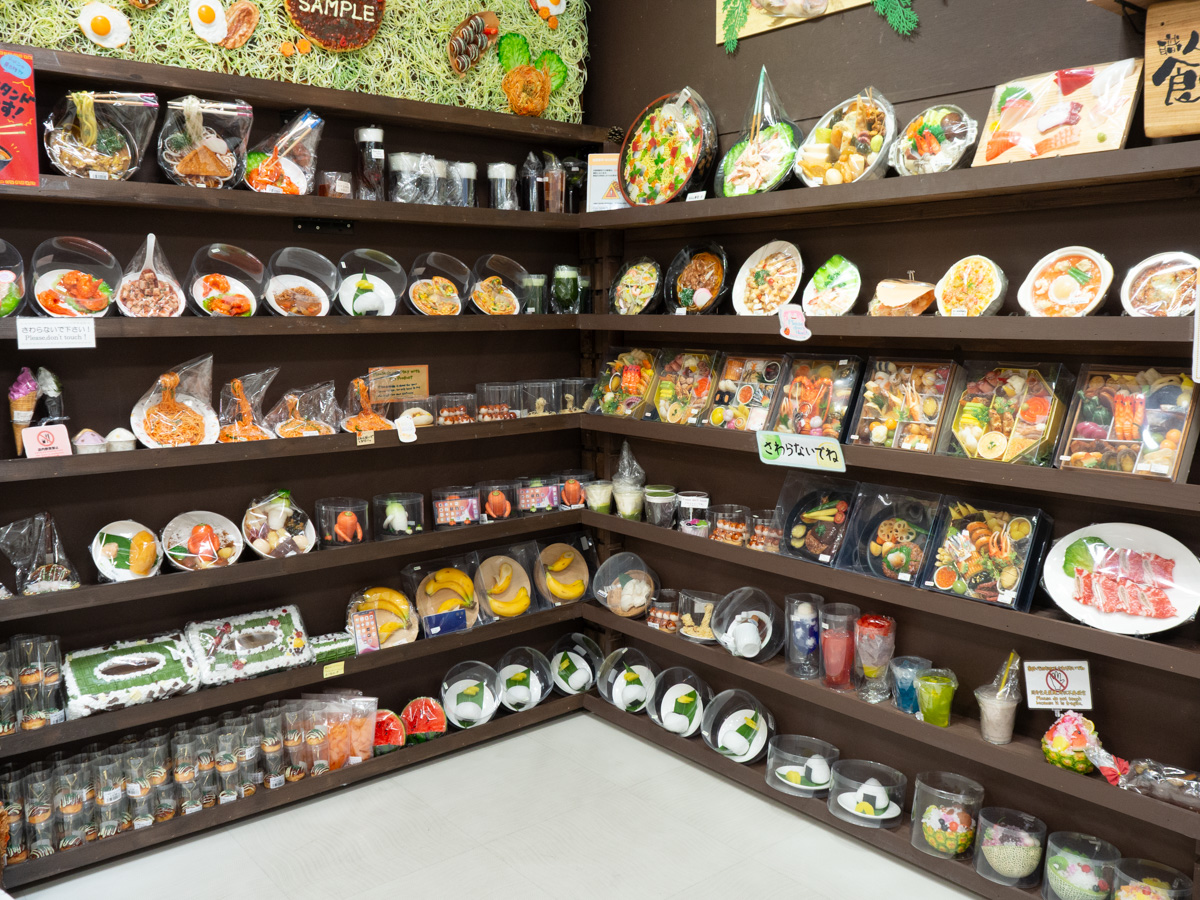
Japan has a whole industry for food samples, realistic fake food. Many restaurants have displays of their menu items outside. Instead of looking at a menu, you just look at the almost-real thing.

The craftsmanship is astounding. The food truly looks real: shiny where it needs to be, matte where that is appropriate. Colours, colour gradients, marbling, textures.

At many street food stalls, I recognized the food on display as not real not by its looks, but by its lack of smell, and then realizing how impractical a large display of the real thing would be: expensive, wasteful, unhygienic.

For retail sales, there were earrings, magnets, hair clips, etc. I bought two magnets as souvenirs. They’re life-size and thus a bit impractical as actual magnets for holding things up, so I guess they’ll just be decorating the fridge.

The sushi magnet is a piece of tuna nigiri. (Of course you could by fake nigiri with different kinds of toppings.) Having sampled a whole lot of sushi during our trip, I concluded that fatty tuna was my favourite kind of sushi.

The egg is a soy-marinated egg. I ate a lot of those – daily for breakfast, towards the end of the trip – and it’s the one Japanese food that I think I can bring home with me: I should be able to reproduce it and have it come out like the real thing.

There was a whole wall of food-shaped magnets at the shop where I bought mine.
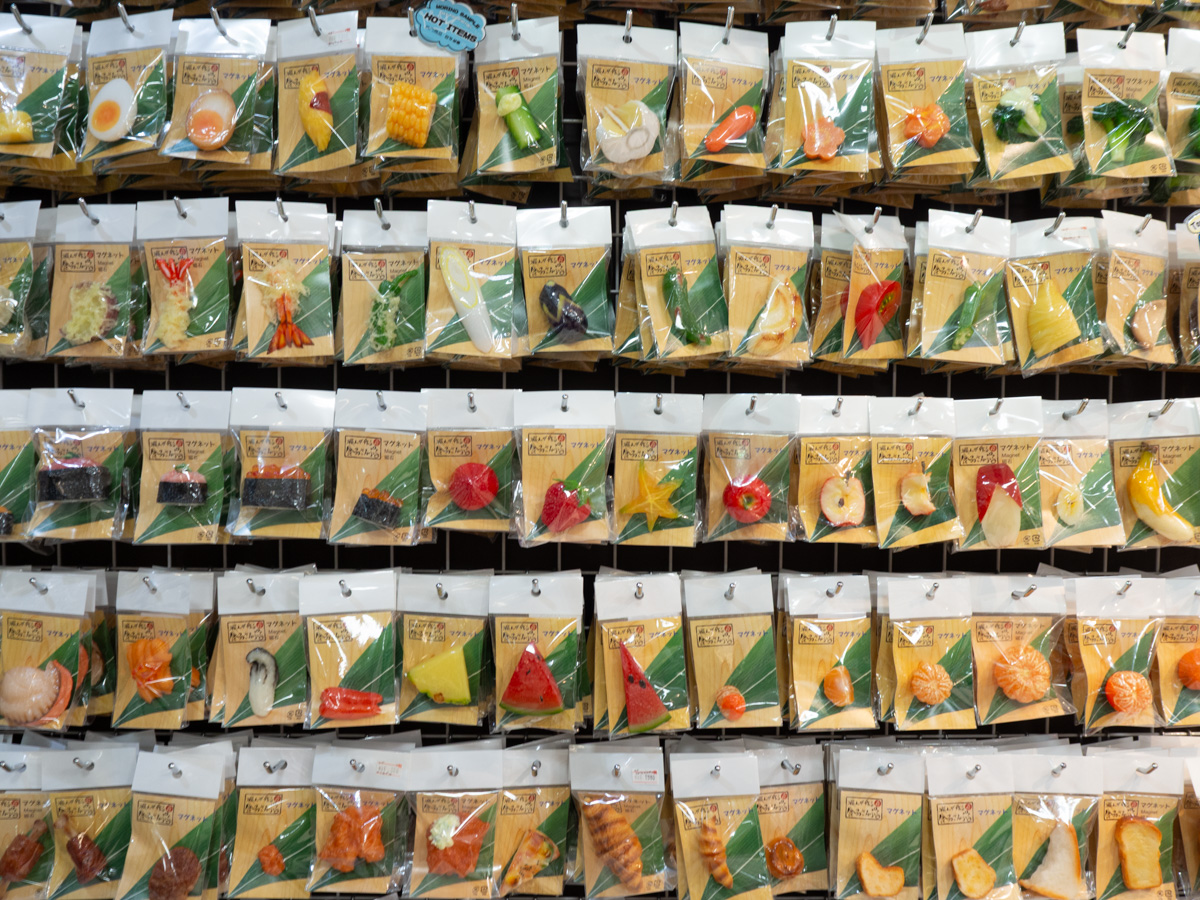
I could have bought a bowl of soup, or perhaps a bento box, or why not a plate of spaghetti with tomato sauce.
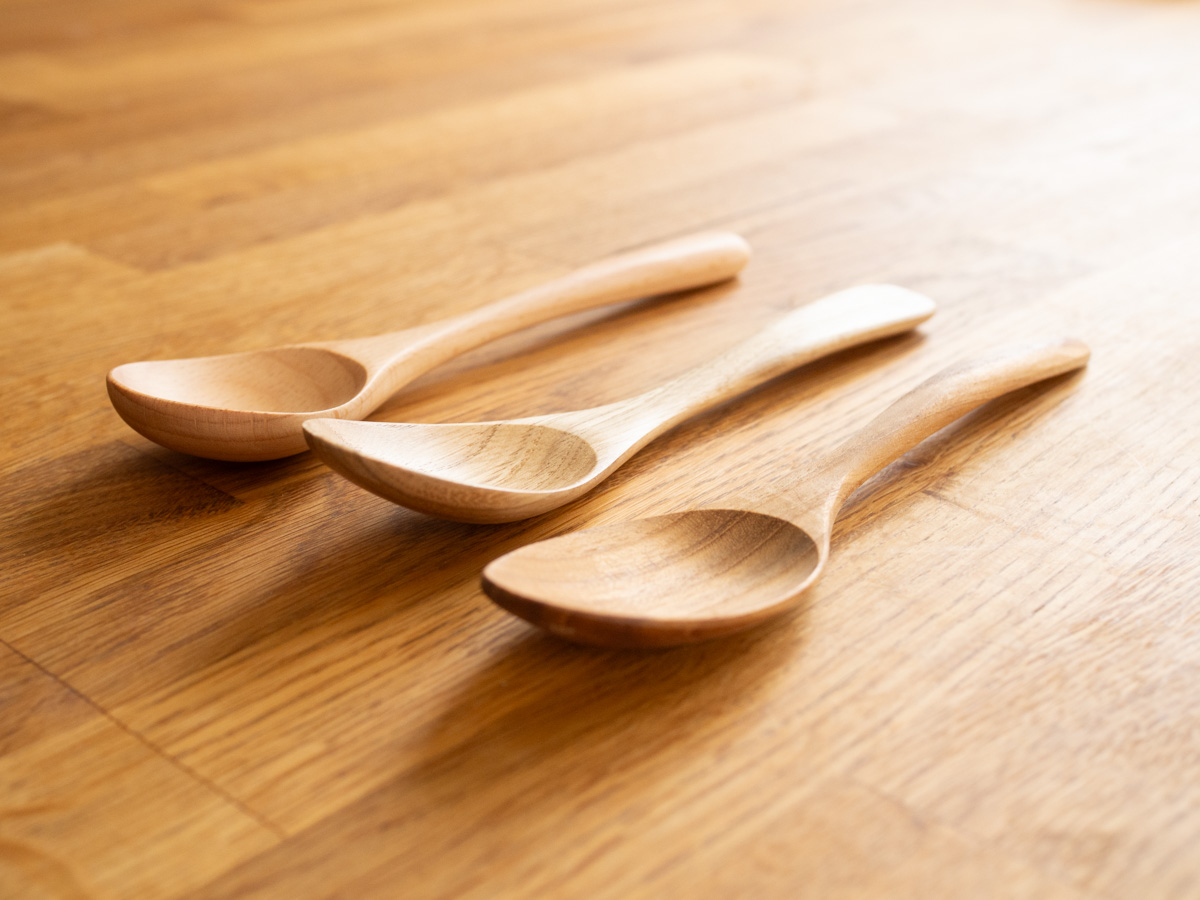
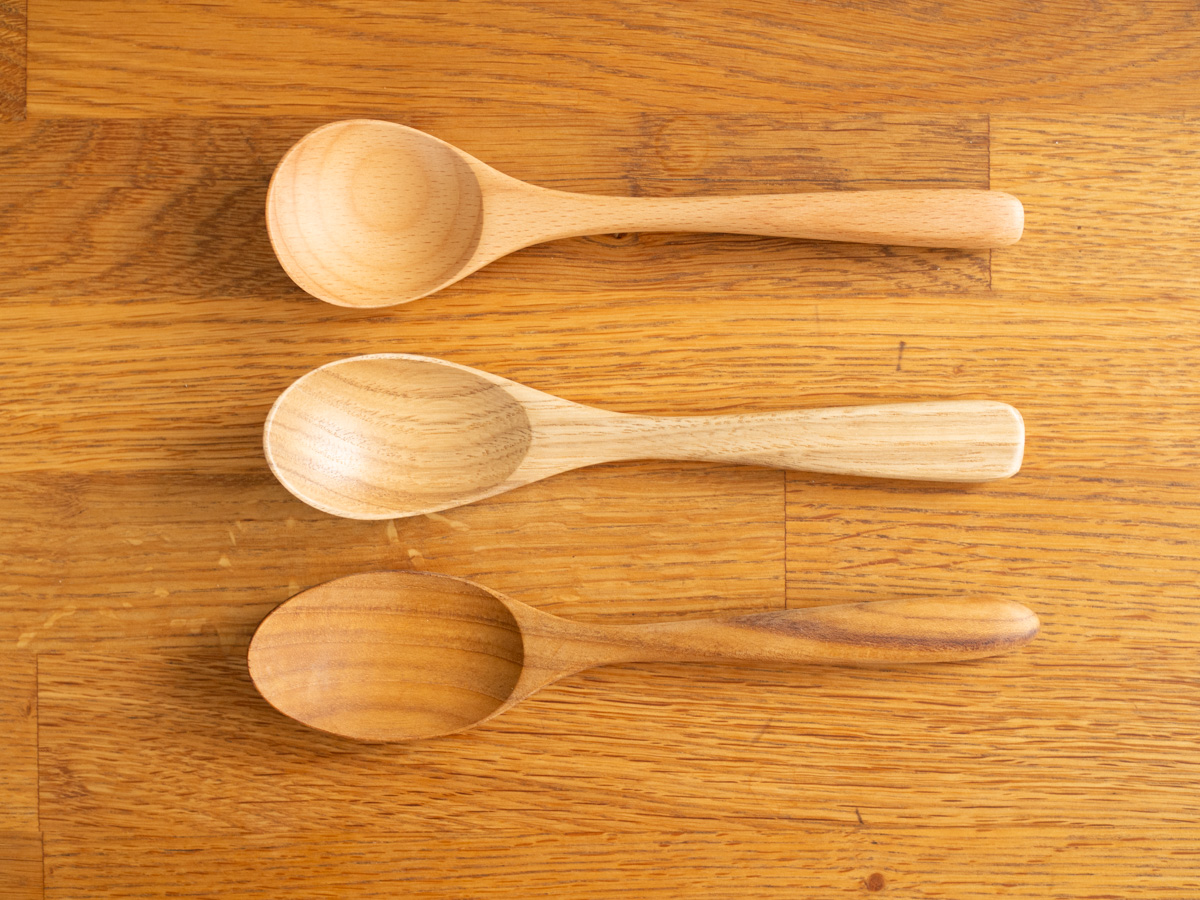
Things I bought in Japan: wooden spoons for eating.

I have large wooden cooking spoons and forks and spatulas, and even larger wooden serving spoons. Plenty of wooden butter knives, even a wooden cake slice. For years already I’ve wished for a good wooden eating spoon, but never found one. I’ve run across crafts stalls selling spoons of roughly the right size, but they’ve all had a shape that’s more decorative than useful. A good eating spoon fits the shape of the human mouth. And is made of a suitable material! A spatula can be rough and scratchy, but an eating spoon needs to be as smooth as silk.

Why a wooden spoon? Because wood is soft and warm, where metal is hard and cold. I mostly don’t mind forks, but metal spoons sometimes truly feel like lumps in my mouth, and I wish there was something better.

One of the shops in the cookware district in Tokyo must have been run by someone like me. They had dozens of varieties of wooden spoons, in all kinds of sizes and shapes and types of wood. I bought three likely-looking variants, hoping that at least one would be good. All roughly the same size, but varying in angle, curvature and material.

What I didn’t think to do is take photos of the labels. They’re three different kinds of wood, but which ones?

I am back after spending fifteen wonderful days in Japan with Ingrid. Now I am all jetlagged and emotionally hung over and have 1200 photos to process (and more still uploading from my phone) and the house desperately needs a deep clean and I don’t even know how to catch up with all of that. One small step at a time, I guess.

I managed to stay awake until 9 yesterday evening (which is 5 in the morning Japanese time) and mostly sleep until 4:30 this morning – long enough that it counts as morning and not night. Good first step.

Coming home from a long trip to somewhere really different always leaves me in a strange emotional state. It is absolutely nice to be home, sleep in my own bed, eat my own food, cuddle with my cat. But it’s jarring to leave behind the intense, packed days, full of new experiences and people and places and no everyday duties. I feel displaced and empty.

For the blog catch-up, there will be a new category for all the Japan photos and posts. I will be filling it up gradually so you can check back whenever you want, and let you know when I’m all done with it so you can get it all in one go if you prefer.

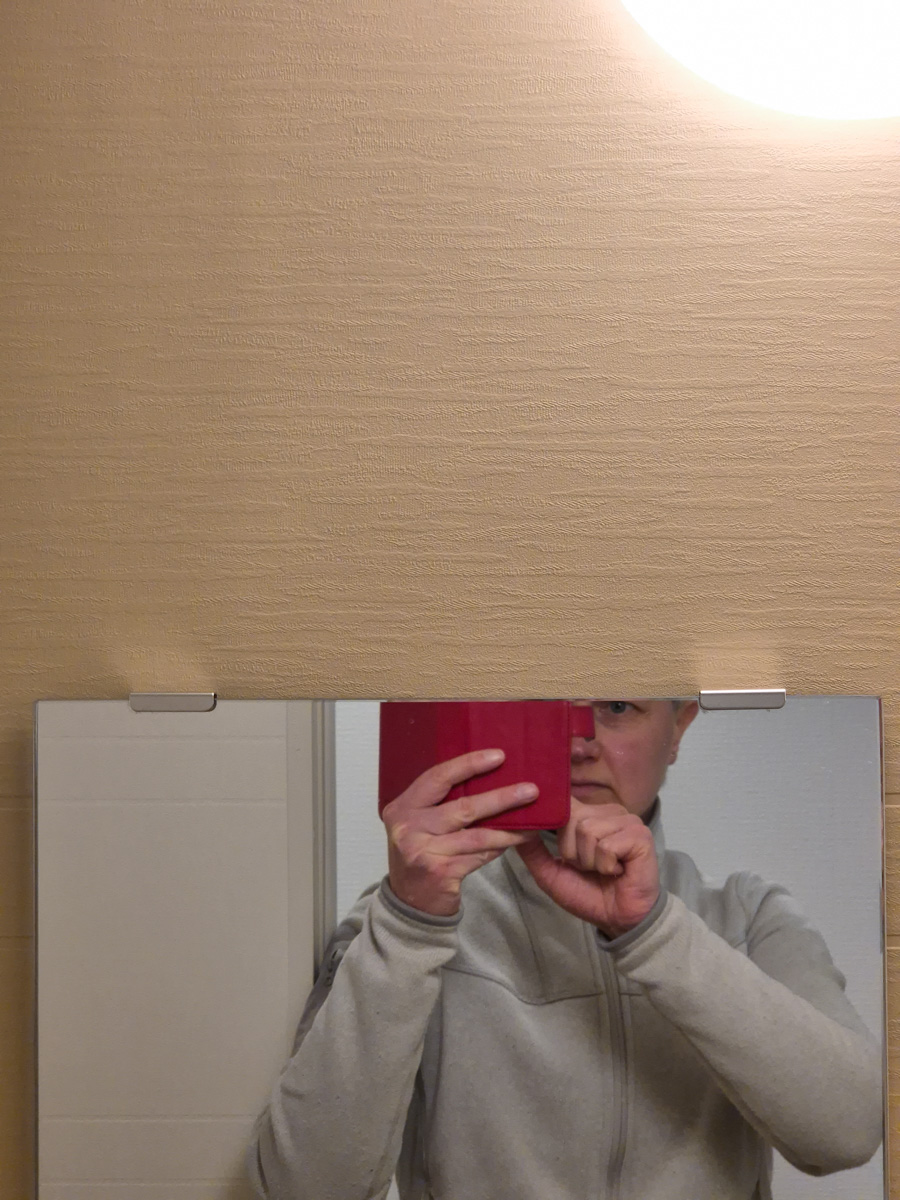
Japanese people are really not tall. This is the bathroom mirror in our hotel room: the top of it is level with my eyes.

With my 167 cm, a totally average length for adult women in Sweden, I felt like I was taller than 90% of the people here. Not 90% of the women, but 90% of all of them. Probably this feeling was misleading. Maybe it was in part due to the demographics of the places we visited – the pop culture shops were frequented by more women than men. But even on the subway, I often felt tall, and clearly this mirror also expects people to be shorter than me.

If I ever lost sight of Ingrid in some shop, I could just look around until I spotted a slightly fairer head sticking up among all the lower, darker-haired ones.


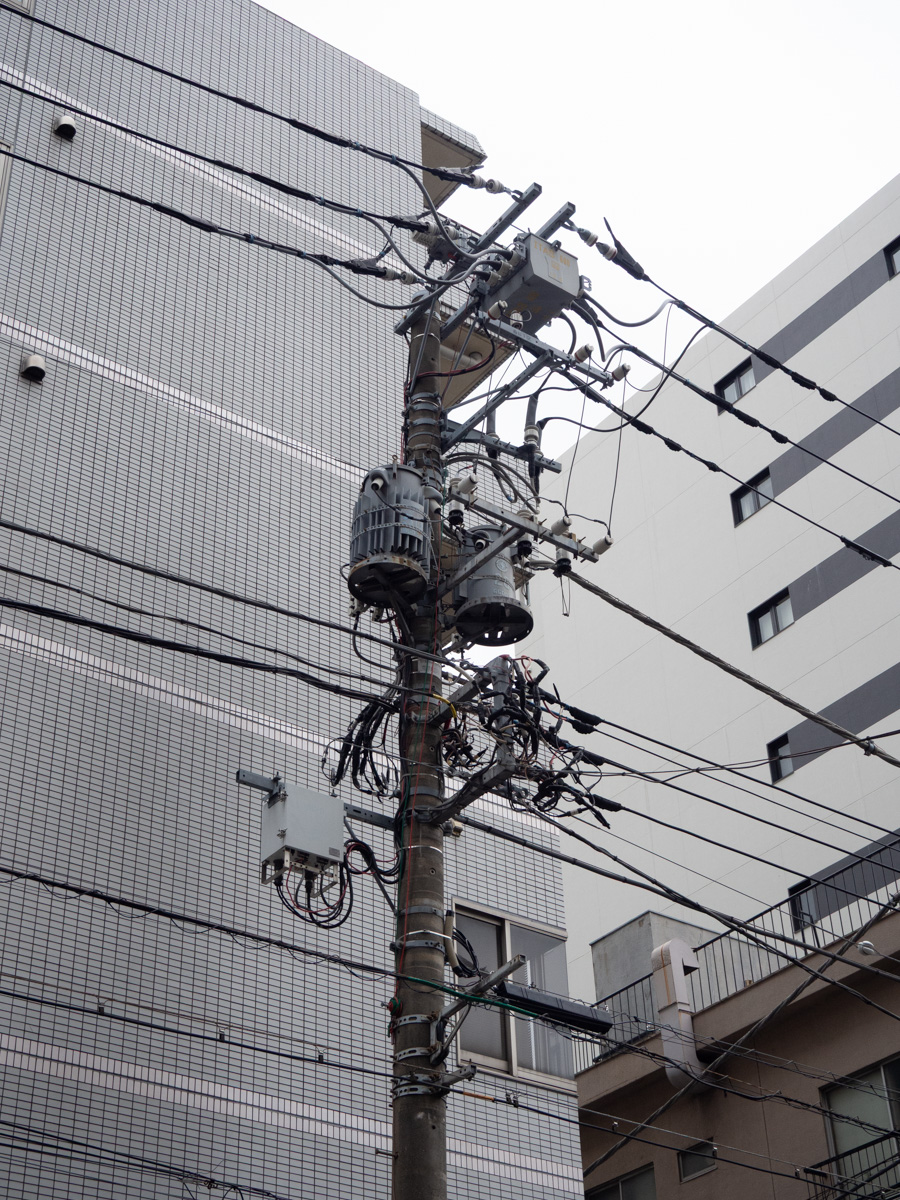
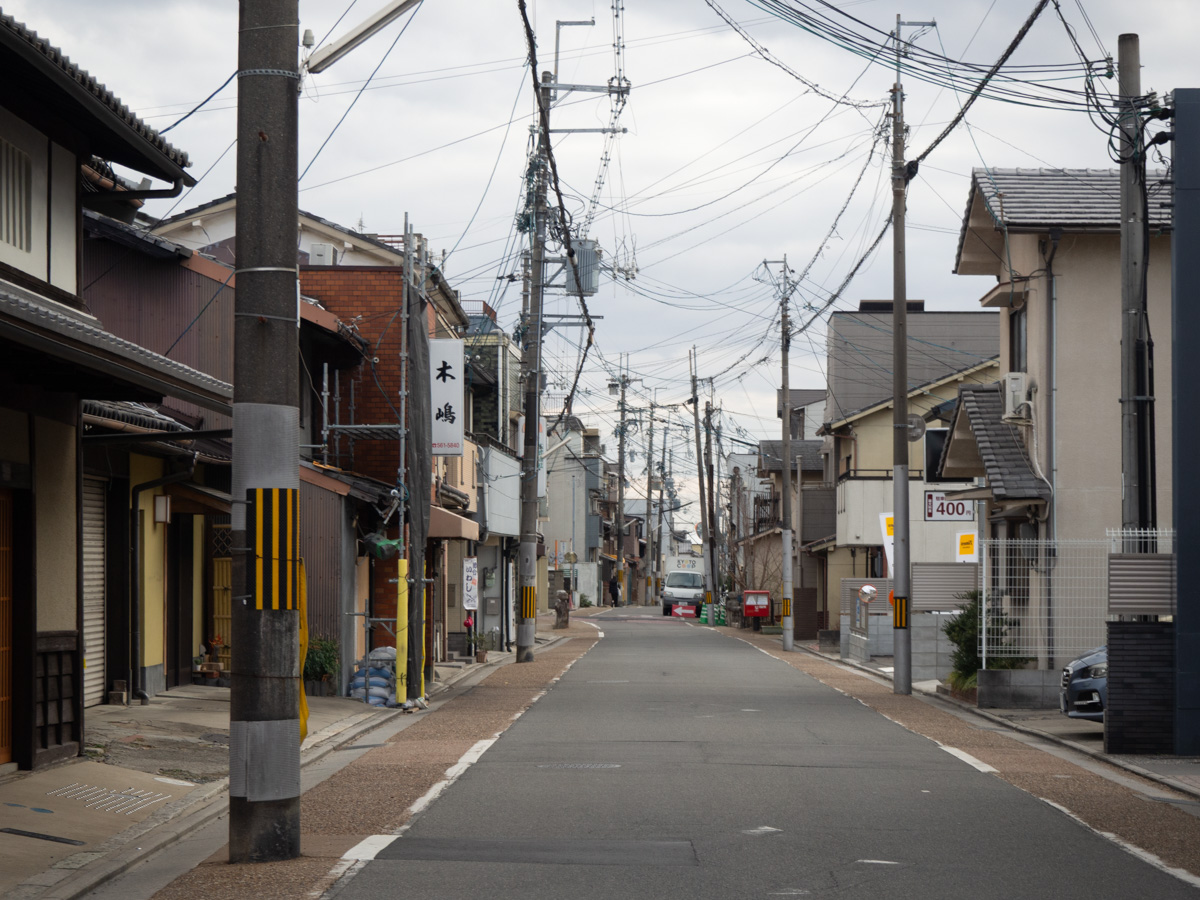
Both in Tokyo and in Kyoto, the streetscape is cluttered with power lines and associated hardware. It looks like what I would expect if there were a multitude of competing power companies, who shared no infrastructure, and all of them for some reason agreed to put it all above ground, on poles, instead of burying it.

It’s kind of iconic, but also ugly. You try to photograph Mount Fuji, and find your view blocked by power lines.

I guessed it might have something to do with the risk of earthquakes. Found some articles online that sort of agreed, but also said that empirical evidence was against this being a good idea. In an earthquake, falling power poles damage their surroundings, and afterwards, fallen power poles block emergency traffic. It turns out that it was originally an effect of the rapid rebuilding after the war, and nowadays it seems to be partly “we’ve always done it like this” and partly just being cheap.

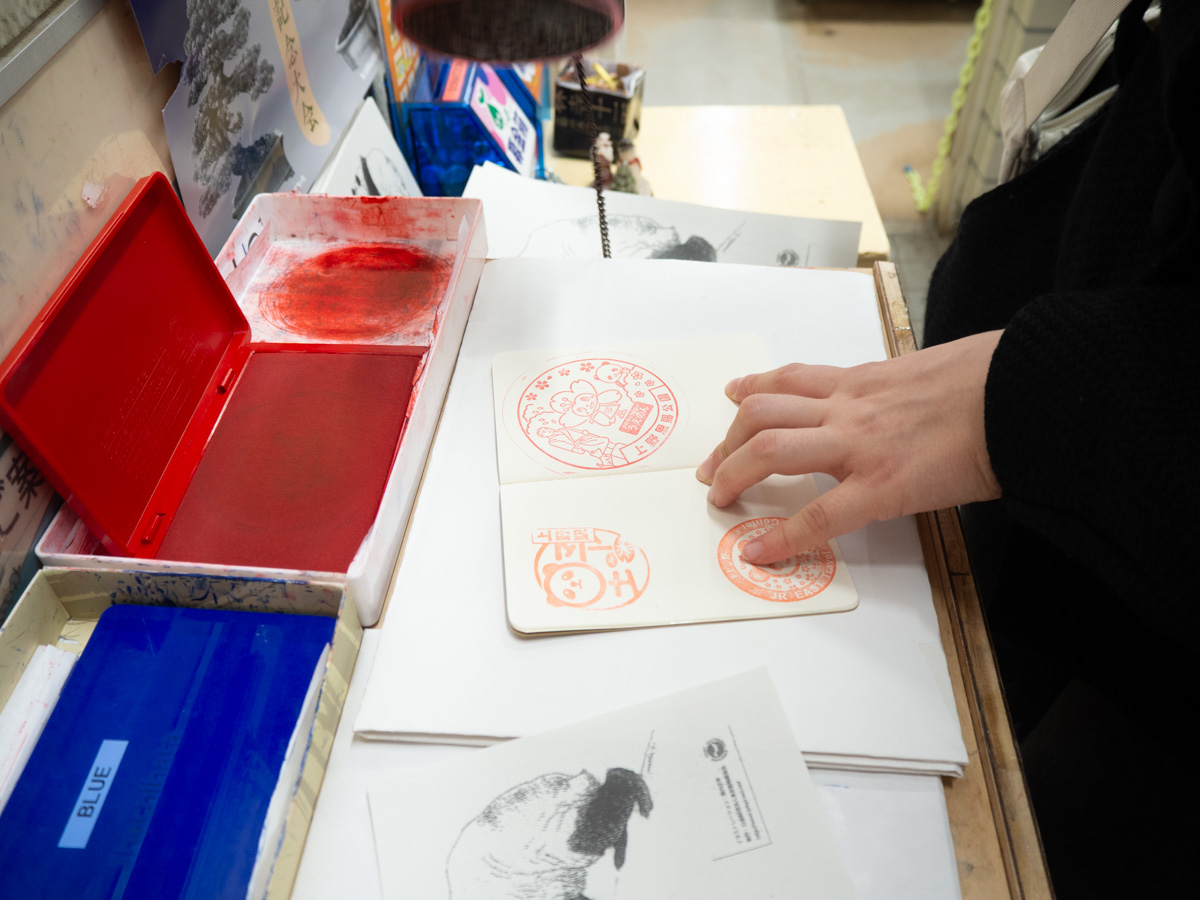
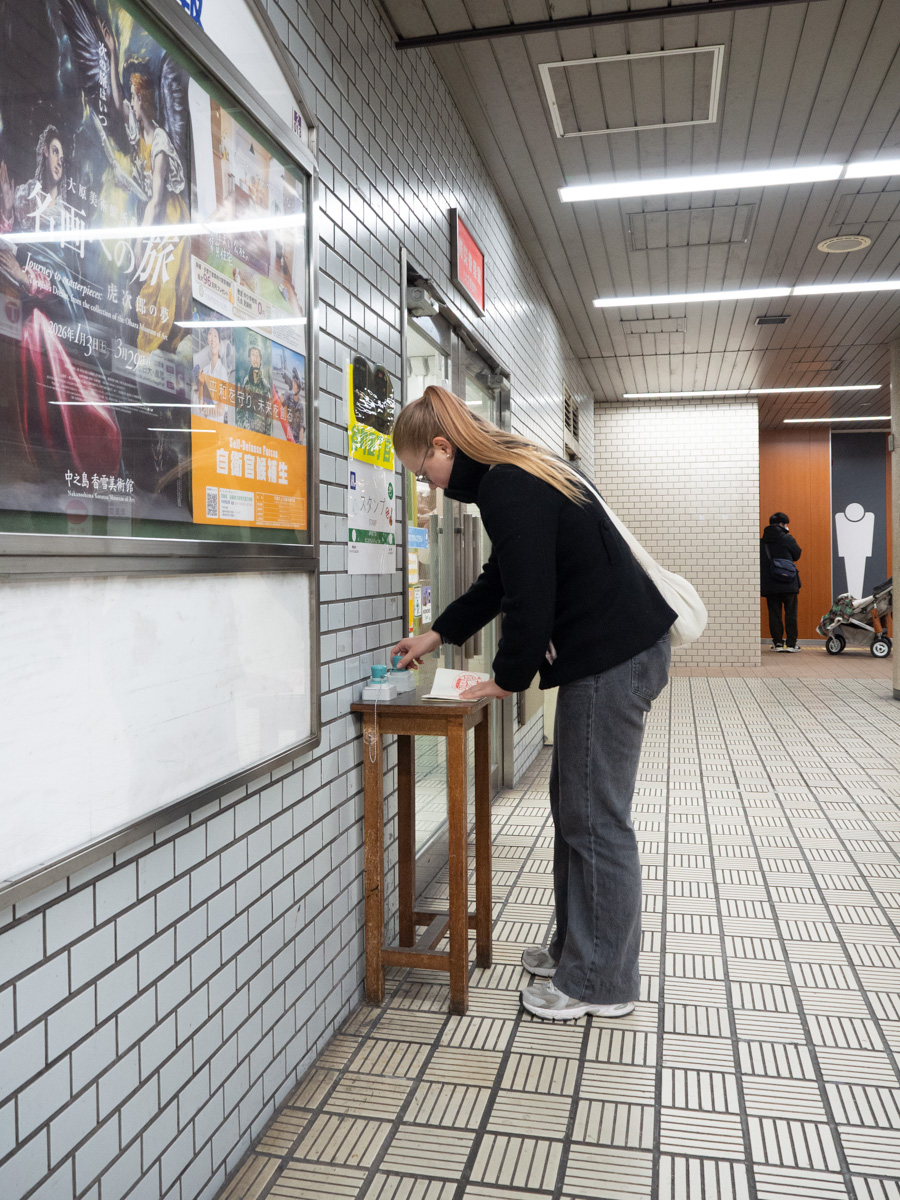
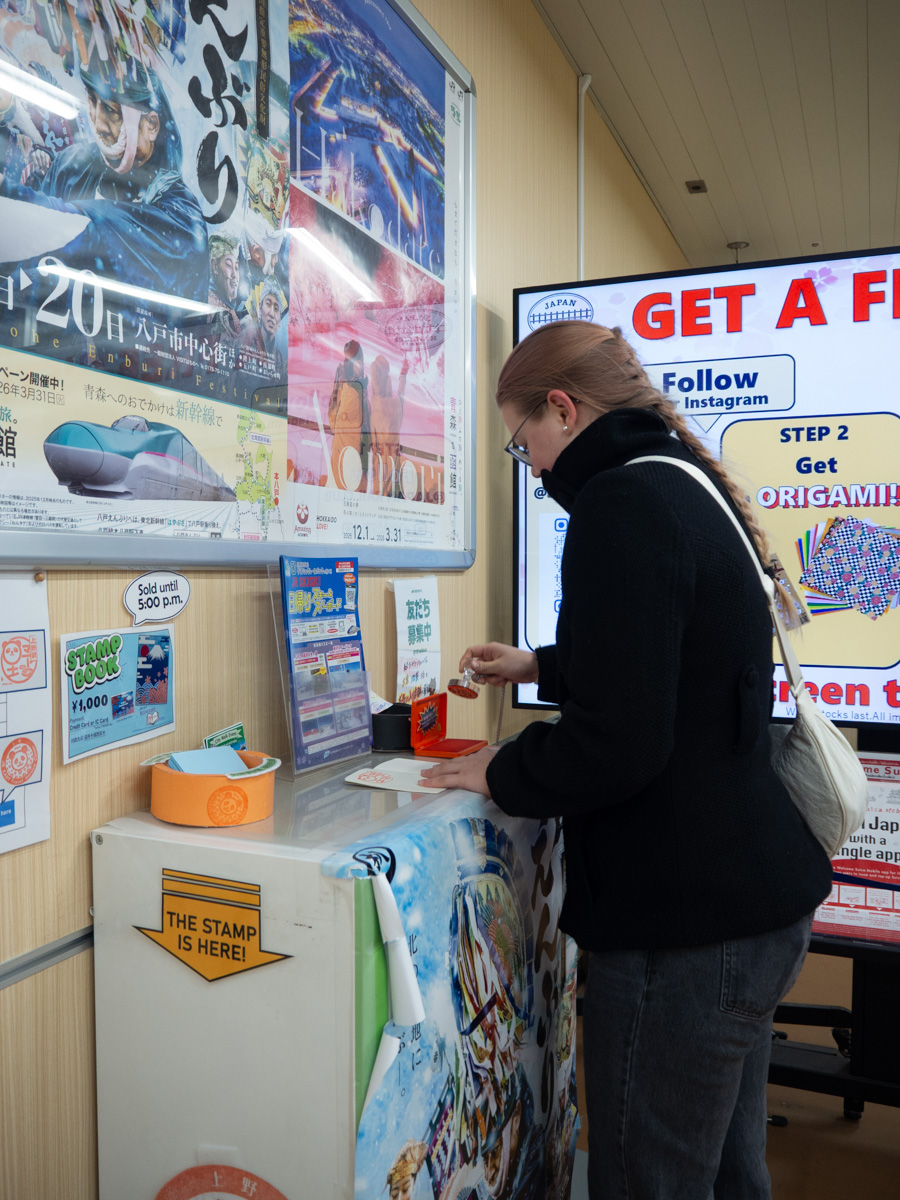
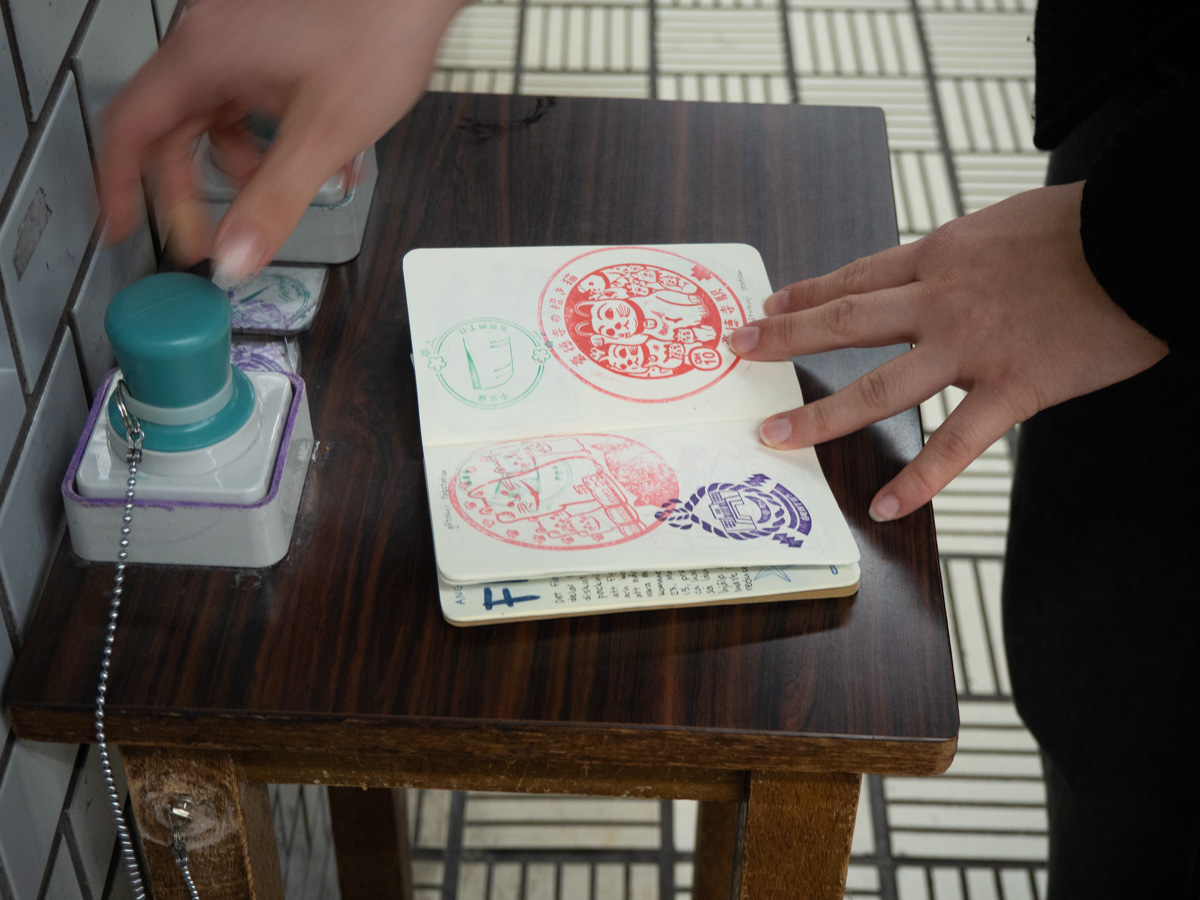
A side hobby during most of our Japan trip was that of collecting Eki stamps.

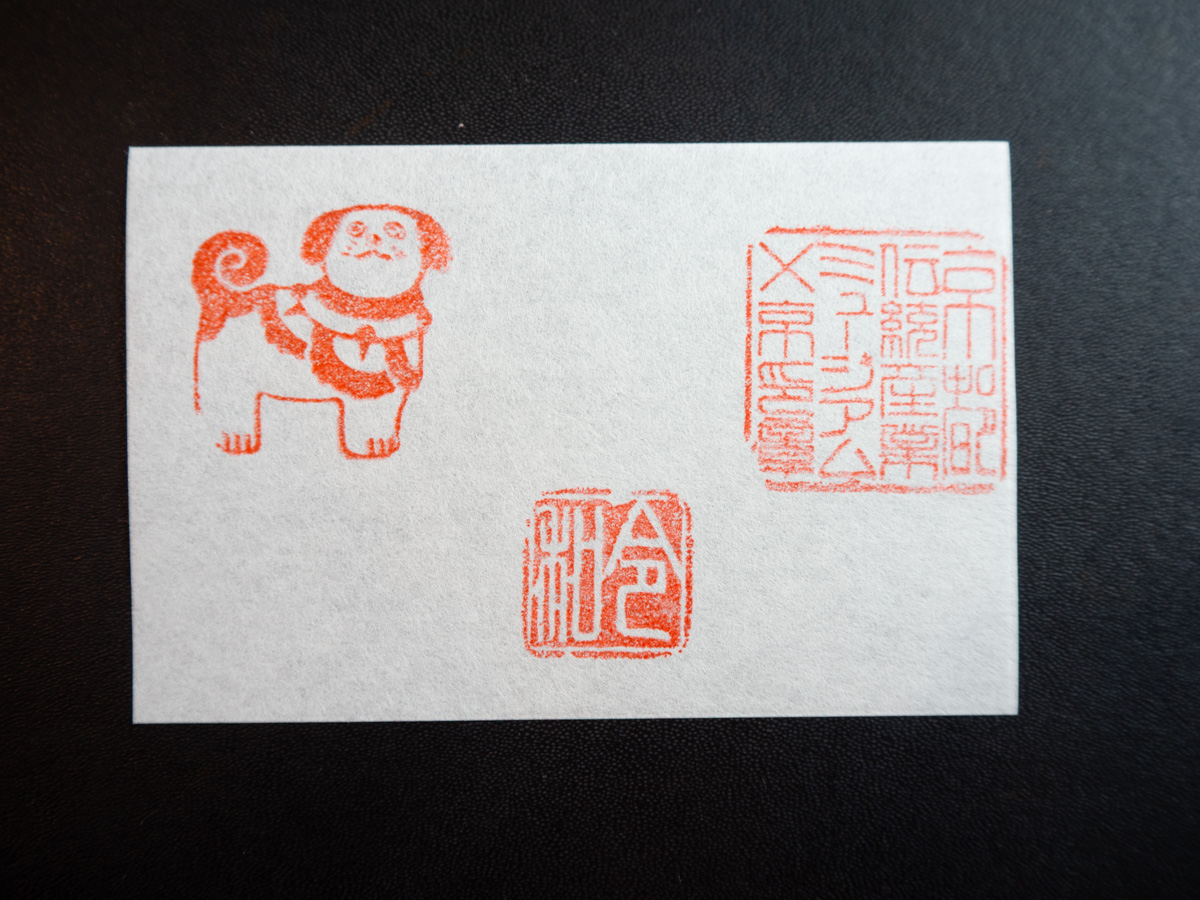
The concept was introduced by railway stations (almost a hundred years ago) but has over time spread to subway stations, as well as other noteworthy places – parks, museums, some shops, temples, etc. Station stamp tended to be animal-themed, while the stamp of a castle might just depict that castle.

The stamps could be hard to find. Ingrid had found an app to help find them, but it was not very trustworthy. At most it could confirm whether a particular place had a stamp or not. Facebook comments were more helpful in figuring out where, exactly, to search for it. Sometimes there was a little table for the stamp, just in a random corridor; other times it was tucked away in the ticket office

Not only was there a learning curve for finding the stamps – it also took some practice to figure out the right technique to get a good impression, with strong, even ink coverage.

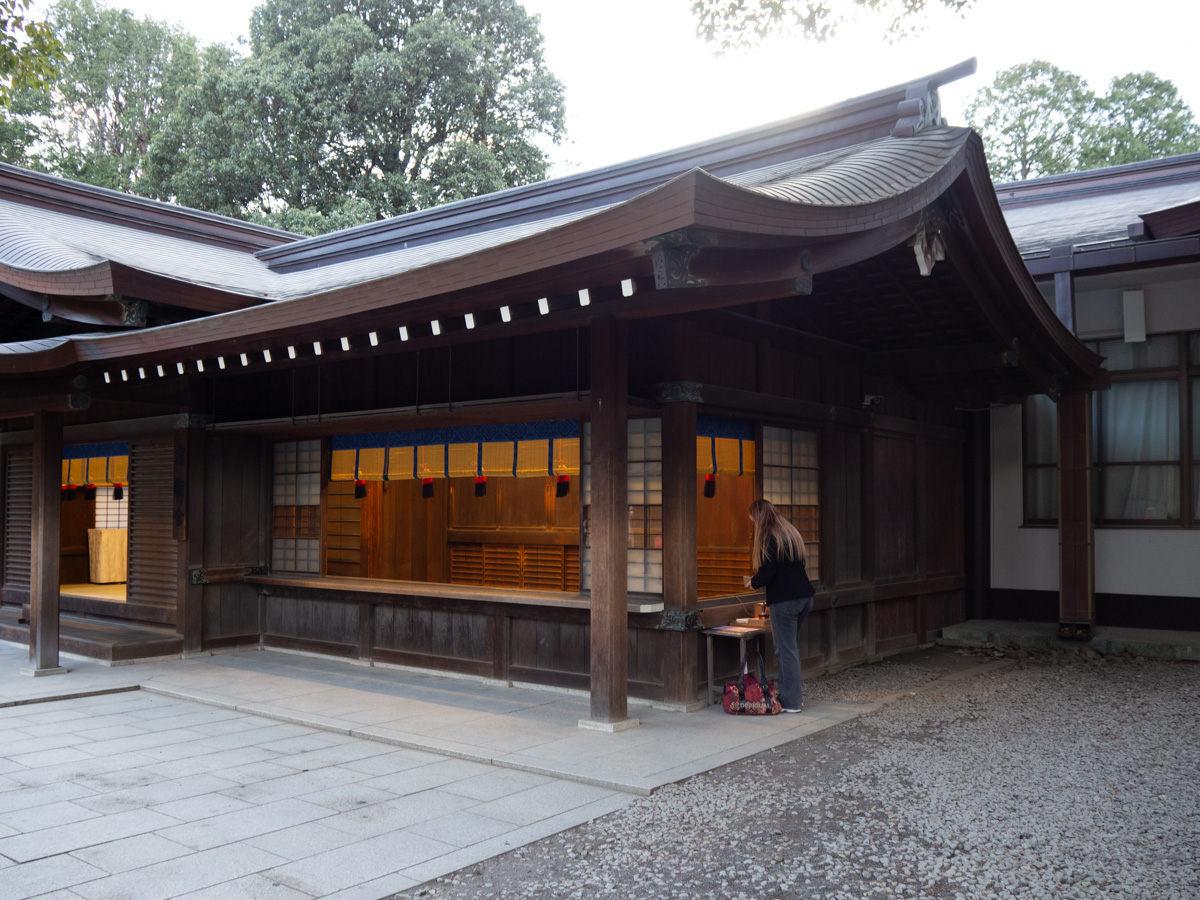
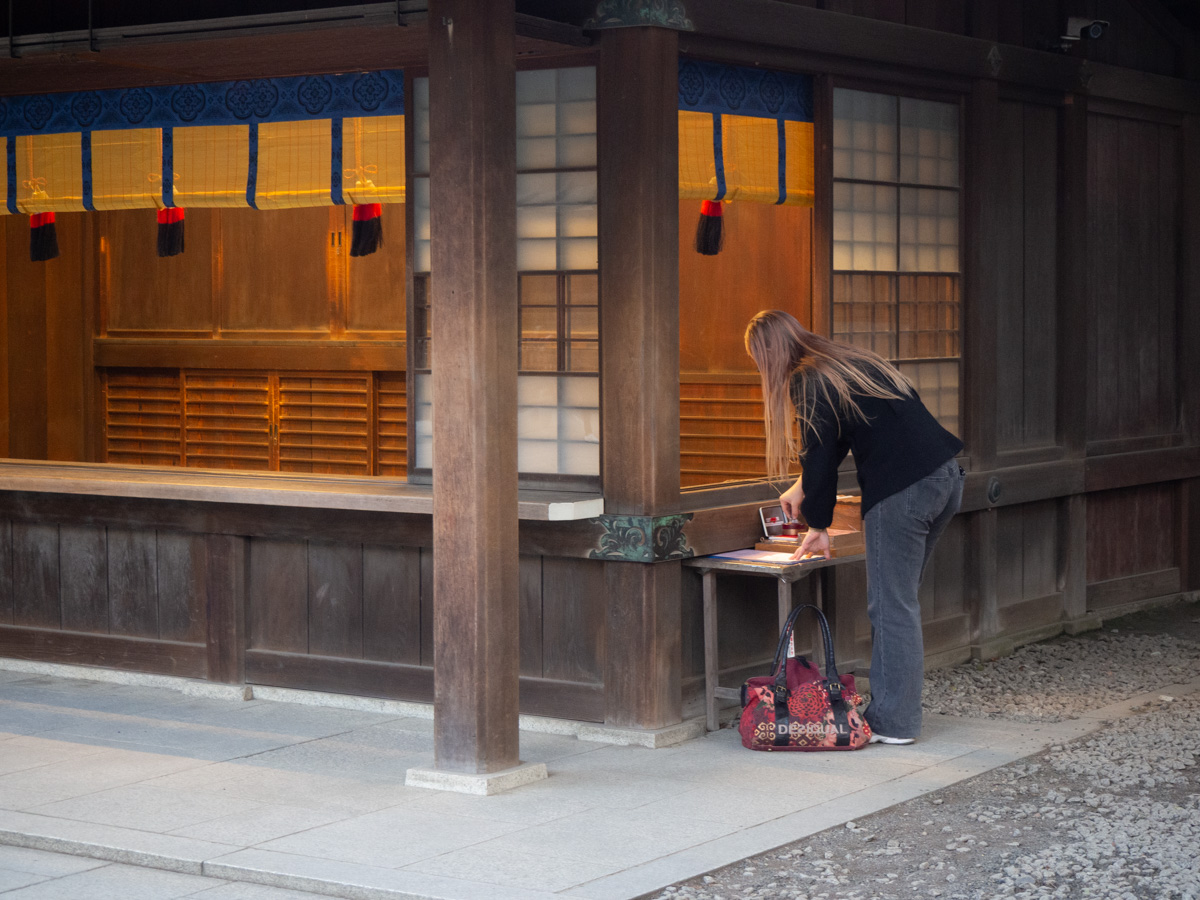
As you see, it wasn’t just modern places that had stamps for visitors. I think this was at Meiji Jingu?


It’s considered enough of a tradition that the Museum of Crafts and Design in Kyoto had stamp-making as part of their exhibit.

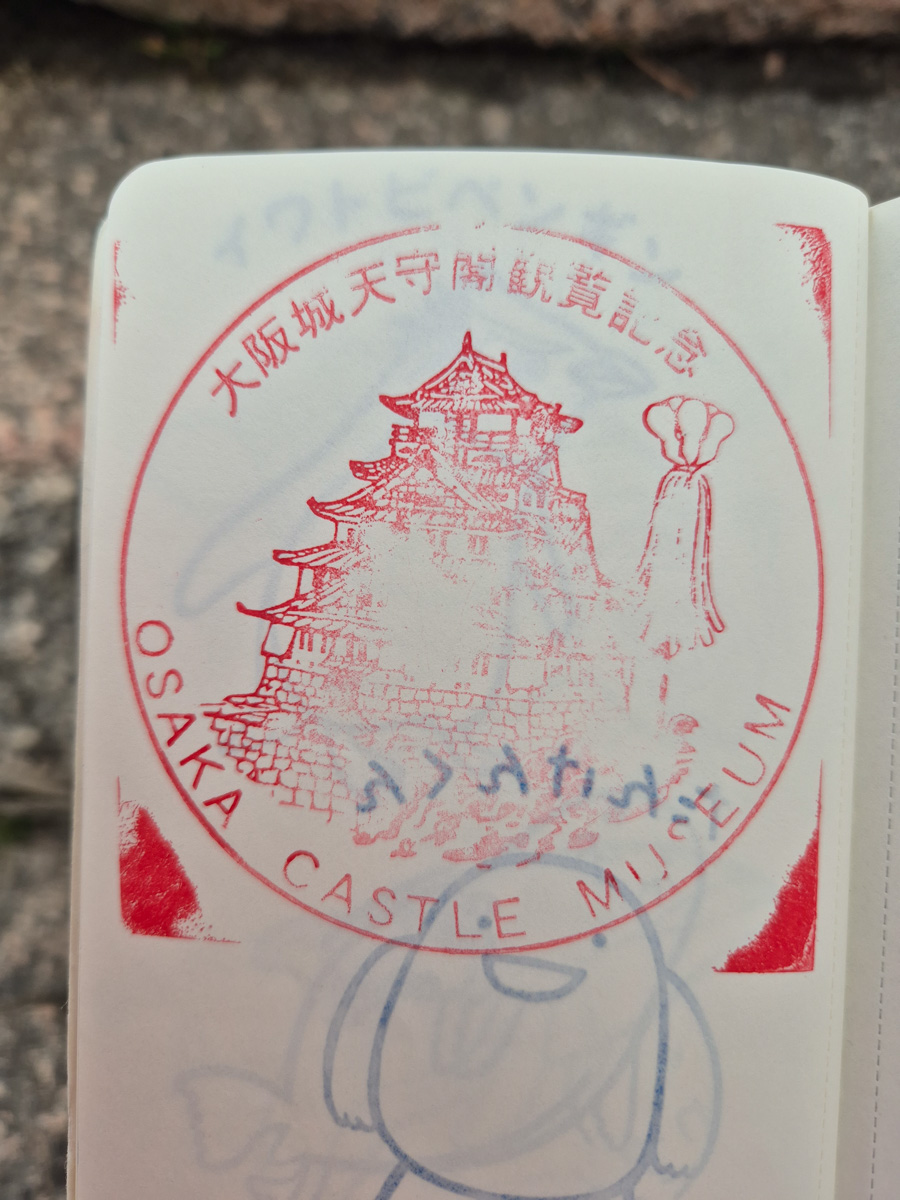
When I visited Osaka castle, Ingrid was unwell and couldn’t come with me, so I brought her stamp book and got her a stamp from the castle. My lack of practice shows in how unevenly the ink was applied.