I grew up in an apartment and I lived in apartments all the way until we moved here to Spånga, 6 years ago. Although I did spend all the summers of my childhood at my grandmother’s sommer cottage in the country.

I knew that a house would bring all sorts of new responsibilities. All sorts of renovation projects, shovelling snow and raking leaves – no big surprises there.

One thing I wasn’t quite prepared for was the amount of death, or perhaps the closeness of it.

In an apartment one may find dead house plants, and flies and spiders, and probably nothing higher up the evolutionary tree.

Here, we have had birds kill themselves by flying into our windows. We’ve had strong circumstantial evidence (of the olfactory kind) of a dead rat/mouse and then another poisoned rat under the house. And in the past two weeks we’ve found two dead young birds in the garden.

Ingrid found the first one. She didn’t want us to just throw it in the garbage so we buried it, and planted a primrose on it grave. When we found the second one I gave it a less ceremonial burial. Now I’m thinking I should maybe mark its grave somehow after all, because otherwise I might get an unpleasant surprise if I ever try to plant something there.

I wonder how long it takes for a dead bird to be reduced to its skeleton under the ground.

I found dead birds surprisingly hard to identify. They do not look like they normally do at all. Posture is a big part of birdness. However based on their size and colouring, I guess they might have been young blackbirds – probably taken by cats.

May

Every April, when the the garden starts flowering – with all the crocuses and scillas and hyacinths and later on the corydalis – I am convinced that April is the best and most beautiful month of them all.

And then May comes, and I am in love with the world, and April can go and hide itself under a rock.

Everything turns green. The streets in our part of Spånga, that throughout winter and early spring were just streets, now seem to consist mostly of trees and bushes. The hedgerows swell out into the streets, bushes hang over fences, and trees tower over them all. Truly you can stand in our street and look along it, and not see a single house.

And things flower, and smell. Cherry trees and apple trees, hackberry and spiraea and lilac… No showy or dramatic blossoms competing for attention, just masses of white and pale pink and lilac, all in harmony with each other.

I still remember the first time I saw our street. It was about a year before we actually moved here. We came here for the wedding of our friends who live here. We stepped off the bus, walked 50 meters to the corner and turned, and this street opened ahead of us. It was like a dream, like stepping into a place of magic: lush, welcoming, vibrantly alive.

It was because of that moment that we really moved here. Every spring I relive that feeling and I am so grateful and happy that we found this place.

The slope of weeds is slowly progressing. Here it is in all its current glory:

You can clearly see the old soil, the new soil, and the soil still to be shovelled in place.

Also you can see some stones. That big one in the foreground is the largest stone that came out of that slope. It is so heavy that we pulled it out with the car. Now I’m not sure what to do with it. It is kind of decorative, and I like it because it now has a history. So I’m thinking it might be nice to have that stone in some sunny spot in the garden. But it is effectively impossible to move without a crane, and I’m not exactly going to rent a crane just to lift this stone into a pretty place.

The stones bordering the staircase is what I worked on this weekend. I had already stacked a layer of stones there last summer, to separate the soil from the stairs. Those stones also all came out of the slope as I was digging there. Now as I started putting the new soil in place, I realised I needed to raise the border if I wanted the slope to have a reasonable angle. So I added another layer.

It’s only twelve or fifteen stones but it took me hours and hours to assemble. I want the wall to be stable enough for the kids to step on it. It should neither fall apart nor hurt any kids. That means stacking the stones so their weight rests on other stones (not loose soil, or the edge of the stairs) and finding the right stones so they fit well together, without wobbling or slipping.

After a while I realised that the heaviest stones gave the most stable result, so I ended up working with stones I could just barely carry. It was like doing a jigsaw puzzle with huge stone pieces and no one right answer, and half the pieces didn’t fit anywhere. I still have a pile of stones left over.

I was knackered by the evening but I did get it done (and didn’t break any of my fingers) and the end result feels really good and solid!

The gardening season is here. Or rather, the shovelling season is here.

Last year we dug out the infamous “slope of weeds”, removed the top layer of soil (and thereby also most of the weeds) and lots of stones and boulders. Finally we built a retaining wall.

This year I’m filling it up with fresh soil. I ordered two cubic metres of gardening soil and now spend my evenings shovelling it in place. It sounded like a lot but shovelling soft, loose soil with no stones is immeasurably easier than digging out rocky clay soil. After three evenings I’m about halfway through already. Soon it will be planting time!

In between I shovel cow manure. There are many metres of hedges and numerous bushes that need fertilizer. I’ve spread out 700 litres already and still have a way to go before I’m all done.

Ingrid and Adrian have been keeping me company and doing some shovelling of their own, but mostly they enjoy stomping around in the soft fresh earth on the slope. Adrian is intrigued by this idea of feeding bushes and flowers, and helps me with his little shovel. The fact that we use cow poop makes it extra fun for him.

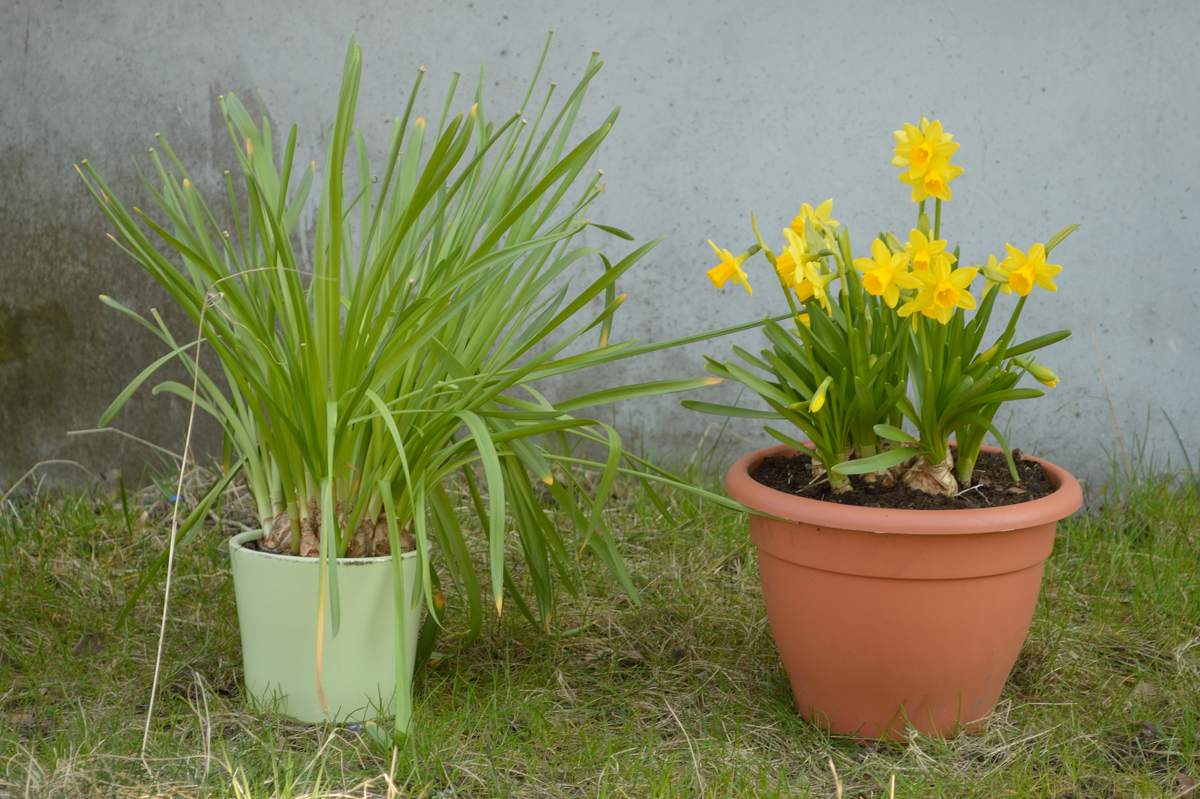
Roughly three weeks ago I bought some daffodils. I bought two pots and put one outside, just next to the entrance, and the other in the south-facing kitchen window.

Look what’s become of them in these weeks. It’s hard to believe that these two looked identical to begin with.

The ones in the kitchen flowered fast, and then they were done. A few days ago I tidied away the last withered flowers, and that seems to be it. The plants threw all their energy into growing leaves instead. I now have a scraggly green bush.

The daffodils that stood outdoors got wind and shade and a good dose of snow. And yet they are all still flowering, and there are still new buds coming up. The leaves are about a third as tall compared to the other pot, but much thicker and fleshier. The whole plant just looks stronger and sturdier.

Last spring we put up a nesting box for birds in the cherry tree outside the kitchen. A pair of blue tits promptly moved in and nested there.

This year both blue tits and great tits have been interested in the box, flying around, inspecting, trying to crowd out the others. It seems the great tits won – the blue tits haven’t been around for a week or so.

Today Ingrid found a broken egg on the ground, about the size of the tip of my finger. Unfortunately it very much looks broken rather than hatched. I wonder what happened to it, and I hope the parents have better luck with the other eggs (which I hope are still there in the box).

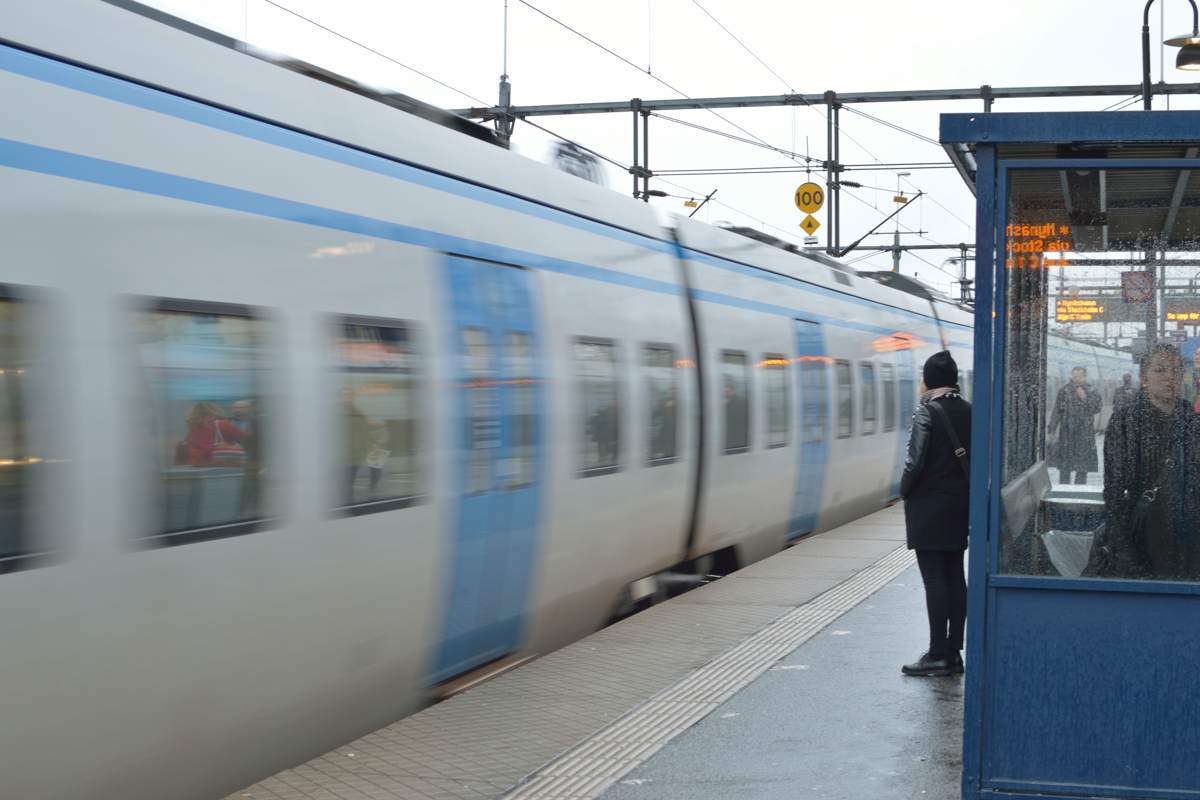
Week three of the photography course focused on shutter speed.


During week four we worked on white balance, both outdoors with natural light and indoors with artificial light. This was quite interesting.

Most of the “living” rooms in our house are lit by multiple small lamps with weak light bulbs – some few are 40W or equivalent, and many are in the 15-25W range. (Incandescent light bulbs are on the way out, but still we have a stash at home, because the alternatives were pretty unsatisfactory when the phase-out started. They’re better now but we still have incandescent bulbs in many of our lamps.)

If there is a ceiling lamp, we have a dimmer switch on it and usually keep the light quite dim, especially after the kids go to bed.

My mum always complains that it’s dark here. It is – but that’s because we like it that way! I don’t want my evenings to feel like daytime. I want a quiet, warm nest.

It turns out that the dimmer the light bulb, the warmer its light. So our indoor lighting is off-the-charts warm. Normal household light bulbs are around 2800-3000K according to most sources. Not ours! My photo editing software can go down to 2400 on the Kelvin scale, and that was still not low enough.

This week I take a break, and next week I start the next course, on composition.

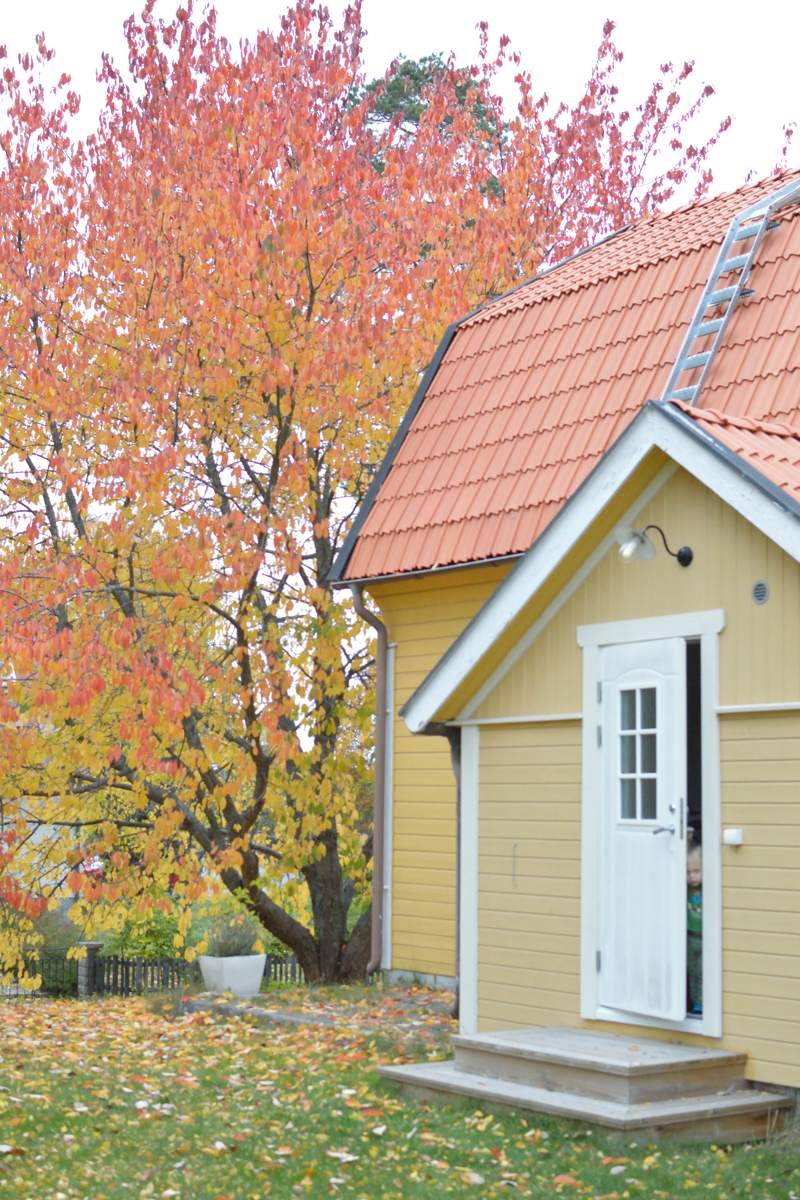
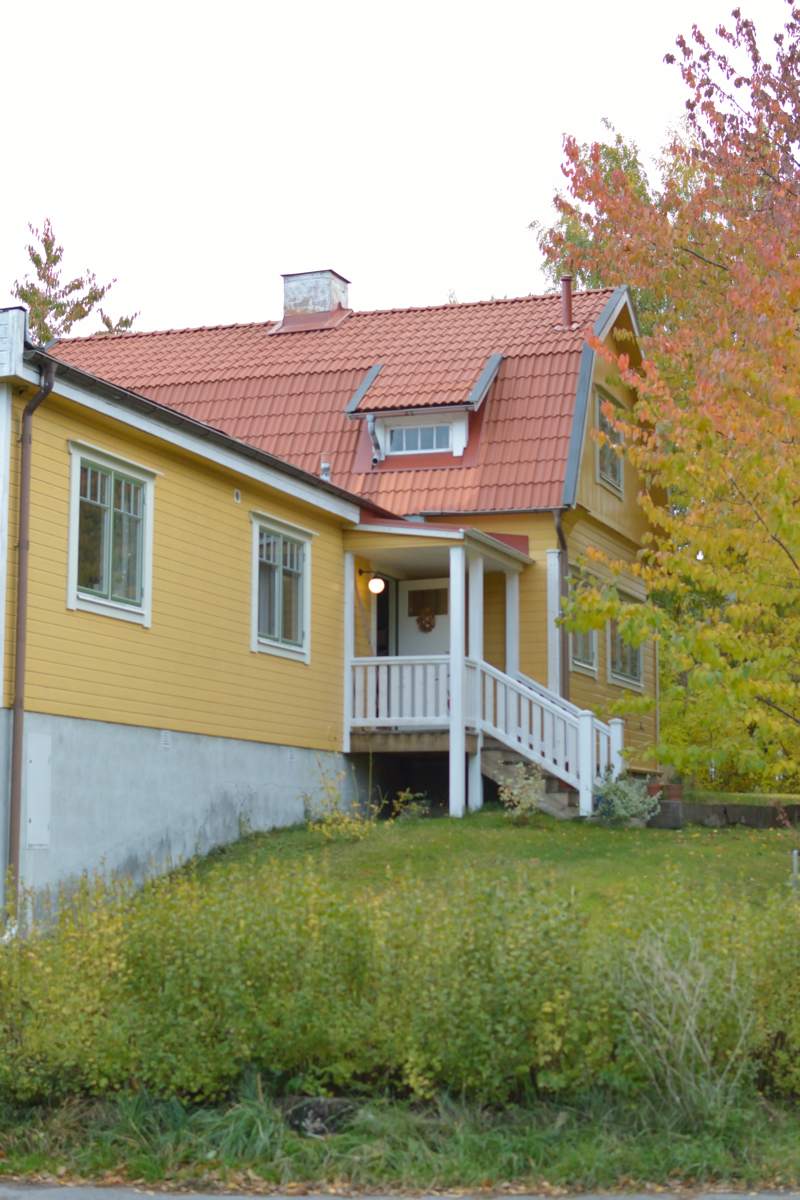
I am drawn to autumn colours. When I buy clothes, I gravitate towards orange, brown, warm red, moss green, yellow. Our home is decorated in similar colours. Now the outside of the house is also in tune with this.

The cherry trees that dominate our garden are in their most wondrous autumn colours right now. Just like their spring bloom, the autumn colours last maybe a week at most. By this weekend most of the leaves will be gone.

The house and the trees match each other perfectly, as if they were made to be next to each other. The cherry tree, just like the house, is red at the top where it gets the most sun, and yellow towards the north where it’s mostly in the shade. The fiery red and the bright yellow leaves in the photo below are all on the same tree, just on different sides.

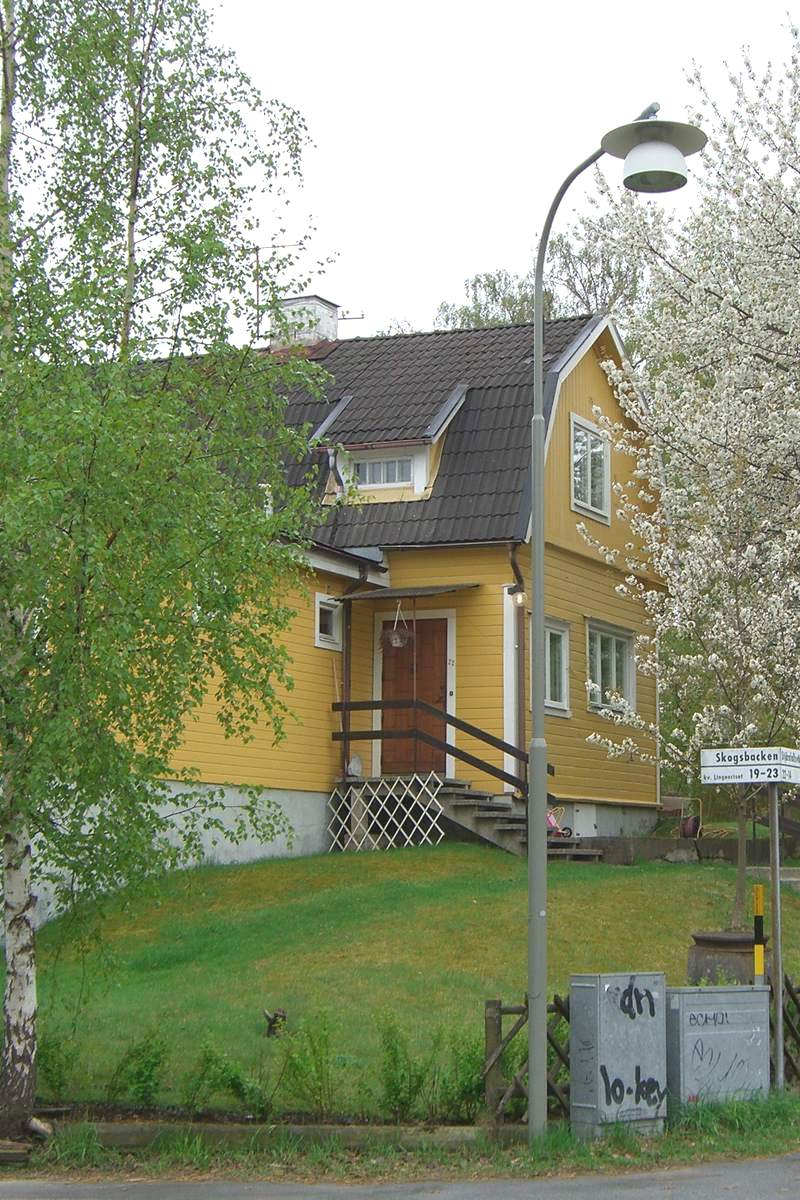
2009

2013

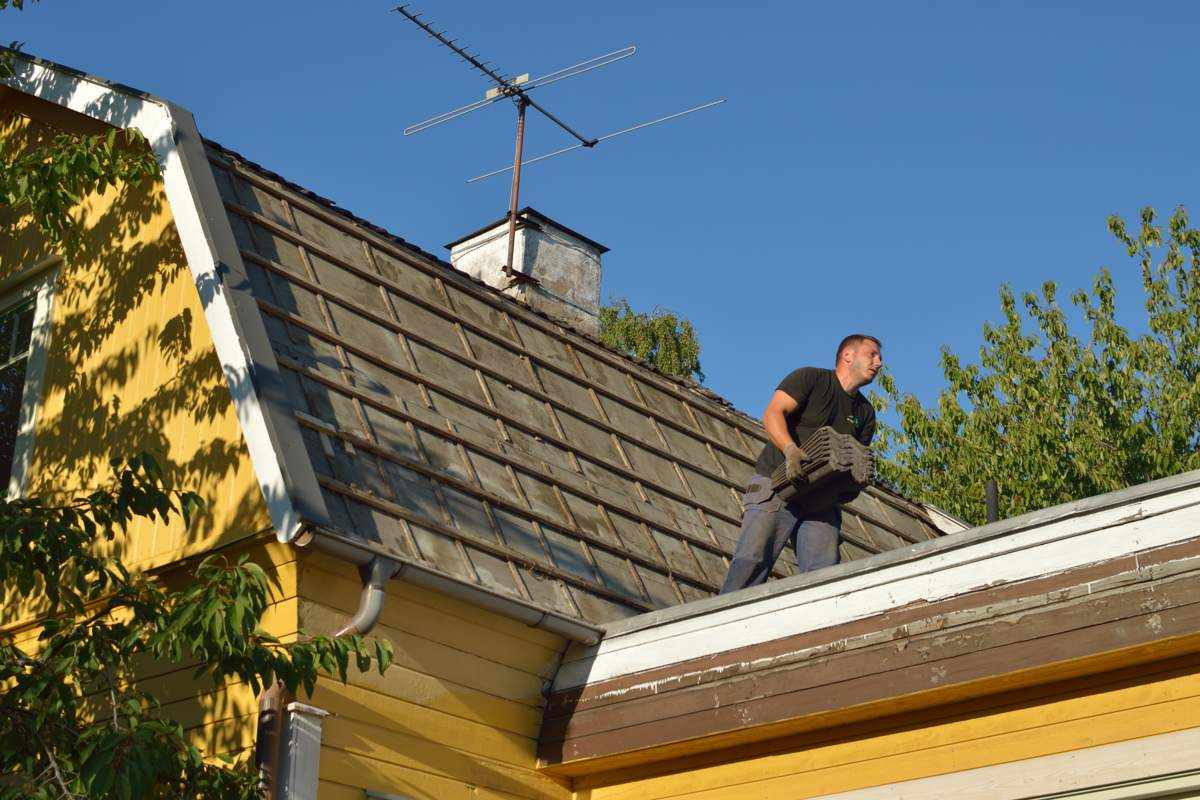
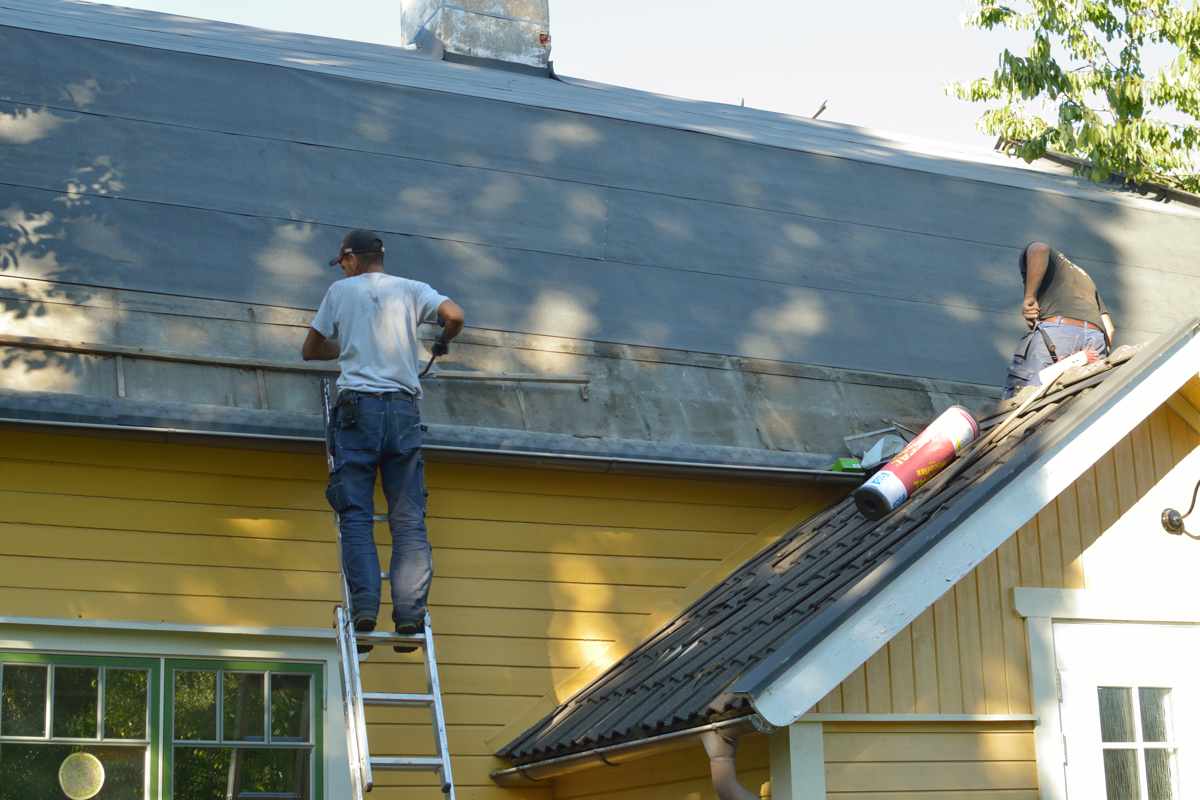
This year’s renovation project is the roof. Out go the concrete tiles, to be replaced with clay tiles, continuing on the path of giving the house back more of its original character.

The roofers arrived at around 7 in the morning and worked until around 7 in the evening. They’ve already removed all the old tiles from the main roof (but not yet the laundry room roof) as well as most of the battens, and laid new roofing felt on half of it. For the night, the roof got snugly wrapped in a huge green tarp.

Morning:

Evening: