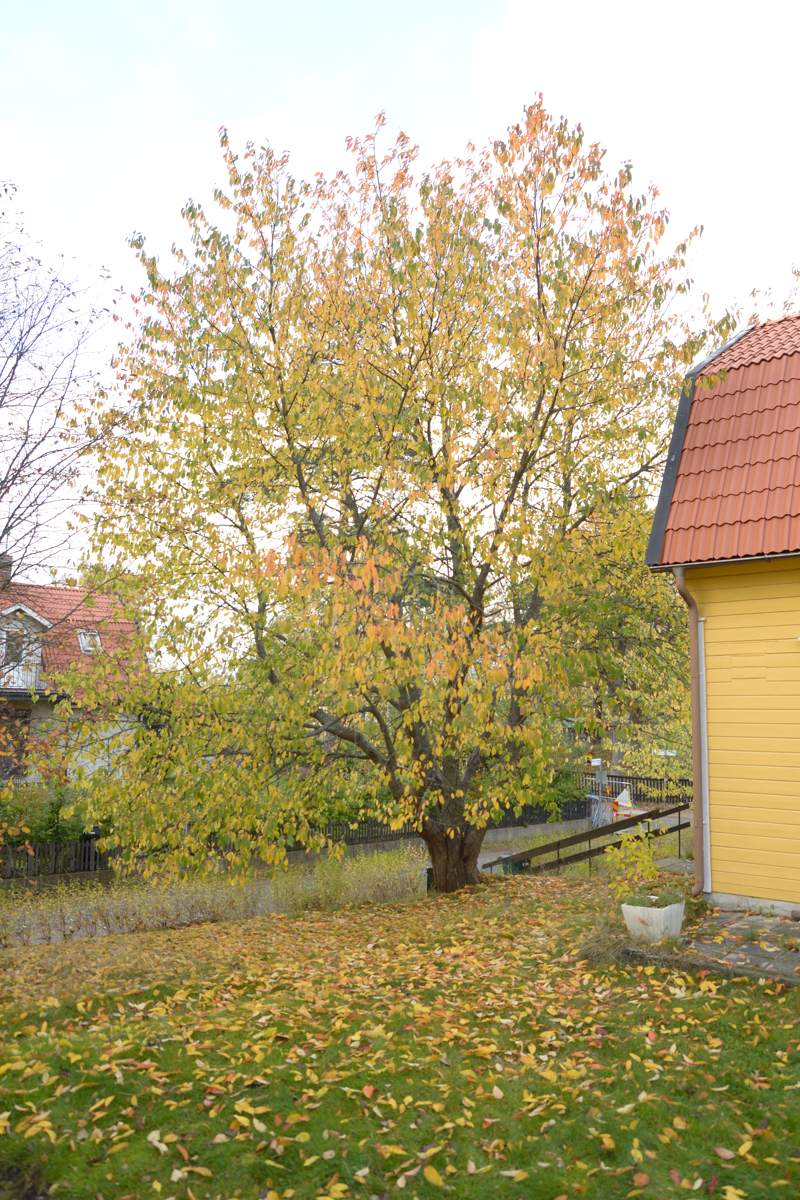
Cherry tree in autumn colours.
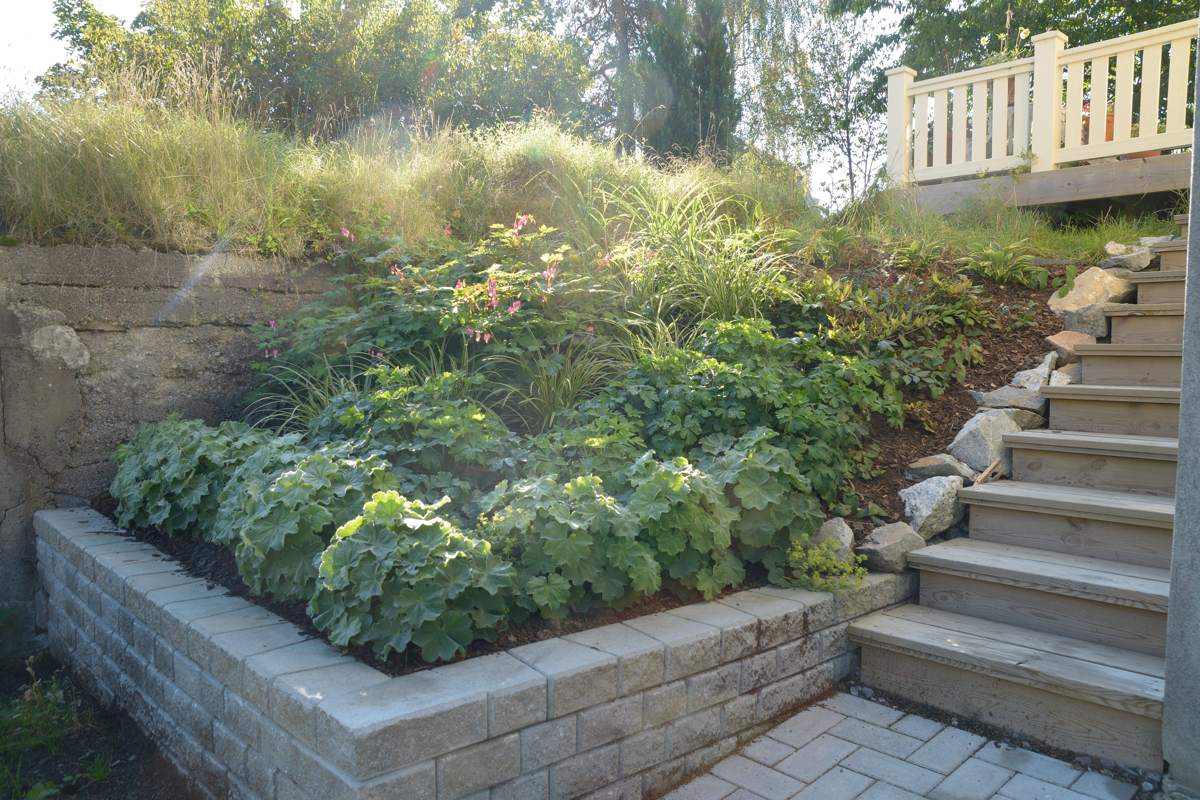
The planting I worked on this summer turned out a great success, better than I had hoped. All the plants rooted themselves well and grew lush and big; several of them bloomed. The one exception was the Epimedium which look as small and weak as they did when I planted them. (That’s why the edge nearest the stairs looks so bare.)
The tomatoes I’ve already written about; despite the unpruned tangle they grew into, they’ve borne masses of lovely sweet, juicy fruit.
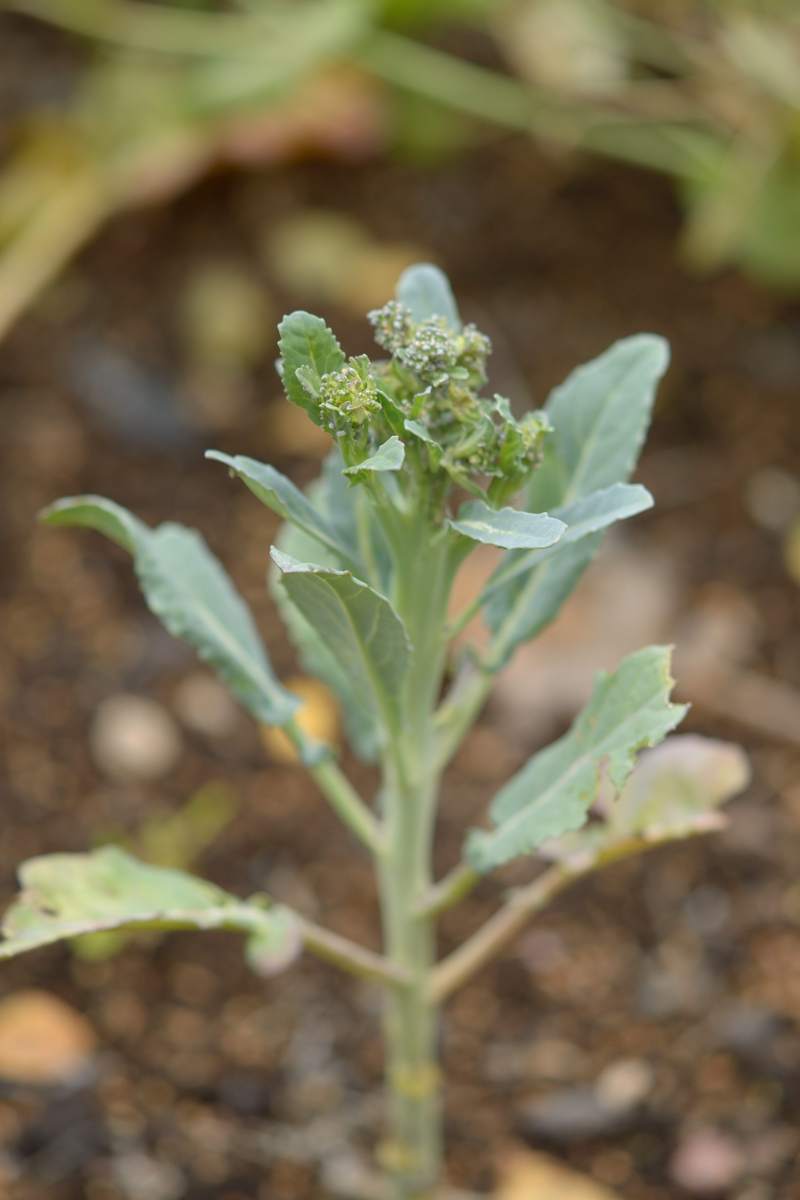
The broccoli on the other hand have been a total and utter failure. Apparently broccoli needs more than just soil, sun and water. This is the result:
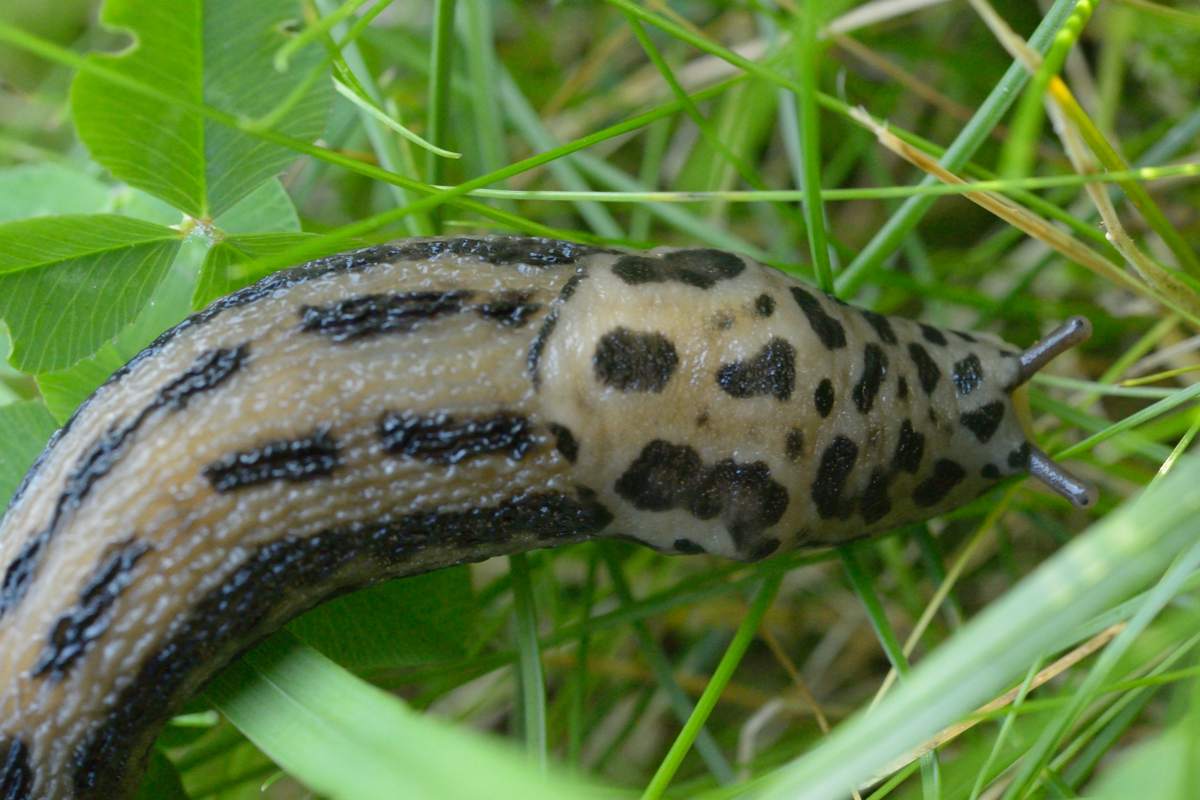
A non-murderous leopard slug.
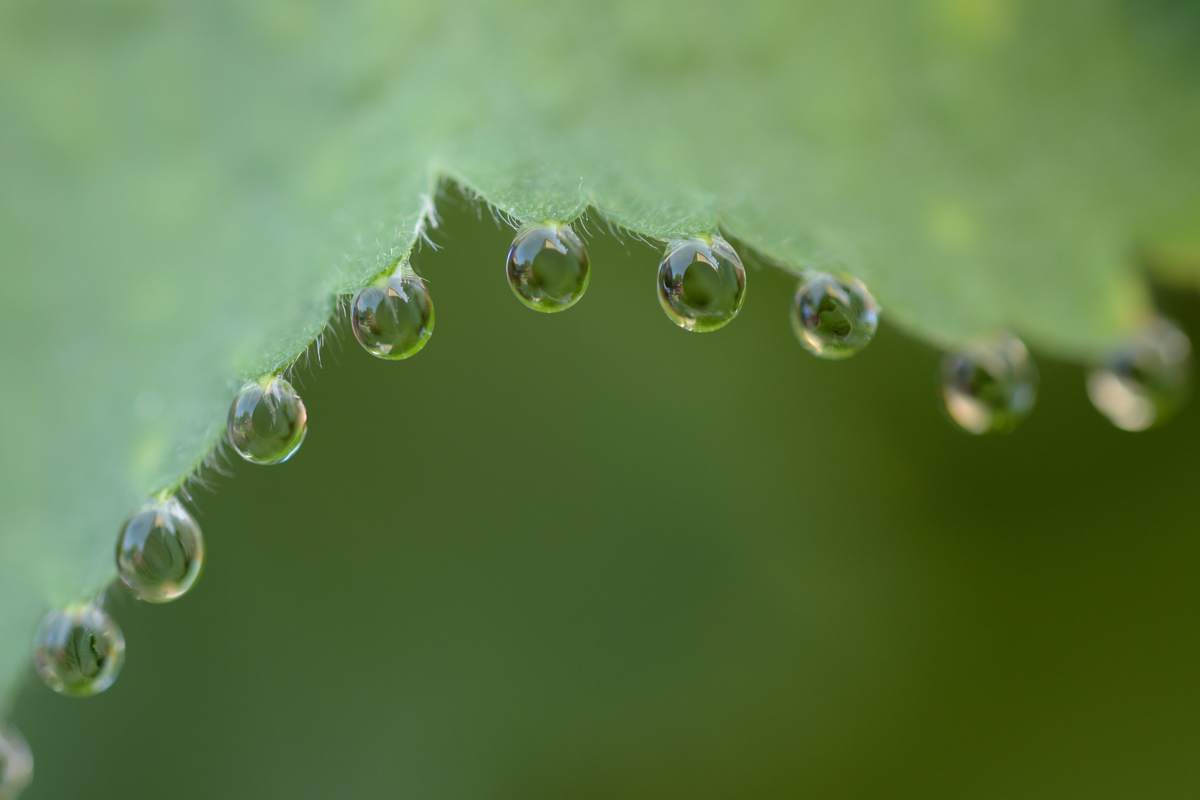
Alchemilla mollis, Lady’s mantle, is called “dew mantle” in Swedish.
I’ve started to notice the wrinkles around my eyes recently. My mental image of myself has been stuck at about 25 years of age for a long time, but I’m beginning to realize I am not 25 any longer. More like 40, really…

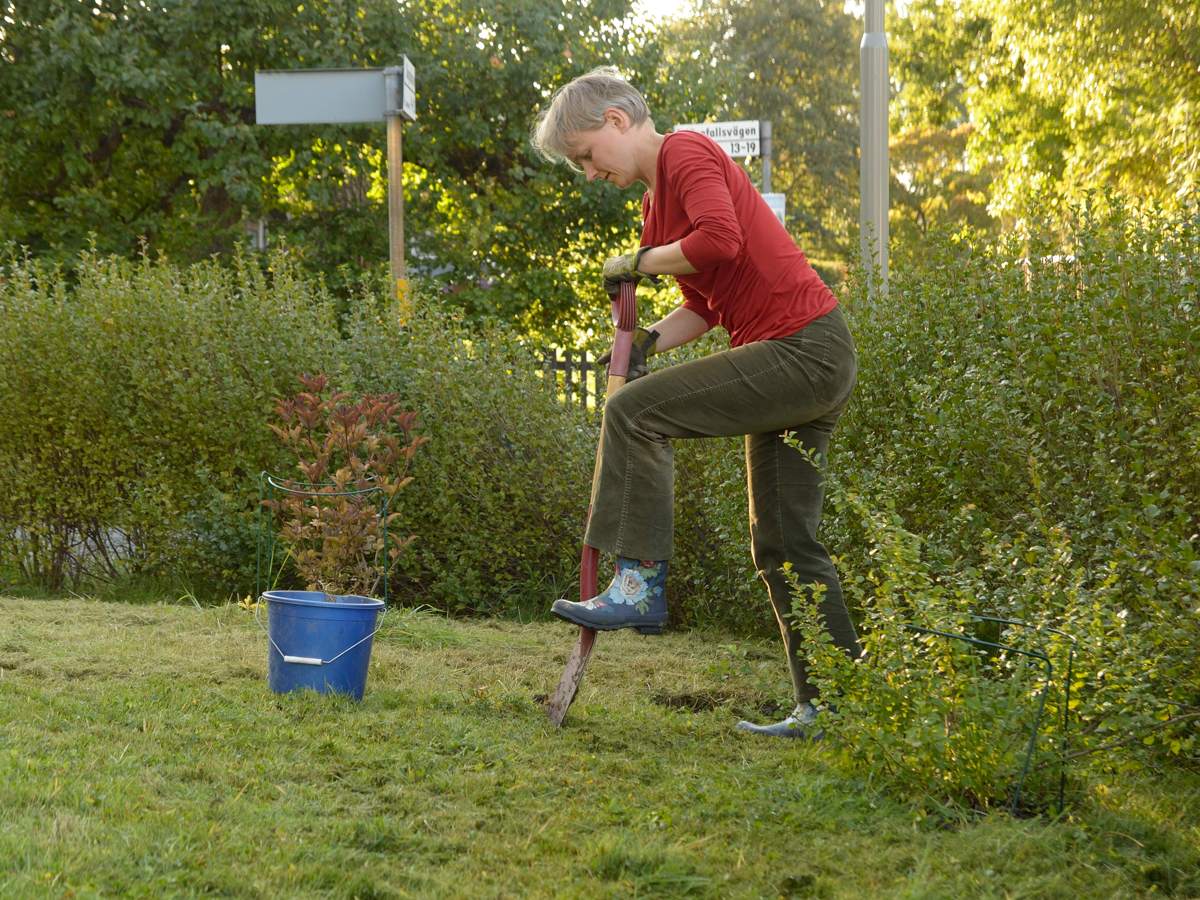
An alternative self-portrait in a more documentary style: out in the garden, digging to make place for yet more bushes.

We had an awesome storm a month ago (on my birthday in fact) with rain sheeting down, thunder and lightning, winds strong enough to break trees etc. In our garden it didn’t do anything worse than knock over some of my tomato plants so a few branches broke off.
I saved one branch and put it in a vase: it had a bunch of small green tomatoes and looked rather pretty. It survived way better than I expected. Not only is it still alive, it has put out roots and the tomatoes on it are actually ripening.
I wonder if they’re only ripening or if the smaller ones might be growing, too. I didn’t think to take a “before” photo so now I have nothing to compare to.

We have deer who visit the garden. We have had rats (and from the amount of interest shown by a neighbourhood cat, I suspect they are still here). Now we also have killer slugs.
Just a few years ago, killer slugs only existed in books and gardening magazines. I had never seen one in real life. I’d seen some small slugs as a kid, but nothing since then.
Last summer I saw one or two shockingly large slugs in our garden. “Oh look, a slug – I wonder if it’s one of those Spanish killer slugs?” and that was that.
And this year they have arrived en masse. I probably missed one last year, so it found itself a nice nest and laid some eggs, and now its babies hatched and started colonising our garden. I have picked several dozens already.
They crawl around on my flowers. One of the bastards ate most of a broccoli plant before I caught it. And they are pretty disgusting to step on with bare feet.
Now we’re at war. I go on daily slug-picking rounds, especially near our compost hole. And I have declared a bounty on them: the kids get 1 krona for spotting a slug and telling me, and another if they kill it as well.
The least unpleasant extermination method (for all parties involved) that I’ve come up with is freezing them. I have a slug jar (an empty can of coconut milk) in the freezer, covered with a plastic bag. Whenever I find one, it goes in the jar. When the jar starts filling up, I empty it in the compost hole.
Interesting slug fact of the day: the Gothenburg Museum of Natural History is so interested in slugs that they invite the public to send them slugs for identification. Apparently it is very hard to reliably distinguish them from the outside, you need to look at their anatomy for proper identification. I considered sending a few to them but really I don’t care what species they are. They are in my garden, they are too many, and they are eating my broccoli – I will kill them regardless of species.
Slug fact #2: they are tricky to photograph! They are not frightened by sound or movement. But as soon as anything touches them, even just a blade of grass that I want to move out of the way, they defensively pull themselves into a dense little lump, just a third of their stretched-out size, and then they stay that way. I haven’t yet had the patience to wait for them to re-emerge.
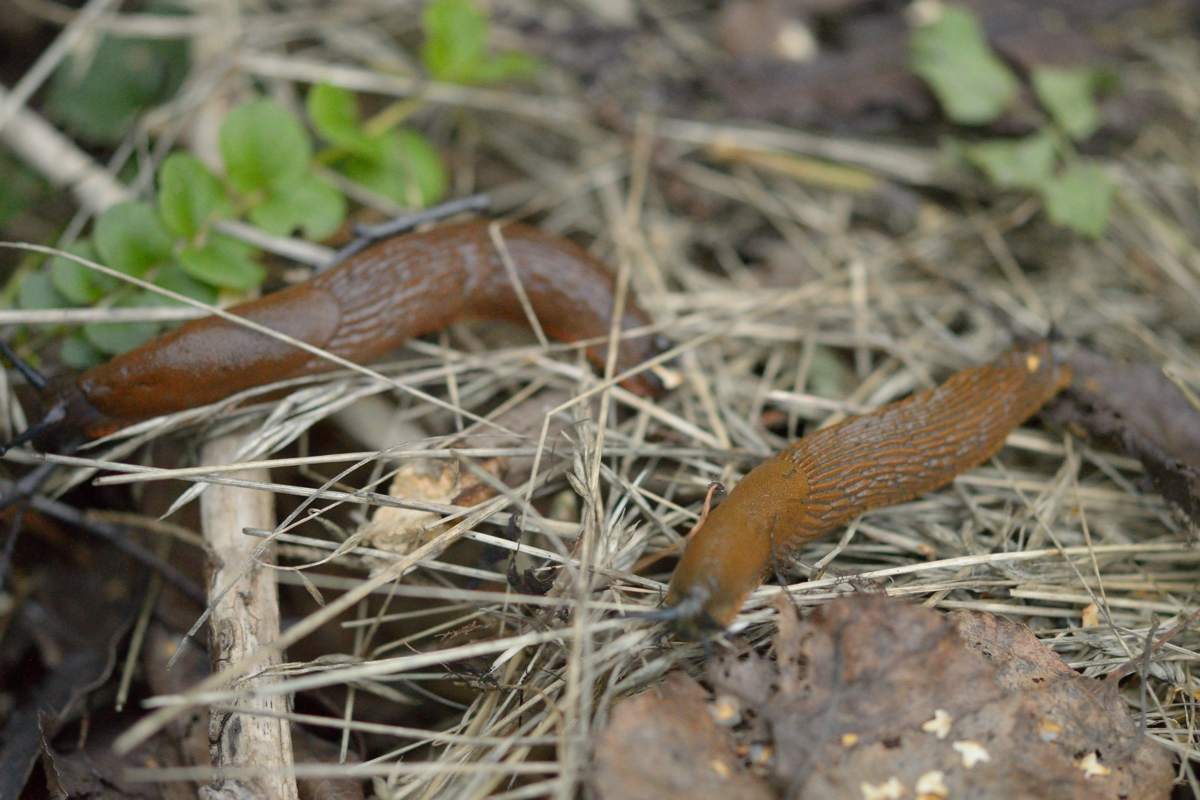
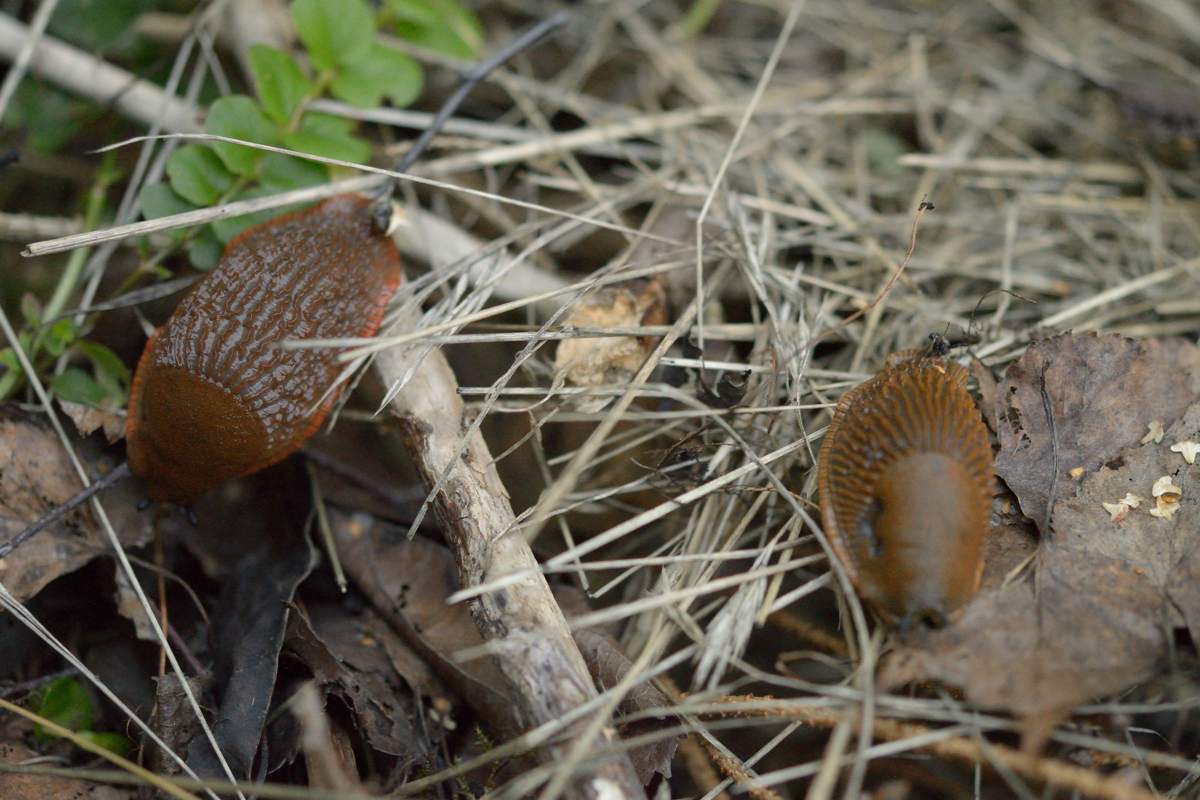
Same place, same scale, same two slugs. The smaller was about the size of my index finger in its relaxed state; the larger was longer than my middle finger.

I’m making a new attempt with tomatoes this year.
Learning from previous failures, this time I didn’t try growing them from seed. I bought seedlings early. I planted them directly in fertilizer mix rather than normal planting soil.
This year they have escaped the attention of deer and are actually growing very nicely, way better than any of the previous years.
Almost too well, in fact. They are now not only taller than me, but almost taller than I can reach. I built supports for them of bamboo poles when I planted them, but underestimated how tall they could get. Now the whole thing is an unstable tangle of sticks and string and vines.
In a storm about 10 days ago two of them actually fell over but I got them back upright with barely any broken branches.

What I learn from this iteration is that pruning is a good thing. I know, I know, any “Tomato growing for dummies” will tell you that… But I’ve only grown bush tomatoes before and no tall ones, so I wasn’t prepared for their wild growth.
Sneakily they did most of their growing while I was away in Estonia – I really got a surprise when I got back, and it was kind of late to start pruning then. Now the one bush tomato has lots of tomatoes but the four tall ones are really mostly lush green foliage. Well, there are fruit here and there but not nearly as much as on the bush tomato.
So next year I will build taller supports for the tomatoes, and prune them. Or maybe just stick to bush tomatoes.

Finally! The slope of weeds is now a slope of perennials.
Earlier this week I spent a couple of evenings distilling my ideas and plant lists into an actual planting plan. I’d been putting this off because it seemed hard. I don’t know much about individual plants. With many of the perennials that seemed most suitable based on my reading, I only had photos to go by – I had no picture in my head of what they actually look like or how large they grow.
I was hoping there would be a tool for this, some nice software package or web site where I enter the size of my planting area, place my plants and then see some rendering of what it might look like. But no – I found nothing of the sort.
So for the first draft I went back to my favourite low-tech tool: sticky notes. A small sticky note measures about 35 by 50 mm, which is not so far from the size of the average perennial, scaled down by 100. I drew our slope on paper, to scale, and then played around with sticky notes representing the various kinds of plants I had in mind. When I was roughly done I looked up each plant’s actual planting distance and drew a prettier and more durable version.

Today we went plant shopping, big time. And then we planted them and now it’s done! It will be very exciting to see whether this turns out anything like I imagine, and how well the plants will thrive.

Well… almost done. There were no Cimicifuga to be found at Ulriksdal, so we’ll have to find those elsewhere. We took all the Aquilegia they had (of the colour that I wanted) and a few of them were barely alive, so I might have to replace those as well.
The planting list, for the record:
Front border: Alchemilla mollis (jättedaggkåpa, pehme kortsleht).
Just behind the Alchemilla, barely visible: Aquilegia “Ruby port” (akleja, aed-kurekell).
Behind those, around the stones: Carex morrowii “Ice Dance” (japansk starr, jaapani tarn).
Behind the Carex: placeholders for the Cimicifuga (höstsilverax, lursslill)
Behind those, nearest the cellar wall: Lamprocapnos spectabilis (löjtnantshjärta, murtudsüda).
Border next to the stairs: Epimedium rubrum (röd sockblomma).
Between the Epimedium and the stones: Astilbe “Rock and Roll”.
Top edge: Hosta fortunei “Aureomarginata”(funkia).
Far corner: Hemerocallis “Frans Hals” (daglilja, päevaliilia).
Yesterday the Solhem homeowners’ association had an open gardens day. There will be a countrywide open gardens day in two weeks; this is a mini version of the same thing. Ingrid and I briefly visited four gardens in our neighbourhood while Adrian was attending a birthday party.
For some reason I didn’t bring a camera. Somehow this decision seemed to make sense at the time.
The gardens were of course all very different. But afterwards I thought about what they had in common that made them interesting. What does an interesting garden have?
- Water elements. One of them had a beautiful pond with a deep blue mosaic bottom. But even the tiniest pond and the smallest bird bath adds life. Which is an odd thing to say given that water is not alive and the most of rest of the garden is… So maybe it adds something else. Reflection?
- Level differences. Not one of the gardens was flat, and the flat parts were generally the least interesting ones, no matter how pretty the bushes and flowers.
- Rooms – places to discover. All of these gardens had parts that were hidden from view, not because they were on the other side of the house but because the garden had intentionally been divided into rooms.
- Architectural, large man-made structures. A beautifully designed trellis, a stone wall, a gate or an arch, a stone path…
- Decorations. Small sculptures, hanging decorations in trees, etc.
For some reason when I think about adding any large structure to our garden, like a trellis wall or even a stone path, I feel a resistance. The same with decorative elements like metal sculptures or glass details. It just feels wrong. But when I see them in place in others’ gardens, I invariably like them.
| « Older posts | Newer posts » |
