I’m on vacation starting this week, and vacation for me means gardening. I have a long list of projects I want to do at some point. Today I focused on rejuvenating our massive lilac hedge. I’m about halfway done, and expecting sore elbows and wrists tonight from all the sawing and cutting.

I’ve also started preparing another perennial bed. The slope previously known as the slope of weeds has been such a success that I must have more. So I’m creating a bed in front of the house (section 1) right along the side of the house.

Step one is to remove the turf. The soil, as in most of the garden, is heavy clay. It is unshovelable – you need to cut it instead. Each chunk of turf has to be cut loose on all four sides, and sometimes from underneath as well. My work therefore progresses in neat rows, each just a bit narrower than the spade (about 17-18 cm.)

When I plant bushes, I also measure the planting hole in terms of spades. A standard planting hole is nine square spades, i.e. a square hole with its sides measuring three spade-widths.
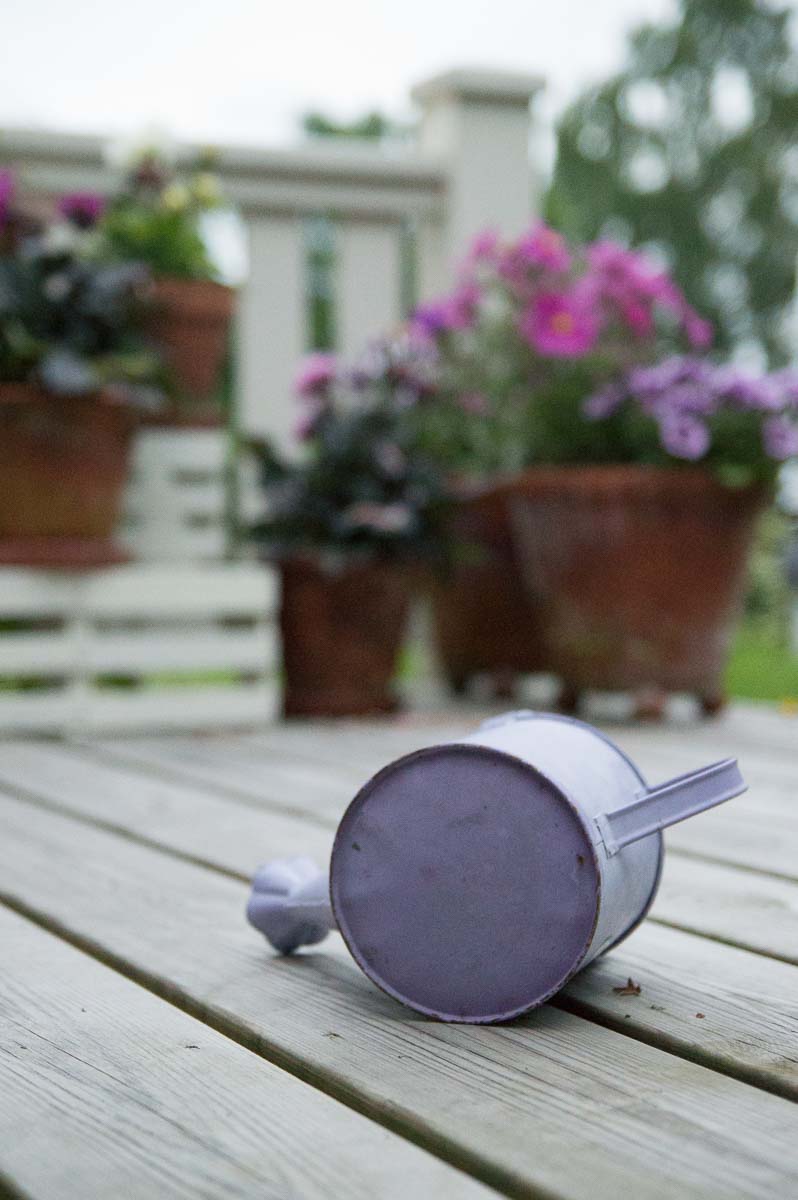
Not because we’ve been doing any watering. It’s been raining almost every day recently, or at least night.


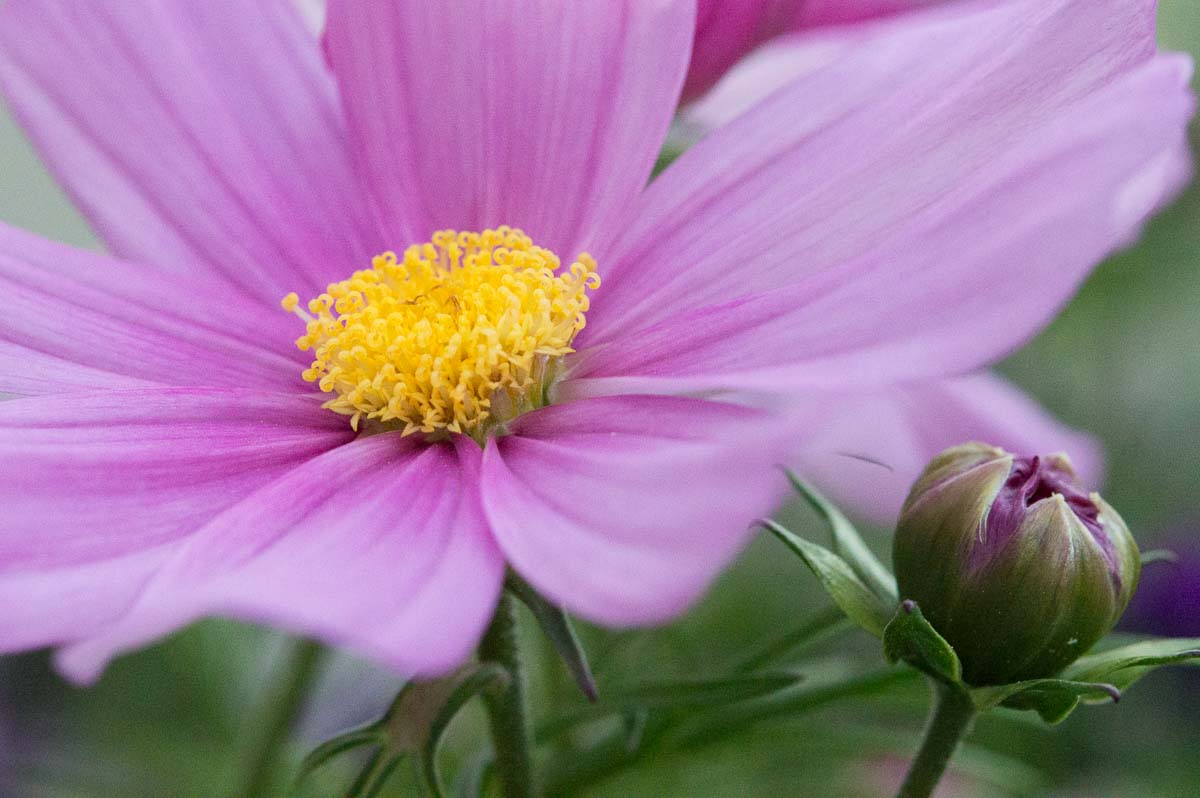
Yesterday afternoon I started digging out a new flowerbed, to clear my head and defuse my anger at the kids and their incessant quarrelling. Continued today. The flowerbed-to-be currently looks like a mud field and is not very photogenic, so here’s a pretty flower instead.


We went out in the garden after dinner.

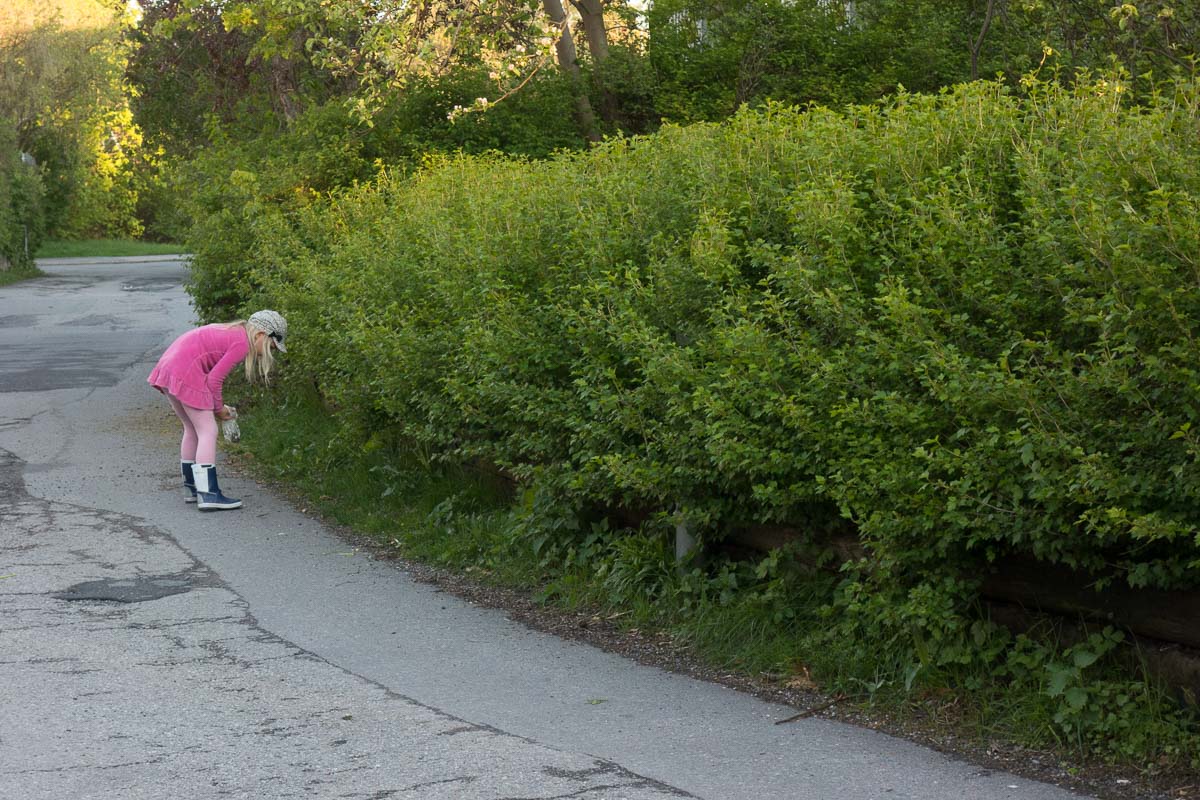
I found so many slugs that I lost count, several of them in flagrante delicto eating my hostas and day lilies. Obviously my reactive approach is not sufficient; it is time to switch to a proactive approach and remove the conditions that allow them to thrive and multiply. The scrappy area in front of the earth cellar is where the slugs have their safe haven and operating base: it’s slightly shady, and there are lots of hiding places for them among the rocks and nettles. I will clear all that out until the slugs have no place to hide.

Adrian meanwhile played on the swing, talked to the neighbour boy, and watered the slope.


The slug season has begun. There are already dozens of those little devils in and around our garden. They ate most of the new growth of a hosta plant before I noticed them.

Ingrid and I go on regular slug hunts. The hunting is best in the evening or morning, after rain. The best hunting ground is the wasteland between the street and the root cellar, and onwards along the edge of the road. It looks like the ones that reached the hostas also started their invasion from that direction. I guess some of them wintered somewhere in that area, and now laid a batch of eggs.

I pay her a bounty: 1 krona per slug found, and another krona if she also disposes of it. One night she found 16 slugs and earned almost as much as a week’s pocket money in about a quarter of an hour.

They are easy to spot in low grass and on plants, but not so easy on bare soil. And they are especially not easy to spot when there is dead plant material on that soil. A wet old piece of wood, a curled-up dead leaf, a piece of pine bark mulch: there are surprisingly many finger-length brown objects in a garden.

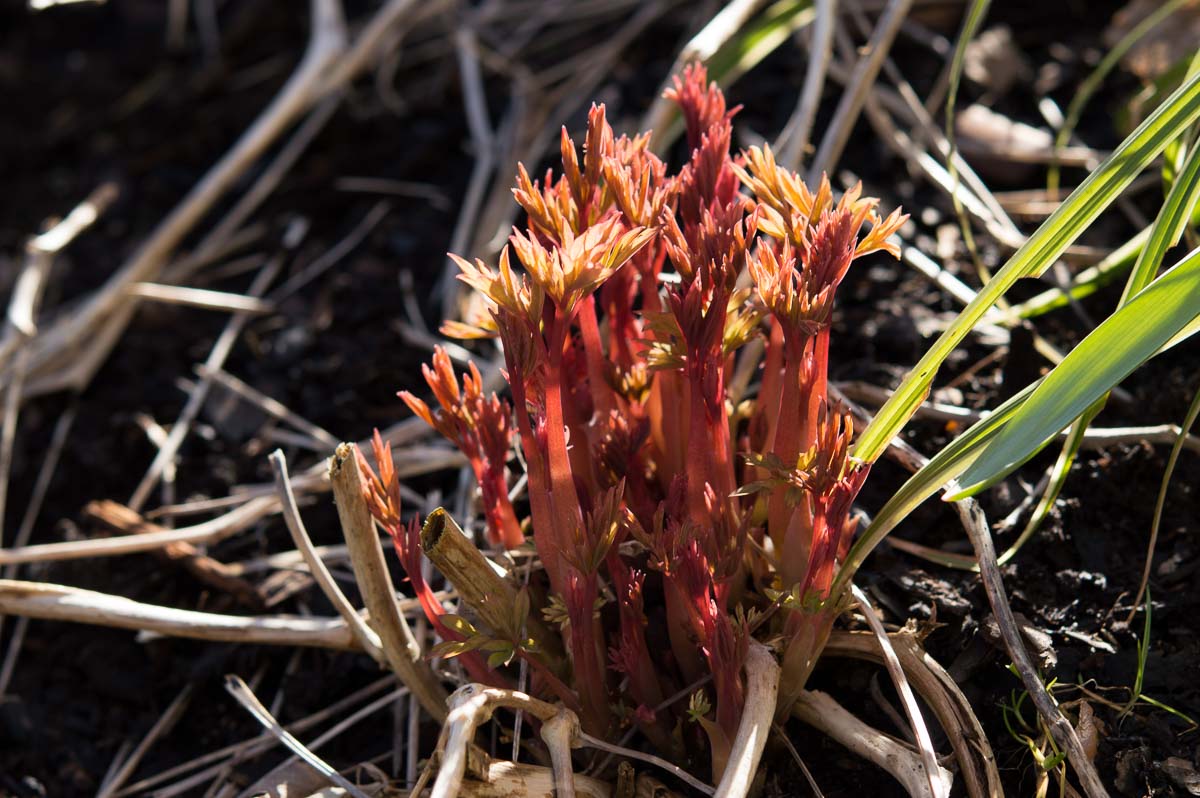
The perennials I planted last summer in the slope between the garage and the root cellar have woken and started growing, almost fast enough so you can see it.

I am very happy I planted so much last year. Finally the garden is turning into a place that can surprise me. After our very first year here, when I was discovering the wild flowers in the garden, I’ve really missed the element of surprise in our garden: being able to go out and actually find something new happening. (Apart from the very obvious, that is, like the cherry trees blossoming, or the strawberries ripening.)

Potted summer flowers can be very decorative, but they don’t surprise. Perennials on the other hand are so rewarding.

I had really planned to focus on more bushes this season, but maybe I’ll have to make a detour and do another planting with perennials.

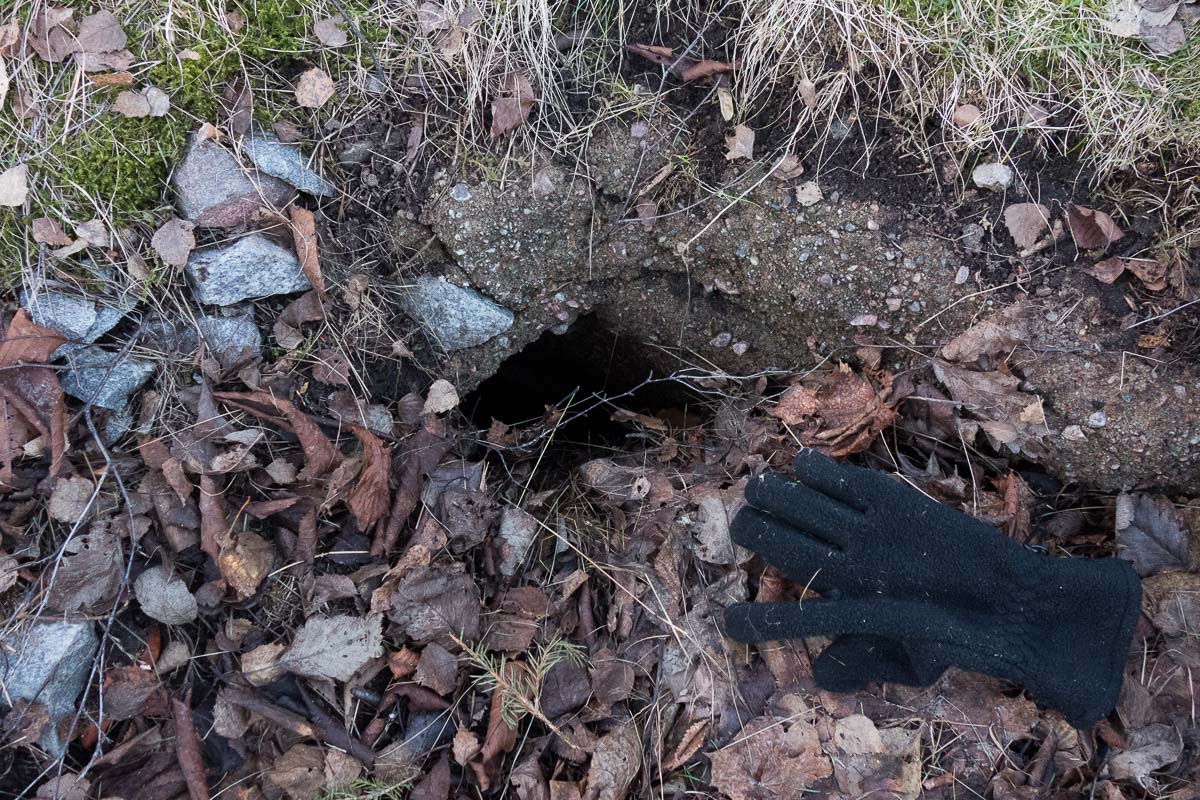
Monday was a nice spring day again so I spent some time in the garden. Planted some daffodils in flowerpots, put up the laundry airer, that kind of thing. When I was throwing out some of last autumn’s dead plants, I discovered a large tunnel in the corner of our compost hole: the opening was as large as both my hands together, and it went all the way to the bottom, so maybe a metre or so.

I am not even sure if I want to find out what is at the bottom. A huge rats’ nest, probably. I wish I could pour some poison in it but rat poison is no longer sold to consumers so that’s not happening, then.

My the next step was to unlock and crawl into the crawlspace underneath the house and inspect the mousetrap I put there last autumn. It didn’t catch anything then, so I had completely forgotten about it. It had caught a mouse during winter, so I rearmed and re-baited it. Hopefully it will also catch the inhabitants of that tunnel. If not, I think it will soon be time to call in professionals.


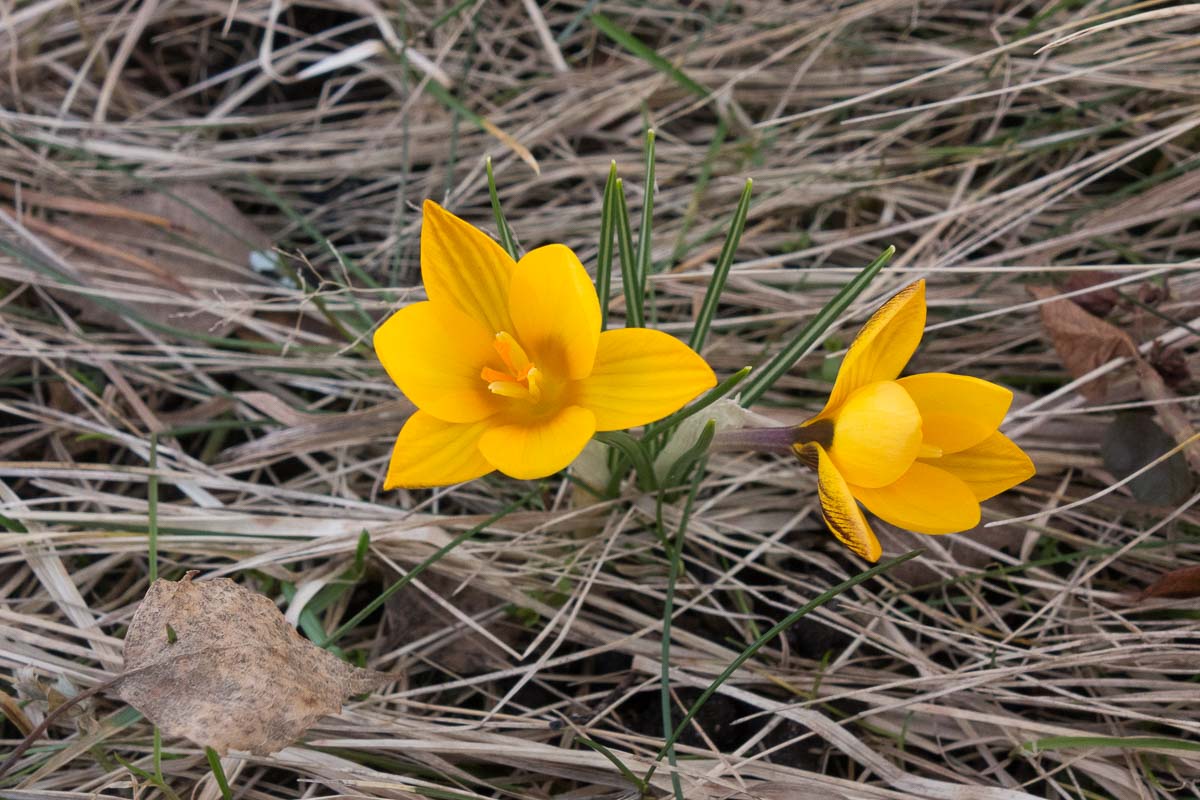
Yesterday I went looking for flowers in the garden and there were none. I couldn’t even see any crocus buds. And this morning there were three blossoms already fully open.


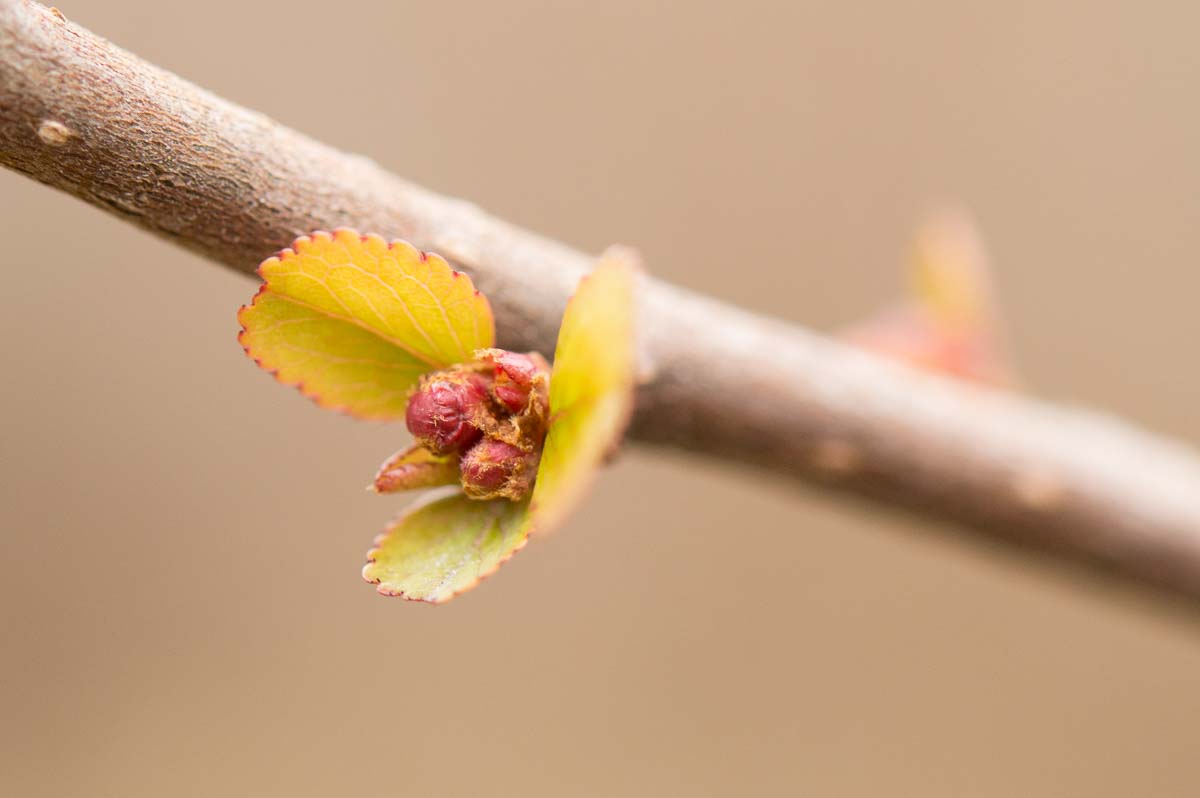
The first leaves are budding.

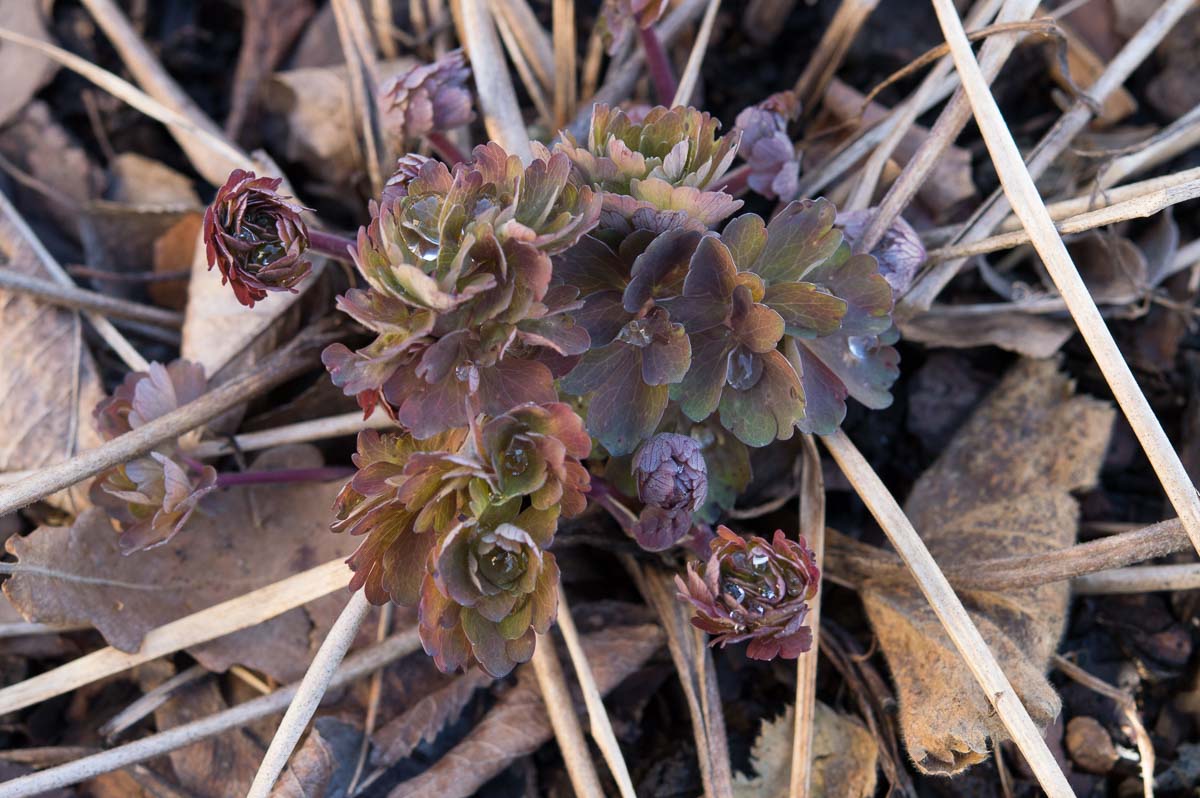
It is March, the snow is almost gone except for a few patches here and there in shady places. And the Aquilegia in the slope previously known as the slope of weeds has decided that it is now spring and time to start growing. I hadn’t quite expected it to be so early.

The long green leaves above it are Carex which turned out to be evergreen. I’m sure I must have taken this into account when choosing it ahead of other grasses, but I’d forgotten all about this fact, so the green tussocks sticking up through snow provided a nice surprise during winter.

THe Alchemilla seems to have tried sending out new leaves throughout the entire winter: I saw little green leaves in various states of growth, many browned at the edges by the cold, but still alive, and fresh ones still bravely appearing in the middle.