Someone close to us is dying, and her death is approaching much closer than I had realized even just a few weeks ago. And I haven’t seen her since the beginning of the year because of the damn virus.
On this day...
1 year ago: Daily: 3724 – bleeding hearts
3 years ago: Daily: 3016 – anemone walk
5 years ago: Daily: 2310 – Tiveden, day 1 – arrival
10 years ago: Daily: 555 – work has started on the wall
20 years ago: Easter in Lake District, last part
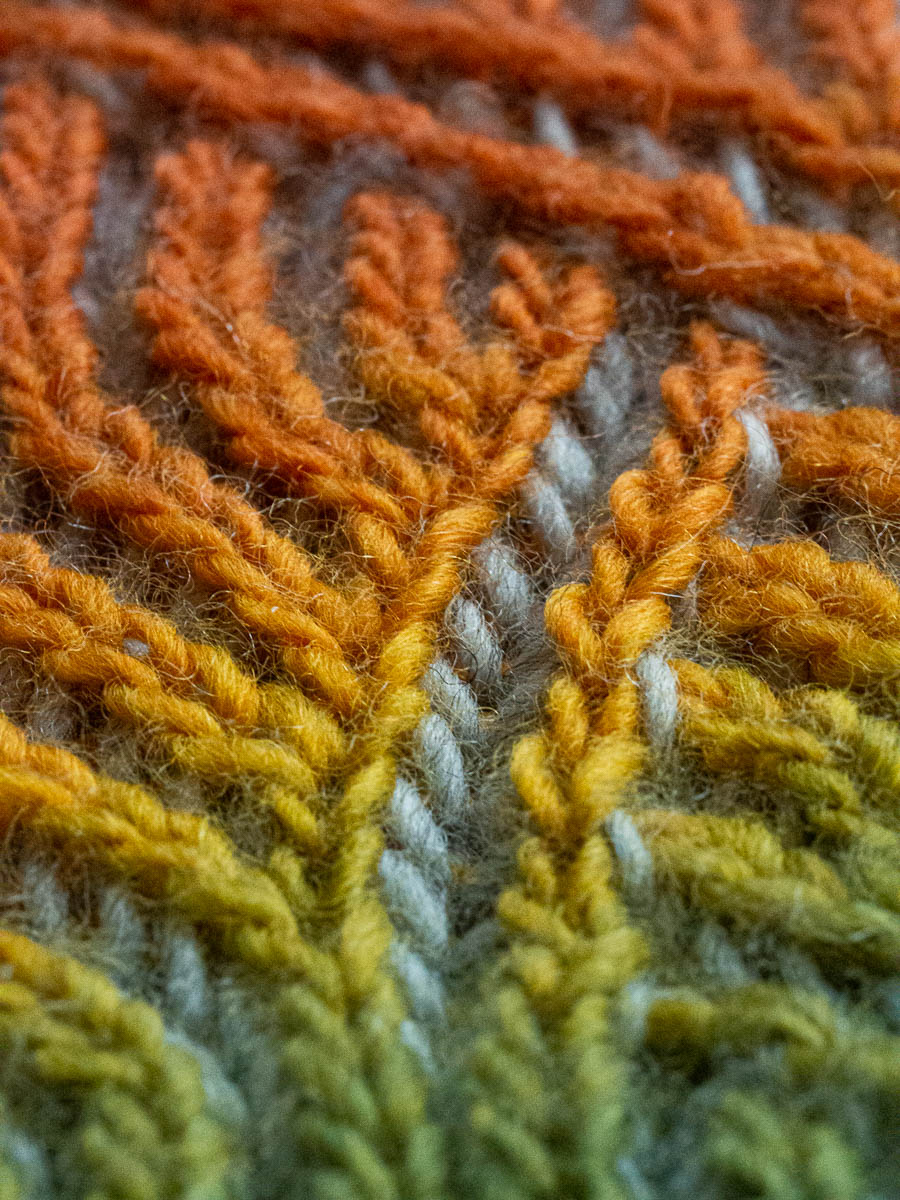
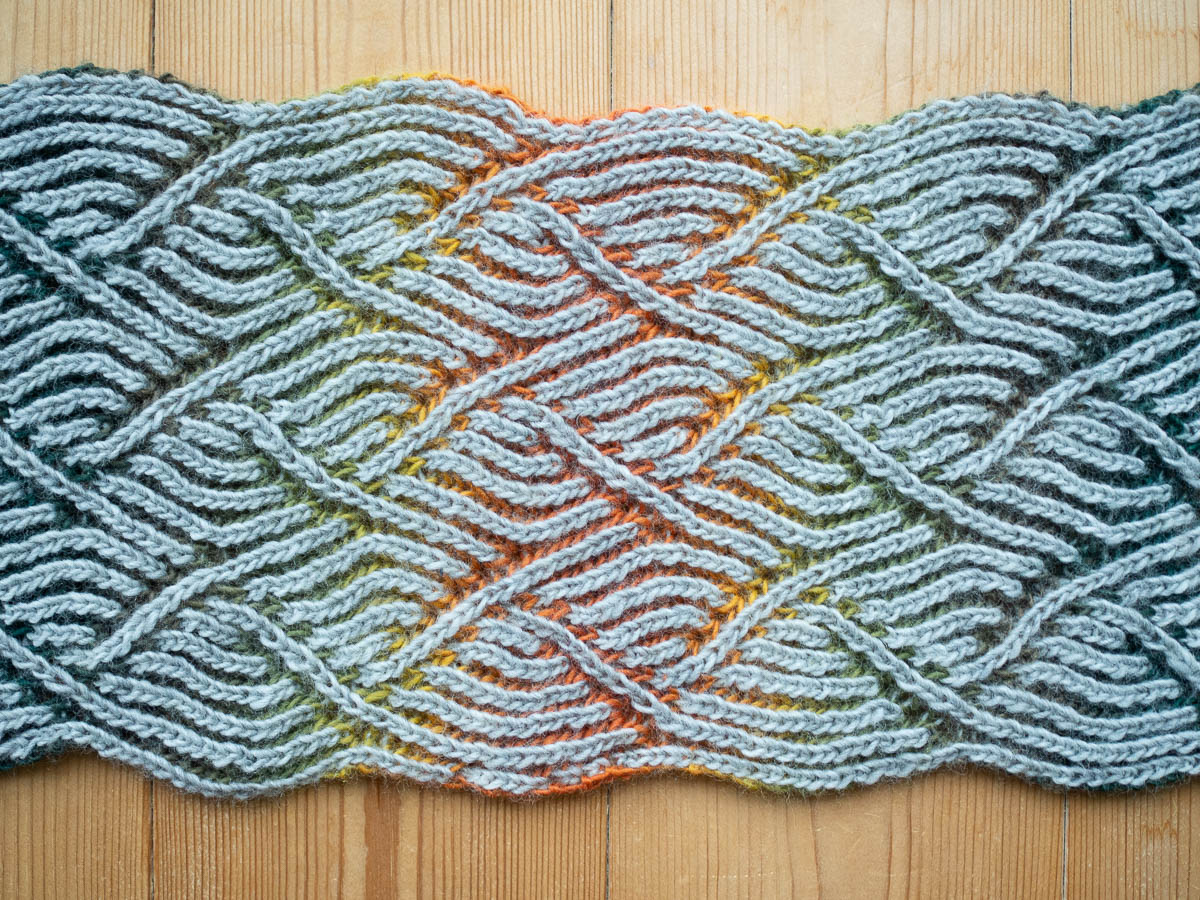
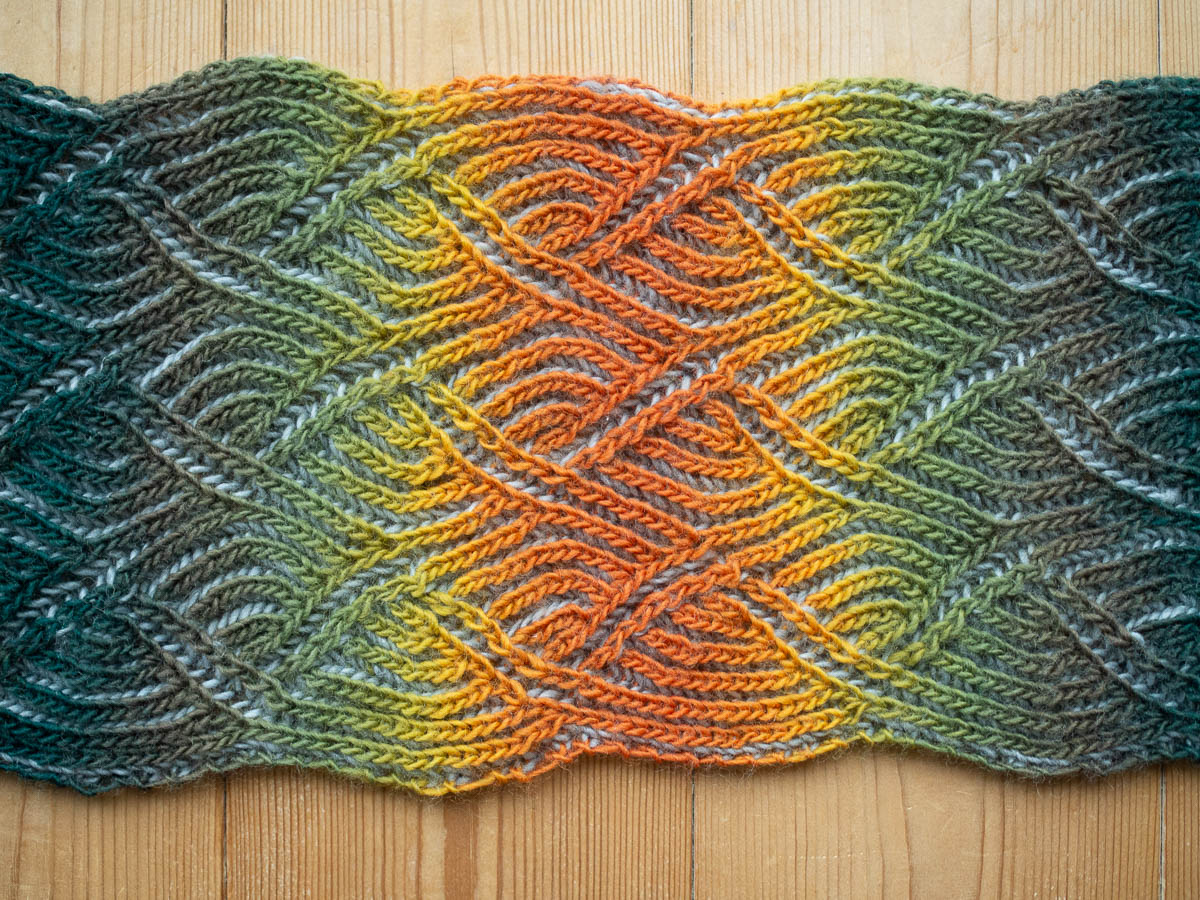
The scarf is finished, and it came out just as lovely as I had hoped and expected. This is one of my most successful knitting projects ever.
Now to wait for winter – and to look for a new project.
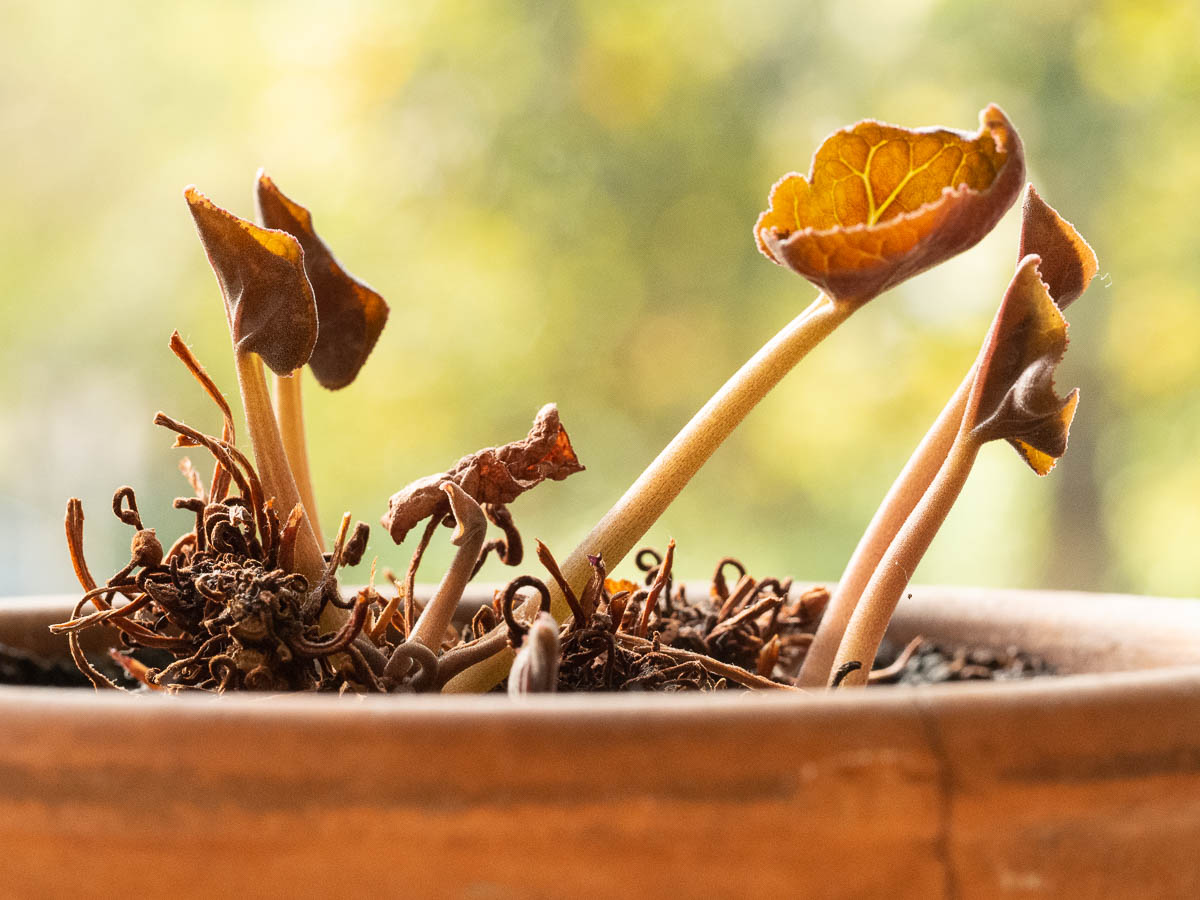
The cyclamen amazes me again with its ability to survive.
We have two that we keep in the kitchen window. They’re fussy plants and ideally want to be watered every day. As soon as we forget about them, their flowers wilt – I guess they sacrifice non-essential parts and prioritize survival. The kitchen window is the only place where we can be sure to pay frequent attention to them.
That window faces south, and in the summer it gets way too hot for cyclamens, so we have to move them to a shadier place. And there we promptly forget to water them, and they wilt and almost dry out and drop most of their leaves and flowers.
Autumn comes, the kitchen goes back to its shady self because the sun hides behind the neighbouring trees, and we bring the cyclamens back again. No matter how dead they look at that point, they always come back to life.
I started with Swordheart, based on a recommendation. Having devoured that one I immediately looked for more books by T Kingfisher and went on a bit of a binge, finishing all four books in four days. Paladin’s Grace literally kept me up until 3 in the morning because I had to finish it.
Swordheart: Halla, a middle-aged widow, comes into an inheritance. Her relatives are plotting to marry her off to a cousin to get their hands on the inheritance. One of the things she inherits is a magic sword which turns out to contain a grumpy middle-aged swordsman, now oath-bound to serve and protect her. The two go off in search of help to get Halla her inheritance, free of encumbering relatives. Complications ensue.
Paladin’s Grace: Stephen is a paladin, a god-touched berserker warrior. But his god dies, snatching away the meaning of his life and leaving him with his berserk rages but without the god’s power to harness them. He meets Grace, a perfumer, and they accidentally get tangled up in someone else’s assassination plans. Complications, as usual, ensue.
Clocktaur War: The city-state is under attack by near-indestructible clockwork monsters, sent by a neighbouring city. Attempts to infiltrate that neighbour to find out what’s going on have ended in disaster. Now a new group is hand-picked to have another go. The previous groups were military; now the city’s rulers take a different approach – with an ex-paladin, a forger, an assassin and a scholar. They’re bound to their mission by magic and not exactly happy about the mission, or about having to work with each other.
What I liked about all the books:
- The characters. Some I loved more than others, but all had so much depth and detail that they felt real and relatable, and I came to care for all of them.
- The down-to-earth manner of writing which made everything feel real. People get blisters and stiff necks; they run out of clean socks and shirts; inns run out of hot water. And the entirely believable observation that an itchy nose that you cannot scratch can bother you more than your impending probable death.
- Straightforward language, fast pace without feeling rushed.
- Humour. Lots of funny dialogue! More of it in Swordheart than in the others, and perhaps more than I would have chosen (I’m not a big fan of comedy) but it never got too much. I kept laughing out loud as I read Swordheart.
- The two paladins, and the idea of close contact with a god followed by abandonment. I’ve read that some reviewers find Caliban (the paladin in the Clocktaur War books) annoying, but I liked the exploration of paladins as a concept. How does one end up as a paladin? What might it actually feel like to spend your days slaying demons (hint: not glamorous)? How would it change a person?
- Romance. Not what I had expected – I hadn’t read any reviews in advance – but it was well done and credible. There were a few sex scenes in each book, all of which exceeded my expectations. Realistic, touching, without any cringey euphemisms.
-
Themes.
In Swordheart: friendship and humanity. The swordsman in the magic sword has been used by his owners as a killer for hundreds of years, and now he meets someone who actually treats him as a human being.
In Paladin’s Grace: finding your footing again after loss, realizing that you’re perhaps not as irretrievably broken as you thought.
In Clocktaur War: empathy. The forger and the paladin are both touchy and proud, and especially the paladin needs to come down off his pedestal to the level of normal people. (Which he does.)
My only quibble is about slightly weak plotting. Halla’s reaction to learning about the real story of the sword felt overly melodramatic, as if put there only to make the plot go in a certain direction. And the deus ex machina resolution in Paladin’s Grace felt rather improbable.
I have no such complaints about the Clocktaur War books – they’re more plot-focused than the others, and all the pieces came together really well in the end. As a bonus, they end with a very well-described final battle. I often have trouble visualizing battles as they are described, but this was a rare case where I really felt I could follow the details of who was where and what they were hitting.
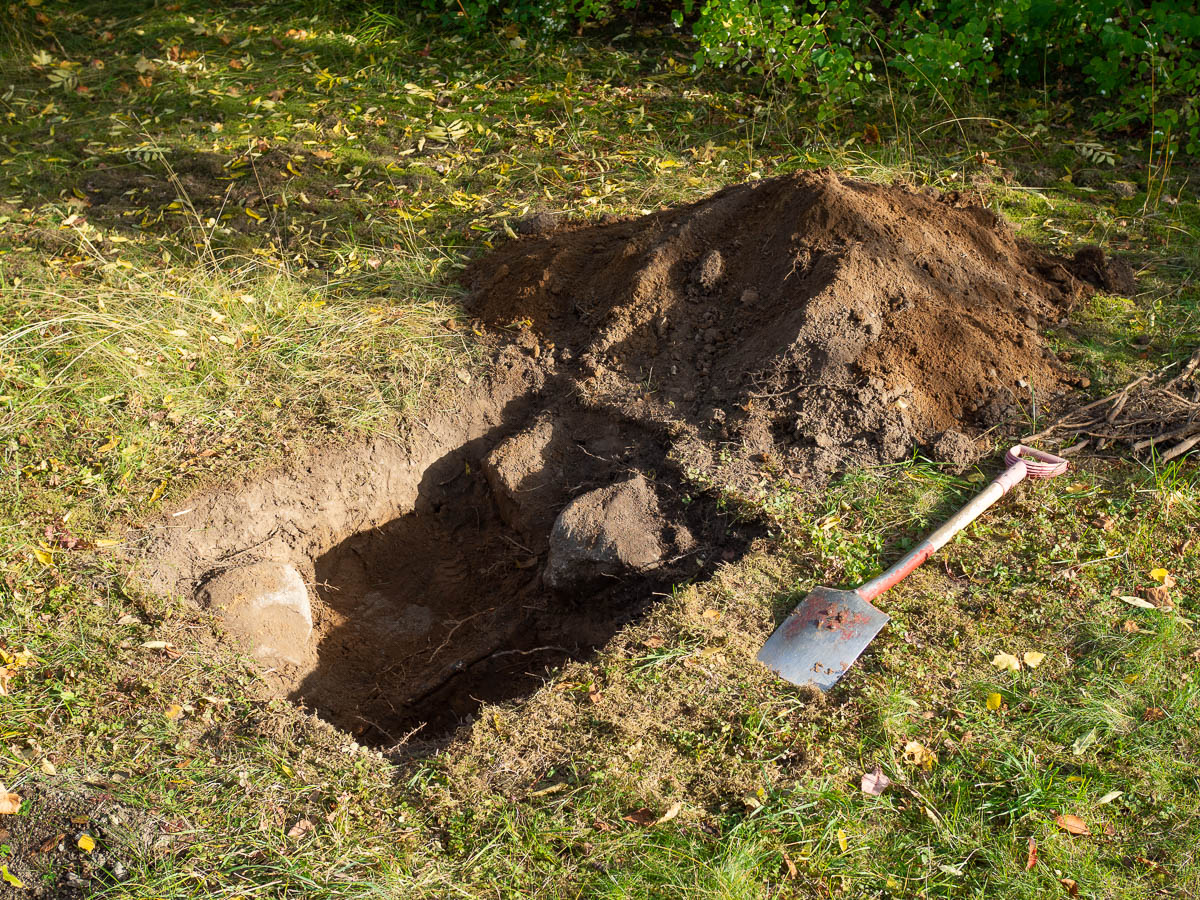
I haven’t been making much progress on digging for the planned plum tree. Somehow there’s always something else that I’d rather do. But today I did some digging instead of my lunchtime workout.
“Deadlift” in Swedish is called marklyft, “ground lift”. There was plenty of that here.
Next time I’ll have to start removing all those big rocks.
I’ve hit bedrock at the bottom. Again. But this time the hole is at least knee-deep, which should be enough for a plum tree.

I cycled to Solna and the pompously named Mall of Scandinavia.
All I needed was a few pairs of brown tights. In a normal year I would have stopped by a store near the office and it would have taken me ten minutes. Now it took over an hour.
But that hour of cycling was worth more than the tights themselves. The surroundings here are not so inspiring that I would go out to just cycle for an hour. Any excuse, any small errand that takes me away from Spånga, is a welcome one. Plus the route to Solna passes two lovely lakes.
Mid-afternoon on a Thursday is an excellent time for visiting a shopping mall. I saw a surprising number of people there, but MoS was still emptier than usual, which I liked very much quite apart from avoiding contagion.
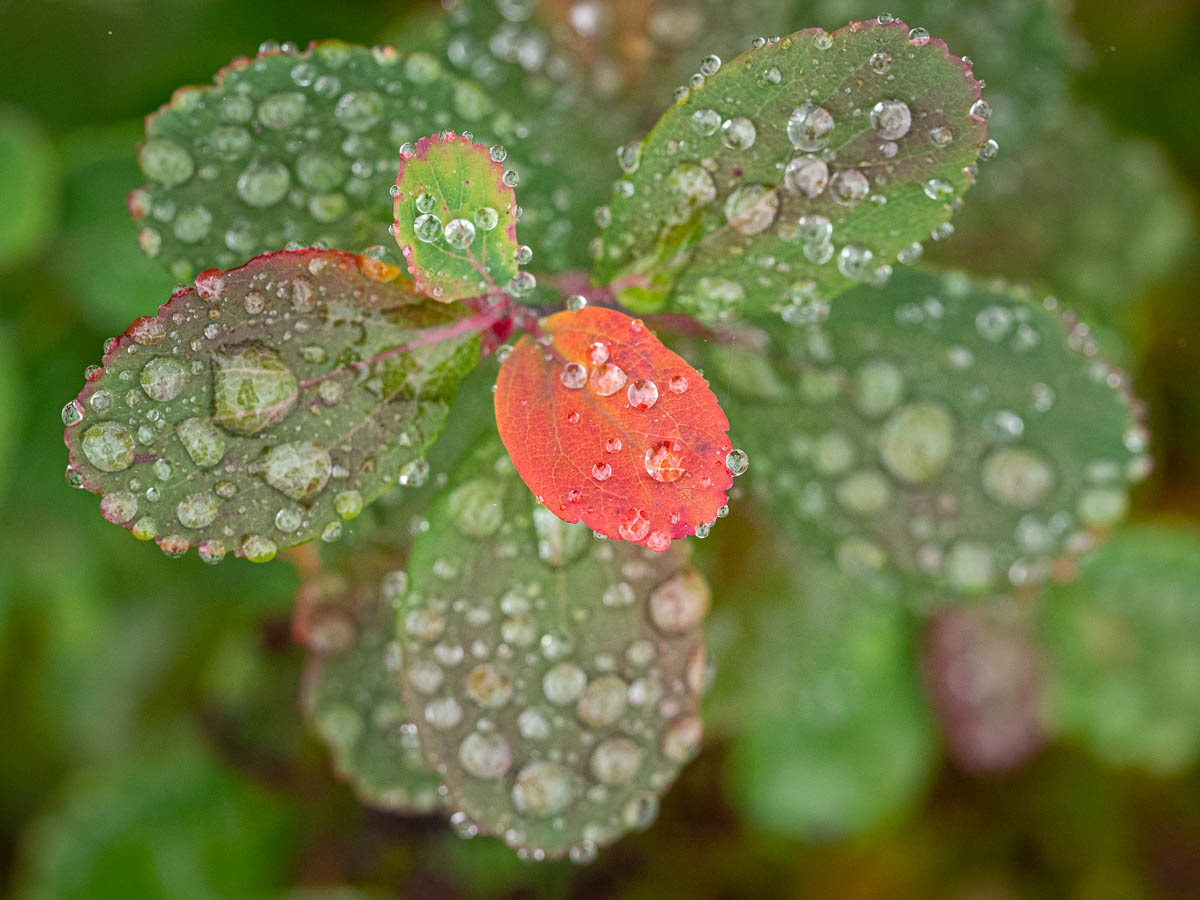
Autumn colours are starting to come in. Some maples in the neighbourhood are fully red; others still green. The cherry trees are green, but the aronia and weigela bushes are bright red. These birchleaf spiraea are just on the cusp.
New York, 1899.
A merchant orders a golem to be his wife. He barely has time to wake the golem before he dies of appendicitis, on board a ship to New York. The golem is left masterless and alone in the strange city.
A tinsmith in Little Syria, also in New York, accidentally lets out a djinni from a copper flask where the djinni had been imprisoned centuries earlier by a sorcerer. The djinni is still bound to human form and unable to access most of his powers.
The two now struggle to find a place for themselves in this city full of humans. They both wear human-shaped bodies, but neither of them feels at home among humans.
The golem was made to serve and obey. Now that she has no master – whose wishes she would fulfil before he even utters them – she is buffeted by the wishes and desires of everyone around her. She is lost, fearful, alone. She is stronger than humans, tireless, but also very aware that if people knew what she is, they’d be so frightened of her that they would destroy her.
The djinni is the opposite. He used to be the master of everything he could see, flying freely across the Syrian desert, constructing fantastical palaces on a whim, entering people’s dreams. Now he can do none of that, and he chafes at his limitations. And like the golem, he cannot let anyone know what he is.
Neither of them needs sleep. They both look for something to fill their empty waking nights with, in order to not go mad from boredom, and this is what causes them to meet. They recognize that the other is something not-human, and they are intrigued.
The golem is newly made, innocent and ignorant. The djinni is hundreds of years old.
The golem is feminine servility. The djinni is masculine arrogance.
The golem is earth, heavy and stable. The djinni is fire, flighty and sizzling.
Both are forced to live in a human body, to live among humans and follow human conventions. With time, pretending to be human makes each one more human. The golem learns to want things for herself, and to dare to feel. The djinni learns to care about humans, and to want things for others. They learn to make friends.
There is a plot behind all this, and it’s interesting and well-crafted and comes together nicely in the end. Perhaps there is a touch too much action and excitement in the end for my taste – it doesn’t quite fit in with the more moderate pacing of the rest of the book. I think I could have read this book even if there was no plot and no denouement at all. I would be happy to just follow these two around and look inside their heads while they figure themselves out.
There are plenty of supporting characters, whom I also enjoyed getting to know. Some reviewers complain that the author spends too much time on their back stories, when the characters only fulfil a very brief role in the main story. I loved those parts. The bit players are essential, and for me, this was a way of honouring their importance.
The writing style is uncomplicated, unassuming, quietly elegant. The tone is warm-hearted: people may argue and disagree and sometimes do stupid things but they’re all fundamentally decent and kind. It’s no light-hearted feel-good story, but definitely a hopeful one.
Altogether I enjoyed every aspect of this book.
Meanwhile, my browser’s spell check wants to correct “golem” to “google”. What an uncultured browser it is.
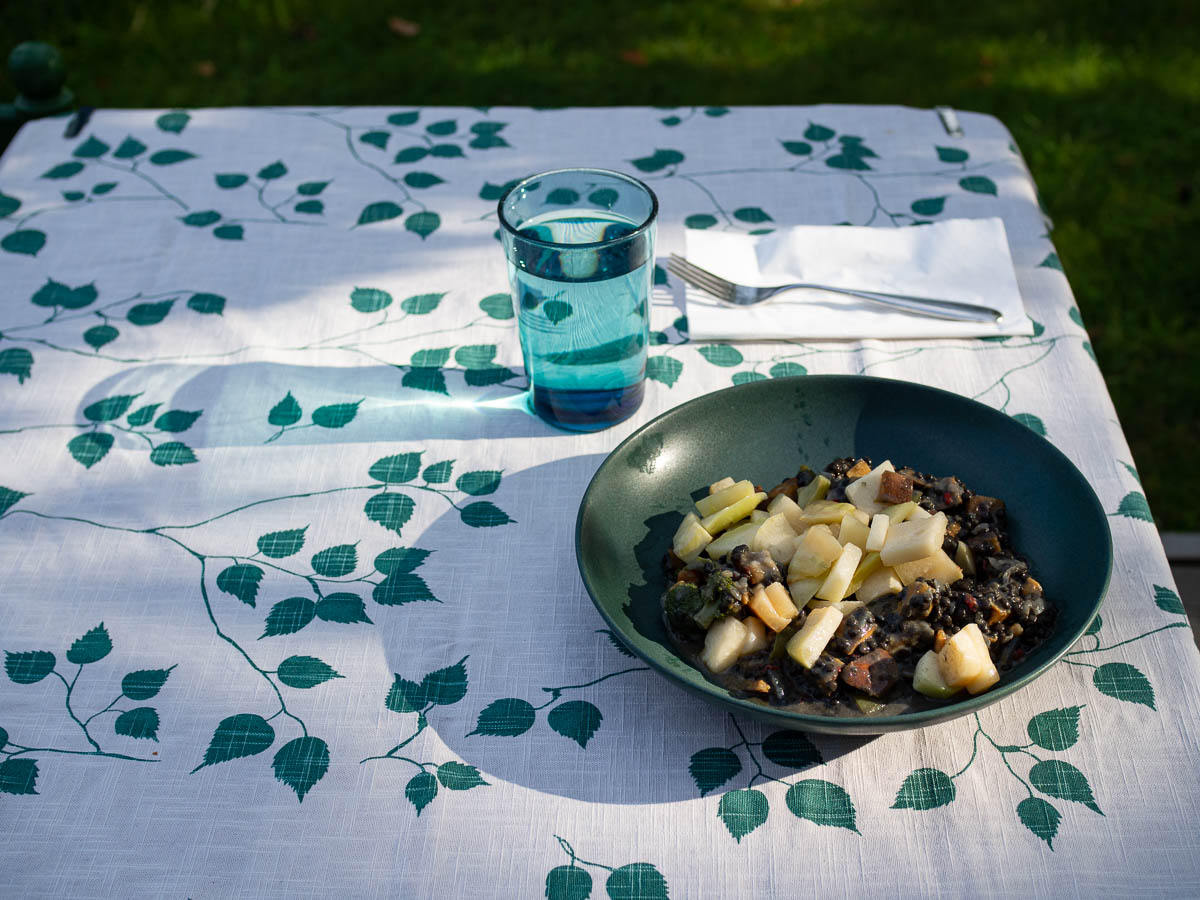
A sunny and lovely day today. I did my workout out on the deck, and had lunch there afterwards as well, with a thick cardigan on.
This time of the year, the sun doesn’t clear the cherry tree even in the middle of the day. Only small patches of sunshine peeking through its branches reach the deck, and the shadows are long.
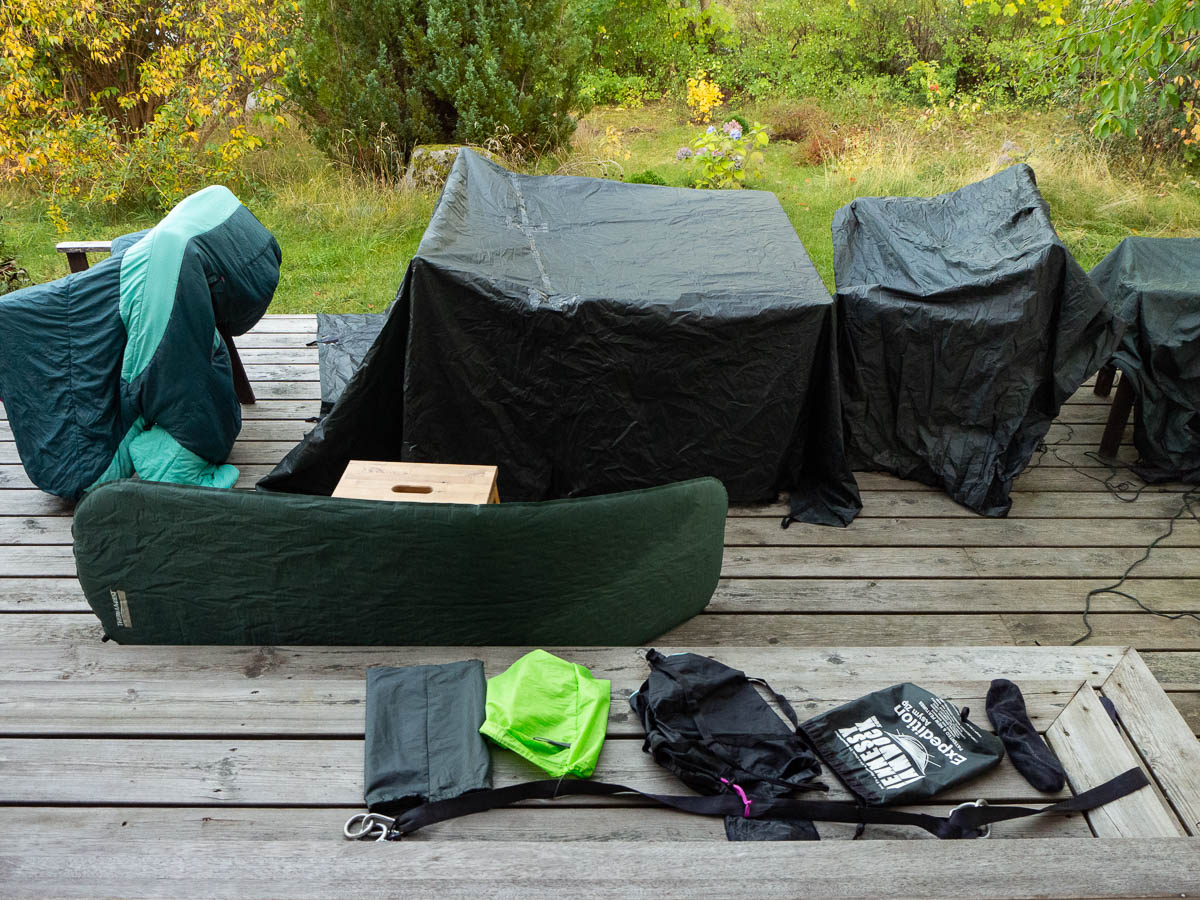
That rain I avoided? Ingrid, poor girl, had a scout hike this weekend and got all of it dumped on her. She said it had rained non-stop from eight o’clock on Friday night, to twelve noon on Saturday. Ingrid is a third-year “adventurer” (as her age group is called) and she and her friends had managed it reasonably well, but the first-yearers had been quite dejected. Fortunately they got sunshine on Sunday, so the hike ended on a better note.
Now our deck is full of drying camping gear, because just about everything she used was soaked.
Ingrid says she herself was dry and warm and got a reasonable amount of sleep. But she was completely exhausted after the hike, to the point of sickness. Her head aches. Her entire body aches. She’s flushed and hot and cold at the same time. I can see from just looking at her that she is not well. Had I not known about the hike, I would have been certain that she’s coming down with something.
| « Older posts | Newer posts » |
