Råbäck to Såten, 8 km.
My autumn hike in the Fells was just beginning to turn into a tradition when I had to interrupt my streak. I’ve hiked in Jämtland three autumns in a row now. This year won’t be the fourth. Spending my nights with strangers – first in a sleeper train and then in cramped mountain huts – does not seem like a good idea, given the increasing numbers of people testing positive for covid-19 in Sweden.
So I had to come up with alternative arrangements. And perhaps this is a good thing, pushing me to try new things. I took one step outside my comfort zone with the three-day hike of Sörmlandsleden in September. That worked, so I’m doing a similar thing again: packing my tent and food for a few days, and hiking on my own with no huts or such.
This time I’ll be walking the Kinnekulle path. I’ve seen it mentioned several times as a lovely hike especially in autumn, and it’s reachable by train, and it’s a three-day hike so I can do it in a long weekend – perfect in all ways. Plus it’s in western Sweden, so it’s hopefully going to look rather different from Sörmlandsleden, which is beginning to feel a bit monotonous by now.
The Kinnekulle path totals 45 km according to official stats. At a reasonably leisurely pace, that’s a three-day hike for me. But the train rides there and back add another day. I arrived in Råbäck shortly after two o’clock this afternoon. I’ll do half a day’s worth of walking today, then two full days, and another half-day on Sunday.
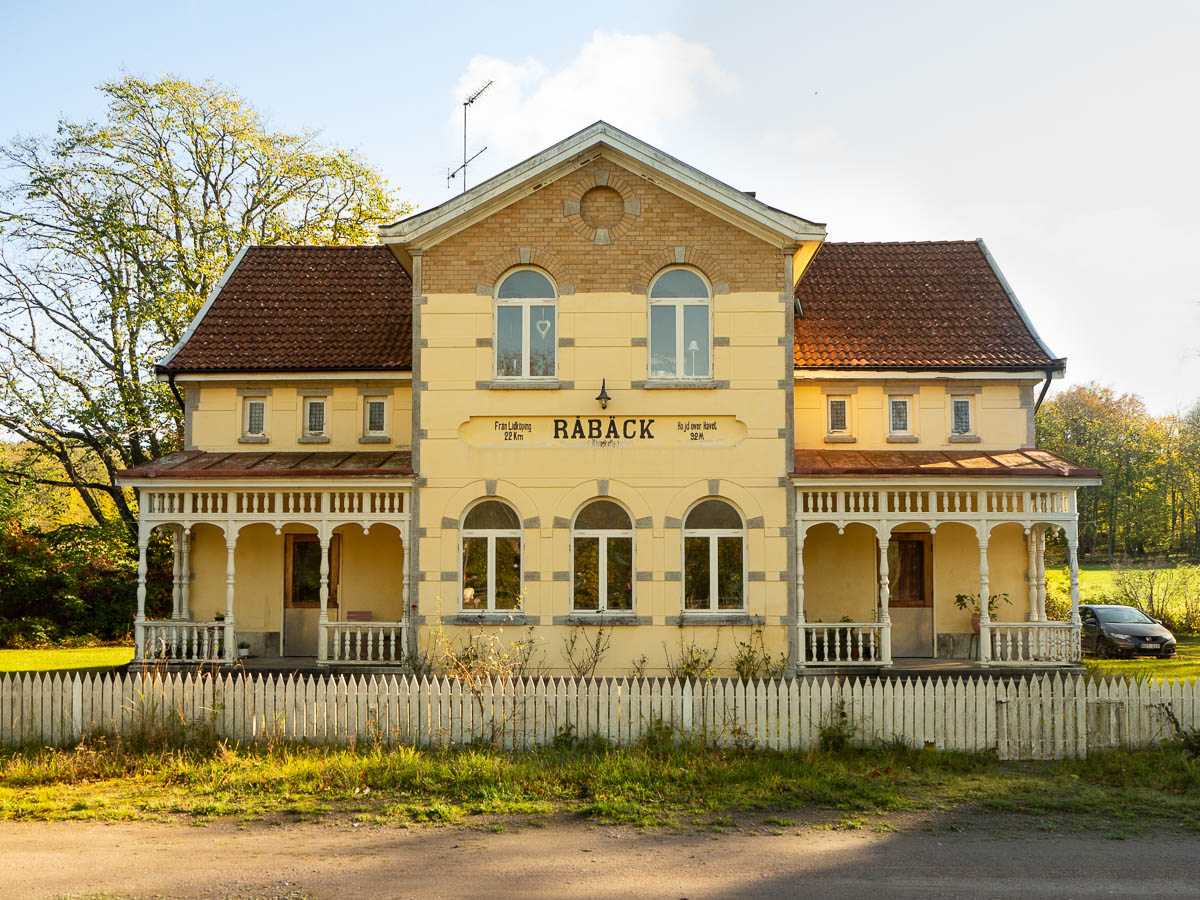
Råbäck train station has one of those lovely old station buildings, loudly proclaiming that this station has been more important in the past. Now the station building has been turned into a residential one, and the village mostly consists of summer cottages. You can see some old postcards from the station’s heyday here.
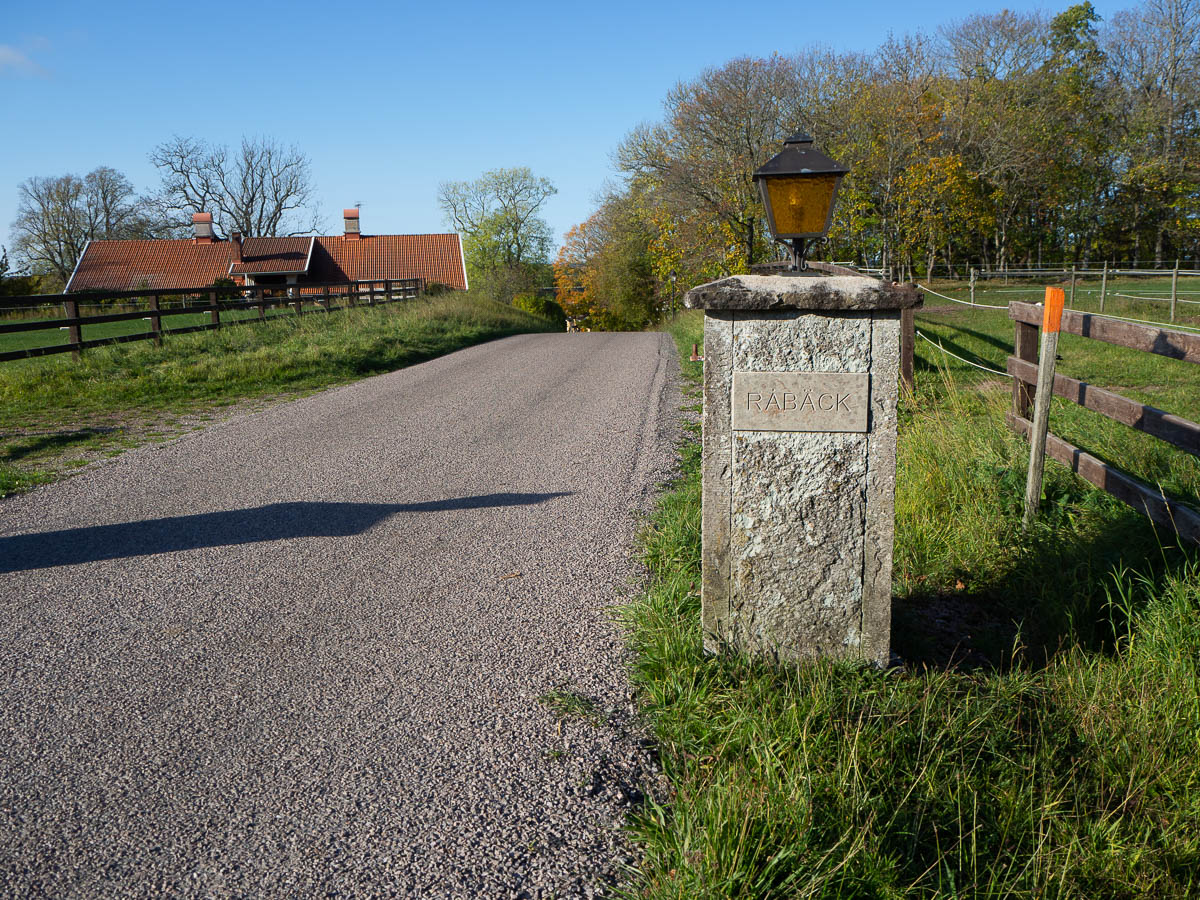
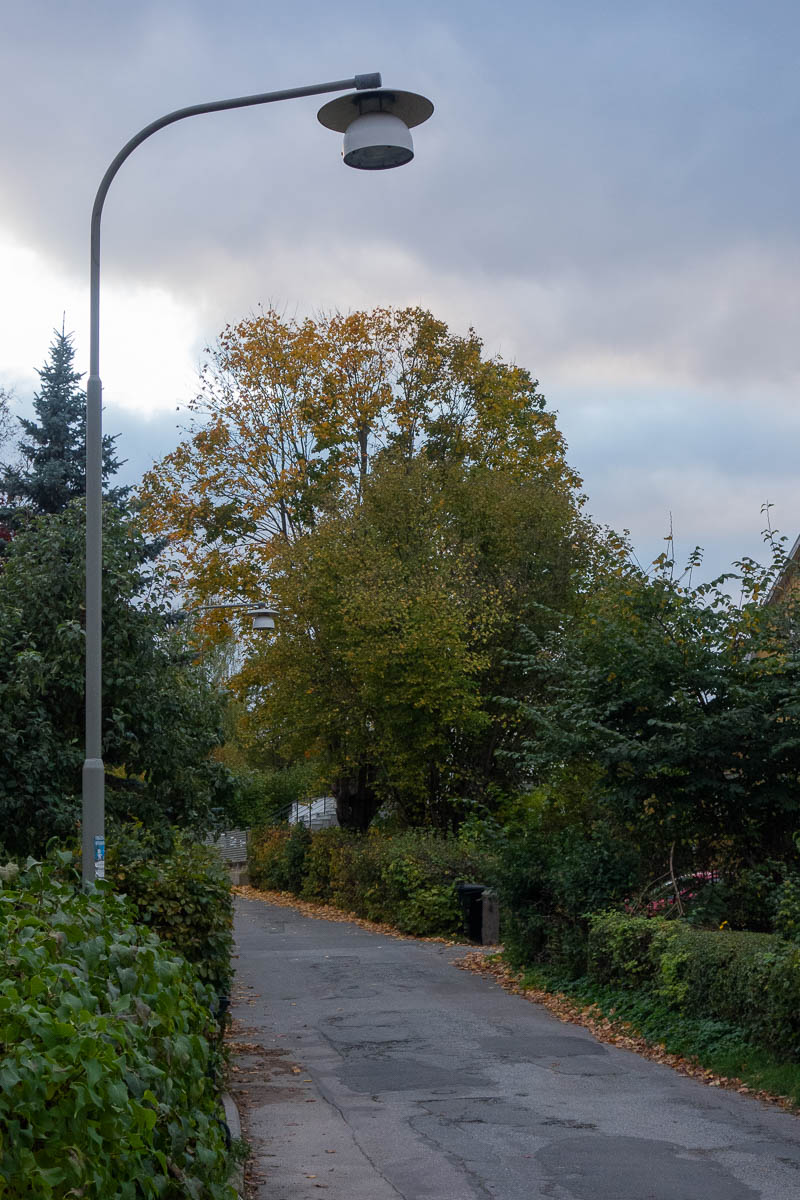
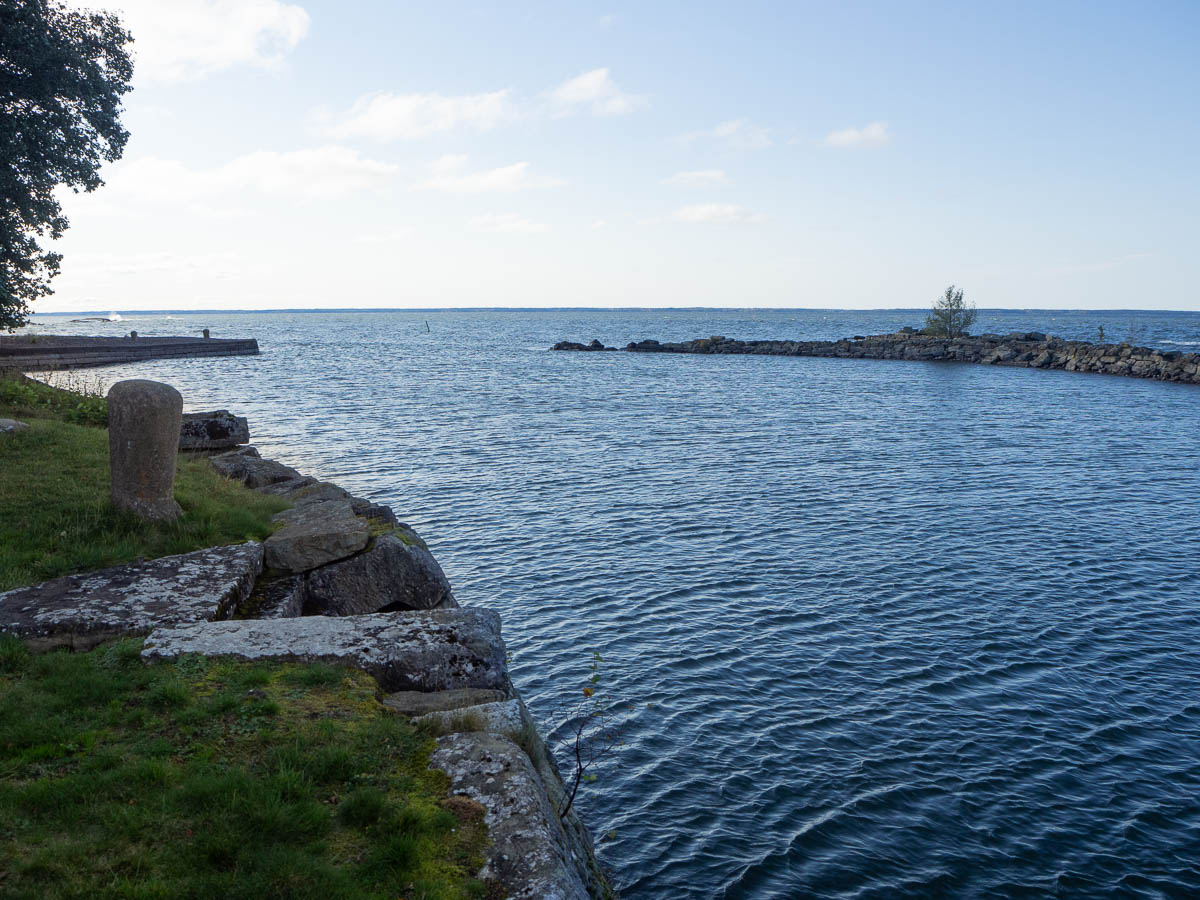
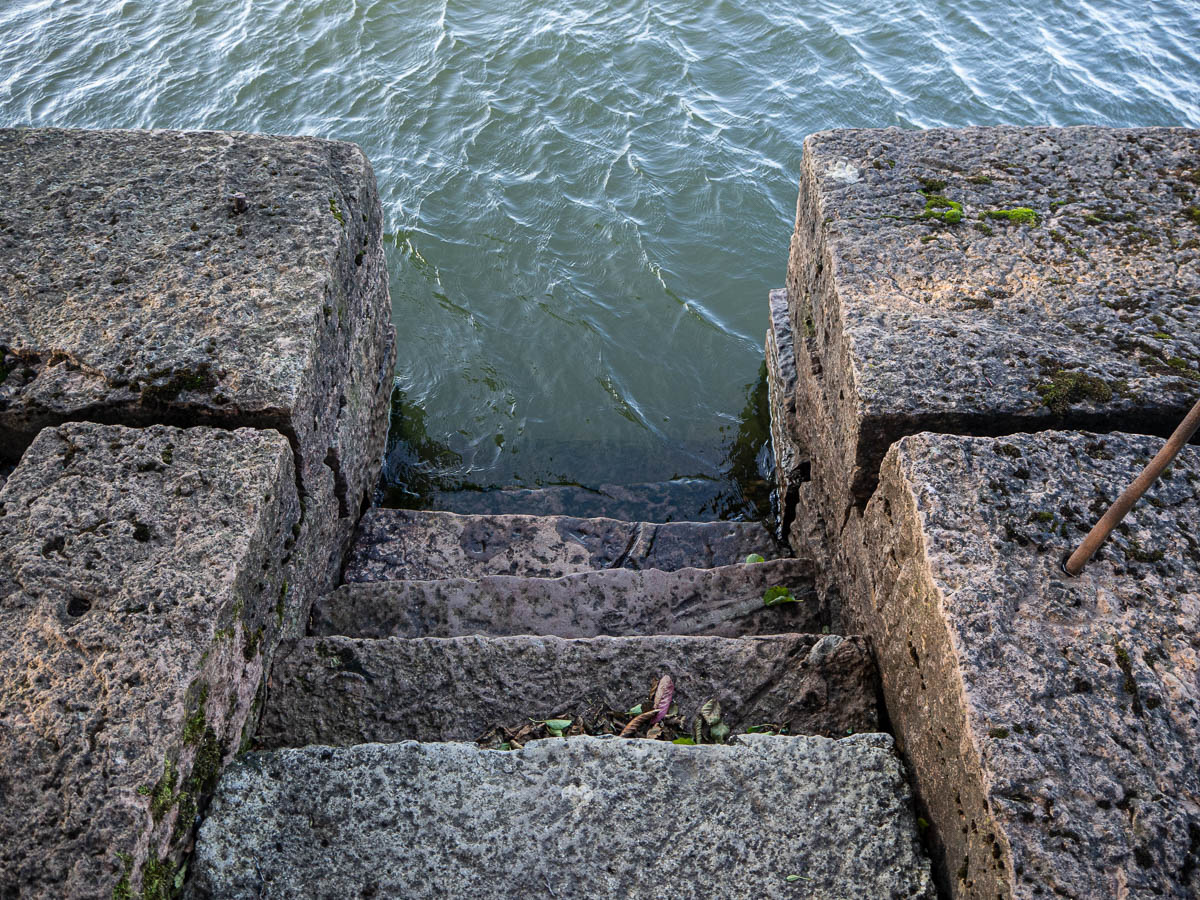
The path first winds along country lanes through the grounds of Råbäck manor to Råbäck harbour. Again a place that clearly has seen more activity in the past. The harbour is large and solid, clearly built for substantial traffic. It was used for shipping out limestone from the local quarries. The old stonemasonry workshop right next to the harbour, closed since the 1970s, is a museum now but was unfortunately closed today.
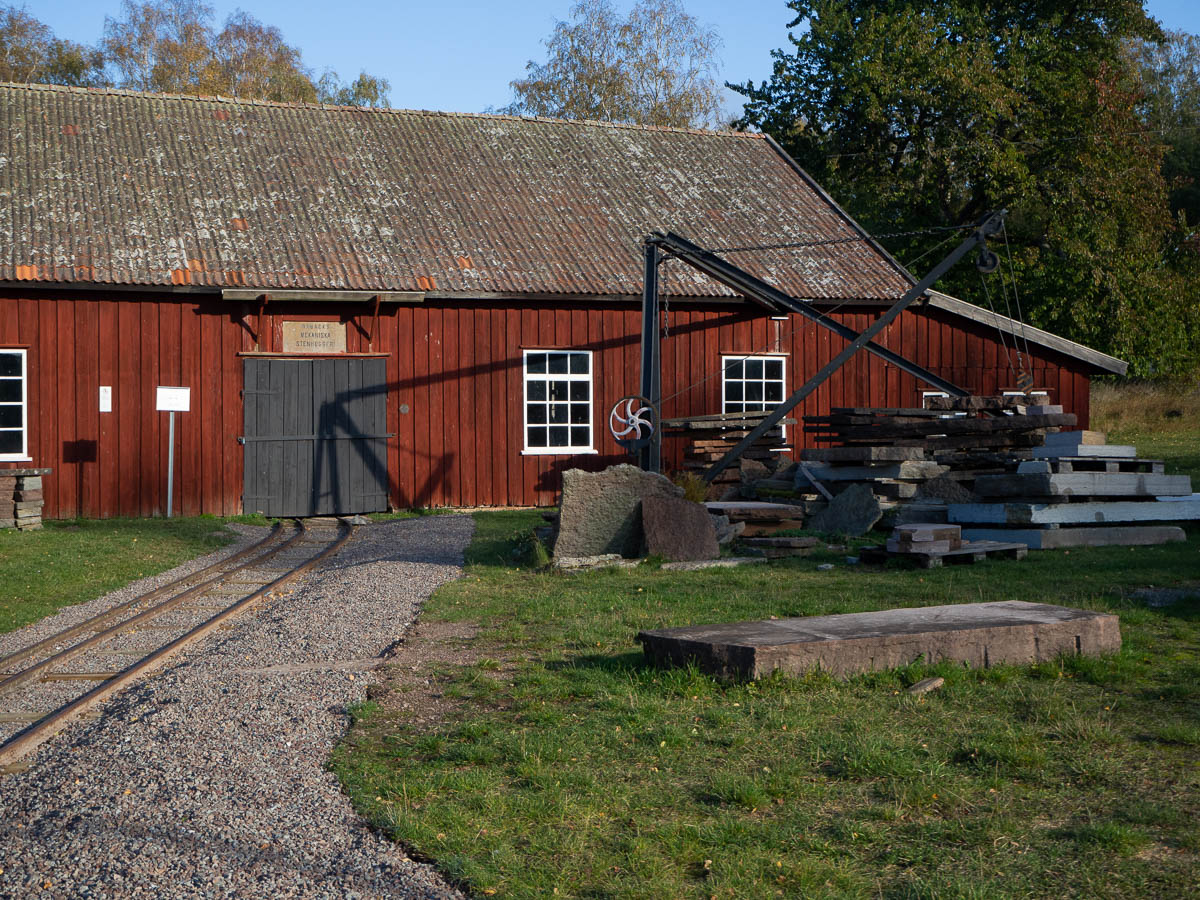
From the harbour the path goes through deciduous forest, following the tracks of an old tramway, straight like an arrow, to an old limestone quarry.
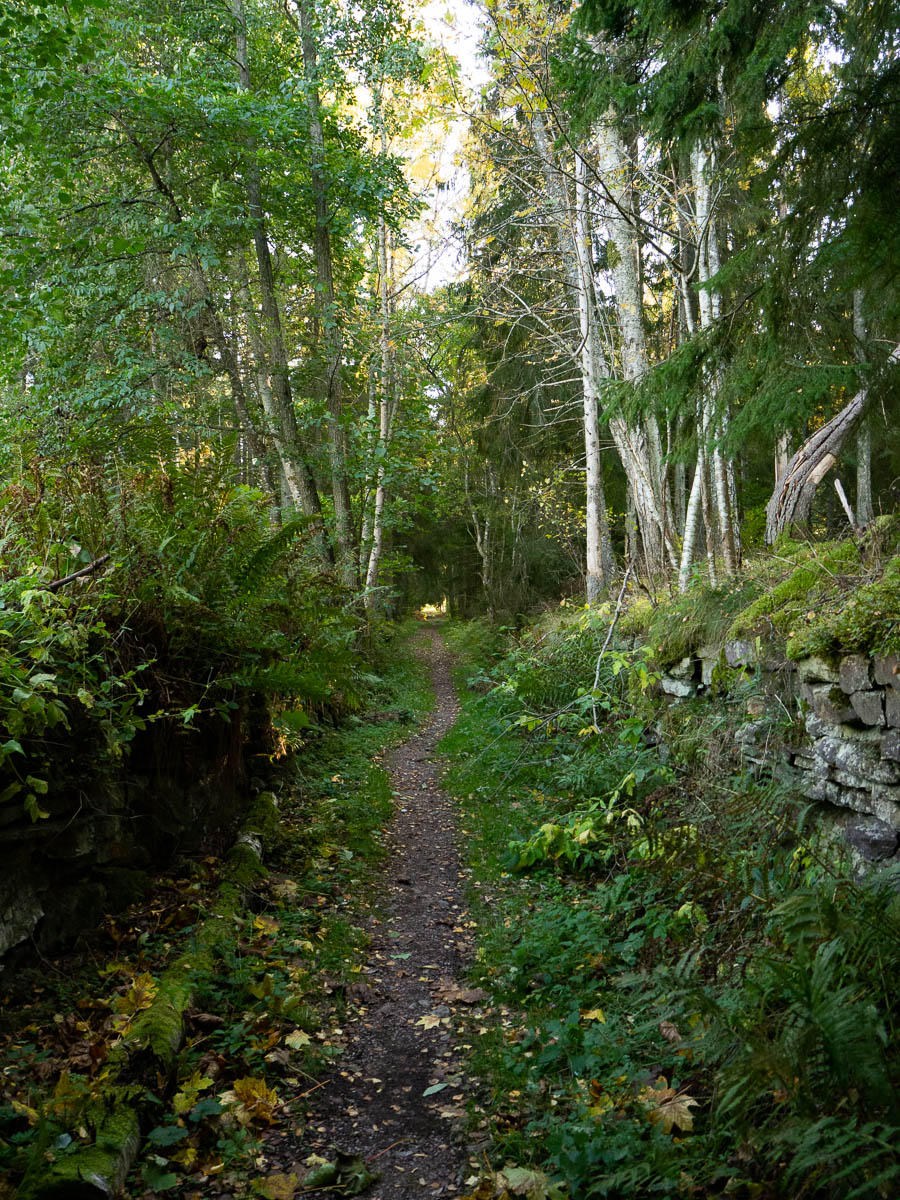
There are ruined limestone walls here and there in the forest, and various other signs of past habitation: gate posts, cellars, traces of the foundations of buildings, the remains of limestone quarries and kilns.
It felt strange to be walking among so many traces of history. Slightly sad, that all this is now come to nothing. But then again, what else would we do with old buildings that are no longer needed? It’s nice that there are still traces of them, so they aren’t completely gone.
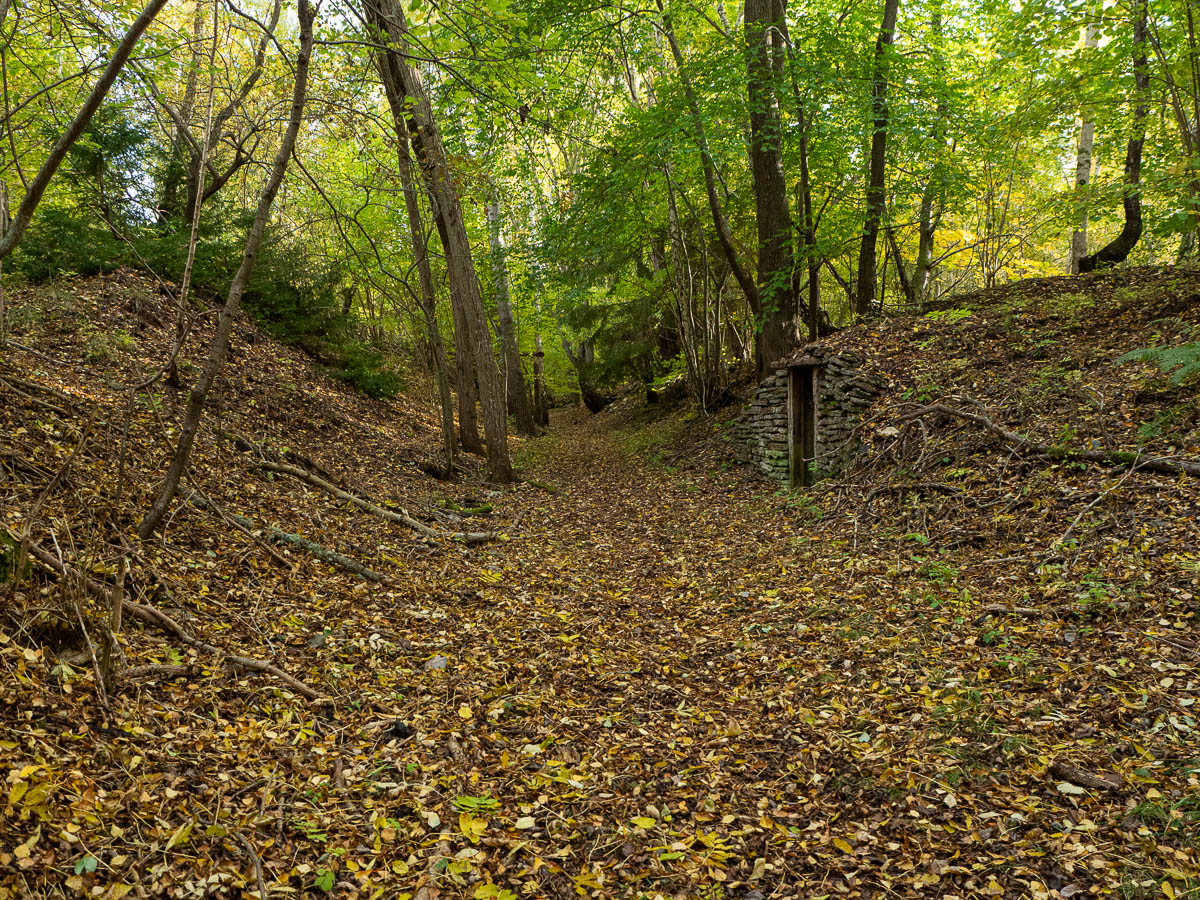
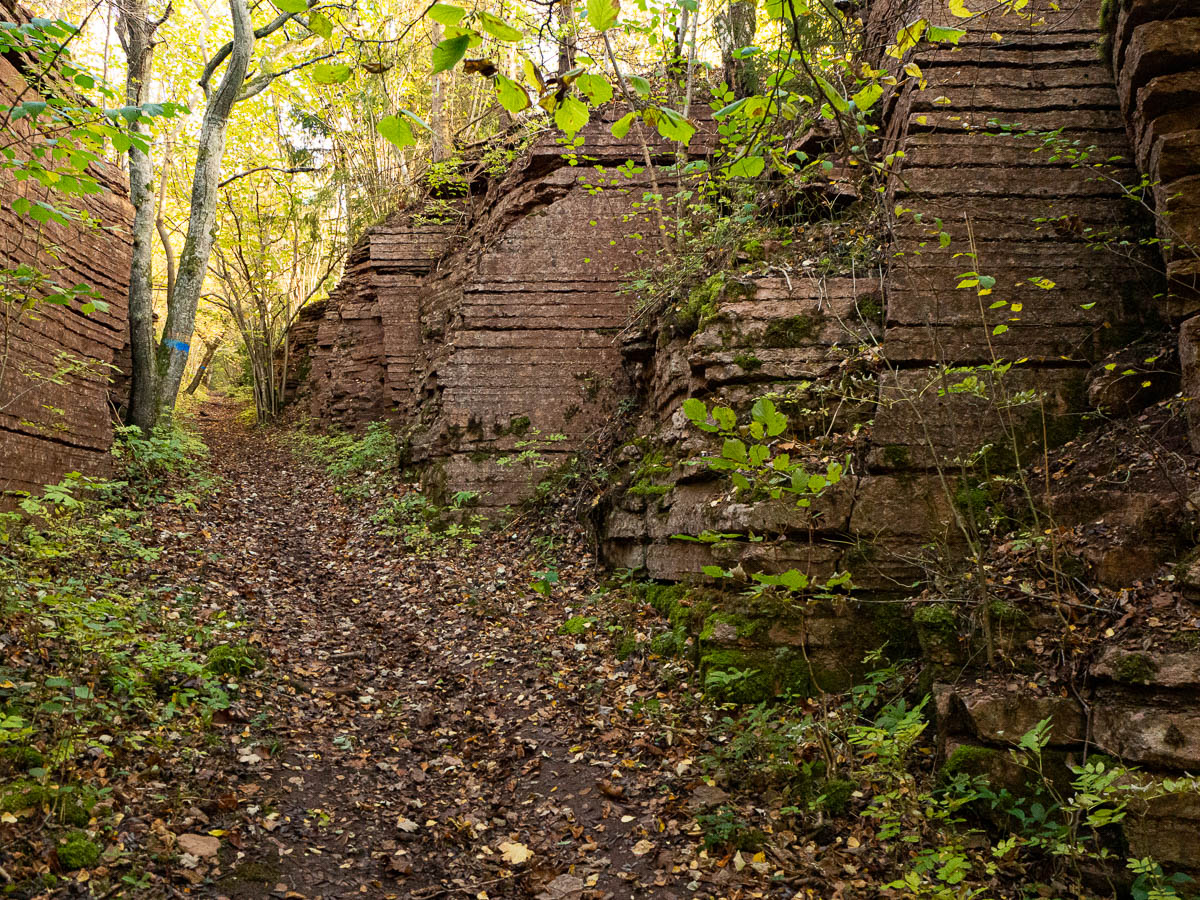
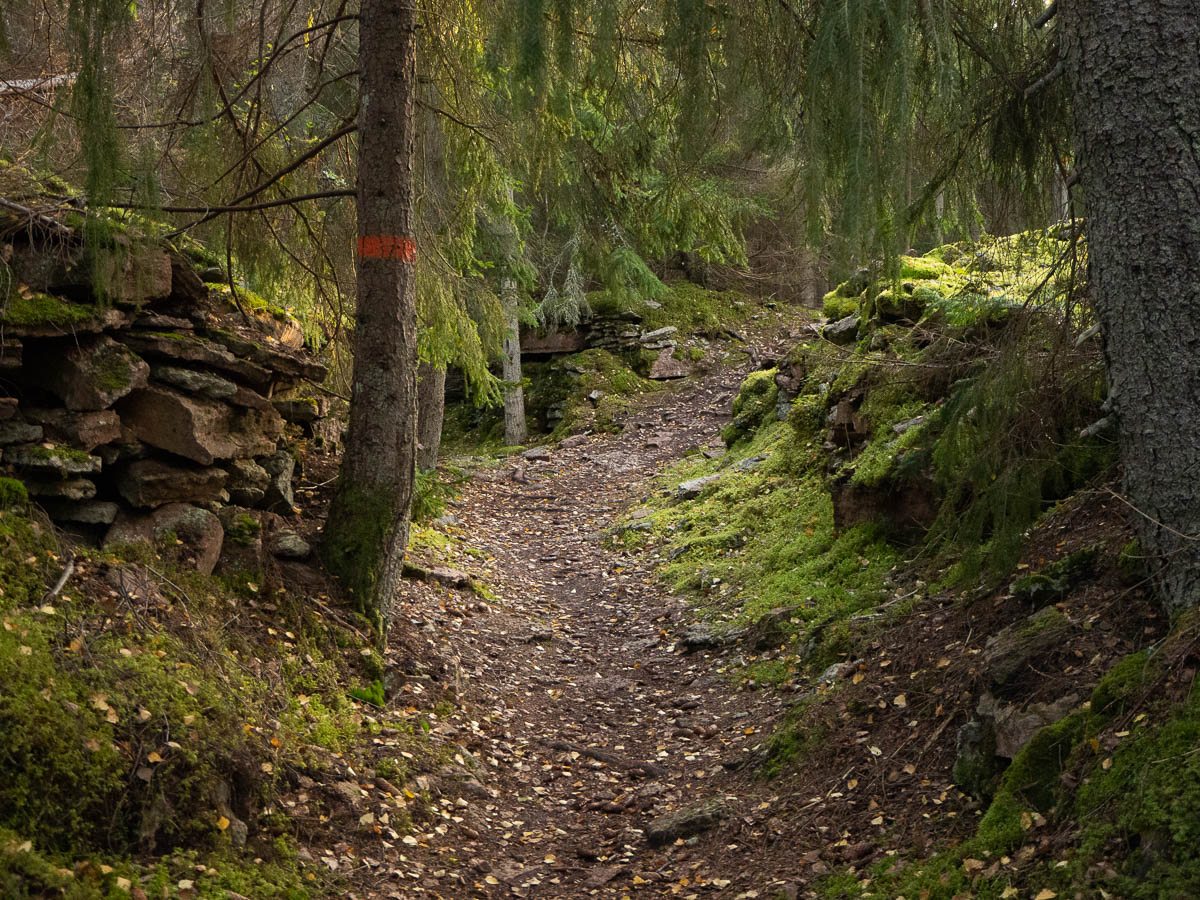
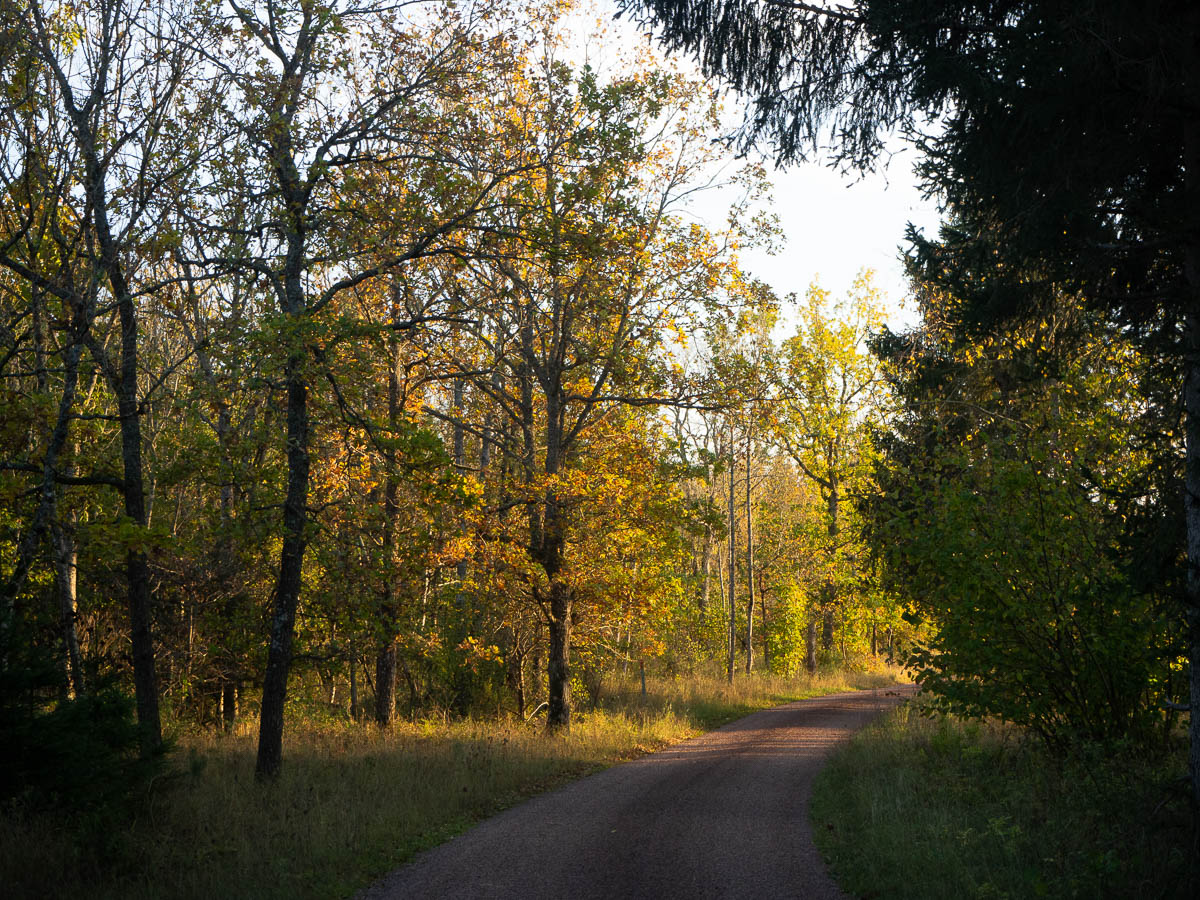
I was really lucky with the weather! Mid-October can bring anything – I could have been walking in freezing rain. But I had bright sunshine most of the afternoon and evening, with only light cloud cover some of the time, and beautiful autumn colours to look at.
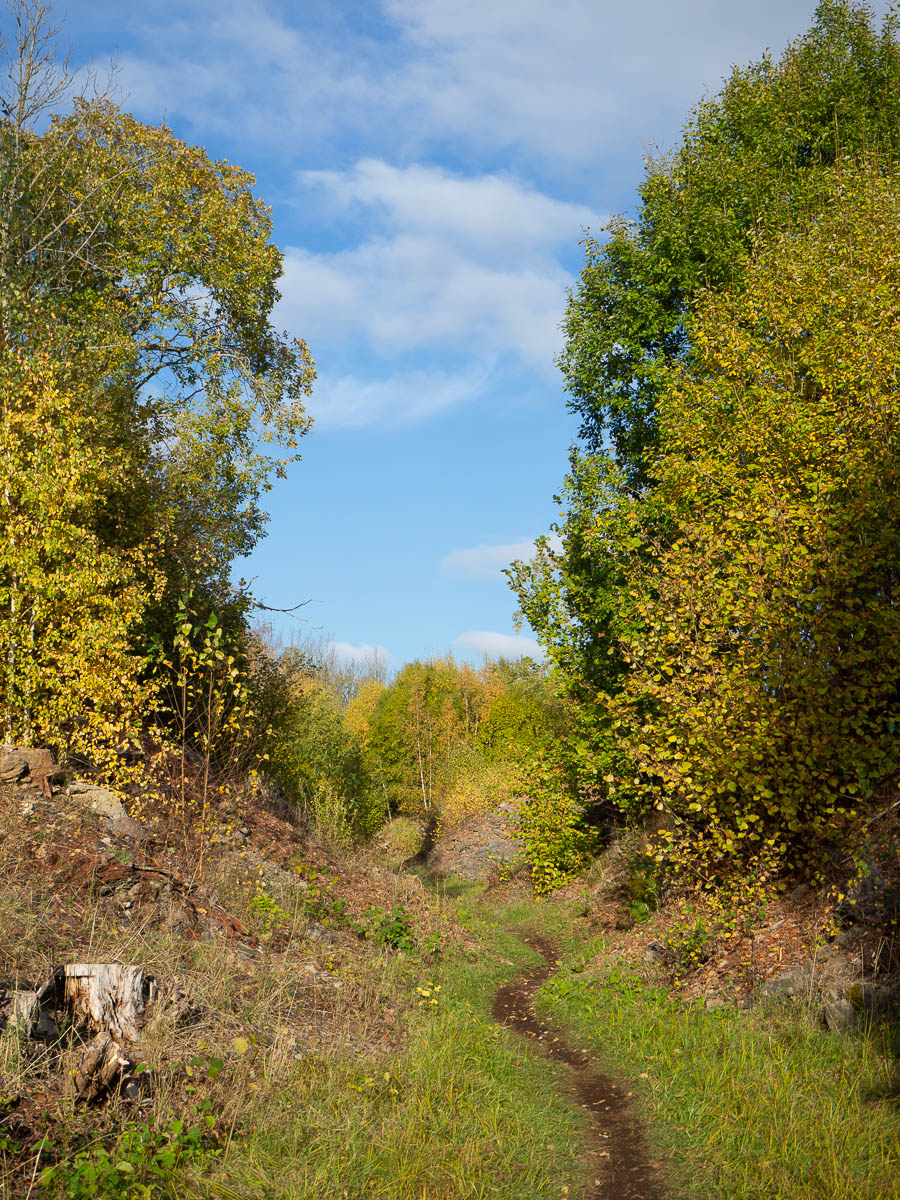
I camped for the night next to a shelter near the Såten nature reserve. It wasn’t even twilight when I stopped, but by the time I was done with dinner, it was full dark. I sat and read outside the tent for a while, but moved inside when it got colder, so I could cover my legs with the sleeping bag. It got really cold at night. Every time I turned the other side, I woke of the cold, and had to tuck the sleeping bag closed around my neck again.
The most memorable moment of today was seeing the night sky when I went out for a last trip to the loo. The sky was clear – and so full of stars! I hadn’t realized that Kinnekulle was so far from lit-up cities. I could even see the Milky Way, which I haven’t done since our stay in Mercantour in 2016. Had I not been shivering with cold, I could have watched the stars for a long time.