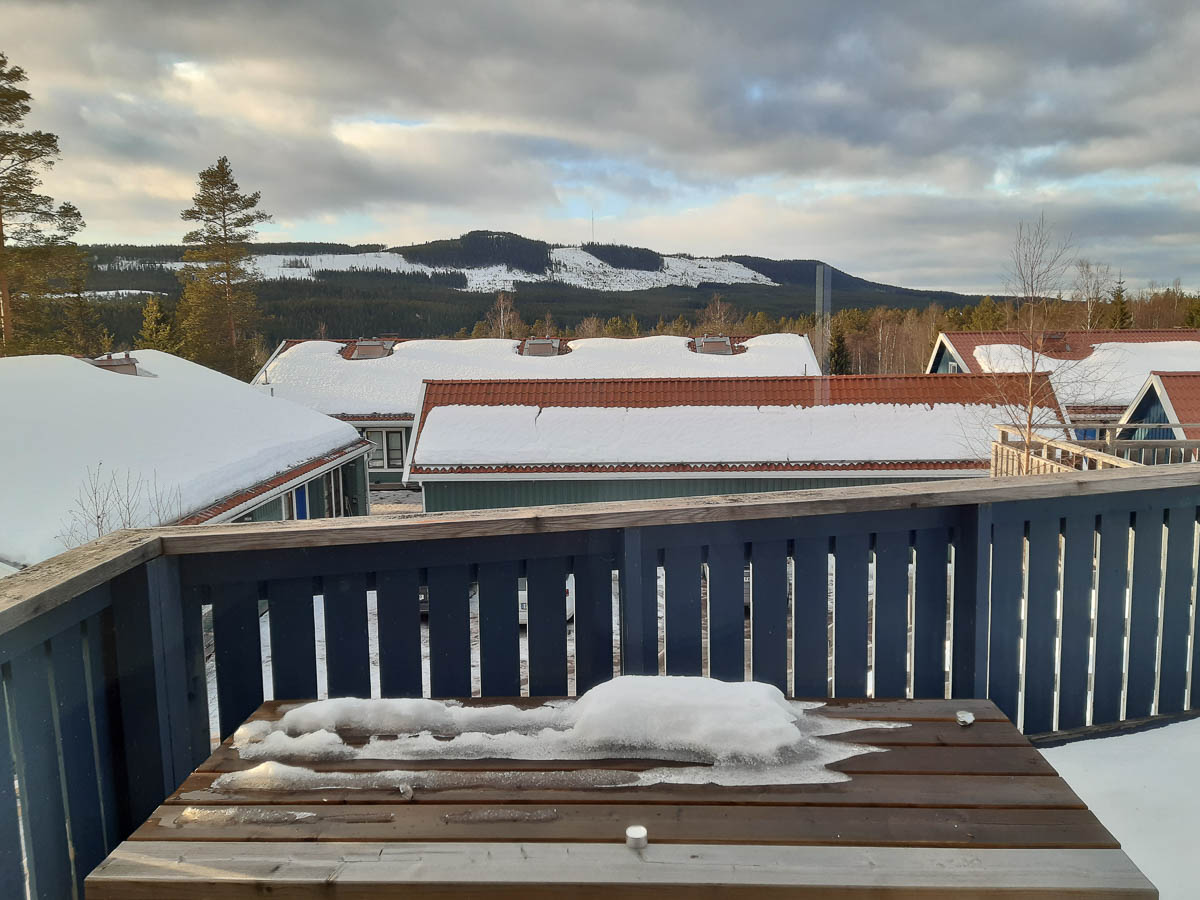
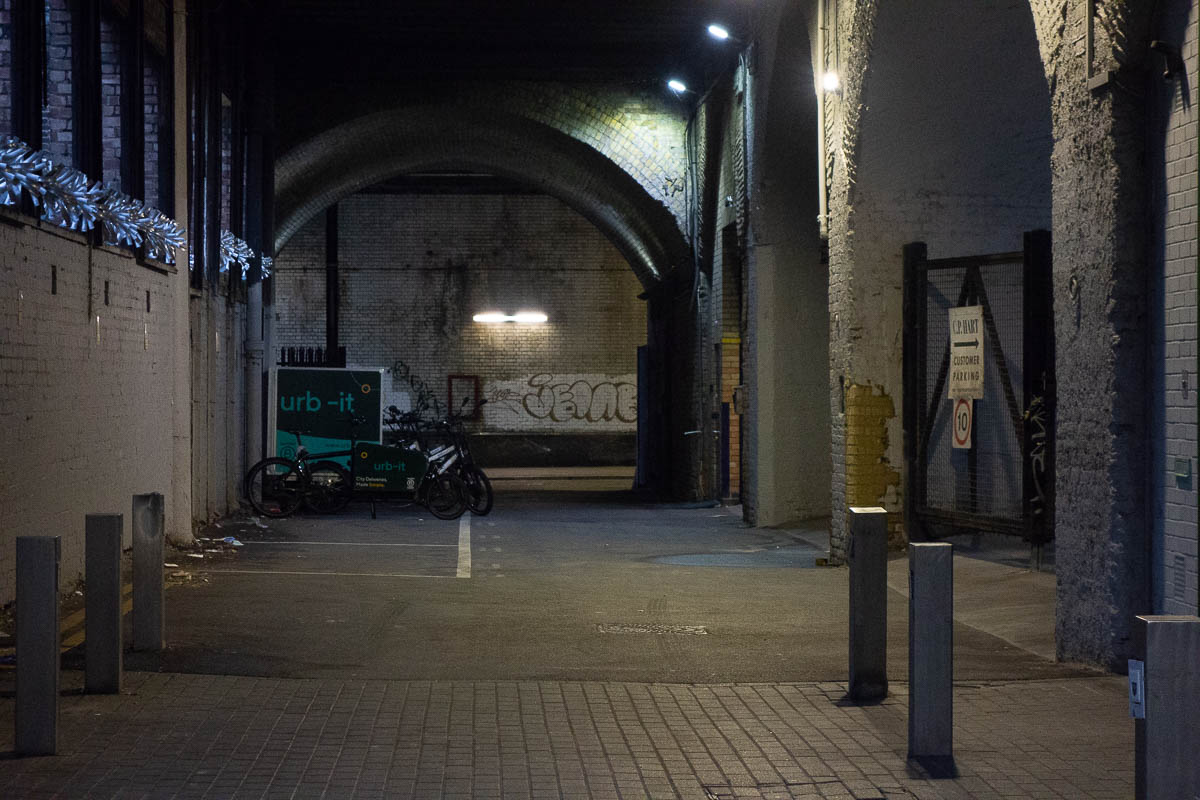
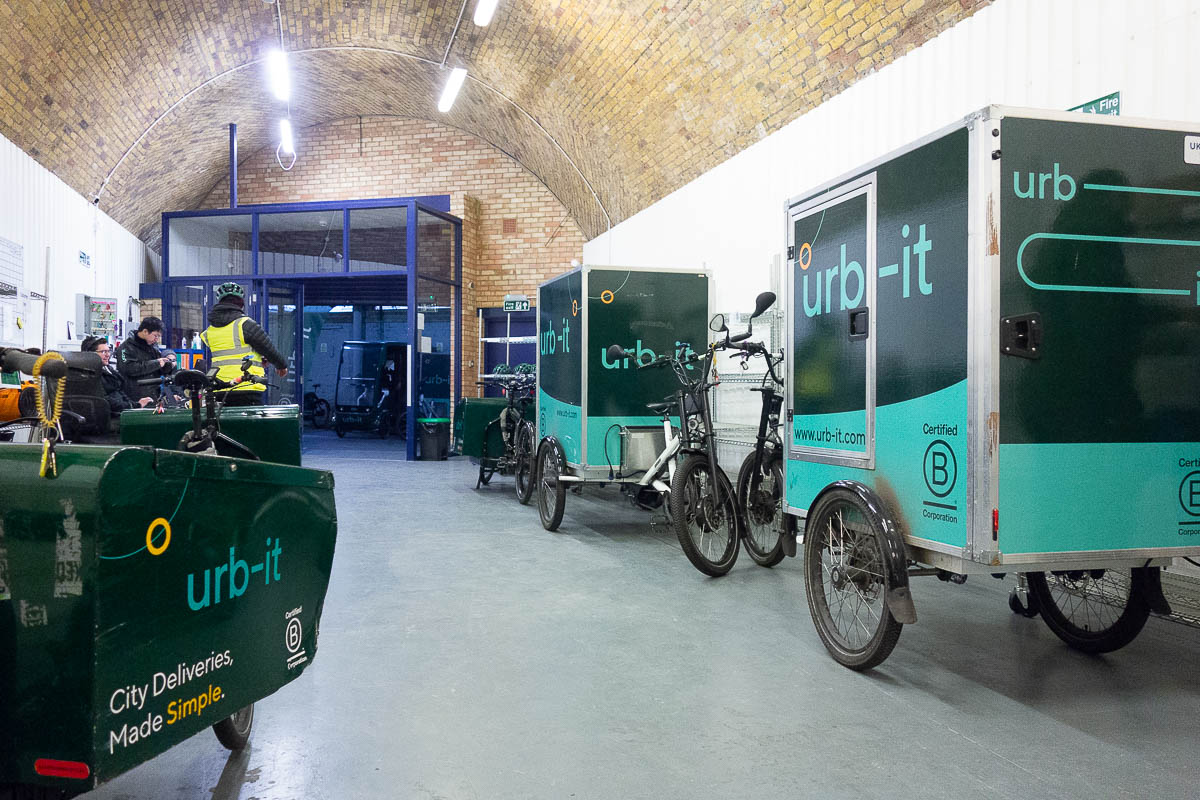
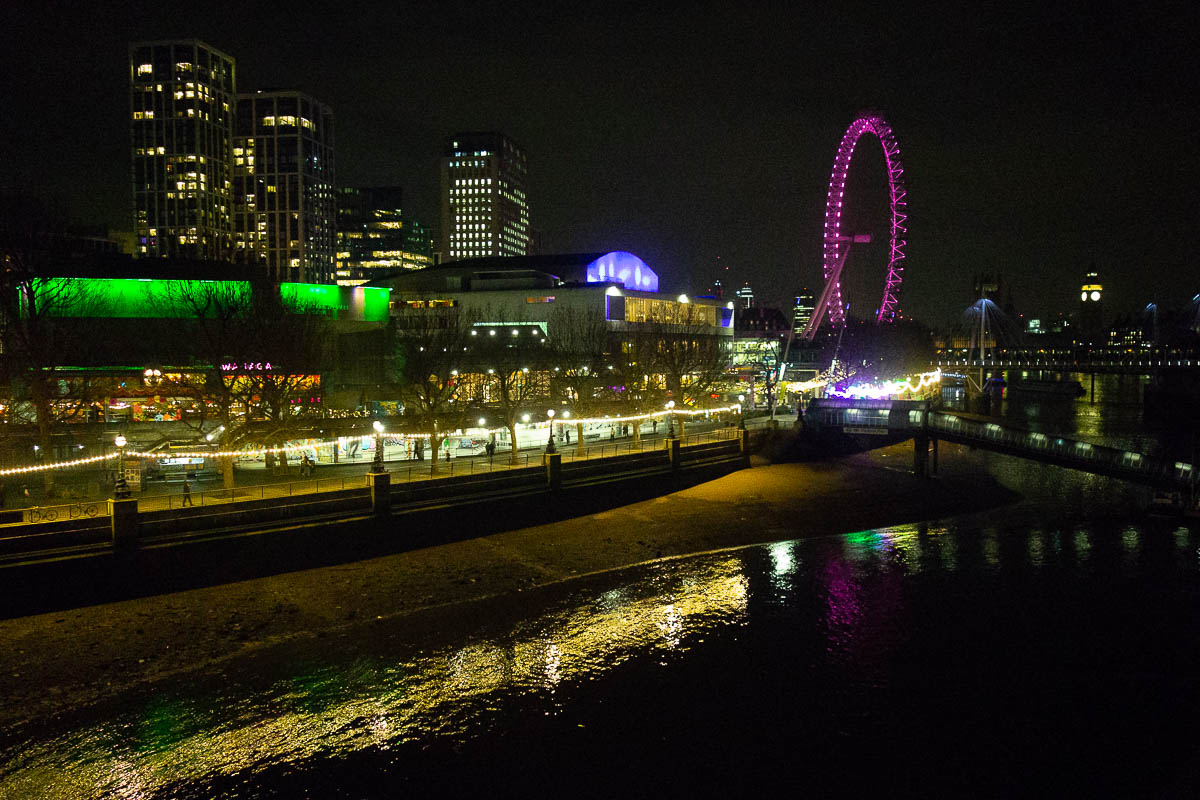
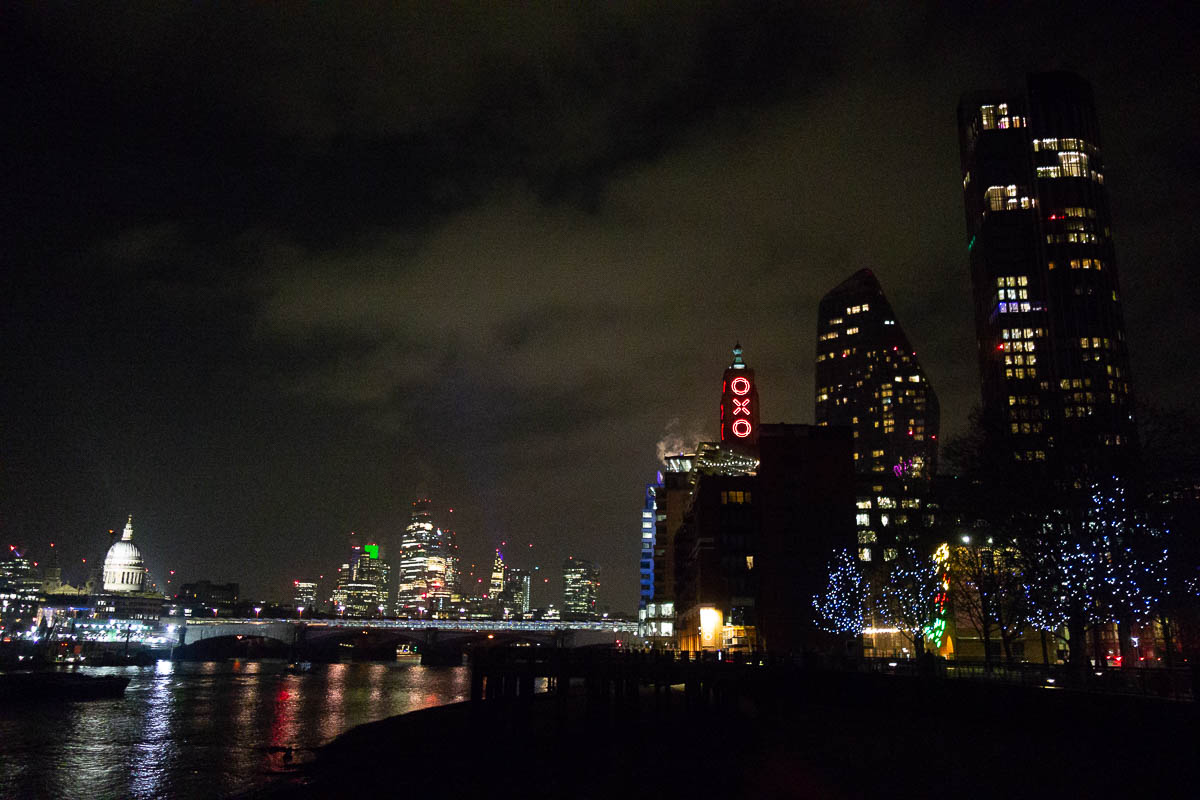
In London for work, to meet Urb-it’s UK team and to visit the London delivery hub. Landed this afternoon, took an hour’s walk along Waterloo Bridge and South Bank and back. Lots of colourful lights. I wish I had a few days – or weeks – to just walk around.


I visited the 13|37 Borlänge office today (and will be staying until tomorrow) to hold my multi-tenancy talk again. I did it live in Stockholm twice when it was fresh, and streamed it once during the quarantine years – you can watch it on YouTube if you’re interested. It’s a few years old but the content hasn’t aged at all; the architectural questions and choices are all still valid, and even the code examples are still fresh. The audience seemed to agree, because the feedback this evening was almost embarrassingly complimentary.

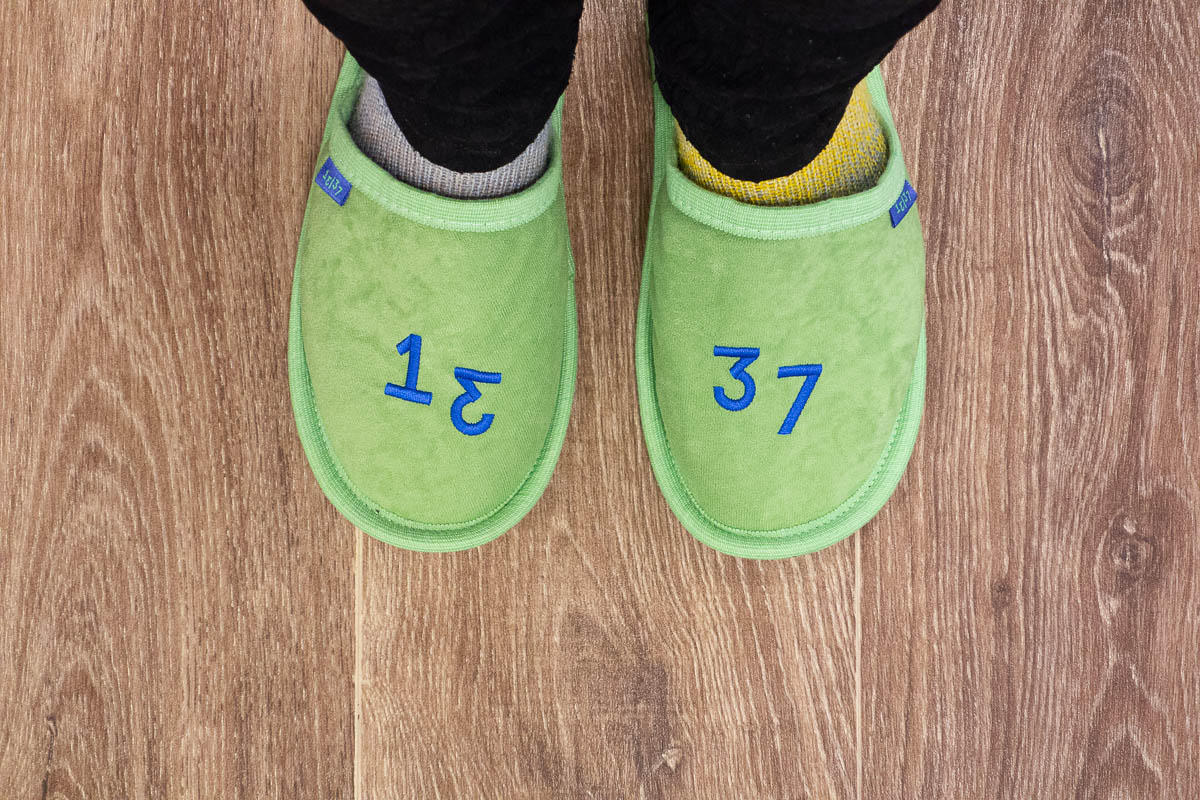
It was also nice to meet the Borlänge colleagues, whom I otherwise only see at major events a few times a year. And I am now the proud owner of our limited edition 13|37 slippers, which can’t be bought and can only be procured by visiting the Borlänge office in person. Merch is generally not my thing but I can see myself packing these for travelling in the future.

We’ve done canals and crooked houses, and an art museum and vintage shopping. Today we went to one of the larger parks in Amsterdam, and then tram-hopped our way back to the city via a circuitous route.

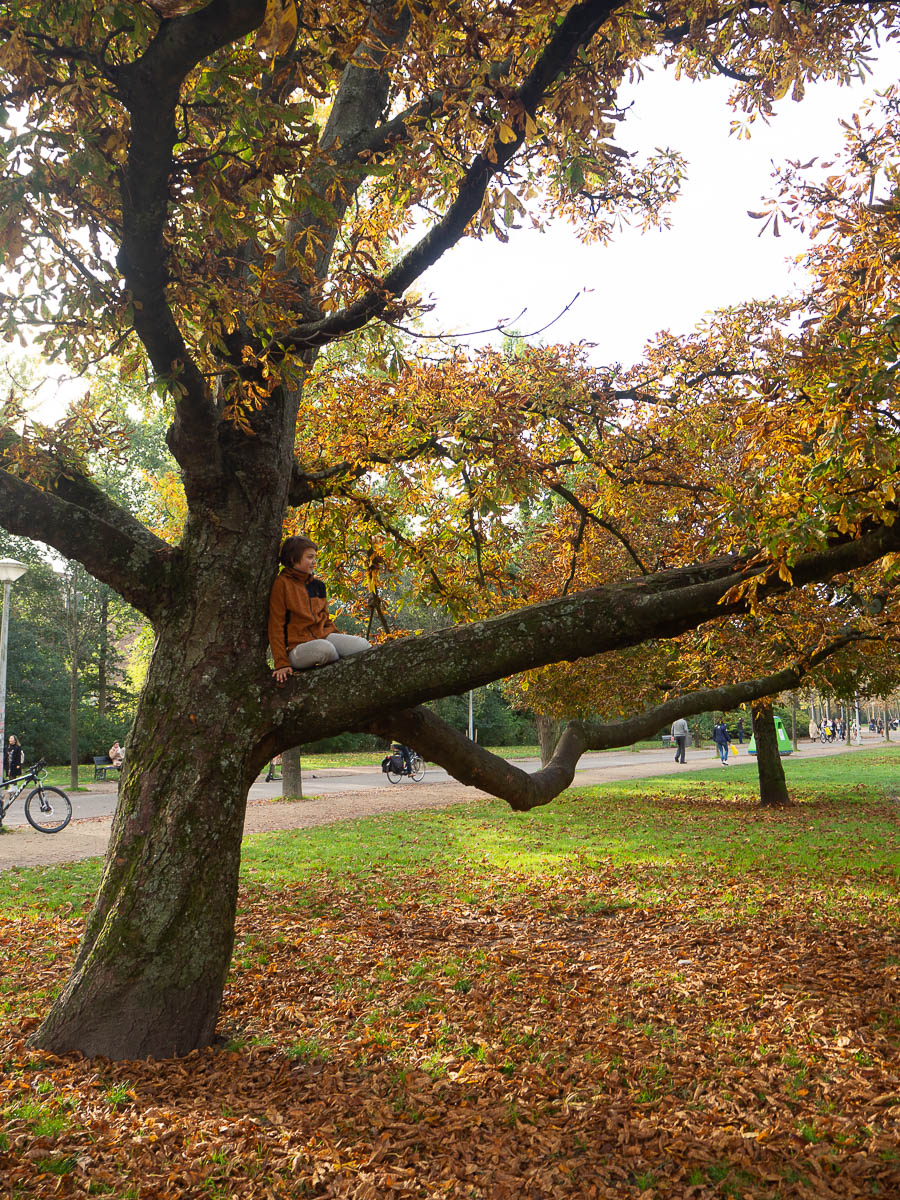
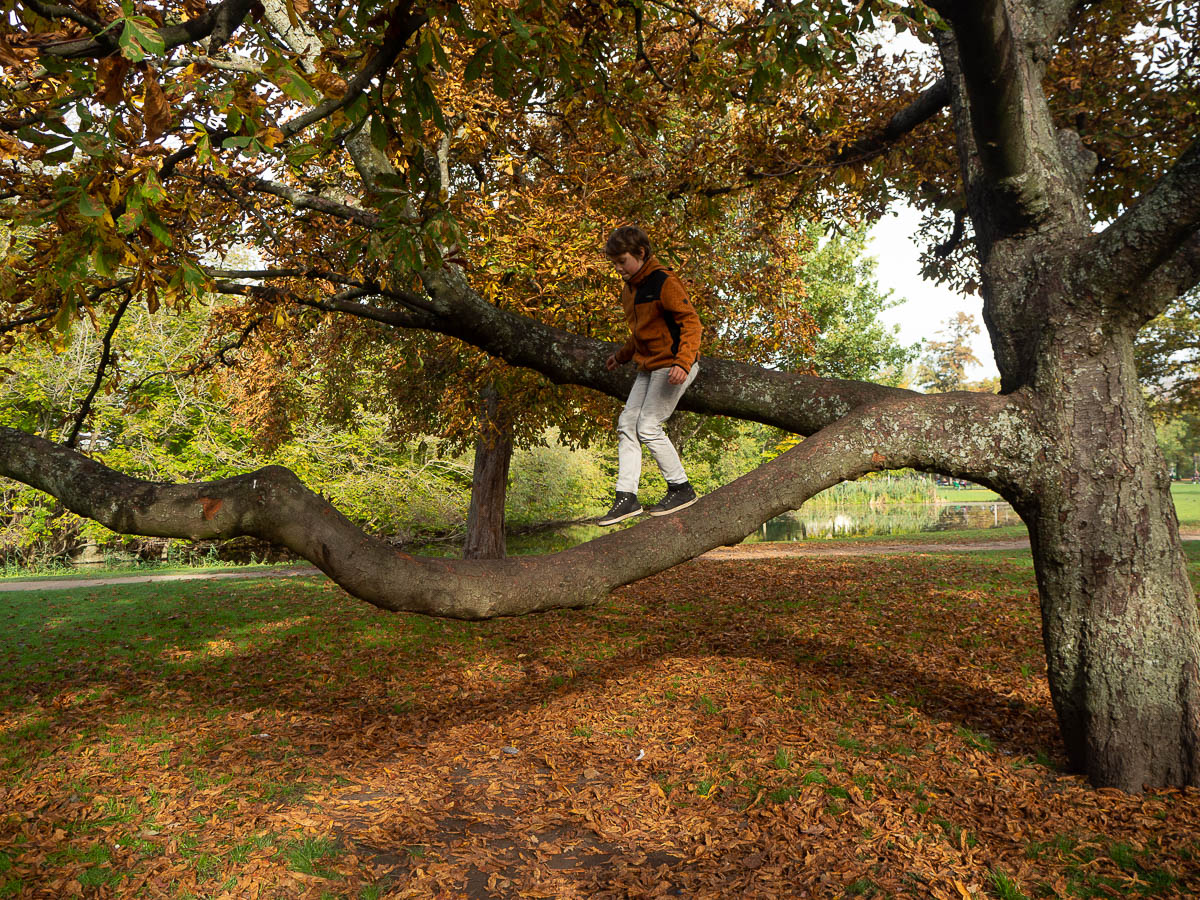
We wandered around Vondelpark and dodged cyclists. Adrian climbed a tree.

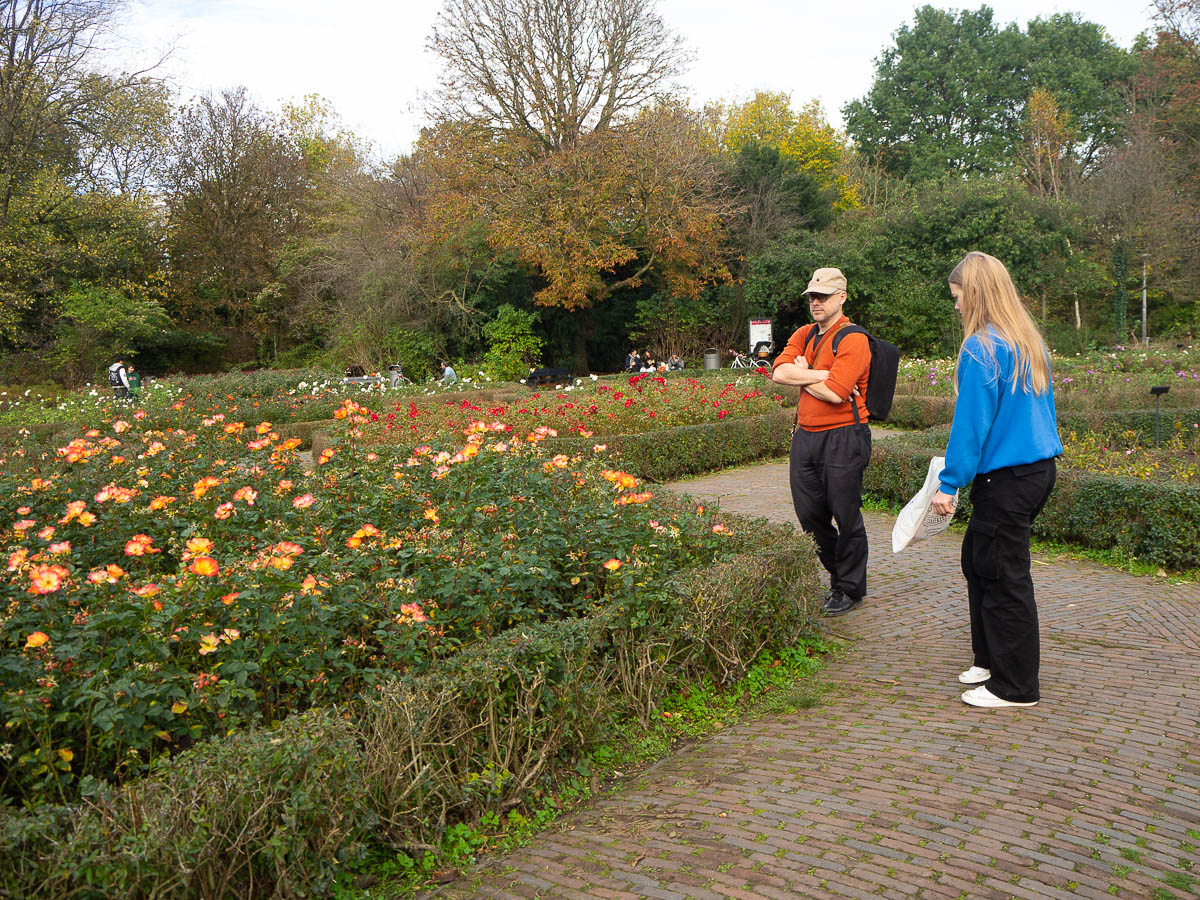
The rose garden in Vondelpark was still blooming.

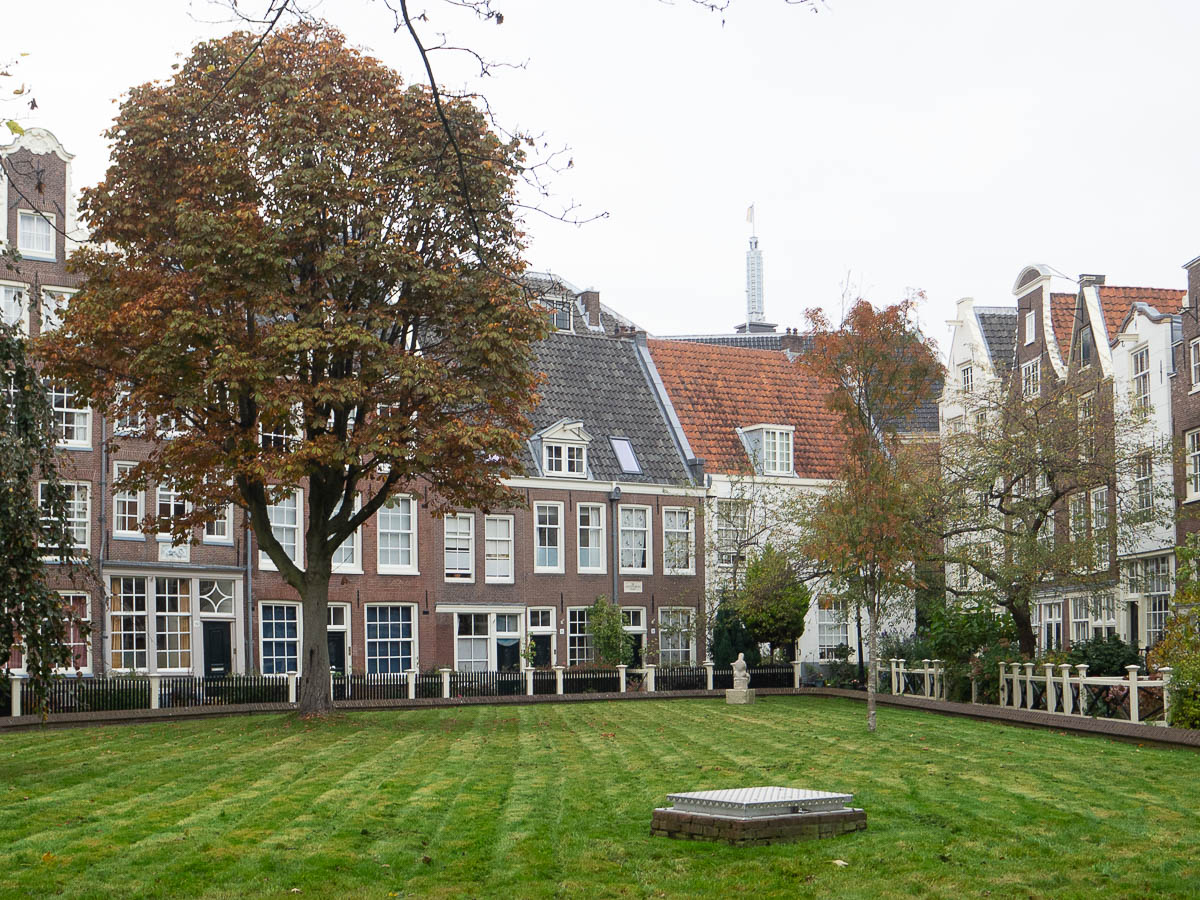
Back in central Amsterdam we visited the lovely and peaceful Begijnhof.

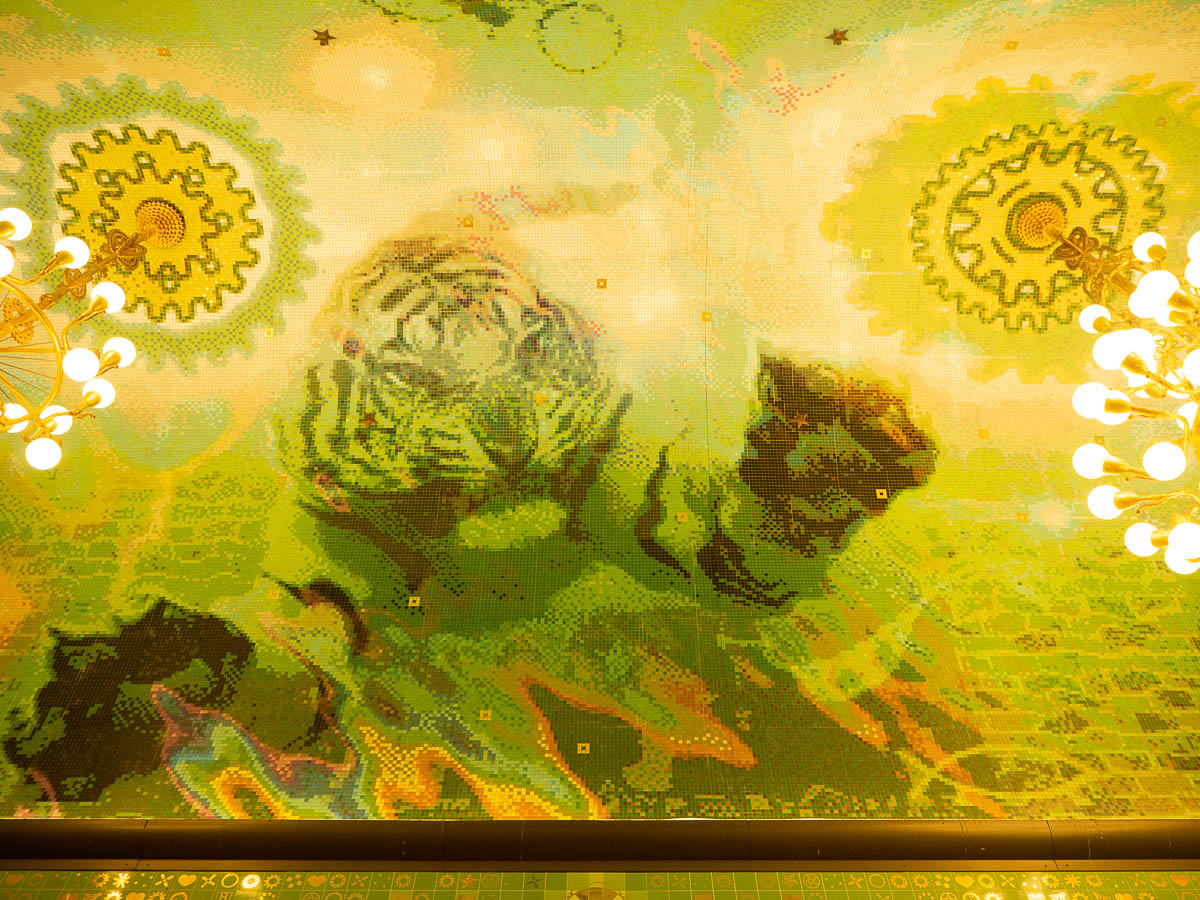
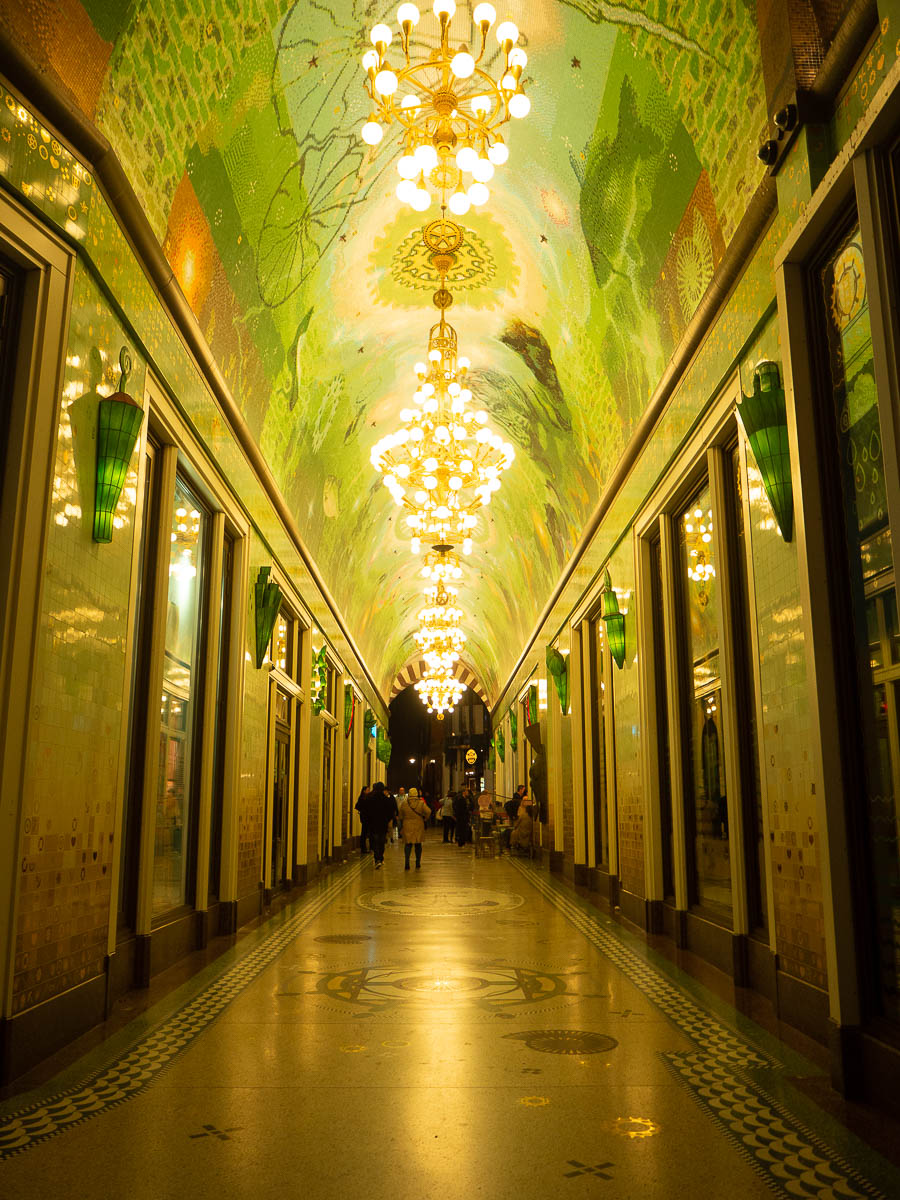
Near our hotel the Beurspassage caught our eyes. The ceiling mosaic is filled with motifs inspired by the canals, including fish, rusty bicycles, and for some reason a tiger, and the chandeliers are made of bicycle parts.


We also went to see the allegedly famous floating flower market, which was much less impressive and interesting than it sounded. The shops were technically floating but they were just large booths that were open on one side, and you couldn’t even see that they floated. And the flowers were mostly seeds and bulbs this time of the year.

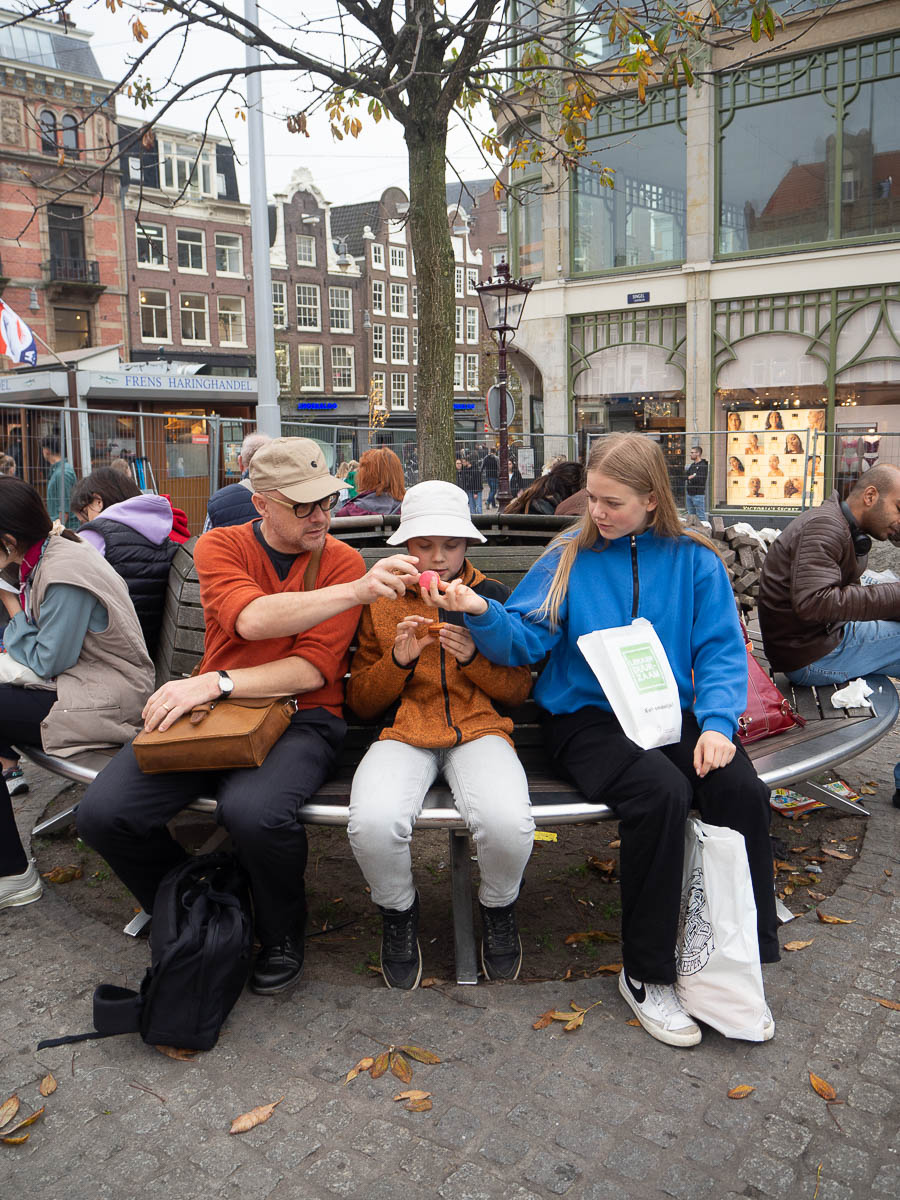
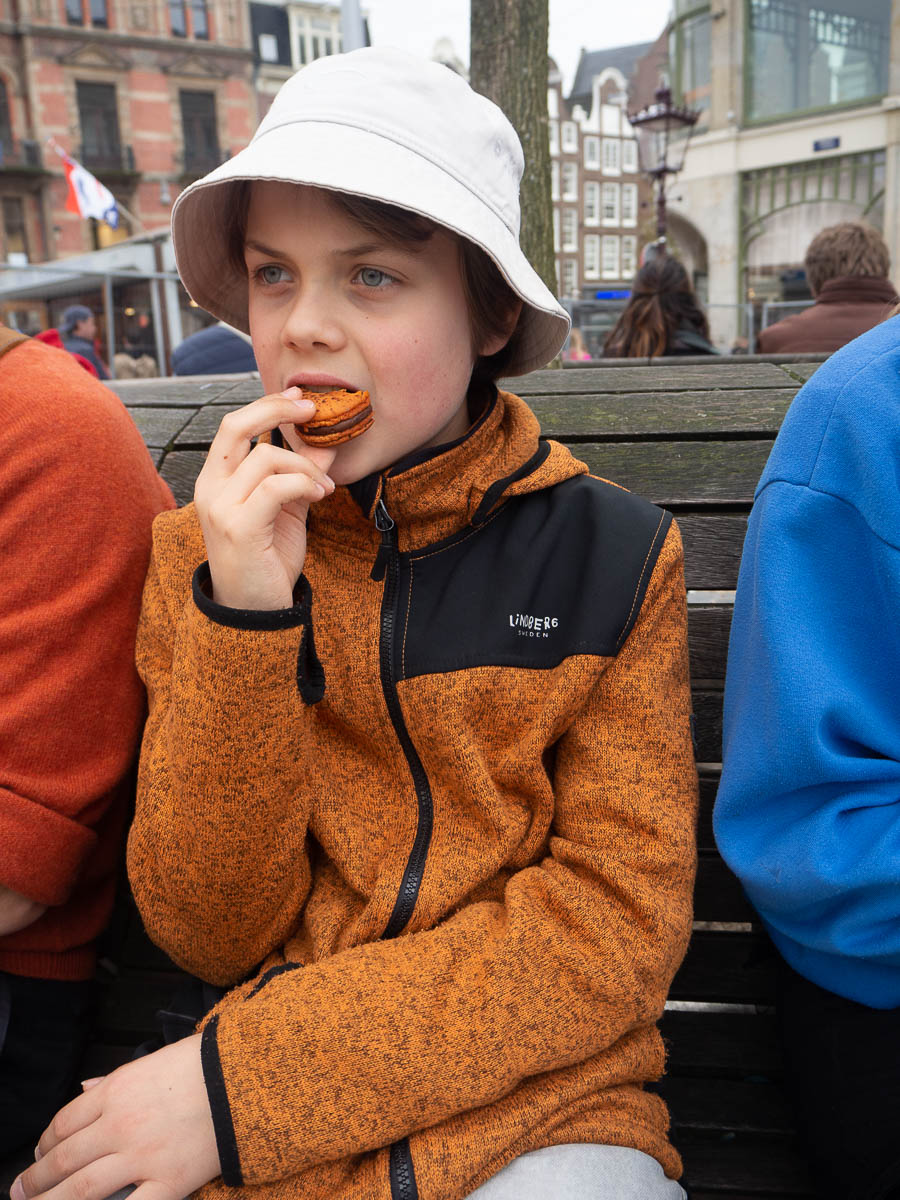
There was a cafe near the flower market, though, that sold macarons.


And then it was time to start heading home.

Amsterdam was an interesting city to visit, and parts of it were very pretty. But it’s not one of my favourite cities and I’m not sure I’d want to come back for a second visit. I didn’t like the crowds, or the ever-present smell or weed, or all the cigarette smoke.

In the end the best part of the weekend for me was simply spending three full days together as a family. At home we’re often each doing our own thing. Here we were together all the time.


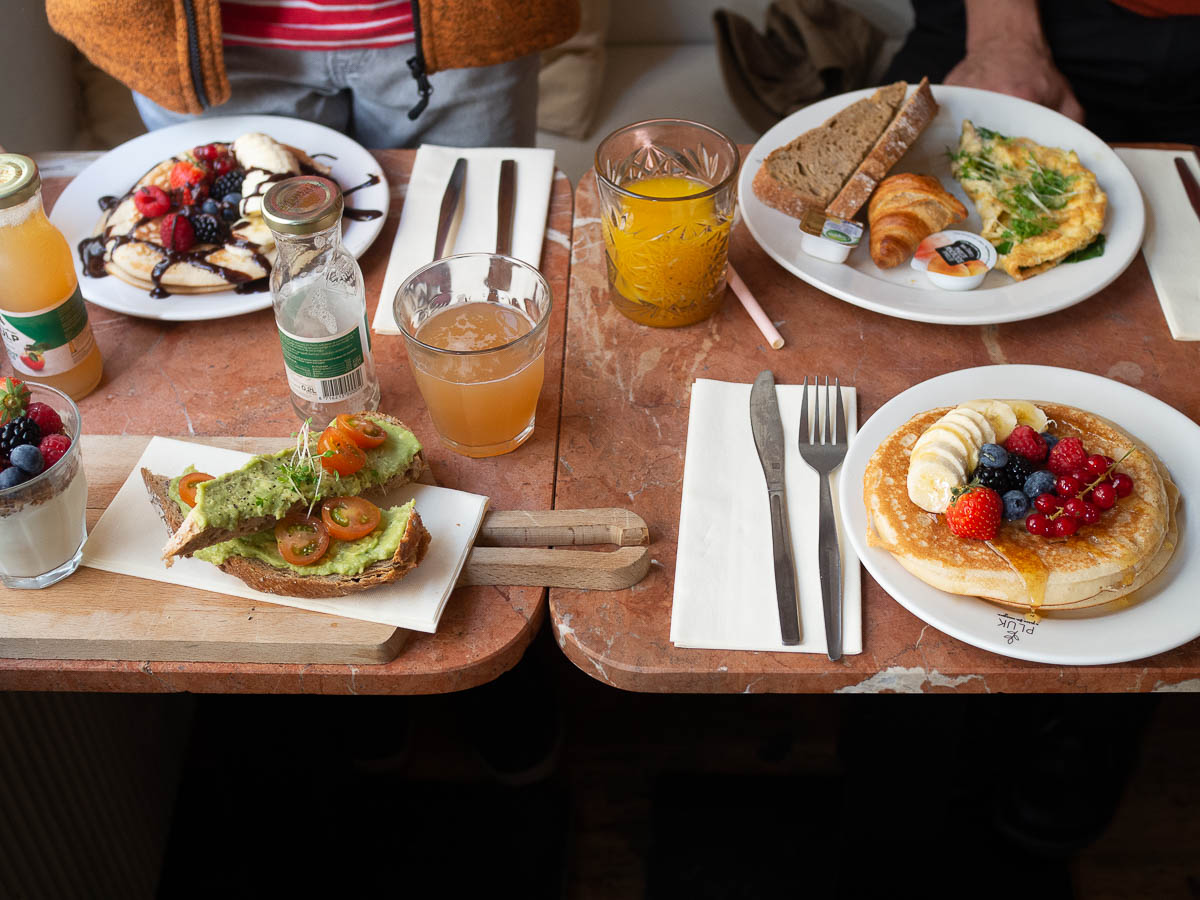
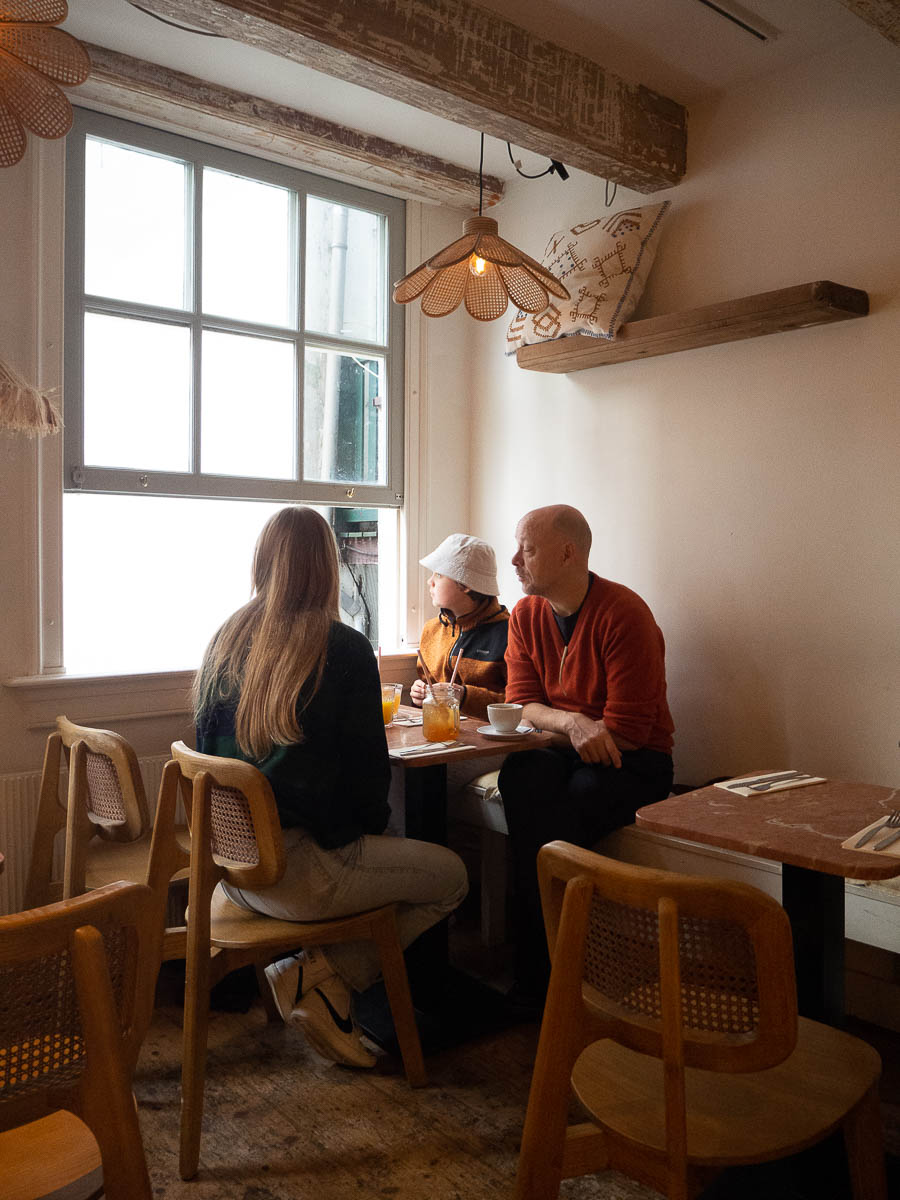
We started both yesterday and today with luxurious breakfasts at a café that Ingrid had found online. Pluk on Berenstraat, in case you find yourself in that area. The online reviews are very mixed but we got very good food, though the service was rather slow.
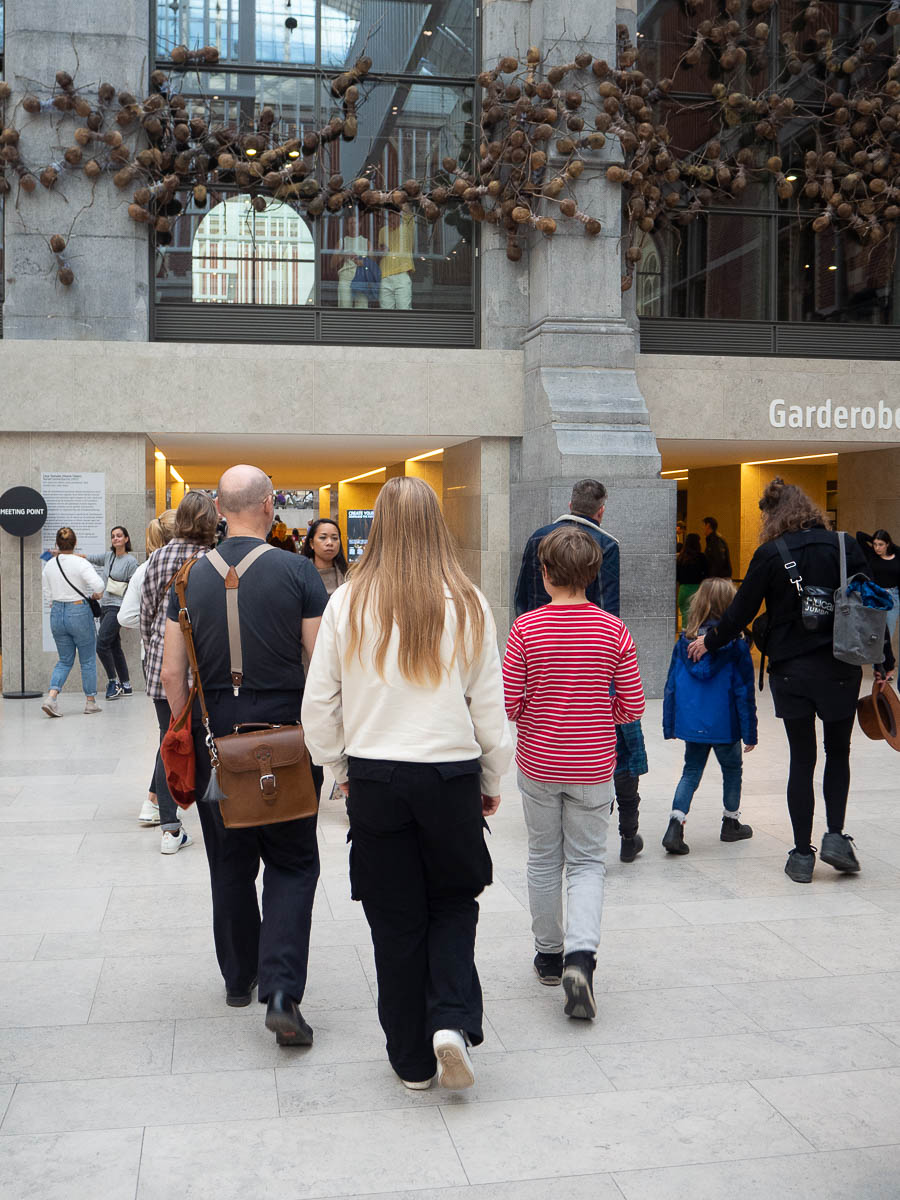
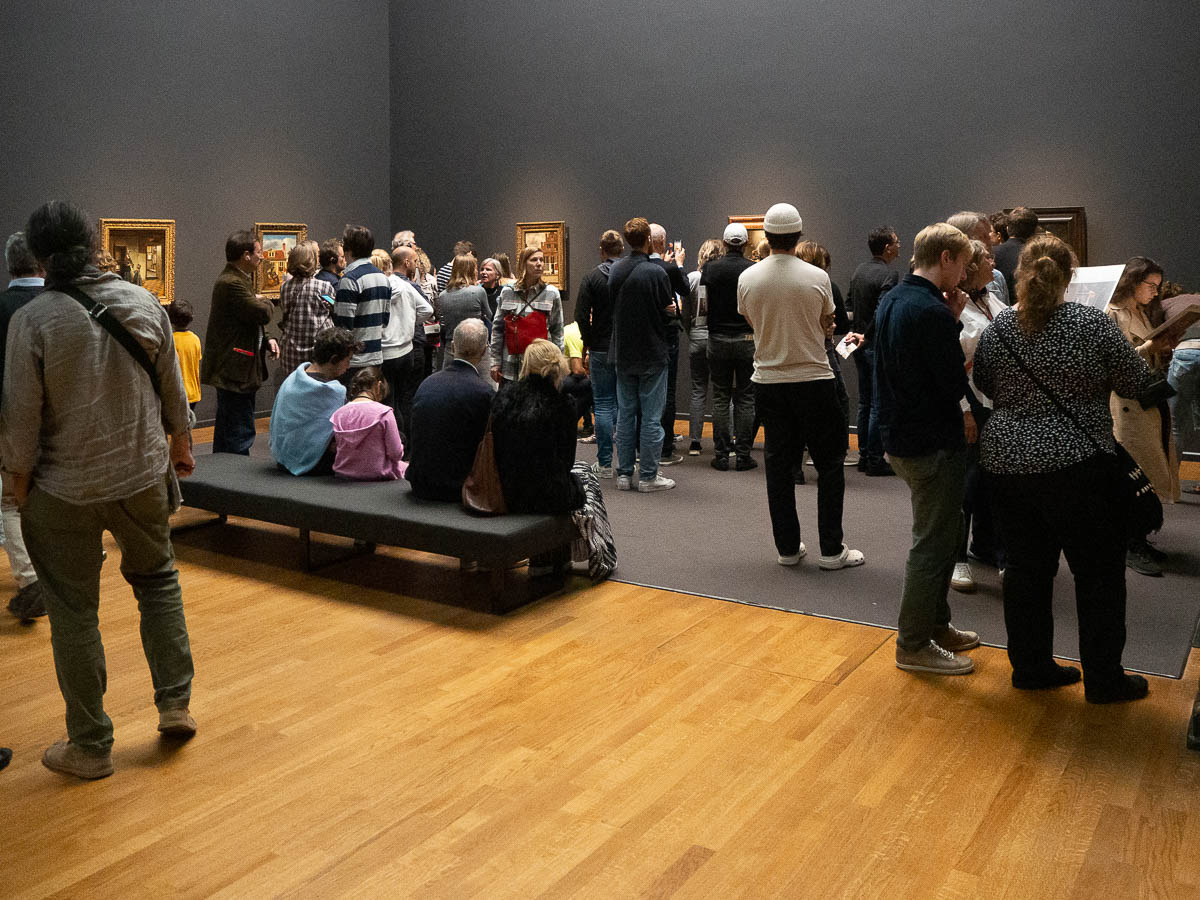
We had seen enough canals and crooked houses and cute little streets yesterday and wanted something different today, so we went to the Rijksmuseum.

The museum was very visitor-friendly, with easy-to-read maps that guided people to the most popular paintings, but also to other parts of the collection. The popular works – like their one and only Van Gogh – had large crowds in front of them, so I didn’t even bother to try and look at those. There were plenty of other interesting things to see.

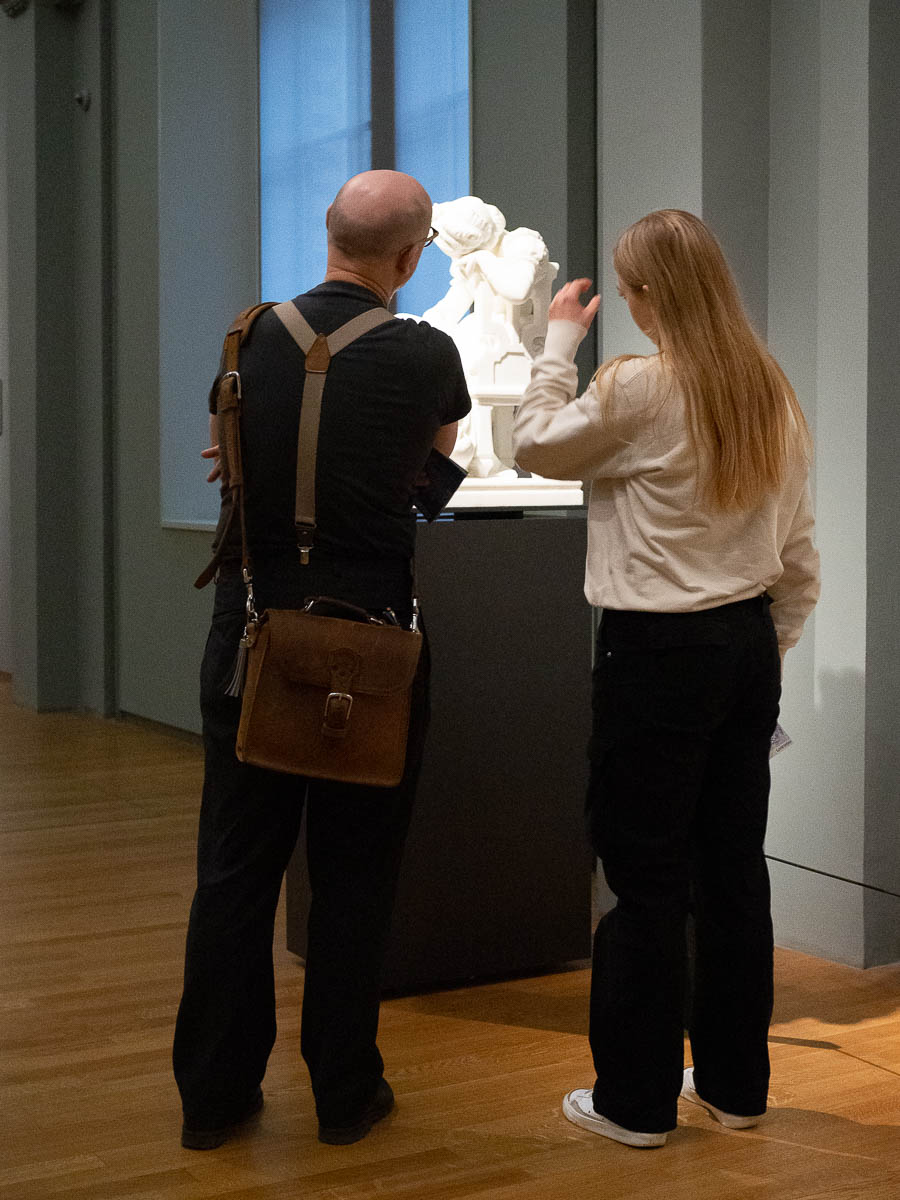
Even though we all walked in the same rooms, we often split up because of our diverging interests. Ingrid is interested in art and paints herself, so she looks at details and technical aspects that Adrian doesn’t care much about. So she and Eric (who also painted when he was young) looked at the paintings with artists’ eyes, while Adrian and I looked at them with general curiosity.

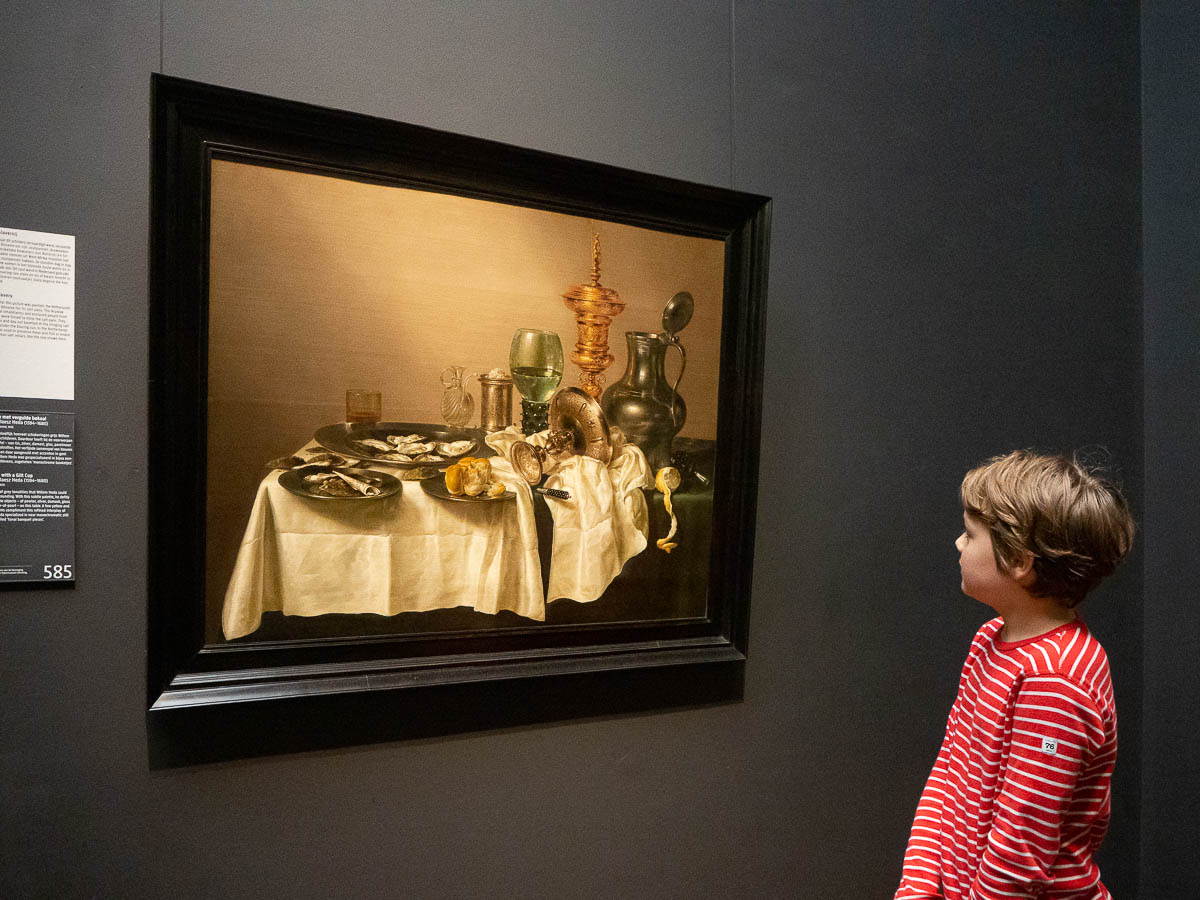
We noted, for example, the prevalence of grapes, glass bowls, and curls of lemon peel in 17th century still life paintings.

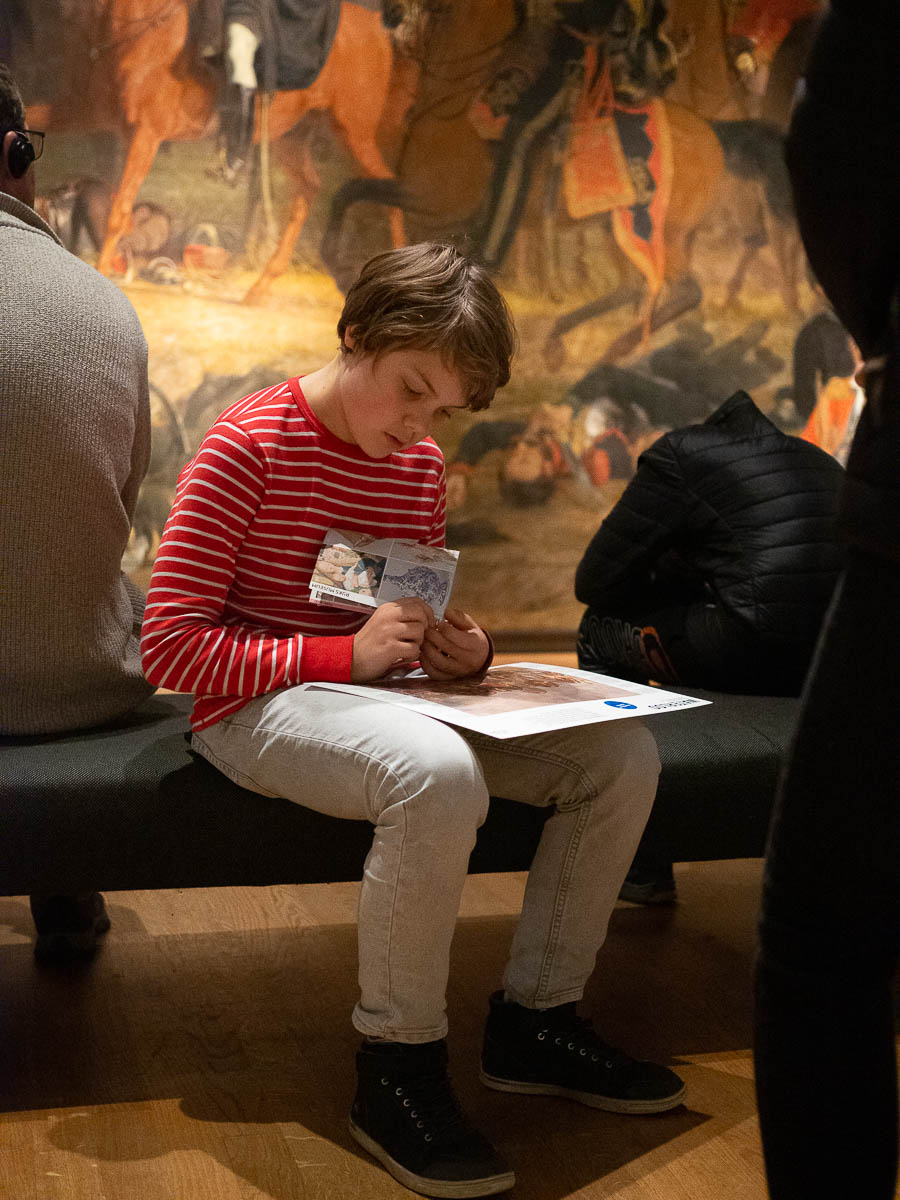
The curators at the Rijksmuseum had done a great job with the signage. All too often, museums label each work with its title, maker and year, and nothing more. Here there were often interesting background facts, and info sheets with even more facts and stories.

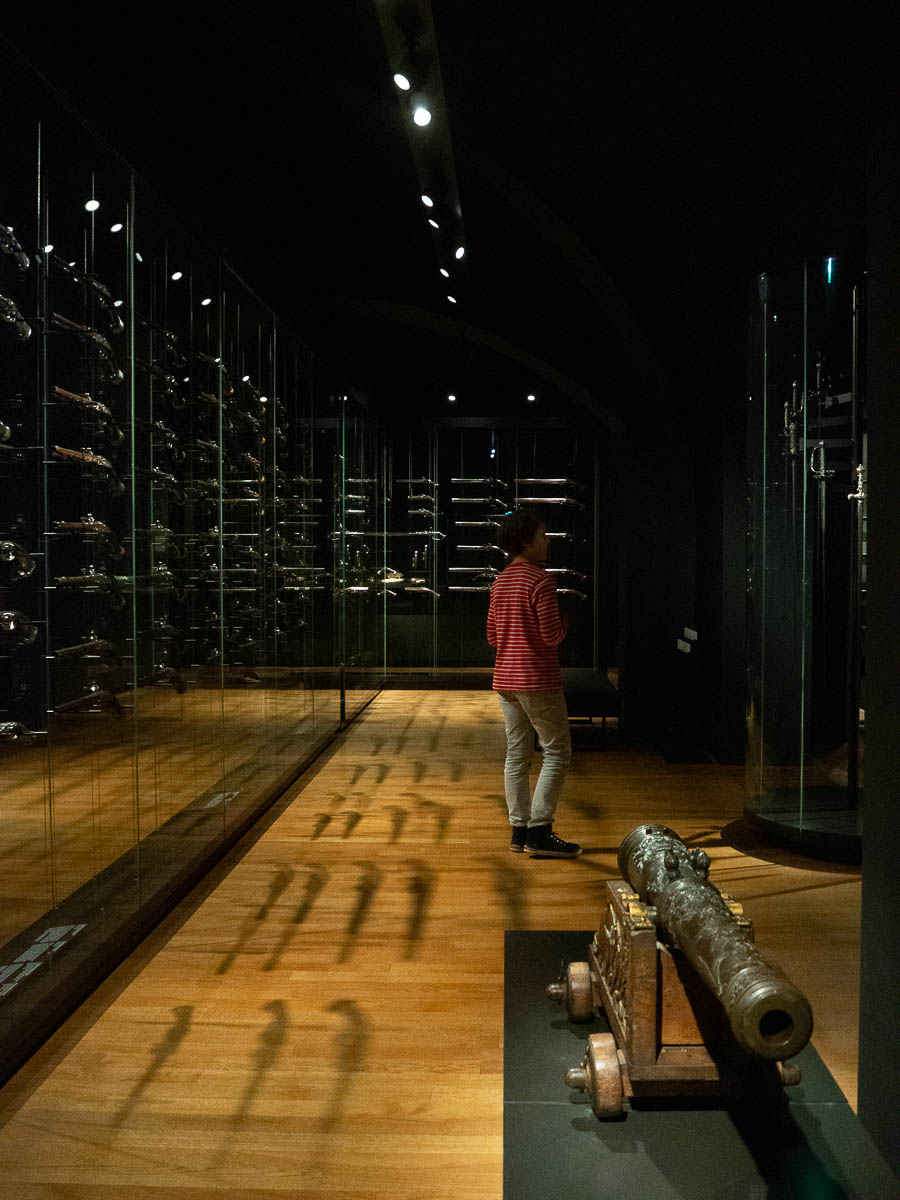
When we tired of paintings, we looked at cannons, porcelain, Delft pottery and ship models.

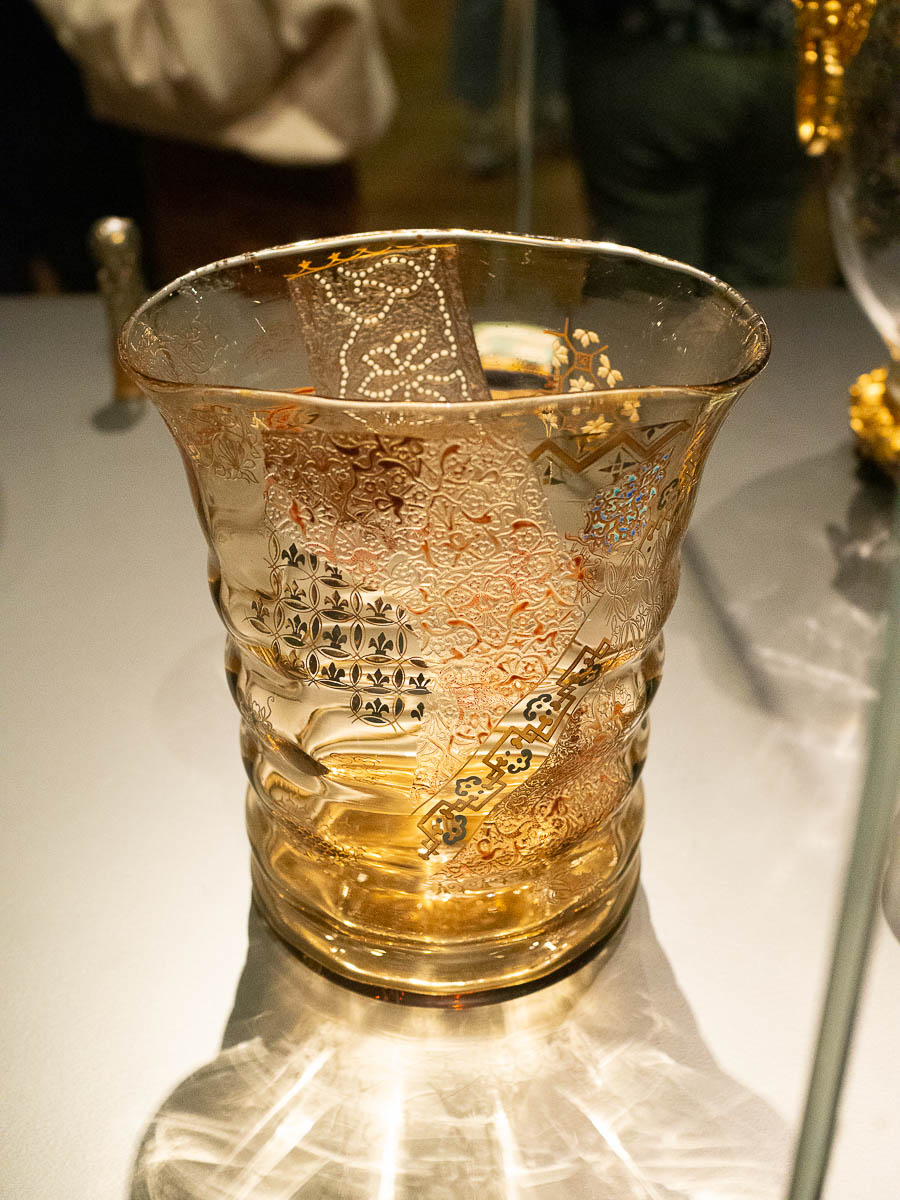
I liked this glass vase by Émile Gallé, with its irregular patterns borrowed from various cultures.

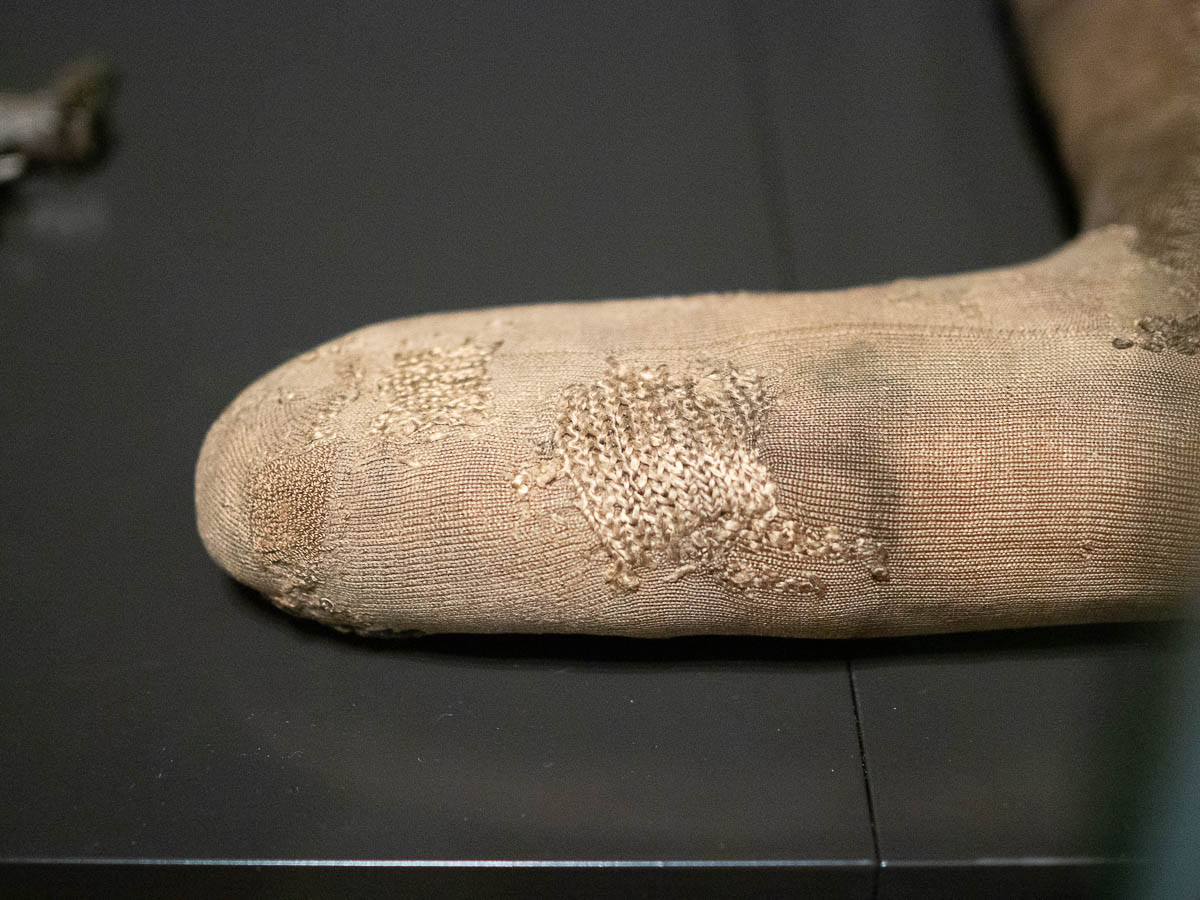
And this repeatedly darned sock, found in a seaman’s chest after a shipwreck.

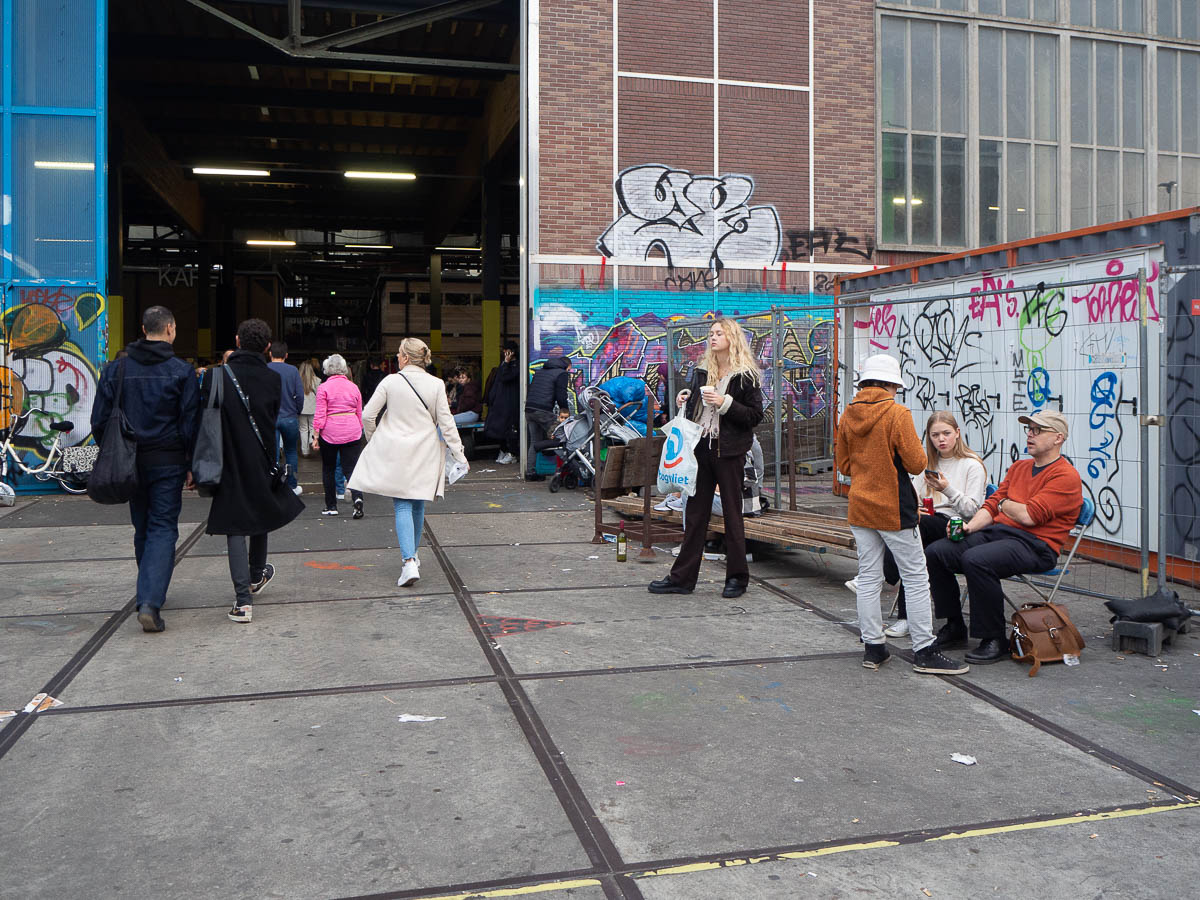
From high culture to low. In the afternoon we took the boat to North Amsterdam to a large flea market that Ingrid wanted to browse for vintage clothing. She didn’t find anything that fit, but I bought a jacket.
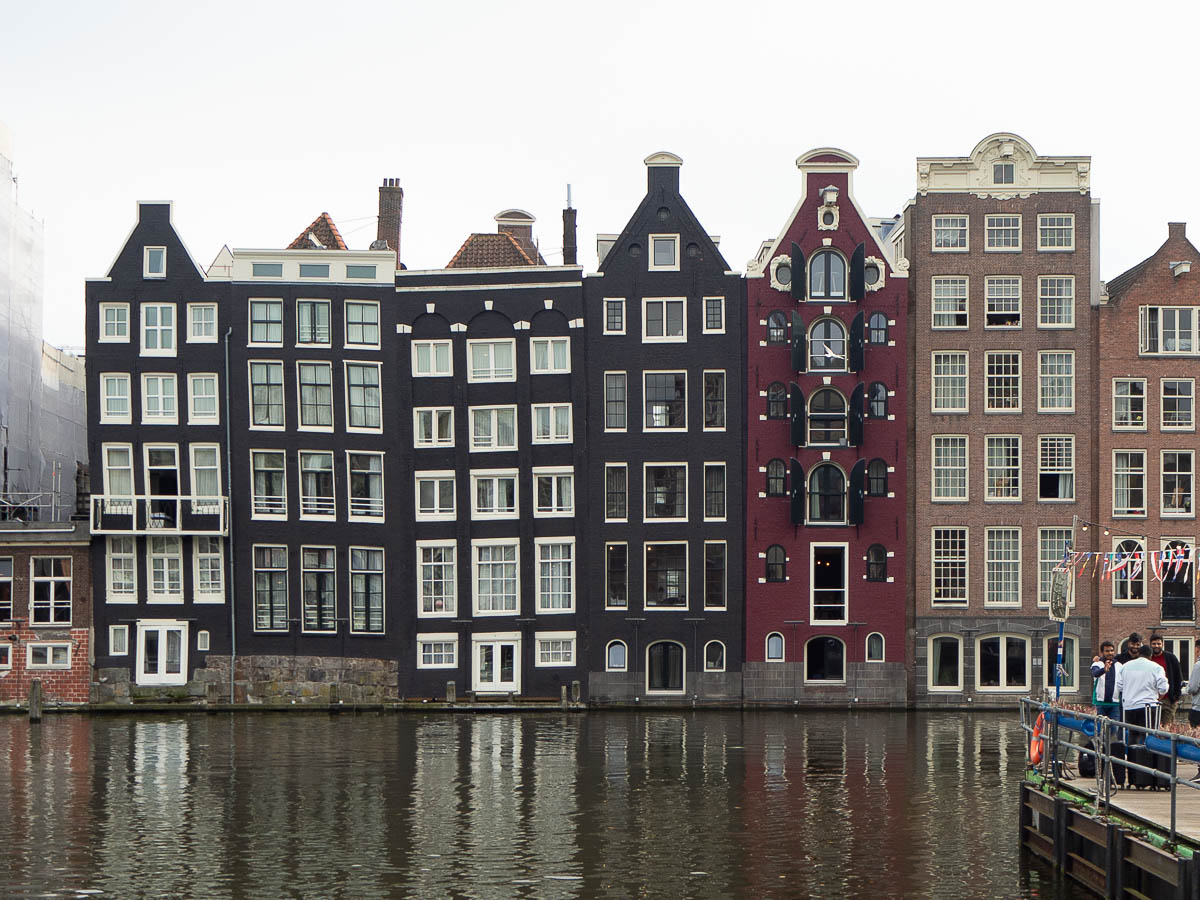
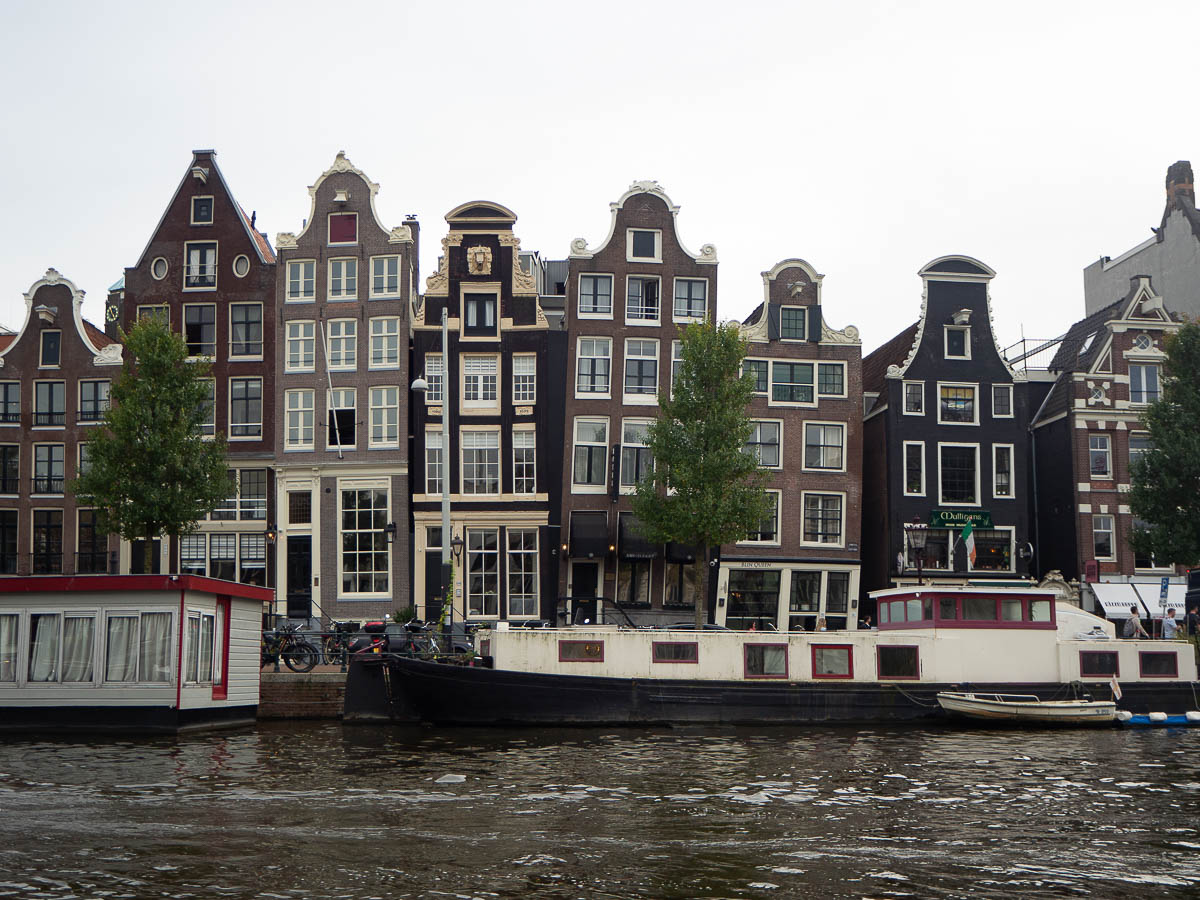
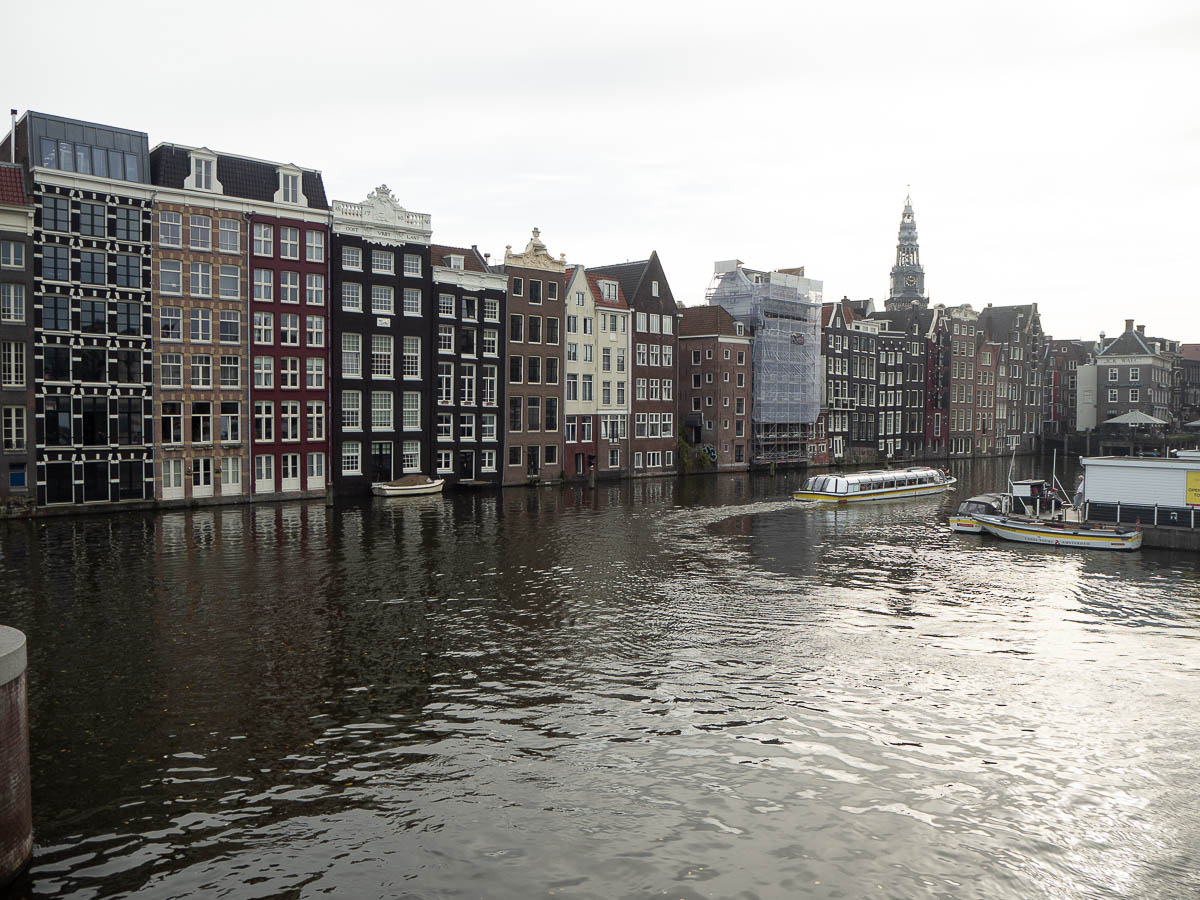
Some of the most crooked, tilting, slanted houses I saw in Amsterdam.

I wonder what it feels like to live in one of them. They must even out the floors, or the houses would be unlivable. But do they do the same with the inside of the walls? Or do they just accept that furniture doesn’t stand flush with the wall, and kitchen cabinets are crooked?


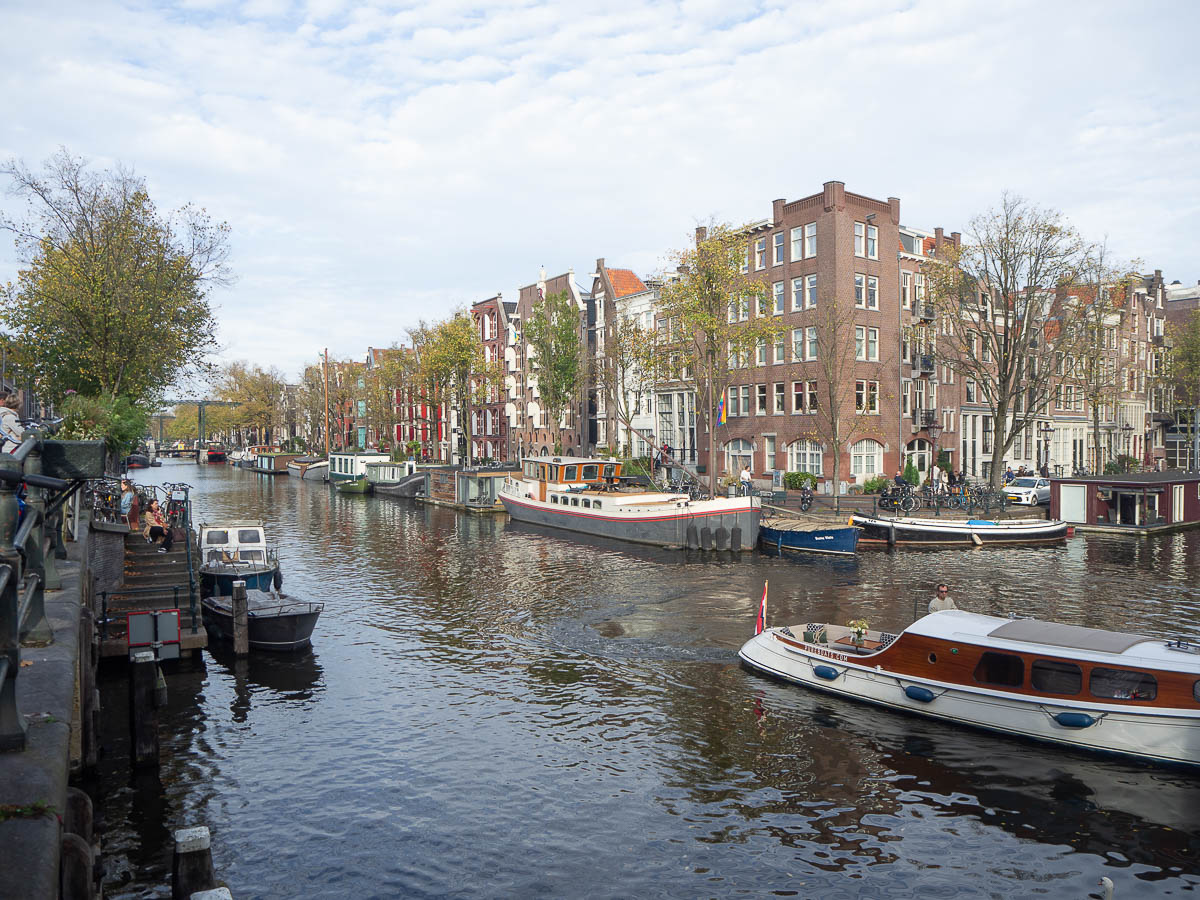
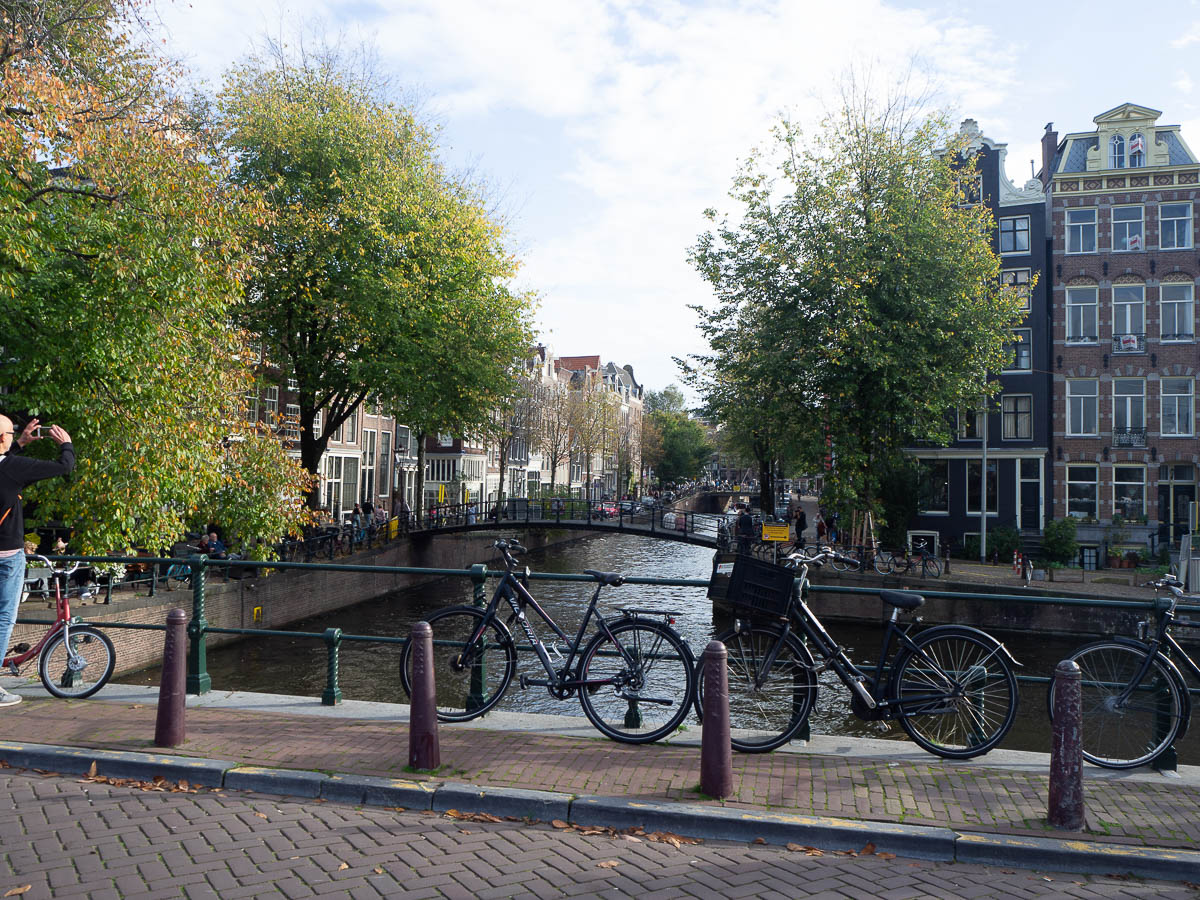
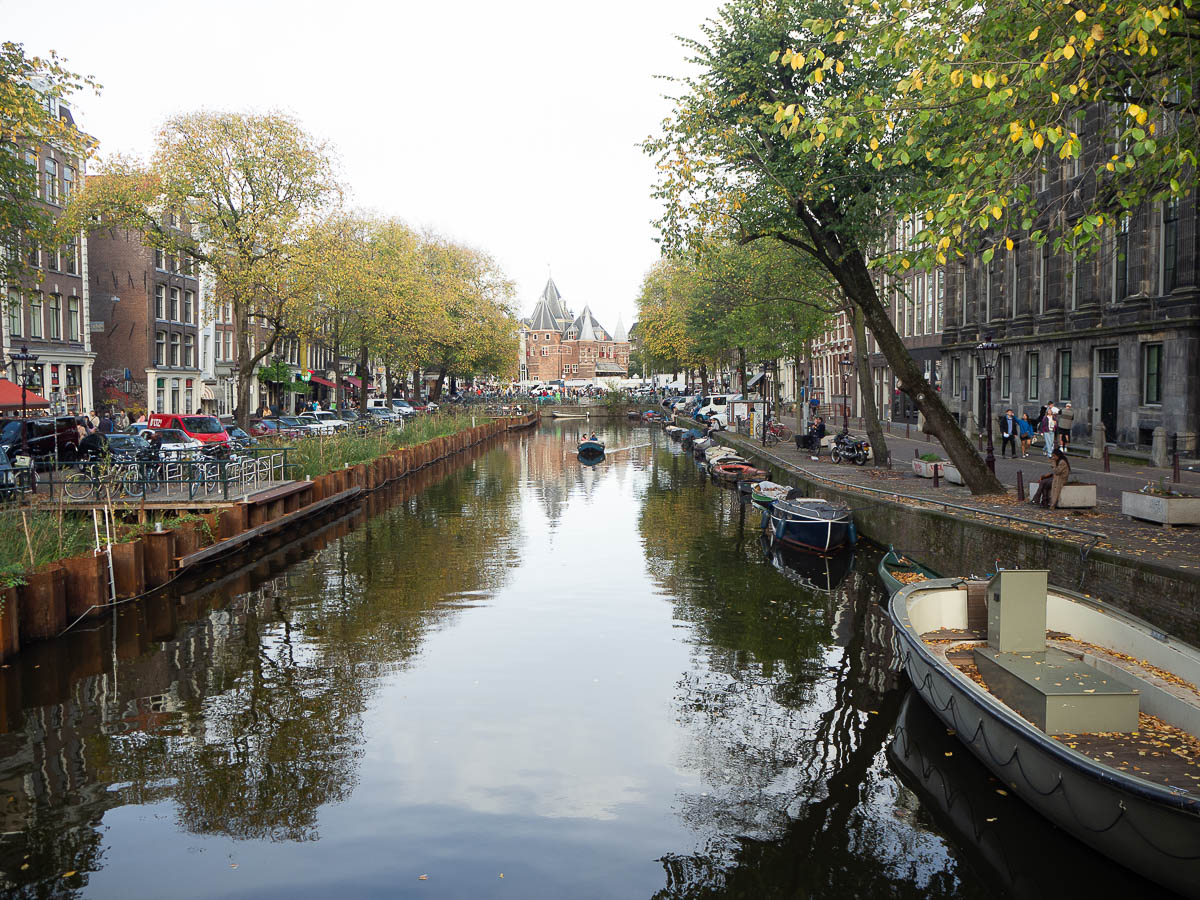
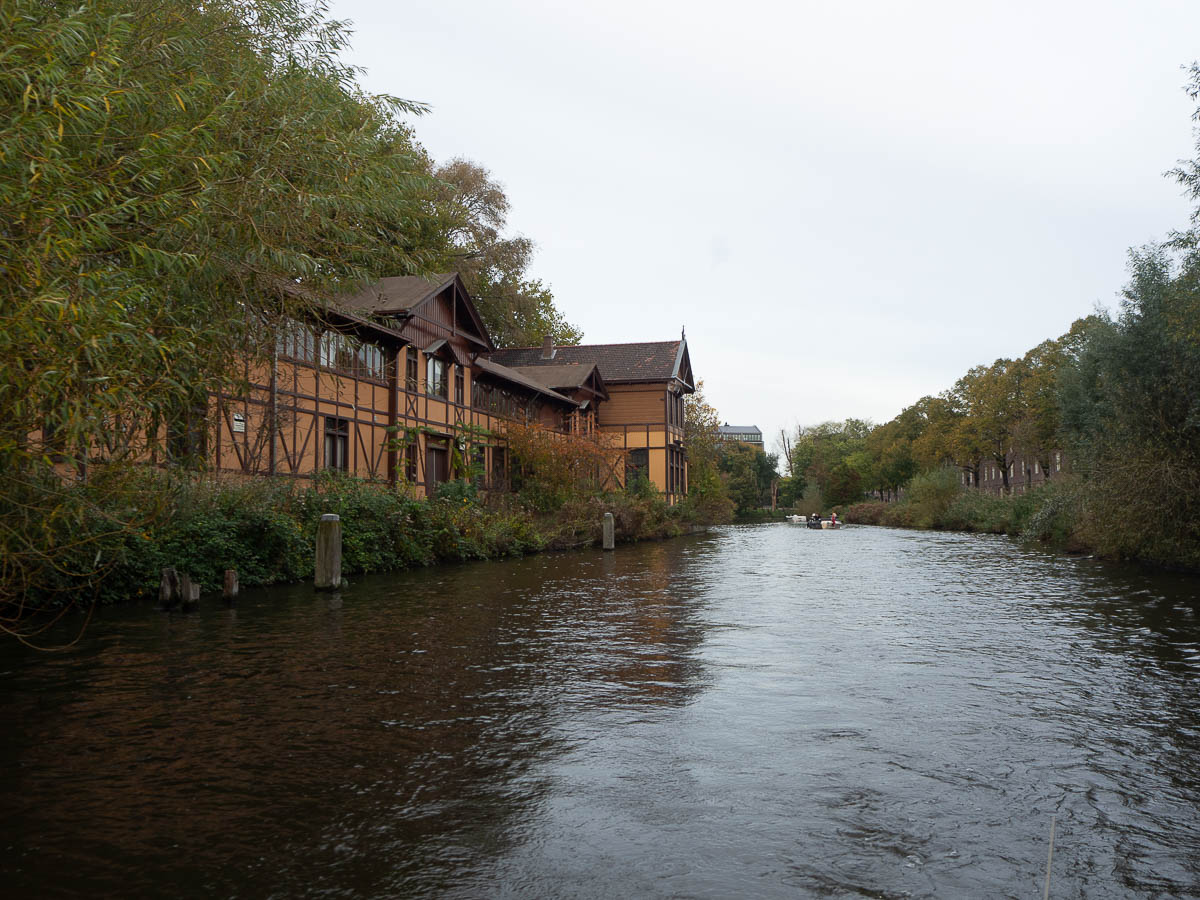
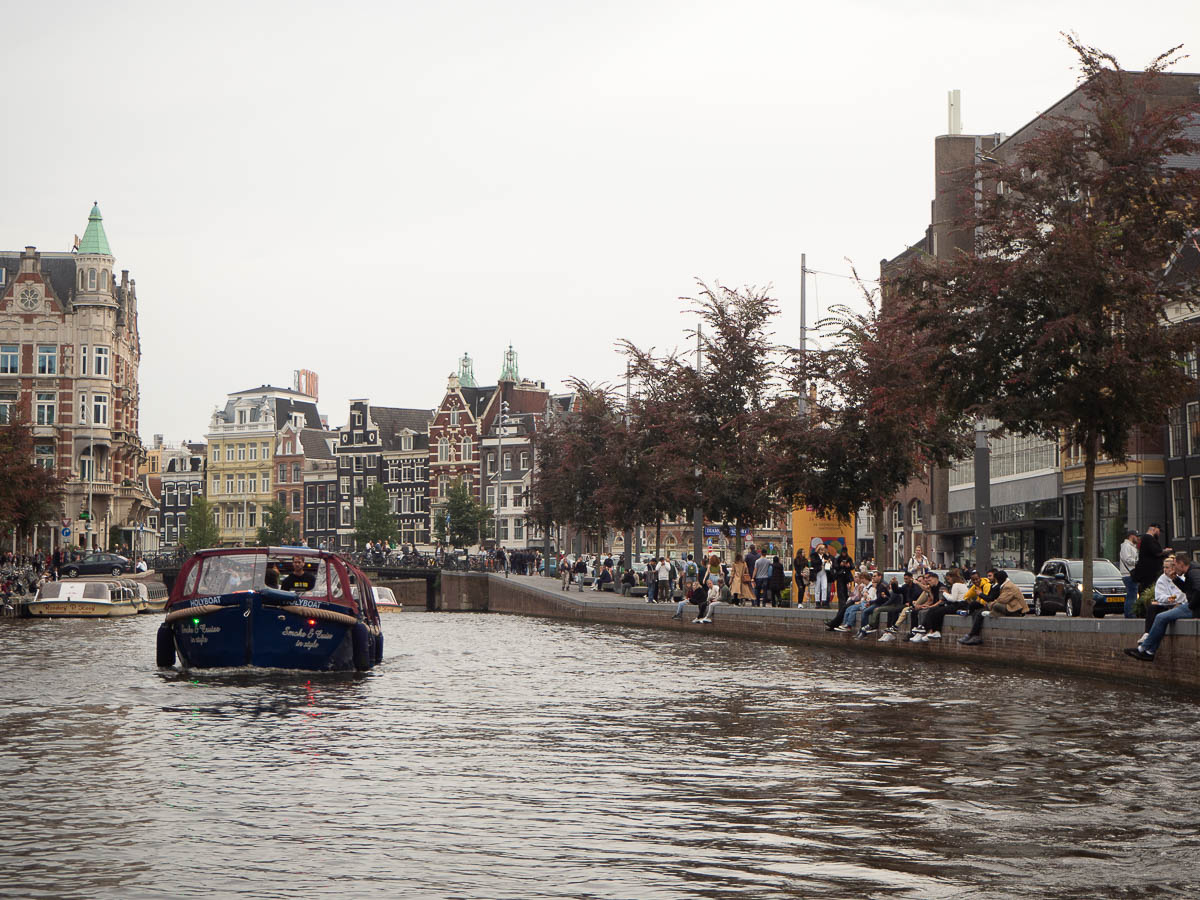
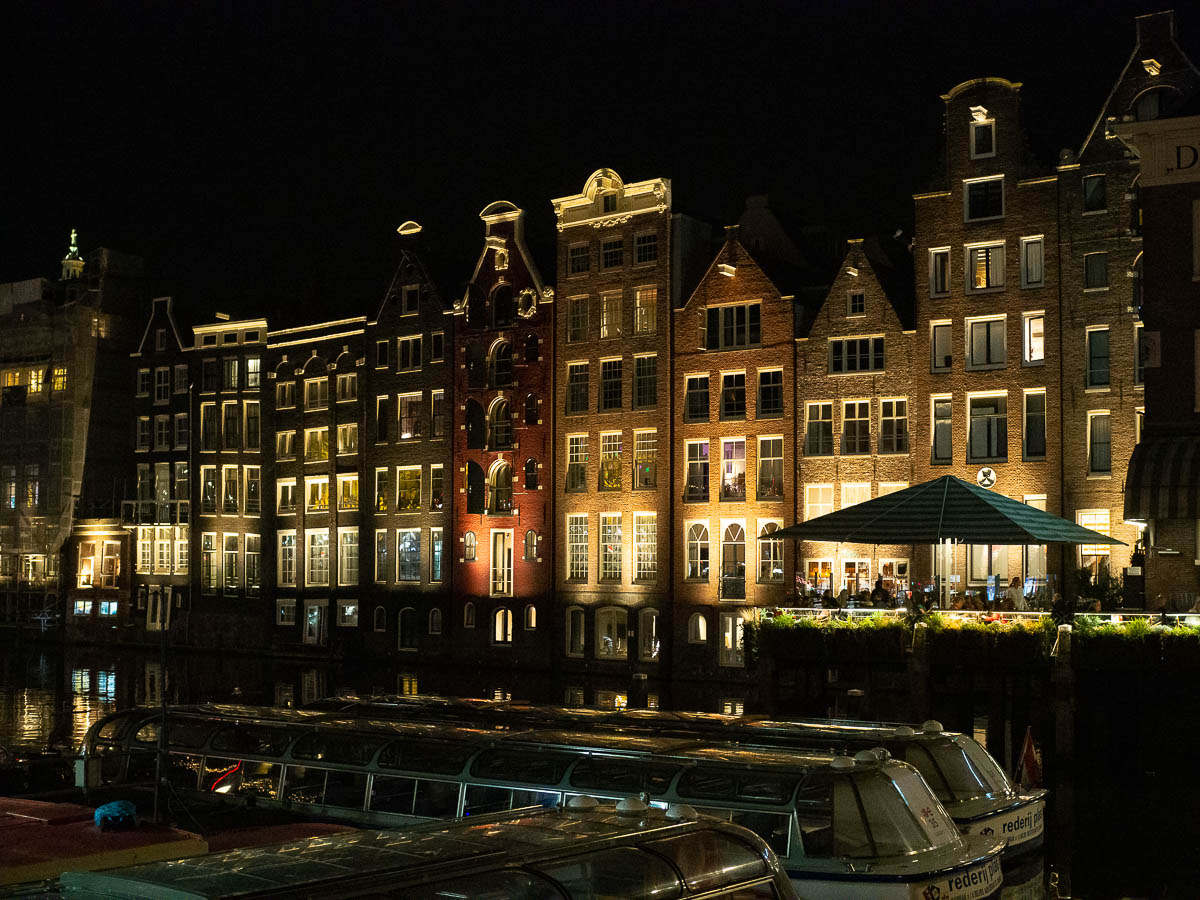
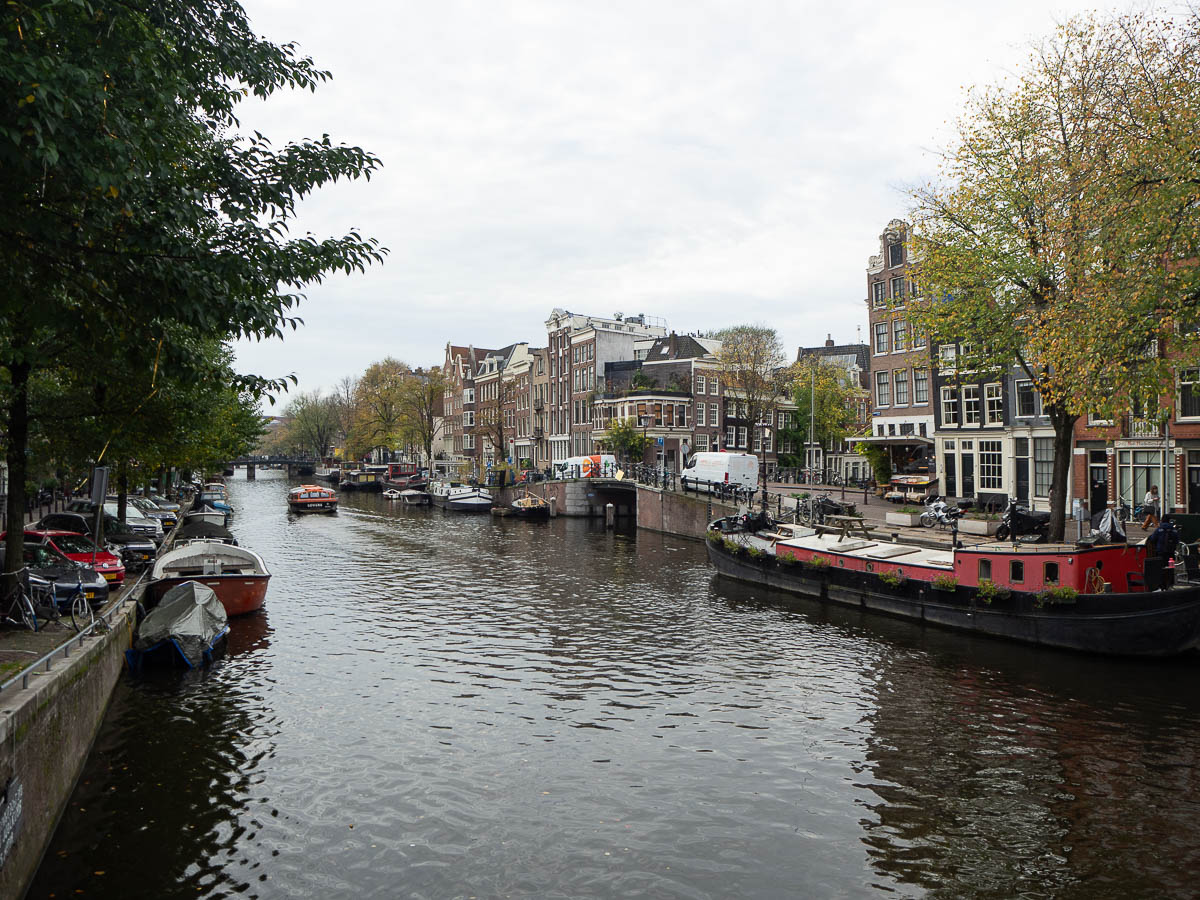
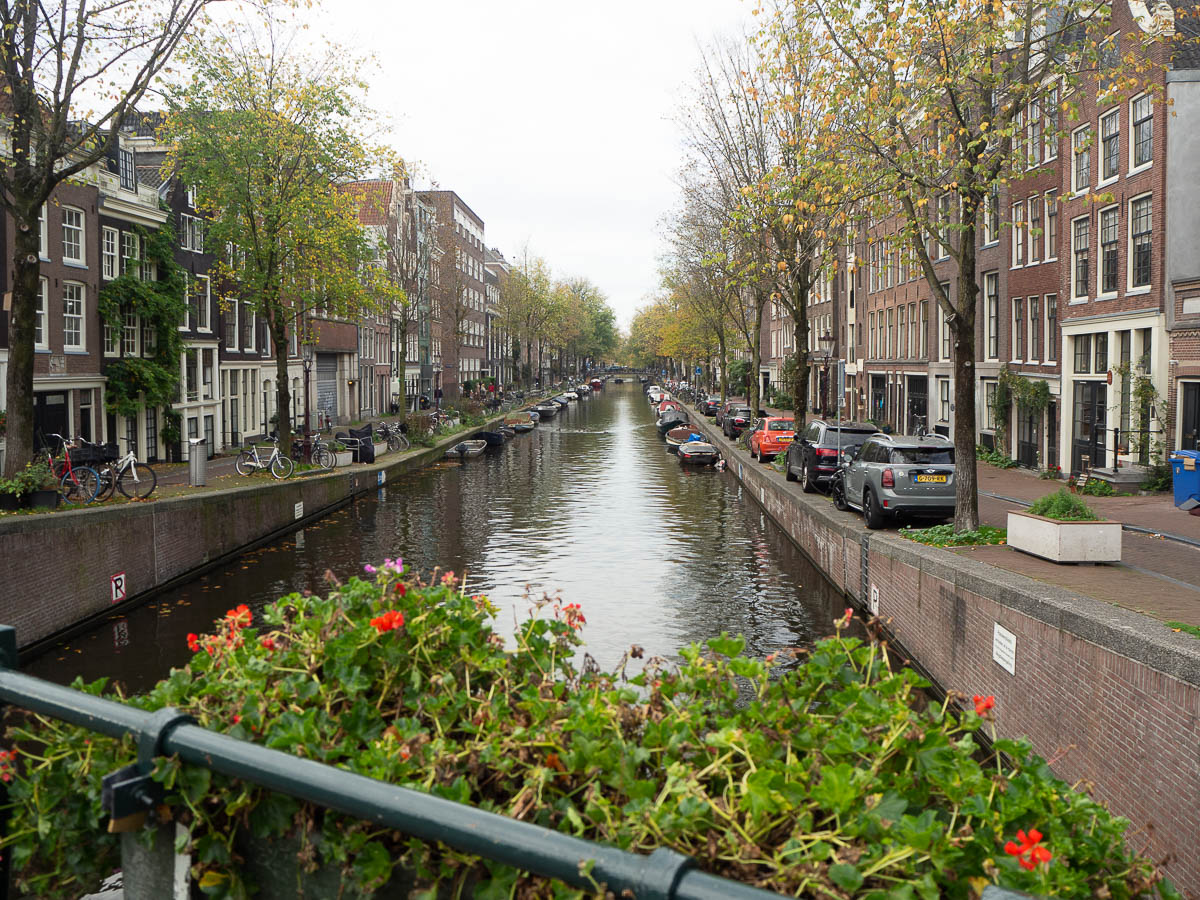
Just a bunch of photos of Amsterdam’s canals.


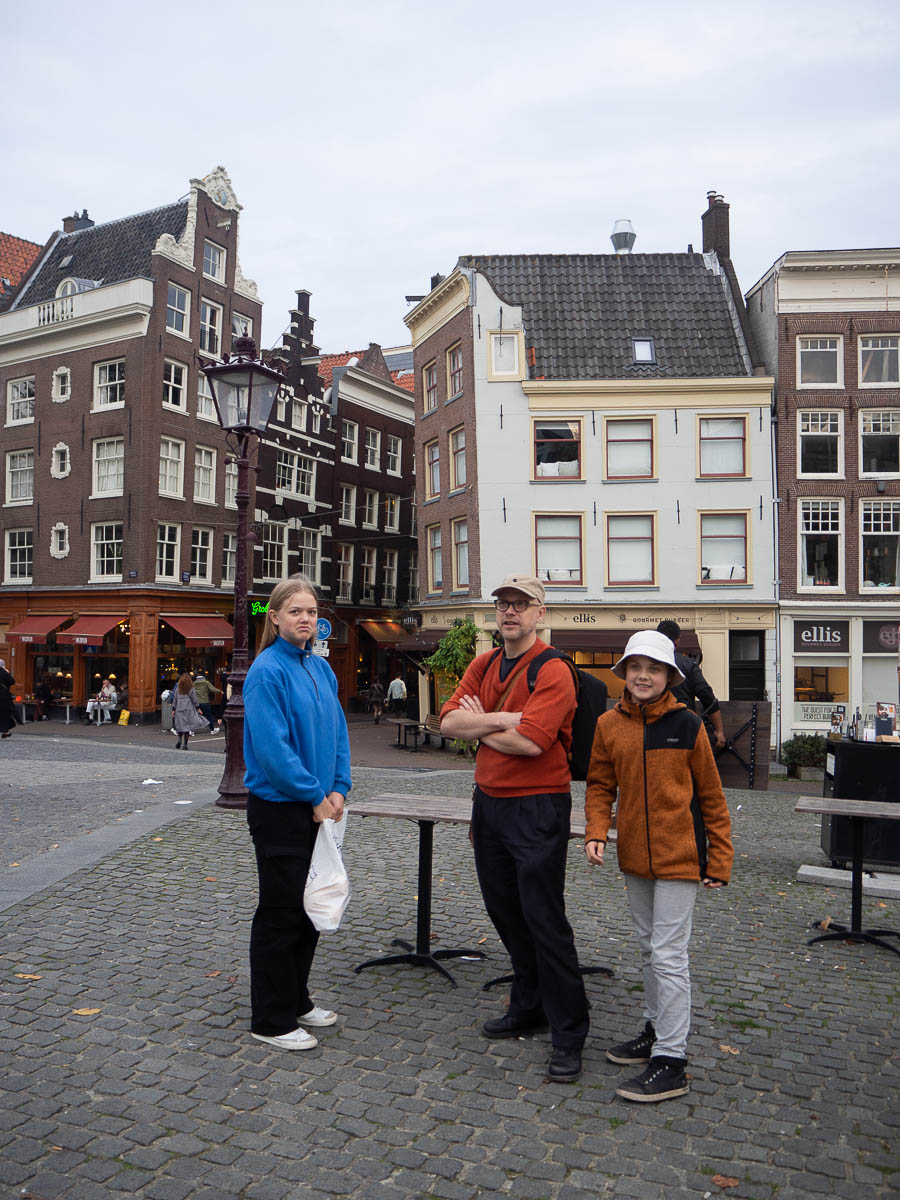
This was our first time in Amsterdam, for all of us. Mostly we just walked around the city, with no particular goals or destinations in mind. This large and imposing building is apparently the royal palace – looking almost as dreary as the royal palace in Stockholm.

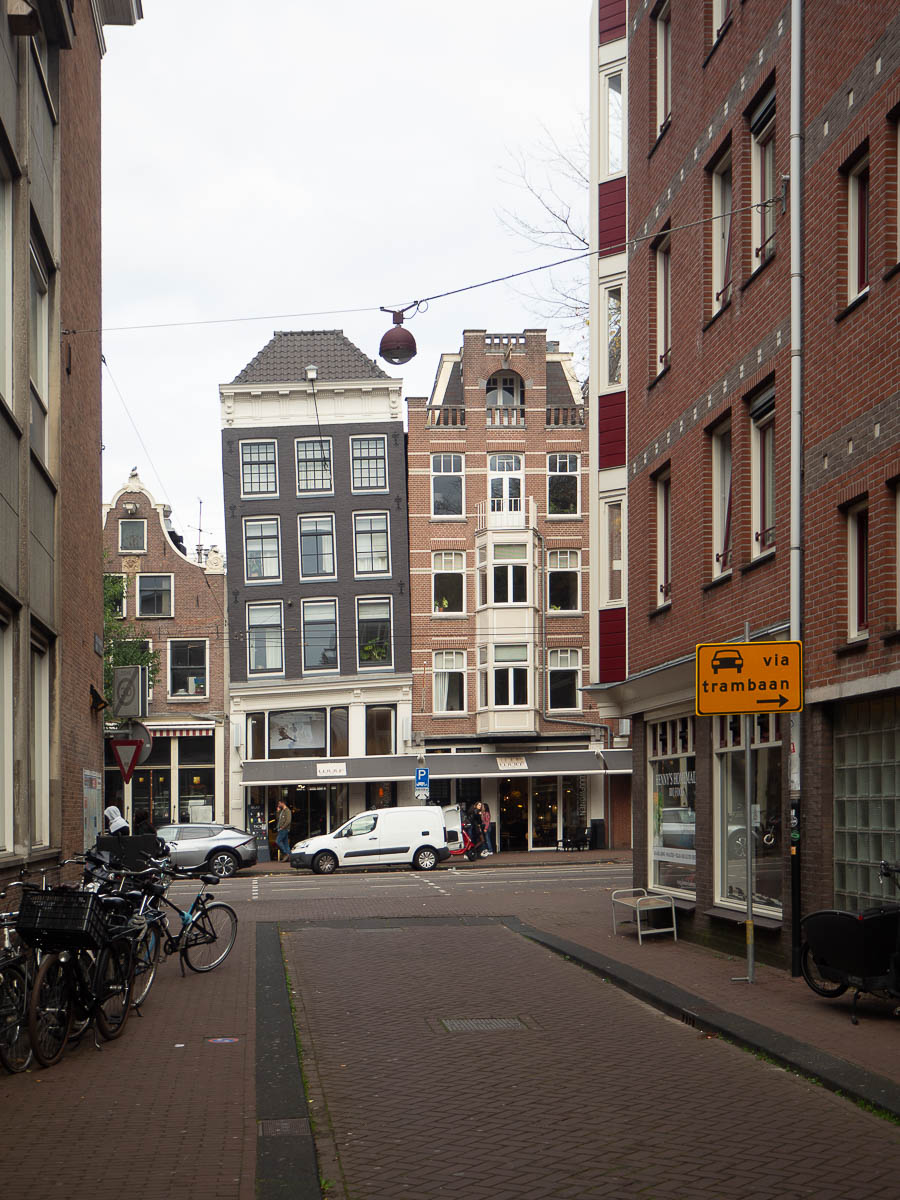
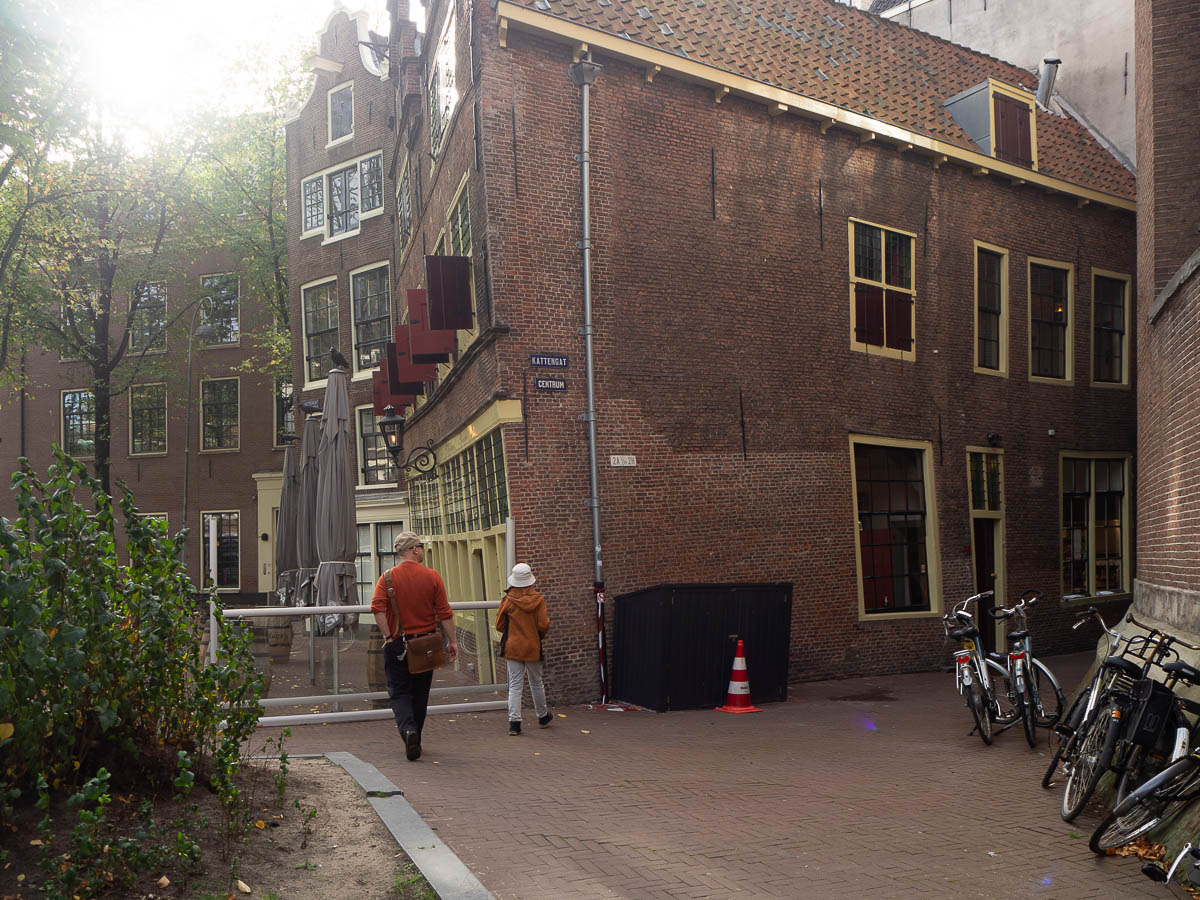
We quickly left it behind us and walked among the smaller streets and all the pretty little canals instead.

The weather was unseasonably warm. Even when there was no sun, we didn’t need any jackets. Pleasant, but worrying – this is not what it’s supposed to feel like at this time of the year.

The streets were narrow and chock full of cyclists. It took some getting used to, before we learned to dodge them. They don’t behave like Swedish cyclists: they’re slower, closer to walking pace (compared to the lycra-clad racers you often see in Stockholm) but more numerous, so in aggregate they move differently. And they’re all helmetless – which makes sense given the lower speed, but still felt weird.

Amsterdam has fewer inhabitants than Stockholm, but so many more tourists, and therefore so many more shops. We kept finding fun little shops everywhere. Central Stockholm is all fashion chains and other large, impersonal stores instead.

The tourists keep the shops alive, but I wonder what made them happen to begin with. A history and culture of shopkeeping, as opposed to Sweden’s history of large industry employing masses of workers? An inner-city architecture of small buildings and thus small retail spaces where you can’t even fit an H&M, whereas Stockholm’s large 1960s city centre has the opposite – mostly large spaces that are unsuitable for small shops?

Ingrid liked the vintage clothing shops. I was horrified to see that ugly 1990s fleece jackets are now considered desirable.

This antiquarian bookshop sold reproductions of prints of all kinds, ranging from “here is how you recognize measles” through anatomical drawings and comparisons of tulip varieties to “this is how you arrange a centerpiece for your dinner table”.

Most of the houses in Amsterdam lean one way or another. Or several: they lean sideways because the foundation sank, and the facade leans forward because it was built that way to allow goods to be hoisted to the upper levels. I kind of got used to it after seeing enough leaning houses, but then you come across something like this and it’s hard to grasp how it even remains stable. It must be a challenge to be a window-maker here, to produce windows that fit these crooked walls.

Away from the small canals and back to the innermost city, we were surprised at how crowded the streets were, mostly with groups of young people.

The inner city kept surprising us with red-light streets. Some were clearly noticeable and avoidable, others were sort of just in our way when we wanted to get from A to B and there was no easy way around them. And some looked normal when we entered them and only turned “red” at the other end. You can avert your eyes and try to pretend they’re not there, but it made things uncomfortable for the kids, especially Adrian. Not the most family-friendly city centre.

And the “coffee shops” everywhere. The smell of cannabis – and cigarette smoke, there are so many smokers here and smoking is apparently allowed in most places – got really annoying. Now we’ve seen the inner city, been there, done that, checked the box, let’s leave it behind and get away from here.

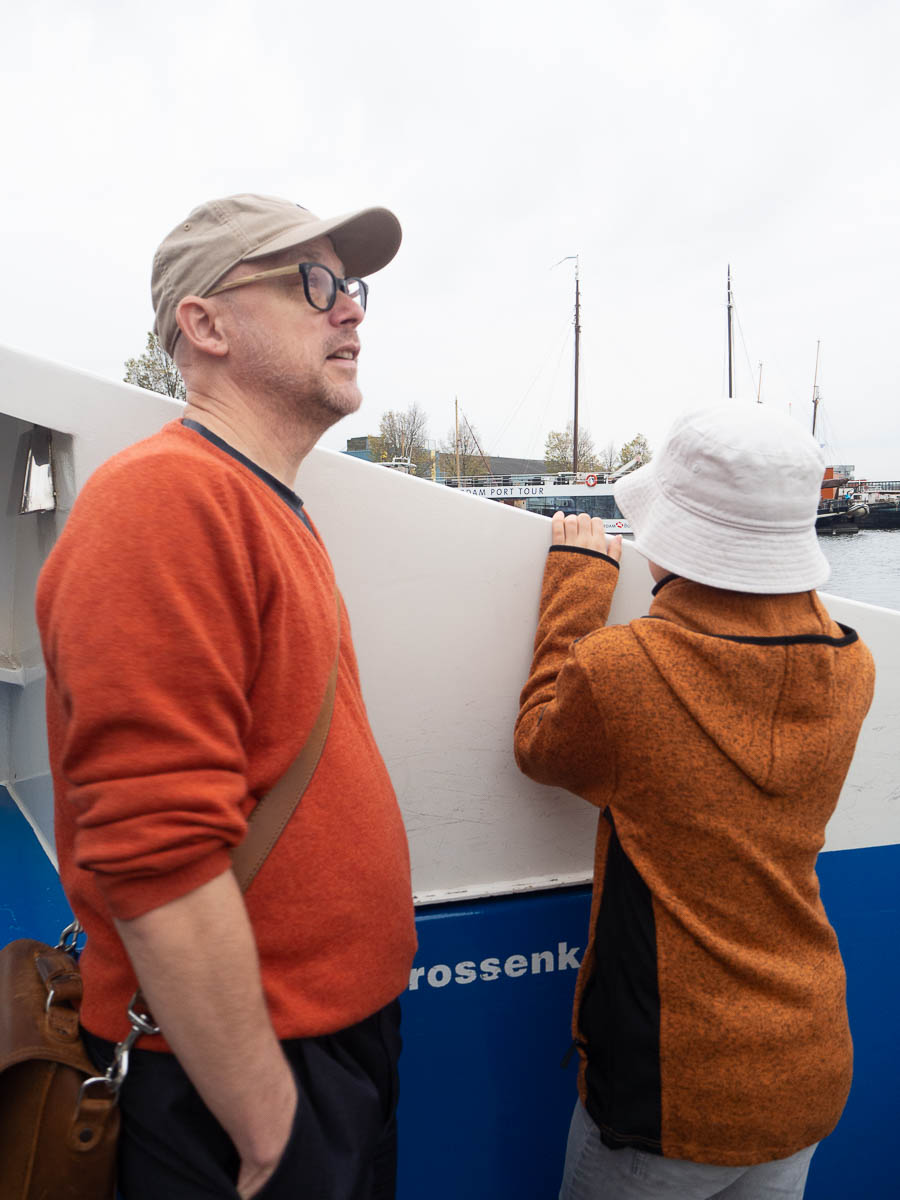
When our legs were tired of walking, we went for a boat tour on the canals. Despite the tour being marketed as family-friendly, the boat was effectively a floating bar and both the crew (not the captain though) and most of the passengers spent the entire trip drinking. We got to see the city from new angles, but didn’t get the kind of guided tour that we had been hoping for.


We’re spending a long weekend in Amsterdam, since Eric was already here for work and next week is autumn break for the kids.

Hotels in central Amsterdam are crazy expensive, especially when booking at short notice. This is definitely one the most basic hotels I’ve ever stayed at, and it’s still more expensive than the luxurious spa hotel in Bled. It’s officially got a single star, and it truly offers no extras. There is a room with four beds and a small desk and enough room to walk between the beds, and a functional bathroom, and that’s it. No TV, no breakfast, no safety box, no elevator.

Everything is clean, though, and mostly whole (though there are cracks in the sink) so they’re delivering on their promises. No complaints.

Oh, there is actually one luxury: plenty of outlets, both 220 V and USB-C, for charging electronics. Basic, but also modern.

After yesterday’s knowledge day, we had an activity day today. We started with a team treasure hunt, with very varied tasks – obscure facts about Slovenia, themed photo challenges (a photo of a license plate with “13” in it; a photo of a stranger wearing something 13|37-branded) and teamed photo challenges (at least 8 people of the team jumping and actually in the air at the same time), visiting odd spots of the city and solving maths puzzles.

I was all peopled out after yesterday so I went off on my own and bagged a few of the far-off walking challenges for our team. It was rainy and sweaty. Especially walking up the castle hill afterwards to rejoin my team. I barely took any photos, both because the rain made it difficult and because I had a tight deadline to meet.

For the afternoon we had a choice between a city tour, a boat tour on the river (which was cancelled for safety reasons due to the rain and flooding), a culinary tour (which I assumed would involve lots of meat and wine) and a hike. Even though we spent a full day walking around Ljubljana just a month ago, I guessed that the city tour would show me new sides of the city, so that’s what I went for.

Our group had barely left the castle when our guide showed us the first hidden detail. Ljubljana was built near the site of an abandoned Roman settlement, and they reused chunks of the old ruins to build the castle. A stone is a stone!

Having walked down to the bottom of the castle hill, the guide took us on a tour of the air raid shelters under the hill. Fully maintained still, and ready to be used at 24 hours’ notice, he told us – and actually used for real during the Ten-Day War with Yugoslavia in 1991.


Along one of the main shopping streets, our guide showed us the narrow ventilation corridors between the medieval houses. The buildings all back up onto the hill, and the corridors help air out the moisture. Most of them were either bricked up or shut behind gates, but at least one was open. The far end was narrow enough that I could barely turn around.

The guide also pointed out that all the medieval houses are exactly three windows wide. Apparently this was a rule in medieval times. I walked down this street last time I was here, and paid attention to the views, but never noticed this detail – nor the ventilation corridors.

The river, when we passed it, was seriously flooded and I totally understand why the boat tour had to be cancelled.

This lovely little street with all its greenery and flowers was as beautiful today as it was in August.

Naturally Ljubljana’s city architect Jože Plečnik was a recurring topic during our tour. I learned, among other things, that he was heavily inspired by classical Roman and Greek architecture and really, really loved pillars. An ongoing joke during our tour was that if you see any pillars anywhere, then Plečnik was probably the one who put them there. And indeed we saw pillars in the oddest of places – such as “on the outside of a wall, three meters above ground”. Go figure.

The grounds of the Ljubljana Festival, inhabiting what used to be a monastery, were my favourite place in the city. The juxtaposition of baroque statues of saints with Soviet imagery of red five-pointed stars, hammers and pickaxes, is pretty unique.


Towards the end of our tour the rain had more or less let up. I had come prepared for a lot more rain than we actually got (a pair of rubber boots took up a quarter of the space in my baggage) so I was dry and toasty all the way. But drier weather made photography easier.

We capped off the day with a gala dinner in the hotel’s grand hall. More festive and glamorous than most events in the software industry! I quite enjoyed dressing up for once.

Knowabunga knowledge day, with talks and workshops and such. One about the API Gateway pattern, and one about the Tailwind CSS framework, and one about business people taking over Scrum from developers and making it theirs, and some more.

The 13|37 Ljubljana office has some cool decorations.

Did you know that you can still by 3.5-inch floppy disks?