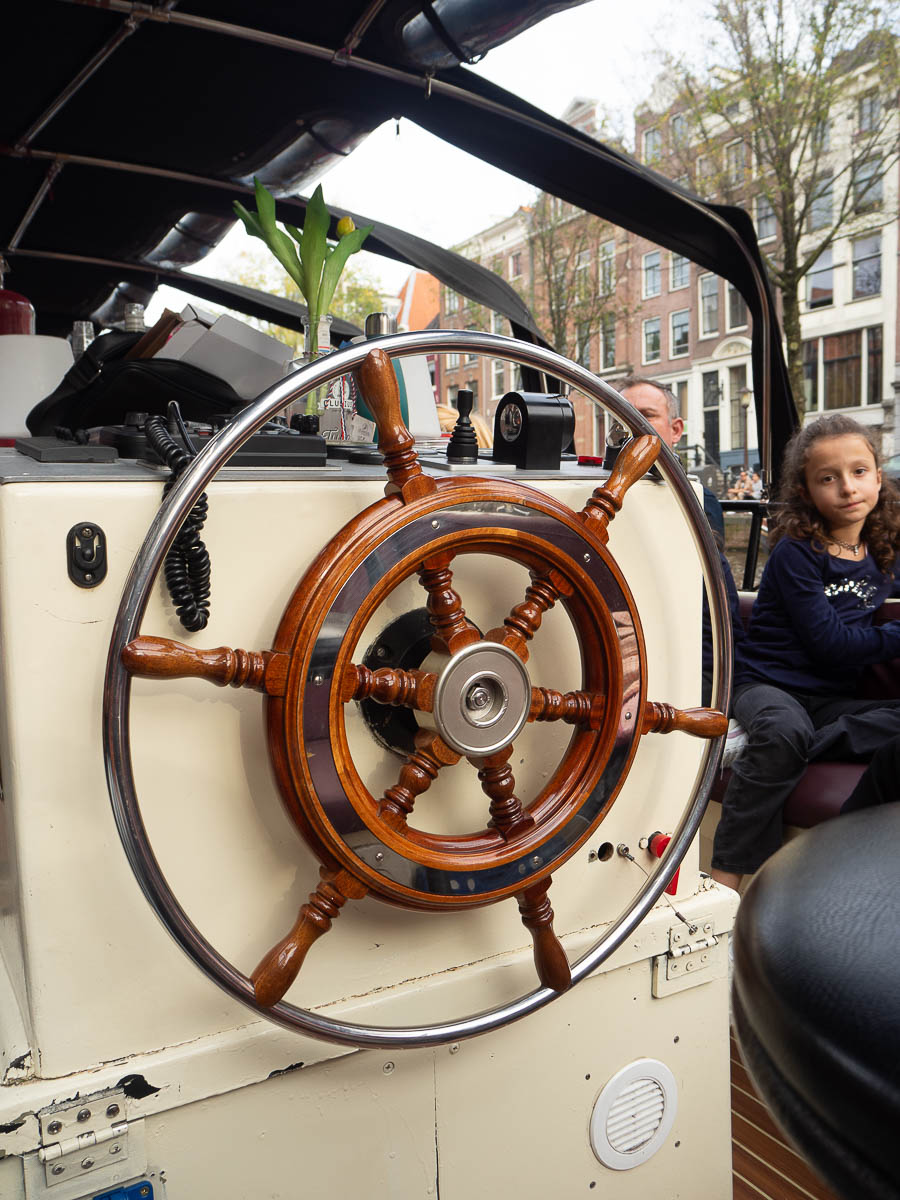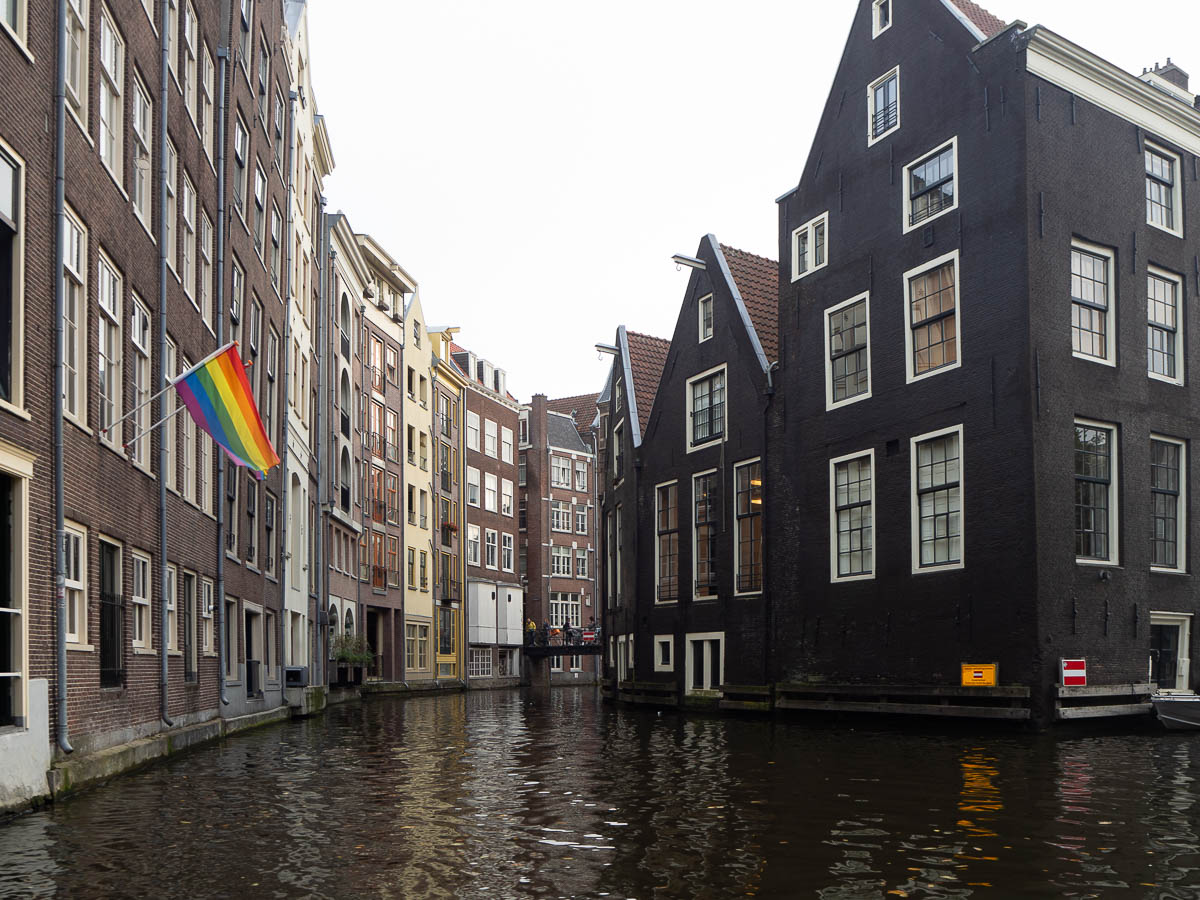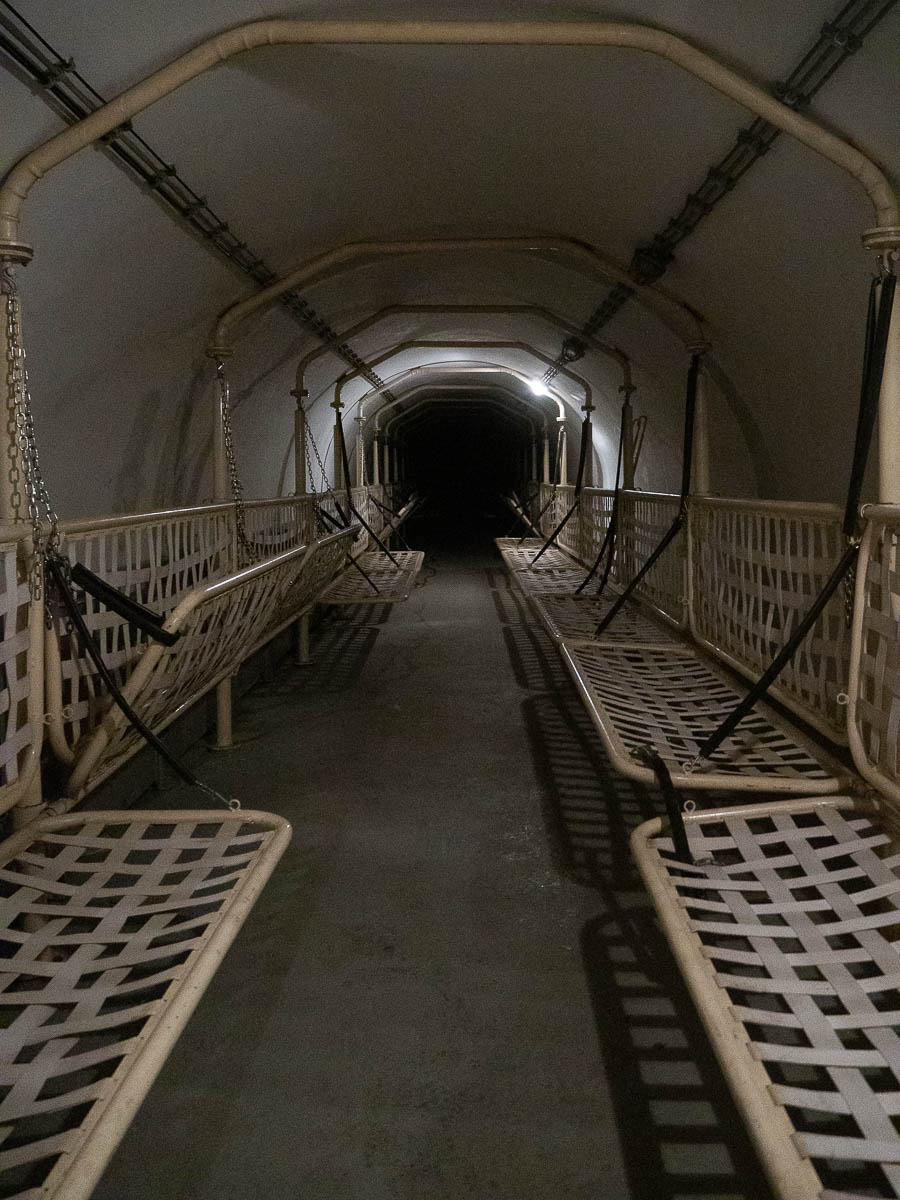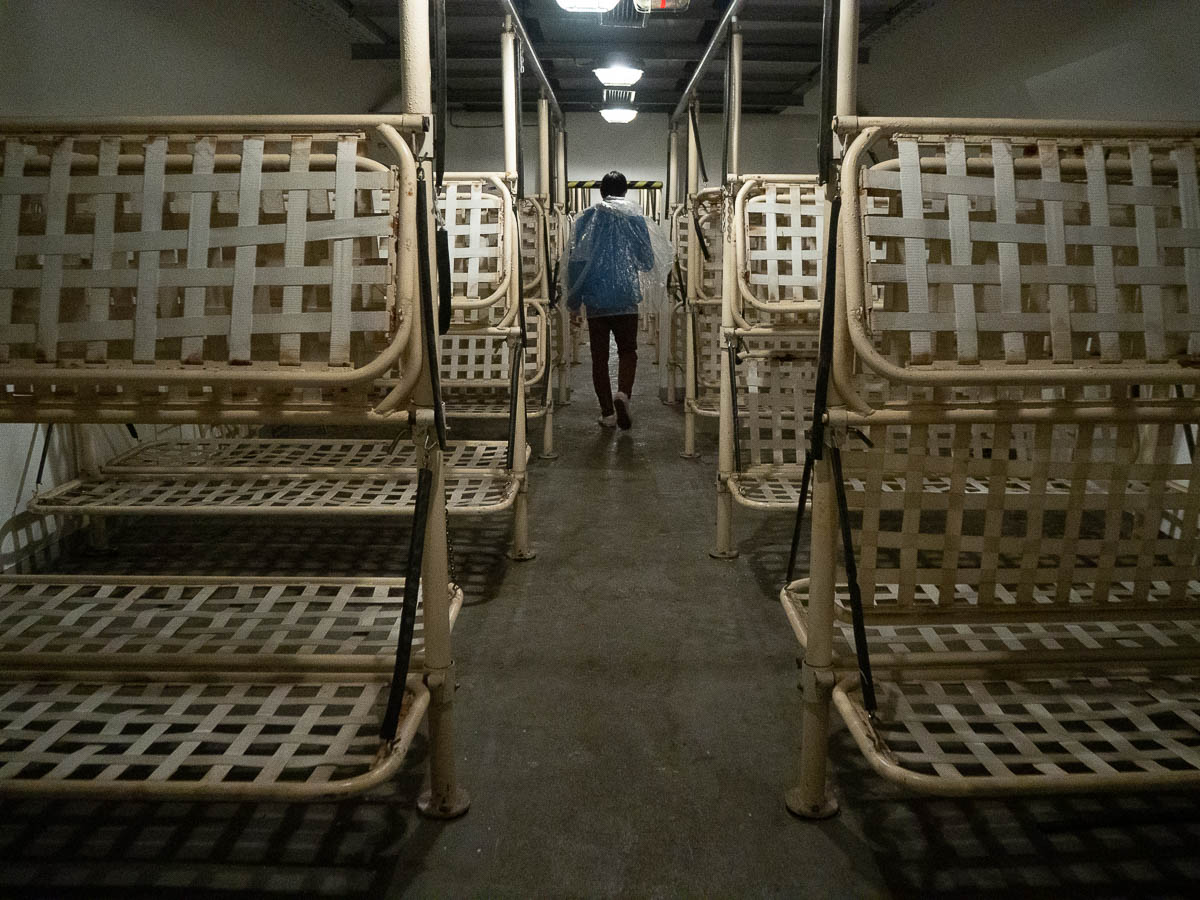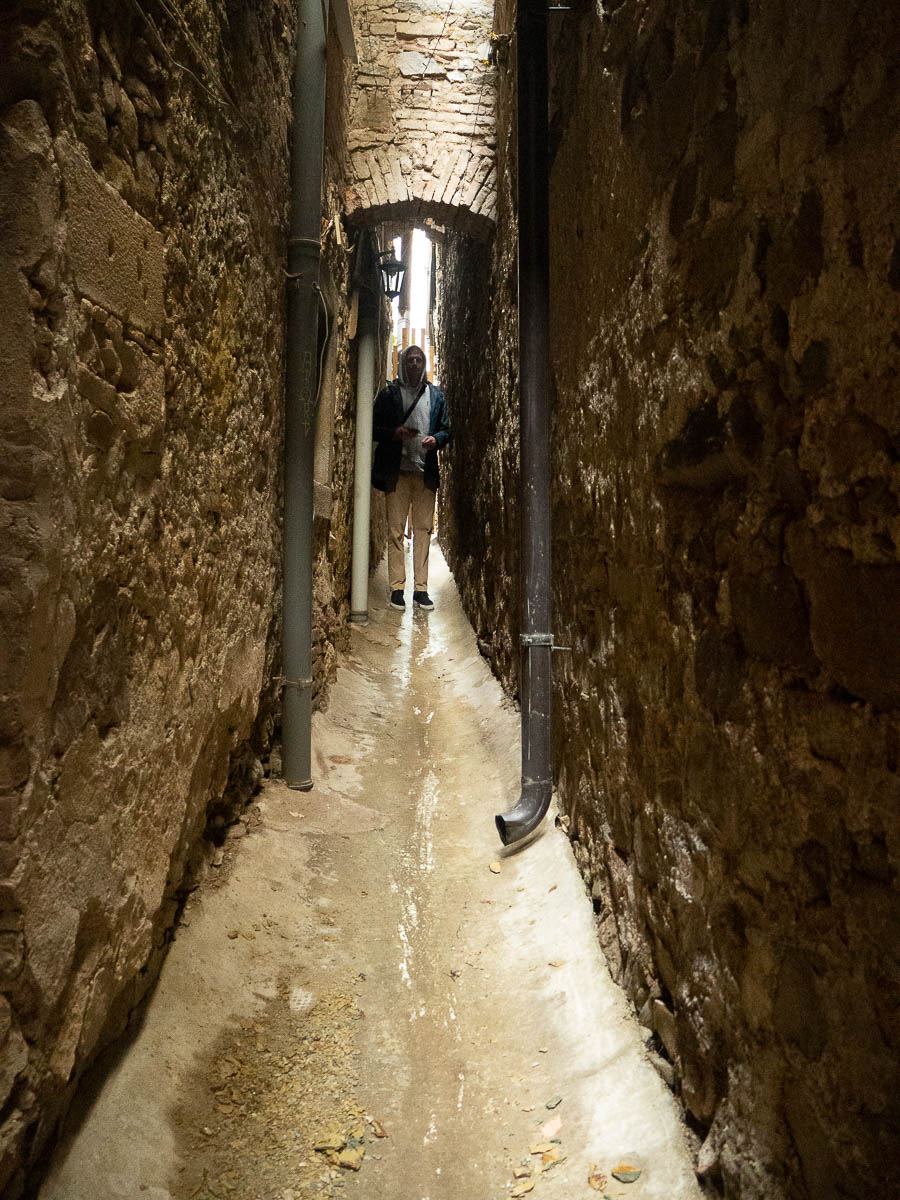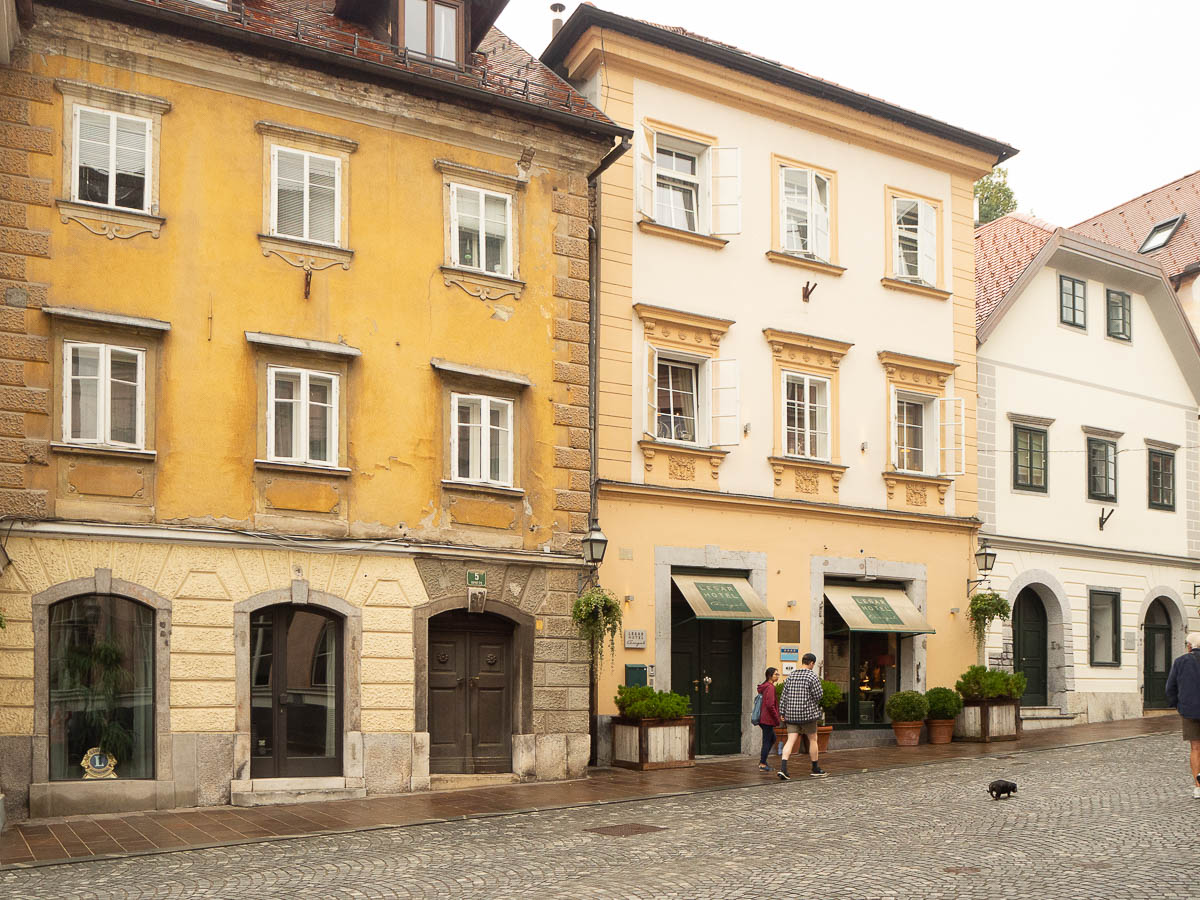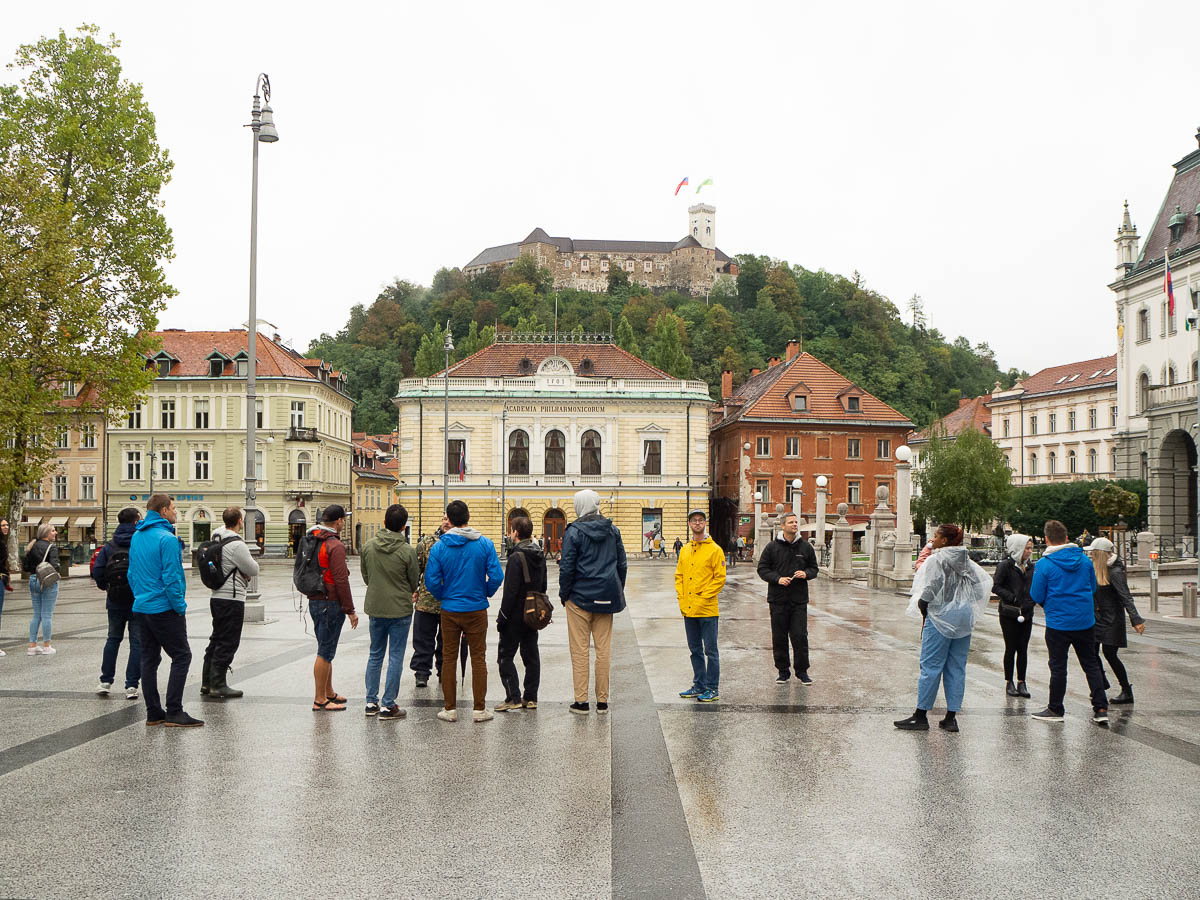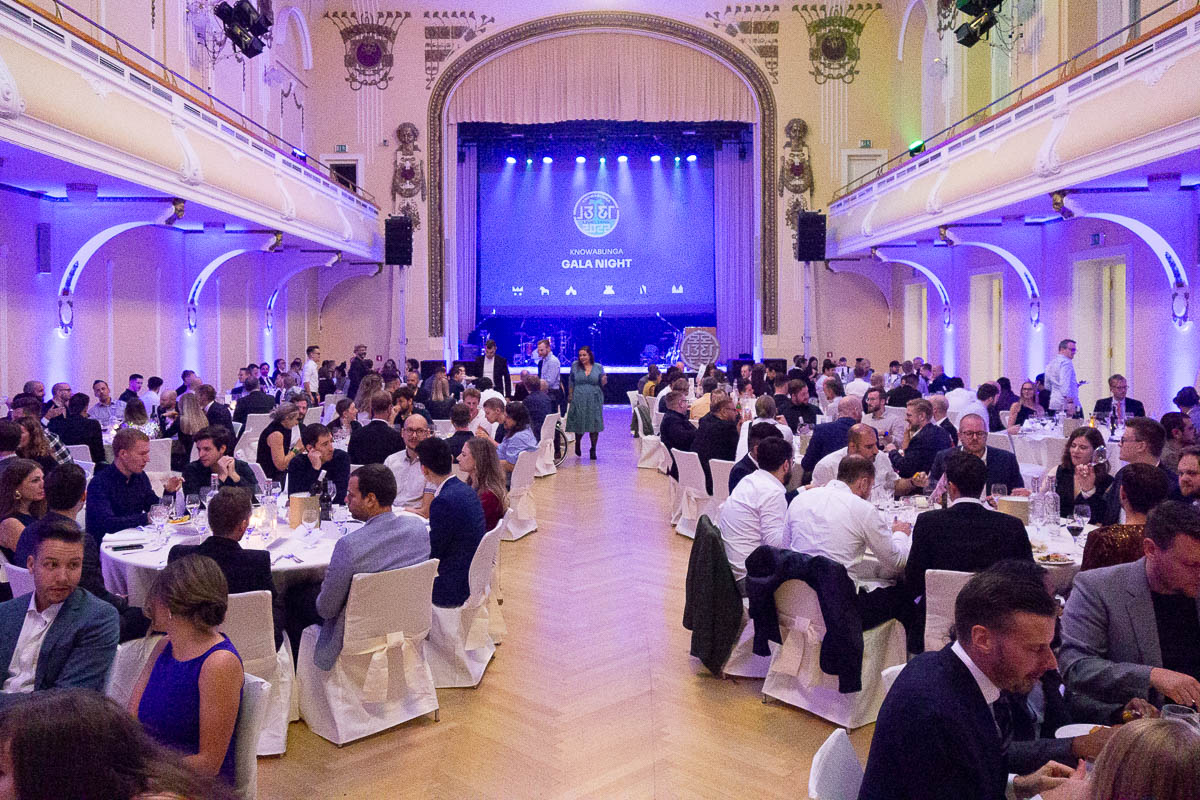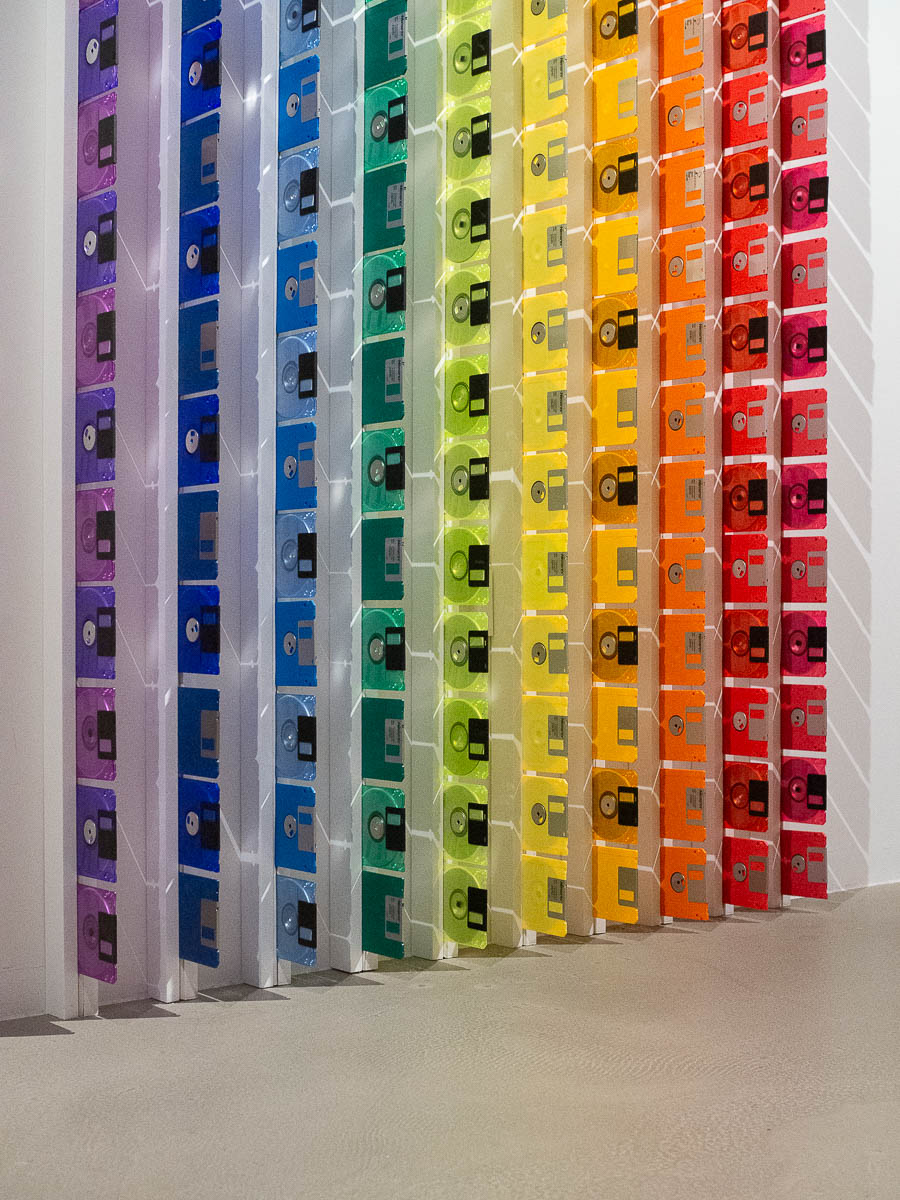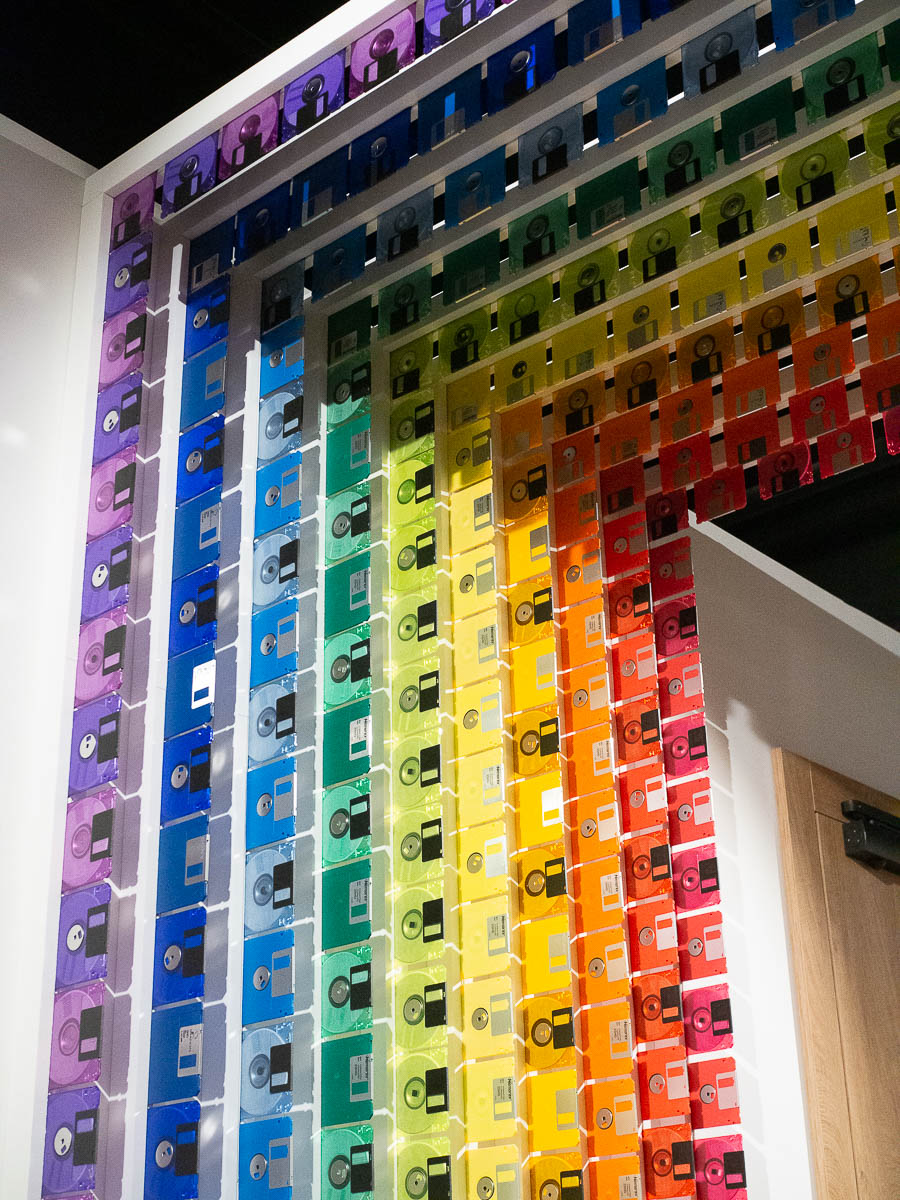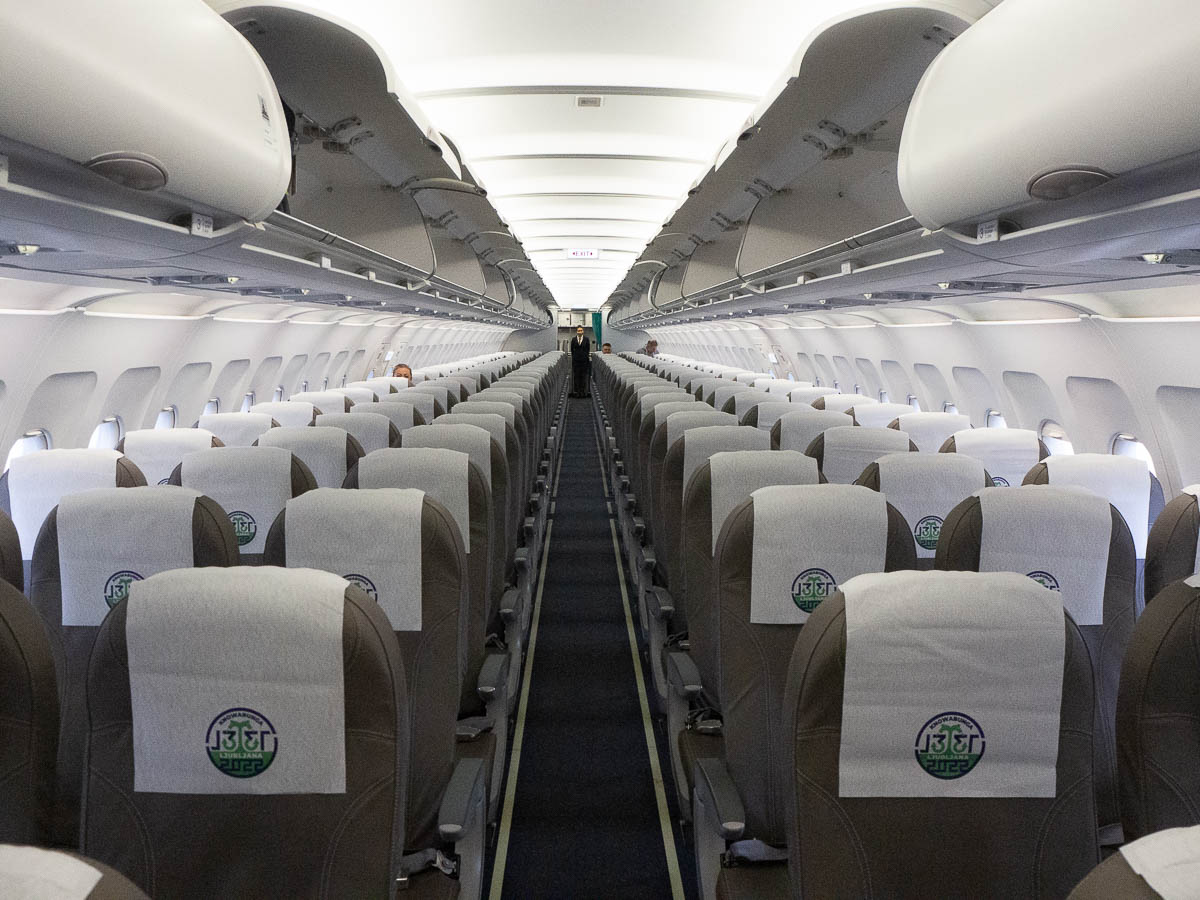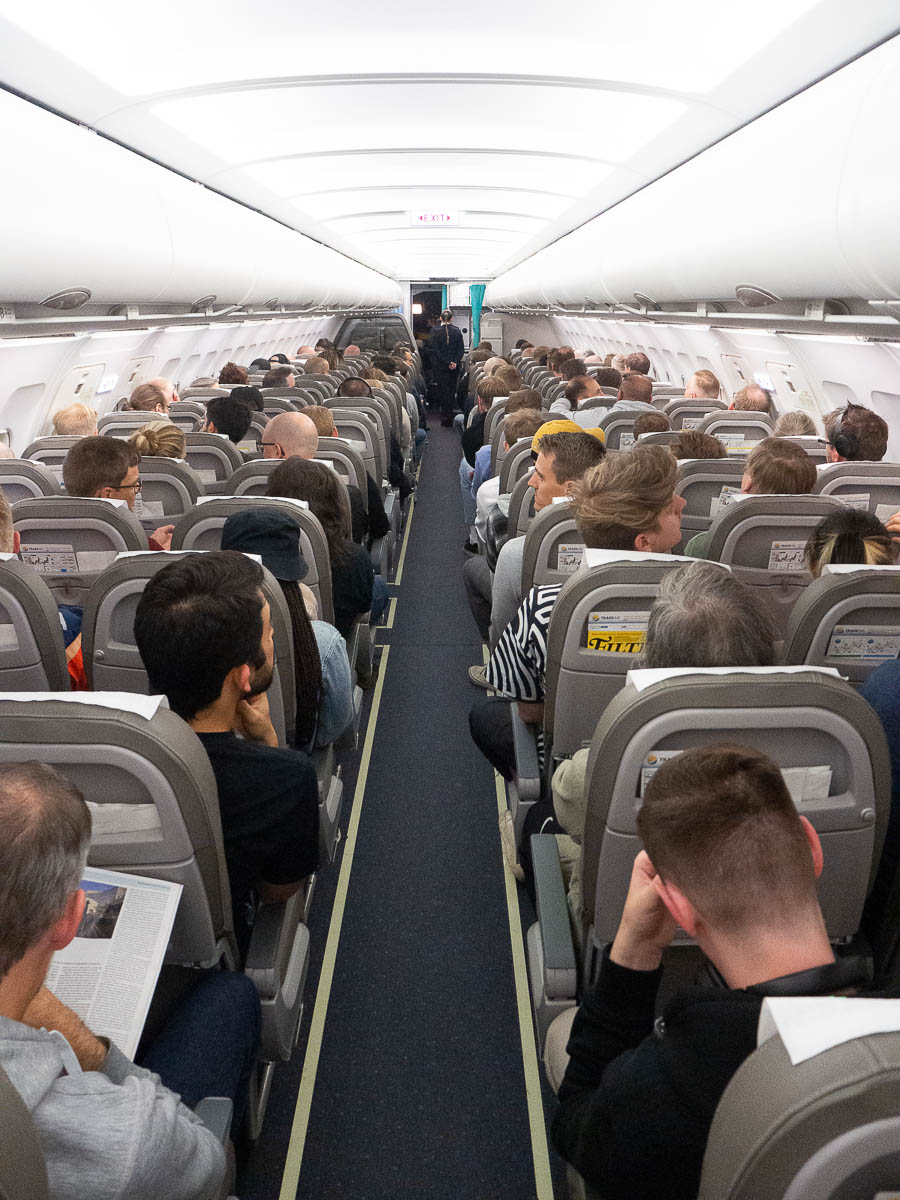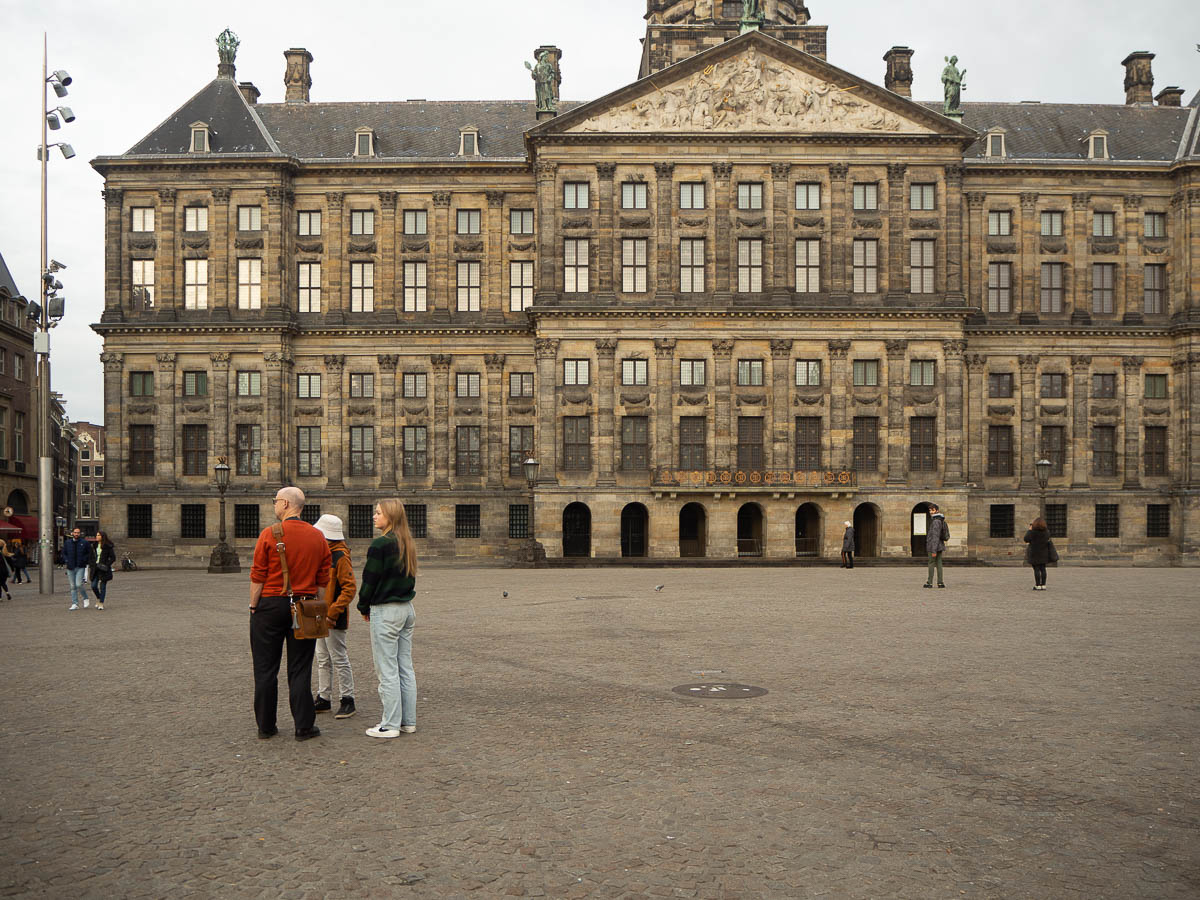
We’re off to our used-to-be-annual-but-pandemic-you-know company conference, in Ljubljana this year to celebrate the completion of their snazzy new office.

The company has grown since the last Knowabunga three and a half years ago. This time there are so many of us that the easiest and most economic mode of transportation was a chartered flight. Which we filled, and overflowed, so some people still had to fly regular.

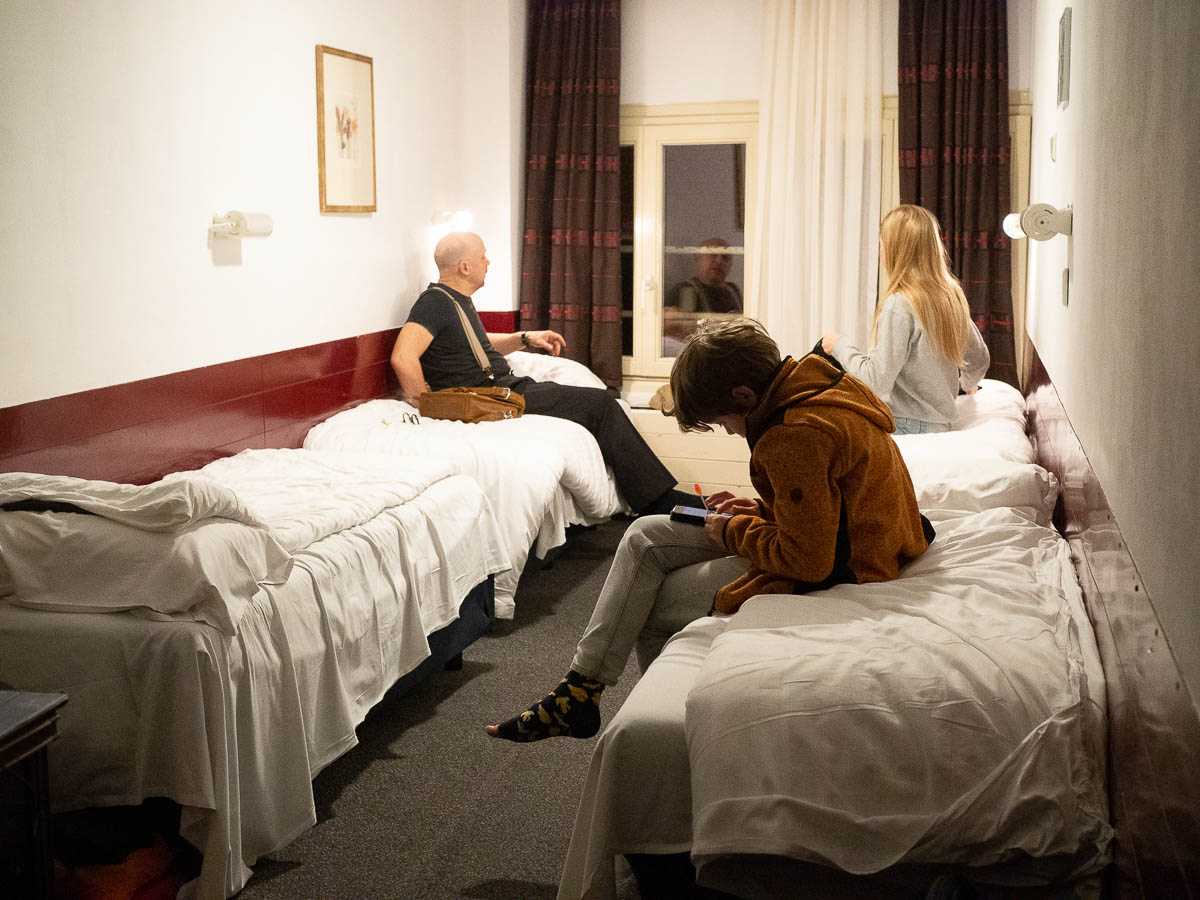
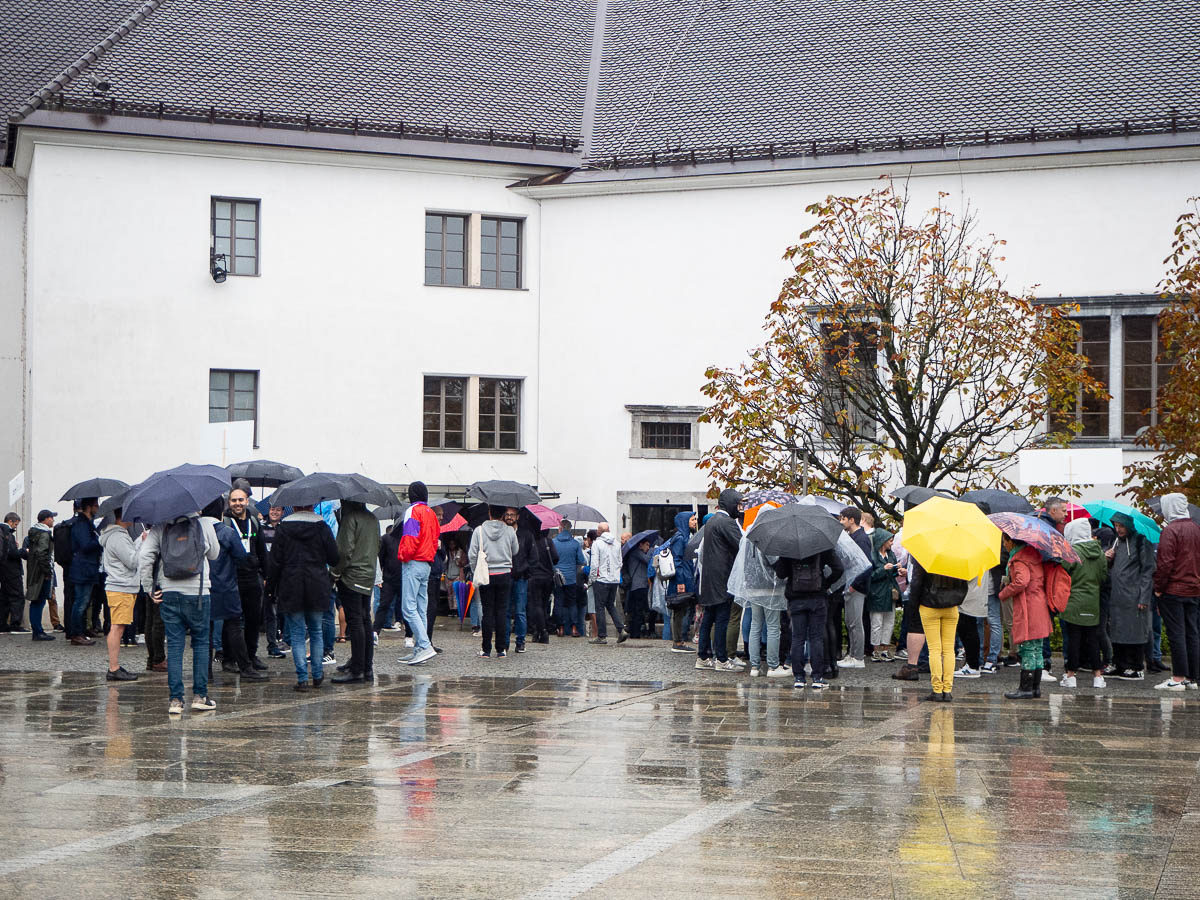
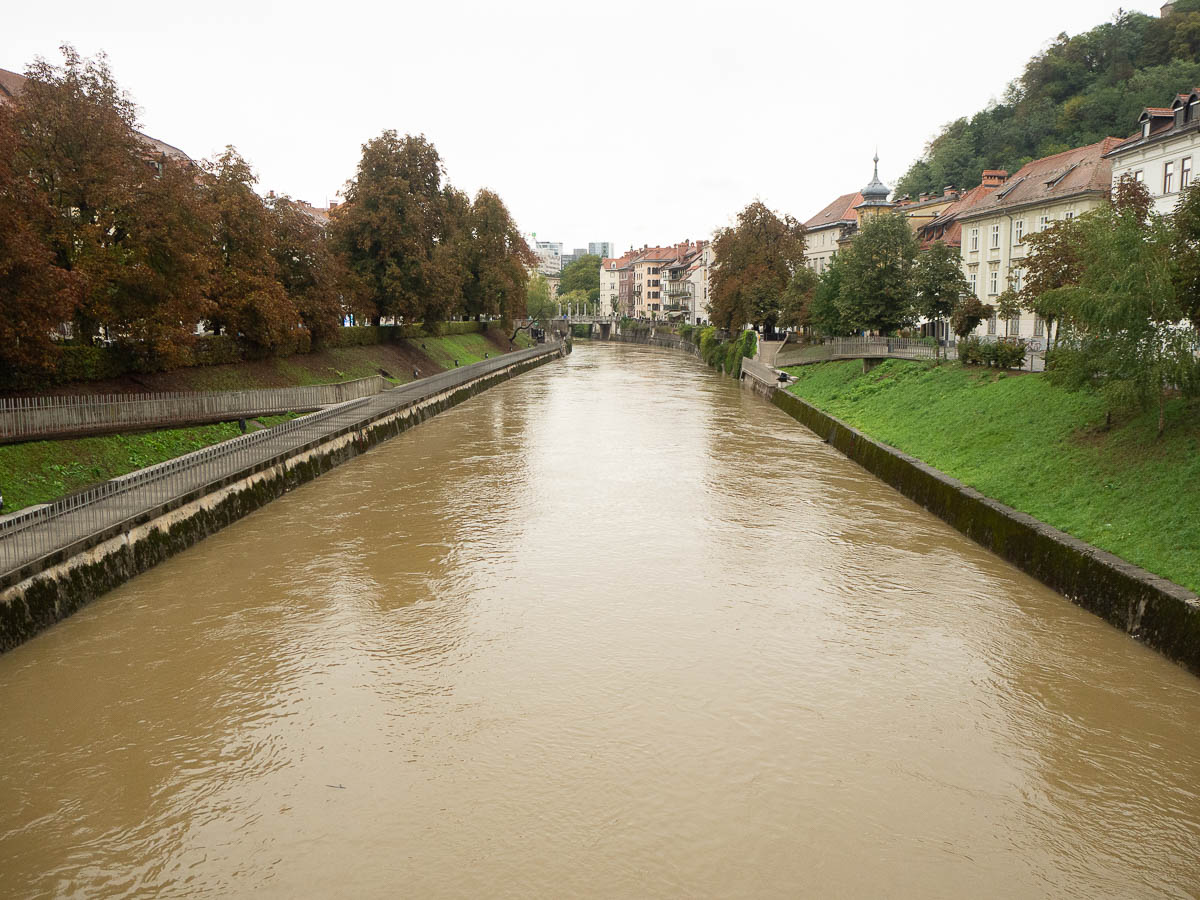
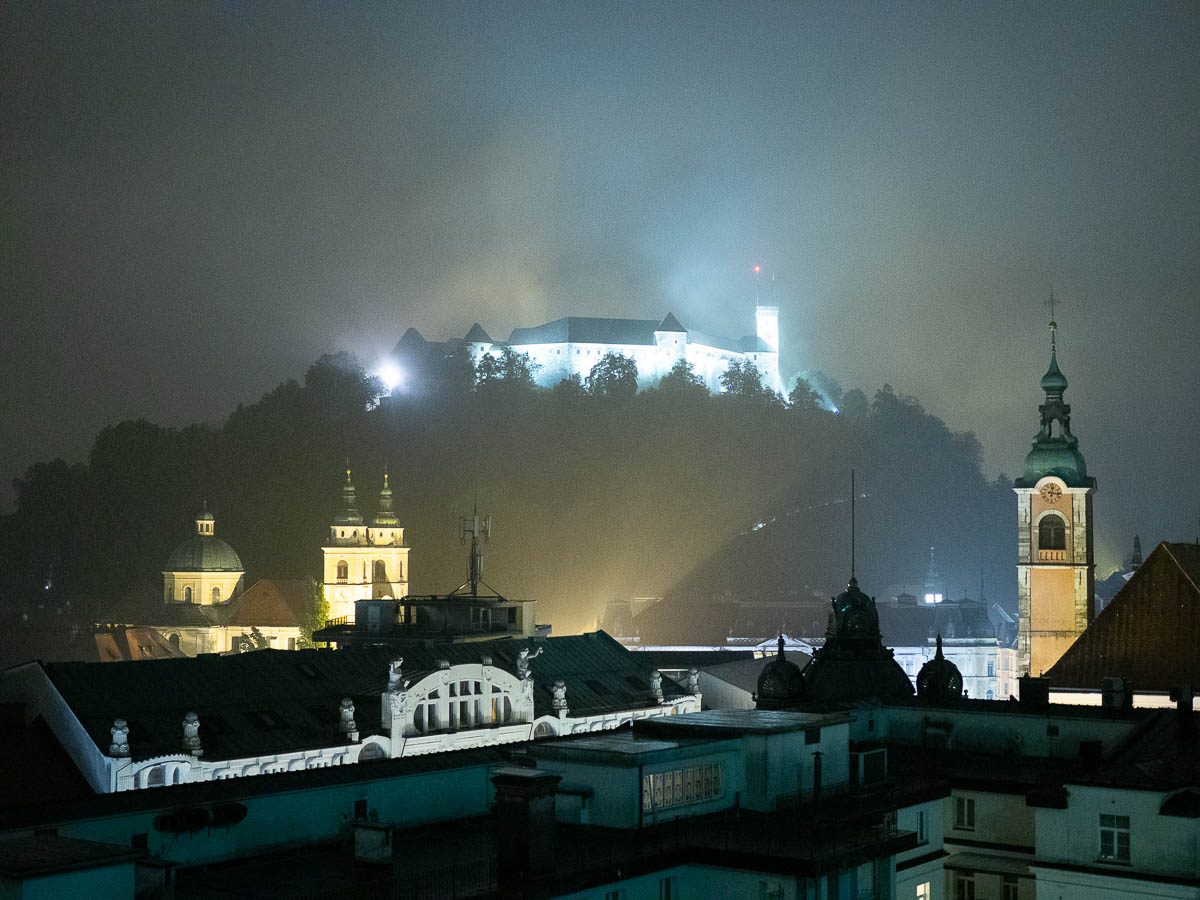
Ljubljana was hit by rain and thunderstorms so our flight was late landing and we got to our hotel around midnight. (I gather that it was actually difficult to find a hotel that could accommodate us all, that wasn’t some convention centre monstrosity.) We had lovely foggy views of Ljubljana castle through the rain from our hotel room balcony. Meanwhile there were water leaks in the hotel stairwells due to several days of relentless rain.

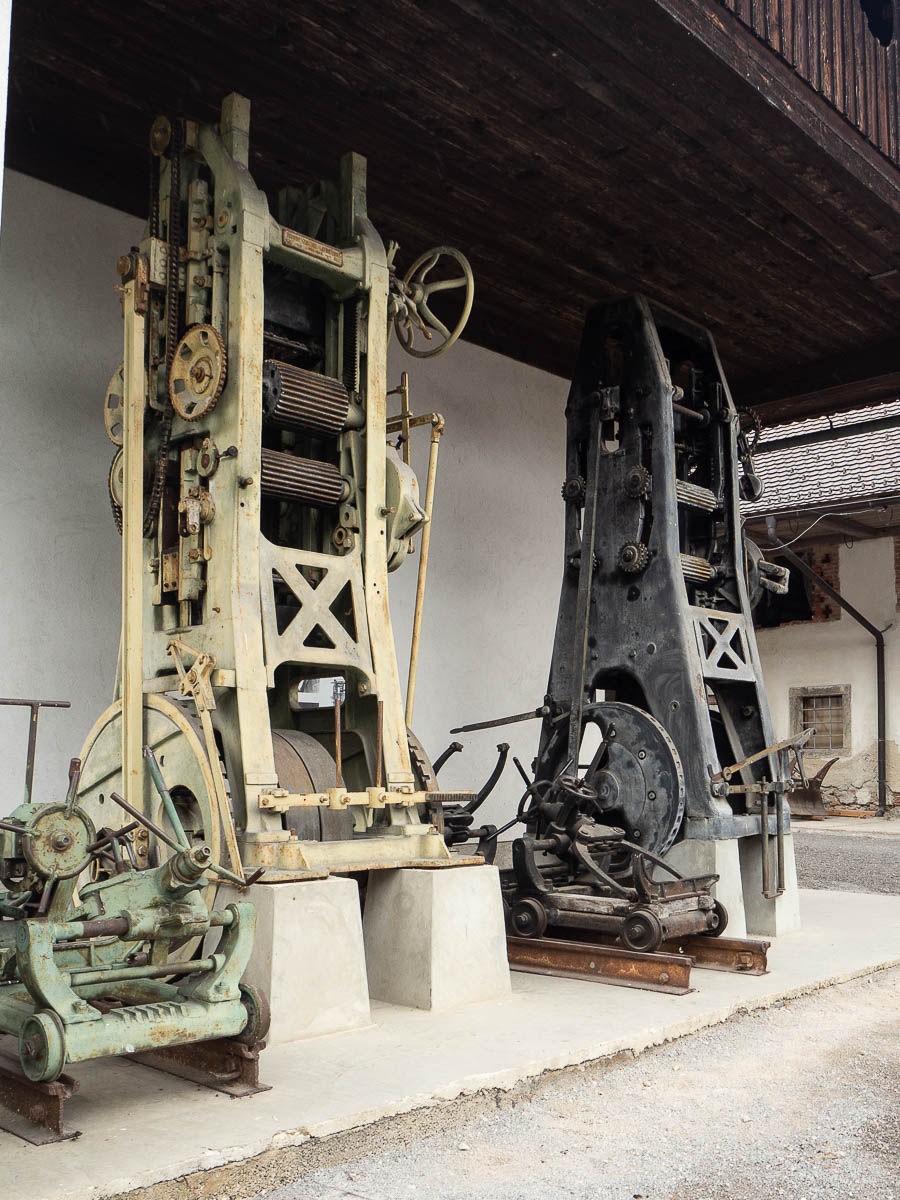
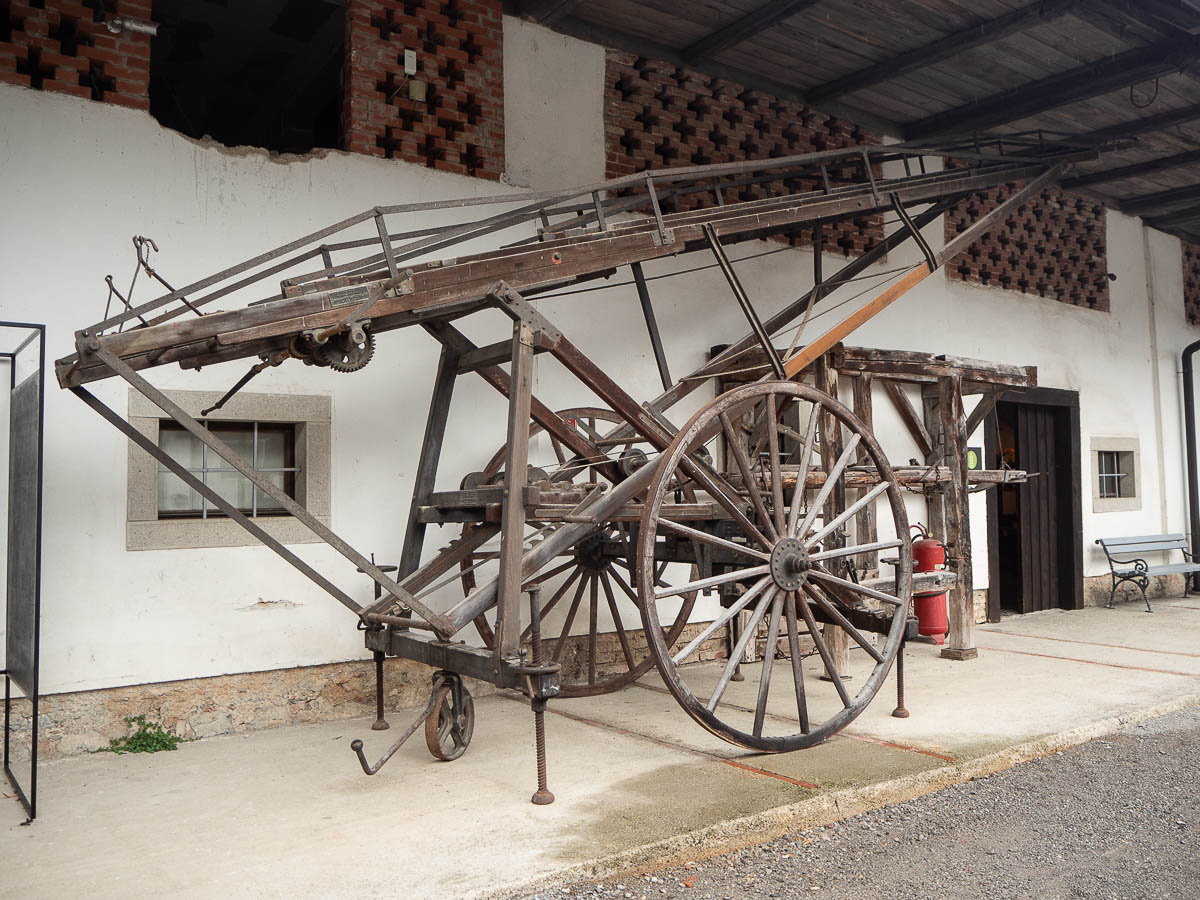
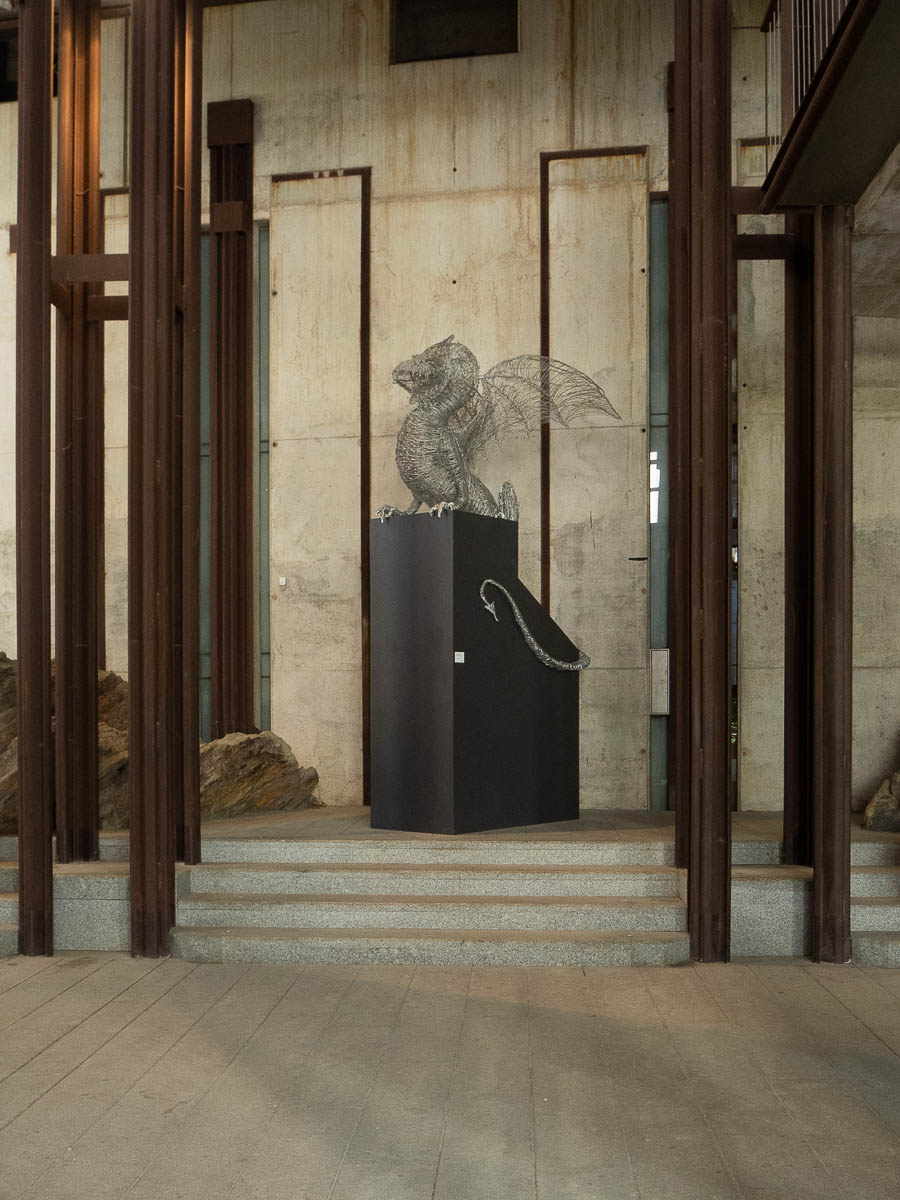
We only had half a day at our disposal before it’s time for queueing at the airport, and a forecast of rainy weather, and a forecast of traffic jams on the A1. With all of that constraining our options, we went to the Ljubljana Technical Museum, which is in fact not very near Ljubljana at all.

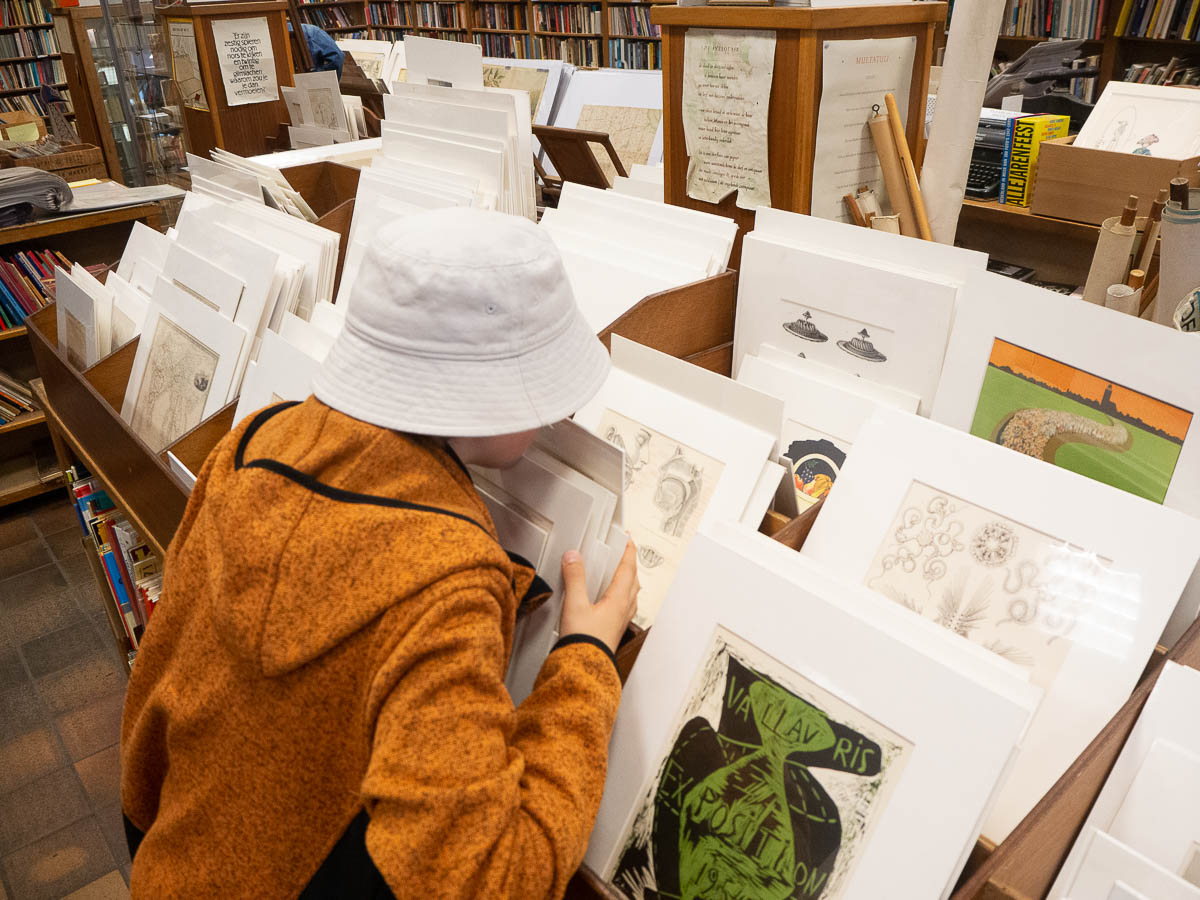
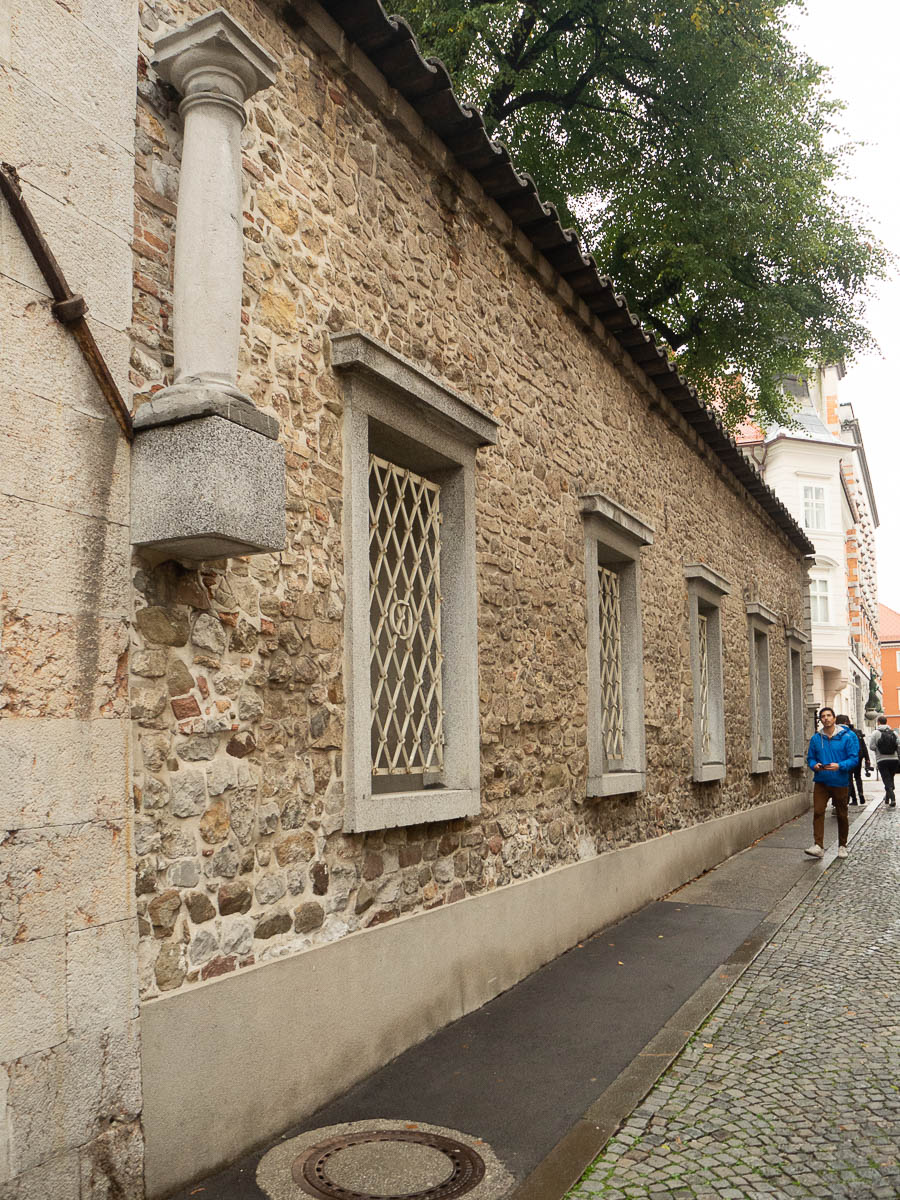
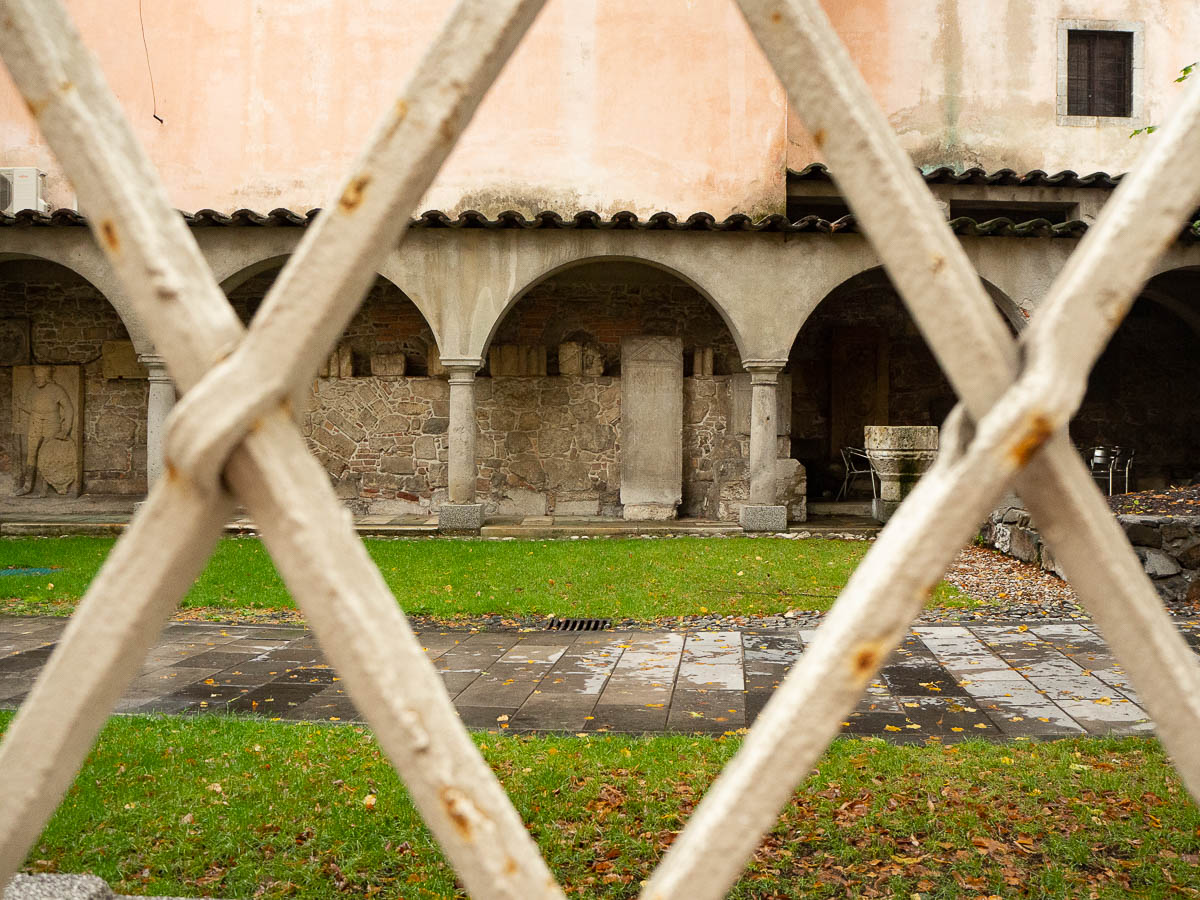
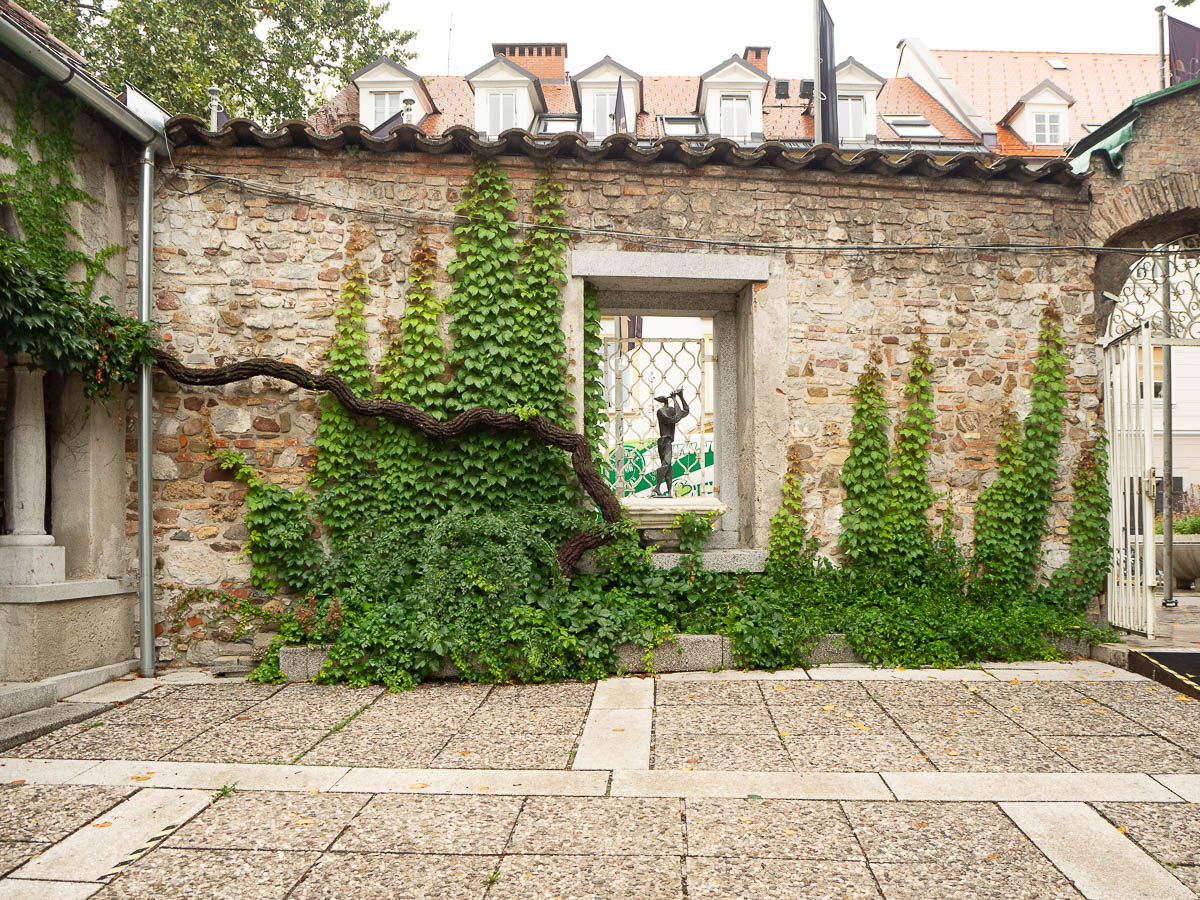
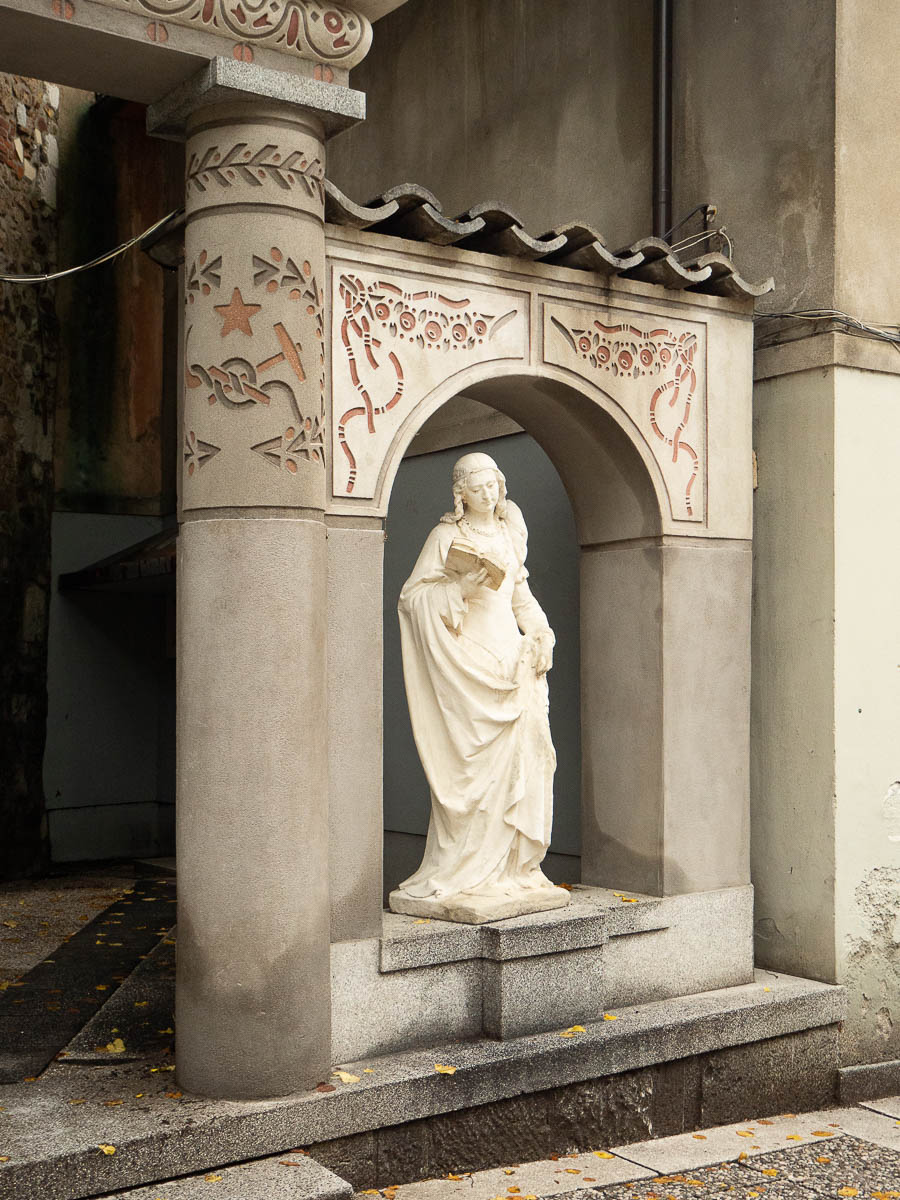
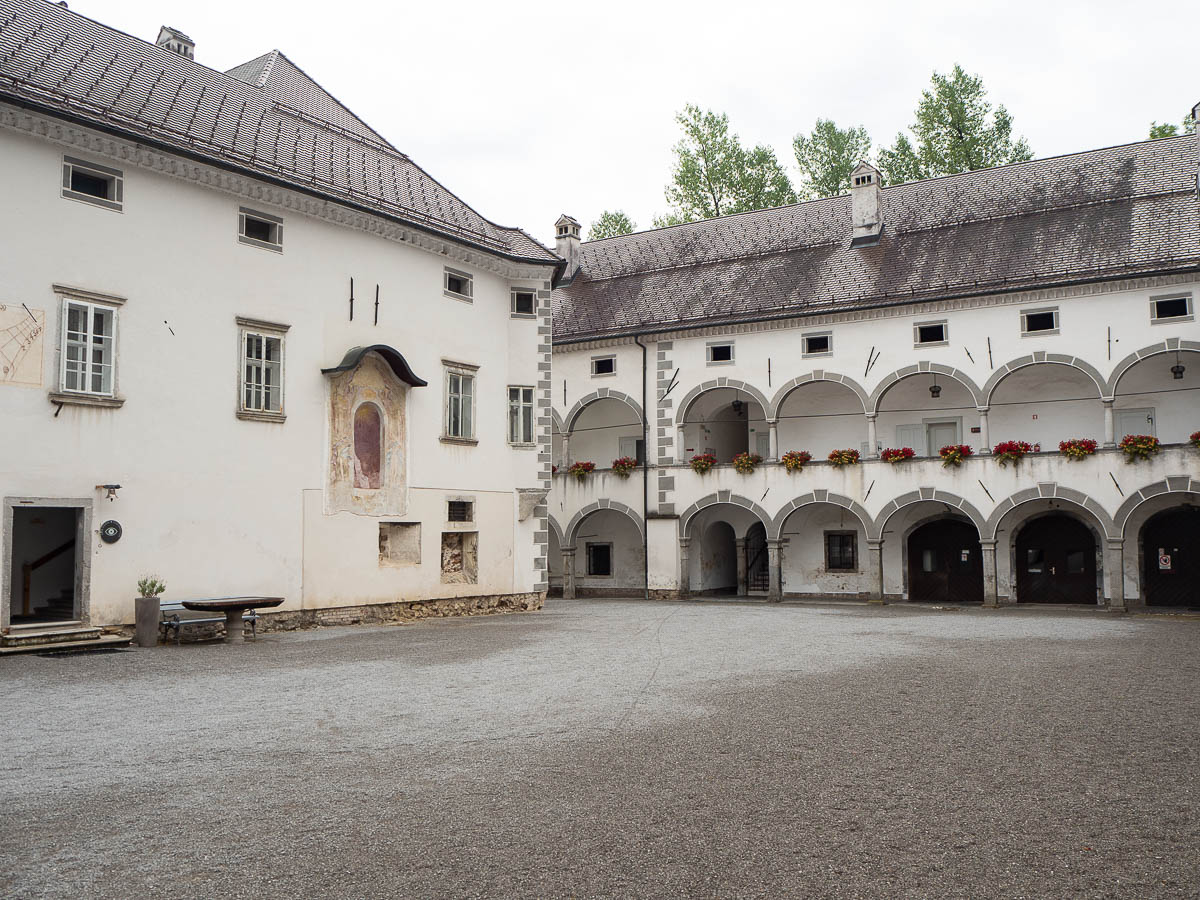
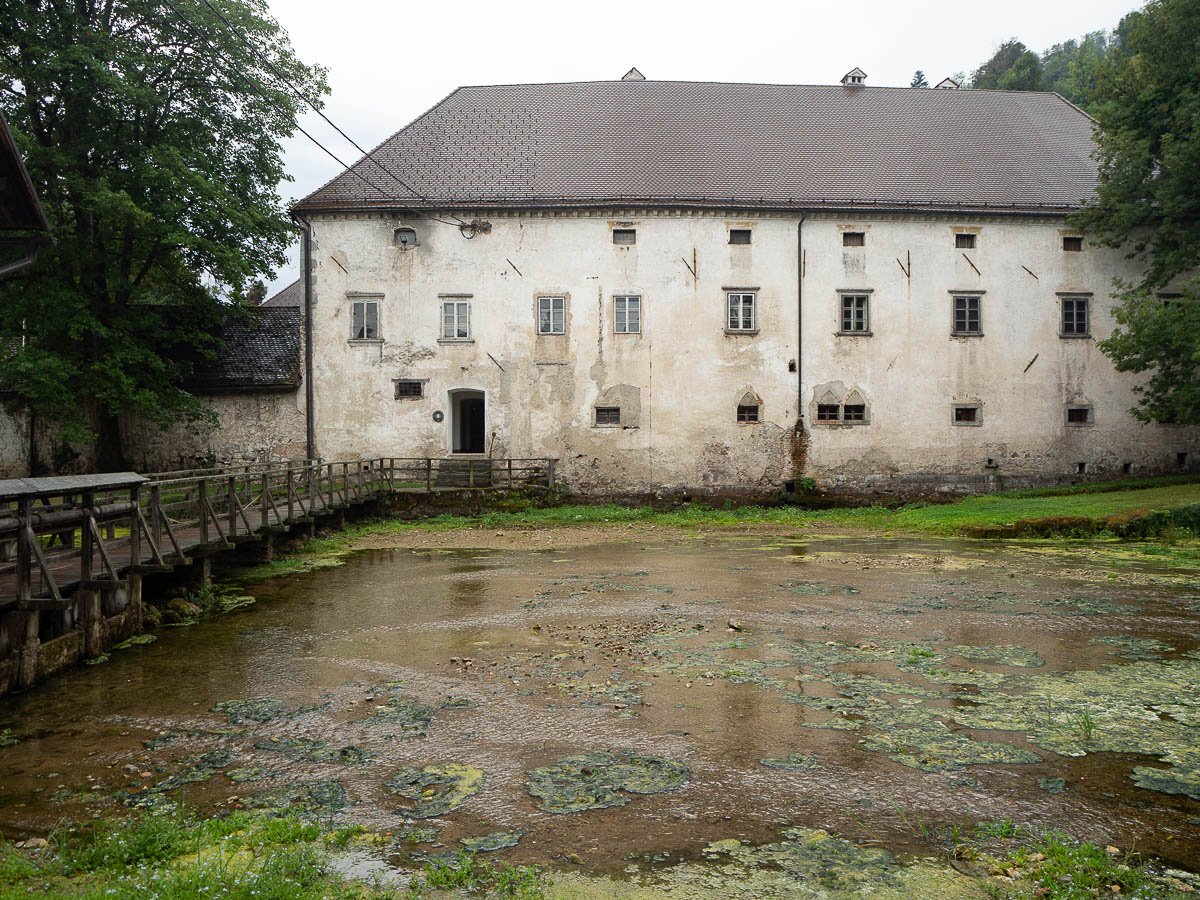
It turned out to be a wonderfully eclectic agglomeration of exhibits. Housed in an old convent, the site itself was quirky and fun to explore.


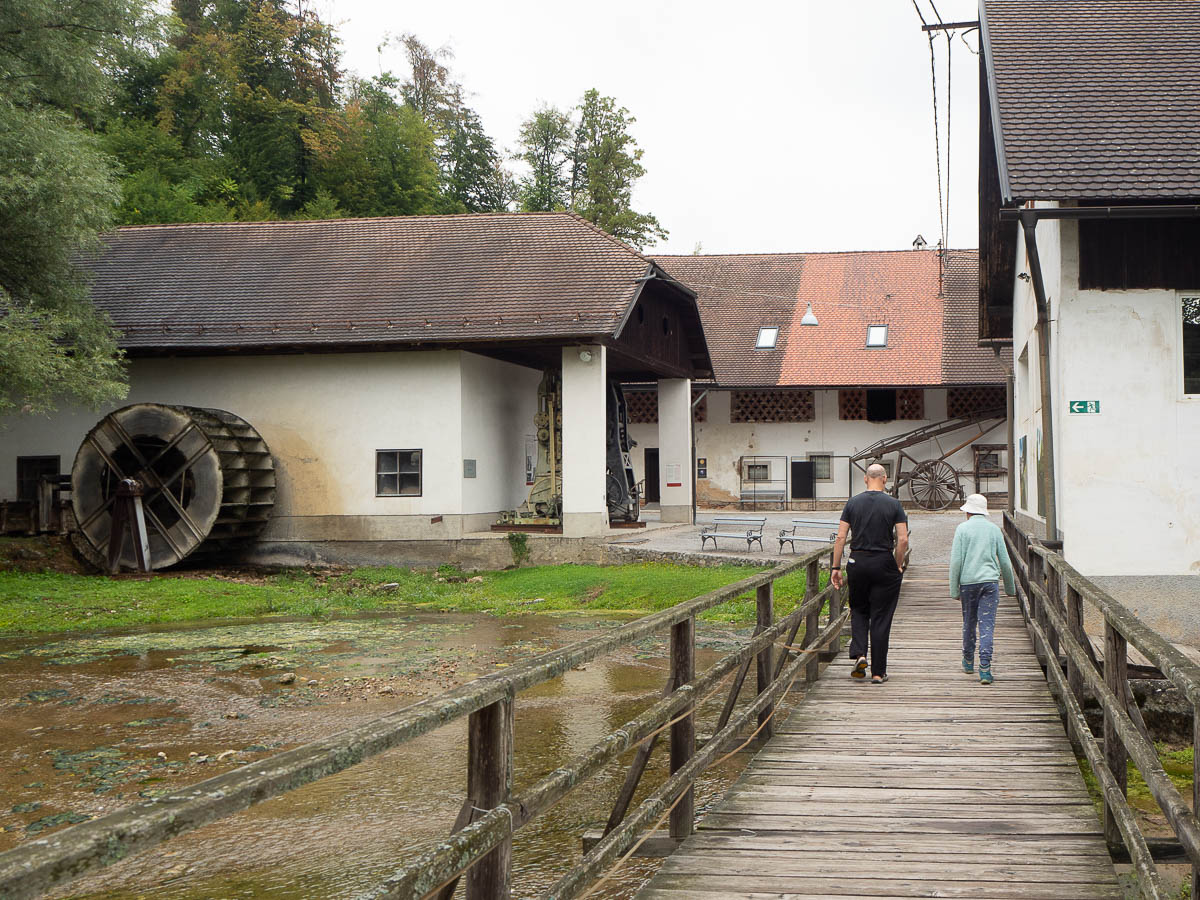
Inside and outside, the museum’s collections ranged from old pieces of machinery with no labelling whatsoever, through collection of items with minimal labelling in Slovenian only, to very detailed and pedagogical exhibitions about the history of a particular branch of technology.

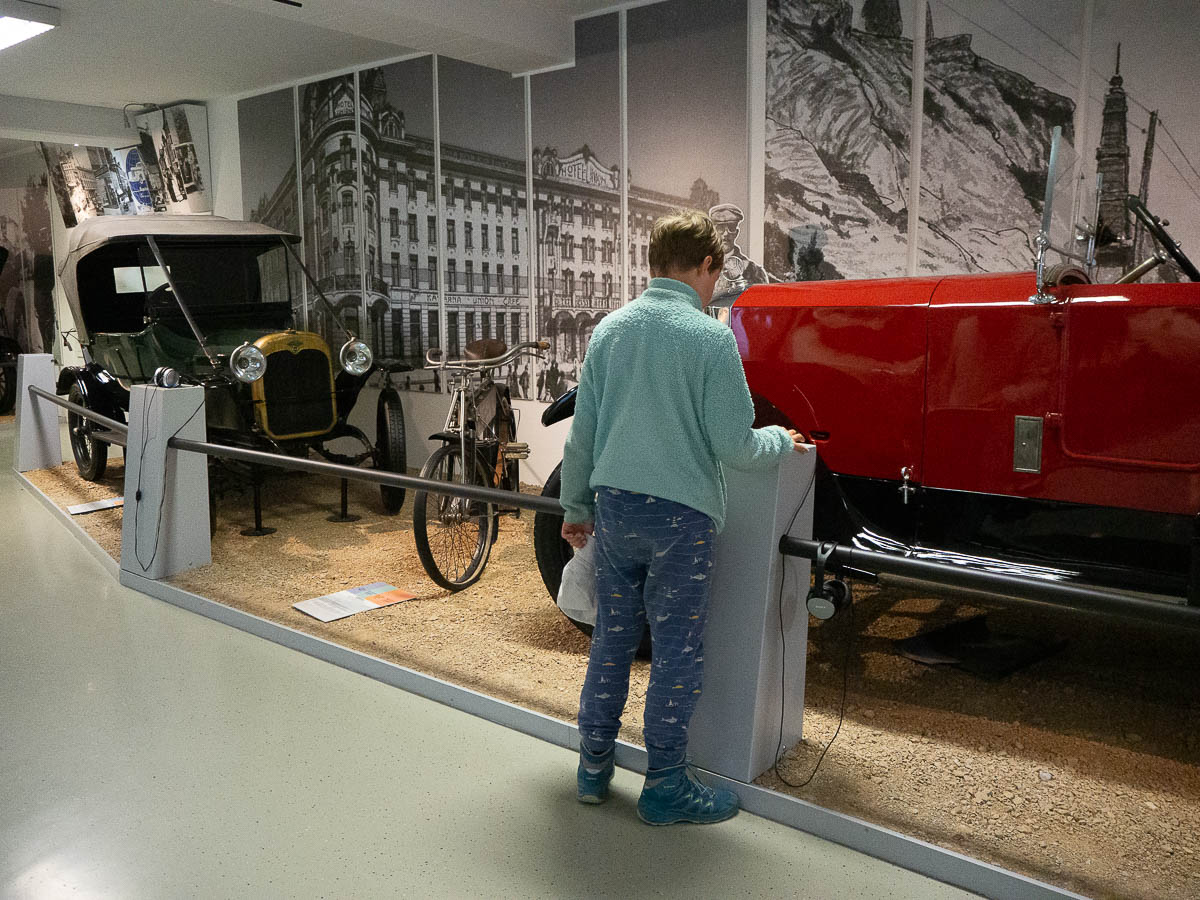
Our time here was limited so we didn’t have time for more than some cursory browsing and the occasional deep dive into a random area. We enjoyed an exhibition about the history of cars and other means of motorized personal transportation. I naturally spent a fair bit of time in the exhibition about the textile industry. There was also a surprisingly interesting and well-presented one about the history of forestry, where we learned about different methods for “first mile” timber transportation, including rafting, sledding, wooden timber chutes, and simply shoving the timber down the side of the mountain.


Ljubljana was lovely, but after a full day of seeing it from various angles, we felt pretty done with it. There were museums we could have visited, I guess, but instead we left the city behind today and went to see one of Slovenia’s grand cave complexes at Postojna.

The plan was actually to visit the caves at Škocjan nearby, which – from what we’ve gathered – would be less touristic and more exciting. However we were too late booking tickets, so all reasonable time slots were already full. Getting all spoiled here, with all the planning done for us on the other days.

Speaking of which, I want to give a shout out here to Walking Holidays Slovenia who arranged the whole trip for us. I am perfectly capable of finding hotels and googling for scenic spots and hiking trails, but a vacation becomes so much more of a vacation if I don’t first have to do weeks of work to arrange it all.

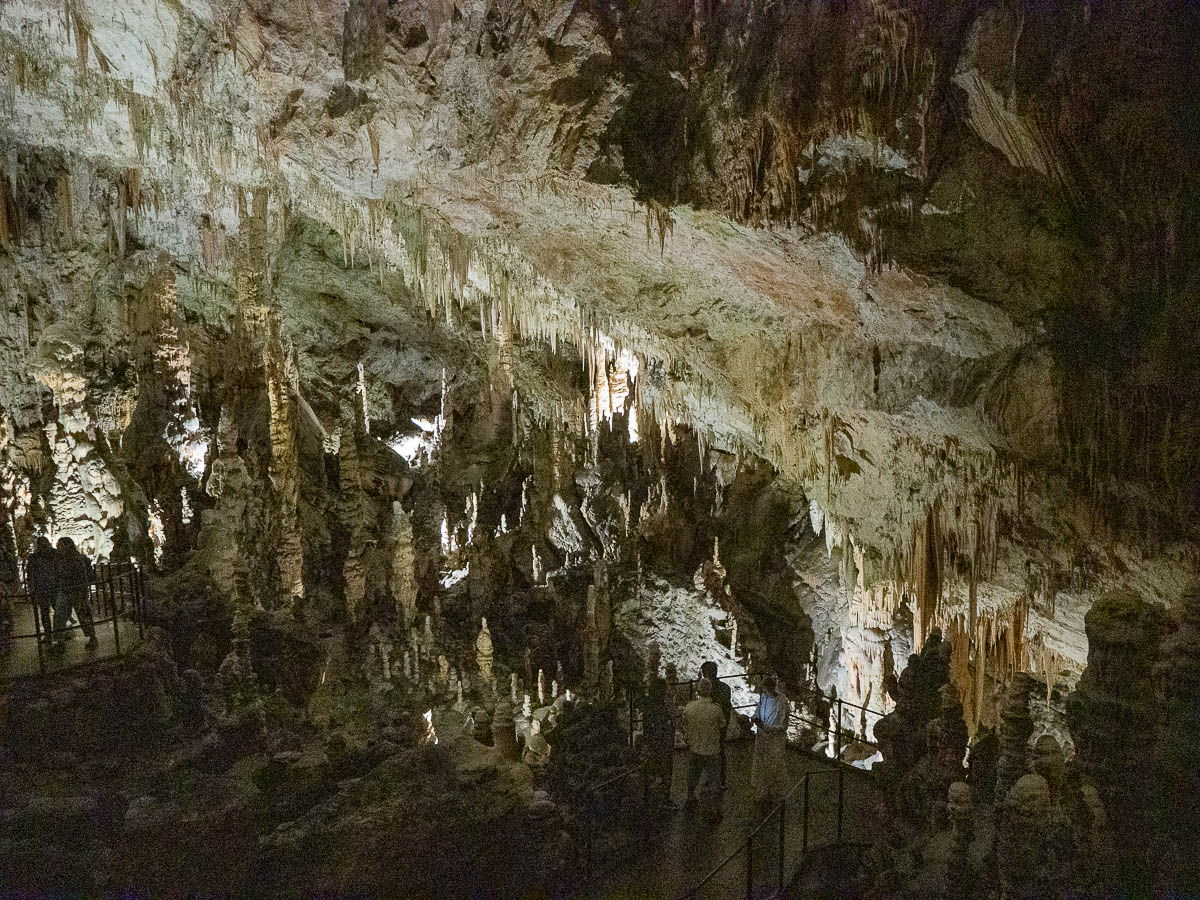
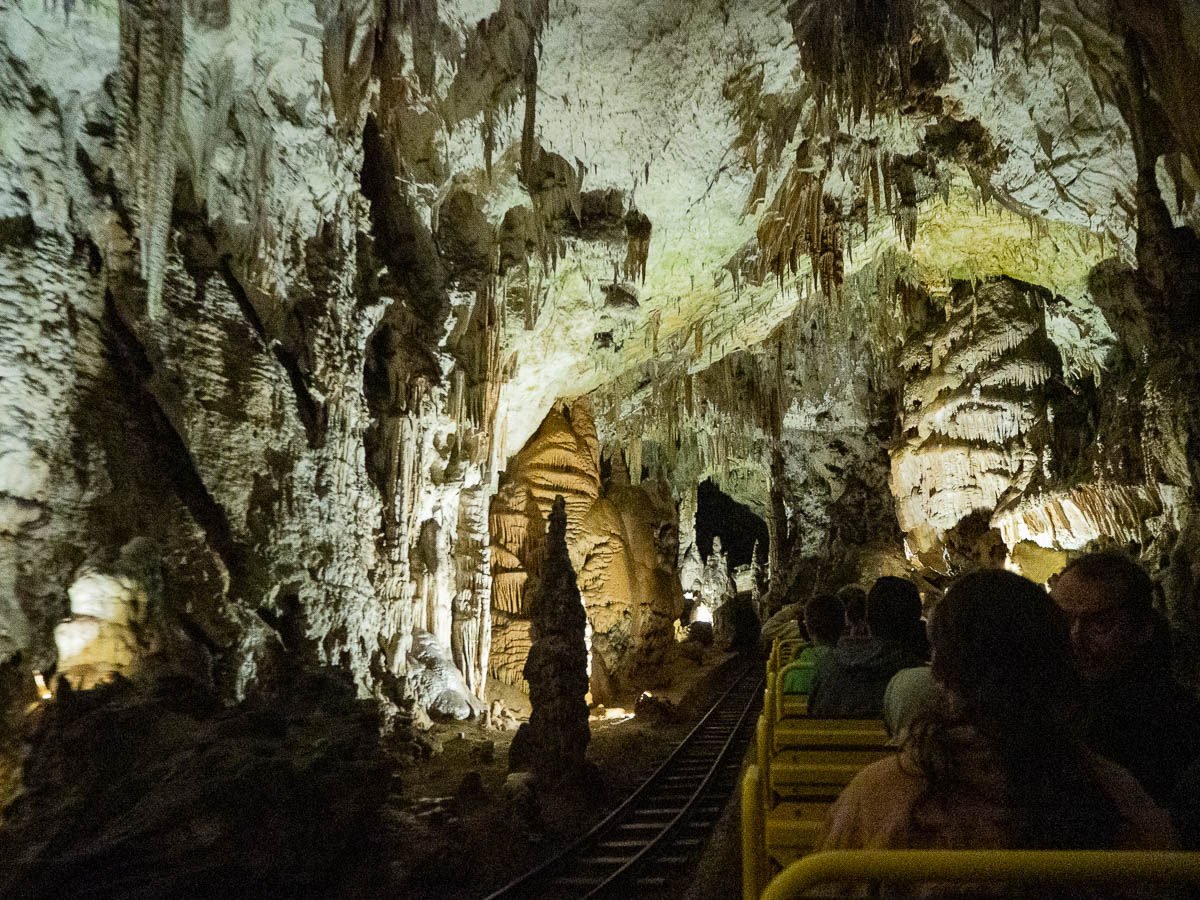
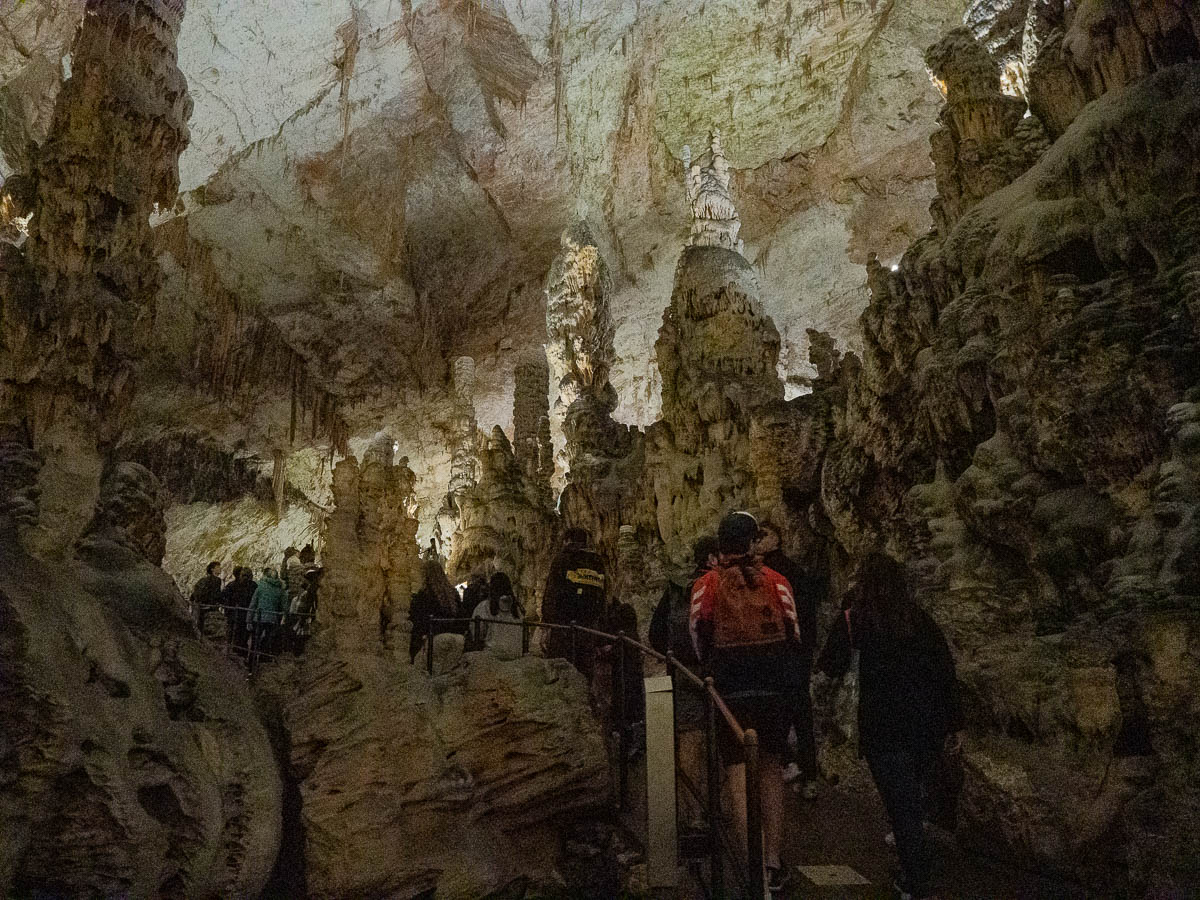
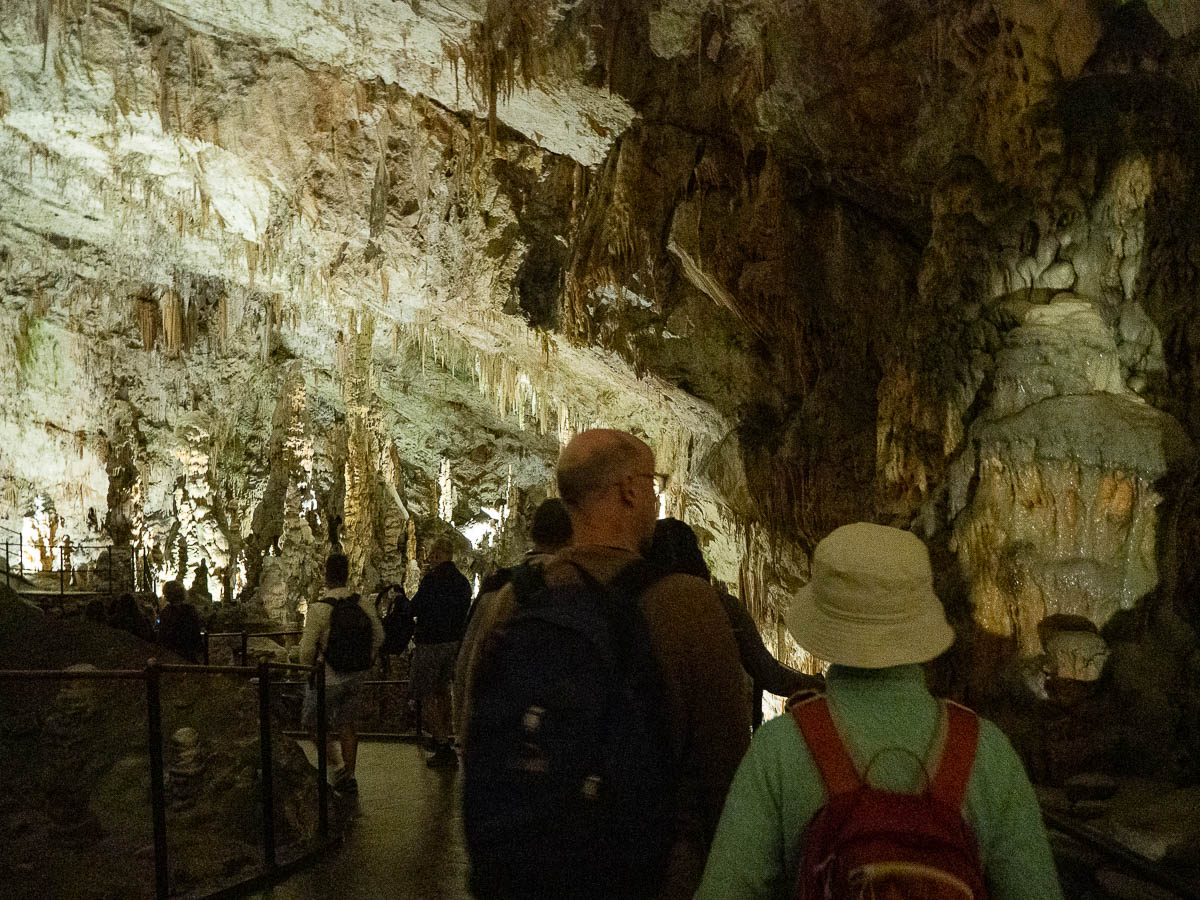
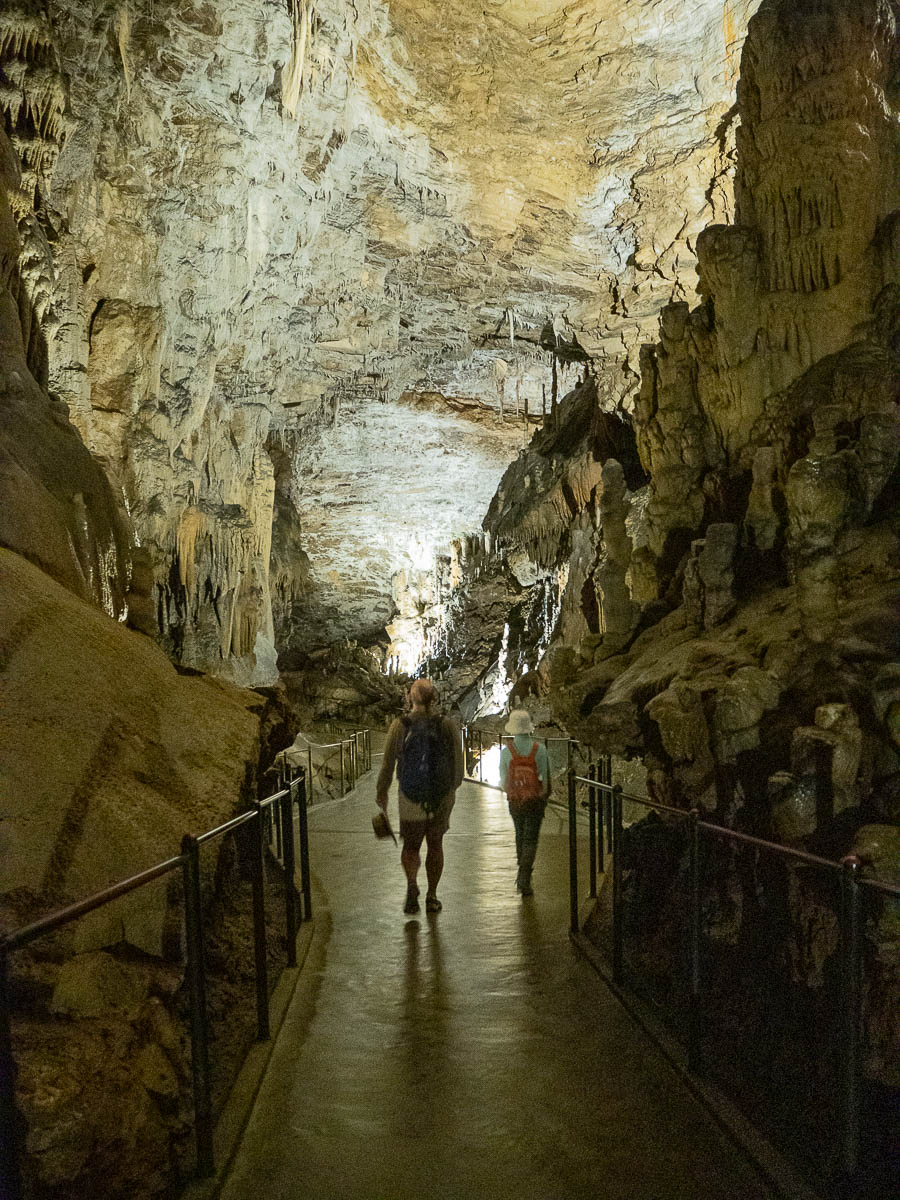
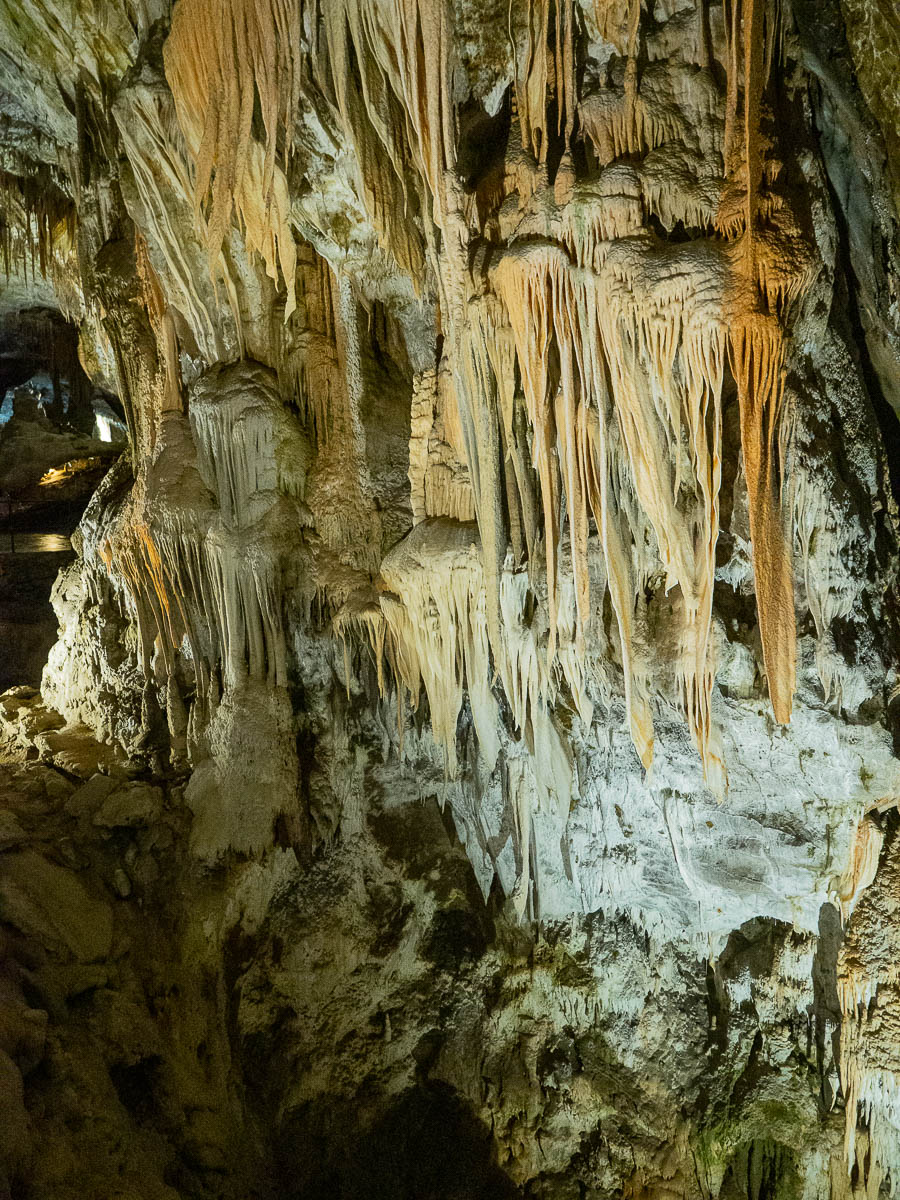
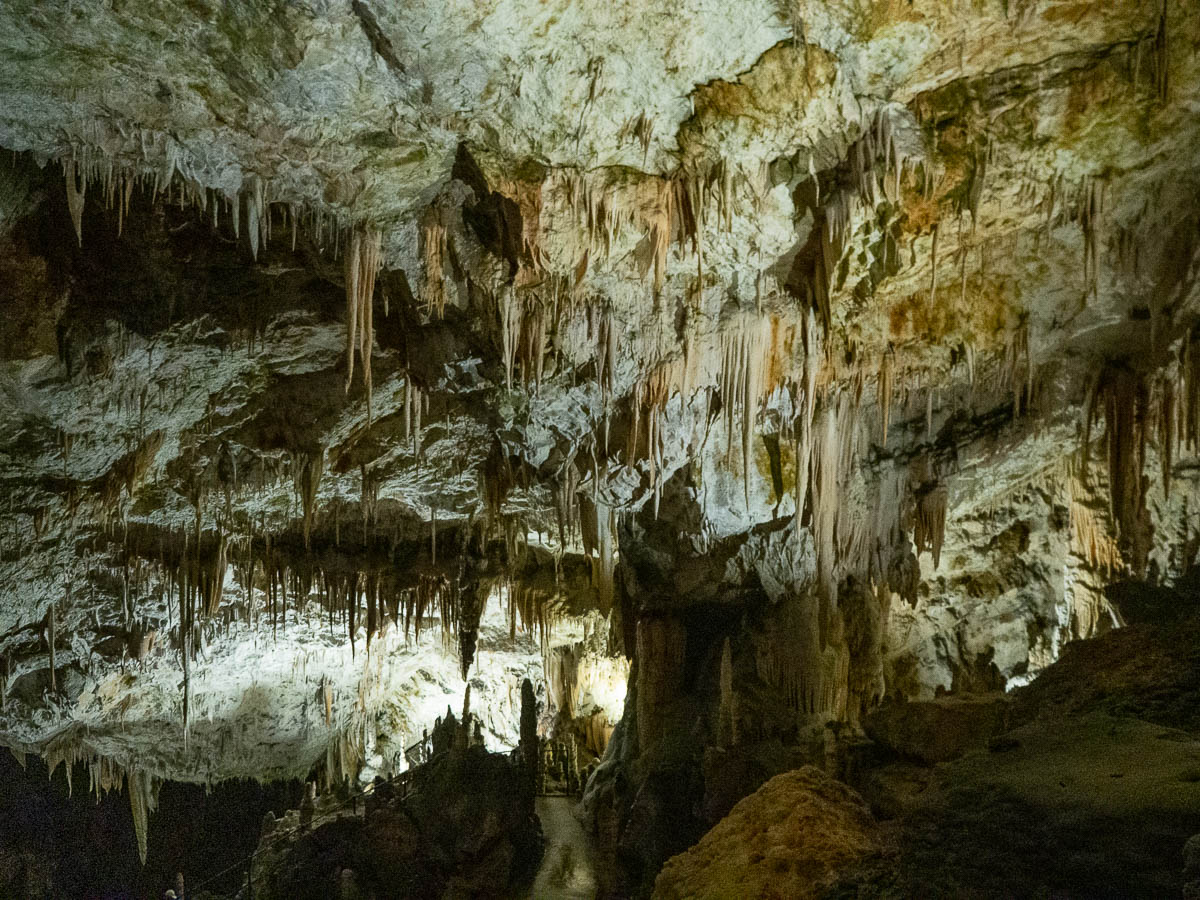
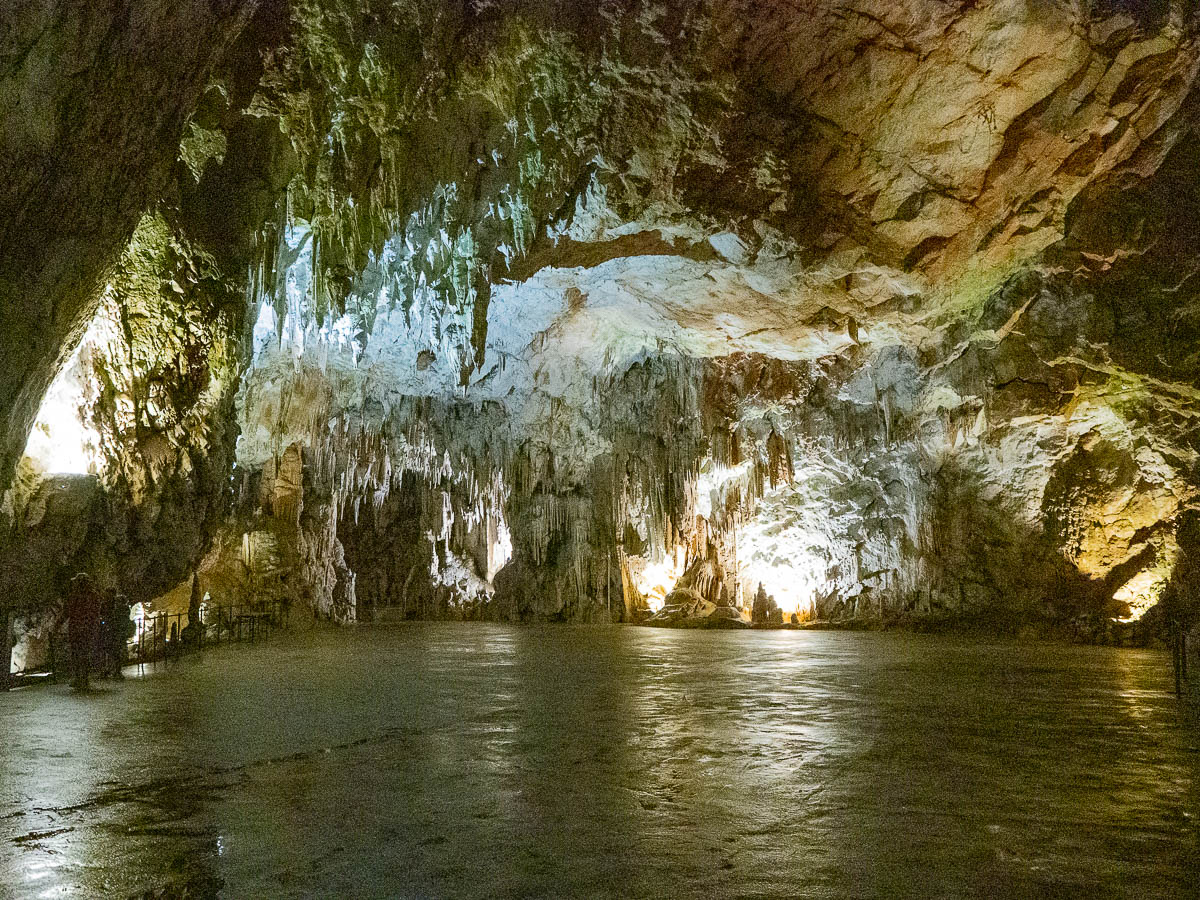
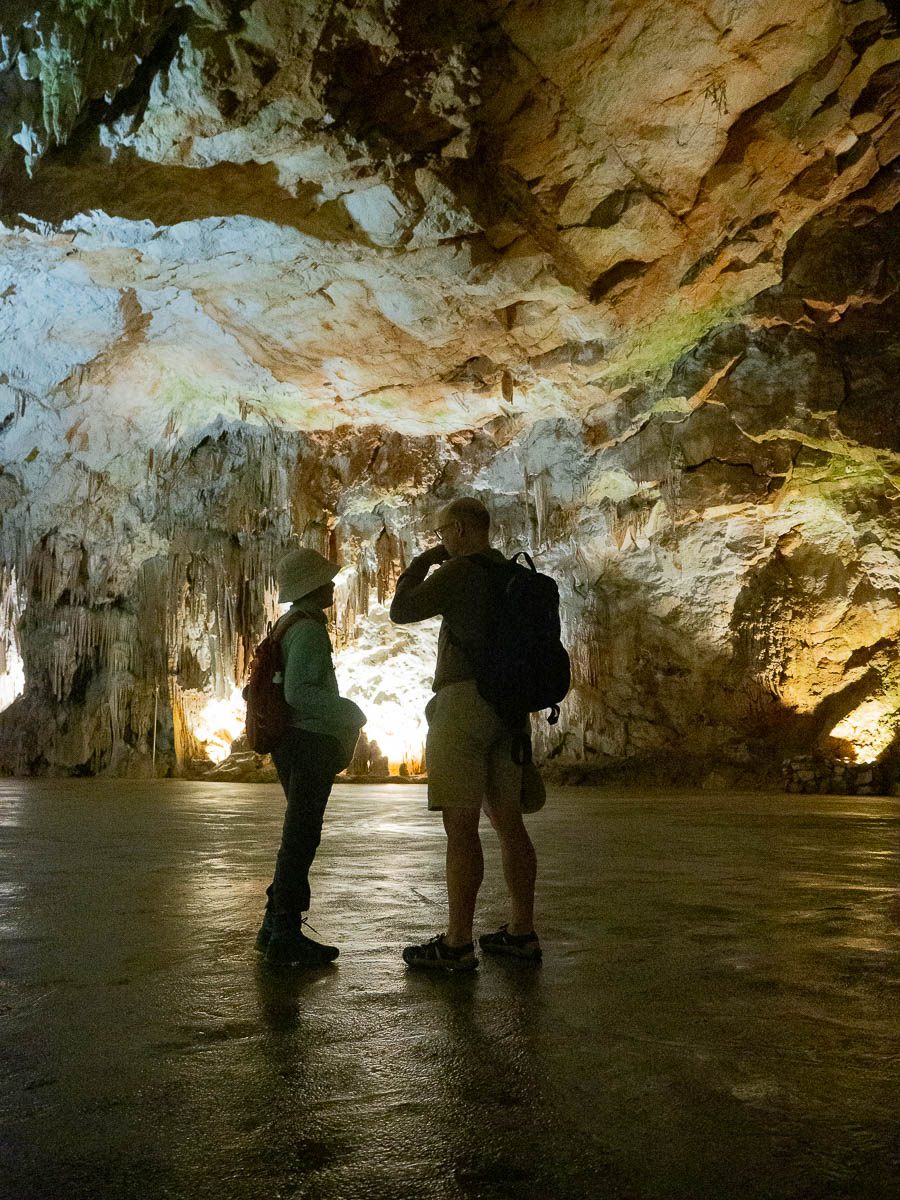
The experience in Postojna was quite touristic, with large crowds (quite well managed, though) and numerous souvenir shops and a little train taking us into the caves. But inside it was truly magnificent. During the two-kilometre train ride from the entrance to the cool parts, I kept thinking that they should slow the train down so we would have more opportunities to actually see the caves, and take photos. And then we got to the end station, and the reason for the speedy ride became obvious – the caves we had passed through were nothing compared to the grand views that opened up in front of us.

After a while my brain was almost overloaded with awesomeness. One vast, intricate cavern after the other; one wondrous stalagmite formation after the other.

All of it, unfortunately, nearly impossible to photograph well with my equipment. The photos give you no sense of the scale or the depth, and the lighting conditions were challenging to say the least. But at least they will remind us of what we experienced.


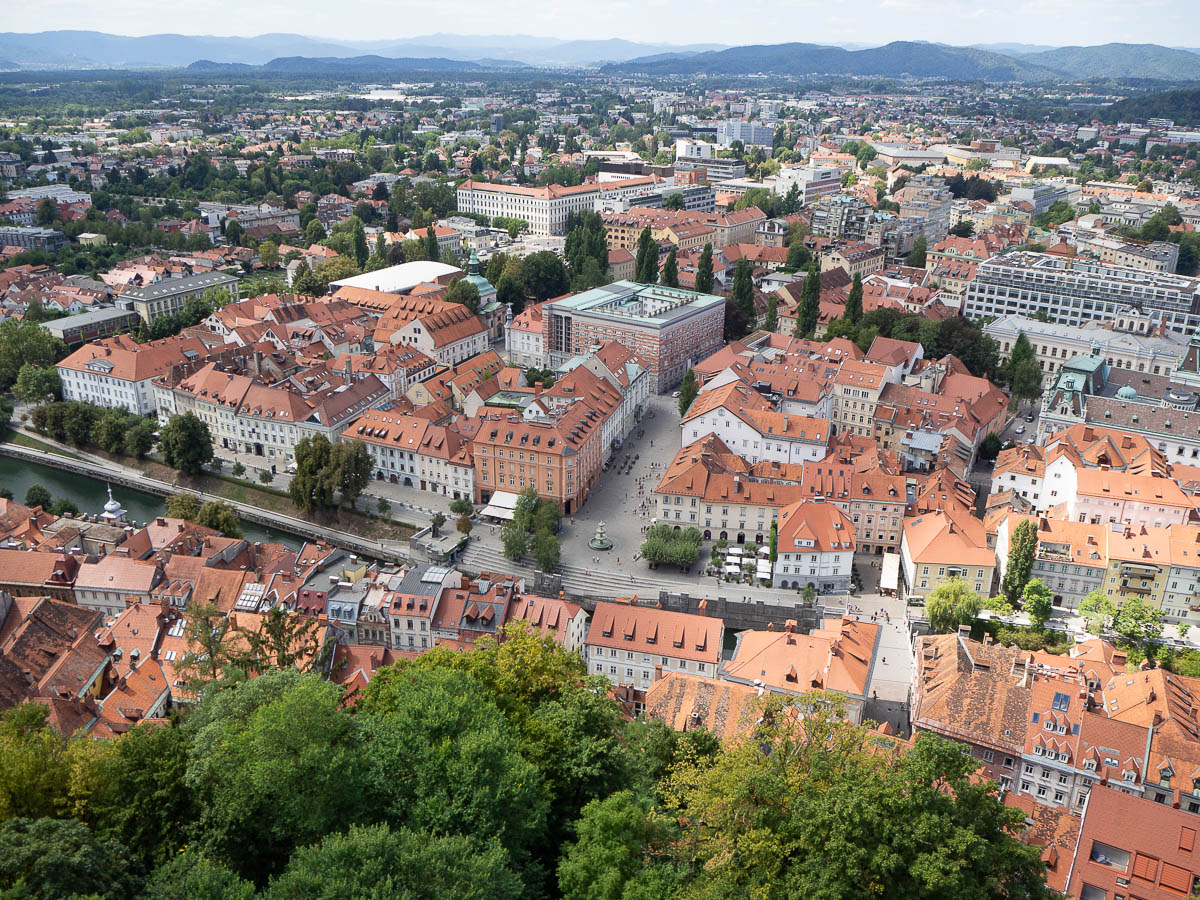
The hiking part of the vacation is over, and we’ll be spending the next two and a half days sightseeing. Today we saw Ljubljana from various angles: street level, from above, and from below.

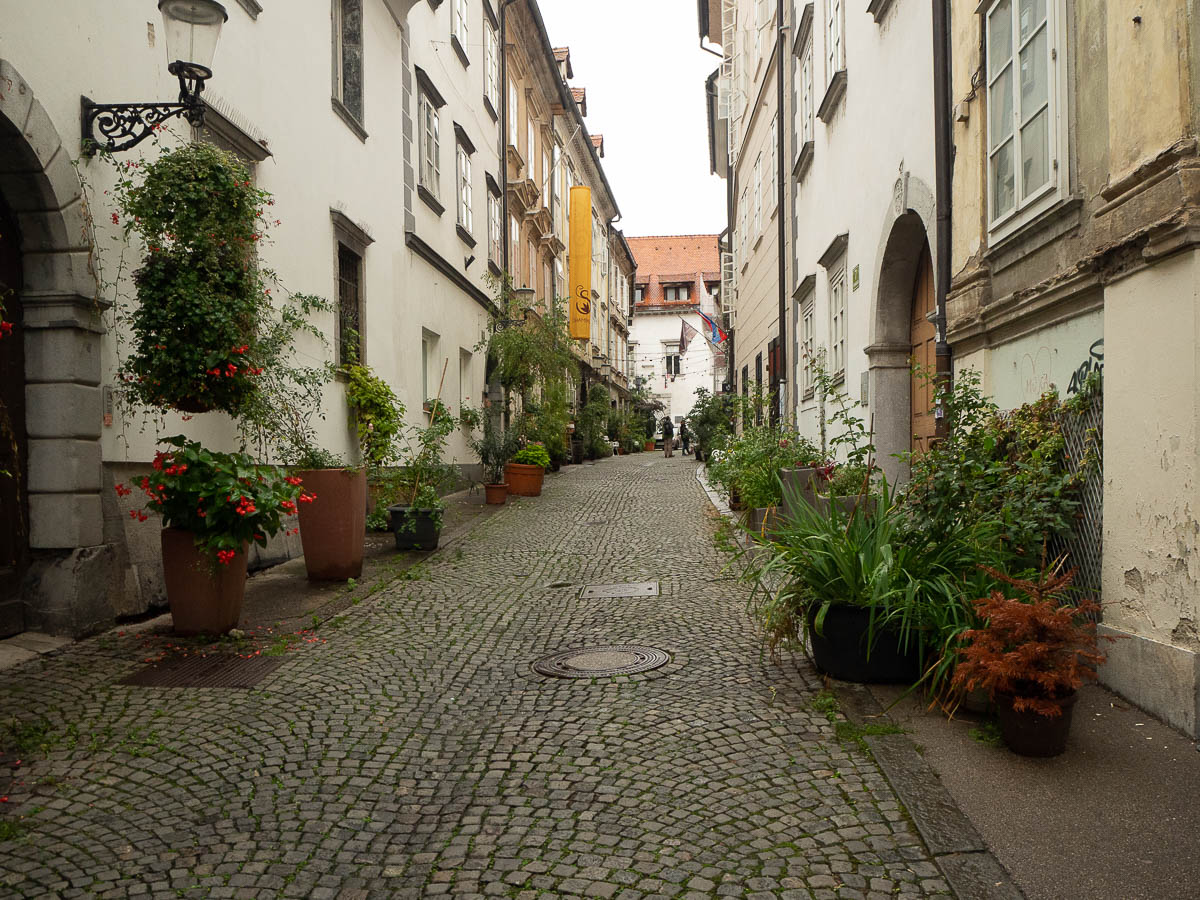
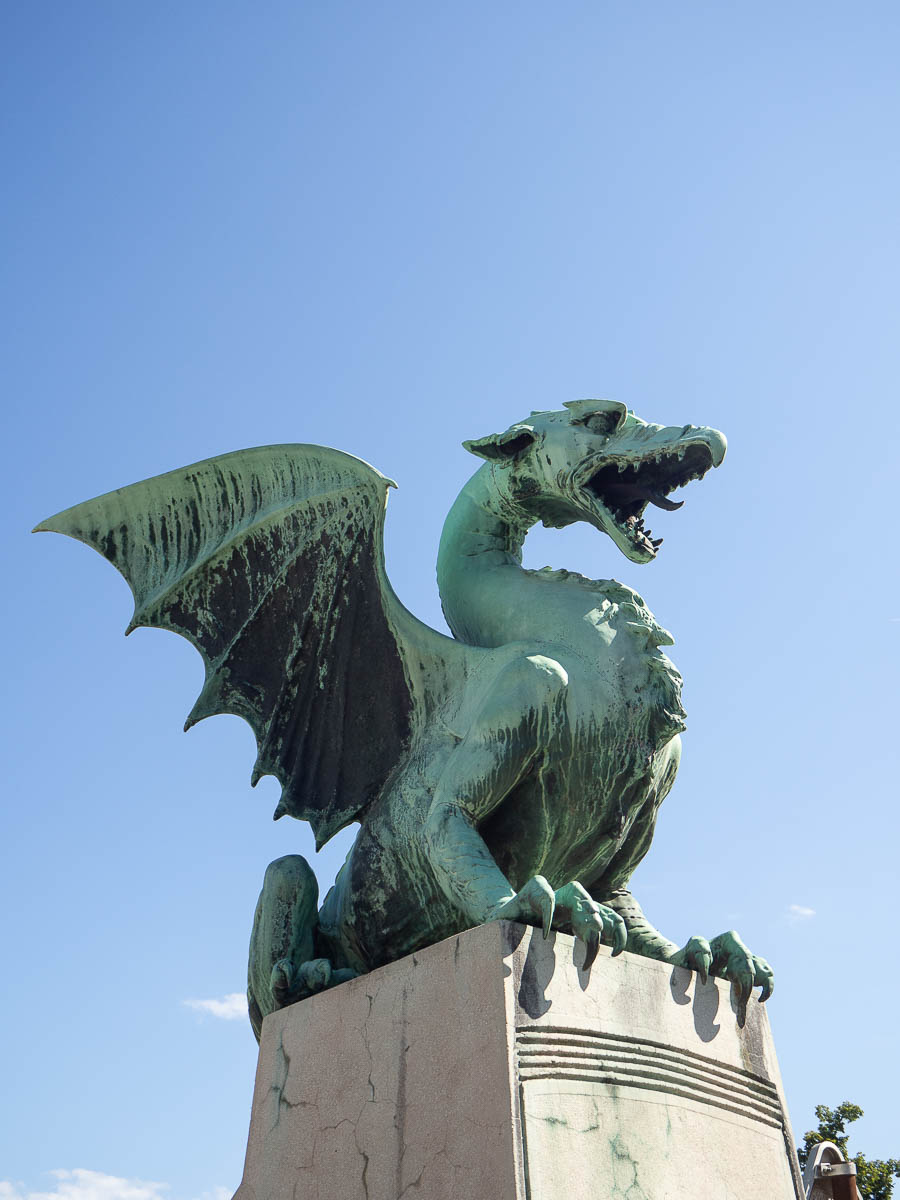
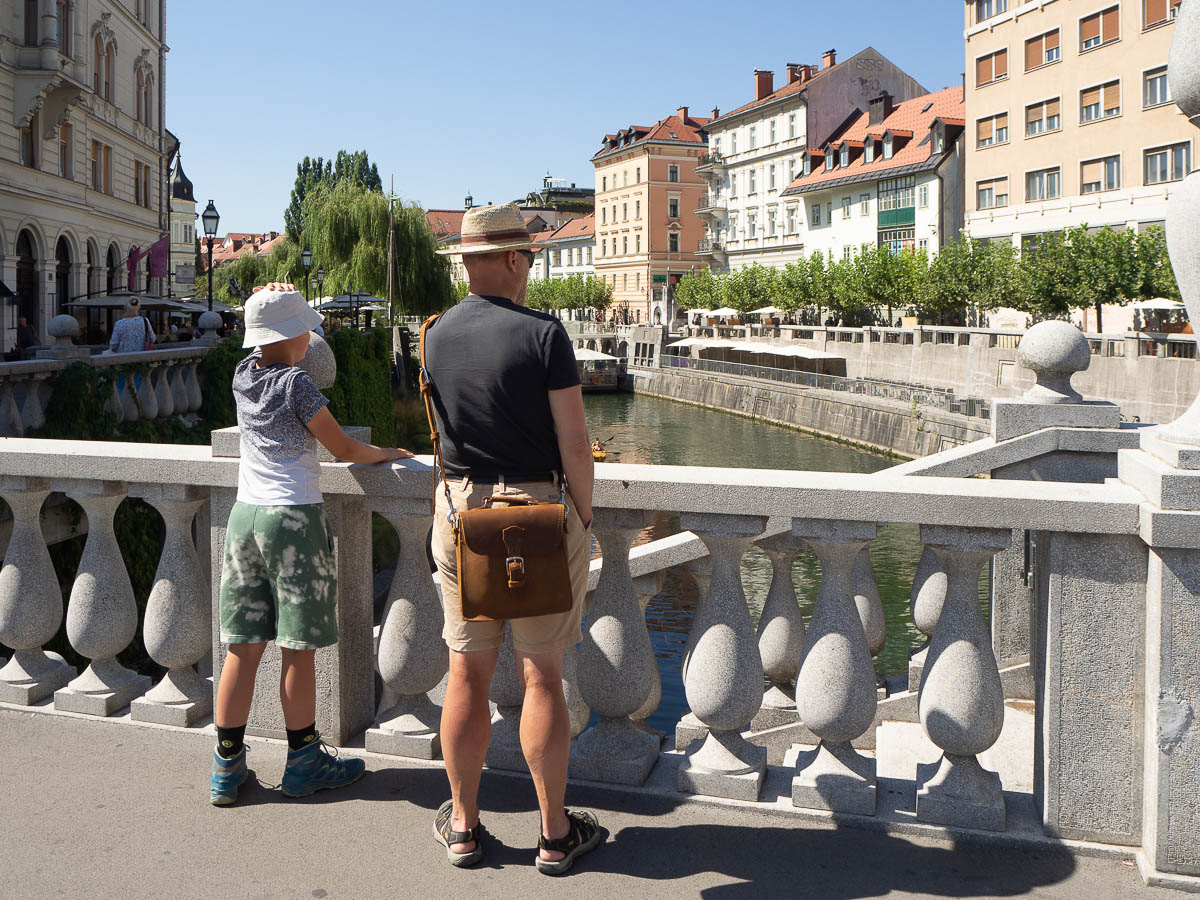
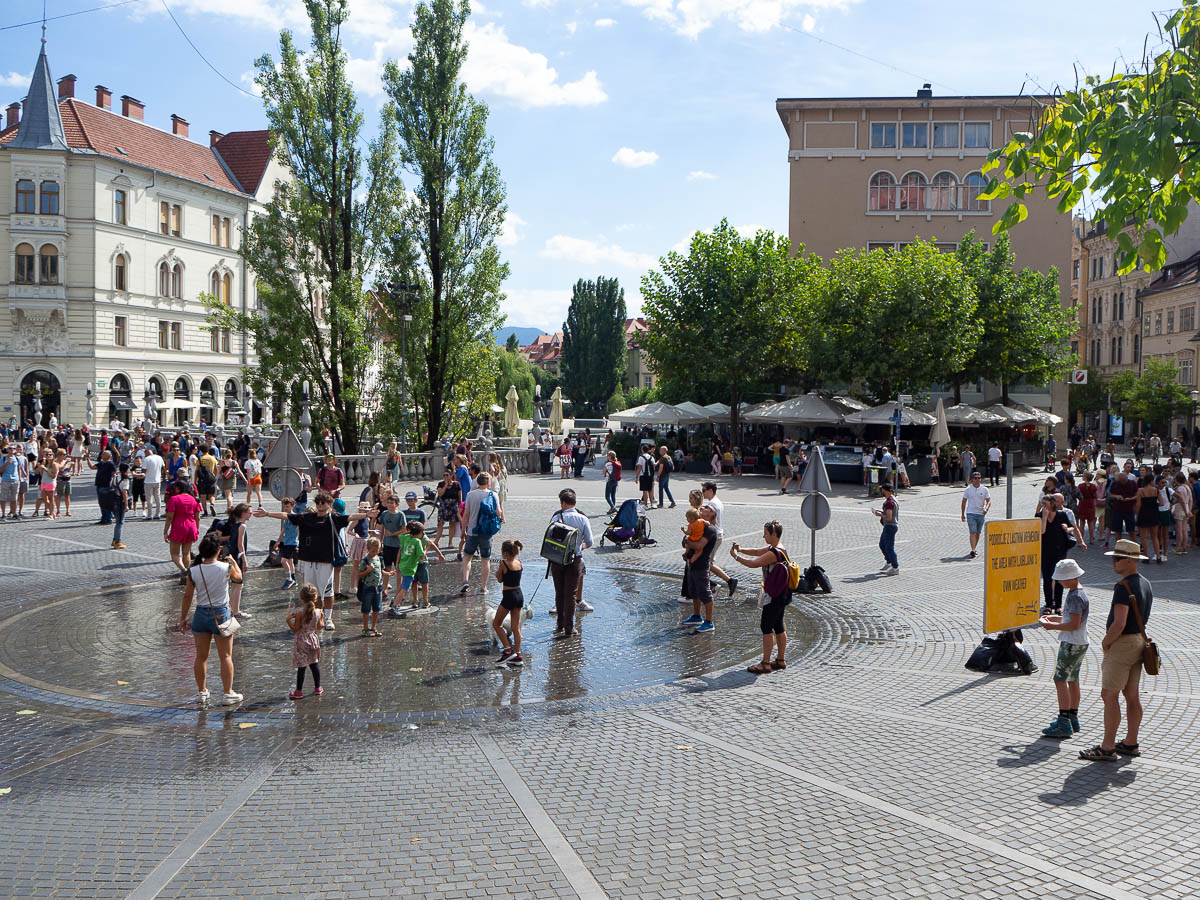
A large chunk of central Ljubljana is a car-free area, very pleasant for walking and window shopping. There were nice riverside walkways and numerous pedestrian bridges, including the famous dragon bridge. Lots and lots and lots of cafes and restaurants with outdoor seating, and some truly excellent ice cream. (Chocolate ice cream with single-estate chocolate!)


We liked the circle of rain in Prešeren square.

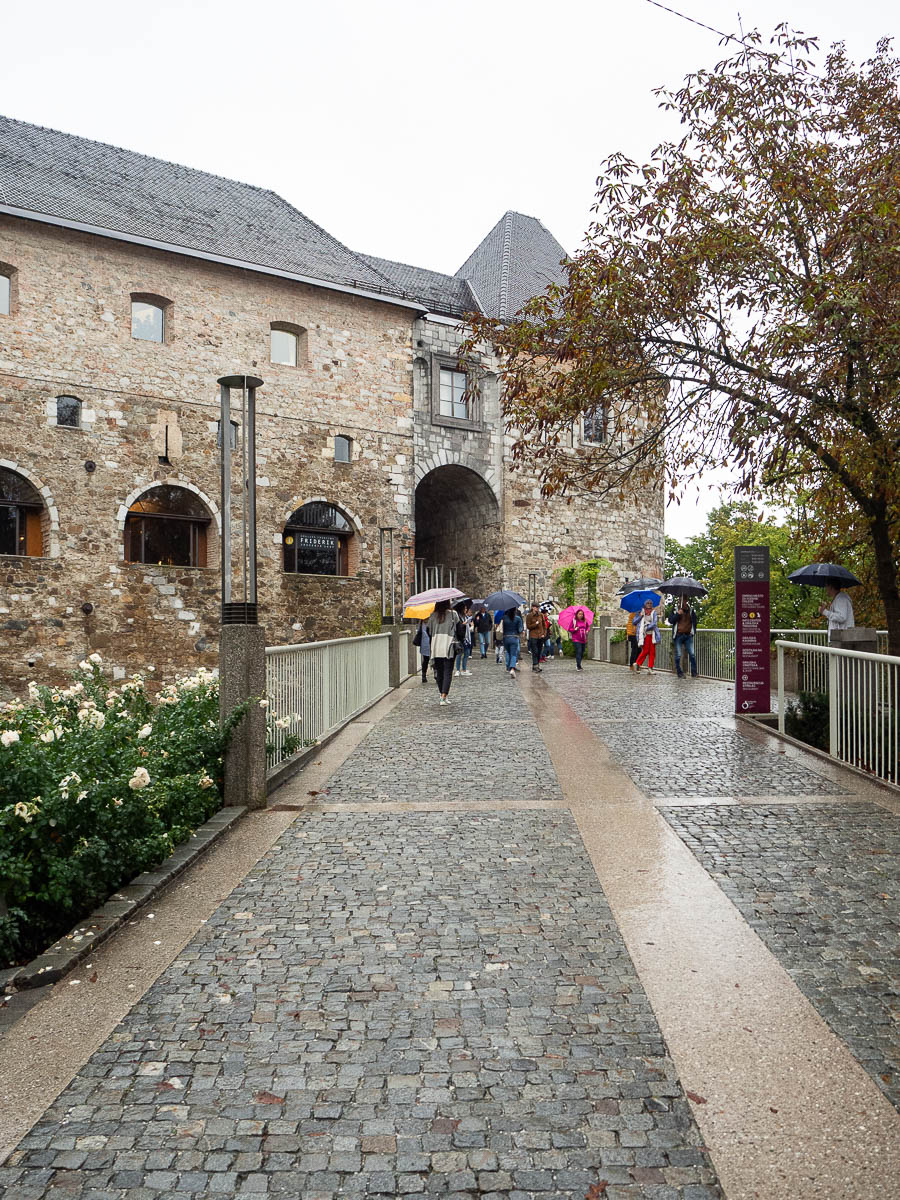
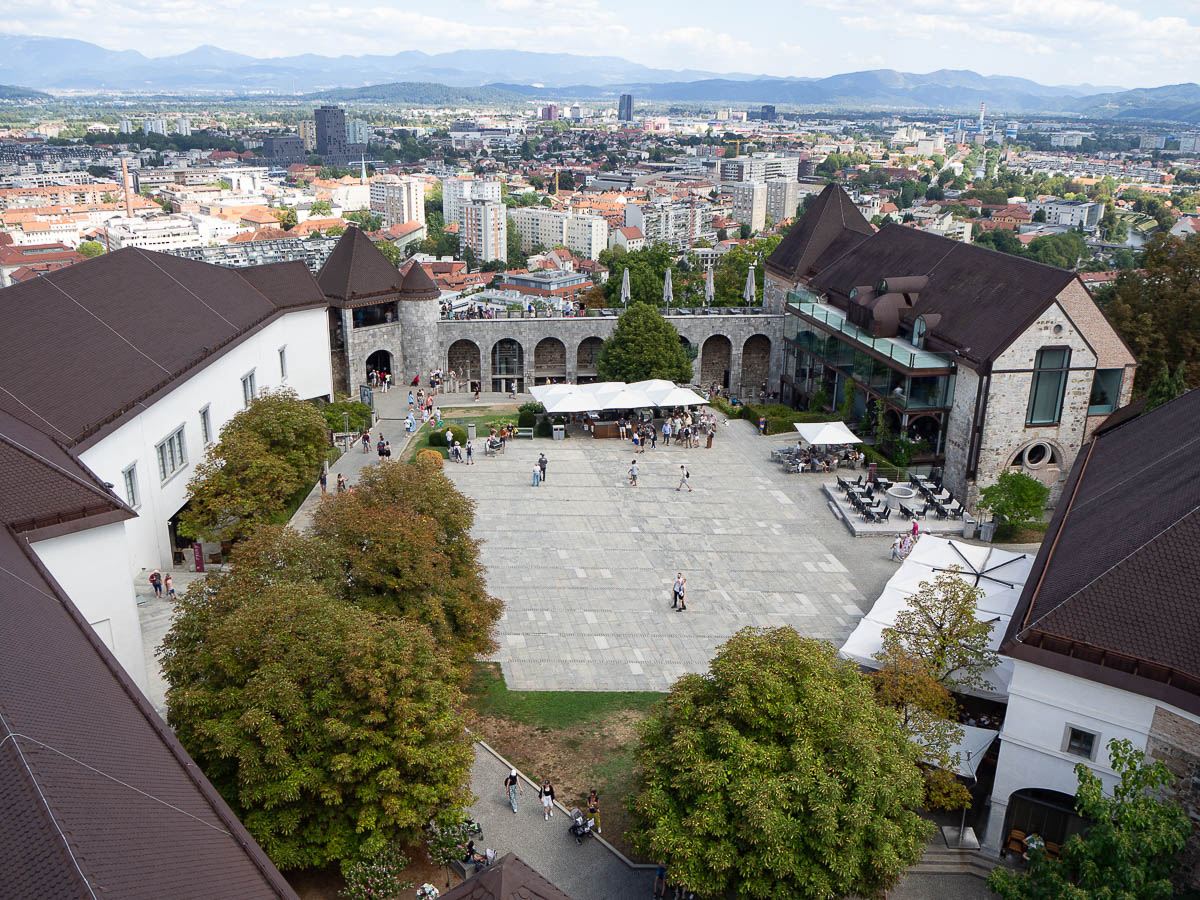
Next we made our way up to the castle, and then even further up to its highest tower, from where we looked down on the city as well as the castle itself.


The castle itself was a mixed bag. The City Museum was not much better than the one in Bled, displaying disparate objects, each one perhaps interesting in and of itself, but often badly presented. Physically unreadable signs, often way too little context. (Seriously, nobody can read your labelling with tiny black letters on transparent glass in front of the object itself.) Same goes for the museum of puppetry in another part of the castle – I guess it can be interesting if you’re already familiar with whatever TV shows and movies the puppets are from, but without the local knowledge it’s just a random bunch of puppets.

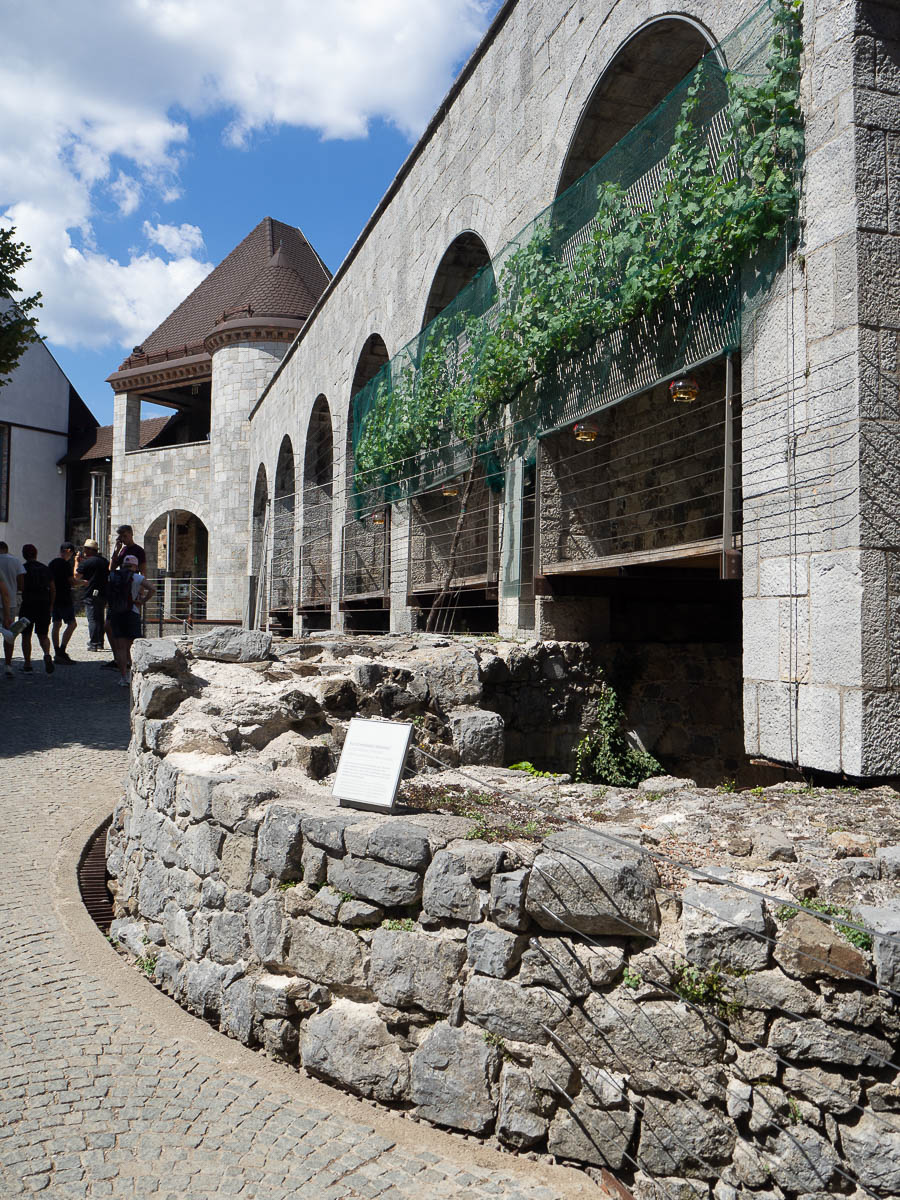
On the other hand, the lower levels of the castle were impressive in and of themselves, as a cool piece of engineering. And the before and after photos of the extensive renovations that the castle has gone through were captivating.

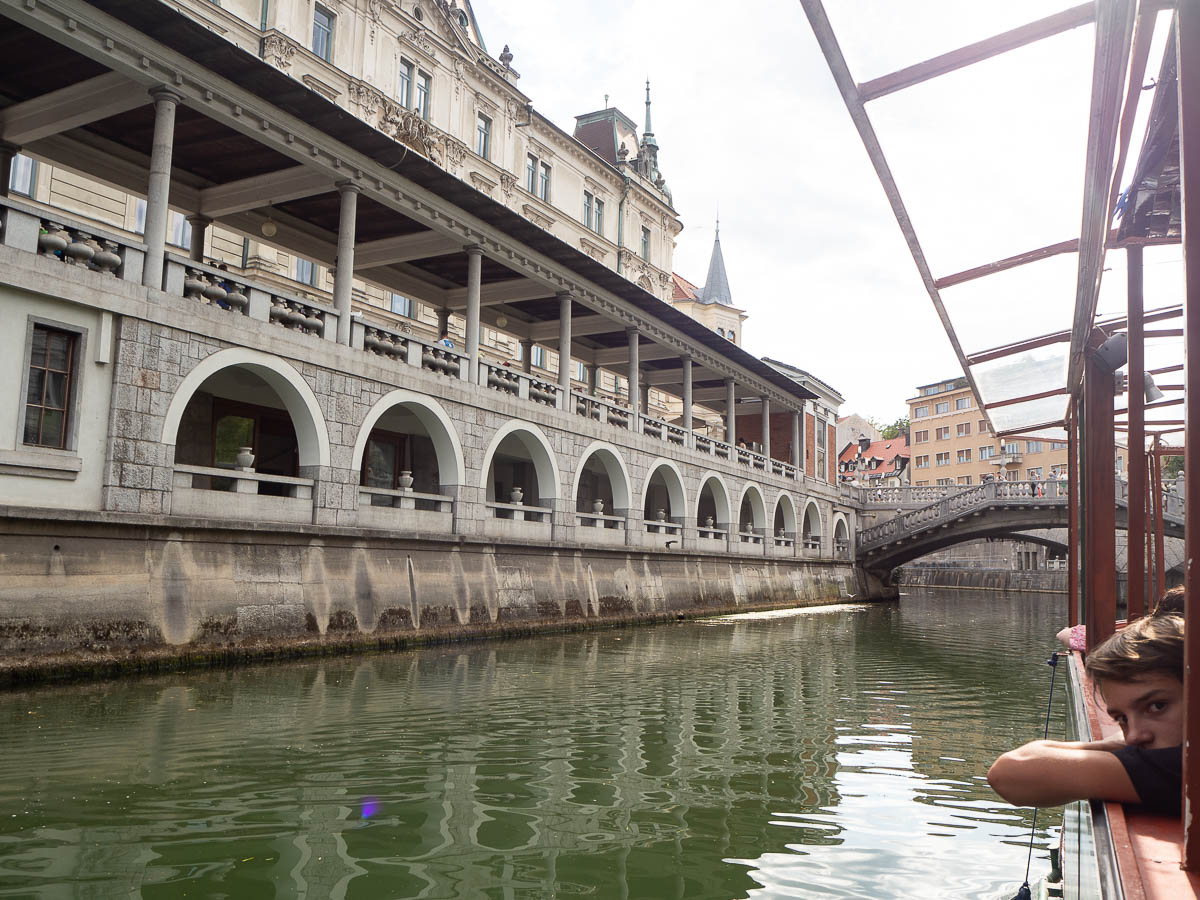
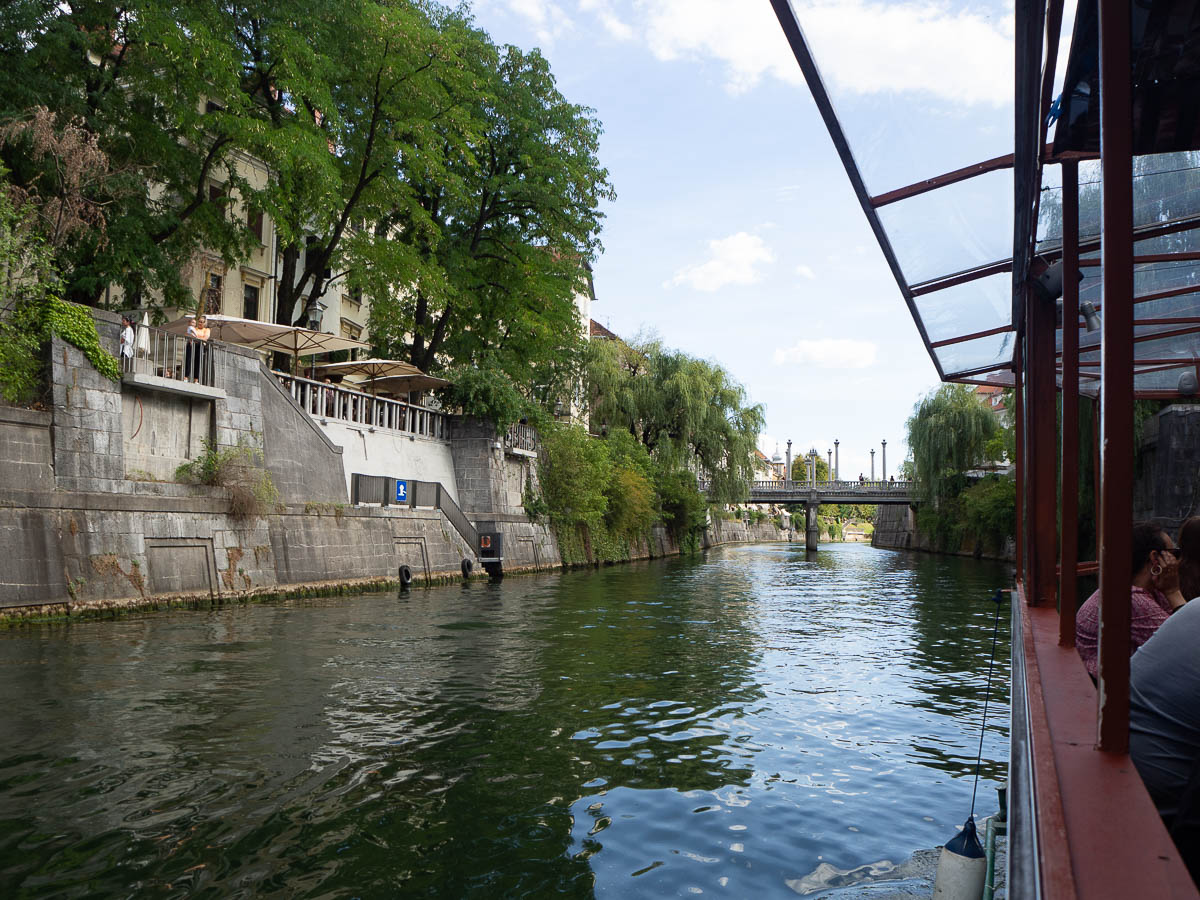
In the afternoon we went for a boat ride up and down the river, so we could see the city from a new angle – and rest our legs.


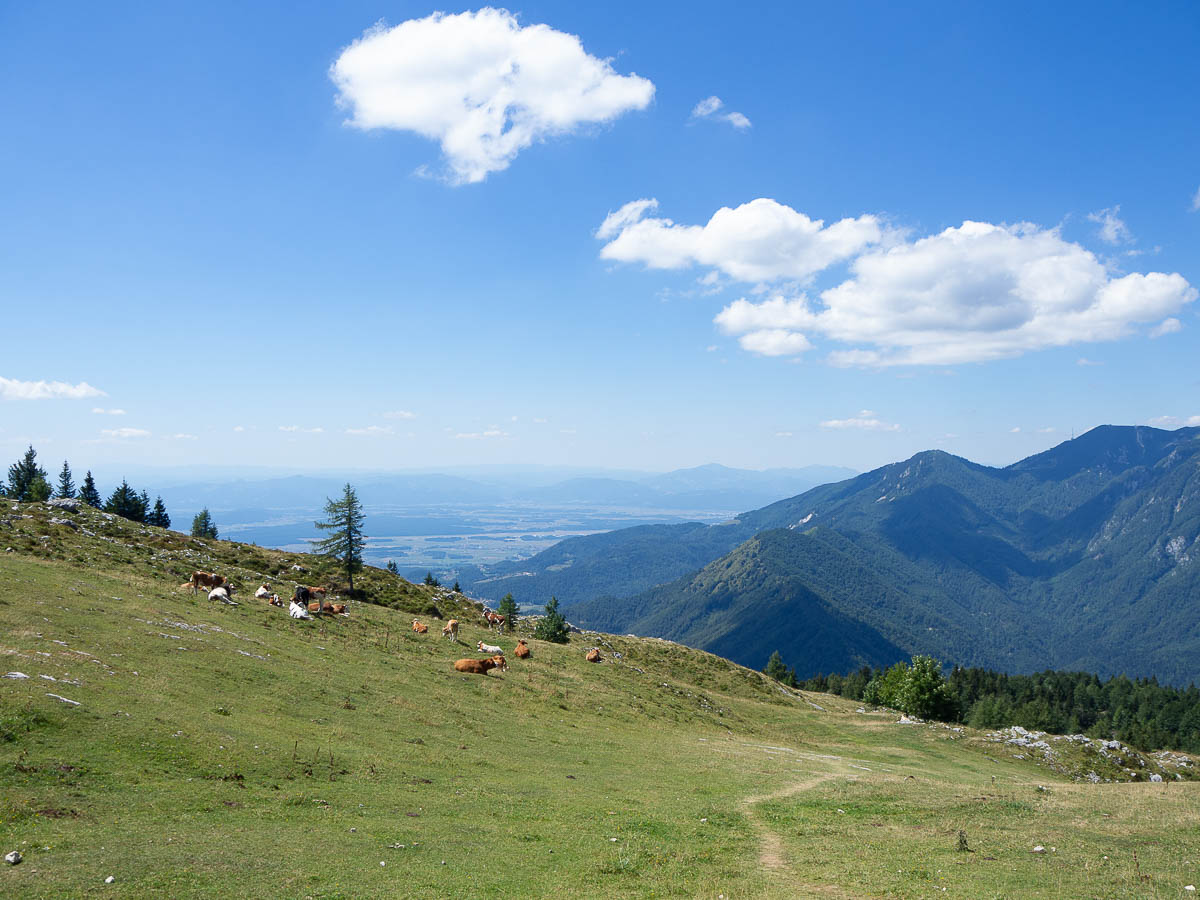
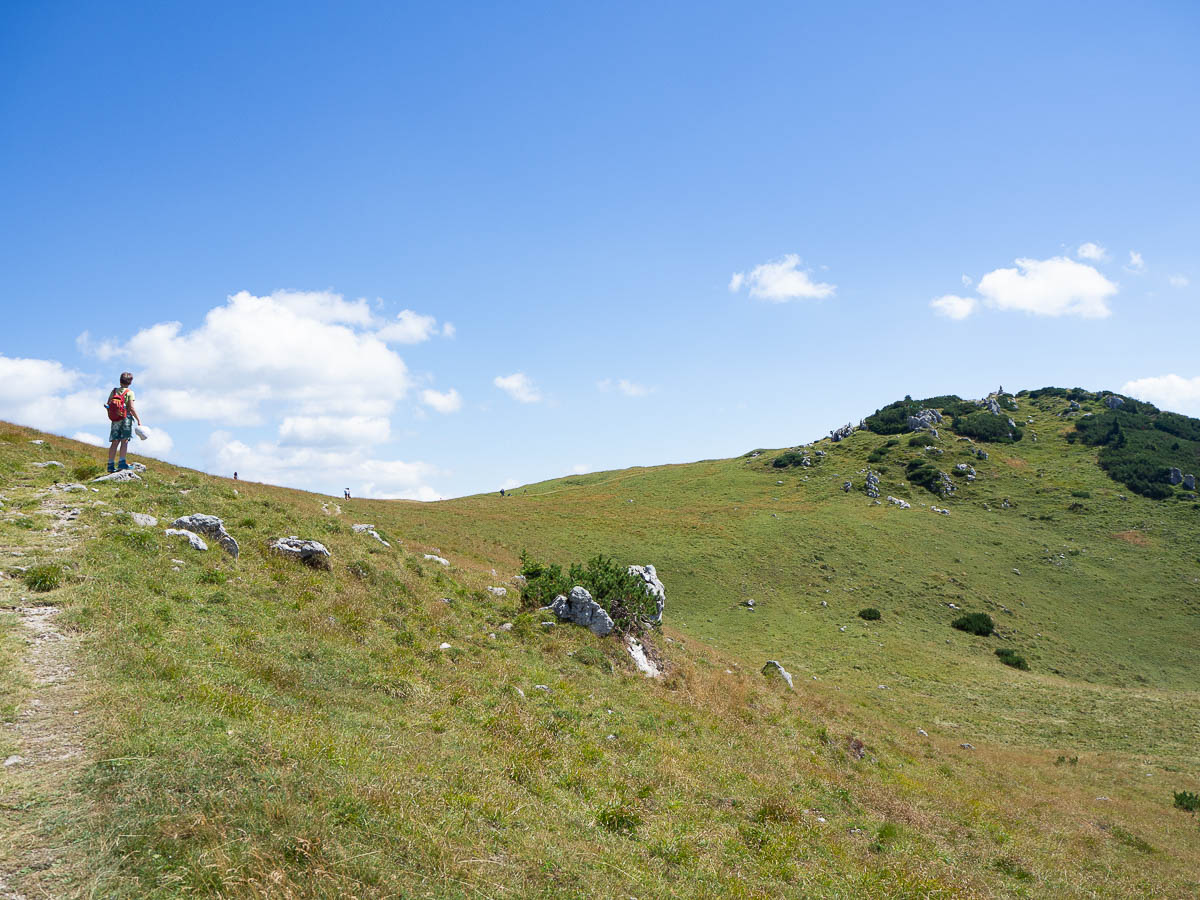
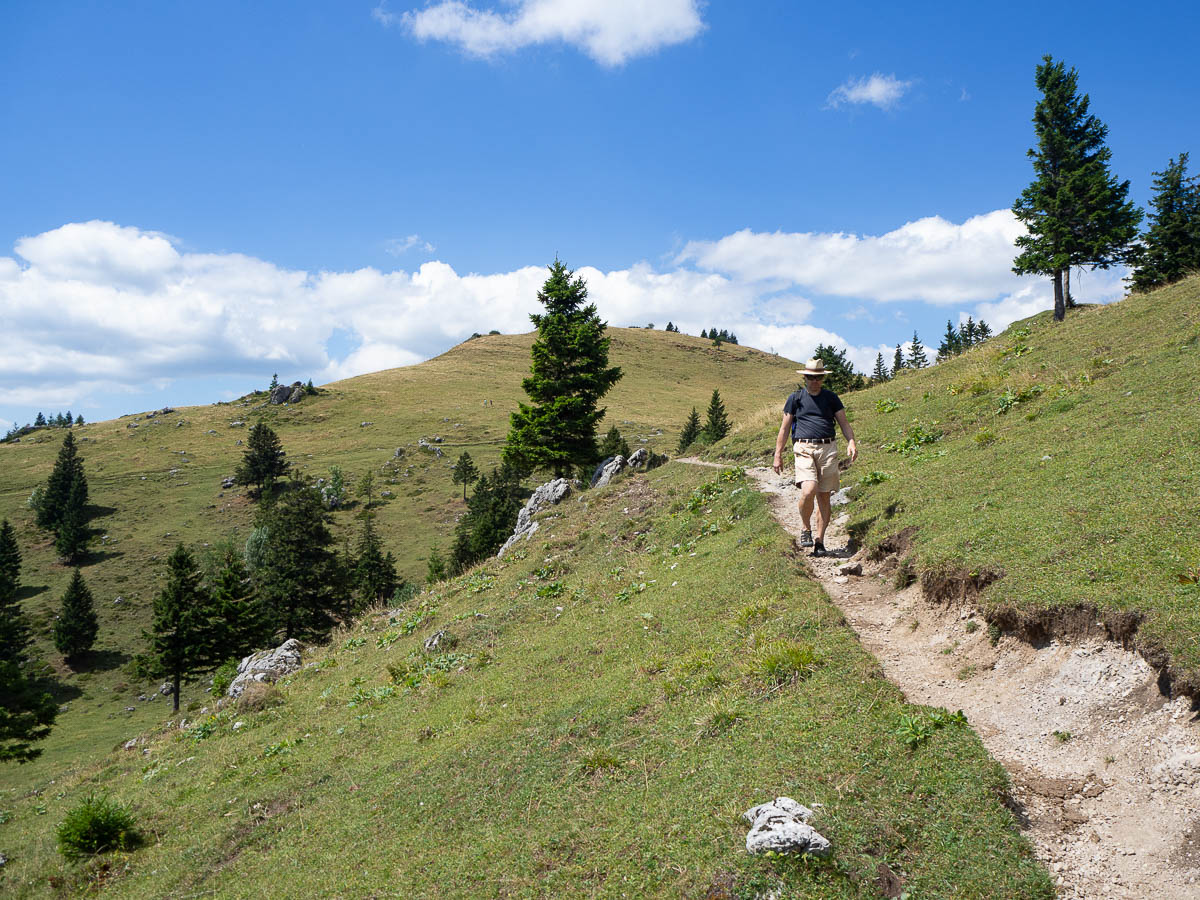
No river valleys today! We went hiking on Velika Planina, a mountain plateau covered mostly in pastureland and cows. A complete change in scenery. And we didn’t even have to climb the hill to get up there – a cable car did the work for us. At 50 EUR for a family, the cable car ticket price seemed rather steep, and I was actually considering finding an alternative hike for today. 50 EUR just to be allowed to walk! But I’m glad we went with this option after all, because the scenery up there was quite unique.

The plateau with its gentle rolling hills made for easy walking. The sun was bright but we got a lot of wind, so for the first time in a week we were actually not hot at all.


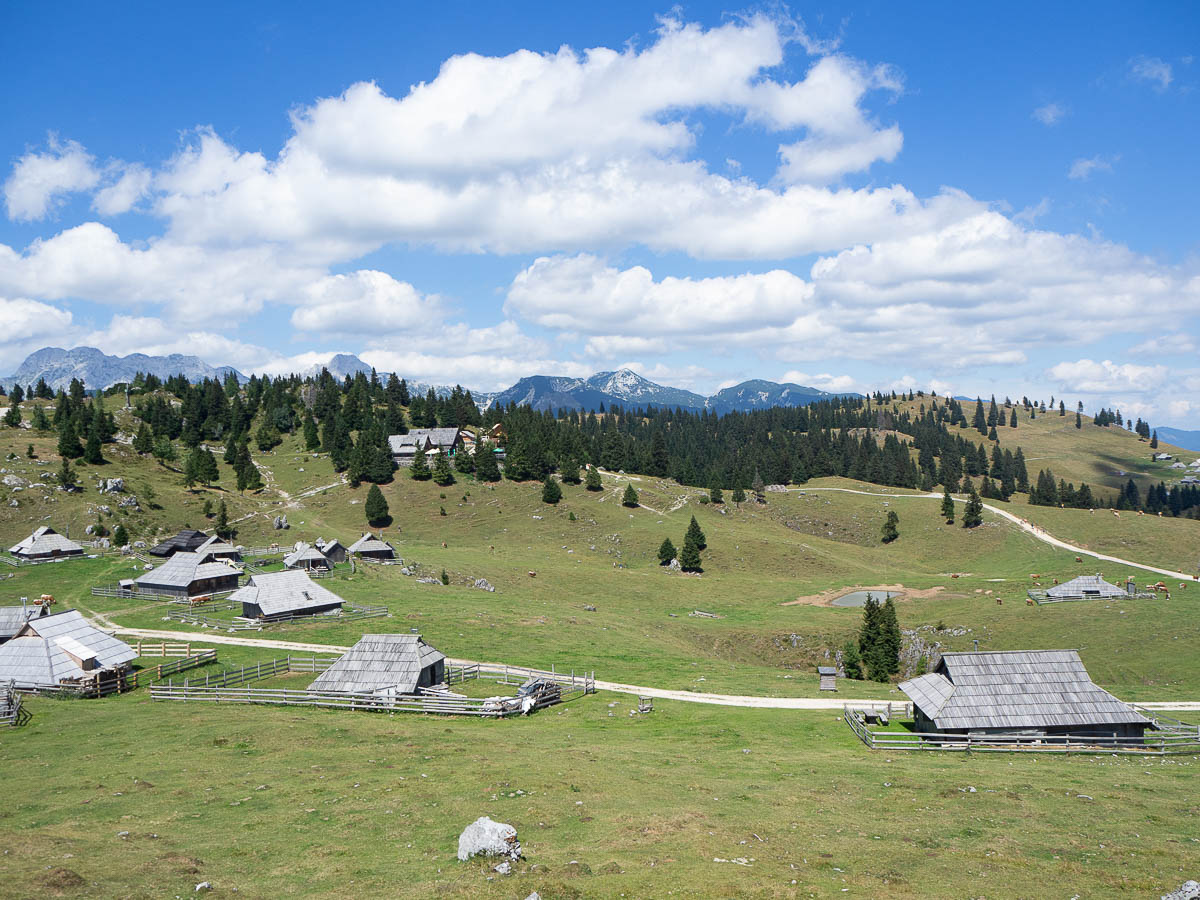
Velika Planina has several old herder settlements with shingled huts.

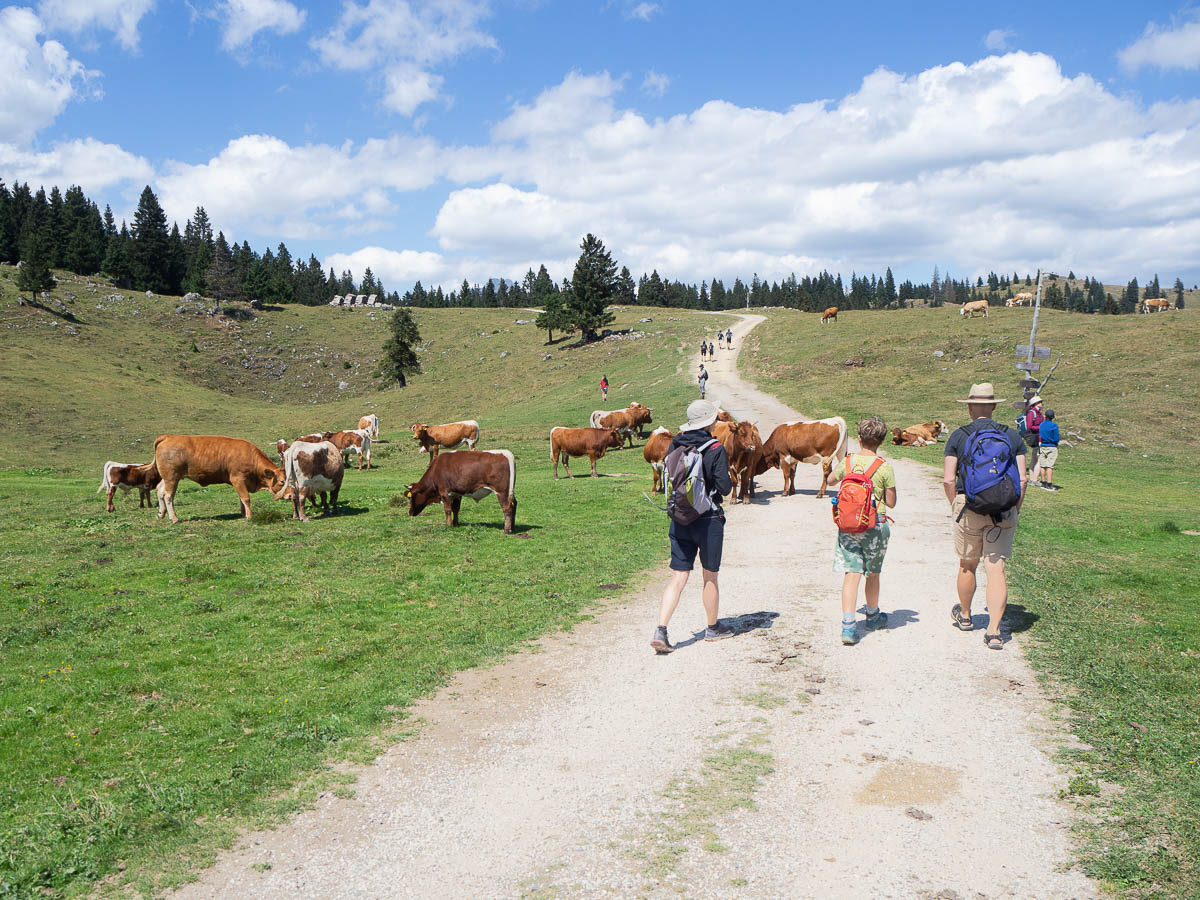
Cows were mingling freely with the tourists and barely even curious about us.

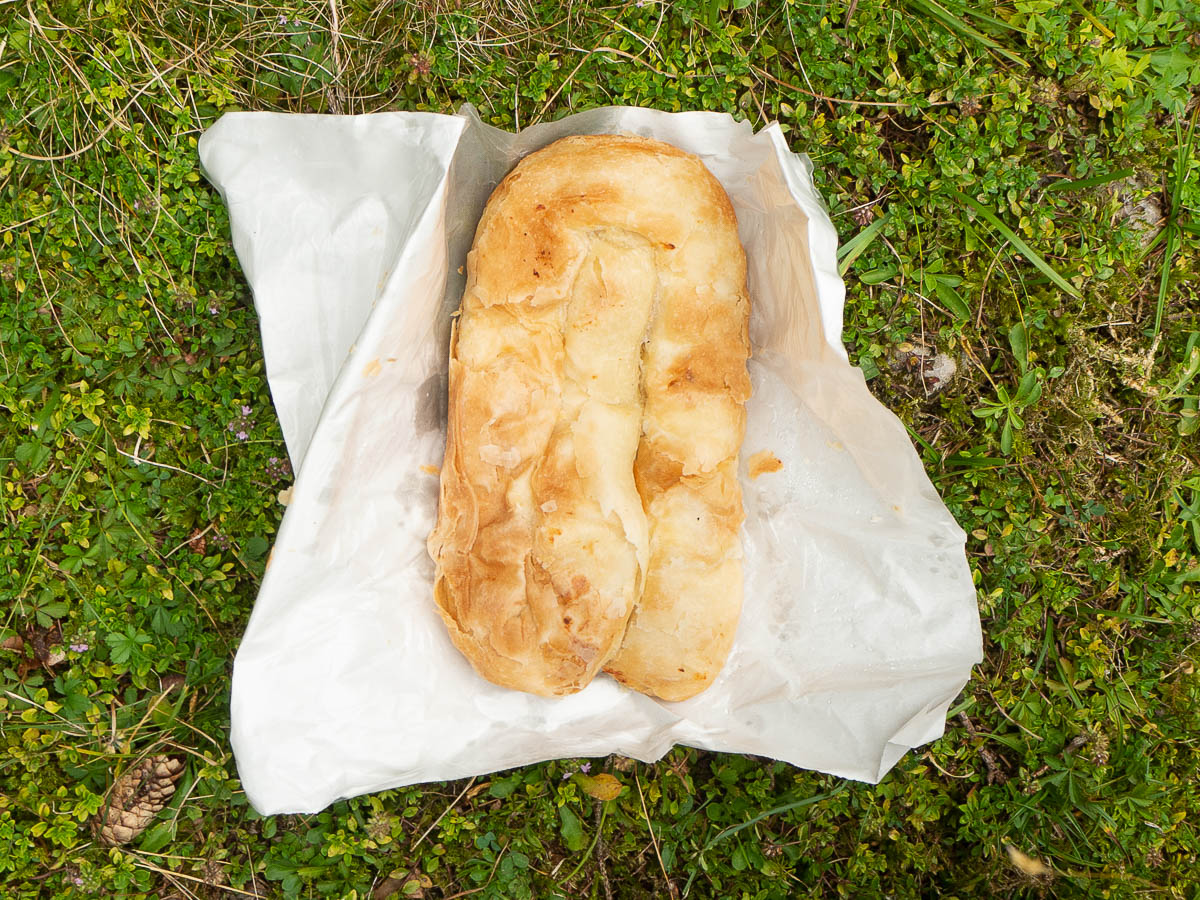
One of the huts hosted a museum, which was closed today for some reason. Several had simple cafes or sold cheese and other milk products. Speaking of cheese, I found these Slovenian cottage cheese pastries that you can apparently buy in most bakeries and supermarkets. The cottage cheese filling reminds me of Estonian kohupiim. I’ve been having these as my packed lunch almost every day.

Speaking of pastries, I only noticed today that the word burek/börek (“filled filo dough pastry” in various places around the Balkans and the Middle East) is strikingly similar to pirog/pirukas (“filled pastry” in Estonian, Russian, Swedish etc). Do they have the same origin? Harden the B, soften the K, and you’re there. I went down a deep Internet rabbit hole to figure out whether that’s the case, and people on the internet have had some very passionate debates about the origins of both words, but I guess nobody really knows for sure. In any case, the Slovenian cottage cheese burek are delicious.

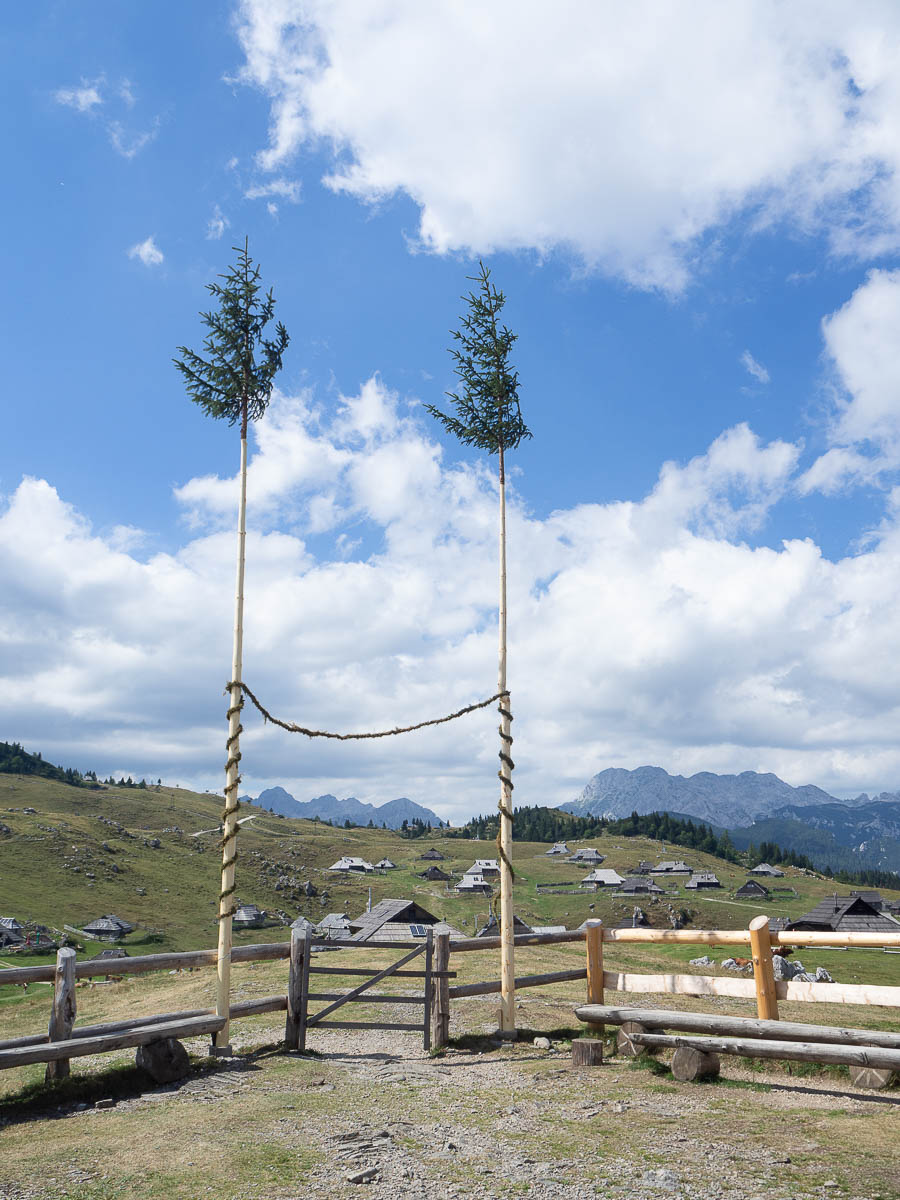
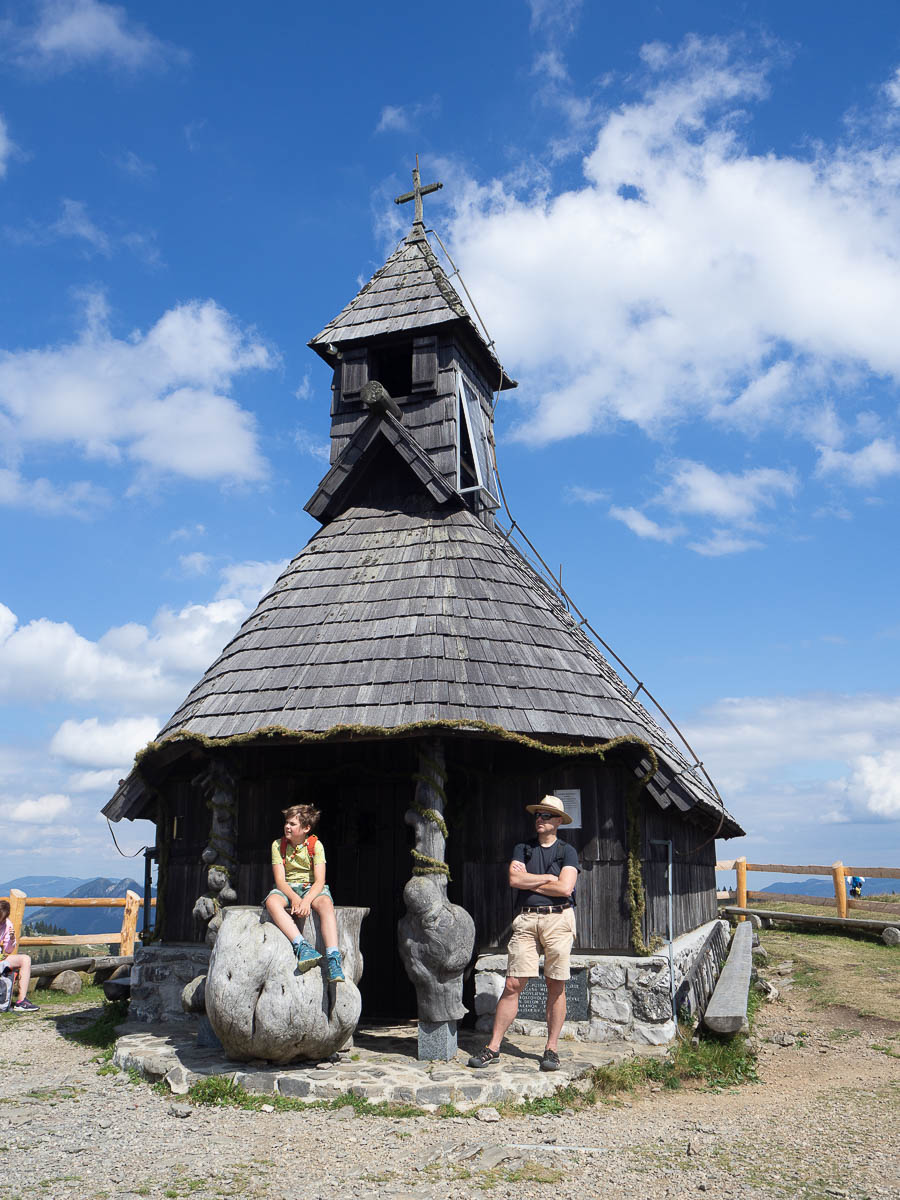
Back to the plateau and its huts! One of the buildings was a beautiful wooden chapel. The gateway of the chapel was decorated with two spruce trees, stripped of bark and branches all the way except for the very top. Eric had noticed a similar tree while driving, so it’s not just some tourist thing here on Velika Planina. I asked around, and a Slovenian colleague tells me they’re called mlaj and put up for celebrations – traditionally for May Day (like a version of the maypole I guess) but more recently also for birthdays and weddings.

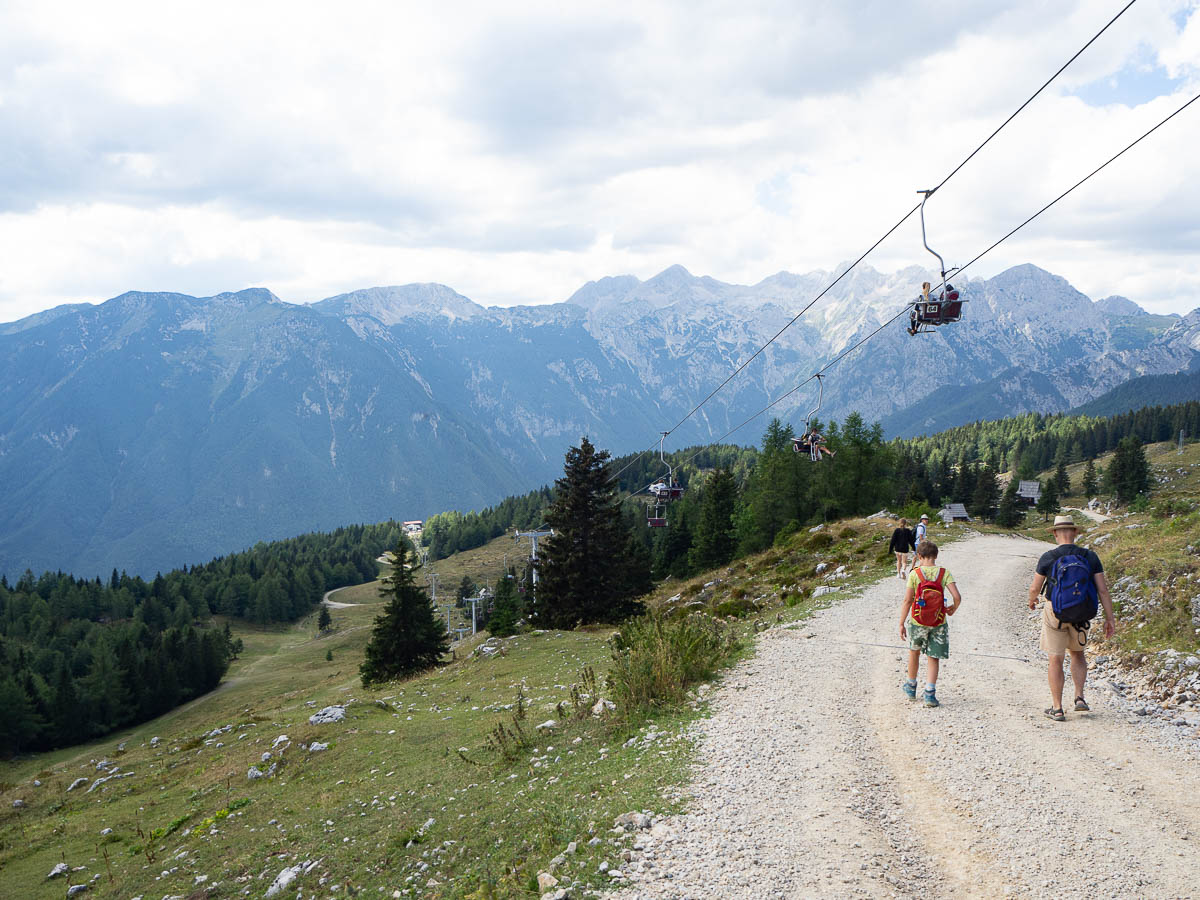
For those with tired legs, there was a two-seat chairlift between the cable car station and the top of the hill. (There’s a ski resort here during winter.) We walked, though, and actually kept pace with the chairlift. Adrian might have voted for the chairlift, had it had more than two seats so that we could all have sat together.

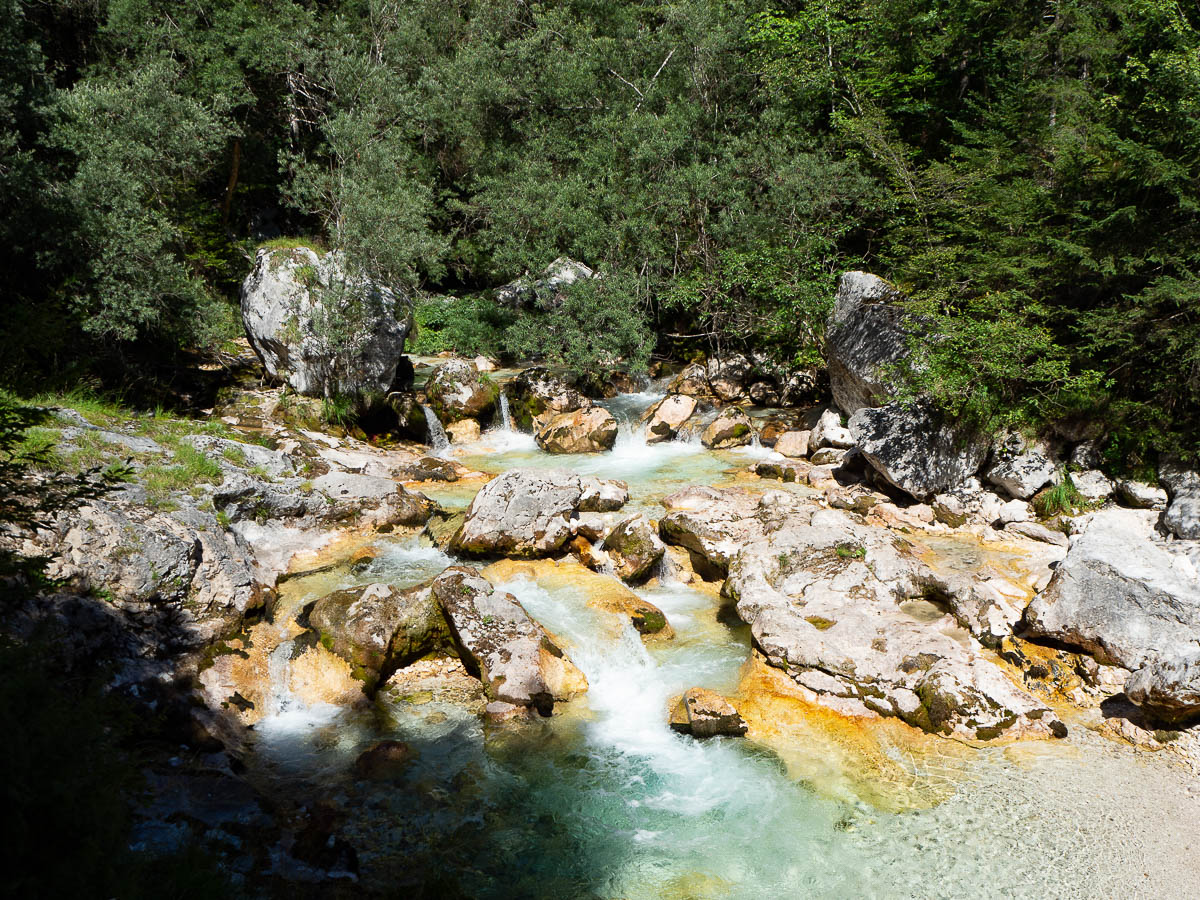
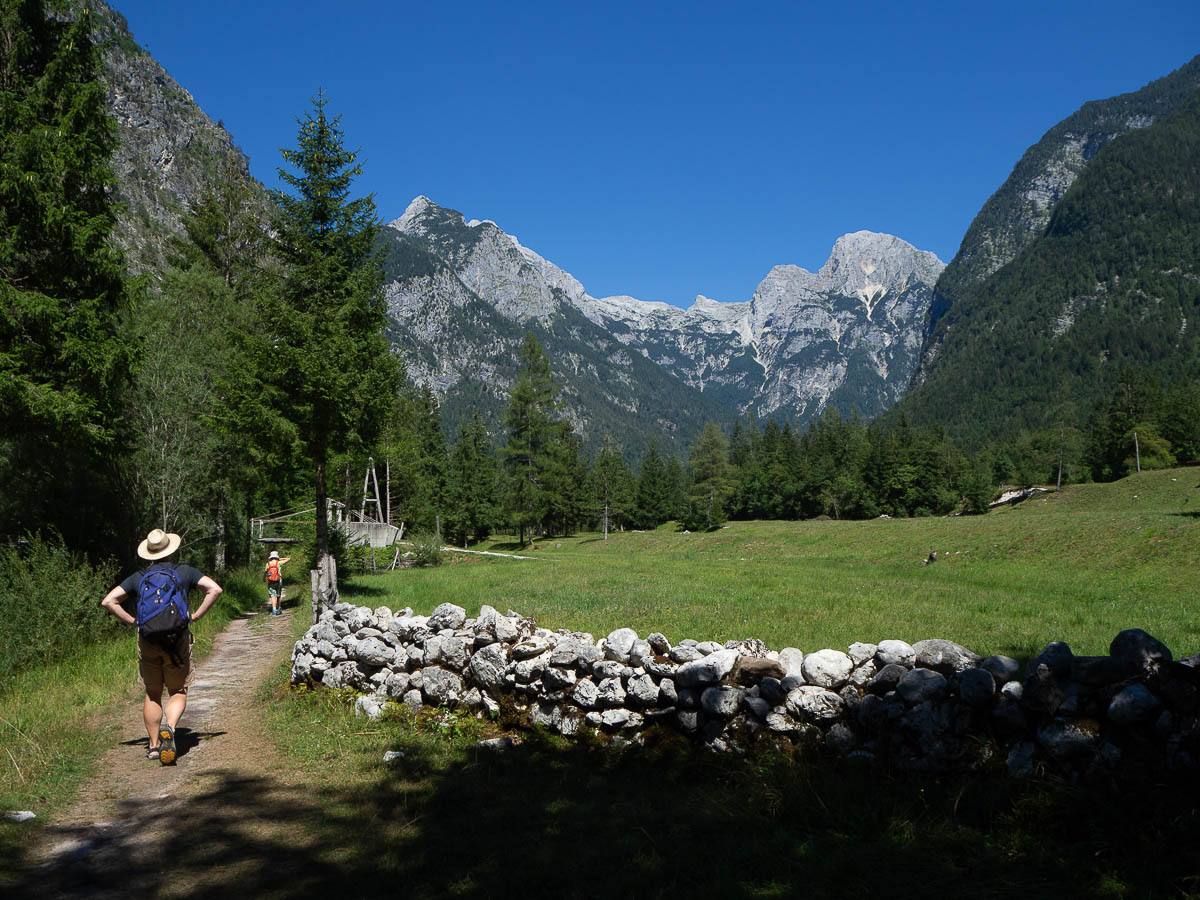
Another day, another river valley! But this one was more memorable than yesterday’s, even looking back two weeks later. The path stayed closer to the river, unlike yesterday’s for example, which meandered further away and up the slopes, sometimes even following an asphalt roads. We had more views of the river, and it occasionally did interesting things.

Today’s walk had no particular destination or ending point. Walk as far as you want, then turn and walk back. (Or walk even further and take a bus or taxi back, but I didn’t want to spend time on figuring that out.) Instead of setting a goal in terms of kilometres, we decided to walk for two and a half hours, no matter how far that took us, and then head back.

All of these walks have been surrounded by stunning mountain views, but after 6 days of them, I’m almost getting used to them. I wonder what it feels like to live here. Do the locals even notice the spectacular mountains around them?

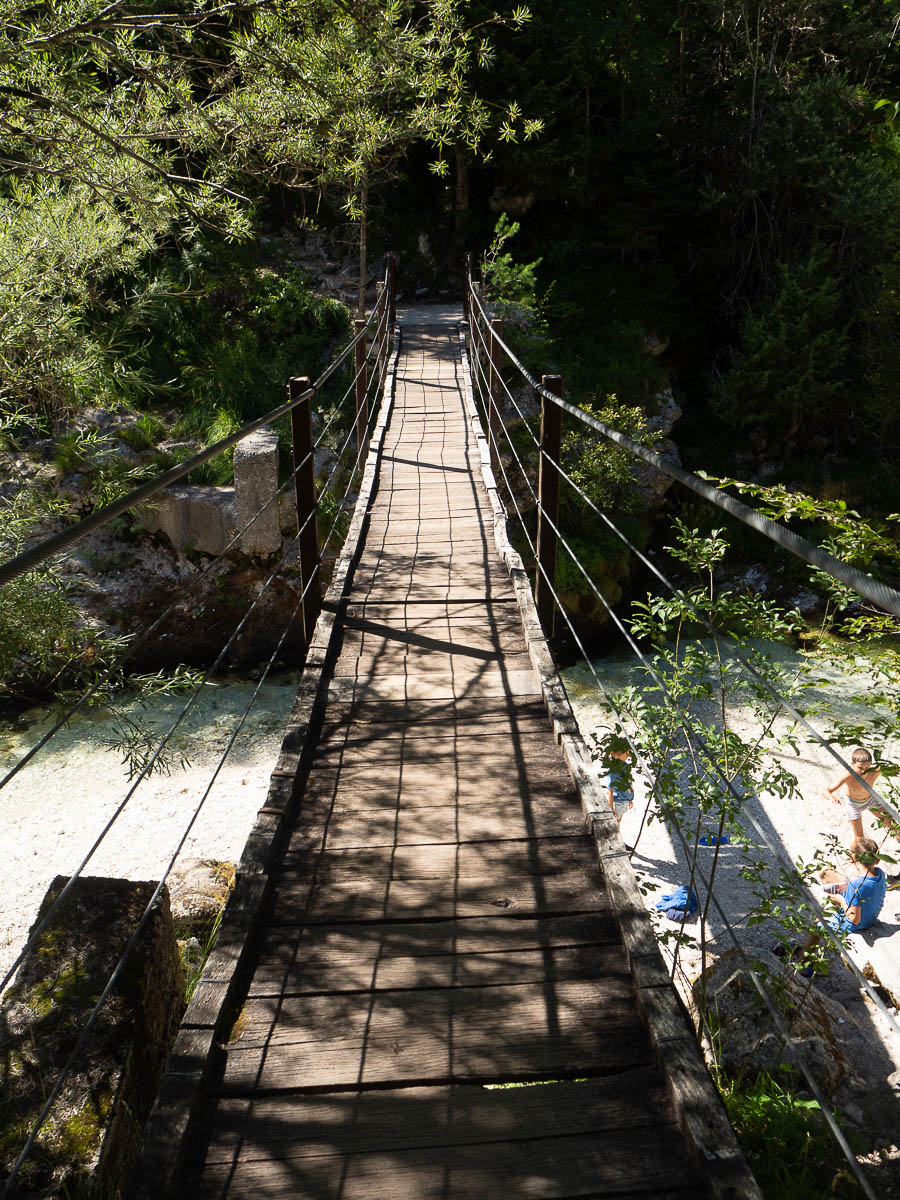
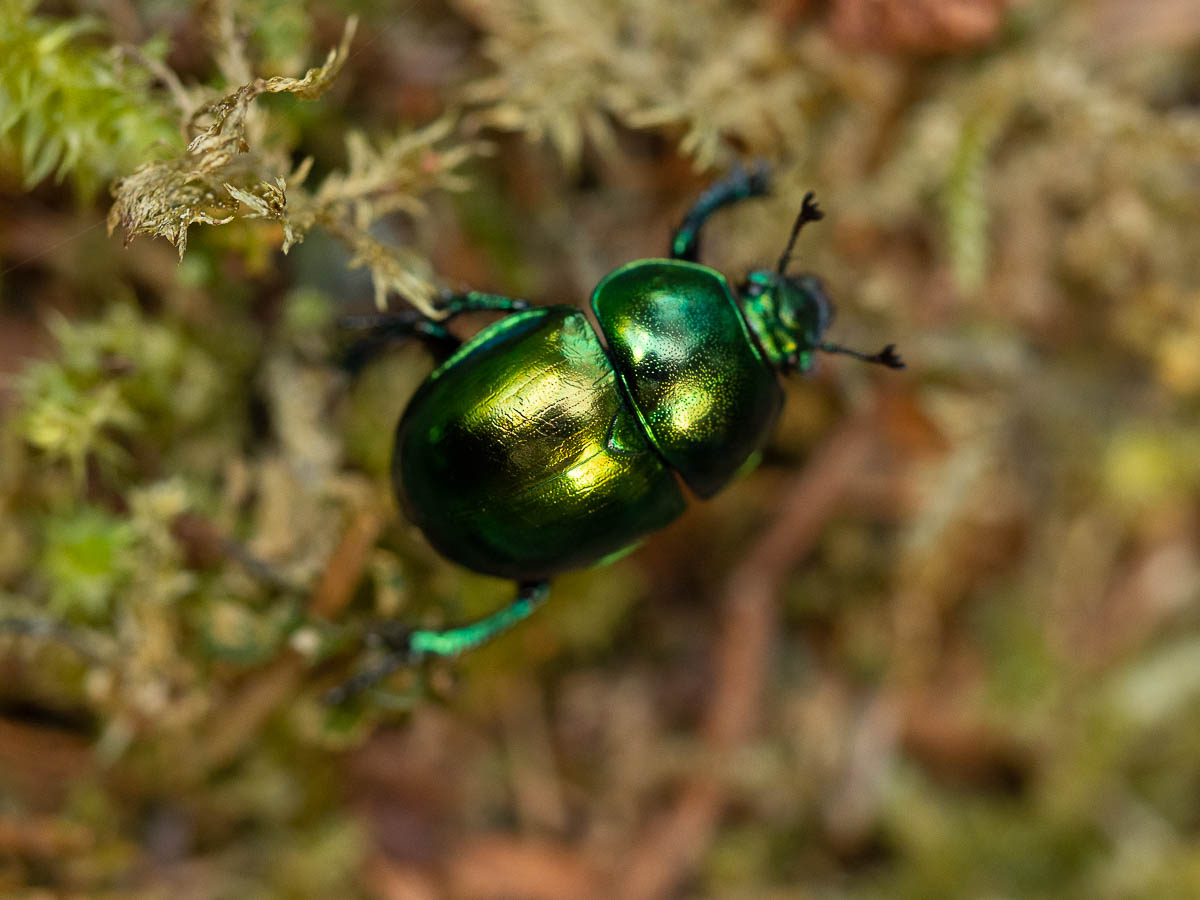
Adrian likes having a destination to aim for. Aimless wandering for half a day doesn’t suit him. So we made a game of collecting observations of interesting things. A bridge; a beetle with shimmering wings; a rockfall.
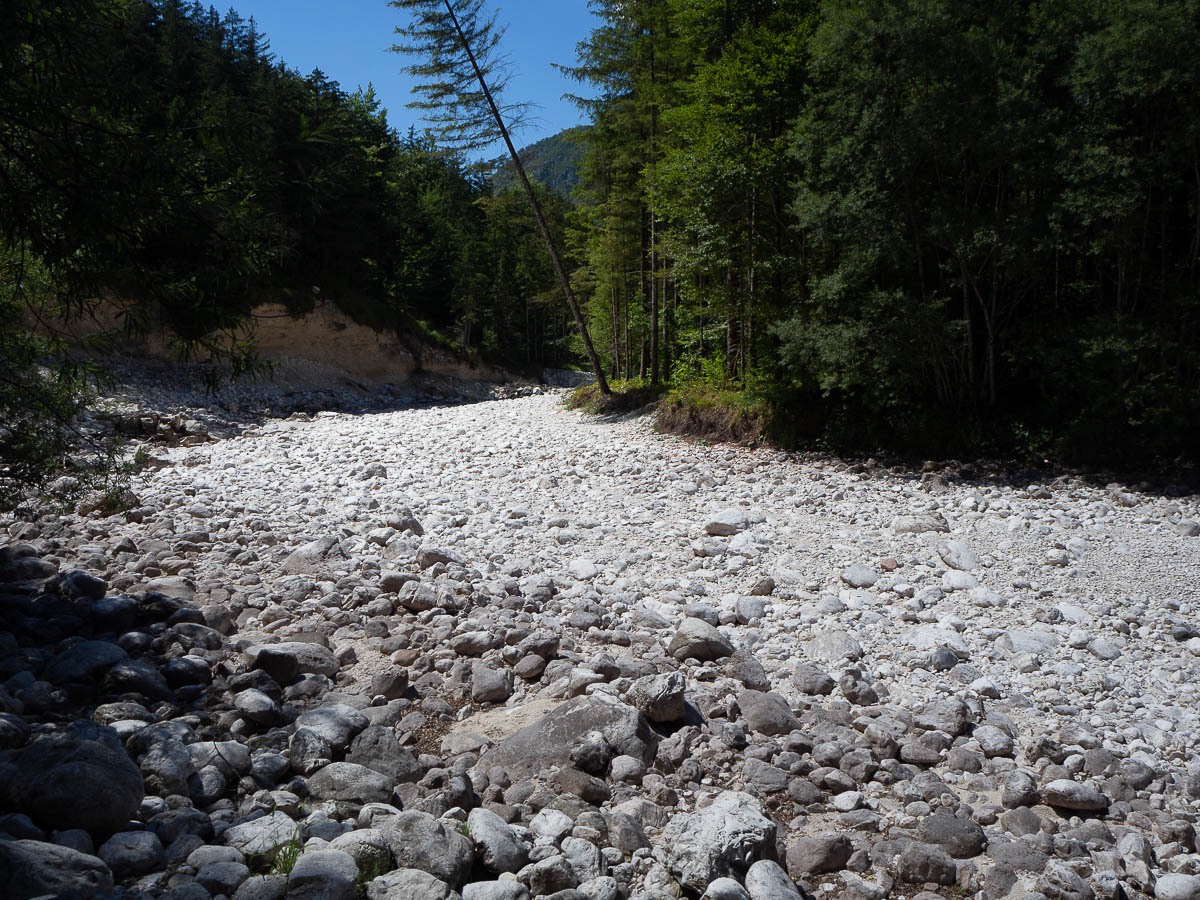
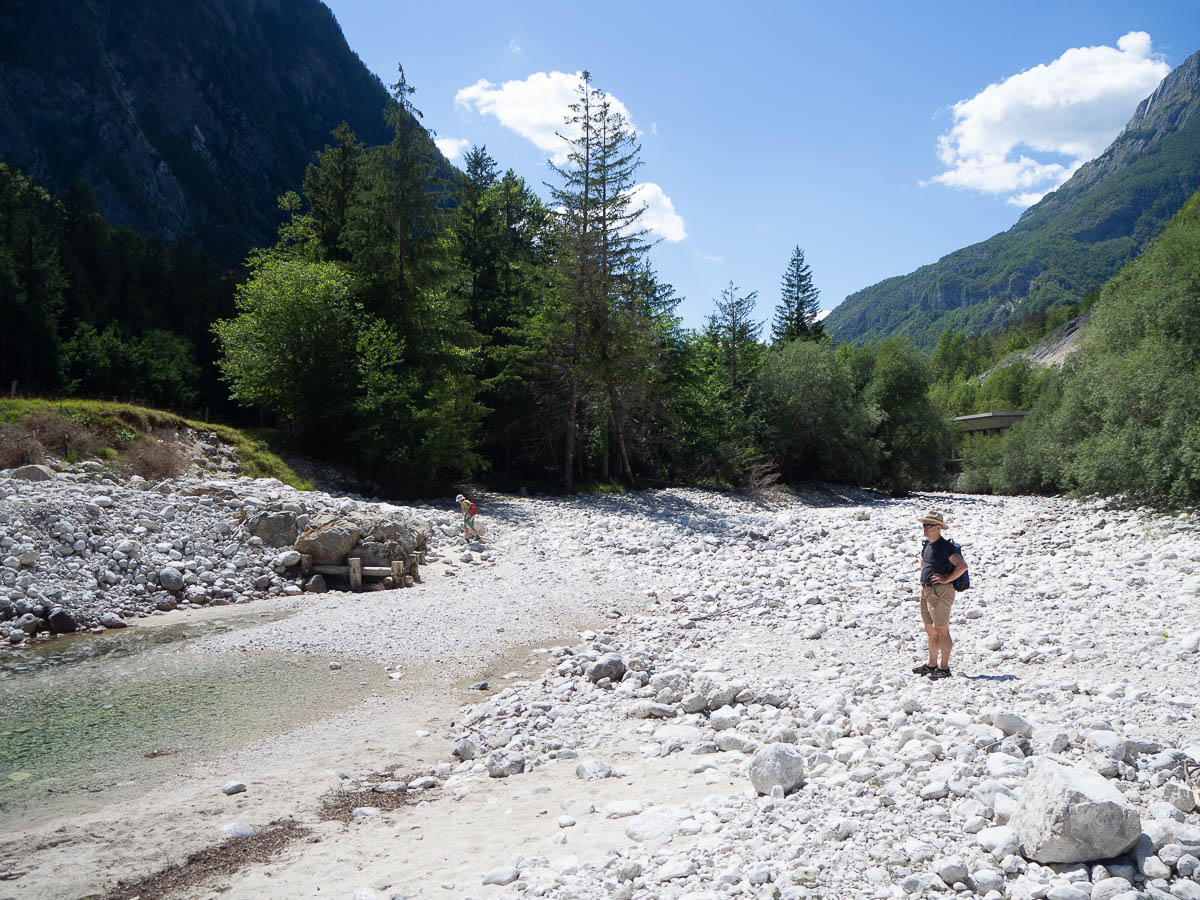
When we had reached our turning point, I noticed that the river was suddenly no longer a river, but a dry, white, rocky riverbed. We had walked downstream, and normally rivers grow in that direction, as new streams and brooks feed them. This one had just vanished.

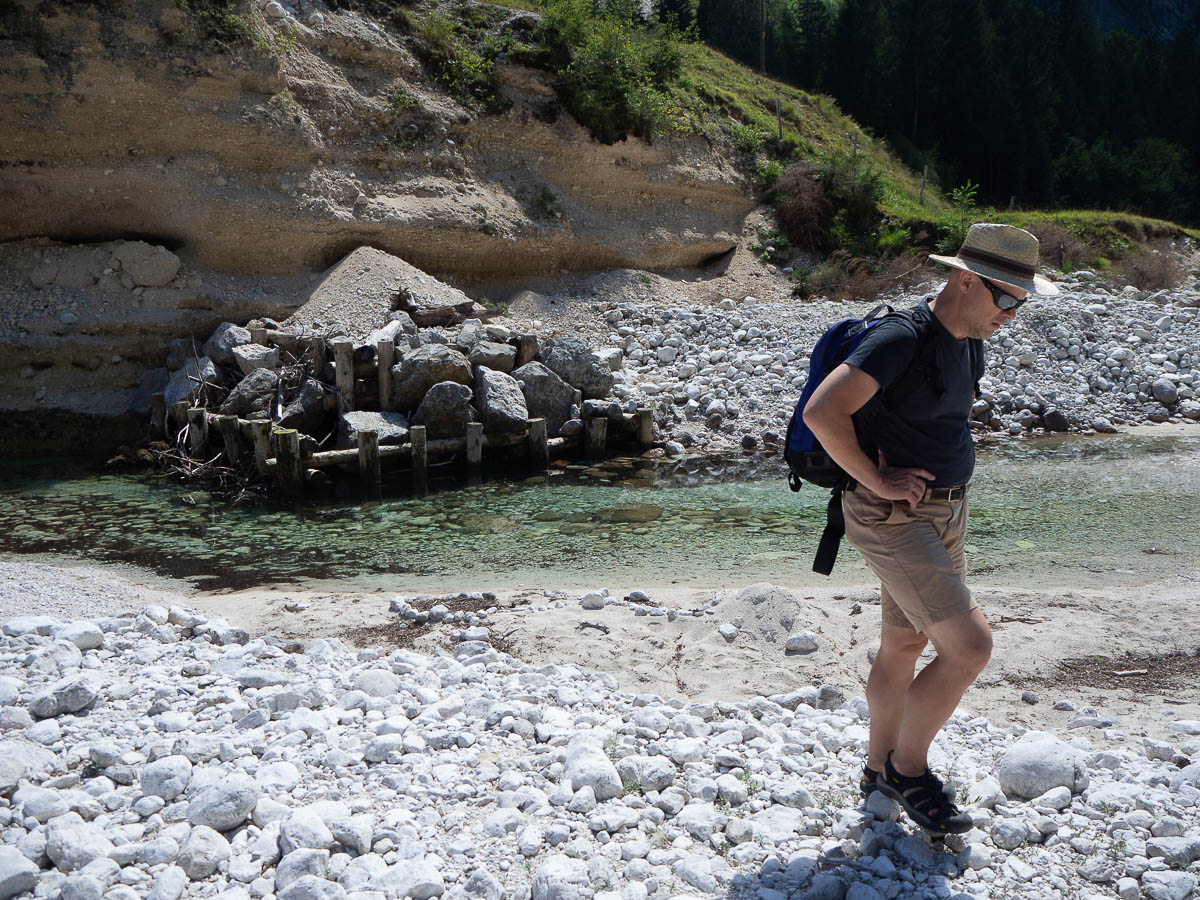
W challenged ourselves on the way back to figure out where the river went. We located the spot where the last of the water disappeared, under piles of boulders and logs. We couldn’t figure out what was going on there, though. Clearly something that is important enough to protect. Is there an irrigation pump hidden there? Shouldn’t there be cables and pipes there, in that case? Also, this can’t have been the only cause, because when reaching this point, the river was already smaller than upstream where we first met it.


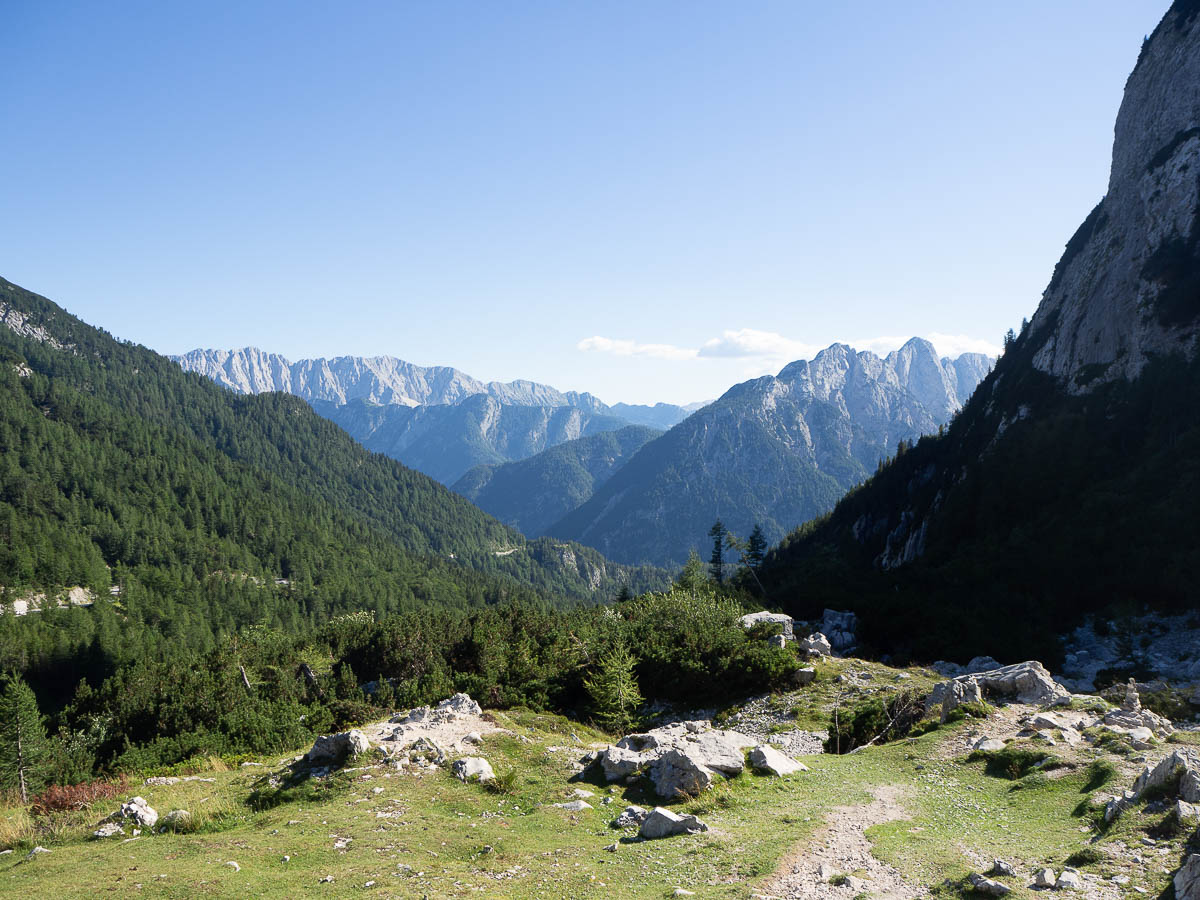
On our drive back to Kranjska Gora, we stopped at the highest point of Vršič Pass to take in more gorgeous views of the mountains surrounding us. When we passed this point on our morning drive out, it was so packed with cars – not just in the parking lots but also along both sides of the road – that it was barely passable. Two larger vehicles meeting literally could not pass each other. It surprised me that the chaos didn’t bother anyone enough to station a traffic warden here, given that it’s the only way from one side of the mountain ridge to the other. Now, late in the afternoon, the situation was better and we actually found a parking spot.
Another day, another river valley walk – from lake Jasna along the Pišnica river, to a small Russian chapel. Writing this two weeks later I realize the river valleys are beginning to blend together and I can’t remember any particular details from this hike, apart from the chapel itself. Oh, and the cows! There were free-roaming cows not just in pastures but also just climbing the rocky, forested slopes along the river, which I unfortunately didn’t catch on a photo. I’m used to seeing goats and sheep in hilly woods, but climbing cows were new to me.


Today we relocated from Bled to Kranjska Gora, stopping for walks along the way.

Our first stop was in Krma valley for a short but very scenic walk. Clouds were hanging all the way to the ground. This valley is the starting point for hiking to Mt Triglav, Slovenia’s highest peak. Which we’re not going to do – we’re just here to take in the views.


Here’s our car for this week: a cute little Fiat Panda. It’s small enough that if Ingrid had come with us on this trip, we couldn’t have fit all four of us and our baggage in the car. Right now one of the back seats is filled with half our luggage.

Compared to our fourteen-year-old Volvo at home, it’s modern but cheap in sometimes surprising ways. Electronic displays with lots of detailed information in the dashboard, and hybrid technology to save on fuel, and much less noise in the cabin compared to our Volvo. But no air conditioning vents in the back of the cabin? Speaking of AC, the Fiat has such a non-intuitive way of turning it on that we thought for the first few hours that the AC was broken. Called the car rental company, and they told us to press the ventilation knob. Who the heck comes up with a UI like that? Knobs are for turning!

Next we drove to Vrata valley, where we started by visiting Peričnik waterfall. This was a nice compensation after the puny waterfall at Mostnica yesterday, which especially Adrian found a disappointment. Peričnik delivered: plenty of water, impressive height, cool surroundings – and you could even walk behind the waterfall.

Walking behind the waterfall was a wet experience. The whole roof was dripping. It didn’t seem like spray from the waterfall, because we were well away from it – more like the rock above us was leaking. Or maybe it was just condensation, who knows.

After that we walked up the river to Vrata valley. If Eric and Adrian look knackered during our breaks, it’s because of the heat again!


We finished at a mountain hut in Vrata valley. After cooling down with some ice cream, and climbing to the top of a large boulder, we took a local bus back to Peričnik and our car, to finish our drive to Kranjska Gora.


We’ve been staying in scenic Bled for several days and barely seen anything of the town, spending our days hiking instead. Just the closest streets, a supermarket, and a few restaurants. Bled castle has been beckoning to us from its seat on a cliff on the other side of the lake.

Today we wanted to take in the sights of Bled. The weather forecast promised clear skies in the morning but rain and thunder for the afternoon, so we went for a walk along the lake shore towards viewing points on hills at its western edge. Lake Bled also has a little island which you can visit either with a kayak or a SUP board, or you can get someone to row you there in a gondola.

We were still on the shore of the lake, not even on our way up the hill, when the rain arrived, hours ahead of the forecast. Walking up to a viewpoint for photos in that weather was going to be unpleasantly muddy and mostly pointless, so we gave up and went back to the hotel.

The afternoon was going to bring more rain. New plan: skip the walking, say good-bye to the idea of stunning views of the lake and the city, and go visit Bled castle instead, where we could mostly be indoors.

Actually the views from the castle turned out to be pretty impressive, too. And the weather forecast for the afternoon was as wrong as the one for the morning. We got the familiar broiling sun and not a single drop of rain.

The castle was very pretty. Irregular, like many old castles are, and subtly different enough from Northern European architecture to be quite interesting. The museum part was too impressive, though – it was a collection of interesting objects, presented with too little context and background information for us to learn anything. Apart from the fact that the oldest flute in the world (of which this museum had a copy), probably made by Neanderthals, was found in a cave in Slovenia.


Our first full day of hiking in Slovenia. Today we climbed Viševnik, a 2000-metre peak. Which sounds like a lot, but you don’t start at sea level, of course.

The actual ascent was just over 700 metres. Which is still a lot, especially on a hot, sunny day! And the route up this mountain was steep and unrelenting. Up, up, up, constantly, with barely any breaks in the ascent, or even a zig-zag. The first half of the ascent was also quite boring – for a big chunk of the lower parts, we followed a dusty trail through through a monotonous spruce forest. I don’t even have any photos from that part.

Halfway up we were feeling quite knackered and demoralized, and not enjoying ourselves much at all. But then we came to a small plateau with actual views, and enough room to sit down and take a proper break, and got some calories into us, and found the energy to keep going. After that the actual ascent didn’t get any easier, but the landscape opened up and got more varied, so the effort felt less.

And occasionally we even got views of the peak we were heading for!

Adrian really struggled with the heat and was seriously thinking of turning back even when we had no more than 15 minutes left to the peak. But with plenty of encouragement, and relieved of his rucksack, he managed to keep going.


The higher we climbed, the more fabulous the views were.

And we made it! When we got to the top, all we wanted to do was sit down and drink lots of water and scarf down dried fruit for some fast calories.

Once we had revived ourselves, we took photos.


The way down required less huffing and puffing, but more attention and concentration to not lose our footing.

By the time we were done with the descent and just walking back to the car, even Adrian was full of cheer, almost skipping along, and talking about how the whole thing wasn’t so bad after all, and how cool it is to climb a peak, and how he could totally do this again.

How selective our memories can be! The best parts we’ll remember for a long time, and the worst parts melt into a vague sense of “it was a bit of an adventure”. The same happened with our last day in Mercantour, when we got caught in hail and thunder. When we were living through it, the last half-hour of it felt pretty horrible, with me carrying Adrian in my arms, curling up around him to protect him from the hail. But six years later it feels like it wasn’t so bad at all.