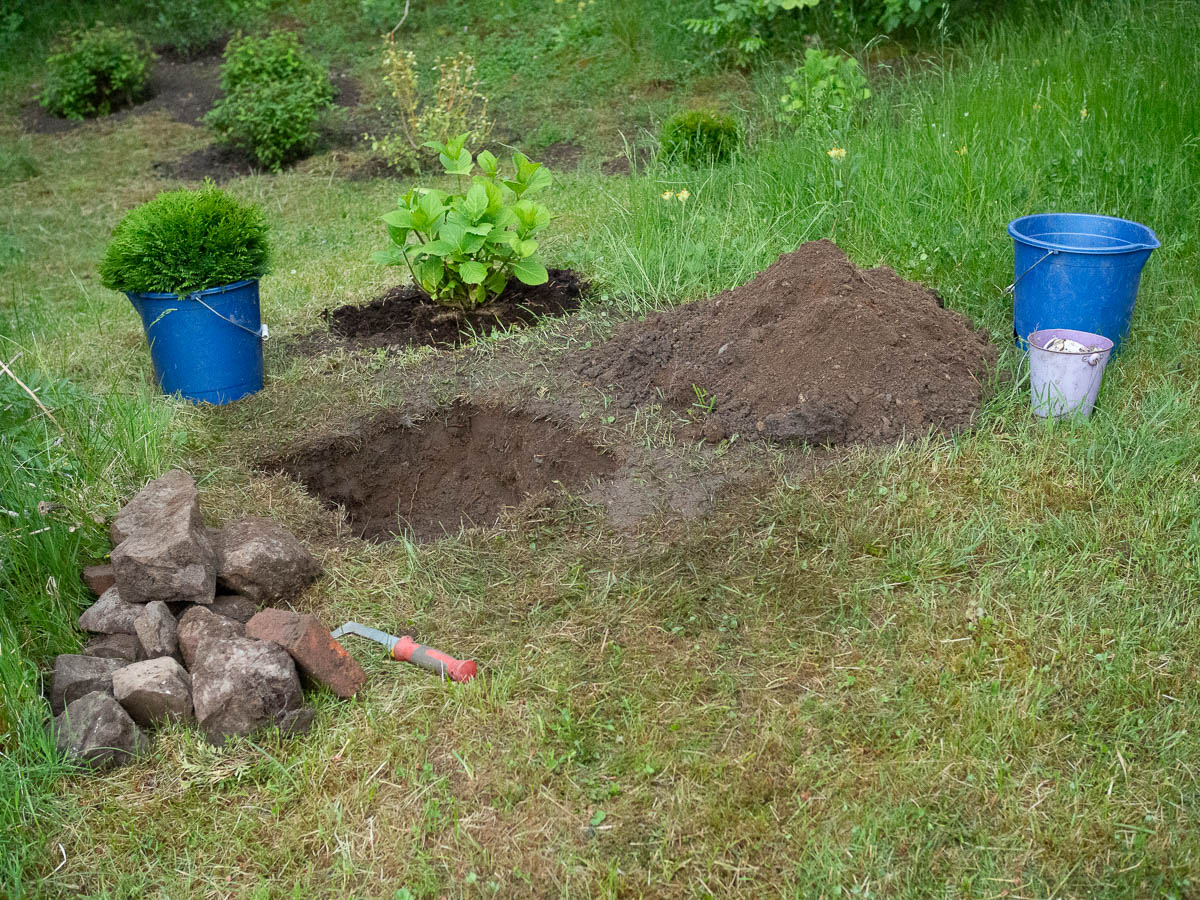
Another day, another hole. What would a Sunday evening be without some digging?

Though I am getting a bit fed up with this endless digging. I am looking forward to getting this done so that I can do other things in the garden. Mow the lawn, prune the raspberries, plant something other than bushes. Well, after this thuja there are only three more bushes to go, so I’ll be done soon.

Speaking of planting, Ingrid and I have been watching Garden Rescue together. The main focus of the programme is on design, not so much the implementation, but they do show bits and pieces of the actual work as well, including planting.

Their way of planting bushes is surprisingly different from mine. I follow the standard Swedish recommendations: dig a big hole, mix up the soil with some cow manure, plant, water thoroughly. If there’s one thing all the books and articles and blog posts agree on, it’s the importance of a good-sized hole. Some say 60 cm wide and 40 cm deep; some say two or three times the diameter of the root clump. But the folks in Garden Rescue dig really, really small holes, often barely larger than the pot that the plant came in! And they do nothing to improve the soil, even when it is more gravel than soil.

I wonder how well their bushes and trees develop and grow. I wish I could see those gardens three to five years later. I haven’t done any real experiments with smaller holes, but I have two unplanned data points – the elderberry and the staghorn sumac that were among the first things I planted. I just plopped them in the ground, in holes just large enough to fit the clump of roots and soil because I hadn’t read any gardening books yet.

In the first two or three years they barely grew at all. A few years later, when I saw how much better all my more recent bushes were doing in their big holes, I dug them up, made proper holes, added fertilizer to the soil, and put them back. The difference was immediate – both bushes really shot up. The sumac was later killed by deer, but the elder is growing very nicely to this day. So I’m going to keep following the Swedish recommendations, even though it is more work. I’d rather do more work up front than be forced to replant later.
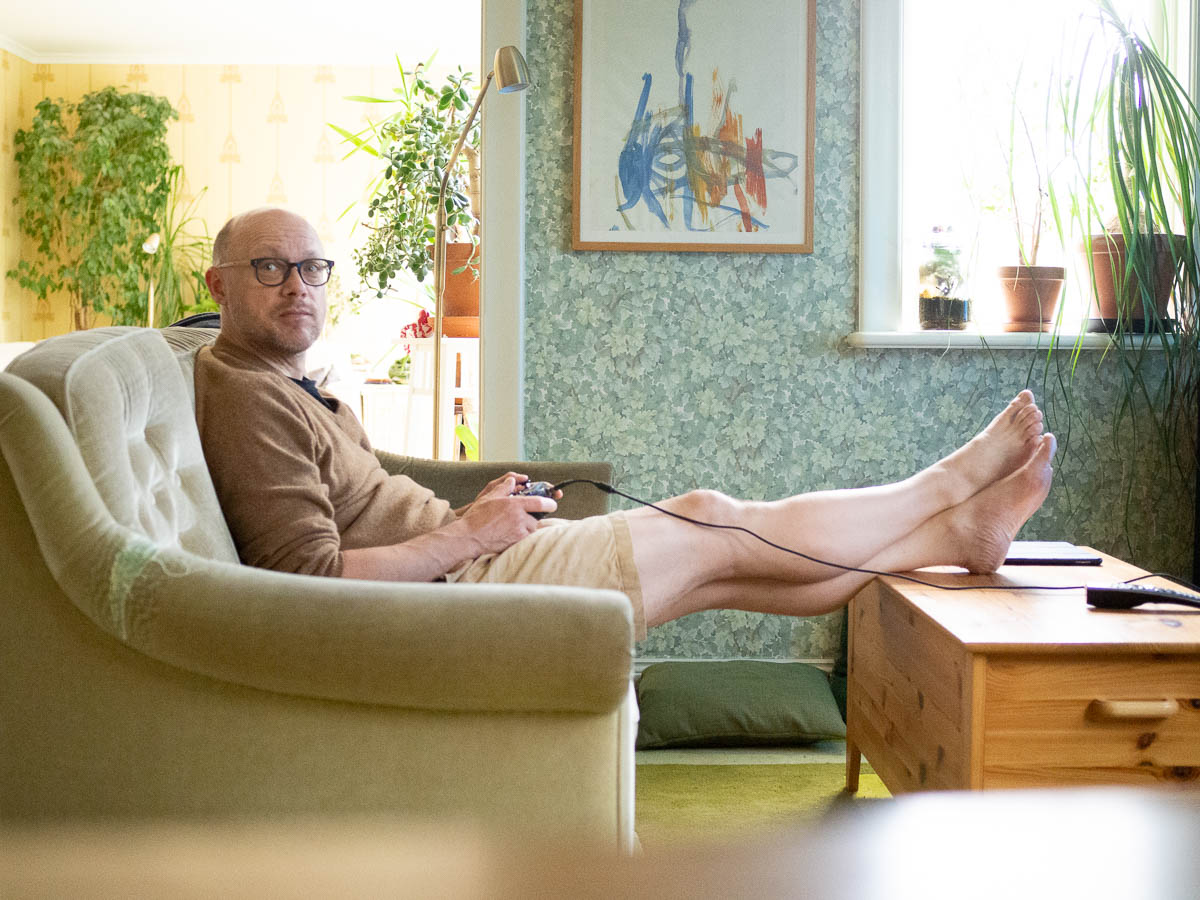
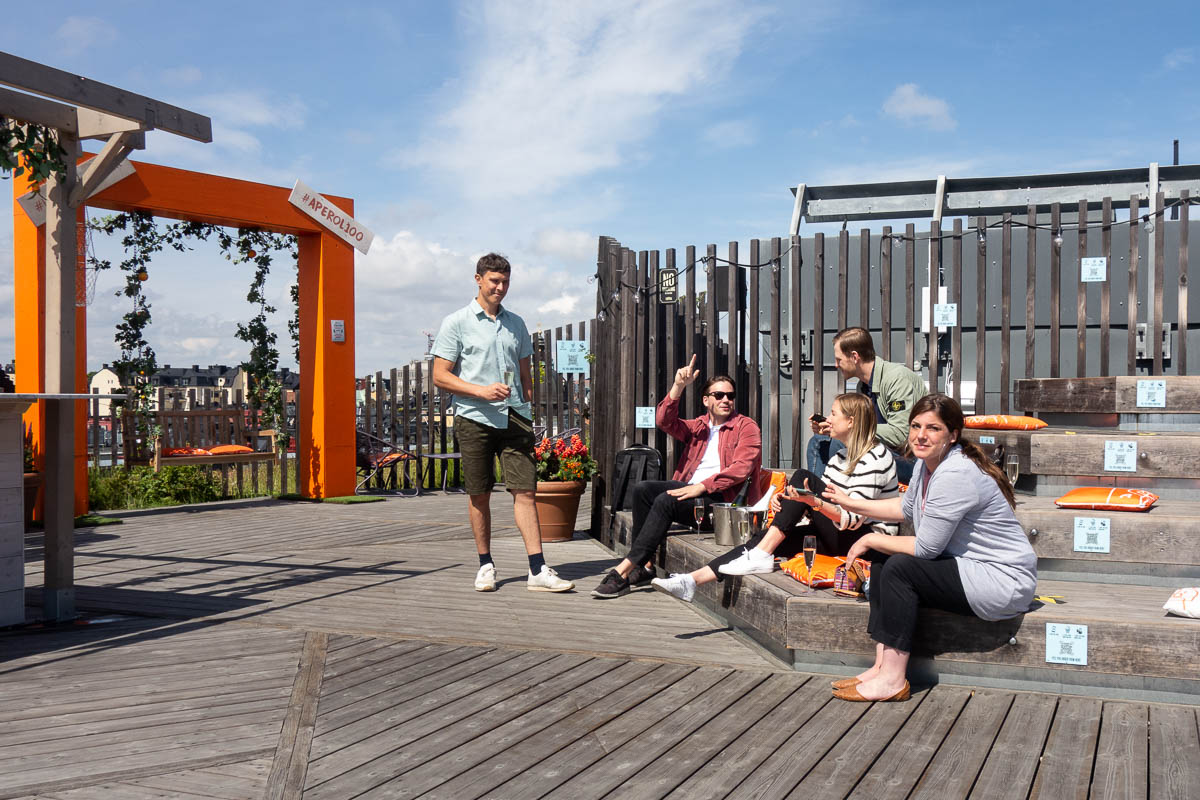
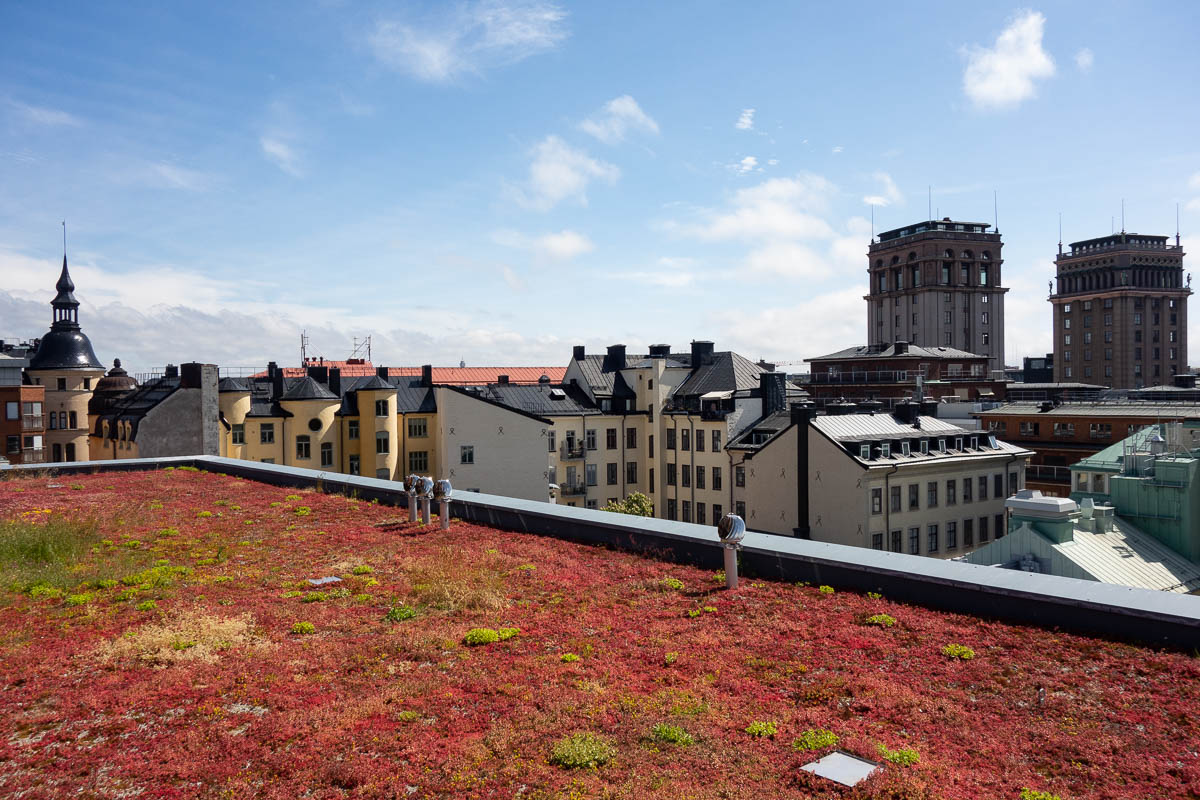
I met my colleagues face to face for the first time in months. We had a retrospective meeting and then lunch at Urban Deli’s rooftop restaurant. And since I was going to the office for this anyway, I worked there before and after the meeting as well.

Meeting the team was lovely, but working in the office was much less so. There were interruptions all the time – and while it’s nice that people stop by my desk to say hi and chit-chat, it really kills my productivity. Add the time spent on commuting, and by the end of the day I felt like I barely got anything meaningful done (and I do count the lunch as meaningful and time well spent) even though I was away for eight hours.

And for the first time in months I felt stressed. I had to look at the clock to start heading home at a reasonable time, and I felt the pressure to hurry home to the kids. Not pleasant at all.

Back in March, it took time for me to get used to working from home. But now that I’ve settled in, it really works very well for me, and I haven’t felt this relaxed and productive at work since… forever.


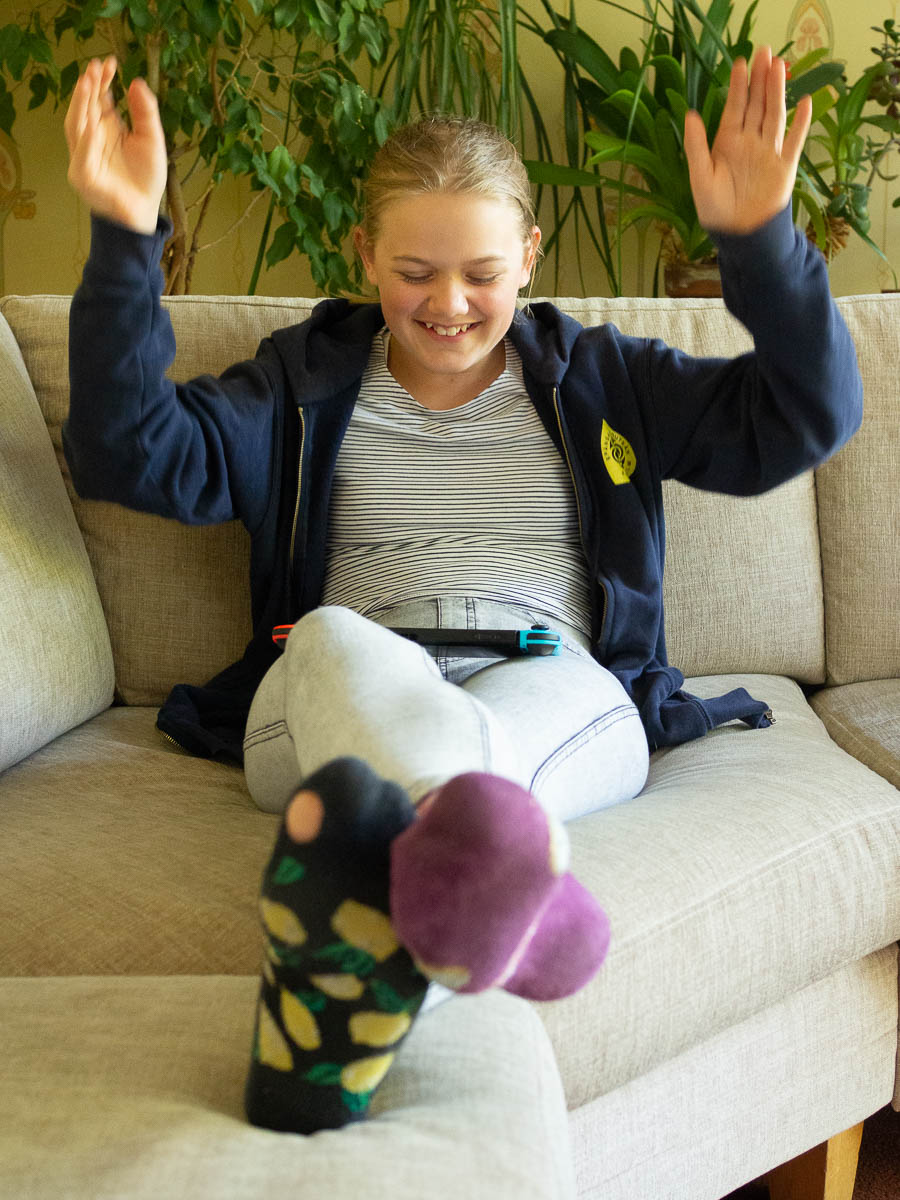
Ingrid has been saving up for a Nintendo Switch. Apparently sharing the one that Adrian has is not good enough. It’s her own money, so whatever.

Buying a completely new one is expensive, so she searched on Blocket and found several ads. Normally when buying via Blocket I’ve met up with the seller and done the deal physically. These sellers were not in Stockholm though, so that wouldn’t work. But a Switch is so expensive that paying up front and hoping that we will get something is not an acceptable risk.

Blocket has various suggestions for services that help mitigate the risk when buying online. The first seller wasn’t willing to use those services. That made loud alarm bells ring in my head and we decided not to deal with that guy.

The next person was more willing. We exchange all kinds of information and signed an online digital contract with our official e-IDs.

And still! As soon as the contract was signed and the money paid, the seller went no contact. Didn’t reply to our chat messages or SMS:s, and didn’t pick up the phone. Eric called Blocket and Blocket looked into the information they had on the guy. Whatever information they found led them to recommended that we should file a police report immediately. Sigh. Despite all our precautions, we got scammed!

Ingrid was in tears. Not because of the money, because we said we’d cover the loss, but because she had been looking forward so much to playing Animal Crossing and Zelda and all the other games. Now we’d have to start all over again.

She was in luck, though, because almost immediately she found a new ad, and this time in Stockholm. So I drove there and we did the deal the old-fashioned way (well, not very, since the payment is digital) and she got her Switch after all.

Now she is overjoyed about all the cute things she can do in Animal Crossing.


I went out to take smell the lilacs and take photos of them. Without even trying, I found three lucky five-petal blossoms.


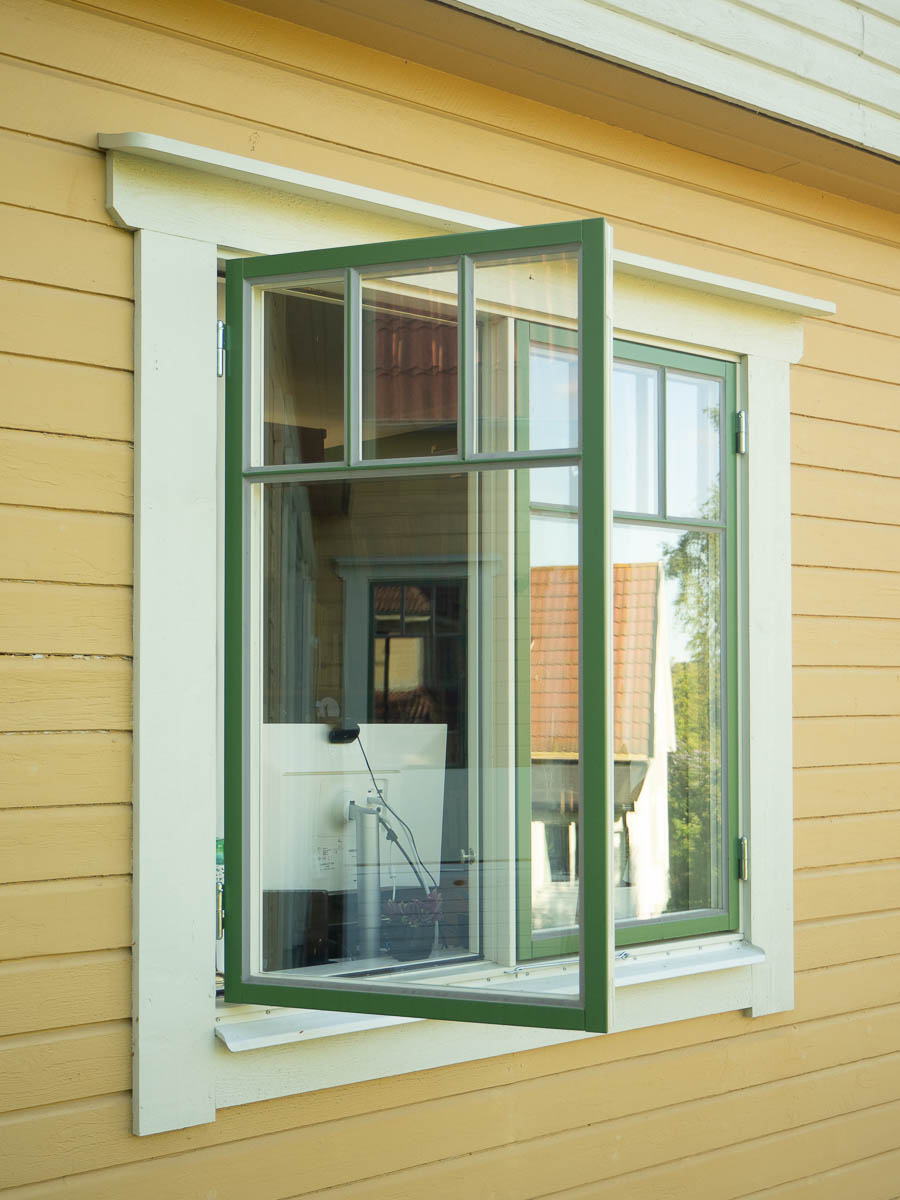
Summer has arrived. Today was hot day, 25°C or thereabouts. Even my home office, in the shade, became so hot that I had to open the windows to get the air moving through the room. I’m not doing any lunchtime digging in this weather.


The weather is warm enough to move the tomatoes outside.

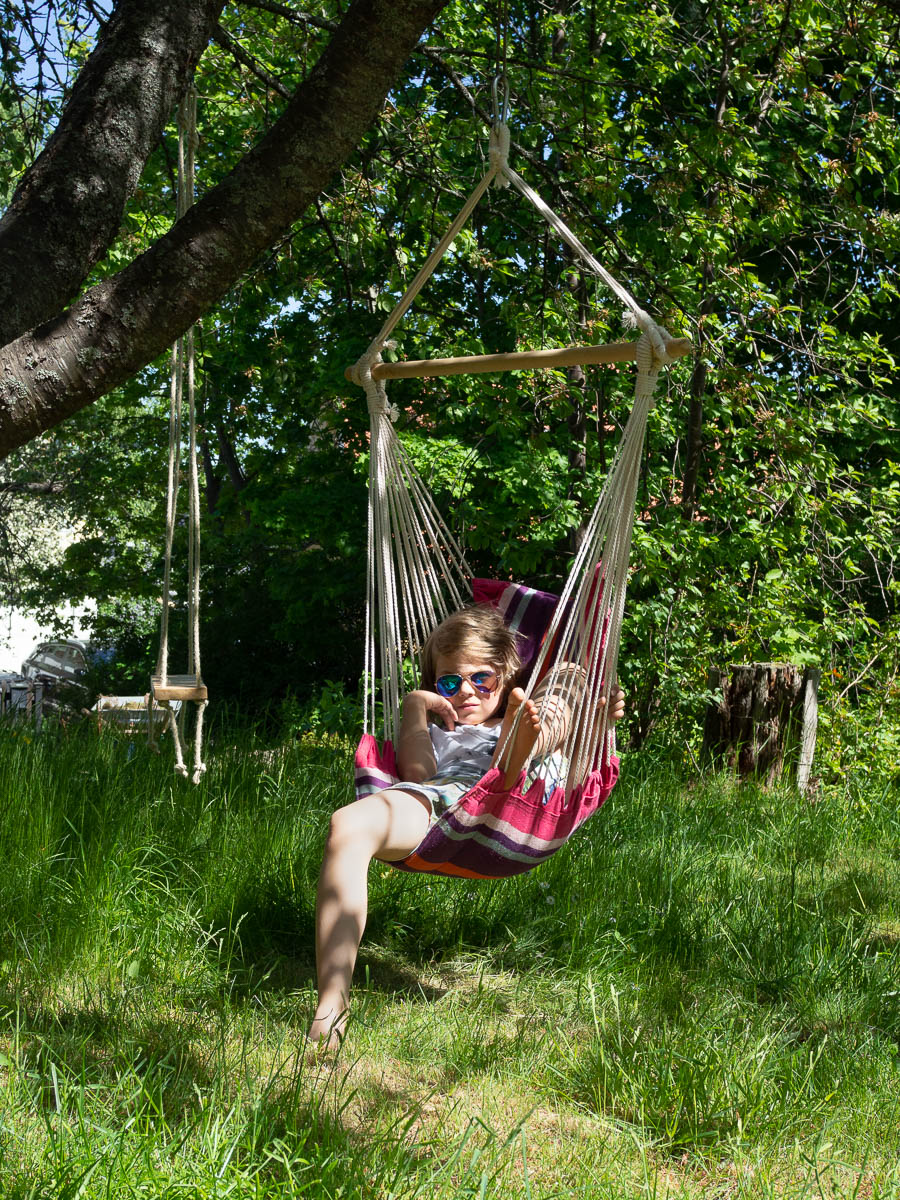
Adrian is hanging around, literally, watching me re-pot them.


Every spring there is some plant or other that is so late coming up that I am convinced that I have managed to kill it. I should have watered it more, or maybe it needs a more sheltered spot, less sun, more sun, less competition from other plants, or something. When it does come up after all, I’m extra glad to see it still alive.


I’m close to finishing the second sleeve, counting down the bind-offs for the sleeve cap. The moment of truth is approaching. How well will it fit, once I’ve sewn all the pieces together?


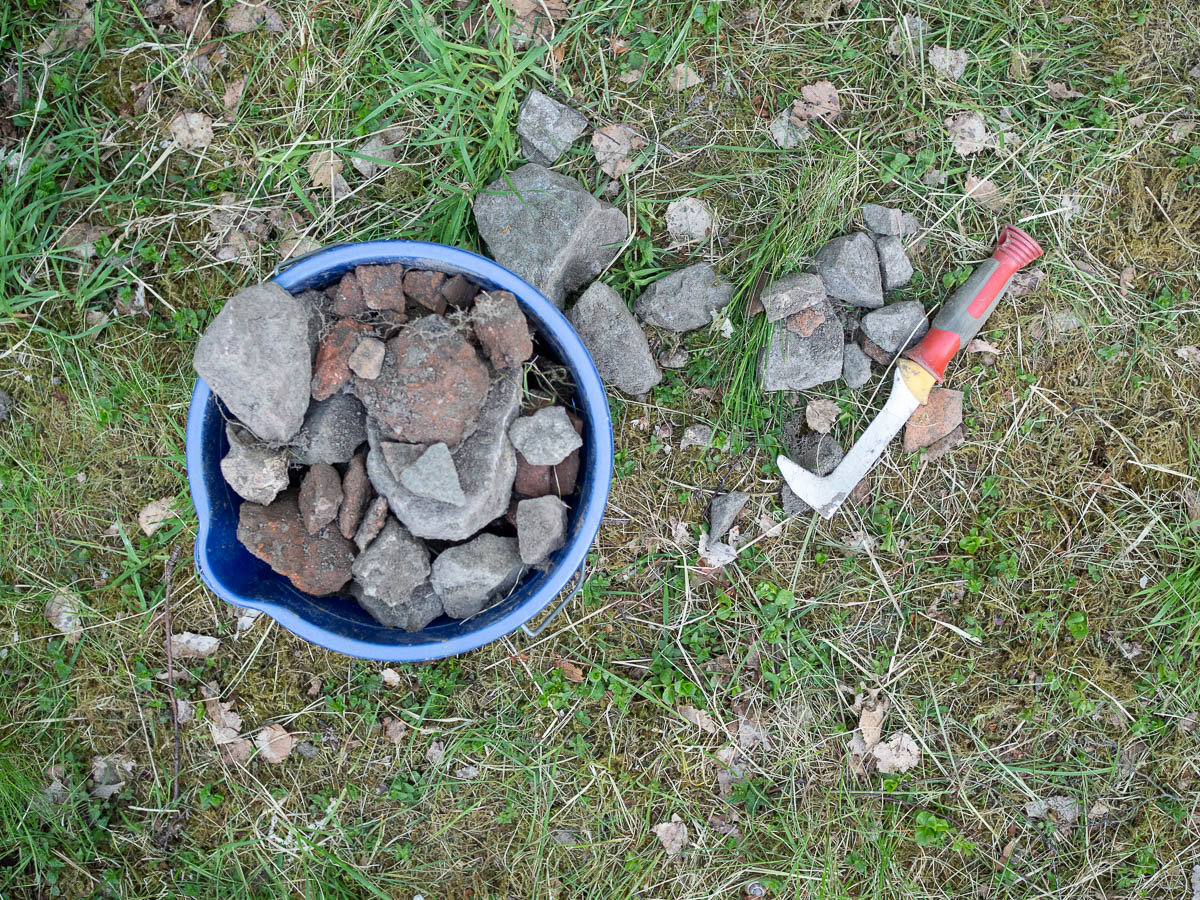
There are so. Many. Rocks.

I’m still working on getting those bushes planted. It’s taking time. I’ve replaced several of my lunchtime workouts with lunchtime digging sessions. But there are just so many rocks and roots that digging those holes really takes time. Each hole takes around an hour and a half to finish.

Each hole tends to yield around a bucketful of small rocks, plus a number of larger ones.

Having nothing better to think about as I dig, I think of rocks, and their sizes.

I realize now that I think of them in no particular language. Now that I am writing it down, I don’t know what to call them. Both Swedish and Estonian have a single word for “rock” and “stone”, but English has two. When does a stone become a rock?

The very smallest ones I don’t notice because they don’t matter. They get shoveled around together with the soil. These I think of as “small stones”, when I think of them at all.

Rocks start mattering when they are large enough to turn or stop the spade. That’s also roughly when they become individually noticeable – when my hand can fit “three rocks” rather than a handful. And it’s also the point when they start standing out visually in a pile of earth. They no longer blend in, and they may even roll off the pile completely. These I think of of as “rocks” and I pick them out when I notice them.

The next size up is when the rock doesn’t fit in the palm of my hand any more. Those go in a pile, not the bucket. If I threw them in the bucket, it would fill up very fast. And probably break, too, because I have a flimsy bucket. These are “one-hand rocks”.

The size after that is “two-hand rocks” because I need two hands to hold one of them. These generally need to be carried instead of thrown, and dropping them might damage things.

After those come “lift” rocks. These are rocks that I lift with care, because careless handling might damage not just my toes but also my back. I haven’t found any in this part of the garden, but there were enough of them when I was digging the trenches for the hedges.

Even larger than those are “roll” rocks, so large that lifting them is impractical or impossible, but I can still lever them out of the ground and roll them from one place to another. Those have been rare, luckily.

Anything larger than that stays in the ground. (Although there was a rock once that we got out of the ground with the help of the car.)