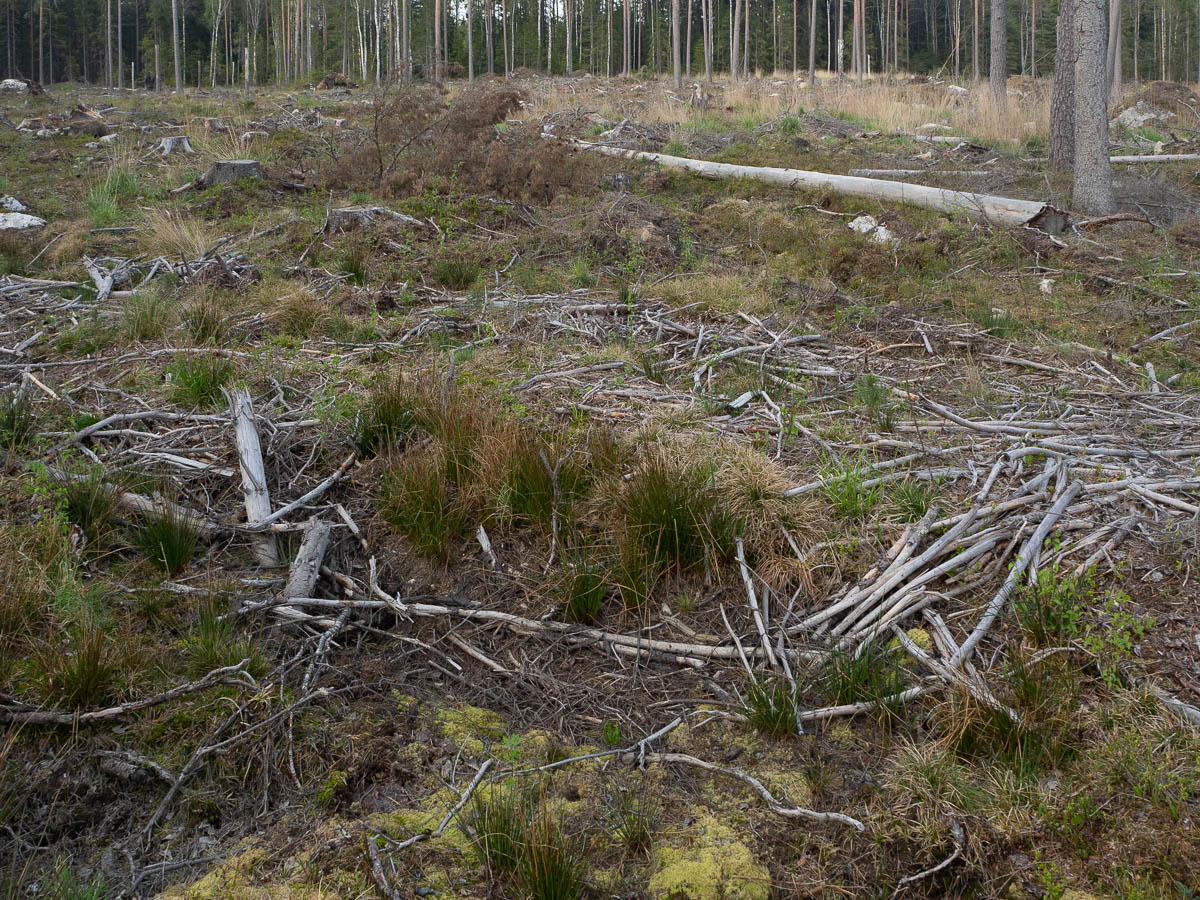
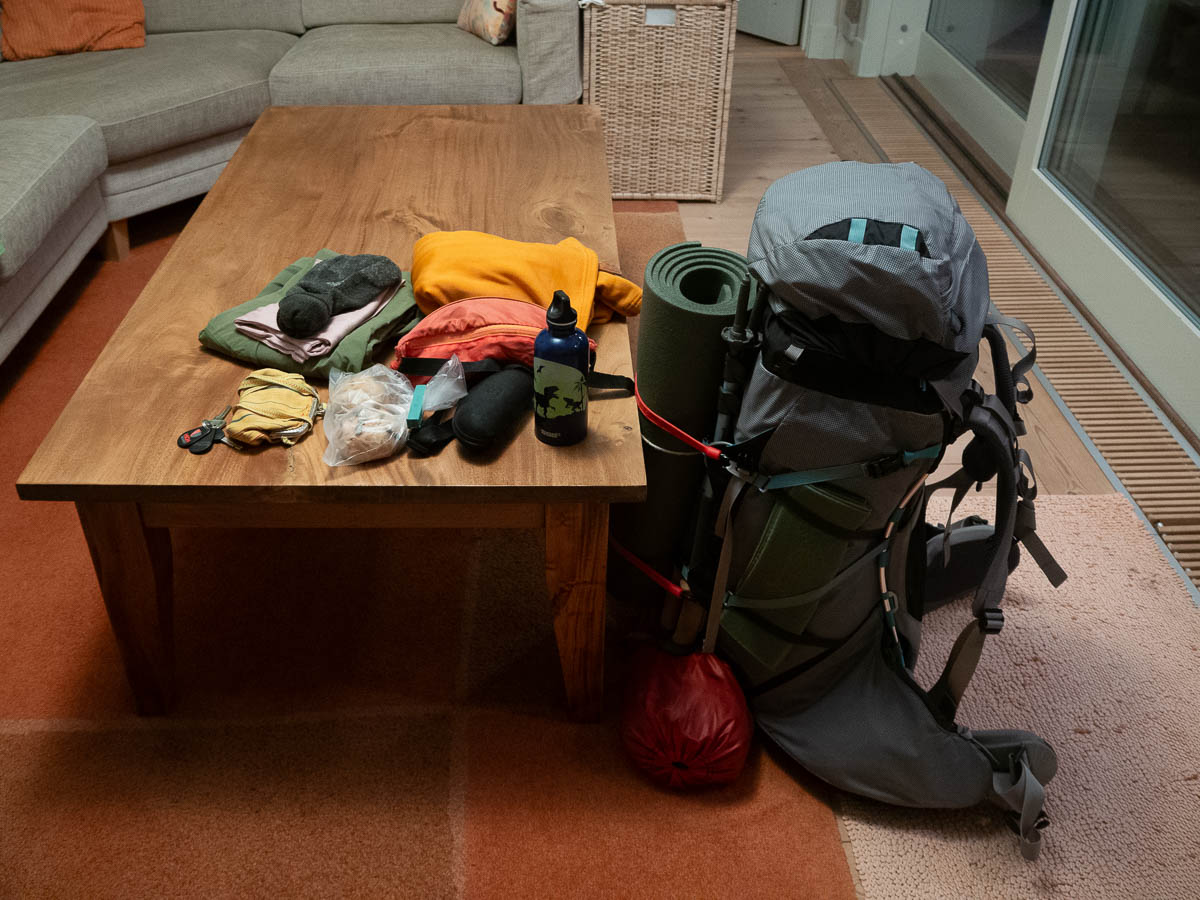
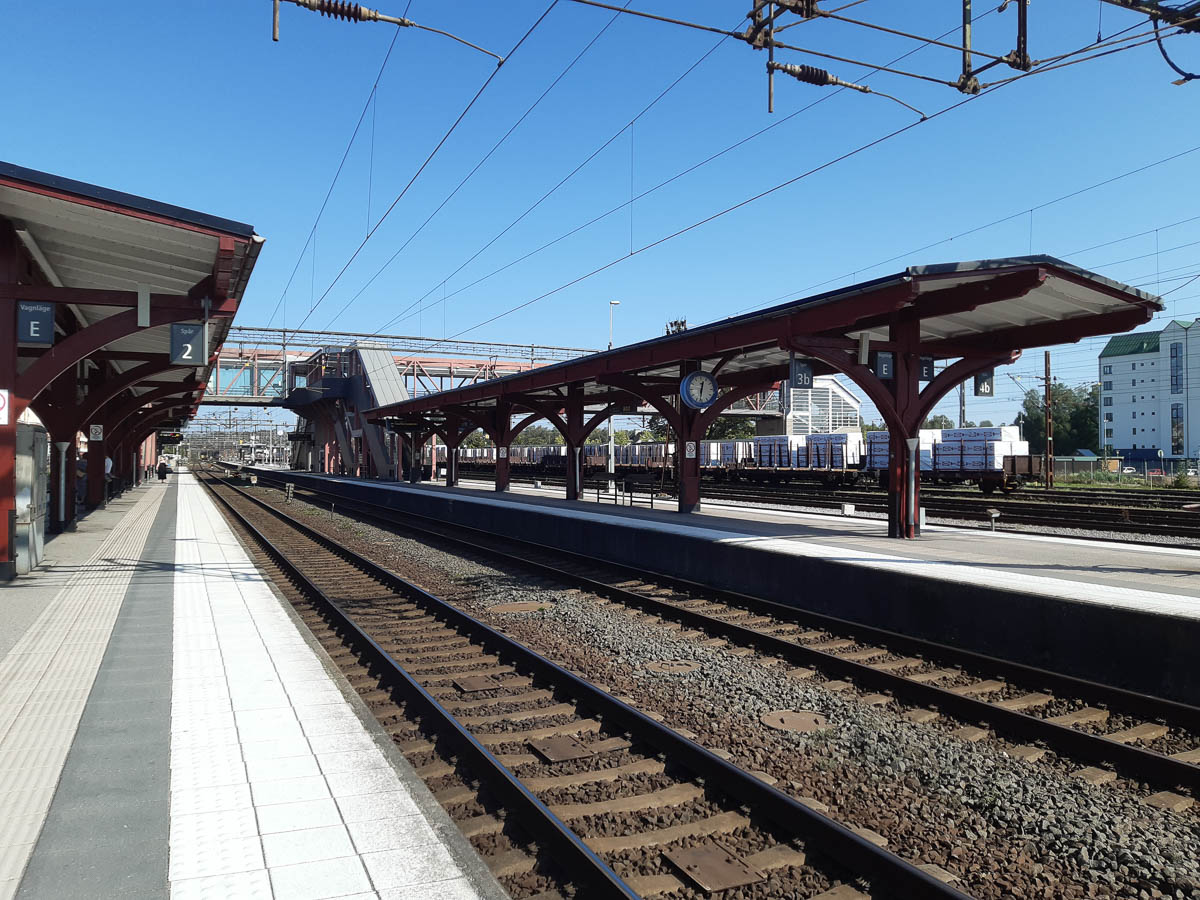
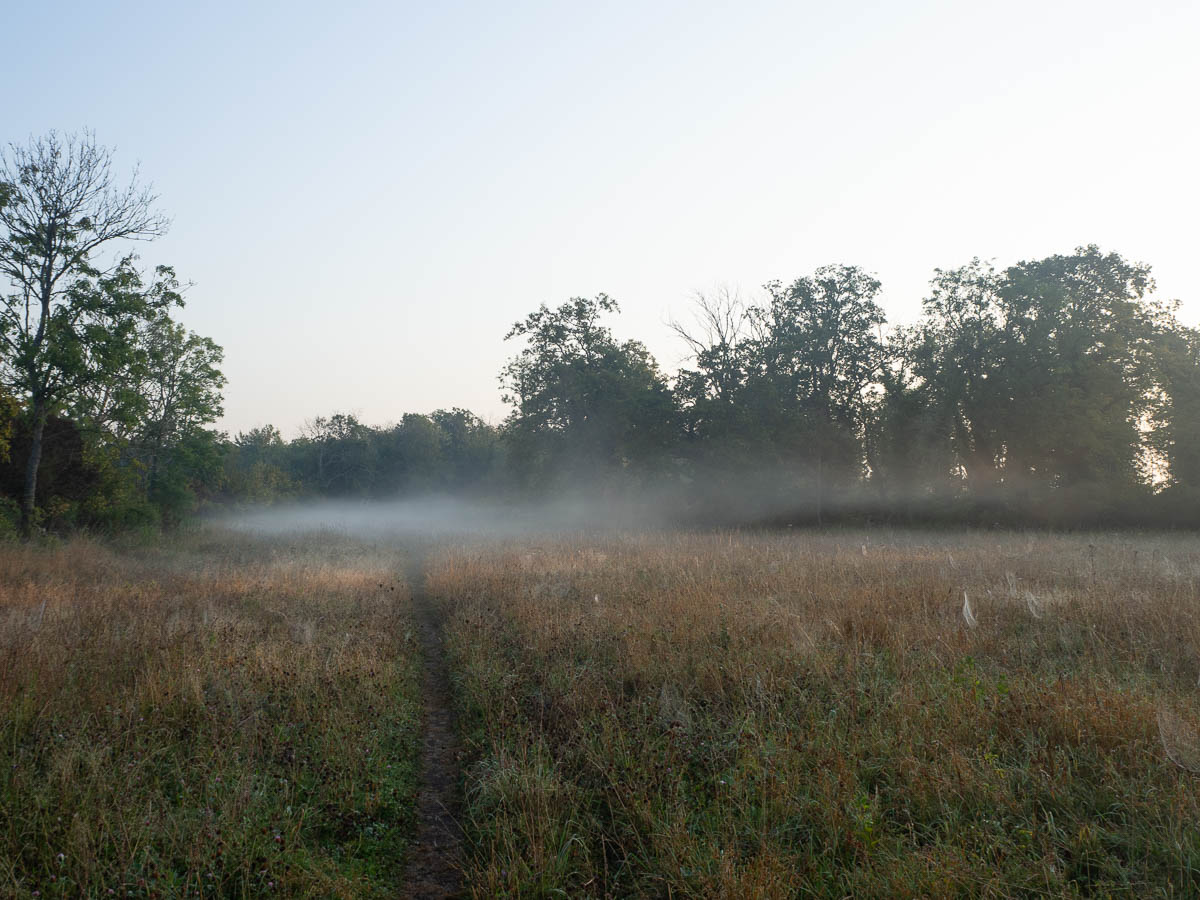
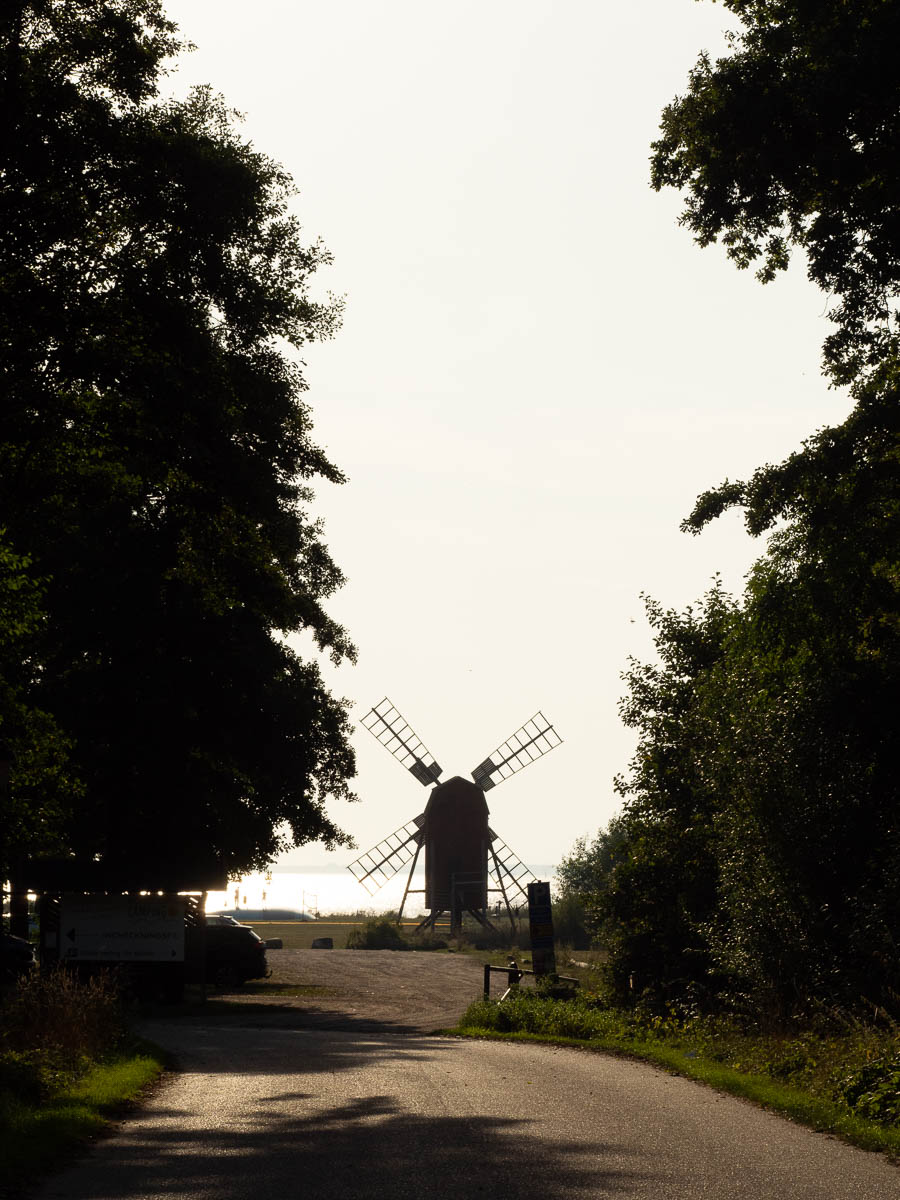
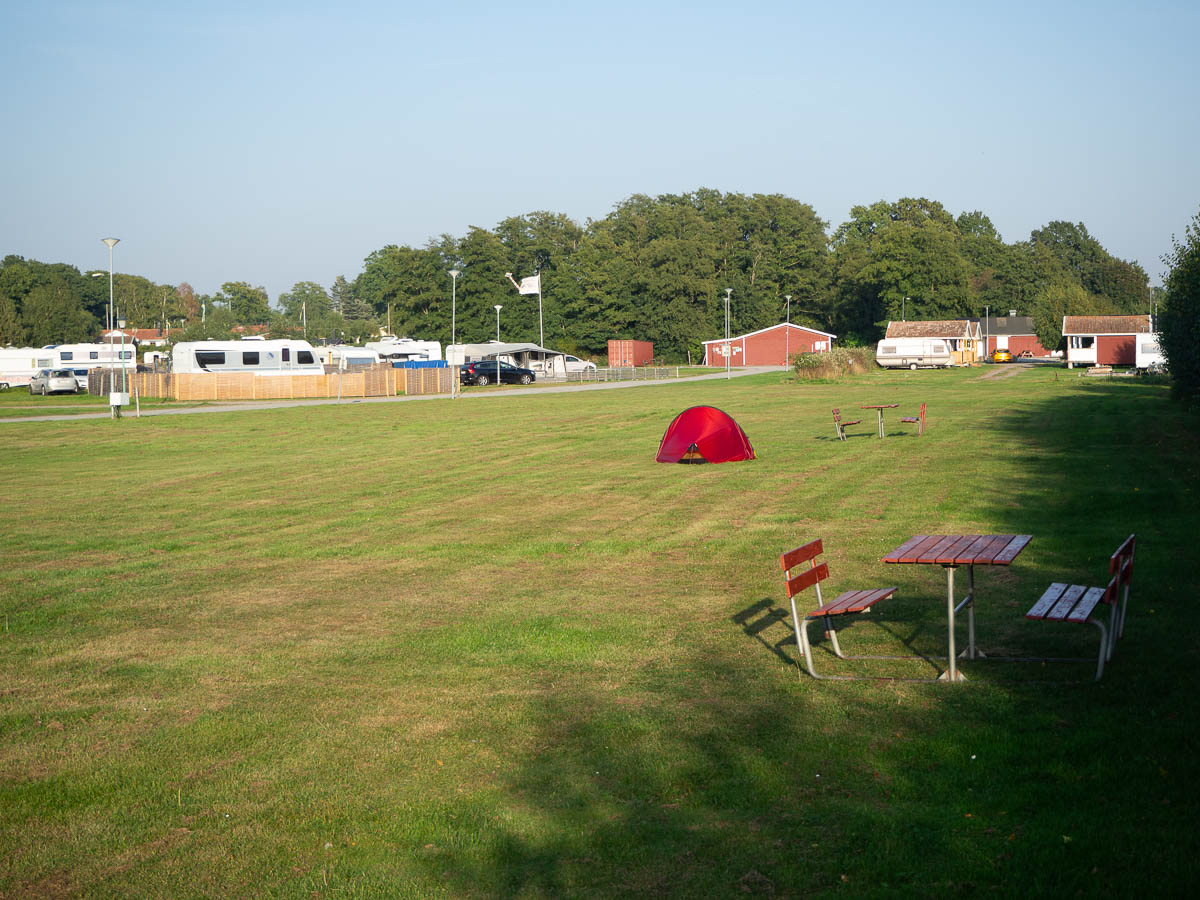
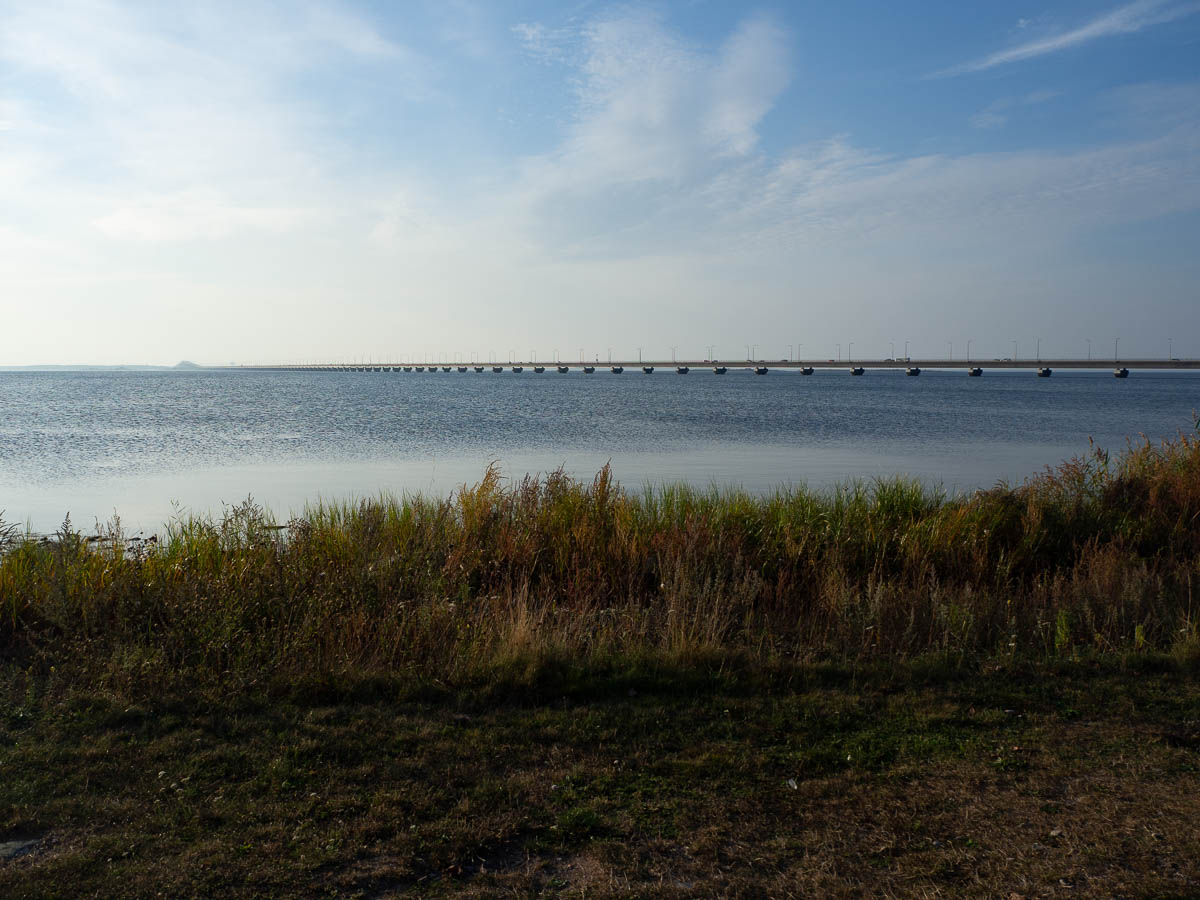
Mörbylånga to Skogsby, 20-ish km.

I haven’t been able to sleep very well during this trip, for no discernible reason. My body is tired by nine in the evening and all I want is to lie down, but it takes a long time for me to fall asleep, and I keep waking through the night. Most of the time, the best I achieve is a kind of half-slumber, and maybe a couple of hours of proper sleep at best.

This night I woke up at three and it was clear that there was no going back to sleep. I played sudoku on my phone and read on my Kindle and listened to the birds until the pre-dawn light was enough to move around in. Packed and ready to go by six, before the sun was fully up.

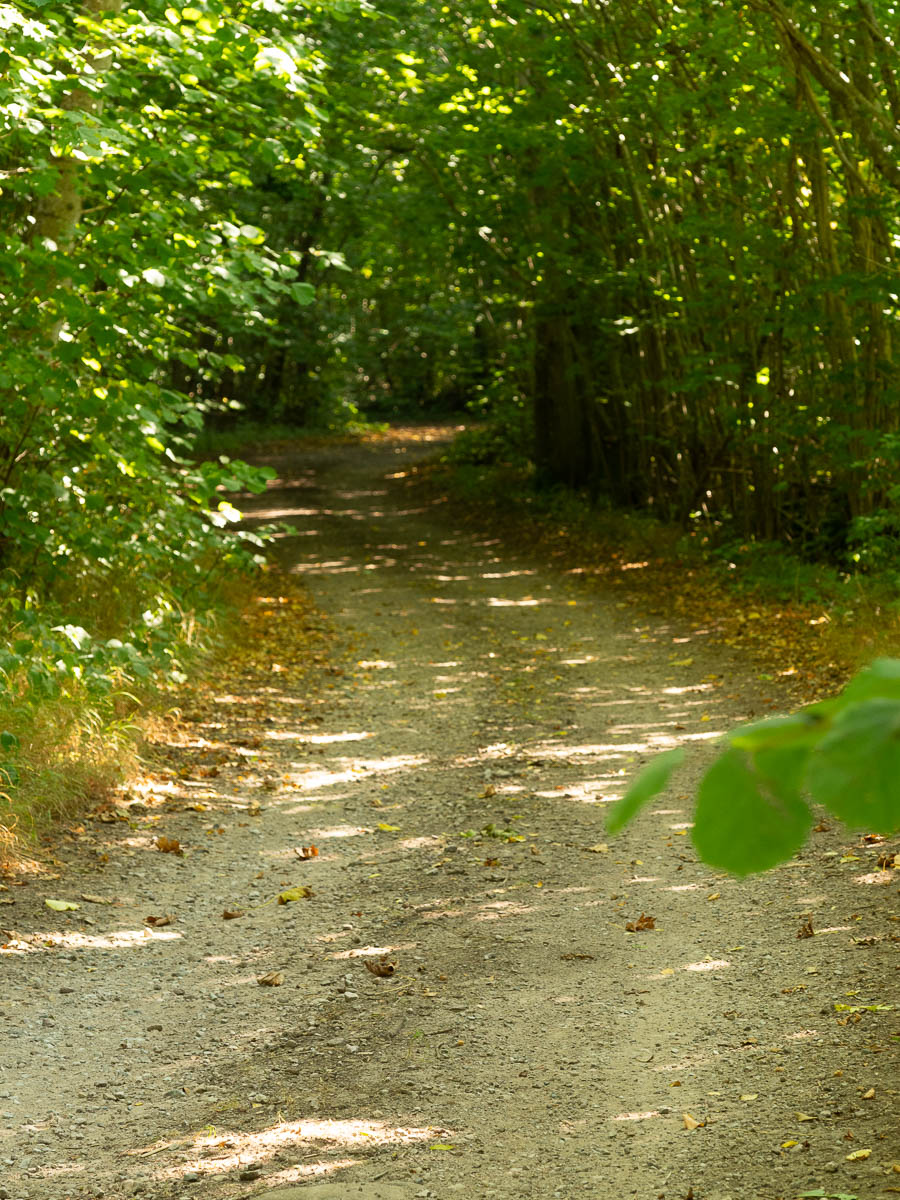
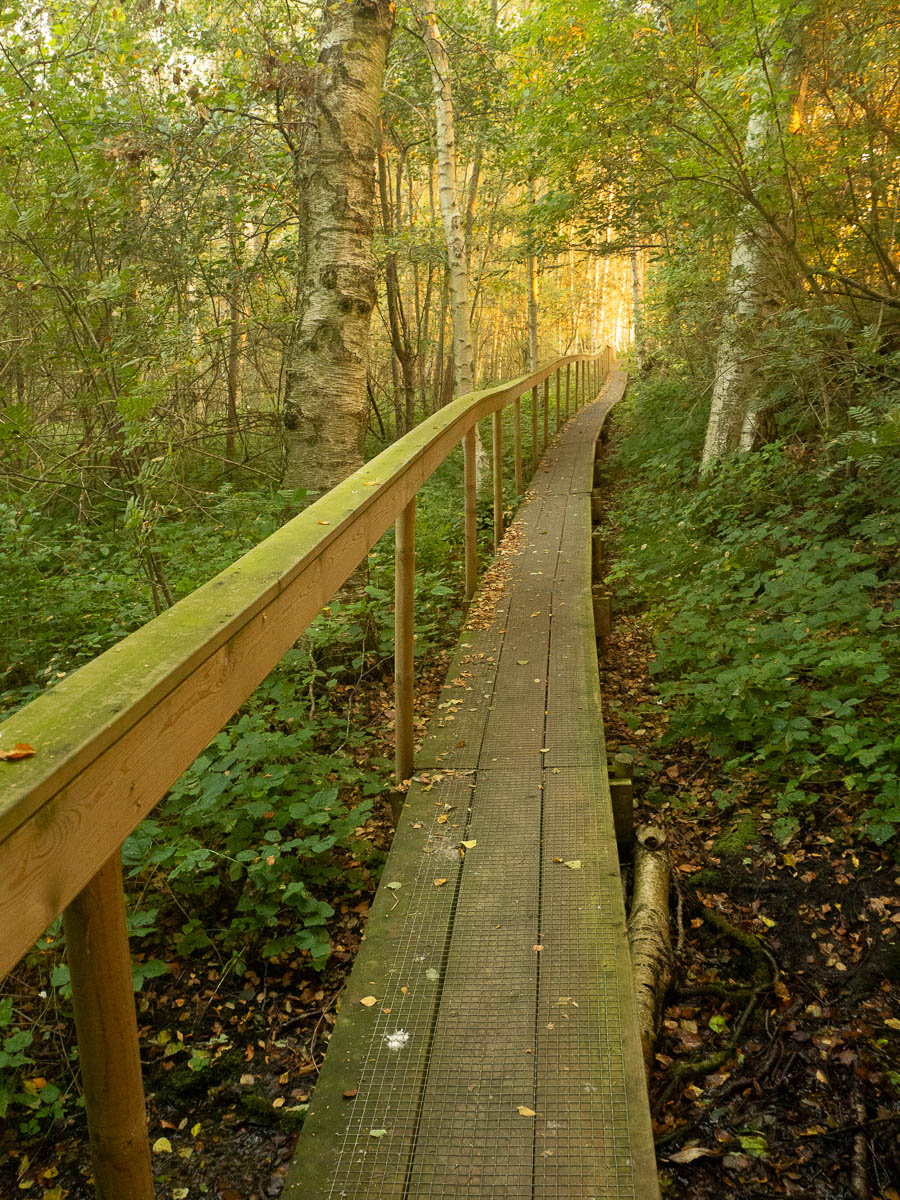
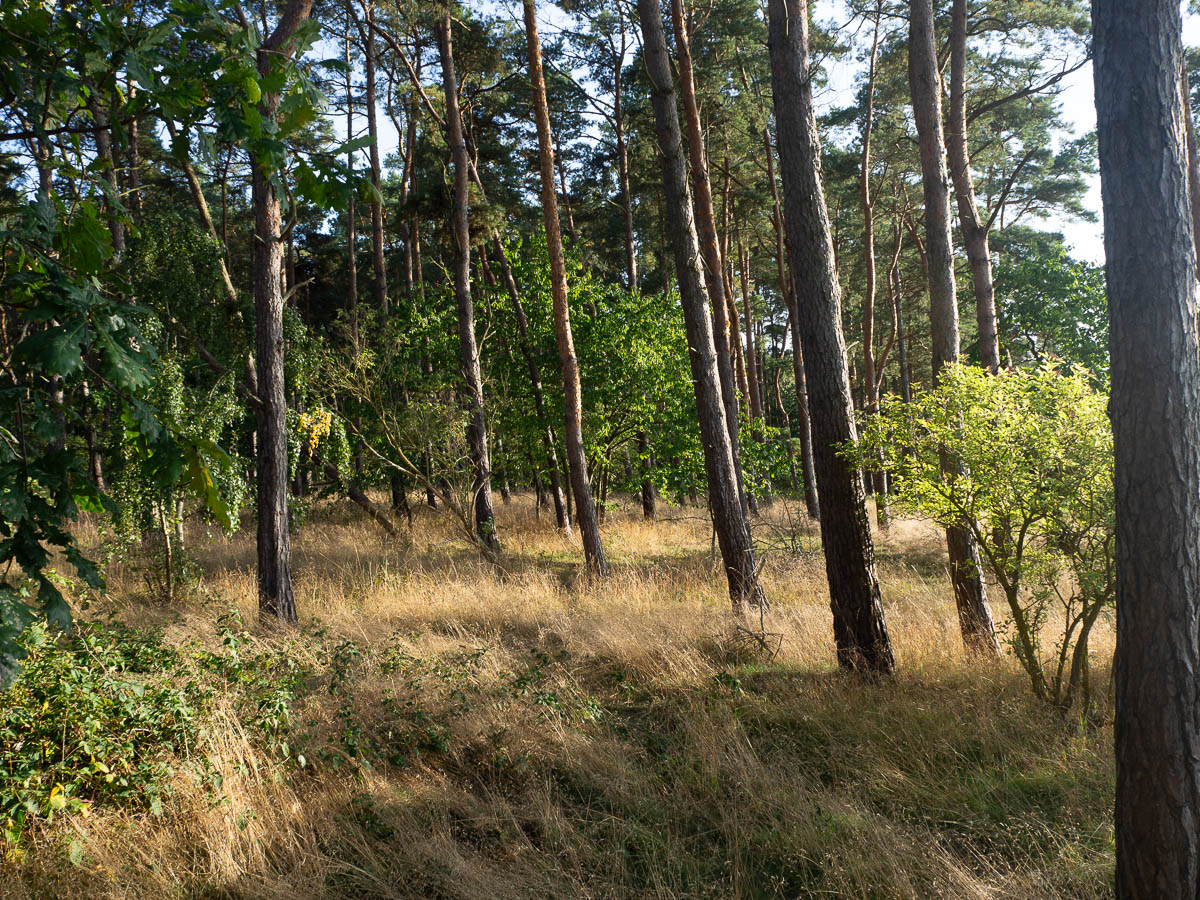
Fairy tale forest in golden dawn light with gentle birdsong and a babbling brook:

18 km of walking on mostly flat and even ground only takes me 6 hours, breaks included, so I have a whole lot of time today that I need to spend somehow. Getting there too early is no good. The walking is already so meditative that I don’t need more hours of sitting around and doing nothing in the evening. And there is only so much reading and sudoku I can do. So: lots of photo breaks and exploring random things.

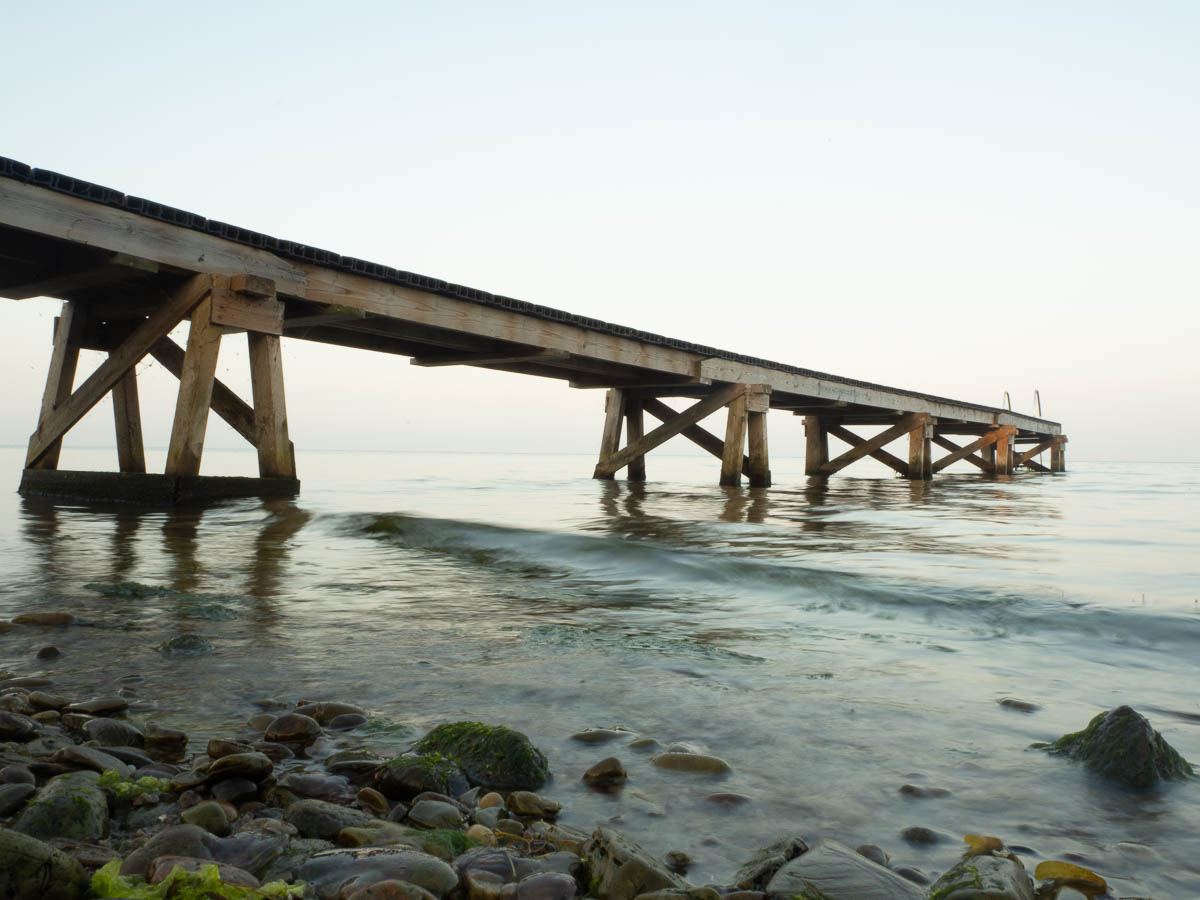
Here’s a bathing jetty.

I was having thoughts of breakfast by half past seven, but there was the usual question of water to be solved first. (I do keep enough of a reserve to have drinking water for at least half a day extra, but cooking porridge takes a lot of water.) I can’t go knocking on people’s doors at half past seven in the morning, though! Luckily there was a plumber’s van parked outside one of the houses I passed, with a plumber just leaving the house. It wasn’t his house, as I’d first guessed, but his presence meant there were people awake and around.

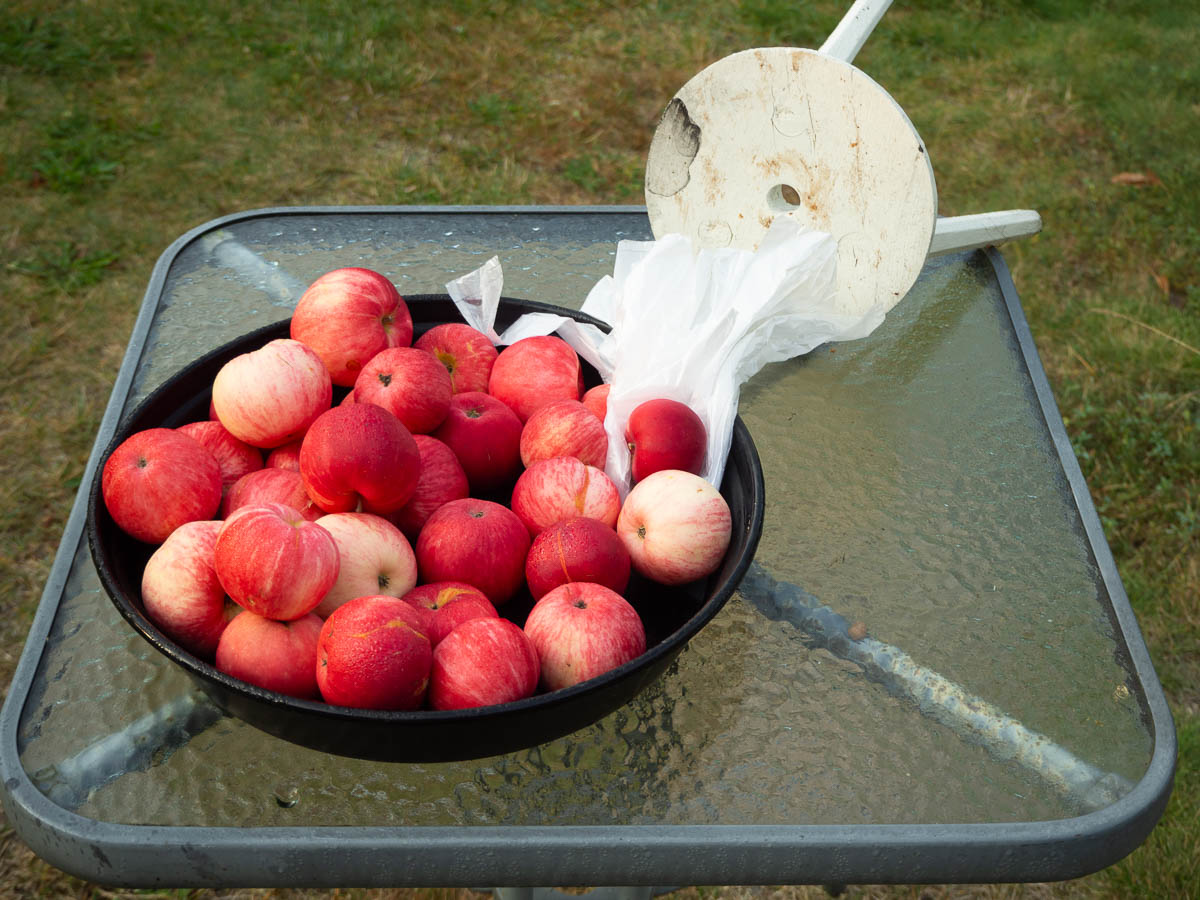
I got not only fresh water but also some of their home-grown apples. Better than the store-bought ones from yesterday, even those were also Swedish.

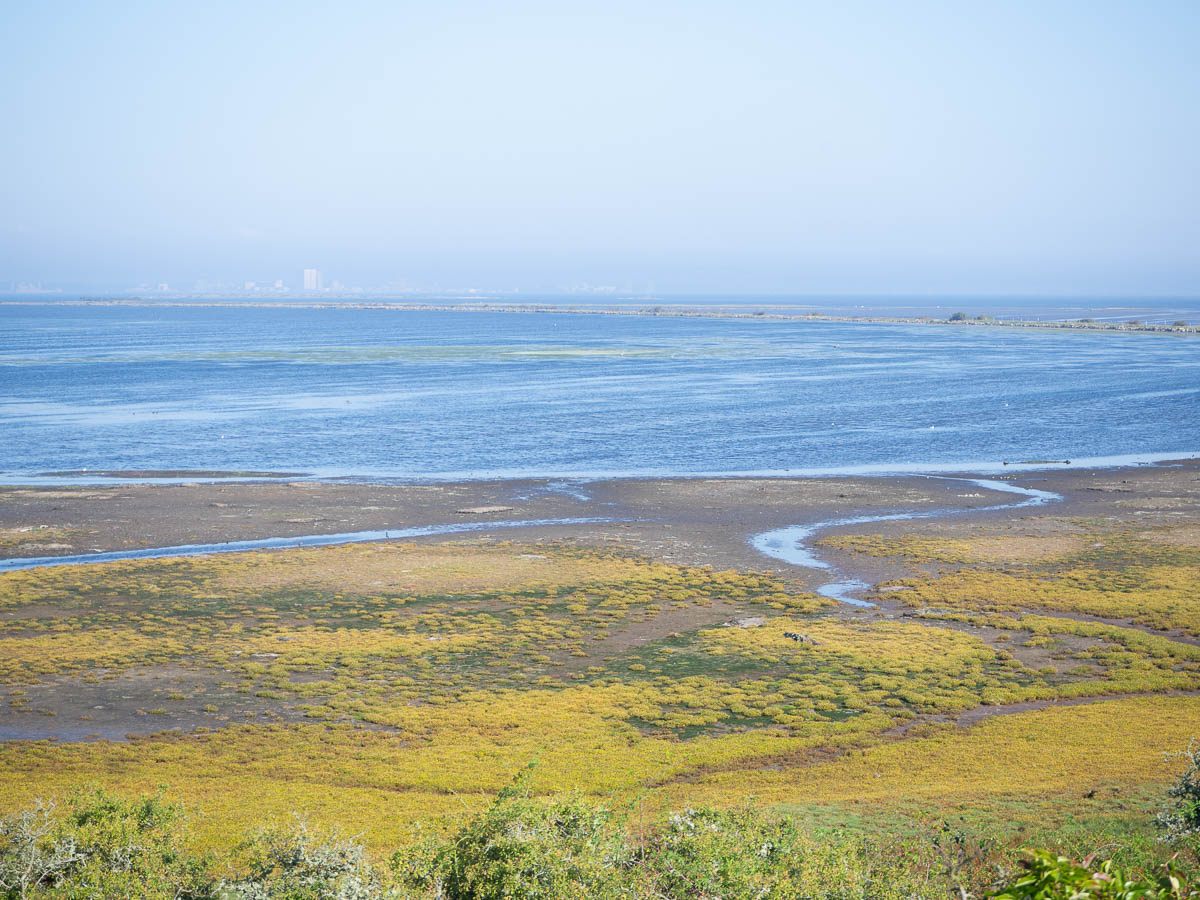
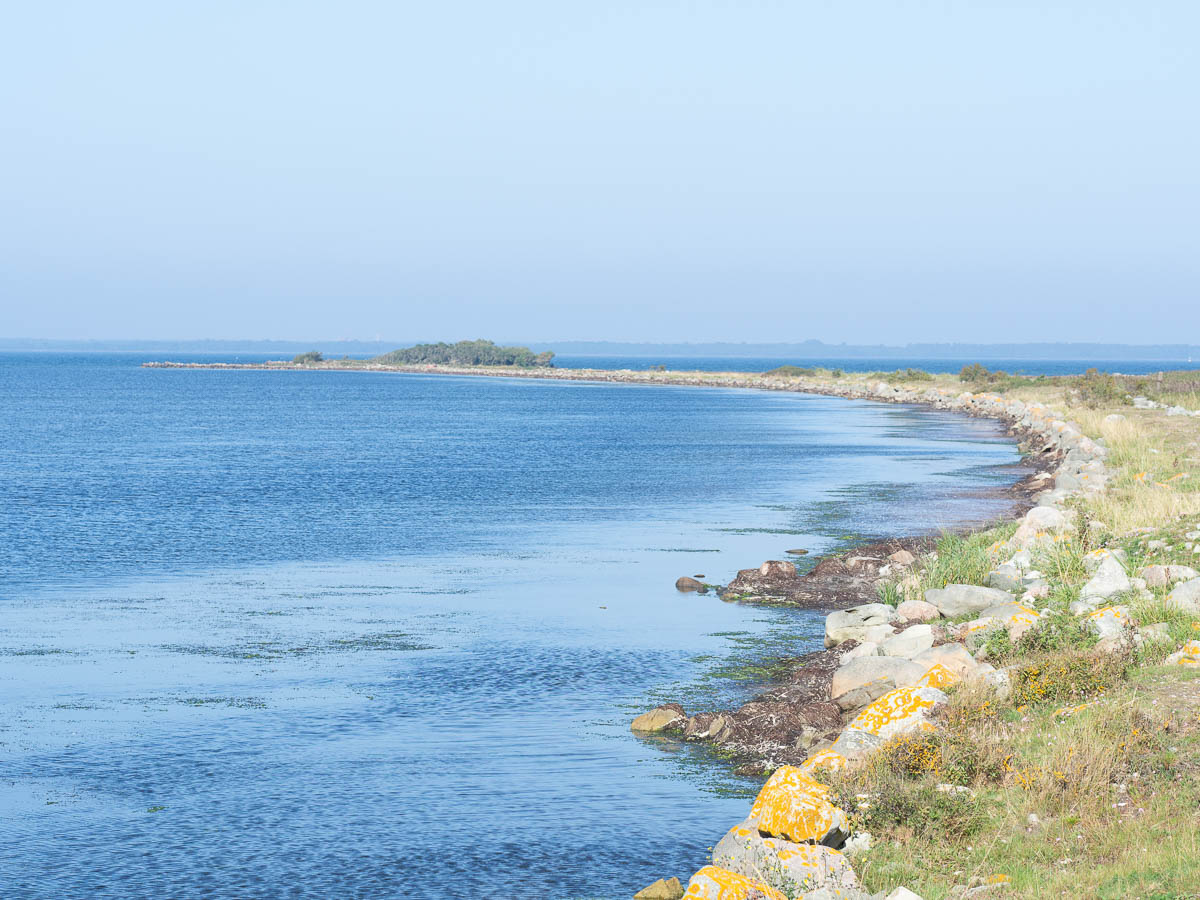
This stage of the Mörbylångaleden trail passes through the Beijershamn nature reserve. There was an attempt to establish a harbour here in the 1850s, and a 2 km long pier was built. The harbour failed because the sea streams deposited silt and mud until it became unnavigable. The pier remained, and the silted-up areas around it became a paradise for birds.

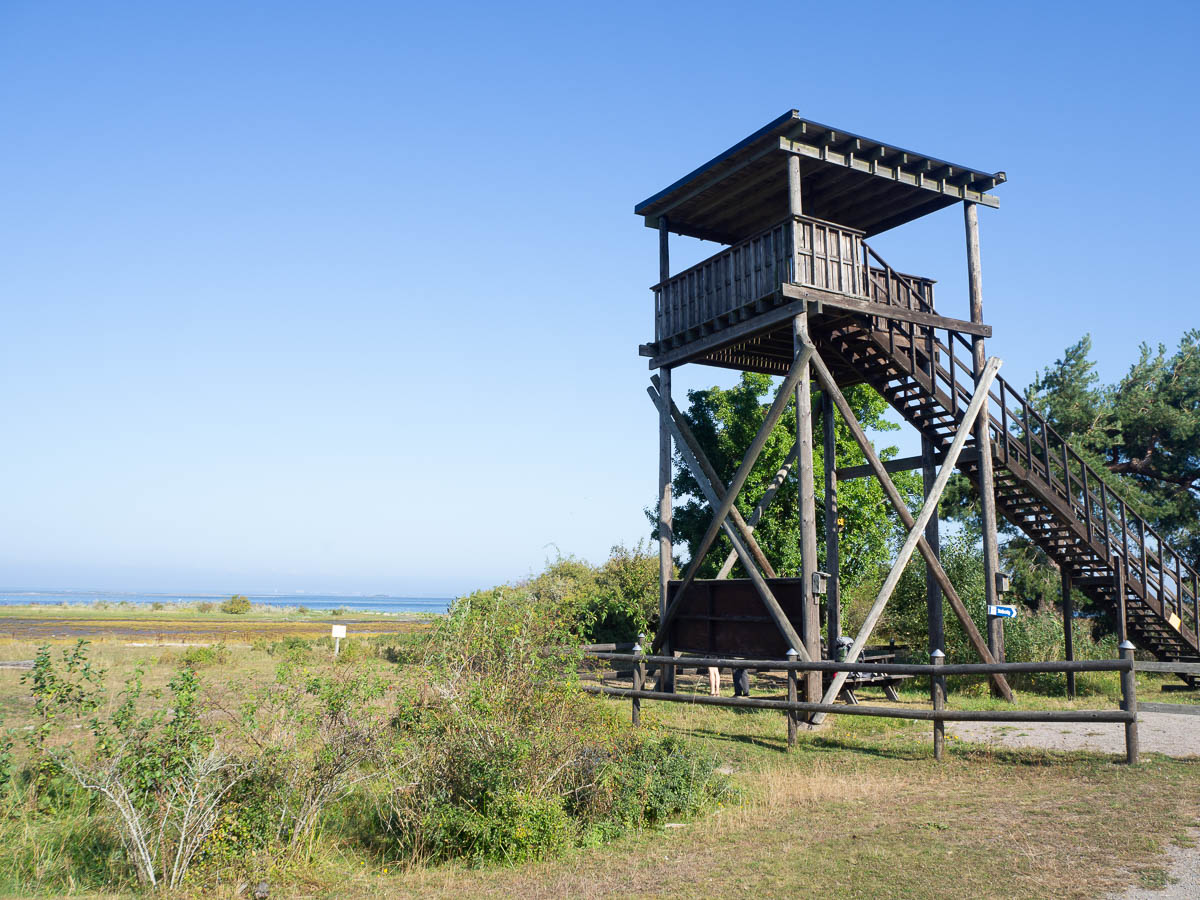
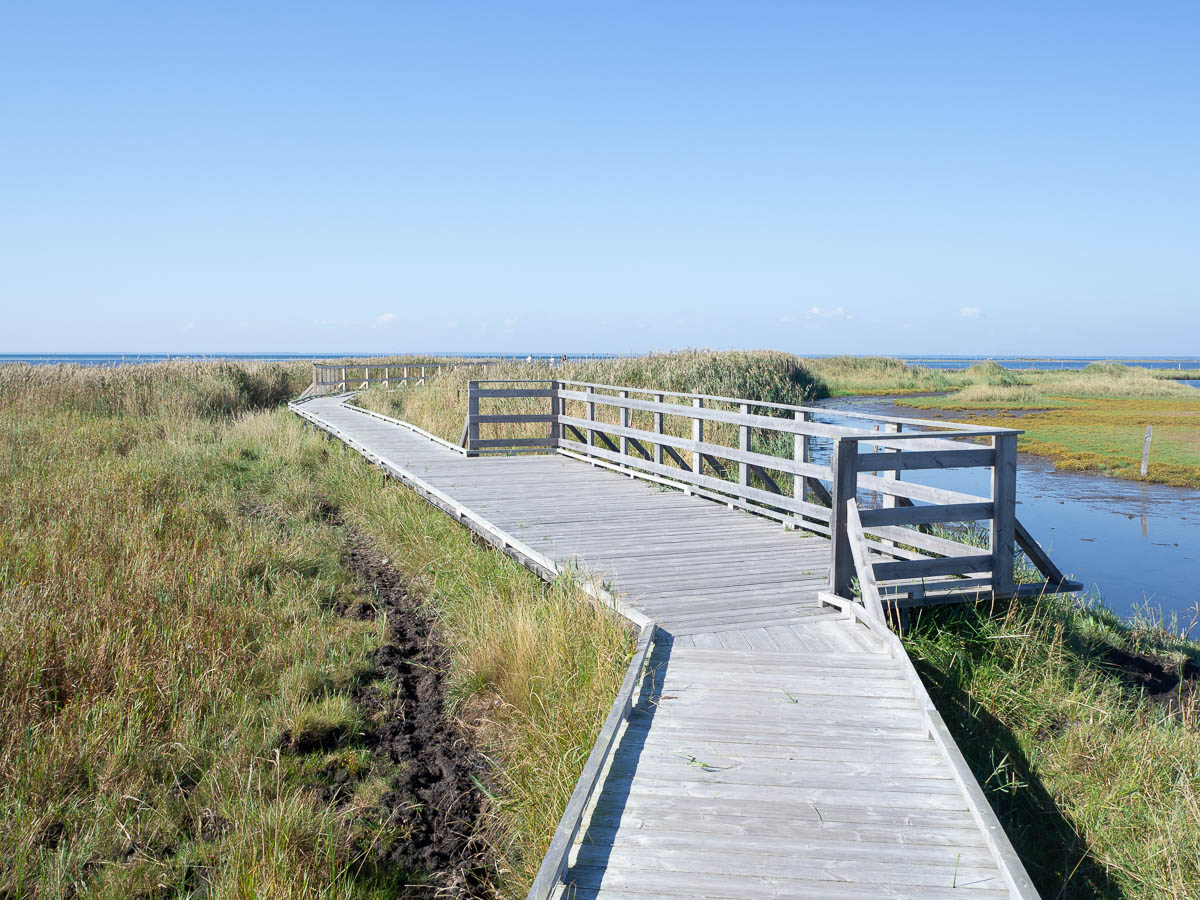
The area is a patchwork of nature reserves now, with boardwalks and platforms and viewing towers.


This was roughly the midpoint of my planned walk for today – and it was only ten o’clock in the morning. Time for a detour. I put my pack down just after the first cow stile and the last picnic table on the old pier, and walked most of the way to the end and back. It’s an odd feeling to walk on such a long and narrow strip of land, with the sea in touching distance on both sides.

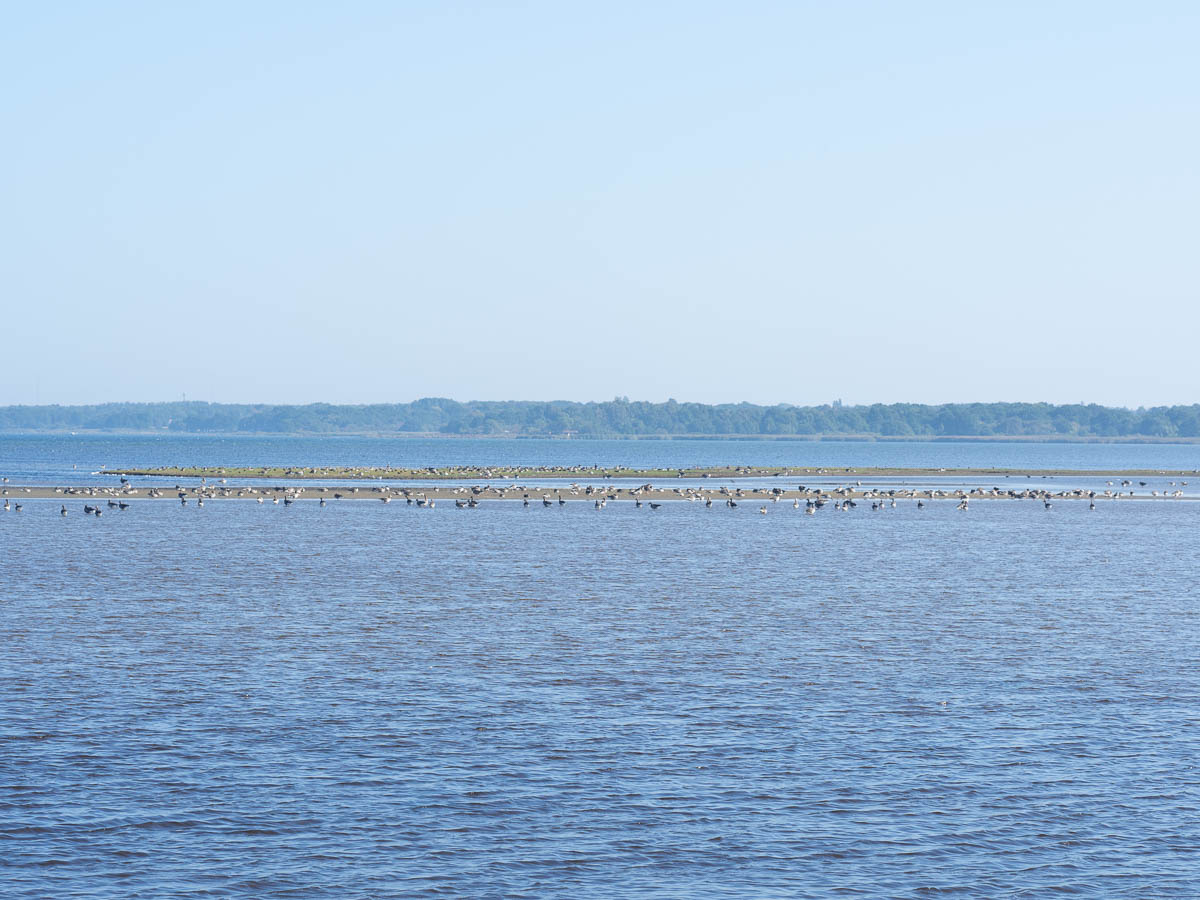
The shallows on both sides were like bird soup. Waders and geese and ducks and the occasional swan, gulls and terns, and endless noise.

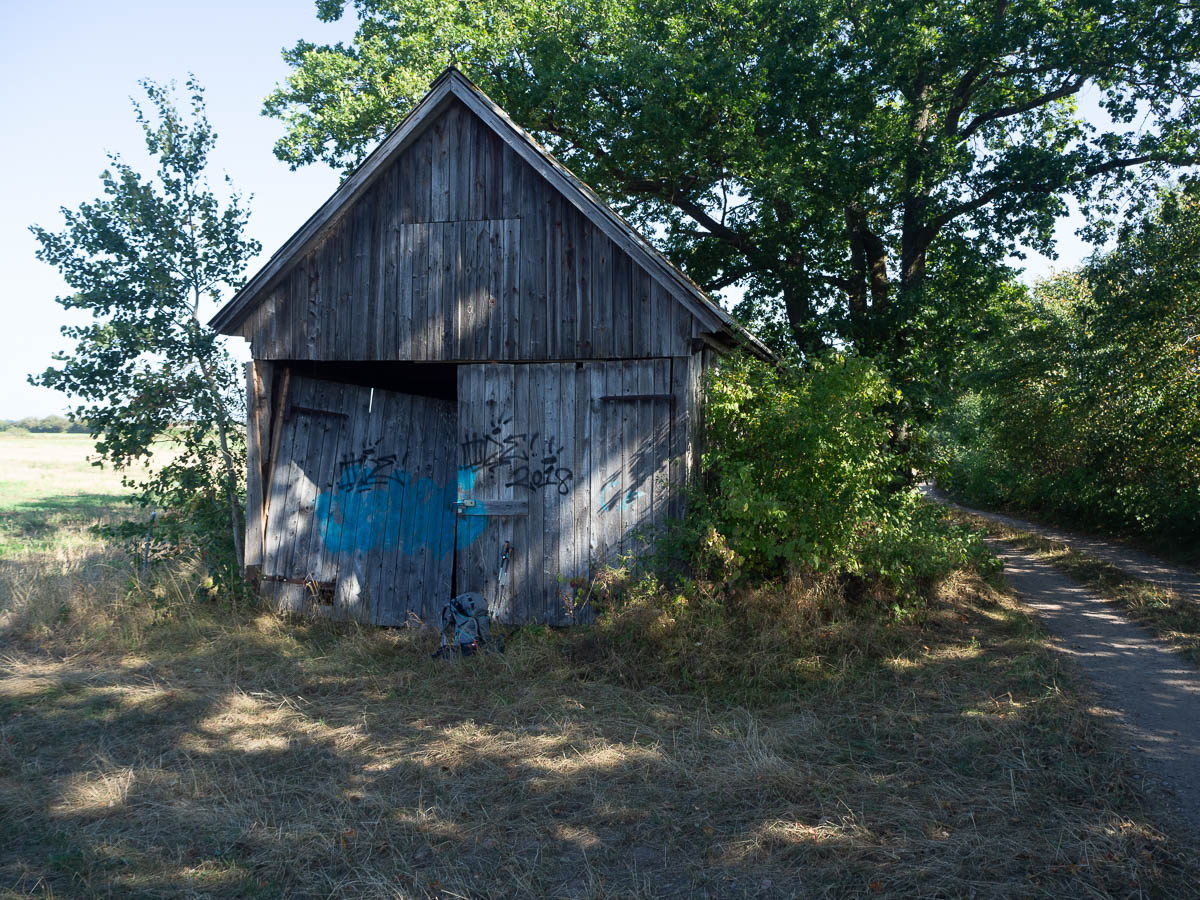
After Beijershamn the trail swung back inland, between fields. Lunchtime brought the usual challenge of trying to find shade. I ended up sitting in the shade of an oak tree, which sounds more scenic than it was, because on my other side was a derelict barn with a saggy door and bird droppings everywhere inside. Matched my backpack in colour scheme, though.

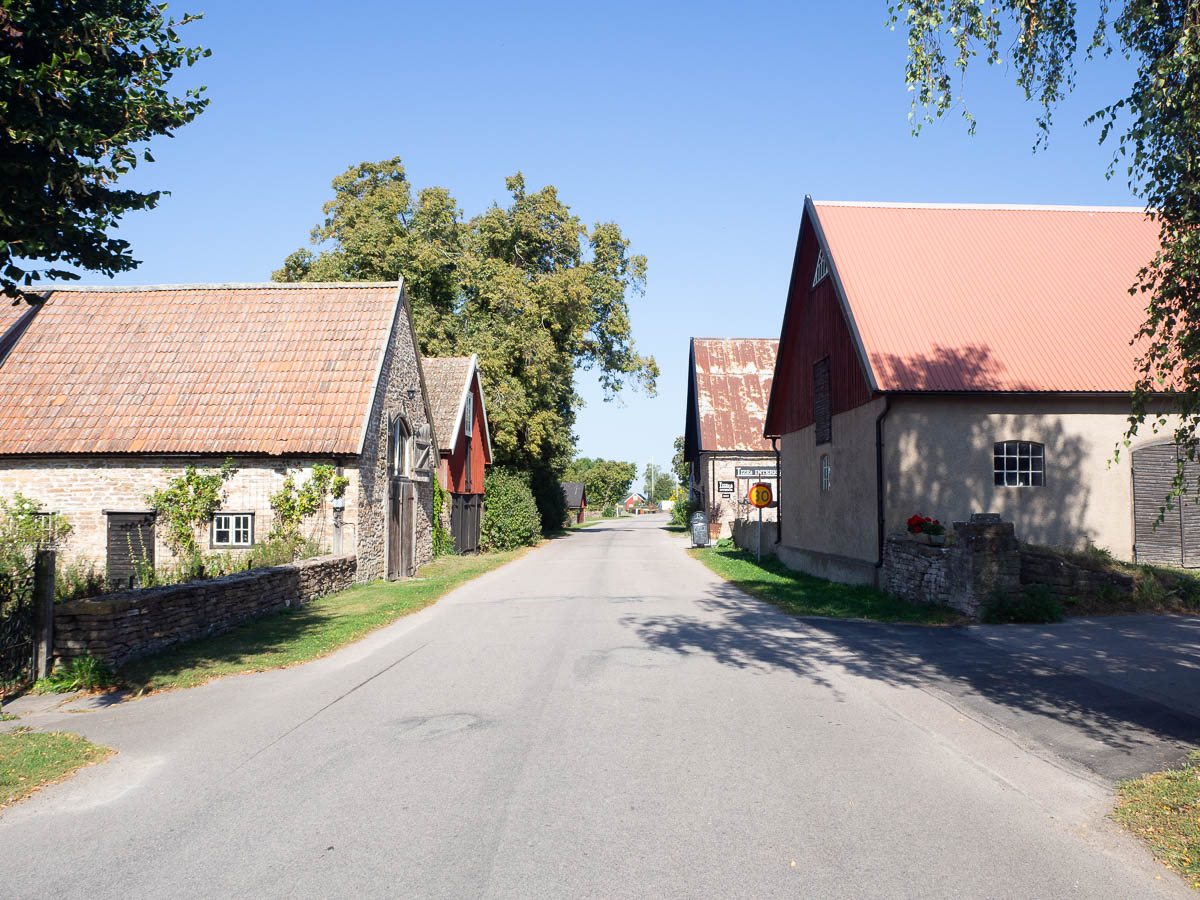
I deviated from the trail again to go through the little village of Eriksöre, with its old houses and barns.

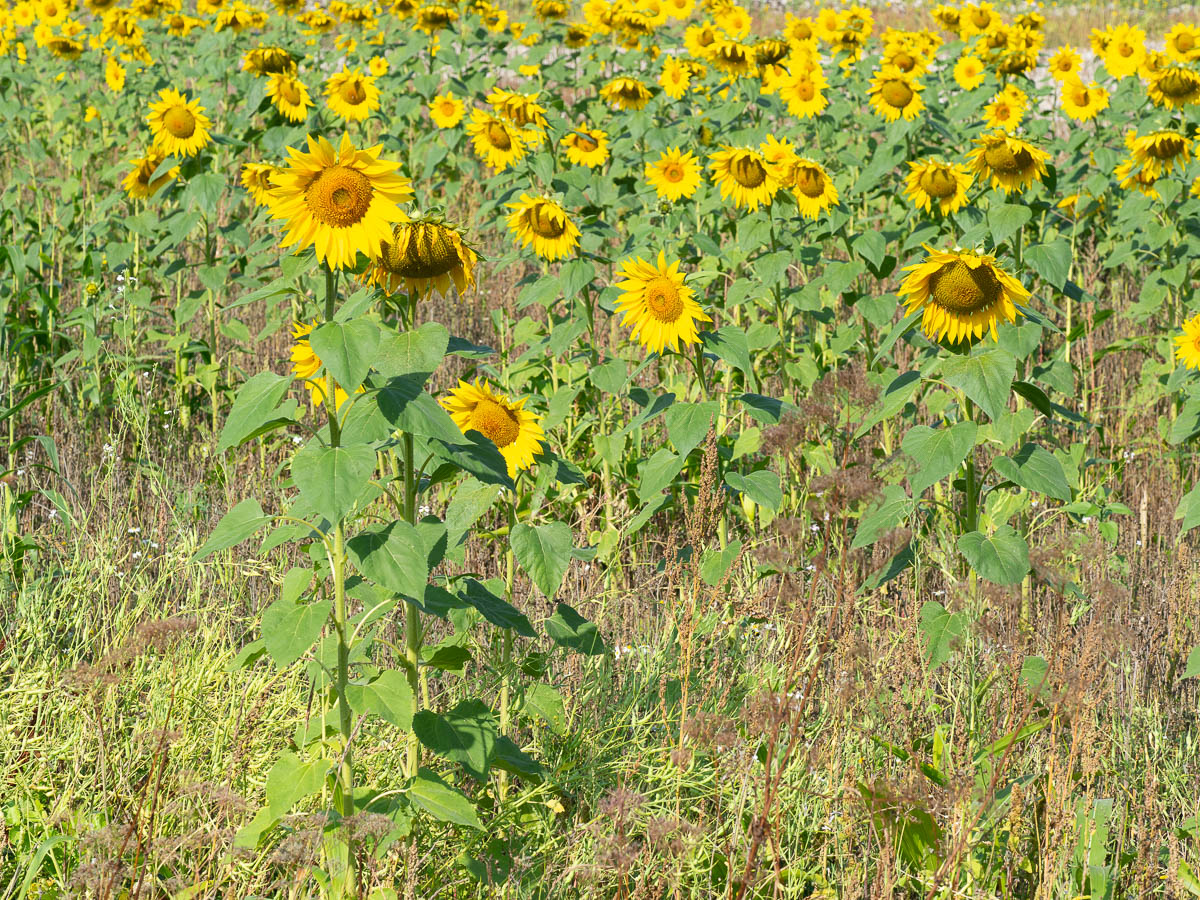
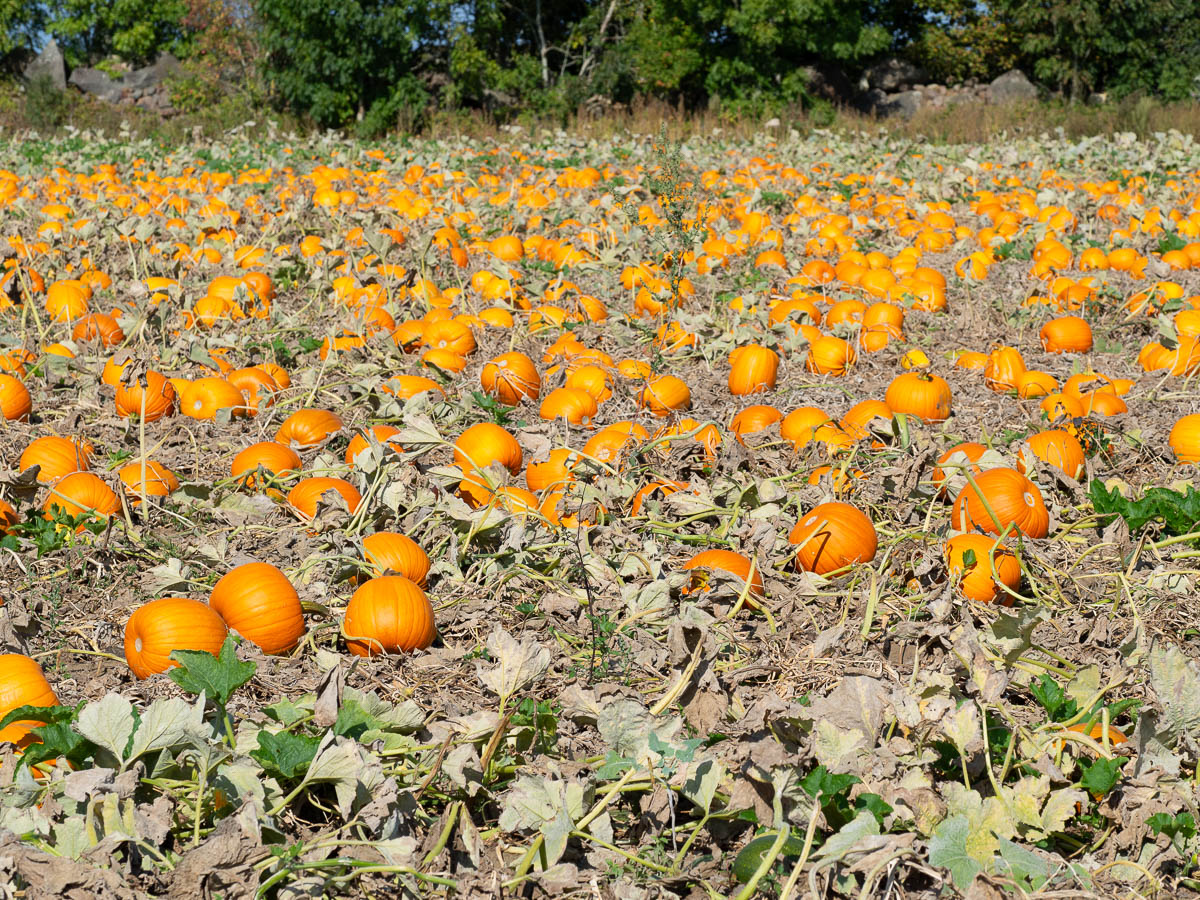
Eriksöre is one of the many villages participating in Öland’s annual harvest festival, and its signature contribution seems to be pumpkins. There were pumpkin fields in all directions, with Halloween pumpkins, small decorative pumpkins, and eating pumpkins.

The stage ends at a hostel and biology research centre just south of Skogsby. I was hoping to set up camp in some meadow or yard near the hostel and use their facilities. But the hostel reception was closed due to the single member of staff being ill, and everything was locked up, so I didn’t get to use the bathrooms after all. They had a nice garden and a pretty meadow, which looked quite appealing – flat and newly mown. But as I was sitting there, contemplating my life, a literal busload of hockey players arrived. Dalen Hockey had apparently booked the main building of the hostel for some kind of team-building thing. They were all behaving in a very civilized manner and had adult minders and everything, but they were inevitably loud. So I waved good-bye to the rose garden and went onwards.

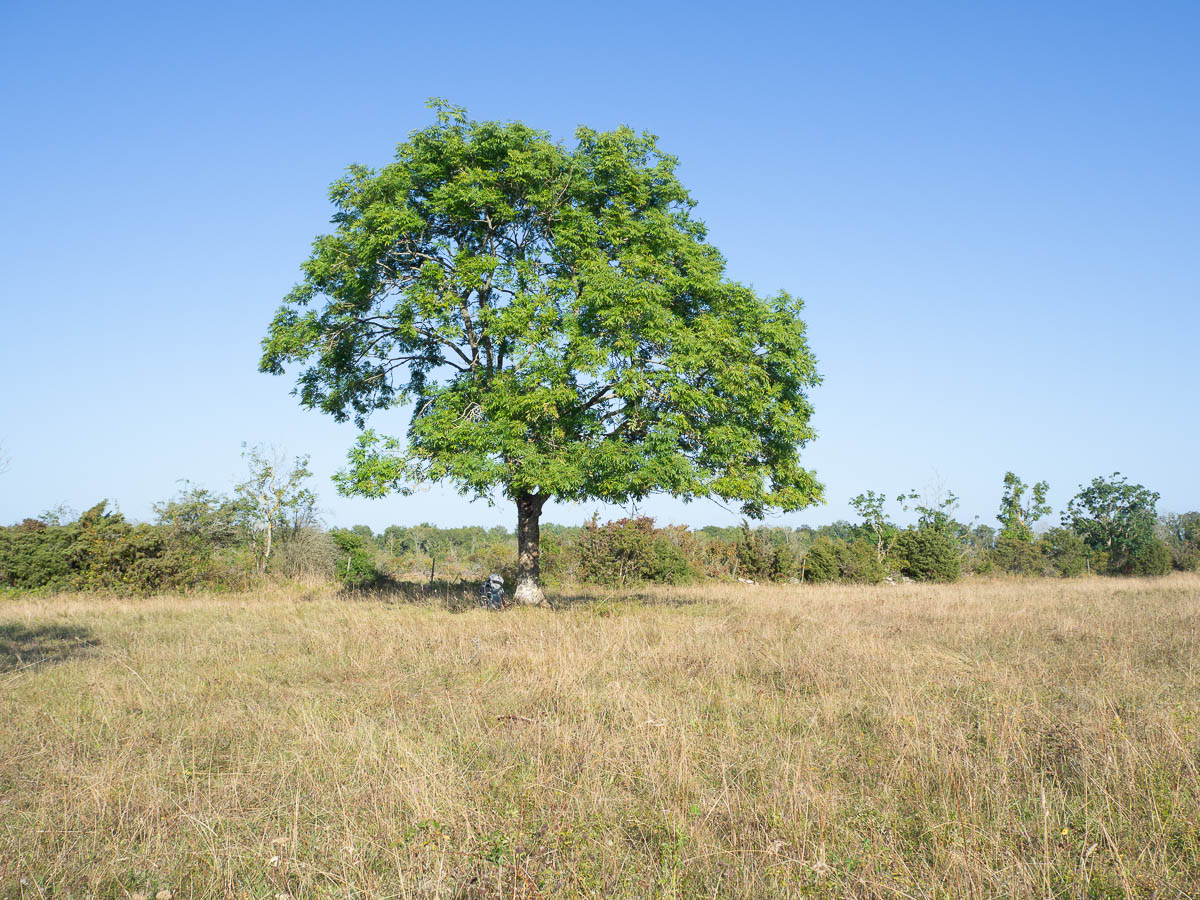
The first pasture, a kilometre later, looked very nice. Mostly flat and open, and with a large tree that I could sit and read under, and no smell or sign of recent cattle activity. I had put down my pack under the tree and was looking for the best tent spot when I found day-fresh cow pats instead. Where there’s cow pats, there’s bound to be cows, and I don’t want to wake up to a cow trying to get into my tent.

Onwards again.

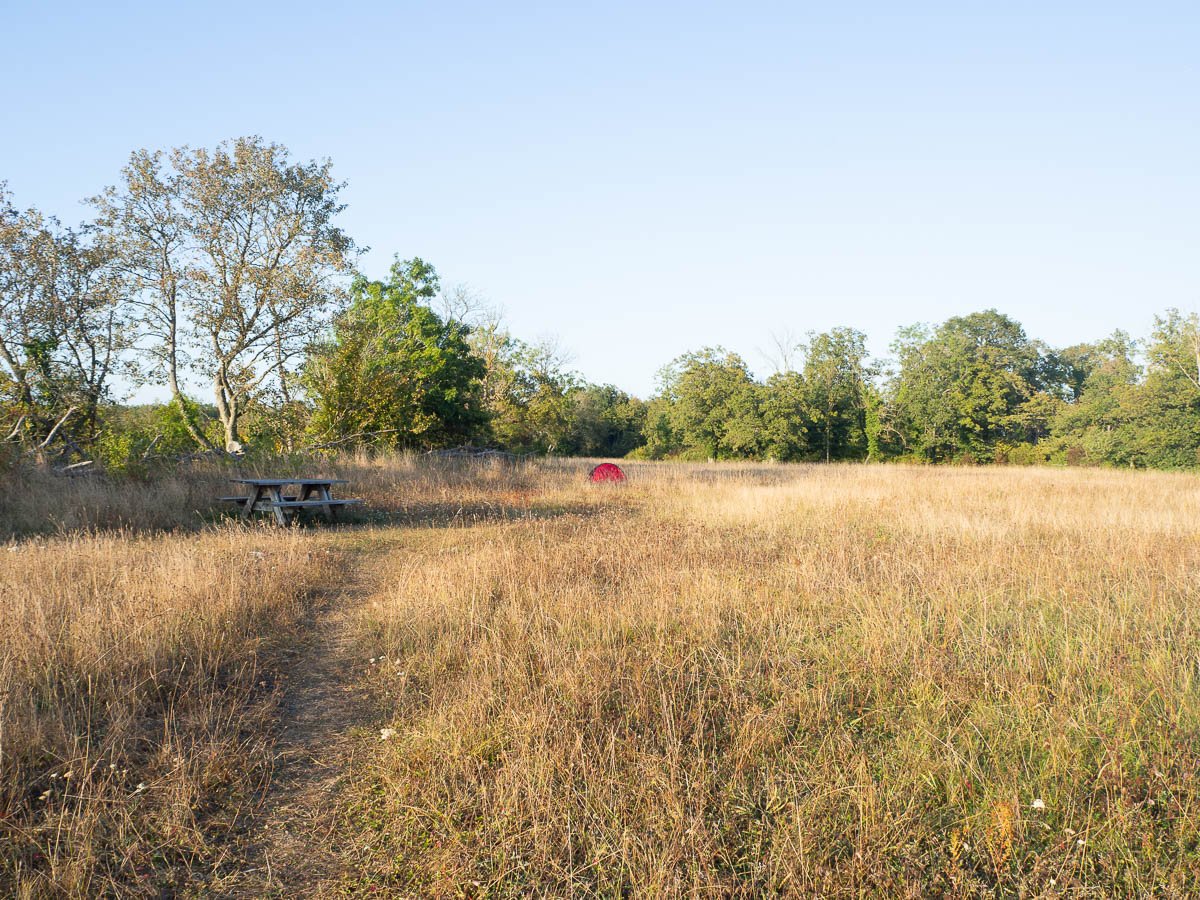
The next meadow had a picnic table and an information plaque, and no cow pats. And it had lots of tall, uneaten sweet grasses like clover, which surely must mean that there will be no cows here. This is where I will stay.

Kastlösa to Mörbylånga, around 15 km. Hot.

As usual, the first order of business is topping up my water bottles. Kastlösa is a large enough village to have a small hotel, so I snuck into their bathroom and got fresh water, and also a chance to wash my hands and face with running water. There has been a significant shortage of washing opportunities on this trail.

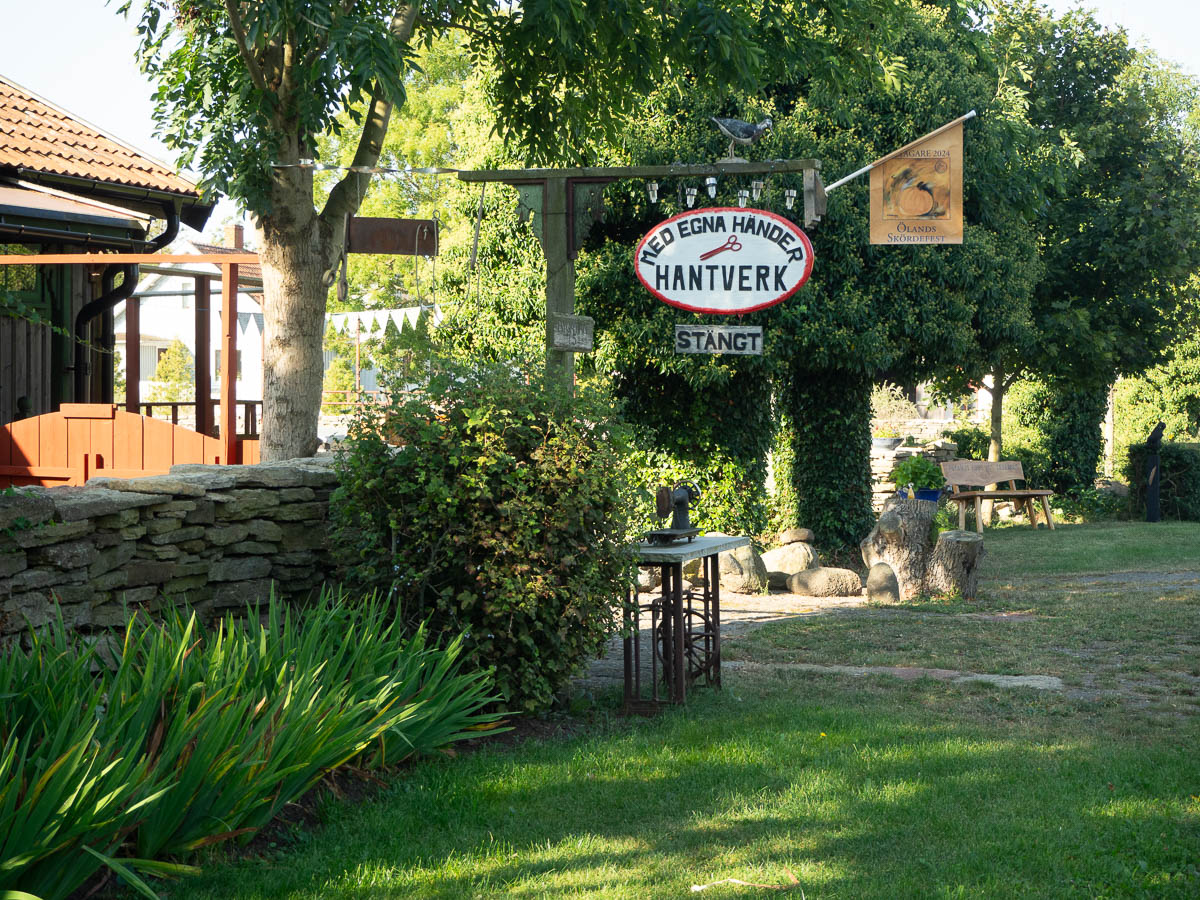
Kastlösa also has small crafts workshops and antiquities shops that would probably be fun to visit, but as with most places I pass, they’re all closed.

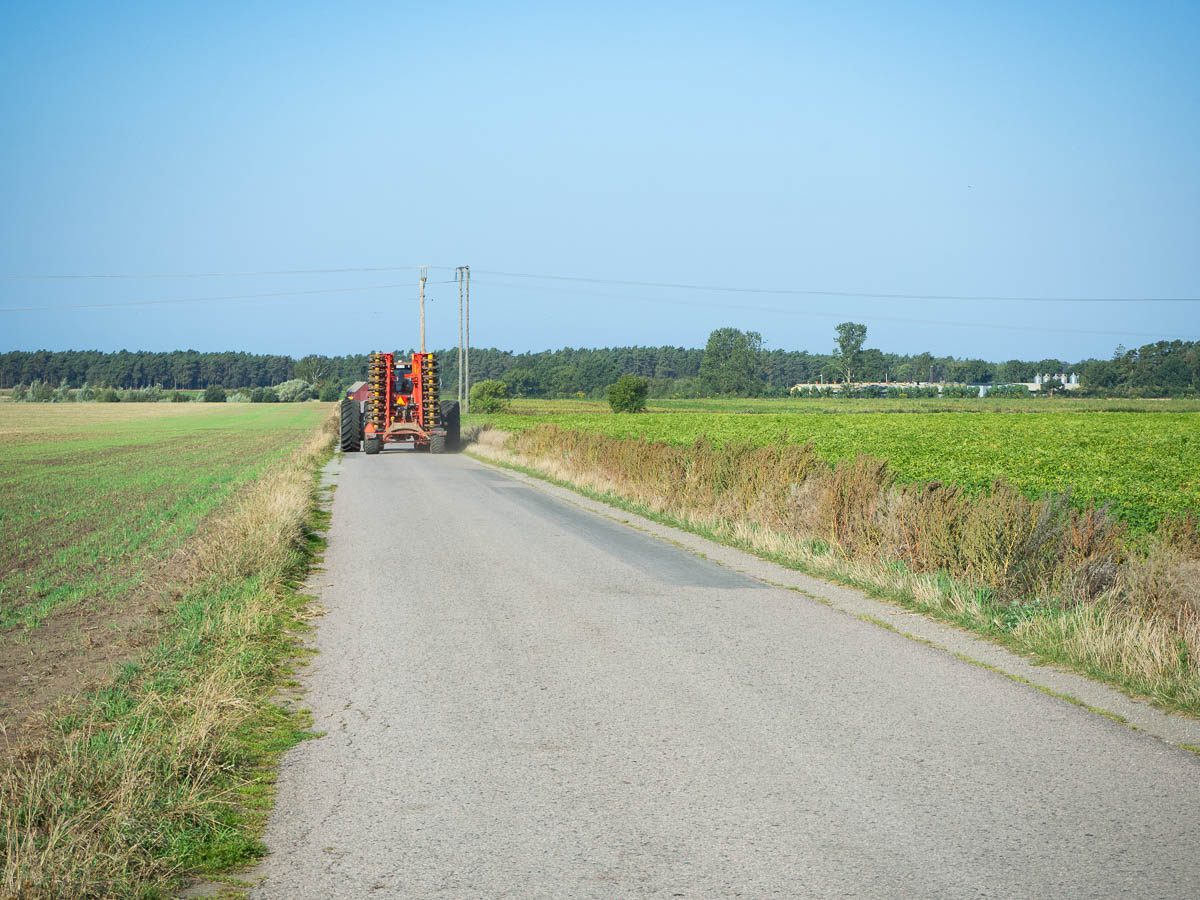
From Kastlösa the trail follows small roads towards the western coast of Öland. On these roads you need to keep a lookout for tractors and farm machinery and trucks transporting produce, more than cars.

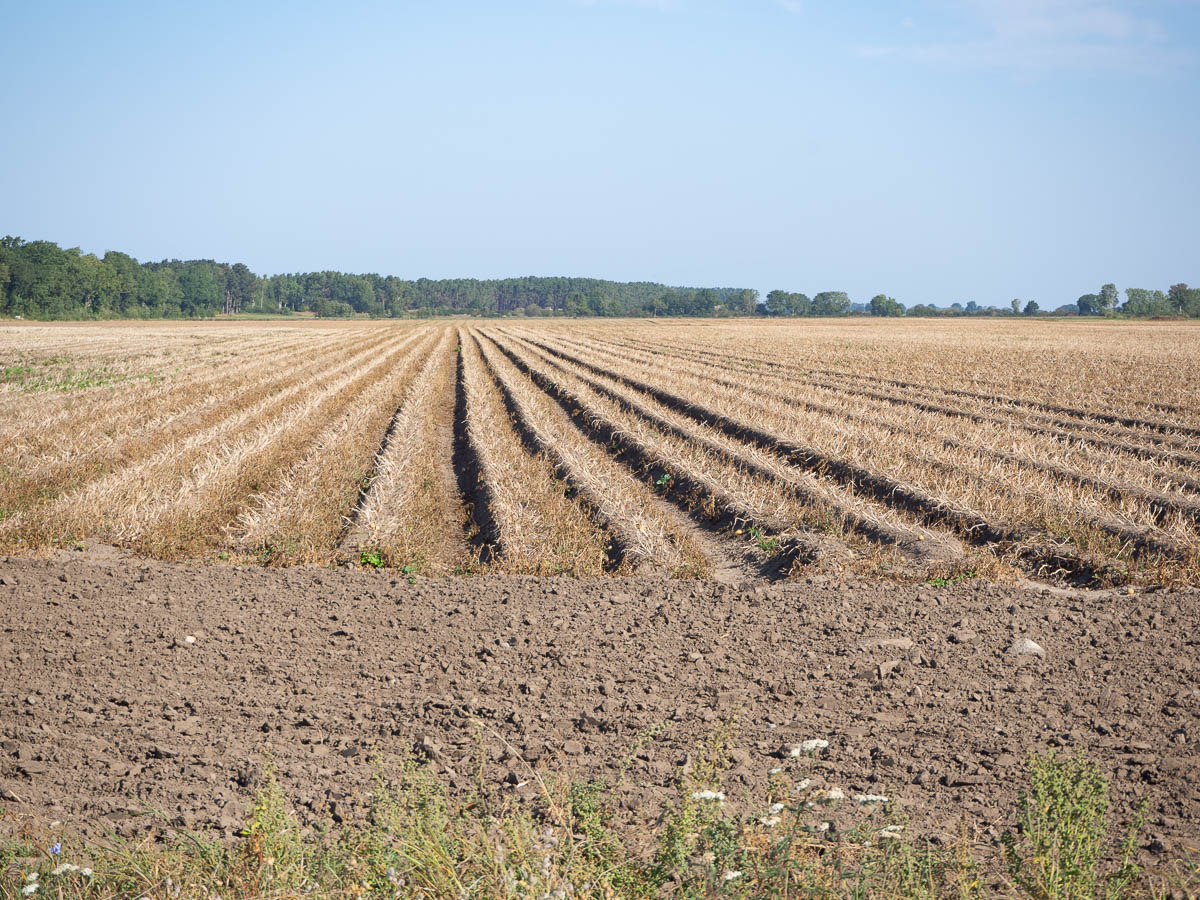
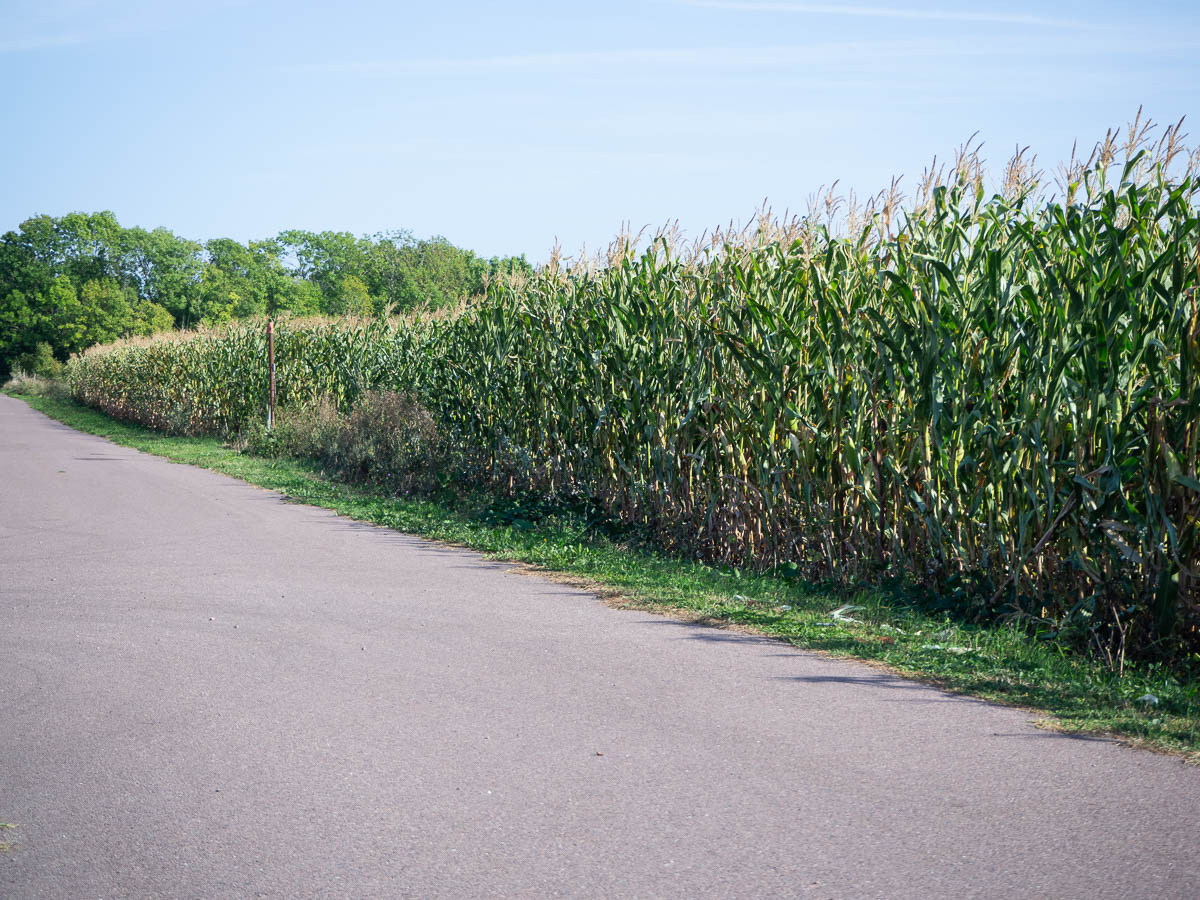
It’s harvest season. Some fields were already bare, others were being harvested as I passed them, still others were green and growing yet.


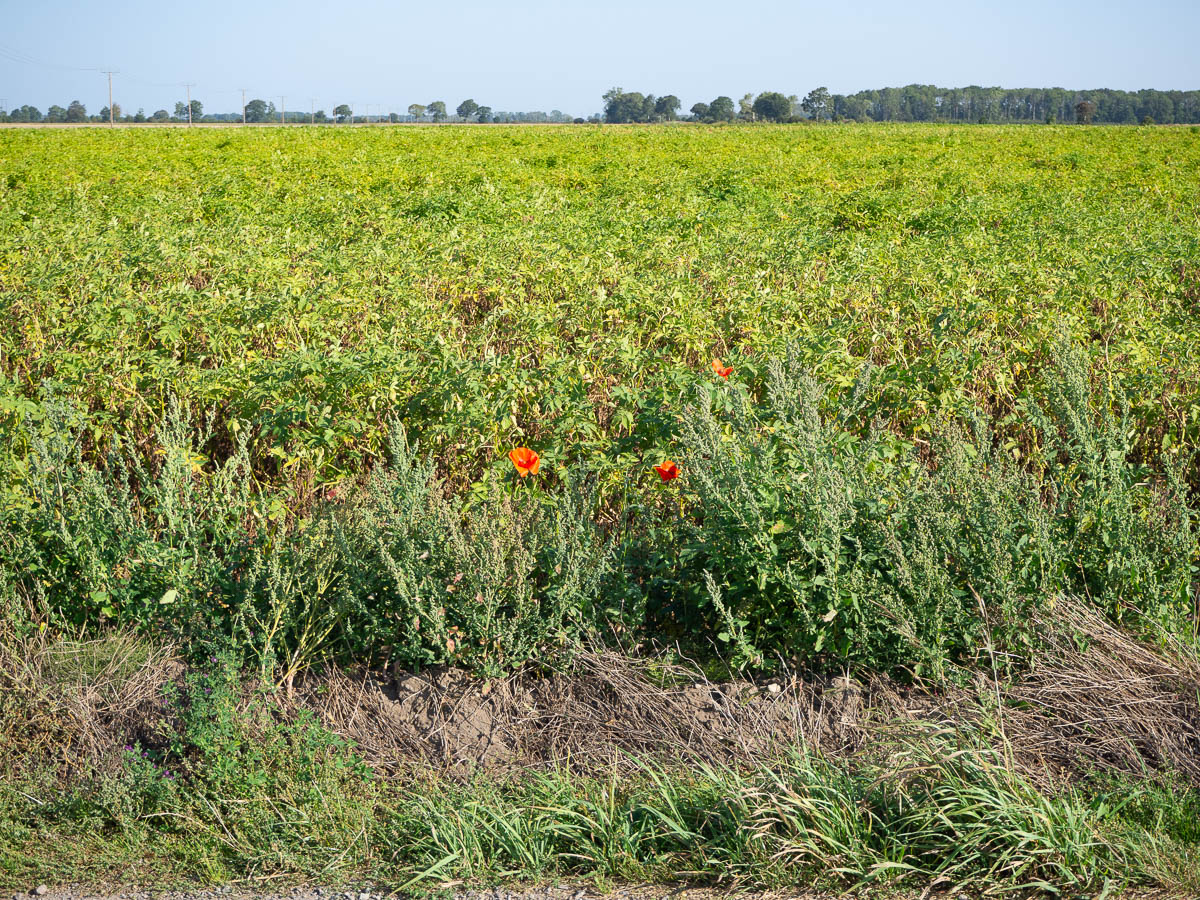
The fields were nice, even when bare, like the potato field above. Less nice was the chicken factory of Ölands kyckling. I’m sure they live up to the minimum levels of environmental regulation, but passing a large windowless barn that smells of nothing but chicken shit was depressing.

Same with cattle. Cattle roaming on the alvar or the seaside meadows do not smell noticeably, and neither do their cow pats. When the air is saturated with a smell of cow dung, it’s because I’m passing directly downwind of a barn – a large number of cattle in a small space.

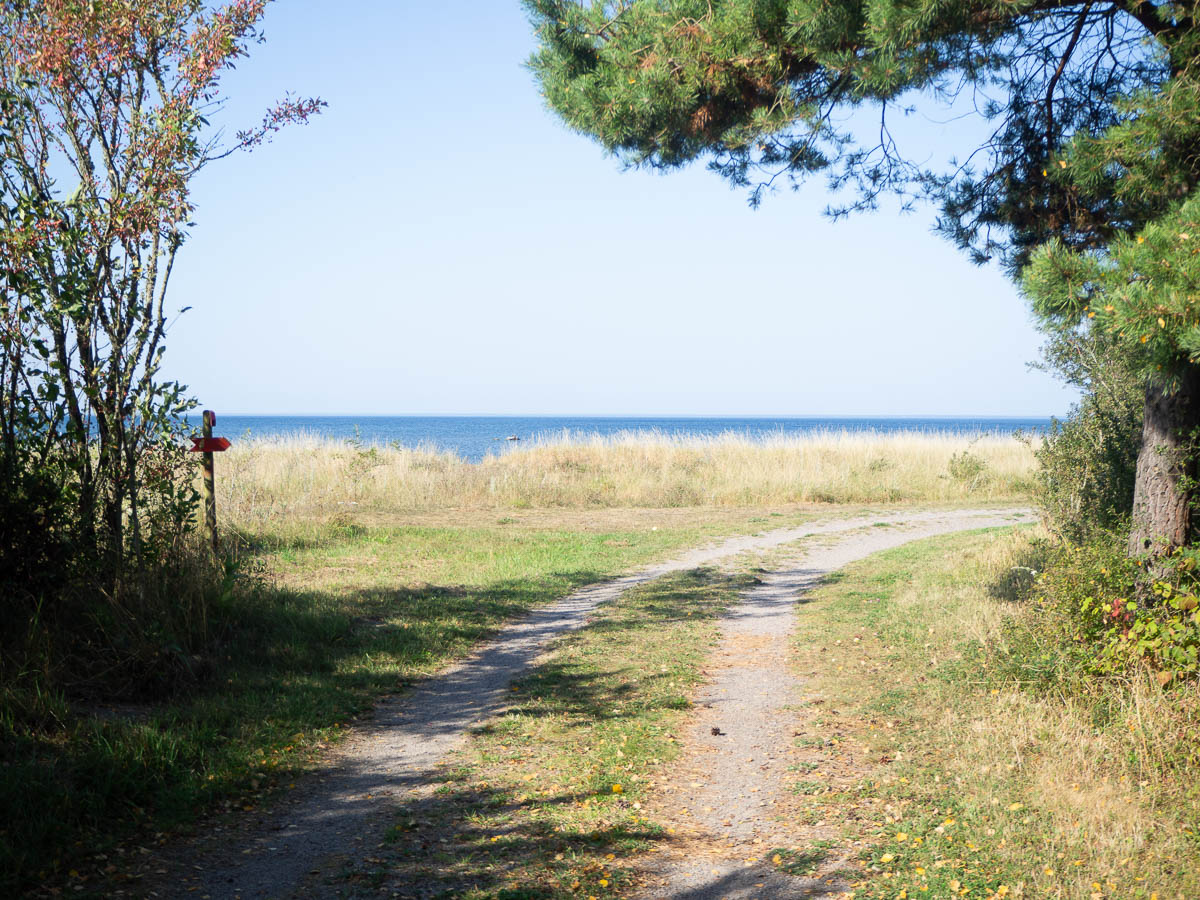
Anyway, after a few kilometres I reached the sea shore and that was much nicer. As is becoming habit, I took a brunch break and dried my tent. The days can be as hot and dry as anything, but the nights and mornings are cool, and by morning, my tent is always dripping with condensation. In the cool morning air, it takes forever for the tent to dry, so I just roll it up as wet as it is and strap it on the outside of my backpack and start walking, and dry it later when the sun is high.

The beach here was fascinating. At first glance, it looked pretty though not spectacular.

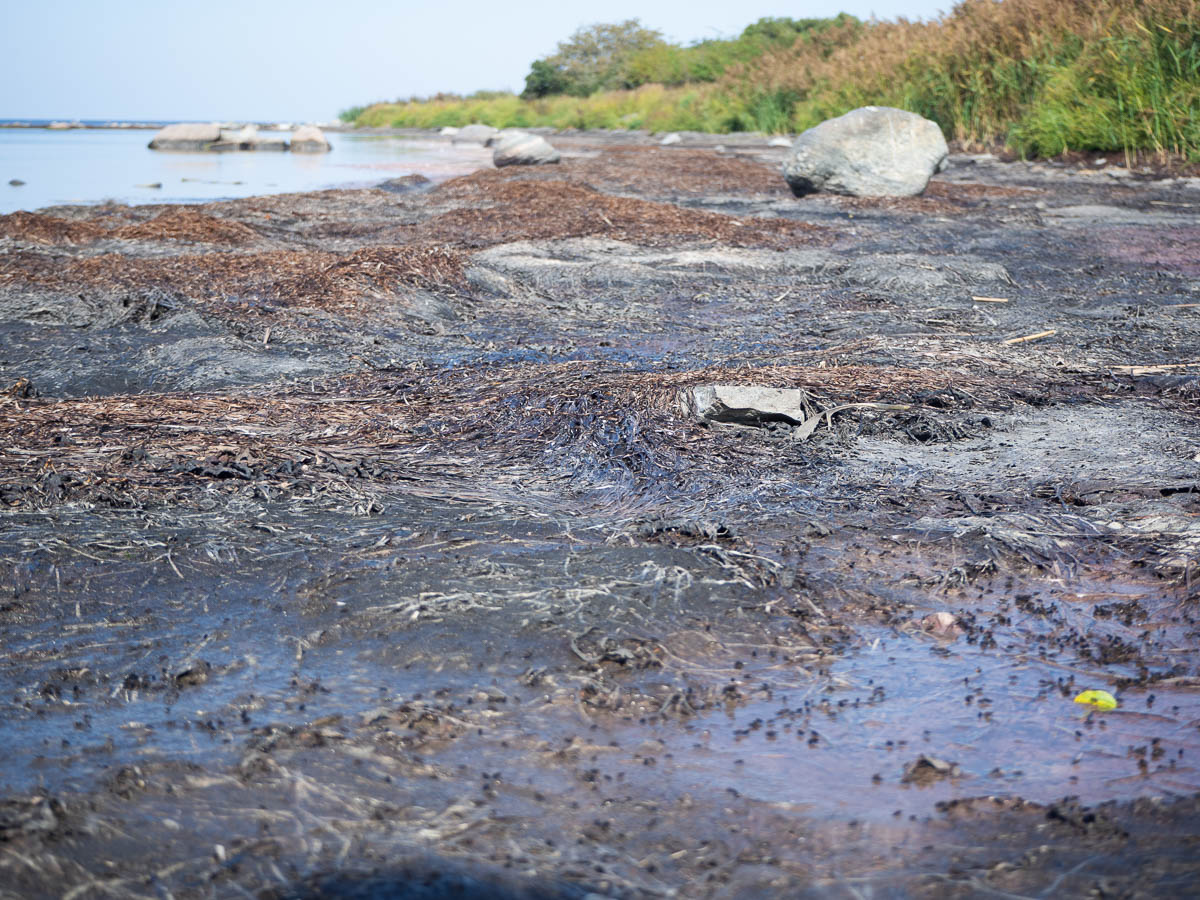
Then I got closer, and it was all mucky, blackened seaweed, with clouds of flies buzzing around.

Just beyond the water’s edge, things got a lot more interesting to look at. White and pale pink strands of stuff, floating around together with delicate pinkish fluff. I have no idea what any of it is, or why it’s pink, but it was very pretty and had beautiful colours

I first clambered around on the tufts of dry black stuff, trying to find the firmer ones that wouldn’t give way when I stepped on them. Pretty soon I gave up, took off my boots and waded into the water. The black stuff looked unappealing but didn’t smell, and was not actually sticky or anything – after I stepped out again, my feet were wet but clean.

The water was very wader-friendly: shallow, and with a firm, flat limestone bottom. And amazingly hot! Not like a swimming pool but like a bathtub. It was surprisingly pleasant to walk around in.

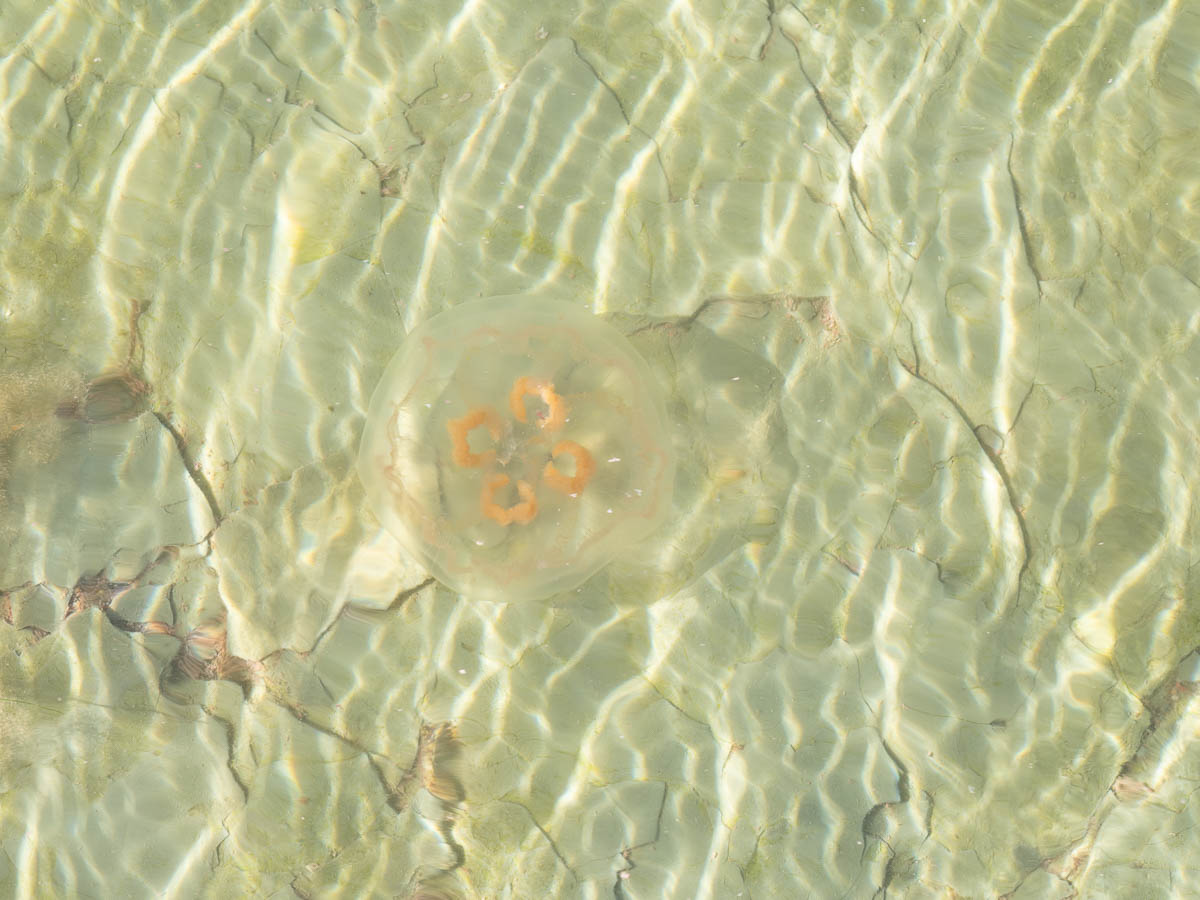
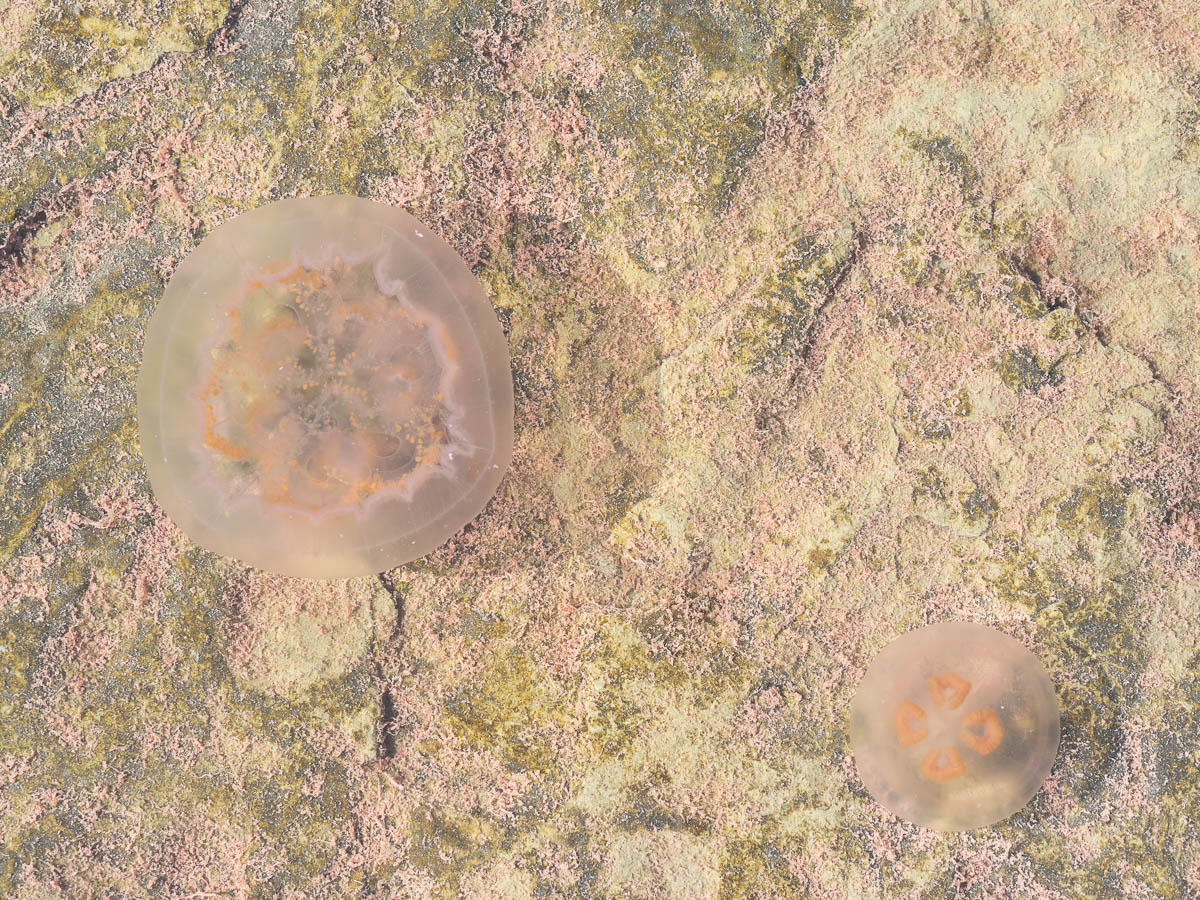
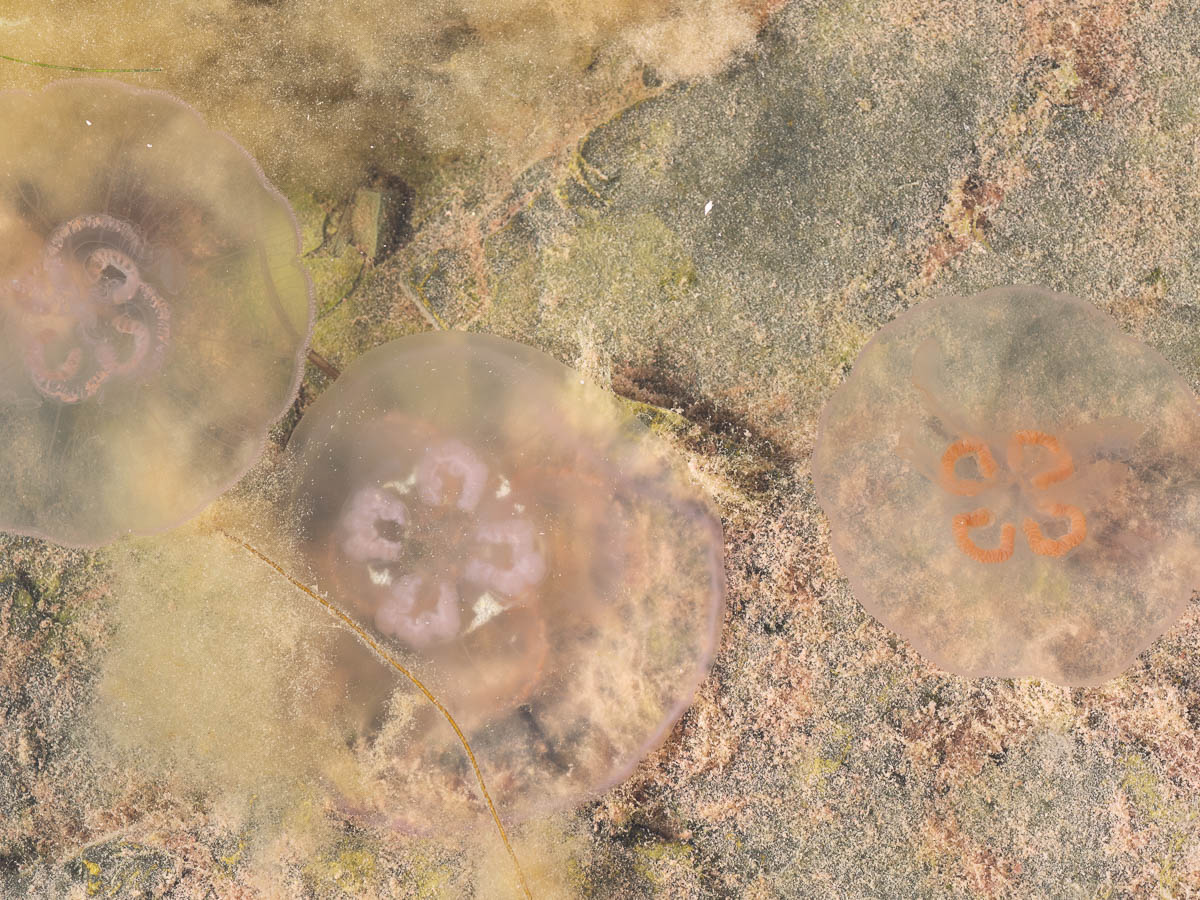
I soon realized that I wasn’t the only one who enjoyed it. There were jellyfish everywhere.

First I saw one, then I saw another, and the more I looked, the more I found.

This was their place, not mine, so I left them to it and got out of the water.

From Risinge to Mörbylånga there was a mixture of small roads, gravel and asphalt, in between fields and small villages of summer cottages.

In the afternoon I reached Mörbylånga. On the minus side: asphalt roads and cars. On the plus side: supermarket! Fresh fruit and vegetables, the season’s last strawberries, local bread. Fruit and vegetables are difficult to carry with me on a hike – they’re heavy and fragile – but I could give a few of them special for the few remaining hours of this day.

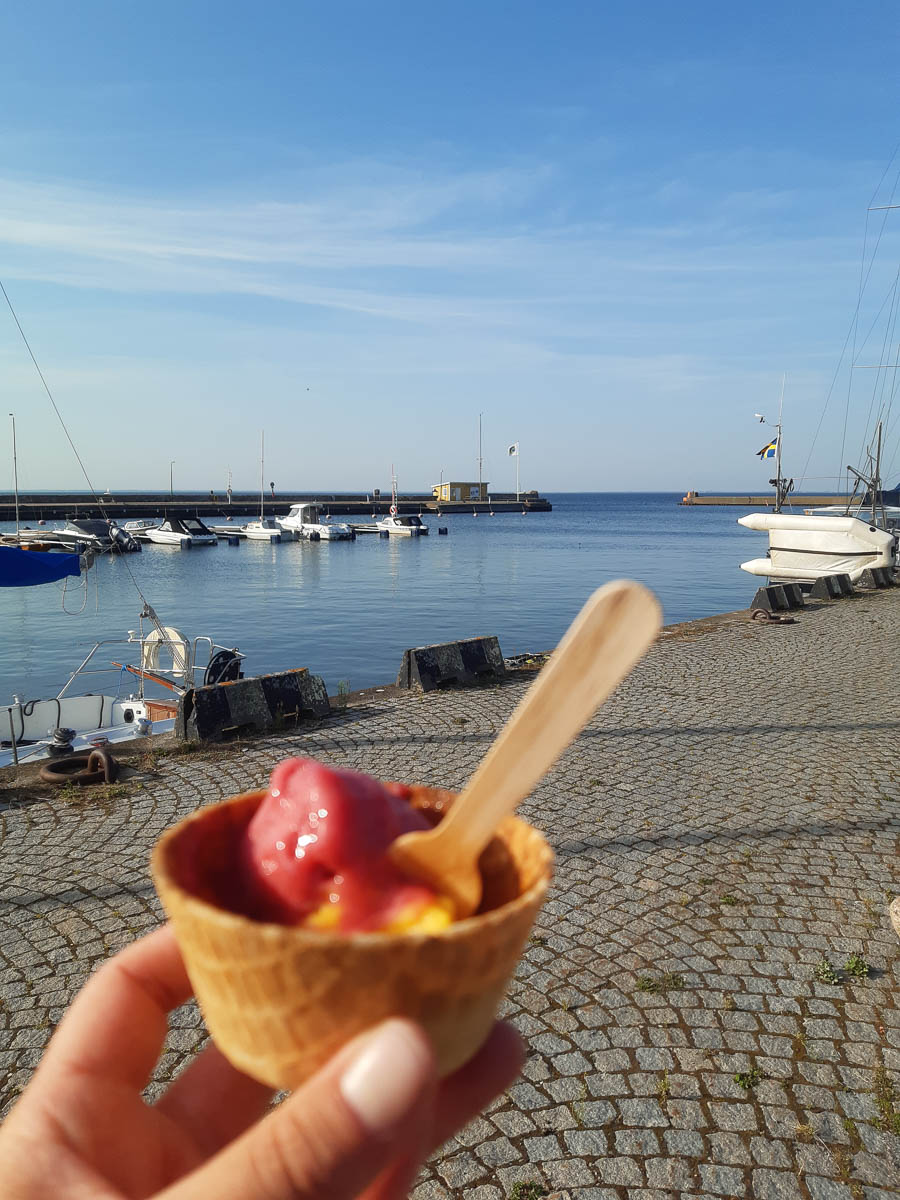
Also, ice cream. This stage of the trail is a short one, and I’ve had to make an active effort to walk slowly and take long breaks, so as not to get to the end too early. I had plenty of time to stroll through the small town and sit in the harbour and enjoy my ice cream.

(Crappy phone photo? Yes. I’ve been taking one photo a day on my phone, so that I could share it with the family in the evening, as a sign of life. There was a major national news story just a week before I went on my hike, about a couple of hikers in Sarek who hadn’t returned from their hike as planned, and were being searched for by helicopter. I really wouldn’t want to cause anyone that kind of hassle, so I’m reporting daily on my location. Öland is of course nothing like Sarek in terms of remoteness, but since I’m on my own, stuff could happen.)

The stage ends in Mörbylånga and I guess you’re expected to stay at a hostel or something. Which I had no interest in, so I kept going for another kilometre or so, until my surroundings didn’t feel too urban any more.

I put up my tent in a little patch of pine wood just north of Mörbylånga.

The trees all slanted towards land, away from the sea.

Seby to Kastlösa, around 17 km. Flat and straight.

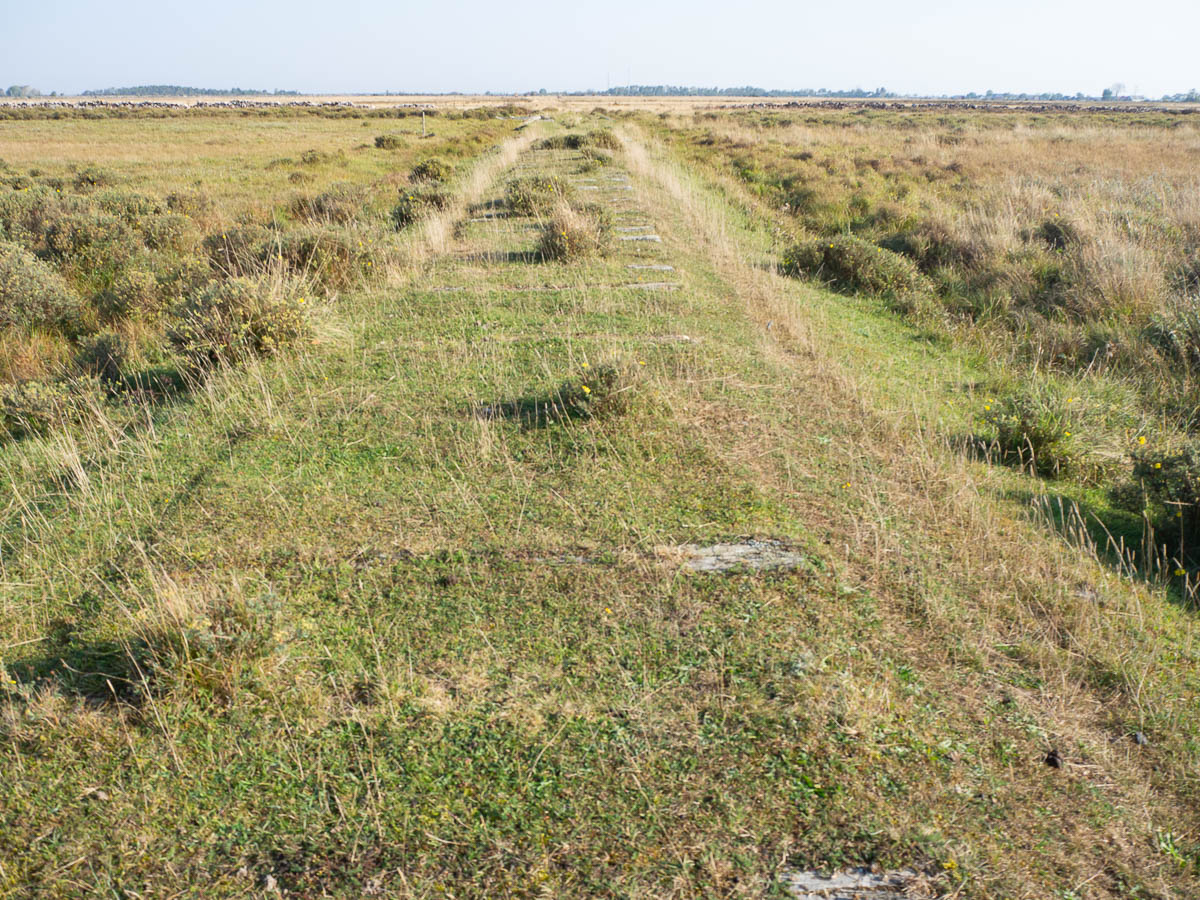
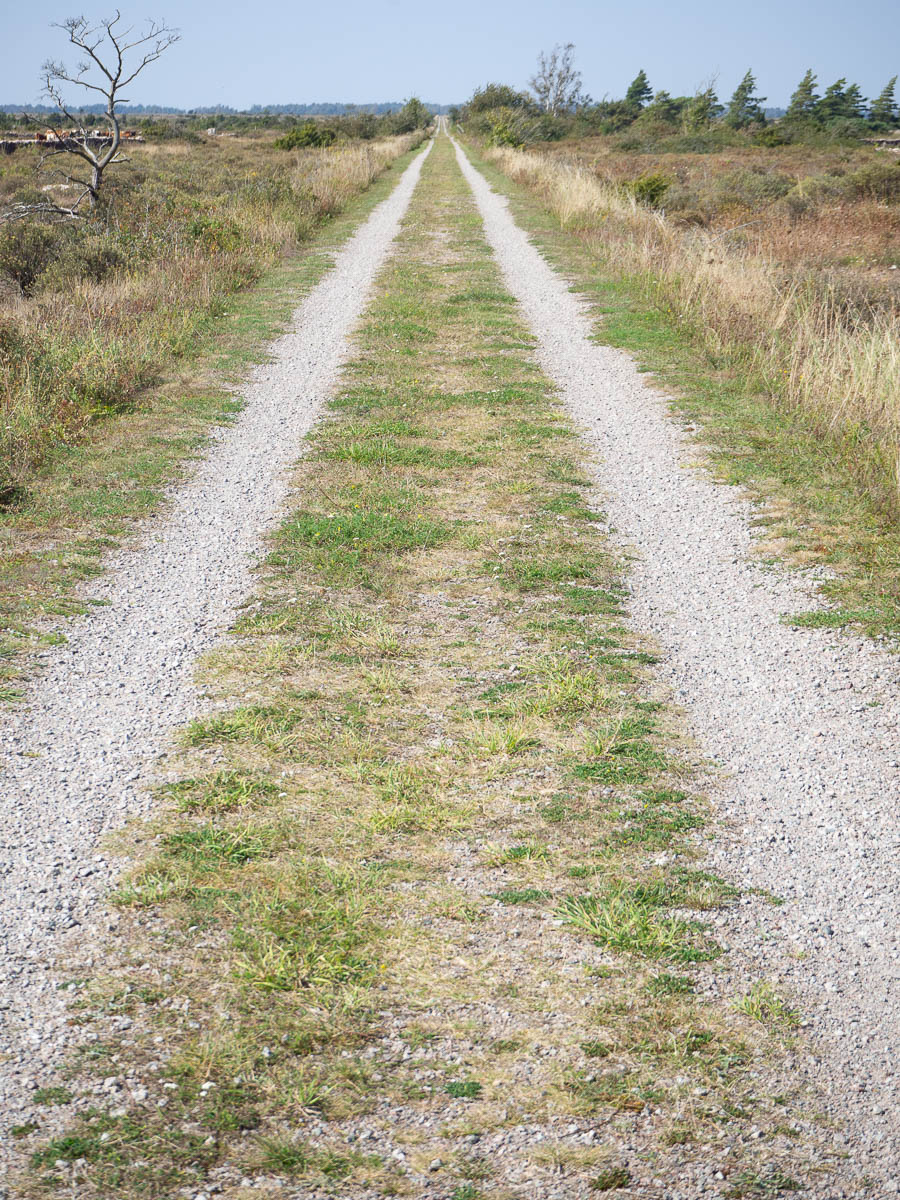
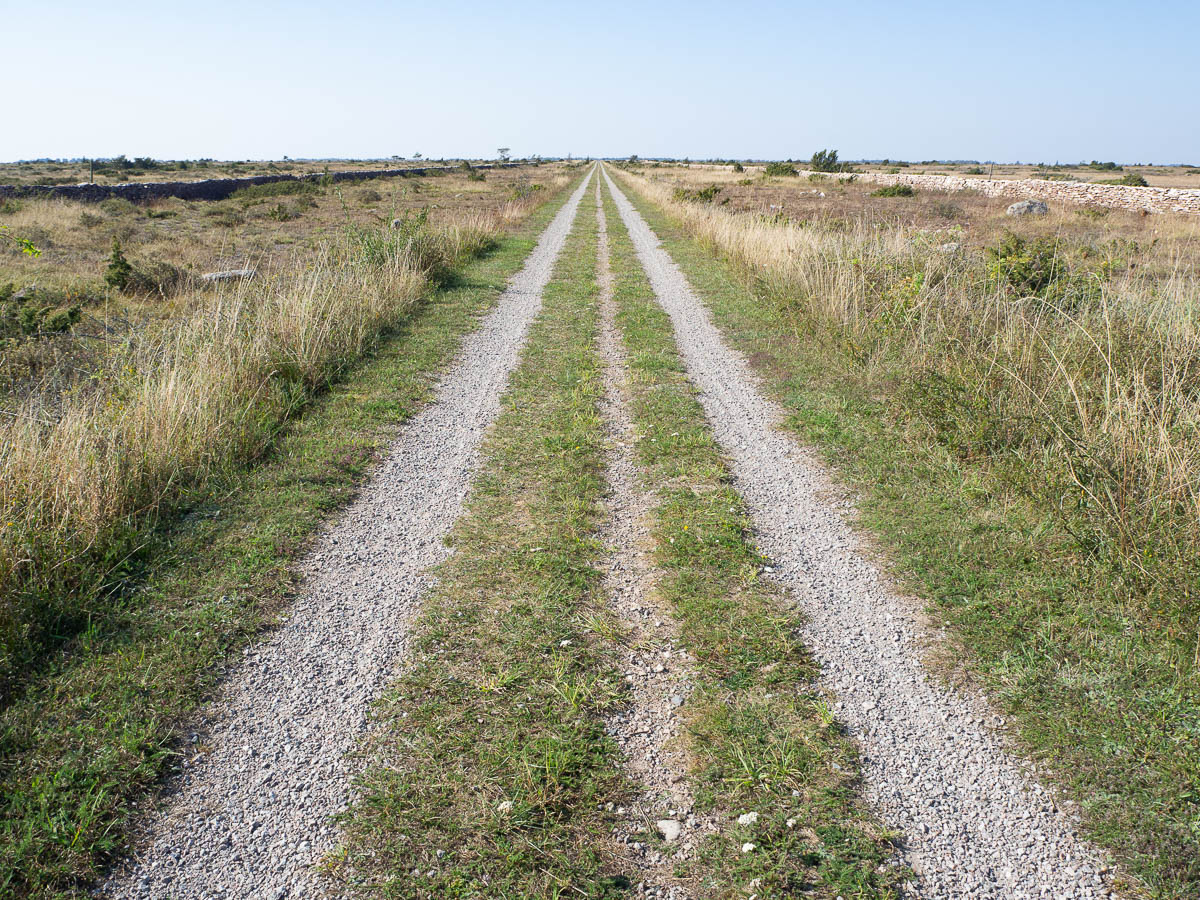
Stage 4 of Mörbylångaleden crosses the Great Alvar along the embankment of an old railway line. Up from Seby to Skärlöv in a straight line for about 9 km, turn a corner, and across the island to Kastlösa in another straight line. As straight as a bunch of engineers with rulers and theodolites could make it.

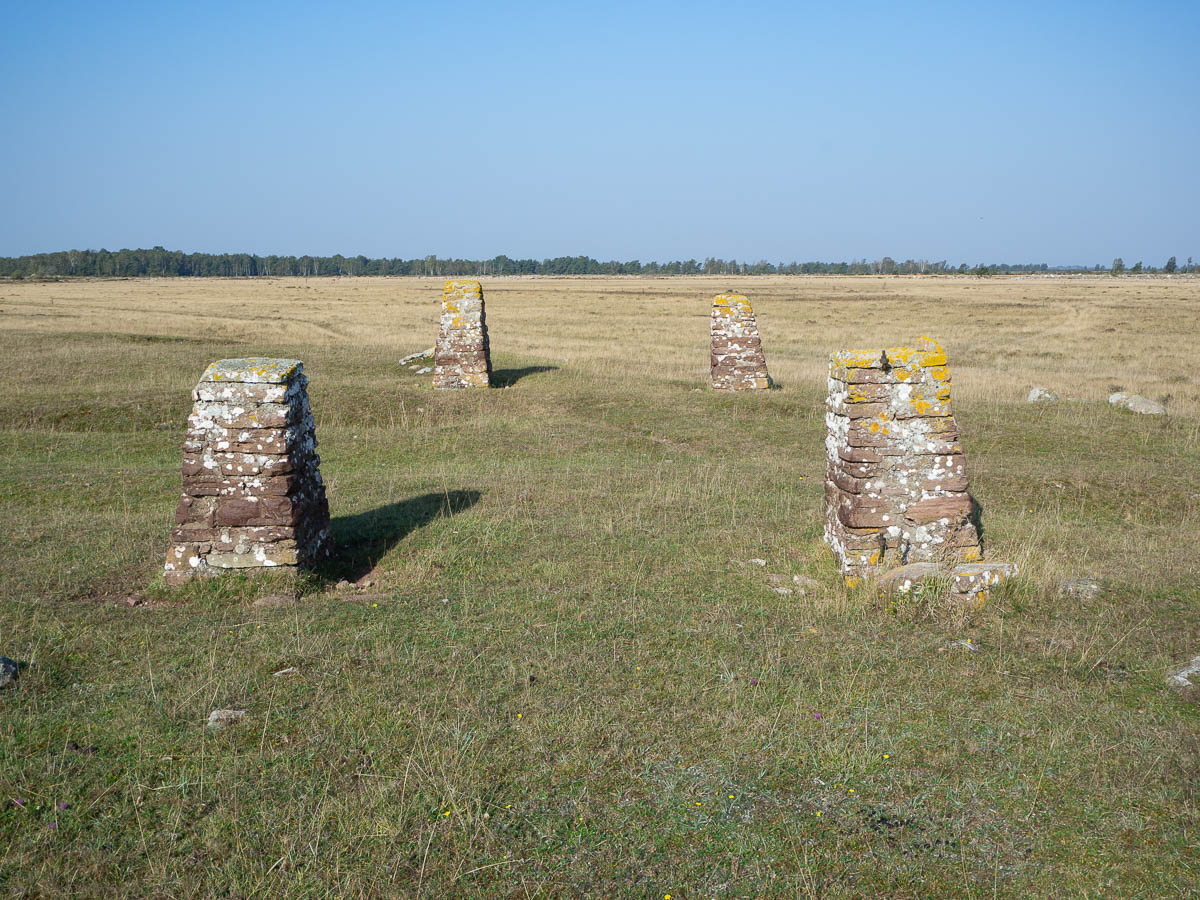
The railroad was opened in 1909 and kept going until 1961, despite economic problems. Mostly it transported beets and other agricultural produce, with only little passenger traffic. Now it’s all gone, except for small traces: the embankment, some pieces of railway sleepers left in the ground, old station buildings converted to private residences. These pillars in a square arrangement I assume are signs of an old railway crossing.

First things first, though: I needed to top up my water supply. The trail passed close to the village of Övra Segerstad, so I left my pack by a cow stile and went off door-knocking. A Wednesday morning in September isn’t the best time, but I was hoping to find retired people. Instead I ran across some kind of AirBnB or some other kind of holiday rental place, where the host was cleaning up after the season.

After that point, there was no more water to be had along the trail all day. And it was a very good thing I filled up, because the day was hot as anything. It must have been 27–28°C, and of course no shade again.

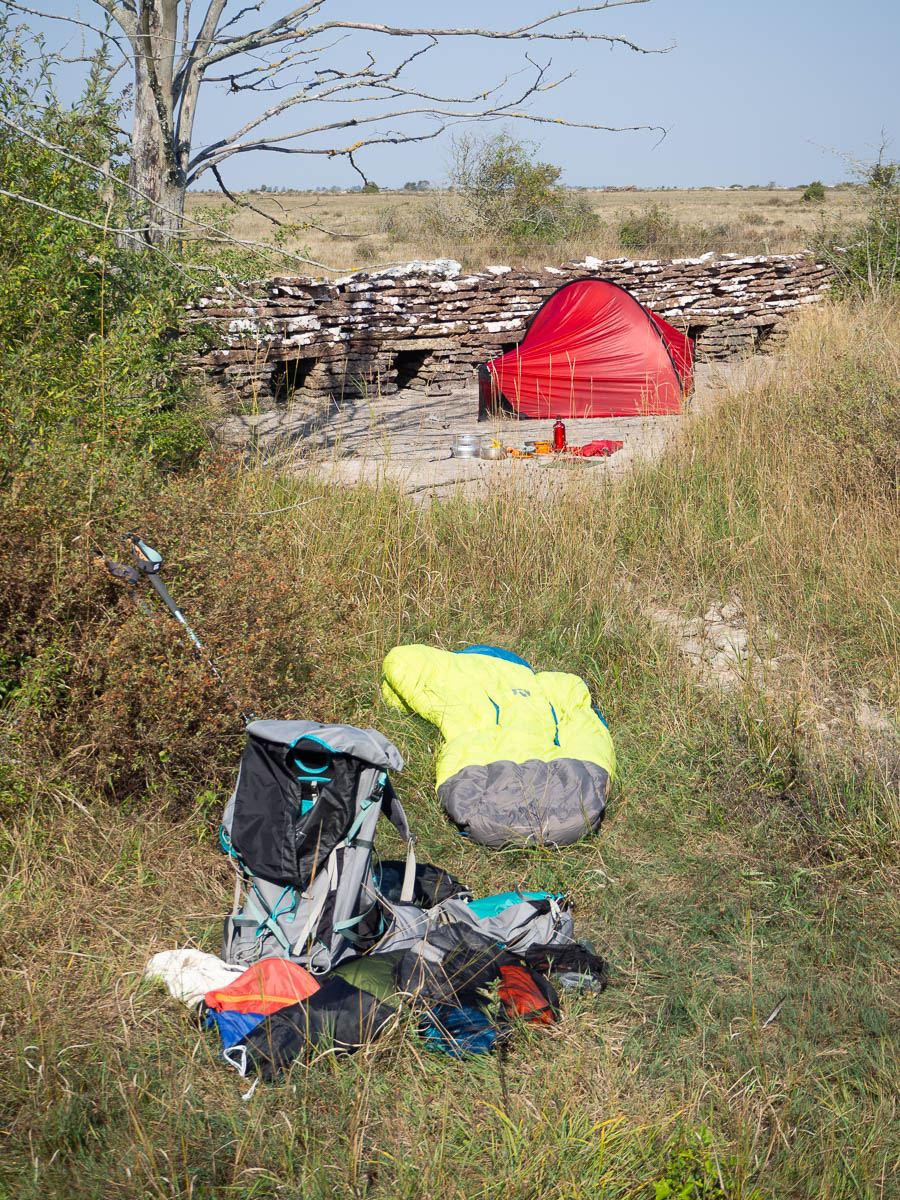
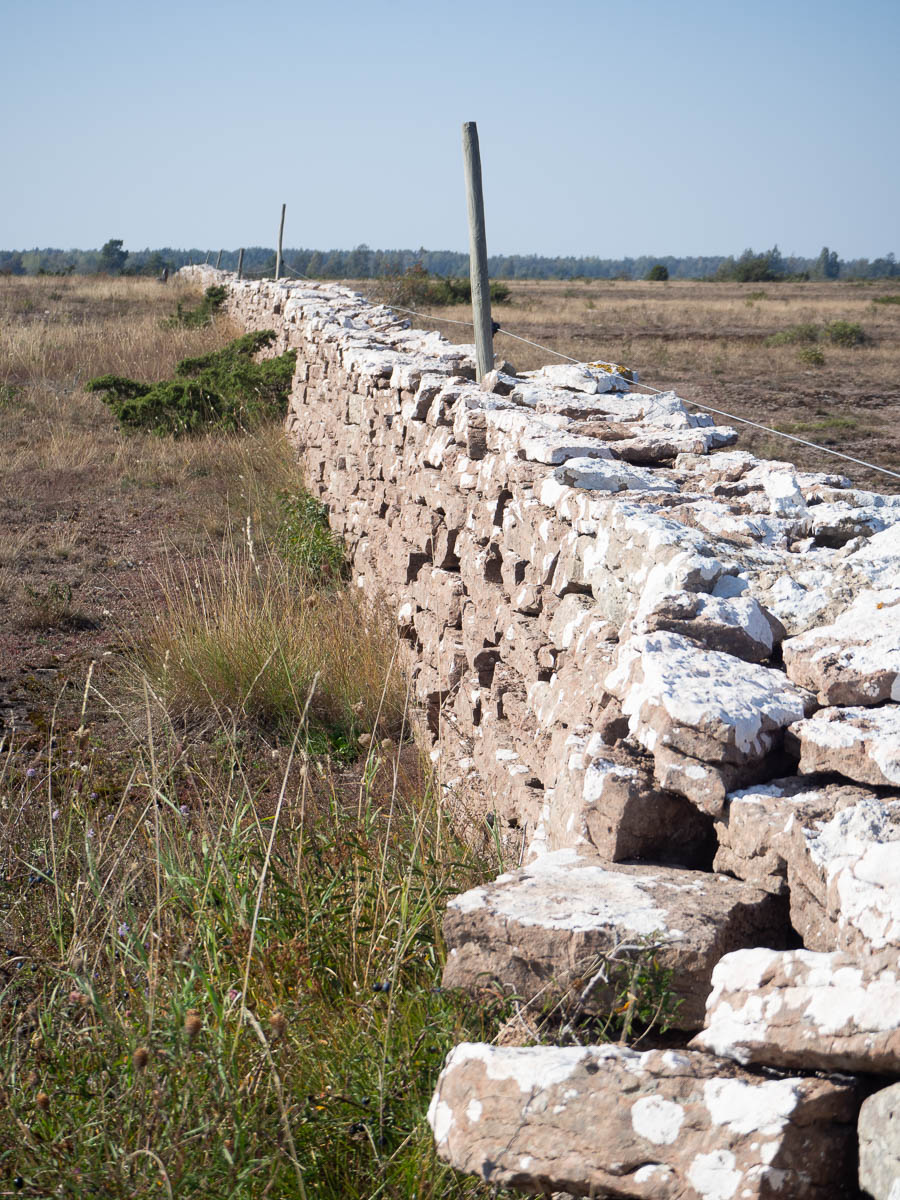
There are no streams here, unlike the Fells, and no lakes, unlike in Sörmland. There are streambeds where there have been seasonal streams, but at this time of the year, they’re dry as dust. Here’s me camped for brunch and tent-drying, literally in the middle of a dry streambed (because it was conveniently flat) – note the openings at the bottom of the wall to let the water run through.

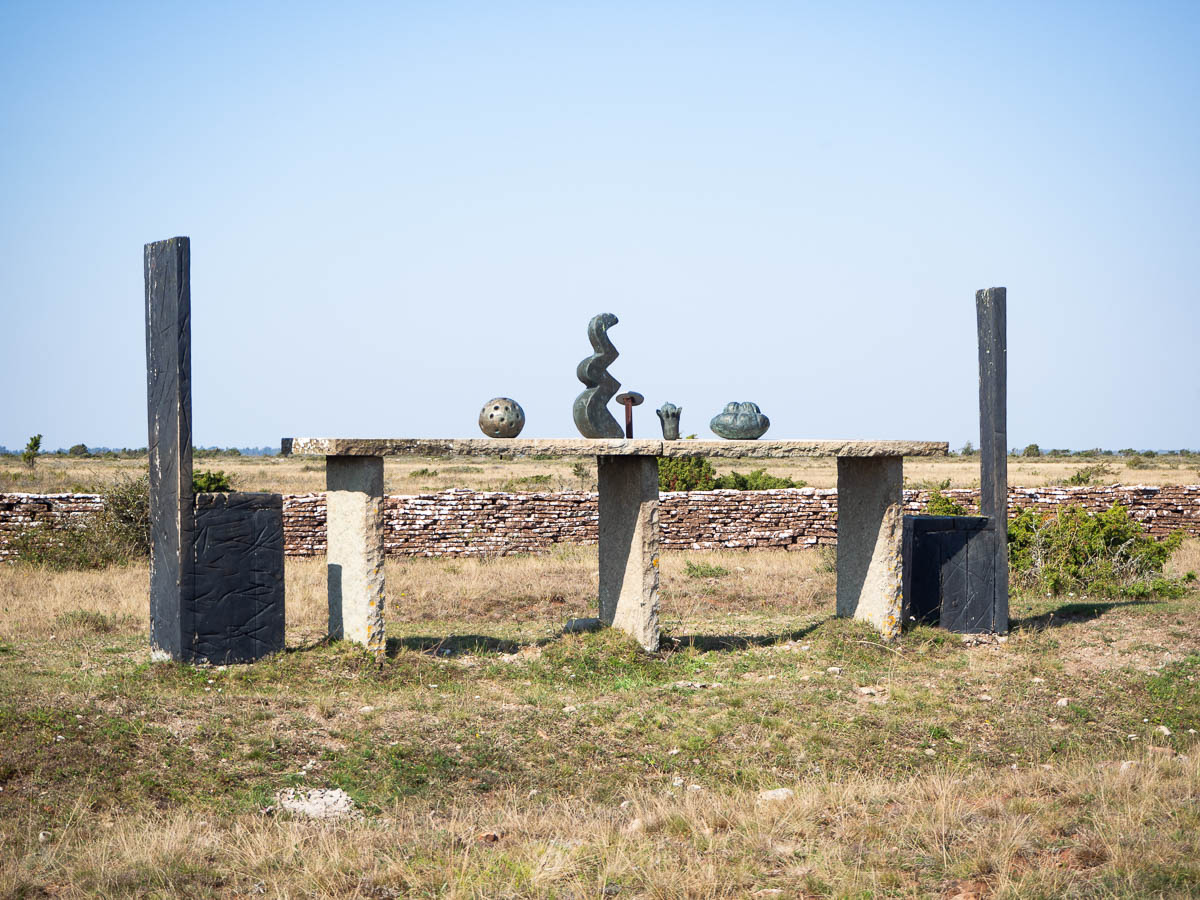
A section of the trail south of Skärlöv had been turned into a sculpture path, with sculptures in steel, bronze, and local limestone. Nothing mind-blowing, but each one was a brief, welcome break in the otherwise very uniform path.

Have I mentioned that it was very hot? It was. I was not enjoying the summer heat at all. It was rather exhausting. And there was no point in stopping because there was no shade, and it wouldn’t have been the least bit restful. As soon as I found a tree that provided some semblance of shade, I aimed straight for it to rest my legs and drink lots of water, even though I had to force my way through a minor thicket of sloe bushes to get there.

South of Skärlöv, the embankment had been partly overgrown and clearly didn’t get much traffic. The section west of Skärlöv, on the other hand, has been converted into a gravel road, and though it’s closed for through traffic, clearly it gets enough usage to remain open and drivable.

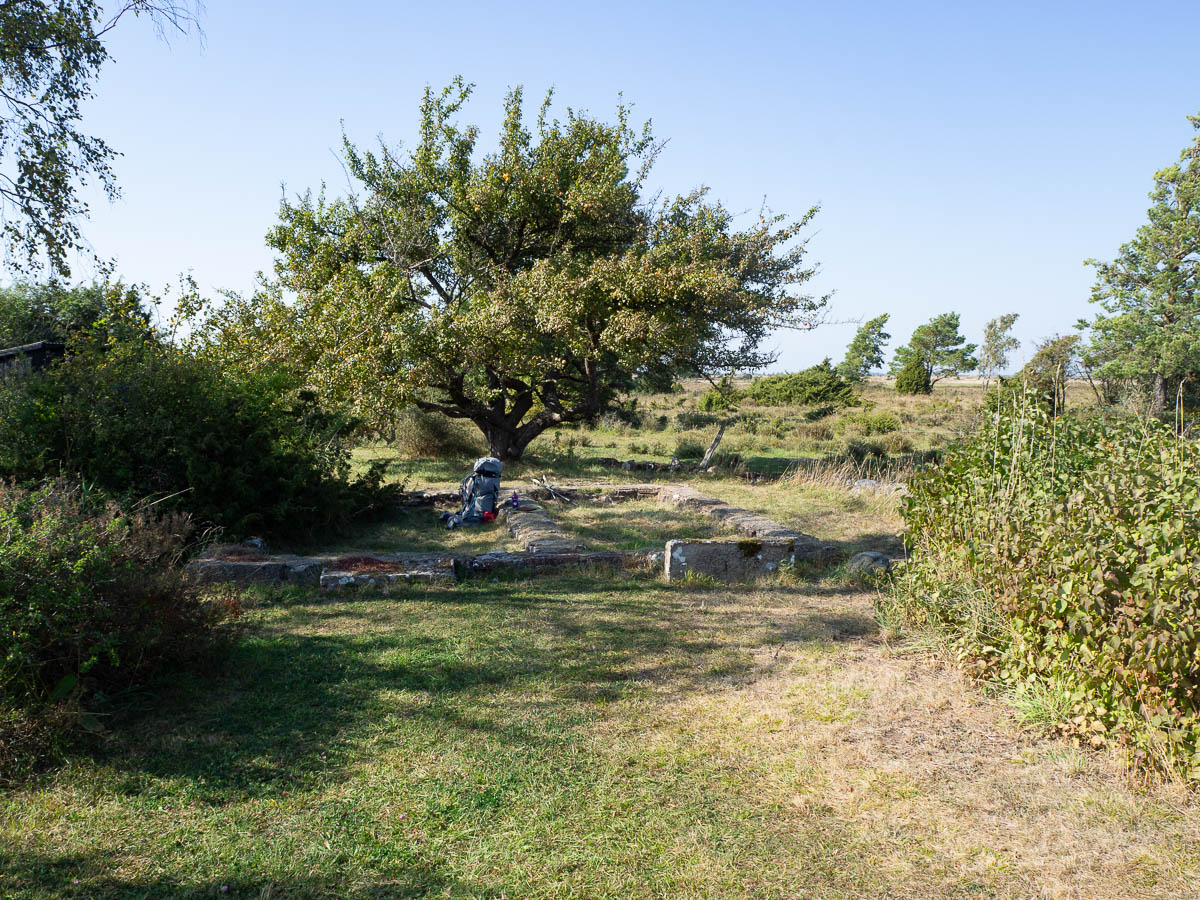
The heat was still exhausting. When I got to a shelter a kilometre after Skärlöv (at the ruins of an old railway attendant’s hut) with proper shade from large trees, I stopped for a long lunch break underneath an old, wild apple tree.

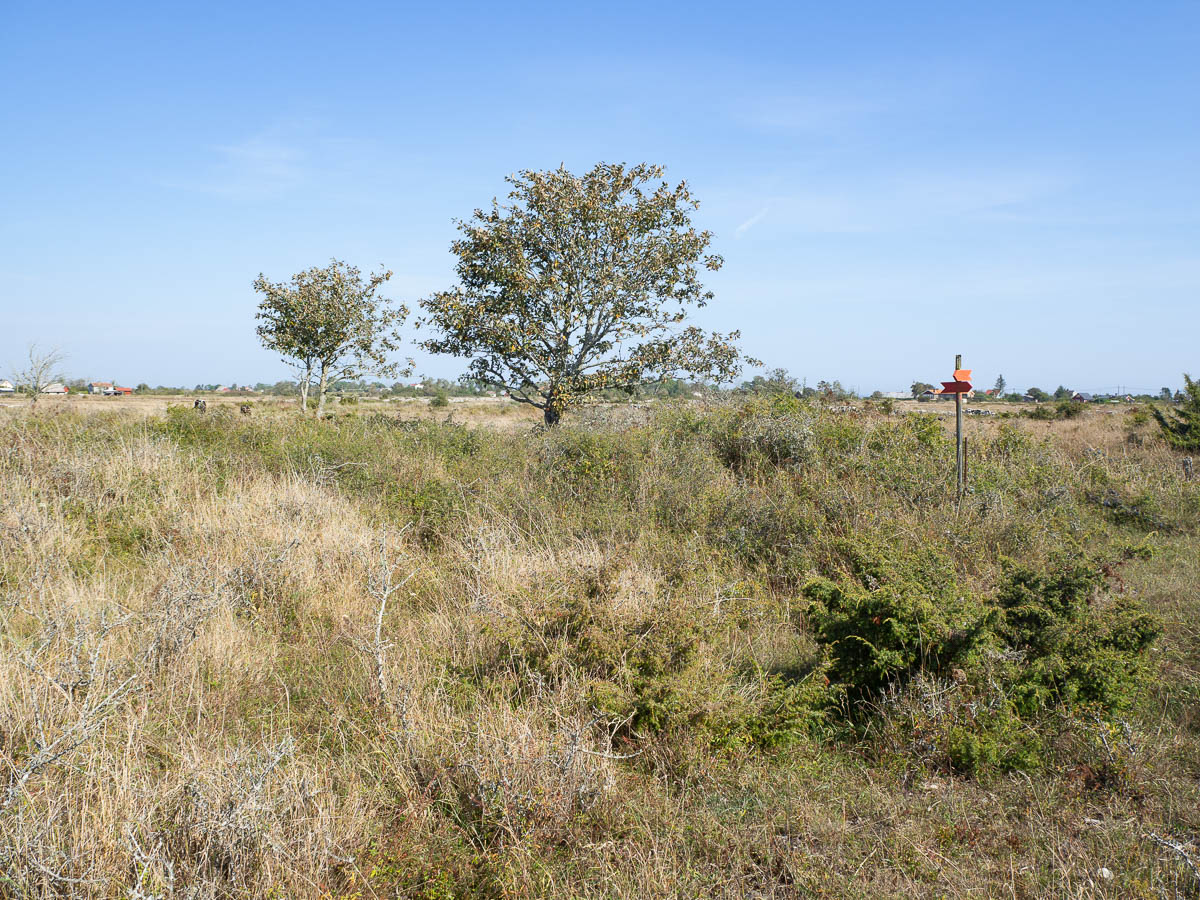
Fed and watered and rested, I set off again along with renewed energy. It could have been boring: the road straight as an arrow, the alvar flat as a pancake, and mostly featureless. Not even cows, mostly – I guess there wasn’t enough for them to drink here. But after lunch I got into the proper frame of mind for it, and found it very meditative. Like listening to minimalist music. Lots of time for thinking my own thoughts.

This may look like a boring hike, but for me it was perfect. Meditative and calming, exactly the kind of break I needed from the turbulence at work. And beautiful! Photos can’t do it justice, because a big part of the beauty of the landscape is the feeling of wide open space, of an endless sky, of being a small speck of a human in a timeless space.

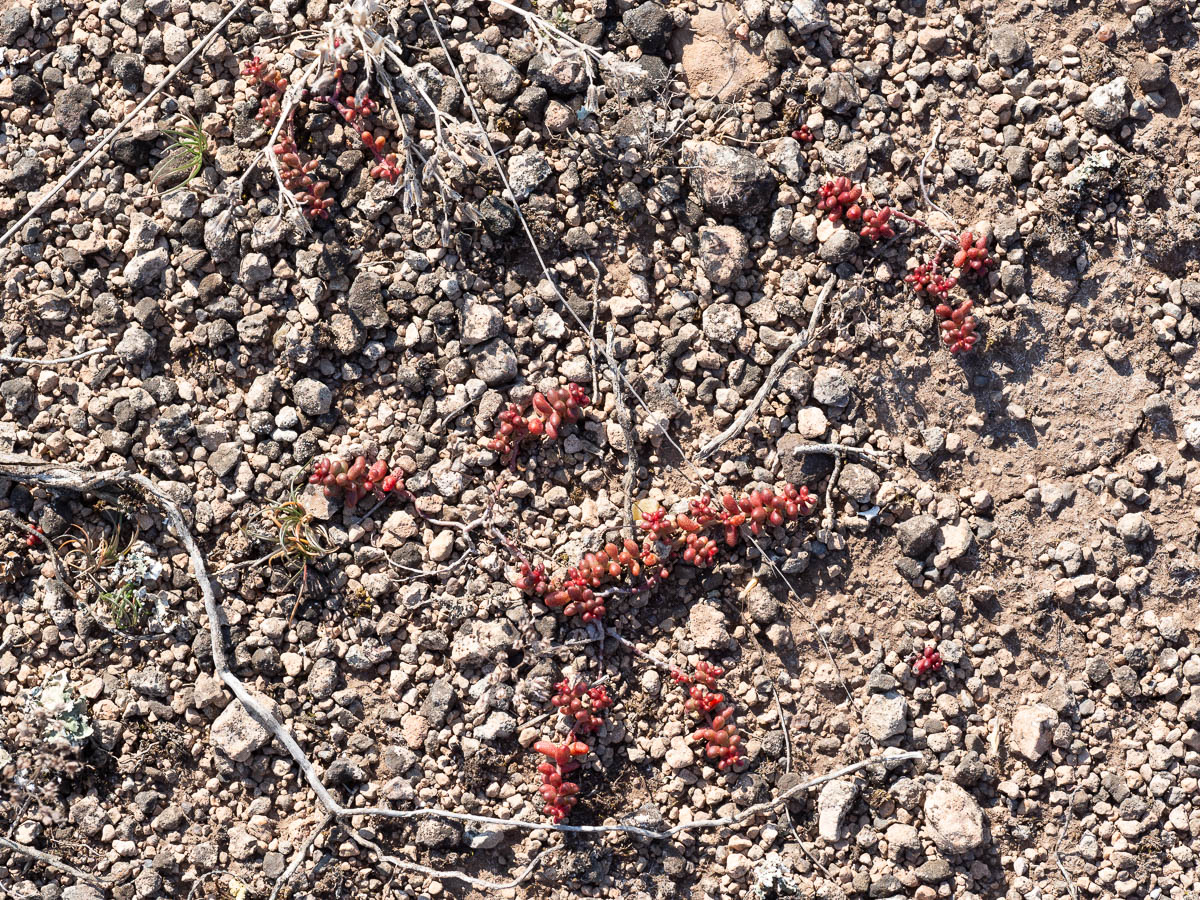
Much of the alvar looks like grassland, but in places there were signs of what were probably seasonal wetlands. At this time of the year, though, they were all dry. Some places were nothing more than bare rock and gravel, with tiny succulents holding on to nothing.

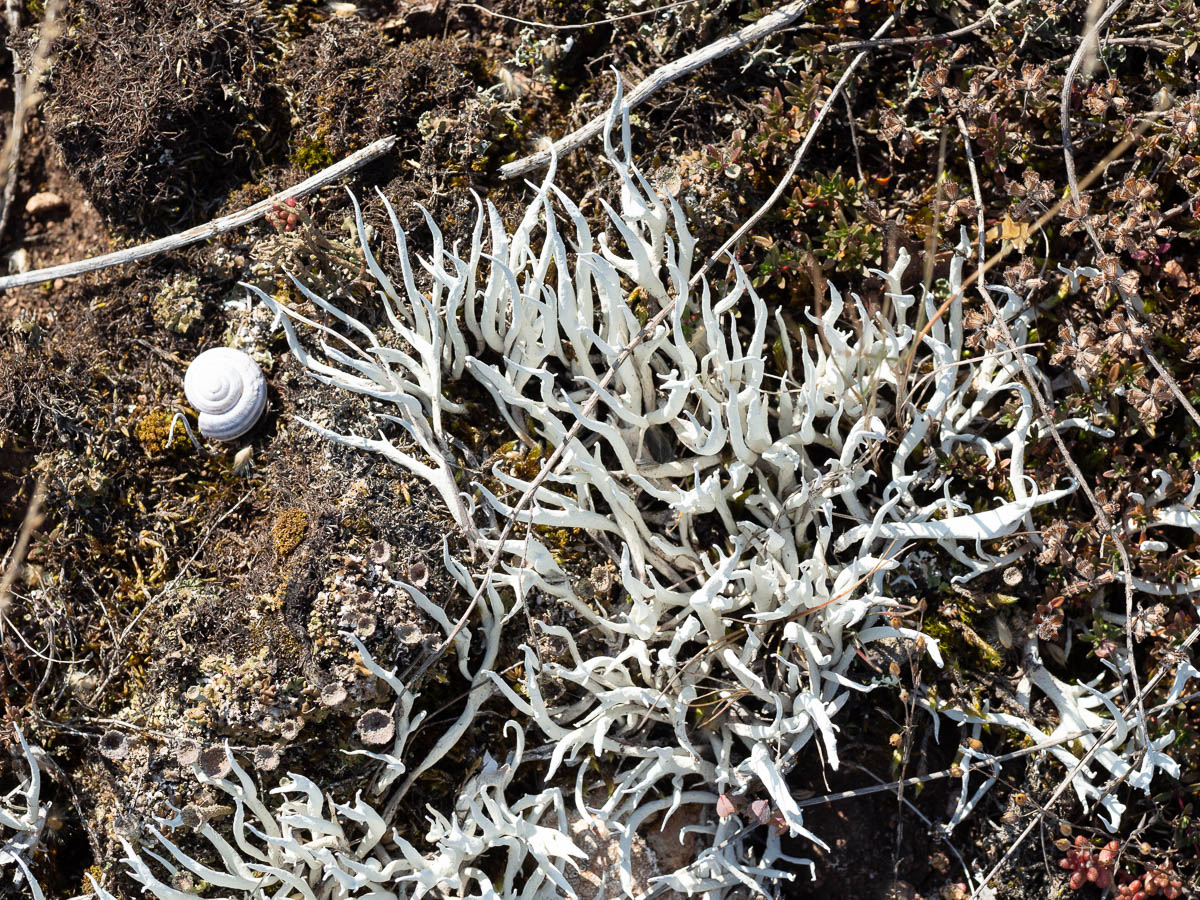
Whiteworm lichens, Thamnolia vermicularis.

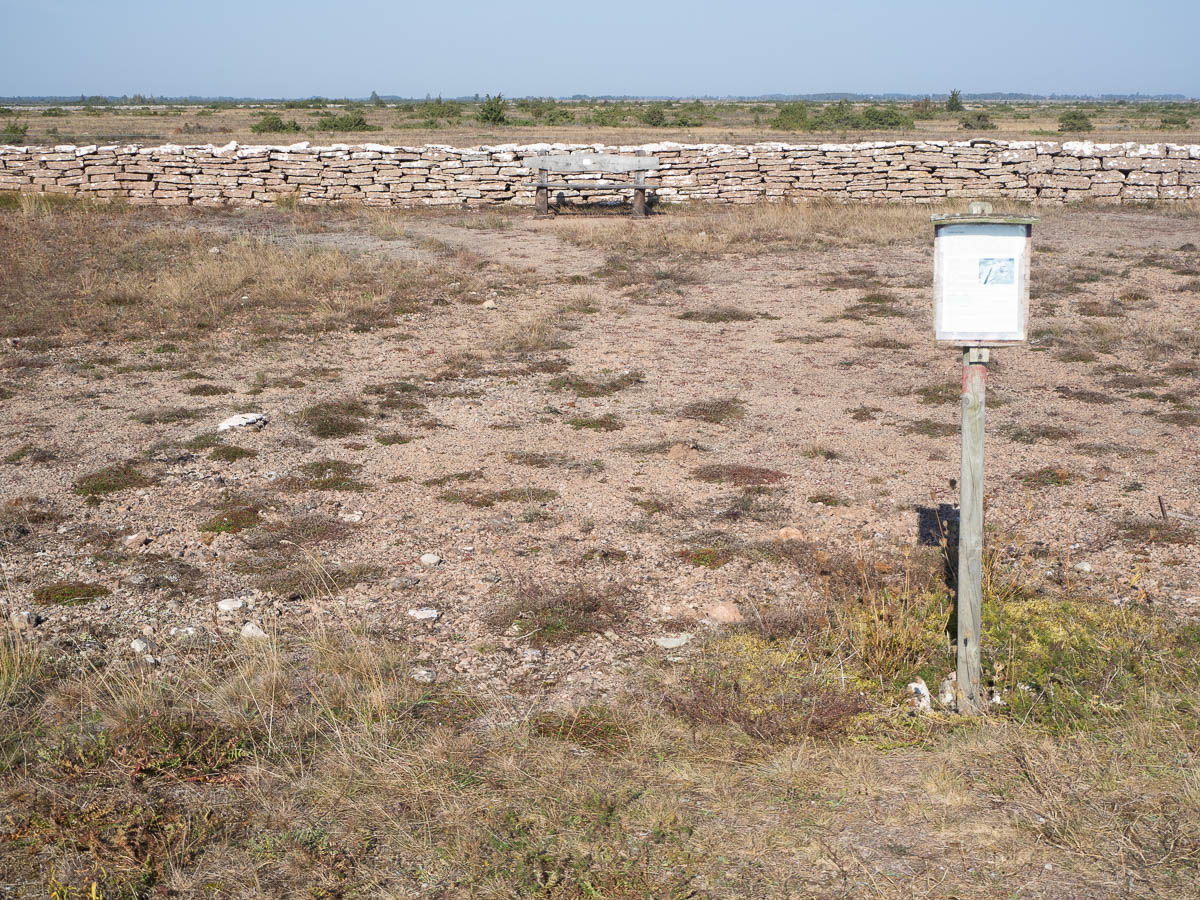
And then, in a random spot, kilometres from everything, with nothing in particular to look at – a bench and a faded information plaque.

Closer to Kastlösa the landscape got more ordinary again. The alvar was interrupted by small copses of trees.

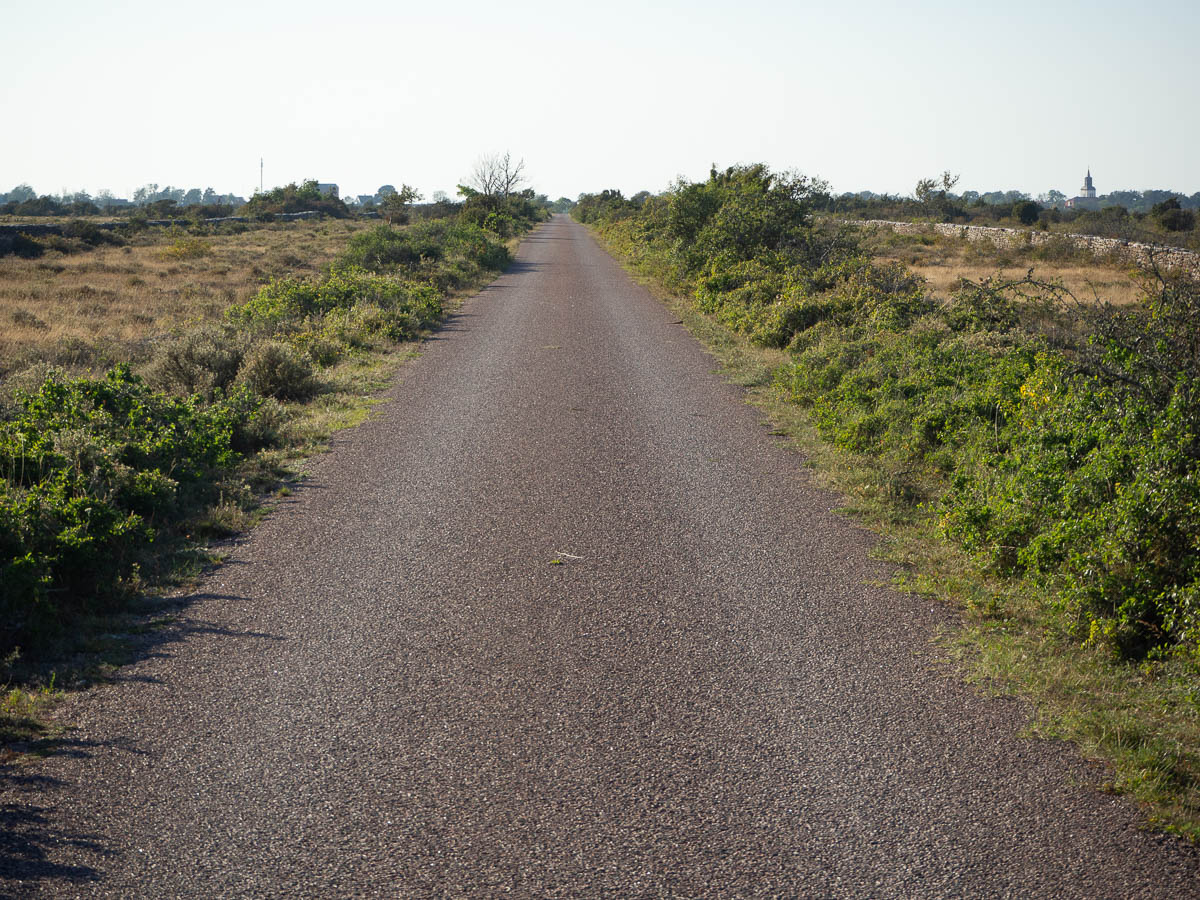
The last bit was paved road. It may look convenient but isn’t. I find that walking on asphalt with a heavy pack, especially after a full day of walking, is painful and uncomfortable. It especially makes my feet hurt.

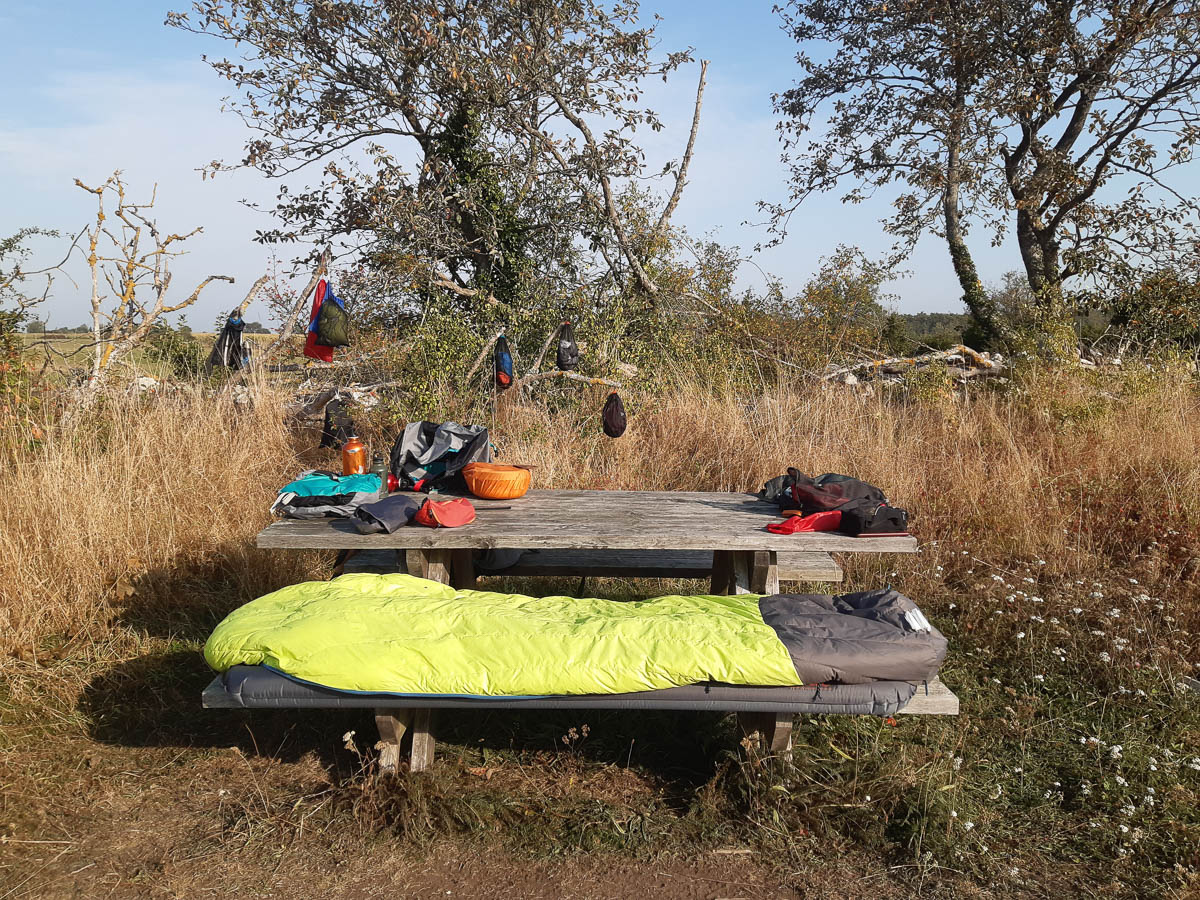
There was no shelter and no camping site in Kastlösa, but I think the meadow where I put up my tent must have been a camping site for camper vans in the past. There were flat, even grassy fields, and lamp posts, and what looked like charging posts. And a path that was very popular with local dog walkers.

From Ottenby to Seby, around 18 km. Sun and sea birds and the sound of the sea. And cattle.

I paid for my stay as soon as the camping reception opened, filled up my water bottles, and was on my way shortly after eight in the morning.

The trail first followed the asphalt road through Näsby village, a medieval-style “row village” with all the dwelling houses arranged ribbon-like along the two sides of the road.

On the edge of Näsby lies “the wall of Karl X Gustav”, built by a 17th-century king to keep the deer herd on one side and the peasants on the other. Originally supposed to be “tall enough that a man on a horse couldn’t see over it”, these days it’s about shoulder-height for me. It wouldn’t stop any deer (and those are kept in place with electric fences instead, anyway) but it’s a pretty impressive sight. Five kilometres long, straight as a ruler, interrupted only in two places by the road (as it goes south on one side of the island and loops back up north on the other).
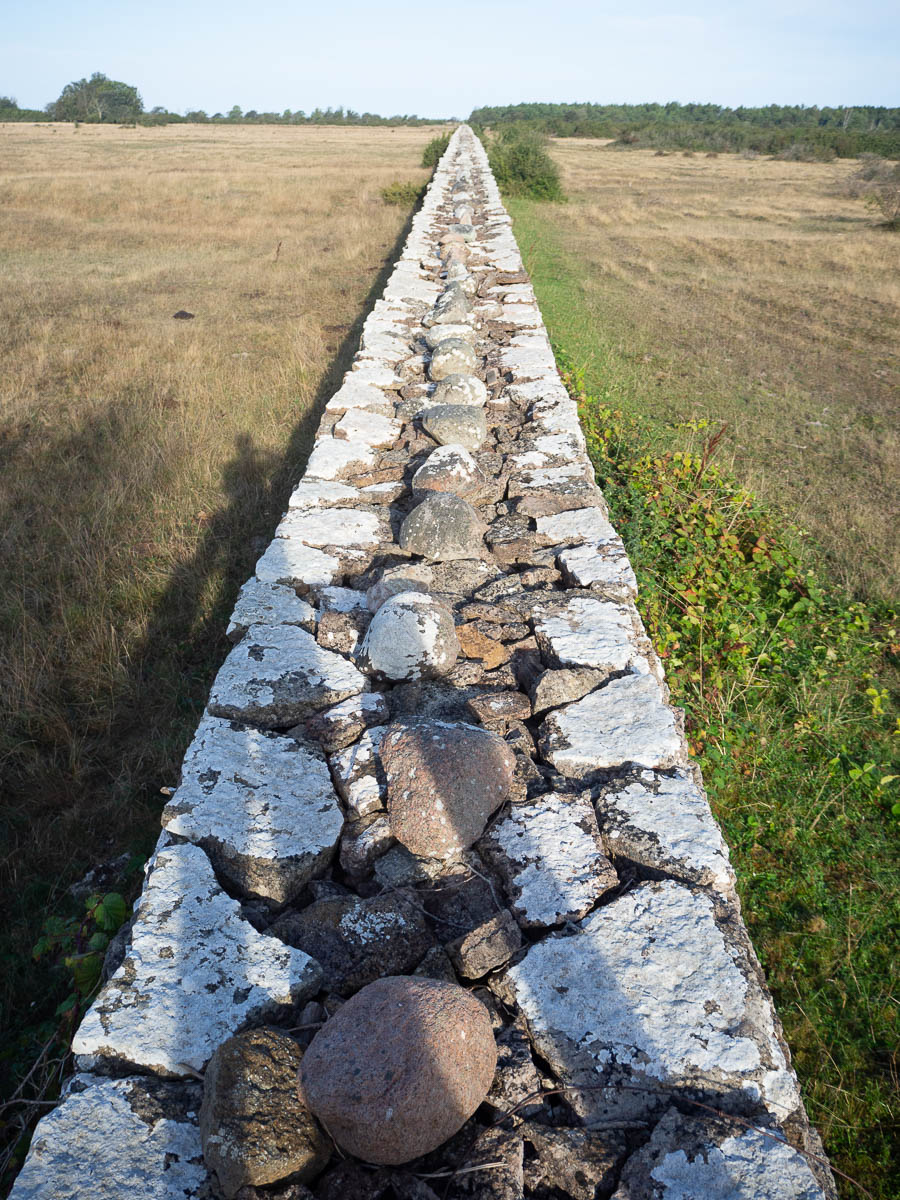
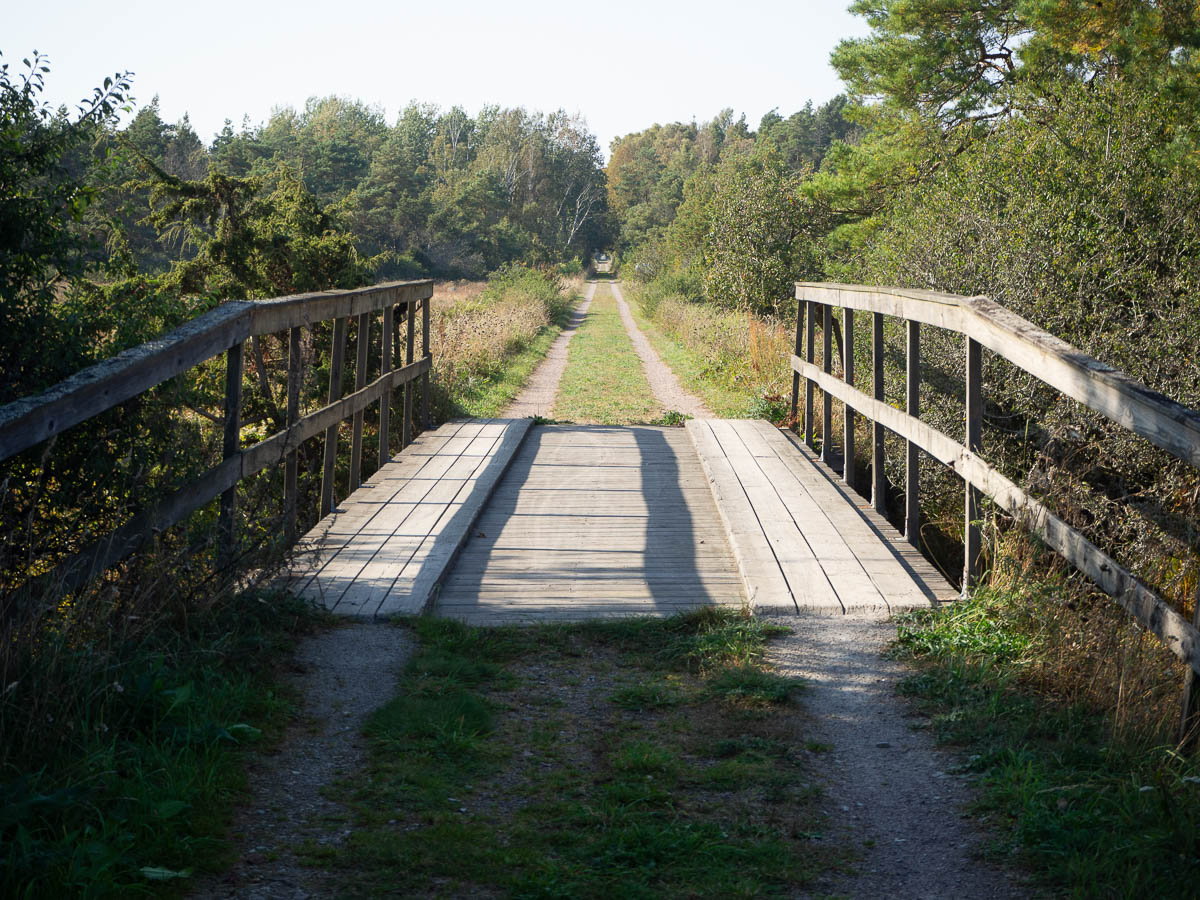
Soon after Näsby the trail left the main road for paved cycle paths.

I could still hear the road all the time – except after a while I realized that it wasn’t the road but the sea. The road did not have enough traffic to make that constant rushing noise. It was the sea, with the wind from the east making waves crash against the rocky shore all the time, just out of sight but not out of hearing range.
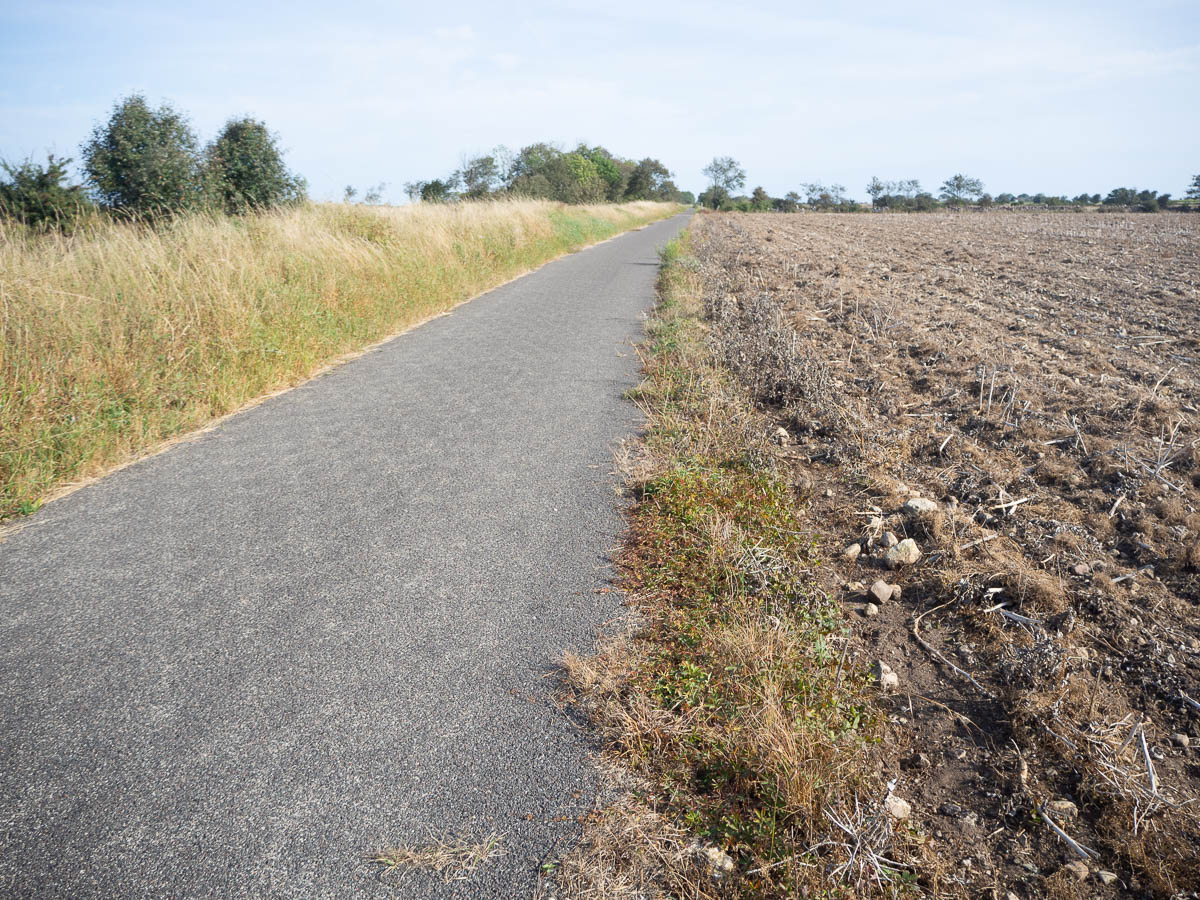
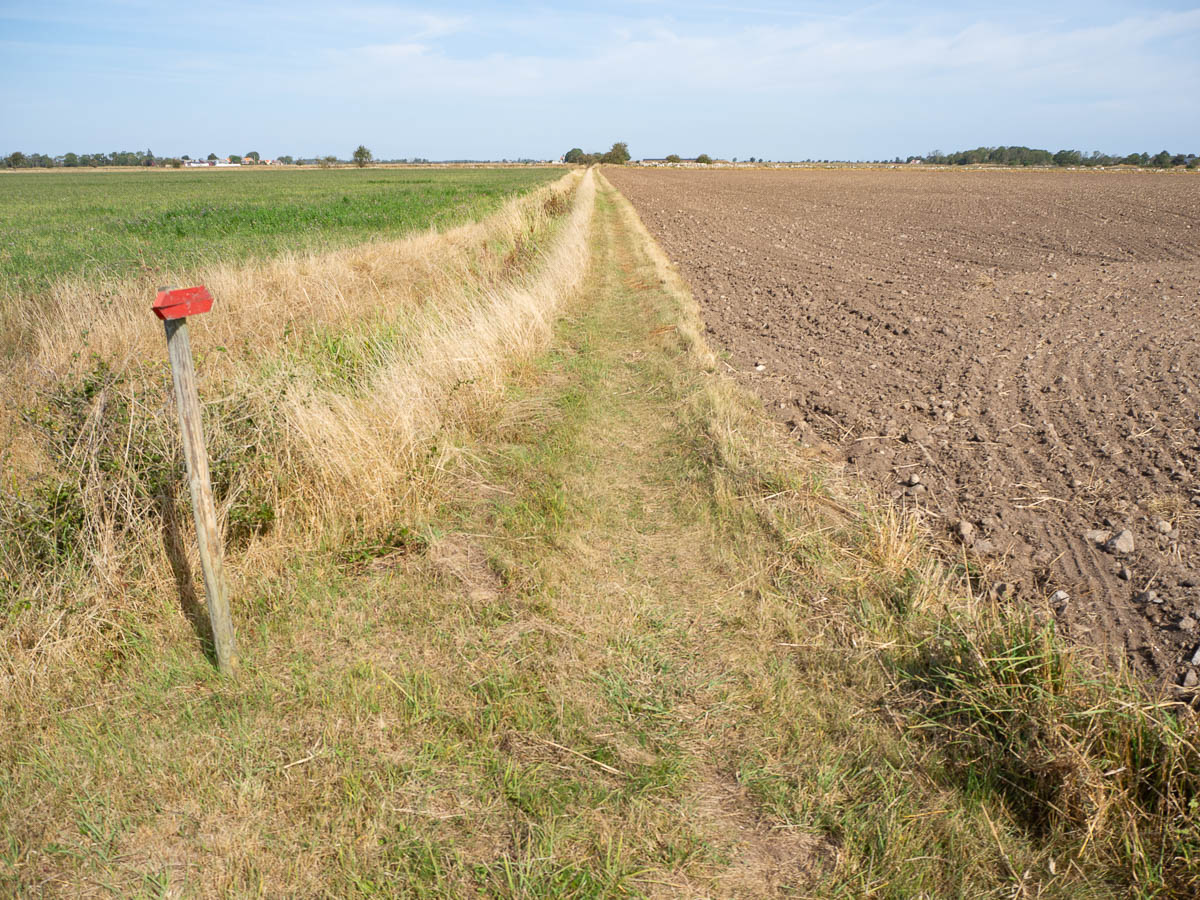
The trail continued gradually onto smaller and smaller footpaths between fields and meadows and cow pastures.
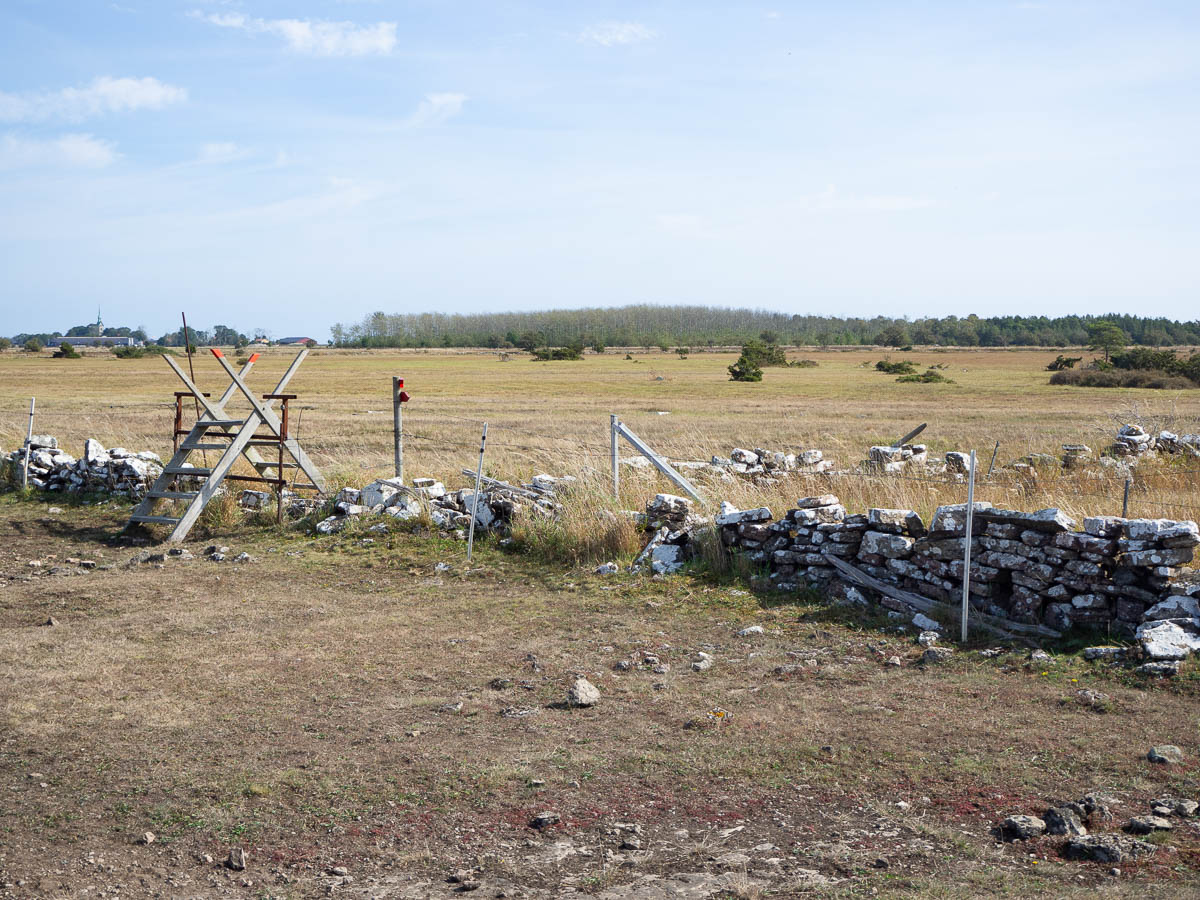
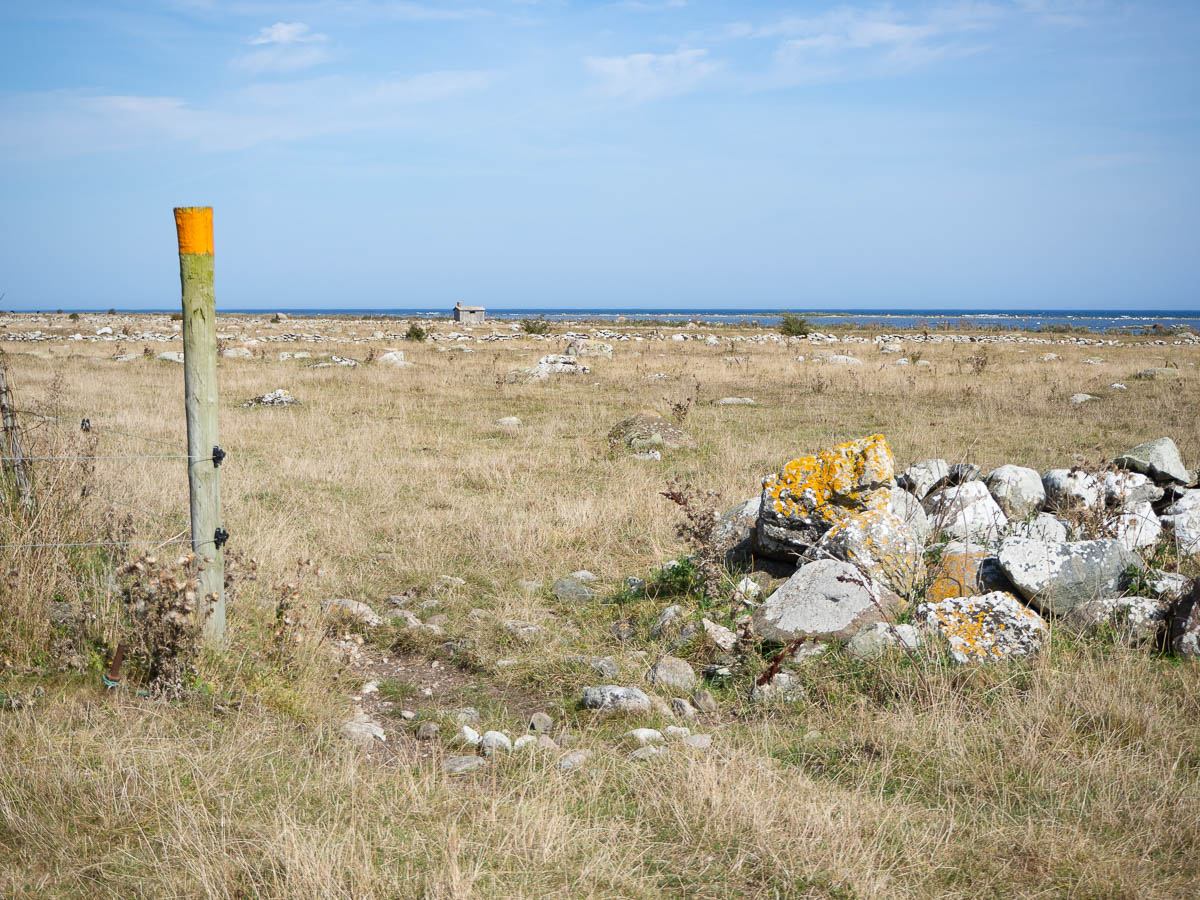
The cow pastures were all bordered by limestone walls, mostly somewhat crumbled. They seemed mostly decorative and symbolic, because the electric fences are doing the actual job of keeping the cows where they’re supposed to be. But I guess the stone walls are much more visible than thin electric wires, and might get more respect from cows. And humans.
Roughly halfway along, the trail passes Eketorp, a reconstructed Iron Age ring fort. It was technically not open yet for the day (low season again, and the ticket office wouldn’t open until 11) but it also wasn’t closed or locked, so I went wandering around anyway. I probably missed out on some booklets and what not, but it was rather interesting even with just the info plaques that were out there.
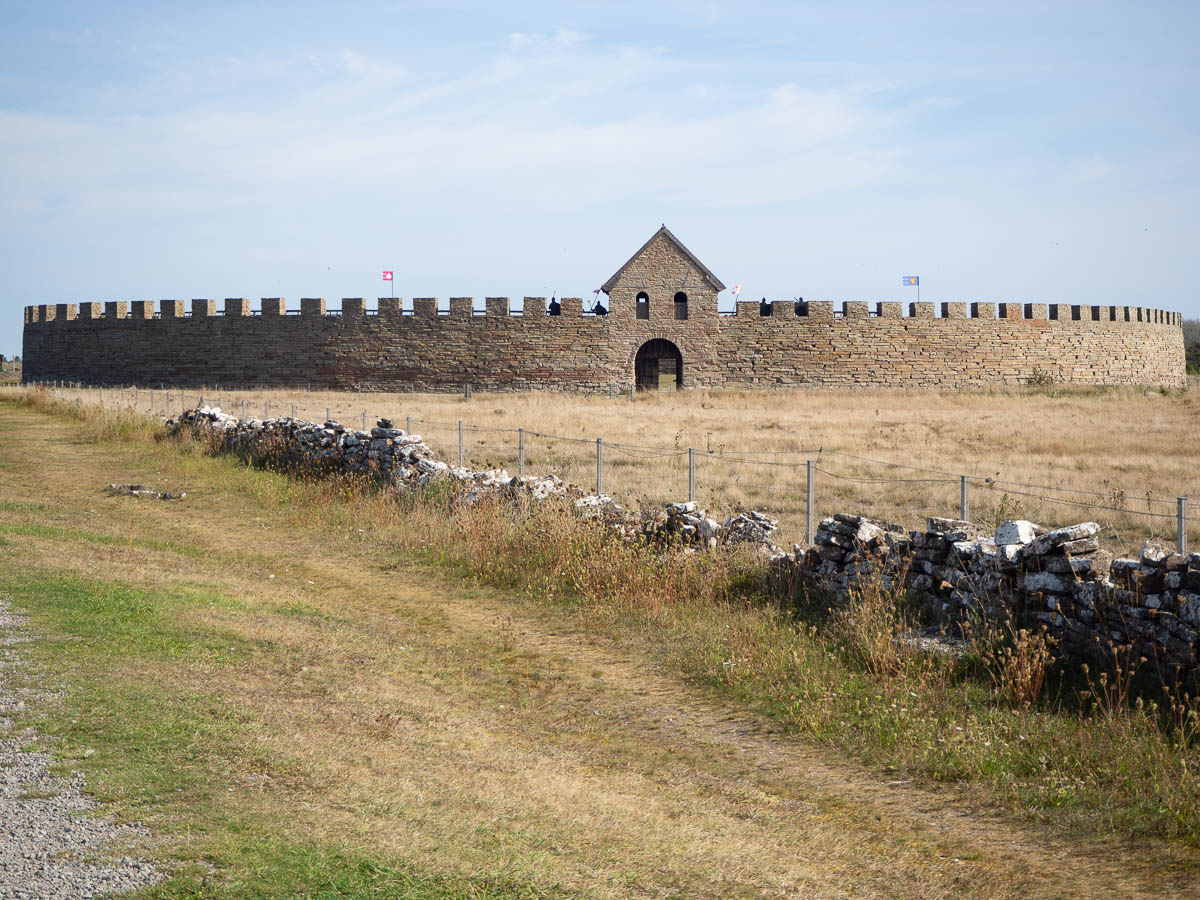
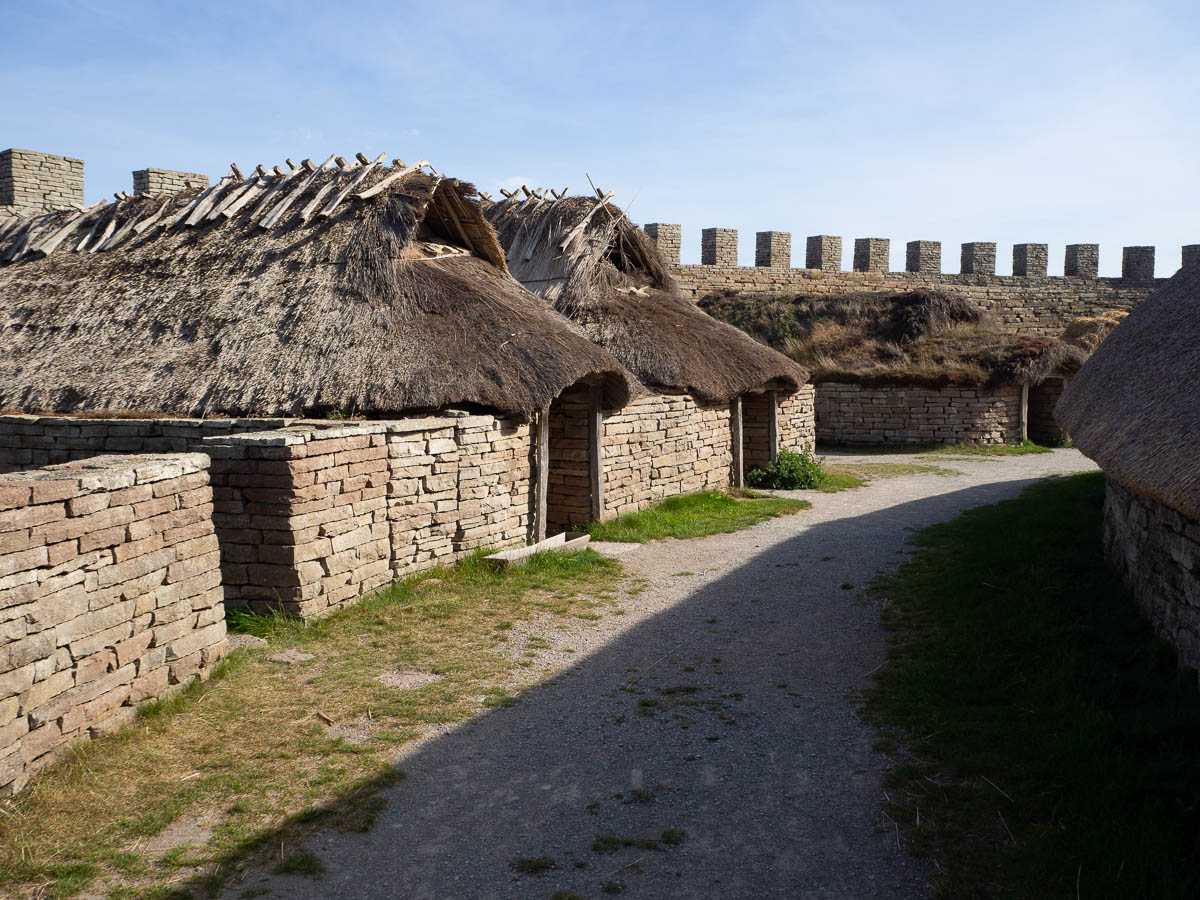
The fort had been put to different uses over centuries of time. The reconstructed version shows several side by side. One part has been left as it was found, with just ground-level traces of stone walls. Another part has been built up as it probably was during the Iron Age, with small densely-packed stone huts. On the other side, timber houses have been rebuilt to mimic the fort in its reincarnation as a medieval garrison.
A few days ago at home I was swapping out my summer dresses for an autumn wardrobe and starting the sock season, and today it was at least 25°C. Judging from the state of the vegetation, uninterrupted sunshine seems to be the standard here.

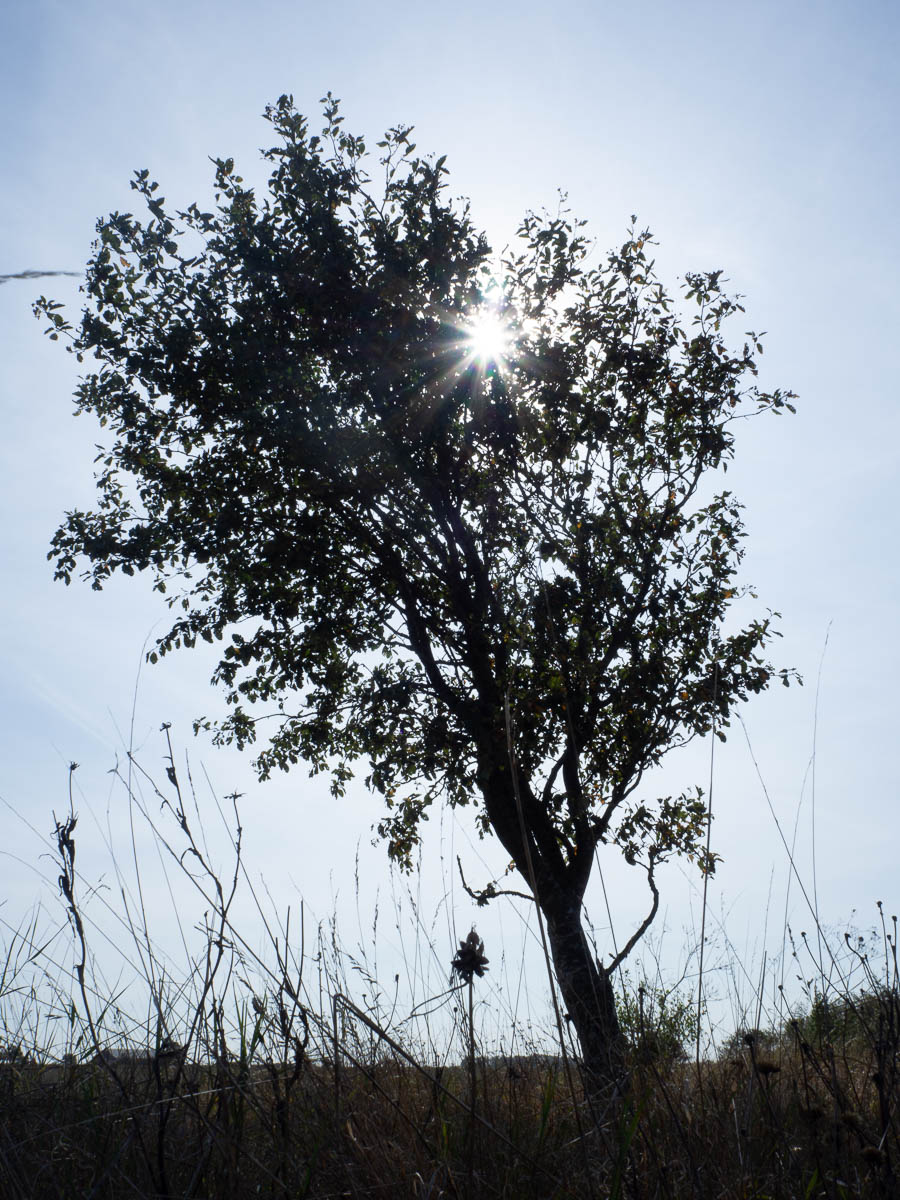
And there was not much shade to be had along the trail. There were plenty of large trees in the villages, but nothing out among the meadows and fields. When I finally spotted a lone tree – scraggly and sparse – I knew I had found my lunch spot.
The sea birds were never far away. Large flocks of geese flew noisily overhead every now and again, often 70 or 80 heads strong. Gulls congregated en masse around tractors ploughing the fields. They remained on the ground until (it looked to me) the tractor was a finger’s width away from crushing them, before taking flight, and then immediately landing behind the tractor to get at all juicy the worms.
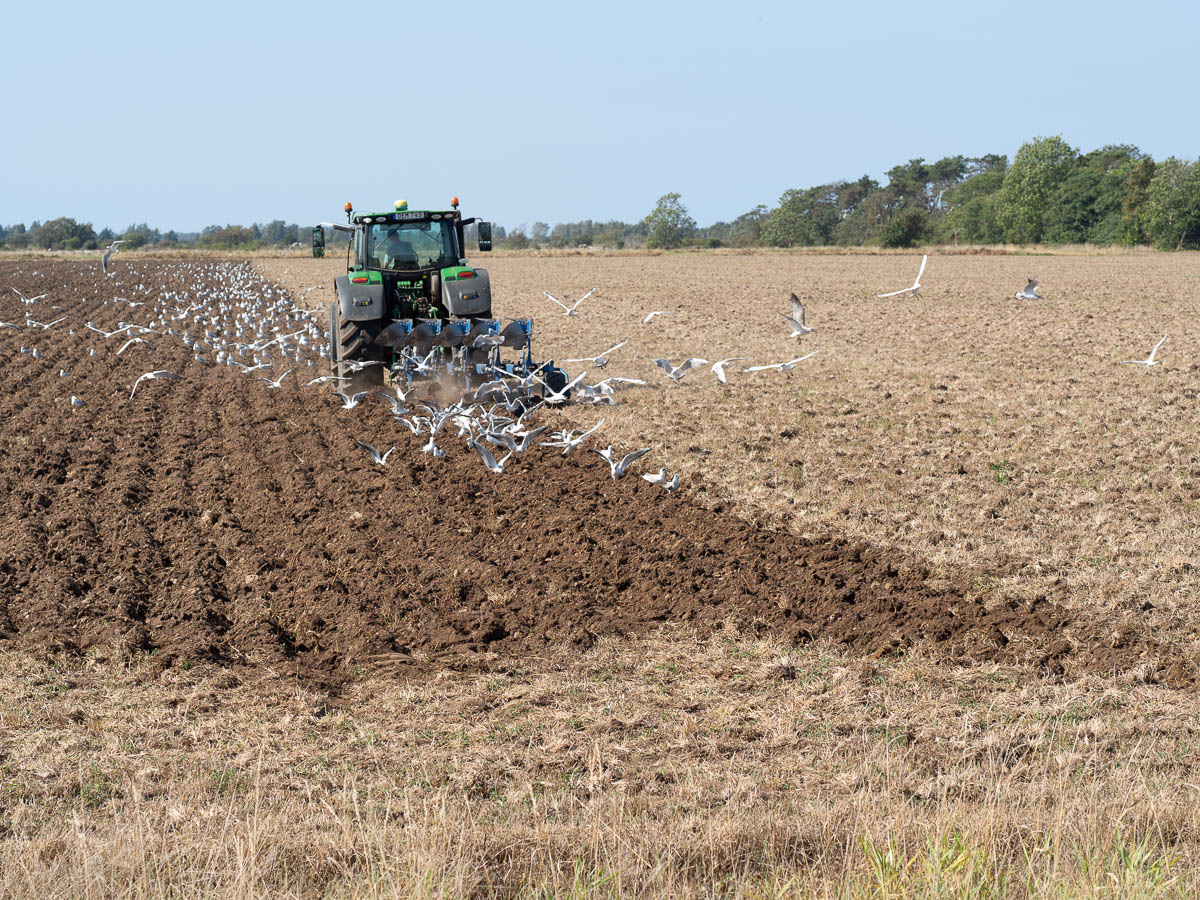
In the late afternoon the trail turned back to the seashore.
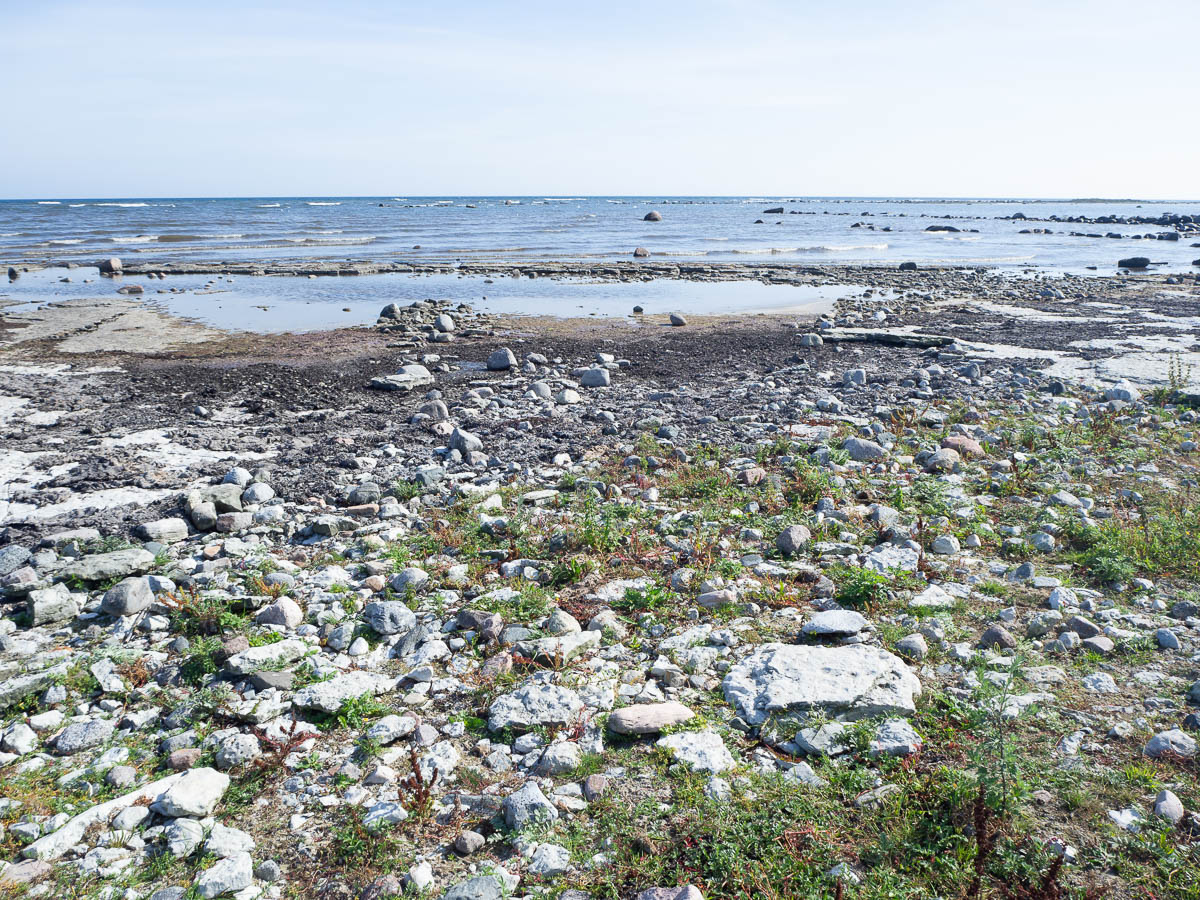
The beach could not in any way be described as pretty. Weeds, churned-up mud, cow pats, bird droppings. And hundreds and hundreds of sea birds, making the sea look like bird soup just fifty metres out.
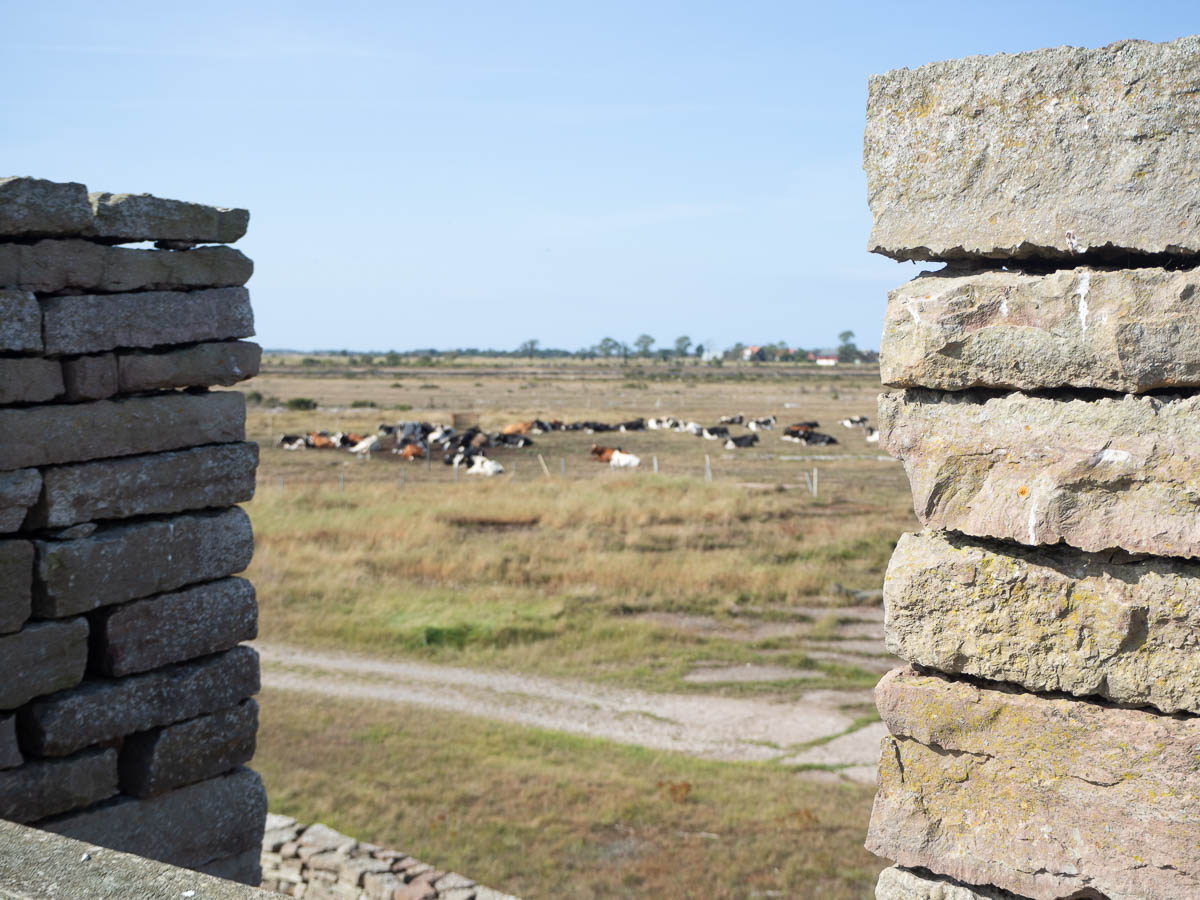
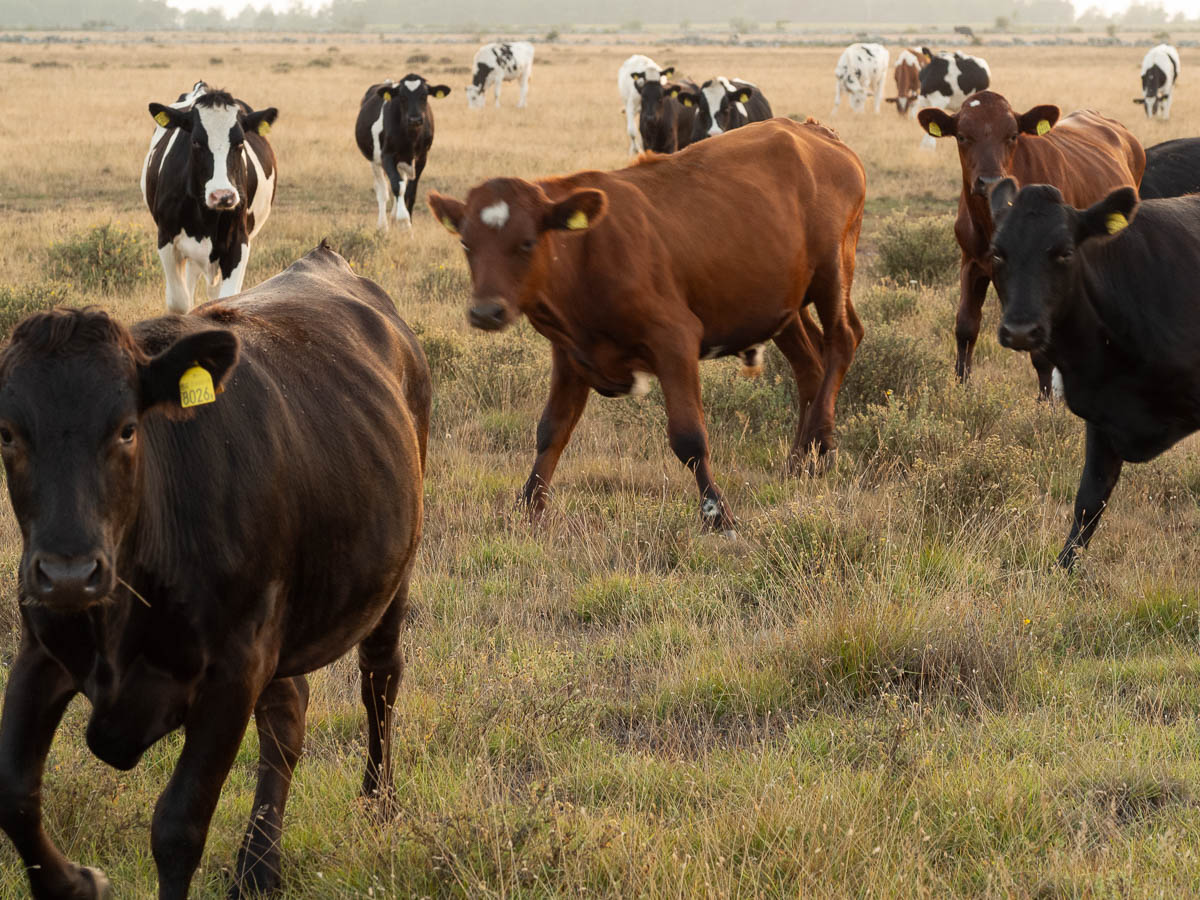
There were cattle everywhere, all the way to the water’s edge. Southern Öland is cattle country, and they roam free and wide.

There are numerous info signs along the hiking trails and at other tourist spots, informing people how to behave around cattle. Keep your distance, close all gates, don’t get between a cow and its calf, don’t feed them, don’t bring any dogs.
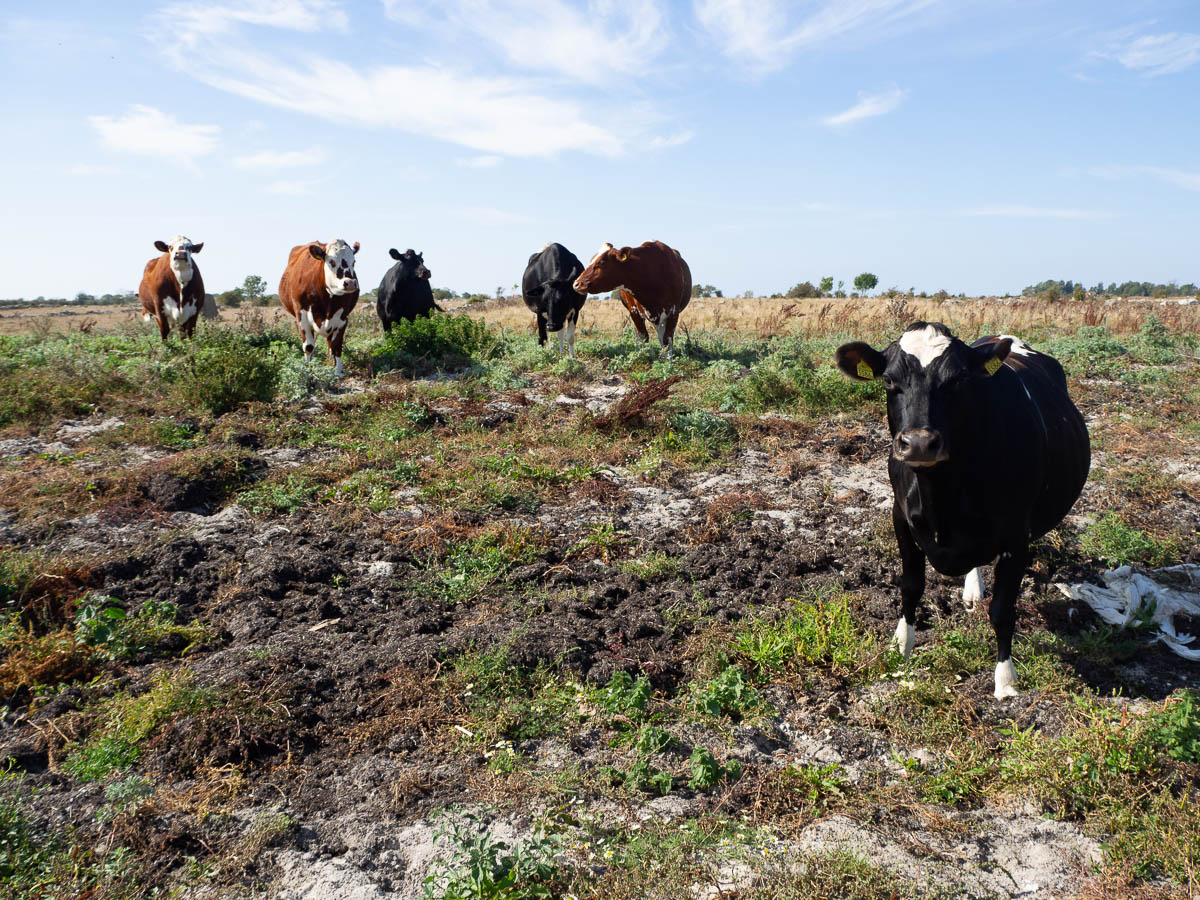
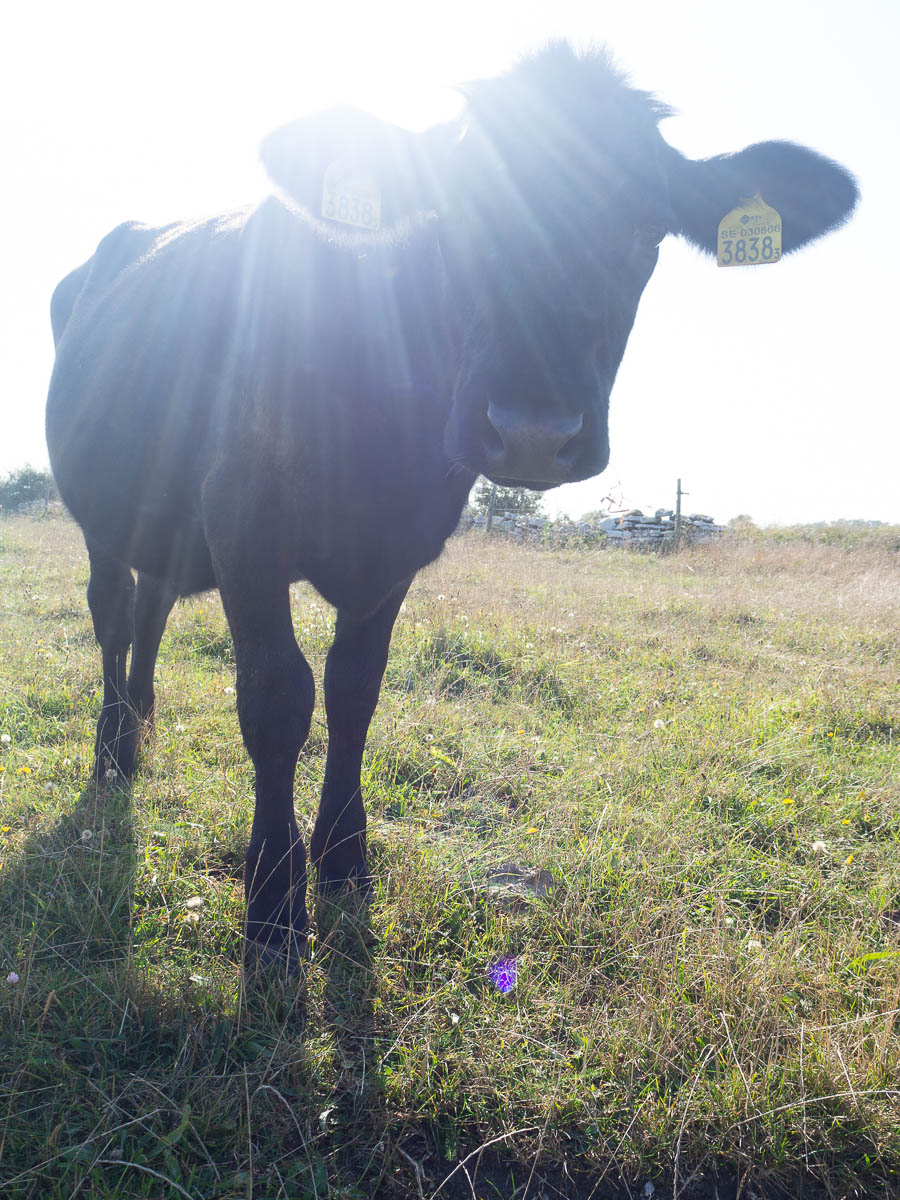
The cattle – mostly young ones, by their looks – were curious and nosy. As long as I walked past them, they didn’t pay me any attention, but whenever I stopped for a while, they noticed me and all decided to come have a look. Poked at my backpack where I had put it down while photographing; nosed at me and my clothes.
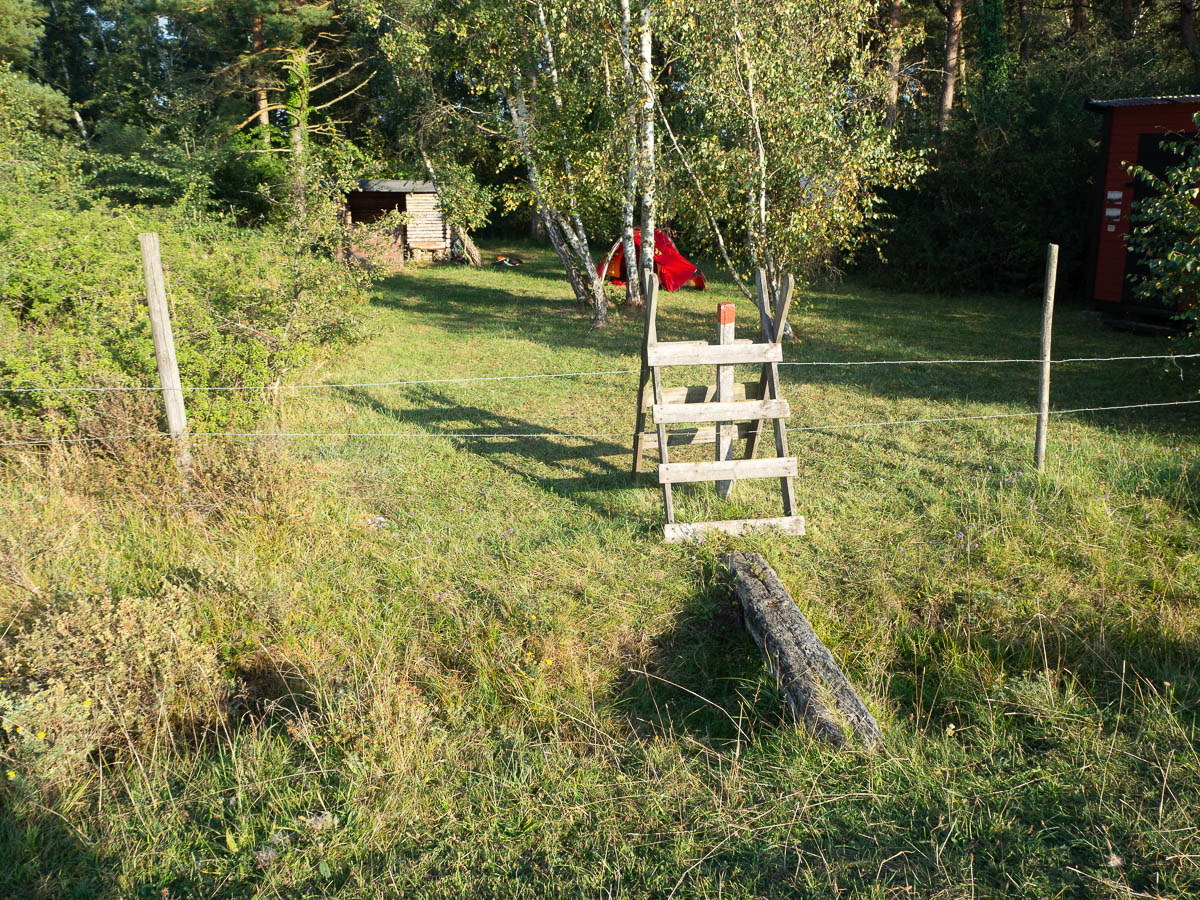
This stage of the trail officially ended at Seby boat harbour, where there is a parking lot, but that spot was clearly picked for ease of access and not with tenting in mind. There was, however, a shelter a few kilometres further along the trail, so that’s where I headed for the night. It was in a small copse in the middle of cattle pastures. And of course fully surrounded by electric fencing, because otherwise it would immediately be overrun by cattle.
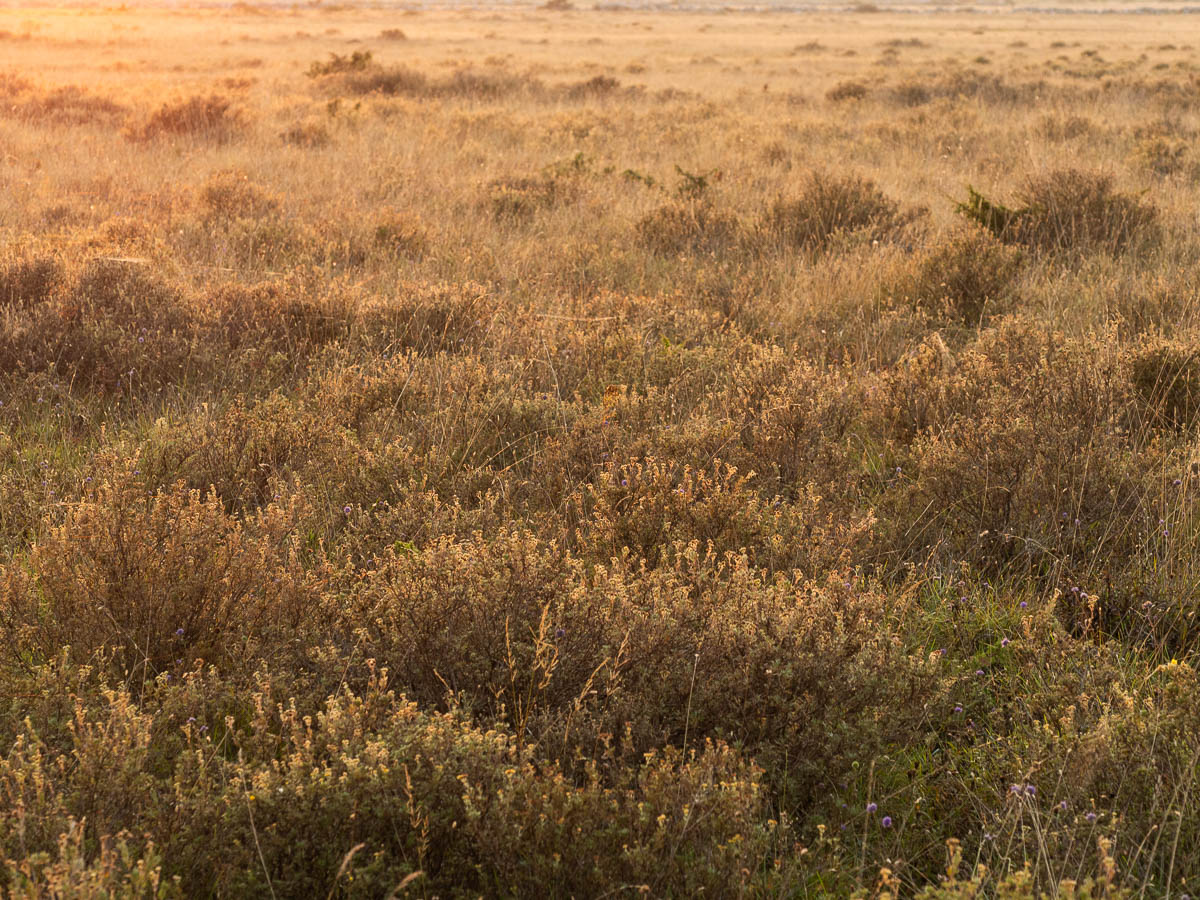
It was a beautiful evening. I went out to take photos in the golden sunset.
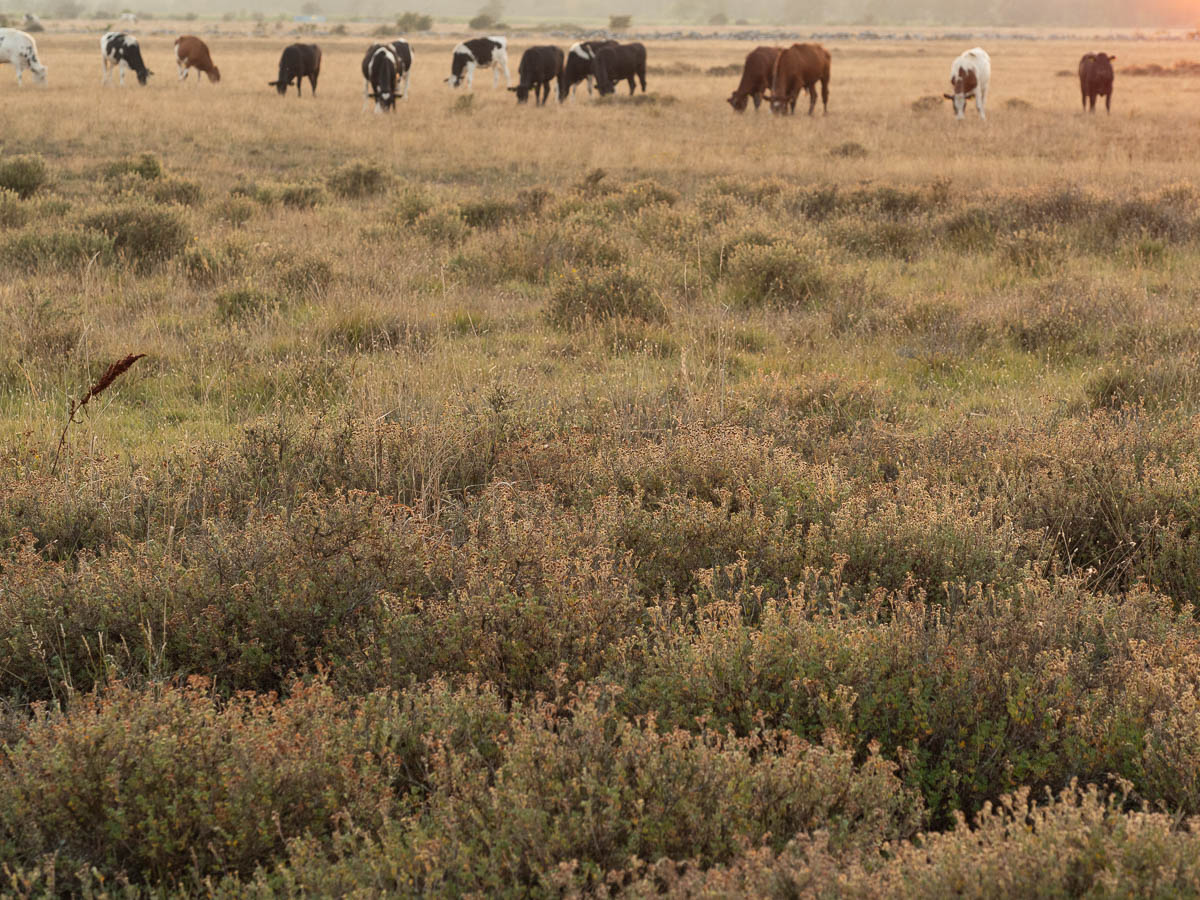
And of course I got accosted by cattle. I stayed away from them, but they did not stay away from me. I think this herd hadn’t seen many people recently and were extra curious. Or something. In any case, they first got rather uncomfortably close, and then kind of started rushing me. Not actually aggressively, I believe – they pulled up a metre or two away from me every time – but enough to make me move away very carefully and slowly, without turning my back to them. They are very much bigger and stronger than me, after all. I breathed out in relief when I was back at the shelter, on the other side of the fence again.
The evening sky was clear, and the forecast for the night was the same. I set an alarm for 1 o’clock in the morning and got up to look at the stars. The view was pretty good, but not the best I’ve ever seen. Villages on the west coast of Öland spread hazy light in the west, and a slowly pulsating light in the south must have been Långe Jan, a good 20 km away.

The Milky Way was distinguishable if you knew what to look for, but not bright. As a bonus, I saw three meteors.
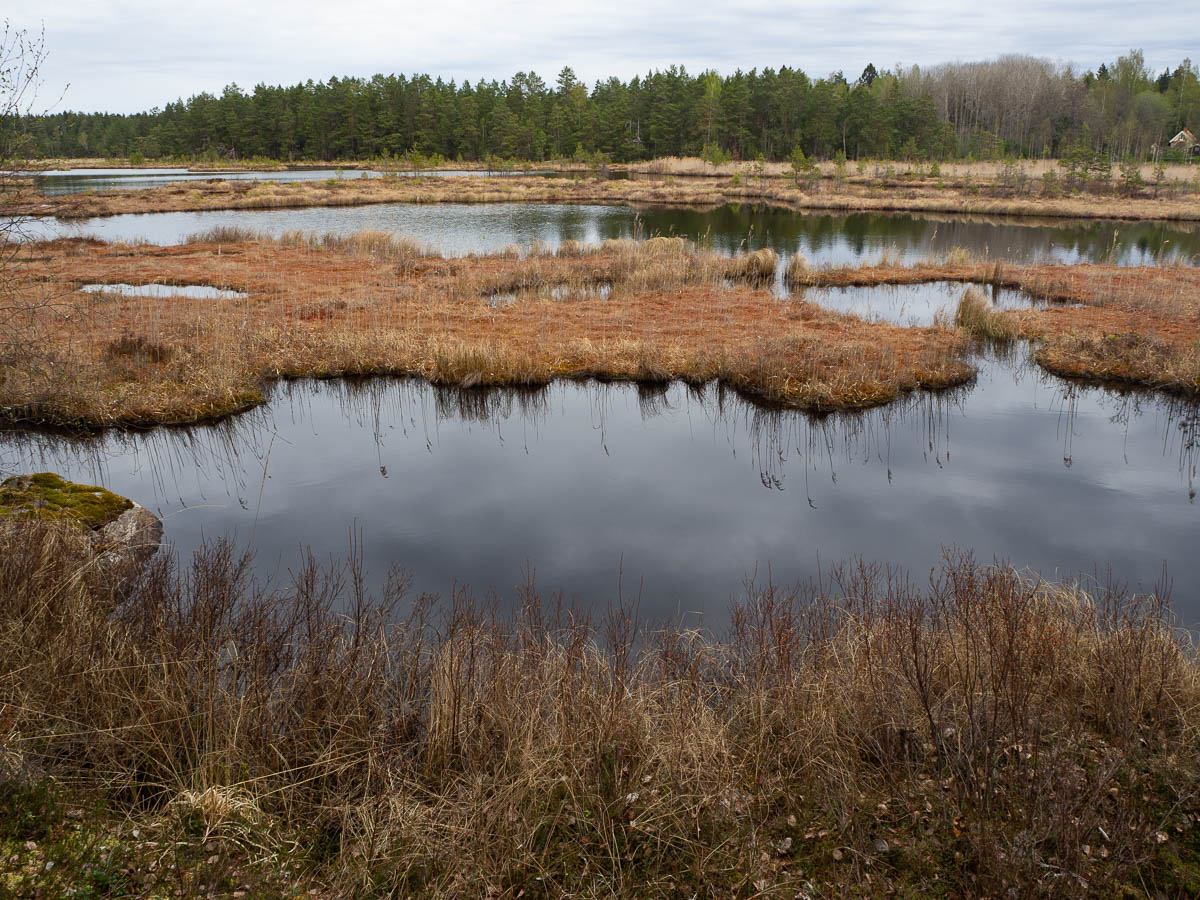
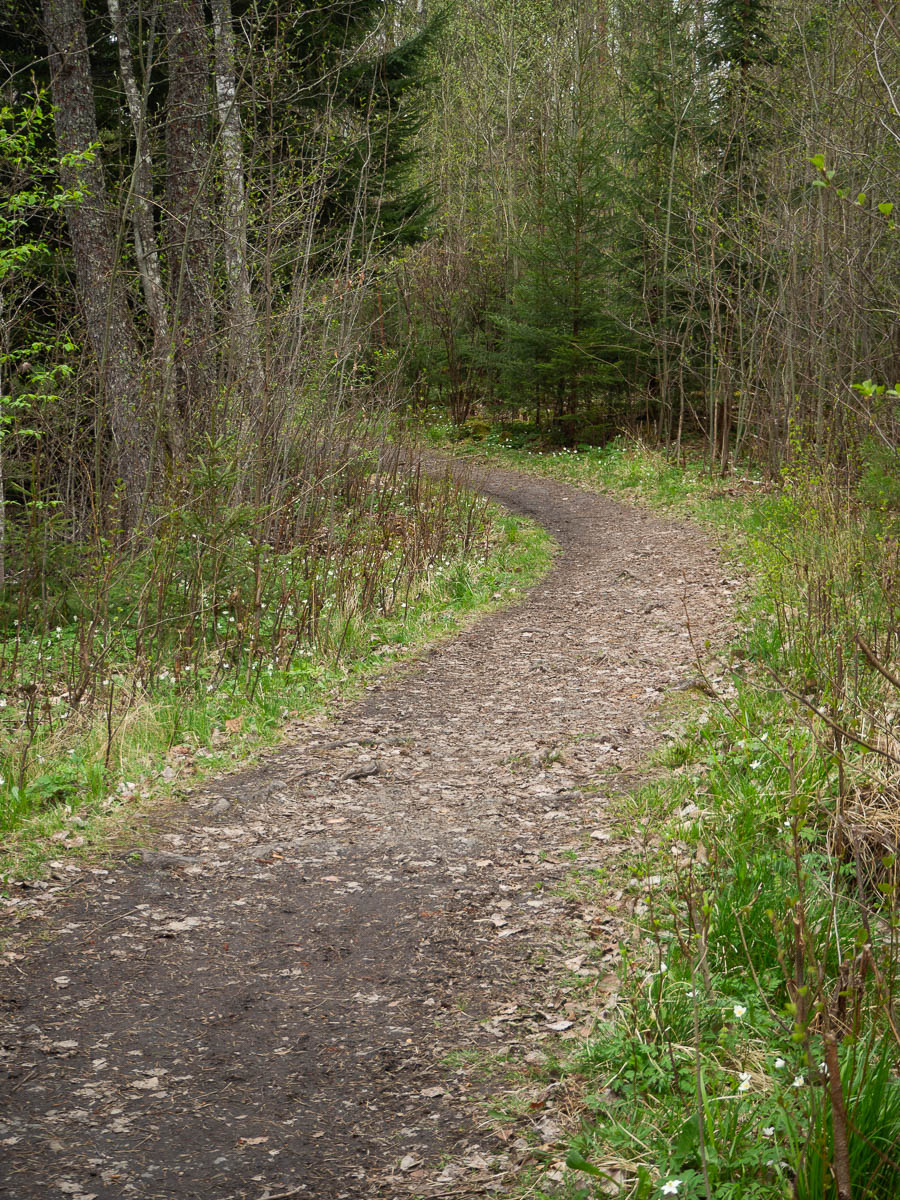
I’m all set to leave for my by now habitual autumn hike tomorrow. A bit earlier this year, and at somewhat short notice, because of all sorts of things turning up in the calendar for the coming weeks and weekends.

For years already I’ve been wanting to hike the Mörbylångaleden trail through southern Öland. I’ve seen plenty of Sörmland, and I’ve been to the Swedish fells a few times. This would be something entirely different, and all reports say it’s unique and beautiful.

It’s a five-day hike, and transport there and back is a bit tricky, too, so the whole project takes a week, which has been the sticking point for me in the past. But this year things lined up nicely at the client and I could take a week off. So the Mörbylångaleden is a go!

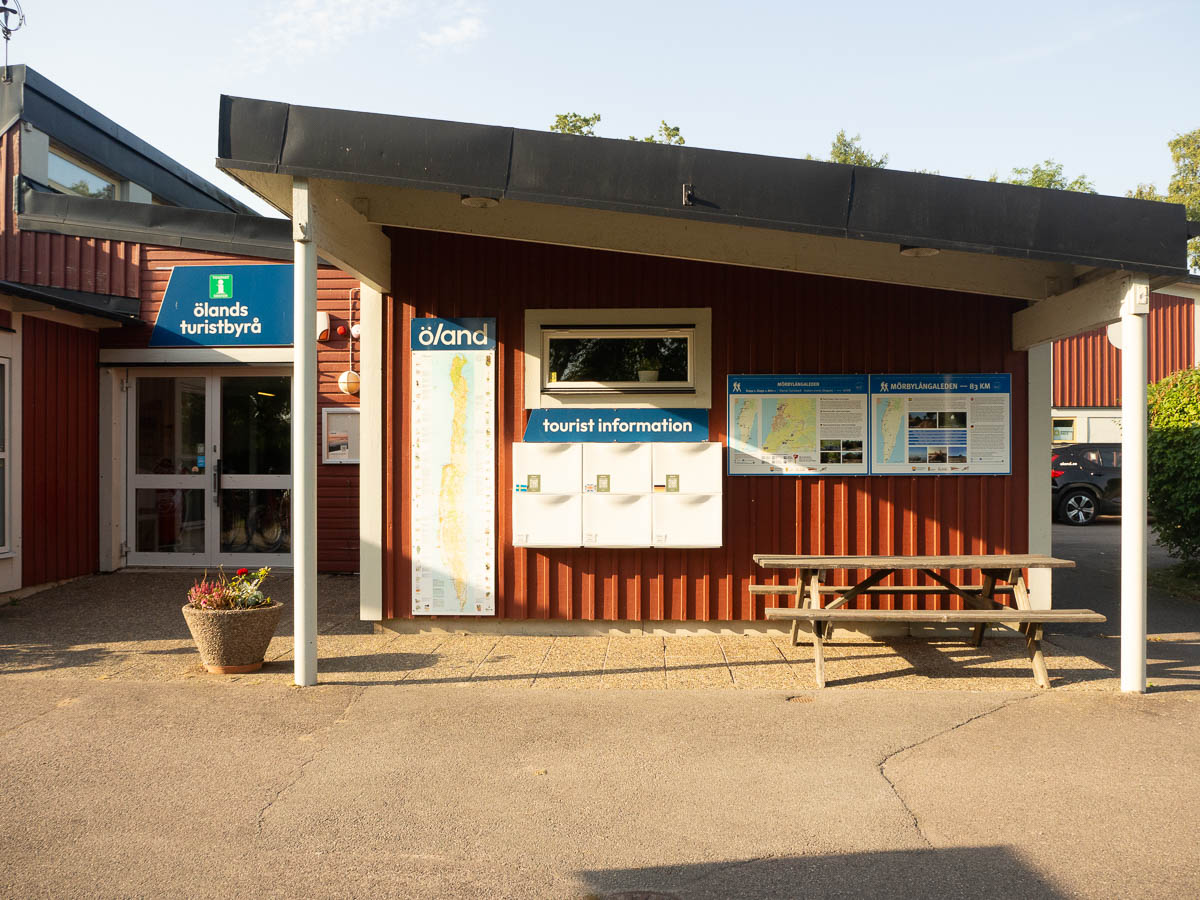
Due to the above-mentioned transport issues, I’ll be hiking the trail backwards compared to how it’s normally described. The officially suggested route is to start in Färjestaden, where the bridge from the mainland reaches Öland, and walk from there towards Ottenby near the southernmost tip of the island.

It does make a nice “story” this way. But getting back from Ottenby at the other end is tricky, to say the least. There is a bus, but twice a day only, and it doesn’t go on weekends at all (outside of the summer high season, which is over by now). So if I did the trail in that direction, I’d end up in Ottenby with no way home until after the weekend. But! I can take the bus there tomorrow and start walking back up the trail on Tuesday morning. By Saturday evening I’ll be back in Färjestaden with all its multitude of buses to take me home.

Maybe the experience will be less of a dramatic crescendo this way, but I’m perfectly fine with that. Plus this way I will get to walk with the sun at my back instead of in my face – an often underappreciated aspect of hike planning.

Hälleforsnäs to Hagtorp. Yesterday this stage was 16.5 km but today it took me 18.5 to walk.

First I got an extra kilometre by starting walking without checking the updated weather forecast. Yesterday, the forecast promised rain for today, but only from late morning. When I was packed up and ready to go at around 7:40, I saw the clouds but didn’t think that rain would be imminent. It started raining before I had even walked ten minutes. I started thinking about where I could find shelter, but quickly realised that the best and closest shelter was back at the camping site. So I walked back, through the rain. Gained absolutely nothing but getting thoroughly wet.

It rained for almost two hours. Luckily I had my Kindle.
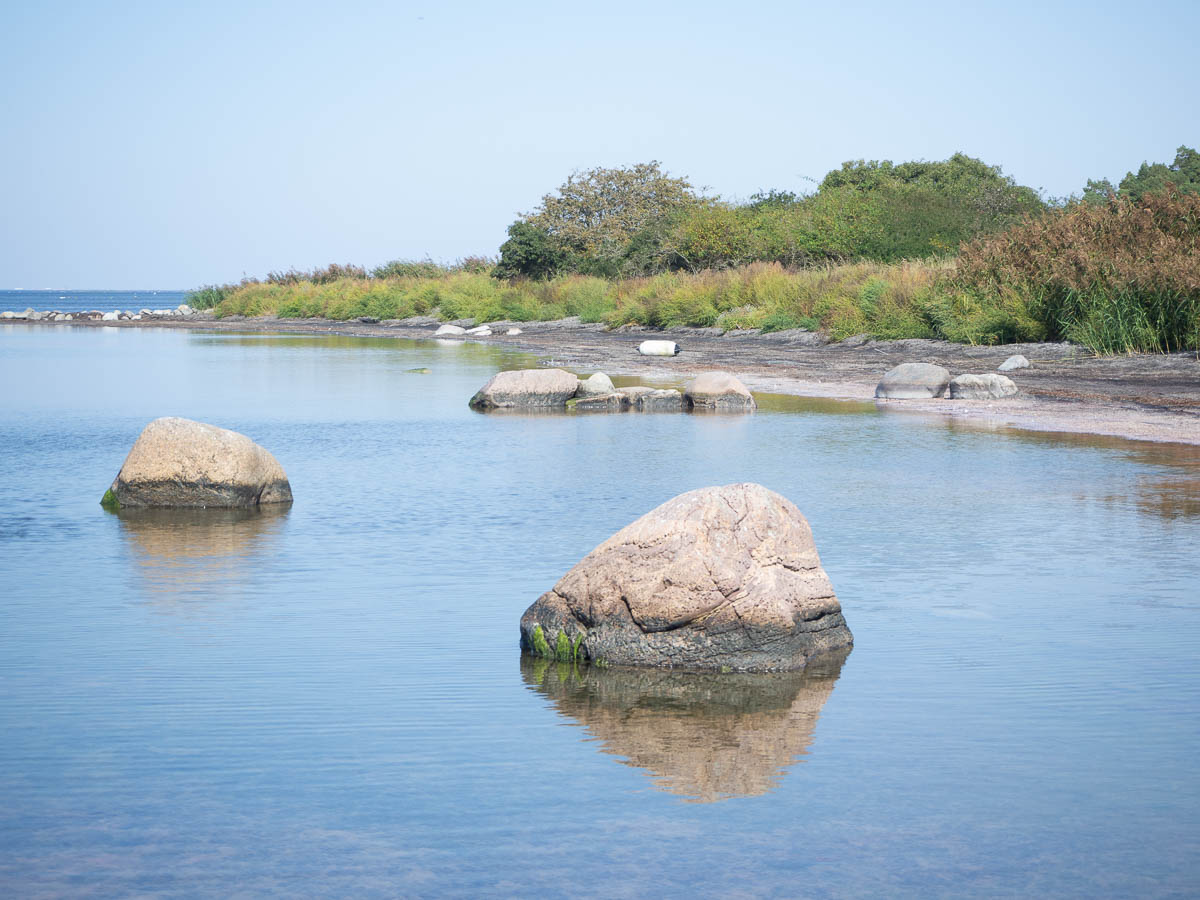
Afterwards the woods were, of course, very very wet. Not so much the ground, because the soil hereabouts drains quickly, but the bushes and grasses can hold on to a lot of water. Walking through wet forest is like I’m trying to use my trousers to wipe dry all the bilberry bushes. The trousers at least dry quickly, but the water also wicks into my socks and boots, and those keep all the water inside. Yes, I could wear waterproof trousers, but I don’t like the way they feel. Unless it’s cold outside, I’d rather be a bit wet.
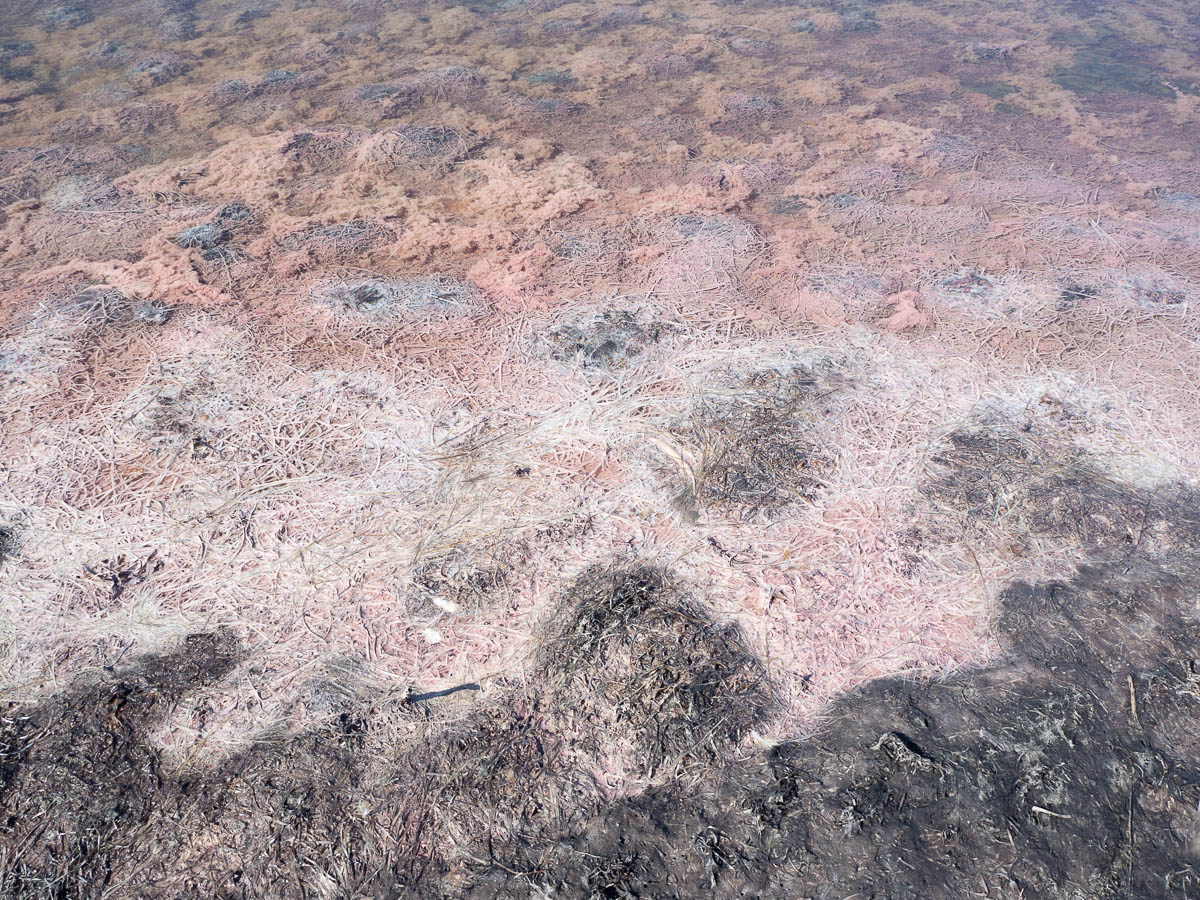
Today I learned that lingonberry bushes dry out first, with their waxy-leathery leaves. Bilberry bushes come in quick-drying and slow-drying varieties, because some were clearly drier than others. Bog bilberries were the slowest to dry and seemed to actively hold on to drops of water. And heather almost doesn’t get wet to begin with.

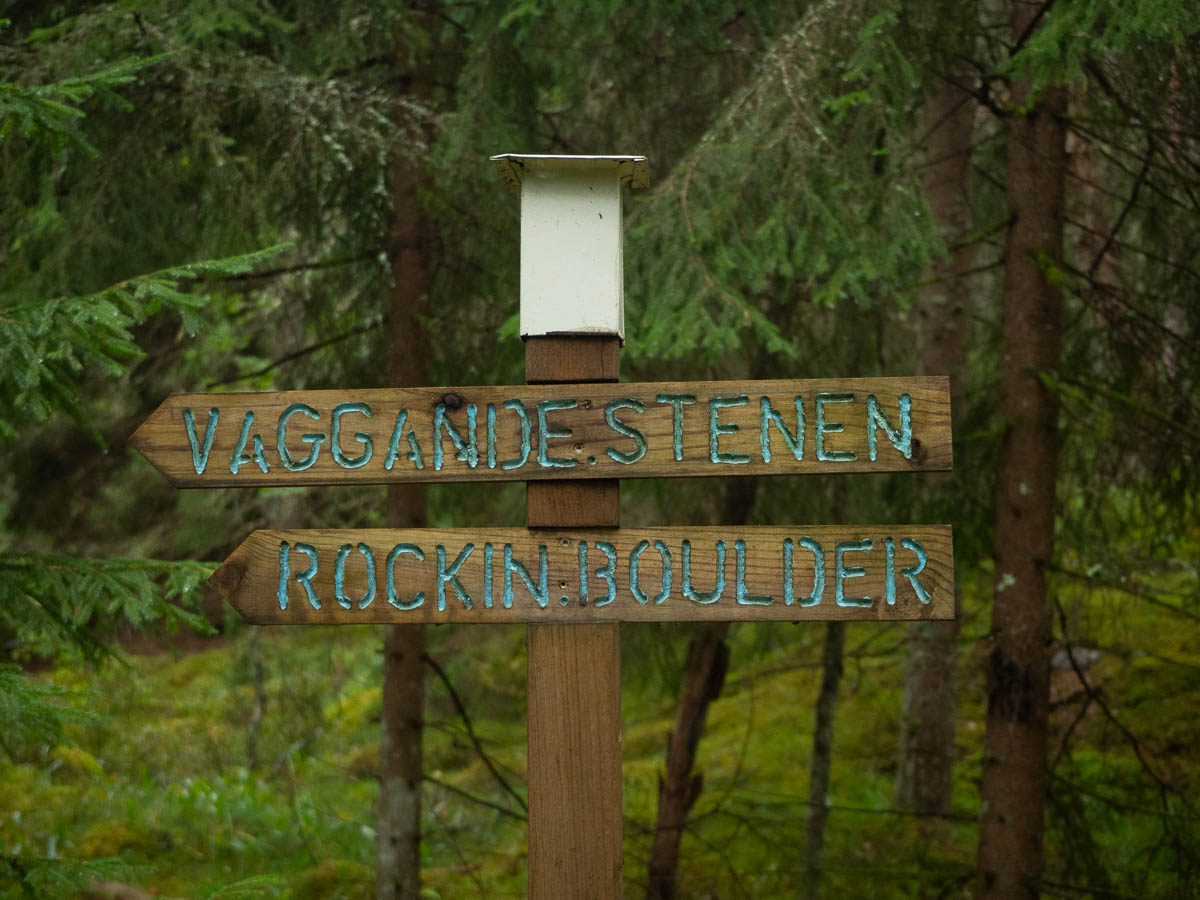
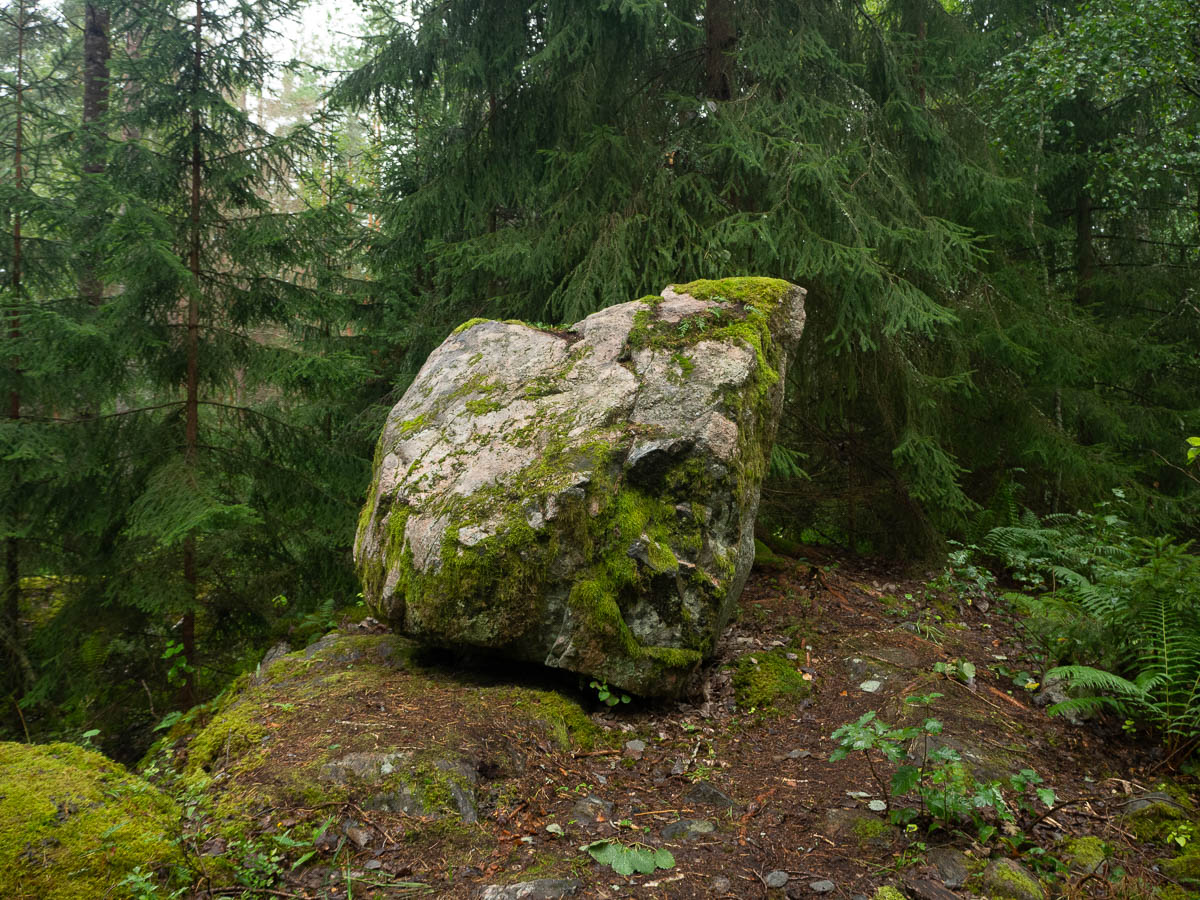
There is a locally famous “rocking boulder” a few kilometres in. Why they didn’t seize the obvious opportunity to call it a “rocking rock”, I have no idea.

I went to see it, of course, but to my disappointment, it did not rock at all, no matter how hard I pushed. Either it needs more weight, or it’s gotten jammed.

The rest of the day was pleasant, unexciting walking. More mindfulness, like yesterday. It went easier today, after all my practise.

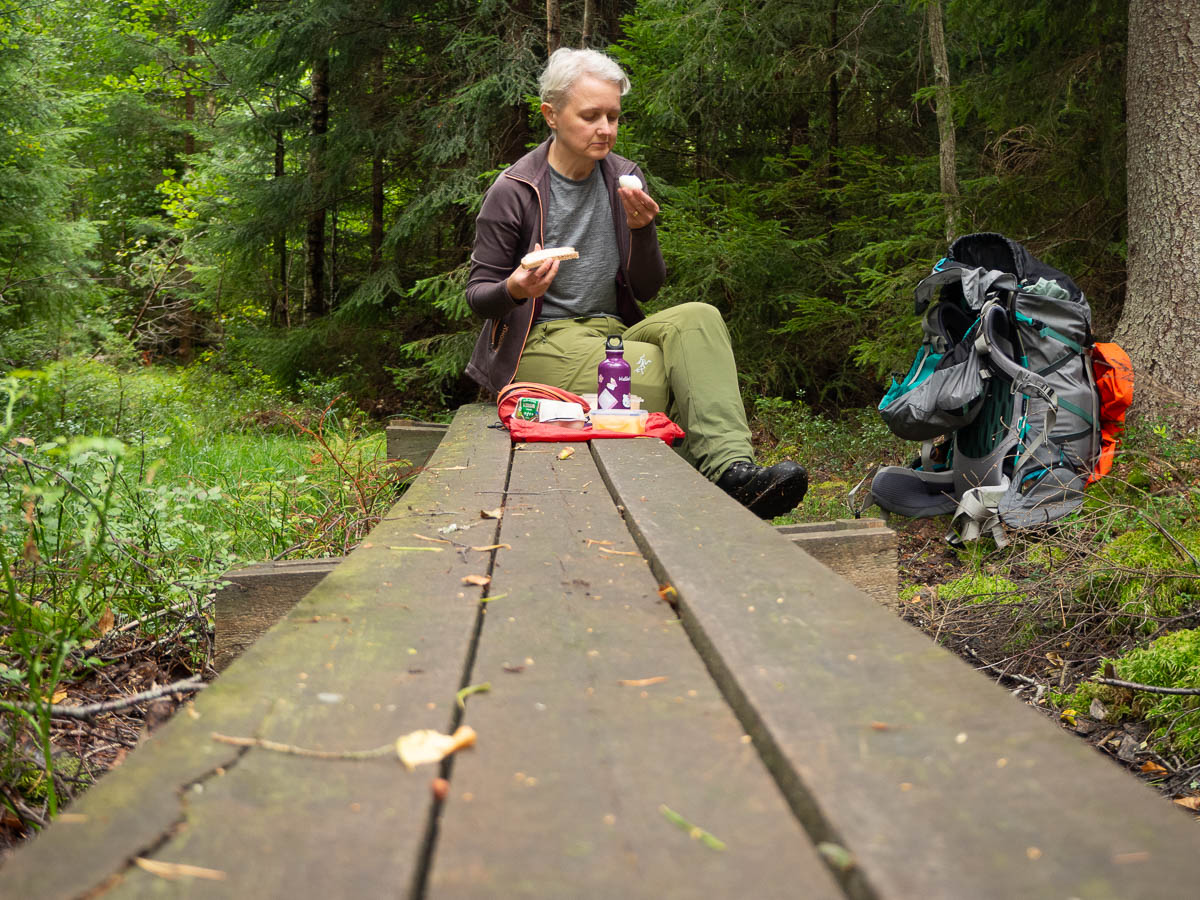
Here’s me having bread and butter and a boiled egg for lunch. It took a good while to find a spot where I could sit down for a meal – wherever I looked, it was just wet bushes.

In the afternoon there was another surprise burst of rain. And I had again just passed a shelter, so this time I didn’t even hesitate – turned back as soon as I felt the first drop and ran back, and had my second lunch at the shelter instead of the exposed lakeside cliff I had been aiming for. Another extra kilometre gained.

Sörmlandsleden stage 22, from Hagtorp to Hälleforsnäs, 16.5 km.

This stage has been blocking me for weeks and weeks. No way to get there by public transport, of course, and 16.5 is too much for a one-day out-and-back hike. 33 km would take me ten hours at least, plus driving there and back. Not doable. But now I had a whole free weekend, so I can walk one way today and back tomorrow. (I am again reminded that I should look into the car plus bike solution, so I can get these kinds of longer stages done in a single day.)

Hagtorp is barely a place, even: googling for Hagtorp brings up two kinds of hits only. There is the eponymous transport/shipping company, and there is Sörmlandsleden. I’m not sure what shipping activities the company actually does – there are no trucks or anything visible at their site – but they do have plenty of open gravel surface which makes for a great parking lot for hikers.

I had a leisurely start with a proper weekend breakfast and only started driving at 10:30, hoping to be hiking by 12. But there had been some kind of accident on the E4, which caused major traffic jams, and my drive took forever. When I finally got started on the trail, past one o’clock, I was very happy to be let out of the car and have a chance to stretch my legs.

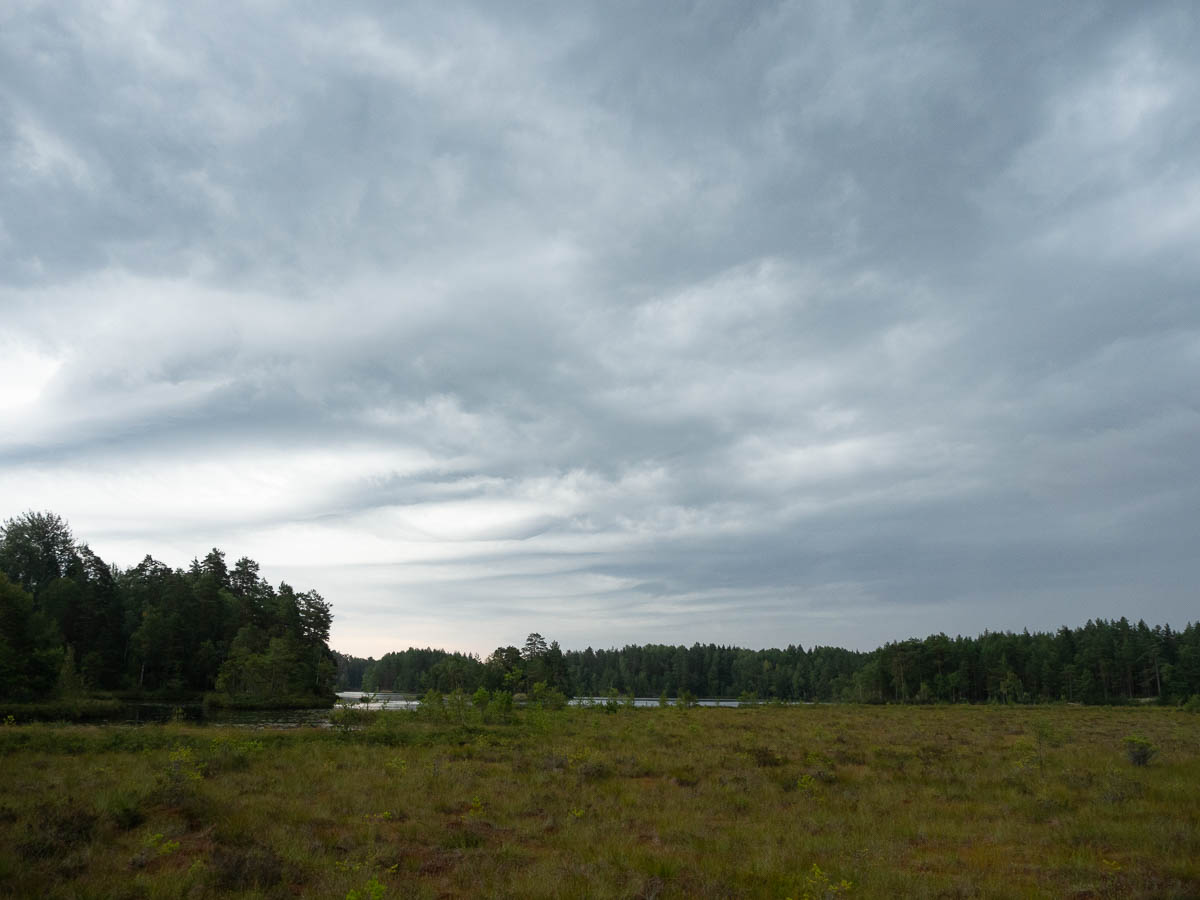
This stage had proper woods and wild nature, unlike the previous one. There was some mixed forest, and a lot of the typical pine and spruce forest with heather and blueberry bushes. And the occasional lake for beautiful views, and the occasional clear-cut area for contrasting ugliness.

I found my thoughts spinning back to the tretton37 drama all the time, and from there to code problems I left behind at Sortera yesterday afternoon, and then on private worries, and then around again. I ended up turning this into an intense mindfulness walk. Whenever I found myself ruminating again, I made myself focus on what was around me.

Sound. On a large scale: silence. Apart from the start and end, this stage was far from noisy roads, and truly very quiet. This time of the year, there’s very little bird sounds, either. But I myself was making noise all the time: there was the crunch of my boots on debris, and the swish of grass against my legs, and the slosh of water in my water bottle.

Sight. I wish I could have looked around while walking, but much of the path was really rough and uneven, with rocks and roots and tussocks, so it took constant concentration. I would have tripped or twisted an ankle quite quickly. But I could pay attention to the rocks themselves, and all the pine cones on the ground, and the various plants and bushes around me.

Smell. Not much. Books sometimes have people walking on “fragrant pine needles” but in reality any needles on the ground are dead and have no scent at all. Perhaps pine trees in other parts of the world are different, who knows.

Touch. One the one hand, plenty to experience, but on the other hand, most of what I can feel while hiking tends towards the unpleasant. The pressure of the pack on my hips. A wrinkle in my t-shirt under the straps of the pack. The sharp scratch of a juniper bush. But I liked catching the seed heads of tall grasses and letting them slip through my fingers.

Taste. It’s berry season! Lingonberries and bilberries and bog bilberries are all ripe and plentiful. I was extra happy when I found bog bilberries, not only because I like their flavour but also because the bushes are taller and the berries thus easier to pick without bending down (which can be awkward with a heavy pack).

Most lingonberries were mostly ripe, and some were all the way ripe, but I’d say they needed another week or so to reach perfection. Which didn’t stop me from eating them, of course.

Bog bilberries look less appealing. The bushes are sparse and have an air of scragglyness. The berries hang singly or by twos at most, and the colour is muted, so they look underwhelming on the whole. It takes effort to make them look good in a photo.


Bilberries I don’t care much about at all, while I’m out walking. They’re good in pies and muffins and yoghurt and all that, but on their own, they’re too bland for my taste.

Due to my late start, and my slow pace because of the uneven path, I was worried about getting to the end at a reasonable hour. It was seven in the evening by the time I reached the camping area. I had been keeping my eyes open for the last kilometre or two of walking, for alternative camping spots in case the end of the stage was underwhelming (because the other end was literally a gravel parking lot!) but the area around Bruksdammen was beautiful. I put off all thoughts about cooking dinner and getting my tent set up, and instead admired and photographed the area. It was a wetland area with pink water-lilies in deep dark ponds.


Then there was dinner, after which I read for a while, but then went to bed at ten o’clock already, quite tired. The night was very windy – I half-woke a few times and thought at first that it was rain I heard, but it was just the wind being very loud.

Sörmlandsleden stage 19 + a little bit of stage 20, 14.5 km. From Ånhammar to Henaredalen in the middle of nowhere.

Stage 19 on its own is officially 12 km, which is a bit too short to make a full day, but also a bit too much for a there-and-back in a single day. Rather than pressing myself, I’m doing it over two days, and I added on an extra ramble around Henaredalen for this afternoon.

This was a beautiful and varied hike, going a flowering lakeside marsh…

… through oak pastures…

… and heathery bogs…

… to rocky pine forests dotted with little rocky lakes.

I’m glad I didn’t try to do the 12 + 12 km in a single day because this was not the easiest stage to walk. It wasn’t so much the ups and downs that made it hard, but the uneven path. Rocks and roots everywhere, and muddy patches.

In the middle there was a ten-metre natural arch, all one unbroken piece of rock.

Another interesting sight was a very large paw print in the mud. Either a really large dog that somehow avoided all the other muddy spots on the path, or an actual wolf. I’ve heard from other hikers that there are several established wolf territories in this part of Sörmland, so that’s not entirely far-fetched.

In other news, it turns out that walking around with egg whites in your rucksack will slowly whisk those egg whites into a soft foamy fluff. And if you then dump those egg whites into your hot instant noodles, they solidify into little foamy islands, sort of like sugarless îles flottantes.

Speaking of food, I wasn’t expecting to find anything edible in the forest at this time of the year, but I was wrong – some of last year’s lingonberries were still there and waiting to be eaten. Frozen and then thawed, and partially sun-dried, they were wrinkly but juicy, tart and sweet. Few and far between, and hard to spot, not like fresh ones where you can stop anywhere and eat your fill.

The forest was full of bilberry and lingonberry bushes, so later in the season there will be lots to eat here. Right now the bilberries taunted me with their berry-like flowers.

Henaredalen is a river valley that I walked in 2018 and wasn’t too impressed by. That was also in May, but this year, spring has come a lot further and the valley is more full of flowers. Much of the ground was covered by wood anemones.

In between there were marsh marigolds…

… and a pretty purplish-red flower that I later identified as some kind of Lathyrus (possibly gökärt, seahernes).

One big change from my last visit was the large number of fallen spruces. There was a sign explaining that the area is badly affected by the spruce bark beetle, and there’s a risk of spruces falling without warning. It looked to be at least a year old, and clearly plenty of trees had toppled since then.

Of wildlife, apart from the possible wolf print: butterflies of all sizes and colours. Birds, especially geese in that marshy lake, blackbirds in the deciduous forests and cuckoos in the pine forests.

Of other hikers, very few. For a while it looked like I would get the camping site all to myself, but just as I was making dinner, a couple turned up. We talked about other hiking trails in this general part of Sweden, and about the tricky logistics of hiking these hard-to-reach parts of Sörmlandsleden. They did it with a car + bicycle combo.


The view from my tent was quite different today, with yesterday’s golden sunset replaced by a rainy night and morning. I woke up at six, nipped out for a quick pee, but before I could do anything more it started raining again, so I was forced to laze around in the tent for an hour. At seven there was a break in the rain so I could pack standing up (instead of curled up in the tent) and get on my way.

There were a few brief, light showers later, but most of the time was rain-free. I just got water from below. After a night of off-and-on rain, the forest was all wet, which was especially noticeable on the more overgrown sections of the trail. The undergrowth doesn’t even need to be tall, it just needs to be right next to the path to soak you. It felt like I wiped off and redistributed all the water on all the blueberry bushes in the whole forest. My trousers legs were absolutely dripping.

What can there be to photograph when I am walking the exact same route as yesterday, with nothing new? (Apart from the weather, that is.) What’s new is my eyes and my attention.

The first anthill of the day is nothing special. But when the day is over and I realize just how many they were, and how many stretches of the trail were so covered with ants that I couldn’t stop, I see those anthills with different eyes. They were truly many, and large, and frankly a bit annoying.

Stands of raspberries were also everywhere, and rather more pleasant than the anthills. Truly this section of the trail seems to get very few visitors, because the raspberry bushes were chock full of ripe raspberries, with nobody eating or picking them. I ate my fill, and then some – because how can I just pass such bounty without partaking? – and I barely made a dent. The first two kilometres or so (starting from the stage-19 end of the stage) were especially good raspberry picking grounds. If I ever want to drive an hour and a half and then walk another half-hour in order to get all-you-can-eat wild raspberries, then this is the place to be.

Some views just look better coming from the other direction. I know that as a photographer I should stop and turn around when I pass some interesting landscape feature, but I usually forget. But today I get another chance.

For the last hour of my hike, I could hear thunder rumbling in the distance, and then not very distant at all. Ten minutes before I reached the car, the heavens opened. I was all ready for it, with my backpack rain cover in place and my rain jacket literally in my hand, so it didn’t actually bother me much. Apart from my trouser legs – which I had long since given up on – I was still mostly dry when I got there.

At that point it was absolutely pouring down, and the thunder was right over my head. Instead of trying to pack myself into the car in the downpour, I took shelter in an archway of the farm building behind which I had parked. It got wetter and wetter as time went by, until I had to make a little channel in the gravel to guide the water out at the other end of the archway, instead of letting it spread out sideways towards the walls.

It reminded me of playing in the mud when I was a child. Back then the street where I lived was surfaced with gravel, not asphalt, so it got a bit muddy when it rained. It also sloped slightly, so we got these lovely streams of water along the sides of the street. With a sturdy stick, we could drag new channels to make the streams join up or go the way we wanted. We had no fancy boats, but I remember sending small twigs rafting downstream.

Anyway, the sides of the archway remained dry, so I could sit down and have a leisurely lunch while I waited for the thunderstorm to abate. The good thing about summer rains is that there are usually breaks in them. I could get into the car all dry and nice. There was much more rain later while I was driving home, to the point where the rain hit the windscreen in splats rather than drops and I could barely see the car ahead of me, but I got home safely.


Picking up the Sörmlandsleden project again, after a break of more than two years. I hope it won’t take me two years until the next stage. I have been getting my life back on track after a post-covid slump, so there is hope.

I did make an attempt to get here earlier this summer, but ended up elsewhere due to complications.

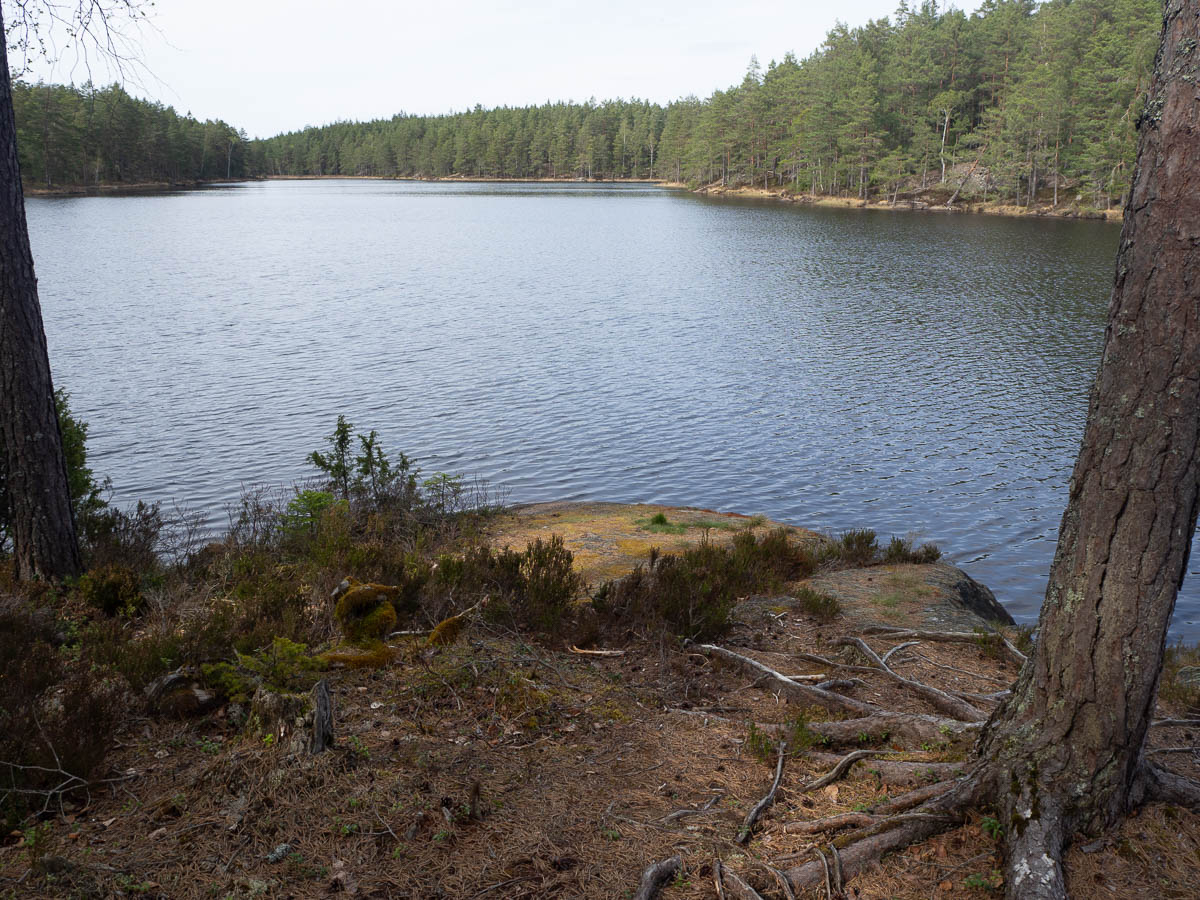
Stage 18 is one of those hard-to-reach ones. The beginning is on a road, yes, but that’s about it when it comes to accessibility. There is no parking, even. There is parking at the other end, though, so I walked this stage backwards. (I’ll be walking it forward tomorrow.) Which actually worked out really well – this beautiful lake at the beginning was for me the grand finale at the end of my day, where I put up my tent for the night.

There were several more lakes along the route, almost as pretty. But also a lot of the usual pine-blueberry-mossy-rock landscape, as well as patches of deciduous forests here and there. And clearcuts, but those bring no joy, so they don’t get any photo space here.

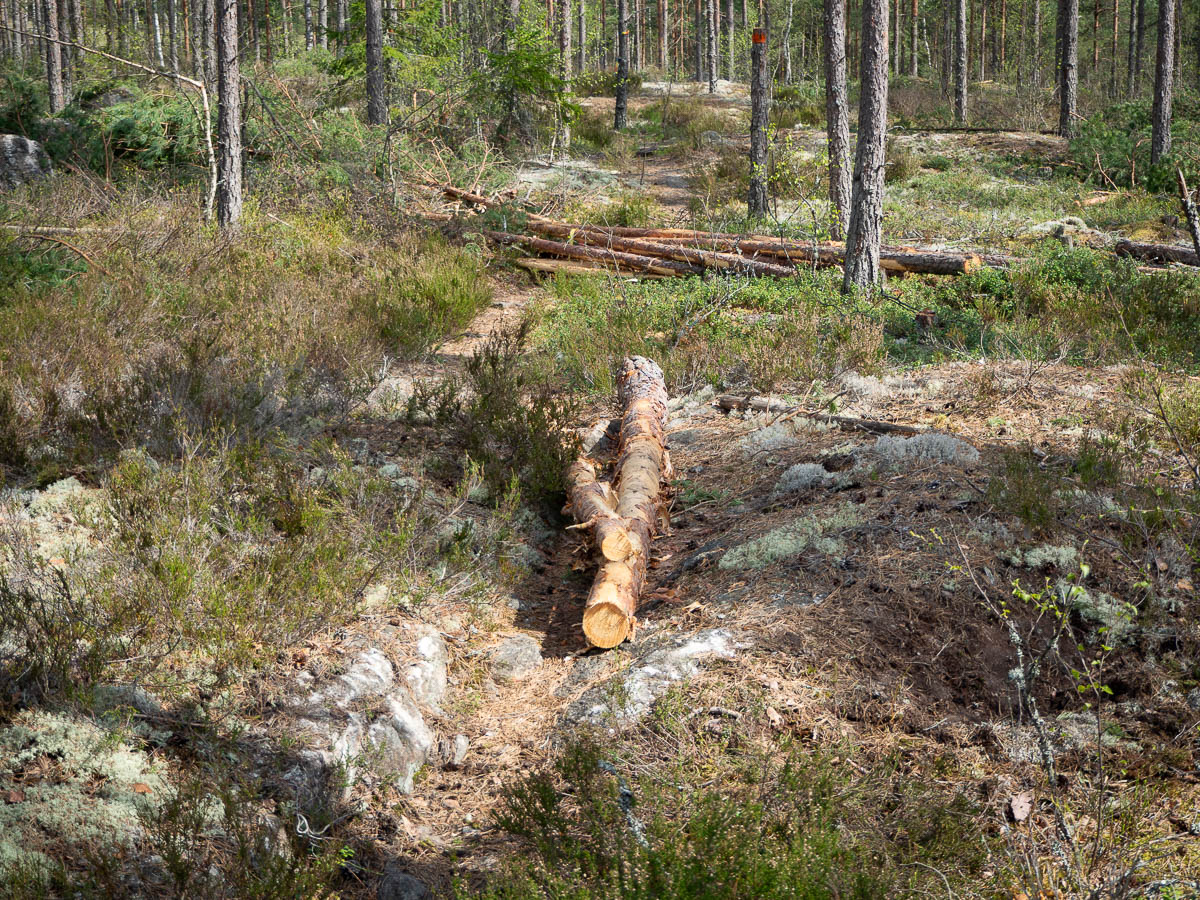
Stage 18 is, according to the signs, also one of the very earliest stages of Sörmlandsleden, from 1973. These days it seems to be a less frequented one, possibly because of that lack of accessibility. It was well signposted and the shelters were in great shape, but some parts of the trail itself were rather overgrown.

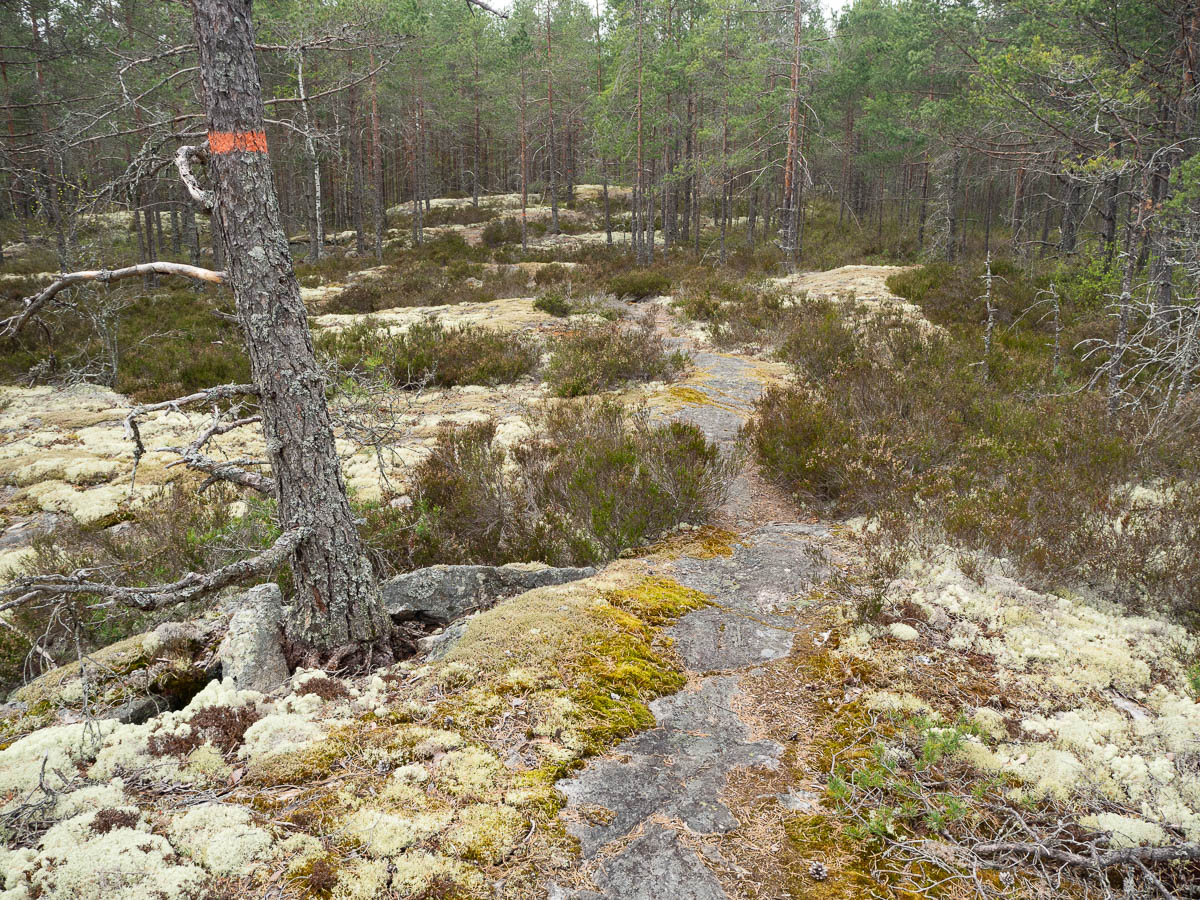
Had it not been for the orange arrow clearly pointing the way, I’d have struggled to find the continuation of the path here. (It goes right into the greenery, at the slightly larger dark patch.)

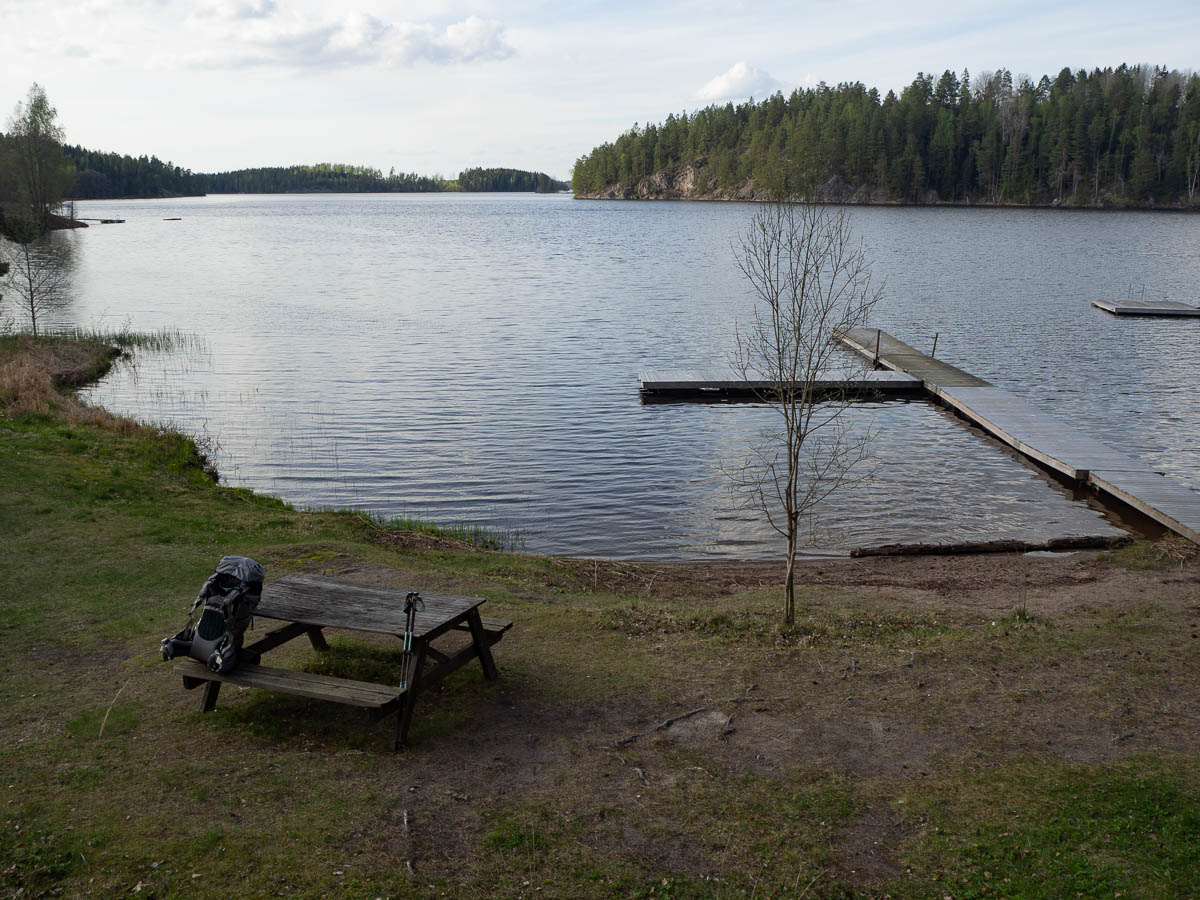
Here’s me having a snack break, with a view over another lovely lake.