Seby to Kastlösa, around 17 km. Flat and straight.
Stage 4 of Mörbylångaleden crosses the Great Alvar along the embankment of an old railway line. Up from Seby to Skärlöv in a straight line for about 9 km, turn a corner, and across the island to Kastlösa in another straight line. As straight as a bunch of engineers with rulers and theodolites could make it.
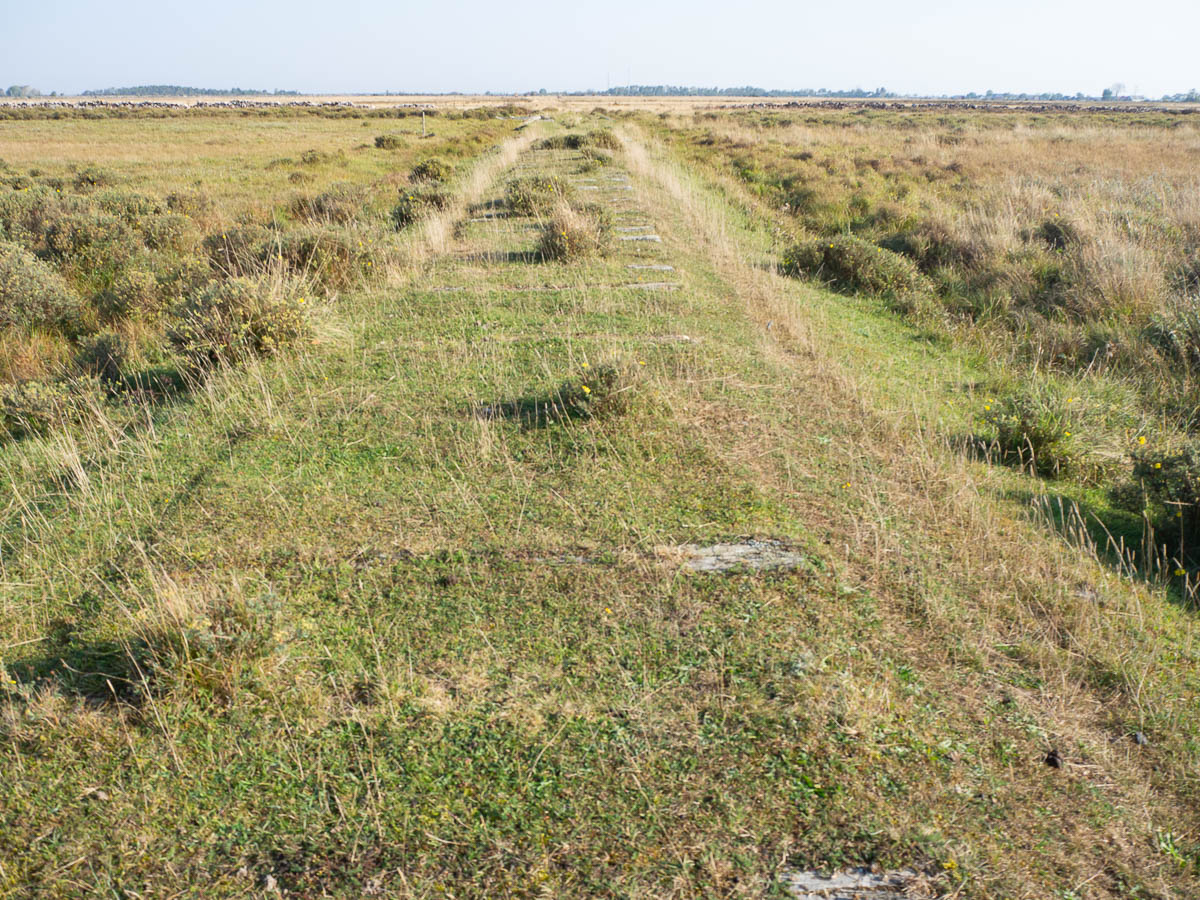
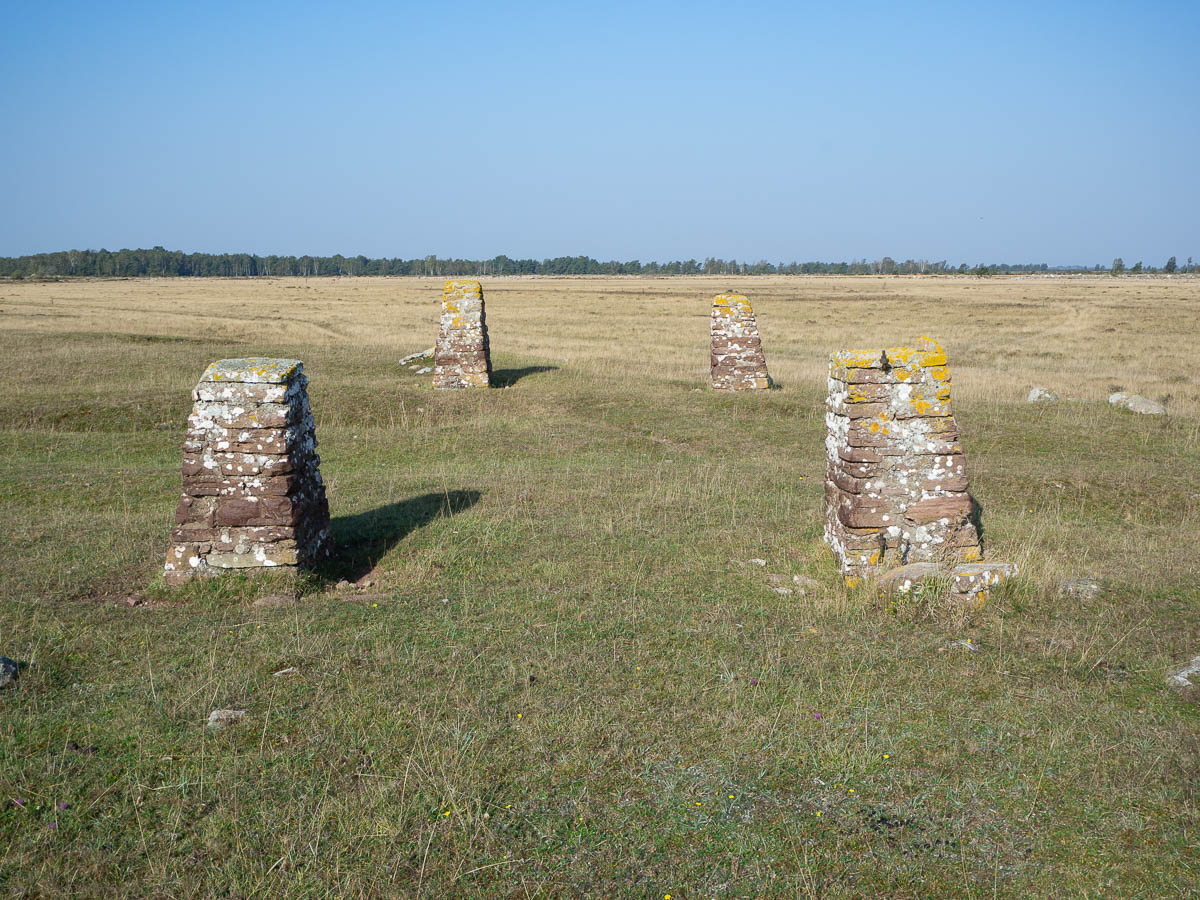
The railroad was opened in 1909 and kept going until 1961, despite economic problems. Mostly it transported beets and other agricultural produce, with only little passenger traffic. Now it’s all gone, except for small traces: the embankment, some pieces of railway sleepers left in the ground, old station buildings converted to private residences. These pillars in a square arrangement I assume are signs of an old railway crossing.
First things first, though: I needed to top up my water supply. The trail passed close to the village of Övra Segerstad, so I left my pack by a cow stile and went off door-knocking. A Wednesday morning in September isn’t the best time, but I was hoping to find retired people. Instead I ran across some kind of AirBnB or some other kind of holiday rental place, where the host was cleaning up after the season.
After that point, there was no more water to be had along the trail all day. And it was a very good thing I filled up, because the day was hot as anything. It must have been 27–28°C, and of course no shade again.
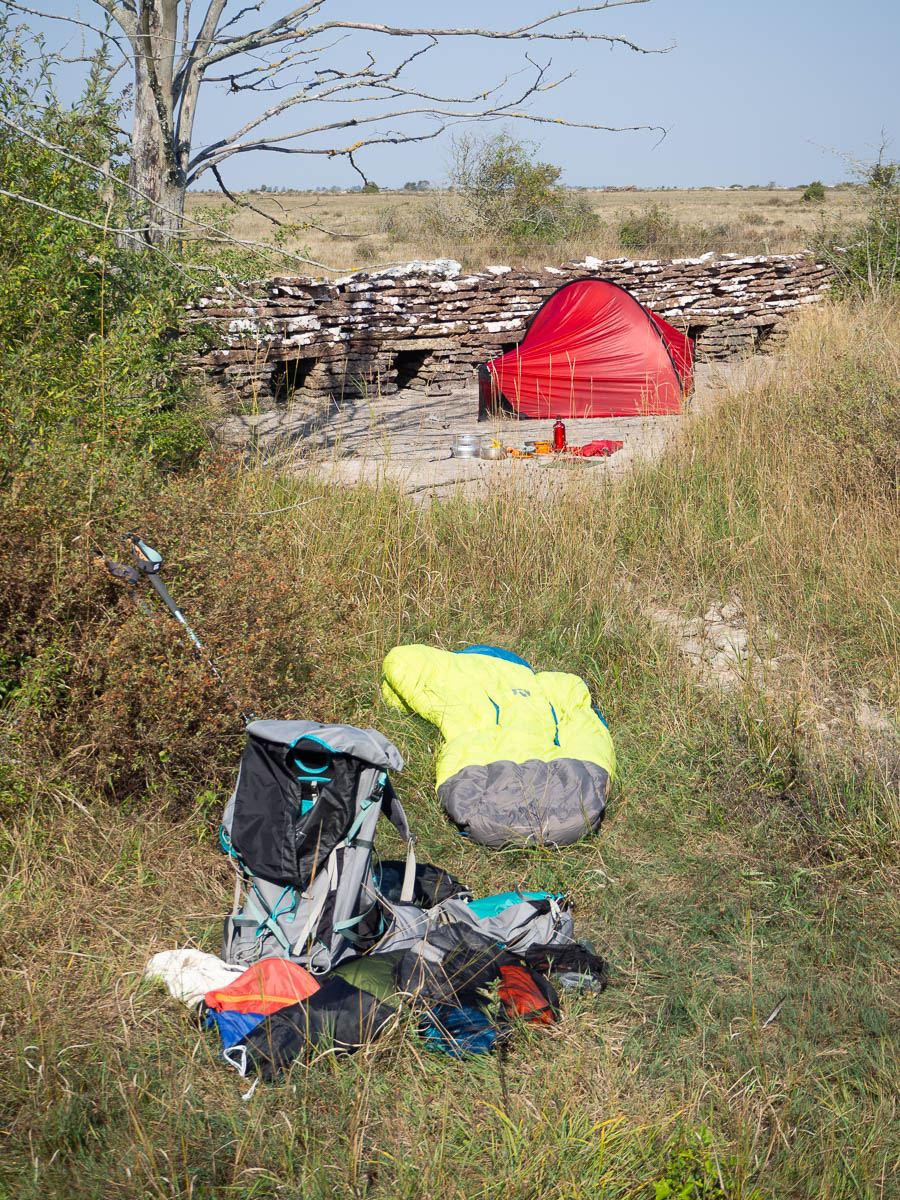
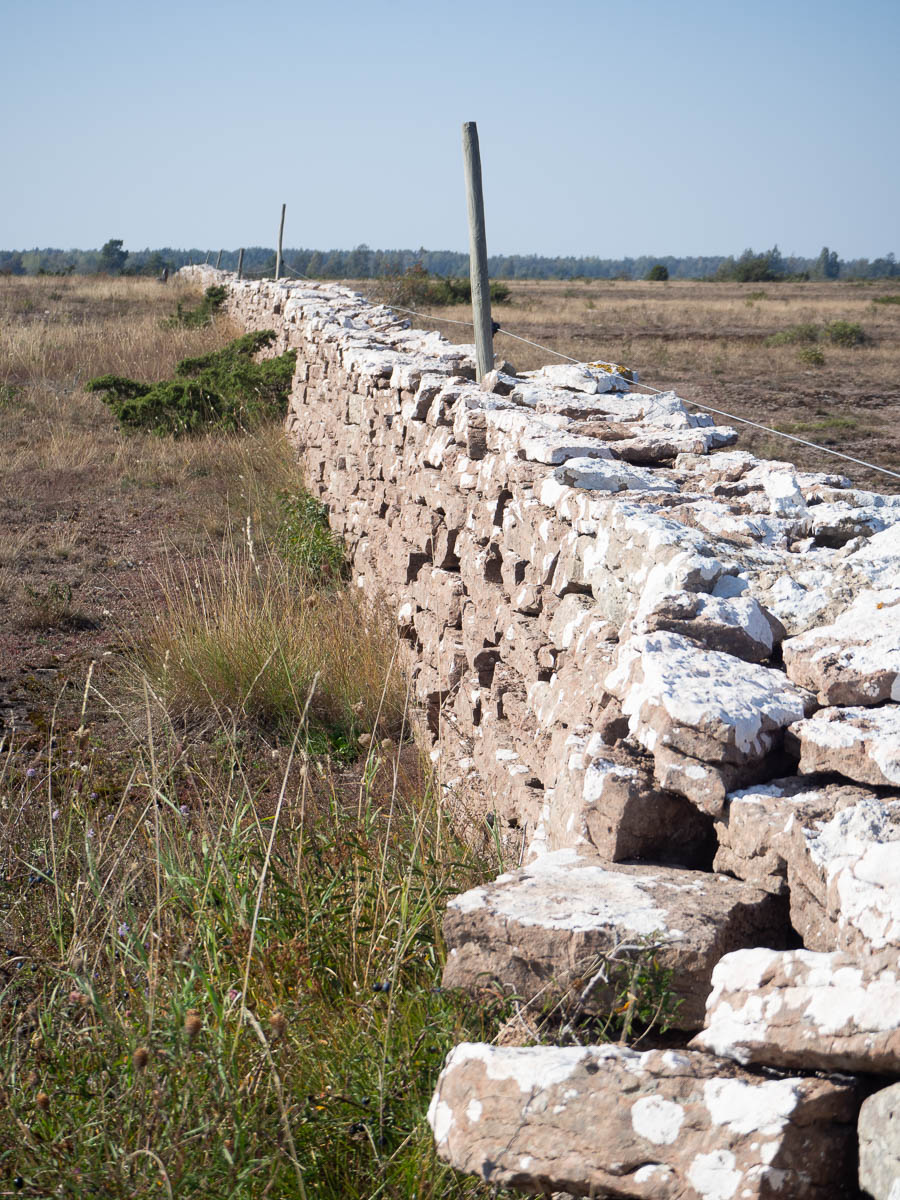
There are no streams here, unlike the Fells, and no lakes, unlike in Sörmland. There are streambeds where there have been seasonal streams, but at this time of the year, they’re dry as dust. Here’s me camped for brunch and tent-drying, literally in the middle of a dry streambed (because it was conveniently flat) – note the openings at the bottom of the wall to let the water run through.
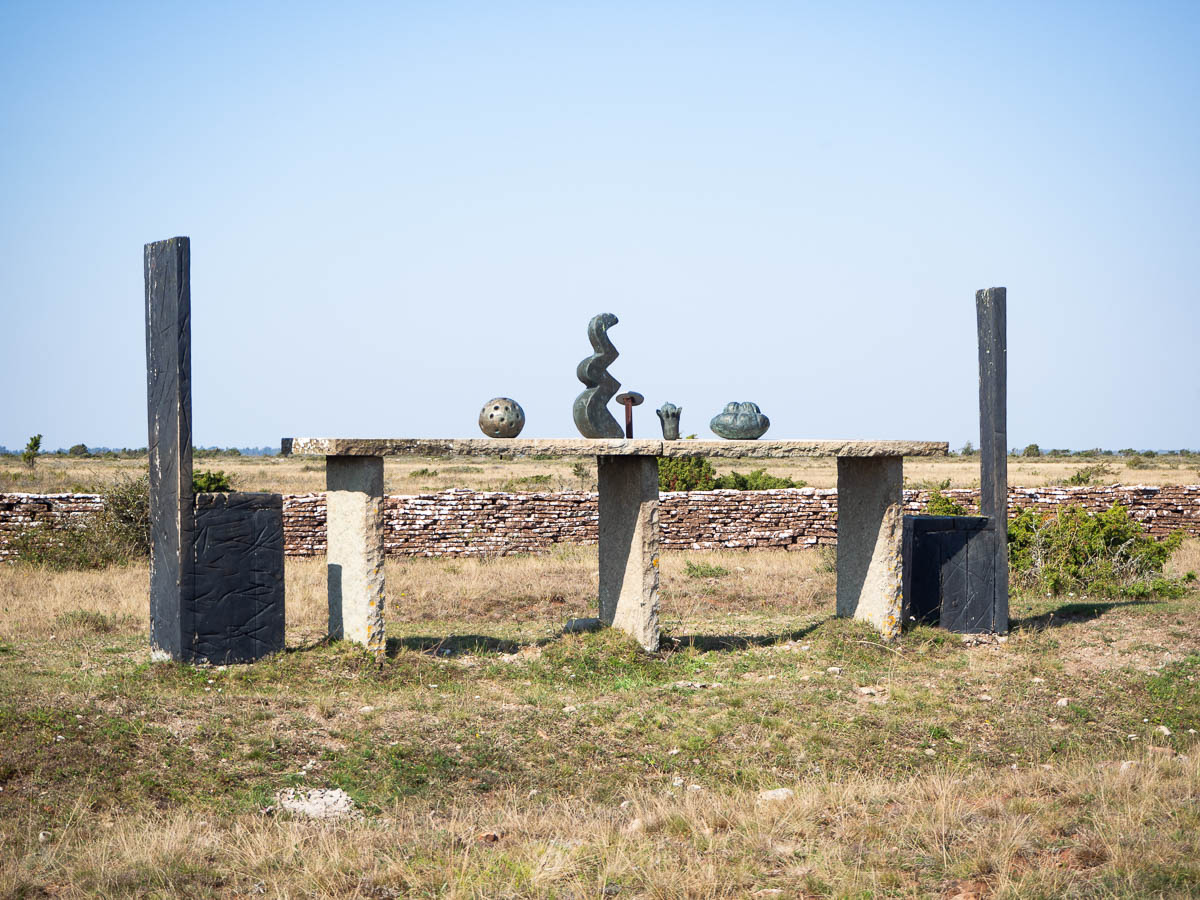
A section of the trail south of Skärlöv had been turned into a sculpture path, with sculptures in steel, bronze, and local limestone. Nothing mind-blowing, but each one was a brief, welcome break in the otherwise very uniform path.
Have I mentioned that it was very hot? It was. I was not enjoying the summer heat at all. It was rather exhausting. And there was no point in stopping because there was no shade, and it wouldn’t have been the least bit restful. As soon as I found a tree that provided some semblance of shade, I aimed straight for it to rest my legs and drink lots of water, even though I had to force my way through a minor thicket of sloe bushes to get there.
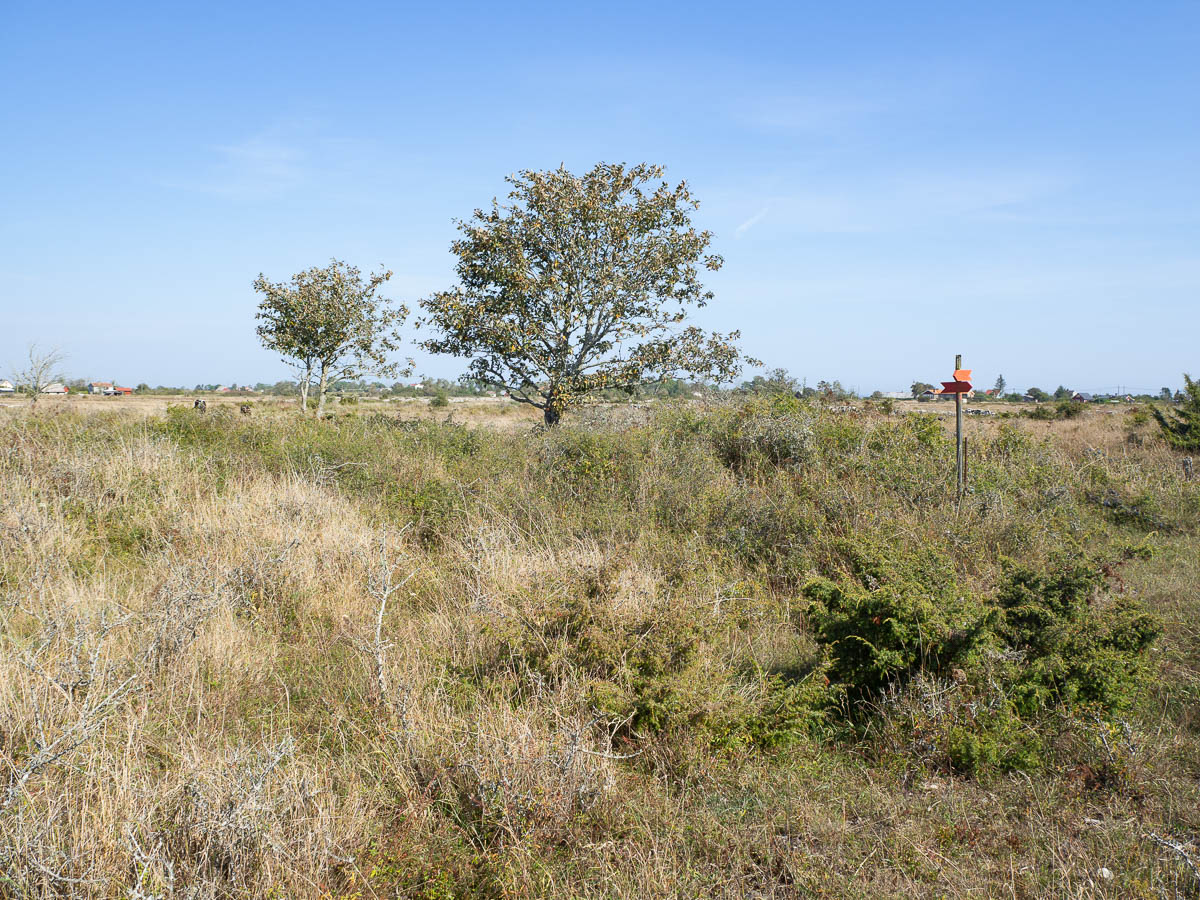
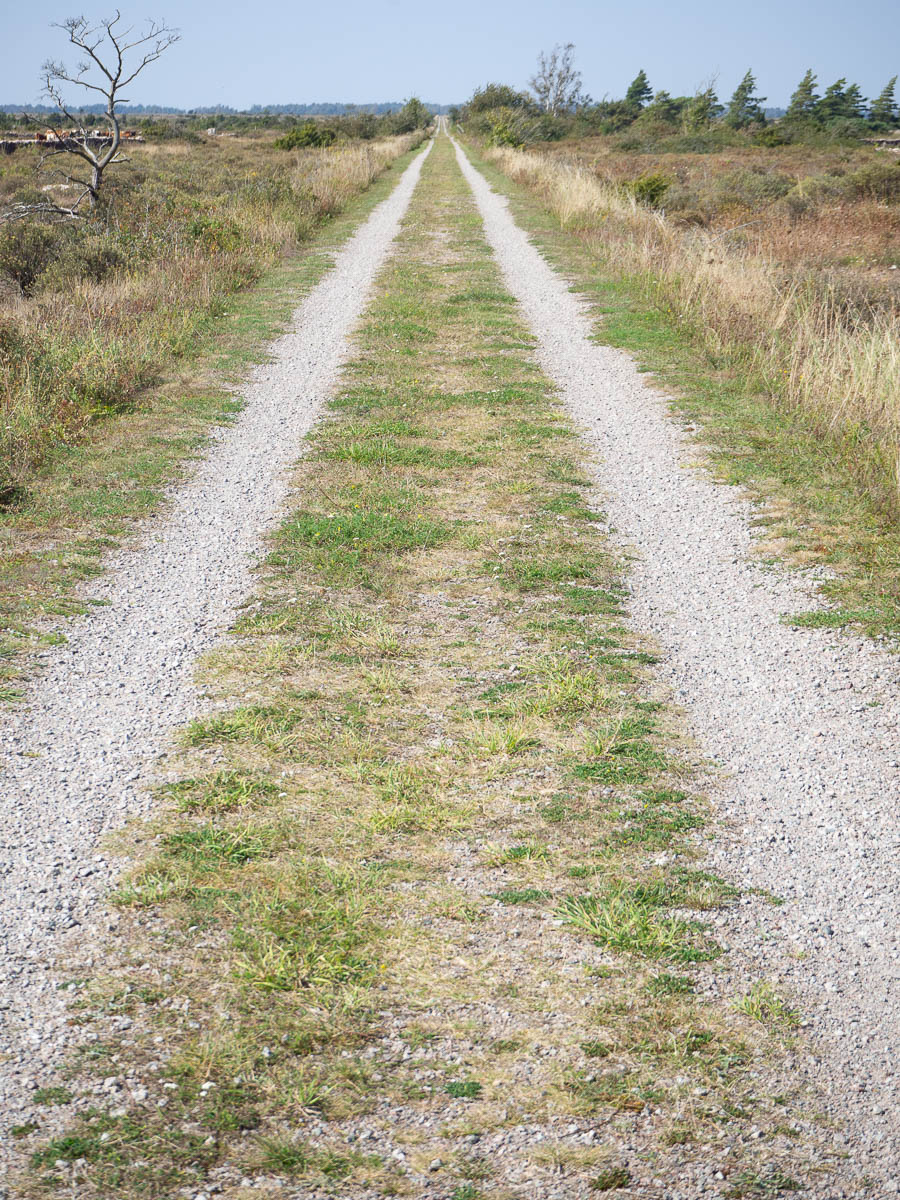
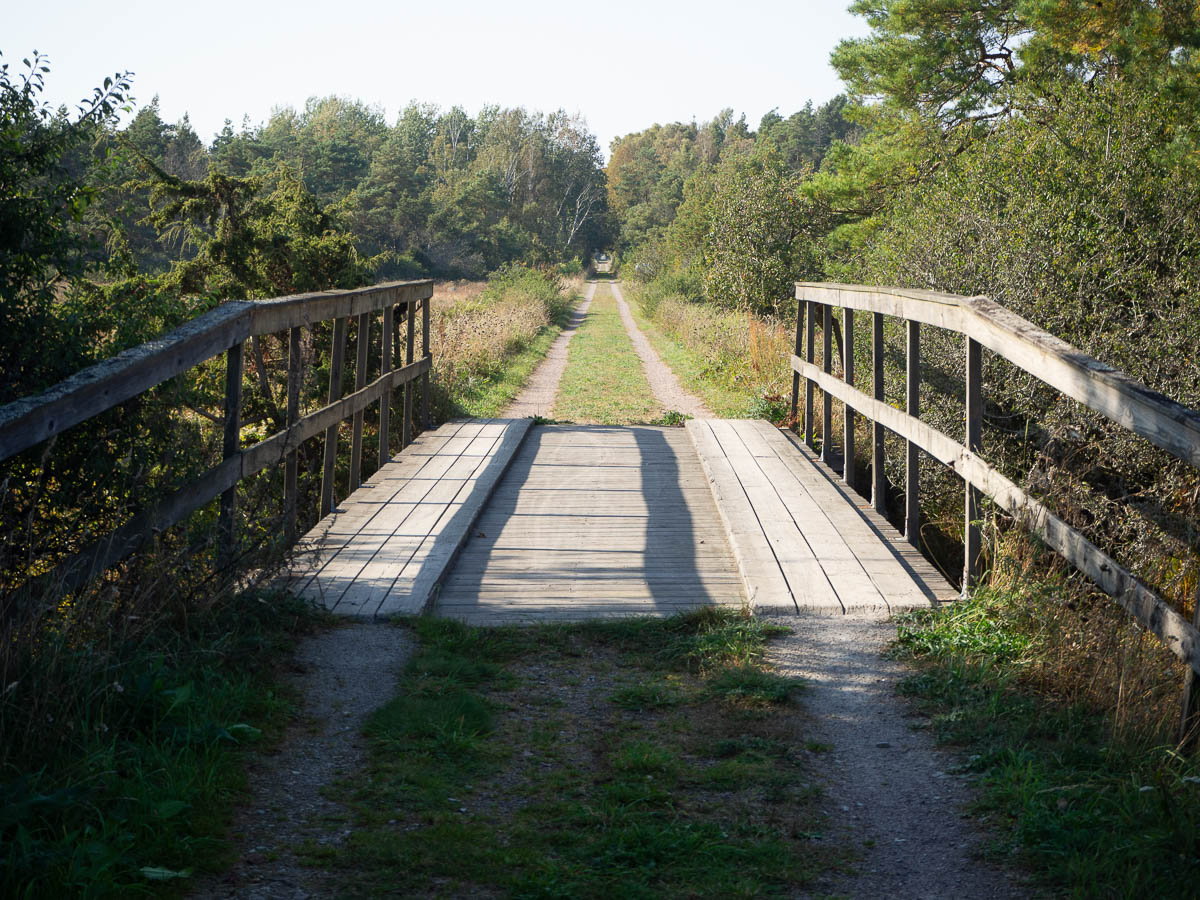
South of Skärlöv, the embankment had been partly overgrown and clearly didn’t get much traffic. The section west of Skärlöv, on the other hand, has been converted into a gravel road, and though it’s closed for through traffic, clearly it gets enough usage to remain open and drivable.
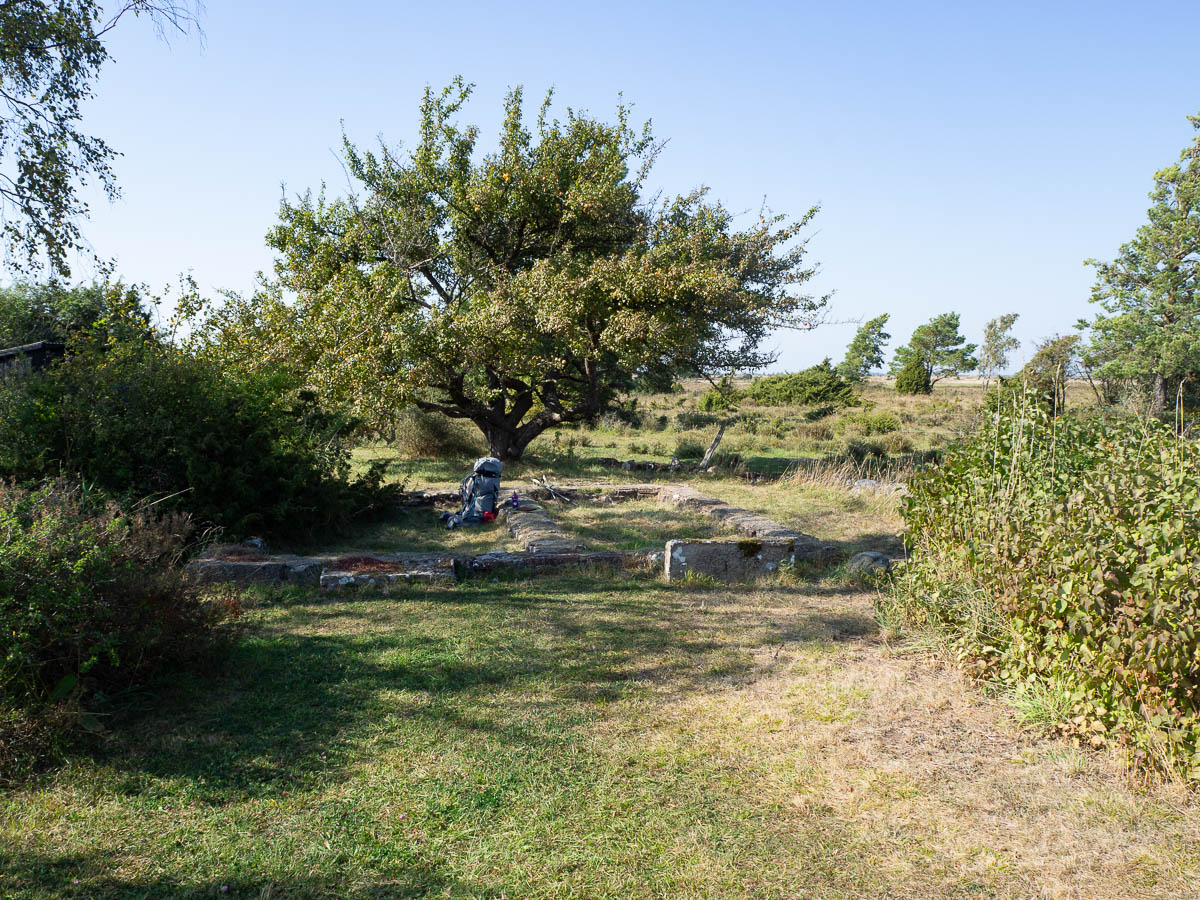
The heat was still exhausting. When I got to a shelter a kilometre after Skärlöv (at the ruins of an old railway attendant’s hut) with proper shade from large trees, I stopped for a long lunch break underneath an old, wild apple tree.
Fed and watered and rested, I set off again along with renewed energy. It could have been boring: the road straight as an arrow, the alvar flat as a pancake, and mostly featureless. Not even cows, mostly – I guess there wasn’t enough for them to drink here. But after lunch I got into the proper frame of mind for it, and found it very meditative. Like listening to minimalist music. Lots of time for thinking my own thoughts.
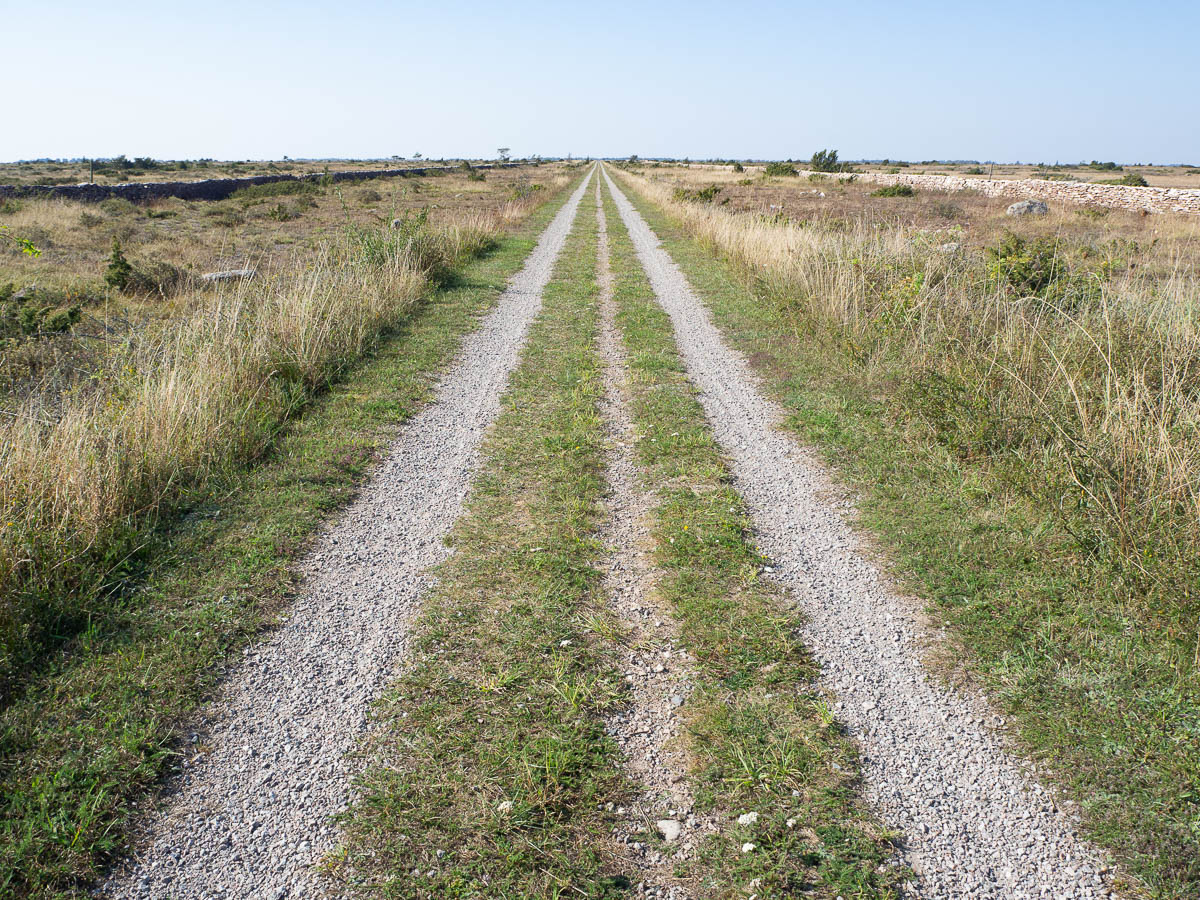
This may look like a boring hike, but for me it was perfect. Meditative and calming, exactly the kind of break I needed from the turbulence at work. And beautiful! Photos can’t do it justice, because a big part of the beauty of the landscape is the feeling of wide open space, of an endless sky, of being a small speck of a human in a timeless space.
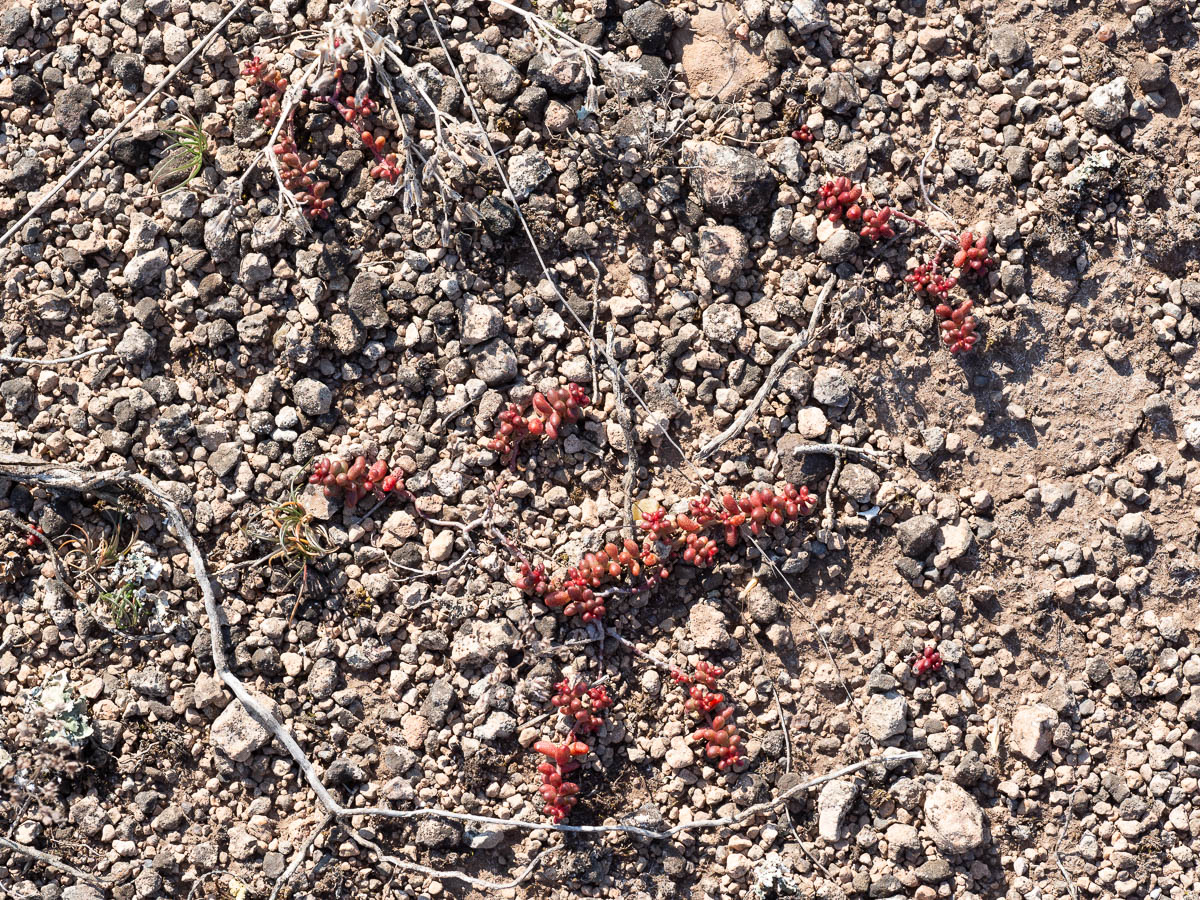
Much of the alvar looks like grassland, but in places there were signs of what were probably seasonal wetlands. At this time of the year, though, they were all dry. Some places were nothing more than bare rock and gravel, with tiny succulents holding on to nothing.
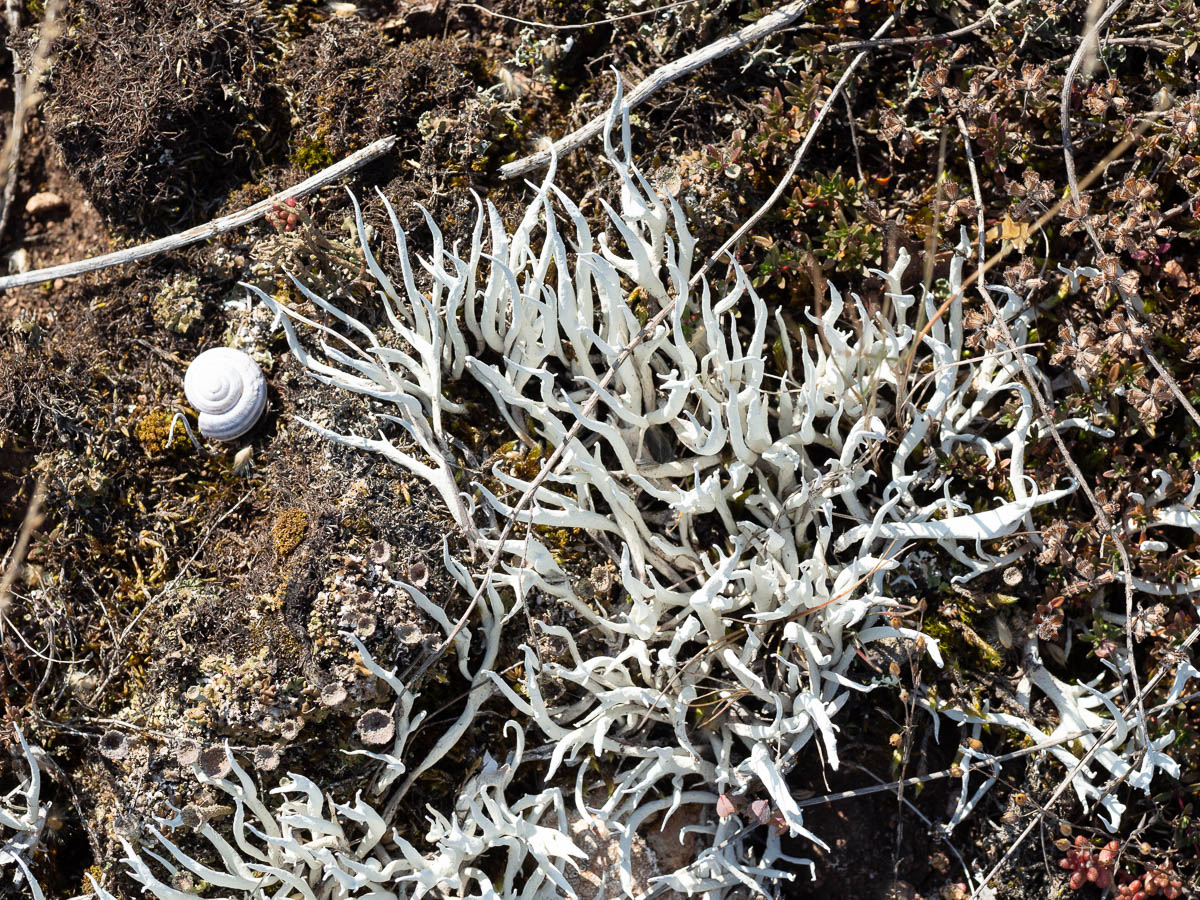
Whiteworm lichens, Thamnolia vermicularis.
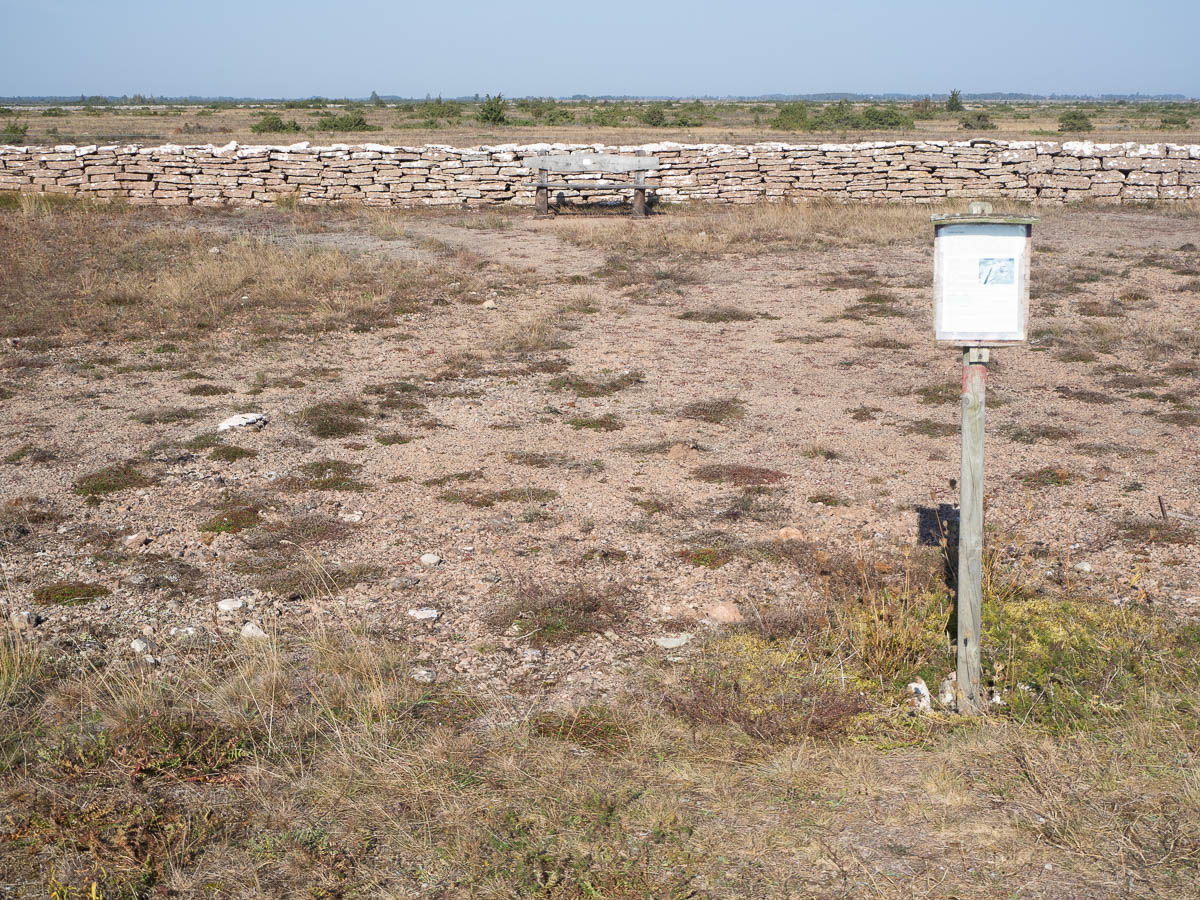
And then, in a random spot, kilometres from everything, with nothing in particular to look at – a bench and a faded information plaque.
Closer to Kastlösa the landscape got more ordinary again. The alvar was interrupted by small copses of trees.
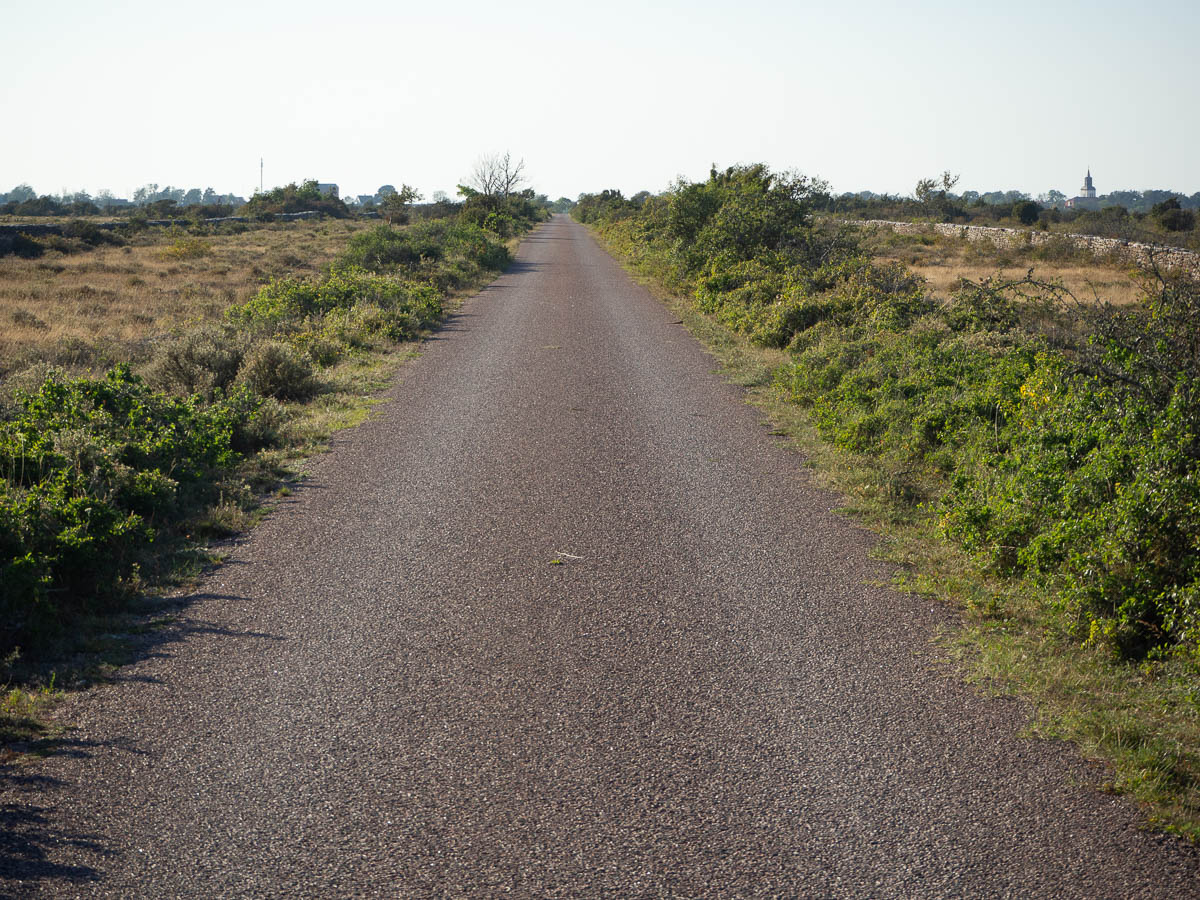
The last bit was paved road. It may look convenient but isn’t. I find that walking on asphalt with a heavy pack, especially after a full day of walking, is painful and uncomfortable. It especially makes my feet hurt.
There was no shelter and no camping site in Kastlösa, but I think the meadow where I put up my tent must have been a camping site for camper vans in the past. There were flat, even grassy fields, and lamp posts, and what looked like charging posts. And a path that was very popular with local dog walkers.

Leave a comment