A lot of this past month has been taken up by the Christmas holidays, pushing all normal routines to the side.

One of our projects during the holidays was ice skating. This is something Ingrid has wanted to do for a while. We bought skates for Ingrid and myself and went out skating several times.

I have to say, the modern plastic-booted skates they make for kids nowadays are great. I remember sitting on a bench next to an ice rink when I was a kid, pulling at those infernal laces with freezing hands. And still the skates ended up floppy around my ankles and too tight around the foot at the same time. Now it’s just click, click, and the buckles are done, and off she goes.

Ingrid took skating as a challenge, as usual. It seemed important to her to be able to say that she can skate. At first she was claiming she could skate just because she could stand upright on them and move forward while holding on to my hand. I explained that skating while holding on to my hand is like swimming with floaties – you’re moving but it isn’t really right to say that you can swim – and that “I can skate” means gliding (not tottering) and without holding on to anything. She immediately focused on those two things, and made progress straight away. She holds my hand while getting started and picking up a bit of speed, and then lets go for a brief independent glide. Rinse and repeat until tired. I still wouldn’t say that she can skate but it’s an activity that we can enjoy together.

Much of life is a competition for her. Apparently she’s not alone about it. One day a friend of hers was here and they happened to stand next to Ingrid’s Bamse magazines. The conversation went like this:

Ingrid: Look at how many Bamse magazines I have!
Friend: I have more!
Ingrid: I have this one, and this one, and this one…
Friend: I also have this one.
Ingrid: … and this one, and this one.
Friend: I have many more at home.
Eric gave her a “weekly Bamse” as a Christmas gift. (“Vecko-Bamse” to complement her pocket money, “veckopeng”.) It’s not a subscription but a stack of old issues that he bought in a charity shop, and she gets a new one every Saturday.

Bamse is just the right kind of reading material for her. It’s a comics magazine, so there’s lots of pictures. (She still likes books to have pictures on every page.) The texts are short and simple, and in capital letters, which she prefers.

We tried one issue of Kalle Anka (Donald Duck) but not only was it in lowercase, it was also full of words like “ämnes­omsätt­ningen” (meta­bo­lism) and “outhärd­ligt” (unbear­able) and “obliga­tioner” (bonds) and so on. I kept having to read the hard words for her and then explain what they meant, so she kept losing track of the actual story.

But with Bamse she can sit and read on her own. One morning she spent an hour just reading. She doesn’t like it quite as much as the iPad but it’s clearly a fully acceptable substitute when computerized entertainment is not available.

Apart from Bamse, we’ve been reading Tam tiggarpojken, a Swedish fantasy series for 6 to 9-year-olds. It’s a bit challenging for her, but in a good way. Things are not spelled out as explicitly as in books for younger kids.

At first I just read the books, but it turned out that she really didn’t understand large chunks of it. Now I stop every now and again and ask her about what I just read. Sometimes she’s with me, but other times she has no idea what’s going on or why. So I read it again or explain it in simpler words or in terms of something that she can relate to. More and more I do so with other books, too. It’s good for both of us: makes me read more actively and her listen more actively.

Most often it’s the why I need to explain. I wonder if it’s like that for her with life in general, not just with books. Things happen, and she either has no idea why (but it doesn’t bother her) or she makes up some sort of reason for herself that is very far from reality.

Other news:
Lördagsgodis still works well. It’s so nice to be free of the nagging during dinner on weekdays. Yesterday she bought candy for 6 kronor (about a dollar) and it lasted her an hour. She sat at the kitchen table for an hour, reading Bamse and eating candy. The moment she was done she left the Bamse magazine and went and picked up the iPad. (All optimised to follow the house rules: “No eating candy in the living room”, “No using the iPad while eating”.)
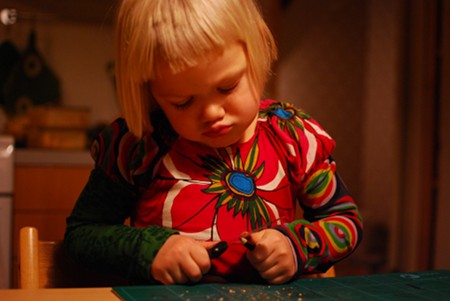
I’ve let her use a knife for sharpening pencils and for paring apples, i.e. cutting things that are hardish and held in the hands rather than on a cutting board. She’s a bit of a wimp when it comes to blood and getting hurt, so I’ve been saying no until now because I didn’t want to face the wailing that would come if she cut herself. But she managed it very well.

The positive moments have been more frequent this month, and the general tone of Ingrid’s life is a little bit less negative than before. In part I think the Christmas calendars are to thank: there is something new to look forward to every morning, and a new video clip to watch every afternoon. So she gets the entertainment she craves, and that keeps her in a better mood.

I’ve been making an effort to spend more “quality time” with her in the evenings. I am not very fond of the concept of quality time but when she is not interested in normal time spent together doing normal activities, then somewhat-artificial quality time is better than nothing. At the same time she is spending fewer afternoons with her friends. We used to have kids in our house two or three times a week; this week we haven’t had a single one. I’m not sure if it is a coincidence, or because of frictions in their relationships – or if this is less important now that she gets more time with me.

We also let her spend more time with “entertainment devices” – movies and iPad games – than before. Previously I’ve tried to limit screen time and asked her to find other activities instead, but we’ve pretty much given up on that. All it leads to is whining and complaining. Now I only say no to movies/iPad when it’s getting close to bedtime, so that she can get a chance to get bored and realize that she is tired.

We (Eric and I) do try to think of activities that impose an active role on both participants, so she cannot just coast along. We insist on taking turns when playing I spy or when drawing together. I refuse to make decisions for her when we’re doing crafts, or to finish the task for her when she gets bored – our recent projects have been really small but they’ve taken several evenings each. She has little persistence and is unwilling to expend any real effort on anything. I often have to remind her to slow down, to do things properly instead of rushing. For her it is more important to make many things fast, while I’d rather see her make a few but with care – regardless of whether she’s making gingerbread cookies or writing Christmas cards.

In creative activities and games she will reuse the same ideas over and over agains, and I’ve started rejecting those. No, we will not draw another princess in the Scribblenauts sandbox – you’ll have to come up with something new.

One small positive development is that she is more likely to choose iPad games instead of re-watching a movie. A virtual tea party on the iPad is a much more passive and lazy activity than a real tea party with her toy china would be – but she is at least doing something rather than just sitting and watching.

She still thinks that almost every activity is boring, and to most ideas and suggestions, her first reflexive reaction is negative. If things are not to her liking, she is immediately deeply disappointed and sour. Sometimes it feels like “nöööh” and “but whyyyyy” are the most frequently spoken words in our household.

When things are fun, she often overreacts in the other direction. She can’t let an activity be just simply fun – she has to squeal and force out a loud laugh and turn it into a performance.

She spends a lot of time reacting, and rarely listens or reflects. I get the impression that it is very rarely that she thinks about what she wants, what she likes, what our suggestions entail – she is governed by emotions. Or hormones, perhaps.

A more interesting development is that she is exploring the power of sneaking and of telling untruths. When dinner doesn’t meet her expectations, she tells us “I don’t like that”. You still have to try it, is our standard response. “But I already have. We had this for lunch at preschool and I didn’t like it.” Well, I can be very sure that they did not have beetroot soup at preschool, nor oven-baked aubergine with mushrooms.

One day I caught her nibbling on a small piece of candy she had taken in a convenience store. We had a very serious talk (but a brief one due to circumstances) about stealing, and I think she understood the importance of it. But the whole situation was also a bit funny and I had to make an effort not to laugh: she clearly knew that what she was doing was wrong, so she had gone into a corner of the store and stood with her face towards the wall. She was so conspicuously up to no good that I could spot it from the other side of the store.

Actually, her poor lying and sneaking skills are a good reminder to me about how immature she really is in her understanding of the world around her, and of other people in particular.

The candy incident made me think that perhaps our current sweets regime is not working for her. Until now we’ve stayed away from the lördagsgodis concept, going for “everything in moderation” instead, but now we’re giving lördagsgodis a try. My hypothesis is that with our current regime she never feels like she’s been able to eat her fill. She’s always left unsatisfied, wanting more. Well, if she gets to eat lots in one go, perhaps she will feel satisfied afterwards. We’ve only tried it for a week and a half so too early to tell if it’s working better. For now the main effect is that the daily nagging of “Are you done eating? When will you be done? Will you be done after you finish what is on your plate now? Can I bring out the sweets while you’re eating?” has been replaced by daily reminders of “I can’t have any sweets today if I want lördagsgodis.”

She is pretty obsessed with sweet stuff. She described this past Sunday as “a happy, happy day!” (“en lyckodag”) – a slightly sweeter-than-normal cereal for breakfast, then saffron buns after her last kids’ judo session for this term, then gingerbread cookies and ice cream at a birthday party.

One thing that’s struck me is how little curiosity she shows. She rarely asks about how things work, how the world works, or about words she doesn’t understand in a book I read for her. Sometimes I pause and ask her, “do you know what andedräkt means?” and she says no. But she never thinks to ask me.

She is reading and writing better than ever, even though she hardly gets any practice. She is even reading a little bit more fluently in Estonian. She is also more confident with numbers – when adding 7 + 6, for example, she no longer counts first 7 fingers and then 6 more fingers & toes and then counts them all together. She says “7” and then counts “8, 9, 10, 11, 12, 13” while holding up one finger at a time, which means that she can “count” six fingers without actually counting to six. What she still lacks is a feel for numbers greater than 10. She can in all seriousness suggest that 7 + 7 is 9. But when I pointed out that 5 + 5 makes 10, and 7 is greater than 5 so 7 + 7 should be more than 10, she agreed, and quickly said “10… and 1, 2 makes 12, and 1, 2 more makes 14”.

I am already thinking that next year she’ll be going to school. Schoolwork won’t be a challenge for her. What I’m concerned with is the risk of boredom – and when schoolwork catches up with her, I worry about her ability to apply herself, to actually work. But perhaps it is too early to worry about that now.

Favourite iPad games: everything from Toca Boca, especially Toca Tea Party, Toca Store, and Toca Birthday Party.

Favourite book: Printsessijuttude varalaegas, a pink book chock-full with princesses. We’ve read it almost daily since she got it for her birthday. I am getting really tired of princesses.

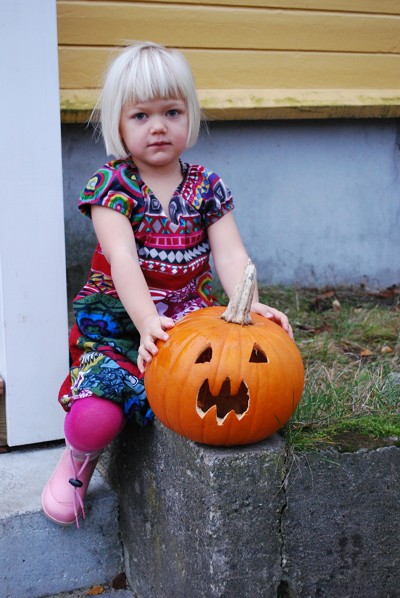
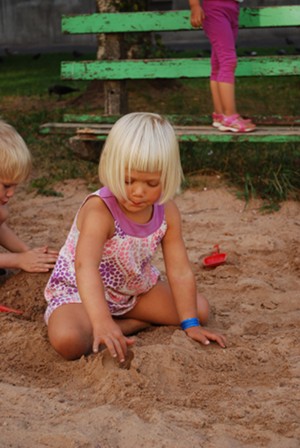
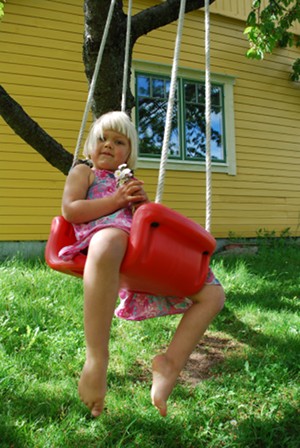
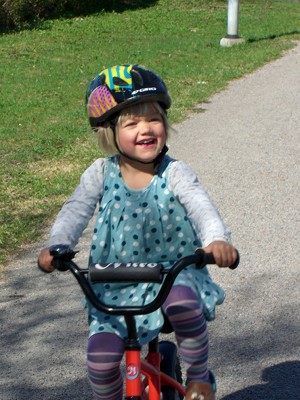
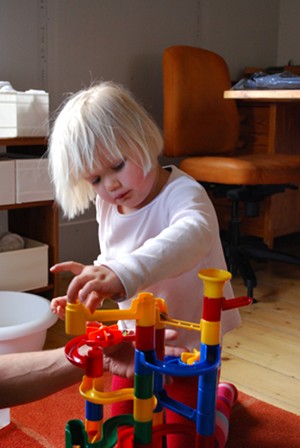
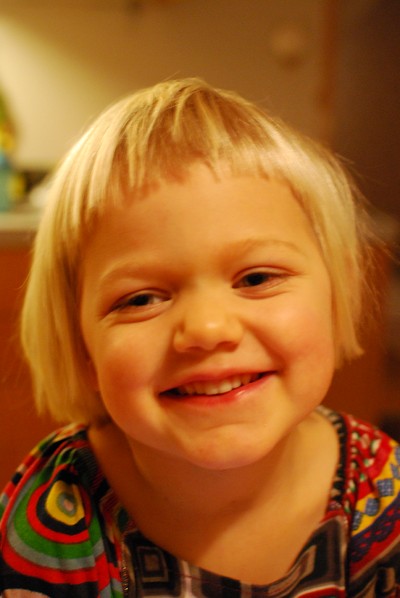
Other small stuff: earlier this week she let a friend cut her hair. (You can see some traces of it in the first photo above. Eric evened it out where possible, but there are still some gashes in her bangs.) It’s the kind of thing I’ve read about – kids cutting their own hair – but never thought that Ingrid would try it. We had been saying for a while that we really should cut her hair. I guess she got tired of waiting and took things in her own hands.

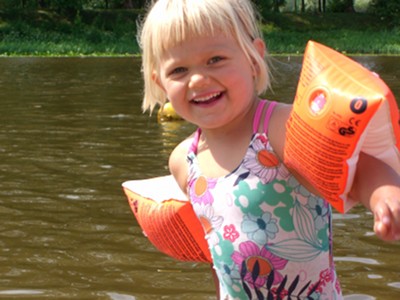
I found a usable photo of Ingrid for this month after all.

There hasn’t been much news this month, so I’m going to try and write more generally about some aspects of Ingrid’s personality this time. Specifically, the aspects that stand out and that I notice most, and those that have changed most over the past few years.

When Ingrid was about half a year old, someone described her as “strong, glad and active”. We hadn’t thought to describe or summarize her personality, but when we heard that description, we found it very apt. That is exactly what she was like. And the description remained applicable for years.

Now it really doesn’t fit any more. Strong she remains. But “glad and active” have been replaced by “surly and unimaginative”. Unlike some previous downswings, this has been going on for months, so it doesn’t seem to be a short-term negative phase.

Somehow, somewhere, she has lost the joy of doing things, the desire to be active, to create. Now she wants to be entertained instead, to consume. She used to like so many things: drawing and painting, writing, all sorts of crafts; jigsaw puzzles, singing, word games; helping us cook or bake, pick clothes for Adrian, take photos… Now she thinks everything is boring, and really only likes watching movies, listening to a book, and playing with friends – and any sort of activity where someone else (primarily Eric and/or I) provides the creative energy.

She will reject all suggestions to actually do anything as boring. She does not want to do any of the things that she used to enjoy. And when I do get her to participate in some sort of activity – painting or some sort of crafts – she seems to focus mostly on finishing and barely enjoying the process. She asks me to finish it because she “is tired” or because “you can do it faster mommy”. It’s more about getting it done than having fun. She optimizes for (what in my opinion is) totally the wrong thing.

She has no interest at all in joining us in things we do, whether it’s cooking, baking, emptying the dishwasher, raking leaves in the garden, going to the supermarket, or anything else. She perceives and notices the effort but not the joy of doing things.

She lost her creative drive, her imagination. She hardly ever draws, or sings, or makes up silly word games. And if she does draw it’s the same things as before, and when she does make up silly stuff it is silly stuff she has made up before. When we play games that require fantasy, she always wants to take the passive role. When we play the I spy game, or any other guessing game, she never wants to be the one to guess – she wants the role that doesn’t require any real effort. And if I want us to take turns, she suddenly doesn’t want to play that game any more. Eric and I now make a conscious effort to avoid such unbalanced games and choose ones where both players have to put in equal effort (such as ett skepp kommer lastat and so on). Even so, when it comes to the point where it gets a bit hard, where she needs to exert herself, she’d rather give up.

When we make up stories or pretend something, she wants me to come up with all the ideas. She can even be bored at Junibacken, or a swimming pool, and keeps asking “What shall I do now”.

Possibly related to this – she suddenly cannot or doesn’t like to make decisions any more. She wants us to choose clothes for her in the morning, to choose a plate and cup for her, to say what sweet she should have after dinner, to choose the book to read at night. But when we do choose she usually rejects our choice anyway, which gets pretty tiresome after a while. We now generally refuse to make the decisions for her, or if I do decide, I will not let her override it. Otherwise we are back to the usual routine – us contributing positive, creative energy and her either consuming it, or overriding it with rejection or negative comments.

I wonder how much of this is specific to Ingrid, and how much applies to most five-year-olds. I don’t know any other five-year-olds well enough to know.

I wonder how this came about. I wonder if it is a phase, whether she will outgrow it or whether we need to somehow help her out of it. (How do you teach someone to enjoy doing things?)

I also wonder if this is all somehow related to her being clever but not wise. She is ahead of her peers in cleverness (reading and writing and game strategy and planning ahead) but lacks wisdom and common sense. Has she in her cleverness “seen through” the “game”, decided that you “win” by getting the most done with the least effort?

Ingrid is five years old. Such a big girl.

She is so mature in some ways that it is easy to forget she is really just a small child. She is very verbal and forward and in some ways very smart, reads and writes. But then she does something that reminds me how young she is.

She is mature in her planning. She can think many days ahead, and plan for those days. She saves her finest plate and cup (with princess pictures) for special days, such as a Sunday, or when her best friend will come to visit. She saves the best part of a meal till last, “as dessert”. With sushi, for example, she first eats all the rice, then the salmon, then finally the prawn.

She is immature and naive in her worldview. She believes in fairies and in falling stars, believes that your wish will come true if you see a falling star and whisper your wish. (Disney’s The Princess and the Frog put that idea in her head, while Shrek and Sleeping Beauty and Cinderella “taught” her about fairies.) She wishes for a pair of wings, “two real wings that you can put on and take off, that fly for real, and they should be white and silver and pink and turquoise”.

She is immensely immature in her relationships with other people, both kids and adults. She bosses around her friends and is then puzzled and upset when they object to following her directions. She is pretty bad at reading others’ emotional state and at putting herself in their position. Very self-centred and very anxious to be in control. She absolutely has to keep an eye on which colours of candy friend M chooses, and make sure that she herself gets the same or better. She insists on opening the refrigerator when friend E wants to get a yogurt, not because she wants to help but because she wants to keep an eye on E and see what she does at that fridge. Millimeterrättvisa, “millimetre fairness”.

But at the same time she can draw pretty reasonable conclusions about what facts other people should know. She is much better at figuring out what others know than what they feel. The other day Eric said something about a friend of hers (that her friend T had been in a bad mood during Ingrid’s birthday party because she’d gone to bed very late the day before). Ingrid immediately wondered how Eric could know that. (The answer: He’d spoken to T’s father on the phone.)

She has difficulty judging the passage of time. At a meal she can ask us, “is this lunch or dinner?”, not noticing that it is dusk outside – or not realizing that only a small part of the day has passed.

The games she plays with her friends center on simple relationships. It’s often mother and big sister, mother or baby, or two neighbours, or perhaps cat owner and cat, or maybe doctor and patient. She often turns real life into a game. When we’re about to eat she may tell me “you’re my neighbour and now I’m calling you on the phone and then I will ask if I can come and have dinner at your place”.

She continues to impress me with her reading ability. She reads fast and with ease, except for the lowercase letters b, d and h. They look too similar. She can read fast enough to actually read the lyrics of a semi-familiar song while she is singing it.

Tights and dresses have become her favourite clothes; she rarely wears anything else.

This month Ingrid learned to read. She’s known all the letters for, like, years; been able to read single words for at least six months, and been able to write something that I can more or less read for even longer. Now it’s all come together and she can read: not just single words but proper reading, fast enough that she can read entire sentences and stories.

Sometimes she gets stuck but unless she’s tired or in a hurry, she will reread the word until it makes sense. And she’s pretty attentive and notices when she’s made a mistake. She can read “smörgåsar” where it says “smörgåspaket”, catch that, and try again. My hypothesis is that with long words like that, she looks at the first half of the word, skips to a conclusion, and then reads the last few letters to confirm.

Her first book was En liten stund by Anna-Clara Tidholm. It’s really a book for toddlers: a simple story, about 30 pages, with a picture and a couple of sentences on each page. (It’s about two rabbits who eat pancakes. Lots of pancakes, with lots of raspberry jam and cream.)

This is about the right level for her, so Eric and Ingrid have been borrowing toddler books from the library, and I have brought out her own old books: Bu och Bä, Liten skär, etc. There is also the Extra lätt att läsa (“Extra easy reading”) series, which is at about the same level but the topic matter is geared towards 6- to 8-year-olds rather than 3-year-olds. (Simskolan was particularly topical.) But she quite likes the toddler books, too.

Ingrid’s first book: En liten stund.

Reading other people’s writing has brought up the matter of Swedish spelling. Which is much easier than English spelling, thank goodness, but not as regular as Estonian. She’s learned how to read the sj in sjuk and sk in skiner, and that the g in morgon and the r in bord are not heard. Currently she is struggling with the fact that de (“they”) should be pronounced dom while det (“it”) should be pronounced de – sentences tend to lose their sense when you read “it” instead of “they”. I do wonder why they didn’t use the modernised dom spelling in books that are aimed at beginning readers.

As with everything else, reading is, of course, a social activity for her. She may have read on her own on a few occasions, but she’d much rather read for me or for Eric. (And show us the pictures, just as she wants to see the pictures when I read for her.) Today she had a friend over after preschool, and read Bu och Bä i skogen for her.

Now that she has figured out the art of reading, she reads everything. She reads the text on cereal boxes and on juice bottles, on street signs and on notes from my desk. Annoyingly many texts on everyday goods are in English: slogans and brand names on cereal boxes are a good bad example. (“Kellogg’s Rice Krispies Multigrain”.) We’ve also discussed why some packaging has the same text in Norwegian and Danish in addition to Swedish.

Often when I’m reading for her, I hear her mumbling under her breath some words from the page I’m reading. In particular she often reads the last word from each page.

Other than reading… nothing much, I think. I haven’t spent as much time with her as I used to when I was at home, so now I simply don’t see enough of her to notice minor changes.

She usually spends most of the night in her own bed but often wanders over to her mattress next to our bed some time around 5 or 6 in the morning. Sometimes earlier, sometimes not at all.

In the morning, in bed before we get up, she likes cuddling with me or playing with Adrian.

During breakfast she likes to pour apple juice on her cereal instead of milk. Other breakfast favourites include tunnbrödsrulle with liver pâté and perhaps apple slices, or scrambled eggs.

It is very important to her to give me a proper good-bye when I leave for work: put on her shoes, follow me out onto the porch or down the stairs, then three hugs and three kisses, and wave from the porch until I go out of sight behind the neighbours’ hedge. The ceremony slowly gets longer and longer: first it was just three kisses in the kitchen; one day earlier this week she forgot what she was doing and followed me all the way to the corner, at which point we both laughed at her mistake and she ran back, and now she’s wanted to do it that way every morning.

When I see her again in the afternoon she is usually either watching a movie or playing with a friend. When movie time is up we usually read a bit, or play with Adrian (either all three of us together, or just her and Adrian) while Eric makes dinner. After dinner and after I have put Adrian to bed, we may read some more, or maybe draw.

Most days she will have brought home a drawing or painting for me from preschool. The subject matter is generally girls, princesses, castles, flowers and hearts.

She often uses varför (“why”) in the sense of “how unfair, do I really have to, why must I do this”.

She likes wearing dresses and tights or leggings, and rarely picks any other clothes. I think that the waists on skirts and trousers make her itch.

We’ve been so busy with our vacation – travelling and meeting people – that there haven’t been many days of ordinary life to observe. Almost half of this past month was spent in Estonia. Ingrid loved playing with her friends there and coming home to no friends (all her preschool friends were still away) was a rude shock. There has been much complaining about “nothing to doooo…”

One tool against boredom is the so-called “loppa”, or “loppis” as Ingrid calls hers, a paper fortune teller. (English instructions, Swedish instructions.) It looks like English kids use this toy for telling fortunes. Swedish kids use it as a fun way to give each other tasks. The flaps hide tasks such as “jump 10 times on one foot”, “run 5 circles around the house”, “hug a friend”, “find a pine cone” etc. Making the “loppis” is at least half the fun, especially the colouring and idea-generating and writing. Ingrid has trouble fitting her writing into the small space so most of the time we’ve had to do the writing part, but she has no trouble reading the tasks later. Sometimes she dictates the items to be written, sometimes we do it for her and let her discover them one at a time.

Another boredom alleviator is a CD with Br’er Rabbit tales in Estonian (Onu Remuse jutud). I had these records when I was a child and remember listening to them over and over again, and knowing large chunks of the text by heart. “Kirbud, kirbud, hundionu!”

From this CD and from books she’s started picking up unusual and bookish expressions and asking about their meaning, and trying them out in her own speech. There’s been a lot of kuid and ning and plaan läks luhta recently. On the flip side she is also learning words like puupea (“bonehead”, literally “wooden head”).

She doesn’t use the latter with us but she likes sneaking up to Adrian and whispering “puupea” or “bajskorv” into his ears. Her way of expressing her frustration with having a sibling in the house who takes up our time and attention, I guess.

Most of the time she’s pretty happy to have Adrian around. She likes giving him food at mealtimes, and pushing him on his swing. She’s even discovered that she can carry him, if she takes hold around his chest from behind.

We continue to read, sometimes more, sometimes less. I bought a bunch of new books just before we went to Estonia, and a bunch of Estonian books while we were there. I’ve been bringing them out one at a time to make them last longer.

Her favourite book is Scary Godmother, which she loves but I find a nightmare to translate on the fly, so we only read it when there’s peace and quiet and we don’t have Adrian tugging at my skirt. The princess theme is also going strong, so we read Prinsessor och drakar, Oskar och den utsvultna draken, the så gör prinsessor books etc.

In the past few weeks she’s also rediscovered her interest for crafts, after a slump of many weeks, if not months. She’s made those paper fortune tellers, and we’ve painted a little cardboard chest, and done marble painting, and she’s made a paper house, and pimped her swing with fabric ribbons, etc.

The most watched movies at the moment are Shrek and Pippi Långstrump, I believe.

A final observation… For some reason Ingrid has a strong aversion to asking for things. When she wants something she will state the problem, sometimes in a whining tone, other times more matter-of-fact. But she will not ask for what she wants, even when I encourage or even push her. I tell her it is more pleasant for me to hear a positive sentence, something she would like, rather than negative complaining about things she doesn’t like. But she doesn’t want to do that.

She may say “I cannot reach the milk” or “The milk is too high! EEEHH!” but she will not say “Mummy can you please give me the milk.” Yesterday she wanted me to carry her upstairs to put her to bed (since I had done it the day before) but instead of just saying so she said it in about three or four roundabout ways. “My legs are so tired I cannot walk. I don’t know how I will get up the stairs. I am so tired I will just collapse. I wish I didn’t have to walk.” But not “mummy could you carry me upstairs today again?”

This month things have been going unusually smoothly. Case in point: yesterday she walked all the way to the train station without a single complaint, and then from the train to the bus, and from the bus to Junibacken. And after a full day of playing she repeated all that on the way home, still with no whining about “my legs are tired”. She even hurried when I asked her to, so we could catch a train and avoid a 15-minute wait.

Ingrid loves our swimming pool. It is deep and wide enough for her to do some serious splashing. She even wants her swim floaties when she’s in there. But in order for her to use it, the starting cost needs to be near zero. If the pool is covered or the door is closed, she won’t ask to bathe. So in warm weather we leave the cover off (and to hell with the stuff that falls in) and she often bathes several times a day. She insists on using her swimsuit, “it feels better around my tummy this way” she says. It’s good practice – I no longer hear any complaints about getting water in her eyes, and she often jumps up and down so her whole head ends up under water.

By the way, now that I see her running around more or less naked so often, I see that she has become noticeably slimmer. She’s always been sort of on the chubby side. She isn’t stick-thin like the average 5-year-old usually is but she has now finally lost most of her baby fat, and is actually slimmer than a couple of her friends. Since her three-year checkup we’ve done our best to encourage physical activity and had firm rules about the amount of sweet stuff she can eat. It is good to see that our approach has worked. (Or perhaps it would have happened anyway, who knows?)

We have started using Youtube for entertainment. One evening she wanted to “do something together with you, mummy” and I was all out of energy so I went to Youtube and we watched Popular by Eric Saade, which she’d been humming since they sang it at preschool. I’m struggling to find good child-friendly entertainment there but recently realized that I can just start with her Hits for Kids set, pick a song and look for a video for that song. I have now experienced the horror that is Jag är en gummibjörn.

She likes tracing swirls in books. When she encounters swirls or curlicues in a book illustration, she asks me to wait while she traces them with her finger. Several of the books by Carin & Stina Wirsén, especially the books about liten skär, have lots of those. Ingrid’s current favourite is En liten skär och alla ruskigt rysliga brokiga. (CDON.com has a preview of the book.)

Her taste in books and movies is unchanged. She loves watching all the old Donald Duck short films, and Disney princesses (The little mermaid in particular). Sometimes I think her choice of movie is mostly guided by convenience. She prefers my laptop and the iPad to Eric’s computer which needs to be turned on. She will watch whatever is already there rather than get a DVD or ask Eric to rip a new movie for her.

She is learning a lot of English from those movies but probably doesn’t quite understand what she is learning. “Steak! Steak! Steak! Come on steak! I won!” she repeated today, with near-perfect pronunciation, after watching Donald’s Dinner Date. But I doubt that she knows what a steak is. Sometimes she learns more consciously and asks us about words. She brings out the picture ABC we bought for her when she was tiny and we lived in London, and we go through some words there together. Or she points at something and asks me what it is called in English. Today, for example, she pointed at various colours and asked for their names.

(She also loves to speak fake English by saying Swedish words and phrases with an English pronounciation. I don’t quite know how to reproduce these utterings here without resorting to the phonetic alphabet… “Den här”, meaning “this one”, becomes “den here” and “så här”, meaning “like this”, becomes “so here”, and so on.)

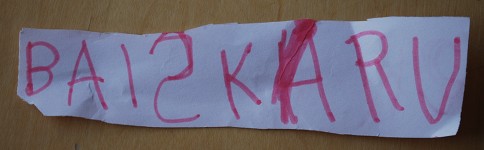
In Swedish she can now write impressively long words. With enough context (or with words that she herself has written on a previous day) she can also read quite long words, such as solglasögon or leksaker. With unknown words she hits her limit at about 6 or 7 letters. She is learning about weird Swedish spelling rules, and figured out on her own that körsbär begins with a K.

She asks more questions in general. She’s never had a “why” period but now she’s more likely to ask what words mean, why we do things the way we do them, and so on. The other day she asked us “how did the first human come to Earth?” and we gave her a 1-minute summary of evolution. She doesn’t have the patience for long explanations.

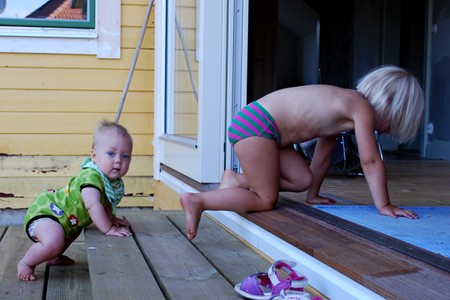
Teaching Adrian to crawl

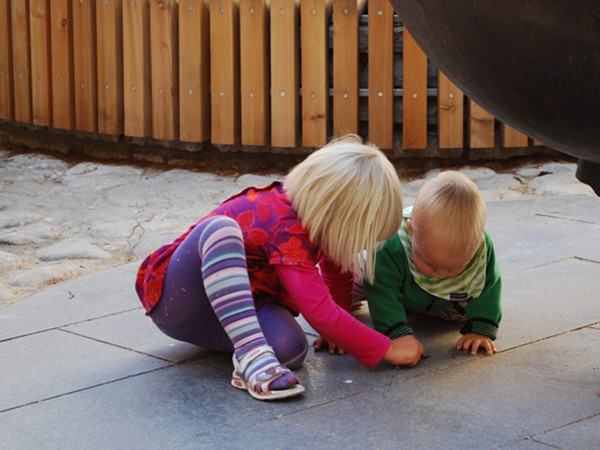
She loves playing with Adrian. He loves her attention. But empathy isn’t her strong suit, and she doesn’t really understand how small and weak he is compared to her. She also has zero understanding for the concept of private space and personal integrity. She teases him by holding out a toy and then snatching it away time and time again, or blocks his way again and again when he’s crawling. She pokes him in the face with her foot, or tickles him too hard. She doesn’t intend to hurt him as far as I can see, and does all this with lots of laughter, but she also seems completely oblivious to his expression of discomfort and doesn’t notice that he isn’t sharing her fun. I don’t want him to get used to being a toy, I want him to keep his sense of integrity, so I often have to point these things out for her and ask her to stop. She complies but I don’t think she understands, because an hour later she does the same thing again.

More and more often she is spending the whole night in her room. When she doesn’t, she often comes into ours without anyone else waking and noticing. She had long asked for an alarm clock for her room, but we told her that there’s no point if she isn’t there when it goes off. We agreed that we’d get one after she spends 7 whole nights in her bed. She did that, and we bought one. Of course she chose a Disney princess one. (Perhaps I should have just bought a more tasteful one for her – there are other princess clocks out there – but on the other hand, why should I impose my taste on her? It’s her room after all.) She wanted us to set the alarm, too, but it turned out that the alarm won’t wake her but will wake me in the room next door, so now it’s off again.

Small stuff: She likes twirling and spinning around, on her own two feet (holding on to my finger), or on a merry-go-round, or in our swivel armchair. It was a happy moment when we brought it up from the basement after the building works were finished here.

She likes abbreviating words. Compound words to their first part, simple words to their first syllables, entire sentences to a key word. Körs for körsbär, tramp för trampcykel (as opposed to sparkcykel), lägg for jag vill lägga mig.

She likes to play that she’s a baby. Sometimes she is a newborn and can’t do anything but wave her arms and legs and mewl. Other times she’s a one-year-old and talks baby talk and crawls on all fours.

A month of ups and downs. For a week or two Ingrid was sunny and happy; then she became moody and whiny again like she was last month. There is a lot of complaining about “why do I have to do everything”.

I wrote the above about Ingrid last month, but it applies equally well to this month. There is an awful lot of complaining. Especially any time we ask her to do something. “Do I have to? Why do I always have to… It’s unfair!” even when all she needs to do is pick up her sock from the floor and walk three steps with it to the laundry hamper.

Mealtimes bring out the worst in her: the food is wrong, the plate and the cup we’ve set on the table for her are wrong. If we don’t set the table for her she complains about that. She complains even before she knows what she is complaining about: “I don’t like this food. What is it?” She complains about having to get her own yogurt from the fridge and about having to take her plate off the table after the meal. Even the most basic requests are delivered in a whine. Basically she’d just like to sit there and order us around, and have us satisfy each of her wishes immediately.

Interestingly, she doesn’t seem to understand how her whining and complaining affects us. We do ask her to please speak nicely to us, we tell her that we don’t like it when she whines and orders us around. After enough whining I tell her she has to either stop whining or leave the kitchen so the rest of us can eat in peace. She has on occasions whined until both Eric and I are so fed up that we physically lift her up and carry her away from the kitchen – or tell her to just leave me alone because I do not want to be with her when she’s like that. And then she suddenly realizes we mean it, we’re annoyed for real, and gets all upset because I’m annoyed with her and don’t want to hug her.

For a while, earlier this month, she would end each mealtime with “Tack för maten den var god, mitt i maten stod en ko. Kon heter Kajsa, hon stod o bajsa’.” And every time she joked, she’s finish with “Jag skojar, jag skojar, du är en papegoja!”. Now that’s passed.

She likes the playhouse in its new pink incarnation (and new location) and uses much more than she used to. She especially likes sitting there with her friends and eating her afternoon snack.

Ingrid is still very fond of the iPad and wants to watch movies or play games on it every day. Her favourite game is Plants vs. Zombies. I had already played through the whole game so she can pick and choose between all the levels, and the mini games. She especially likes to play it together with me or Eric. I wouldn’t have expected her to like this game because in the past she’s avoided games where she can fail or lose, but I guess she is getting used to it.

She continues to practice reading, slowly and steadily getting more comfortable with it. It used to take all her concentration, dragging a finger along each letter. Now she has no trouble reading/recognizing familiar short words, especially words that she herself has written. Sometimes I hear her mutter words that she’s reading off the page that I am reading for her, so she can do it while she’s doing other stuff with part of her brain.

She has acquired a tendency to pose, in a stiff and silly way, when she notices me taking photos of her.

The current favourite movie is Tangled. Favourite food is, I think, soft tunnbröd with liver pâté and sliced apples. She seems to be going through a growth spurt just now – she’s much hungrier than normally.

A month of ups and downs. For a week or two Ingrid was sunny and happy; then she became moody and whiny again like she was last month. There is a lot of complaining about “why do I have to do everything”.

The one thing she is consistently happy about is going to preschool and being with her friends. She is almost aggressively social. With Adrian she gets up close, is loud and very much “in his face”. She dances and waves her arms and sings loudly and tickles him. She isn’t aggressive but not gentle either. Overwhelming, I guess.

With her friends she’s always the one to say “now let’s do this” and “come, we’ll do that”. She tends to boss them around. And the others are generally happy to follow as far as I can see. Whenever we bring one of them home with us, the others will gather around and say that “me too, I want to go to Ingrid’s house, too!”

Perhaps this is why I’ve been experiencing friction between the two of us: I will not have her ordering me around. She has not learned to ask politely, or does not want to ask politely. Being the one who decides is sometimes more important to her than the actual subject of her request. Setting a good example has obviously not made any difference whatsoever; reminding her to ask politely leads to huffing and demonstrative exaggerated phrases of rote politeness (“dear mummy could I please have the …”); ignoring impolite requests leads to a battle of wills. Giving in and doing what she asks even though the request is impolite and patently ridiculous (asking me to help her cycle by pushing her even though she’s on a downhill stretch) is sometimes an OK short-term fix when everyone’s good mood matters most, but it is not a general solution. I have not yet been able to find one.

She writes more and draws less. Whenever we bring stuff home from preschool it is usually short written notes. These can contain anything from a friend’s name (when Ingrid and a friend switch names and hang name tags with each other’s name around their necks) to “Happy Easter to the whole family”.

Her drawing is very much still the formulaic, symbolic kind. When she does draw, it’s still mostly girls of various sorts. One day she and two friends wanted to draw some fish so they could play fishing, and they were unsure how to draw a fish. The oldest girl drew one and since then that is how fish have to be drawn. A few days later Ingrid asked me to draw a fish and it absolutely had to be done the same way. My kind of fish were not right. She tried herself but couldn’t quite get it right so instead she instructed me exactly as to what should be done how.

She continues to learn to read. Short words she sometimes manages straight away but often she needs to try and pronounce the word a couple of times before she can figure out how to put the parts together. Especially in Swedish where one letter can stand for different sounds (like in English but not as bad) and, the length of each sound is not obvious, and neither is the stress. “Toomater, tåmateer, tåmaater!” when reading “tomater” (tomatoes). And the Swedish letter sounds infect her Estonian reading, too. When she’s trying to read an unknown word and it happens to be in Estonian, I often have to tell her that it is in Estonian before she can make any sense of it. Swedish is her default assumption.

Often she will try to guess the word before she’s properly read it. She reads the first few letters and then makes wild random guesses that are nowhere close the real thing.

She has really learned to judge whether she is tired or not and will go to bed voluntarily and without any fuss in the evenings.

She has been falling down more than usual when running and cycling – or perhaps we just notice it more now that it’s warm outside and falls actually result in scraped knees.