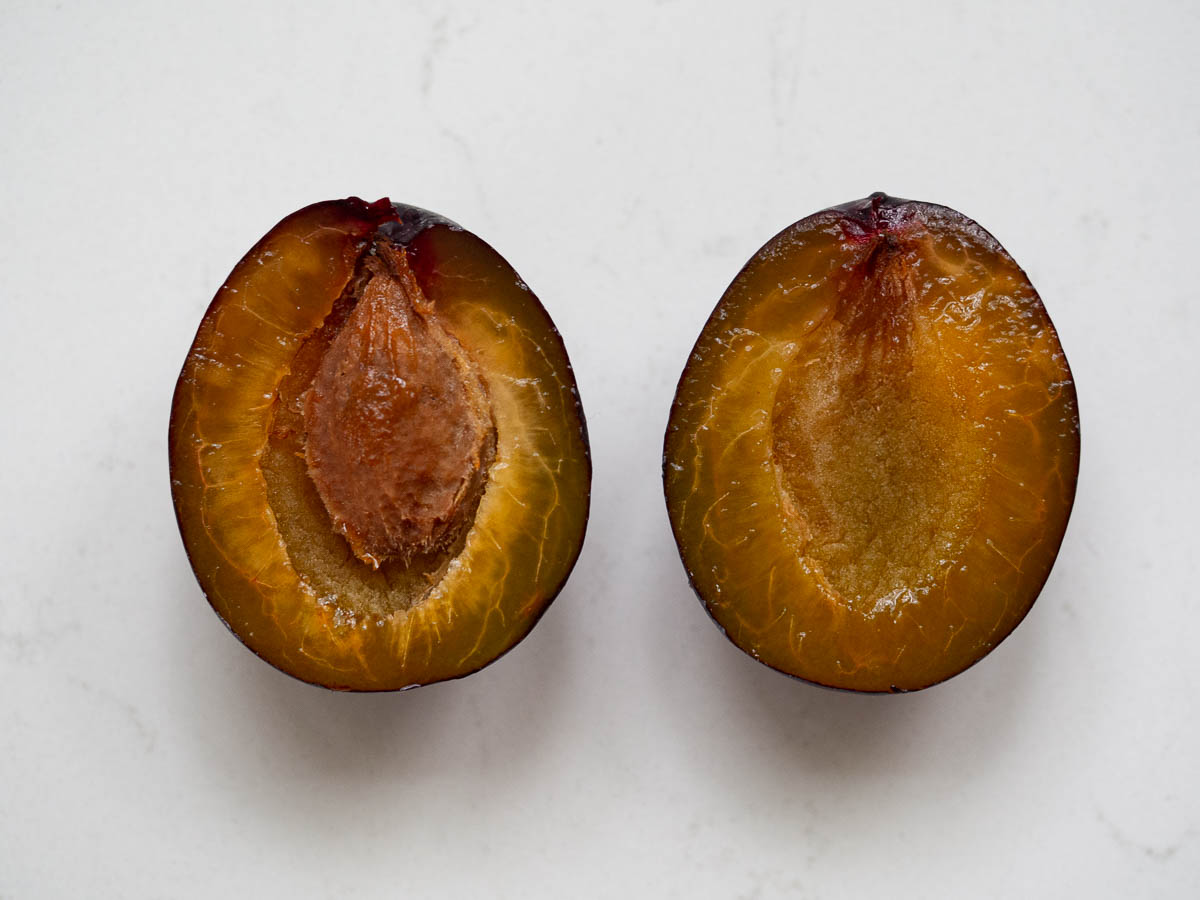
I’m enjoying the season’s plums that I buy daily from the vegetable stand at Spånga torg. I am so pleased that they exist! (Both the plums and the veggie seller.) I think the plums and some of the apples they sell must be local – the plums are so juicy and ripe that it’s hard to imagine them surviving any kind of long distance transportation.

The inside of a plum looks almost like I imagine the inside of a body, with its fleshy surface threaded through with veins.


I’m determined to plant a plum tree of my own this year. I started digging today in the spot I had planned for the tree, where the kids’ playhouse used to stand. Cleared away the brush and weeds, started digging down… and hit a flat rock almost immediately, less than a spade’s depth down. Shifted to one side and then to the other and realized that the rock extends in all directions. Not a boulder but bedrock, then.

There are large bushes and trees growing on all sides of this spot. I dug closer and closer to the stump of an old dead damson tree, thinking that surely if this tree could grow here then there must be deeper soil here – but no. The same flat bedrock all the way. I guess the nearby trees are all lucky survivors that have managed to put down their roots in crevices in the bedrock and managed to hold on there. Or not, given that the damson tree was actually more or less dead when we moved in.

I’m giving up on this spot and will have to find a plan B.

You’d think that in a garden of 1000 m2 there should be plenty of space for a little plum tree. But with all the things already growing here, and the space taken up by the house, and the ever-present bedrock, and the shade from all the large trees in the neighbours’ gardens, there really isn’t.
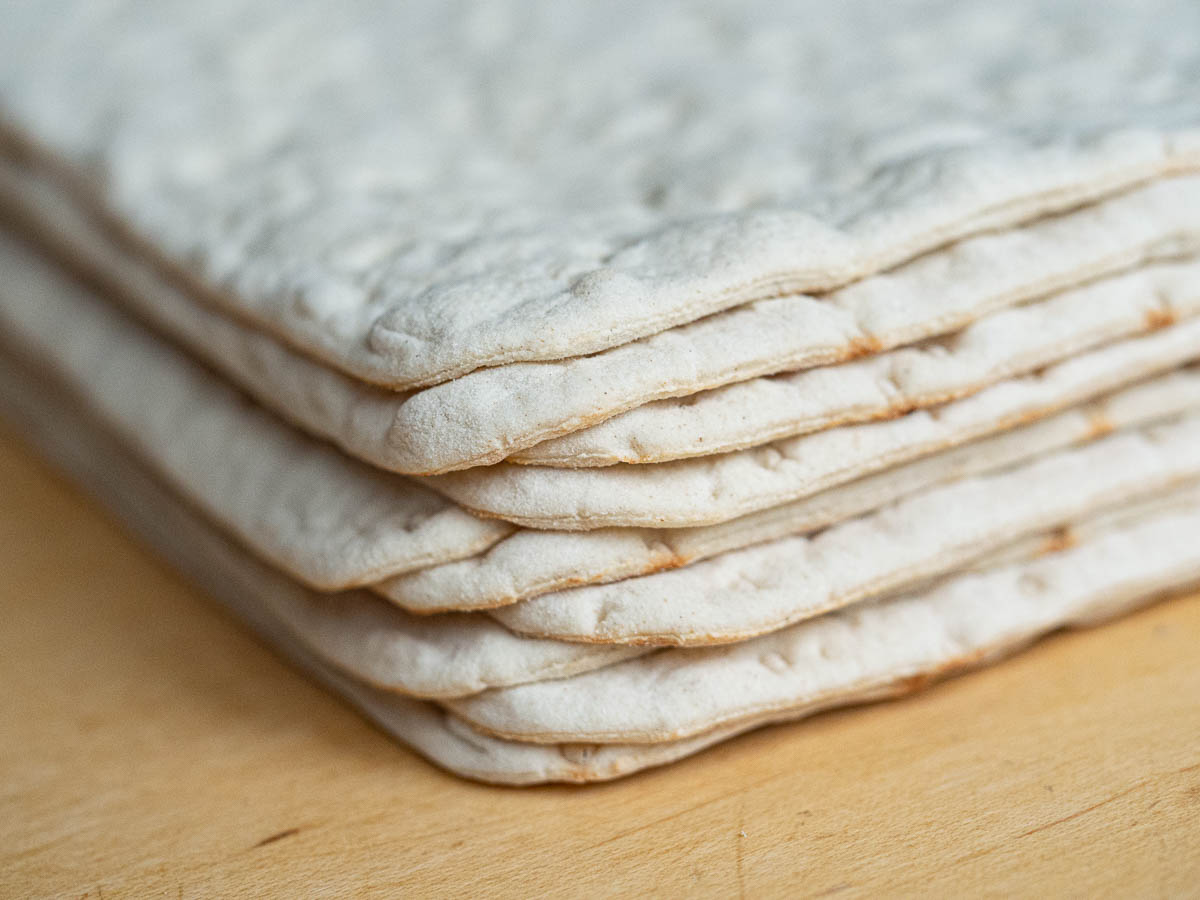
The main bread factory of Polarbröd burned down to the ground during the night between Sunday and Monday. They have another, smaller factory elsewhere, but that’s unlikely to produce enough for all of Sweden. Today in Coop the flatbread shelves were empty, save for one last package, which I bought.

We normally eat a lot of flatbread. Eric bakes most of our loaves and rolls, so the only kinds of bread we regularly buy are white bread for toasting (which I don’t care for but the rest of the family likes) and Polarbröd flatbreads of various kinds. The thin ones for wraps; the thicker, round ones for making sandwiches and mini-pizzas; Havretrippel because they’re the only bread with oats that I’ve found. Without all of these, life will be duller and less tasty. I hope Polarbröd gets started building a new factory very soon!


Summer break is nearing its end and Adrian’s friends are returning to town, and he is most happy to spend time together with them again.

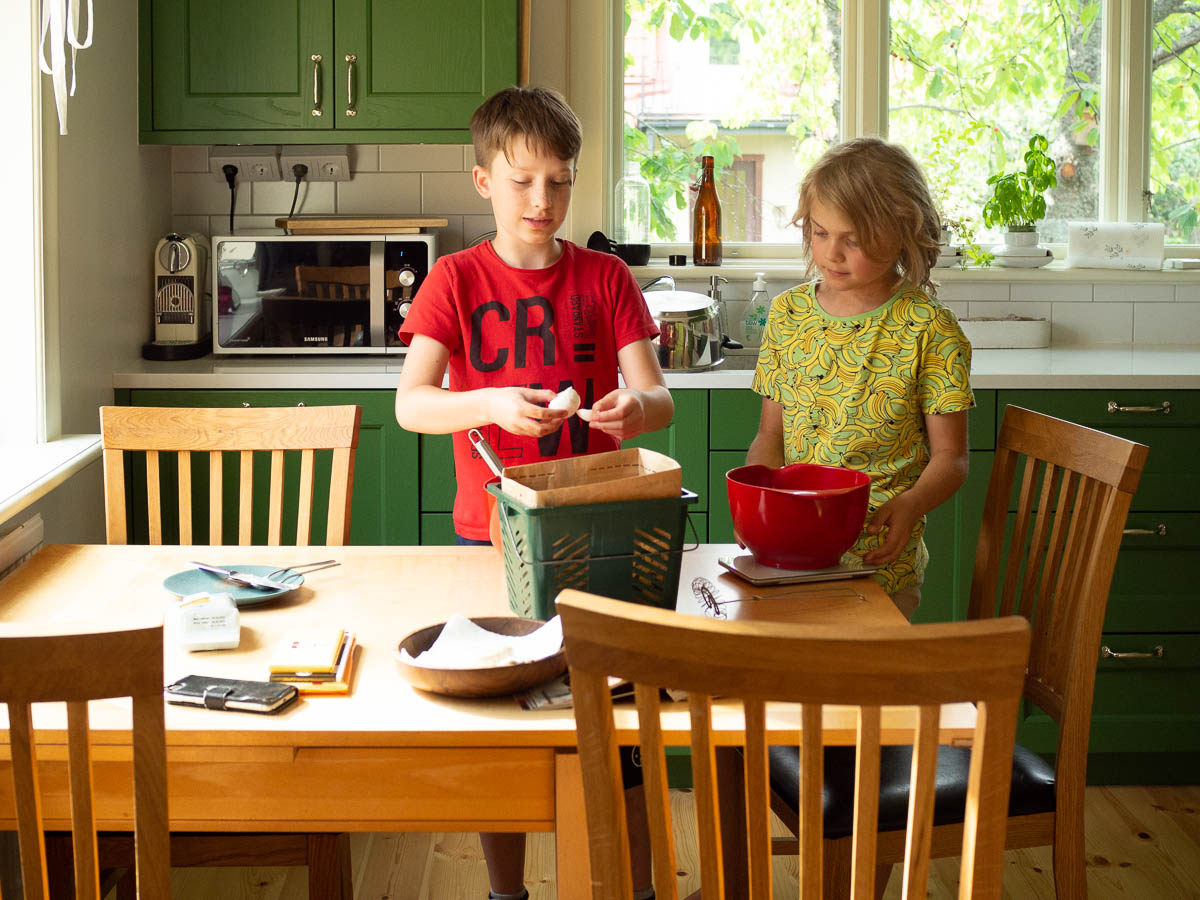
His friend F has been hanging out in our house a lot. They play Minecraft together, build Legos, or go out playing Pokemon Go. When they run out of other activities, they bake. Both of them really like chocolatey things so they have baked a mud cake, chocolate muffins, and now chocolate cookies.

Friend F has nearly no experience of doing anything in the kitchen. Adrian, compared to him, is a pro baker. Adrian supervises, follows the recipe, weighs and measures, while F enjoys the more physical acts of breaking the eggs and stirring the batter.

The aftermath of their baking sessions is usually an astonishing mess. After the mud cake (or maybe it was the muffins) they cleaned the kitchen, then I cleaned the kitchen one more time, and still I kept finding small splodges of batter in various parts of the kitchen for more than a day.

This time the mess was more contained but still quite impressive. One step in the recipe suggested working the dough together with your hands. The boys did this using all four of their hands. Before long they had more dough on their hands than in the bowl. They were wise enough to call for help at that point, and I managed to scrape most of the dough back into the bowl.

The cookies came out delicious.

The Gotland trip is over and we’re home again.

I like travelling. I like being at home again (sleeping in my own bed!). But I don’t like coming home from a trip. The end of a trip always puts me out of sorts. Somehow the transition makes me feel out of balance and disoriented. I feel irritable and down.

A night’s sleep generally cures me. And sleeping in my own bed feels so nice after a week on bad mattresses. We stayed in hostels this time; the one in Visby really had pretty crappy beds. It was nice otherwise, though, and very centrally located.

When I’m booking a package holiday, like the one on Mallorca last year, the cost of the hotels is all mixed up with other costs and becomes almost invisible. Now that I was booking three nights here and two nights there, the cost of each night became very tangible. Do I really want to pay two thousand SEK extra per night for a fancier place? Not really.

We economized a bit on the living arrangements, but not on meals. It’s a vacation; I don’t want to spend my evenings in the kitchen. And we found some really nice restaurants! Some of my favourites were:

  • Krusmyntagården north of Visby. The vegetarian option (lentils with oven-baked cauliflower) was an actual vegetarian dish, rather than something where the chef has tried to replace the meat. Juicy and full of flavour.
  • Magasinet in Fårösund. Looks like nothing on the outside and doesn’t have a web site (only a Facebook page) but serves great fish dishes and Thai food, with an real live Thai chef in the kitchen I believe.
  • Mille Lire and Isola Bella, two Italian pizzerias in Visby.
  • Last but definitely not least, Cafe Amalia in Visby. They don’t seem to have a Facebook page even. It’s a small cafe in the middle of Visby that serves breakfast all day. Porridge, overnight oats, omelettes, sandwiches, all vegetarian, hand made and utterly delicious. (Overnight oats with rhubarb compote and golden roasted coconut chips; toast with nut butter and sliced banana; sandwiches on moist sourdough bread.) The prices are steep; our breakfasts here cost as much a normal lunch. But so good!

Also, the best ice cream we had was at Visby Glass. This place is worth a detour! Glassmagasinet near the harbour is the most visible ice cream place and boasts that they serve hundreds of flavours, but the ice cream they have is mostly the standard, mass-produced stuff. Visby Glass on the other hand makes their own ice cream and the difference is huge. They had lots of interesting flavours – apple sorbet, dark chocolate, pomegranate sorbet, and so on – and I wish we could have tried more of them.


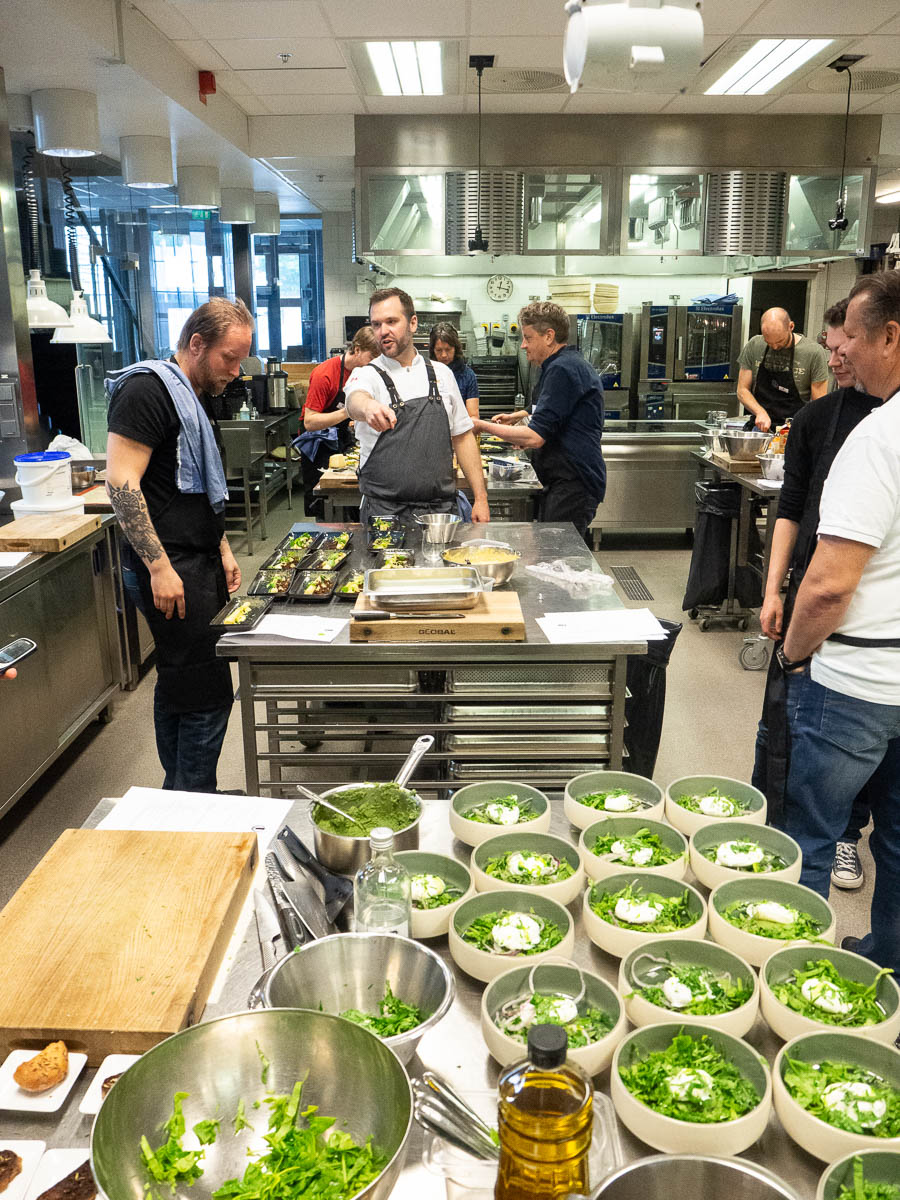
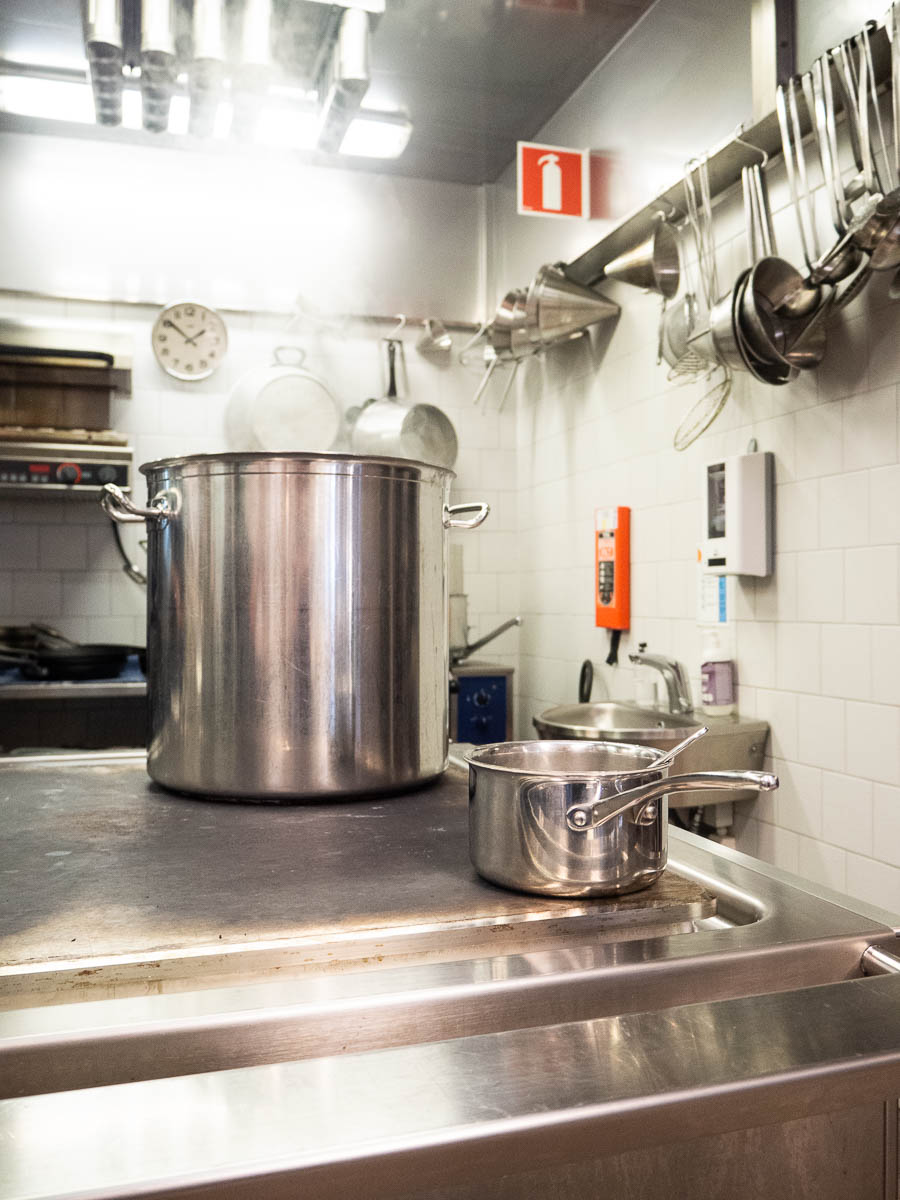
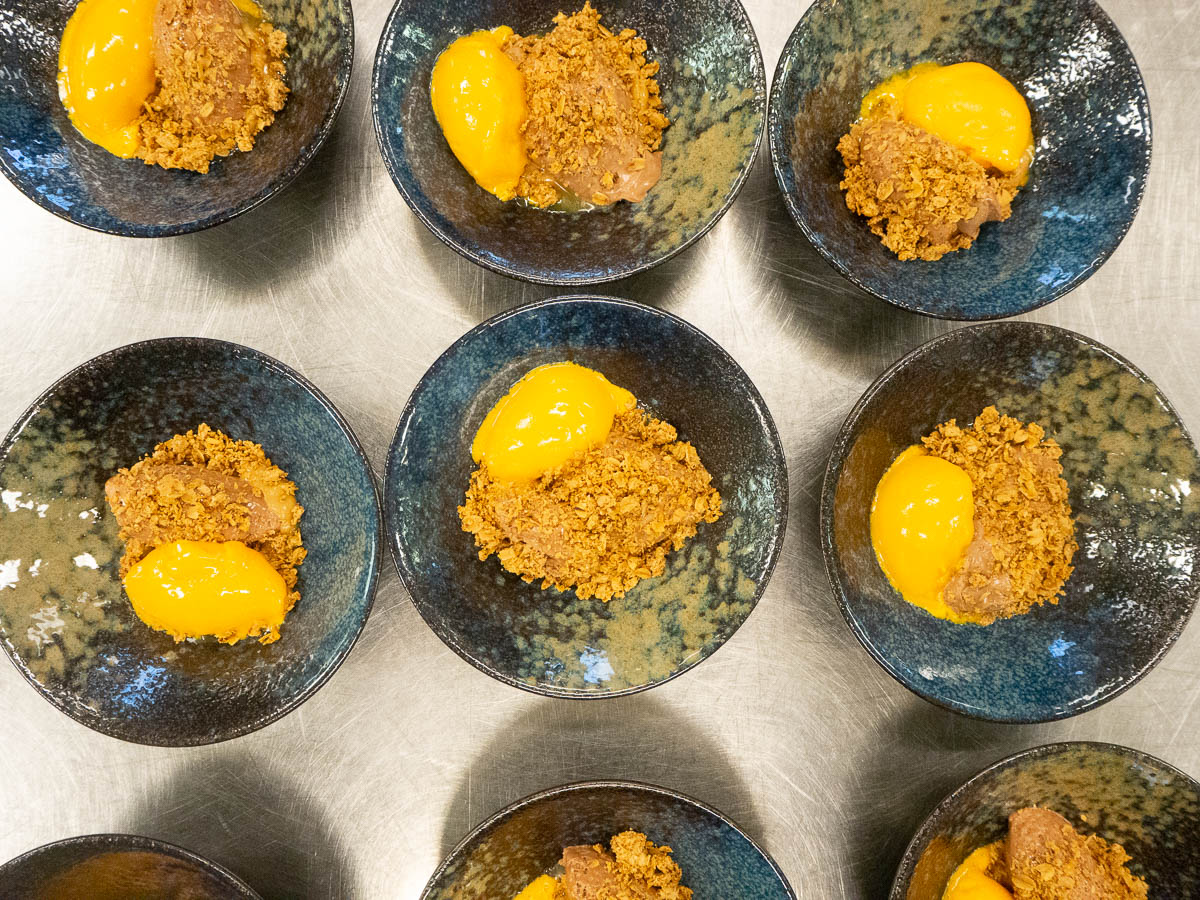
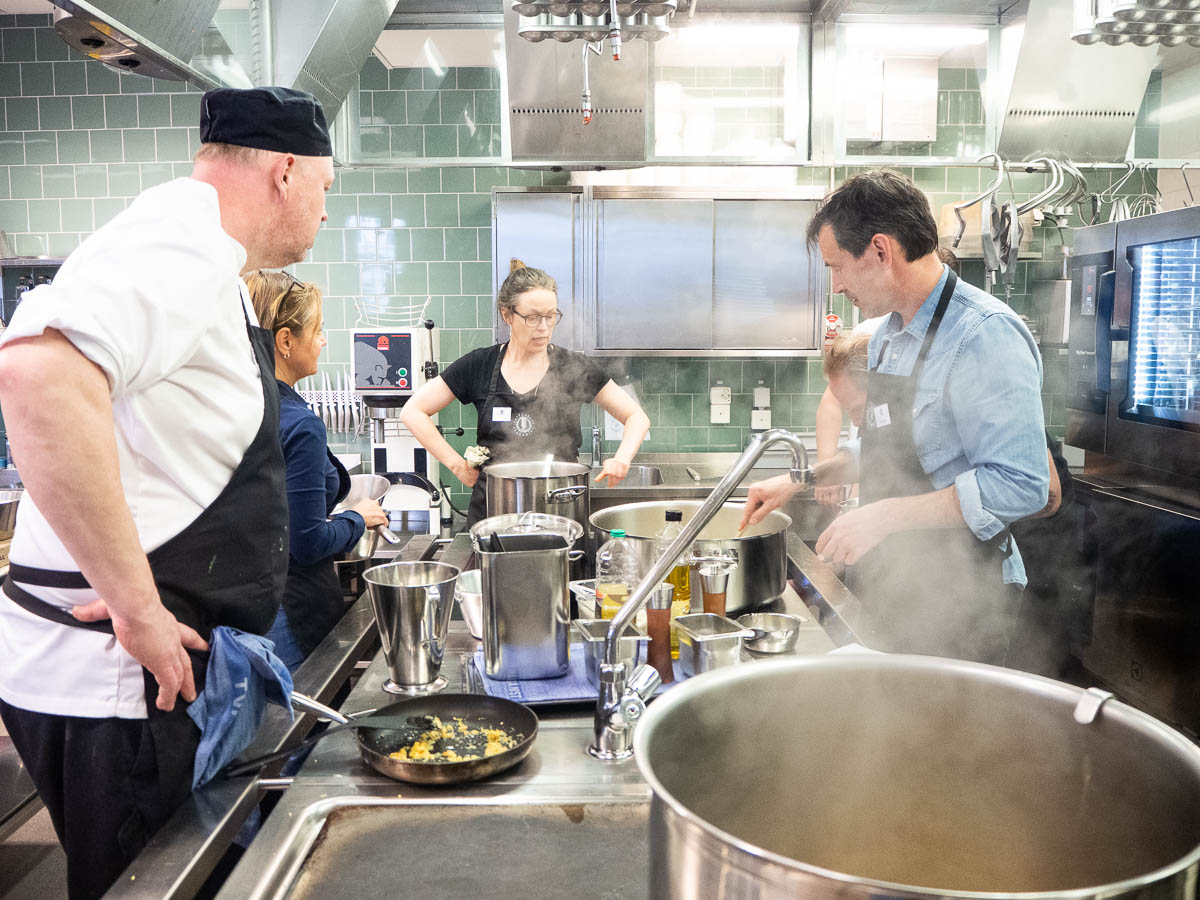
This looks like another scout camp kitchen, doesn’t it? It’s not! It’s a proper restaurant kitchen (indoors! with electricity!) at Restaurakademien, where I spent today learning to cook vegetarian food with a professional chef. I got this course as a Christmas gift and now it finally happened!

I know how to cook vegetarian food already, of course. I enjoy cooking, and this was a way to do more of it in a fun setting, and to maybe learn new things – new techniques, new ways of thinking about a meal or a menu.

We worked in groups, and prepared three three-course menus altogether: the starters for lunch, and the main courses and desserts for an early dinner.


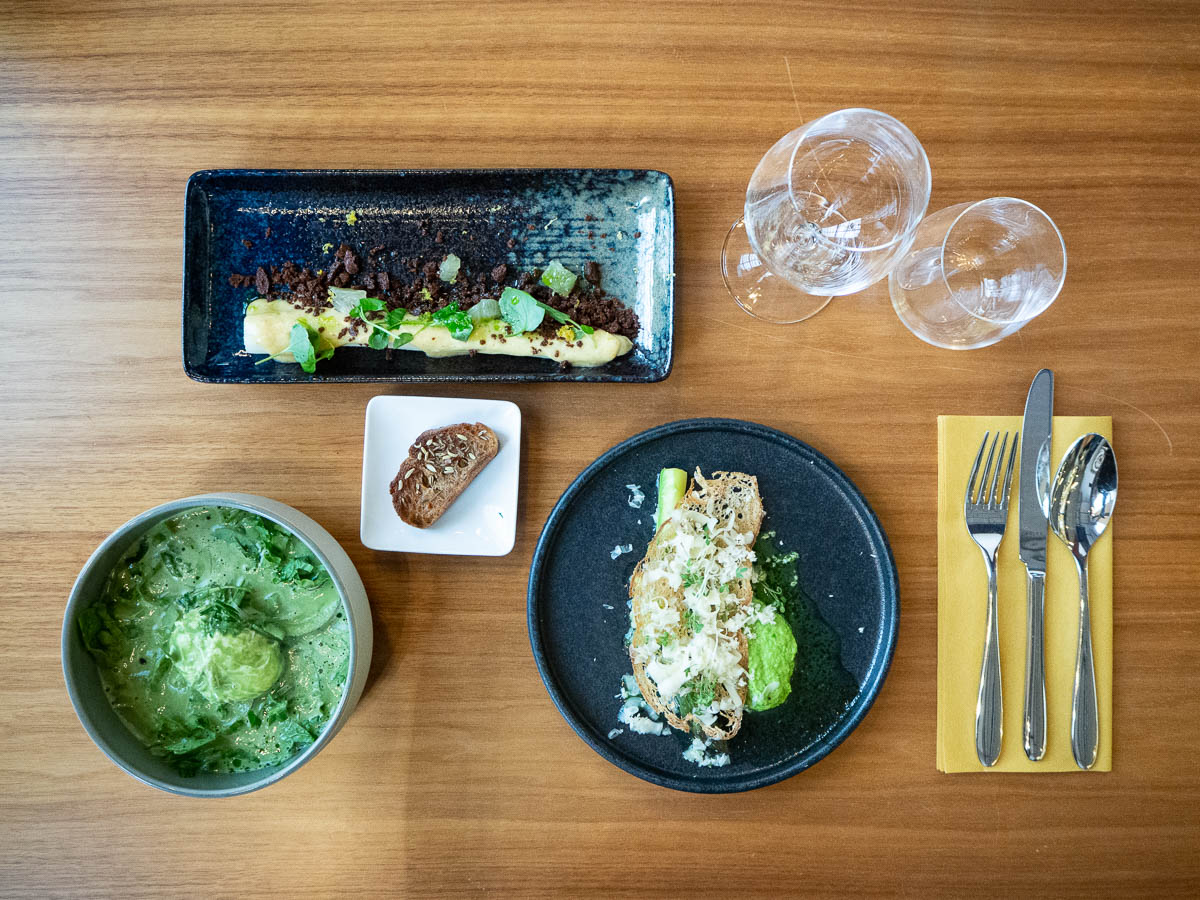
Lunch consisted of two asparagus dishes and a nettle soup. As part of preparing these we learned how to make a Hollandaise sauce and how to poach eggs. I haven’t tried making Hollandaise sauce, but I have tried poaching eggs a few times, and it’s been hit and miss, really. This chef had a procedure that seems a lot more predictable and easier to succeed with than the ones I’ve tried before. The guys who were in charge of making the eggs for today’s lunch followed his instructions and ended up with 15 near-perfect eggs, so I’ll definitely be giving that a try at home.

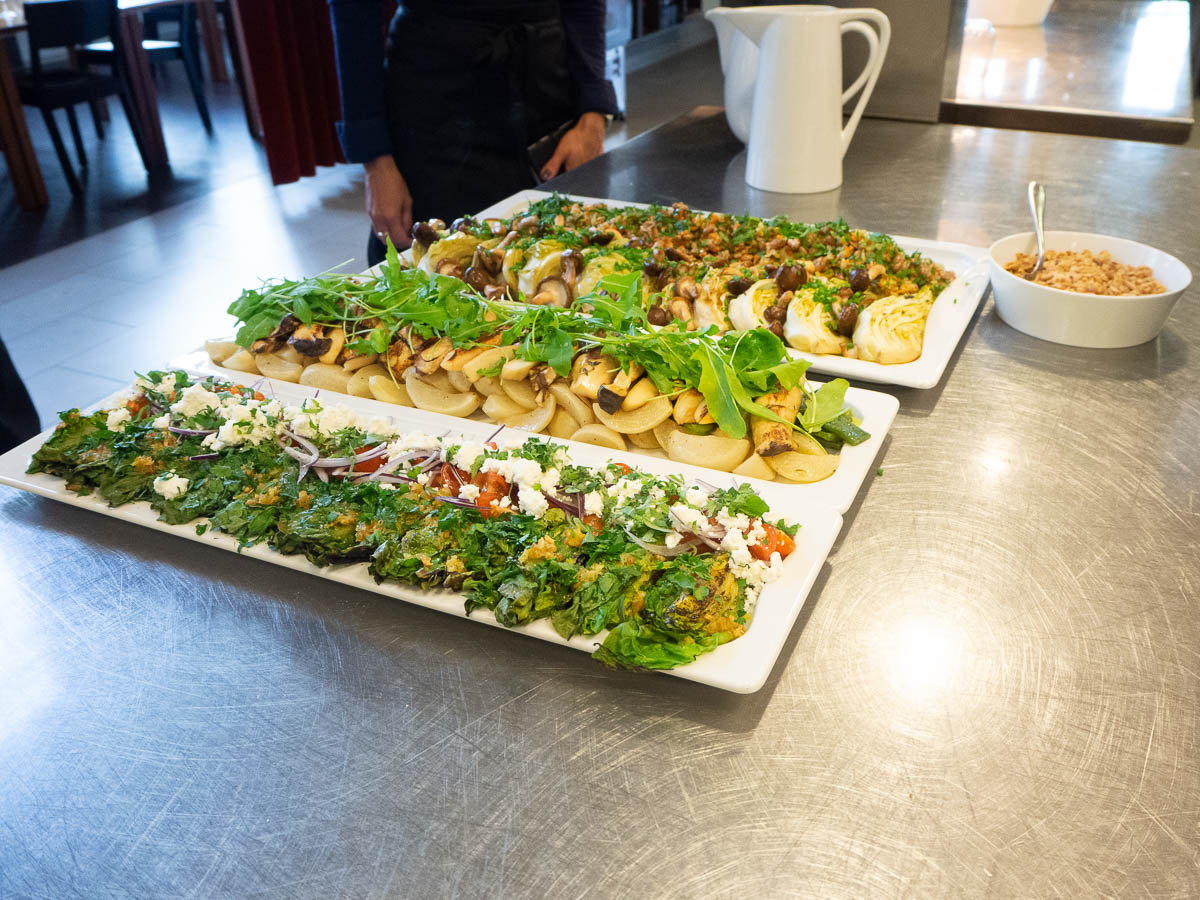
Preparing the main course was somewhat less interesting. A lot of peeling and chopping. The results were delicious, though.

With so many people and so many different dishes to prepare, it was a matter of chance what each one of us got to work on. I was a bit disappointed with how that worked out. I would have preferred that we prepare fewer courses, but so that all of us could participate in all the interesting steps.

I think the rest of the group probably learned more from the main courses than I did, especially about how to compose a vegetarian meal. Many of them said they mostly eat meat and rarely cook vegetarian dishes. Meat-eaters often try to plan a vegetarian meal by starting from a meat dish and then finding a replacement for the meat, and this approach rarely leads to a satisfying result.

I’ve been thinking of how to characterize this chef’s style of cooking, which is rather different from mine. It’s very “restaurant-y”, somehow. Fine dining in a vaguely French-inspired manner. Each course we made consisted of several components – a little bit of this, a small heap of that, toppings of various kinds, and herbs everywhere. Somewhat fussy for my taste – I would have used fewer parts and let each of them get more attention.

An interesting part of this course was the experience of working in a restaurant kitchen. Not having to think of doing the dishes – just put them on the trolley there! – was a luxury.

Another luxury was a large griddle. I imagine it’s mostly meant to be used as a giant pan, but we didn’t have many such components in our dishes. Instead we used it as a large, extra hot, always-on stove. Need to bring some water to boil? Or reduce some vegetable stock? The griddle is there, ready and waiting for you. Very convenient.

The cutting boards and knives were solid and sharp. But other luxuries surprised me by their absence. There was a definite shortage of measuring cups and spoons, for example.


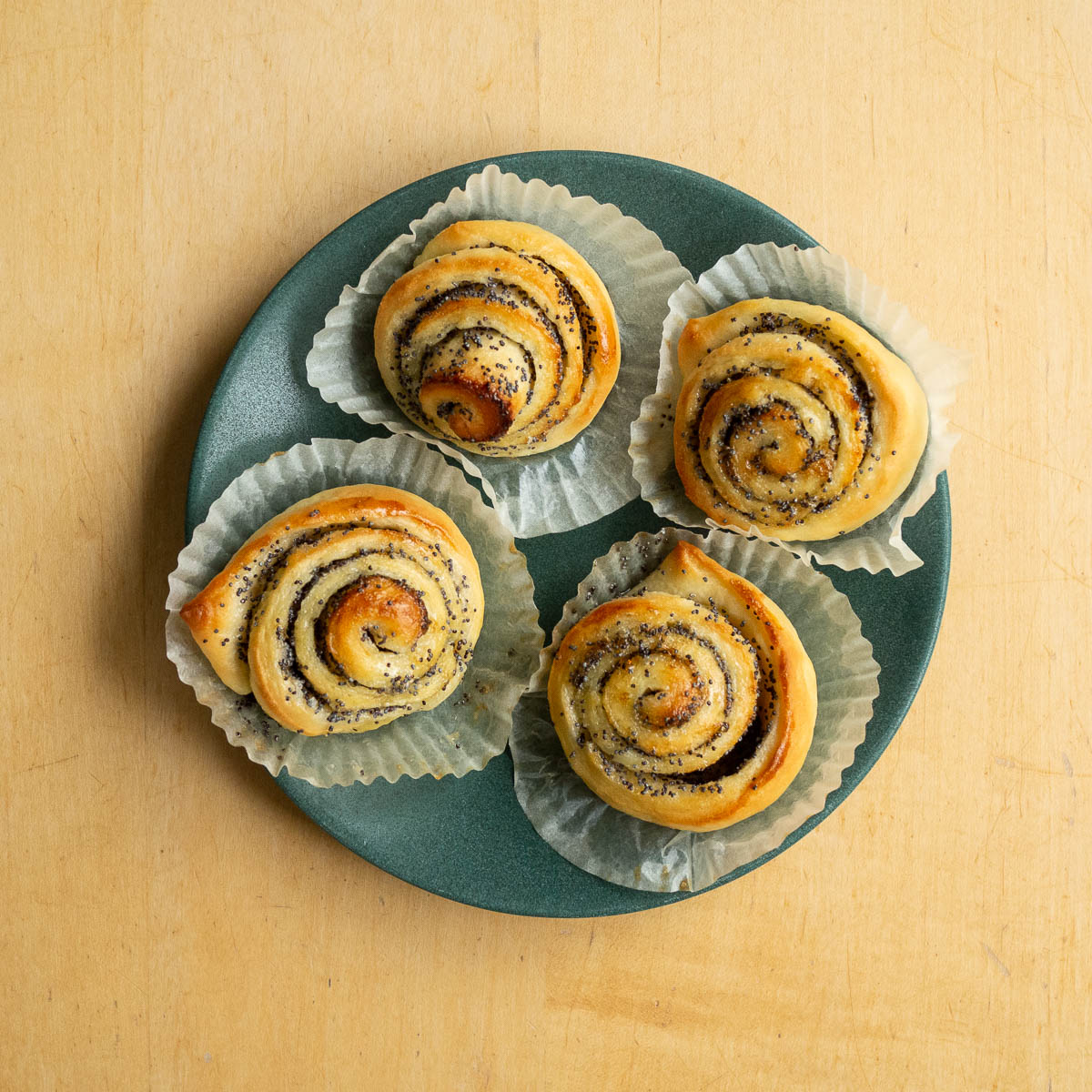
Poppy seed buns, like the ones my mother used to make when I was a child. I love them.


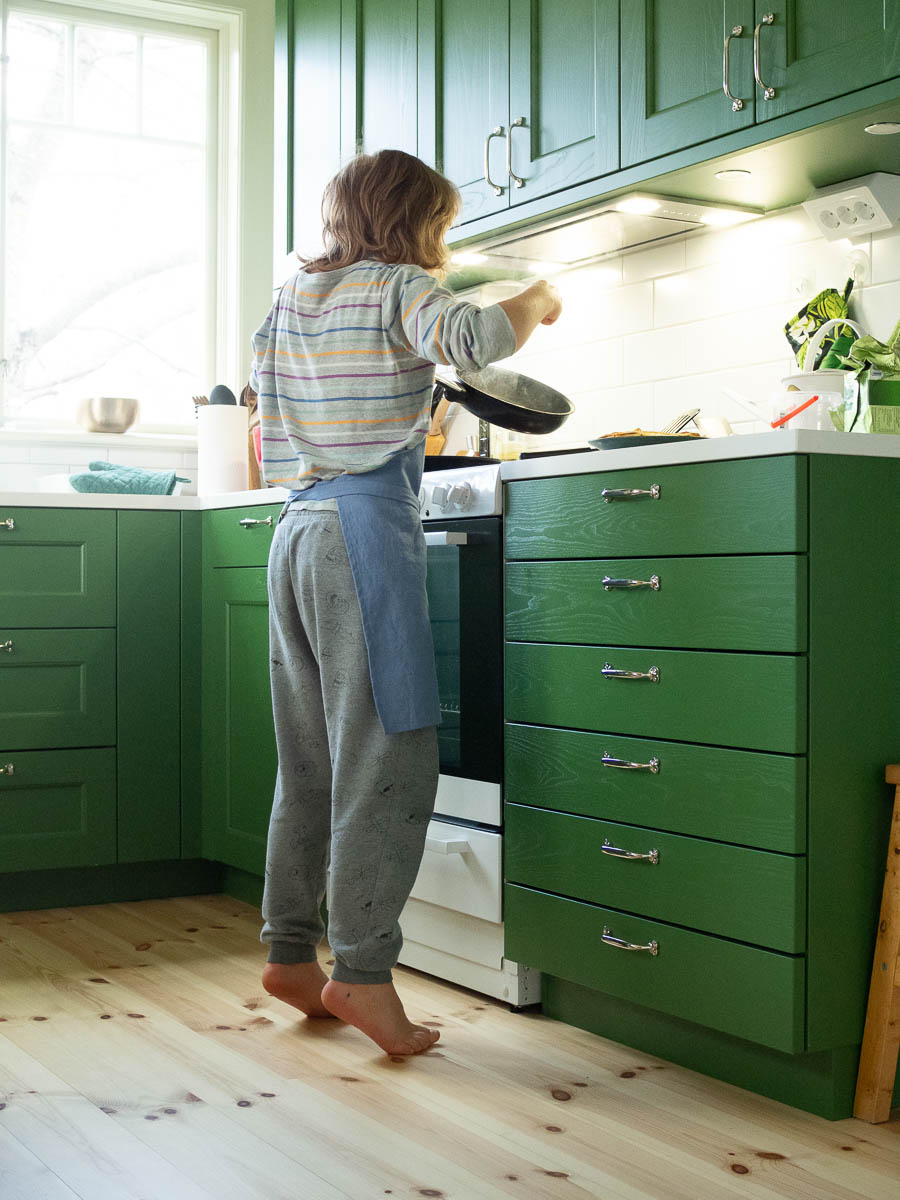
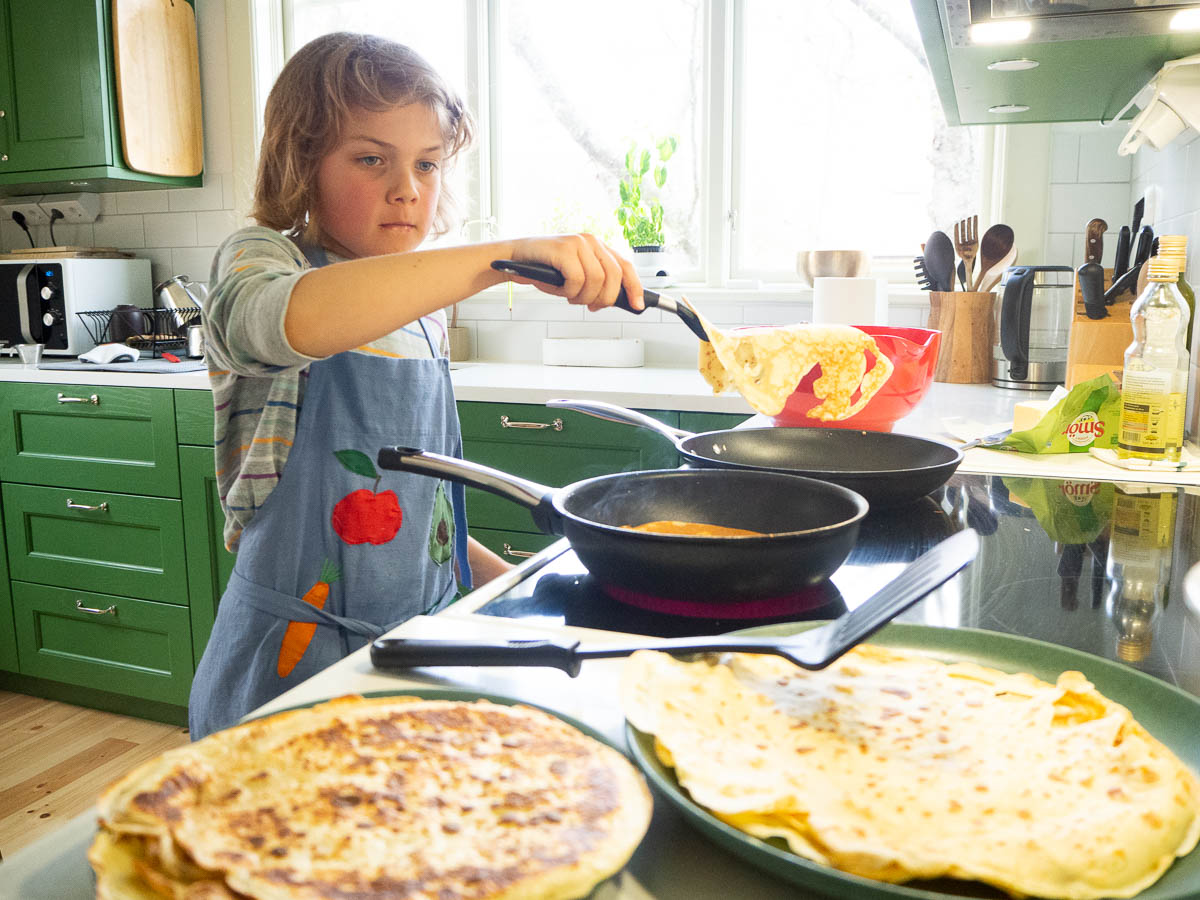
Adrian cooks dinner with me once a week, but now he wanted to make a meal all on his own.

Pancakes are a great first dish for him. There’s a single stream of obvious tasks to be done. No multi-tasking, no task-switching, no wondering what to do next. And he’s had enough practice that it’s almost impossible to fail: even if some of the pancakes don’t come out perfectly round, they will all taste good.


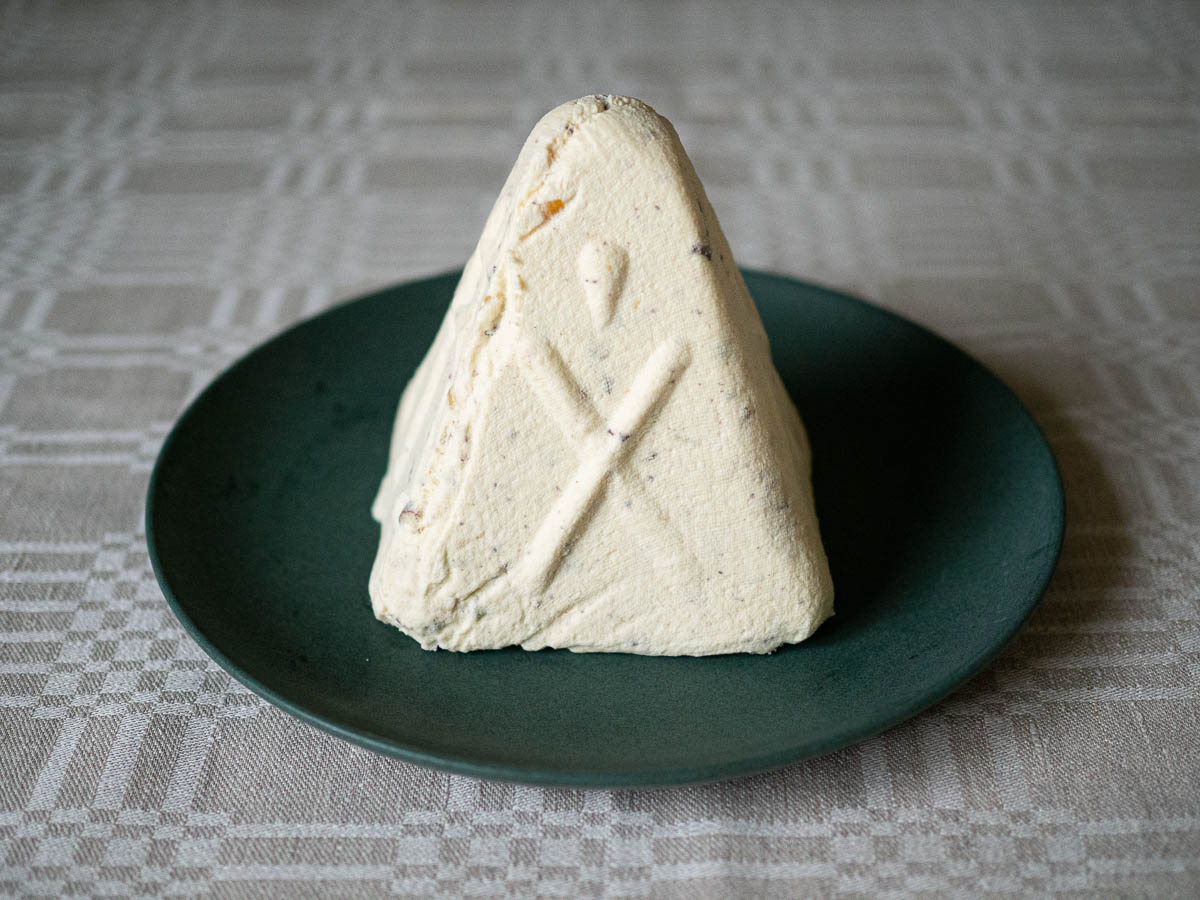
Pasha looks like a bland, white lump, but tastes delicious. (Not unlike other desserts and puddings, to be fair. How appetizing does panna cotta look, really?) It’s my favourite part of Easter.

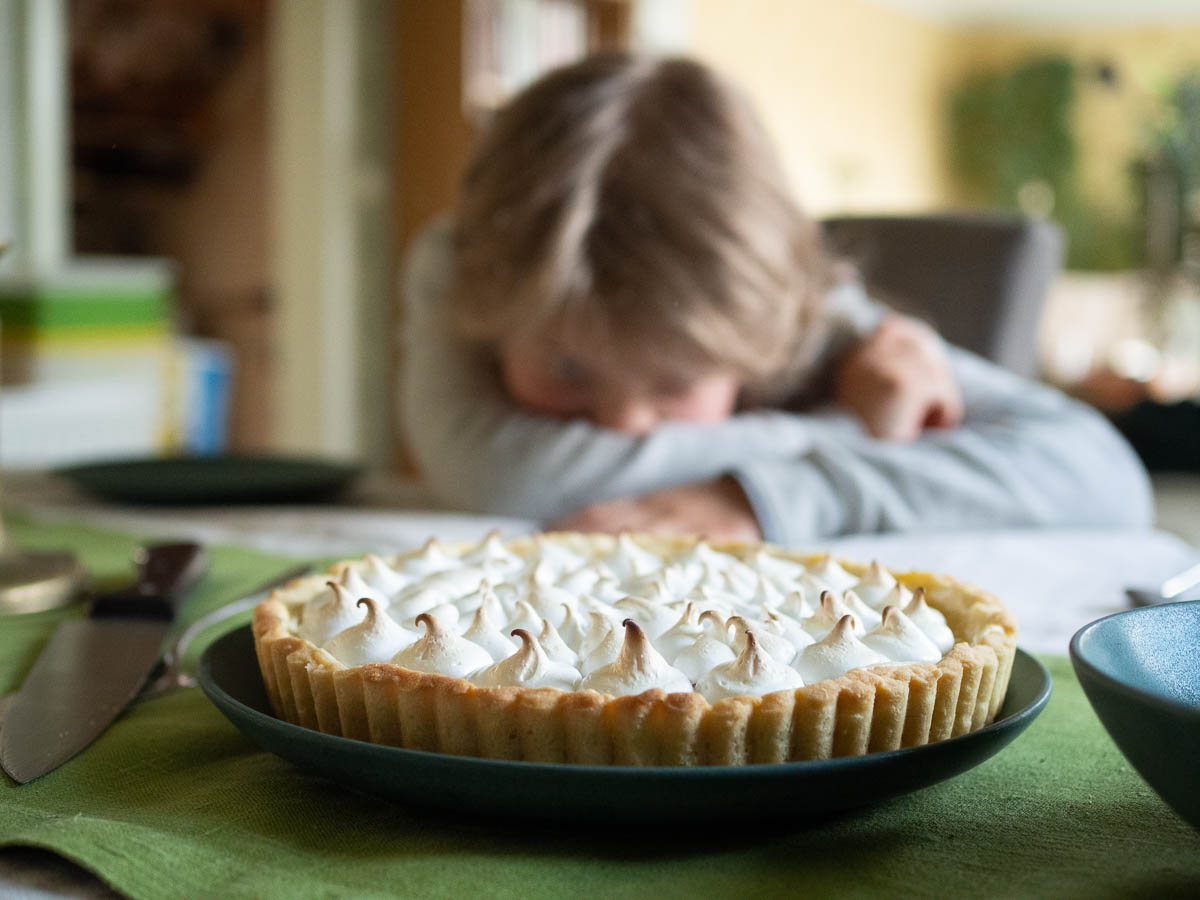
Lemon meringue pie, which we also made for Easter, can be so lemony and intensely sweet that after a small slice my body shouts “enough”. But pasha is so refreshing and un-sweet that it almost doesn’t feel like dessert.

Estonian quark is grainier than the Swedish Kesella and fatter than Keso. This year’s tweak to the recipe was to get the best of both by combining them: Kesella for the creaminess, and Keso (passed through a sieve) for texture. This worked out great; I’ll be doing that again next year.

Raisins have always been a part of my pasha, but next year I think I might skip them. They are the least interesting part, adding nothing but sweetness. Maybe dried cranberries could work?

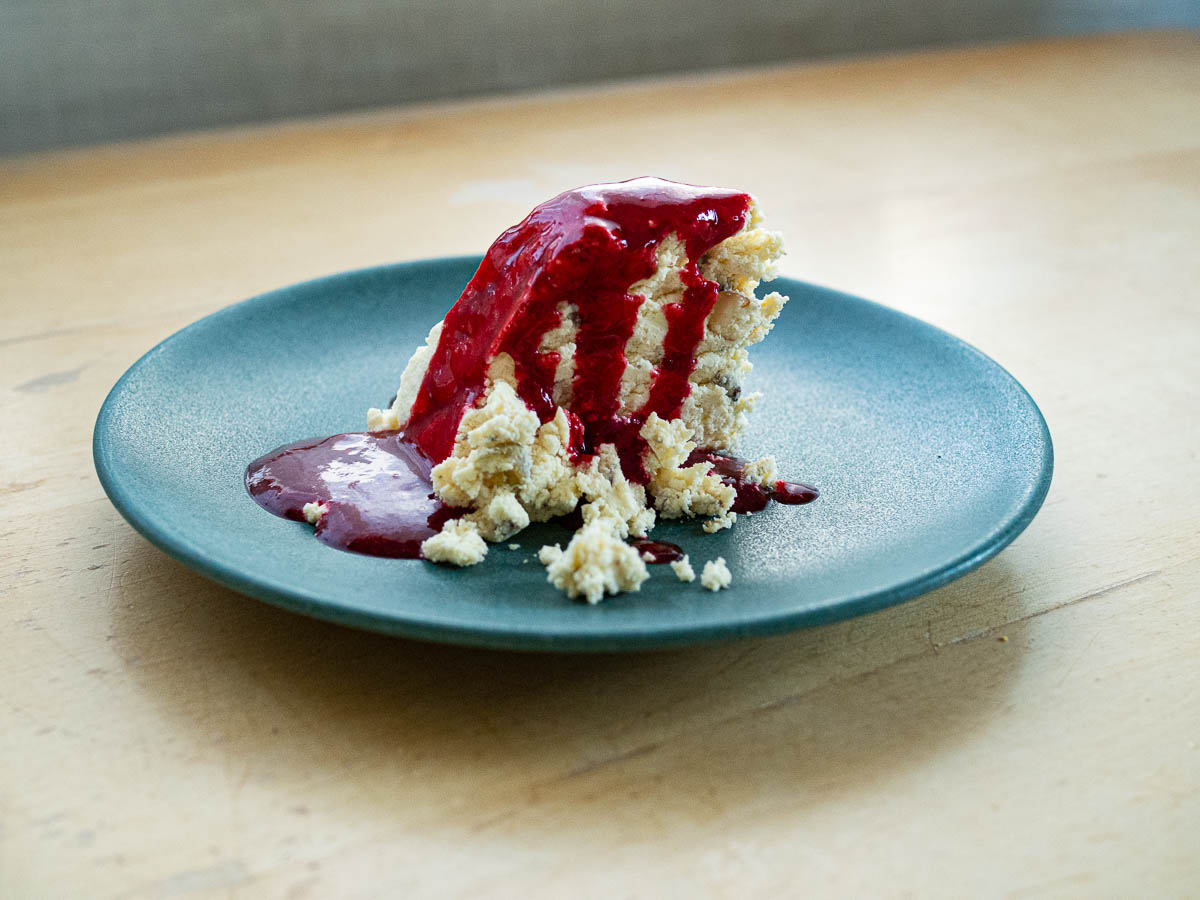
Pasha was always served on its own when I was a child. Nowadays we eat it with raspberry coulis.


Traditions tend to accumulate. Every item is important for someone. Our Easter food traditions are nearly as many as for Christmas.

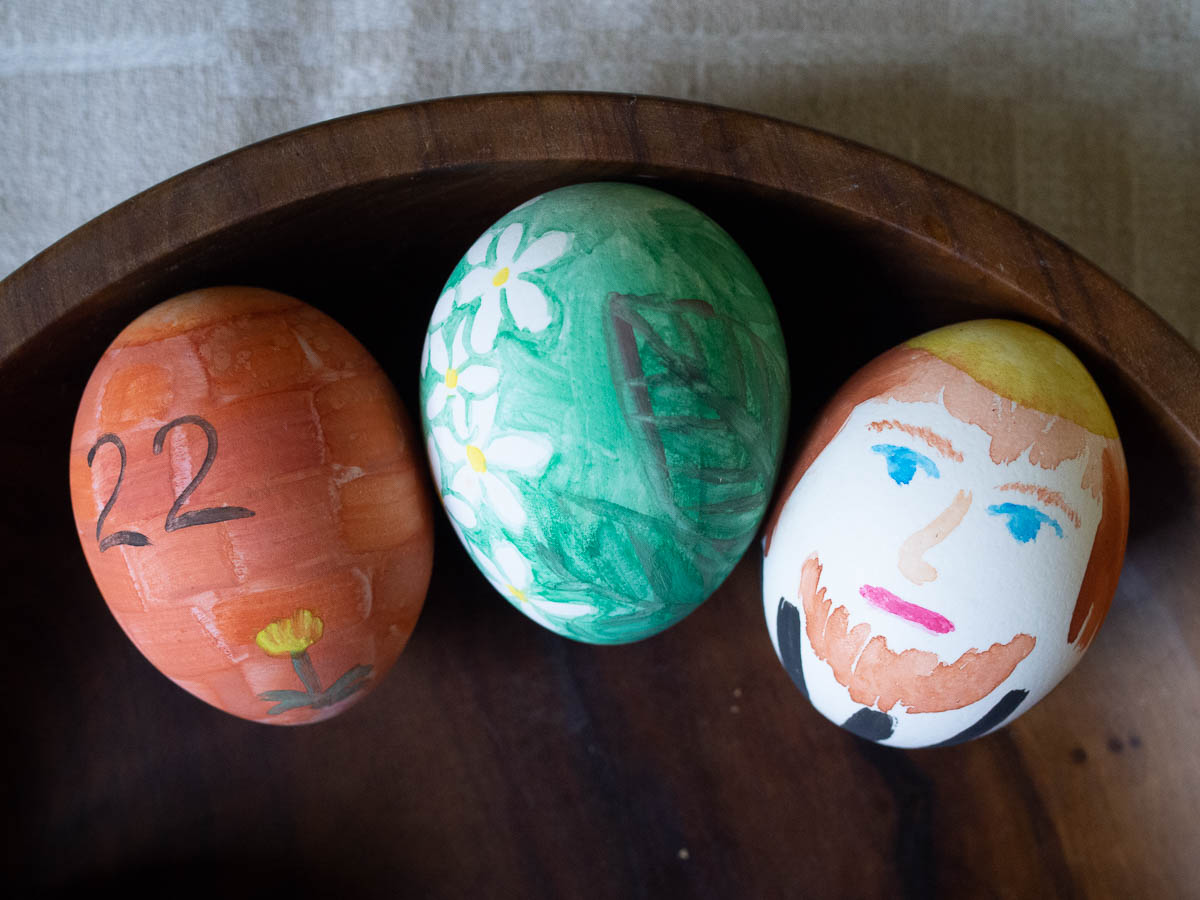
Easter eggs are a must, both the painted, boiled kind that originally come from hens and the painted, cardboard kind that hide candy inside. And devilled eggs as well.

One year my mum made paella for us at Easter; the kids loved it and now they ask for it every year.

For dessert, pasha is an important tradition for me, and Ingrid and Eric both love lemon meringue pie.

Speaking of eggs, we talked about egg knocking, and soon Adrian and Ingrid had planned an entire tournament for our eggs. Our six eggs were unsatisfyingly few, so we painted some more. They painted one each to bring the total up to eight, and I painted a referee. The referee got a beard, so I now have a skägg-ägg to go with my vägg-ägg and hägg-ägg.

I thought my puzzle was so obvious but it took a lot of hints for the rest of the family to solve it.


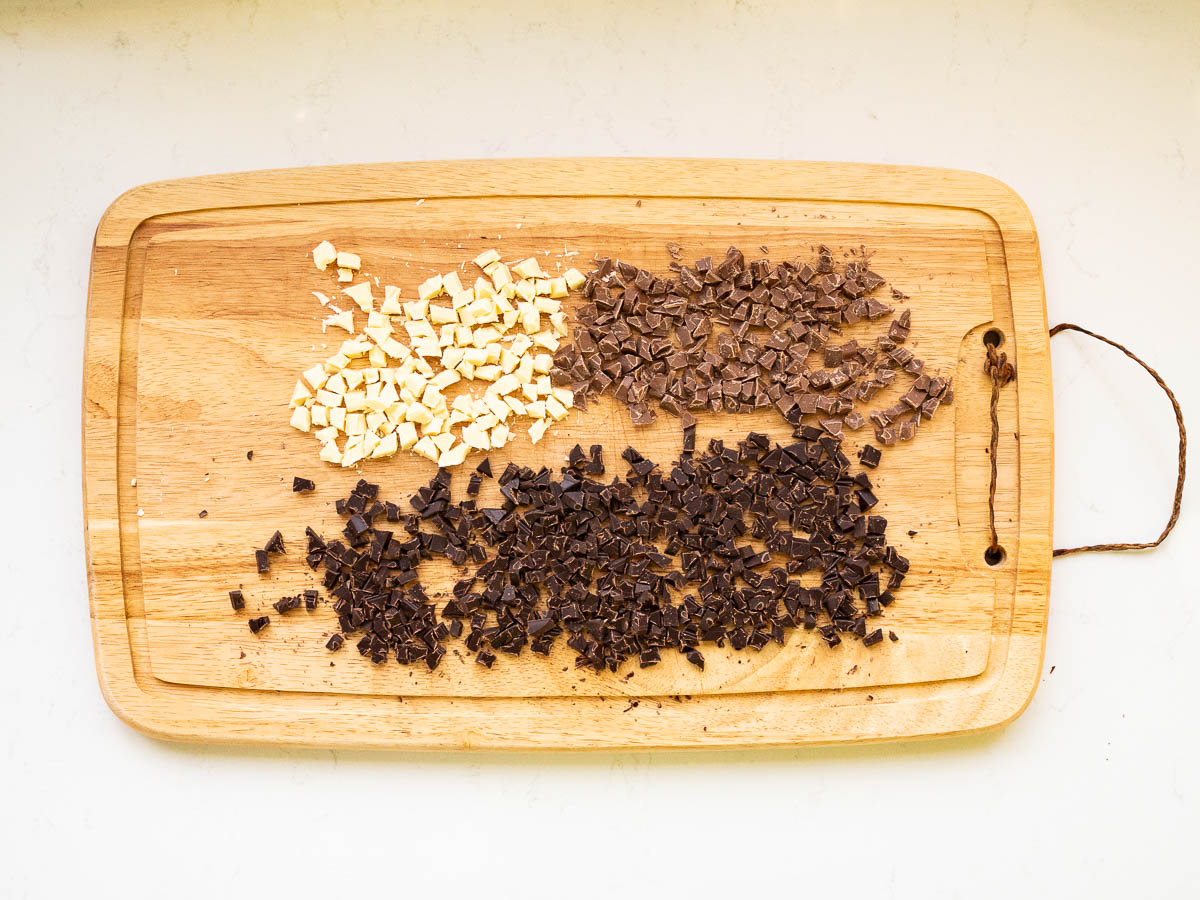
The chocolate I chopped for yesterday’s cookies.

The best way to chop dark chocolate is not to actually chop but to stab it with the tip of a small paring knife. Dark chocolate is so brittle that it will split neatly where stabbed. If I try to chop it with the edge of the knife, I end up with lots of shavings and crumbs instead of evenly-sized distinct chunks.

That technique doesn’t work at all with milk or white chocolate. They are so much softer and stickier that they need to be actually chopped.