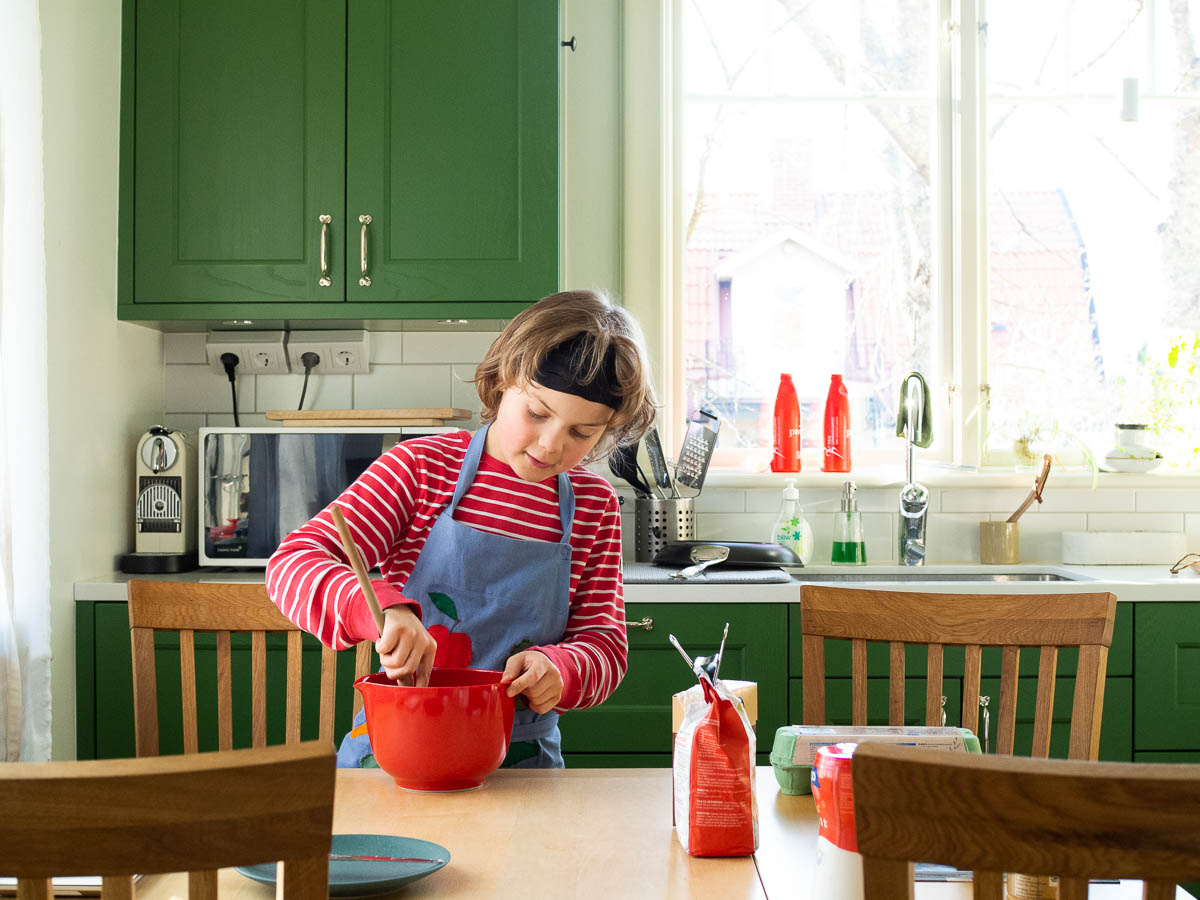
Adrian wanted to bake chocolate chip cookies. We made a batch a few days ago, but had to tweak the recipe a bit. It called for dark, milk and white chocolate, and we only had dark chocolate at home. Today we made a new batch, with all three kinds, as it should be.

And as before, the part that Adrian likes best is weighing ingredients. The rest can all be good fun – the mixing, and the cracking of eggs, and the tasting, and the rolling of the balls of dough. But weighing is where his enthusiasm lies.

When we cook, there usually isn’t much to weigh. But baking is full of weighing, especially in the “prosumer” recipe books that Eric has.


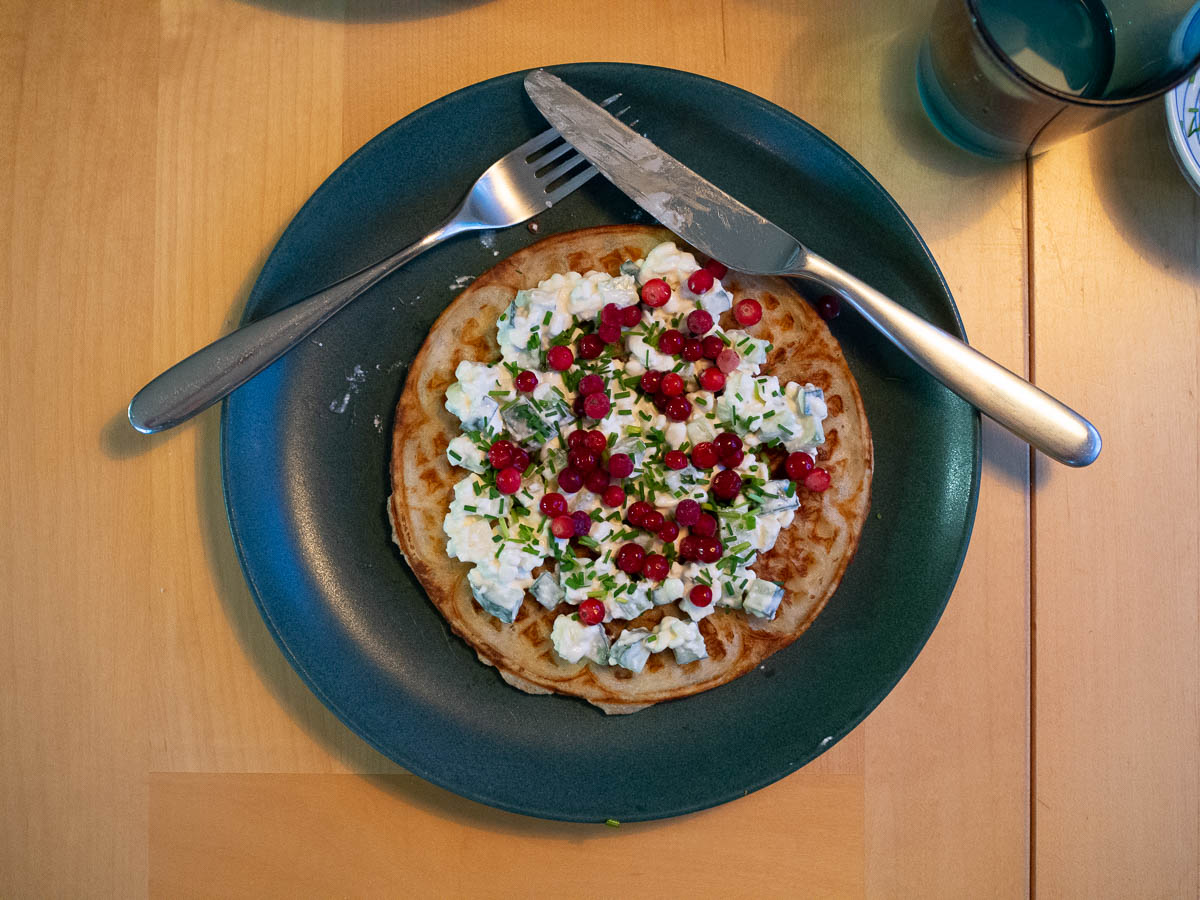
March 25 is waffle day in Sweden. Why not.

I found a recipe for waffles with lingonberries which sounded delicious. When I tried cooking them, the berries all got burnt and stuck to the waffle iron, no matter how much I coated them in batter. So I ended up putting the lingonberries on top of my waffle topping (of cottage cheese, cucumber, apple and mayonnaise). Not exactly what I had in mind, but it tasted really good nevertheless.

The batter itself was also not very good. The waffles came out floppy and limp rather than crispy – more like thick pancakes. Not a good recipe. I had checked that this was a recipe for “frasvåfflor” based on whipped cream, rather than an egg-based recipe for chewier waffles. I didn’t think that there would be that much difference between one recipe for “frasvåfflor” and another. But apparently there is. Afterwards we compared the recipe to the classic one in Rutiga kokboken and the proportions were way different. Note to self: don’t trust random waffle recipes.


The flashback section at the top of the blog is showing me posts from last year’s Norway ski tour. I look at them with mixed feelings. I had this year’s trip all booked since way back in November and had been looking forward to it for months. It truly is one of the absolute highlights of my year. And now this coronavirus came along and I get no trip. So disappointing.

Instead I am stuck at home. I am also not getting any exercise. Not commuting to work, not going to my gym classes. (The gyms are still open, which surprises me. If people are recommended to work from home and keep away from other people then going to the gym goes against the whole point of it, doesn’t it?)

Working out on my own has never worked for me. It is just too boring; I can’t make myself do it.

I’ve been going for walks but it really isn’t enough. My back is getting stiff and my body is nearly itching with restlessness. This afternoon after I was done with work I simply cycled halfway to the office (to Brommaplan), turned out and cycled home again. It felt boring and meaningless but at least it was something.


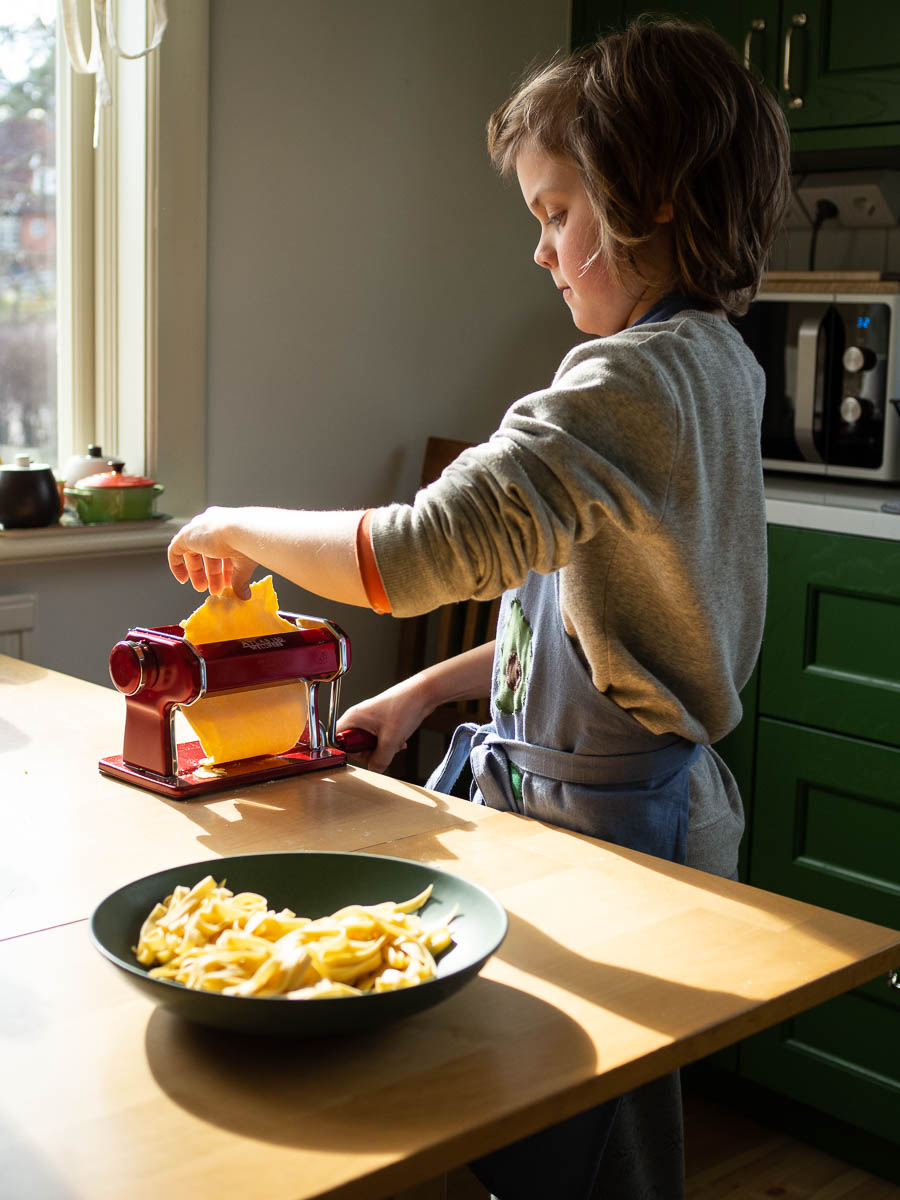
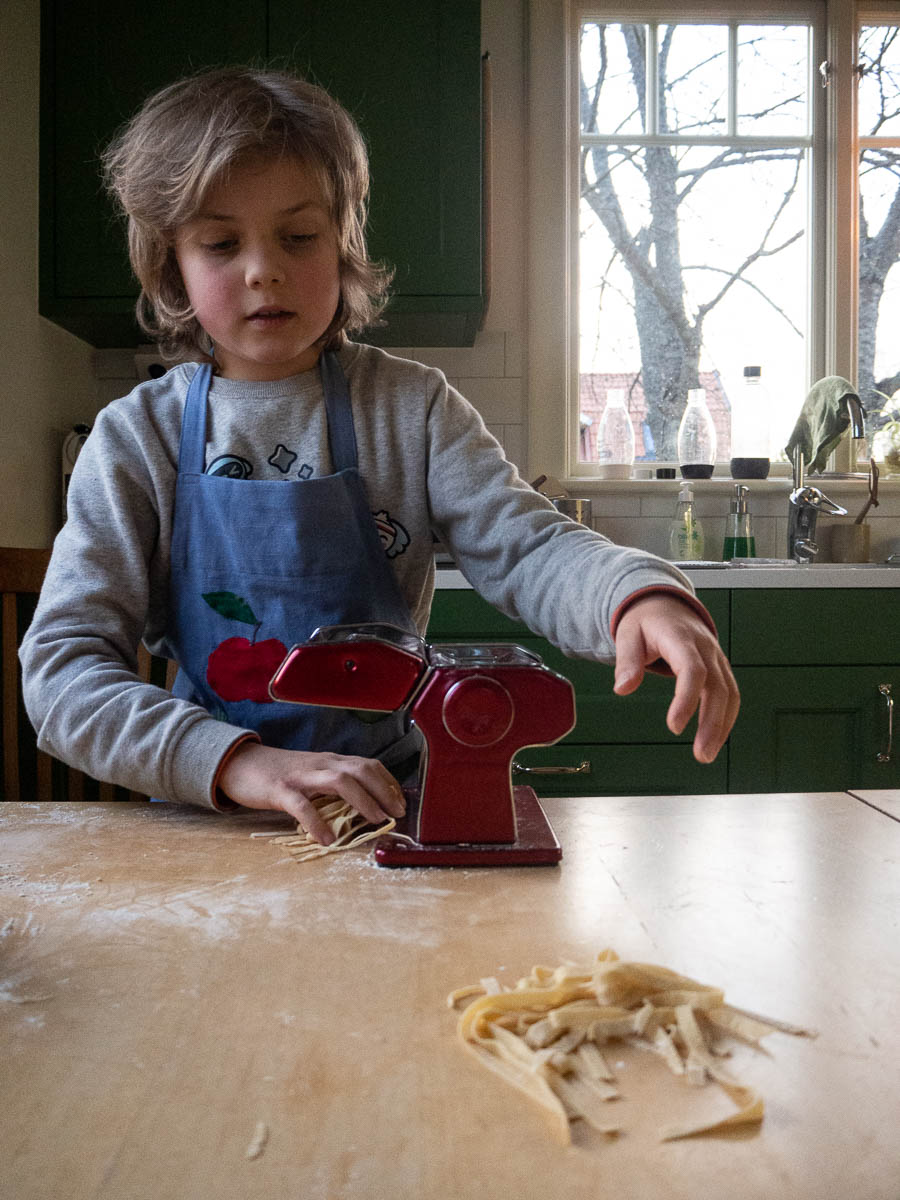
Adrian loved pasta-making so much that he wanted to do it again today, when it’s his day to cook dinner with me.

I read up a bit on pasta-making, we tweaked our process, and everything went more smoothly this time. I made the dough an hour in advance so it was easier to work with. We got a good feel for how dry the dough needs to be, and how much to dust it with flour to make sure it doesn’t stick to itself. I got a better understanding of the point of all that folding of the dough.

Once the dough was done and tested and we got a first batch through, Adrian took over the whole process of making pasta, which let me focus on all the other parts of dinner. So all in all, we got dinner done as fast as I would have on my own with dry pasta. Not bad.


Watching all those cooking shows like Master Chef has really inspired Adrian to do more in the kitchen. He has been asking for some while now if we could try making our own pasta, like they always do on TV. Why not?

I looked for second hand pasta machines but didn’t find any, so I bought this beautiful shiny red thing. “Made in Italy” so it just has to make perfect pasta, doesn’t it?

I made the dough and Adrian operated the machine. It didn’t go very smoothly at first, and it took a while before we got a good handle on the whole folding-and-re-rolling process. Making the pasta took us over an hour.

It’ll go faster with practice, I’m sure. We’ll do this a few more times to get our skills up. And then – I wonder how hard can it be to make ravioli?

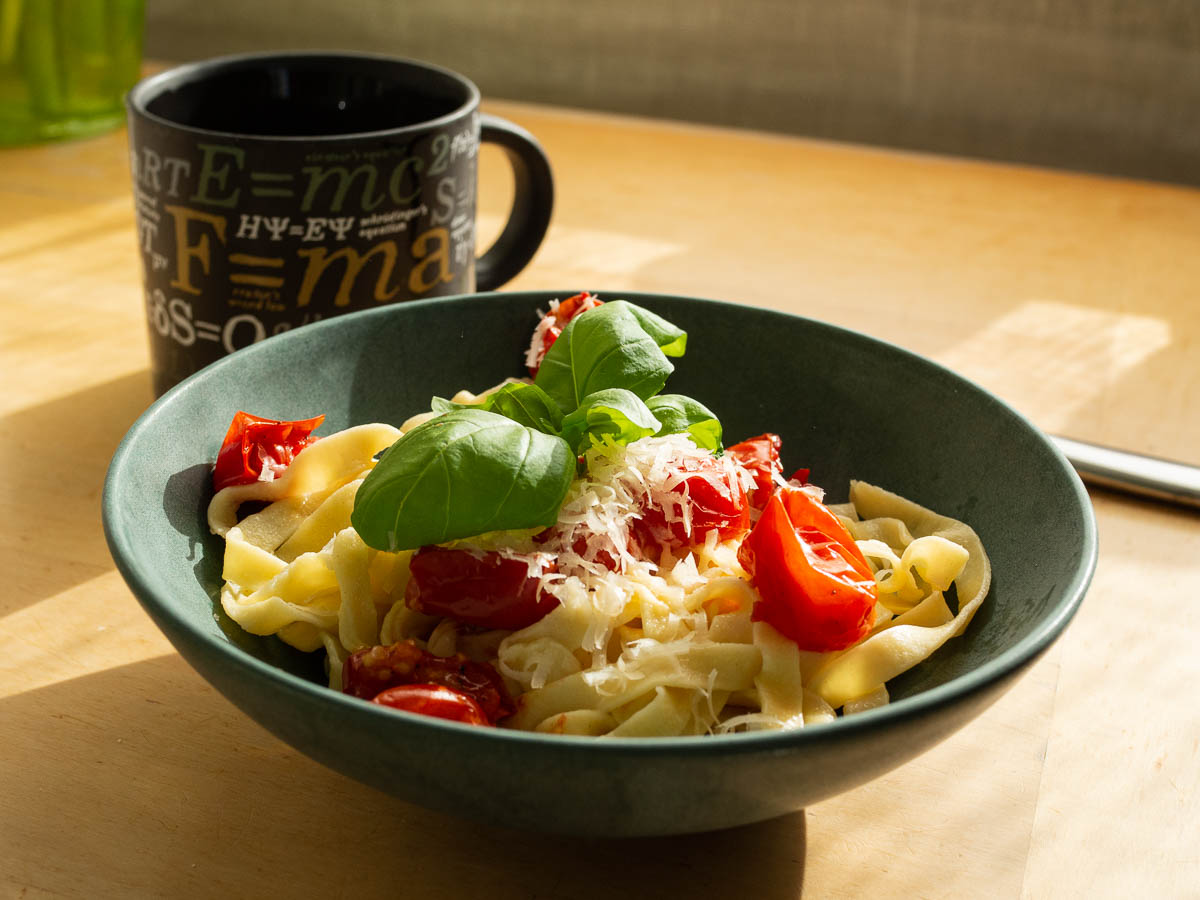
The resulting pasta was good, lighter and less chewy than dried pasta, but not earth-shatteringly delicious. I may have overcooked it slightly, to be honest.

Served with oven roasted cherry tomatoes, olive oil, Parmesan cheese and fresh basil.


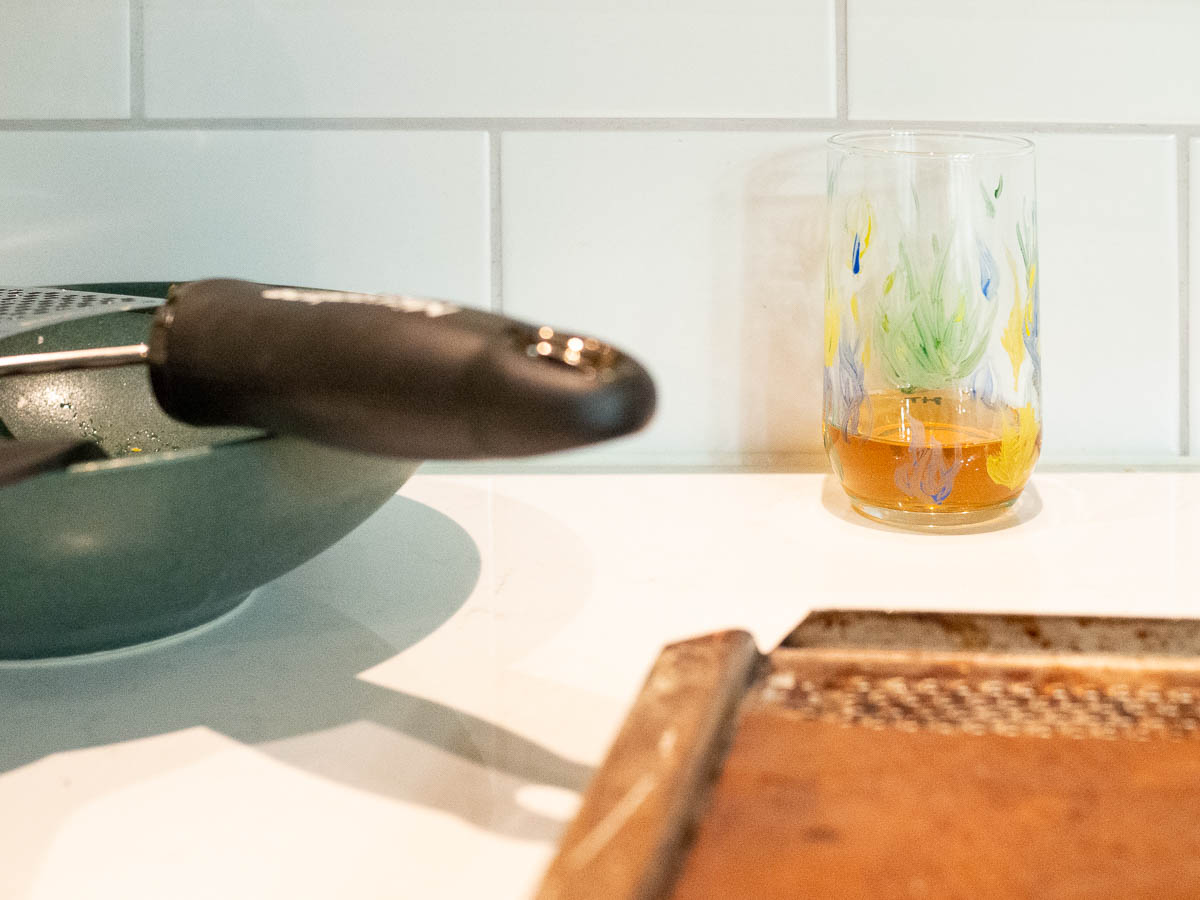
I made a roasted sweetcorn and saffron soup for dinner. I thought it could do with some wine. Went to the pantry and got some wine. There was a bottle of home made apple wine and a bottle or two of store-bought grape wine. The apple would go well with sweetcorn, I decided.

Before I added the wine to the soup, I took a sip. It was so good that using it in a soup would be a waste. Instead I poured it from my measuring cup into the first glass I found. And used the store-bought wine for the soup instead.


Adrian likes watching cooking shows. We’ve been watching Sveriges mästerkock together, and he likes Sveriges yngsta mästerkock, the junior version, even better. We’re waiting for the new season to be released. He also watches Gordon Ramsay on his own.

He sometimes asks me if I think I could be on that show, or if some meal I cooked would be good enough for it. I guess that’s a sign that he appreciates my cooking.

The most obvious difference is that the contestants always cook carnivore food. Many challenges are explicitly meat-based. But they nearly never make vegetarian meals otherwise either, even when the challenge to me looks incredibly vegetarian-friendly. (I think a very few pastas and soups have been vegetarian.)

But what if they had a “Sweden’s best vegetarian chef” contest, Adrian asked?

I explained that the food I cook – no matter how good – is of a different kind. I cook everyday food.

The flavours are part of it. My cooking is way more varied and interesting and flavourful than what the average Swede cooks, I believe, but ultimately still comfortable rather than adventurous.

But it’s not just that. I could easily use flavours with more edge. What is it really that makes my food “everyday” food and not “master chef” food?

I think the answer is a low level of complexity.

When I improvise a meal without a recipe (which is often how I approach cooking) I tend to end up with a single complex part, with potentially some simple ones accompanying it. And with “complex” I mean something made up of many elements.

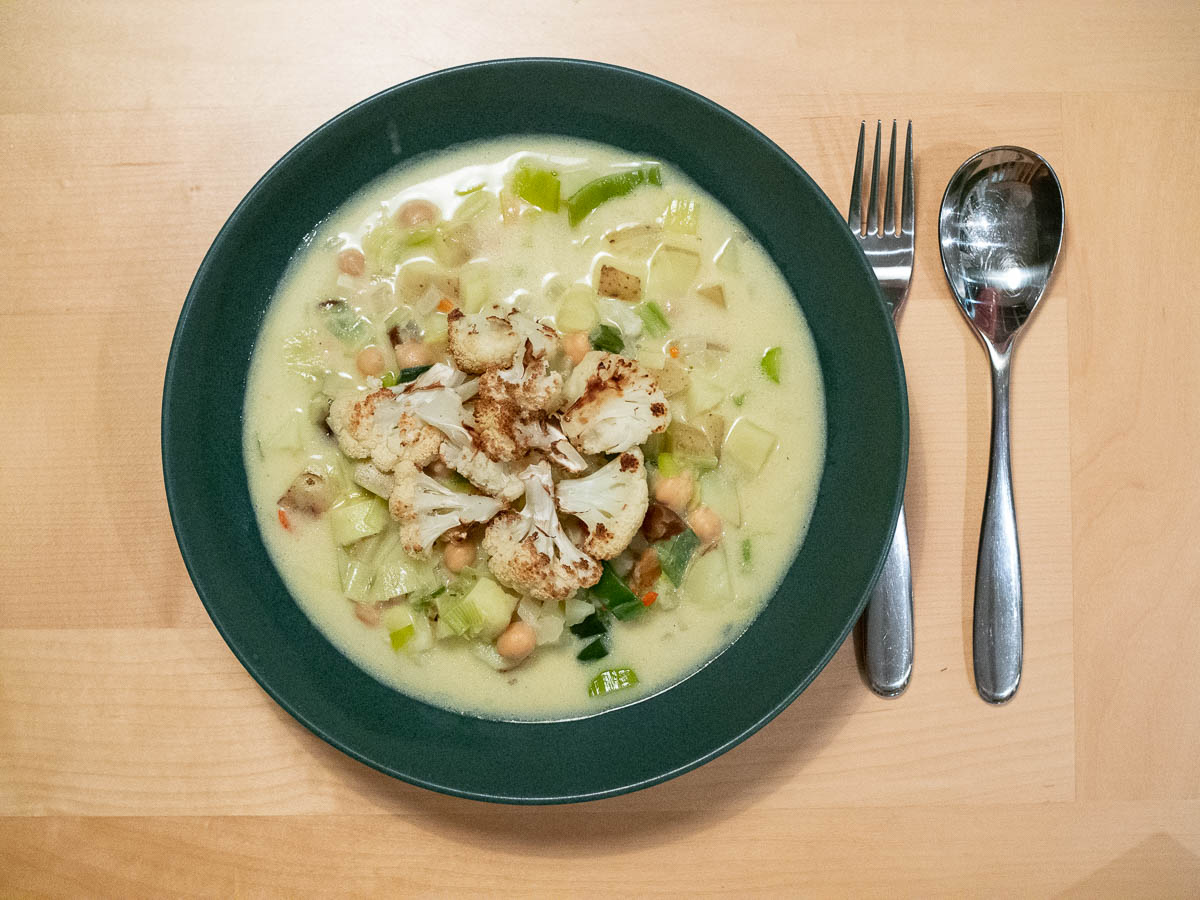
Sometimes it’s just the one complex thing on its own: a soup, or a stew, or fried rice, or even something like a lasagna or frittata. Like the stew in this photo.

Sometimes the complex thing could be a rich saucy thing, or a stir-fry, and then it would be accompanied a simple thing like carbs (rice, pasta, potato, bread) or maybe a separate protein (halloumi, tofu) or vegetables (fried broccoli, steamed asparagus). These simple things may be flavoured or marinated etc, but they clearly have just one main ingredient.

Master chef meals often have several complex parts. If there is a soup, then it has a topping and some dipping sauce for the bread. If there is a meaty thing then it has both a fancy sauce and a complex vegetable thing and possibly even more things.

The meal kits from Lina’s Matkasse were also often like that. That’s why I liked those meals: they had not just new flavours, but often a whole different structure.
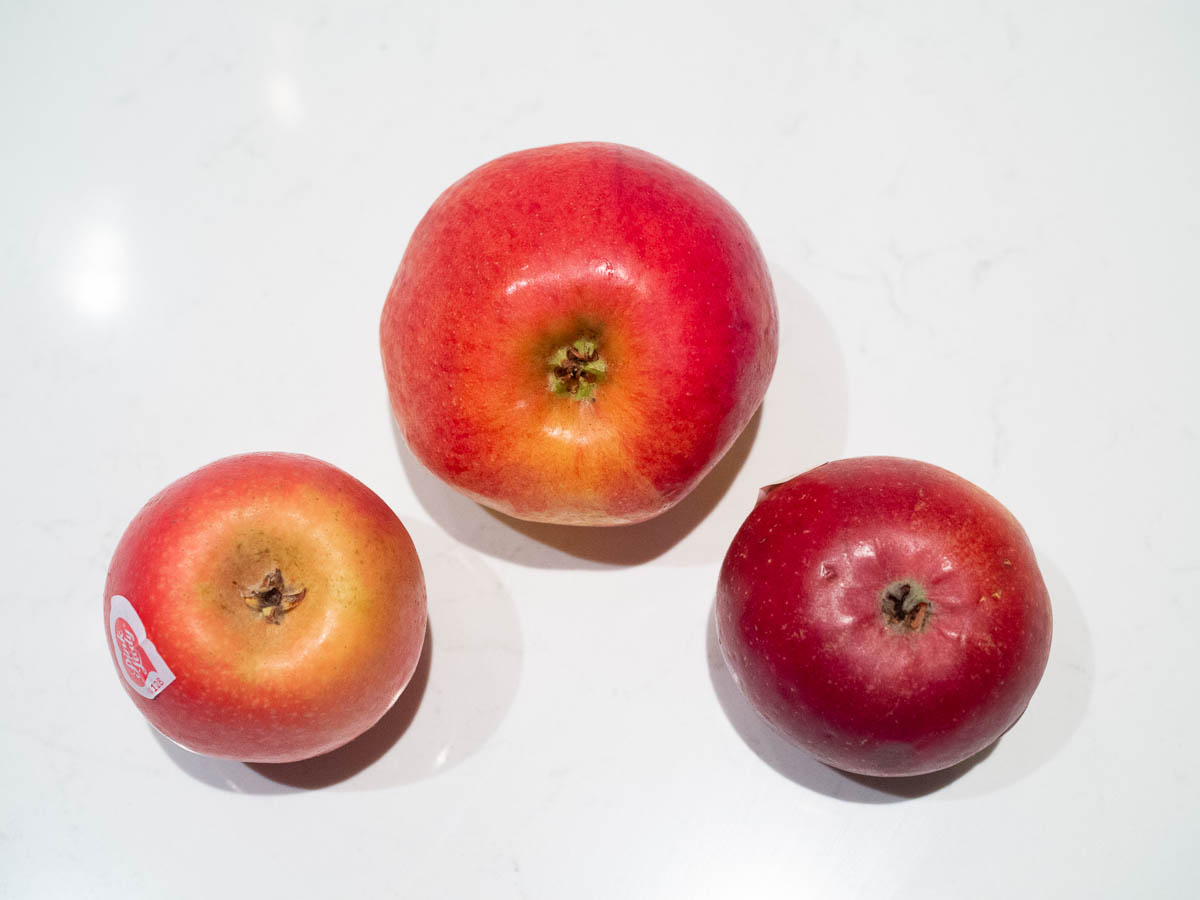
We have a whole apple buffet at home.
I like Ingrid Marie. I actually like them best when they’re just a little bit wrinkly, but still juicy rather than mealy.
Ingrid likes firm, crisp apples and abhors soft, mealy ones. ICA has had several new varieties of extra firm Swedish apples this year, such as Saga and Rubinstar.
Adrian likes Pink Lady apples and isn’t particularly interested in any others.
Eric is not a big fan of apples at all.


Monday’s are still Adrian’s days to cook dinner with me. Today we’re doing his favourite pasta with mature, hard goat’s cheese and pureed peas.

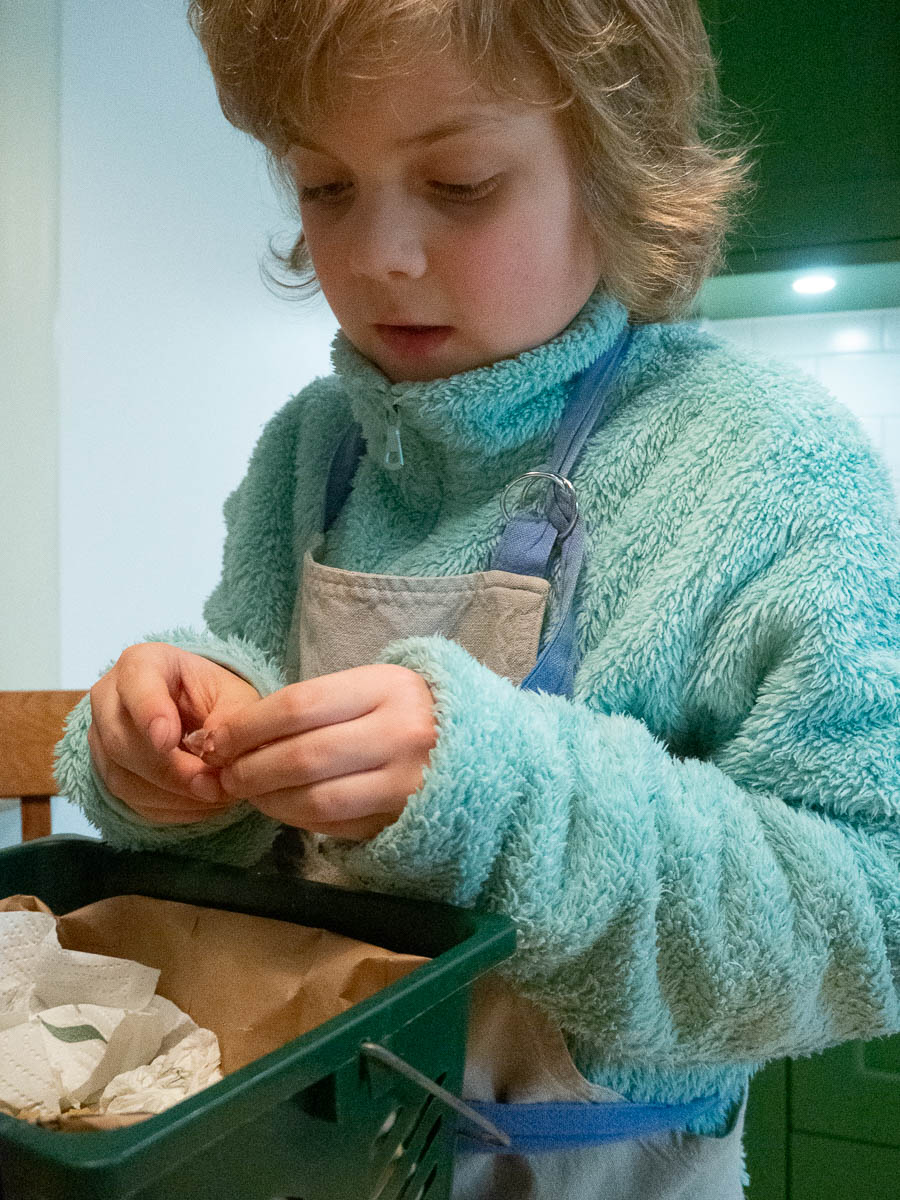
There are two tasks that he particularly enjoys. One is peeling garlic. He likes doing it with just his fingers, with no knife or anything.

The other is weighing. When he measures pasta for the four of us, it has to be 360 grams, no more, no less. He’s always a little bit peeved when the pasta weighs 359 grams and adding one piece takes the weight to 361.


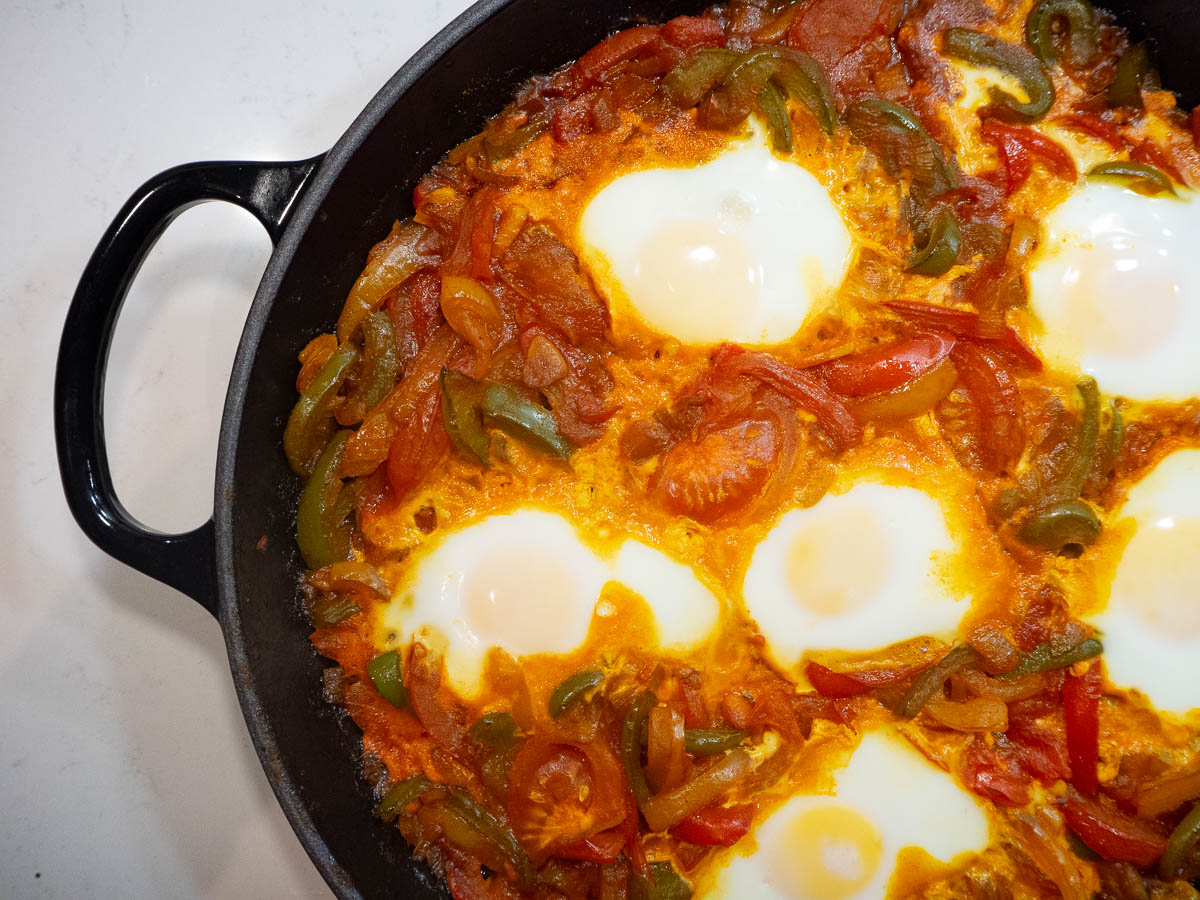
Shakshouka is my favourite comfort food. I only learned about this dish a few years ago, from Linas matkasse meal kits. We don’t subscribe to those meal kits any more, but I’ve saved a bunch of the best recipes, and this one is the best. Juicy and flavourful and sweet, and with creamy eggs. I can’t believe I lived for forty years without knowing about shakshouka!

There are plenty of variations on shakshouka. This one, which for me will forever be the quintessential, original one, has plenty of bell peppers in the sauce. It’s almost a pepper sauce with tomatoes more than a tomato sauce. It also has onions and garlic of course, and cumin, paprika and saffron, plus something chili-ish.


The Christmas thing is in full swing.

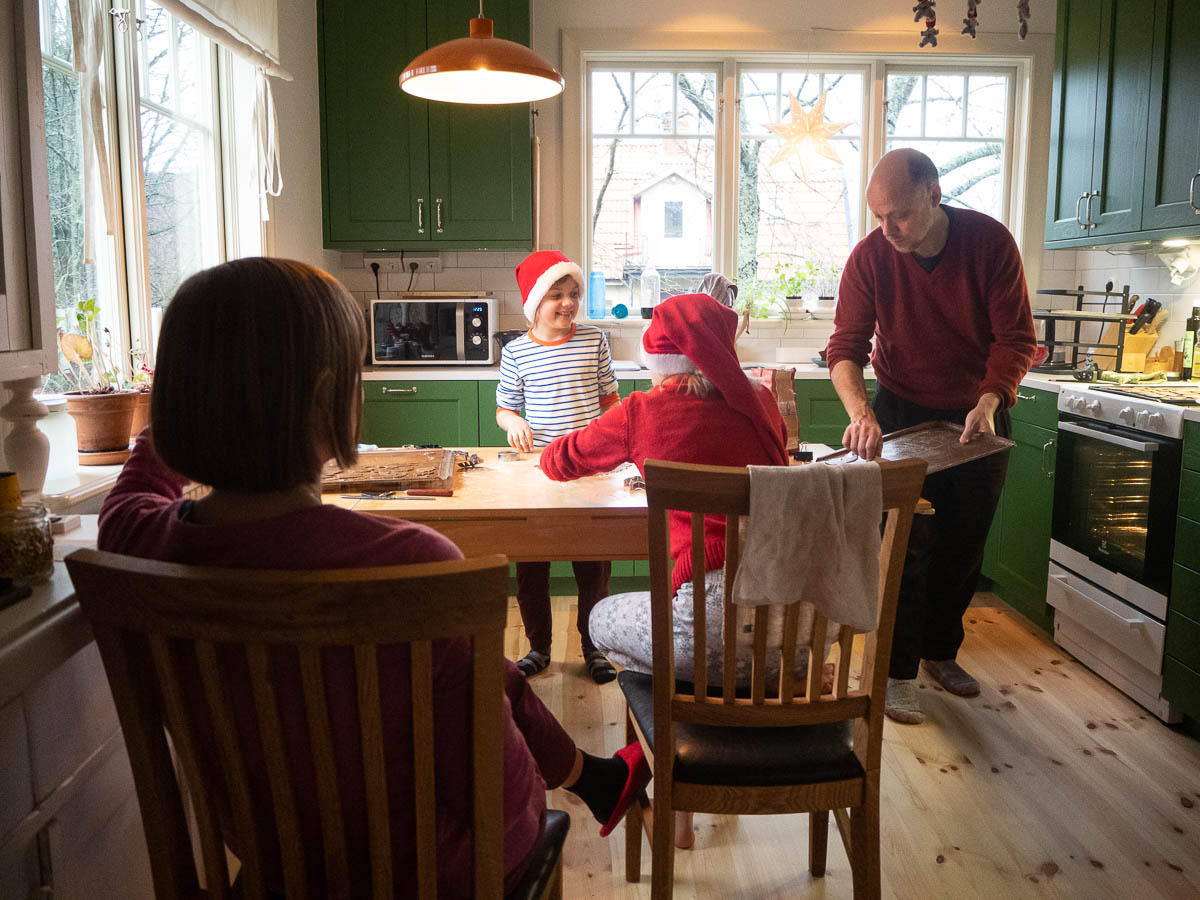
Cookies were made, gifts were opened, plenty of food was eaten.

For the past few Christmases, I’ve had to make more and more of an effort to enjoy this circus at least somewhat. I used to be able to. Now it’s just a chore.