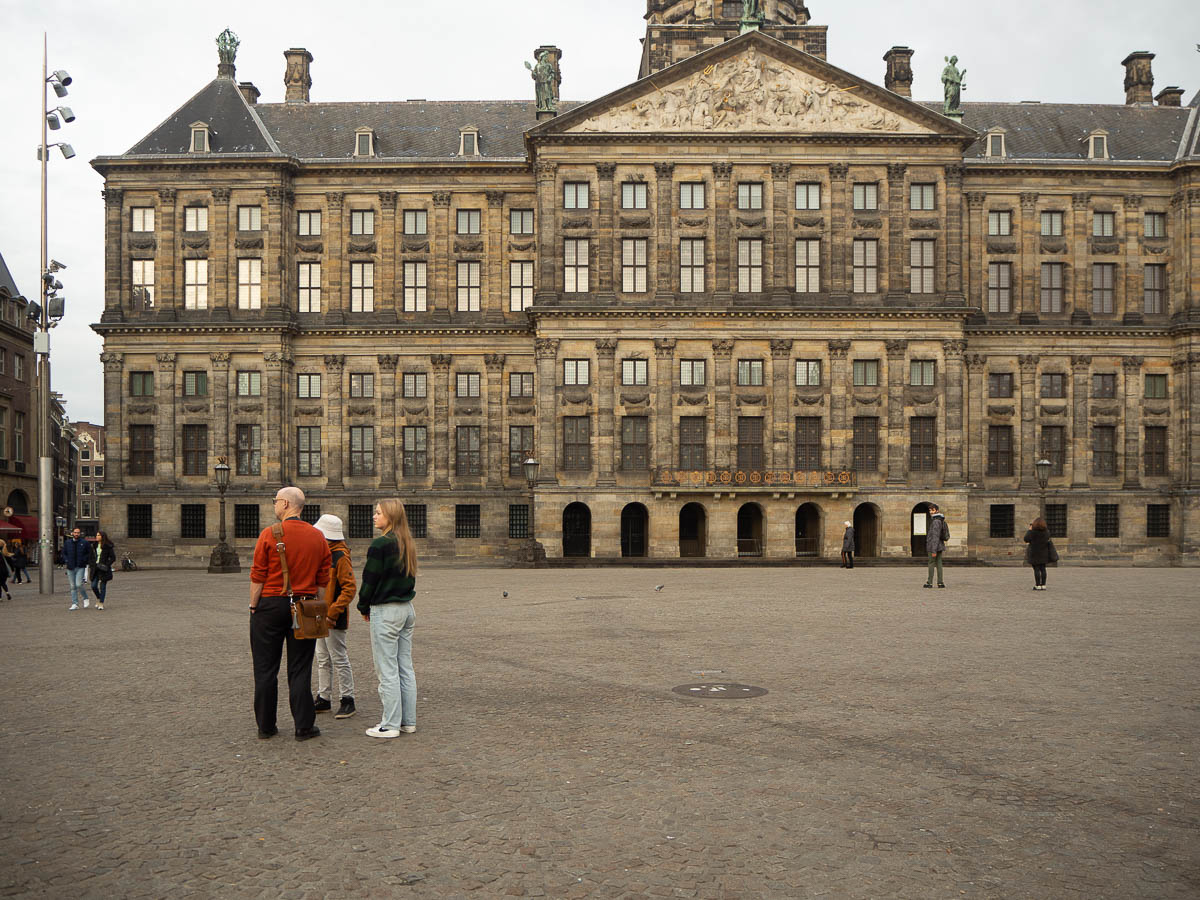
This was our first time in Amsterdam, for all of us. Mostly we just walked around the city, with no particular goals or destinations in mind. This large and imposing building is apparently the royal palace – looking almost as dreary as the royal palace in Stockholm.

We quickly left it behind us and walked among the smaller streets and all the pretty little canals instead.
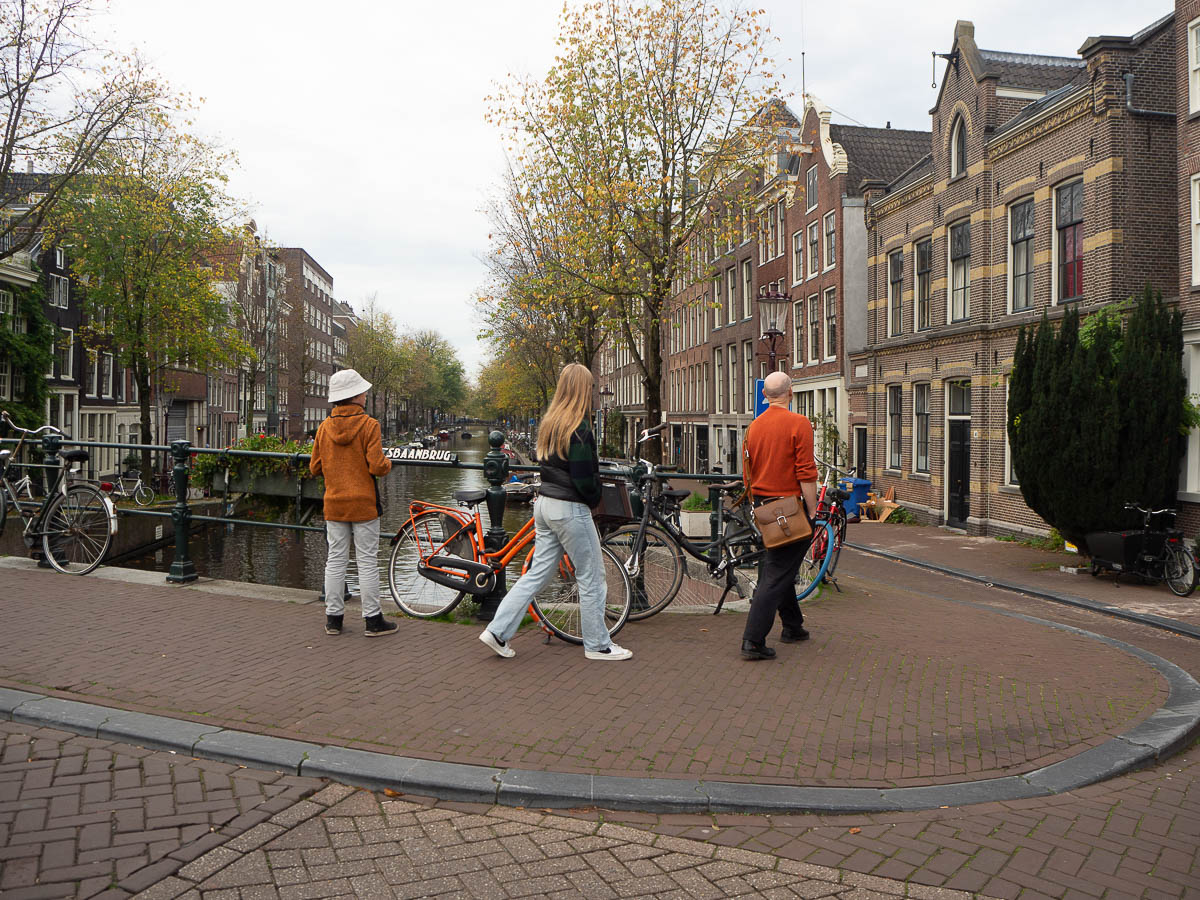
The weather was unseasonably warm. Even when there was no sun, we didn’t need any jackets. Pleasant, but worrying – this is not what it’s supposed to feel like at this time of the year.
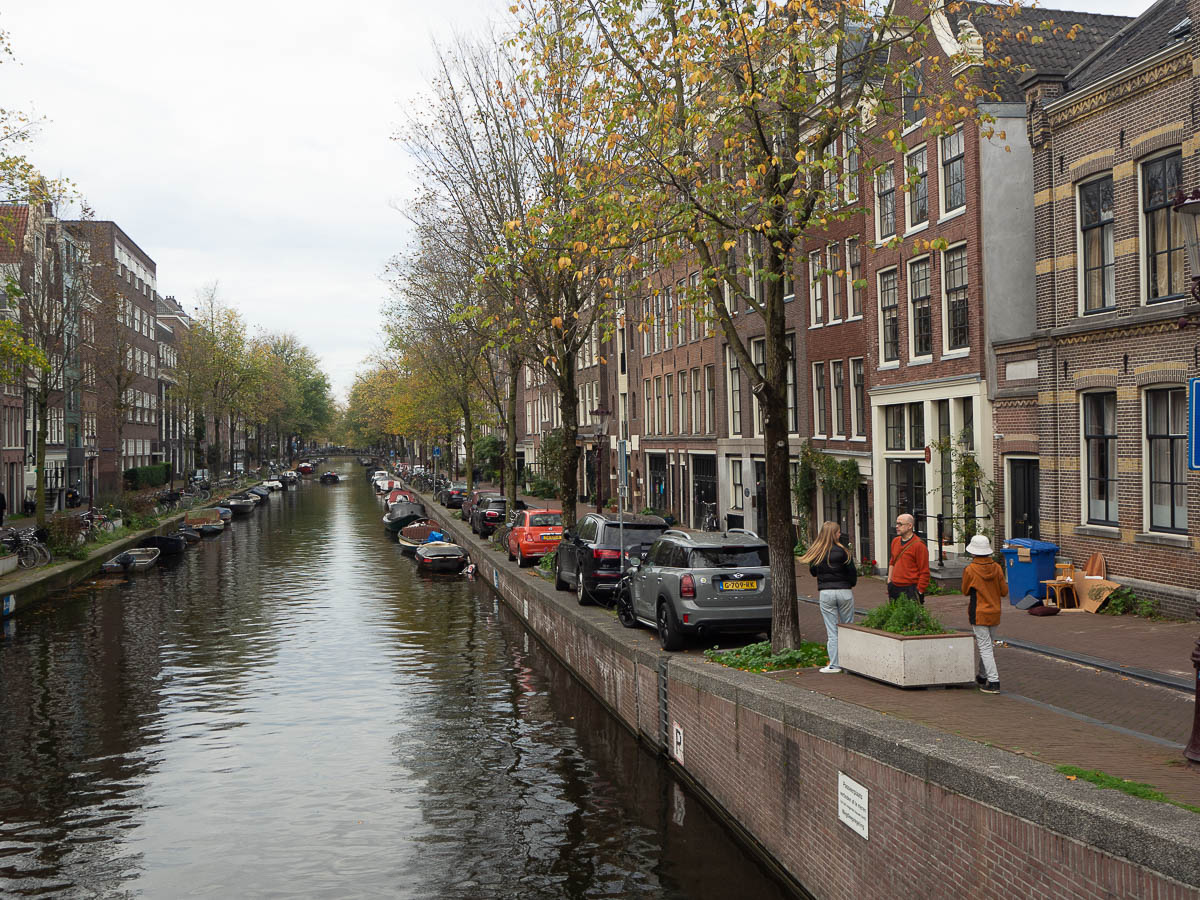
The streets were narrow and chock full of cyclists. It took some getting used to, before we learned to dodge them. They don’t behave like Swedish cyclists: they’re slower, closer to walking pace (compared to the lycra-clad racers you often see in Stockholm) but more numerous, so in aggregate they move differently. And they’re all helmetless – which makes sense given the lower speed, but still felt weird.
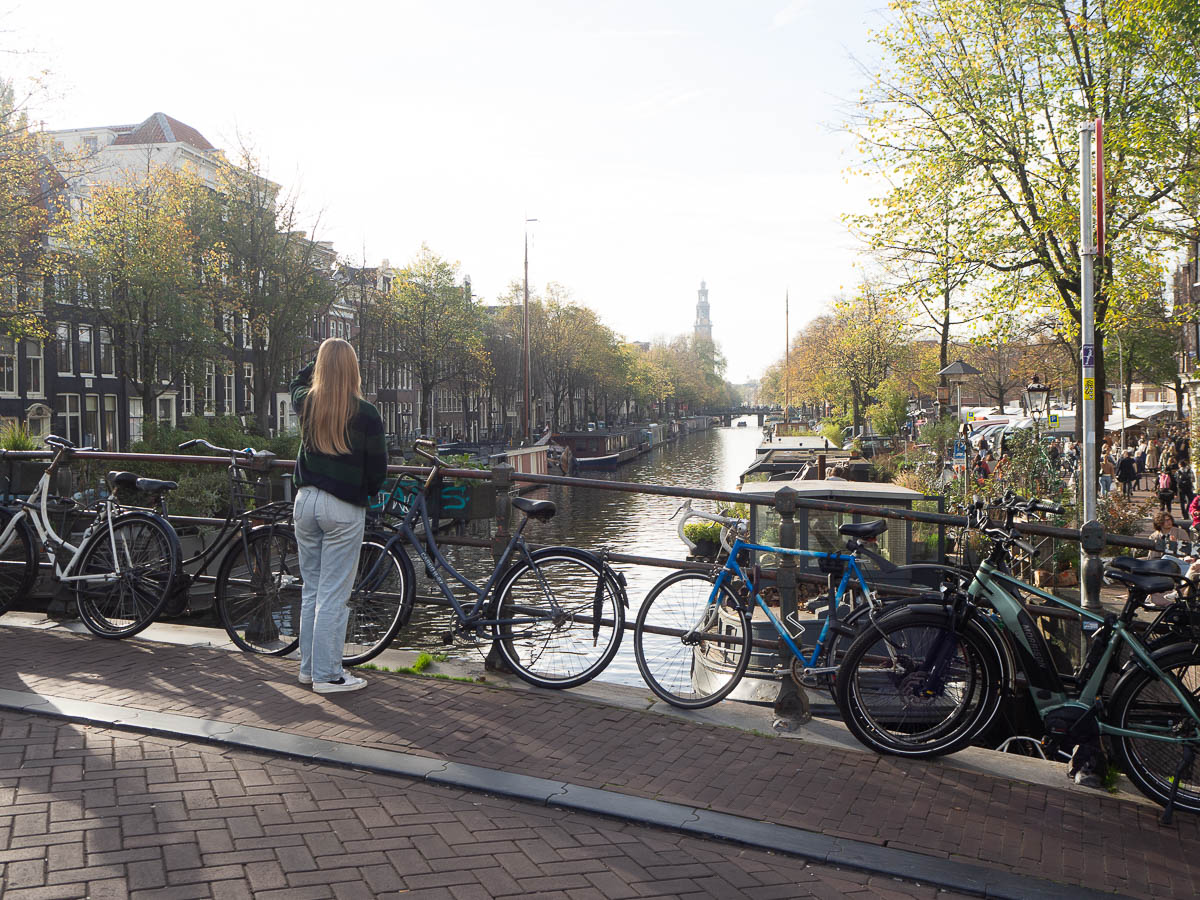
Amsterdam has fewer inhabitants than Stockholm, but so many more tourists, and therefore so many more shops. We kept finding fun little shops everywhere. Central Stockholm is all fashion chains and other large, impersonal stores instead.

The tourists keep the shops alive, but I wonder what made them happen to begin with. A history and culture of shopkeeping, as opposed to Sweden’s history of large industry employing masses of workers? An inner-city architecture of small buildings and thus small retail spaces where you can’t even fit an H&M, whereas Stockholm’s large 1960s city centre has the opposite – mostly large spaces that are unsuitable for small shops?
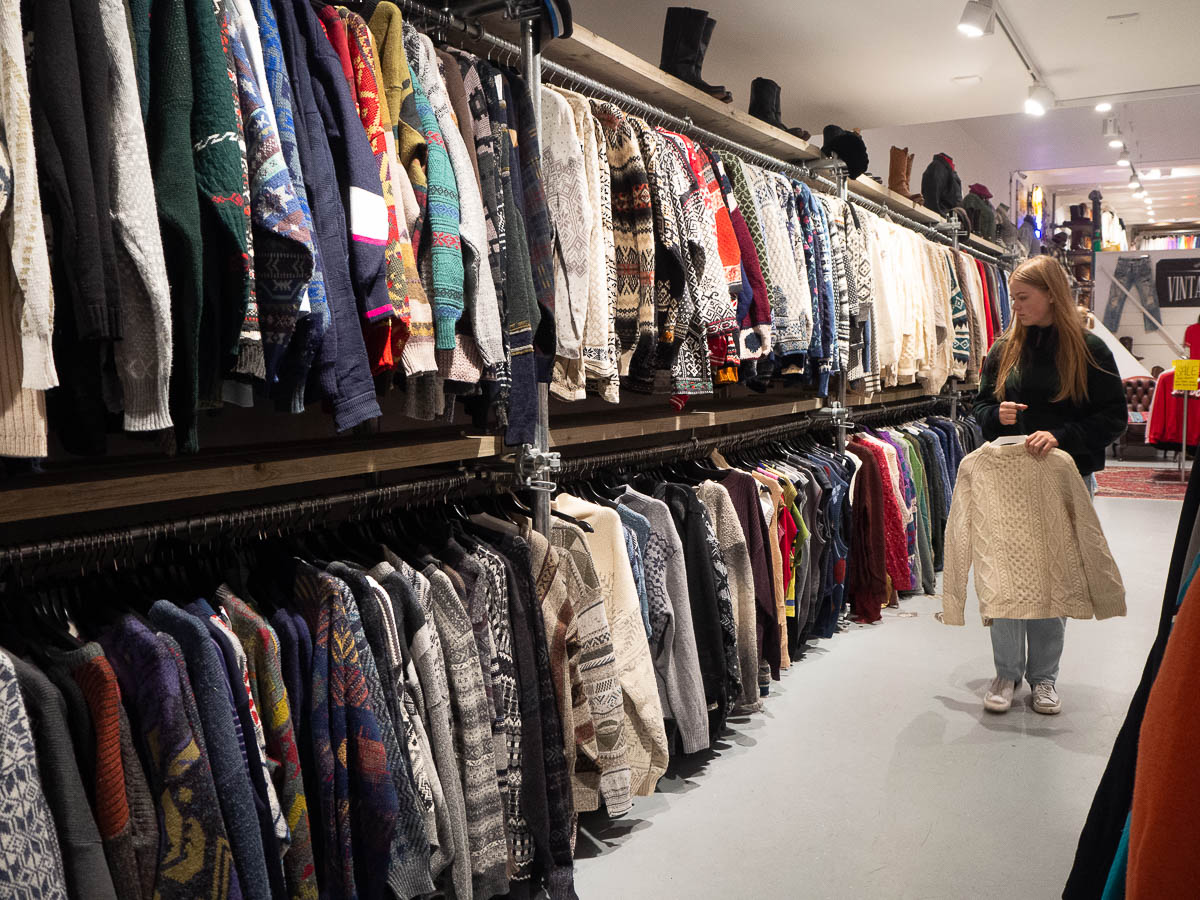
Ingrid liked the vintage clothing shops. I was horrified to see that ugly 1990s fleece jackets are now considered desirable.
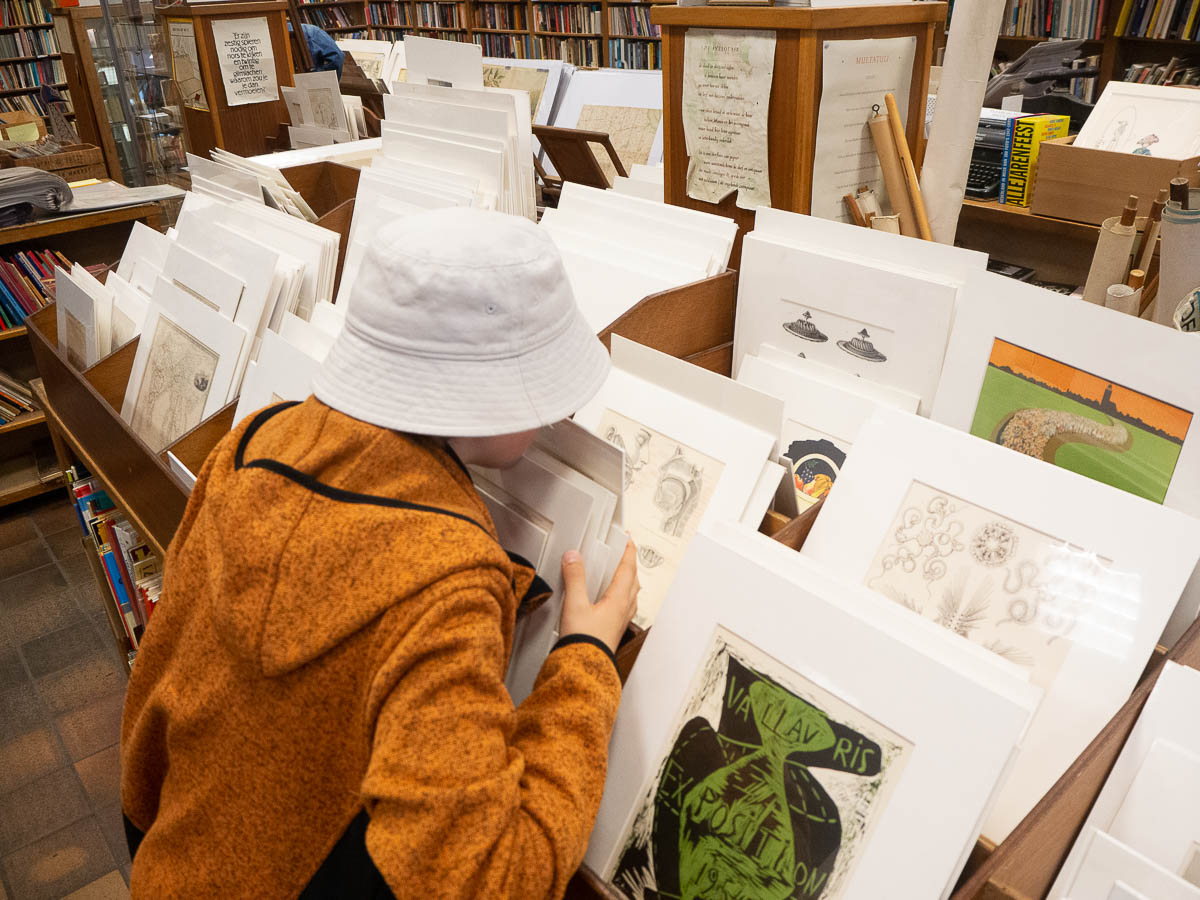
This antiquarian bookshop sold reproductions of prints of all kinds, ranging from “here is how you recognize measles” through anatomical drawings and comparisons of tulip varieties to “this is how you arrange a centerpiece for your dinner table”.
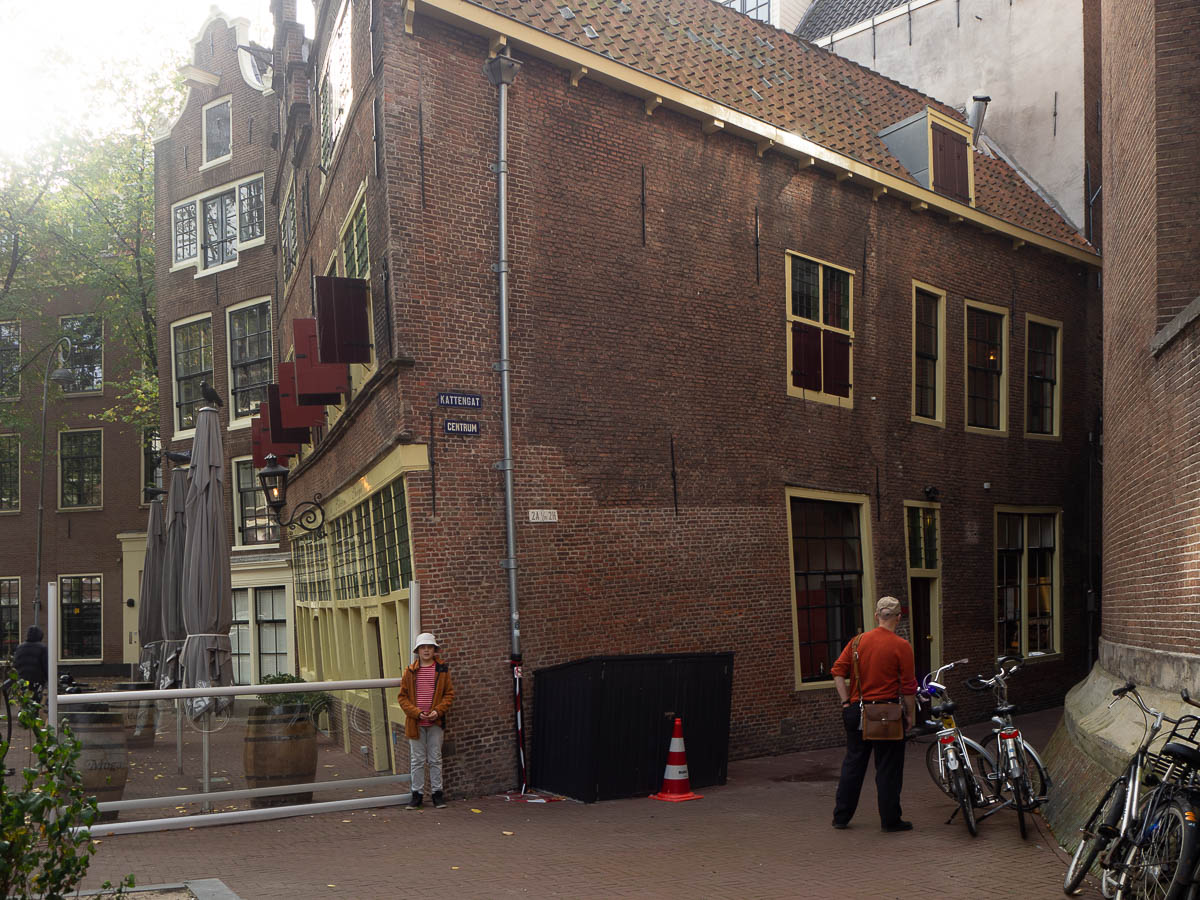
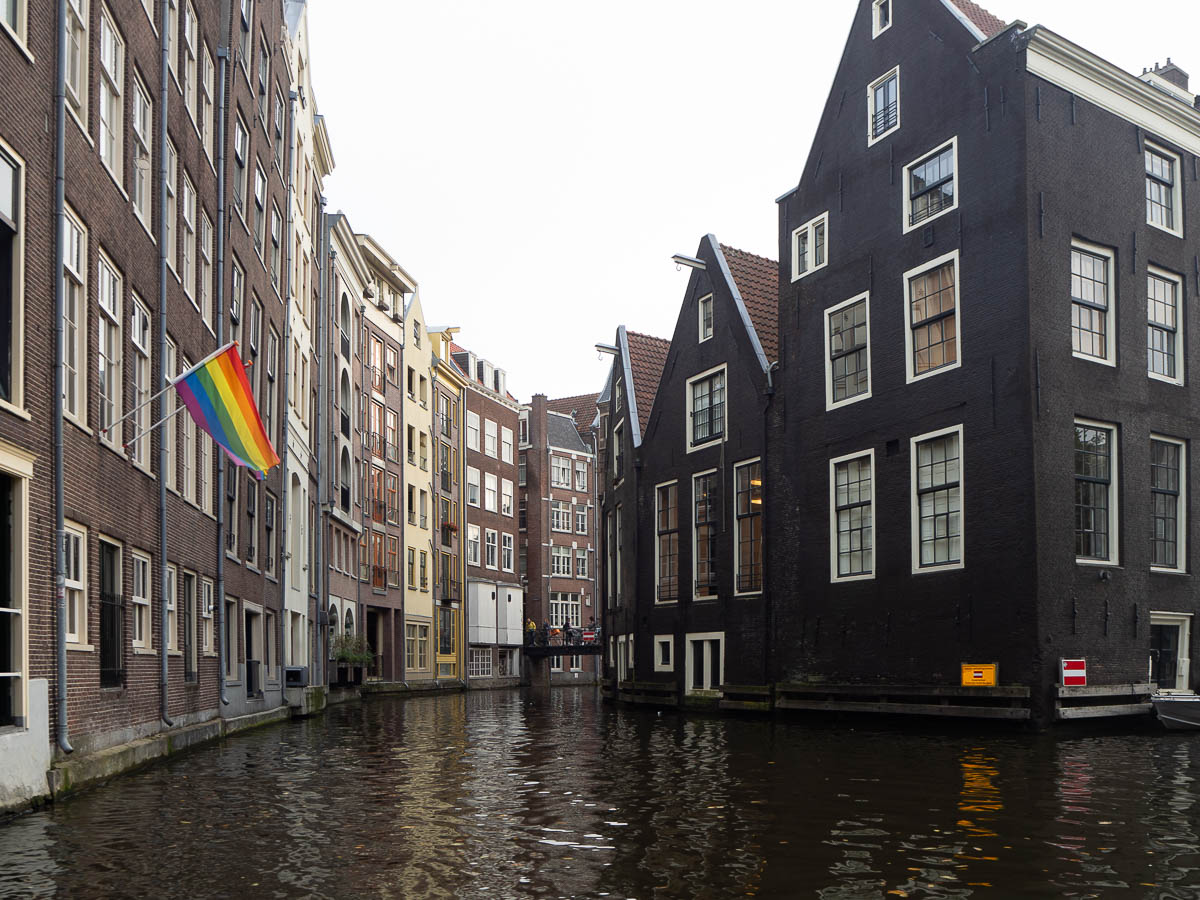
Most of the houses in Amsterdam lean one way or another. Or several: they lean sideways because the foundation sank, and the facade leans forward because it was built that way to allow goods to be hoisted to the upper levels. I kind of got used to it after seeing enough leaning houses, but then you come across something like this and it’s hard to grasp how it even remains stable. It must be a challenge to be a window-maker here, to produce windows that fit these crooked walls.
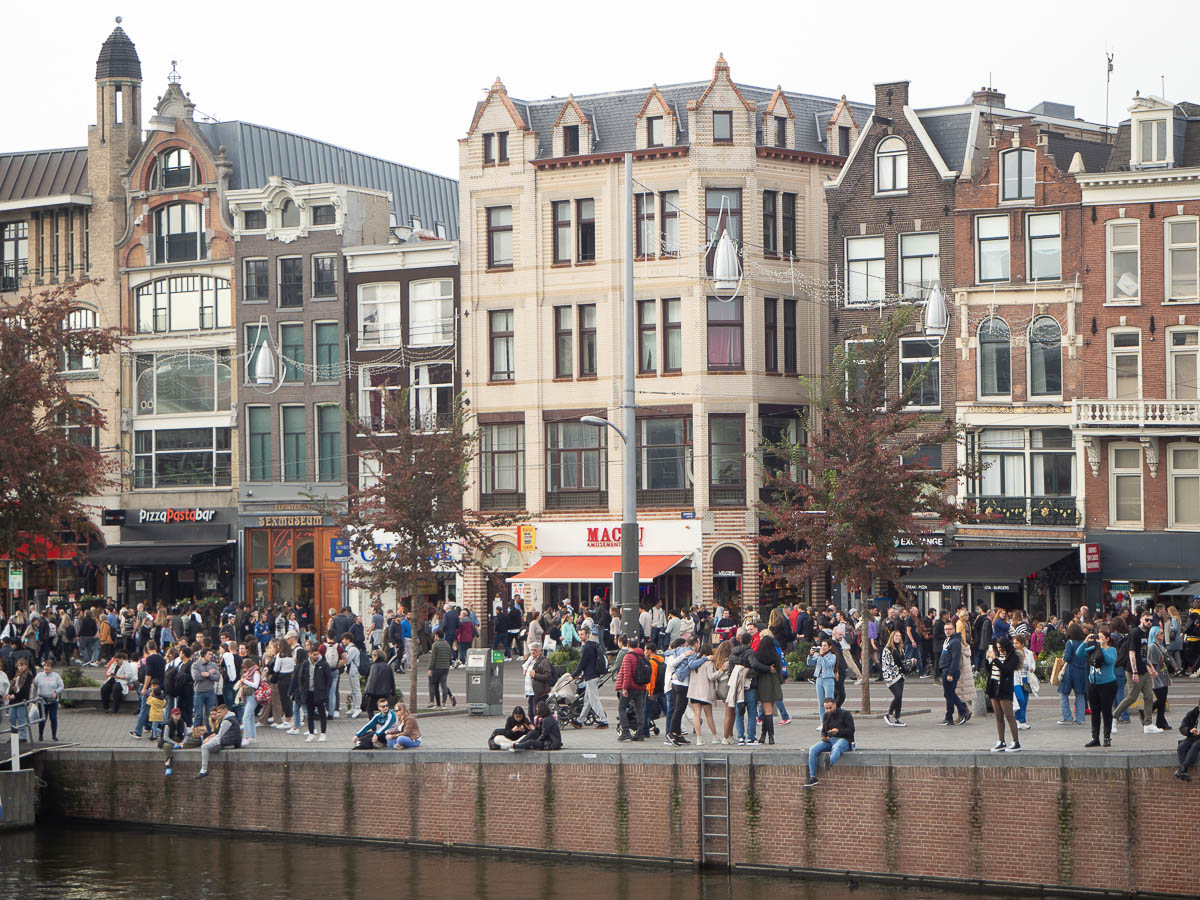
Away from the small canals and back to the innermost city, we were surprised at how crowded the streets were, mostly with groups of young people.
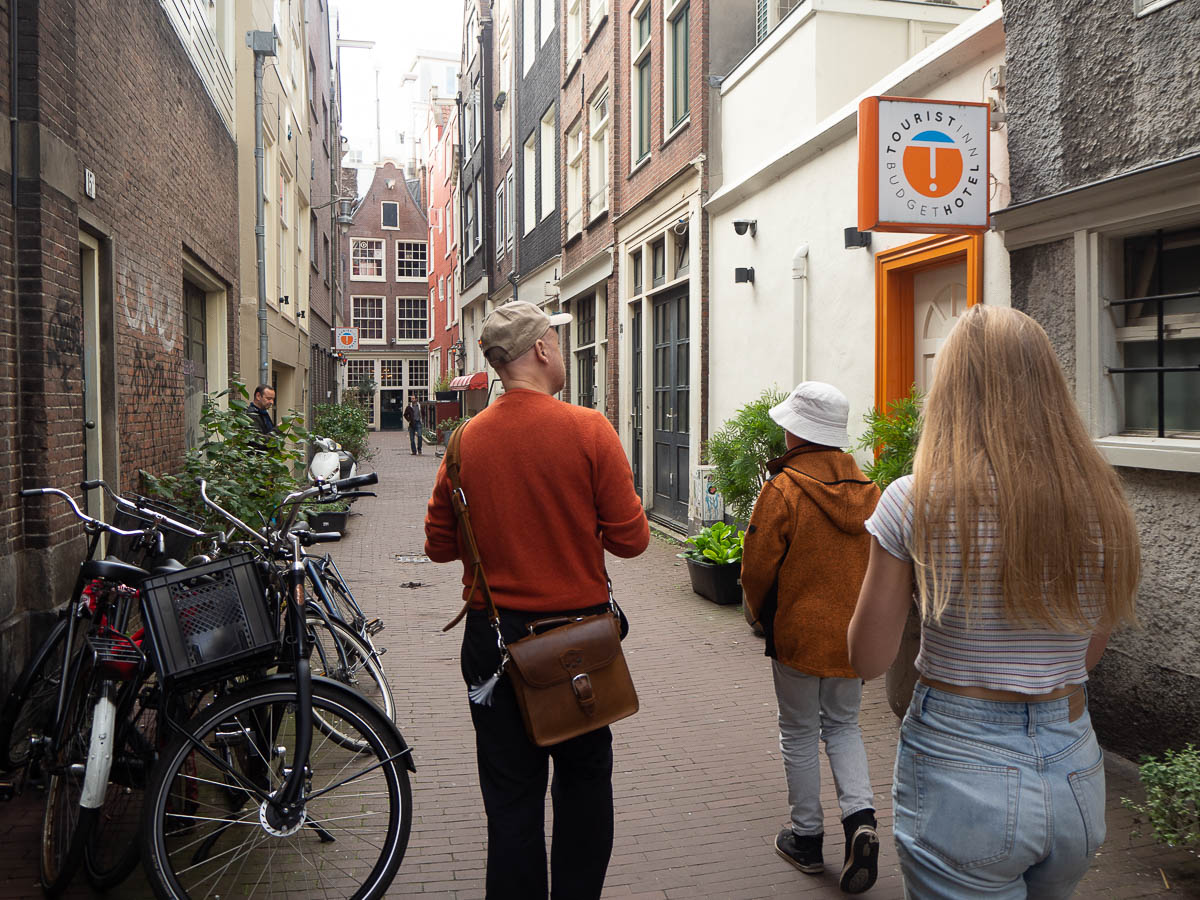
The inner city kept surprising us with red-light streets. Some were clearly noticeable and avoidable, others were sort of just in our way when we wanted to get from A to B and there was no easy way around them. And some looked normal when we entered them and only turned “red” at the other end. You can avert your eyes and try to pretend they’re not there, but it made things uncomfortable for the kids, especially Adrian. Not the most family-friendly city centre.

And the “coffee shops” everywhere. The smell of cannabis – and cigarette smoke, there are so many smokers here and smoking is apparently allowed in most places – got really annoying. Now we’ve seen the inner city, been there, done that, checked the box, let’s leave it behind and get away from here.
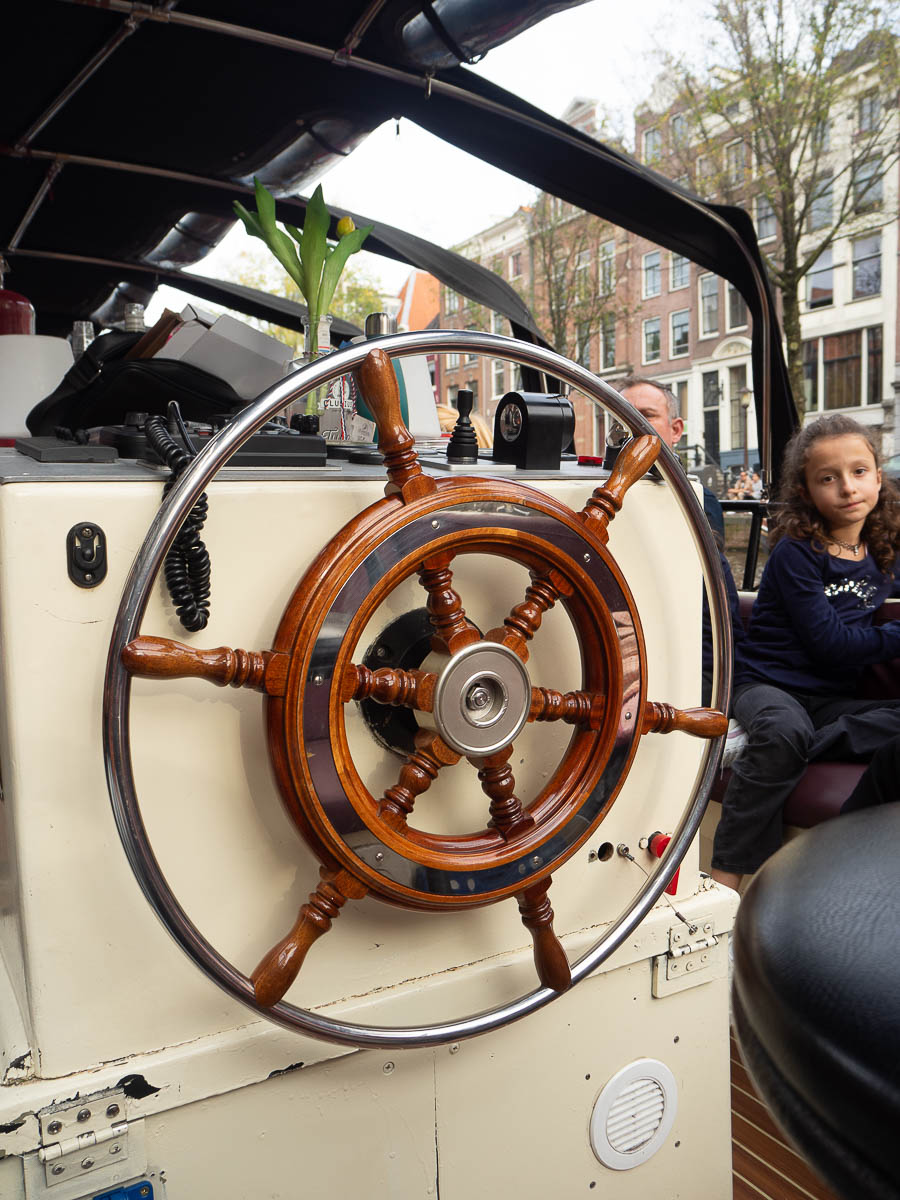
When our legs were tired of walking, we went for a boat tour on the canals. Despite the tour being marketed as family-friendly, the boat was effectively a floating bar and both the crew (not the captain though) and most of the passengers spent the entire trip drinking. We got to see the city from new angles, but didn’t get the kind of guided tour that we had been hoping for.
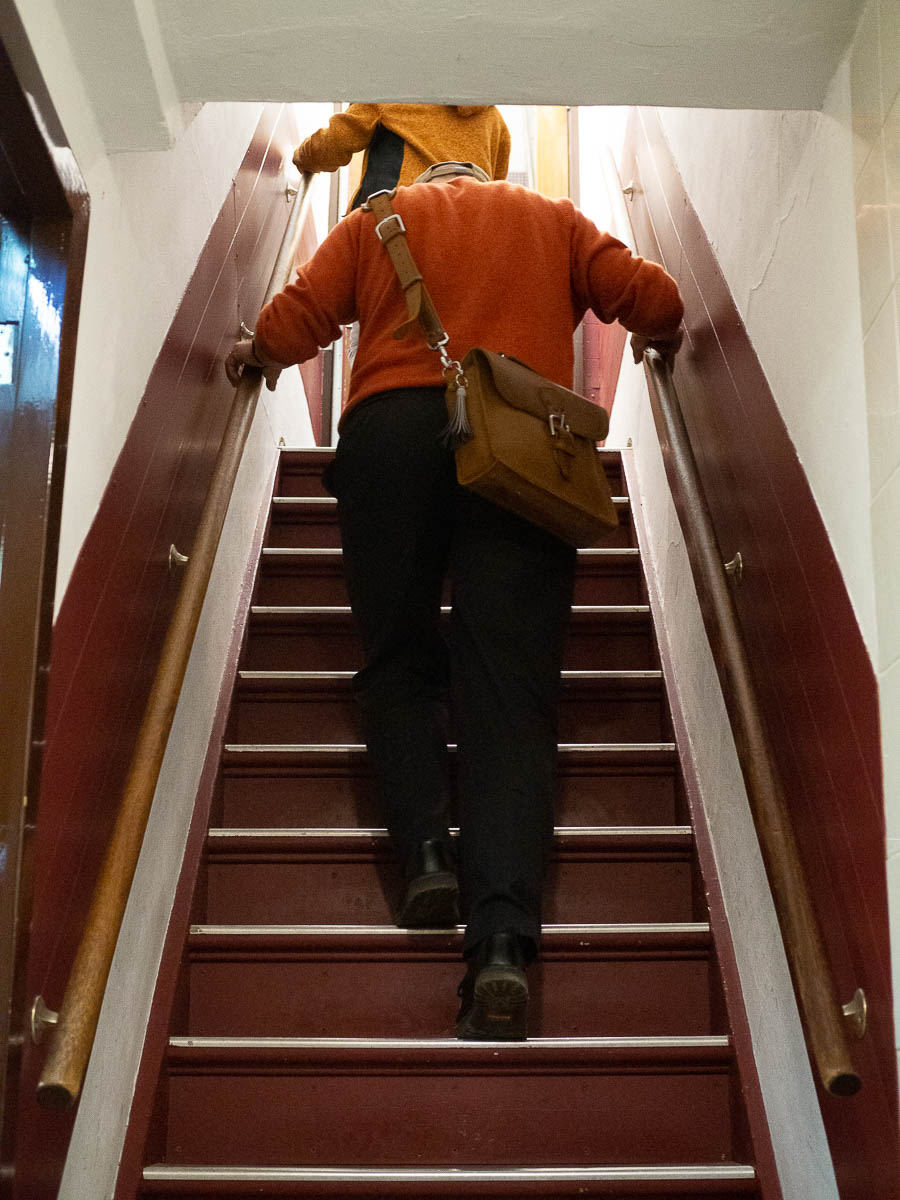
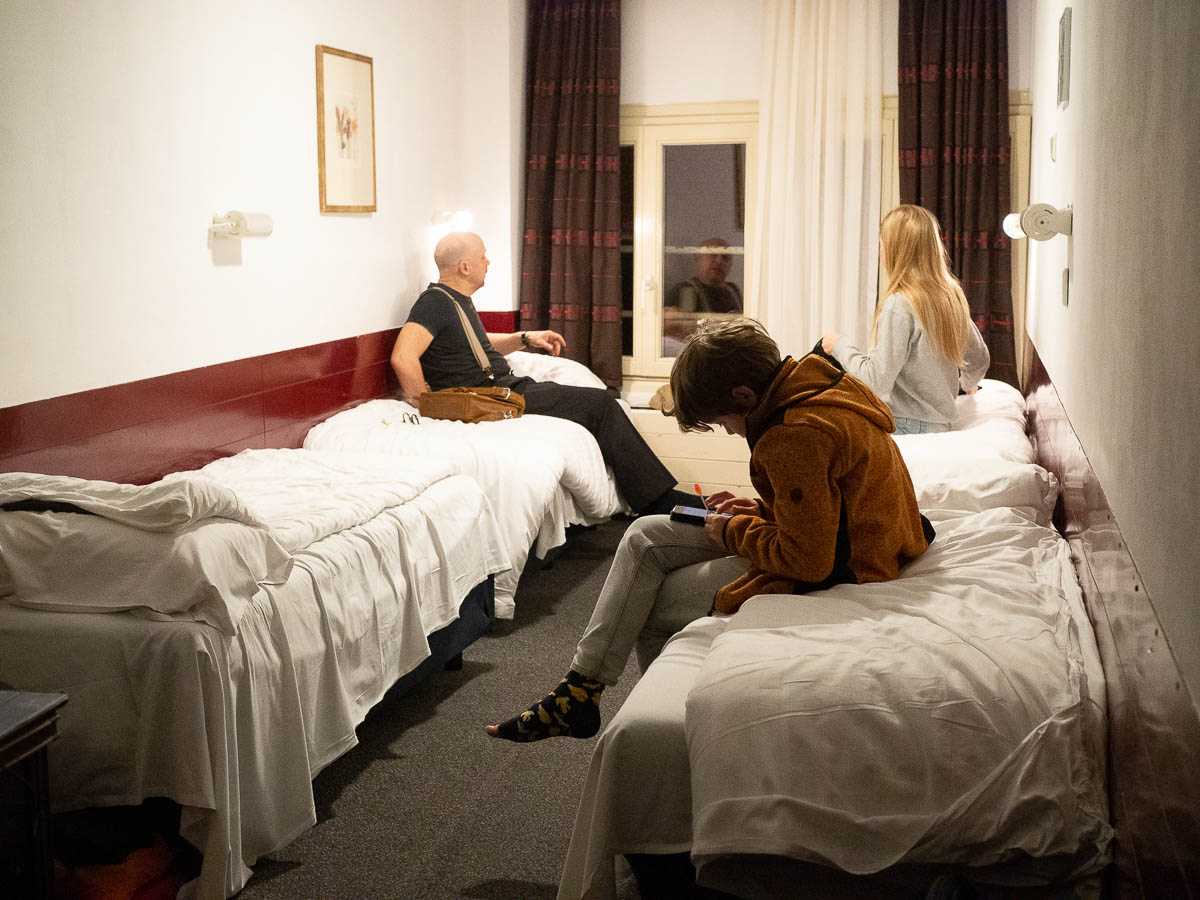
We’re spending a long weekend in Amsterdam, since Eric was already here for work and next week is autumn break for the kids.

Hotels in central Amsterdam are crazy expensive, especially when booking at short notice. This is definitely one the most basic hotels I’ve ever stayed at, and it’s still more expensive than the luxurious spa hotel in Bled. It’s officially got a single star, and it truly offers no extras. There is a room with four beds and a small desk and enough room to walk between the beds, and a functional bathroom, and that’s it. No TV, no breakfast, no safety box, no elevator.

Everything is clean, though, and mostly whole (though there are cracks in the sink) so they’re delivering on their promises. No complaints.

Oh, there is actually one luxury: plenty of outlets, both 220 V and USB-C, for charging electronics. Basic, but also modern.


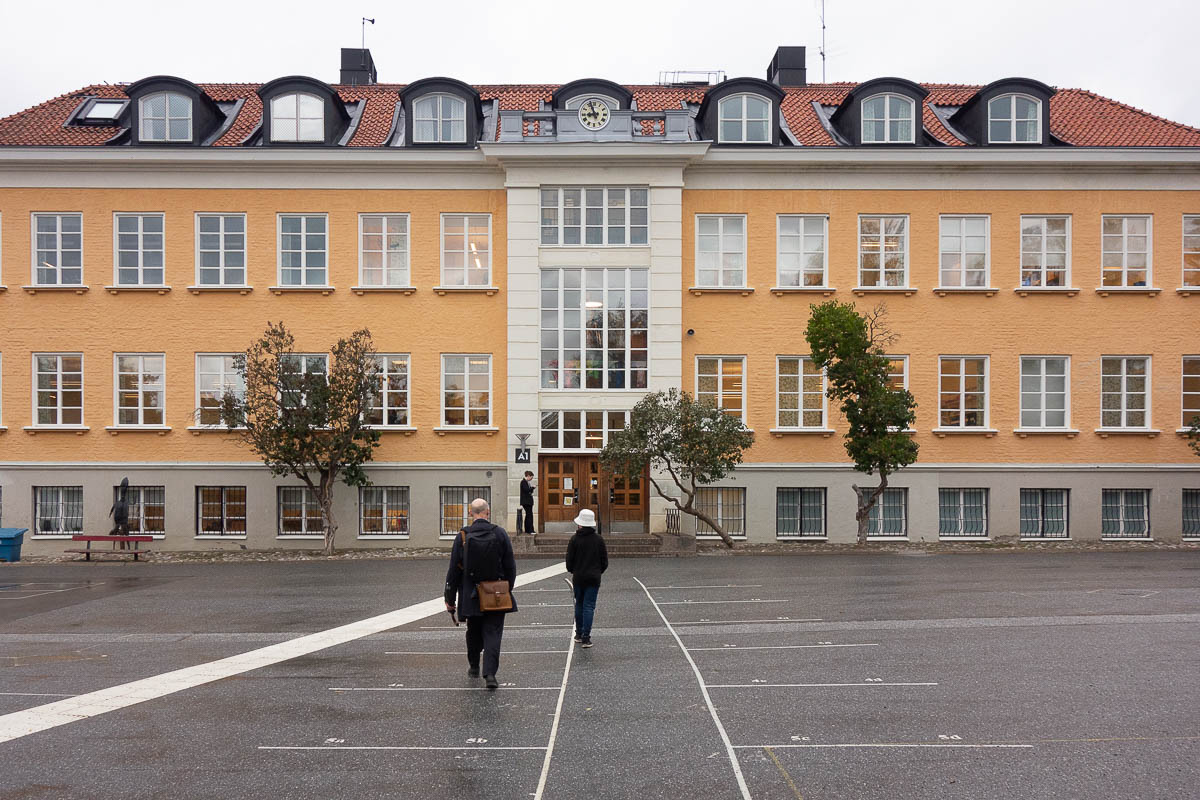
Adrian & Eric in front of Adrian’s school.

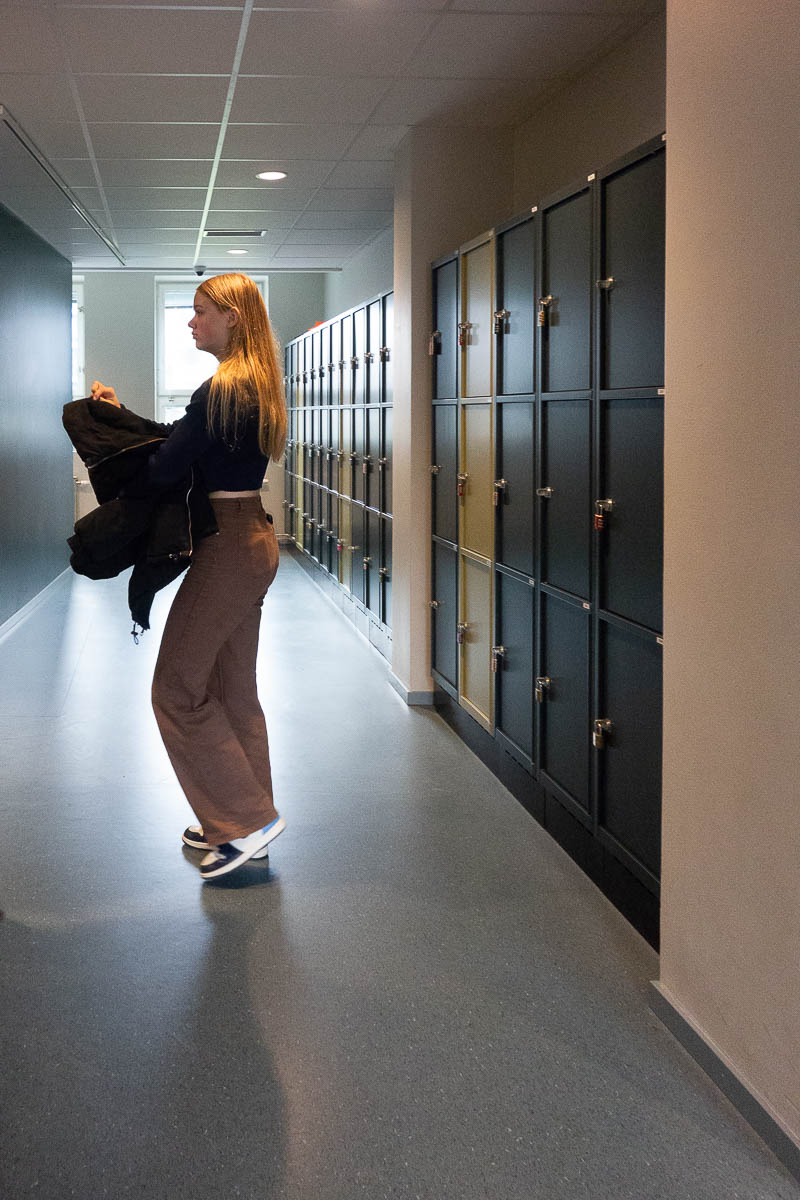
Ingrid, caught in a random moment at her new school.

There were parent/teacher meetings at both schools yesterday and today. Adrian wants to work on his writing skills, especially when it comes to writing longer texts – being more descriptive and structuring his texts better. (He has a bit of a habit, both in writing and in speech, of just jumping right into the middle of things and forgetting to set the scene.) Ingrid, being in a completely new school, isn’t setting any goals at this time, but needs to decide whether to skip the maths course that she’s scheduled to take because she’s done it all in secondary school already and move on to the next one – which would mean not being with the rest of her class during maths.


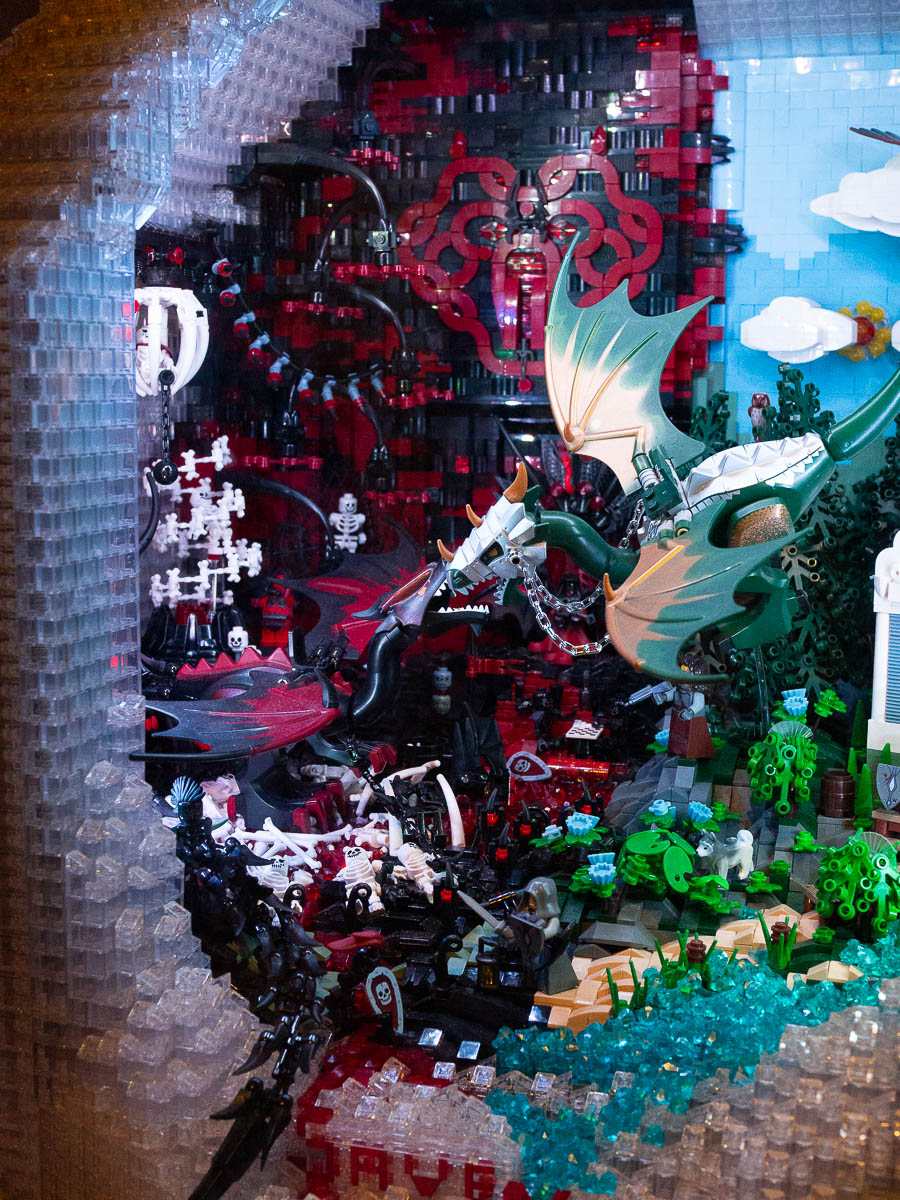
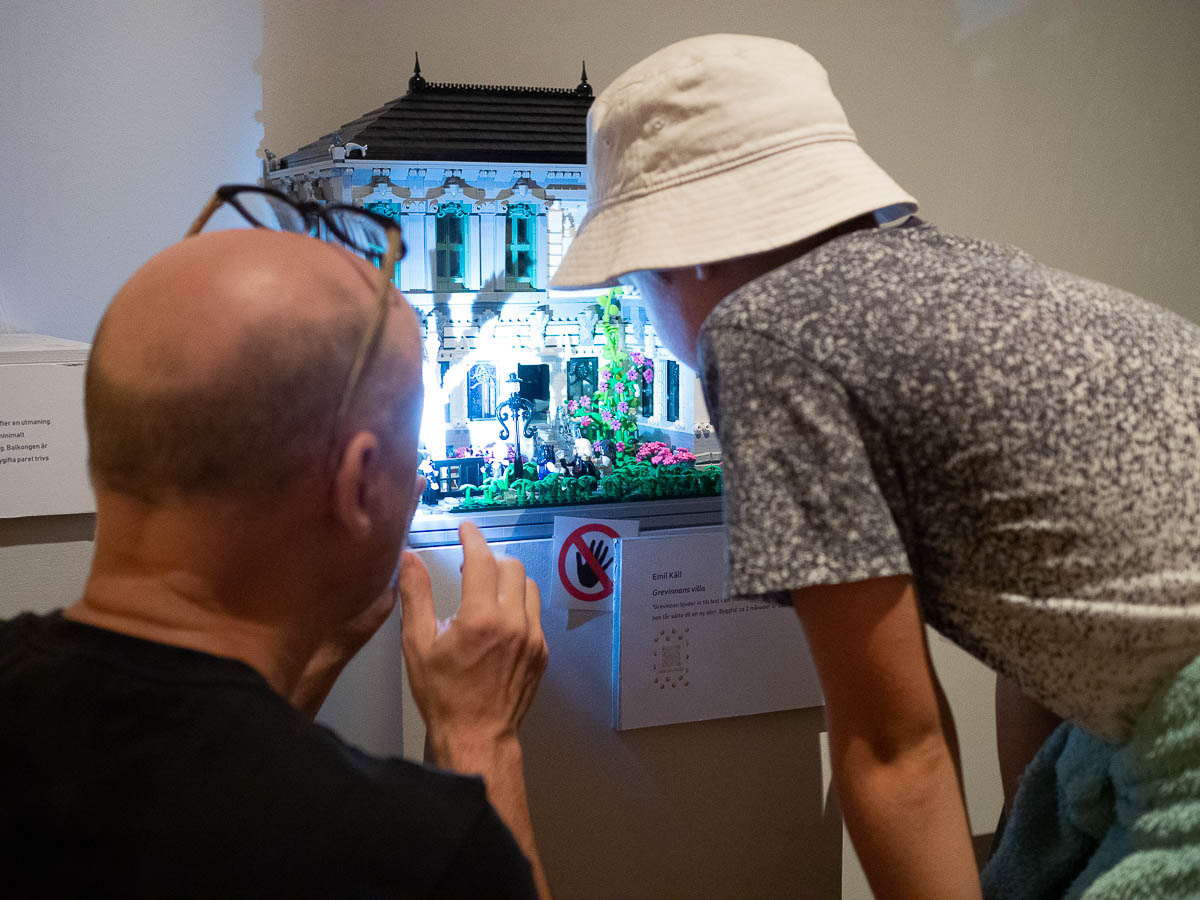
We saw the Hallwyl House Museum’s exhibition of Lego houses. It was smallish, and very much a mixed bag. The houses ranged from a construction of (literally) 15 Duplo blocks plus a propeller, done by a 5-year-old in 5 minutes, to intricate artistic creations and meticulously crafted large-scale community builds.

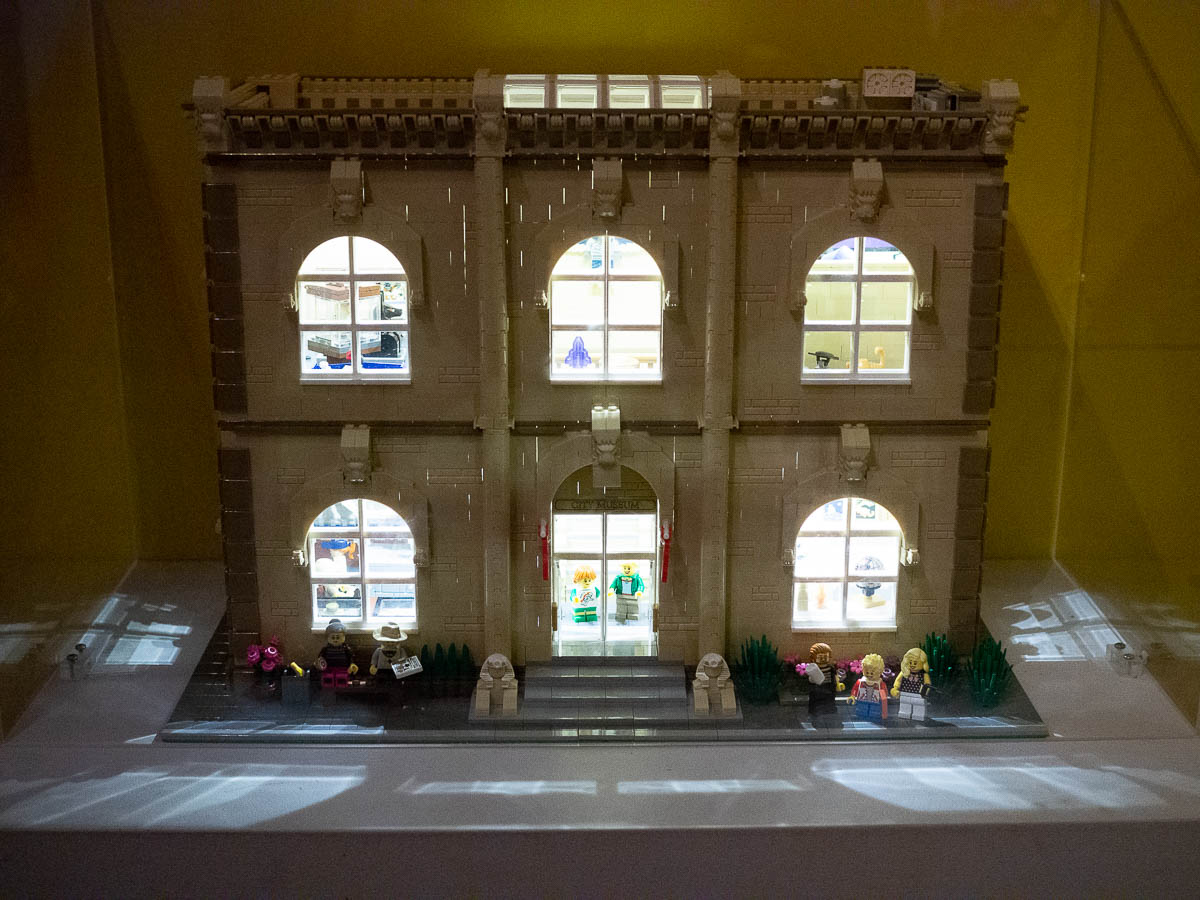
We were somewhat disappointed in how the constructions were presented. Almost all were surprisingly badly lit – either not lit at all, or only lit by a large light from above. Without Eric’s little pocket LED torch we would have missed out on a lot of detail, especially on the inside of the buildings. The one exception was a model of a museum, built by someone who (unsurprisingly) worked a day job as a museum photographer.

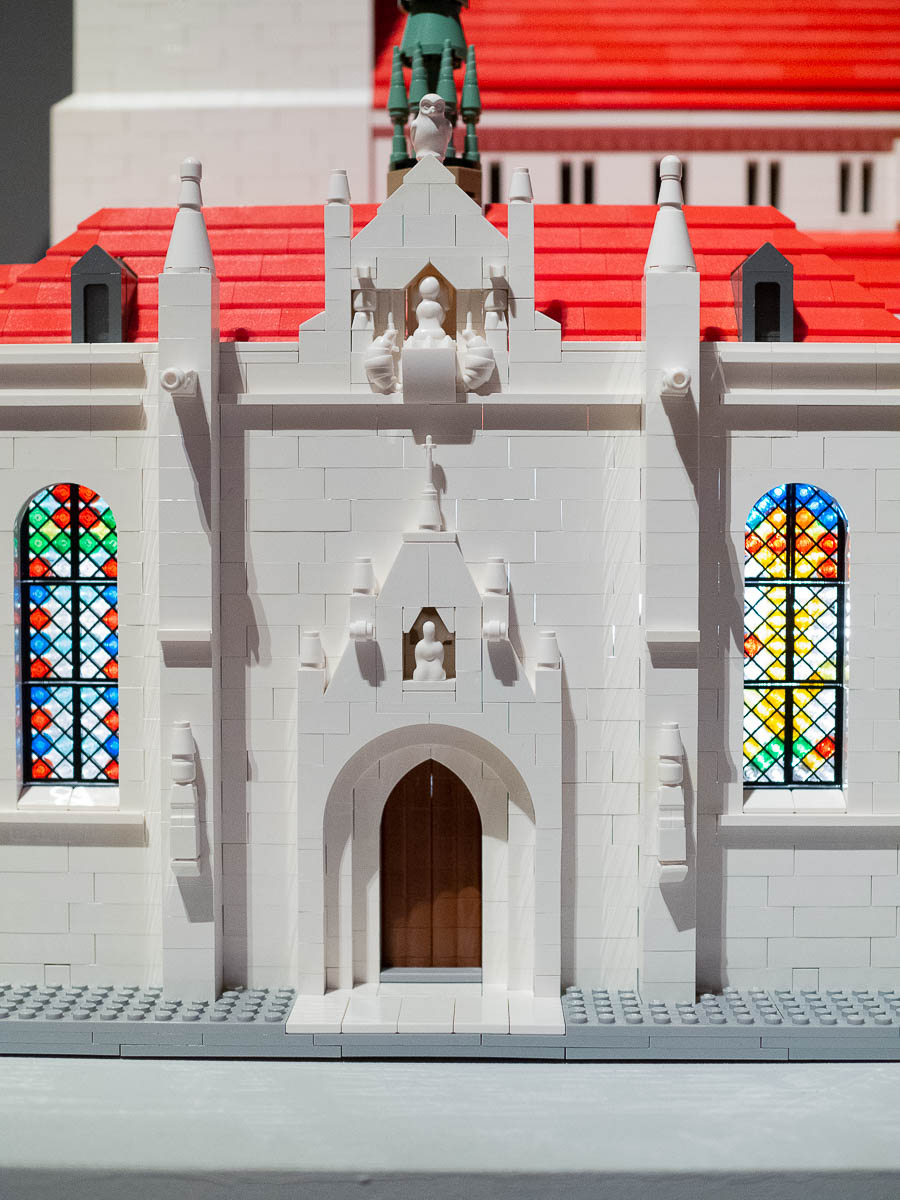
It was interesting to see the different scales used by different builds. There’s the minifigure scale, whereby a standard Lego minifigure is the size of a human. But there were also builds using much smaller scales (which I now know are called microscale), and one of the churches was scaled specifically to 1:100.

I’m always struck by the creative uses that Lego model constructors find for bricks, especially for architectural details. Scorpions become gargoyles; the butt of a Lego poodle looks like a marble bust; croissants get to play the role of baroque curlicues; fences become lattices for stained glass windows.


Today is our 20th wedding anniversary. Happy anniversary to us!

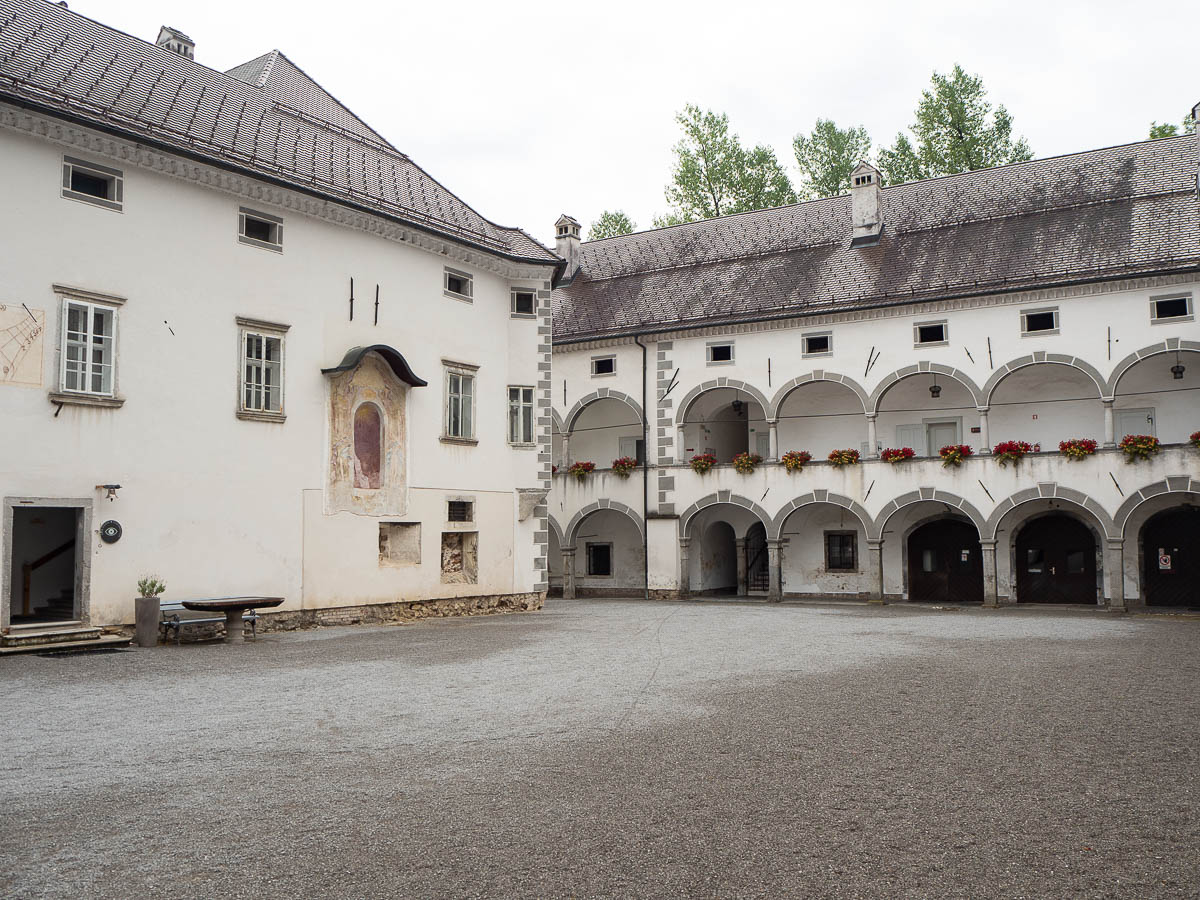
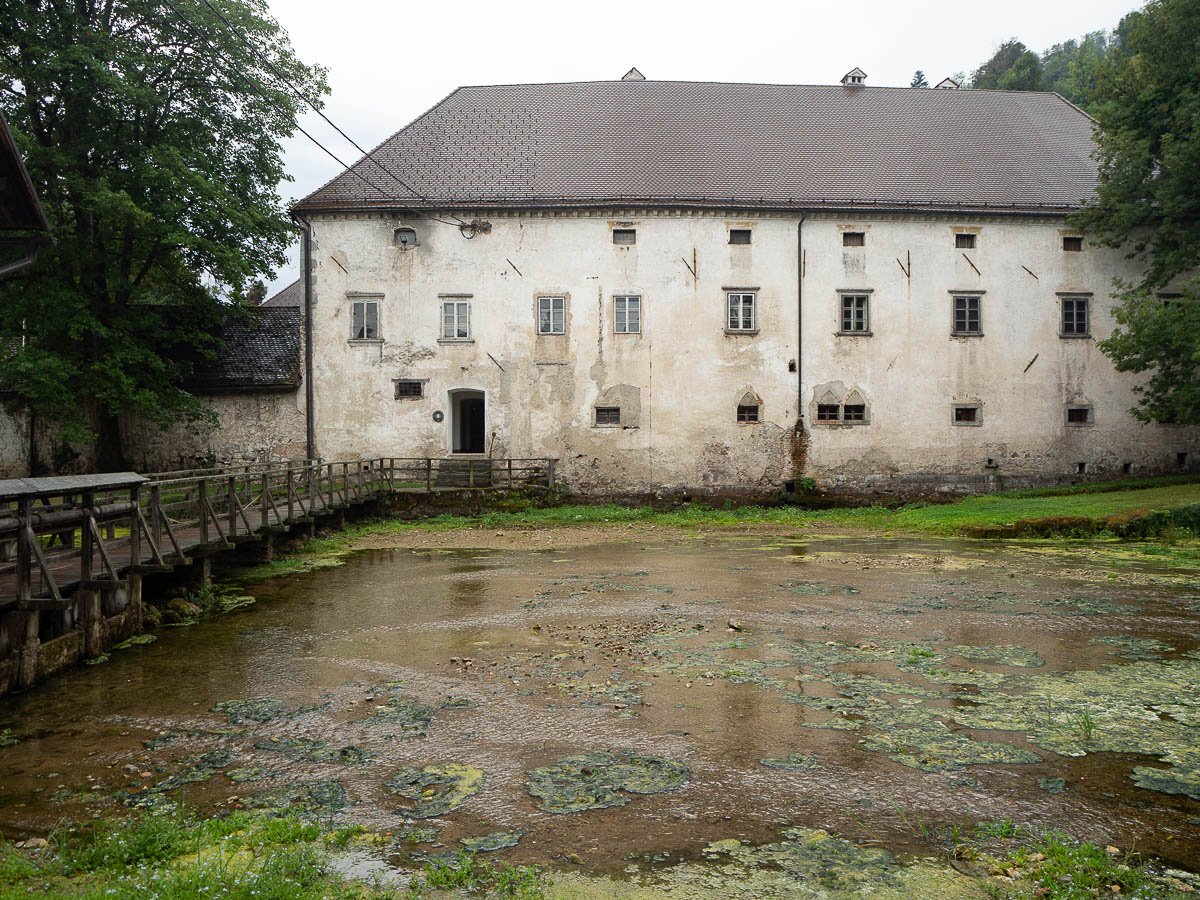
We only had half a day at our disposal before it’s time for queueing at the airport, and a forecast of rainy weather, and a forecast of traffic jams on the A1. With all of that constraining our options, we went to the Ljubljana Technical Museum, which is in fact not very near Ljubljana at all.

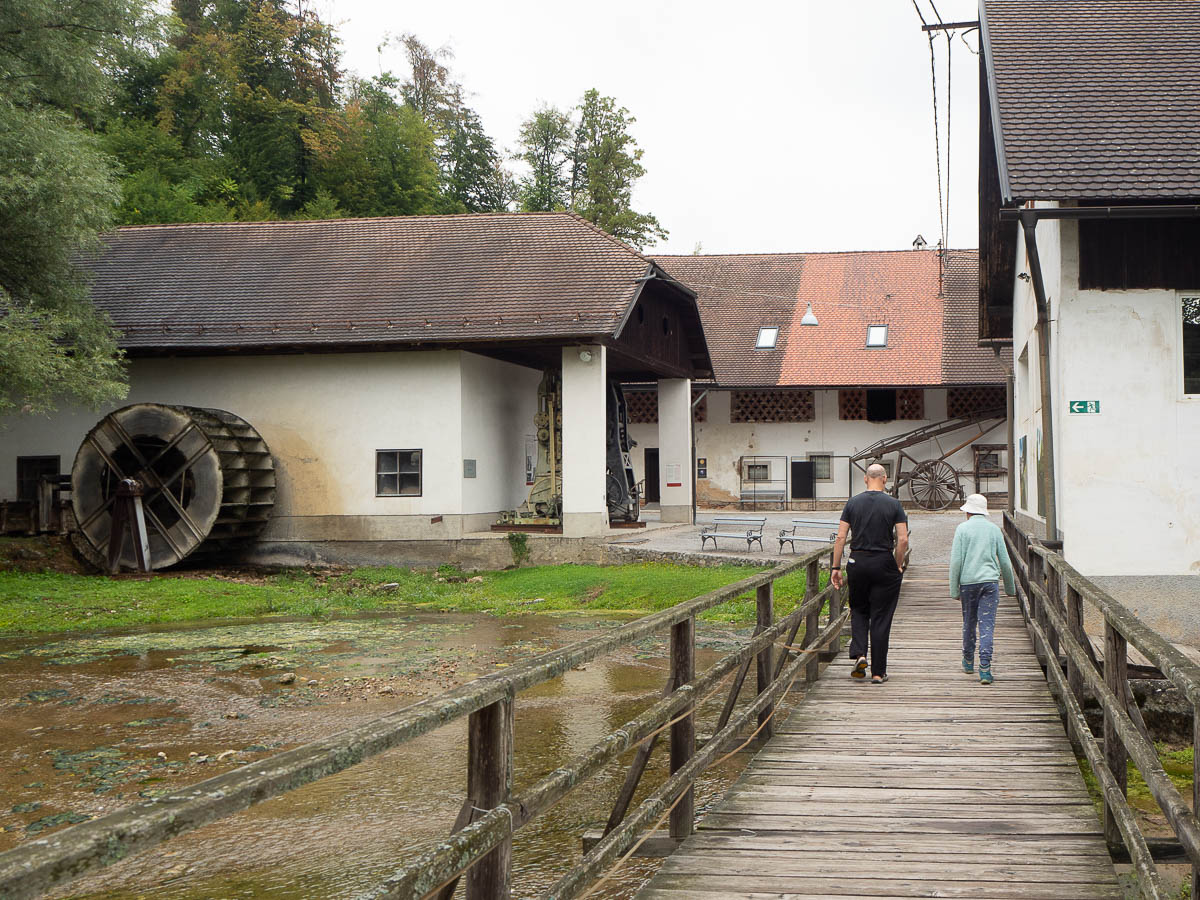
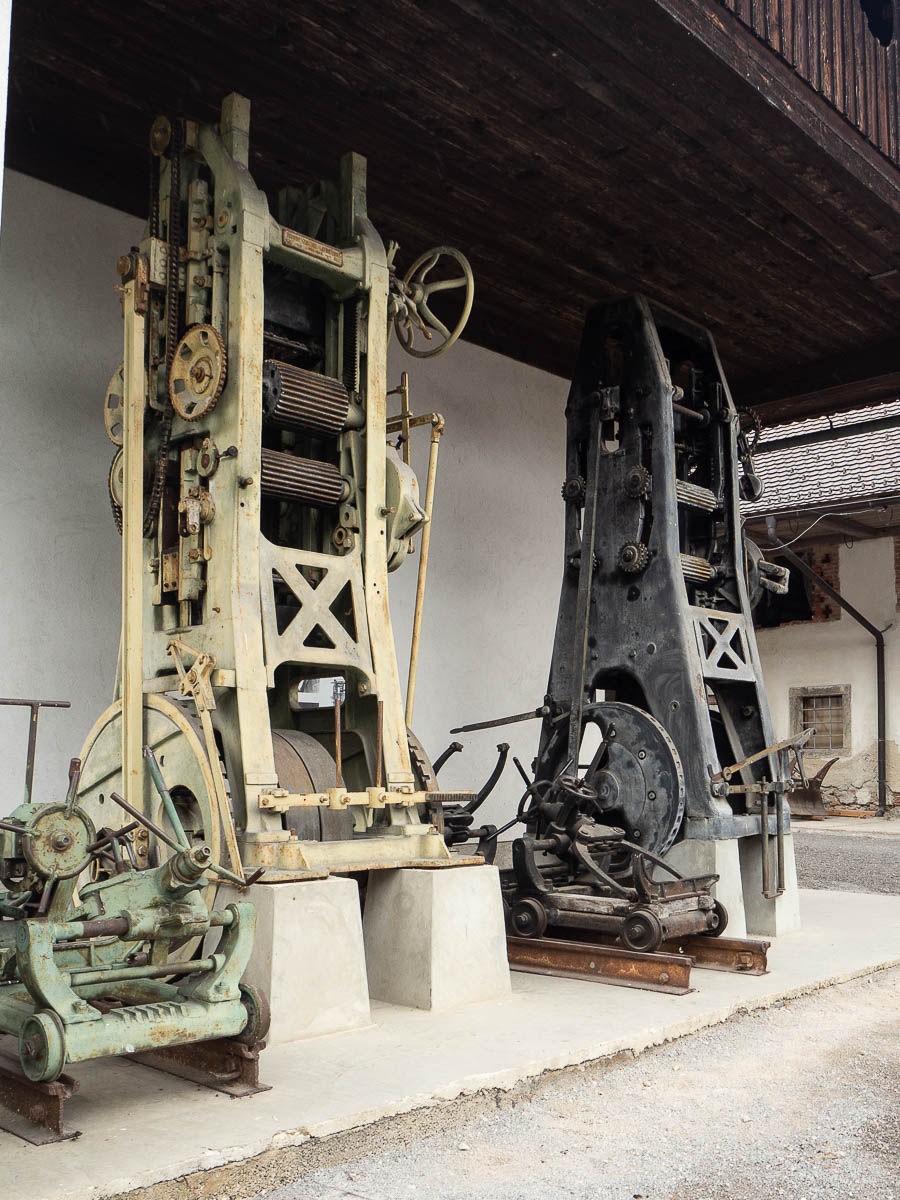
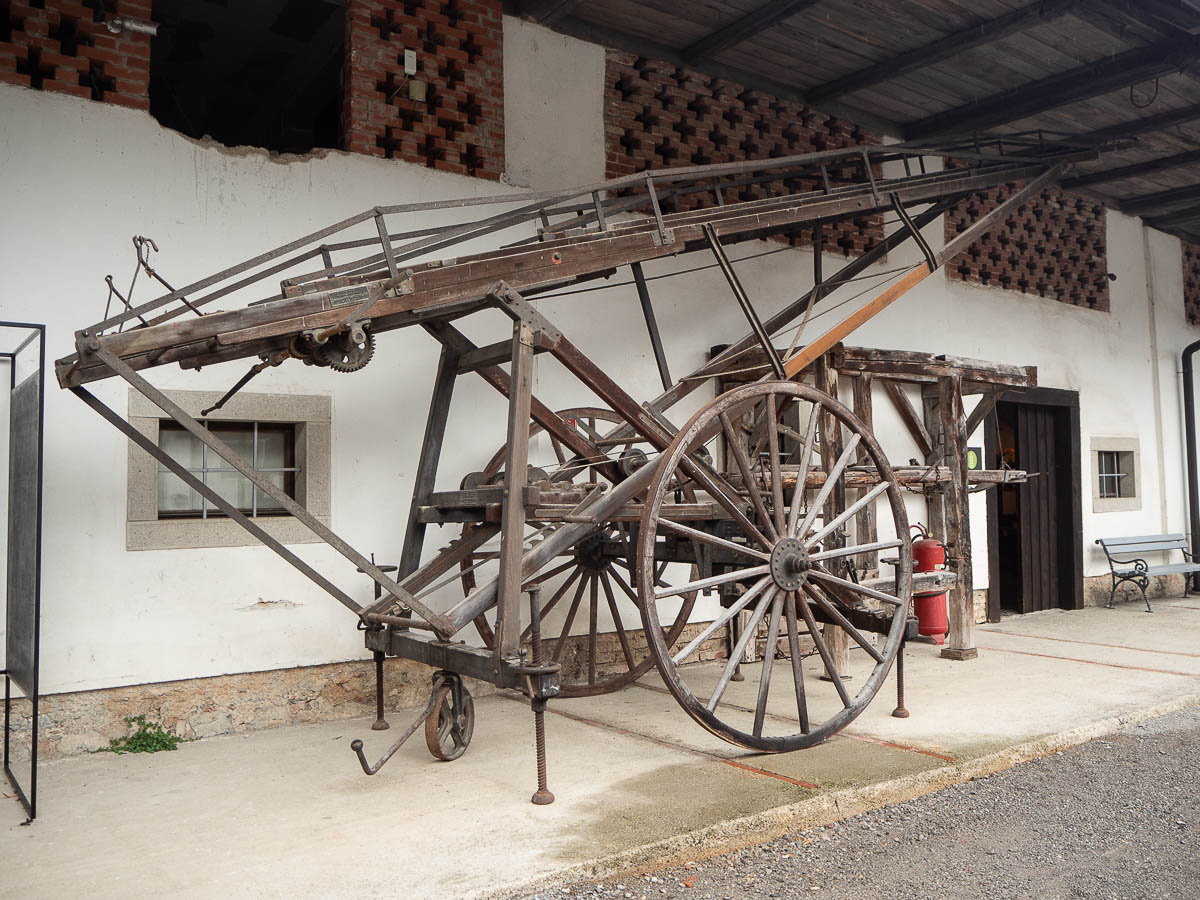
It turned out to be a wonderfully eclectic agglomeration of exhibits. Housed in an old convent, the site itself was quirky and fun to explore.


Inside and outside, the museum’s collections ranged from old pieces of machinery with no labelling whatsoever, through collection of items with minimal labelling in Slovenian only, to very detailed and pedagogical exhibitions about the history of a particular branch of technology.

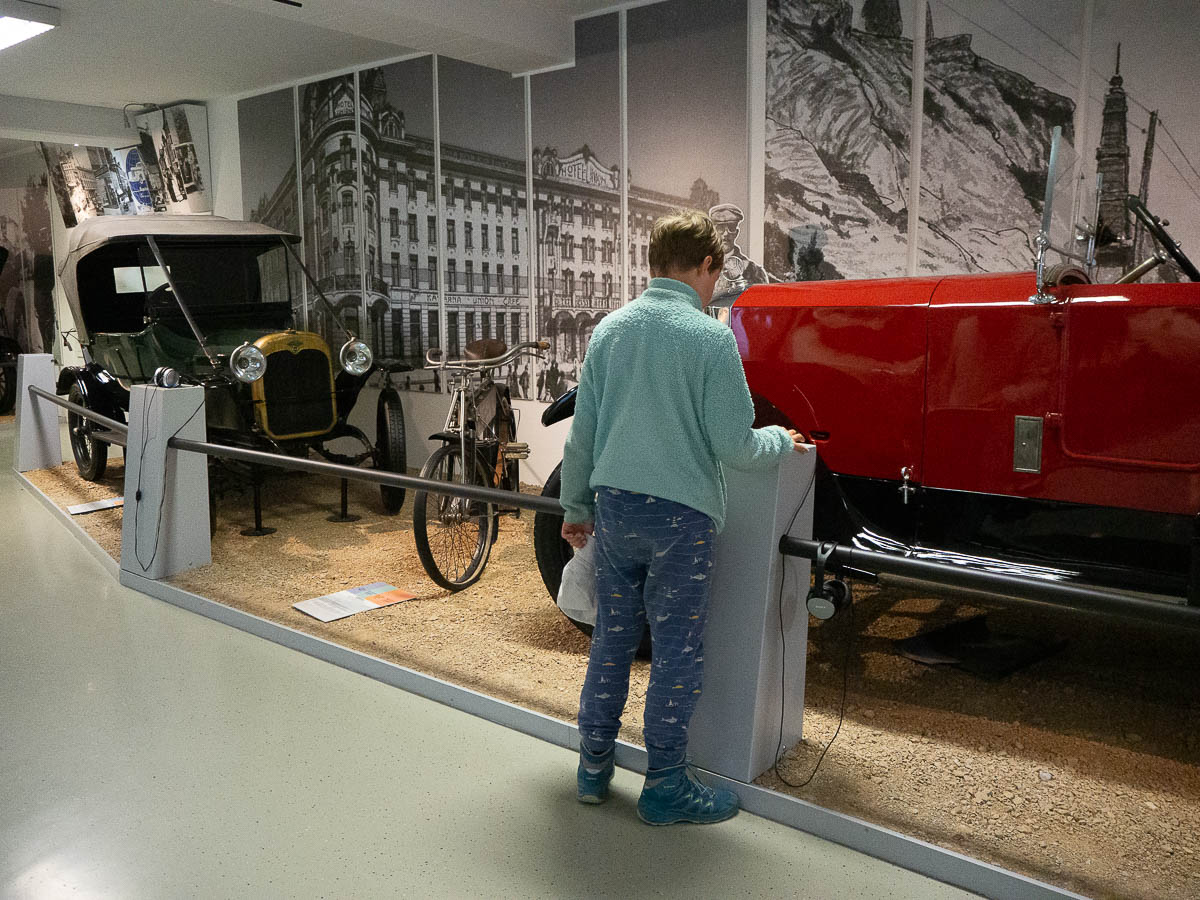
Our time here was limited so we didn’t have time for more than some cursory browsing and the occasional deep dive into a random area. We enjoyed an exhibition about the history of cars and other means of motorized personal transportation. I naturally spent a fair bit of time in the exhibition about the textile industry. There was also a surprisingly interesting and well-presented one about the history of forestry, where we learned about different methods for “first mile” timber transportation, including rafting, sledding, wooden timber chutes, and simply shoving the timber down the side of the mountain.

The hiking part of the vacation is over, and we’ll be spending the next two and a half days sightseeing. Today we saw Ljubljana from various angles: street level, from above, and from below.

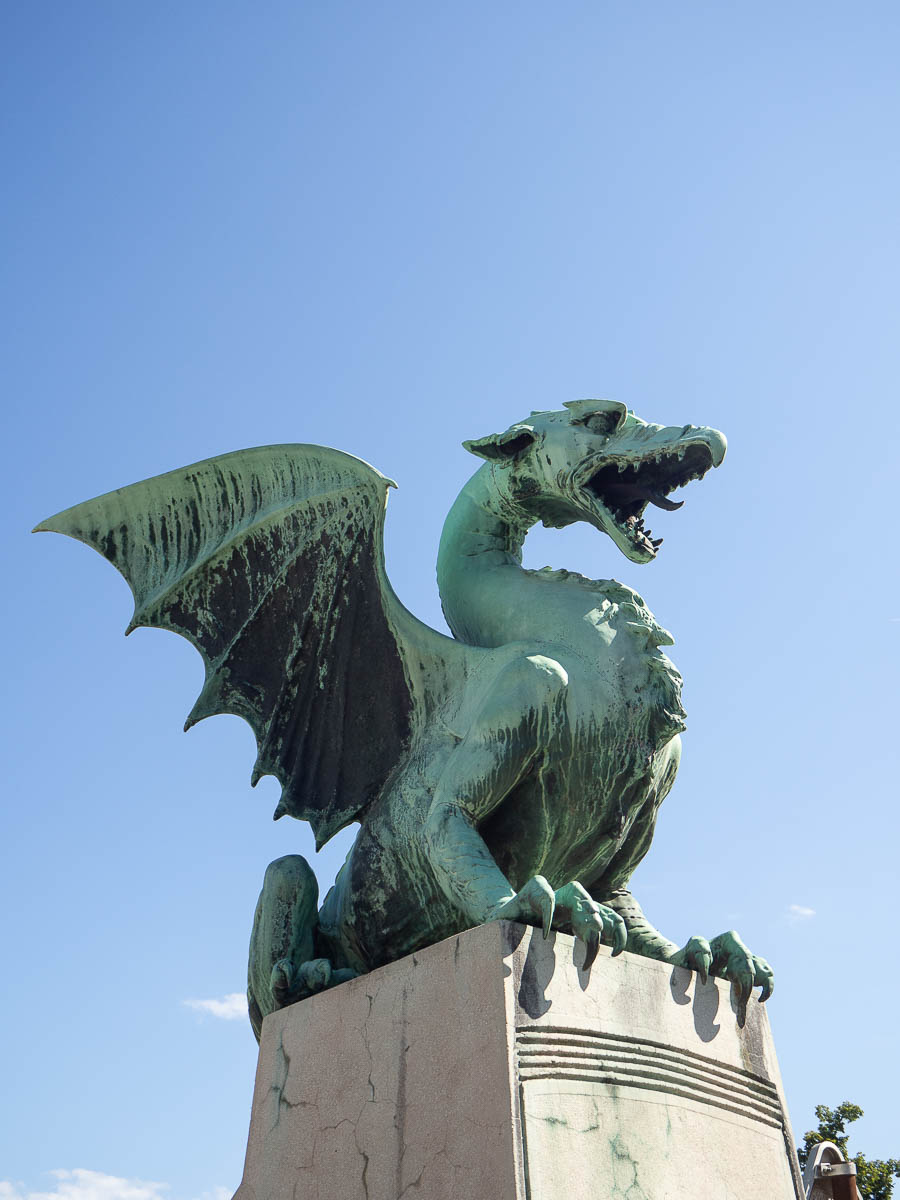
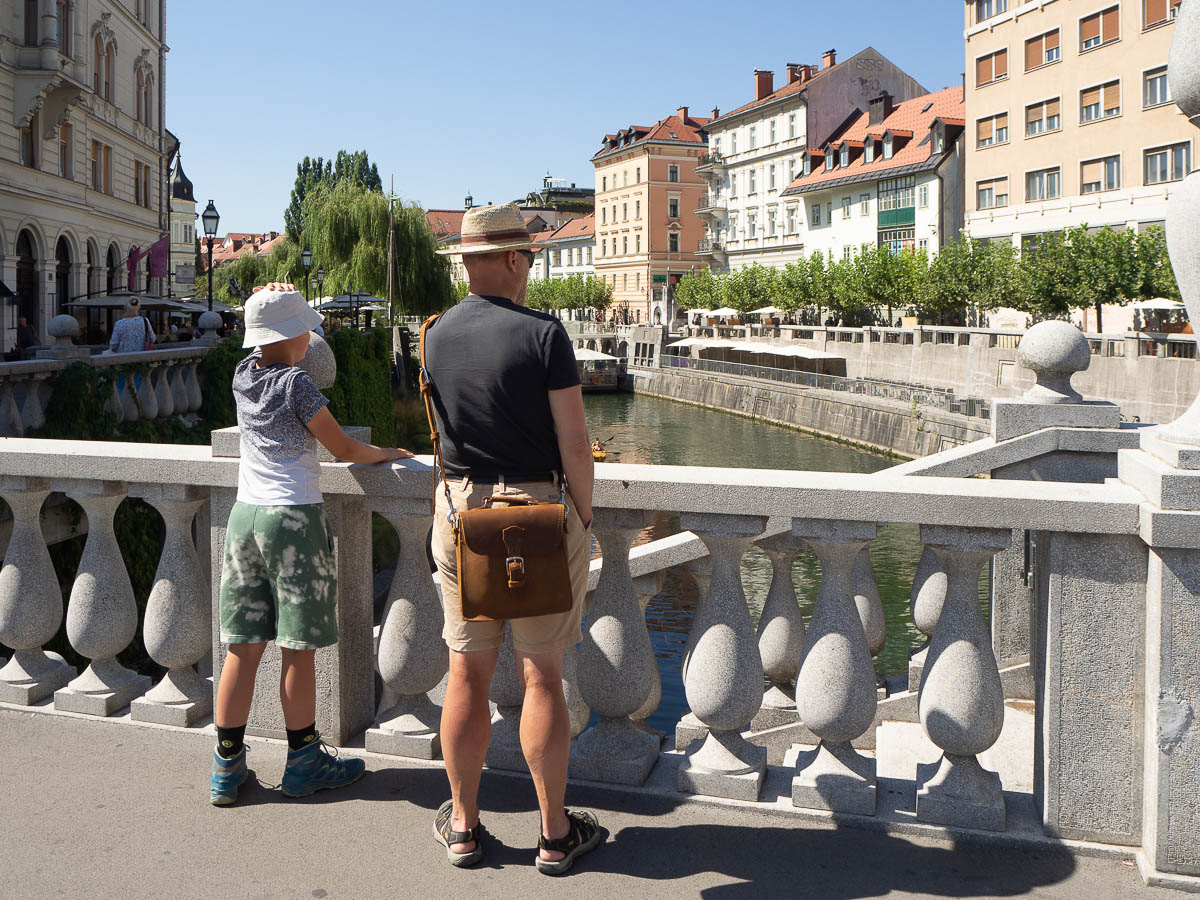
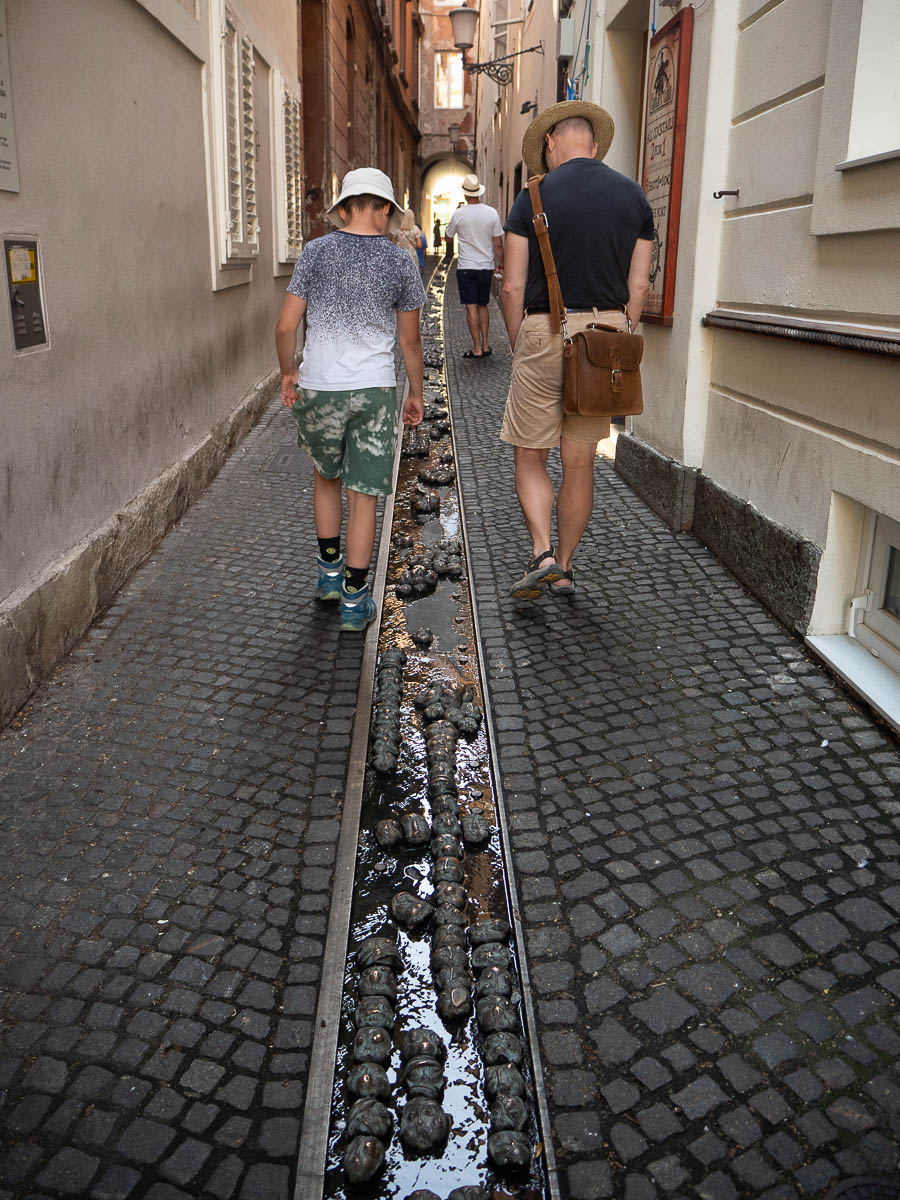
A large chunk of central Ljubljana is a car-free area, very pleasant for walking and window shopping. There were nice riverside walkways and numerous pedestrian bridges, including the famous dragon bridge. Lots and lots and lots of cafes and restaurants with outdoor seating, and some truly excellent ice cream. (Chocolate ice cream with single-estate chocolate!)


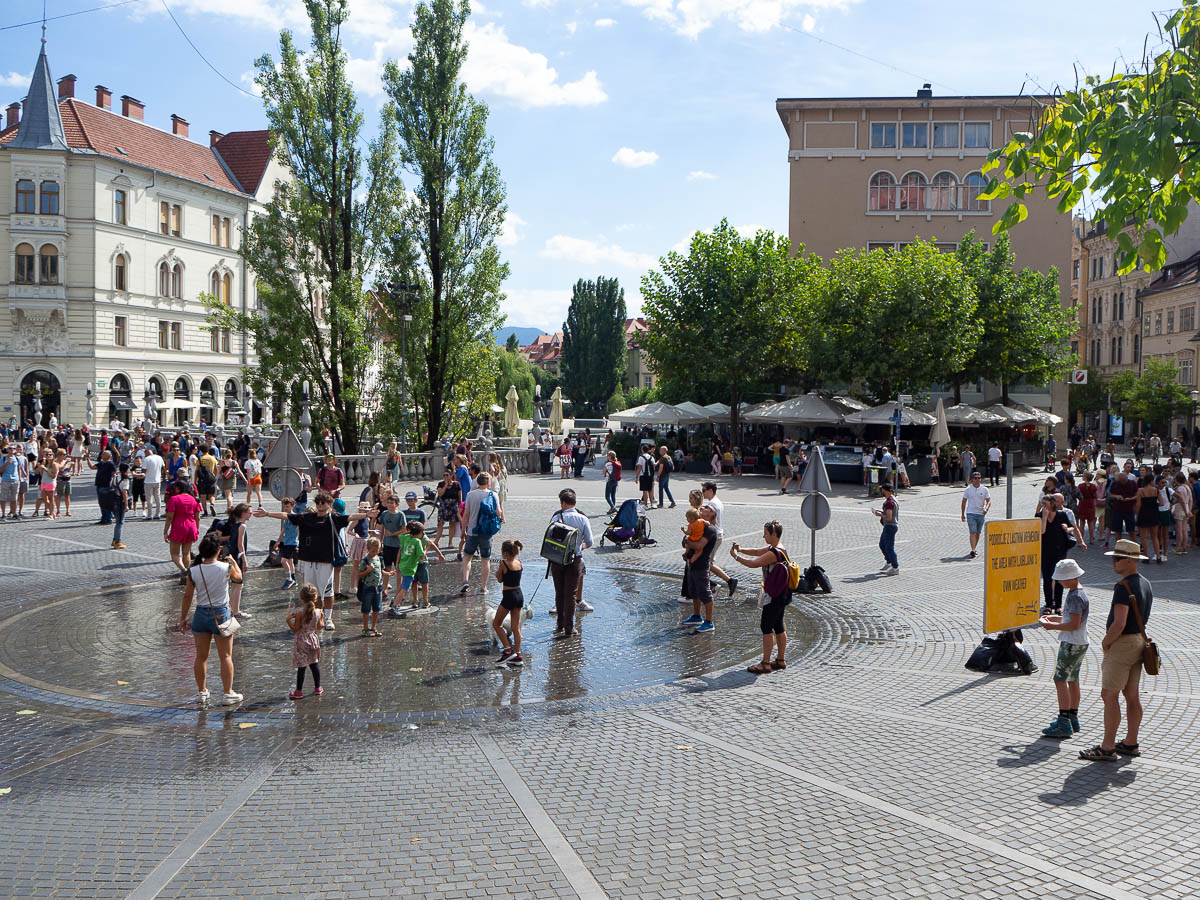
We liked the circle of rain in Prešeren square.

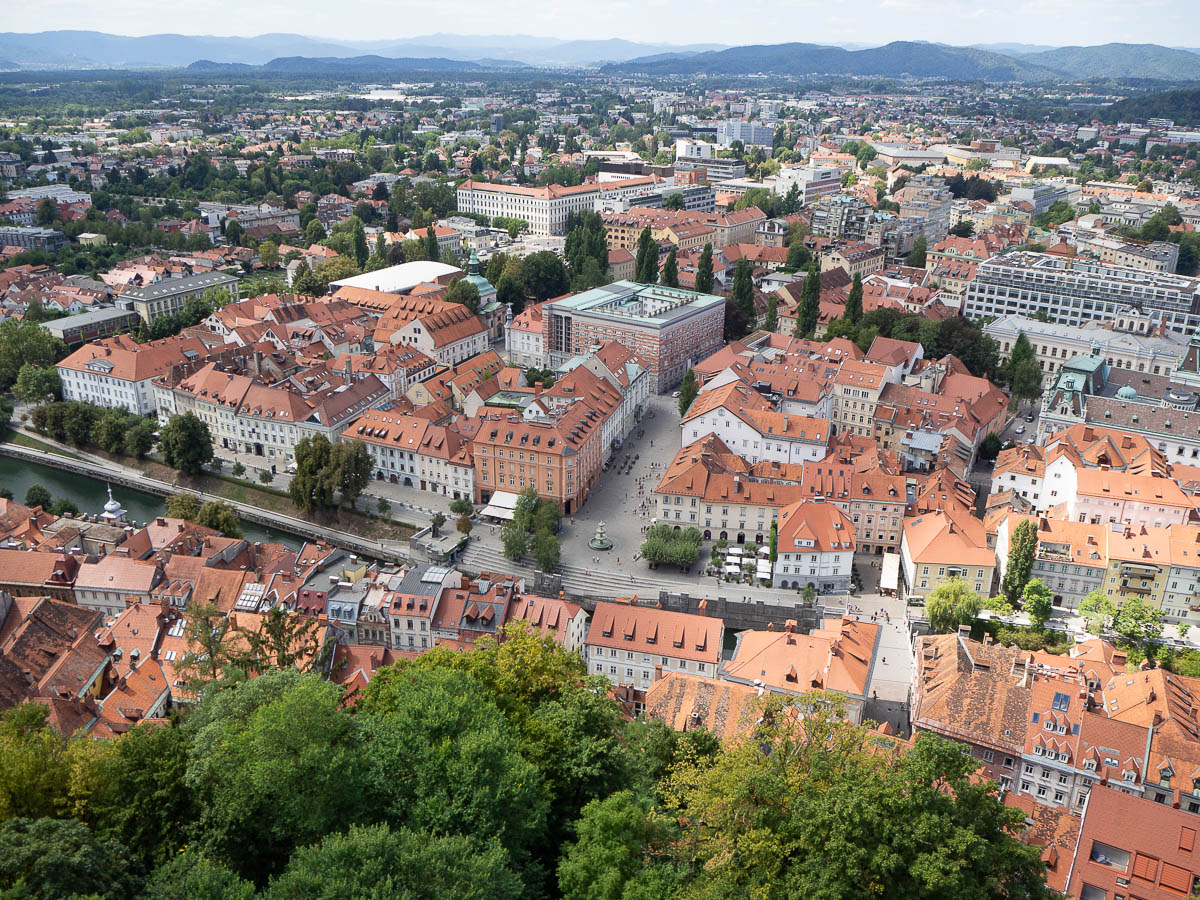
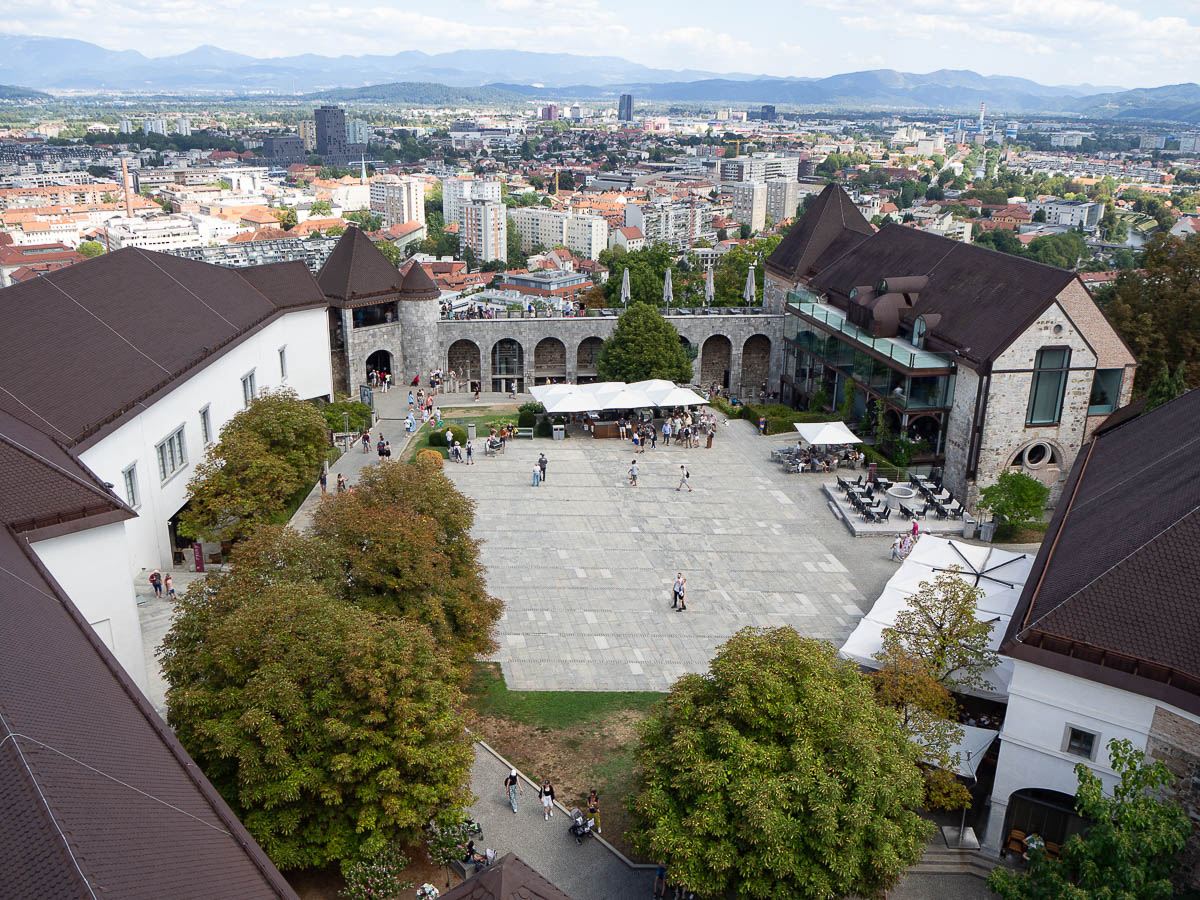
Next we made our way up to the castle, and then even further up to its highest tower, from where we looked down on the city as well as the castle itself.


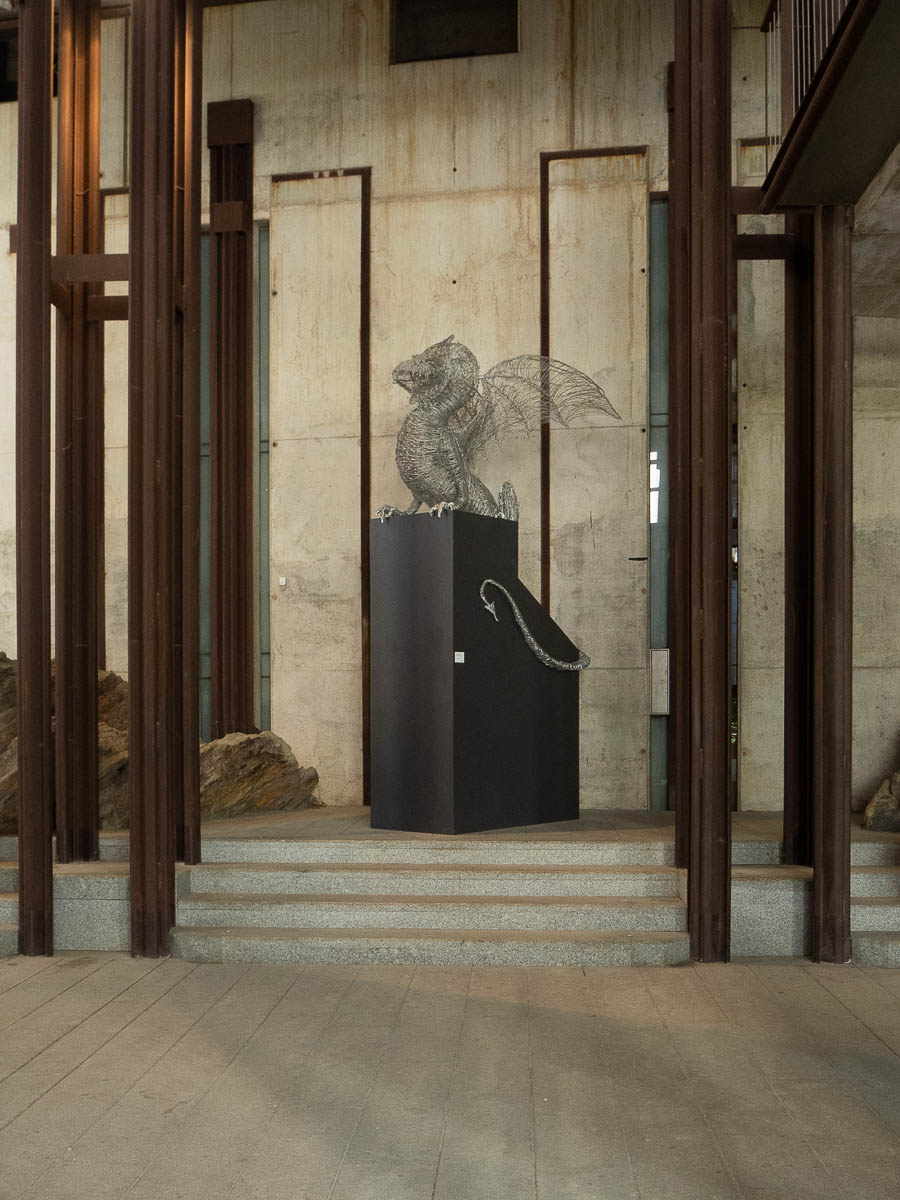
The castle itself was a mixed bag. The City Museum was not much better than the one in Bled, displaying disparate objects, each one perhaps interesting in and of itself, but often badly presented. Physically unreadable signs, often way too little context. (Seriously, nobody can read your labelling with tiny black letters on transparent glass in front of the object itself.) Same goes for the museum of puppetry in another part of the castle – I guess it can be interesting if you’re already familiar with whatever TV shows and movies the puppets are from, but without the local knowledge it’s just a random bunch of puppets.

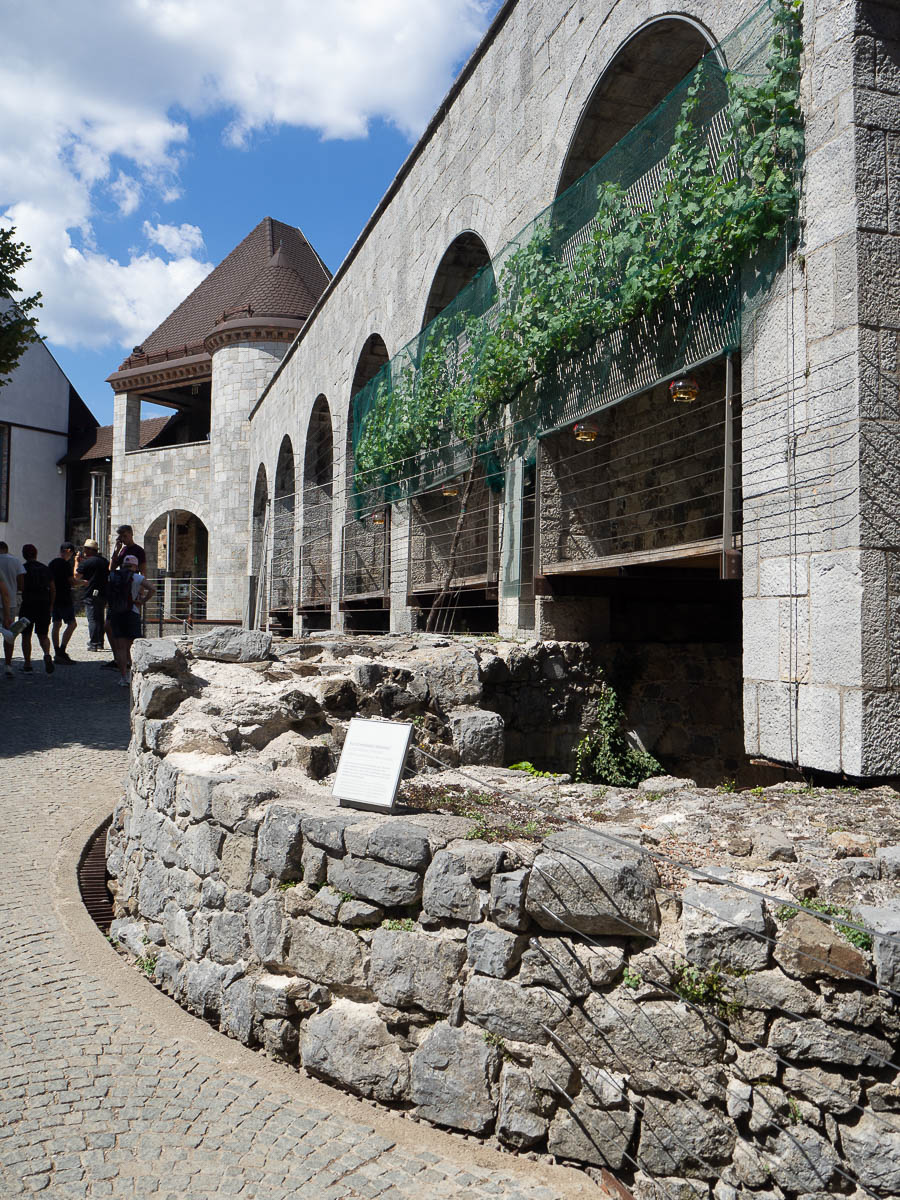
On the other hand, the lower levels of the castle were impressive in and of themselves, as a cool piece of engineering. And the before and after photos of the extensive renovations that the castle has gone through were captivating.

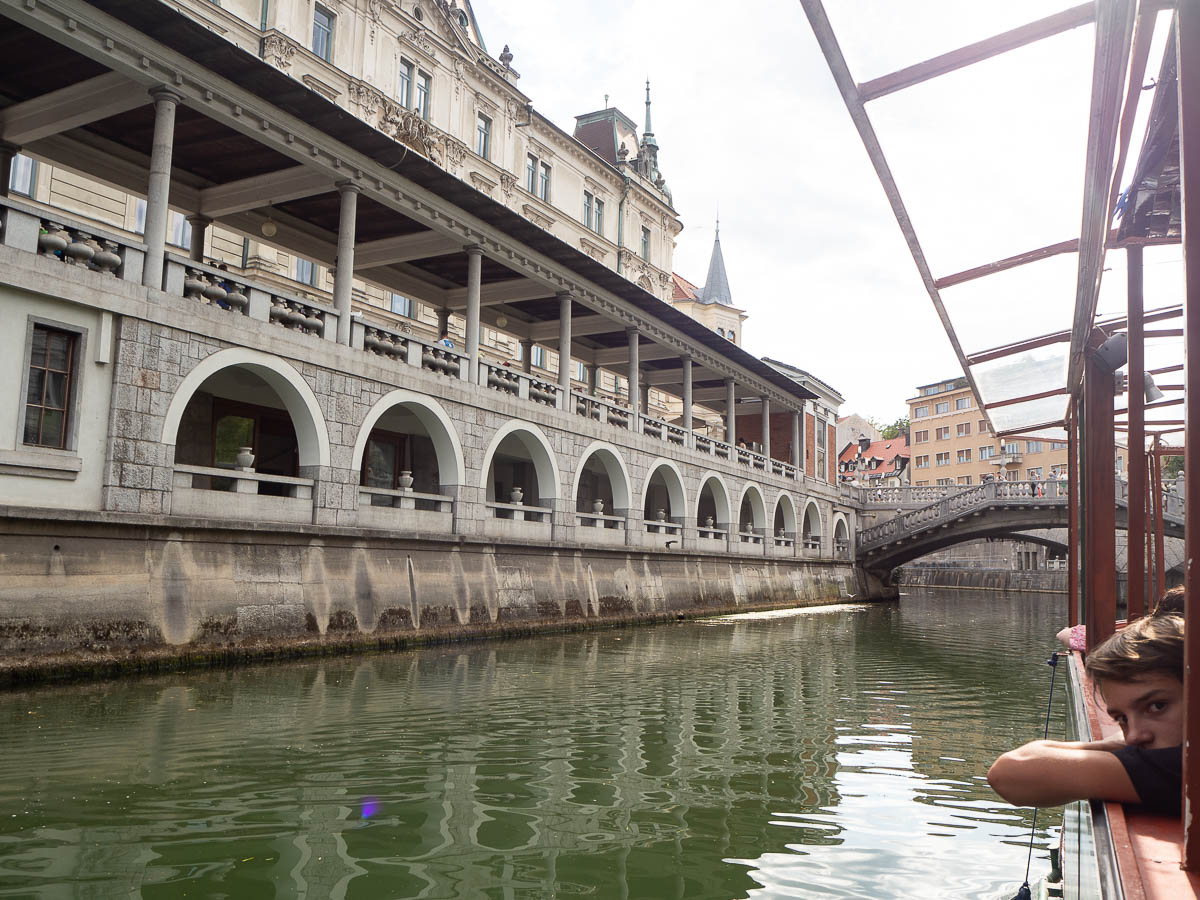
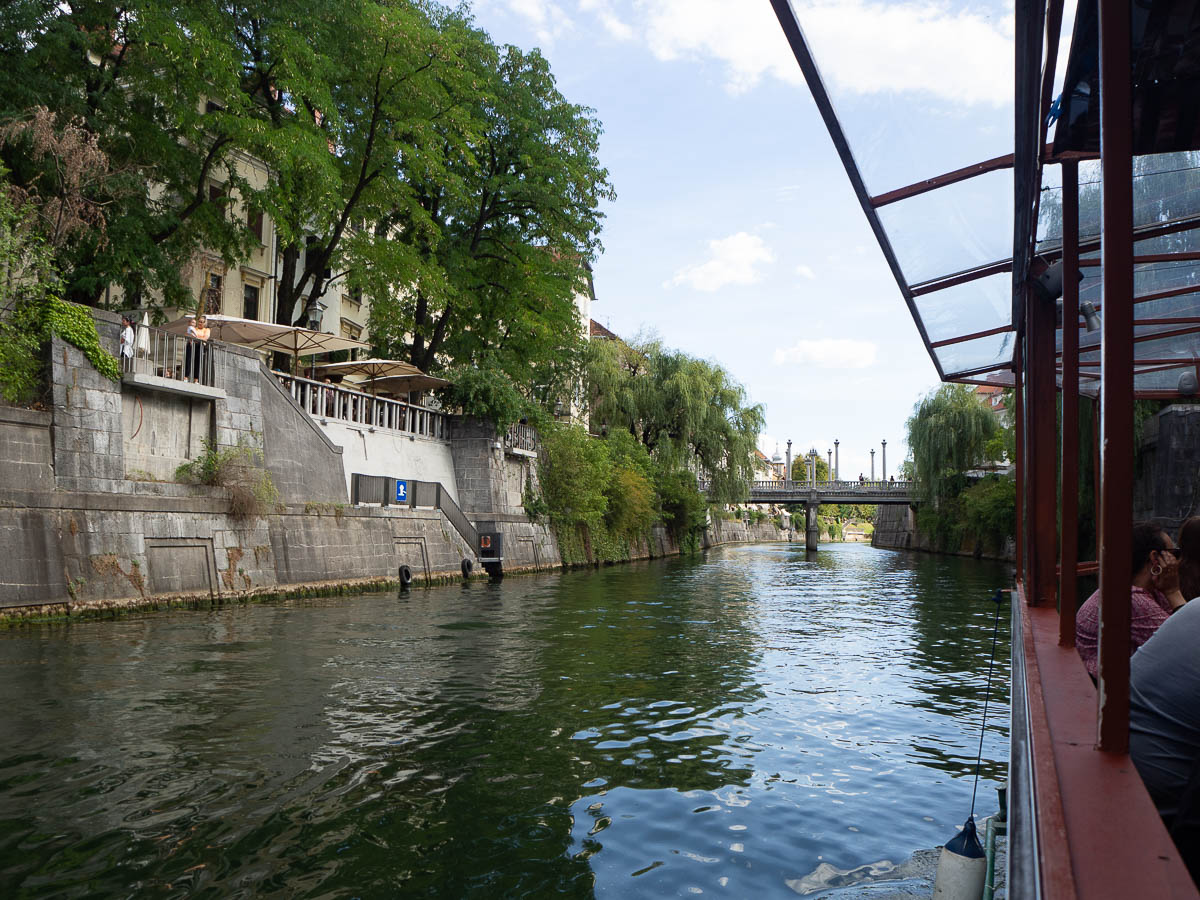
In the afternoon we went for a boat ride up and down the river, so we could see the city from a new angle – and rest our legs.


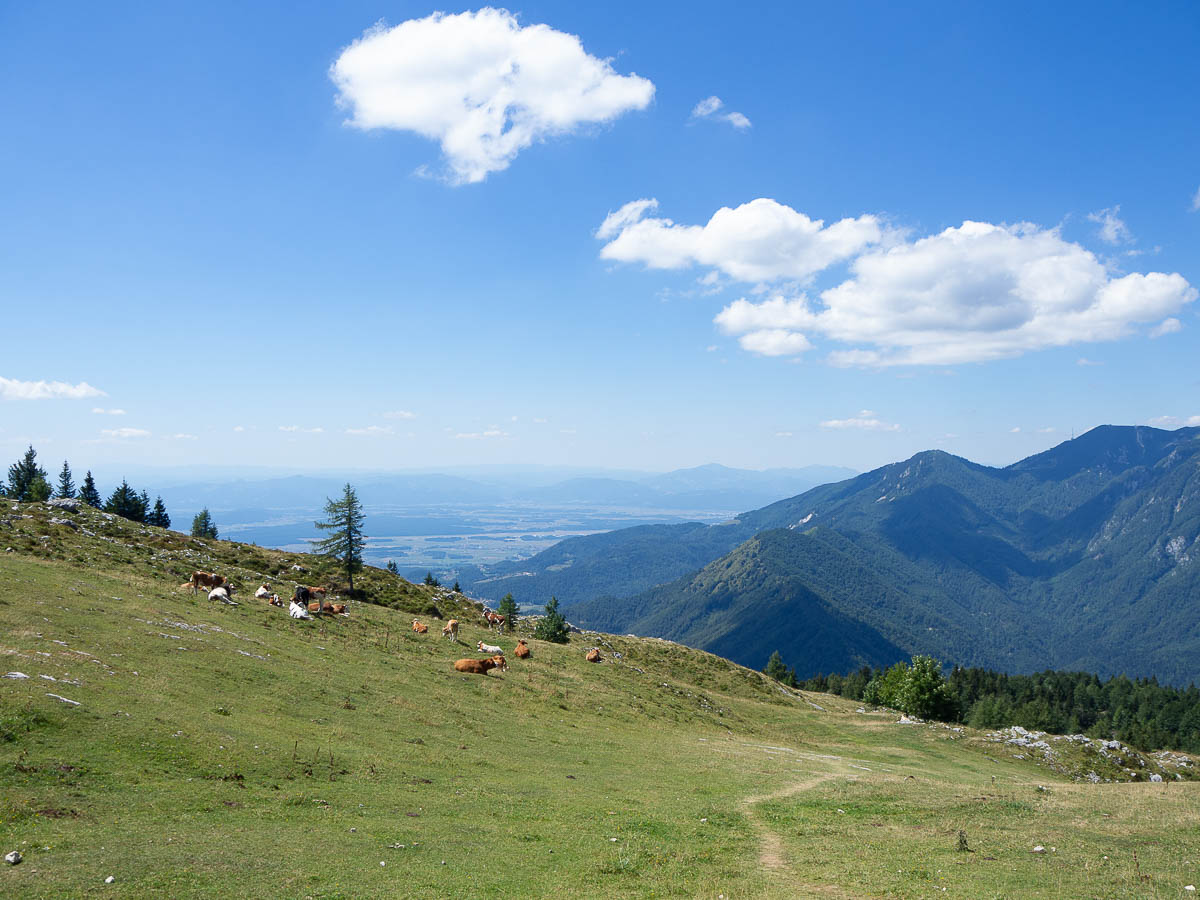
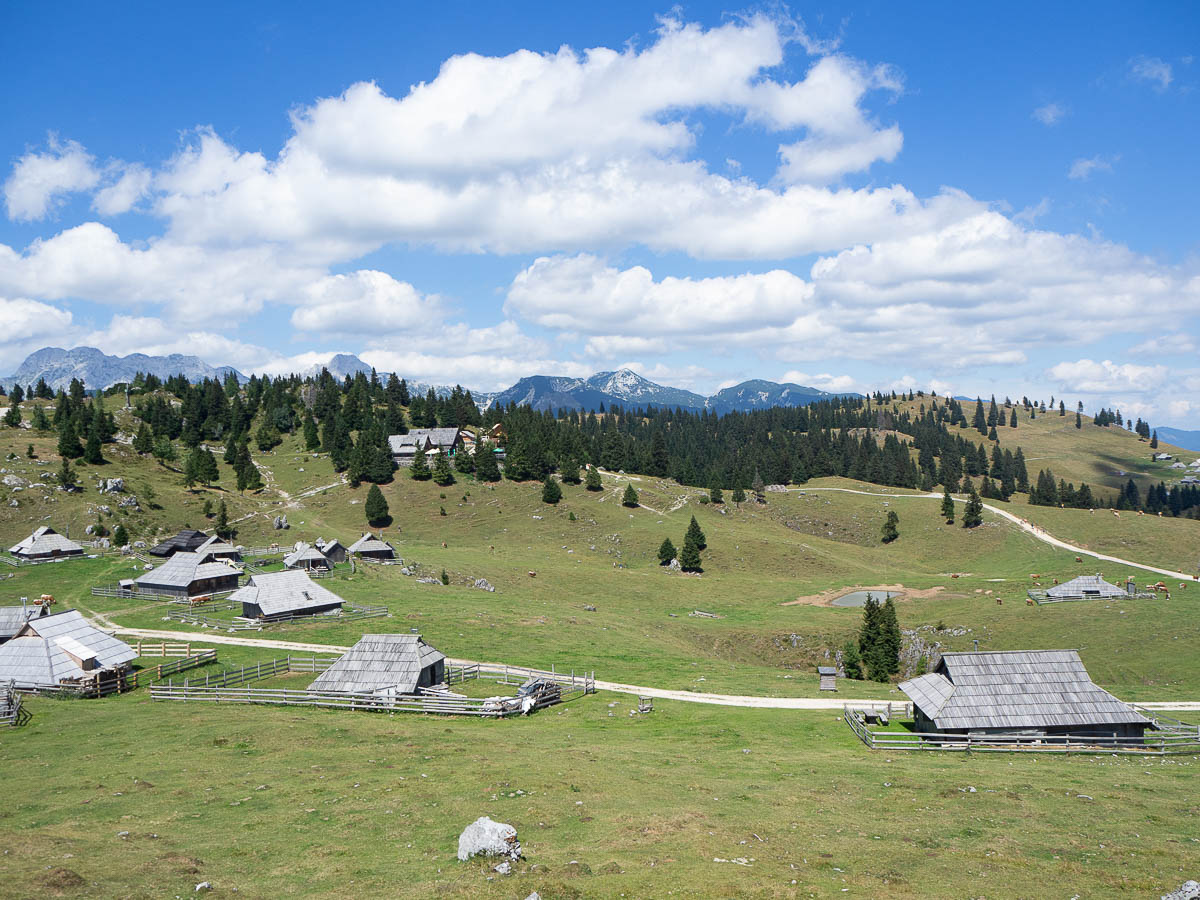
No river valleys today! We went hiking on Velika Planina, a mountain plateau covered mostly in pastureland and cows. A complete change in scenery. And we didn’t even have to climb the hill to get up there – a cable car did the work for us. At 50 EUR for a family, the cable car ticket price seemed rather steep, and I was actually considering finding an alternative hike for today. 50 EUR just to be allowed to walk! But I’m glad we went with this option after all, because the scenery up there was quite unique.

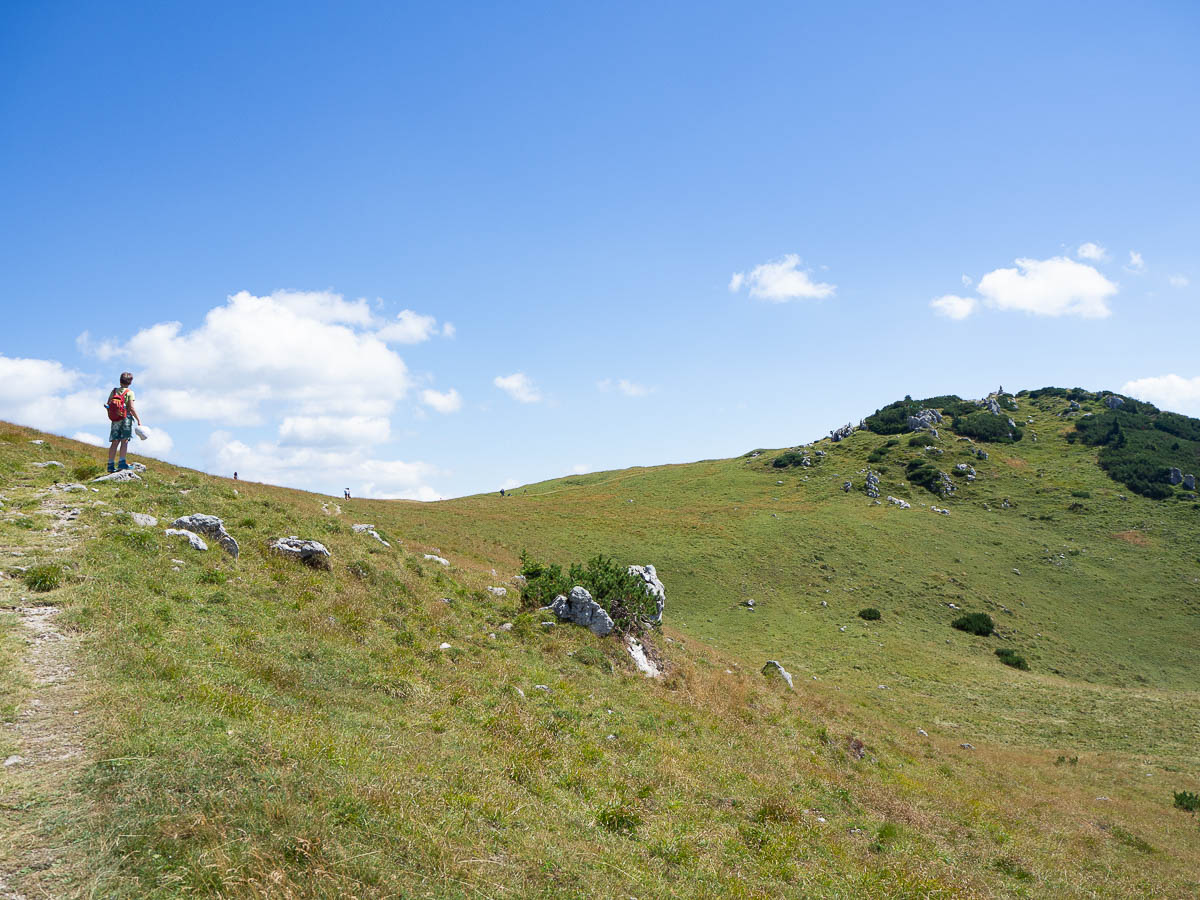
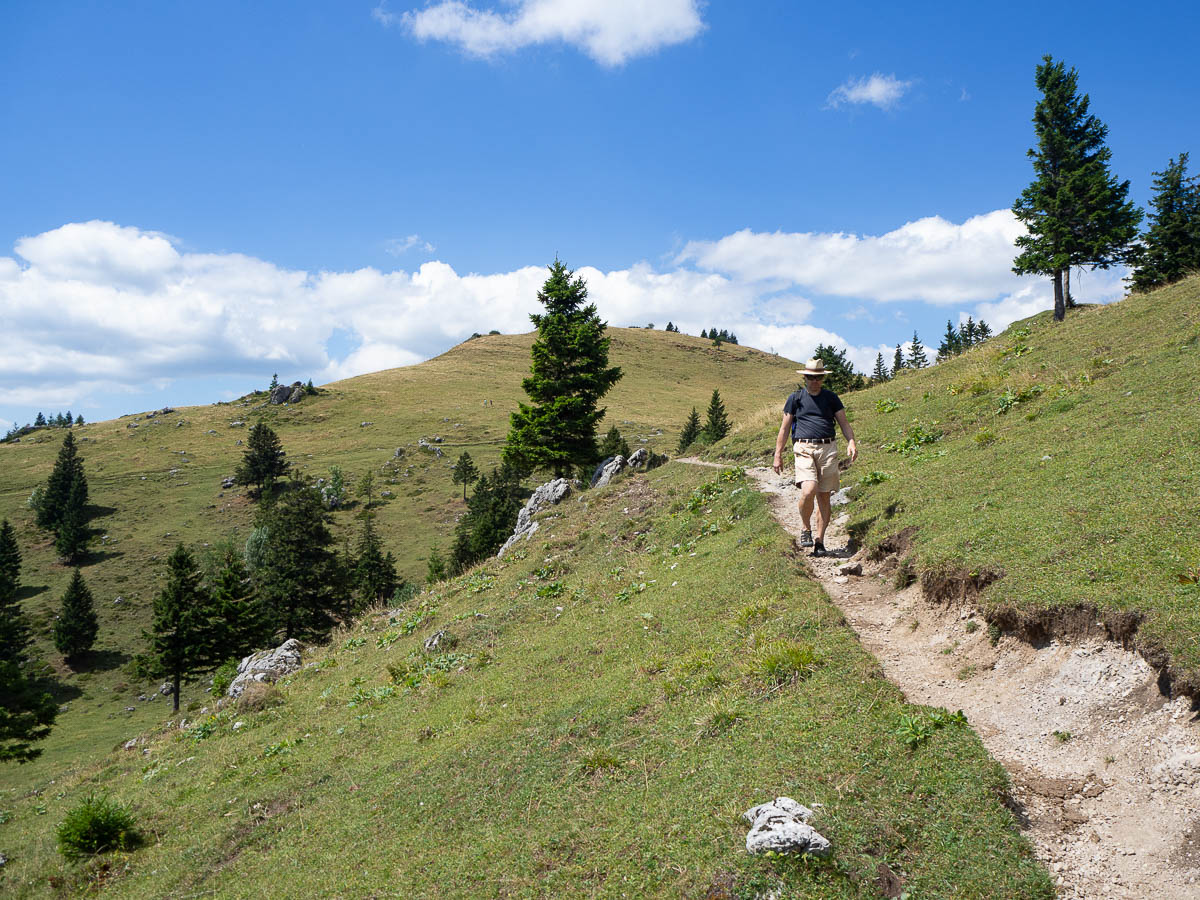
The plateau with its gentle rolling hills made for easy walking. The sun was bright but we got a lot of wind, so for the first time in a week we were actually not hot at all.


Velika Planina has several old herder settlements with shingled huts.

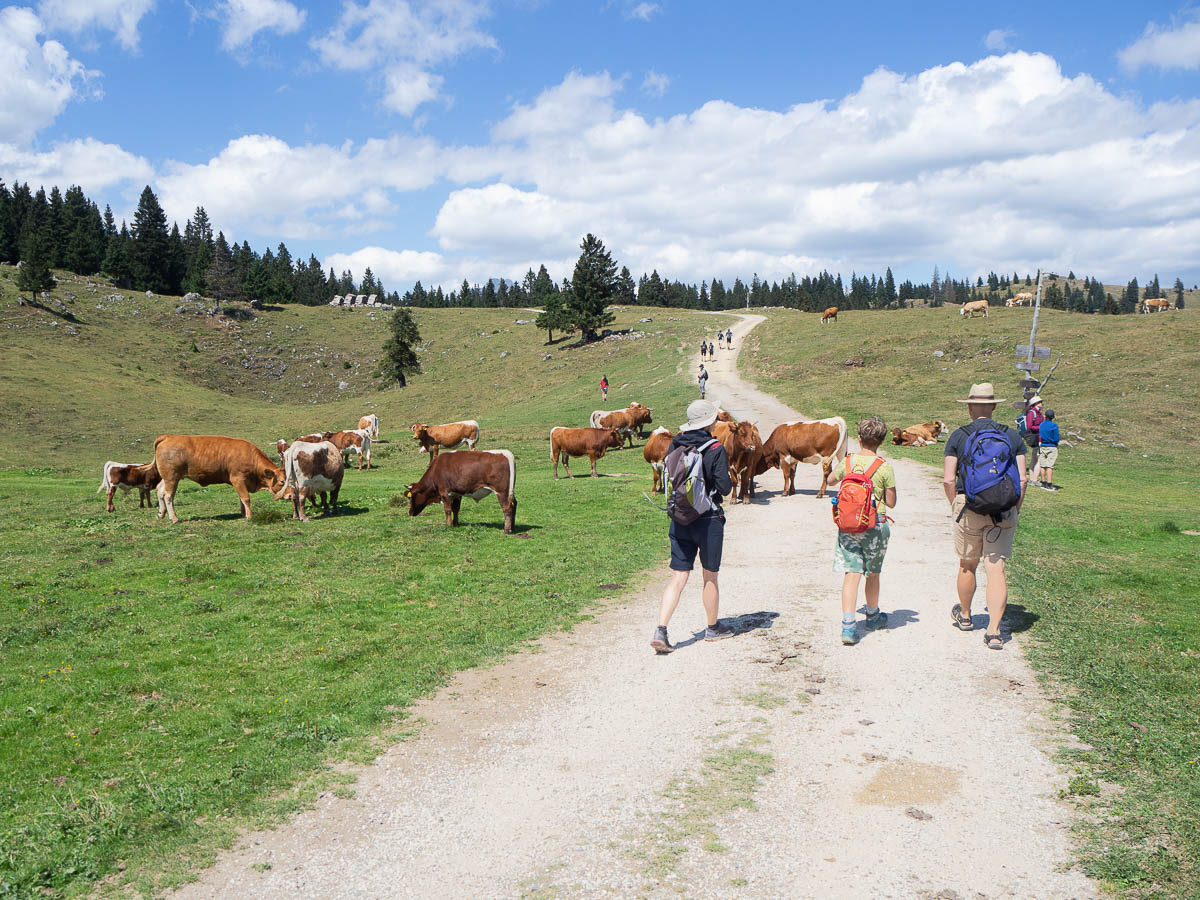
Cows were mingling freely with the tourists and barely even curious about us.

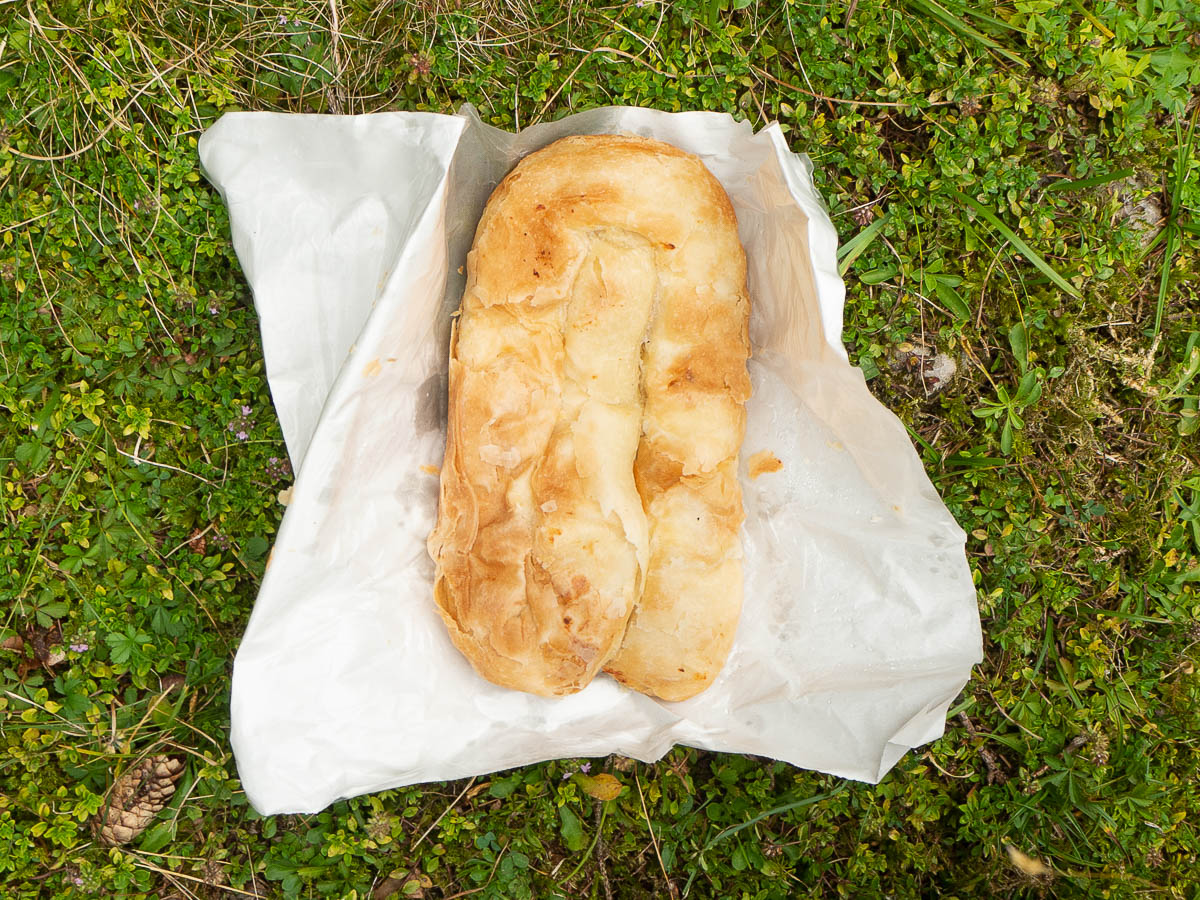
One of the huts hosted a museum, which was closed today for some reason. Several had simple cafes or sold cheese and other milk products. Speaking of cheese, I found these Slovenian cottage cheese pastries that you can apparently buy in most bakeries and supermarkets. The cottage cheese filling reminds me of Estonian kohupiim. I’ve been having these as my packed lunch almost every day.

Speaking of pastries, I only noticed today that the word burek/börek (“filled filo dough pastry” in various places around the Balkans and the Middle East) is strikingly similar to pirog/pirukas (“filled pastry” in Estonian, Russian, Swedish etc). Do they have the same origin? Harden the B, soften the K, and you’re there. I went down a deep Internet rabbit hole to figure out whether that’s the case, and people on the internet have had some very passionate debates about the origins of both words, but I guess nobody really knows for sure. In any case, the Slovenian cottage cheese burek are delicious.

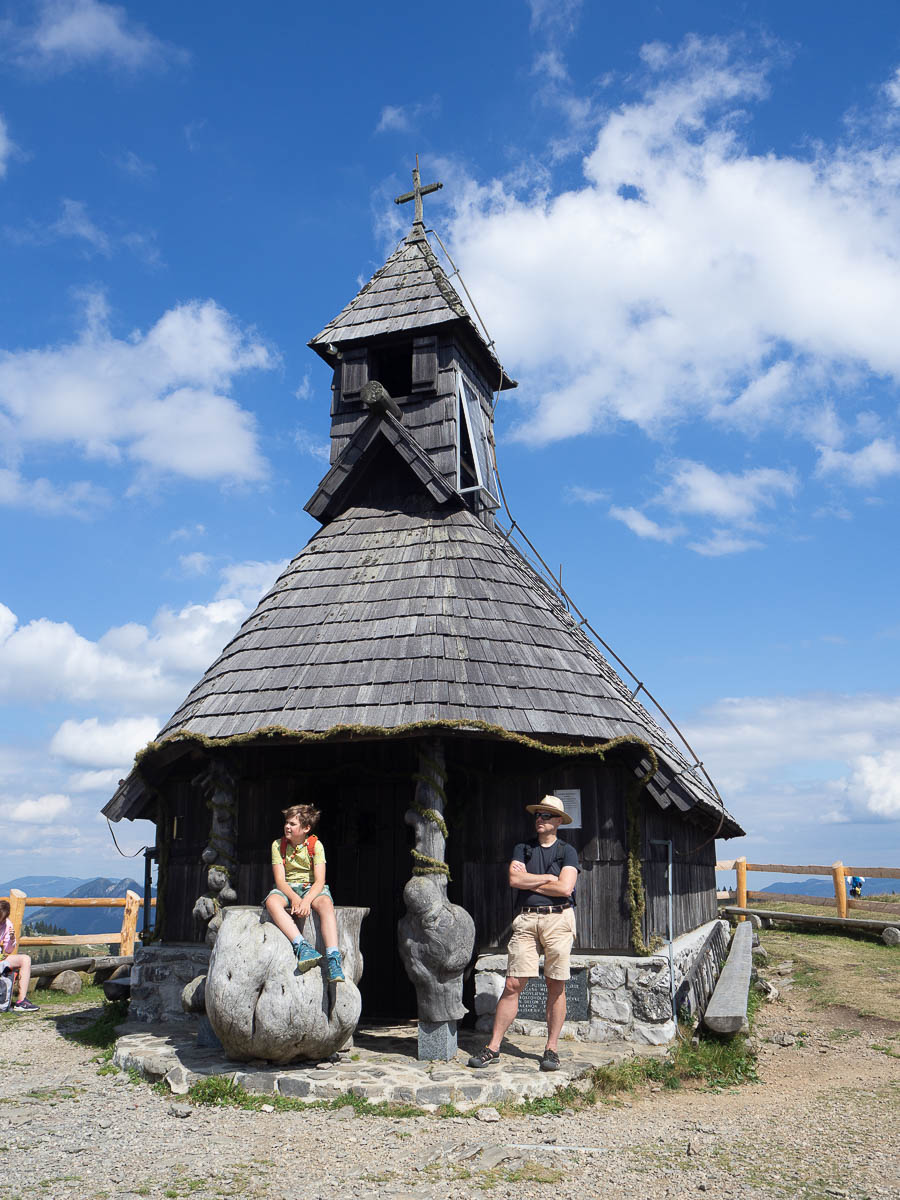
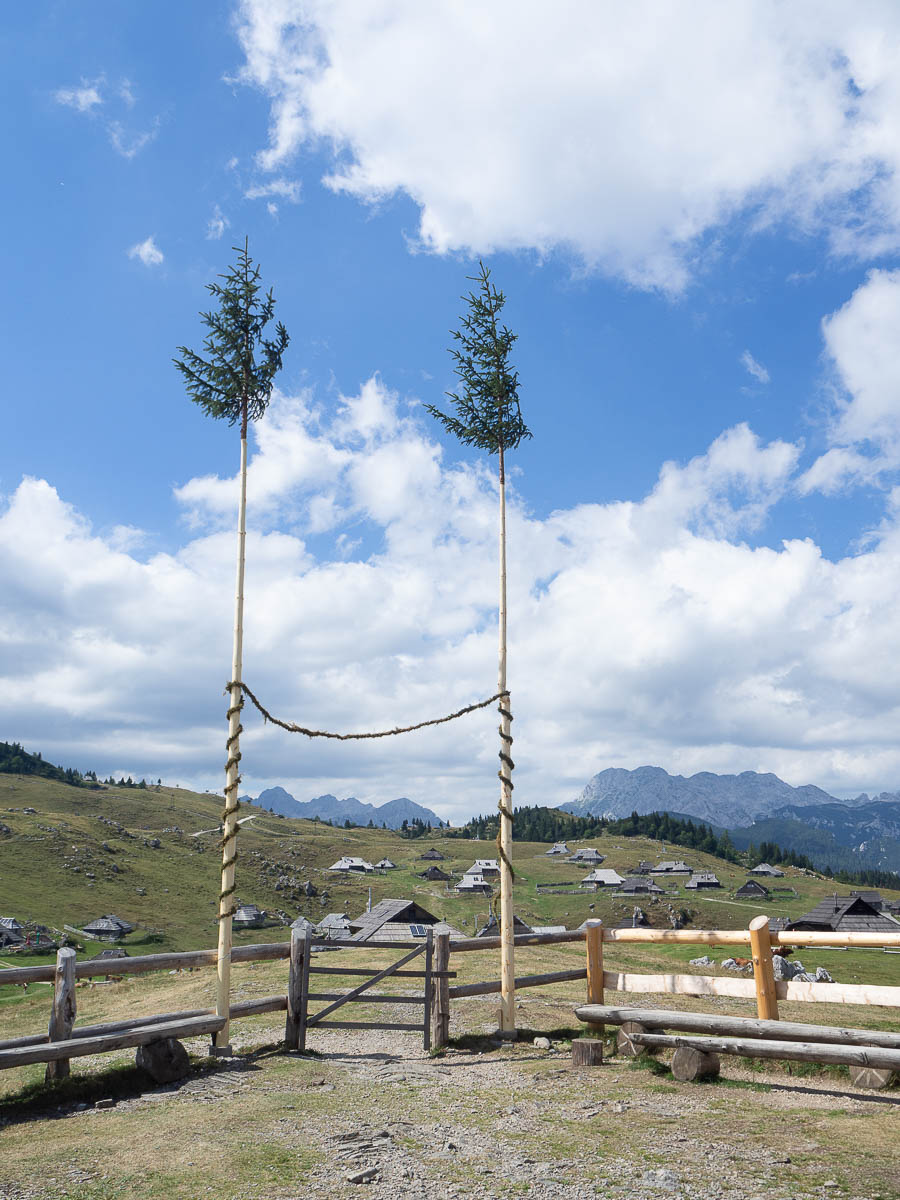
Back to the plateau and its huts! One of the buildings was a beautiful wooden chapel. The gateway of the chapel was decorated with two spruce trees, stripped of bark and branches all the way except for the very top. Eric had noticed a similar tree while driving, so it’s not just some tourist thing here on Velika Planina. I asked around, and a Slovenian colleague tells me they’re called mlaj and put up for celebrations – traditionally for May Day (like a version of the maypole I guess) but more recently also for birthdays and weddings.

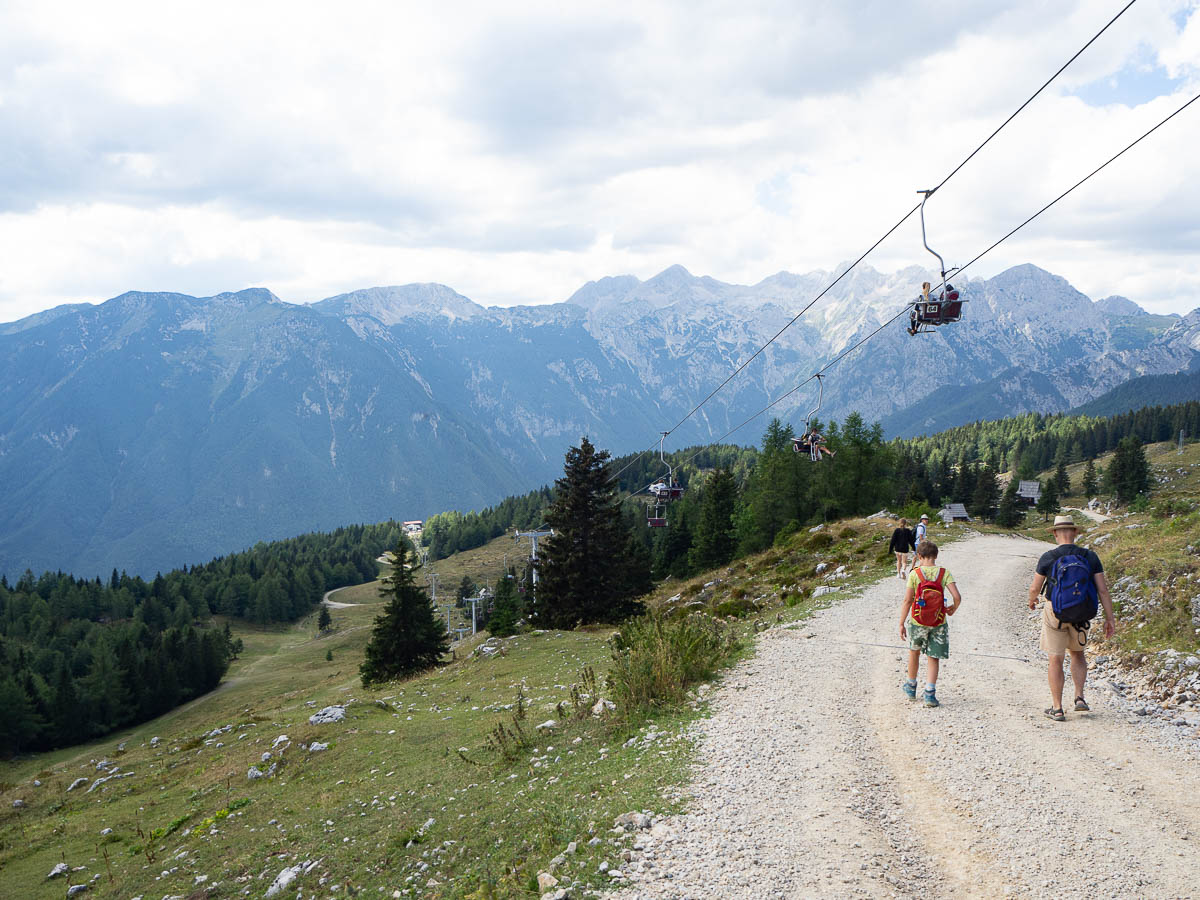
For those with tired legs, there was a two-seat chairlift between the cable car station and the top of the hill. (There’s a ski resort here during winter.) We walked, though, and actually kept pace with the chairlift. Adrian might have voted for the chairlift, had it had more than two seats so that we could all have sat together.

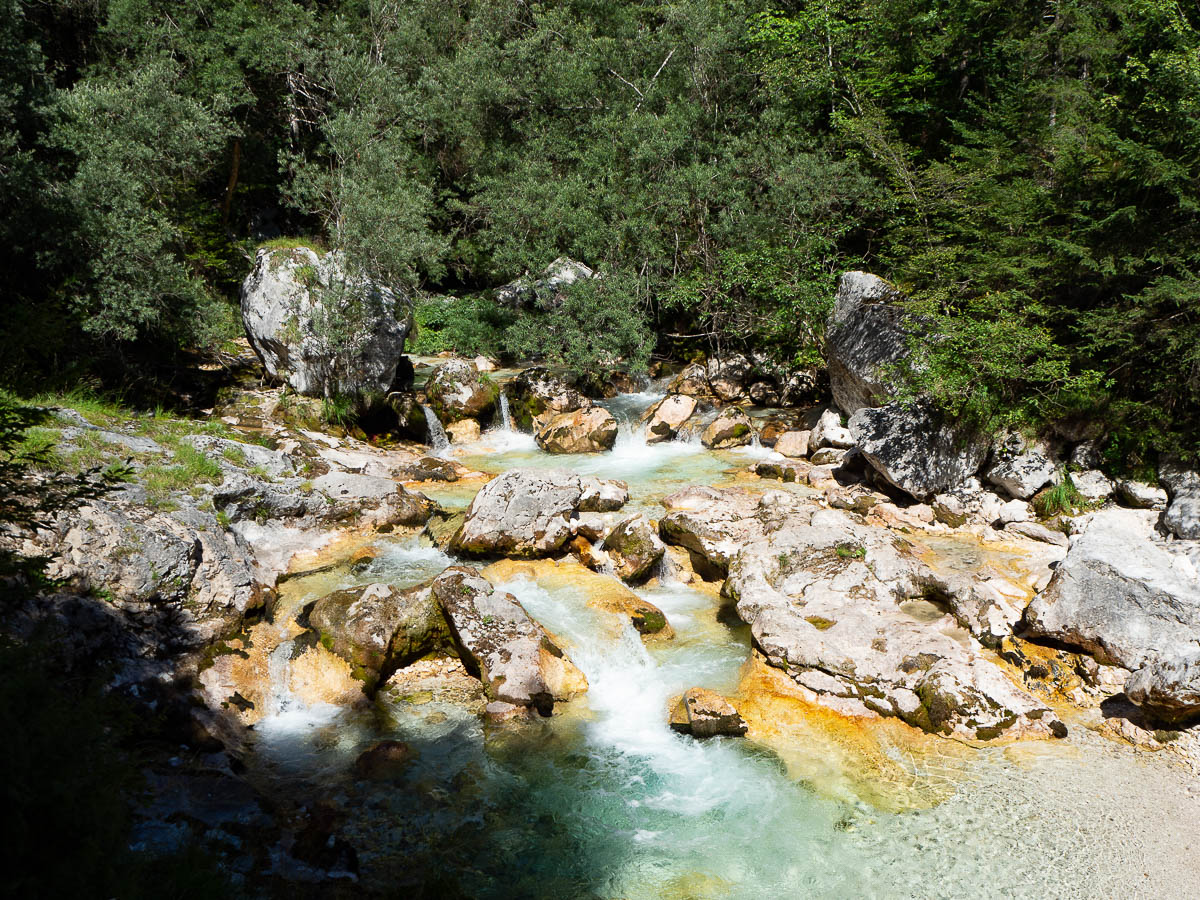
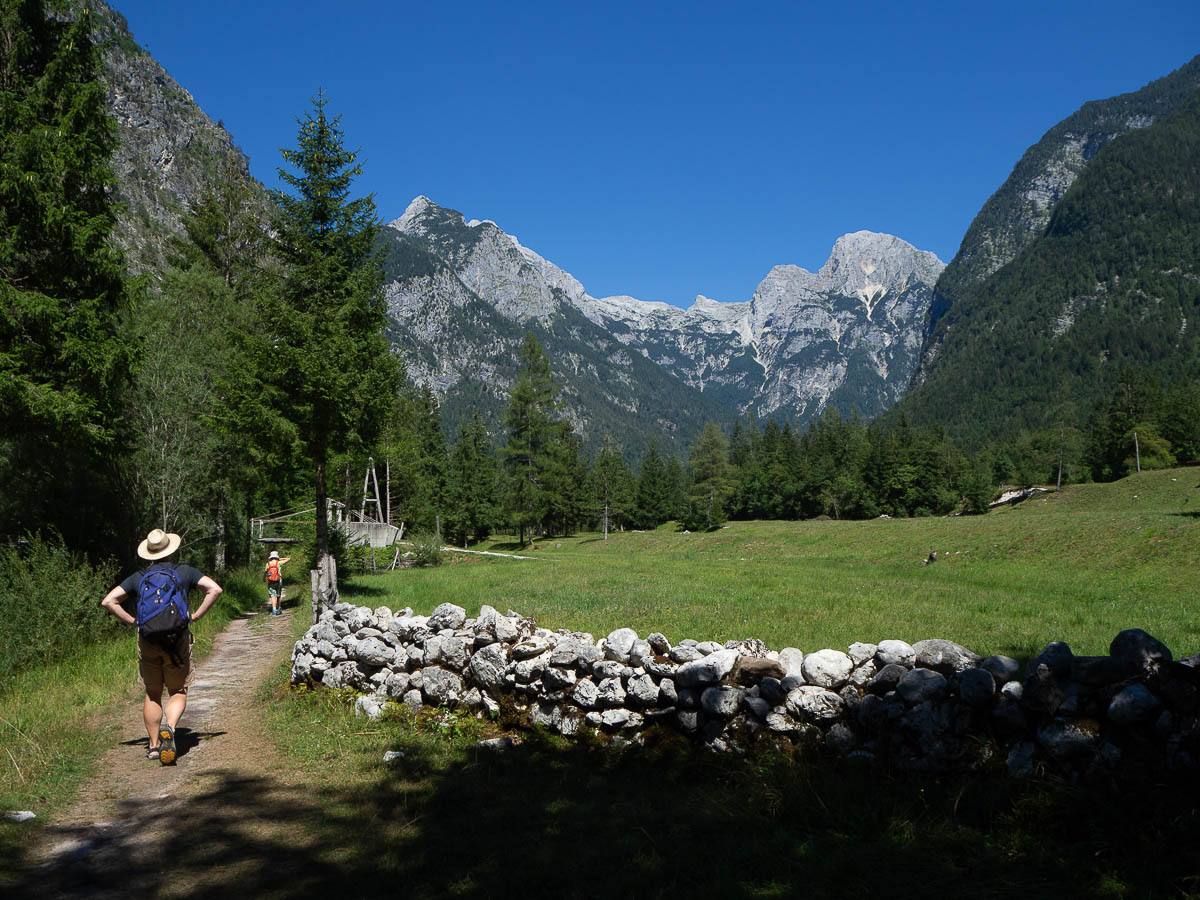
Another day, another river valley! But this one was more memorable than yesterday’s, even looking back two weeks later. The path stayed closer to the river, unlike yesterday’s for example, which meandered further away and up the slopes, sometimes even following an asphalt roads. We had more views of the river, and it occasionally did interesting things.

Today’s walk had no particular destination or ending point. Walk as far as you want, then turn and walk back. (Or walk even further and take a bus or taxi back, but I didn’t want to spend time on figuring that out.) Instead of setting a goal in terms of kilometres, we decided to walk for two and a half hours, no matter how far that took us, and then head back.

All of these walks have been surrounded by stunning mountain views, but after 6 days of them, I’m almost getting used to them. I wonder what it feels like to live here. Do the locals even notice the spectacular mountains around them?

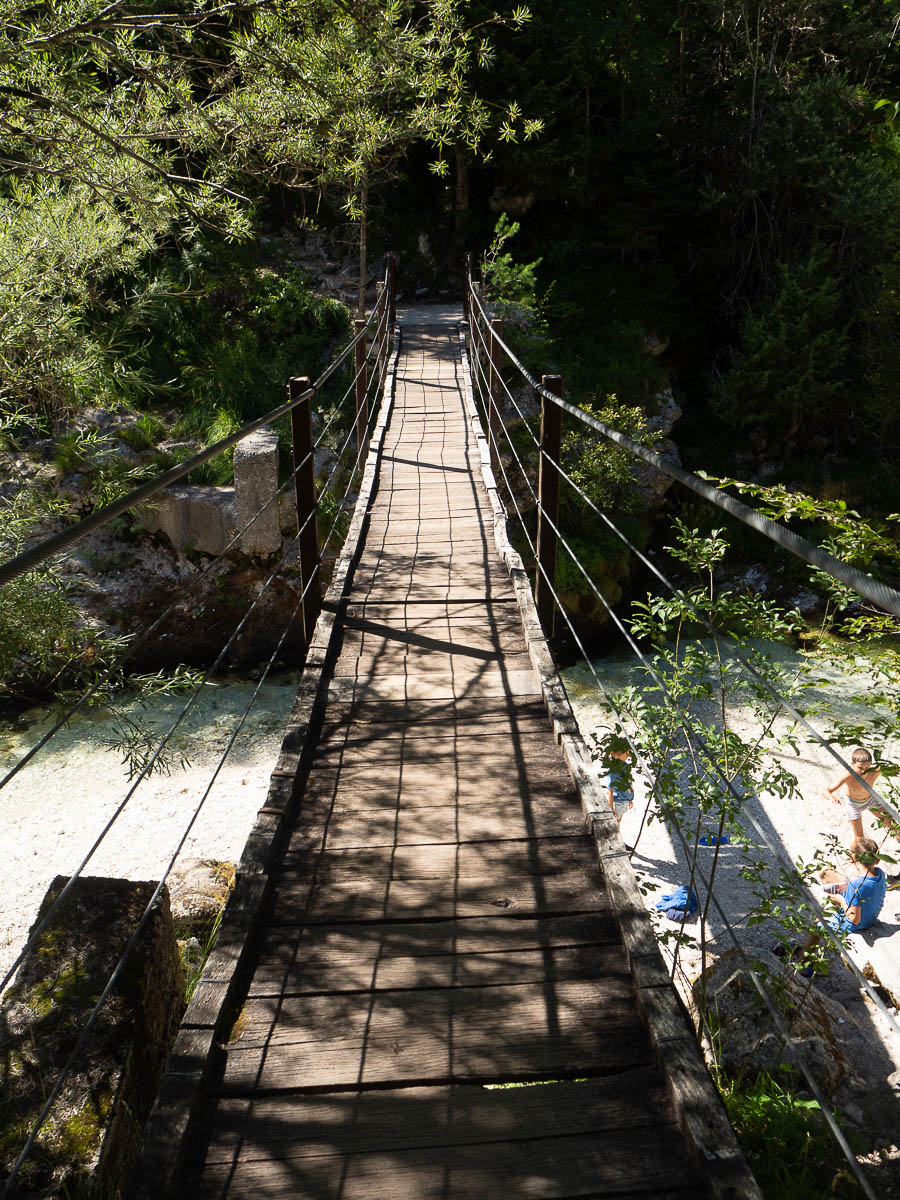
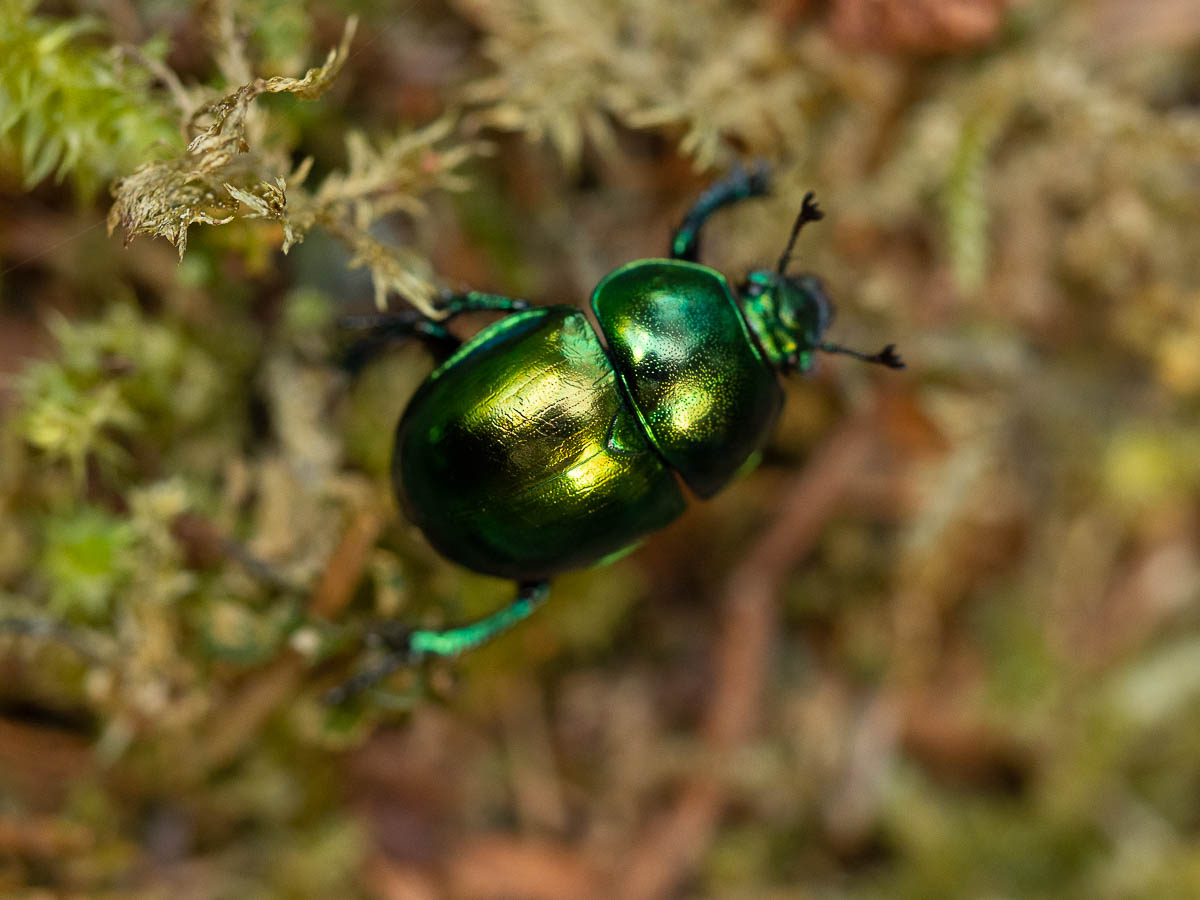
Adrian likes having a destination to aim for. Aimless wandering for half a day doesn’t suit him. So we made a game of collecting observations of interesting things. A bridge; a beetle with shimmering wings; a rockfall.
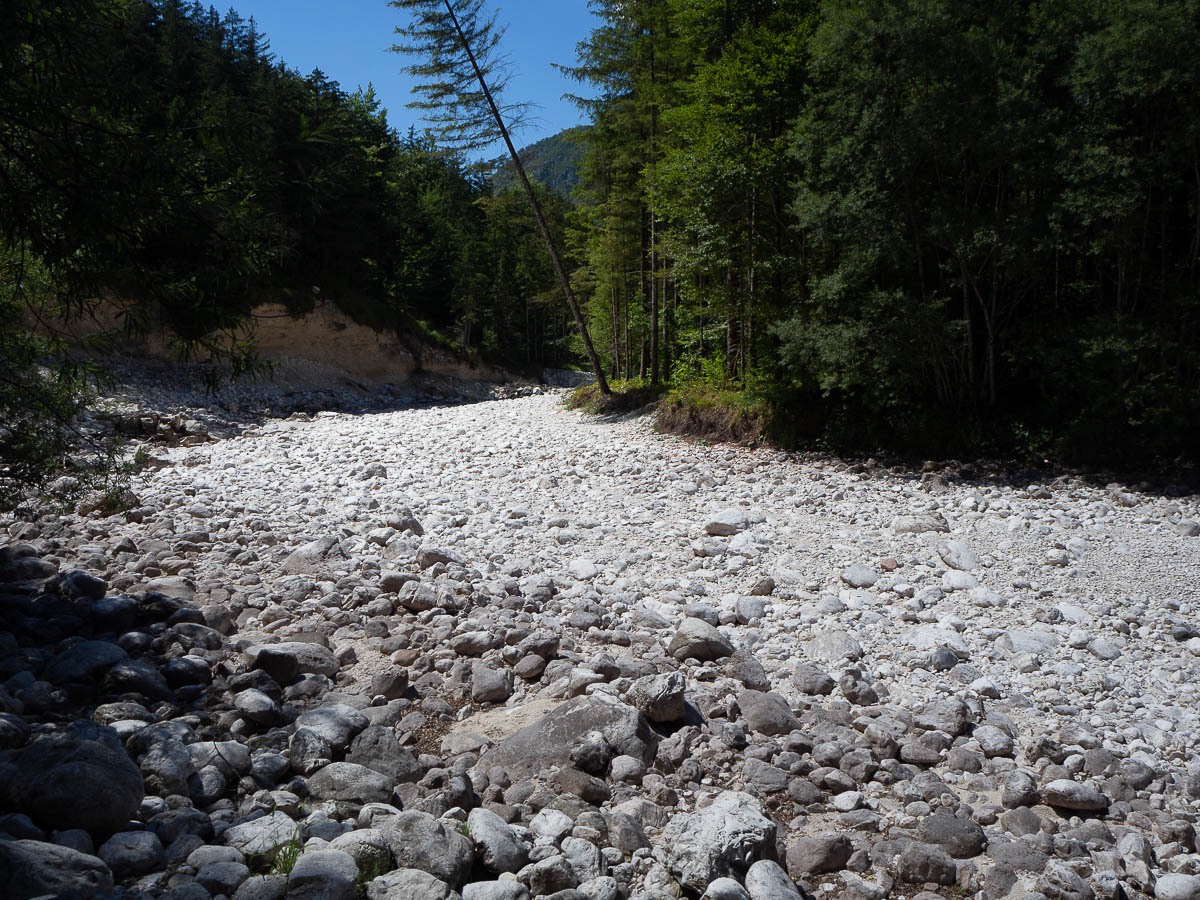
When we had reached our turning point, I noticed that the river was suddenly no longer a river, but a dry, white, rocky riverbed. We had walked downstream, and normally rivers grow in that direction, as new streams and brooks feed them. This one had just vanished.

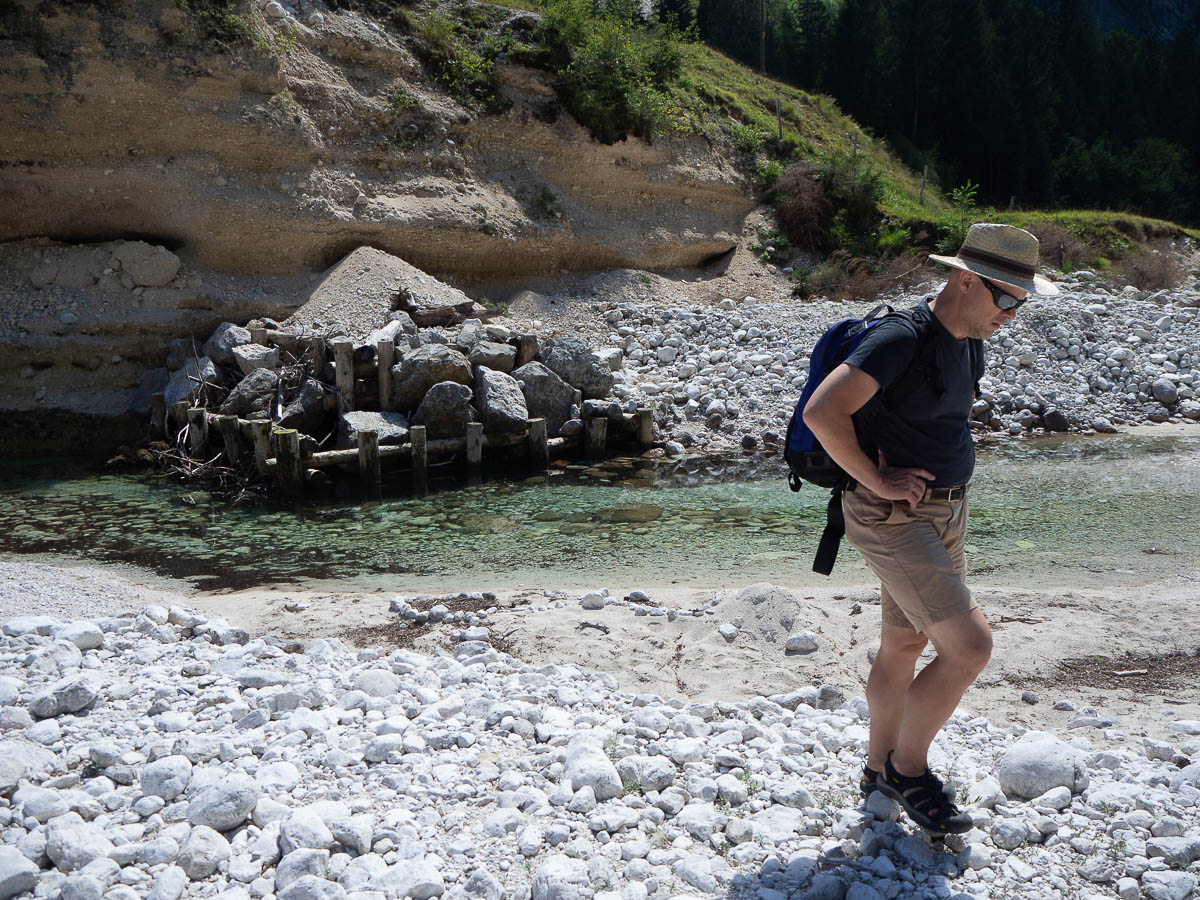
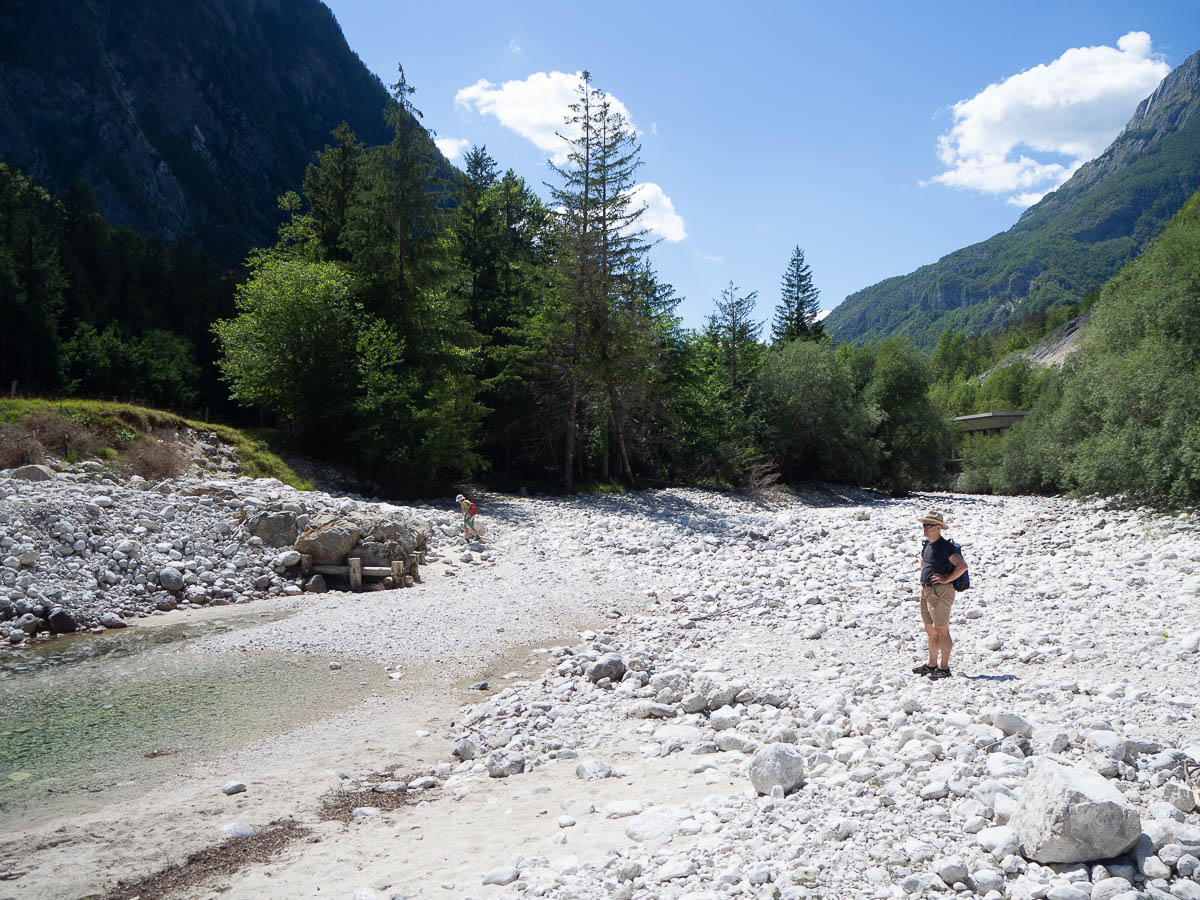
W challenged ourselves on the way back to figure out where the river went. We located the spot where the last of the water disappeared, under piles of boulders and logs. We couldn’t figure out what was going on there, though. Clearly something that is important enough to protect. Is there an irrigation pump hidden there? Shouldn’t there be cables and pipes there, in that case? Also, this can’t have been the only cause, because when reaching this point, the river was already smaller than upstream where we first met it.


On our drive back to Kranjska Gora, we stopped at the highest point of Vršič Pass to take in more gorgeous views of the mountains surrounding us. When we passed this point on our morning drive out, it was so packed with cars – not just in the parking lots but also along both sides of the road – that it was barely passable. Two larger vehicles meeting literally could not pass each other. It surprised me that the chaos didn’t bother anyone enough to station a traffic warden here, given that it’s the only way from one side of the mountain ridge to the other. Now, late in the afternoon, the situation was better and we actually found a parking spot.