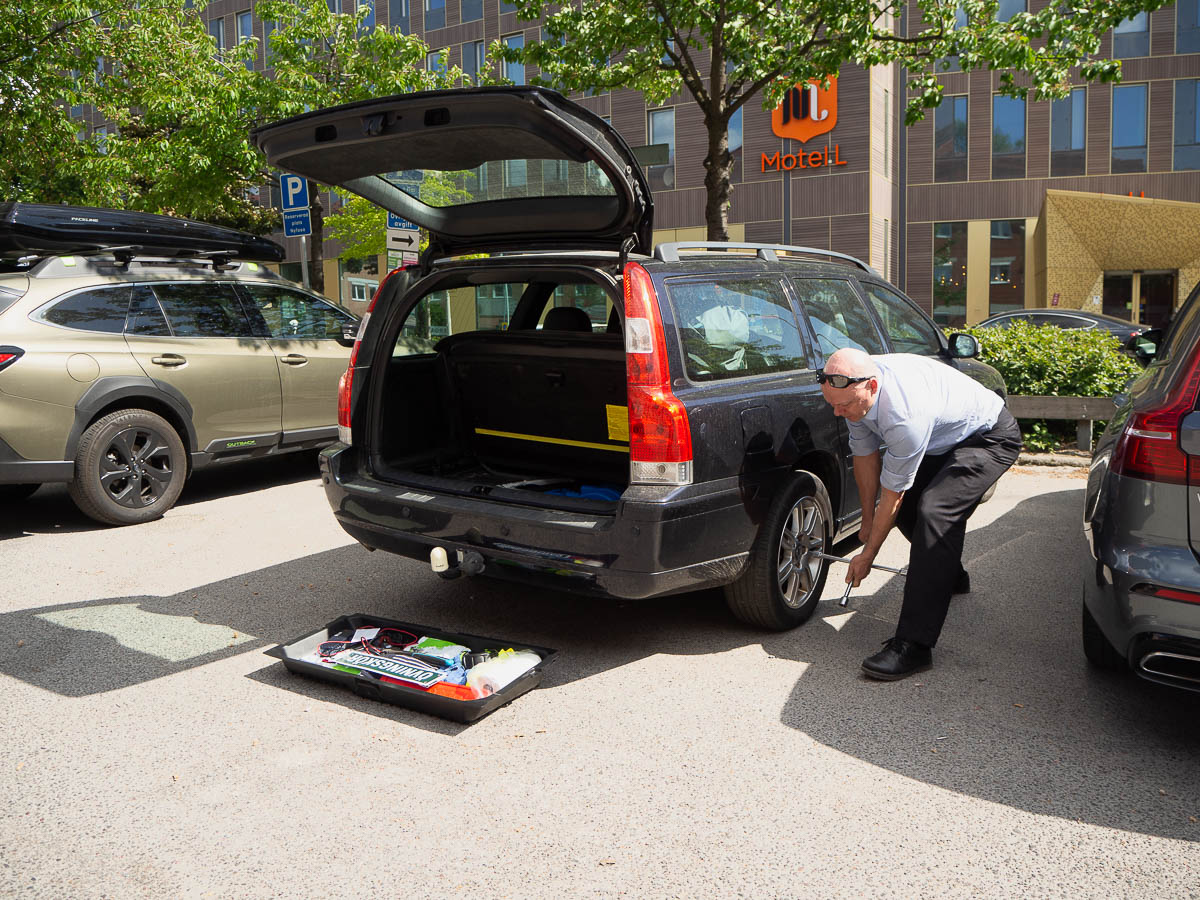
As I was driving back from Paradiset, the car started making strange noises when I engine braked. In fact it was doing a little bit of it already yesterday afternoon, which was part of my reason for not driving further than I had to.

Google told me that thumping noises during engine braking should not be a sign of anything particularly dangerous (might just be the suspension screws of something-or-other needing tightening).

That’s fine, I don’t need to engine brake, I can drive home without it.

But what started out as a little bit of thumping during engine braking gradually grew into more thumping also while just driving, especially at higher speeds. I modified my plan from “just drive smoothly and don’t engine brake” to “stay away from highways and get home by smaller roads”.

Over the next 10 minutes the noises continued to worsen, to the point where it sounded like the car was about to fall apart. I stopped, found the nearest train station, and drove there very, very cautiously. Called Eric, who’s better at diagnosing car noises. He took the train there, took a twenty-second test drive, agreed that the car sounded unsafe to drive any further, and located the source of the noise to the front wheel. (To me it sounded like it was coming from below me, and I had stopped to check for obvious problems underneath the car, but not found anything visibly wrong.)

At which point I noticed that the driver’s side front wheel was missing two of its five bolts, and the remaining three were looking very, very loose indeed. So my fears of the car falling apart weren’t far off at all. Good thing I stopped when I did.

Luckily loose bolts are an easy problem to fix. Eric redistributed the bolts we had left and re-tightened all of them, so we could drive home after all, instead of calling for a tow truck.

This is actually the second time a weird noise from our car has been a warning sign of wheels nearly falling off (although for different causes). So, dear friends, here is a reminder to take bad noises from your car seriously.
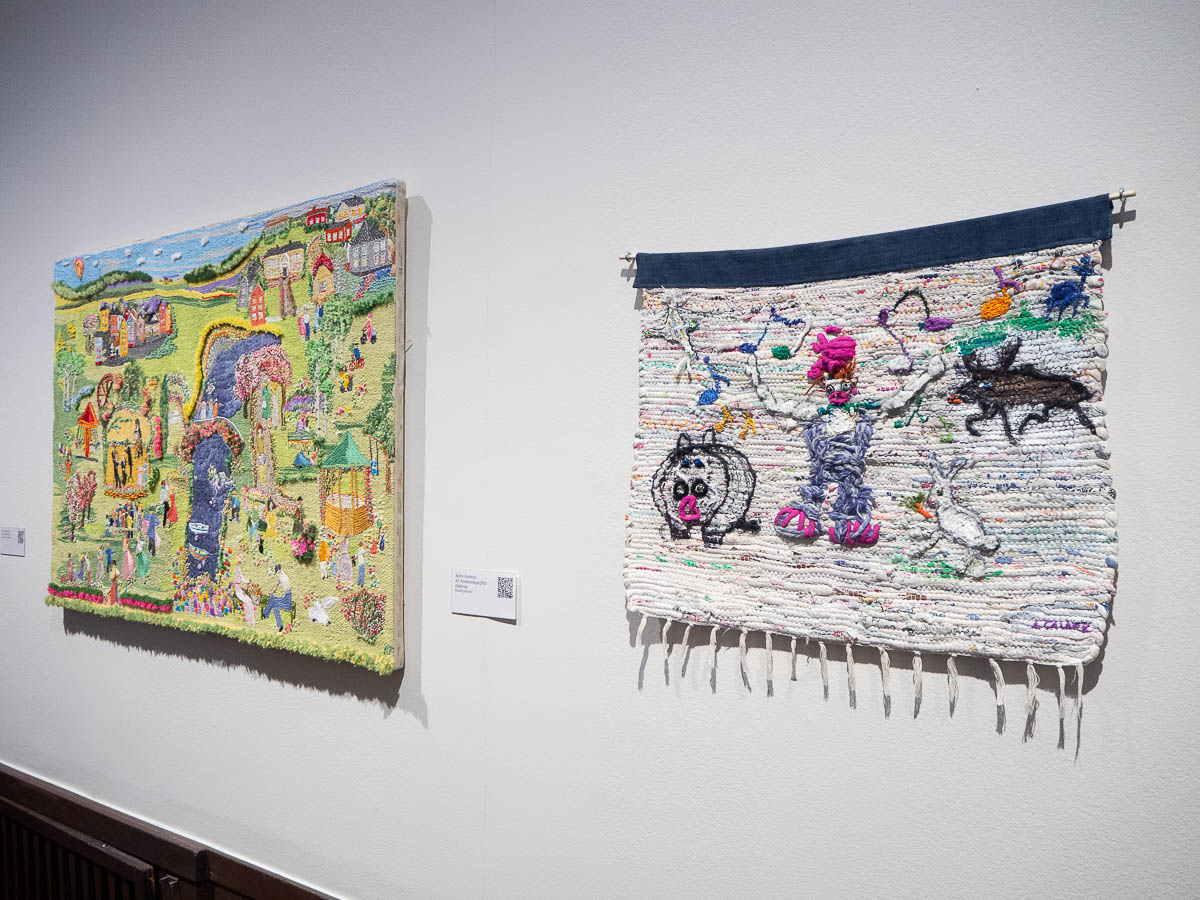
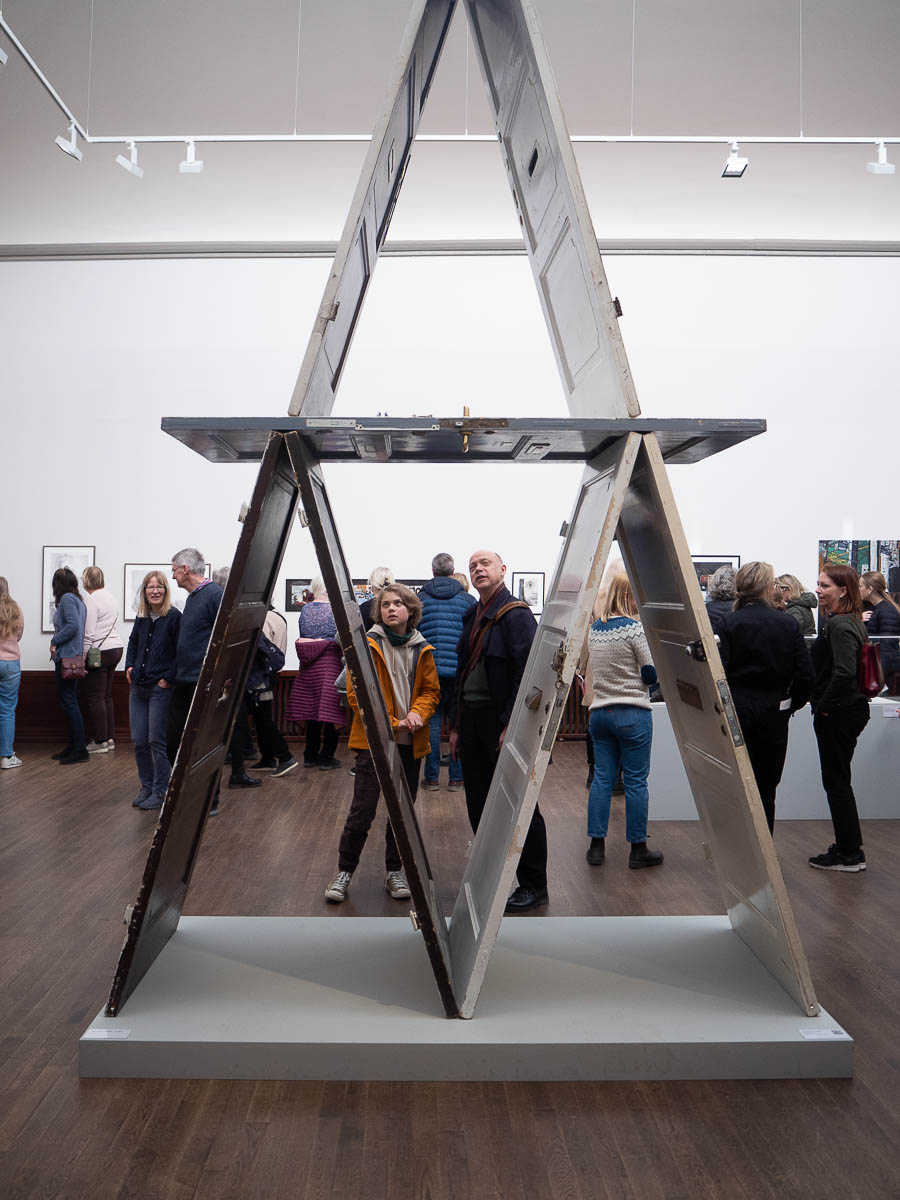
Vårsalongen, “The Spring Salon”, is an annual art event where anyone in Sweden can send in their works to be considered for inclusion. The result is always eclectic and varied. The works range from paintings, drawings and sculpture to video installations, and more. This year all the works can be seen online.

I was happy to see quite a few pieces of textile art, even though I didn’t particularly like any one of them. Another memorable works this year was Vintern 2021/22 by Mårten the dog, which consisted of all the gloves and mittens that the artist had carried home from his walks during one season.

Ingrid is a budding artist and it wasn’t hard to convince her to come with us, and Eric is always up for art exhibitions. Adrian was perhaps a bit less enthusiastic, but I was pretty sure even he would enjoy it. The exhibition is so democratic and relatable – there’s even a “Young Spring Salon” section for sixteen to eighteen-year-olds – that there’s always something for everyone.

Predictably, Adrian enjoyed the sculptures the most. When given a choice, he always prefers to work three-dimensionally, whether with paper or clay or Legos.

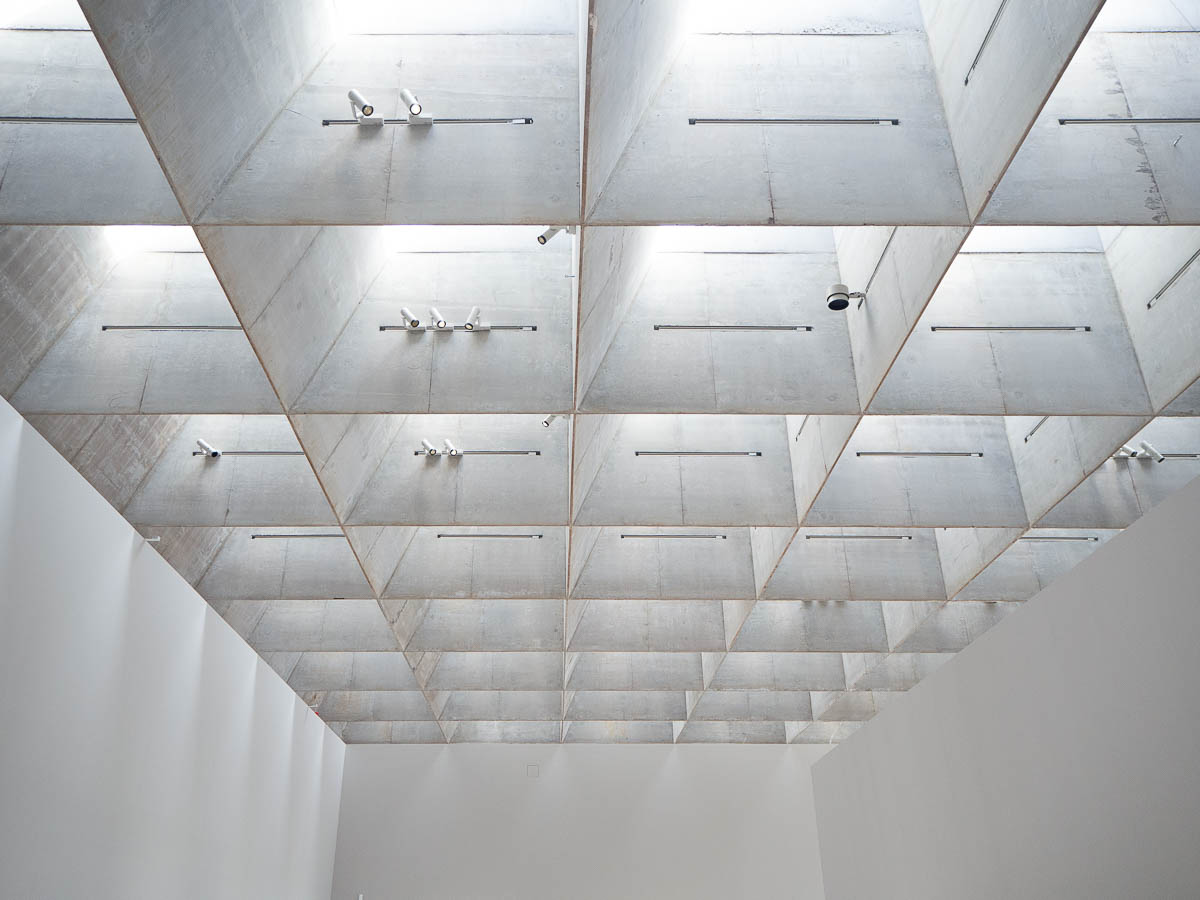
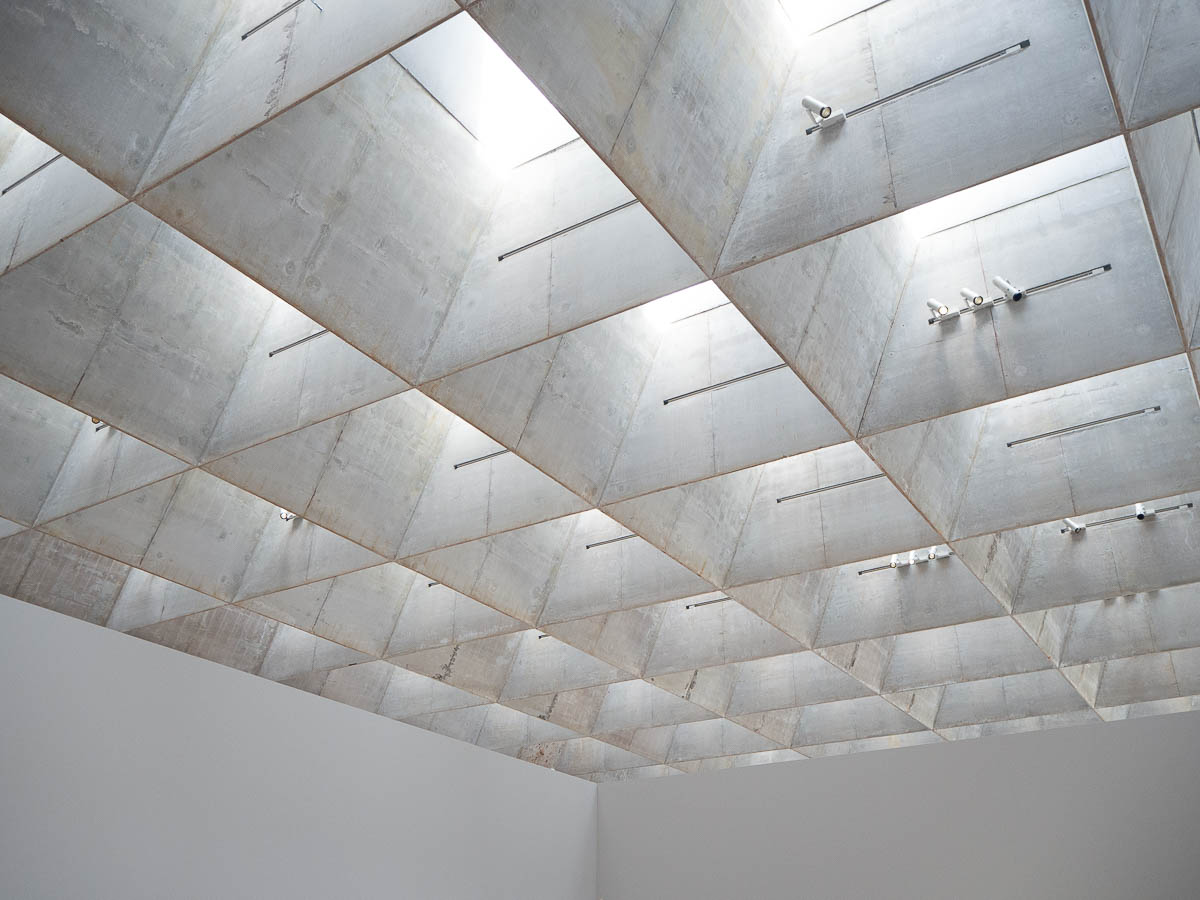
Liljevalchs was recently expanded and now has several new galleries which I hadn’t visited before. The upstairs ones had amazing ceilings.

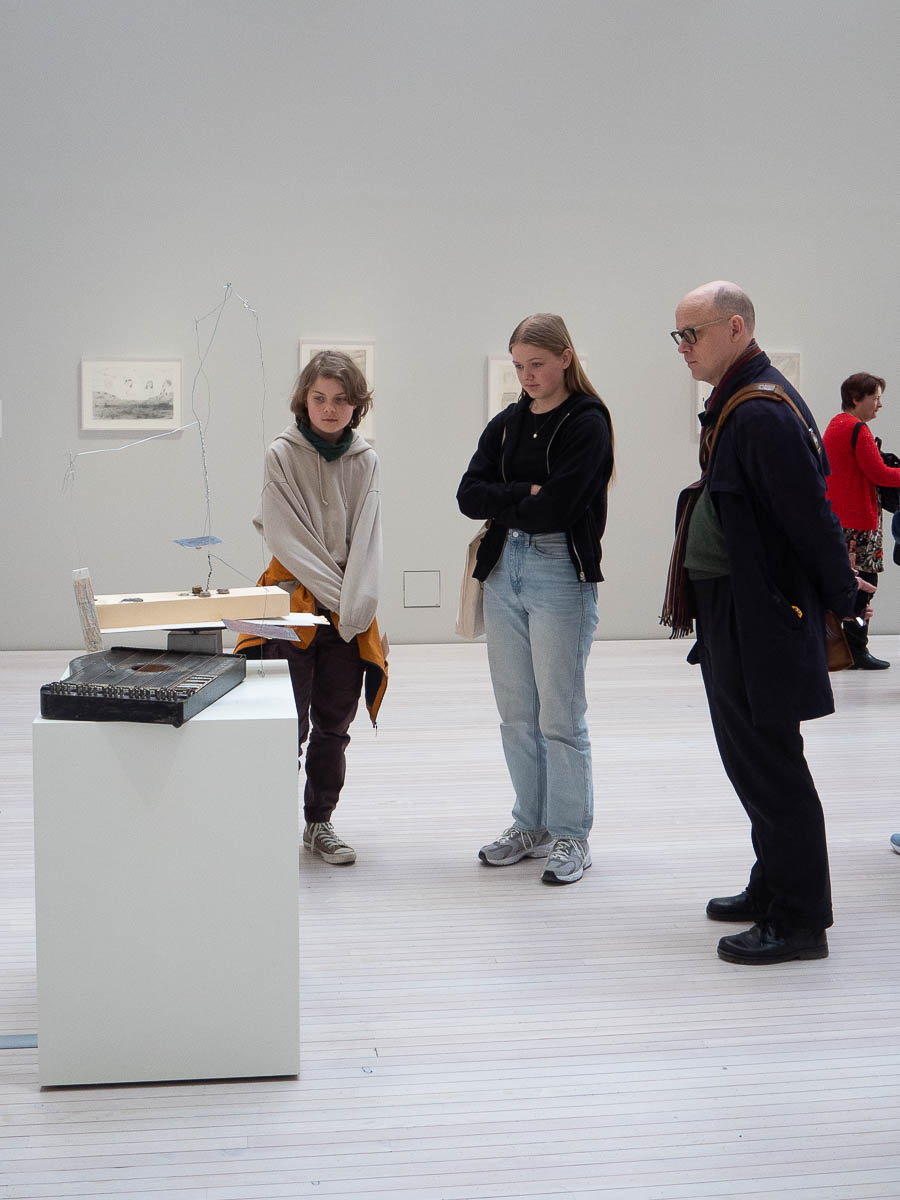
Those galleries currently exhibited works by Jockum Nordström, whose graphical works I didn’t find particularly interesting. But his mobile sculptures were nice: agglomerations of objects and pieces of wood, with a weight attached to a rotating arm of metal wire, and something noise-making for that weight to hit on each pass around the circle: a zither, or a broken violin, or a bicycle bell.

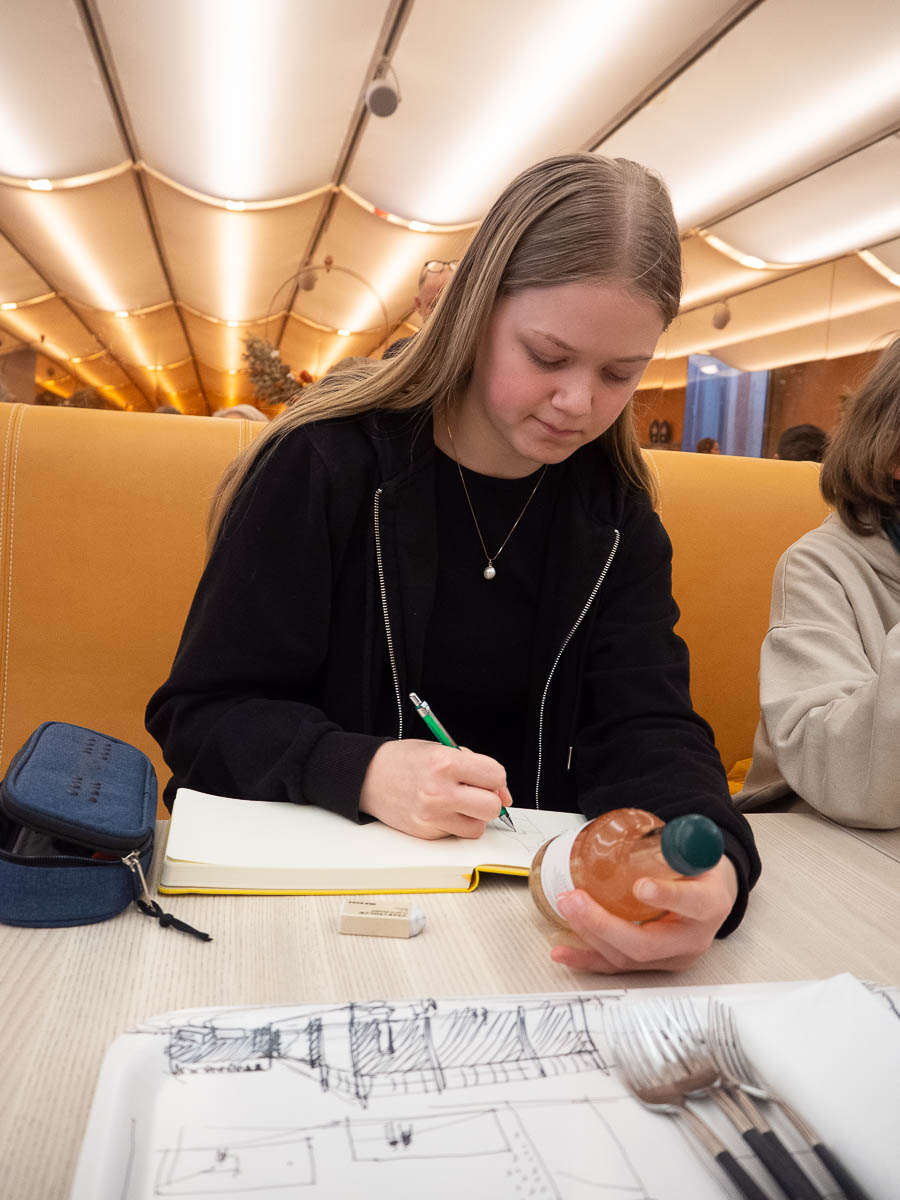
Afterwards we had lunch at Liljevalchs’ new vegetarian restaurant. The food wasn’t bad but they were badly understaffed so we waited a long time for our food, only to find out that they had lost half of our order, so half of us had to re-order and wait again.


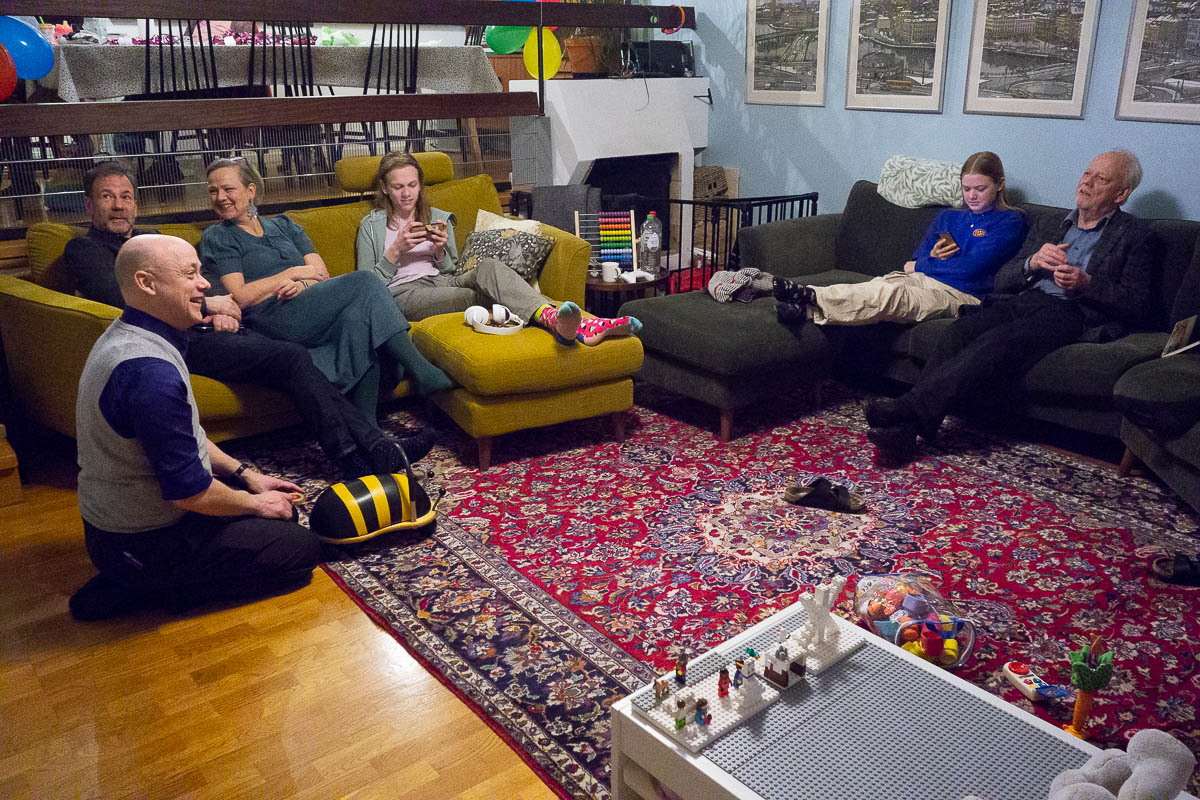
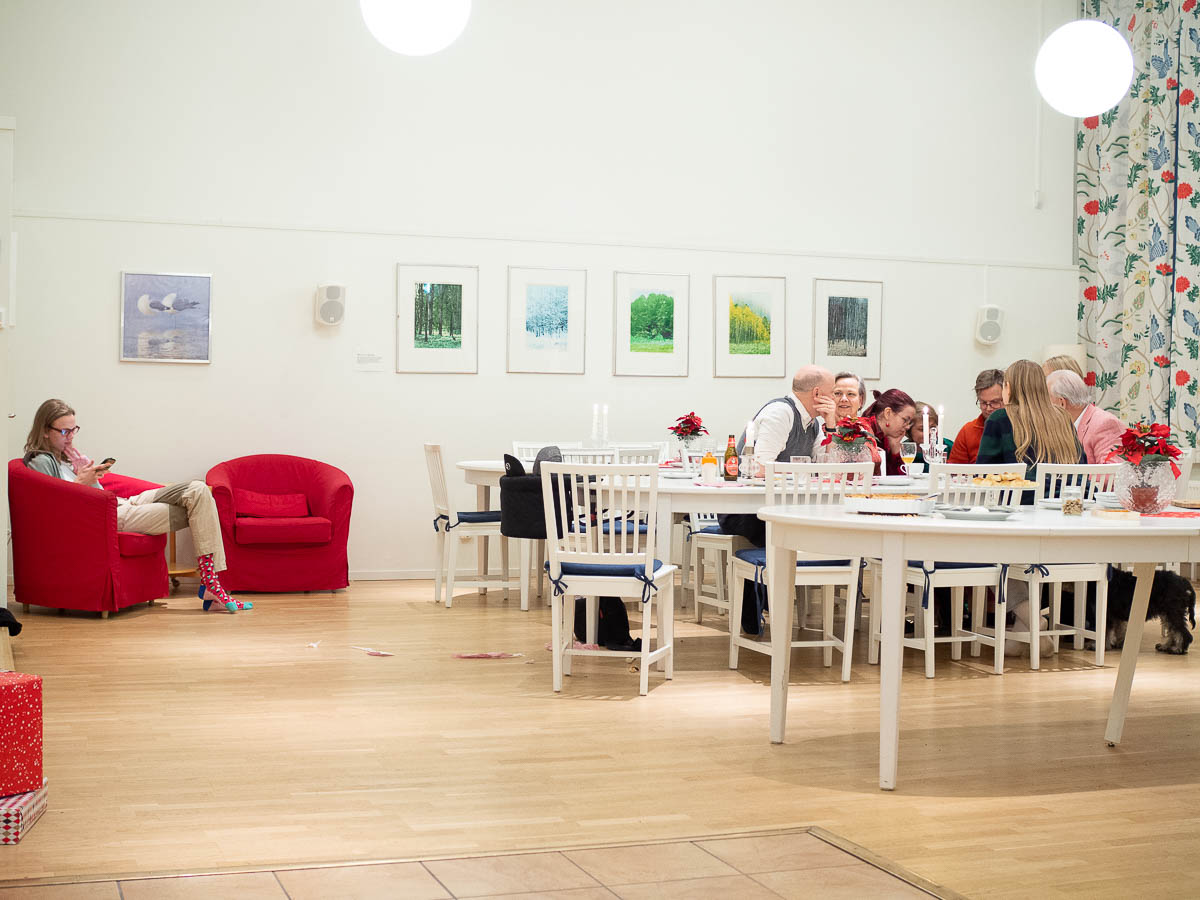
Birthday fika for Eric’s sister who turned 50.

The adults sat and talked and ate semla. Those too young to appreciate sitting and talking had a Lego Masters competition. Those too young for Legos hung around and explored the world.

Here’s a rhinoceros that Adrian built.


After a few hours the introverts start taking off into various corners, while the extroverts could happily keep going all night.


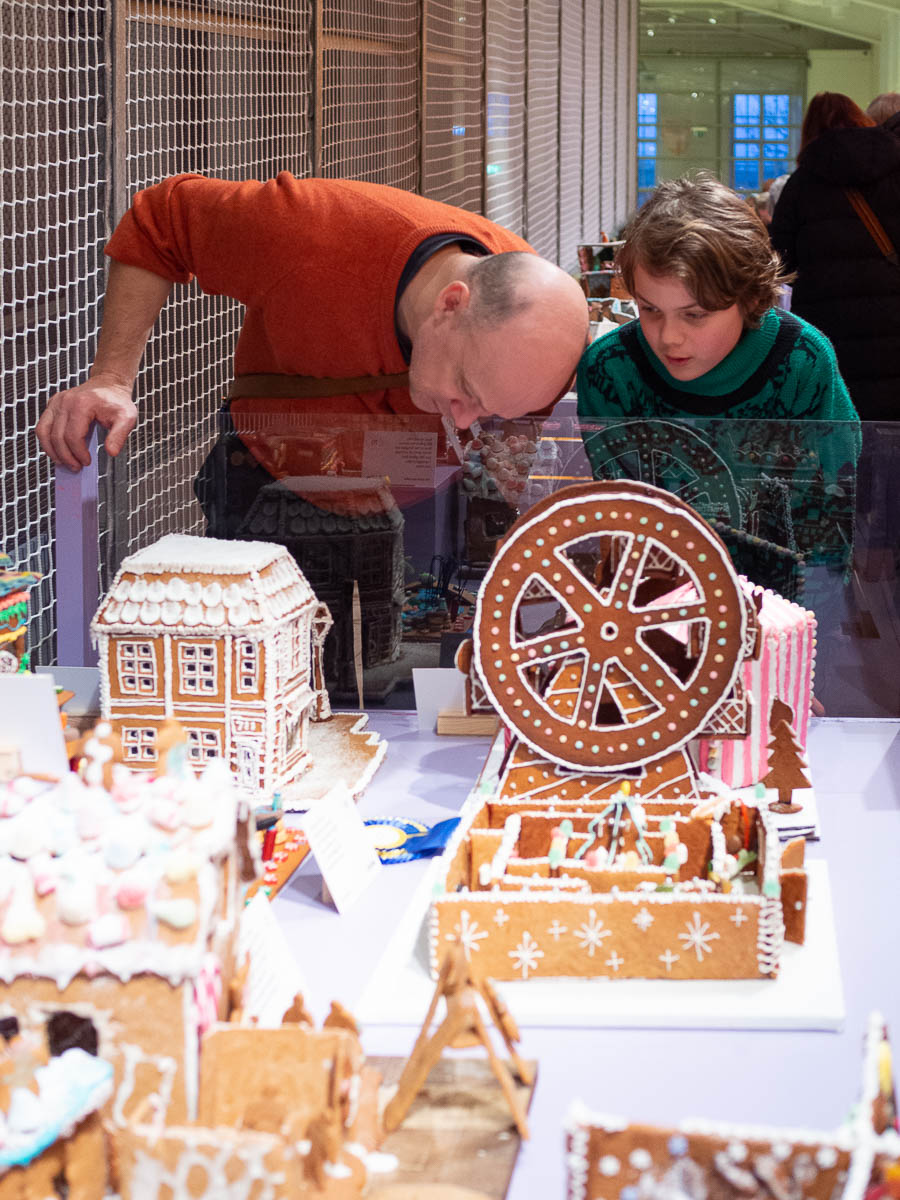
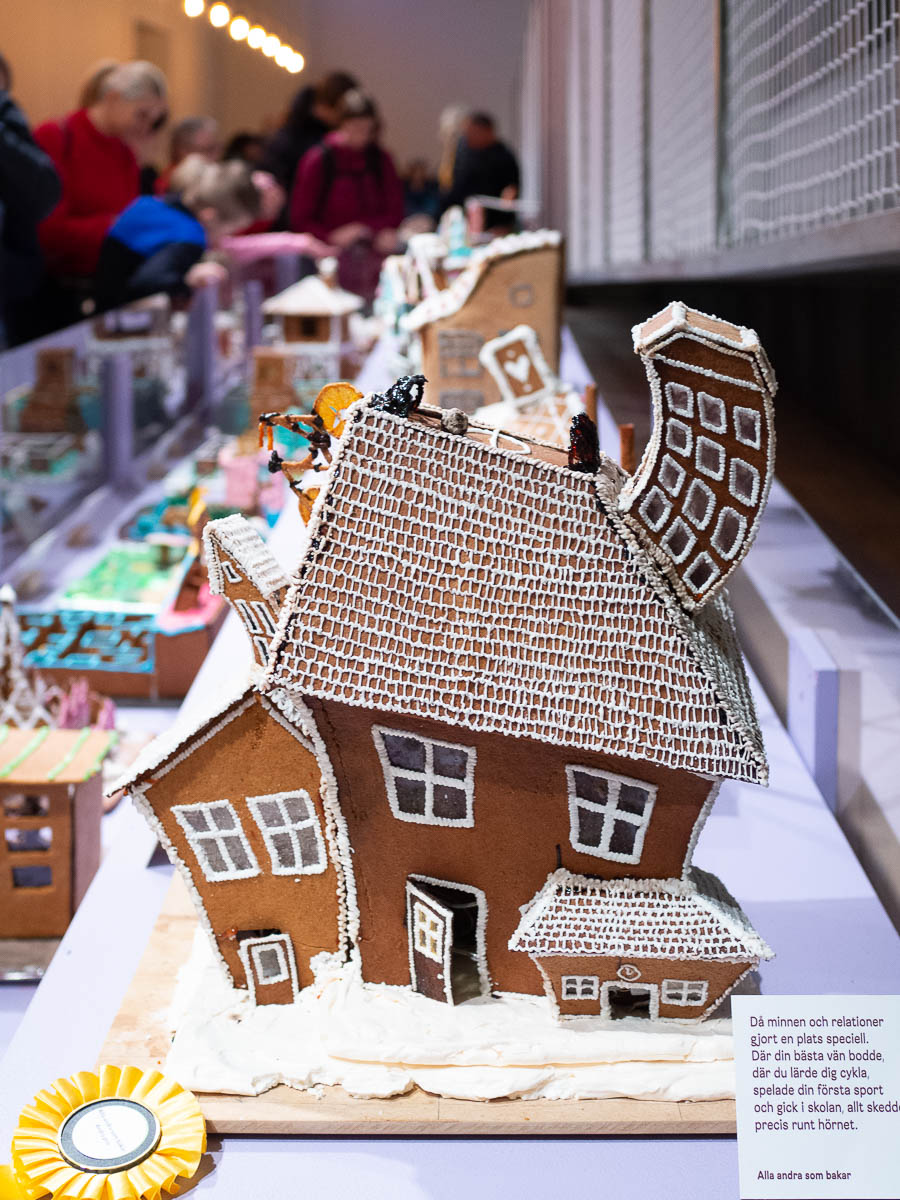
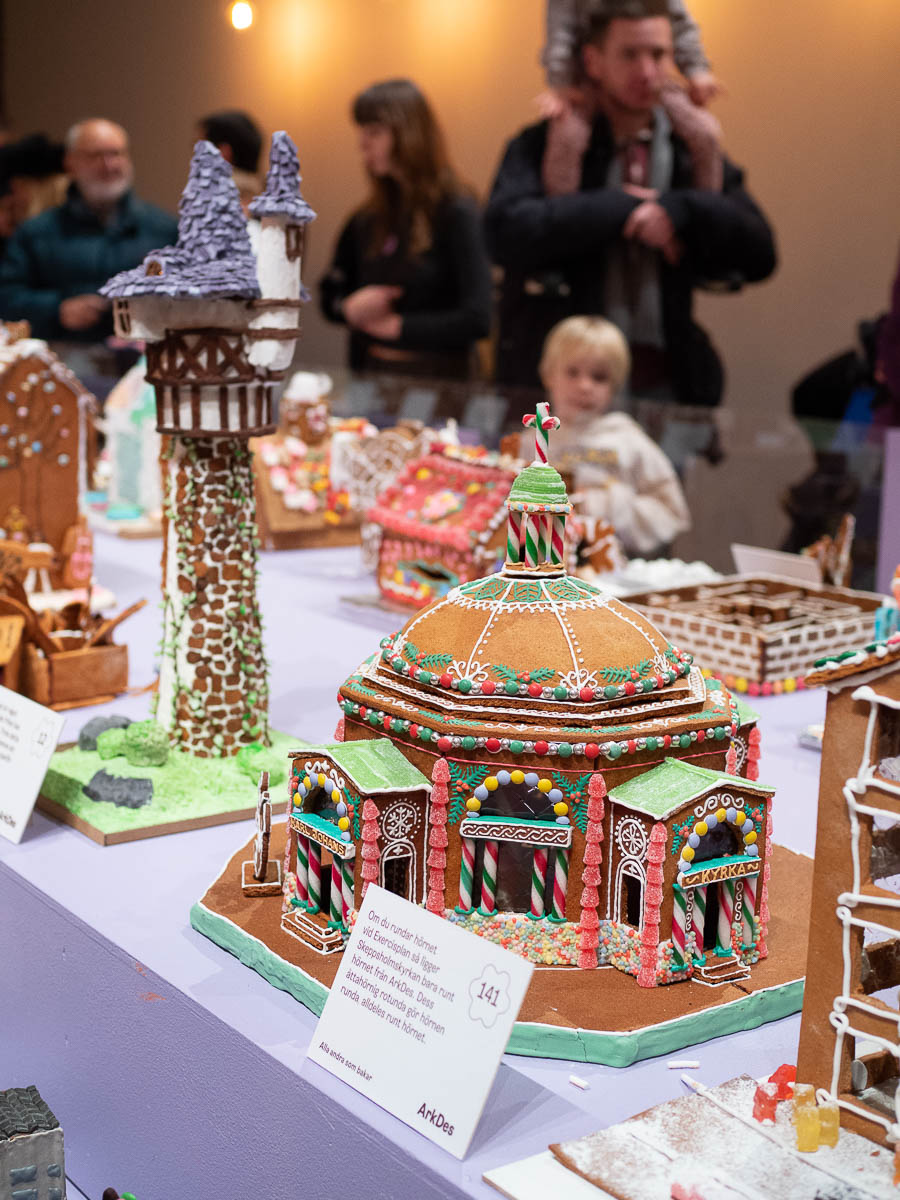
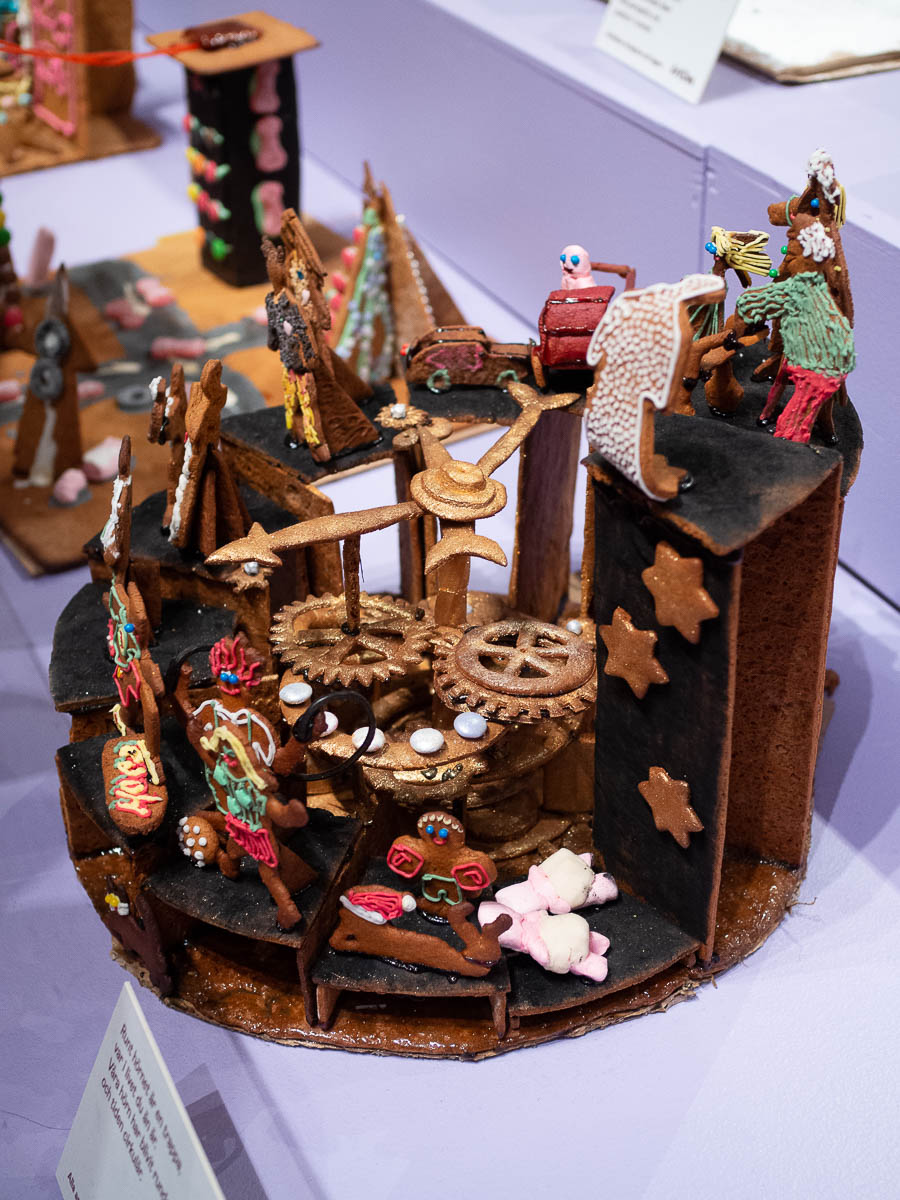
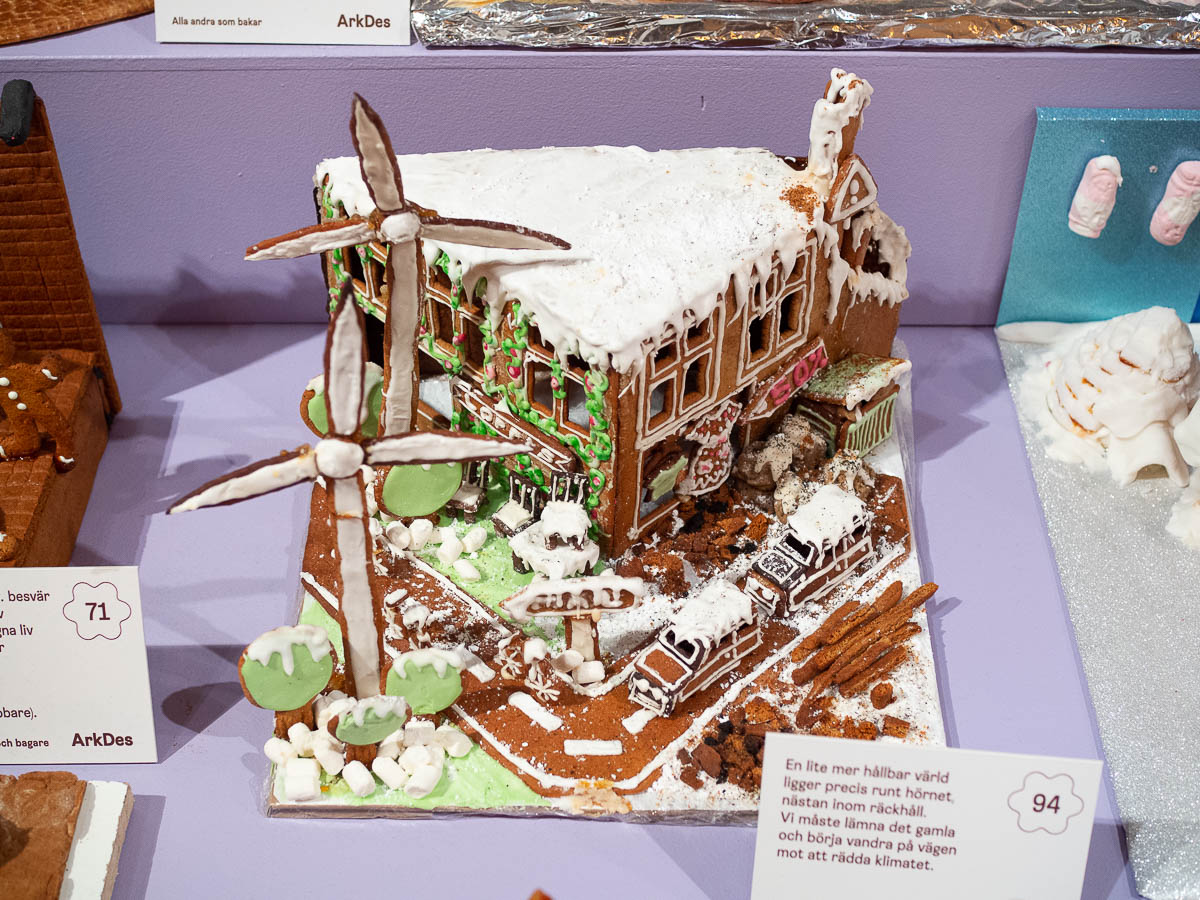
The annual gingerbread house competition and exhibition at the Museum of Architecture and Design.

The competition, open to anyone, has a different theme every year. This year’s theme was “Around the corner”, and the contestants had interpreted it in every possible way: some very literal, some more figurative, and some had probably shoehorned whatever they had built into the theme after the fact. There were a lot of labyrinths (with lots of corners) and houses with round corners or no corners. For some reason there were several houses built around the four seasons (maybe because houses tend to have four corners?)

The competition is divided into three categories: experts (architects, designers and bakers); under 12; and everyone else. This year many of the most interesting and impressive contributions came from the “everyone else” group. The winner of the expert category was, in fact, strikingly bland and boring. (I didn’t even waste a photo on it.)


In recent years, I’ve noticed works on the theme of how we’re destroying nature, how we need to be kinder to the Earth, and how a more sustainable future is just around the corner. I wonder if the share of works on this topic is on an upward trend.


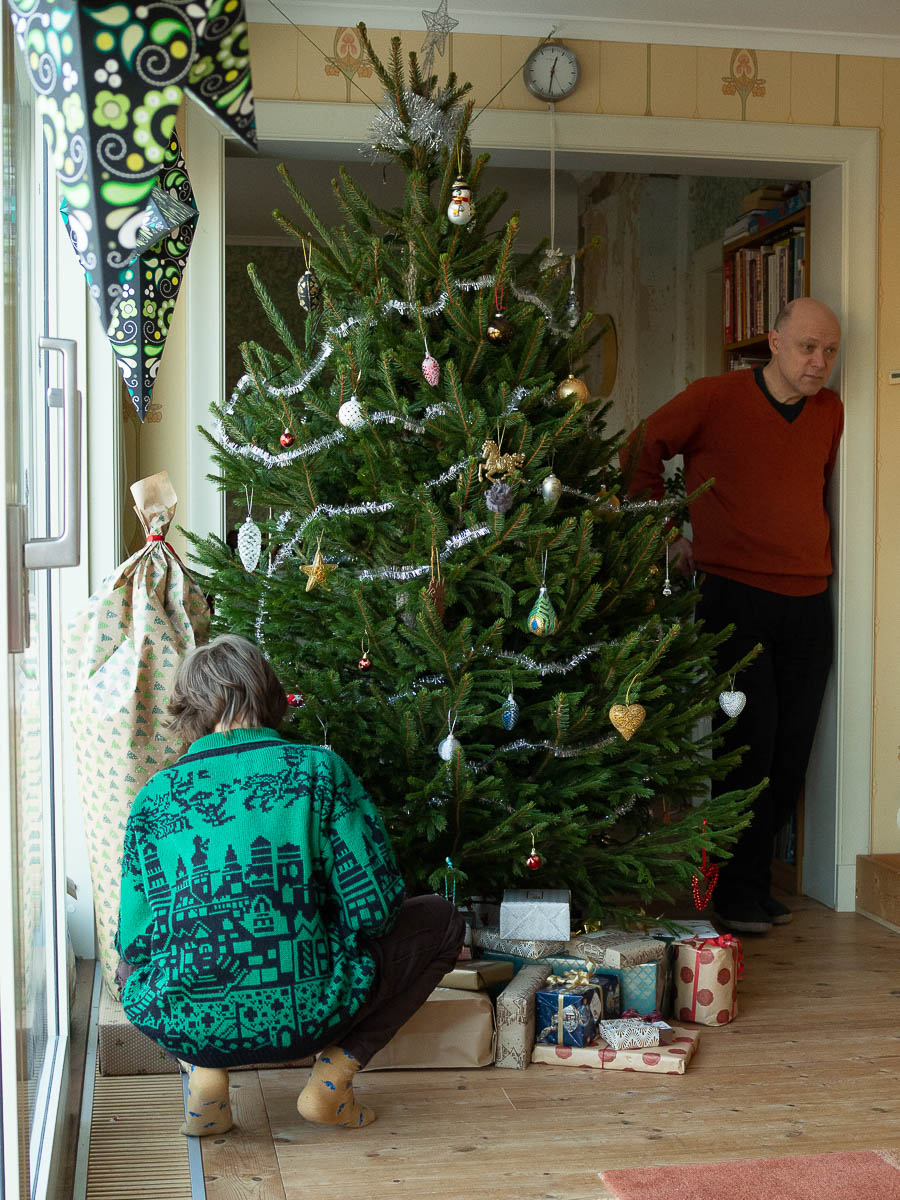
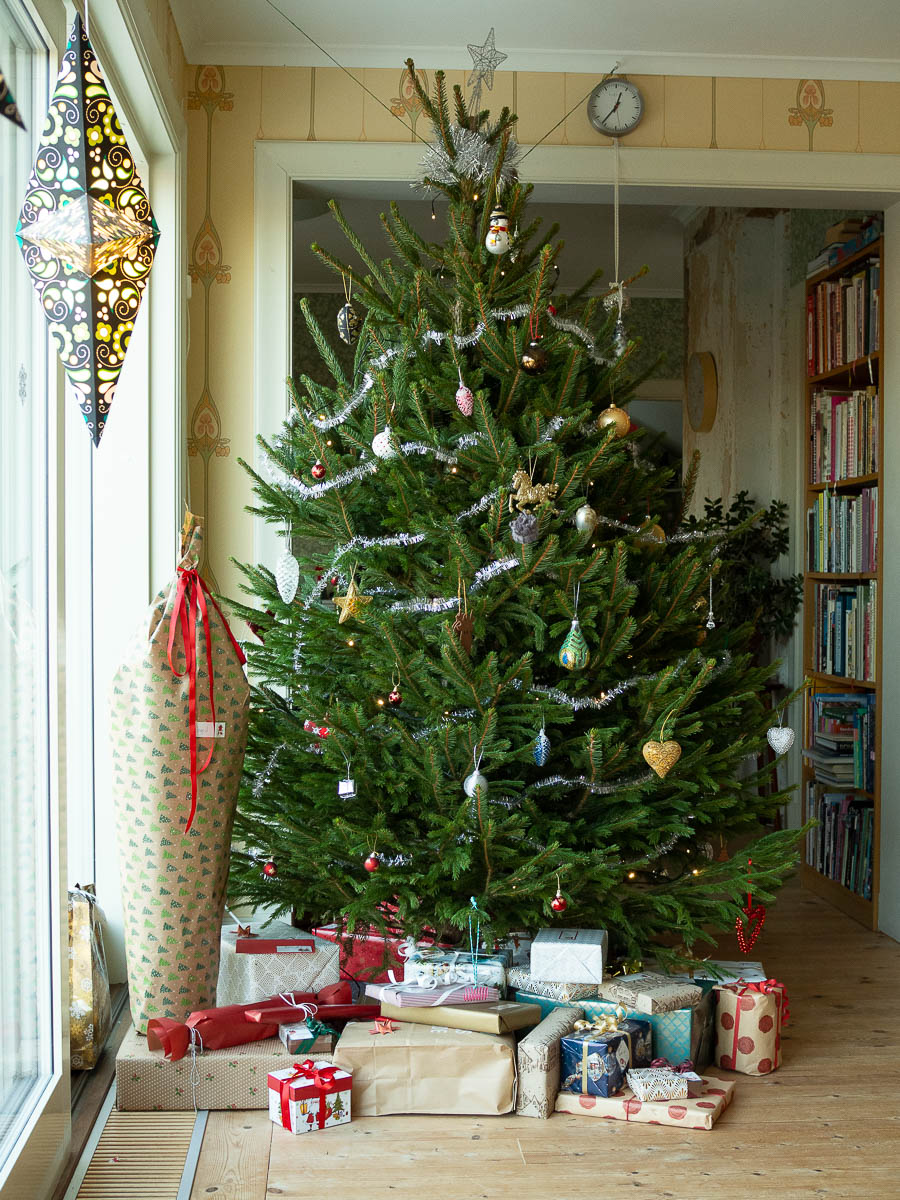
Usually we start piling up the gifts under the tree the day before Christmas Eve but Nysse was all over the presents as soon as they started turning up, with claws and teeth, so we had to hide them away in the bedroom behind a closed door and only brought them out last minute. Only one or two packages got slightly chewed in the corners.

I am kind of proud of how I managed to wrap a large potted plant for Ingrid without breaking anything.

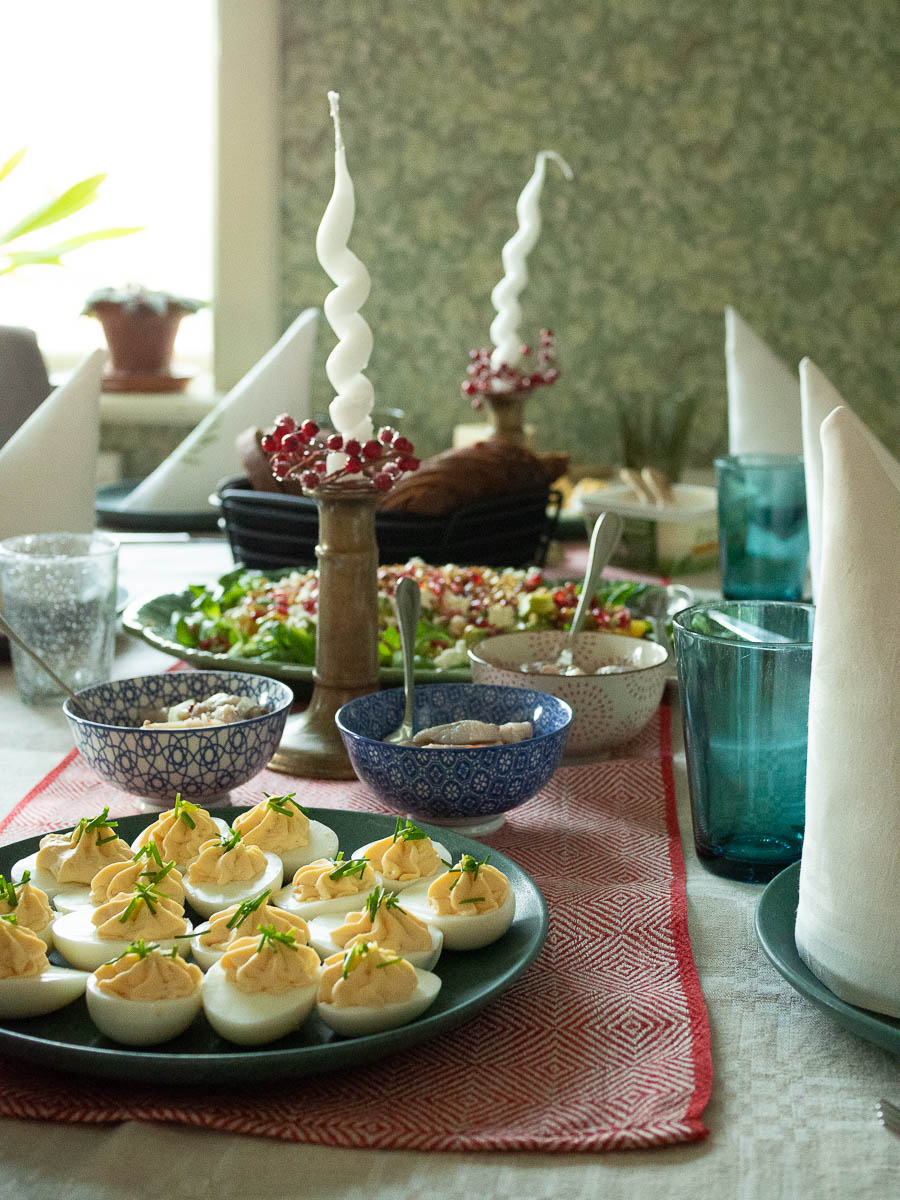
Lunch was the traditional devilled eggs, served with herring and an orange-avocado-feta-pistacho sallad, and vörtbröd.

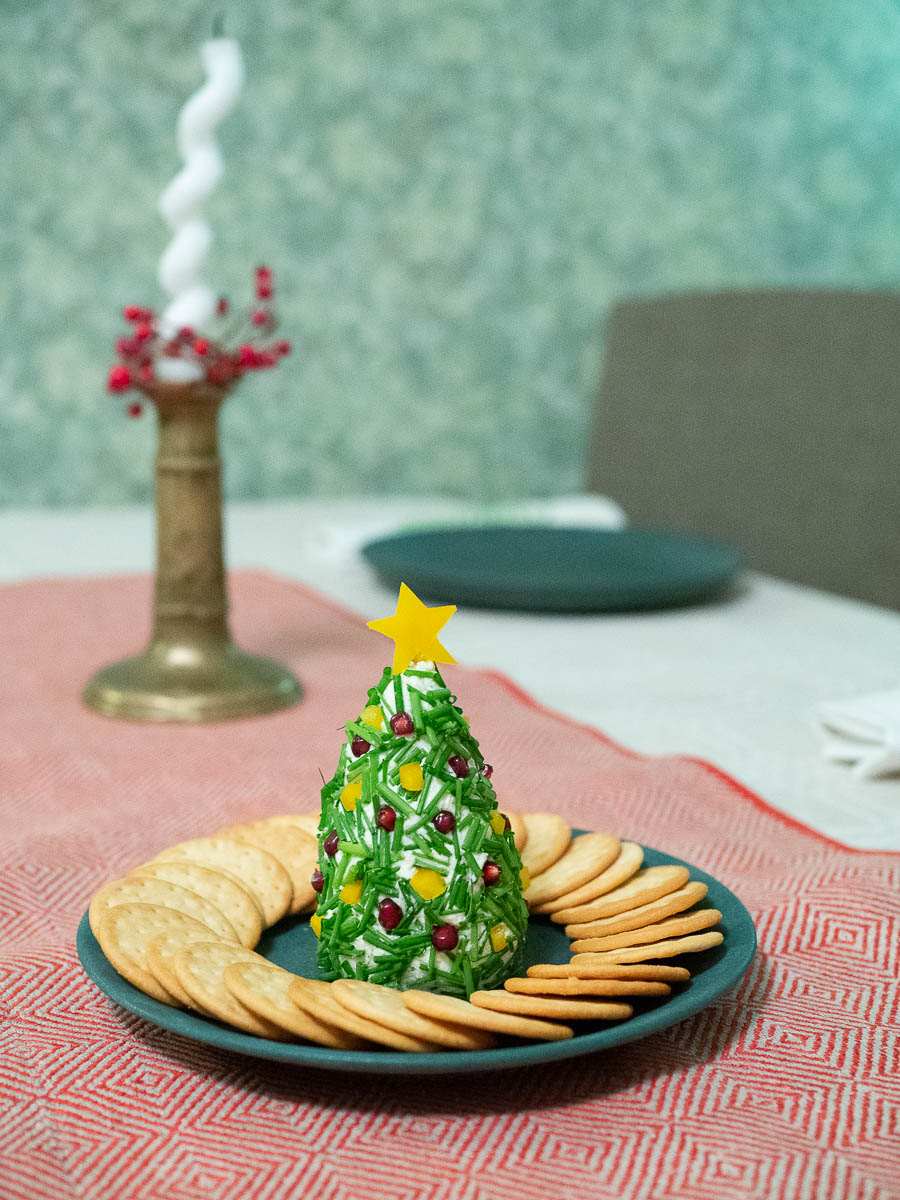
Ingrid made a cream cheese Christmas tree for a starter. I didn’t think of taking any photos of the rest of the dinner, which consisted of the bean balls I always make for Christmas, potato gratin, brussel sprouts and a lingonberry sauce. I had planned for a cranberry sauce but there were no cranberries to be had in any of the three supermarkets I tried, neither fresh nor frozen. Lingonberries with orange peel didn’t taste half bad either.


We’ve been saying for weeks, if not months, that we really should play a longer board game, with all of us. In the evenings, the kids are often busy with schoolwork or online games with friends. Whenever we’ve agreed on a time for a weekend, something always turns up. Adrian has a sleepover; Ingrid’s friends want to go to town…

This time we set the time a week in advance and decided that we’d go ahead no matter what. Whoever is not at home loses out. No postponing.

And of course Adrian was invited to a sleepover and was near tears about having to choose. The FOMO is strong with these ones.

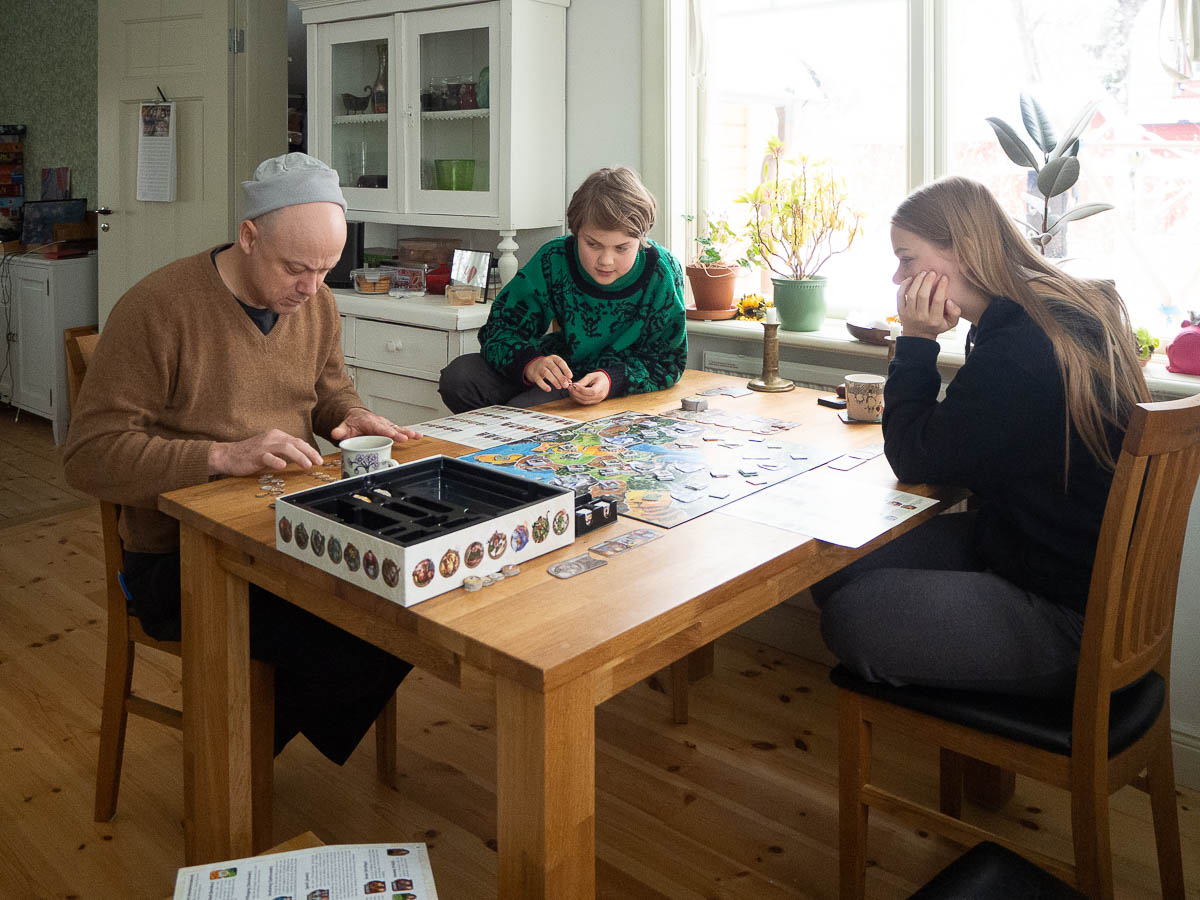
But then we played Small World, which is one of our all-time favourites, and had a lot of fun, and the anguish of losing out on a sleepover was forgotten. I like the rule that this game has about keeping scores hidden until the end – this way everyone can believe that they have a chance, all the way to the end.

Eric won, by picking a new race in the very last round, with 5 bonus coins because the other players had been skipping that race so many times. I came in second place thanks to my army of skeletons, who very determinedly harvested their enemies’ bodies. Ingrid steamrollered her neighbours repeatedly, first with amazons and then with giants. Adrian’s trolls bullied my sorcerers because my skeletons had previously harvested too many of his tritons.


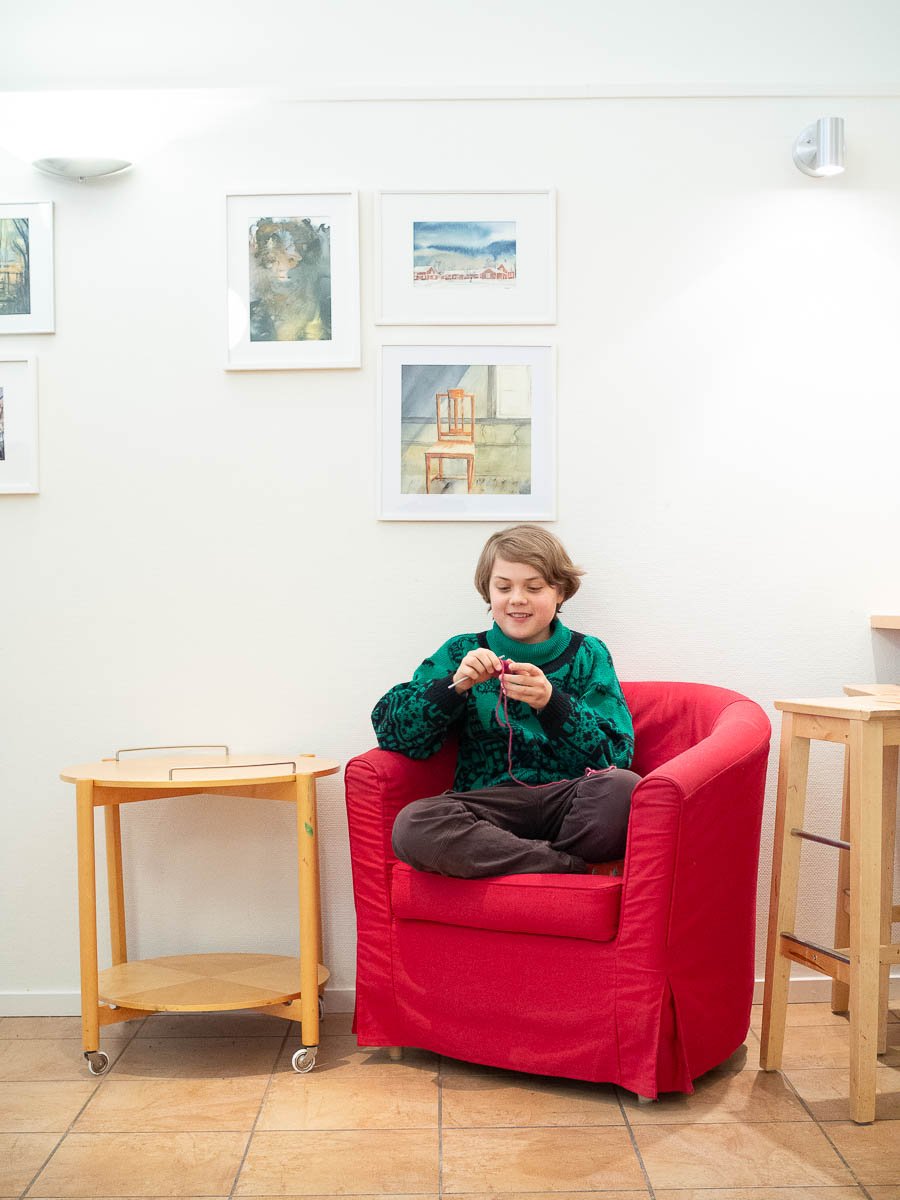
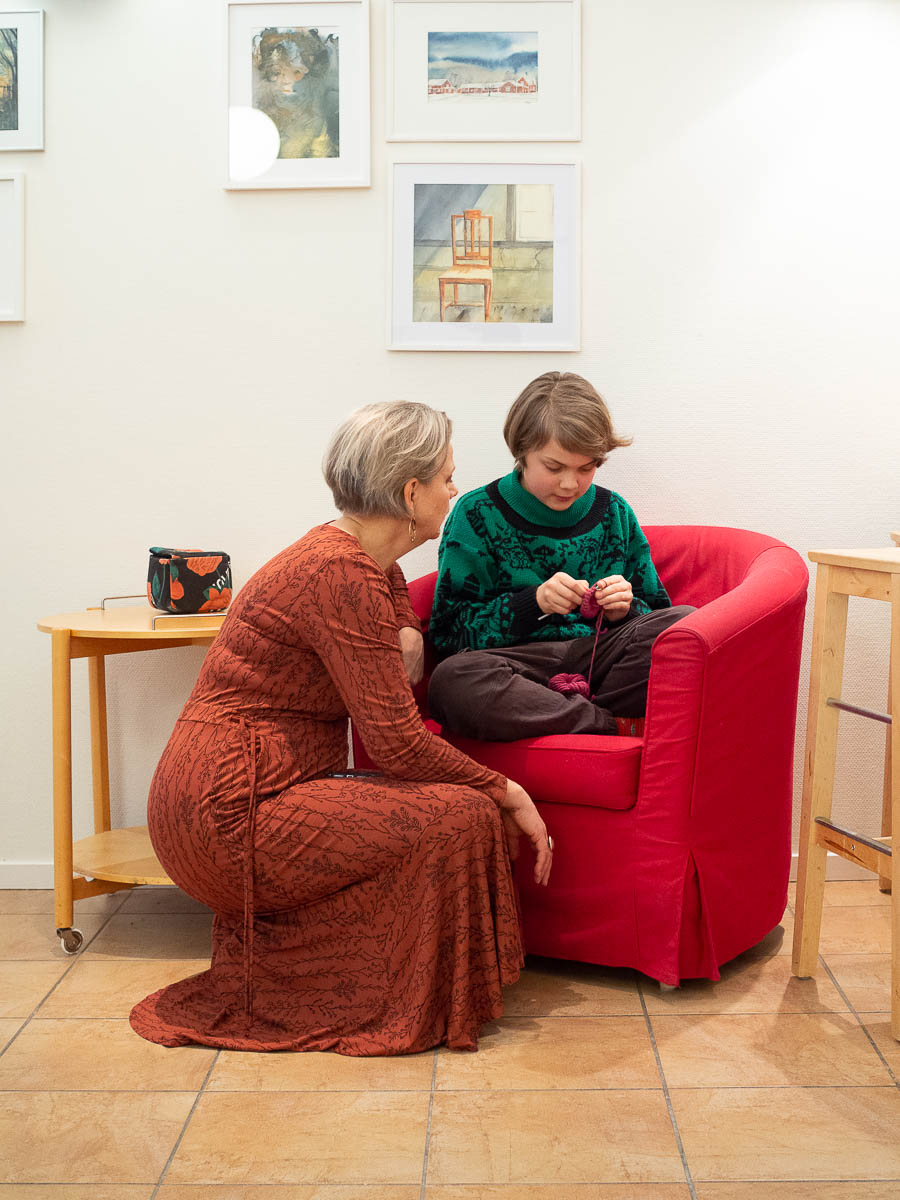
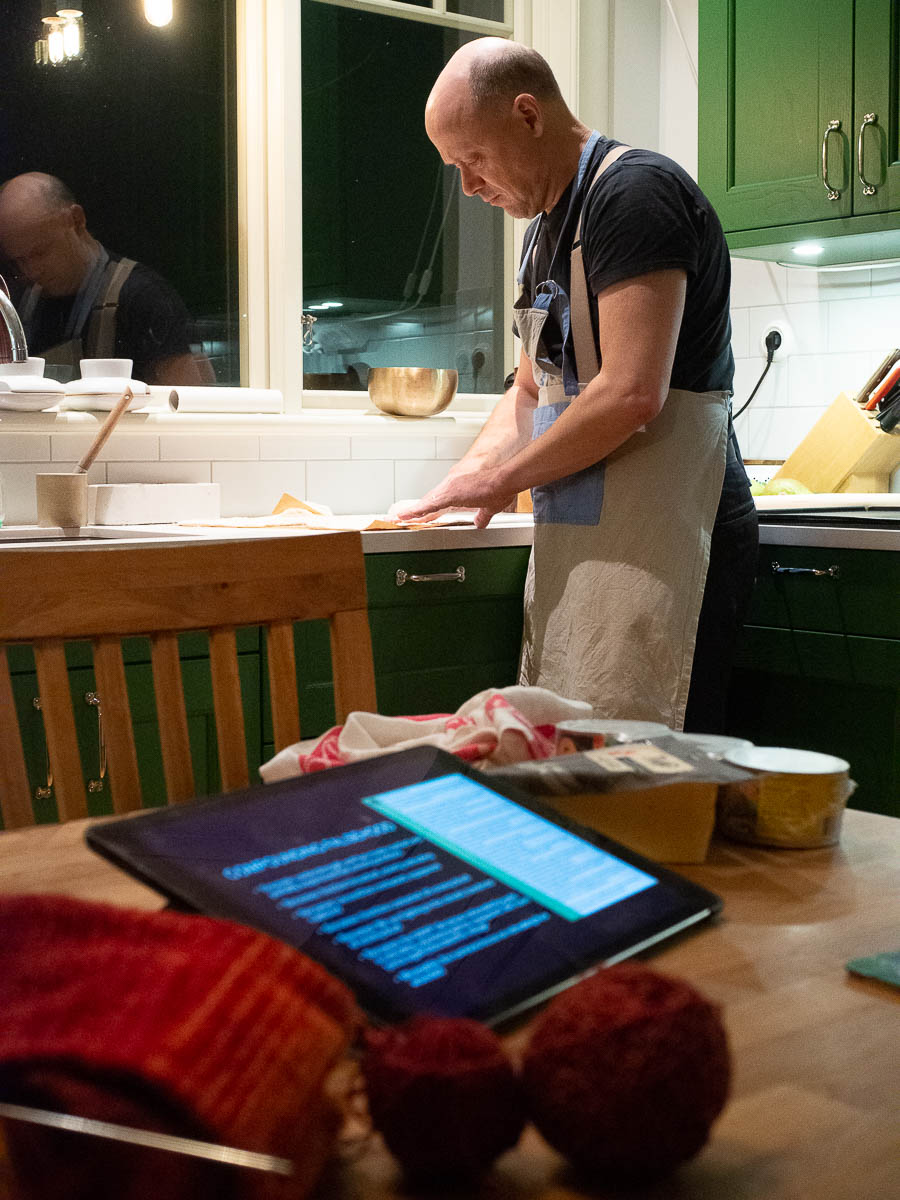
Sunday evening. We’re listening to commentary on the Ukrainian war by Perun while I’m knitting and Eric bakes pizza for dinner. Perun comes out with a new video every Sunday, so this has become a habit for us. (Not the pizza part. But knitting is often part of it.)

Perun’s videos are the best source for commentary and analysis of the war that we have found and I’d recommend them to anyone who is interested in understanding the background of what’s happening. Most remain relevant many months after publication. Today’s video, How Lies Destroy Armies, is about the pervasive culture of lying in Russia and how it affects the army and its performance. No surprises there to anyone who grew up in the Soviet Union, but still interesting. Others I’ve particularly liked include the instalments about Russian Mobilisation and Captured Equipment in Ukraine.

My main source for more immediate updates of what’s happening on the ground is the Institute of War and their daily briefings – here is today’s briefing – with its accompanying interactive map. The briefings are based only on publicly available information from all kinds of sources, including both Russian and Ukrainian ones, rather than any one person’s or group’s speculations. I like its regularity – I can just increment the date in the URL to get the next briefing – and the structured, consistent presentation.

We’ve done canals and crooked houses, and an art museum and vintage shopping. Today we went to one of the larger parks in Amsterdam, and then tram-hopped our way back to the city via a circuitous route.

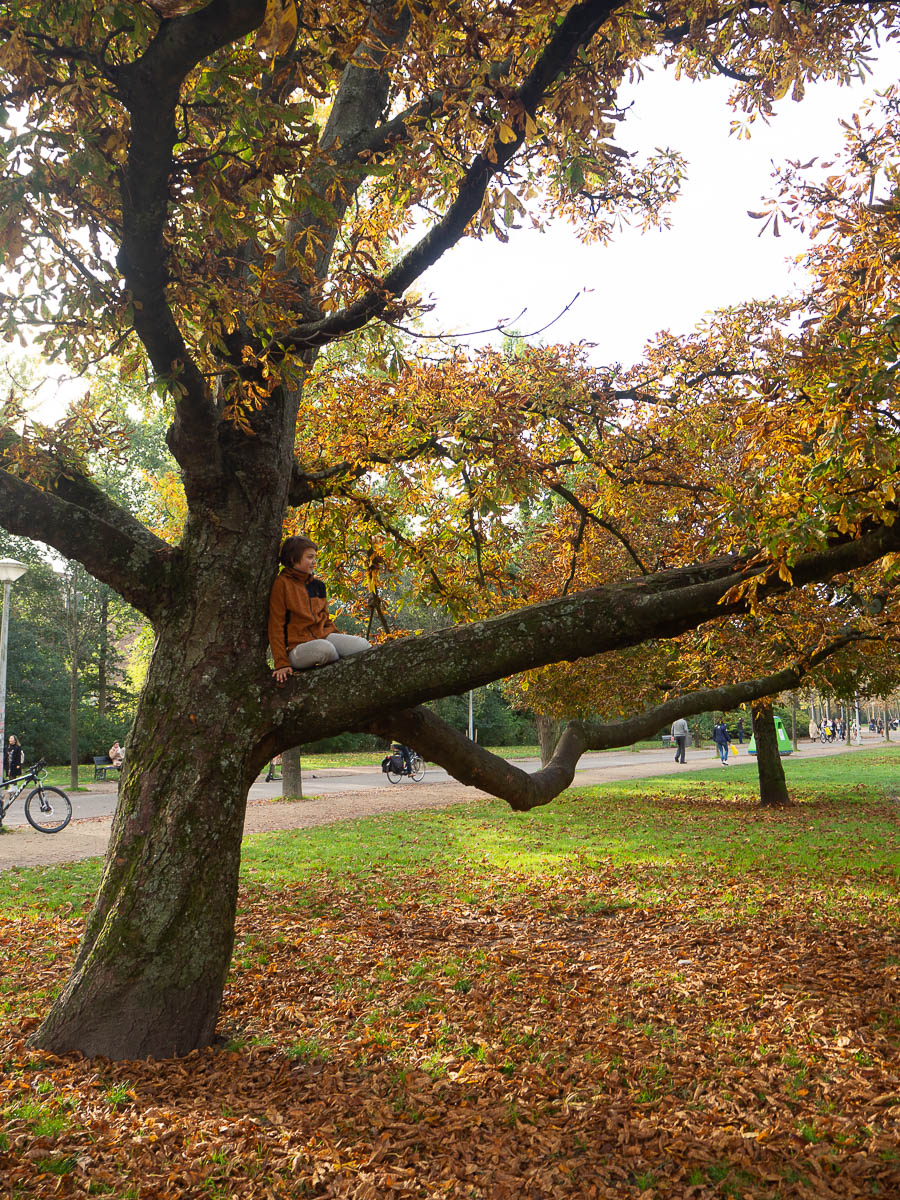
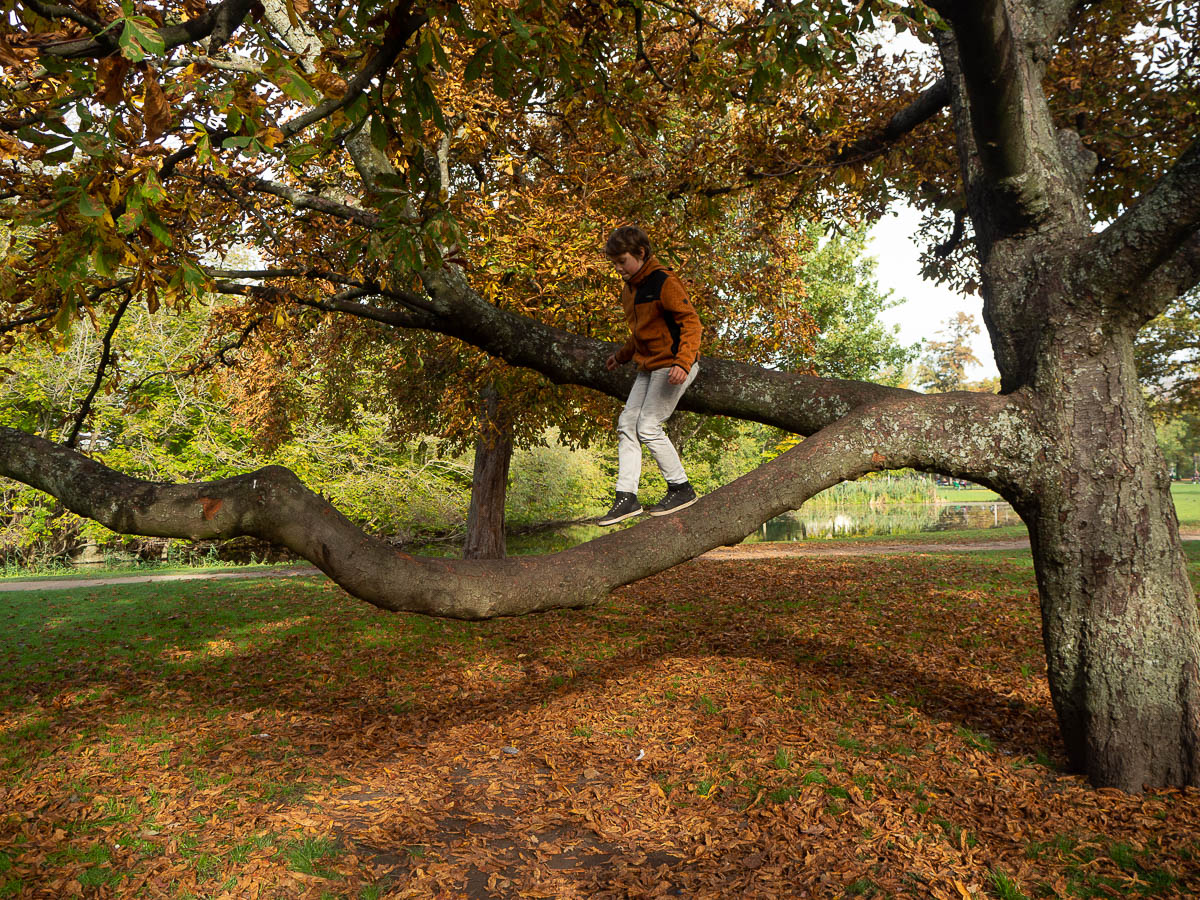
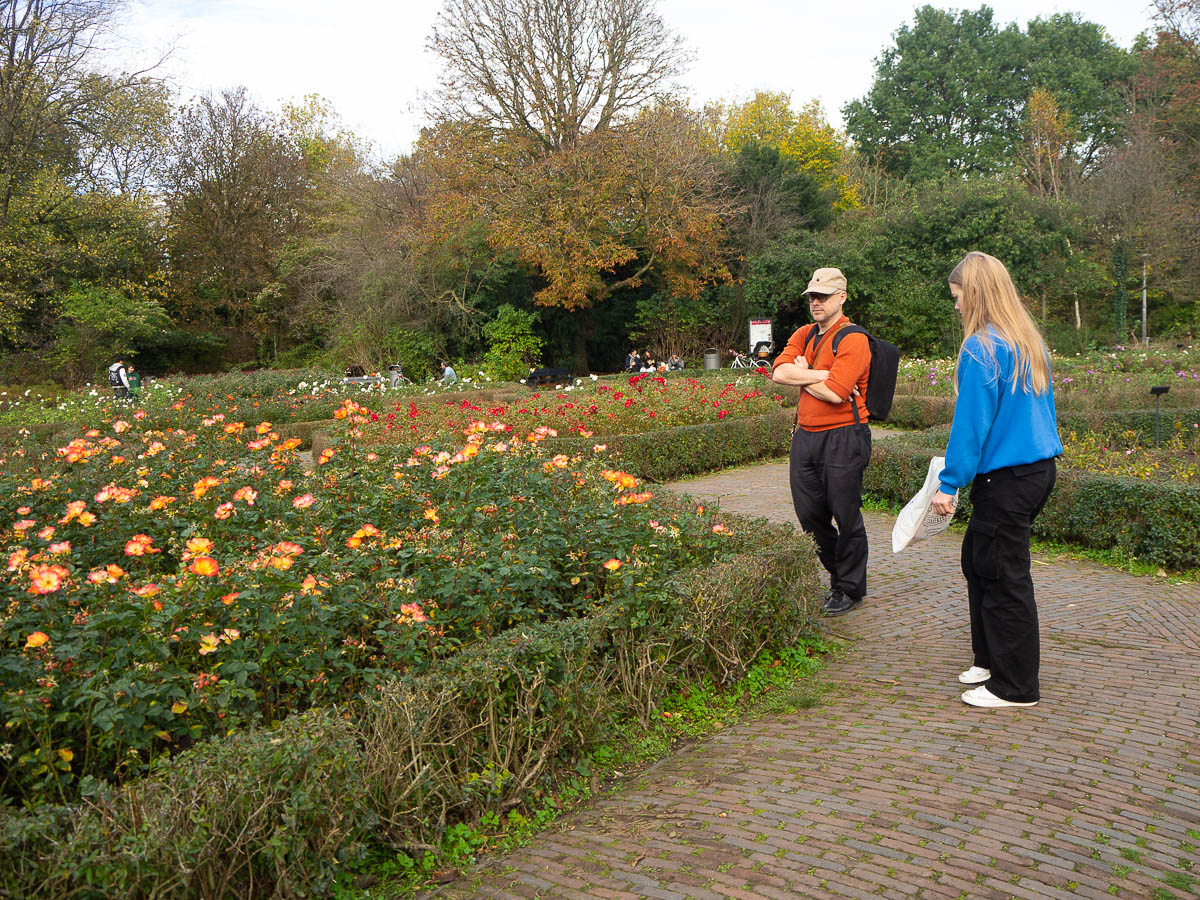
We wandered around Vondelpark and dodged cyclists. Adrian climbed a tree.

The rose garden in Vondelpark was still blooming.

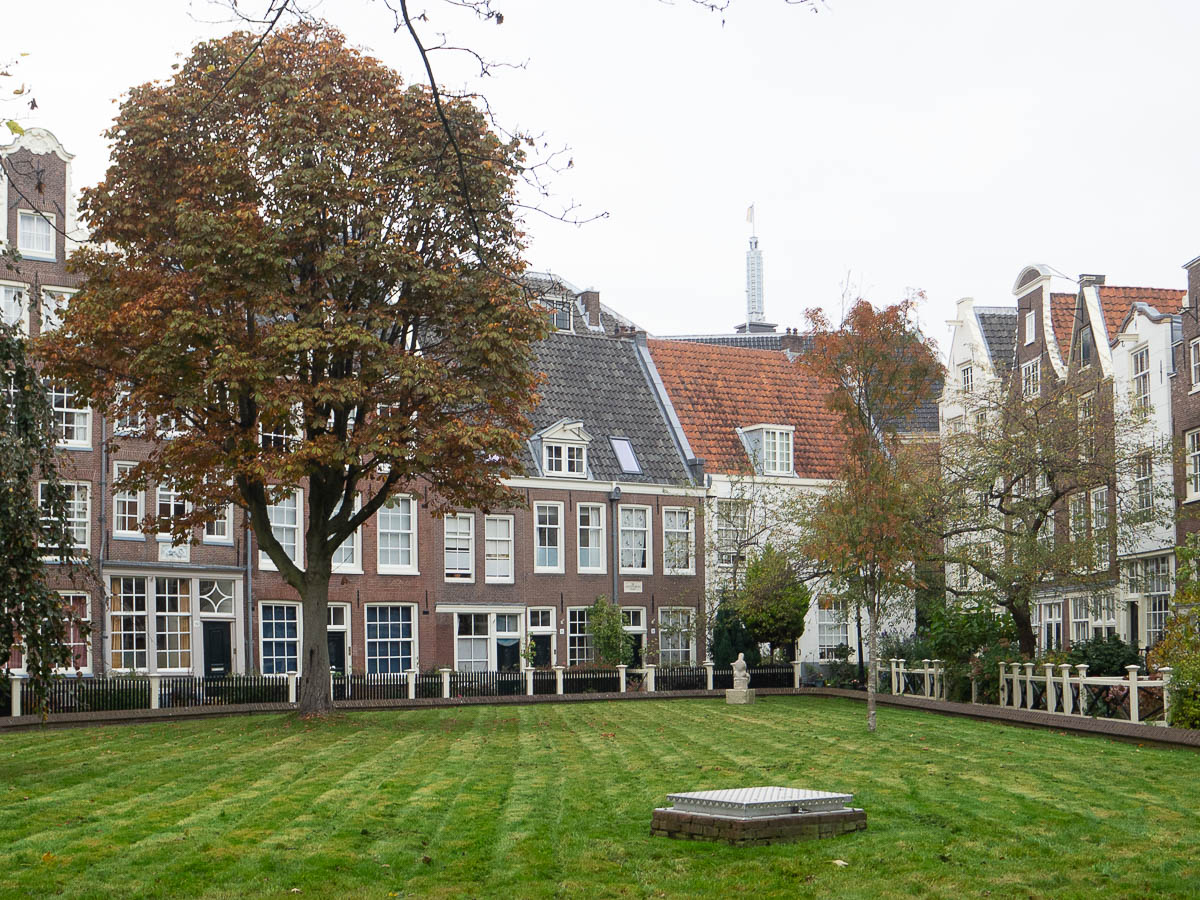
Back in central Amsterdam we visited the lovely and peaceful Begijnhof.

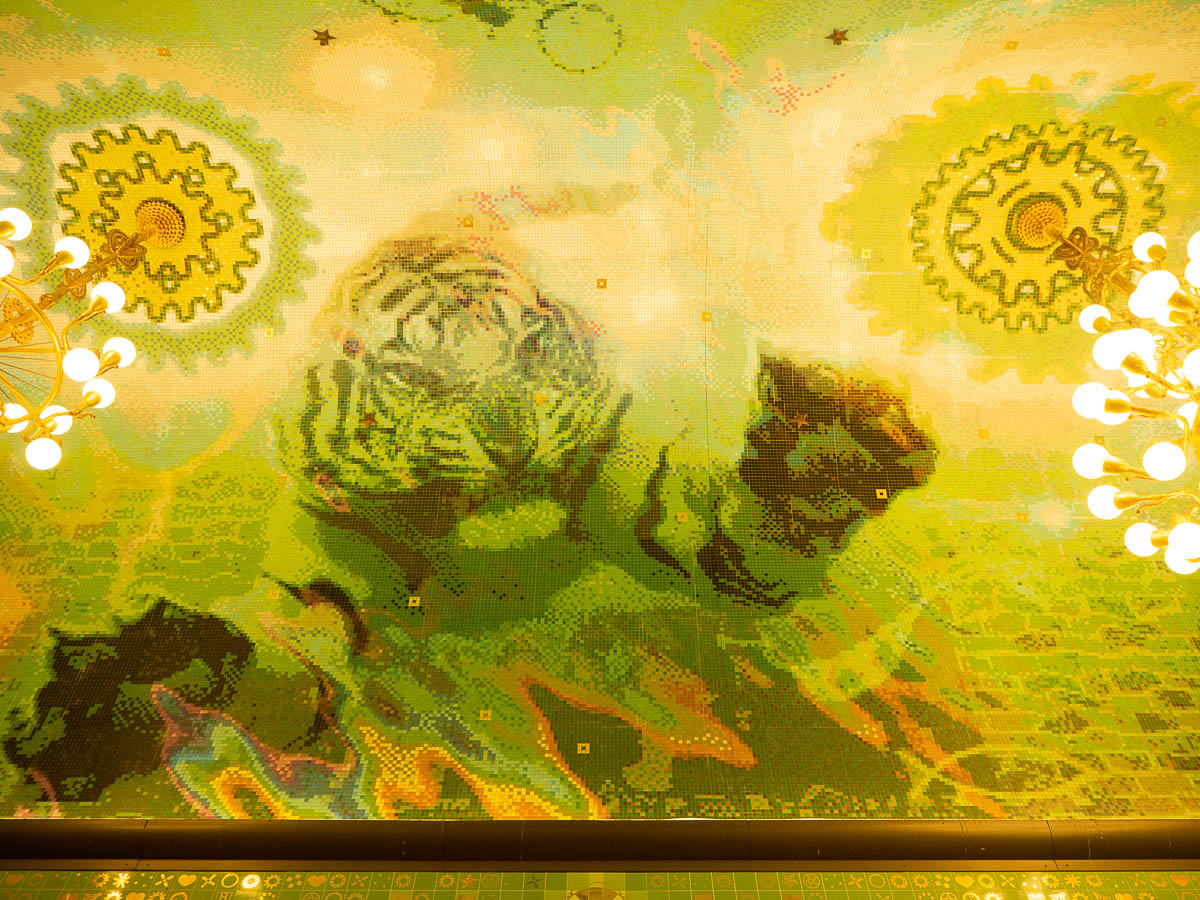
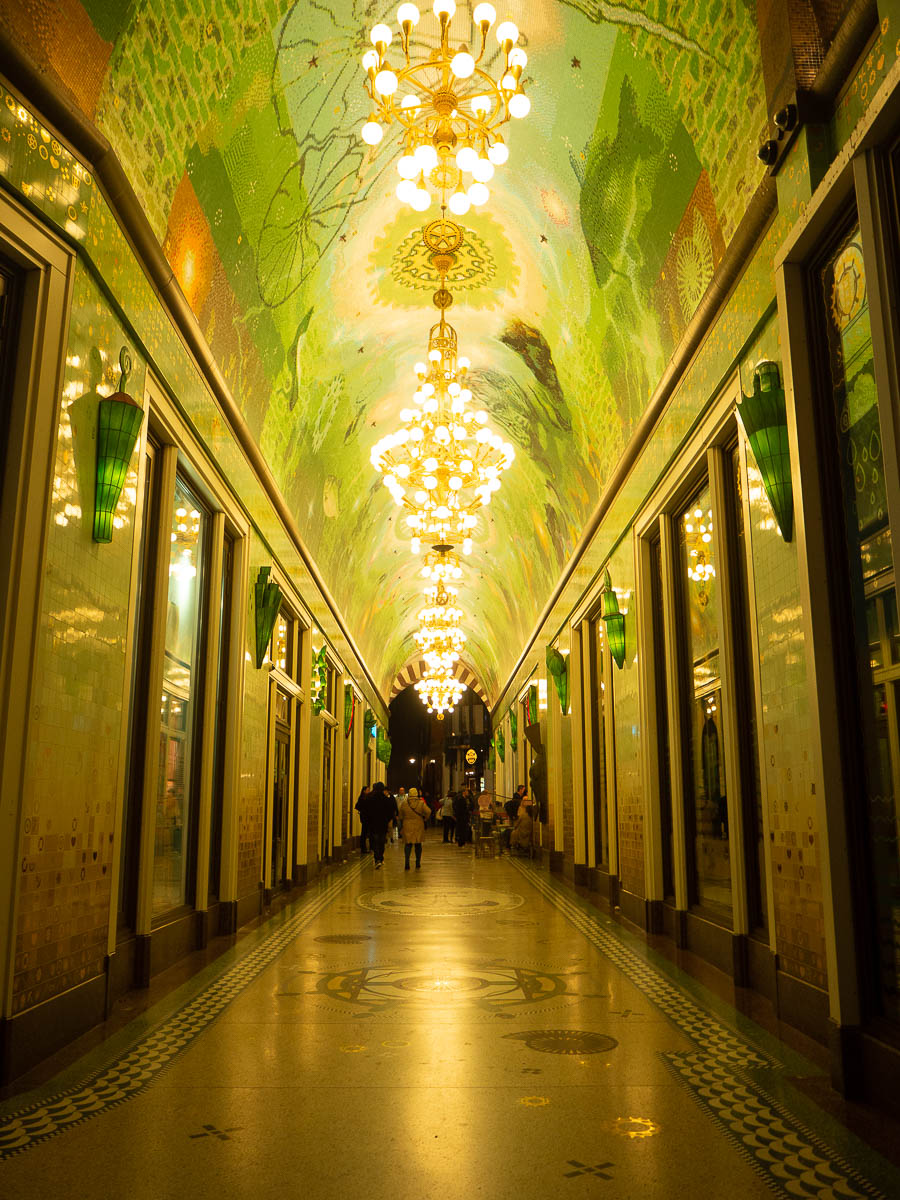
Near our hotel the Beurspassage caught our eyes. The ceiling mosaic is filled with motifs inspired by the canals, including fish, rusty bicycles, and for some reason a tiger, and the chandeliers are made of bicycle parts.


We also went to see the allegedly famous floating flower market, which was much less impressive and interesting than it sounded. The shops were technically floating but they were just large booths that were open on one side, and you couldn’t even see that they floated. And the flowers were mostly seeds and bulbs this time of the year.

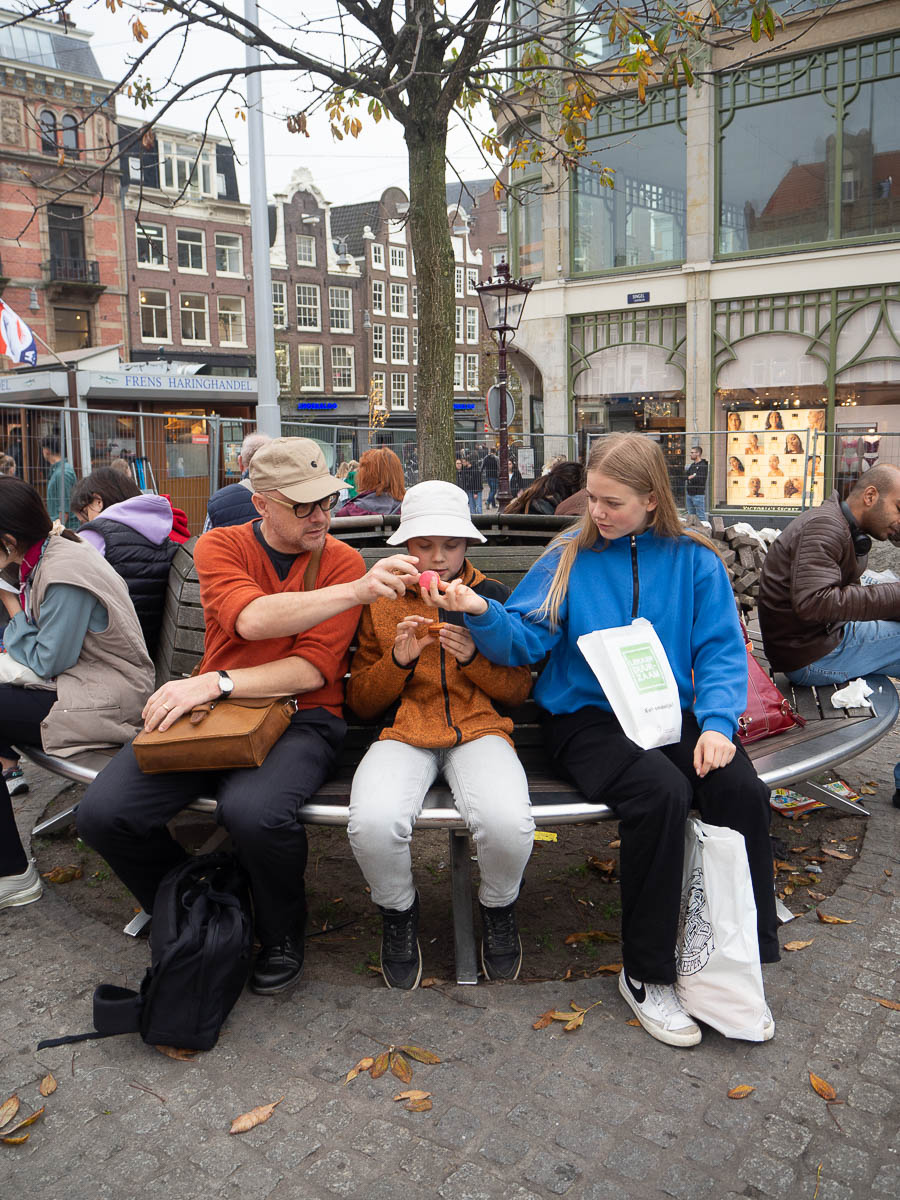
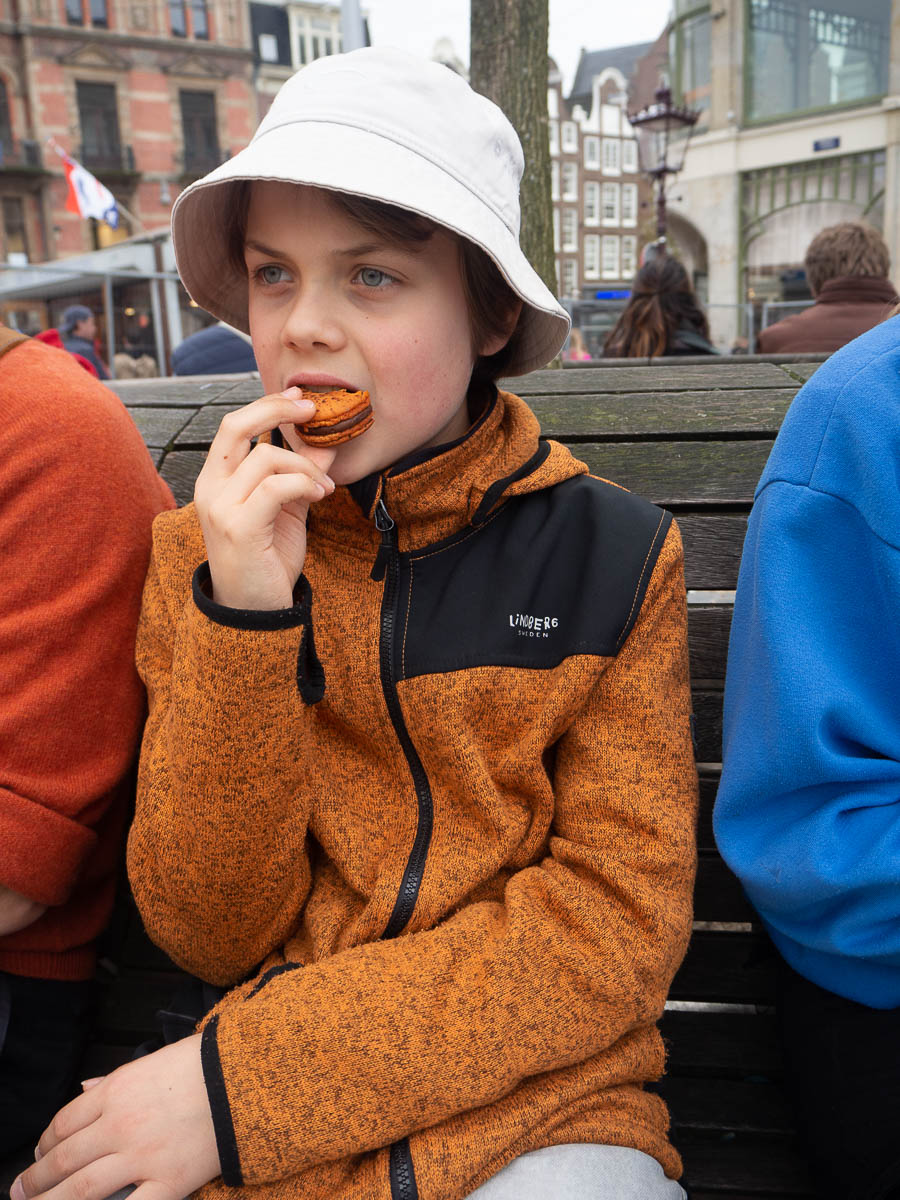
There was a cafe near the flower market, though, that sold macarons.


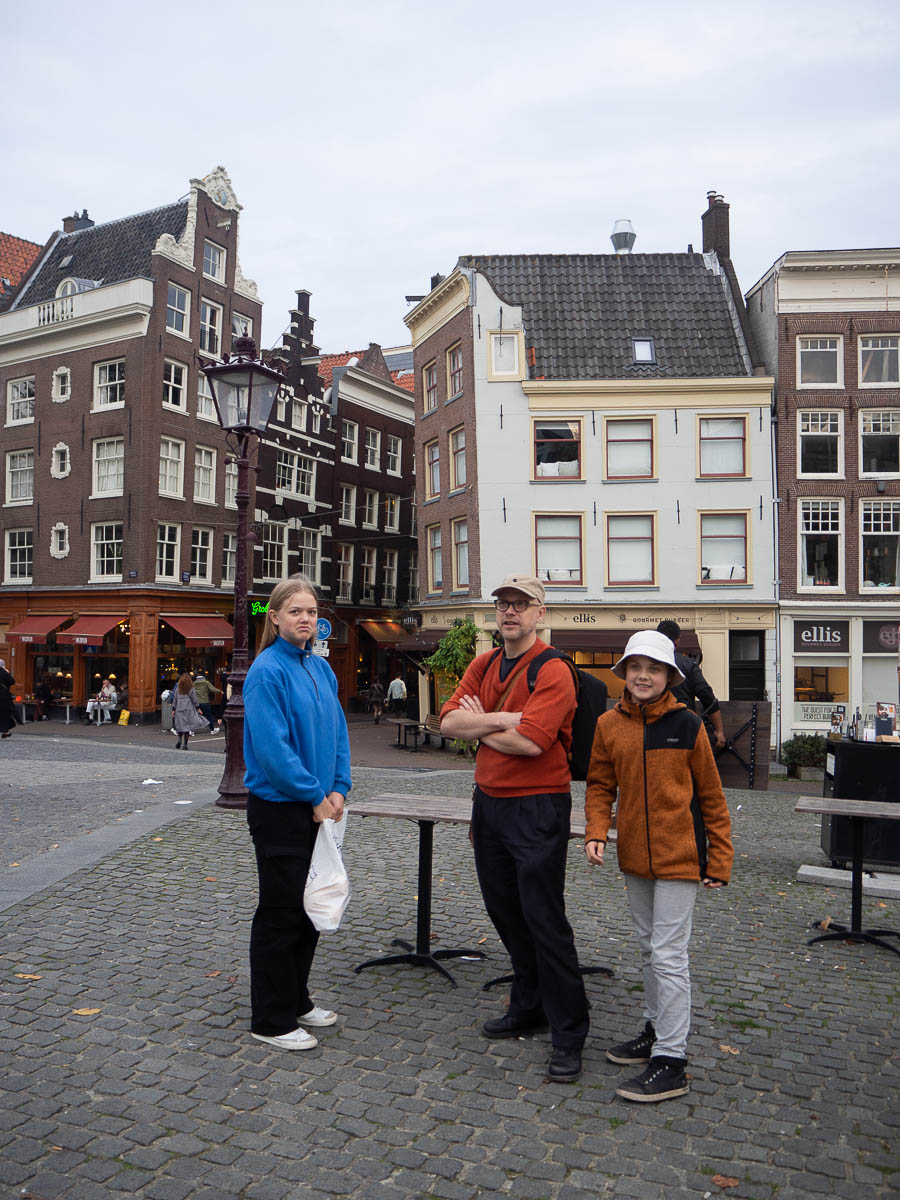
And then it was time to start heading home.

Amsterdam was an interesting city to visit, and parts of it were very pretty. But it’s not one of my favourite cities and I’m not sure I’d want to come back for a second visit. I didn’t like the crowds, or the ever-present smell or weed, or all the cigarette smoke.

In the end the best part of the weekend for me was simply spending three full days together as a family. At home we’re often each doing our own thing. Here we were together all the time.
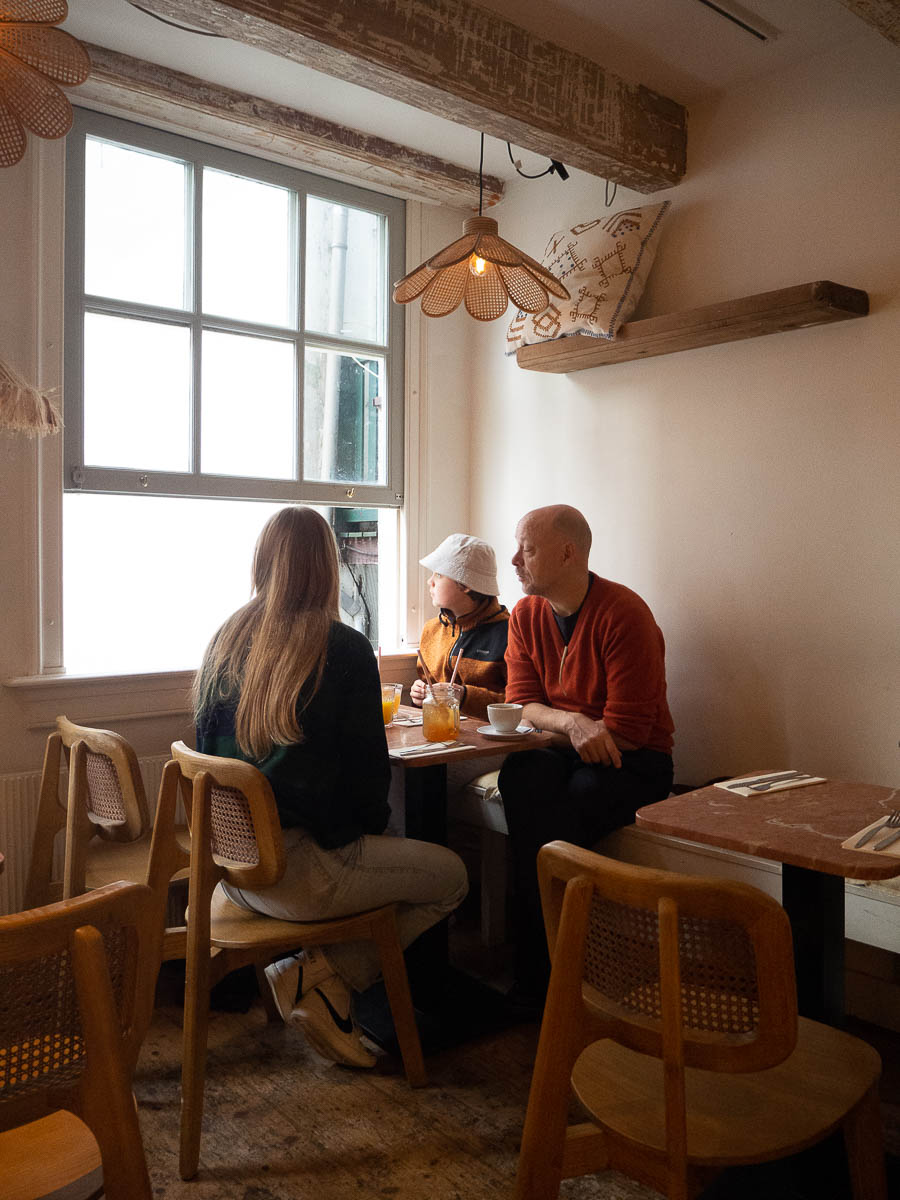

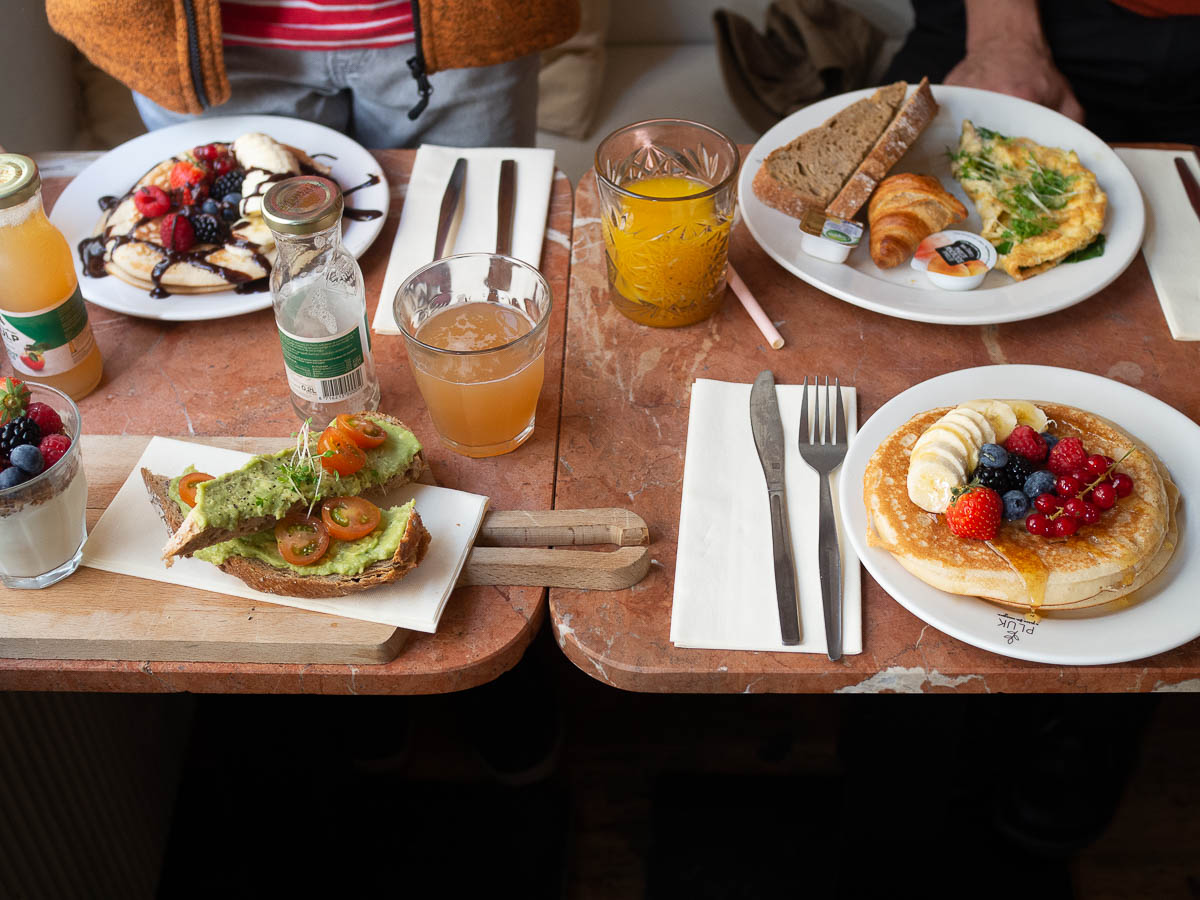
We started both yesterday and today with luxurious breakfasts at a café that Ingrid had found online. Pluk on Berenstraat, in case you find yourself in that area. The online reviews are very mixed but we got very good food, though the service was rather slow.

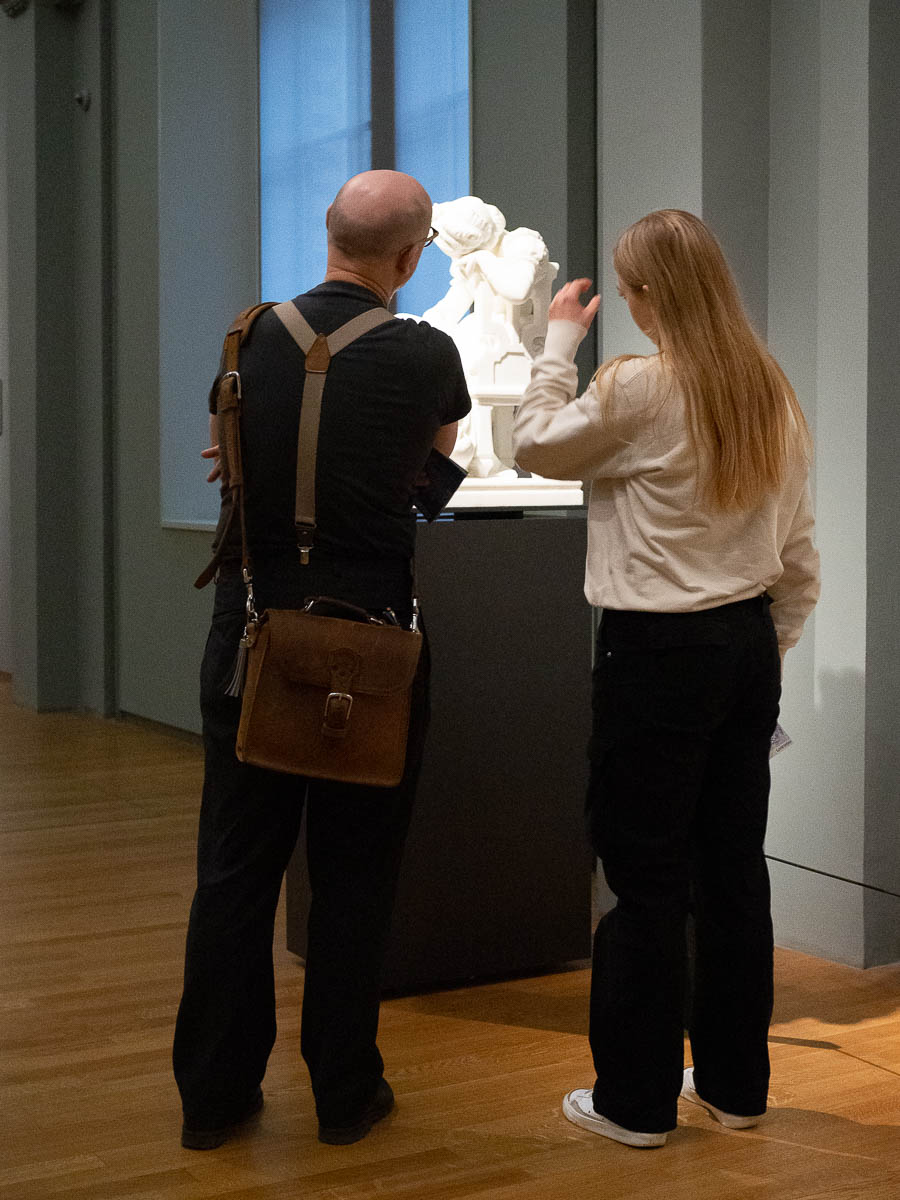
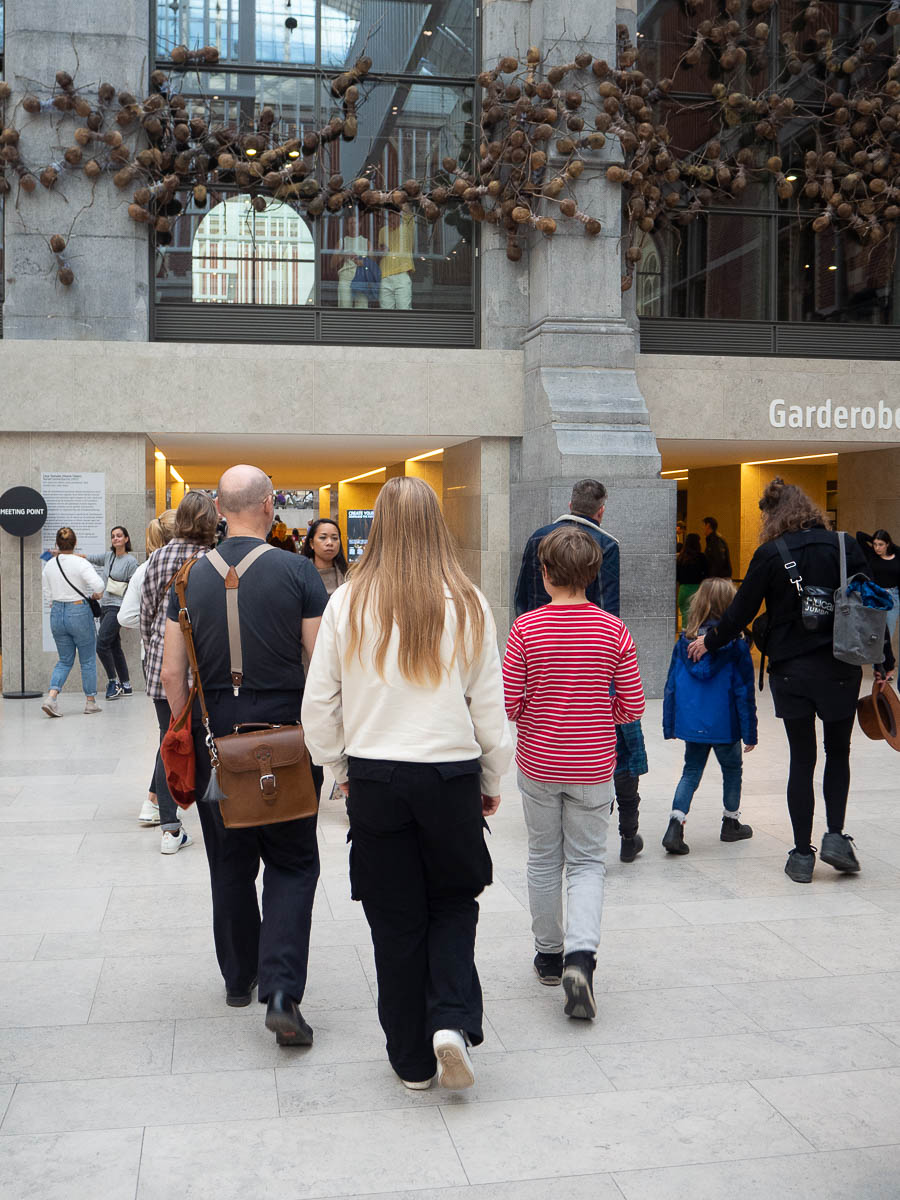
We had seen enough canals and crooked houses and cute little streets yesterday and wanted something different today, so we went to the Rijksmuseum.

The museum was very visitor-friendly, with easy-to-read maps that guided people to the most popular paintings, but also to other parts of the collection. The popular works – like their one and only Van Gogh – had large crowds in front of them, so I didn’t even bother to try and look at those. There were plenty of other interesting things to see.

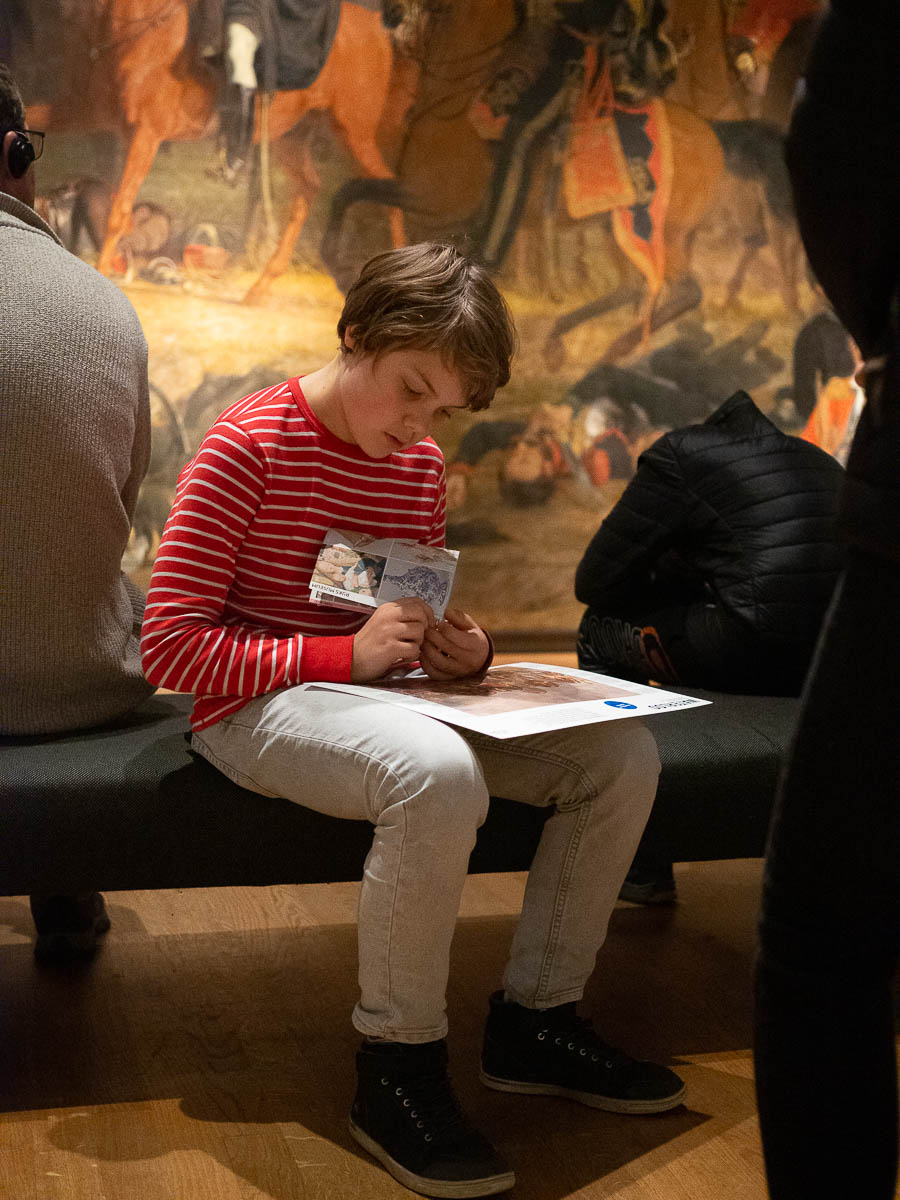
Even though we all walked in the same rooms, we often split up because of our diverging interests. Ingrid is interested in art and paints herself, so she looks at details and technical aspects that Adrian doesn’t care much about. So she and Eric (who also painted when he was young) looked at the paintings with artists’ eyes, while Adrian and I looked at them with general curiosity.
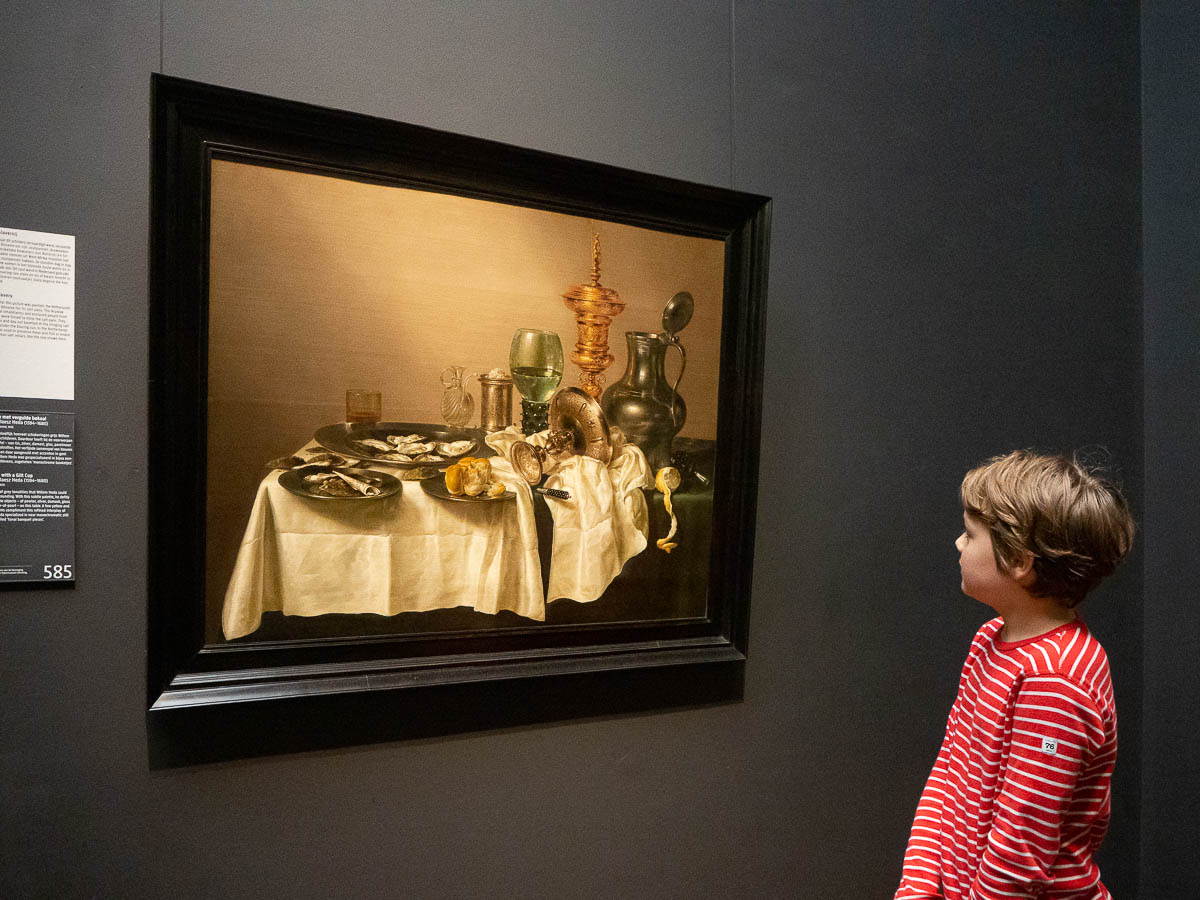
We noted, for example, the prevalence of grapes, glass bowls, and curls of lemon peel in 17th century still life paintings.
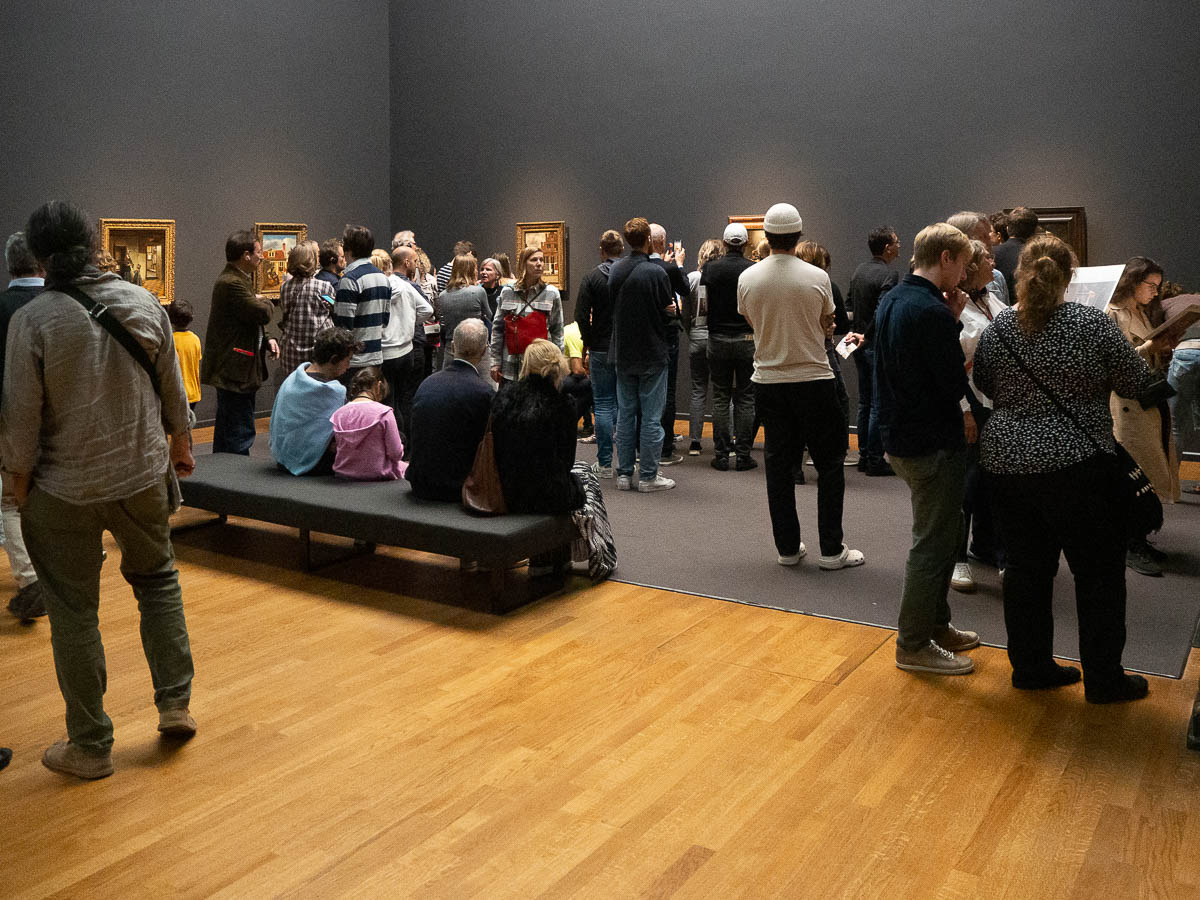
The curators at the Rijksmuseum had done a great job with the signage. All too often, museums label each work with its title, maker and year, and nothing more. Here there were often interesting background facts, and info sheets with even more facts and stories.

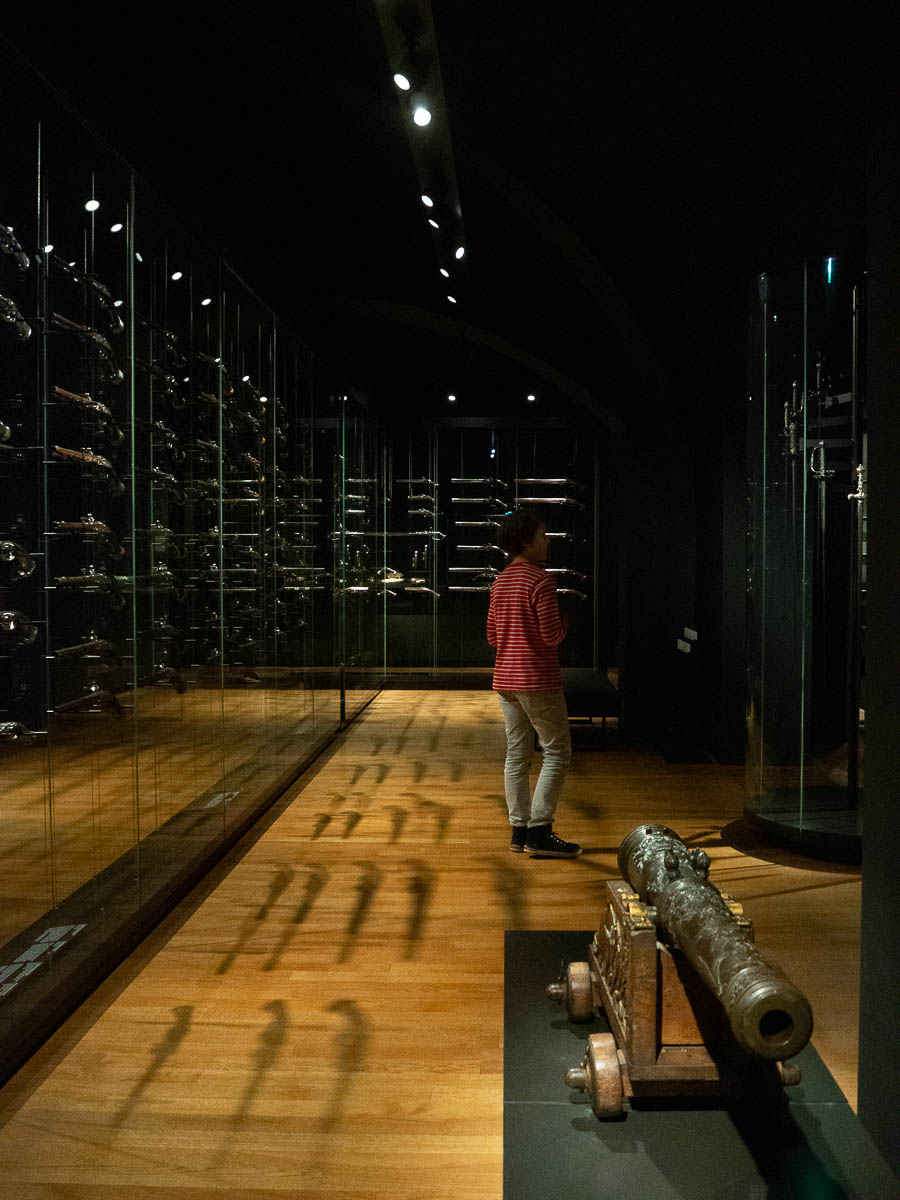
When we tired of paintings, we looked at cannons, porcelain, Delft pottery and ship models.

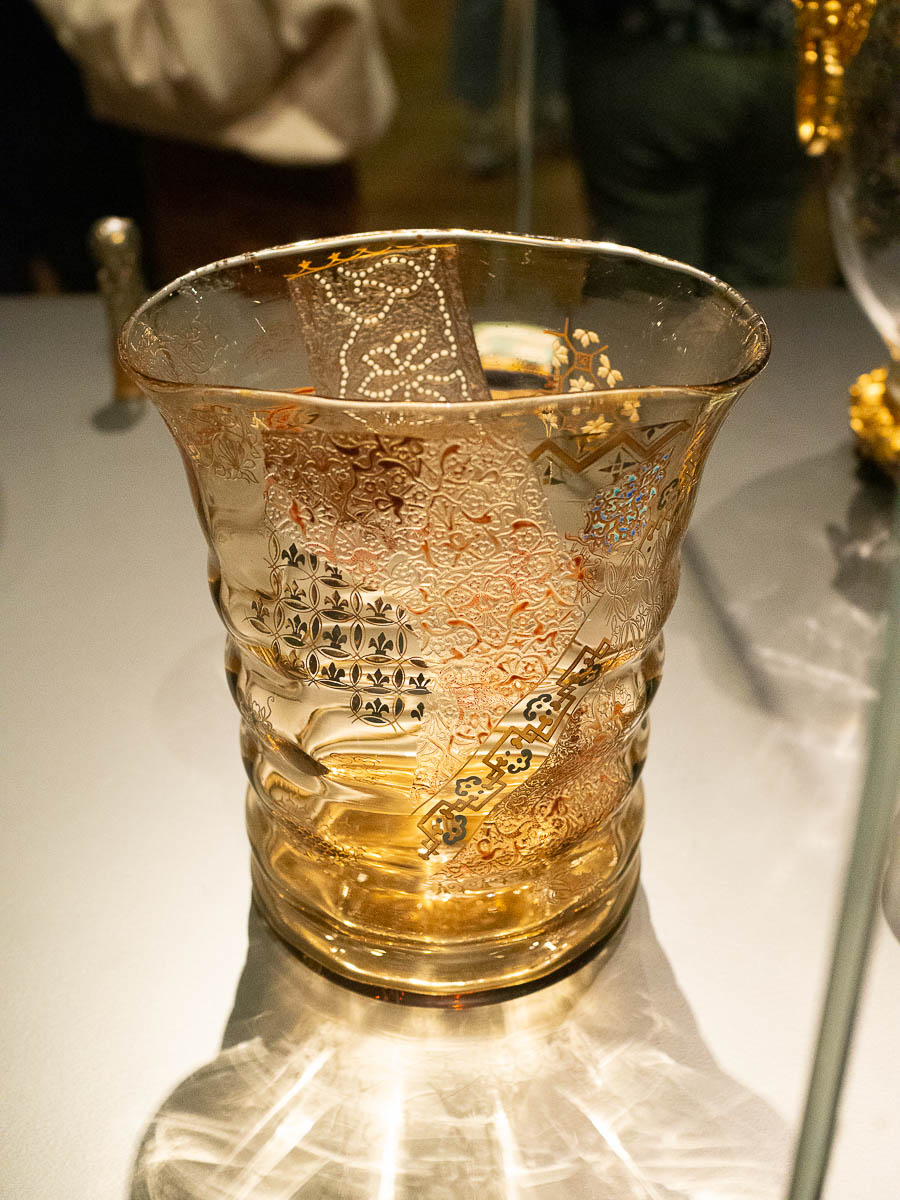
I liked this glass vase by Émile Gallé, with its irregular patterns borrowed from various cultures.

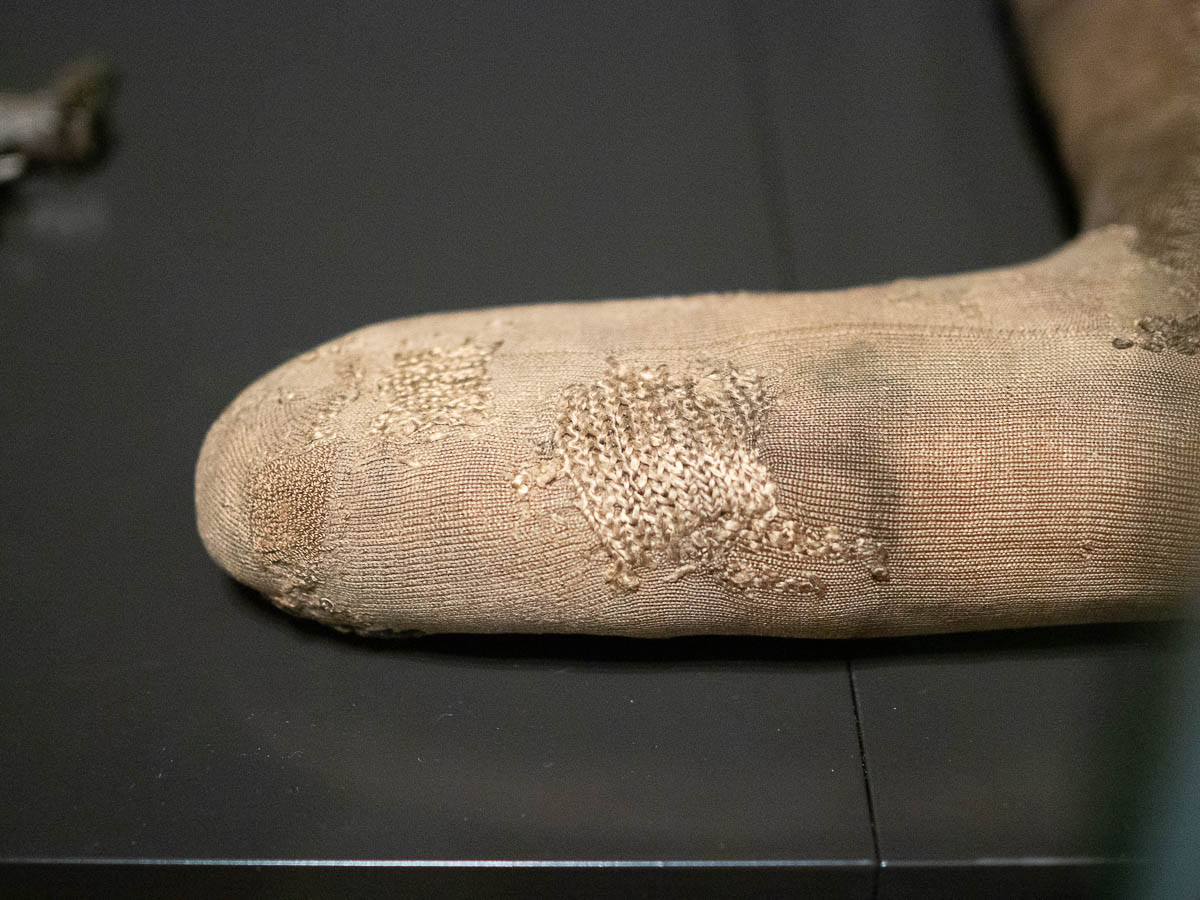
And this repeatedly darned sock, found in a seaman’s chest after a shipwreck.

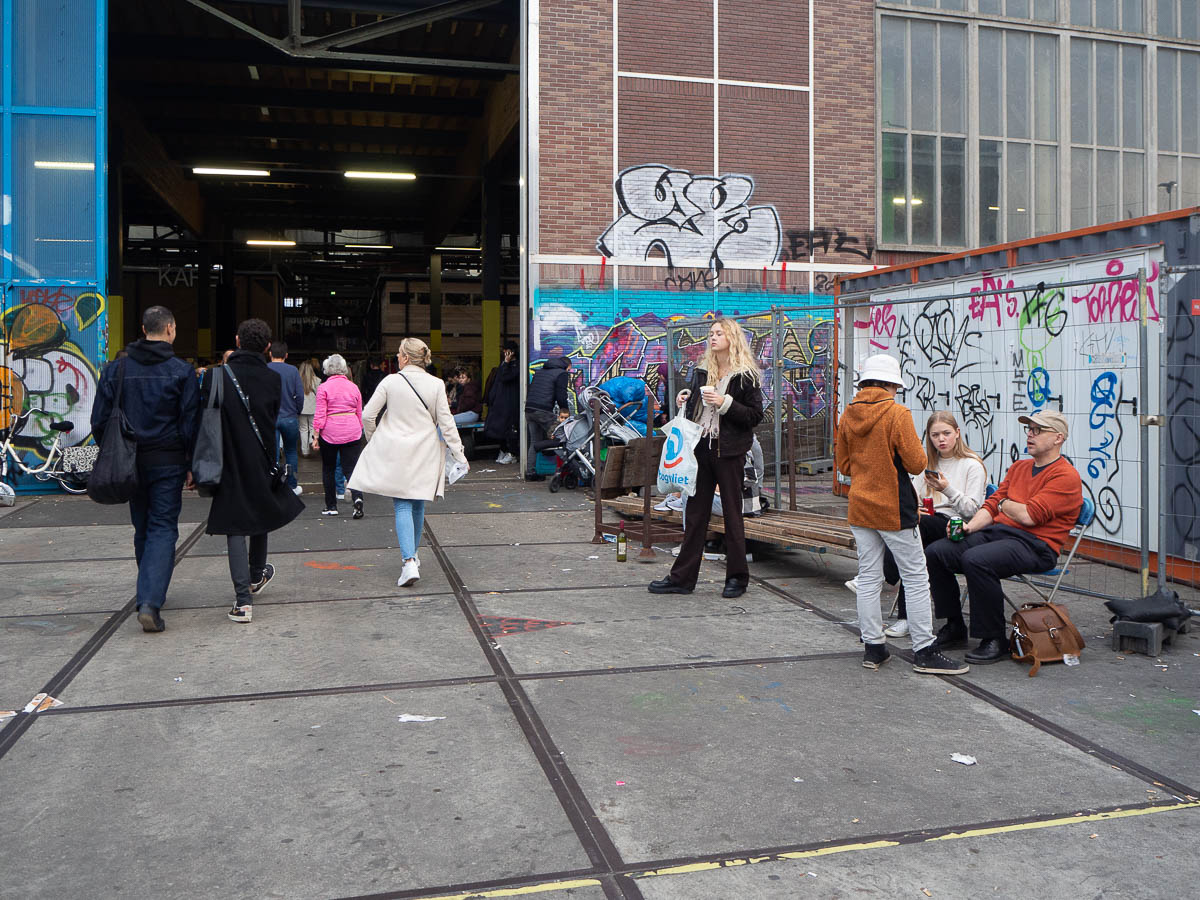
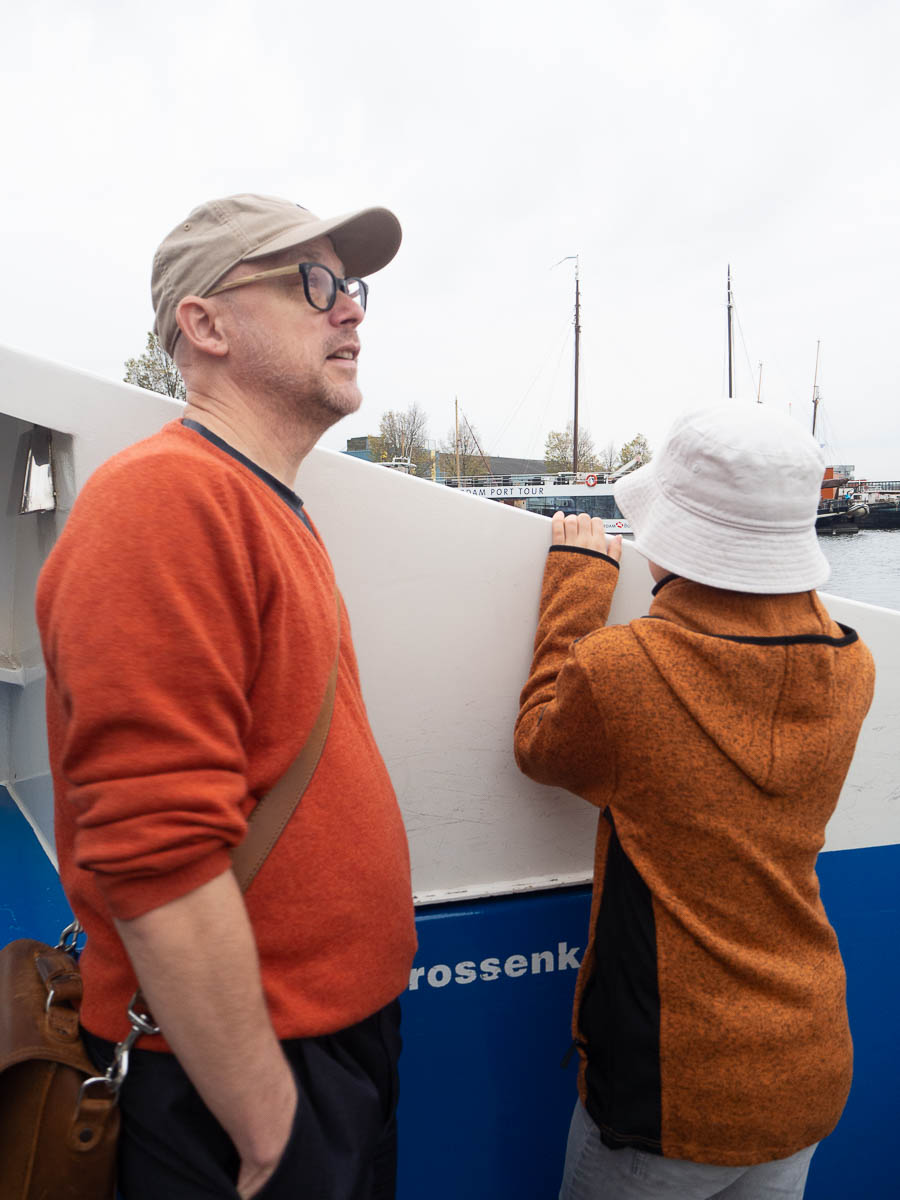
From high culture to low. In the afternoon we took the boat to North Amsterdam to a large flea market that Ingrid wanted to browse for vintage clothing. She didn’t find anything that fit, but I bought a jacket.