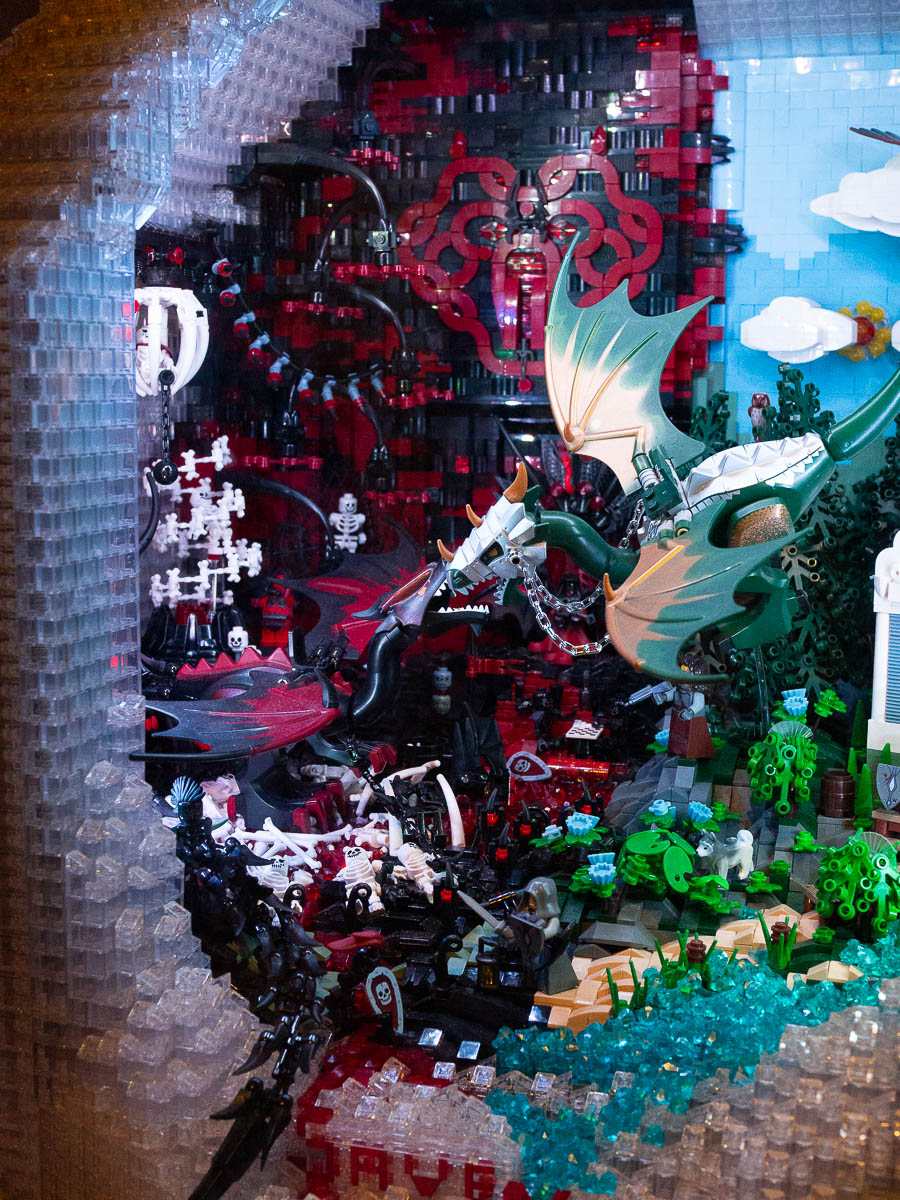
We saw the Hallwyl House Museum’s exhibition of Lego houses. It was smallish, and very much a mixed bag. The houses ranged from a construction of (literally) 15 Duplo blocks plus a propeller, done by a 5-year-old in 5 minutes, to intricate artistic creations and meticulously crafted large-scale community builds.
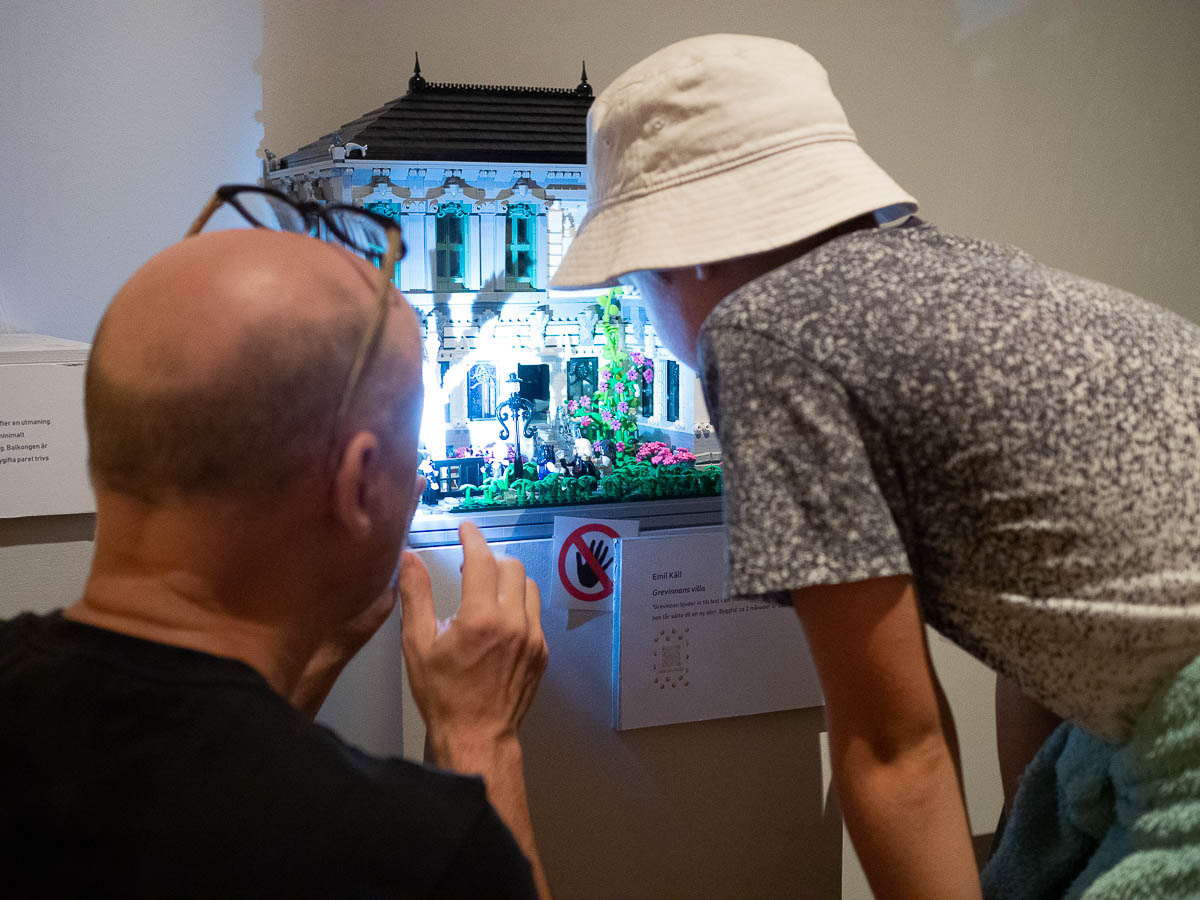
We were somewhat disappointed in how the constructions were presented. Almost all were surprisingly badly lit – either not lit at all, or only lit by a large light from above. Without Eric’s little pocket LED torch we would have missed out on a lot of detail, especially on the inside of the buildings. The one exception was a model of a museum, built by someone who (unsurprisingly) worked a day job as a museum photographer.
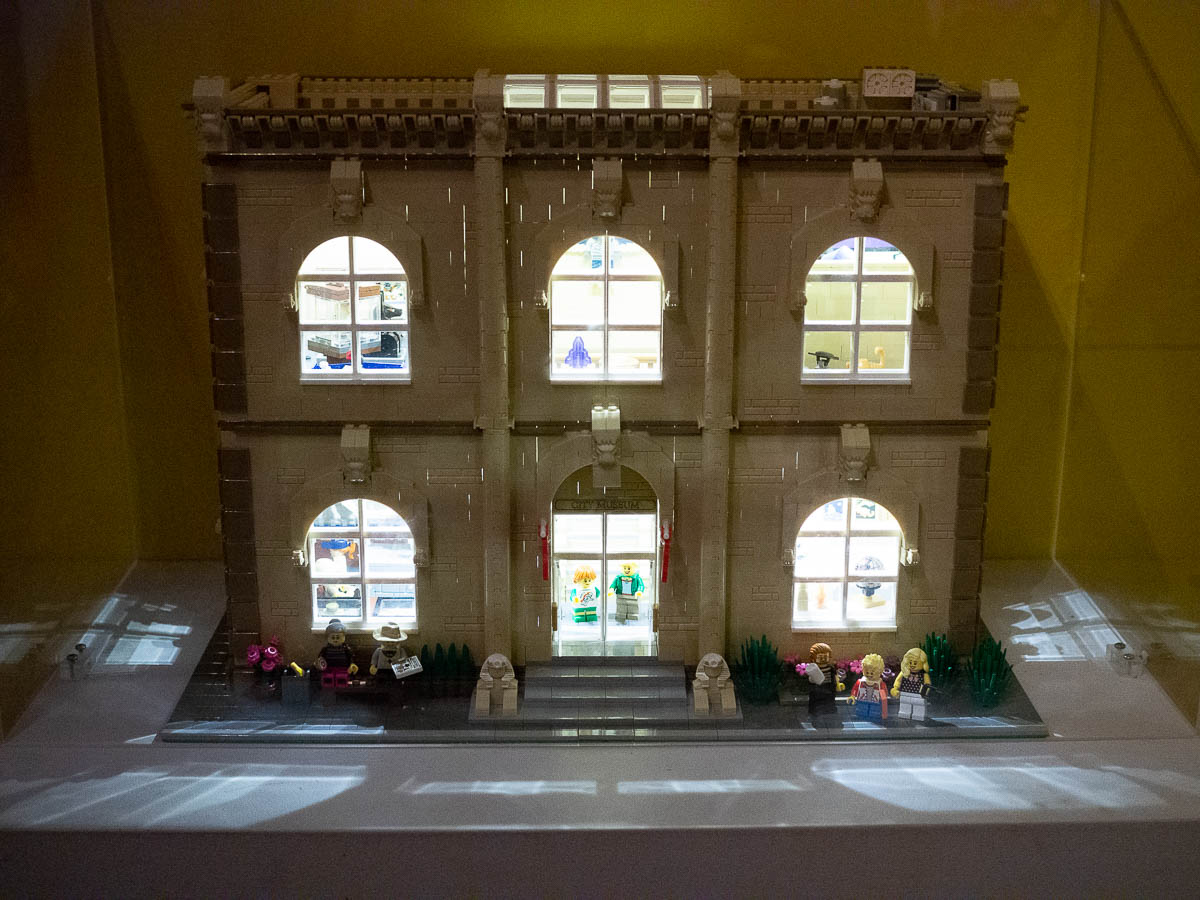
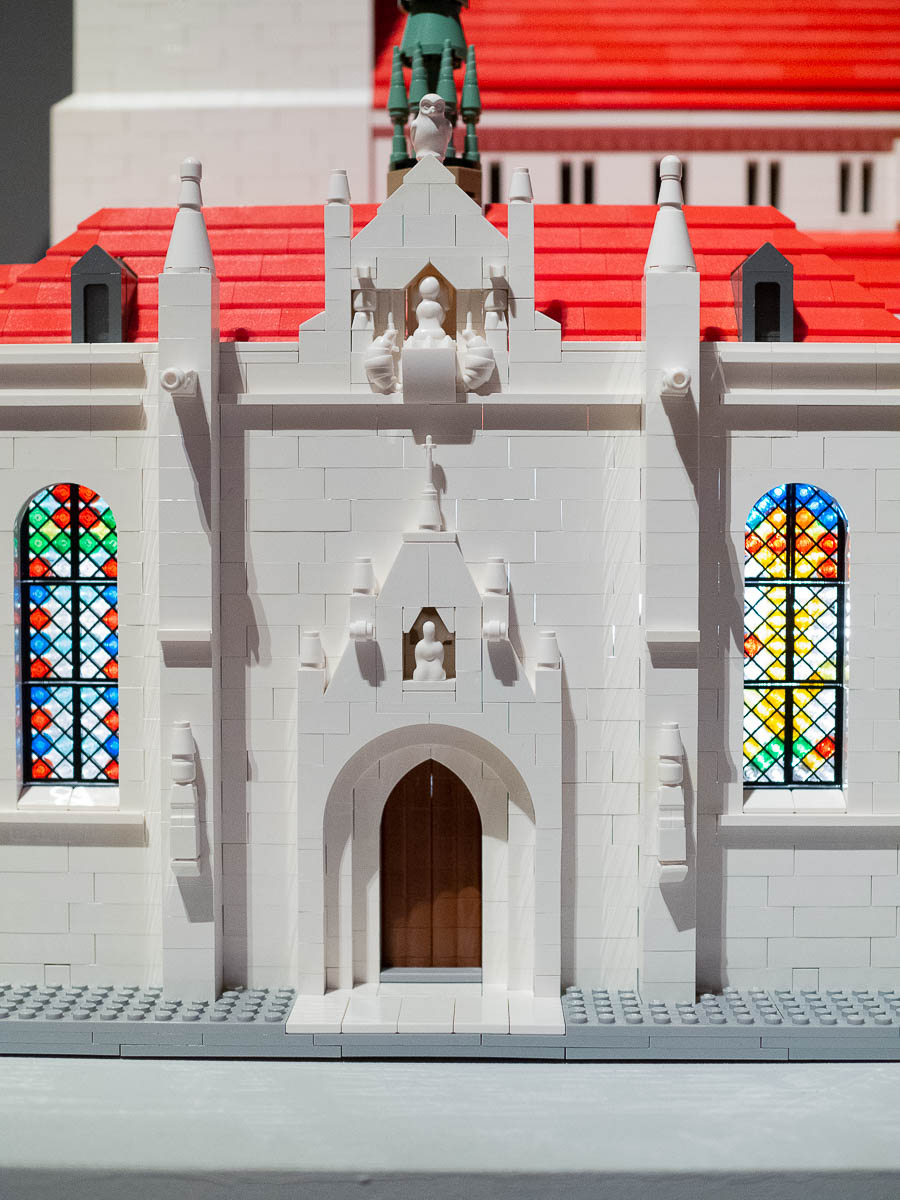
It was interesting to see the different scales used by different builds. There’s the minifigure scale, whereby a standard Lego minifigure is the size of a human. But there were also builds using much smaller scales (which I now know are called microscale), and one of the churches was scaled specifically to 1:100.
I’m always struck by the creative uses that Lego model constructors find for bricks, especially for architectural details. Scorpions become gargoyles; the butt of a Lego poodle looks like a marble bust; croissants get to play the role of baroque curlicues; fences become lattices for stained glass windows.

Leave a comment