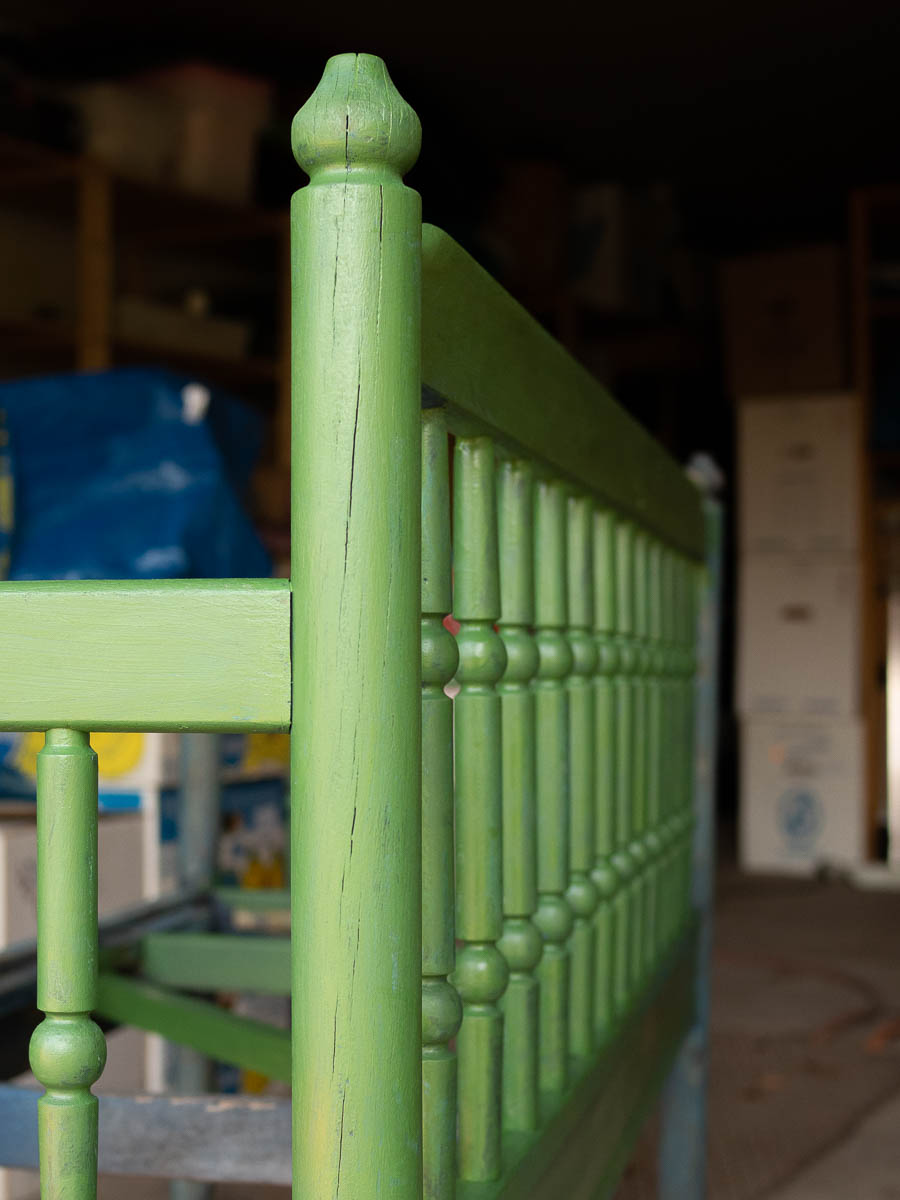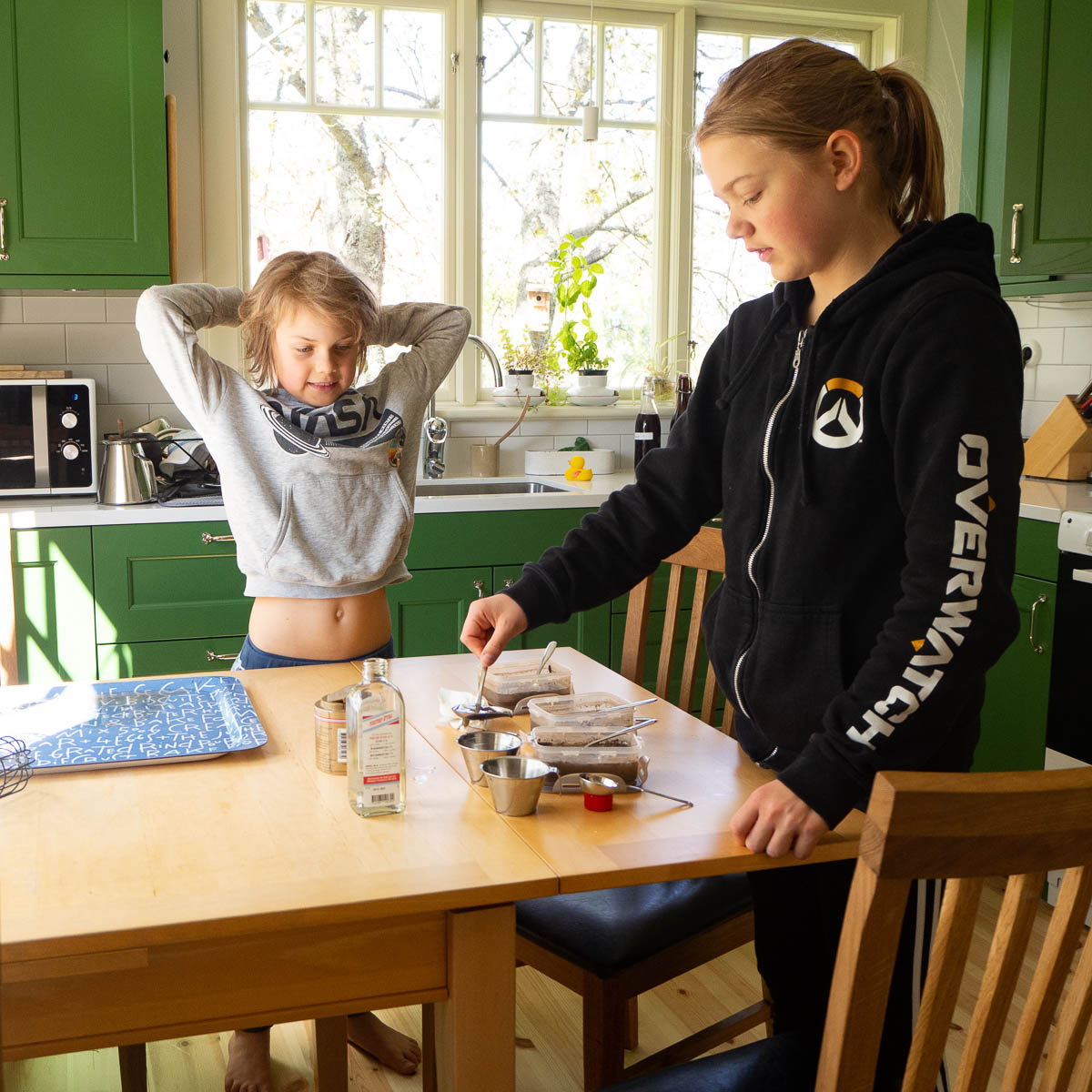
Adrian and I cycled to Vinsta to buy paint for the garden sofa. For the sake of simplicity I reused the same green color that we already have elsewhere in the house. (S5030-G30Y in the NCS colour system that all the paint shops in Sweden use.)

Then we started painting. That thing has an awful lot of fiddly little pieces that take forever to paint! Still, I got the first coat of paint finished before the night.


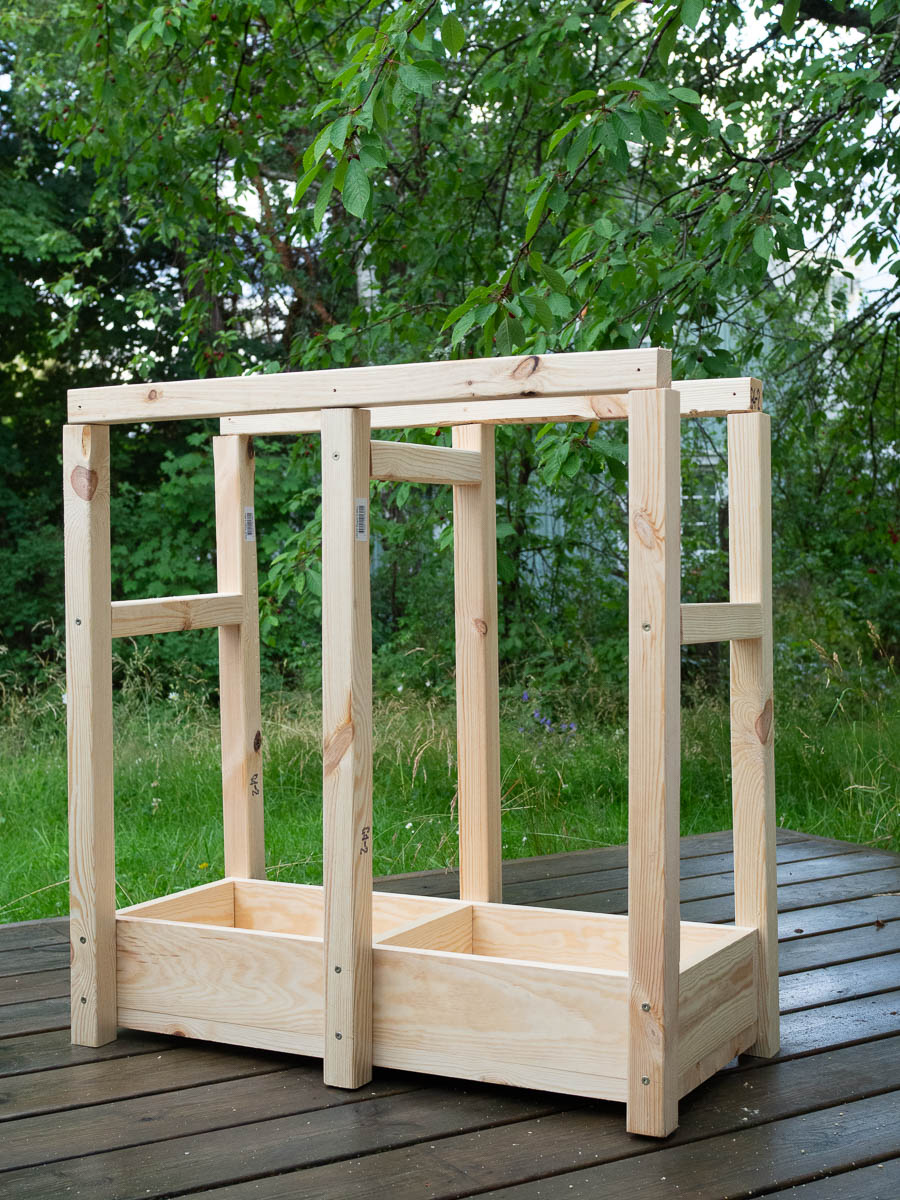
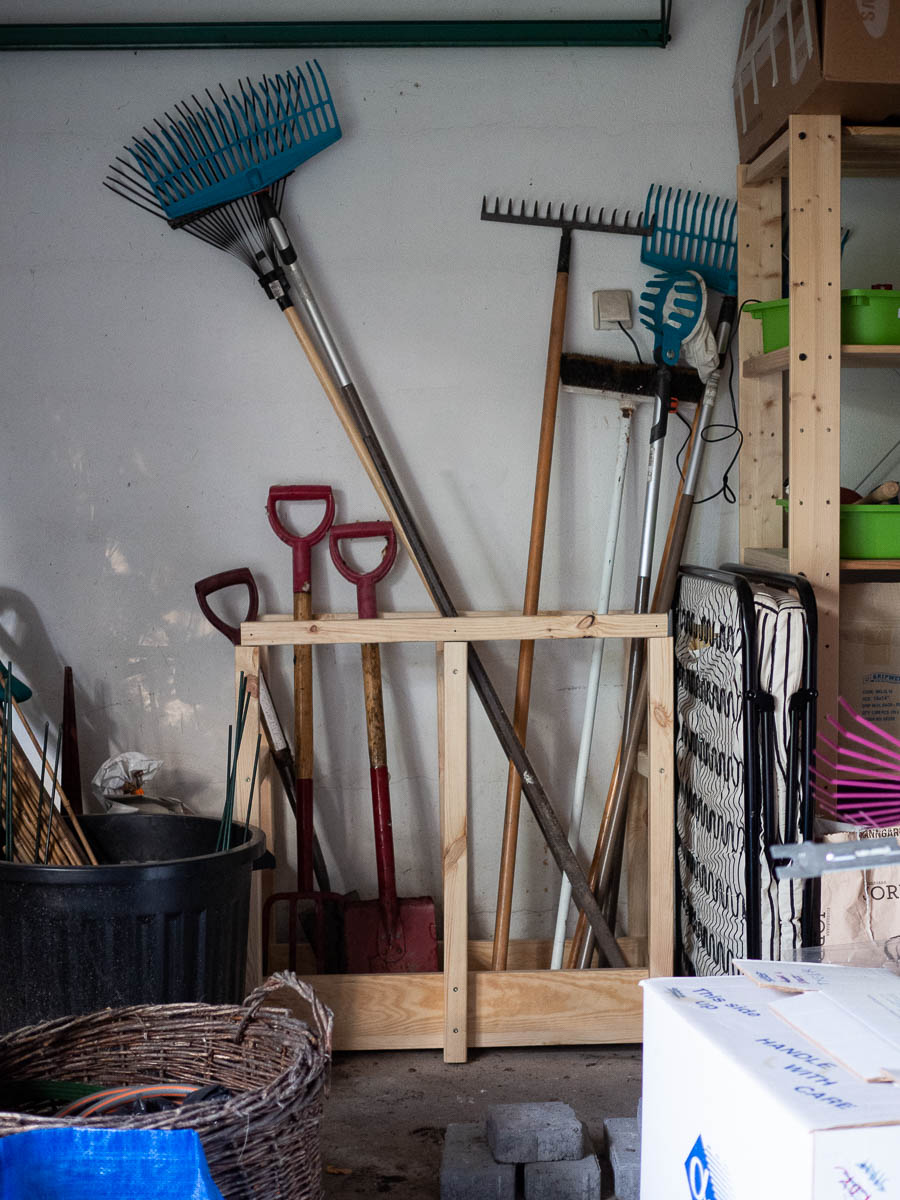
Today I built a storage thing for our garden tools – rakes, spades, apple pickers etc. The tools are now contained and supported, and grabbing one no longer makes the others fall down. A “someday” project I can cross off my list now!

It’s functional and solid, but a closer look shows it’s a clumsy thing. I forgot to take the offset of the vertical pieces into account when measuring and cutting the top pieces, so the top pieces are 1 cm too short at each end.

And all the other pieces (that are the right length!) went wonky when I screwed them together. I think it’s because the holes I drilled were not exactly at 90° so each piece was pulled slightly askew. We have no proper workbench and definitely no drill press.

For this project it doesn’t really matter much. This thing will stand in the basement where I won’t see it very much. It solves the problem I want it to solve, and it is solid and stable.

But I’ll be making a drill jig when I next want to build something.


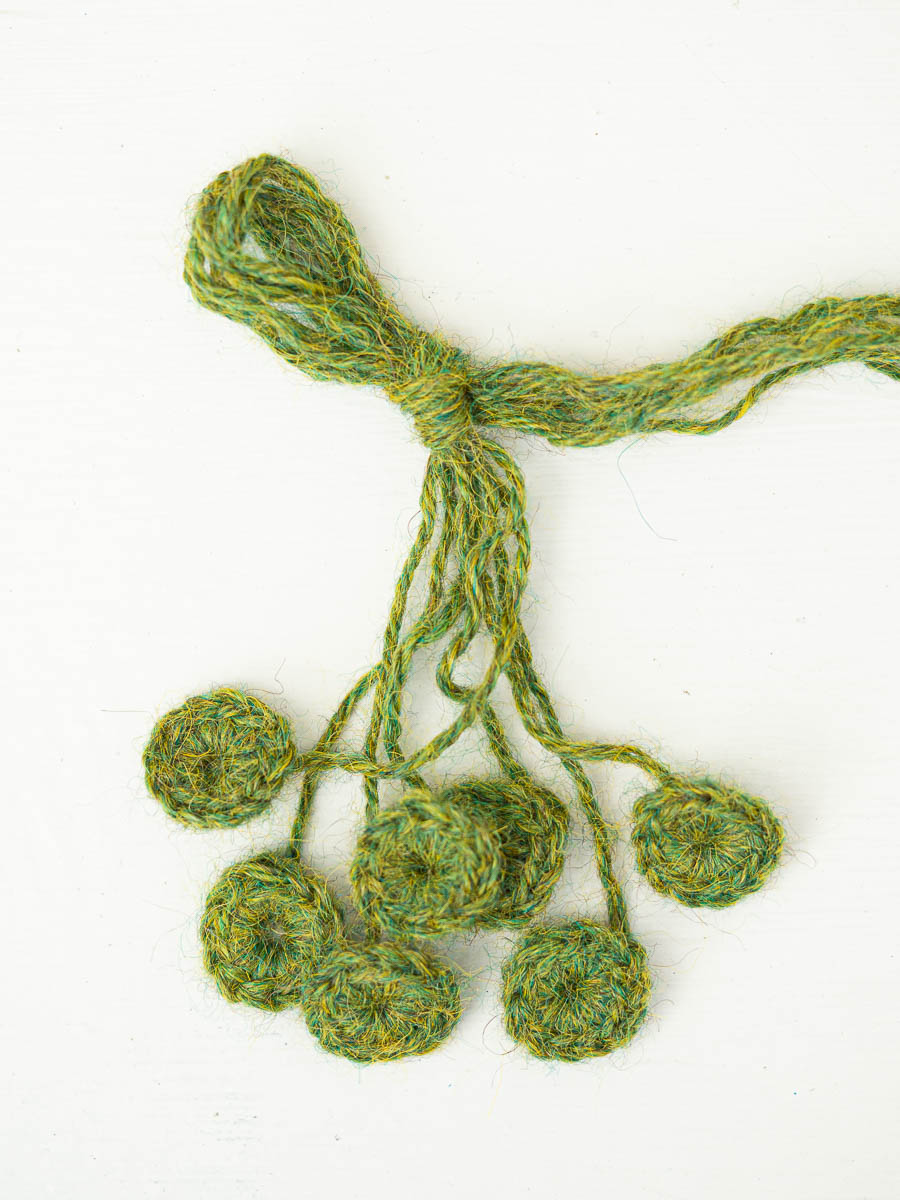
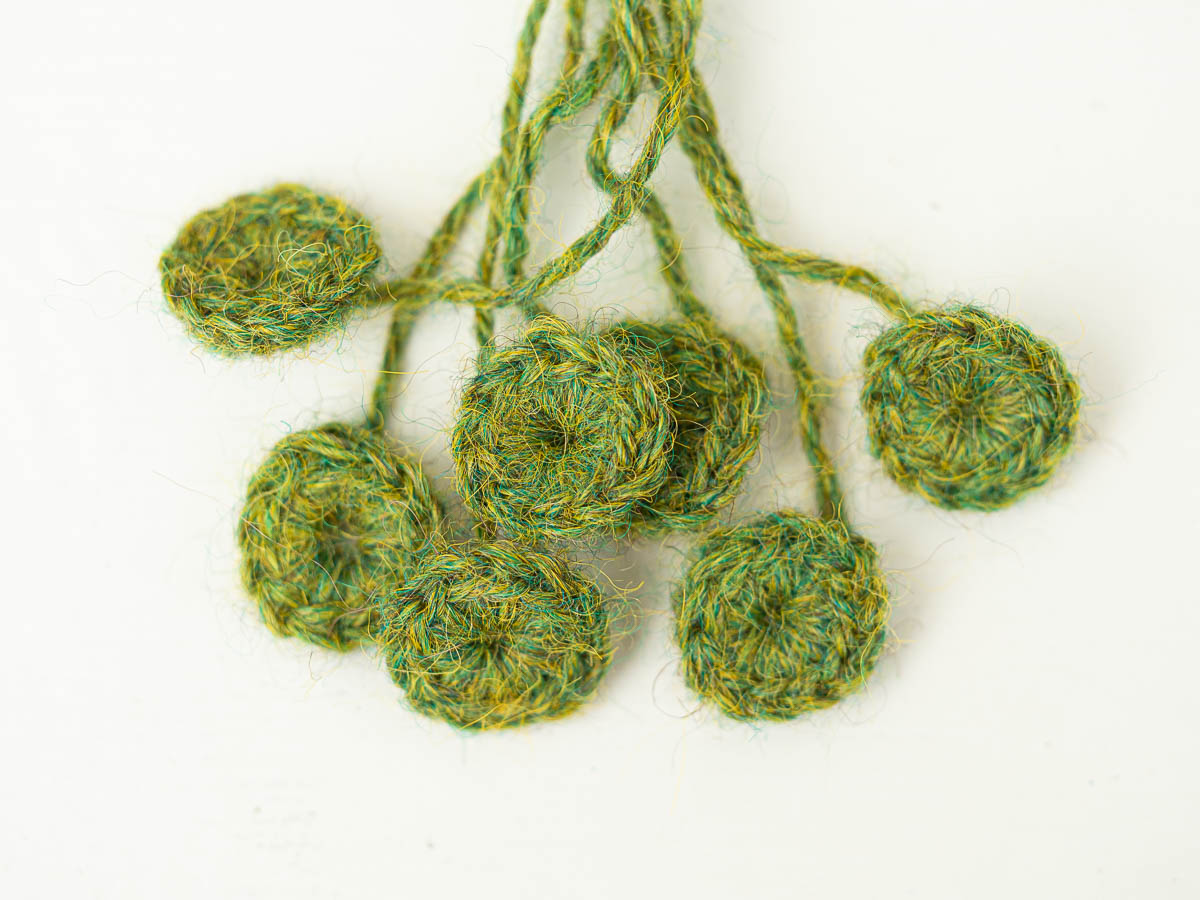
I crocheted a bunch of little bitty buttons for the cardigan. (Which is blocked and otherwise ready to be worn!)

Why not buy buttons? Mostly because I think using yarn buttons will make the buttonholes last longer. My brown cardigan is otherwise in great shape but most of its buttonholes are badly frayed. (Which reminds me to write a blog post about mending those. It’s been fiddly, and I’d be glad to avoid that work on this cardigan.) I also have a much older red cardigan with Chinese-style toggles in the same material as the cardigan itself, and those are not frayed at all. My hypothesis is that it’s the hard plastic buttons that are causing the fraying, not the general fact that the buttons/closures are being used.


I have a long list of non-urgent projects, some of which have been on the list for literally years. For the first time ever I feel there’s a real chance that things on the list will actually start getting done. A semi-quarantined vacation suits me just fine.

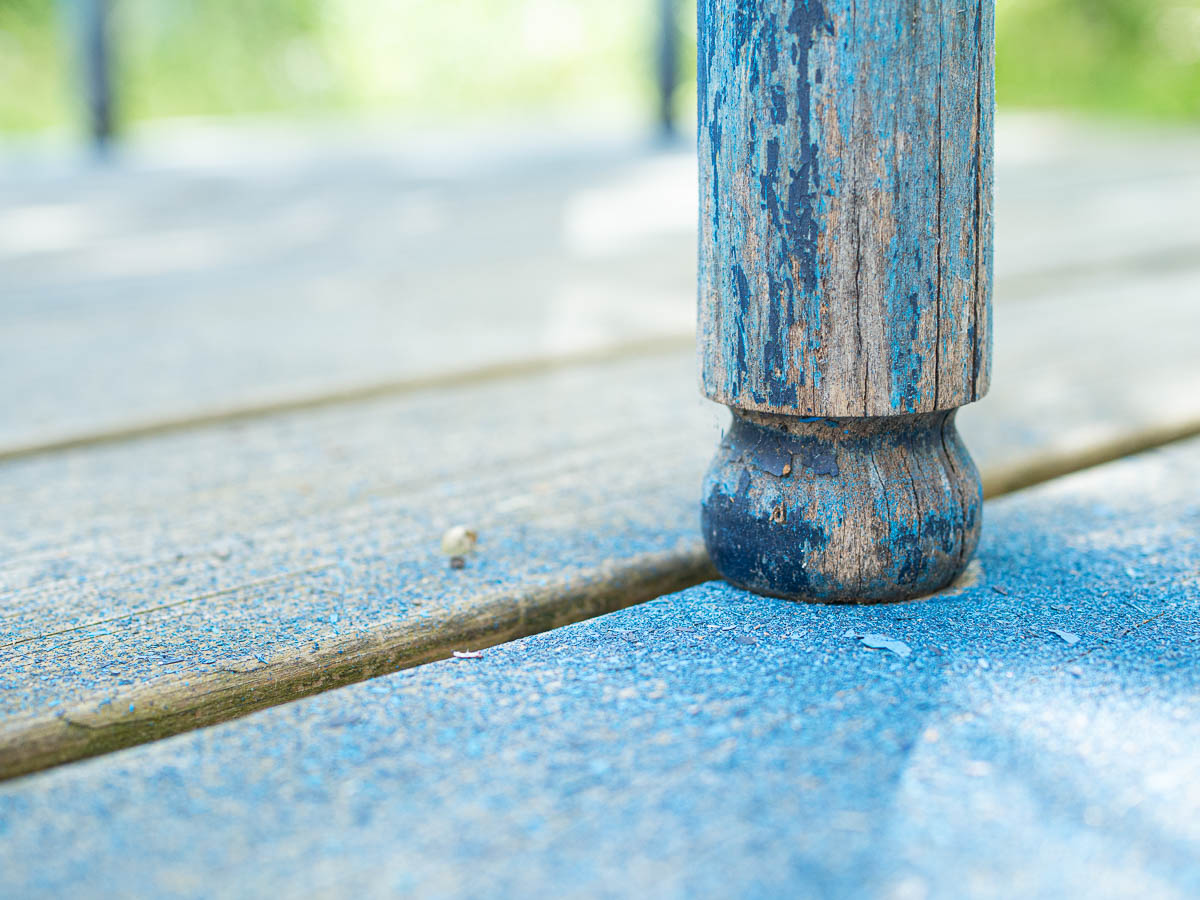
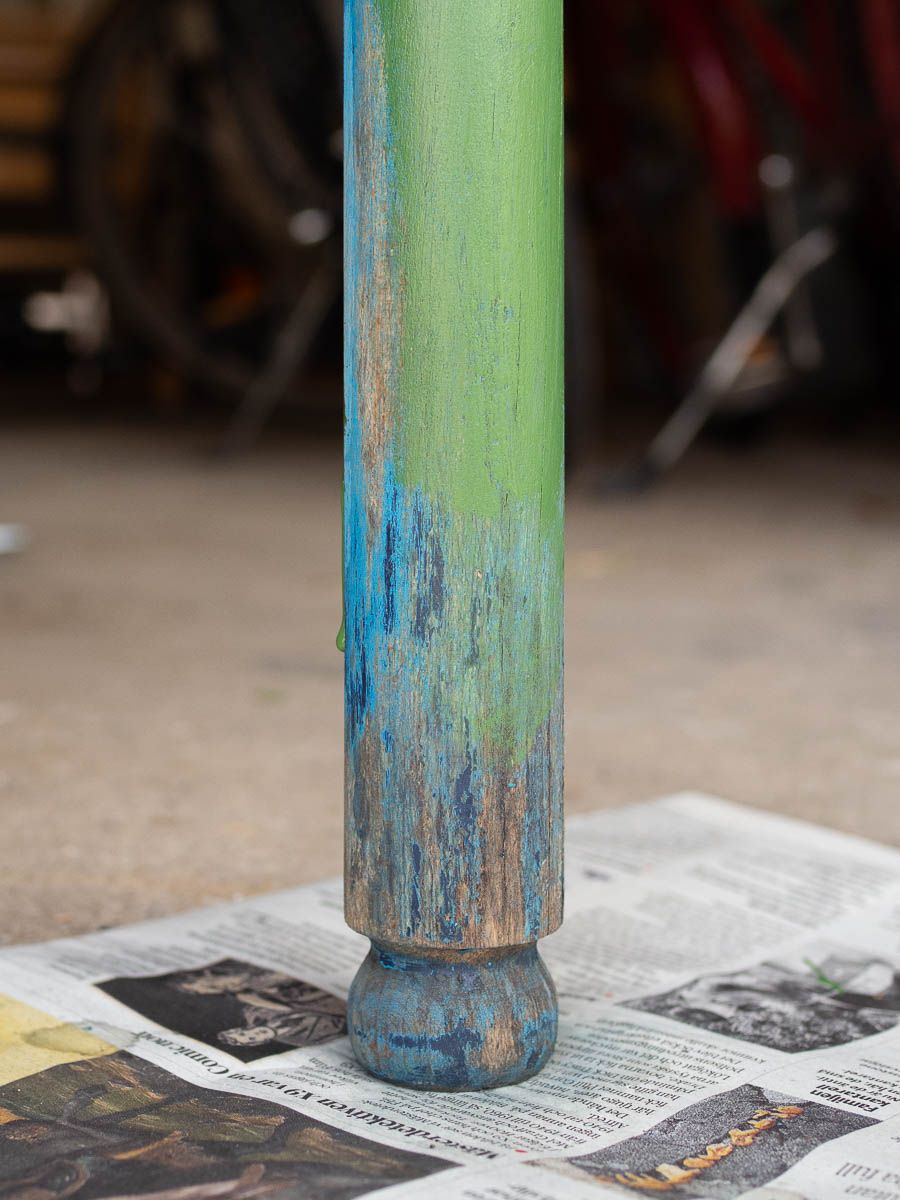
One of those projects is to repaint the garden bench/sofa. It came with the house and the paint was damaged in places already when we moved here in 2008. Finally, finally, I’m doing something about it.

First step: sanding away the old, flaking paint.

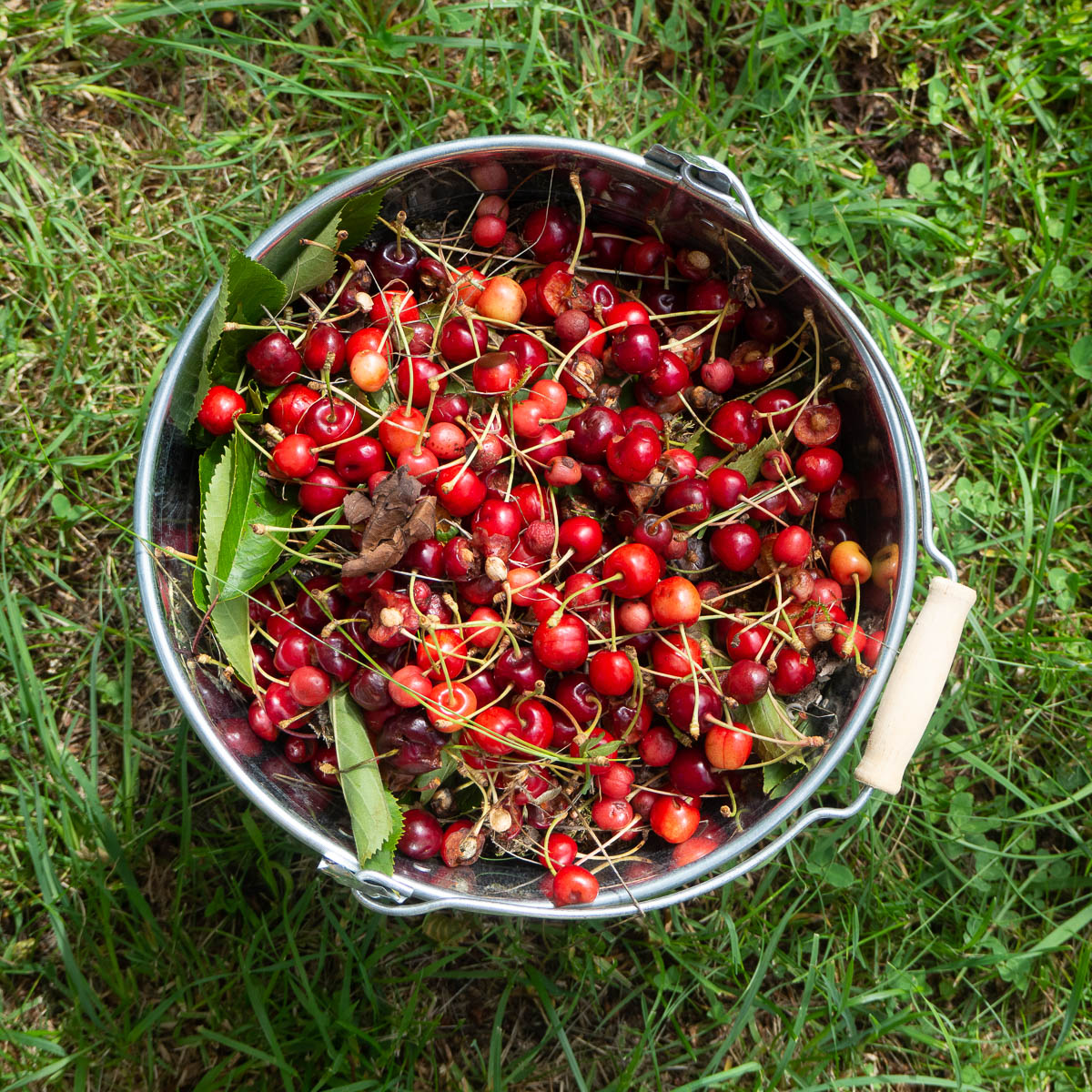
I also cleaned the “lawn” behind the house of fallen cherries. The winds we felt in Gotland have blown down a lot of berries and twigs from the cherry tree. We always lose some before the harvest, but never quite this much in one go.


I am pretty proud of that neat and tidy and even shoulder seam on my cardigan.

I’m still not done with the assembly. Knitting it was something that I could do any time, even as a background task. But the assembly is fiddly and takes my full attention, so I’m doing it in little bits when I have the time and energy and peace for it.


I’m close to finishing the second sleeve, counting down the bind-offs for the sleeve cap. The moment of truth is approaching. How well will it fit, once I’ve sewn all the pieces together?


I’m still thinking about the large mossy patches in the back garden. Could it be because the soil is more acidic there? The soil there is definitely different than in front of the house, much sandier and less full of heavy clay.

We should have some pH indicator strips somewhere, and even an electronic gadget to measure acidity, for the pool. But we seem to have put those away in such a good place that we can’t find them any more, even after searching through the kitchen, the laundry room/pantry/mud room, and the basement shelves.

We could buy new ones (and will have to, anyway, for the pool) but I wanted some answers today, now! Instead of shopping, we did home chemistry. Dug up soil samples, mixed them with water, and then tested half of each sample with white vinegar and the other half with baking soda.
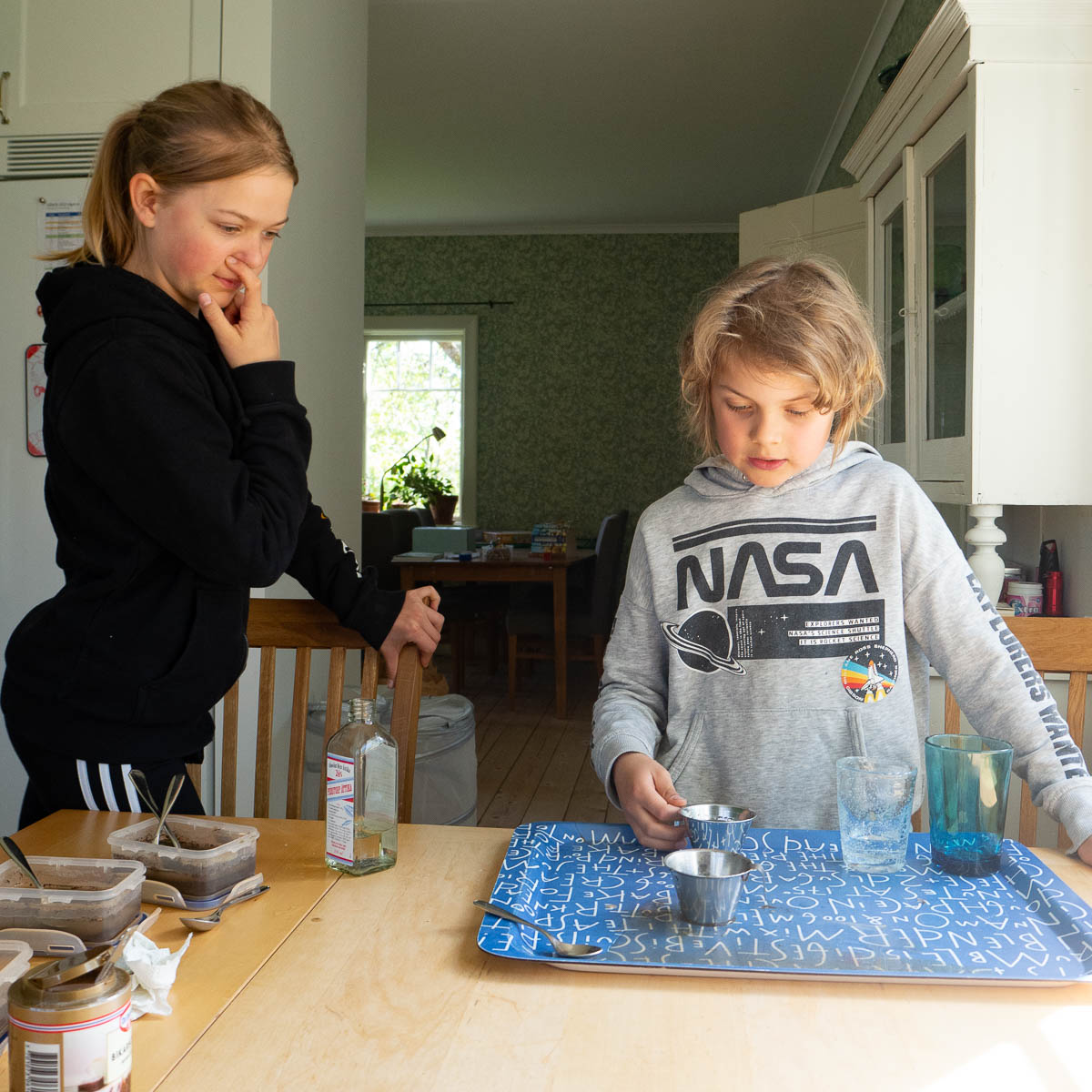
The results were very boring. No fizzing anywhere. So I guess the soil is neutral. It is of course also possible that our chemistry experiment was too crude – perhaps we should have taken more of something, or mixed it better… but whatever, it’s not really that important.

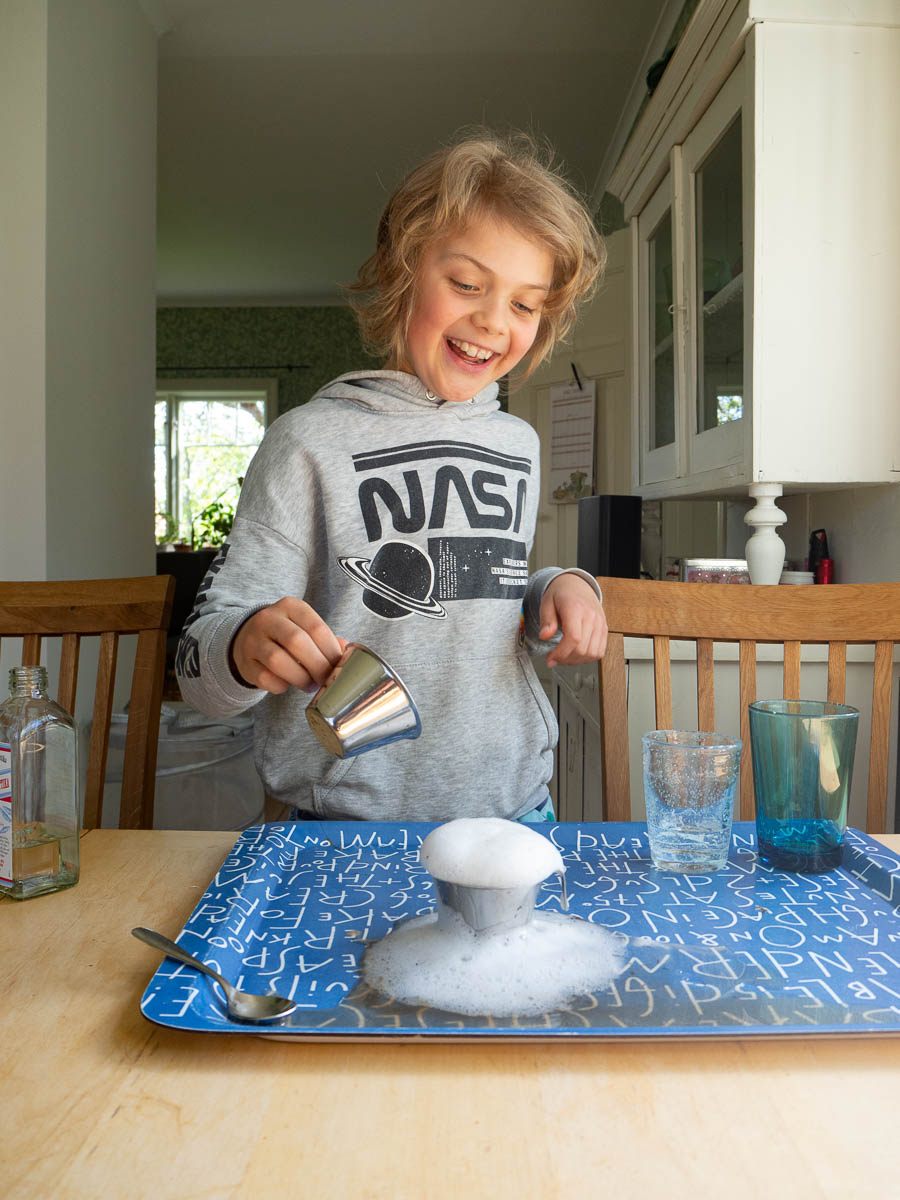
But chemistry that doesn’t go fizz and bang and change colours is very dissatisfying. When we were done with the testing, Adrian got to pour the vinegar-mixed sample onto the bicarbonate sample to at least get some proper fizzing out of it. Much better!
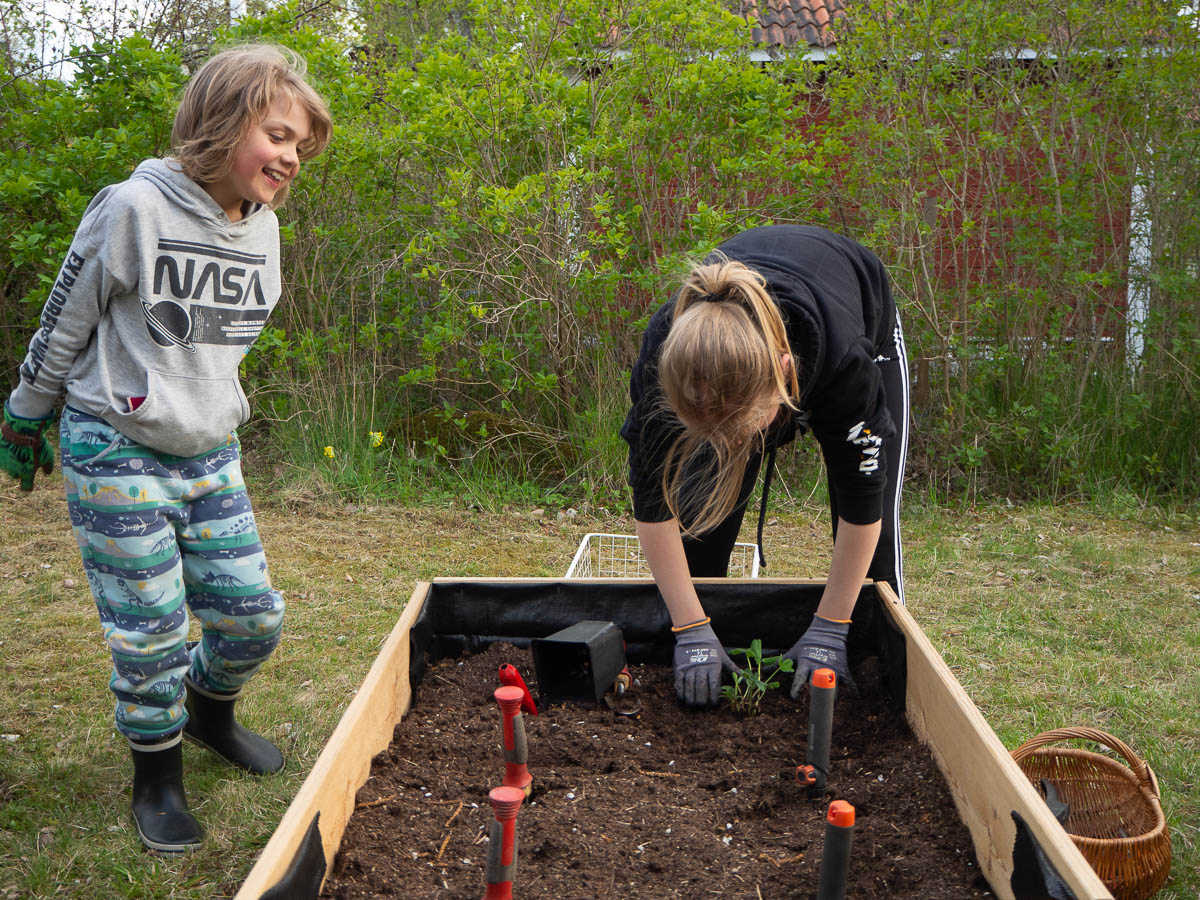
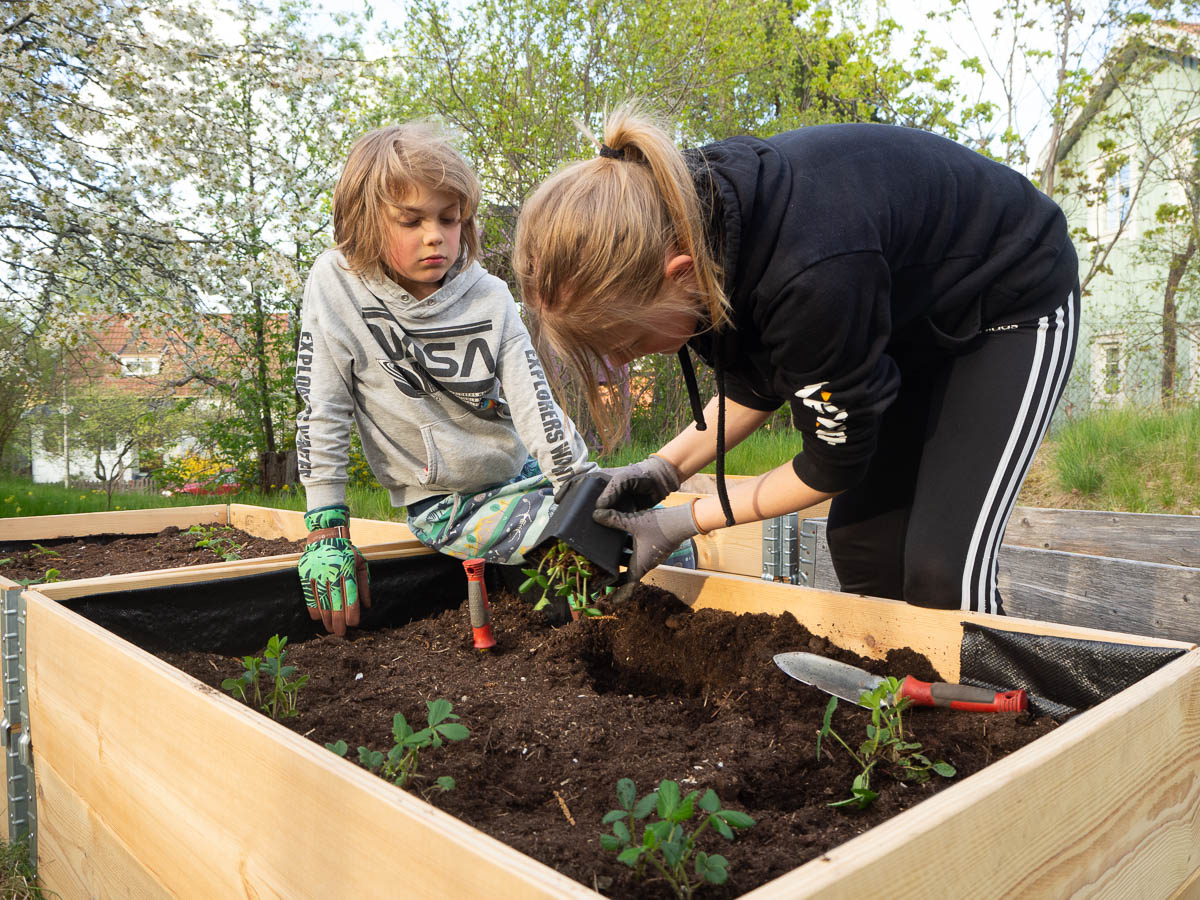
In the afternoon we planted more strawberry seedlings. That is, Ingrid planted strawberry seedlings, while Adrian planted my hand tools (in neat, straight rows and at equal distances and at the same depth!) and I took photos.

We now have one box with older plants of either Honeoye or Zephyr (the sign says Zephyr but I thought we had Honeoye there) and three plants with this year’s seedlings: Polka, Florence and Senga Sengana.

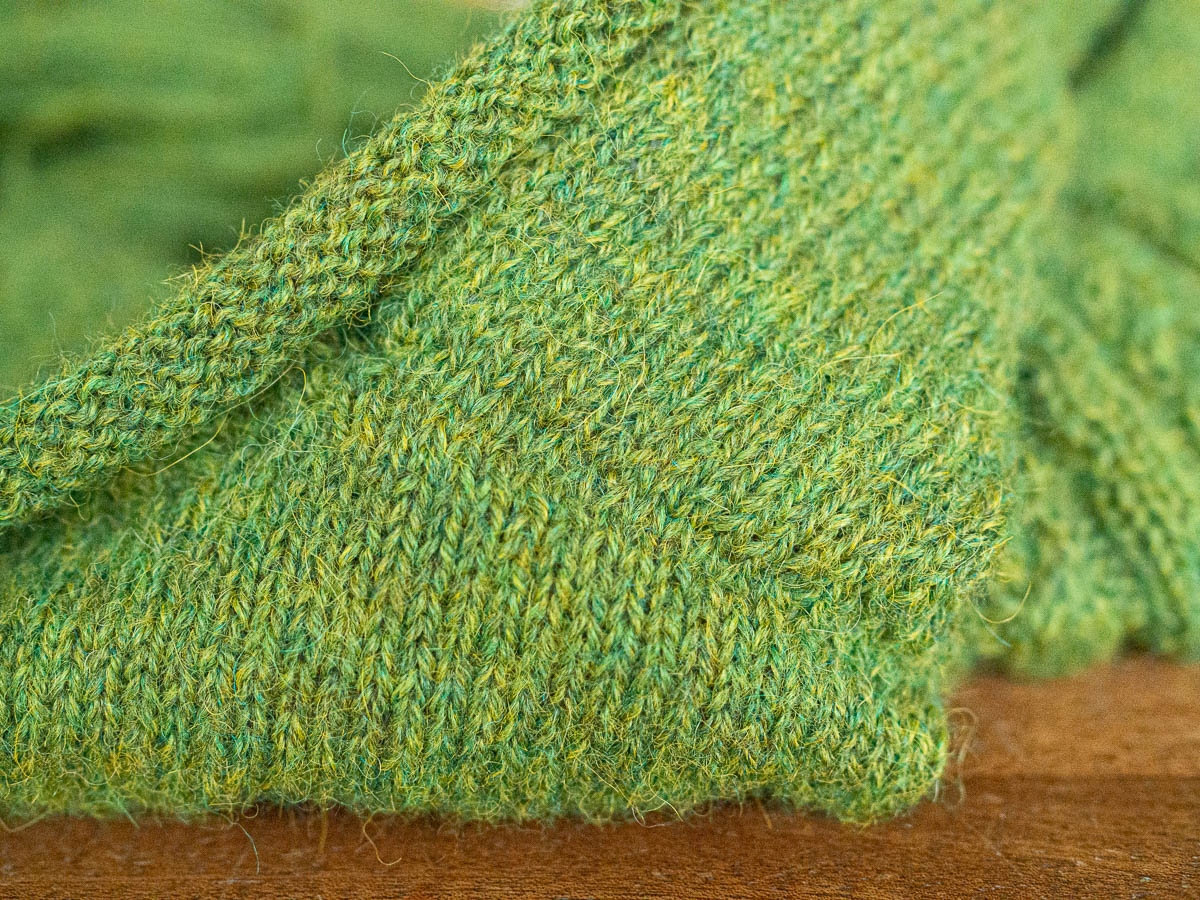
The cardigan is progressing well. I finished the body a while ago, and now the first sleeve is done.

I’m following the pattern, but more and more loosely, treating it as more of a loose design inspiration than an actual pattern.

My gauge is much tighter than the pattern requires – I didn’t like the look of the yarn with a looser knit so instead I’ve adjusted almost all stitch and row counts. (It’s a good thing the pattern description includes centimetre sizing for most measurements.) I didn’t like the look of a cutoff right across the chest, so I moved it down for a more empire-like cut. I didn’t want a looser knit for the yoke so I stayed with thinner needles and adjusted the stitch count even more. Instead of a separately knit buttonband, I knit mine along with the body of the cardigan.

The sleeve cap was hardest to adjust because it has so many adjustable parts. First I tried adjusting for my tighter gauge by following the instructions for a larger size. The sleeve cap came out way too small. Then I tried to eyeball the adjustments and made a new attempt. The sleeve cap came out too large. The third time I measured and calculated and read up on sleeve cap shaping and even pulled out Pythagoras’ theorem. And now the sleeve cap curve length matches the circumference of the armhole, give or take half a centimetre.

Sleeve cap shaping is a whole new, unexplored corner of the knitting world for me. There are even online calculators where you can plug in your numbers and get suggestions for how many stitches to decrease on each row. And technical terms – such as “sleeve cap” to begin with! I didn’t know that that’s what the curvy bit at the top of a sleeve is called. And the technical name for a garment’s armhole is “armscye”.


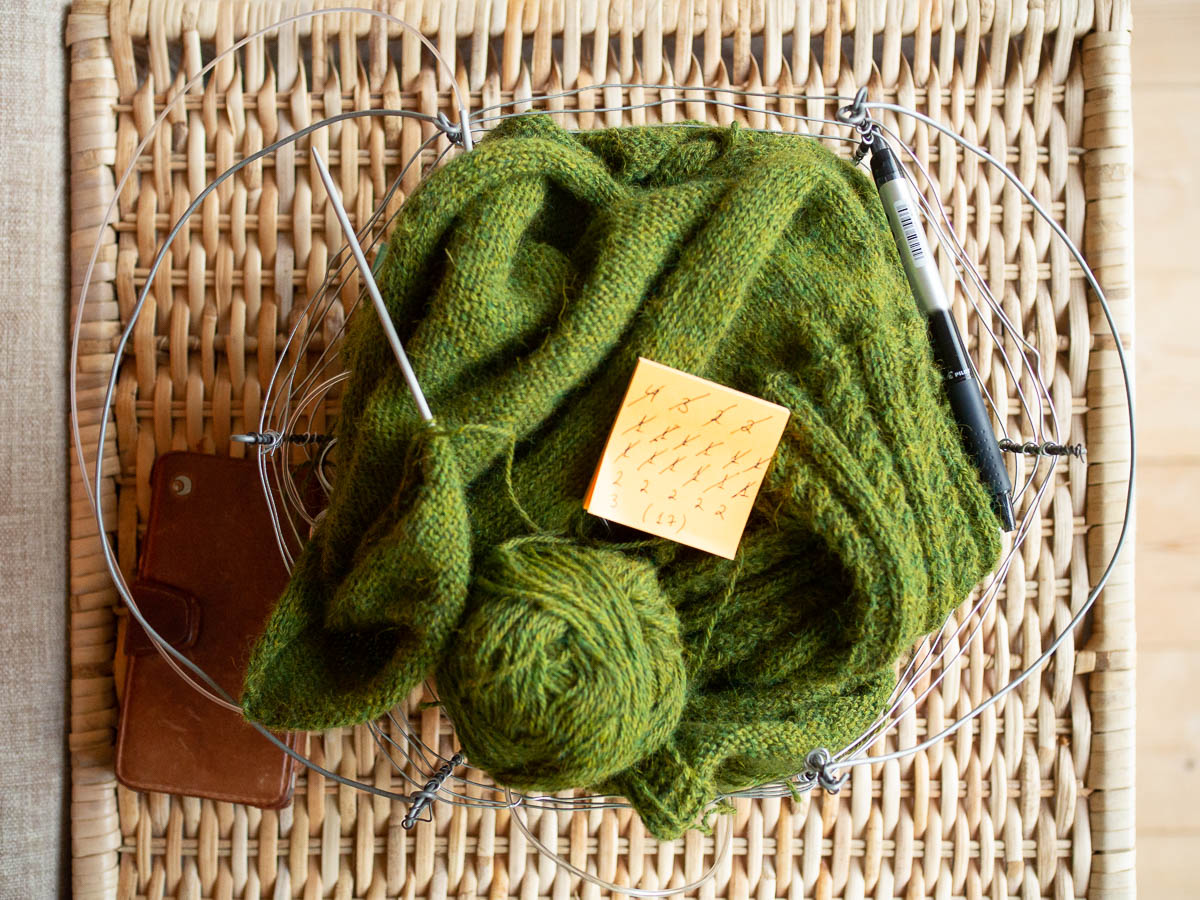
The cardigan is proceeding well. I’ve passed the armhole bind-off and now I’m continuing with the back, while the two front parts wait their turn. Meanwhile the knitting looks like a torture device, with cables and needles sticking out everywhere.

Knitting a cardigan from the top down sounded simple, but turned out hard to get right.

Knitting a cardigan from the bottom up sounded intimidating, but has thus far been easier. Although, the part that sounds intimidating is the assembly and of course I still have that ahead of me.

The previous pattern I attempted had a lacy yoke that I just couldn’t size correctly. Only when most of the body was done could I see properly whether the yoke fit or not. (The answer: not.) And by then it was too late to do anything about it.

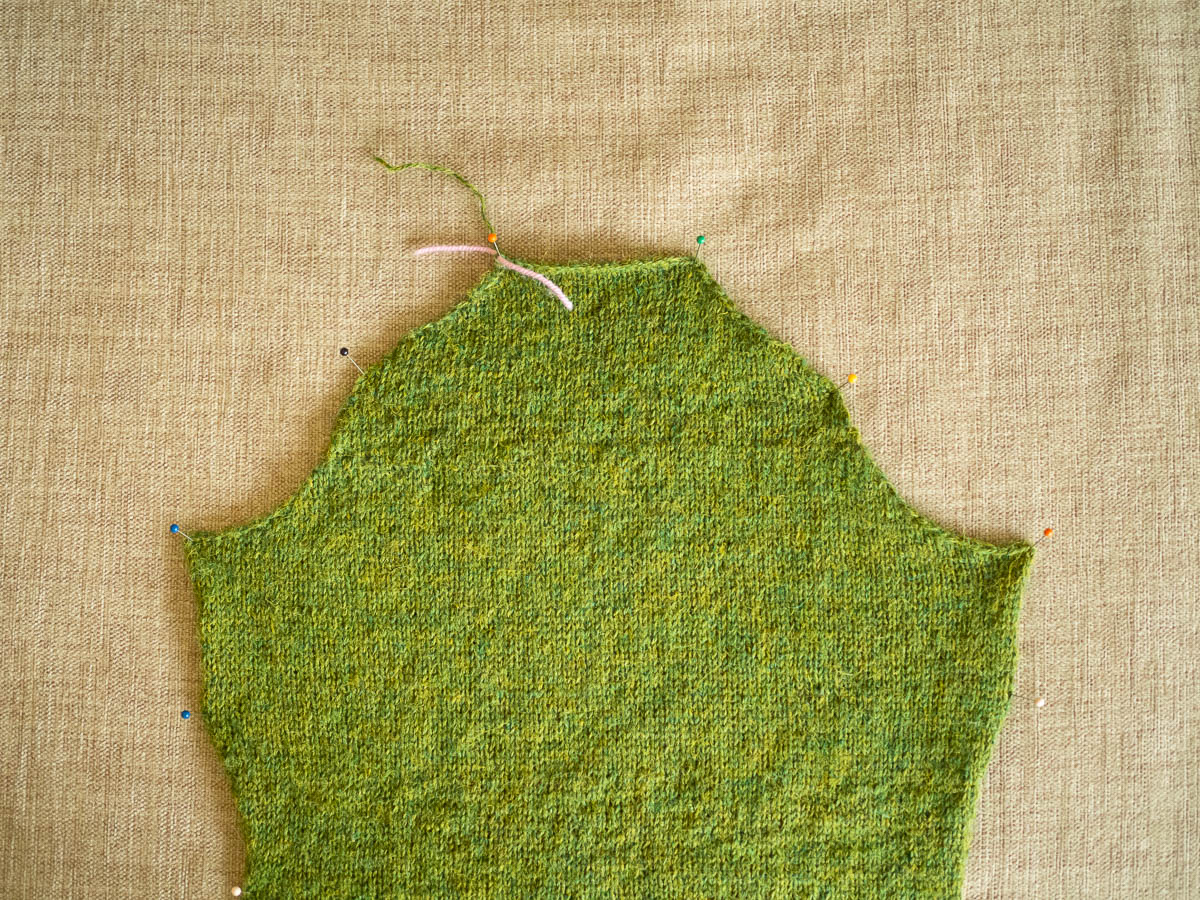
This cardigan (Drops 88-4) is also hard to try on when it’s hanging in half-finished parts. But what I can do is lay the parts flat on top of an existing cardigan to check the size and shape of them. And that looks promising!


Traditions tend to accumulate. Every item is important for someone. Our Easter food traditions are nearly as many as for Christmas.

Easter eggs are a must, both the painted, boiled kind that originally come from hens and the painted, cardboard kind that hide candy inside. And devilled eggs as well.

One year my mum made paella for us at Easter; the kids loved it and now they ask for it every year.

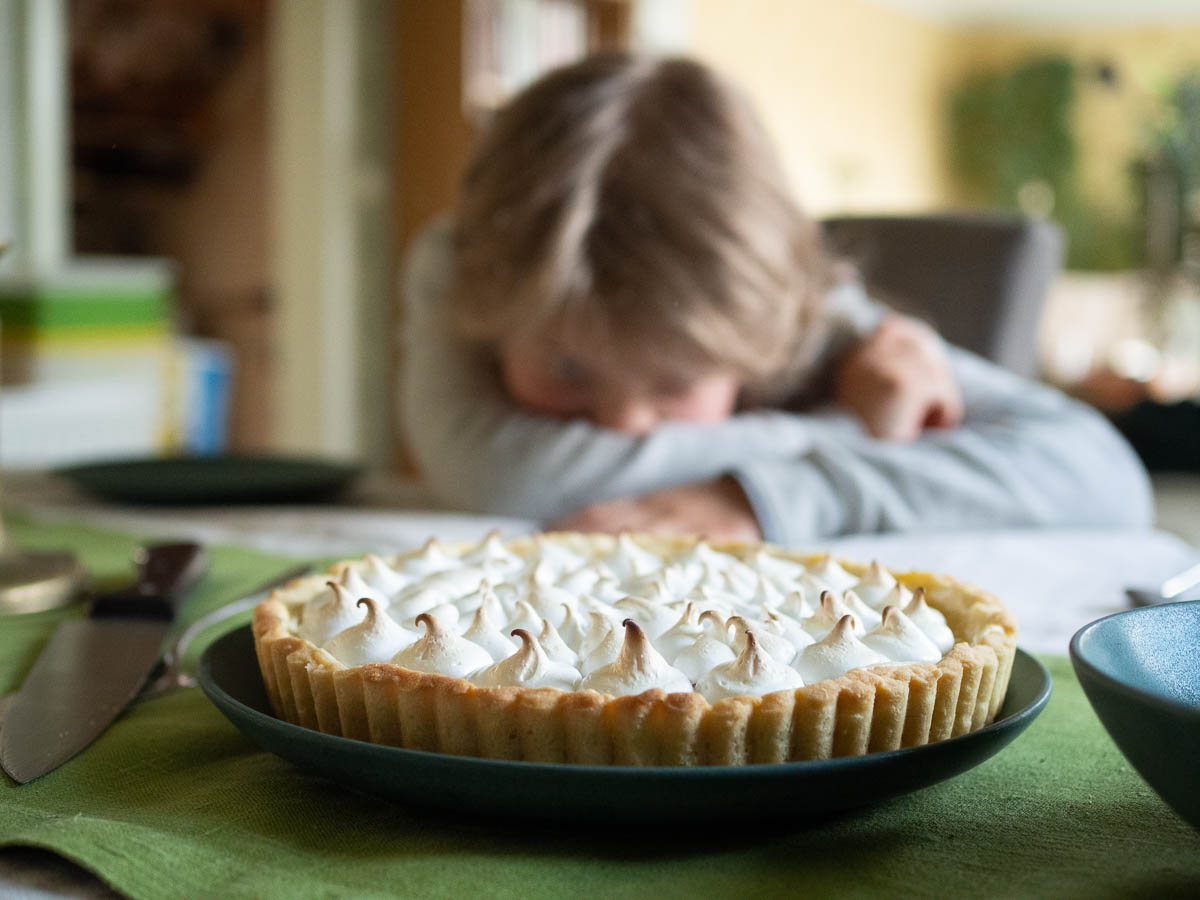
For dessert, pasha is an important tradition for me, and Ingrid and Eric both love lemon meringue pie.

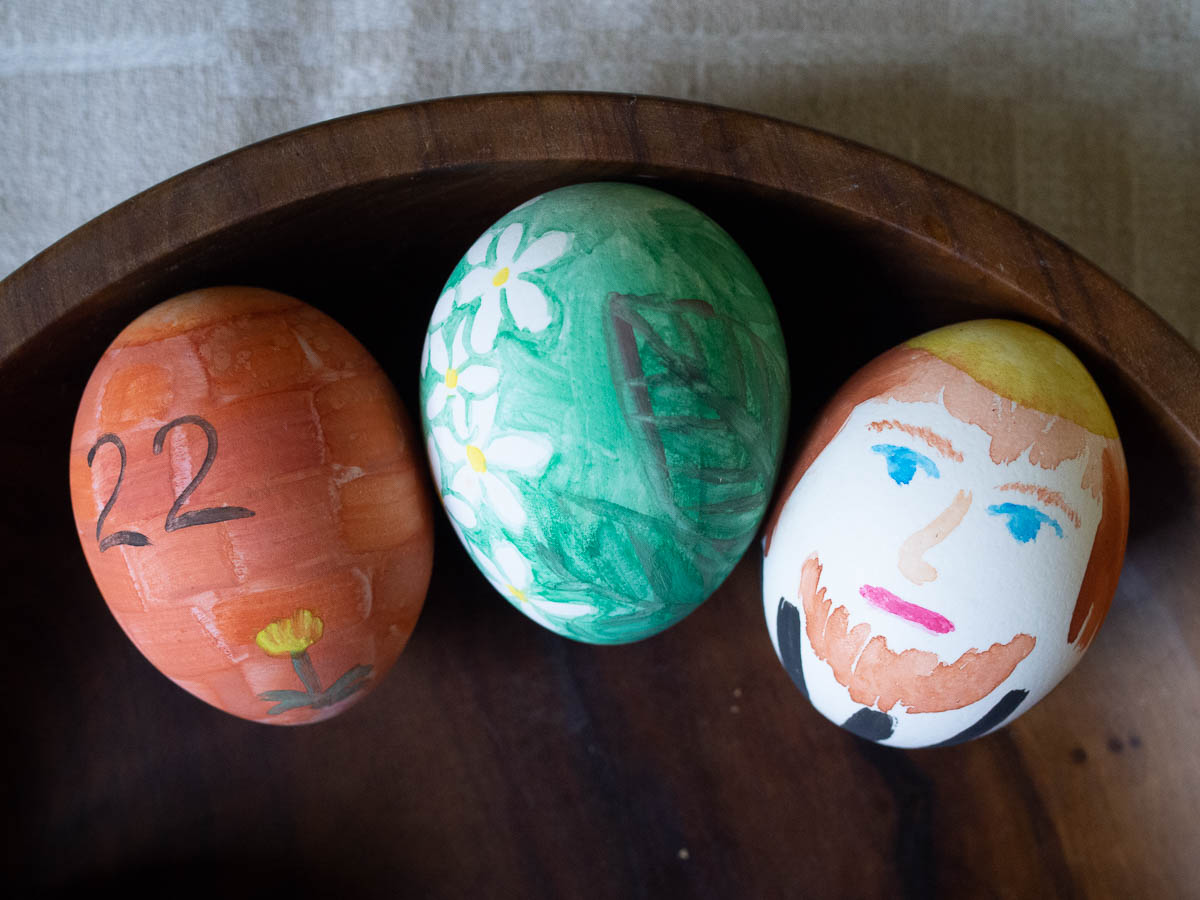
Speaking of eggs, we talked about egg knocking, and soon Adrian and Ingrid had planned an entire tournament for our eggs. Our six eggs were unsatisfyingly few, so we painted some more. They painted one each to bring the total up to eight, and I painted a referee. The referee got a beard, so I now have a skägg-ägg to go with my vägg-ägg and hägg-ägg.

I thought my puzzle was so obvious but it took a lot of hints for the rest of the family to solve it.