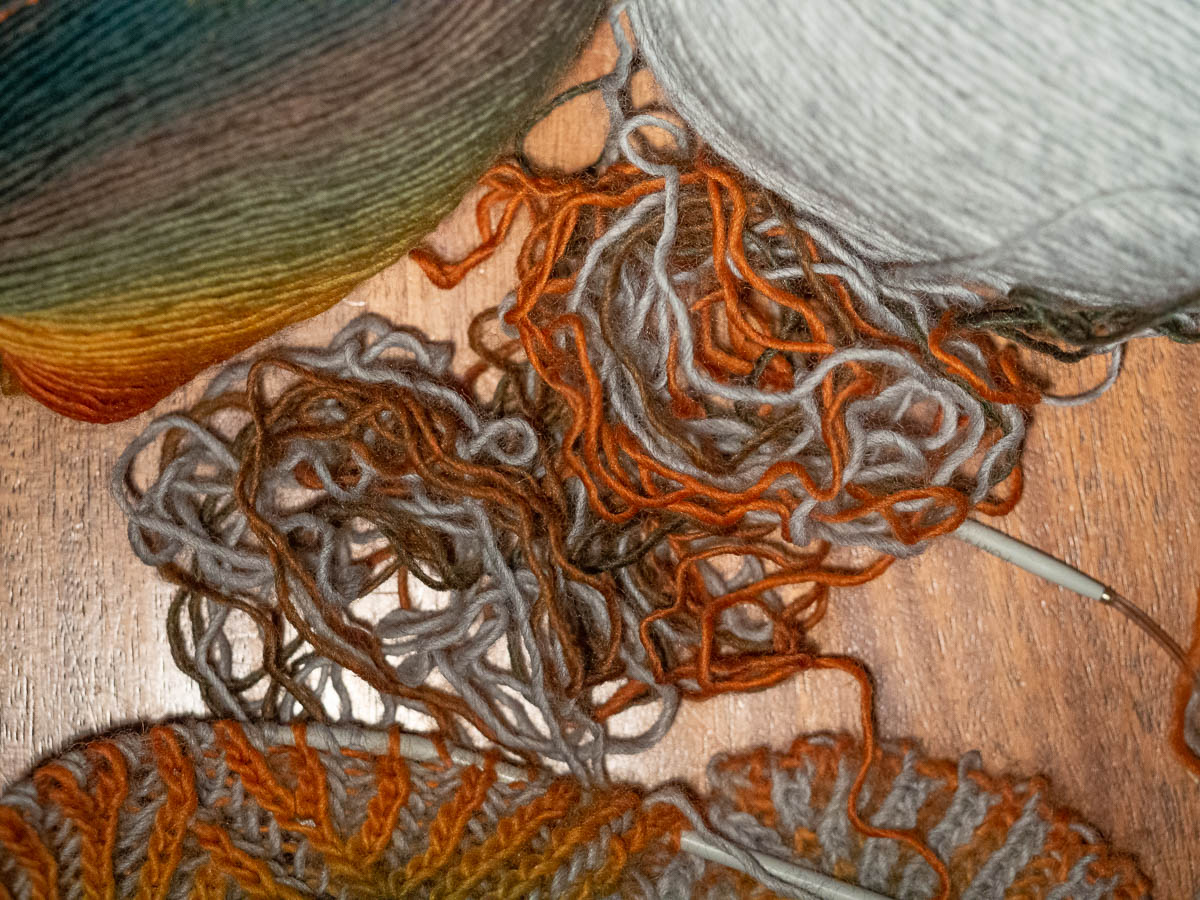
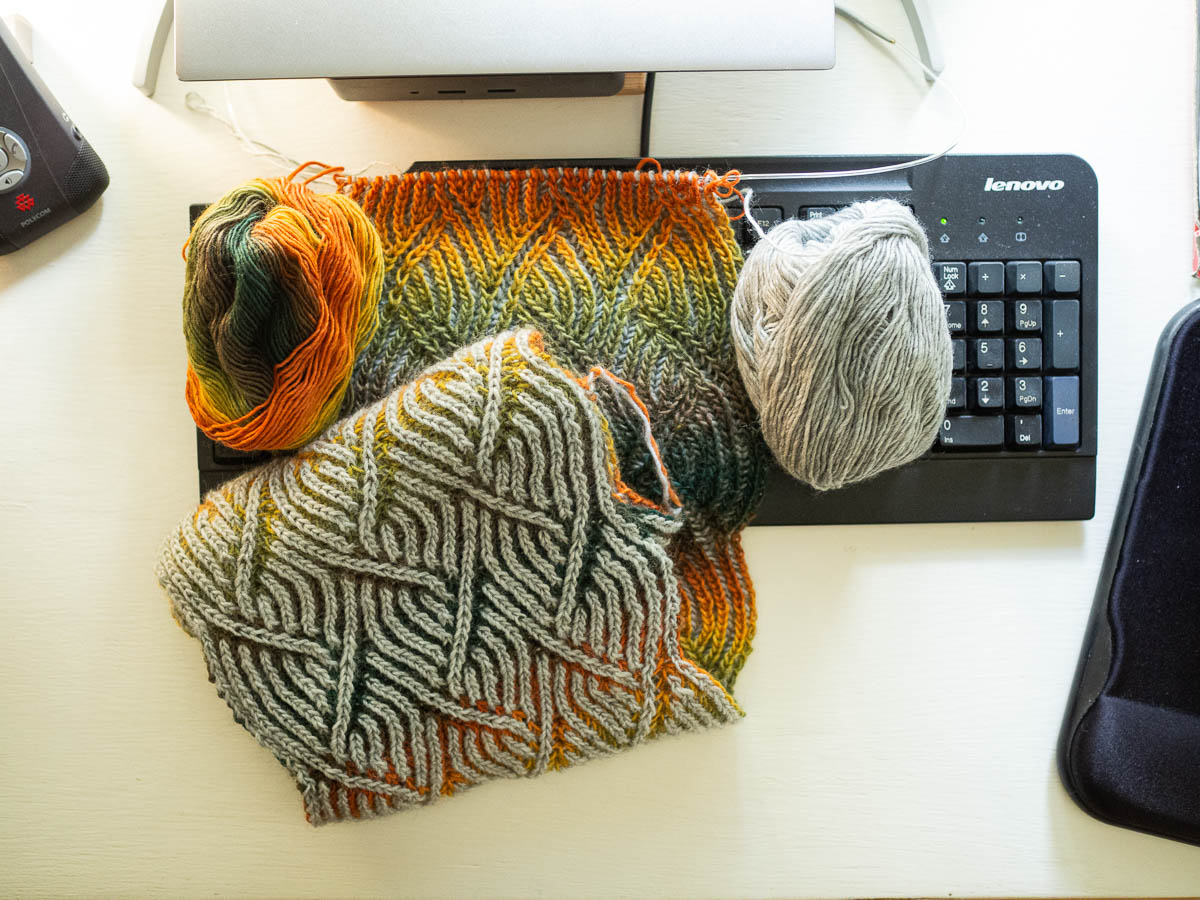
I had a long online meeting this morning and knitted a good 15 cm of my scarf. Now that I’ve internalized the pattern, it requires so little thinking that I can easily do it while focusing 95% of my attention on the meeting.

As the scarf is getting longer, I have to keep most of it rolled up while I’m working on it. Otherwise it gets all twisted and tangled. Socks, hats and cardigans don’t do that.

And I haven’t had to rip up anything at all for weeks, since I figured out the root cause of my repeated mistakes!


… aaand here I am, ripping up a good 15 rows of my knitting again. This is starting to turn into a bad habit.

This time I figured out the problem, though, so hopefully this was the last time. Apparently I tend to forget the last increase on right-leaning rows. And I only notice when I get to the corresponding decreases many rows later, and discover that I don’t have enough stitches left to decrease. Now I’ll be extra vigilant with those increases.


This scarf I’m knitting is very pleasant to knit, but I’m also discovering that it is entirely unforgiving. I make one teensy little mistake, and there is just no way to recover without the mistake being glaringly obvious. The pattern is so large, so regular, and so distinct that any deviation really stands out, like a streaker in the middle of a marching band. Sometimes I even notice the mistake nearly immediately but when I try to correct it, I make things worse instead, so I end up unravelling entire rows after all.

I had bought a wonderful yarn at some point – a variegated Viking Nordlys. It is sold as a sock yarn, and that’s what I bought it for. But when I touched it, the yarn felt so soft and thin that I thought I’d wear right through it if I made it into socks. So I went looking for a new project for it.

There is a wonderful knitting site called Ravelry. Everything on Ravelry is indexed and linked to everything else – yarns to projects to patterns, and so on. Each pattern links to actual projects that actual people have made following that pattern – often you can see many varieties of a cardigan, which really helps to see what it could look like. And there are thousands upon thousands of patterns. It’s my first point of call when I am looking for ideas for knitting projects.

I looked for projects using the Nordlys yarn, found some, which sparked new ideas, and finally decided on this Icicle scarf.

Ordered the book (Nancy Marchant’s Knitting Fresh Brioche). Waited nearly two weeks for it to arrive. Opened it, and nearly gave up. The patterns looked very intimidating. The written instructions for this scarf cover over two full pages!

Still, I tried it out with some scrap yarn, and it turned out to be quite doable, as long as I paid close attention to what I was doing. As soon as I didn’t, I started making mistakes, and the only way to recover from a mistake in two-colour brioche is to rip up everything you did since the mistake, one stitch at a time.

After the first 20 rows or so, I started getting the hang of it. I put away the swatch and started on the real thing with my beautiful yarn. With some practice, the pattern doesn’t require quite that single-minded focus any more. I can see the pattern in the pattern, so to say, and understand it rather than just follow it mechanically. It’s actually quite fun to knit.

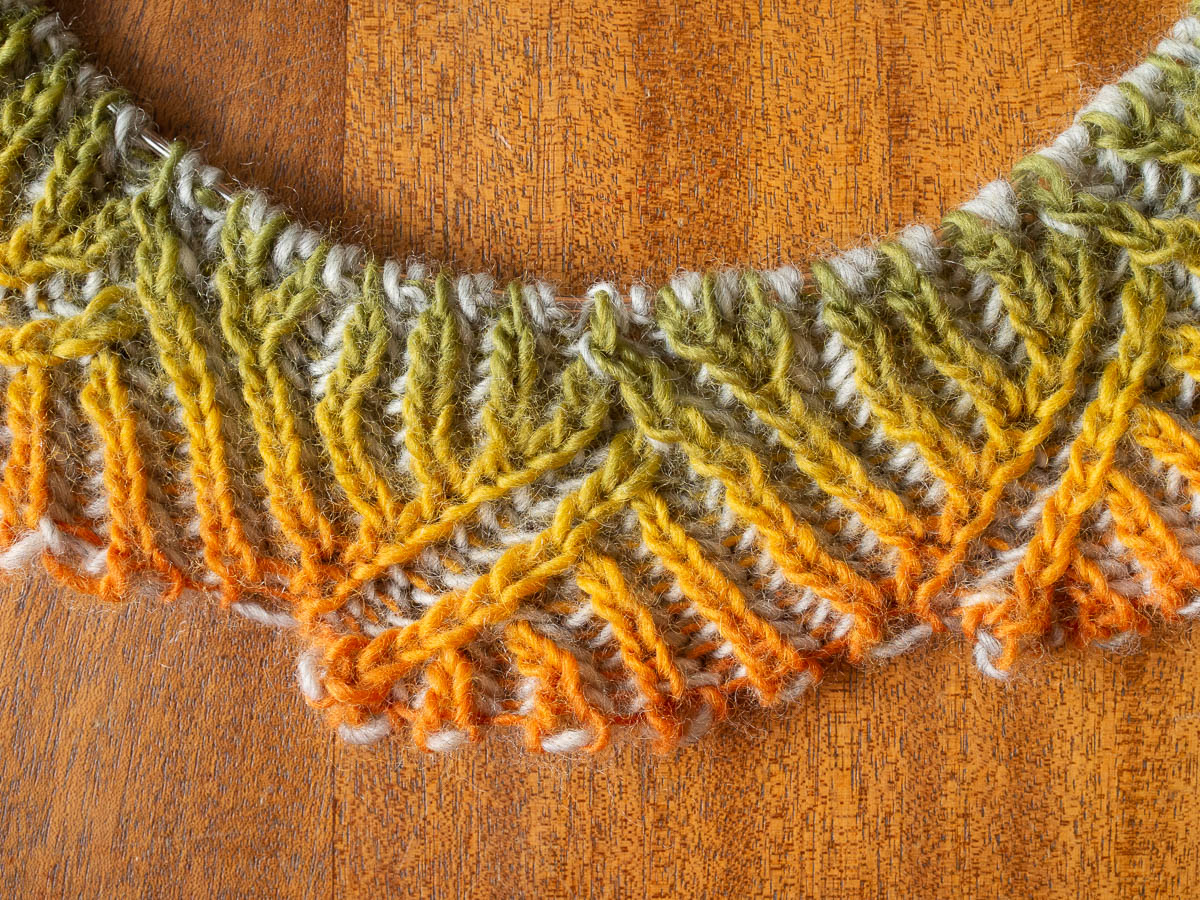
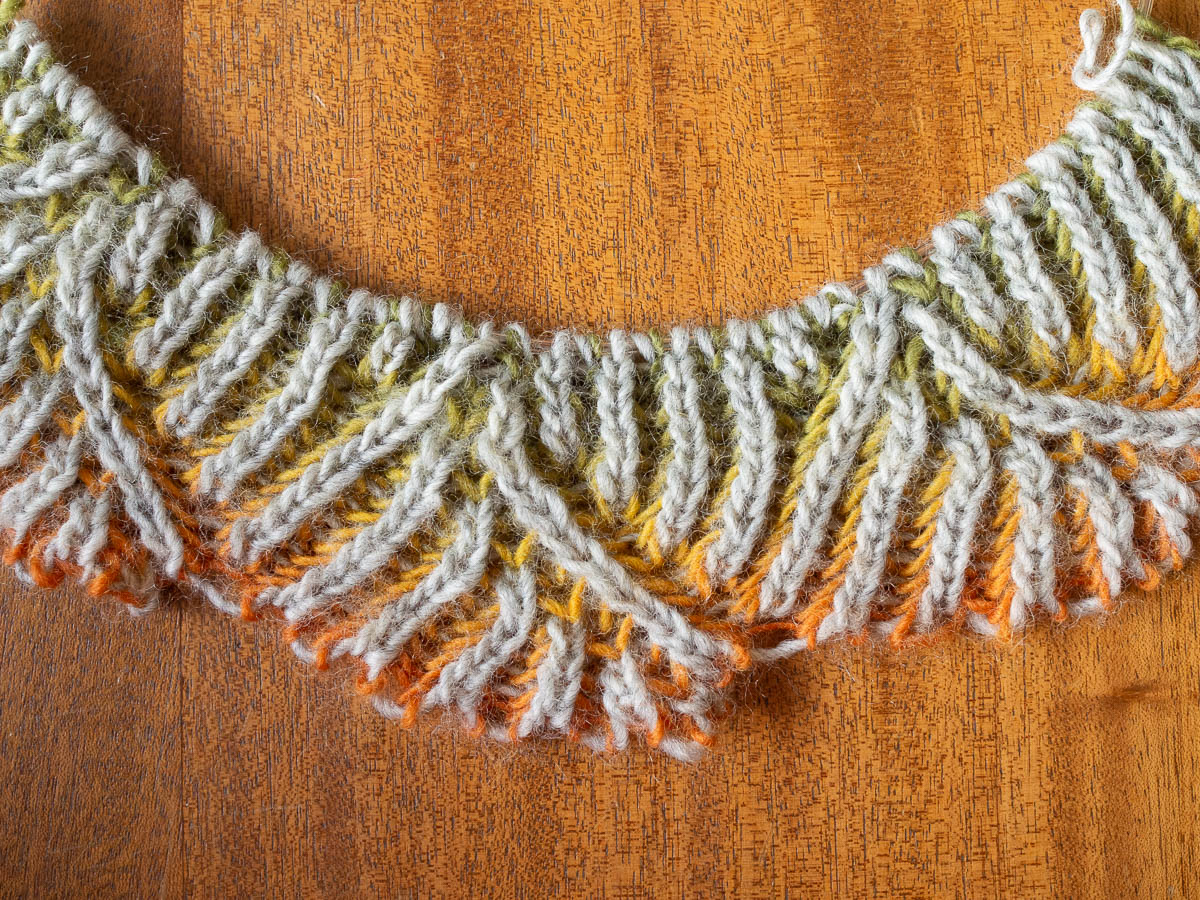
And just look at how beautifully the scarf is turning out! On the front, the orange/yellow/green yarn is like autumn leaves, with the light gray like a cloudy autumn sky peeking through the leaves, providing depth and contrast. The rear side is like the first day of winter, with the autumn leaves covered in hoarfrost.
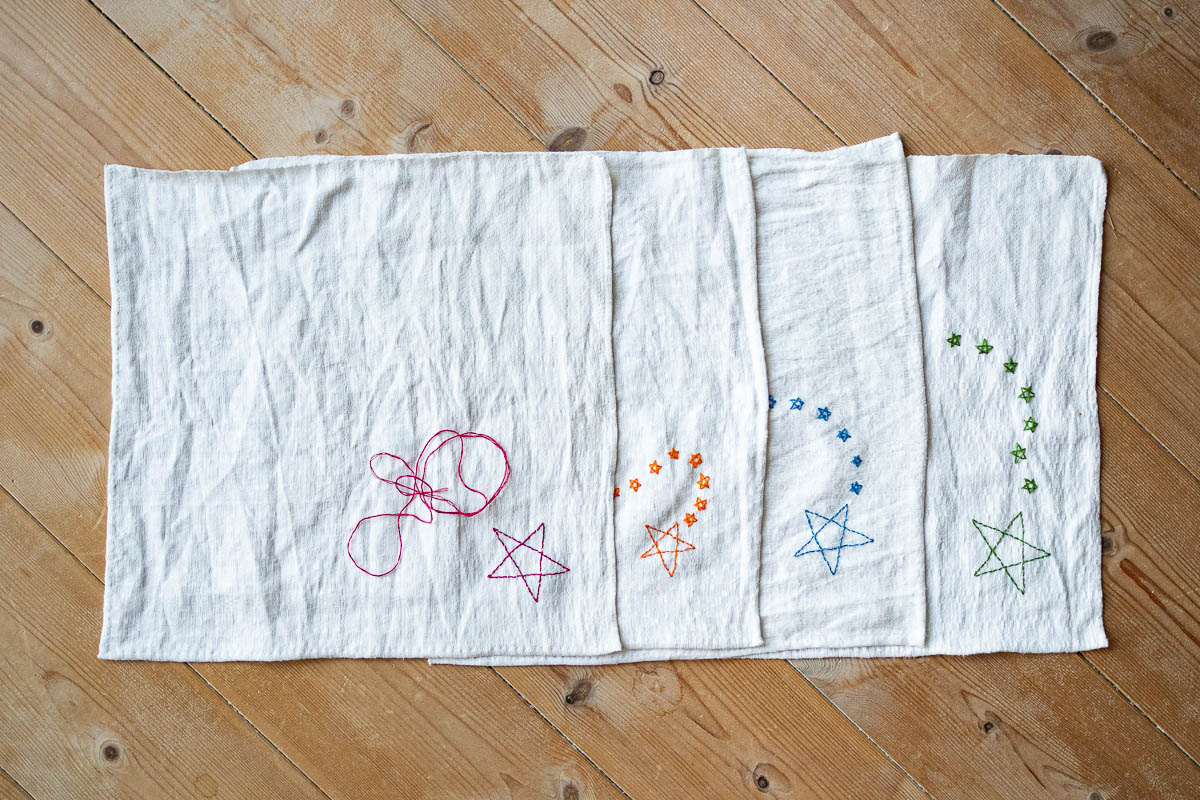
I’m done with the 48 napkin hems! And I’ve washed them, and Eric ironed them, and now they’re looking very sharp.

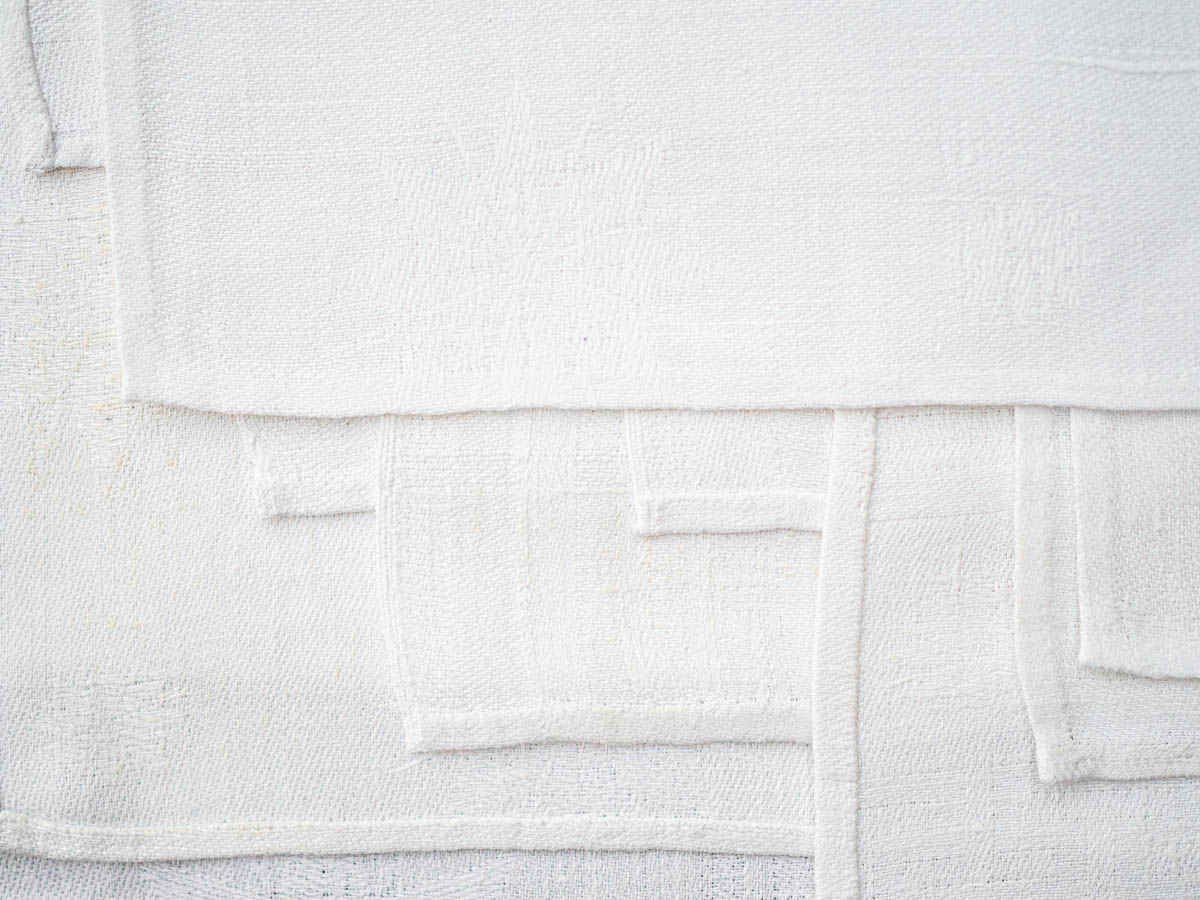
Some of them got discoloured somehow by the ironing – not burnt, but stained with some brown gunk, probably from the ironing board. (You can barely see one of the stains in this photo, along the left edge.) I washed them again and was very, very relieved to see that they were white again.


Eric and Adrian went to the cousin’s birthday party. I stayed at home, because those parties tend to be too large and too full of strangers for my taste, and I just didn’t have the energy right now for a big party. (Although afterwards I found out that it had been much smaller than usual, with only people I knew. If I had known that, I’d have made a different decision.)

Adrian and Ingrid joked that I’d probably spend all afternoon reading. Nope! Recently, whenever the family is away and I have unusual amounts of time on my hands, I’ve been making things instead. Either physically – I started the napkin project when they were away, for example – or virtually, by blogging more.

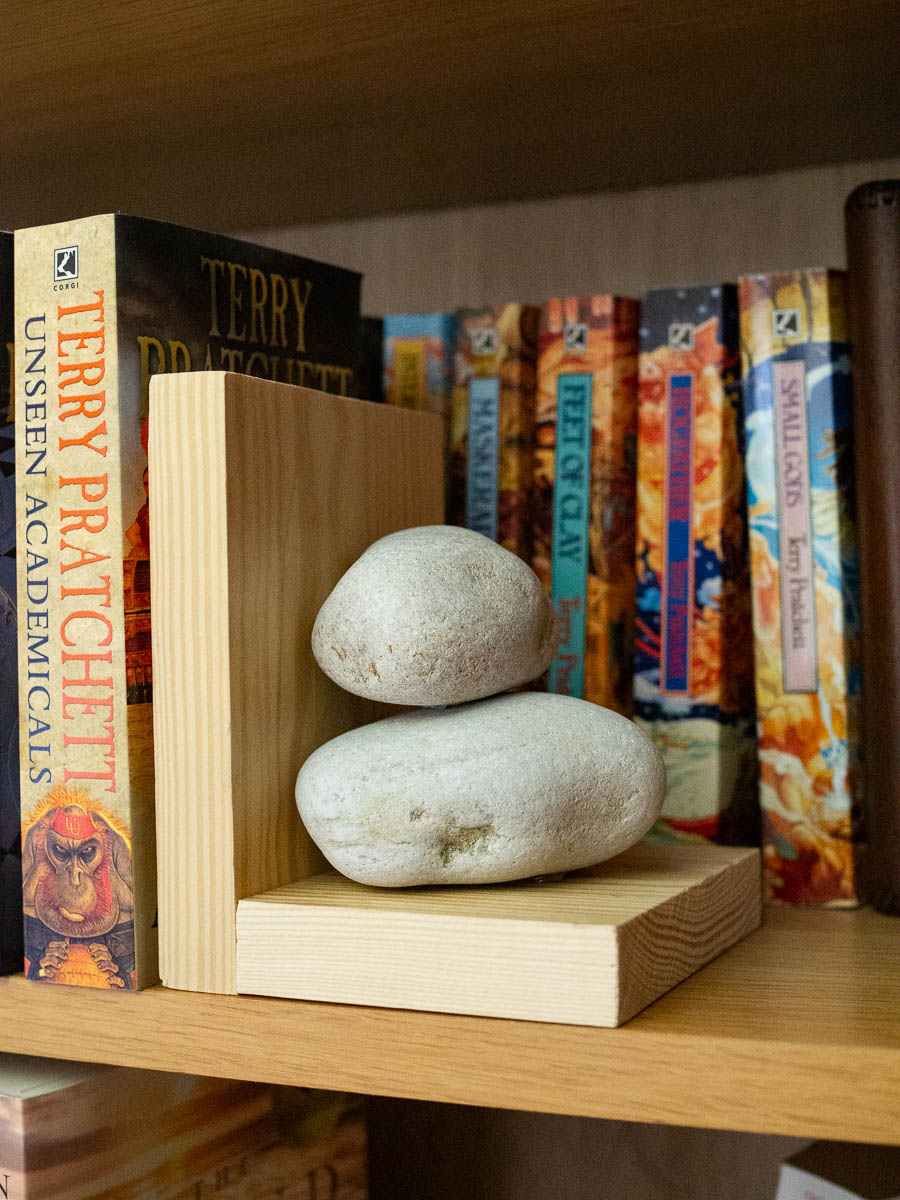
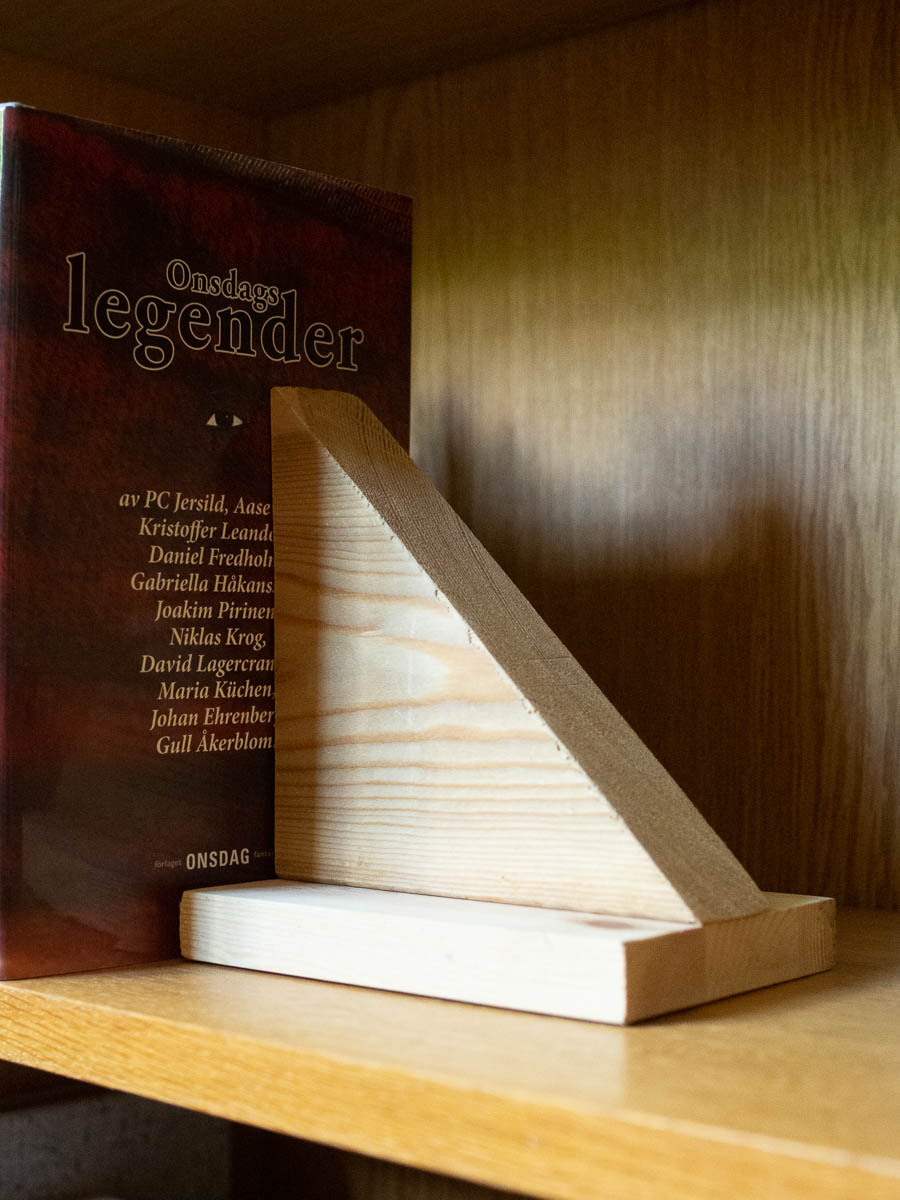
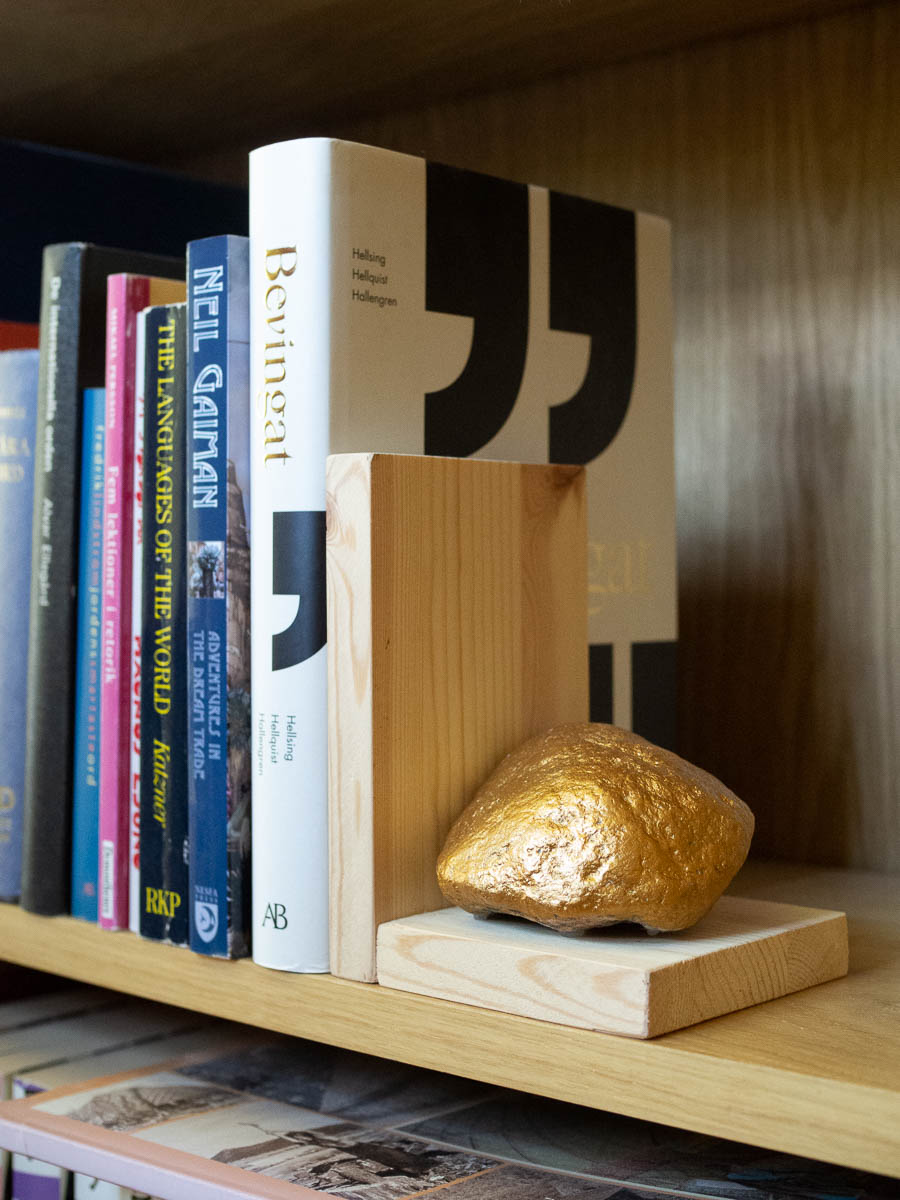
Today I finished a bunch of bookends. I started this project a while ago, and some of the bookends in these photos I made earlier this summer. But today I finished several more, and now I’m feeling done. I could probably find a place in our bookshelves for a few more, but there’s no longer an urgent need for them. Our books are now standing up and not falling down!

All the bookends are made from scrap materials, leftover pieces of wood from the storage thing and other pieces I found in the basement, where we have a stash of odd pieces. So they have different proportions and designs, and some pieces are slightly damaged on the bottom.

The basic design is just an L shape of two pieces of wood. (But I found two triangular pieces so two of the bookends ended up with a different design.) Cut two pieces of wood, sand the cut ends a bit smoother, drill holes, screw together. I guess I could have glued them but then I’d have to find some way to clamp them, and wait, which I didn’t want to do. Screwing was maybe a bit more work but gave faster results.

The only part that was not scrap material was the rocks. I picked a few smooth white pieces of limestone when we were in Gotland, with the bookends in mind. The golden rock is just a random rock that I found in the garden. It was not very pretty so I prettified it.


I put the final touches to the paint on the garden sofa yesterday (or was it the day before?). It feels like new, especially after Eric added a diagonal crosspiece to strengthen its construction. I used to be cautious whenever I handled it. Now I carried it up from the basement on my own (the family is still away) and it didn’t flex or wobble at all.

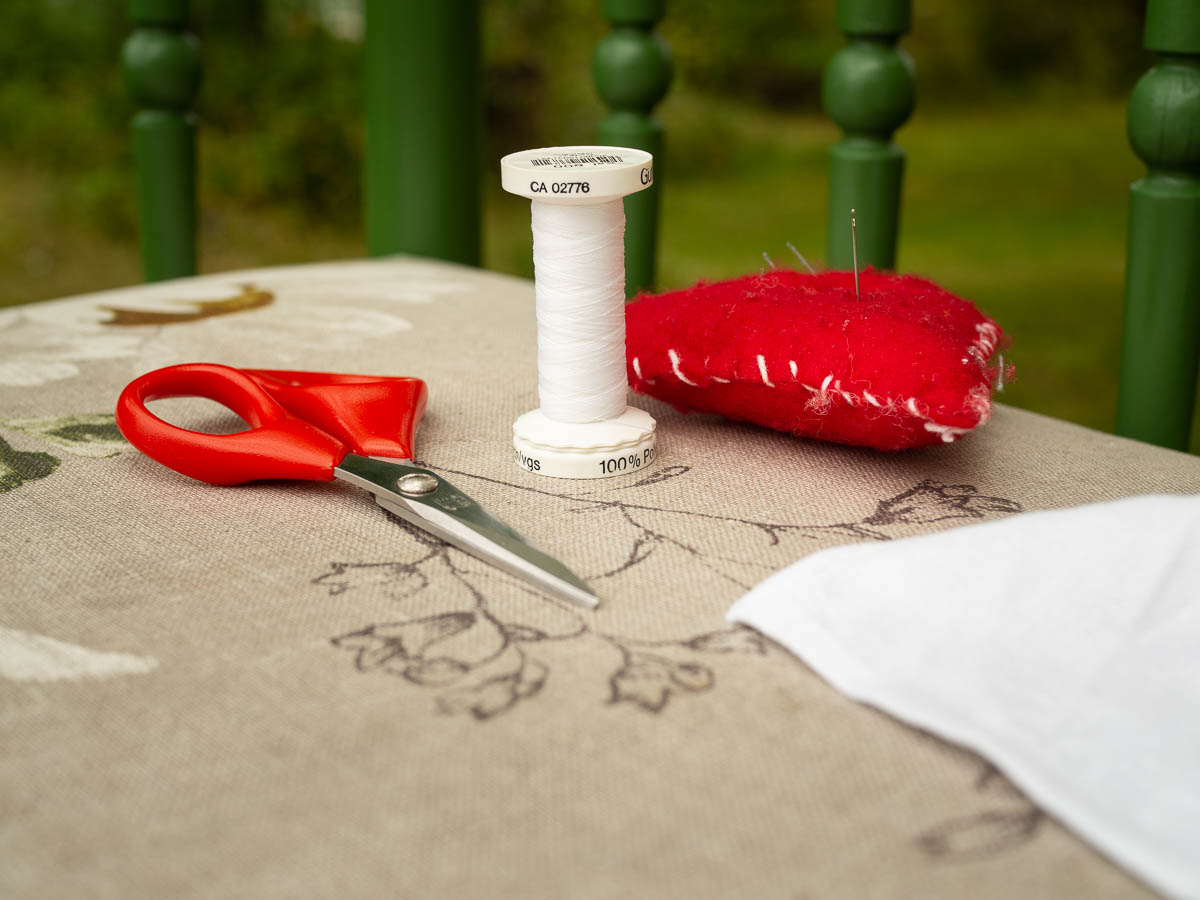
The sofa is back in its spot on the deck – right on one edge, where it gets shade from the cherry tree in the morning, and from the house the rest of the day. I like reading the morning newspaper there. It’s also a nice spot for sewing.

I’ve cut up the second tablecloth and now I’m hemming all those new napkins. By hand. I’m not entirely sure why I’m doing this by hand. It’s inefficient as heck and it’s going to be taking forever, but somehow it just feels right. Machine hemming vintage linen would simply be wrong.

The first tablecloth yielded 8 napkins with a total of 16 edges to hem, since I got so many edges for free. This one yields 16 napkins with a total of 48 edges. (4 napkins with 2 edges each, 8 with 3 edges and 4 with all 4 edges raw.) That’s a lot of hemming. Good thing I’m on vacation.


The napkin project is progressing nicely. I’ve ripped the seams along that crocheted ribbon, cut each napkin in four pieces, hemmed them all, and started embroidering.

The embroidery is a bit of an inside joke inspired by the name of the street we live in. I went with a very informal style, free-hand sketching each large star (so they all ended up slightly different and slightly wonky) and then improvising the smaller ones as I sewed. Each napkin will be different, so to reinforce that individuality I’m embroidering each one in a different colour.

Due to my Soviet childhood, I have a somewhat complicated relationship with five-pointed stars. These ones are different enough from the Soviet stars to feel OK, though. The wonky shapes help. But the red one is definitely going to be a dark red and not a “Soviet” red.


(Eric and Adrian are away visiting friends for a few days. Ingrid is at home but sleeps past noon and then spends much of the day up in her room. So I have oodles of time for sewing right now.)


It’s summer and the weather is lovely, and do I use this opportunity to do things in the garden? No, I’m on a crafting spree and the garden is borderline neglected. Some other day.

Next up on the list of “someday” projects: semi-fancy cloth napkins. Every Christmas and New Year’s and other festive opportunity when I cook semi-fancy food and we bring out the linen tablecloths, we have napkin problems.

Store-bought linen napkins are nice but feel a tad too stiff – formal rather than festive. They’re often too large, more for show than for use. I find them intimidating.

Plain paper napkins are the opposite – too plain.

Printed paper napkins, which at first glance look like the perfect compromise, suck in reality. They can look good but most are unusable: the surface is so slick that when you try to actually wipe your mouth (or fingers, if the semi-fancy meal includes finger food) then they don’t absorb anything.

Today I bought two old linen tablecloths from a second-hand store (Stadsmissionen in Bromma). I’m going to cut them into squares and turn them into napkins. They’ll be homey and invitingly soft and conveniently small.

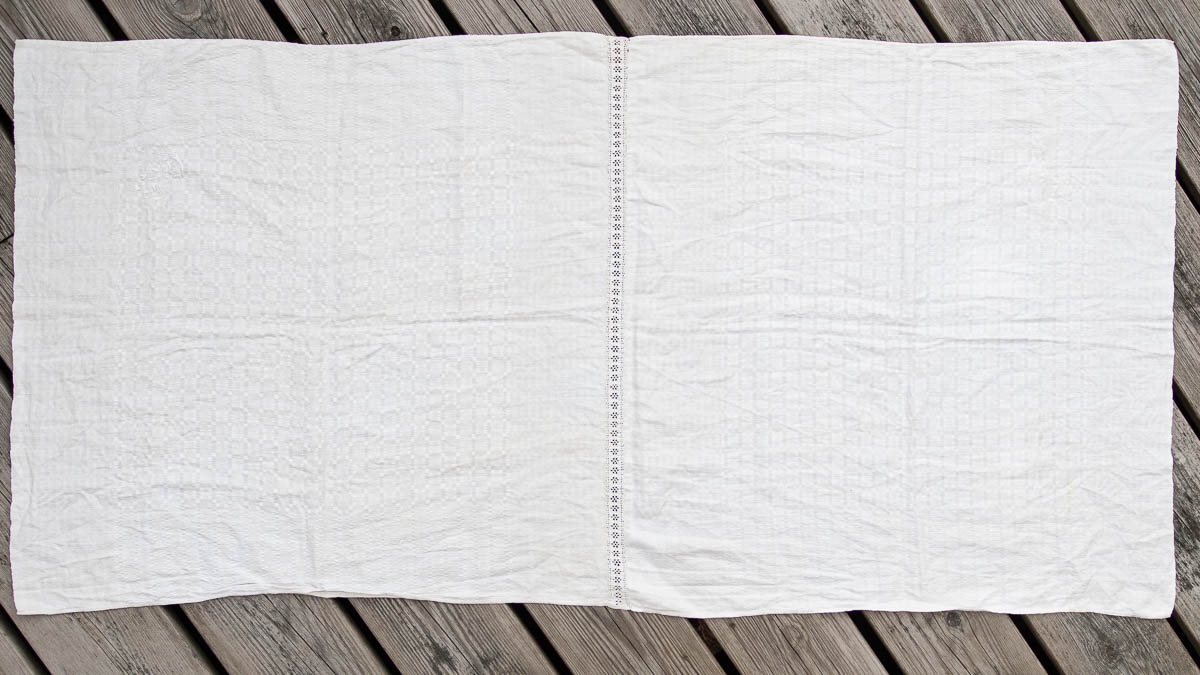
In fact now that I look more closely at one of the tablecloths I bought, I see it’s made of two large napkins with a strip of lace in between. Looks like they’re mismatched – I didn’t see that until I took this photo. And they’re huge! Each one will be turned into four napkins of more sensible size.

This will be the third incarnation for these napkins – from napkin to tablecloth and then to napkin again (but smaller). What shall I call this, then? Re-upcycling? Up-and-down-cycling?

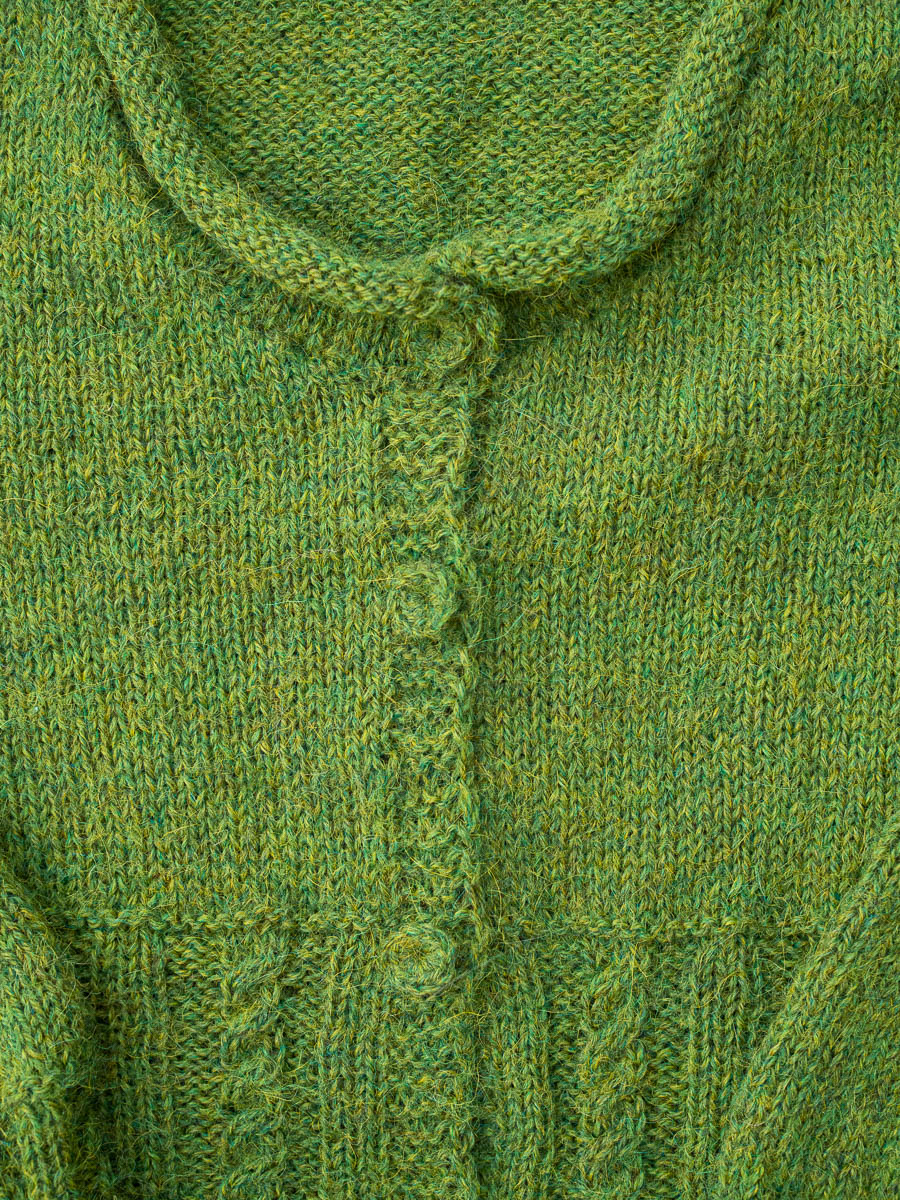
1. Sewed the buttons onto my cardigan. The buttonholes are tiny (even though I did follow the pattern instructions to the dot) so I had to make really small buttons, and still they’re quite fiddly to get through the holes. Either the buttonholes will stretch a bit with time, or I might end up not using them much.

I’m glad the cardigan is done and I can start using it when autumn comes.

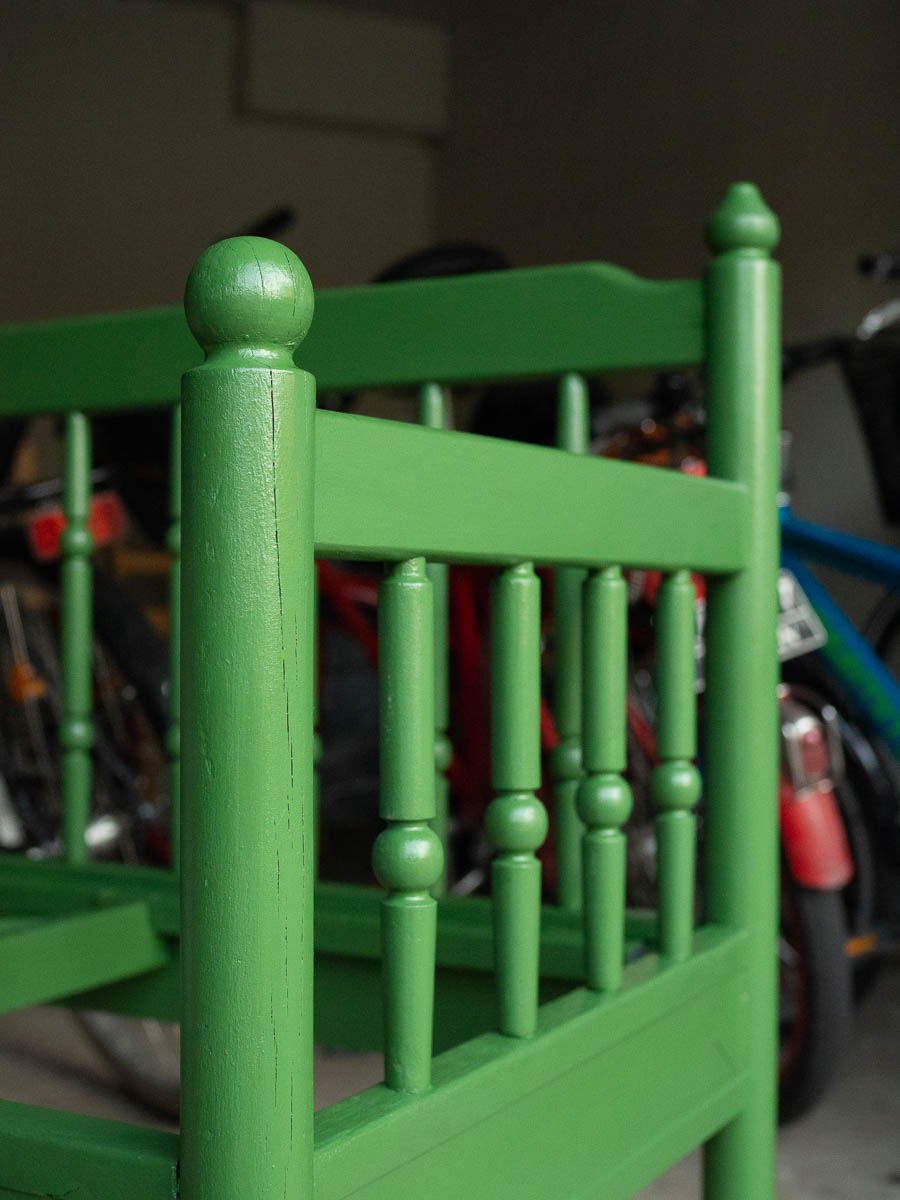
2. Painted the second coat on the garden sofa. Looking good!

It looks like some spots (not in the photo) may need a third coat. The old dark blue colour is shining through a bit, because my first coat of paint didn’t adhere well. I guess I wasn’t aggressive enough with the sandpaper.

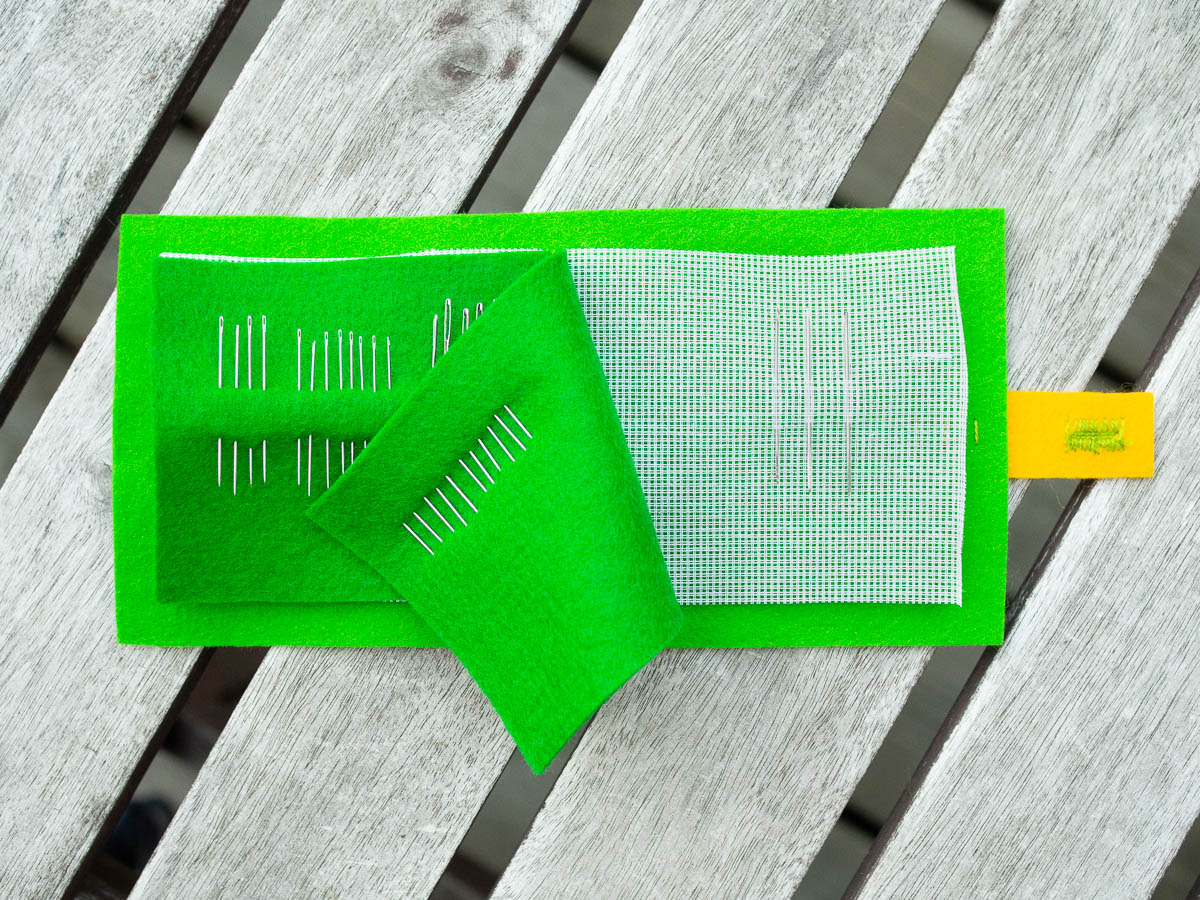
3. Sewed a needle book for rarely used and reserve needles. We have a pin cushion for the three or four needles we use most often for ordinary sewing, but all the others have been in their factory packaging (which is not made for long term storage and tends to fall apart with time) or stuck into loose pieces of paper or fabric. Now they’re all tidily stored: small needles, large needles, blunt-tipped embroidery needles of various sizes, and cutting point leather needles.

To be honest, tidying up the needles was just an excuse. It’s not been a high priority on my list. It really was just a way to find something small and useful to do with embroidery. I like small projects – a larger project can turn from fun into a must, but a small one that I can finish in one sitting is pure fun.

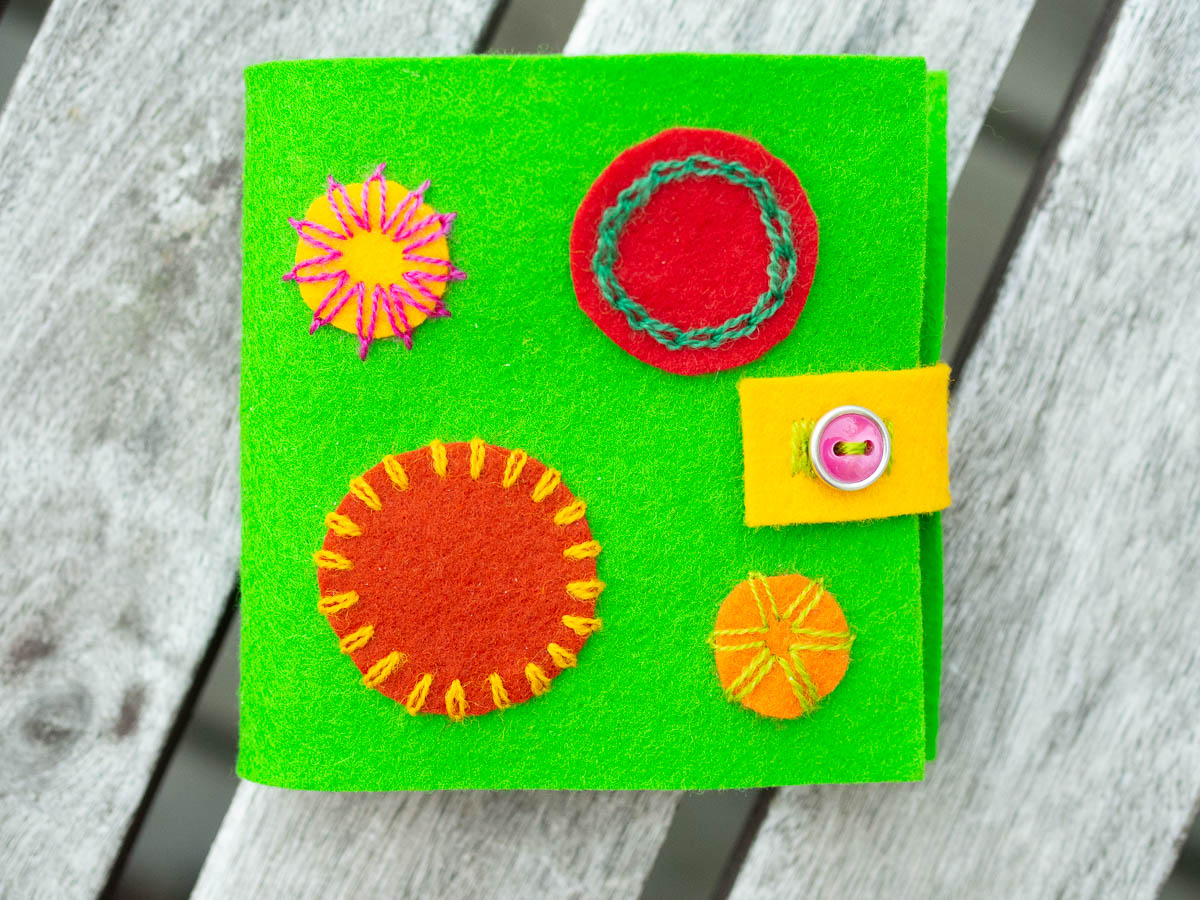
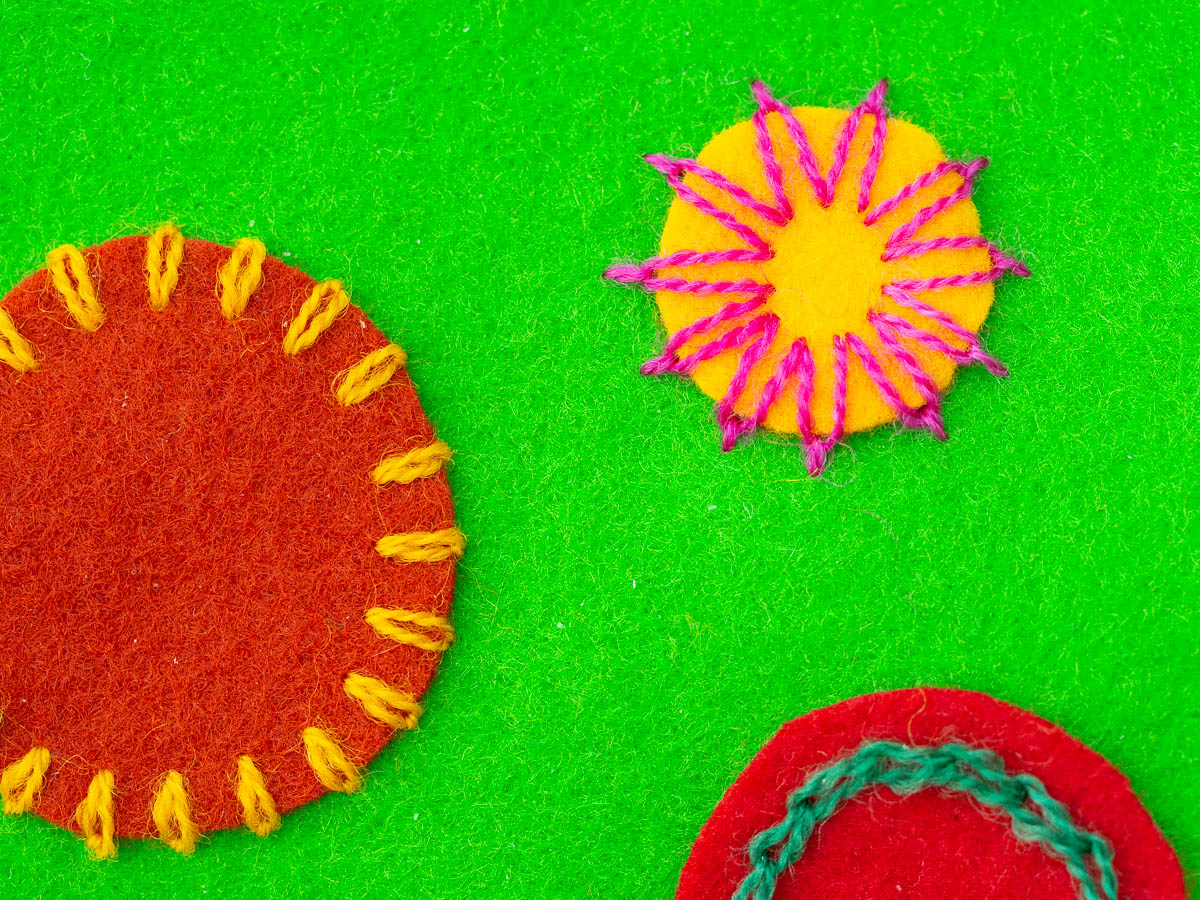
Wool felt is such a wonderful crafts material! It feels nice to the touch, it’s durable and dirt-resistant, and it is so easy to work with because it doesn’t fray. I bought a bunch of felt pieces for my advent calendar in 2011 and I still have some scraps left of that stash in odd colours. That’s actually why this needle book ended up being in green as well – I only had large enough pieces of felt in a few colours, and only the greens harmonized with each other. I was getting a bit fed up with all the green today so I compensated with extra colourful decorations not in green.


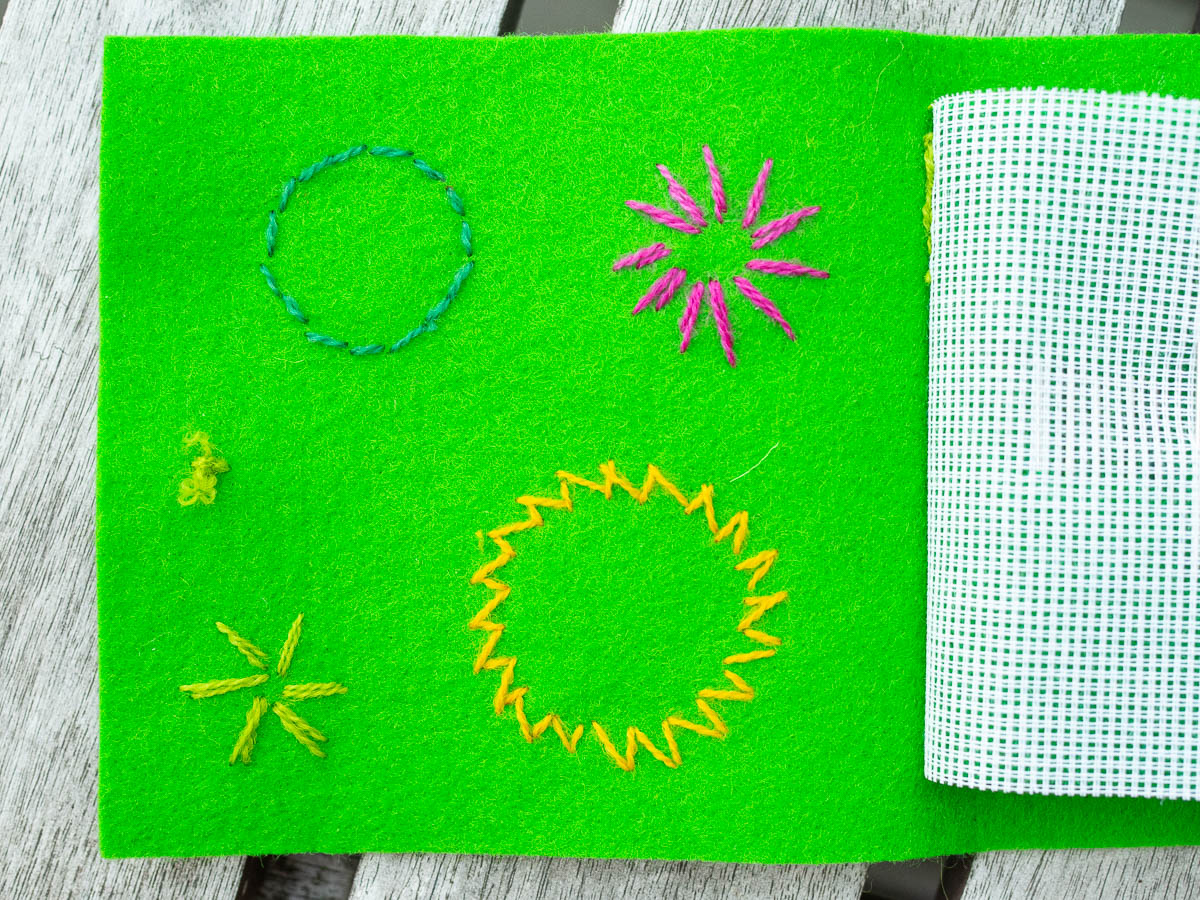
The embroidery is all chain stitch and detached chain stitch. I’m pretty pleased with how tidy I managed to keep the rear side of the front cover. I could have gone all fancy and added a lining to hide it but (a) I don’t want the added bulk, and (b) I like the raw edges.