What would Easter be without painted Easter eggs? Nothing, that’s what!

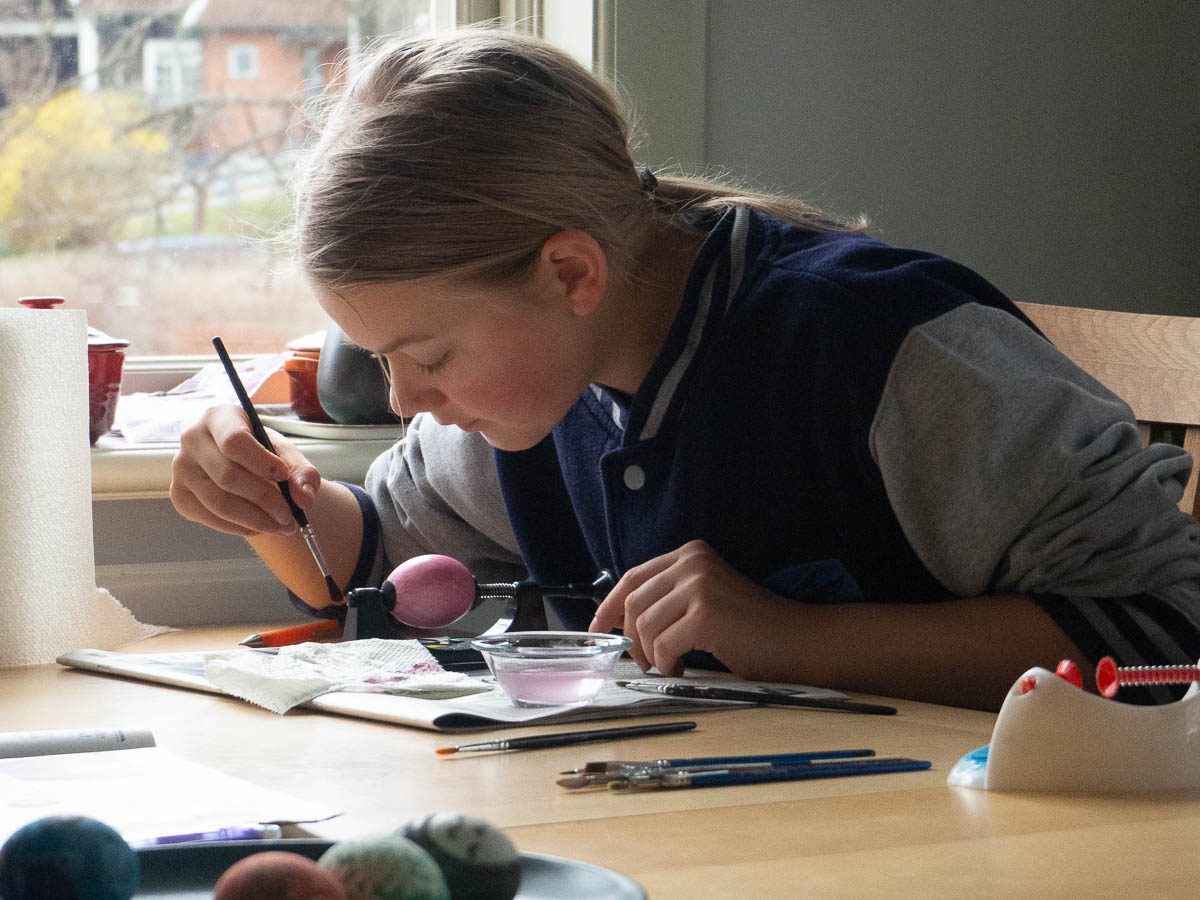
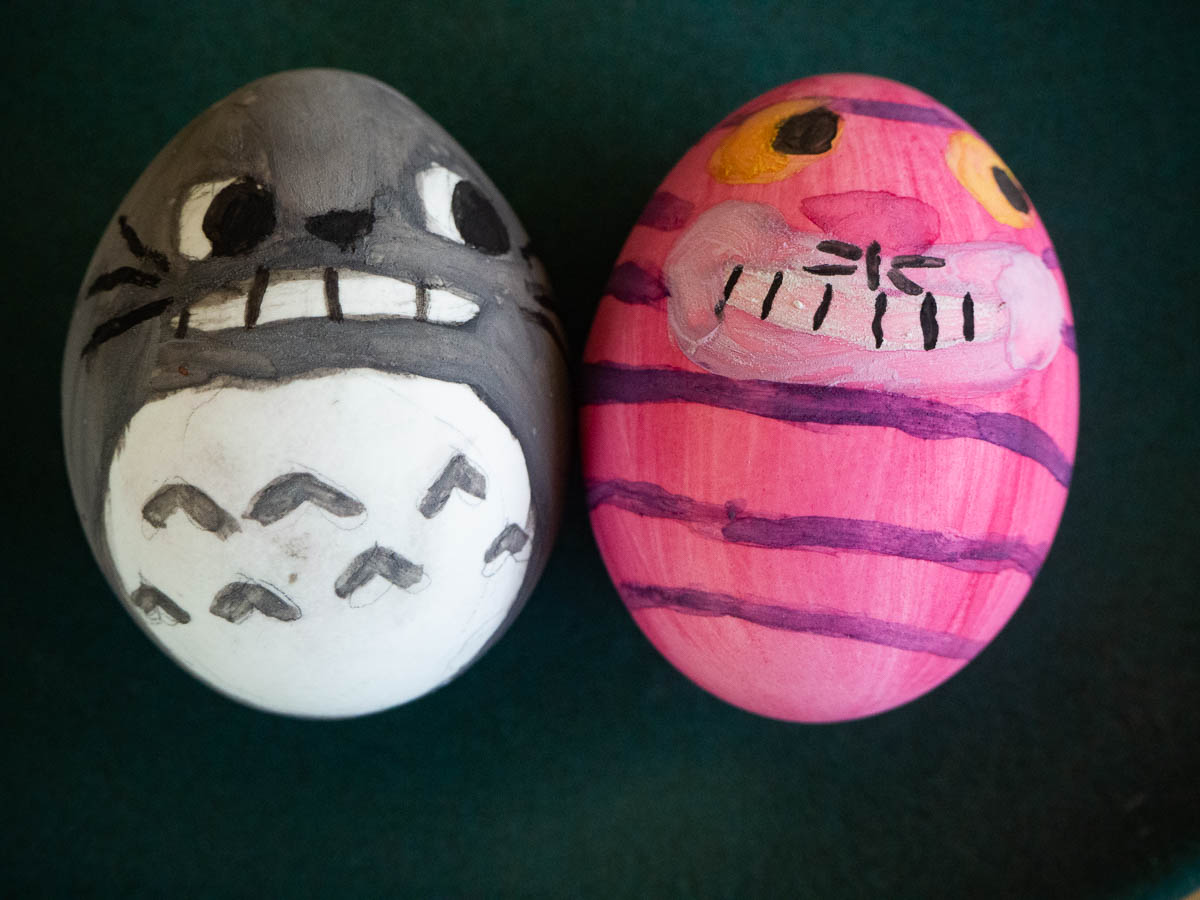
Ingrid had a theme in mind for her eggs, and I also found inspiration, so we got to work.

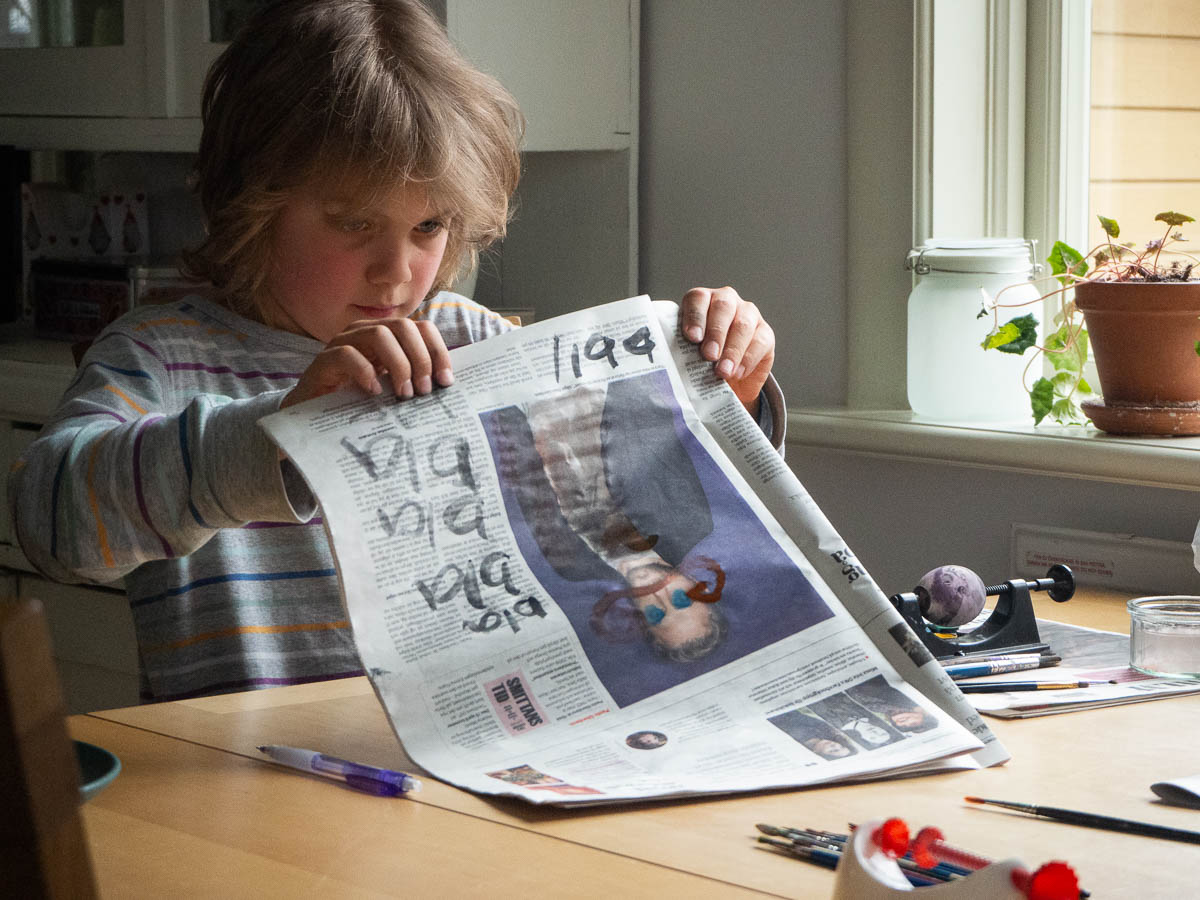
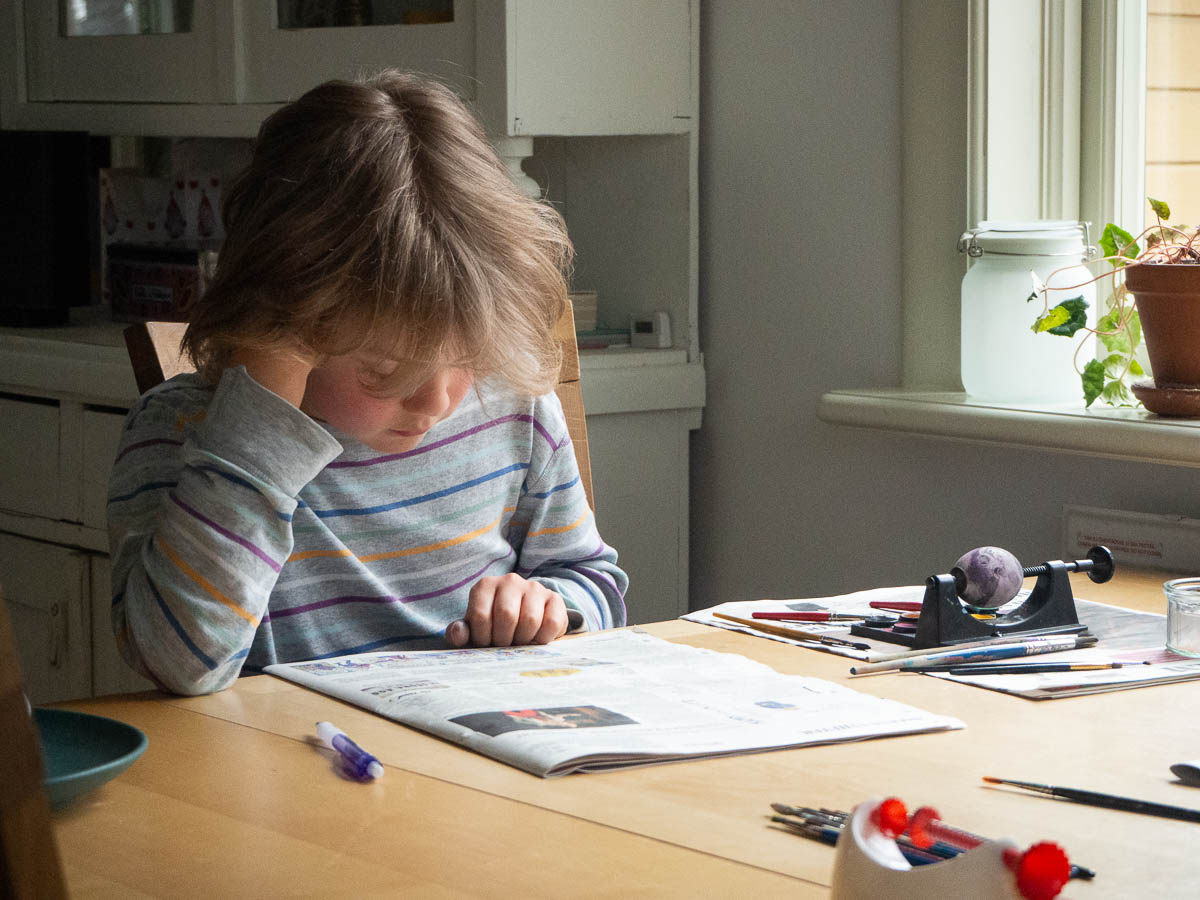
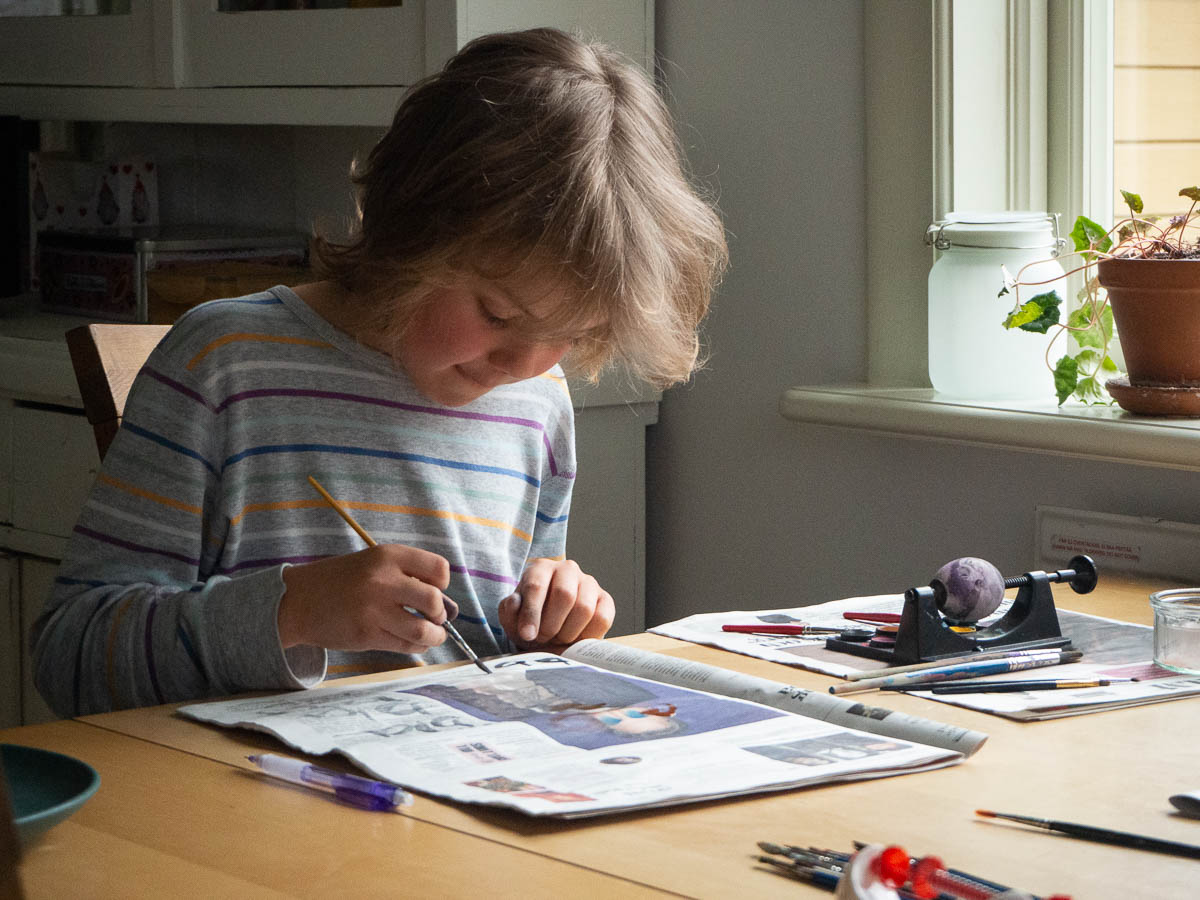
Adrian quickly finished his first egg but then struggled to find ideas for the next one. Instead he painted the newspaper protecting the kitchen table, and then got caught up in some article.


Finally I suggested that he just pick a colour and start putting some paint on the egg, and that was enough to get him unstuck.

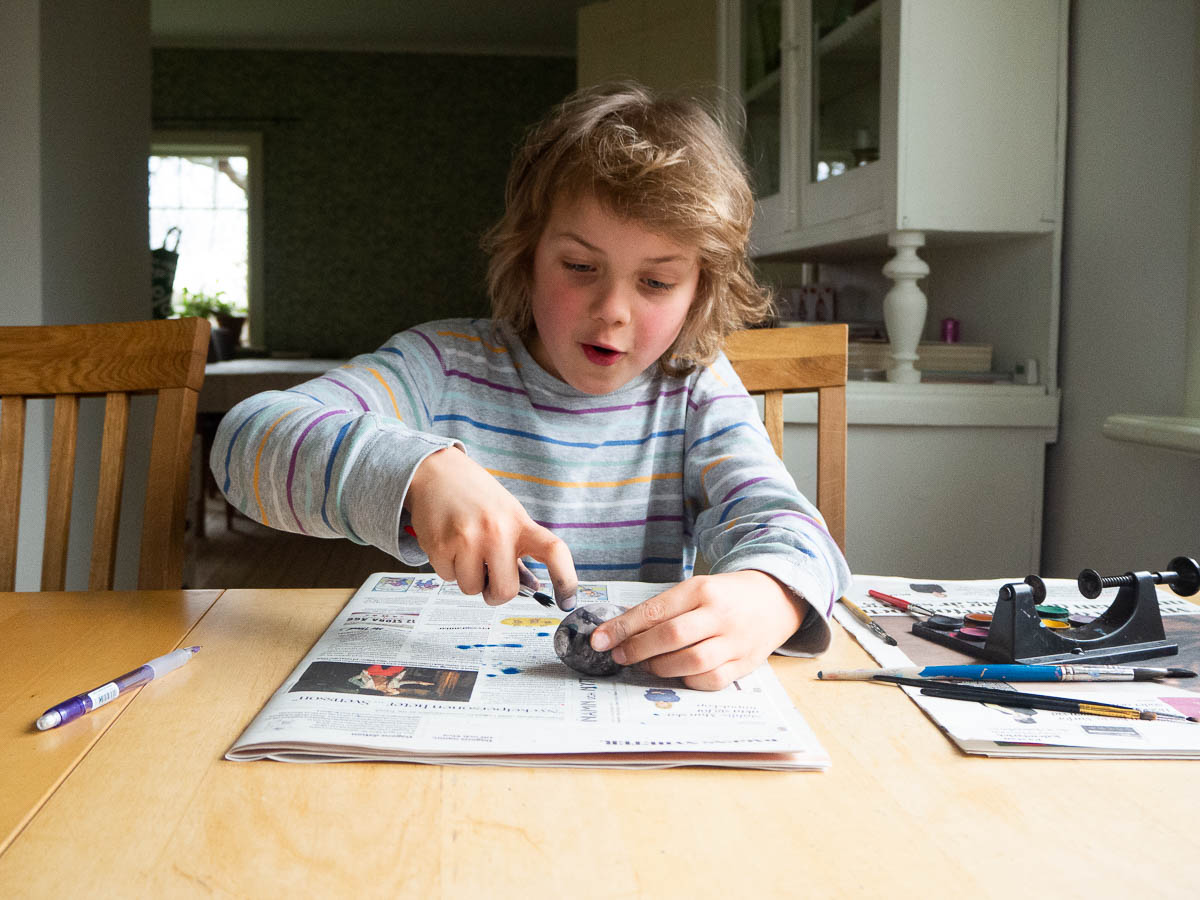
He usually makes abstract designs on his eggs, and today was no exception. This is him with a dark egg that he energetically splatters with small speckles for a starry-sky effect.

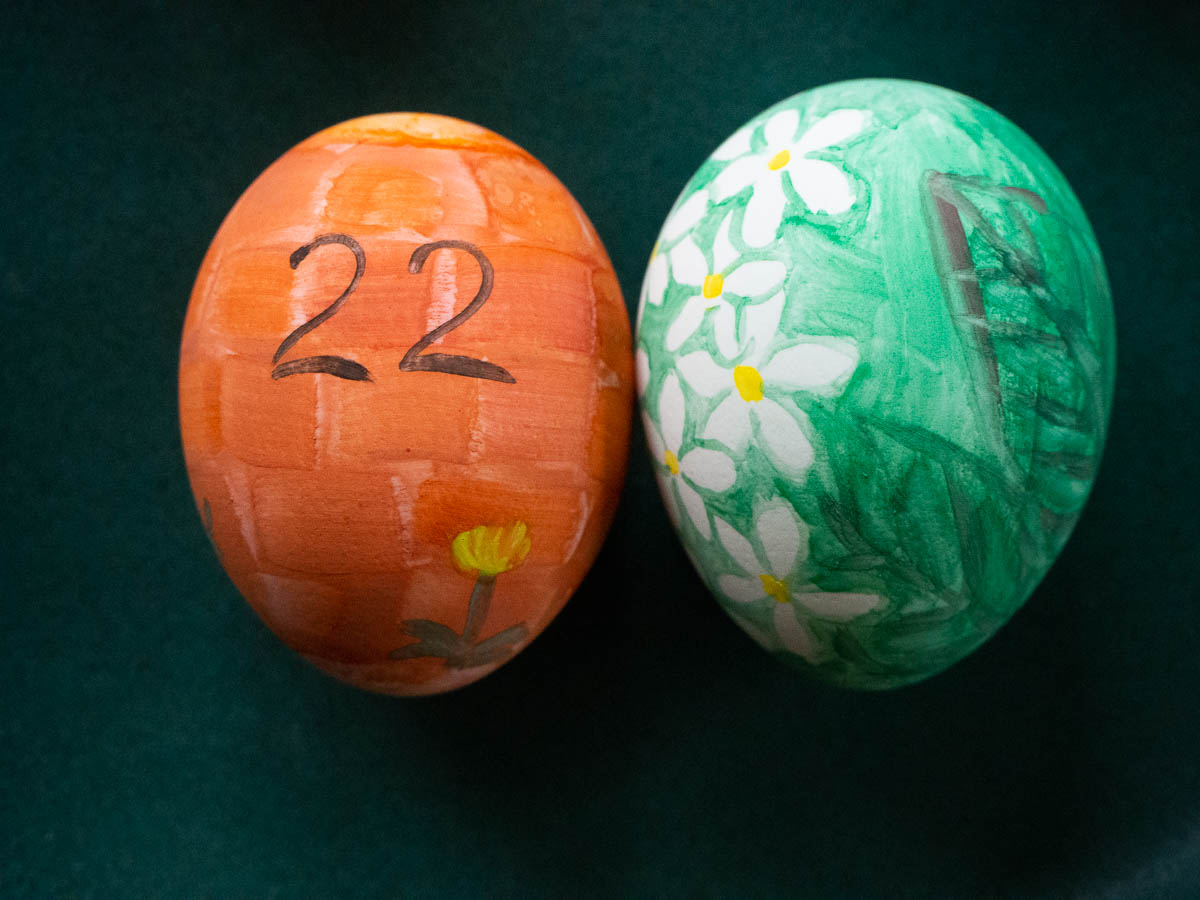
My eggs this year are a picture puzzle, but it only works in Swedish. I made a “vägg-ägg” and a “hägg-ägg”. (Vägg means “wall” and hägg means “bird cherry”.)


Everyone in this household is now cooking or baking regularly. Alone among us, Adrian had no apron that fit him.

Store-bought aprons aren’t quite one size fits all, but nearly: there are two sizes on the market instead of one. Kids’ aprons are sized for kids aged 4 to 6 or thereabouts, and the ones we had are now way too small for Adrian. Adult-sized ones are still way too large.

What does one do? Make one, of course!

I like easy sewing projects like this. No worrying about fit, just have fun. And it takes no more than a few hours to get done.

Adrian made the design, I made it happen.
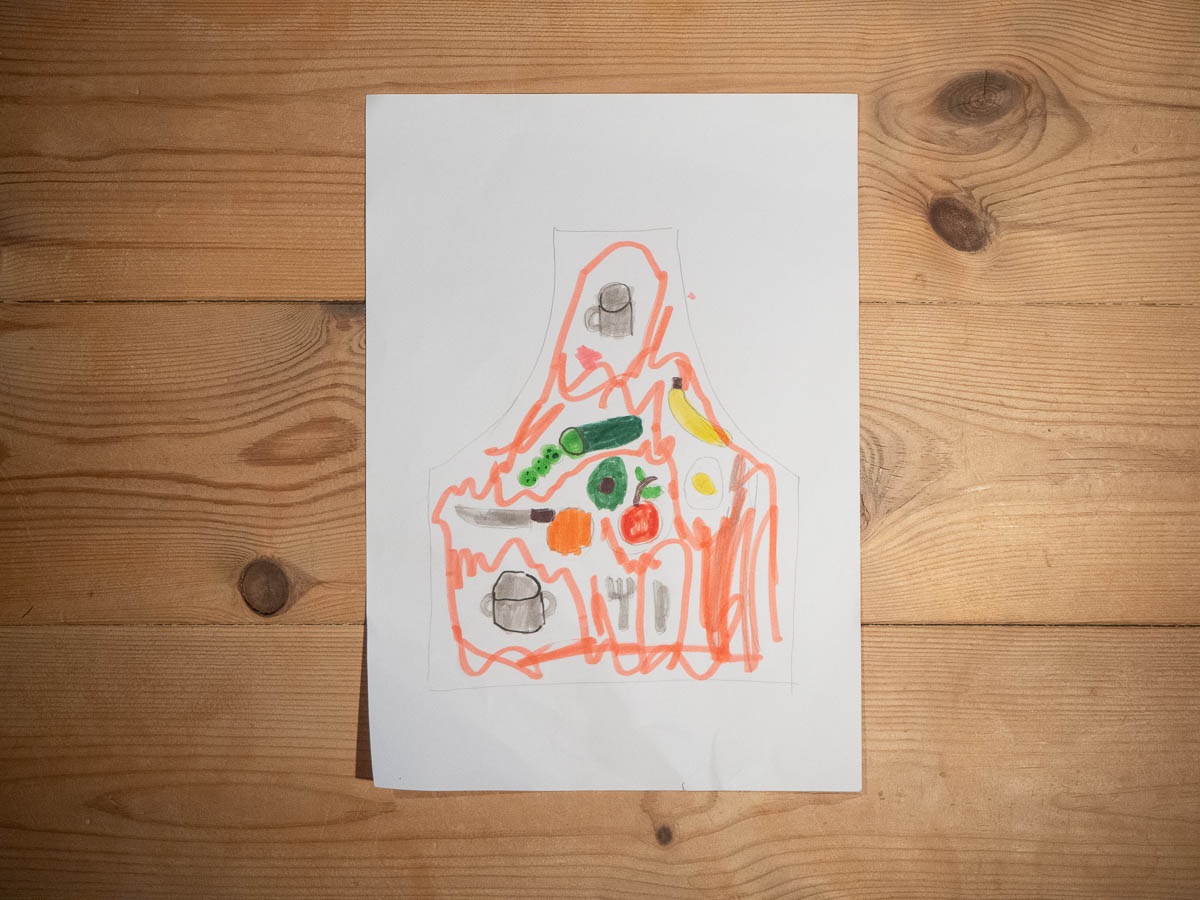
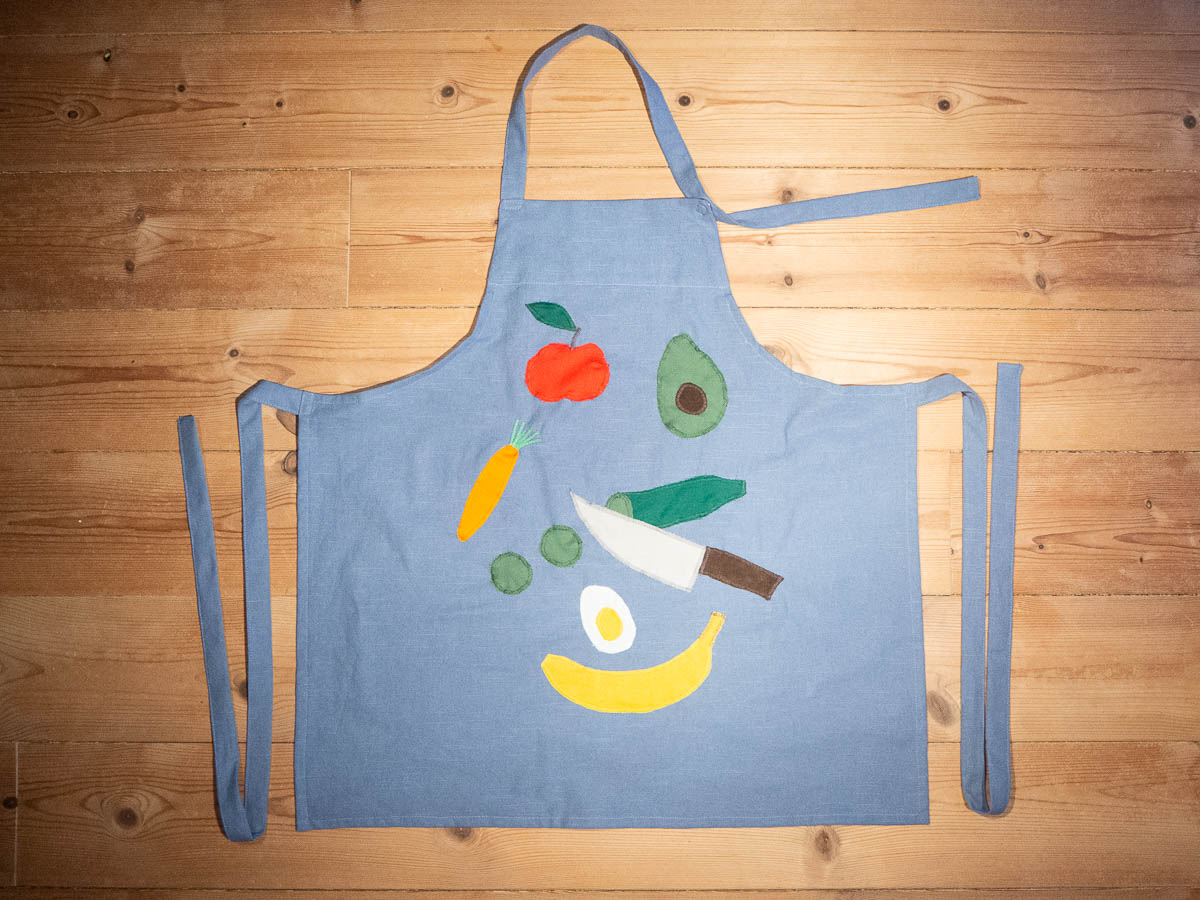
He had a very clear idea of what his apron should look like, with colourful appliques of fruit and vegetables (and an egg) and cooking utensils. Most of them he chose, I think, because they look cool – he doesn’t even really eat avocados – but the cucumber got pride of place because it is his favourite vegetable.

We later replaced the orange with a carrot, because it’s hard to make an orange not look like an orange-coloured ball, and had to skip most of the utensils because we couldn’t fit them into the space we had. We switched from pink to blue because we couldn’t find a sturdy fabric in the kind of dusky pink he had in mind. But the final result is pretty close to the original design.

Functionally, the apron has three tweaks that I wish all my aprons had as well.
One: no pocket. I’ve never used any of the pockets on my aprons – all they do is get in the way and get dirty.
Two: ties of generous length. Both Adrian and I like taking the ties all the way around the waist and tying the knot in the front.
Three: neck strap adjustable using snaps instead of rings. Non-adjustable neck straps suck; I’ve ended up tying ugly hard knots in some to make them fit. And D-rings always end up slipping. Watching Master Chef on TV, I noticed that they had snaps instead. Of course that’s the way to go!
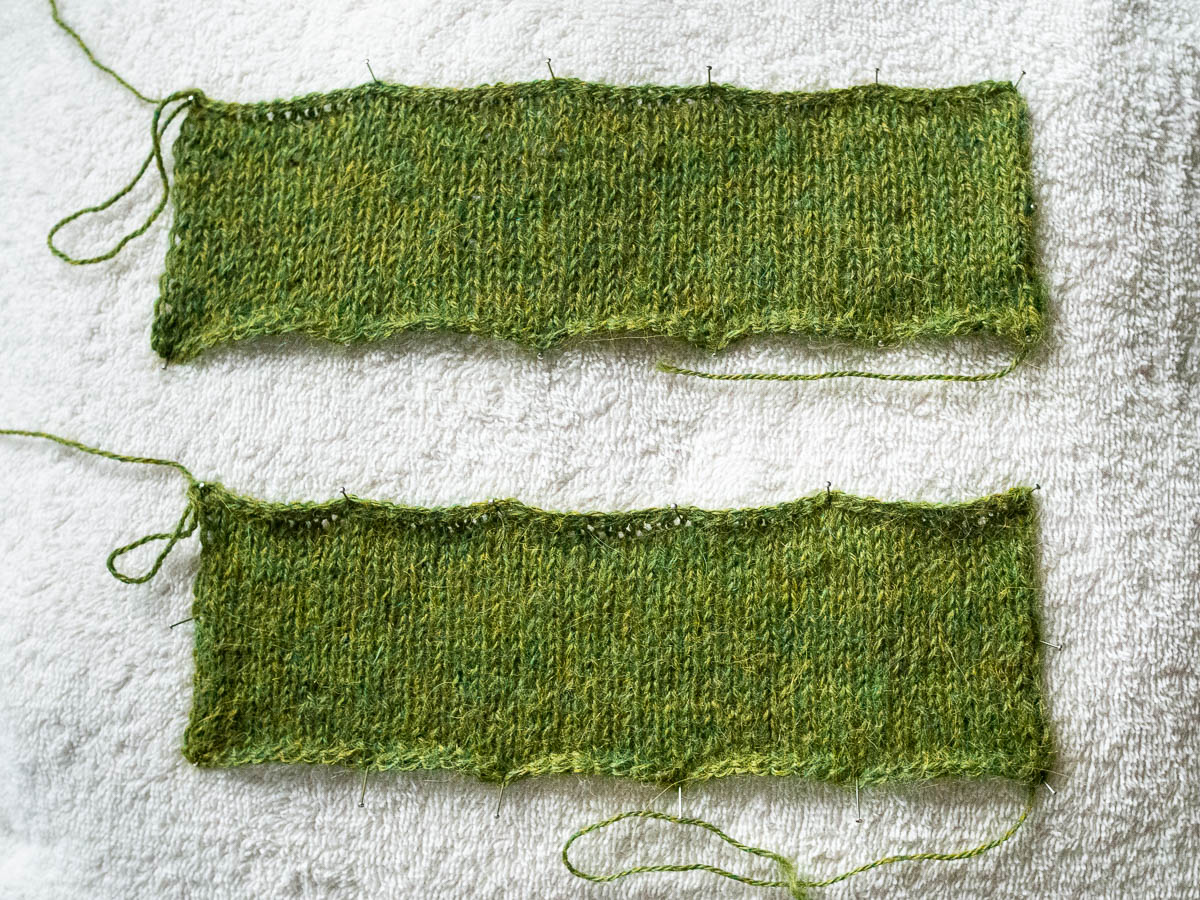
I’m preparing for a new knitting project, by knitting gauge swatches.

I will have a green cardigan!

I’ve found a new pattern that seems a bit more complicated than the previous one I tried making but maybe, hopefully, is also more forgiving. The bottom half is in cabled ribbing which should be nicely stretchy so the I don’t need to get the sizing 100% perfect. And the top half is simple stockinette stitch with no lacy complications, so the gauge swatch should be a good predictor of sizing for that part. The fit and sizing of the sleeves will probably be the trickiest part.

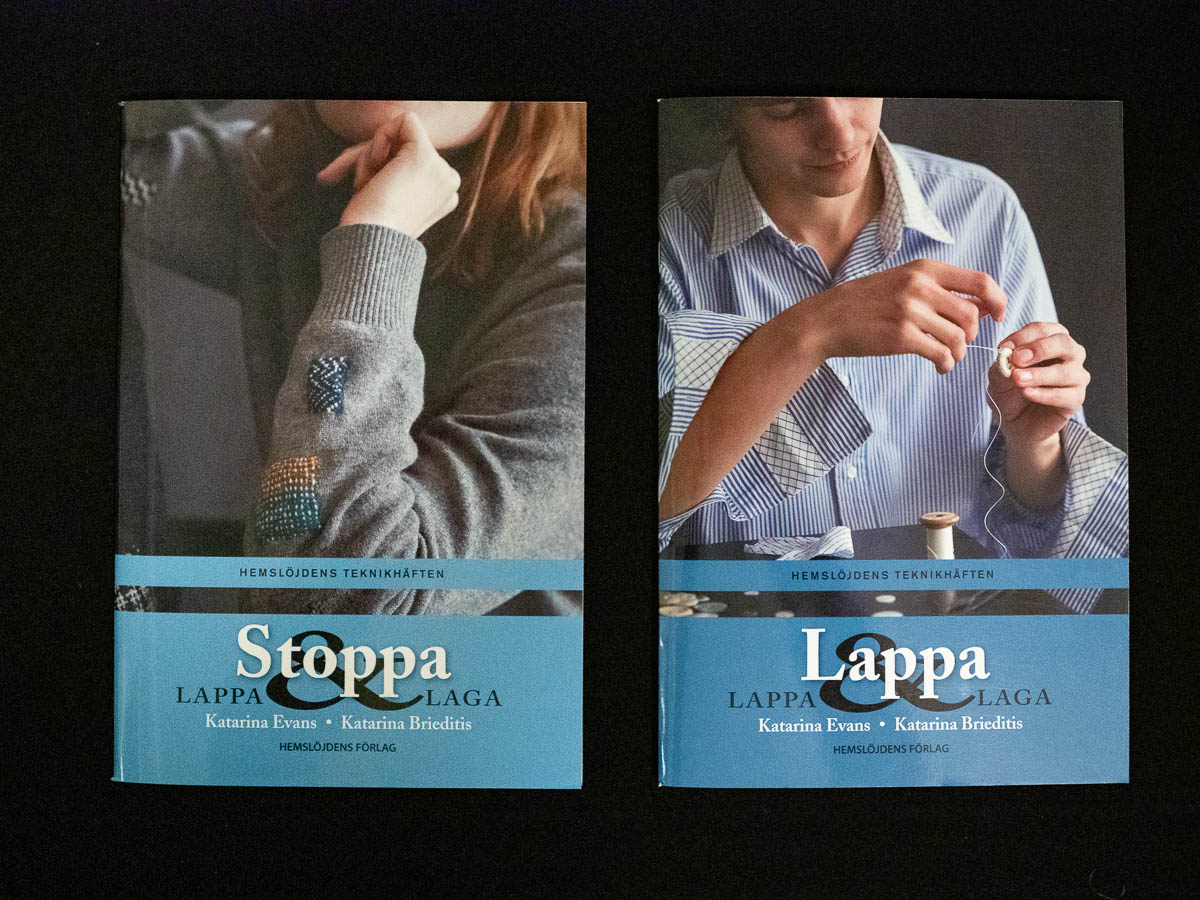
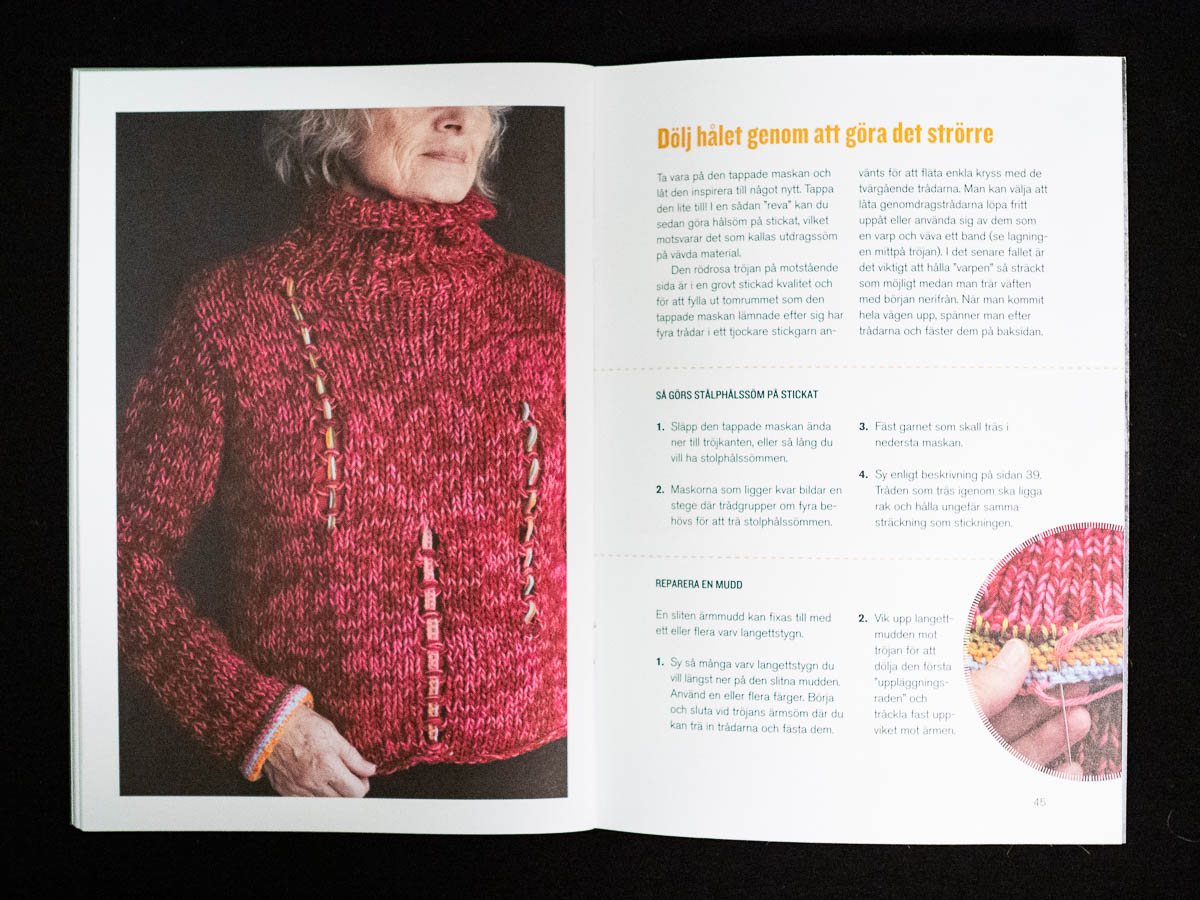
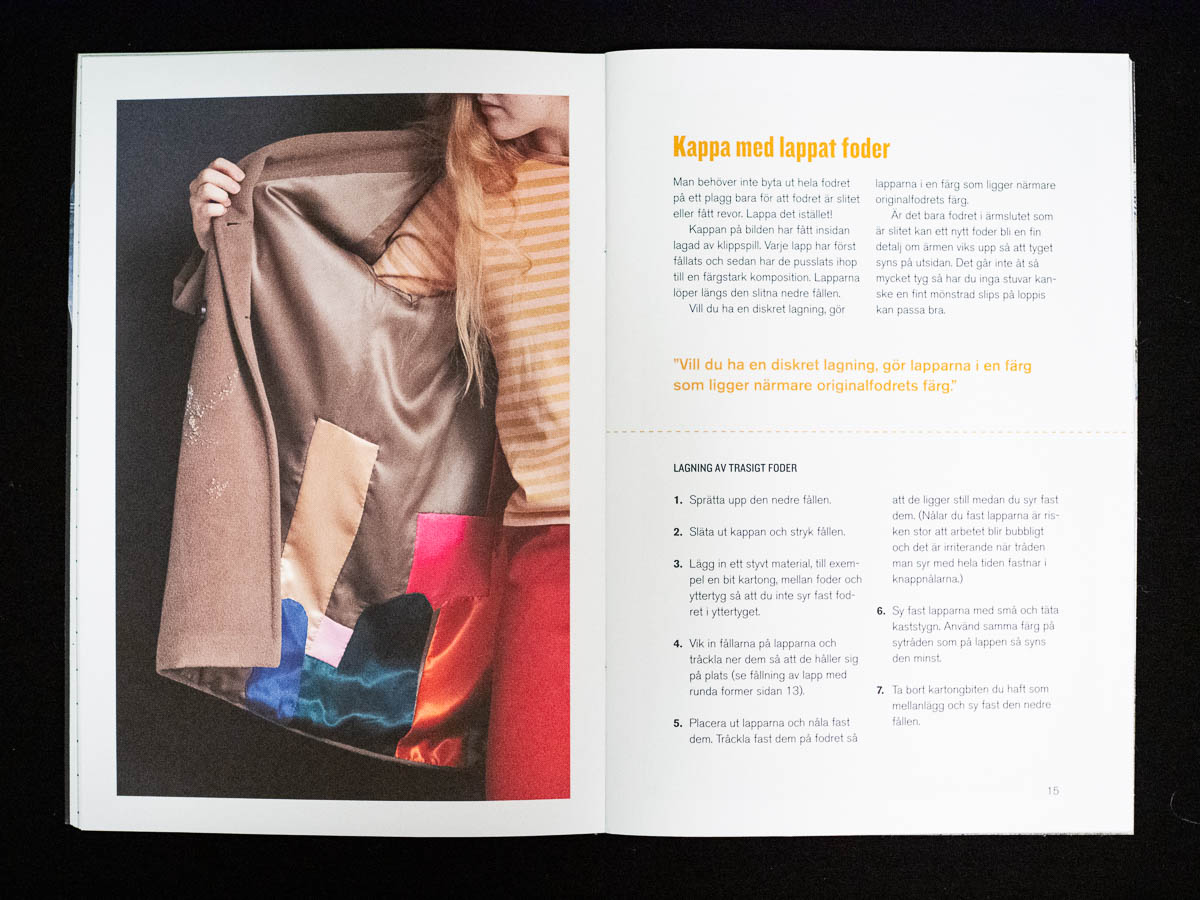
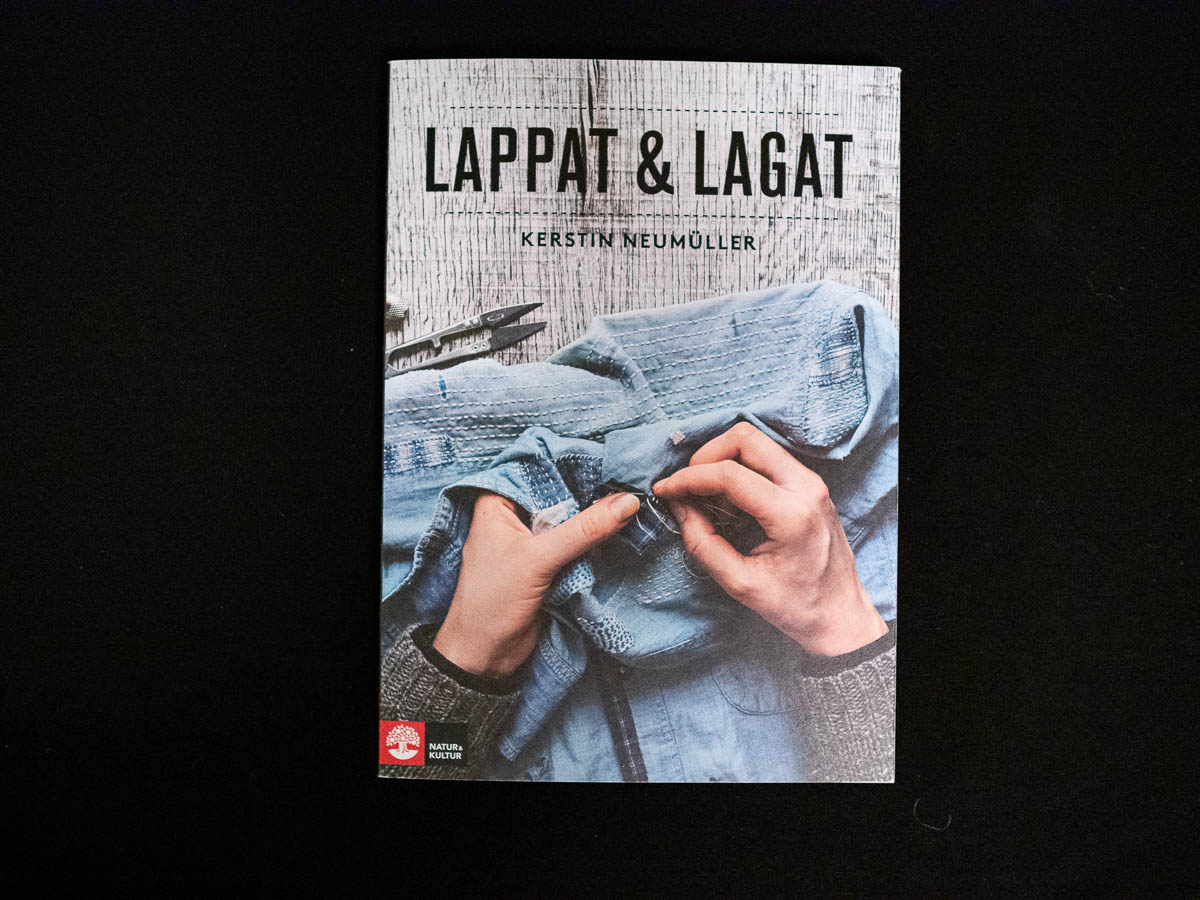
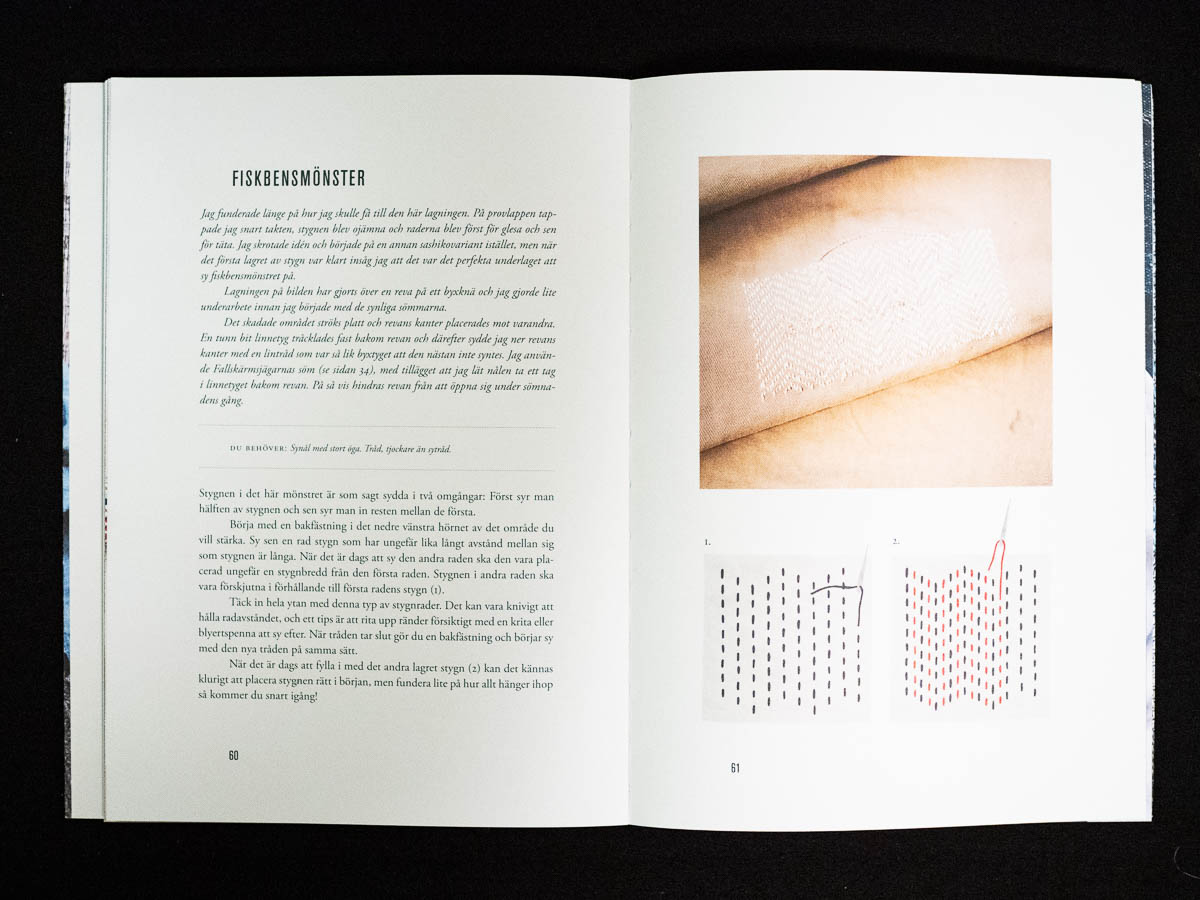
No, I’m not mending books. These are books about mending.

I have three. Two go together, and the third one stands on its own. All three are in Swedish.

The two are called simply Lappa and Stoppa – “Patch” and “Darn”. They’re published by Hemslöjdens Förlag, a small publishing house (owned by a non-profit) that specializes in books about crafts. These two are part of their “technique booklets” series – slim, focused, practically oriented booklets about a specific technique, such as darning. Their other books are also practical in nature, rather than shiny heavy coffee table books.

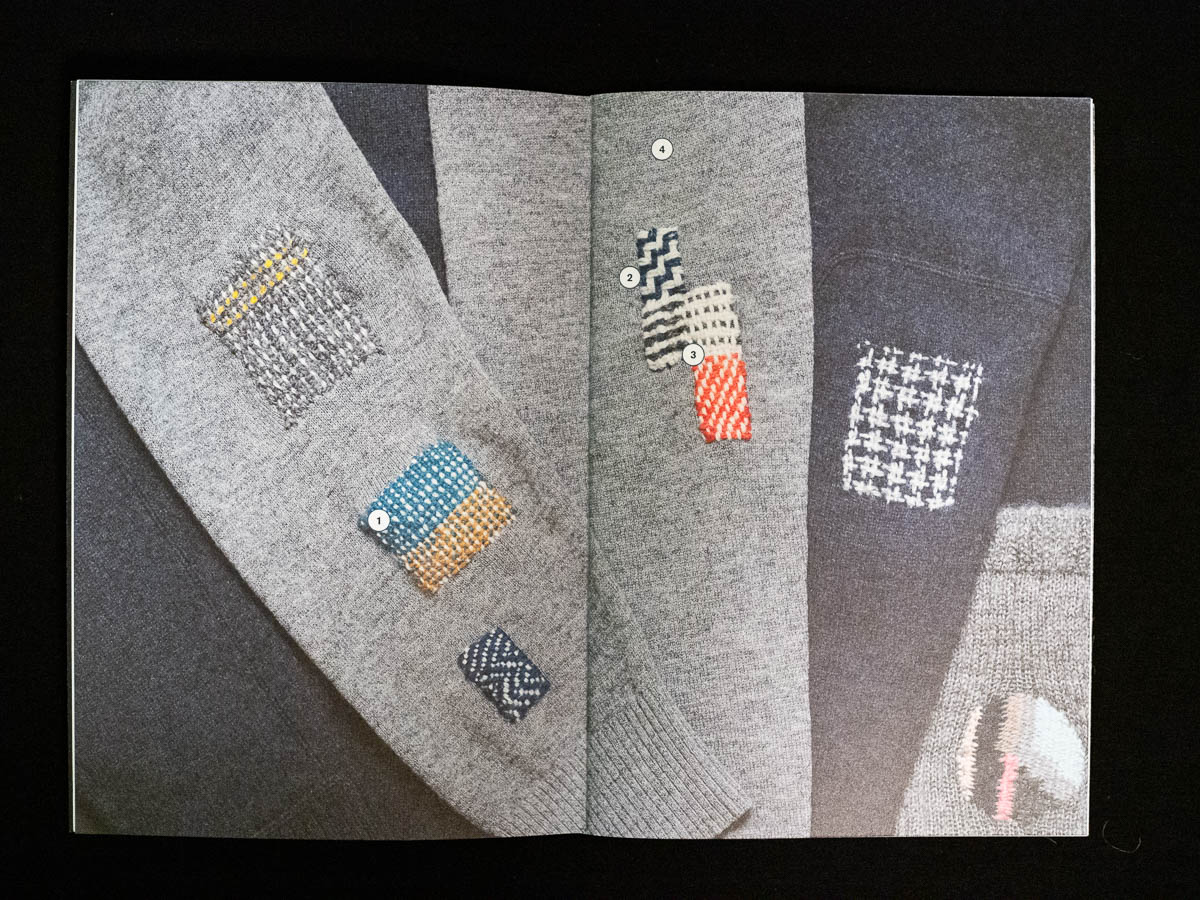
I like their books in general. I think I own about a fifth of their catalogue… But these two books are my favourites. They combine practicality with just the right amount of fun without turning too silly. Their examples are varied in style. And their way of mending things is wonderfully lighthearted and irreverent. Have a hole in your sweater? Make it larger! Or make more of them!

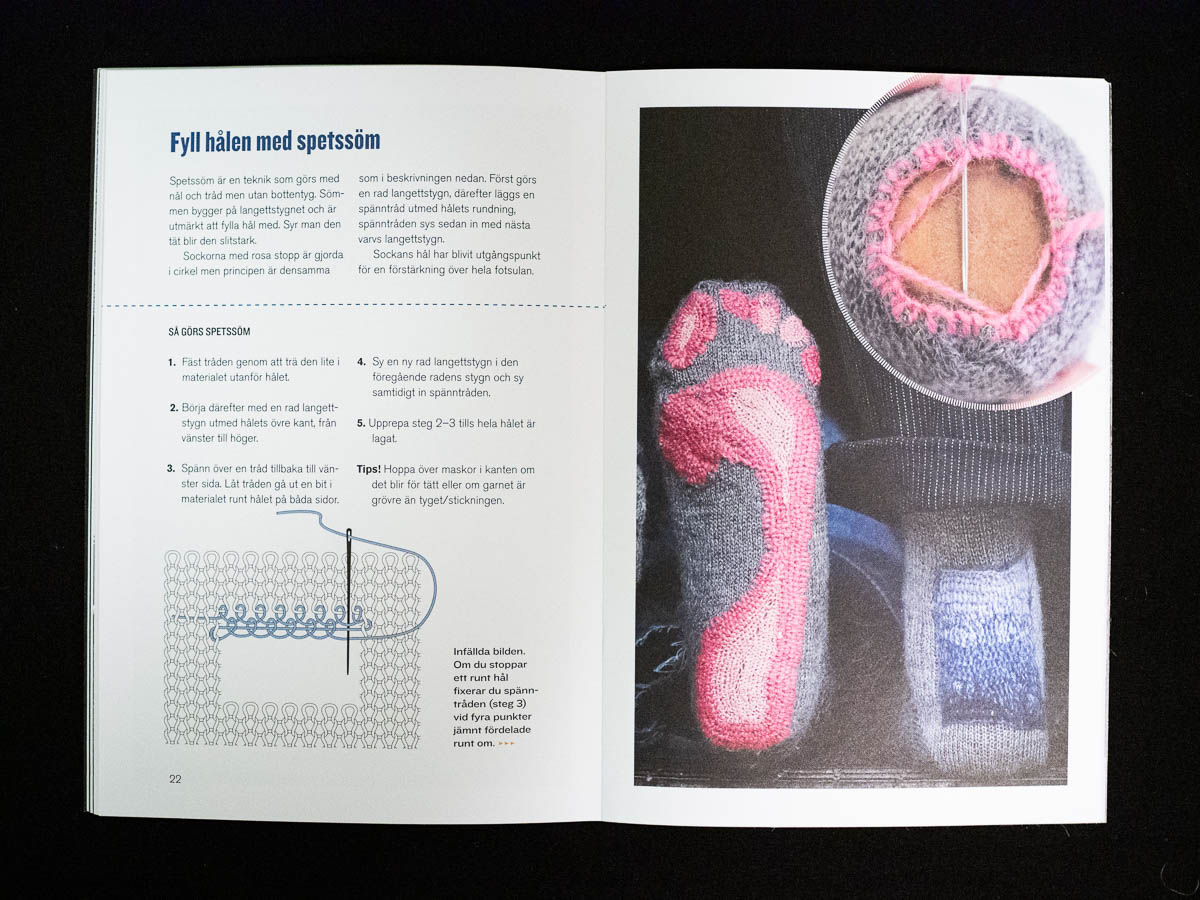
The booklets are heavy on pictures, both inspirational and instructional. Texts are mostly brief, often step-by-step.


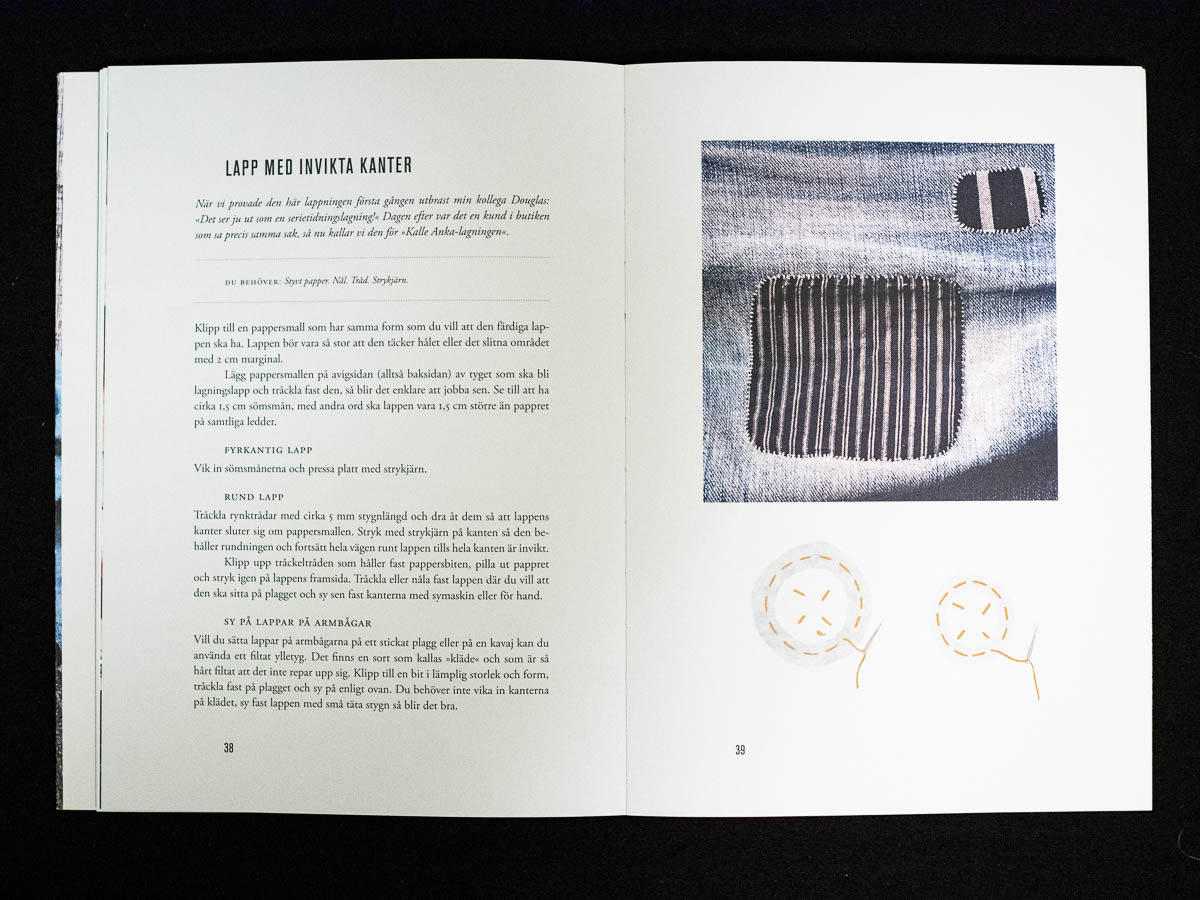
The standalone book by Kerstin Neumüller is also named simply Lappat & lagat, “Patched and mended”. It’s an actual book, thicker and more solid than the two booklets, and covers a broader range of mending topics than just patching and darning: how to repair a buttonhole, how to repair leather goods, etc. It’s more solid and serious in tone as well. More instruction and less inspiration; more text and fewer step-by-step lists. It’s a useful book and I’ve learned things from it, and if I didn’t have the others I’d probably be quite happy with it – but it’s simply not quite as much fun to pick up than the other two.


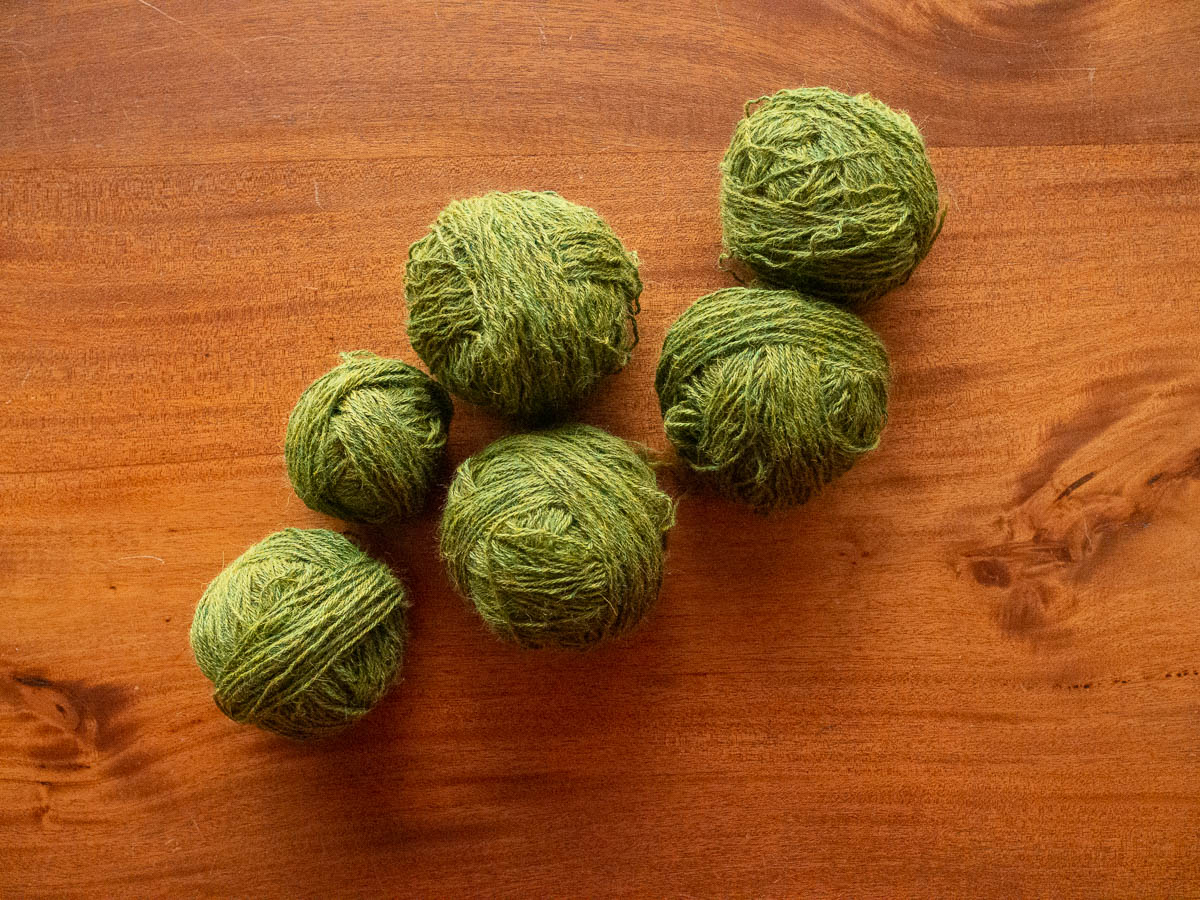
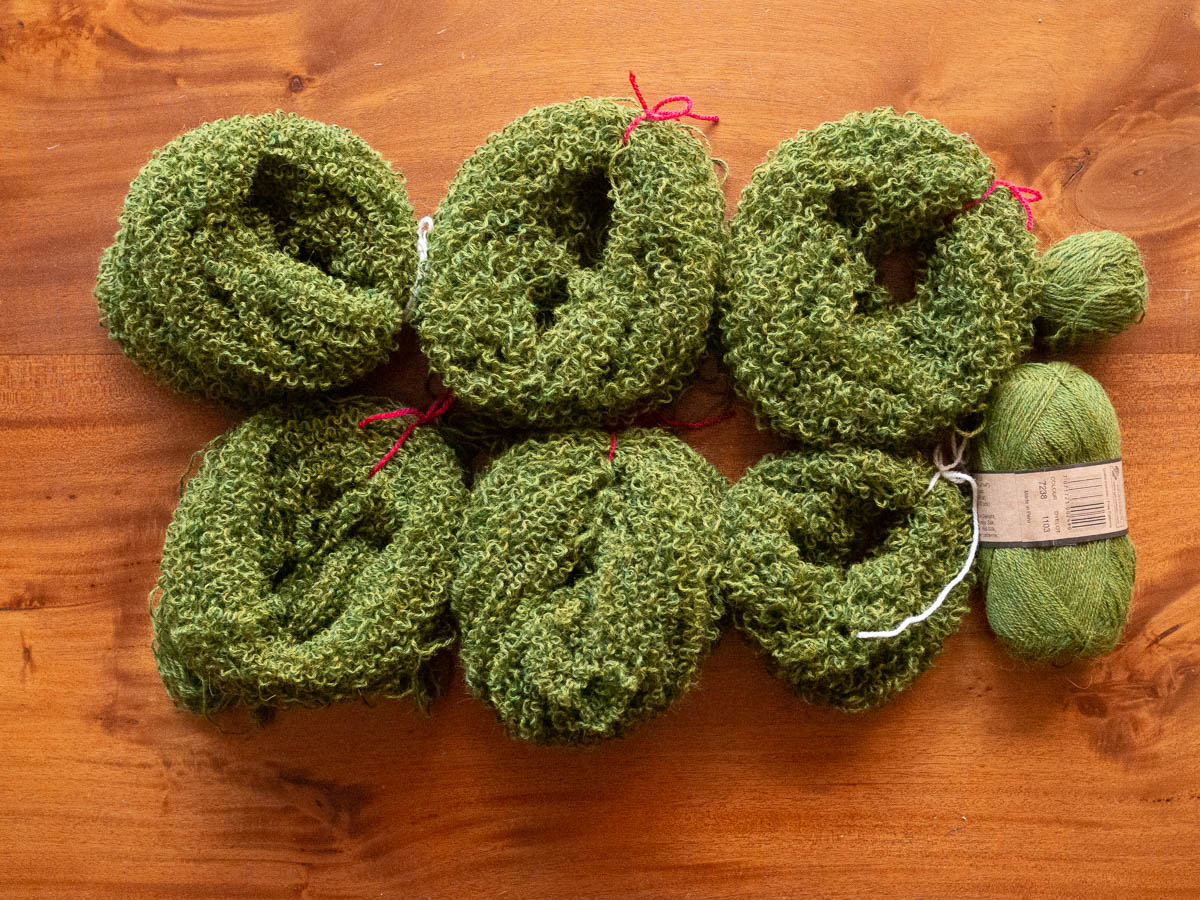
I straightened out those kinked hanks of yarn and wound them into balls again. For the n:th time. So now I’m ready for a new start. Because I still have this yarn, and I still want a green cardigan, and how else will I get from green yarn to green cardigan if not by starting knitting again? I just need to pick a new pattern.


Remember that green cardigan that I have now started on four times, and twice gotten most of it done only to realize that it does not fit? (First attempts in 2012 to 2015, then again in January 2018 to May 2018.)

It’s been waiting for me in my cupboard, half-finished for nearly two years. But whenever I think about it I mostly feel frustrated and hopeless, so I never actually pick it up. Instead I’ve worked on various other projects.

It’s time to give up.

This pattern is not going to work for me. Either it’s not right for me as a knitter, or it’s not right for my body – which would explain how I can end up with a cardigan where some parts fit me while others are way too tight or hang loose and floppy.

Today I ripped it all up so I can reuse the yarn. Deep inside me I’ve apparently given up on this cardigan a long time ago, because I didn’t feel the least bit of loss while losing all this work. All I felt was relief.


I am so glad I read the newspaper this morning and that I even skimmed the pages with event listings and event ads, which I sometimes skip. Otherwise I would have missed the yearly sewing and crafts festival, and that would have been a pity.

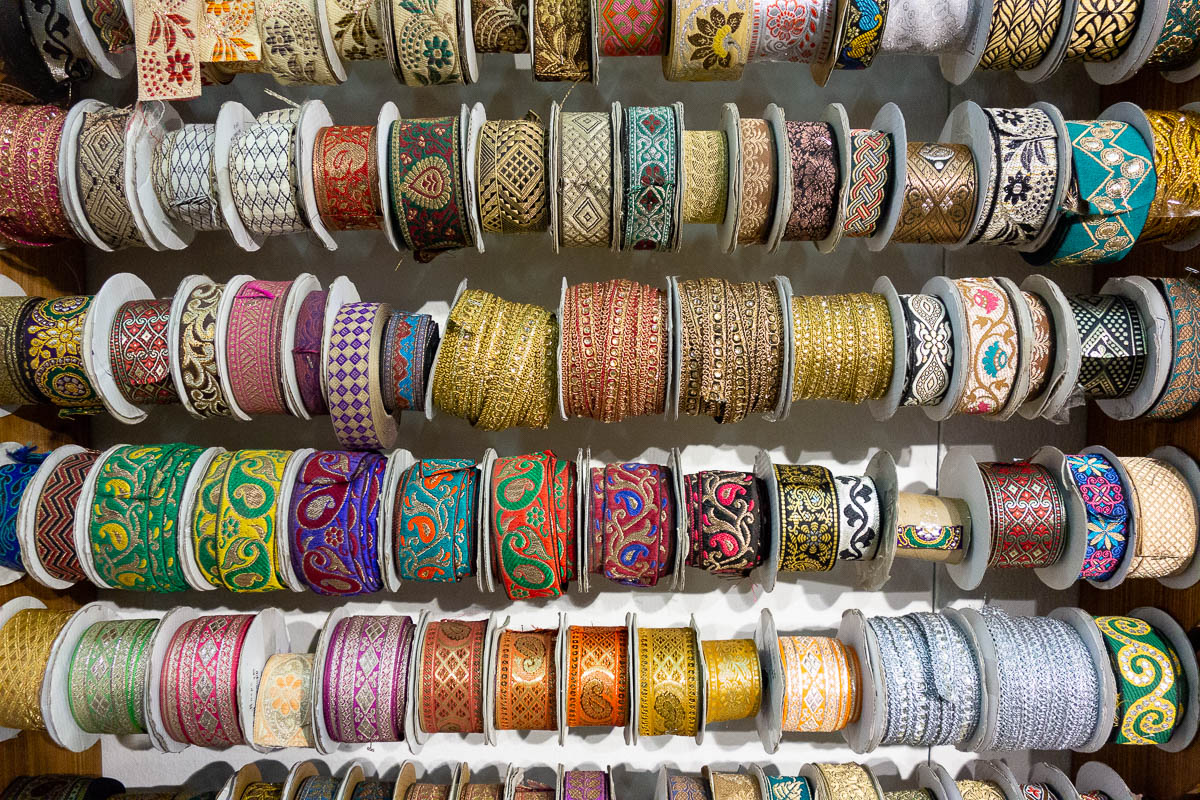
I spent several hours just walking around and looking at things. I barely bought anything (2 metres of fancy woven ribbon and three pairs of socks) but I came home with a whole lot of inspiration and creative energy. Just like when I go to software conferences – even when I don’t learn much, I get an incredible amount of energy.

I was not very interested in the sewing side of the festival, other than as a curious observer. Sewing machine makers and resellers took up a lot of floor space. There was also an immense variety of fabric. Quilting is clearly a big thing – there were lots of vendors selling colourful fabrics in smallish pieces clearly meant for patchwork. Also lots of printed jersey fabrics, and I think the main target group there was mums sewing clothes for their young children.

Mums sew, but knitting, embroidery and other such textile crafts is clearly mostly done by ladies of an, ahem, mature age. I felt quite young there.

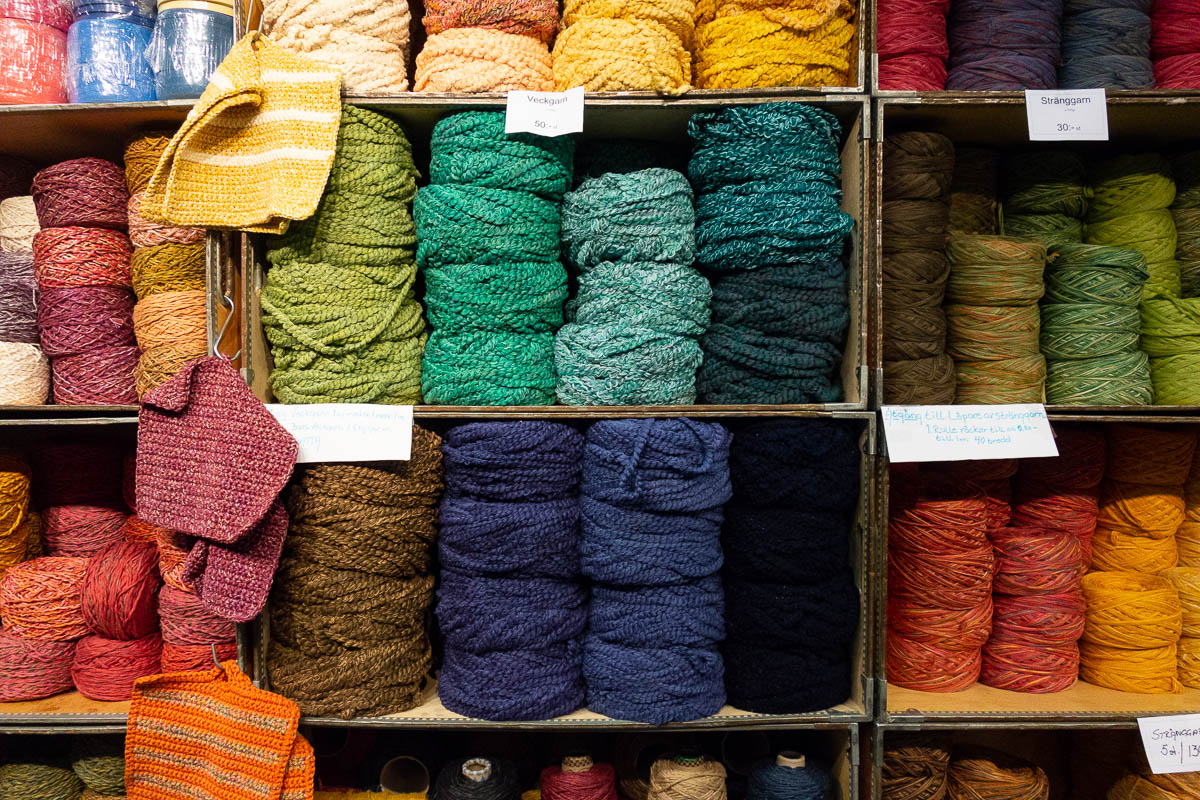
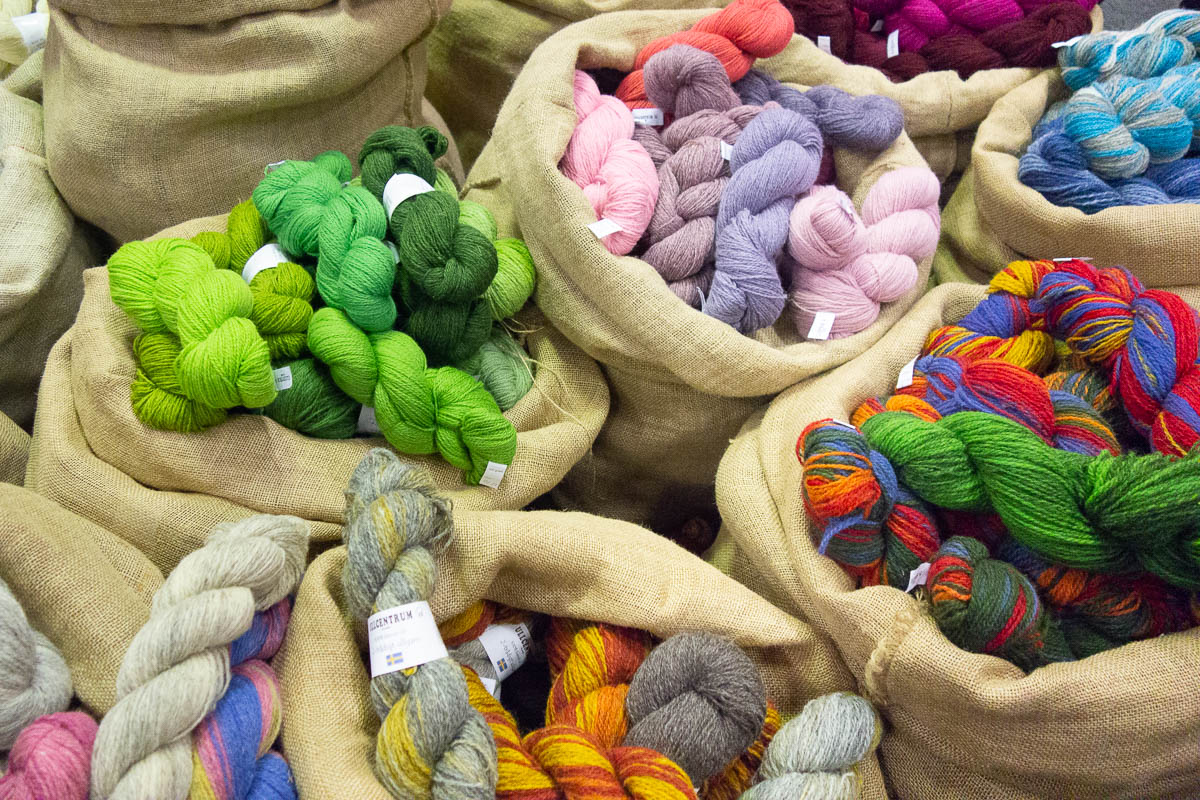
There were endless amounts of crafts materials of all kinds. So many lovely yarns in so many colours! But I can’t just buy something without a plan, without knowing what I will use it for. Maybe some other year I’ll go there with some actual projects in mind and have a reason to buy some.

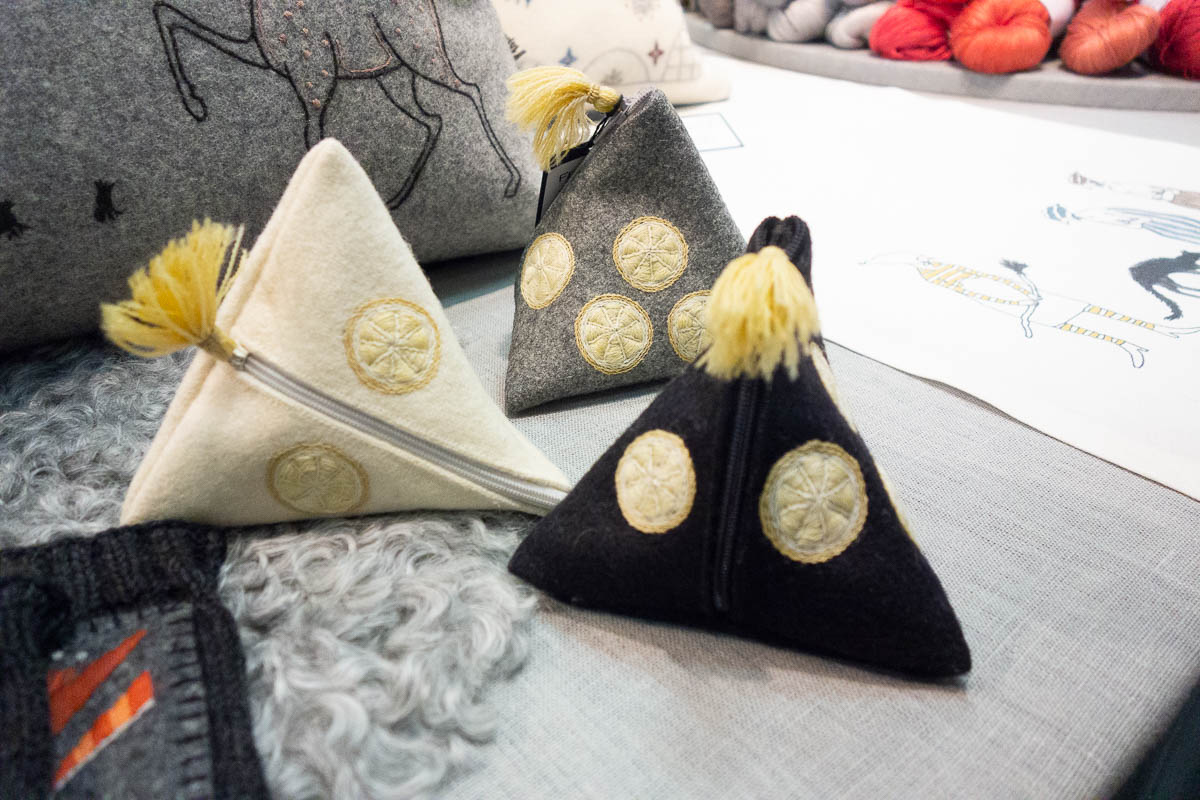
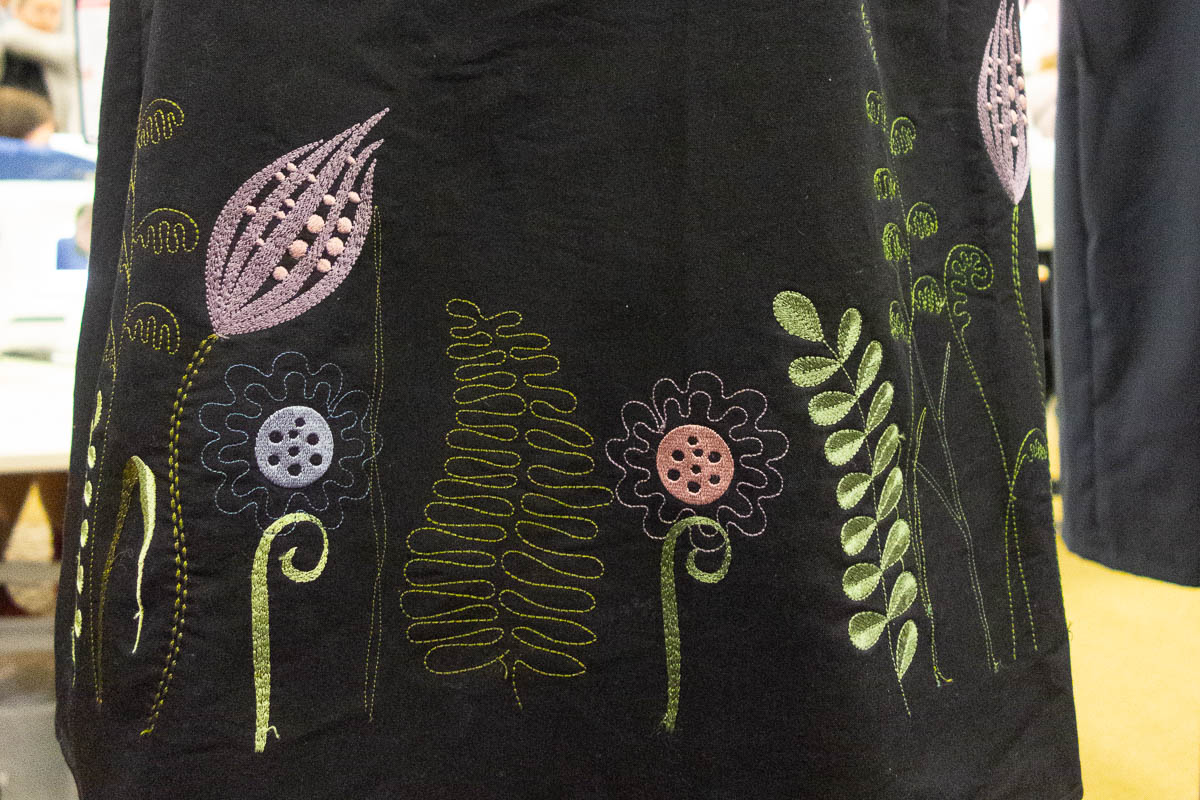
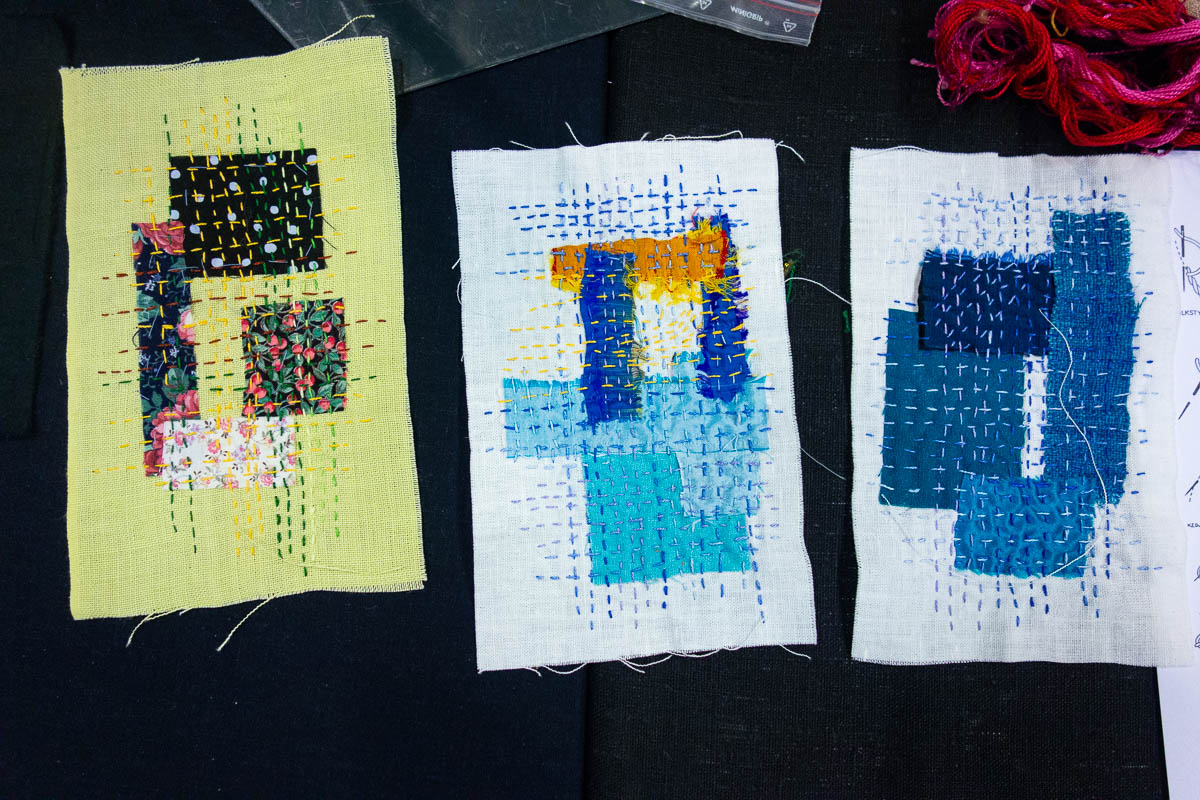
I was more interested in all the finished projects, displayed to inspire you to buy yarn or even whole ready-made kits. I’m not interested in embroidering someone else’s design, but I can still be inspired. I’m especially happy to find ideas about what to actually do with embroidery. It’s not hard to come up with designs, the hard thing is to find something to do with them. I don’t want to make useless things that can only be hung on a wall.


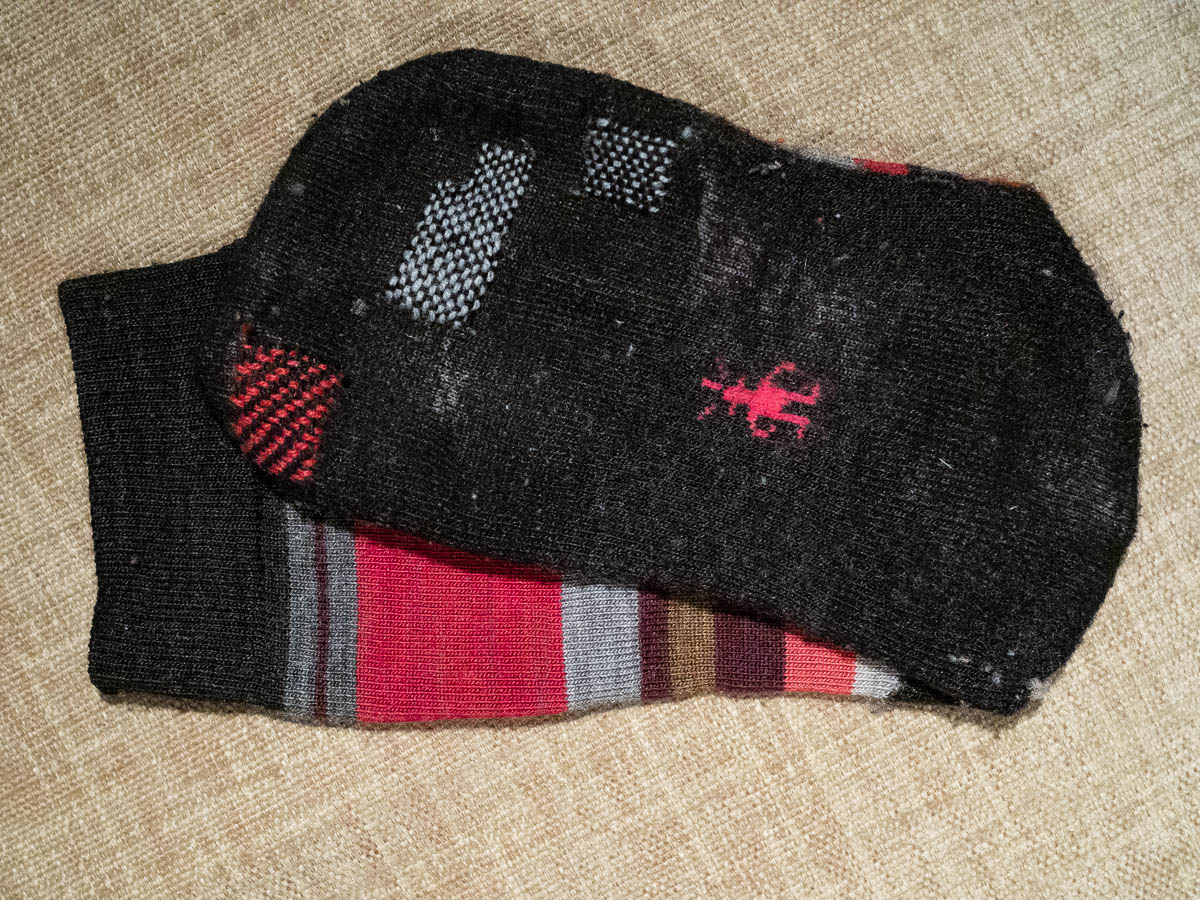
Darning black socks with black yarn turned out to be really hard. In my efforts to see the individual threads I kept stretching the holes too wide, so when I was done with the darning it didn’t lie flat.

At some point I realized how stupid this was. Why was I making this so hard for myself? I picked up a yarn in a contrasting colour. And now I could see what I was doing! My darning on this third sock looks a lot more even and tidy than the first two I did before it.


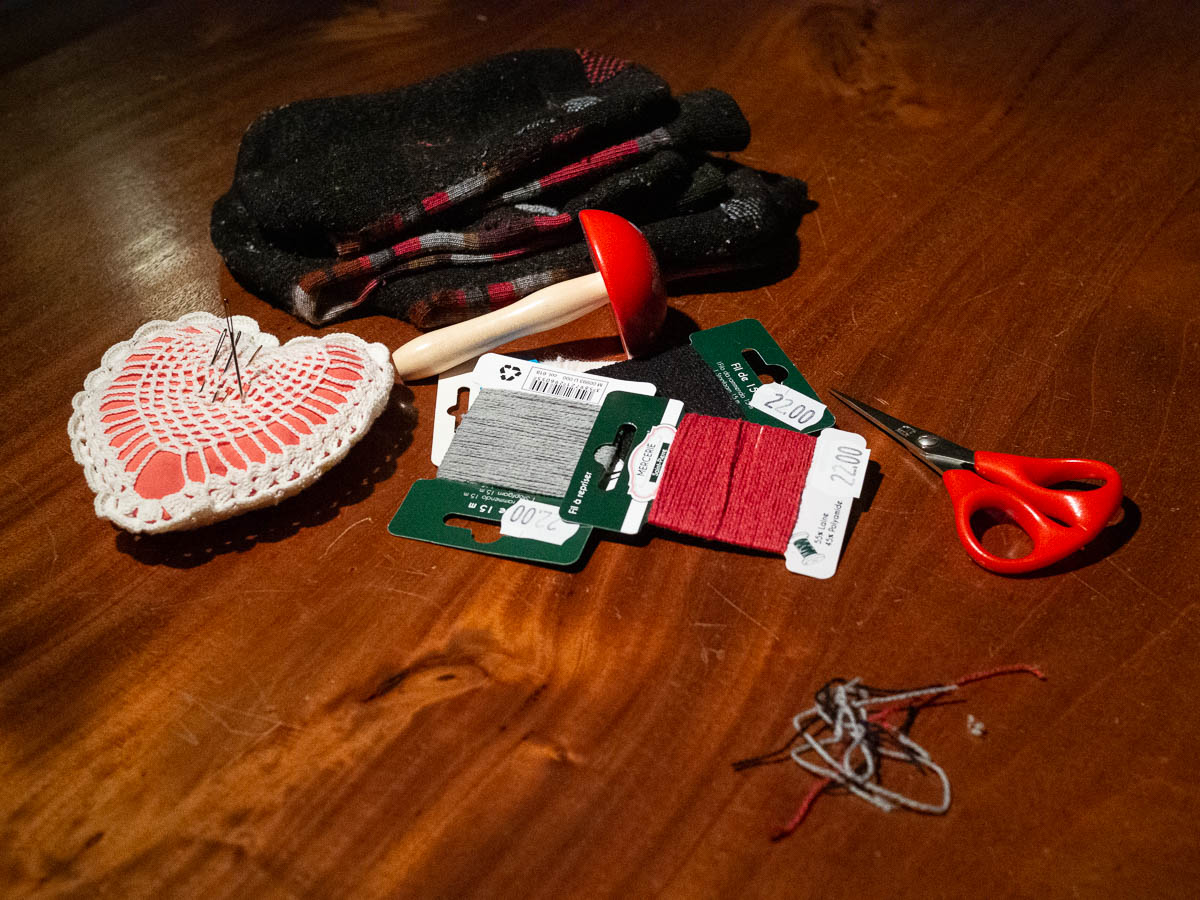
I’m darning socks again. I recently rediscovered a very nice shop that sells Swedish crafts (which I remembered) and crafts materials (which I had mostly forgotten). The best thing they had was darning mushrooms. I’ve been able to darn some of my favourite socks anyway, but this makes the job a lot easier, and the end result looks better.

The BBC, meanwhile, considers darning mushrooms a historical object, no longer used.

The darning mushroom would have been an essential tool in an era when women were constantly repairing worn socks. Before the advent of synthetic materials, socks and other items of clothing were in constant need of repair. Darning would have been considered a necessary skill for girls and young women, part of their education as future wives and mothers. The mushroom was used to make repairs to clothing, bed linen etc a practice that has largely disappeared with the development of modern textiles.

I don’t agree with the BBC about using the mushroom for bed linen, though. This is for darning holes in stretchy, knitted materials, not in woven textiles.

The mushroom brought back memories of a mending tool that really is no longer used: latch ladder menders. My mum had one of these. It was really fiddly to use, but the mend was practically invisible. The instructions in the photo suggest stretching the stocking over an egg cup. Since my mum worked in chemistry, we used a small lab beaker instead.


I’m starting to look forward to my spring ski tour at the end of March, and thinking about the kit I’ve missed during my previous hikes and trips. A sewing kit was one of them.

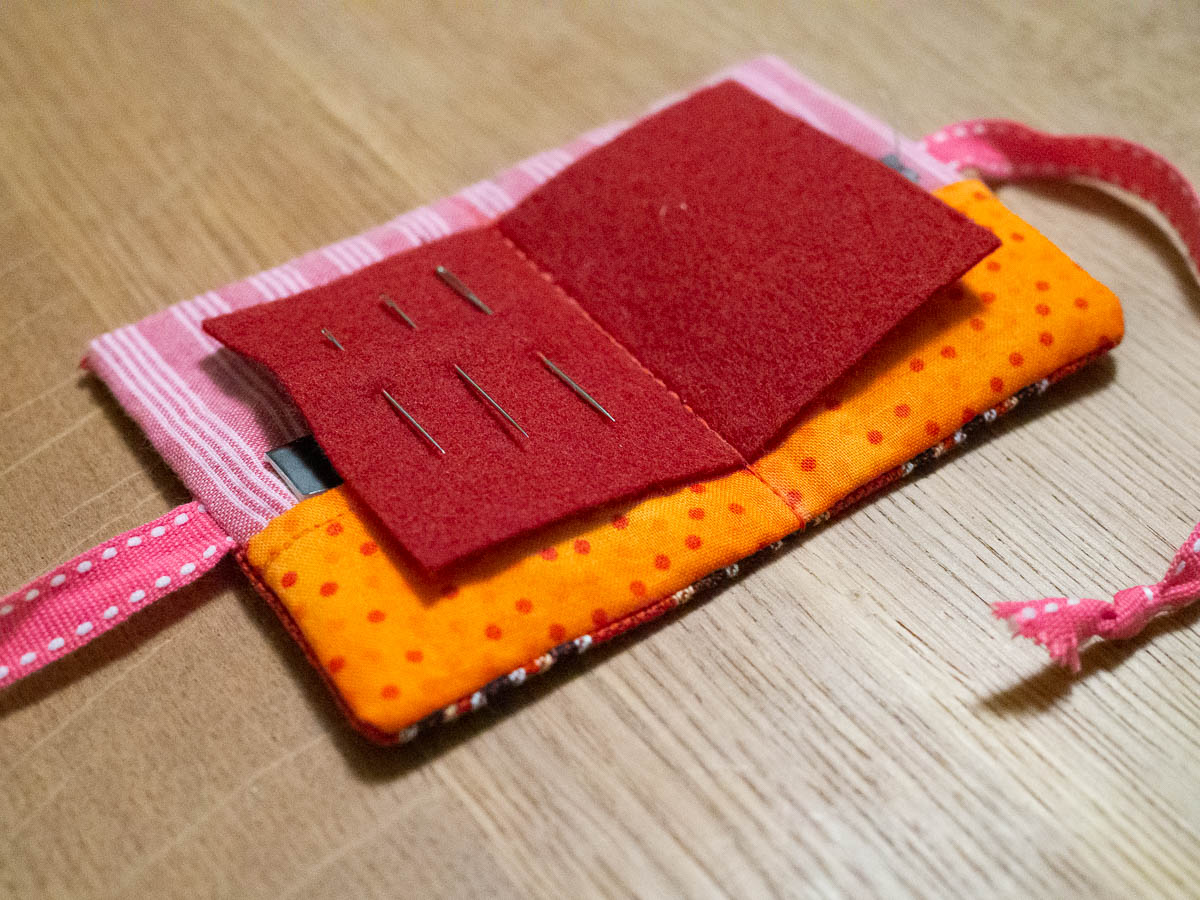
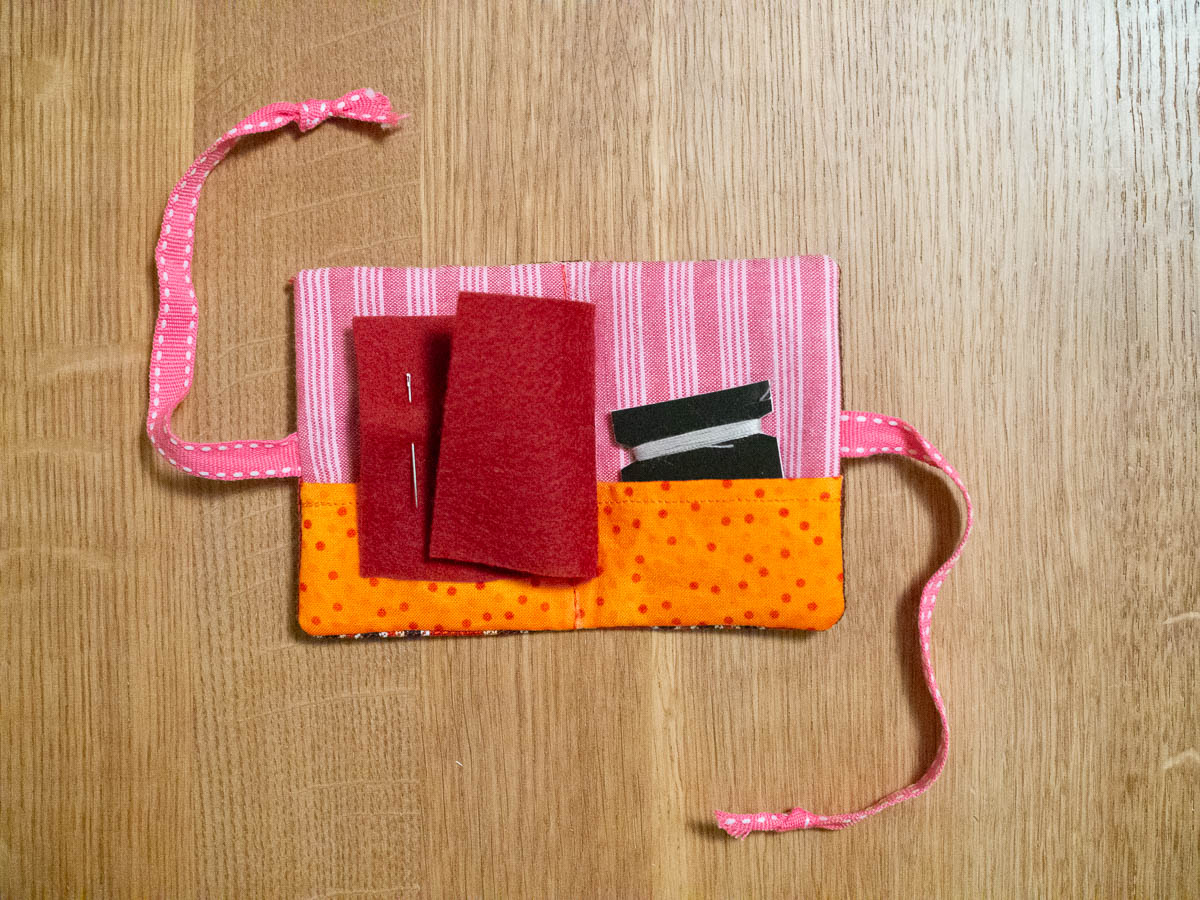
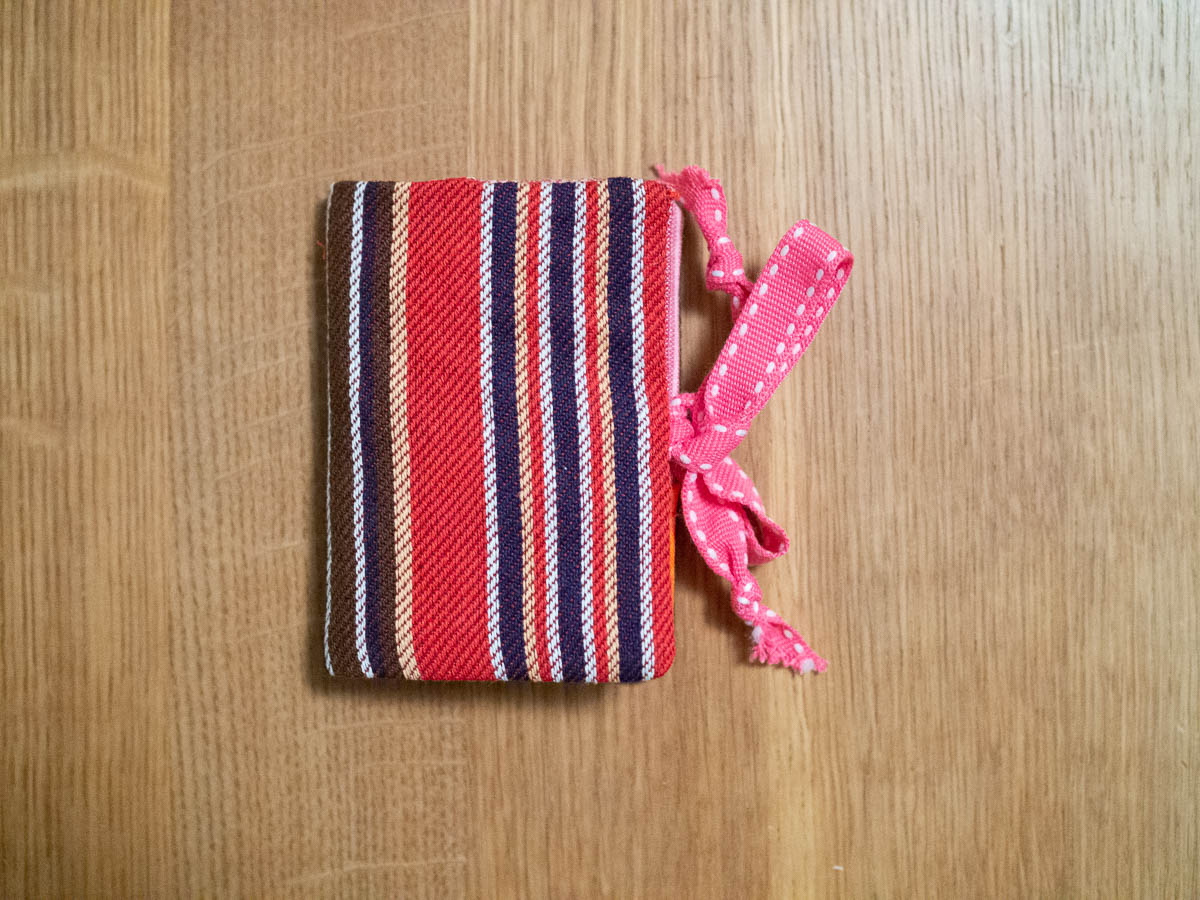
Hence today’s mini craft project: a travel sewing kit/mini needle book from mixed scraps of fabric.

The needle book obviously holds a few needles in different sizes. The orange pockets behind the felt flaps have pieces cardboard with sewing thread in a few colours and thicknesses. I’ll be adding safety pins as soon as I’ve bought some; it turns out that we have very few left. Somehow safety pins seem to be a consumable even though I can’t remember ever throwing one away.

I also hope to find small, light-weight, blunt-ended scissors somewhere. Embroidery scissors are small but have sharp tips, so I’m afraid they would poke holes in this thing.