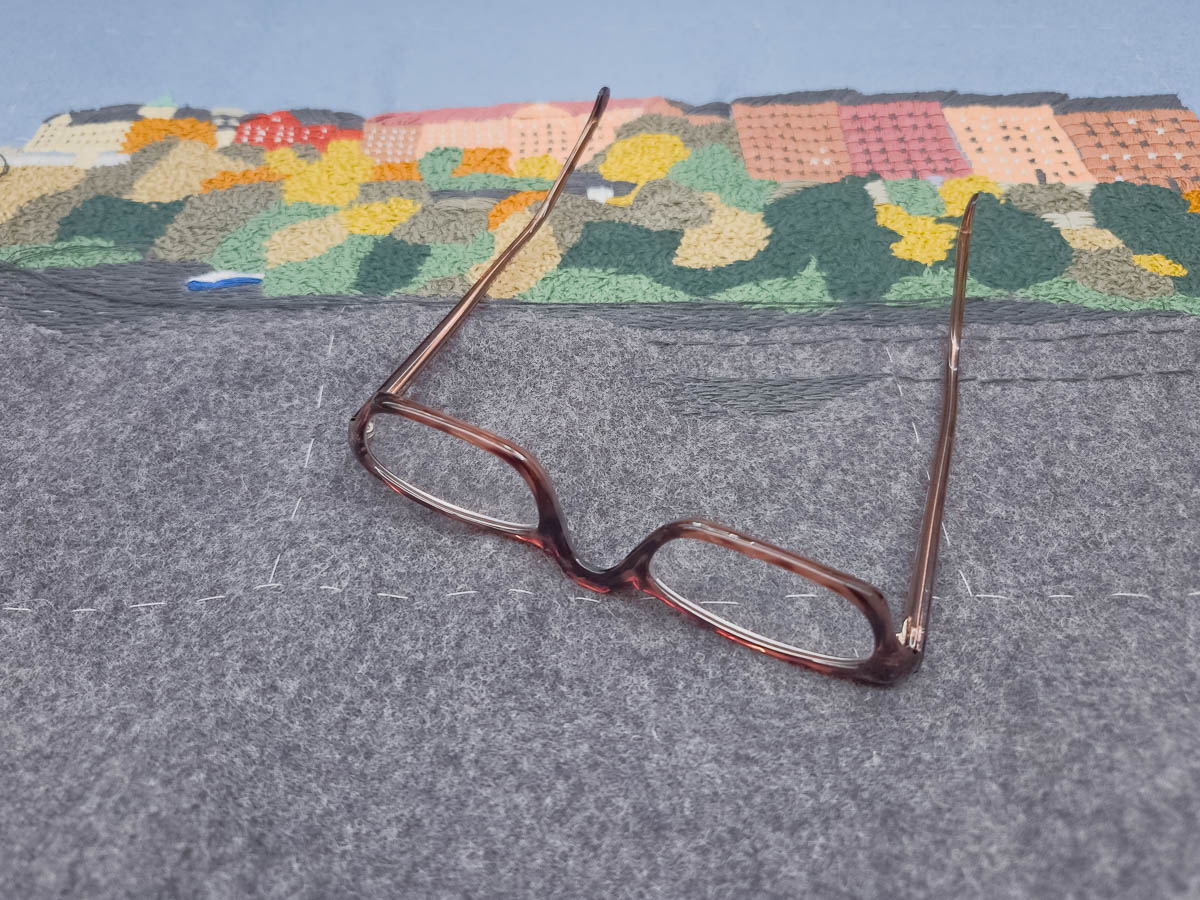
I forgot my glasses at home today. It wasn’t too bad at work – I can see the monitor well enough, it’s just a bit tiring. What was unfortunate was that this happened on an embroidery club day, and I’m in the middle of a section of dark grey thread on dark grey fabric, which is rather hard to work on when you can’t see it well.

One of the other ladies there had an extra pair that I could borrow. I was most sceptical, because they were more than twice as strong as my own reading glasses. I tried them out anyway, and it was like wearing a pair of magnifying glasses – as long as I held the embroidery work at exactly the right distance. They were totally useless for seeing anything else, especially the rest of the room. But with their slim design, I could push them down on my nose, grandma style, and look over them for everything else.

Maybe I should buy extra strong embroidery glasses for myself as well. Or maybe I should get an actual eye exam done and not just buy off-the-shelf glasses that seem good enough. On the other hand, I have a whole list of things to buy that seem more urgent than slightly better glasses, so maybe not.
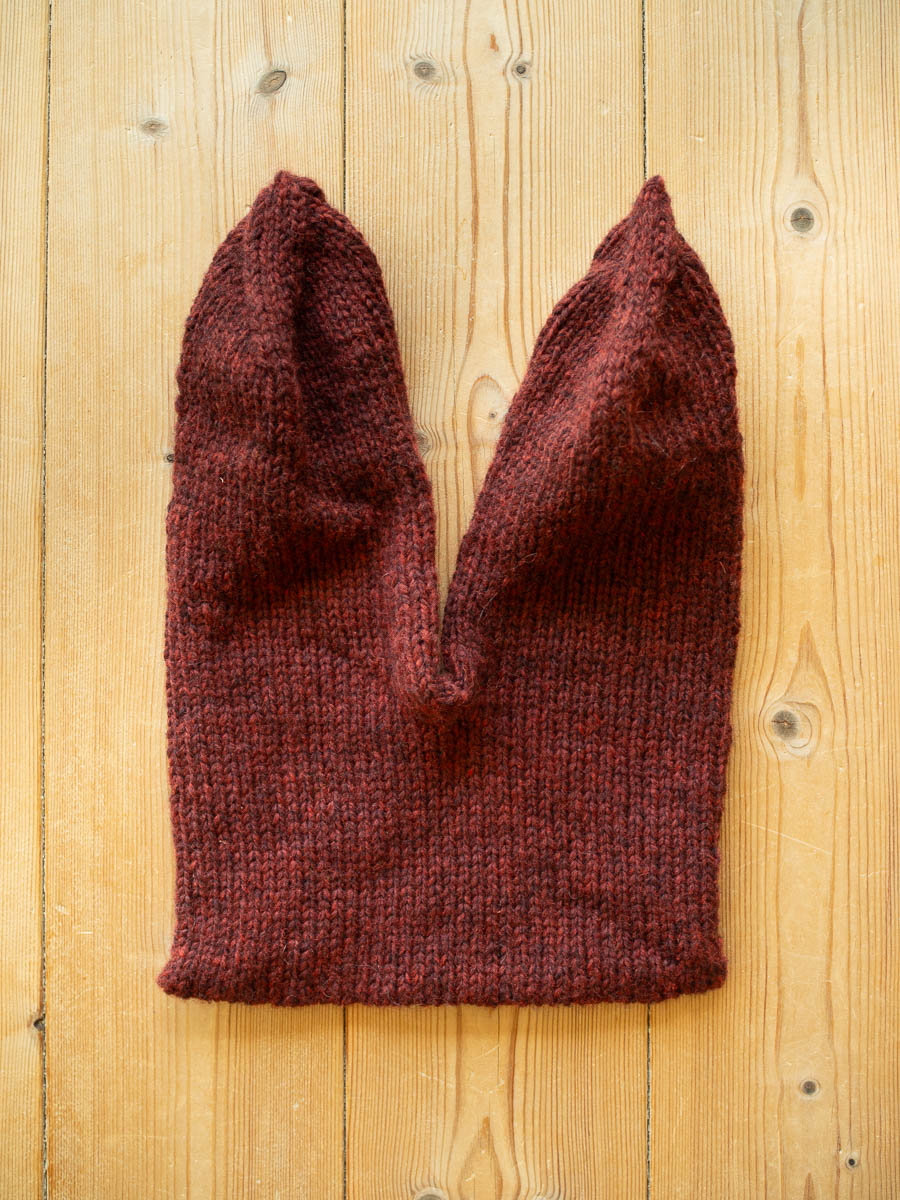
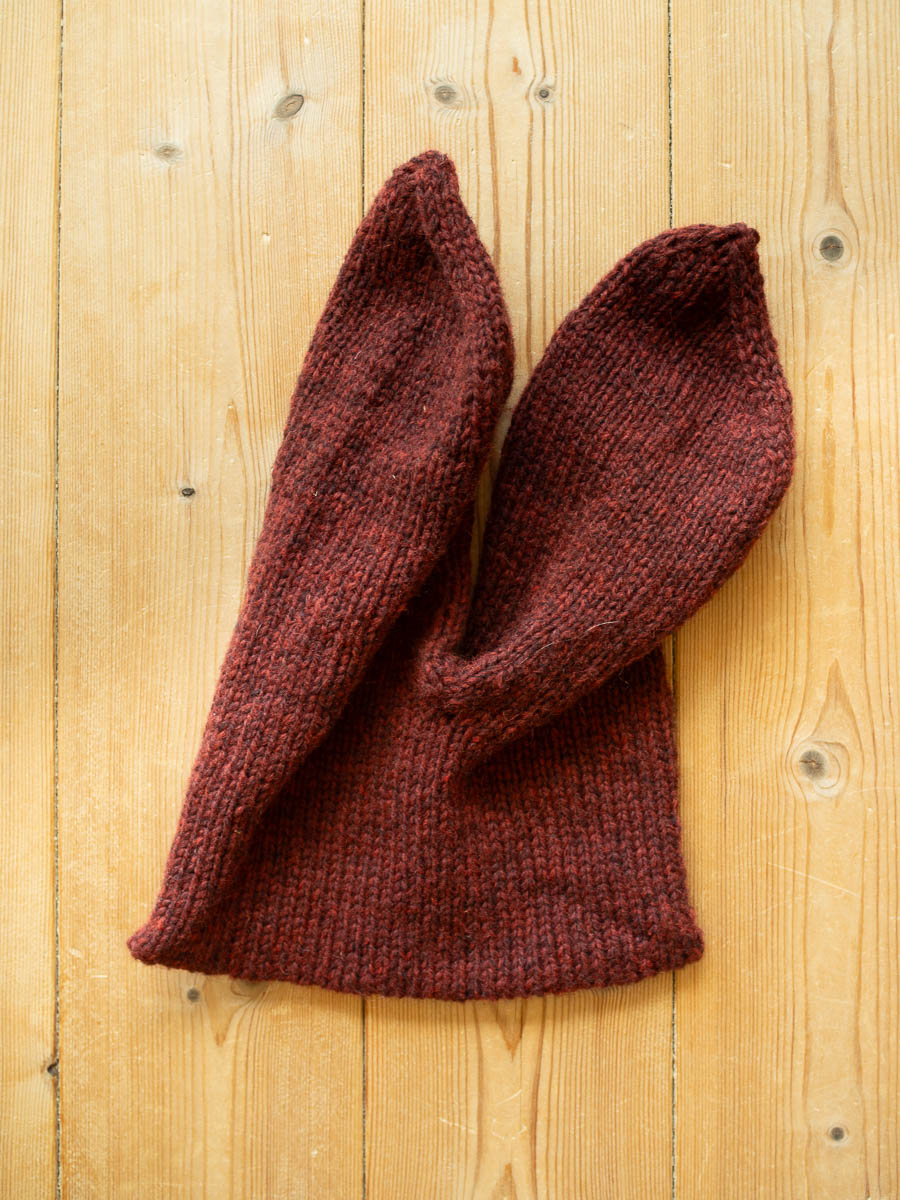
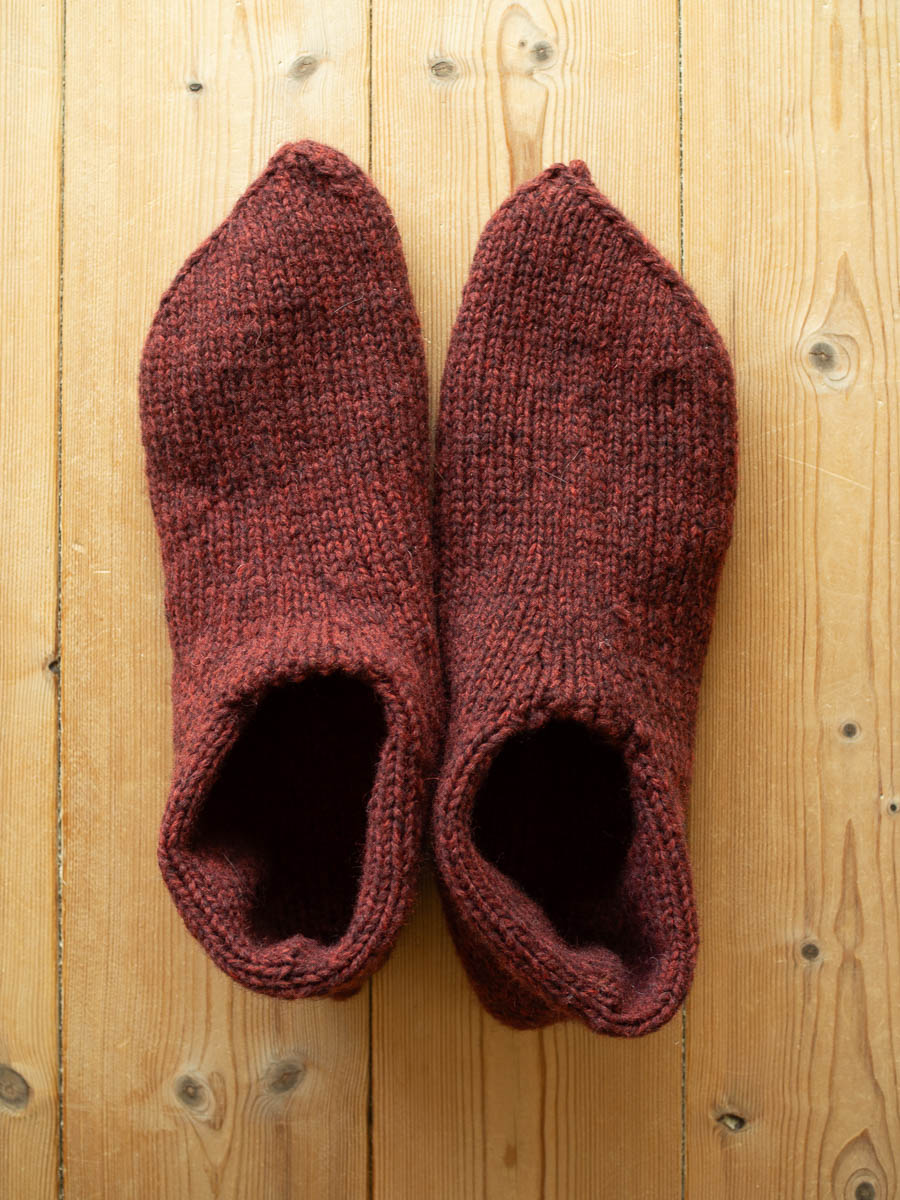
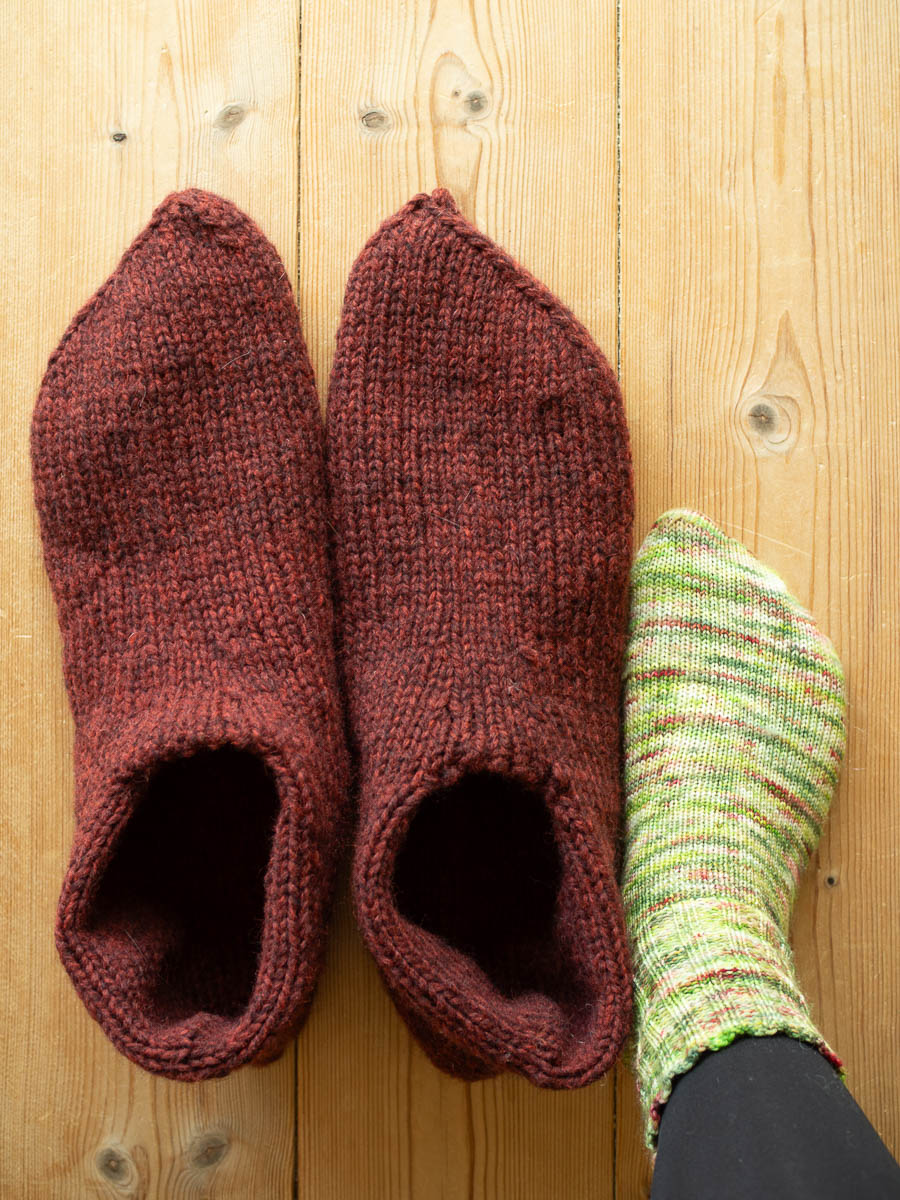
I am trying out a pattern for felted double slippers. You knit two conjoined slippers, which results in a shape that initially makes no sense and couldn’t possibly be anything, and then you turn half of it inside out, inside the other half, and boom, an actual slipper.

They look huge, which is as it should be, because the next step will be to felt them by machine washing them using a non-wool programme. That will be interesting. I’m using the exact yarn that the pattern recommended, but even with larger needles than they suggested, mine came out a few centimetres smaller than they should. I hope that they will nevertheless shrink to a suitable size when felted.

The socks I knit are all anatomically shaped and asymmetric, and I saw no reason to do anything differently with the slippers. Why would I want a rounded toe when my feet are not rounded? I’m not a cat. The shape is not too different from the original so it will hopefully felt equally well.

I’m curious why the pattern makes the two halves of each slipper exactly the same size. If you want one half to fit well inside the other, shouldn’t it then be slightly smaller? Maybe they wanted to keep the pattern as simple as possible.

I’ve been putting off the actual felting, always with some excuse. The electricity price is too high. I don’t have time today to invest several hours in this. But really I believe I’m a bit nervous about the felting not turning out well and then this will all feel like a lot of wasted work.

I need two clothes rails for my IKEA PAX wardrobes. They’ve been general storage closets for many years, but now I want to get rid of the large free-standing wardrobe in the middle of my bedroom and move all my clothes into the built-in wardrobes.

Choose a standard product from IKEA and you’ll have no trouble getting spare parts and replacements later, right? PAX wardrobes have existed for decades and they’re still there. But for some reason IKEA decided to abandon the standard 60 cm width at some point and left me somewhat stranded after all.

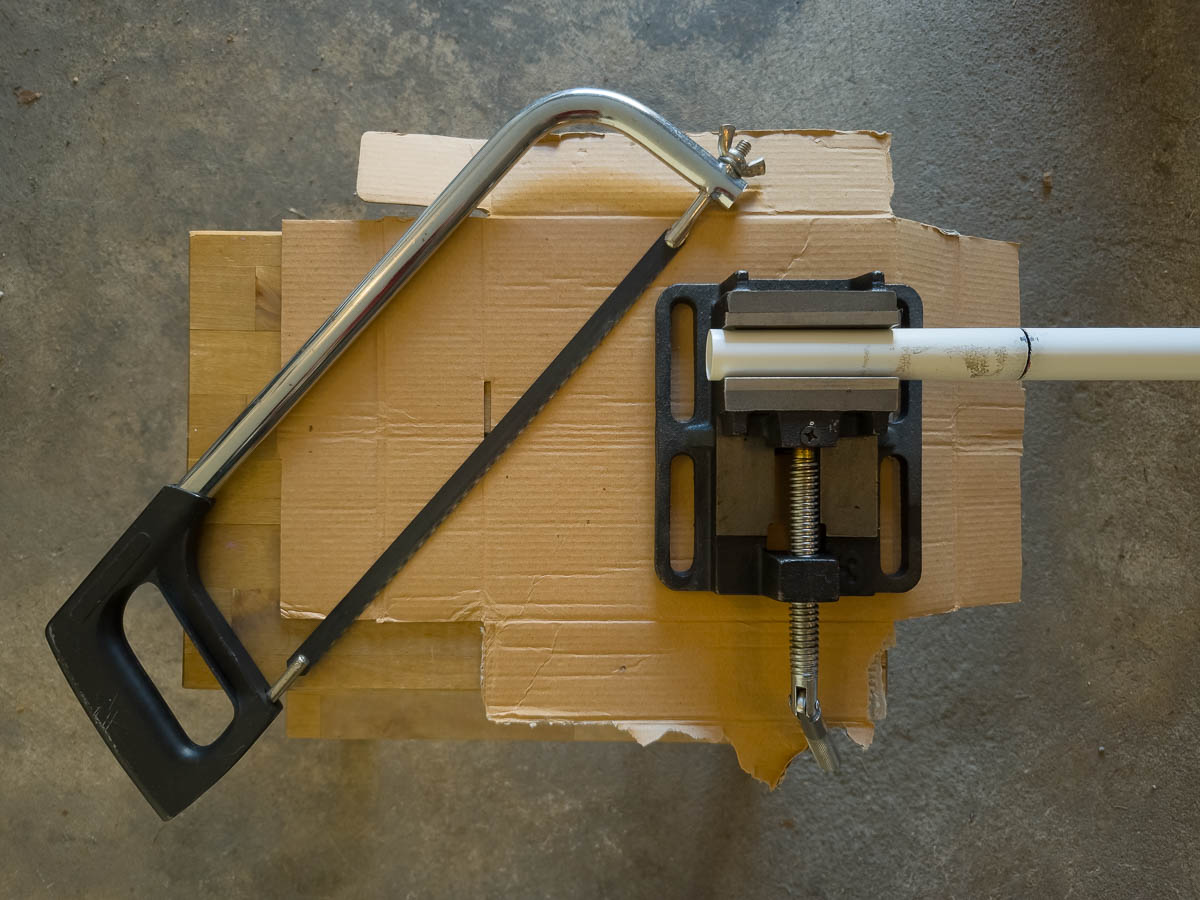
At least the fixtures and fittings and the holes for them are all still the same. I bought two clothes rails meant for the 75 cm wardrobe, and hopefully I can adapt them to the narrower width. Sawing off the rail is not too tricky, just tedious and noisy, but then there’s a small hole on one side of the rail that needs to fit a pin in the fastening mechanism, and that might be more challenging. I’m not there yet, though – first I need to borrow a drill somewhere.


I grew up with no particular skills in the DIY department. Wood shop and metalworking was for boys only, in 1980s Estonia. Girls got sewing, knitting and cooking classes instead. I can assemble furniture and re-upholster chairs, and maybe hack together some simple bookends or tool storage. But I don’t really know what I’m doing.

What’s the difference between all the wood saws in my basement? How do I make sure the holes I drill are straight? How do I get precision in my cuts and angles? Should I screw or glue? What kind of file do I want for this? Can I use this screw in this type of wall?

It’s been easy to leave most of the DIY work to Eric all these years – but it feels good to be forced out of my comfort zone now.

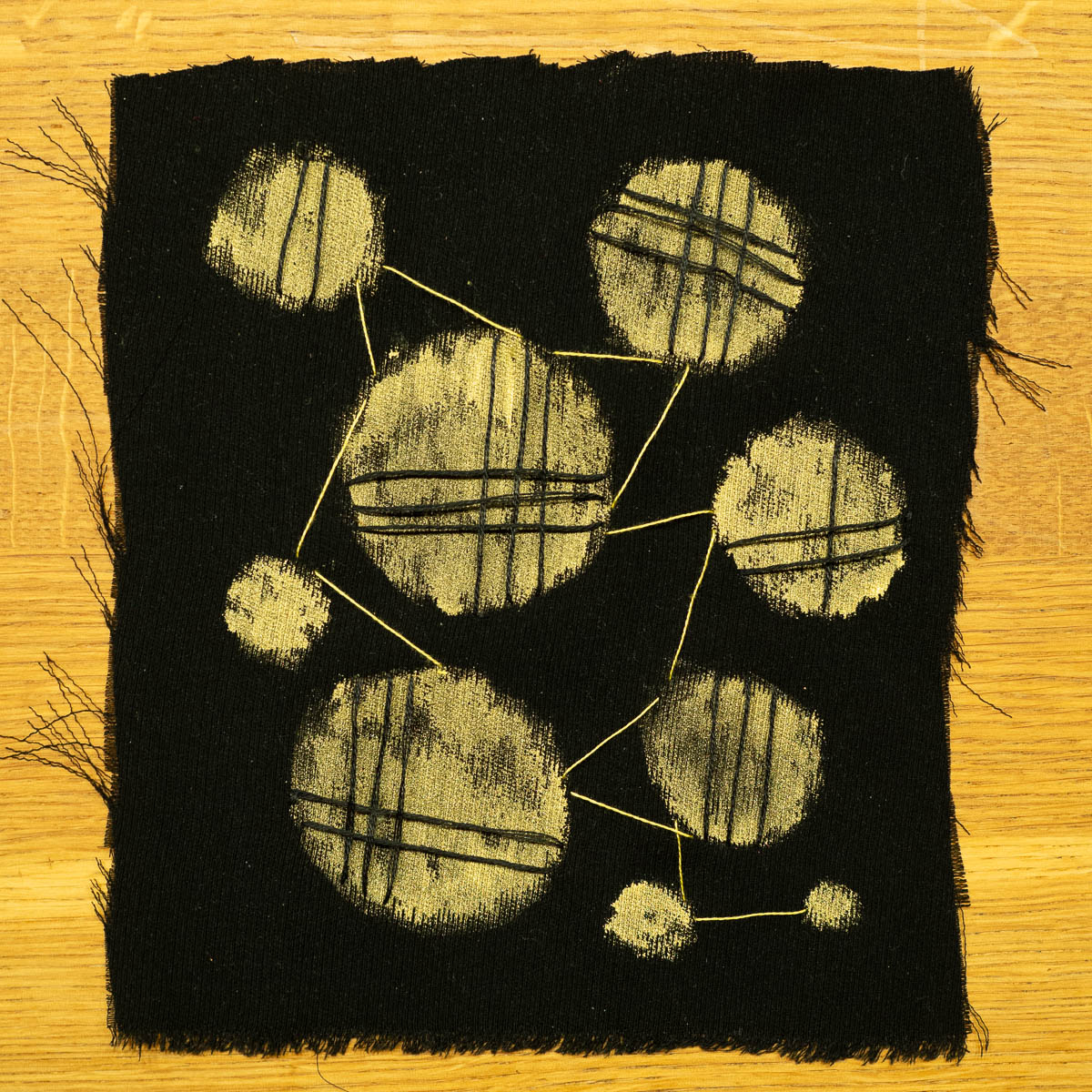
The dogma prompt: Black fabric. Fabric paint in the colour you used last week (which for me was orange). Make circles. Make straight stitches across the circles in black, and straight stitches between the circles in a colour matching the circles.

The only black fabric I found in my stash was a thin, slinky polyester thing. No stability to it whatsoever, and fraying so badly around the edges that I was afraid it would disintegrate in my hands.

I had no orange fabric paint, but I found a red (that was very dried out) and a gold (that was still liquid) so go for gold.

Those long, straight stitches that the prompt asked for, combined with the floppy fabric, produced the least durable piece of embroidery I’ve ever made. Don’t touch any of the stitches, or they will deform.

I keep saying it because I keep feeling it: I really like this kind of playful, no-commitment, low-stakes embroidery. Do something, try something new, and it doesn’t matter if it comes to nothing. Except it will probably never come to actual nothing: I’m getting so many ideas from each of these. I don’t like the look of the golden stitches between the circles (if this was an actual project, I’d rip them out) but the rest of it? Yes please. (Imagining a black blouse or top with some golden circles artfully fake-randomly sprinkled out, black stitching across the circles.)

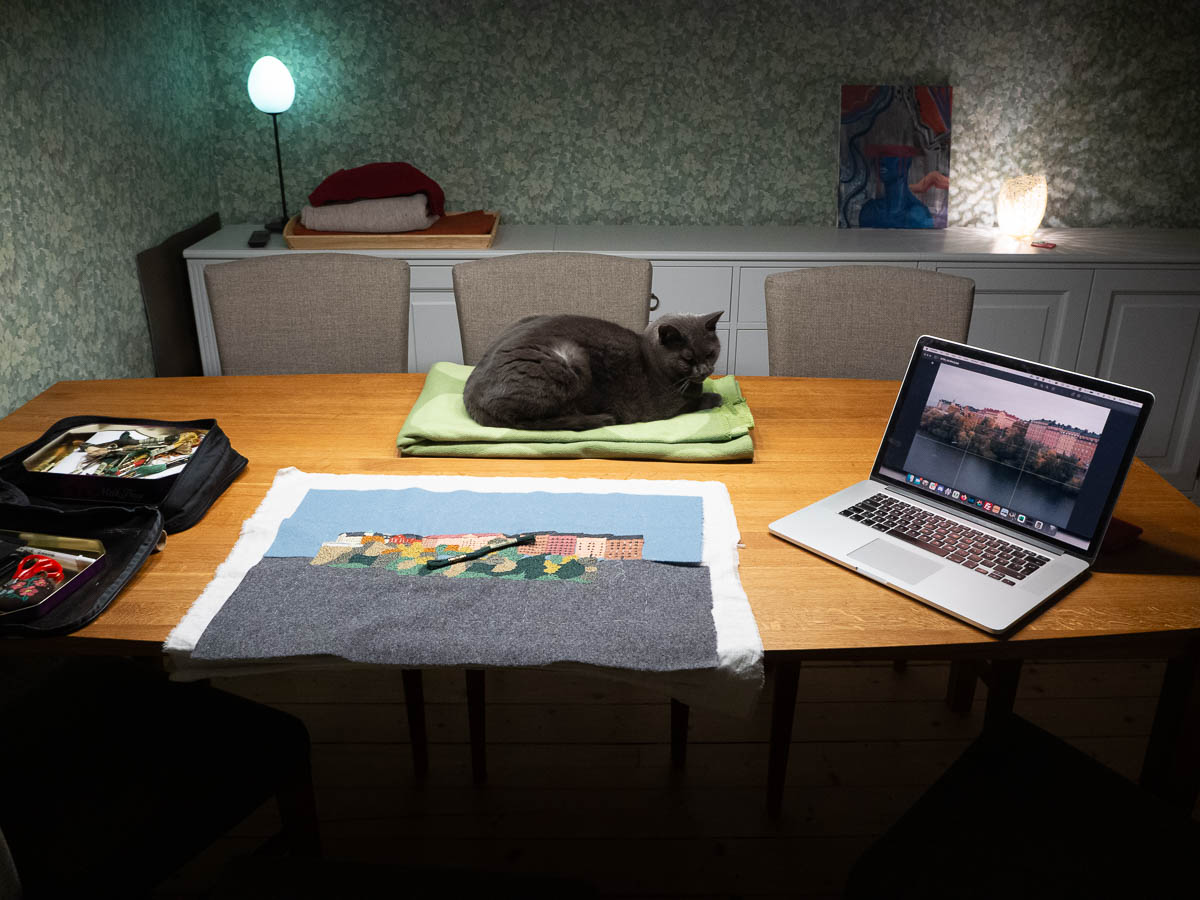
Nysse is surprisingly good at not getting into my yarns and threads. I can knit and embroider right in front of him, and he doesn’t react. Large swathes of soft fabric, though, are tempting. But we reached an understanding: he moved away from my embroidery project when I served up a better, softer cat bed.

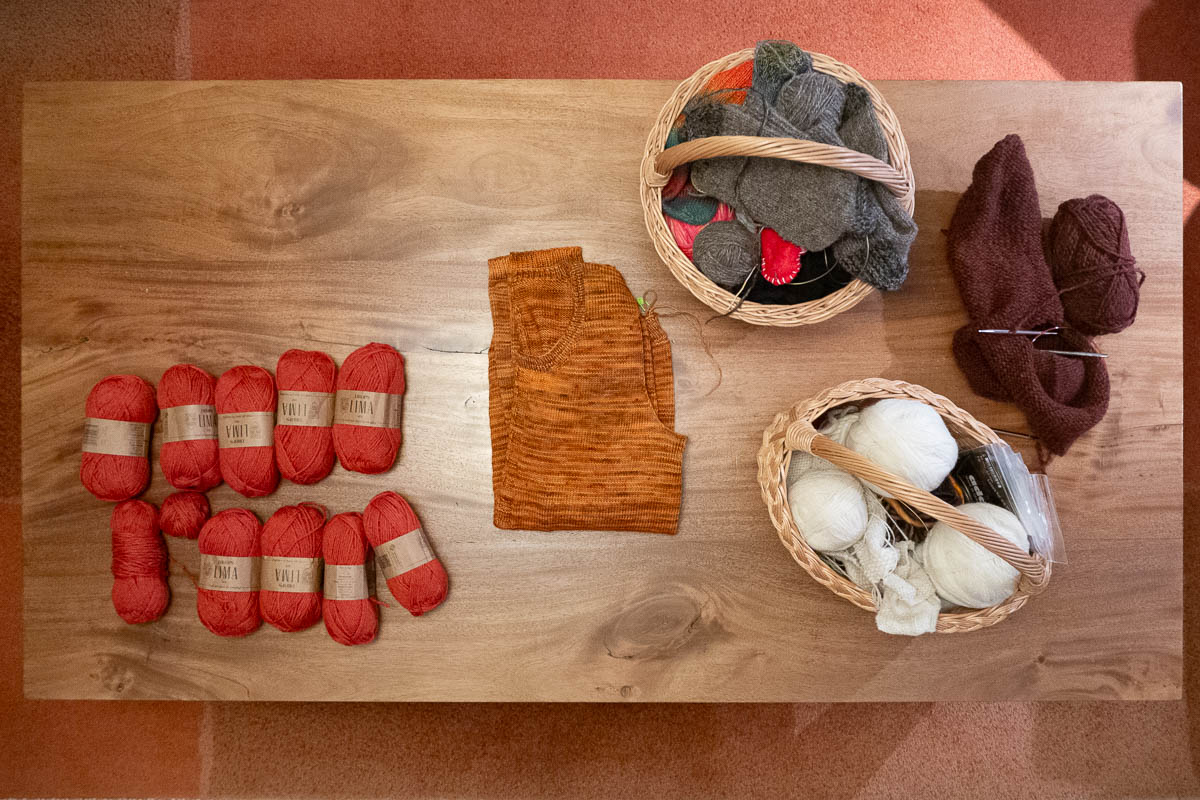
This is what happens when you leave me to my own devices. There are knitting projects all over the coffee table, in all stages of life. They used to fit into a basket or two, but somehow they’ve multiplied and spread out.

The red at the bottom left is an alpaca mix that I, daringly, bought from Tradera. Last time I bought second-hand yarn I ended up sending it back because it smelled so bad. And guess what? This yarn also smells. Luckily not of toilet cleaner this time, just a faint floral soapy smell. I’m hesitating between knitting first and washing when finished, and unwinding it all so I can wash it first.

The white in the basket on the right is one step further along. I’ve started swatching, to get a feeling for the yarn and figure out what it’s best suited for.

The reddish brown on the top right is well underway. It’ll be a pair of felted slippers.

The other basket has all my sock yarns and an ongoing pair of socks.

Finally, in the middle, there’s the sweater that I reknitted the hem for. I’ve just got a few yarn ends to weave in (which I’ll be doing tonight) and then it will be ready for use again, better than before.

I was going to work on my Stockholm embroidery every day until it is done, and I really have, but I took a cheat day today. I found an active dogma embroidery group on Facebook and jumped right in.

Dogma embroidery is rule-bound, and at the same time the ultimate expression of free embroidery. Or maybe very free-ing. There is no goal to work towards. The thing you embroider isn’t aiming to become anything else. You’re not following anyone’s design, not even your own (if you’re actually following the principles and just doing).

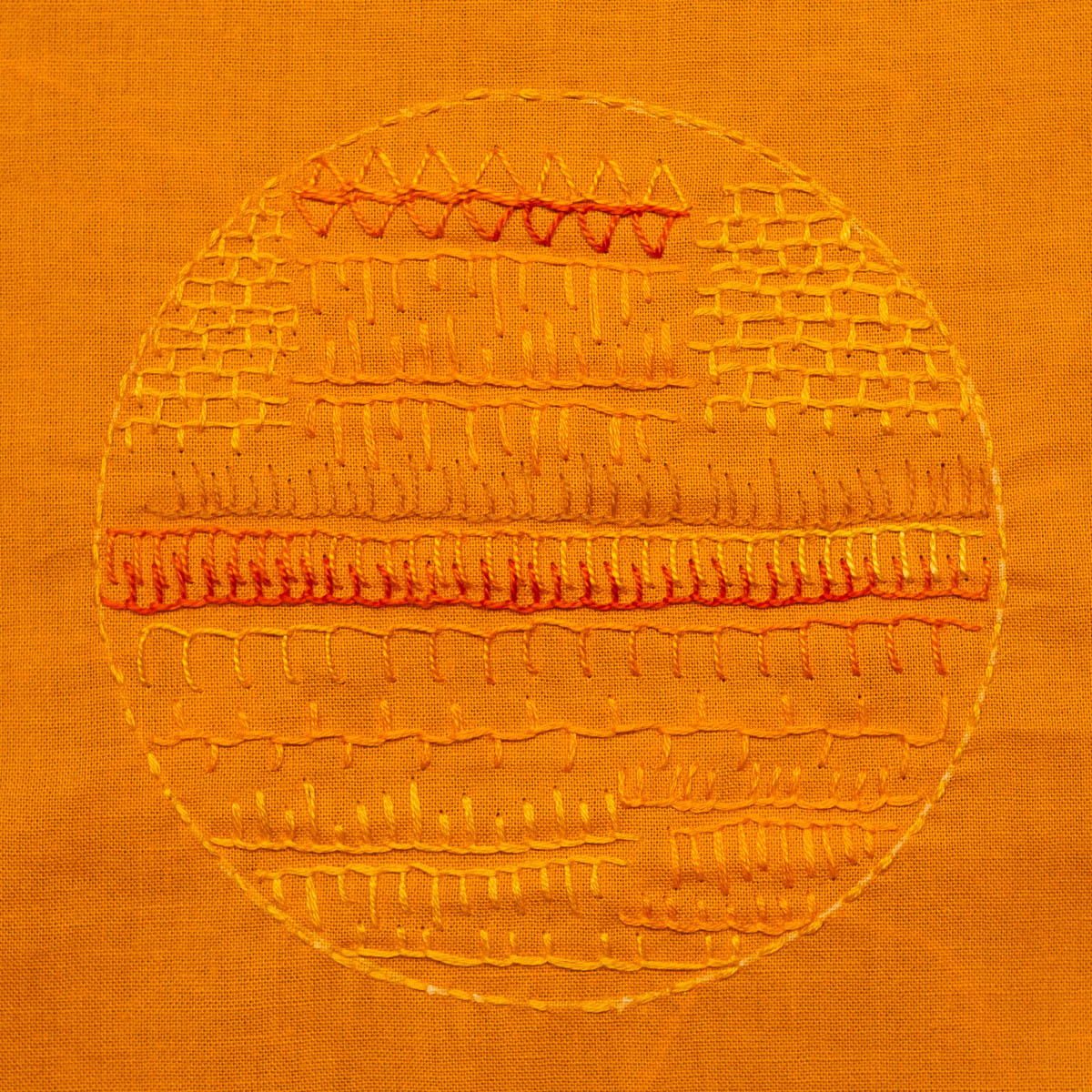
Use fabric in your favourite colour. Use thread in the same colour, but in different qualities and values. Use only blanket stitch, in horizontal lines.

I didn’t have much orange fabric to choose from at home, and not much variety in the way of thread, either. Two kinds of orange DMC embroidery floss, a variegated red-orange-yellow perle cotton, and one wool thread that I remembered as looking orange against other backgrounds but that became more of a muddy red-brown against this bright orange cotton. But it was a pleasant exercise.

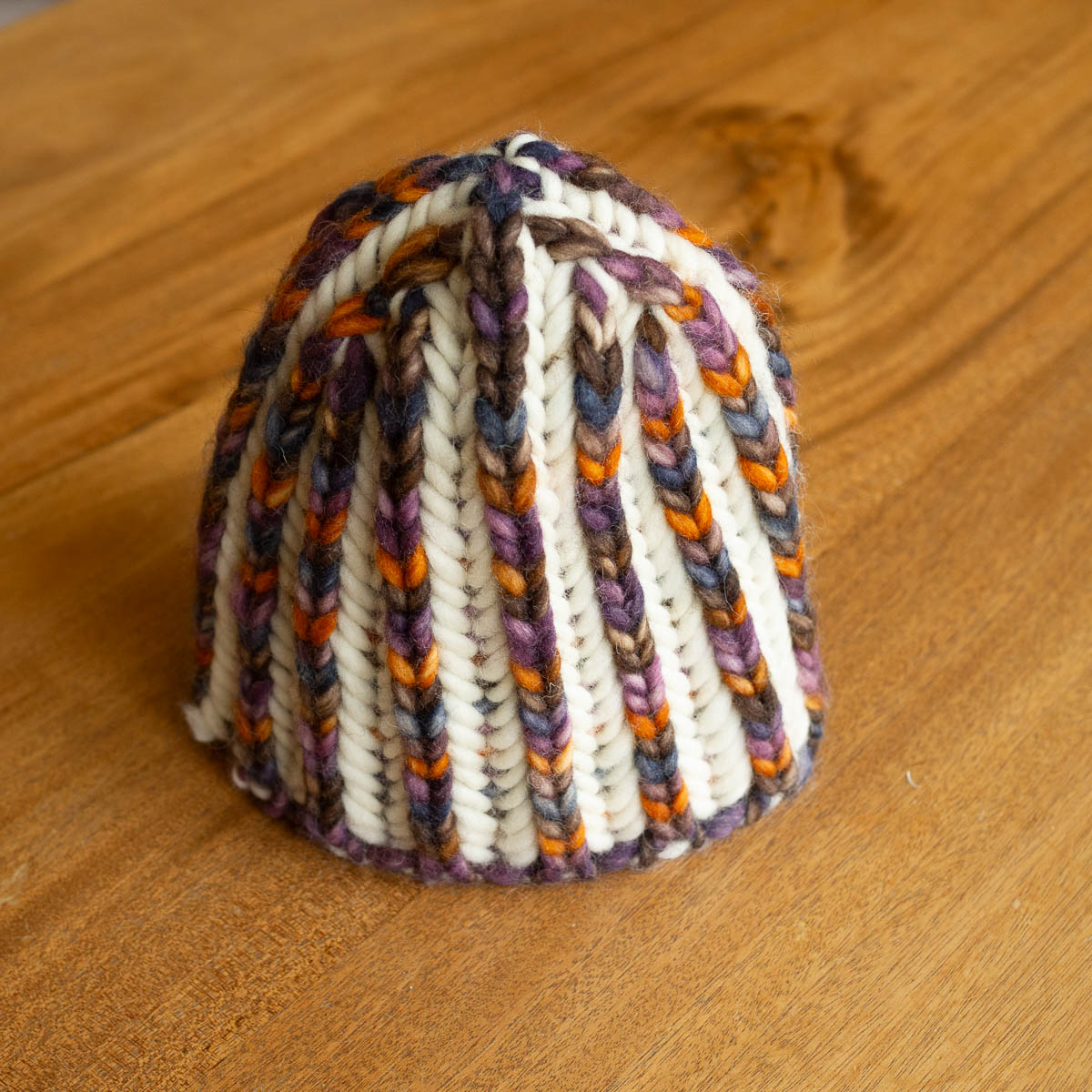
The super fluffy hat is done and has been tested. It was fun to knit, and the yarn still feels like a cloud. It’s the second softest thing I have ever knitted. (The scarves in Malabrigo Rios were even softer, but not as fluffy.)

I had some doubts about its usability, and though I have indeed concluded that it won’t fill the gap I originally wanted to fill, it does fit in elsewhere. It feels perfect for windless days with temperatures around zero, which is what we’re having right now. The yarn has splashes of orange in it, so it goes with my orange shell jacket, as well as brown ones, so I can wear it with my brown winter coat as well. Not bad for an impulse buy.

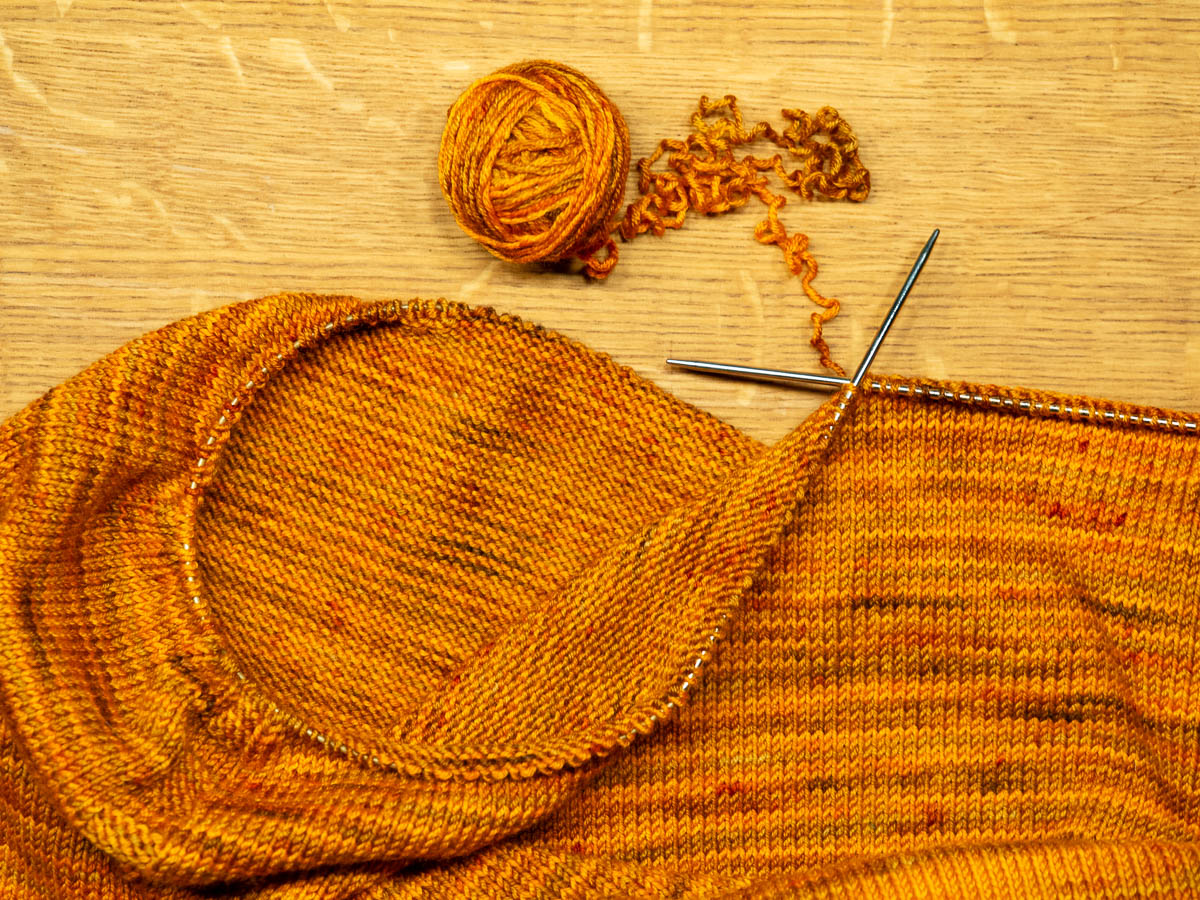
The orange sweater feels great (the yarn is incredibly smooth!), looks great, and fits great. Except for the length. I made it a bit shorter than I usually make my sweaters, because I thought it looked good that way with the straight, slightly boxy fit. Now that I’m wearing it, though, it’s always riding up when I move around, and I don’t like the length.

You know what? I have everything that I need to make it fit better. With a hand-knit garment I have all the power. The leftover yarn is still in my knitting basket, and the 2.5mm needles are free. I even have that dash of late-night “just do it” recklessness to just pick out the last yarn end and rip back the ribbed bottom hem.

This summer I was gifted ~850 g of fine, white wool yarn. Since there’s so much of it, and it’s so elegantly fine and white, I had been thinking that it would make a lovely dress. Combined with some other colour so it doesn’t become a wedding dress – maybe knit sideways, with contrasting vertical stripes.

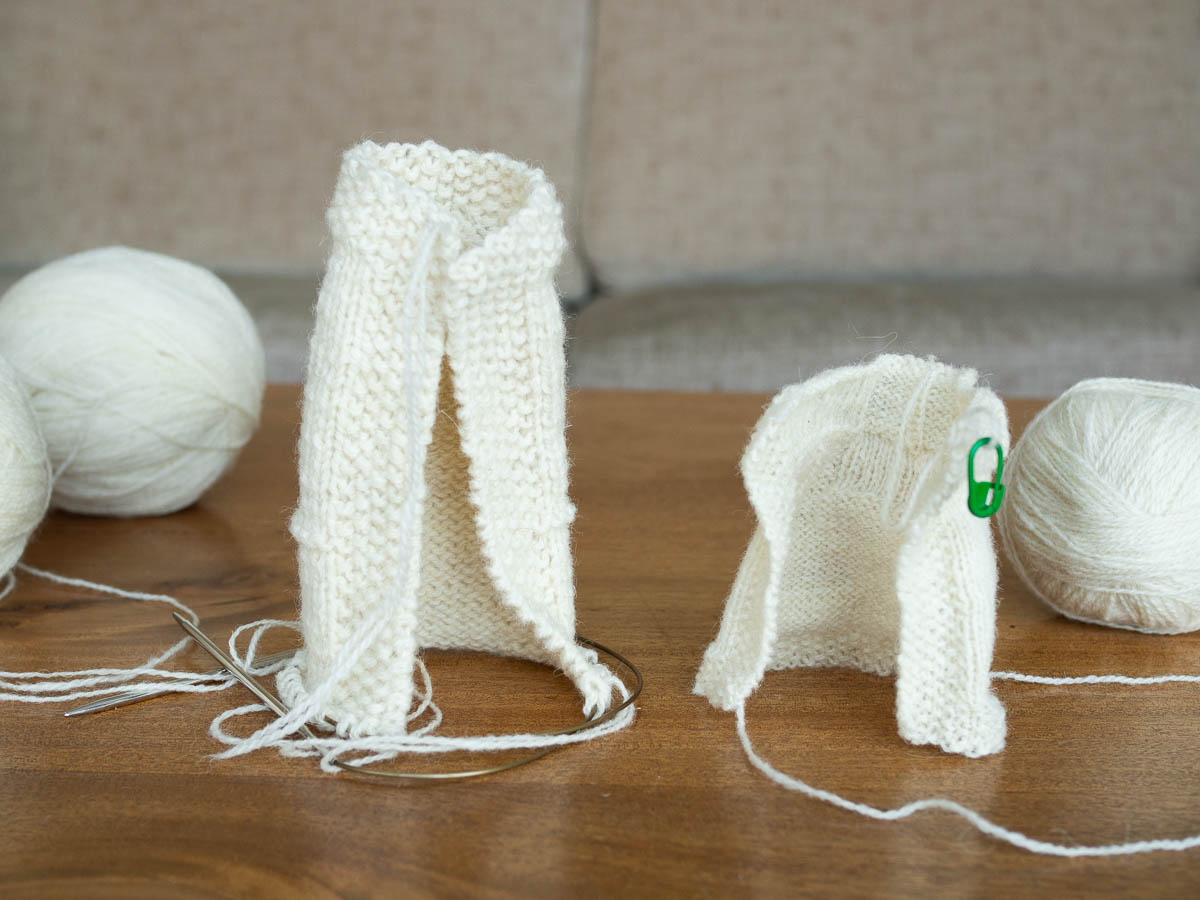
Then I made a gauge swatch, and the yarn turned out to be really stiff. Like, my gauge swatches stand up on their own, from just the natural curl of the knit fabric. It has no drape whatsoever. So a dress doesn’t seem like the best idea; it would look like cardboard.

Now I have a conundrum. How do I best use a yarn like this? Add mohair to give it some body and fluff? Go up in needle size to get a softer fabric and accept that it will be a bit see-through? Knit a sculpture instead of a garment?