I have a plan now. One “Helen standard length” of embroidery floss per session. One session per evening (unless I’m away) but I can do two per day on weekends.

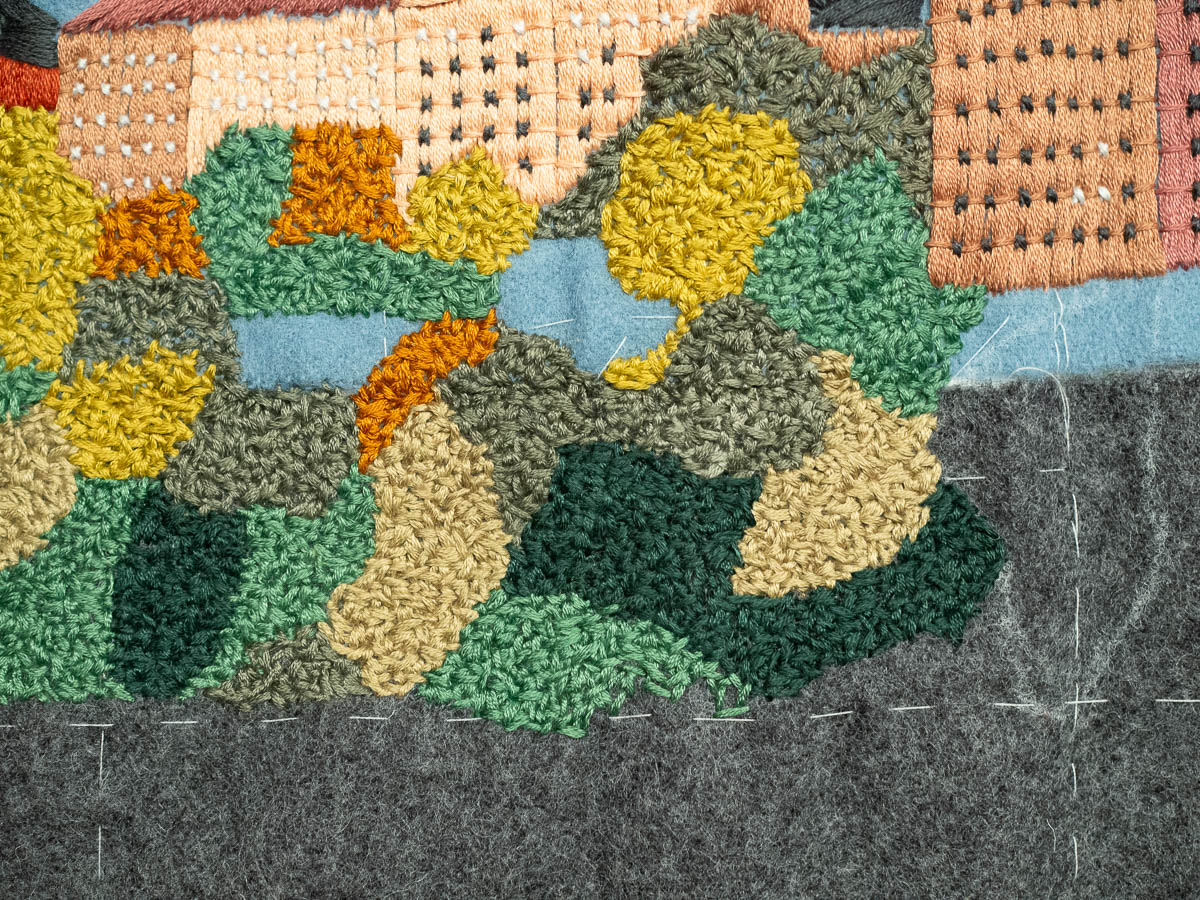
No more and no less. I want a predictable rhythm, and I don’t want to overdo it one day and then not want to pick up the work the next day. A HSL of DMC embroidery floss yields about 3 square centimetres of embroidered surface. I have about 90 cm2 of trees left, which will take me a month at this pace. Then I’ll have a few weeks to fill in the glimpses of street and car and railroad, and the dark reflections of the trees in the water. Those will both be less dense and far less monotonous than the trees and should hopefully go faster. (Original image here.)

For the first time I am thinking about efficiency while embroidering. What can I do to make the stitch from back to front in the blind, without having to turn over the fabric and watch what I’m doing. How can I reduce strain on the left wrist, which has the less fun and more tiring task of holding the work in place.


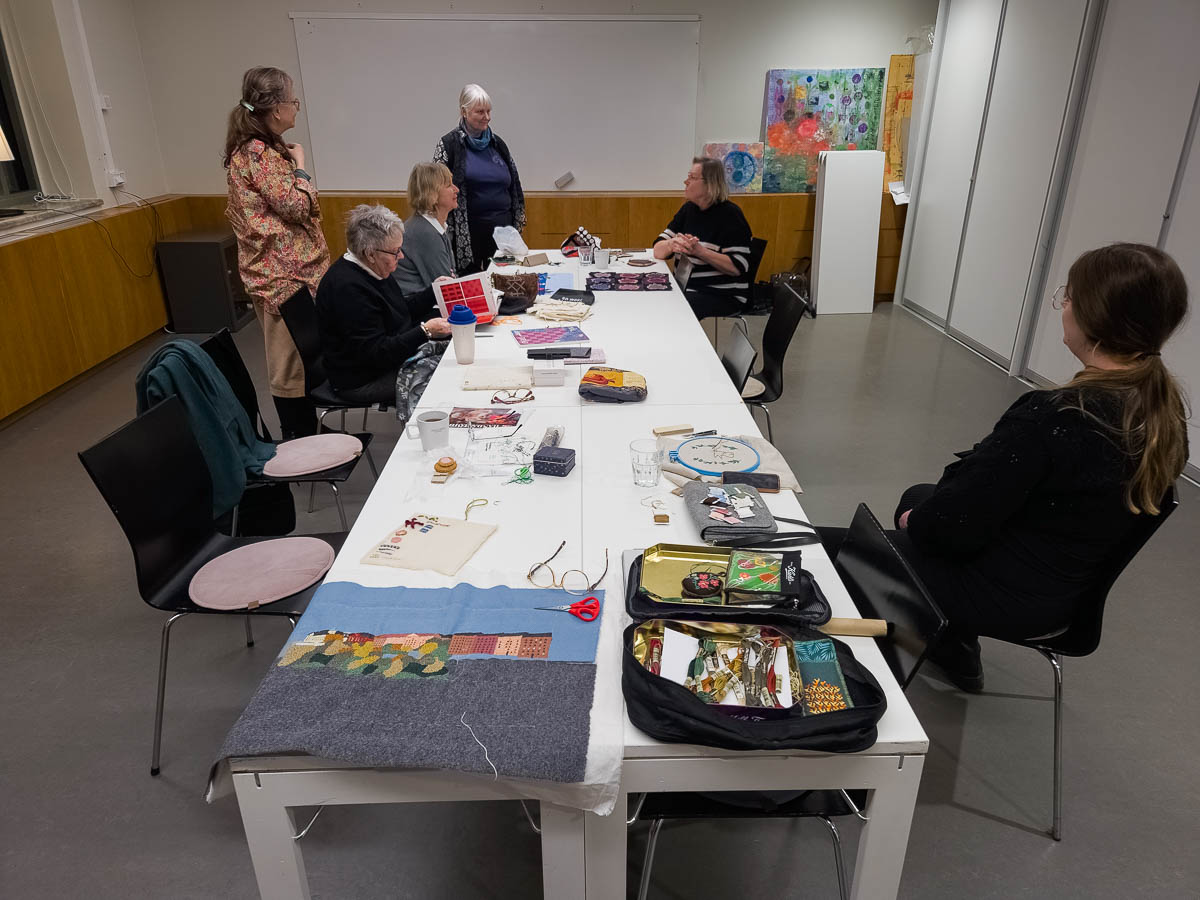
It must be coming up to a year now that I’ve been busy with the Stockholm embroidery. Time to get it done. We have a weekend embroidery workshop planned for the end of March, and my goal now is to finish it before then so that I can finally do something else.

I went to a local yarn shop. The visit did not go as planned.

My one goal was to buy a soft mid-weight yarn for a hat in a neutral-ish colour. Maybe like a nice hand-dyed grey or beige. Maybe they’d have something like the Malabrigo Rios I used for a pair of scarves but in a more subdued colourway.

(I need a hat to pair with my red leather jacket. My spring/autumn hat is red, and my gloves are red, and the overall impression of them all together is just way too red, so I need to break it up. And also, it is crazy that I am wearing my spring/autumn outerwear in January.)

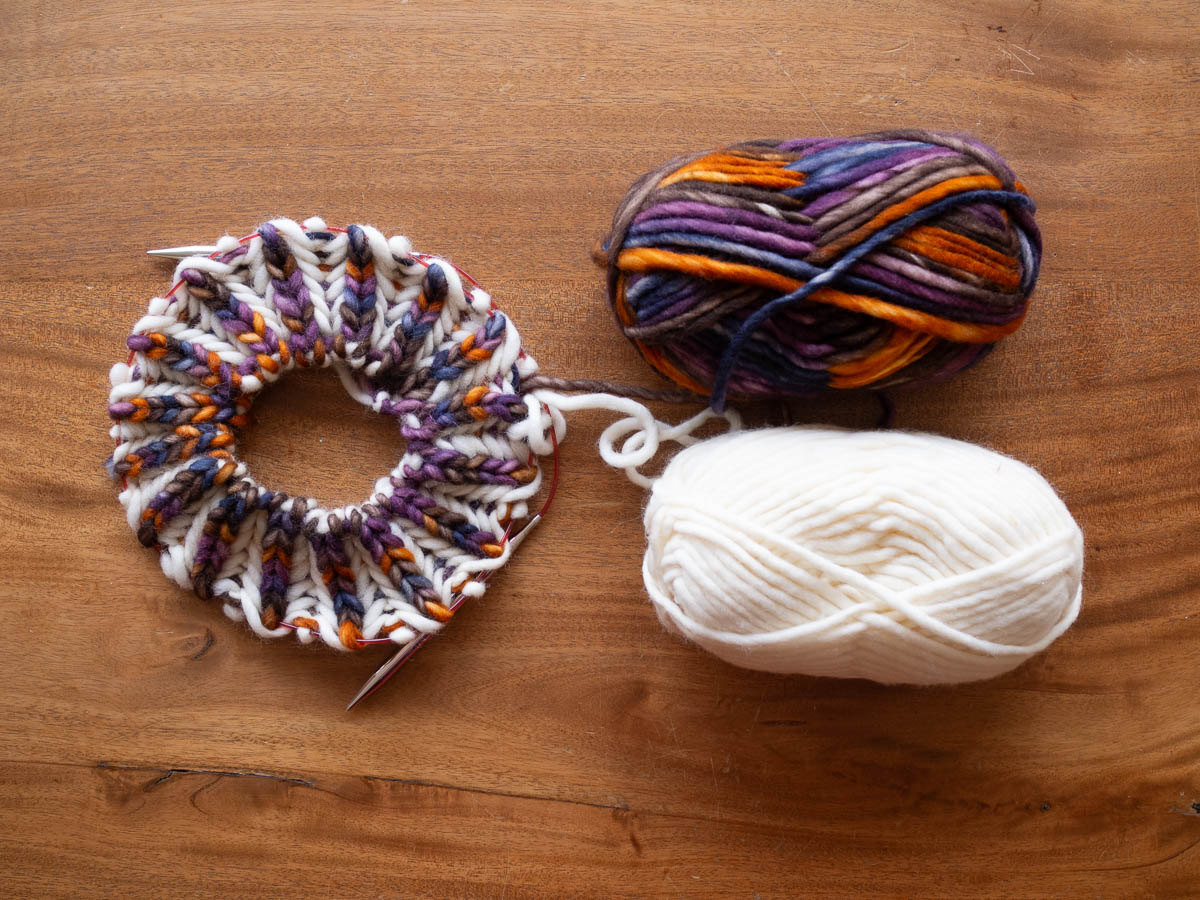
Did I buy anything like that? Not at all. I came home with almost the opposite. Rosarios 4 Bulky Light Print is super bulky (not mid-weight) and definitely not a neutral colour. But it was so soft and I loved the colour so much.

I’ve never used a yarn even close to this kind of weight. You can’t really get a feel for it from the photo, I think – should have included a banana for scale. The hole in the middle of the knitting is the size of my fist, and each stitch is about the size of the nail of my little finger. Huge!

Using this yarn feels very different than my usual projects. It goes very fast, but also requires a whole other kind of attention than my usual knits; not something I could do while reading, for example. It’s nice to try something new! And I’ll get a hat out of it that definitely won’t be red. It remains to be seen whether I can wear it with the red jacket; it might be a bit too much. The sewing & crafts fair is coming up in a month, hopefully I’ll find an actual mid-weight hand-dyed grey yarn there.

I also bought material for a pair of felted slippers. I’ve never knitted anything with the intention of felting it, so that will also be entirely new.

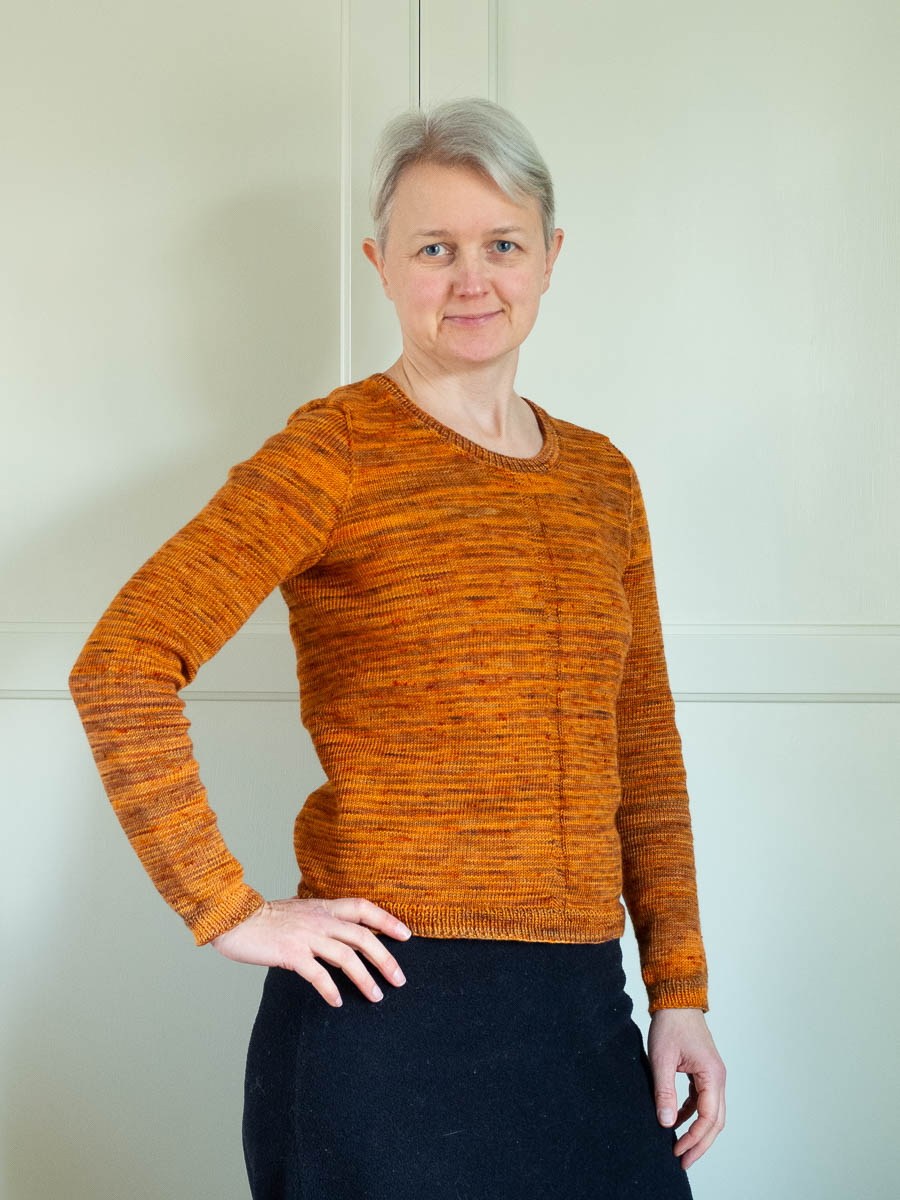
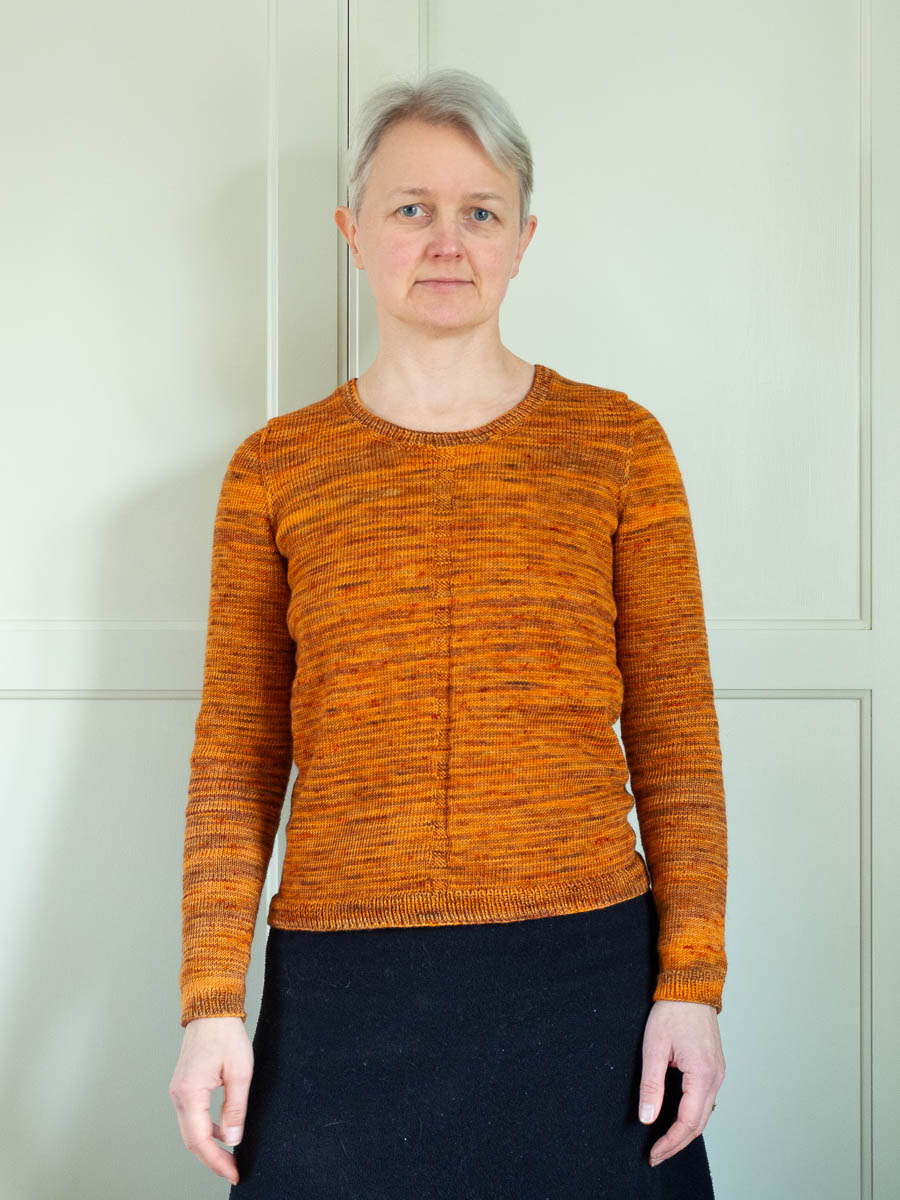
The orange sweater is done.

Like almost all the sweaters I’ve made, there are things I like about it and things I don’t.

I like the fit and the construction of the Sweatrrr pattern, which is why I’m using it for the third time. It fits me perfectly around the neck and shoulders.

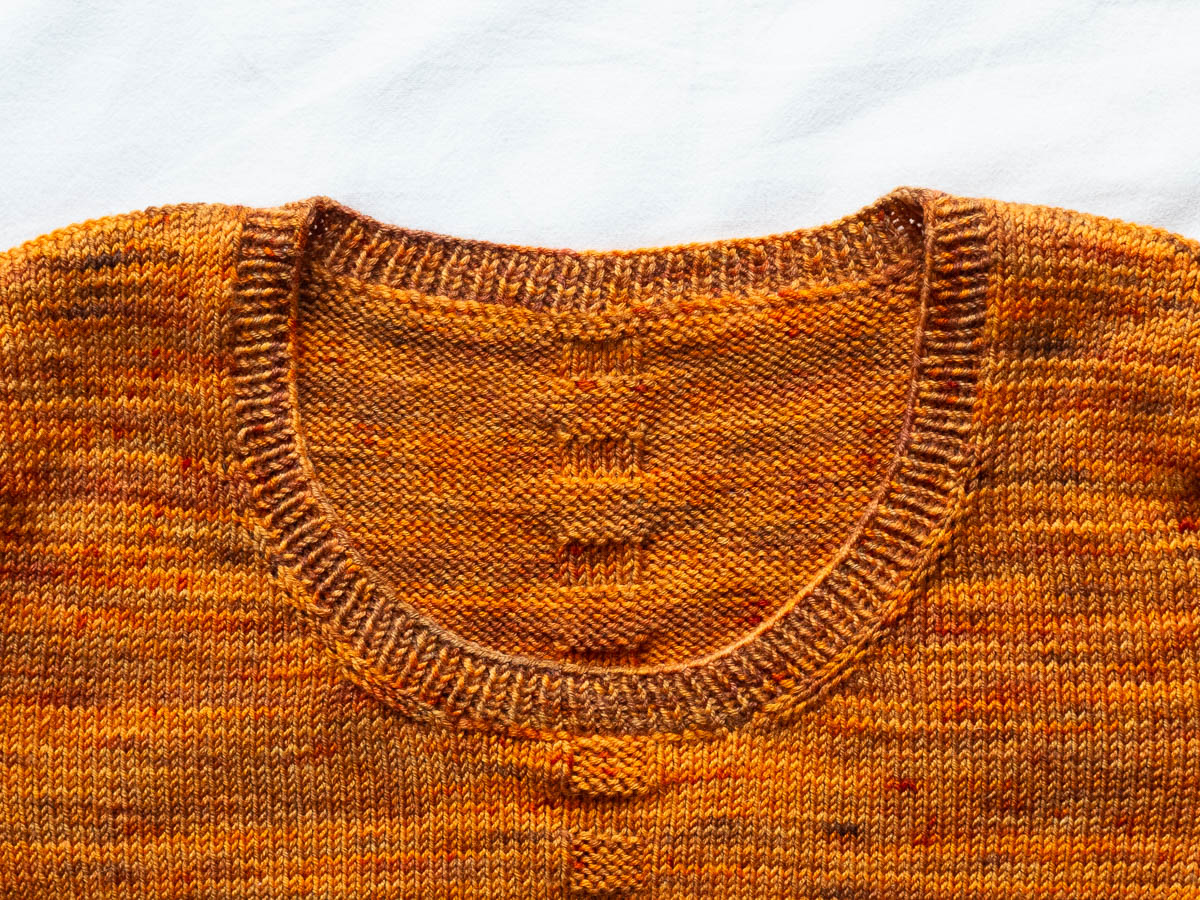
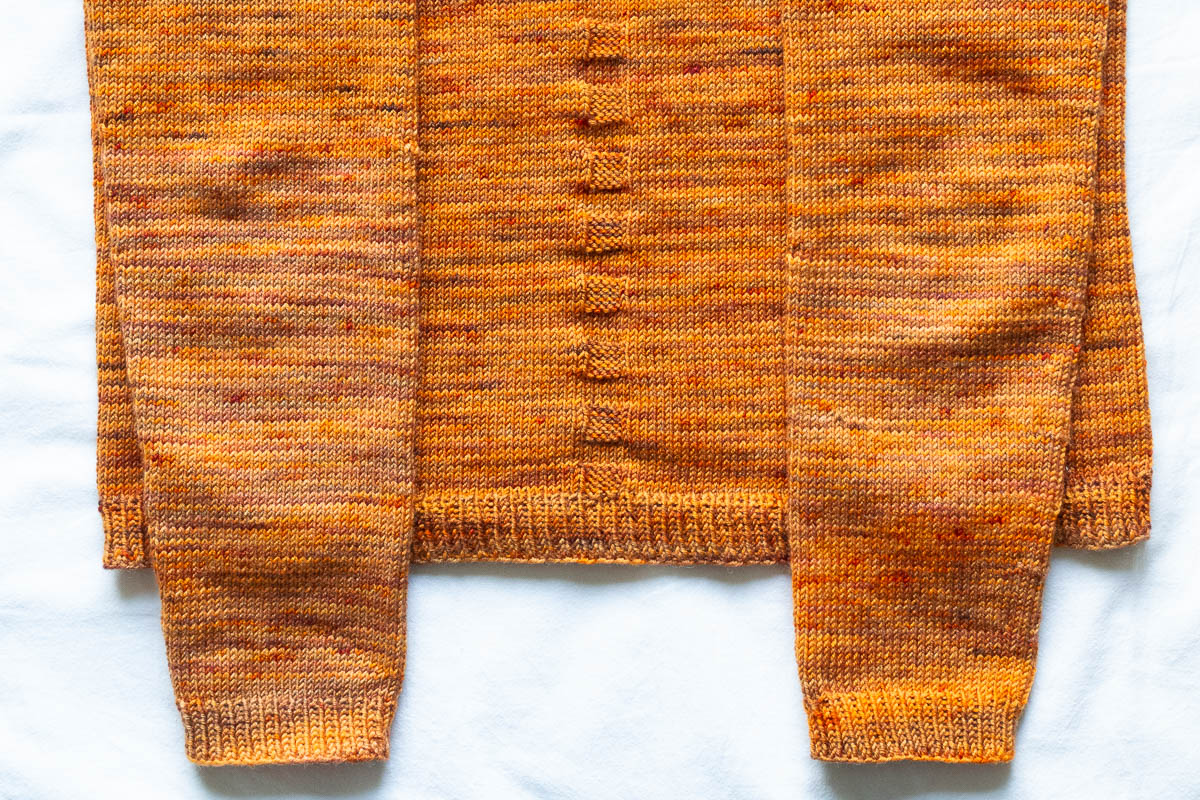
Just like last time I only used the basic construction and skipped the design elements. I used a simple 1×1 ribbing for the hem and cuffs and neckline this time. These came out really nice and tidy and look great.

The yarn is Monoceros by Apmezga, 100% hand-dyed merino. The overall colour is lovely, and the yarn feels very soft. It’s going to feel very comfortable to wear.

I’ve got mixed feelings about the yarn in the context of this sweater, though. The variegated colour worked out so-so. It led to ugly striping at first, and I did end up ripping back the body all the way to the start of the waist shaping and re-knitting without shaping. It fit better than I had expected; it drapes well enough that the boxier fit looks good on me.

The narrower, more even stripes on the re-knitted body aren’t bad. But because they’re not in sync with the width of the body, the stripes “travel”, so they end up looking slightly slanted. When I look at the sweater straight on, it looks like I’m not wearing it straight. I’m not sure what I think of that. And I’m not very fond of the abrupt transition from wide colour blotches on the shoulders to the super narrow striping on the sleeves.

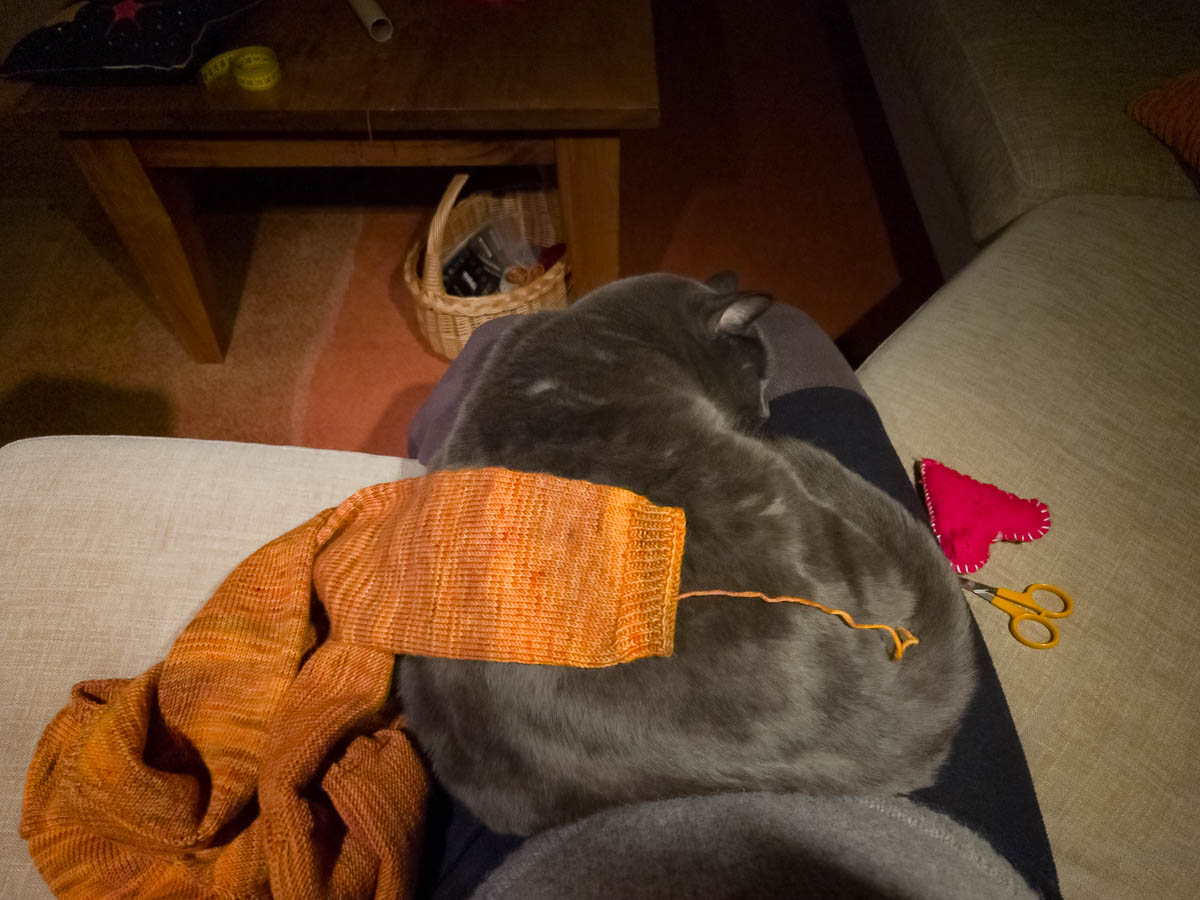
Even though all four hanks of yarn were from the same dye lot, one was slightly different. It’s missing the smallest, darkest specks of brown. I didn’t see it before using the yarn – only when I switched from one hank to the next near the bottom of the sweater. Alternating two hanks didn’t help because it was not the abrupt transition that was problematic, but the fact that the skeins just didn’t match. I ripped that back and used the deviant hank for the sleeves, and now I can barely see the difference even when I’m looking for it.

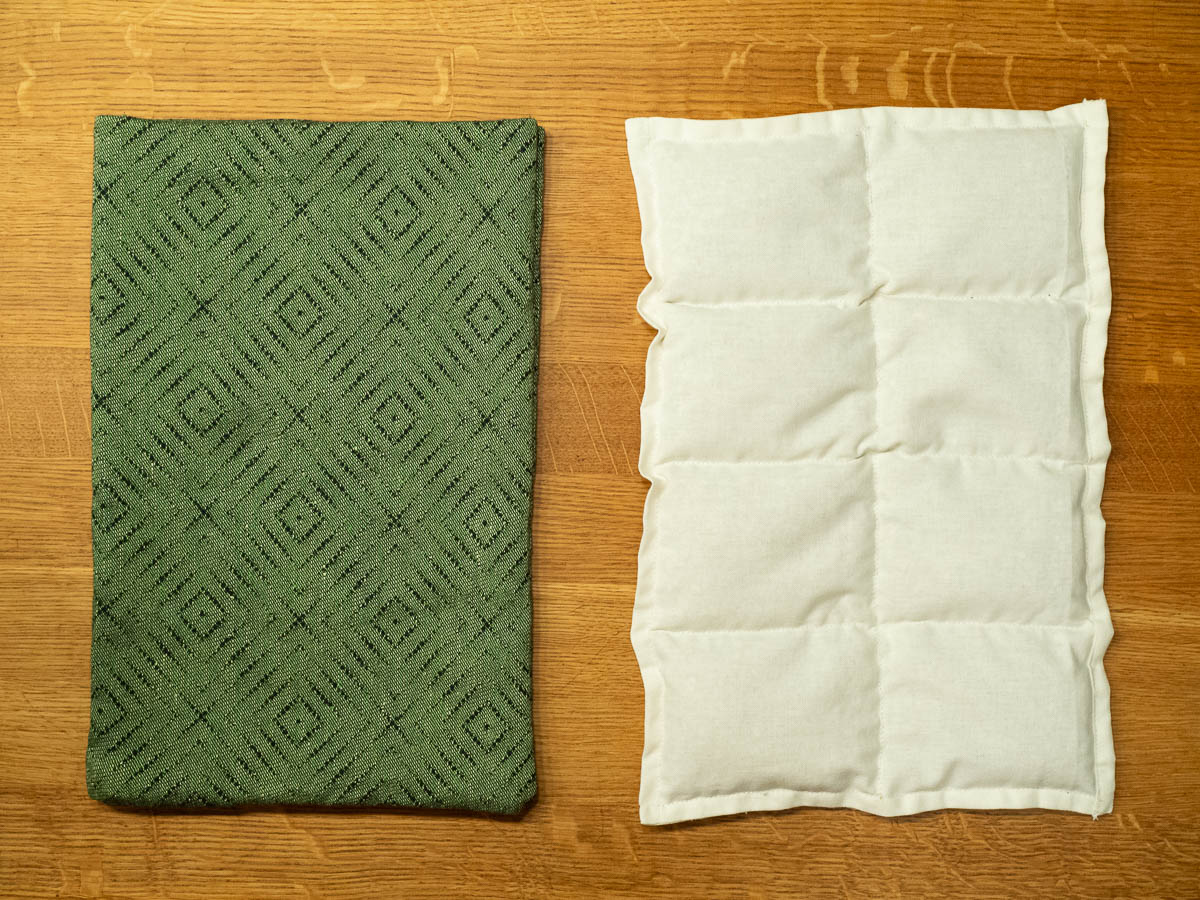
I sewed a wheat warmer. Both because I wanted one, and because this seemed like a good first project to actually make friends with the new sewing machine. (The first attempt didn’t get me very far.) A wheat warmer is small and simple, has nothing but straight seams, and doesn’t involve any challenging fabrics.


The outer covering is a barely-used towel that I think we got as a gift. I like the look of the fabric, and it’s thick and nice. It went a few rounds in the kitchen but I was always disappointed in its inability to dry things – it’s a 50/50 cotton/linen mix, and I’ve come to expect the absorbing power of pure linen. Then it spent some years in my fabric stash, and now it got a second life, to which it is much better suited.

For the inner pillow I cut up a storage bag that came with a pair of upmarket shoes. And the filling is plain barley.

Learning point (obvious in hindsight): The final measurements of the pillow are smaller than the cut measurements, even when I’ve properly calculated and measured the seam allowances, because the filling puffs it up and pulls it in. I was aiming for a slightly larger pillow. But it’s good enough. Much better than the store-bought one I had before, which wasn’t divided into pockets, so all the filling immediately ended up at one end, no matter how I held it.


I struggled with the sewing machine. So much. The bottom thread kept breaking all the time. I’d start, and sew five or six centimetres, only to discover that the thread has broken again, and rip it out and start over. Or I’d make it as far as 15 out of 30 centimetres, and then – too far from the edge to rip it all out – skip back and stitch over the last bit again.

Finally I figured out that this (only?) happened after I stopped and started. Obviously there’s a start at the edge, but I’d also stop at each pin to take it out, because I didn’t want to sew over them, and then of course I start again. Somehow at each stop-and-start the tension of the bottom thread goes wonky and it gets tangled around the bobbin axis and then of course it breaks.

With more experimentation I noticed that the problem didn’t happen if I managed to stop with the needle properly in the down position. You’d want to do that anyway for turning corners and such, not for the sake of the machine but to keep the fabric in place. For just taking out a pin it normally wouldn’t matter much. Except on this machine it clearly does.

Then I realized that the important bit was not the stopping but the starting. If I “take off” with the needle in the optimal position (all the way down) then I guess the bobbin thread gets the right tension from the start and doesn’t break. Otherwise it gets tangled for some reason.

That meant it didn’t matter so much if I couldn’t always manage to stop at the exact right moment. (I need more practice with the foot pedal for that kind of precision timing.) When I happened to stop with the needle not down, I could hand-wheel the last little bit to get the needle where the machine wanted it to be, do whatever I needed with the pins or what not, and then I and the machine would be in position for a good start.

Even though I now have a way around the problem, it’s still rather annoying to have to be so persnickety about the needle position. This doesn’t seem entirely normal, and the user manual says nothing about this kind of behaviour. But I guess I’ll live with it. We’re maybe not friends yet, but sort of getting there.
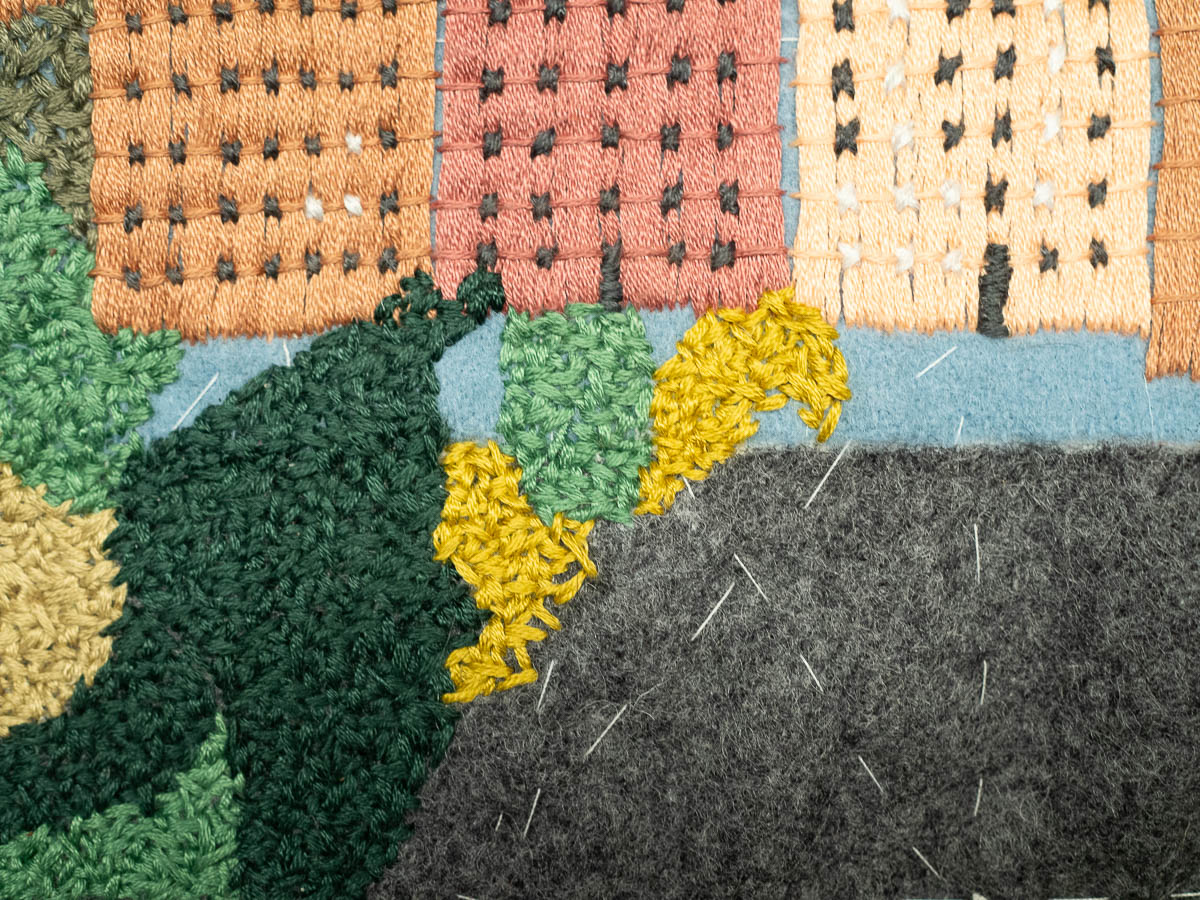
It’s not close to done by any measure, but reaching that white basted line is some kind of a landmark. When I also reach the vertical line to the right, I will have done two thirds of the trees. Finished by summer?

Weaving in the ends of my latest knit sweater. I finished it last year already (ha ha) but I haven’t gotten around to finishing it. Very close now!

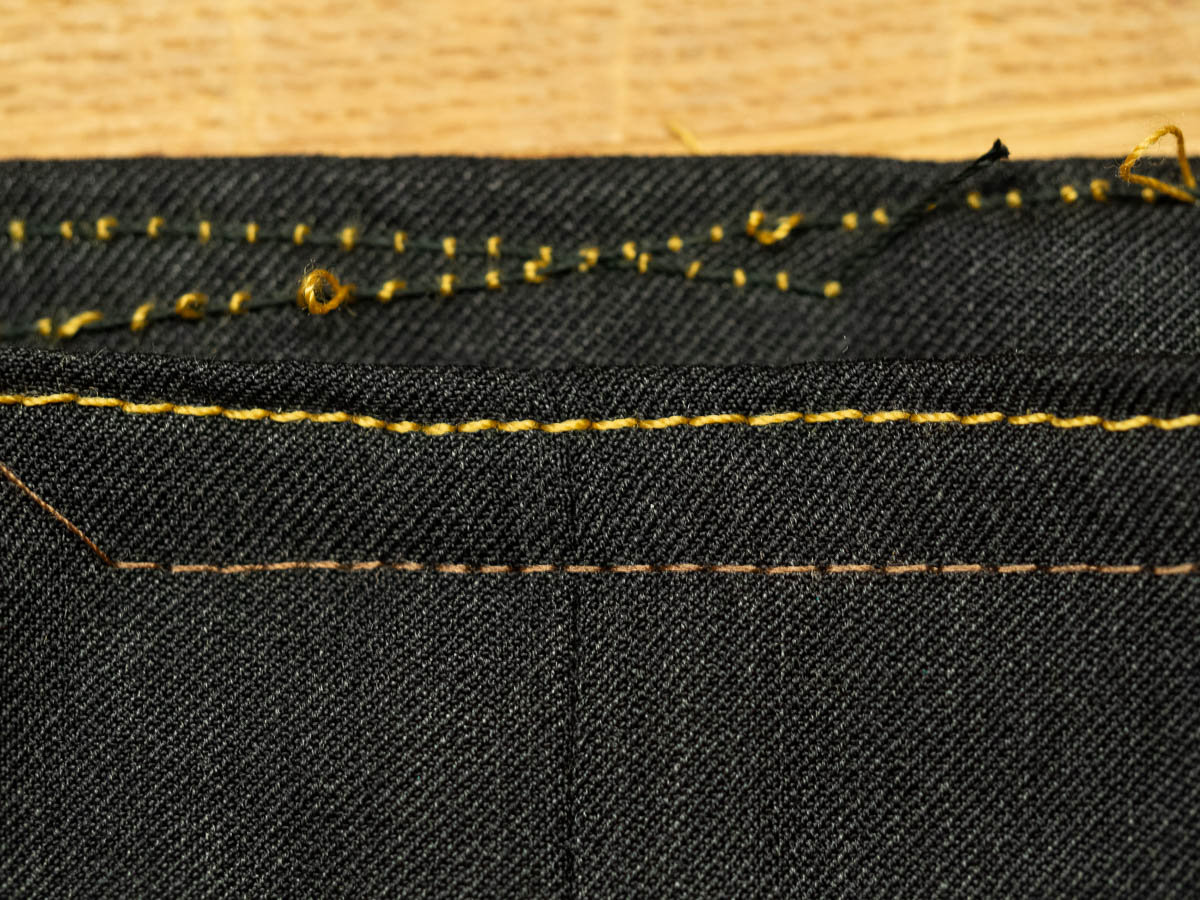
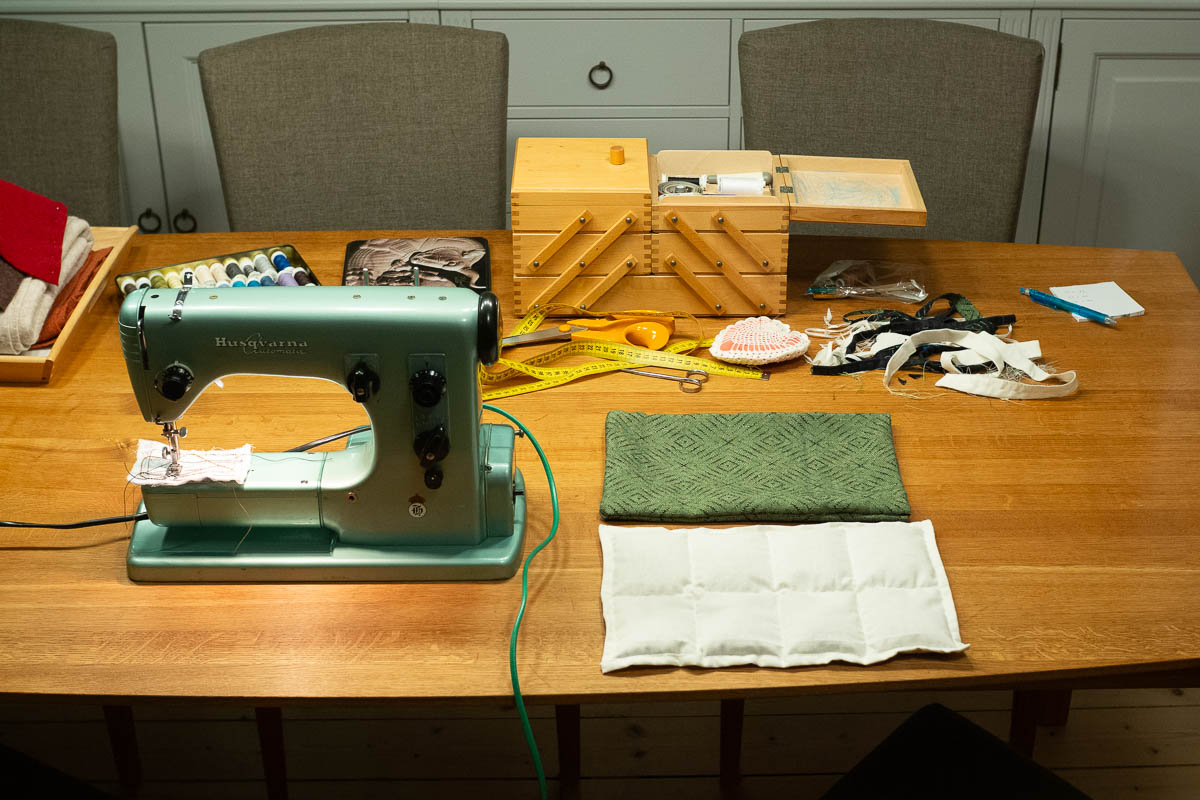
I bought a new old sewing machine, but haven’t actually tried using it until now. Today Ingrid wanted to hem a pair of jeans, and I realized I didn’t even know how to thread the machine.

Just winging it based on past experience didn’t work. Compared to Eric’s old Bernina, nothing quite works the same. But – thank goodness for the Internet – I could buy a PDF scan of the original user’s manual for 75 SEK, and that finally got me sorted.

I got nice and tidy seams with ordinary sewing thread, but didn’t manage to get the tension right with a thicker polyester thread, no matter how I adjusted it. The top thread was always too loose. Turning the tension knob towards “looser” made it noticeably worse, but tightening did not make it better. Maybe it would work better with a thicker fabric to match the thick thread?

Anyway, getting a handle on the basics took me so long that Ingrid had already finished hand-seaming her jeans hems. I guess I’ll just stick to normal thread and normal fabric to begin with, and tackle this again later if a need arises.

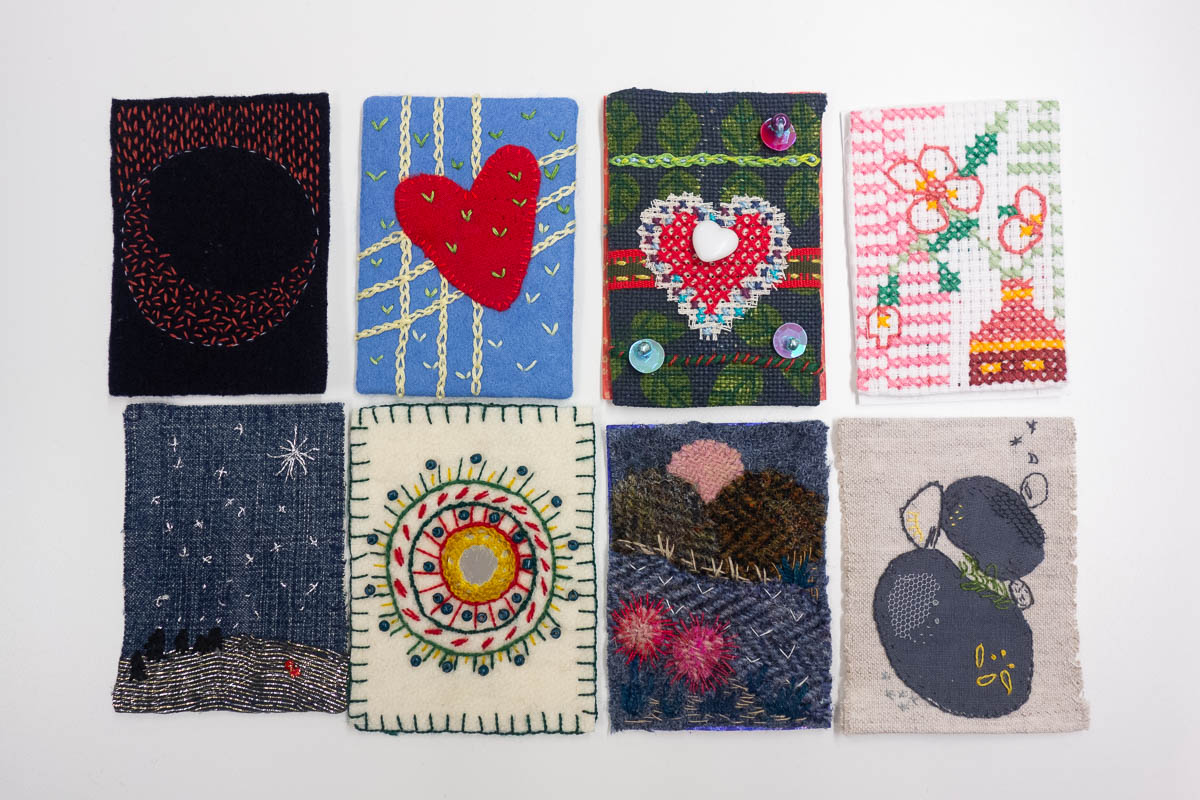
Finished my embroidered ATC, put it in the pile for ATCs for a blind swap, and came home with a different one.

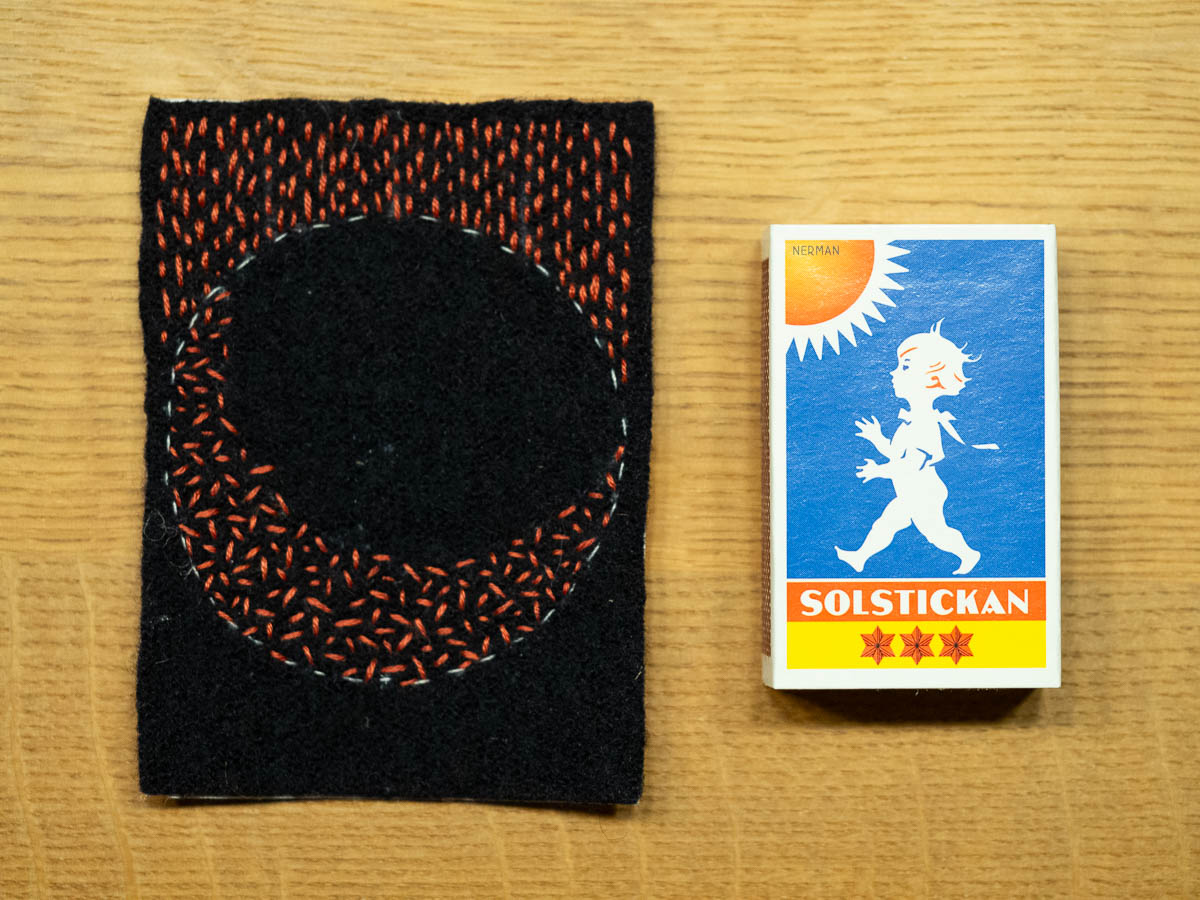
I didn’t intend for it to come out quite as dark as it did – I thought the red would stand out more.

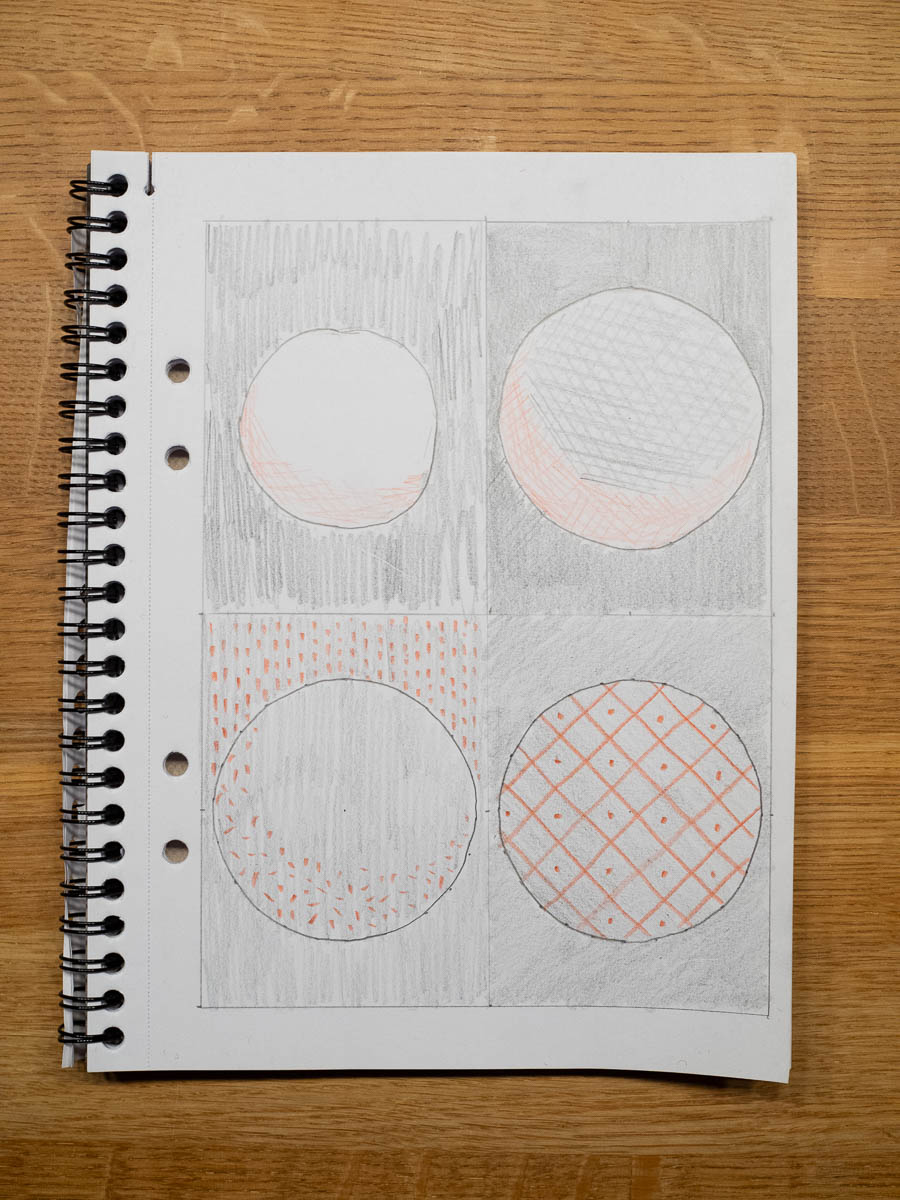
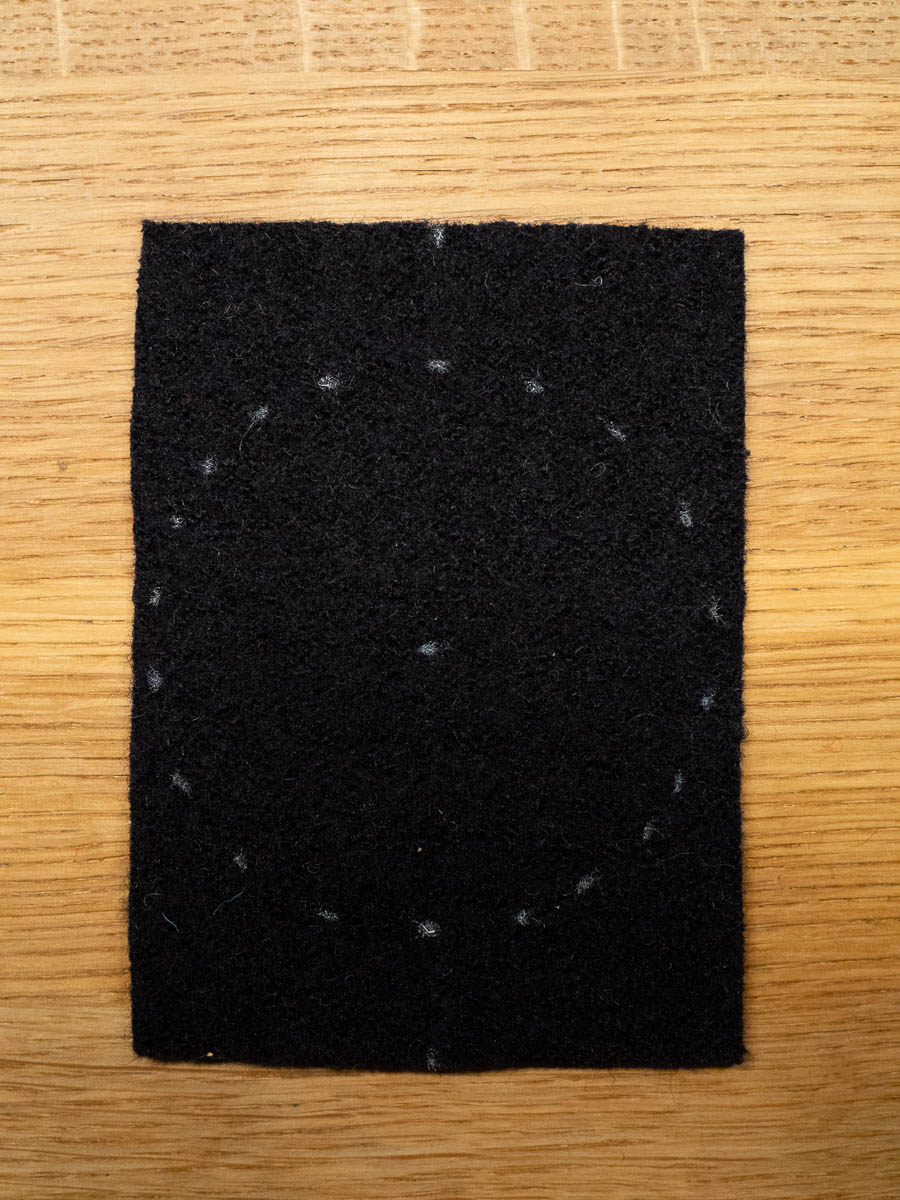
Next Thursday will be the last of this season’s embroidery club sessions. We agreed to swap Artist Trading Cards, so I’m making one – my first ever. I’ve still got a bunch of black, white and red design ideas I haven’t realized, so this will be something on that theme.

And a circle. I like circles.

I should have included a matchbox for scale. It measures just 6 x 9.5 cm. A lot smaller than the A5 sketchbook above.