Not a proper review, just some notes for myself.

We went to the theatre today for the first time in forever and saw “Forever Piaf”, a musical about the life of Edith Piaf. A mother/daughter pair (Malena and Beata Ernman) together played Piaf – often on the scene together, one representing Piaf’s external reality and the other one her inner thoughts. An ensemble played the roles of all the other people in her life – mentors, friends, colleagues lovers, more lovers. Somewhat confusingly the same man played several of them, which I guess may have been intended to show how she was drawn to similar men over and over again, but for me it just ended up muddling things.

Many of her most well-known songs were represented but not performed in full. The songs were often woven into her story and sometimes it was unclear to me – not super familiar with all her works – where one ended and the next one began.

Not bad but not quite what I had hoped for, either.

For Eric’s birthday, I bought tickets for an online concert. Eric shares his birthday with Johann Sebastian Bach, so there is an Early Music Day on this day.

It was an odd experience. Live but not live. It was a live concert but it didn’t really feel like it.

The music was lovely. The production, not so much. Odd camera angles where our view of the musician’s face was blocked by a microphone stand; weird cuts from one camera to another; a sound mix that wasn’t adjusted when the musician switched instruments. Either it was done on a shoestring budget, or by people who are used to very different kinds of concerts and out of their depth here. Our guys at tretton37 produce much better live streams.

On the plus side, in a real live concert I would never have gotten a live view of the harpsichord player’s hands.

Random observation: my brain noticed the harpsichord much more when the view switched to his hands. Objectively I knew there was no change in the music, but as soon as I could see him play, my brain picked up the harpsichord so much more clearly.


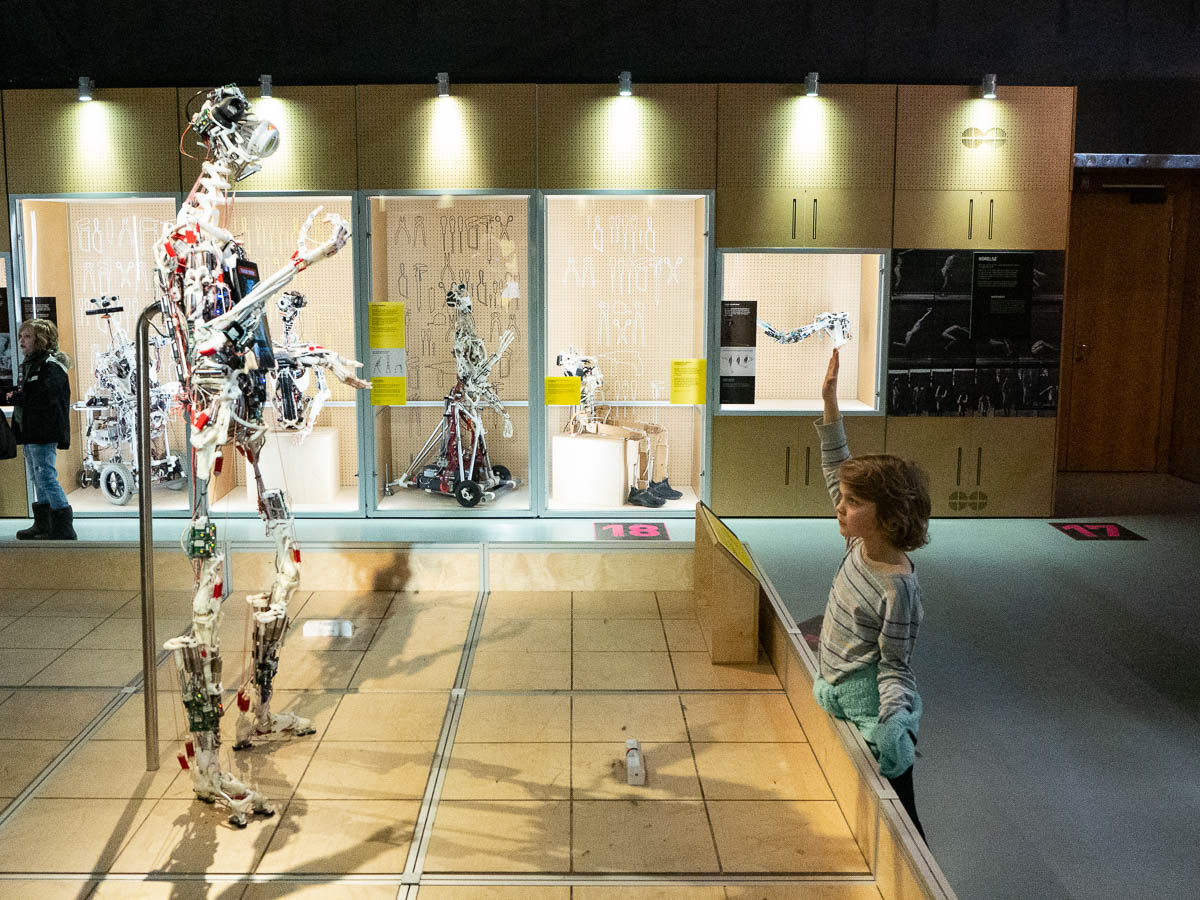
Tekniska museet has an exhibition about robots that we’ve been talking about for months now. This is the last but one weekend so today Adrian and I went and saw it.

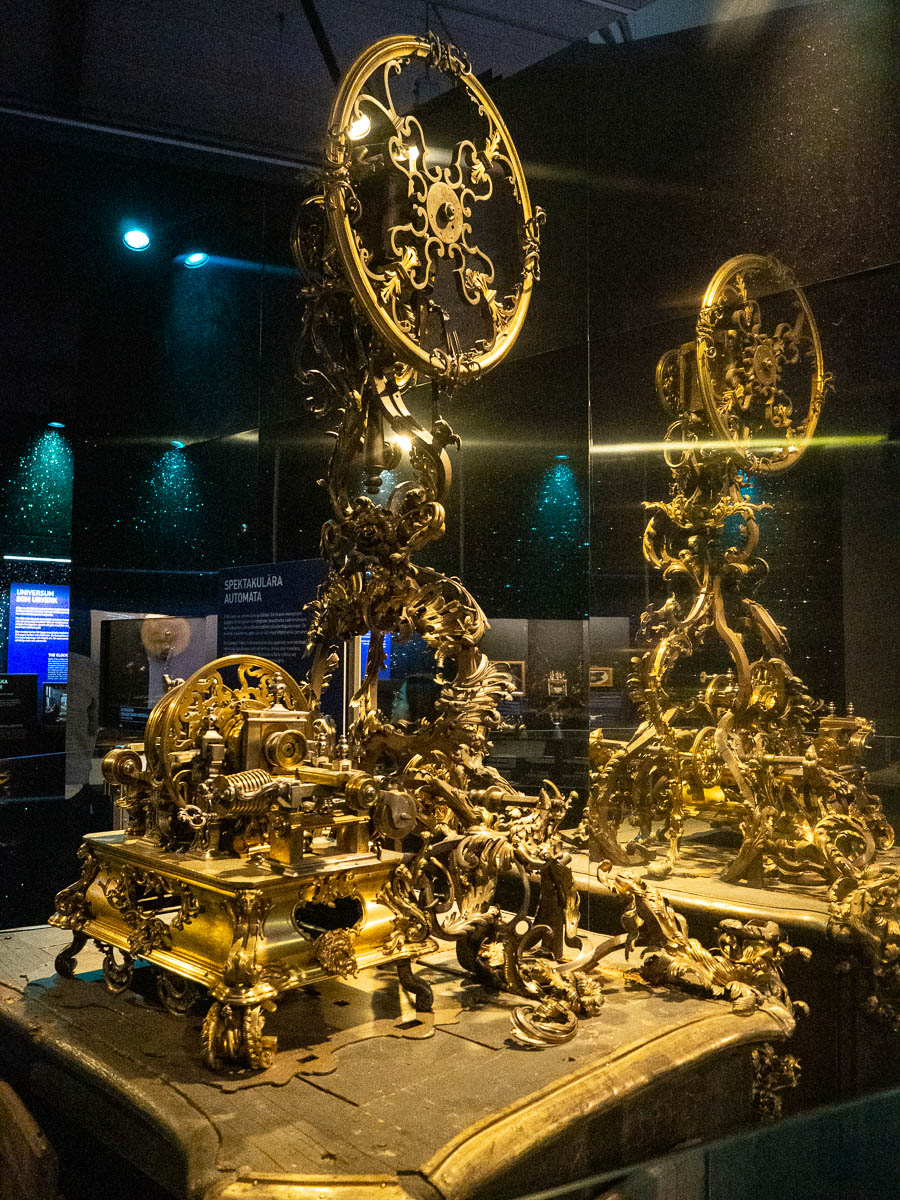
The theme was specifically humanoid and human-like robots – “making machines human”. The story starts back in the renaissance: on the one hand, new inventions such as mechanical clocks and ever more elaborate clockworks; on the other hand, a growing understanding of human bodies and anatomy. Those came together in impressive automata that then gradually inspired more and more human-like machines.

There were plenty of robots, robot parts and images of robots to be seen. Fictional robots, from Metropolis and R.U.R. through to the Terminator 800. The gradual evolution of robot anatomy, with wooden finger joints and rope ligaments and little motorized muscles. Locomotion, sensors, etc.

Many could have been even more interesting with more in-depth information. I can see that this is a robot arm with these and these parts, and the sign tells me it’s from 1970-whatever, made in some lab in some country. What was really new and cool about it? What could it do? What could it not do? How do more modern robots differ from it? What interesting results did it give rise to? What other experiments did it inspire?

Also unfortunately the robots that you could interact with were very basic. One seemed interesting because it could actually sense its environment and detect nearby people as well as their movement – but it was behind a pane of glass that seemed to interfere with most of its sensors.

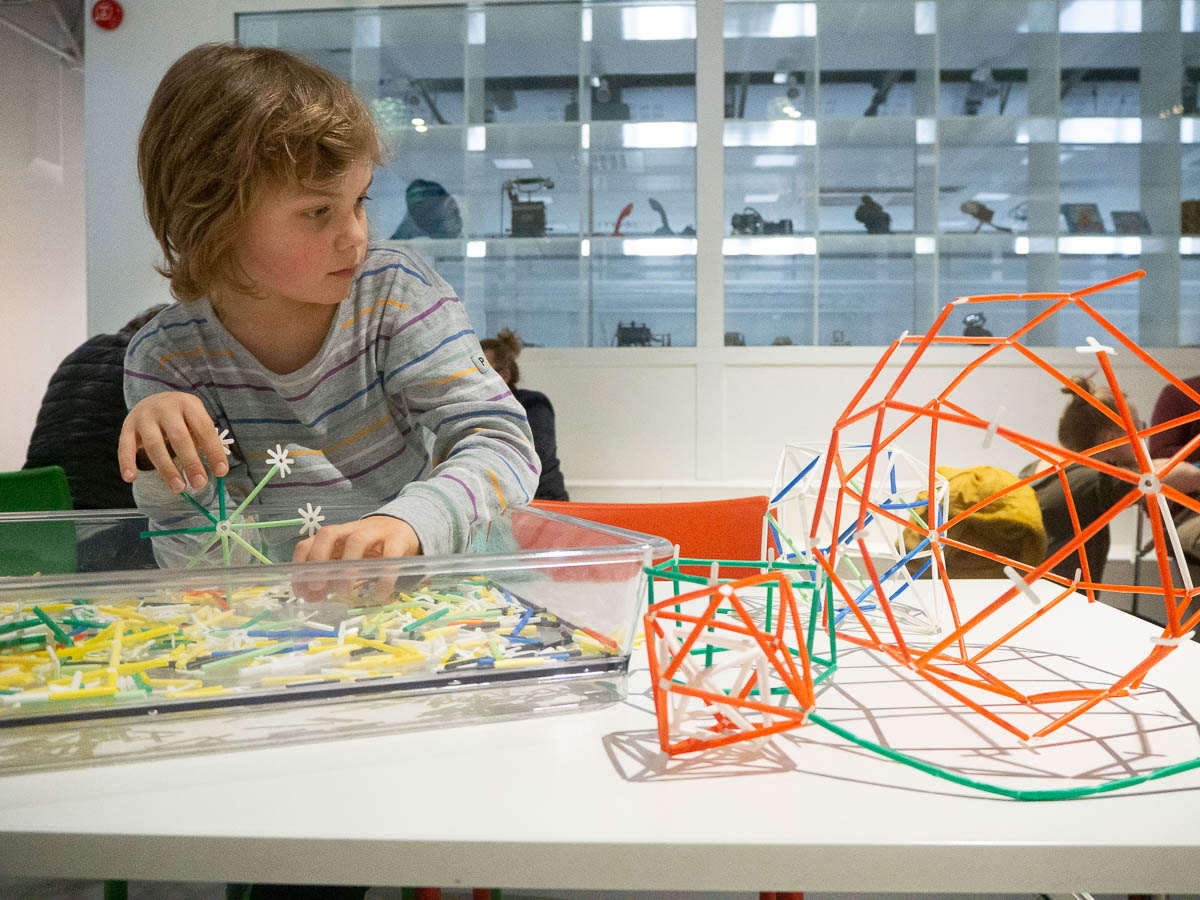
There were plenty of other activities at the museum and we stayed for hours. Construction toys; an indoor playground where the kids could let off some steam; various exhibitions. There was an entire exhibition about computer games through time, which had the same problem as the robots exhibition – not enough information.

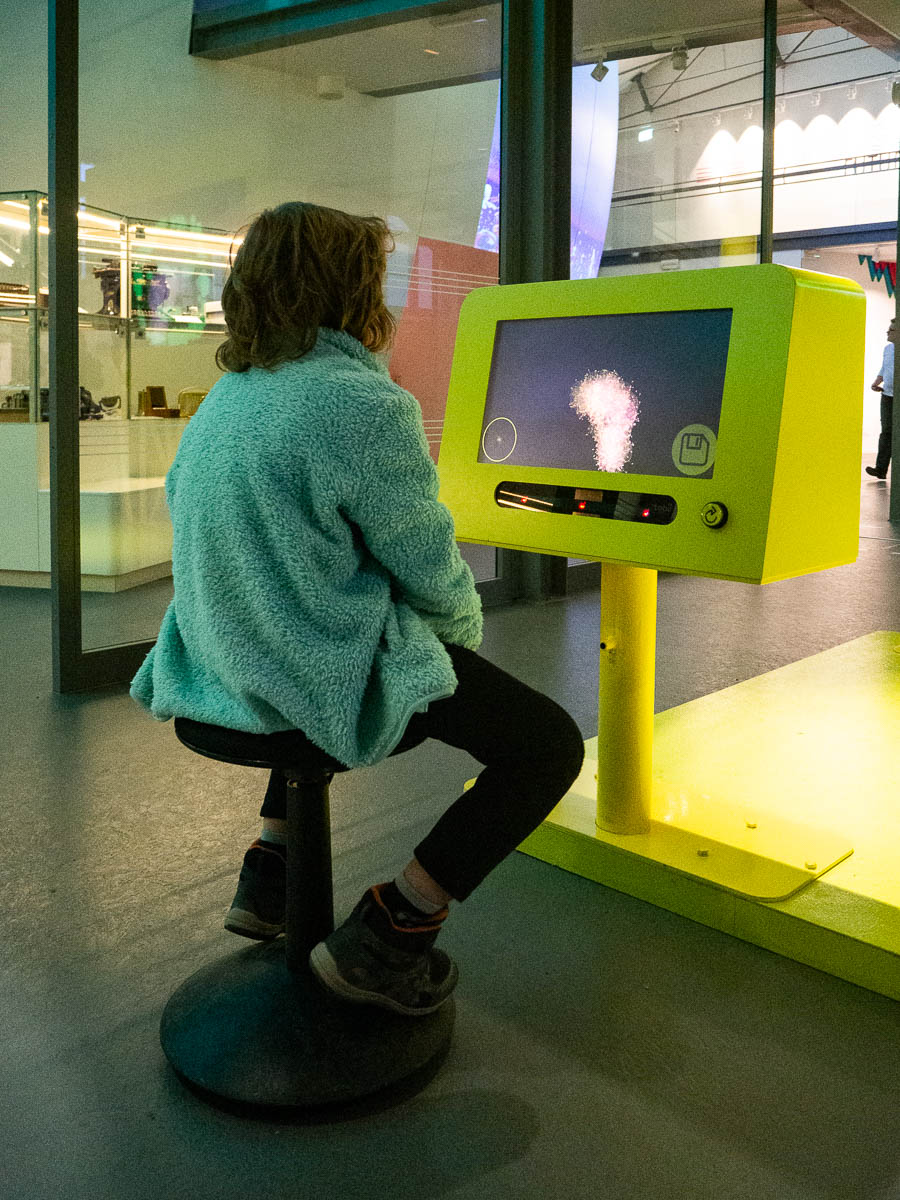
The exhibit that both Adrian and I enjoyed most was about eye tracking technology. Two monitors that you could draw on by looking where you wanted to put the “paint” – and a large monitor that superimposed the two individual pictures. As a nice touch, the virtual on-screen brushstrokes were very pretty, with interesting shapes and colour gradations, much nicer than the usual single-colour blobs. And drawing was pretty hard. You need to look ahead to where you want the line to go, but my eyes were often drawn back to where the line currently ended. With a lot of staring, I managed to draw some basic shapes. Using eye tracking for real must take a lot of practice.

Another ballet triple bill. We had great seats, middle of the front row. Unfortunately Eric was ill and didn’t get well in time so I went on my own.

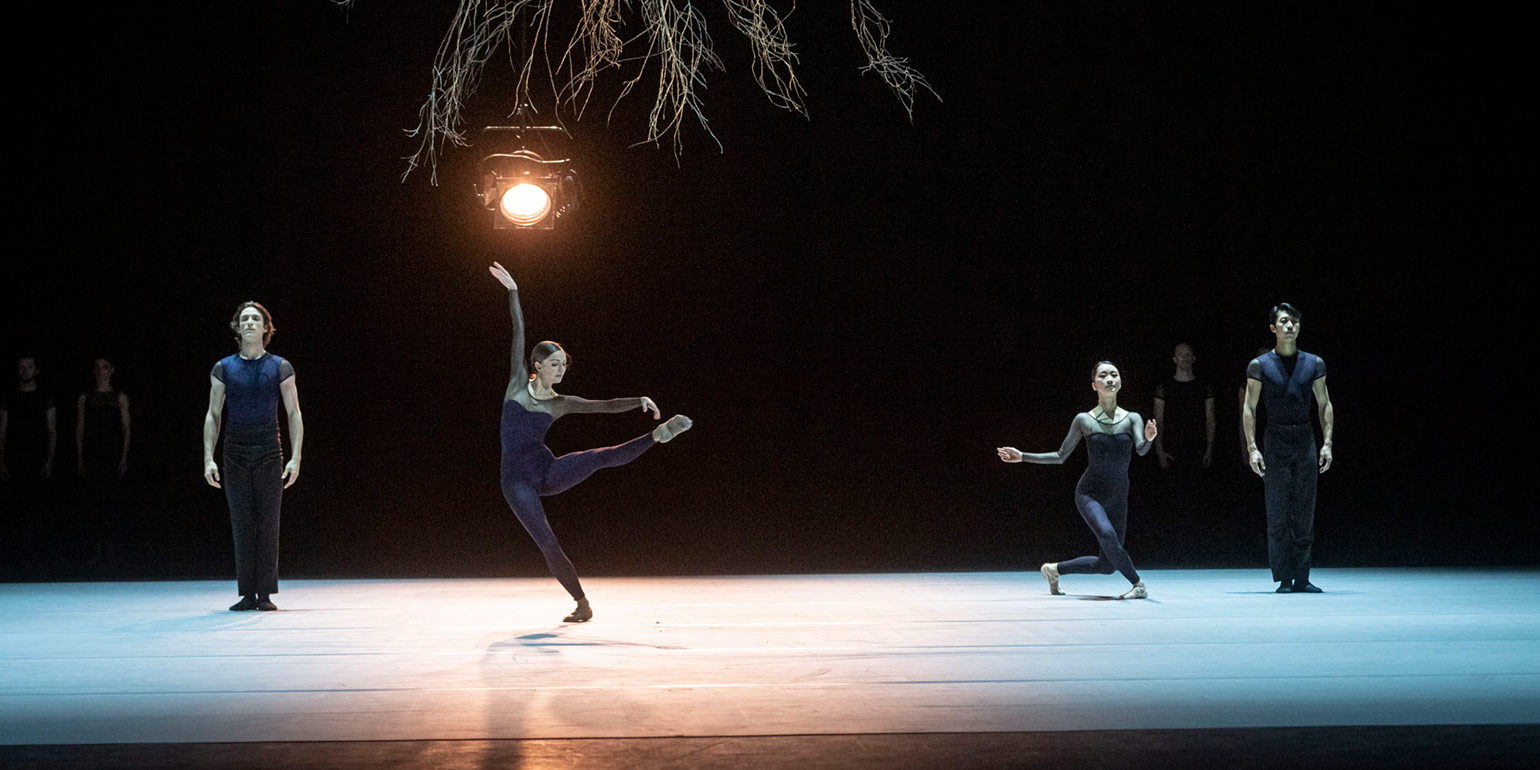
Jiři Kylián, Wings of Wax. I’m pretty ure I’ve seen something by Kylian before but I can’t find a mention of him on my blog so I can’t remember what it might have been. Wings of Wax was set to lovely music by Bach and Glass and Cage and (a new one for me) Heinrich Biber. The choreography was soft, simple, light and lyrical, and closely tied to the music. It reminded me a bit of Balanchine’s Agon in how the dancers’ movements seemed like an embodiment of the music, but softer. Lovely.

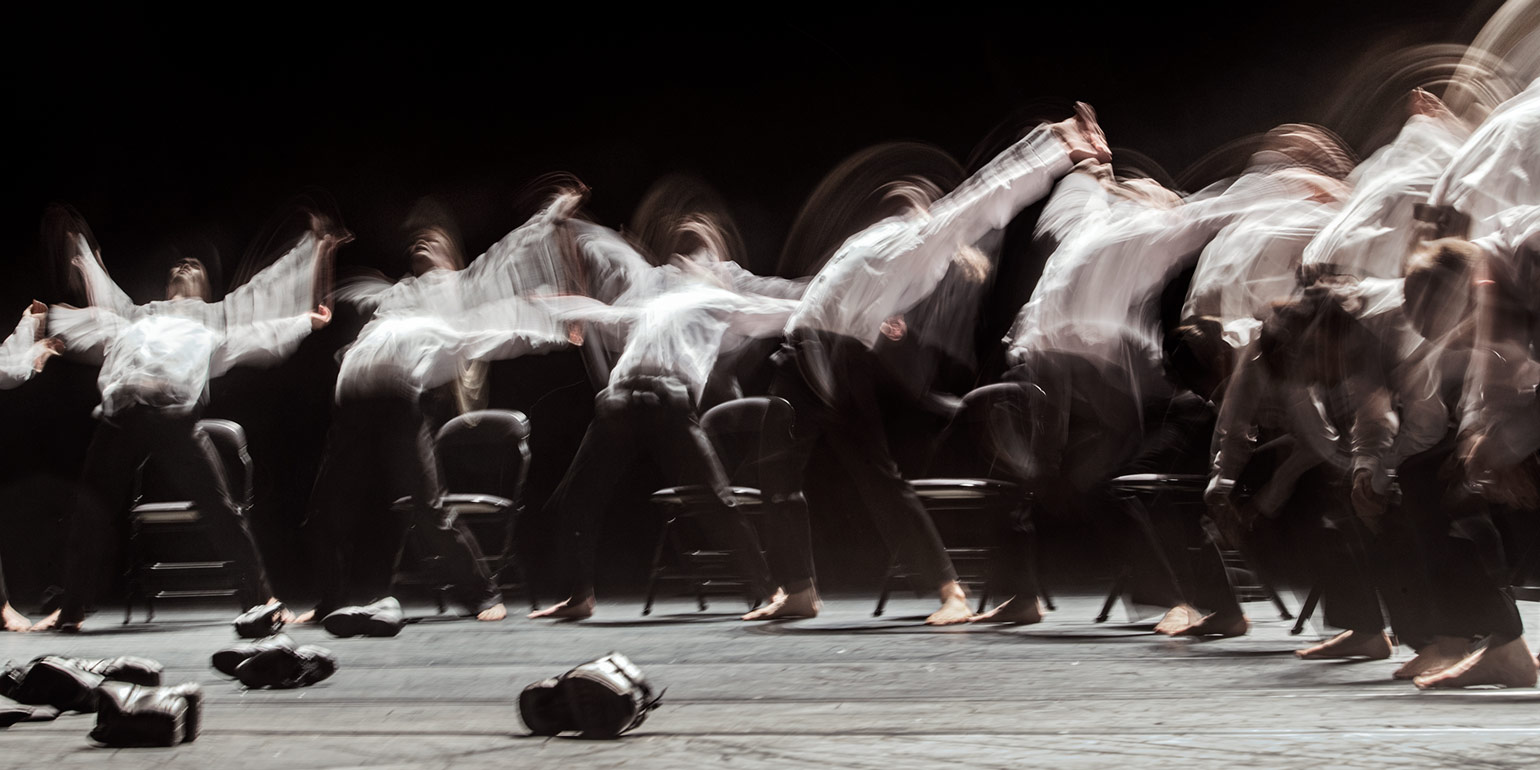
Ohad Naharin, Minus 16. This piece was in turn made up of several smaller pieces, and the connections between them were not very clear to me. The first and by far most memorable of the pieces has a name of its own, since it is built around a song: “Echad Mi Yodea”. It starts with twenty dancers sitting on chairs in a semicircle at the front of the scene. The song – and the dance – consists of repetitions of the same verse, with new phrases added to the front of the verse with every repetition. The dancers throw their bodies around, and throw their clothes and shoes off. I liked the dancing but I really loved the music – intense, powerful and energetic.

Other parts of Minus 16 were less interesting. Some were simply unmemorable. Others were crowd-pleasers, such as inviting people from the audience to the scene, or just “letting go” dance party style and seemingly dancing without any choreography. It makes the audience laugh and clap their hands, yes, but it’s not what I came for.

Mats Ek’s Woman with Water is actually inserted in between parts of Minus 16. (That’s how disjointed Naharin’s piece was.) Very Mats Ek. He makes the world and the human body look alien. The dancer’s back is hunched as if she didn’t quite fit inside the world; she moves around a table as if she was completely unfamiliar with tables.


All three photos by the Royal Opera.

“Coraline” is great as a book, a movie, and a comic book. Why not an opera?

In terms of story, the opera version at Folkoperan was true to the original. The scene decorations and costumes all had the right kind of eerie mood, and the buttons-for-eyes looked truly creepy.

The problem was the singing.

This performance left me more convinced than ever that I just do not get opera. I would have liked the show so much more if they had just stopped singing and talked like normal people.

Opera singing is simply weird, and this opera was weirder than many, I think. The music was not just atonal but also a-structural. I couldn’t discern any melody or musical theme at all in what the orchestra played and the singers sang. The orchestral music felt like a vague soundscape more than anything. And the singing literally seemed like something that a kid could have made up when pretending to sing opera. Just make your voice really high and stretch out each word! Look, ma, I’m doing opera!


I was extra pleased to note an ad in this morning’s newspaper for a promising organ concert, given my disappointment on Thursday. BachiStan is a project/grouping/something that will play all of Bach’s works for organ during 2020, with concerts taking place every other weekend, starting today. Were I retired and free, perhaps I would try to attend all of them. I’ll be happy even if this is the only one I hear, but I really hope that it won’t be.

On the programme: a prelude, two duets, and a number of chorals.

I enjoyed every moment of this concert. It was so much more to my taste than Thursday’s. Firstly, it was Bach and not Reger. Despite its name, baroque music is restrained and disciplined and almost “easy listening” compared to Reger. Secondly, it was played on relatively modest-sized church organs instead of what I’m beginning to think of as the grandiose monstrosity at Konserthuset.

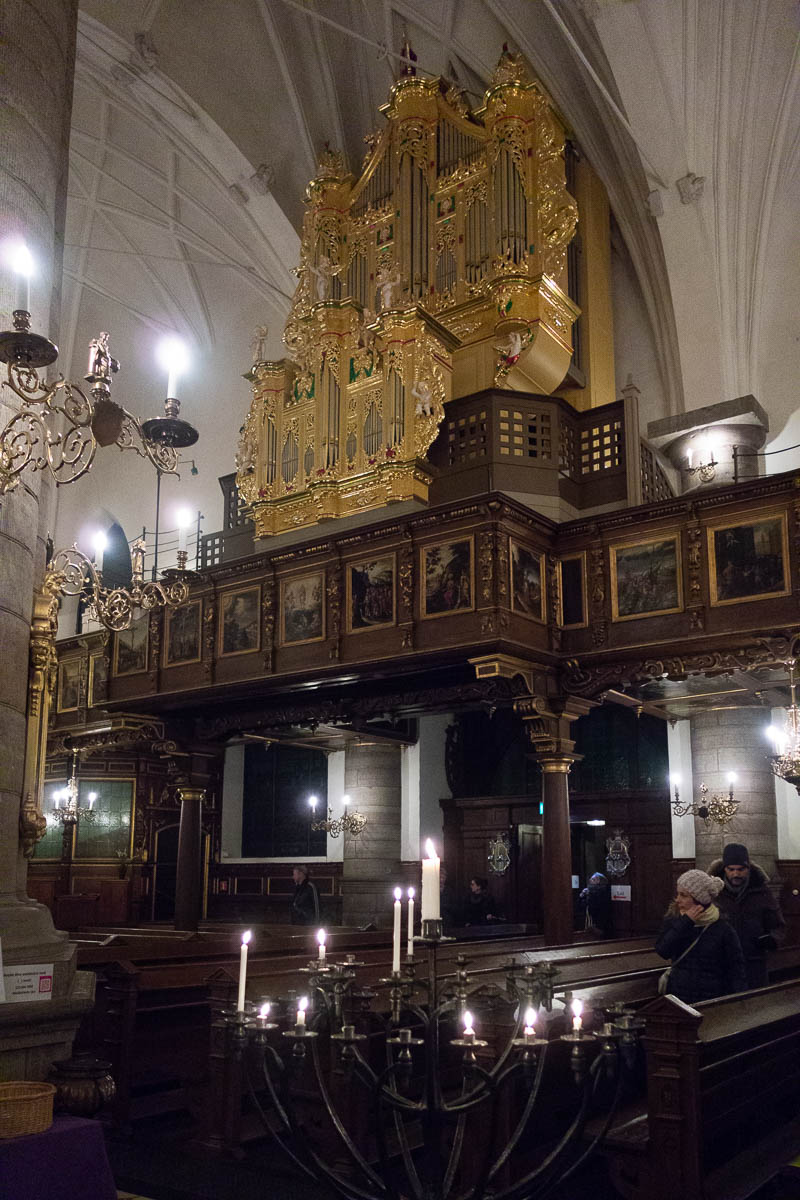
The German Church has two organs, and both were used today. I arrived relatively late but since I was alone I found a great seat right in the middle. If I sat facing forward, the Juno organ was straight behind me. If I turned to the right, the Düben organ was straight in front of me. So I got perfect sound from both.

There was a speech, not quite a sermon, towards the end of the concert, about why we are here. Why are we listening to this music? Why did Bach write this music? In this telling, it all goes back to Luther and his belief that music brings us closer to God.

And I realized in a flash of insight – I can’t believe I haven’t realized this before! – that my most perfect music listening experiences are those that turn into meditations. The times when I am subsumed by the music and all other senses and thoughts disappear. I am aware of each note as happens, it is almost as if it was happening within me. This takes music of a very different kind than what’s usually labelled as “meditation music” – relaxing, unassuming and bland music that sort of just tinkles along in the background. Meditating to music, not meditating while listening to music.


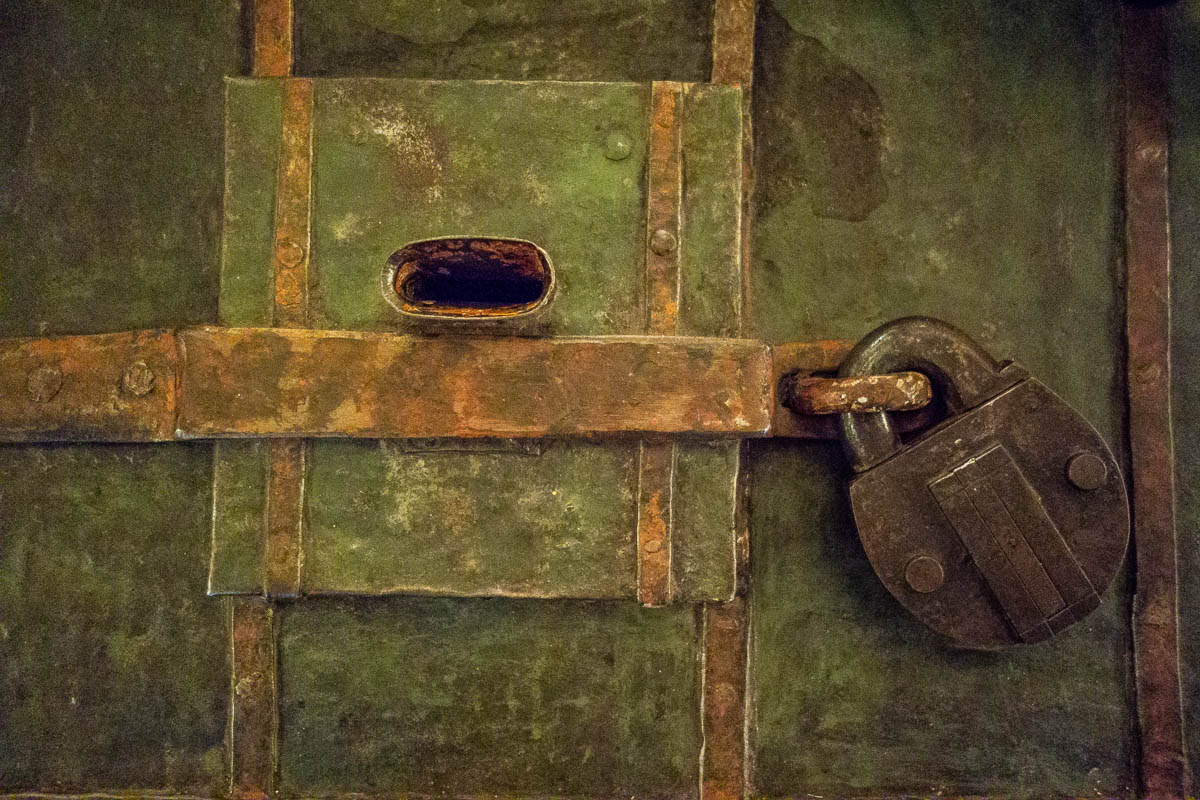
This second photo is of the collections chest at the German Church. I went looking for it after the concert, because I thought this experience deserved at least the price of a concert ticket. Stuffing my banknote down this ancient opening was a bonus experience.
The third in a series of five lunchtime organ concerts at Konserthuset.

Today’s concert was fully dedicated to Max Reger. When Ulf Norberg, the resident organist at Konserthuset, introduced the concert, he said Reger was his favourite composer. Well, de gustibus non est disputandum, but I personally found Reger nearly unlistenable. I enjoyed no part, no aspect of this concert.

There was just so much stuff in this music. It was bombastic, blaring, overdone. All registers booming, then near silence. It was like an ad for the organ at Konserthuset, one of Europe’s largest apparently – look at what it can be made to do! But I could discern no melody or rhythm in this. It was just unstructured sound to my ears.

I wish there had been a way to discreetly leave the concert hall without disturbing anyone, but there wasn’t, so I had to sit there until the end.


The Nordic Museum has an exhibition titled “Arctis – while the ice is melting”. It’s a mixture of climate science and facts about the Arctic regions and its people.

The climate part, which is what visitors meet first, was designed to be shocking and worrying, but I’m quite aware of all the shocking and worrying facts and statistics already, thank you very much, so I only skimmed it.

The interesting parts were the ones about the people and cultures. I especially enjoyed seeing all the hand-crafted clothes and tools. I like beautiful things made with care and attention. I also really liked the way the items were organized: mostly by type and function, rather than by origin, so sealskin trousers from the Russian far north stood next to similar clothes from Greenland, for example.

A new thing I learned about: glacial archaeology. Archaeologists are now prowling the edges of receding ice patches, finding things that have been hidden and protected by the ice for hundreds of years. When the ice thaws, the objects quickly deteriorate, so scientists try to find them as soon as possible.

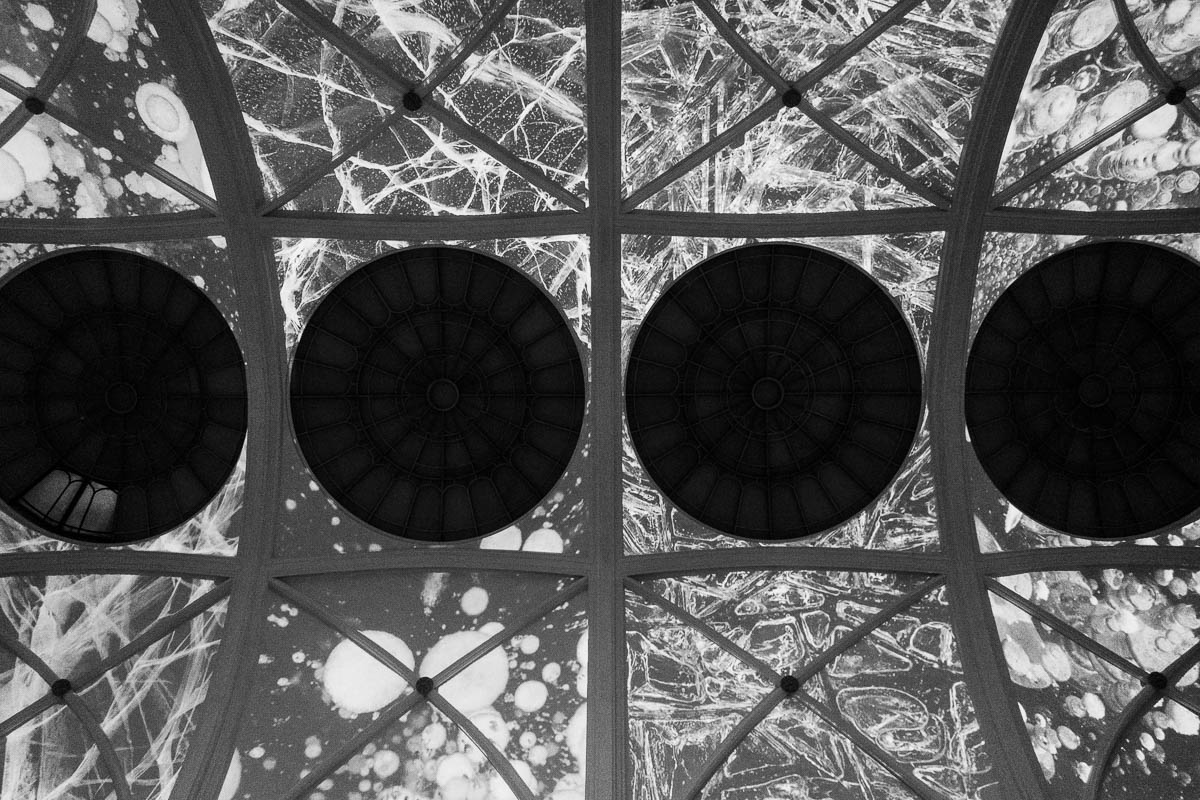
The photo is from an ice-themed photo/light installation on the ceiling of the great hall of the museum.

Cirque Alfonse, “Tabarnak”, at the Hangar at Subtopia.

Cirque Alfonse is a family circus from Quebec. Not the kind that is aimed at families, which mostly seems to mean silly clowns, but a circus that is a family.

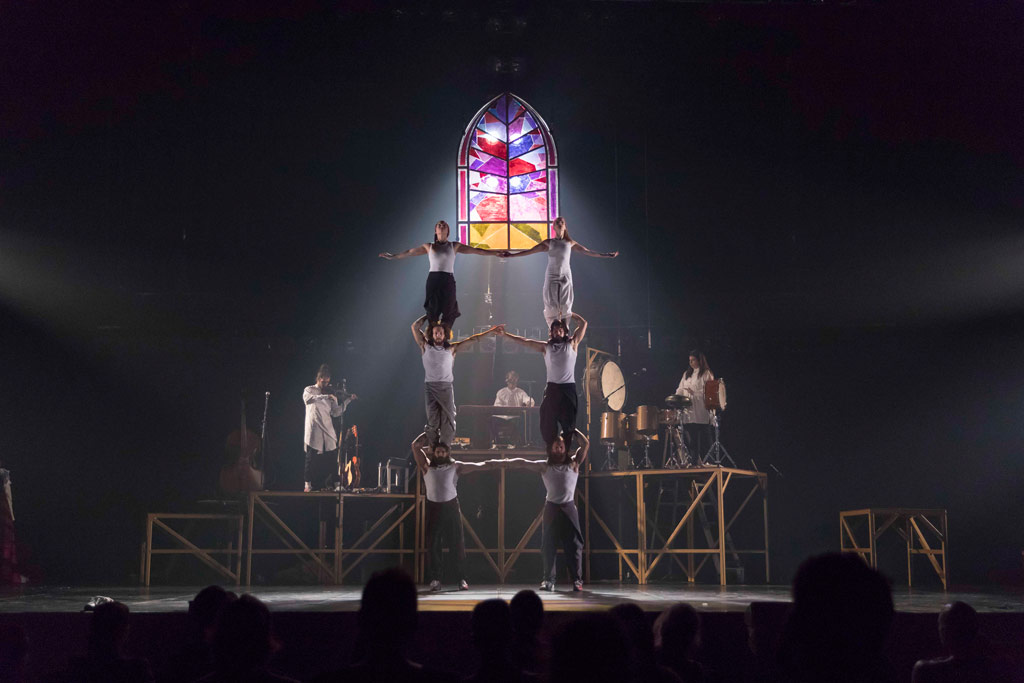
Tabarnak was quirky, down-to-earth back-country circus. The scene design featured bare, undecorated timber frames and a colourful church window. The artists were dressed in loose gray trousers and long, loose white shirts.

There were various different kinds of acts, and also random entertaining things-between-acts. (Step dancing. Rhythmic whip cracking.) But their best numbers were strength acrobatics: climbing on top of each other. This was all accompanied by live music, written by/for the troupe.

I enjoyed this a lot.


Image from the web site of Cirque Alfonse.

Ingrid and Adrian got tickets to a musical, Snow White at Göta Lejon, as a birthday present. Today we saw the show.

We were incredibly disappointed. I can’t judge exactly how disappointed the others were but the feeling I walked away with was that this is the last time I want to see a Dröse & Norberg production, ever.

The songs were mediocre at best, with sloppily written texts that neither scanned nor rhymed well. Often I couldn’t hear what the actors were singing; I don’t know whether that was because they didn’t sing clearly enough or because the sound producers and engineers hadn’t done their job properly. All songs sounded pretty much the same, anyway, all bouncy and energetic but with no soul or feeling. After the show ended, I couldn’t recall a single line of a single song.

The actors (apart from Nanne Grönvall as the witch/queen) were all rather unimpressive. Snow White, the king, the hunter/herald and the prince were all bland and uninteresting. The dwarves were like weird twisted copies of the Disney dwarves, obviously the writers didn’t have any new ideas but couldn’t make them too close to get caught by copyright rules.

As an added insult, the story had been padded with random scenes (singing, dancing plushy toys?!) that contributed nothing apart from an opportunity to sell merchandise to children.

The only thing that I really liked about the show were the queen’s costumes, each more regal and extravagant than the previous ones. (Whoever designed the prince’s jacket, on the other hand, has obviously never looked at a men’s formal jacket up close, because they had cut it completely straight and quite narrow and with no vents, so it was pulling quite badly at the bottom button.)

After the performance we went for dinner at a nearby restaurant (Ri Cora) which has one of Stockholm’s best Asian buffets, and we all came home with much stronger and happier memories of the dinner than of the musical.