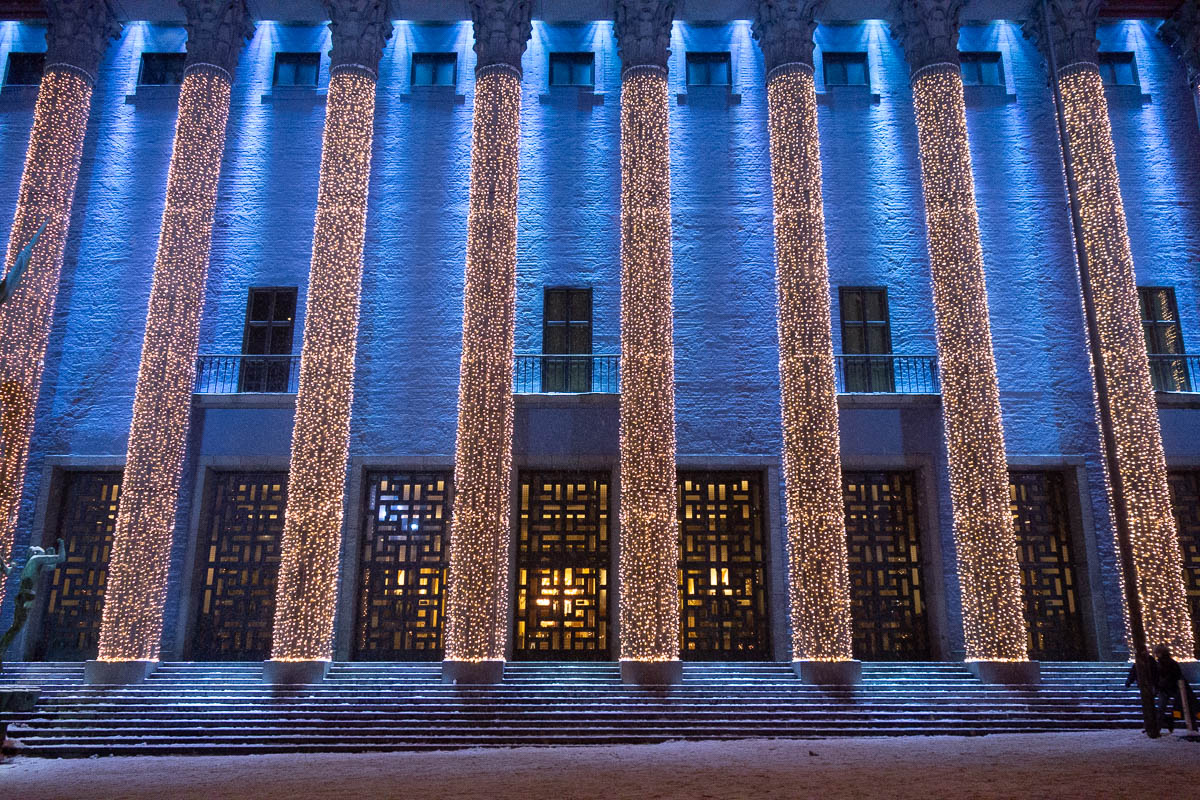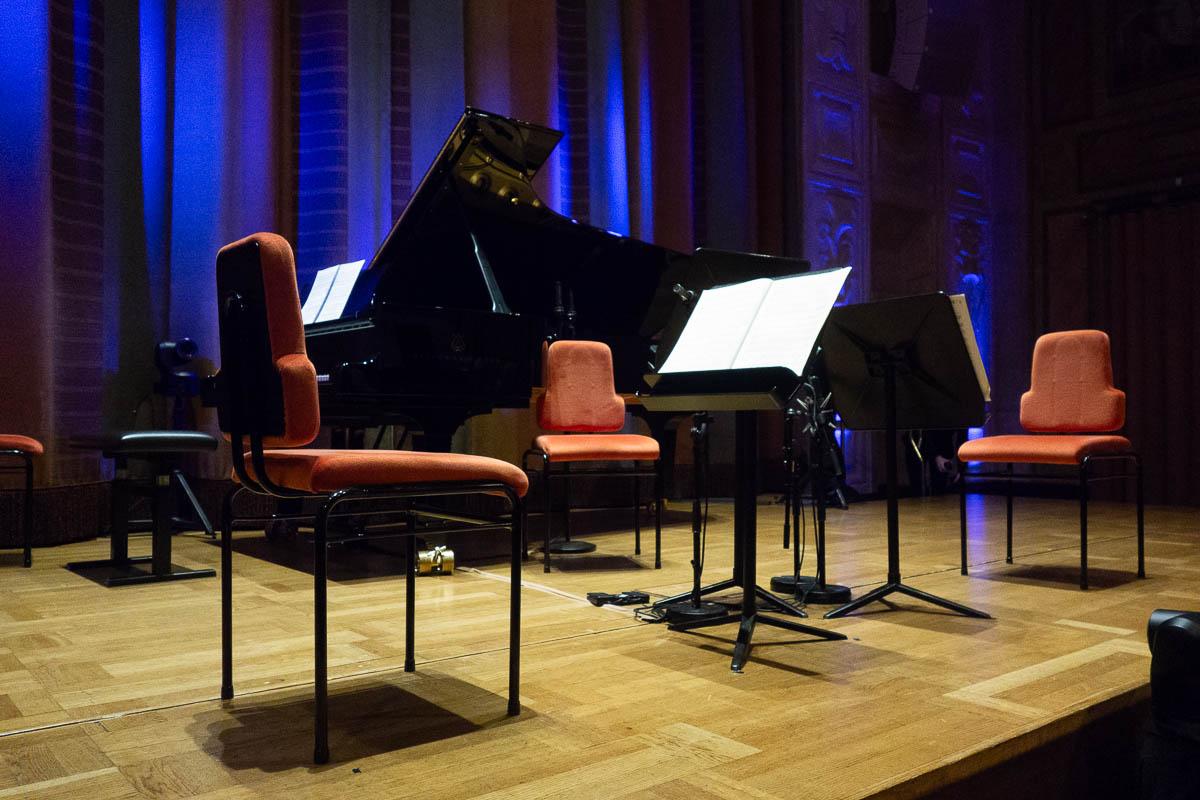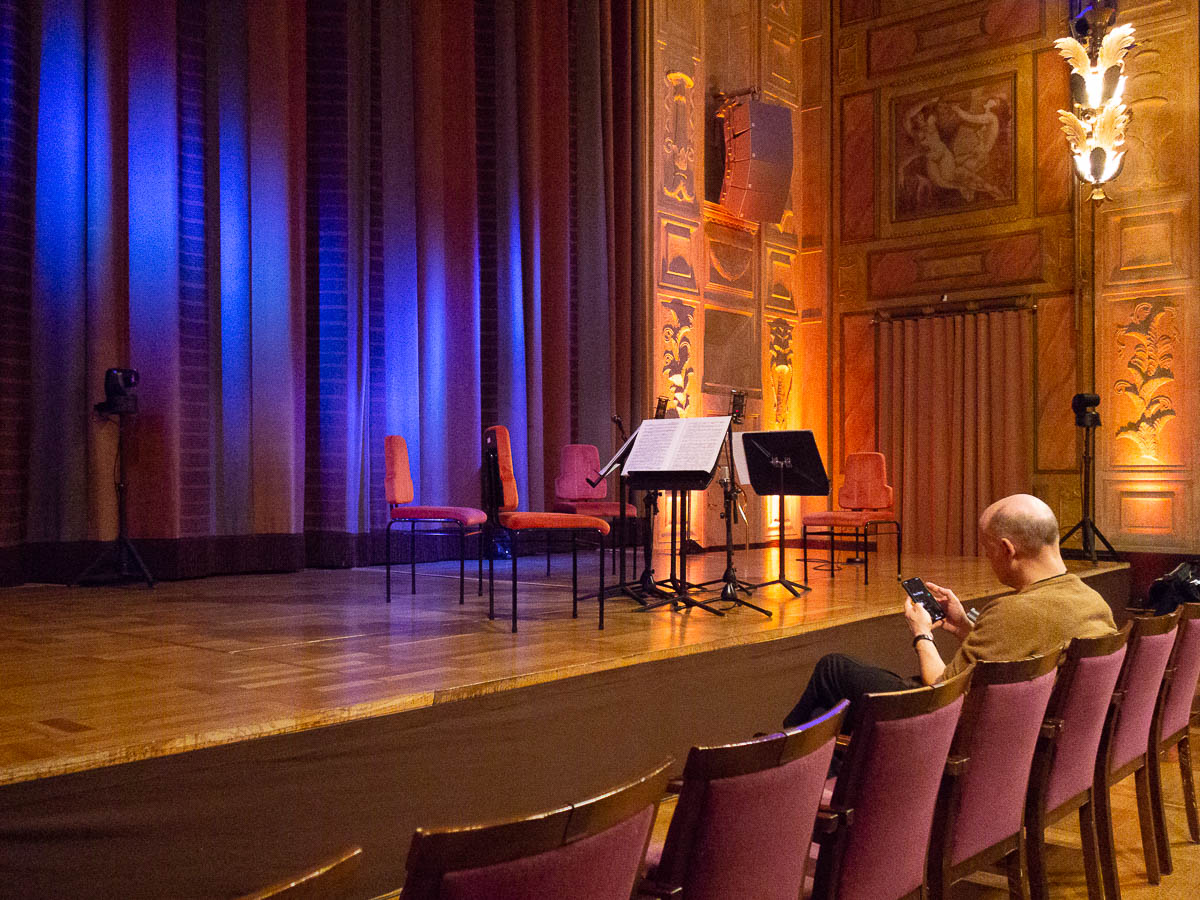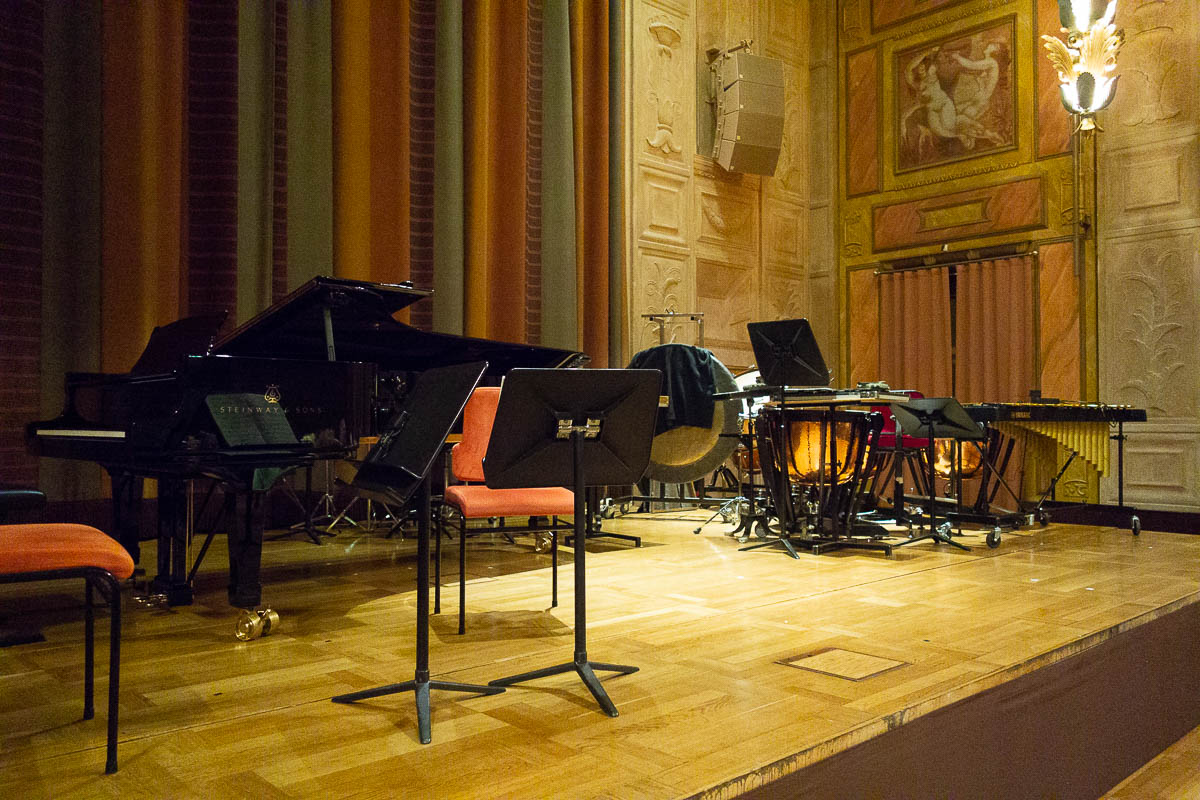
The piano recital series continues. Piotr Anderszewski, playing Bach, Szymanowski, Bartók and more Bach.

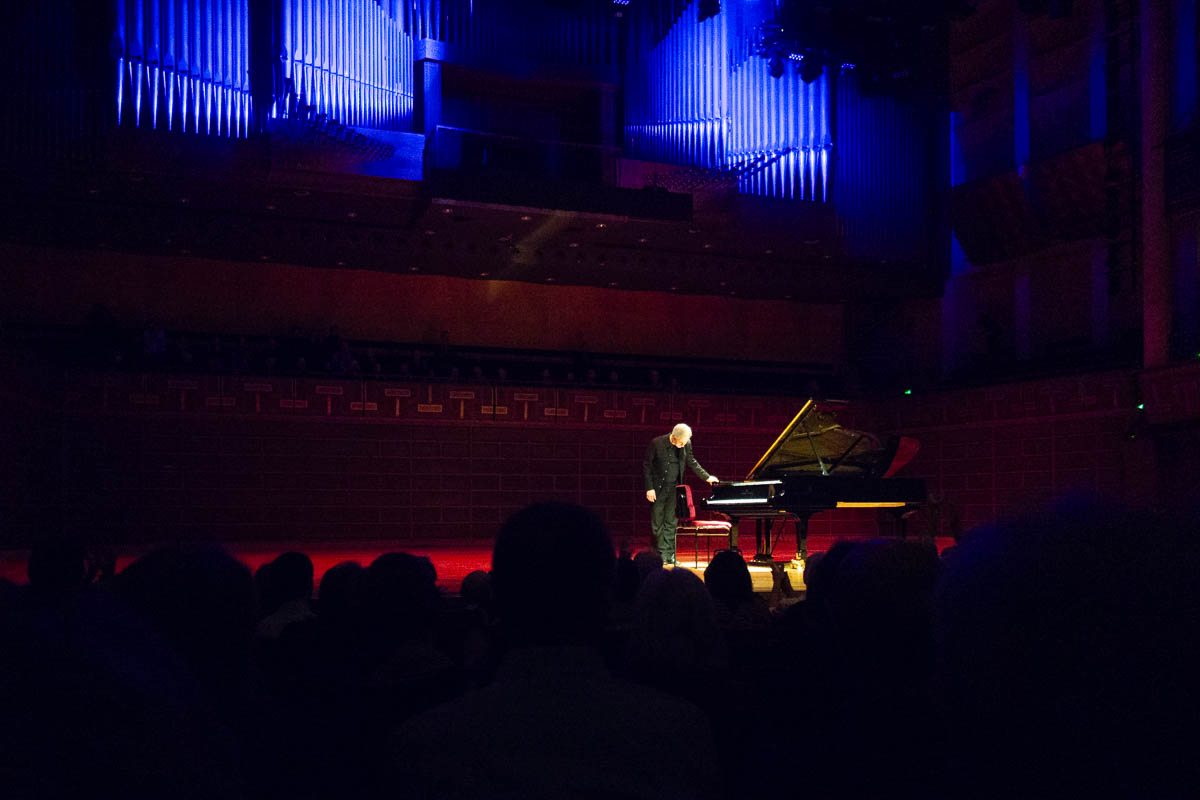
Piano concert at the Stockholm Concert Hall, with Arkadij Volodos playing Aleksandr Skrjabin and Franz Schubert.
The concert leaflet describes Skrjabin as innovative and boundary-breaking. To me it just sounded dissonant and chaotic. I read that the brain releases dopamine both when it hears things in music that it recognizes or predicts, and when it is surprised. With Skrjabin, I felt there was nothing predictable at all so there was nothing to hang on to. No melody line to follow, no recognizably recurring phrases. It was like… stuff just happening, all the time. Music that’s a hundred years old, and it’s still too modern for me.
Schubert is always Schubert, though!
Volodos also played several extra pieces after the official programme, and the third of them was such a glorious piece of music that I didn’t even hang around to see if there might be more. There was just no way he could top that. Konserthuset kindly publishes updates to the concert programme after the fact, so I now know it was his own arrangement of La Malagueña, a flamenco piece originally written for the guitar I’d guess. You can see a somewhat blurry video of it here. There’s just… fingers absolutely everywhere, and I can’t see how could possibly hit all those notes with any kind of control, but clearly he does. Absolutely magnificent.
Speaking of Schubert, the last concert in the chamber music series that Eric and I go to together also started with Schubert. An octet by Schubert, and followed by another octet by Jörg Widmann, who wrote it as a tribute to Schubert’s octet. And my opinion here was the same – liked the Schubert, but Widmann’s octet was too un-melodious for my taste.
I have tickets this season for a second concert series, for solo piano, in addition to the chamber music series for me and Eric. It kicked off today with Grigori Sokolov playing Bach and Mozart. I don’t keep up with news in the world of classical music, or who’s who, so I didn’t even know what a big name he was until I turned up and saw the hall fully sold out and read the programme leaflet.
I enjoyed both the Bach pieces (four piano duets, and a partita) and the Mozart ones (a sonata and an adagio). The duets were especially enjoyable, with the melody wandering back and forth and duplicating between the two hands.
Grigori Sokolov himself gave the impression of being there for the music only, and like he’d have been happier if the audience wasn’t there. Walked onto the stage, gave a perfunctory bow, and started playing. No smiles, barely looking at the audience afterwards. Total and utter focus on the music, which he played by heart without any sheet music.
The audience was in raptures and couldn’t get enough. They applauded until they got two extra pieces out of Sokolov, and still wouldn’t stop. After a while it became a performance in and of itself. If they paid any attention at all to Sokolov’s body language and behaviour, they can’t have imagined that he enjoyed their clapping, so it wasn’t for his sake, but more of a showing off to the others. “Look at me, look at how much I enjoyed this.” I found it rather grating and walked out before it stopped.

We bought season tickets for another concert series of chamber music at Konserthuset. Best part: as repeat customers, we got the option to keep the same seats, which are excellent. Front row, just left of center, gives us the best view and best sound.
Last year’s series was very much a mixed bag. Some I found boring; some were delightful. Today’s piano trio by Elfrida Andrée and piano quartet by Gabriel Fauré were both in the “too many notes” category for my taste.

Another concert in the chamber music series. Today’s ensemble consisted of a flute, a violin and a viola.
Hopscotch for solo flute by Anna Clyne (modern) was technically impressive but emotionally not interesting.
Capricci for violin and viola by Bjarne Brustad (1930s) was too modern for me. Too jarring and not enough harmony and melody. Although the fragments where the violin took on a folk music tone were interesting.
Rumi Settings for violin and viola by Augusta Read Thomas (modern) was even more modern and didn’t sound at all like anything I would associate with Rumi, although it was described as being directly inspired by one of Rumi’s poems.
Serenade in D Major for flute, violin and viola by Ludwig van Beethoven was charming and more relaxed and approachable than most of Beethoven. Although I guess I’m more familiar with his symphonies than his chamber music. The booklet accompanying the concert explains that Beethoven’s chamber music was probably not written to be performed in a concert hall, but for private performances, either at musical salons or simply by amateur musicians. If I was filthy rich, I’d totally pay for people to play Beethoven’s chamber music for me in my living room.
Trio for flute, violin and viola by Endre Szervánsky (1950s) was likewise charming. Fluttery, light and airy, with the instruments’ melodies often very close to each other, almost melting into one voice. (Unlike string quartets.) The piece made me think of birds and fairies and flowering glades in dappled sunlight. Somehow it felt like film music, like something that could have been in an early Disney movie or “A Midsummer Night’s Dream” or some other romantic, pastoral fantasy.
All the composers were presented with a picture in the booklet, except Beethoven, oddly enough.

Stockholm Early Music Festival, Christmas Edition.
I’ve been on SEMF’s mailing list for years, but never actually made it to any of their concerts. The main festival is usually in the beginning of June and clashes with the end of the school year. And early December of course is always a busy time. This year, though, Eric and Adrian were away on a scout hike, so we couldn’t do anything family-Christmassy anyway, so I could take the whole afternoon and evening for concerts.
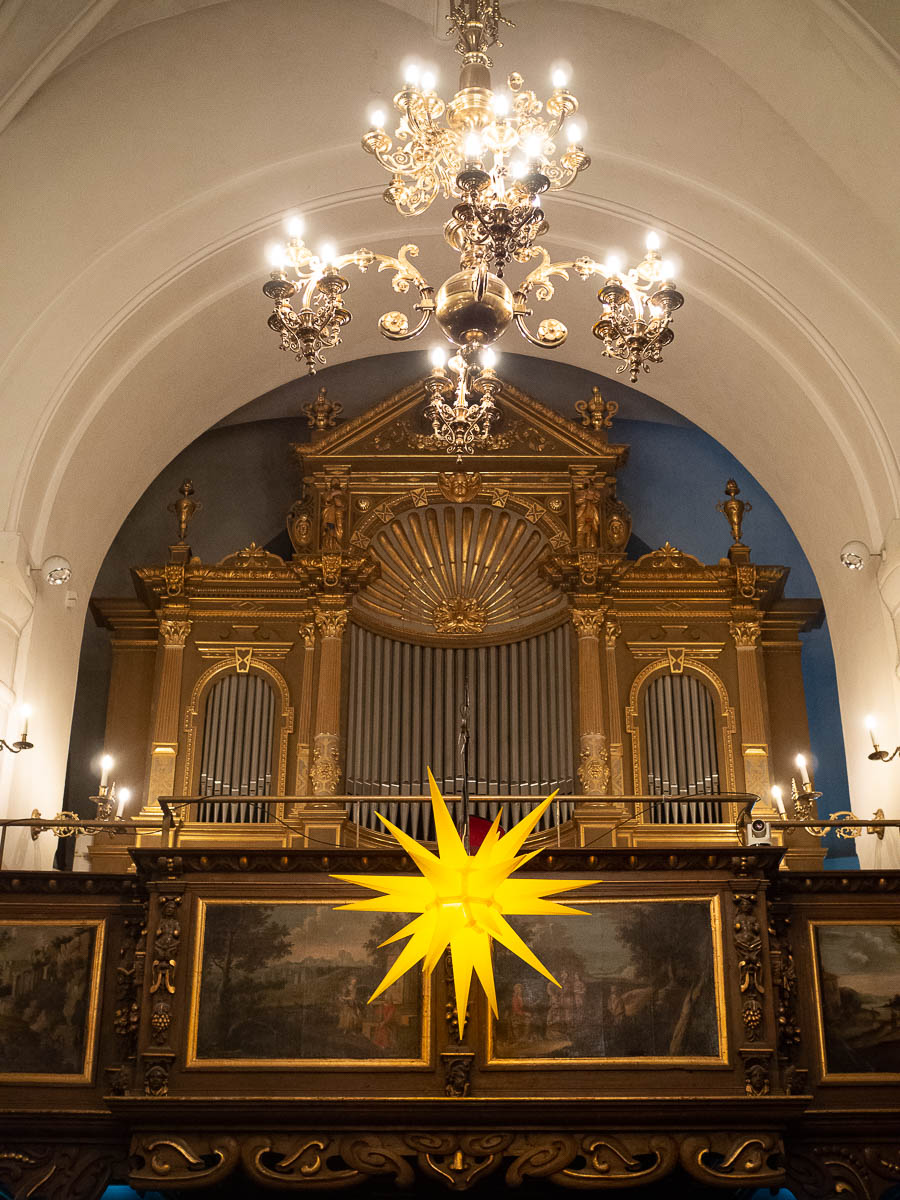
The German Church is a lovely concert venue with beautiful acoustics. Isn’t it wonderful that we humans have evolved the capability to appreciate music, and the capability to make music ourselves, and also to construct buildings to make the most of both?
The mini-festival consisted of three concerts (plus an optional extra late-night one which I skipped).
The first one, with Finnish Ensemble Gamut, I found incredibly boring. I’m glad I bought tickets for the whole afternoon because if I’d just heard this one I would have been utterly disappointed. It was just an endless drone with little variation. There were instruments, and there was singing, and it definitely had a melody – but apart from the songs with elements of Finnish runo songs, they all sounded so same. The only way I knew that one song ended and another started was because the ensemble all switched instruments. And the singer’s mannered way of singing really didn’t suit my taste. I was nearly falling asleep and had to take out my knitting to keep awake.
The second concert, with The Nordic Baroque Band, was much better. All instrumental music, with baroque versions of violin, viola, cello and flute. (Today I learned that the baroque violin is held differently from the modern one – not squeezed between chin and shoulder but just pressed against the shoulder. And the baroque cello is held between the legs, without an endpin.)
The third one (Nordic Voices), in contrast, was all-vocal, but equally good, if not better. Their repertoire ranged all the way back to medieval polyphonic liturgies (Olavsmusikken). Beautiful, enchanting, soaring, intimate.
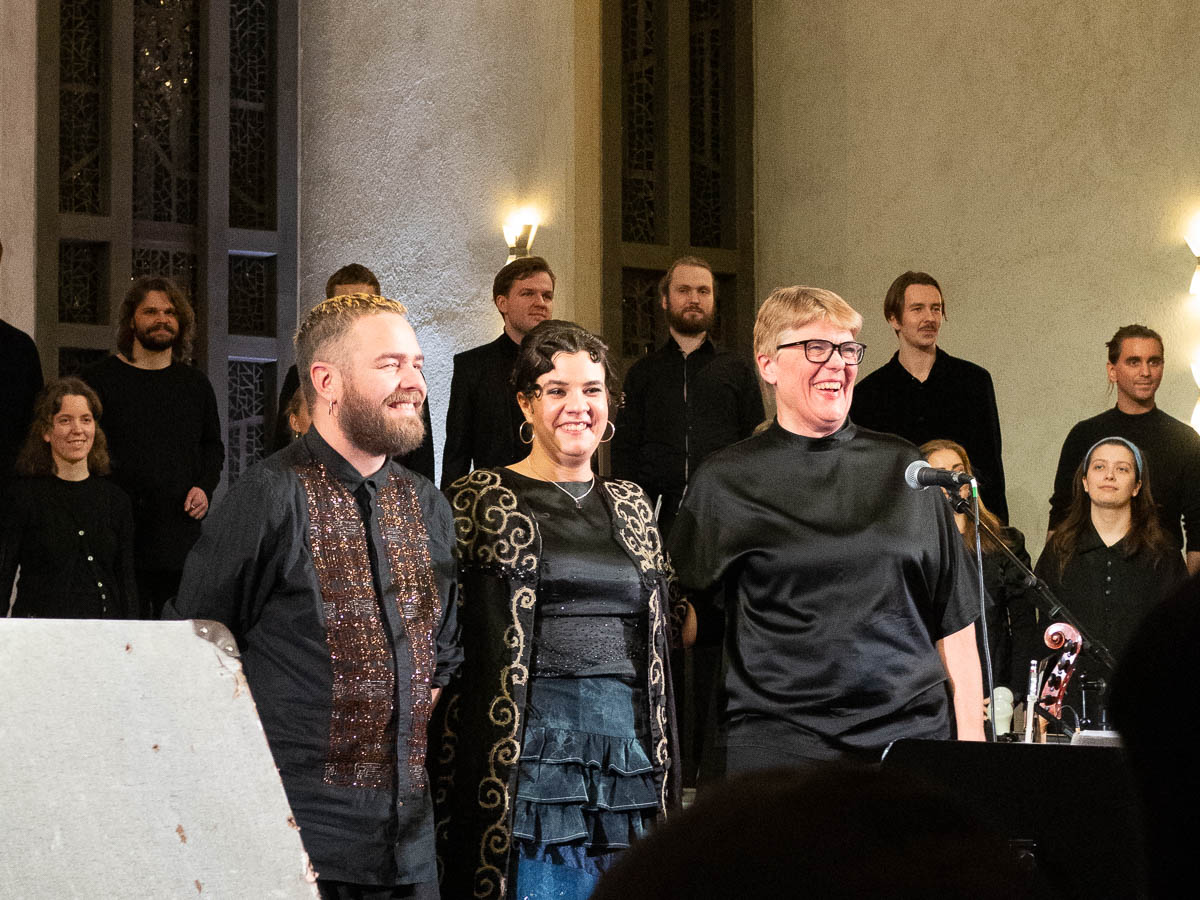
Another concert in our series of chamber music at Konserthuset, with the Maier quartet.
Premiere of Stabilitas loci by Ylva Skog. The composer herself was present to introduce the piece. Written during the pandemic isolation – quiet and a bit melancholy. Raindrops against a window that turn into little streams. Lovely – definitely the nicest part of this evening. And there’s more of her on Spotify!
String Quartet Op. 9 by Bo Linde. The information leaflet says that he “was active at a time when Swedish music life was characterized by disagreement between modernists and traditionalists, and counted himself as one of the latter”. I really can’t understand how because this piece sounded almost aggressively modern to me. Long stretches of pizzicato; notes so high that the violin could barely produce them and most of the audience very definitely couldn’t hear (and I only heard because I was sitting two metres from the violinist and have quite young ears still). I mean, you can use the violin as a balalaika but maybe then just write music for a quartet of balalaikas instead?
String Quartet No 15 A-minor Op. 132 by Beethoven. Quite dramatic, kind of all over the place. A more trained ear could probably hear how the different parts make a whole, but for me it was a jumble of disconnected parts. The slow movement (“Heiliger Dankgesang eines Genesenen an die Gottheit, in der Lydischen Tonart”) felt like a constant slowing-down, like a Shepard tone but in speed and energy, not tone. I found it completely energy-sapping. Not my thing.
One thing that I have noticed and liked in many string quartets – but not all – is how no one instrument leads. They hand over the baton for the leading role to each other all the time. One instrument plays a phrase. Another responds, echoes, bounces it further – but it only follows this thread for a short while before it takes charge and introduces something new. Sometimes I get the impression that this is “a thing” for string quartets, and then some other one comes along (like the one by Linde) and I hear none of that in it, so then maybe it’s not. I have no musical education whatsoever, beyond what was mandatory in school, and they definitely didn’t go into this kind of detail about the characteristics of construction of different forms of classical music.

We have tickets for a chamber music concert series at Konserthuset and the first one was today. Piano, cello, violin and percussion.
Pejacevic’ piano trio was music of the romantic kind, definitely impressive but not to my taste. The kind of music where everything blends together and it’s a mass of notes rather than a melody. I find it difficult to keep my focus on this kind of music, to the point that I begin dreaming while awake. My brain has nothing to hold on to, so it starts making things up.
Shostakovich’ symphony No. 15 arranged for a chamber ensemble. I liked this a lot better, with the dialogue between the cello and the violin. It’s an interesting piece of music, with its quotes from other famous works. It was almost bizarre to suddenly get a burst of the Willam Tell Overture in the middle of the piece. It was also clearly a technically challenging piece, especially for the strings, veering into atonality.
We had front row seats, which I particularly like for small-scale classical music, because it allows me to see the musicians’ craft up close. Which is particularly nice when I find myself zoning out.
One thing I noticed this time was a digital sheet music stand that the violinist used, with a foot pedal for turning pages. I wish I could have gotten a closer look – sometimes it seemed to only redraw the bottom of the page, and I wonder what that was about.
The cellist and the percussion section used traditional sheet music. The pianist did so as well, with the help of a page turner. That seems like it might be a challenging task – it’s not just about reading the music but also keeping track of dal segno “navigations”, being unobtrusive while waiting… and not getting distracted.
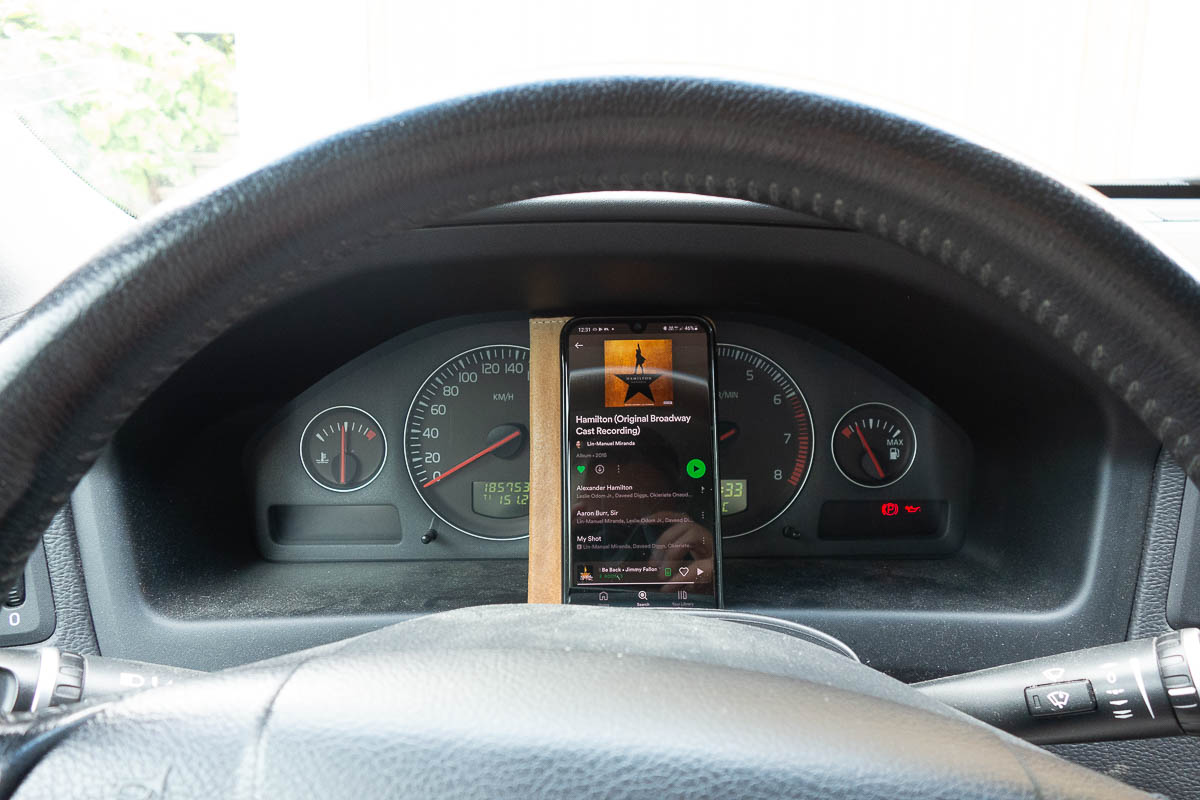
On long drives along straight roads with nothing interesting to look at, I like listening to music to avoid zoning out. Radio is the first, obvious solution, and I’m willing to listen to boring pop music while driving that I wouldn’t choose at home, but the long ad breaks get really annoying. So now it’s Spotify through a Bluetooth speaker that we bought especially for the car. (And that lives in the car and stays in the car and doesn’t get borrowed for any reason, because that’s how its predecessor vanished.)
There’s plenty of music that sounds good at home but doesn’t work in the car. Some frequencies become inaudible, while others sound unpleasantly sharp. Guitar-dominated rock music is right out. Drums and vocals work well, so sometimes I’ve picked some random Latino or afro playlist from Spotify. On this trip I realized that musicals and Disney movie soundtracks work great. We got through the entirety of the original Broadway recording of Hamilton on our way from Tartu to Tallinn to Stockholm. (Followed by the soundtracks for Moana and Encanto on the back and forth trip to Uppsala to drop off my brother.)
Hamilton is still as awesome as ever. Seeing it live in London was an incredible experience, but even hearing it through a pint-sized Bluetooth speaker while driving sends shivers down my spine. Ingenious rhymes, catchy melodies, great voices, punchy delivery. I’m starting to think of maybe going back to see it live again.

For Eric’s birthday, I bought tickets for an online concert. Eric shares his birthday with Johann Sebastian Bach, so there is an Early Music Day on this day.
It was an odd experience. Live but not live. It was a live concert but it didn’t really feel like it.
The music was lovely. The production, not so much. Odd camera angles where our view of the musician’s face was blocked by a microphone stand; weird cuts from one camera to another; a sound mix that wasn’t adjusted when the musician switched instruments. Either it was done on a shoestring budget, or by people who are used to very different kinds of concerts and out of their depth here. Our guys at tretton37 produce much better live streams.
On the plus side, in a real live concert I would never have gotten a live view of the harpsichord player’s hands.
Random observation: my brain noticed the harpsichord much more when the view switched to his hands. Objectively I knew there was no change in the music, but as soon as I could see him play, my brain picked up the harpsichord so much more clearly.
| « Older posts | Newer posts » |