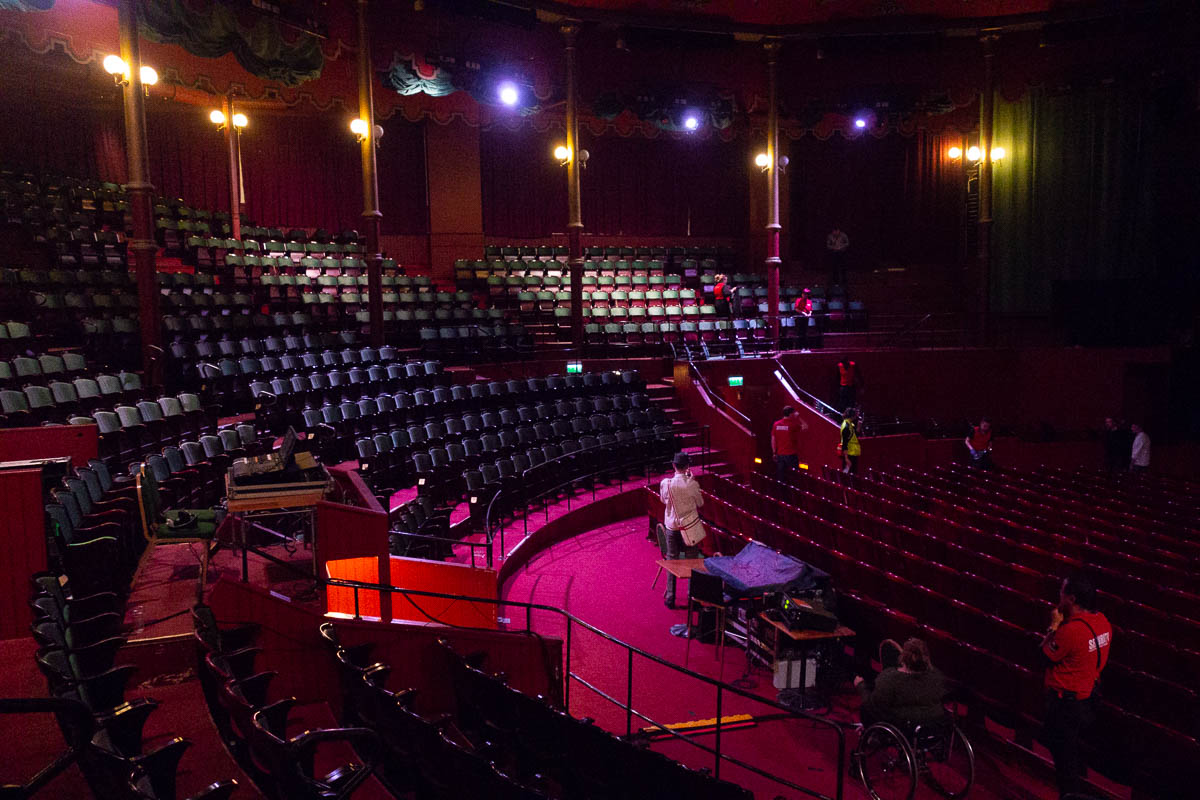
I was extra pleased to note an ad in this morning’s newspaper for a promising organ concert, given my disappointment on Thursday. BachiStan is a project/grouping/something that will play all of Bach’s works for organ during 2020, with concerts taking place every other weekend, starting today. Were I retired and free, perhaps I would try to attend all of them. I’ll be happy even if this is the only one I hear, but I really hope that it won’t be.

On the programme: a prelude, two duets, and a number of chorals.

I enjoyed every moment of this concert. It was so much more to my taste than Thursday’s. Firstly, it was Bach and not Reger. Despite its name, baroque music is restrained and disciplined and almost “easy listening” compared to Reger. Secondly, it was played on relatively modest-sized church organs instead of what I’m beginning to think of as the grandiose monstrosity at Konserthuset.

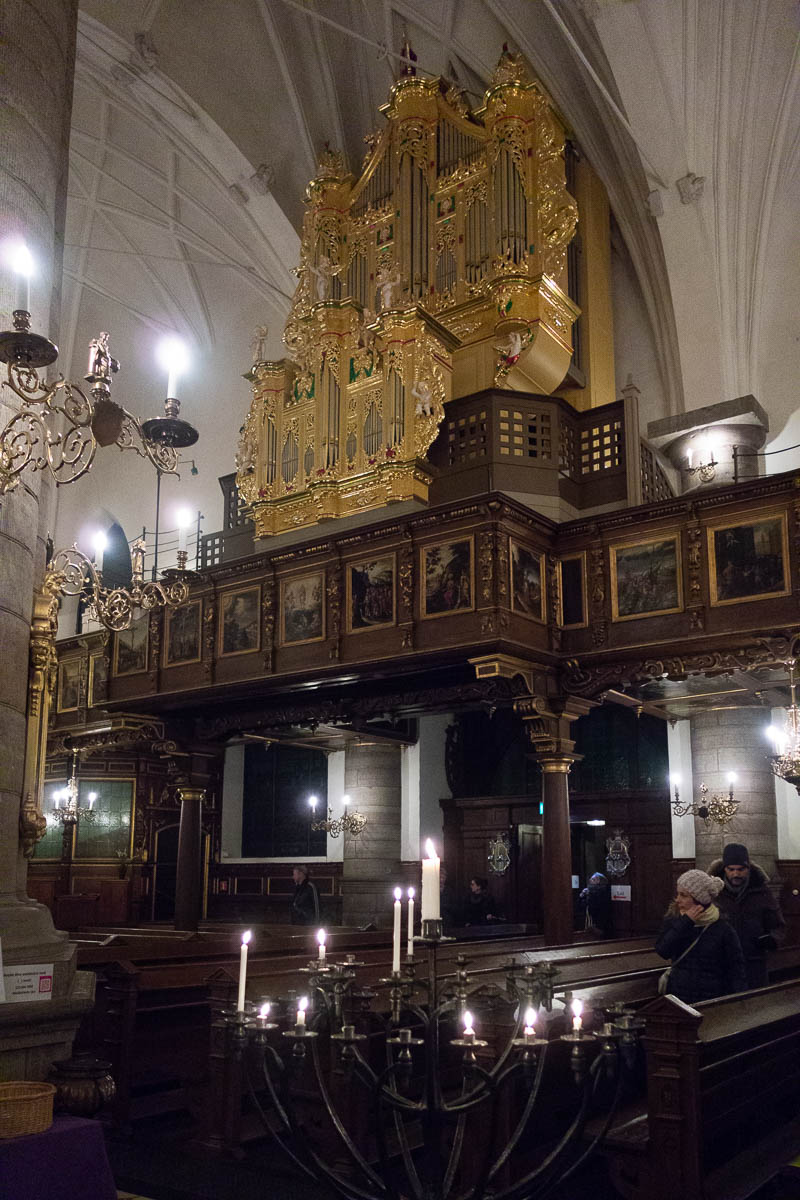
The German Church has two organs, and both were used today. I arrived relatively late but since I was alone I found a great seat right in the middle. If I sat facing forward, the Juno organ was straight behind me. If I turned to the right, the Düben organ was straight in front of me. So I got perfect sound from both.

There was a speech, not quite a sermon, towards the end of the concert, about why we are here. Why are we listening to this music? Why did Bach write this music? In this telling, it all goes back to Luther and his belief that music brings us closer to God.

And I realized in a flash of insight – I can’t believe I haven’t realized this before! – that my most perfect music listening experiences are those that turn into meditations. The times when I am subsumed by the music and all other senses and thoughts disappear. I am aware of each note as happens, it is almost as if it was happening within me. This takes music of a very different kind than what’s usually labelled as “meditation music” – relaxing, unassuming and bland music that sort of just tinkles along in the background. Meditating to music, not meditating while listening to music.


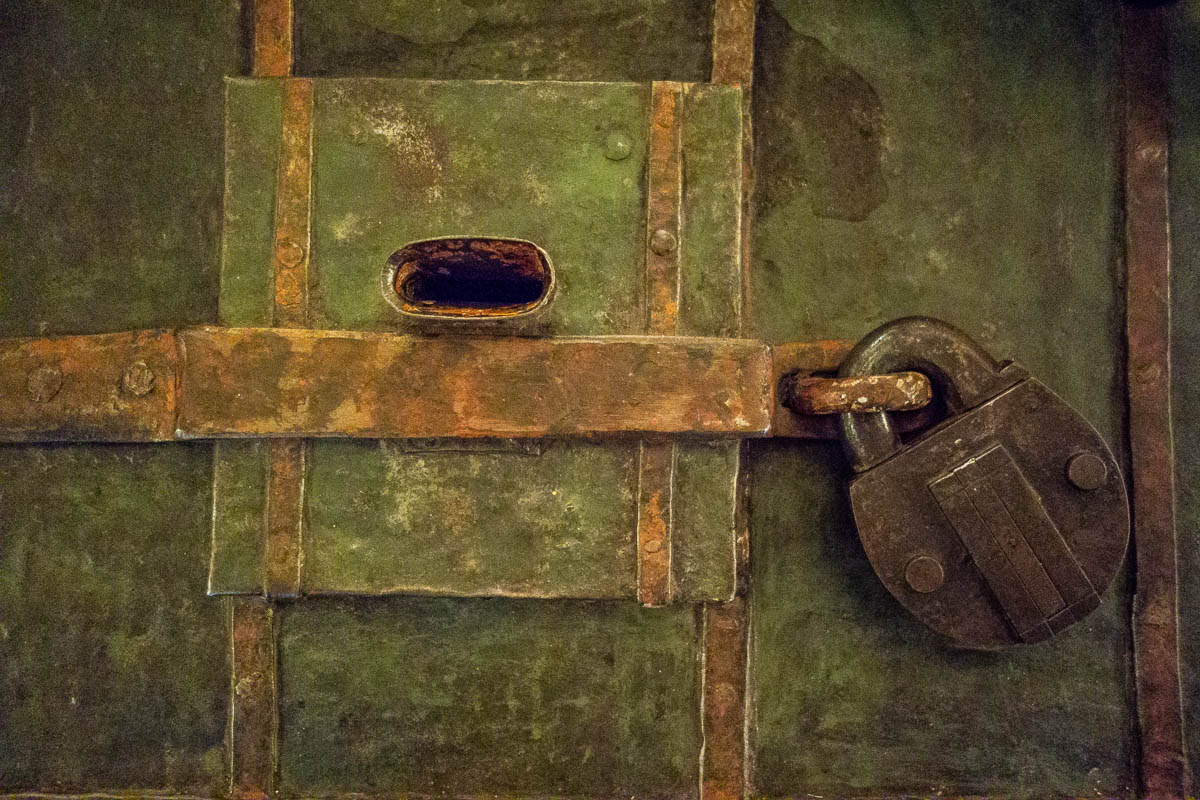
This second photo is of the collections chest at the German Church. I went looking for it after the concert, because I thought this experience deserved at least the price of a concert ticket. Stuffing my banknote down this ancient opening was a bonus experience.
The third in a series of five lunchtime organ concerts at Konserthuset.

Today’s concert was fully dedicated to Max Reger. When Ulf Norberg, the resident organist at Konserthuset, introduced the concert, he said Reger was his favourite composer. Well, de gustibus non est disputandum, but I personally found Reger nearly unlistenable. I enjoyed no part, no aspect of this concert.

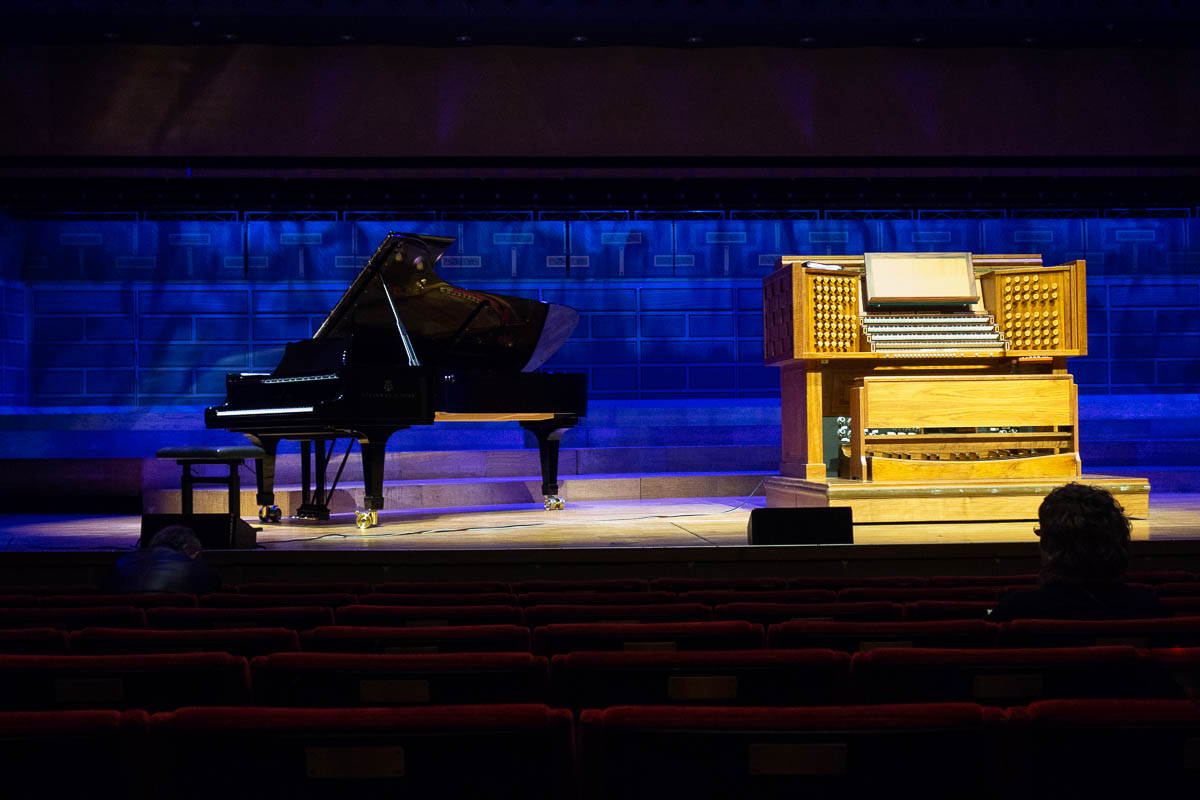
There was just so much stuff in this music. It was bombastic, blaring, overdone. All registers booming, then near silence. It was like an ad for the organ at Konserthuset, one of Europe’s largest apparently – look at what it can be made to do! But I could discern no melody or rhythm in this. It was just unstructured sound to my ears.

I wish there had been a way to discreetly leave the concert hall without disturbing anyone, but there wasn’t, so I had to sit there until the end.

The second of five, in a series of lunchtime organ concerts that I’ve booked tickets to. This time we heard Sebastian Johansson, Sweden’s youngest organist. The hall was not packed but the crowd was definitely larger than last time.

Bach, Prelude and Fugue in E-flat major.
Demessieux, Te Deum.
Sebastian Johansson, improvisation on a given theme.
Avicii, Wake Me Up.

For me, much of this concert was “interesting” rather than enjoyable. The sound of organ music can range from delicate to industrial. Much of today’s music ranged towards noise, for my ears – even the Bach prelude. Too many notes at the same time, at too high volume. But the concert was an interesting display of the organ’s versatility.

The improvisation was fun to hear. The theme he was given was the jingle of Hemglass ice cream vans.

Hamilton at the Victoria Palace theatre in London.

I wish I had something intelligent and insightful to say about this performance, but I really don’t. I’ve had little practice; I don’t review musicals very often.

I can only say that it was excellent in all ways. Musically it combined the best of musicals – catchy tunes, memorable chorus lines – with the best of hip hop – witty texts, cool rhymes, infectious energy. It’s energetic, funny and engaging, but also has enough depth of emotion to not feel superficial. Hamilton himself may be young, scrappy and hungry most of the time, but there is also room for Eliza’s sorrow, and thoughtful moments.

The whole performance is so refreshingly modern without overdoing it. The costumes are more or less in the historical style but the only wig in sight sits on the head of George III, clearly marking him as one of the old world. And half the cast are non-white – in a play where a good portion of the personages depicted were slave owners.

Here is an interesting review that does have intelligent things to say about the show.


The first in a series of five lunchtime organ concerts at Stockholm’s concert hall.

Organ and piano. One piece by Dupré, one by Bach/Gounod and one by Rachmaninov.

I’ve already forgotten the names of the other works (a ballade by Dupré, I believe, and something something variations by Rachmaninov). They were nice, but not really to my taste.

But music doesn’t get better than Bach. The Ave Maria with Gounod’s melody (on organ) wandering around a background of Bach (on piano) was magical.


I went to see and hear Philip Glass and his ensemble today. Eric couldn’t come with me because he had some activity planned with his siblings, as a birthday gift.

Imagine my surprise when, as I am sitting in my seat in the concert hall, Eric’s sister suddenly approaches me and says hi. And it turns out that their long-planned activity is this very same concert, and they have seats just a few steps away from mine. And then nobody turns up for the three seats between us, so Eric and the others move, and we end up sitting and enjoying the concert all together.

This concert made me realize just how similar all of Philip Glass’ music is. I got the impression that he has been writing the same thing through his entire career. It hasn’t felt quite this same-ish when I’ve heard it before. Perhaps he just selected pieces of a very similar kind for this evening.

It was very interesting and pleasant at first but towards the end of the concert my head was getting quite tired of it.

Irmelin is a trio of female singers, who mostly (or maybe only?) sing Swedish folk songs.

Black Sea Hotel is a trio of female singers, who mostly (or maybe only?) sing Bulgarian folk songs.

Today’s concert with both of them was wonderful.

Irmelin’s pure, sonorous voices sounded beautiful in this small and intimate venue. There isn’t much that beats the joy of listening to melodious unaccompanied human voices, singing simple songs that speak to the deepest part of me. I do not listen to that kind of music analytically, with my intellect. I listen with my body and soul. The wordless dances and wedding marches are especially hypnotizing.

The Swedish singing tradition is clear and natural. Bells and trickling water and tinkling icicles come to mind. Bulgarian singing has a very different sound. There is something sharp and nasal about it, which to my ears is verging on the unpleasant. This kind of music I can observe rather experience.

To my untrained ear, the rhythms and tones of Bulgarian folk songs seem very far from mainstream Western music. I wonder if it is possible at all to transcribe it using standard musical notation, and then perform it based on that transcription, and come anywhere near the original – or if it can only be truly passed down as a living, oral tradition.

Each act ended with all six singers performing a song together. Together, they sounded like what I imagine magic (of the fantasy book kind) might sound like. It swirls and billows, and then there is some tiny part that goes off on its own for a little while and then joins the main swell again.

We went to see The Real Group in concert. I was thinking we would all love it, and instead we came home quite disappointed.

We saw/heard them live two years ago, together with The Swingles. That concert (which I now see I didn’t write about) was a mixed bag – some songs I really liked, others were unimpressive.

I was hoping we would this time get more of the good stuff. Unfortunately I feel that TRG has moved in the wrong direction since then.

The two best songs today, by far, were two folk songs, one Swedish “gångarlåt” and one Latvian. There was depth and emotion in them. The rest of the repertoire… less so. The songs newly written by members of TRG themselves were the least interesting. Possibly they were technically impressive, but I don’t have the ear or the knowledge to appreciate that. To me, these songs just sounded light-weight, superficially cheery. Tra-la-la, and an hour later I’ve forgotten them already.


We attended Stockholm Chamber Choir’s advent concert at the German Church. Beautiful. My opinion is perhaps a bit partial because one of Eric’s sisters is a member of that choir, as well as her husband, but I stand by it.

I’m no expert so I have nothing particularly insightful to say… The singing was beautiful and moving. The programme was interesting and varied and contained both old and new works, ranging from Händel and traditional Swedish hymns to John Tavener and other “modern classical”. (The Tavener piece was my favourite.) The church has beautiful acoustics, and choir used the entire church hall with great effect for rounds songs.

Make sure to attend next year as well.


For the first time in decades, I went to a song festival. It’s an Estonian tradition going back almost 150 years, and an amazing experience. This year’s event was not the “full” festival but the youth festival, with a particular focus on young composers, conductors and performers. (The full one is a bit larger.) Even so, there was a choir of 10,000+ singers and 50,000 people in the audience. Awe-inspiring, quite literally.

We were a bit late to the venue so we ended up sitting further back that I had hoped, among the trees at the top of the slope, and didn’t quite get the full impact of the ten thousand voices. So we’ll have to attend the next one again and be there earlier, to get an even better experience.

I have vague, distant memories of attending the festival as a small child. Somewhat more strongly I remember the extraordinary (in all senses of the word) “Song of Estonia” festival in 1988, attended according to some claims by a quarter of the population of Estonia. I was a callow child, uninterested in current affairs, but even I could feel history being made on that day.