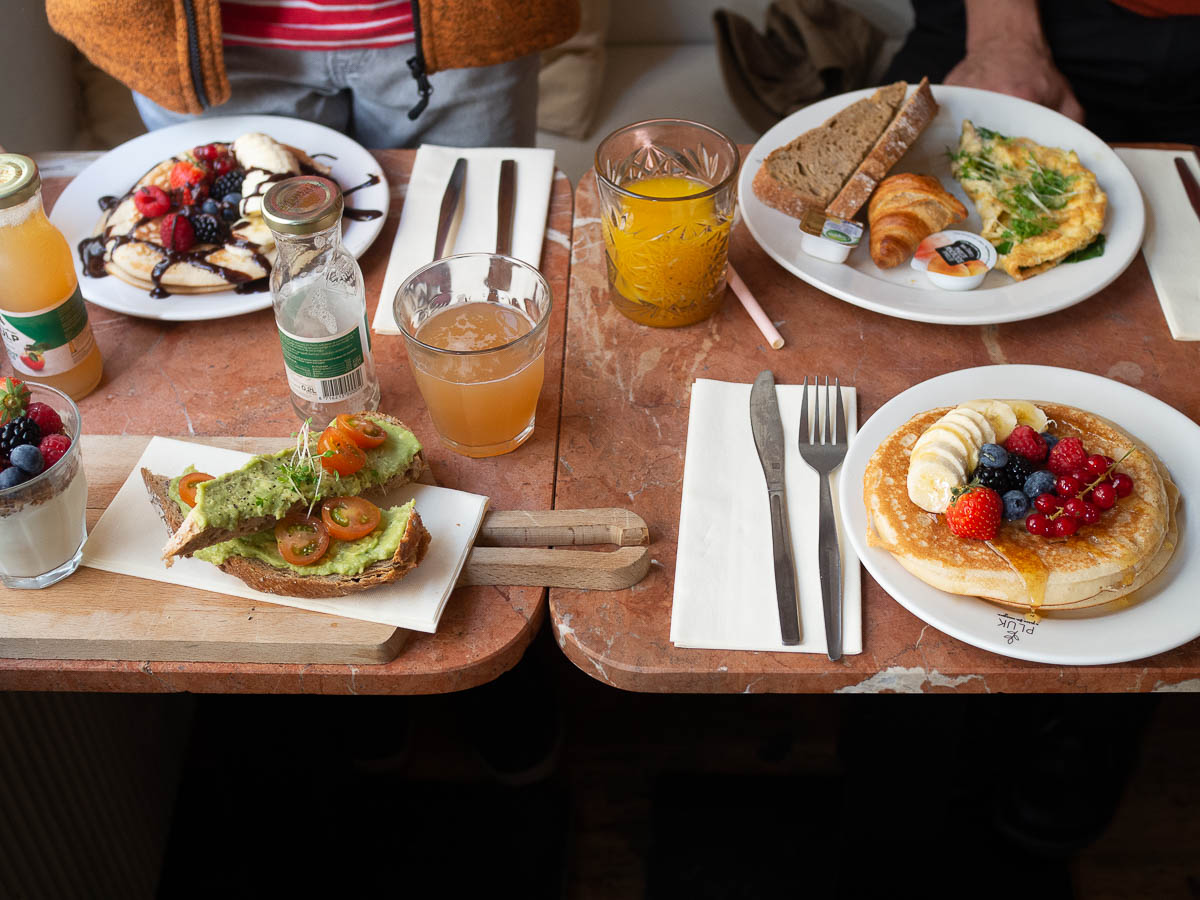
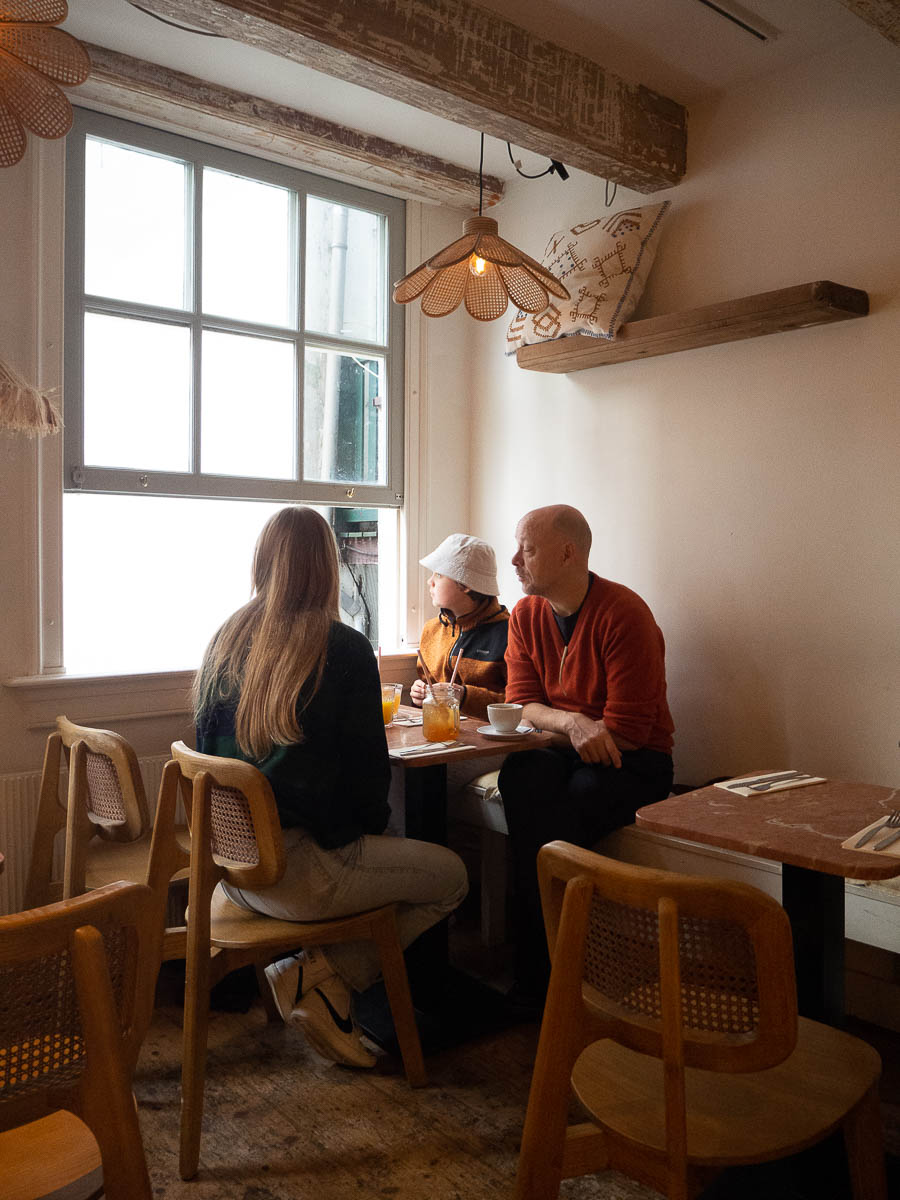
We started both yesterday and today with luxurious breakfasts at a café that Ingrid had found online. Pluk on Berenstraat, in case you find yourself in that area. The online reviews are very mixed but we got very good food, though the service was rather slow.
We had seen enough canals and crooked houses and cute little streets yesterday and wanted something different today, so we went to the Rijksmuseum.
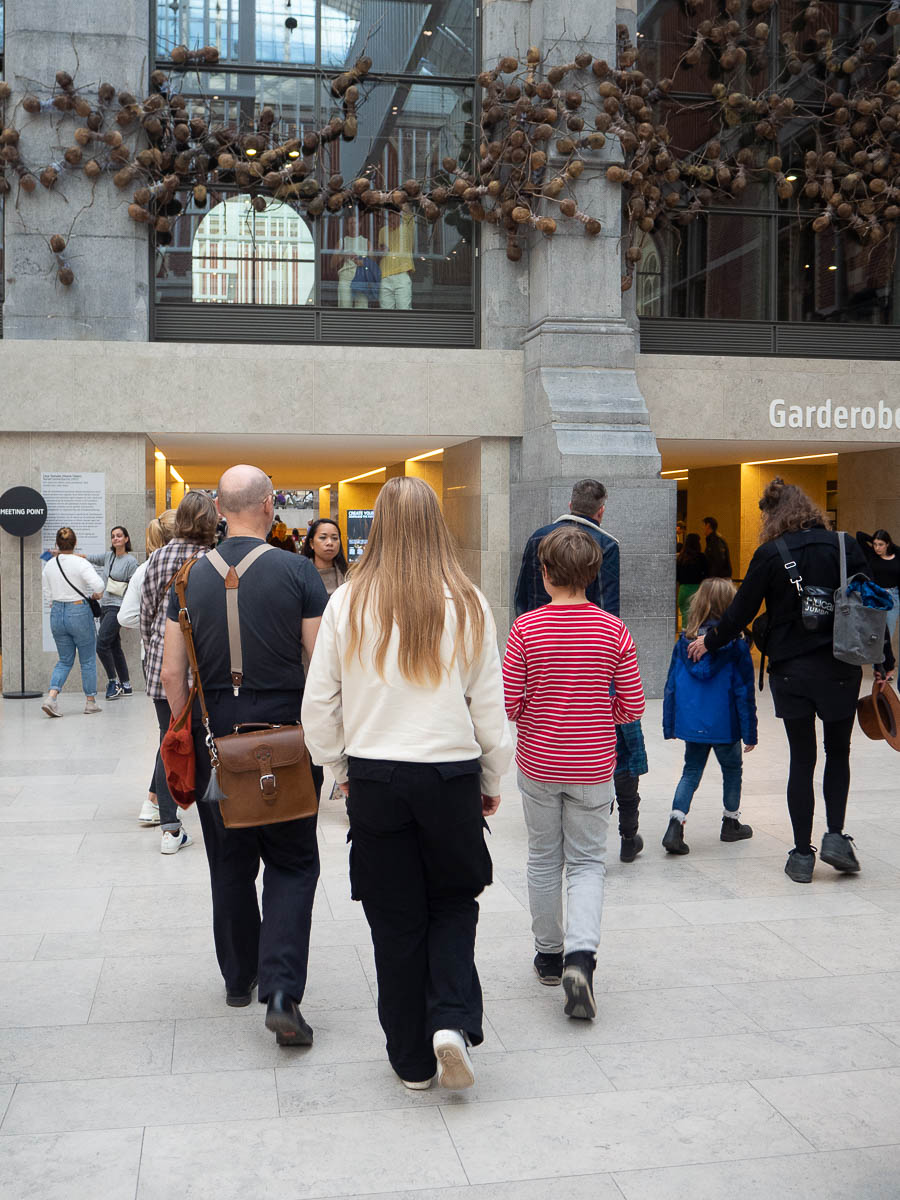
The museum was very visitor-friendly, with easy-to-read maps that guided people to the most popular paintings, but also to other parts of the collection. The popular works – like their one and only Van Gogh – had large crowds in front of them, so I didn’t even bother to try and look at those. There were plenty of other interesting things to see.
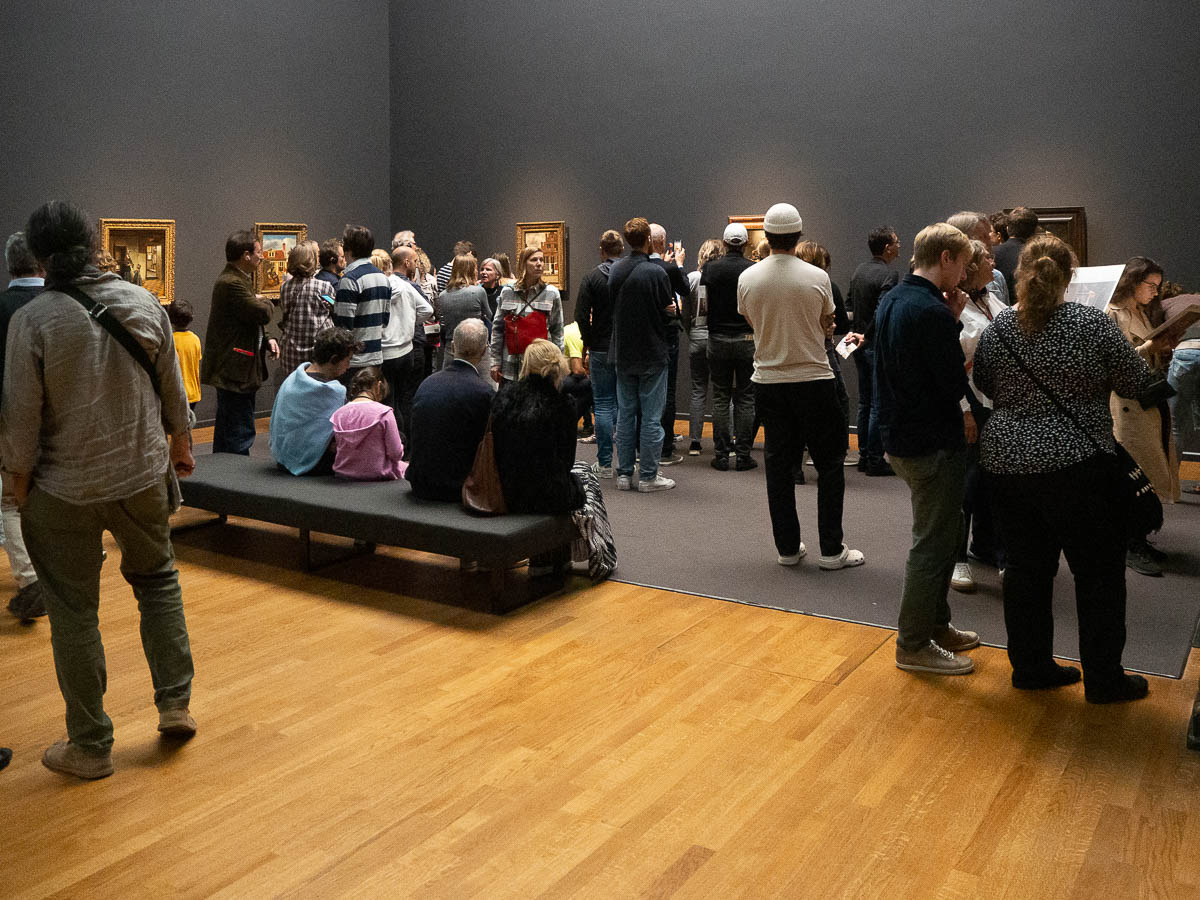
Even though we all walked in the same rooms, we often split up because of our diverging interests. Ingrid is interested in art and paints herself, so she looks at details and technical aspects that Adrian doesn’t care much about. So she and Eric (who also painted when he was young) looked at the paintings with artists’ eyes, while Adrian and I looked at them with general curiosity.
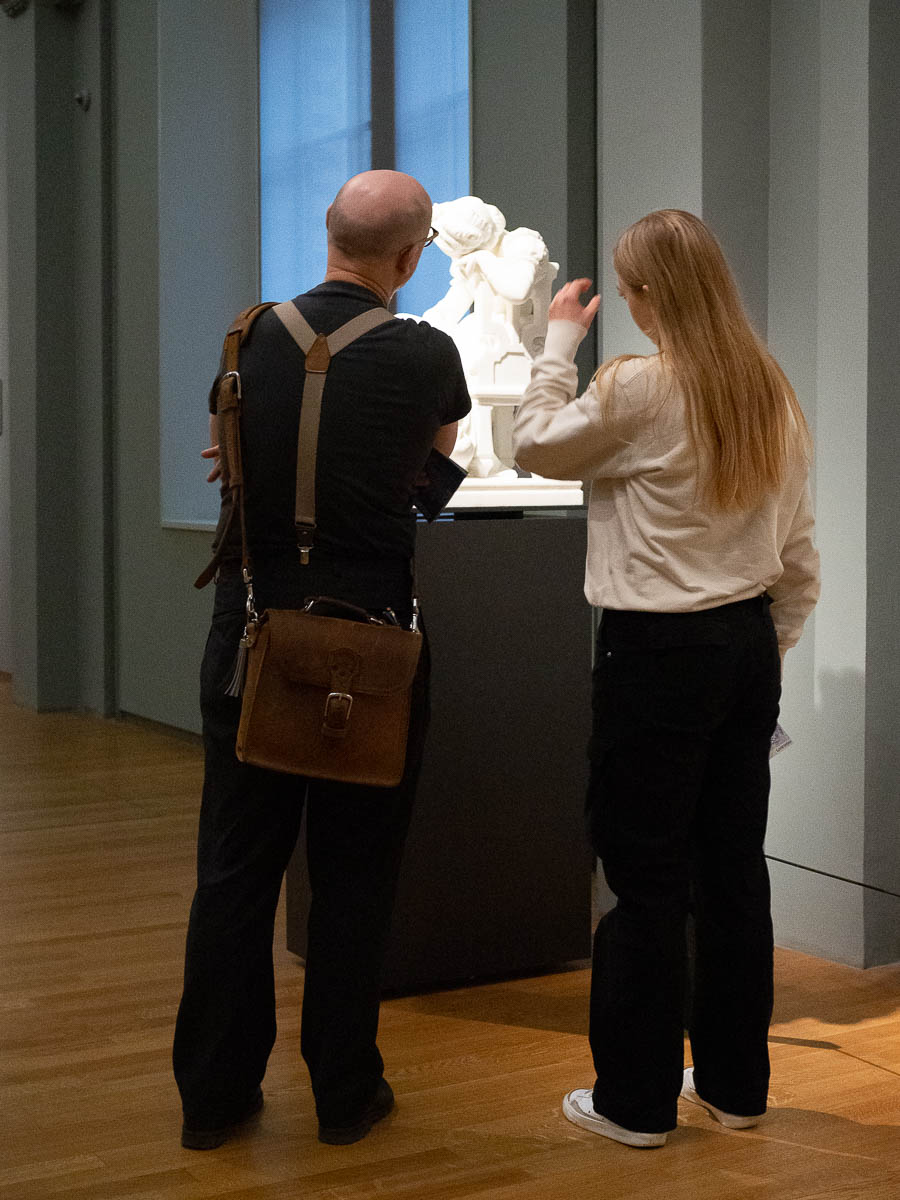
We noted, for example, the prevalence of grapes, glass bowls, and curls of lemon peel in 17th century still life paintings.
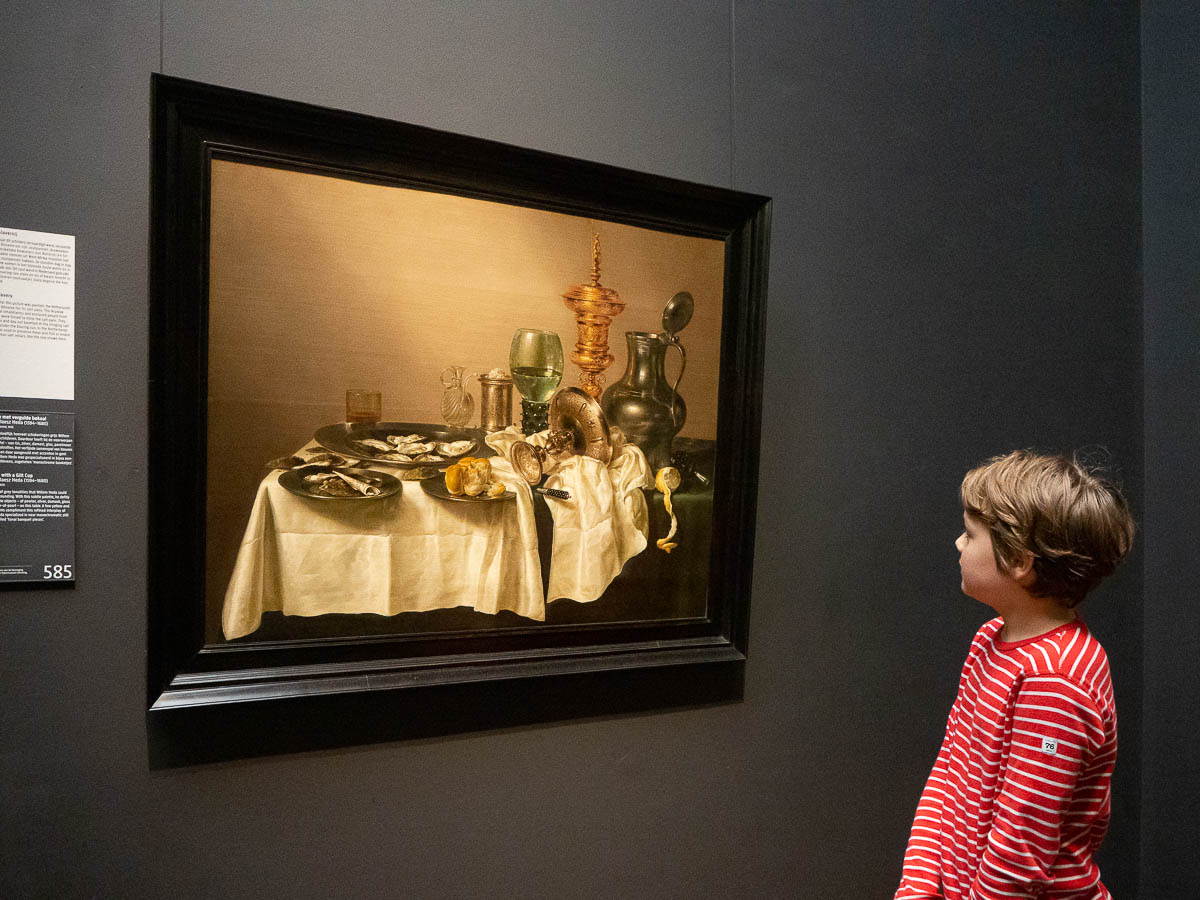
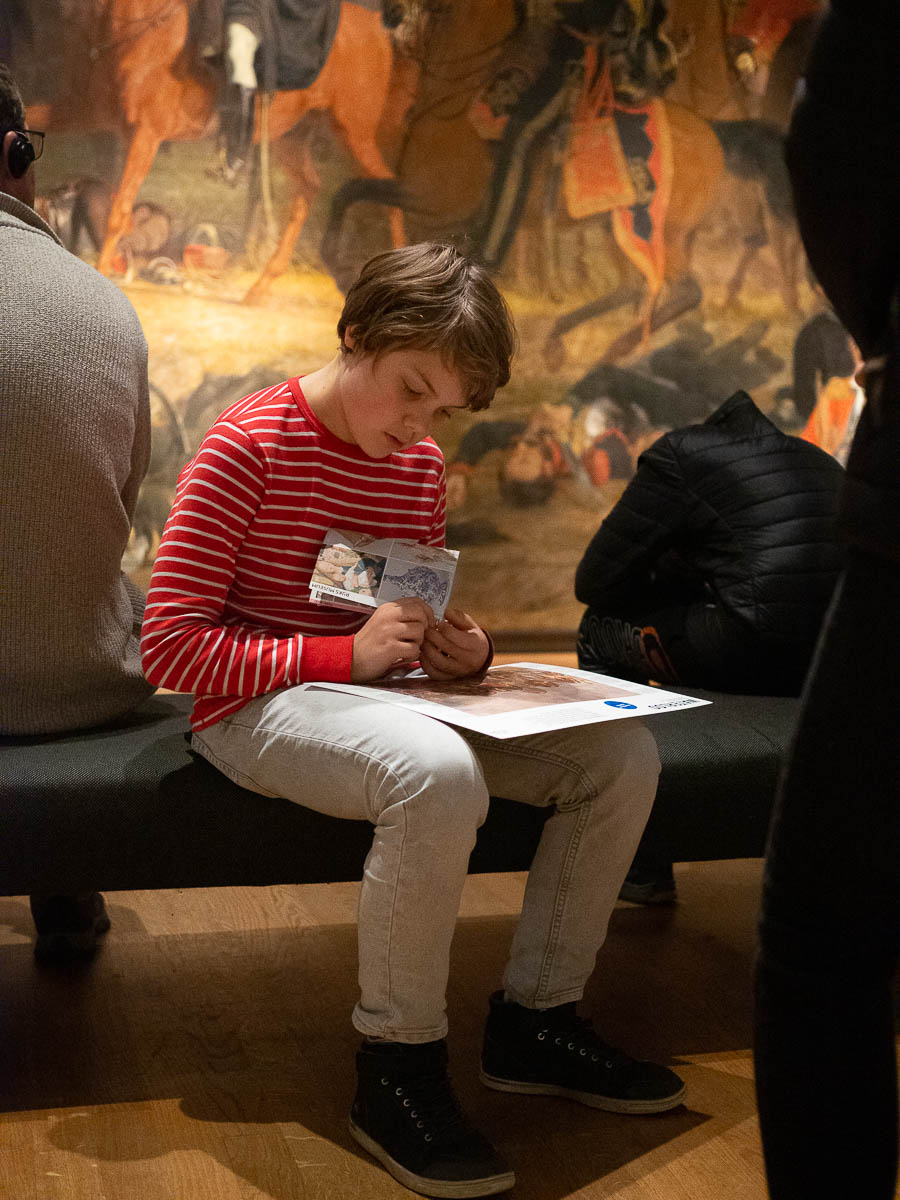
The curators at the Rijksmuseum had done a great job with the signage. All too often, museums label each work with its title, maker and year, and nothing more. Here there were often interesting background facts, and info sheets with even more facts and stories.
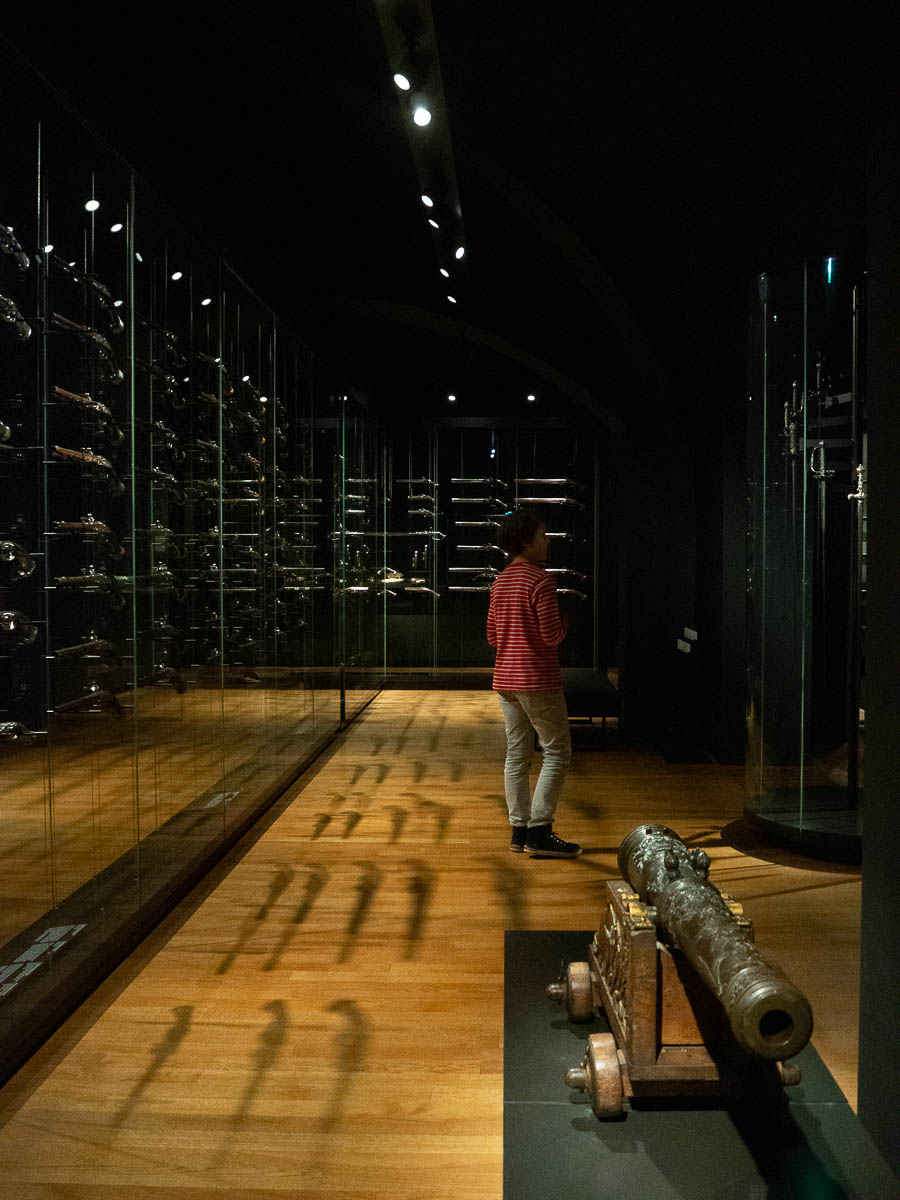
When we tired of paintings, we looked at cannons, porcelain, Delft pottery and ship models.
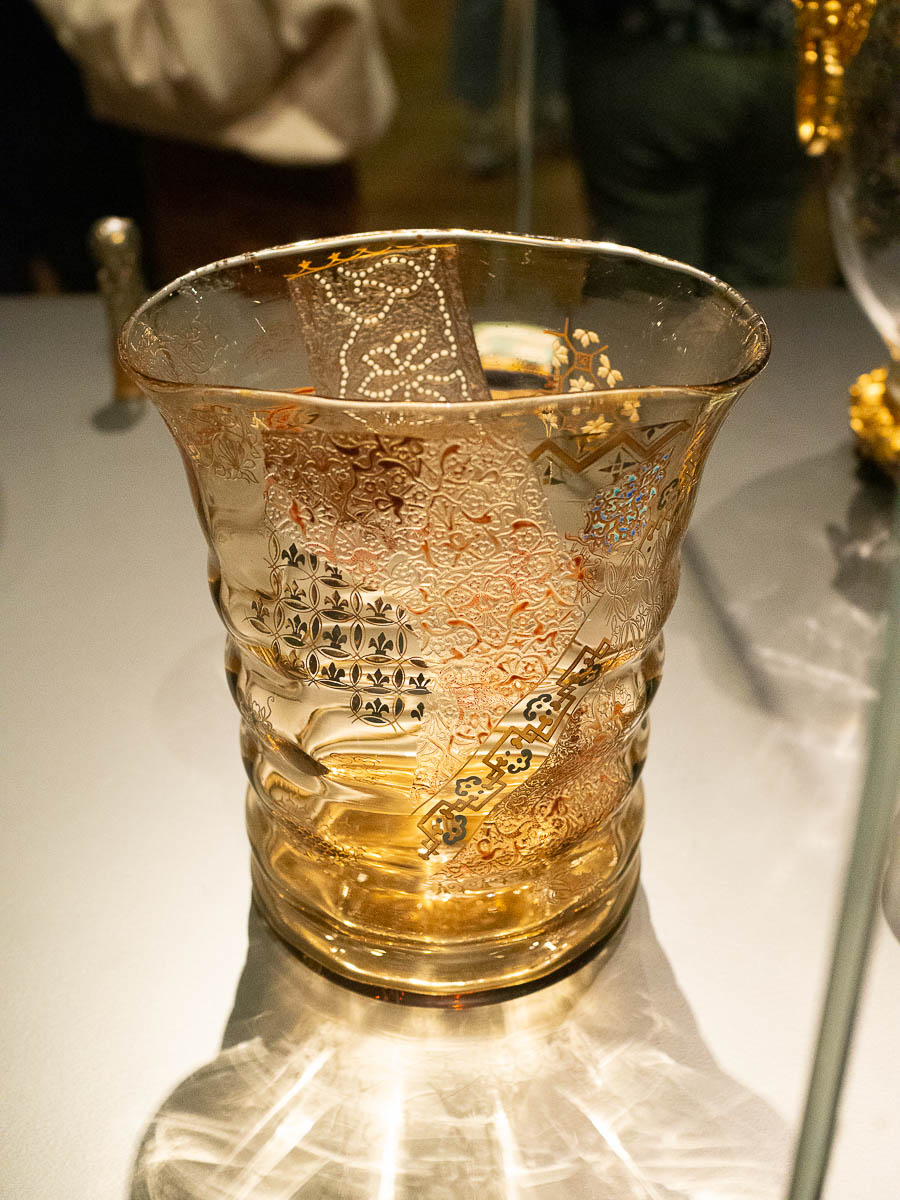
I liked this glass vase by Émile Gallé, with its irregular patterns borrowed from various cultures.
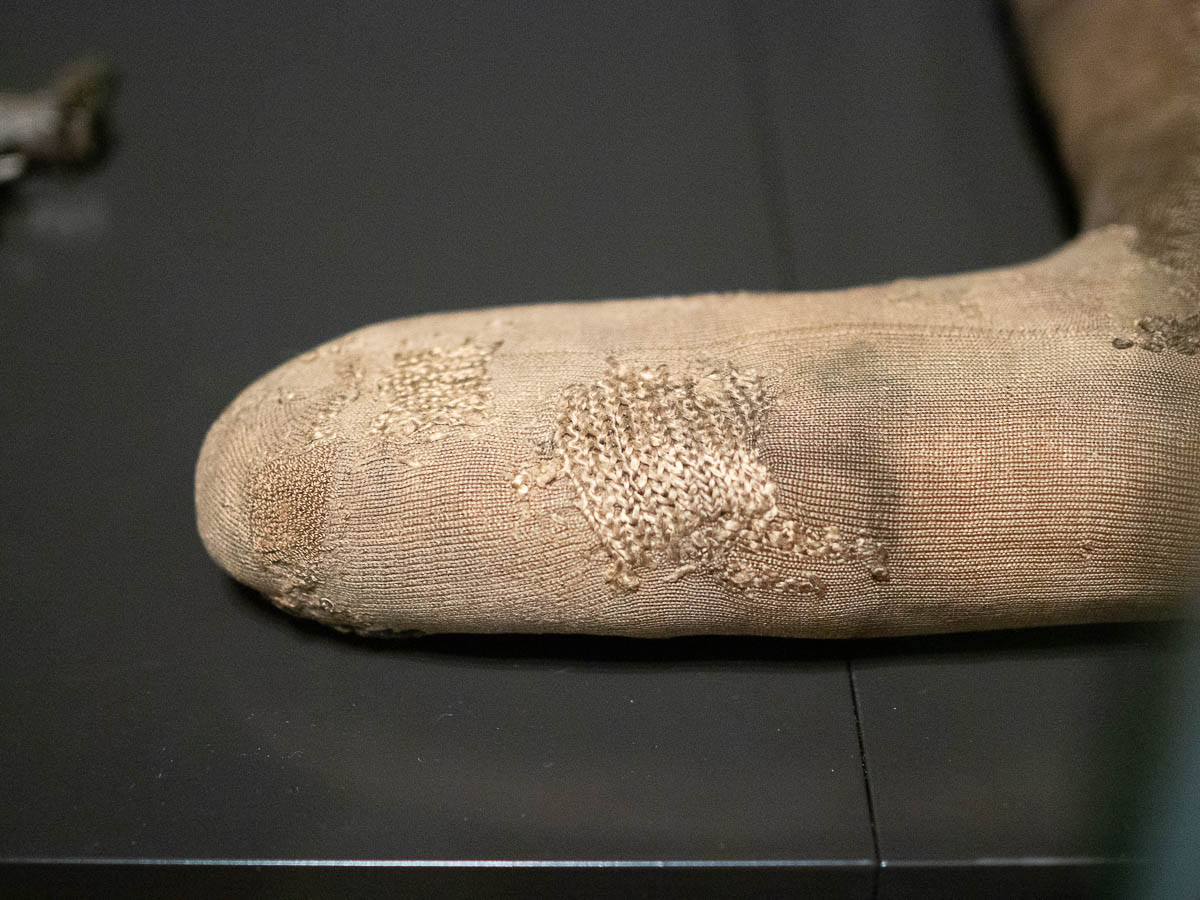
And this repeatedly darned sock, found in a seaman’s chest after a shipwreck.
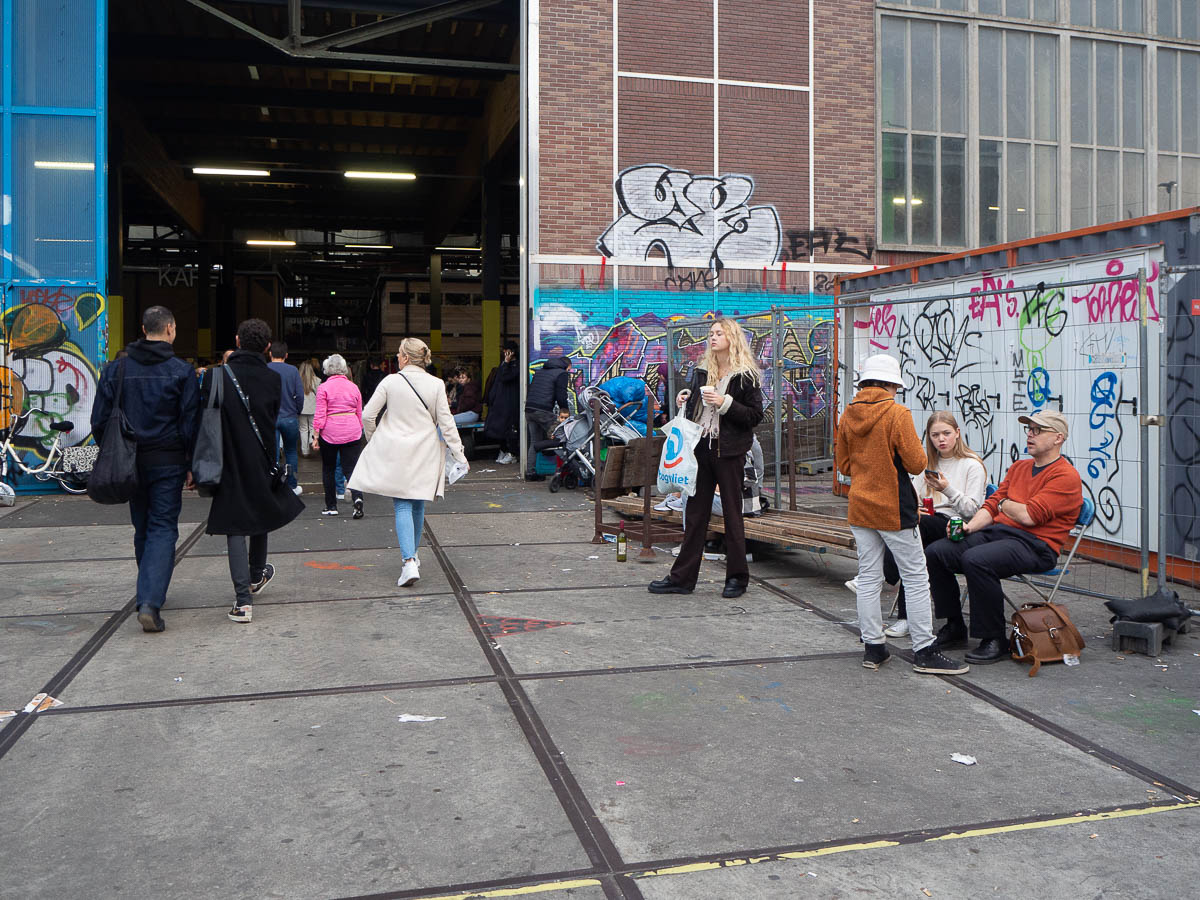
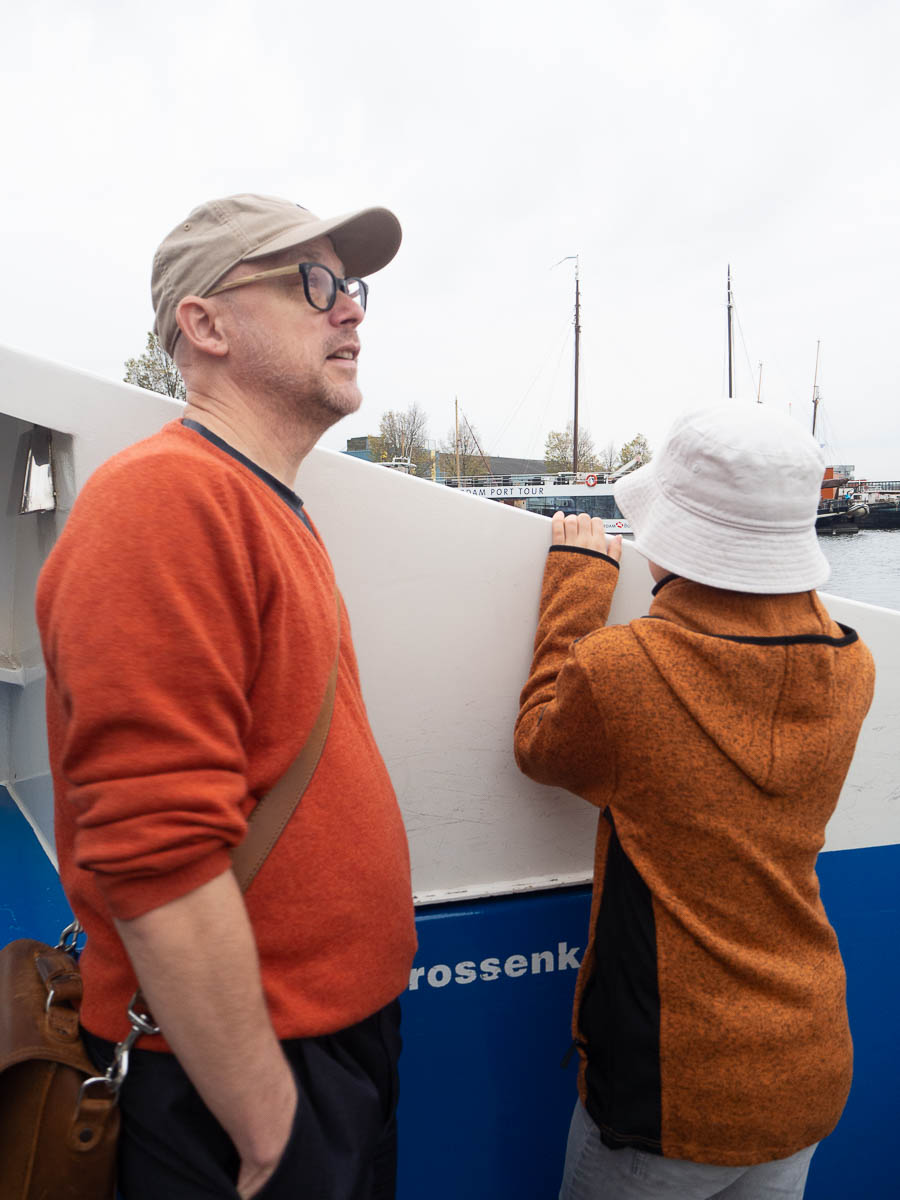
From high culture to low. In the afternoon we took the boat to North Amsterdam to a large flea market that Ingrid wanted to browse for vintage clothing. She didn’t find anything that fit, but I bought a jacket.
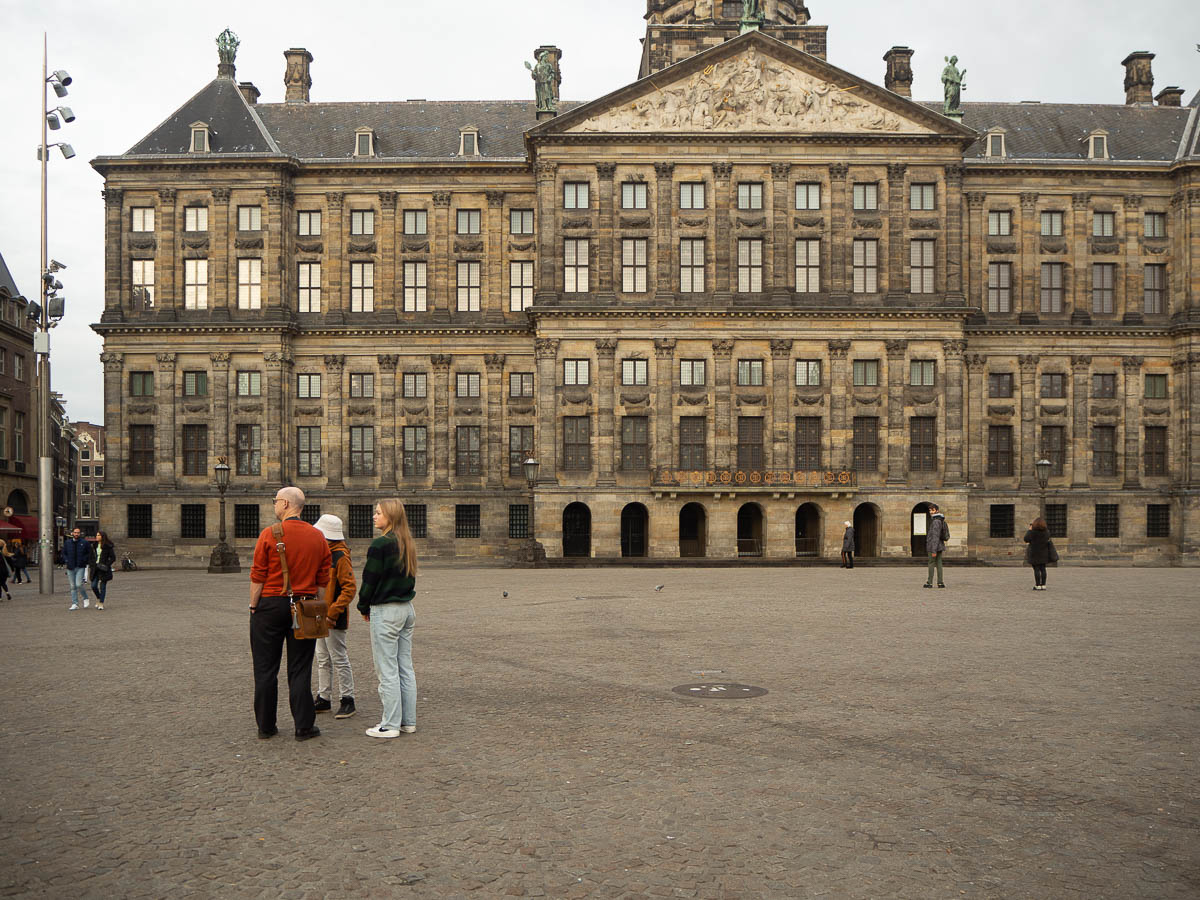
This was our first time in Amsterdam, for all of us. Mostly we just walked around the city, with no particular goals or destinations in mind. This large and imposing building is apparently the royal palace – looking almost as dreary as the royal palace in Stockholm.
We quickly left it behind us and walked among the smaller streets and all the pretty little canals instead.
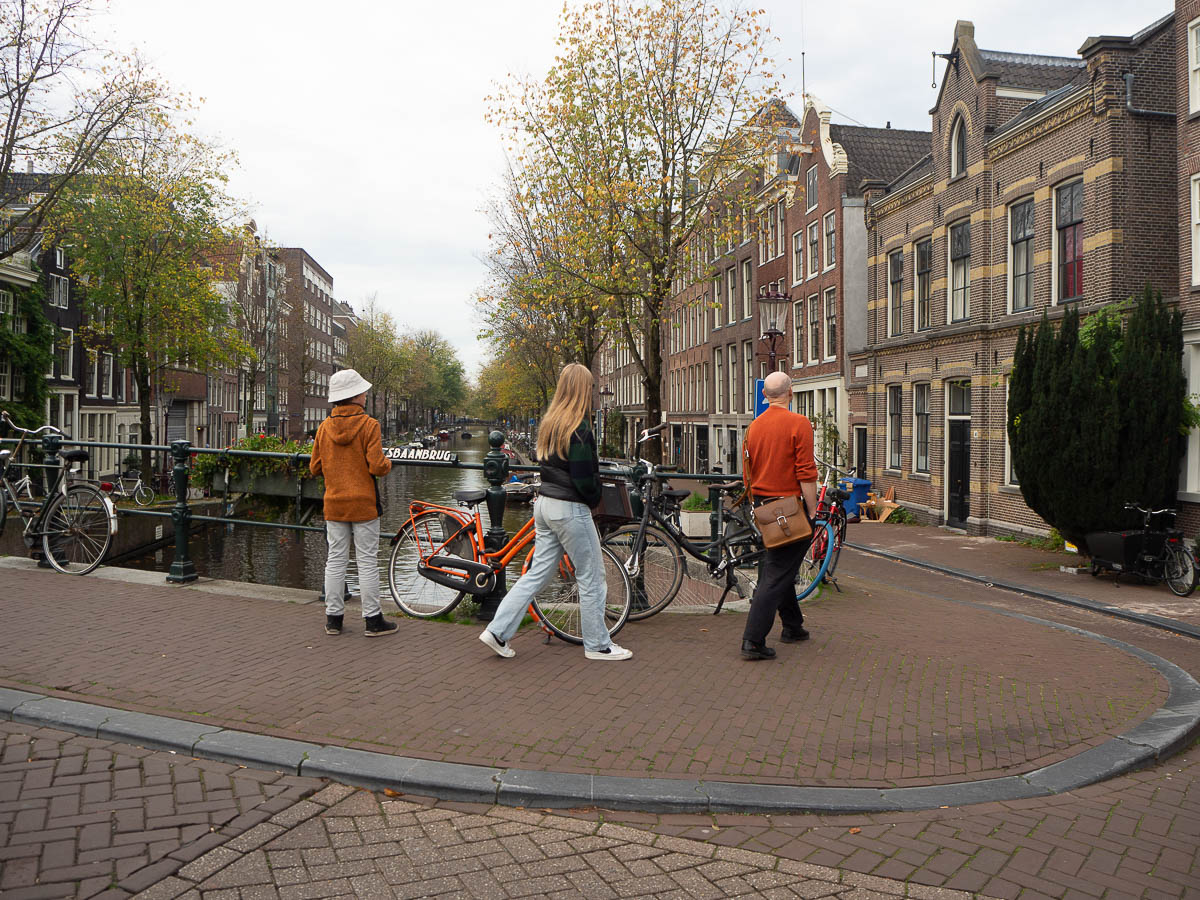
The weather was unseasonably warm. Even when there was no sun, we didn’t need any jackets. Pleasant, but worrying – this is not what it’s supposed to feel like at this time of the year.
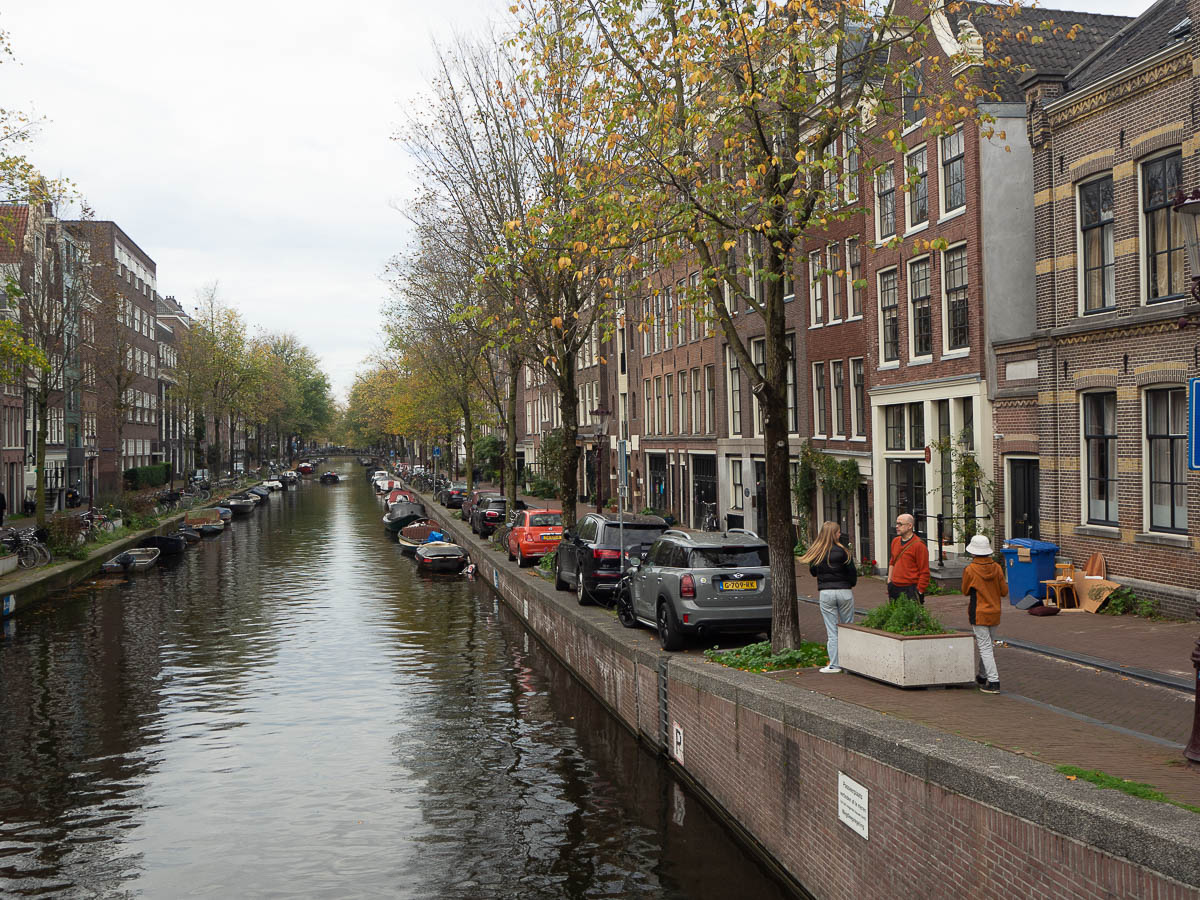
The streets were narrow and chock full of cyclists. It took some getting used to, before we learned to dodge them. They don’t behave like Swedish cyclists: they’re slower, closer to walking pace (compared to the lycra-clad racers you often see in Stockholm) but more numerous, so in aggregate they move differently. And they’re all helmetless – which makes sense given the lower speed, but still felt weird.
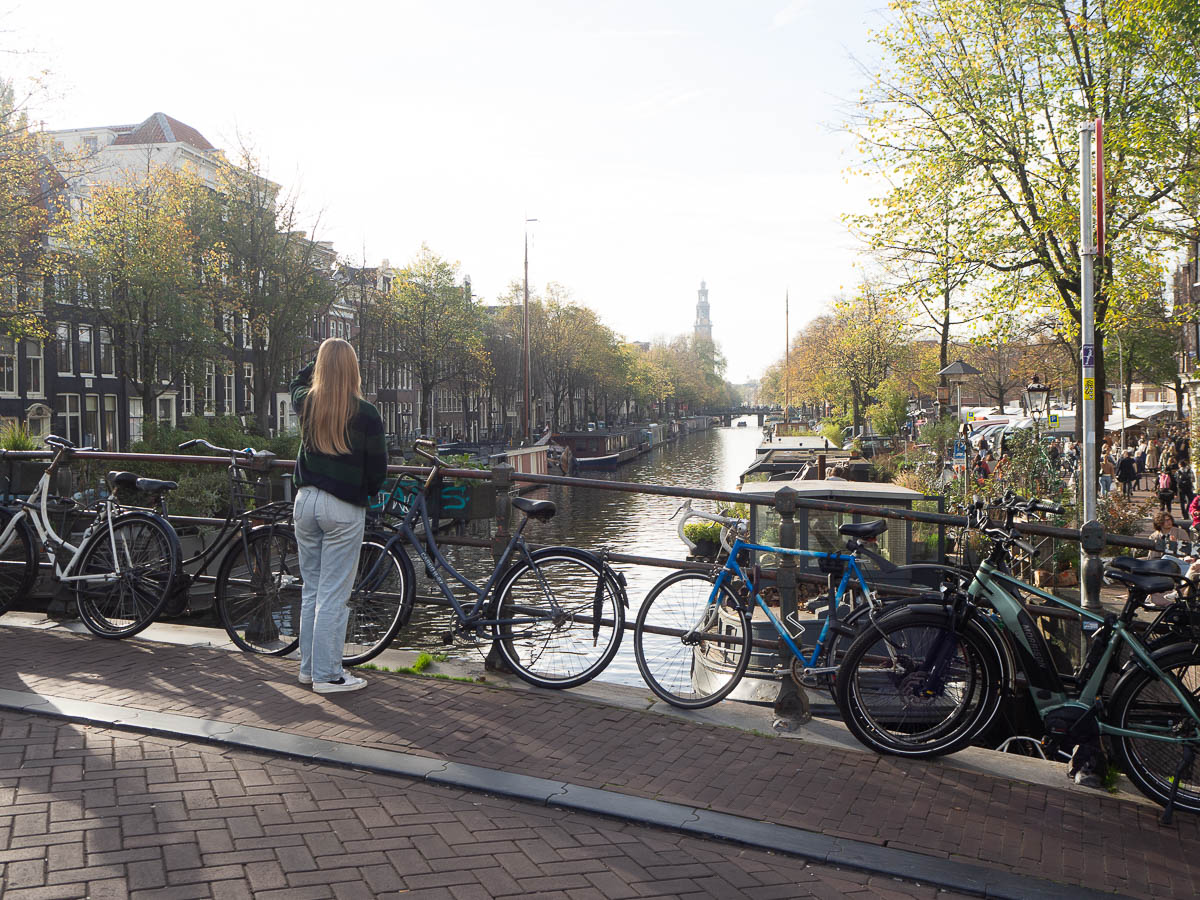
Amsterdam has fewer inhabitants than Stockholm, but so many more tourists, and therefore so many more shops. We kept finding fun little shops everywhere. Central Stockholm is all fashion chains and other large, impersonal stores instead.
The tourists keep the shops alive, but I wonder what made them happen to begin with. A history and culture of shopkeeping, as opposed to Sweden’s history of large industry employing masses of workers? An inner-city architecture of small buildings and thus small retail spaces where you can’t even fit an H&M, whereas Stockholm’s large 1960s city centre has the opposite – mostly large spaces that are unsuitable for small shops?
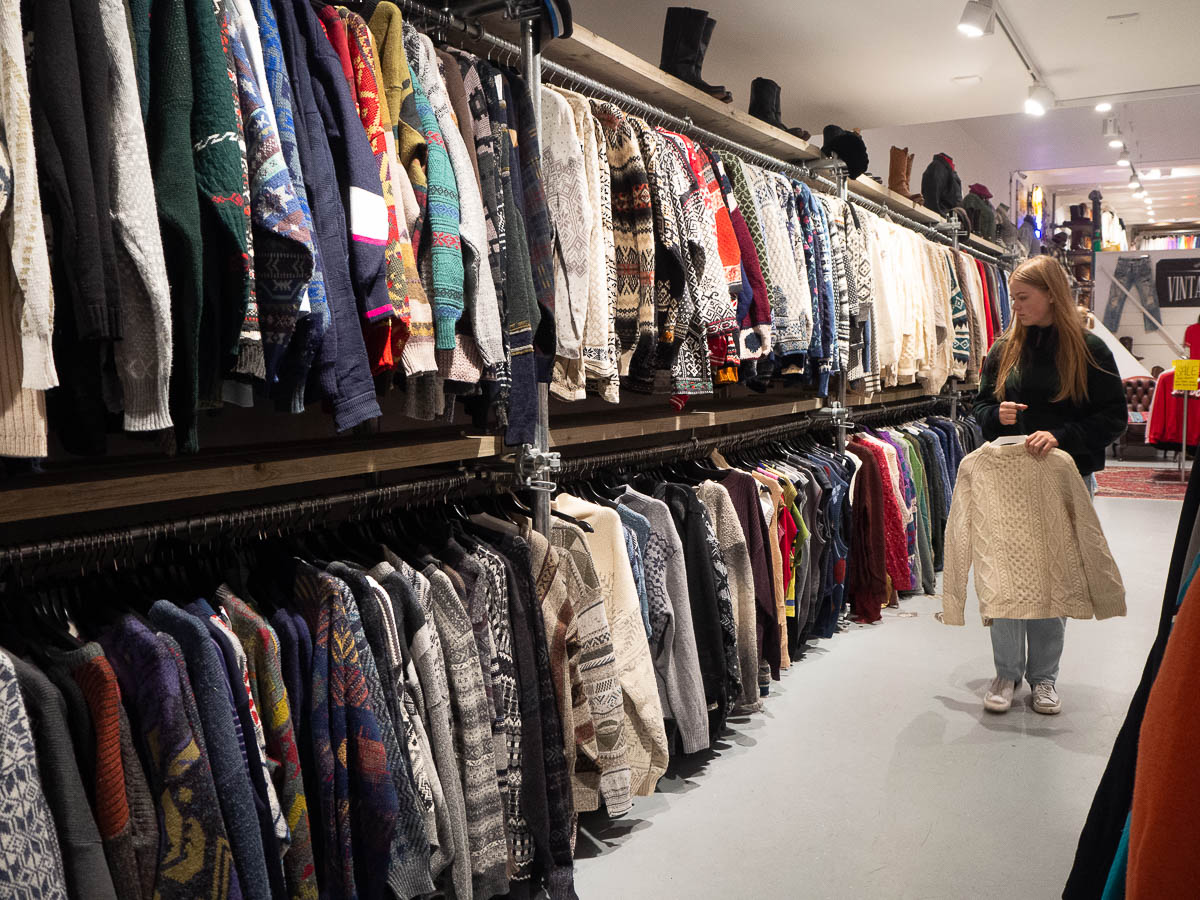
Ingrid liked the vintage clothing shops. I was horrified to see that ugly 1990s fleece jackets are now considered desirable.
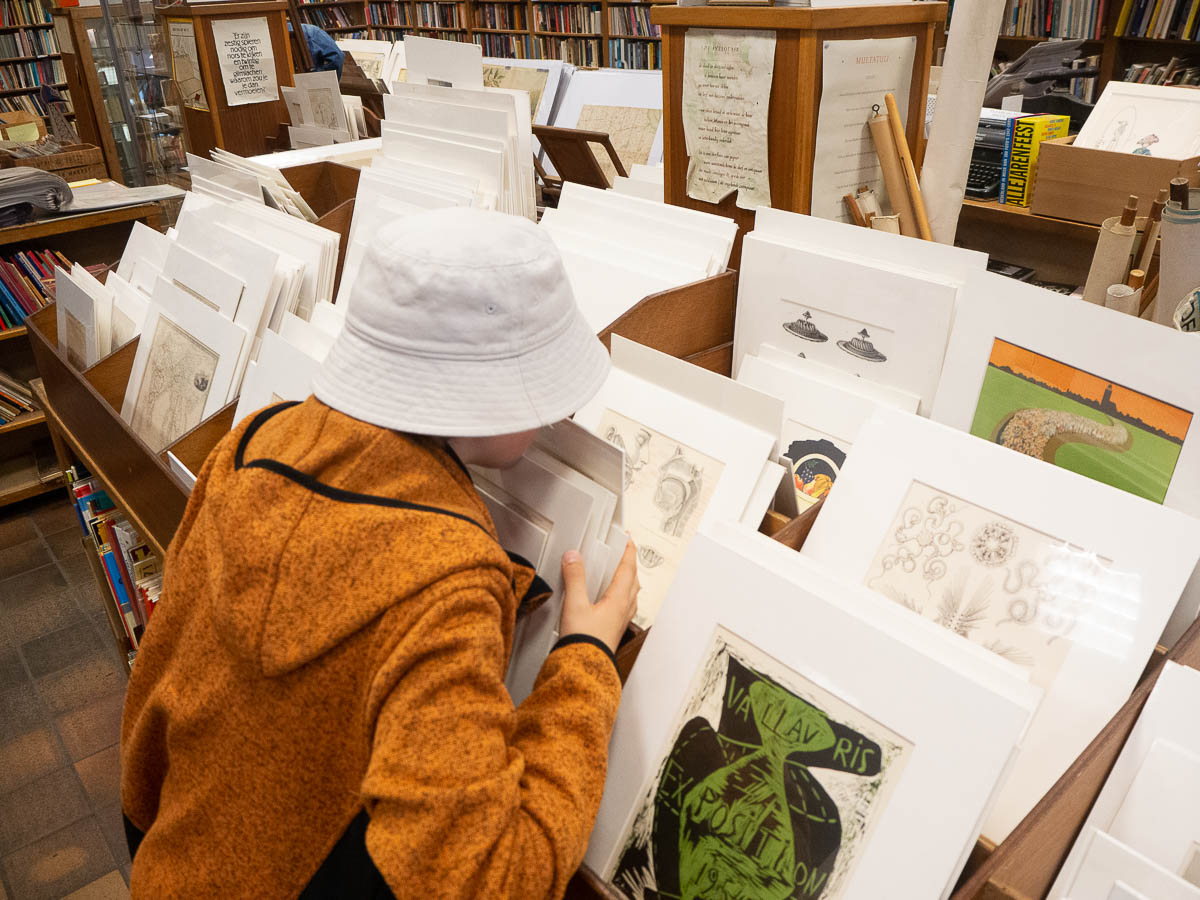
This antiquarian bookshop sold reproductions of prints of all kinds, ranging from “here is how you recognize measles” through anatomical drawings and comparisons of tulip varieties to “this is how you arrange a centerpiece for your dinner table”.
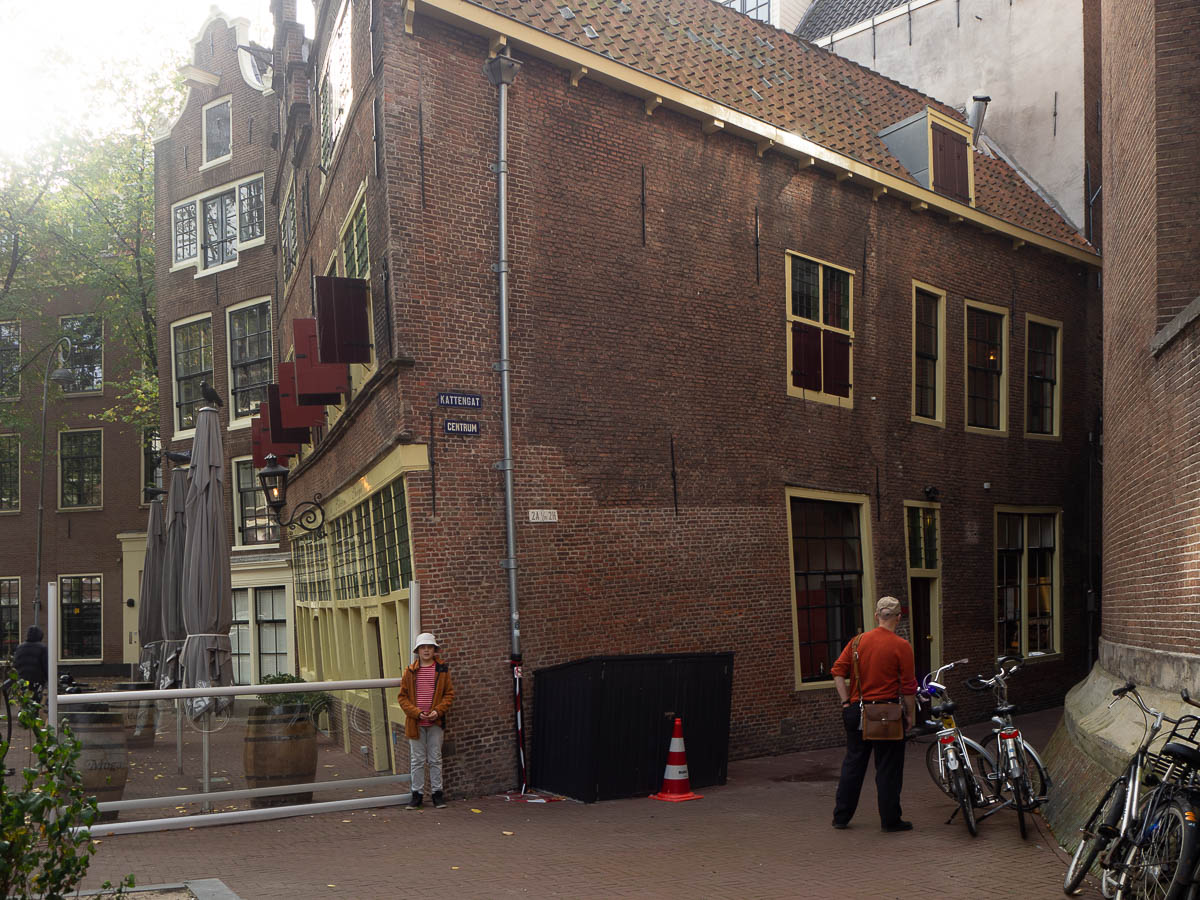
Most of the houses in Amsterdam lean one way or another. Or several: they lean sideways because the foundation sank, and the facade leans forward because it was built that way to allow goods to be hoisted to the upper levels. I kind of got used to it after seeing enough leaning houses, but then you come across something like this and it’s hard to grasp how it even remains stable. It must be a challenge to be a window-maker here, to produce windows that fit these crooked walls.
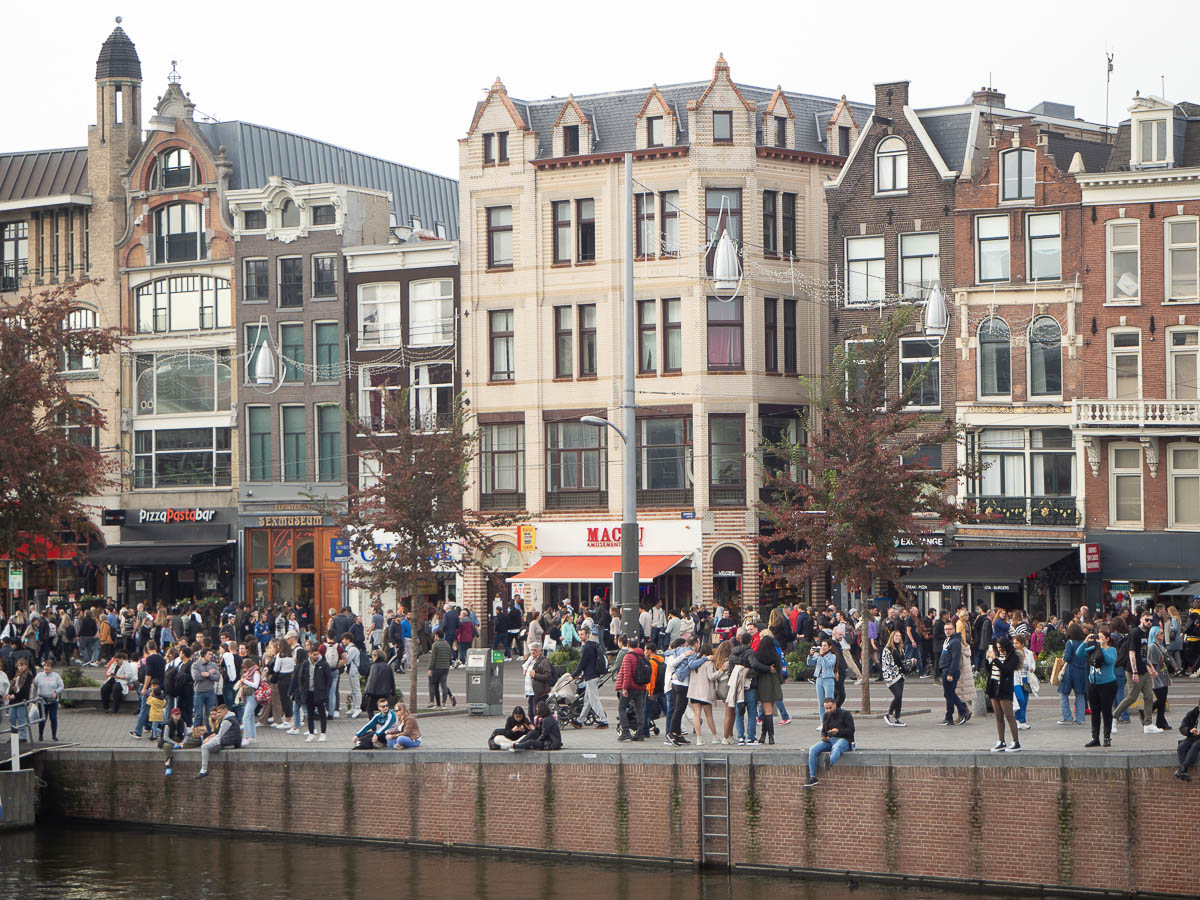
Away from the small canals and back to the innermost city, we were surprised at how crowded the streets were, mostly with groups of young people.
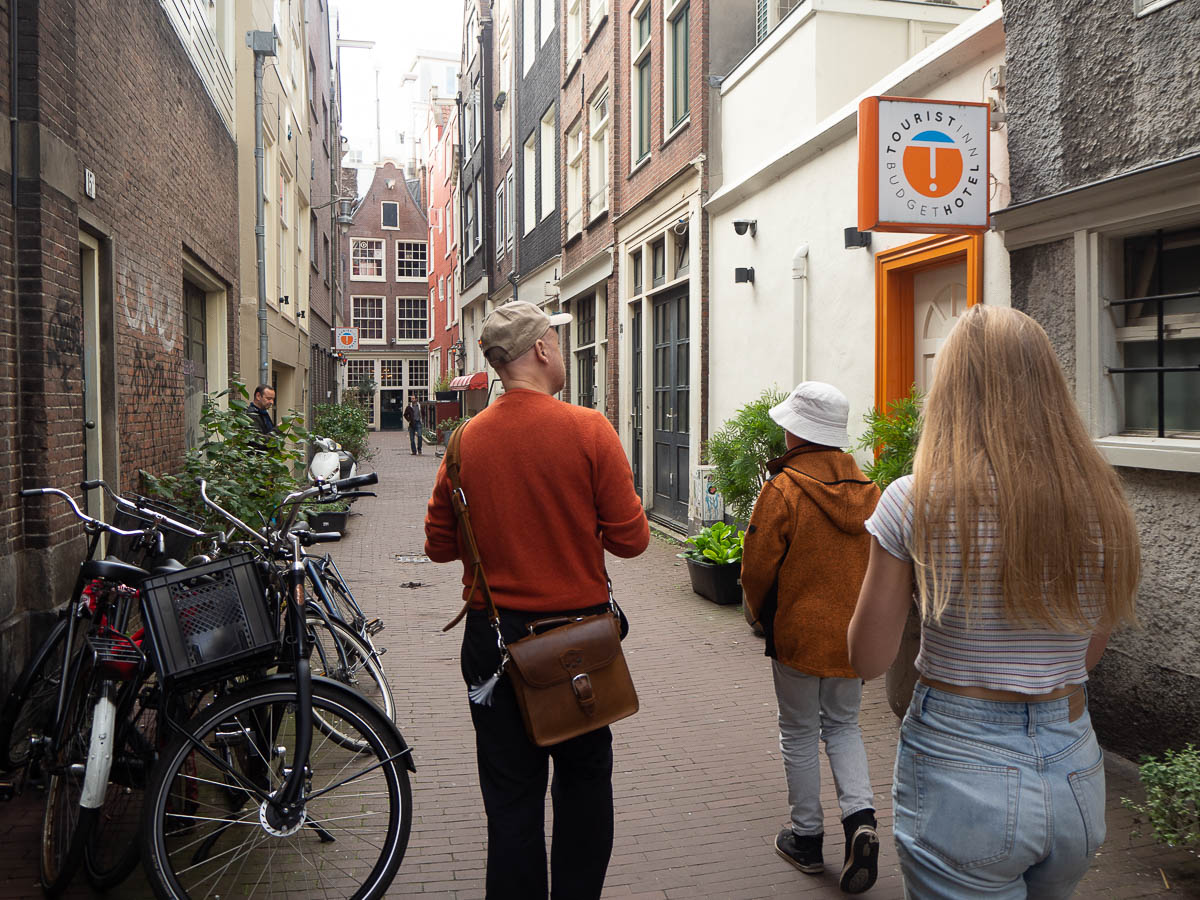
The inner city kept surprising us with red-light streets. Some were clearly noticeable and avoidable, others were sort of just in our way when we wanted to get from A to B and there was no easy way around them. And some looked normal when we entered them and only turned “red” at the other end. You can avert your eyes and try to pretend they’re not there, but it made things uncomfortable for the kids, especially Adrian. Not the most family-friendly city centre.
And the “coffee shops” everywhere. The smell of cannabis – and cigarette smoke, there are so many smokers here and smoking is apparently allowed in most places – got really annoying. Now we’ve seen the inner city, been there, done that, checked the box, let’s leave it behind and get away from here.
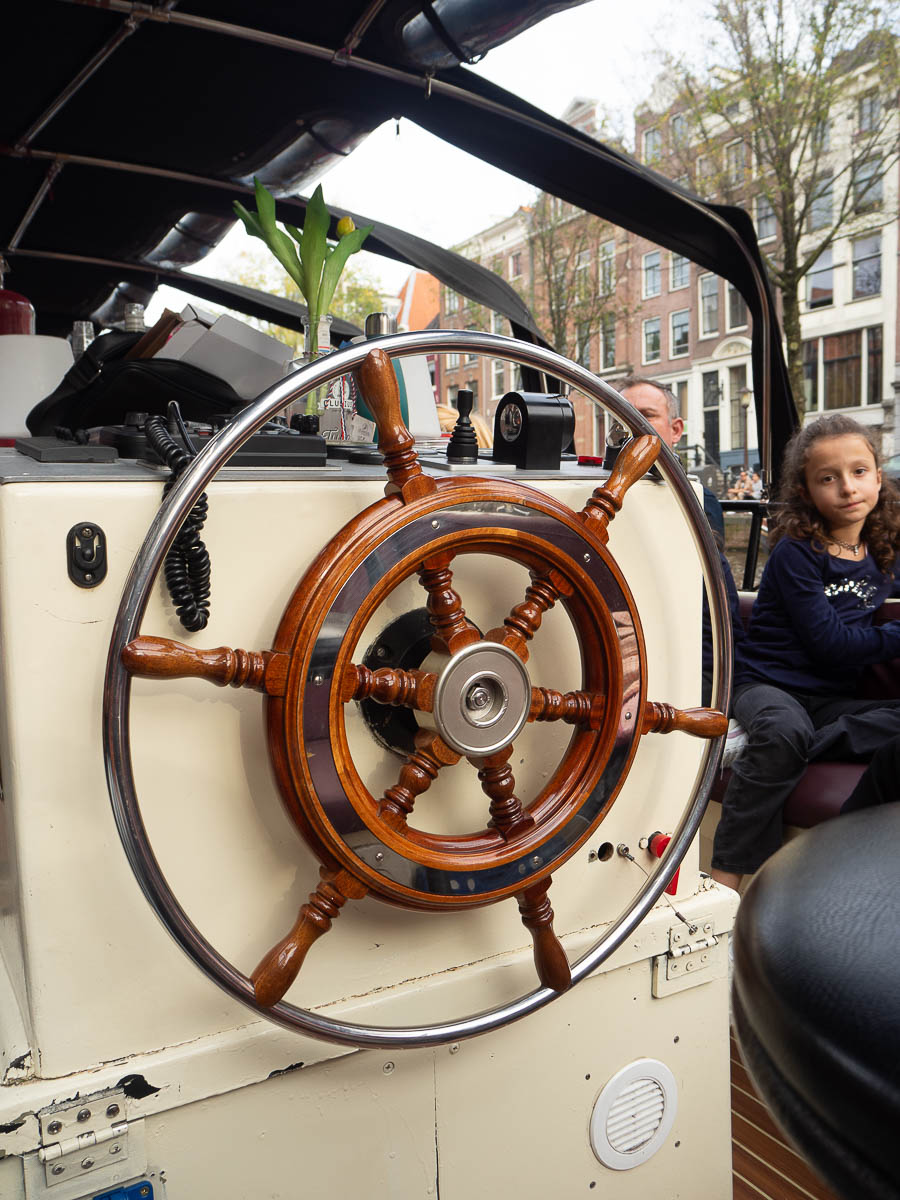
When our legs were tired of walking, we went for a boat tour on the canals. Despite the tour being marketed as family-friendly, the boat was effectively a floating bar and both the crew (not the captain though) and most of the passengers spent the entire trip drinking. We got to see the city from new angles, but didn’t get the kind of guided tour that we had been hoping for.
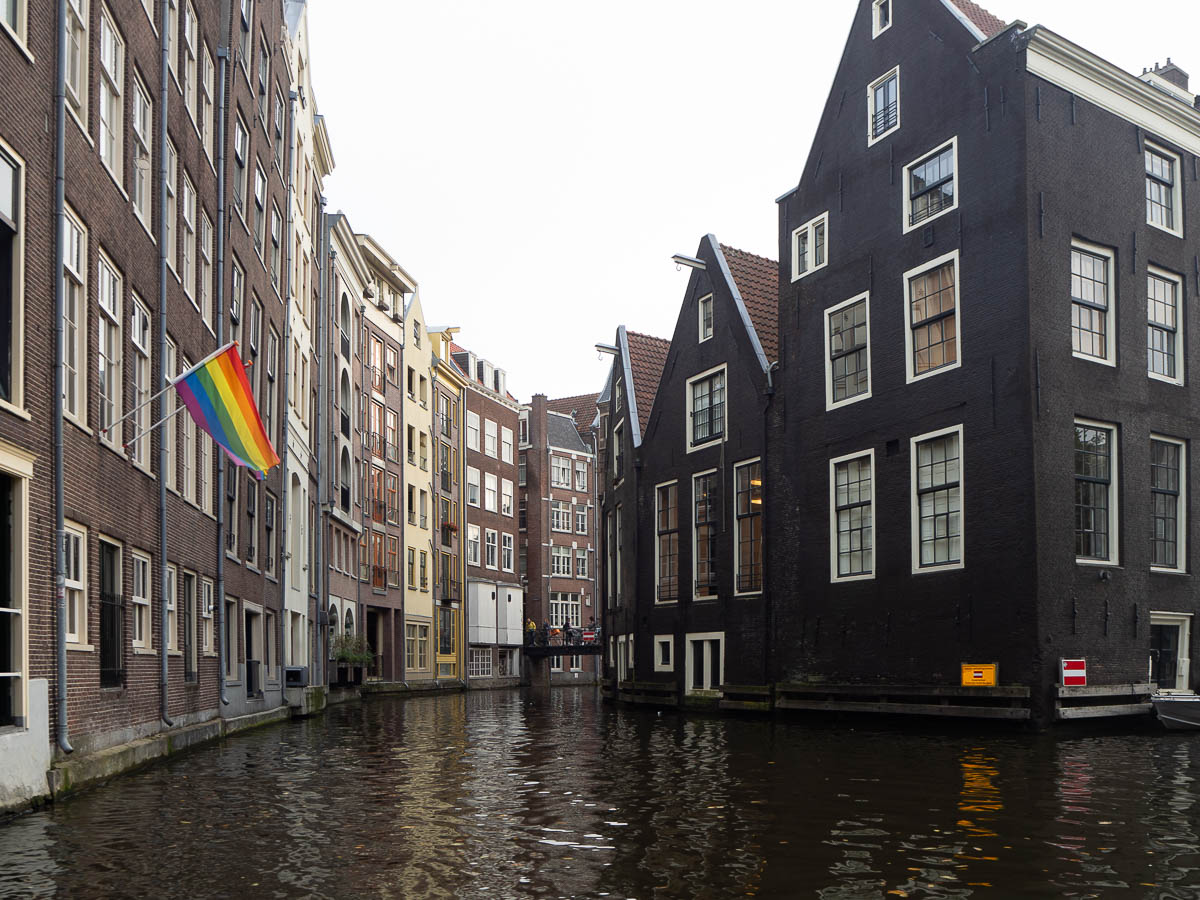
We’re spending a long weekend in Amsterdam, since Eric was already here for work and next week is autumn break for the kids.
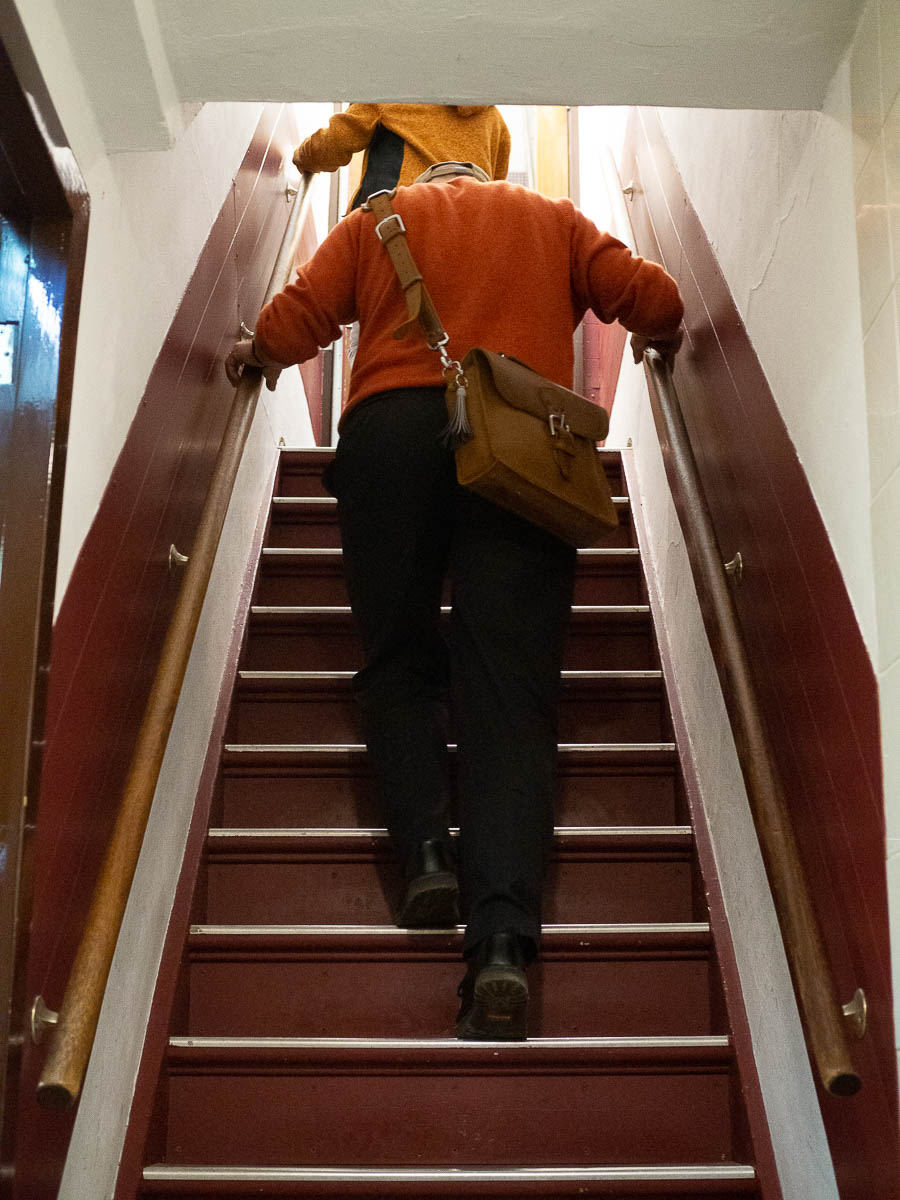
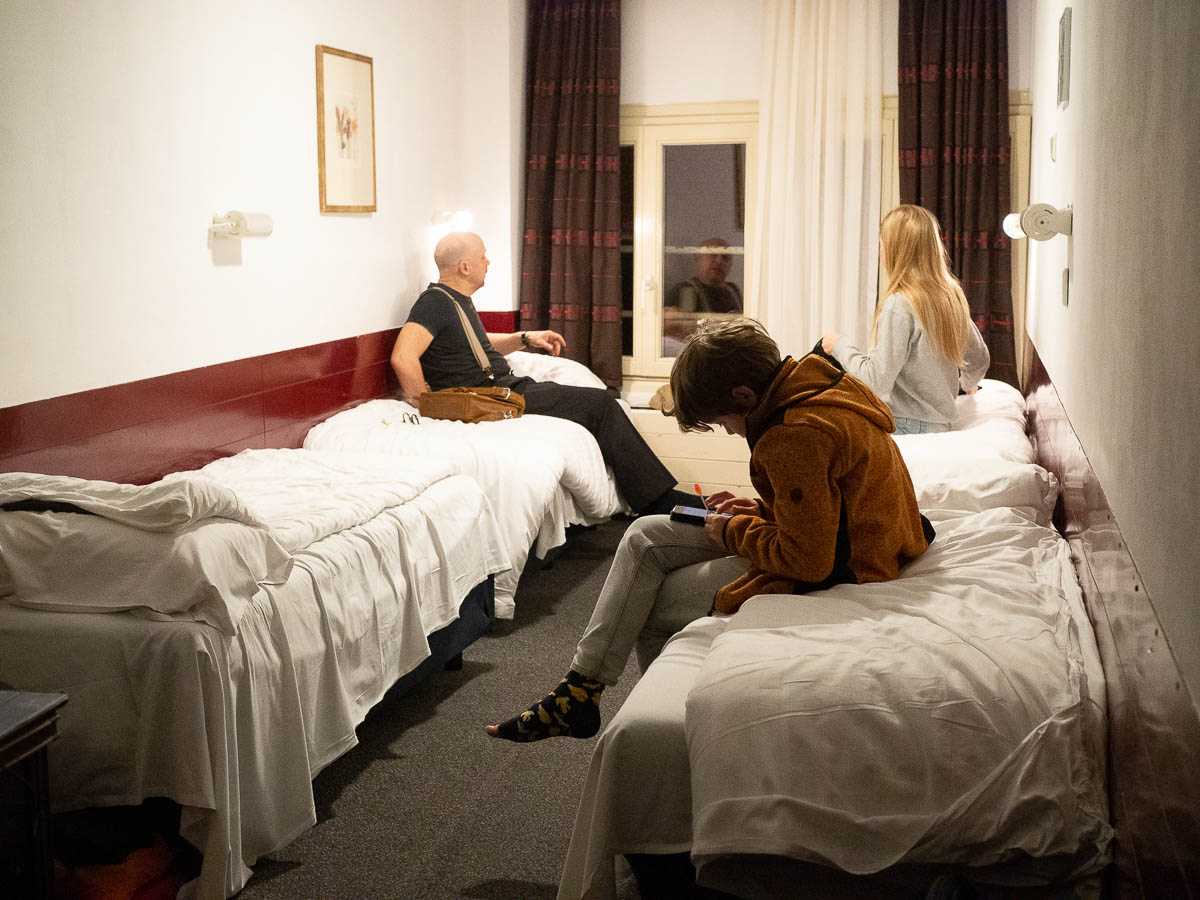
Hotels in central Amsterdam are crazy expensive, especially when booking at short notice. This is definitely one the most basic hotels I’ve ever stayed at, and it’s still more expensive than the luxurious spa hotel in Bled. It’s officially got a single star, and it truly offers no extras. There is a room with four beds and a small desk and enough room to walk between the beds, and a functional bathroom, and that’s it. No TV, no breakfast, no safety box, no elevator.
Everything is clean, though, and mostly whole (though there are cracks in the sink) so they’re delivering on their promises. No complaints.
Oh, there is actually one luxury: plenty of outlets, both 220 V and USB-C, for charging electronics. Basic, but also modern.
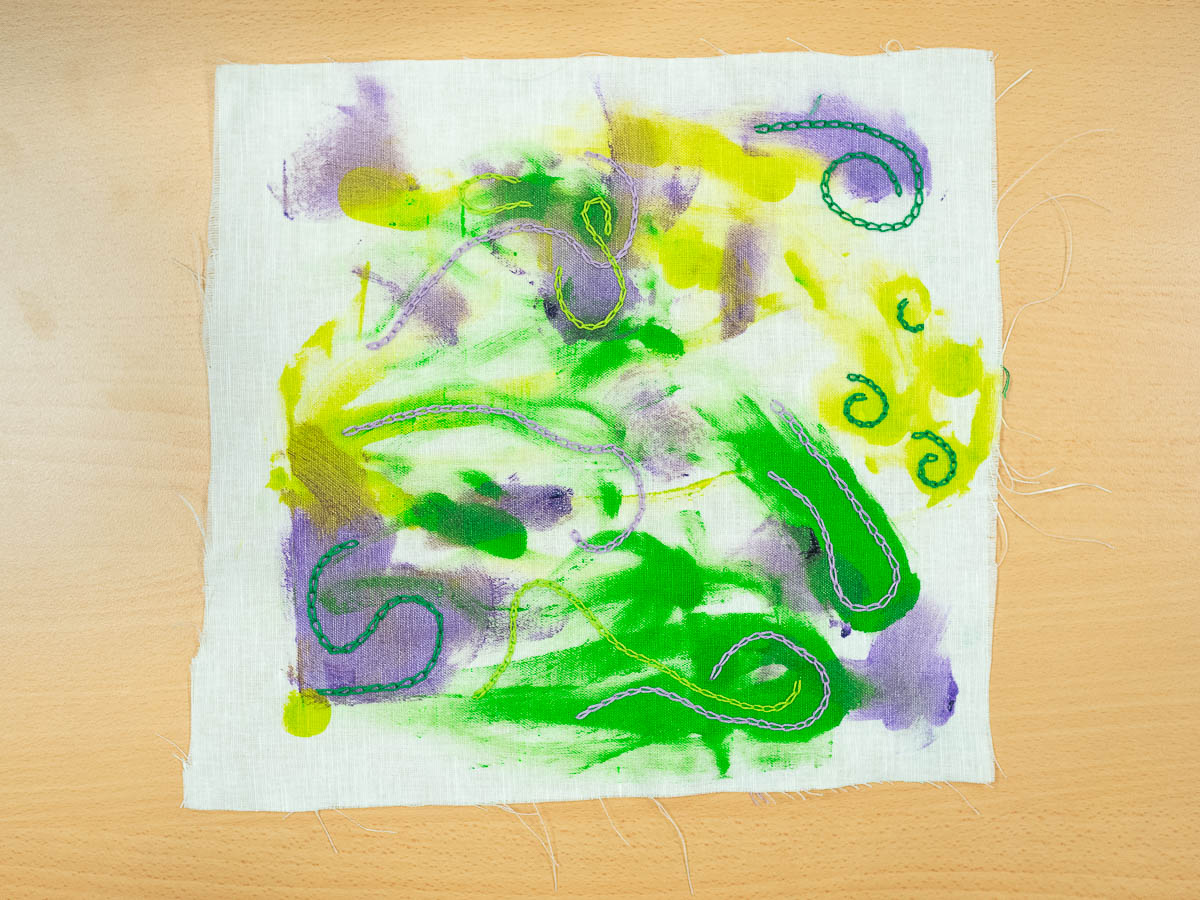
The fifth and last session in my embroidery course, and today is about combining embroidery with painting.
I dug through our cupboards yesterday evening and found some fabric paint. The greens were from when I printed napkins. The purple I have no idea about and I’m not even sure if it was me who bought it, but it contrasts nicely with the green. A bit dried out and slightly lumpy, but after adding a splash of water it was perfectly functional again.
Adrian was immediately interested in joining me so we painted one square each.

When it was time to embroider, it was easy to be inspired by Adrian’s wild, spontaneous and chaotic design. The swirls and sweeps were crying out for swirly, sweeping embroidery.
As usual, we were out of time before I felt done. It needs more swirls.
I have a whole pile of half-finished embroidered squares now. Some I have an actual project idea for, others still need thinking. This one is going to be interesting enough that I would really like to find some kind of use for it, not just bundle it away somewhere. Maybe I need a pretty bag for… something?
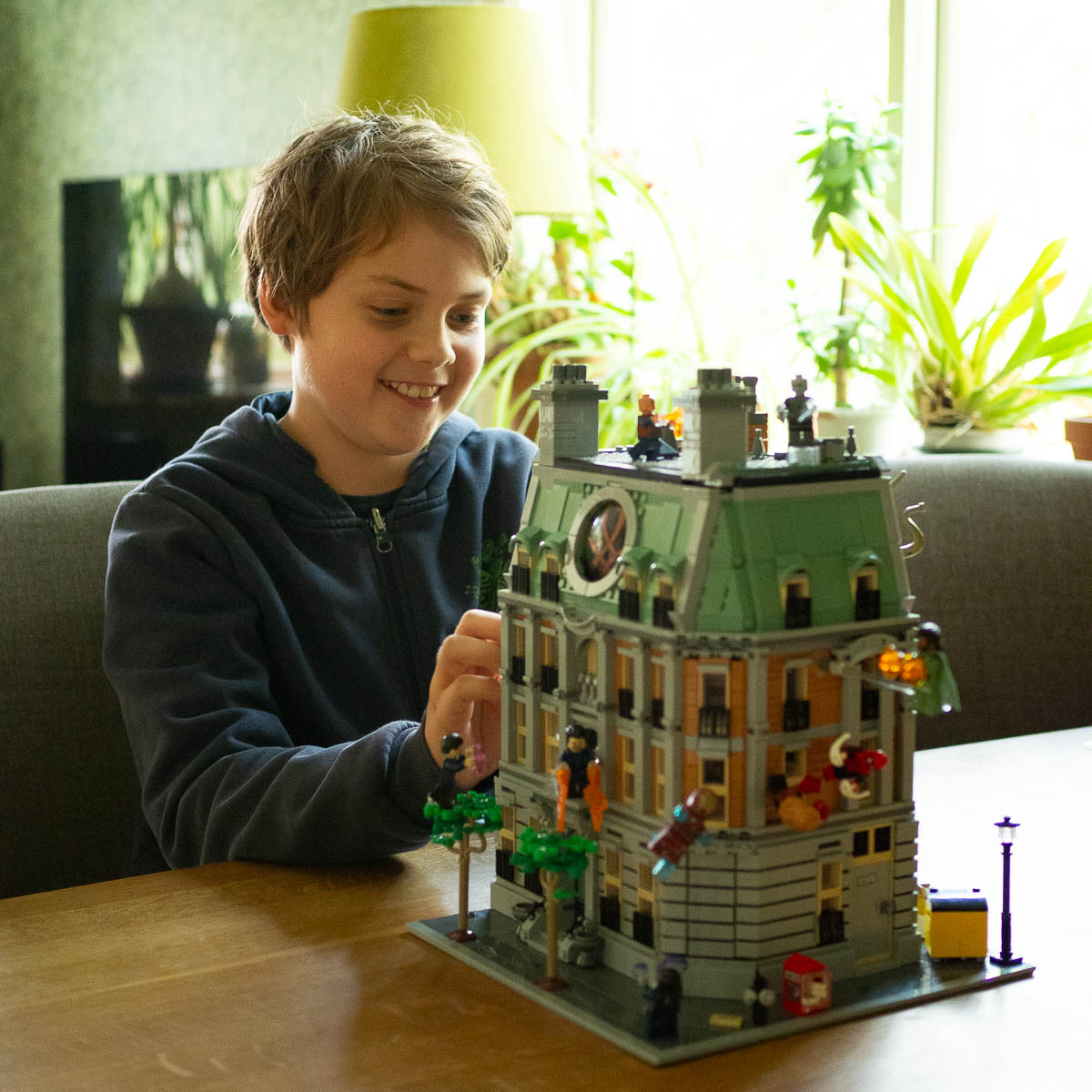
Adrian finished building the massive Lego set he got as a birthday present. Sanctum Sanctorum is from the Marvel cinematic universe and is the location many an important scene and battle.
This was Adrian’s first 18+ build. It had a more intricate construction than the models he’s built in the past, and was less stable and robust than the models for younger builders. If you’re not careful, you can knock things off.
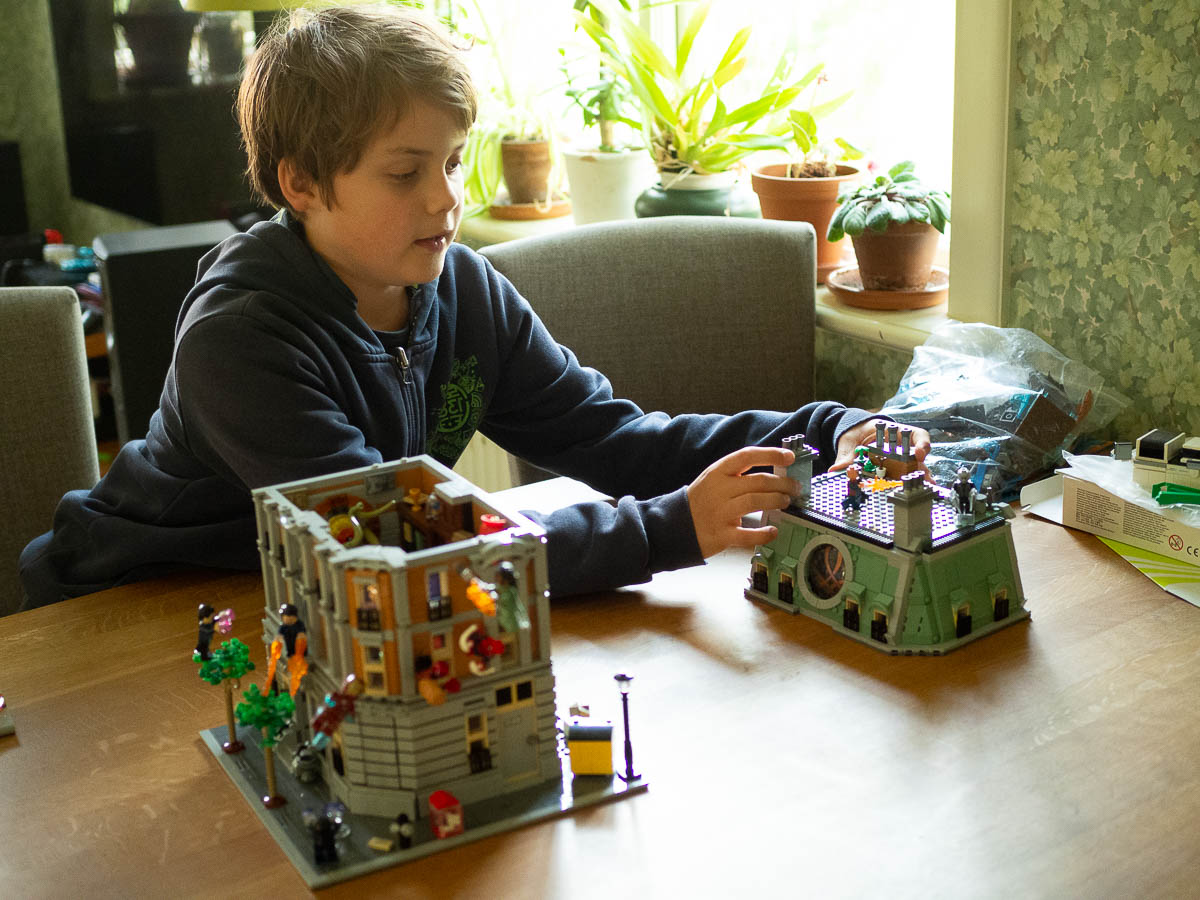
It’s also modular – you can lift off the top floor, and the second floor, and parts of the interior, to access other parts. There are chunks that can be moved from one floor to another, or from the inside to the outside and vice versa (notably a large tentacle monster, which I see I didn’t capture on any of the photos.)
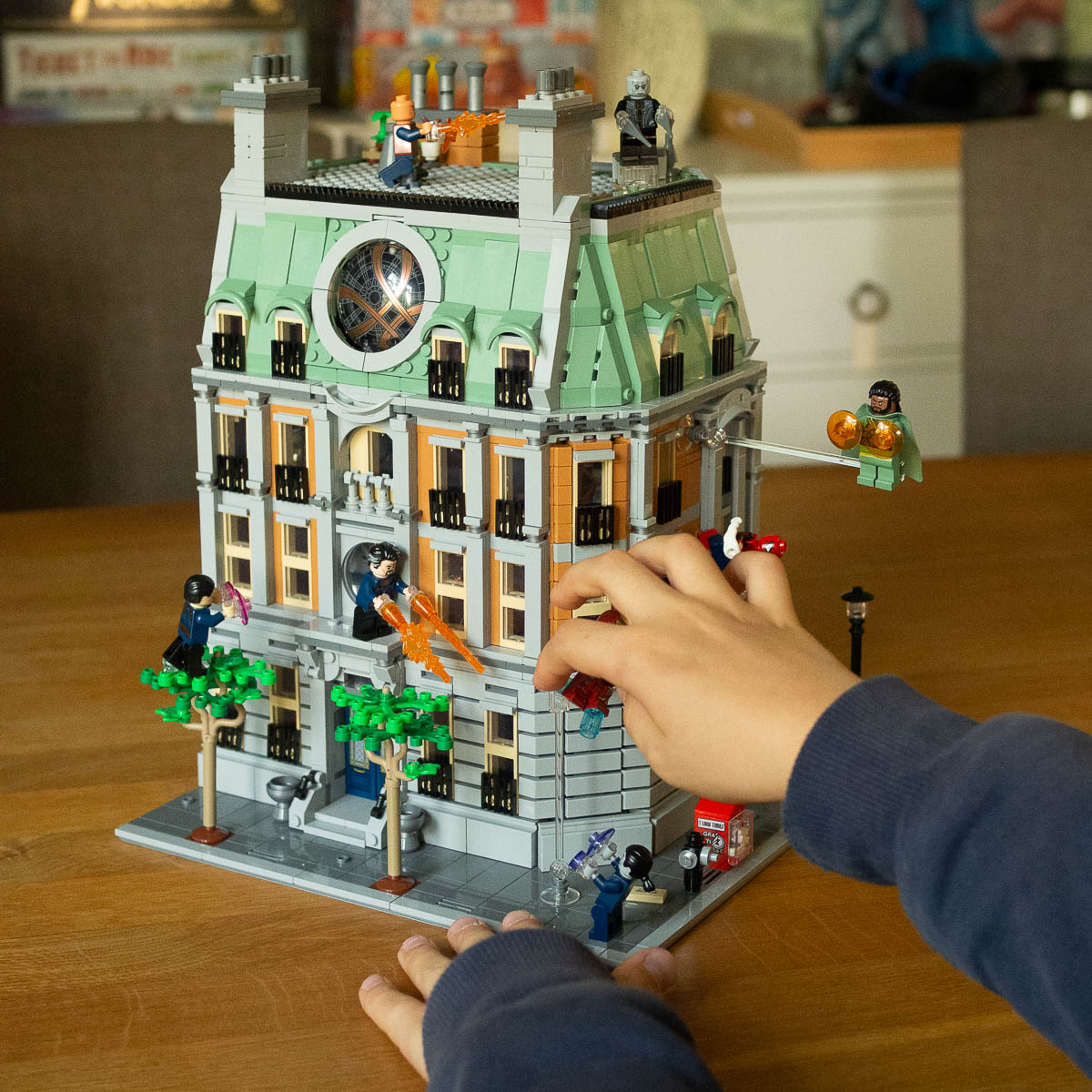
Another aspect that Adrian really liked was the large number of attachment points that allows for the staging of elaborate fight scenes.
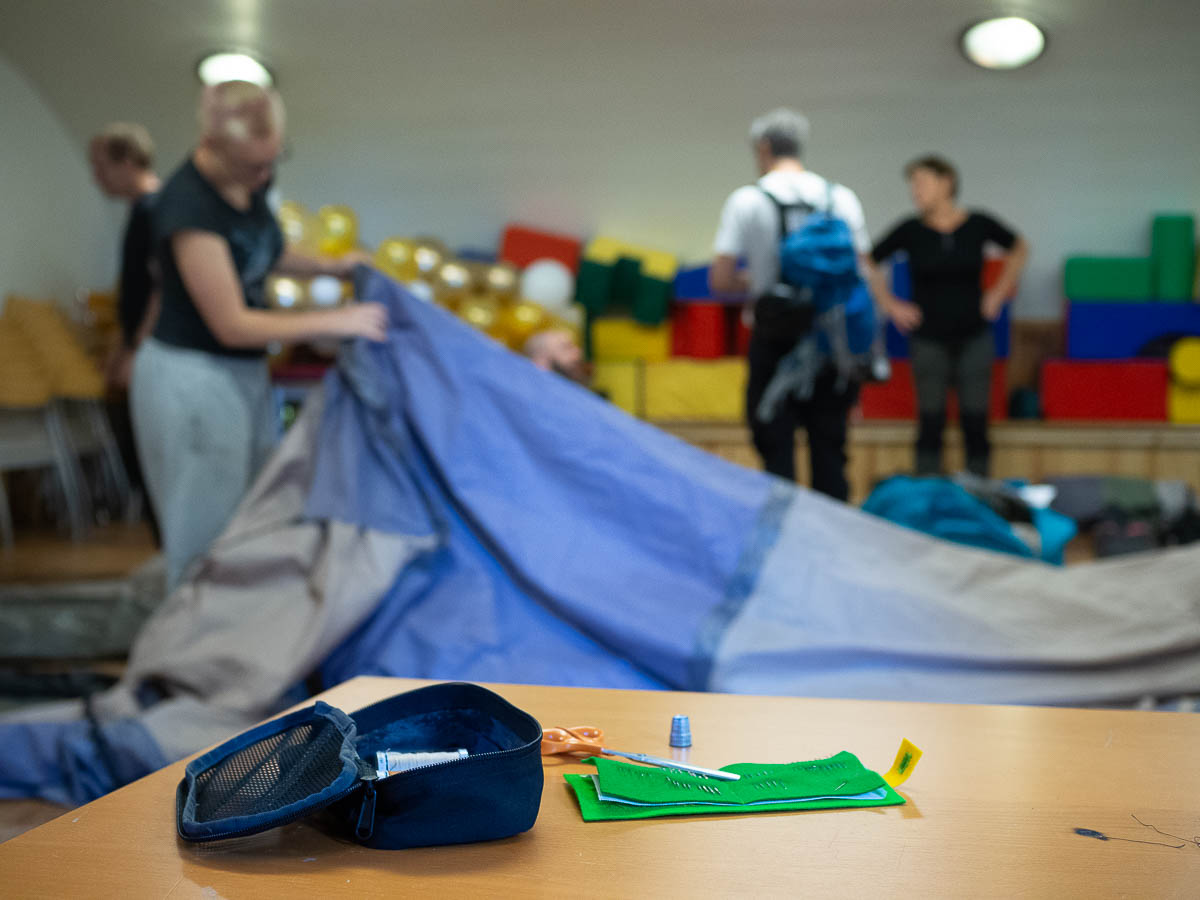
I volunteered to help at the Spånga scout group’s annual “autumn fixer day” where parents and other engaged folks help out with various maintenance tasks. This time around the task list included everything from deep cleaning the freezer and disassembling old desks so that they can be transported to the recycling centre, to removing thistles from the yard and mending tents.
It won’t surprise any of you to hear that I signed up for mending tents. However the notes about tents needing attention were hard to interpret, and much time and attention went to figuring out what the problem even was. That task required a fair amount of expertise and experience with the tents themselves, so the mending crew spent a lot of time just sitting and waiting. Whenever an actual rip was found, there was almost a queue of us waiting.
Looking back at my blog post about the scouts’ mending day two years ago, the situation was the same. Maybe someone could learn something from this experience. Who knows.
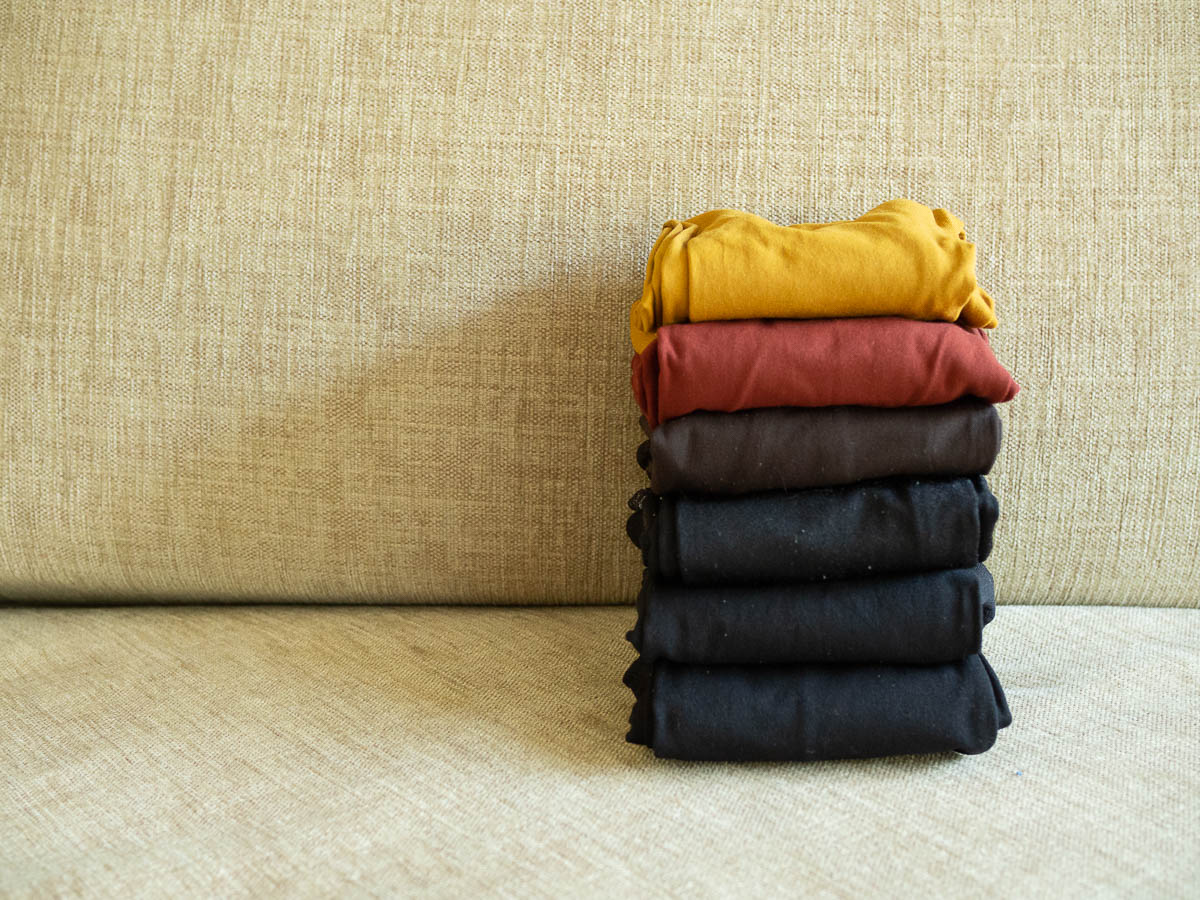
All in all I felt that I contributed much less than I had hoped. When I came home, dissatisfied with my morning, I picked up my own pile of mending and fixed up six pairs of tights. And felt much better about the day afterwards.
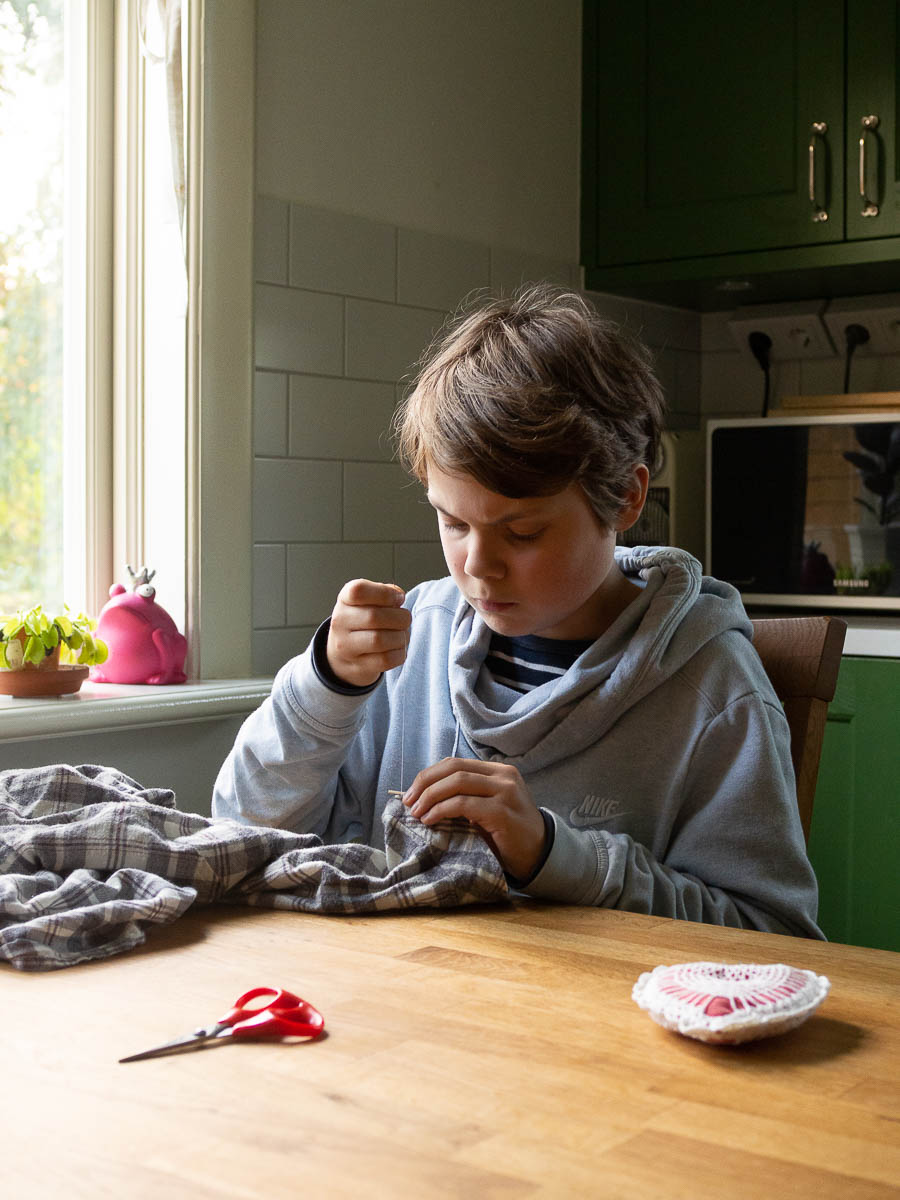
All this mending reminded Adrian that he had a list of homework tasks from his home economics class, one of which was to mend a small hole or sew on a button. My backlog of mending was now empty – except for a shirt waiting for a sleeve button to be re-sewn! He came just in time; had he mentioned the homework an hour later, I wouldn’t have had anything for him. I guess we could always cut off a button and reattach it, but it would have felt like a waste.
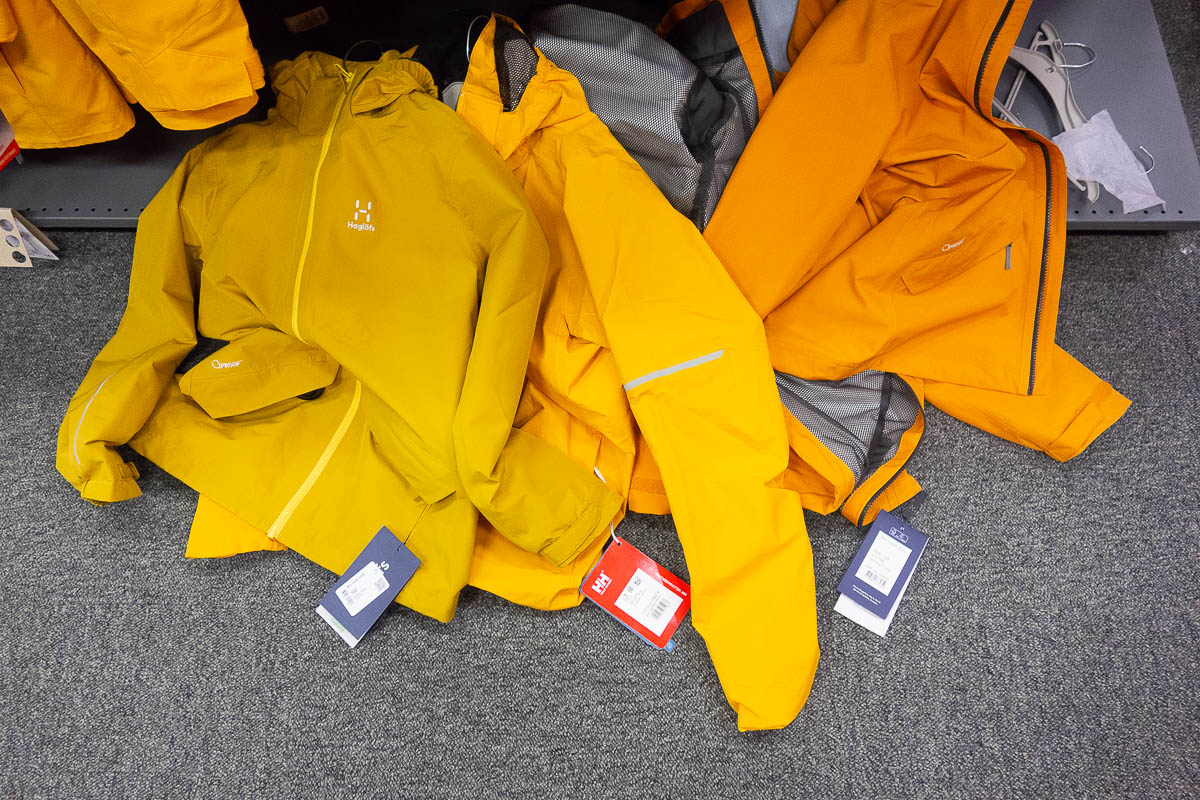
Adrian, being of the age of frequently outgrowing things, has outgrown his rain jacket. He’s also outgrown all of Ingrid’s past rain jackets that I had hoped he could inherit. So I now have 4 kids’ rain jackets in sizes 140 to 158 in various colours, but not a single one that Adrian can use. (Honestly the one that he says he last used, in size 140, is ridiculously small for him – it’s a wonder he hasn’t complained earlier.) He has a scout hike coming up in a week, and it’s very unlikely we’ll get an entire weekend in September/October with no rain, so we’re emergency shopping for a new rain jacket.
This season’s colour is clearly dark yellow. All the three brands that had rain jackets for active use in “junior” sizes had all chosen to make theirs dark yellow or orange. Black and gray were also available, as usual, but Adrian doesn’t even look at those. (Helly Hansen also had some eye-wateringly garish neon colour combinations, which were too loud even for Adrian’s tastes.) So I guess we’ll take a yellow one, then.
Adrian turned 12 yesterday. He wanted all of us to be there for his celebration, so he waited with the presents and the cake until I got home from Ljubljana.
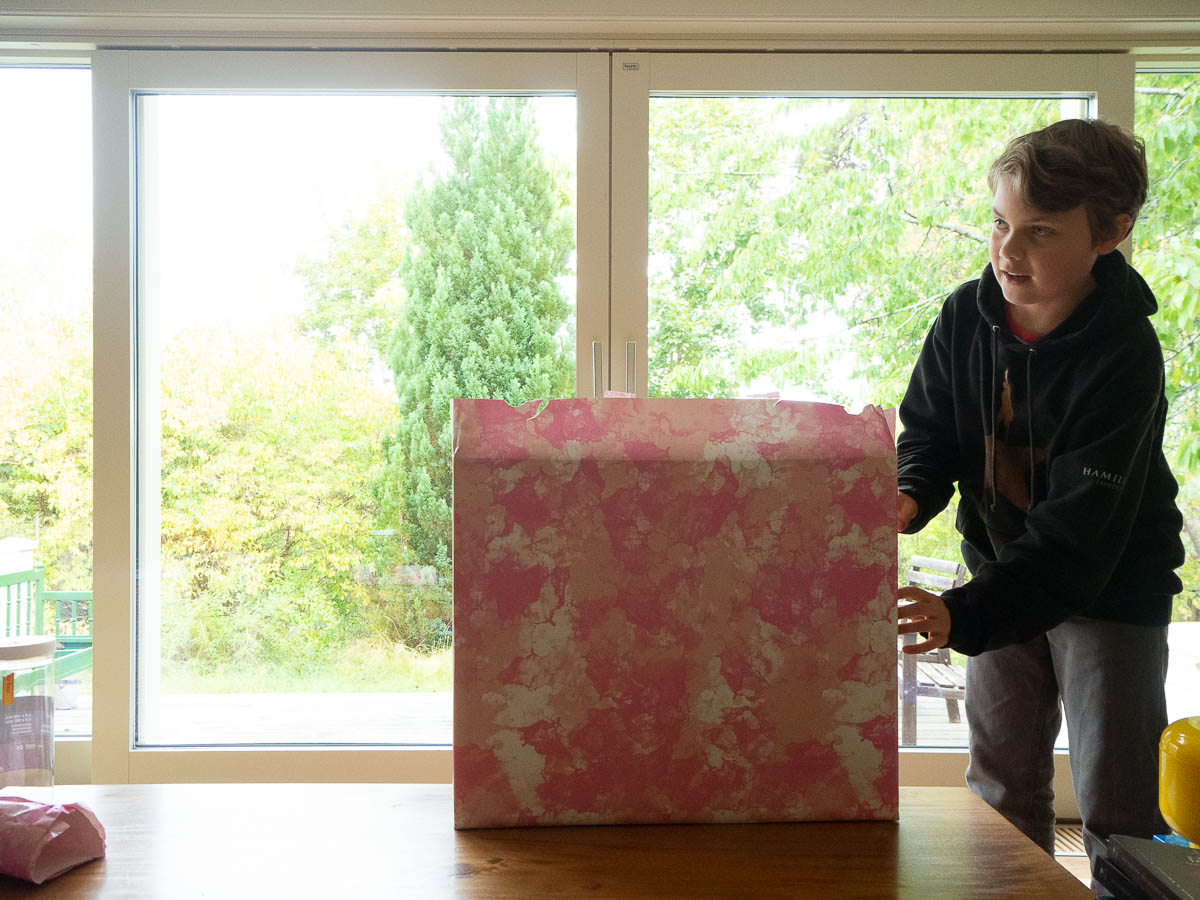
That large box is a giant Lego set. The Sanctum Sanctorum, for the record. For ages 18+ according to the box; not because of any adult content but because of lots and lots of small fiddly bits.
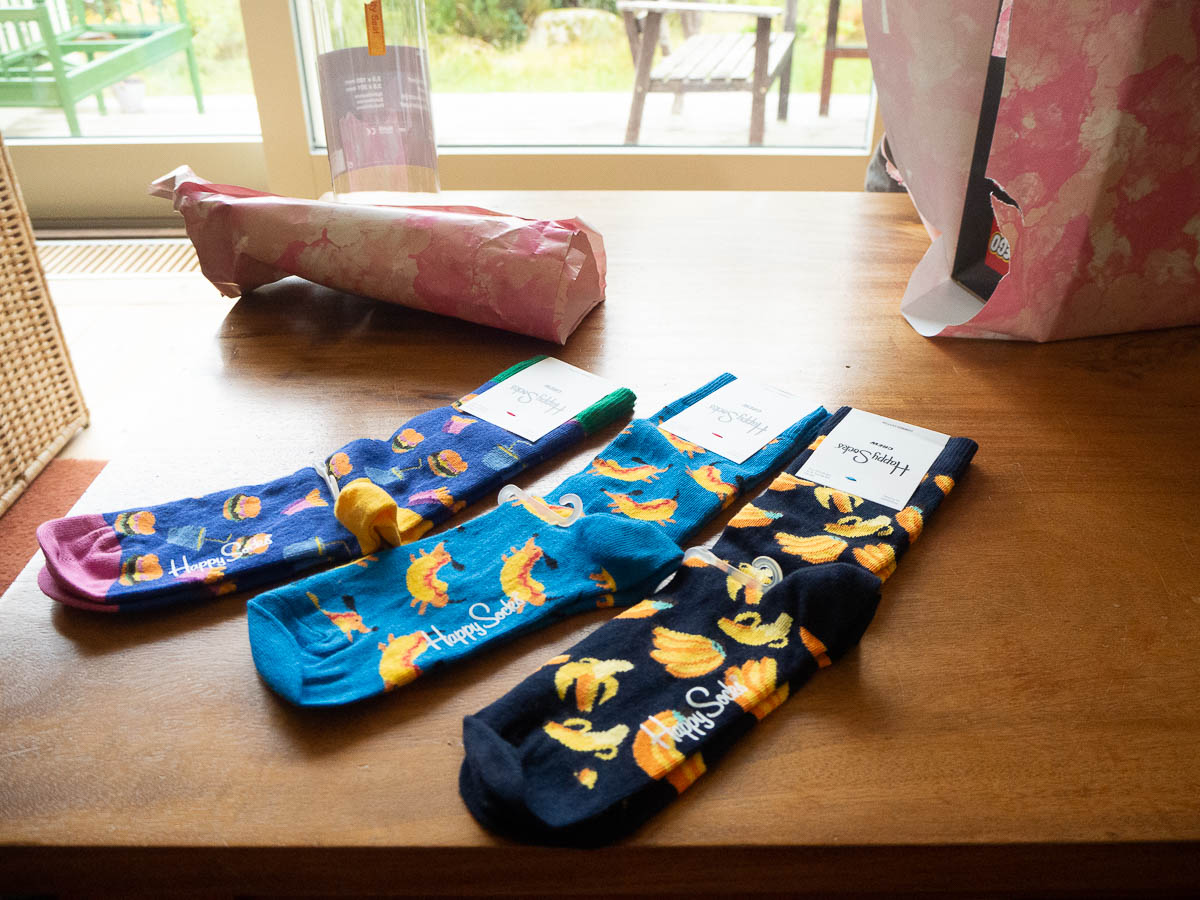
To pad the gift-giving a bit, he also got the next book in the series he’s reading (Percy Jackson) and some colourful Happy Socks. But it was really the Lego set that captured all his attention.
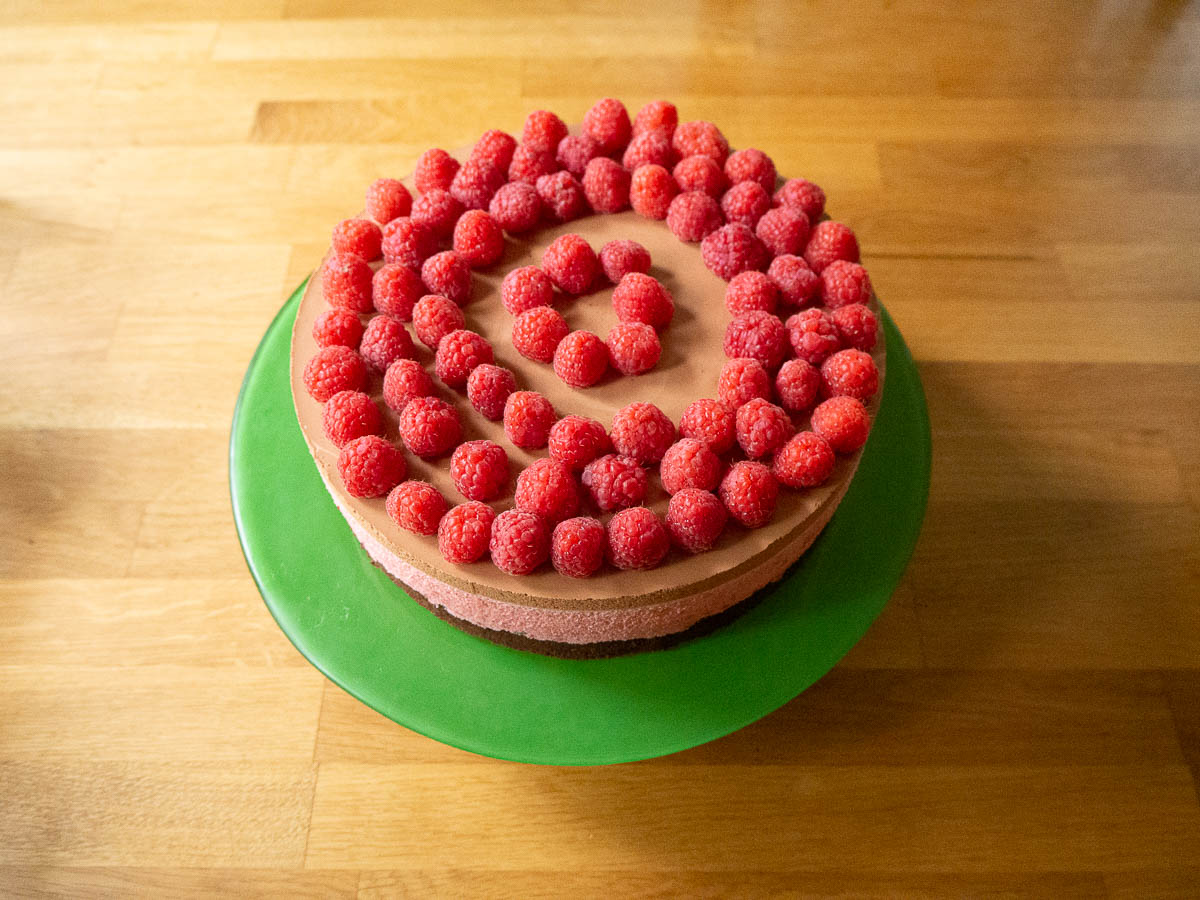
The cake flavours are chocolate and raspberry this year again – Adrian’s favourites.
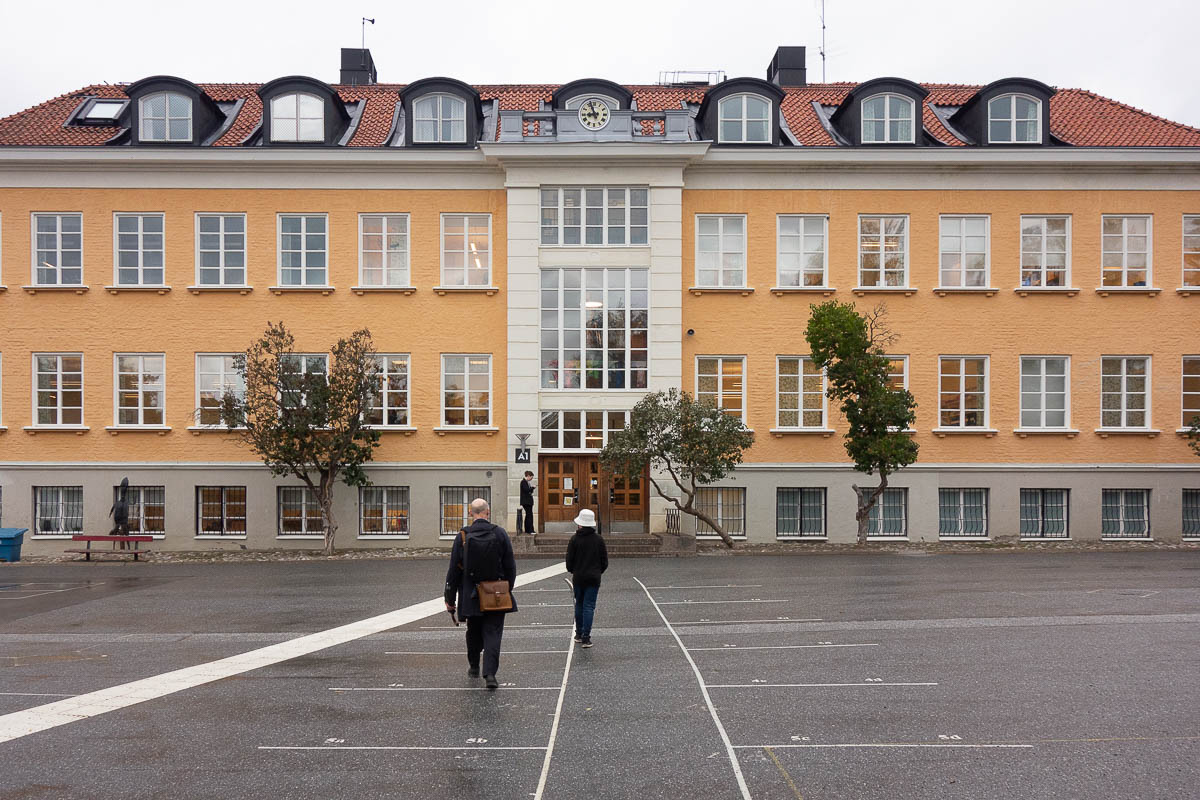
Adrian & Eric in front of Adrian’s school.
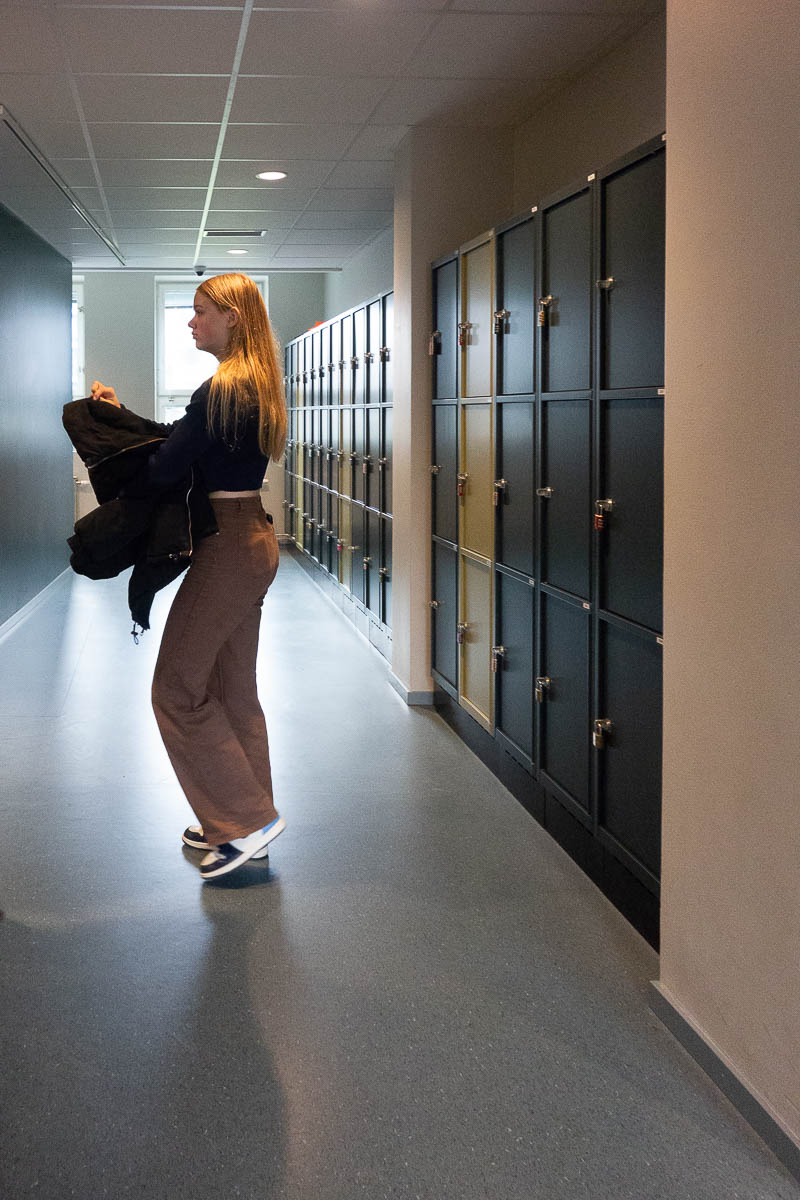
Ingrid, caught in a random moment at her new school.
There were parent/teacher meetings at both schools yesterday and today. Adrian wants to work on his writing skills, especially when it comes to writing longer texts – being more descriptive and structuring his texts better. (He has a bit of a habit, both in writing and in speech, of just jumping right into the middle of things and forgetting to set the scene.) Ingrid, being in a completely new school, isn’t setting any goals at this time, but needs to decide whether to skip the maths course that she’s scheduled to take because she’s done it all in secondary school already and move on to the next one – which would mean not being with the rest of her class during maths.
| « Older posts | Newer posts » |
