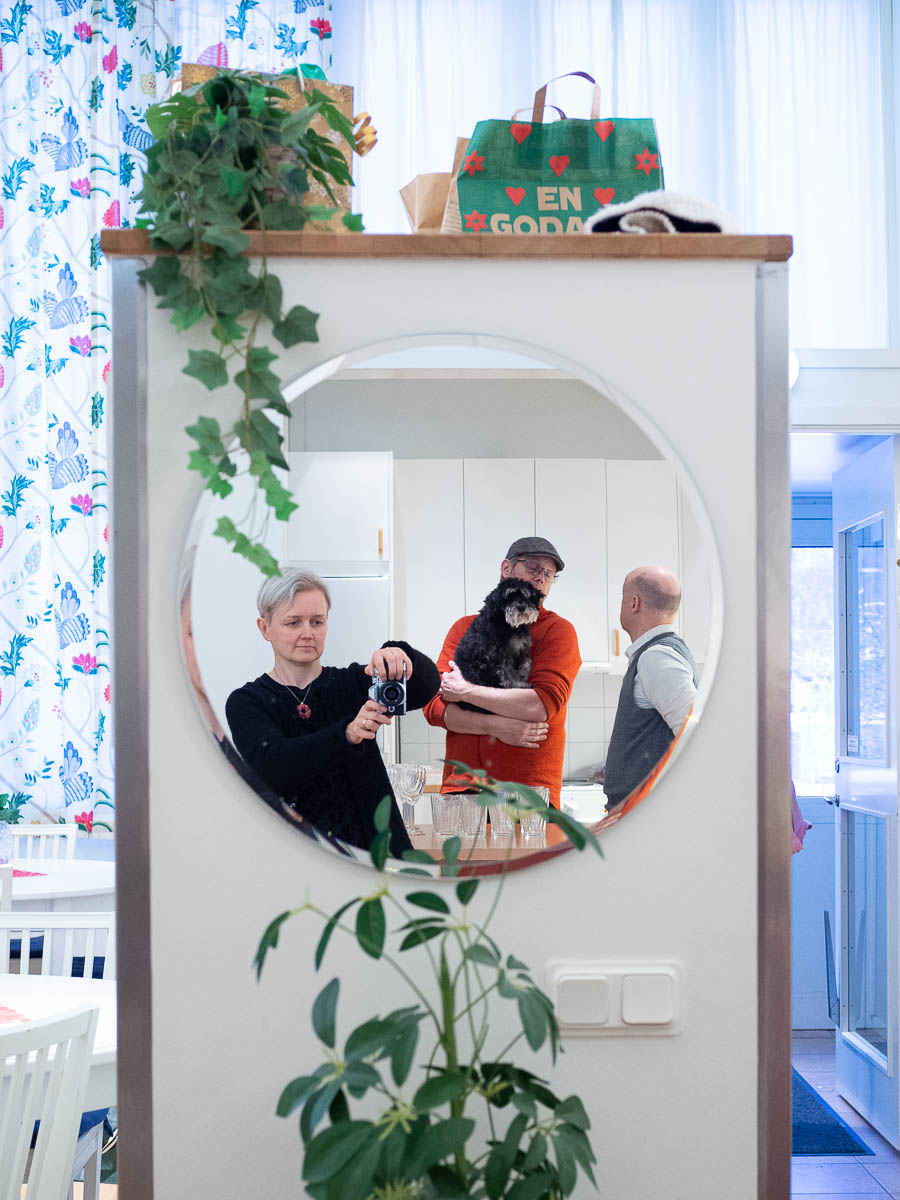
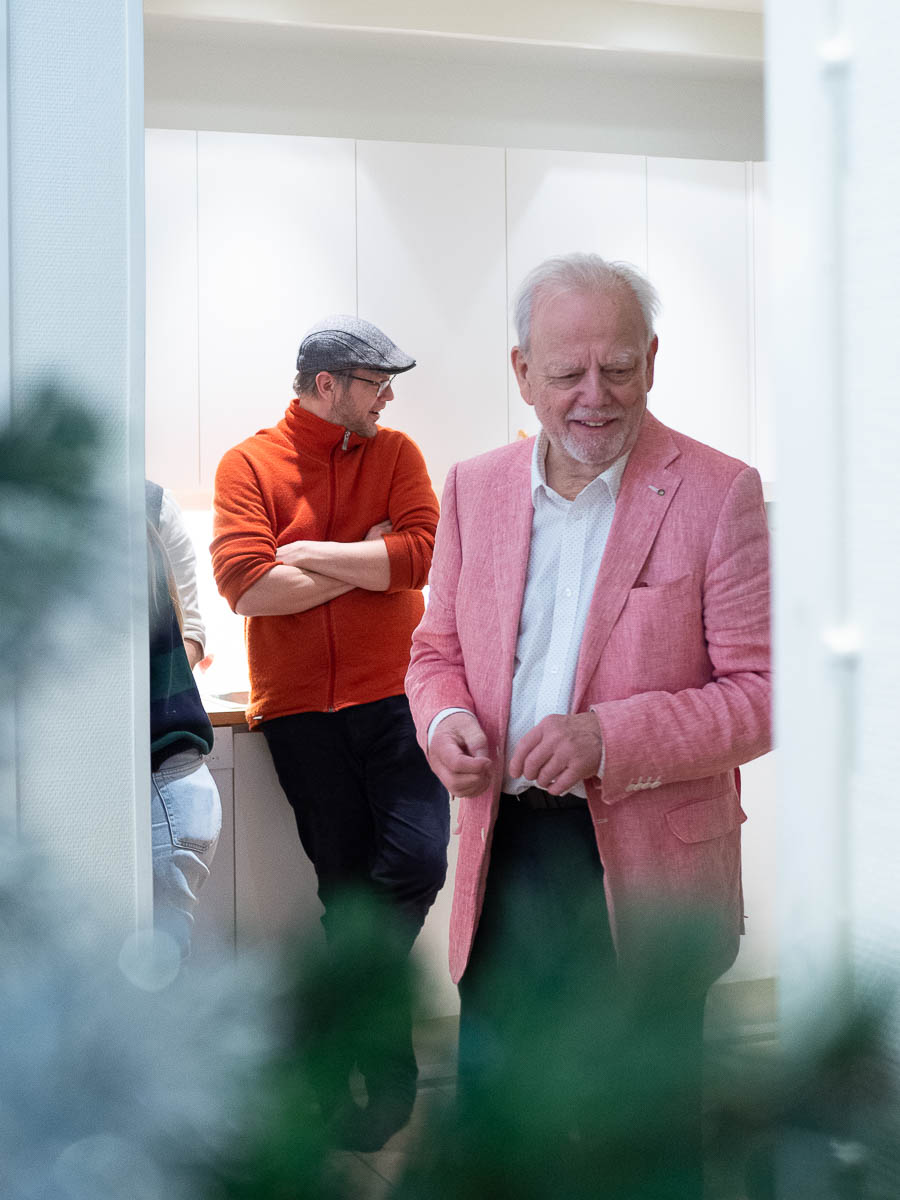
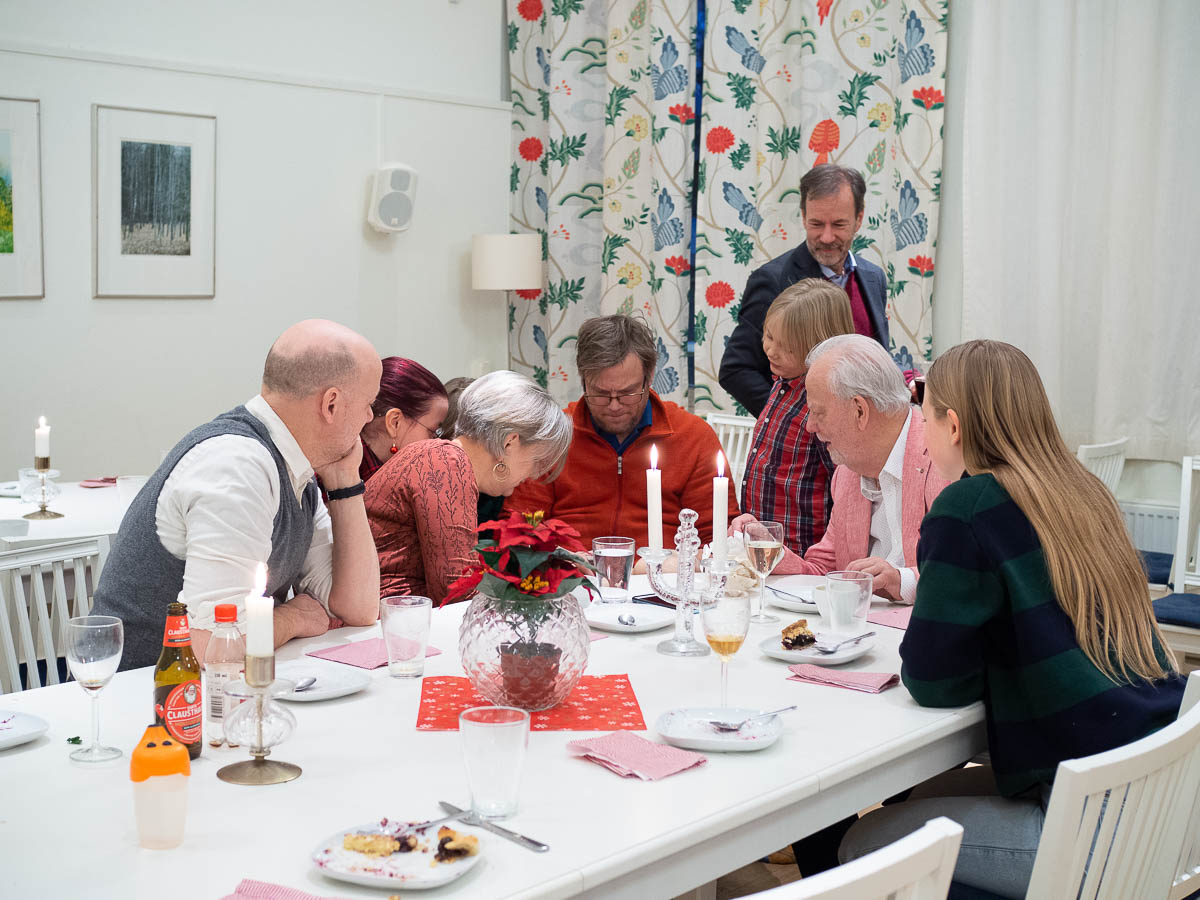
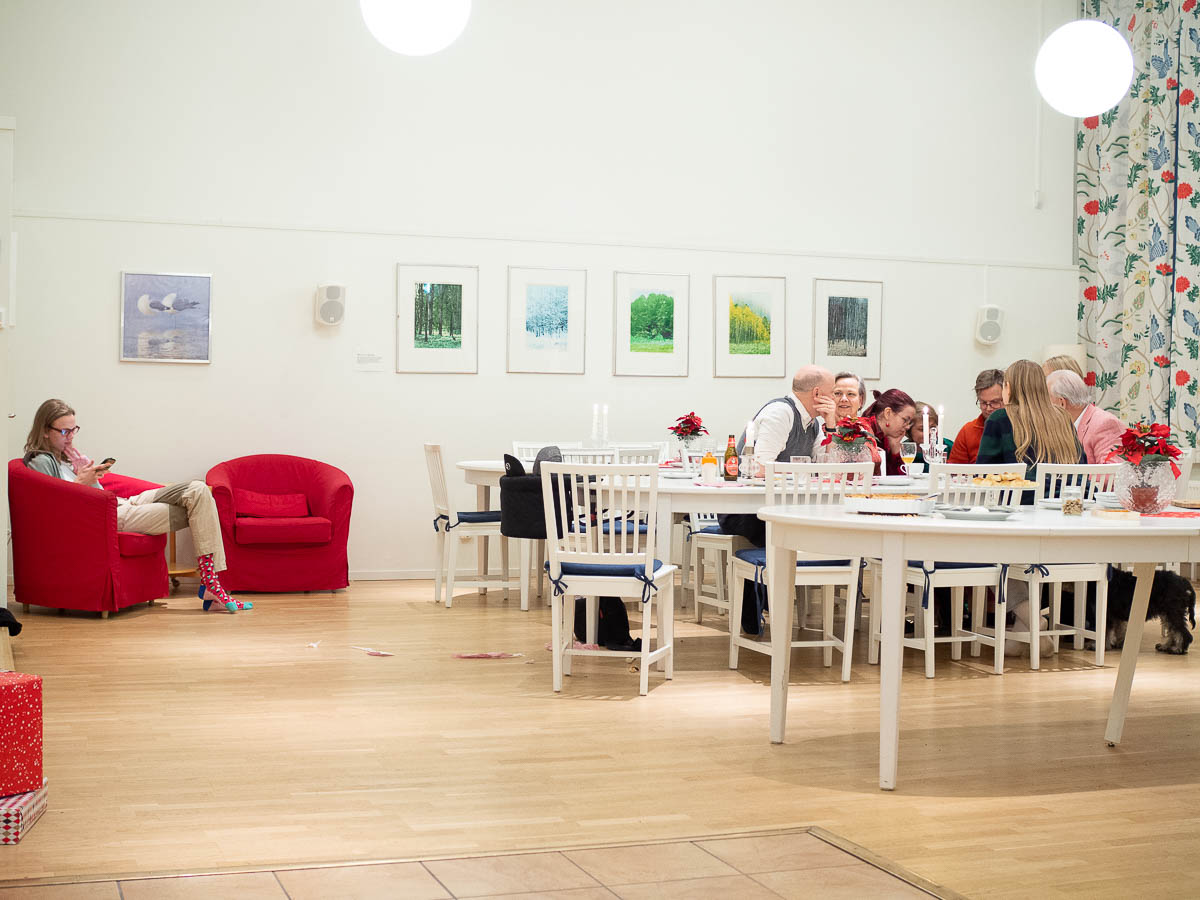
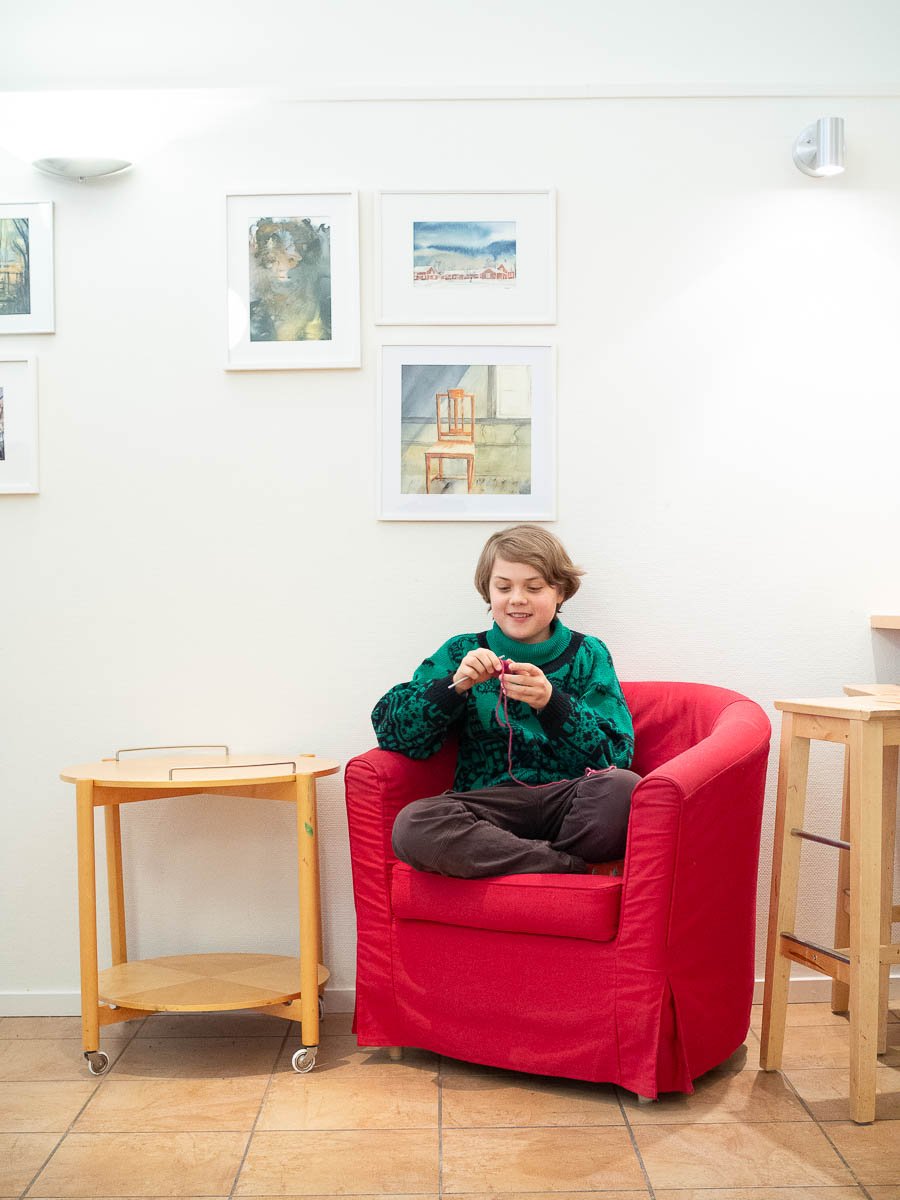
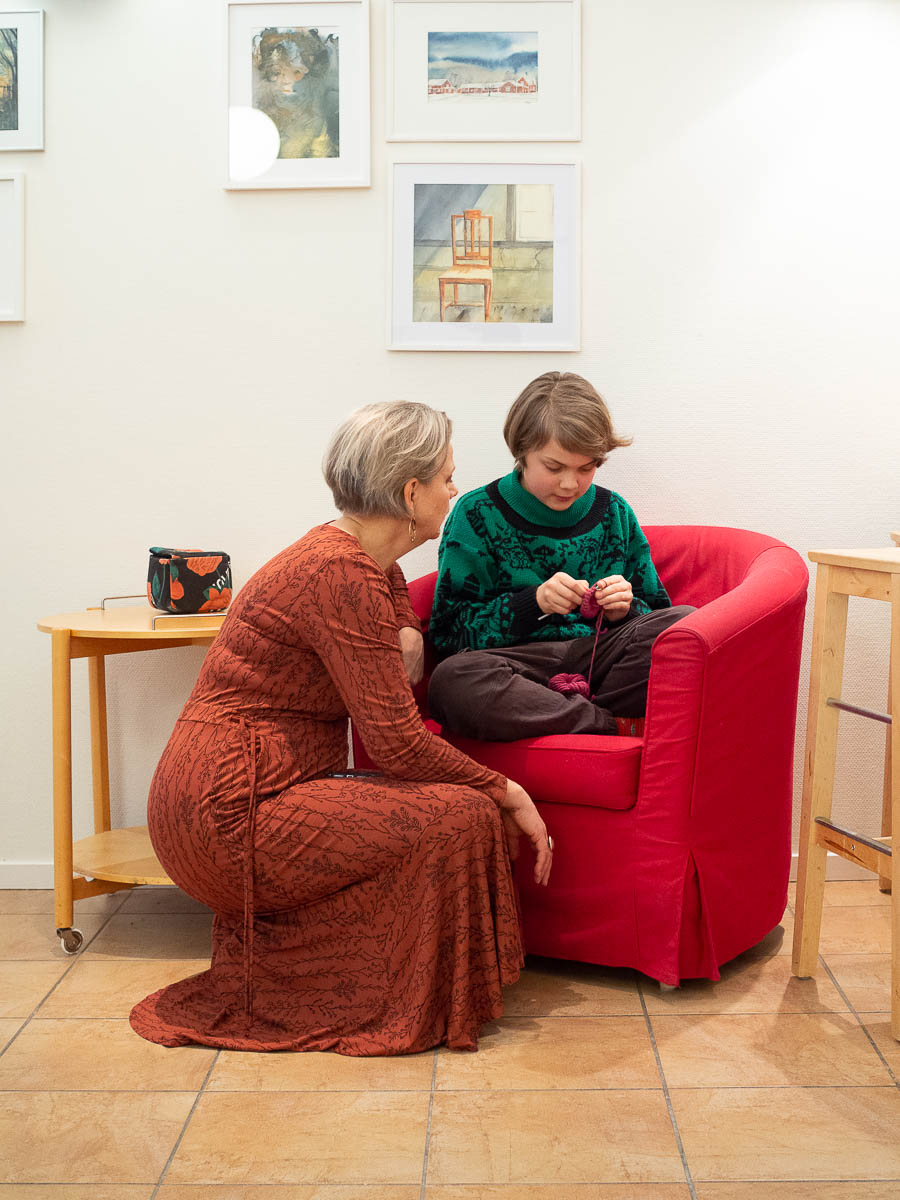
After a few hours the introverts start taking off into various corners, while the extroverts could happily keep going all night.
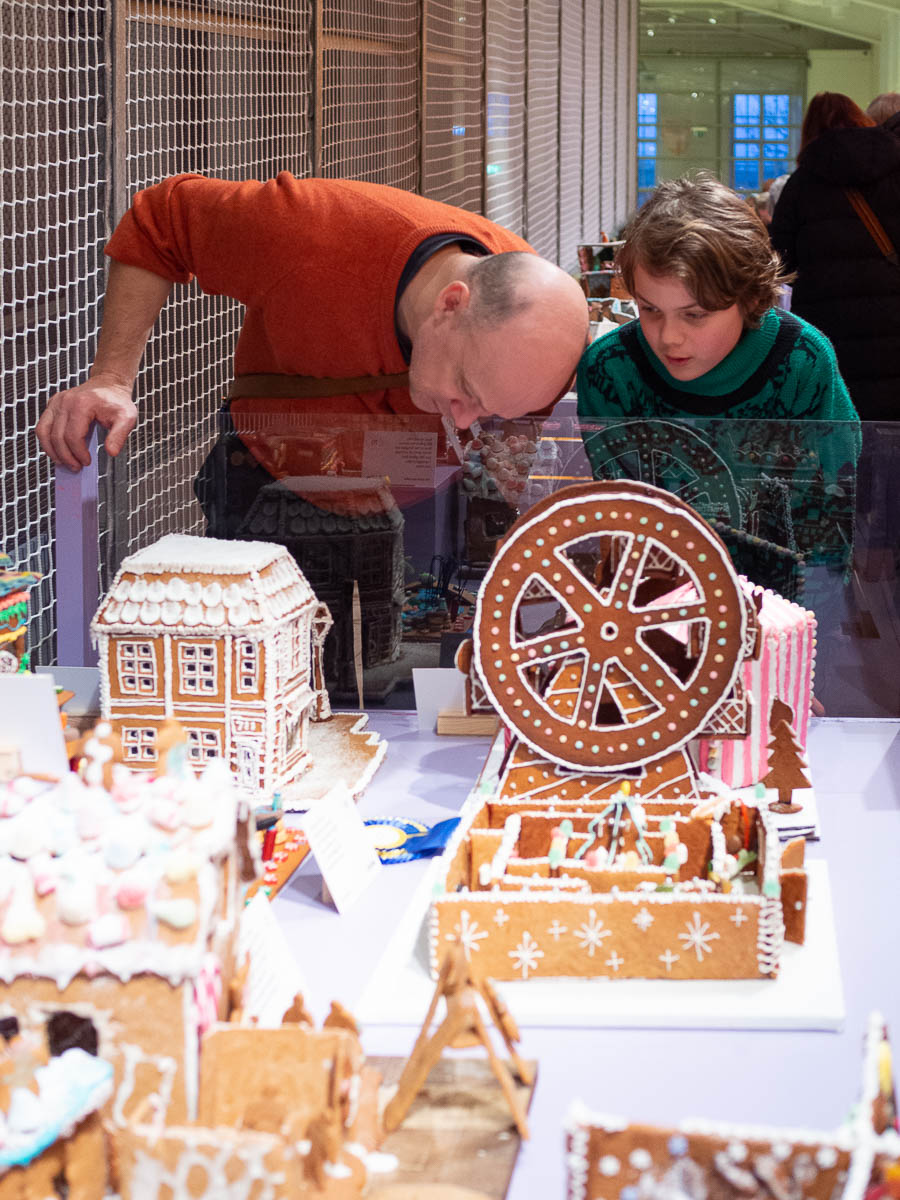
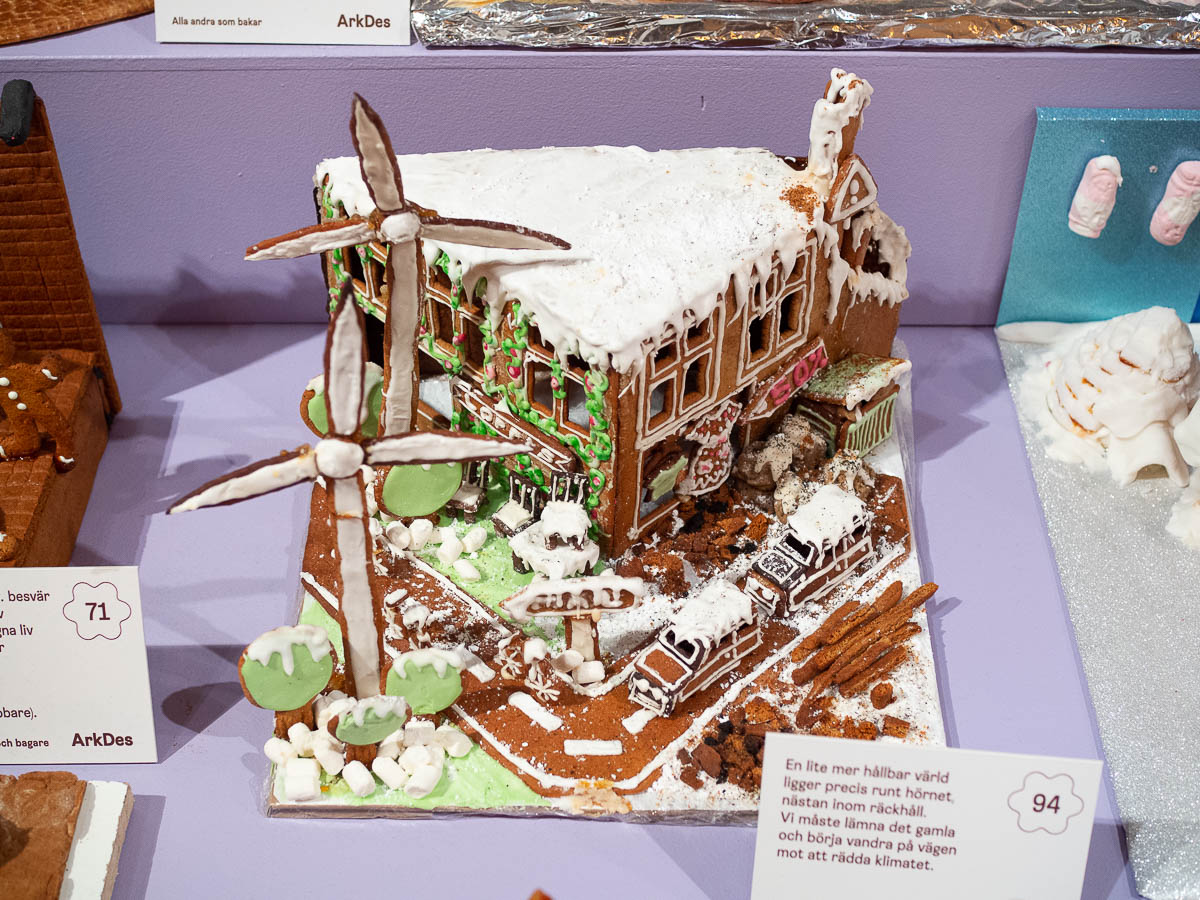
The annual gingerbread house competition and exhibition at the Museum of Architecture and Design.
The competition, open to anyone, has a different theme every year. This year’s theme was “Around the corner”, and the contestants had interpreted it in every possible way: some very literal, some more figurative, and some had probably shoehorned whatever they had built into the theme after the fact. There were a lot of labyrinths (with lots of corners) and houses with round corners or no corners. For some reason there were several houses built around the four seasons (maybe because houses tend to have four corners?)
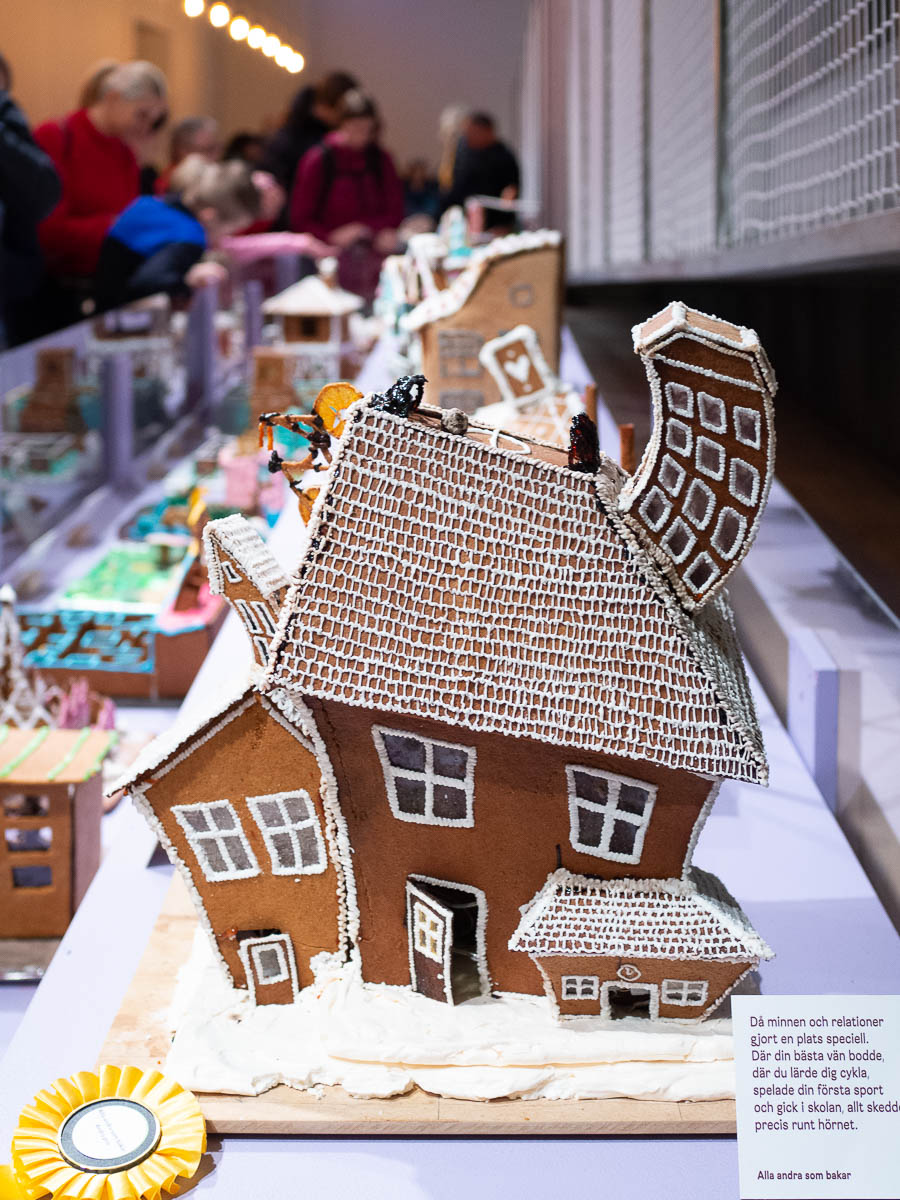
The competition is divided into three categories: experts (architects, designers and bakers); under 12; and everyone else. This year many of the most interesting and impressive contributions came from the “everyone else” group. The winner of the expert category was, in fact, strikingly bland and boring. (I didn’t even waste a photo on it.)
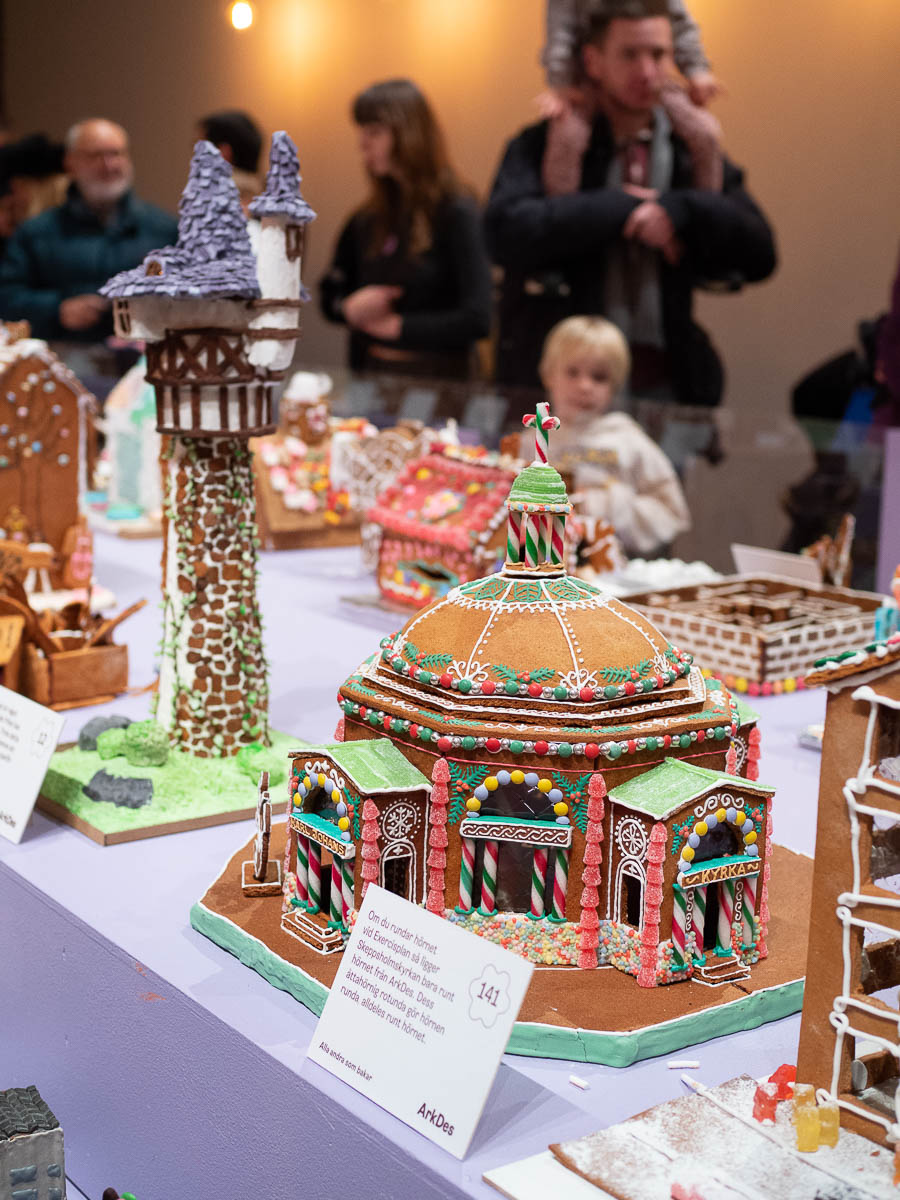
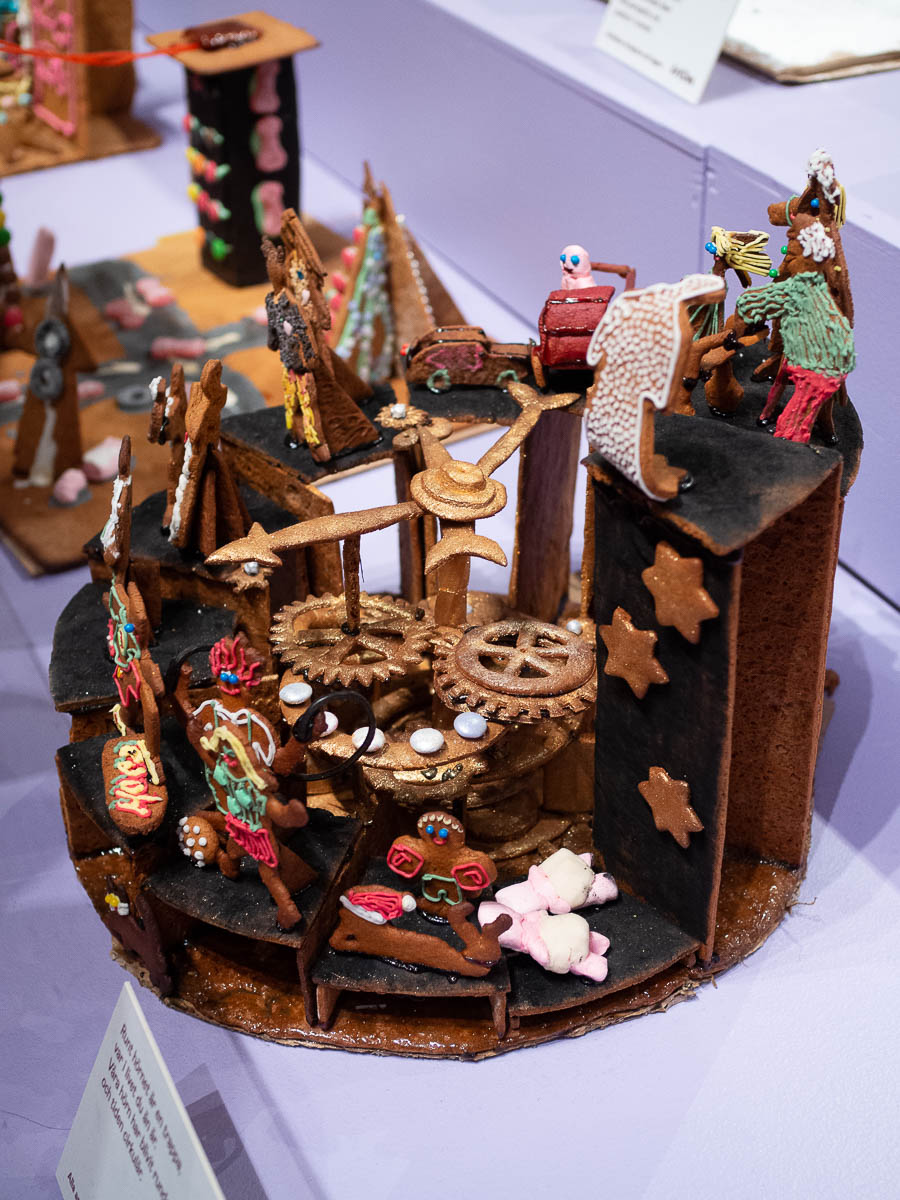
In recent years, I’ve noticed works on the theme of how we’re destroying nature, how we need to be kinder to the Earth, and how a more sustainable future is just around the corner. I wonder if the share of works on this topic is on an upward trend.
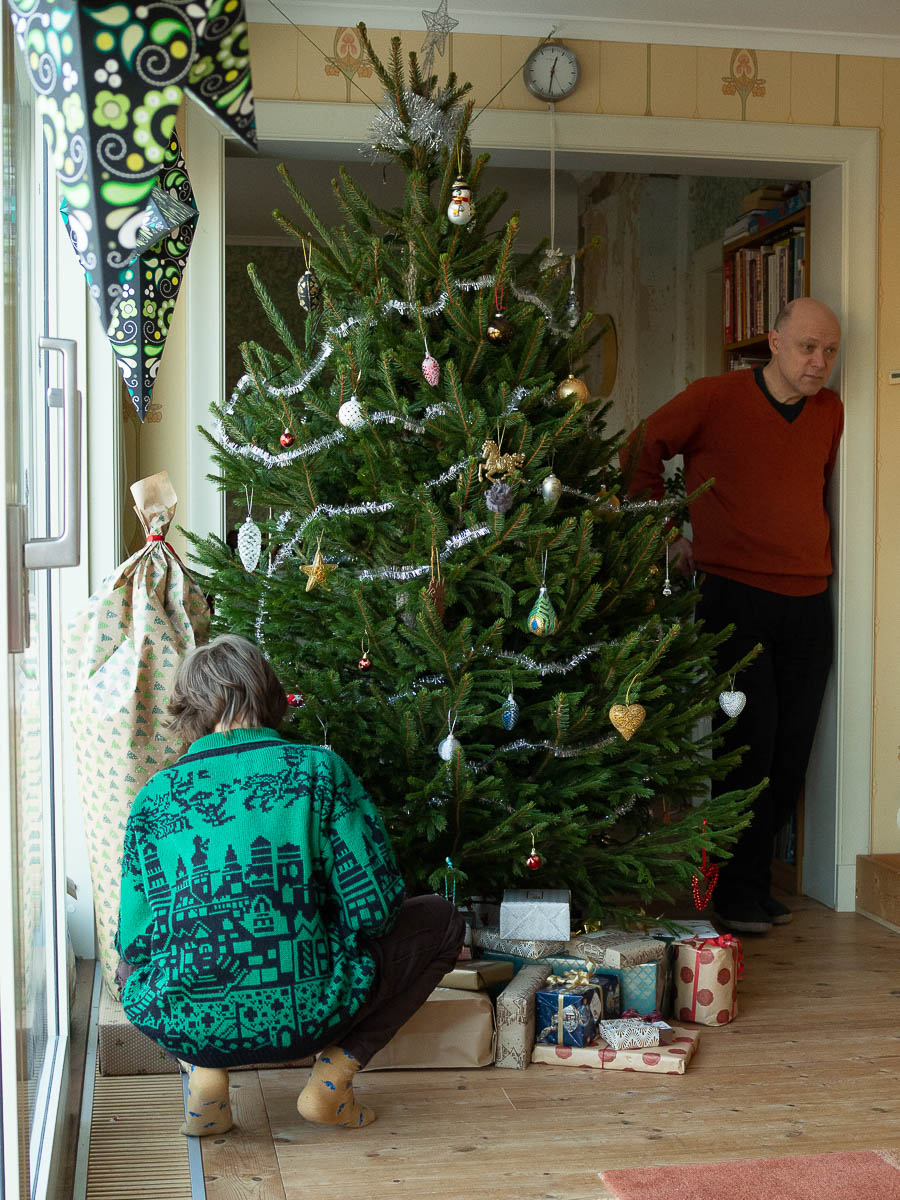
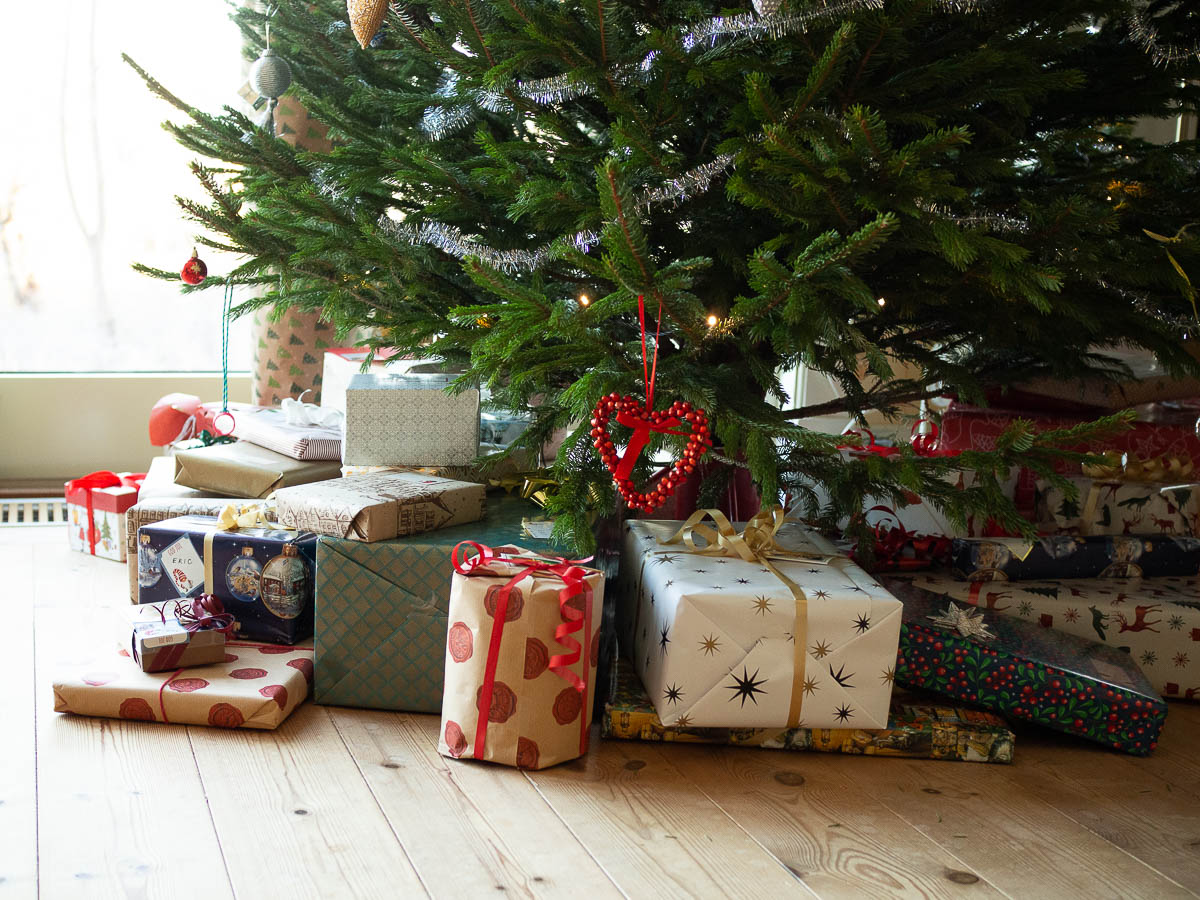
Usually we start piling up the gifts under the tree the day before Christmas Eve but Nysse was all over the presents as soon as they started turning up, with claws and teeth, so we had to hide them away in the bedroom behind a closed door and only brought them out last minute. Only one or two packages got slightly chewed in the corners.
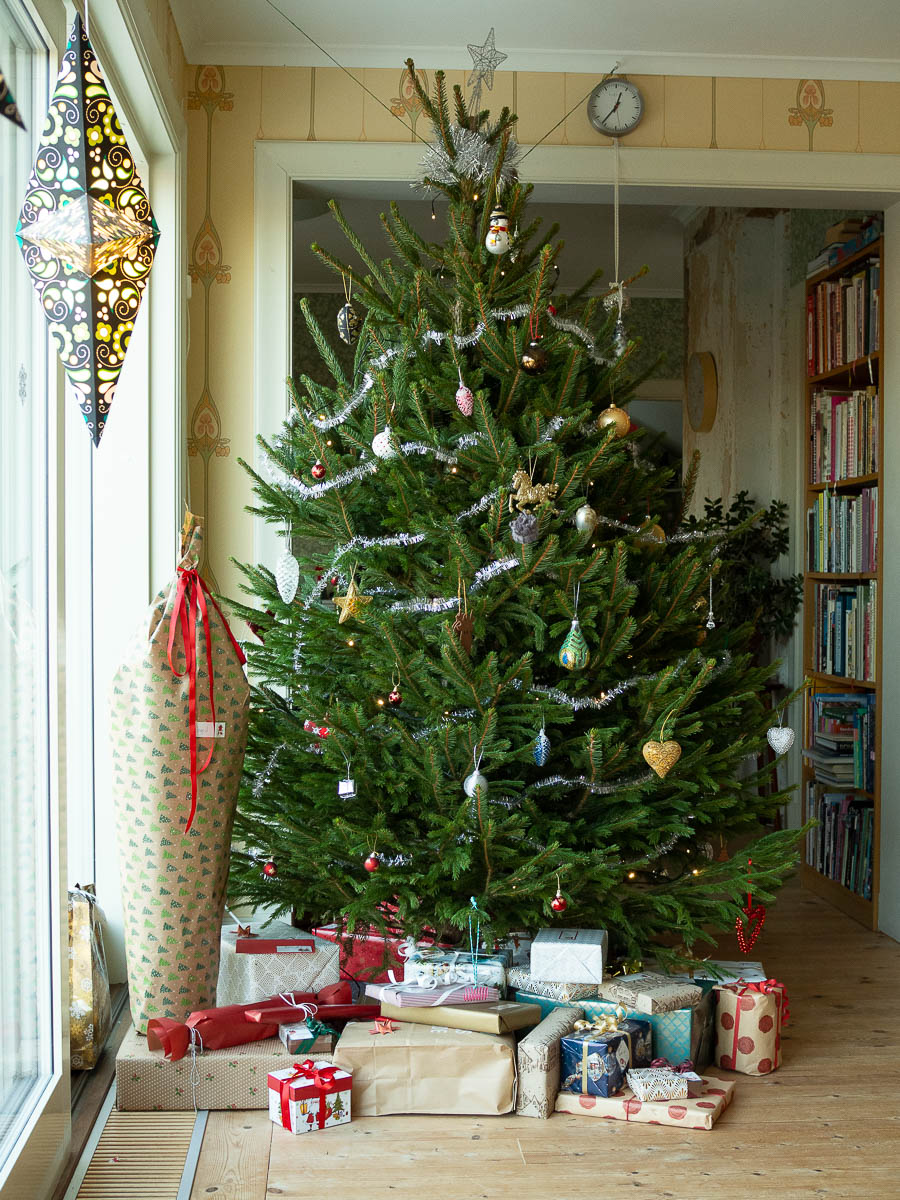
I am kind of proud of how I managed to wrap a large potted plant for Ingrid without breaking anything.
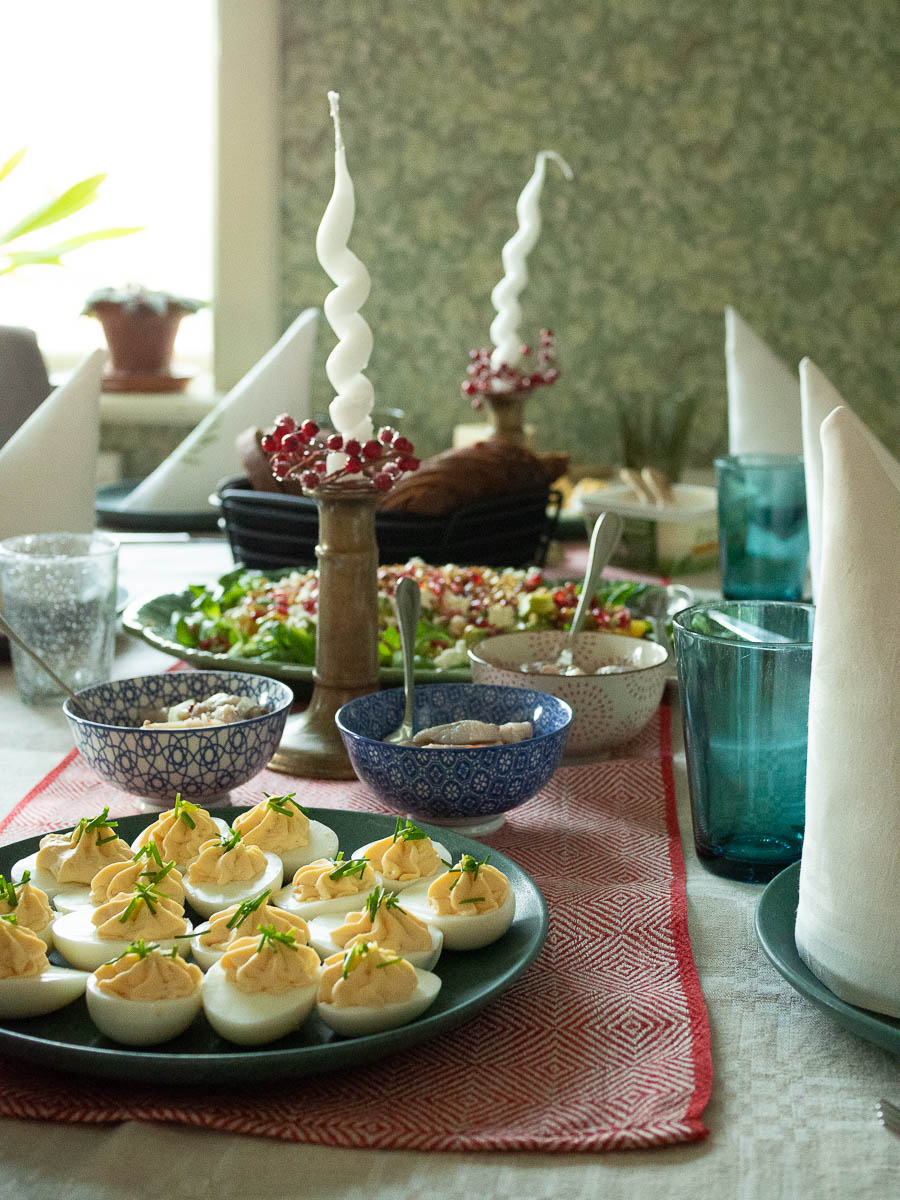
Lunch was the traditional devilled eggs, served with herring and an orange-avocado-feta-pistacho sallad, and vörtbröd.
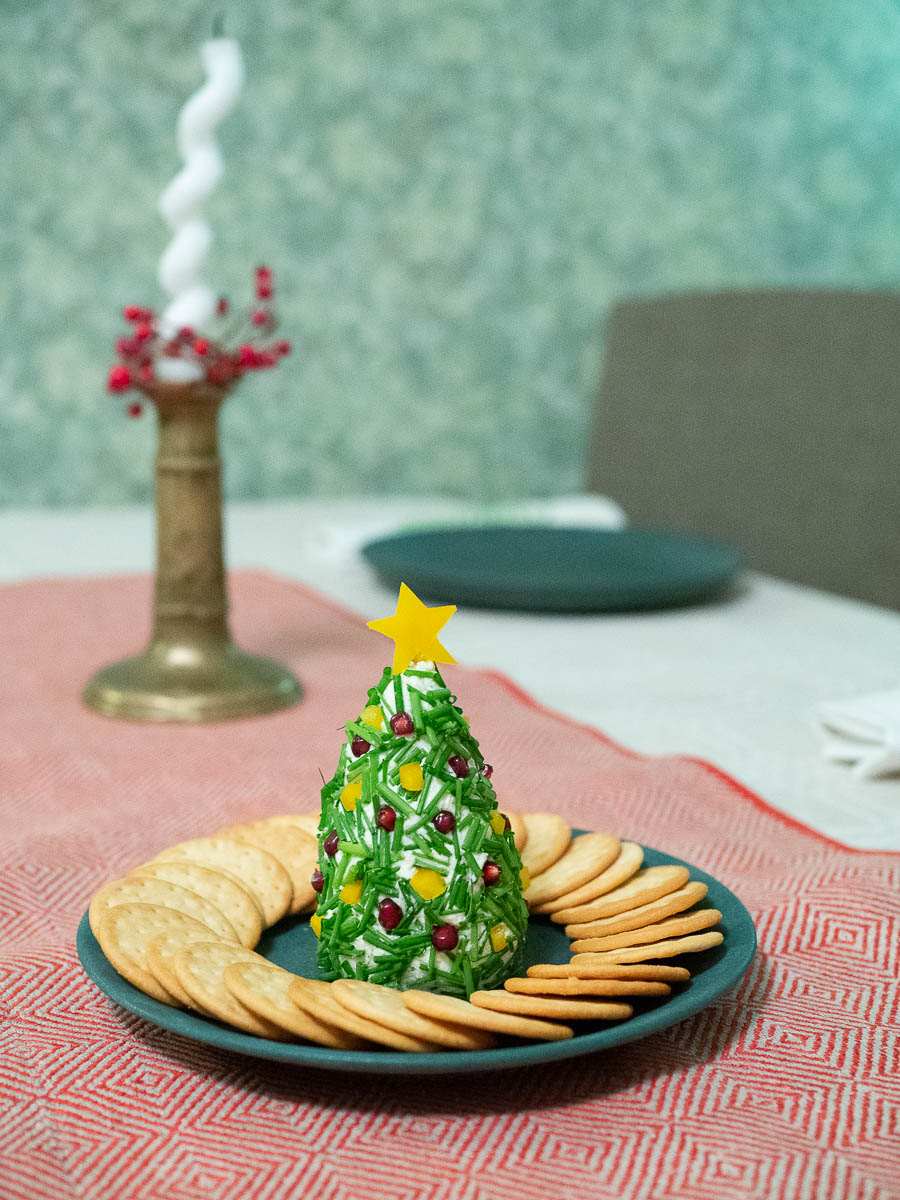
Ingrid made a cream cheese Christmas tree for a starter. I didn’t think of taking any photos of the rest of the dinner, which consisted of the bean balls I always make for Christmas, potato gratin, brussel sprouts and a lingonberry sauce. I had planned for a cranberry sauce but there were no cranberries to be had in any of the three supermarkets I tried, neither fresh nor frozen. Lingonberries with orange peel didn’t taste half bad either.
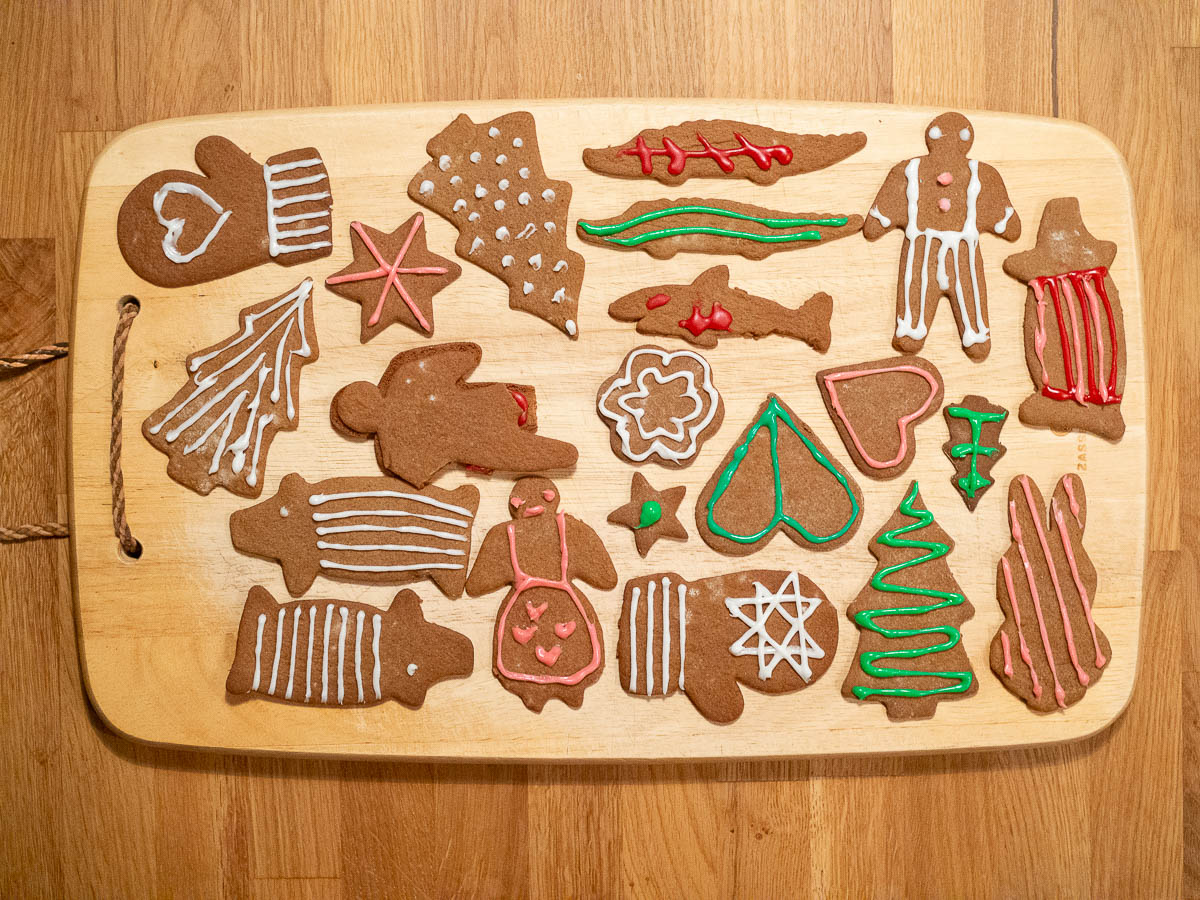
We decorated gingerbread cookies. Ingrid and I decorated hearts and trees and pigs. Adrian made bleeding sharks, stitched-up crocodiles, and Frankenstein’s monster with parts of different gingerbread men glued together.
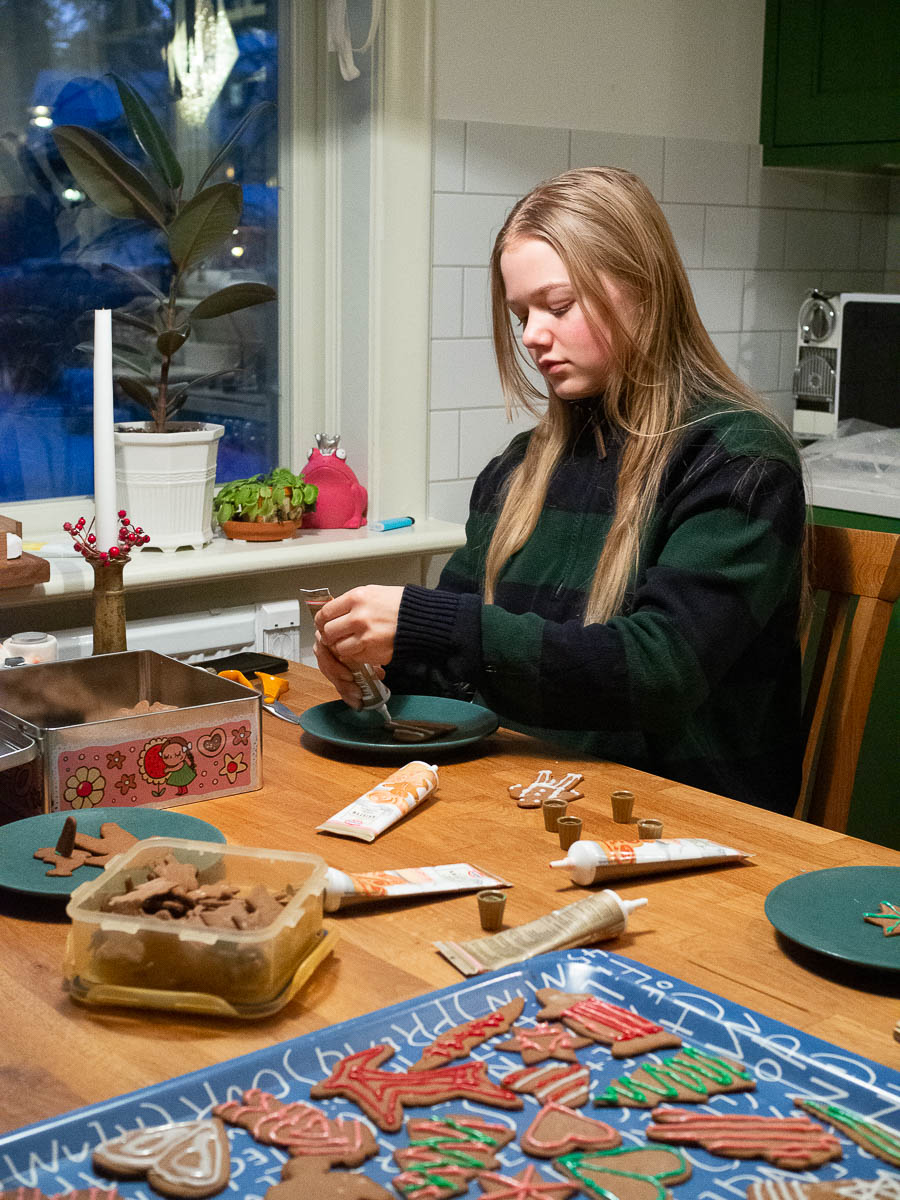
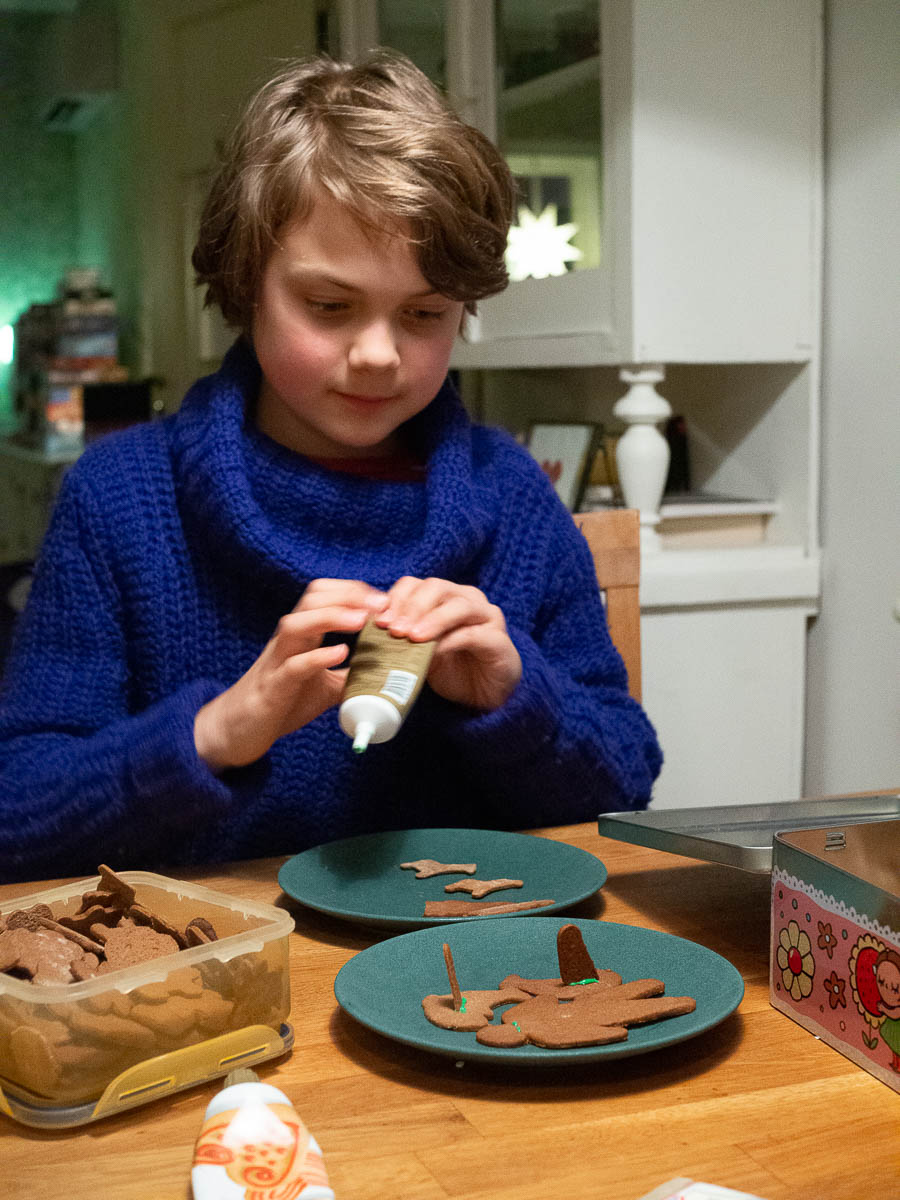
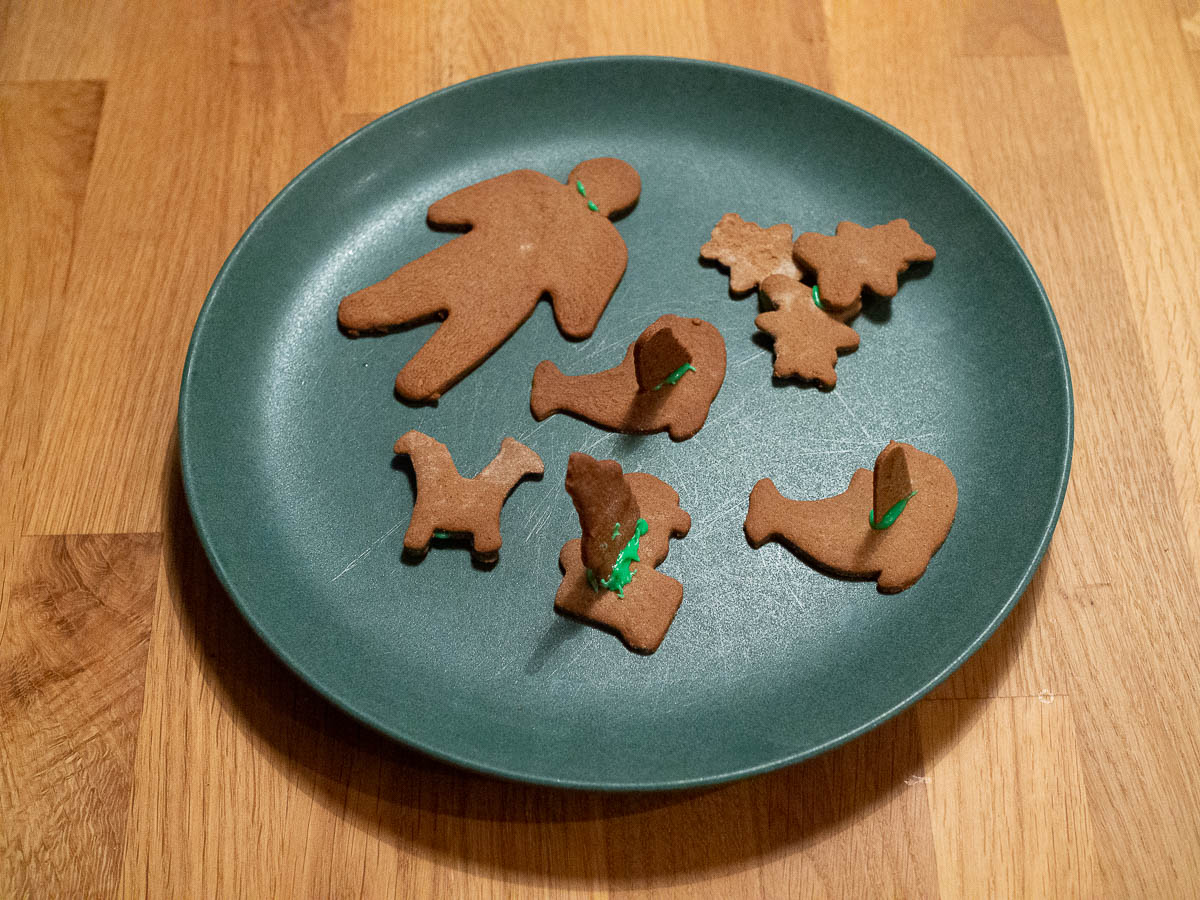
Then he went on to even more innovative creations, like a two-headed giraffe, a tangle of teddy bears, and 3D dolphins.
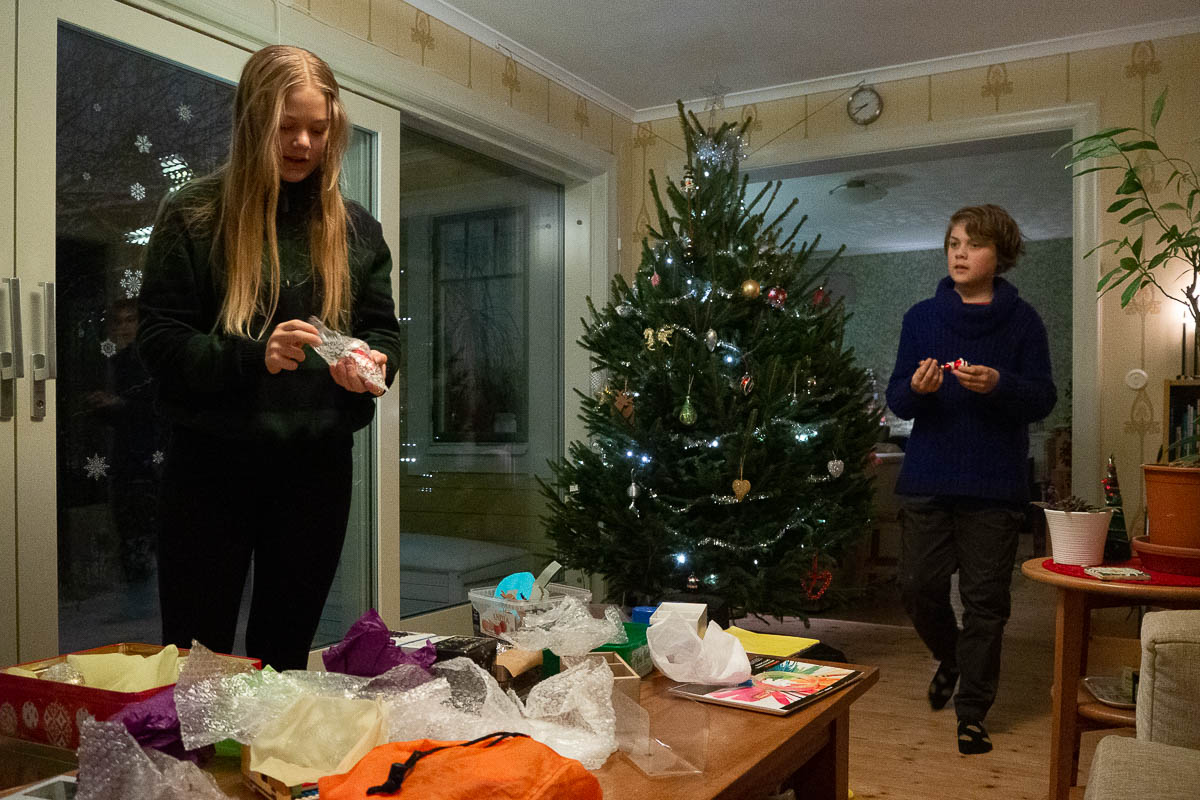
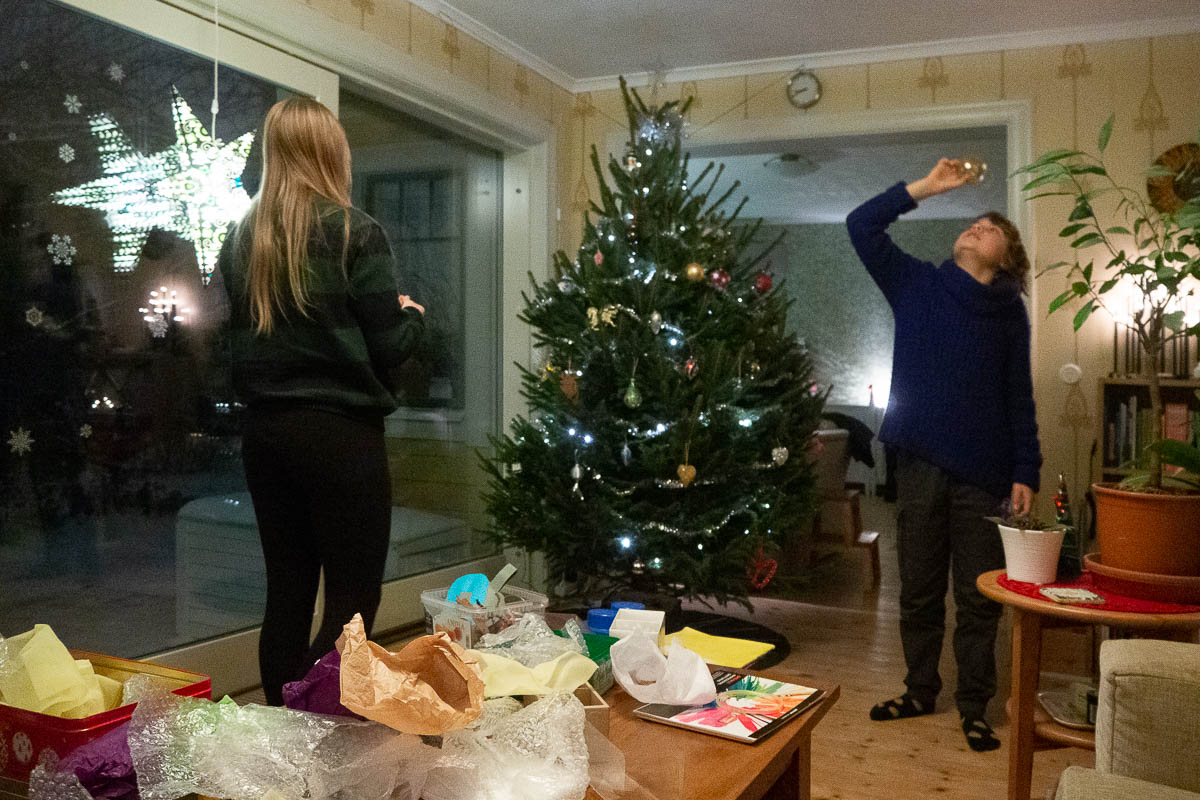
In the evening we decorated the tree. Unpacking the decorations is the best part: “remember when we got this one!” and “oh, I’d forgotten about this one”.
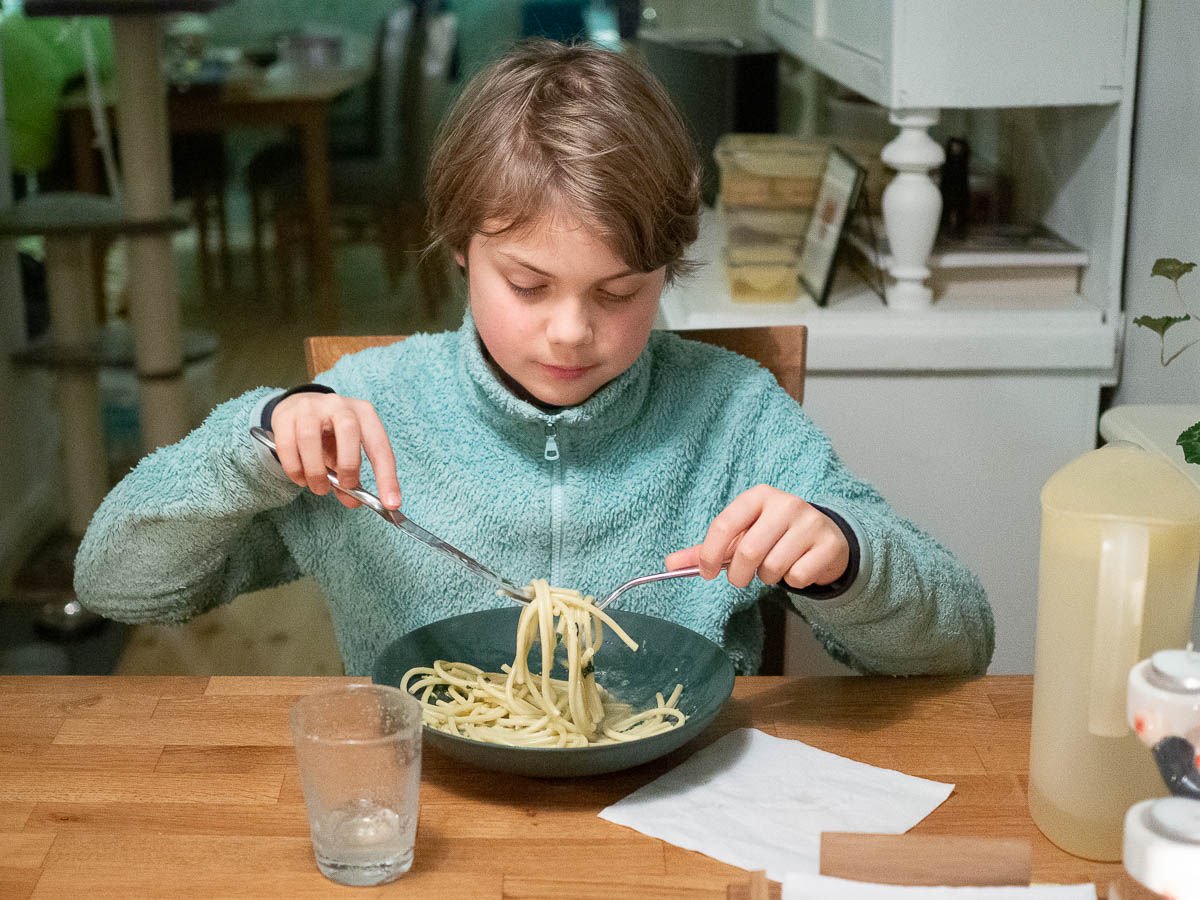
We did something wild and crazy today and bought a new kind of pasta. Eating it was such a ridiculous experience – we literally spent most of dinner laughing and joking about the pasta – that I had to memorialize it.
Bucatini is what happens when spaghetti begets children on macaroni. Long like spaghetti, but slightly thicker, although not quite as thick as macaroni, and with a hole in the middle. It turned out to have all the bad sides of both.
Like spaghetti, the bucatini are so long that they don’t fit into a normal pot. Spaghetti softens after just a minute, though, so you can push them down into the pot and they’ll soon be submerged in the boiling water. Bucatini take a much longer while to soften, by which time the bottom ends have already had time to stick to each other, while the top ends are still hard. So one half of each ends up softer than the other half.
Like spaghetti, the bucatini are so long that you can’t just fork them into your mouth. Unlike spaghetti, though, they’re too thick and stiff to be wound around a fork. We next tried cutting them in pieces but then they were too narrow to easily stab, and too long and stiff still to easily scoop up. Whatever we did, it was awkward. It’s like the bucatini are not designed to be eaten. I’m sure there is a trick, because must be a reason for their existence, but I don’t plan on ever trying them again.
Another type of pasta that looks better than it works is orecchiette. I’ve tried cooking them several times and every time they stick to each other. They’re shaped like little hats, and they stack as well as hats, too, and then they stay that way. I tried turning the heat up higher so the water would boil more vigorously; I tried using more water; I tried stirring more frequently; I even tried adding oil to the water. Nothing worked, and I always ended up with clumps of orecchiette. So I’ve given up on them.
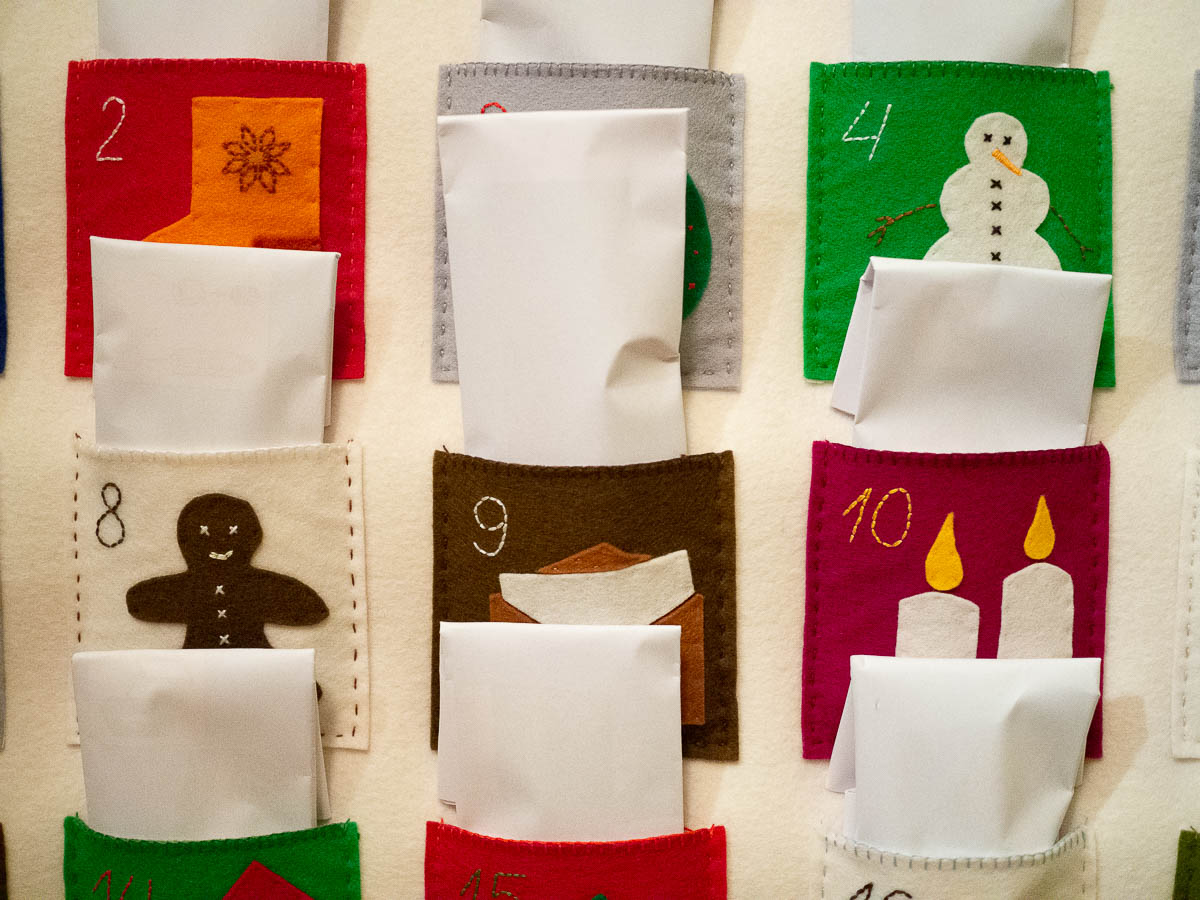
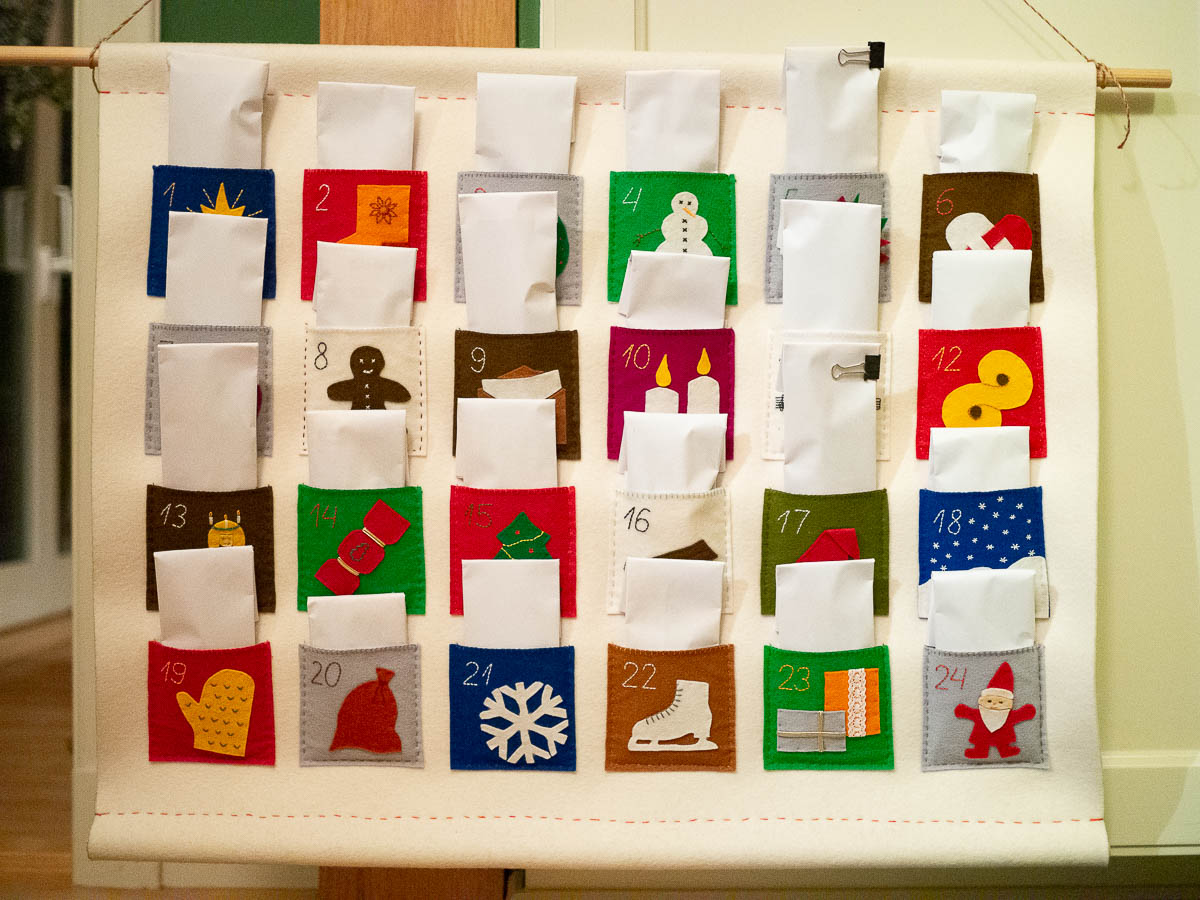
The advent calendar is up, filled with Lego.
There was a lull a few years ago when Adrian wasn’t that interested in Lego, but now he’s building regularly again. His entire wish list for Christmas was filled with Lego. So naturally that is also the theme for his advent calendar.
I bought an actual Lego advent calendar once, but it was pretty boring. Each day had pieces for a tiny little build, or a minifigure, which Adrian found underwhelming. I guess it was aimed more at playing than building – which is the opposite of what he’s interested in.
This year I bought a normal Lego Creator set and made a DIY advent calendar out of it. Printed out a copy of the instructions, divided them into 24 more or less equal parts, sorted out the pieces for each day (which took Eric and me a good chunk of an evening) and wrapped them in the printed pages. Now he gets to build a part of the set every day, and on the last day I’ll bring out all the instruction booklets so he kind of gets a gift for free. The Creator sets are nifty that way: they use the same bunch of pieces to build three completely different things with the same theme.
Ingrid asked for an advent calendar from Pen Store. Sketchbooks, pens and pencils, modelling clay and other art materials. We haven’t tried this before; we’ll see whether it’s a way to discover new fun stuff or just a way for the store to offload things they wanted to get rid of.
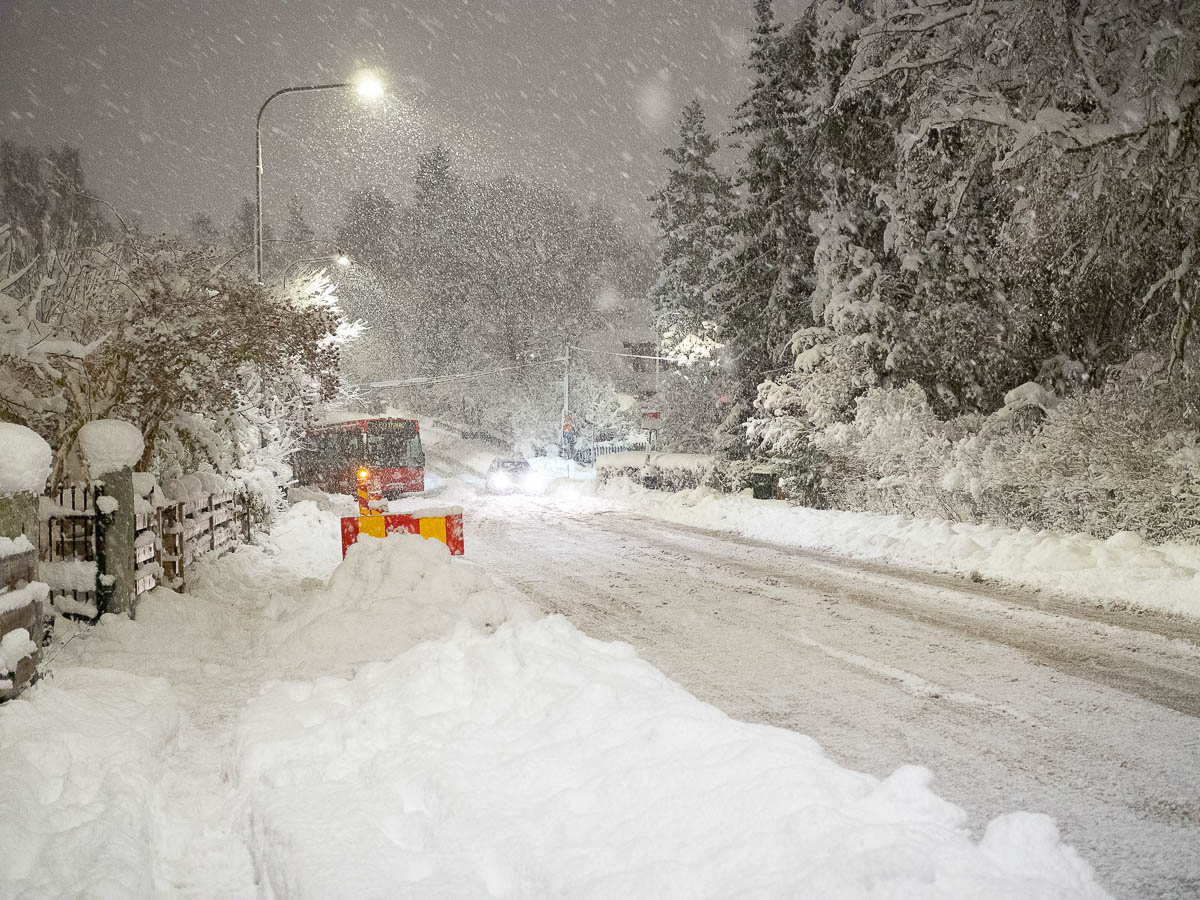
We had a minor snow storm on Saturday afternoon that delivered a few centimetres of snow – enough to cause mild chaos in traffic, with bad visibility, and cars in ditches because they were caught out in their summer tires. I caught the beginning of the snow storm on my way back from Uppsala, where I’d helped my brother pick up furniture I’d ordered. Luckily I did have winter tires on (Eric switched them that morning) and with careful driving I got home safe.
Sunday brought more snow. And then more, and more, and today was absolute chaos. By the end of the day the snow was knee-deep, over the edges of my tall rubber boots, so it must have been close to 40 cm. According to an article in Dagens Nyheter central Stockholm still got less than in the snowstorm in November 2016, but I’m not sure if that also holds for Spånga.
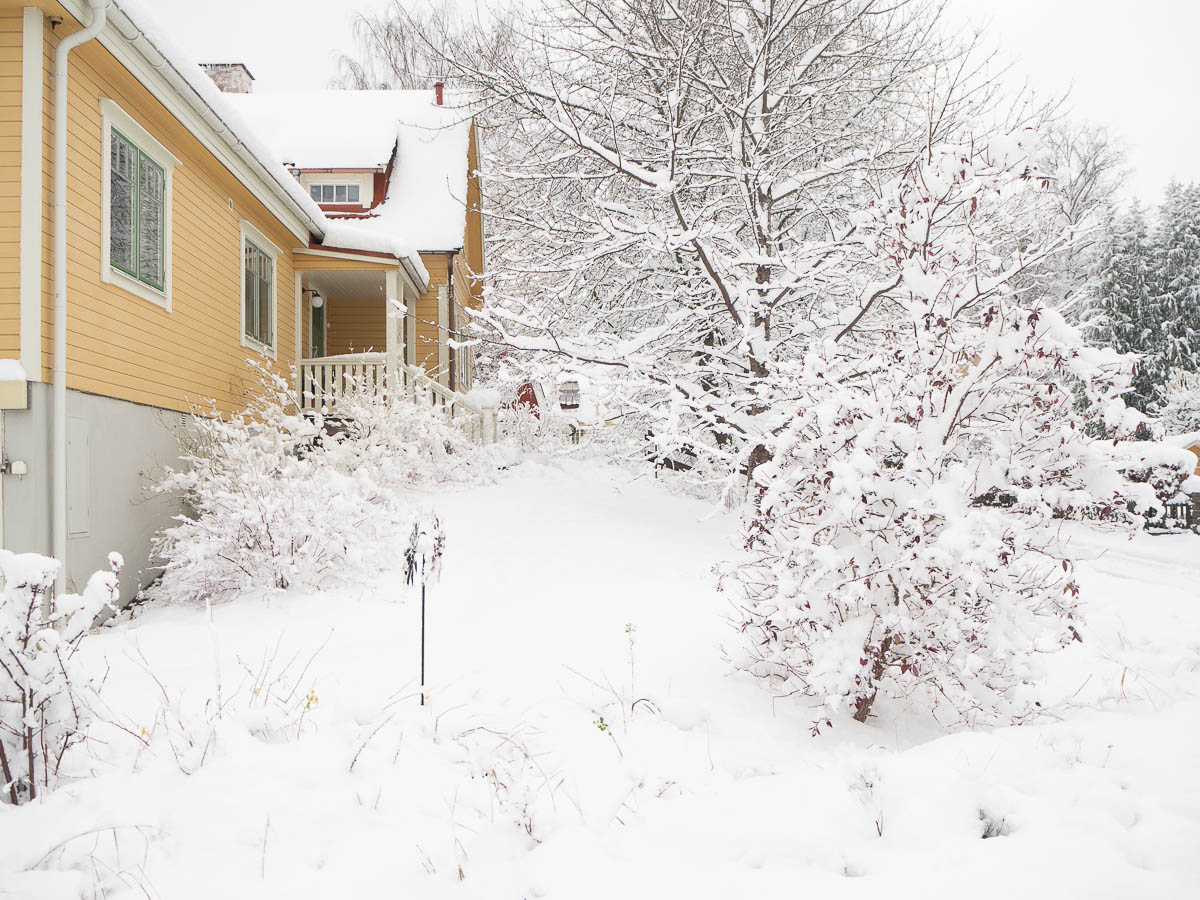
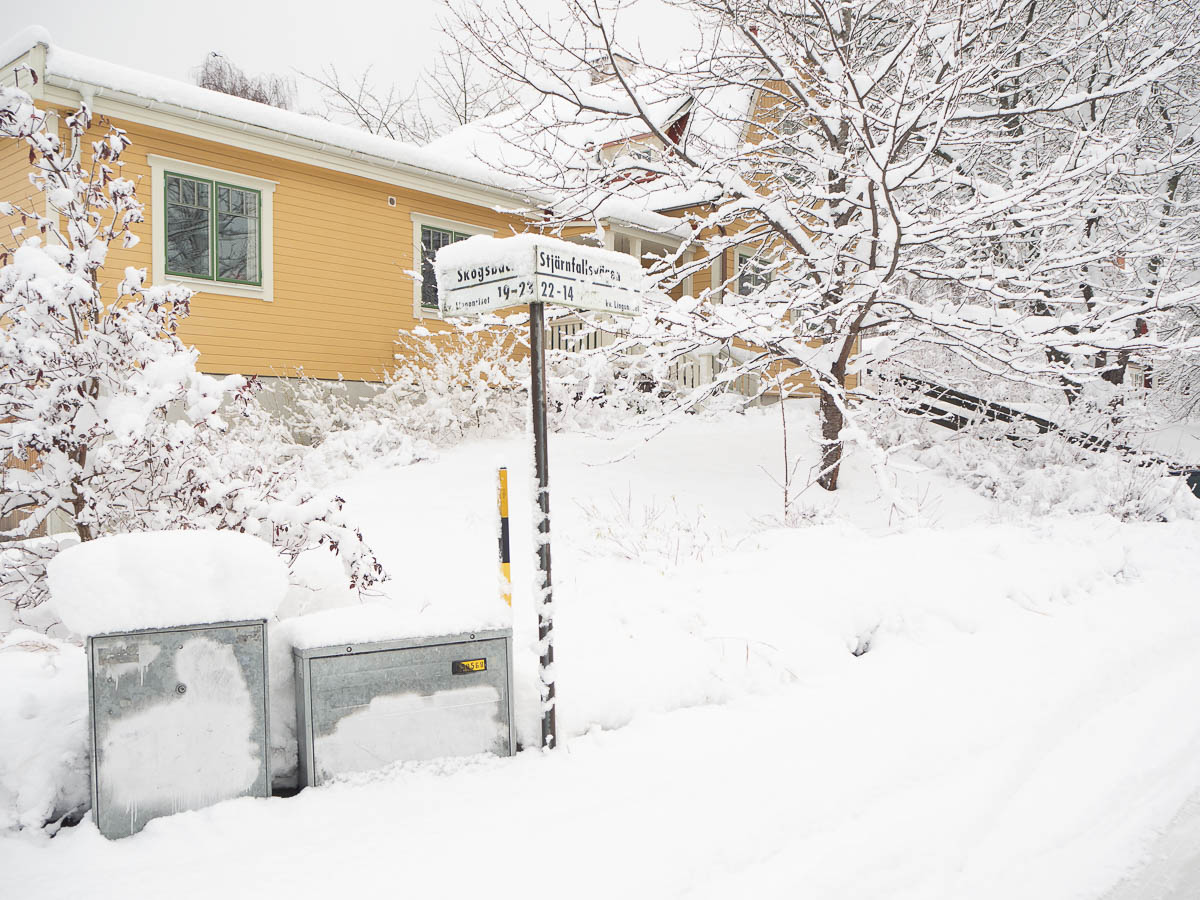
There was no way for the snow ploughs to keep up with it. Getting anywhere in the city was hopeless, I read in the news: cars stuck in the snow, many bus routes cancelled, trains delayed… I’m glad I didn’t have to go there. Here in Spånga pavements were impassable, except where there was enough foot traffic to trample a narrow path, and at least one bus had gotten stuck in a roadworks ditch hidden by the snow cover.
I shovelled snow for an hour Sunday night, another hour this morning, and a third hour at lunchtime, and I was still barely keeping up. There was just no end to it. My snow dump pile by the root cellar was as tall as me by the end of the day.
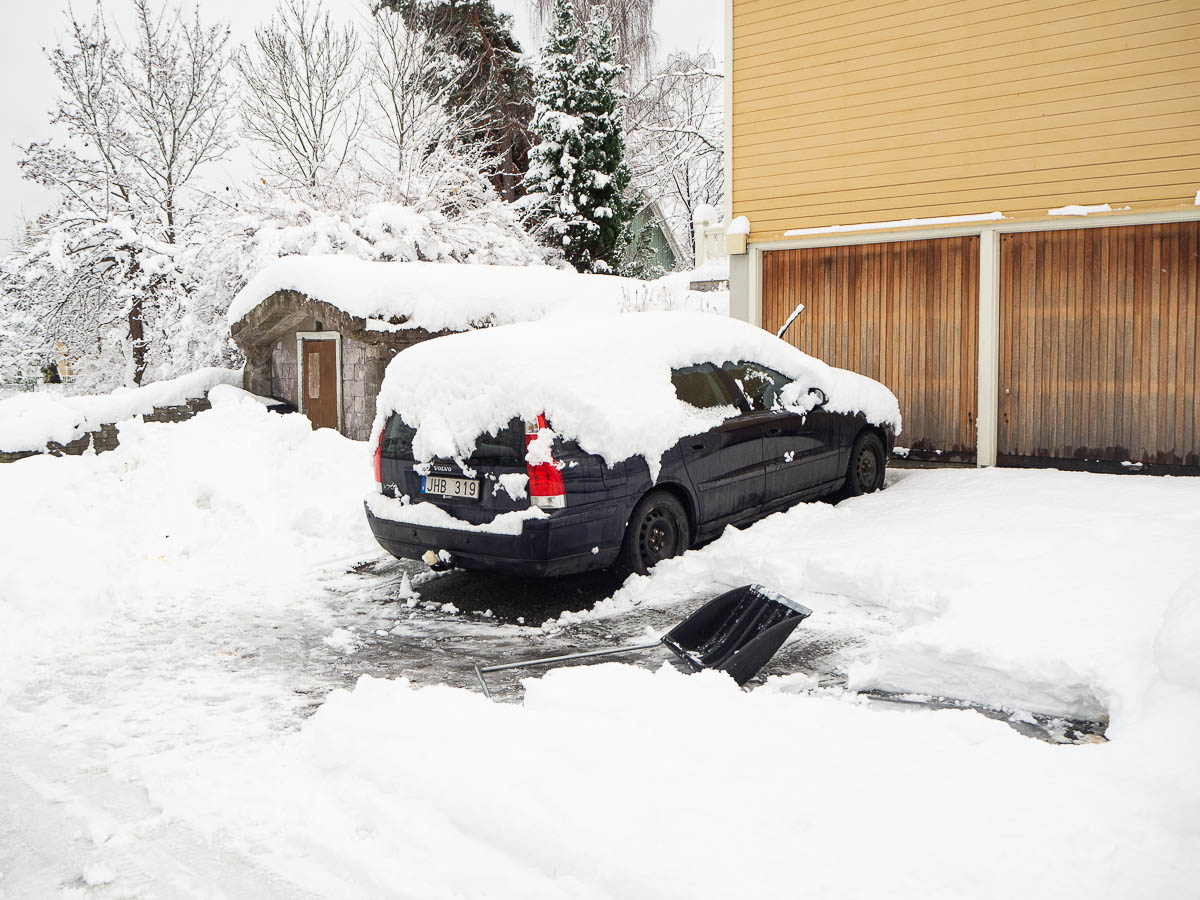
Cat, for scale.
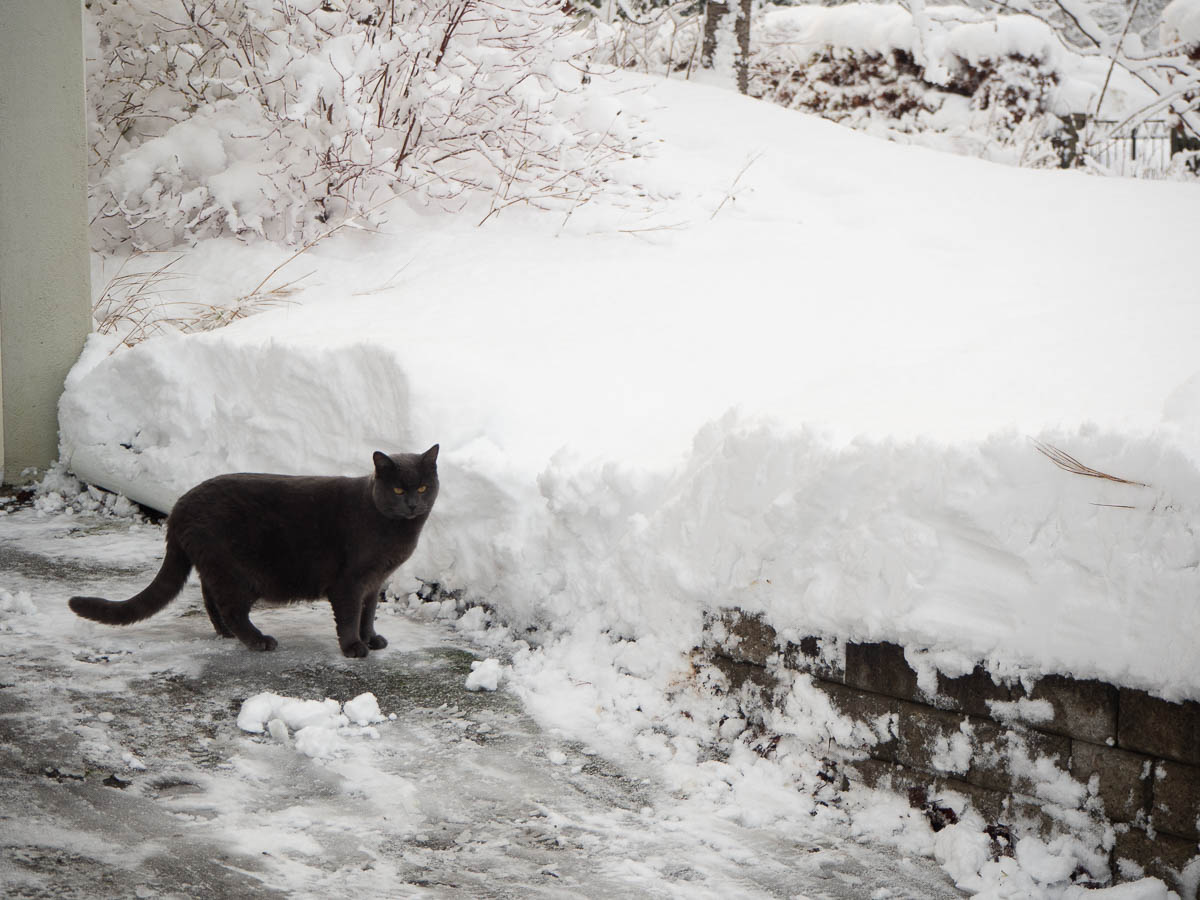
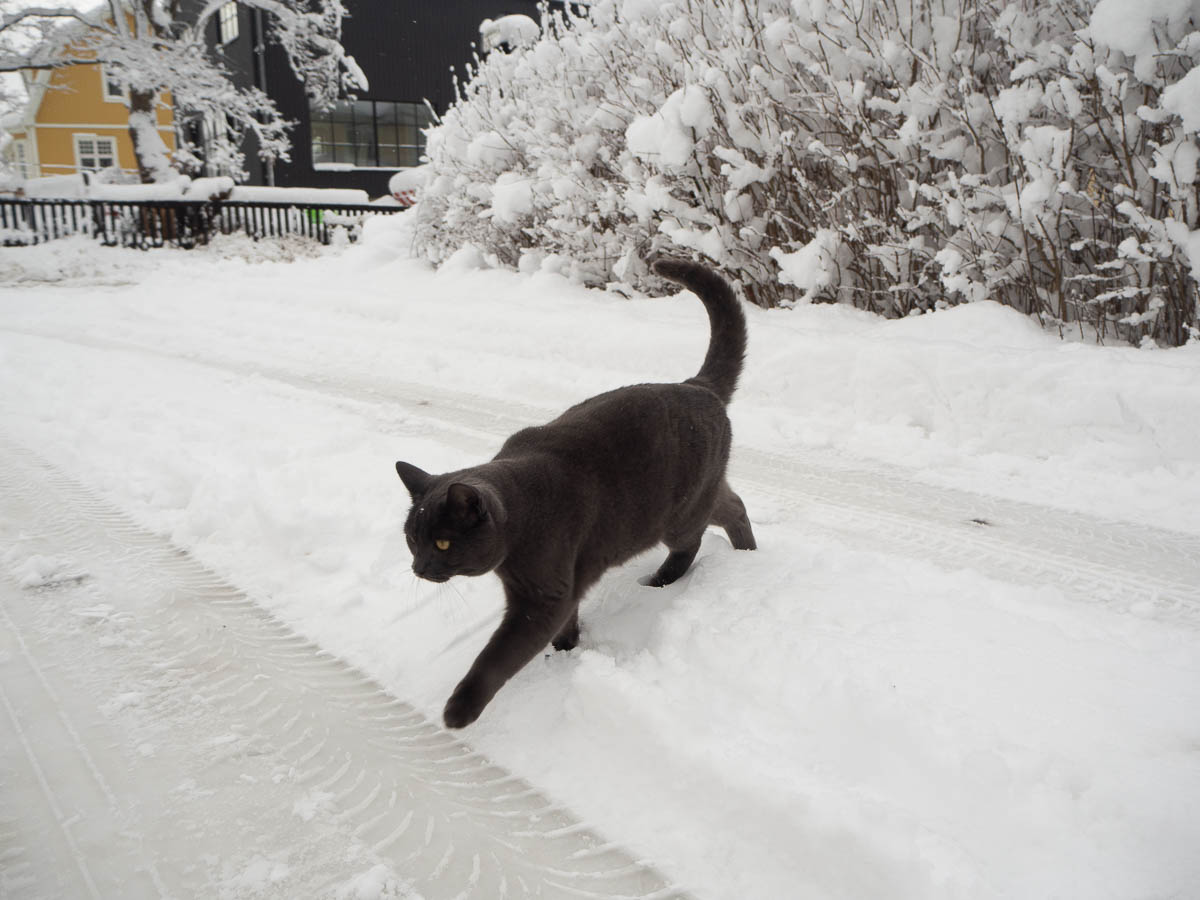
Nysse was not fond of the snow, at all. The last winter was half his lifetime ago, and it wasn’t a snow-rich one, so he’s never seen anything quite like this. Once or twice he stepped on deep snow only to sink right through it, so that even his head didn’t peek out.
After I had cleared the deck and the back stairs for him, and the cars had made deep tracks in the snow in the streets, he made some cautious rounds. But he’s clearly sceptical of the whole thing. His walks are short, and he keeps shaking his paws to try and keep the snow off.
Adrian and Ingrid on the other hand are loving it. Both went out sledding with their friends – even sixteen-year-olds aren’t too old to enjoy sledding. Adrian spent all his breaks at school out in the snow, rolling giant snowballs and building snow forts and having snowball fights.
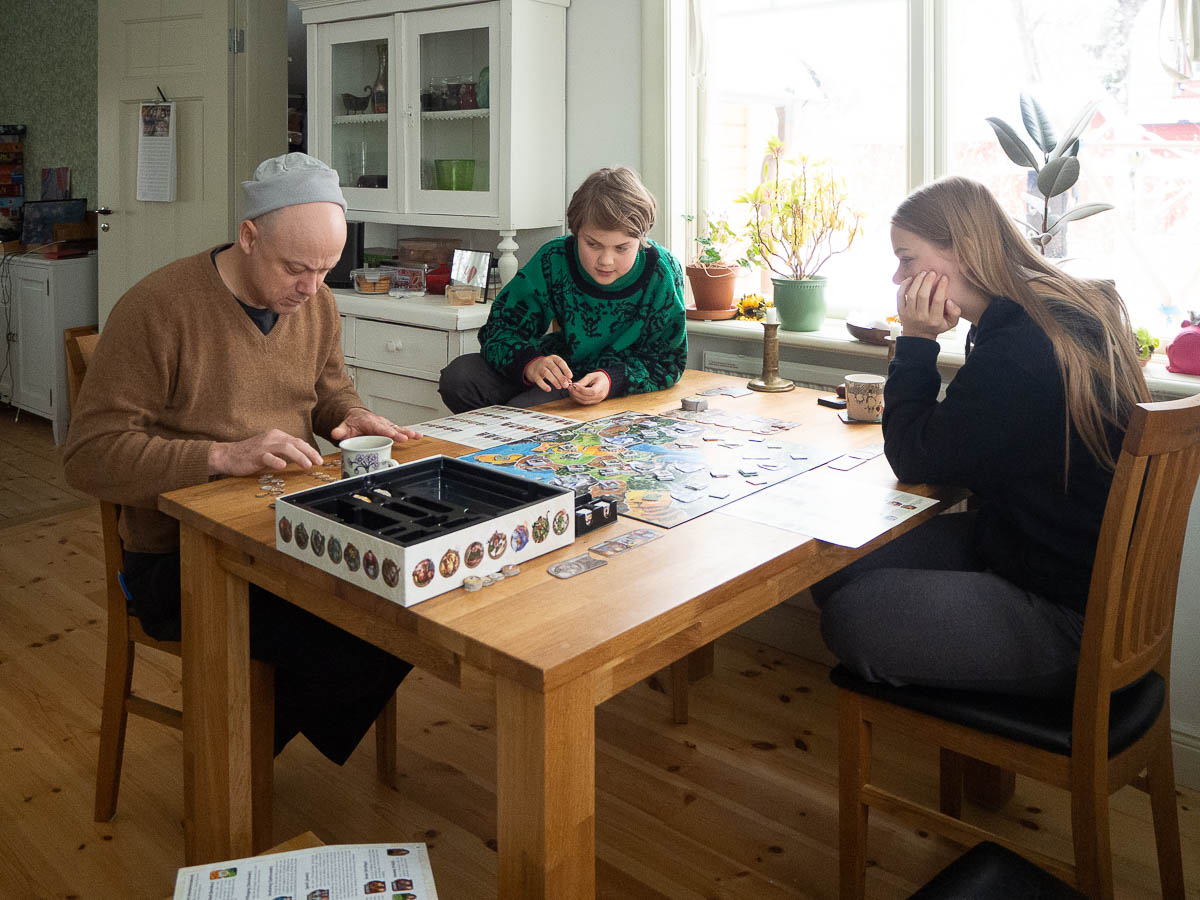
We’ve been saying for weeks, if not months, that we really should play a longer board game, with all of us. In the evenings, the kids are often busy with schoolwork or online games with friends. Whenever we’ve agreed on a time for a weekend, something always turns up. Adrian has a sleepover; Ingrid’s friends want to go to town…
This time we set the time a week in advance and decided that we’d go ahead no matter what. Whoever is not at home loses out. No postponing.
And of course Adrian was invited to a sleepover and was near tears about having to choose. The FOMO is strong with these ones.
But then we played Small World, which is one of our all-time favourites, and had a lot of fun, and the anguish of losing out on a sleepover was forgotten. I like the rule that this game has about keeping scores hidden until the end – this way everyone can believe that they have a chance, all the way to the end.
Eric won, by picking a new race in the very last round, with 5 bonus coins because the other players had been skipping that race so many times. I came in second place thanks to my army of skeletons, who very determinedly harvested their enemies’ bodies. Ingrid steamrollered her neighbours repeatedly, first with amazons and then with giants. Adrian’s trolls bullied my sorcerers because my skeletons had previously harvested too many of his tritons.
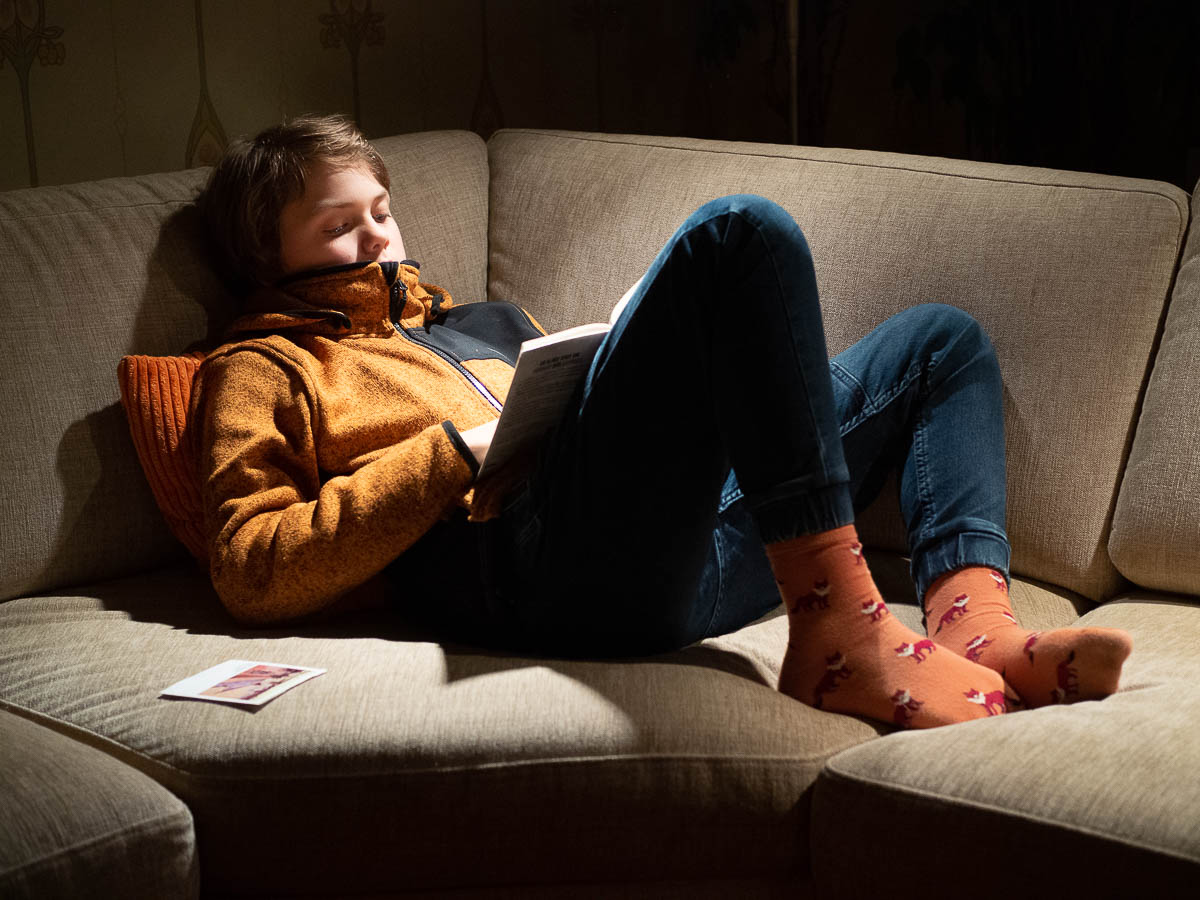
Adrian reading The Boy in the Striped Pyjamas, which he got assigned from school. I have very mixed feelings about this assignment. I’m glad the topic of the Holocaust gets covered, but I remember the book being so inaccurate that I’m afraid he’ll come away with a skewed picture.
We’ve done canals and crooked houses, and an art museum and vintage shopping. Today we went to one of the larger parks in Amsterdam, and then tram-hopped our way back to the city via a circuitous route.
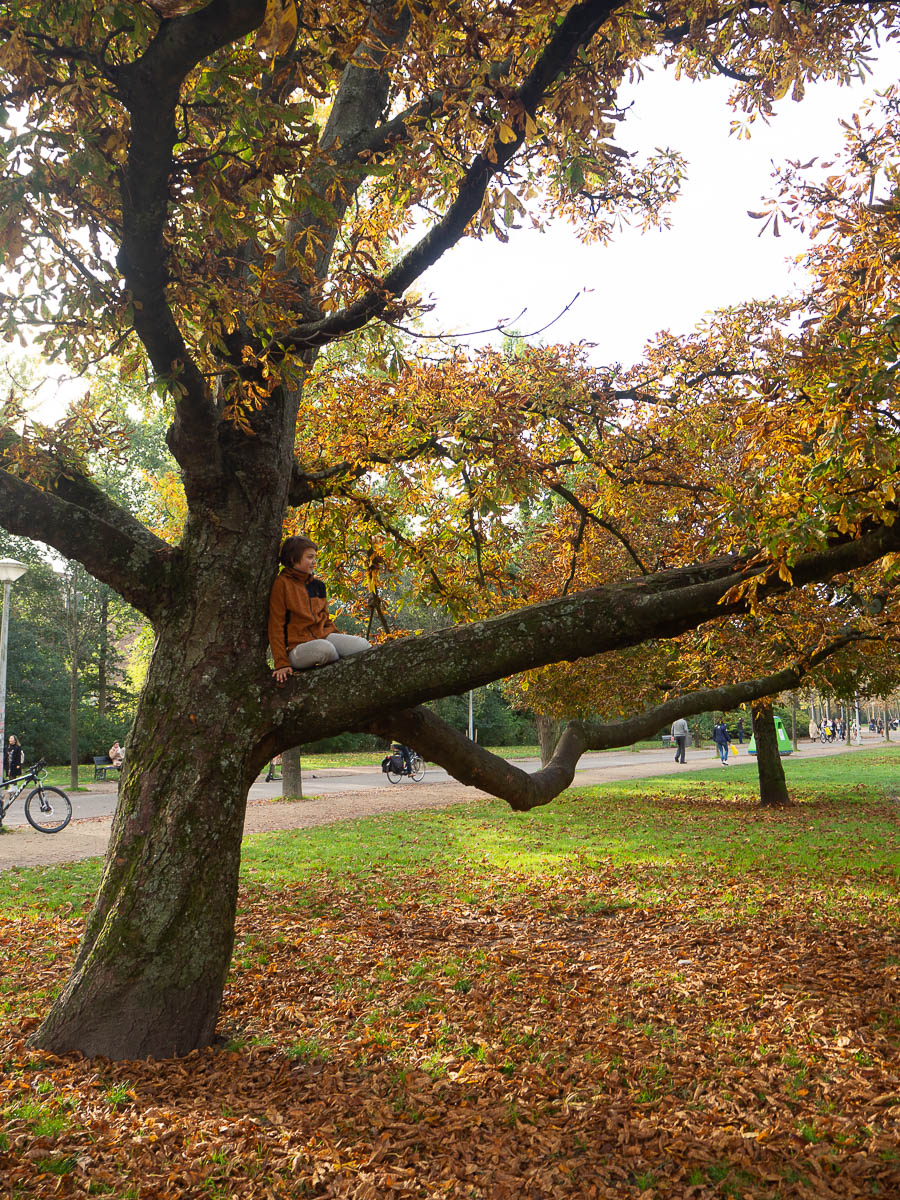
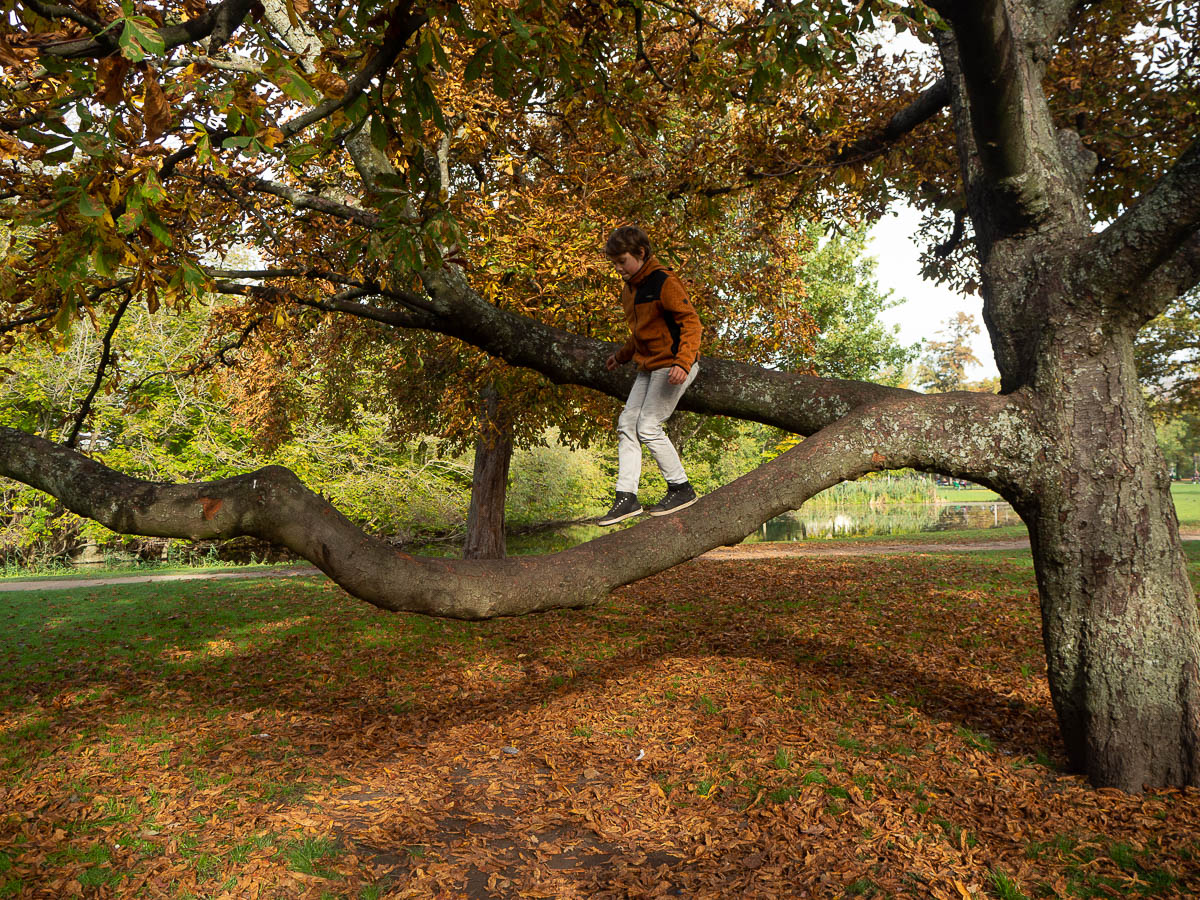
We wandered around Vondelpark and dodged cyclists. Adrian climbed a tree.
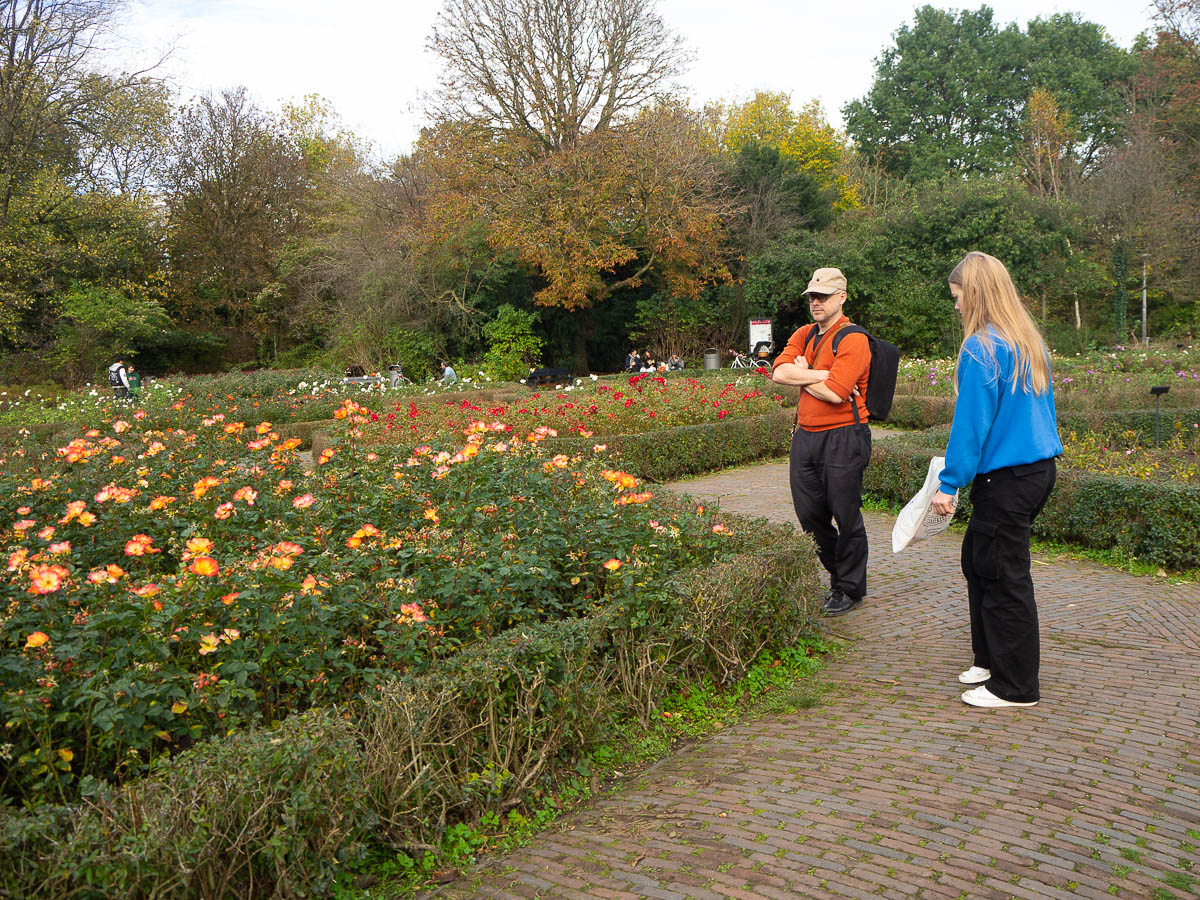
The rose garden in Vondelpark was still blooming.
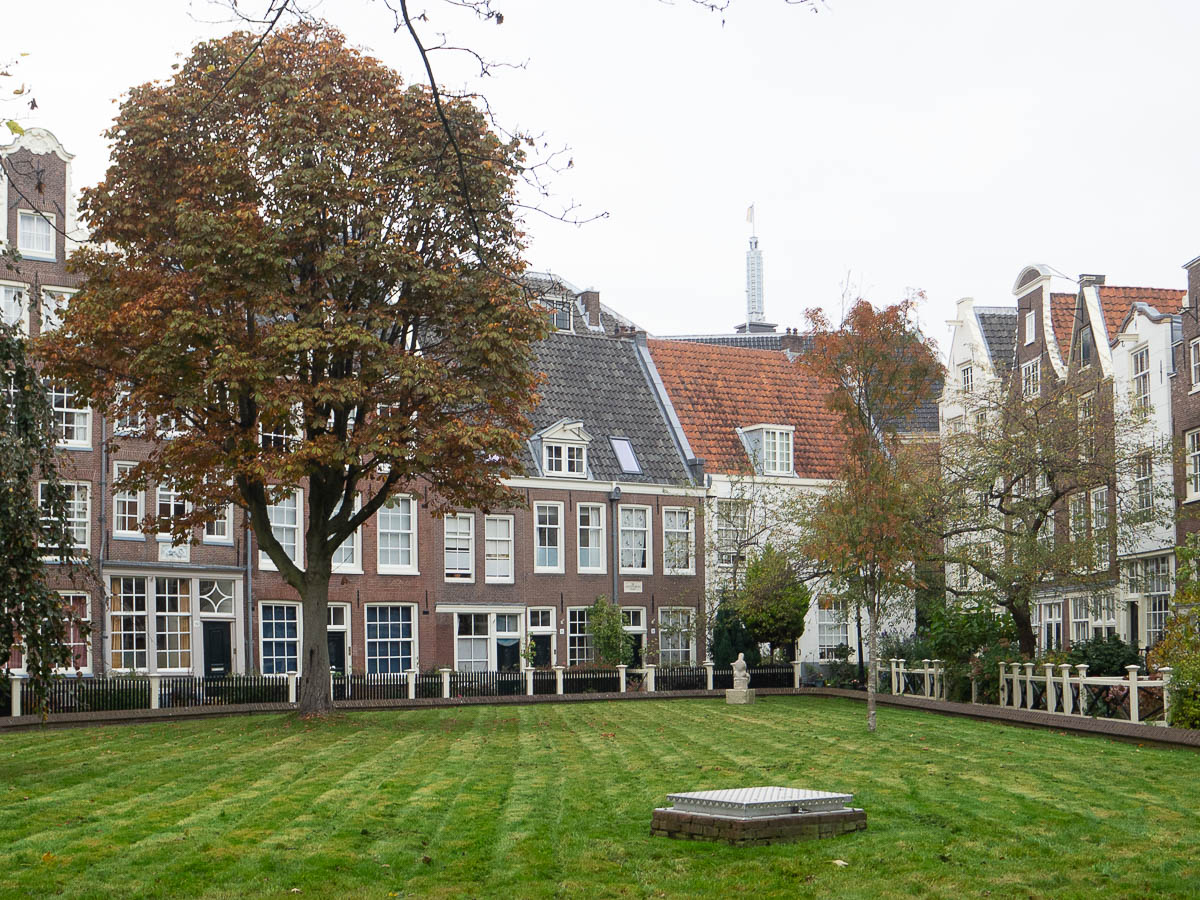
Back in central Amsterdam we visited the lovely and peaceful Begijnhof.
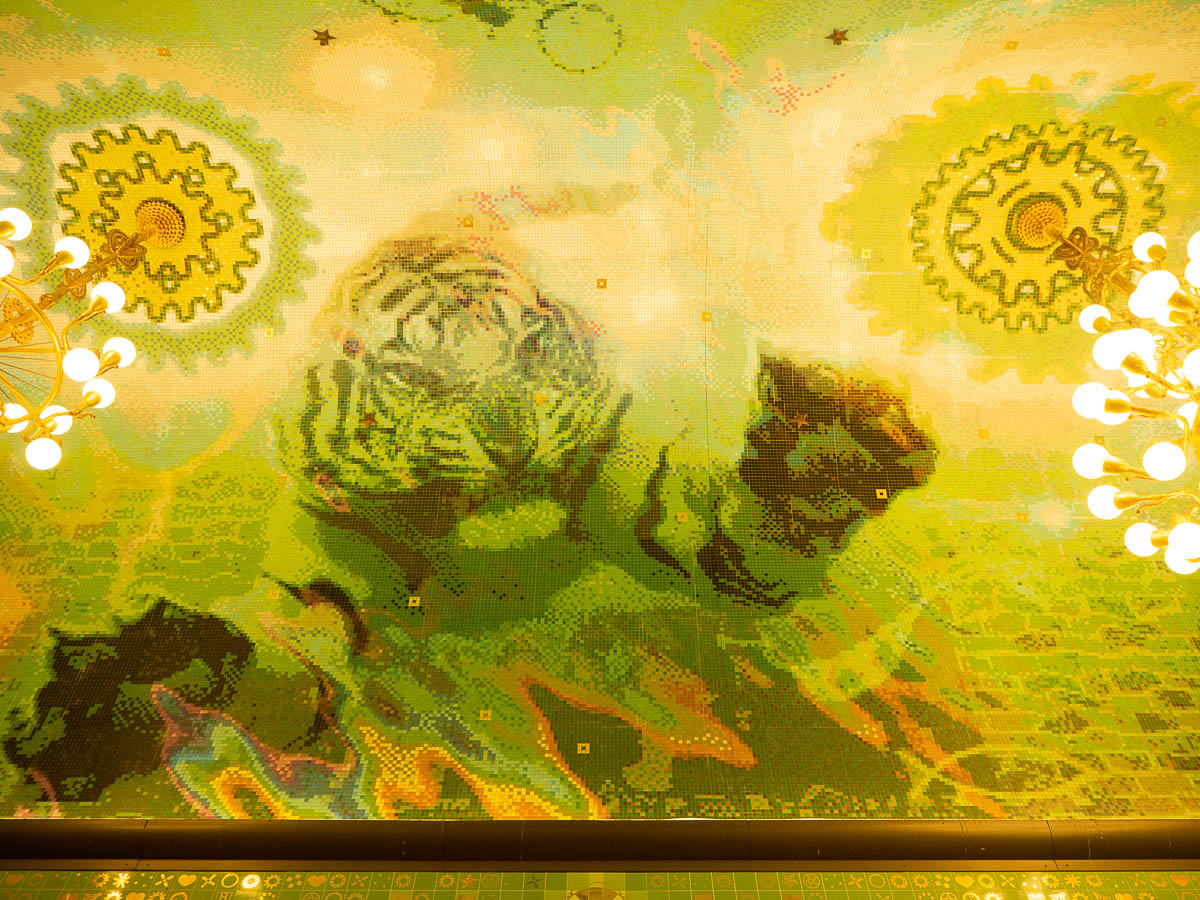
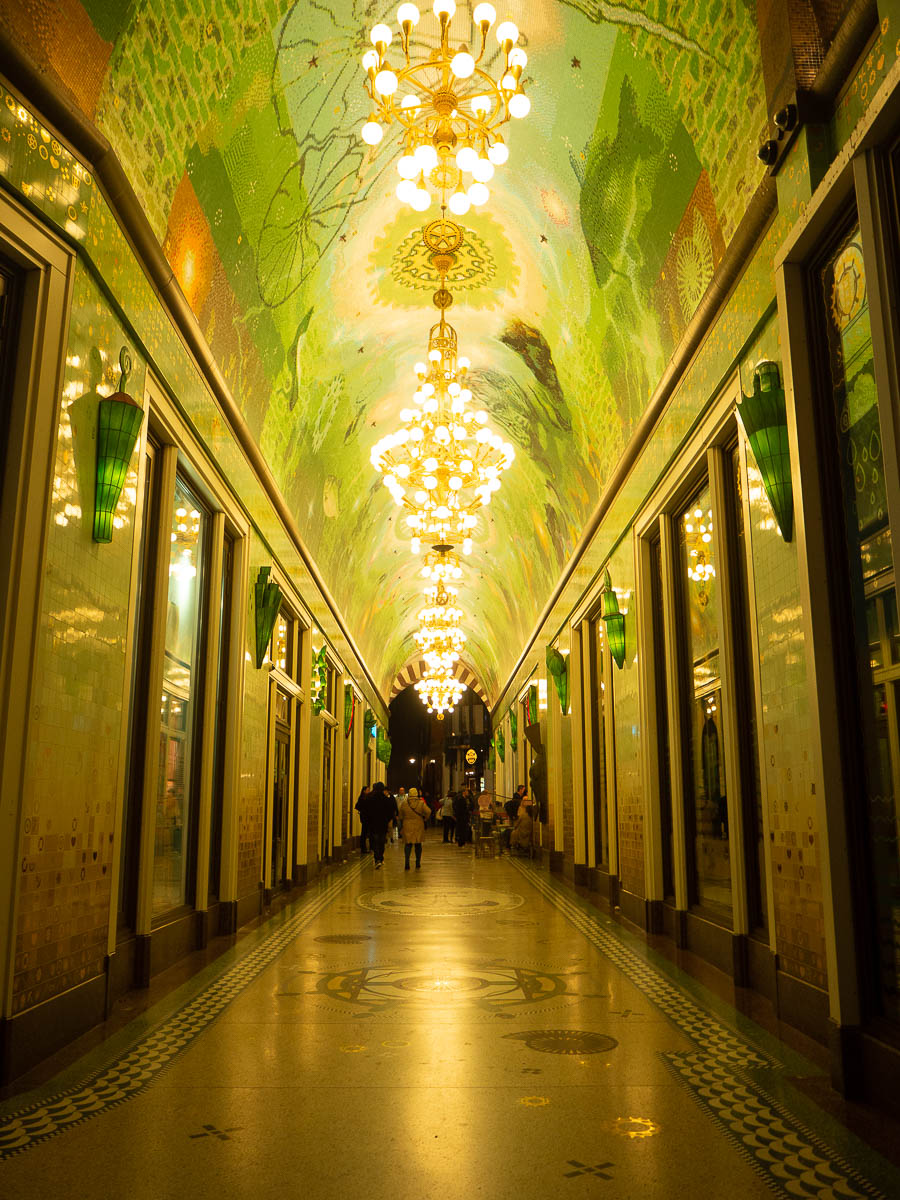
Near our hotel the Beurspassage caught our eyes. The ceiling mosaic is filled with motifs inspired by the canals, including fish, rusty bicycles, and for some reason a tiger, and the chandeliers are made of bicycle parts.
We also went to see the allegedly famous floating flower market, which was much less impressive and interesting than it sounded. The shops were technically floating but they were just large booths that were open on one side, and you couldn’t even see that they floated. And the flowers were mostly seeds and bulbs this time of the year.
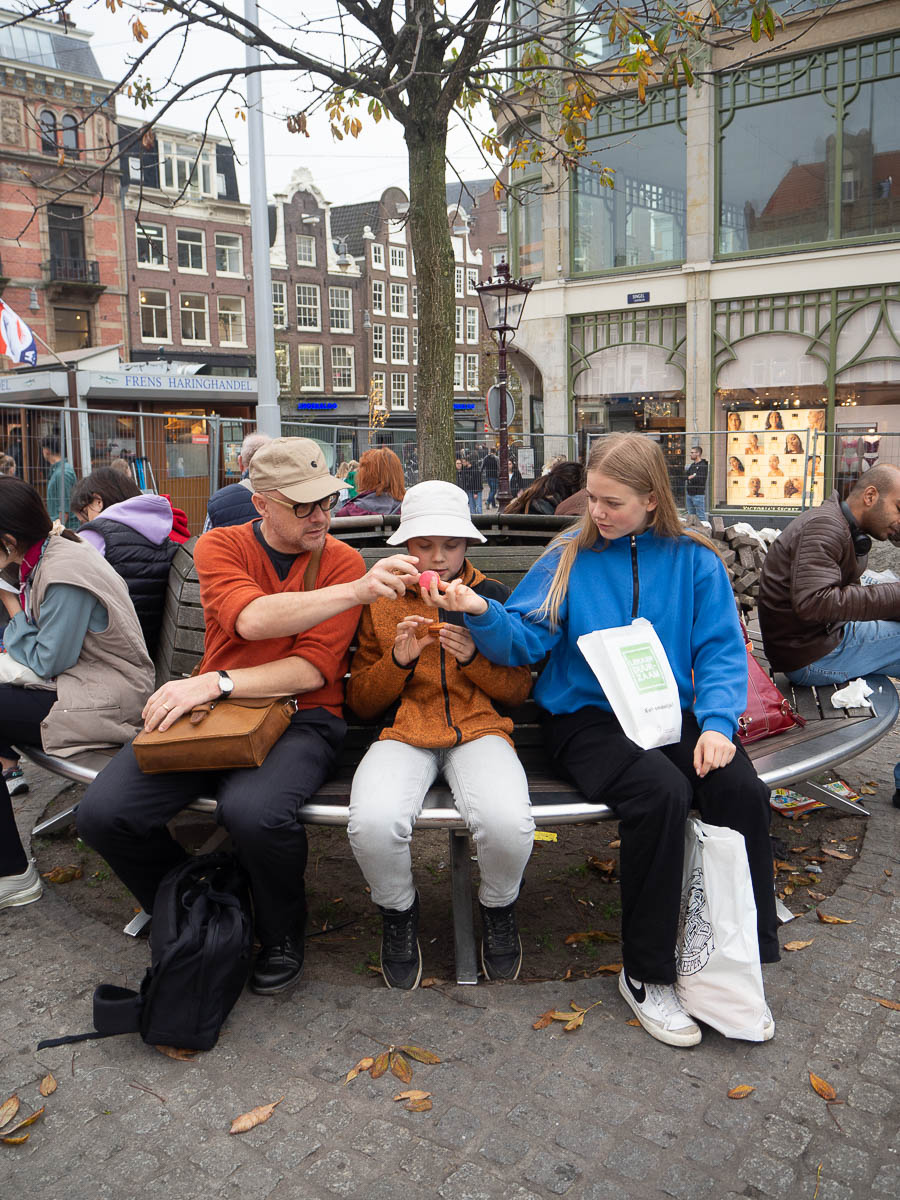
There was a cafe near the flower market, though, that sold macarons.
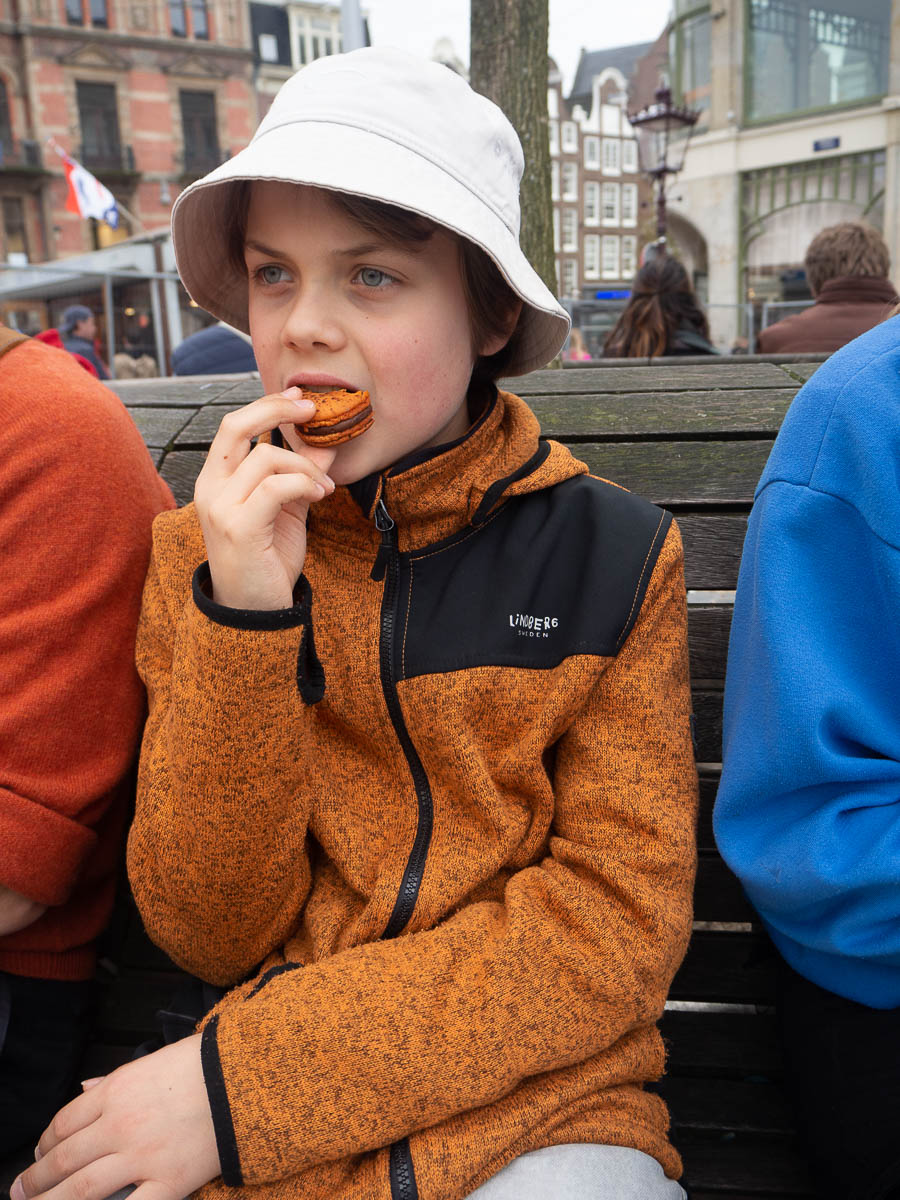
And then it was time to start heading home.
Amsterdam was an interesting city to visit, and parts of it were very pretty. But it’s not one of my favourite cities and I’m not sure I’d want to come back for a second visit. I didn’t like the crowds, or the ever-present smell or weed, or all the cigarette smoke.
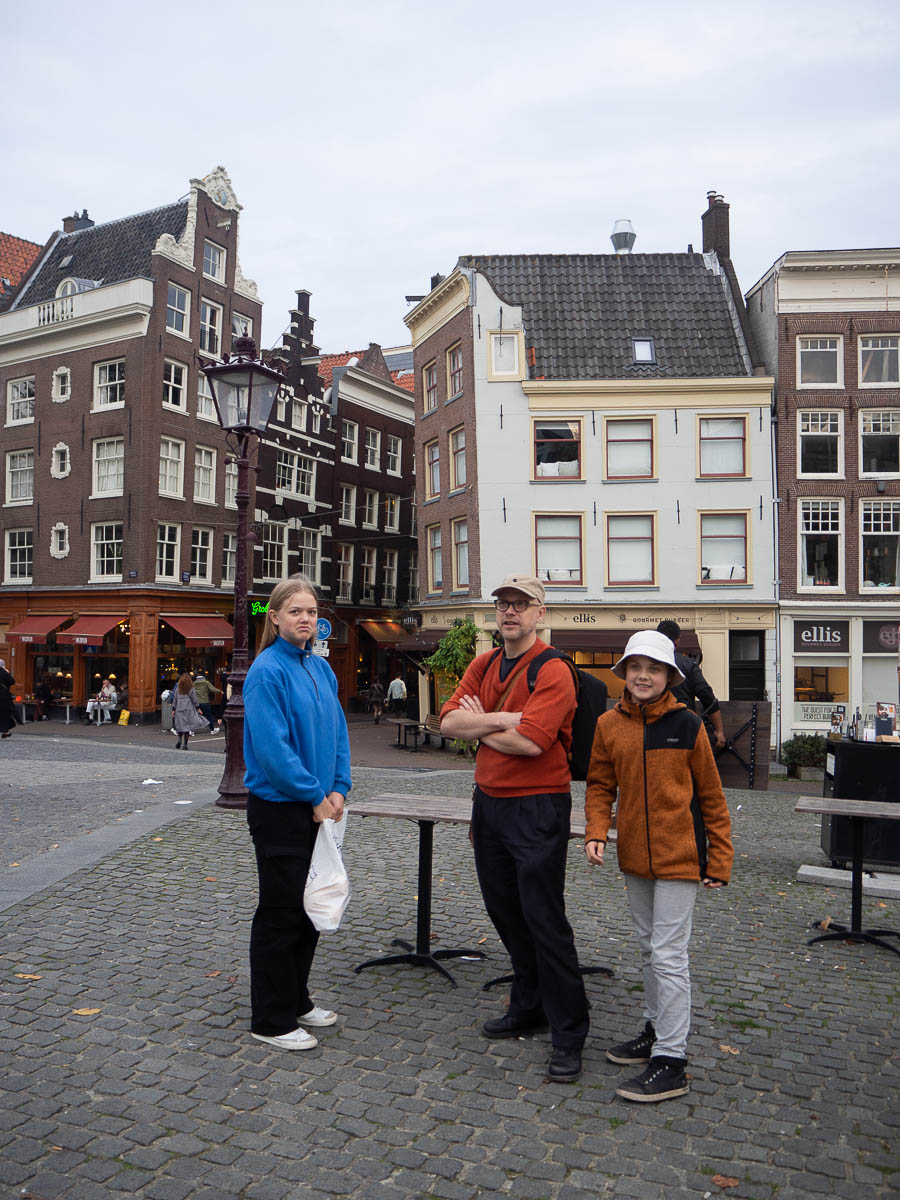
In the end the best part of the weekend for me was simply spending three full days together as a family. At home we’re often each doing our own thing. Here we were together all the time.
| « Older posts | Newer posts » |
