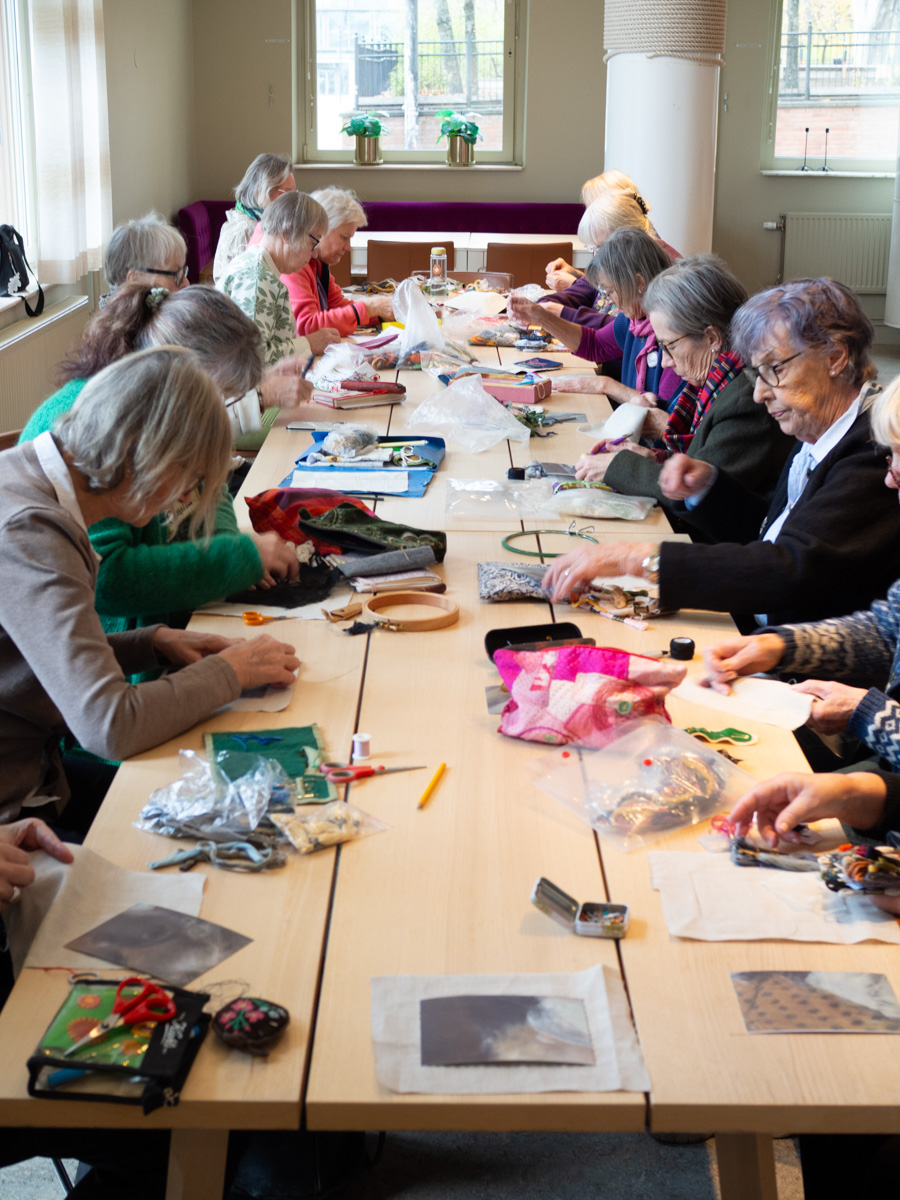
My embroidery group met up with another one for a one-day joint embroidery project. The organizers had chosen an image and cut it in sixteen identical pieces. Every participant got one of the pieces, plus a piece of fabric, and would spend the day embroidering their part – without having seen the whole picture. At the end of the day we’d put the pieces together and see what we’d made.
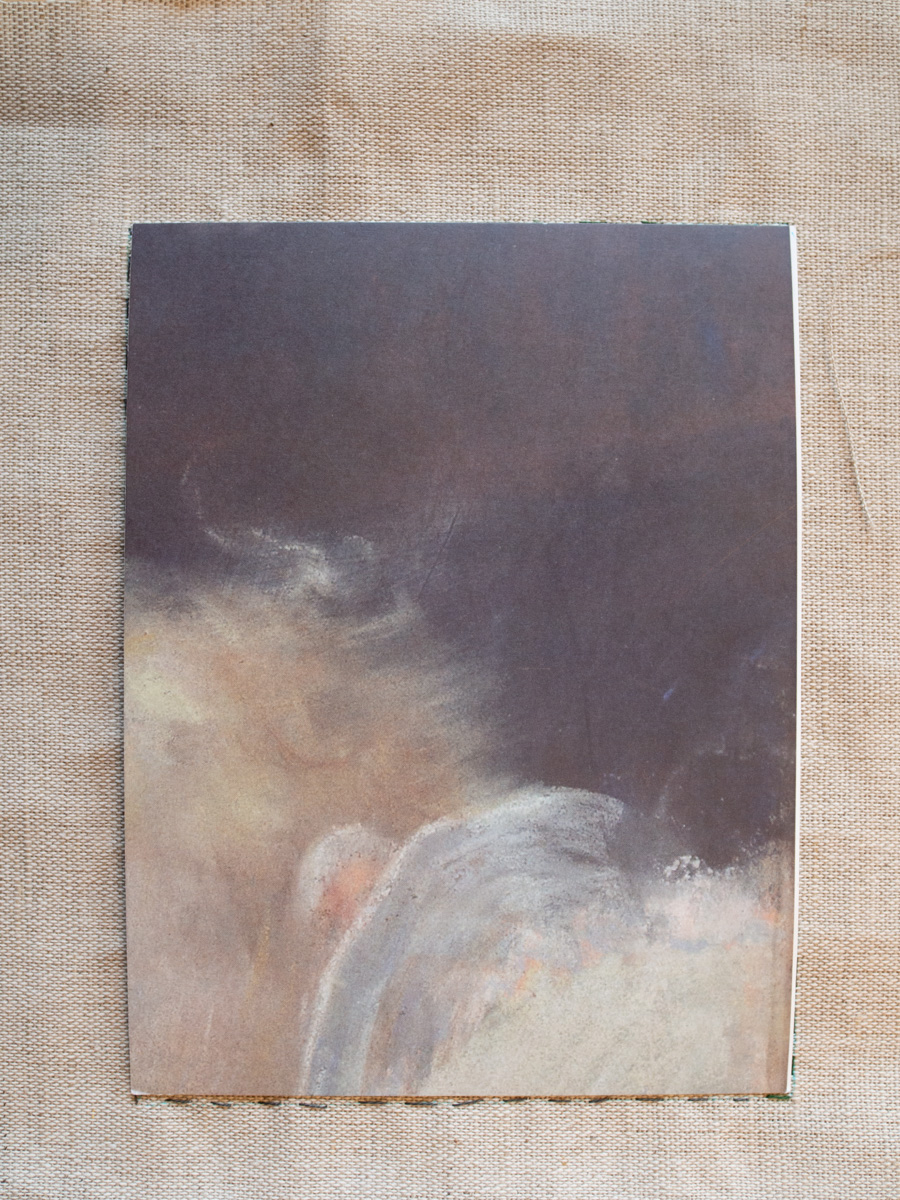
My puzzle piece had a clearly distinguishable motif – the back of a baby’s head – which made my task easier than some of the others’. It also had large fields of colour, including a strong black, which would take forever to fill with just stitches. I have filled large swathes of fabric with stitches before, and it did take forever, but this time we only had the one day. I decided almost immediately that I’d take the applique shortcut.
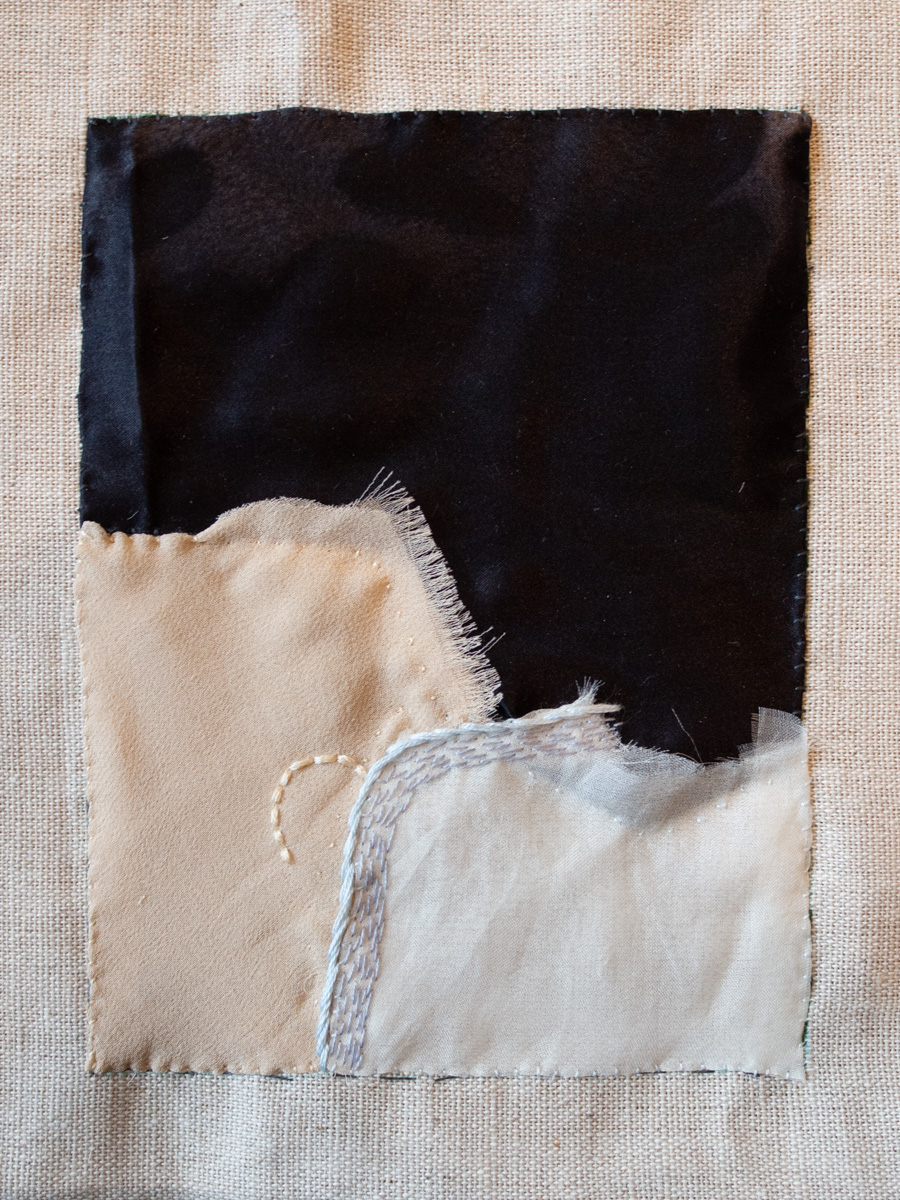
After six hours (with a short break for lunch) I had made good progress. The clothes were there, and the baby’s ear, and the black background was stitched down decoratively, though you can’t really see the black-on-black stitches in the photo. Still definitely not done, though: the cheek and the hair are a single beige blob, and that won’t do.

I was further along than some of the others, who’d taken a more purist, stitch-oriented approach. The arrangers admitted that they had perhaps been overly ambitious. A similar project that they were inspired by ran over a whole weekend (though in parallel with talks and workshops etc) and the puzzle pieces were maybe a third of the size of these. We’ll all have to finish our pieces at home and hand them in later.
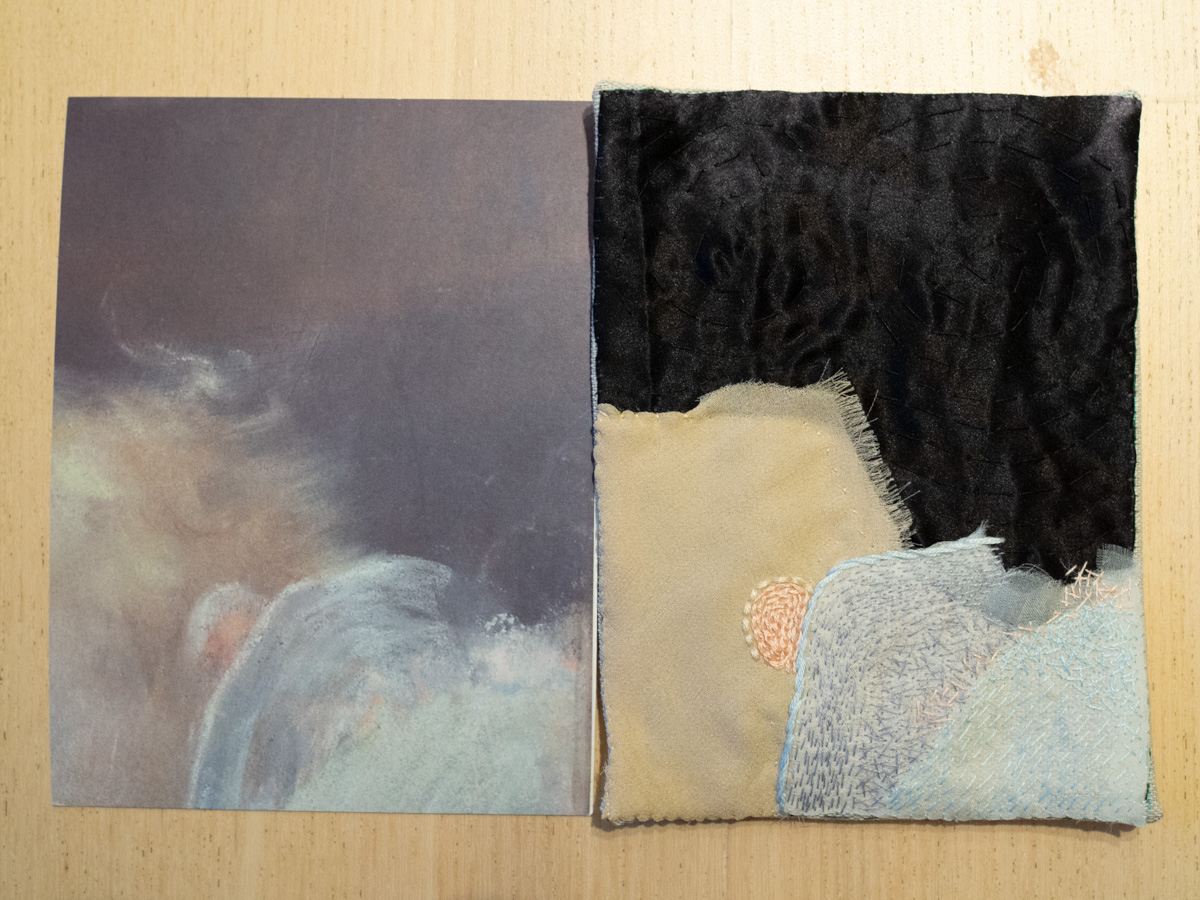
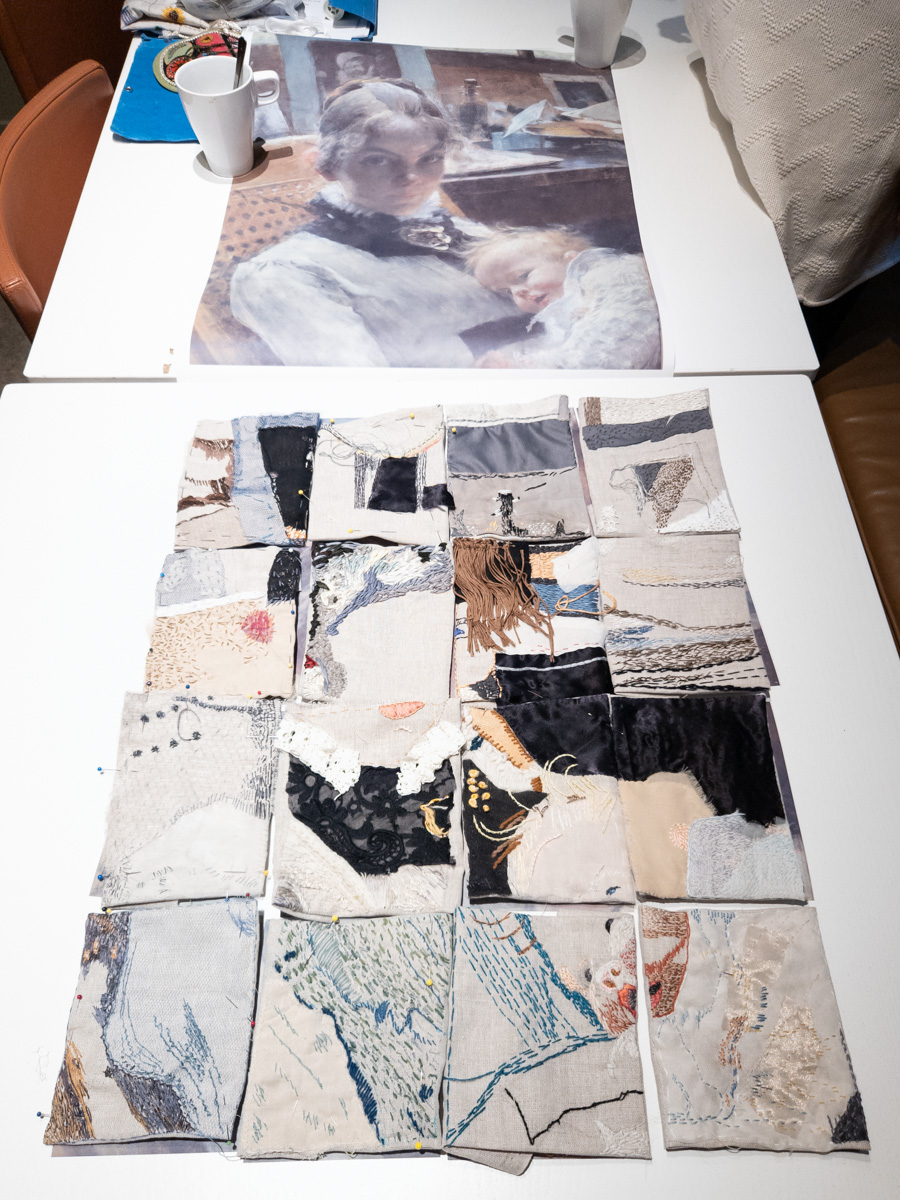
When we first laid out the pieces side by side, the picture made no sense whatsoever. Had we messed something up? Then we realized that the A, B, C, D markings had been written on the backs of the pieces, and needed to be laid out as D, C, B, A. And an image emerged: a mother with a sleeping baby in her lap.
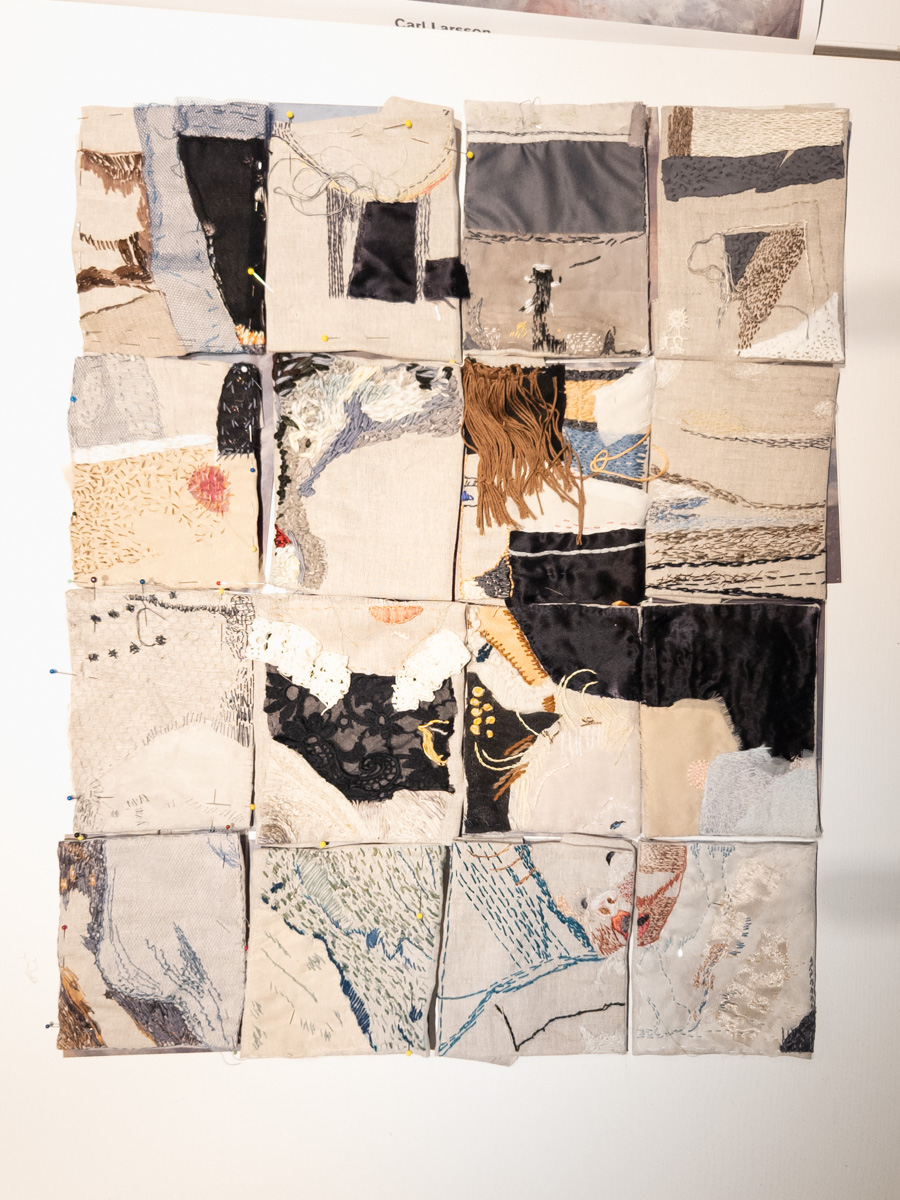
Some of the participants had recognized the image just from seeing their own piece, and maybe their neighbour’s. Here they are, side by side: Carl Larsson’s Ateljé-idyll: Konstnärens hustru med dottern Suzanne.

We haven’t done a particularly good job of reproducing it. The poor baby has ended up with three eyes. But it was a challenging image for this kind of project. I guess now that we all know what we’re aiming for, there will be some retouching and corrections happening.
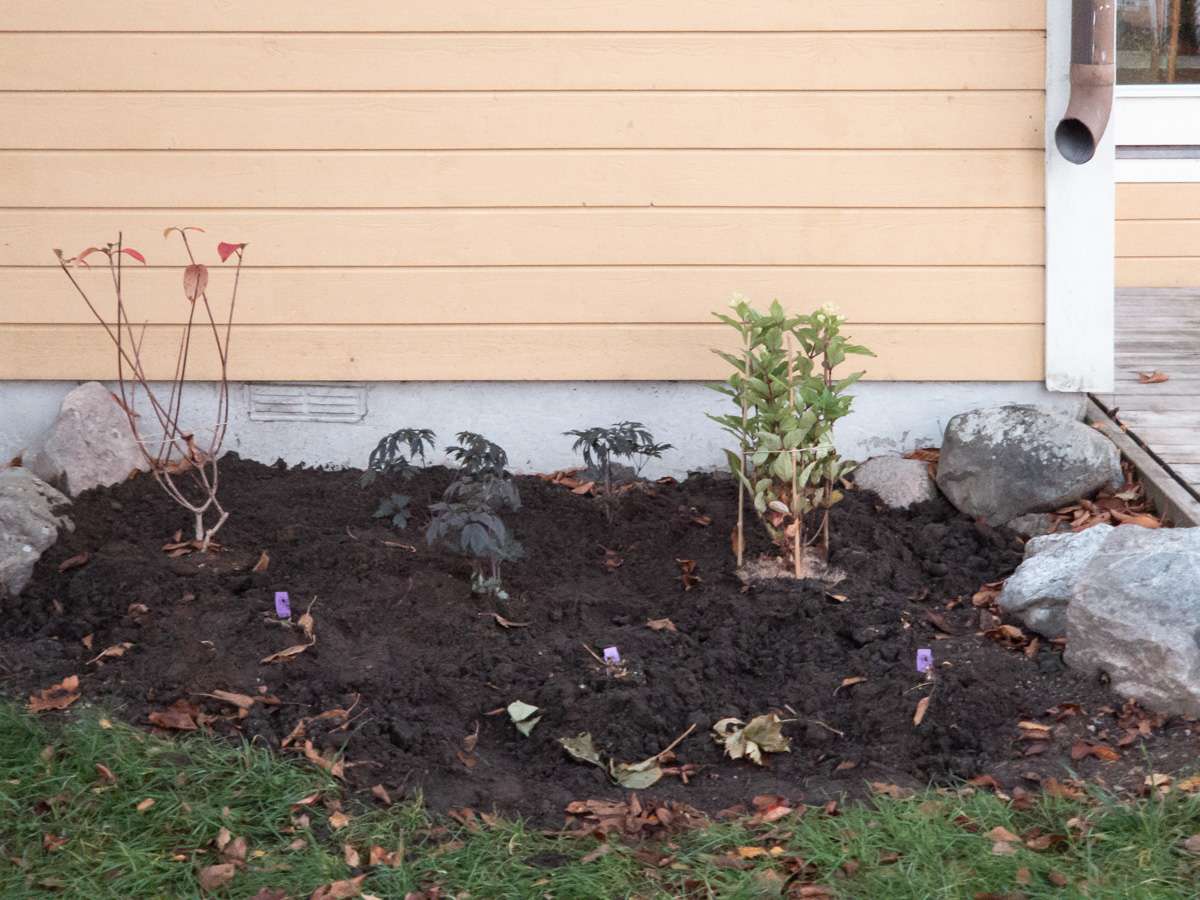
I ordered some bushes and perennials for the new planting area almost a month ago. The end-of-season discounts were great! Delivery times, however, were not. It took three weeks for them to be delivered to the store, and then another couple of days for me to pick them up, and a few days more to find time for planting. It worked out in the end – the ground is still not frozen, so I managed to plant them.

It looks like nothing, I know, and the lighting is horrible. (It was twilight already when I took this, close to 4 in the afternoon.) The photo is here to remind me in the spring where I put the plants.

Sara Parkman’s current concert tour, Aster, Atlas didn’t include a stop in Stockholm. Uppsala was the next closest, but the date didn’t work for me, so I made the trip to Örebro to see her.

The concert was rockier and louder than the ones I’ve gone to before. Those have taken place in churches; this one was at a club/bar. Even songs I was already familiar with had gotten makeovers. Maybe not quite what I had hoped for, but still good.

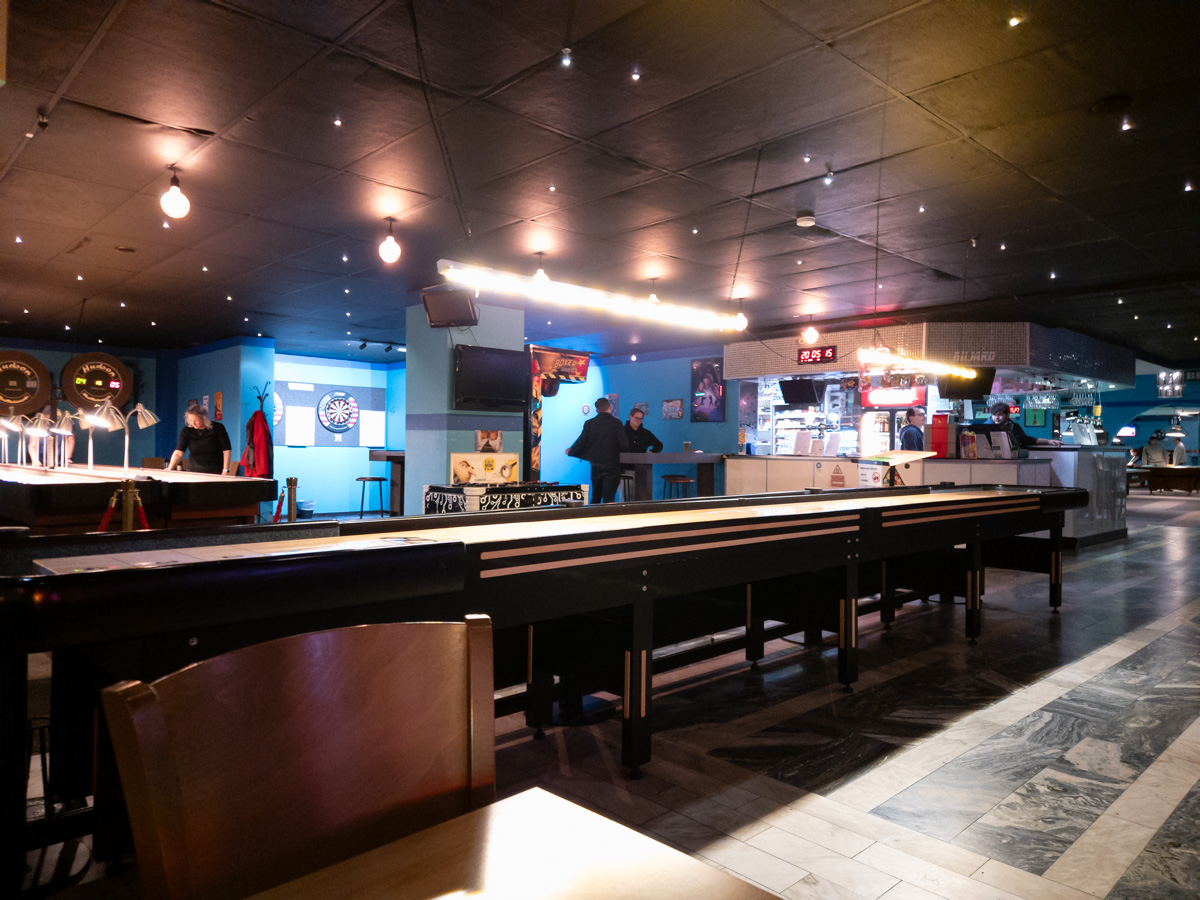
Rock concerts start later than church concerts. I had well over an hour to kill after dinner, before the doors to the venue opened. I ran across a game hall, with pool tables, shuffleboard, darts, and board games. It was very nice to have a space where I could just hang around for an hour, without having to deal with the noise and crowds in a bar. The atmosphere was straight from a 1990s youth centre, with a hand-written price list, Pago juice in the fridge, and hard, wooden chairs. Nostalgia.

About halfway through our embroidery club meet-ups, I make sure to take a walk around the room and look at what everyone else is doing. It’s fascinating to see how differently people can interpret the same prompt. Someone likes to work on a really small scale, someone adds interesting fabrics to their work, someone combines colours in interesting ways.

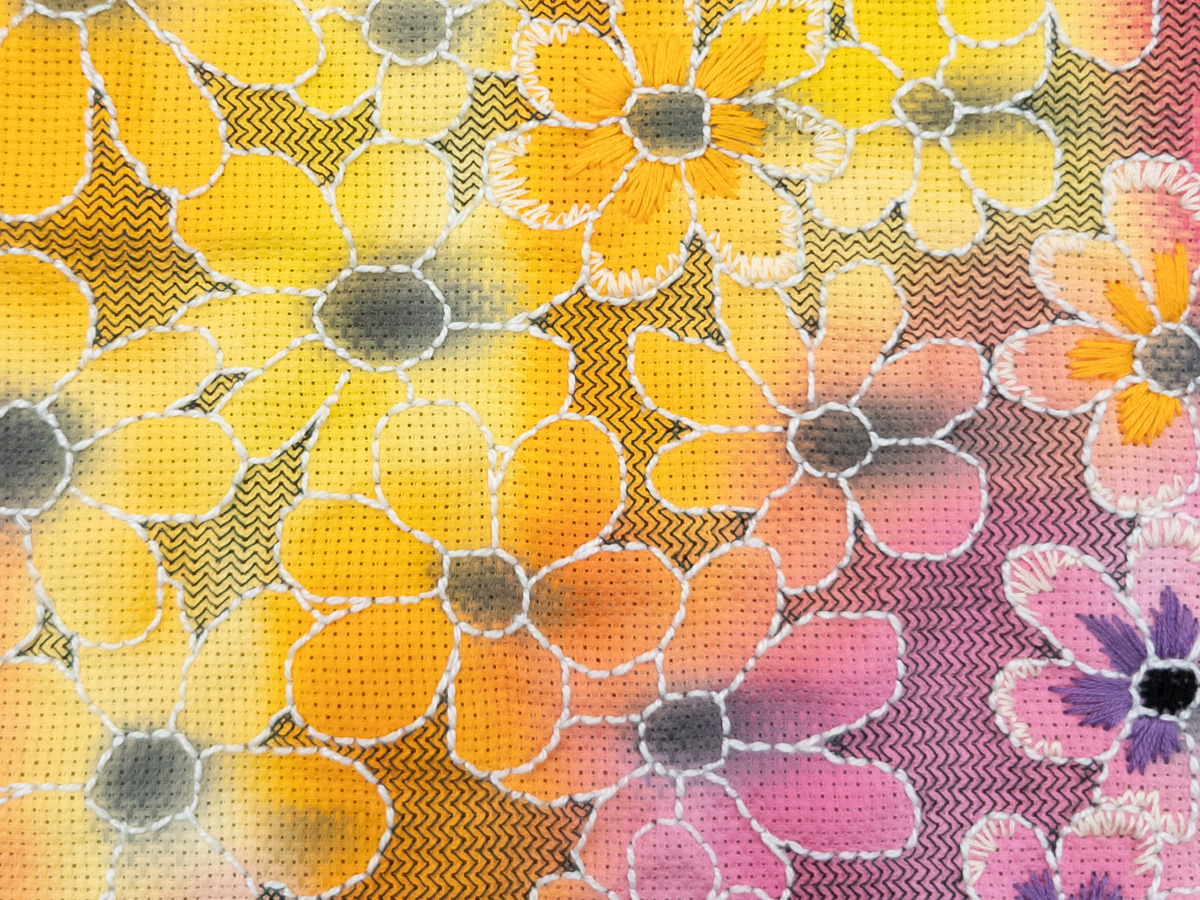
Not all that is interesting is necessarily directly inspiring. Some pieces, though, make me want to put aside whatever I’m working on and try out their clever combination of ideas. Like this, for example: aida cloth, irregularly painted, and then embroidered in freestyle embroidery that makes a nod to the weave but really doesn’t let itself be restricted by it. That, combined with tiny, high-contrast, surface-filling counted stitches. How cool is that? I want to make one of these.

Took a half-day off work to rake the leaves in the garden. A sunny, dry, mostly windless day – who knows when we’ll next get one of these in November. Plus I have a bit of a deadline, in that the garden waste bins only get emptied for another week or so.

The leaves on the deck were crunchy and photogenic, but everywhere else they were wet and gluey. Windproof, but wet and unpleasant to handle. I really would have liked to do this earlier, but this Saturday we had the birthday party, the Sunday was rainy, and there was a storm the weekend before that, and the week before that the leaves were still on the trees. Hence me taking time off work now.

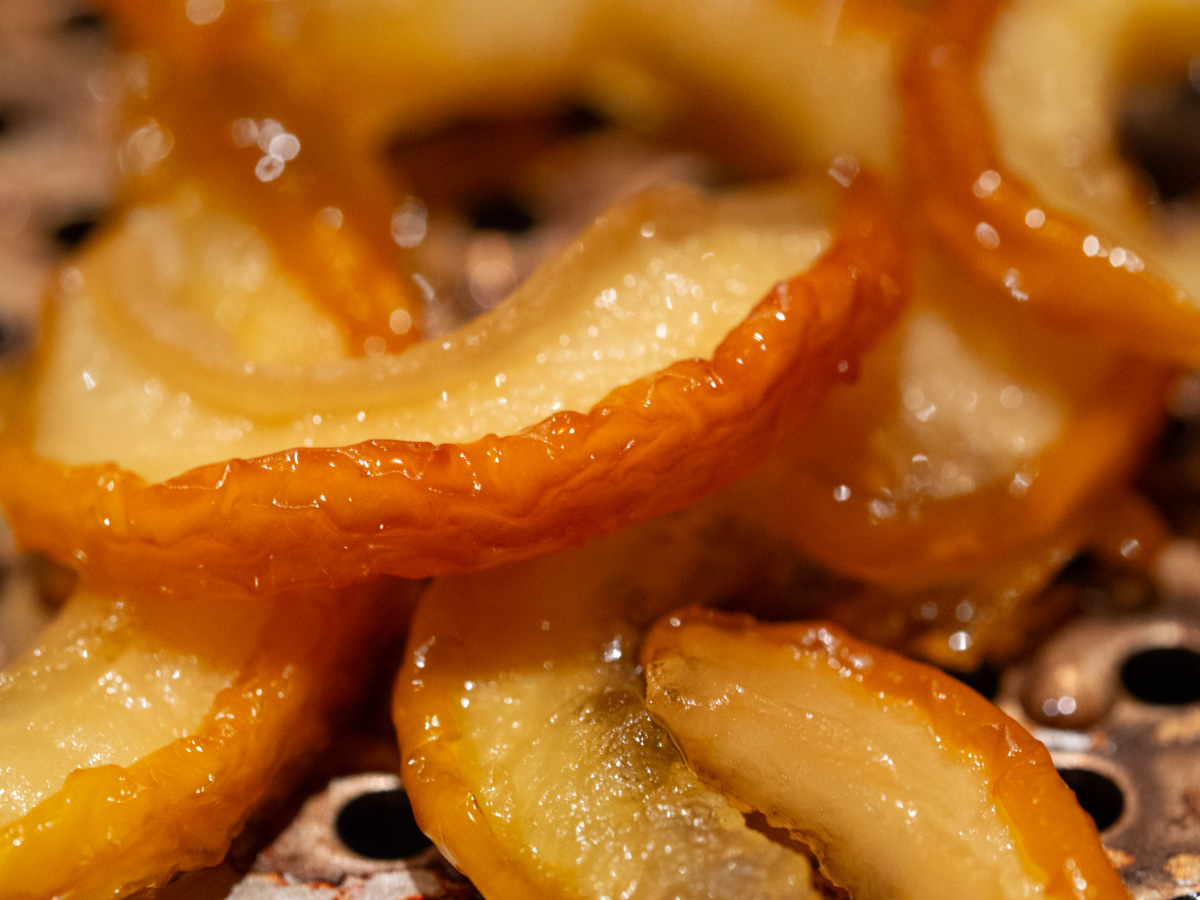
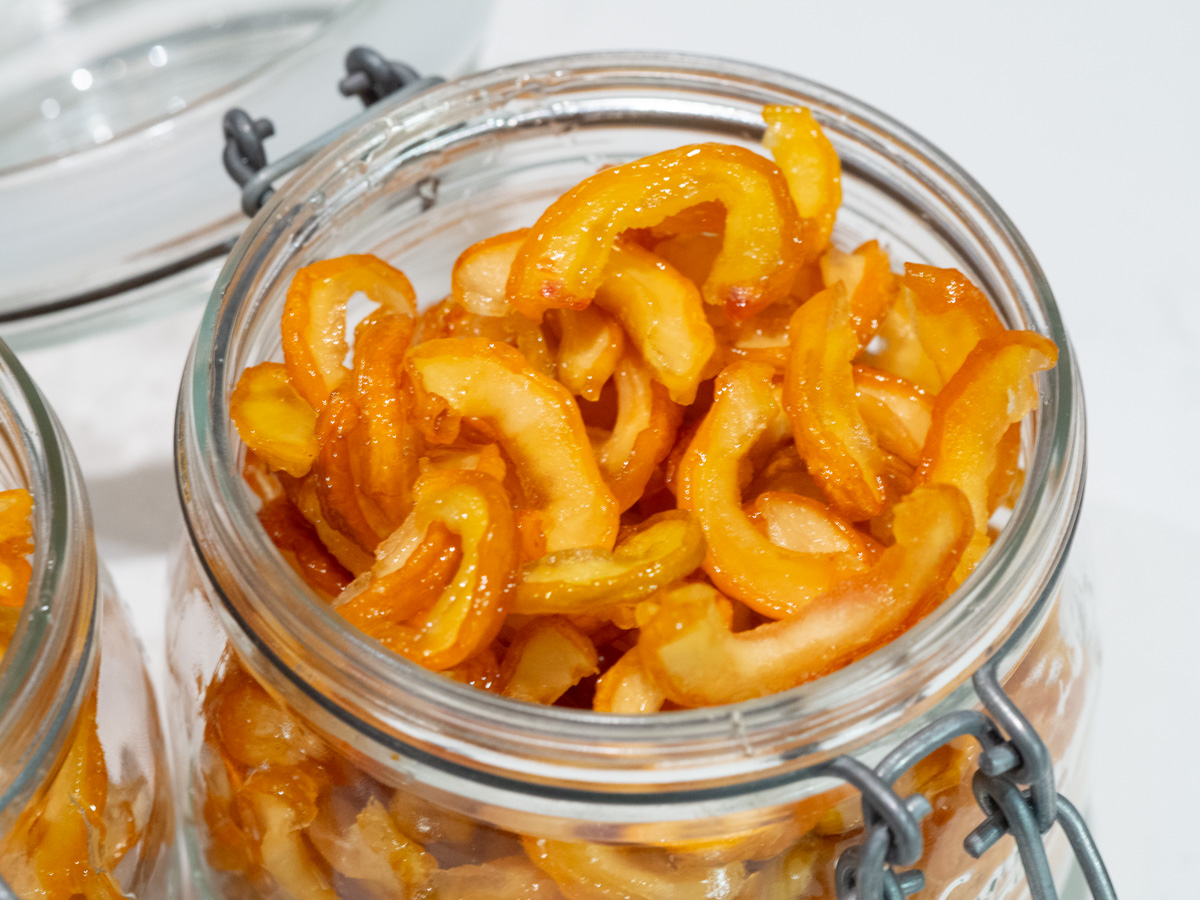
After a week of pumping sugar into the Japanese quince, I feel done with it. It tastes good, and it’s sinking to the bottom of the syrup, like it’s done in the past. Maybe not perfect, but good.

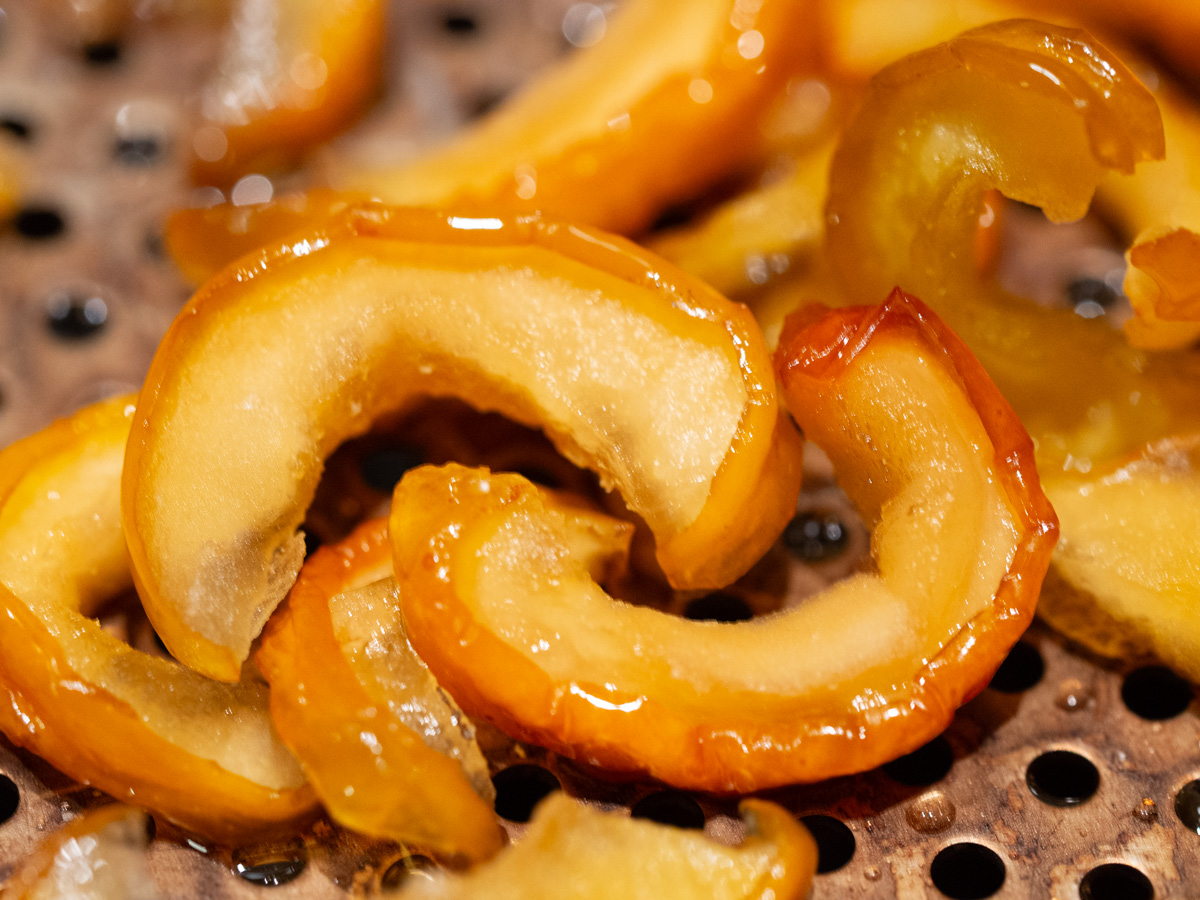
I drained all the pieces and dried them in the oven. 6 hours yesterday after work, and two more hours this morning.

The end result is very sticky, even after all the drying. When I try to pack the pieces into jars, they stick to each other and pile up. I don’t recall them behaving like this before. Maybe I should have drained them for longer? Rinsed them?


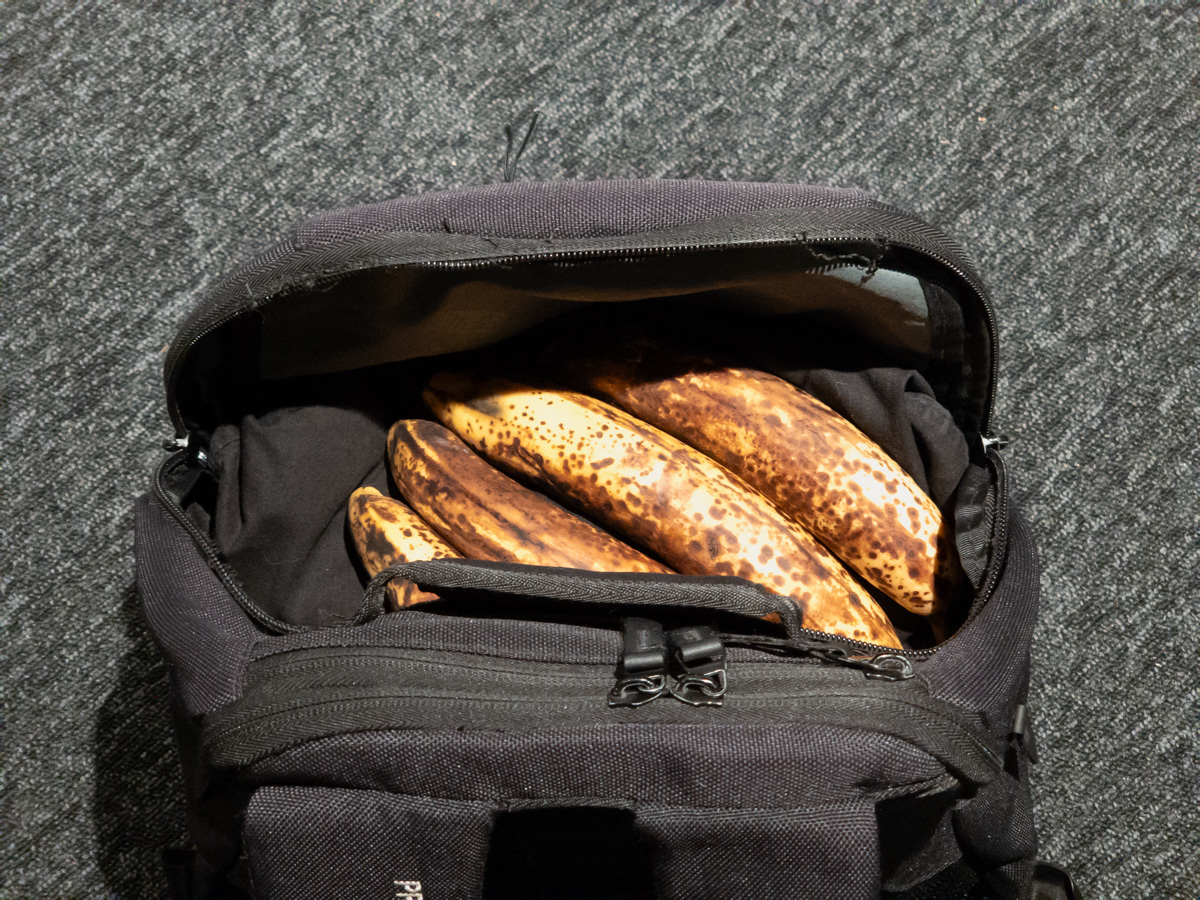
The Sortera office has fruit bowls in the lunch room. Quite often, significant numbers of bananas go bad before they get eaten. I’ve started keeping an eye on them so that I can grab them before they’re thrown in the garbage. (Or, on one occasion, fished them out of the garbage bag. Totally clean, I promise – food waste goes in special containers lined with compostable paper bags, and the bananas were so many that they got a whole fresh bag.)

Brown, overripe bananas are the best for making banana cake. With store-bought bananas I have to plan many days ahead – even the ripest bananas at Swedish supermarkets are usually slightly green. Here I can get baking as soon as I am home.

When the timing works out and I’m feeling generous, I bring some of the cake back to the office to share.

For months now I’ve noticed that I no longer like using my desk. Not my WFH desk, but my home admin desk – the stylish and practical antique desk that I’ve loved for years.

The desk is the same. The chair is the same. (Hasn’t worn out and become uncomfortable, either.) The view is the same. Maybe a bit messy, but that’s not entirely unusual.

Why, then, do I no longer like sitting there? Why do I do my blogging and researching and scout club accounting in the sofa instead, which is much less ergonomic?

An interior decorating video that Youtube shoved at me gave me a possible answer: the prospect-refuge theory. The theory says that humans feel comfortable in spaces that provide a clear, open view of our environment, together with a sense of being protected. For example, we prefer sitting with our backs to a large rock, facing outwards, rather than the opposite. We see what’s ahead of us, while the rock protects our backs. Something something pre-historic humans on the edge of a savanna.

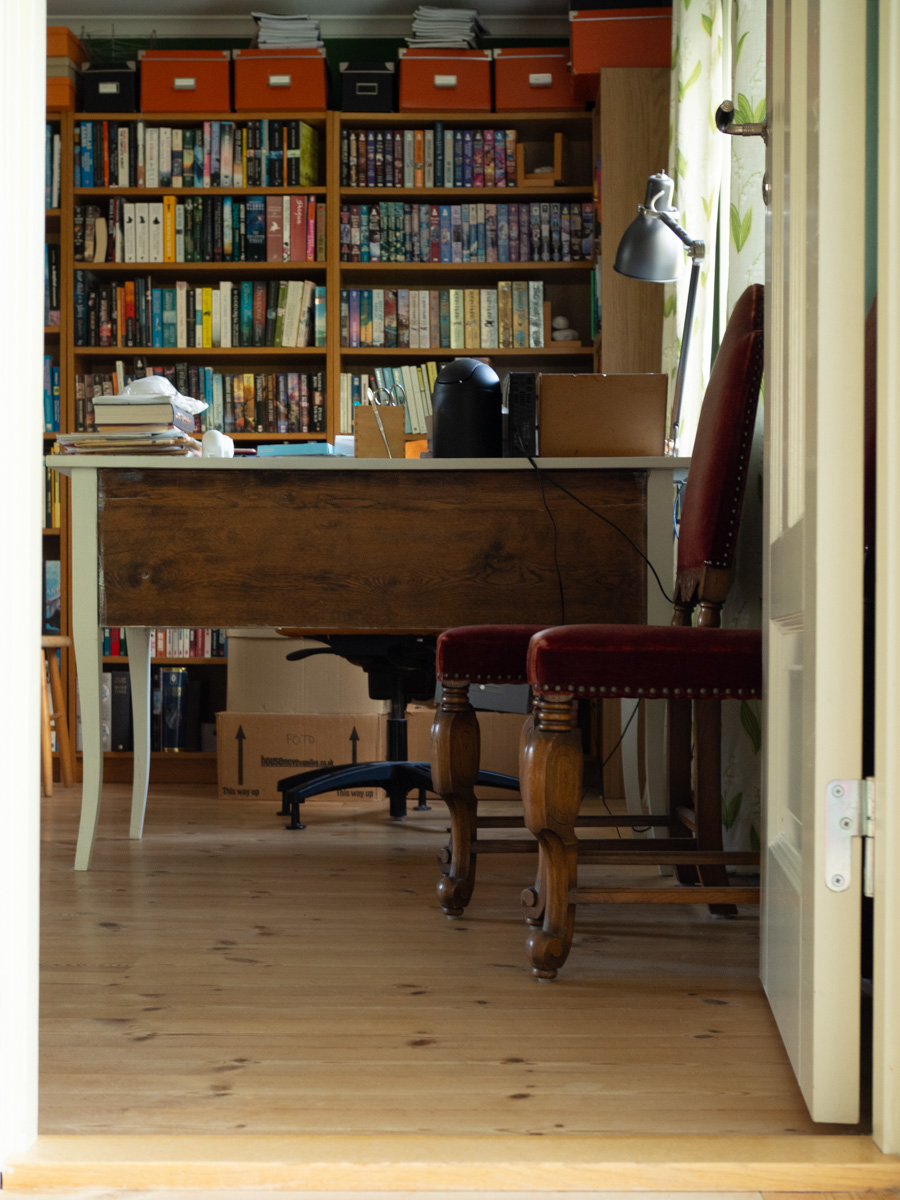
I realized then that one big thing has indeed changed about my home office. It went from being a sheltered space, enclosed by a wall of bookshelves to being wide open towards the rest of the room.

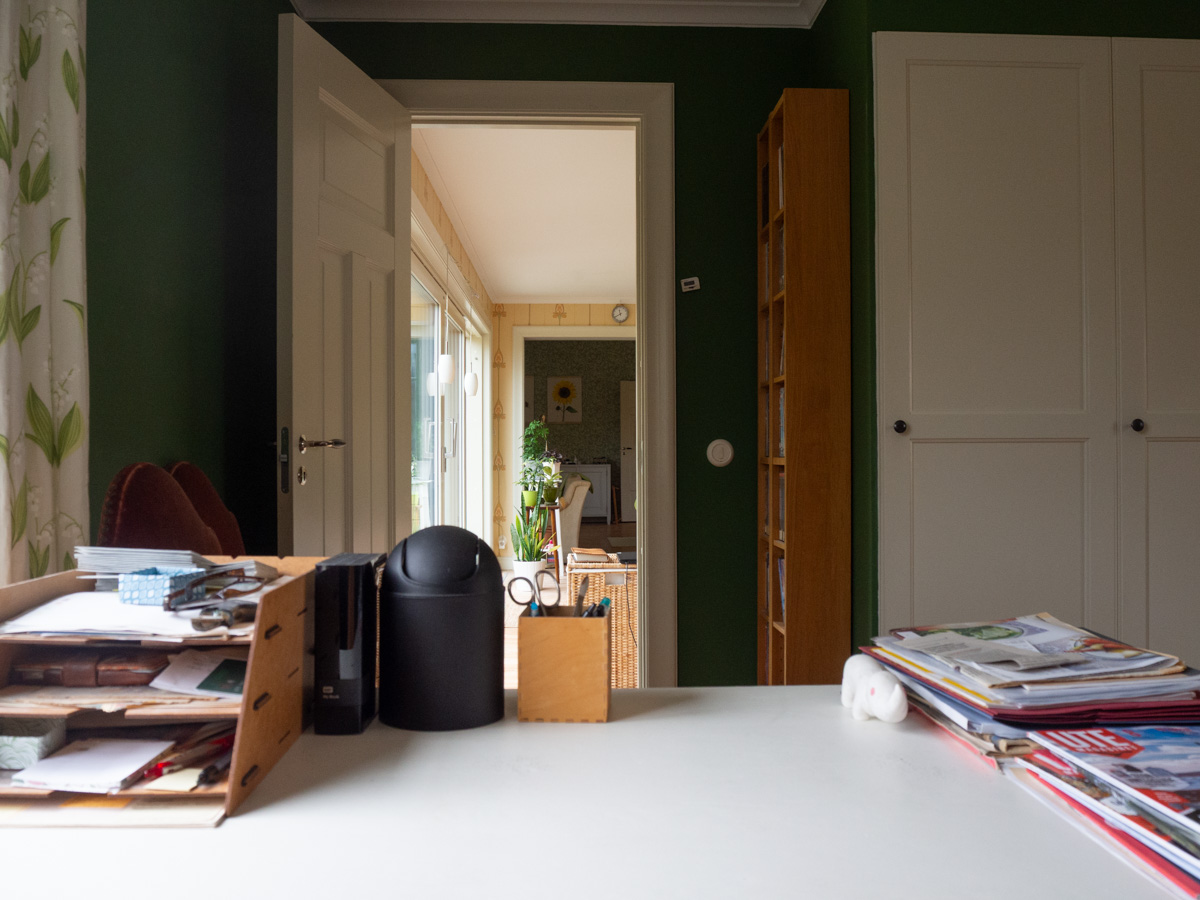
So: an experiment. I turned the desk 90 degrees so that it faces the doorway instead.

From the point of view of anyone entering the room, it’s rather ugly. The back of the desk is clearly meant to face the wall.

From the point of view of me setting at the desk, though: massive improvement. My back is protected and I have a nice long sight line through the living space. Instead of getting glimpses of people from the corner of my eye, I can see what’s happening. I can’t say the setup before bothered me, not on a conscious level at least, but this feels so much more comfortable.