First concert in one of this season’s series, Orfeus Barock. Solo cello and lute, and the two together. Music by Johann Sebastian Bach, Silvius Leopold Weiss and Domenico Gabrielli.

I love Bach’s cello suites (one of which was included today) and cello music in general, and yet somehow this concert didn’t work for me. It wasn’t bad, in any way, but somehow the music melted into a soothing blanket of sound and the melody got lost.

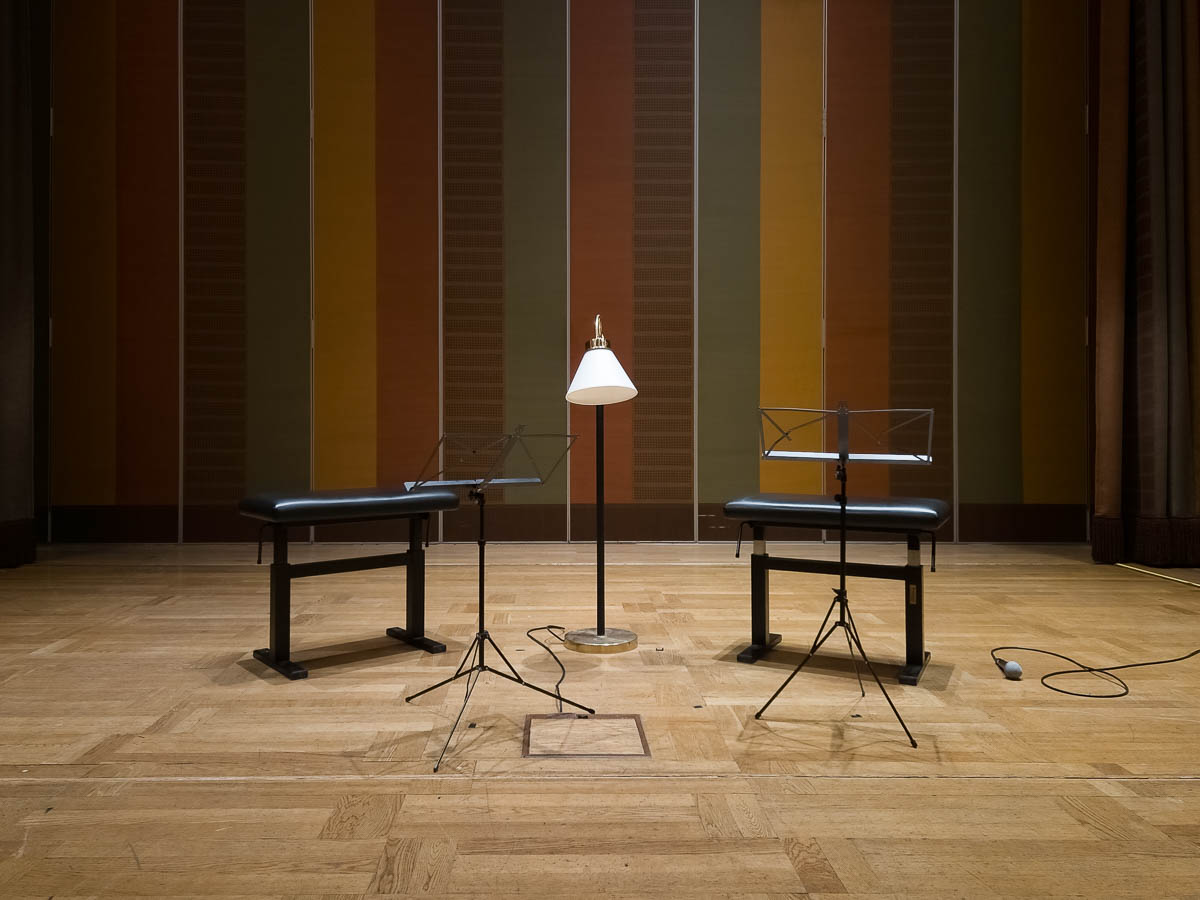
My seat was several rows back and I couldn’t see the musicians very well. The lighting was low, with much of the room quite dim and a single lamp lighting up the sheet music, and the musicians to a certain extent. (In the photo above the main lights have been turned on again; it wasn’t this bright during the concert at all.) The organisers said they wanted to recreate the feeling of being in your own living room, but for me the result was just soporific.

Maybe it was also the performers’ style? I would have wanted to someone else play the same piece directly afterwards, to compare.

Encouraged by Friday’s outing, I went to the city again to see more of Stockholm Craft Week.

There was a group exhibition in Gustaf Vasa church, of all places, by graduate students in the textiles program at Konstfack. Nice location, but it would also have been nice if the event organizers had taken into account and informed visitors about times when the exhibits could not be visited due to Sunday service. I had to hang around for half an hour before I could enter.

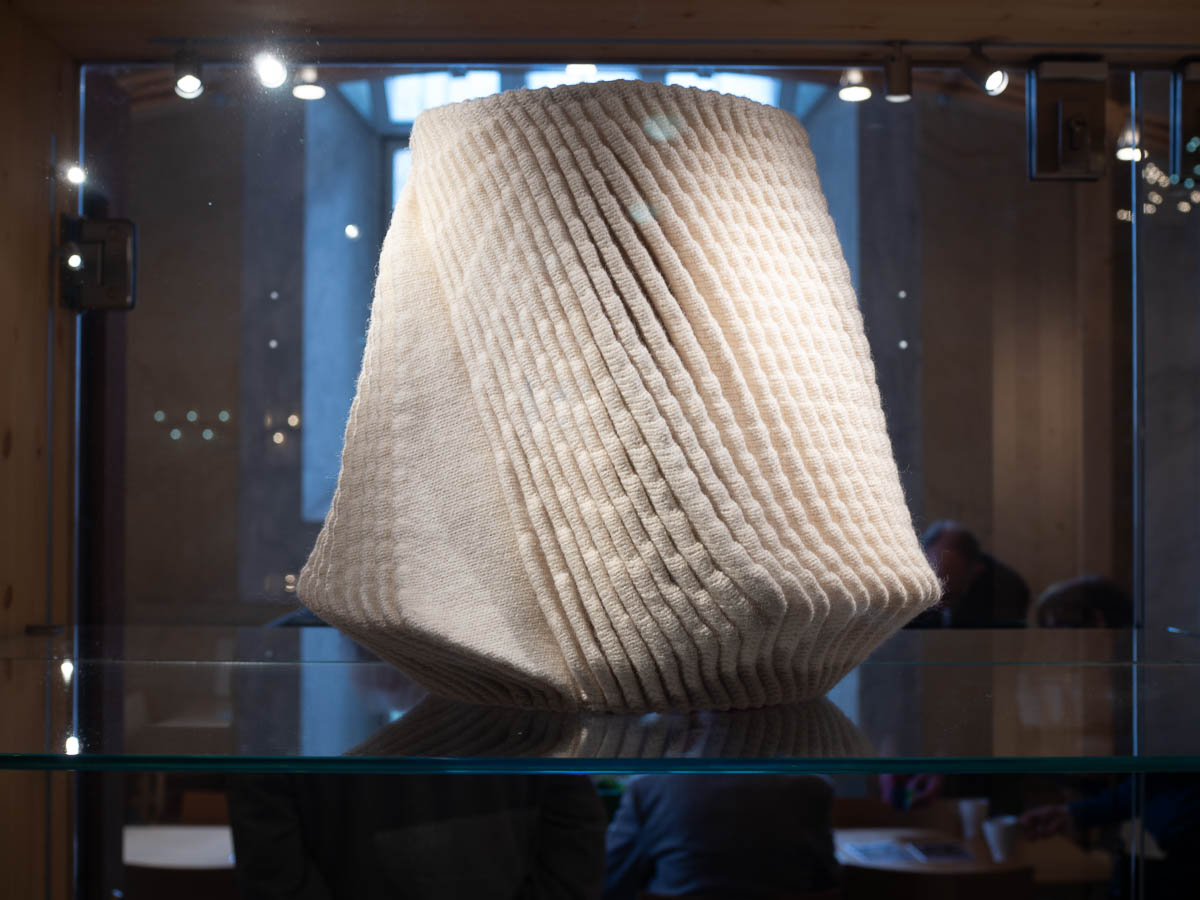
I liked the folded knits by Hanna Åström – very three-dimensional, geometrical and sculptural.

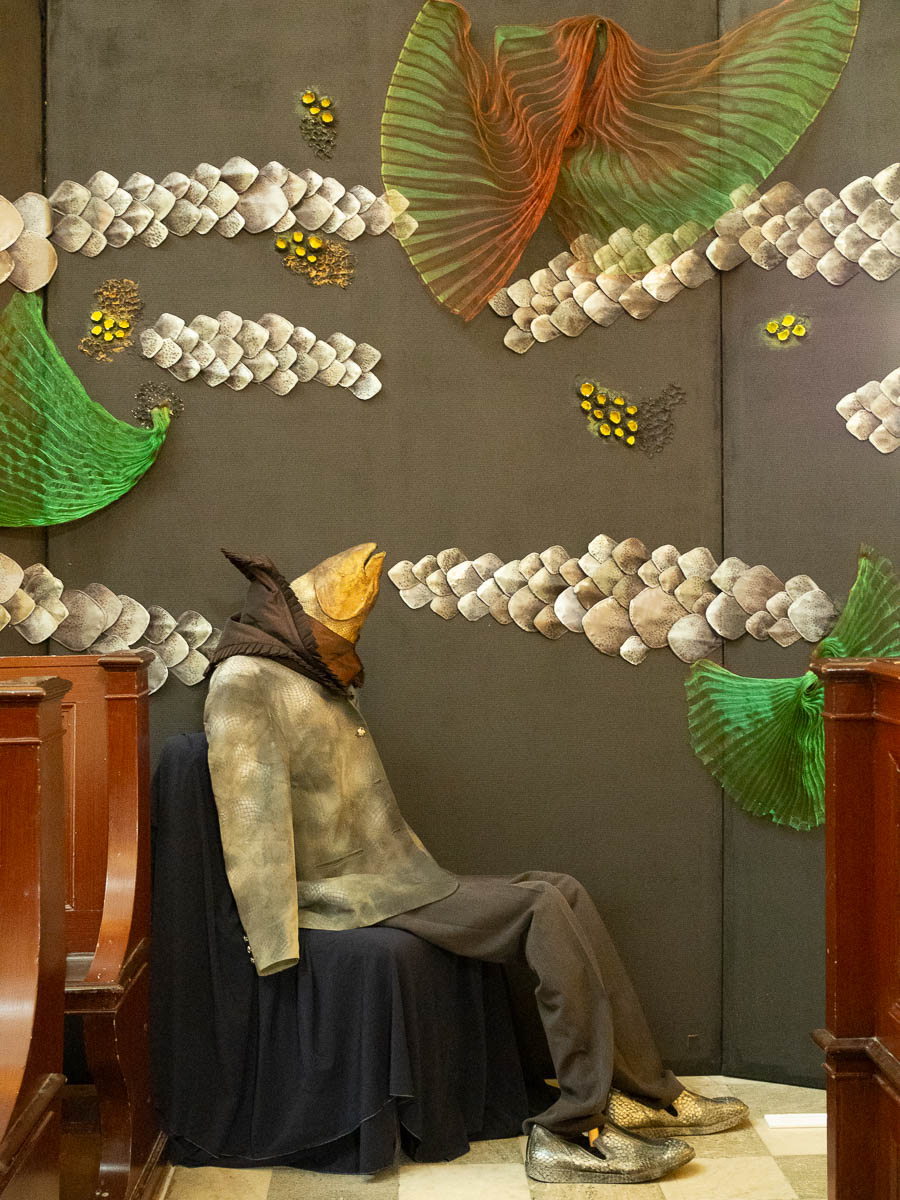
There were all the usual textile crafts – embroidery, pieces of weaving – and then suddenly a sculpture/installation thing depicting an anthropomorphic fish.

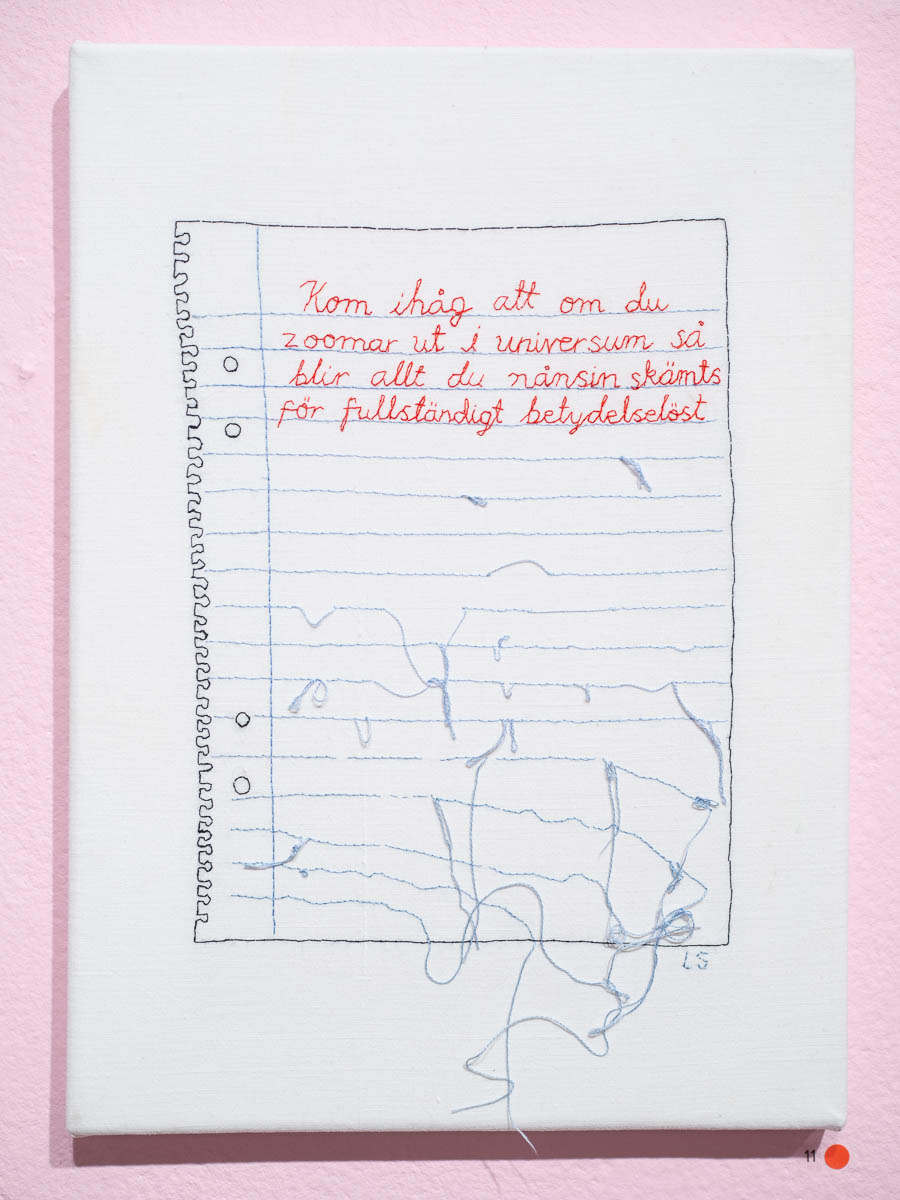
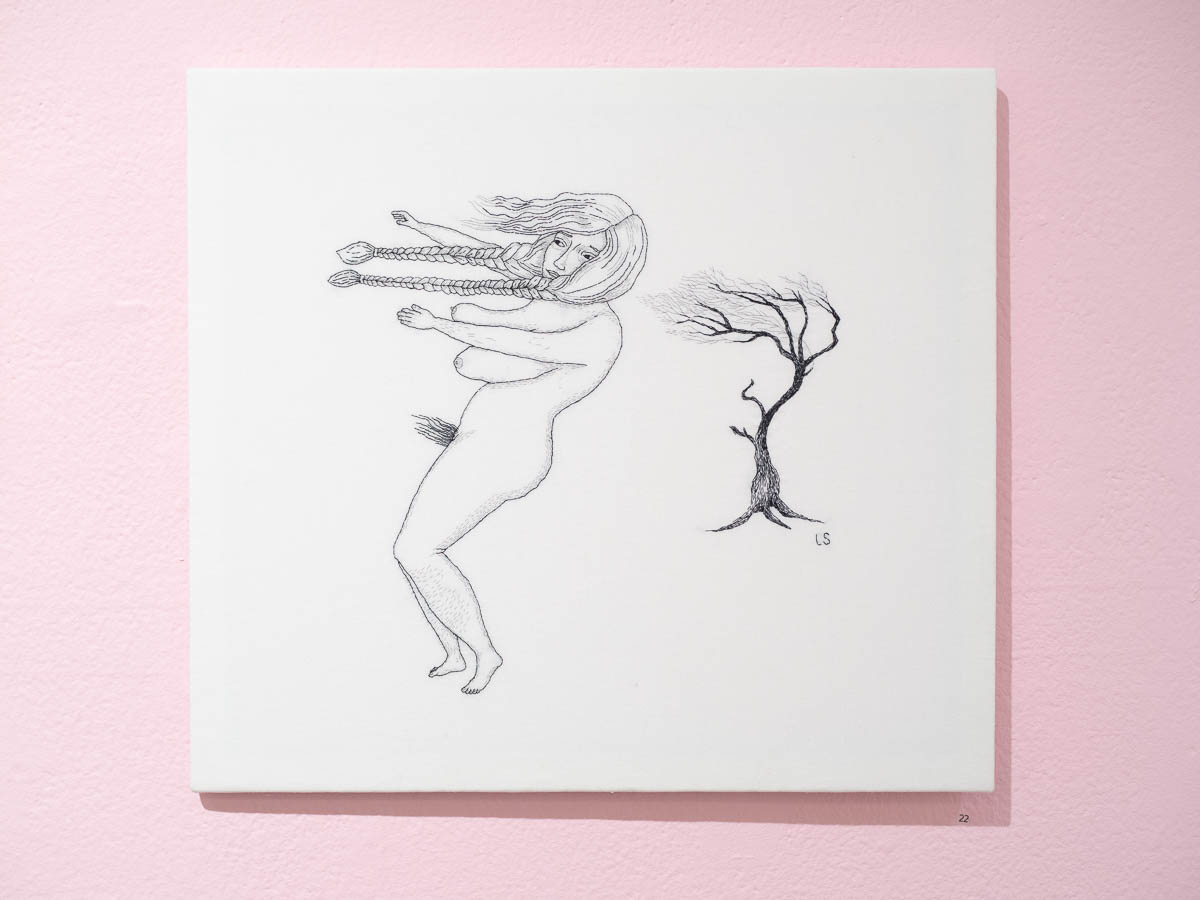
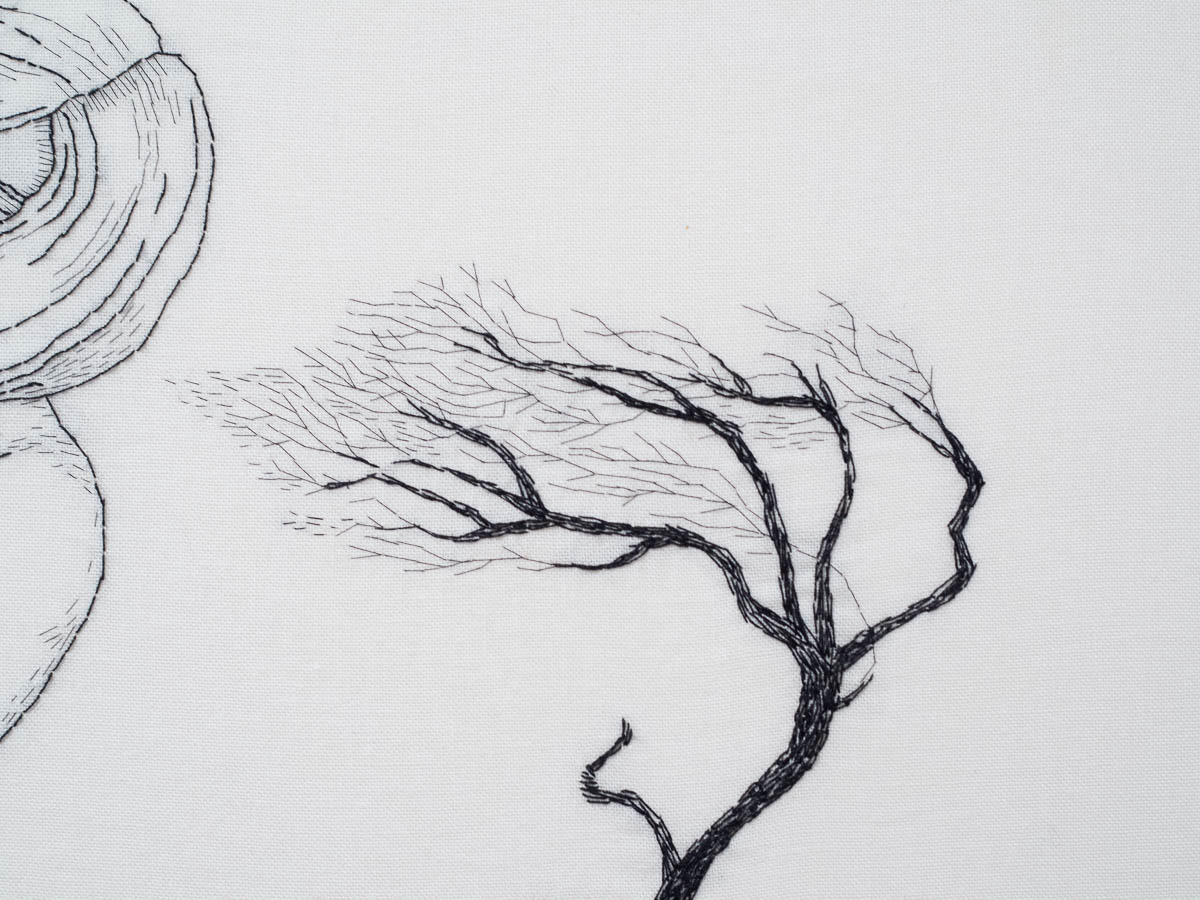
From Gustaf Vasa church I continued onwards to the shop/gallery of Konsthantverkarna where there is an exhibition of embroidered works by Lotta Sjöberg. She is an illustrator and artist, and her textile works are like drawings but in thread on fabric. Often full of wry humour, often about women’s everyday concerns.

I follow her on Instagram and mostly knew what to expect, but was still surprised. I had gotten a rather misleading impression of how large her embroideries were, based on the size of the stitches in them. What I thought was sewing thread or maybe one strand of embroidery floss, was instead silk organzine, apparently the thinnest thread manufactured. (Since today was the opening day of the exhibit, Lotta Sjöberg was present herself, and I took the opportunity to ask questions.)

It’s like cobweb. Truly, you could only make this in silk, because a thread this thin in any other fibre would break if you tried to use it.

I’ve been aware of Stockholm Craft Week for a few years, and this year got around to visiting some of its activities for the first time.

Kapsylen is a co-owned/co-op space for craftspeople, located in a building that used to house a bottle cap factory (hence the name). During Craft Week they open up some of their spaces for the public to visit. Some of the rooms housed a small exhibition; others were actual workshops.

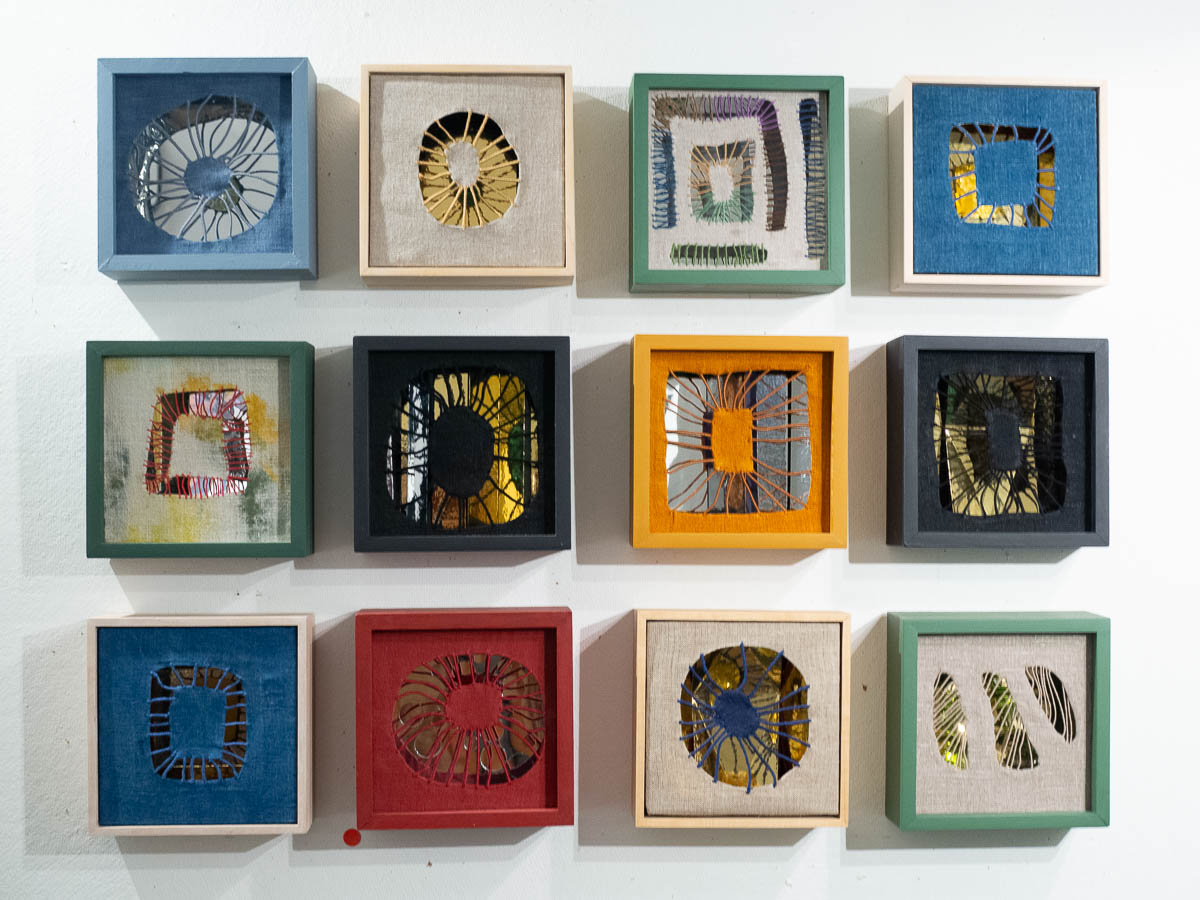
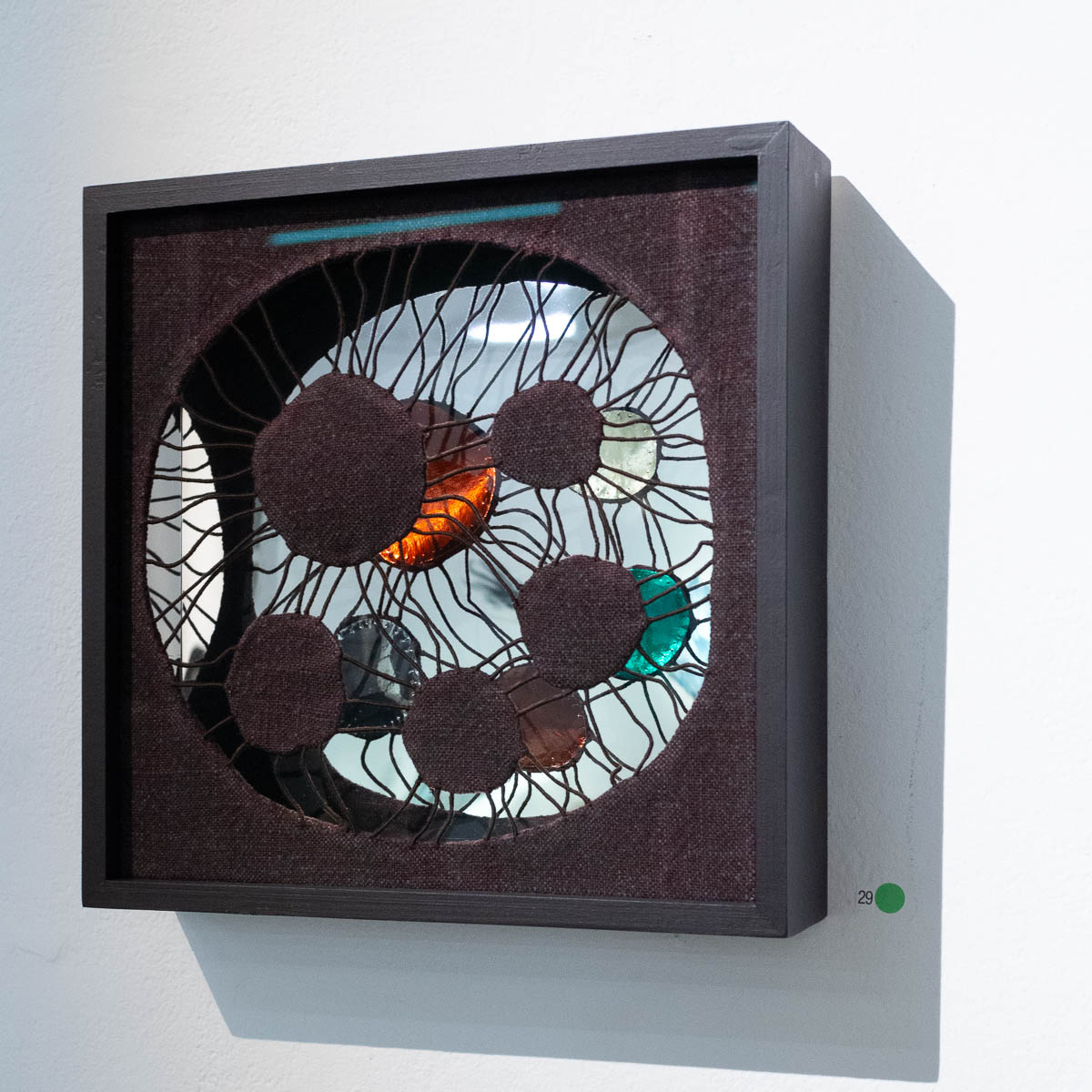
Ingela Friedner had made a series of boxes with a textile layer at the front and a reflective surface at the back, which then reflected the otherwise hidden reverse of the textile layer. Simple but ingenious.

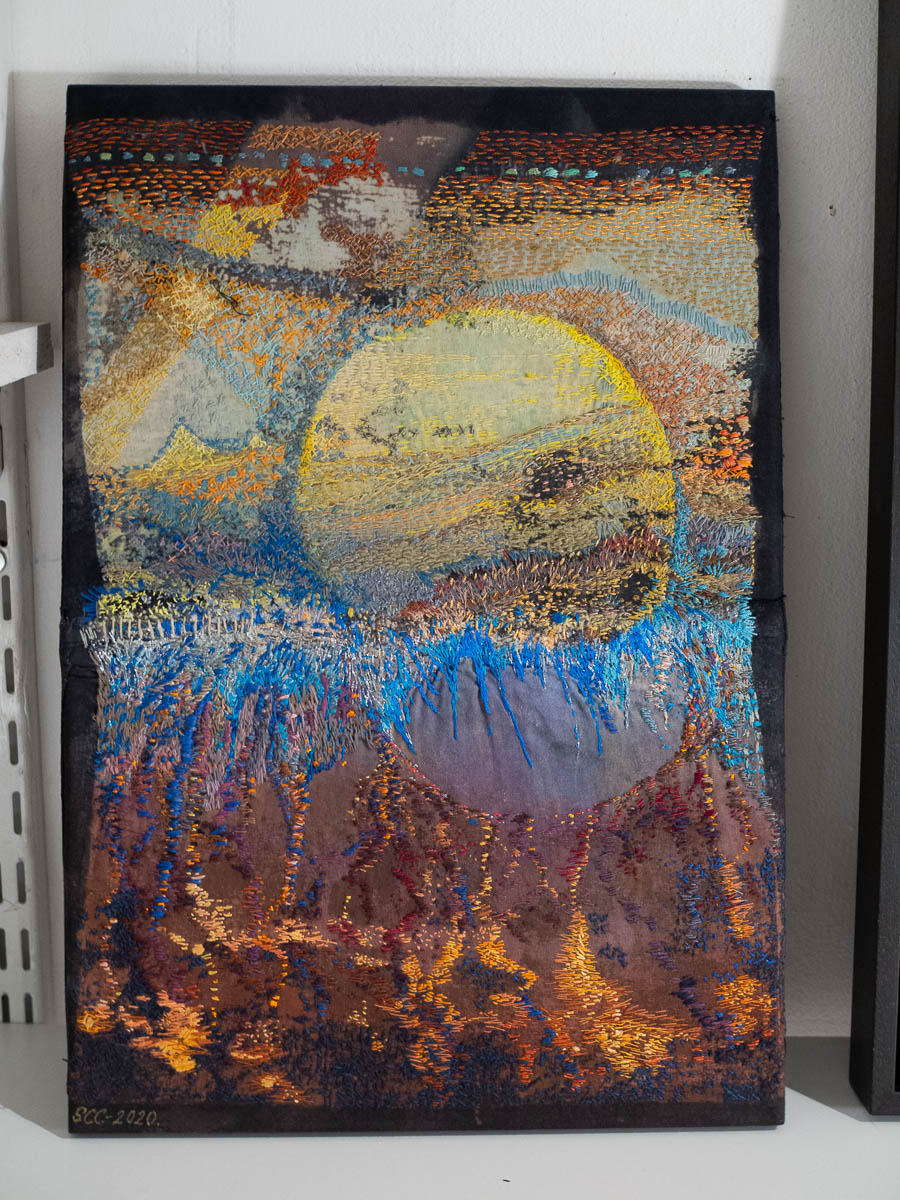
Sara Casten Carlberg embroiders intricate fantasy landscapes on painted and printed fabric.

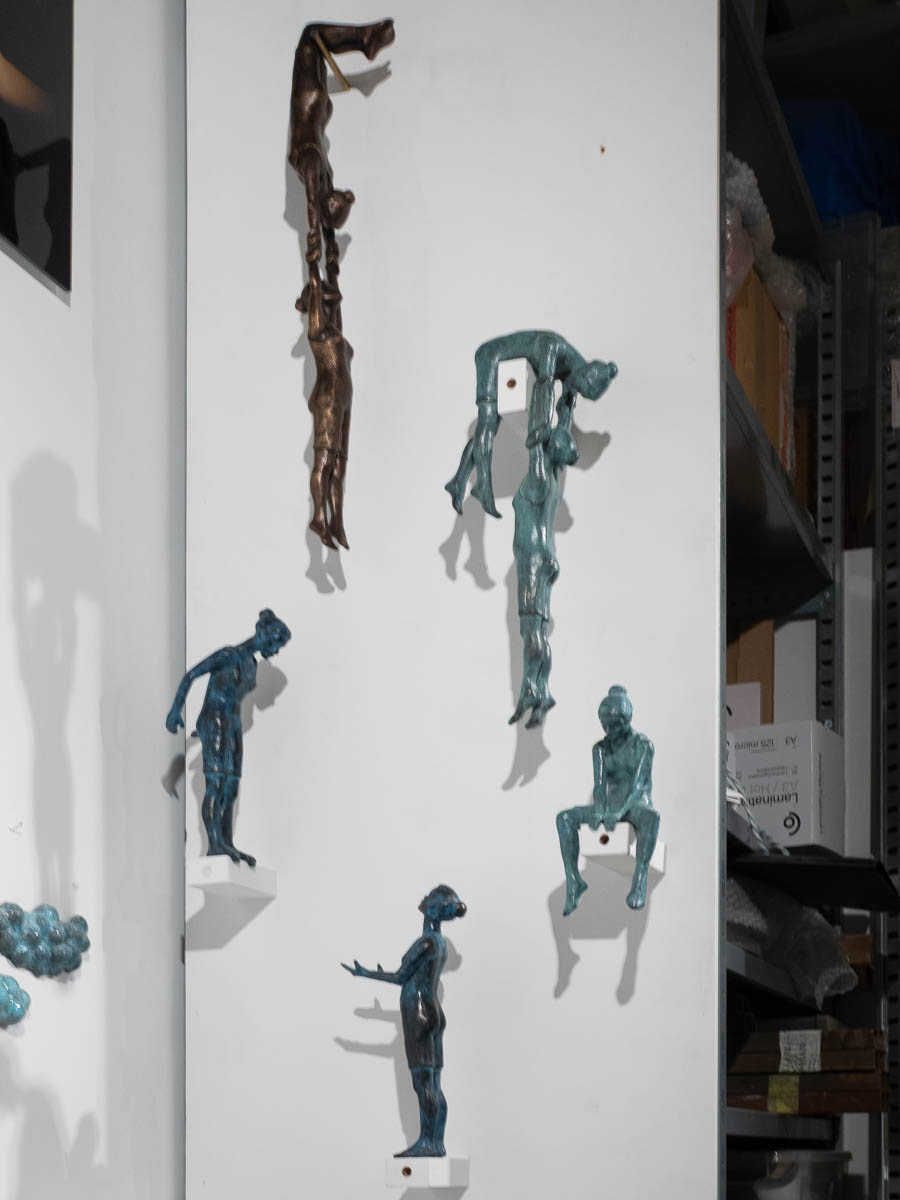
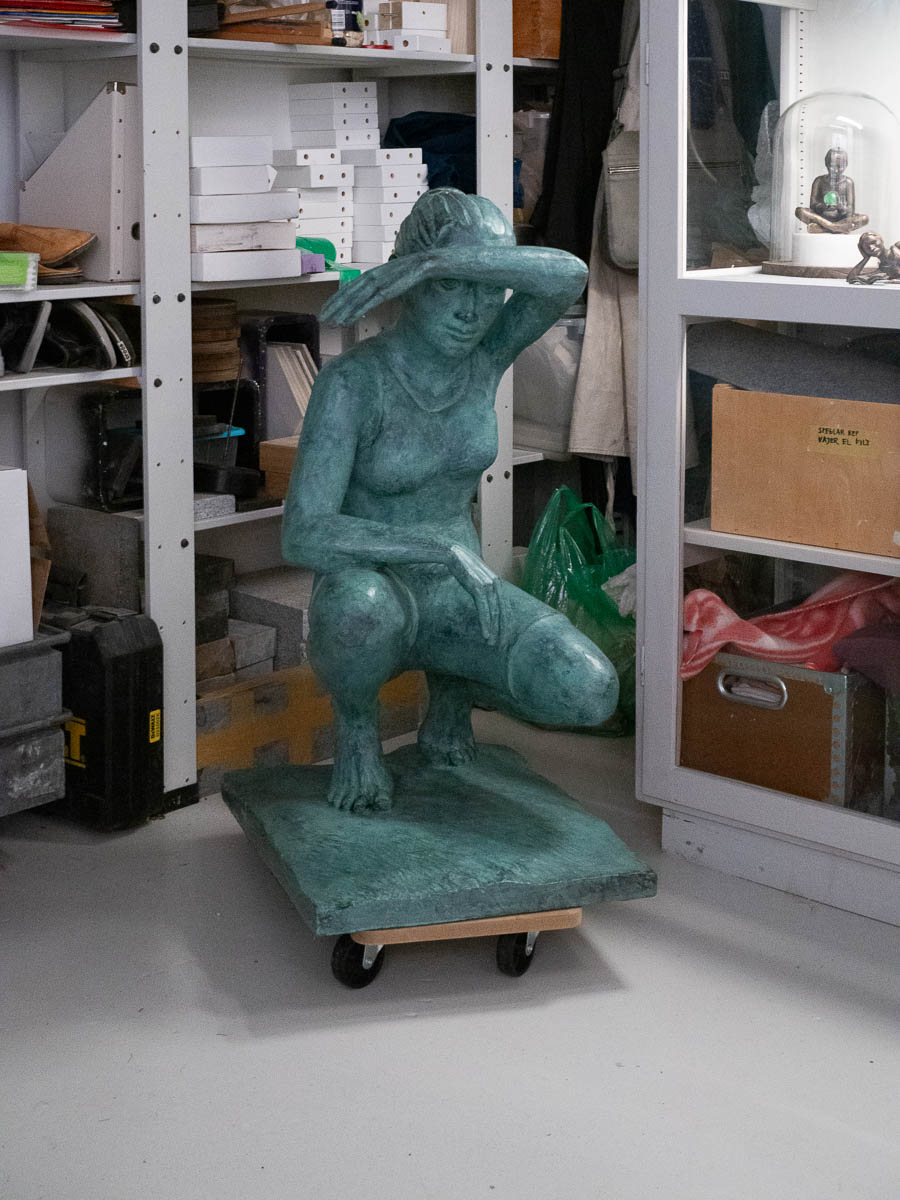
Lovely sculptures of gymnasts in the workshop of Eva Larsson.


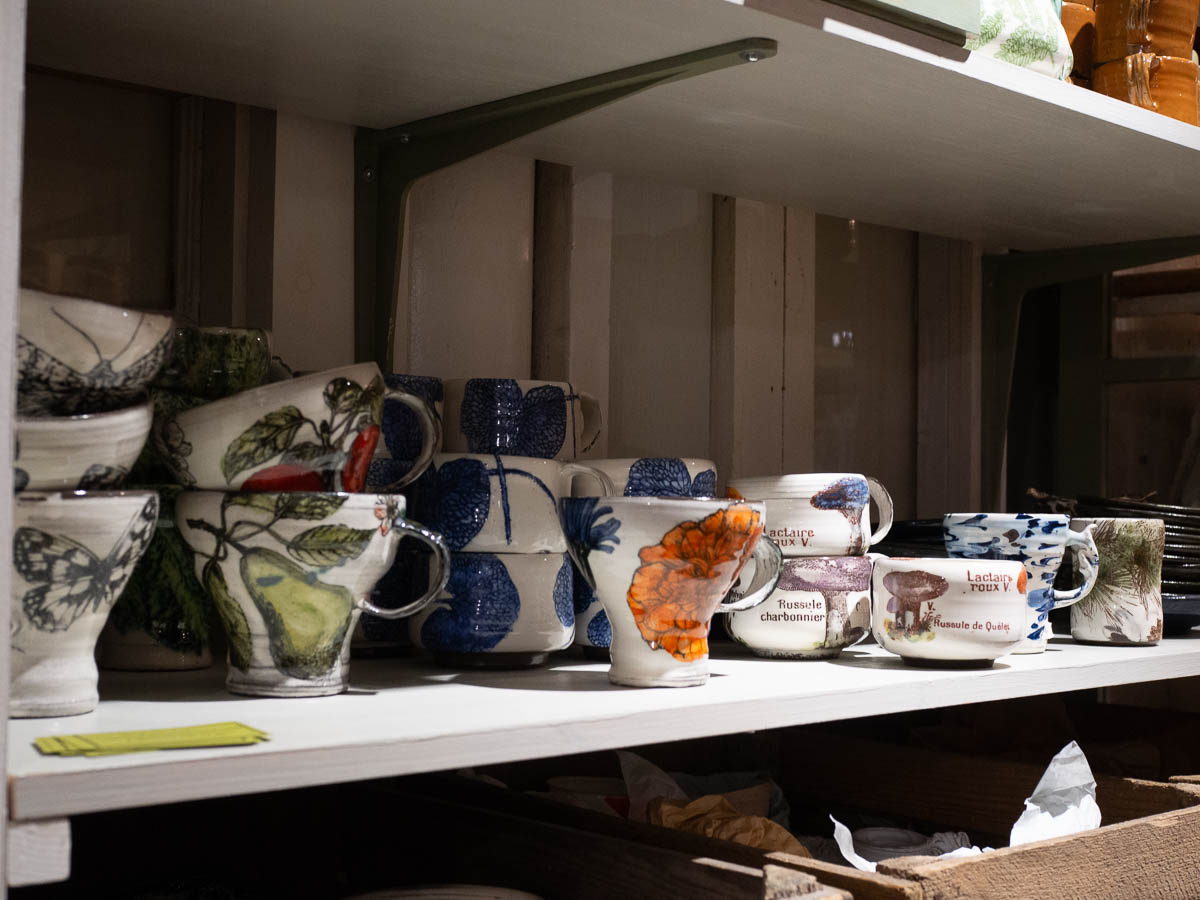
Elisabeth Ottebring was at work in her ceramics workshop, despite the late hour. I learned that most ceramics clay these days is synthetic because there isn’t much natural clay left.

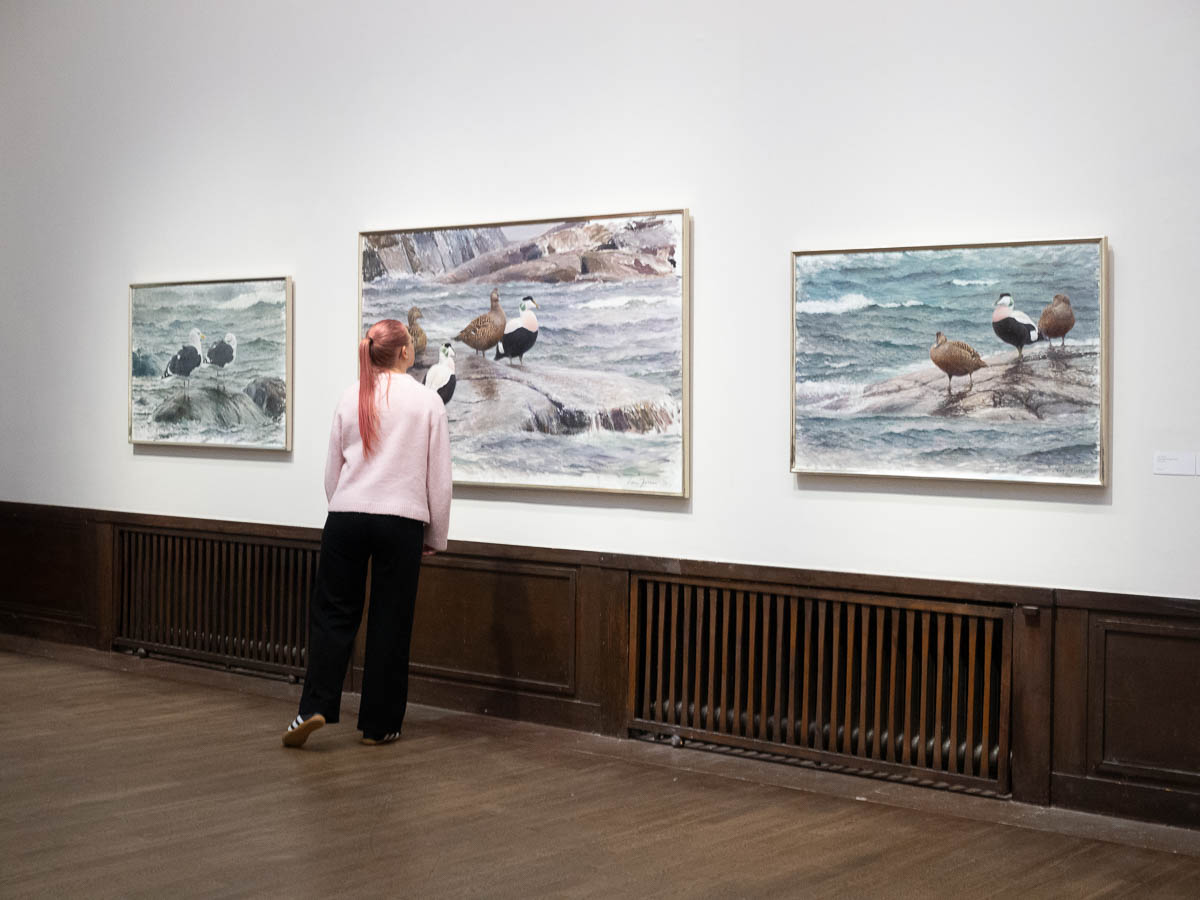
Ingrid and I went to see an exhibition of Lars Jonsson’s drawings and paintings of birds at Liljevalchs.

Exceeded all expectations. We were truly blown away.

Lars Jonsson is an artist and an ornithologist who makes incredibly life-like pictures of birds. Not primarily photorealistic, although some are, but better: where the painting captures not just the typical physical appearance of a species, but also its character and behaviour, and the details of the individual specimen, and the atmosphere of the situation. Some birds in flight are intentionally blurred at the edges; some are captured at an odd angle.

He makes all his sketches and most watercolour paintings out in nature, drawing from life. His birds are not smoothed-out averages but unique individuals.

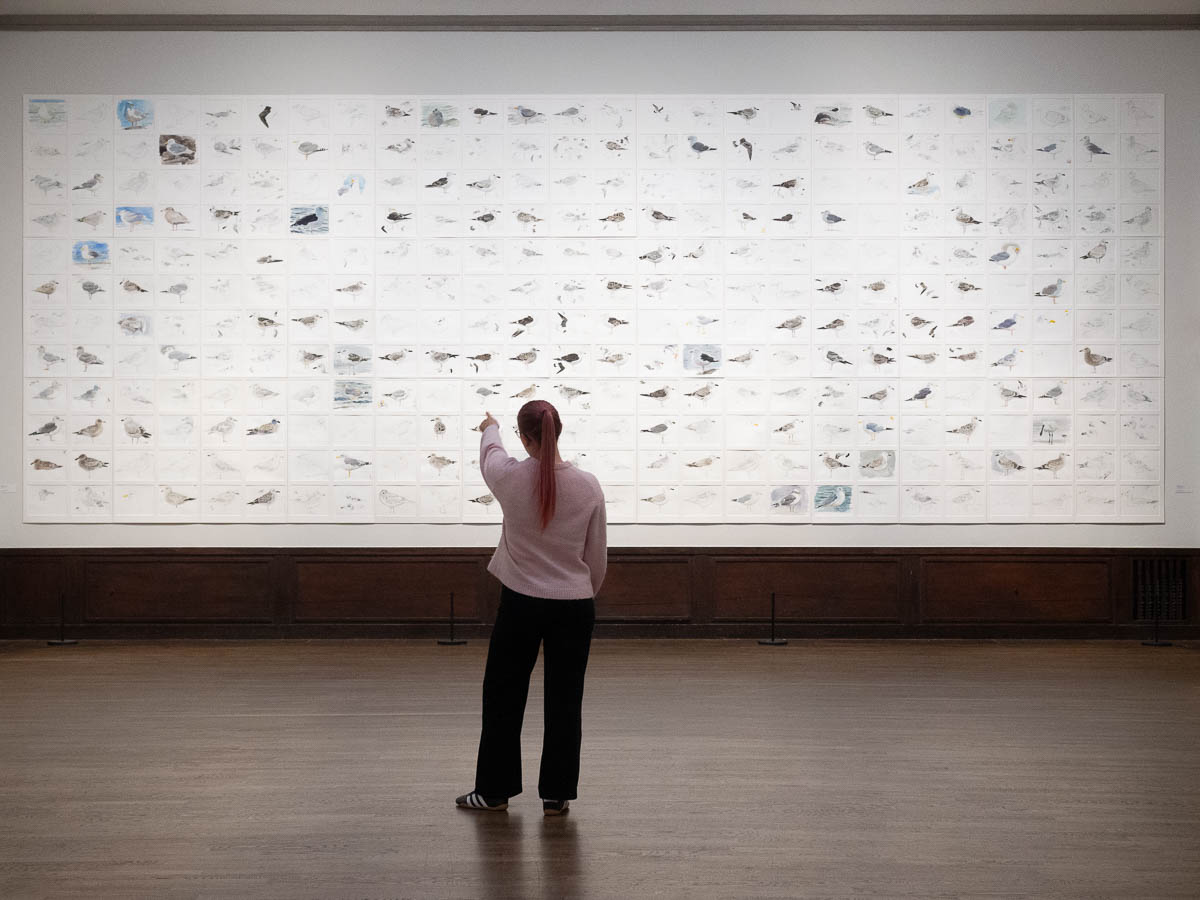
There is literally a wall with just hundreds of sketches of gulls. Some of them are multiple sketches in one: a sheet of paper with just beaks, or with several variations of the striation on their sides.

And you think: he’s able to produce this amazing work because of the decades of practice he’s put in. But then you see that even his early paintings, over forty years old by now, are amazing.

An incredible dedication; almost an obsession. After 50 years of drawing sea birds, how does he not get tired? How can he still see something new in each bird that is worth capturing?

Seeing this exhibition on a weekday evening after work was perfect. Much of the time it was just the two of us; in total I think we saw three or four other pairs of people pass. Large, calm paintings of sea birds, softly lit, in large, quiet rooms – very tranquil. Nobody passing behind us – or in front of us – when we’re backing up to take in a large painting.

If you’re in Stockholm, the exhibition is open for another 10 days, until October 12th. Very much recommended.

Lars Wallin Atelier – 35 Years of Fashion Stories at Artipelag.

Lars Wallin is a Swedish fashion designer who mostly designs unique dresses for celebrities, royalty, and presenters of shows such as Eurovision. Artipelag exhibits dresses that Lars Wallin has created for various people and now asked to borrow from the owners for this show.

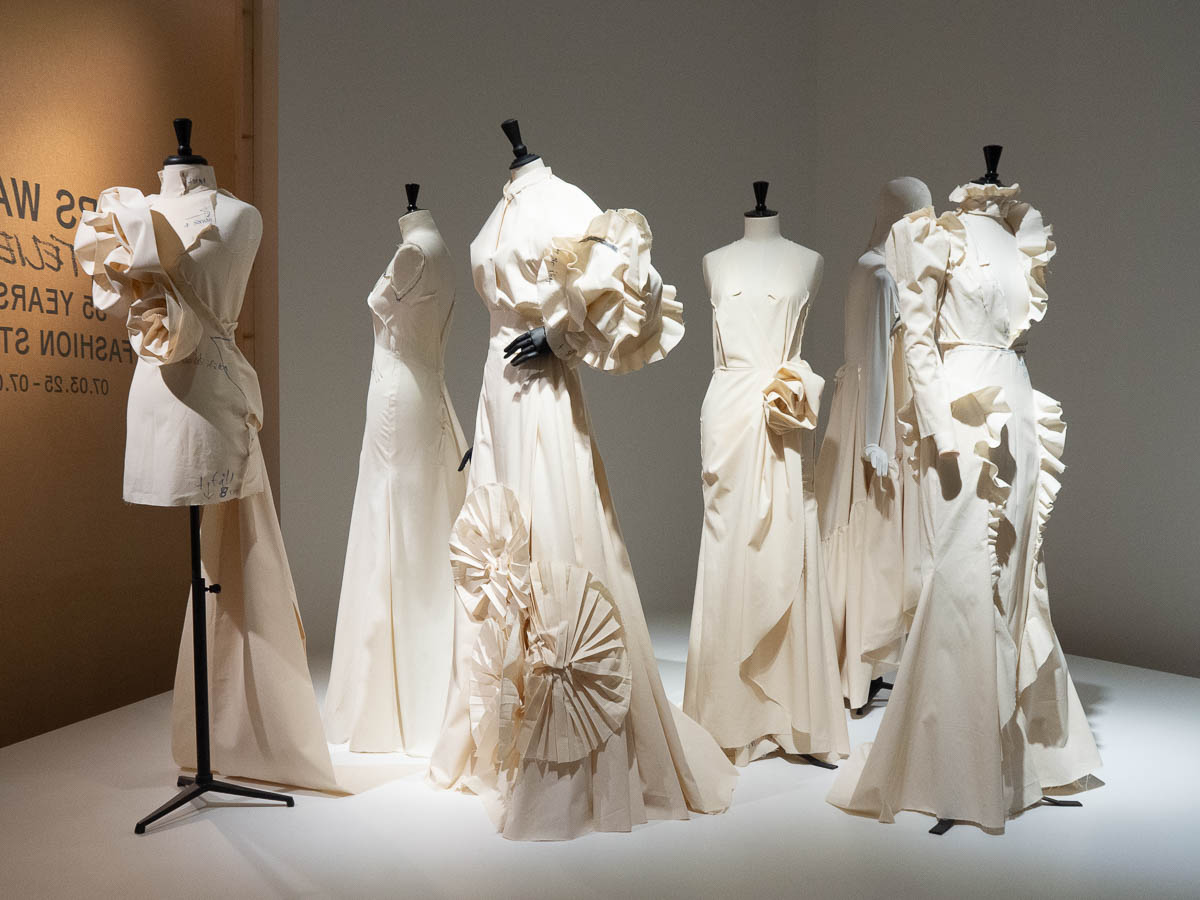
There was an introductory section with sketches and toiles, and some background info about Lars Wallin and his approach to design.

The rest of the exhibition rooms were dedicated to showcasing the dresses.

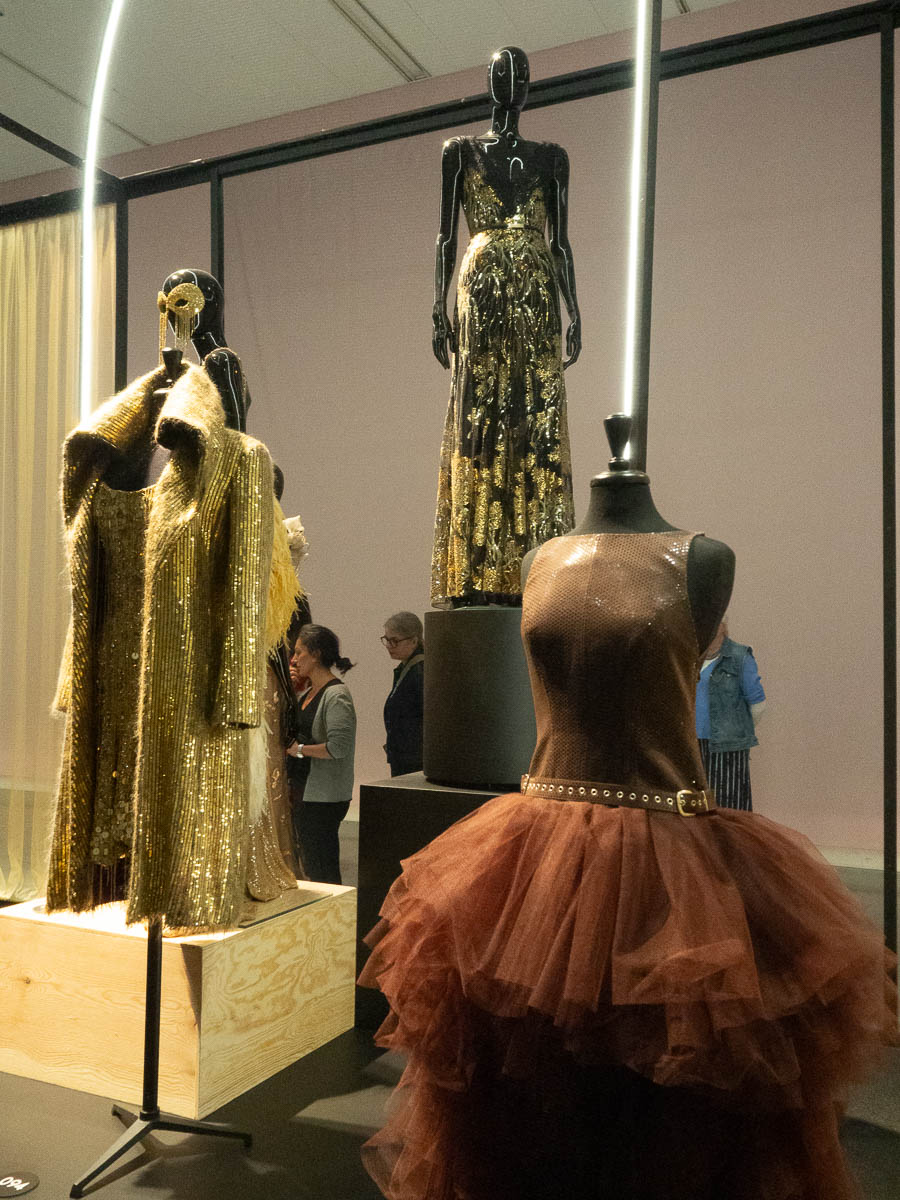
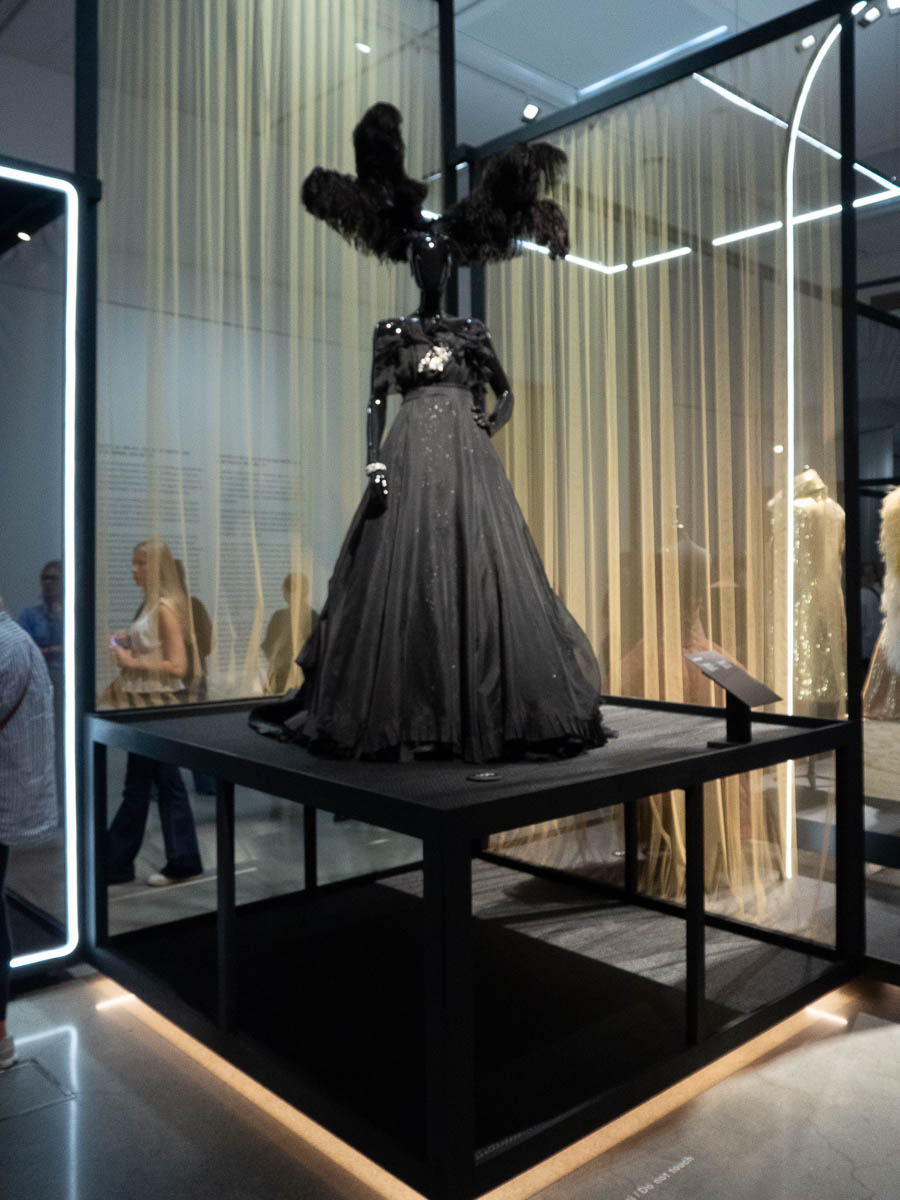
It all looked very shiny, but that was about it. I had been hoping for more. Insight into his creative process, for example, or how the dresses had been designed or made. Now it was just “dress made for this and this for the Cannes film festival” or “dress worn by this and this at the Melodifestivalen final 1994”. After a few signs like that, I just stopped reading them.

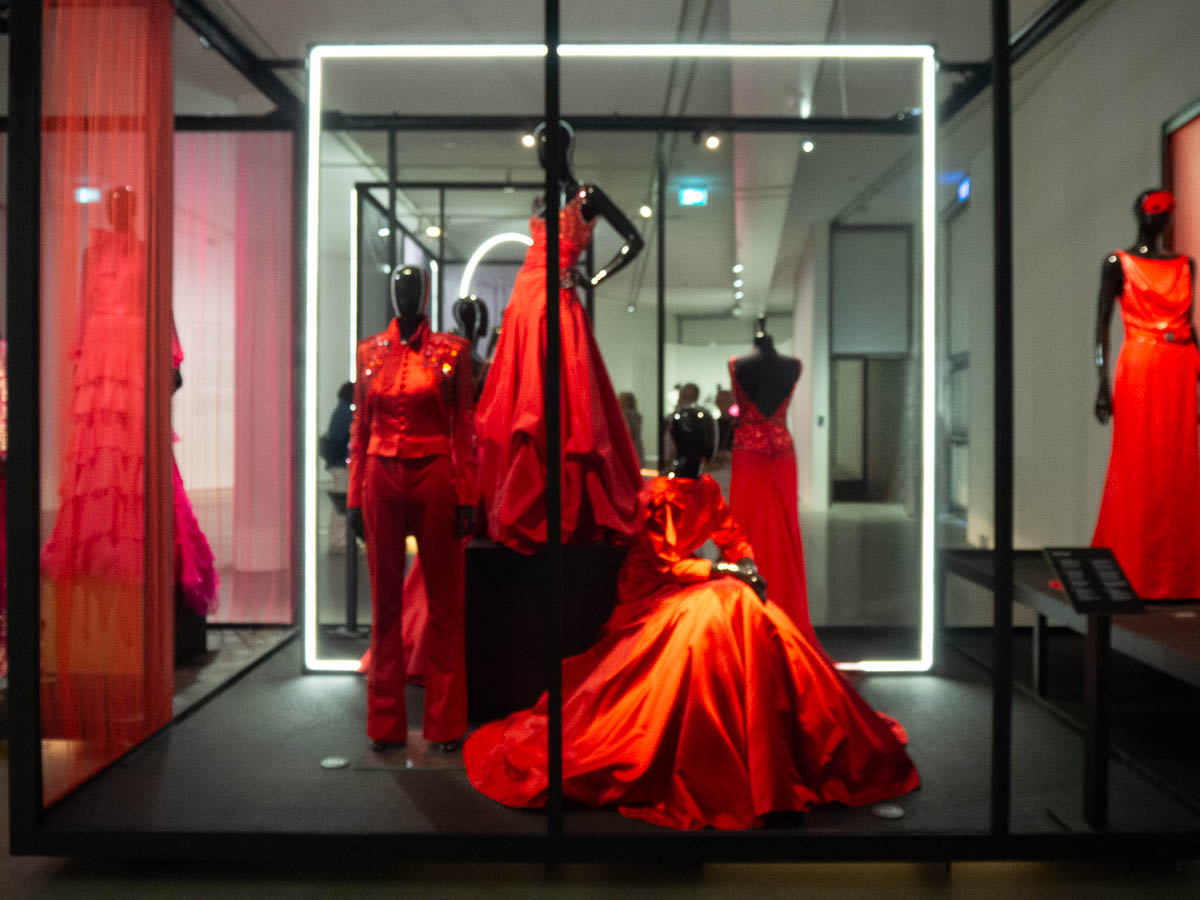
The dresses were also, frankly, kind of boring. I’m sure that the wearer felt glamorous, and Lars Wallin probably had fun designing them, but there was nothing interesting about them. Nothing that made me think “oh that’s clever” or “wow, I hadn’t realized you could do that”. No, it was just “wow, that’s a lot of sequins” and “well, that sure is very red” and even more “that looks expensive”.

This last photo of the red section is out of focus but it gets to be here anyway because it really illustrates my thoughts so well. When he makes a red dress, he makes it the reddest red, and that’s it. The next dress is equally red. There is no nuance, no subtlety. Just a lot of sameness.

This is the last weekend of an exhibition at Artipelag that I wanted to see.

Last time I was there, I took the car. Today I was carless because I’d – somewhat carelessly – promised to lend the car to someone else, not giving much thought to how I’d take myself to Artipelag. Surely there are buses or something.

There are indeed buses, but getting there by public transport turned out to require a train and then three separate buses, for a total travel time of around two hours. Or… I could cycle there, and it would only take twenty minutes longer. There and back would be a full day’s worth of cycling, so why not make a day of it. Could I spend the day in a better way? Indeed I could not.

The first bit was just getting from Spånga to central Stockholm, which was just like biking to work. After that I cycled along paths that I’ve never passed before, through parts of the city that I’ve never seen up close. A nice bit of sight-seeing, which I rarely do in Stockholm.
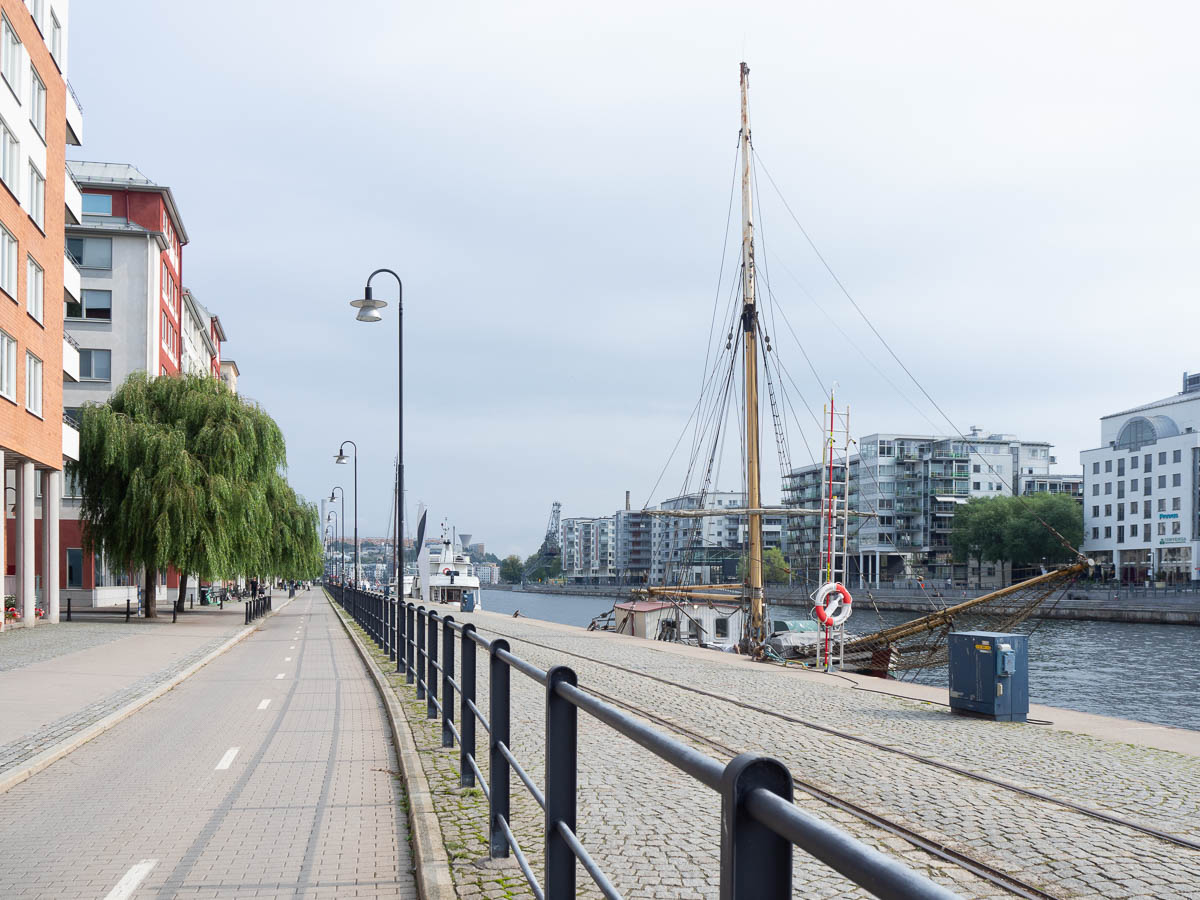
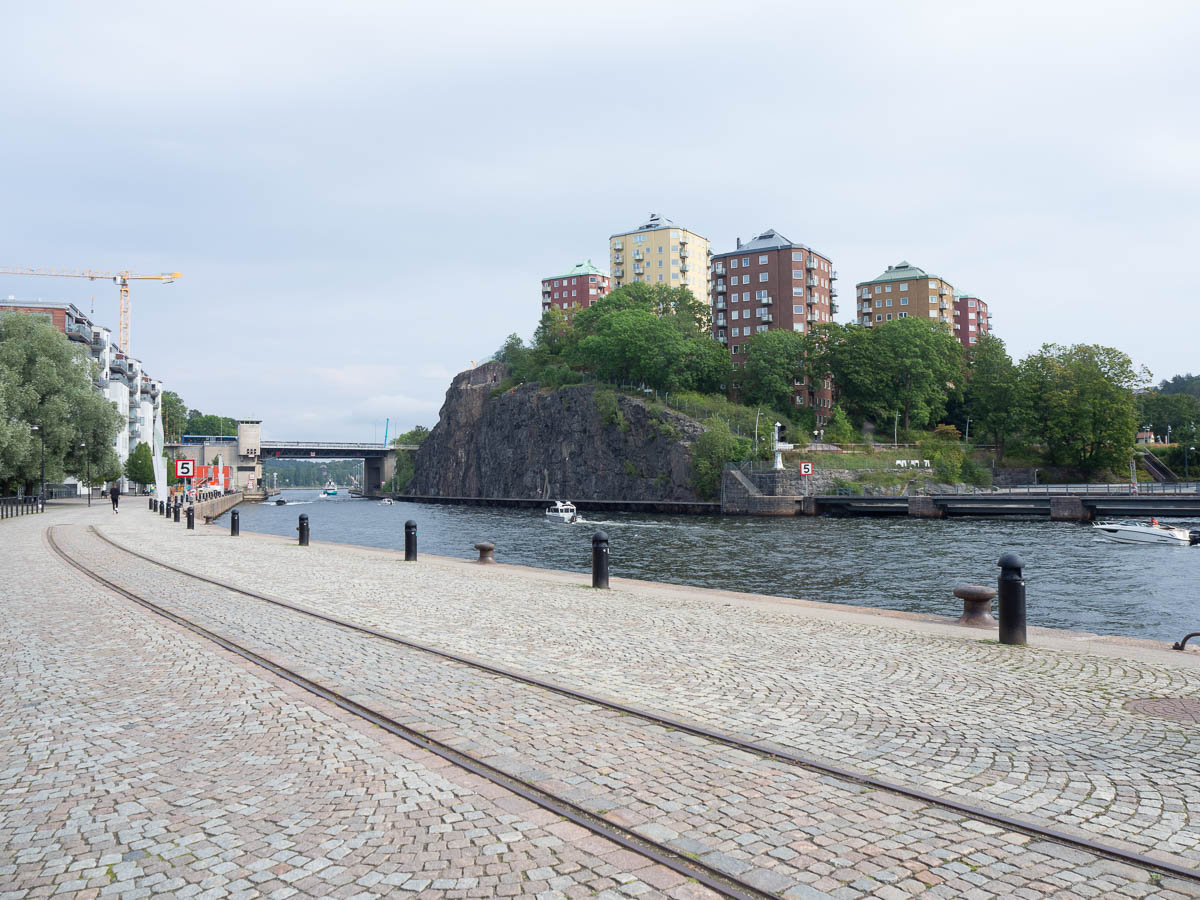
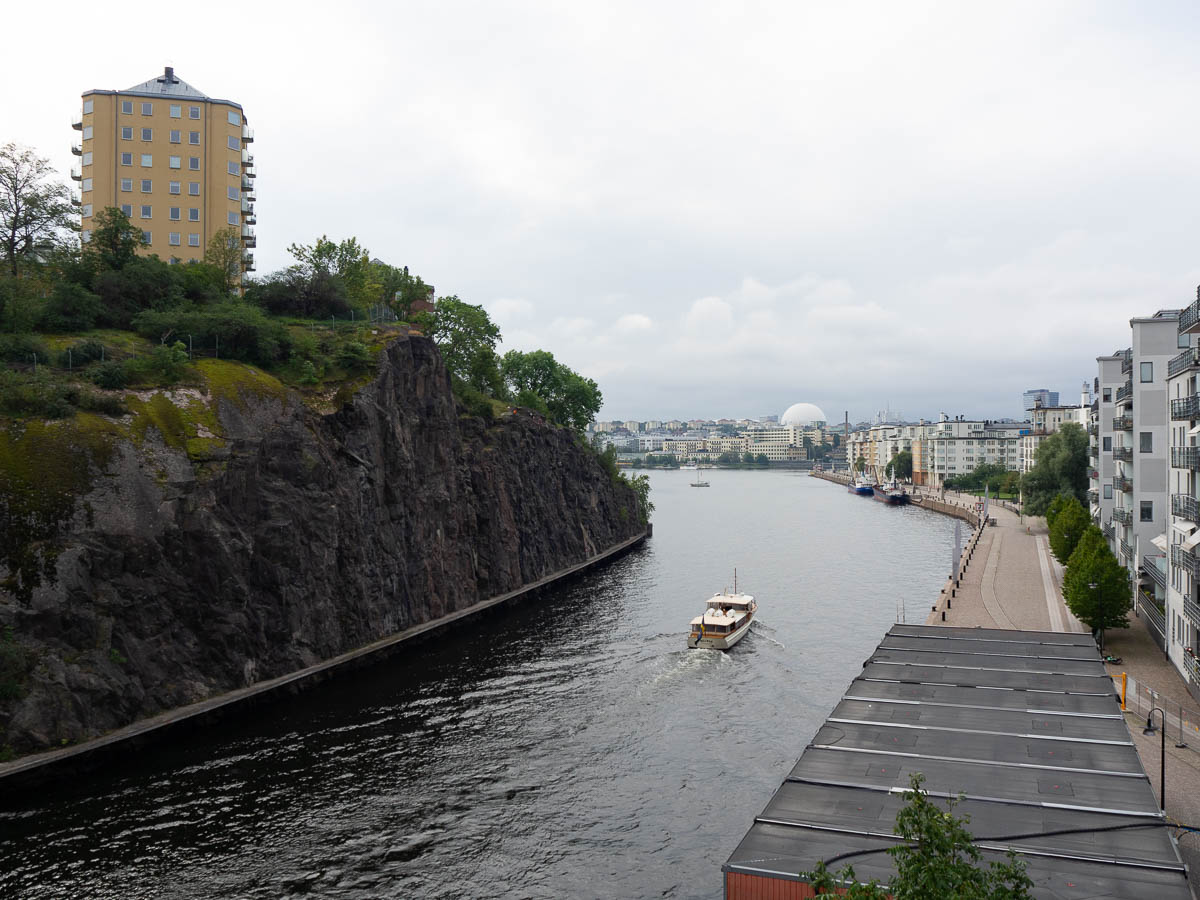
Some of those stretches through central(ish) Stockholm were rather crowded with Saturday morning joggers and dog-walkers, and it was a relief to leave them behind. The cycle paths through Nacka and Sickla were even more stressful with roadworks and blockages everywhere – so confusing in places that I struggled to even find the cycle path, and a car driver, conversely, ended up on a cycle path by mistake.

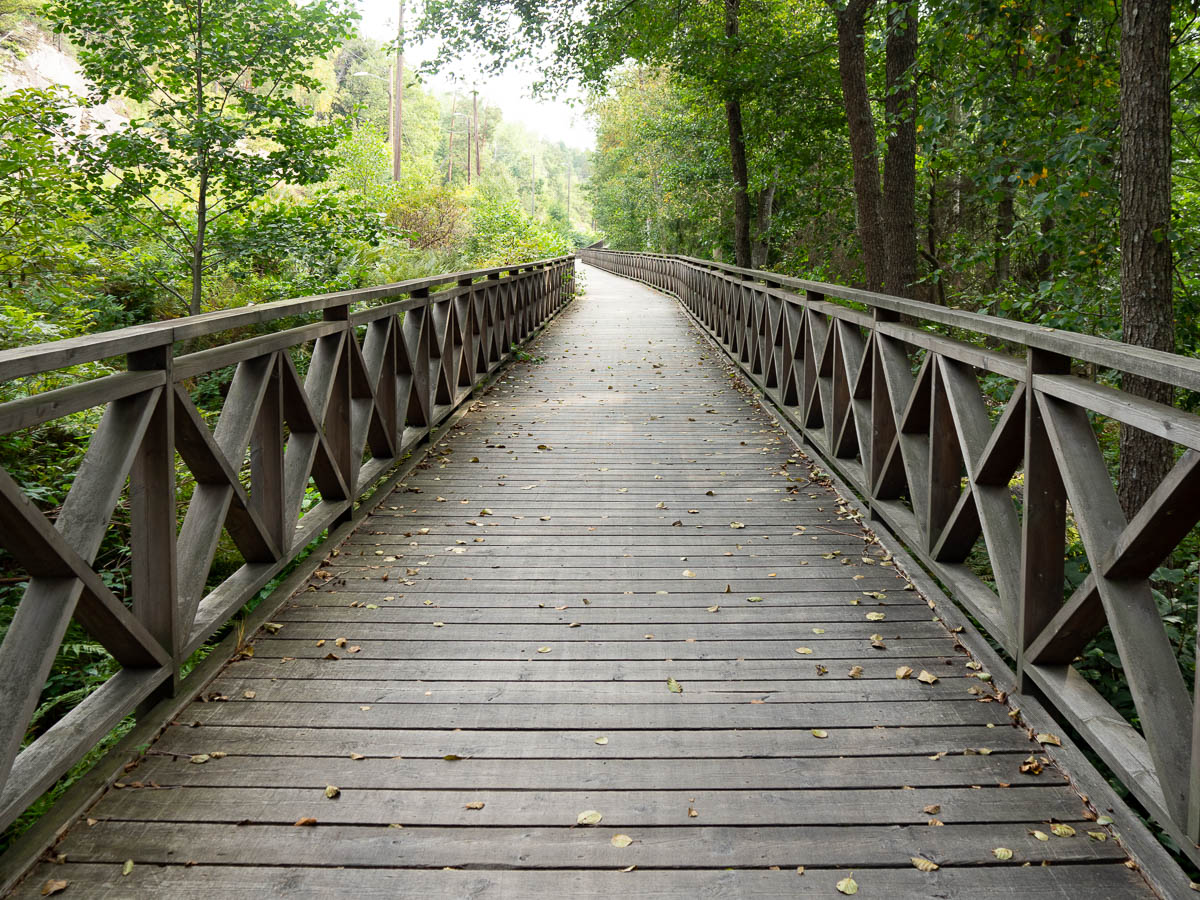
Once I got through that, there was a long and easy stretch of good cycle paths along Värmdöleden, a main road or small highway. Large and long enough to give me a good, steady road to follow, with no map-reading necessary, but still local enough to be free of heavy traffic, at least on a Saturday.
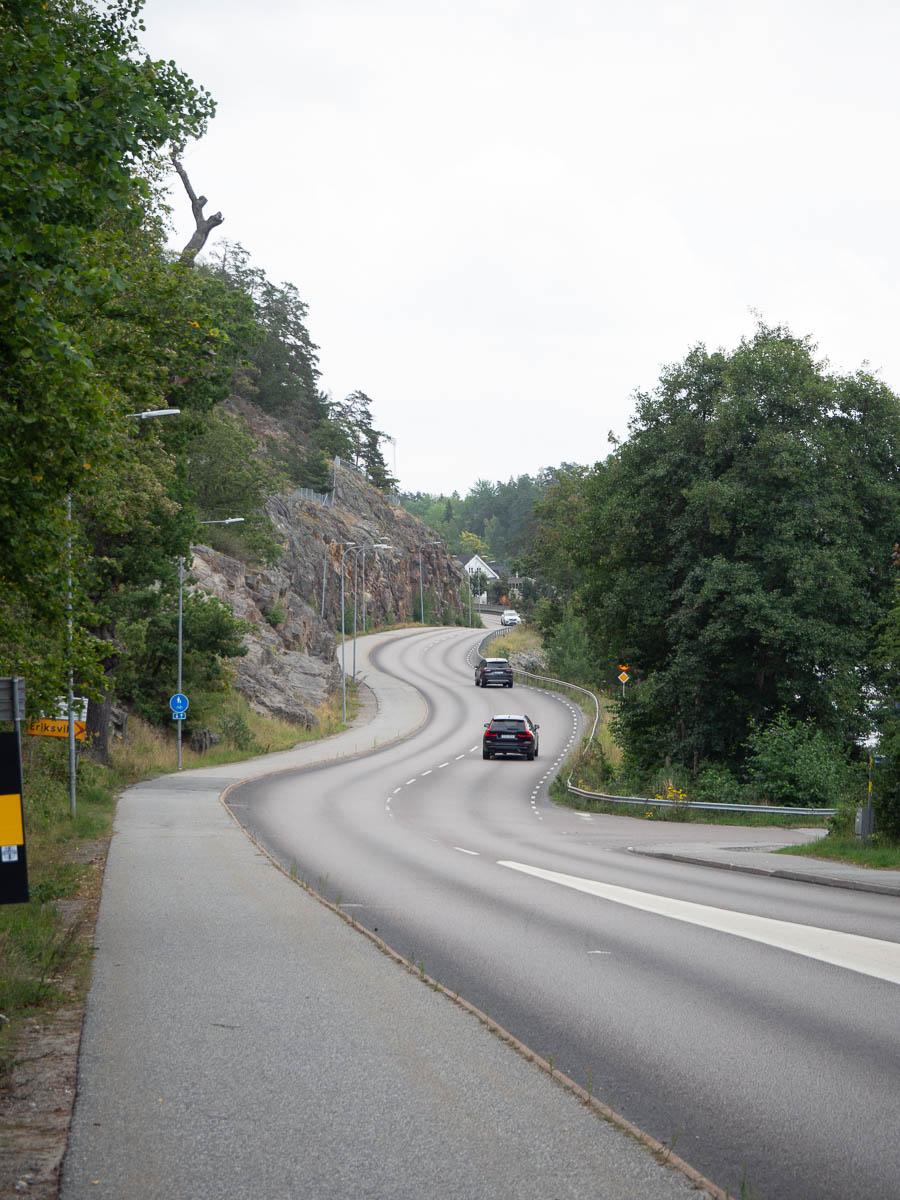
The further I cycled, the more rural the road got. Near Gustavsberg the cycle path left the main road and got onto smaller tracks and roads.
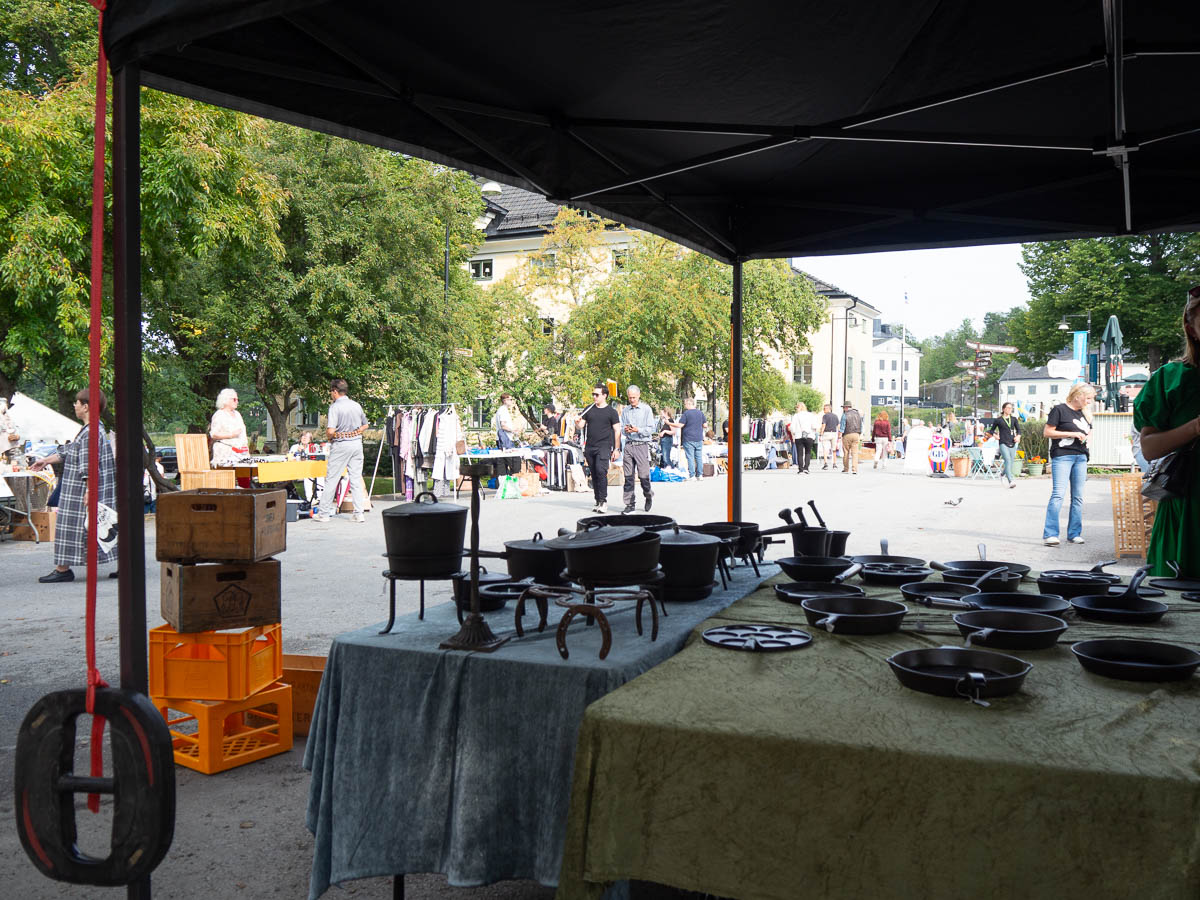
In Gustavsberg I ran across a flea market. I browsed around without much hope of finding anything, mostly to take a break. Most flea markets are full of cheap clothes and boring glass and ceramics. Here, though, I found a whole market stand full of cast iron pots and pans! I’ve become more and more fond of cast iron cookware recently and added more to my cupboard. They’re expensive, so I’ve been on the lookout for good used ones. I found a good-quality small pan here, exactly what I needed.
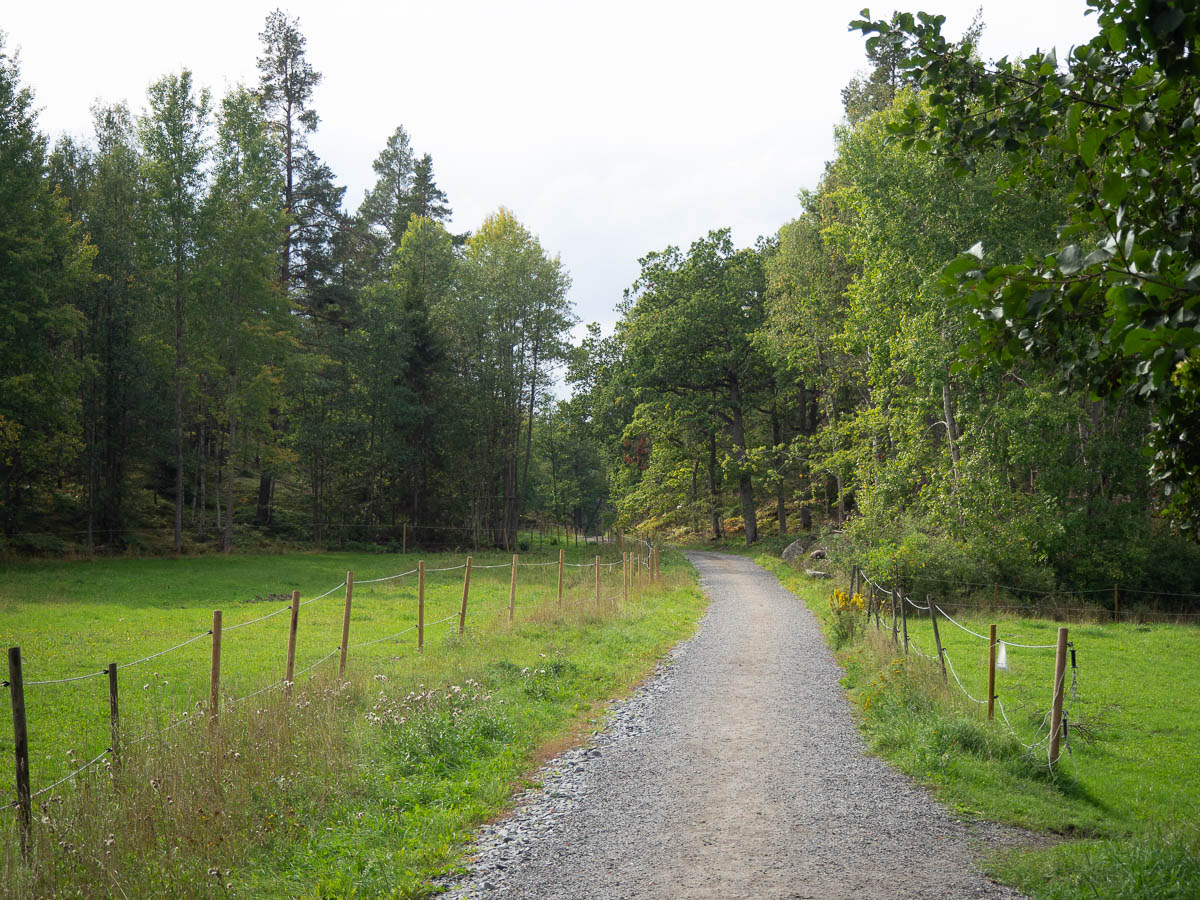
For the last bit after Gustavsberg, I was cycling on forest paths and small local tracks.
With all the water breaks and map-reading, it took me closer to three hours to reach Artipelag, and I was quite ready for lunch by that time. Artipelag has both a restaurant and a café. The latter served excellent lunch at very reasonable prices. And cake! It felt a little bit like I was cheating on Spånga Konditori by eating fancy cake elsewhere.
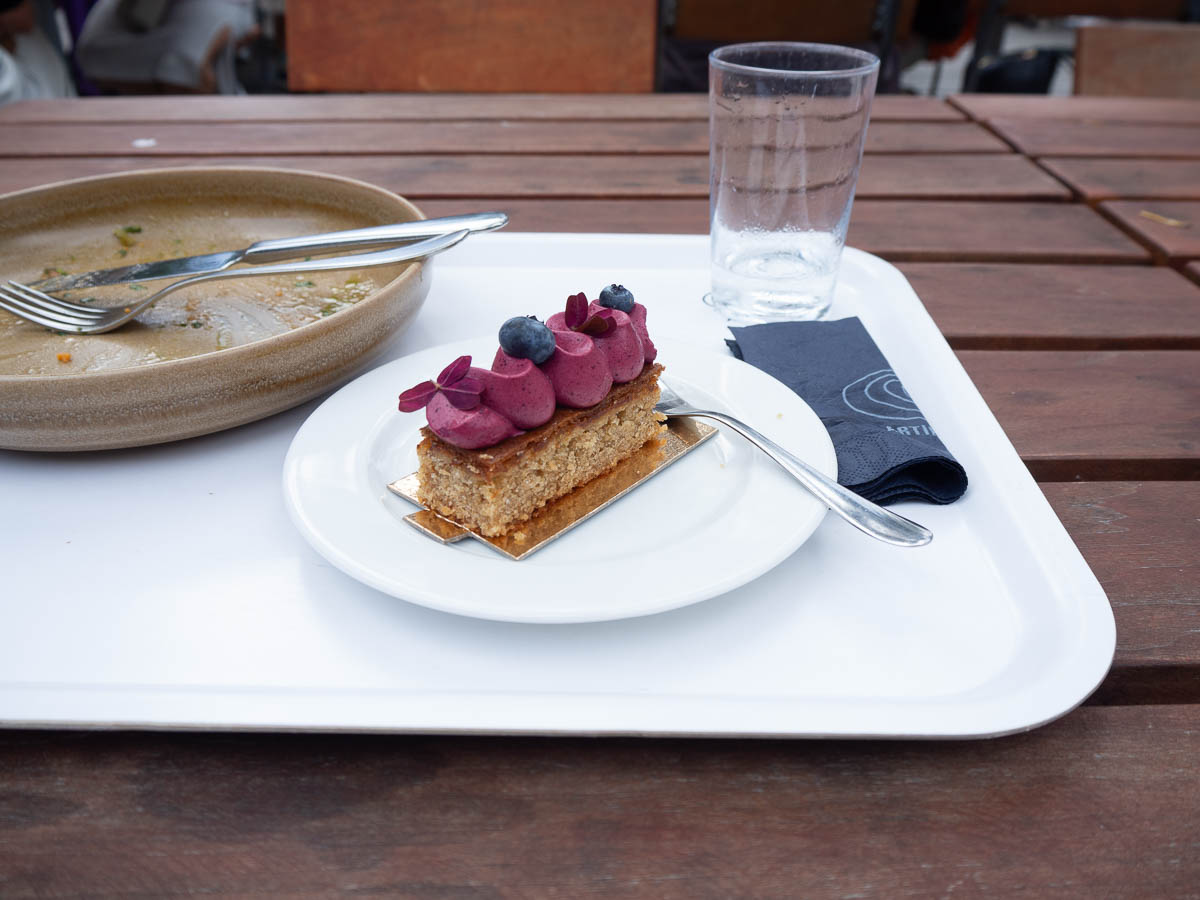
I’ll have to make a separate post about the exhibition because this is long enough already.

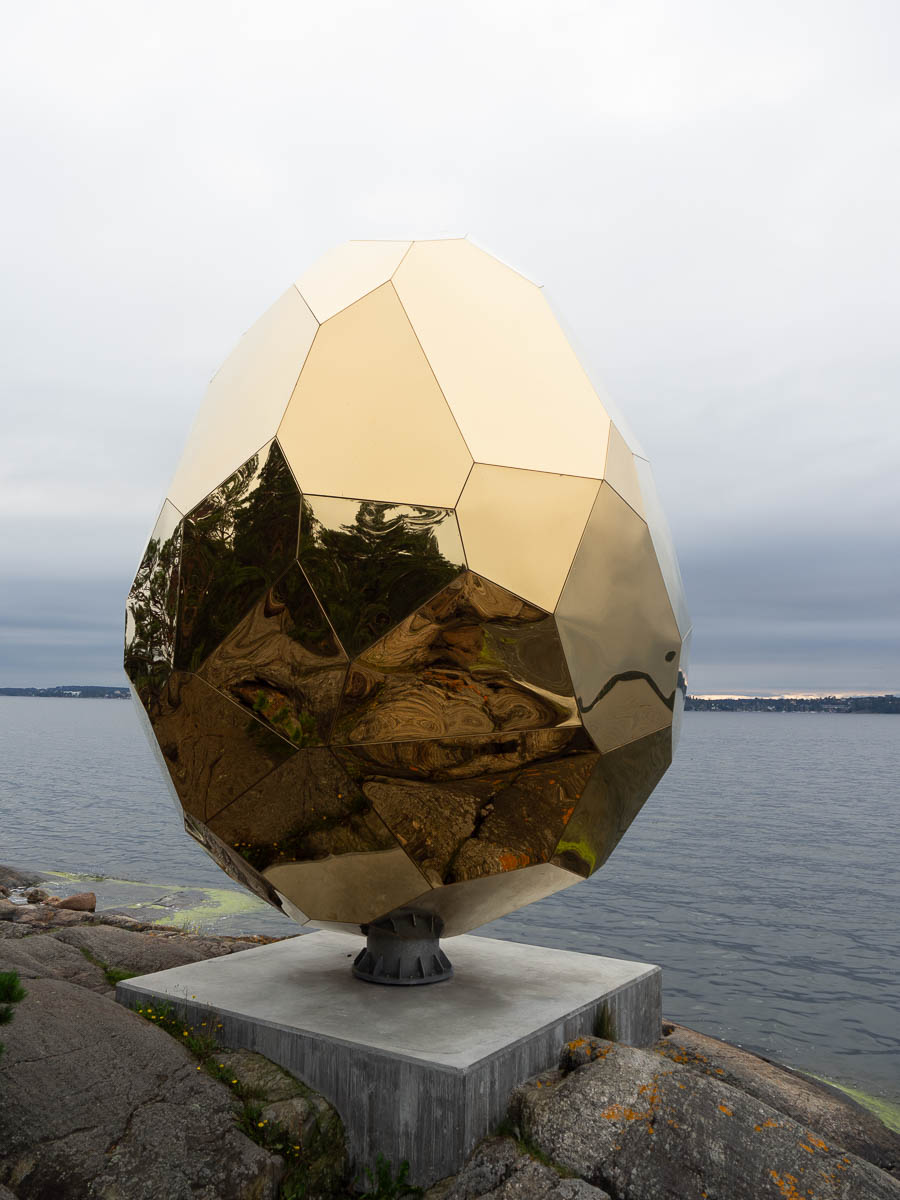
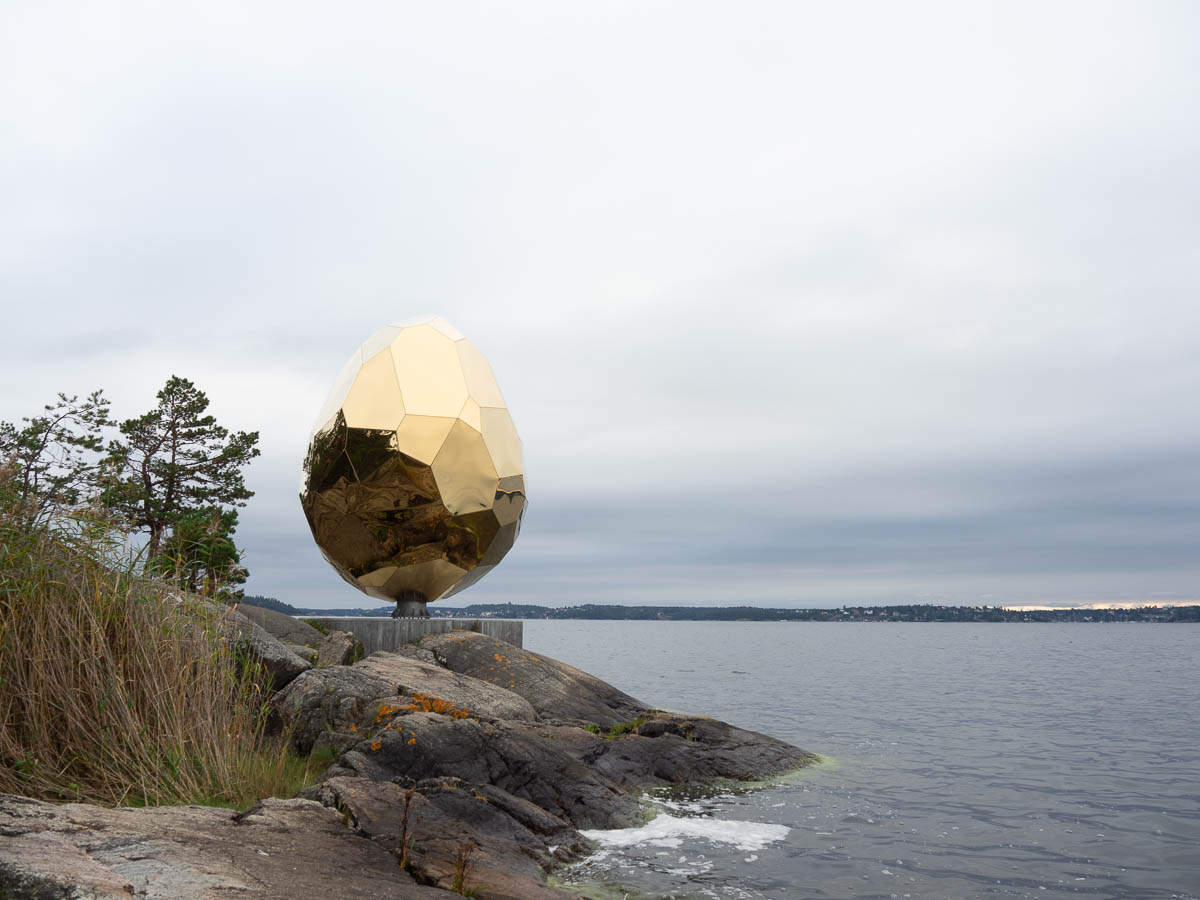
Afterwards I took a short walk around the grounds to see bits of the outdoor sculpture exhibition. Mostly not very exciting… but I loved the Solar Egg. It was originally commissioned for Kiruna in conjunction with the town being moved, and apparently has a sauna inside. Here the sauna doesn’t seem to be open or functioning, so the egg is just a sculpture.

It’s a roughly egg-shaped irregular polyhedron, six metres tall, and it’s strikingly beautiful. More golden than gold, sunnier than the sun itself. Against a grey sky, it was like a revelation from another world. Stainless steel mirrors with titanium gold colour coating, according to the makers.
I didn’t stay around for too long, since I still had another 40 km of biking before I’d be home. After two thirds of the way, when I was in reach of the commuter train network, I briefly considered getting on a train with my bike. But the bit that was left was no more than my daily commute home, and that’s nothing, so I just kept going.
Saw Alexander Ekman’s Midsommarnattsdröm (“A Midsummer Night’s Dream”) at the Royal Opera for the third time. In part for lack of alternatives, but also because I enjoyed it the last two times.

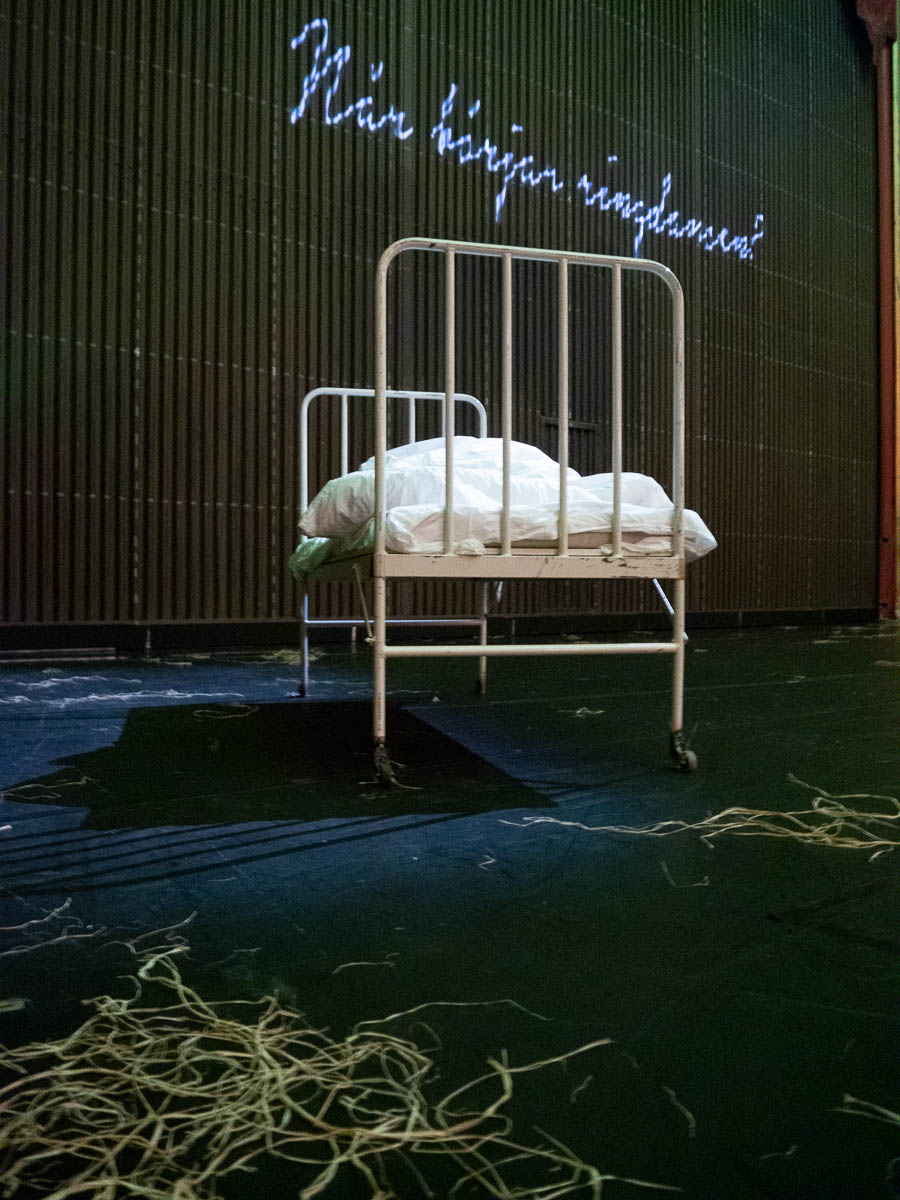
I’ve wondered every time about the fake hay that the dancers throw around. It’s like… better hay than real hay. It’s got stalks of a good, even length; the right amount of bend and give; a nice swish and fluff. Probably also less scratchy, more durable, less dusty and less allergy-inducing than the real thing.

This time I walked up to the scene in the interval and checked the “hay”. Even up close it very much looked like hay, even though it obviously wasn’t. Very thin paper, similar to paper string, thin and durable.

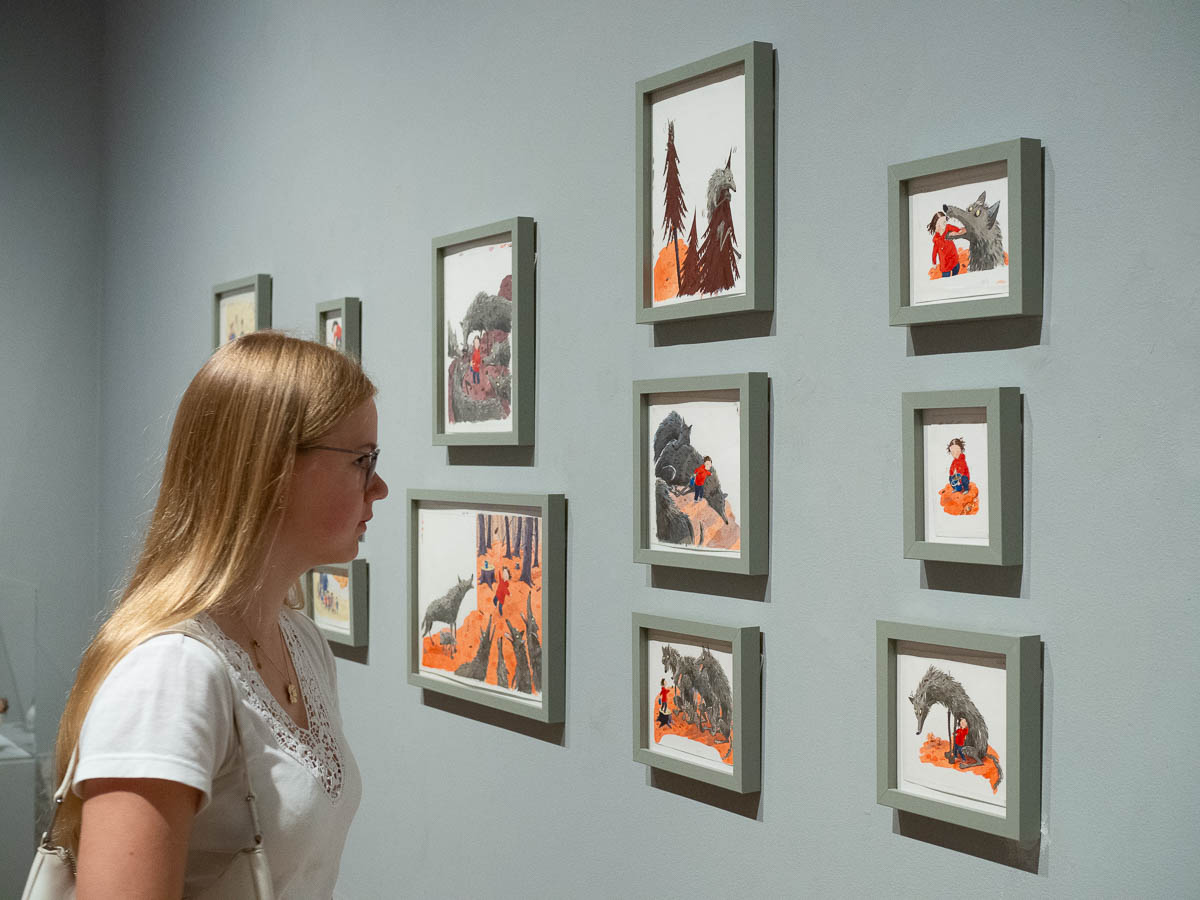
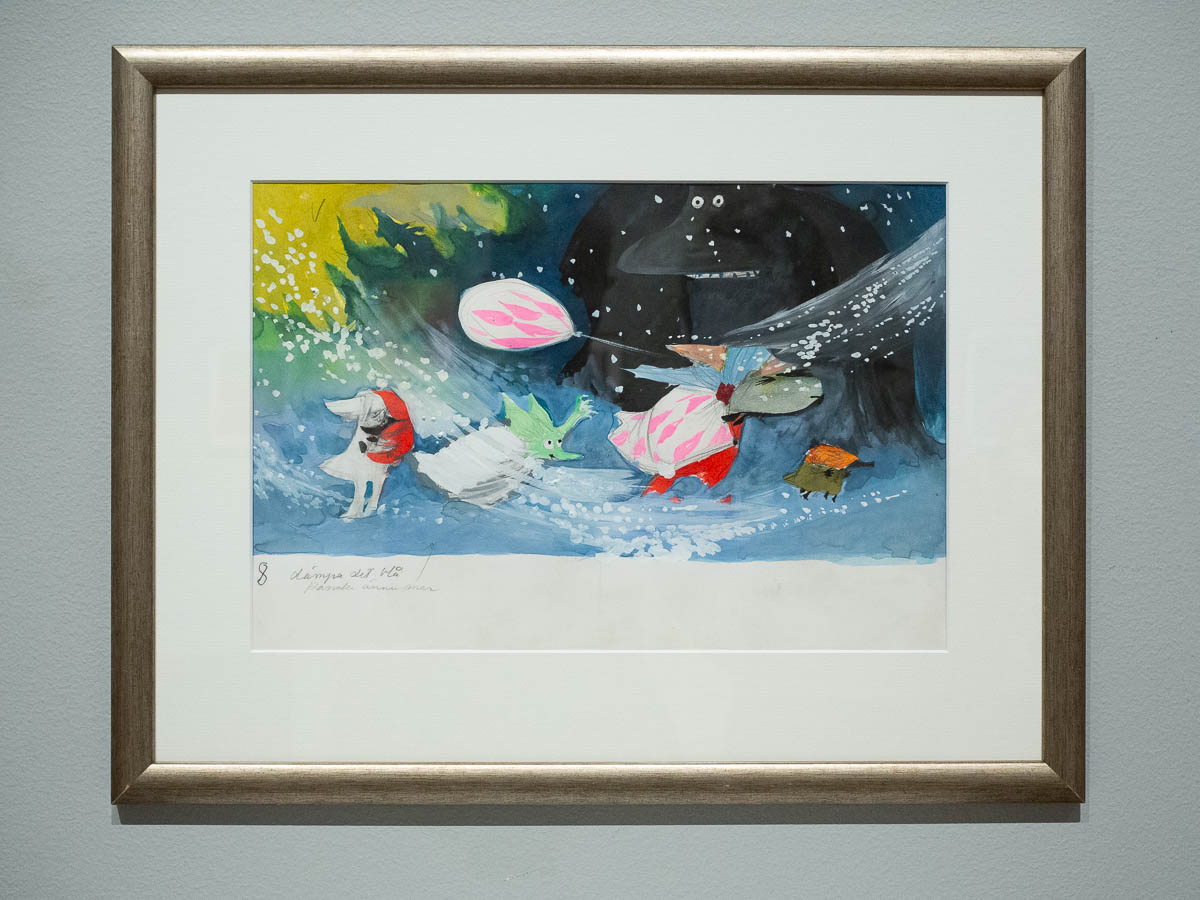
Ingrid and I saw an exhibition at Waldemarsudde with four popular Finnish/Swedish/Estonian illustrators of children’s books: Tove Jansson, Ilon Wikland, Pija Lindenbaum and Linda Bondestam.

Tove Jansson is, of course, the creator of the Moomin books, which I read already when I was a child. Ilon Wikland illustrated many of Astrid Lindgren’s books, many of which were also translated into Estonian already back in the 1980s. Back when the children were children, I read a lot of those books again together with them.

I’m not sure how well known Pija Lindenbaum is outside of Sweden, but she is very well-known here. She has been giving out at least one book a year since, like, 1990, and some of the best ones came out just as Ingrid was in the picture book age, so we read those over and over again.

Linda Bondestam became active more recently, after Ingrid and Adrian had outgrown picture books, so I hadn’t come into contact with her work before.

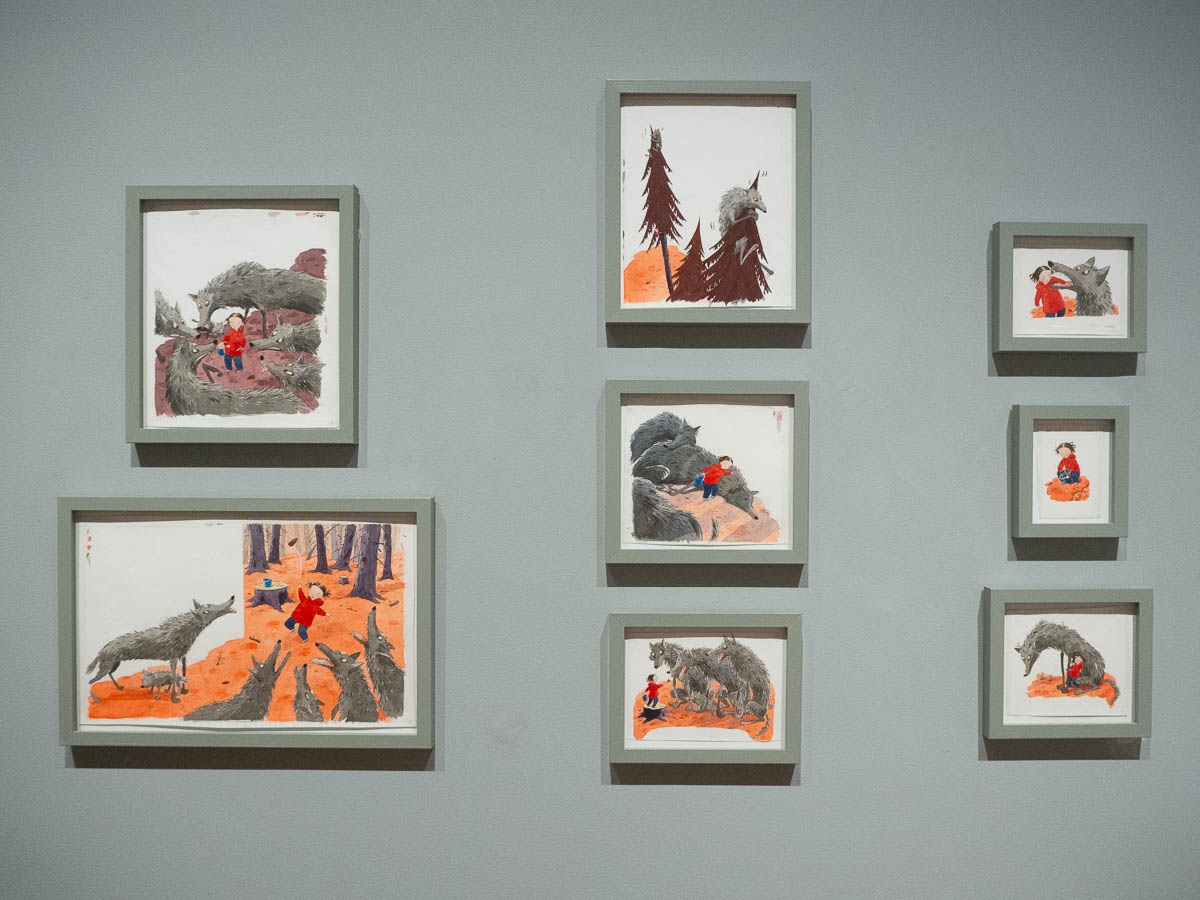
I loved this exhibition. There was lots of material, not just originals of the finished illustrations themselves (which were numerous) but also early sketches, notes, colour palettes, character studies, storyboards, etc. A fascinating look behind the scenes.

The illustrations themselves were interesting. Sometimes much smaller than I had thought (especially some Moomin drawings were tiny) and sometimes much larger (Linda Bondestam likes to work on a large scale).

Fascinating to see the tiny means by which a wolf’s eyes and snout can communicate its mood and feelings.

Seeing the pictures all like this, without any text and story to distract from them, highlighted the importance of layout. A normal picture utilises a canvas in whatever way it wants: sometimes all of it, sometimes just a part. But an illustration (at least in modern children’s books) takes text layout into account from the start. Sometimes leaving room for a lot of text, sometimes just a line or two. Sometimes stretching out to overlap with the text, or reaching out of its assigned area to play with space.

I was surprised to see how boldly Tove Jansson used colour in some of her works. In my mind the Moomin illustrations are black and white ink drawings, and where they are in colour (such as in Vem ska trösta Knyttet) it’s mostly plain fields of colour. But here were some very dynamic scenes.

Now I feel like re-reading all the Moomin books, and other works by Tove Jansson as well.

Liljevalchs spring salon. As usual, an eclectic collection of works. Marble busts exhibited side by side with oil paintings and a sculpture made out of old shirts.

The first room was dedicated to Young Spring Salon as usual. I liked this pair of rabbits, in its simplicity.

Like last year, the works that I found most interesting tended to be textile in nature. Some embroideries, some crocheted pieces, some textile sculptures.

I liked these textile sculptures that made me think of alien plants.

The embroidery on these kitchen towels is based on food stains left behind by the artist’s grandchild. A series of five pieces: breakfast, snack, lunch, snack, dinner.

My absolute favourite was a set of crocheted tree stumps. Incredibly detailed, with creatively chosen materials and techniques to create tiny fungi, lichens, bracket fungi, etc. All very prettily and dramatically presented in a darkened room in brown earth tones.


The photorealistic candy felt familiar. I think perhaps it was also represented last year. Still as eye-catching now as it was then. I had to walk up close and check that it really was a drawing.

Ingrid and I saw 1984 at Stadsteatern.

During much of the performance, sound was provided through headphones. It felt odd and kind of gimmicky at first, but it also worked. Winston’s quiet musings and diary entries could be delivered quietly, intimately. And the subtle hints of there being someone else there, prompting him and asking questions, also worked because these sounds could be subtle, barely there. A whisper is no longer a whisper if it is delivered through a loudspeaker, or by an actor projecting his voice through a hall.

Otherwise: intense, minimal, true to the original. (To the extent that I remember the original, which I last read, oh, thirty years ago?)