I was going to work on my Stockholm embroidery every day until it is done, and I really have, but I took a cheat day today. I found an active dogma embroidery group on Facebook and jumped right in.

Dogma embroidery is rule-bound, and at the same time the ultimate expression of free embroidery. Or maybe very free-ing. There is no goal to work towards. The thing you embroider isn’t aiming to become anything else. You’re not following anyone’s design, not even your own (if you’re actually following the principles and just doing).

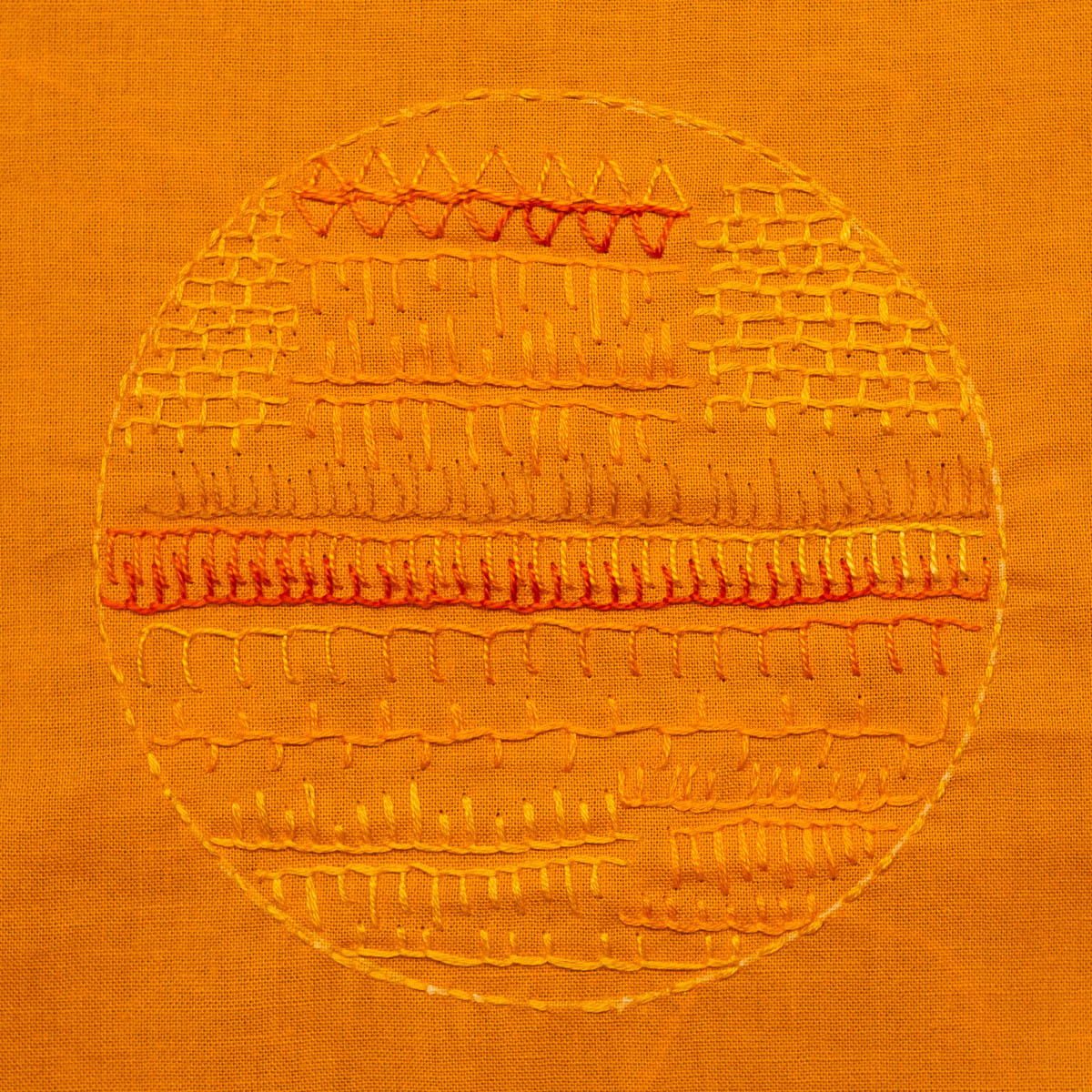
Use fabric in your favourite colour. Use thread in the same colour, but in different qualities and values. Use only blanket stitch, in horizontal lines.

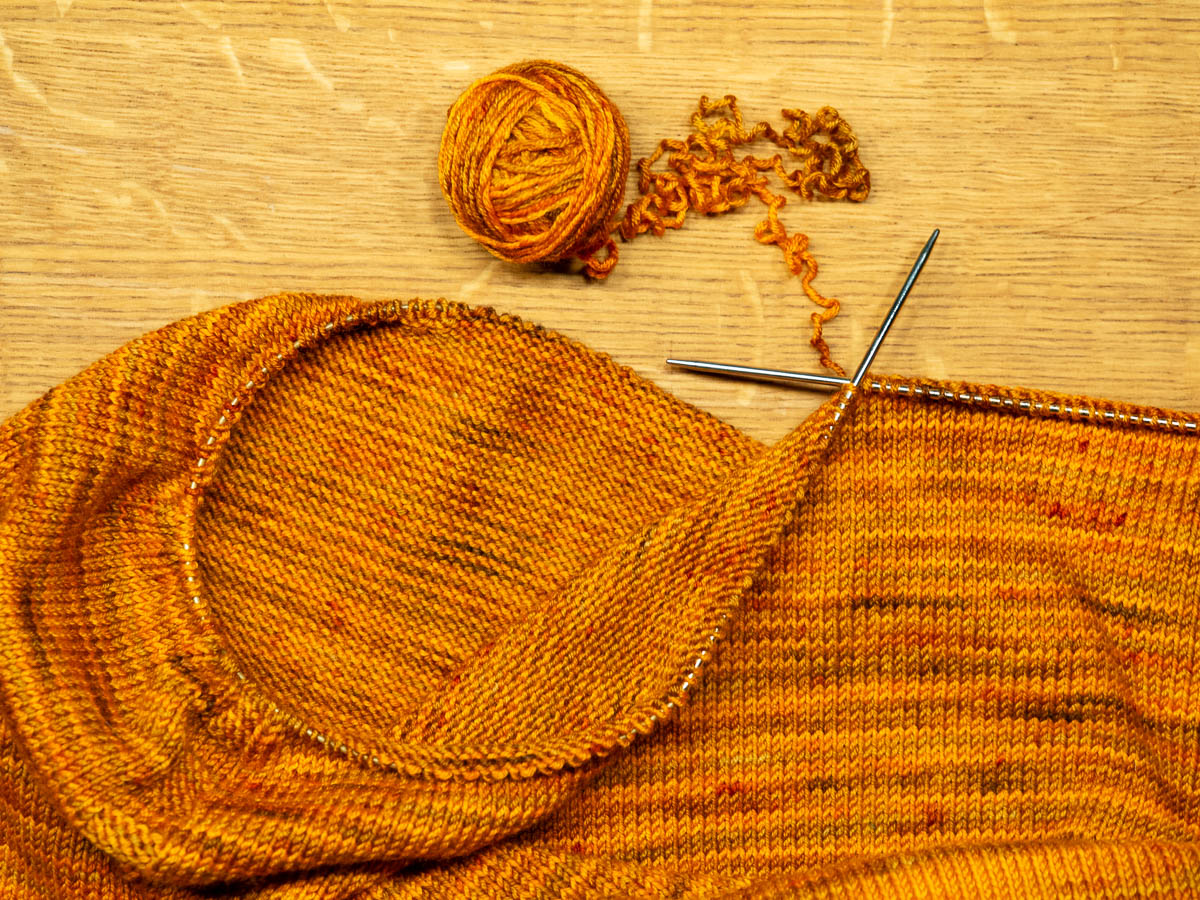
I didn’t have much orange fabric to choose from at home, and not much variety in the way of thread, either. Two kinds of orange DMC embroidery floss, a variegated red-orange-yellow perle cotton, and one wool thread that I remembered as looking orange against other backgrounds but that became more of a muddy red-brown against this bright orange cotton. But it was a pleasant exercise.

A new attempt at sourdough bread. Using the same recipe as last time, and applying all the learnings from that first try, I got even better results. Totally presentable, nice and even in shape and texture, delicious crust, not at all doughy, great flavour. This is very doable.

I think my main challenge will be remembering to feed the sourdough starter so that it can survive from one baking to the next. It’s taken me six weeks to eat the two loaves I made last time. Most days I don’t eat breakfast, and even when I do, I don’t want to eat the same bread every single time, no matter how good it is.

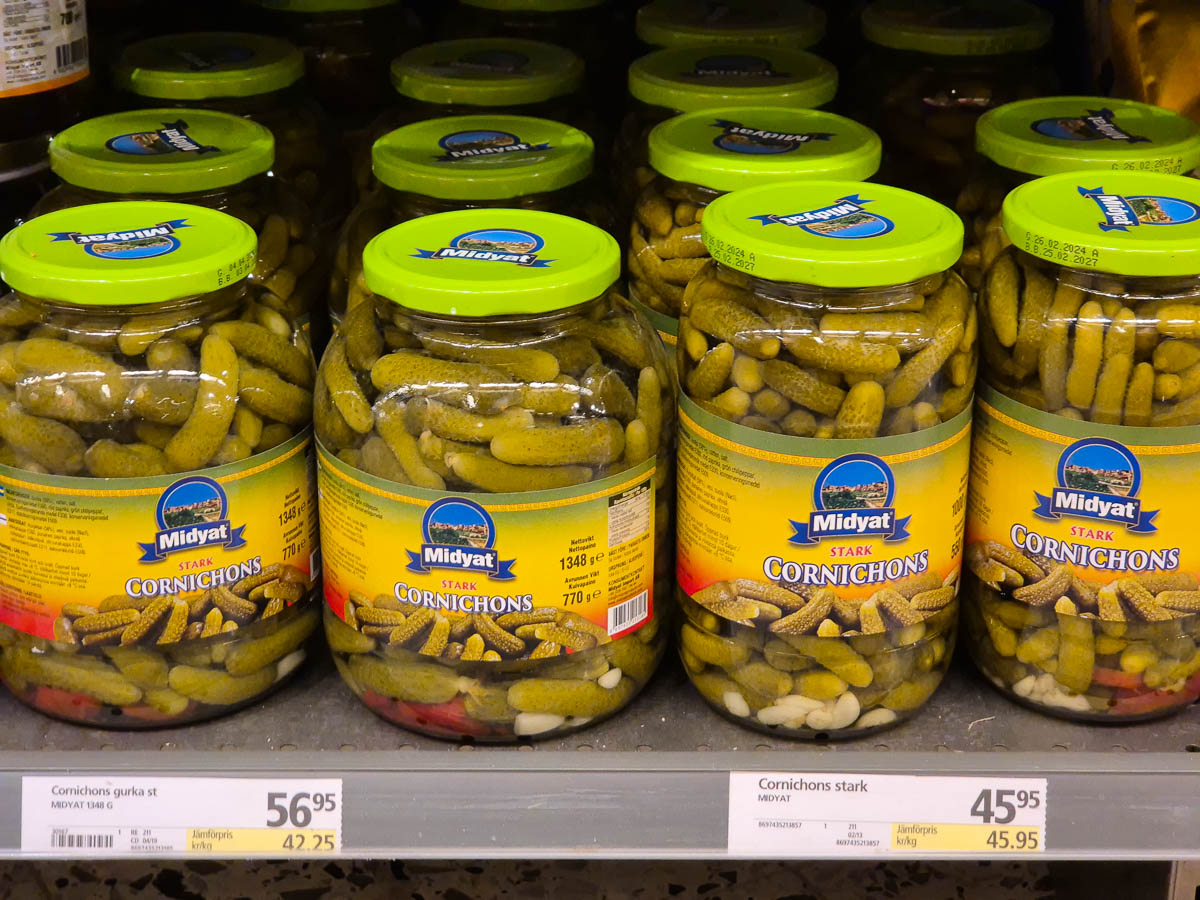
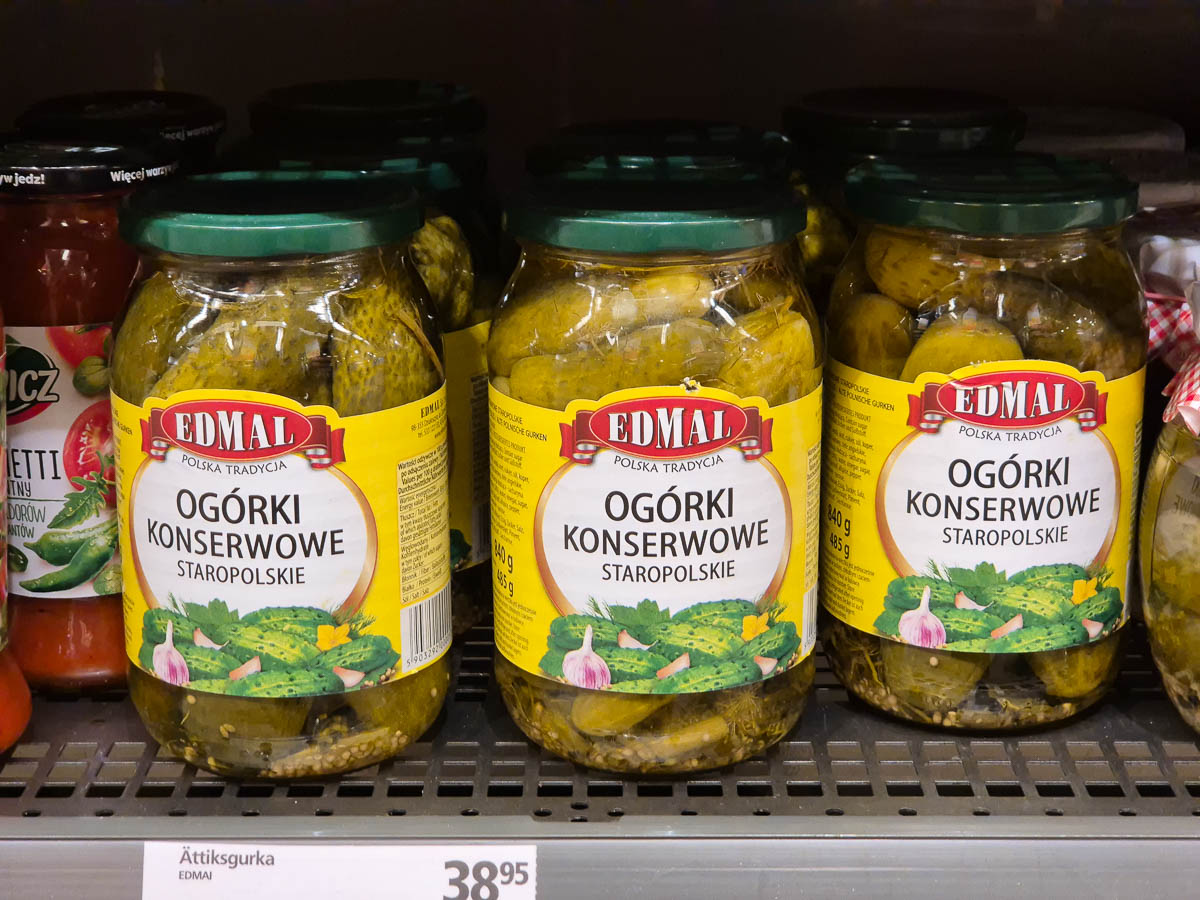
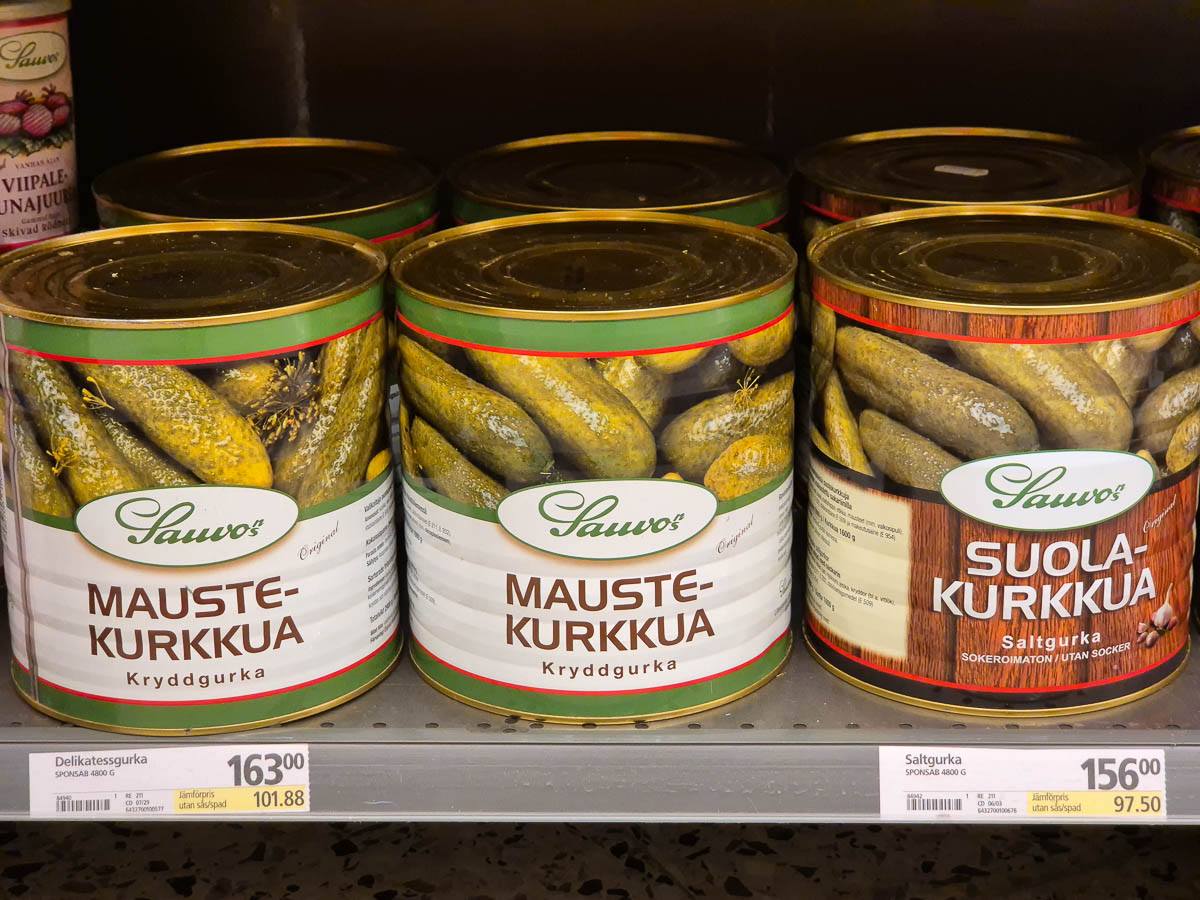
The grocery store’s new international food section has been filled up with more stuff. The Middle Eastern goods are now flanked by others from Poland and Finland.

Middle Eastern bulgur and halva, Polish jams, Finnish mustard and candy.

Somewhat bizarrely, each of the three sections allocates a fair bit of shelf yardage to their own kind of pickled cucumbers. And of course there are also Swedish-style pickled cucumbers further away in the usual canned goods section. Clearly each nation wants their pickled cucumbers just so and no other kind is good enough.


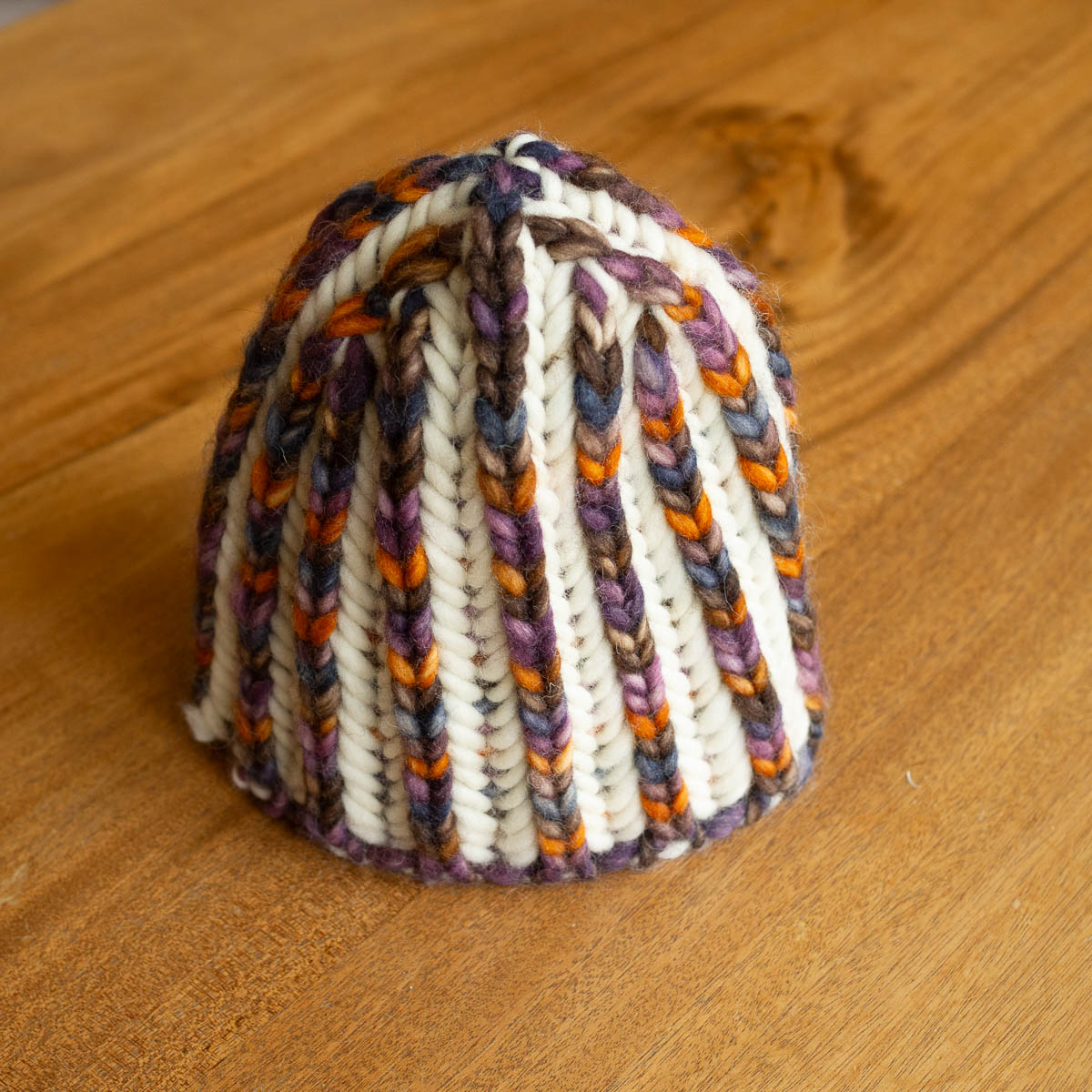
The super fluffy hat is done and has been tested. It was fun to knit, and the yarn still feels like a cloud. It’s the second softest thing I have ever knitted. (The scarves in Malabrigo Rios were even softer, but not as fluffy.)

I had some doubts about its usability, and though I have indeed concluded that it won’t fill the gap I originally wanted to fill, it does fit in elsewhere. It feels perfect for windless days with temperatures around zero, which is what we’re having right now. The yarn has splashes of orange in it, so it goes with my orange shell jacket, as well as brown ones, so I can wear it with my brown winter coat as well. Not bad for an impulse buy.


Our local grocery store – we have several, actually, but I mean the one I usually go to – has been moving things around recently. Bread is now where there used to be napkins and candles, there’s Tex Mex food where bread used to be, and now, in the latest move, a vaguely Middle Eastern/Balkan-inspired section has appeared where the Tex Mex stuff was before. Dry beans, four different grades of bulgur (cracked wheat), tahini, stuffed vine leaves, fig jam, roasted aubergine puree, etc.

The Tex Mex and Asian food here is all large European brands – Santa Maria, Blue Dragon. In this new section, the dominant brand is Midyat, which I’d never heard of. I thought at first that Coop have actually gone to a Middle Eastern supplier, but Google told me that Midyat is a small company based in Södertälje, a small town just south of Stockholm. So technically Swedish, although I’d guess the sourcing of the food isn’t.

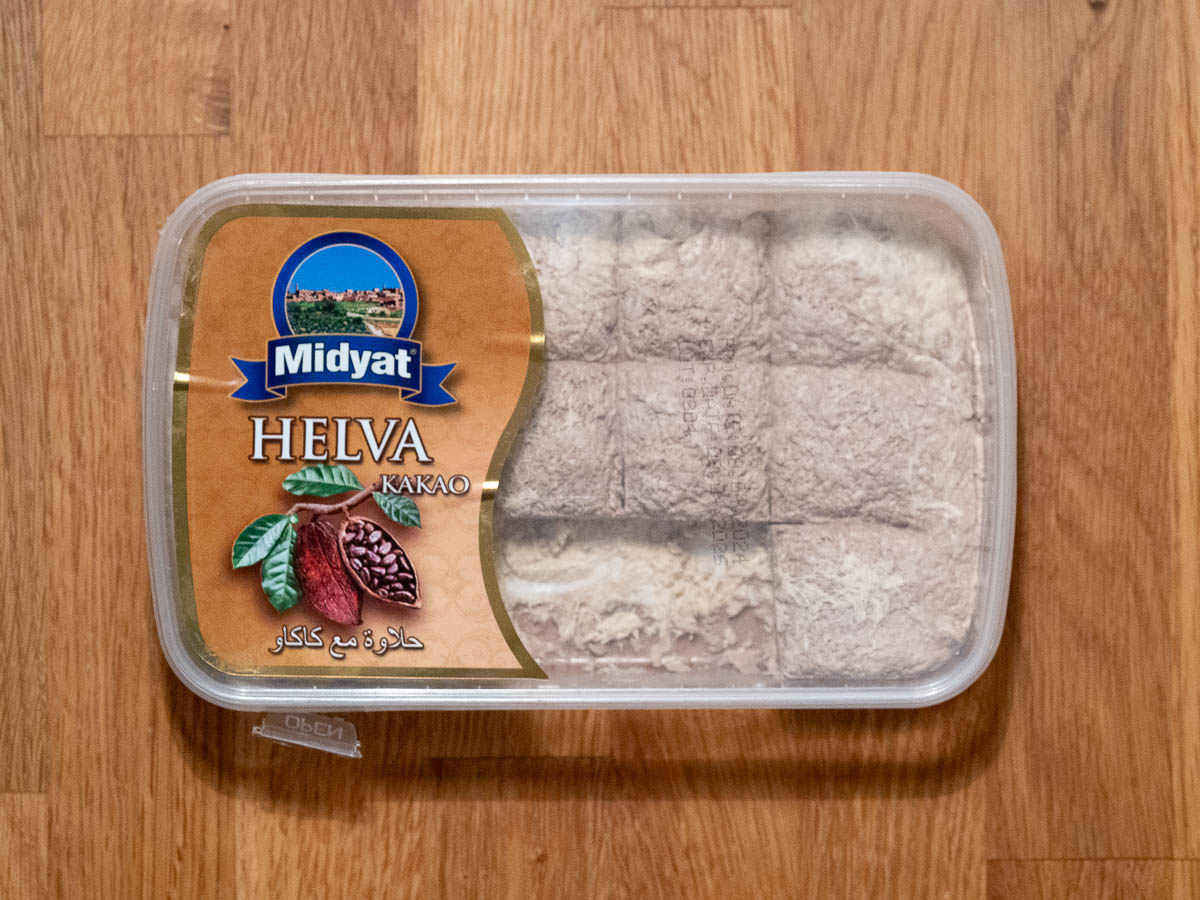
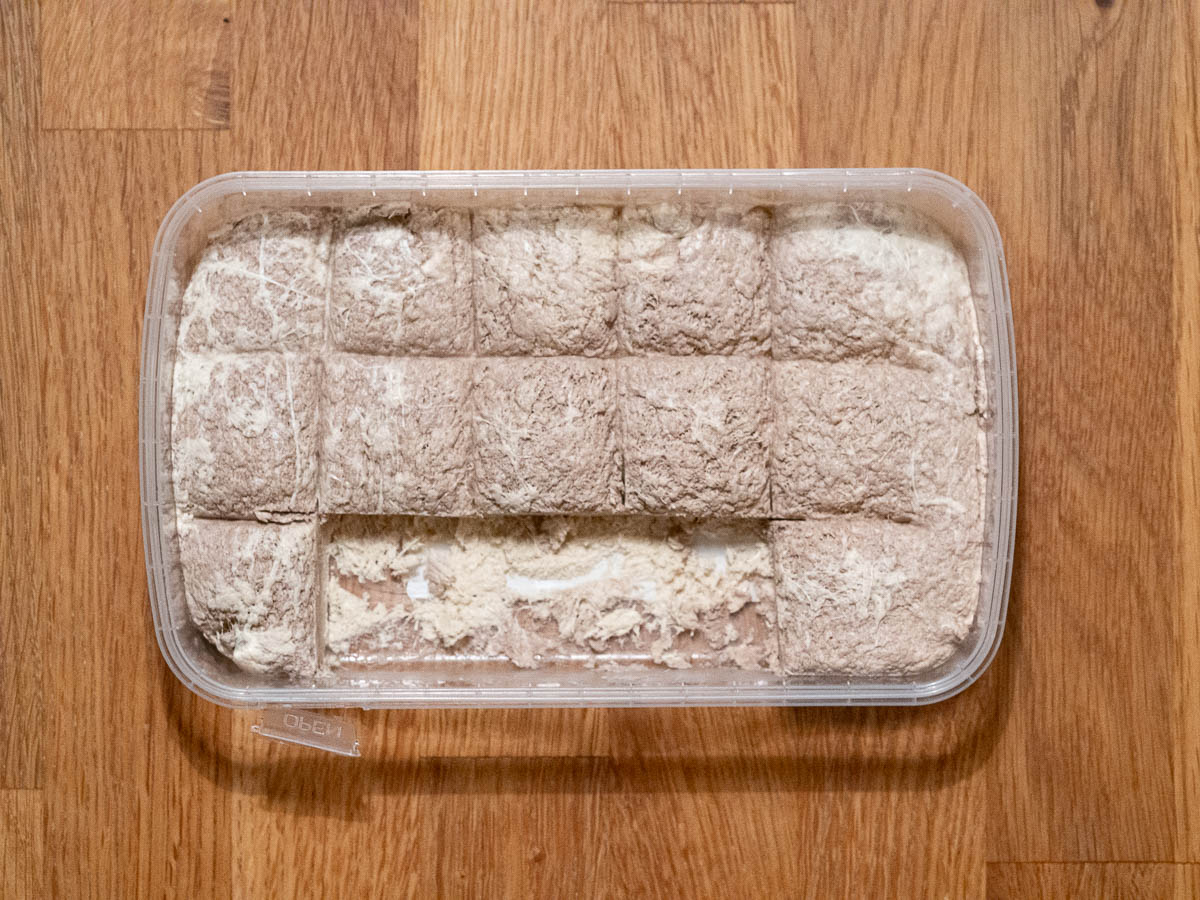
I might have just walked past the new section without paying much attention to the details, but Ingrid sent me a picture. They sell halva!

Halva is one of my childhood nostalgia foods that I sometimes still miss. It’s not a traditional Estonian food at all, but that was one of the few benefits of being in the Soviet Union: exposure to the “brother nations'” food and drink. We had Caucasian šašlõkk/shashlik and Russian seljanka, Ukrainian borš/borsht. We had sõrnik/syrnik and pelmeenid/pelmeni. And halva.

Sesame halva is the most common sort on the internet, but my favourite childhood halva was peanut-based. Dense, crumbly and chewy. Like a dry, grainy, sweet version of peanut butter. I’ve never found anything quite like it in Sweden. Occasionally I’ve tried other kinds, even one that I bought in a Baltic speciality grocery shop in Stockholm, but always been disappointed. (The one from the Baltic shop tasted so wrong that I ended up throwing out.)

Mostly to make Ingrid happy, I gave this one a try. To my great surprise, I actually liked it. A lot! It’s almost half sugar but somehow the nuttiness of sesame makes it easy to just take one more bite. I couldn’t eat Nutella with a spoon, and milk chocolate is disgustingly sweet, but not this.

I’m now entertaining vague thoughts of making my own peanut halva. It’s such a traditional food that surely it can’t be difficult – if they’ve made it since medieval times, the process can’t be too finicky about exact temperature and such. Or… I just hold out until the summer.
The orange sweater feels great (the yarn is incredibly smooth!), looks great, and fits great. Except for the length. I made it a bit shorter than I usually make my sweaters, because I thought it looked good that way with the straight, slightly boxy fit. Now that I’m wearing it, though, it’s always riding up when I move around, and I don’t like the length.

You know what? I have everything that I need to make it fit better. With a hand-knit garment I have all the power. The leftover yarn is still in my knitting basket, and the 2.5mm needles are free. I even have that dash of late-night “just do it” recklessness to just pick out the last yarn end and rip back the ribbed bottom hem.

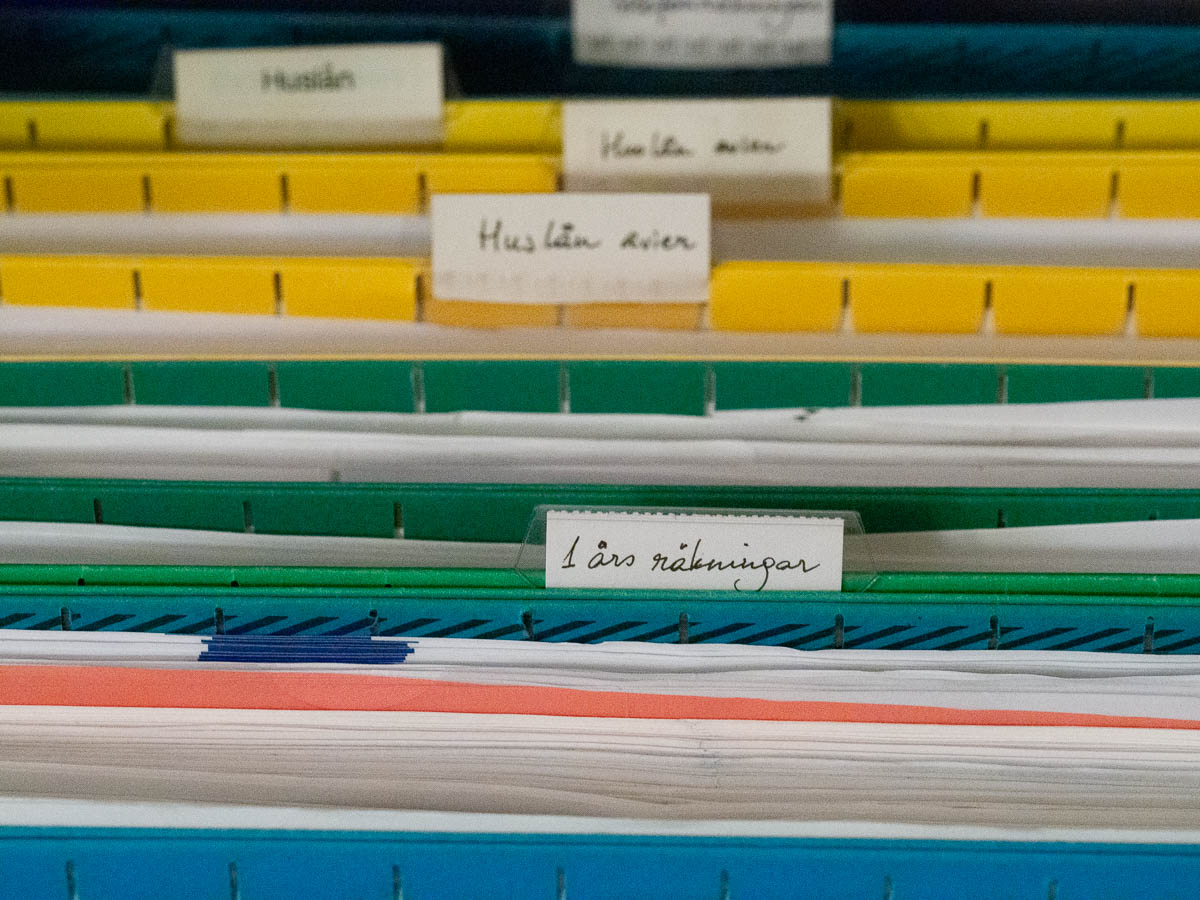
Continuing on my purge journey, I am most of the way through our two filing cabinets.

The label on that folder says “1 year of bills” which indicates the original intent, but not the current reality. Firstly, it has multiplied from one folder into three – whenever one filled up, a new one just got added behind it. It has bills going back to when we still lived in London. Other folders have even more ancient content, such as phone contracts from 2001, and Eric’s rental agreements from before we even met. Thirty-year-old paperwork!

Eric was more fond than me of keeping paper copies of things. The utilities and services I had signed up for, I paid by e-invoice or automatic payment; the ones he signed up for, we got paper bills for – and they all ended up in the folders. But in the end, when push came to shove as he moved out, very little of it was important enough to bring with him.

Now the vast majority of all of it is going out. I threw out two large paper bags full of old papers today – around 20 kg and thousands of pages.

With the archives much reduced in volume, I can fit what’s left into one of the filing cabinets and get rid of the other one. That cabinet has been tucked away in one of the built-in wardrobes, which will then have room for my clothes instead, so I can sell or give away the free-standing wardrobe in the bedroom, which will in turn let me rearrange the rest of the furniture and figure out what kind of new bed will fit the new space. It’s a whole chain.

This summer I was gifted ~850 g of fine, white wool yarn. Since there’s so much of it, and it’s so elegantly fine and white, I had been thinking that it would make a lovely dress. Combined with some other colour so it doesn’t become a wedding dress – maybe knit sideways, with contrasting vertical stripes.

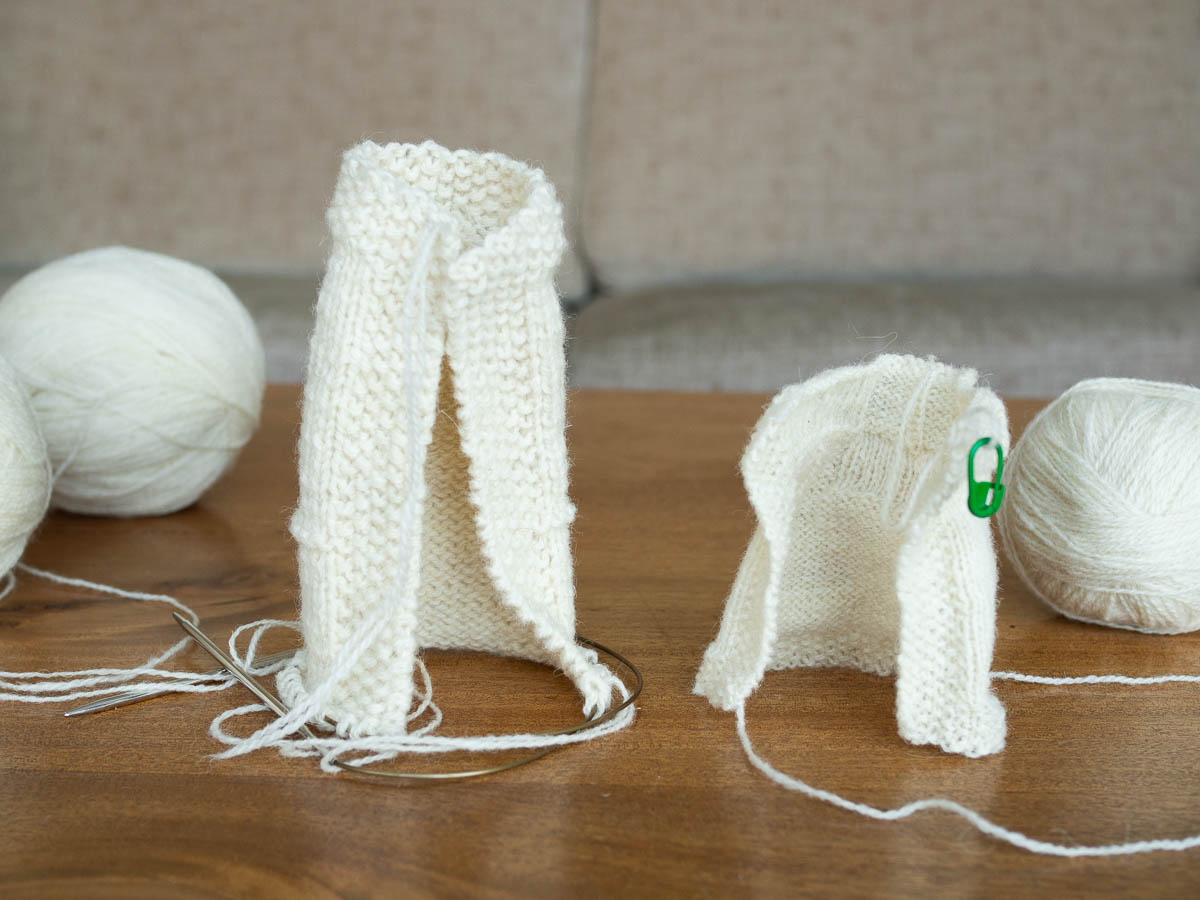
Then I made a gauge swatch, and the yarn turned out to be really stiff. Like, my gauge swatches stand up on their own, from just the natural curl of the knit fabric. It has no drape whatsoever. So a dress doesn’t seem like the best idea; it would look like cardboard.

Now I have a conundrum. How do I best use a yarn like this? Add mohair to give it some body and fluff? Go up in needle size to get a softer fabric and accept that it will be a bit see-through? Knit a sculpture instead of a garment?

A crisp, sunny day, with a dusting of fresh snow on the ground. It’s all bound to be replaced by gray skies and slush soon, I’m sure, so I hurried out.

Literally hurried: we had originally made entirely different plans for today, but Ingrid was feeling quite unwell, so this was a last minute idea, leaving me no time to pack or plan. Järvafältet nature reserve is my go-to place for a quick outing, and that’s where I ended up today as well.

There used to be a bird-watchers’ platform very close Säby gård, but it was torn down years ago. Too costly to repair, maybe. Now the only thing left of it is an odd dead-end stump of a path that goes very near the lake but stops just before, with a marshy wooded area in the way of a proper lake view.

With the ground all frozen firm, I skirted the trees and got all the way to the lake shore. The lake was under a thick layer of ice, and there were tracks going into the distance. Someone had also hacked into the ice in one place and the gouge was a good 7 cm deep, with no sign of getting through. Solid enough for me, so off I went on the ice.

I followed the tracks of two humans with a dog. A little bit away there were tracks of one skater and one skier. And here and there, going off in totally different directions: a hare, a fox, a deer, some unknown small creature. The deer went straight across. The dog followed the tracks of the unknown creature for a little bit, before getting called back.

I swung back along the other side of the long lake. Now there were two humans but no dog. The skater and skier were closer to the middle of the lake.

The circuit around the lake didn’t take me very long, maybe an hour and a half. Had I been walking on an ordinary path, I’d maybe have looked at the clock and decided to continue in some other direction. But this circuit felt so perfectly complete in and of itself that following it with something else would have been wrong, so that was that.

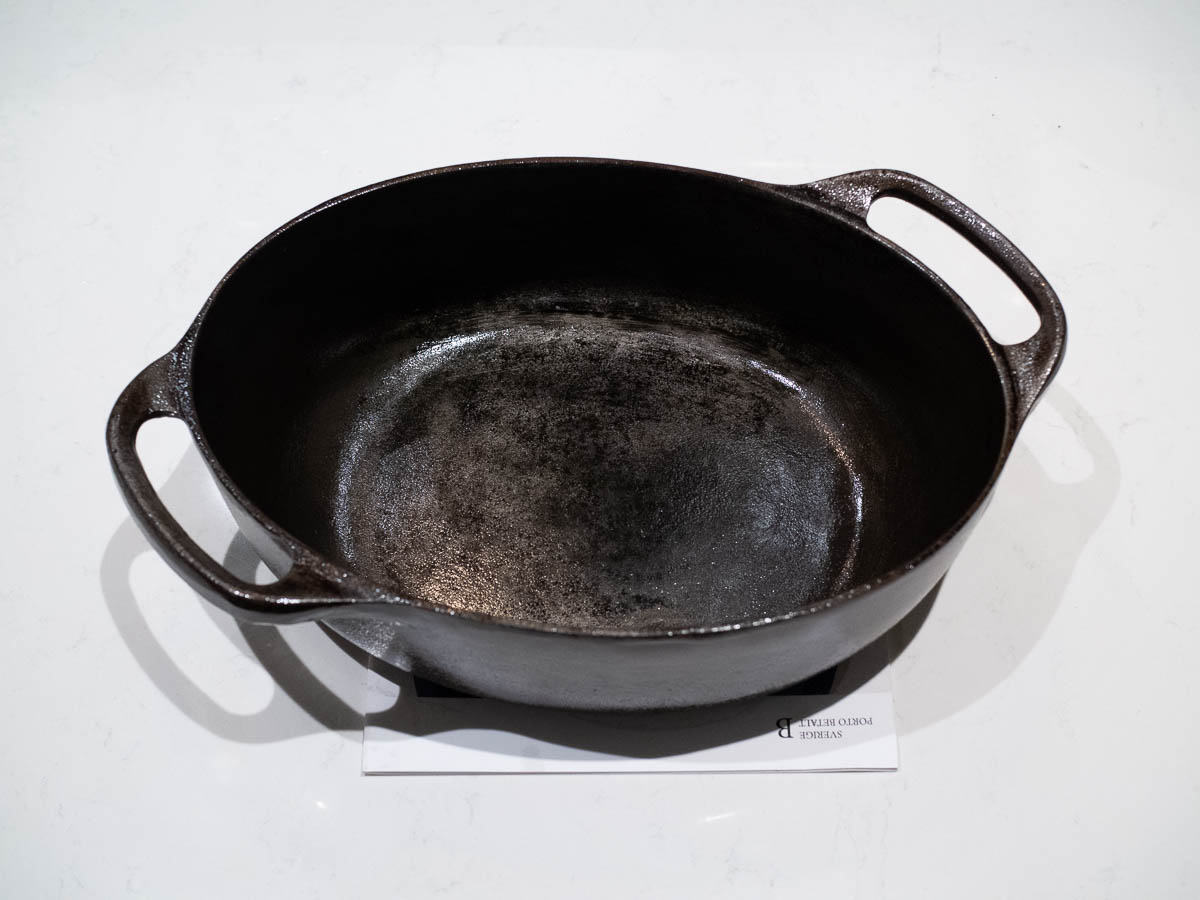
When I started handling my shiny new pot I immediately noticed that it was all sticky. Little specks of newspaper from the unpacking were sticking to the surface, and it left a waxy residue on my hands. And it had a kind of weird, unpleasant smell. Seems like the previous owner didn’t know how to properly season it. Could be the reason why they sold it. I know I wouldn’t enjoy using a pot that felt like that. In fact I didn’t want it anywhere near my food in the state it was in.

A quick, vigorous scrubbing will fix it, right? So I scrubbed. First with soapy steel wool. Then I upgraded to a coarser stainless steel scrubber. The stickiness just would not come off. When I’d been at it for nearly an hour and was running out of steel wool, I gave up and switched to 60-grit sandpaper and that finally did the trick. It no longer feels icky to the touch. But the cast iron lost much of the seasoning along the way – some spots look like we’re almost down to raw iron.

I’ve never tried seasoning a pot from such a raw state; I’ve only re-seasoned a well cared-for pot that just needed a touch-up. I hope I don’t end up with a similar sticky mess as before. My attempts will have to wait a few days, though, for the temperature outside to go up and the electricity price to go down.