Having walked the western side of the Grinda loop yesterday, from the north harbour to our cabin, left us the eastern side for today.

But first, a very rustic breakfast in our very rustic cabin. Our cabin was also the highest-numbered and the furthest away from the reception. I was wondering yesterday why they wouldn’t give us anything closer, but as I passed the other cabins on our “branch” of the road, I saw that all but one were occupied. So we may have gotten one of the last free cabins.

Having had to walk extra yesterday to get to our cabin gave us a bit of a head start today. Well, I did have to walk all the way back to drop off our key, but I could do that without carrying my pack.

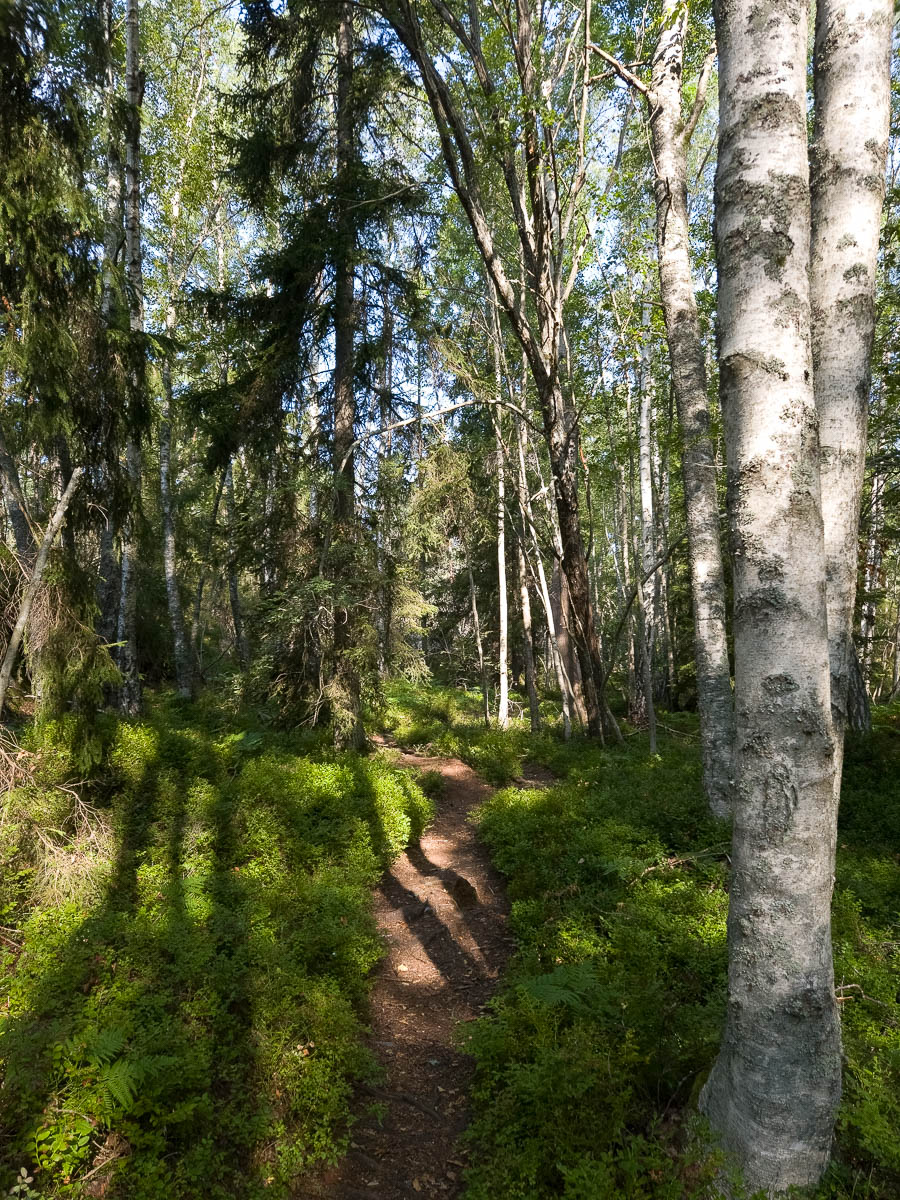
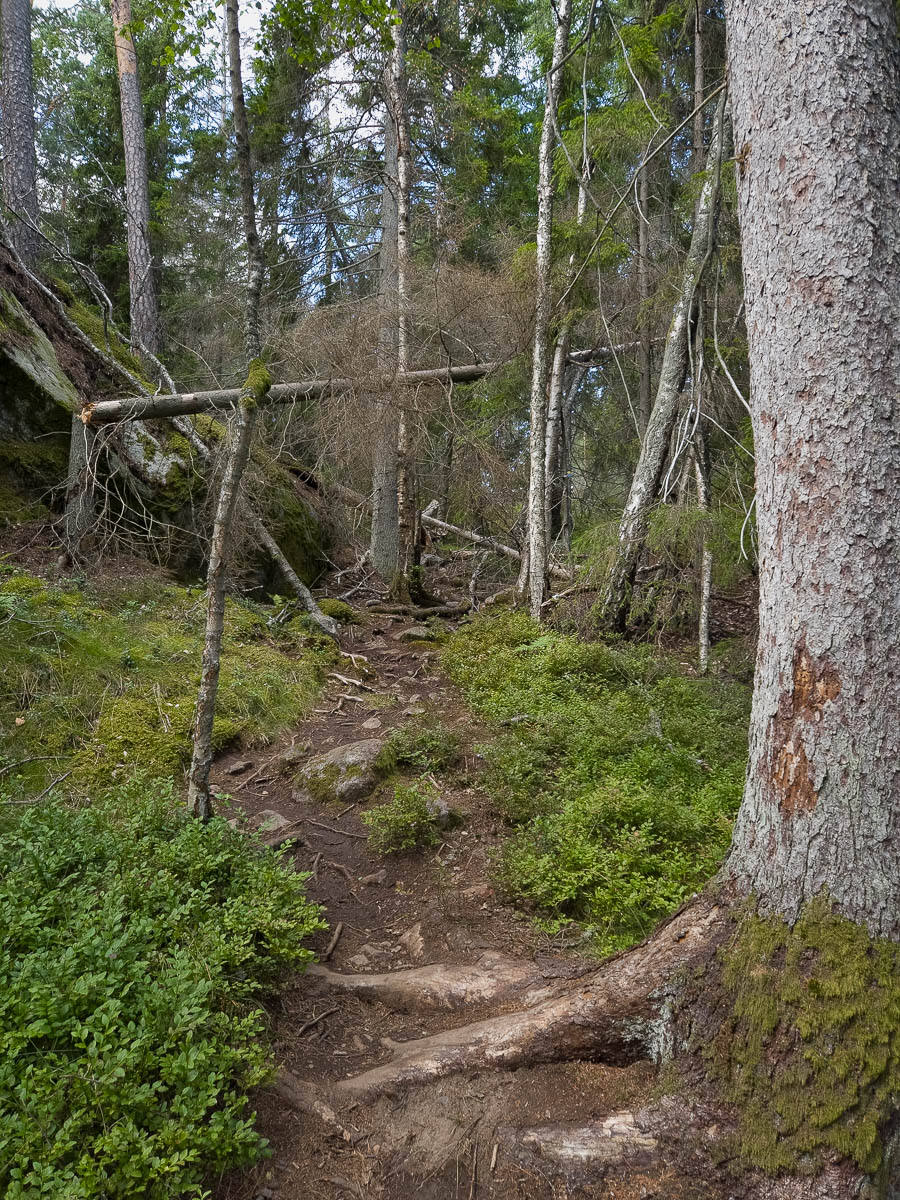
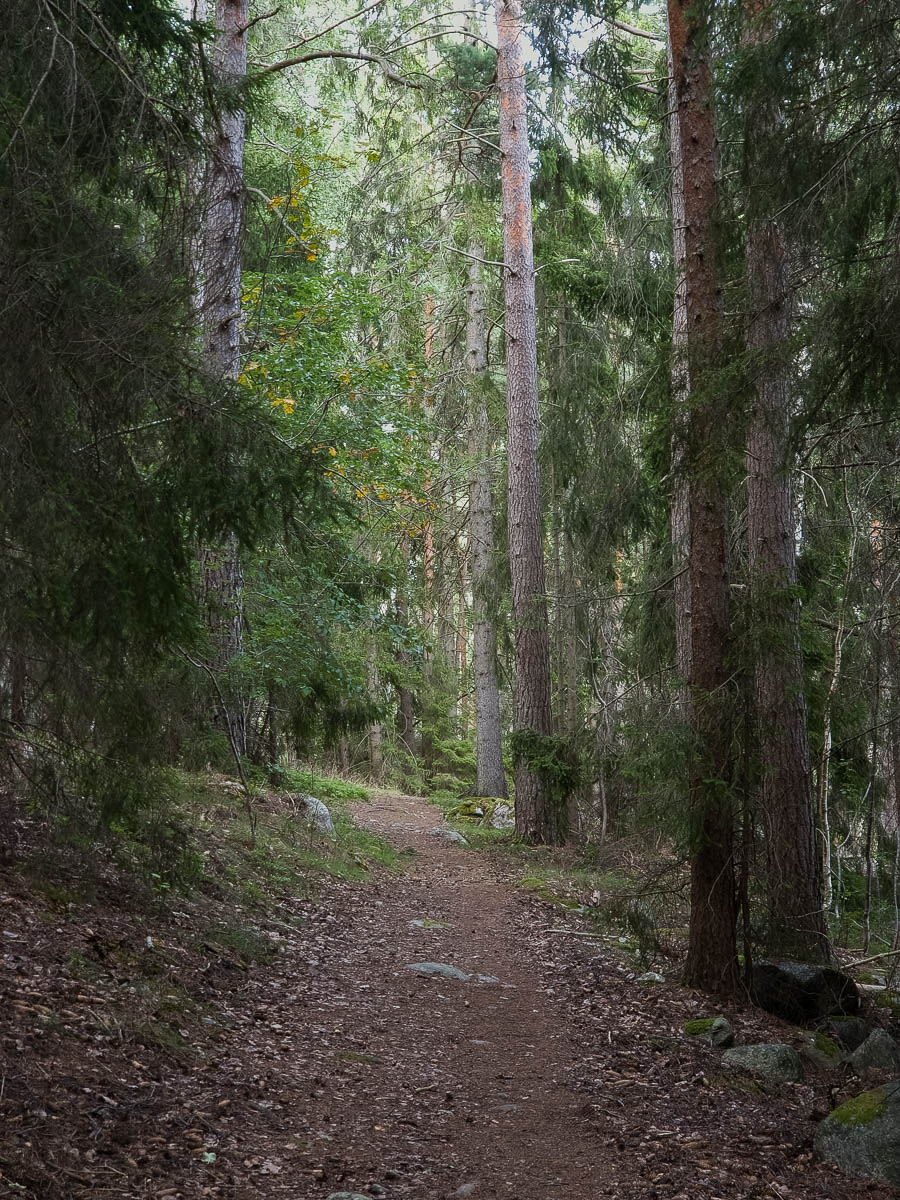
The path to the east of the cabin village passed through pine and spruce forest and was mostly narrow and uneven.

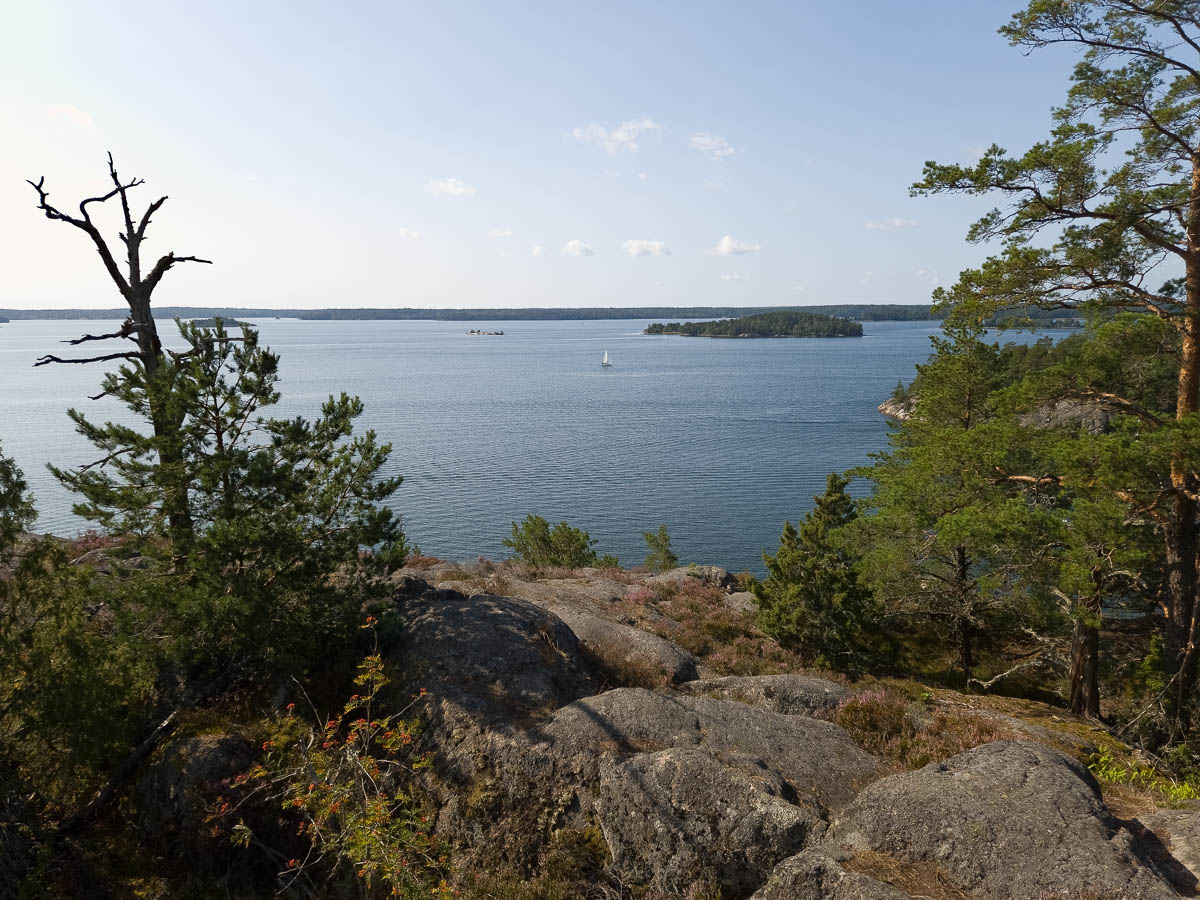
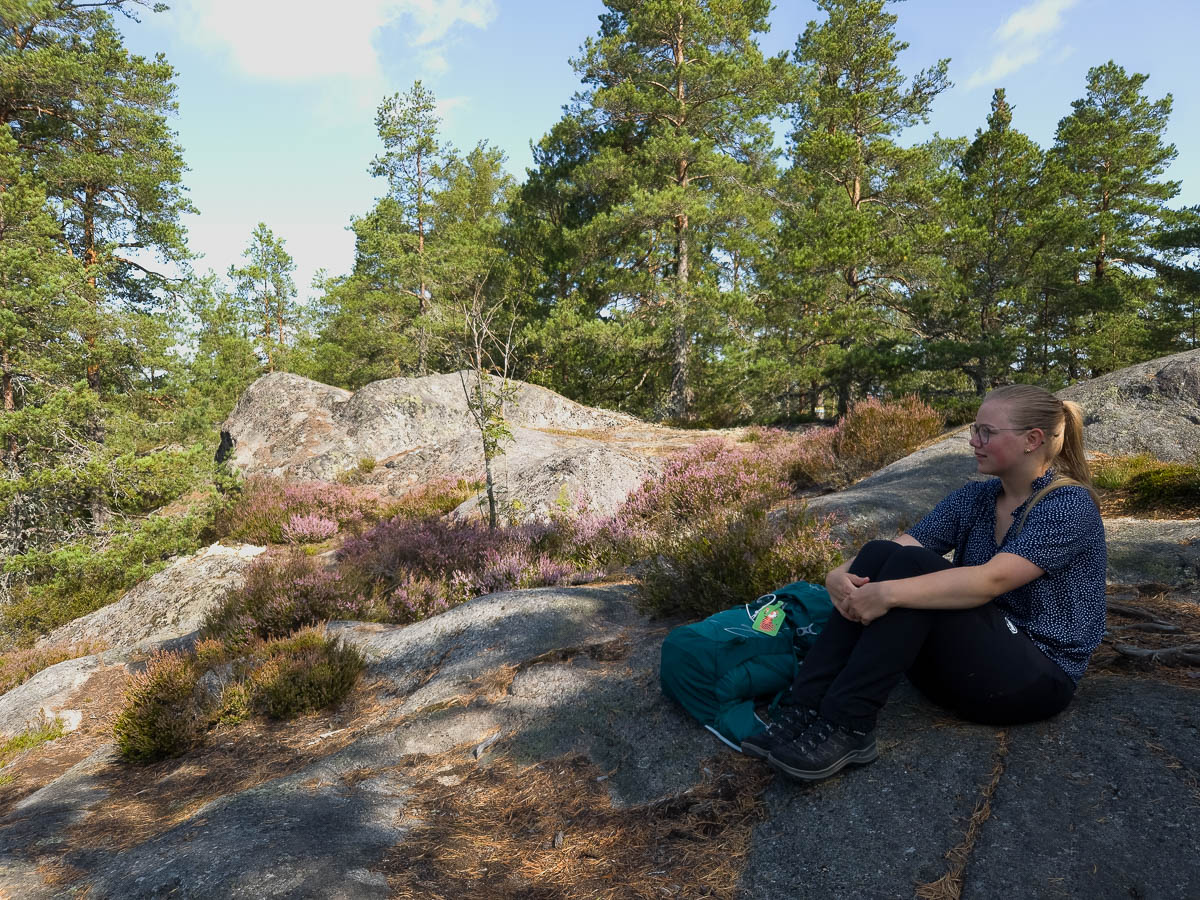
Descriptions of the route promised great views from the highest point of the island, at its south-eastern tip. We didn’t find the views particularly spectacular, compared to others that we’d seen before.

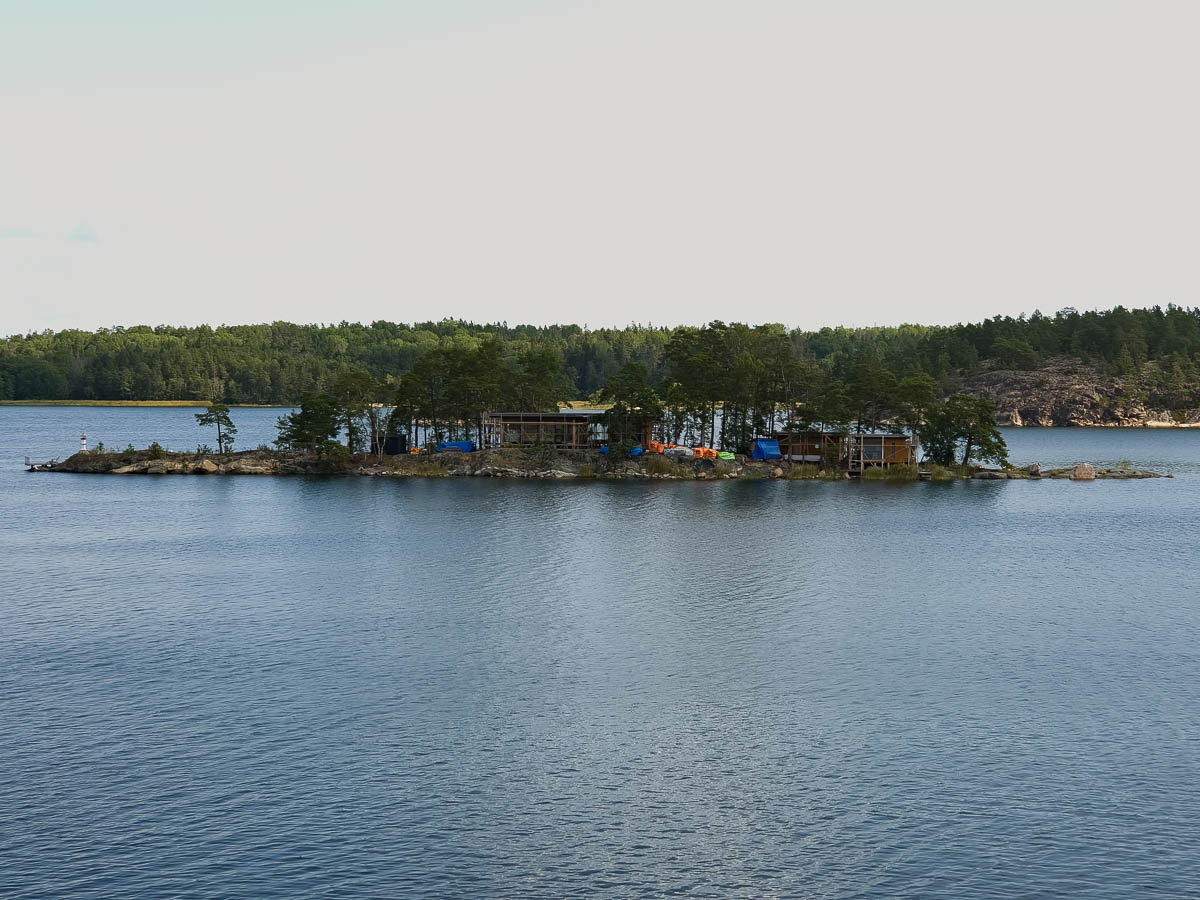
On the map, the path hugged the coastline. In practice, it was always just far enough from the seashore that we didn’t get any views. We did get this view of a small islet, with abundant colourful Sortera dumpster bags!

The path was messy. We often lost track of the markings and had to back-track to fin them again, or just forge forward and assume that we’d strike the trail again. We actually didn’t enjoy this section of the path very much. It felt like a chore.

It was a relief to get back to the central, civilized parts of Grinda.

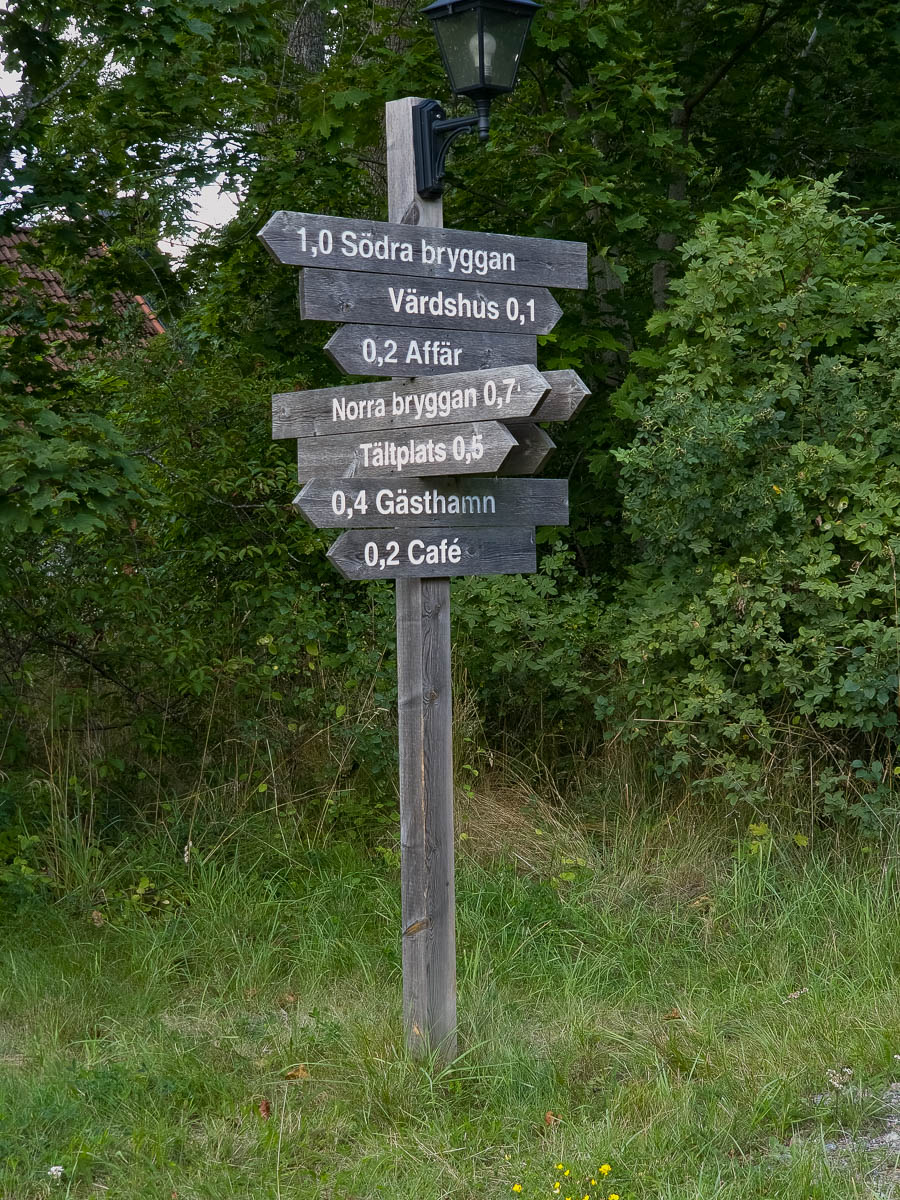
Grinda is small enough that everything is within an easy walk, as long as you stick to the main lanes. The loop around its edges was 10 km, though.

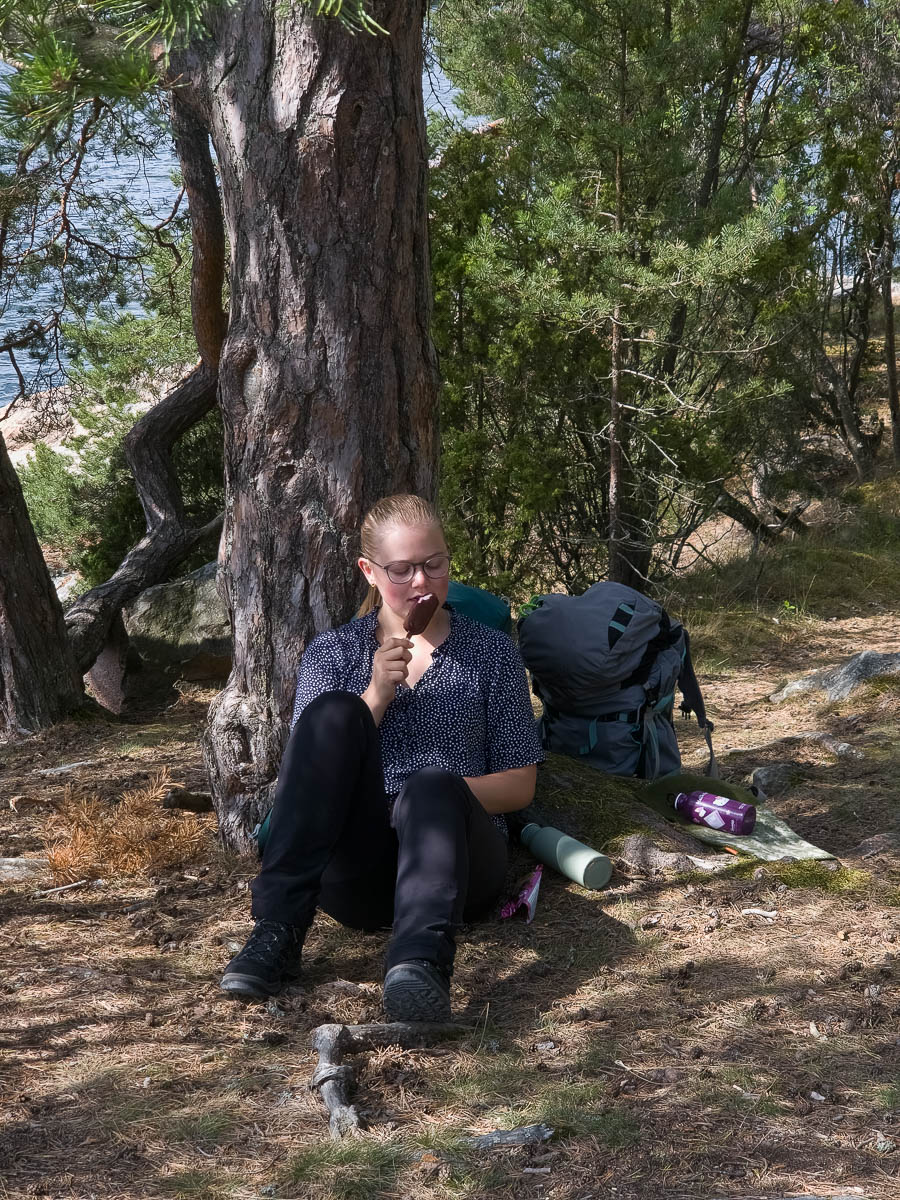
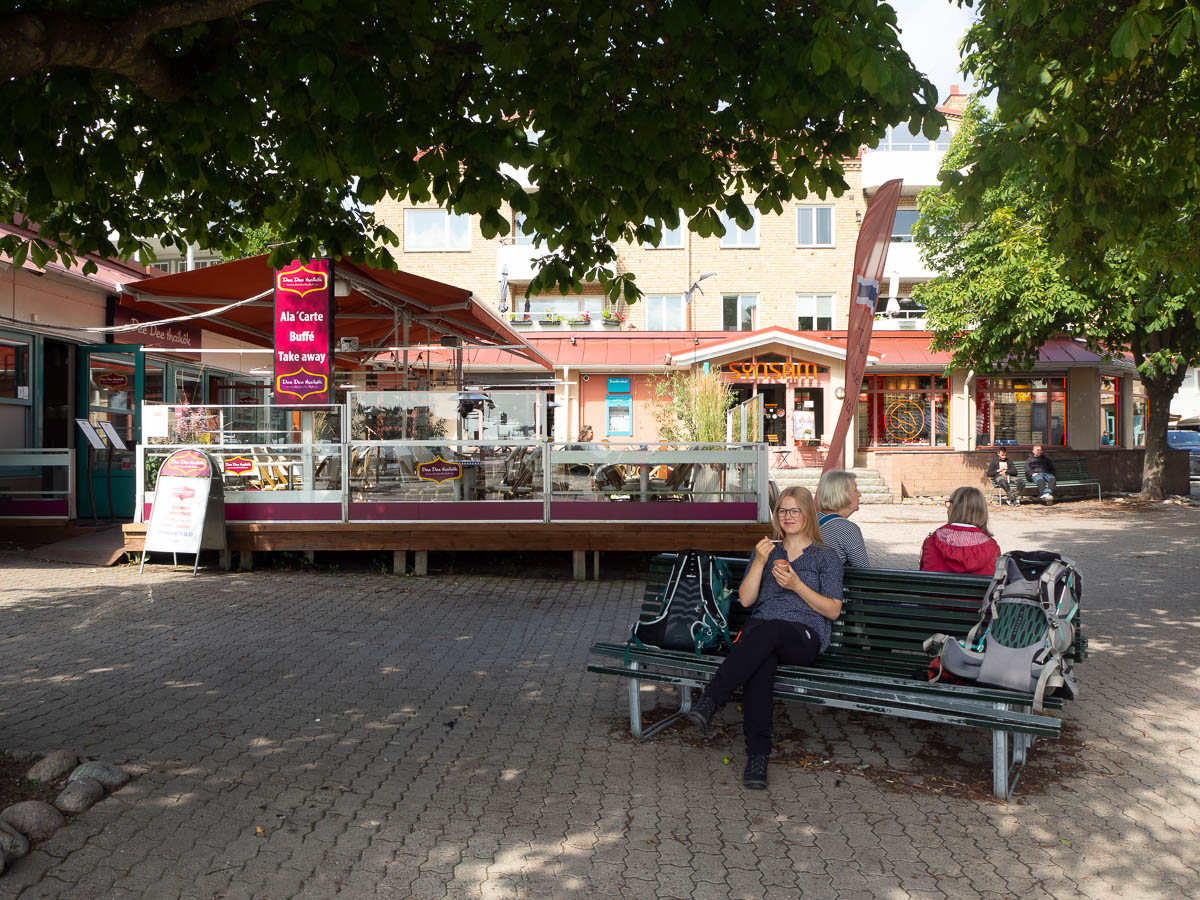
With the short distances, we could buy ourselves ice cream (or rather, Ingrid could) at the cafe at the centre of the island, wrap the ice cream up in a sweater, walk all the way to the south harbour, and enjoy it there while waiting for our boat back to Vaxholm.

On Finnhamn we stayed at the STF hostel. Small, basic cabins again; this time without even individual toilets. Toilets, showers, etc were all in the central building. Not a problem most of the time, but inconvenient when you need to pee in the middle of night – which tends to happen after we hike in hot weather and rehydrate in the evening. On the other hand – the price included a pretty nice free breakfast buffet.
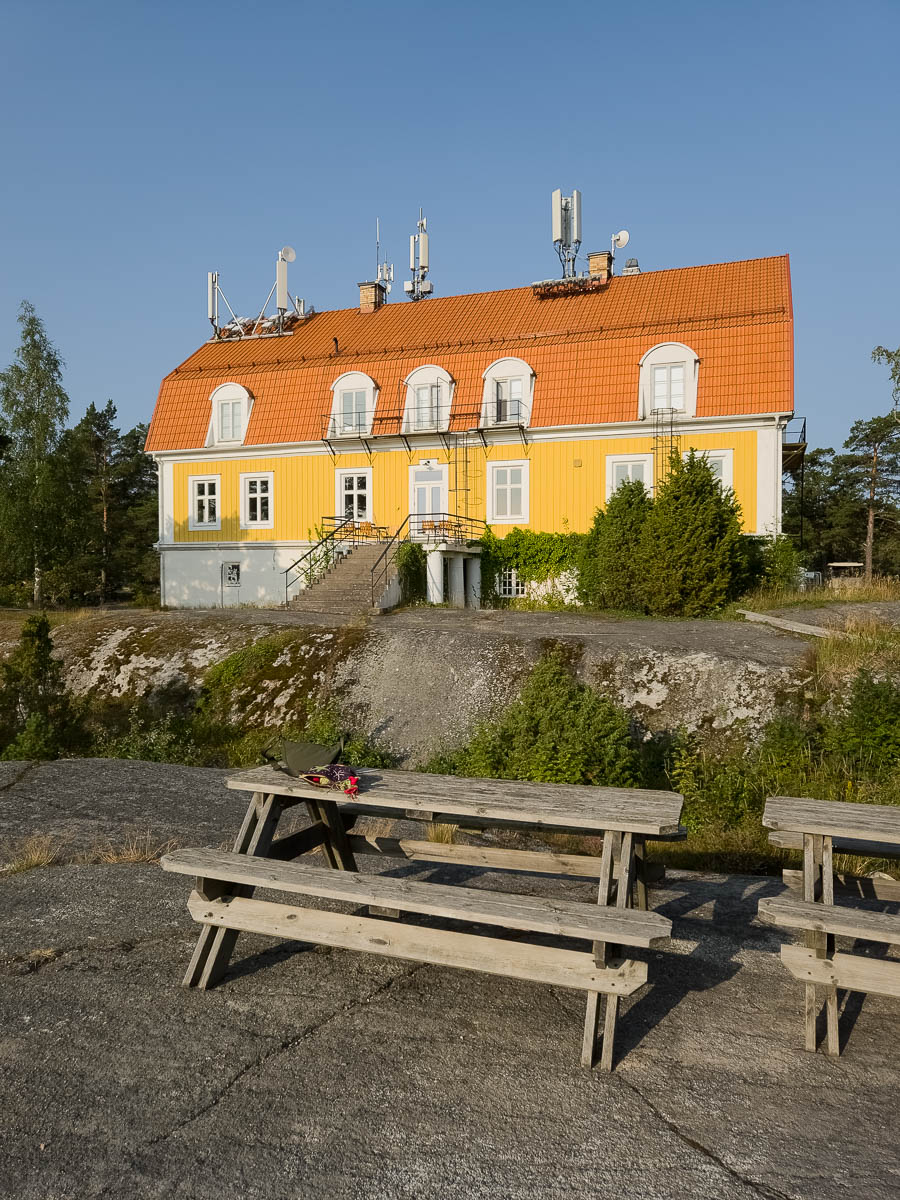
After breakfast we continued our archipelago ramble. Finnhamn was nice but we rather felt we’d seen the best it had to offer, and it was time to head onwards. I can imagine staying here for a couple of days if I had young kids, but there wasn’t that much for us to do or see here.

We headed for the rowboat connection to Ingmarsö. There’s one basic aluminium boat “parked” at each side of the crossing, and that’s the way it needs to remain, so that people can cross from either side. Which means that you row over to the other side, then row back over while towing the other boat, and then row yourself over again.
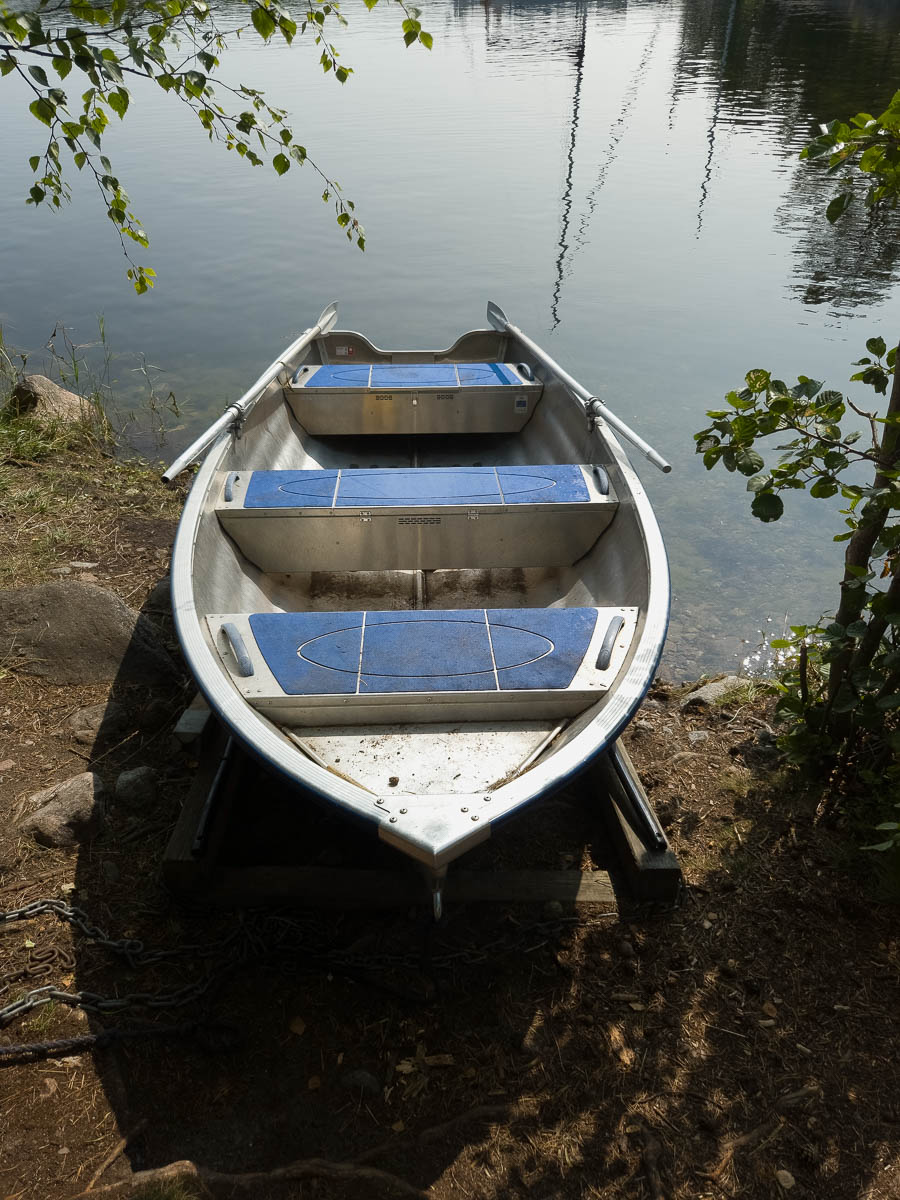
Luckily for us, a couple on the other side had been considering crossing as well. When they saw us approaching, they realized the opportunity they had in front of them, and hurried over to the rowboat. So both them and us got to cross with just one leg of rowing. They’d even gotten their boat into the water just before we got there, so there was space for us to jump onto the shore without getting our feet wet.
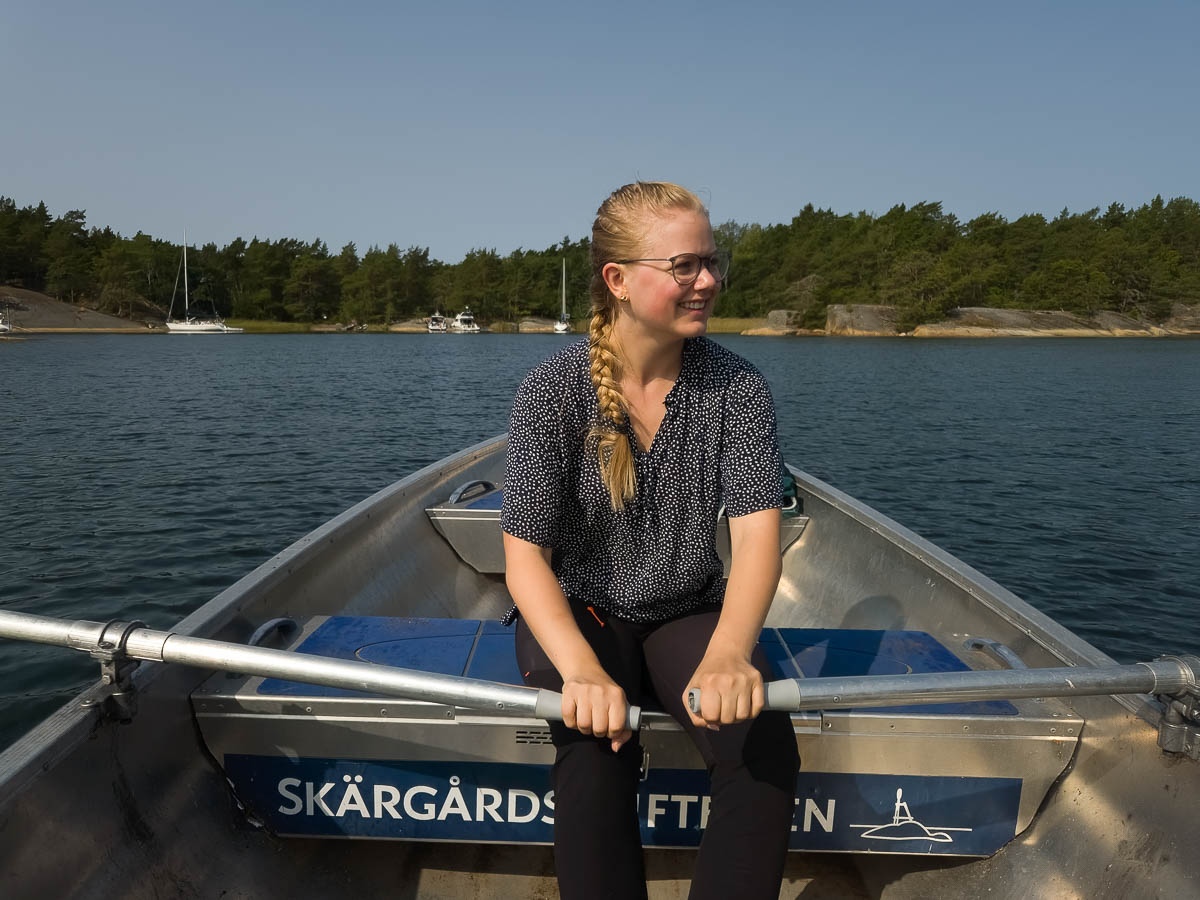
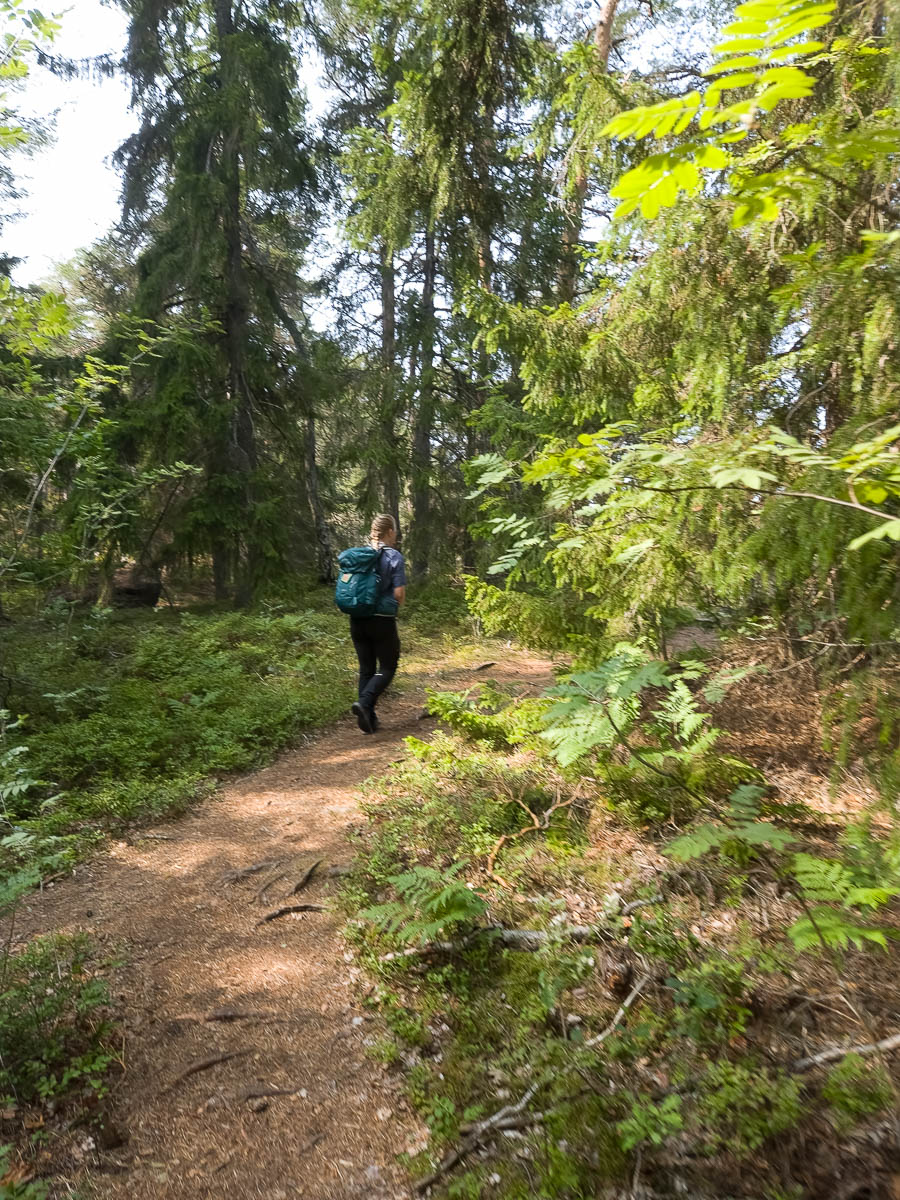
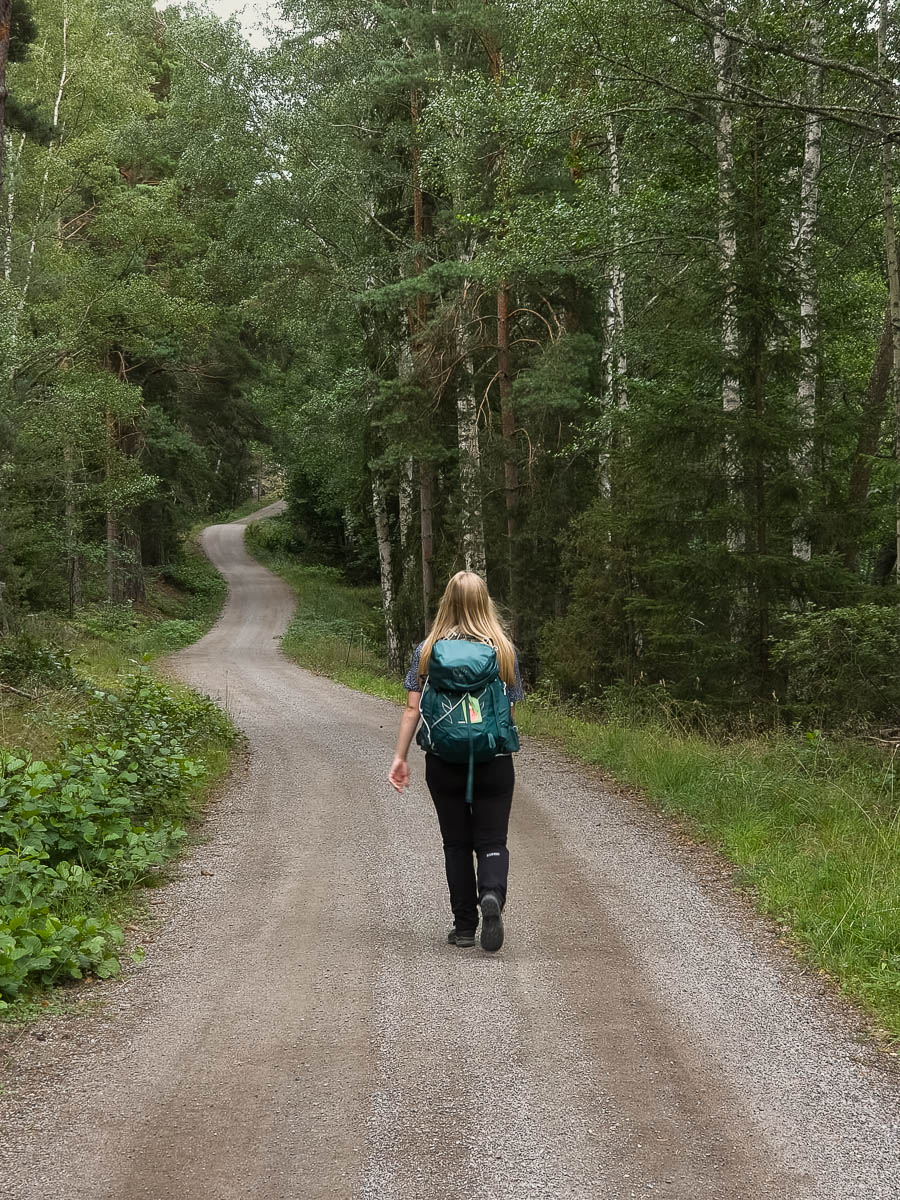
The eastern end of Ingmarsö was mostly lovely, airy pine forest. The paths were wider and easier to walk than on Finnhamn, which suited us rather well, given that we were now carrying full packs.
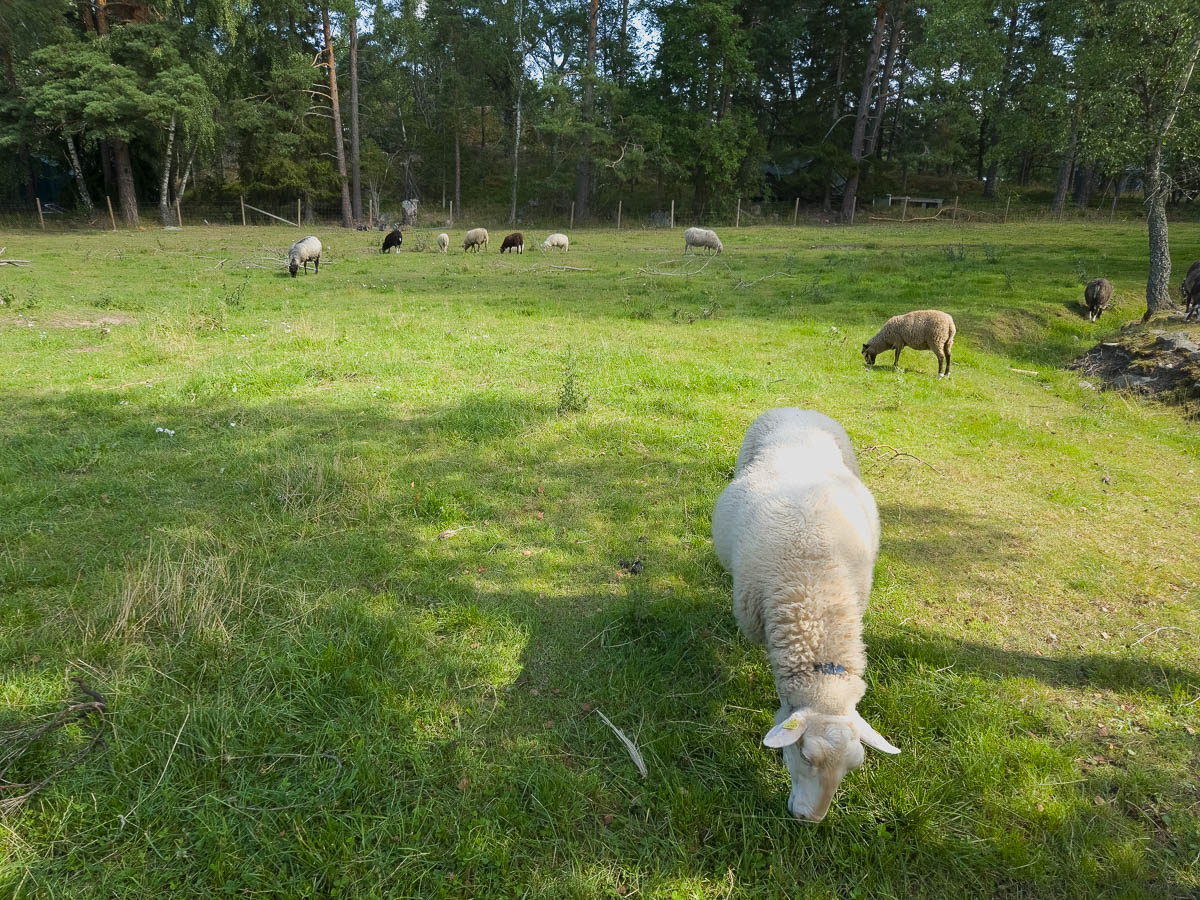
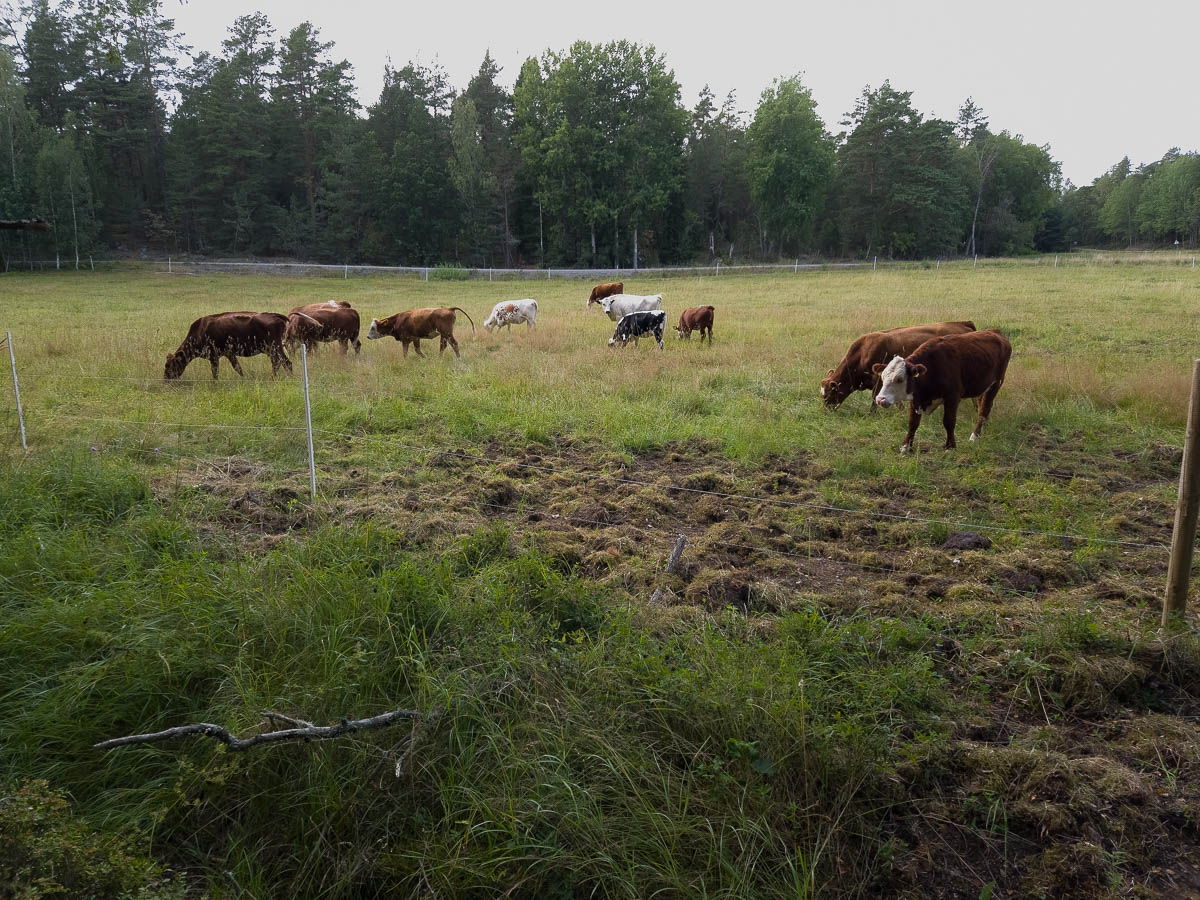
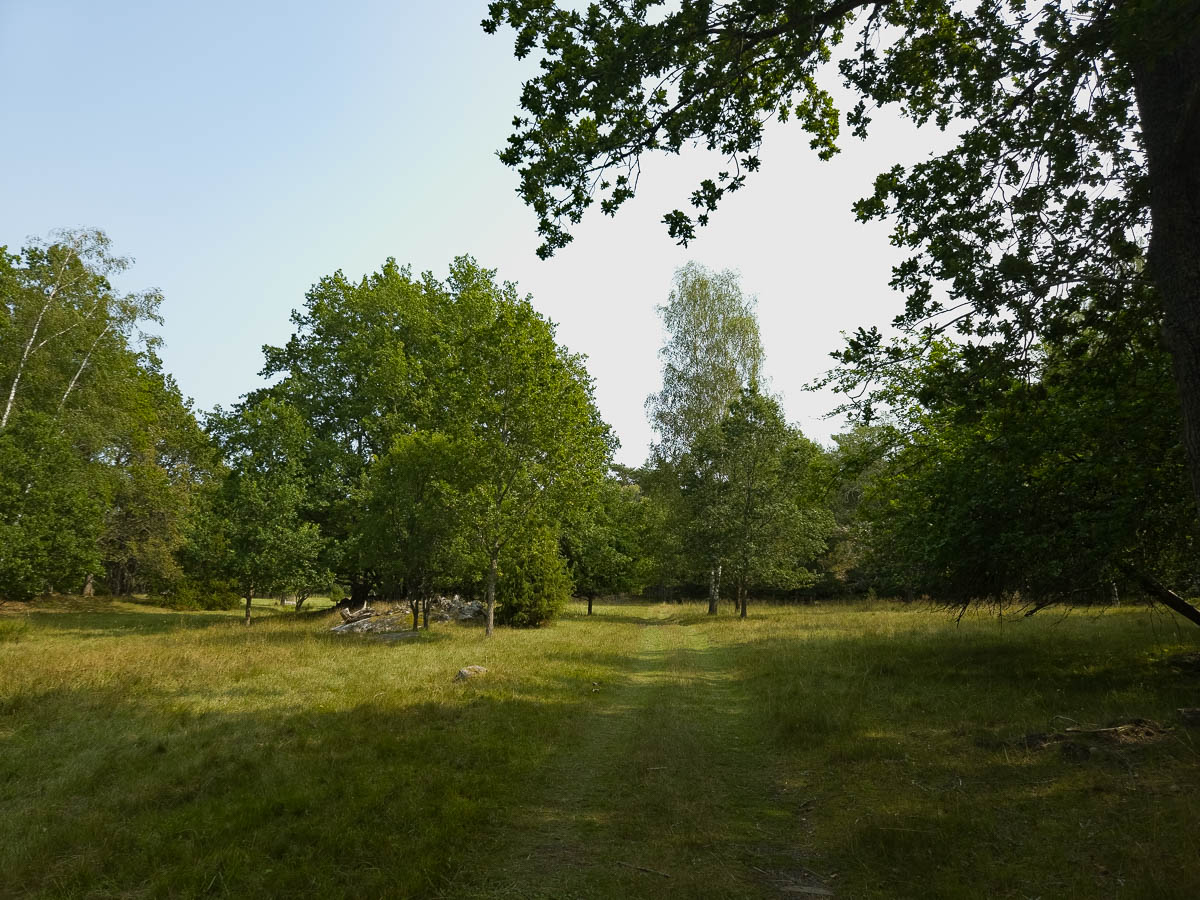
There were also occasional meadows, all with very firm signage about the importance of keeping the gates closed and the livestock inside – but all with gates wide open and no livestock in sight. We were a bit disappointed, having hoped for cute sheep, or more cows.
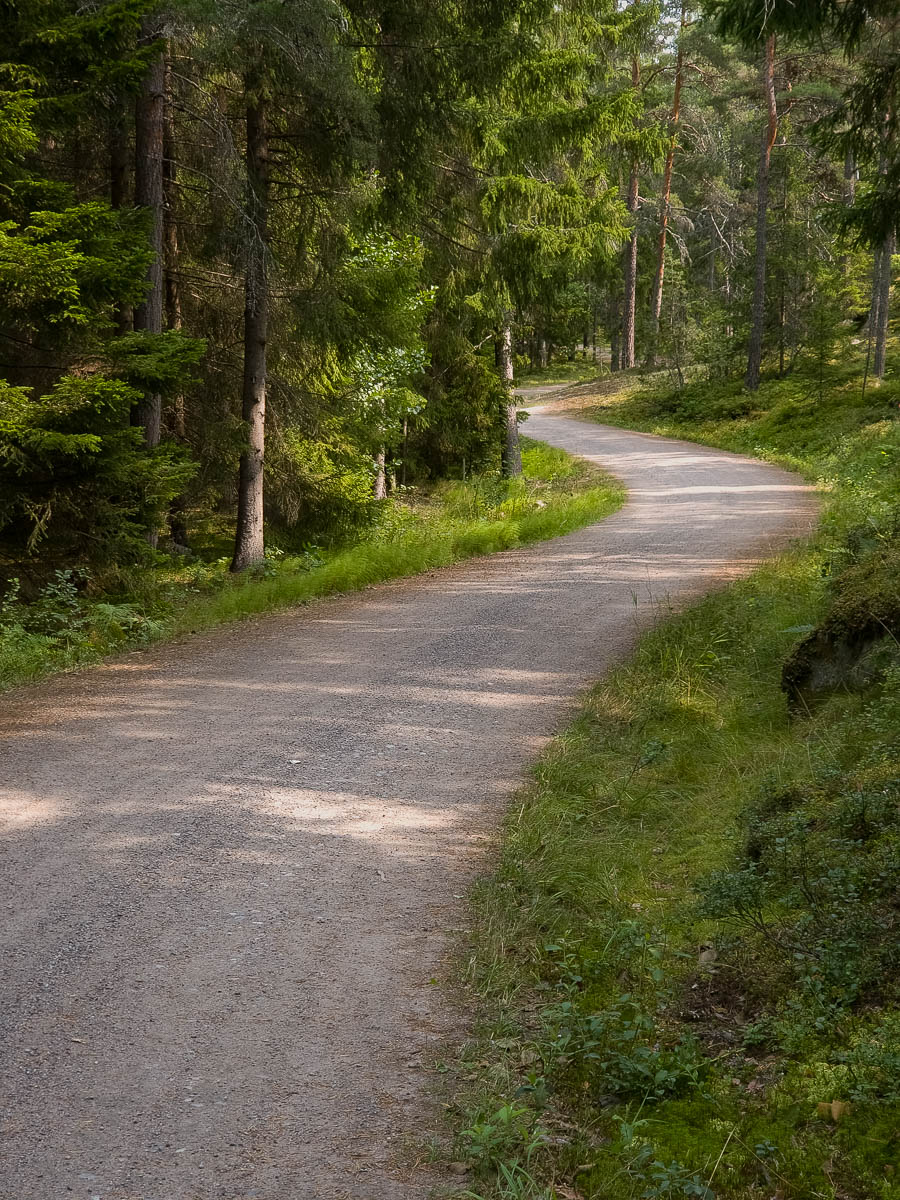
Towards the centre of the island, our surroundings got more civilized. Small gravel roads, farms.
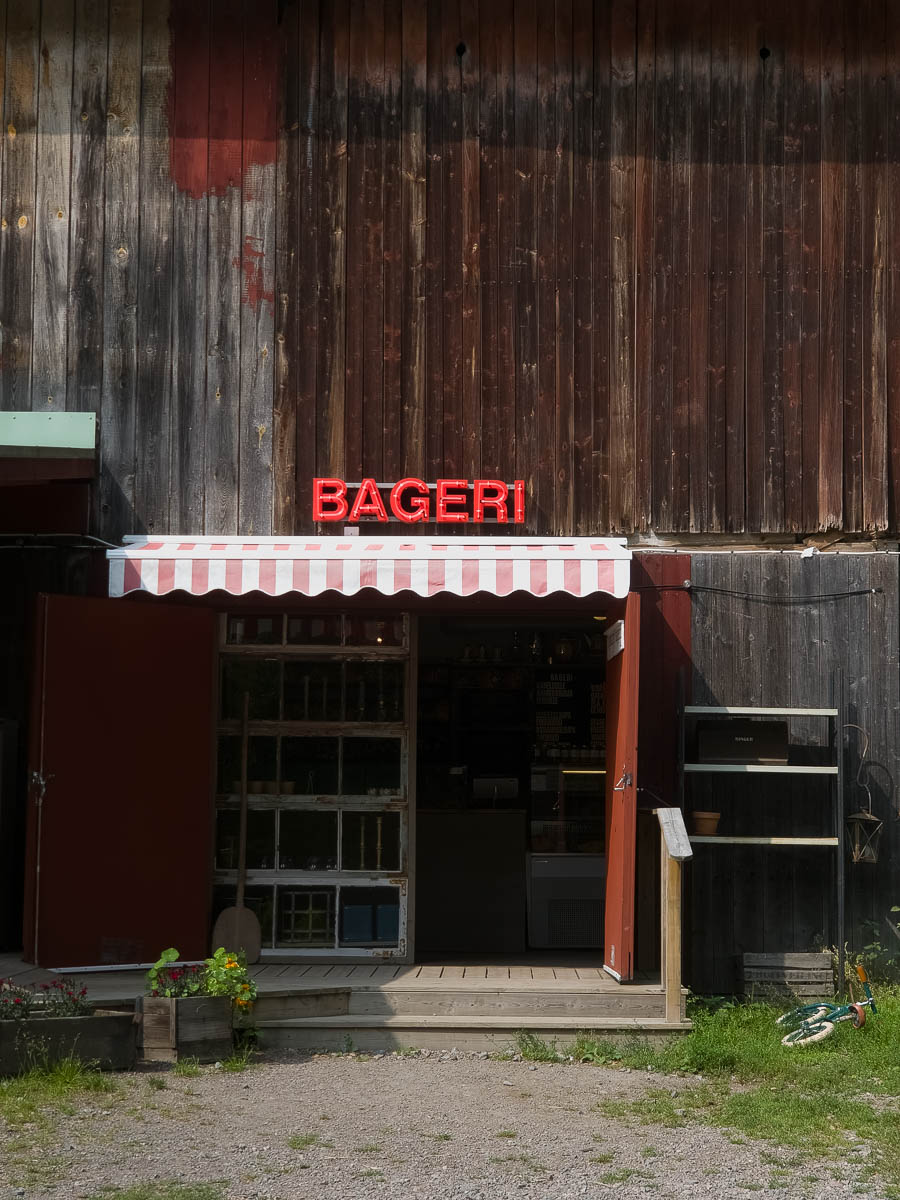
We arrived at Ingmarsö bakery at just about lunchtime, with the intent of eating there. Having seen the prices, though (nearly 300 SEK for a shrimp sandwich or a salad) we didn’t feel very tempted any more. The shop half of the bakery also sold plain fresh bread, though. We had a roadside picnic lunch with fresh bread and yesterday’s farm-fresh tomatoes and eggs.
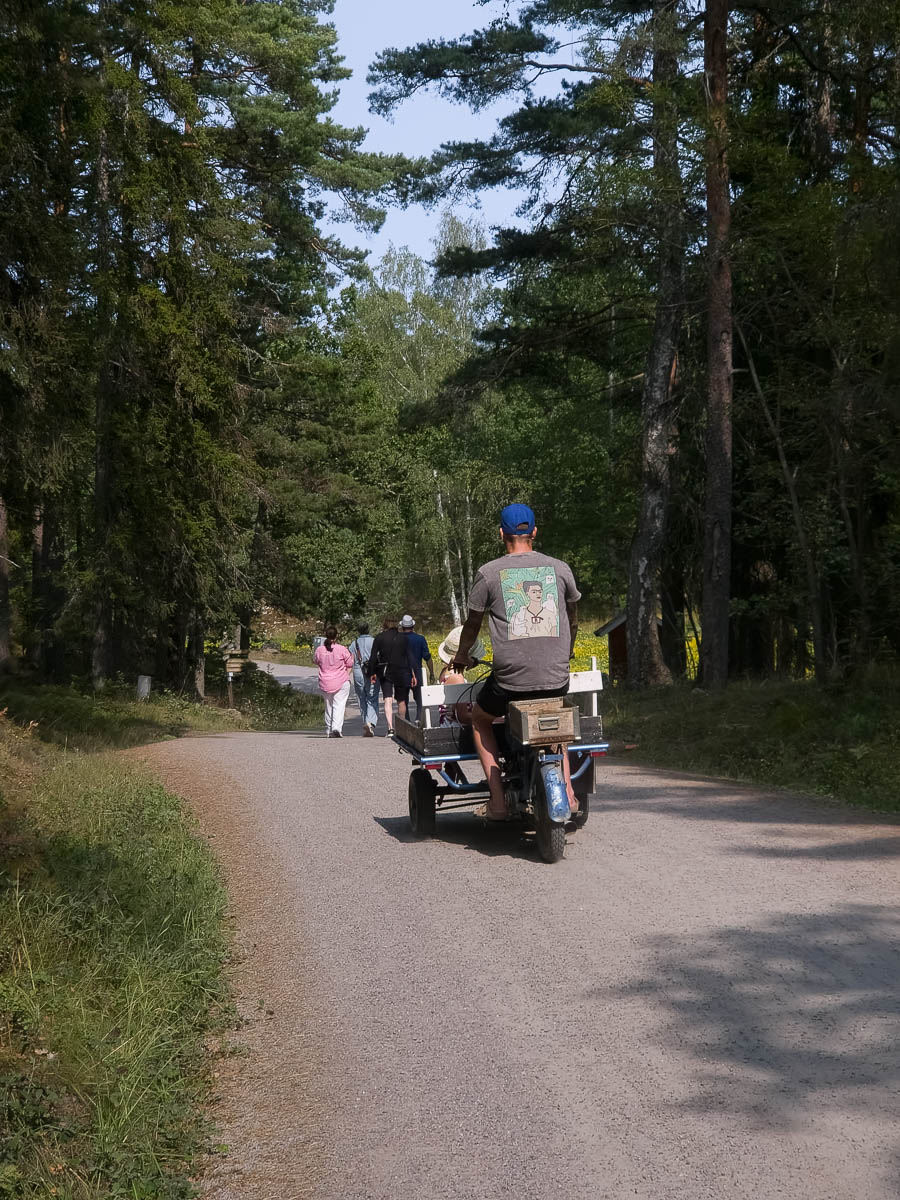
Heading onwards across Ingmarsö, we shared the roads with quite a lot of people and traffic. Here again there were no cars but various mopeds and other light vehicles.
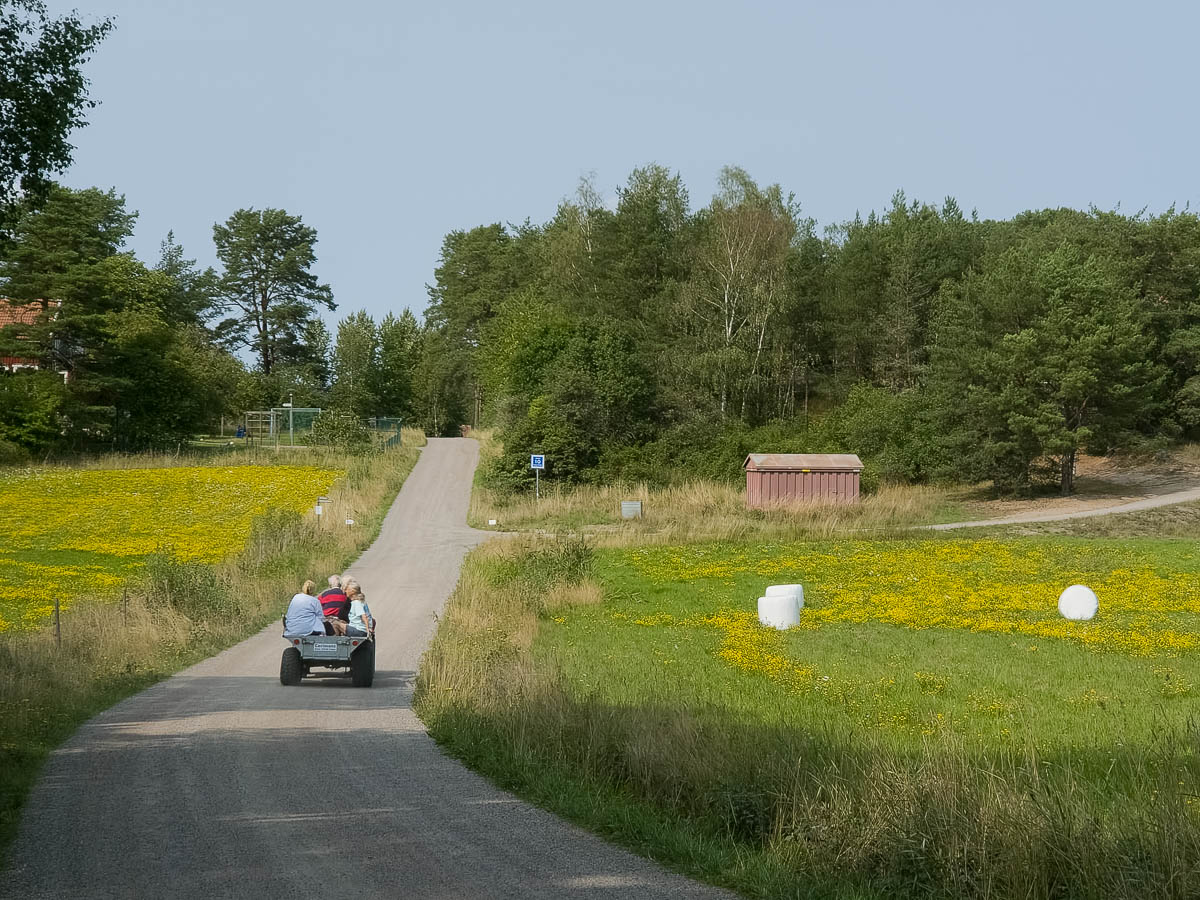
A small ATV with a four-seat trailer passed us several times in different directions.
Ingmarsö, like many larger islands in this group, has several stops for the Waxholmsbolaget boats. One boat line goes around it on the north side, and another one on the south. For us today the north harbour offered a better connection to the next island on our route.

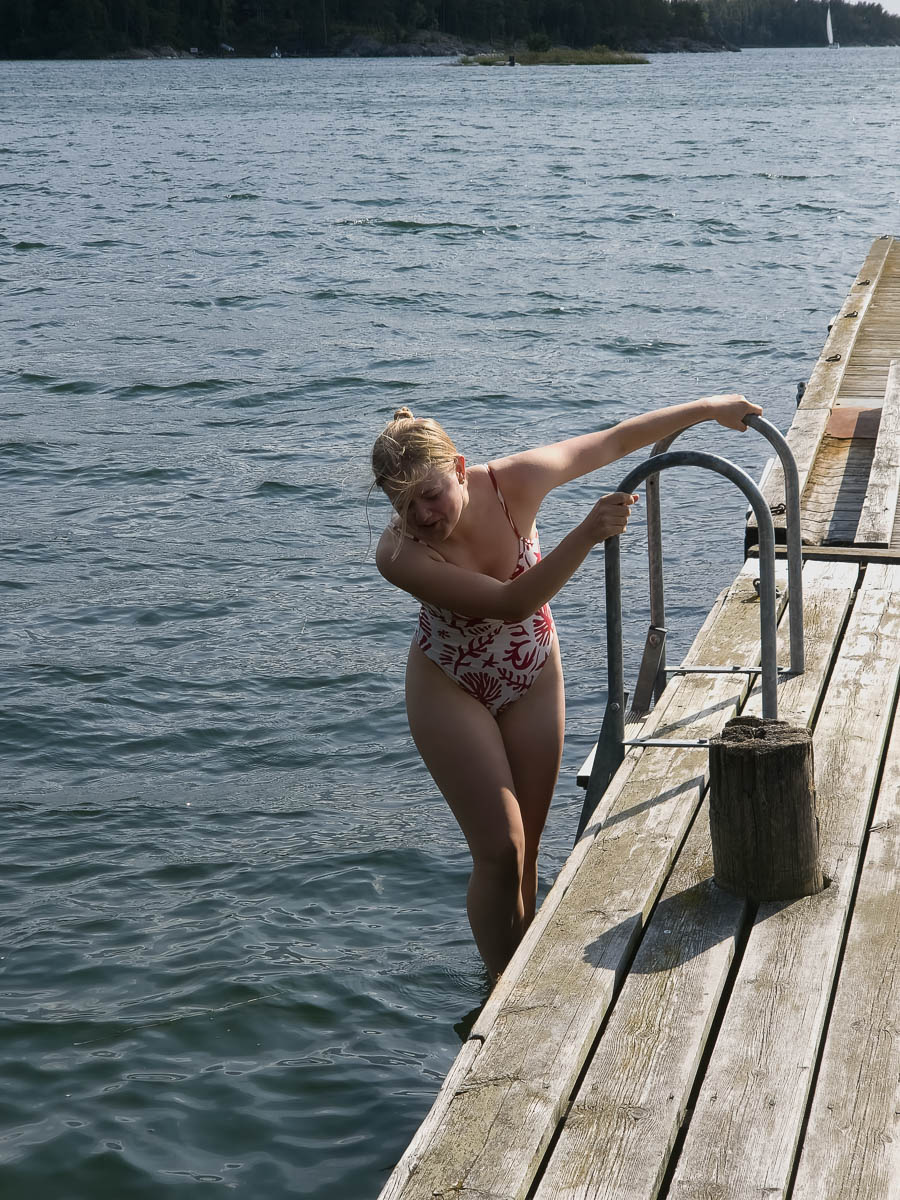
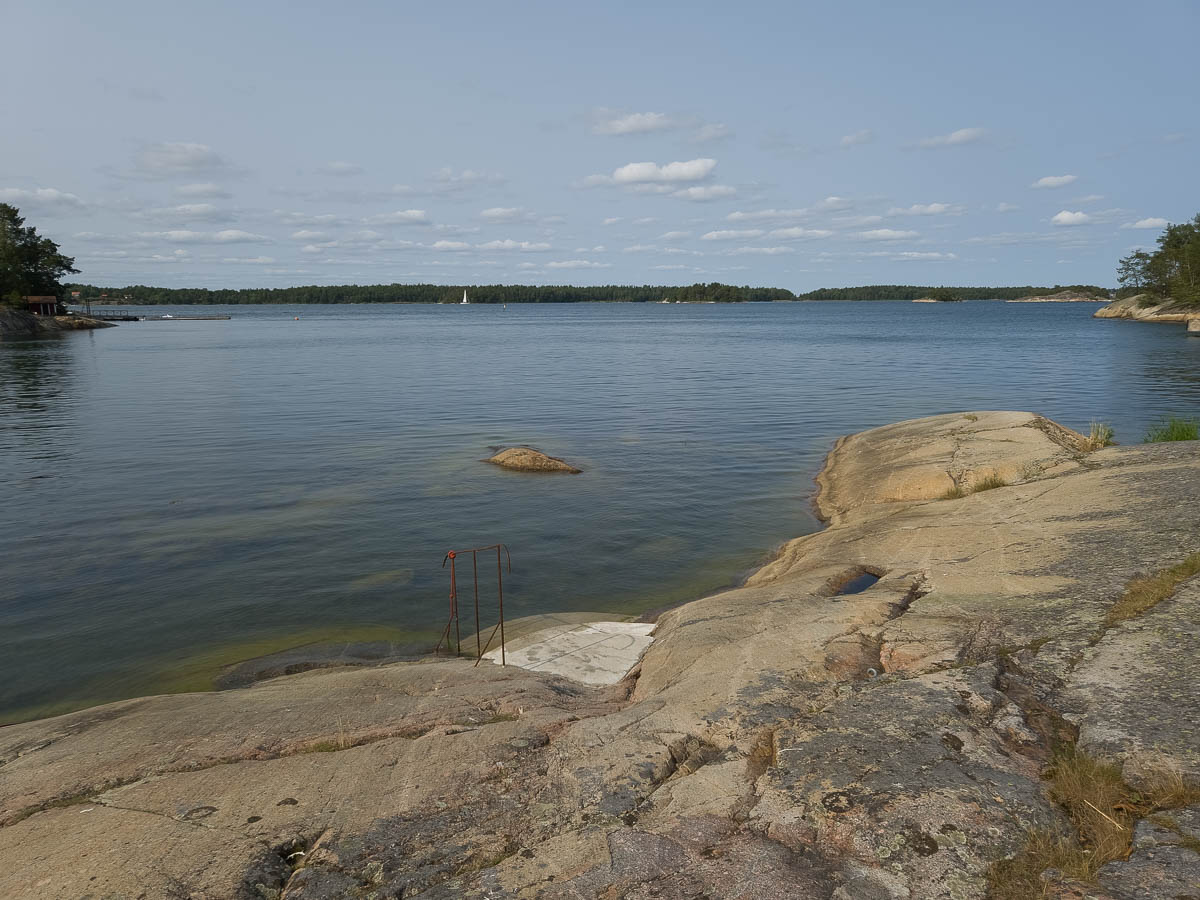
We got there with an hour to spare, which left us enough time for some bathing and sunbathing. The water was cold again. A minute or two was more than enough to cool us down.

Getting in the water was like riding down a slide of seaweed-slick stone. The railing was pretty necessary for getting out again afterwards.
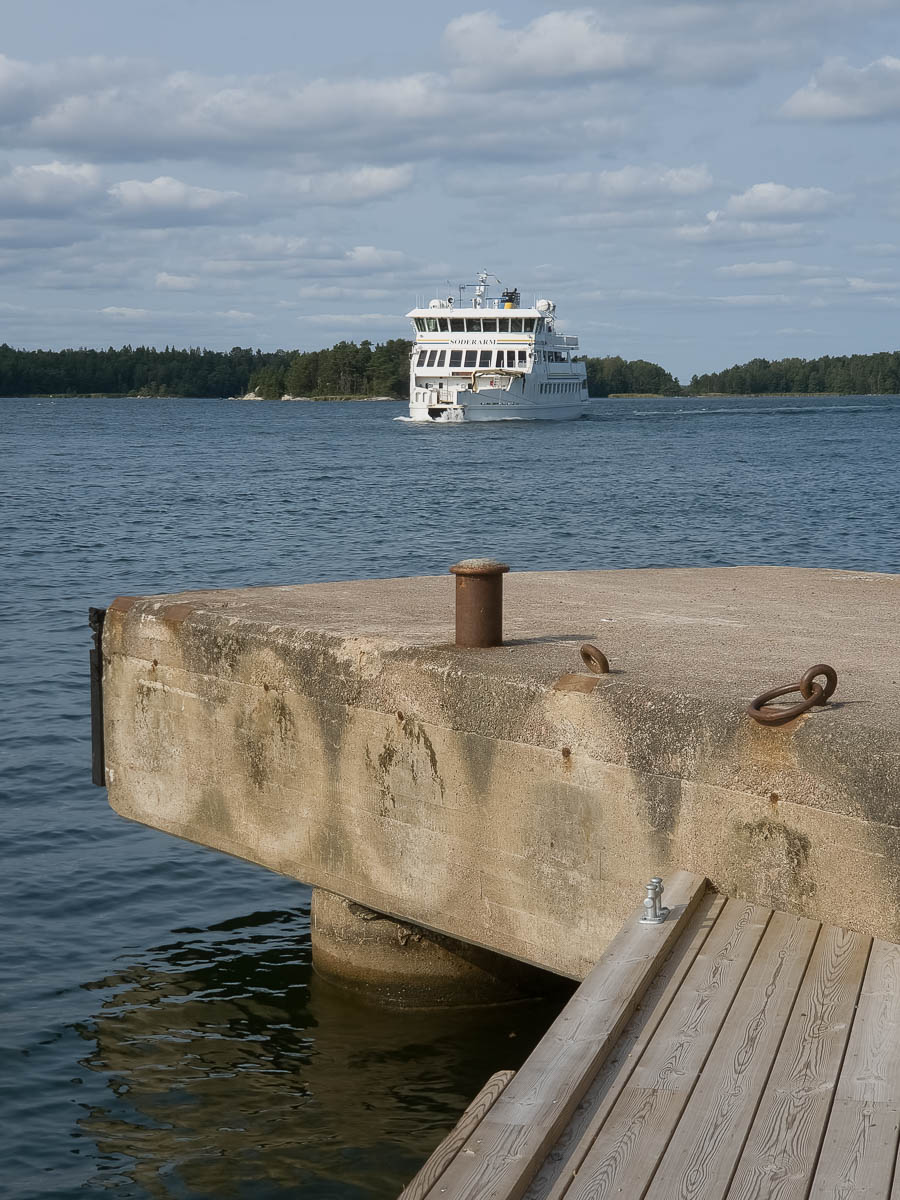
Today’s boat will be taking us to Grinda.
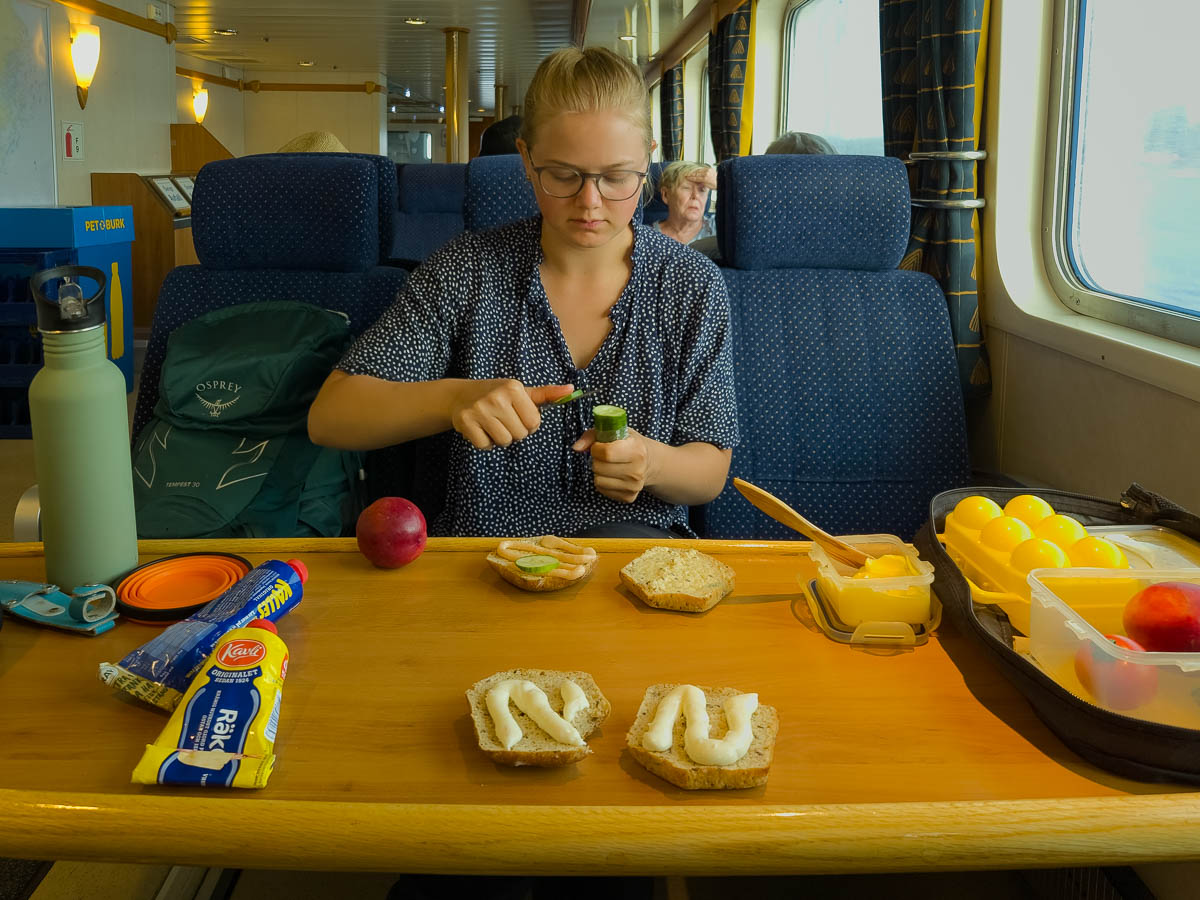
An afternoon meal on the boat. Hiking makes us hungry, and three meals is not enough to get us all the way to the end of the day, even when supported by snacking on nuts and dried fruit.
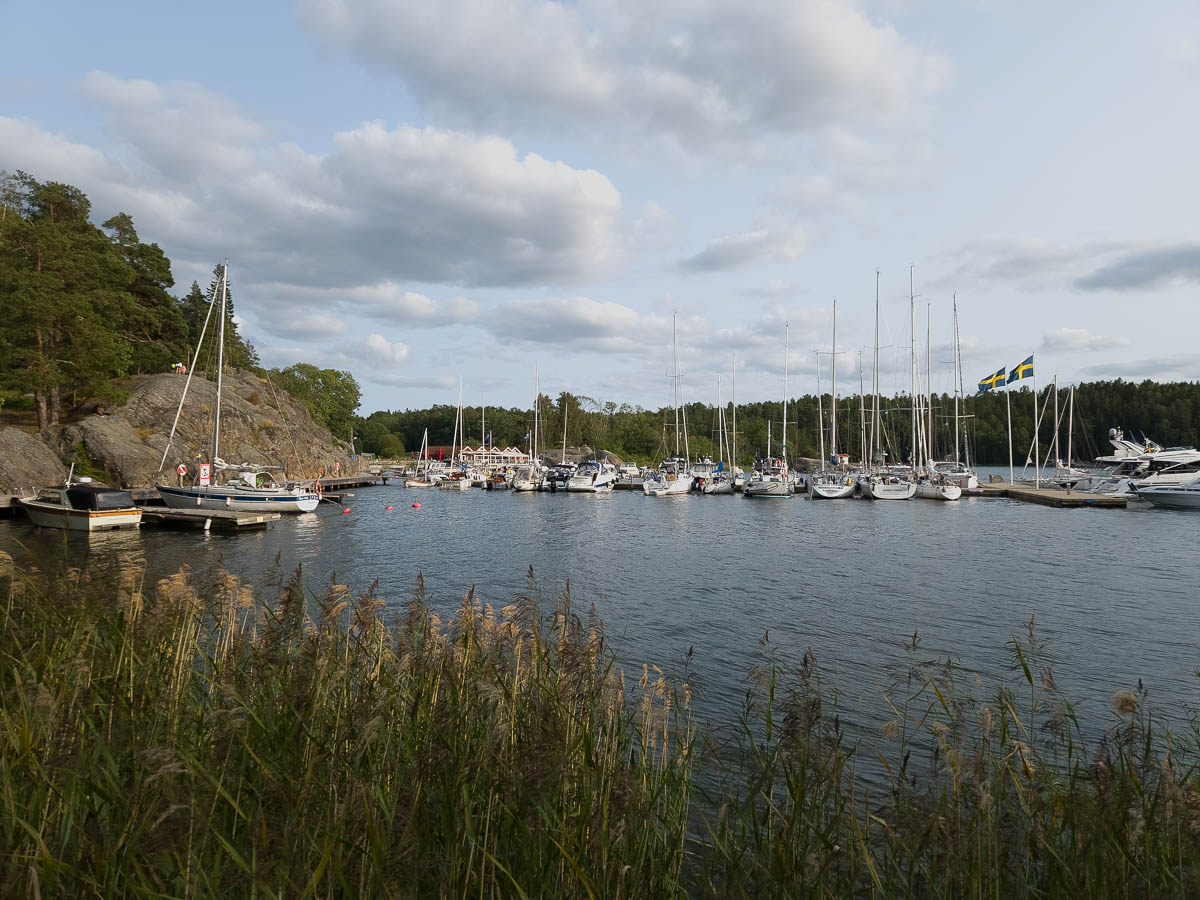
Grinda, apparently, is a rich people island. Large harbour, expensive restaurants, a helicopter landing pad, toddlers in Ralph Lauren shirts.
We walked onwards, circling the west side of the island, to the south where we’ll be staying in a simple cabin again.
Our accommodation this time is the most basic yet. Individual cabins, last decorated in the 1970s, with bunk beds. Shared outhouses and water taps within no more than 100 metres of each house. You fetch water for cooking, drinking and dish-washing in a ten-litre water canister. Strong scout camp vibes!

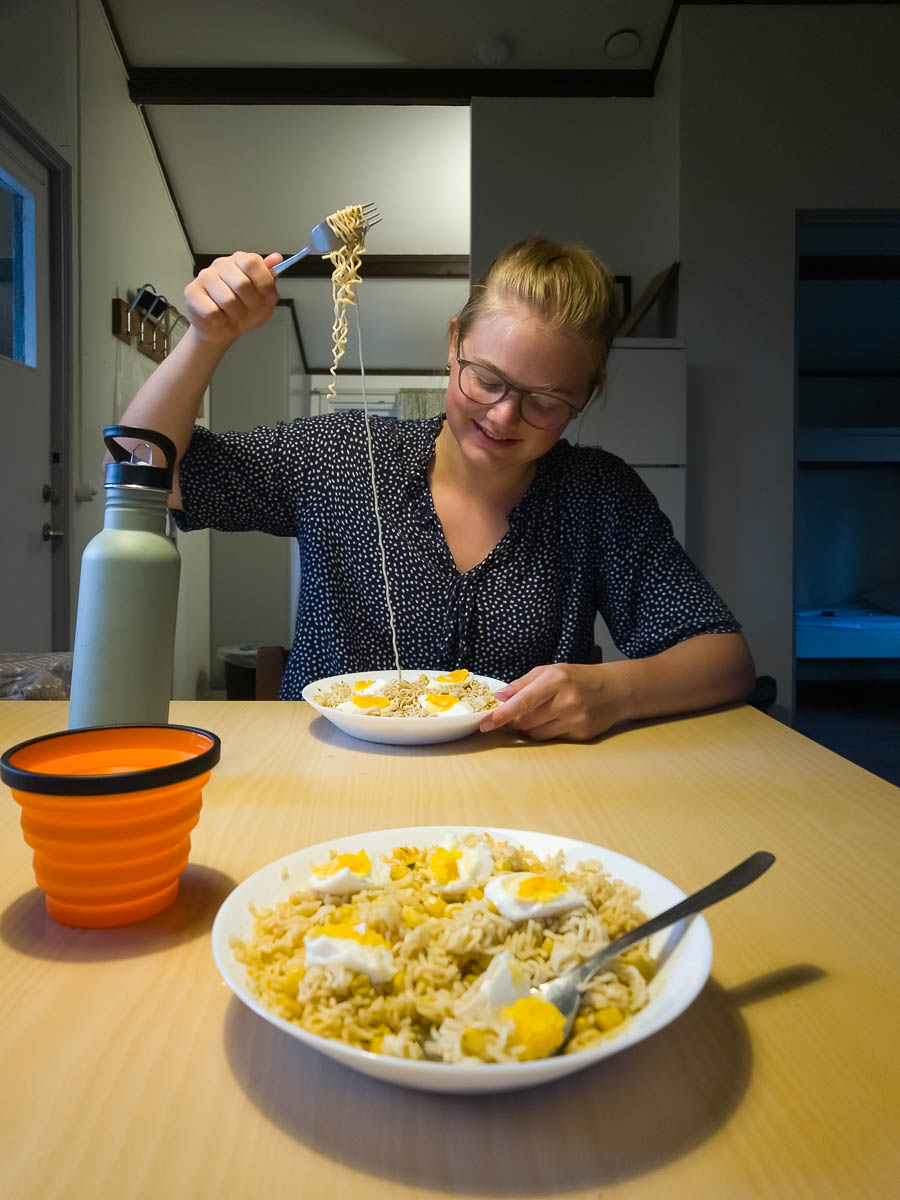
On the other hand, each cabin had electricity and a little kitchen nook, which came in handy for cooking dinner. The restaurants in the middle of the island were a viable option, maybe a kilometre away, if we took the straightest and most boring route – but the prices and the mixed reviews did not appeal. Thus: instant noodles and tinned sweetcorn (both of which I had packed for exactly this kind of scenario) with more of the farm eggs. Almost like ramen soup.
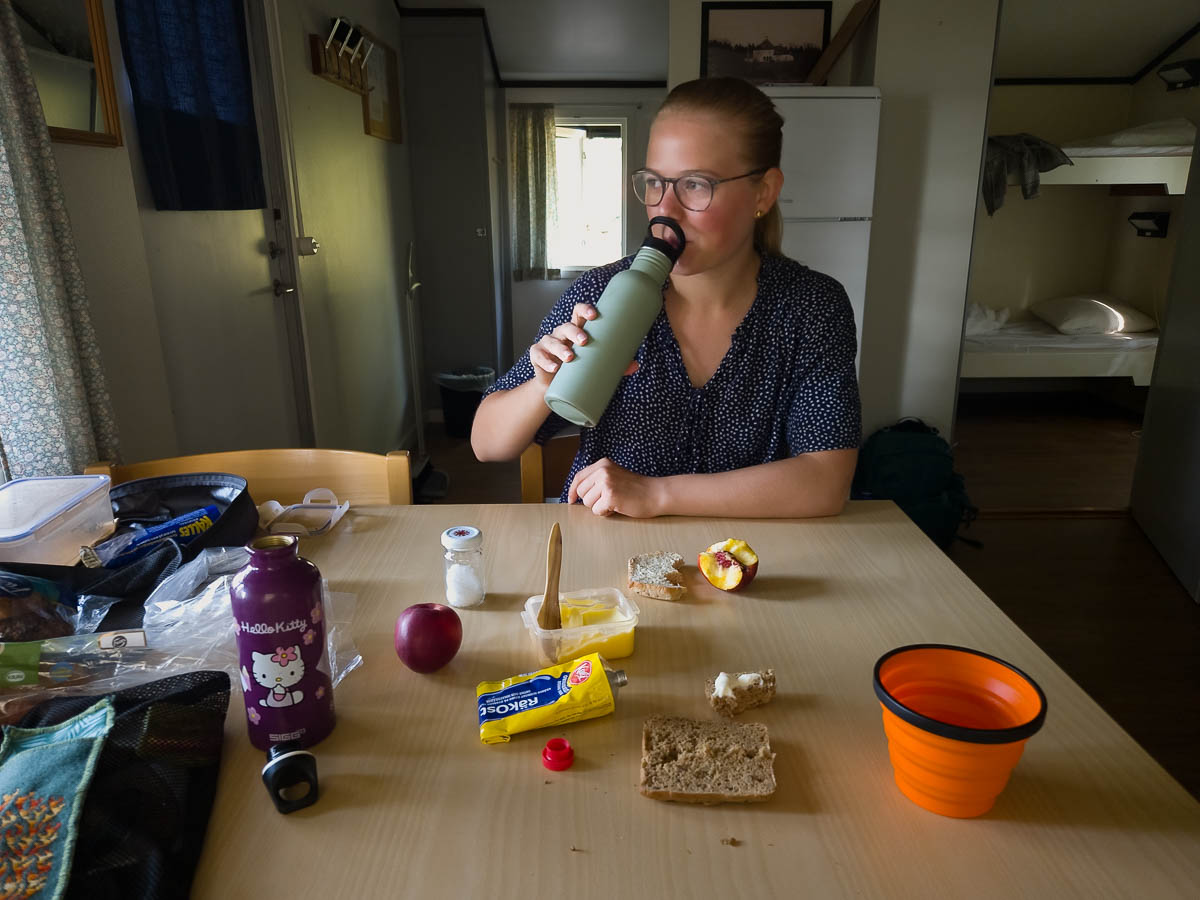
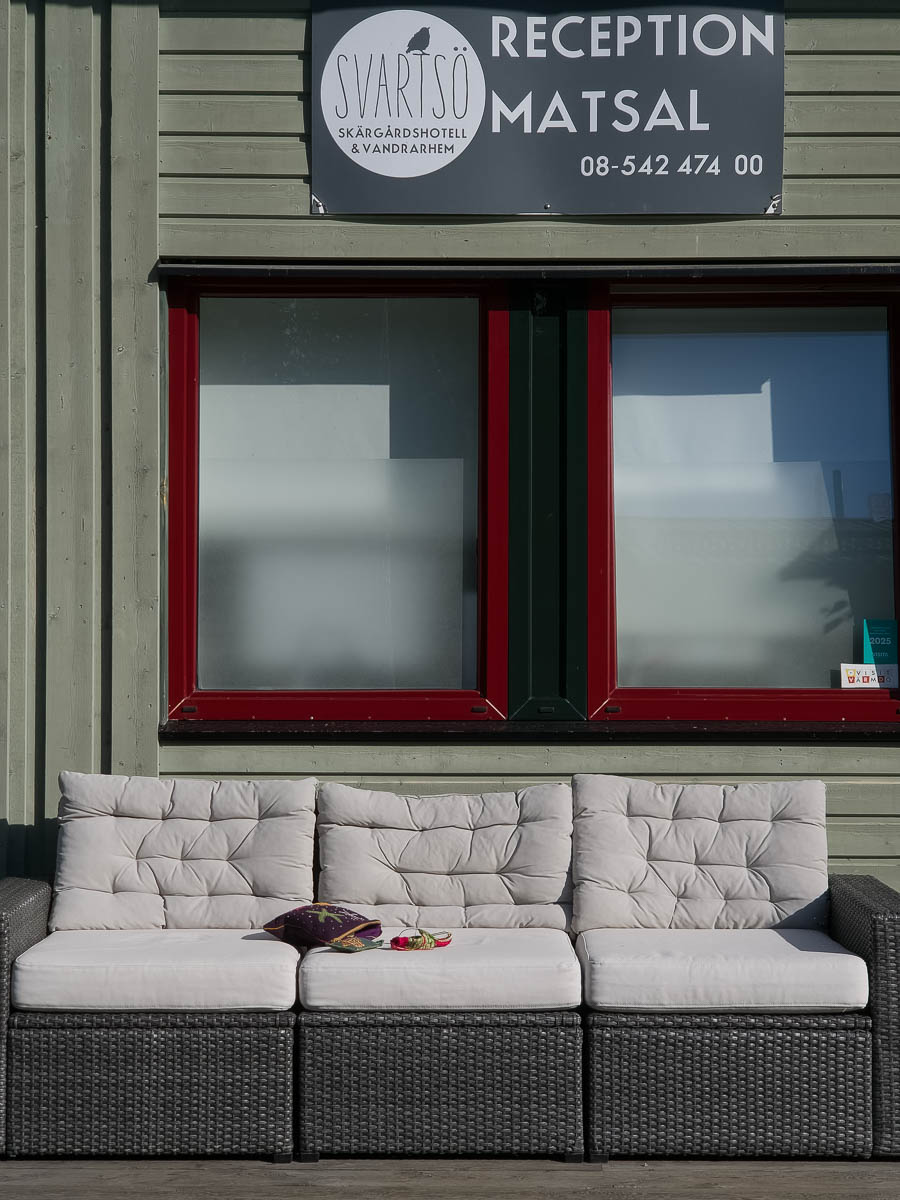
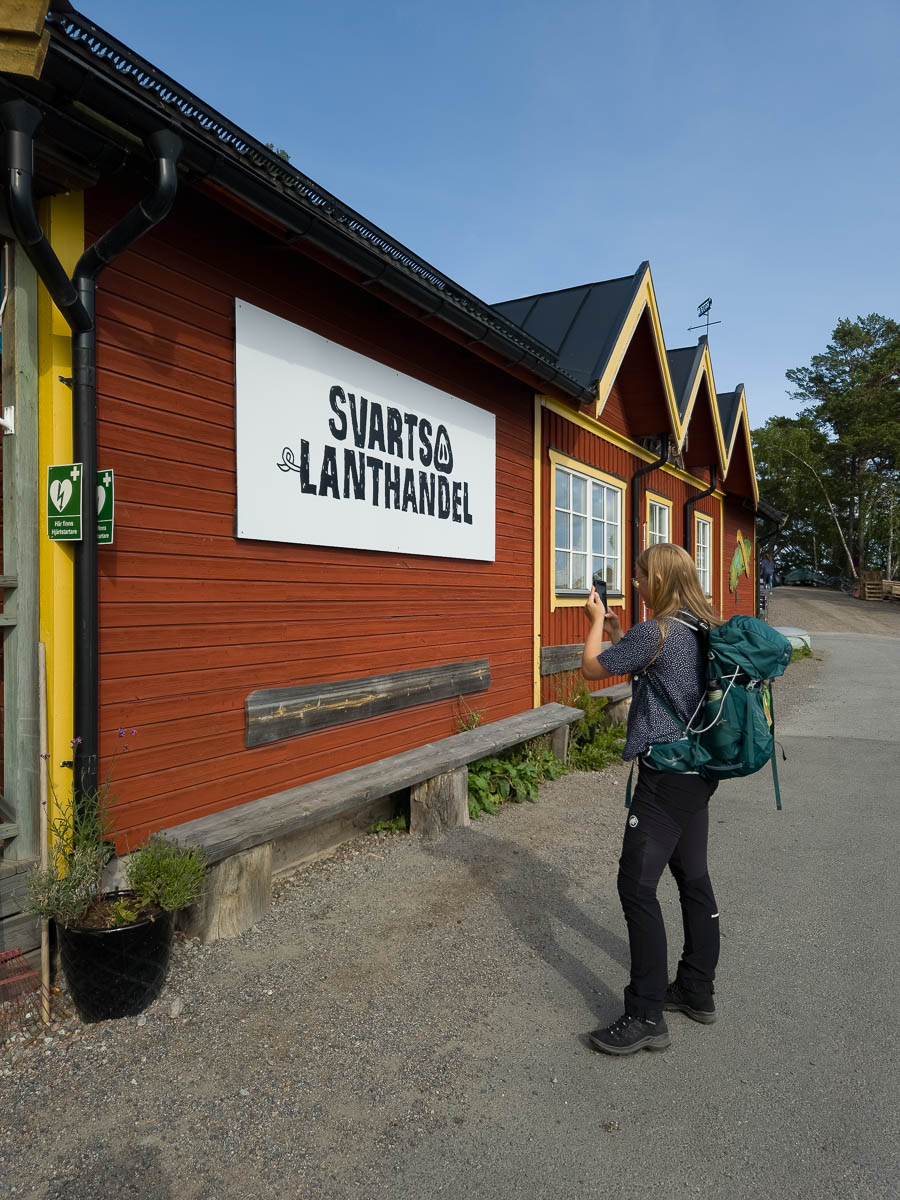
We stayed the night at Svartsö hostel. I woke up hours before Ingrid and spent the early morning sitting in the sun and knitting.

The hostel was simple, with bunk beds and shared showers, but nice. Everything was fresh and clean and welcoming.

After a leisurely breakfast at one of the hostel’s picnic tables, we went back to the harbour (less than a kilometre away) to take the boat to the next island. Svartsö is a small island and we walked most of it yesterday; there’s not much more to see today.

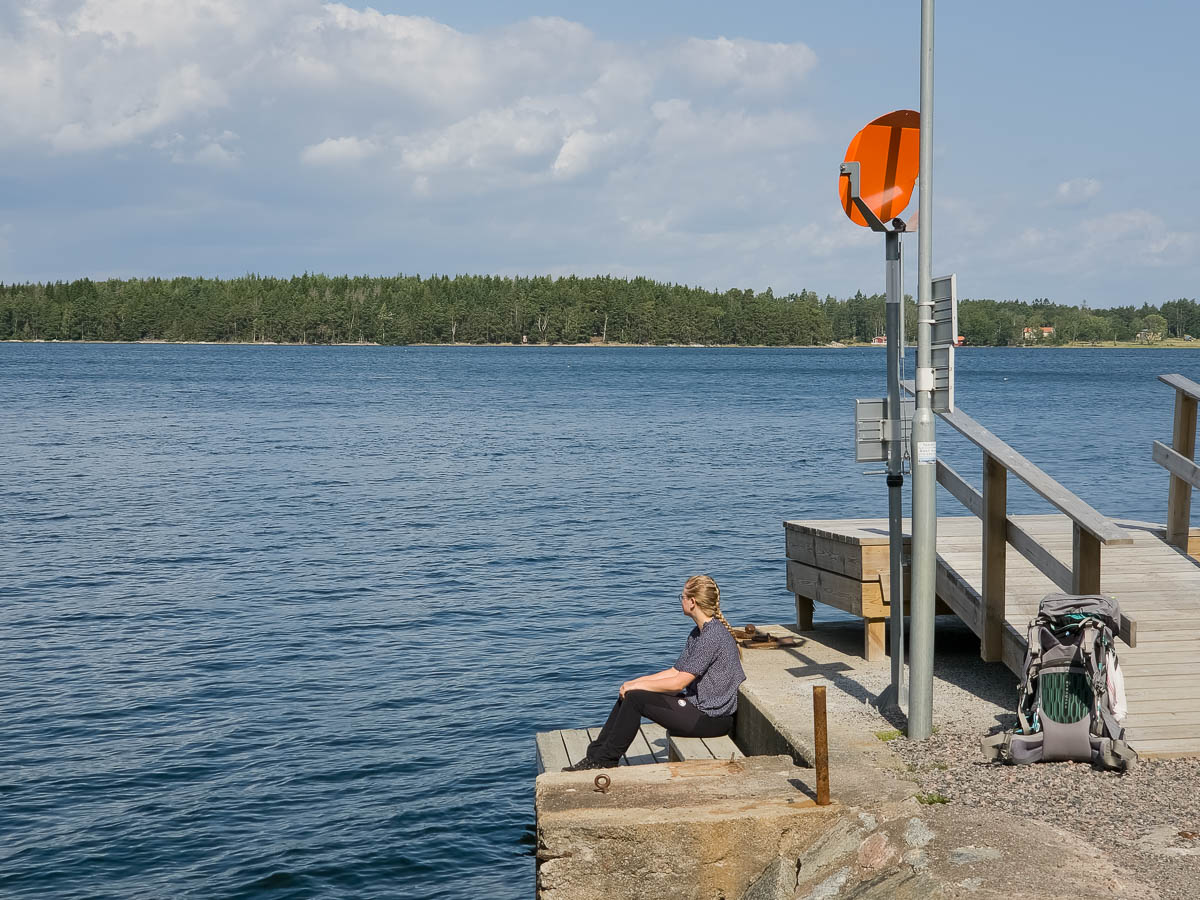
The Waxholmsbolaget boats follow fixed routes, but they don’t necessarily stop at each little island every single time. This is where the semaphore comes in. That’s the round orange metal plate on a pole here: you hook it to its vertical position to signal to the boat that you want pick-up, and release it back to horizontal before you get on the boat.

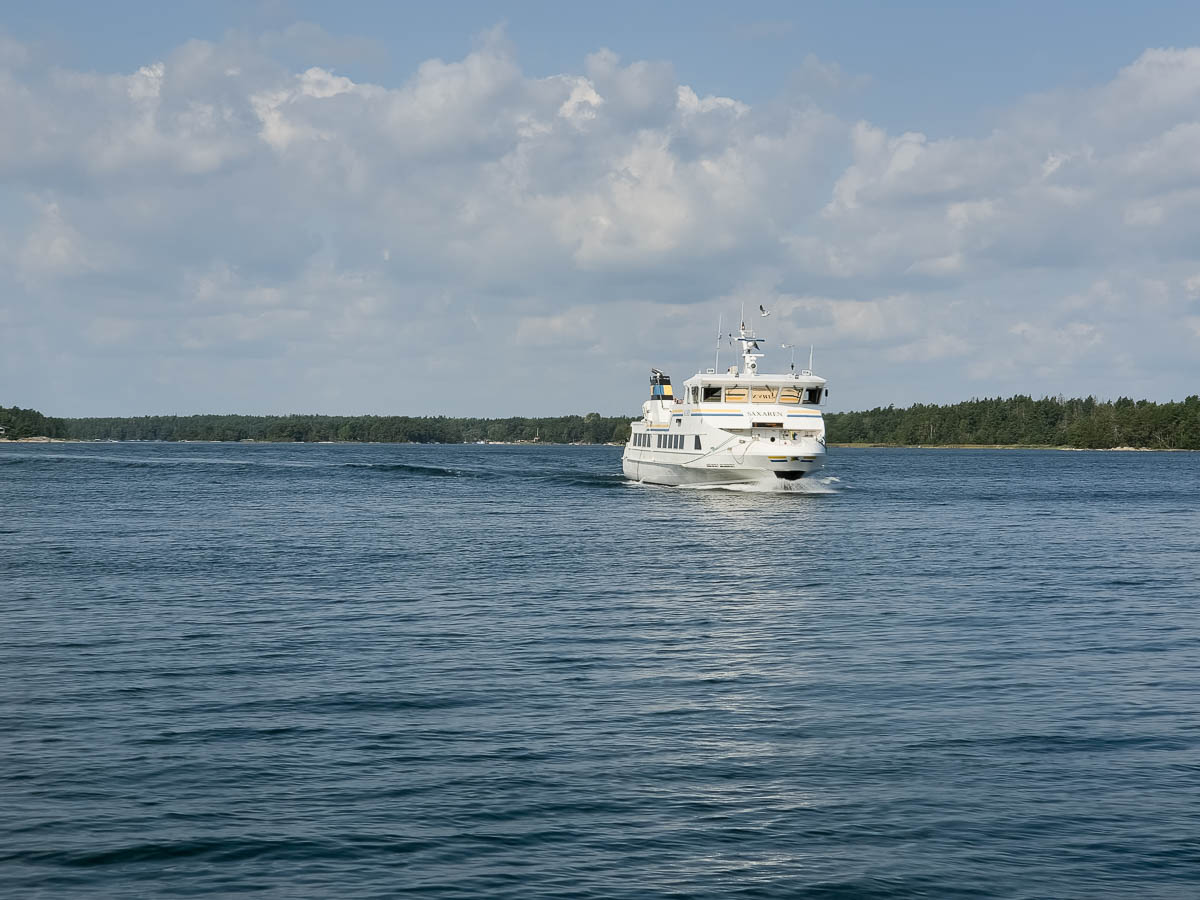
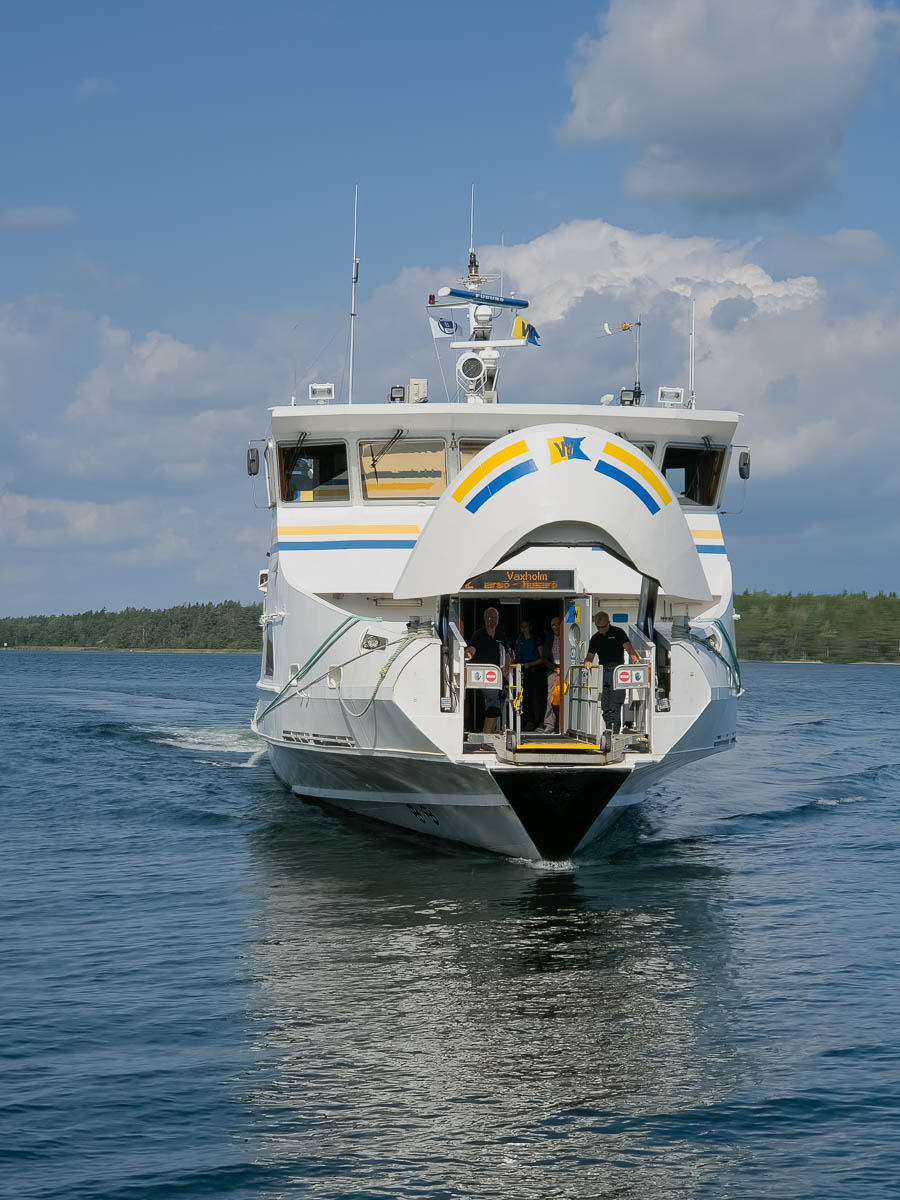
Here’s one of the boats heading our way. It would have stopped here even without the semaphore – there’s plenty of people waiting to get off.

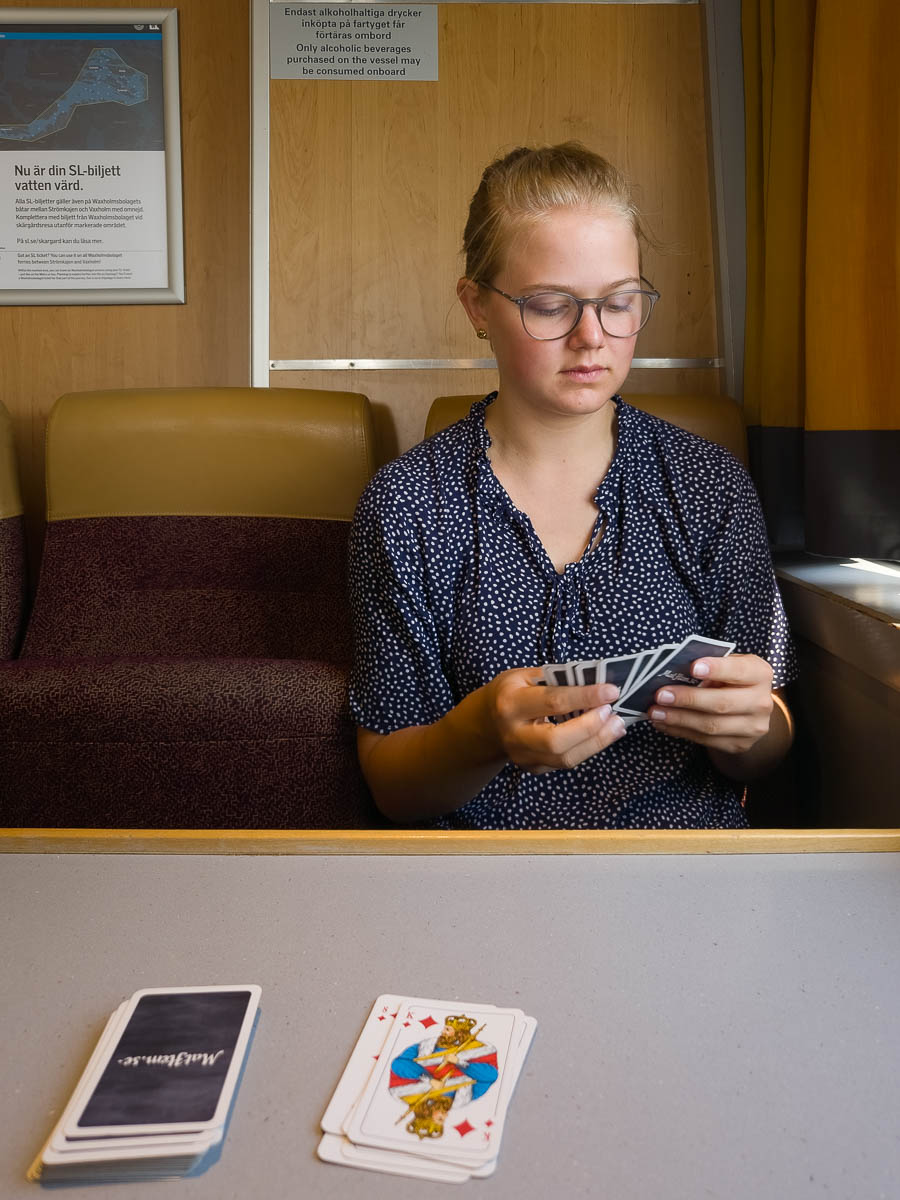
During our boat rides we learned to play gin rummy.

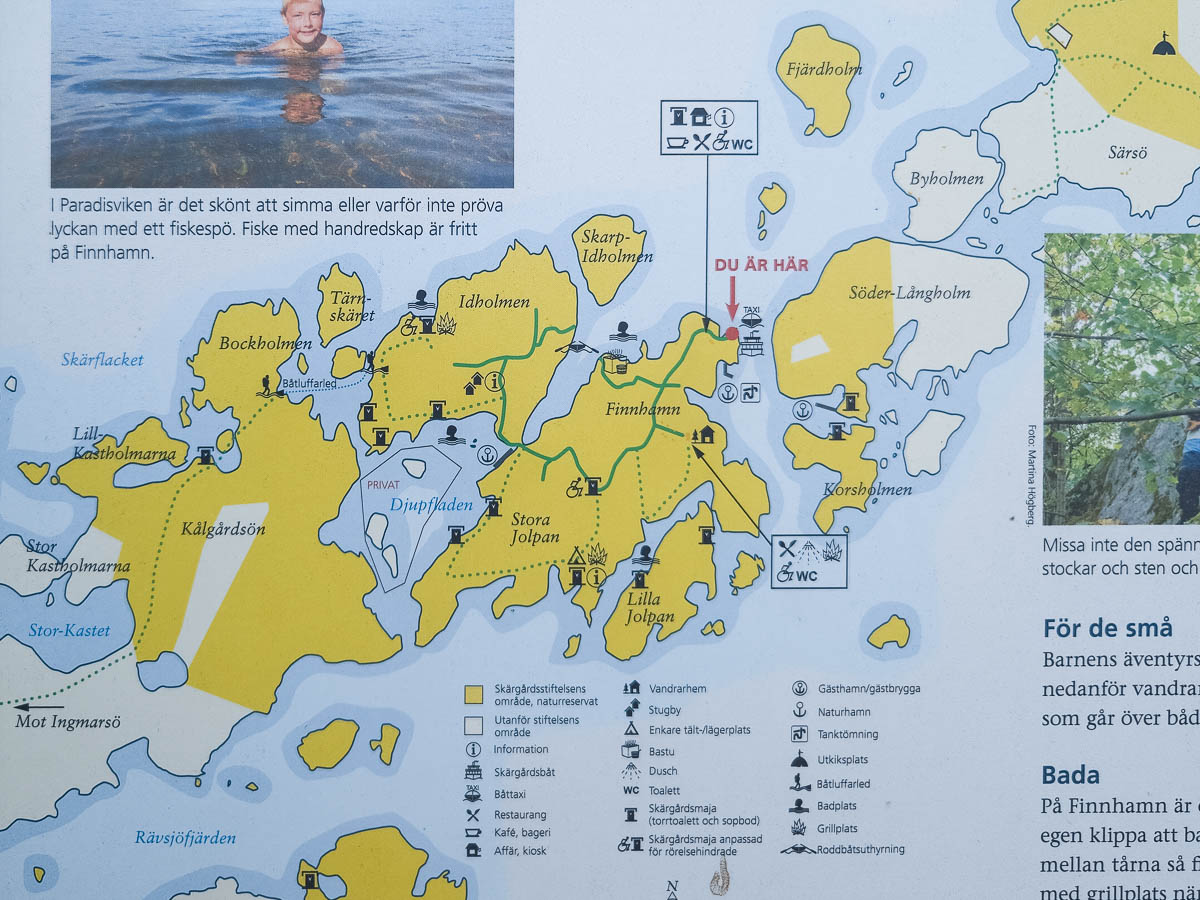
After forty minutes on the boat, were were in Finnhamn, our island for today. Finnhamn is a conglomeration of three small islands connected by bridges. They’re so close, and the bridges so short, that you barely even notice them as separate islands. It’s only when you look at the map to check how you can get to the best bathing spot that you see that the paths are all a tangle with a choke point in the middle.

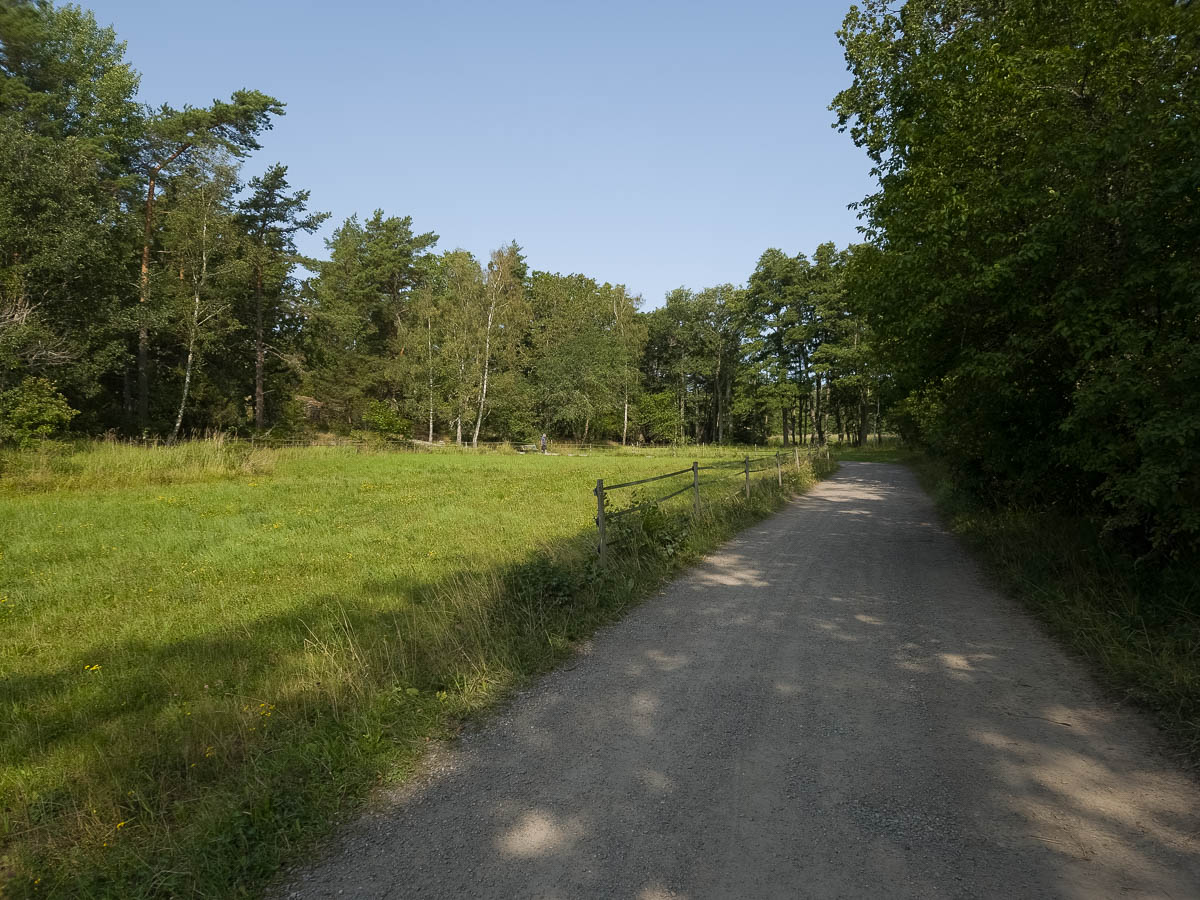
Finnhamn is much more tourist-friendly than Svartsö. Gravel roads criss-cross the island; there are benches and grilling spots and outhouses at regular intervals, as well as a snacks kiosk and a canoe rental. We stayed on the less frequented paths where possible.

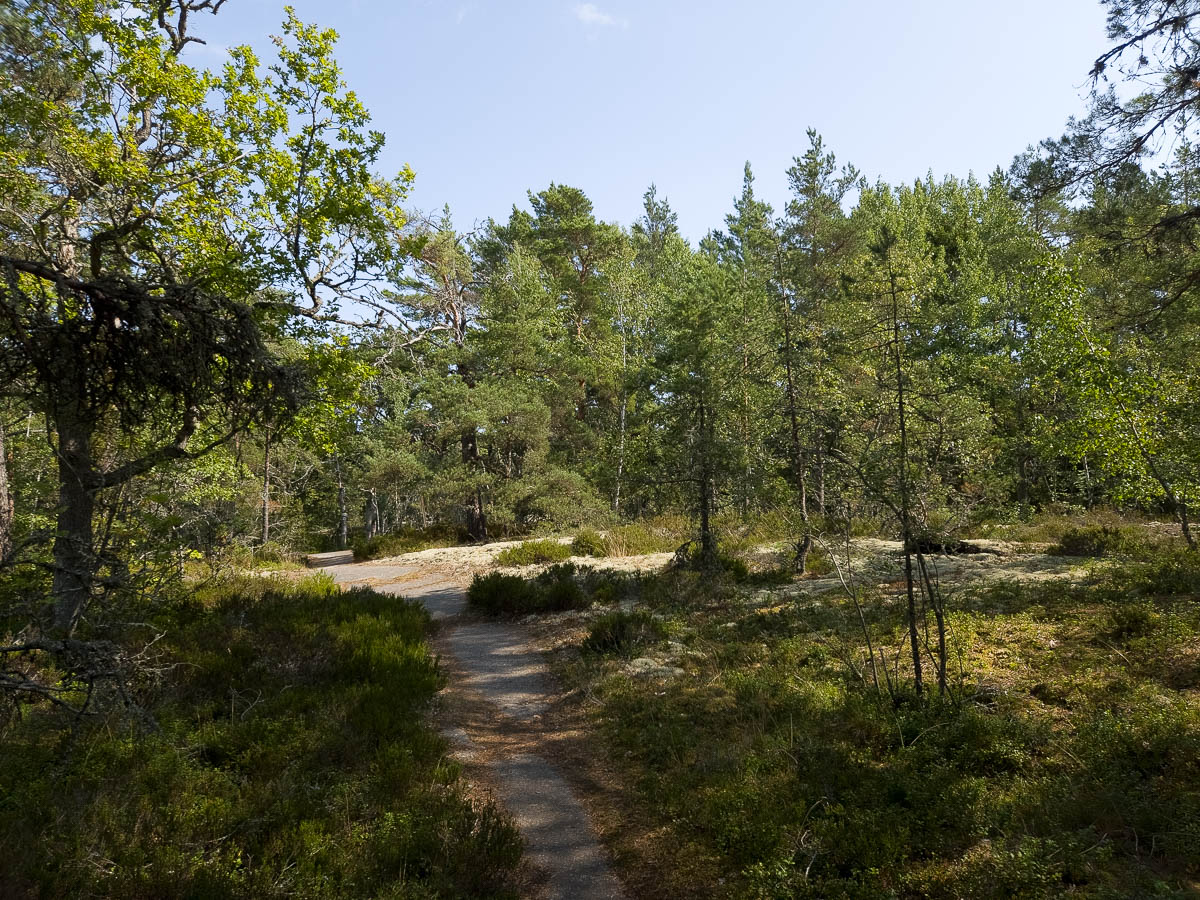
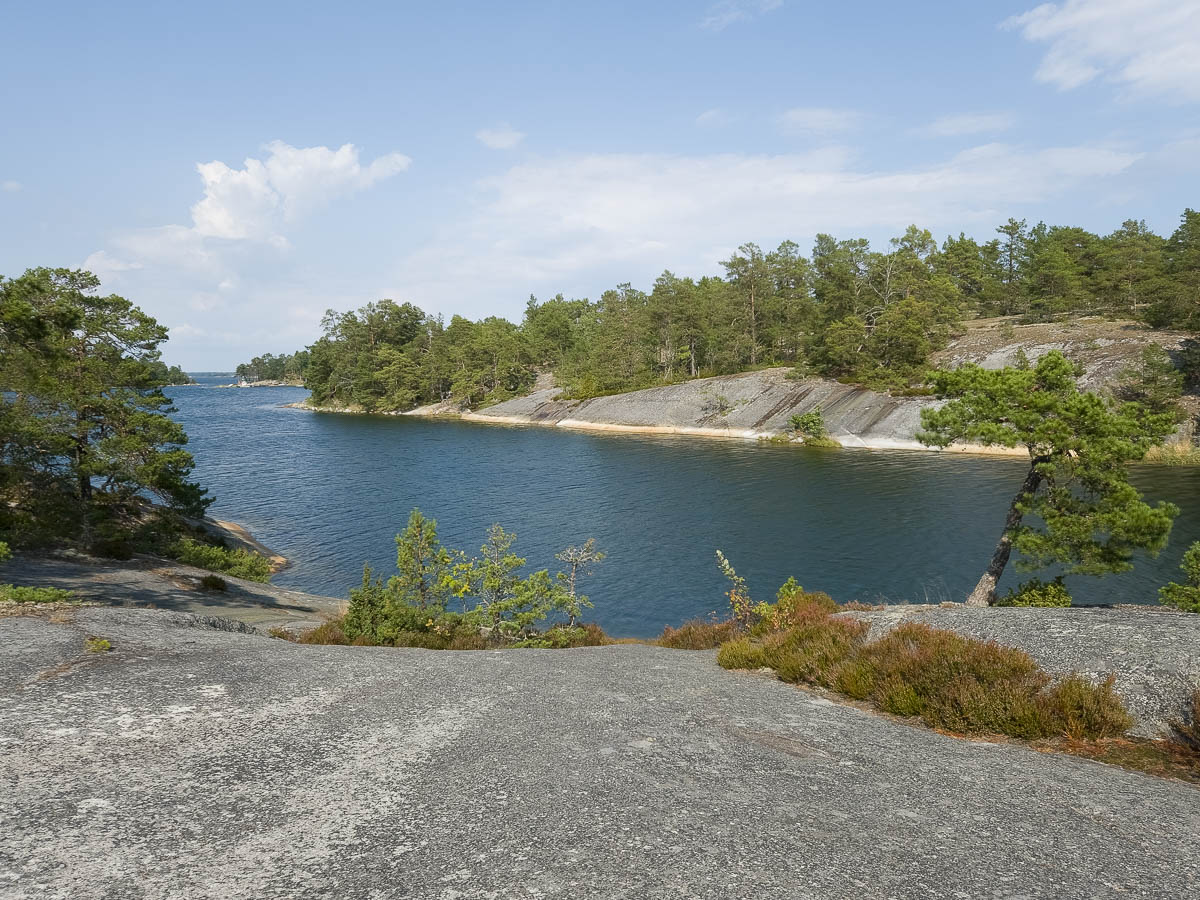
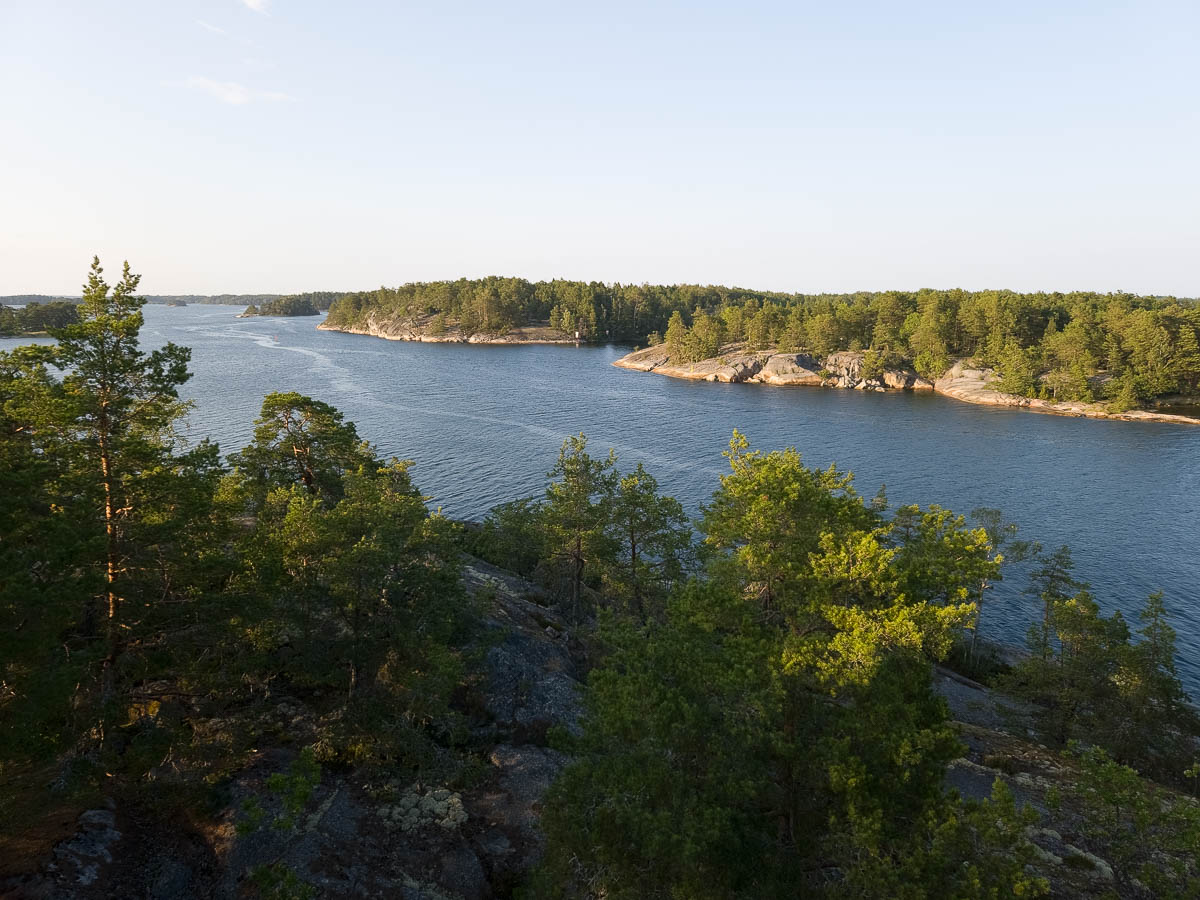
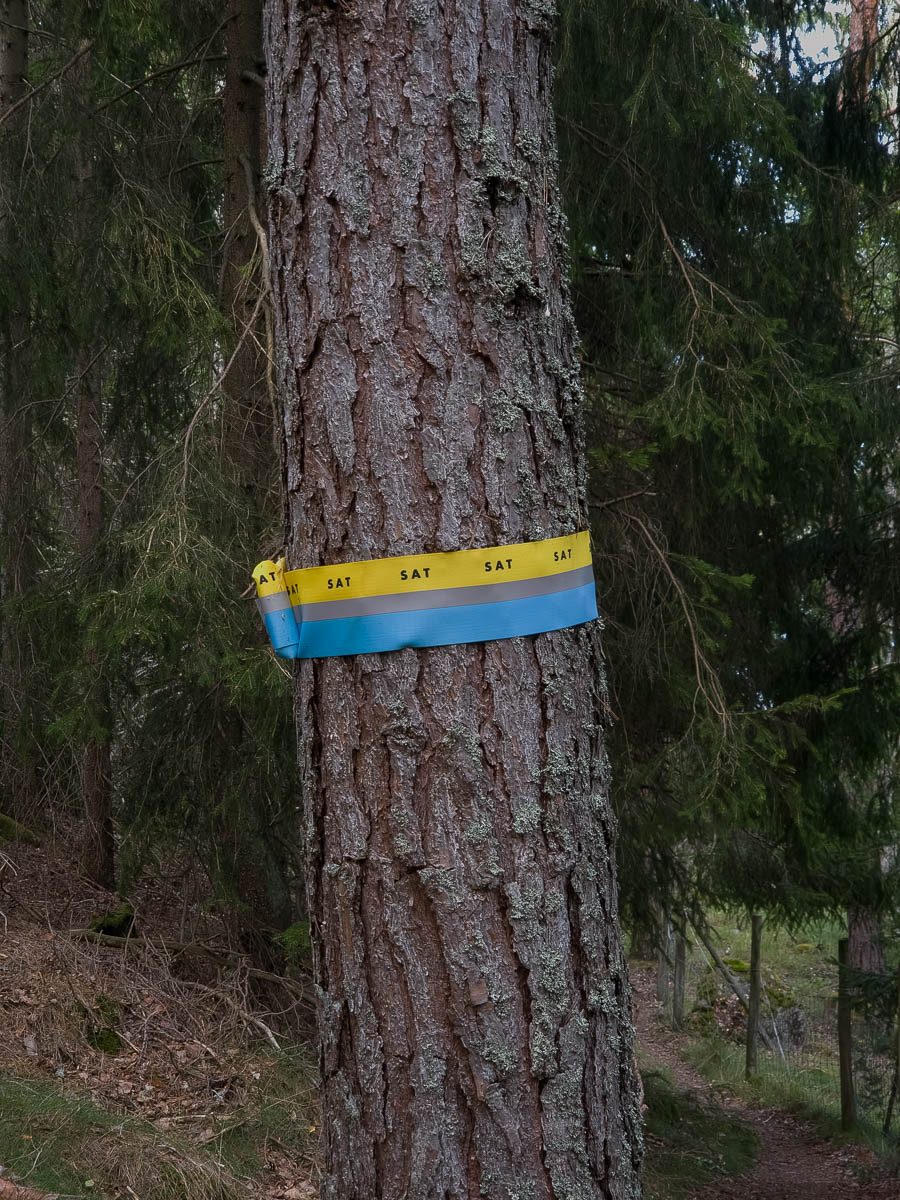
The marked SAT trail took us along the edges of Idholmen, where we got beautiful views. Like, I do realize that farmland and pine forests are also all part of the archipelago, but the rocky coasts with views over narrow straits are what really give me the archipelago vibe.

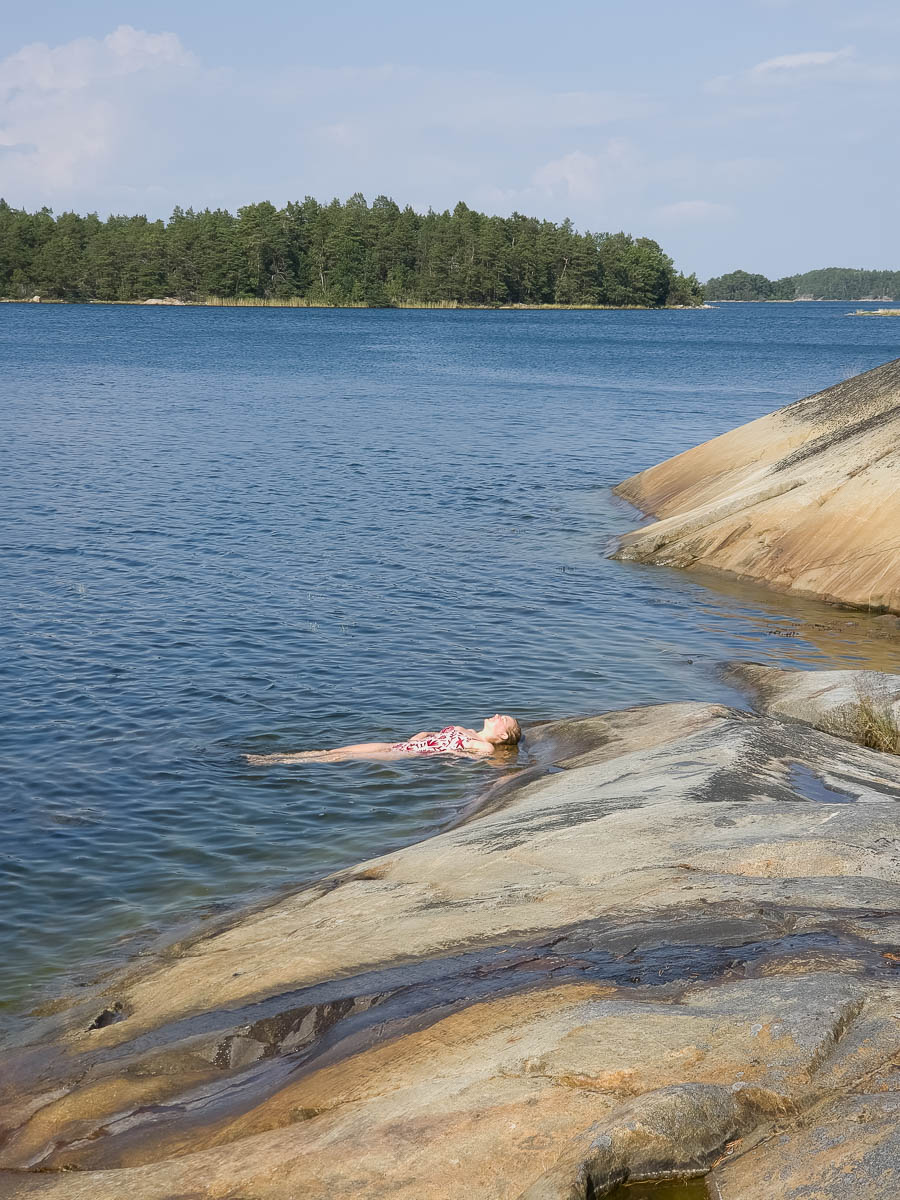
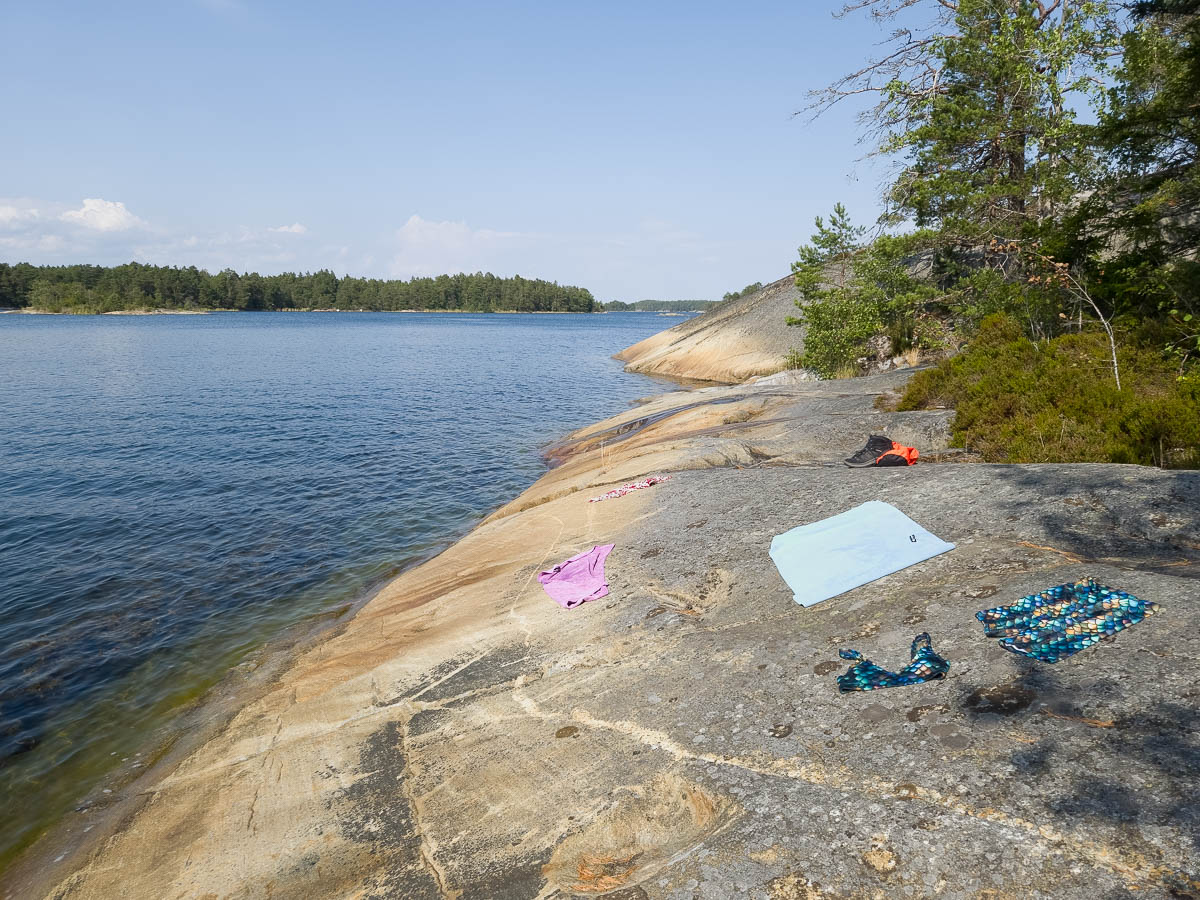
It was a hot day and the path was rocky and hilly. We were hot and sweaty and tired, and struggling to enjoy ourselves. When we got to a secluded section close to the water, we decided that we really didn’t need to wait until we got to an official bathing spot; this was more than good enough. It was a bit tricky to get into the water (and we scouted around to be sure that we would be able to get out afterwards as well). Once we were in, it was heaven. Cold, yes, but that’s exactly what we needed.

Ingrid found a shallow basin where she could play mermaid.

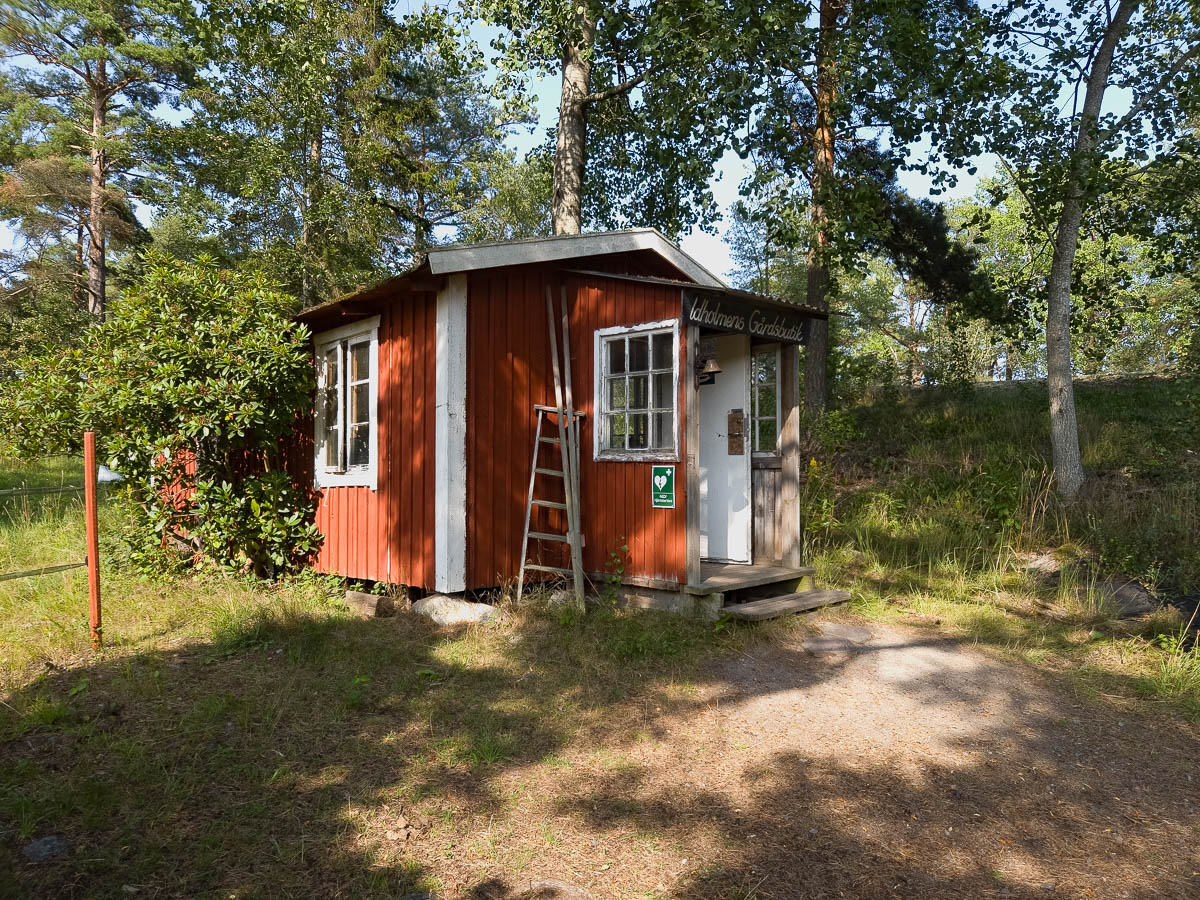
We timed our rest here to loop back towards the more inhabited bits of Idholmen shortly after three in the afternoon, because that’s when the farm shop would get its delivery of fresh eggs.

We bought eggs and fresh tomatoes for our lunch tomorrow. (Breakfast will be at the hostel here in Finnhamn since it’s included in the price.)

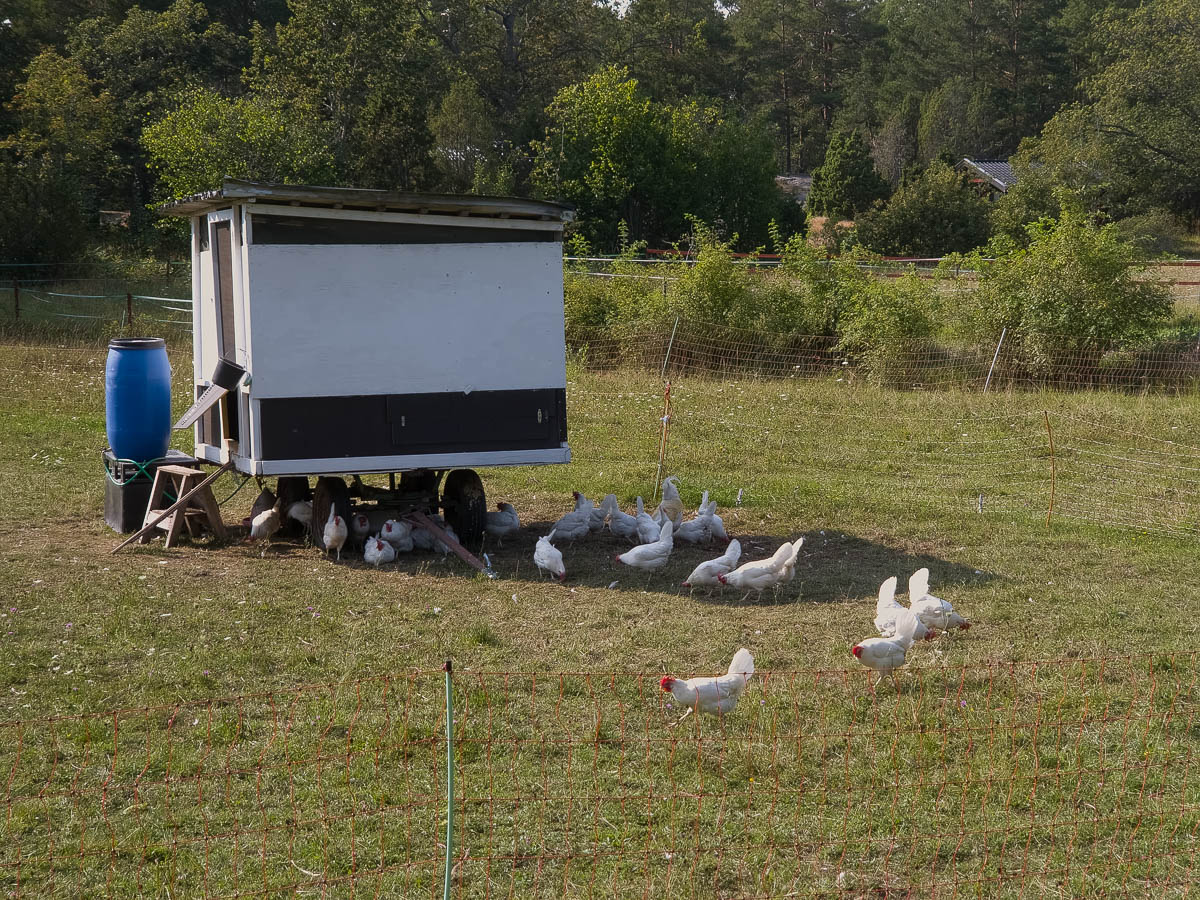
And here are the producers of those fresh eggs.

In the afternoon we walked the south-eastern loop. This was even more hilly and rocky, and somewhat less exciting.
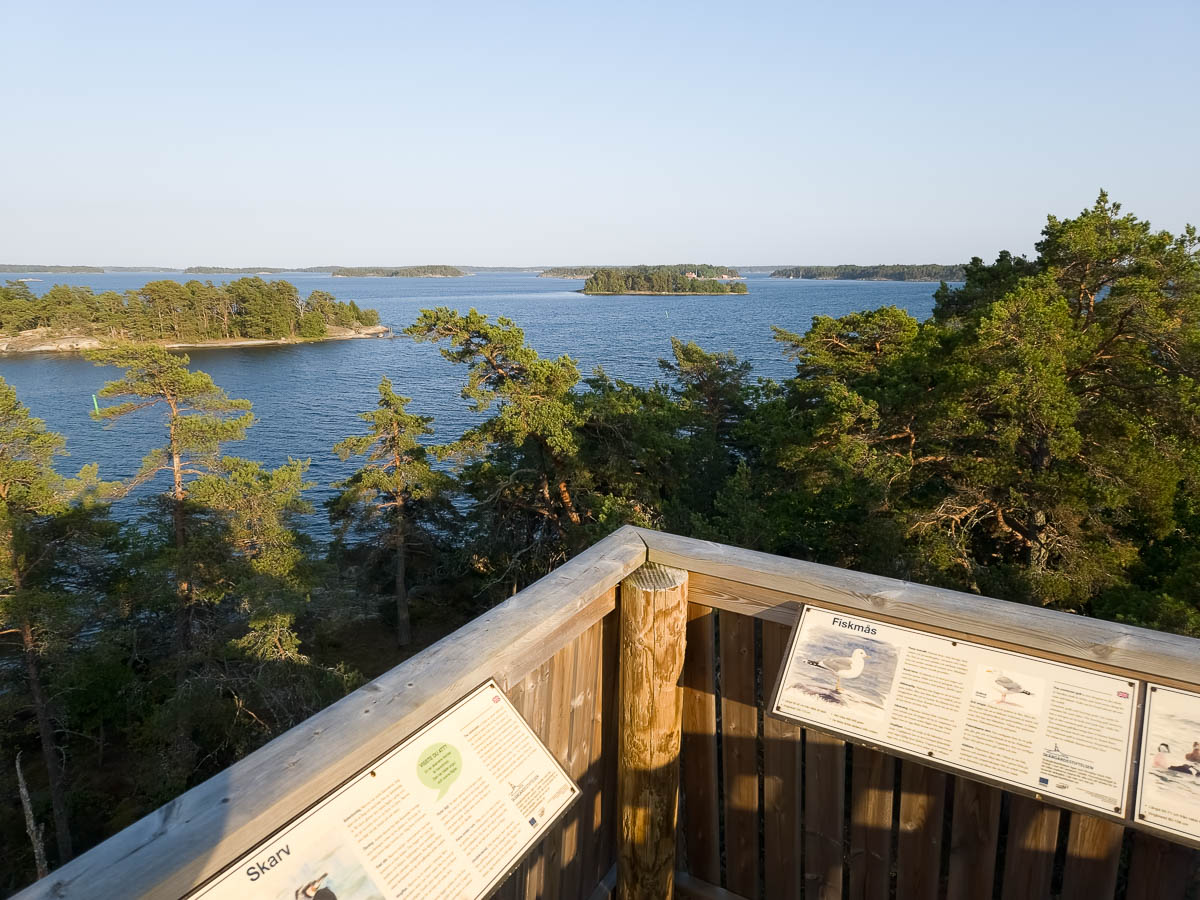
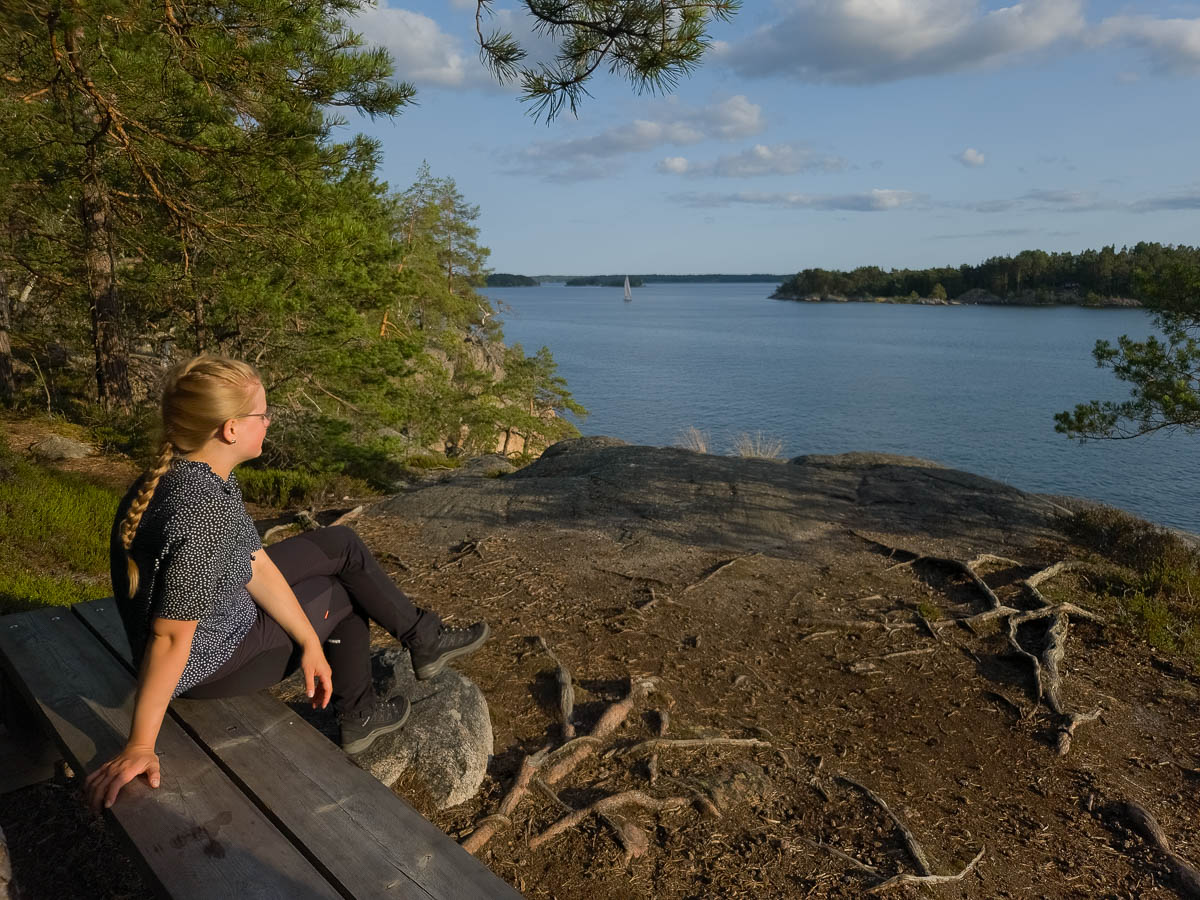
It did take us to a great viewing platform, though. Or rather, it took us close to the viewing platform, but then for some reason there were no signs to indicate its existence. It was literally less than a hundred metres away from the marked path, but there wasn’t a single sign pointing to it. Had we not looked at a physical map earlier in the day, we would have missed it entirely. Which would have been a pity, because the views were excellent!


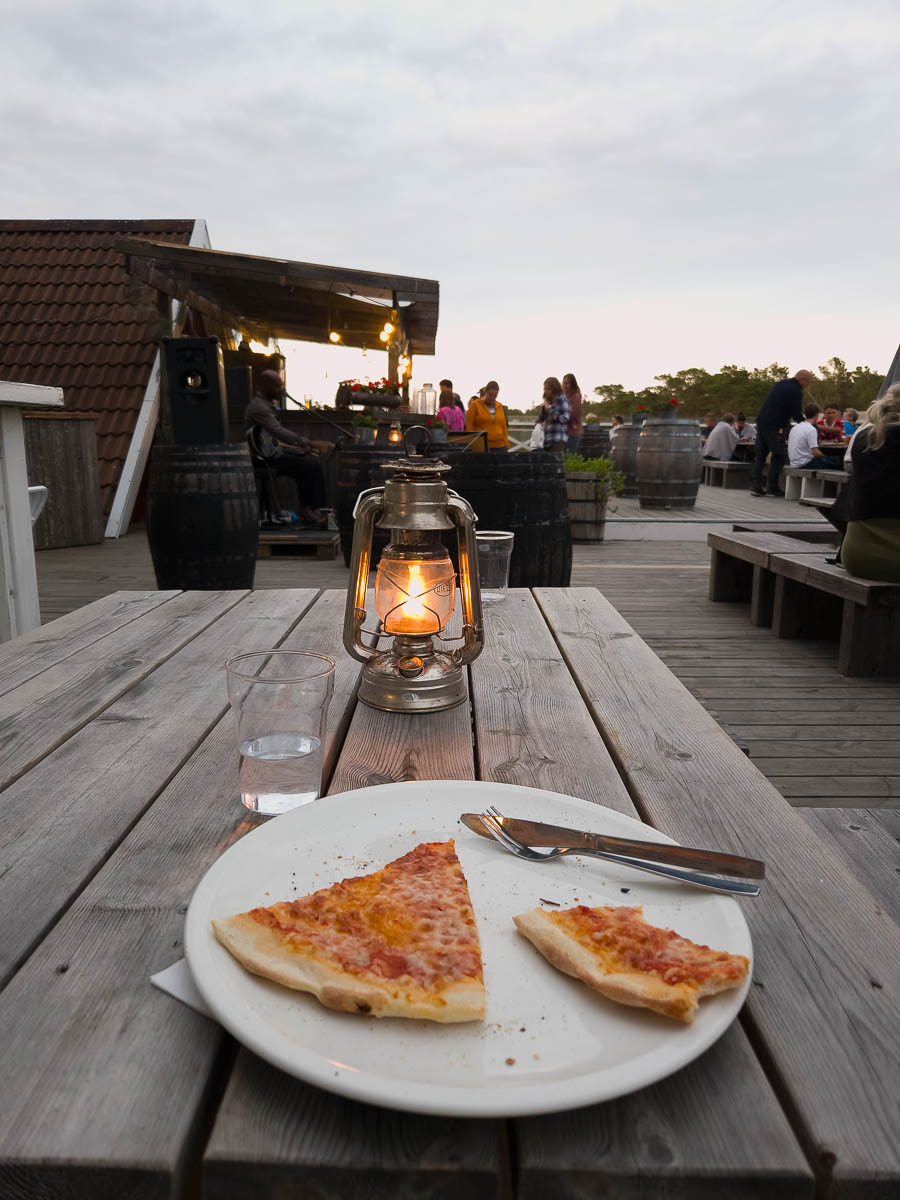
Dinner (and also lunch before it) at Finnhamns krog. Pizza, with a troubadour for entertainment.

This whole “going back to work” thing was not very satisfying at all. Having worked all of three days now, I took a long weekend to go hiking in the Stockholm archipelago with Ingrid. (Just kidding. Ingrid has been working until now, so this was our first chance to go hiking together. And it actually worked out well with my team as well, because the project manager is still on vacation.)

I’ve been wanting to see more of the archipelago for a while. But there’s so much of it that I don’t even know where to start. The Stockholm Archipelago Trail is a recent project that sort of packages the archipelago into a nice visitor-friendly format, selecting a bunch of “best of” islands, providing well-marked hiking trails on them, with online maps etc. This is exactly what I needed!

Today: Svartsö.

But first, getting to Svartsö. You get there by boat, either from central Stockholm or from Vaxholm. The commuter trains from Spånga are still on a half-hourly schedule due to engineering works, so we drove to Vaxholm. It’s just a 40-minute drive, which is less time than it would take us to get to central Stockholm.

Late last night it occurred to me to check for parking, which was a good thing, because it turned out to be tricky. No long-term parking near the harbour at all. It looked like we might need to park at the very far end of Vaxholm and walk 2.5 km with our packs, on asphalt. Ouch. We were lucky and found a spot in a smaller (and more expensive) long-term parking lot, which cut this walk to a half and left us time for ice cream in a harbourside shop.

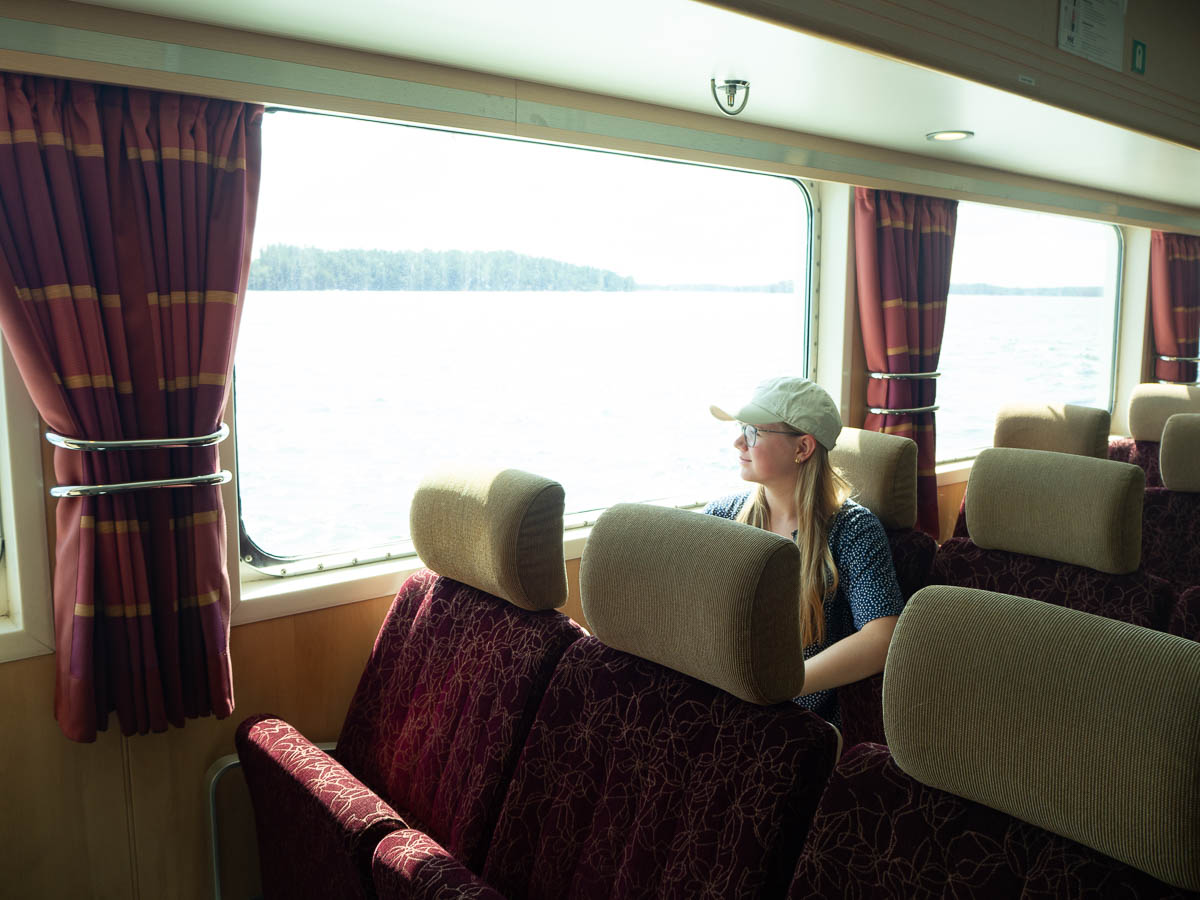
The boat ride was pretty nice. The Waxholmsbolaget boats are very comfortable – like the nicest trains, except with more space to move around. Big windows, wi-fi on board, comfy seating.

On Svartsö we took five minutes to check in at the hostel and then started walking. The SAT trail here is about 17 km and is a tangle of two connected loops and a few “tails” here and there. The SAT markings were very visible when they were there, but we often thought they were too few and far between.

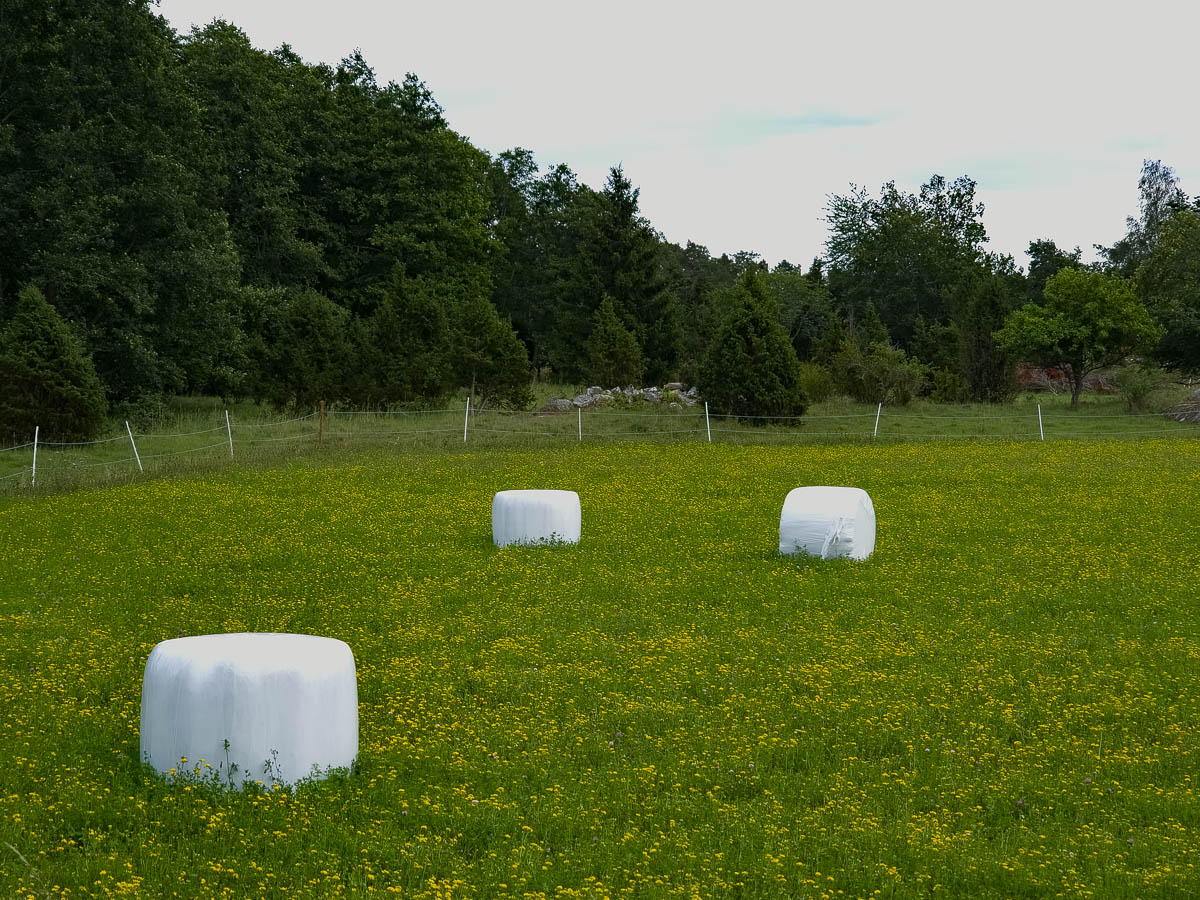
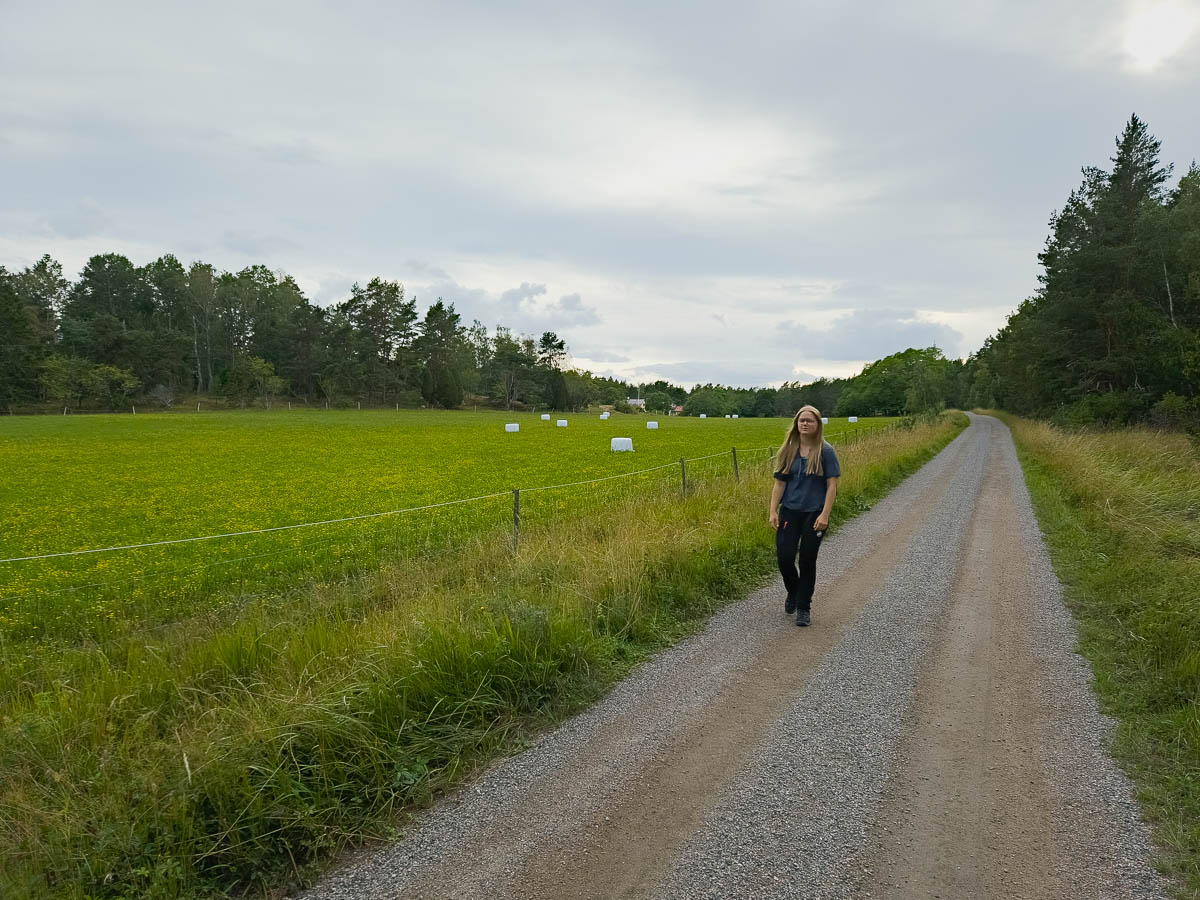
The trail on Svartsö is a mixture of small gravel roads between meadows and pastures, and paths through open, airy pine forest. Easy, pleasant walking.


There were several small villages on the island, various farms scattered around, two restaurants, and a general store. We didn’t see any cars. Instead, local folks used all sorts of smaller vehicles, from cargo bikes and tricycles (electric and not) and cargo mopeds to ATVs, small tractors, and strange small car/moped hybrids.

Ingrid bathed in the sea, mostly to have done it. The water looked cold and was even colder than it looked, so her swim was very short.

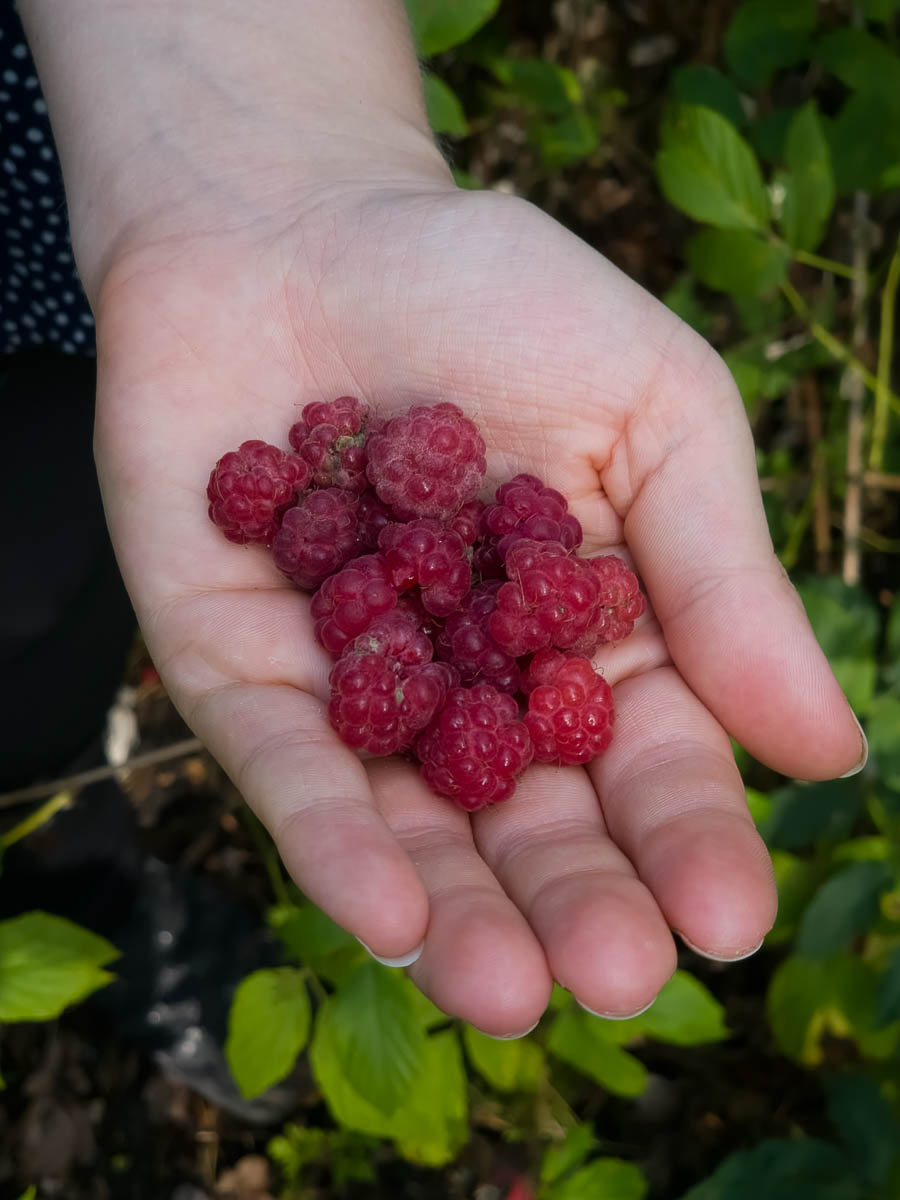
We spotted a lot of edible berries on Svartsö. We counted eight: bilberries, lingonberries (not quite ripe yet), wild raspberries, stone brambles, redcurrants, damsons (not really berries but small enough to count!), sloe (far from ripe), juniper. We kept our eyes peeled for wild strawberries but didn’t find any.

Raspberries were especially abundant. Wild raspberries aren’t rare in the Stockholm region, but it’s not like they’re growing everywhere, either, so we were delighted when we ran across the first good patches. Later on we actually got to a point where we could spot raspberry bushes and just walk past them.

On the east side of the island we ran across the largest raspberry patch that I’ve ever seen. Metres and metres of them! Now I understand how people can pick enough wild raspberries to make jam out of them.

More pretty meadows and pine forests on the eastern loop. We hesitated about whether to walk it or not. We had a late start on the island (only started walking around at half past two) which left us less time for completing the trail than we might have wanted. But just sitting around and doing nothing at the hostel didn’t seem like any fun at all, so we did choose to walk it all. We ended up finishing later than we had hoped and were quite tired by the end of it.


Dinner at Svartsö Bistro. Outdoor seating, friendly staff, good food, and a cute little dog running around. I wish they had more comfortable chairs, though, instead of the small cafe-style seating.

My camera lens stopped working, just like for the Venice trip last year. It’s like it’s jinxed, somehow. I’m forced to rely on the camera in my phone, and I am not happy with it at all. I had really been looking forward to taking photos on this trip, and I’m stuck with a sub-par tool.

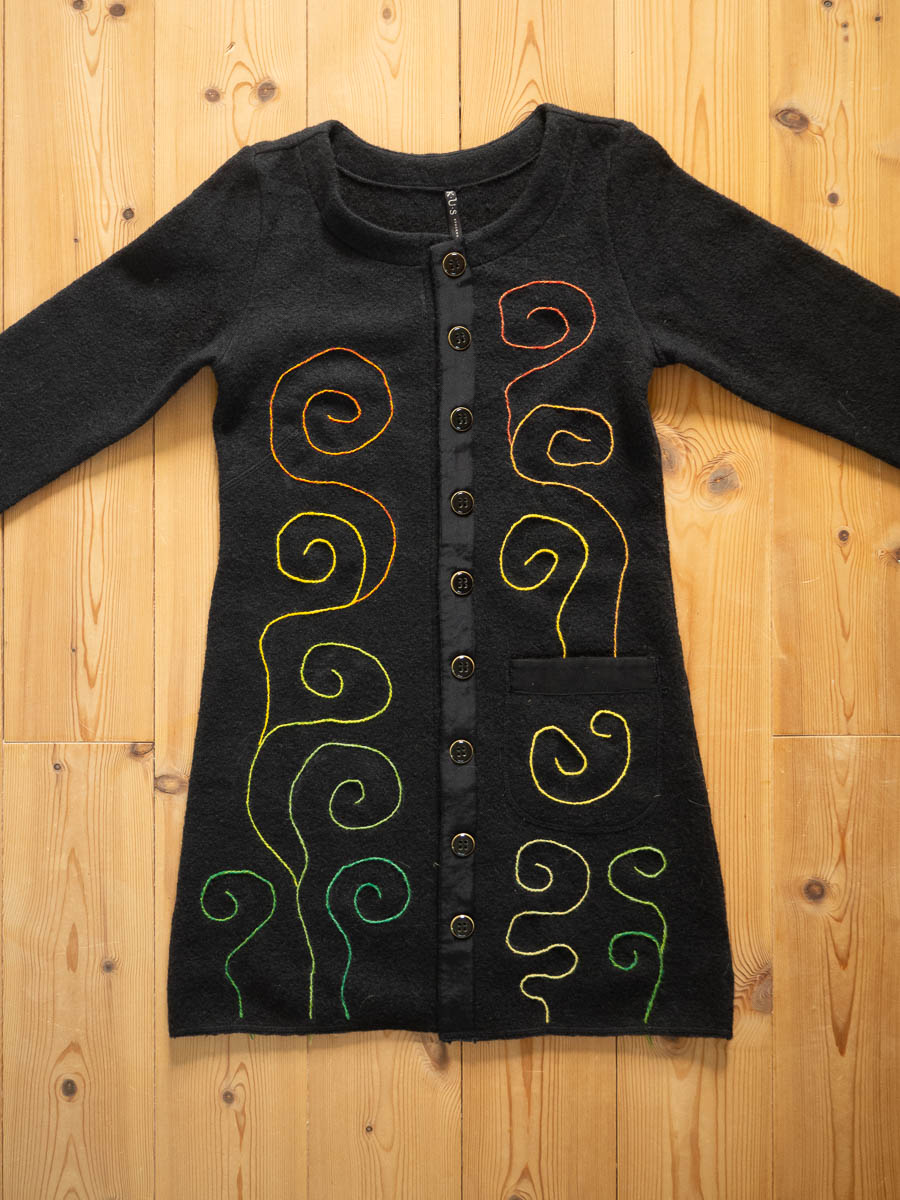
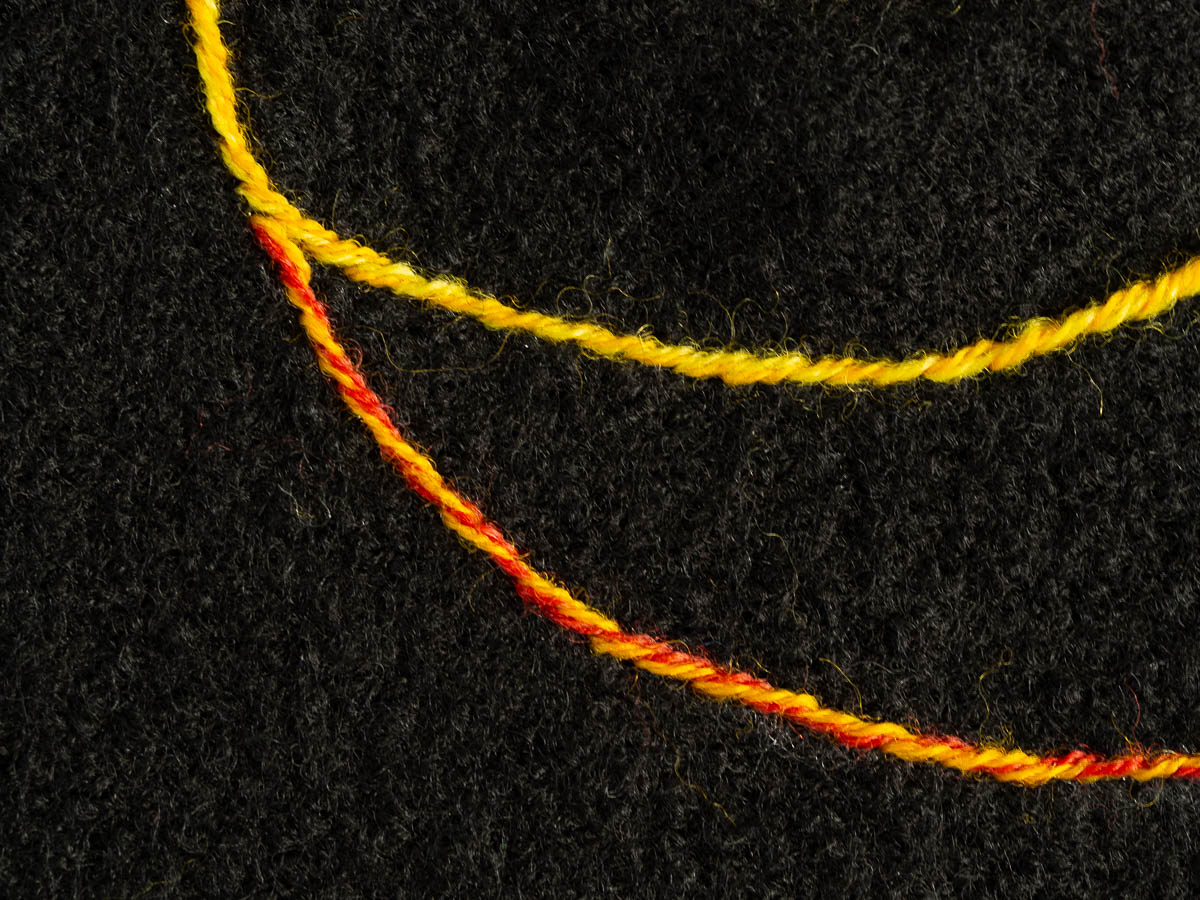
Finished the embroidery on the long black cardigan. Even took the time to sew down all the ends with sewing thread so that I can allow it to flap open and the inside to become visible without being embarrassed about it.

Just after finishing it, I couldn’t decide whether it was done or needed more. Should I go over each line again, doubling its thickness, to give it more oomph? Adrian suggested adding leaves to the vines.

Now that it’s rested for a while (I’m catching up with the blog two weeks later) I do like the way it came out. It’s hitting just the right balance between restraint and wildness.

Simple stem stitch all the way, with wool thread. Two threads held together, of different colours, so the colour shifts slightly with each stitch. Greens at the bottom, fading to yellows in the middle and oranges and reds towards the top.

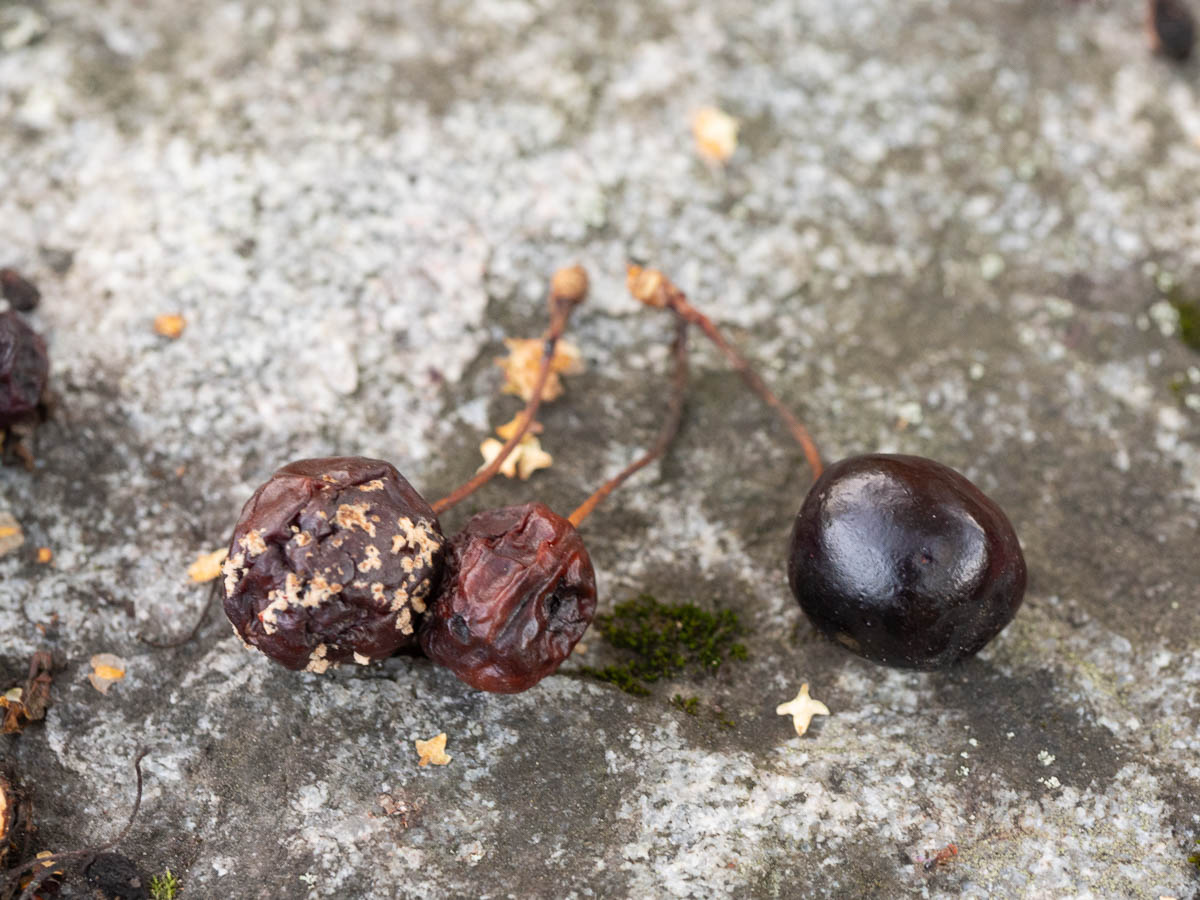
I missed the cherry season this year. So busy with other things during my vacation that, by the time I looked at the cherry tree, the fruit were all bird-pecked, wasp-eaten, and falling off the branches.

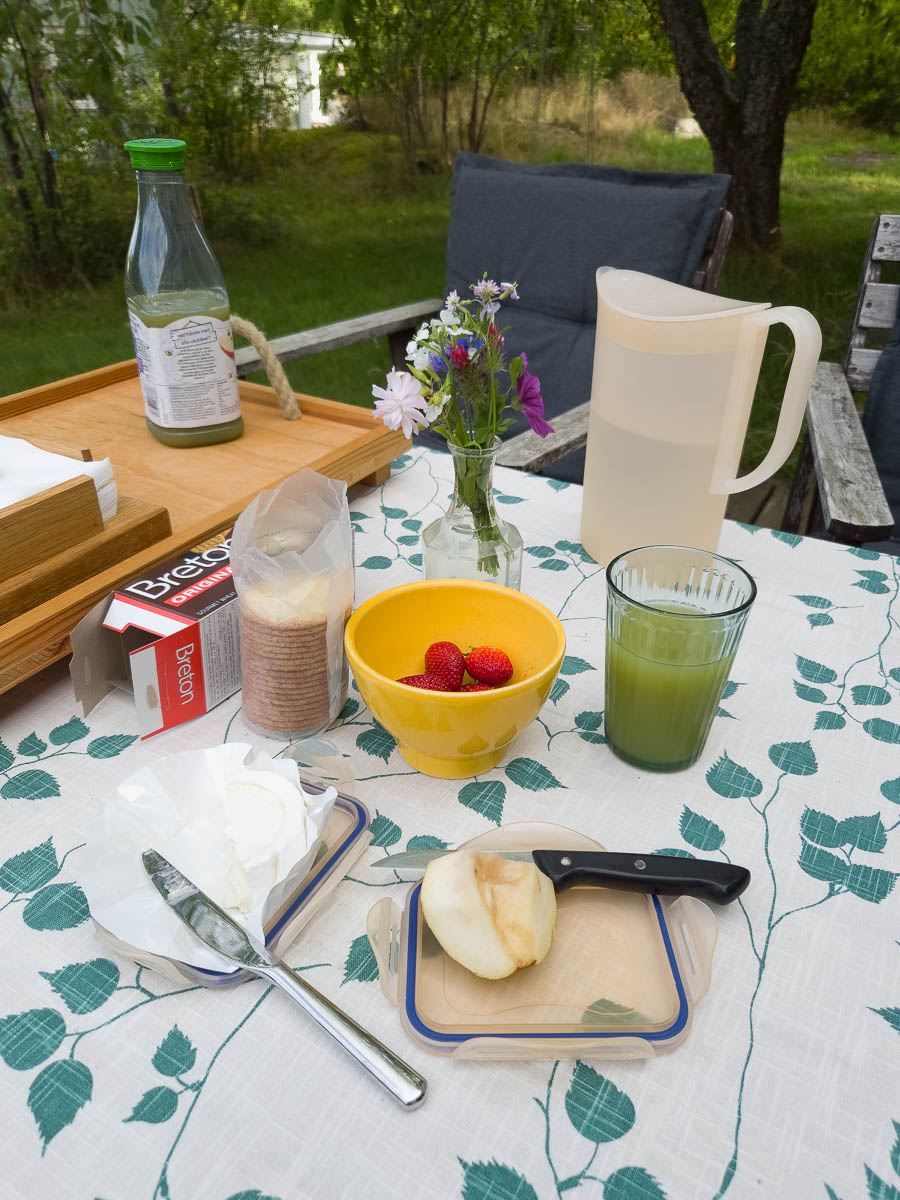
Back to work. Vacation over. Trying to cling to the end of it, re-creating the vacation feeling with a pre-dinner moment with strawberries and cheese and summer flowers.

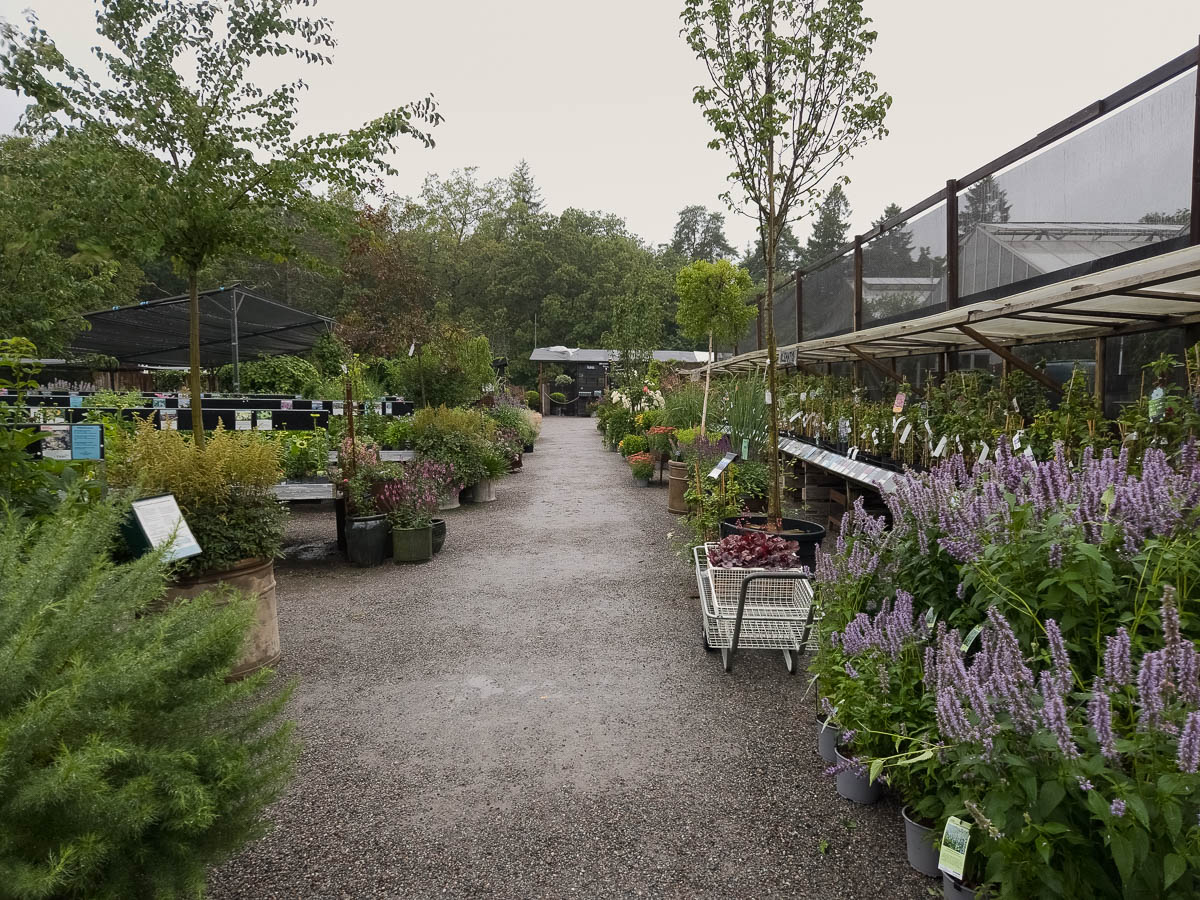
A cloudy, almost-rainy Friday evening is the best time to visit a garden centre – absolutely no crowds and no queues.

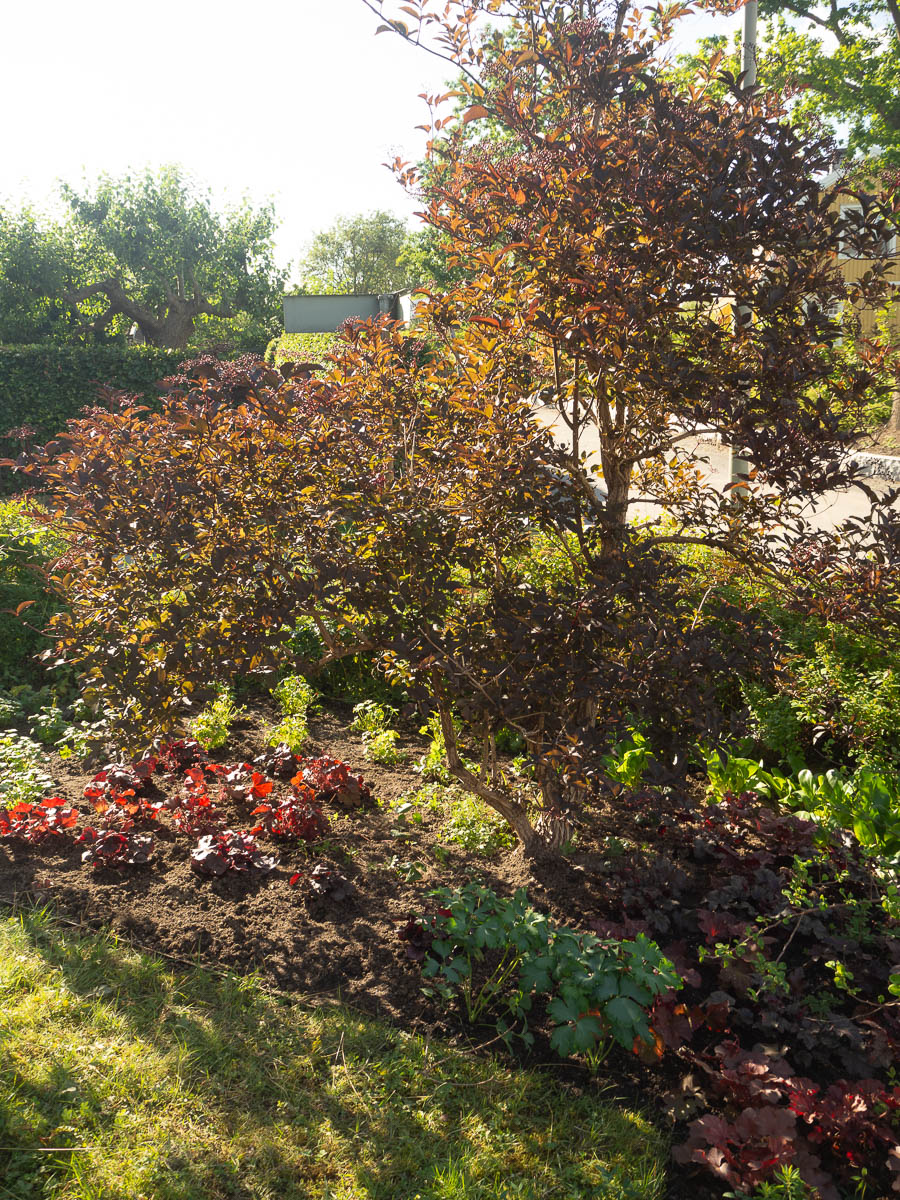
I finished planting the new area this weekend. Bergenia at the far back; Hazelwort around the very base of the elder bush; Heuchera under the rest of it.

Many garden design sources suggest putting contrasting plants next to each other, but I chose to go with the complete opposite here. The dark leaves of the Heuchera match the elder, and I intentionally put them right under it. To me it feels like bits of the elder have fallen to the ground and taken root, or like a big red bush sheltering tiny red cousins under its wings.

Not that you can really see any detail here, with the glare of the evening sun.

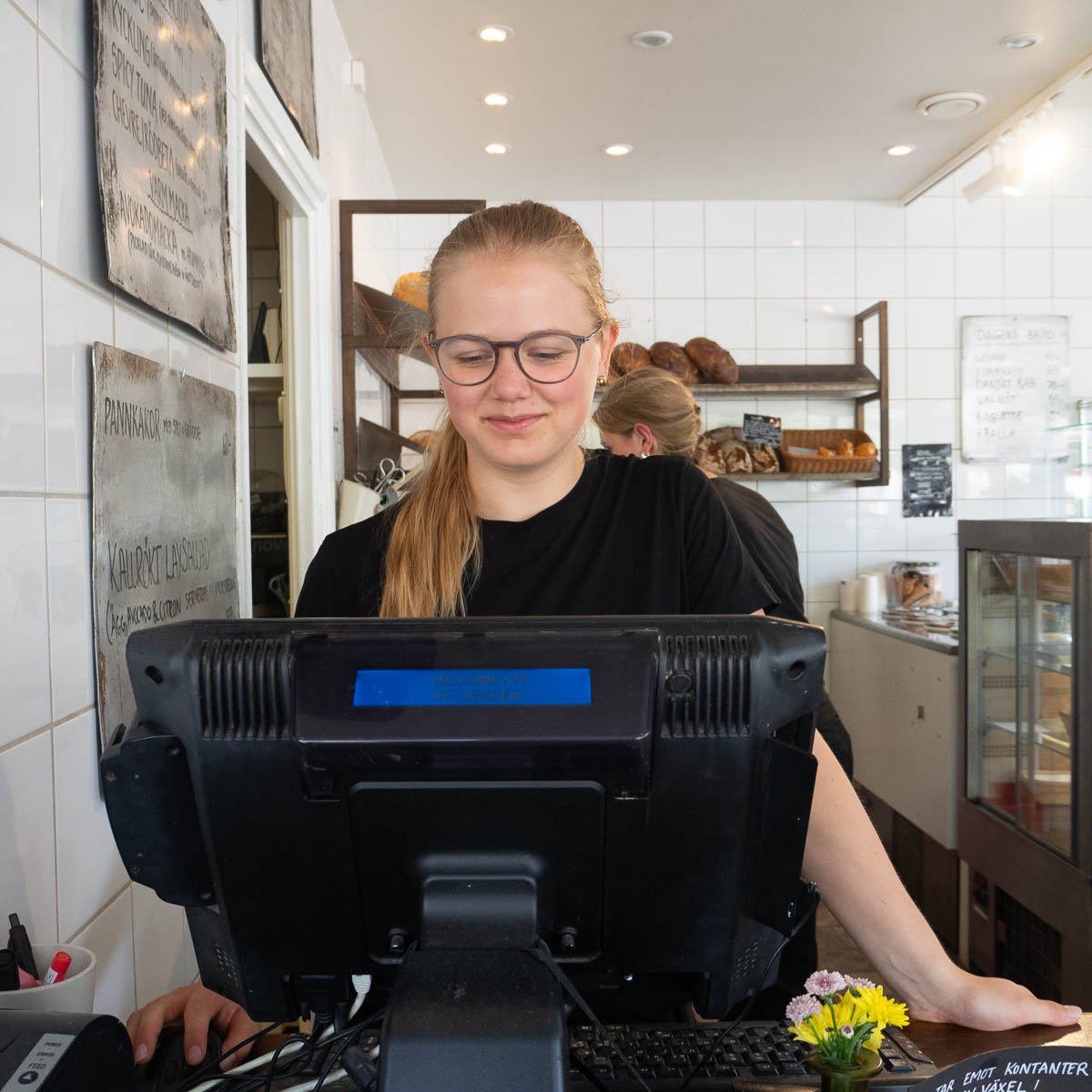
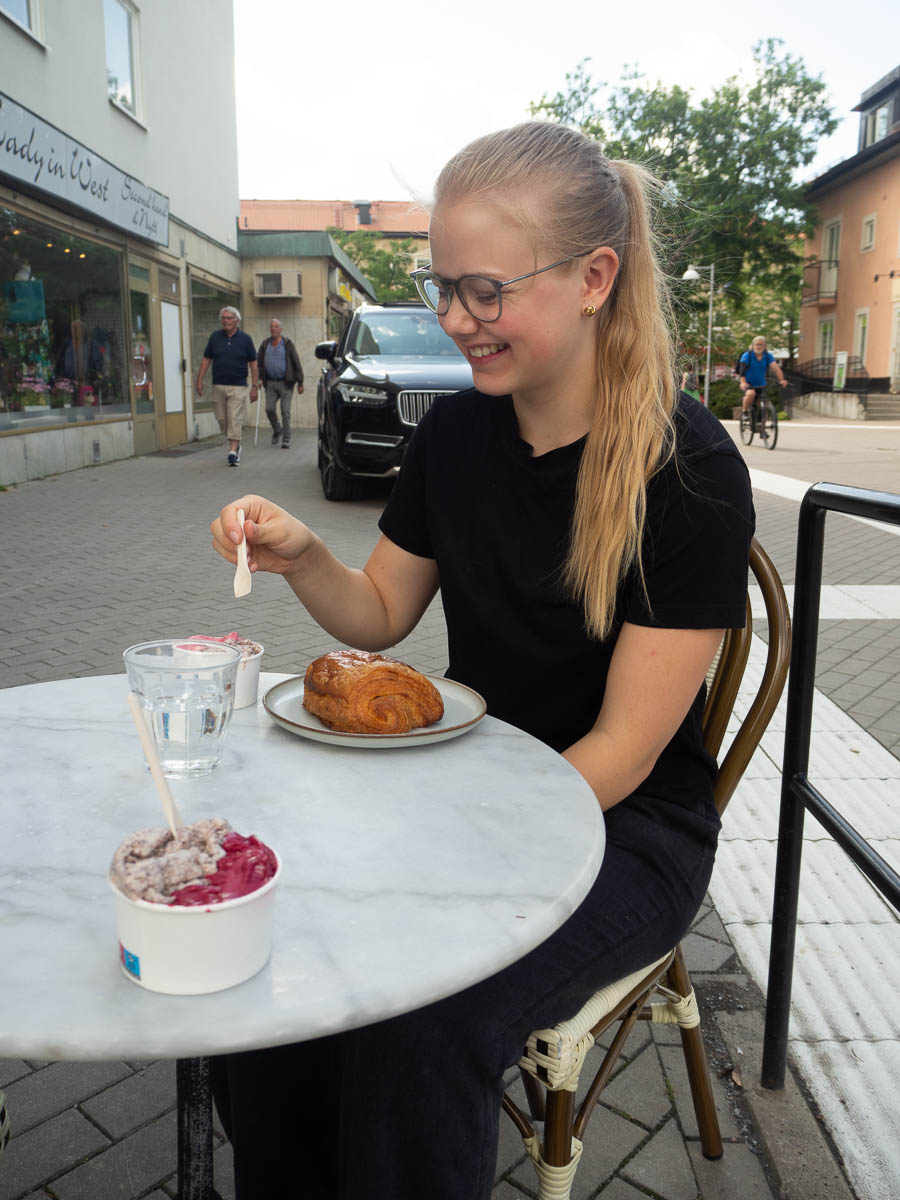
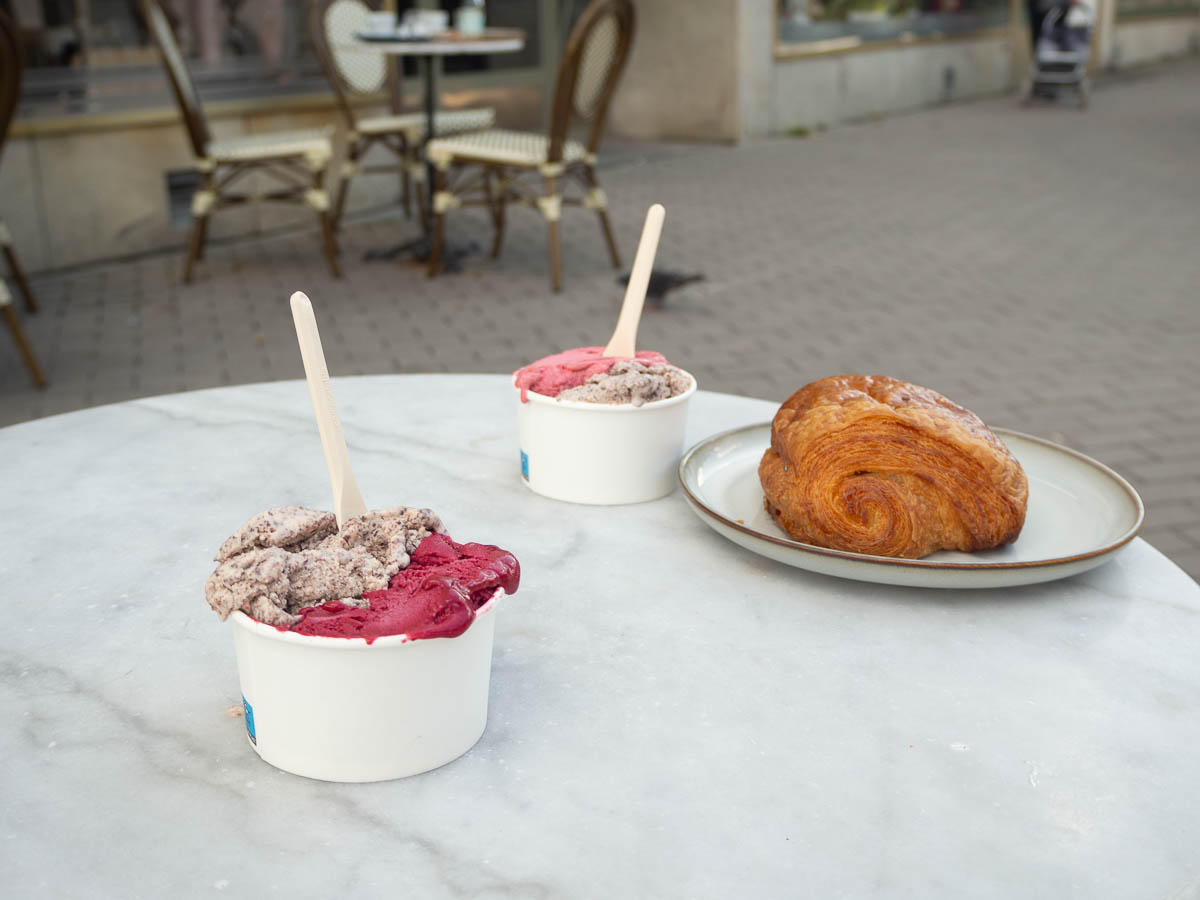
It’s Ingrid’s last day of work at the Spånga Konditori pastry shop. We managed to time a quiet moment when I could join her for a last fika with the employee discount – and try out the current ice cream flavours. (I got black cherry, and chocolate with blood orange.)

In September, she’ll be starting a four-month internship. It’s partly a time-filler: the real next step in Ingrid’s life will be fifteen months of military service, starting in March. But for now, she has a month of summer vacation to look forward to.

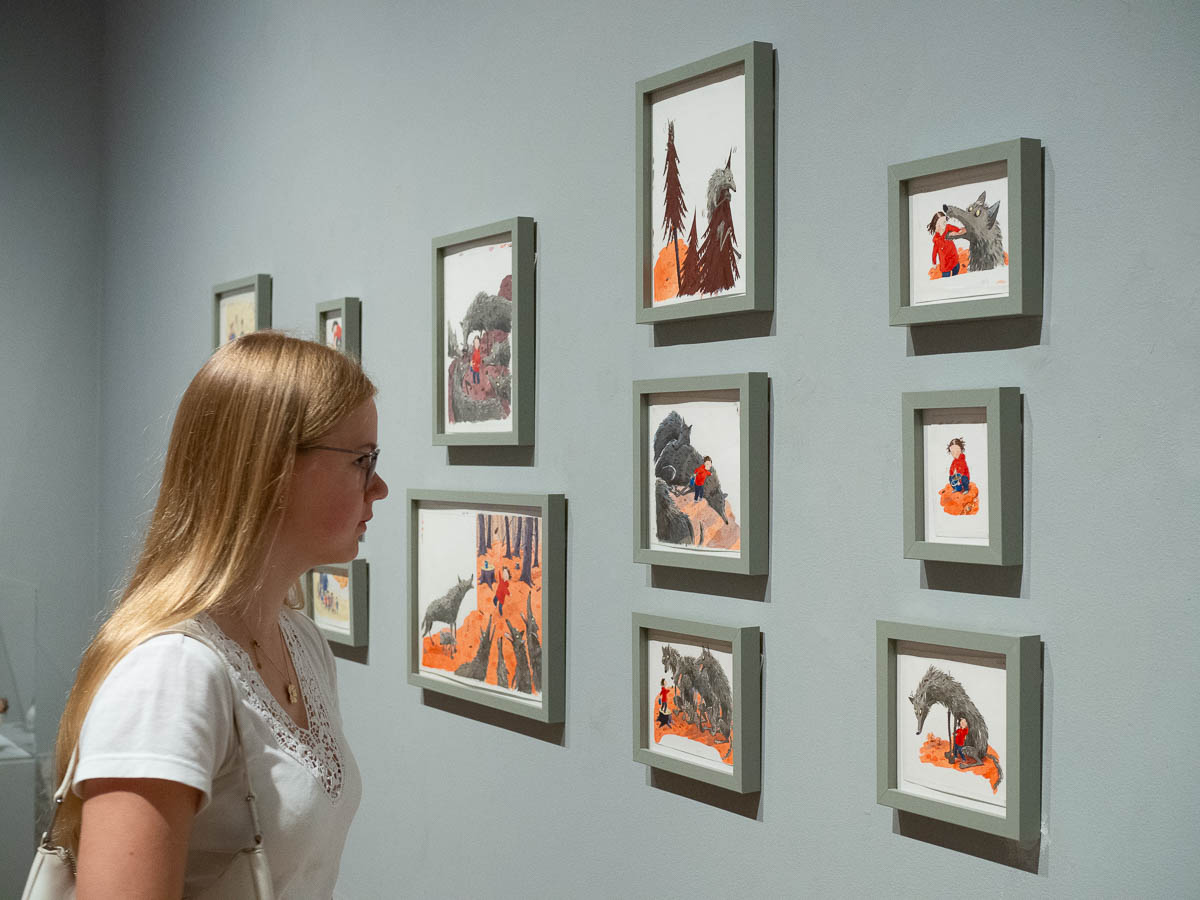
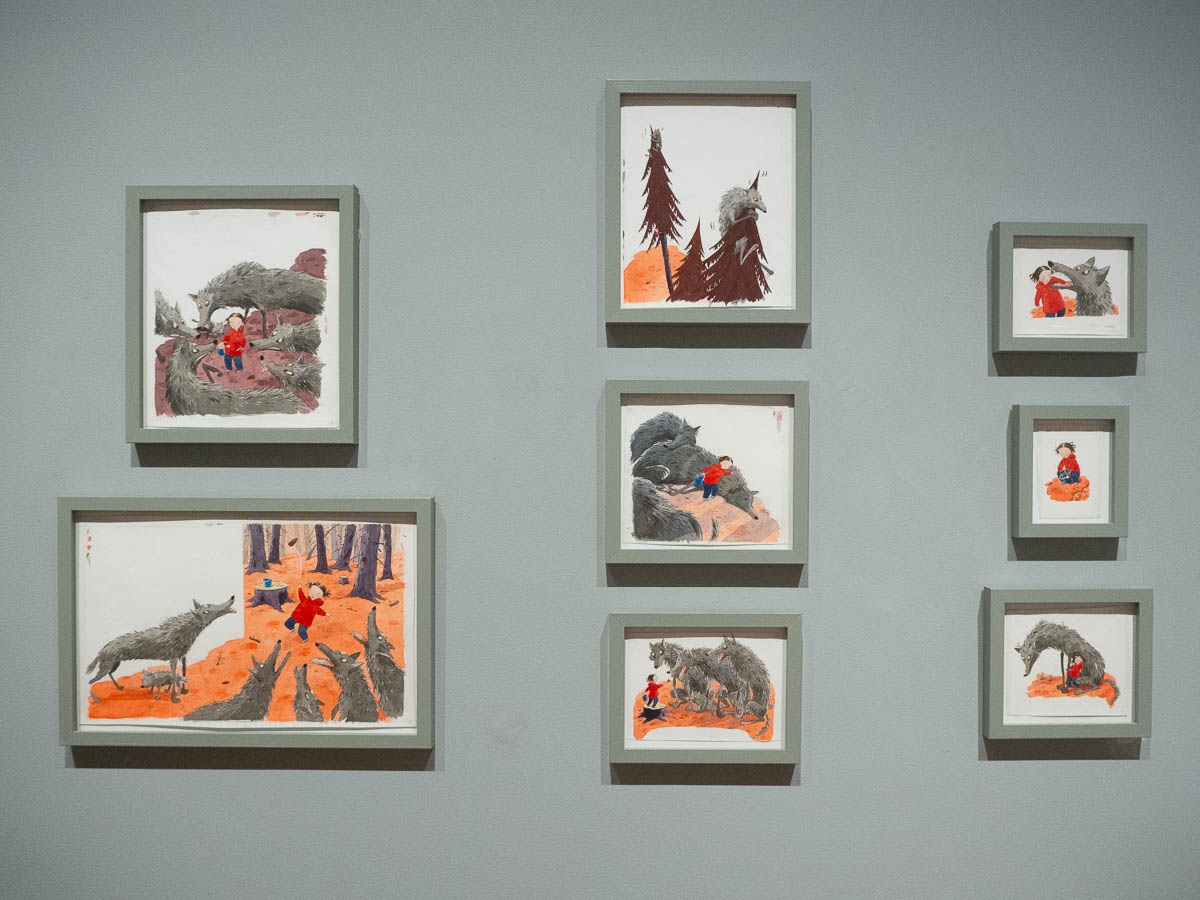
Ingrid and I saw an exhibition at Waldemarsudde with four popular Finnish/Swedish/Estonian illustrators of children’s books: Tove Jansson, Ilon Wikland, Pija Lindenbaum and Linda Bondestam.

Tove Jansson is, of course, the creator of the Moomin books, which I read already when I was a child. Ilon Wikland illustrated many of Astrid Lindgren’s books, many of which were also translated into Estonian already back in the 1980s. Back when the children were children, I read a lot of those books again together with them.

I’m not sure how well known Pija Lindenbaum is outside of Sweden, but she is very well-known here. She has been giving out at least one book a year since, like, 1990, and some of the best ones came out just as Ingrid was in the picture book age, so we read those over and over again.

Linda Bondestam became active more recently, after Ingrid and Adrian had outgrown picture books, so I hadn’t come into contact with her work before.

I loved this exhibition. There was lots of material, not just originals of the finished illustrations themselves (which were numerous) but also early sketches, notes, colour palettes, character studies, storyboards, etc. A fascinating look behind the scenes.

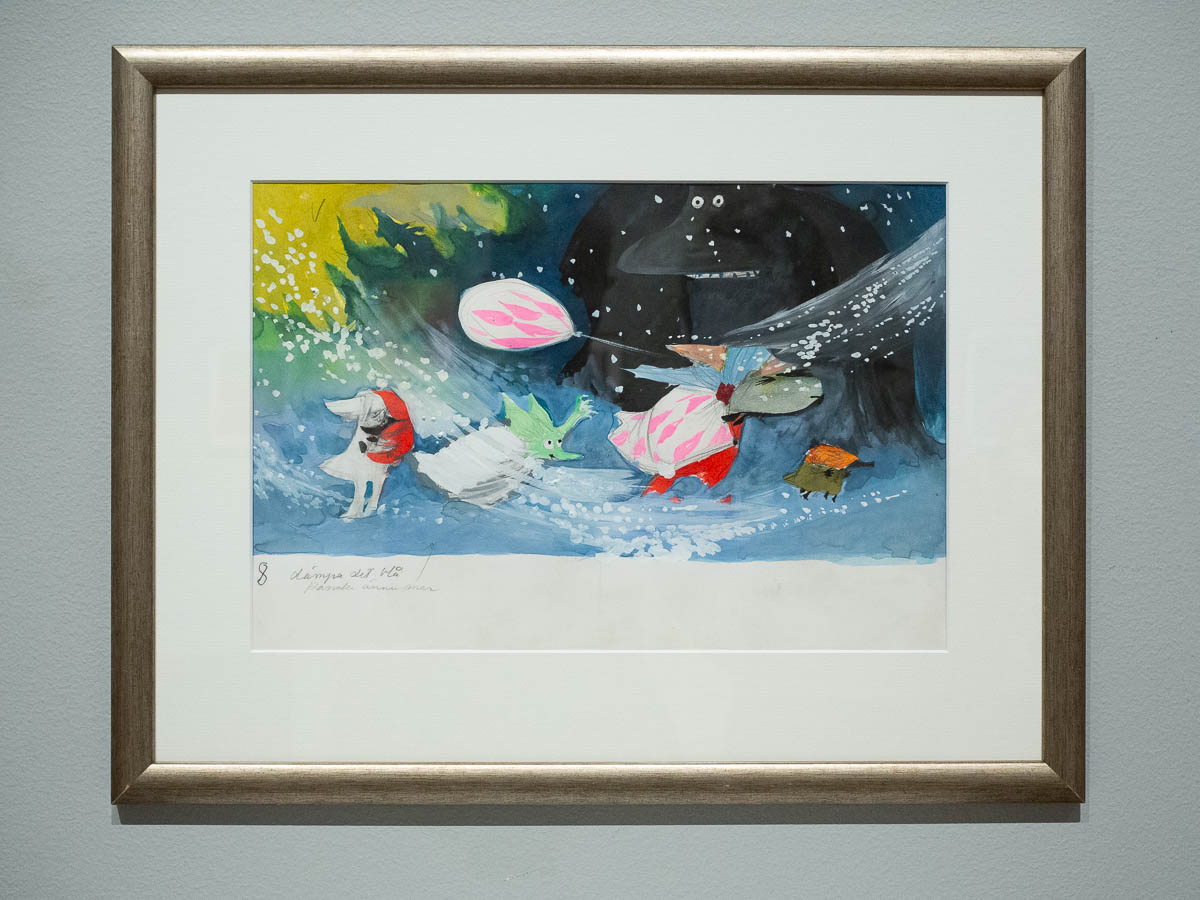
The illustrations themselves were interesting. Sometimes much smaller than I had thought (especially some Moomin drawings were tiny) and sometimes much larger (Linda Bondestam likes to work on a large scale).

Fascinating to see the tiny means by which a wolf’s eyes and snout can communicate its mood and feelings.

Seeing the pictures all like this, without any text and story to distract from them, highlighted the importance of layout. A normal picture utilises a canvas in whatever way it wants: sometimes all of it, sometimes just a part. But an illustration (at least in modern children’s books) takes text layout into account from the start. Sometimes leaving room for a lot of text, sometimes just a line or two. Sometimes stretching out to overlap with the text, or reaching out of its assigned area to play with space.

I was surprised to see how boldly Tove Jansson used colour in some of her works. In my mind the Moomin illustrations are black and white ink drawings, and where they are in colour (such as in Vem ska trösta Knyttet) it’s mostly plain fields of colour. But here were some very dynamic scenes.

Now I feel like re-reading all the Moomin books, and other works by Tove Jansson as well.