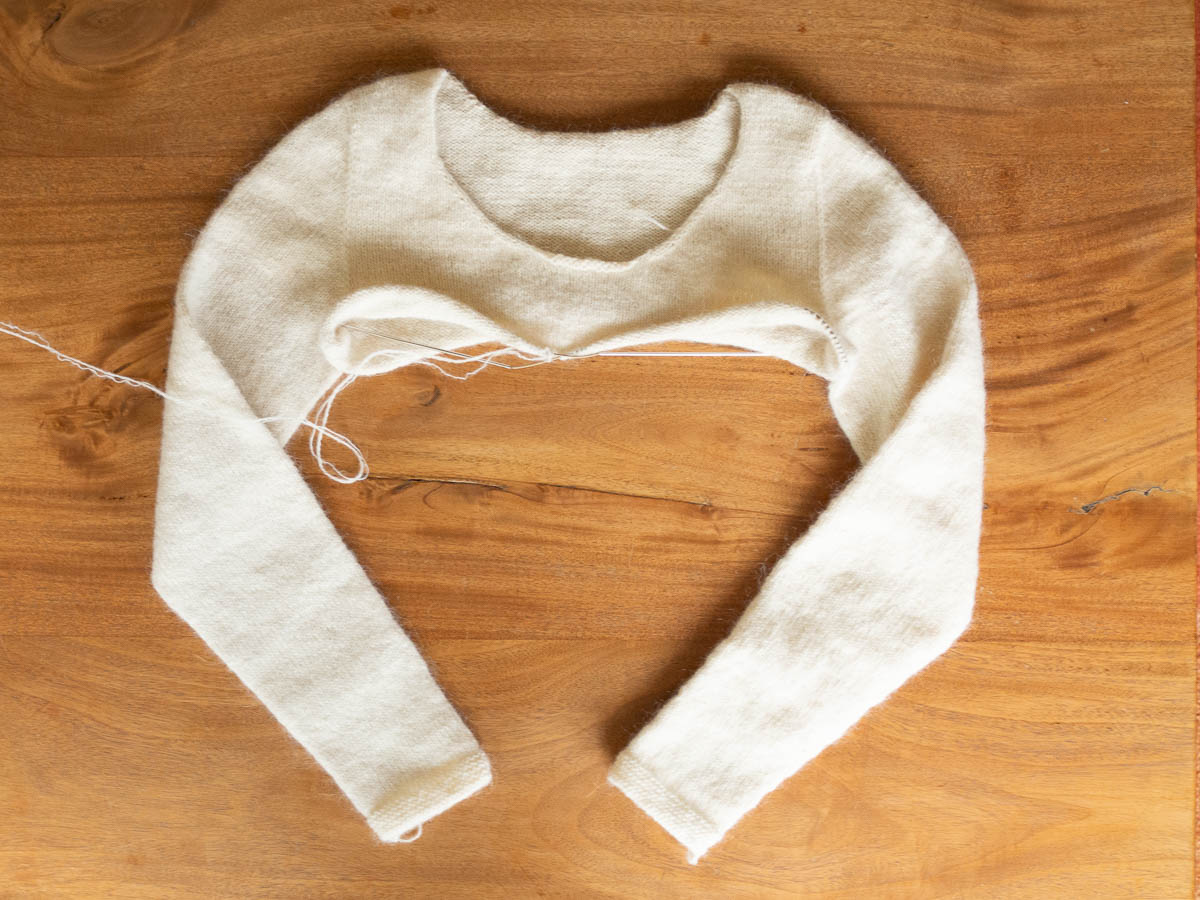
I’m going about knitting this white thing in not quite the conventional way. Usually when you knit a sweater, you finish the body first and then do the sleeves. There’s even something called “second sleeve syndrome”, where the knitter loses their enthusiasm when there’s just the one sleeve left to knit.

With this white yarn, I’m not sure how far it will last me, and I have no way to get more. When the yarn runs out, the garment is done, no matter where that is. Finishing the sleeves was thus a priority because I definitely want it to have full-length sleeves.

Will the remaining yarn be enough for a dress, as I hope? Or do I need to change my plan and aim for a sweater? Maybe I can get it to stretch longer by combining it with some other yarn, in which case the garment doesn’t need to be done when the white yarn runs out?

I’ll knit to a point where I definitely need to make a decision, and then there will be a lot of weighing and measuring and calculating and geometry. But not now. Now I can just enjoy the knitting.
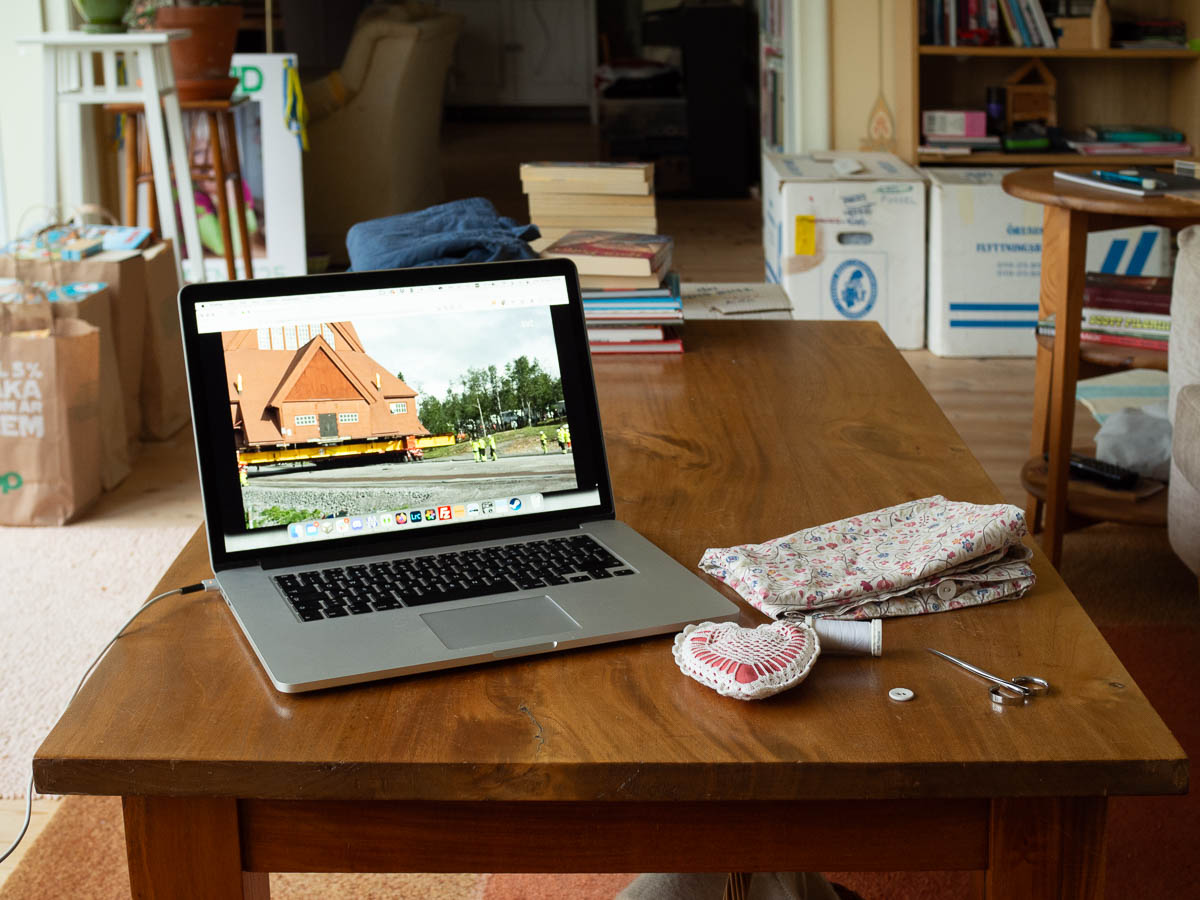

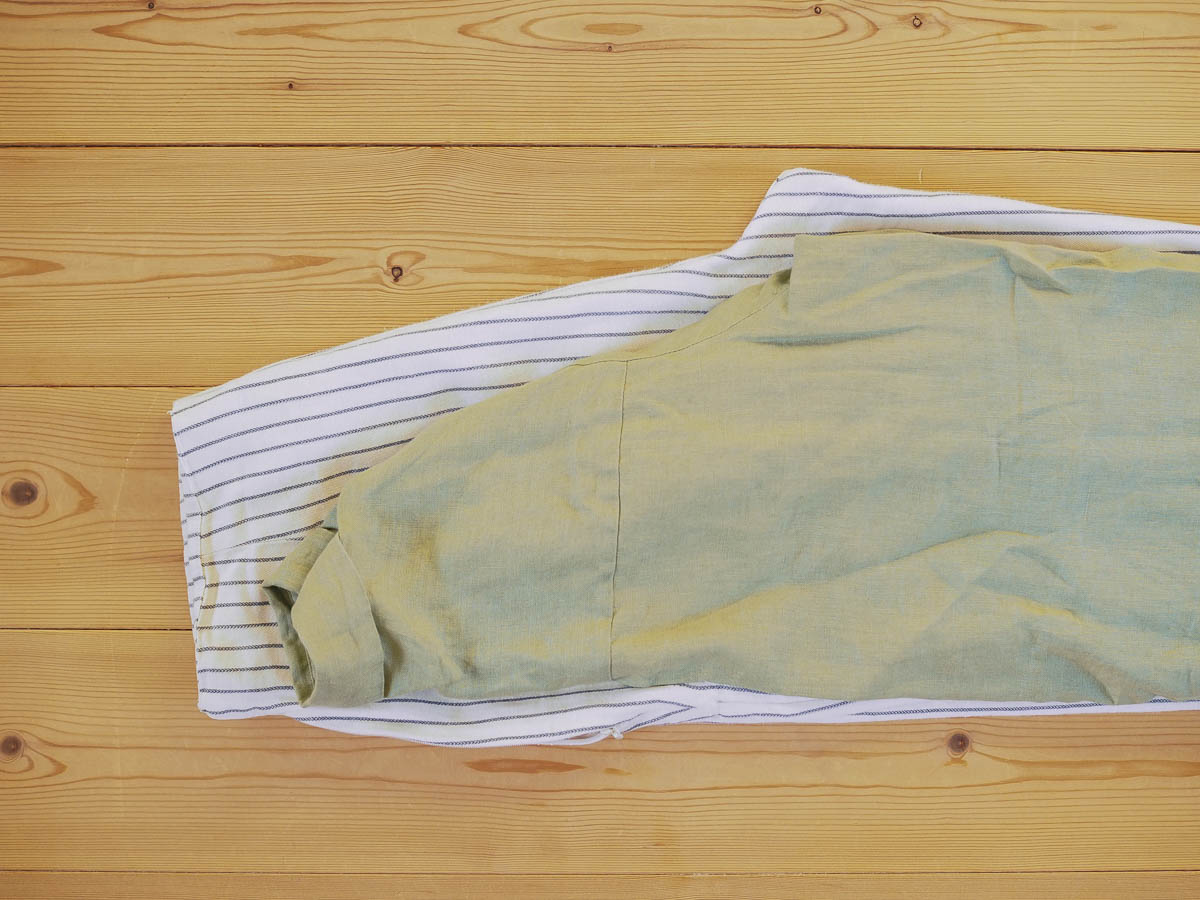
Mending a pillowcase while watching Swedish state television’s real-time reporting of the church move in Kiruna. “Heavy slow TV”, they call it. Unexpectedly fascinating.

The iron ore mine next to Kiruna has been getting closer and closer to town, and an effort has been underway for years to literally move the town. Ordinary houses get torn down and replaced; culturally valuable ones, such as the iconic and beloved church, get moved.

It’s mind-boggling to watch an entire church majestically roll from one side of town to the other. Like a ship, especially in the wider shots where you can see the top of the roof peaking out above treetops.

People in Kiruna have mixed feelings about the whole thing, of course. From a technical point of view, the process is fascinating, and the TV reporting represents it well. The move itself is shown from various angles, both up close and from a distance. The reporter in the outdoors “studio” interviews guests, including a project leader for the move who’s really good at explaining the process. Another reporter interviews random people in the audience.

Interesting facts: There are tilt sensors in the church to make sure that it doesn’t tilt too much, nor bend in any direction. There are people actually monitoring the move from the inside, and one of their main tasks is to listen to the (wooden) building because any creaking would be a sign of stress on the building.

The church measures 40 metres across and the minimum clearance in one of the turns is 1 metre to the house next to the street. They built an entire new stretch of road so that the church can go past (and not through) a 90-degree turn. Other roads have been widened temporarily. The church will move 5 km in total, at a maximum pace of half a kilometre per hour. It stopped for lunch in the middle of the day, and will stop for the night halfway through its journey.

After a stretch of cool days, whenever we get a warmer one, I think “this is probably the last one for the season”. Is this the last ice cream of this summer? (Grapefruit and mango/passion from SpĂ„nga Konditori. Delicious.)


The everyday lens on my big camera stopped working again, just like it did last summer. It’s not worth another repair, so I’ve ordered a new one. In the meantime I’m stuck with my phone camera. Which takes great photos sometimes, but at other times frustrates me to no end. I have never been as dissatisfied with any vacation photos as I was with the pictures I took during my and Ingrid’s archipelago hike.

It is really, really bad at handling strong contrast, as you can see here. This is a normal ice cream in normal early-evening light, and yet the ice cream is almost blown out while the bench, normally dark green, looks midnight black.

The preview in the camera app is often completely misleading when it comes to exposure. Everything looks OK in the camera app, I click the button, and the resulting photo is badly underexposed when I view it in the photo gallery. The histogram is useless, because if there is one bright spot in the photo (like the sun!) then that spike dwarfs everything else and the histogram tells me nothing about the rest of the photo.

I hate hate hate that it has no manual exposure mode. I adjust the exposure for the scene as best I can, and then Ingrid walks into the photo, wearing dark clothes and a dark backpack. The camera app panics – oh no, darkness has fallen! – and overexposes everything.

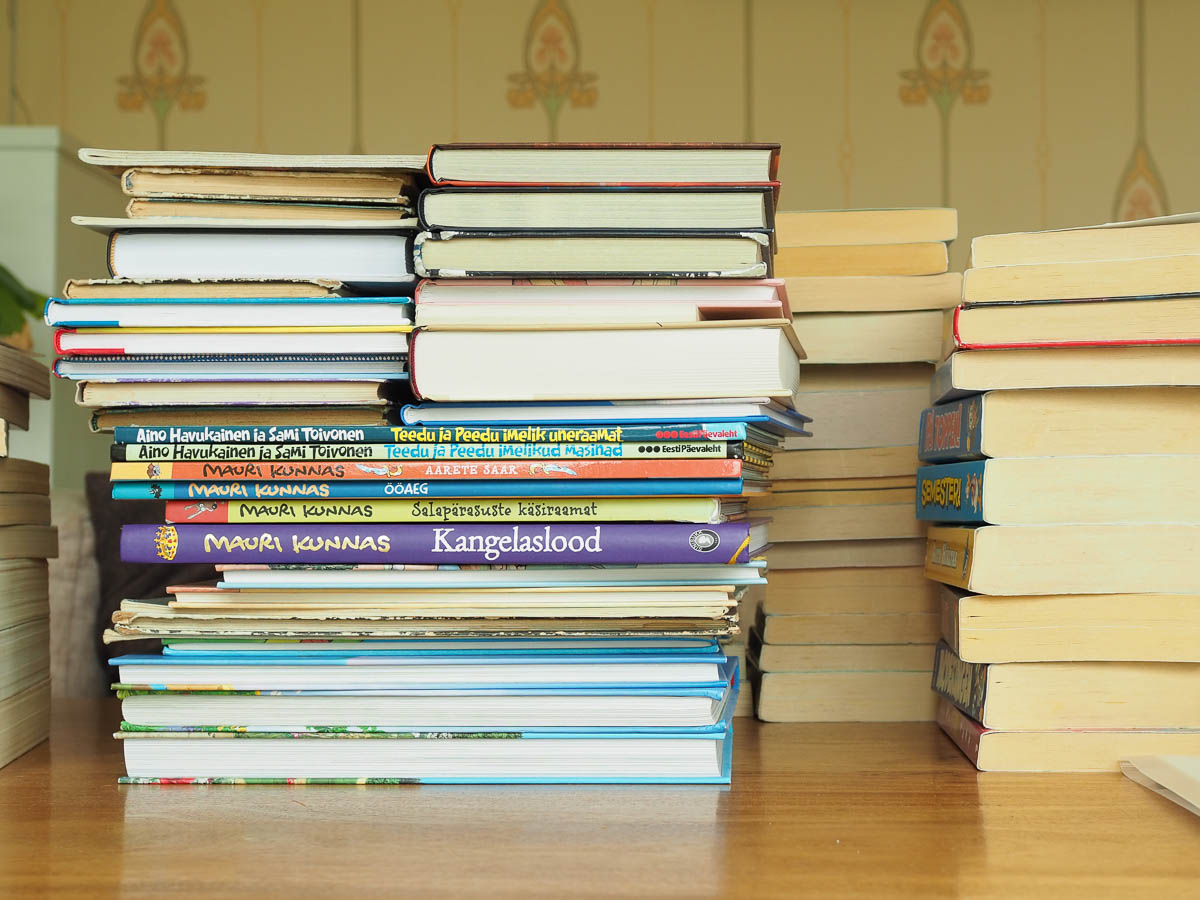
Adrian spent the last week of his summer break sorting through the stuff in his room – from outgrown clothes to toys and children’s books. There are some that we never got around to reading, and those will go to a charity shop. The ones we did read will be packed away to the basement. We read each one so many times, and they all have so many memories tied to them, that we can’t part from them.

A lot of the books are in Estonian. Will anyone ever read those again? Unlikely. Though Ingrid and Adrian are more fluent in Estonian than ever before, now that Estonian is the main language in this house, I doubt that they’ll be raising any potential future kids in Estonian. Maybe we’ll bring the boxes of books out at some point and browse through them and exclaim “oh, do you remember this one!” but that’ll probably be the extent of it.

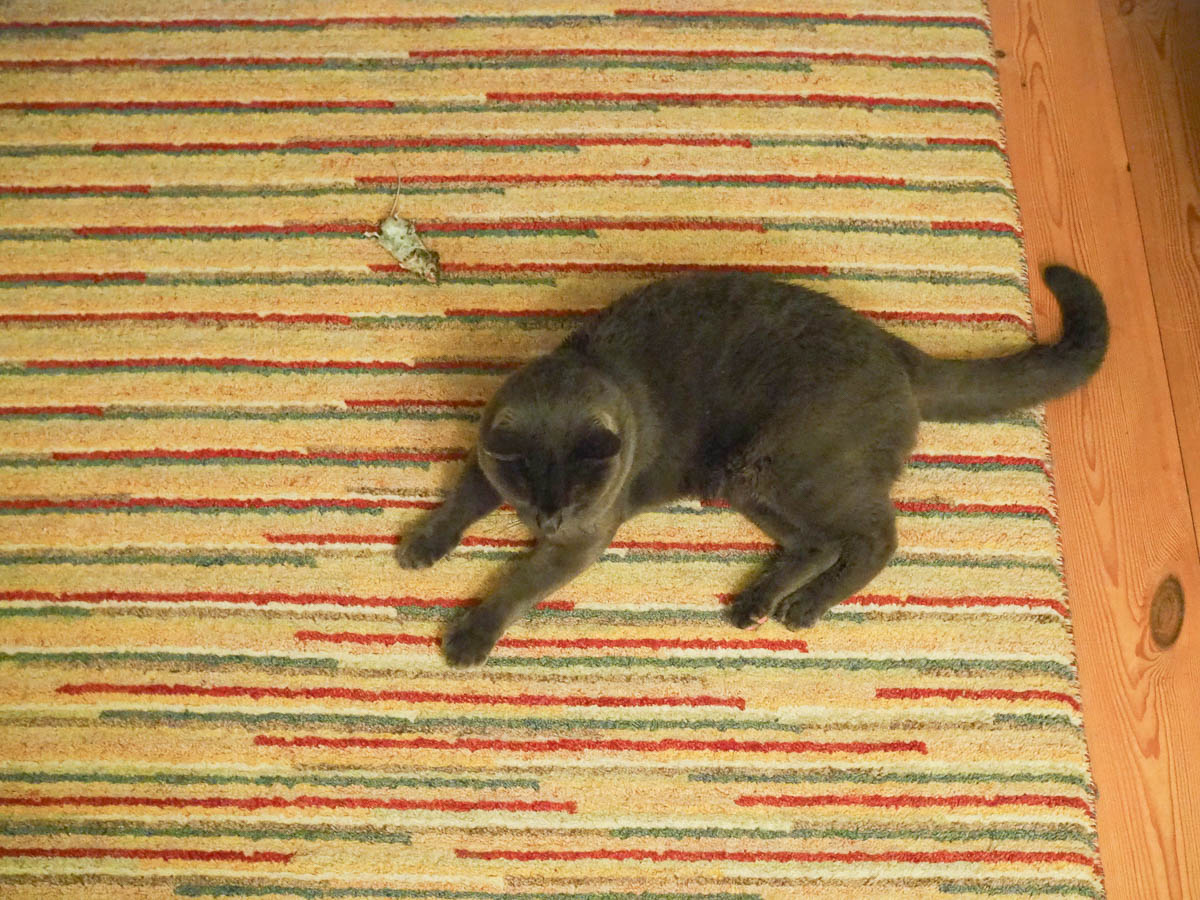
Nysse is not in the habit of bringing home his kills. Prey are for hunting, and playing, but not for hoarding, or asking to be praised.

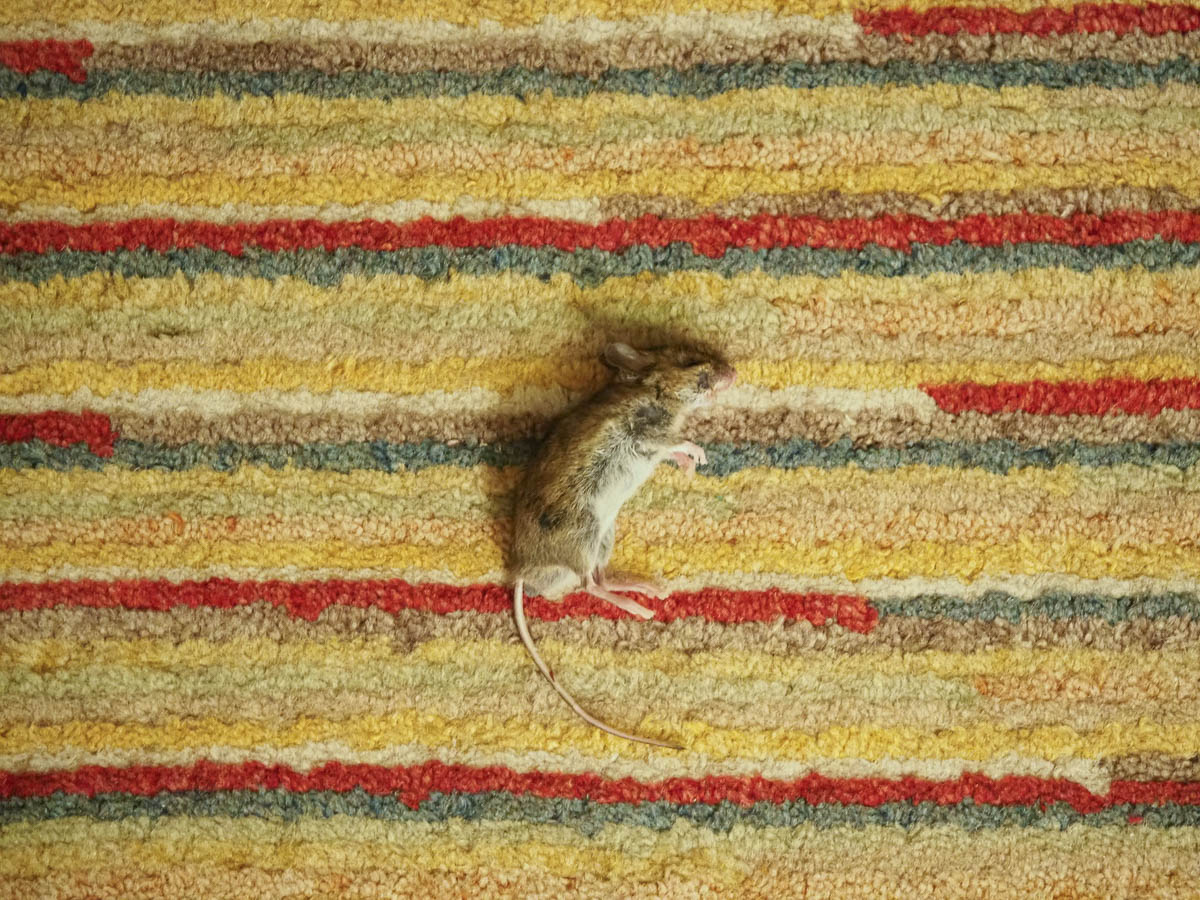
I don’t know what was different about today’s dead mouse. For some reason he brought it into the house and then played with it on the bedroom carpet. When he was done, he just left it. Luckily he didn’t get messy with it.

I guess prey are not for eating, then. Makes me wonder who has been eating all the other mice and rats he’s caught.

(This one ended up in the garbage bin.)

Photos hidden in case you’re squeamish, click here to view.

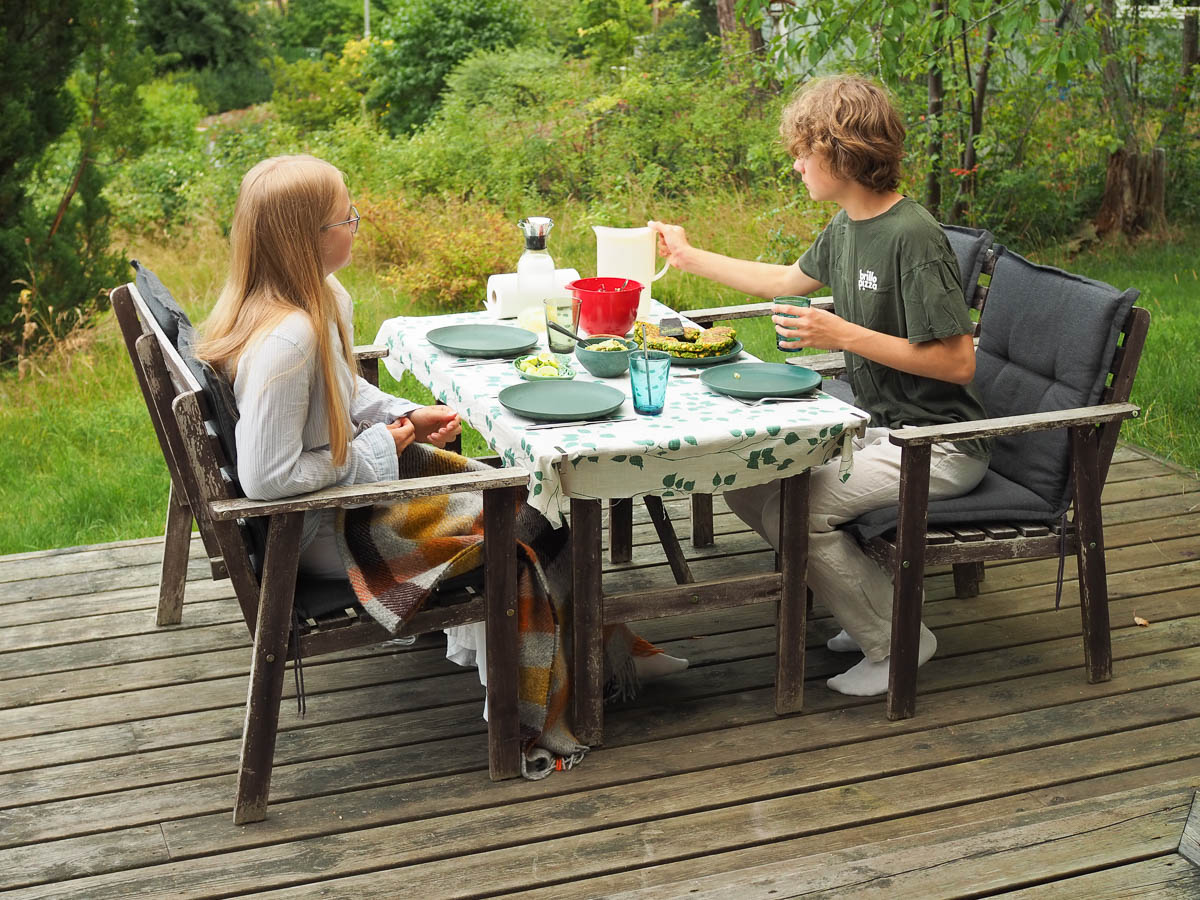
We’re barely in the middle of August and it feels like summer is over. Cloudy days and cool evenings. This is probably the last meal we’re going to have outside this season. Shouldn’t August be a summer month still?

Small changes in circumstances can lead to surprising changes in wardrobe needs. In February, the IT team at Sortera moved down one floor. The new space has much more effective climate control, to the point where the seasons melt into one. It doesn’t matter much whether it’s February or August, it’s almost the same temperature. That’s a stark contrast to floor three where we used to sit, which got rather stuffy and hot in the summer. Our corner of floor two is rather cool even on the hottest days.

And all of a sudden I have no need for my summer-weight office clothes. I have a bunch of summer dresses that I’ve been wearing to various jobs and various offices through the years, and this season most of them haven’t left the hanger. Summer is about to end and I’ll be packing them away without even needing to wash them. Instead, when I’m getting ready to cycle to the office, I pack trousers and long-sleeved shirts.

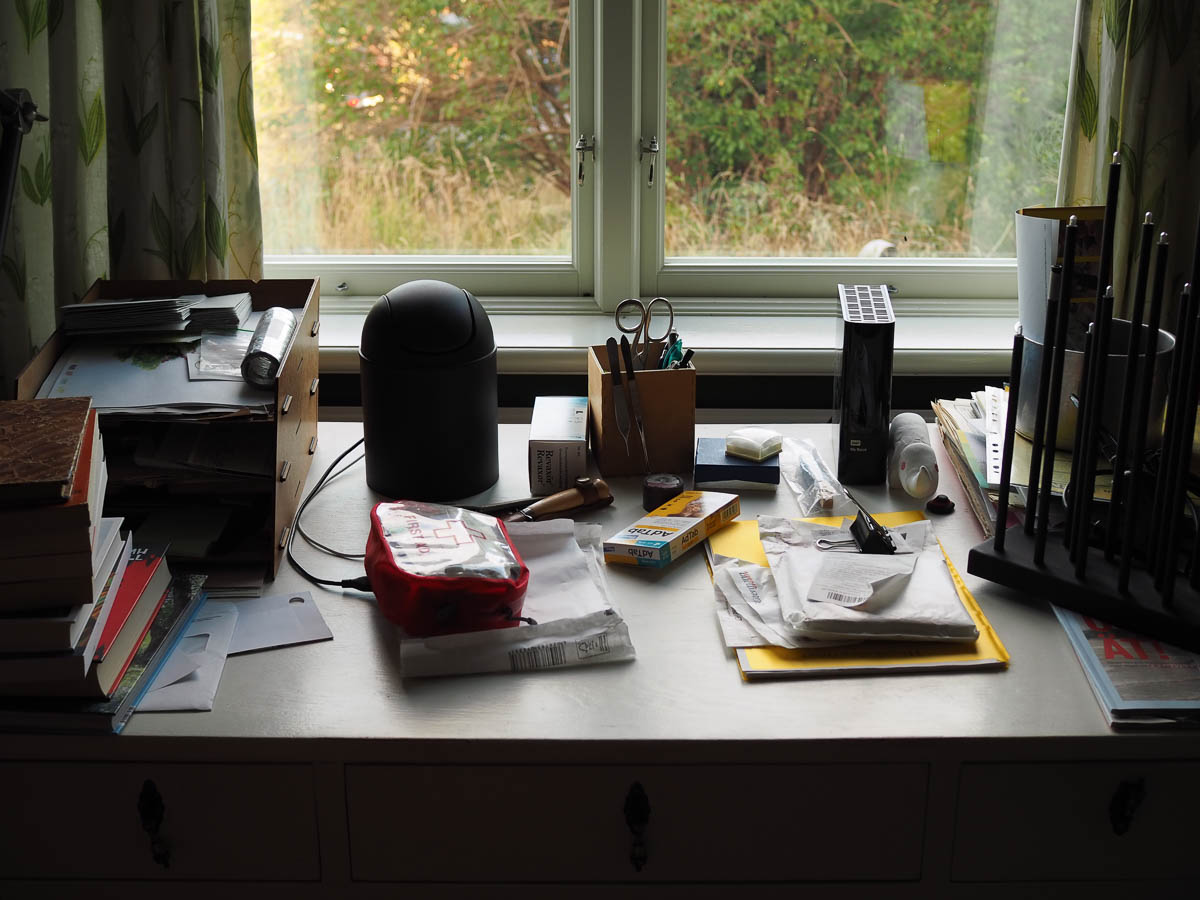
Going back to work after several weeks of vacation was a bit of a shock to the system. Not because I’m especially tired, or don’t enjoy it – but because it takes so much time, and leaves so little time for everything else. During my vacation I got so much done, and now all sorts of tasks are piling up. My desk is covered in a layer of things waiting for some kind of action. I should re-stock my first aid kit, look up the cost to repair a lamp, buy tick repellent for Nysse, go through my expenses, repair a hand-made fridge magnet, oil in my outdoors knife, find a place for the picture hanging wire, catch up with blogging…

I pack like a boy scout. Or maybe I pack like a mum. In any case, I’m prepared for all sorts of eventualities.

You name it – I have it. During my archipelago hike with Ingrid, every time she asked if, by any chance, I happened to have [thing], my answer was always yes. Plasters? Of course. Scissors? Yes, here you go. Paper towel? Salt? Trash bag? Yes, yes, yes.

Almost all these extras are tiny and light. Even taken all together, they can’t weigh much more than a hundred grams or so, with my pocket knife accounting for half that weight, and my first aid kit being the largest by volume.

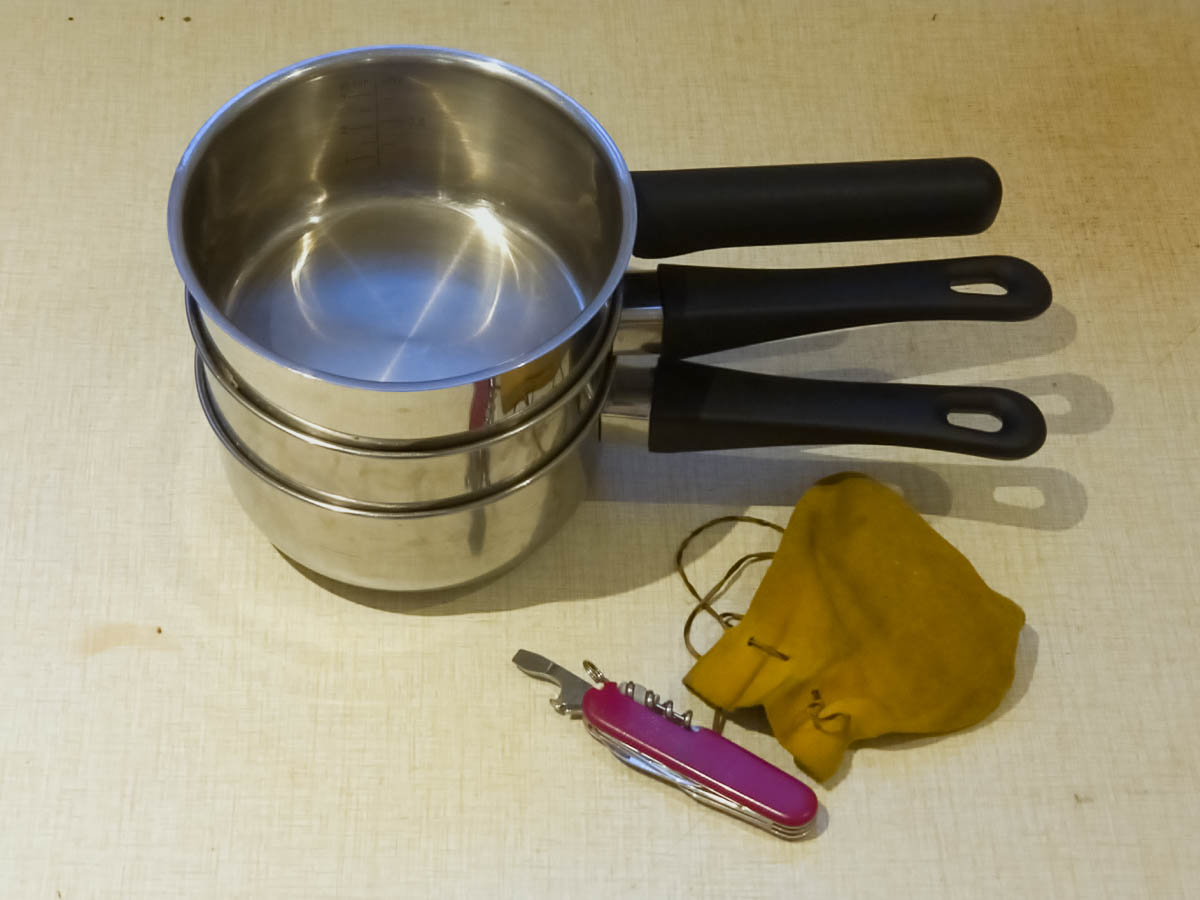
My approach to packing has been validated many times in many satisfying ways. Case in point: discovering at the hostel in Finnhamn that every single saucepan had its handle hanging on by the last thread of the screw. They were so loose that I barely trusted the handle enough to actually lift a saucepan with water and eggs in it, for fear of it all falling apart. Out came my trusty twenty-seven-year-old Swiss Army knife with its screwdriver. I fixed the saucepan I used for boiling my eggs, and then fixed three more, as well as a frying pan. Nobody’s going to thank me for it, but the next person looking to use the kitchen will find utensils they can actually work with, and that felt good.

I made the same mistake today that I do at every first chilly day after summer, and at the start of the spring cycling season, and at the start of every ski tour. I look at the thermometer, compare the number to the indoor temperature, conclude that it’s rather cold, forget just how warm I get from exercise, and dress way to warmly.

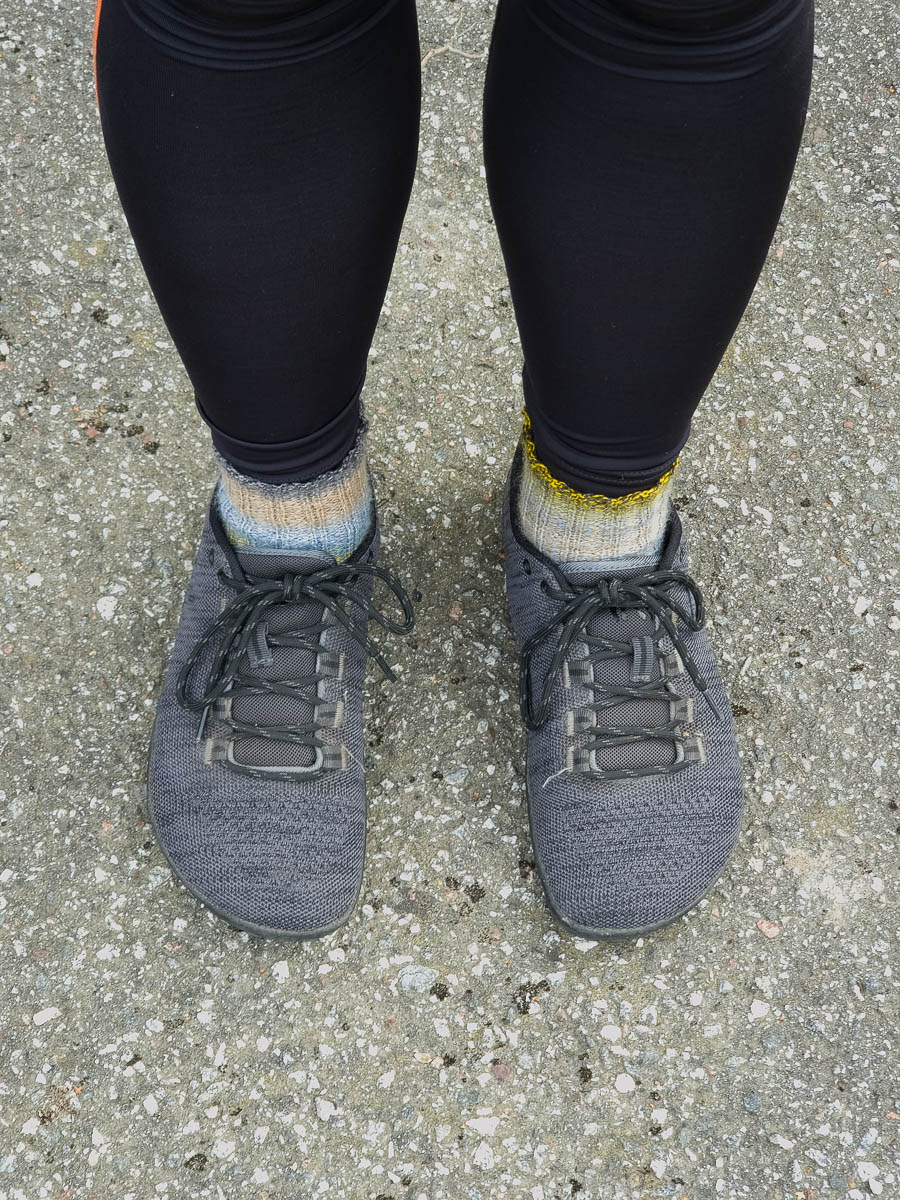
It was 14 degrees this morning, which felt a bit cold for early August. But really it’s pretty perfect cycling weather. Unless one has decided to put on shoes and socks instead of sandals.