
My reason knows that it is not sensible to expect a few warm days in early March to mean that spring is here. But I still hoped, when I saw the first flowers. And now we’re back in snow and wind and cold.
On this day...
1 year ago: Daily: 3716 – earlier and earlier
3 years ago: Daily: 3008 – pink cherry blossoms
5 years ago: Daily: 2302 – they’re growing on me
10 years ago: Daily: 547 – kids rolling in the grass
20 years ago: John Burdett, “Bangkok 8”
For International Women’s Day, tretton37 interviewed me and some of my women colleagues about being a developer. Here’s a video of me talking about why I love my job.
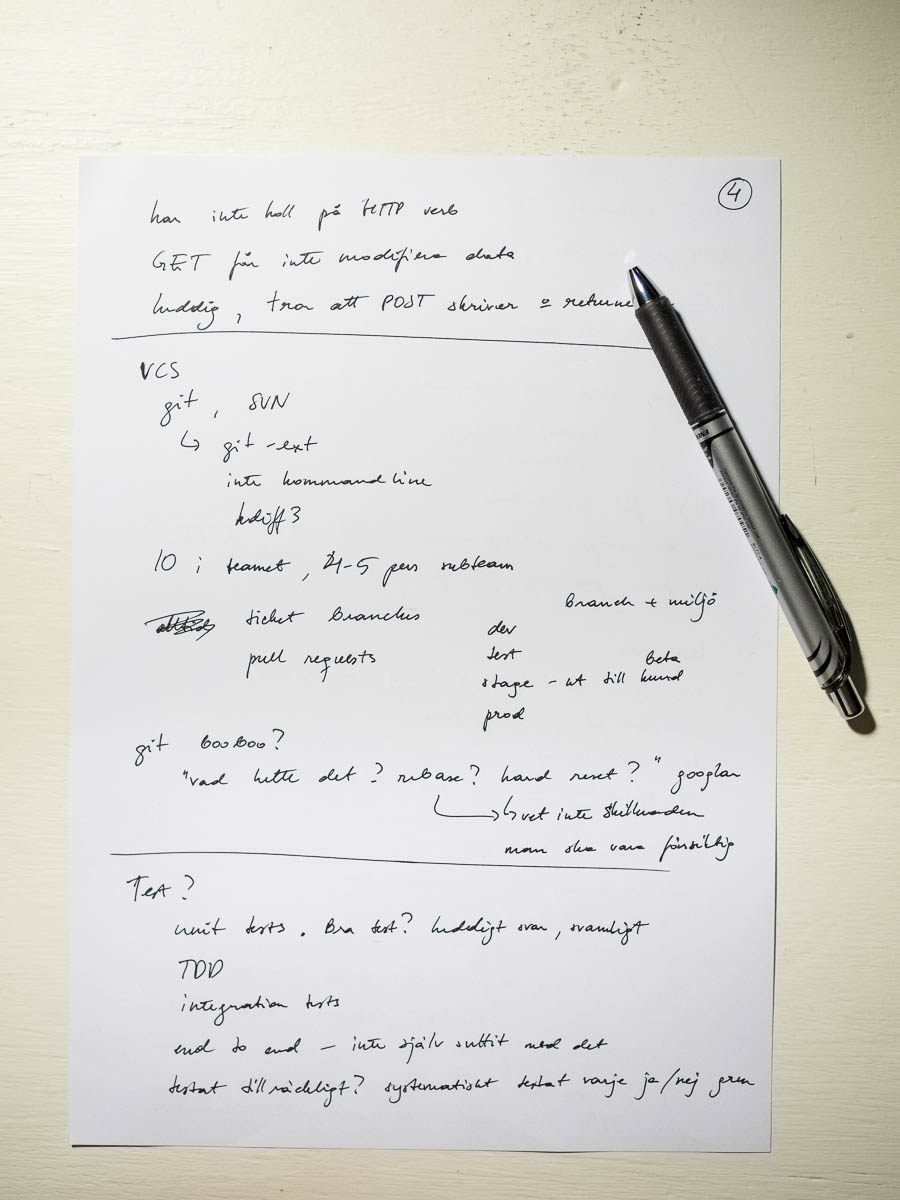
Part of my job is doing recruitment interviews. I do them quite regularly – recently at least once a week. 1337 is growing and we want to hire more developers, and someone needs to interview them from a technical point of view. These days I do roughly one per week, and often get requests for more. It’s getting to the point where I have to say no because I can’t take that much time from my “real” work. But I enjoy them, so I do try to take the time.
We’re a large enough firm to have specialists for the early phases – finding and winnowing out suitable candidates, and having a first interview with them. I’ve never enjoyed that part of the recruitment process so I’m glad that’s already done by the time I get involved.
The second step is a technical interview, and that’s where I come in. The third and final step is a manager interview.
In a tech interview, we spend one to two hours inventorying and mapping the candidate’s skills in a wide range of topics. We don’t usually dig into any one area in great depth, but we probe enough to get a good picture of where the candidate’s skills lie, and find out where there are gaps in their knowledge.
These days we have a comprehensive template document listing all the areas to cover, each one with a set of keywords to help jog our memories. This is a relatively new “tool”. We’ve invested many laborious person-hours in internal workshops to prepare this interview guide, and then to get used to working with it, and now it’s really paying off. I’ve been doing interviews for many years and they’ve never been as focused and well-organized as what I’m doing now.
We always do the tech interviews in pairs, which I really like. Not only is it good to always have a second opinion, but it also makes the interview run better. If I can’t think of a good follow-up question, my colleague is sure to have one.
It’s easy, relatively speaking, to interview a developer who is supposed to be roughly at my own level of experience. I know what I would expect from another senior colleague. Does this person know enough to be able to deliver production-ready code? Do they have enough experience to make architecture decisions? Are they able to consider the bigger picture, the business needs, the trade-offs?
It is much harder to interview a junior developer. Experience and knowledge can be judged more or less objectively. But judging potential is so much harder. How can I know what this person will be able to do in a few years? How much of their lack of knowledge today is due to lack of exposure, and how much is due to lack of initiative?
I’m quite glad that the final decision is not mine.
Despite all the digital tools we have, I always take notes with pen and paper. Nothing beats pen and paper when it comes to quick scribbles and unstructured comments.
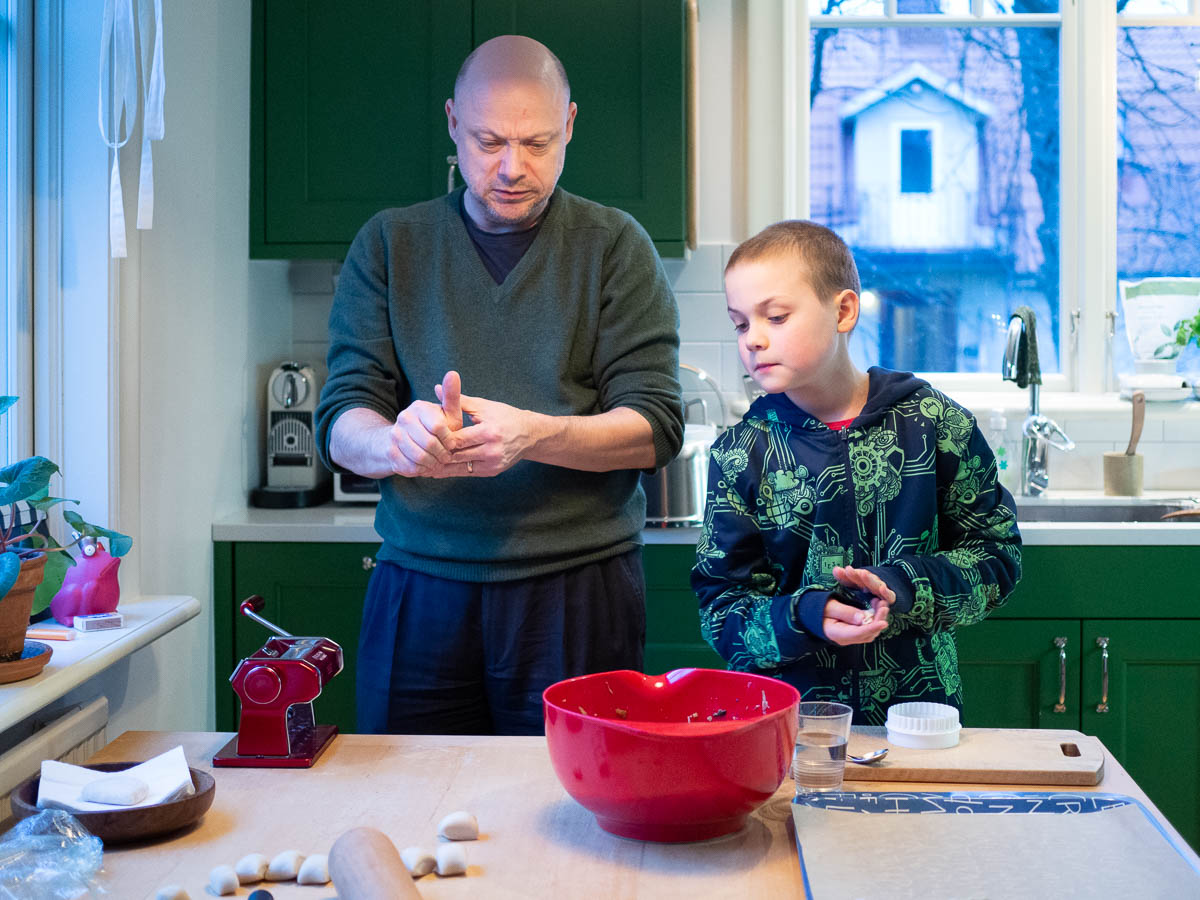
Two of Adrian’s favourite foods are dumplings and spring rolls. He loves Asian buffets – not for the wide variety of food but for the chance to stuff himself with dumplings.
He’s been asking for a while now if we could make dumplings at home. I’m not very interested in meals that are more crafts than cooking. For the same reason I’m not very interested in making sushi, although I like eating it.
Eric was willing to give it a go, though. The whole project took hours. First, making the dough and the filling. And then all this rolling and filling and shaping… Adrian liked the first steps, but the assembly part was too tedious for his taste, so I had to step in and help out to get them done in time for dinner. It was pretty tedious; I can understand that he didn’t enjoy it much.
The result tasted good. But store-bought frozen dumplings are also good, and I’m really not sure if these tasted two hours better.
Adrian loved them though, and immediately started talking about making them again. If we ever do, we need to find a faster way of filling and shaping them.

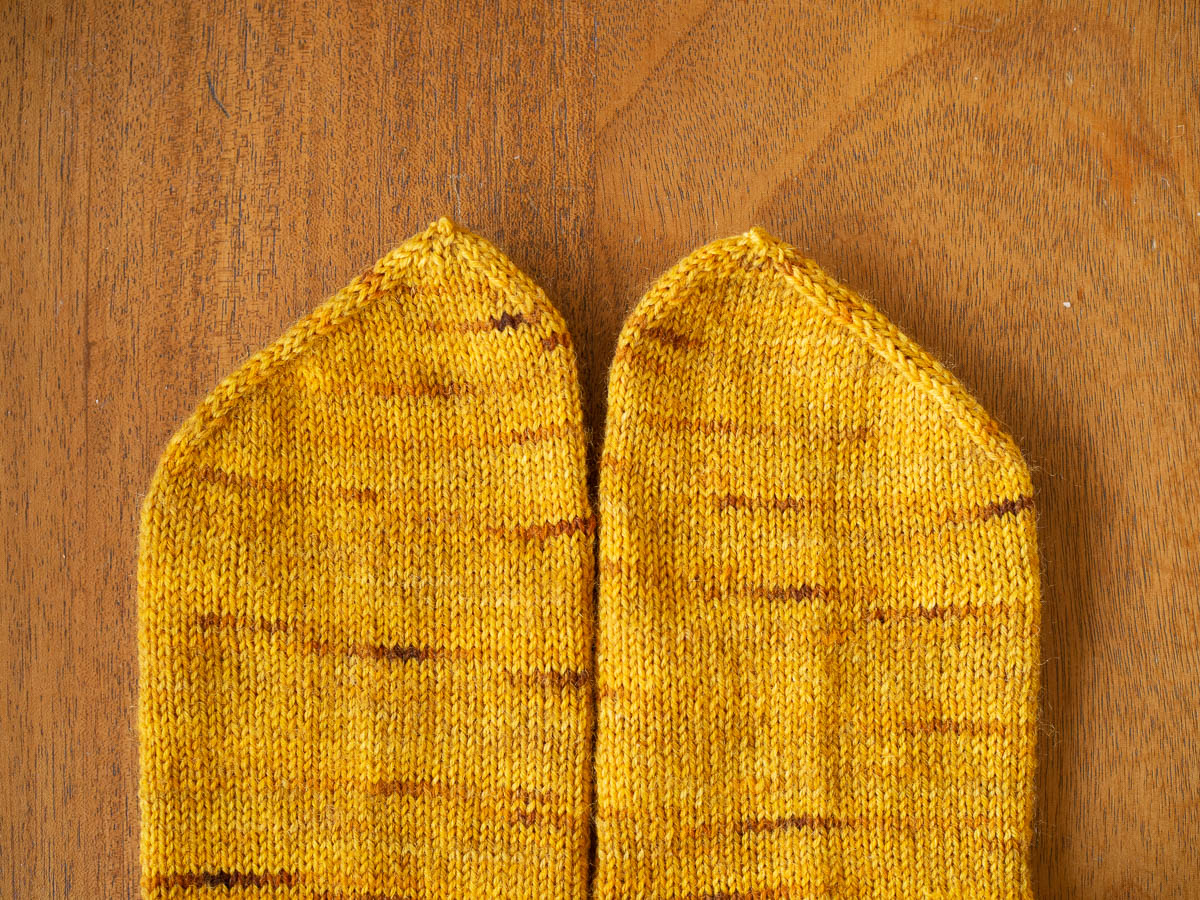
Continuing my experiments with knitting socks, I’m trying out socks with anatomically correct toes.
Store-bought socks are symmetrical. The toe area has a relatively straight shape, like a very flat isosceles trapezoid. Industrially made socks always so stretchy that they fit my toes well.
The standard hand-knit sock pattern also has a symmetrical toe in the shape of a slightly curved isosceles triangle. You can see the shape on the leet feet I made to give away, and on these green socks I made for myself. The knitting does stretch to more or less fit, but not as much as store-bought socks. With a thin yarn I find that this puts unnecessary stress around the big toes.
For this pair I tried to match the actual shape of my feet. My big toes are noticeably longer than the second toe, and the front of the foot very definitely follows a diagonal line. I just started to decrease earlier on the outside, and decreased faster on the outside than the inside, and they came out really nice on the first try.
The next step might be to do something about the final rows. The standard sock toe pattern (which this asymmetrical one is based on) ends with a distinct little tip, where the yarn is pulled through the final four remaining stitches. I might look for a different way to finish off that leaves the end a bit flatter.
By the way, did you see the lovely yarn I found for these socks? Hand-dyed sock yarn from Limmo Design in a wonderfully rich, dark yellow colour. The specks of brown are not too loud, but liven up the surface. The shop labels this colour “curry” but it makes me think of honey. Now that I’ve started looking, I find yarns in so many beautiful colours that I’m going to have to make a lot more socks.
Socks are such a great knitting project. Small and fast, uncomplicated once you get the basic pattern down. Knitting a cardigan is a major investment in time. Socks on the other hand almost finish themselves. And there is always a need for more, because they wear out.



When the midday spring sun hits the tulips on the kitchen table just right, and you’re working from home so you can use your lunch break for whatever you want, such as photography.
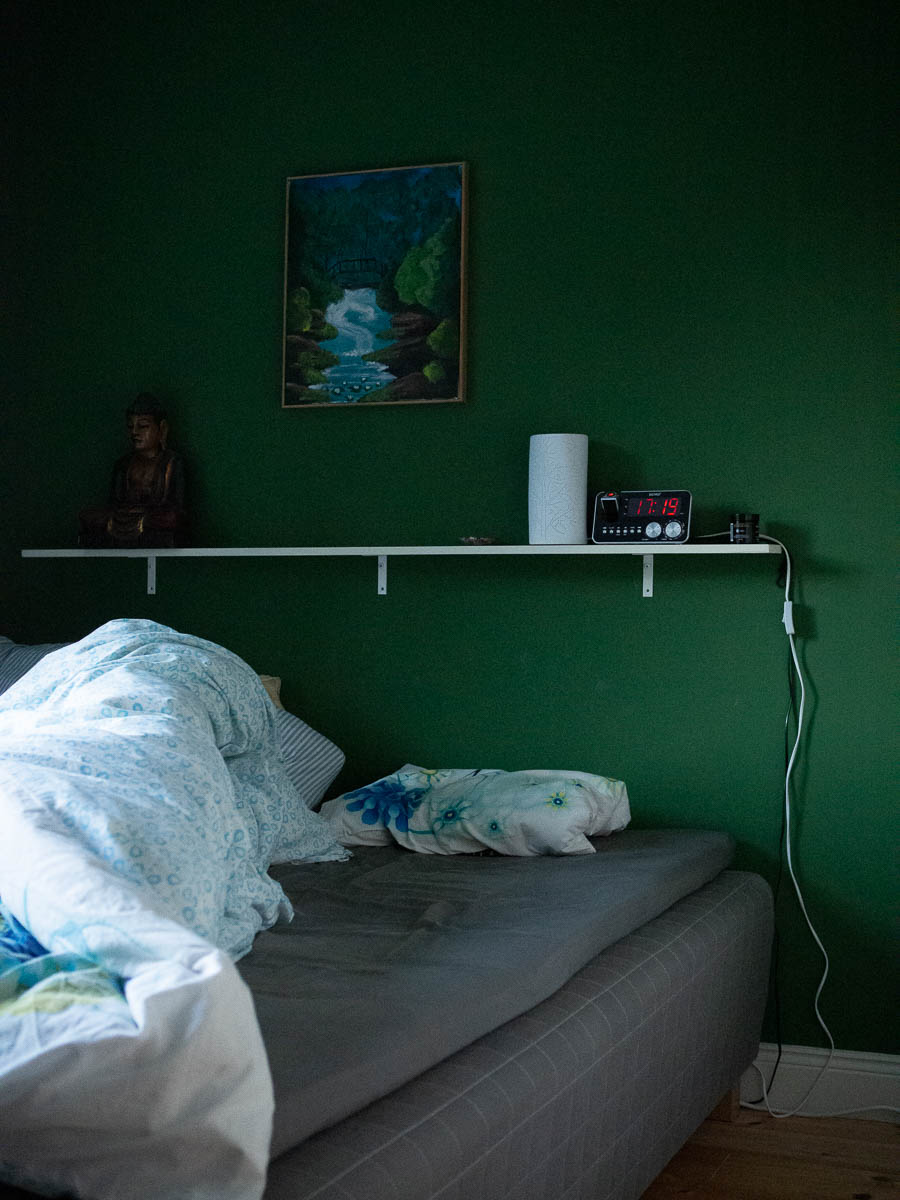
For some unclear reason, I woke up at 5:30 and could not go back to sleep. And I’ve been going to bed slightly too late several nights in a row, so I was really, really tired today.
I was going to stop working after lunch and take a nap. I even said so to the team on Slack. I had even turned down the bed! And then… I got roped into holding a technical interview on very, very short notice, so instead of a long nap I got a long video meeting. (I managed to get through it without yawning.) And after that I was still tired but not sleepy any more, and then it was time to think about dinner, and now the day has gone by without a nap.
A few consecutive nights of too little sleep was the normal state of affairs when the kids were small. And we coped all right. But now I’m not used to it any more, and I’m glad those years are well behind us.

The witch hazel is blooming.
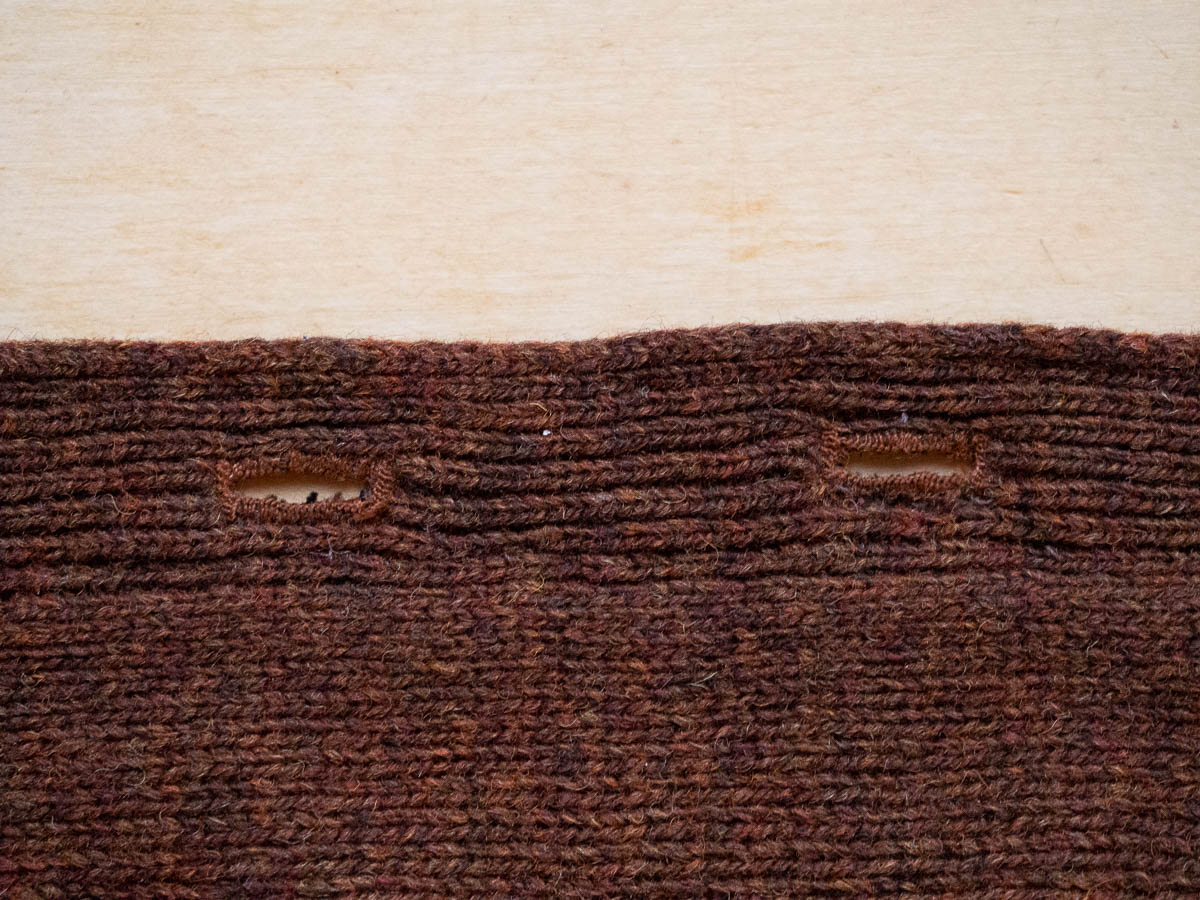
I have a favourite cardigan with very worn buttonholes. The yarn around the buttonholes was worn all the way through and the knitted fabric was starting to unravel completely.
I don’t enjoy sewing buttonholes. It’s fiddly and tedious.
One of my mending books spends several pages on a technique for mending buttonholes with a small patch of fabric. It looks clever and tidy and sturdy:
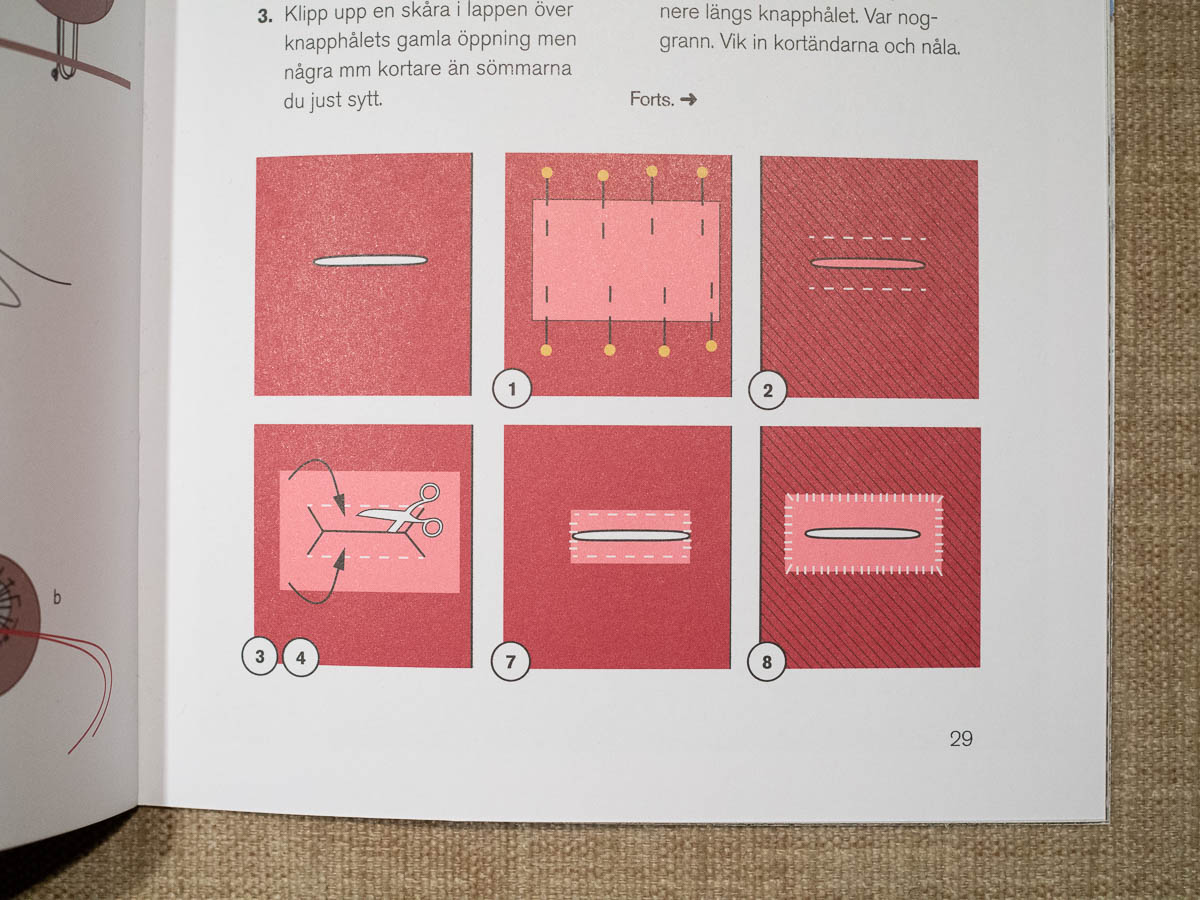
Despite the illustrations, I couldn’t quite wrap my head around how it actually works. Topologically it just does not make sense. You cannot take a rectangular, flat piece of fabric and fold it inside out through a slit, and have all of it still lay flat.
I tried it out anyway, assuming it would make sense when I held it all in my hands. Maybe the fabric would somehow settle into tidy folds. Nope. Not even near. No matter how much I tried to smooth it and flatten it and gather it into pleats, it just bunched up and pulled on itself. I couldn’t even get it flat enough to sew the edges down. Completely hopeless.
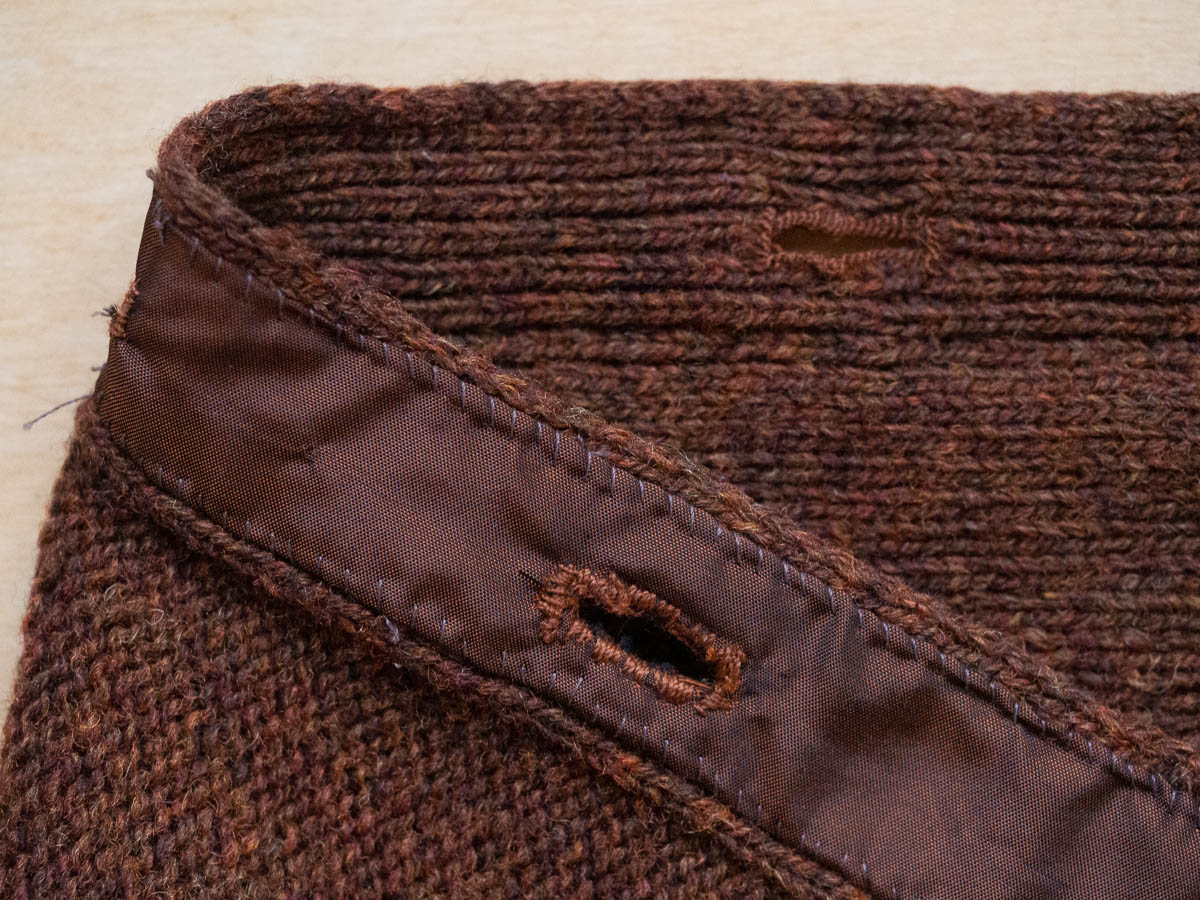
So it’ll have to be the old school way after all. I reinforced the button band with a strip of fabric that I sewed onto the rear of it, and now I’m sewing the buttonhole edges one at a time. The front looks pretty good but the reverse, not so much. Luckily nobody will be looking at that side. Also luckily I don’t have to finish all the buttonholes before I can wear the cardigan again. They’re boring, so I’m doing them one at a time. Four done, which is enough to make it usable.
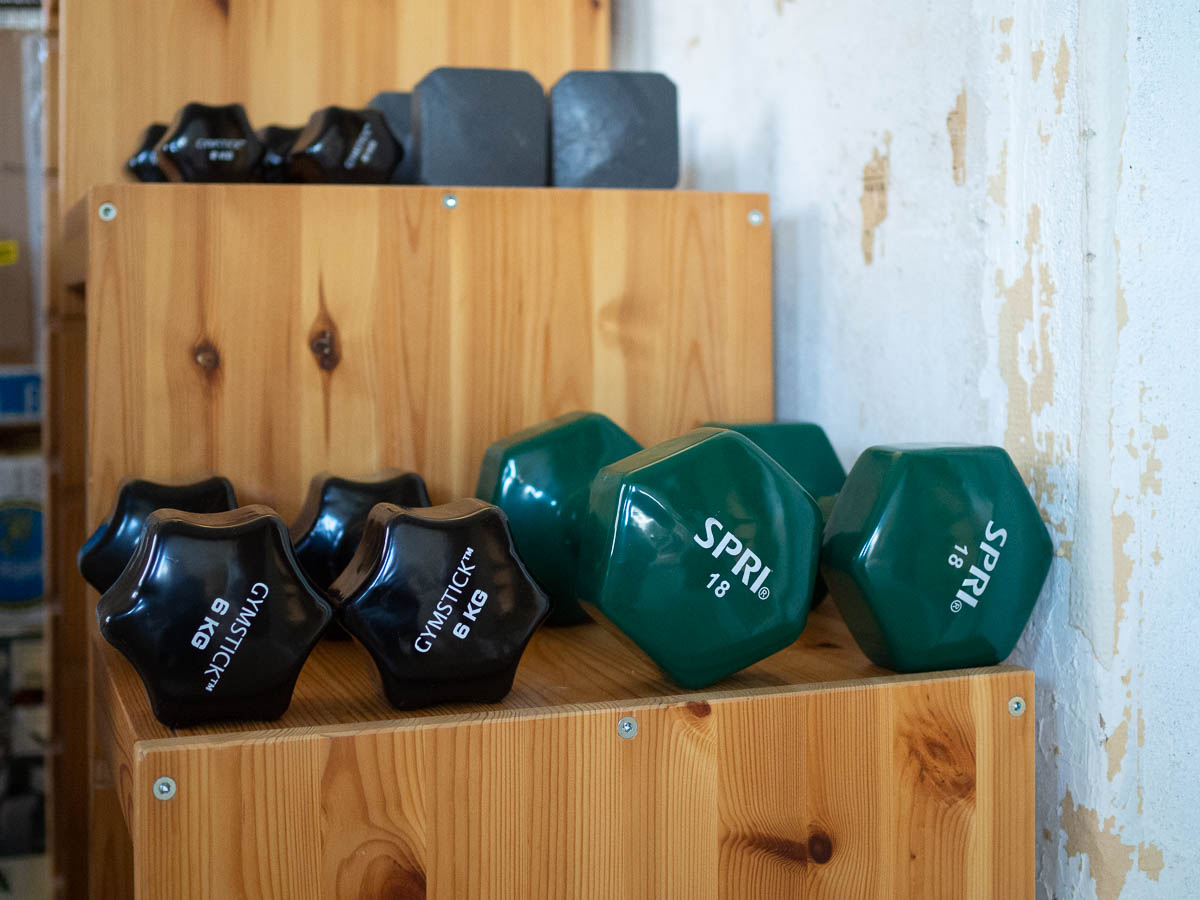
We finally have more dumbbells! The whole project only took 5 weeks and three attempts.
It really bothers my sense of order that I have three different styles among four pairs of dumbbells. Nothing is consistent! One pair in painted cast iron, three covered in vinyl. One pair measured in pounds, three in kilograms. Two pairs out of four match, and those two are not adjacent in size. Eugh.
| « Older posts | Newer posts » |
