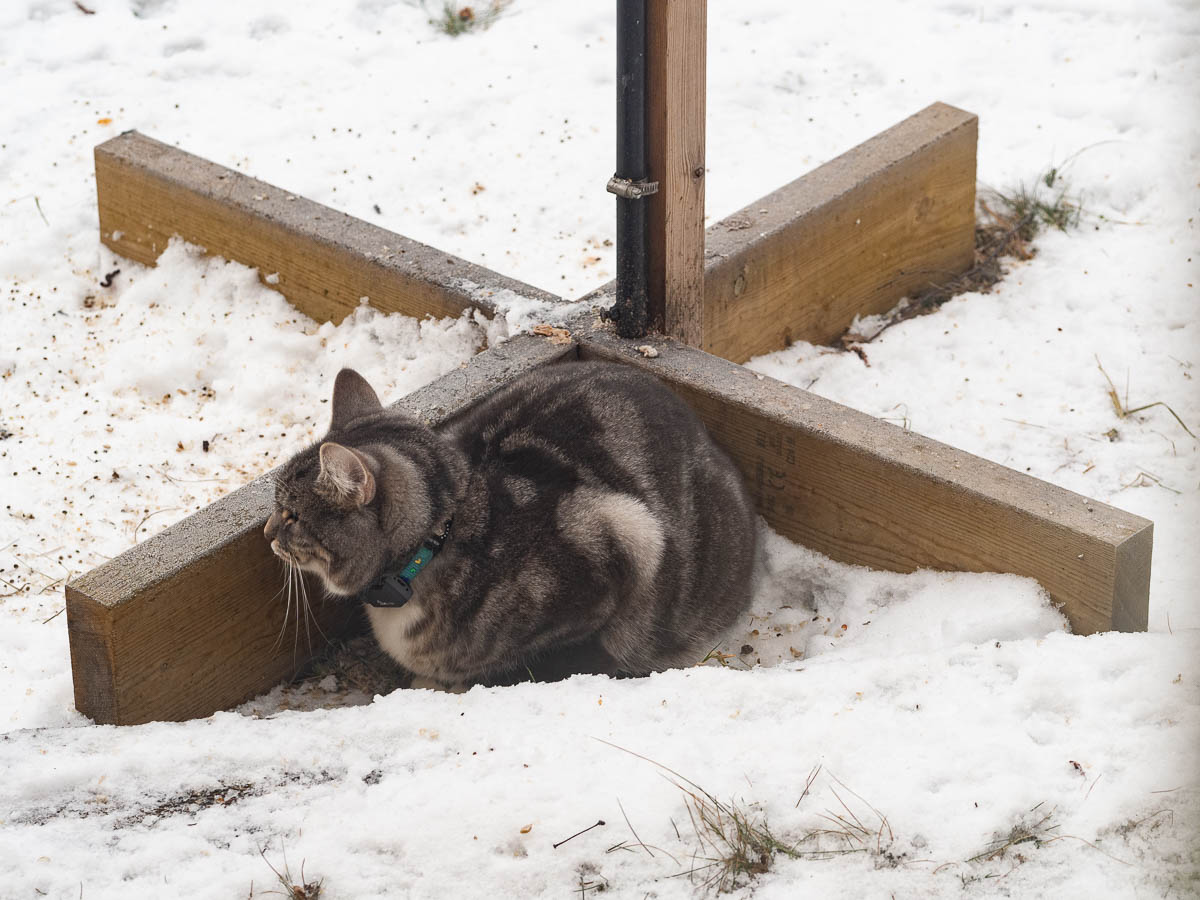
A neighbourhood cat has discovered our bird feeder and decided that it would make a great cat feeder. It’s picked a somewhat sheltered spot and sits there, waiting for the birds to come. Then it jumps up and tries to bat them down. We saw it walk away with a dead bird the other day, and if it has taken one then it has probably taken several. Bummer.

I can’t think of a way to raise the feeder higher without making it dangerously unstable – and in fact it was already dangerously unstable in its original configuration and Eric added a wooden support structure to ensure it doesn’t fall over. Maybe we can find some way to make that spot uncomfortable for the cat. I wonder if it would find a carpet of fir branches uncomfortable.


The bird feeder makes for great mealtime entertainment. It’s kind of like an aquarium but natural and noisy.

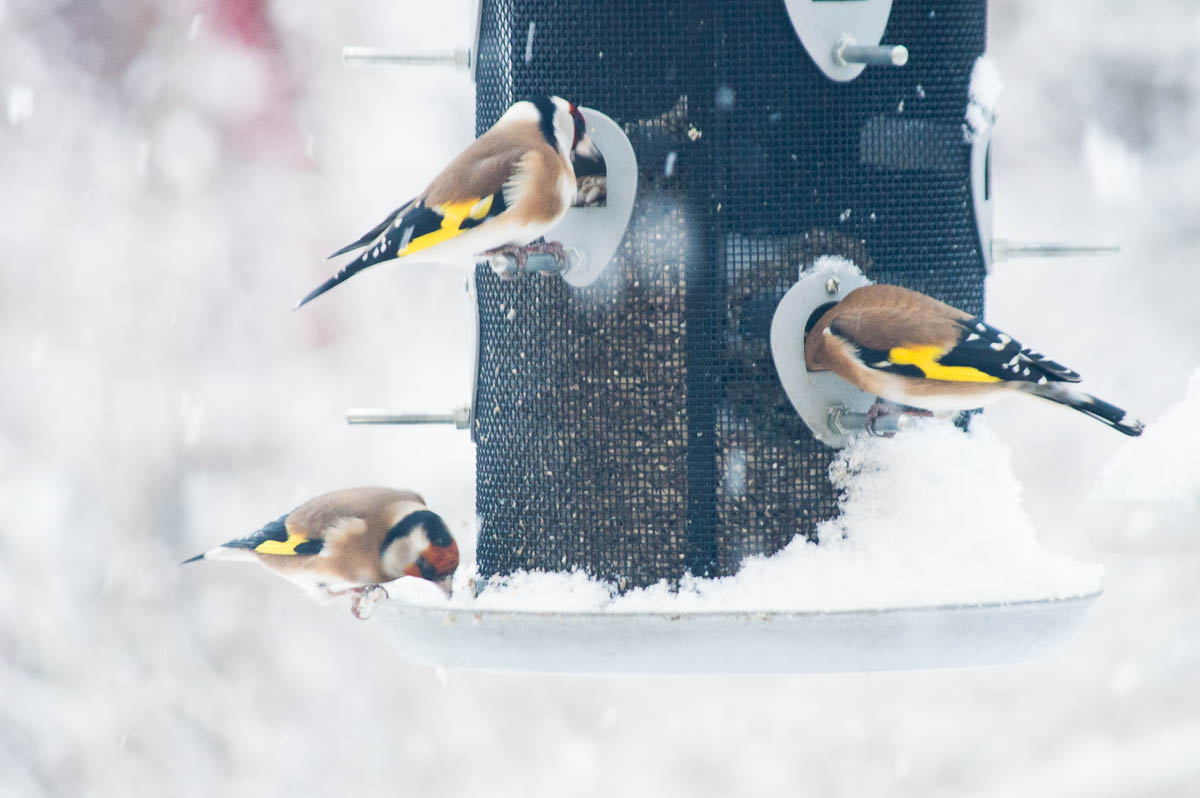
This year, like last year, redpolls dominate. Goldfinches, great tits, blue tits, nuthatches, jays, and blackbirds are all regular visitors, but none in such numbers as the redpolls.

When the redpolls come en masse, there are tens and tens of them, such a swarm that they are hard to count. The “restaurant” feeder they like best has 12 “seats”, plus some room on the rim. Those spots are all completely full. More birds hang around nearby, waiting for their turn. And on the ground below, there’s at least as many as up on the feeder – and then yet more birds in the trees and bushes that we can hear but not see.


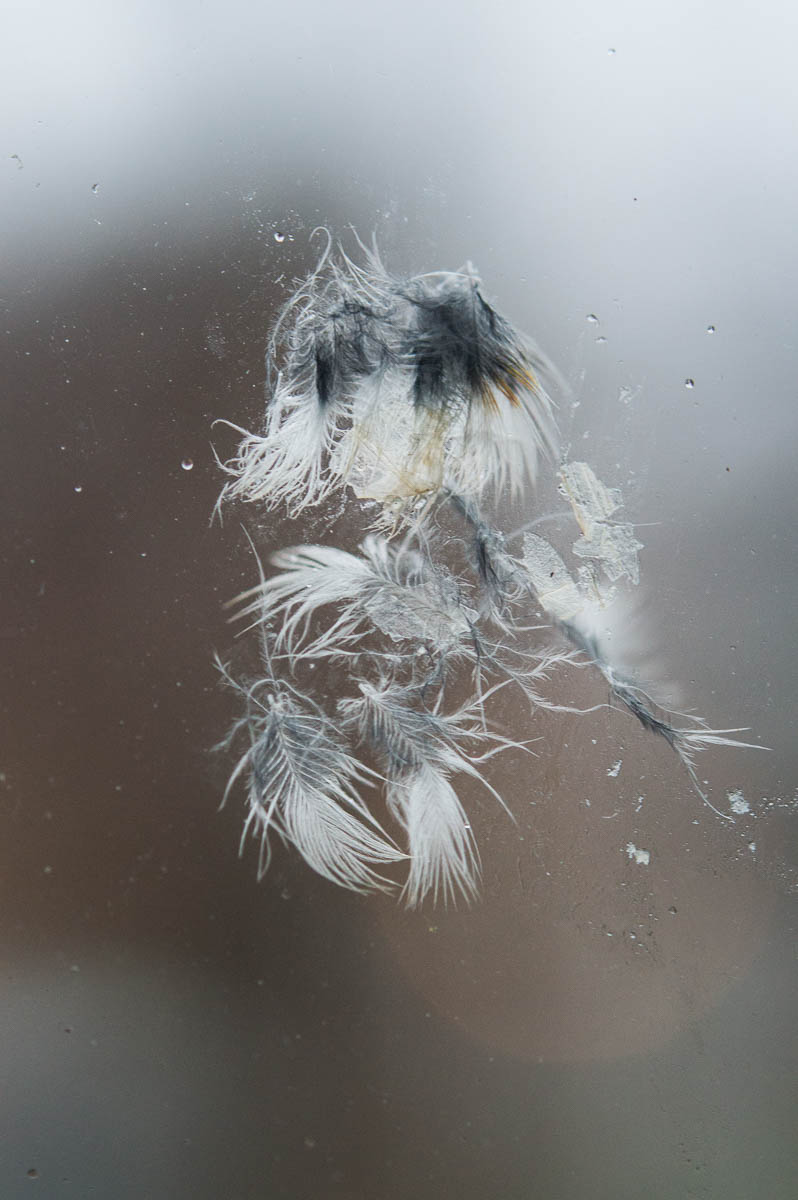
Our bird feeder is a great success this year. It’s attracting incredible numbers of goldfinches and redpolls, veritable swarms of them. It gets so crowded that when, all of a sudden, they decide to take flight, there isn’t enough room for all of them and some crash into our kitchen windows. It feels awful to think of their little bodies hitting the glass, but they don’t hit it with much speed and so they all seem to survive it without too much harm. I haven’t even seen any fall on the ground. But they leave blotches of feathers on the window.


Sudden snowfall brought happy kids (sled transport to and from school!) and hungry birds.


Our bird feeder is incredibly popular. Most days we see dozens of goldfinches (steglits, ohakalind) and redpolls (gråsiska, urvalind) and siskins (grönsiska, siisike) on the feeder with sunflower seeds, and blackbirds waiting on the ground for crumbs to drop. Oddly, the more usual feeder guests – tits, sparrows, nuthatches – have become far fewer. Maybe the finches are more territorial and scare the tits away?

Nearby trees are full of twittering and tweeting. Walking past those in the morning is a pleasant way to start a day.

Now it looks like they’re hanging on our doorstep at night as well.


After more than a week of not doing much (other than cooking, eating, and hanging around) I am in need of physical activity. My body is getting sofa-shaped and my back is getting sore from all the sitting. Today I went walking on Sörmlandsleden.

Christmas wasn’t white, but last night we got a bit of snow, as luck would have it. Everything was covered in a powdery layer of fresh, fluffy snow – very picturesque! The forest looks much prettier in white than in brown and black. Much of it was untouched by human feet, which made it extra beautiful.

Untouched by human feet, but not by any feet. The forest was full of animal tracks. I’ve never hiked after such fresh snowfall before, so I’ve never seen anything like this. I mean, I know in theory that there are animals in the woods. But as a loud and clumsy human walking through the woods, I normally never see them. Maybe a deer in the distance, that’s it. Now I got to see – well, still not the animals, but signs of just how omnipresent they are.

Fox tracks in particular were everywhere along the paths and footbridges. It seemed funny to me at first that a fox would choose to walk on footbridges on Sörmlandsleden. But then again, Sörmlandsleden follows old, established paths, which in turn probably started their lives as animal paths, centuries ago. So it’s not that the fox follows Sörmlandsleden – it’s Sörmlandsleden that follows old fox paths.

Stages 5 and 6 together are about 24-25 km, which is eight hours of walking at my normal hiking pace. Midwinter days are short, so eight hours is just at the limit. I started in the pre-dawn twilight and finished shortly after dark.


The goldfinches come in swarms. All other visitors to our bird feeder – great tits, blue tits, nuthatches – come singly or in small groups. When goldfinches come, there’s at least half a dozen of them on the feeder itself, and more hanging around and twittering in the branches of nearby trees. The most I’ve seen at and around the feeder was 20 goldfinches altogether.

They tolerate each others’ company, but not that of other birds. When a gang of goldfinches occupies the feeder and a tit tries to join in, they won’t even let it land. But nuthatches are apparently above them in the pecking order – when one of those arrives, the goldfinches take flight.

For some reason all these birds want the sunflower seeds and nothing else, and the peanuts that used to be so popular now hang there uneaten. You’d think that the tits would go eat the peanuts, which they used to love, when they can’t get access to the sunflower seeds – but no, they’d rather just leave.


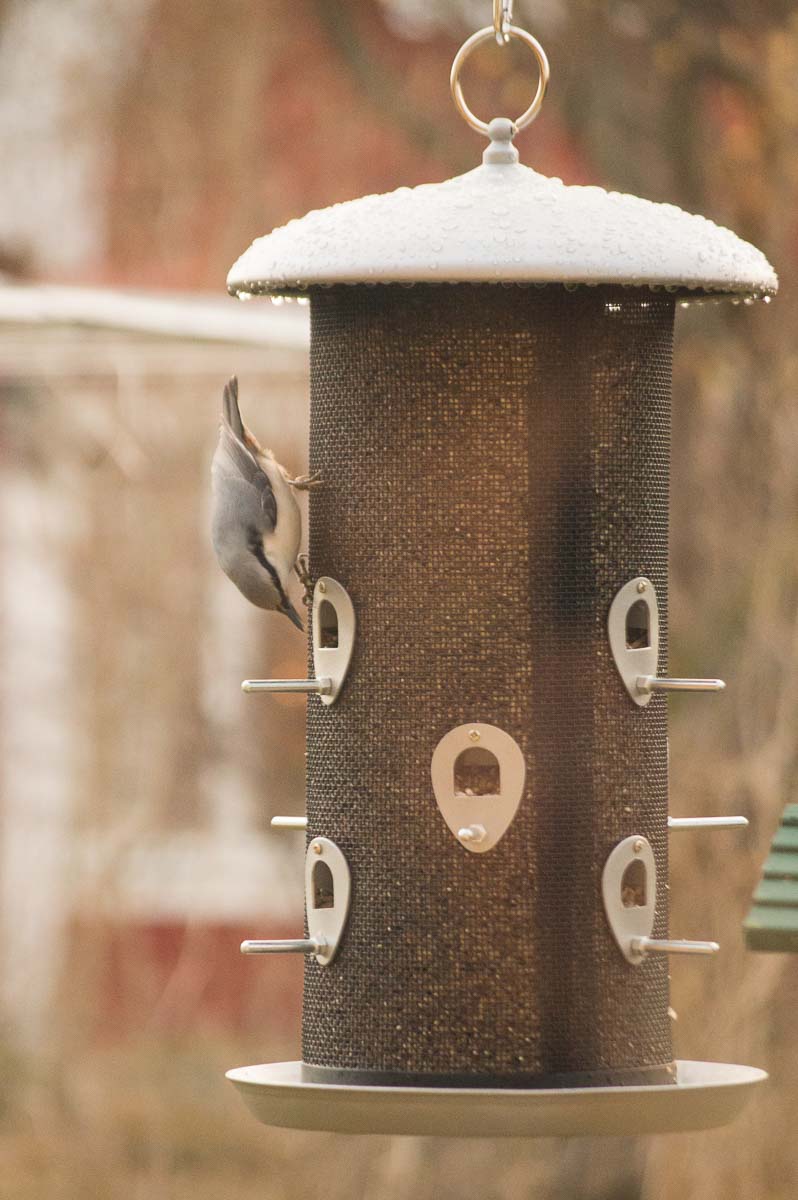
A nuthatch on our new and upgraded bird feeder.


Our feeder is mostly visited by sparrows and tits and nuthatches, with the occasional magpie swooping in and scaring them all off. Bigger birds such as jays and magpies don’t like the new feeder much – I guess it swings and sways too much for their taste.

Occasionally a gang of goldfinches flies in. They’re rarely on their own; they seem to travel in groups.

Greenfinches have the opposite habits. I’ve never seen more than one here at the same time.


Eric recently put up our new bird feeder, and now it’s like having a live show outside the window. The sun isn’t quite up when we come down in the morning, but it’s sort of light, so the birds are awake and hungry, and they have their breakfast at the same time as we do. (Everyone except me, that is – I’m never hungry immediately after getting up and ideally have breakfast about two hours after waking.)

The old feeder was a little hut on a stick, with openings on all four sides. It was nice enough and provided good viewing opportunities, but it attracted big, sloppy eaters like magpies and thrushes. They spread so much of the birdseed on the ground that one spring some of it sprouted. Which was weird but not problematic. The problems started when the spilled food attracted rats.

Last year we didn’t put up the feeder hut because we really did not want any more rats. But now we have this beautiful new contraption that is better than the old one in all ways. Except the old one was hand painted by myself and Ingrid and this one doesn’t have that personal touch. But on the other hand it has hooks for several feeders (mostly spill-proof) so we can serve different kinds of food. It has a bowl for water. It has branch-like appendages that the birds can use for landing and for just hanging around and checking out the place. And I have to admit it looks better than the old one.