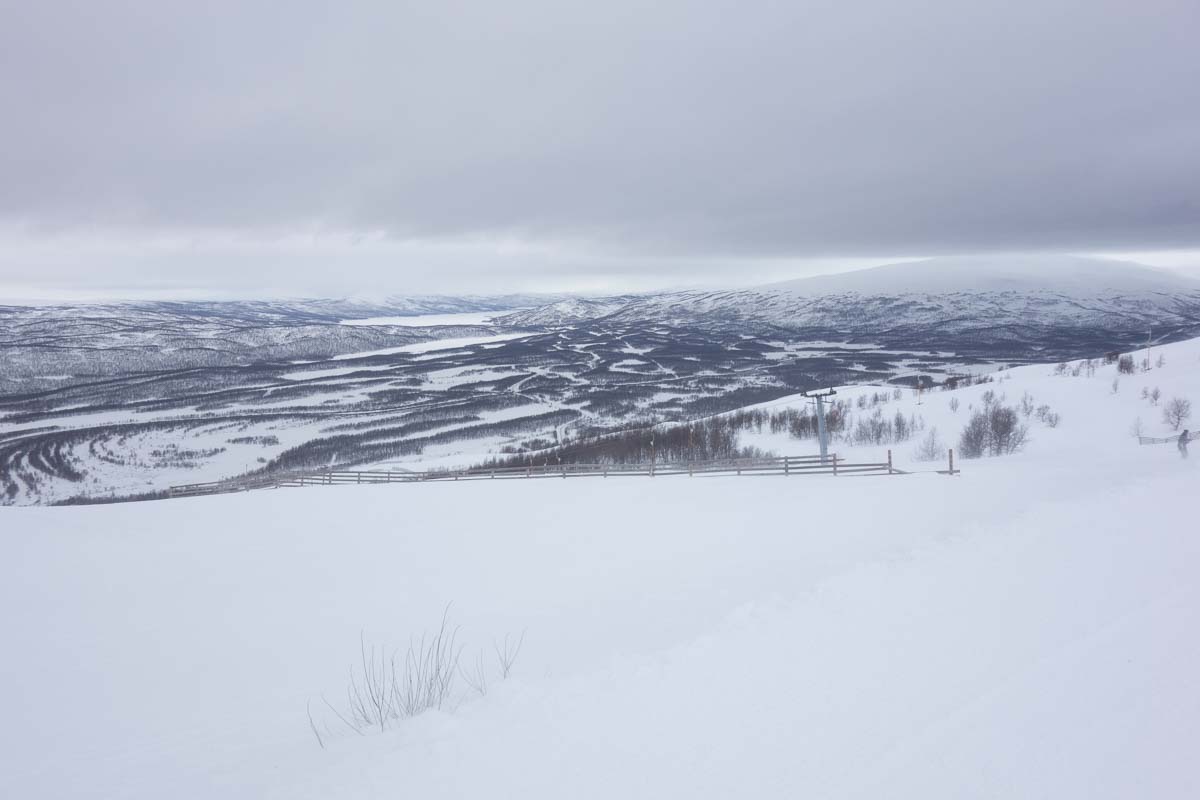
Abiskojaure hut to Alesjaure hut (20 km).

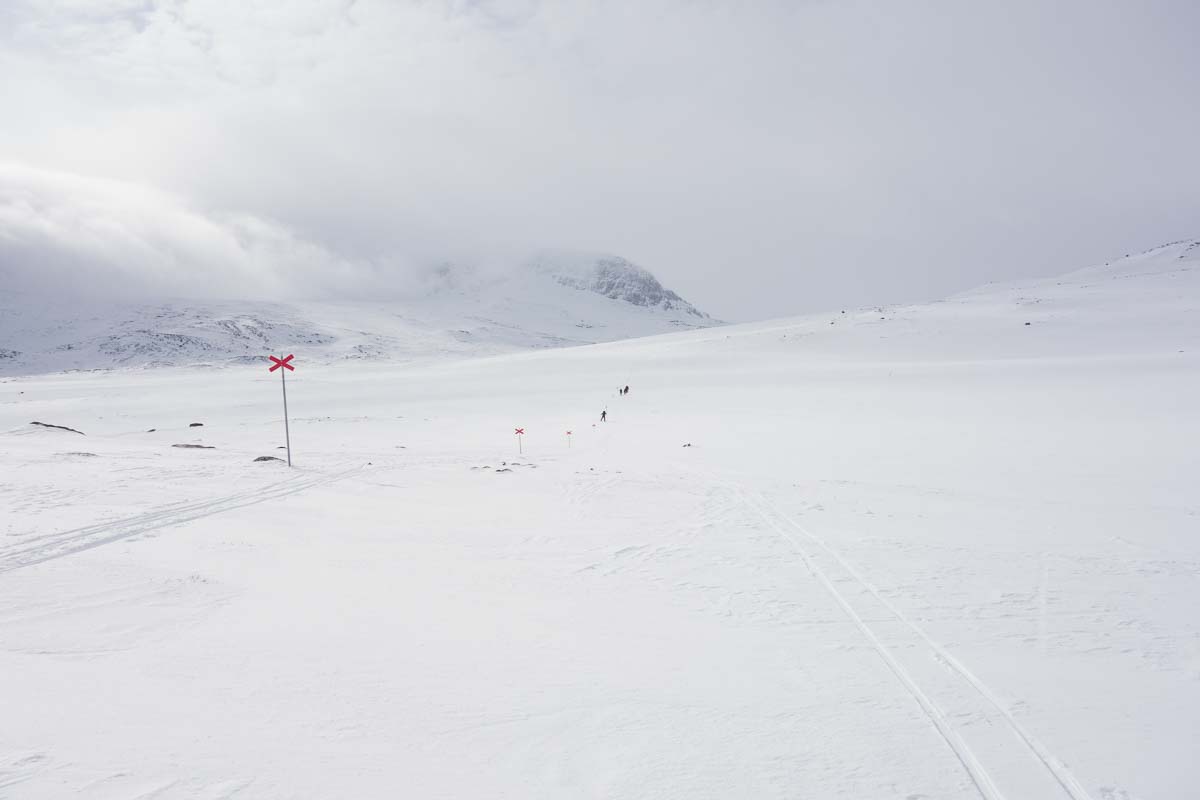
Up from Abiskojaure lake into Garddenvaggi valley, then on alongside lake Alesjaure. At the time I didn’t even realize there was a lake there; I only discovered it on a map afterwards. Sparse birch forest to begin with, endless expanses of softly undulating snowy hills later in the day.

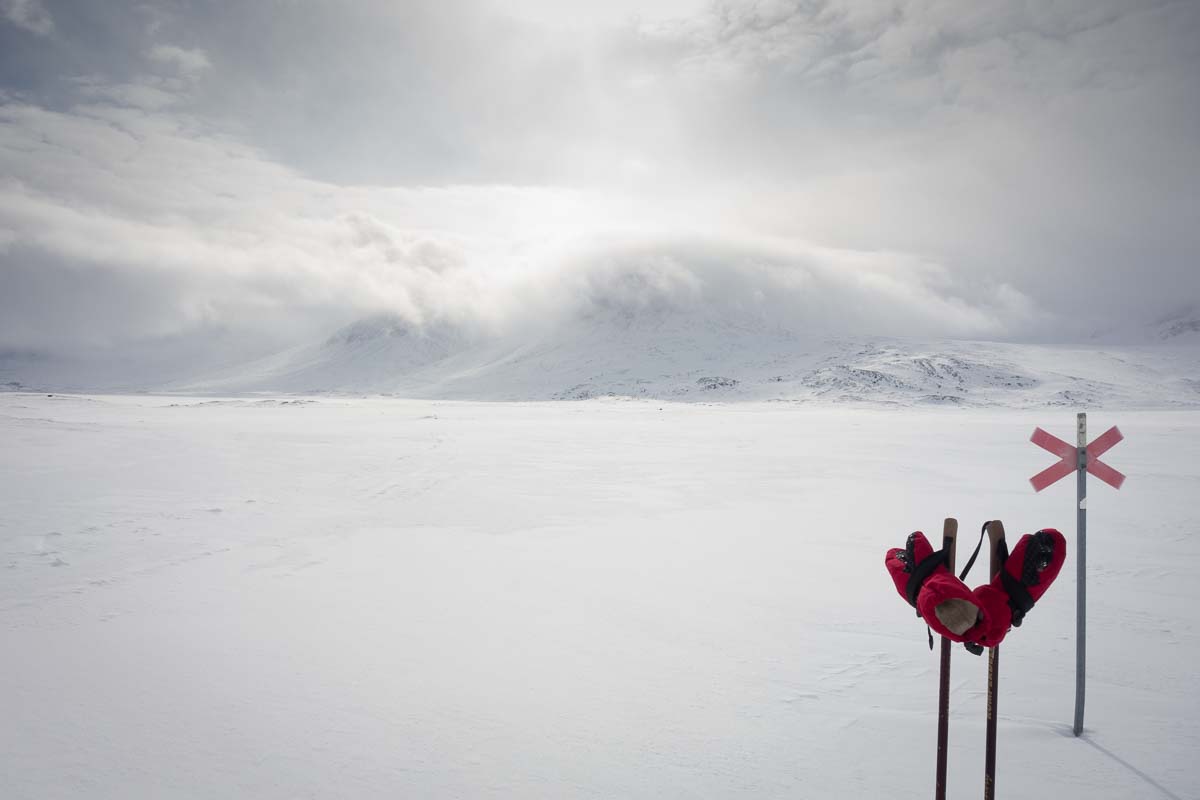
The winter route of Kungsleden is marked by red crosses on posts. (The summer route is not the same because of rivers and lakes.)

After a full day out in the snow, tired and hungry, the hut is a welcome sight. The STF (Swedish Tourist Association) huts are comfortable in a homey, rustic way. Most huts are actually a multiple huts: one for the host and a few for the guests. Plus a few other important buildings: a shop/reception, a sauna, a woodshed, and loos.

The guest huts have dorms of various sizes. Our group of 9 fit nicely into the 10-bed rooms which seemed to be standard. Each hut also had a kitchen, and often a drying room for clothes and boots.

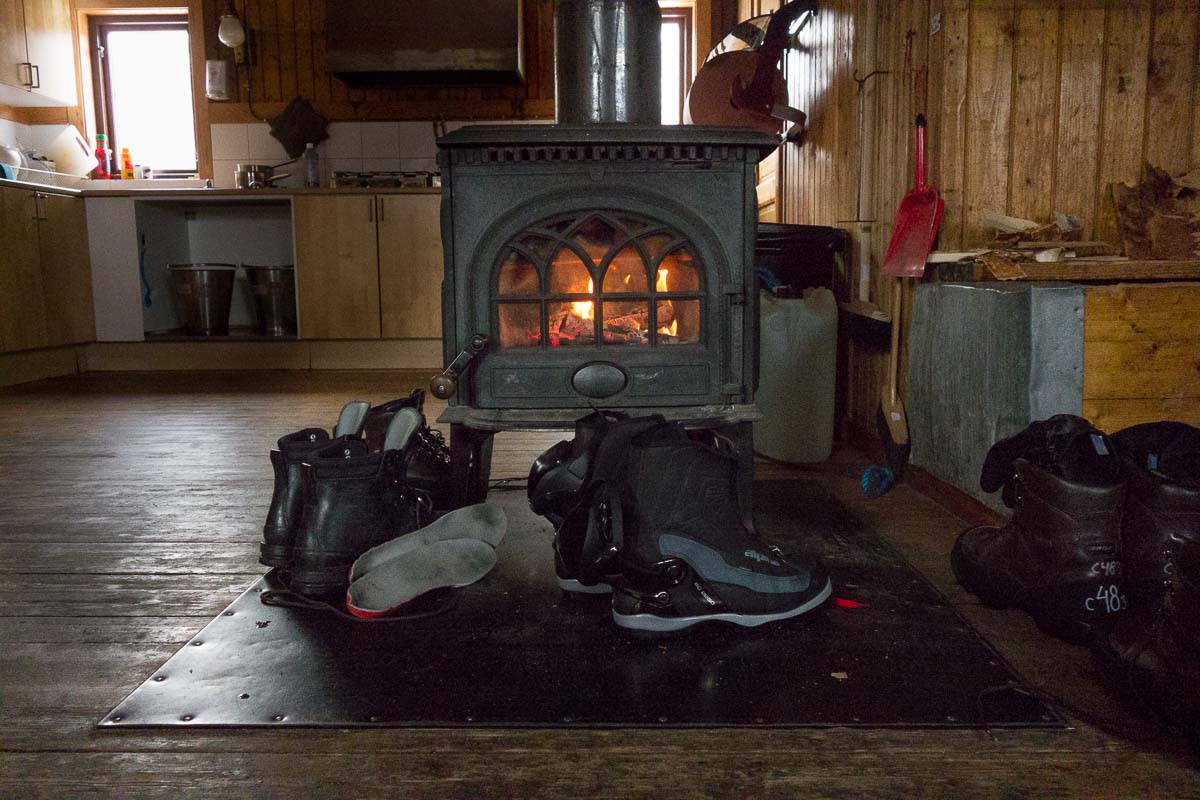
Much of hut life is rustic and low-tech. There is no electricity. Huts have wood-burning stoves for heating and gas stoves for cooking. Water is fetched in large plastic jerry cans from an ice hole in the river or lake.

But there are small islands of surprising modernity. The shop/reception hut has a solar panel. This, together with a parabolic antenna, is used for two important purposes: (a) the host can communicate with the outside world, and (b) the host can accept credit card payments in the shop. No kidding.

There is a strong environmental awareness. Garbage is recycled even more religiously than I do at home. Whatever garbage has to be taken back to civilization goes down on snowmobiles only, and only on the return leg of restocking journeys, so there are no wasted trips.

The loos always seemed to be at the top or bottom of an icy hill, which made night-time loo trips extra exciting. An unexpected luxury in the loos was styrofoam loo seats. What an improvement over sitting on an ice cold wooden seat!

Train from Kiruna to Abisko tourist station. Rent skis. Ski from Abisko to Abiskojaure hut (15 km).
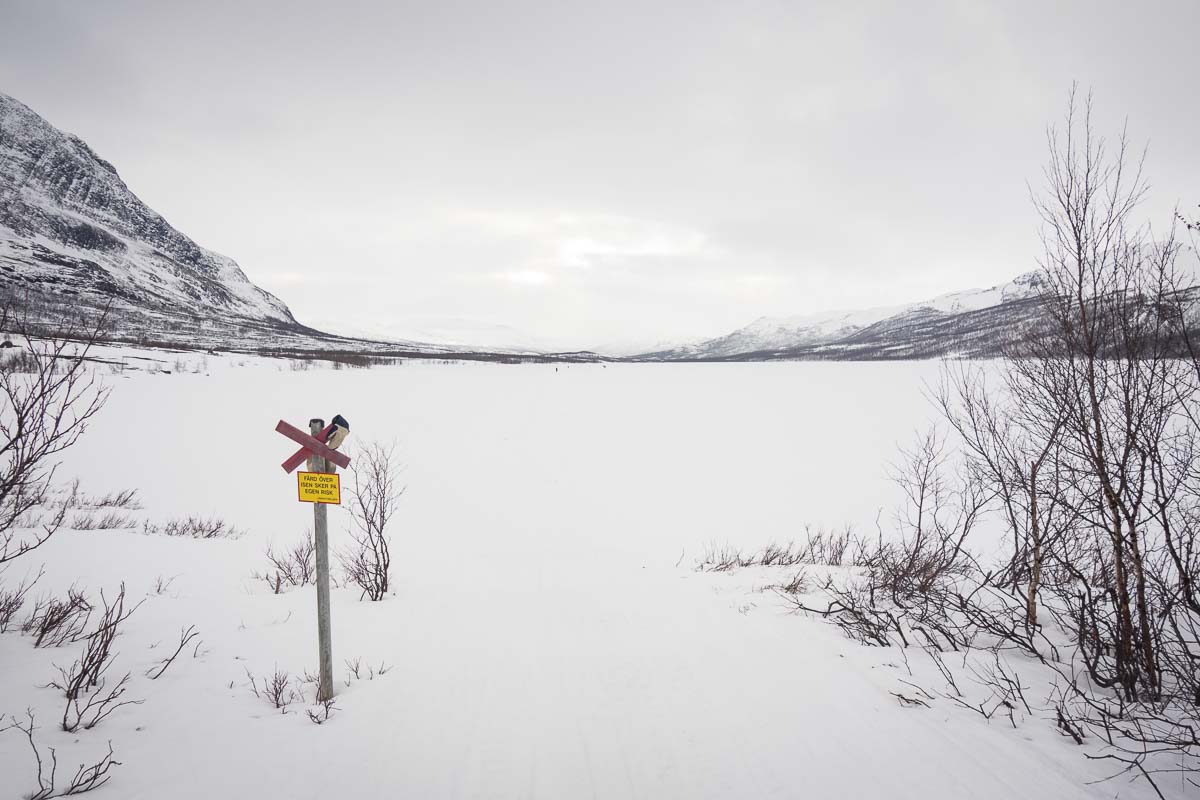
“Färd över isen sker på egen risk” / “Crossing the ice is at your own risk”

Leaving behind yesterday’s red planks, today we equipped ourselves with proper skis from the ski rental at Abisko tourist station (except those of us who brought their own). By the time we were done, it was already time for lunch. (Abisko tourist station serves great lunch, even for vegetarians, especially considering the remote location.) After lunch we packed away the last loose things, tightened the last straps, crossed the road and then we were off.

The skiing was initially as wobbly as I had expected, especially going downhill. I was quite focused on the skiing, busy trying to remember how it was supposed to feel and how my body was supposed to move, and didn’t pay much attention to my surroundings.

Snowmobiles are allowed on this part of Kungsleden, and they had been using it a lot. Especially the first half of the track was mushy and slushy and churned up – not the best to ski on. The best I could achieve was a kind of a plodding shuffle, or perhaps a shuffling plod, rather than any kind of gliding motion.

At first the trail passed through a sparse birch forest, with small hills and a frozen river. There were mountains in the distance, but nothing spectacular to look at, especially since the weather was dull and cloudy.

The last part of the trail went across the frozen lake of Abiskojaure: flat, featureless, somewhat icy – and windy. Not exciting, but (unlike most of our group) I actually liked the lake better than the preceding part of the track because I could finally put on some speed. At the far end of the lake was the Abiskojaure hut where we would stay the night.
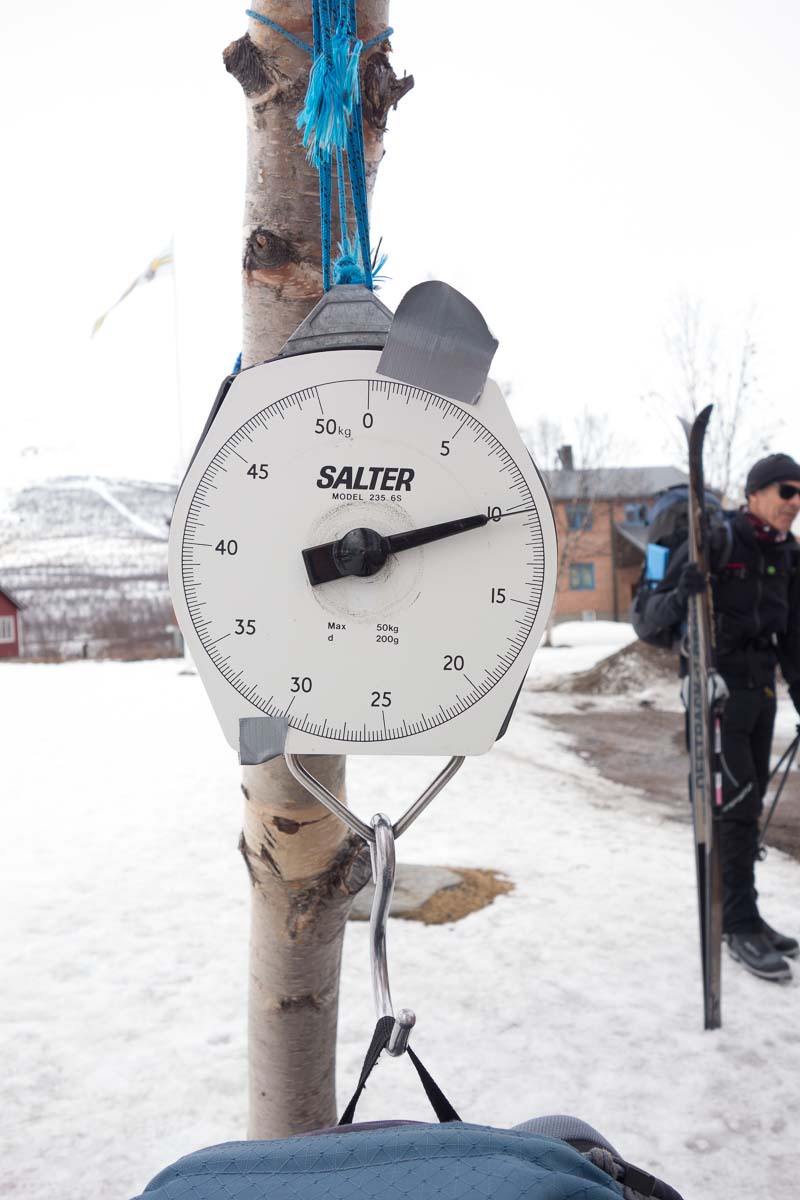
Outside the tourist station where we started, there’s a large wooden tripod with a scale for weighing your packs. We all weighed ours. Mine came in at just a smidgen over 10 kg. It was the second lightest pack in our group, which was a very good thing since I was the weakest skier. And it was the smallest one too: I got it all into my 35+8 litre rucksack.

I could have lightened the pack some more, but not by much, if I had been a more experienced hiker/packer. The heaviest two things in my bag were my thermos flask and my shoes, and there was no leaving those behind. But I could have left behind some other things:

  • Soap. Outside I was wearing gloves or mittens all the time and had no opportunity to get my hands dirty. Indoors in the kitchen there was water and kitchen paper rolls. There was even hand sanitizer in the loos.
  • Extra meals. I brought two freeze-dried meals in case any of the huts didn’t have vegetarian food. That was not a problem, but I ate the meals anyway because some days I was just too hungry to wait for dinner. But I need not have brought my own; I could have managed with something tinned or a packet of noodles from the hut shops instead.
  • Extra tops. The wicking tops didn’t get too smelly even after several days of use; I could have managed with just two (one for skiing, and a clean dry one for evenings).
  • The thick fleece top. A thinner, lighter one would have been enough.

Beyond that, I’d be cutting into things like shampoo and toothpaste, clean underwear and fresh socks, which I could have survived without but would really have missed. I want my hiking vacations to feel like vacations, not a week of deprivation. For this reason, there was some heavyish stuff in my pack that I will not leave behind next time either.

  • Raw Bite or other trail snacks. They are rather heavy, but I see no good alternative. All the manned huts did have shops with tinned food and pasta and such. They also stocked potato chips and peanuts, chocolate, sweets, soda and beer – but nothing that I would describe as a healthy snack. A Snickers bar is not a snack.
  • A Kindle. There is nothing to do in the huts in the afternoons. Most huts had some books, but it was all boring Swedish detective stories. Some people played solitaire for hours each afternoon. I got through two whole books on the Kindle I borrowed from Eric, plus one paper book in one of the huts. I would have been bored out of my mind without it.

There was only a single thing that I didn’t bring but wish I had.

  • Extra camera battery. Normally the battery lasts a long time, but in the cold up there it ran out unexpectedly fast. It didn’t even last me half the usual time.
In the years before kids, Eric and I used to go on hiking vacations together. There was one company that we particularly liked to travel with, or to be really honest, one favourite guy – John at Warthog (or more formally, Warthog Off-Grid Adventures). We did several hikes in the Pyrenees together with John, climbed Via Ferratas in the Dolomites, and even Kilimanjaro. (All done before the blog, so don’t go looking for any photos.)

Then kids came along. We did one hike when Ingrid was small, on Gran Canaria, with her in a sling. She grew, though, and could no longer be taken along on a hike almost like another piece of luggage. And then Adrian was born, and hiking receded even further from our lives.

For eight long years, hiking has been a distant dream. But now finally both kids are old enough join us on shorter hikes. We go geocaching now and again, after all, and that is hiking in everything but name. For this summer we have a week-long hike planned for the whole family in southern France.

But I couldn’t quite wait that long. When an email came from Warthog about a week-long skiing tour in the north of Sweden in April, I signed up in a jiffy. How hard can it be?

Quite hard, actually. I’m reasonably fit, but it’s been eight years since I did any serious hiking, with an actual pack to carry. And I haven’t done any cross-country skiing since I was a child. I knew of all of that, and I knew the rest of the group would be strong and fit. I expected this to be hard work. It was. It was just barely on the right side of the fuzzy line between “hard but fun” and “so hard it’s no fun anymore”.

The trip lasted eight days, with six days of skiing and two days of transportation etc. Our route: Abisko – Abiskojaure – Alesjaure – Vistas – Sälka – Kebnekajse – Nikkaluokta. It just so happens that the Swedish Tourist Association has this very same route described and mapped on their web site, because it is one of the most popular ones. Here’s their map of the route:

Sunday was day 0. No actual skiing was planned for this day, just making our way to Kiruna and getting the group together. However there were two guys in the group who had never skied before, and I joined them for a brief refresher course in the evening: on a pair of wonderful antique Swedish army skis, effectively two red wooden planks with bindings. It all felt a bit wobbly.

(No, I am not skiing on those all week. I’ll be renting a pair of proper skis.)

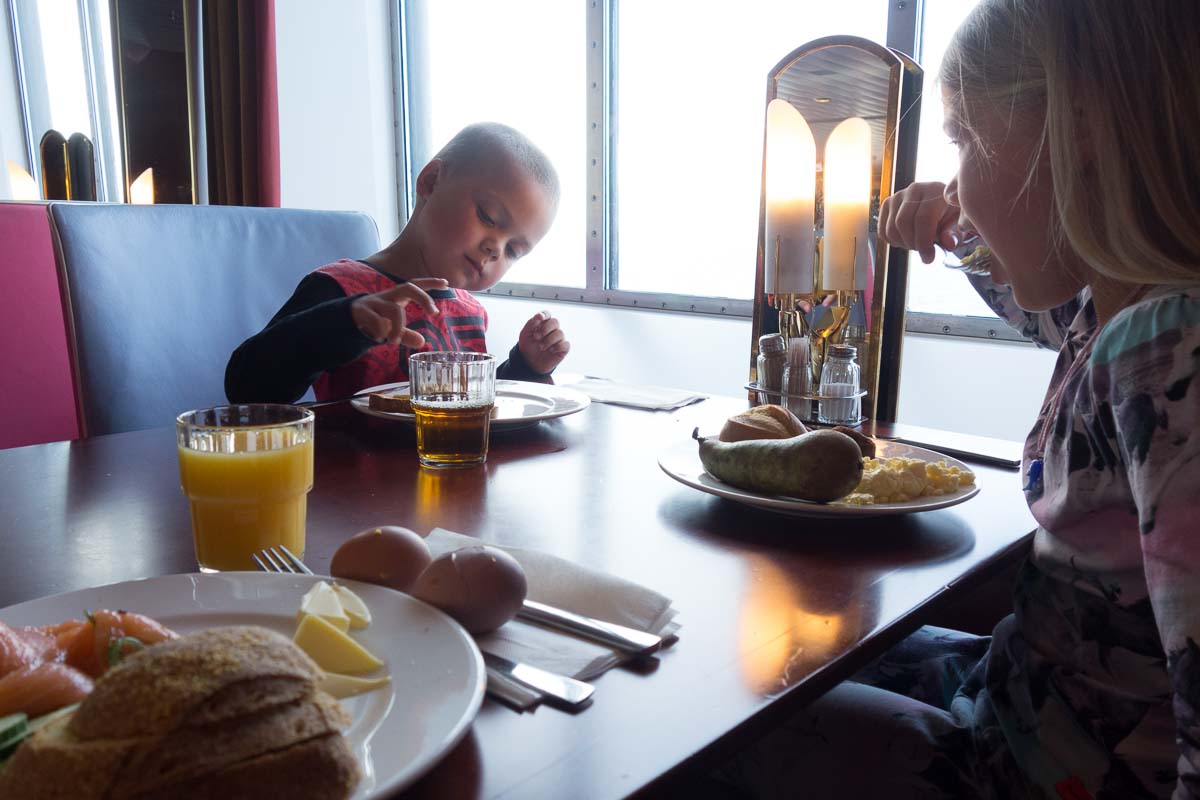
Yet another breakfast shot!

Seriously, after two nights of crappy sleep I was so tired today that I didn’t pick up the camera all day except for this shot. I felt like a traffic hazard driving from Tallinn to Tartu. Then we drove around in central Tartu in its totally tourist-unfriendly labyrinth of one-way streets, looking for a parking spot. After we finally got access to our apartment and did some urgent shopping for fish fingers and breakfast materials, we all fell into bed.

On board M/S Victoria I, on our way to Estonia.

For the kids, one major highlight of this annual trip is the buffet dinner on board the ferry. This time we shared the buffet at least two busloads of tourists from some Asian country who had different expectations about personal space than we did. Adrian got butts shoved up into his face several times, until we adjusted our tactics for the buffet queue.
Ingrid’s choices from the buffet: taco shells and nachos with chopped tomatoes; ketchup; prawns.
Adrian’s choices from the buffet: french fries, mini sausages, cucumber.

After dinner: boredom.

After boredom: a night of very broken sleep for all three of us.


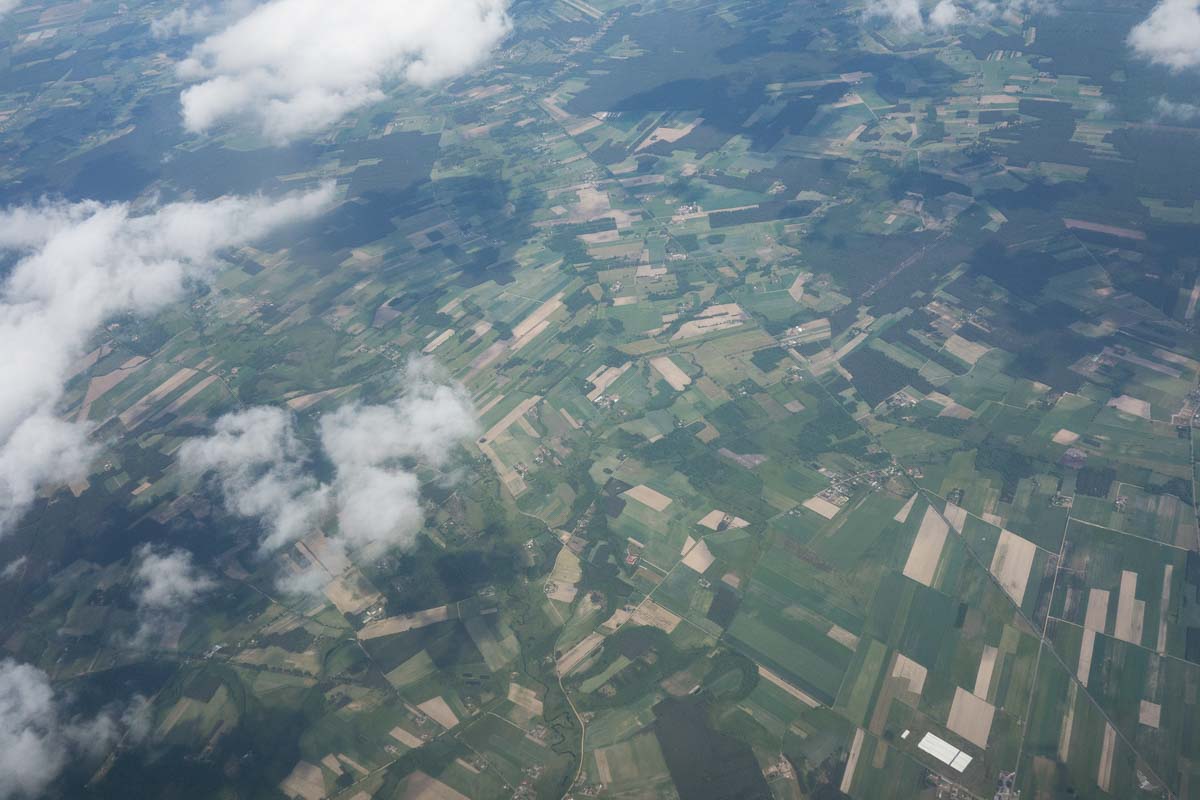
Lots of small narrow fields.

Pałac Kultury

Colleagues

St John’s Cathedra

Princess and unicorn

Pegasus

Park Saski

Pierogi for lunch. Hand-crocheted tablecloth.

Chopin crossing


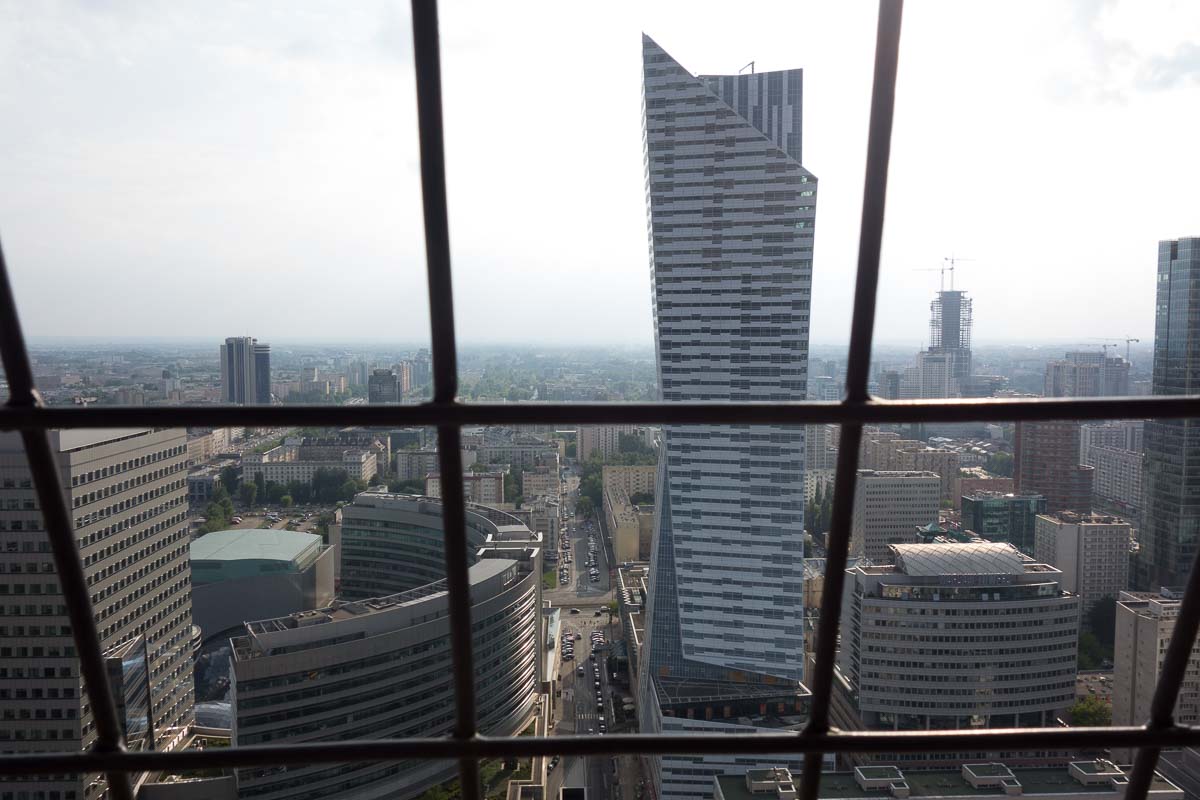
The whole company flew to Warsaw for a weekend trip to celebrate a great year. (Our fiscal year runs May to April.) This is a view of Warsaw from the top of the Pałac Kultury, a grandiose Stalinist edifice from 1955, still Poland’s tallest building.

Interesting fact: Warsaw is still struggling with untangling ownership claims for land expropriated by the Soviet Union. Much of the land in central Warsaw is still disputed. So an undisputed plot is often surrounded by disputed ones – hence, a flattish city with a surprising number of skyscrapers scattered around, with pretty small footprints.

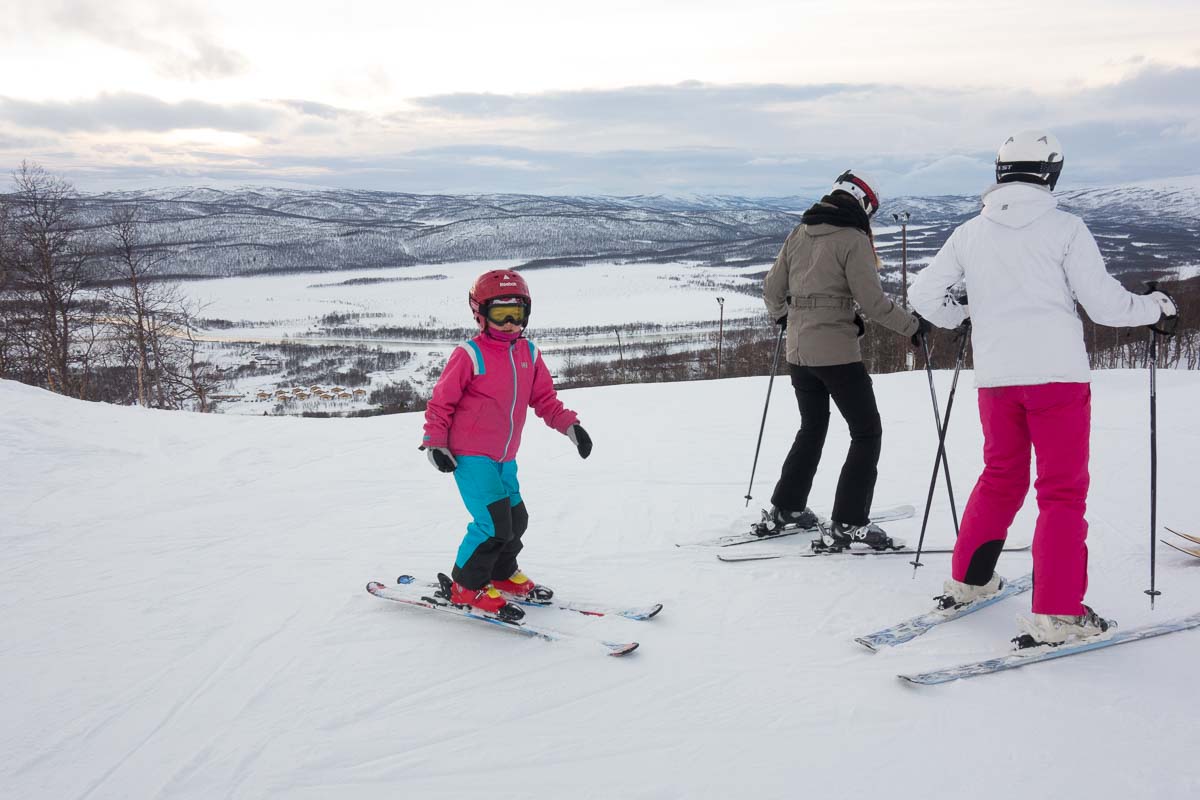
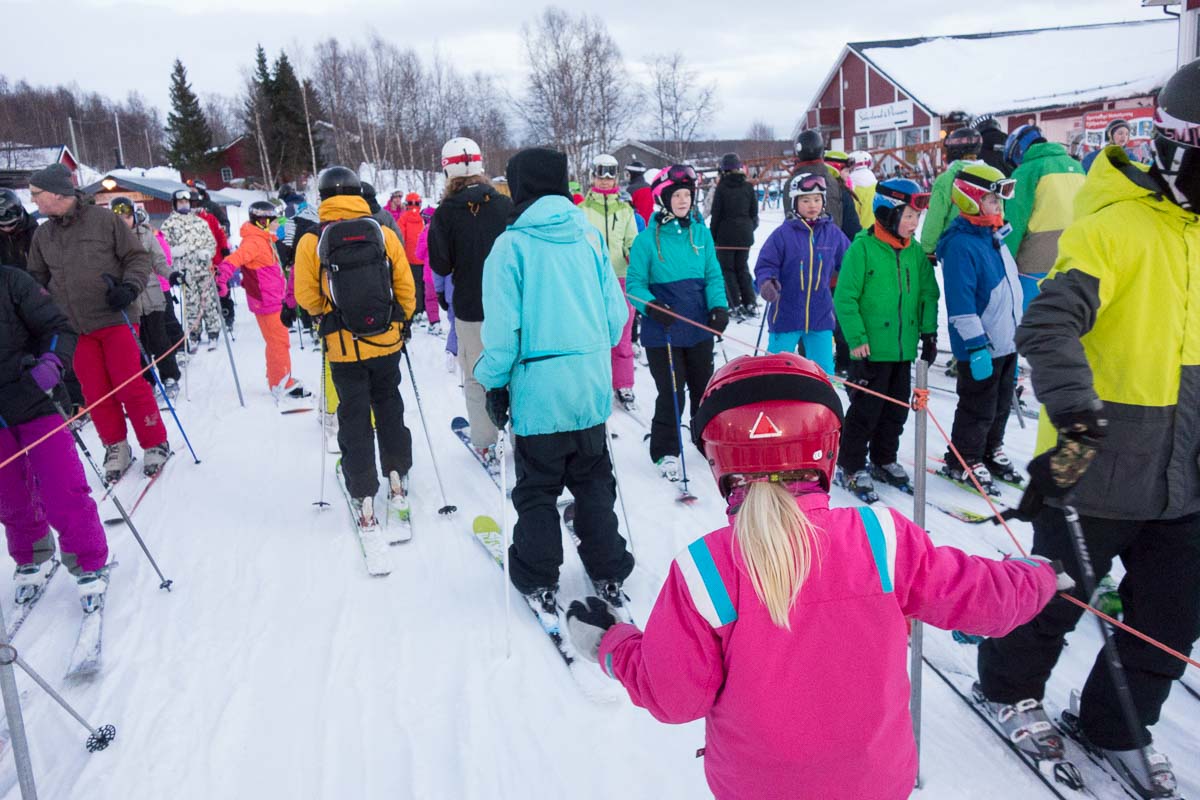
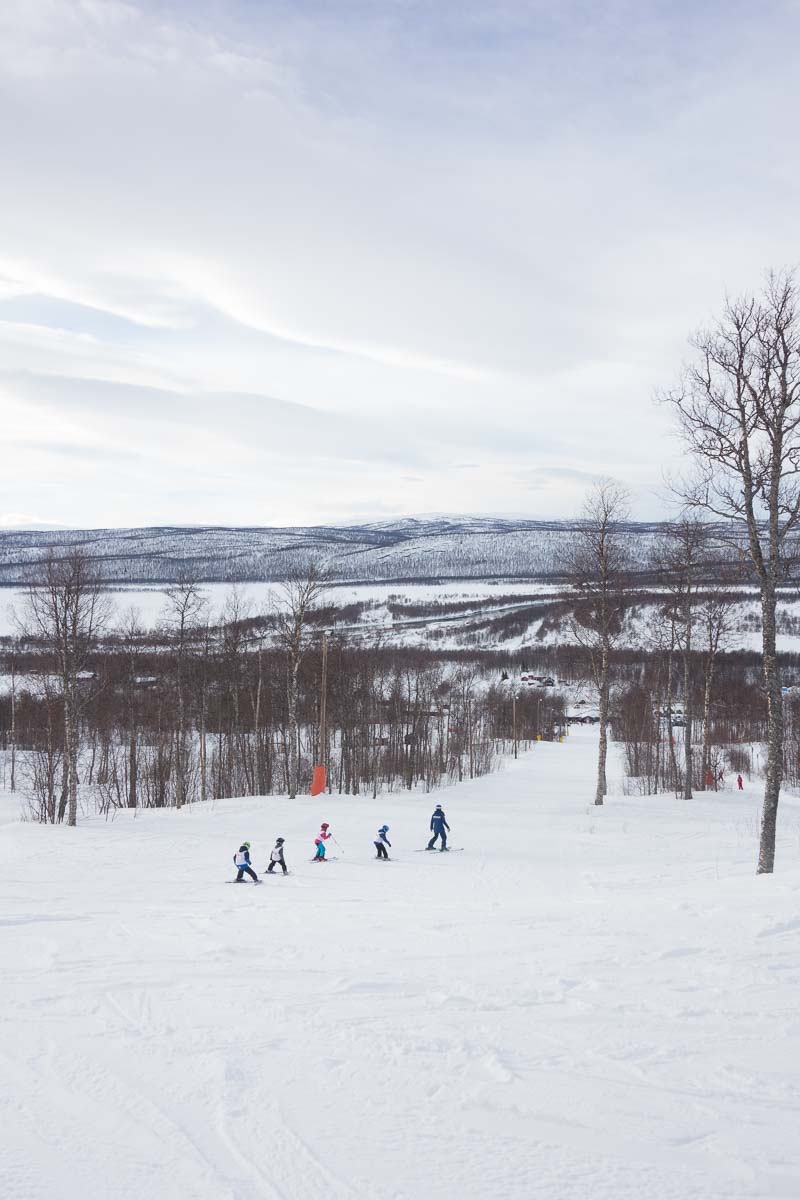
We skied. We queued. Ingrid also had just over an hour of ski school every day.


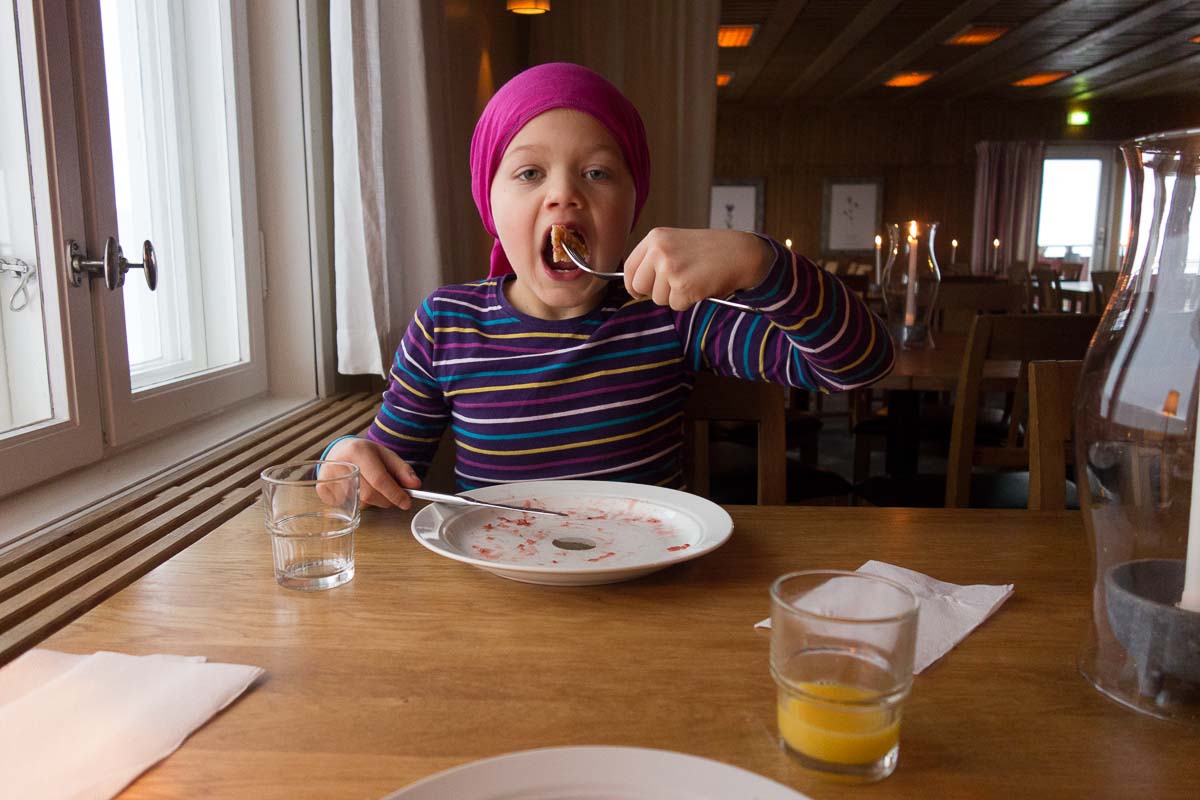
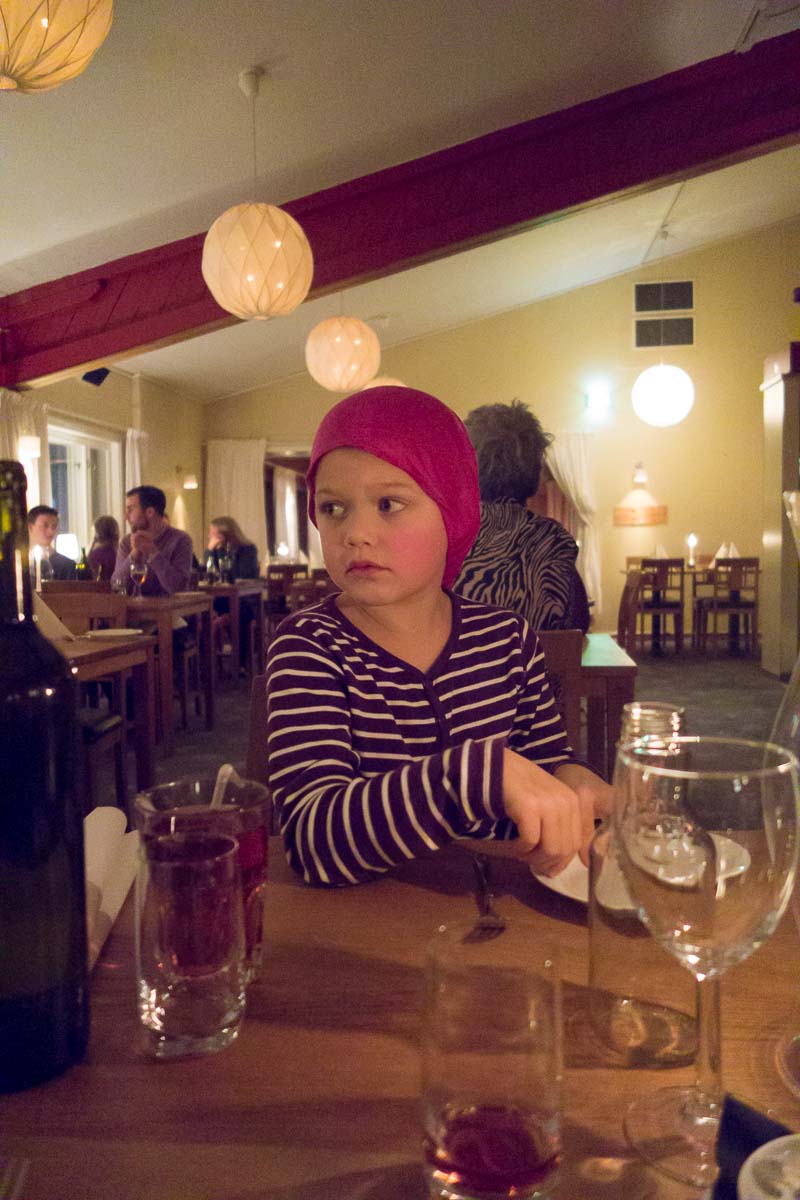
We had pancakes for breakfast (at least Ingrid did) and classy dinners at the hotel restaurant. I was pleasantly surprised by the quality of the food at the hotel – my veggie dinner was excellent, and breakfast included bread that must have been fresh from a local bakery.

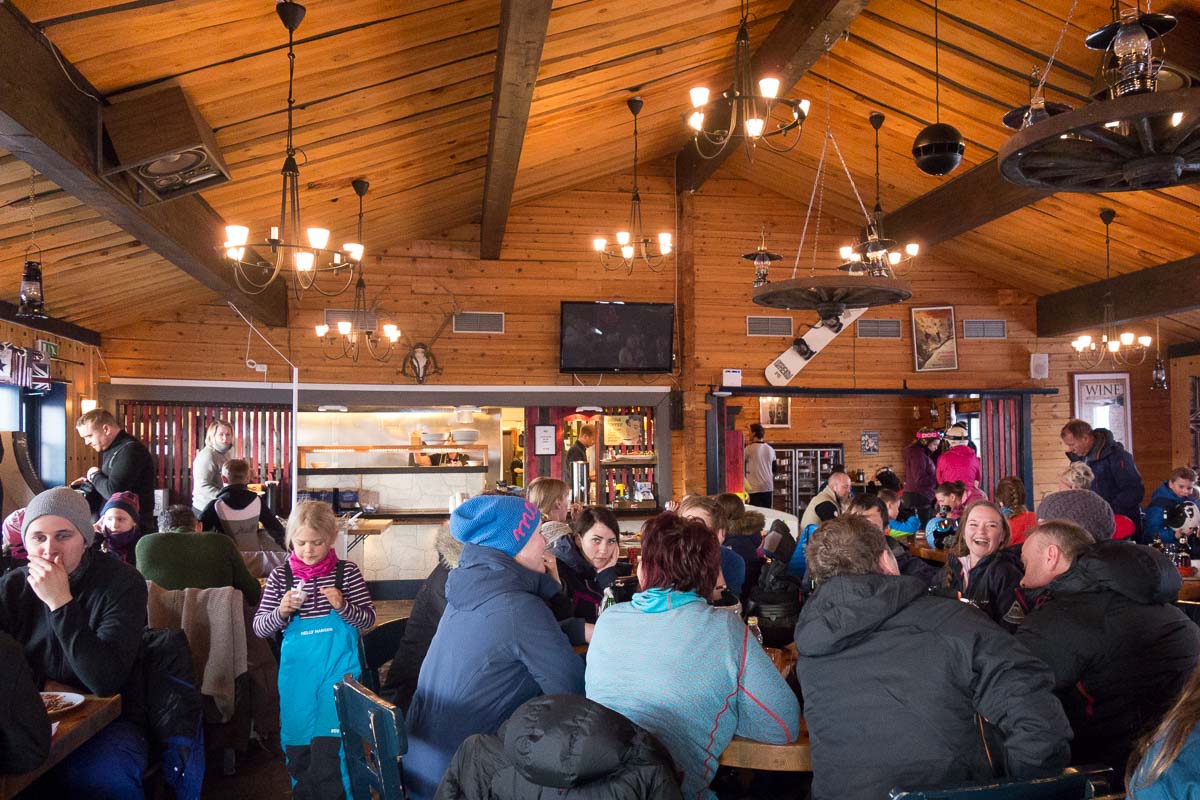
Lunch consisted of hamburgers at the fast-food place at the bottom of the slope, for three days in a row. I had serious cravings for fresh fruit and vegetables by Sunday evening.


We didn’t have much luck with the weather. It was cloudy and windy, so the views weren’t much to look at. But it meant that the slopes were not at all crowded. And we felt lucky anyway, because just as we were skiing down for the last time on Sunday afternoon, more and more lifts were being shut down due to the wind. We also felt lucky to be able to fly back home instead of another three-hour bus ride.