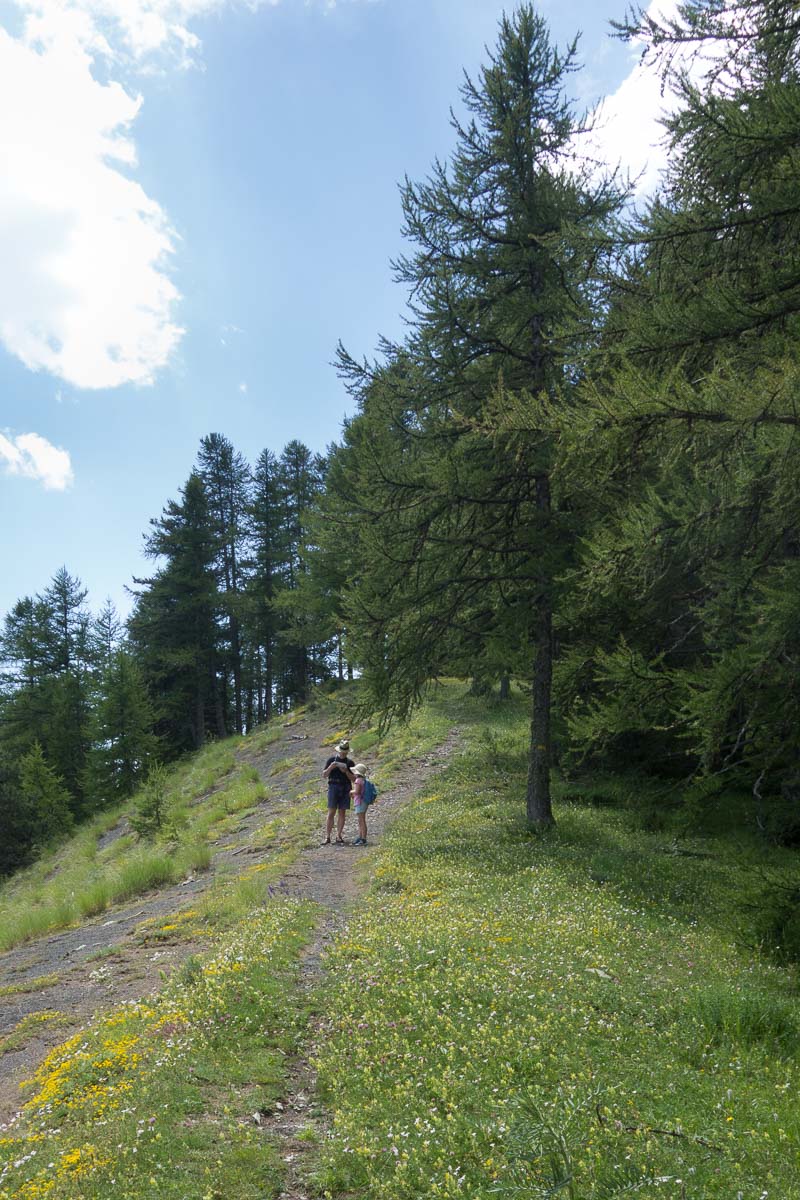
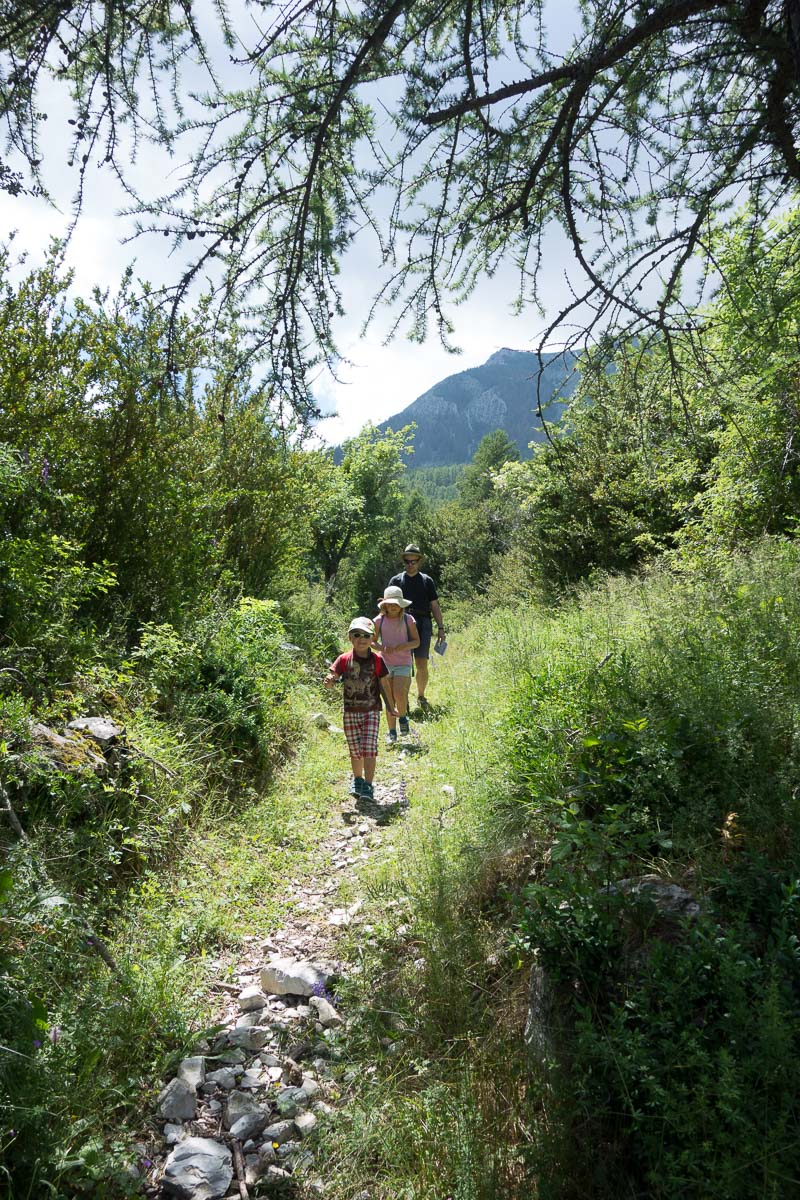
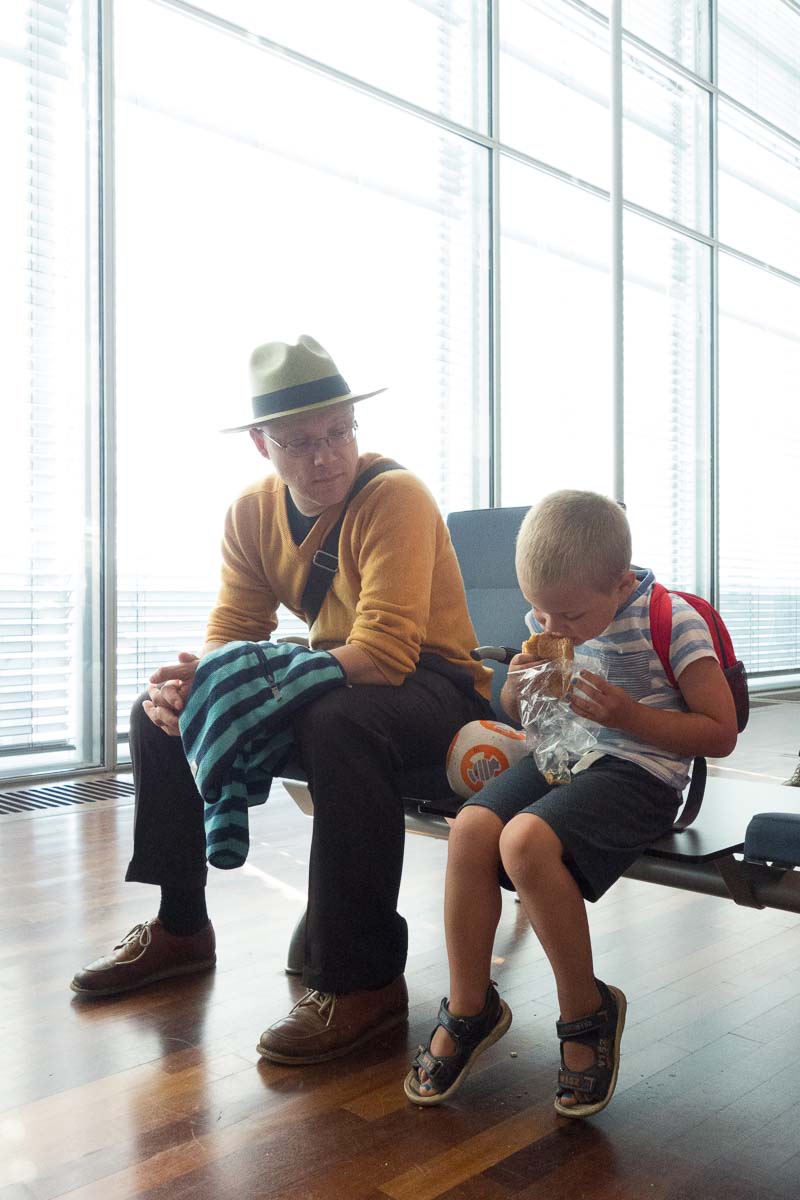
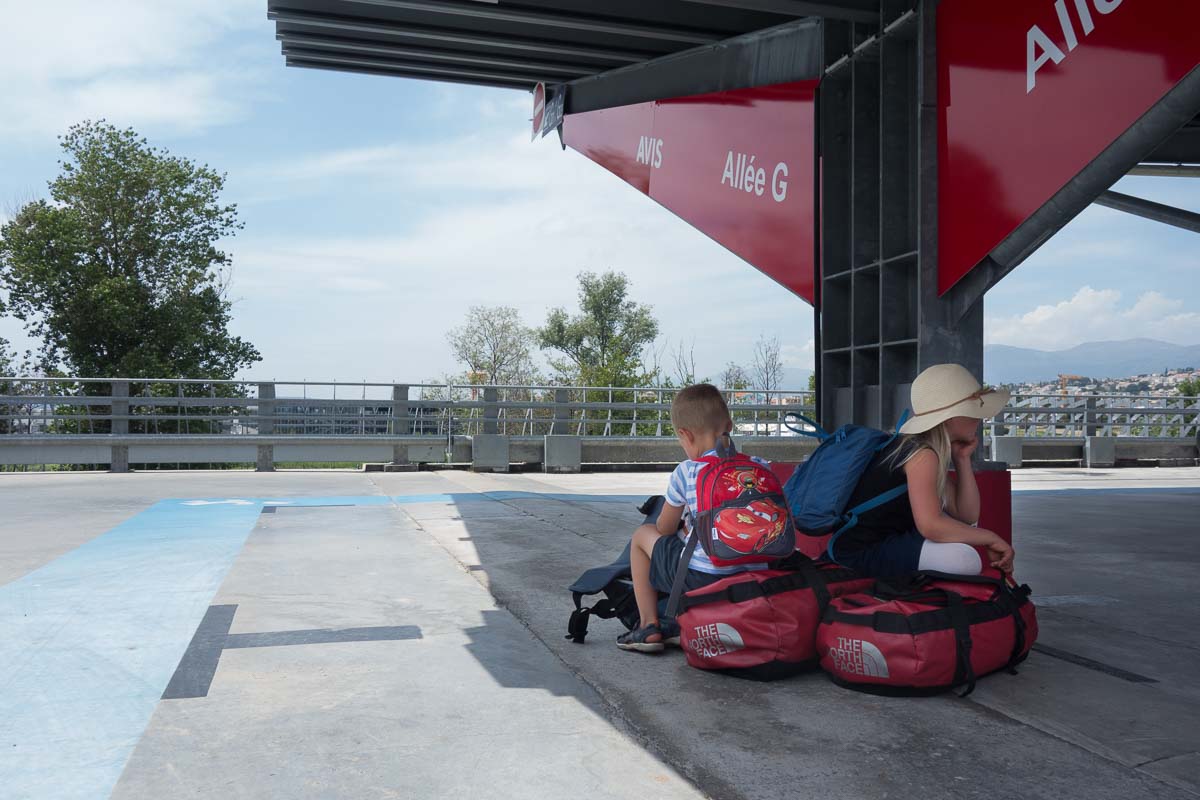
We had aimed for an easier walk yesterday, to rest after the two long walks to and from Sauze. But the hike was longer than the trip notes said, even though we followed the planned route to a dot. Add the heat, and the hike was not a bit easier than the previous days. Today Adrian really needed a rest, so he and Eric stayed behind today while Ingrid and I did a walk on our own.

(Eric and Adrian drove to Valberg where they did a summer luge ride, had ice cream, and bought fresh bread for us all. The gîte has been serving the same bread since Thursday dinner, and it is by now very stale and unappetizing.)

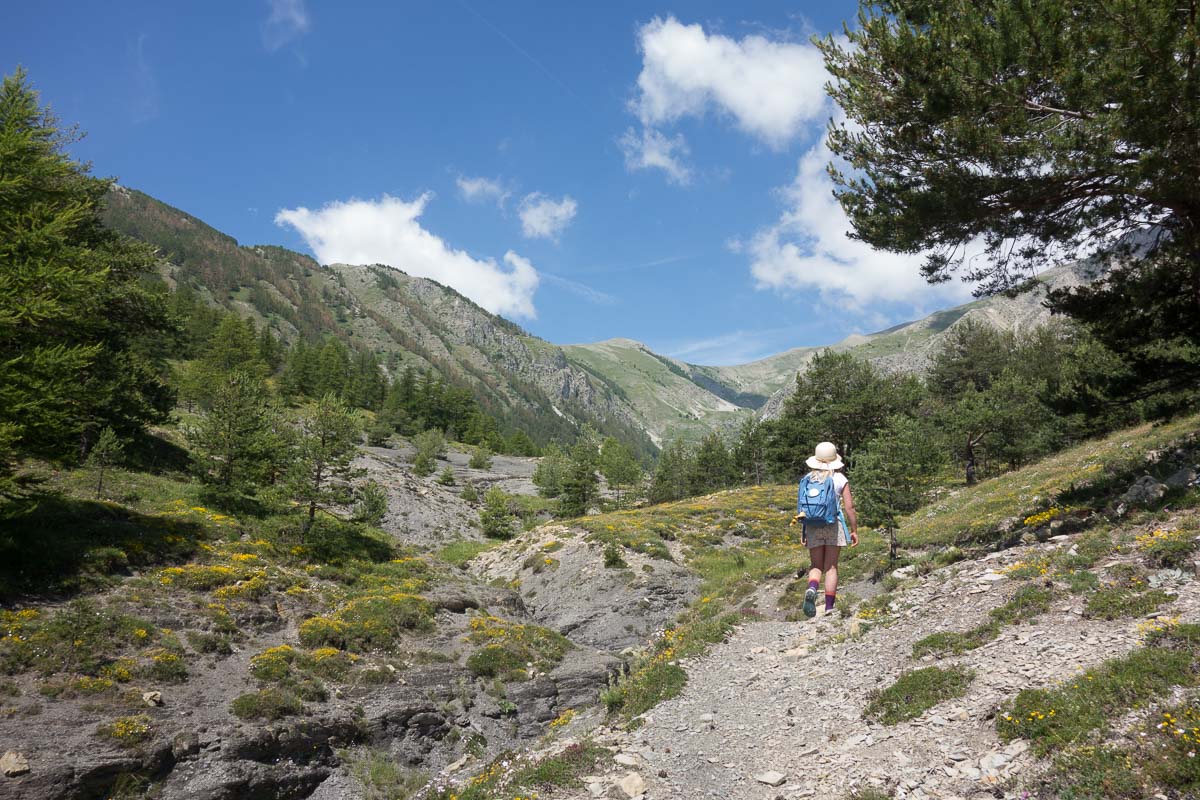
Ingrid and I also wanted an easier day today, so we re-did the first day’s walk, which was a short one and also had some of the prettiest views in my opinion. Not the most spectacular ones with steep cliffs or wide vistas, but the ones that best combined mountains and greenery. On the first day we had the donkey to think about so I couldn’t always look around as much as I wanted, and definitely not take enough photos.

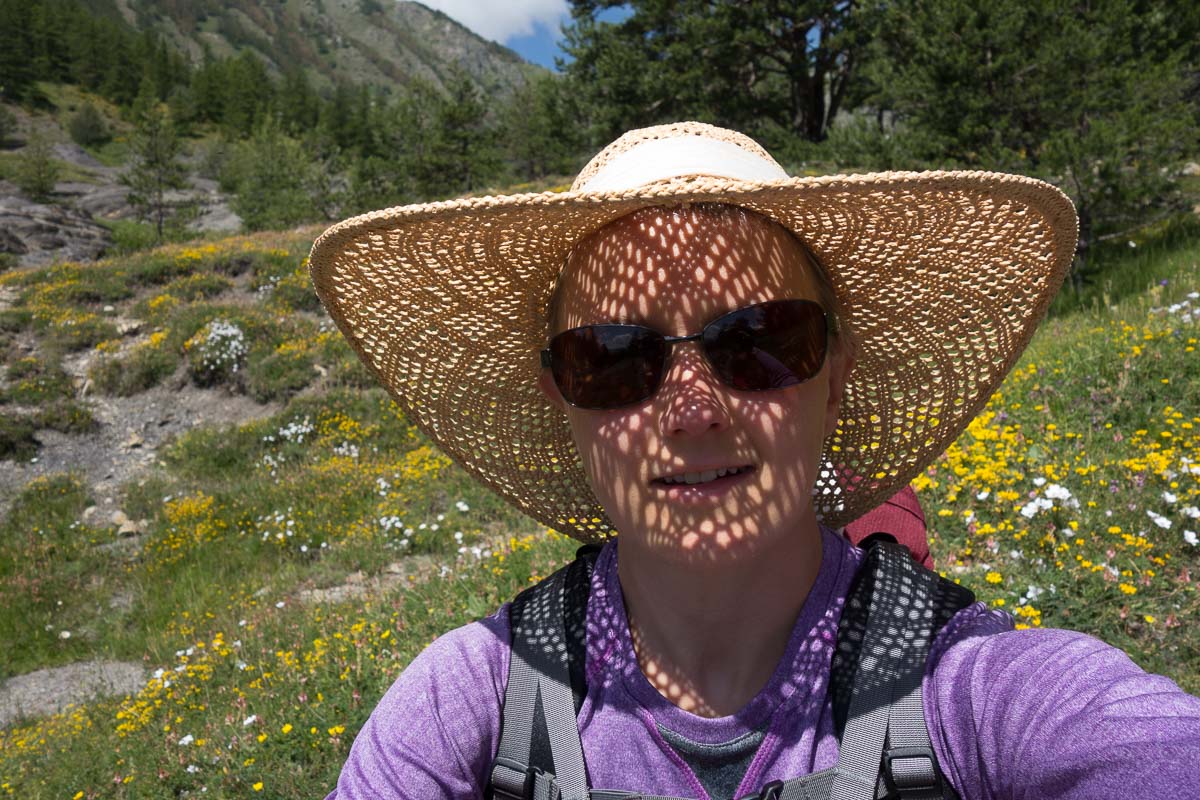
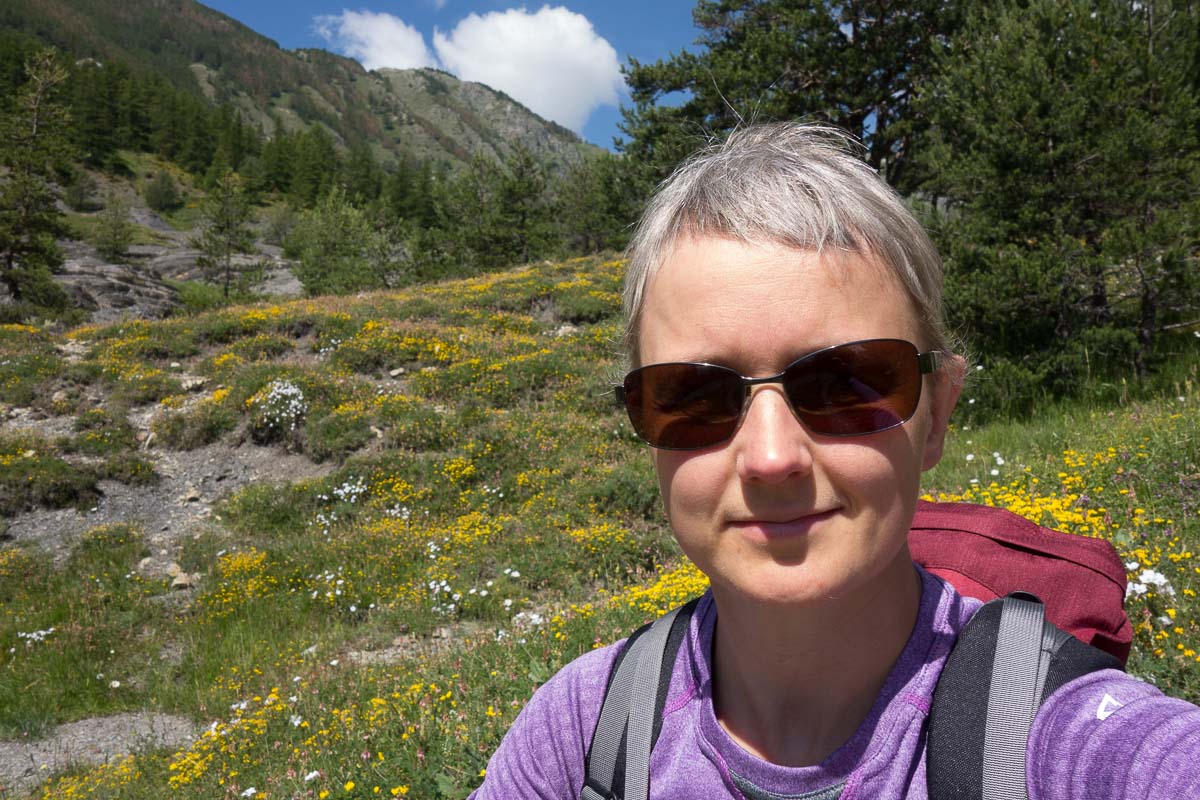
At the very prettiest spot we stopped for selfies. I also handed my camera to Ingrid so I could get some action shots of myself.


The hiking trails here are very user-friendly: well maintained and clearly marked. There are yellow painted markers at regular intervals, and signposts at each fork in the path. The signposts are numbered and marked on the maps, so they tell you not only which path to follow but also exactly where you are.

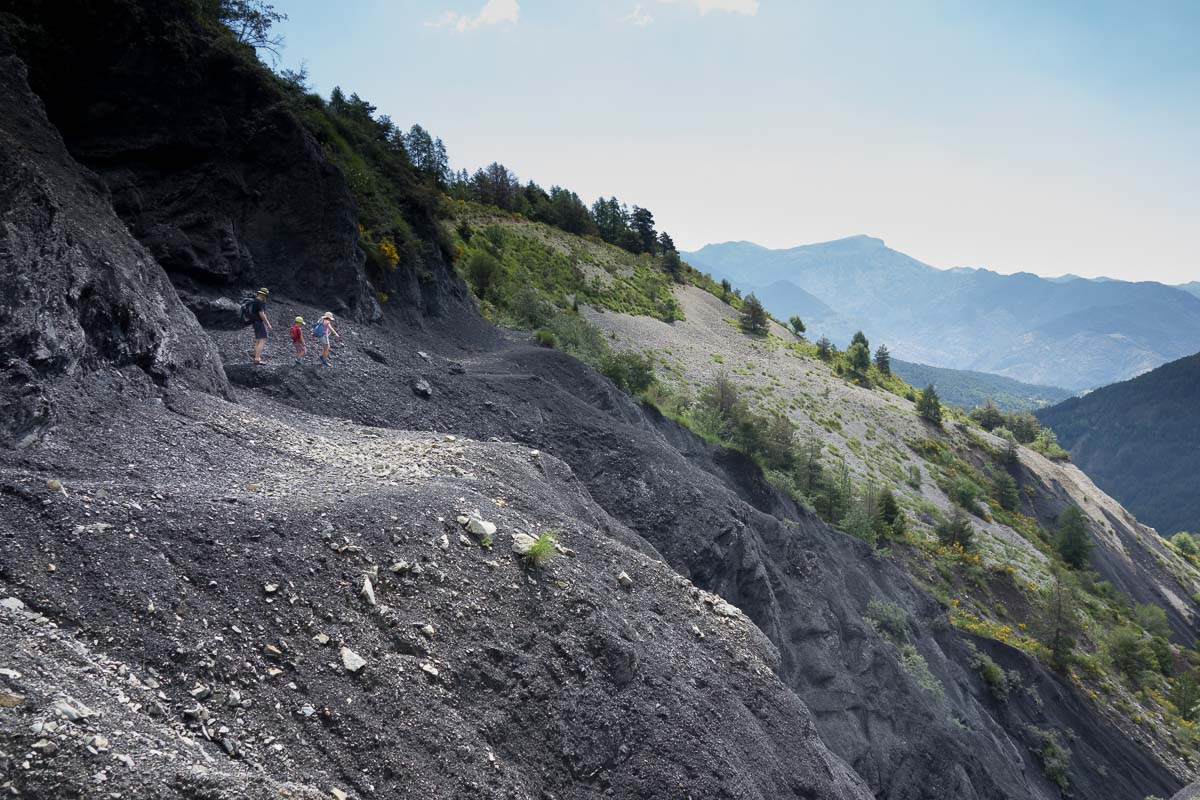
Some sections of the paths are narrow and steep, others are flatter but still rough. Very occasionally we walk on an actual road for a kilometer or two. Mostly the walking is easy for adults but challenging for the kids. They need frequent breaks, especially Adrian, so our average pace is only about 1.3 km per hour, including lunch and all other stops. (For comparison, when Eric and I used to go walking, we’d average about 3 km/hr on easy terrain, so I’d have estimated about 2.5 on these trails.) Our hikes have been about 8 or 9 km per day which is about 6 hours of walking, up to 7 hours on the longest day.

Much of their tiredness is in their heads and can be cured at least temporarily by interesting views, games, challenges etc. Adrian liked looking for and counting the yellow markers.

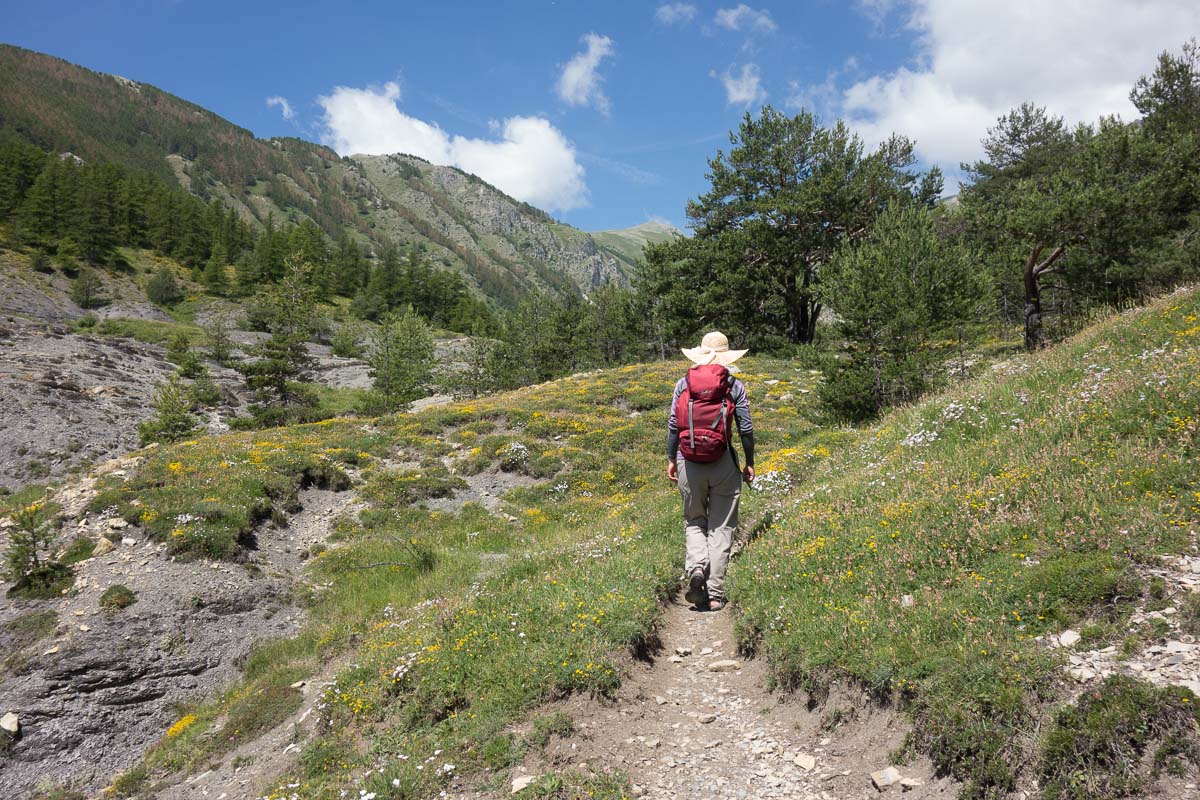
Both kids had very definite wishes about marching order, and of course the wishes were incompatible and changed over time. One wanted to go first, to be followed by me; but the other wanted to be second and definitely not third. And so on. Mostly we ended up with the kids in front and Eric and I at the back, which is why I mostly have pictures of the others’ backs. Sometimes I jogged ahead to get some variety in my photos.

Today we had a very, very hot and sunny walk today to the gorges de Daluis, the red sandstone canyon of the river Var. In the middle of the day we were crossing hot sunbaked rocks, totally exposed to the sun, and got so hot that we cooled off the kids by pouring water on their heads and clothes.

The highlight of the day was a viewpoint with excellent views along the canyon of the river Var. The viewpoint was a popular destination for tourists and we saw more people here than during all the other days together. These paths were off the beaten track so most days we never met any other walkers. The two exceptions were today, and the very last day when we drove to an even more popular site.


Breakfast à la française: bread, butter, jam/marmalade. Alternatively, corn flakes or super sweet musli. The sweetness got cloying after a day or two and I really did not enjoy it. I do not understand how French people can live on this kind of diet.

On the other hand, dinners at the gîte were varied and ranged from decent to really good, and the staff were fully familiar with vegetarian diets, which was a relief.

I still remember our experience at the little restaurant in Luchon in the Pyrenees, about 2004 or so, where Eric and I were served a “vegetarian” dinner consisting of three side orders (rice, French fries and boiled potatoes) and some mixture containing little pink specks that smelled distinctly of meat. When we asked the staff about those specks, our concerns were dismissed – those were just “tout petits morceaux de porc”, nothing at all to worry about.

The packed picnic lunches consisted of bread, cheese, a salad, a fruit and a chocolate bar. All salads were drenched in a mustard vinaigrette, and after a few days we were pretty tired of it. I asked the staff to please skip the mustard for the remaining lunches. He looked most puzzled.


We stayed in gîtes for the first few nights, and then in a Mongolian yurt that was embedded a bit incongruously in the French landscape. Interesting, spacious and convenient compared to a room in the gîte, but somewhat less convenient in that the shower was located outside at some distance, and the toilet was an outhouse.

Outhouses are a common thing in Sweden but apparently not in France – the one outside the yurt had a printed page with explanations and instructions on the door.

A totally unexpected benefit of late-night outhouse trips was that I was reminded to go out and see the starry sky. Summer skies in Stockholm are bright to begin with, and light pollution doesn’t help. Villeplane is further south and there are no cities nearby, so the sky was darker than anything I had seen for years. So full of stars! Even the Milky Way was easy to see.

For the first time in my life I also saw fireflies. Those don’t live in Sweden. I had expected them to shine with a constant light, but to my surprise these flashed on and off.


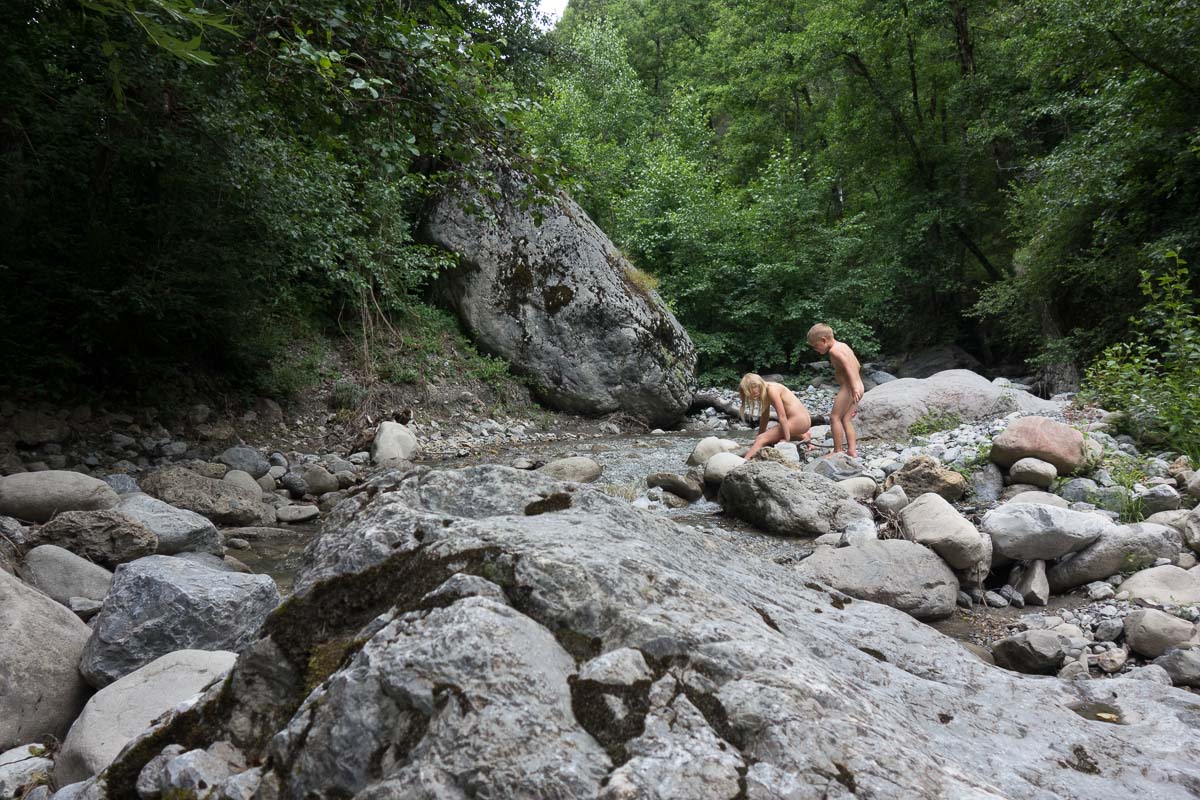
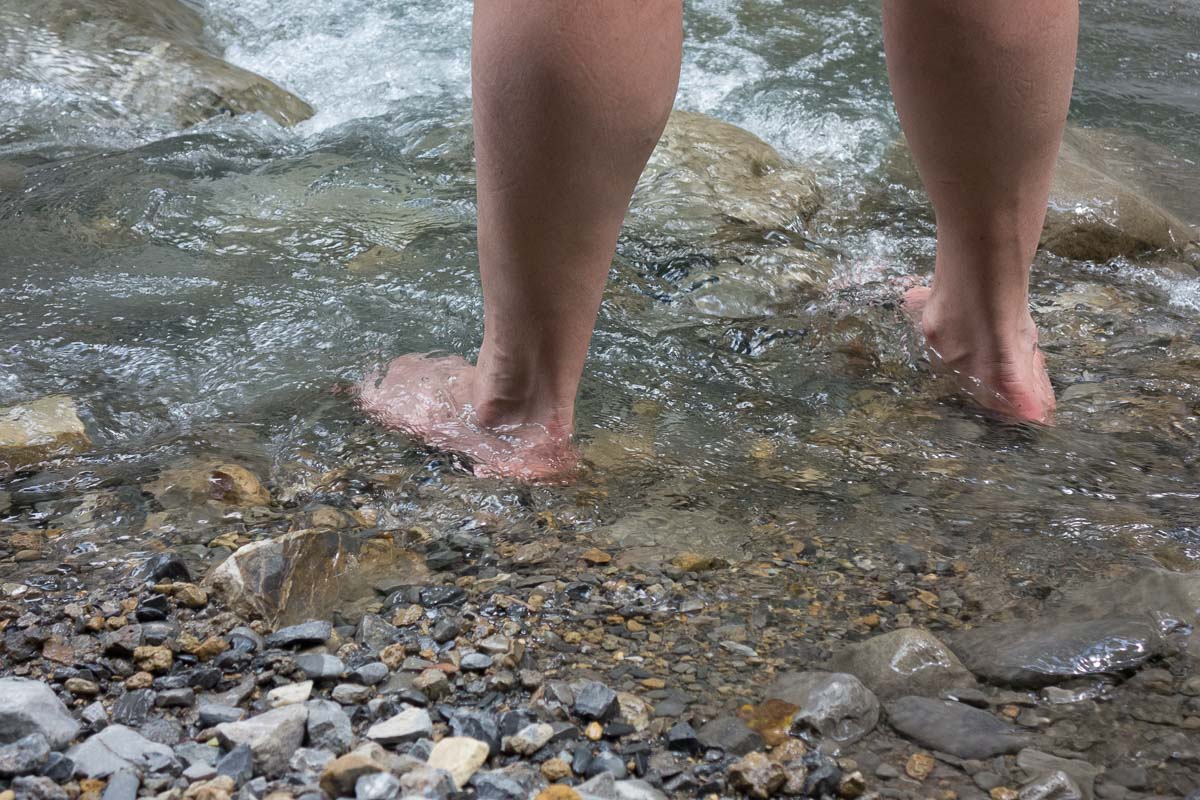
The highlight of today’s hike was our lunch break at a shallow stream. The water wasn’t cold at all so the kids spent a long time climbing and splashing around. Eric and I contented ourselves with cooling our feet.


Today was the first day of a two-day trek from Villeplane to Sauze (and back tomorrow).

The start of today’s walk followed the same trail as yesterday’s, but after about 2 km the paths diverged. The whole hike today was only about 10 km but there was an amazing amount of variety packed into those kilometers.

North-facing slopes were almost like Swedish forests and meadows, with familiar flora everywhere: familiar grasses, pines, daisies, wild strawberries. But then suddenly there’s a clump of orchids, or a martagon lily growing next to the path, and it was very clear that we were not in Sweden after all.

The mountains themselves were made of unfamiliar materials. Rocky outcrops are black shale instead of granite.

South-facing slopes were like picture-book scenes of Provencal nature: sun-baked rocks with tufty carpets of low flowers in all sorts of colours. From afar some of it resembled familiar vistas from our walks in Great Britain (Scotland and Cornwall) but what looked like gorse turned out to be Spanish broom, and instead of heather there was lavender and thyme.

The warmer, south-facing areas had a lot of small lizards, but they were so quick to hide that often the only sign we saw was brief movement and maybe a rustling of fallen leaves. In the forests we often heard cuckoos calling.

Everywhere was full of butterflies, grasshoppers and crickets. And ticks. So many ticks! The rest of the family got one or two each during the whole week. I got so many I lost count – I felt like I was constantly picking them off myself, despite wearing a long sleeve top and long trousers most of the time.


Donkey day!

We’re in Mercantour for a week of hiking. We have the option of being accompanied on our walks by a donkey to carry our stuff. Today we did a half-day hike to try out this donkey thing.

More work than it’s worth, was our clear conclusion. Libellule, our donkey, was good-natured and a good walker, but it was like having a third kid whom you always needed to be aware of. And a kid whose needs are totally orthogonal to the other kids. You had to keep her walking, but not too fast so she gets uncomfortably close the kids; keep her from eating grass all the time; find a place to tie her up when taking a break; make sure you’re not behind her where she can kick you by accident.

The final straw was when our path passed through a donkey grazing area and we (or she) were accosted by loose donkeys. She didn’t like them and aimed a few kicks at them, but they kept crowding us, to the point where we started to get worried about them accidentally pushing us off the rather narrow path. Eric had to hurry ahead with Libellule while I fell behind to push back the other donkeys, so the kids could walk without worrying about falling off the path.

Afterwards we could look back at the incident as an exciting adventure, but it was more stressful than fun at the time.

No more donkeys for us. Carrying our packs is just a bit of extra work for the body; managing a donkey is work for the brain which is not what we want from this vacation.


We’re off for a week-long vacation in southern France, in the Mercantour national park. Today was a travelling day: up early to catch a morning flight to Nice, then pick up a rental car, and then a two and a half hour drive to Villeplane, the little village where we will stay for the week.

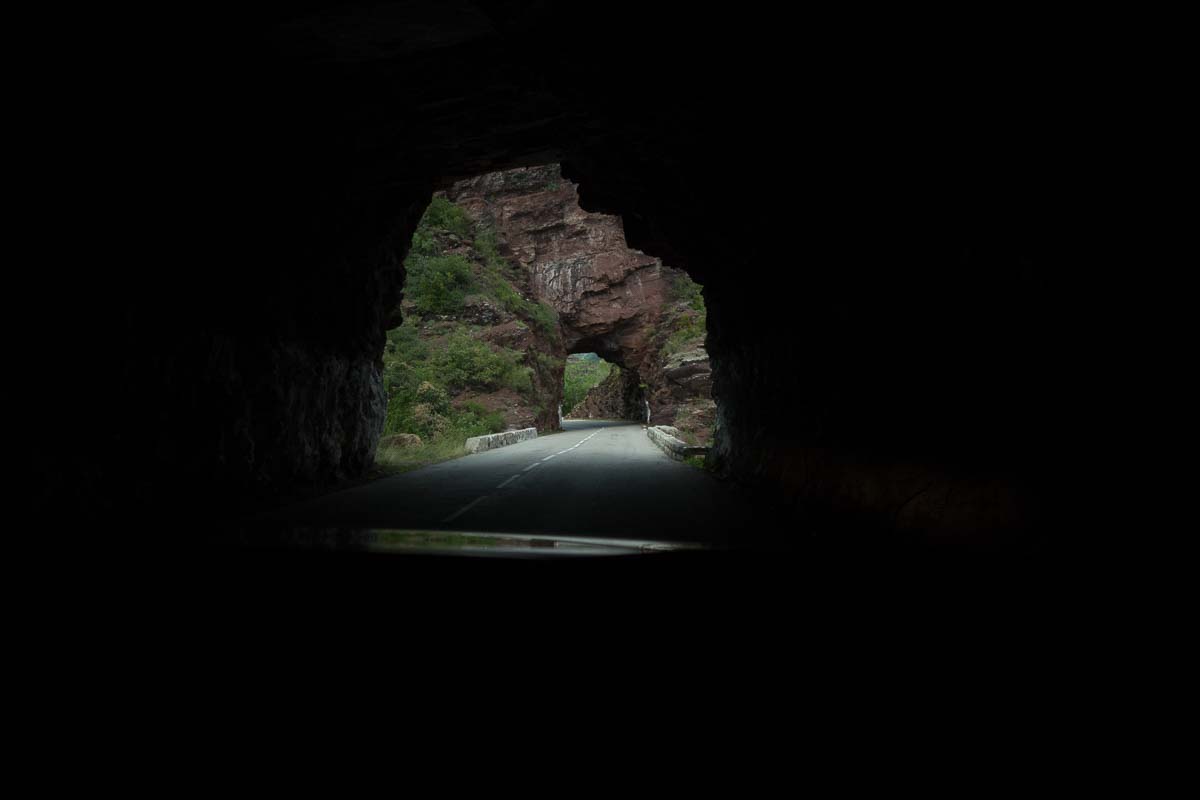
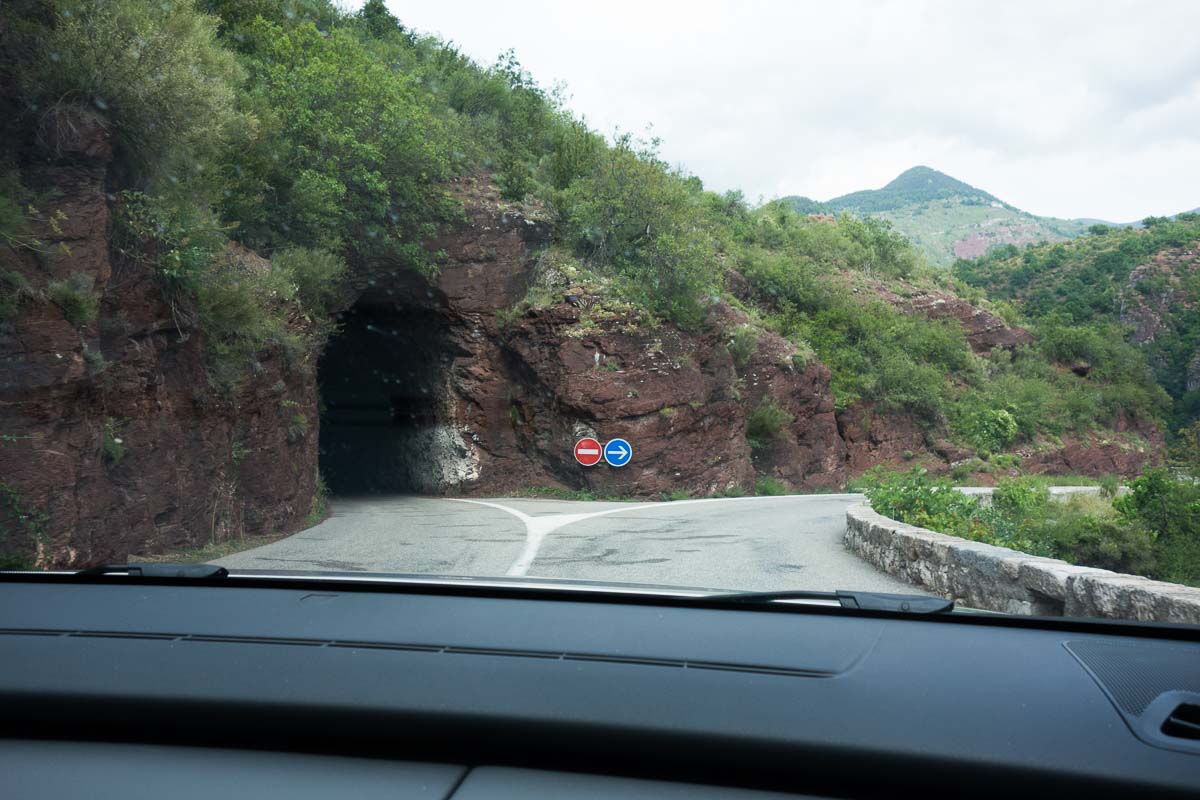
Nice was all hot and steamy and palm trees, but the mountains were right there around the corner, and the further we drove, the more mountainous our surroundings got. The final 20 km of the road, after leaving the main highway, were narrow and twisty and with interesting tunnels. Often the tunnels were so narrow that they only fit one lane, so the other lane passed on the outside of the mountain. And the final 7 km were on an even smaller road, all uphill, with one hairpin turn after the other and a worn and bumpy road surface as well. When we got to the top Adrian was quite badly carsick and said he didn’t ever want us to drive down that road again.

Kebnekajse mountain station to Nikkaluokta (19 km).

Scrubby birch forest, initially slightly downhill and then flat across lake Laddjujavri and the marshes around it.

This was an optional day of skiing; we had the option to be transported to Nikkaluokta by snowmobile. About half the group chose the option to ski, while the other half lounged around the mountain station for half the day and the motored down to Nikkaluokta in (probably) about half an hour.

The extra skiing must have seemed like an unnecessary hardship for the stayers (primarily the two beginners among us, and the guy with the worst blisters). But to me it was the easiest, most effortless skiing I had done all week. For two reasons.

One: minimal pack. Since the others were going by snowmobile, we could empty out almost everything from our packs except what we would or might need during the day (water, snacks, down jackets, extra mittens). I had already gotten a taste of what it feels like to ski with a light pack yesterday: the “blister guy” skipped skiing and paid for a snowmobile trip, and I gave him some of my heaviest stuff. It definitely made a difference – I found it easier to keep up with the group. An extra incentive to keep my pack light next time!

Two: better skis. At Kebnekajse in the morning some stranger had mistakenly grabbed my skis and left another pair behind. I could guess which ones, but I didn’t want to just take them because I could well be wrong. Instead I borrowed a pair of skis from another member of our group, who in turn borrowed from one of the snowmobilers, so both of us got skis of almost-correct length, just slightly too long. But the skis I got were of a different brand and felt very different.

The rental skis were a pair of Åsnes Amundsen. Not a bad model, according to a review I read afterwards, but totally unsuited to me. They have a stiffer span than most skis, and that just did not work for me at all. I don’t know if it was because of my technique or my weight or a combination of the two. In any case, I really, really struggled with getting a grip on them: I just glided back with each step, especially when when going gently uphill, and especially when the snow was cold and hard. Thursday’s trek from Vistas to Nallo and the rise just after Nallo was no fun at all: part of the way I was literally swearing at my skis with every single step, because it was either that, or give up and cry.

The skis I borrowed today were a pair of Fischer 78. And what a difference! Better grip, better glide, better stability – a pure joy. I felt like I was flying along on them. No longer at the back of the group, struggling to catch up – now I was easily keeping pace with the others and even getting ahead at times. If I ever do this again, I will absolutely buy my own skis, fit for my weight and skill level, rather than make do with a standard “fits everybody and hence nobody” model.


And all of a sudden we were at Nikkaluokta. Pack up the skis to post them back to Abisko; have lunch; wait for bus back to Kiruna. It was a shock to take in noise and diesel fumes from the bus. And then back to everyday life.

Sälka hut to Kebnekajse mountain station, almost but not quite via Singi hut (26 km).

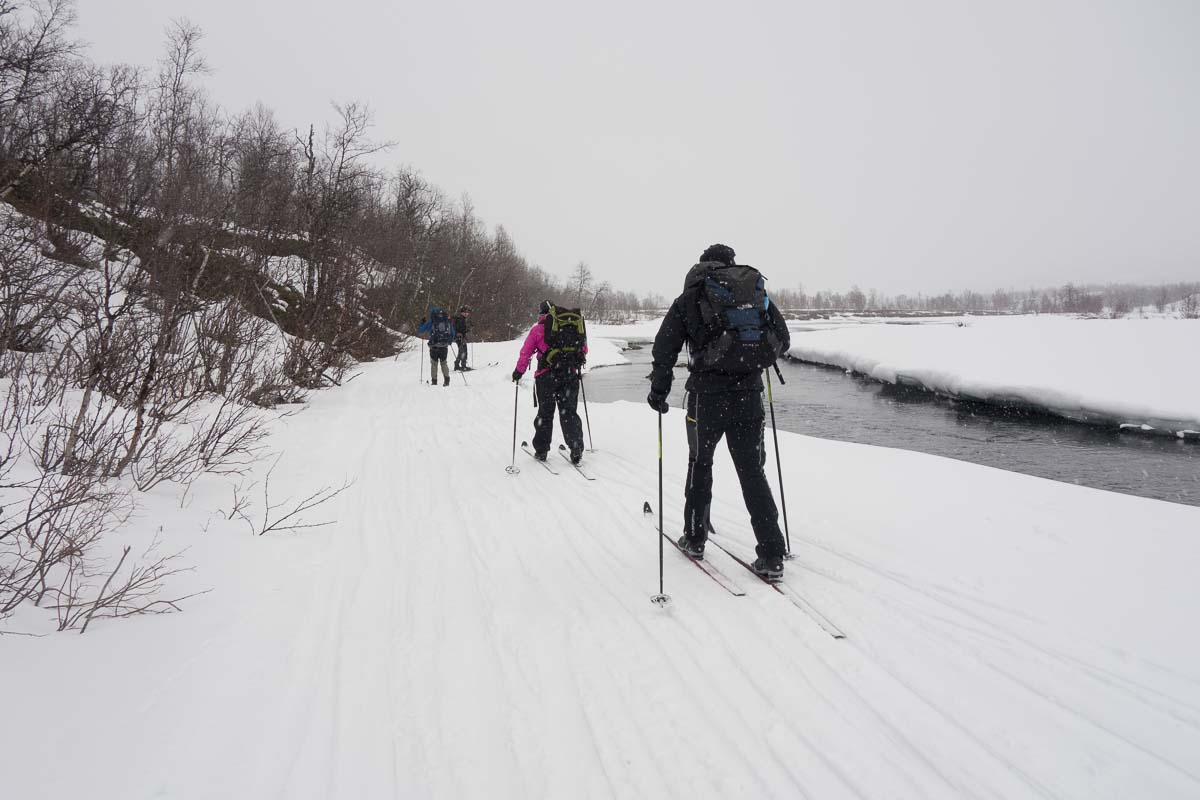
We are now back on the main Kungsleden trail, with red crosses to mark the trail, occasional snowmobile traffic etc. Just before Singi we left the main trail for a short while to cut off a corner, skipping the descent to the huts, and then rejoined the Kungsleden again slightly further to the east.

From Sälka to Singi things were still relatively quiet, but after Singi we were clearly approaching civilization again. The trail was wide and numerous skiers and snowmobiles had left their tracks. It was slightly downhill, and many sections looked like scaled-up corrugated cardboard: down and then slightly up again, repeated over and over. We pitied the few groups who were skiing the same section in the opposite direction, going up all those downhill sections.

My camera ran out of juice in the morning so the only photos I have are from the afternoon when we had reached Kebnekajse mountain station and its electrical outlets.

A mountain station is a hybrid between a hut and a hotel, which meant all kinds of luxuries: electricity, running water (showers!), a restaurant, fresh food, rooms with real beds and so on.

But getting back to this spot of civilization also meant that our trip was almost over. We were about to leave the peace and quiet behind and go back to crowds, noise, smells, stress, and all that. I felt sorry that it was coming to an end.

People go on hikes for different kinds of reasons. I tried to untangle my reasons and figure out what I actually get out of this kind of trip.

There are of course the general benefits of a well-planned and well-organized all-inclusive group vacation. I am not responsible for anything or anybody other than myself. I do not need to plan, prepare, manage, schedule or prioritize anything at all. This is a welcome change from my everyday life where I manage something almost all day long: a team at work and a household at home.

When it comes to hiking in particular, I like the physical challenge: exerting myself just enough, feeling my body do what it is supposed to do, and do it well.

I like the beauty of nature. I particularly like mountainous landscapes, and especially if there is also water of some kind. There is something special about mountains, about being above the world.

But above all I like the serenity, the peaceful silence, the lack of people and noise. I need this kind retreat into nature at regular intervals. Even just a few hours in a forest near home works, but this was of course many miles better. The snowy emptiness here was a bit extreme when it comes to serenity, but at times I wished that it could have been even more so: I wished I could have done this alone, to truly be away from people and not see a soul around me.

With these points in mind, this was a good hike but not the best one ever. An ideal hike would have had:

  • More beautiful weather, with some blue skies.
  • Slightly slower pace. Both in general, so I could relax more and not have to think about keeping up with the group, but also because it would give me more opportunities to take photos, perhaps even leave the path for better angles and views.
    This is of course a very personal preference and difficult to achieve when hiking with a group – if the whole group had to wait each time someone wants to take a photo, it would get annoying fast for the others. The group cannot spread out too far either, especially in winter when getting lost can be life-threatening.

Vistas hut to Sälka hut via Nallo (19 km).

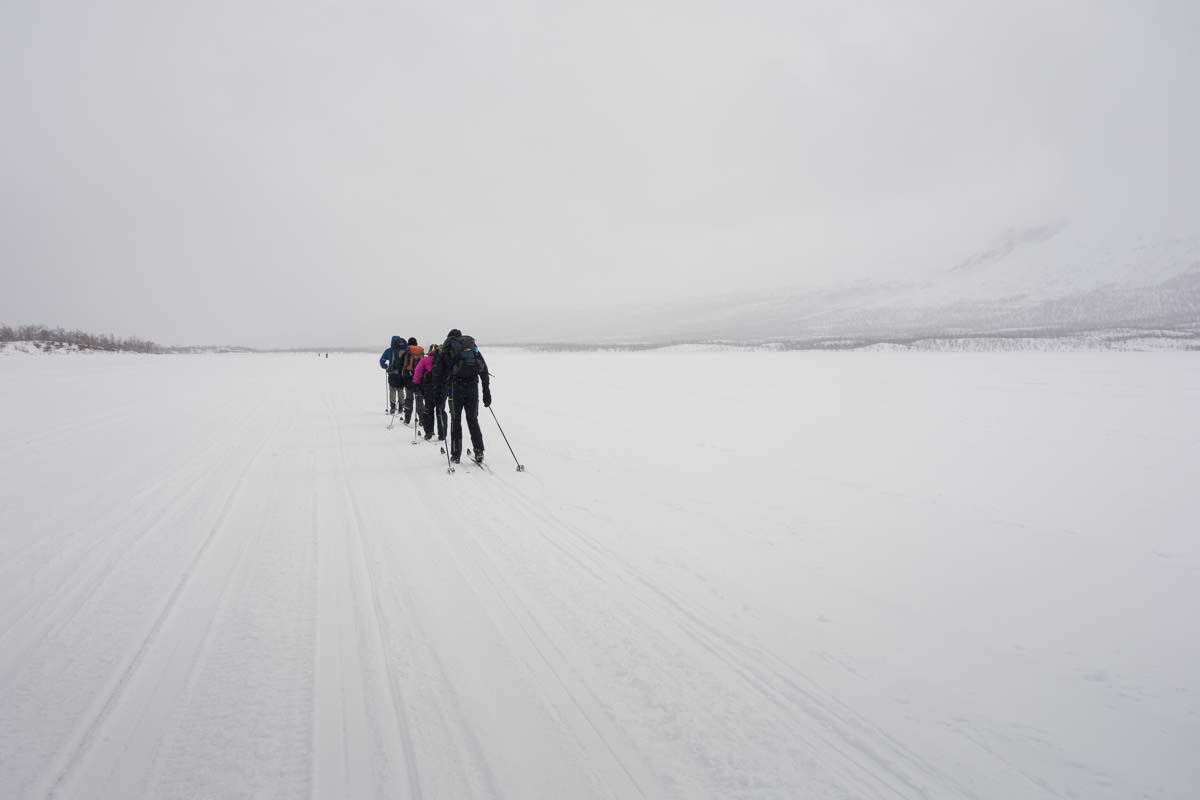
From Vistas to Nallo we followed a broad valley. According to the map there was a river or stream at the bottom of it, as I think is the case for all valleys here. I saw no signs of it, but we stayed on slightly higher ground nevertheless. After Nallo hut there was a steep rise into Stuor Reaiddavaggi. Then we passed through the valley and crossed another invisible frozen lake.

There was something in this valley that encouraged us to spread out a bit, rather than skiing in each others’ tracks. Perhaps it was the broad even lower slopes, or maybe the snow conditions made it easier to ski on fresh snow. (We had a cold night and this morning started out colder than the previous days, so the snow was icier.) In any case, I found myself skiing in fresh snow with nobody else immediately near me.

It was so quiet. All I heard was the swish of the skis against the snow, and the creak of the poles as their angle against the snow changed with my forward movement.

Swish/creak. Swish/creak. Swish/creak.

Up in the pass, the world was even more empty and monochrome. I fell behind the others, and at times neither saw nor heard anybody or anything else. This high up there were no signs of life, no trees or ptarmigan tracks. The mountains on both sides of the valley rose gently so they were blanketed by snow, with rocks only peeking through here and there. The sky was equally white, and clouds hid the rest of the world from view.

At times the whole thing seemed unreal. There was nothing for the eye to hold on to. Everything around me was so white, so empty and quiet that it was hard to believe it existed. I felt like I was outside the world, in a dream.

At the other end of the pass we descended into a broad valley with Sälka hut in the middle of it, like tiny specks of coal in an endless expanse of snow. The light was very flat so it was hard to see where we were going. Everything looked the same, but wasn’t: several of us fell when we were taken by surprise by a shallow snowdrift or depression that just could not be distinguished from the rest of the whiteness.

Approaching Sälka hut

Alesjaure hut to Vistas hut (18 km). We left the main Kungsleden trail for a detour to Vistas, along Visttasvaggi valley and Visttasjohka river.
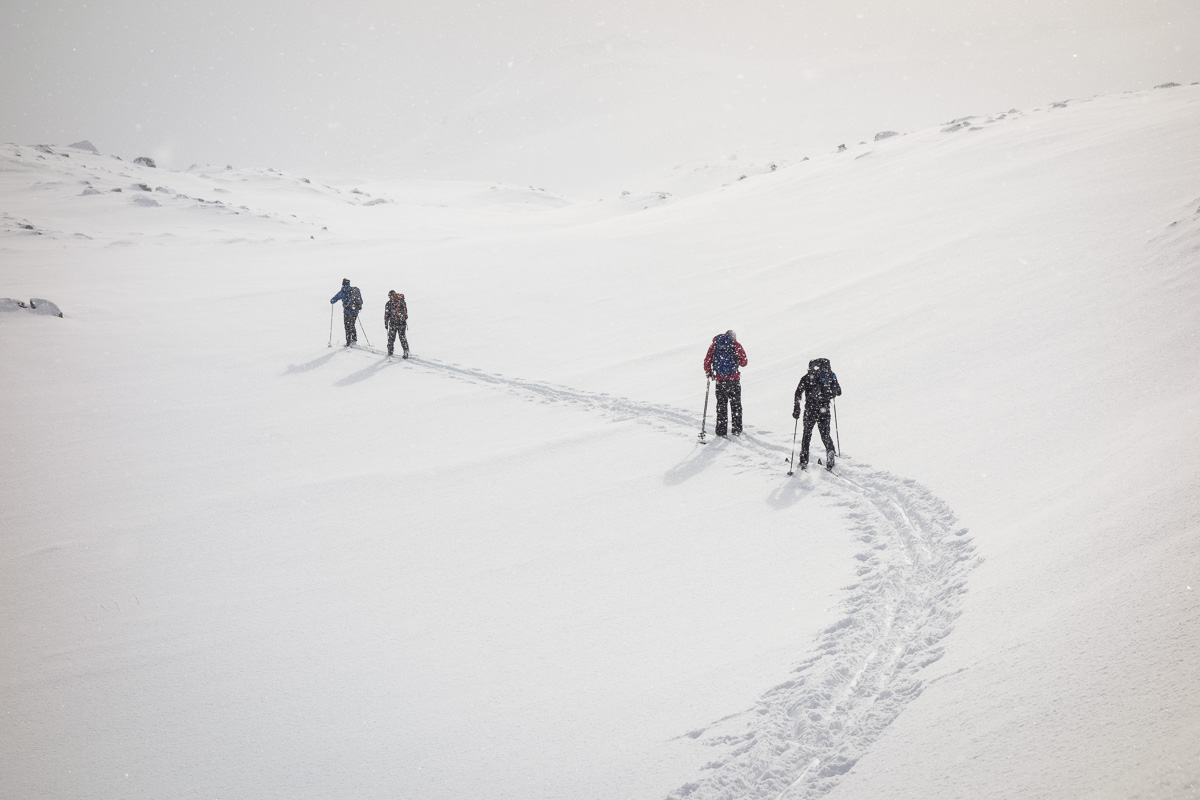
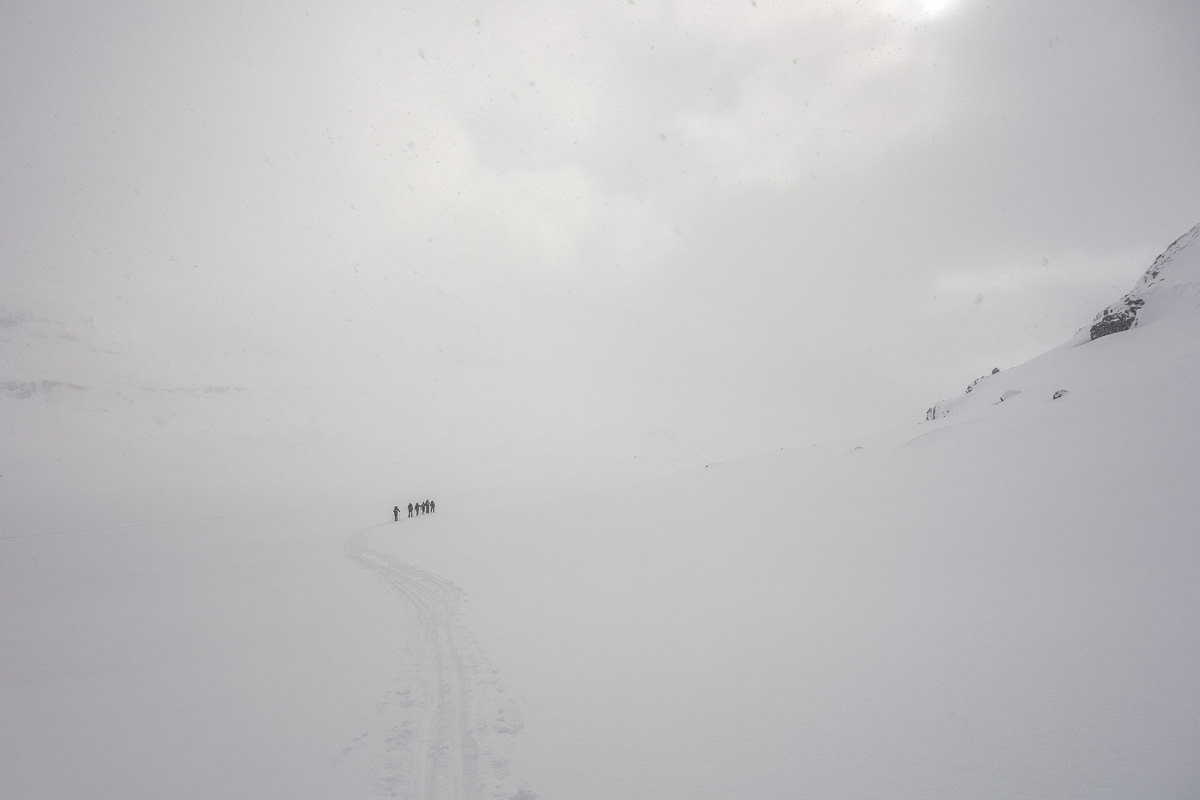
I wouldn’t exactly describe the Kungsleden as crowded, not while we were there. The opportunities for meeting people on the trail are relatively limited – this route is usually done north-to-south so you don’t normally meet people going in the other direction. You’d have to leave the hut at the same time, or take a lunch break at the same time (because most sections of the trail have exactly one obviously suitable resting place) – or be overtaken if they are going significantly faster than yourself (or vice versa).

Nevertheless we saw a few people yesterday: two skiers who were just leaving the shelter as we stopped there for our snack break, and a group of three whom we passed on the way up to the pass.

Today it was just us and the snow and the mountains. No people. No snowmobile tracks. No trail to follow. No trail markers, even.

We had no shelter for our lunch break either, so it was lucky for us that we had better weather today: sunshine and not much wind.

Skiing is sweaty work, so you don’t wear much: even though temperatures were below zero all week, I just wore a thin wicking top and a Goretex jacket, with no middle layer. But as soon as you stop, you start to cool down. When its windy, nobody wants to stand still for any more than a moment, just enough to do whatever made you stop (most likely: drinking, or taking a photo, or adjusting/putting on/taking off your goggles/sunglasses/mittens/hat/scarf). If you stop for more than a few minutes, you need to put on an extra layer, or more conveniently a down jacket.


The slope down into Visttasvaggi was the steepest downhill section of the path, not only today but of the whole week. It was nowhere near as steep as even a blue piste for alpine skiing, but much more challenging. It was uneven and unpredictable, with powdery snow and icy snow, bumps and hollows, all mixed up, and you couldn’t really see any of these in advance before hitting them with your skis. It took our group a fair amount of time to get down, and a fair few falls.

This was the most fun I had skiing all week. I am bragging only slightly when I say that I got down with no falls and even some style.

The valley after the pass was a bit stony and with a sparse birch forest. We crossed and re-crossed the icy river in places that seemed solid and luckily were solid. We saw lots of tracks of some animal that we at first couldn’t identify, but later realized must have been not an animal but a bird (ptarmigans).
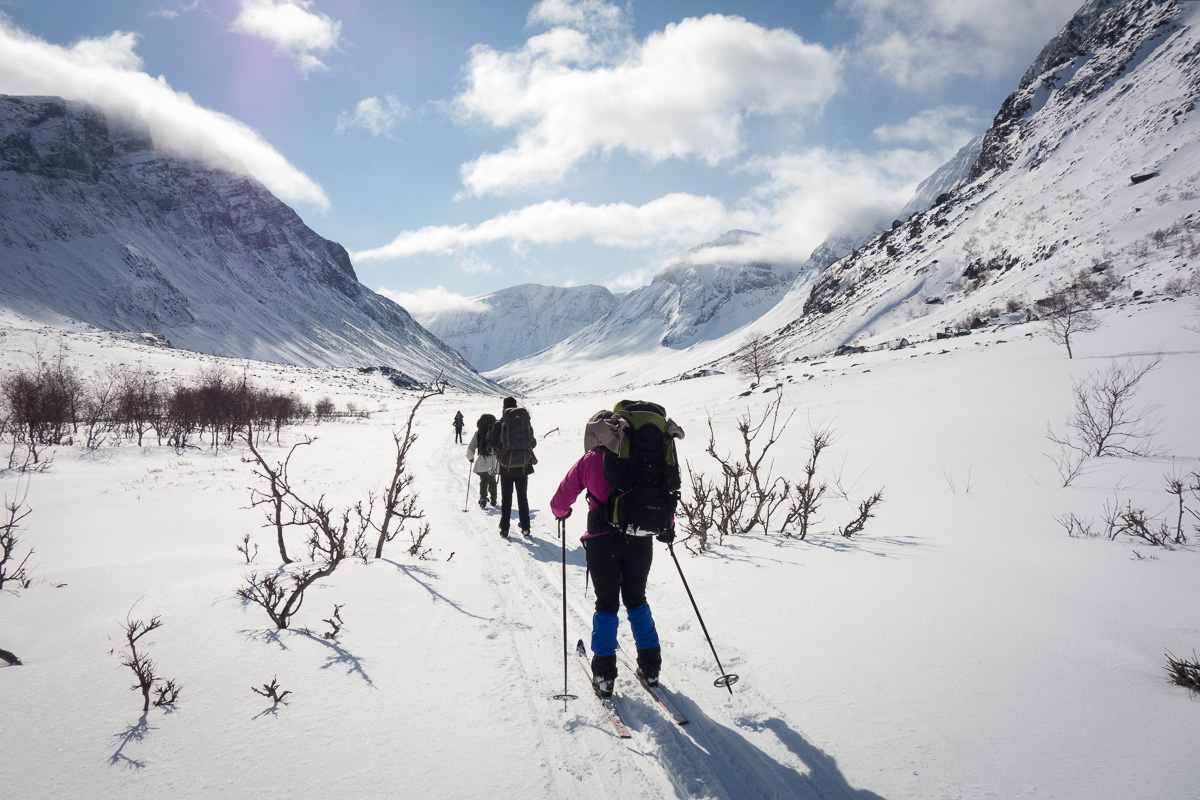
Today’s hut, like today’s skiing, was beautiful and simple and clearly off the beaten path. No solar panels and antennas here! Just Bosse, our friendly host. The huts and the rooms were much smaller than the previous ones, with one small room for everything – bunk beds, table, stove, and barely any room between them.

Since the Vistas hut had no electricity, Bosse also had no contact with the outside world. Nevertheless he had heard (from some unknown source at some unknown time) that there might be another large group coming for the night, and for a while it looked like we might need to double up in some of the wider bunk beds. The huts never turn anyone away – they make sure everybody gets a roof over their heads for the night, sleeping on the floors or wherever. In the end the other group never materialized and each of us got a separate bed after all.
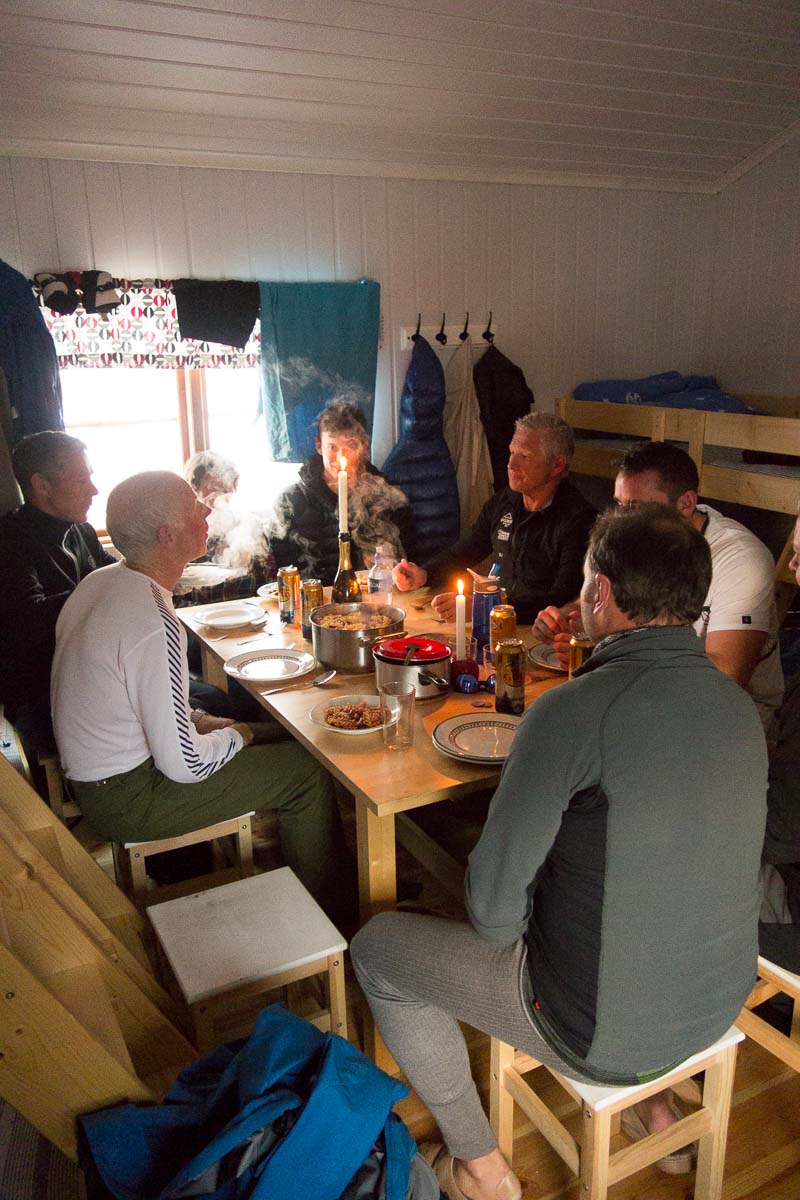
Unlike the huts on the main Kungsleden trail, which were supplied by snowmobile throughout the season, the Vistas hut was stocked once at the beginning of the season (late February) and those supplies had to last until the end of April. We bought the last tins of mackerel in tomato sauce that Bosse had and counted ourselves lucky.

The Vistas hut also had the smallest and most low-tech sauna yet: no separate washing room and no drains. The sauna simply had an uninsulated floor with slight gaps between the floor boards, and any water you poured over yourself just drained out through the floor. Despite its simplicity, the sauna was very pleasant, but it was also blazing hot and I didn’t stay for long.