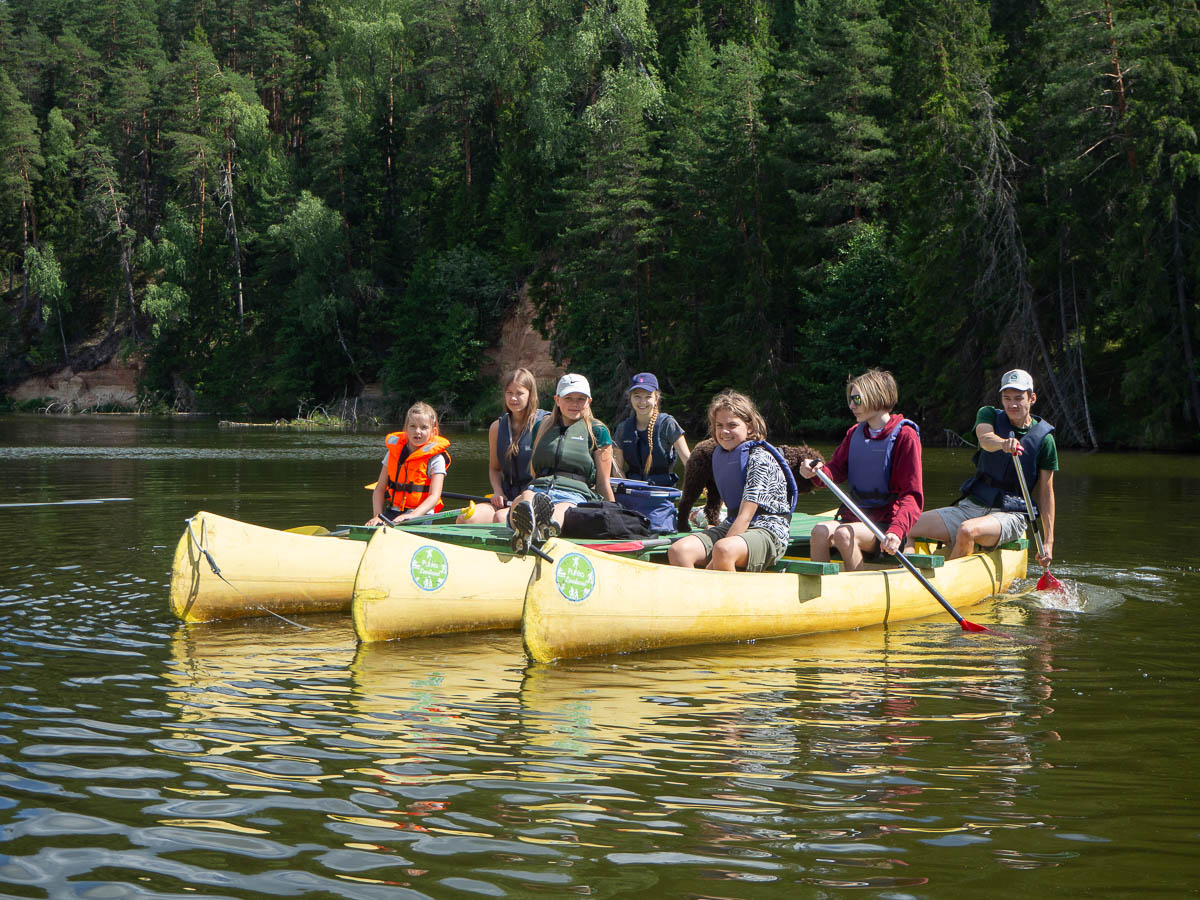
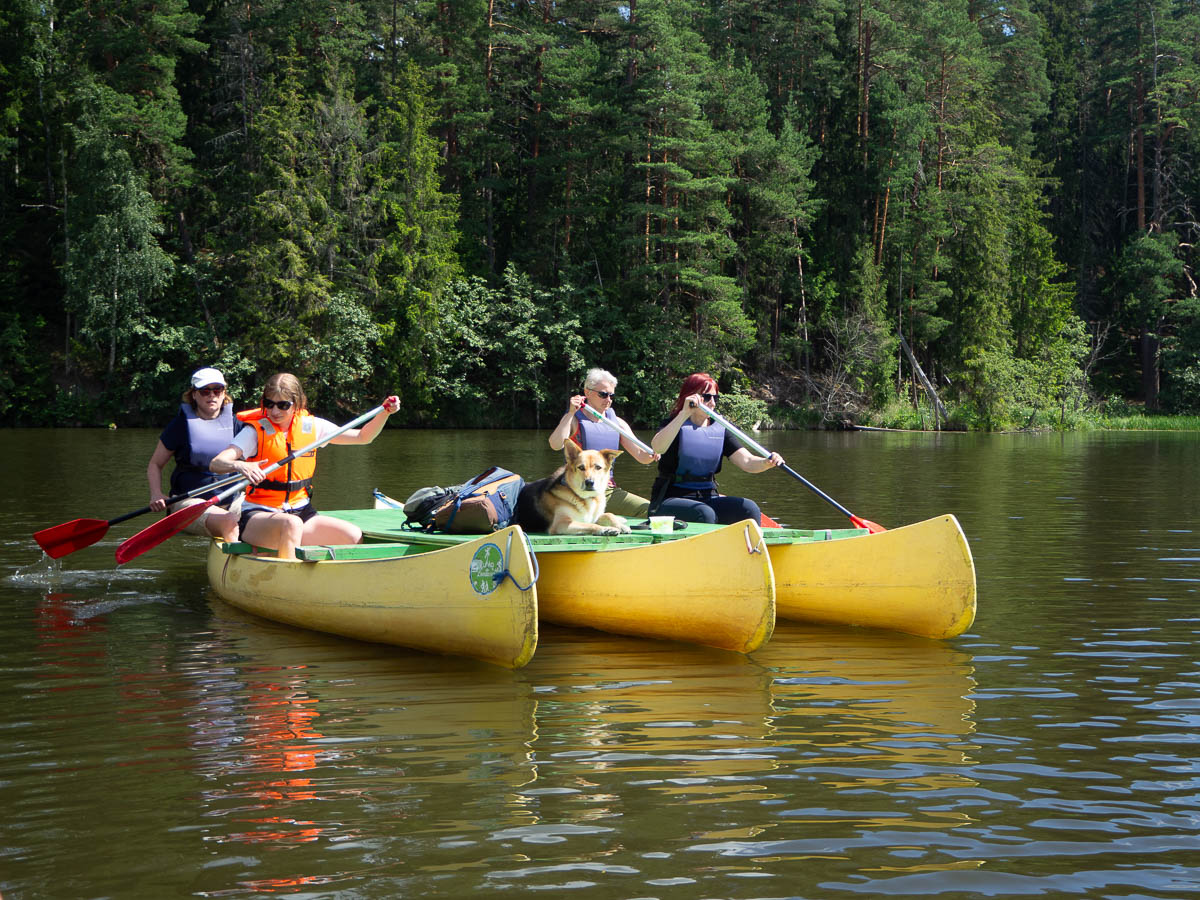
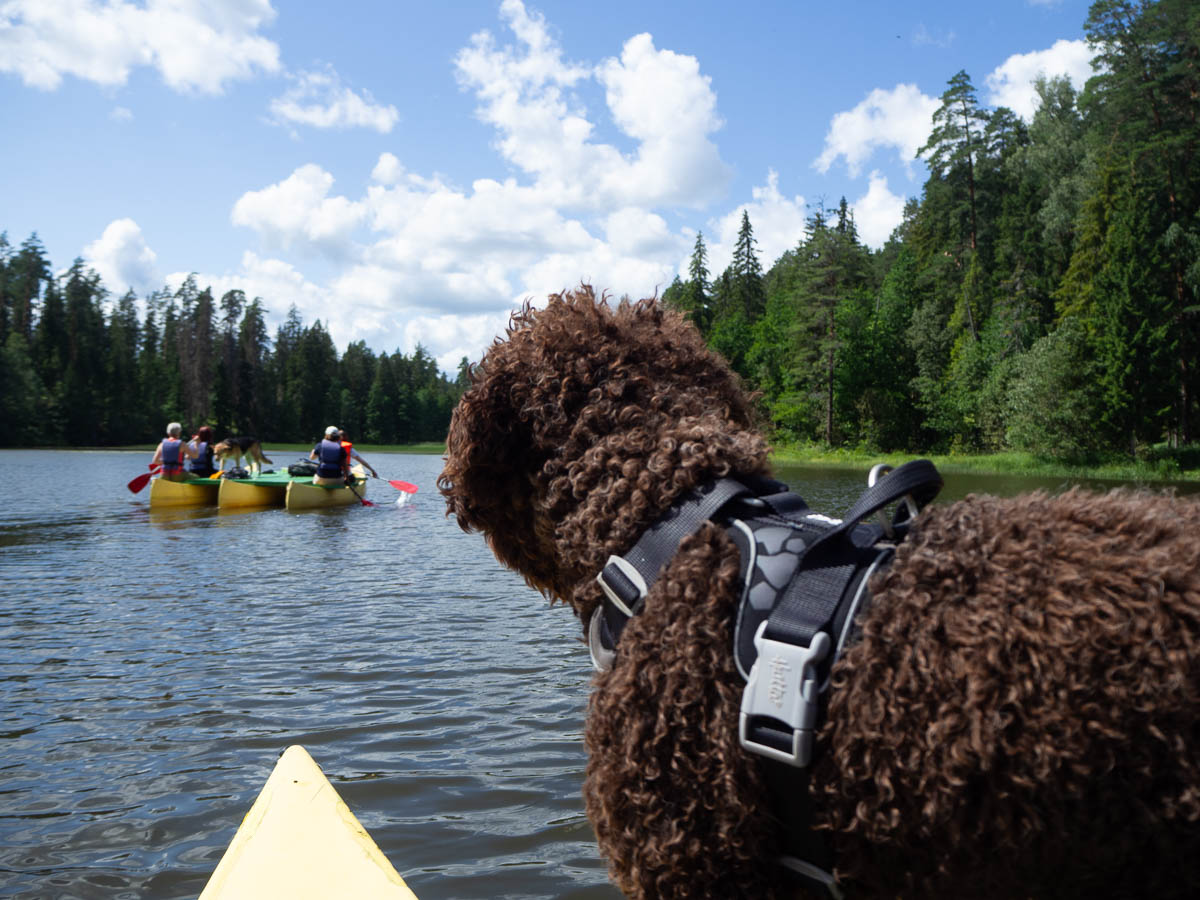
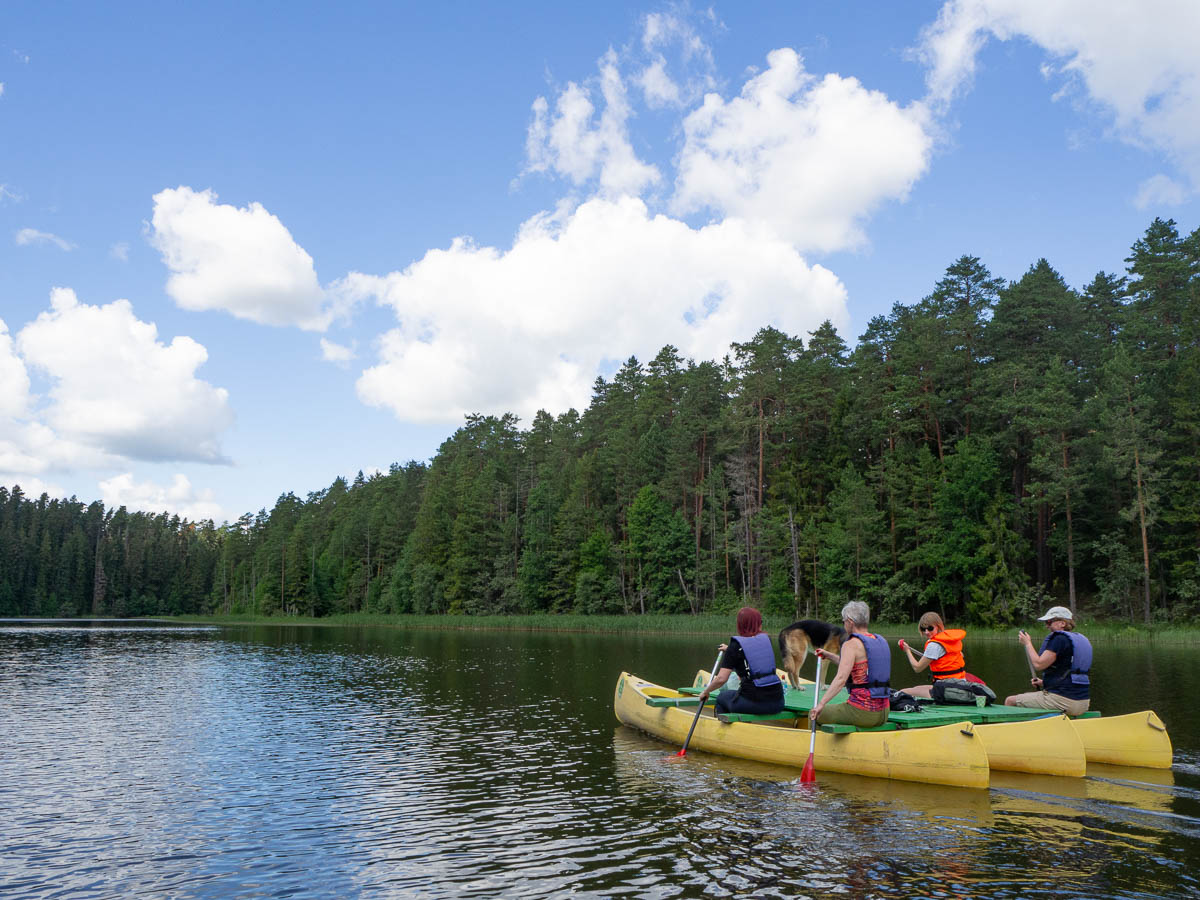
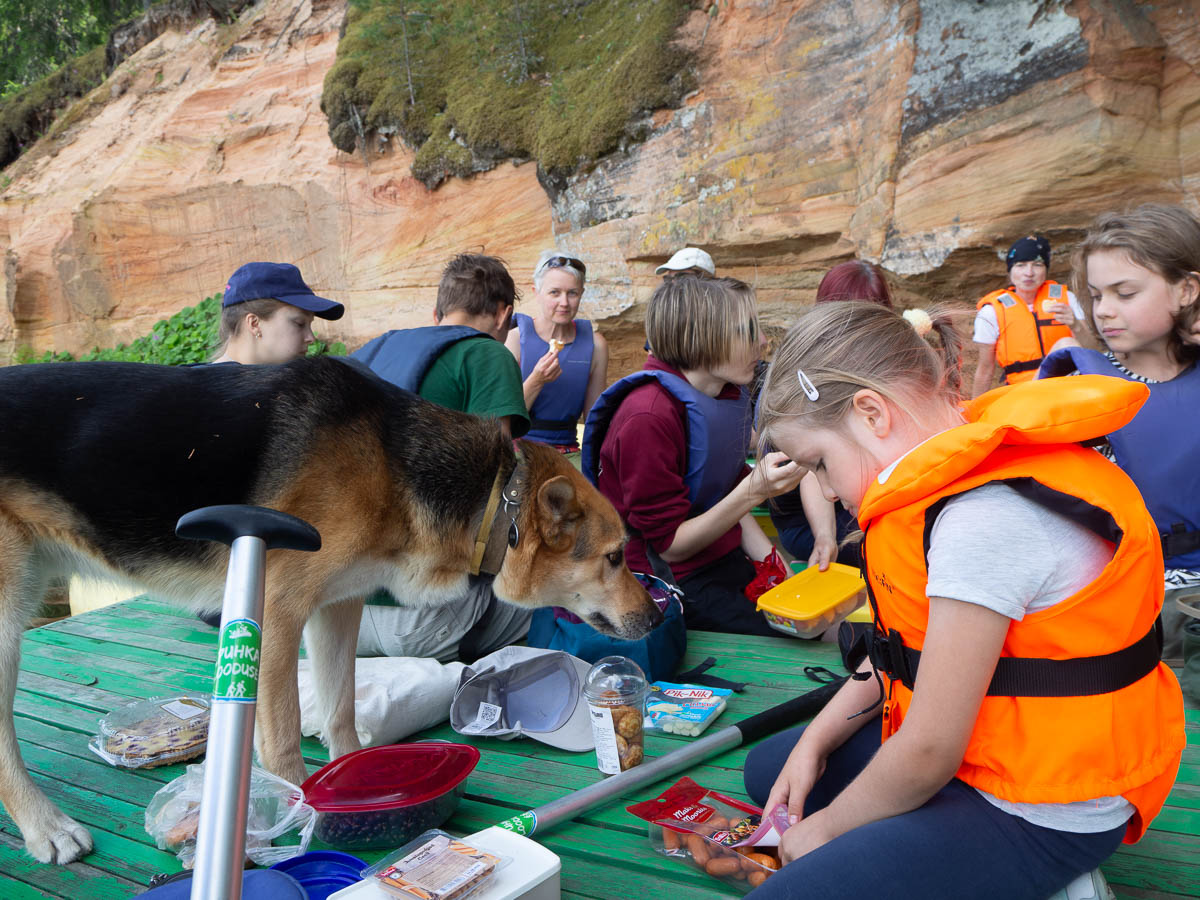
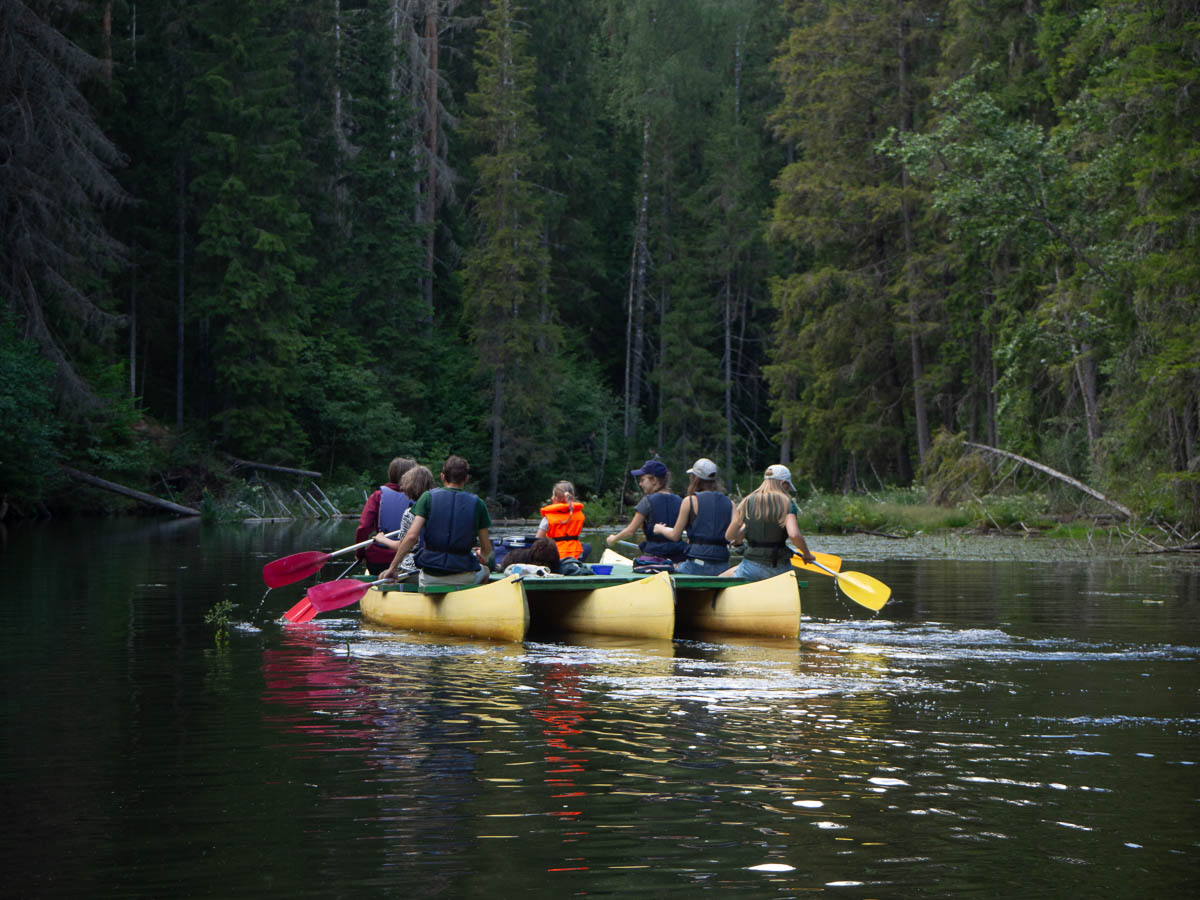
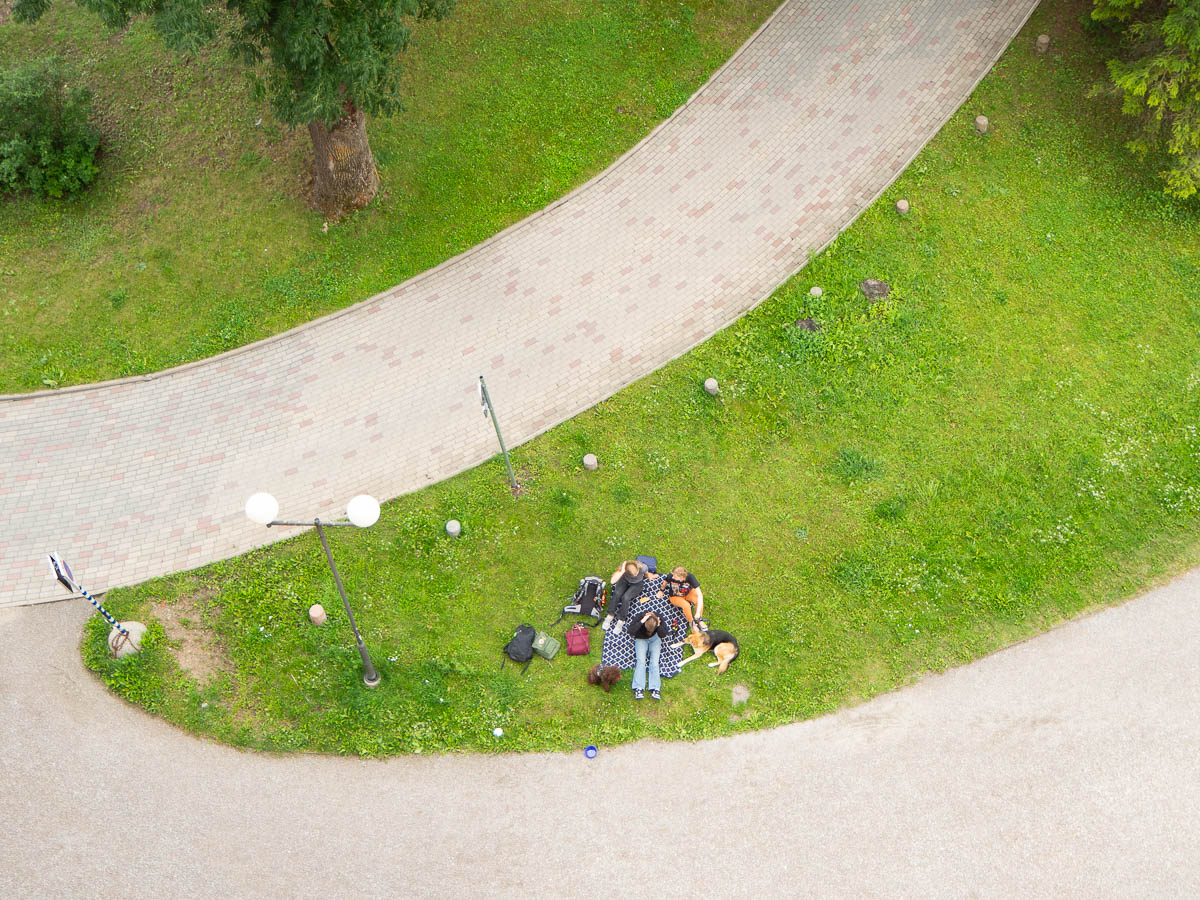
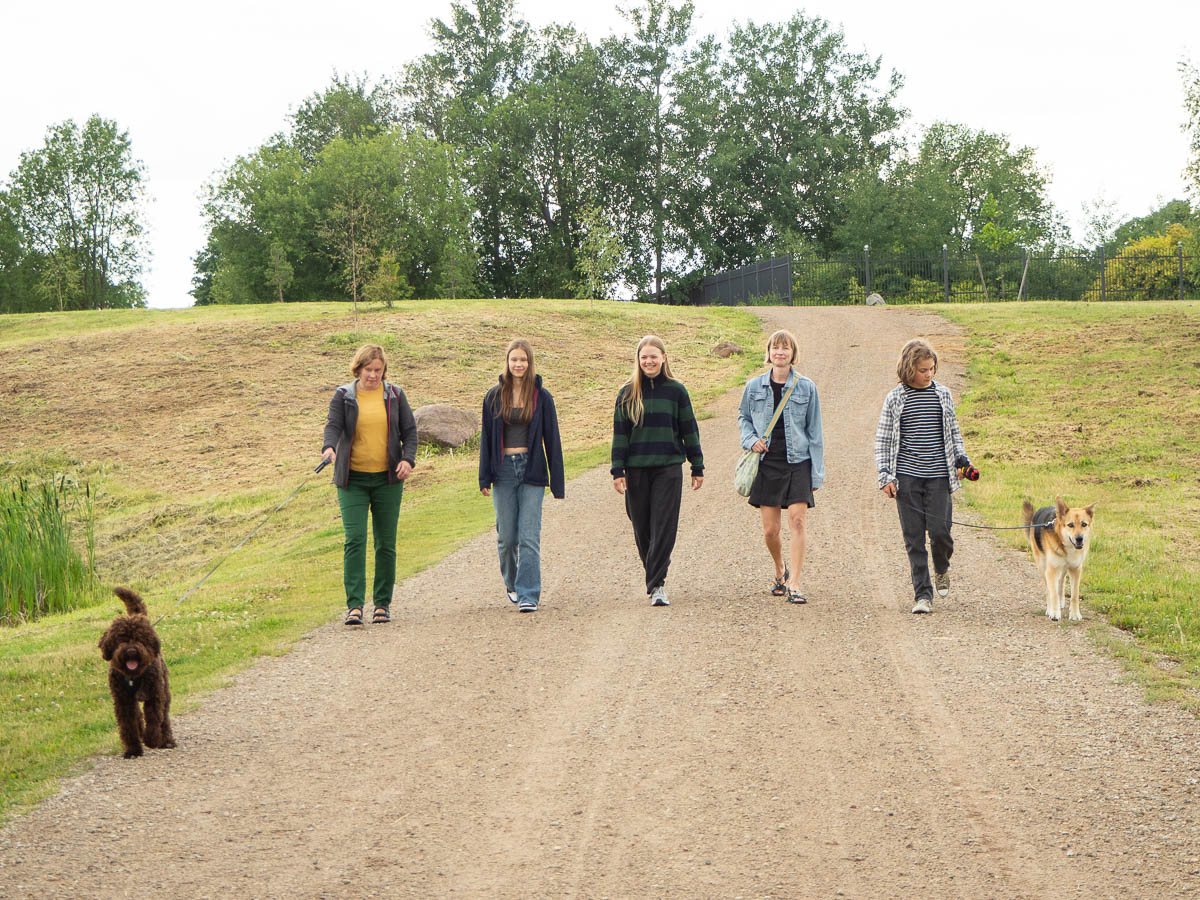
My friends are all dog owners now, and the dogs are on the large and energetic side. The easiest way for us all to meet up is to go out for a walk with the dogs.

I ran ahead a bit to get some distance for the photo. I suspect Ingrid lined them all up in the meantime.
I’m off to Estonia with the kids, to visit family and friends.

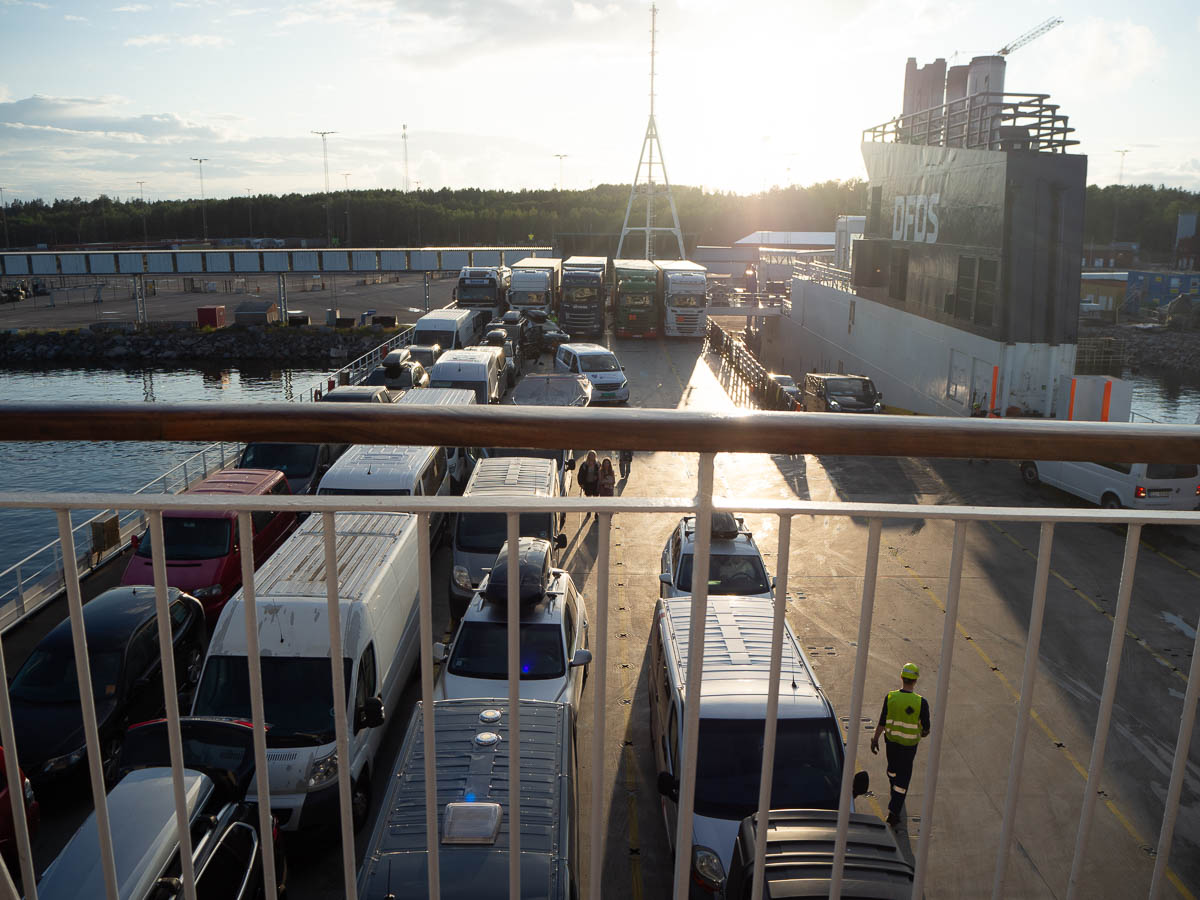
We’ve always used Tallink ferries to get there (apart from the early days when I flew) but this time we’re trying a different approach. Tallink never reinstated the second ferry (after cutting down from daily trips to every other day during the covid pandemic) and now their schedule doesn’t suit us. I went looking for alternatives. Flight + rent a car? Expensive. Different ferry line? Better schedule, better prices, better times, but less convenient harbours. Worth a try.

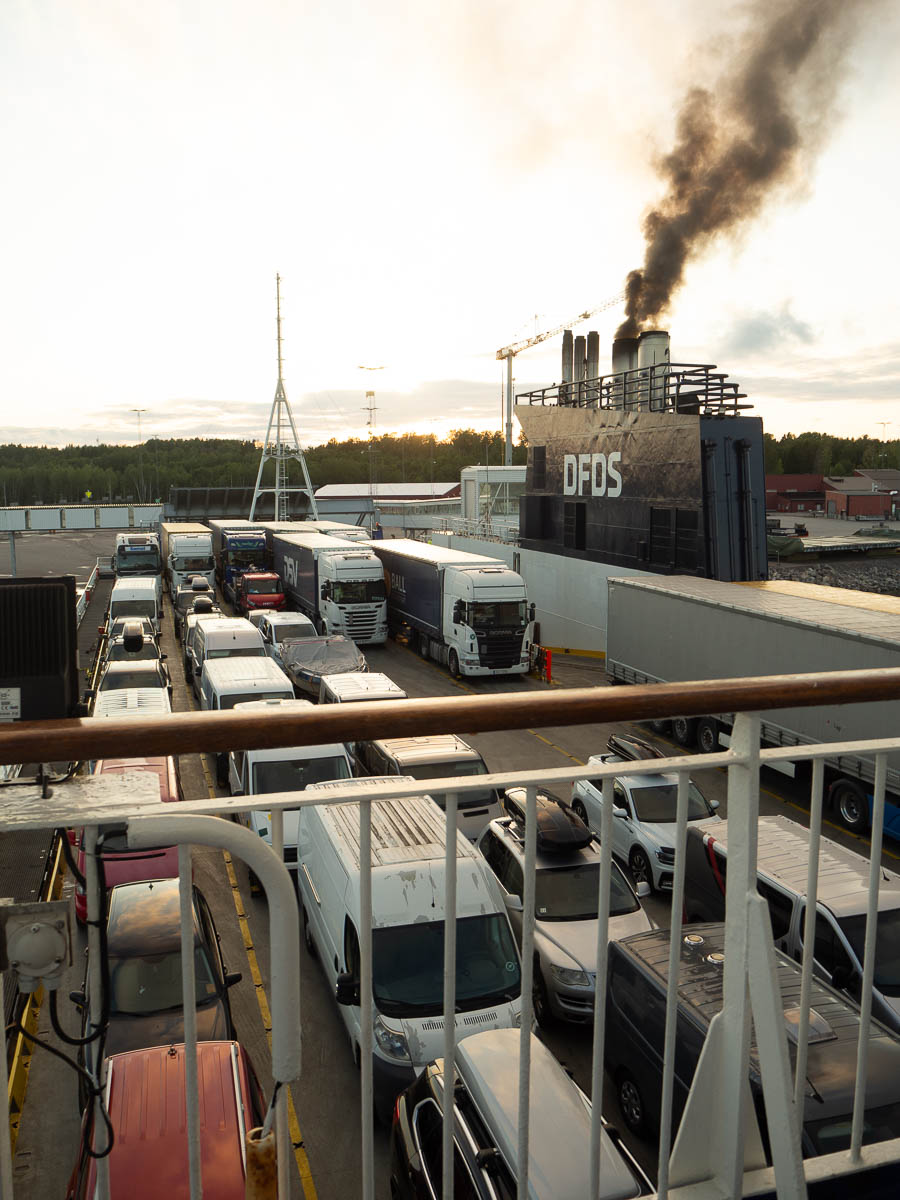
DFDS leaves from Kapellskär which is further away from us than central Stockholm. On the Estonian side they go to Paldiski instead of Tallinn, which is further from Tartu but on larger roads. Tallink ferries are basically floating hotels and act accordingly: there are lavish tax-free shops, onboard entertainment, plenty of restaurants, and they try to keep you there as long as possible to squeeze the most money out of you. DFDS on the other hand just focuses on getting you there: leaves several hours later, and gets there several hours earlier. Which suits us really well. The ferry experience was fun for the kids when they were young, but now we’re all just waiting for time to pass and wishing we could get there sooner.

I enjoyed watching the crew play Tetris with all the large lorries.

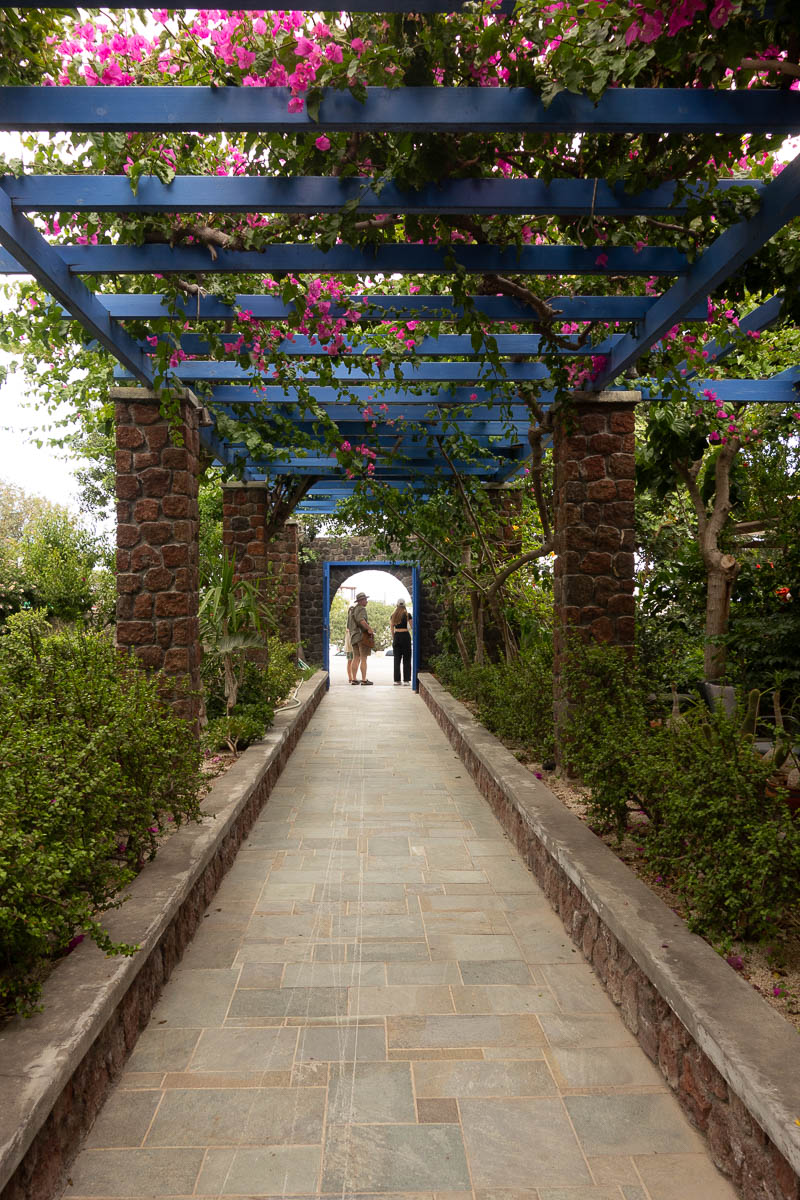
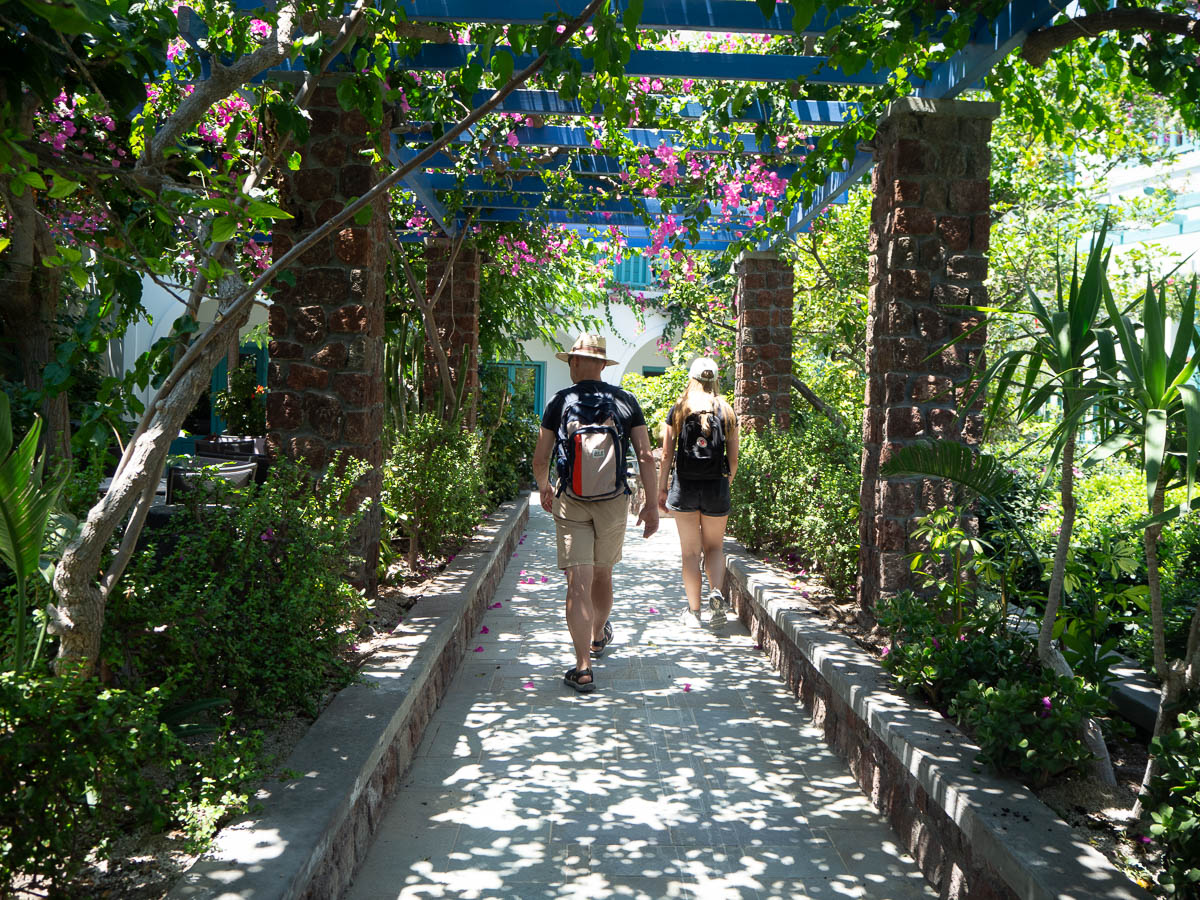
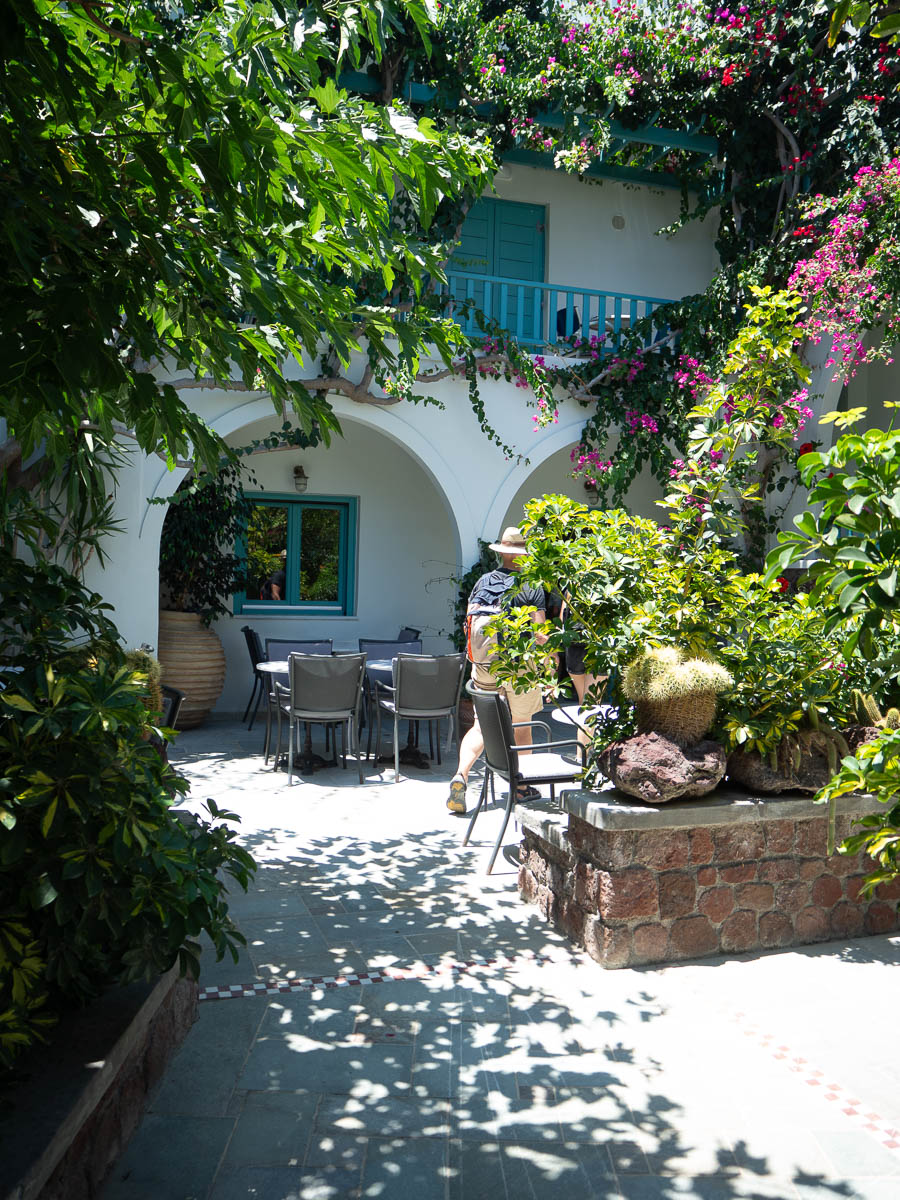
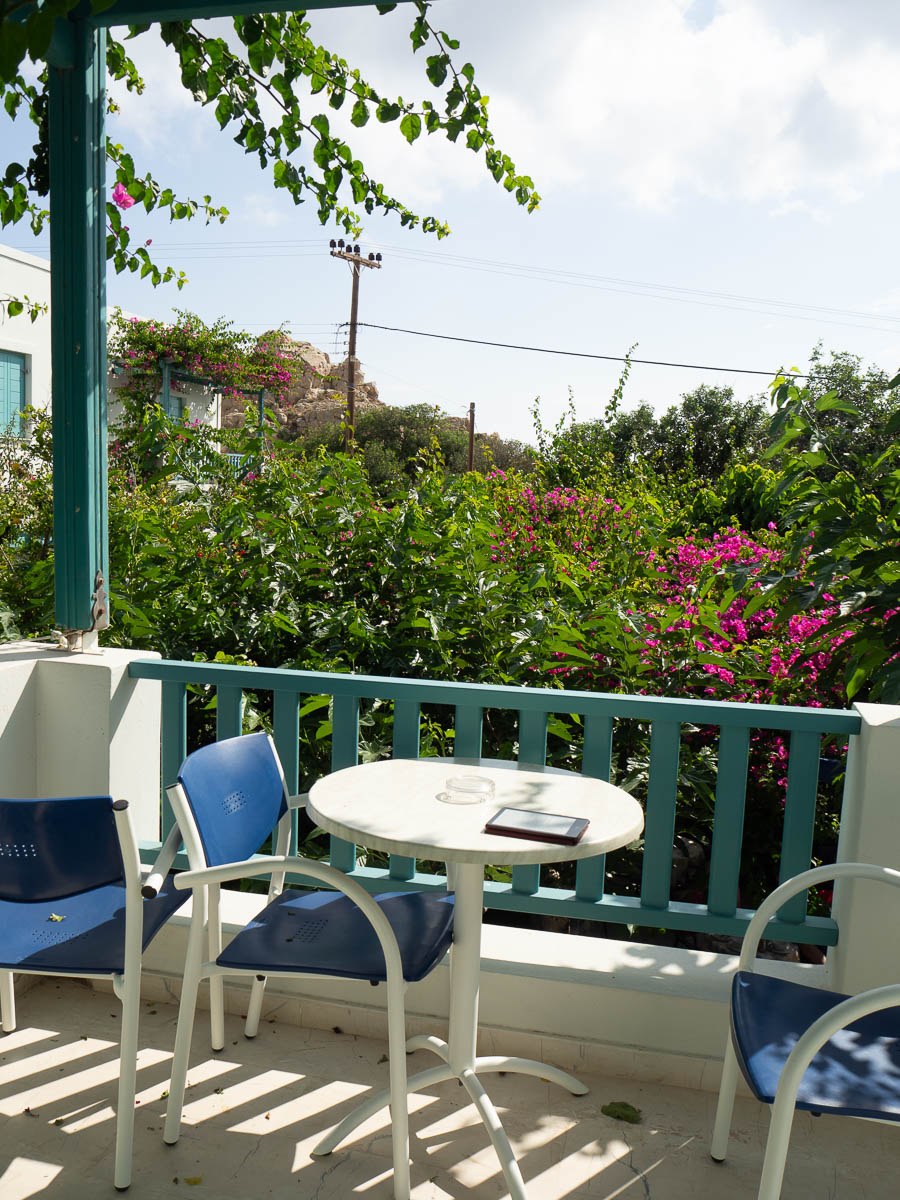
Today is leaving and flying home day, so we’re not doing anything exciting. Here are some photos of our lovely hotel instead. Hotel Andreas in Kamari. Great location, wonderful environment and ambience, good beds, great service, decent breakfast.


I think we had the best room in the whole place, with a balcony facing the beautiful, lush front garden with bougainvilleas and lemon trees and cactuses and umbrella trees.

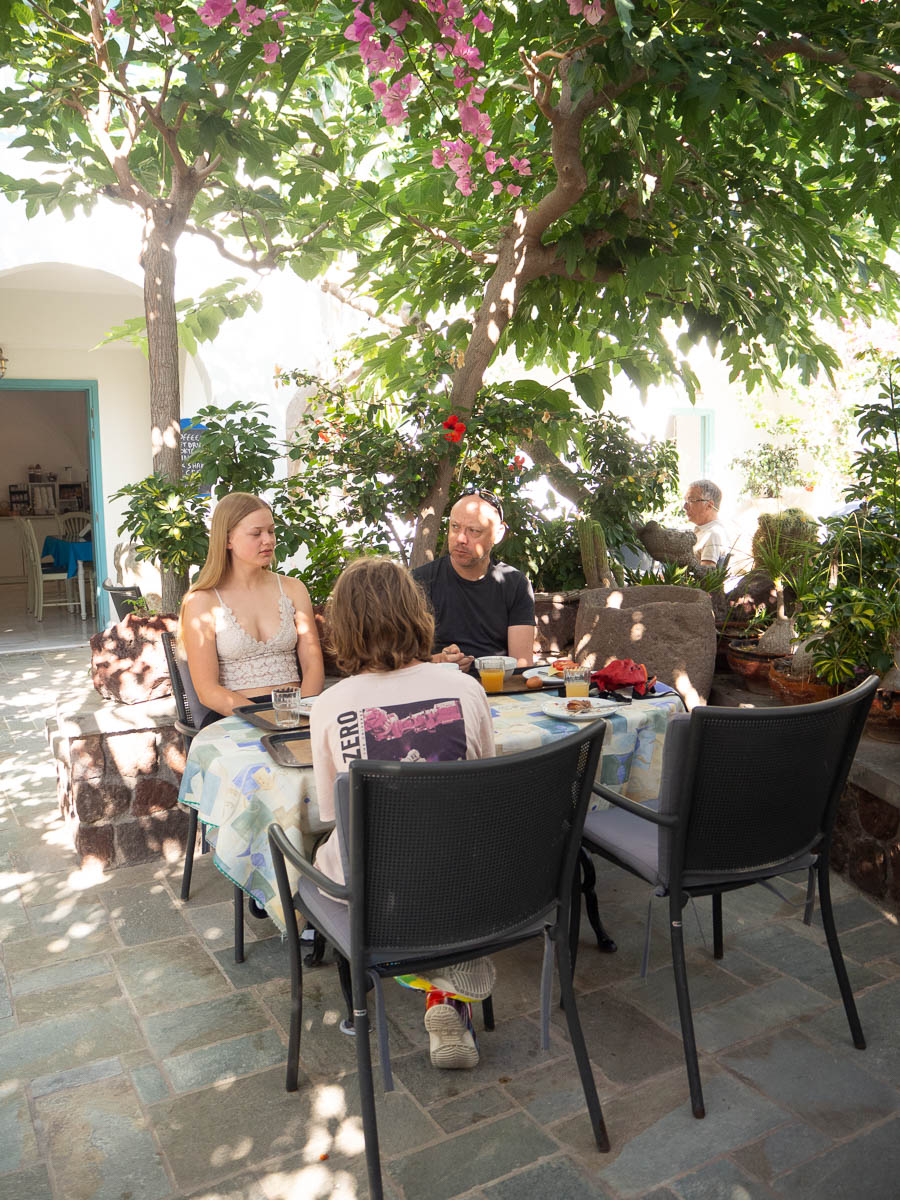
Breakfast in the garden was a very pleasant start for every day.

We are sort of running out of hikes on this island. I can understand why many hiking holidays combine half a week on Santorini with half a week on Naxos. I did find one more promising walk near Kamari, though. Not to any place special – just from one village to another.

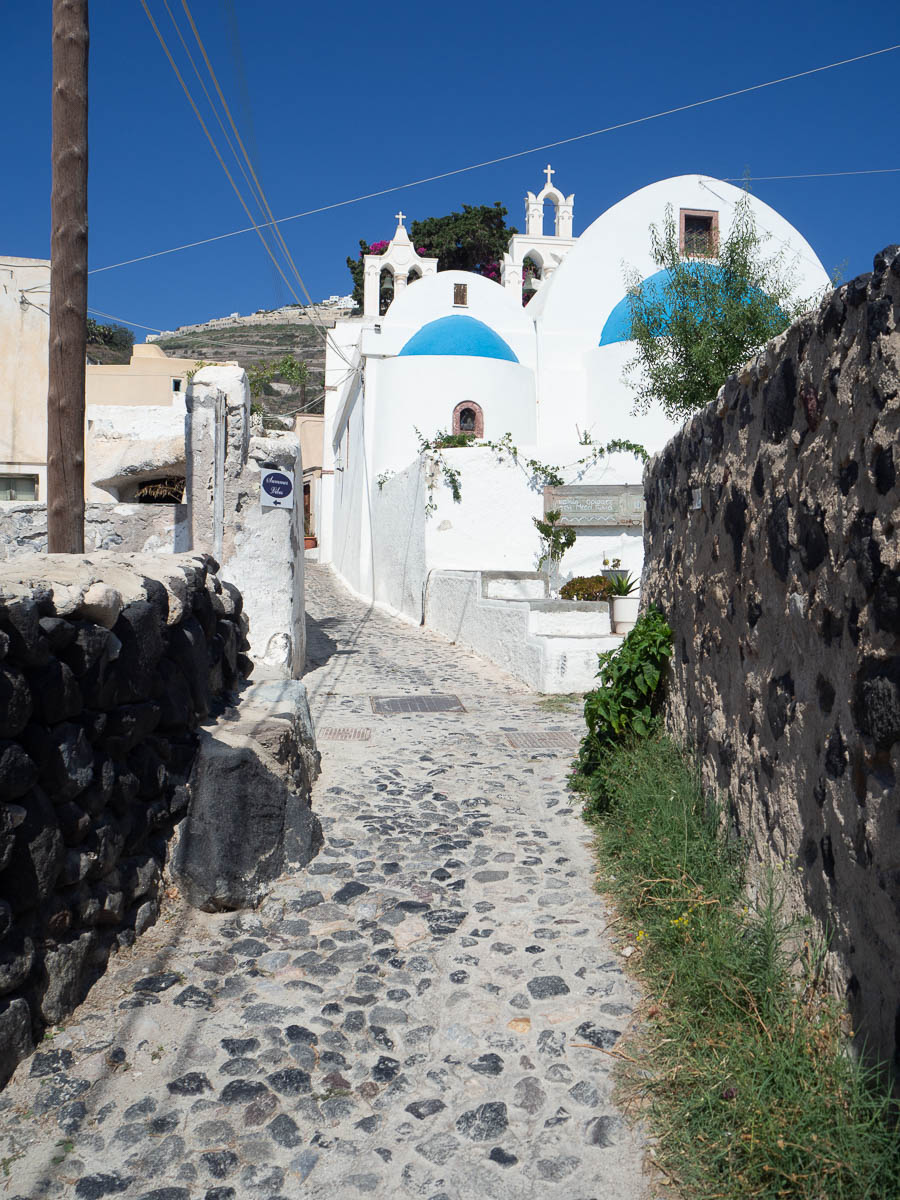
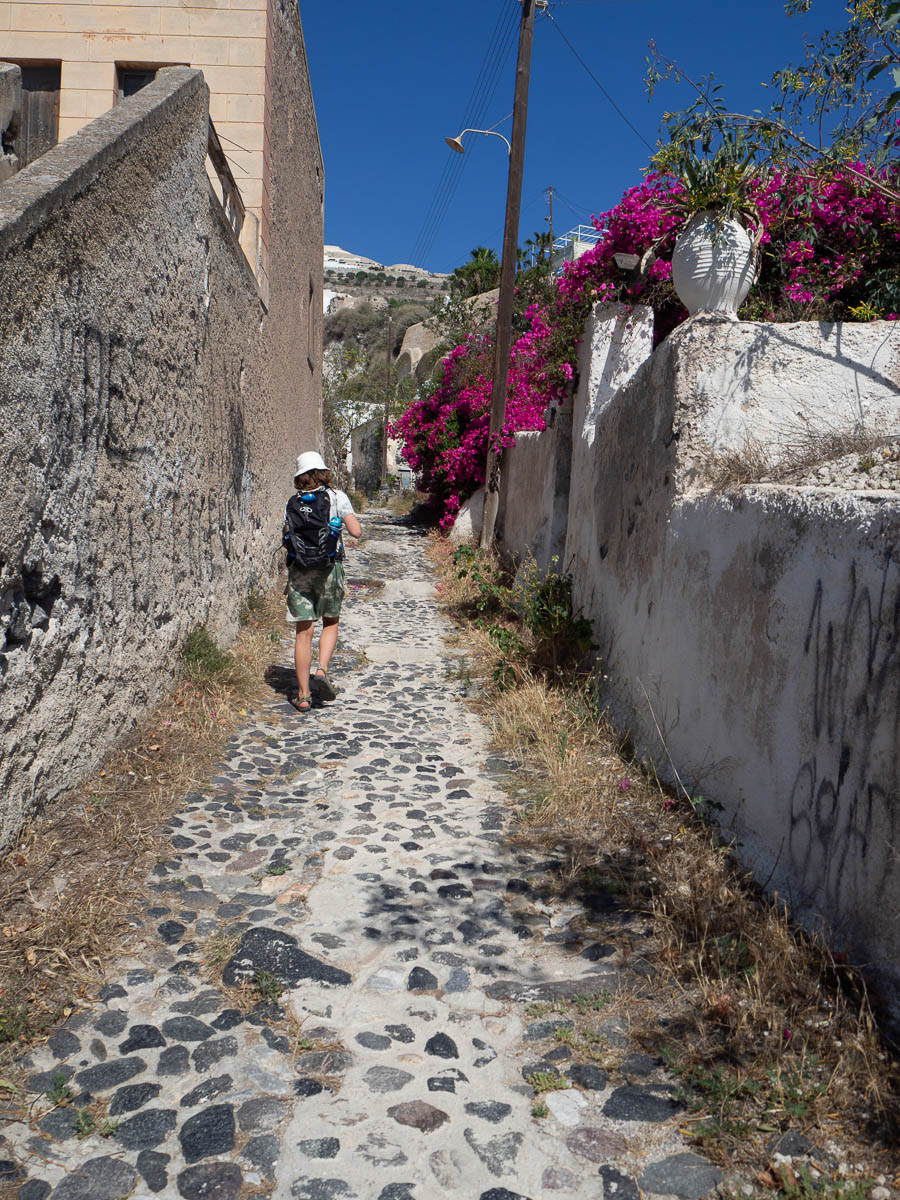
Small cobbled streets, ordinary small houses, no crowds. Nice.

I made a serious tactical miscalculation, though. The walk was less than 5 km, which is far less than we usually walk, so I thought we could do it there and back again. Start in Kamari, walk to the other village, turn around and walk back home again.

What I didn’t take into account was the heat, firstly, and secondly the altitude gain. The other village was up on a bit of a hill. And climbing a hill in this heat was more than we could do. The first bit was flat, but after 10 or 15 minutes of climbing, and realizing that we still had at least another hour of that ahead of us, we gave up.

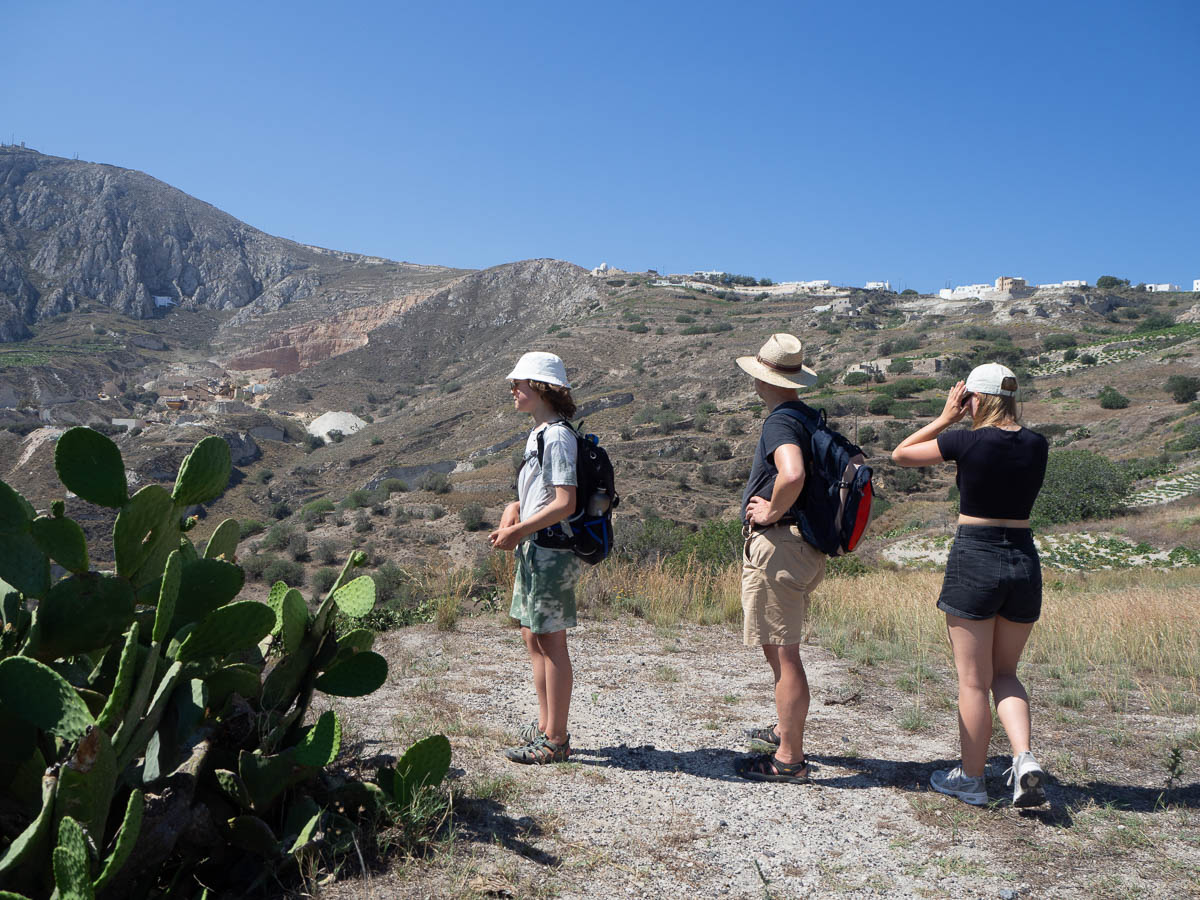
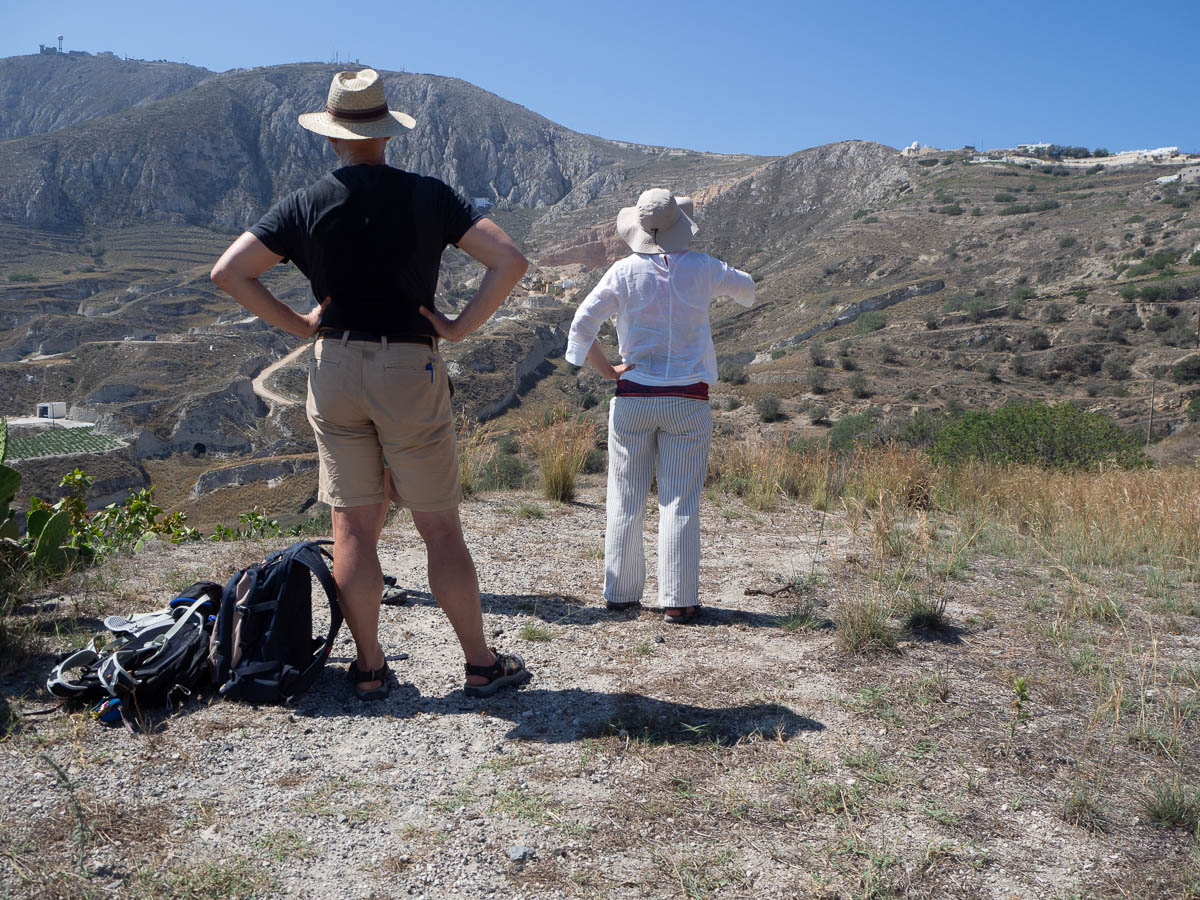
At that point we’d reached a small plateau on the hillside with pretty nice views – looked like a local picnic spot – so we felt like we’d walked to some place at least, not just nowhere, and we were all very much OK with turning back, after admiring and photographing the views.

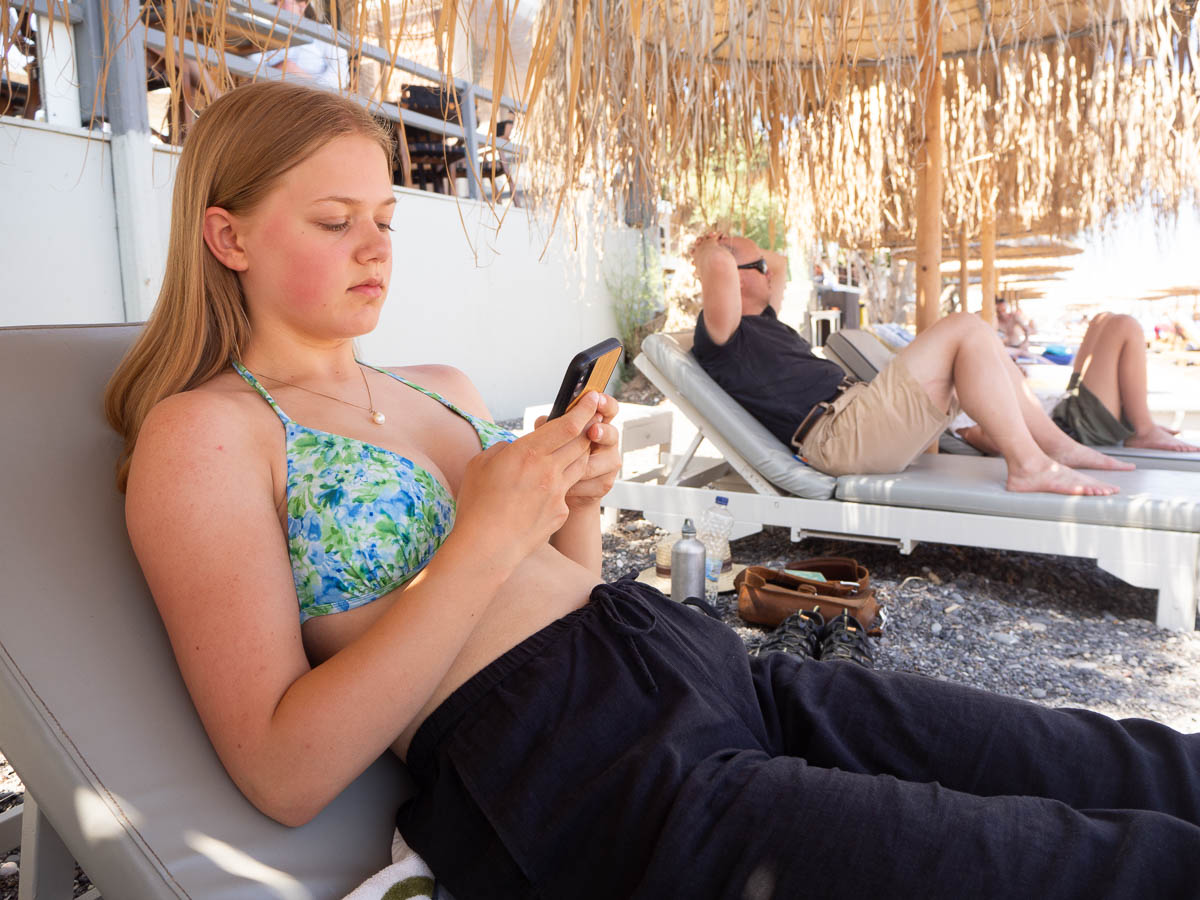
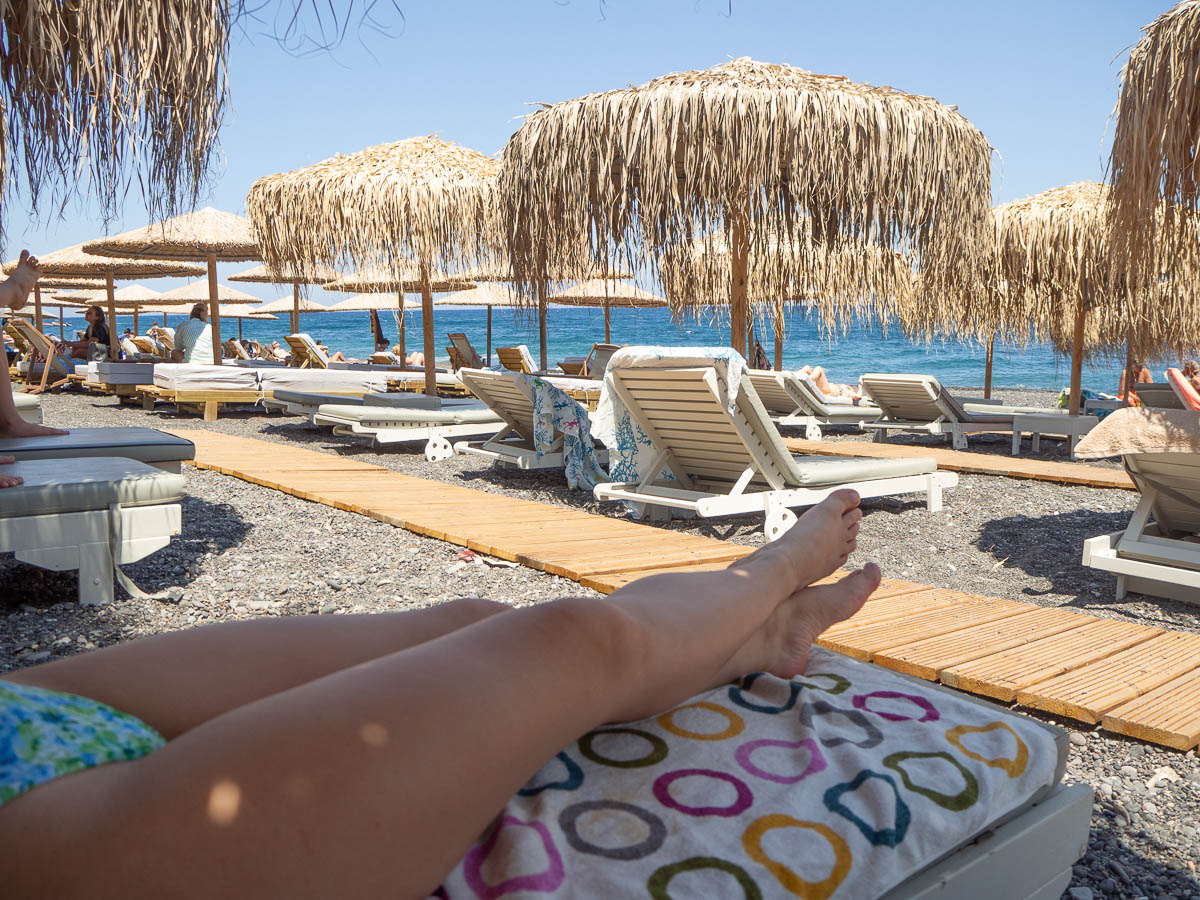
After all the walking and touristing – the boat ride was surprisingly tiring and we walked more steps than we had thought – we took the day off today and just hung on the beach. Well in shade under large parasols, because none of us particularly wanted to get sunburned. Good books, smoothies and other snacks, and even a little bit of bathing.


Boat trip to the three smaller islands next to Santorini – Nea Kameni, Palea Kameni and Thirassia.

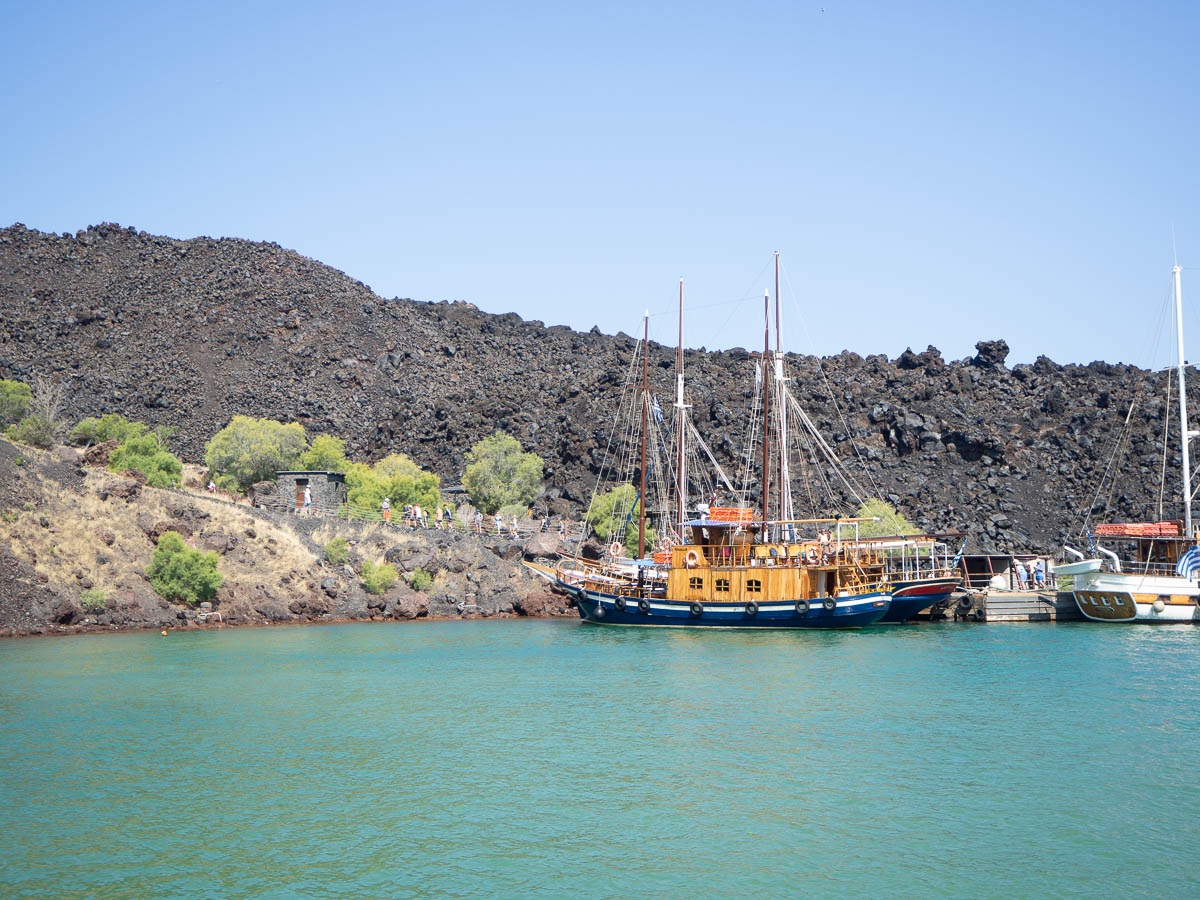
The trip was arranged by the travel company we travelled with. Buses collected people at various points along the island and disgorged all of us at the harbour, where we were split across three boats based on our preferred language. Our boat and its two sisters were the epitome of a touristy ridiculousness, including fake masts.

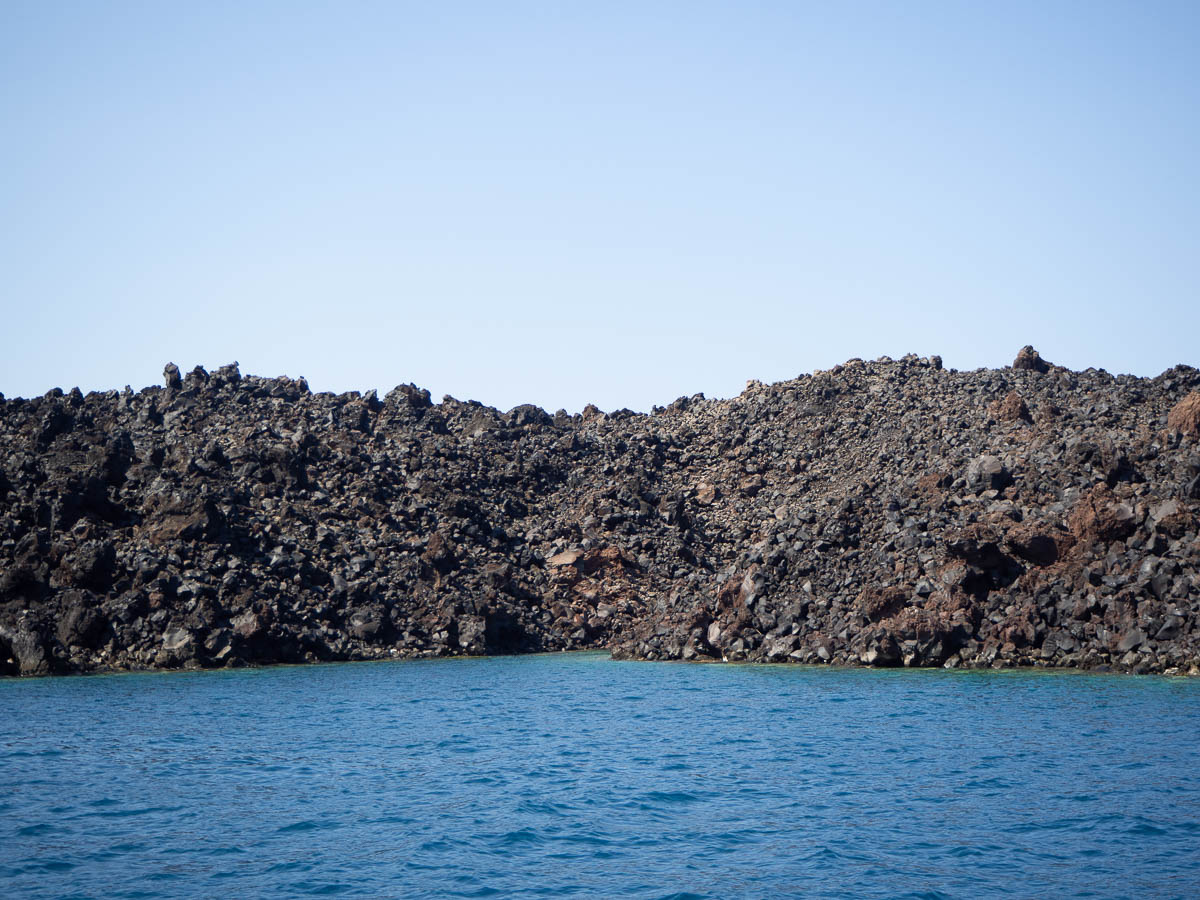
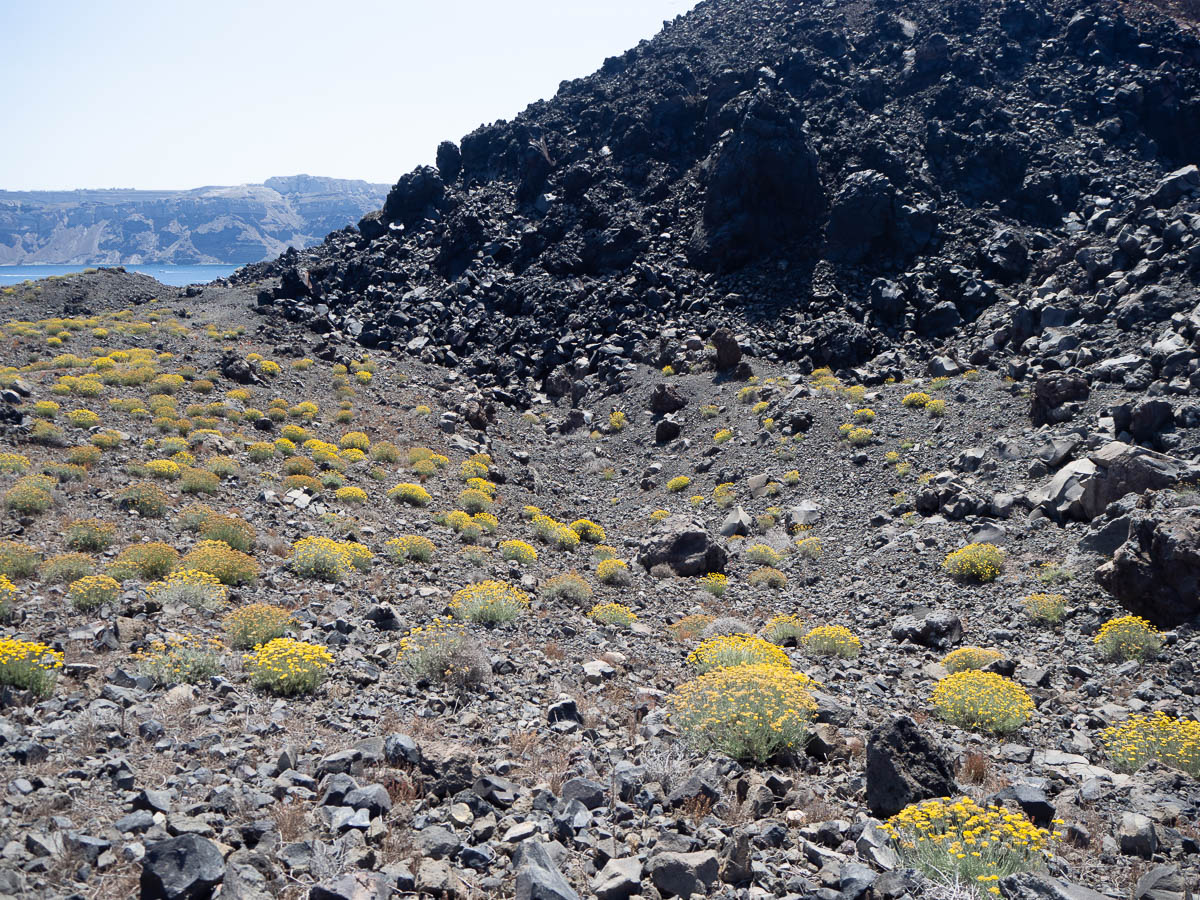
Nea Kameni is the island at the middle of the Santorini caldera. It first emerged about two thousand years ago and has grown as ongoing minor eruptions have added more and more lava to it. The newer parts are still pure rock with nothing growing on them yet.

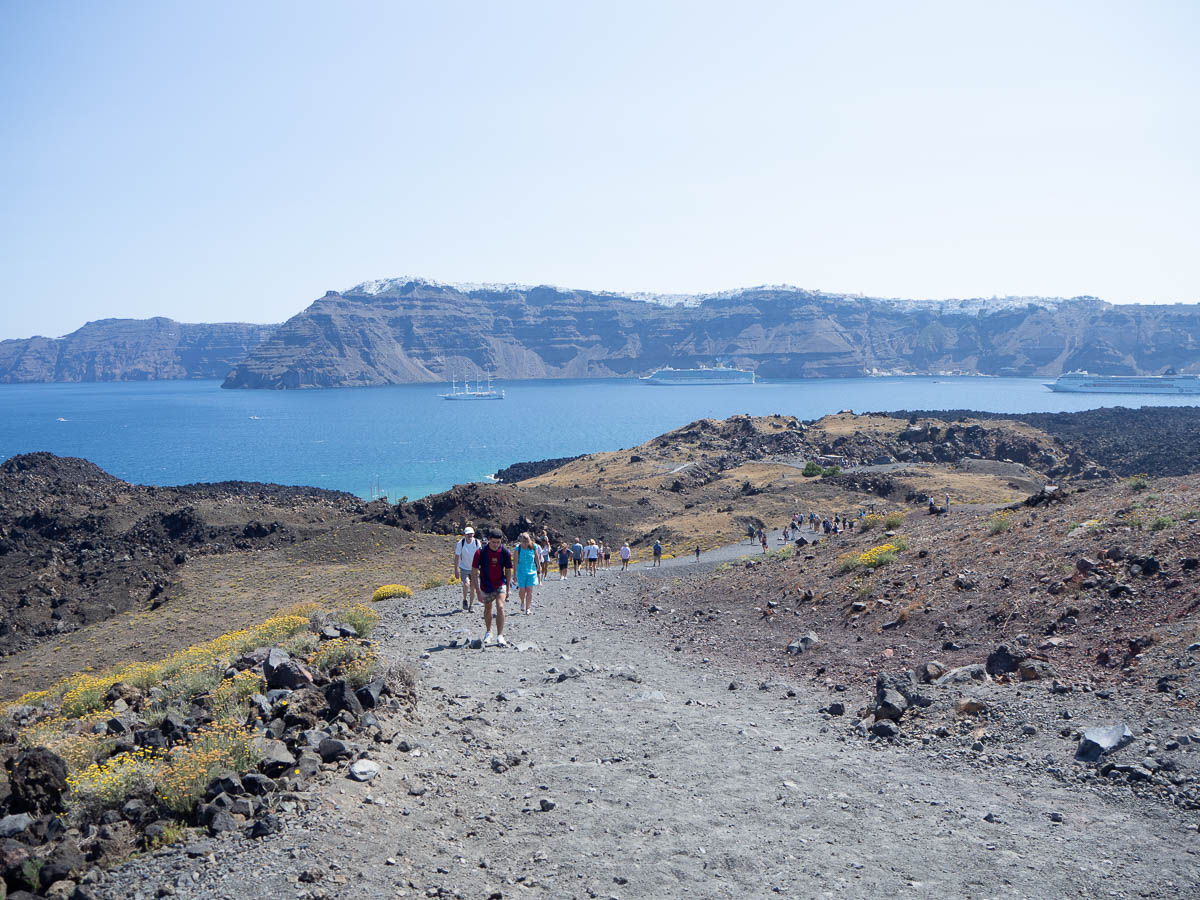
The island is small and the tourists many, so it felt like an outdoor museum of sorts, with marked paths everywhere.

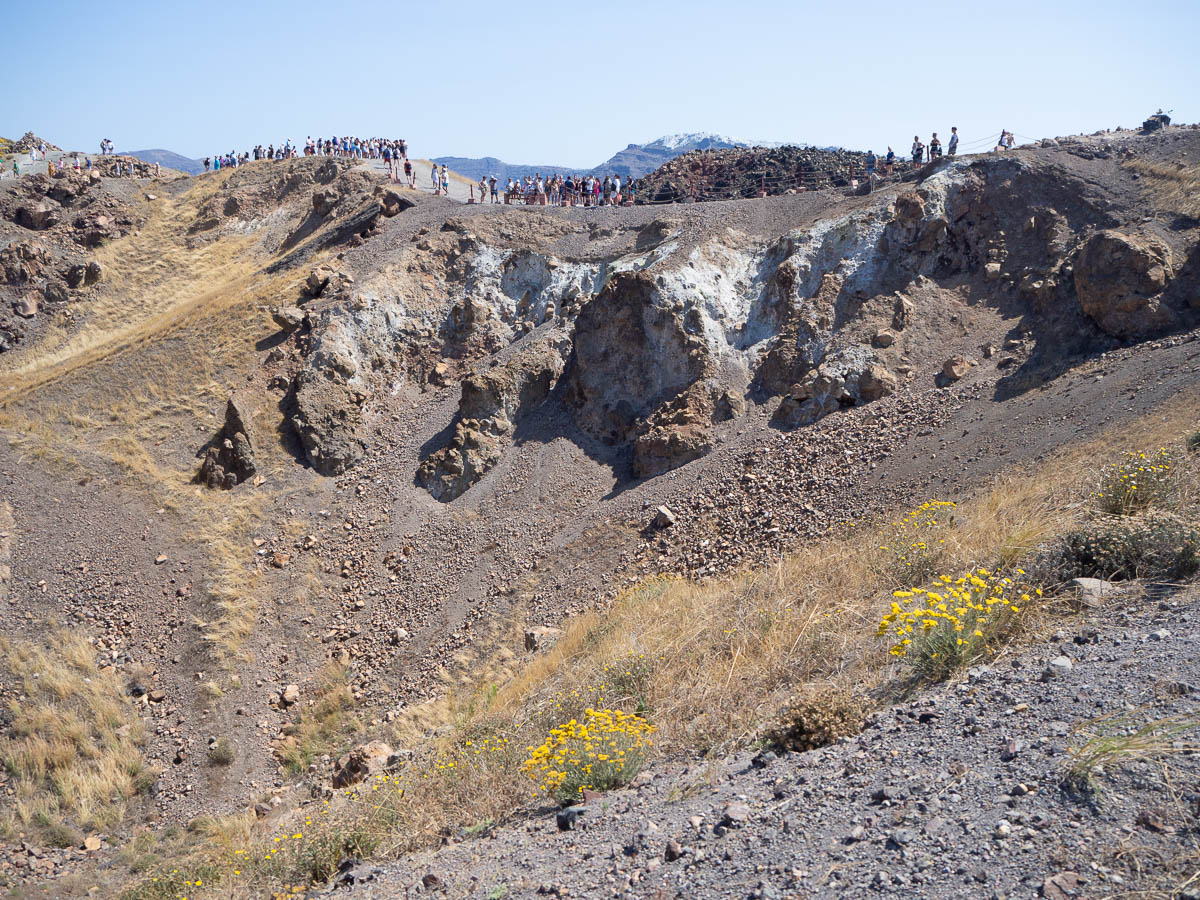
In the middle of the island we could see the main crater of the volcano. It’s still active and there’s steam and smoke coming out of cracks in the rock, over on the other side where the rocks are covered with white deposits of something.

The same yellow tufts of some hardy desert plant that we saw on our hike from Fira to Oia are the first ones to spread here as well.

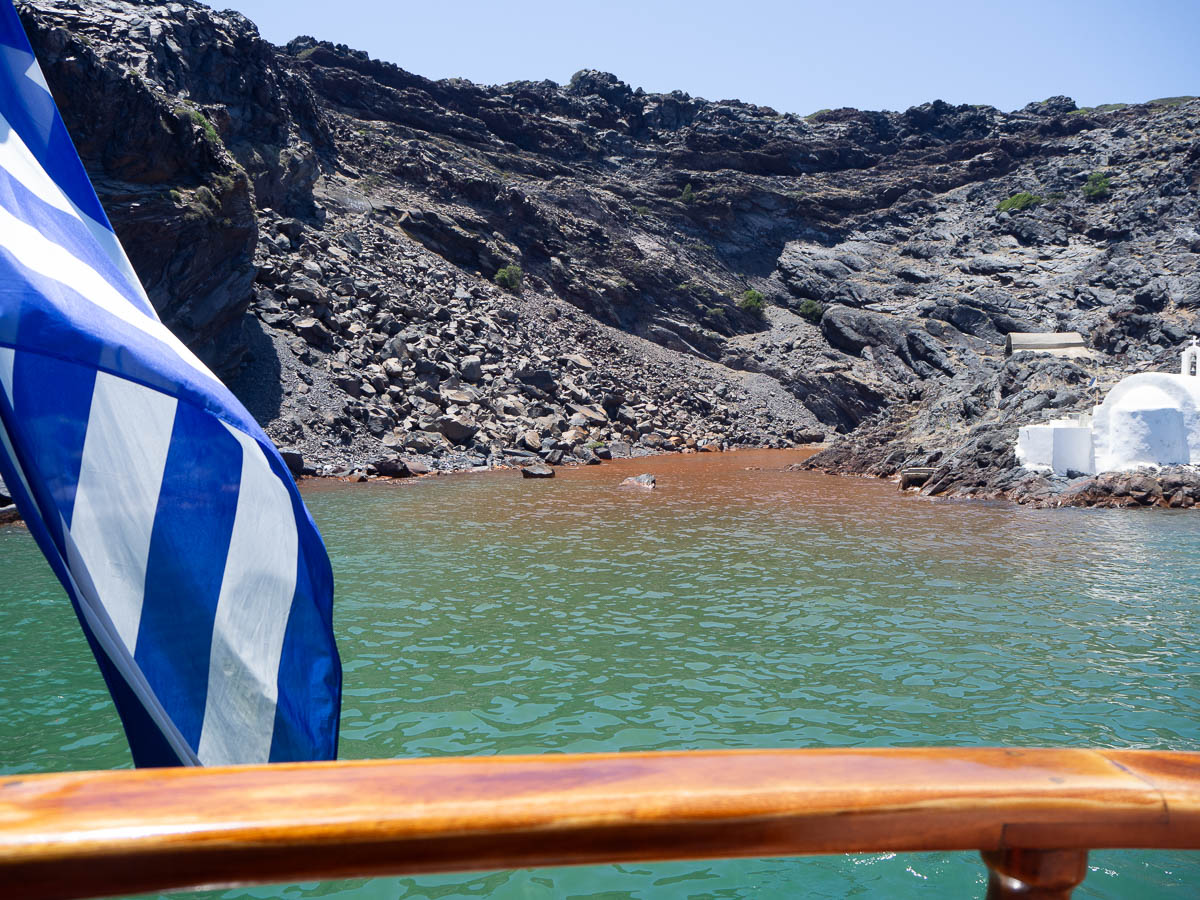
The second island, Palea Kameni, is so small that the boats don’t even land there. They stop a small distance away to give the tourists a chance to swim to the hot springs next to the island – where the water is rust-coloured.

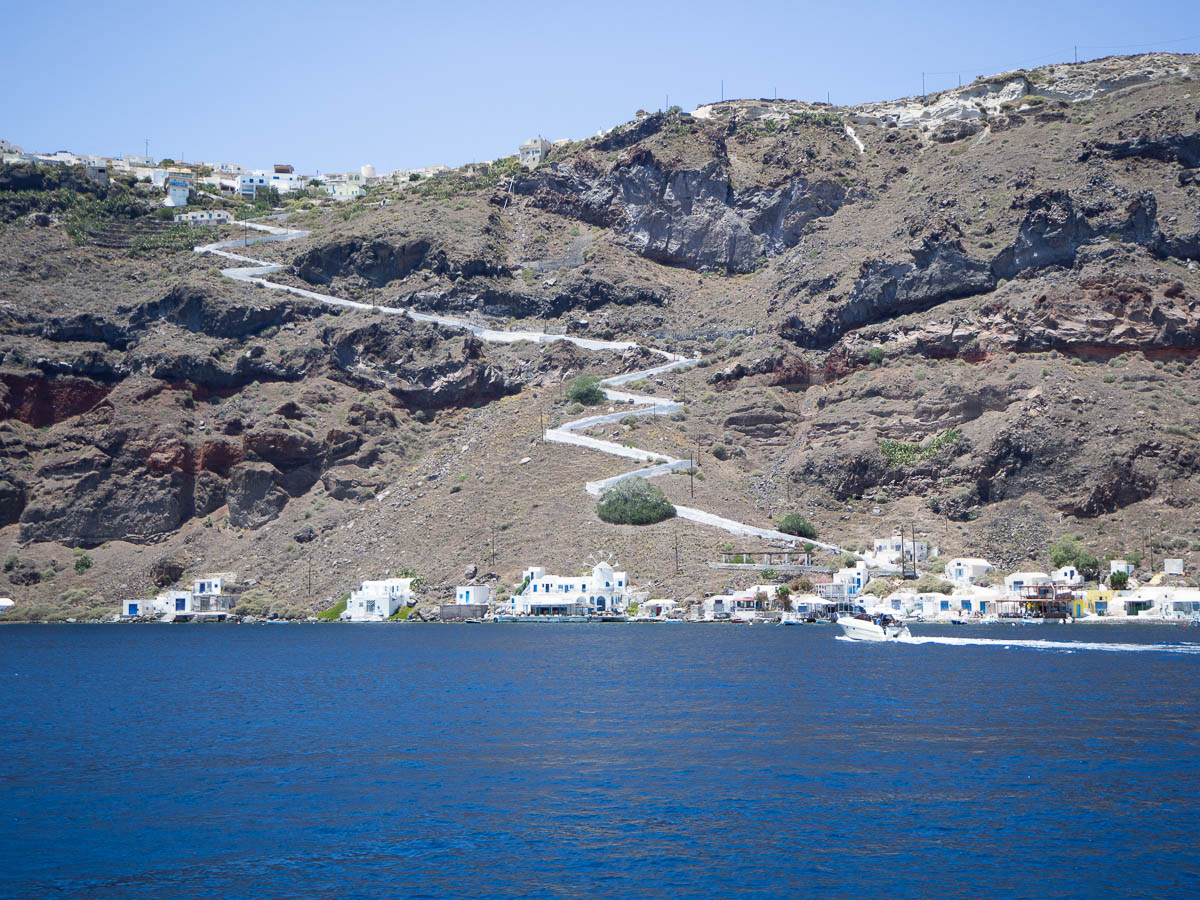
The third island, Thirassia, is older – a part of the island that existed before the Minoan eruption. Old enough to have some vegetation and human habitation. The boats stopped here for lunch.

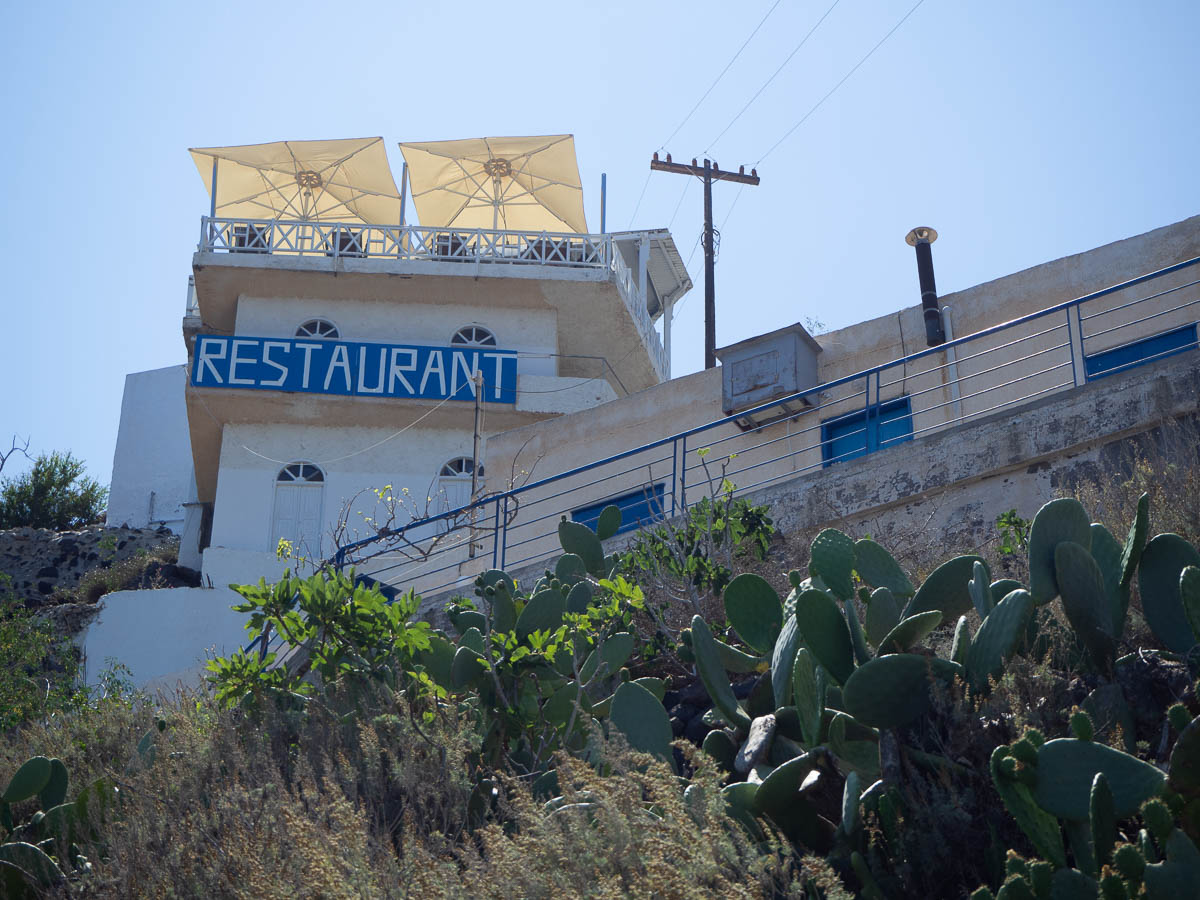
The restaurants at the bottom of the path all had very low ratings on Google Maps so we made the trek to the top. It was very, very hot and sweaty, and there was as usual no shade to be found on the way. Even though it wasn’t a long way to walk, we felt near fainting when we got to the top.


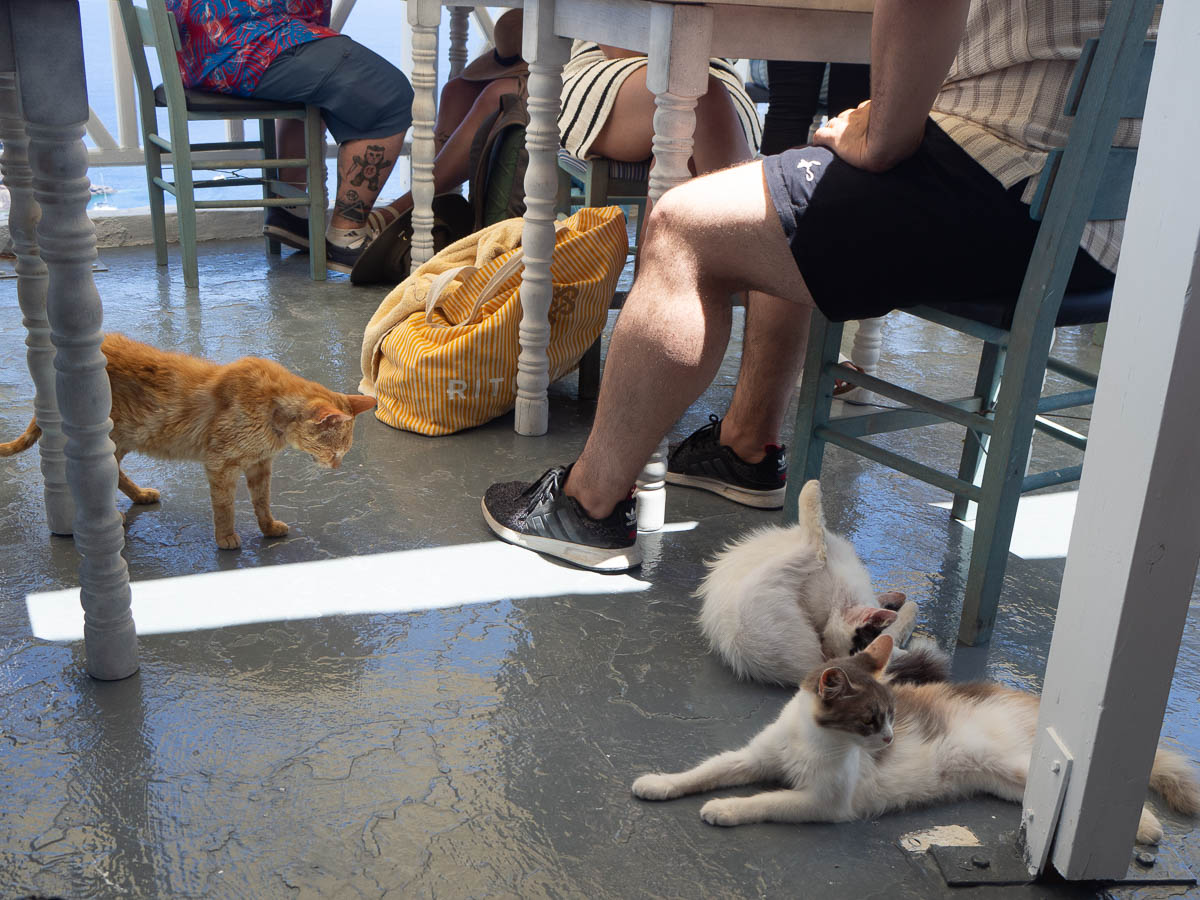
The stray cats on this island were all looking very scraggly. We missed Nysse.

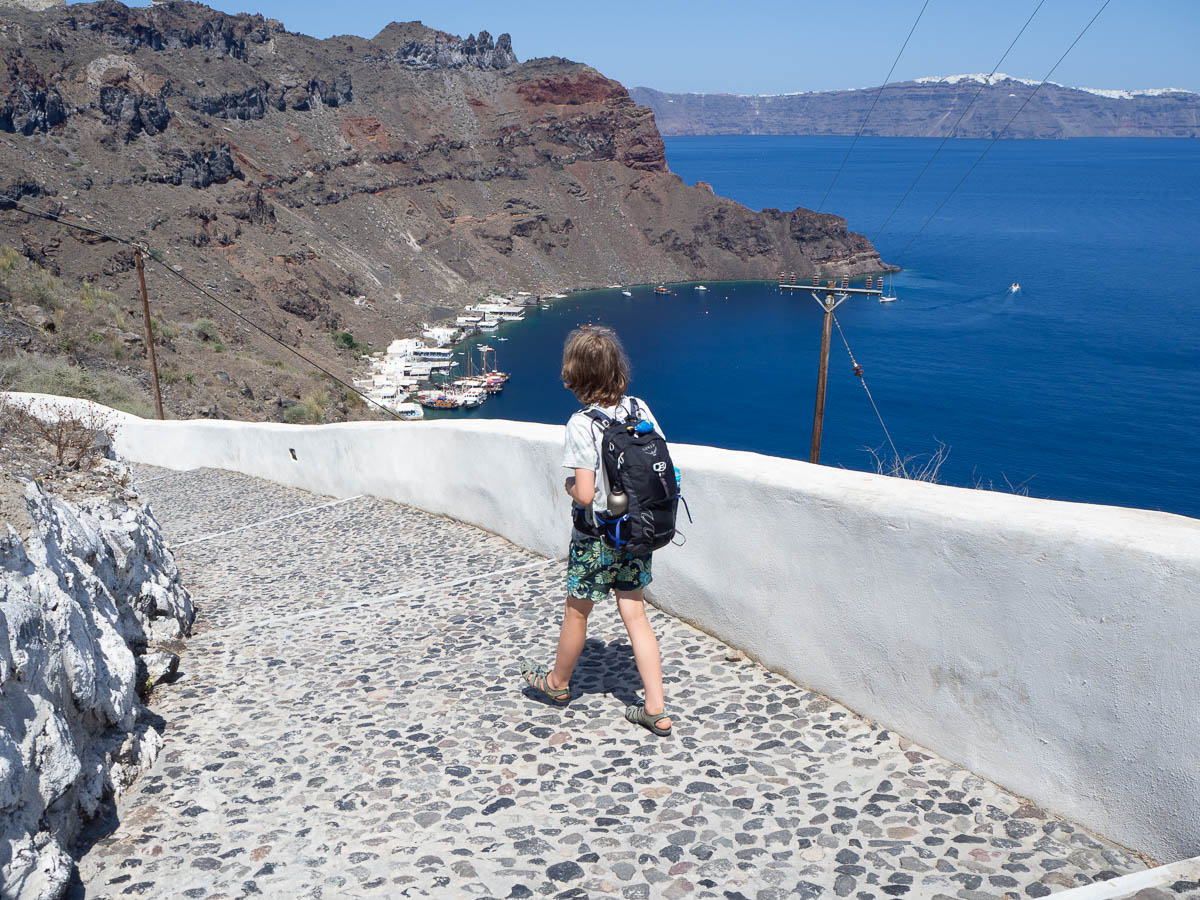
The way down felt a lot easier.

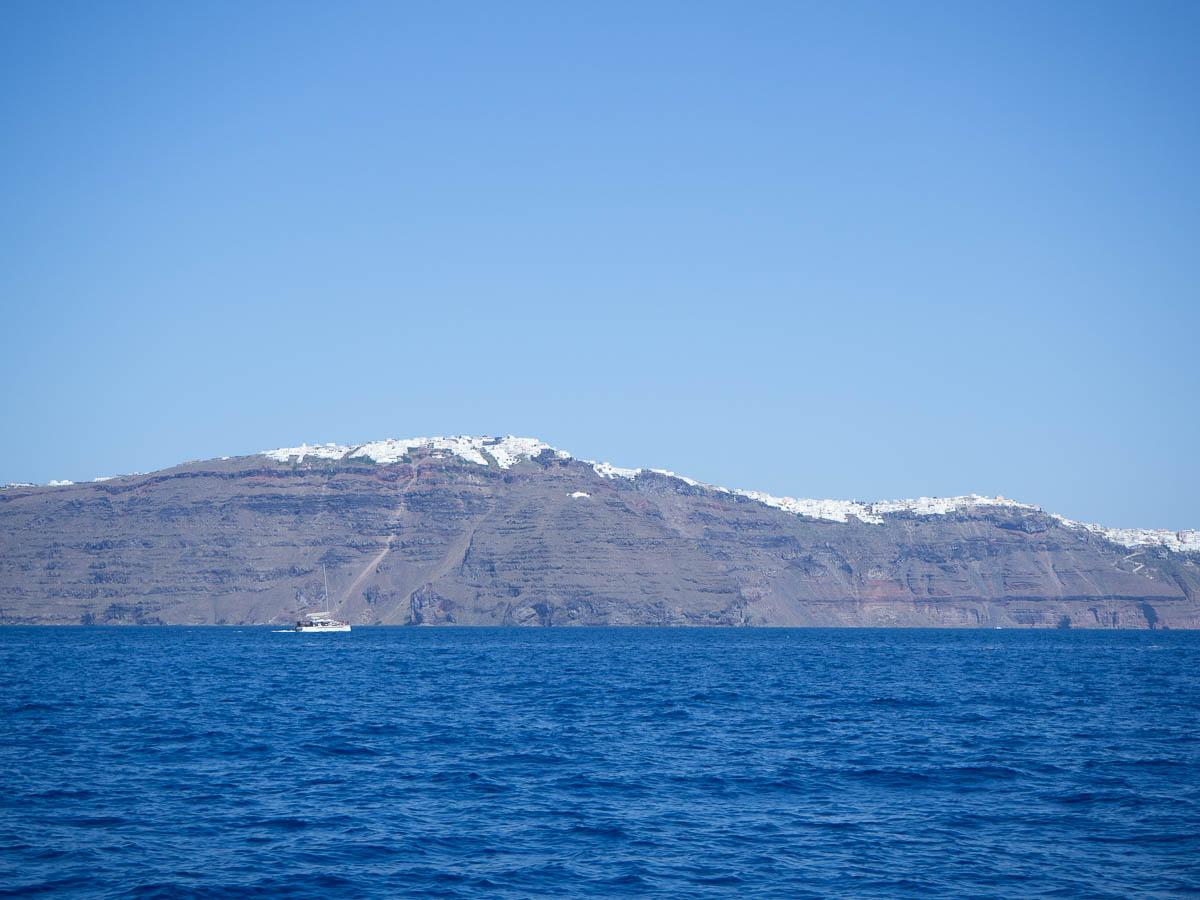
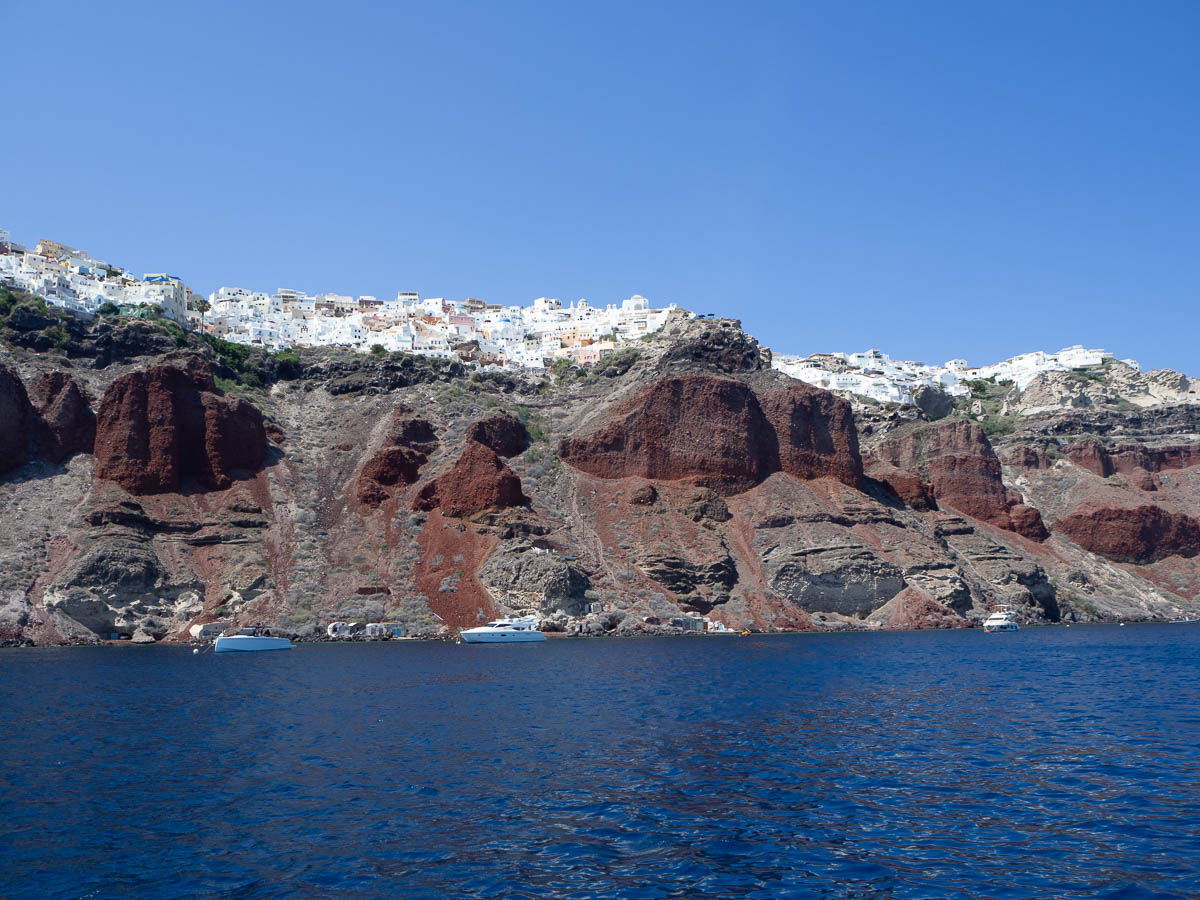
On our way back to the port on Santorini we got some nice views of the villages we walked through and past yesterday.

There’s the rock of Skaros with its castle ruins in the middle, that we visited yesterday.

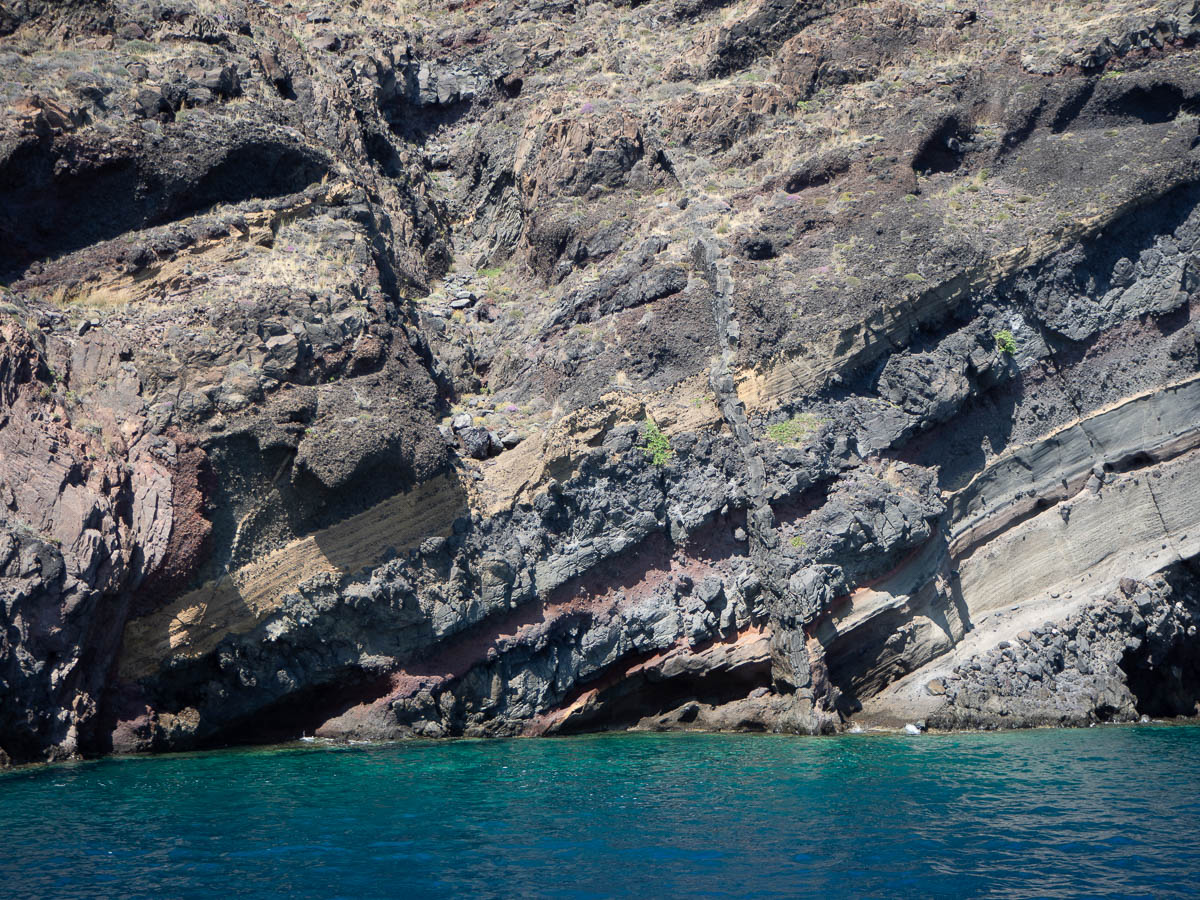
Layers of volcanic rock.

A non-walking day today. Instead we visited the archaeological excavation/museum at Akrotiri. Like the site at the top of the hill near Kamari, this town dates back to the Bronze age. It was destroyed by the volcanic eruption in 1600-something BC and the excavation has been in progress for some fifty-odd years.

The site was interesting to see, but I was disappointed to find out that absolutely everything they’ve found – tools, household objects, frescoes – has been carted off to museums in either Fira or all the way to Athens. Only the walls and stairs and streets themselves are left here, as well as a few token clay vases, and castings of bed frames, for some reason. (Wooden objects rotted over the centuries, and left behind hollow spaces in the volcanic ash, so when any hollows were found, the archaeologists made casts of them all.) They haven’t even put up replicas or projections or even posters with images.

On the other hand, it was interesting to see archaeologists actually at work, with their brushes and sieves and wheelbarrows.

We had lunch at the beach in Akrotiri, which was a much calmer experience than the crowds in Kamari. I wanted to try something local so I ordered red mullet. My plate did indeed contain a bunch of red fish. I was informed that even the fins were usually eaten and would taste like chips/crisps, which indeed they did.


Then we looked at pretty black rocks on the beach, and threw some into the sea.

Fira to Oia is the top item on all “walking on Santorini” lists and articles. So that’s what we did today.

Fira is the main town on Santorini, and also shares its name with the island. Santorini used to be called Thera or Thira, which after a while became Fira. Like many other towns on the island, it’s a cluster of small, white buildings clinging on to the cliff top.

A few kilometres from Fira we came to Skaros Rock, which looks like nothing but a strange rock outcropping from the distance, but turns out to hold the ruins of a Venetian fortification.

Right next to the ruins there was a loud sign proclaiming the area to be dangerous and forbidden and off-limits, even while there were paths and stairs leading into them. I’m guessing the paths weren’t up to some safety standard so the local authorities were forced to put up a sign to comply with regulations, but clearly they’d realized that actually trying to keep tourists out would lead to more danger of serious accidents than giving them safe paths to walk on.

The views from here made the crescent shape of the island and its volcanic origin very obvious.

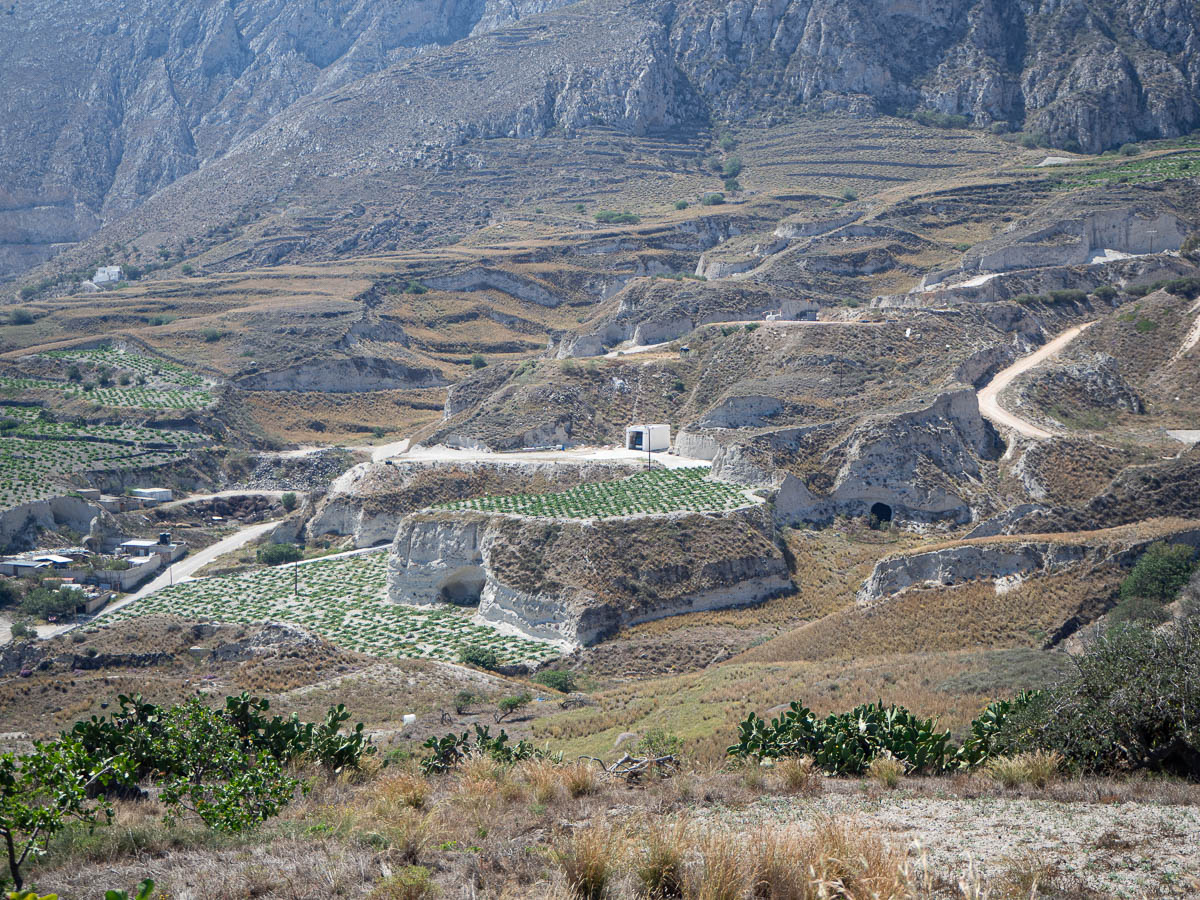
The landscape between Fira and Oia was mostly volcanic semi-desert, occasionally interrupted by tourist accommodation in one shape or another. This island truly has a lot of hotels. Then again, I can’t think of anything else they could do if they didn’t have any tourists, because it’s not like you could grow anything much here.

Tufts of this one plant with yellow flowers seem to be the first ones to take root in the dry volcanic ground.


Today there were no clouds and no real shade anywhere. When we finally spotted a sliver of shade along a small chapel in the middle of nowhere, we could finally take a longer break without feeling like we were melting. When we made ourselves small and pulled our legs in close, we could all fit into the shade.

Ingrid kindly took photos of me today again.


Oia was even more tourist-focused than Fira. Everything was either a hotel, a restaurant, or a tourist shop.

Santorini has a fair number of stray cats, that seem to be tolerated most everywhere. There is one who visits our hotel every morning at breakfast time, whom we already recognize, and we’ve seen others feel at home at cafés and restaurants.

Oia is the town where the most famous photos of Santorini tend to be taken, with its blue-domed white buildings.

Today was the only day of this week for which the weather forecast promised a splash of rain in the morning. It seemed reasonable, looking at the sky, so we hung around at the hotel for a couple of hours before going out. This is our view from the hotel towards our planned walk for the day – that somewhat wooded area on the hills, between the two peaks.

But the rain kept not happening and we kept getting more and more restless, so in the end we just left anyway. Some rain won’t kill us.

The walking took us up, and up, and up some more. First in zigzags along the road, and, after the pass, along paths and stairs.


At the top of the hills, we came to the site of ancient Thera, a Bronze Age town destroyed in the volcanic eruption that destroyed most of Santorini and ended the Minoan civilization. It was amazingly well preserved – paths, walls, pillared halls, carved reliefs still fully visible.


Ingrid kindly took some photos of me. I was there, too! (Holding hard on to my hat because it was very windy up at the top.)


We took a different path down, which gave us a nice view of the road we previously walked to get up the hill.

Halfway down there was a cave with a natural spring.

We’d been wondering before why anyone would build a town at the top of the hill where there is no water, but at that time, pre-volcano, the hill was much taller so the town wasn’t at the top. So perhaps they had similar springs there.


We’re on a week’s vacation on Santorini. Today was mostly travelling, although we had some time in the evening to explore Kamari, the village where we’re staying, and its black pebble beach, and the long beach promenade.

Hoping to not get caught by another heat wave to make hiking difficult, we booked this trip for as early in the season as possible, as soon as school ended. It’s hot, but not unbearably so.

Coming here in June is also good to avoid the crowds that are sure to be here in peak season in July and August – now the restaurants are more than half empty, and there is plenty of room both on the beach and in the streets.