We awoke, very reluctantly, just after six in the morning because of some nutters who thought this was the best time to go out on the lake in a fishing boat. Car engine noise, repeated trips carrying equipment from car to boat, then plenty of rattling with chains and padlocks… it went on for long enough that there was no chance of staying asleep. When we met the nutters afterwards, they said they were from some environmental agency, inspecting the state of the fish population and thereby also the water quality. Great, I’m all for that, but I do not understand why they couldn’t take up their nets a few hours later.

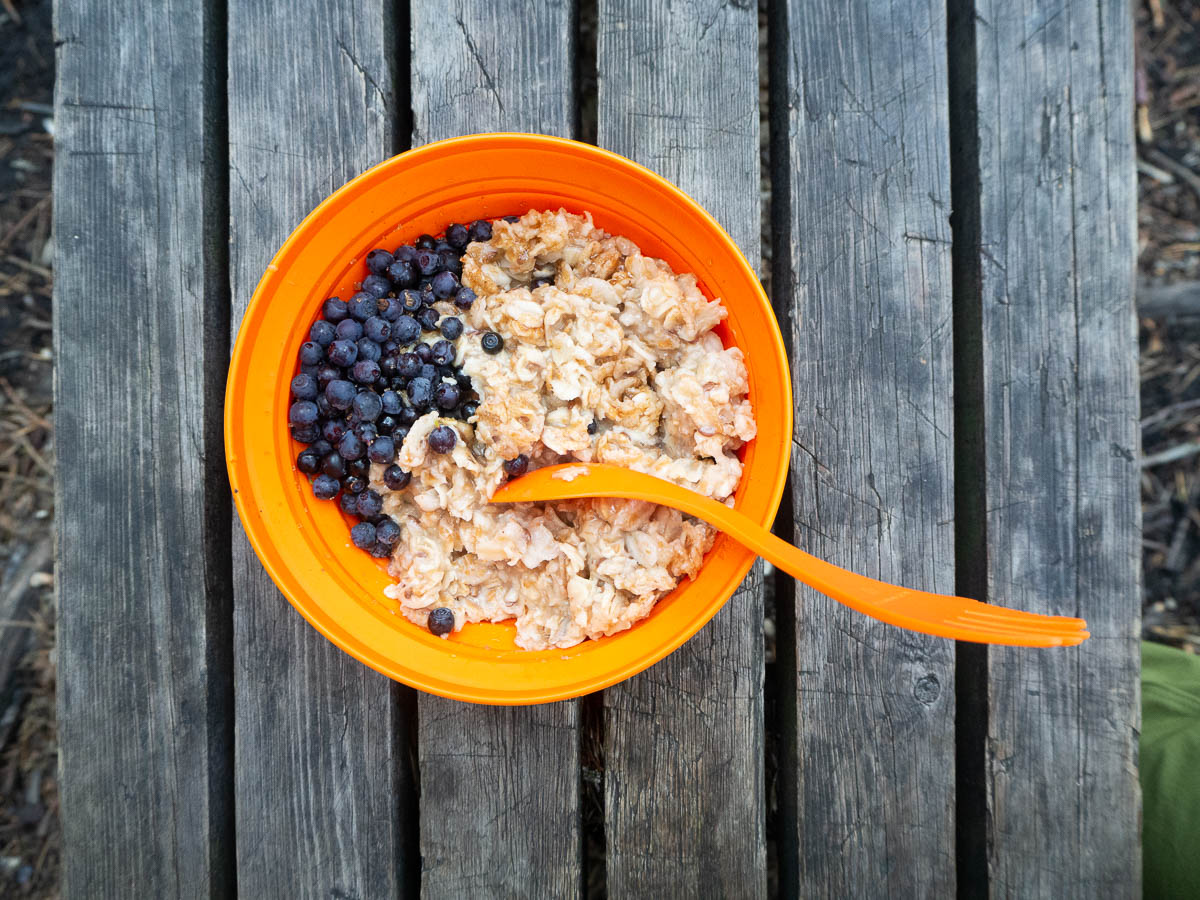
Since we were up anyway, we might as well have breakfast. There were plenty of bilberry bushes everywhere around us, but the berries were few and small. It took quite a while to gather some to have with our porridge.
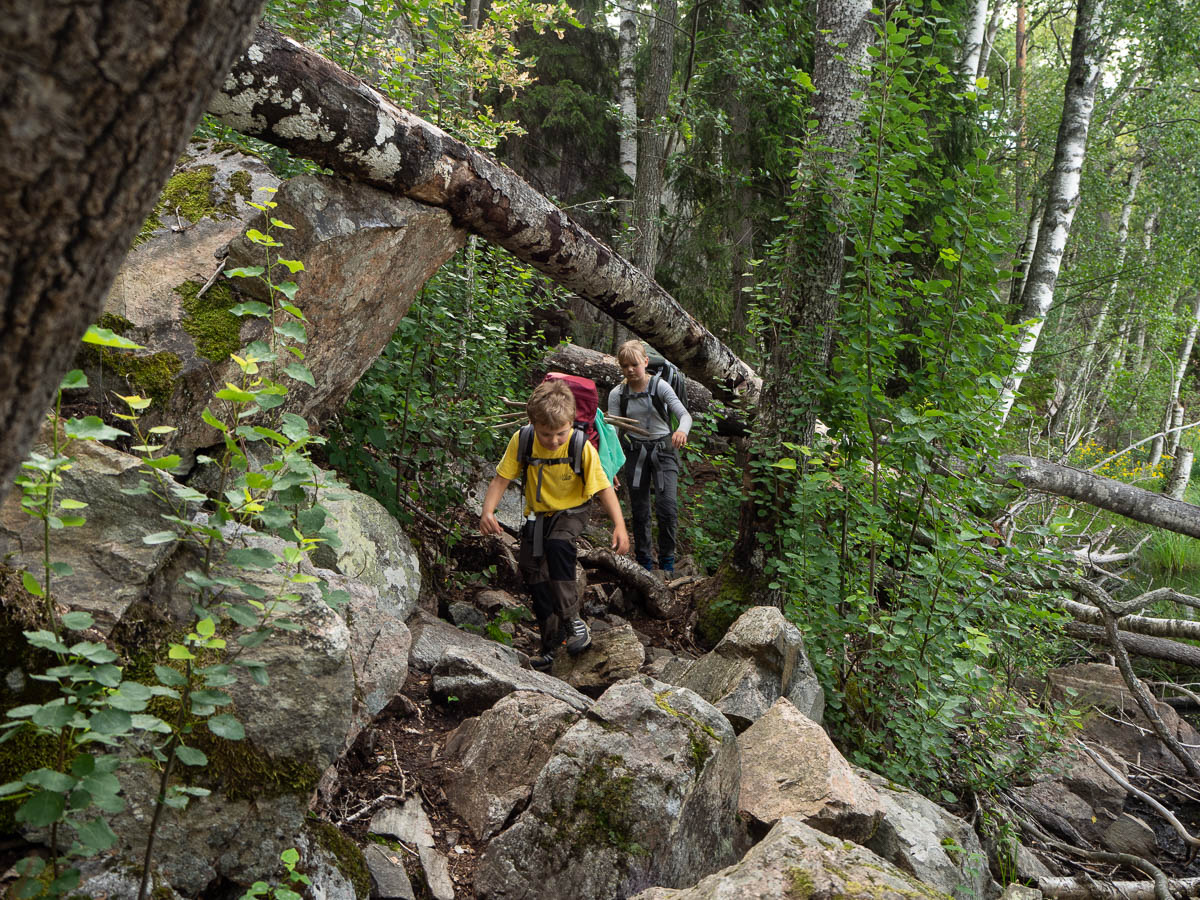
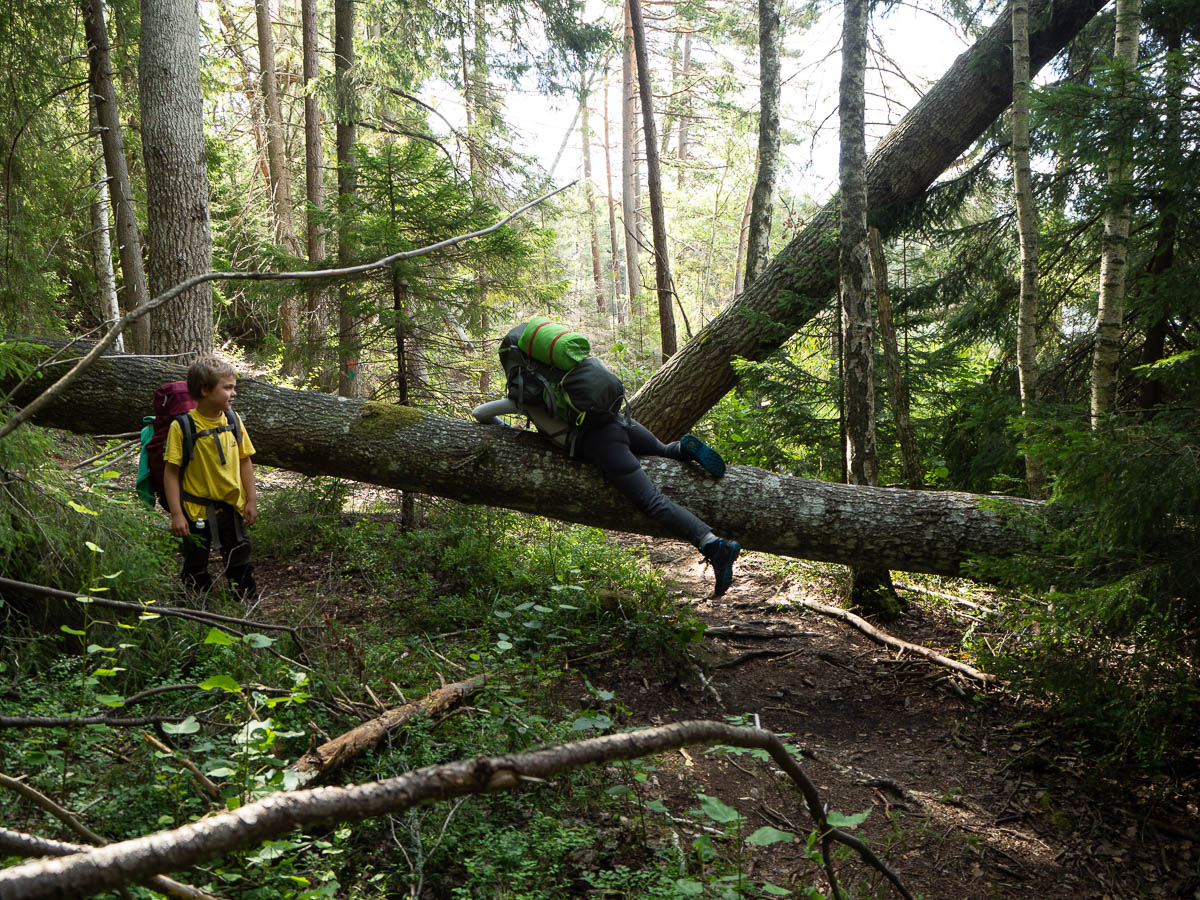
Afterwards we packed up our stuff and started the walk back. This trail was rougher than most marked hiking trails, with lots of fallen trees to get past. Sometimes over, sometimes under. And some, of course, just at that in-between height where it’s hard to fit under them, especially with a backpack, and hard to get over as well.
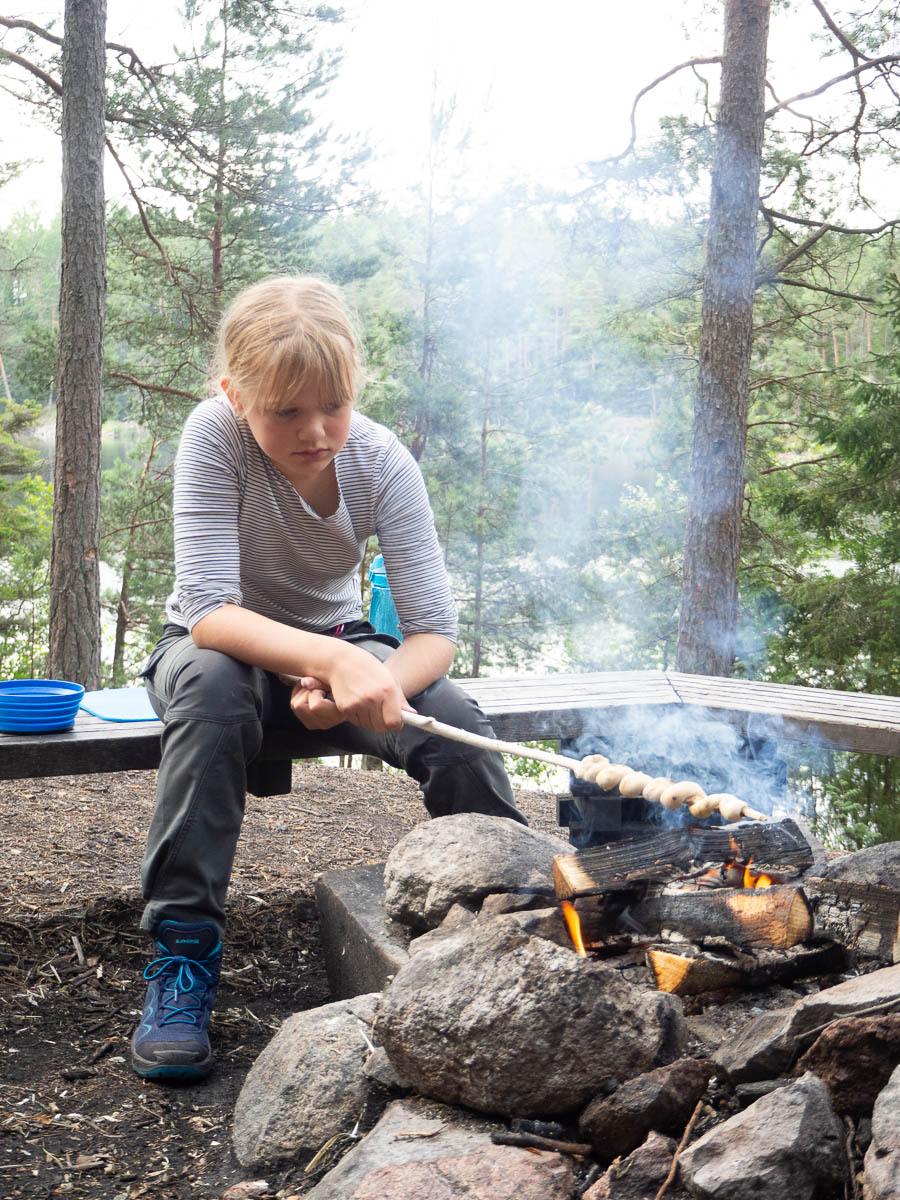
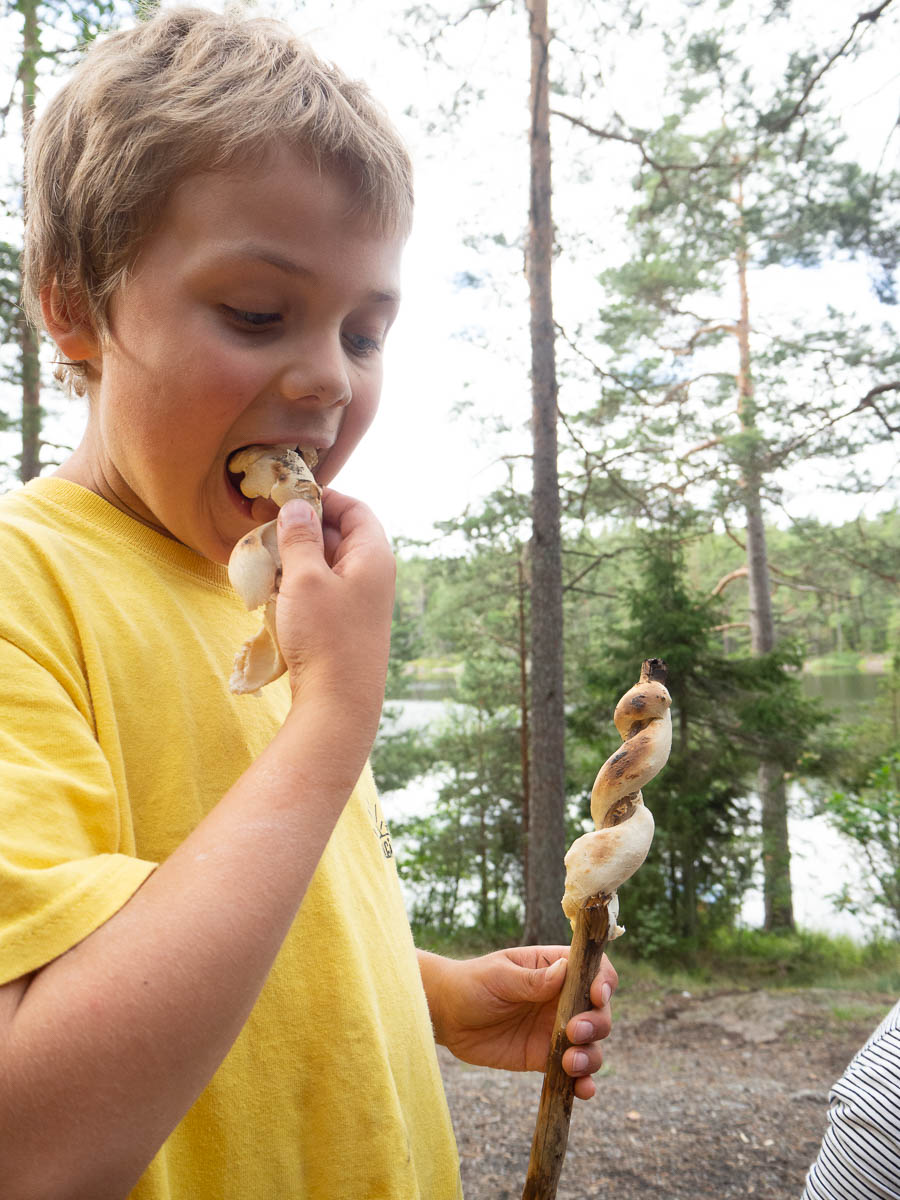
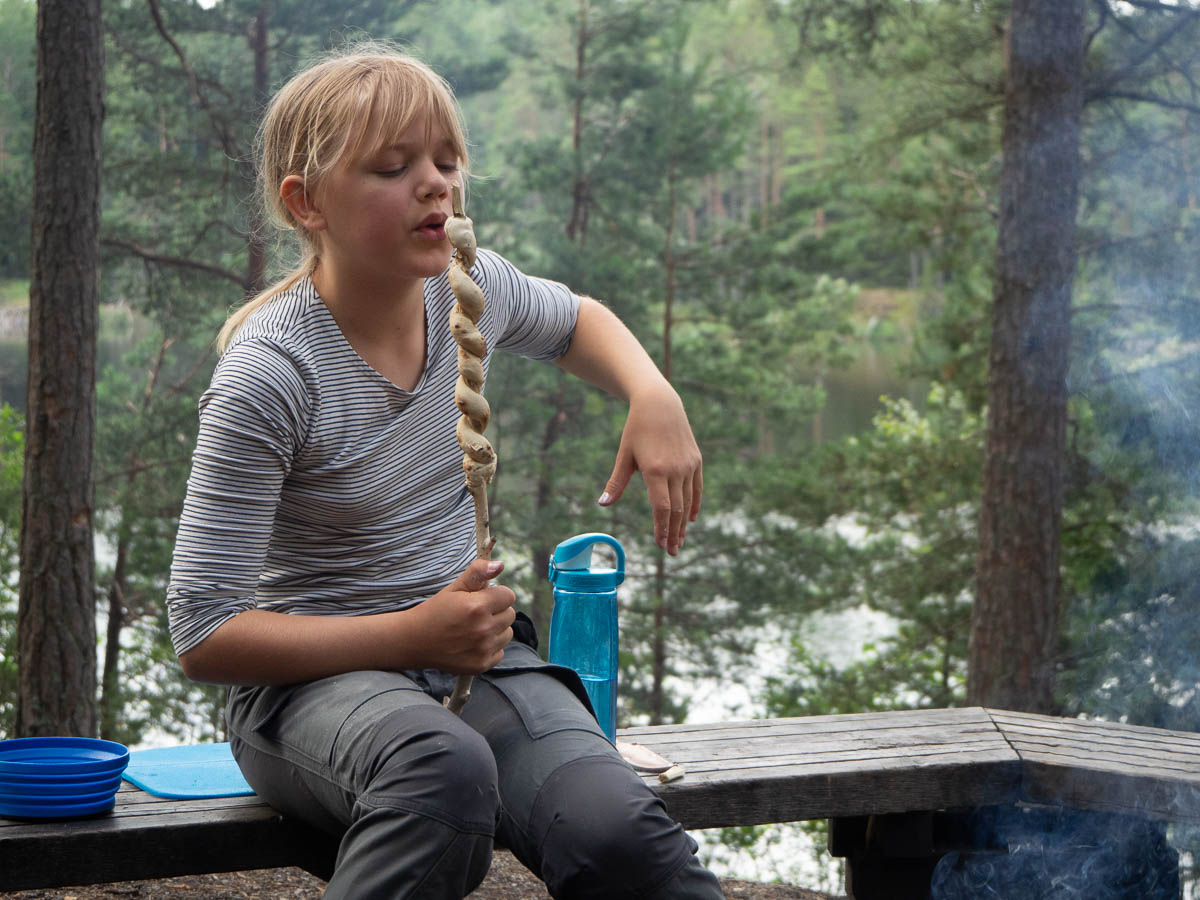
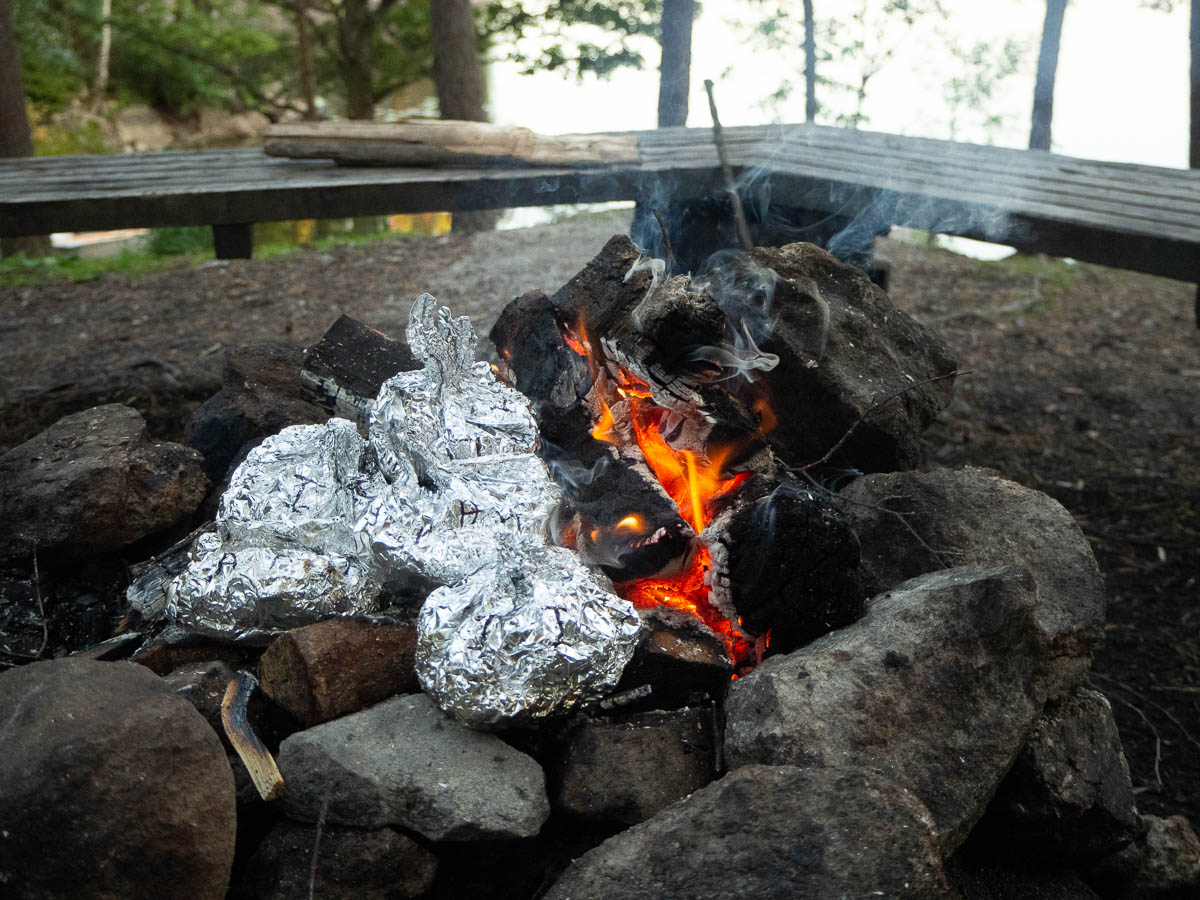
Just after halfway we passed a fireplace with nice views of another lake. Walking past this spot yesterday, the kids named this one “the fake lake” because at first glance it looked like it could be our tenting spot, but wasn’t. Since it looked so lovely yesterday, we planned a mid-morning stop here today, with a campfire and bread on a stick.
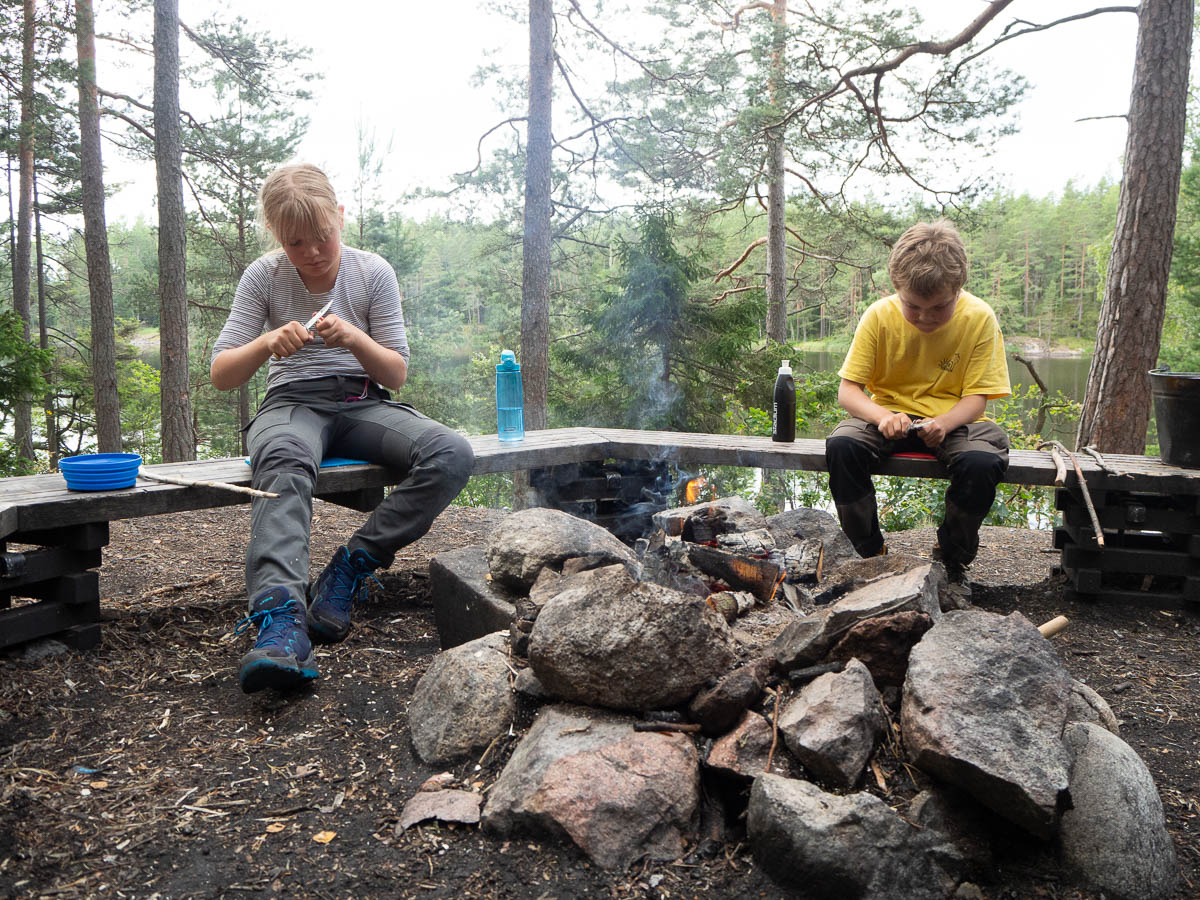
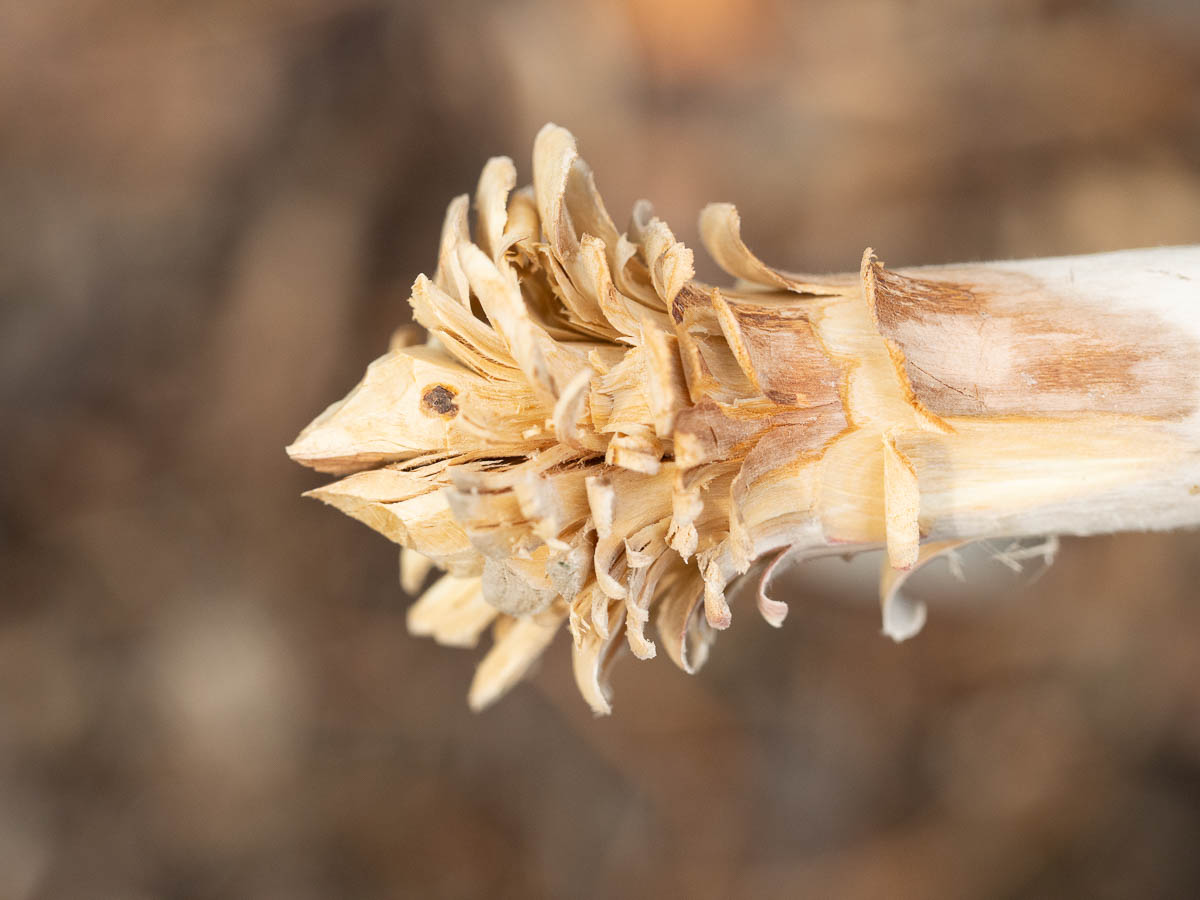
And whittling. Bread on a stick requires a good, smooth, clean stick, so Ingrid prepared one. Then the fire needed some time to burn, and what better way to pass the time than do some more whittling. When the breads had been eaten, the whittling continued. Adrian has no knife of his own yet so he borrowed mine, which left me with nothing much to do, other than taking photos. Both Ingrid and Adrian could probably have stayed there for much longer, but I got bored of waiting after some time, so we continued walking towards Brakmaren and the car.
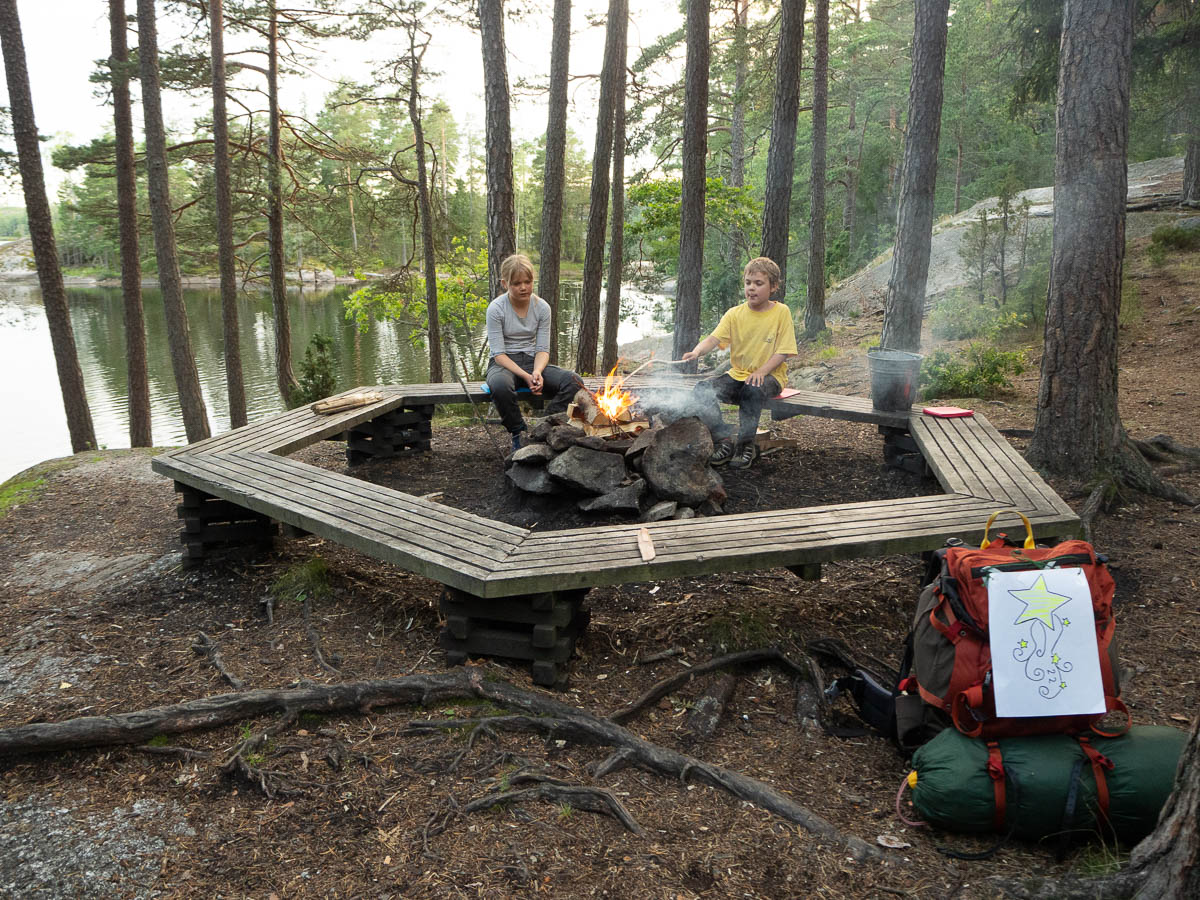
This year’s scout camp is nearly here so we’ll get plenty of camping and outdoors activities soon. But Adrian still wanted to go camping with just us as well, and Ingrid came as well.

We’ve tented in Tyresta before, and Paradiset. Those two are my favourite nature reserves near Stockholm, beautiful and varied and easy to reach. This time I thought we’d try a new spot, so we aimed for a tenting spot next to lake Stensjön.

Somehow the preparations took me most of the day, even though I started just after breakfast. Getting all the gear, packing my own stuff, helping Adrian pack, shopping food, prepping food… by the time we were at the parking lot at Brakmaren, it was already six o’clock. We had a four-kilometre hike to the lake, and then there was a fire to build and light, and dinner to cook. (For dinner we had our traditional “hajkbomb” and then a delicious dessert of sauteed apples with chopped nuts and chocolate and cinnamon.)

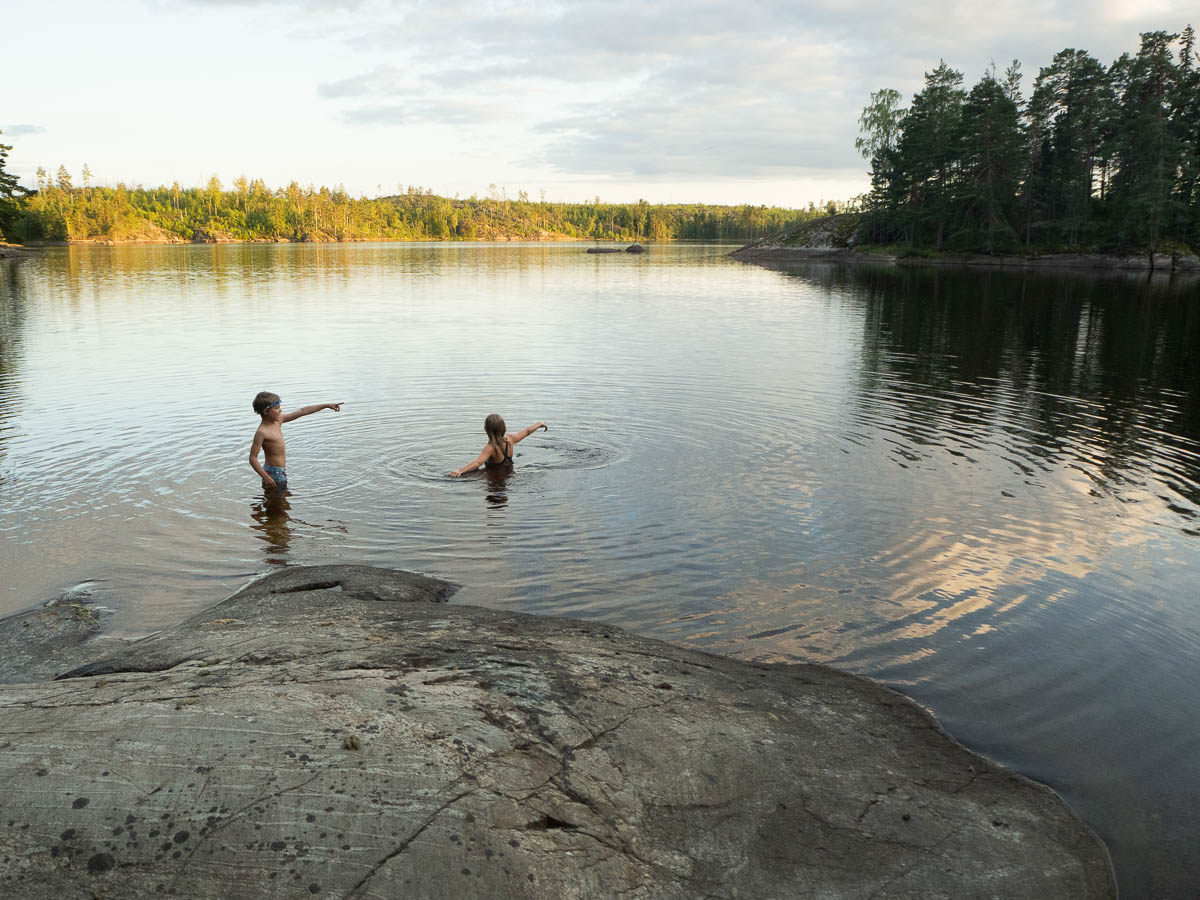
Adrian went to sleep in the tent, while Ingrid and I went for a late night swim. There was a small island quite close to the shore – too far for the children to swim to on their own, but close enough for me and Ingrid. The weather was quite chilly so we didn’t stay on the island for more than just a moment. During our swim back, we had company of a bat that swooped by very close to us, just above the water.
When we got back, we found Adrian still awake, because the tent wasn’t like home, so we also went to bed to keep him company. Just as Ingrid went for a last pee in the dark, some animal rustled in the bushes right next to her. I joked about bears and elephants, but I wonder what it really was. Fox? (Those don’t make much noise, though, I believe…) Badger?
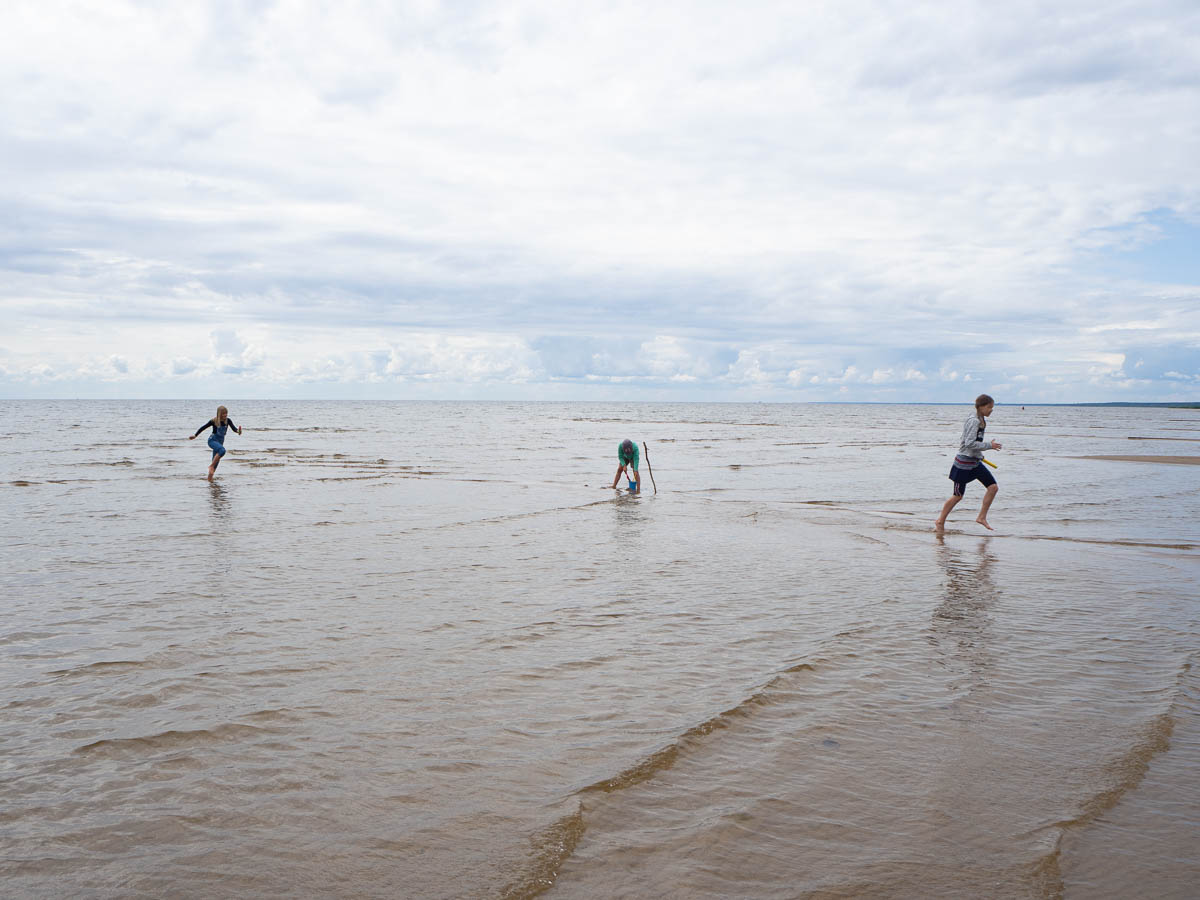
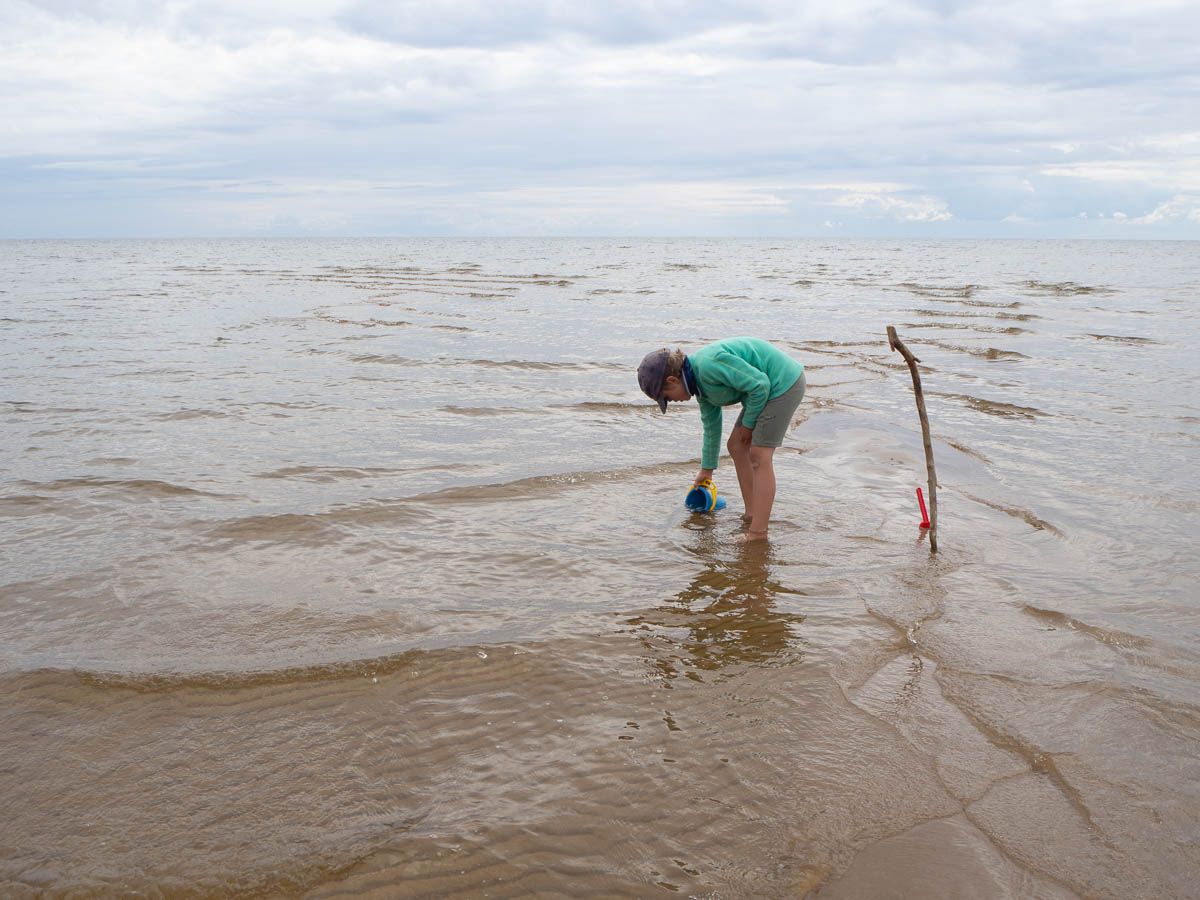
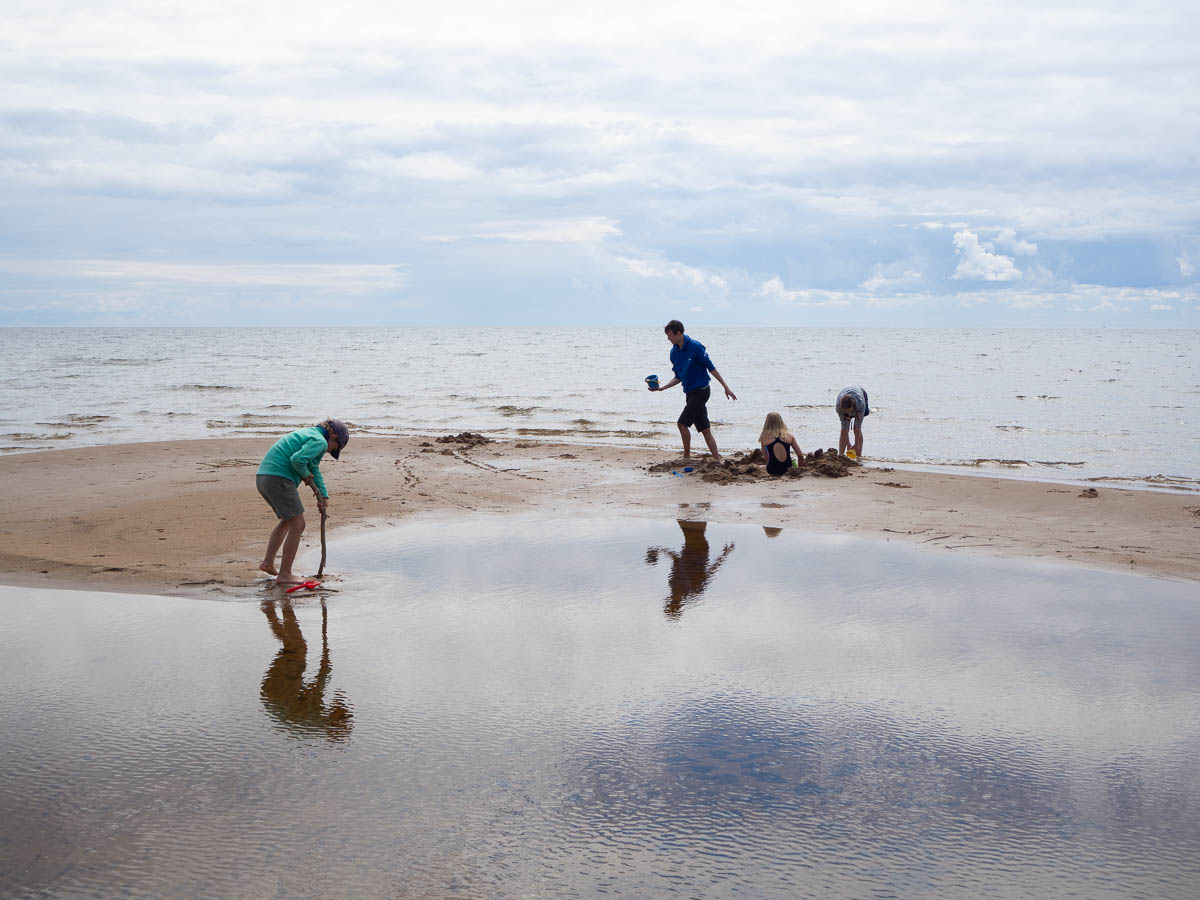
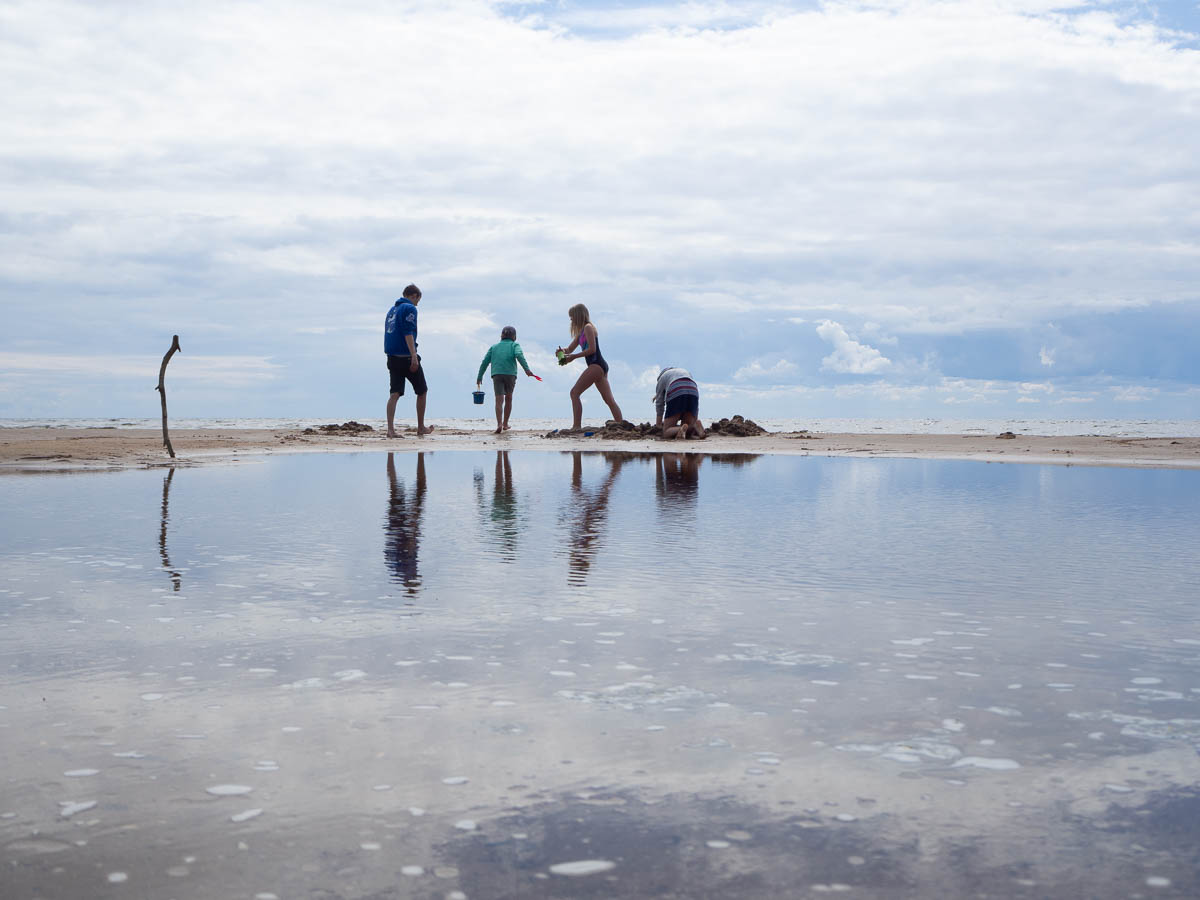
There is a hiking trail at Kauksi. We walked the trail and we ate blueberries and had fun. But none of it could compare to the beach.

Empty and flat. Endless.

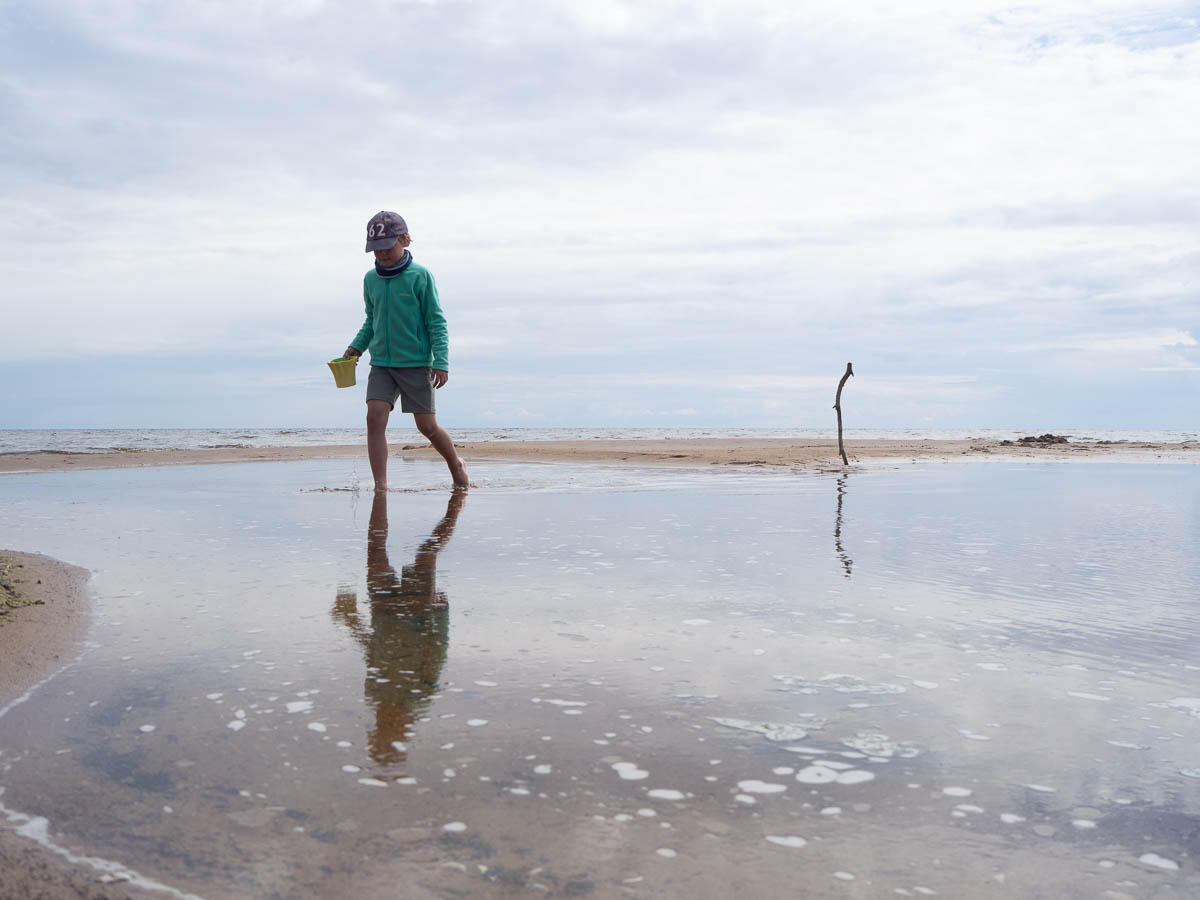
Even though the weather was cold, the children played for hours. There were shallows where the water barely covered the sand, and a lagoon with warmer water, both of which offered great conditions for digging – and for photography.

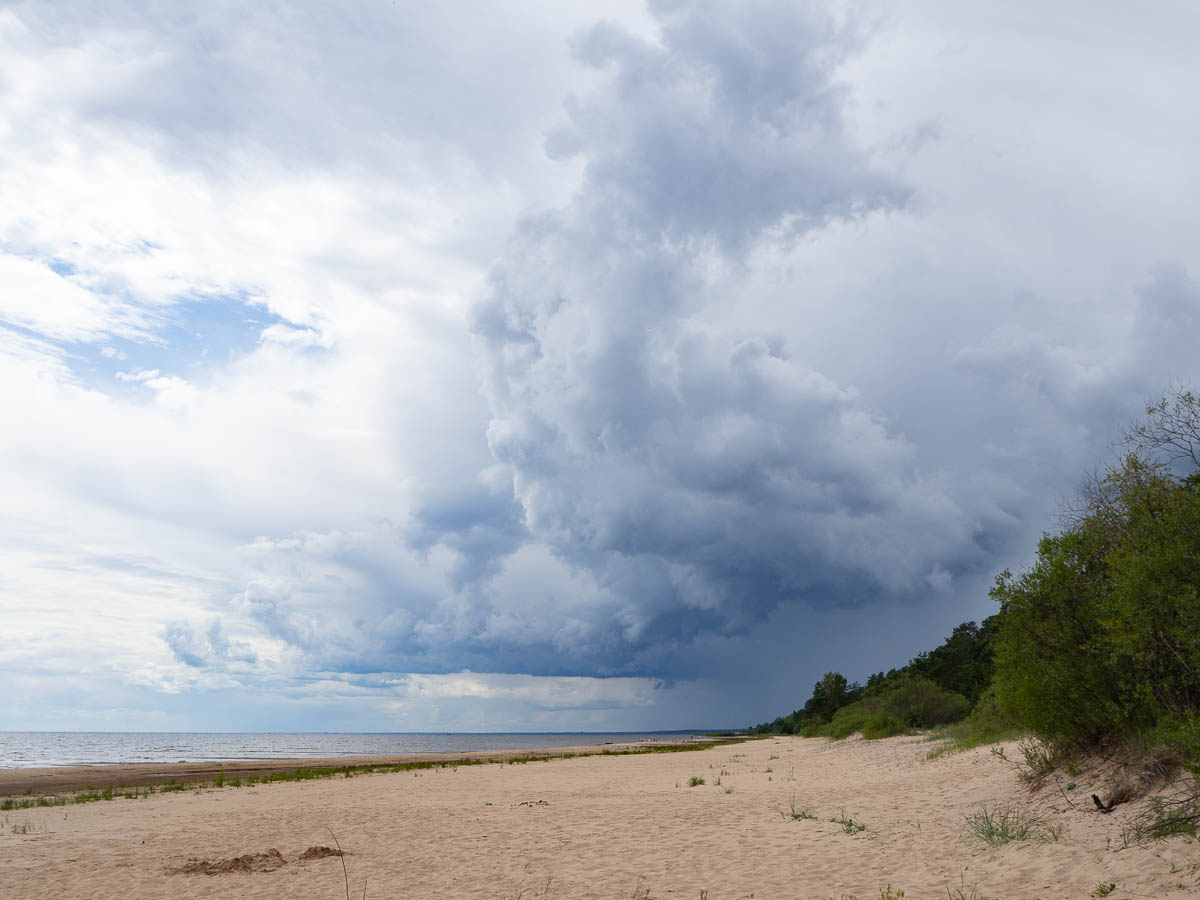
We only left because of the threatening thunderclouds that appeared in the early afternoon. A speedy hike back to the cars saved us just in the nick of time; the rain came pouring down while we were driving back.


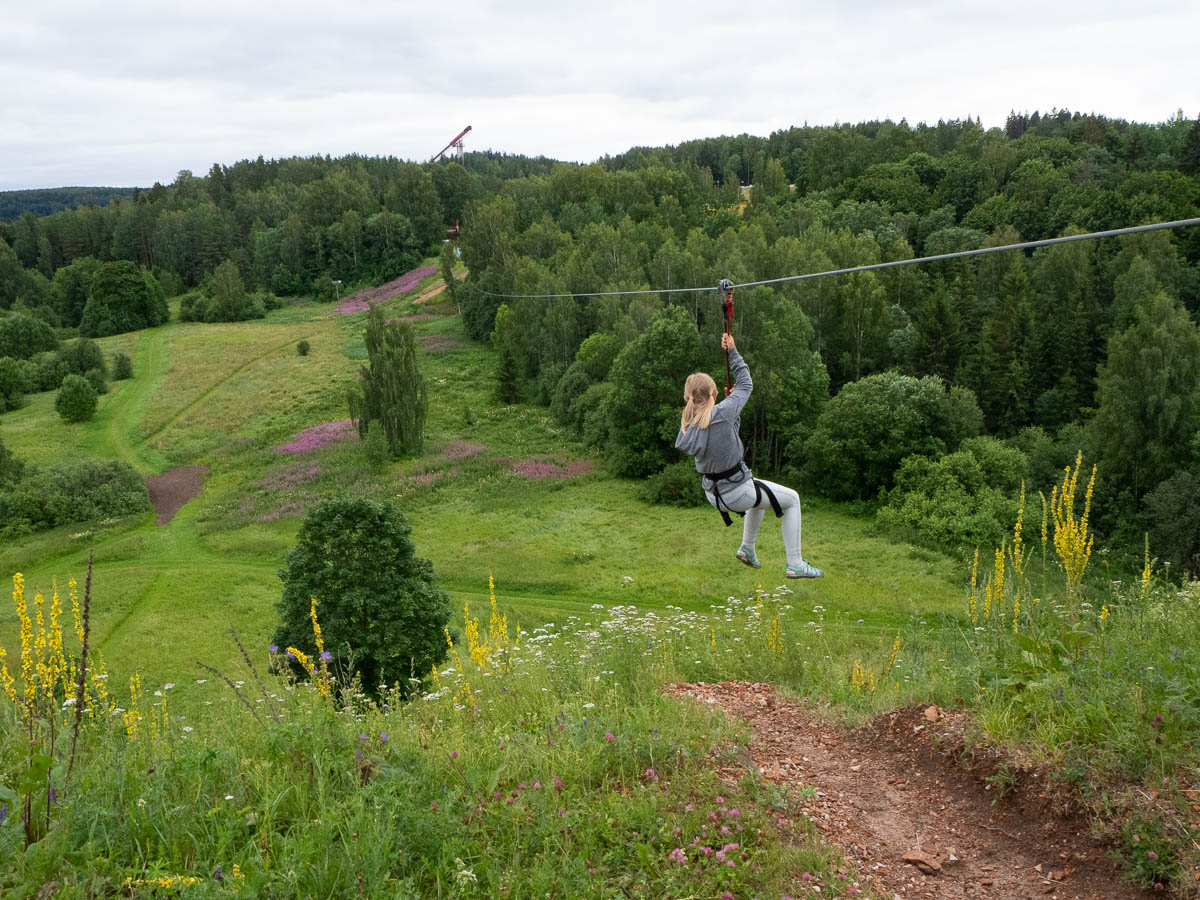
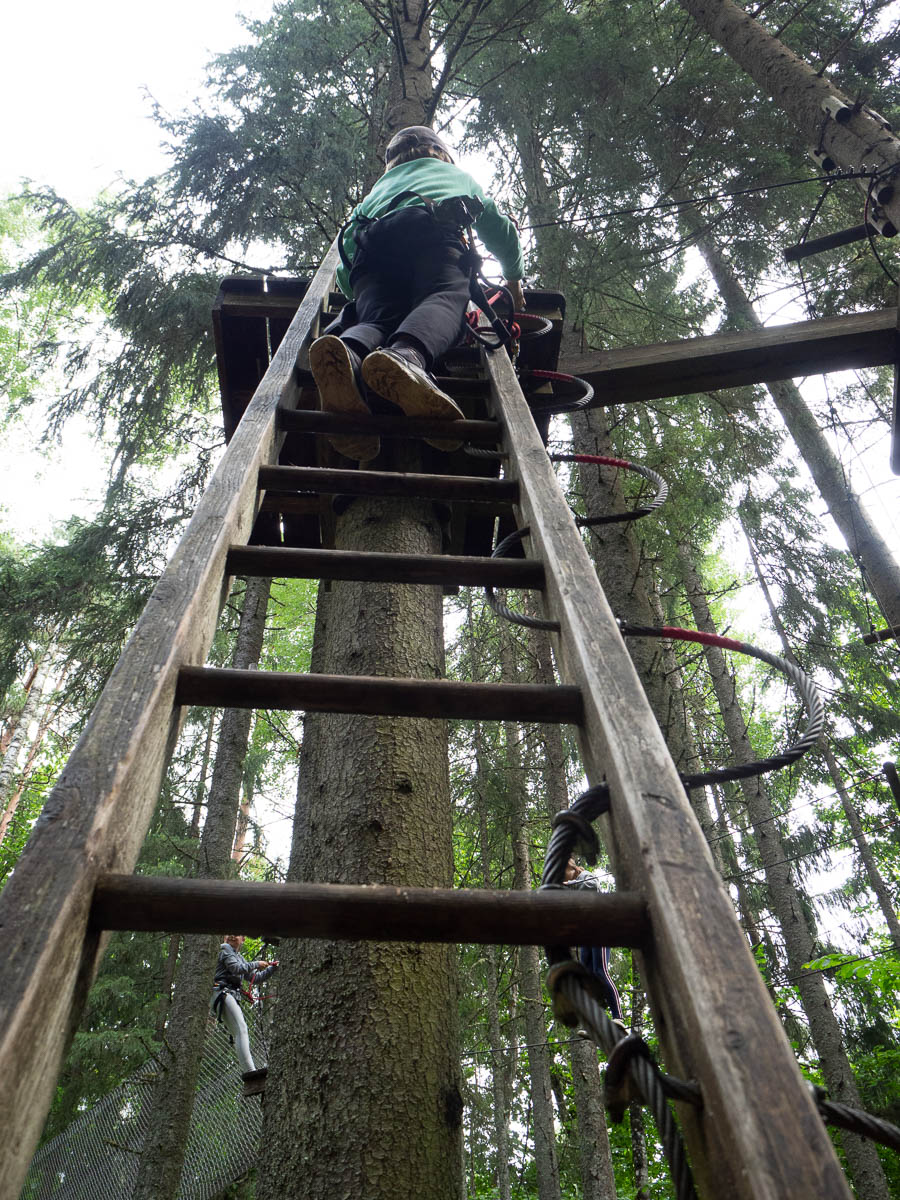
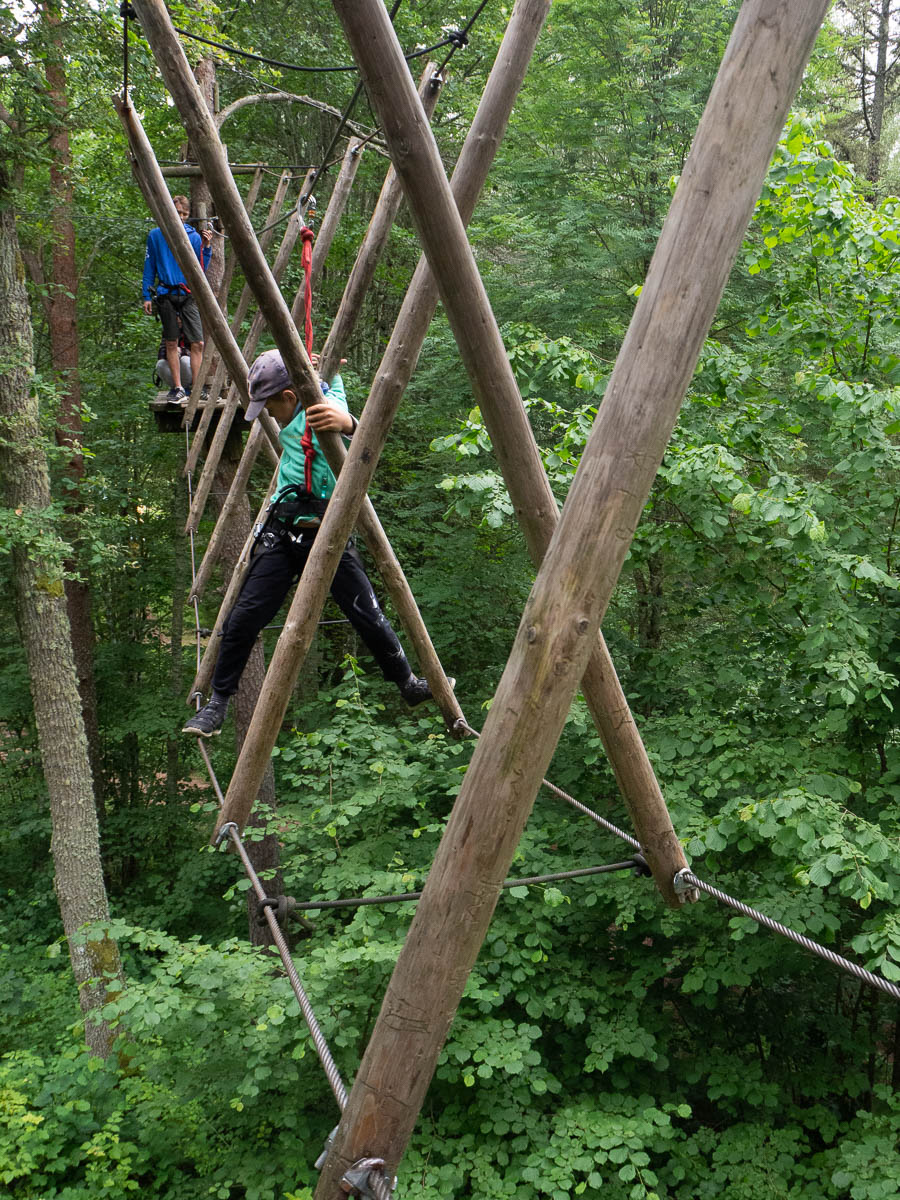
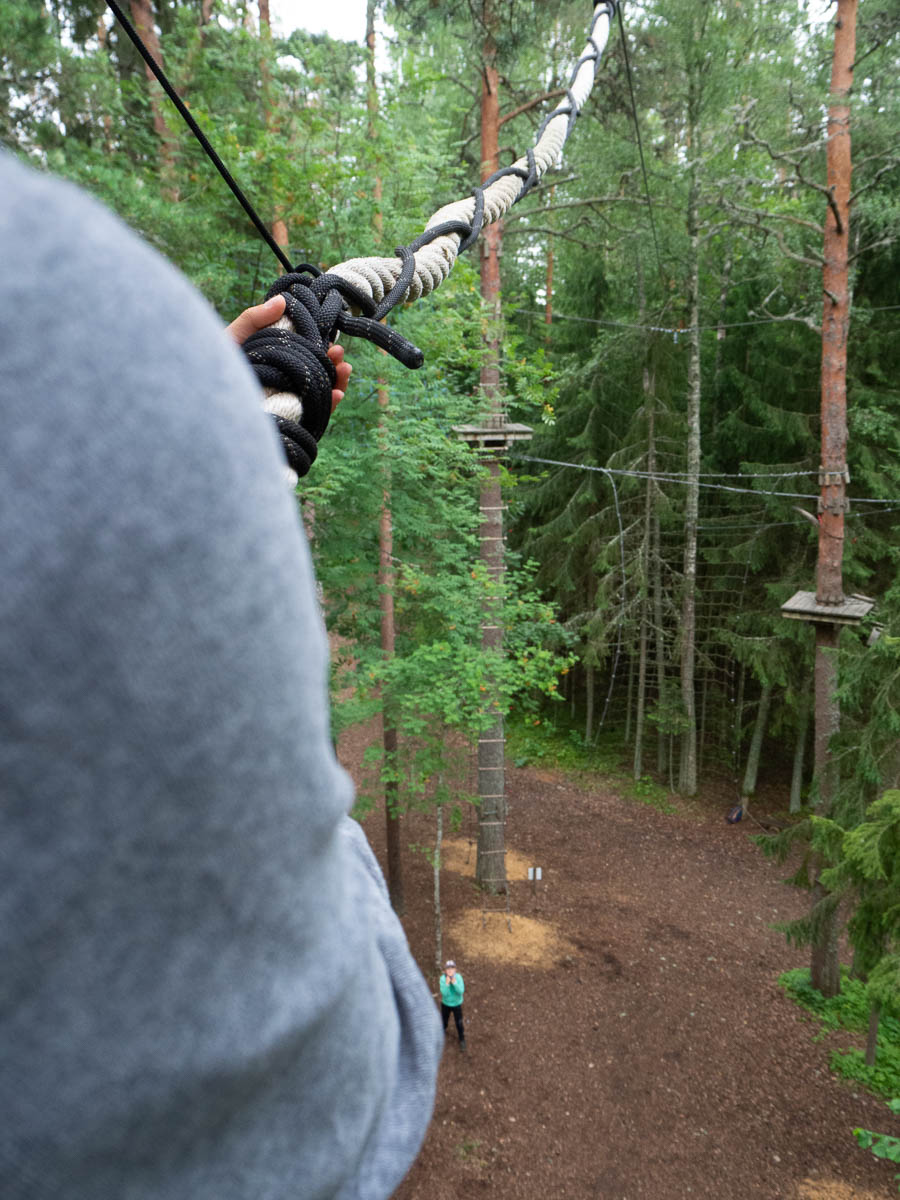
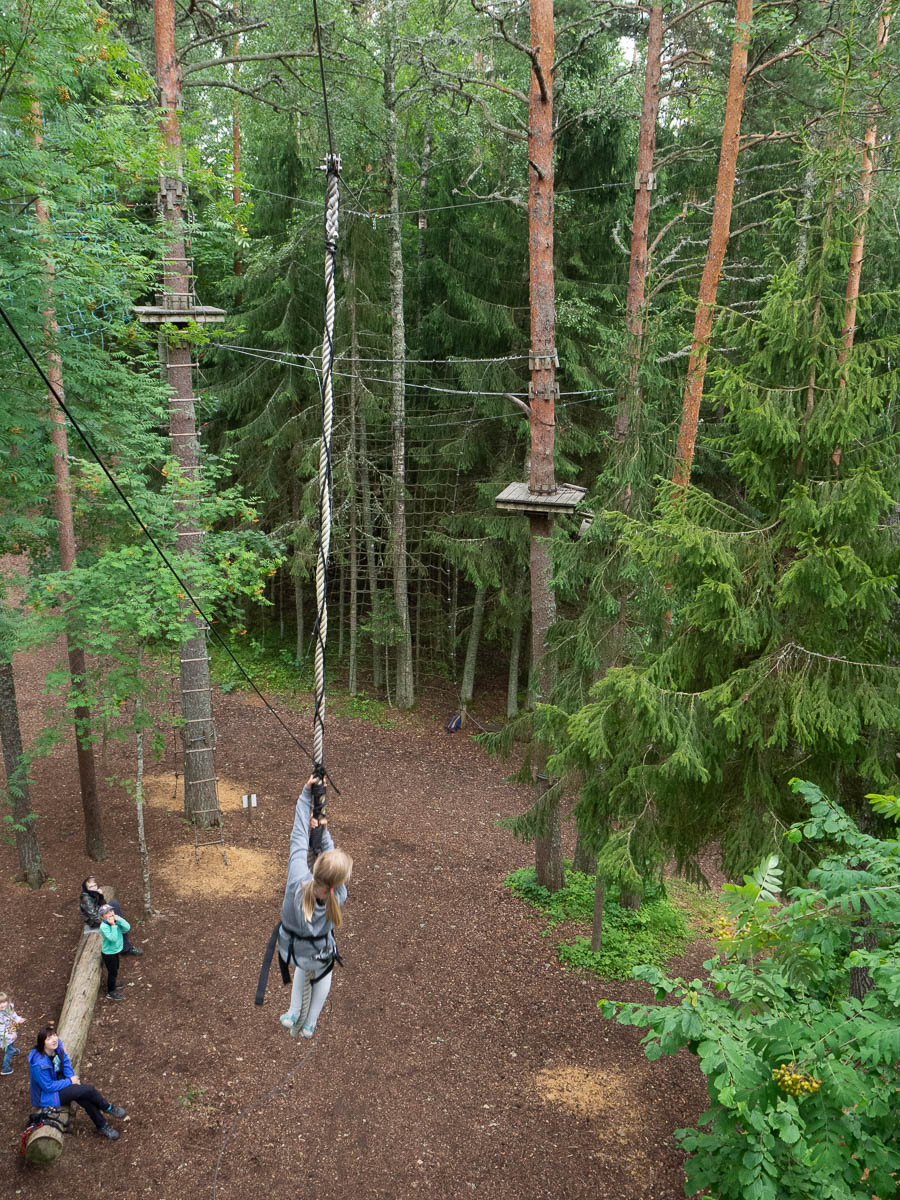
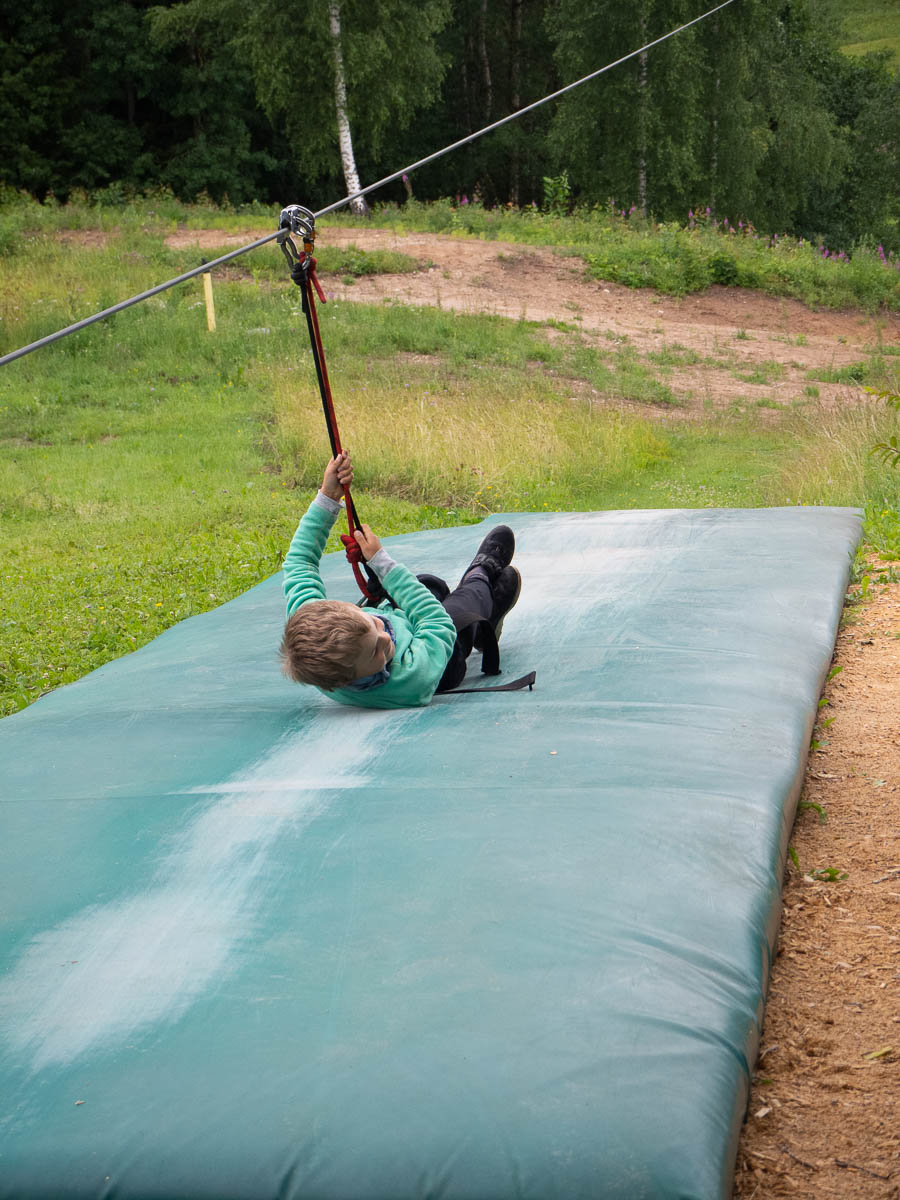
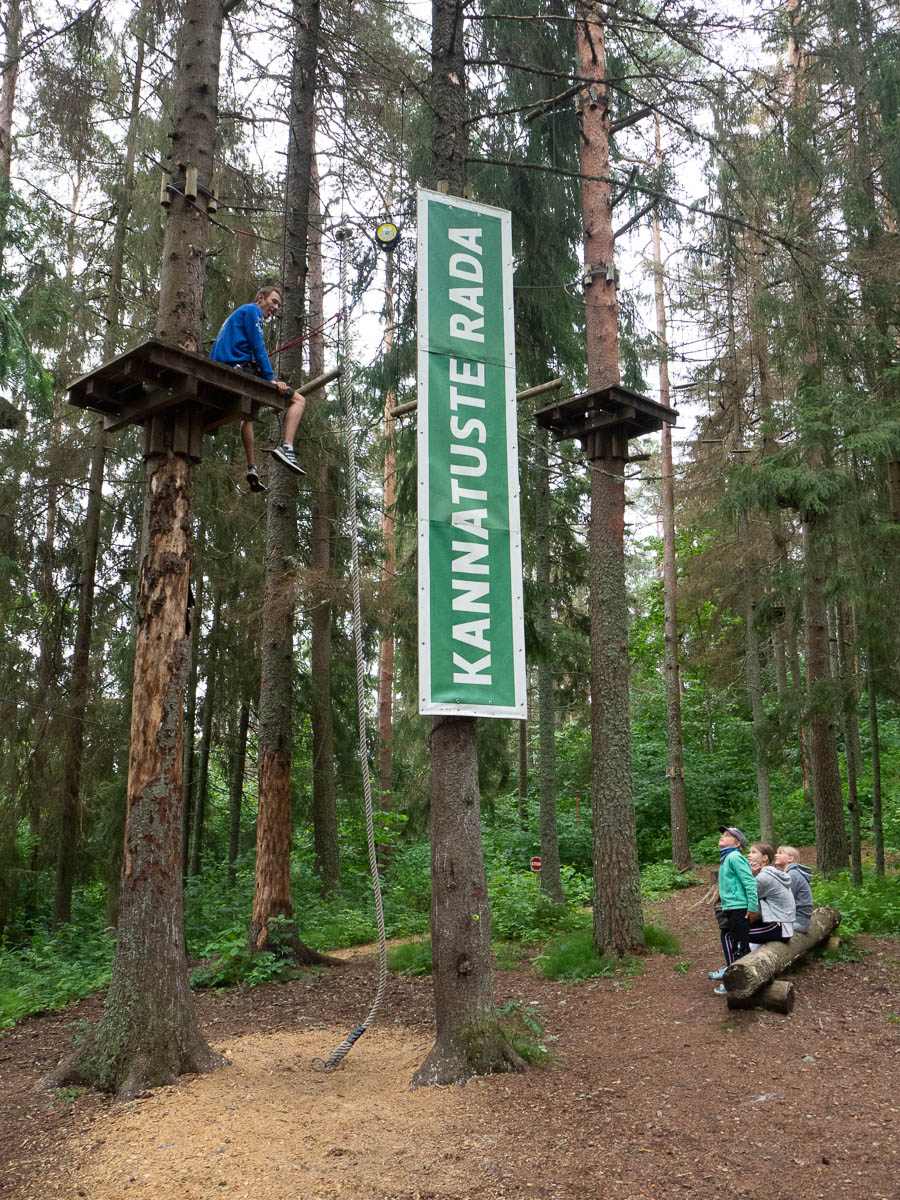
Our annual visit to Otepää adventure park with a bunch of friends and kids. Ingrid on all five trails; Adrian on three; all three of us on the ziplines.

Rain seemed again to be imminent several times but never actually materialized.

Ingrid doing the “Tarzan leap”:


Day 6 of 7. Valldemossa to viewpoints and back, 9.3 km.

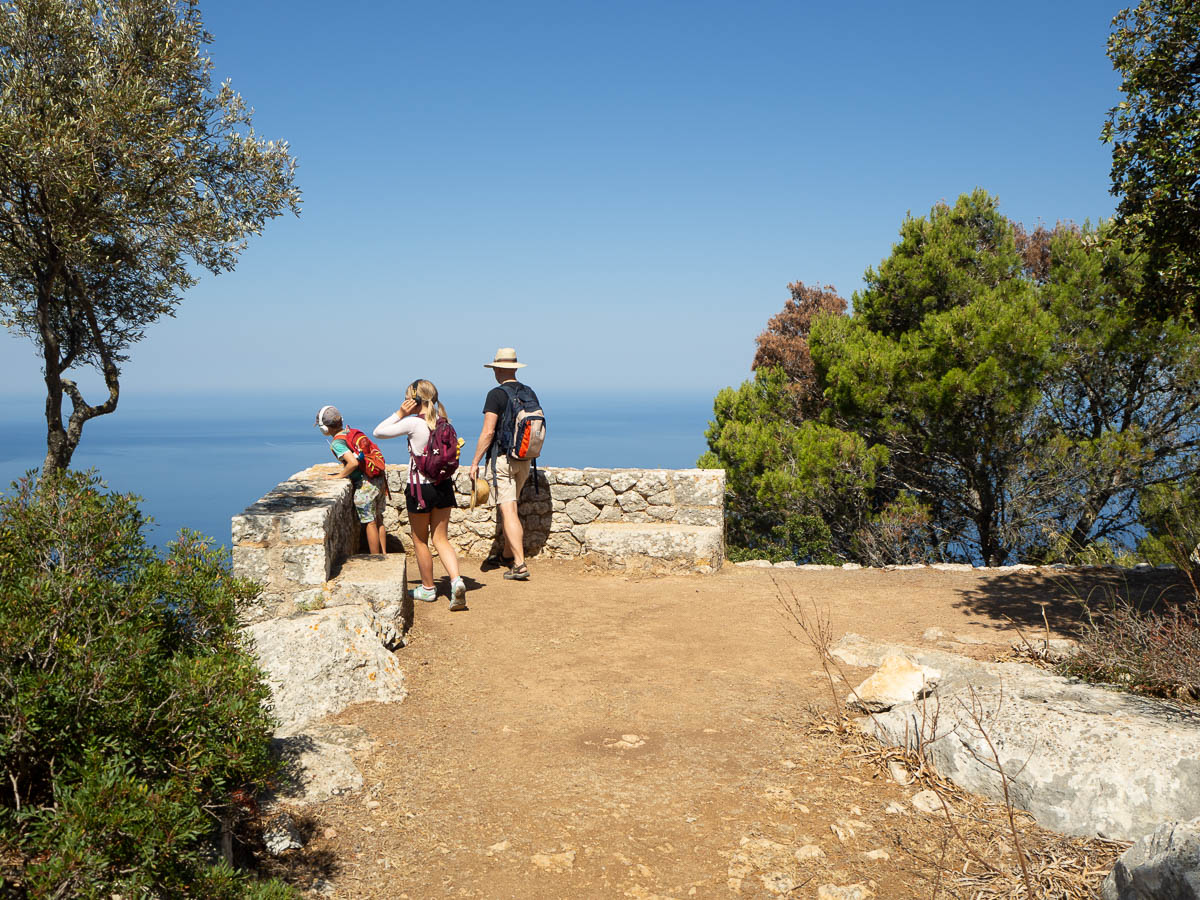
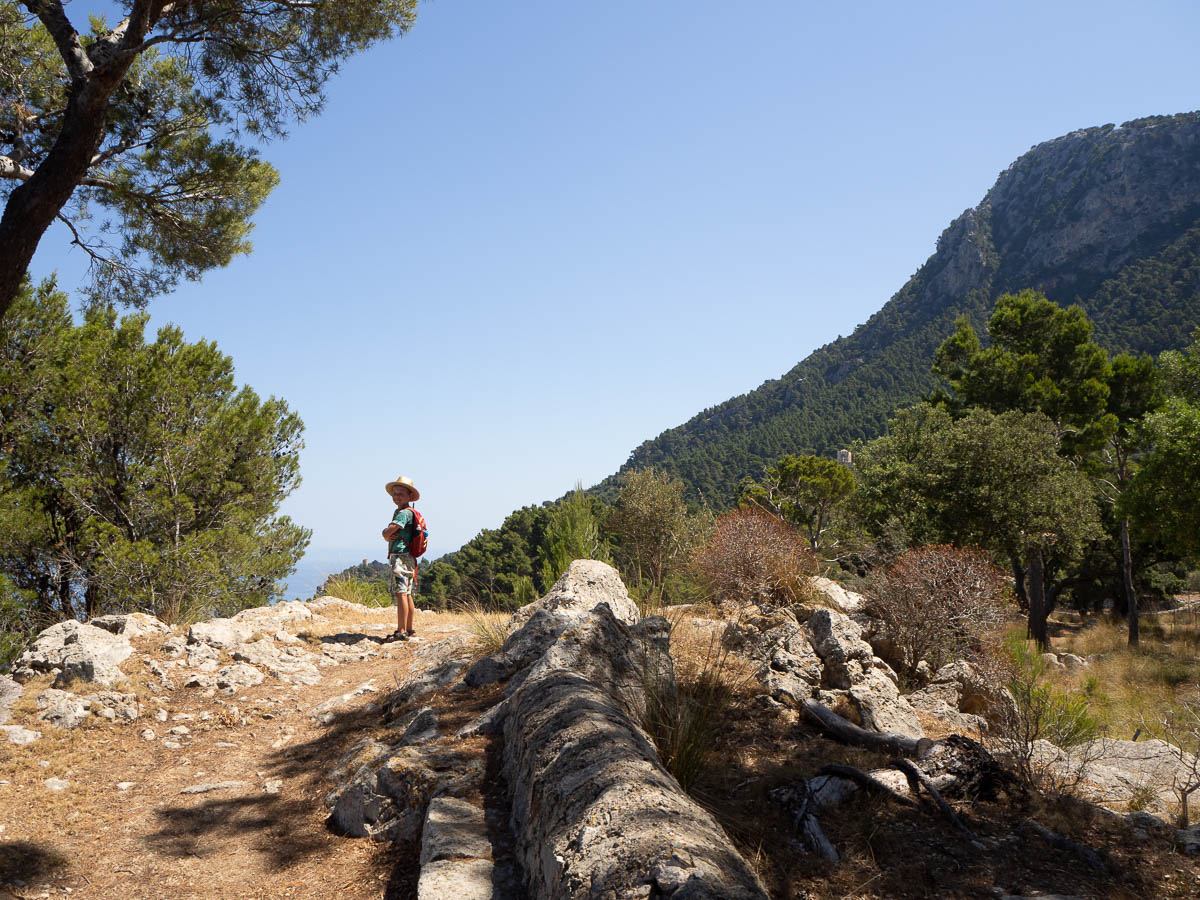
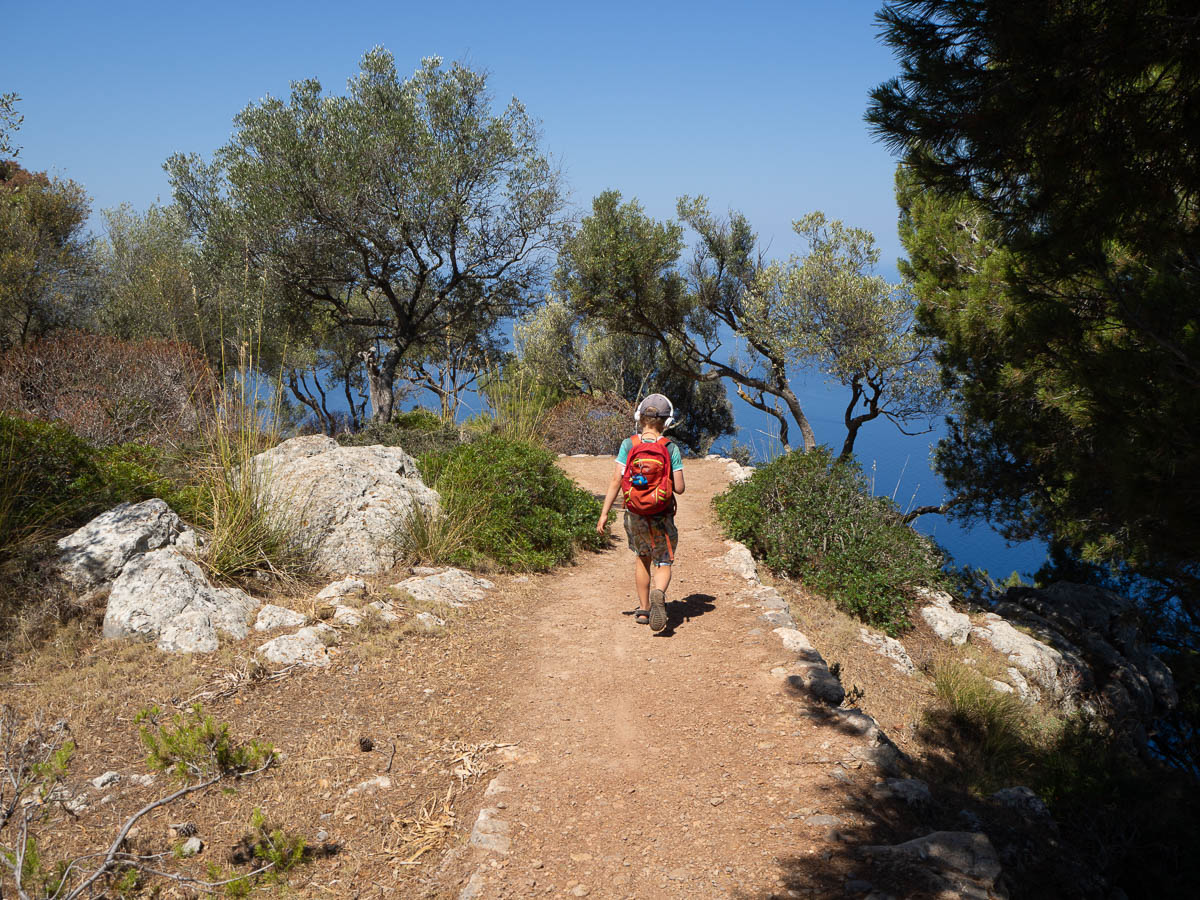
The only walk option in the trip notes for today was a long and demanding one with a lot of ascent. We didn’t feel up to it so we improvised a walk of our own. From Valldemossa we followed the road down towards the beach, but then turned off the road onto a narrow, steep, twisty path that took us to the top of the cliffs. Up there we followed a nice wide path that took us to several viewpoints. And when we had walked far enough, we walked back the same way.

The clifftop path was mostly flat and straight, and often exposed towards the sea, so it was easy walking. The 9 km was less than we have walked on past trips, but more than we have done in the past few days in the heat. Today it was no effort. I purposely didn’t say anything about the distance to the kids, and they were surprised to hear how much they had walked without it really feeling like that much.


Our hotel here in Valldemossa has no pool. Understandable, given the area: it’s all small, narrow streets packed together on a rocky hill. After we’d had our daily ice cream, we just spent the rest of the afternoon lounging on the shaded terrace and our air conditioned rooms, doing nothing much. We are really looking forward to going back home to more normal weather.

Day 5 of 7. Sóller to Deia, 9 km, 380 m of ascent. Local bus from Deia to Valldemossa.

Those 9 km seemed like a lot to begin with, especially after yesterday’s performance. Would the kids be able to do it at all, in this heat?

Indeed the initial ascent wasn’t much fun. But as soon as we got a bit higher up into the hills, into areas that were open towards the sea, we got a cooling breeze and everyone perked up. The heat is most insufferable when the air doesn’t move and sweat doesn’t evaporate. (This was the first time ever in my life, outside of saunas, when I literally had trickles of sweat running down my body.) Just having some movement in the air, even though that air was no cooler, made a huge difference. After the frying pan feeling of the valley around Sóller, this was quite refreshing. Indeed I thought that if all the days could have felt like this, we could have done a lot more walking this week, even with this heat wave.

In one or two magical spots the wind must have blown through some cave or deep ravine or otherwise been cooled by the rocks somehow. We were hit by a blast of cold air that felt like opening the refrigerator. What a moment of luxury! Ten steps further ahead it was back to normal.

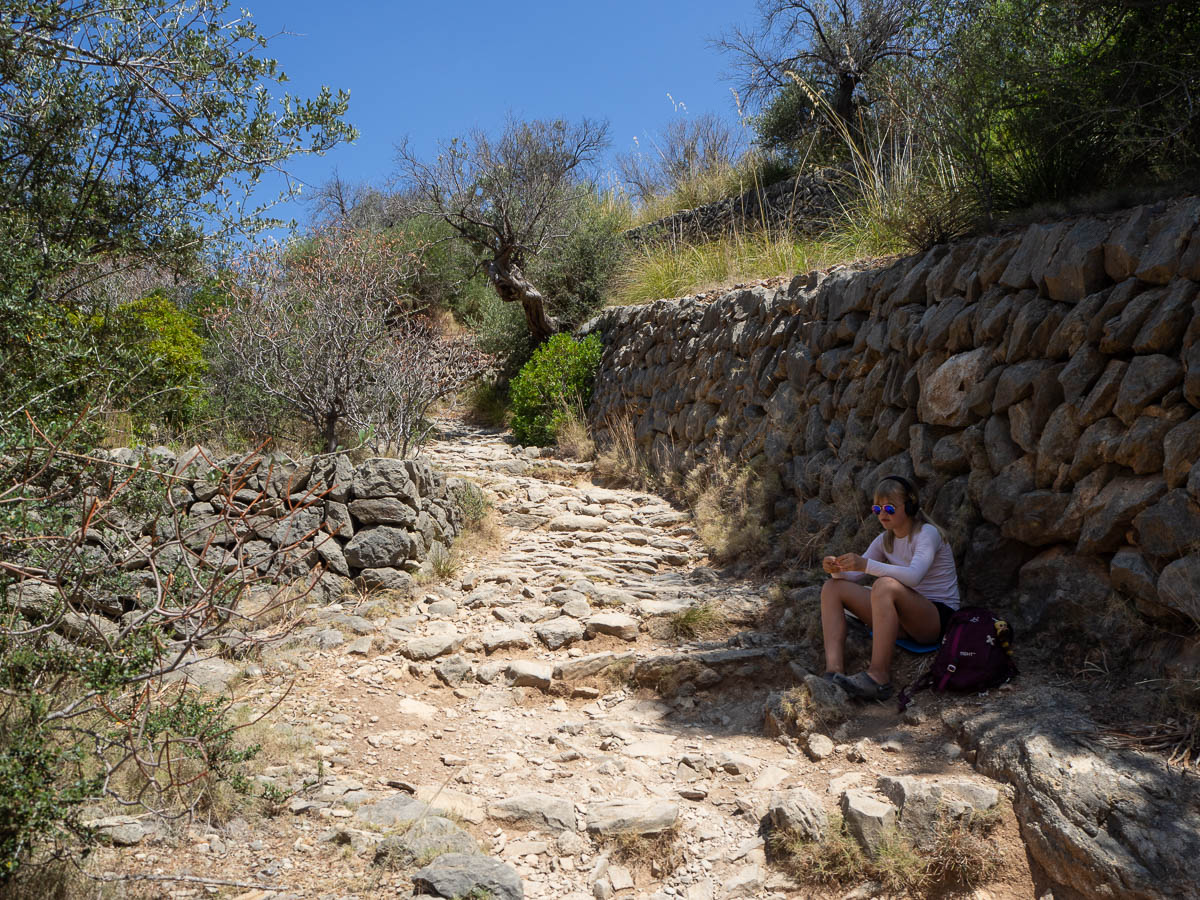
Today Eric and Adrian were entertaining each other with games, while Ingrid put on her headphones. Their game was to go through the alphabet and come up with a [something] for each letter. First it was English first names, A to Z. Then animals, then some other thing.

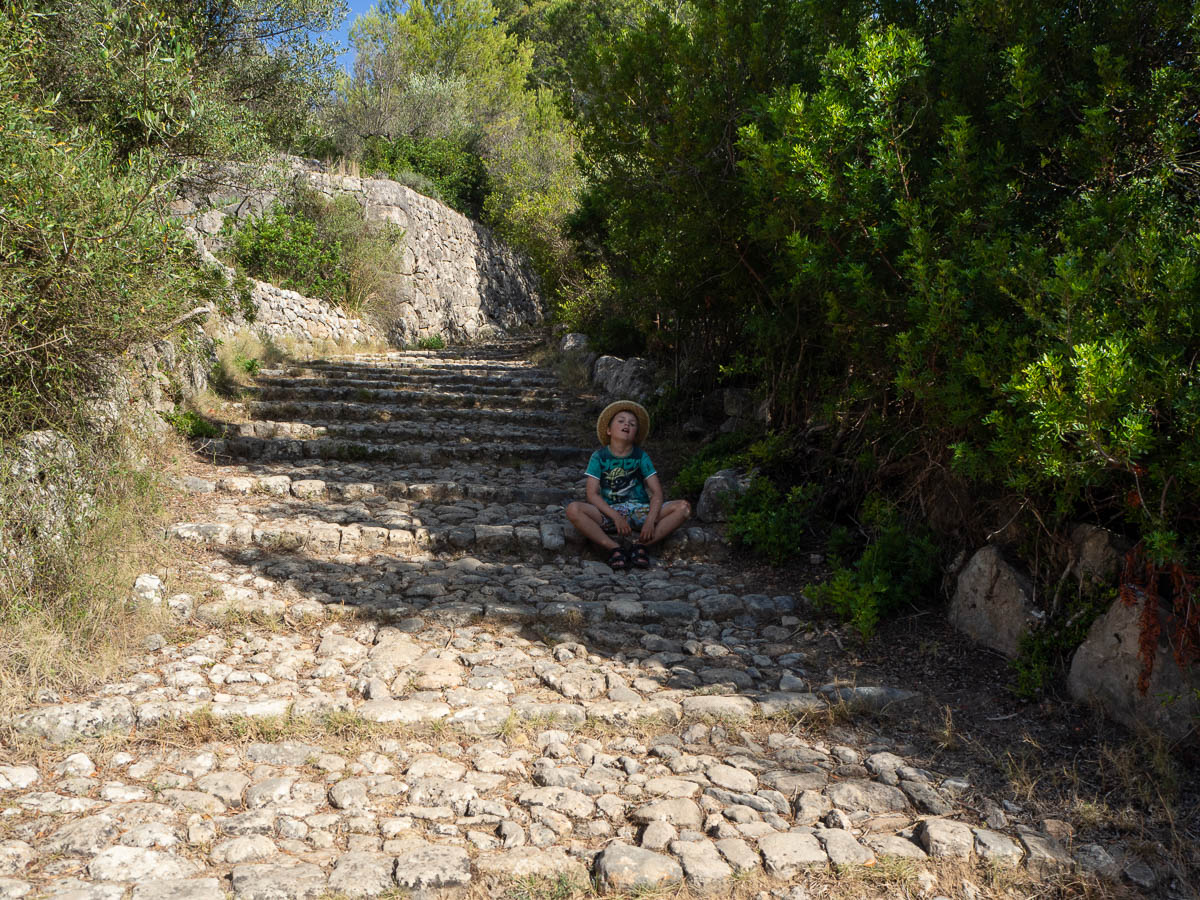
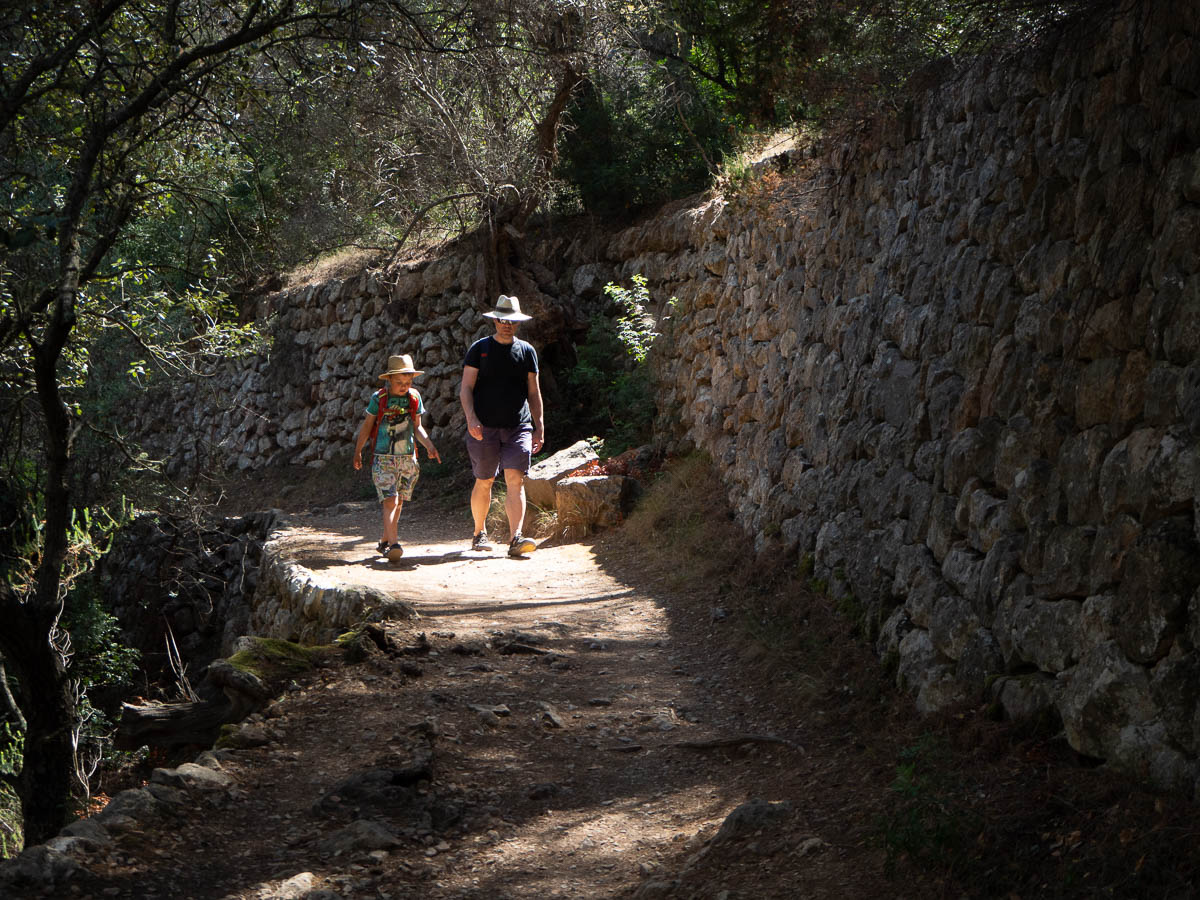
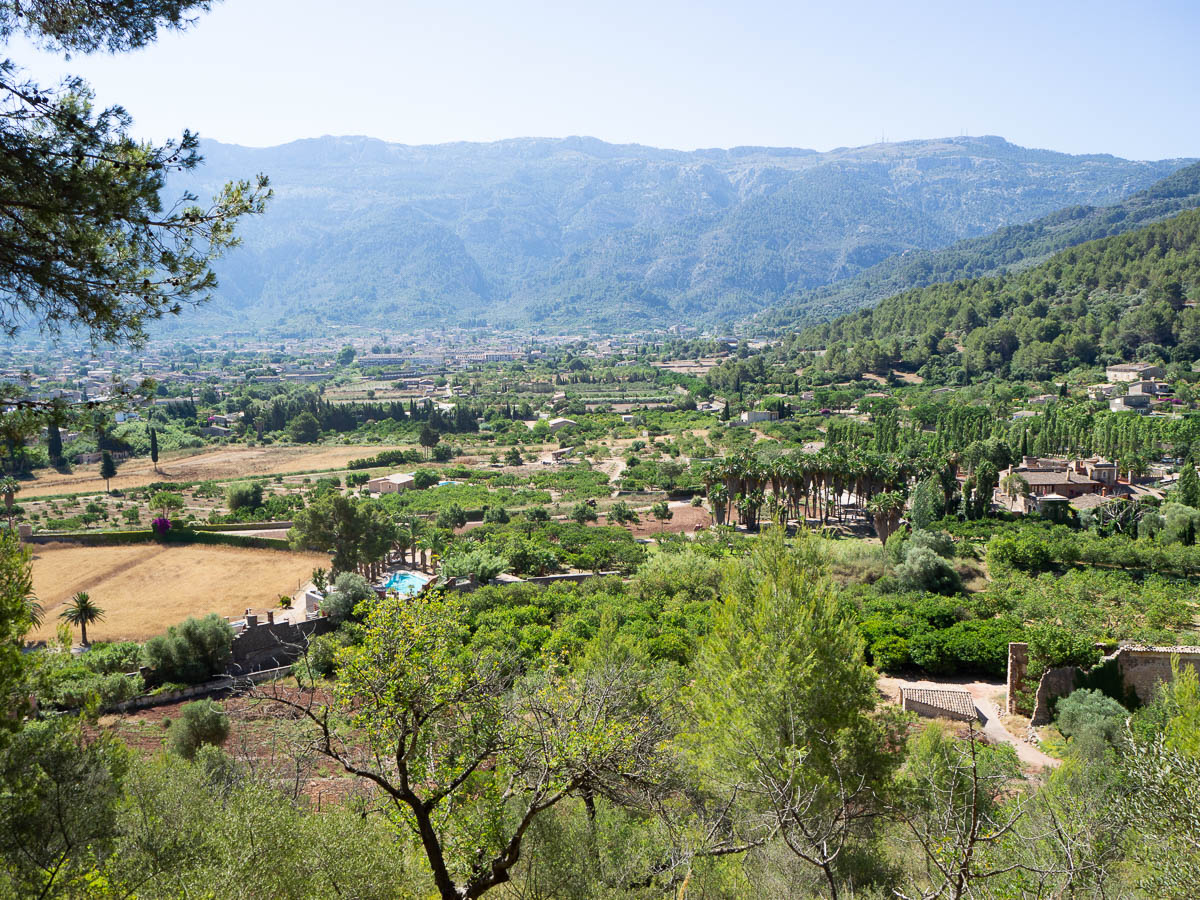
I liked this “transfer hike” better than the previous one, not just because of the sea breeze. The paths were smoother, the surroundings greener and more varied, and the views more interesting. We passed mansions, high walls and ravines, and of course olive trees and pines.

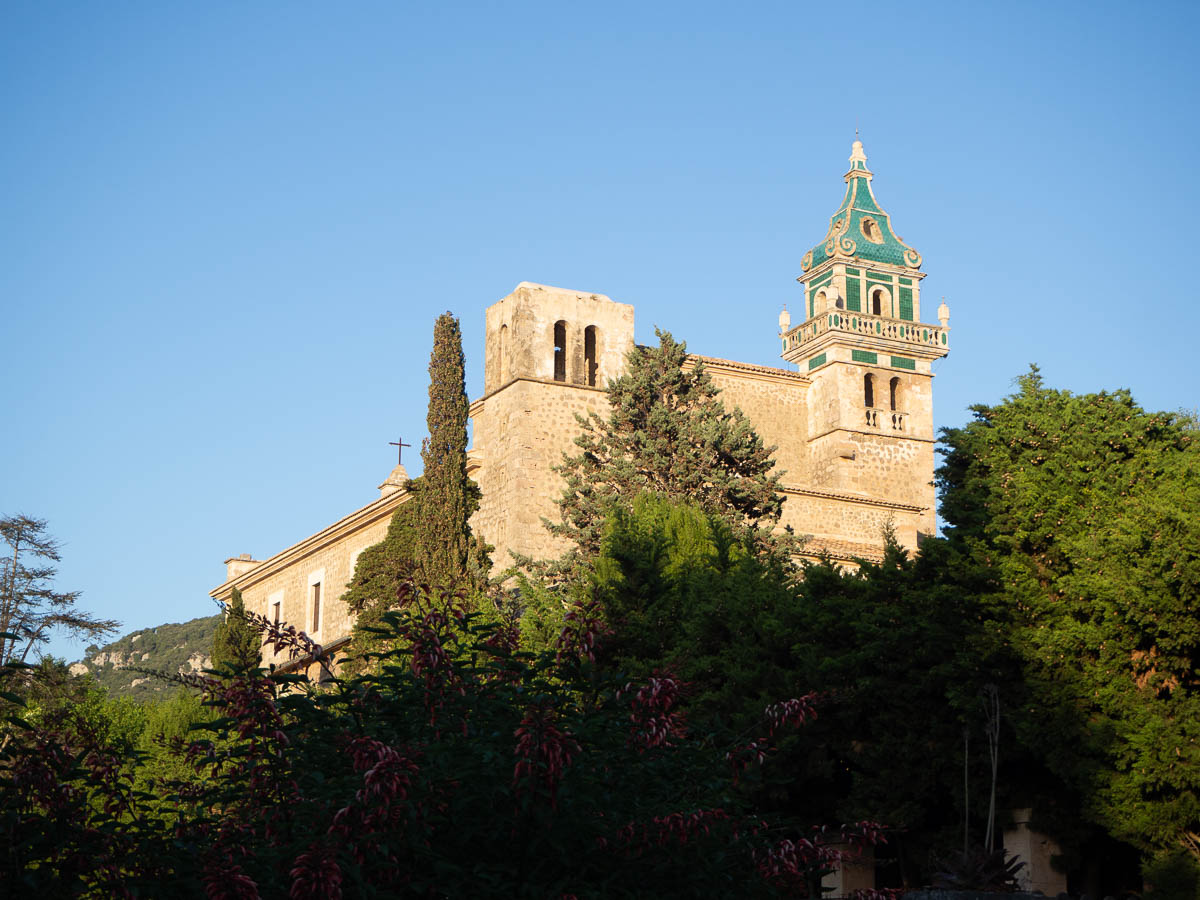
Valldemossa, our destination for today, is a beautiful place with a lot of history. Unfortunately, as with most such places, it’s been strongly tourist-adapted. On the plus side, the town is incredibly tidy and clean and very pretty to look at. On the minus side, it’s full of tourist cafés and souvenir shops. Being here as a tourist myself, I have no right to complain, even though I kind of want to, anyway.

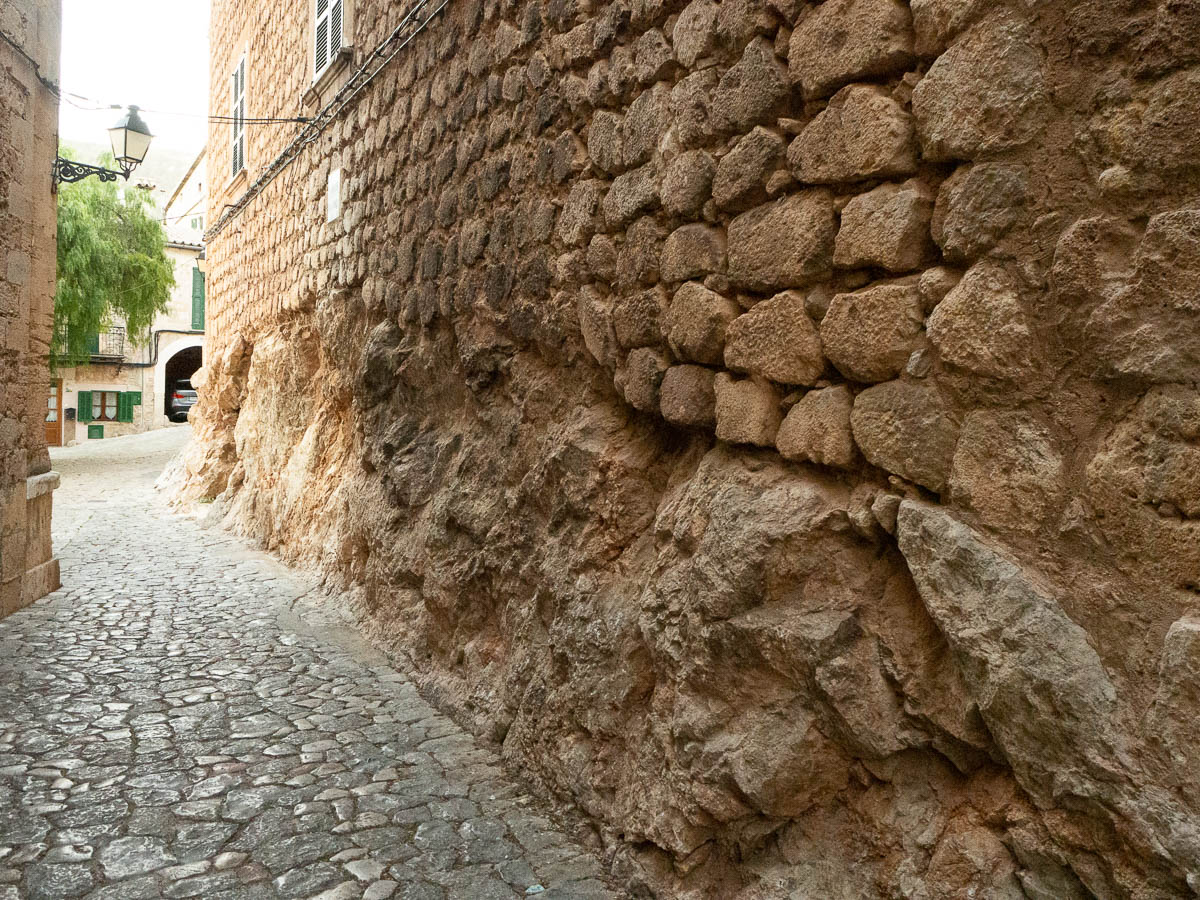
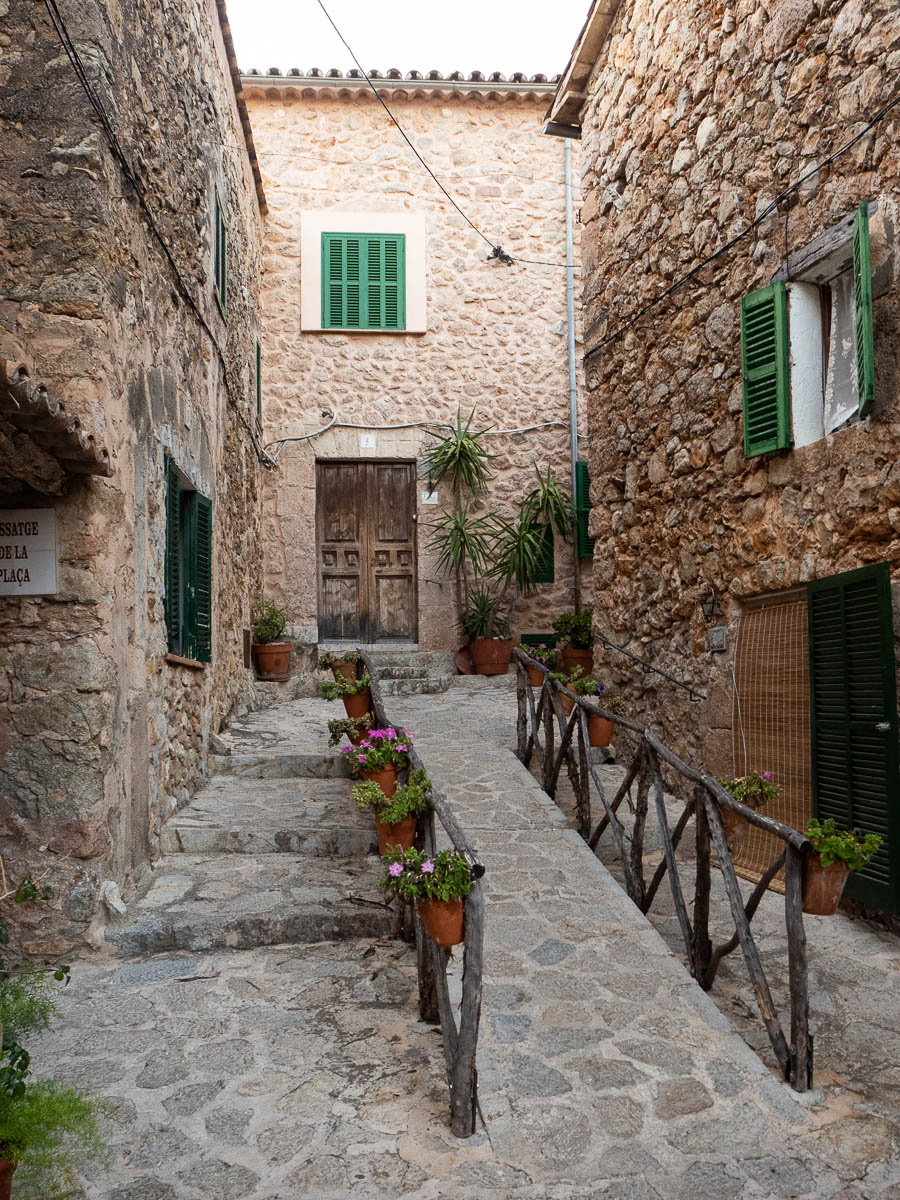
The oldest parts of Valldemossa are very steep and narrow. Some buildings seem to be built around a large rock outcropping, with the rock literally forming a part of the foundation.

Day 4 of 7, sea views from Port de Sóller, 3 km / 6 km.

Today is Saturday, which is market day in Sóller, so this morning we strolled around the stalls in the town centre and browsed everything from straw hats to strawberries.

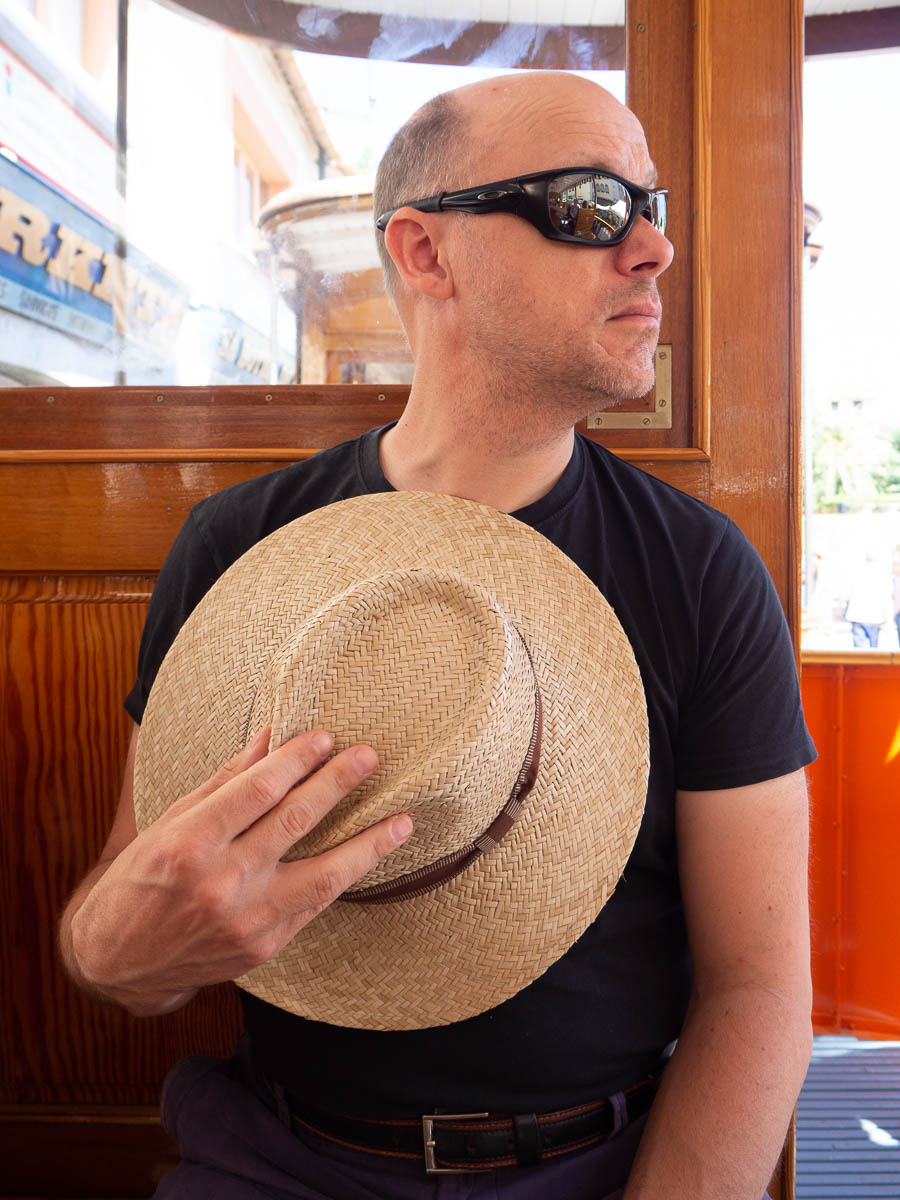
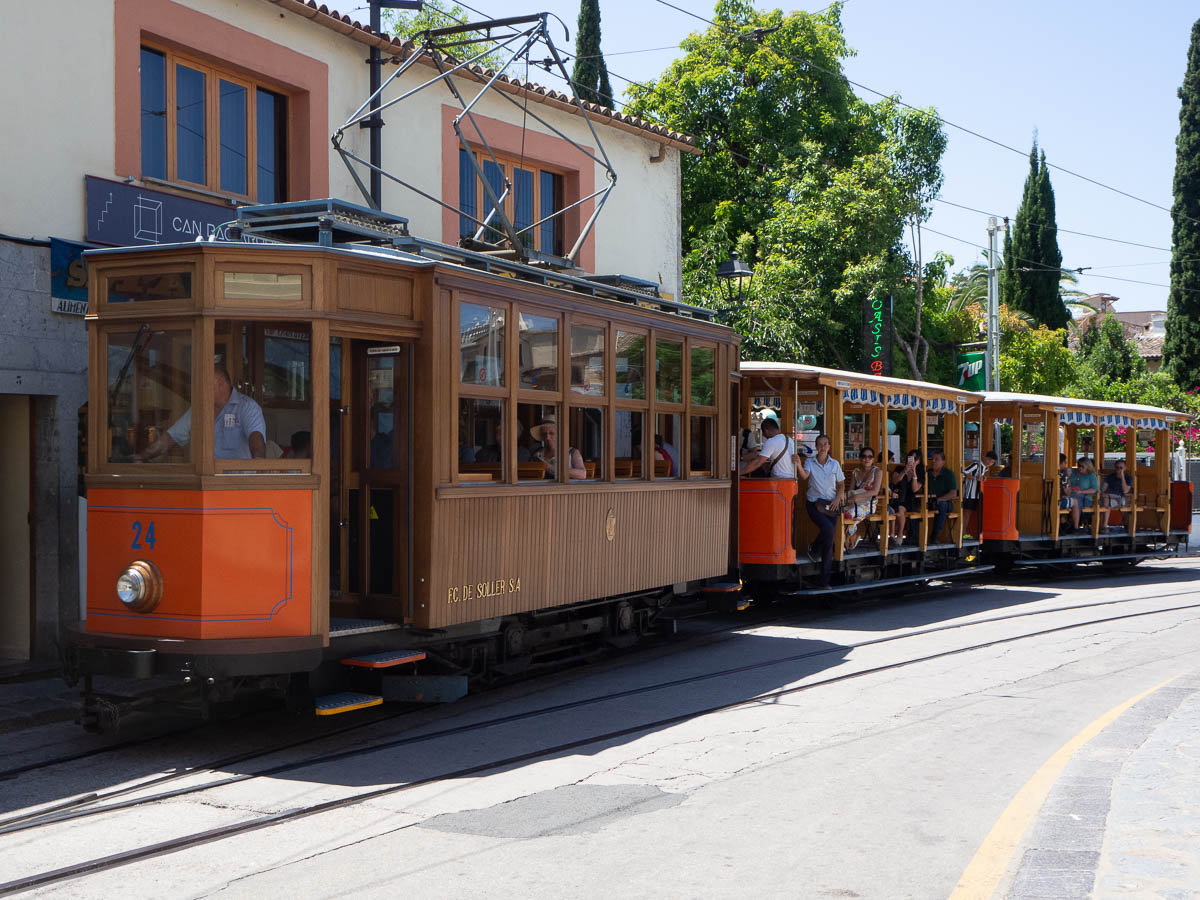
The plan was to take a taxi to the harbour and then start walking from there. But the taxis were all busy or something and we gave up after waiting for half an hour, and took the expensive tram again. I saw locals taking the tram for a short hop only; they must have a special tariff or they’d all be ruined by their tram commute.


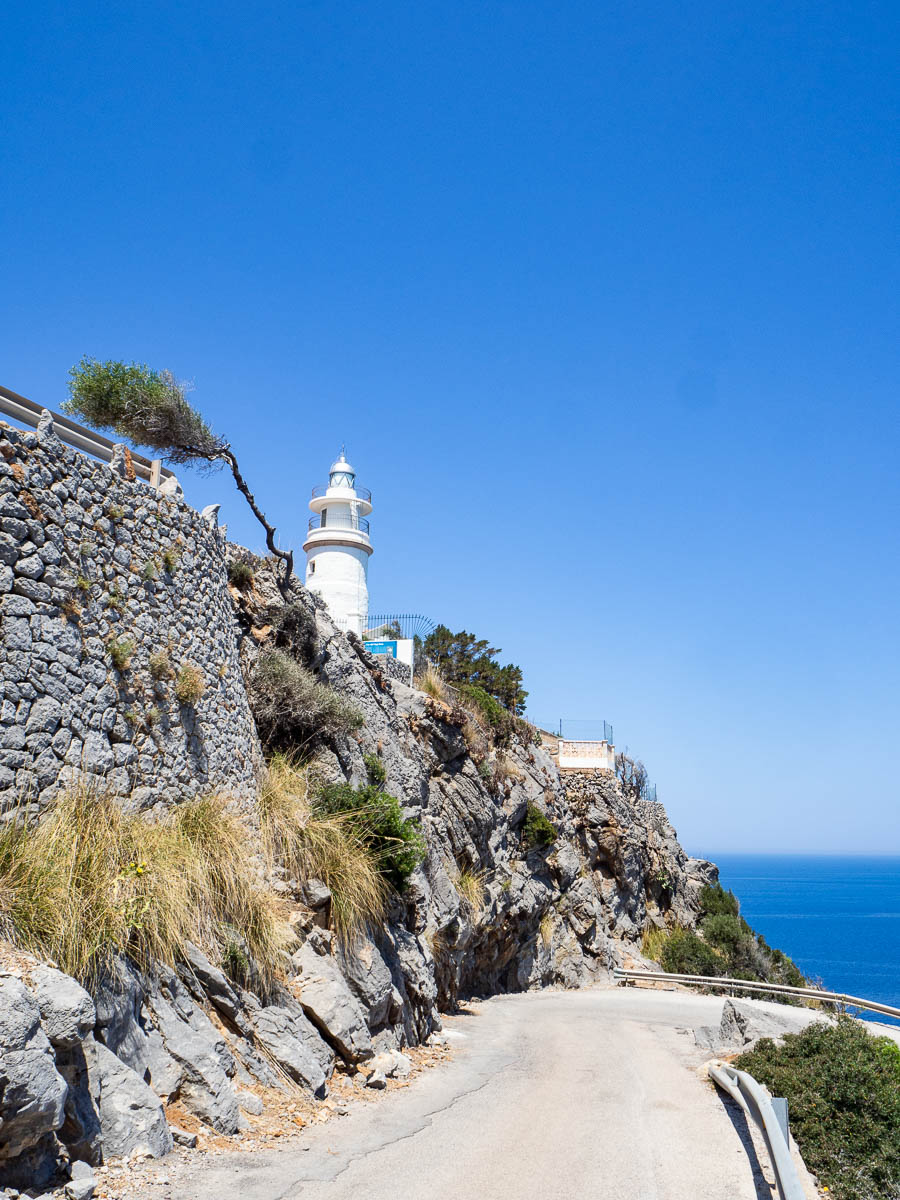
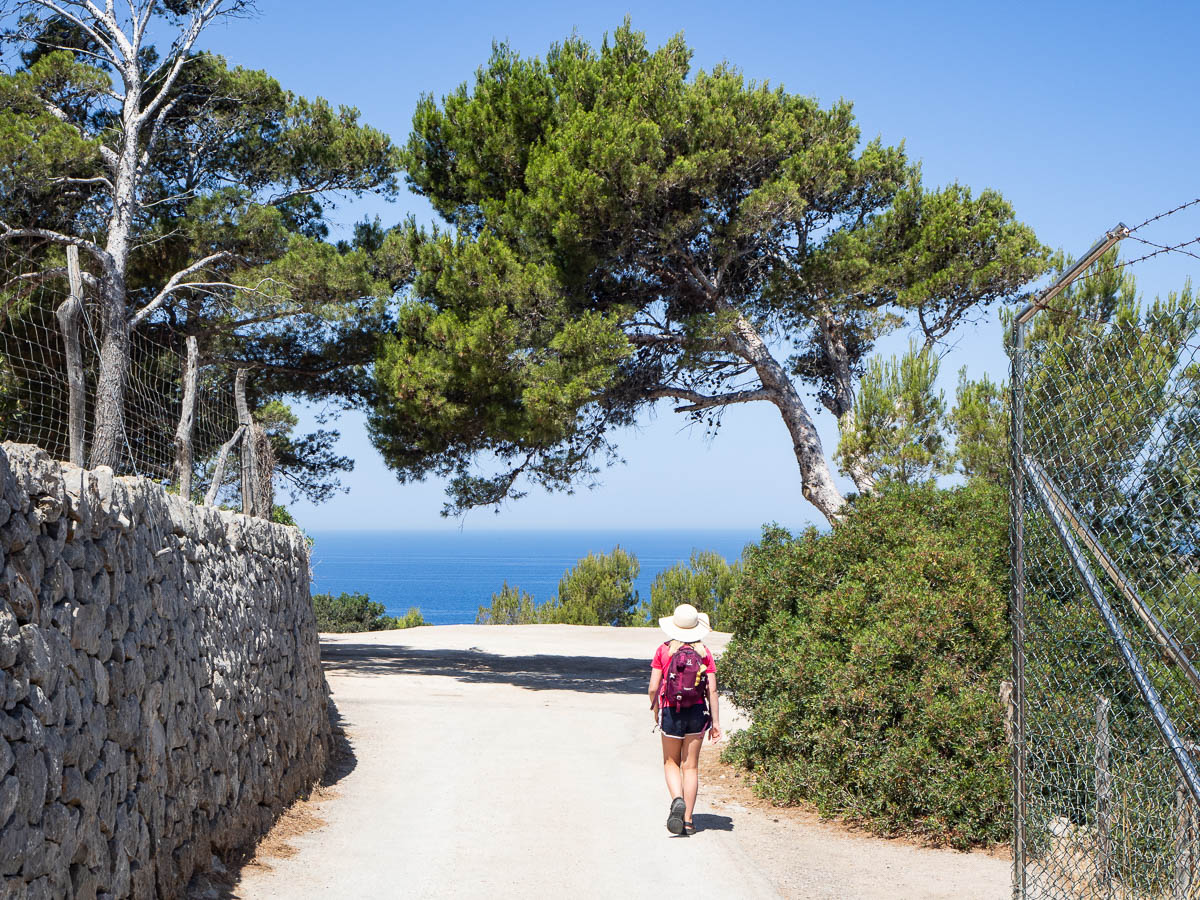
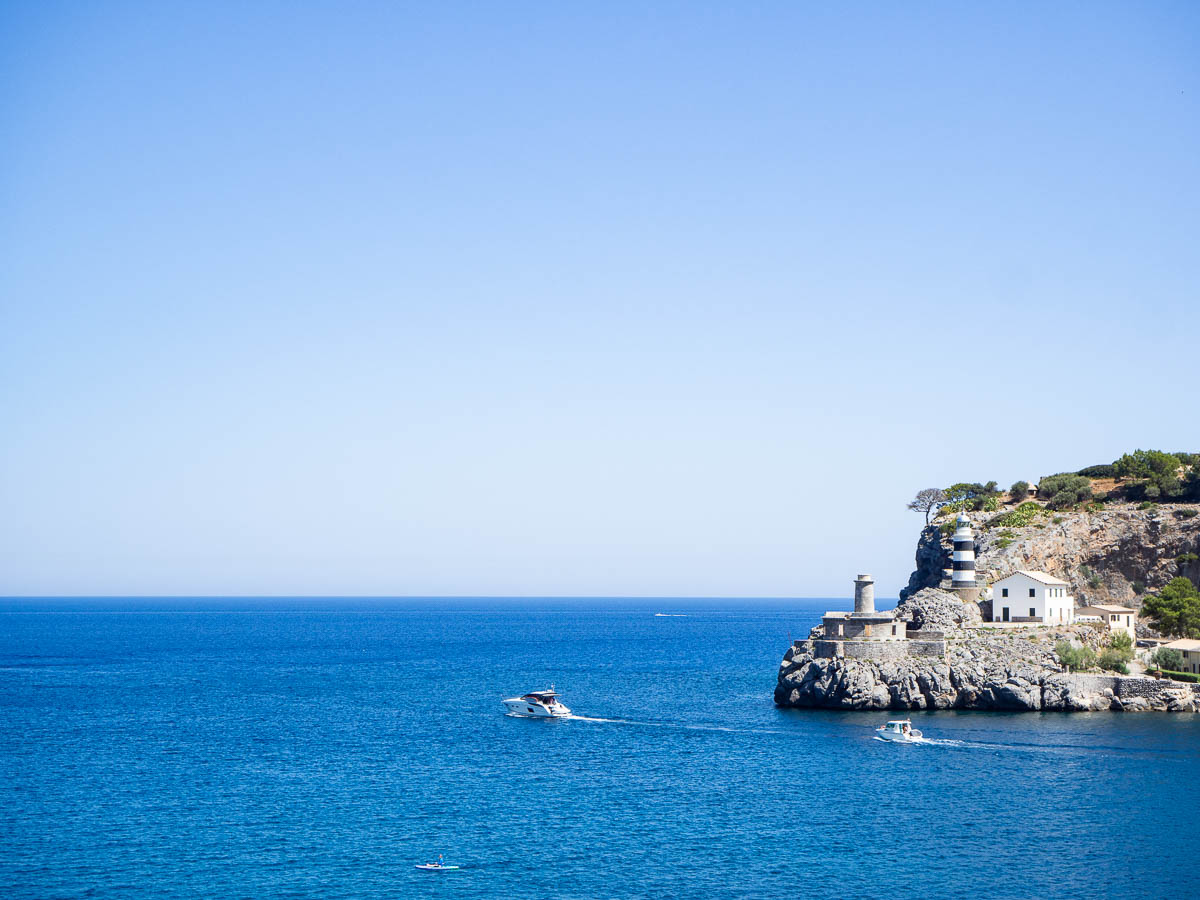
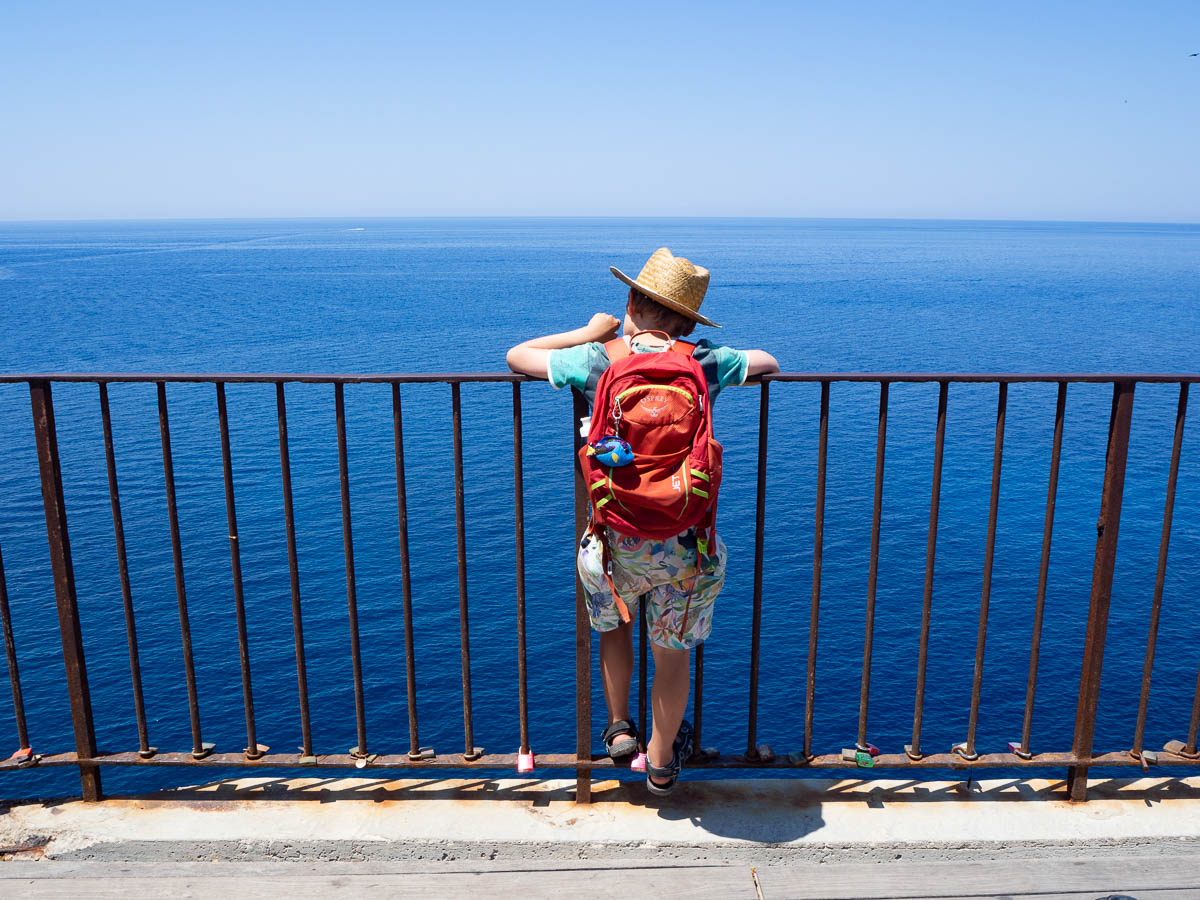
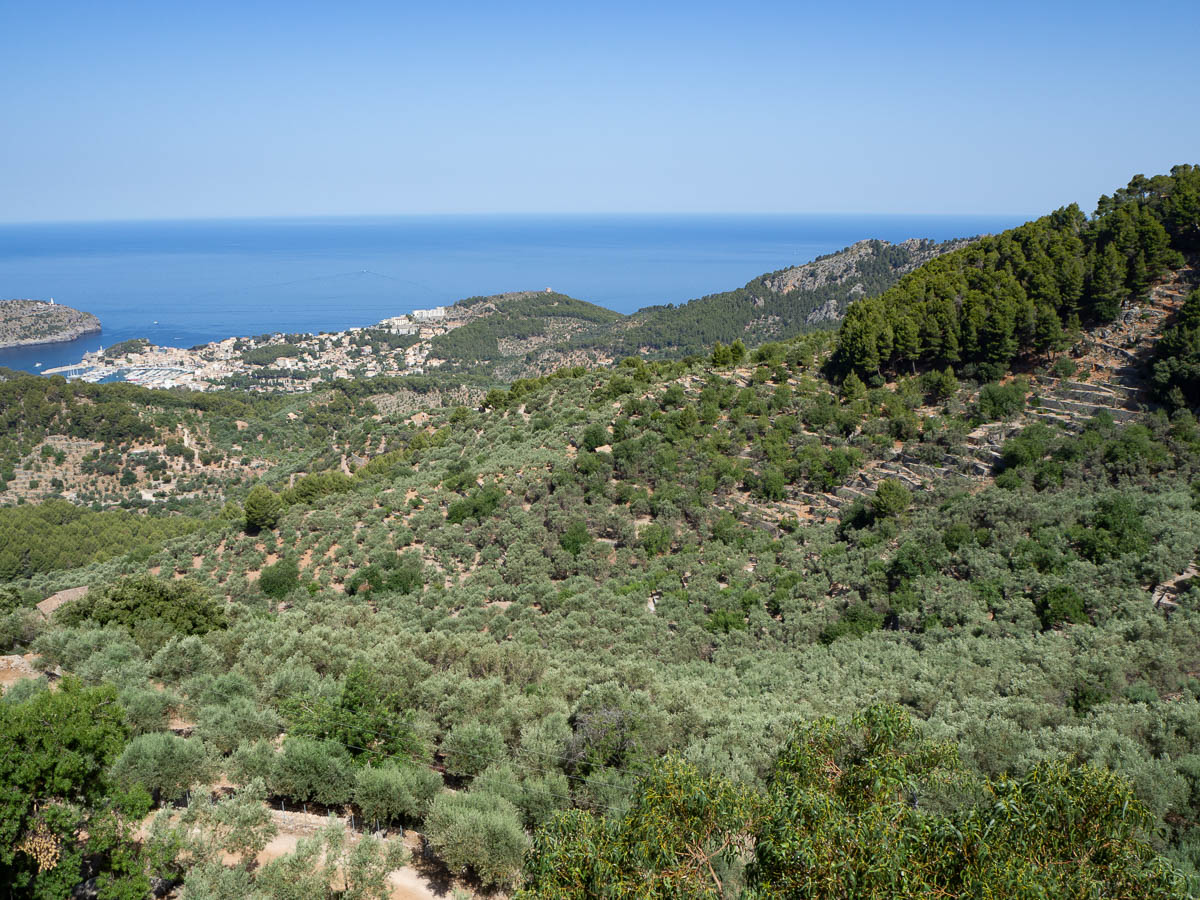
We had a number of route options for today, but the heat is debilitating. Today was the hottest day yet (the forecast was 37°C) and our enthusiasm for walking in this weather is beginning to run out, so we chose a very short walk. From the harbour we just walked to the lighthouse and back. As we got higher up and closer to the open sea, we got a bit of sea breeze and felt almost invigorated… and then we had to walk back down into the frying pan again.

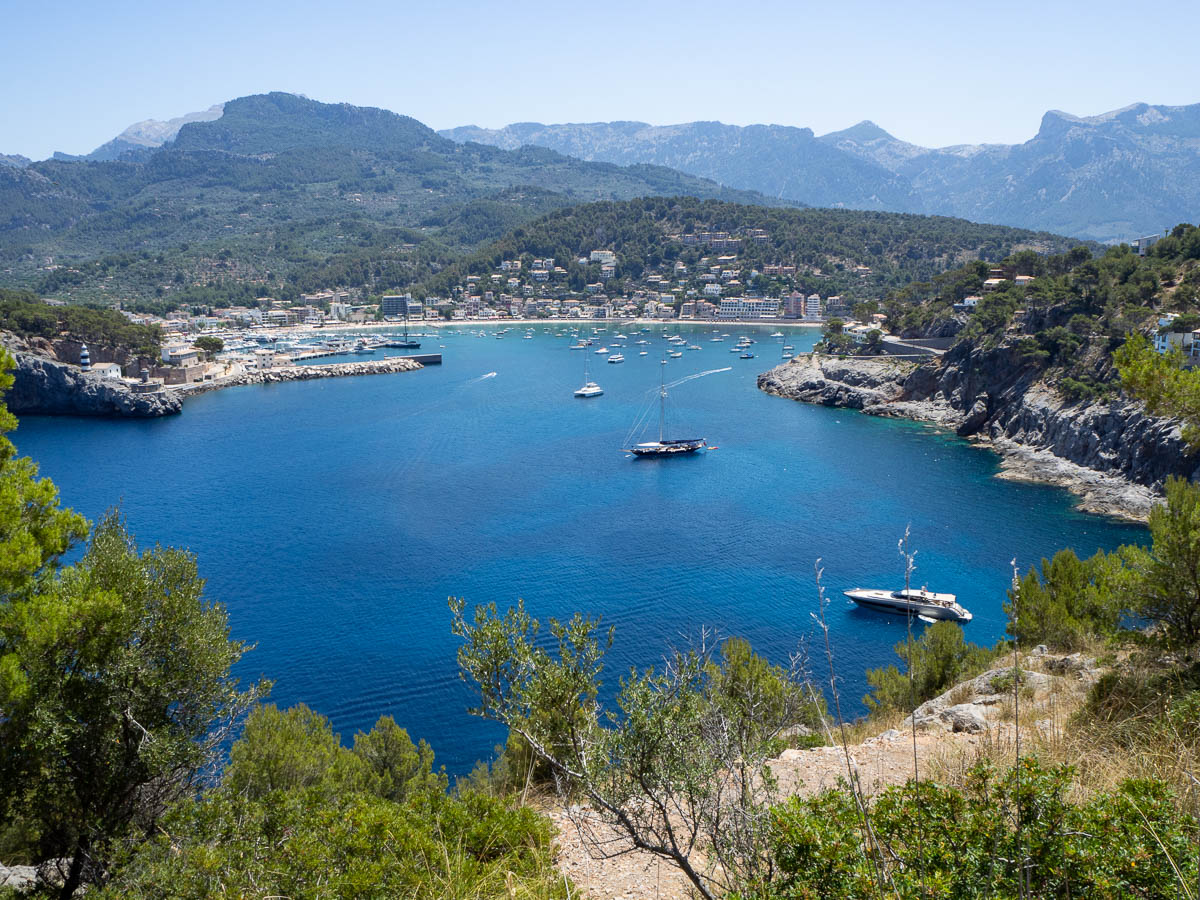
This was enough for Ingrid, so she and Eric headed back to the hotel. Adrian and I still had some energy left so we rounded the harbour to the other side of the bay, to see the views from there. We were hoping to be able to get far enough to look back to the lighthouse we climbed to. The very tip of the headland was a closed-off military area so we couldn’t get that far, but we got some nice views out towards the sea. This was right out in the open, in the burning sun with no shade, so we admired the view for no more than a minute and then fled down into whatever shade we could find.

Note to self: dinner at Ca’n Pintxo, a modern tapas place just like the one we liked in Fornalutx. El huevo del chef was some kind of egg concoction topped with smoked honey foam: I can’t even really say what it was I ate, but it was delicious.


Day 3 of 7. Sóller to Port de Sóller, 5 km, mostly flat.


Sóller is a much bigger town than Fornalutx and a large part of our walk today was relatively urban compared to previous days. We walked along small streets and lanes, and past gardens and orange orchards.

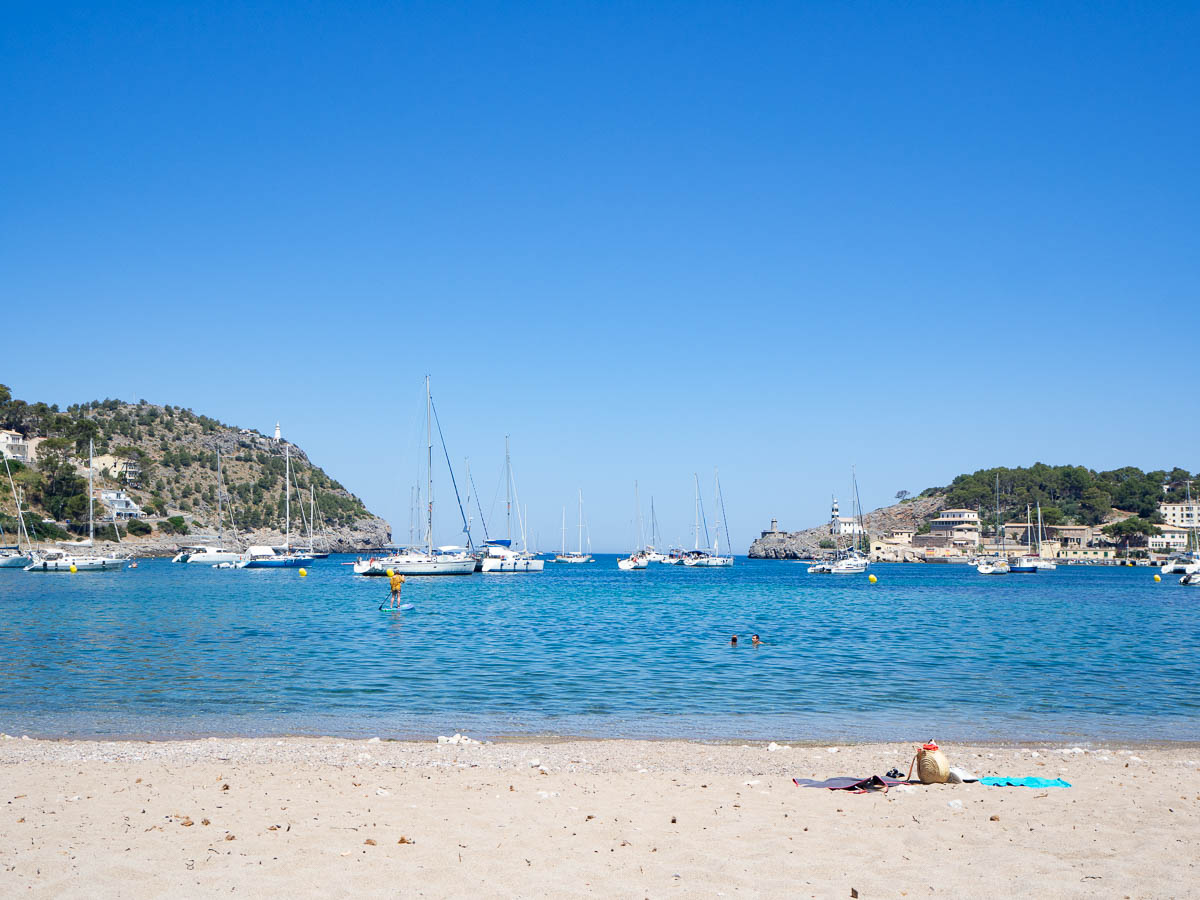
The port of Sóller was a touristy place. It had a nice harbour and pretty views of the Mediterranean, but the town mostly consisted of a long row of waterfront restaurants, and shops selling souvenirs and bathing suits. I didn’t find it particularly interesting or appealing.

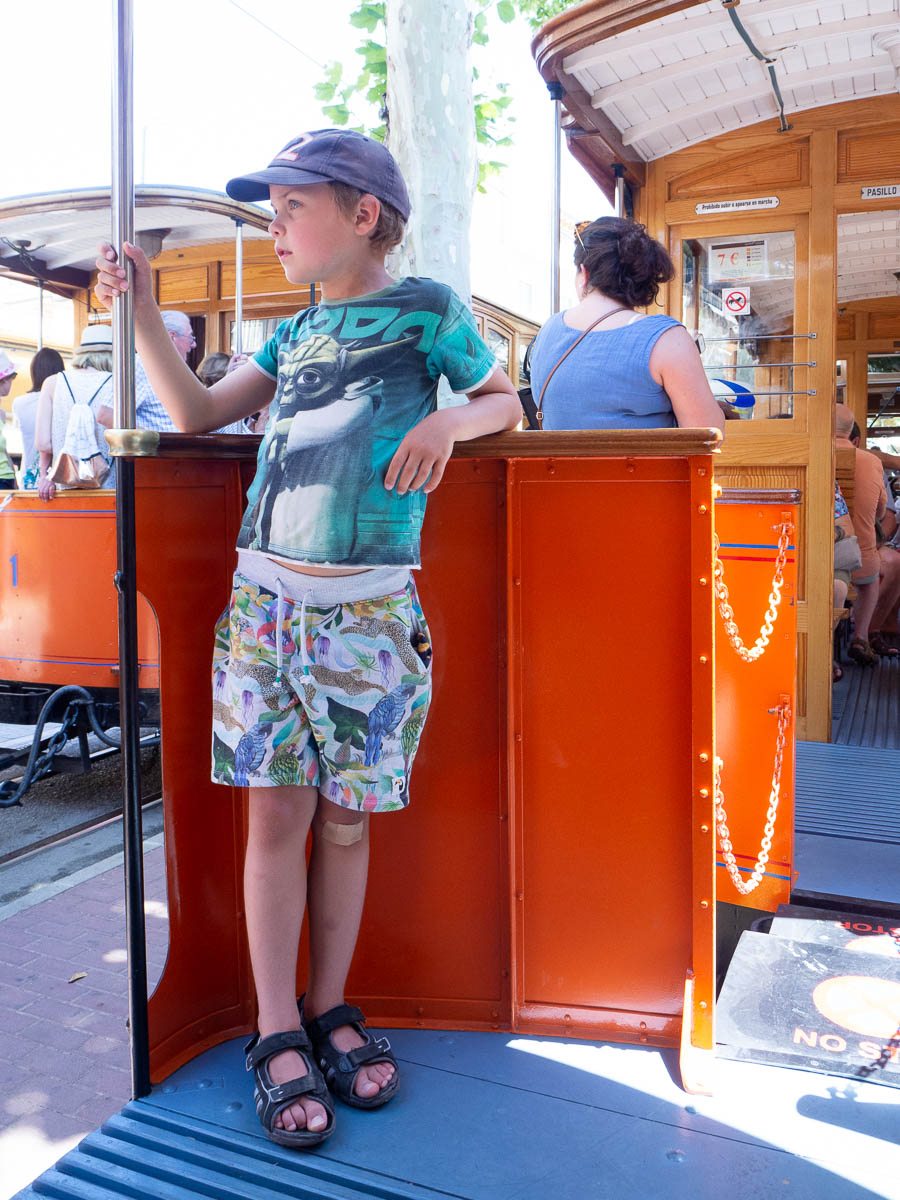
We didn’t really feel up to walking those 5 km twice, so we took the tram back. Picturesque and interesting, and beats walking – but at 7 EUR per person it felt rather expensive.

Apparently the rolling stock was originally imported from San Francisco and it’s been running here for a hundred years. Clearly these trams have some kind of dispensation from modern safety rules: some of the cars are completely open on the sides, and the platforms likewise. The seats were all taken when we got on so we stood on the platforms. People a hundred years ago must have been much slimmer, or perhaps just more willing to sit closer to each other than today’s travellers: seats made for 2 were not nearly wide enough for two people.

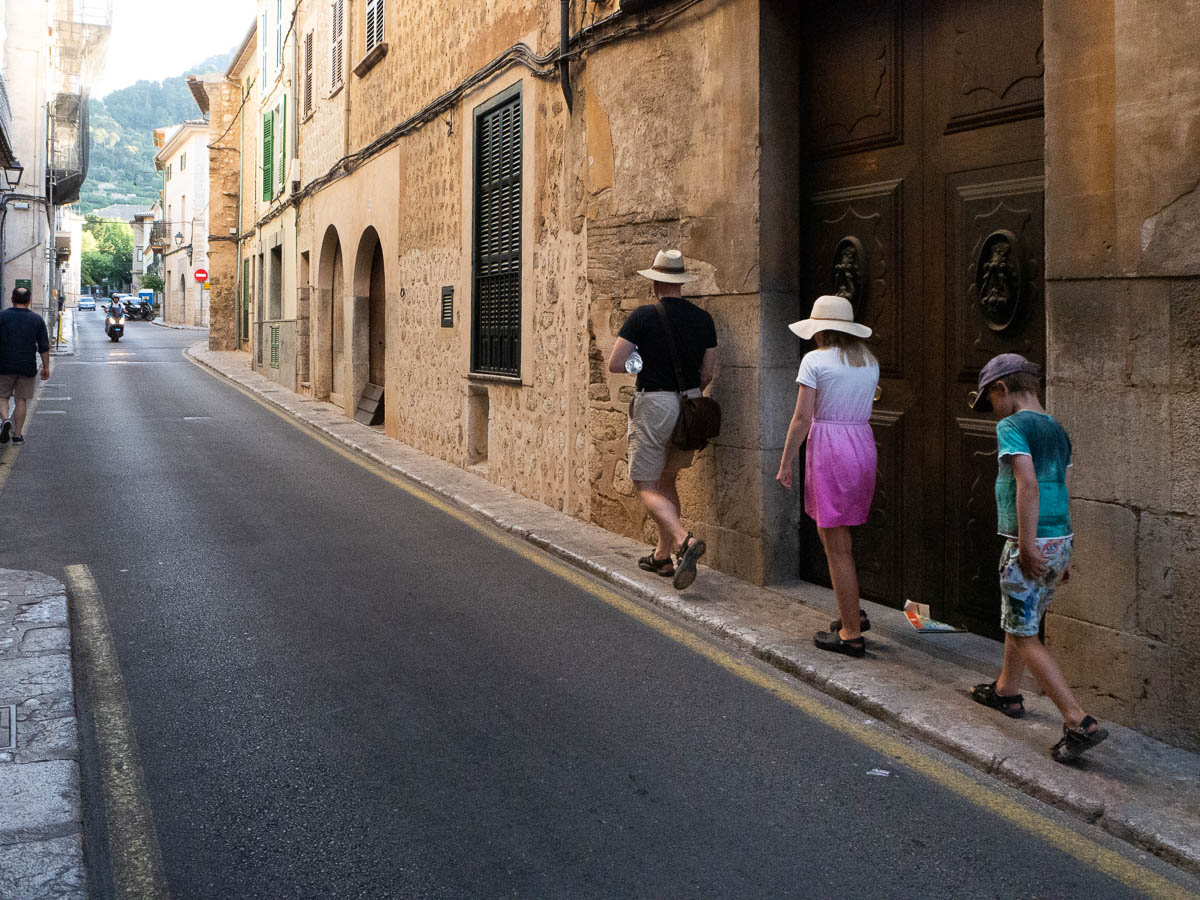
Speaking of narrow things: the sidewalks, where they exist at all, are really, really narrow. The streets are as they are, because the buildings are where they are. And cars aren’t going to get any narrower. So pedestrians adjust. In places, there’s barely room to walk in single file. Mostly car drivers were quite considerate, but a few obviously needed to assert their dominance by passing rather too close and too fast, which got quite scary at times. Luckily there weren’t many such streets in the town centre – most were fully pedestrian-friendly.


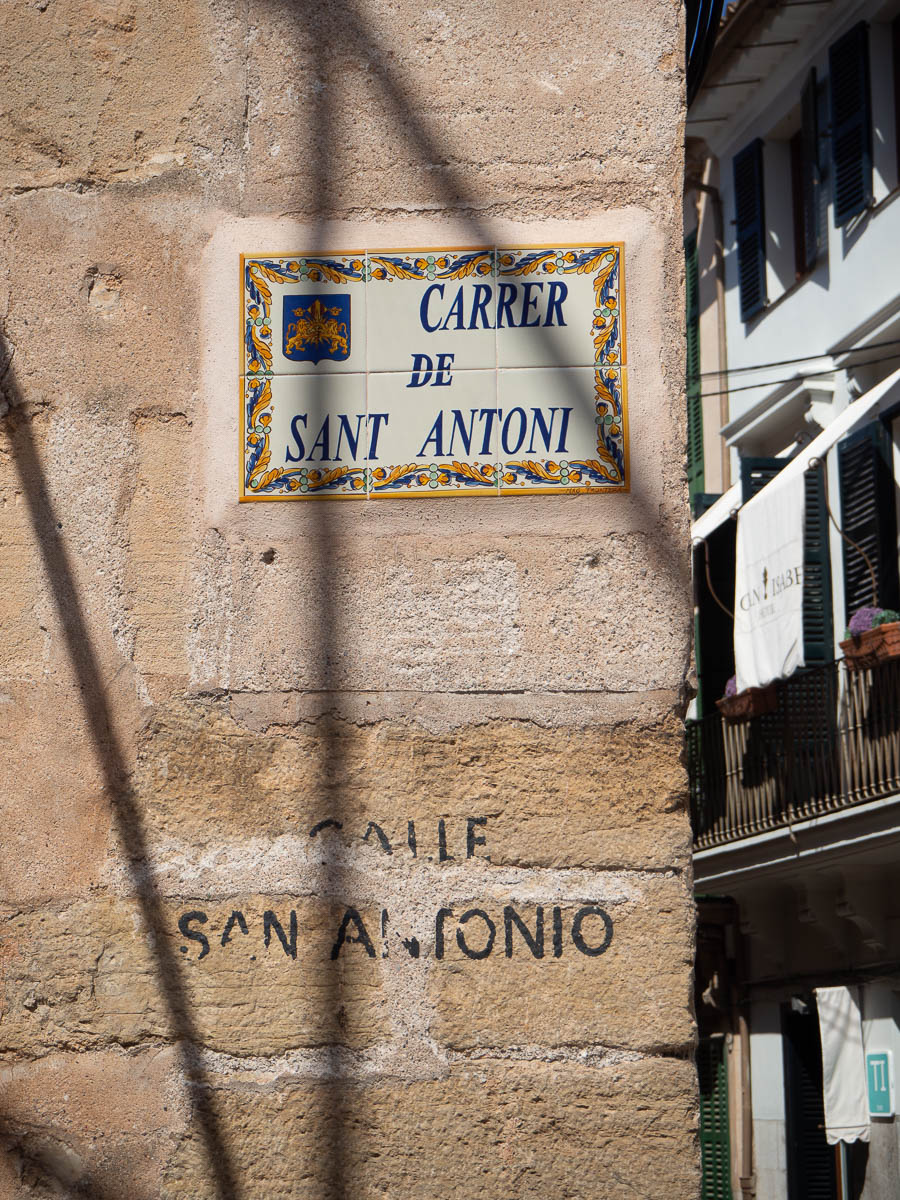
I wasn’t previously aware that the main language on Mallorca is Catalan; in my ignorance I was expecting Spanish. Not that it makes much of a difference – I don’t speak either language, and understanding written Catalan is no more difficult than doing the same with Spanish. Perhaps even easier, since Catalan is more similar to French, which I do speak.

I found intriguing signs of a past when things were different: old street signs in Spanish, now replaced by new ones in Catalan. I really liked the tile signs.

Day 2 of 7. Fornalutx to Sóller. 8 km, 350 m of ascent. Which would be a piece of cake for all of us if it wasn’t for the heat.

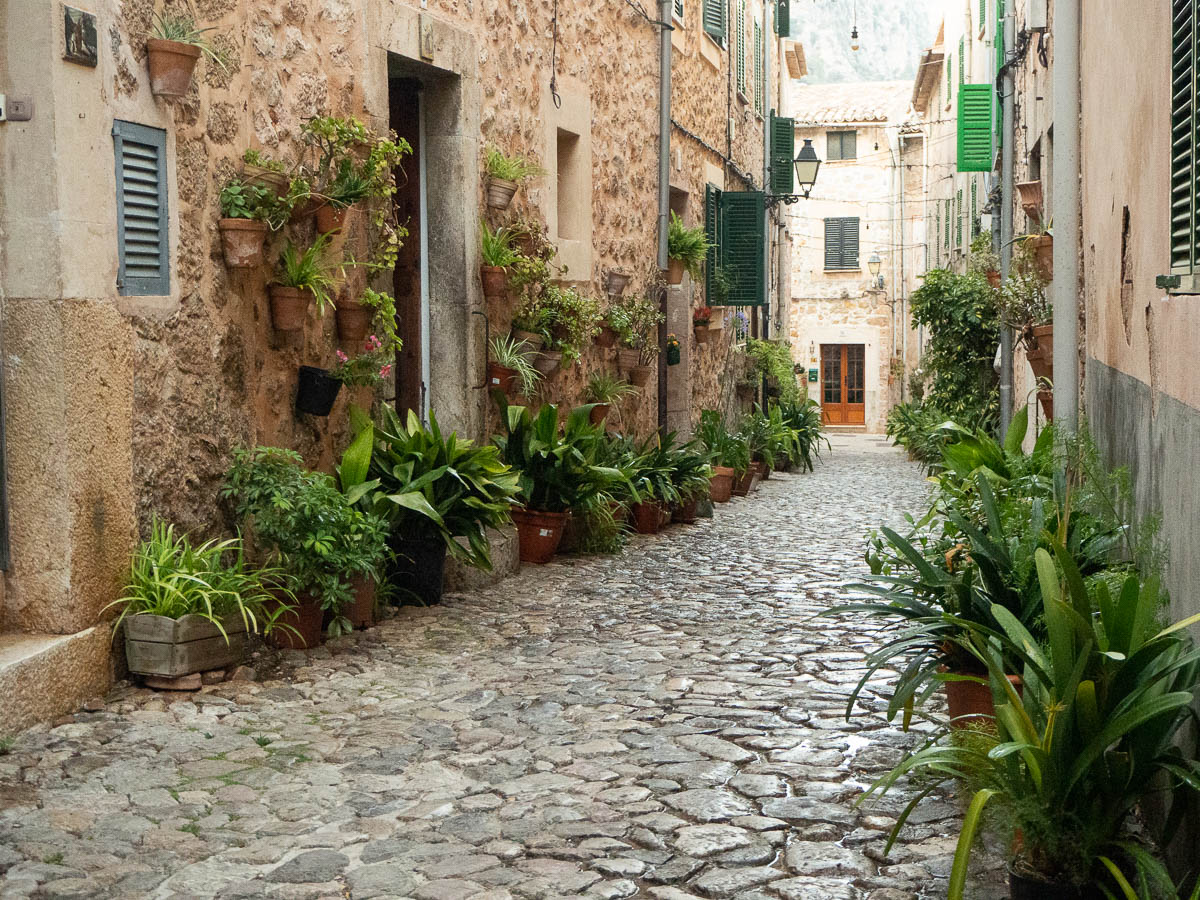
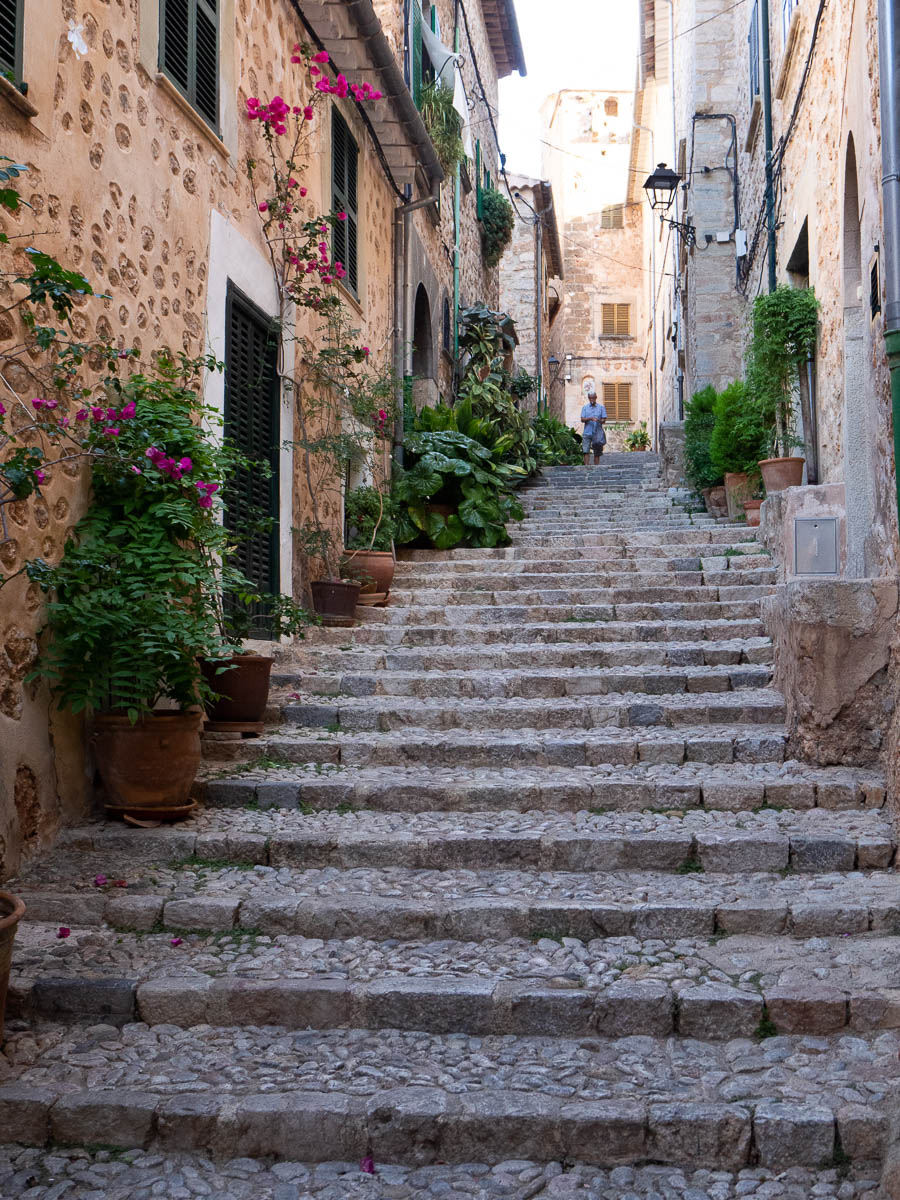
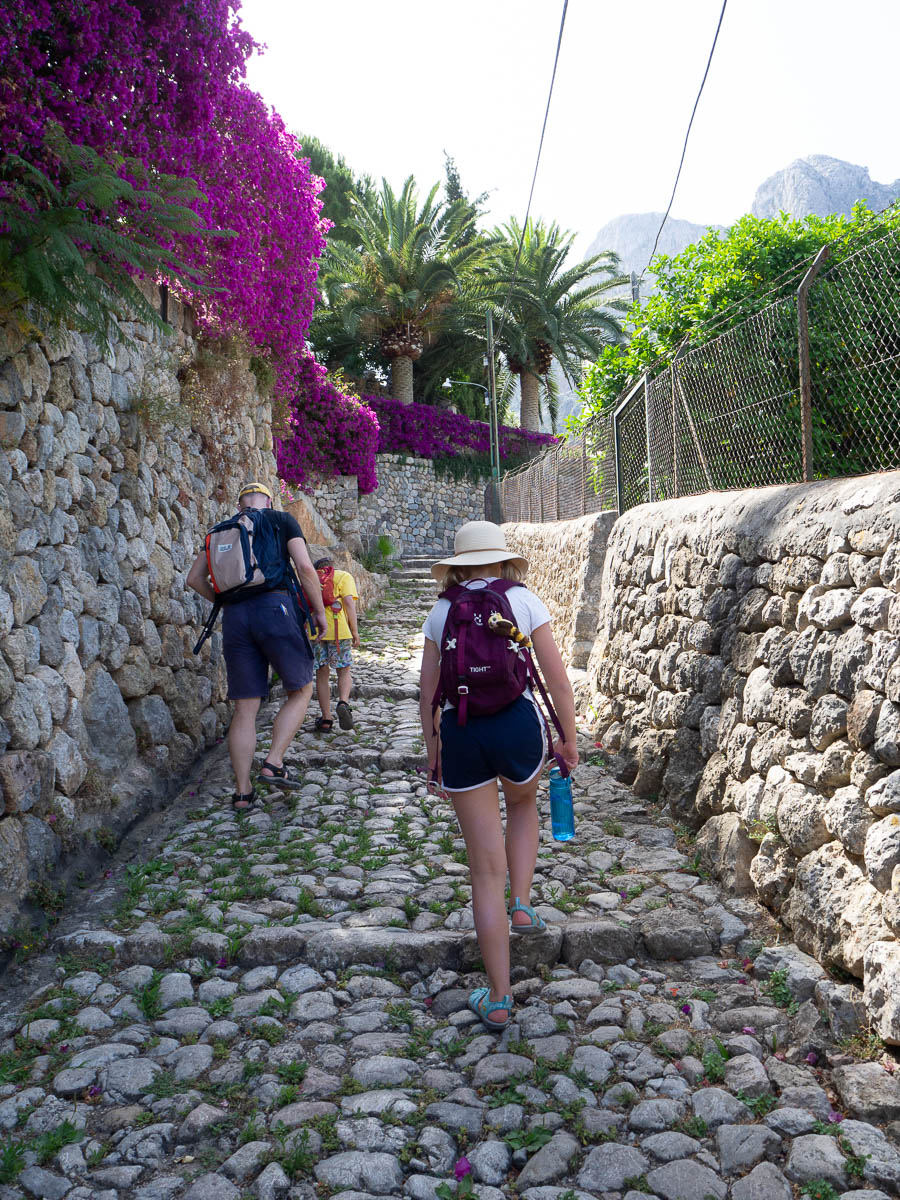
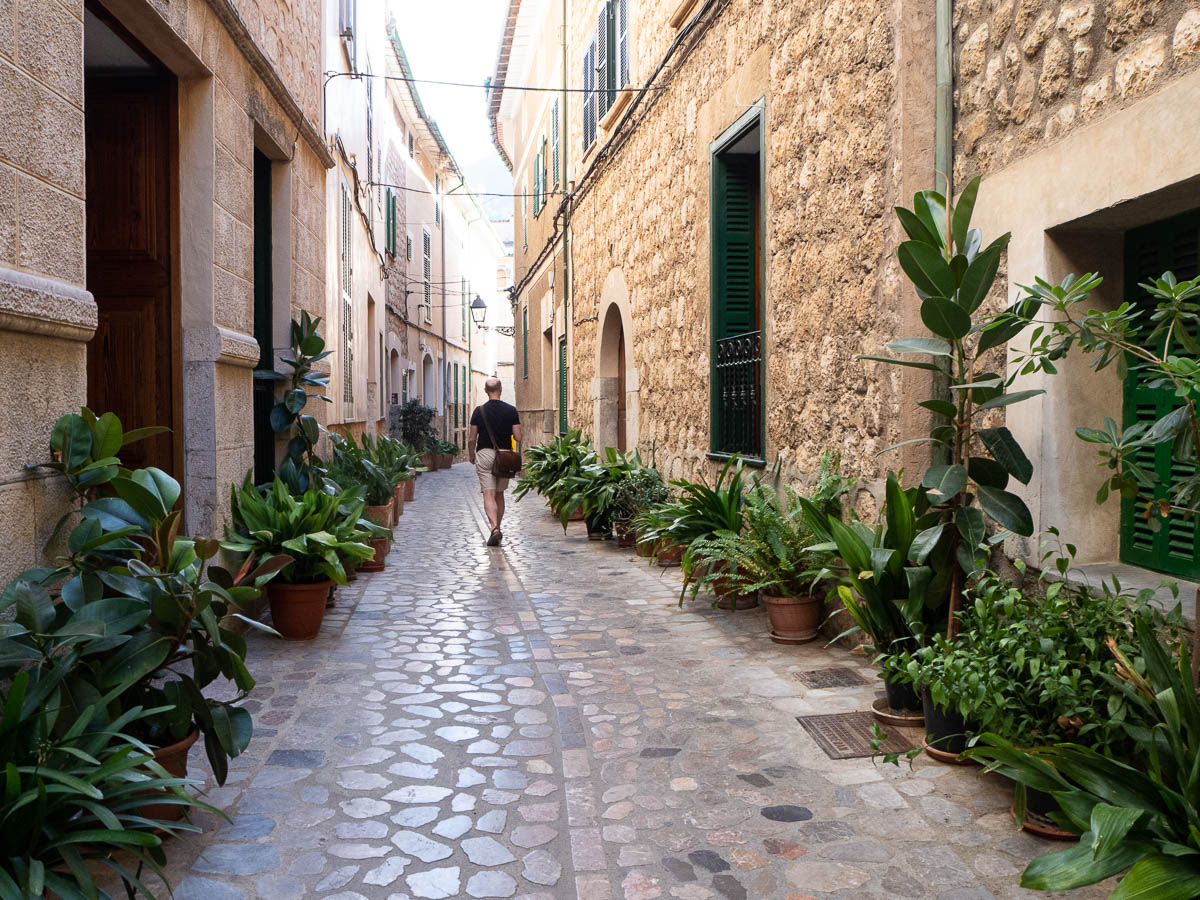
We set off along the pretty, flower-adorned, cobbled streets of Fornalutx. But our route started ascending before we had even left the town, and that ascent then continued for three and a half kilometres with nearly no breaks. We were, frankly, suffering most of that time.


Finally we reached the viewpoint at Mirador de ses Barques and were rewarded by views all the way down to Port de Sóller. At the café we got some rest, and ice cream and refreshing drinks.

Here the relentless ascent ended and we now mostly walked downhill. The weather was no cooler, but not having to push uphill all the time made a huge difference.

The kids complained about the heat a bit but I got the impression that it didn’t bother them as much as me and Eric, it was more just something to complain about. Their real problem was boredom. Now they started playing “20 questions” with animals to pass the time. Soon they were fairly skipping along, walking ahead of us to the next point in our route description (“in 150 metres, pass an old gateway” or “when the path crosses a trail, keep going straight ahead”) and waiting for us to catch up.


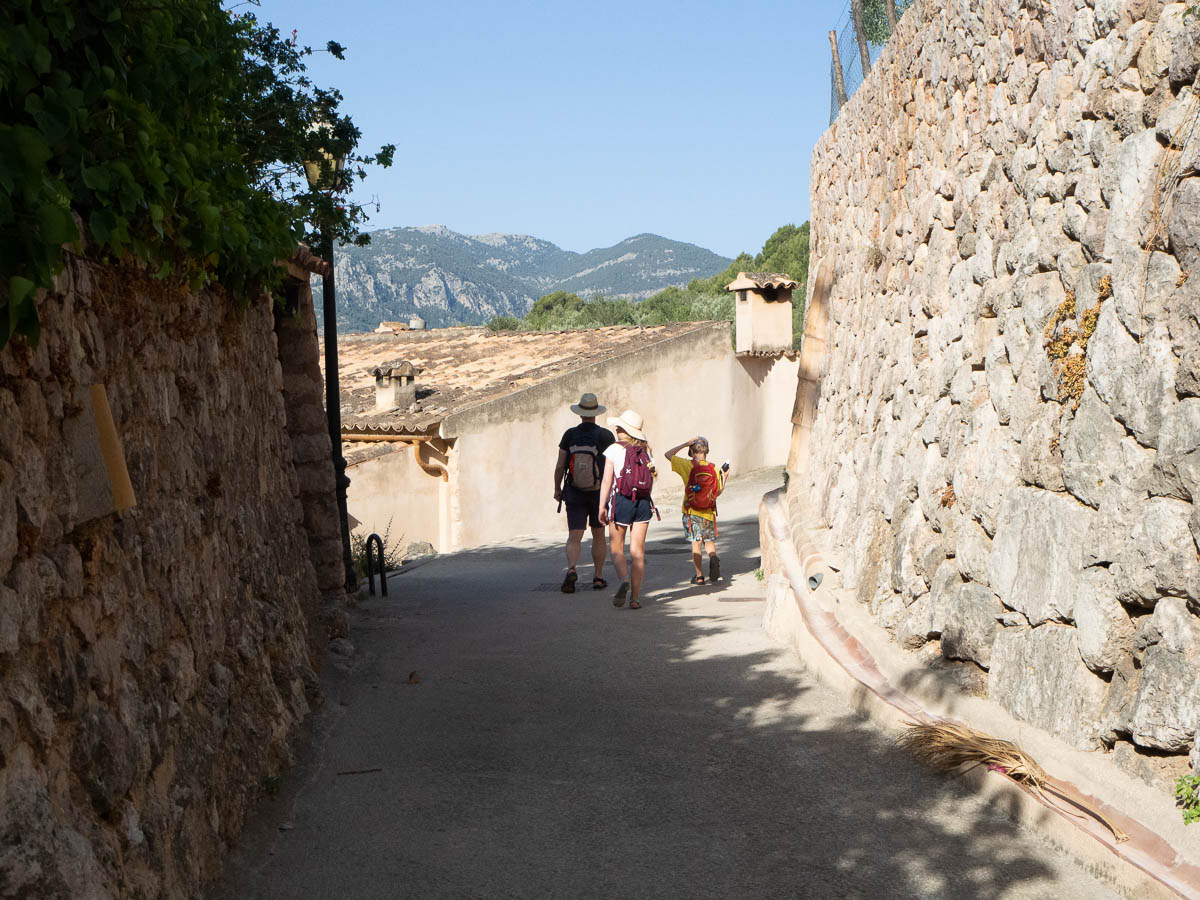
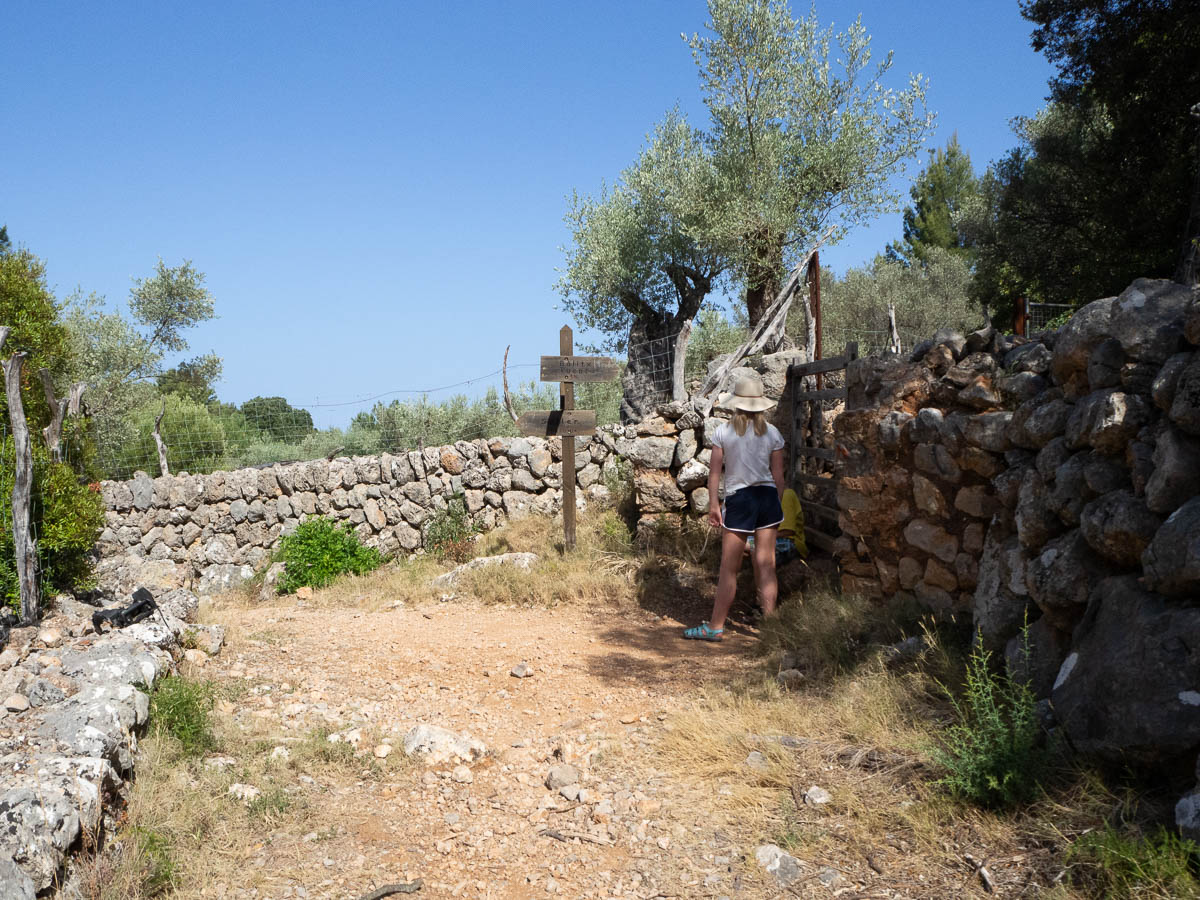
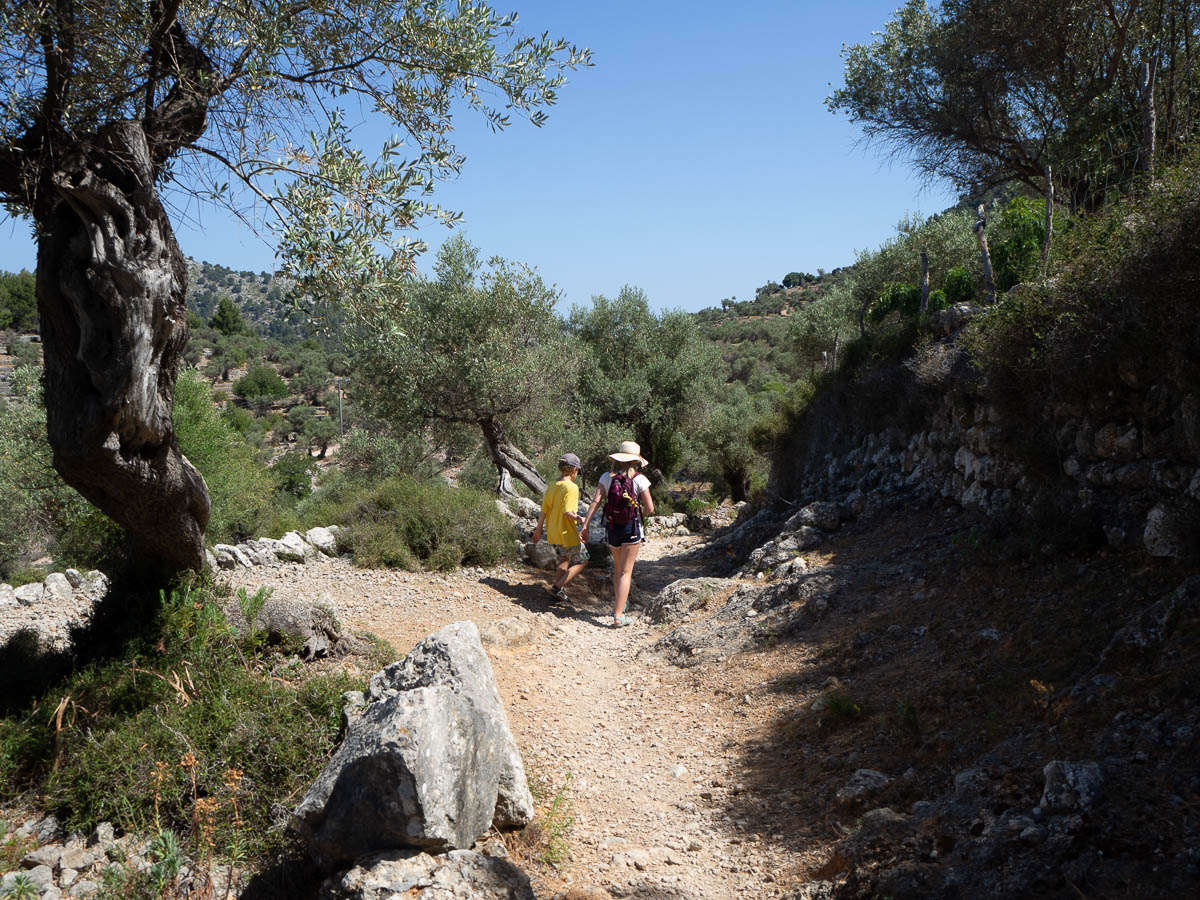
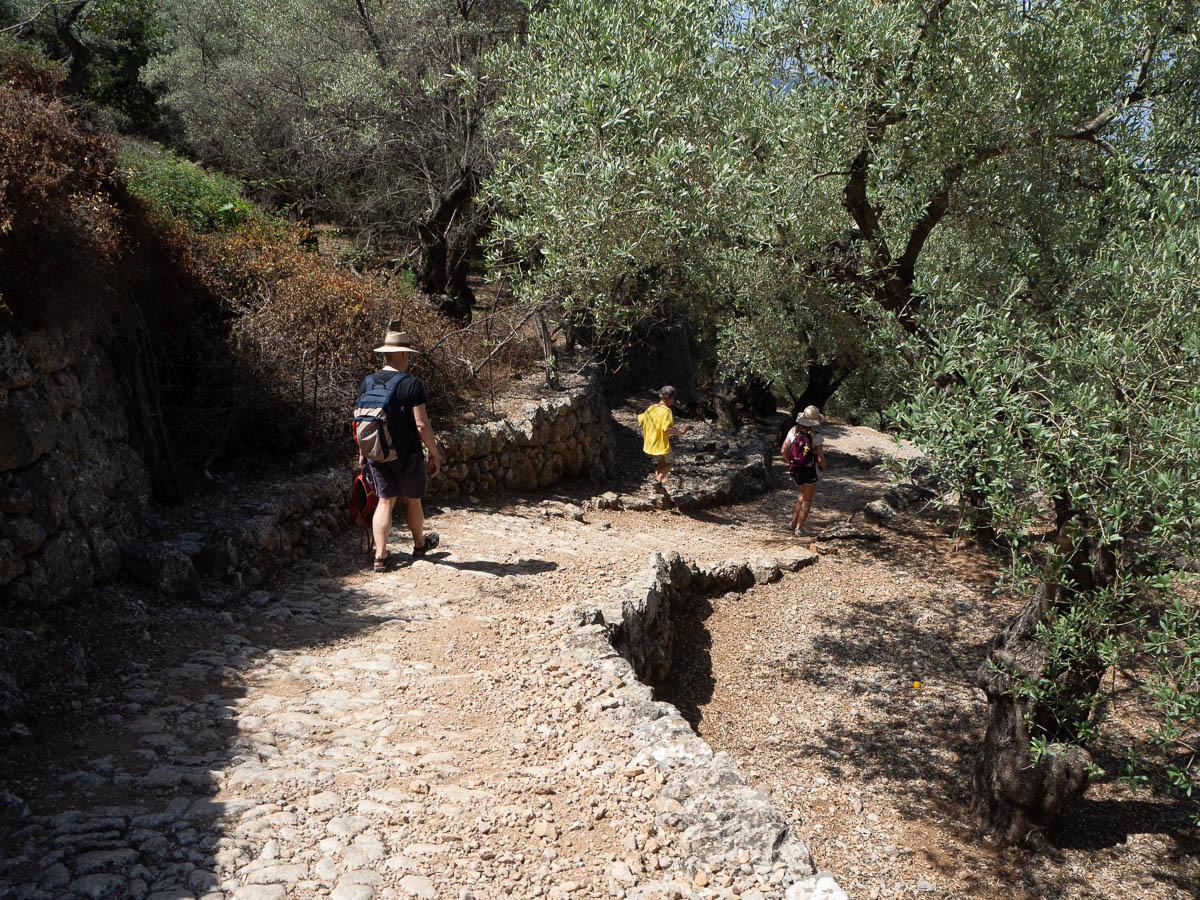
The paths and trails were sometimes cobbled but often quite stony and uneven. I had to keep my eyes down in front of my feet much of the time, so I couldn’t look around as much as I would have liked. But that was perhaps not a huge loss – the surroundings today were less varied than yesterday. Mostly lots of stone walls and gnarly olive trees and dusty, brown ground.

Thoughts of air conditioned hotel rooms and a dip in the hotel pool kept us going, and we were justly rewarded upon our arrival.


Day 1 of 7. Circular walk around Fornalutx via Binibassi and Biniaraix, 6 km.

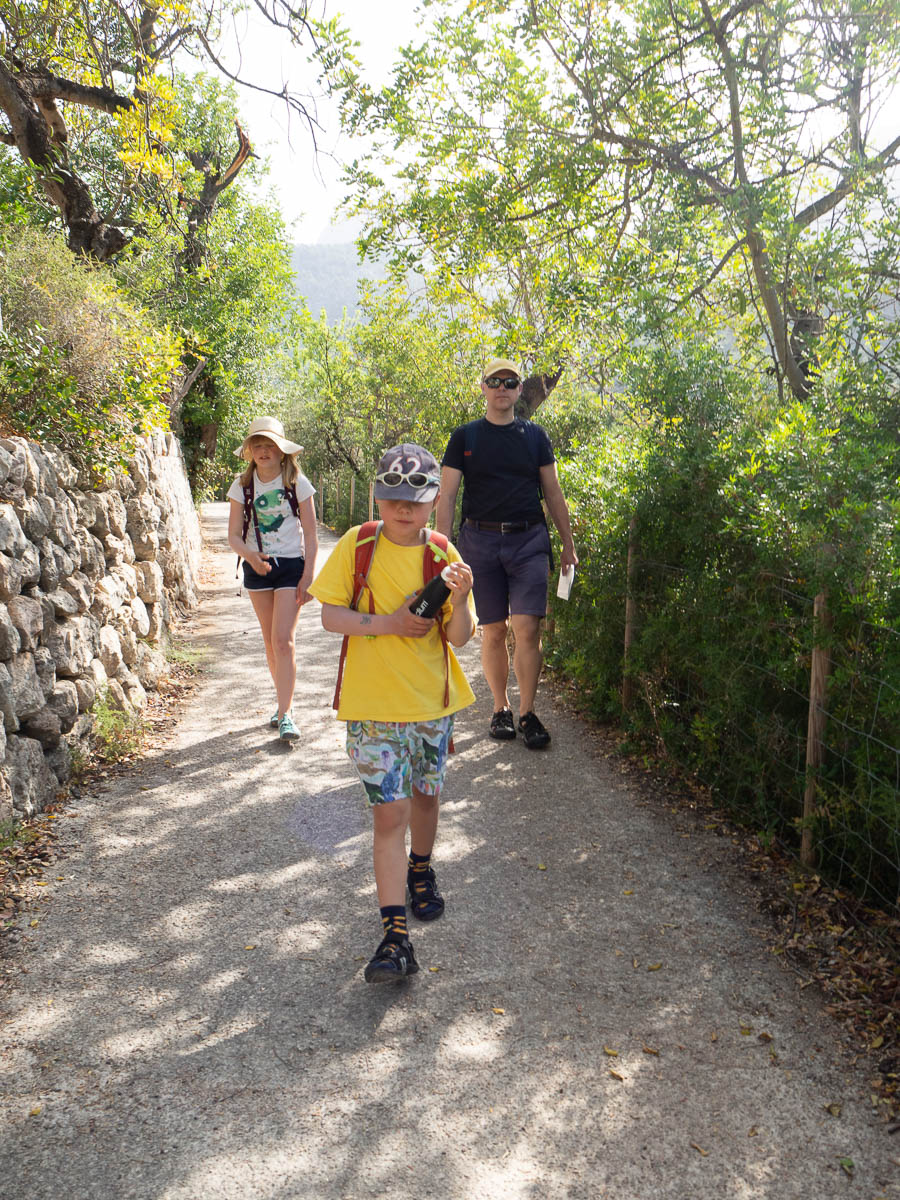
The heat wave is here and the heat is incredible. Stepping outside the hotel feels like stepping into an oven. But we’re here to walk and there isn’t much else to do in this little village, and spending all day in the hotel is not our idea of fun. So we walked, taking it slow and drinking lots of water.

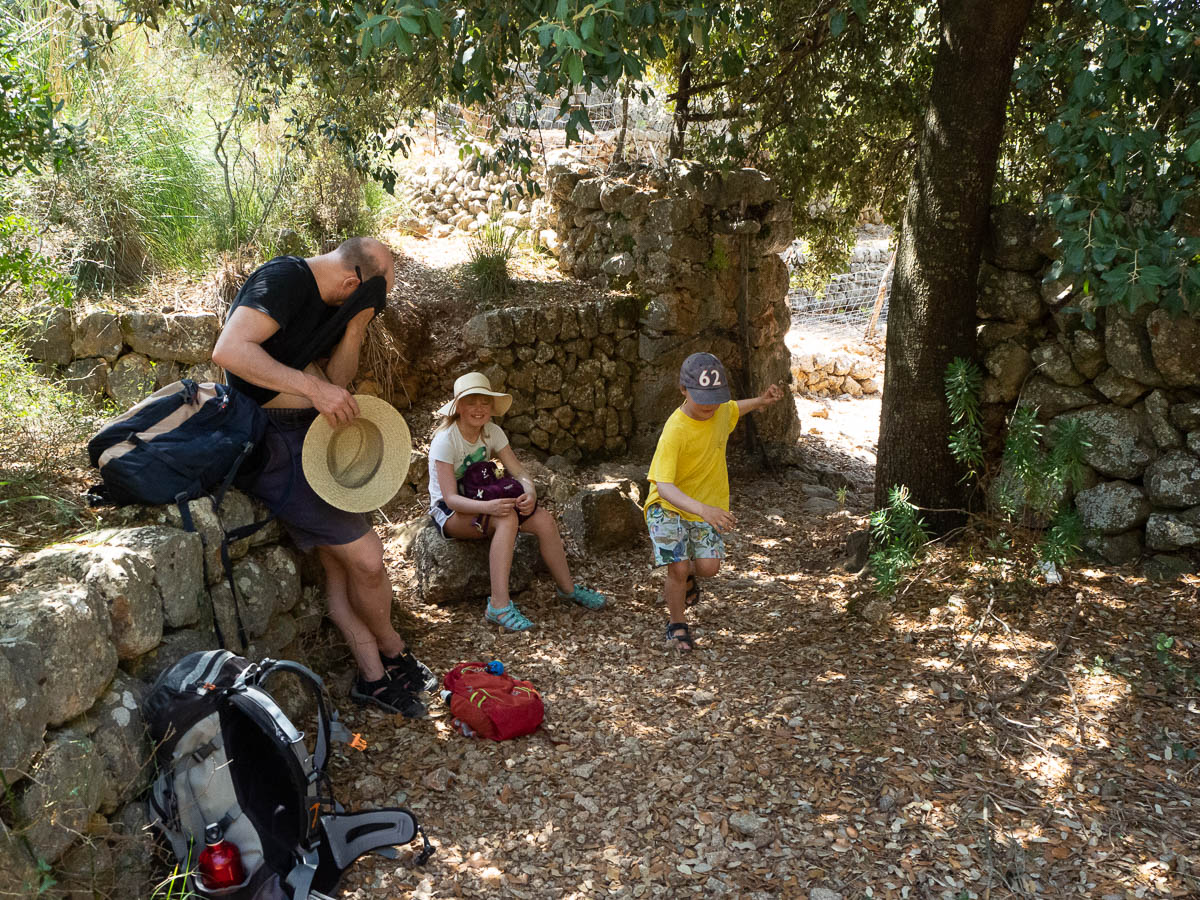
Walking soon became an exercise in seeking shade. Whenever the path zig-zagged, we crossed it to walk on the shadier side. If we wanted to stop a sip of water, the first step was to find a tree that was large and dense enough to provide proper shade. Standing still for even a minute in the burning heat was too much.

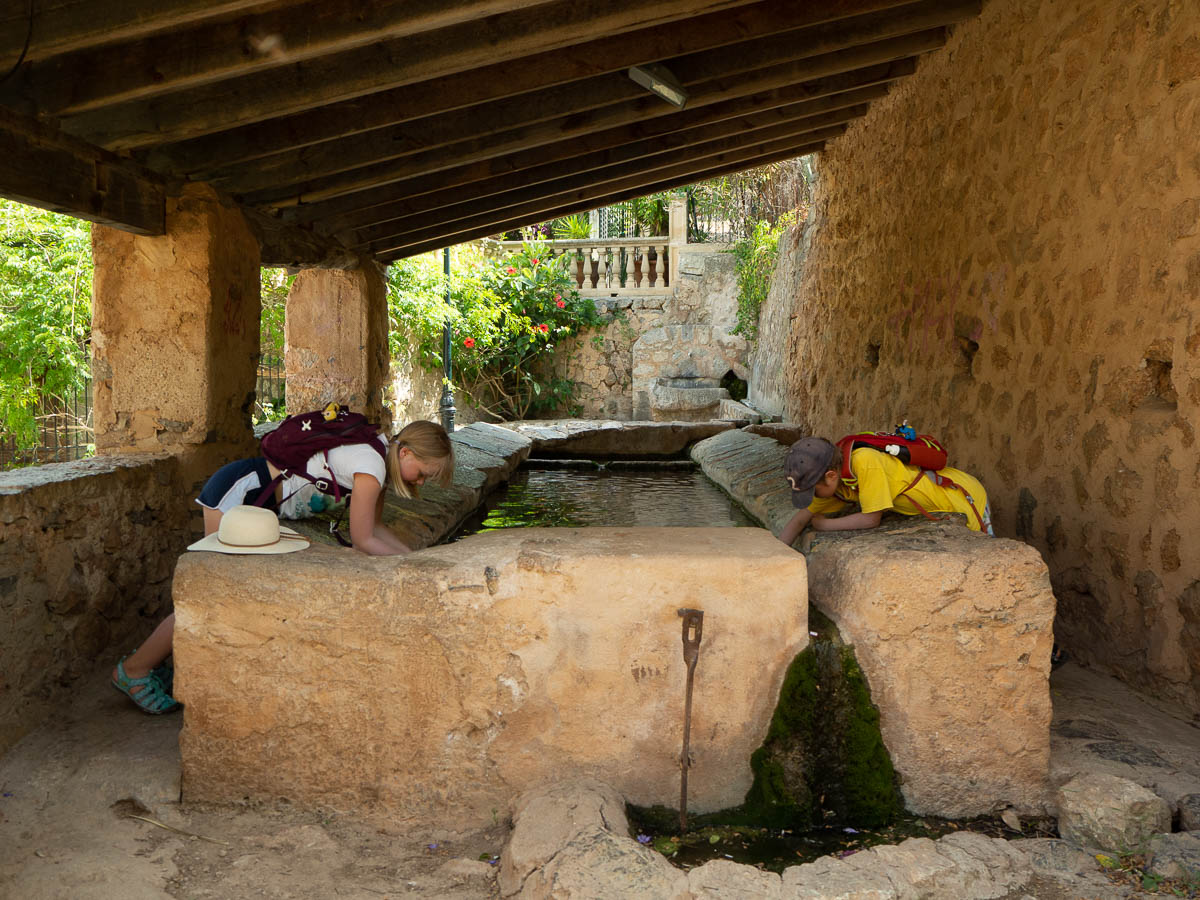
Luckily there were quite a lot of trees, and the path was often bordered by high stone walls, which gave even better shade. This old washhouse was very pleasantly cool.

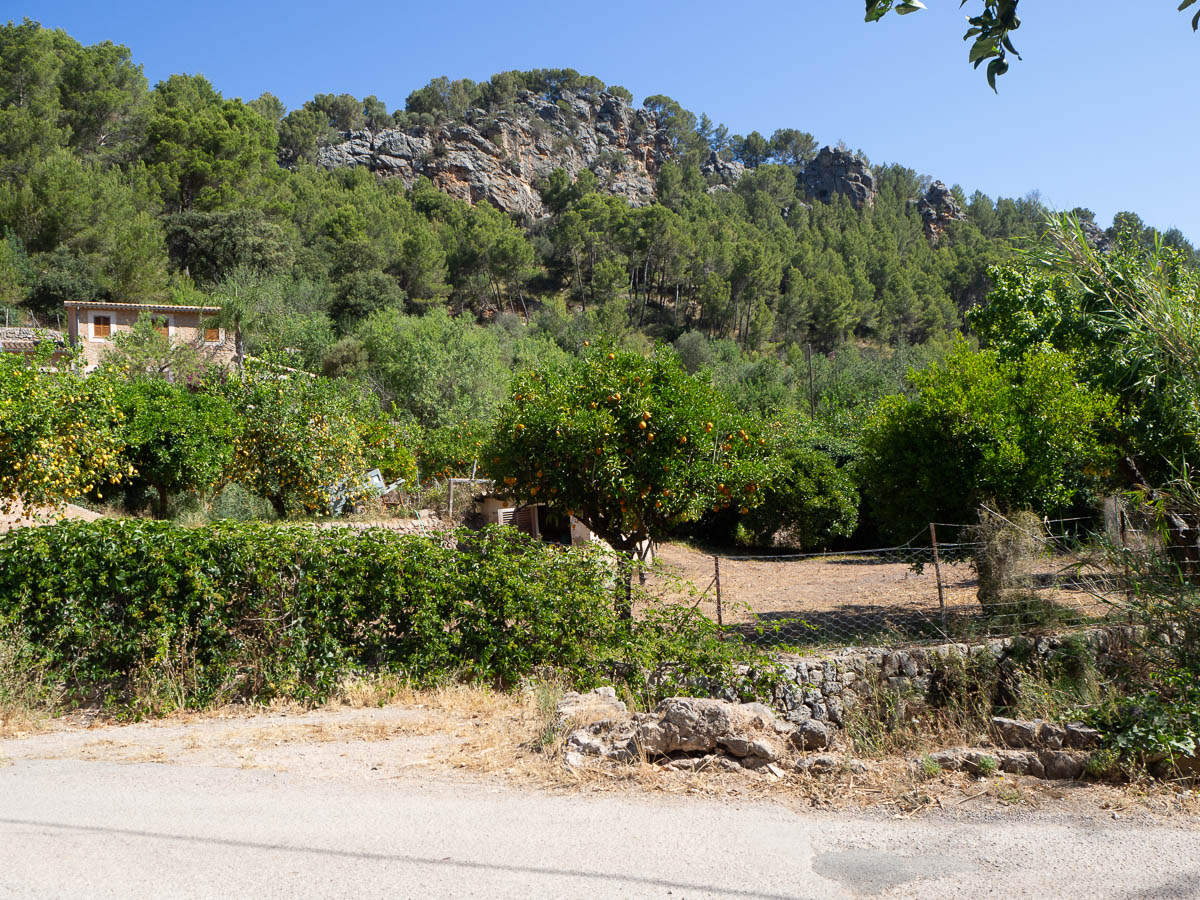
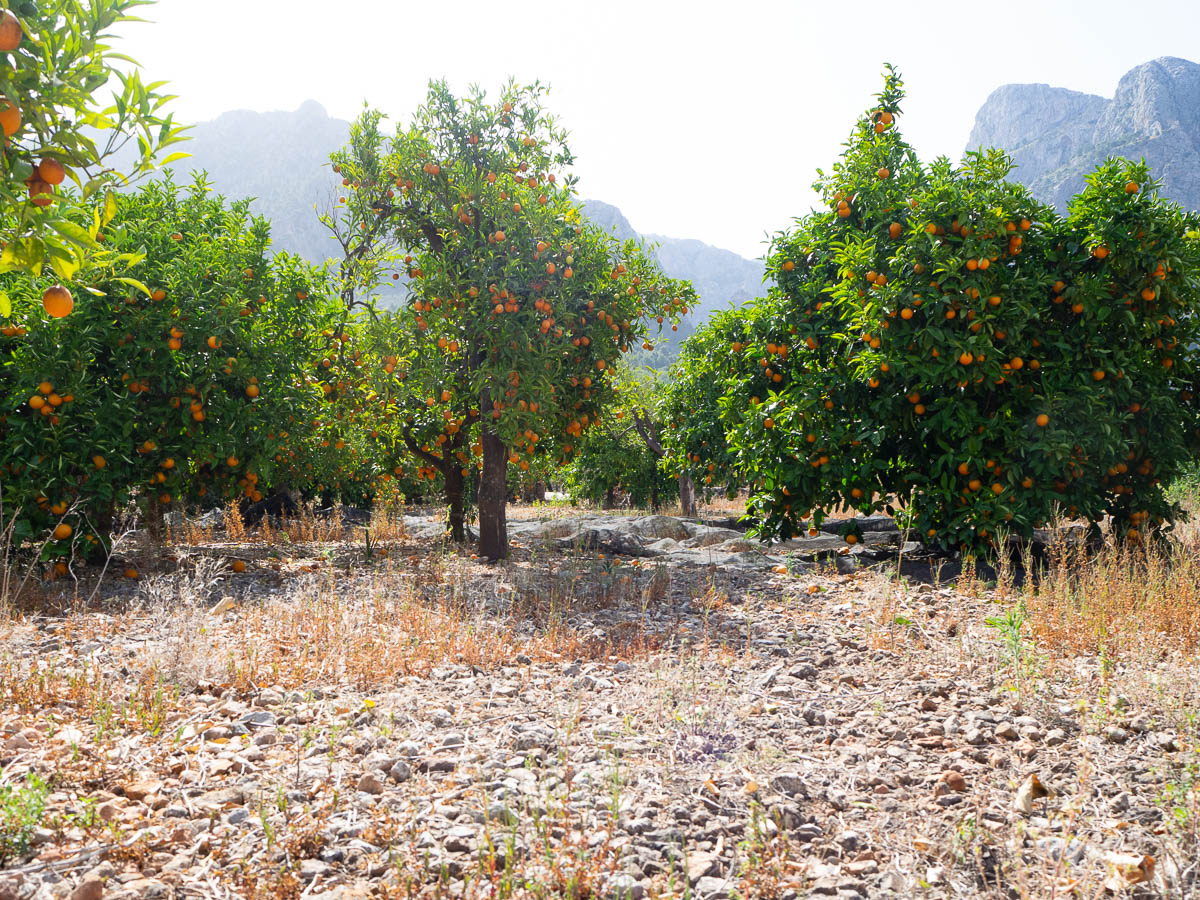
The orange and lemon trees were so full of fruit they looked like they were from a picture book. We found some lemons that had fallen into the street and ate one; it was delicious. It was strange to eat a warm lemon though: we do eat quite a lot of the fruits at home at room temperature, but I only use lemons for cooking and keep them in the fridge so in my head lemons are always cold.

It was interesting to see the trees so well adapted to the dry climate: they all manage to keep their leaves and fruit, while the ground is dry dust and the grasses have all withered and died.

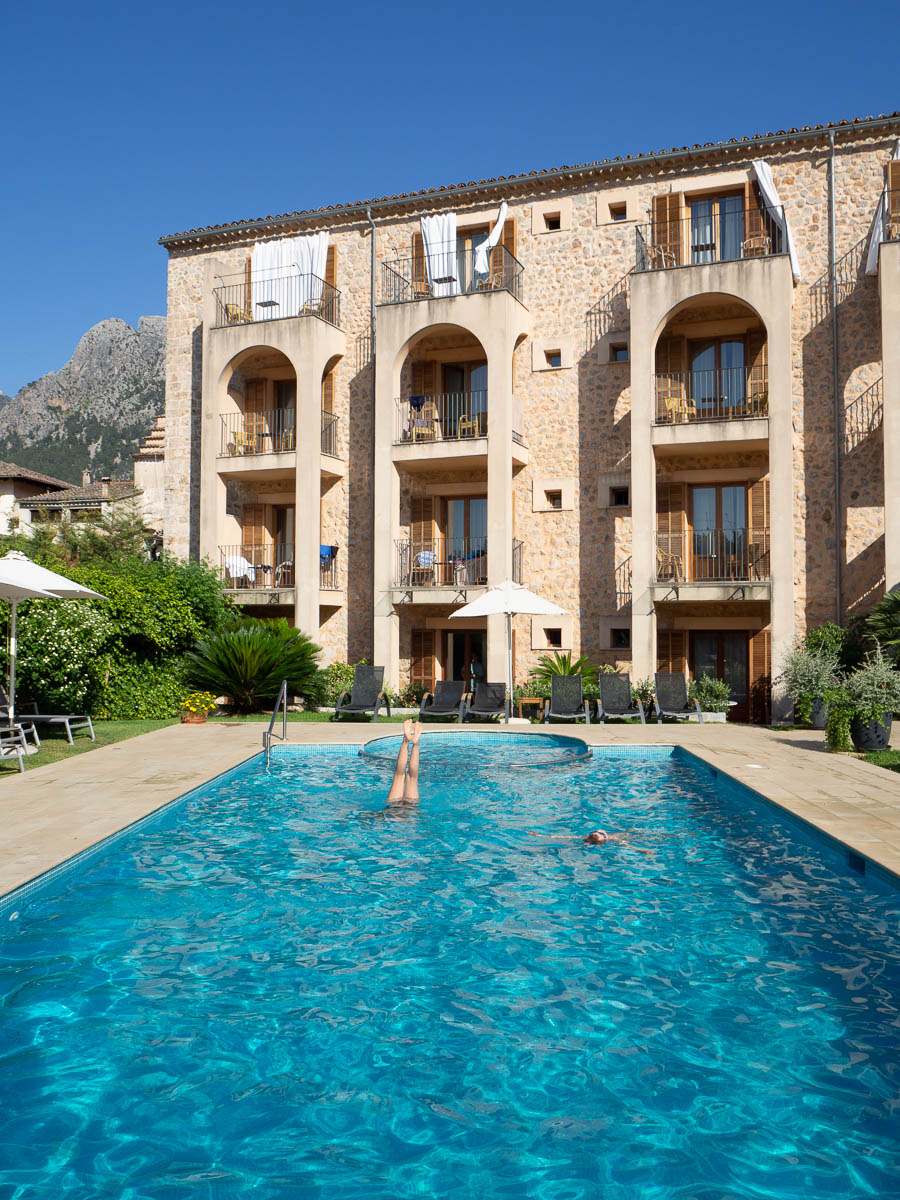
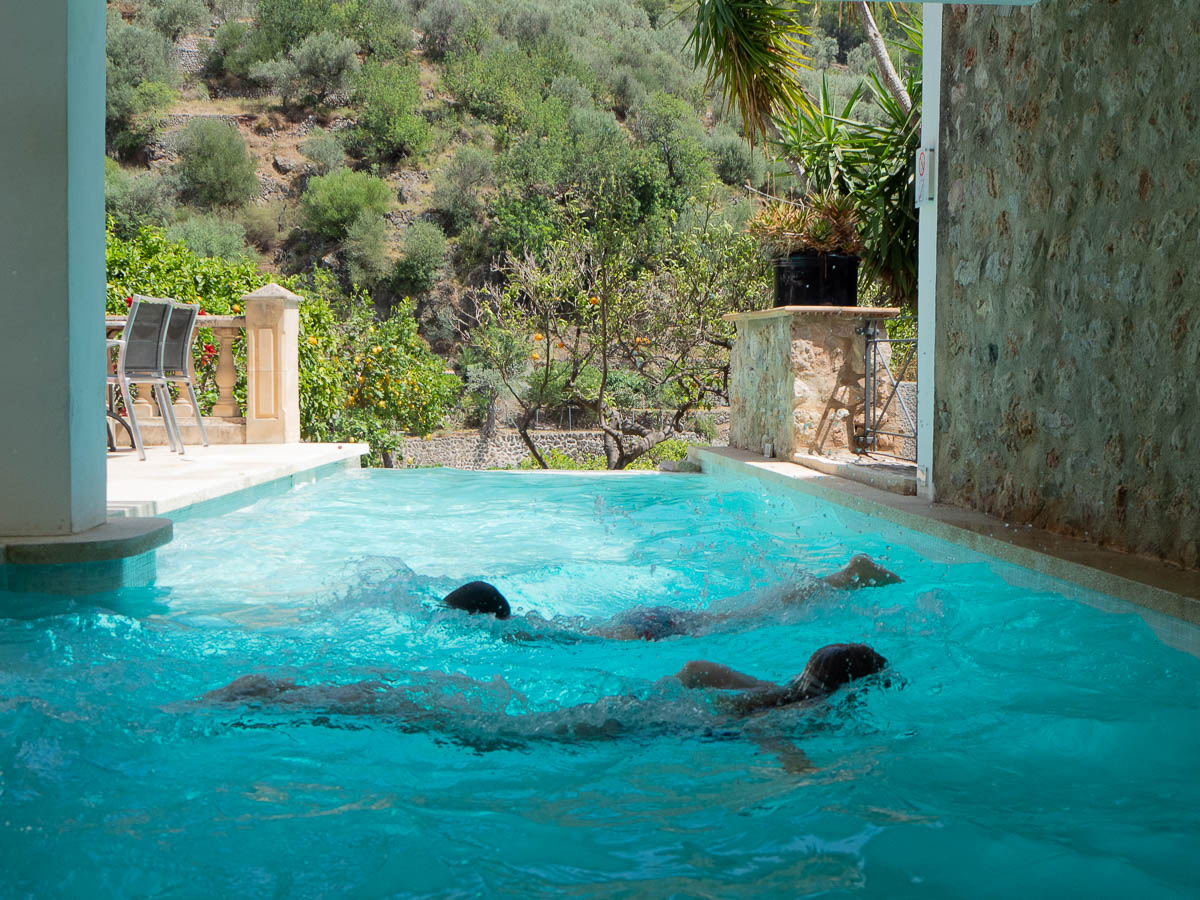
We’re staying (for two nights) at a lovely little hotel, Petit Hotel Fornalutx. It has a terrace and a garden, and even more importantly, a swimming pool.

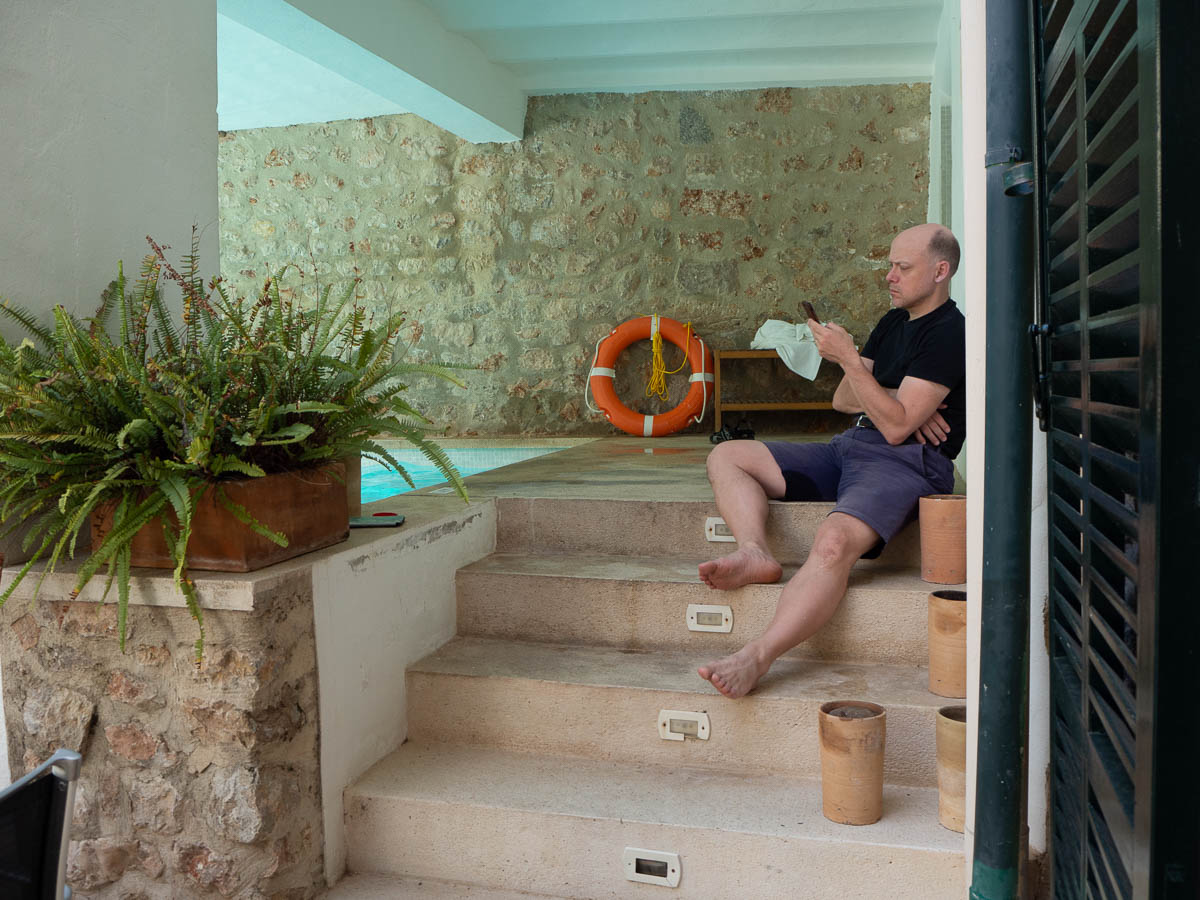
We spent most of the afternoon in and around the pool. Ingrid and Adrian swam and splashed; Eric and I sat in the shade and cooled our feet in the pool.

Note to self: the restaurant Molón is very nice. Tapas and small dishes to be shared, but of a modern kind, which meant many more meat-free and vegetarian options than in all the traditional Mallorcan restaurants we passed.