Ingrid gets a week of corona-adjusted scout camp, because her age group (“Upptäckarna”) can pretty much manage themselves, cook their own food, etc. But the youngest scouts, “Spårarna” like Adrian, don’t get any summer camp this year. Adrian likes camps and camping, and is a bit disappointed by this. So he and I went camping on our own, while Eric stayed at home and got some peace and quiet.

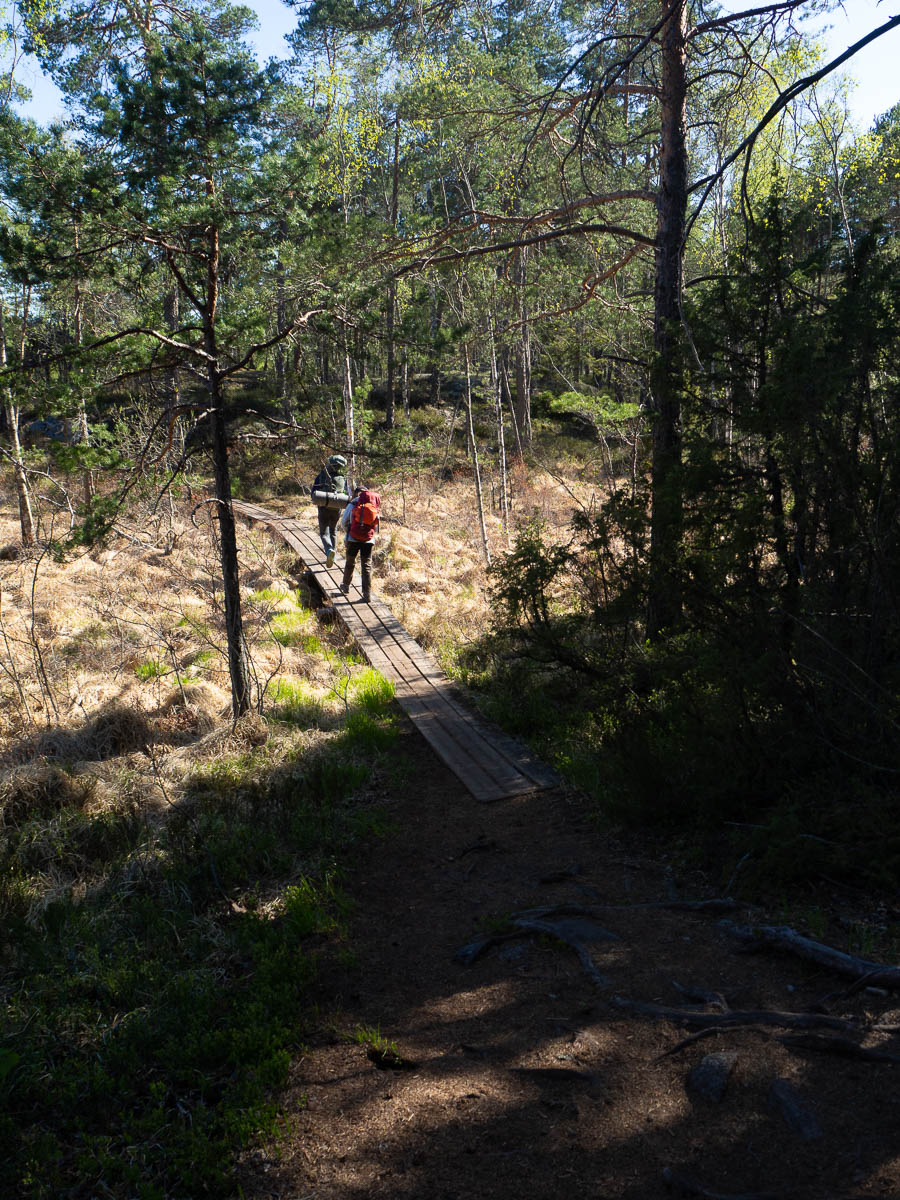
We aimed for the camping spot next to Årsjön in Tyresta. That’s about a 3 km hike from the parking lot. That’s nothing for Adrian, really, but today he really wasn’t in much of a walking mood and seemed to struggle with every single step. We took plenty of water and snack breaks on the way.
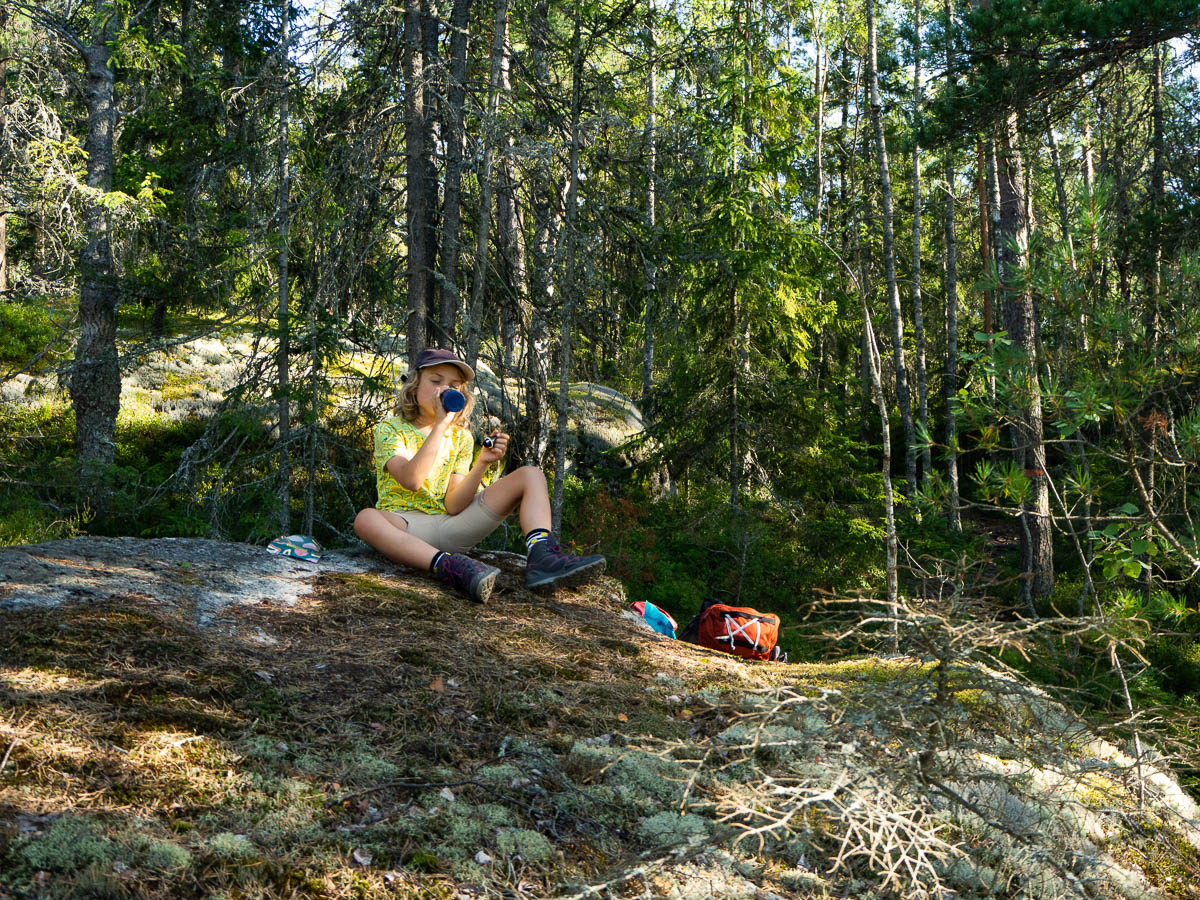
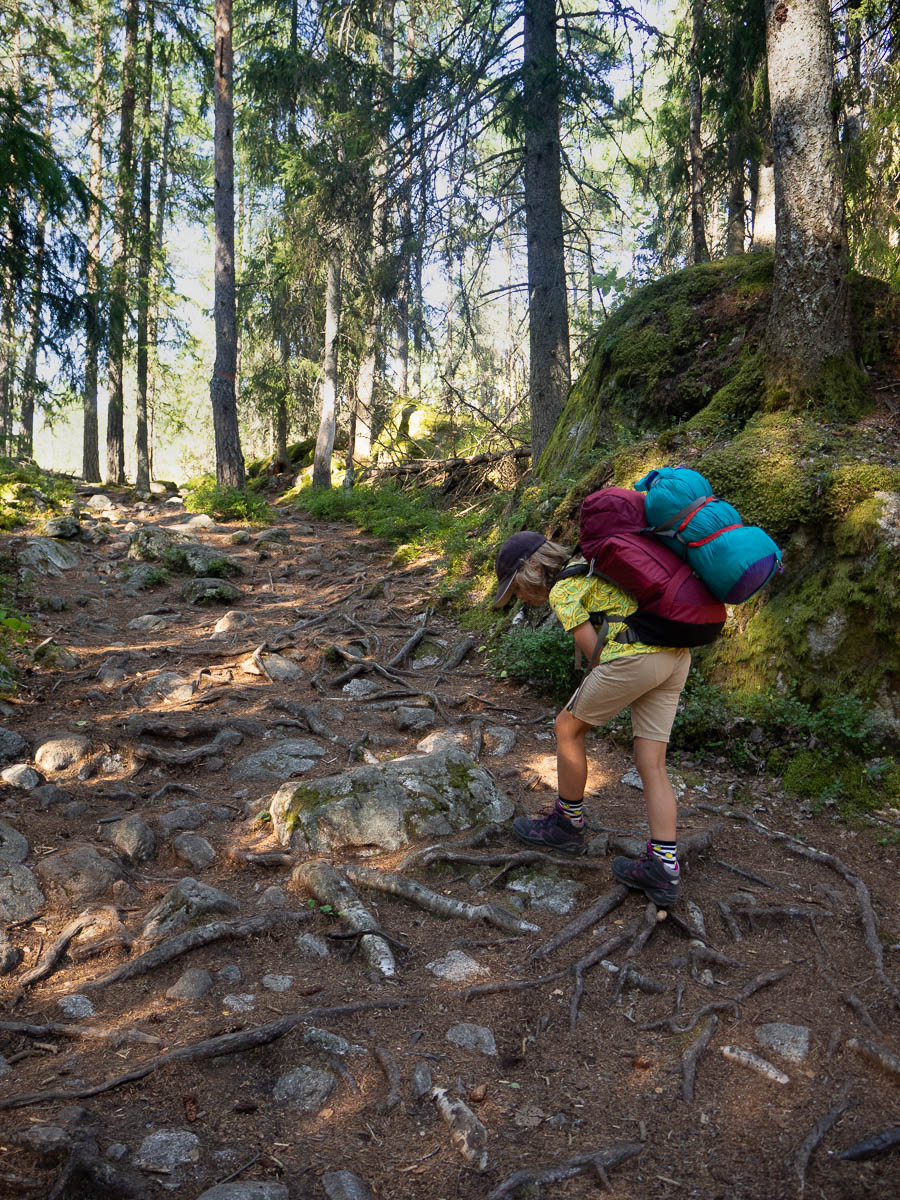
Part of the problem is his rucksack. At about 140 cm, he’s too short for most junior rucksacks. He uses the shortest large rucksack I could find, back when Ingrid was preparing for her first scout camp. It’s a decent pack, but it lacks a proper padded hip belt, so all the weight rests on his shoulders.
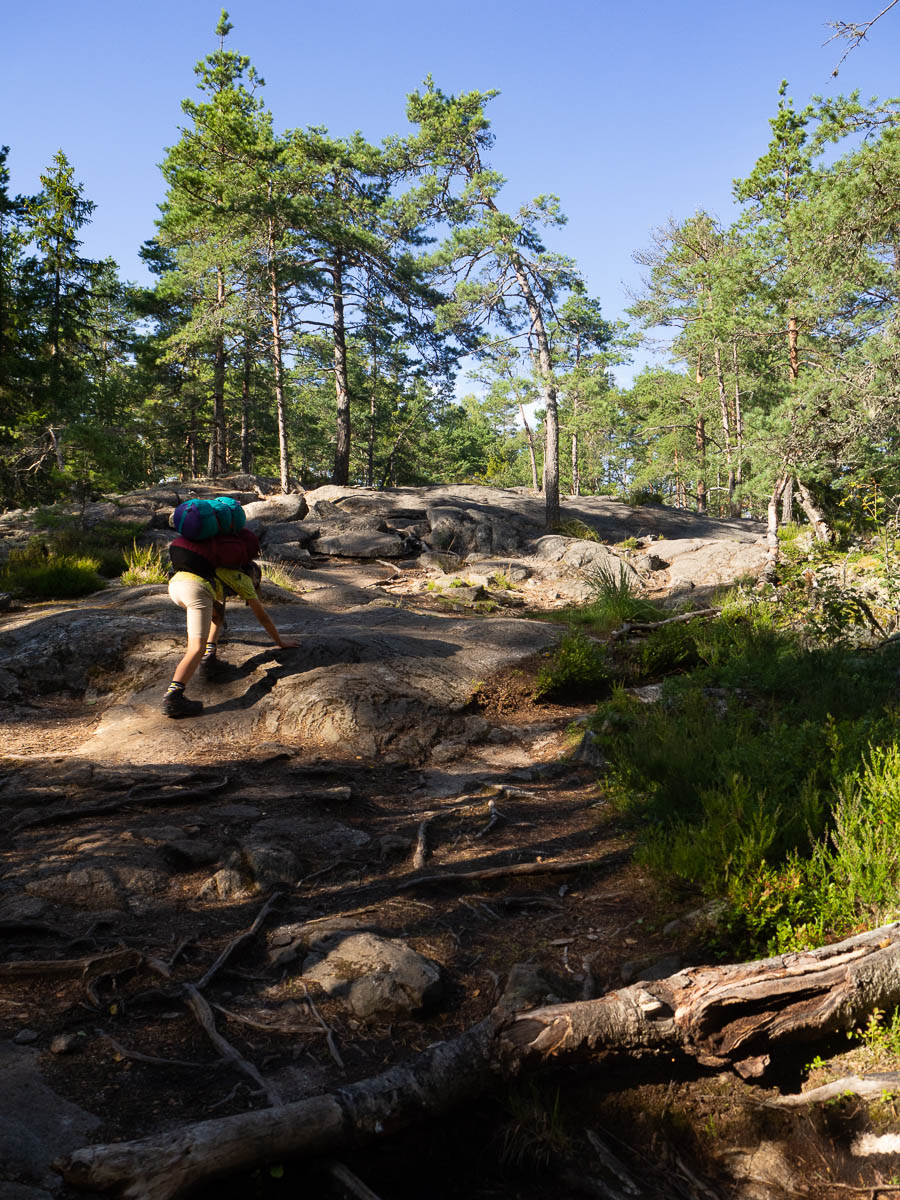
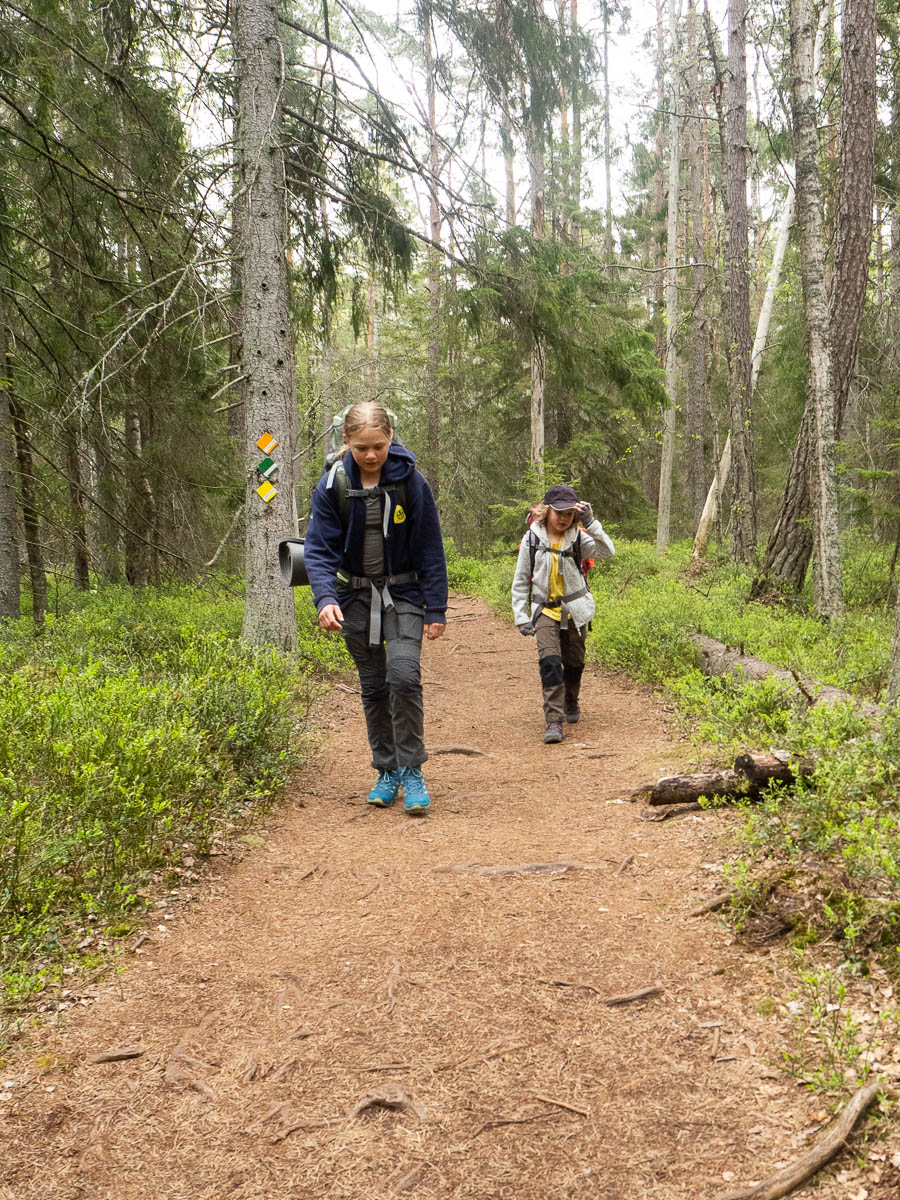
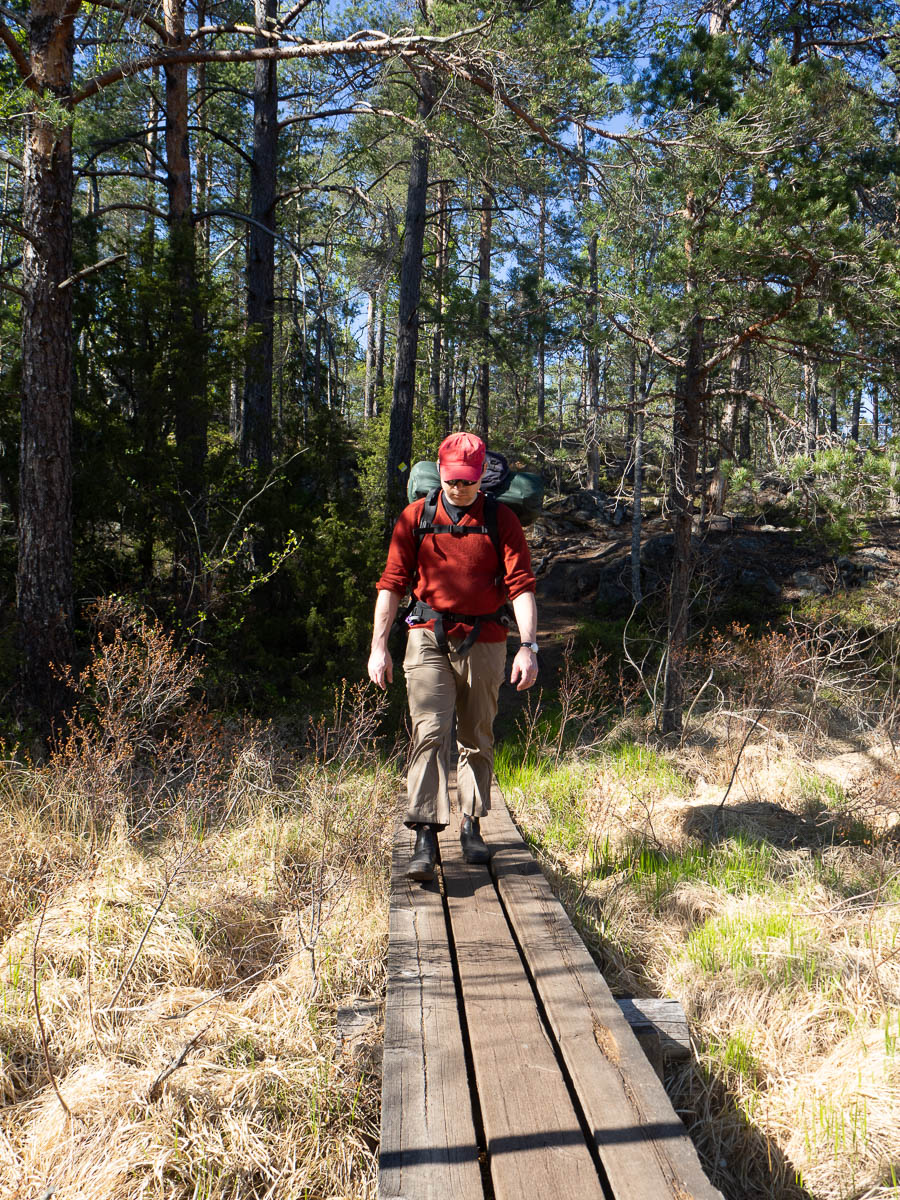
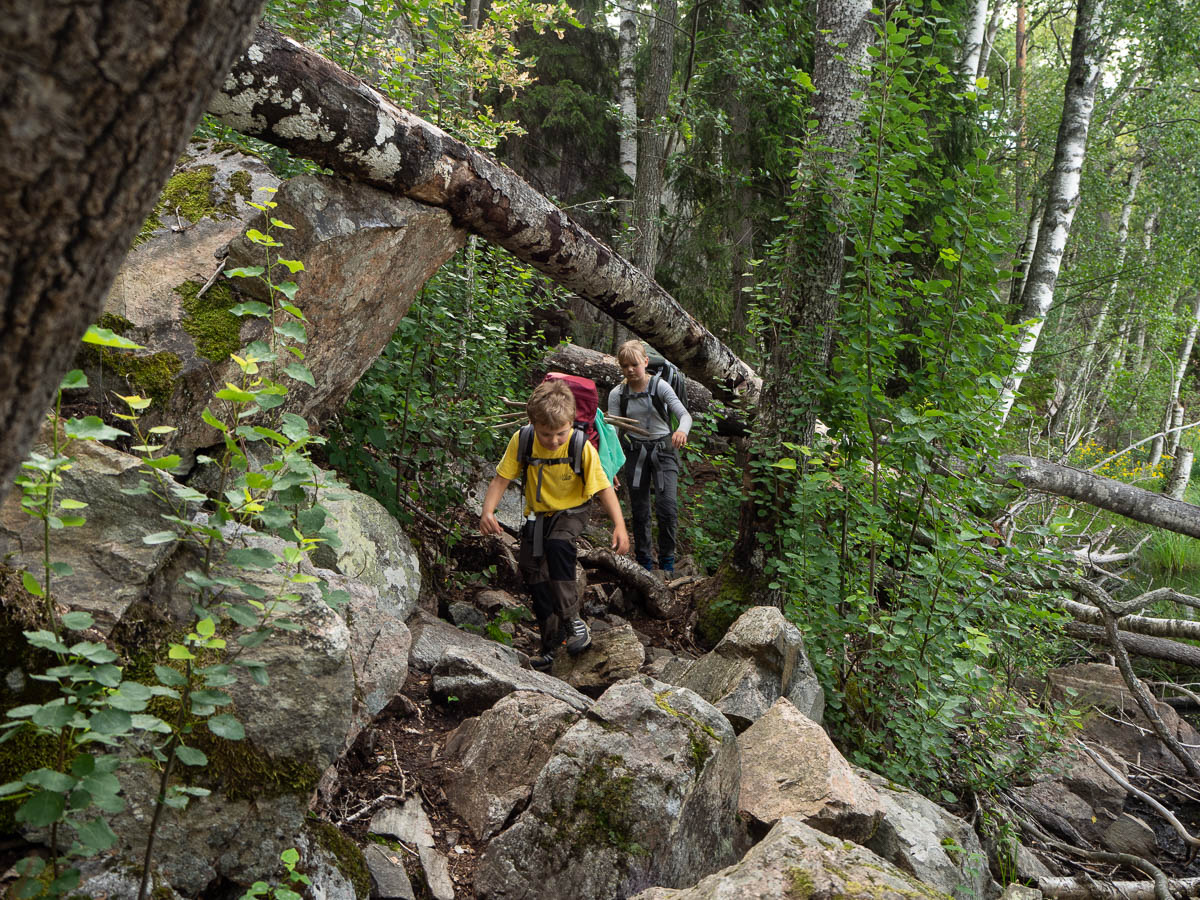
No, he doesn’t walk bent over as he is in the photos – he was demonstrating for me just how unbearably heavy his pack was, especially when the path went uphill over rocks and roots. All it contained was his sleeping bag and mattress, a few small items of clothing, our toiletries and his water bottle…
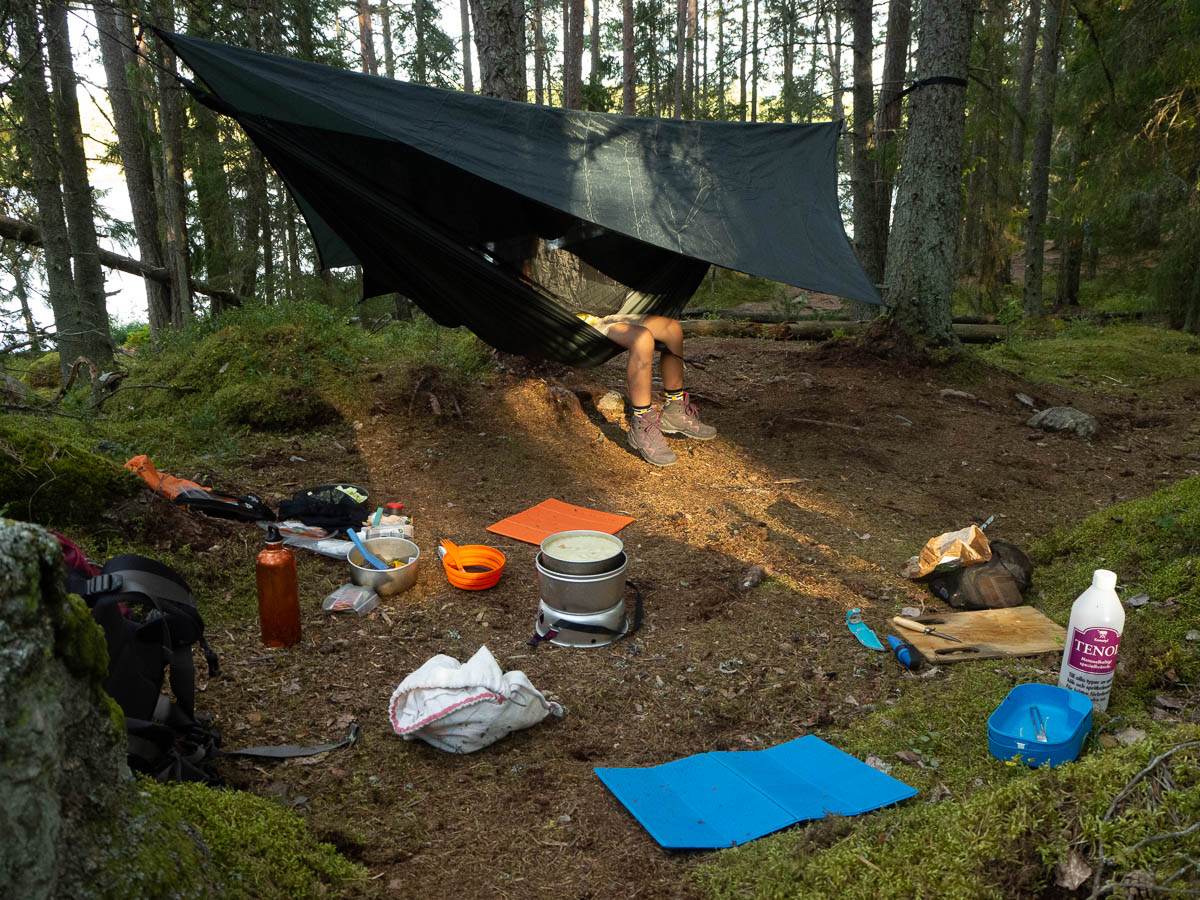
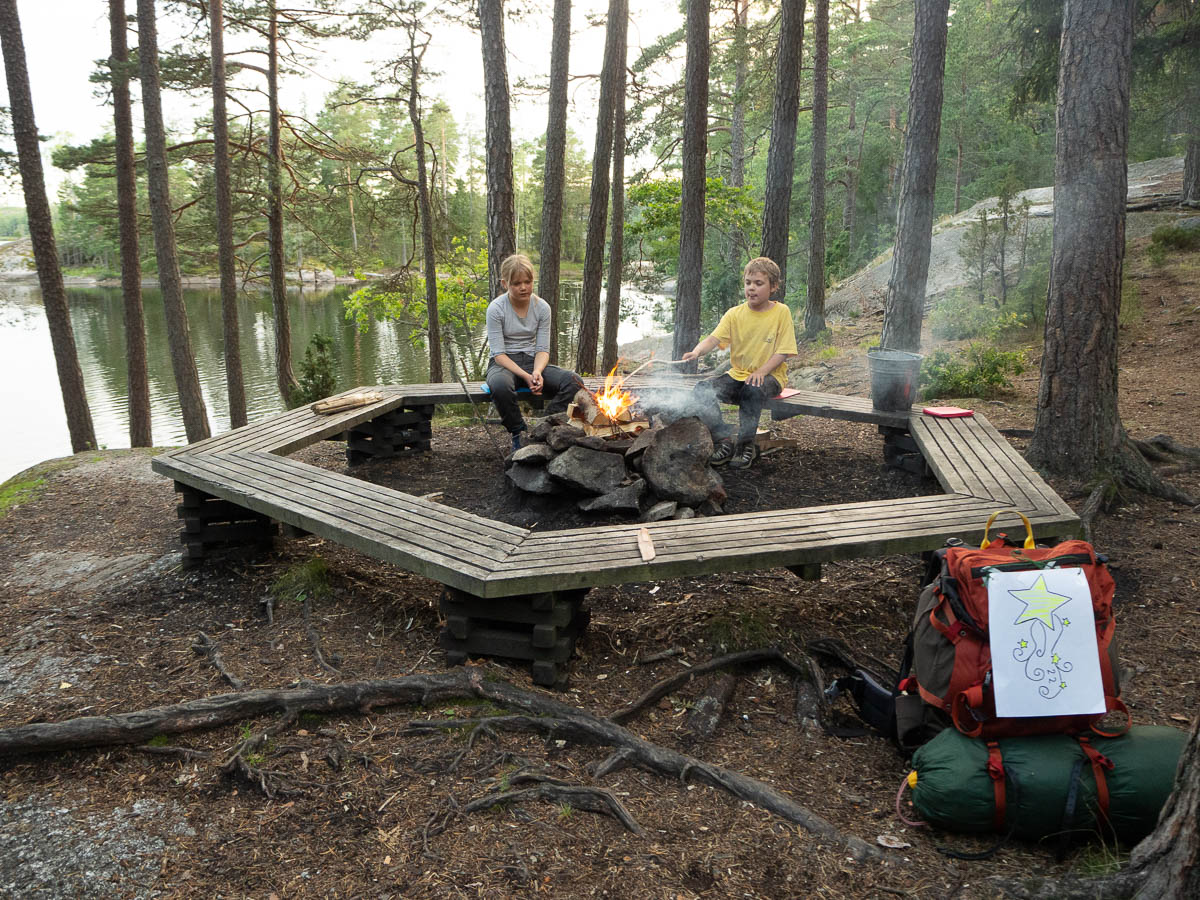
When we got to the camping site, we were surprised to find it incredibly crowded. This is not an organized camping ground with flat ground and amenities like water and electricity – it’s simply one of the few spots in the Tyresta national park where tenting is allowed. Today, there were at least thirty tents here. I’ve never seen anything like it.

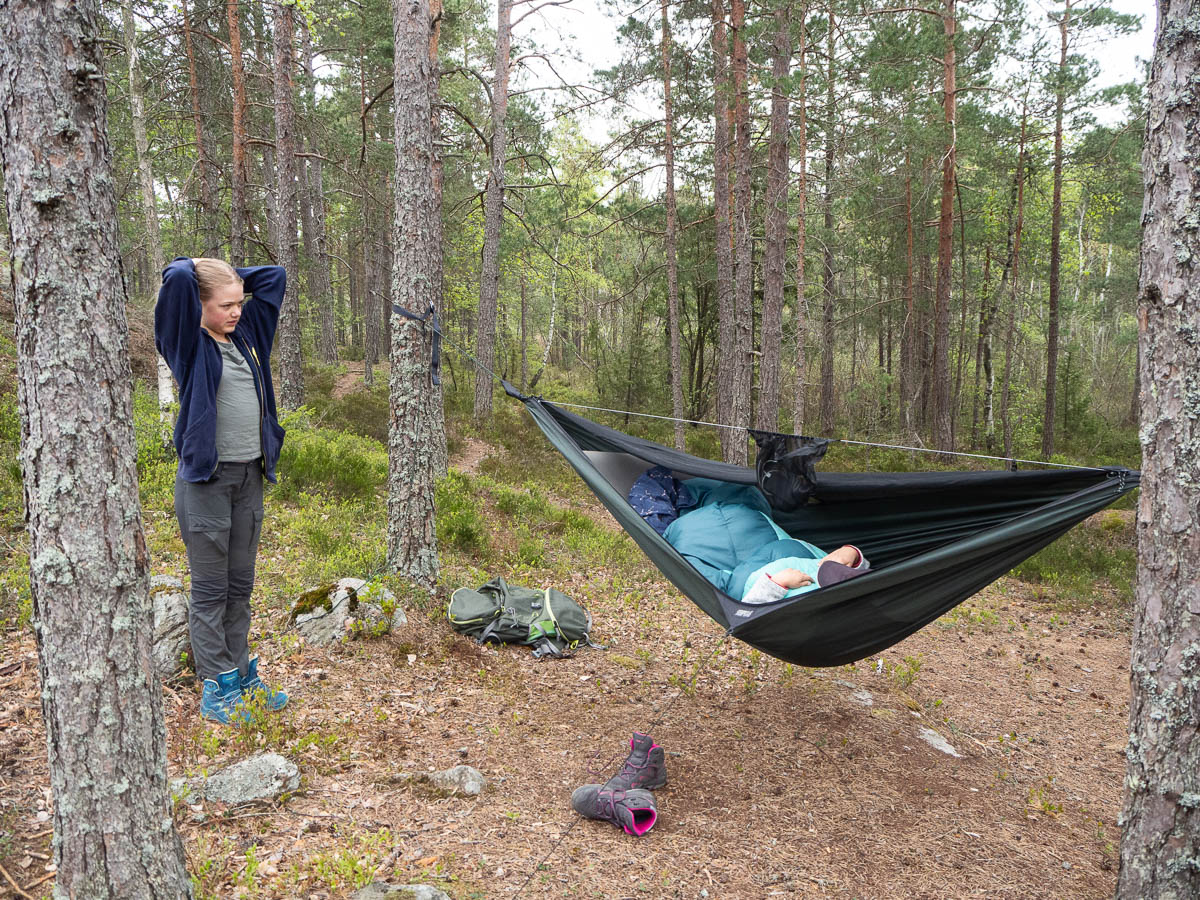
This was not at all what we had been hoping for. But it is what it is, so we just wandered as far as possible from the other people and the lake and the loo (this place now has a loo!) while still staying within the allowed area – and put up our hammock. Last time we were out camping and Ingrid waxed lyrical about the pleasures of sleeping in a hammock, I promised Adrian that it would be his turn in the hammock next time. Which was today. He flopped down in the hammock as soon as it was up.
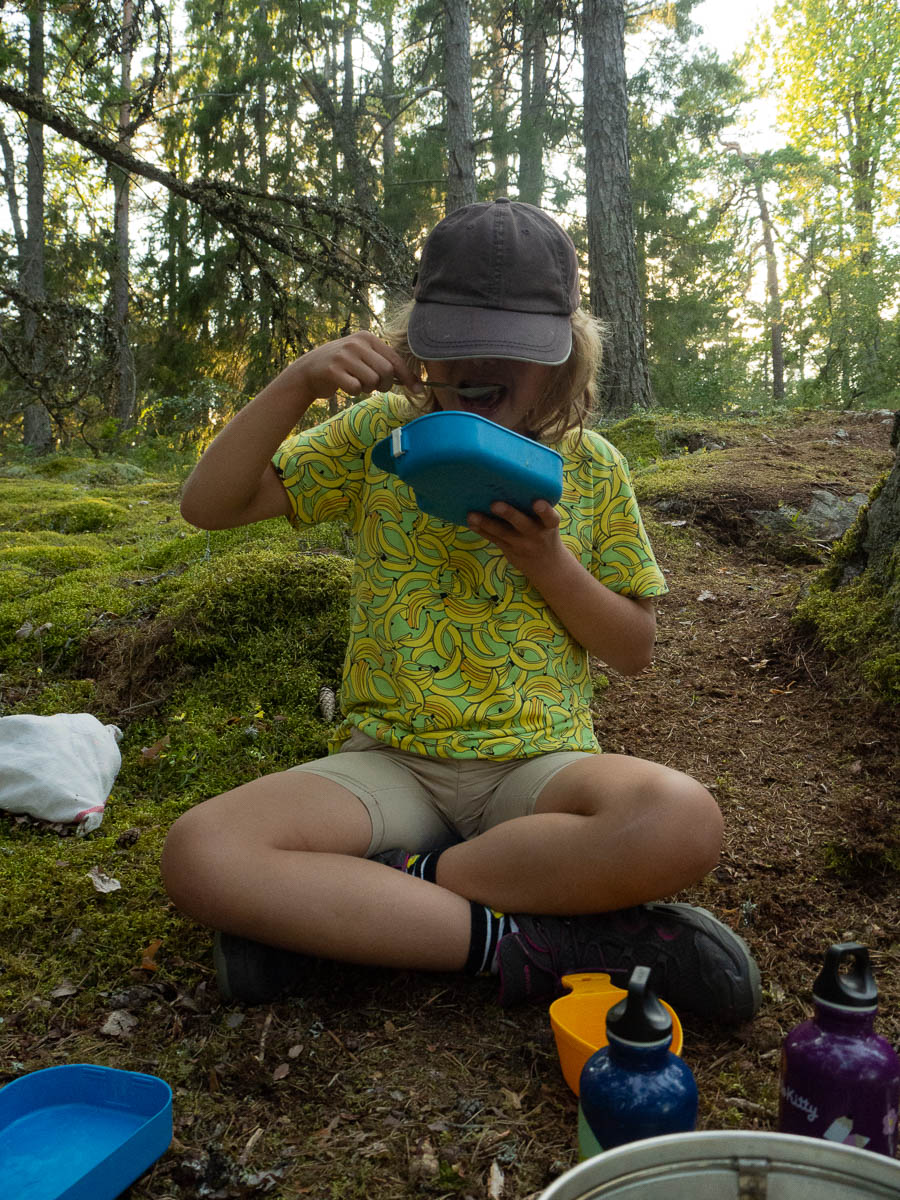
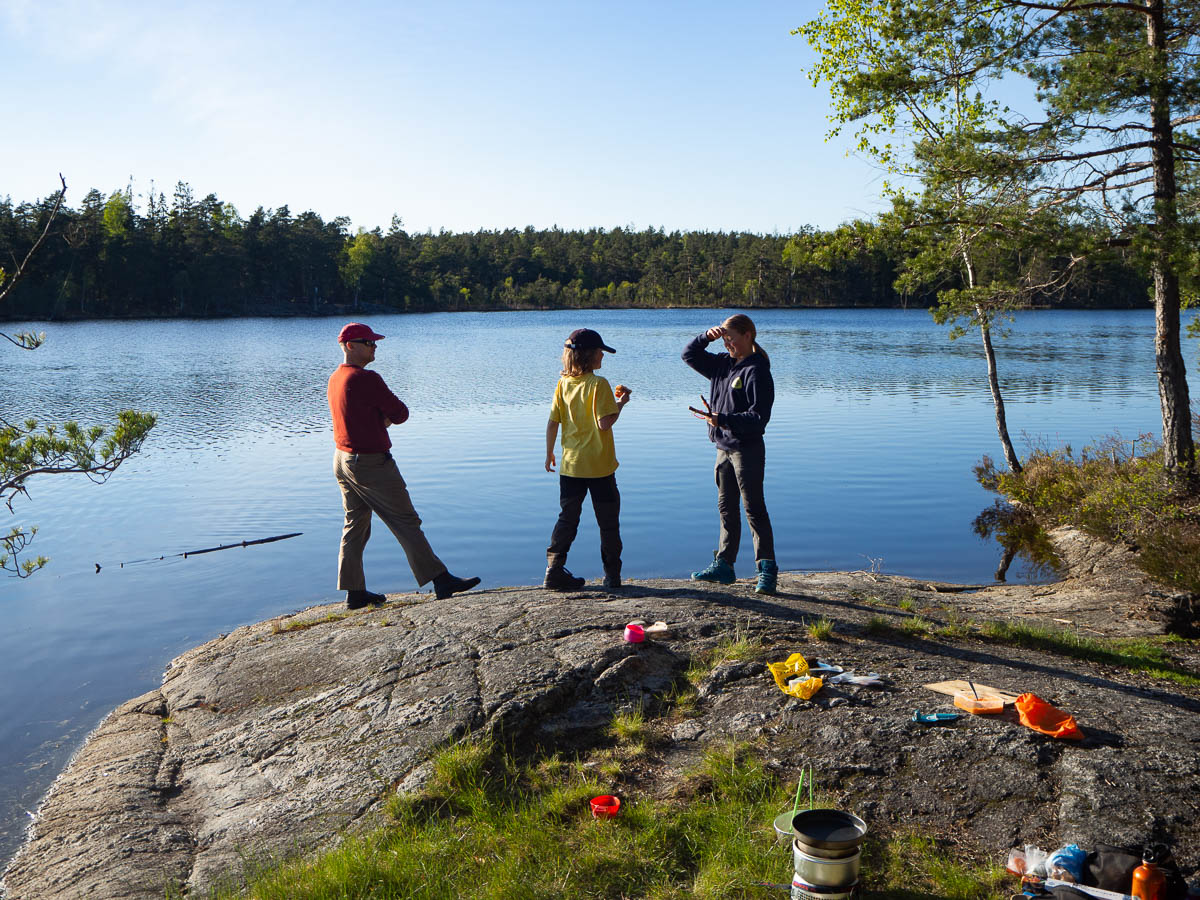
Once the packs were down and the hammock was up, we made dinner: a potato, chickpea and coconut curry. This is what Adrian called “shovel time”: when the food has cooled enough that he can shovel it into his mouth at a constant pace with barely any breaks for chewing.

Dessert was diced apples fried in butter, with almonds and melted dark chocolate.

We had some concerns about the noise level at the camp site: there were some larger groups there, and a band of young children who were still running around shouting quite late. But it did quiet down just when Adrian wanted to go to sleep.

I myself had hoped to sleep in the shelter here at Årsjön, and the shelter was also my plan B for Adrian in case he didn’t like the hammock. (He did like it.) But with the amount of people here, the shelter was out of the question. I fell back to plan C which was simply sleeping on the ground. The nights are warm and cloudless right now, so the only potential problem was mosquitoes.

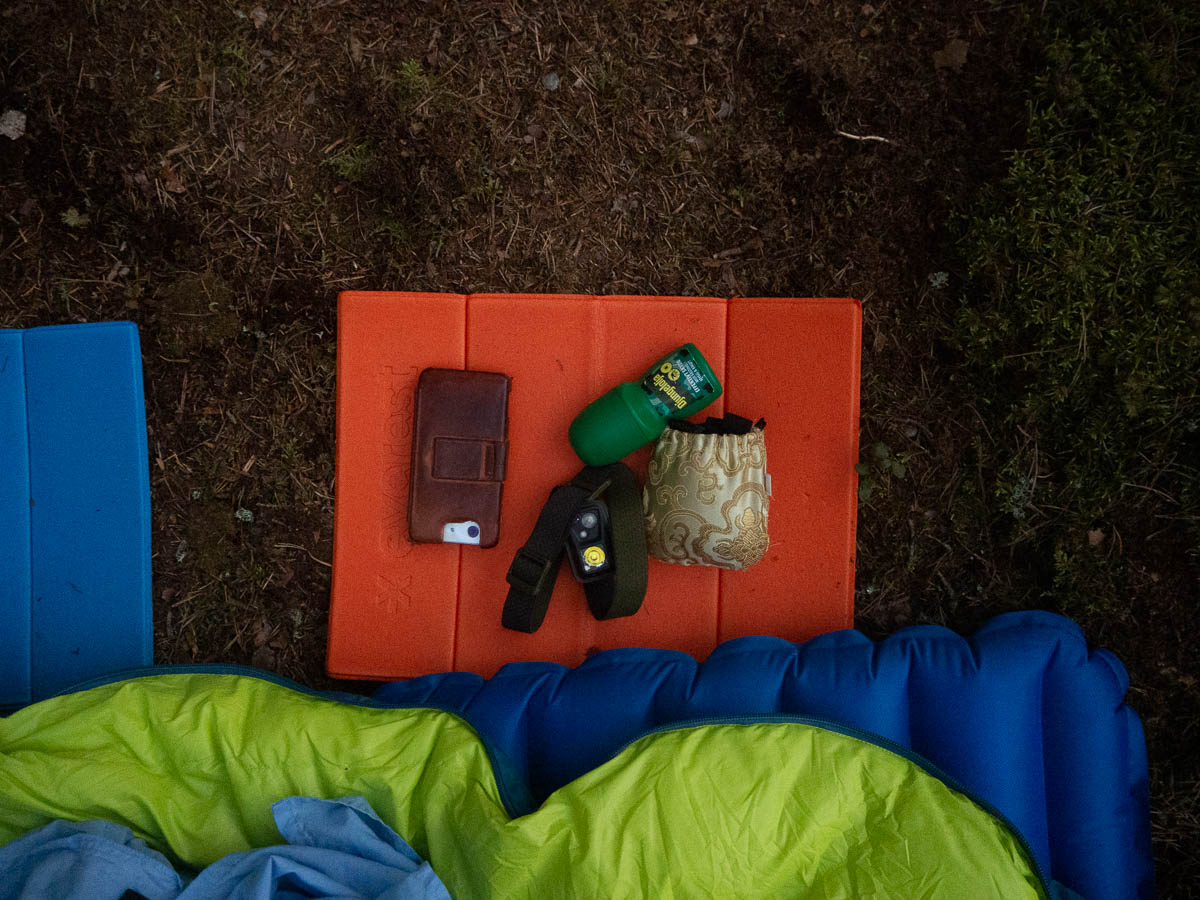
This was my “bedside table” for the night: phone, insect repellent, head torch, and a little bag with earplugs and a sleeping mask. I am a light sleeper and those last two are my lifesavers (sleepsavers?) when I sleep away from home.
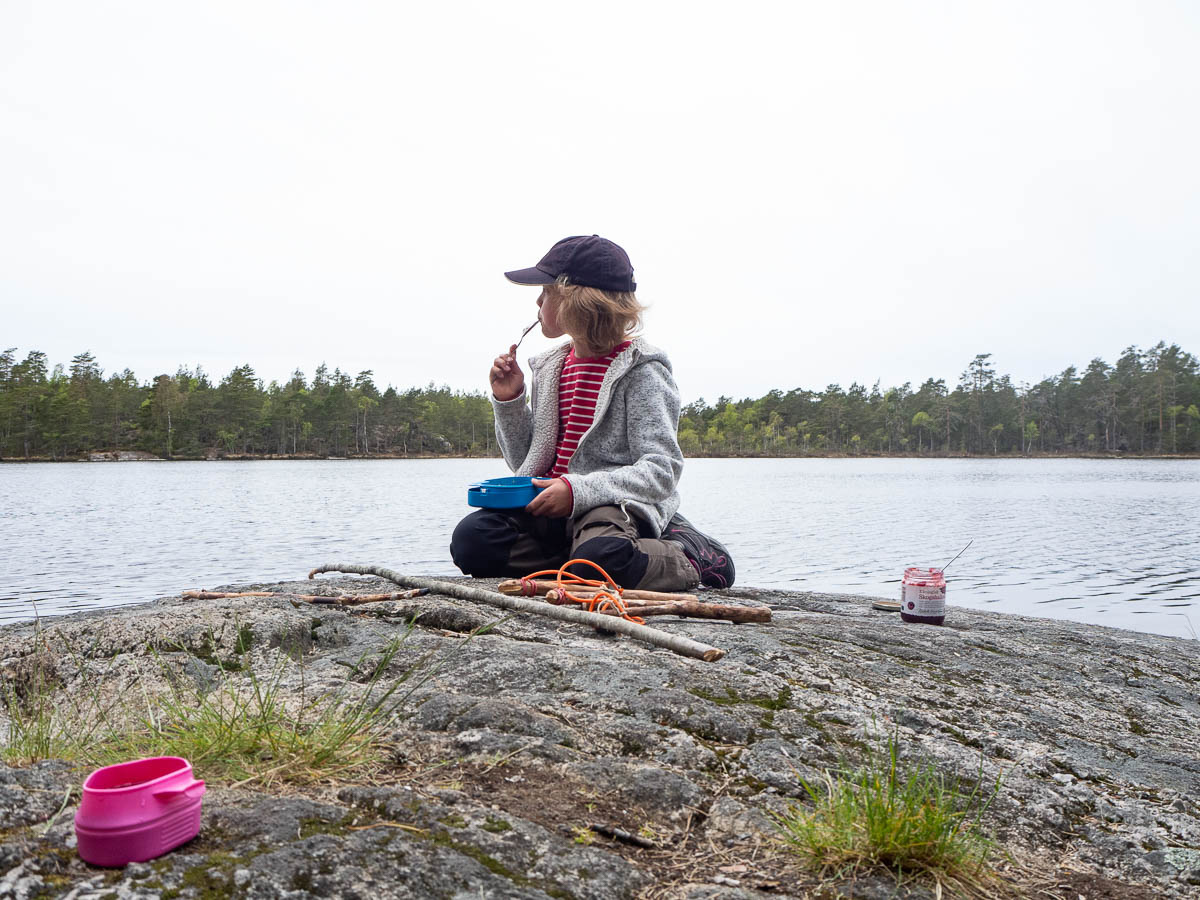
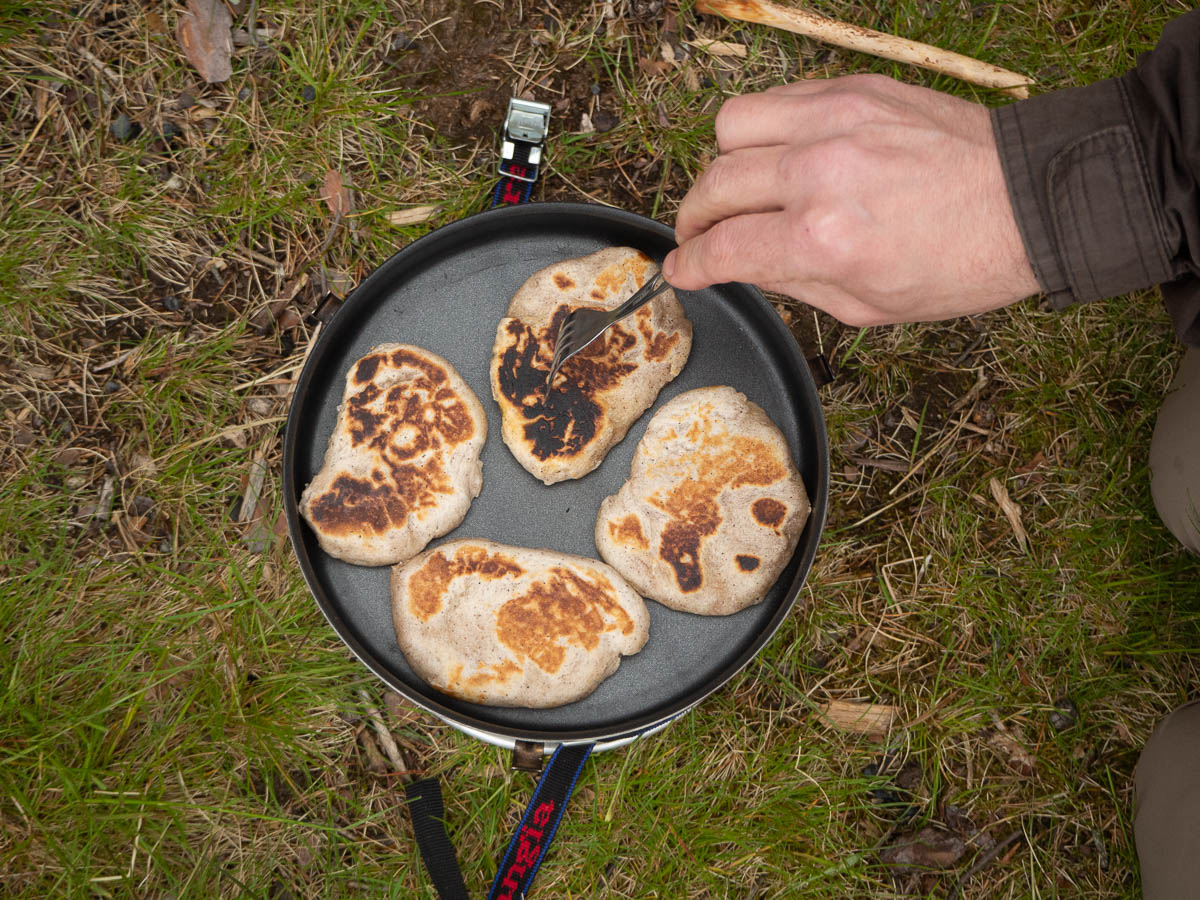
Last night’s sunshine was all gone this morning. Hot porridge and hot bread from leftover bread-on-a-stick dough went down quite well in the cool, cloudy morning.

The bread/cake/bannock things were not part of the meal plan at all, but were so delicious that I think we’ll plan for them next time.

After breakfast, Adrian tested the hammock – fired up by Ingrid’s talk about how wonderful it is to sleep in one. And during much of walk home, he was already planning the next hike, when it would be his turn to get the hammock. We’ll see.

Walking home is never as much fun as walking out. The distance that felt like nothing yesterday, was suddenly long for the kids’ legs. “Are we there soon?”


Had this been a normal spring without a coronavirus pandemic, there would have been various scout hikes and camps in May. With the pandemic, all larger scout events have been cancelled, along with so much else of society. Instead we went camping/hiking on our own.

There are several beautiful nature reserves around Stockholm, and Paradiset and Tyresta are the ones I like best. Adrian and I camped in Paradiset once before and it was such a nice spot that I thought we could go there again, this time with the whole family.

A closer look at the map showed that the shelter where we stayed last time, on the shore of lake Trehörningen, was just a kilometre from the parking lot. Back then Adrian was six, didn’t want to walk any long distances and left all the carrying to me… This time there’s four of us, all with strong legs and proper rucksacks, so we could walk a bit longer. The first scenic spot is likely to be the most popular one – further away we might find a spot with fewer people.


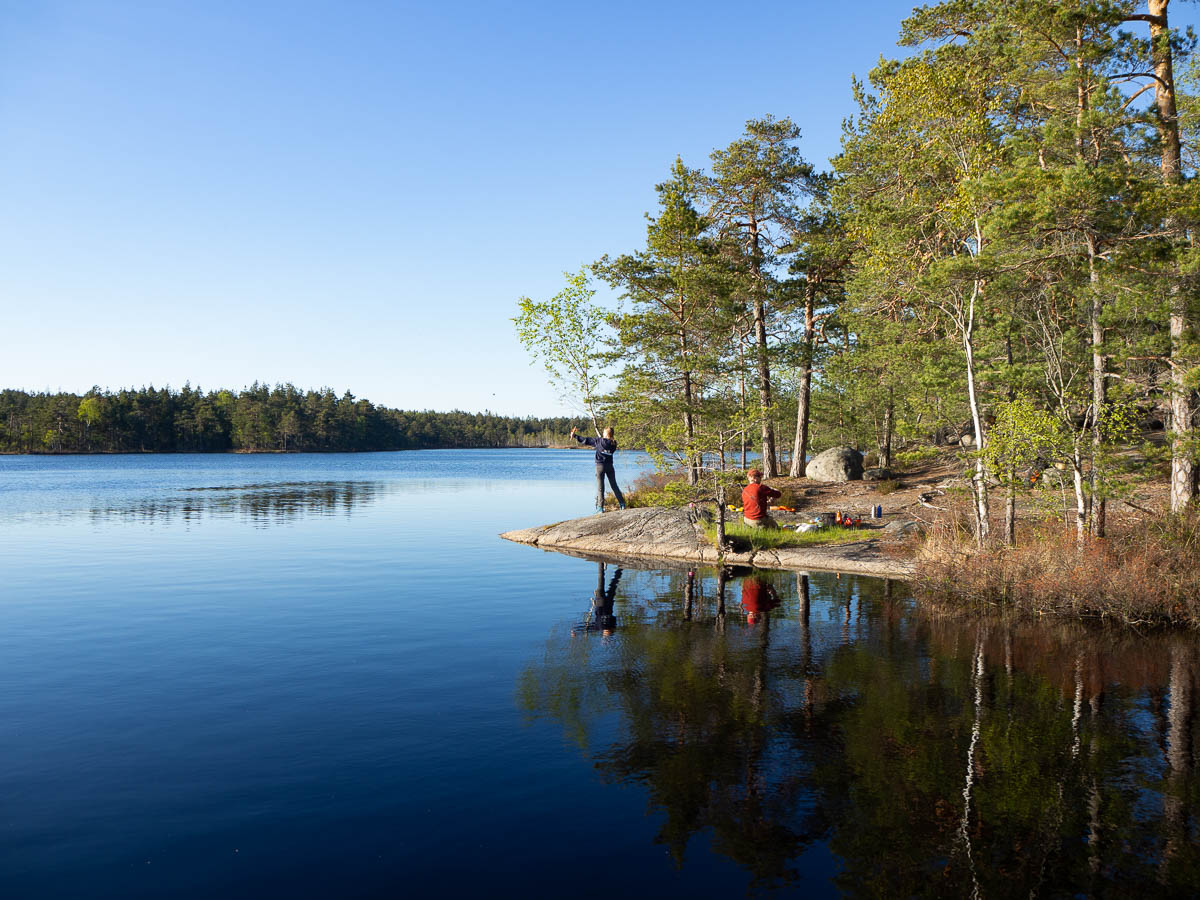
That was the plan. There were several tents in the woods around the first shelter, so we didn’t even turn that way. When we got to the second shelter on the shore of lake Långsjön, we found quite a crowd there as well. Eric spied a flat-looking place with what seemed to be a fire place on the other side of the lake, so we headed off there. There was no shelter there, but a good flat spot for a tent, and much more peace and quiet than at the shelter. Technically you’re really only allowed to camp at designated spots… but this spot had clearly been used for camping before, so we figured it would do no harm if we stayed here.

The original plan was for Eric to sleep in the shelter, me and Adrian in the tent, and Ingrid in a hammock. Everyone gets their preferred “roof” over their head. (Ingrid had tried sleeping in a hammock on her last scout hike and absolutely loved it, best thing ever.) Without the shelter, we were three in the tent, which was a bit cramped but OK for one night. I don’t really expect to get a good night’s sleep on a hike anyway.

Now that we had shelter, the next question was firewood. With all these people out in the woods, the nearest box of firewood was already empty when we passed it. I emptied my rucksack, and Adrian and I walked back to the first shelter to pick up firewood there. Luckily the box there still had some.

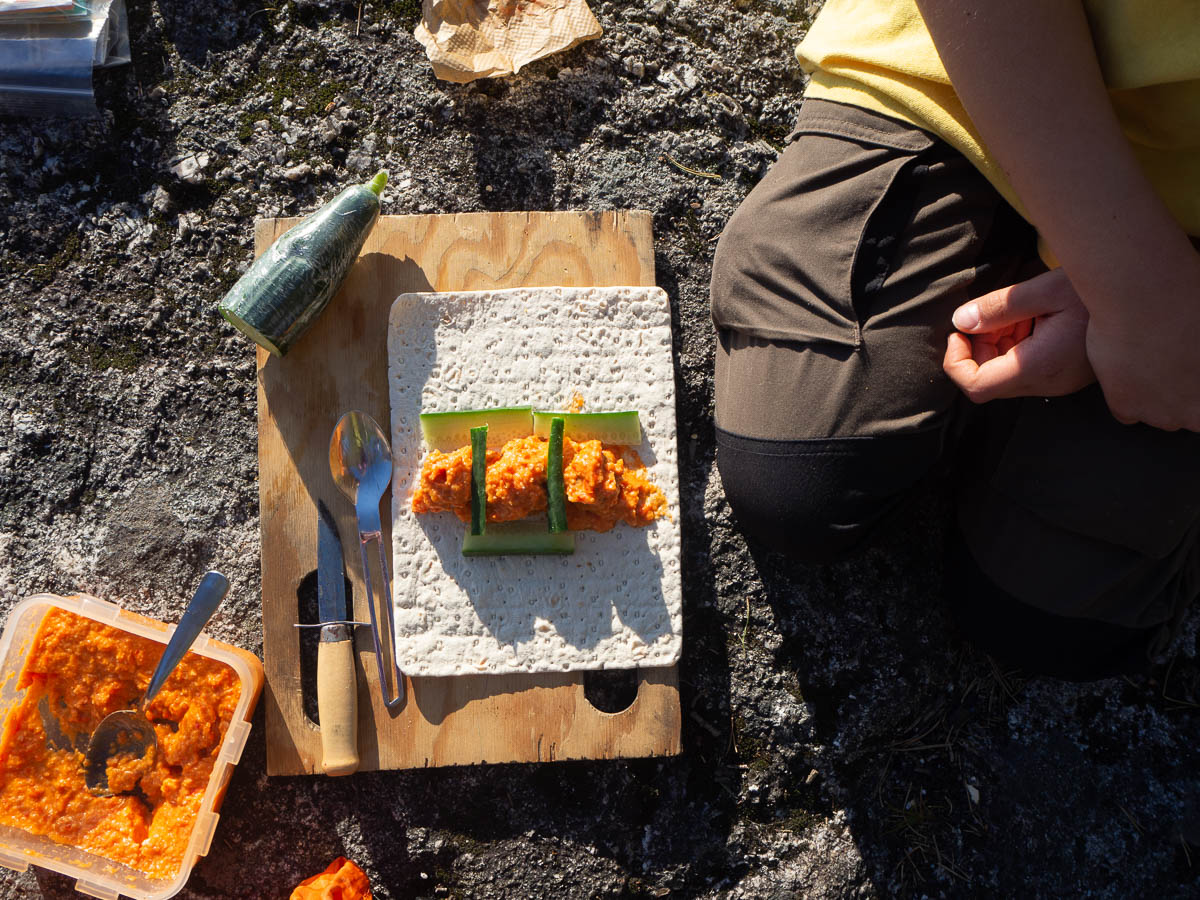
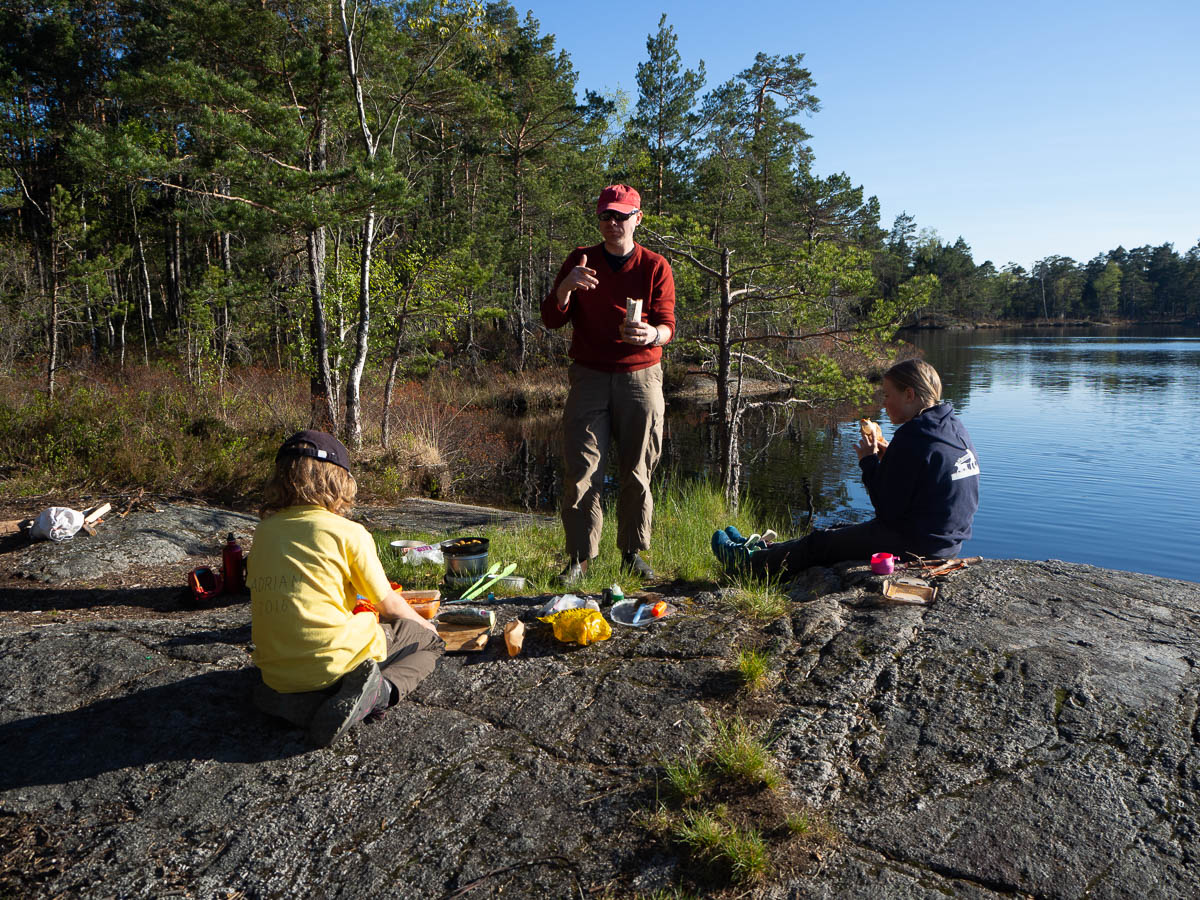
When we got back with the wood, it was definitely time for dinner: falafel wraps with salsa romesco and cucumbers.

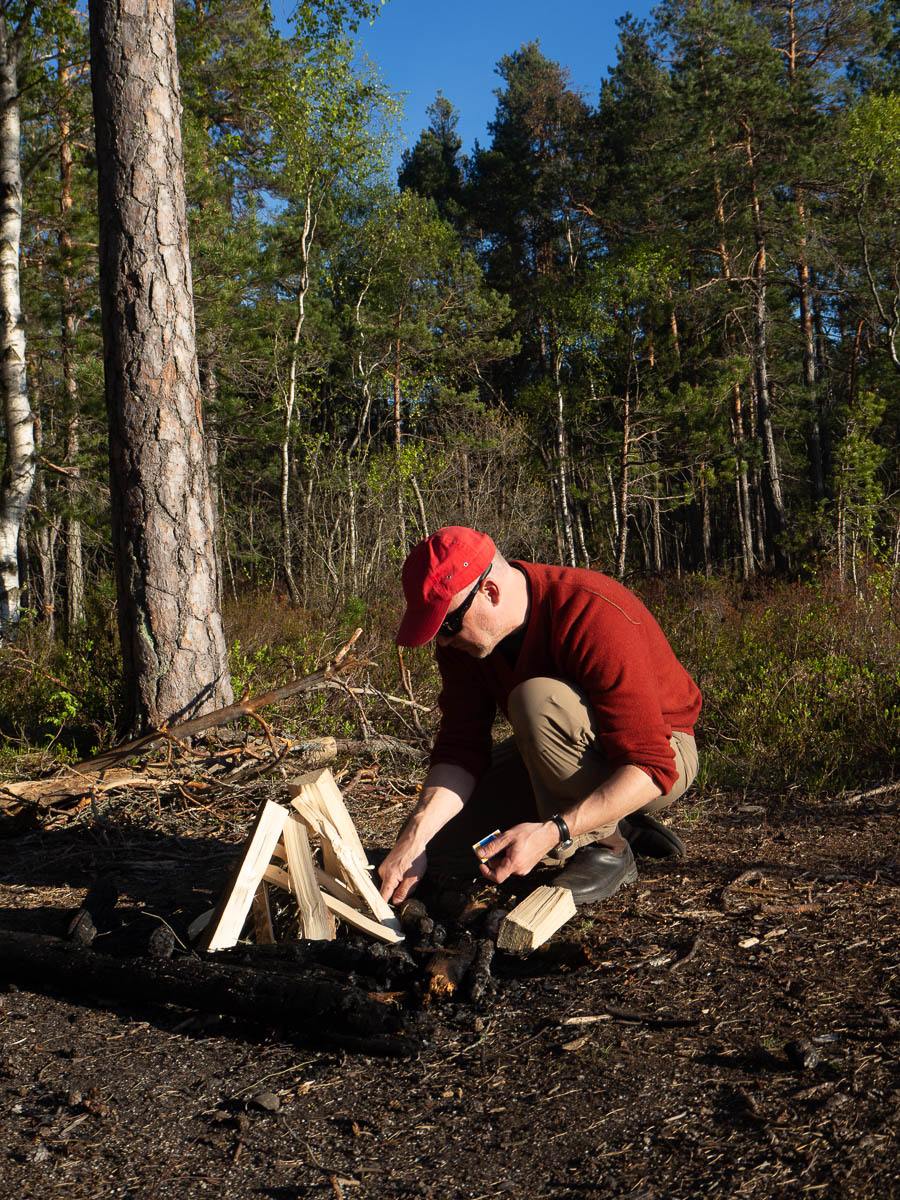
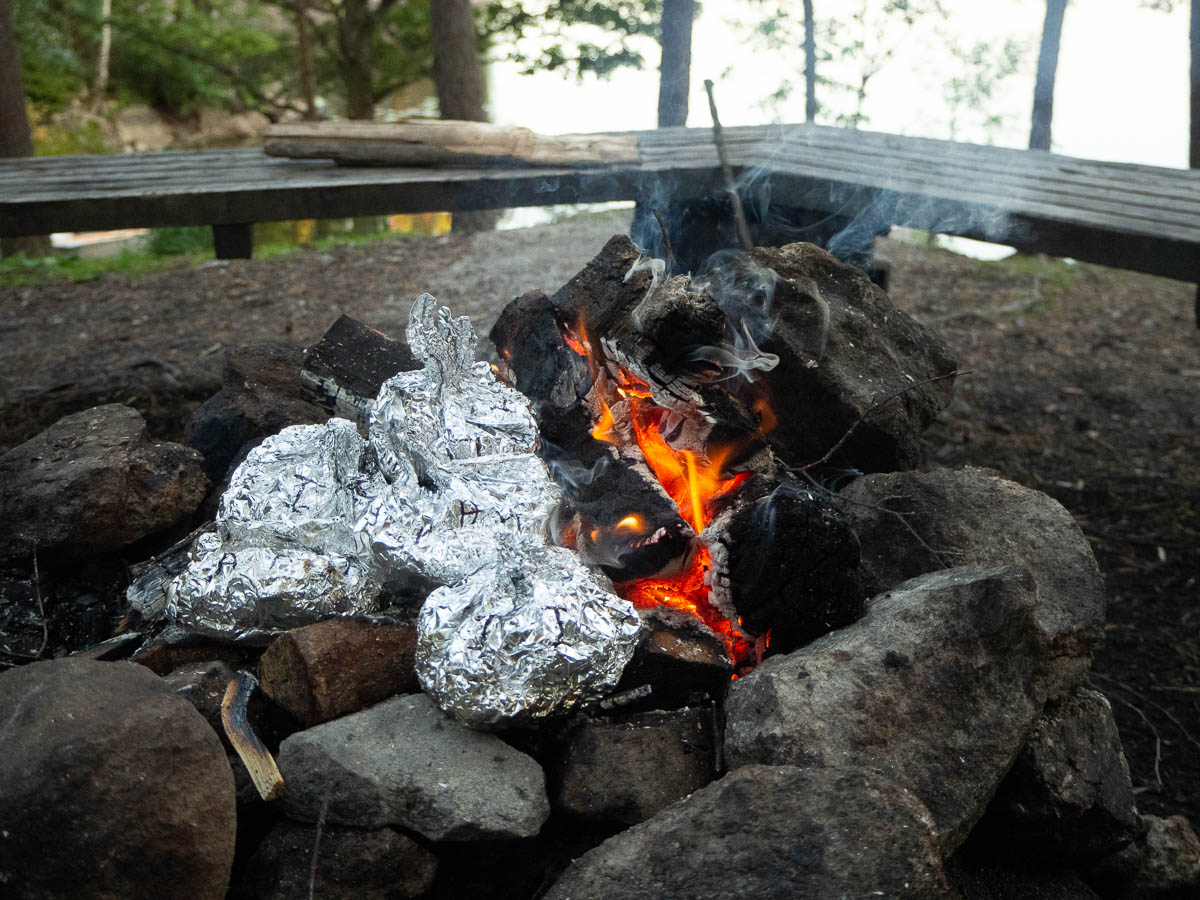
The firewood wasn’t for the dinner (its easier to fry up falafel on a stove) but for even more important things: bread on a stick, and a grilled banana dessert!


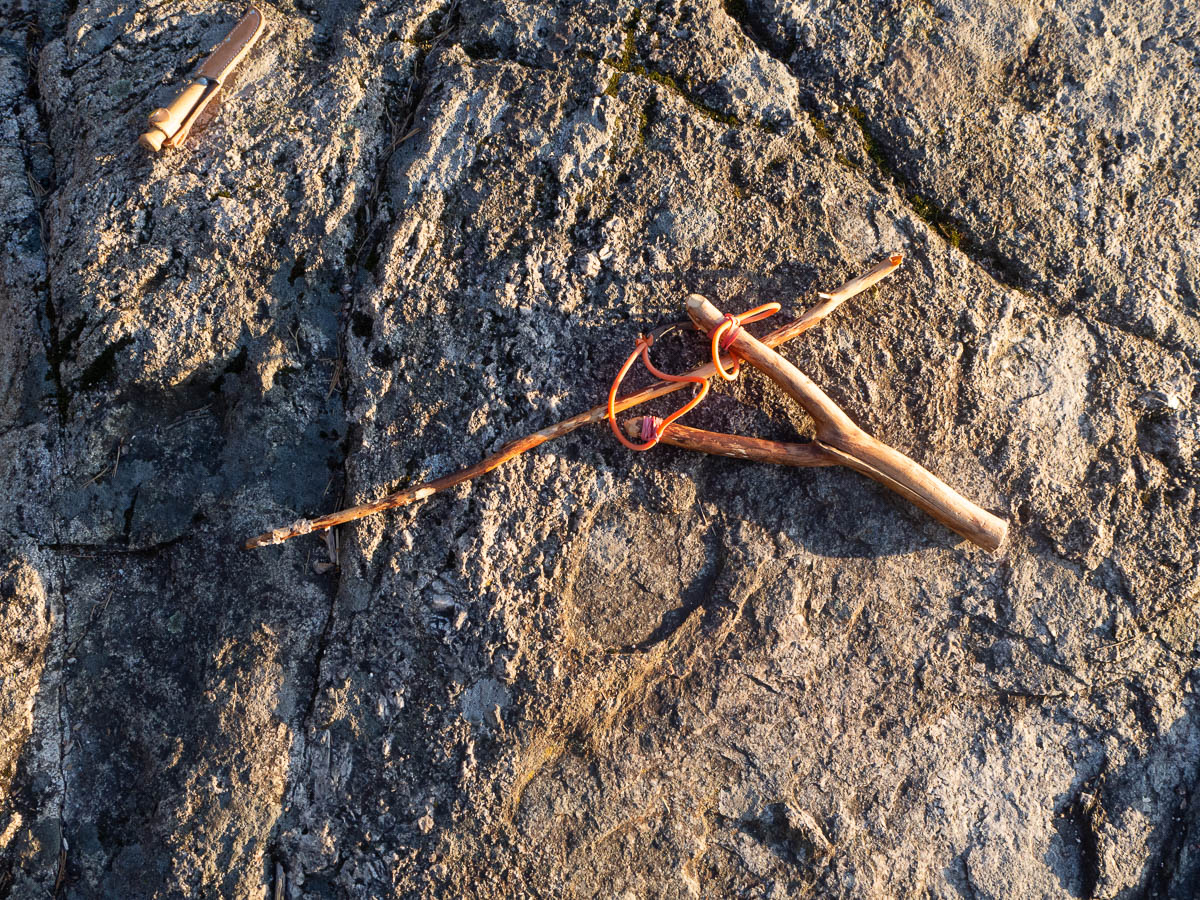
After dinner – and before dinner, and during dinner – Ingrid and Adrian played with slingshots. I once tried to make some using some random elastic bands but those didn’t work too well at all. Now I had bought some proper slingshot bands, and they made a big difference.

Rocks flew best, but there were almost none in the forest around us. There were plenty of pine cones, though. Ingrid experimented with different techniques and angles and differently shaped cones, trying to shoot them as far as possible.


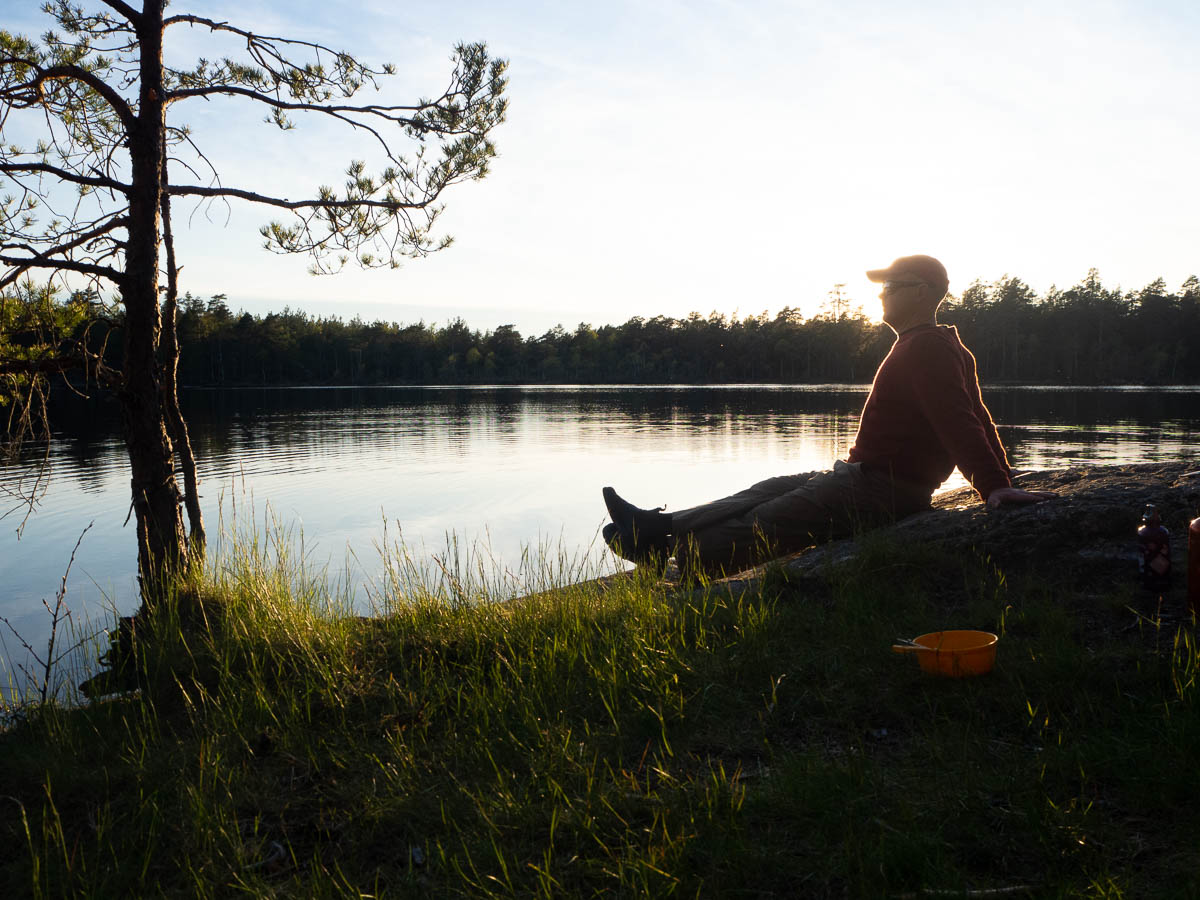
The weather was absolutely lovely, with blue skies and a hot sun, and barely any wind. And we were on the east side of the lake and thus had the evening sun shining on us until late. Only after the sun went down behind the trees on the other side of the lake did it get a bit cooler.


Stensdalen to Vålådalen, 14 km.

I slept unusually well this night. Usually I go to bed early when I’m hiking because I’m tired in the evening and there’s nothing much to do in the hut, and then I wake at six. Today I slept all the way until seven.

As I stepped onto the terrace outside the Stensdalen hut in the morning, I noticed that a mountain had disappeared. Yesterday evening there was a mountain there. This morning the mountain was gone from view, hidden in a thick layer of mist. (This is the same view as in the last photo in yesterday’s post.)

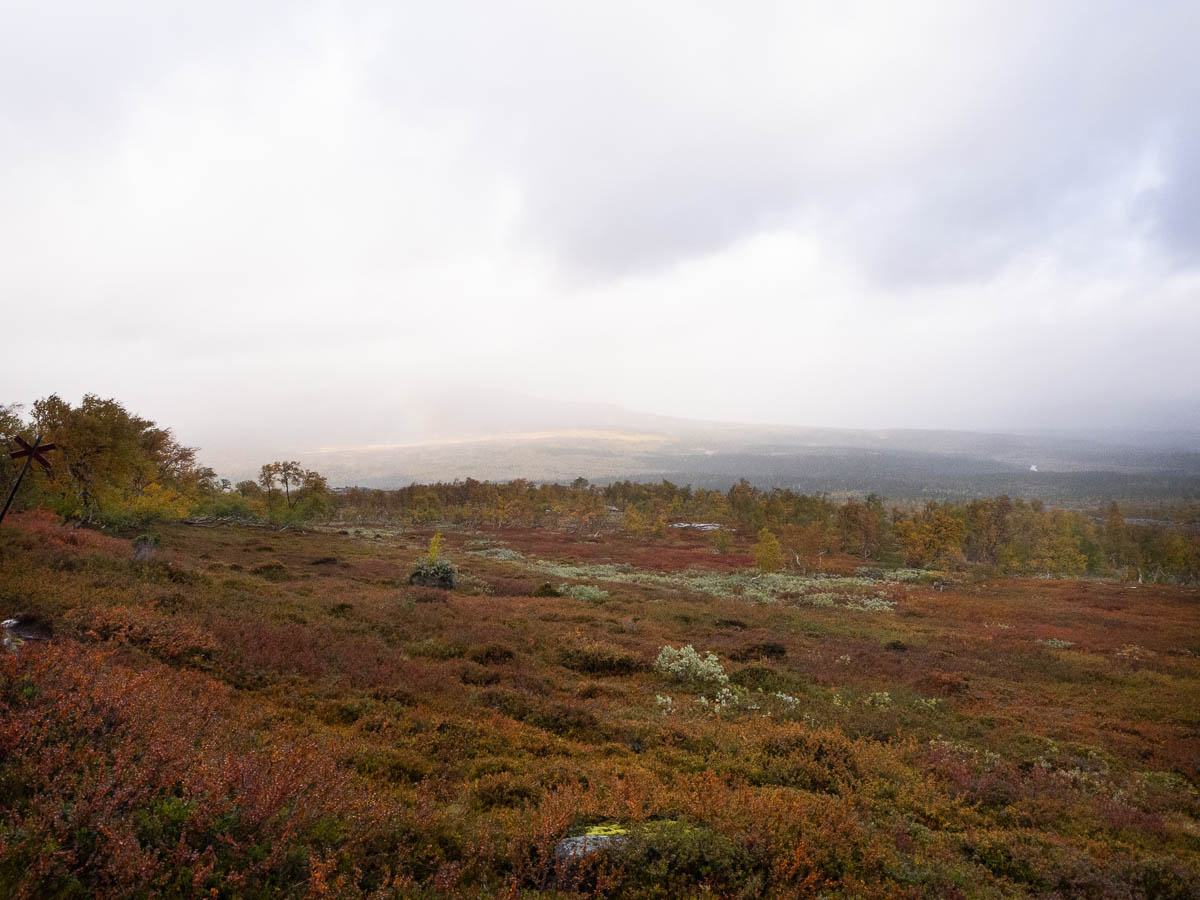
Some of the hikers were grumbling about the mist and how there wouldn’t be any views from the trail today. Apparently the first half of the trail from here to Vålådalen, which is what I’ll be walking today, is supposed to have the most beautiful views in this area. Personally I’m just happy to not get rained upon all day! A bit of mist is fine with me. It isn’t even windy today.
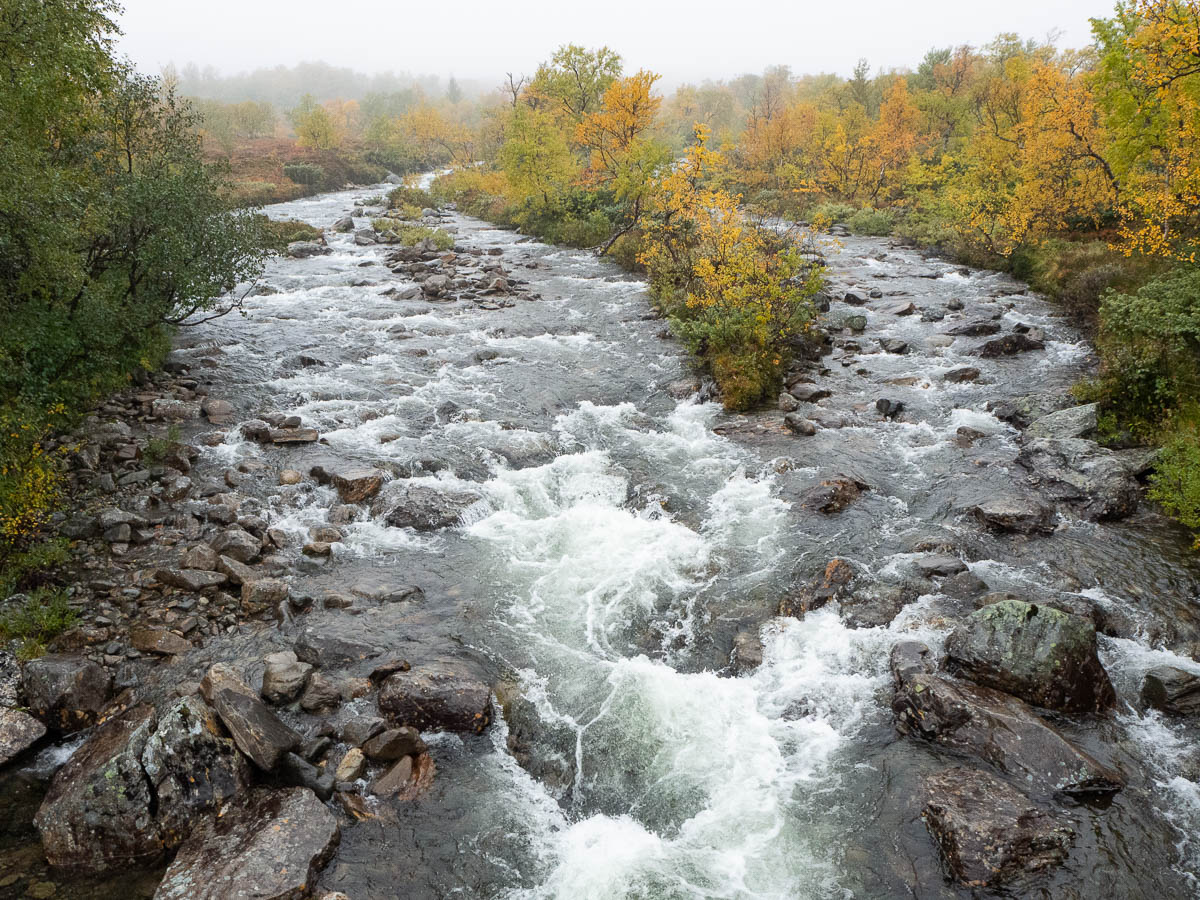
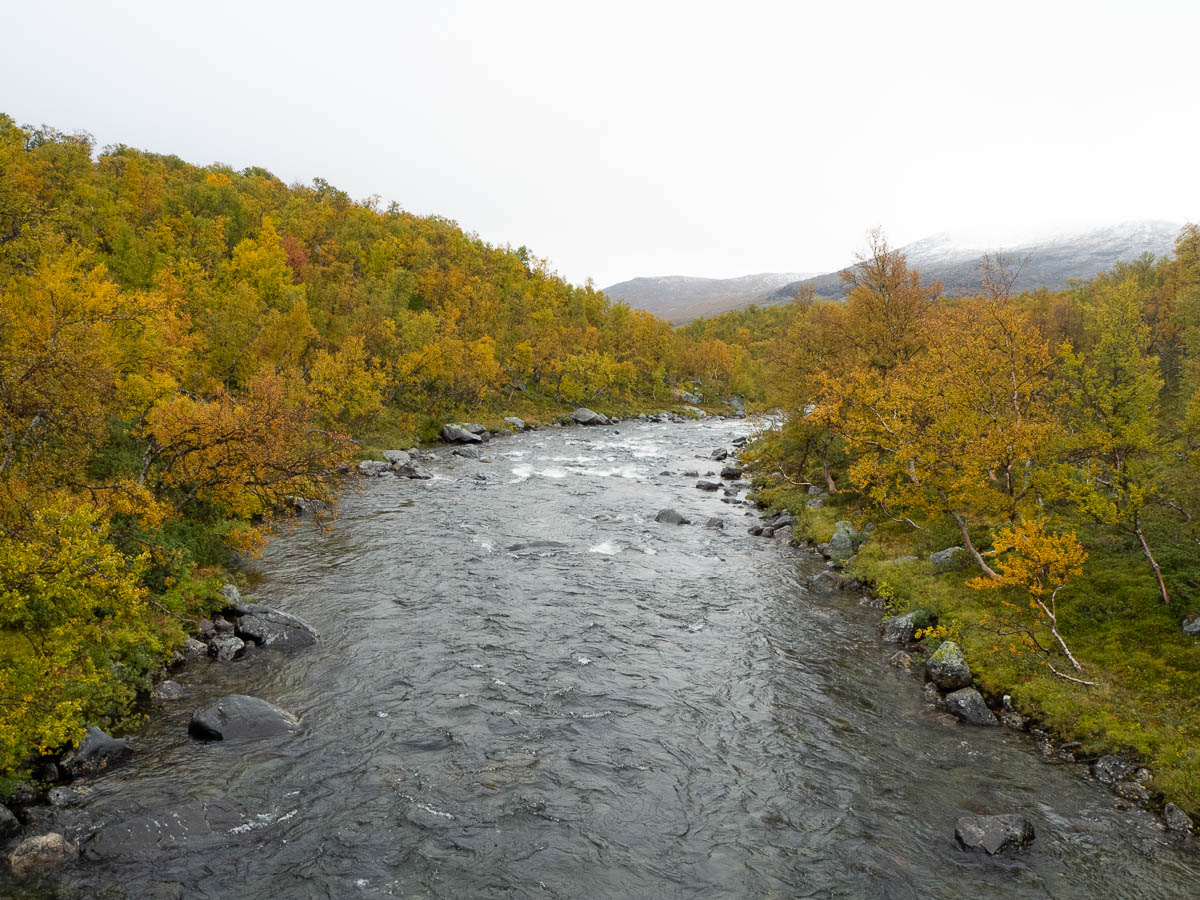
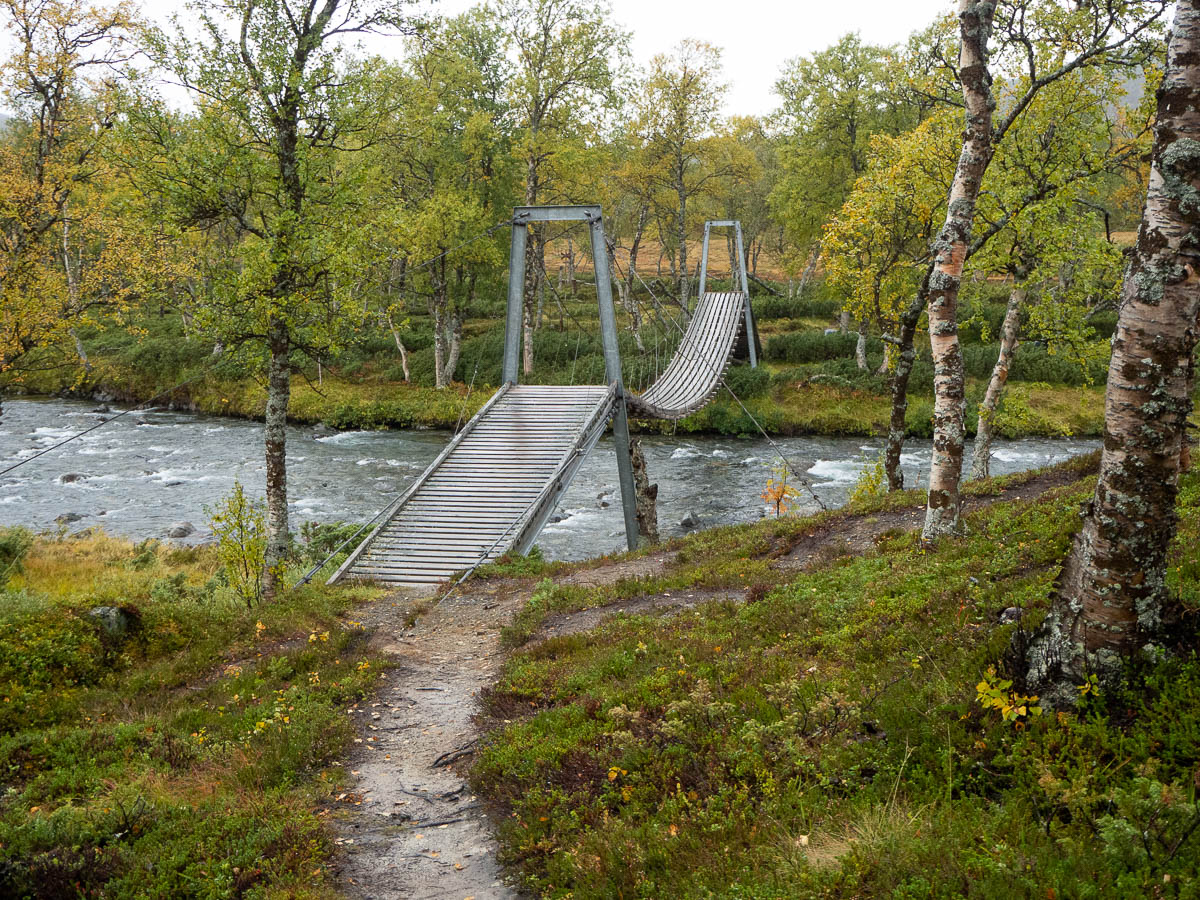
I realized this morning that I never took a photo of the Tvärån yesterday at the spot where I couldn’t cross it. I was too busy not crossing it. As luck would have it, I crossed another river this morning that was very similar in size and character and overall feel. This one had a solid steel bridge across it. It rather makes sense when you look at that river, doesn’t it? This is not a river that makes you think that a bridge would be an unnecessary luxury and people can just wade across.


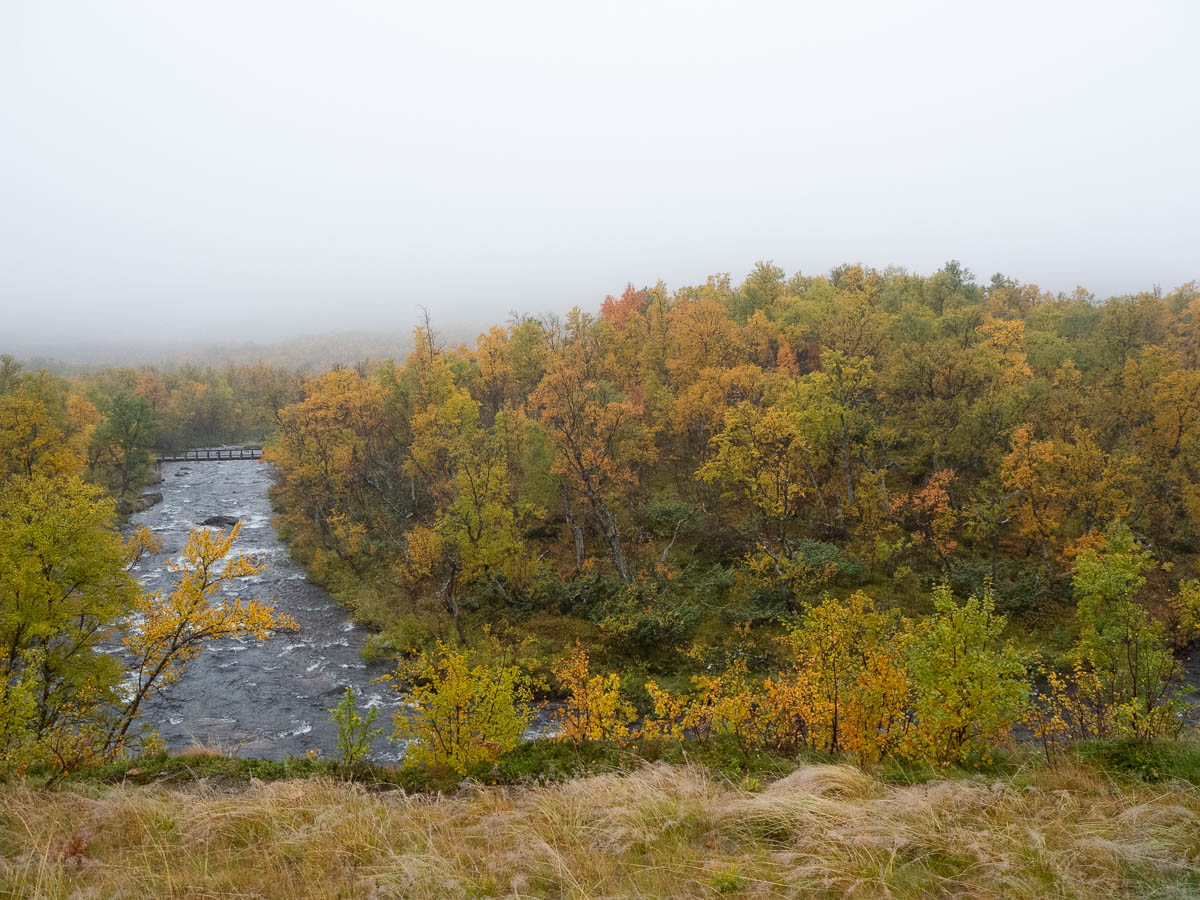
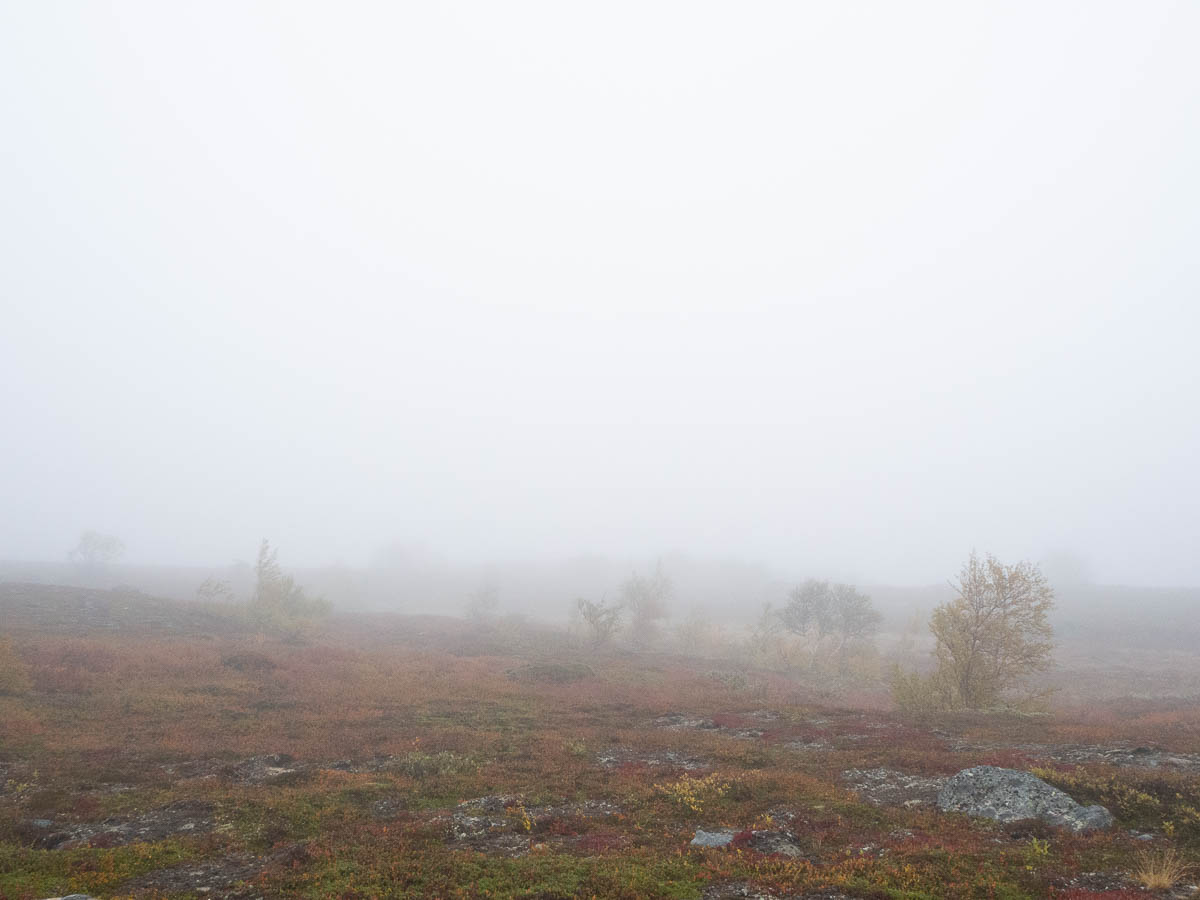
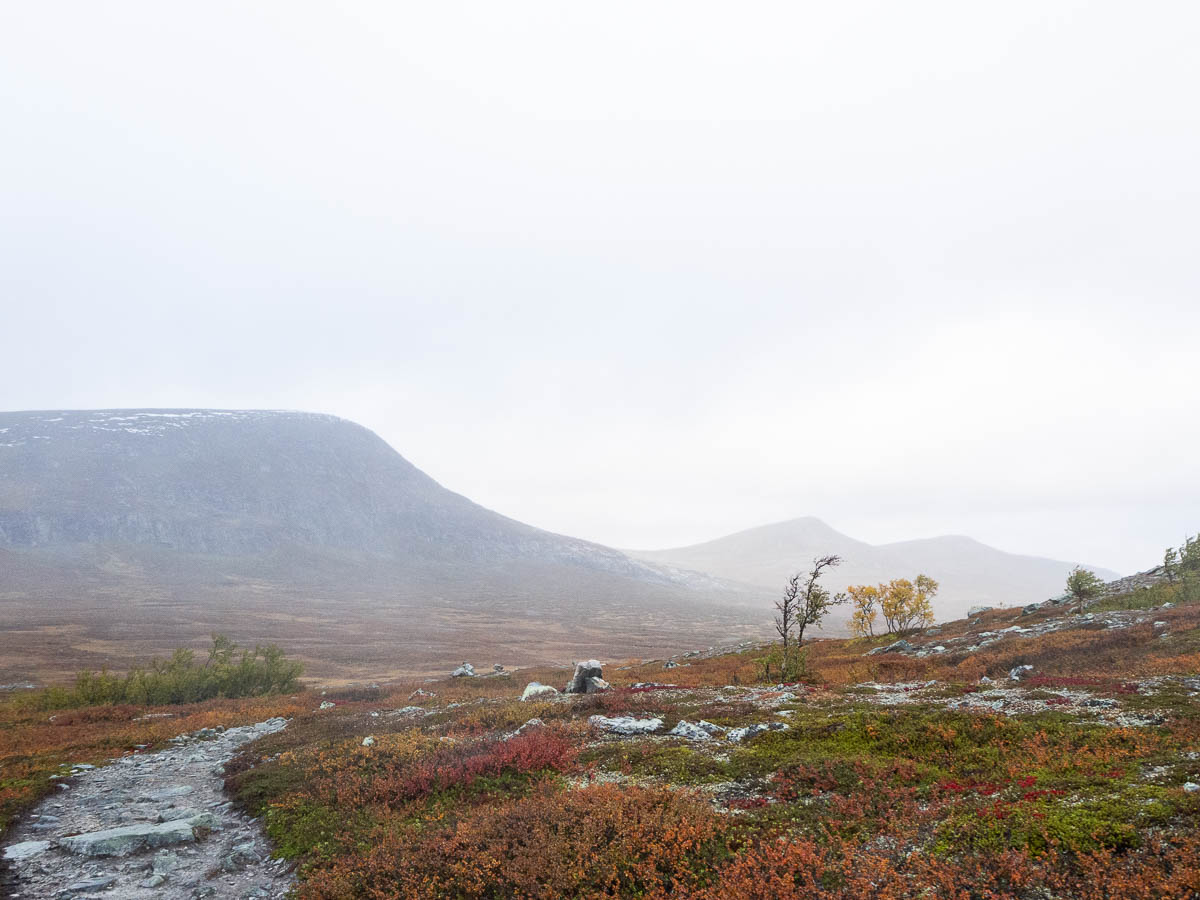
The weather was wet and cold and the morning mist hung around for along time. I could guess where those ordinarily beautiful views might be, but the visibility was really limited. But this was a very beautiful walk, despite and also because of the mist. Everything was muffled and quiet.
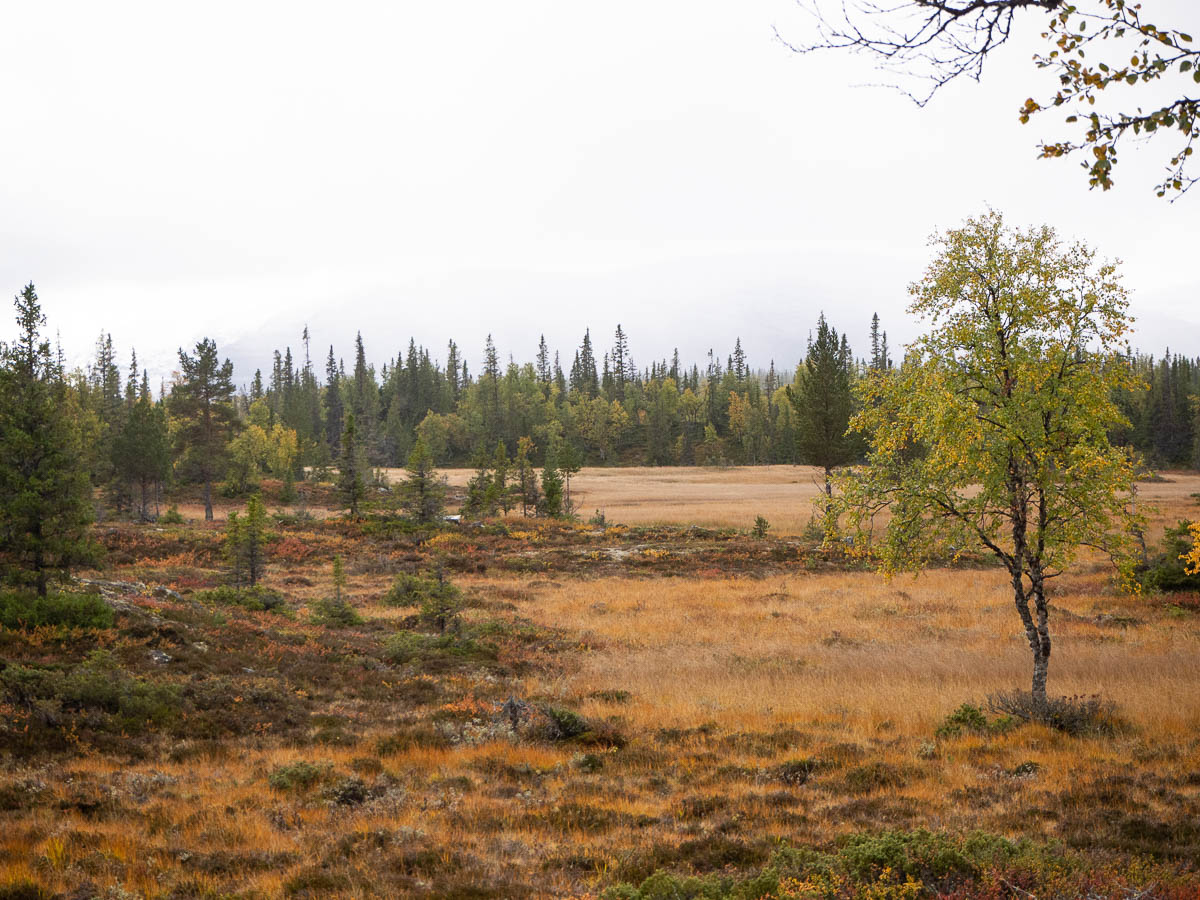
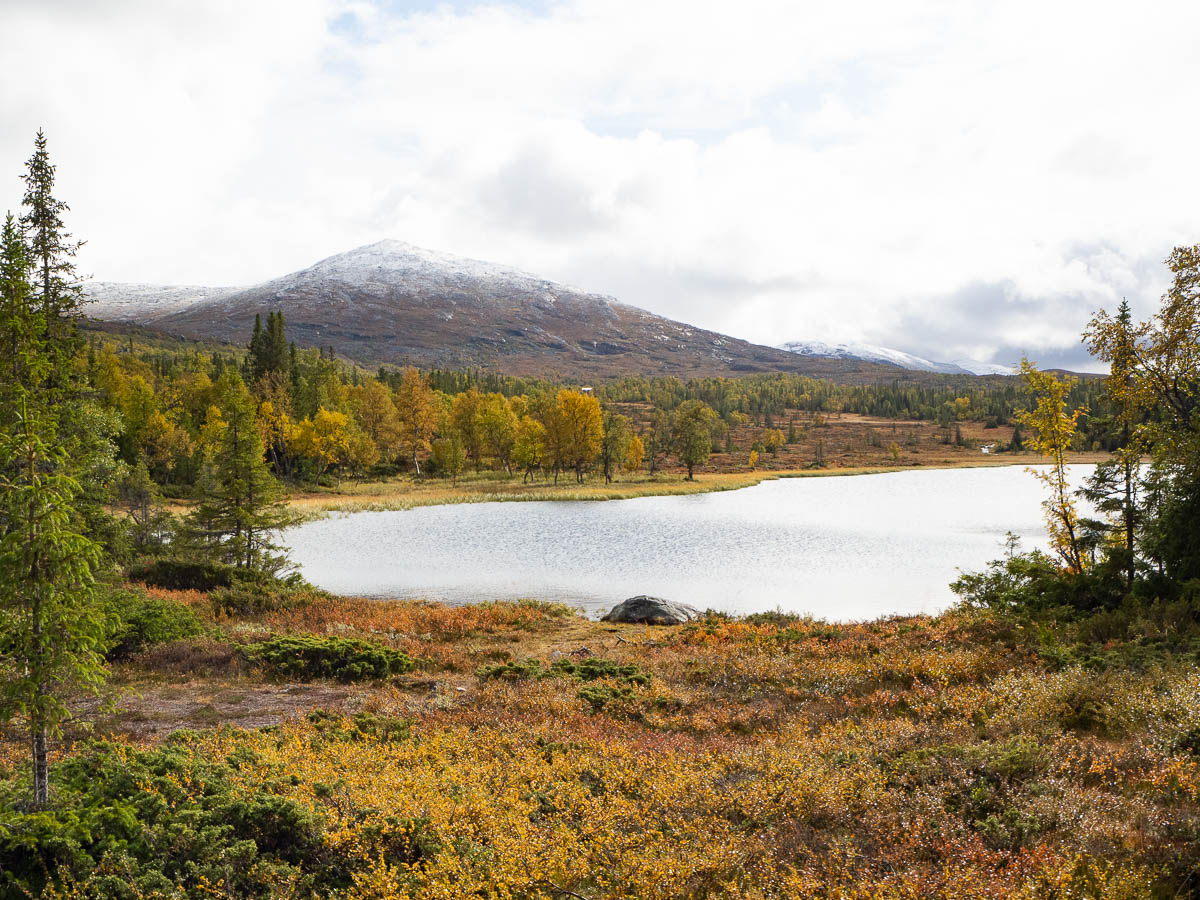

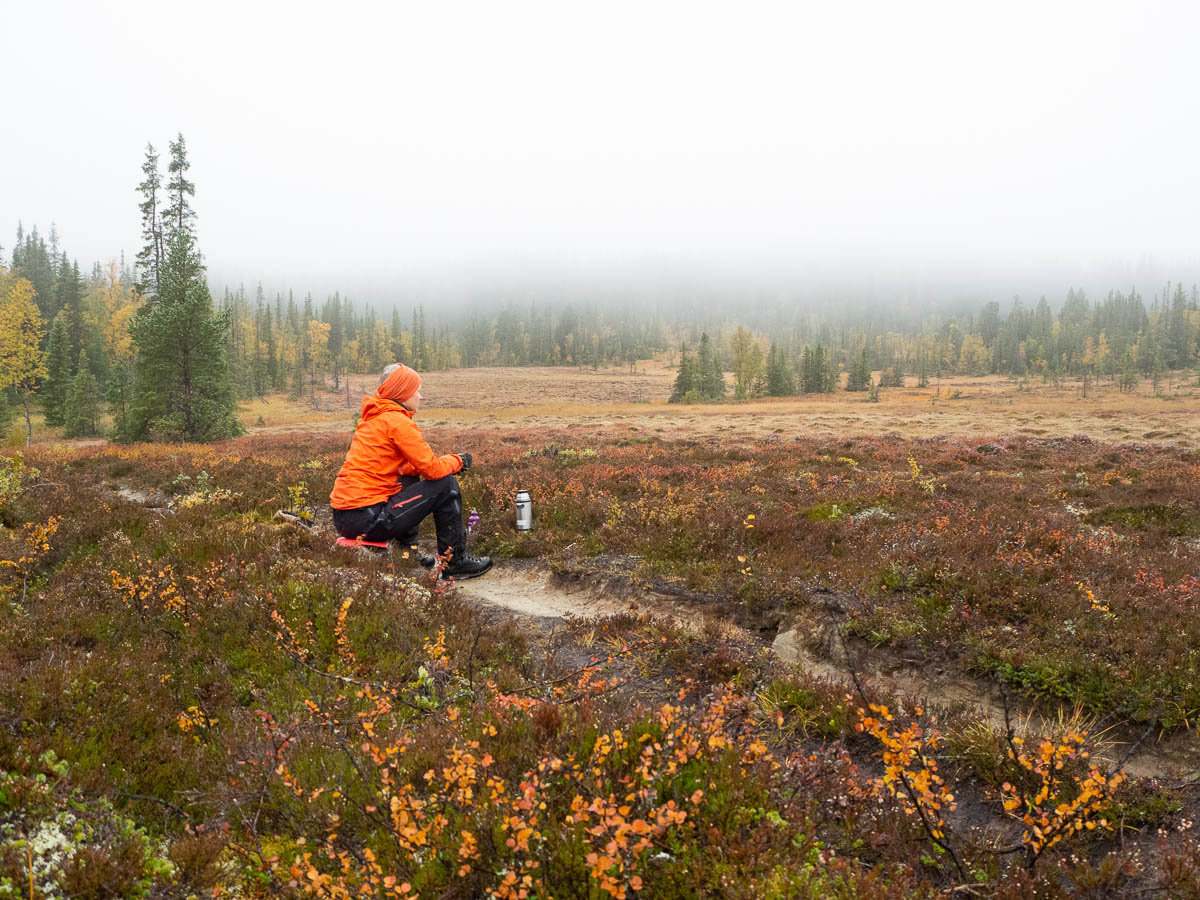
Here’s me enjoying a midmorning cup of hot blackcurrant cordial and a view of the mist, which was just beginning to lift at around this time, eleven o’clock or thereabouts. If you’re wondering why it looks like I’m walking without a rucksack, it’s because the rucksack was acting as camera support for this self-portrait.


Once the mist disappeared, the air was very crisp and clear and I could finally get some macro photos. The other days weren’t macro-friendly at all, with all the rain and wind.

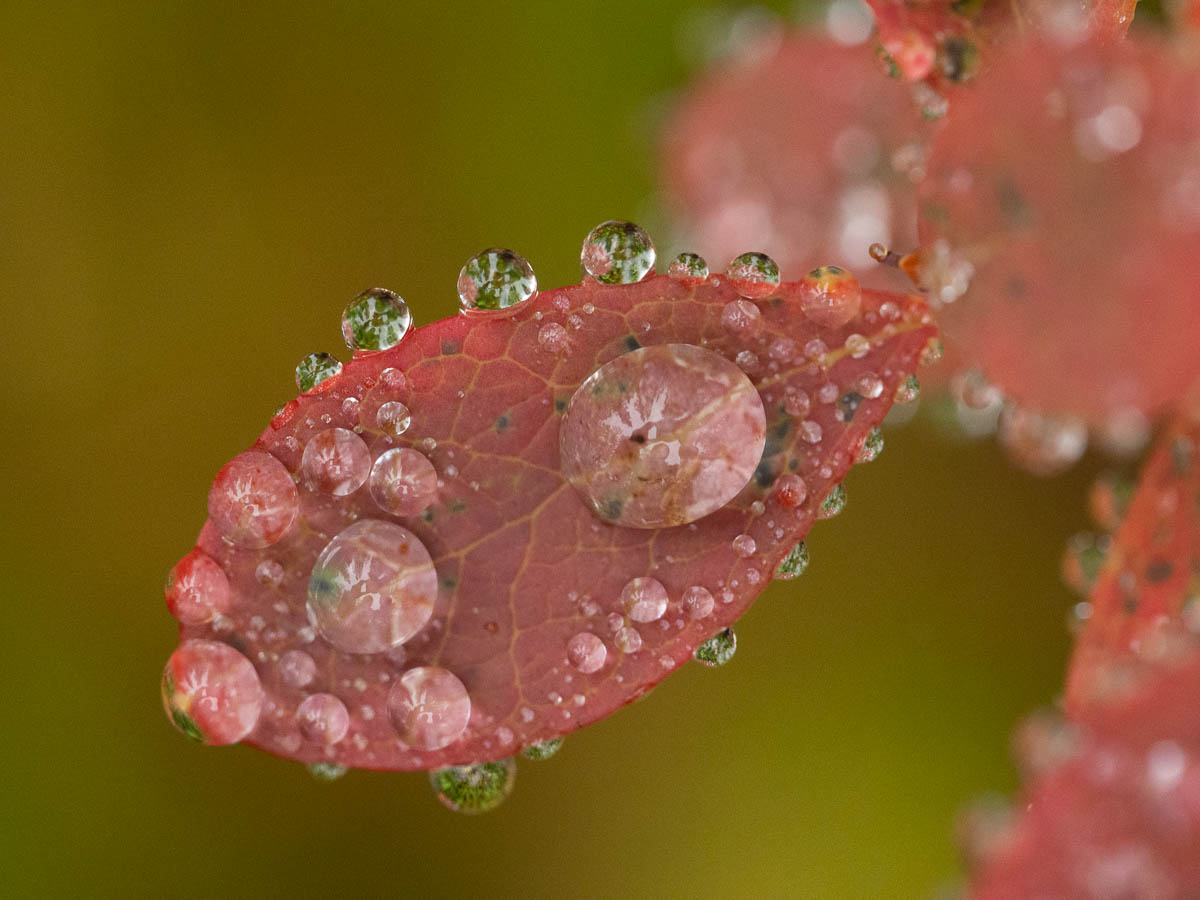
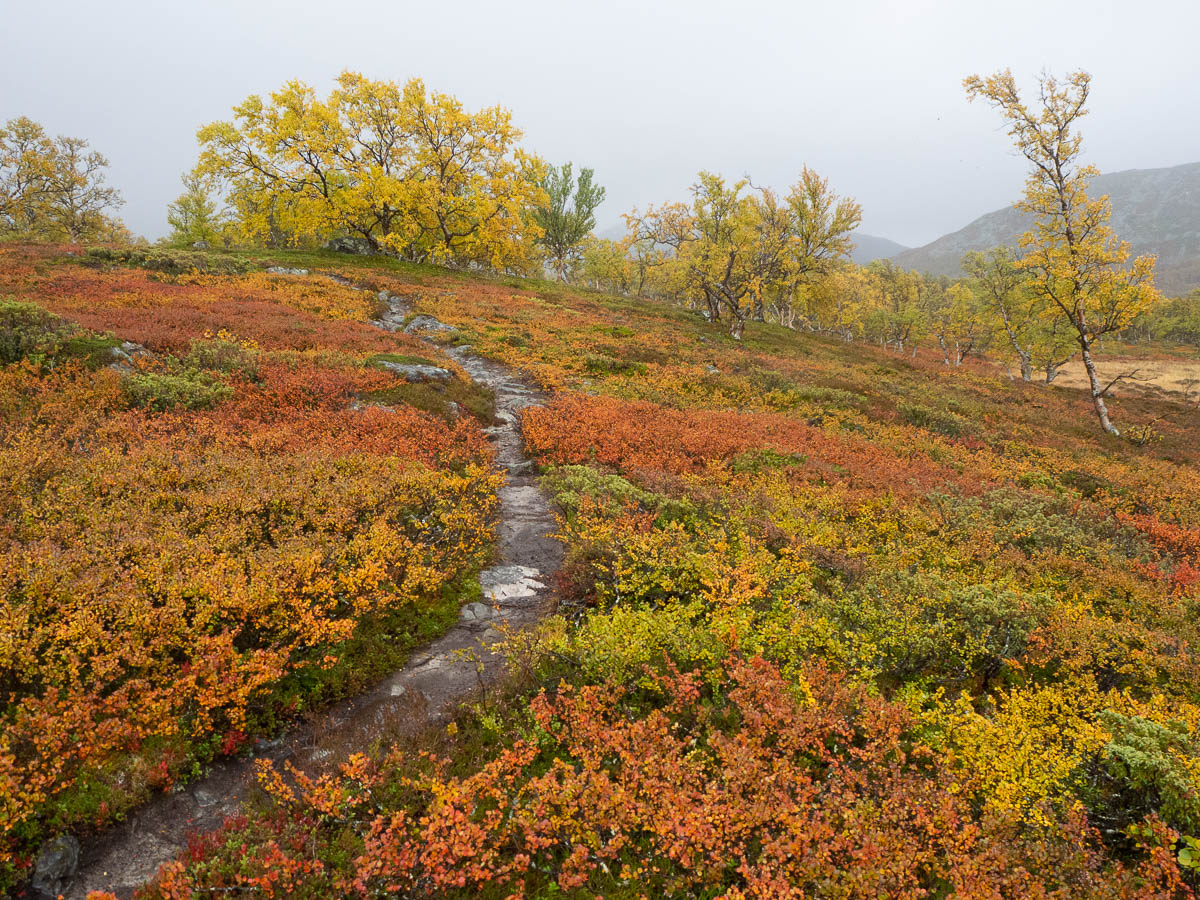
This is bog blueberry or bog bilberry (odon) which is a common shrub in the mountains hereabouts. Bog bilberry is what gives the alpine heaths much of their soft red colour. Dwarf birch is more of a fiery orange-red while alpine bearberry (ripbär) adds purplish-red accents here and there.

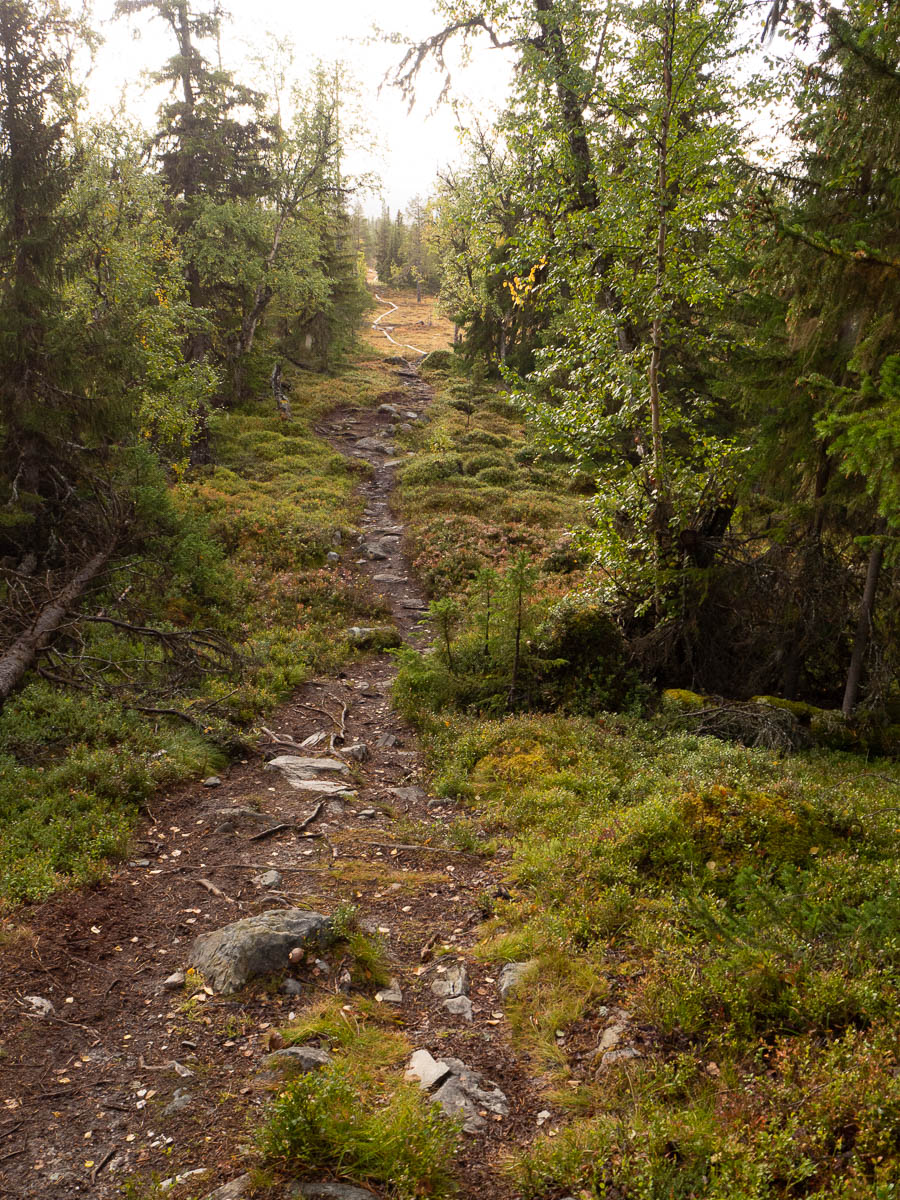
The path today went steadily downhill. Around midday the open heaths and alpine birch forest ended and I was in spruce forest.

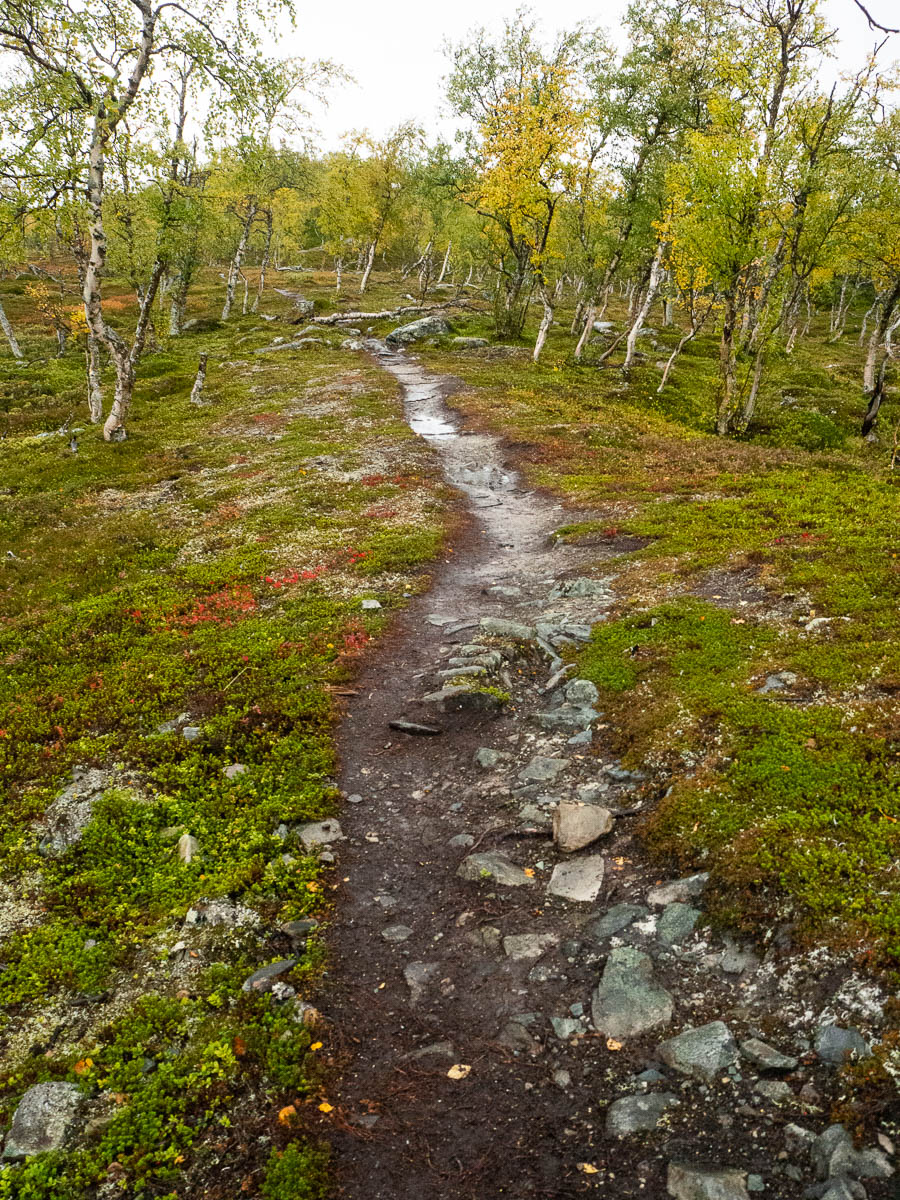
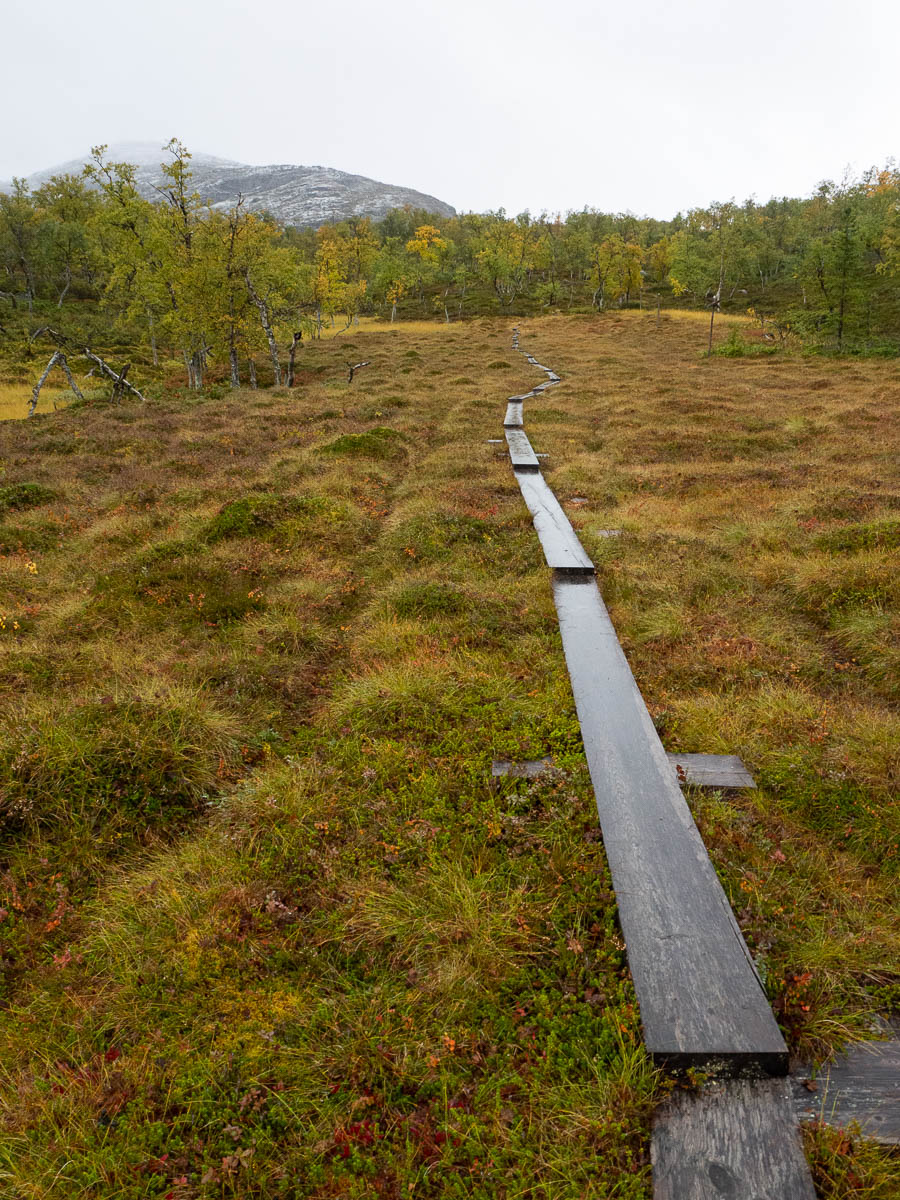
The paths were very muddy and wet nearly everywhere and there were wide boggy patches to either splash through, or to cross by hopping from tussock to tussock. The plank paths were again in very bad shape and missing entirely in places that really needed them.

As I walked further, I started recognizing familiar places – I was reaching parts of the trail that I’ve walked on my previous trips here but in the other direction. I was also nearing civilization and seeing more people on the trail than during the past few days.

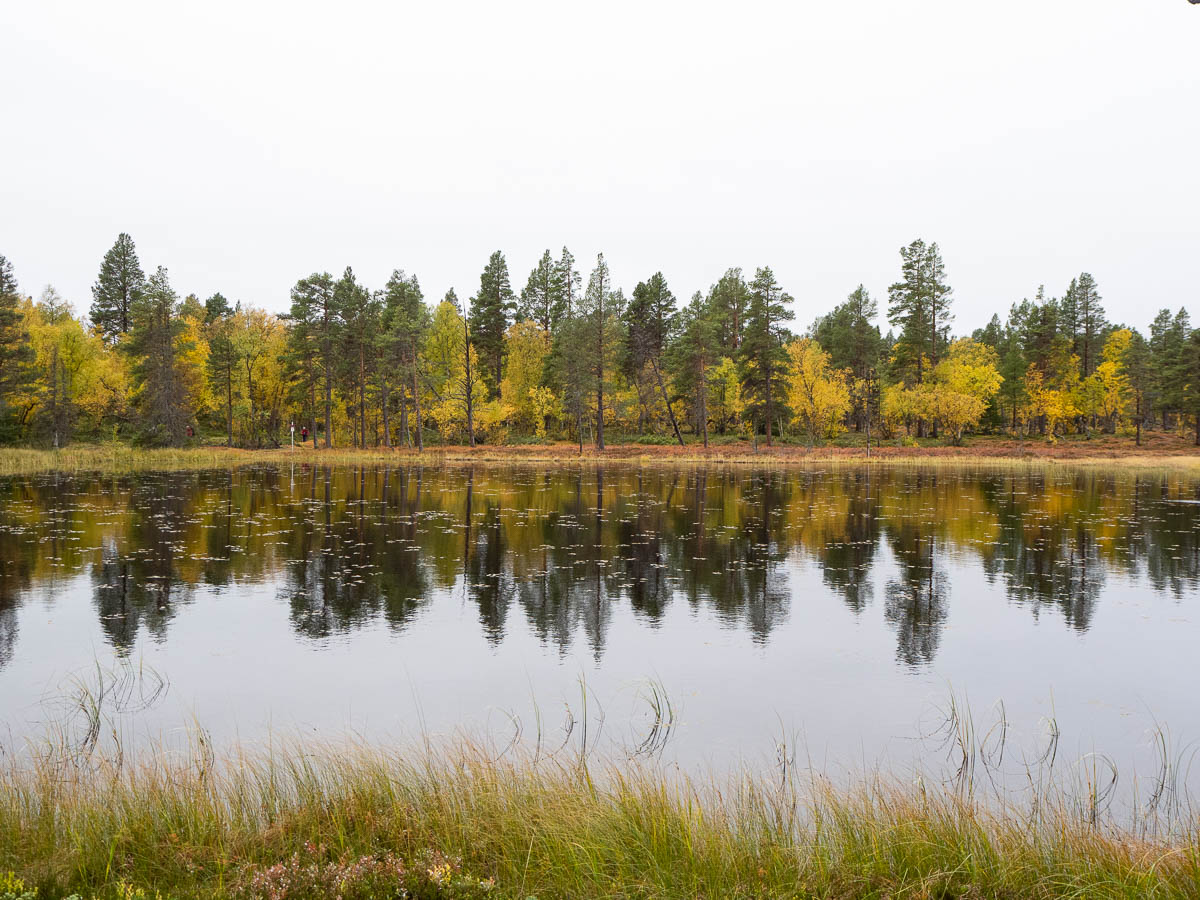
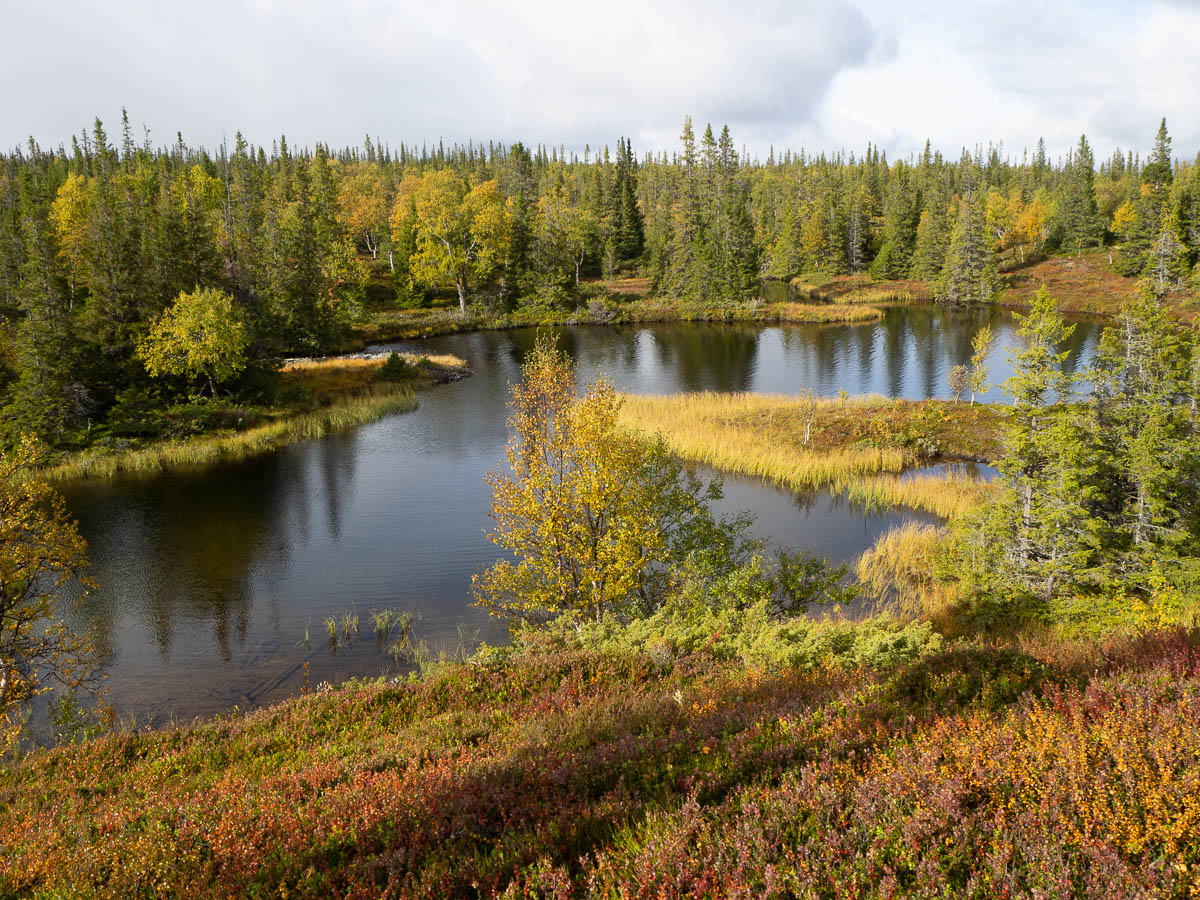
I didn’t miss civilization at all yet. Since I had a margin of several hours before the bus would leave and only two more kilometres to walk, I stopped for a long lunch break next to a beautiful lake. It wasn’t exactly warm but at least not freezing cold. And there was still no rain!


Vålåstugan to Stensdalen. 18.5 km due to long detours.

The night was incredibly windy. Air vents in all rooms rattled constantly, and the trek to the loo was a struggle, not to mention the longer trek to fetch water.

The weather report promised that the wind would slacken in the morning but this never happened. The gusts were strong enough to nearly blow me off my feet; at times I was literally blown several steps off course and had to plant my pole to stay standing.

Speaking of poles, one of my walking poles stopped working. I couldn’t fix it in the extended position – it just kept collapsing. Forced to walk with a single pole, I realized that I liked this even better. With one pole I still get the balance and support, but at the same time I always have one hand free for the camera or a hankie or a snack. So I’m not going to buy a new pair of poles as I had initially planned – I’ll just keep walking with the one pole that still works.

The weather report also promised that there wouldn’t be any rain. That may have been technically correct; maybe it was just the cloud that was hanging all the way to the ground. In any case I could see sheets of wetness blowing through the air. The air was saturated with water and so was I.


The first half of this walk crosses the same empty plateau that I’ve usually walked across during the afternoon of my first day, but in the other direction. The trail then descends to below the tree line and continues through alpine birch forest.

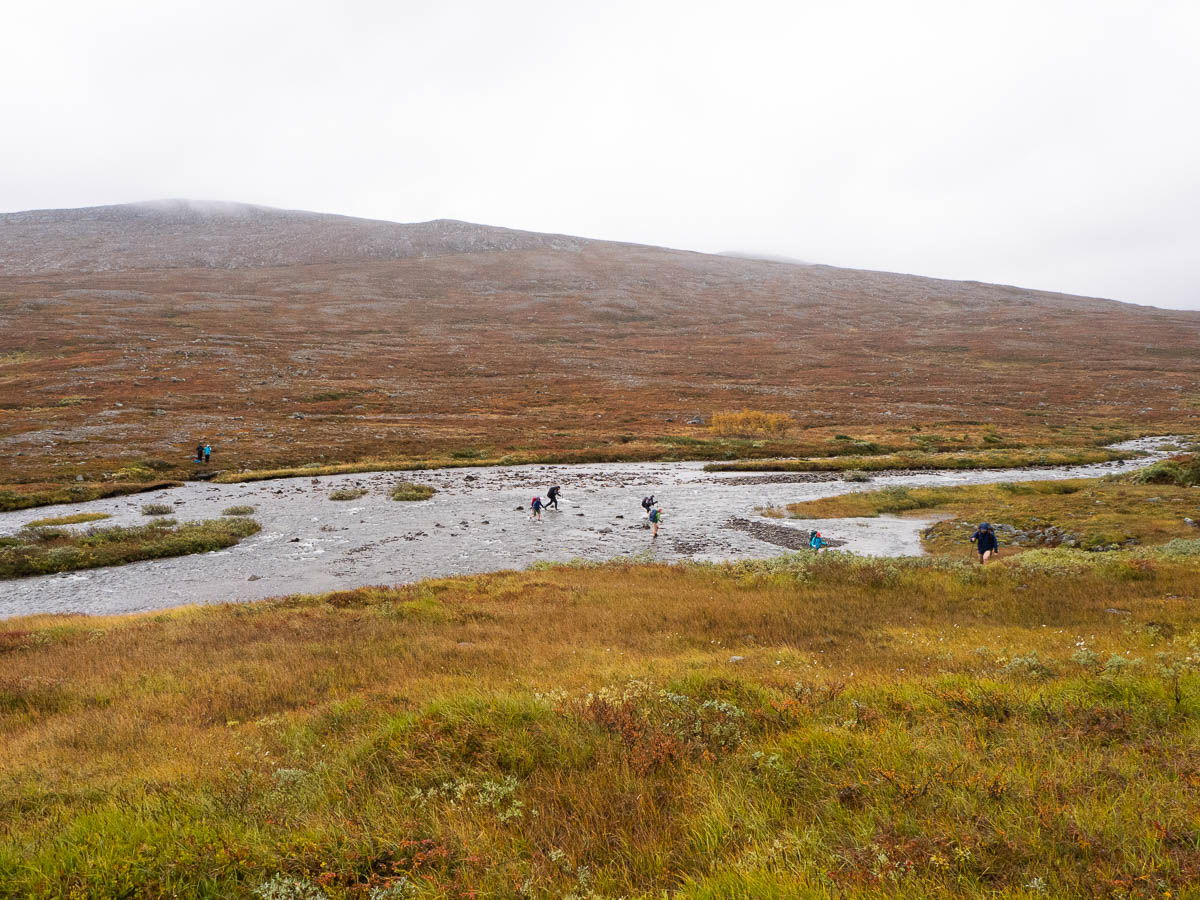
About halfway there is a river, the Tvärån, to cross. When I got to the river I was immediately taken aback by its size and strength. This did not look like a river to wade through. The water looked deep and was flowing very fast, and there river bottom looked very uneven. I walked upstream along the river for a good while, looking for a better place, but wherever I thought I saw a promising spot, it turned out to be just as bad as all the other places when I got closer. So I gave up searching and went back to the original spot.

A couple of other hikers had just crossed the river there and pointed out the spot where they had crossed. Since I have very limited experience of fording rivers, I guessed that maybe they knew more about this, and maybe it wasn’t as bad as it looked. So I set out to do wade across in the same place.

I was barely a few steps into the water when I realized that this was not a good idea. The water was up to my hips and the flow of it was very, very strong. Were I to lift just one of my feet to take a step forward, I would simply be pushed off my feet. I have no idea how those other ladies managed to do this, and how they could have thought that this made sense! Once you lose your balance even the slightest bit, when the flow of water is so strong there is no way of regaining your balance. You’ll be off your feet, tumbling down the river between those rocks until they stop you. You can of course slip and fall in shallower water as well, but then at least you’ll be able to keep your head above the water, regardless of which way you fall. Whereas in hip deep water, you’ll be lucky to get a breath at all while you’re tumbling downstream.

Anyway, I turned around and was luckily able to make it back to the shore without falling.

I think I had probably spent about an hour at this river by now, and gotten nowhere. Just as I was feeling rather lost, more hikers caught up with me, and then even more. One of them shared information they had heard earlier from hikers going in the other direction, who had forded the river much further upstream. Based on their description (“small islands in the river”) and our maps, we figured out where that spot was, and then we set out walking upstream again. If nothing else, we agreed, the river would get smaller – based on the maps it seemed to become a stream a few kilometres up.

Nearly two kilometres from where the path met the river, we found the ford that the others had described, and it was clearly a much better place for crossing. The water was still strong and fast but the riverbed was much wider and more even. As a result the water barely reached my knees. Wading still took concentration, but never actually felt like a risky enterprise.

From this point there was first some more trackless walking to get back downstream to where the path was. This was fun: instead of just following the path, I had to think about where I should be walking, both on a large scale (which direction) and a small one (where to actually put my feet). After all, if I was off the path anyway, there was no point in walking back straight along the river when I could instead cut straight across the heath and rejoin the path further along. I even took out my map and compass, which I haven’t otherwise needed and only had with me “just in case”.

The path then went steadily downhill through a birch forest. When I neared the hut, there was another wide river to ford, but here the path met the river at a suitable place and I had no trouble getting across.

The one and only river I had forded before today (which I did two years ago) was so small that I went across barefoot. Here the river was so much wider that I thought that might be unwise, so I waded in my boots, which then naturally got completely waterlogged. The wet socks and boots still kept my feet quite warm, but were somewhat uncomfortable. For next year, I’ll have to buy some kind of extra shoes for wading. I’ve seen some people wade in Crocs, and others have lightweight running shoes.

The weather never got any better and I never stopped for an actual lunch, so by the time I got to the hut I was cold and starving again. I finally got my lunch at half past three.

The Stensdalen hut boasts beautiful views and is quite modern and comfortable. (The old hut here burned down and was replaced, so this one is barely ten years old.) The rooms are large and light and airy compared to the older huts, and the kitchen is very spacious. There’s even lighting, with electricity supplied by solar cells. It’s convenient, but it lacks the cozy charm of the older huts, so I didn’t really feel at home here.


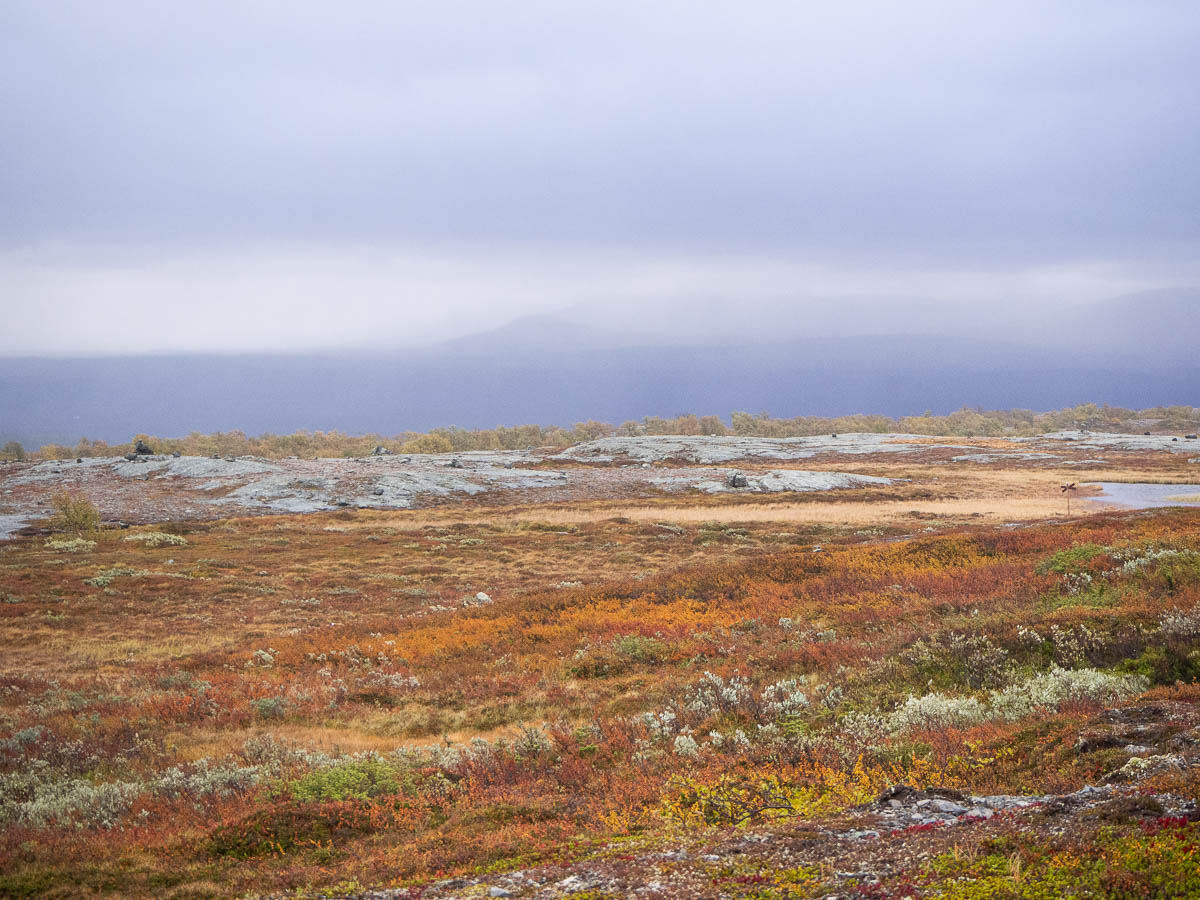
Continuing from Lunndörren to Vålåstugan, 16 km. Beautiful colors everywhere.

There were patches of sparse birch forest here and there but otherwise today’s walk went mostly over bog and open heath. This area is also criss-crossed by a lot of rivers and streams: I counted four actual bridges, one fallen tree, and plenty of small footbridges.

There was a lot of bog to cross, and the plank paths across the bogs were in disgracefully bad shape. Missing planks, broken planks, saggy planks… In the worst places the planks just served as an easy channel for the bog water, so the path became a stream and I was walking through water deep enough to cover the foot of my boots. It was better than no path at all, because at least my feet were not sinking into the mud. But my feet were already quite wet before I had even come halfway.

The weather today was wet and cold – above freezing, but not by much. A light rain fell through the entire day. Around midday the wind started picking up and by the afternoon the gusts were around 20 m/s. Wise from last year’s snowy weather, I had brought my wooly winter hat and thick mittens and was very glad to have them. My waterproof layers did their job so apart from my feet I was mostly dry, but the constant cold wind was chilling. I wasn’t actually cold at any point because I kept moving (and had I been wearing any more layers I would have been sweating) but I could feel my body heat leaking away.

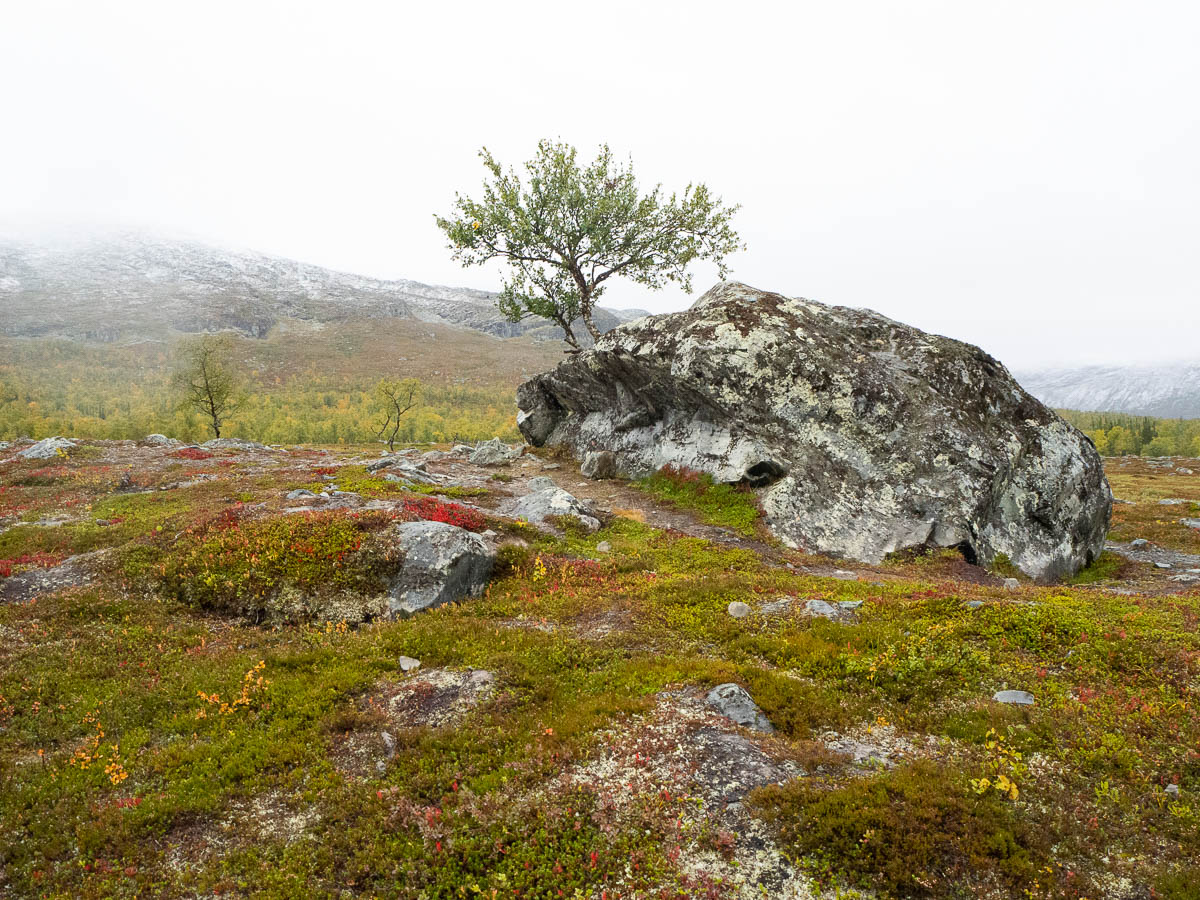
I stopped for a very brief snack break behind the same lone rock as last year. It is so conveniently situated right at the halfway point between these two huts, and it is literally the only thing I saw all day that is large enough to offer shelter from the wind. With its little overhang it even protected me from the rain (which was falling diagonally because of the wind). But it was still far from pleasant there so I kept my break short – just a flapjack and some hot drink – and kept on walking instead. Better to get to the hut sooner and get a proper meal there.

Towards the end of today’s walk I thought several times that I recognized the place and was nearly there, but behind each softly undulating hill there was another, very similar one. By the end I was running low on blood sugar and I was quite happy to arrive at the hut. The first thing I did was to hang up all my wet things to dry; the second thing was to finally eat lunch.

Today’s wildlife: a small group of reindeer, large flocks of what may have been common redpolls, and a beautiful bird that I guess must have been a Siberian jay. In the photos that Google finds for me, the Siberian jay looks grayish brown, but the one I saw had shades of green in its plumage, almost iridescent when the light hit it right. Wikipedia has an old picture of Siberian jays where the birds look a lot more like the impression I got, though, so I guess that’s what it must have been.


Vålådalen to Lunndörren, 12.5 km.

For the third year in a row I’m doing a four-day autumn hike in Jämtland, starting from Vålådalen.

I’ve been here twice already. It’s not like Sweden doesn’t have any other scenic places where I could hike, so I spent quite a bit of time looking for alternatives this year. But if I want a hut-to-hut hike (which I do) that is about four or five days long (which is what I can get from work) and is reachable by train and bus (which is also important to me) then there is not a lot to choose from. And this is a very beautiful national park, and it’s not like I’m tired of it yet, so I’m perfectly fine with coming here again.

I did change around my route though. The past two years I’ve tried to get as far into the high mountains as quickly as possible, which meant walking from Vålådalen to Vålåstugan on the first day. That’s a lot of walking with a lot of uphill, which is rather heavy for the first day, when my legs are not yet used to walking and my pack is heavy.

This time I went for a shorter option for the first day and walked from Vålådalen to Lunndörren instead. This walk is also nearly all uphill, but so is every other option from here. This was the final bit of last year’s hike but now I’m doing it in reverse.

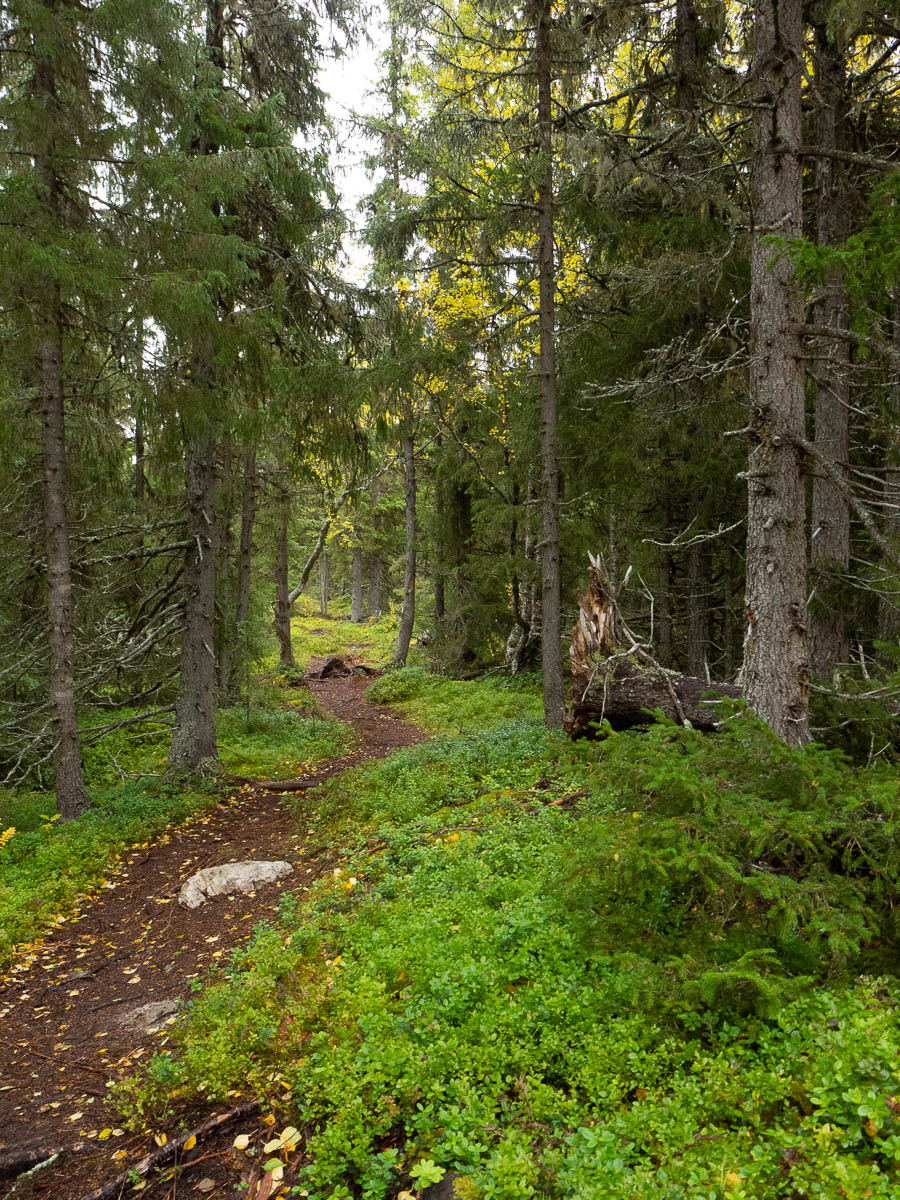
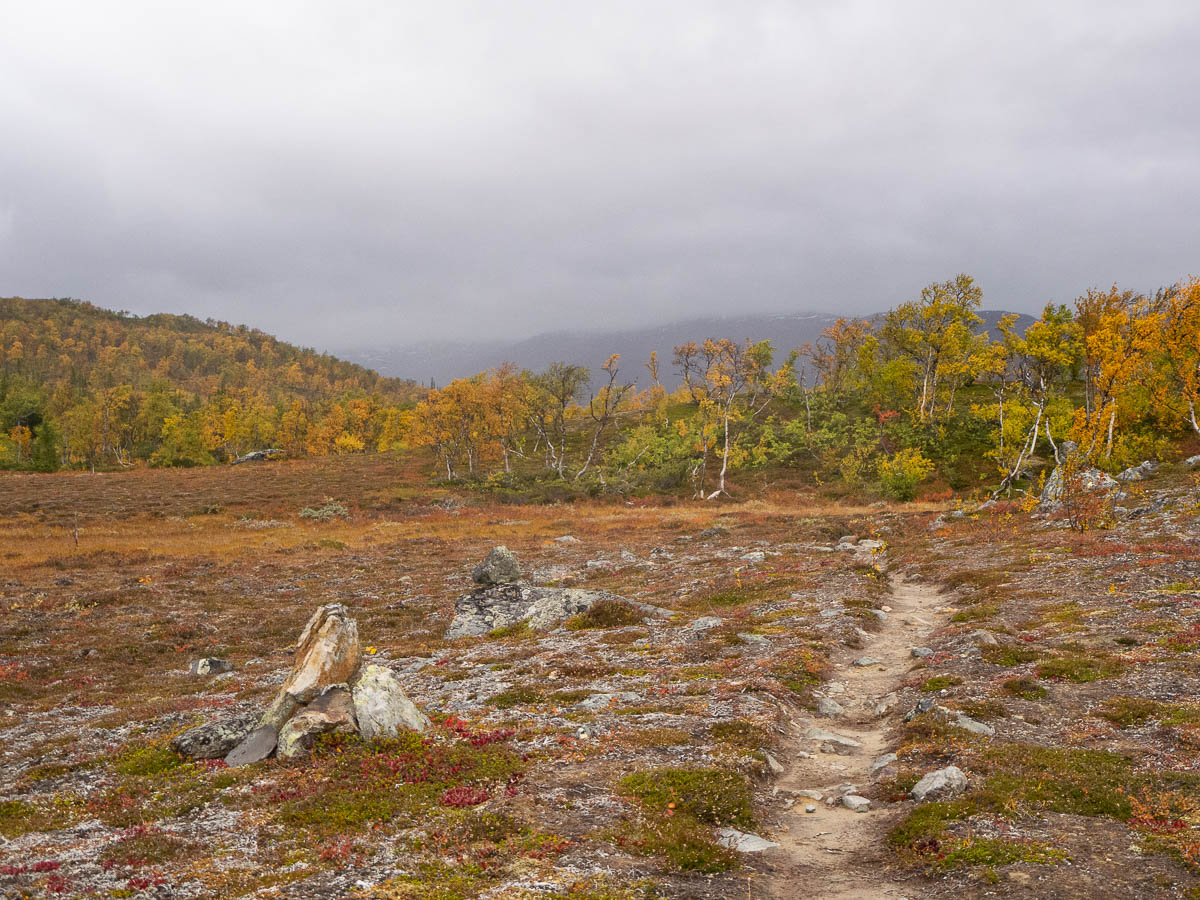
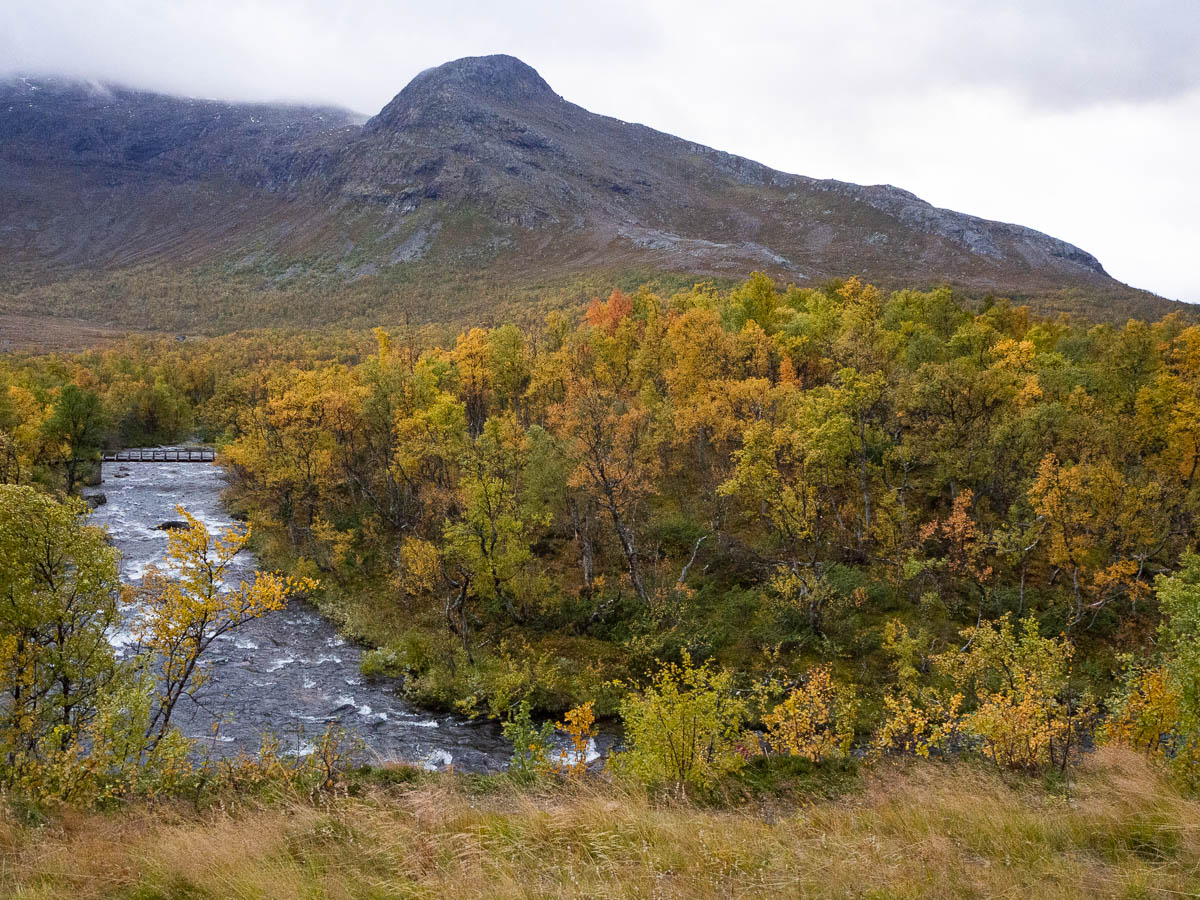
Most of this walk went through alpine forest of spruce and alpine birch, with occasional more open areas of bog and small lakes.

The weather was very changeable and unsettled, like the epitome of mountain weather. One moment the sky was mostly blue and literally a few minutes later it was overcast and snowing. The clouds didn’t so much arrive as appear out of thin air, as some mass of air met some other mass of air and hey presto, precipitation. At times I think there was snow coming out of nowhere, from a clear sky.

There were short moments of dry weather but those passed quickly. Most of the time, some kind of cold water was falling from the sky. There was rain and there was snow and sleet and hail, and combinations of those.

I sat down for a lunch break at one point when I thought the dry weather might hold for more than a few minutes, but it didn’t, and I ate the rest of my boiled egg while walking.

The forest here is quiet, without much birdsong or other sounds. I did scare a bunch of grouse into flight and was surprised by how noisy they were.


The Lunndörren hut is a lovely, cosy hut in an incredibly scenic location, right next to a lake with mountain views across it. The sauna is literally a few steps away from a bathing spot. (Which I didn’t try out, because much of the point of going to a sauna in this weather is to get warm, and bathing in an ice cold lake doesn’t really help with that.)


We awoke, very reluctantly, just after six in the morning because of some nutters who thought this was the best time to go out on the lake in a fishing boat. Car engine noise, repeated trips carrying equipment from car to boat, then plenty of rattling with chains and padlocks… it went on for long enough that there was no chance of staying asleep. When we met the nutters afterwards, they said they were from some environmental agency, inspecting the state of the fish population and thereby also the water quality. Great, I’m all for that, but I do not understand why they couldn’t take up their nets a few hours later.

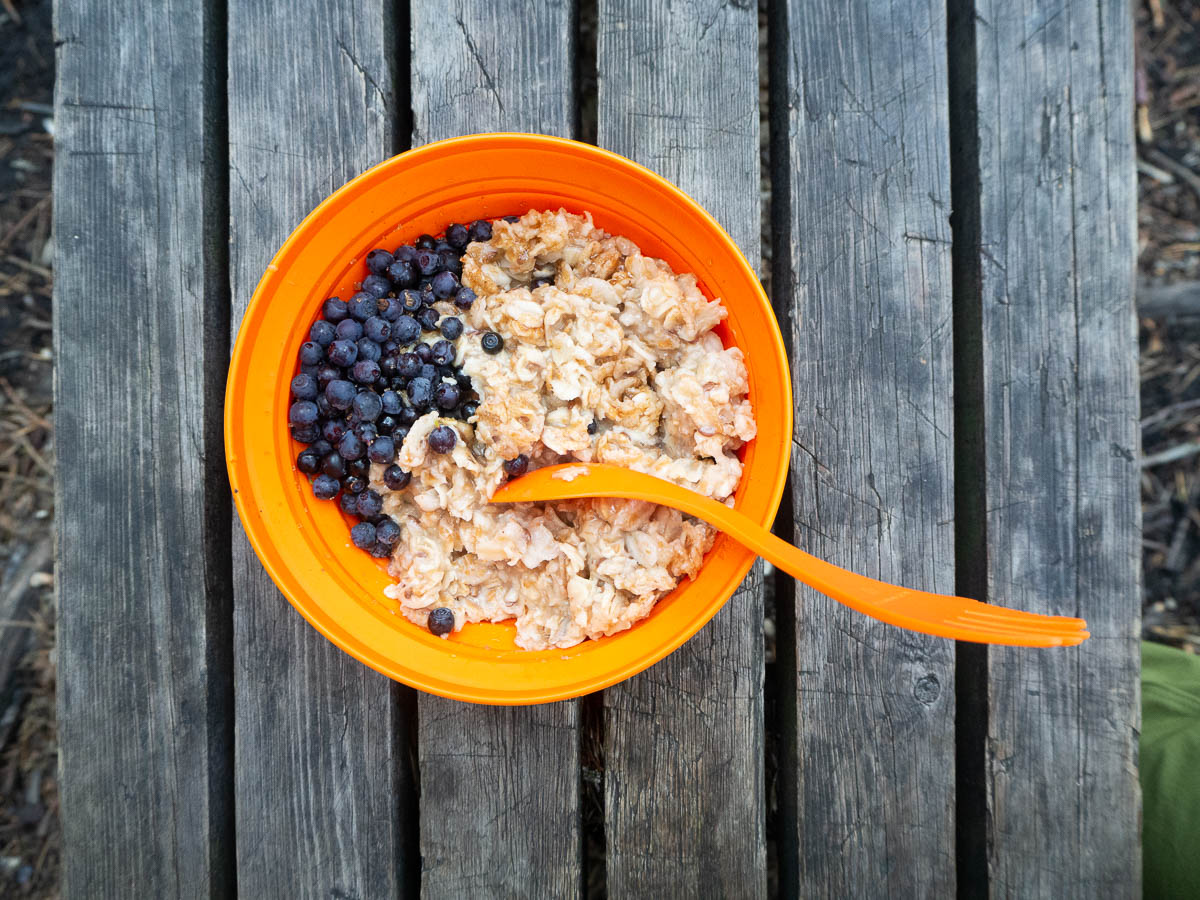
Since we were up anyway, we might as well have breakfast. There were plenty of bilberry bushes everywhere around us, but the berries were few and small. It took quite a while to gather some to have with our porridge.


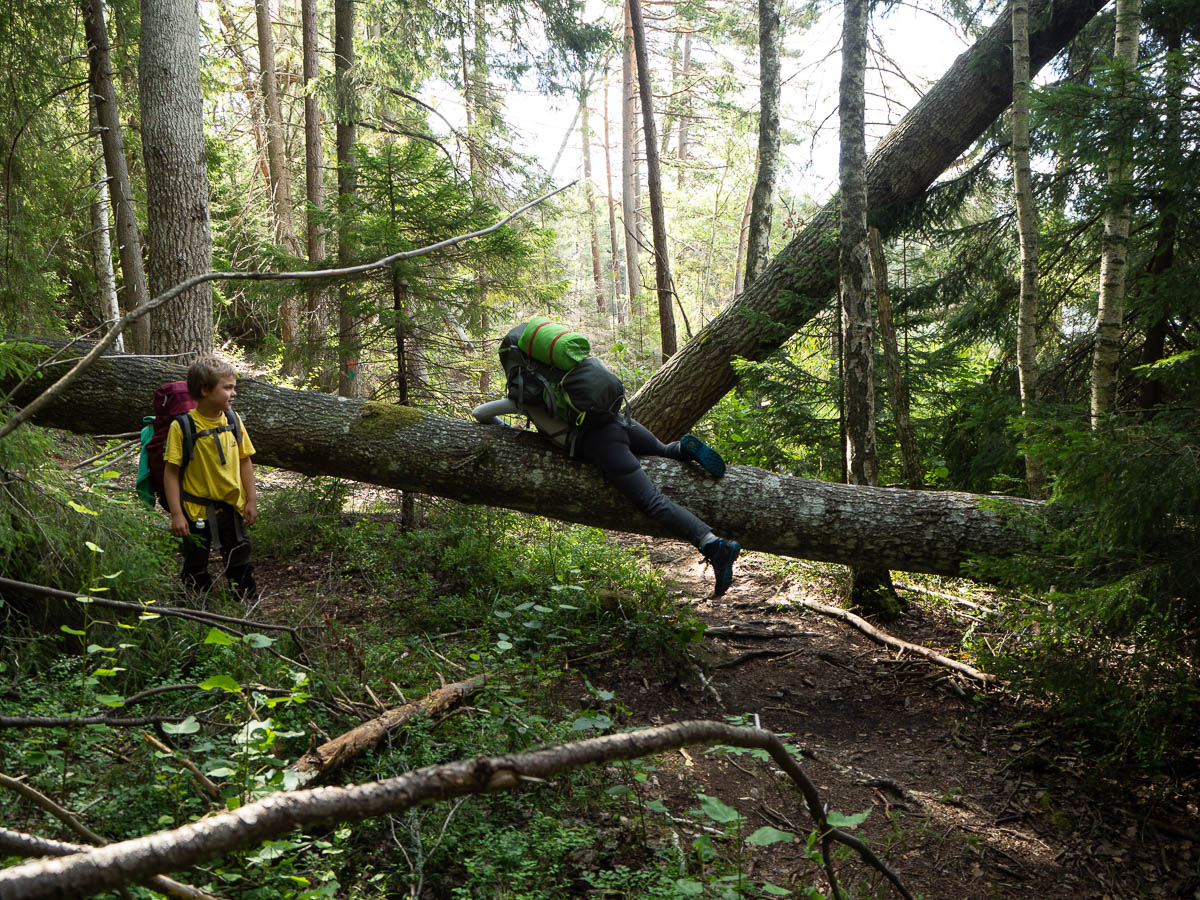
Afterwards we packed up our stuff and started the walk back. This trail was rougher than most marked hiking trails, with lots of fallen trees to get past. Sometimes over, sometimes under. And some, of course, just at that in-between height where it’s hard to fit under them, especially with a backpack, and hard to get over as well.


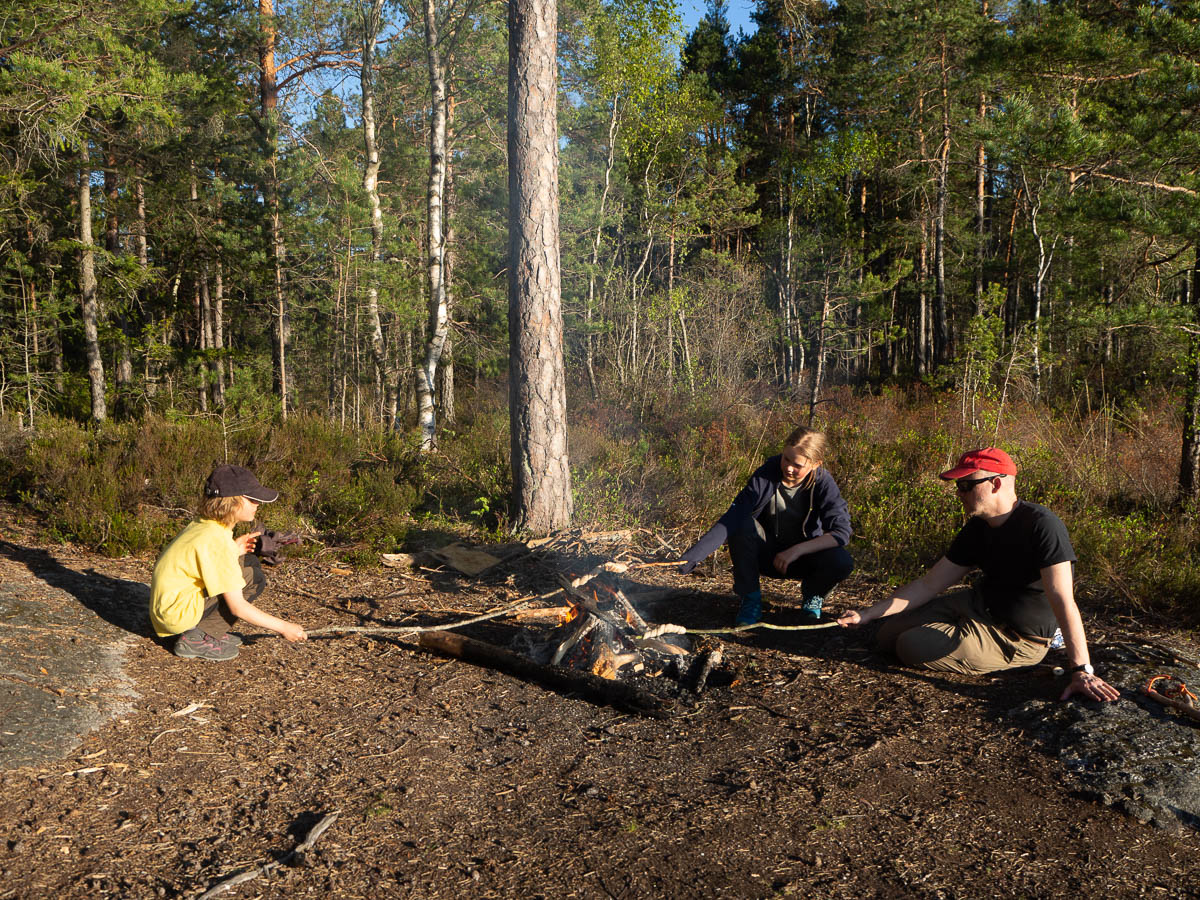
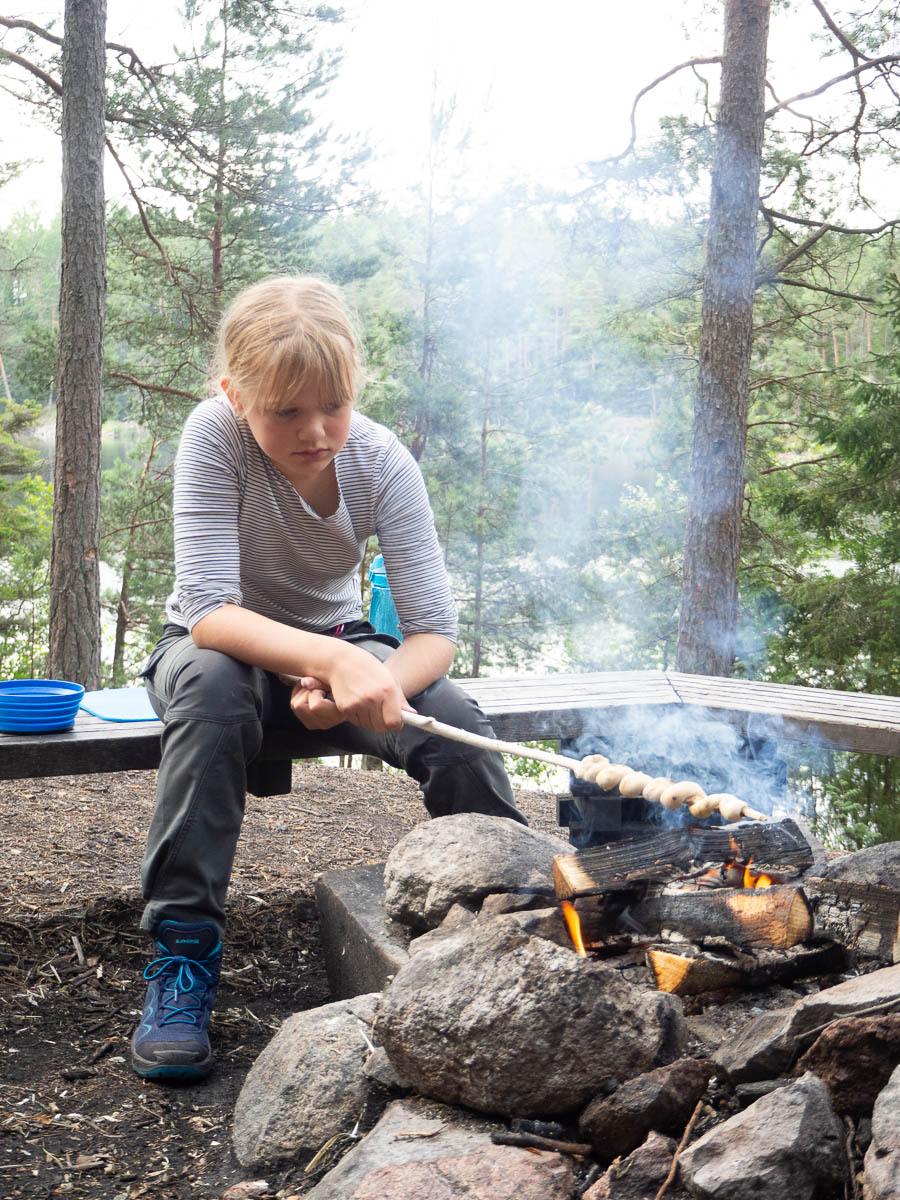
Just after halfway we passed a fireplace with nice views of another lake. Walking past this spot yesterday, the kids named this one “the fake lake” because at first glance it looked like it could be our tenting spot, but wasn’t. Since it looked so lovely yesterday, we planned a mid-morning stop here today, with a campfire and bread on a stick.


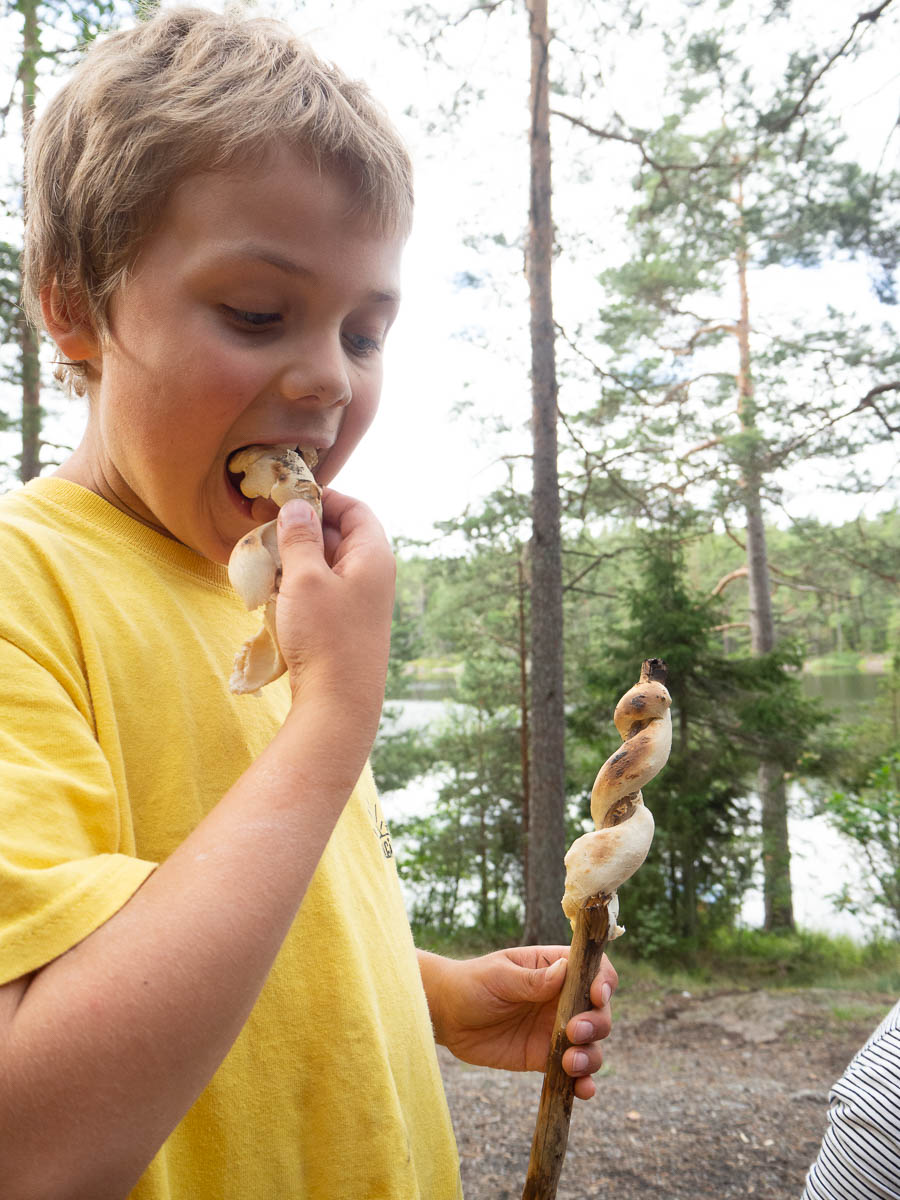
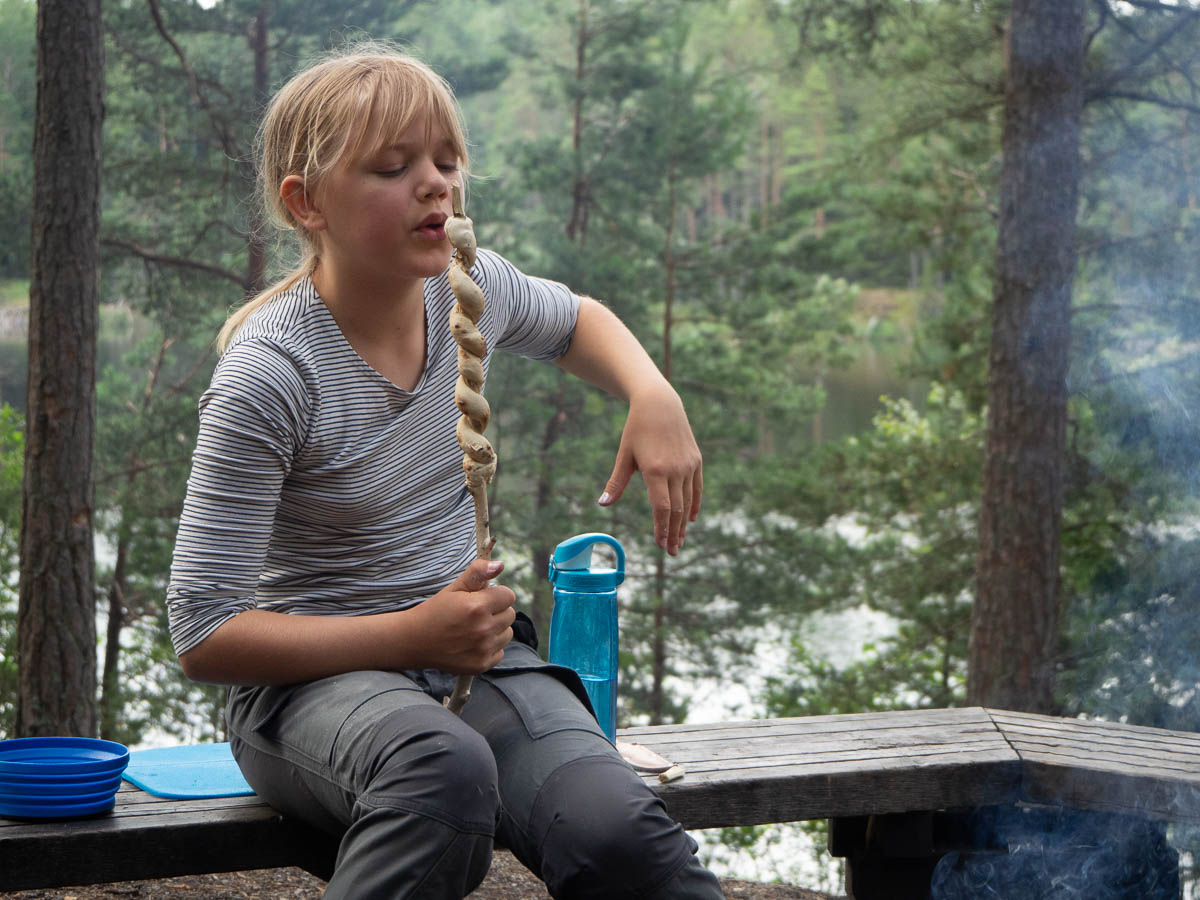
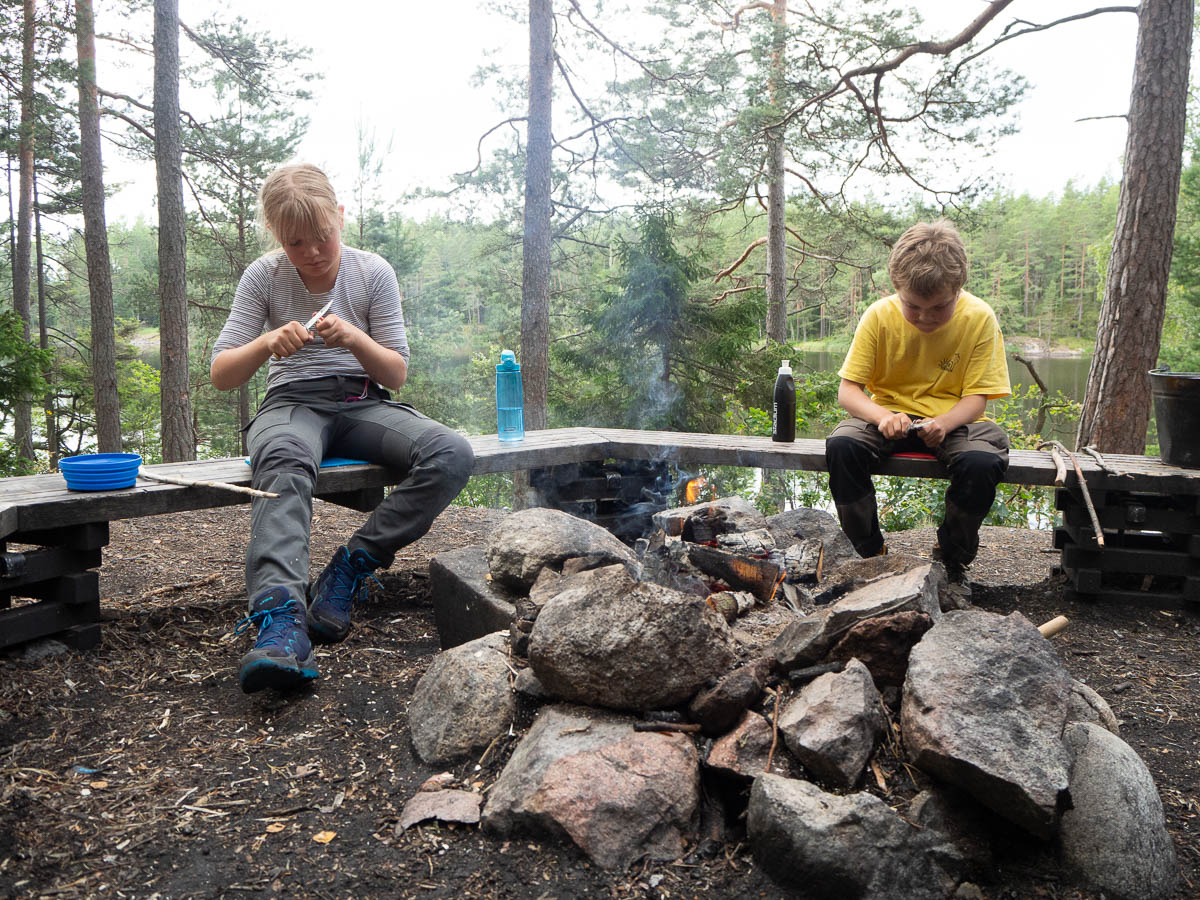
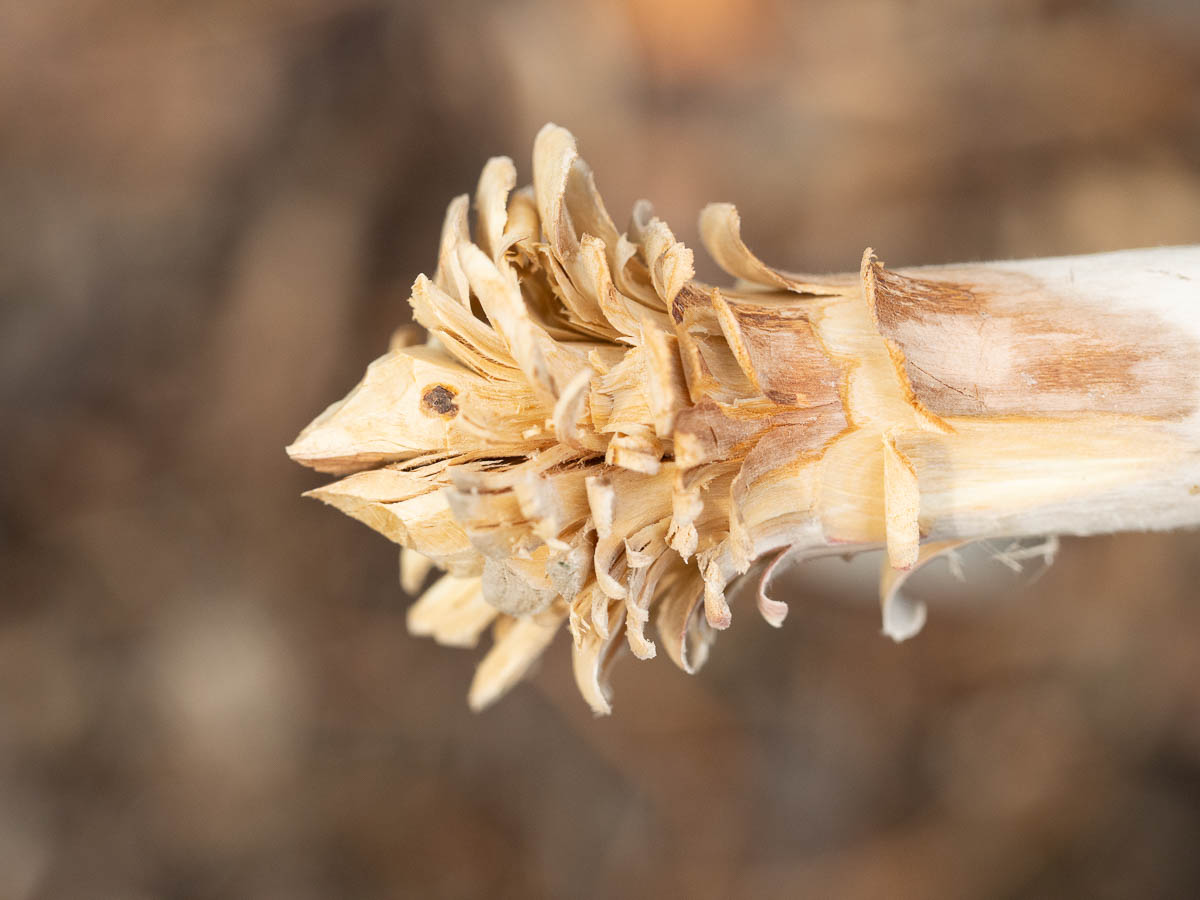
And whittling. Bread on a stick requires a good, smooth, clean stick, so Ingrid prepared one. Then the fire needed some time to burn, and what better way to pass the time than do some more whittling. When the breads had been eaten, the whittling continued. Adrian has no knife of his own yet so he borrowed mine, which left me with nothing much to do, other than taking photos. Both Ingrid and Adrian could probably have stayed there for much longer, but I got bored of waiting after some time, so we continued walking towards Brakmaren and the car.


This year’s scout camp is nearly here so we’ll get plenty of camping and outdoors activities soon. But Adrian still wanted to go camping with just us as well, and Ingrid came as well.

We’ve tented in Tyresta before, and Paradiset. Those two are my favourite nature reserves near Stockholm, beautiful and varied and easy to reach. This time I thought we’d try a new spot, so we aimed for a tenting spot next to lake Stensjön.

Somehow the preparations took me most of the day, even though I started just after breakfast. Getting all the gear, packing my own stuff, helping Adrian pack, shopping food, prepping food… by the time we were at the parking lot at Brakmaren, it was already six o’clock. We had a four-kilometre hike to the lake, and then there was a fire to build and light, and dinner to cook. (For dinner we had our traditional “hajkbomb” and then a delicious dessert of sauteed apples with chopped nuts and chocolate and cinnamon.)

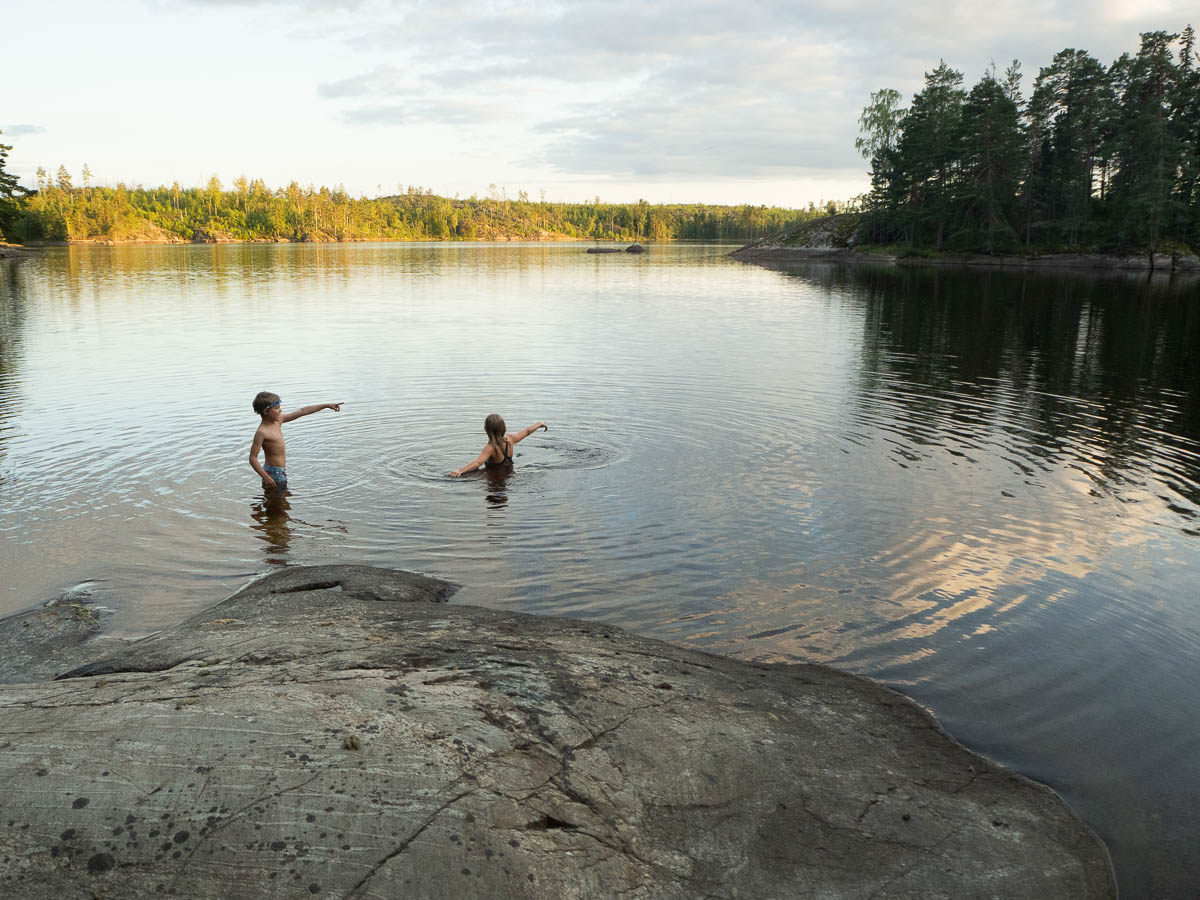
Adrian went to sleep in the tent, while Ingrid and I went for a late night swim. There was a small island quite close to the shore – too far for the children to swim to on their own, but close enough for me and Ingrid. The weather was quite chilly so we didn’t stay on the island for more than just a moment. During our swim back, we had company of a bat that swooped by very close to us, just above the water.

When we got back, we found Adrian still awake, because the tent wasn’t like home, so we also went to bed to keep him company. Just as Ingrid went for a last pee in the dark, some animal rustled in the bushes right next to her. I joked about bears and elephants, but I wonder what it really was. Fox? (Those don’t make much noise, though, I believe…) Badger?


Lunndörren to Vålådalen, 12 km. Today was a short day because I had a bus to catch in the afternoon.

Heading north, mostly through forest and across small bogs. Steadily downhill all the day, which made for an easy walk. Quite soon I left winter behind me and was back in an autumn forest. Pleasant but quite unexciting after the past few days’ dramatic experiences.

Near the end of my hike, where the trail crosses Vålå river, I got to try an experimental ropeway. Normal bridges are expensive to build and risk getting damaged or swept away by ice and high waters. A ropeway hangs higher up and is therefore less likely to be caught in a flood.

It worked well enough but dragging me and my pack and the “basket” across was hard work and took about ten times longer than walking across. Given a choice between this and a normal bridge, I’d rather walk, but if the choice is between this and wading then I’ll take the ropeway.

Ropeway on the left, bridge on the right: