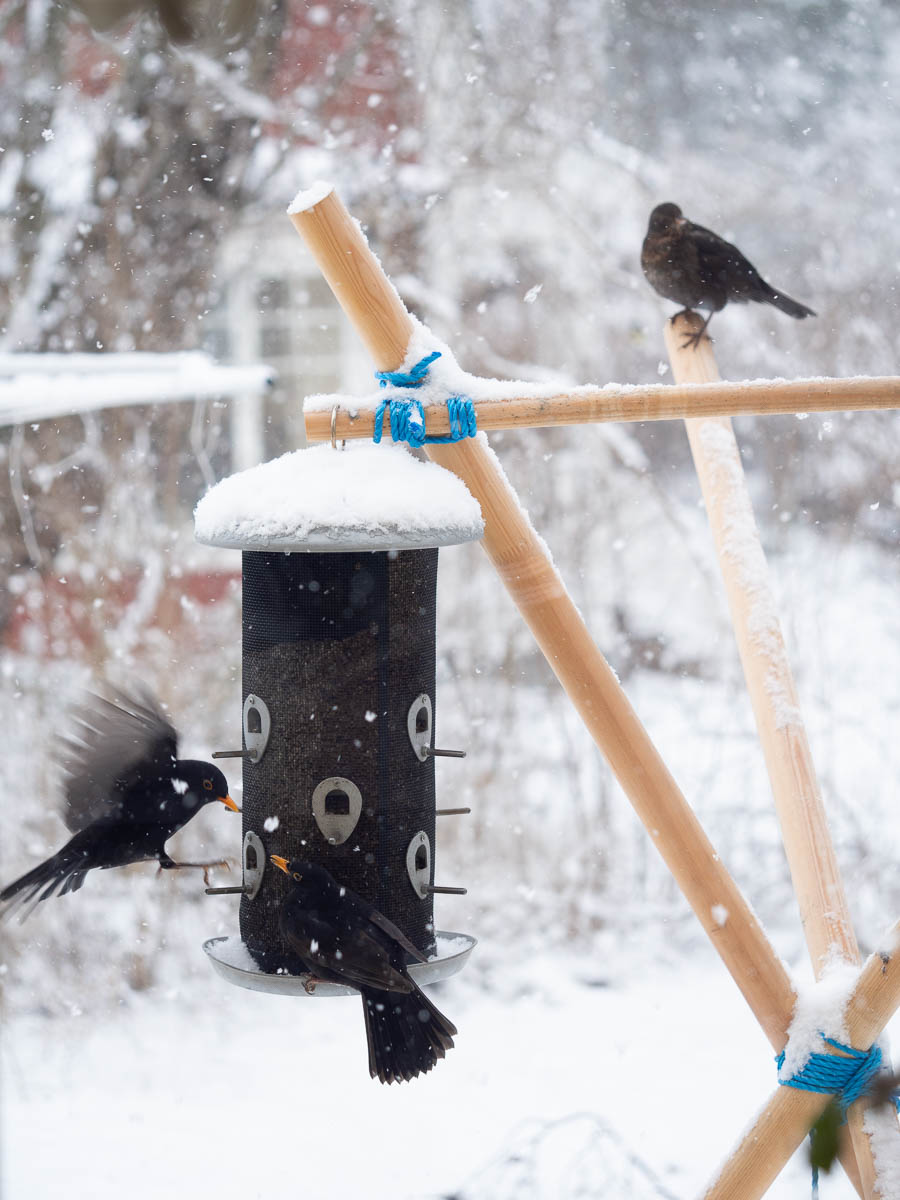
Even with the snow and the cold, there are very few birds at the feeder. Mostly fieldfares and blackbirds, and the occasional blue tit or nuthatch. I wonder where the swarms of redpolls and goldfinches are this year, and all the great tits and blue tits we’ve seen in the past.
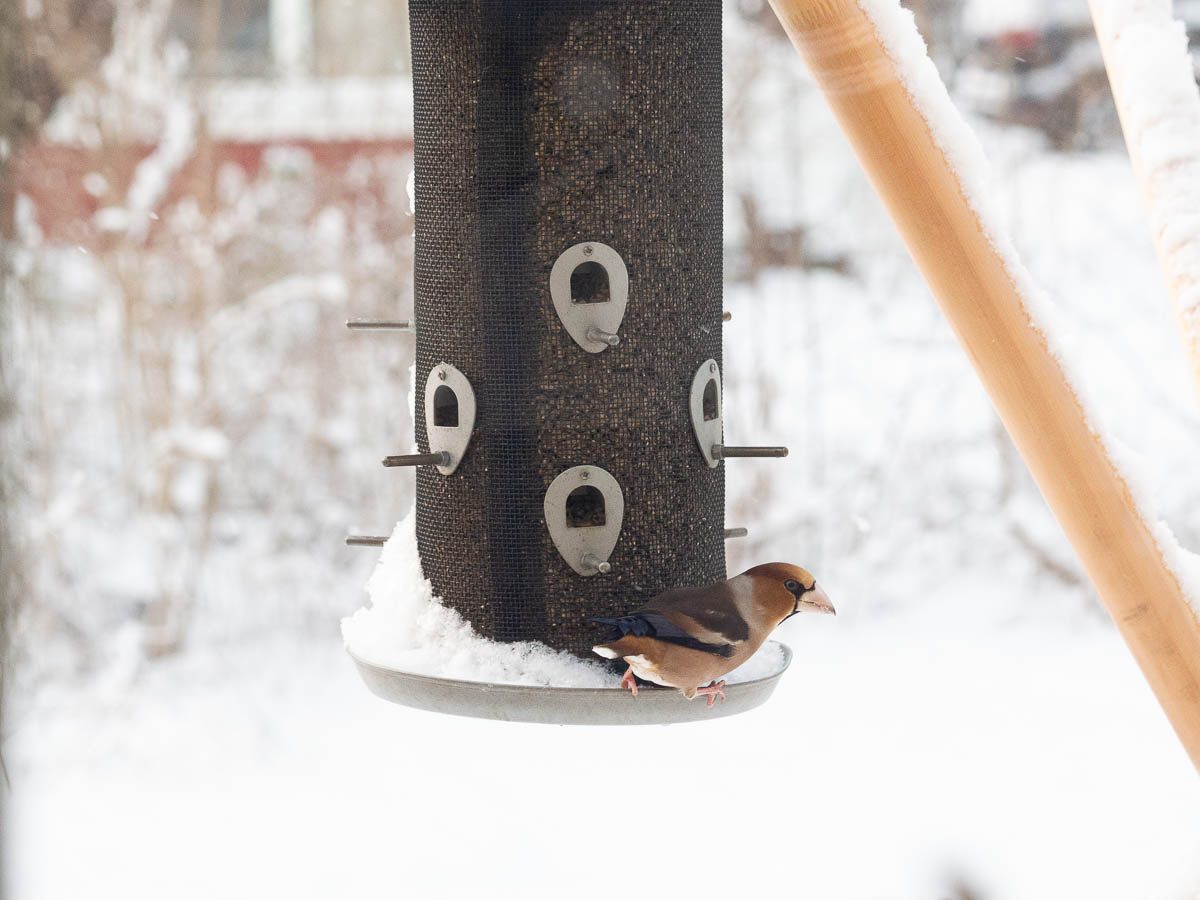
The cold and snowy weather has finally brought some birds to our feeder! It’s been nearly empty until now. I can’t remember a winter with so few birds to look at.
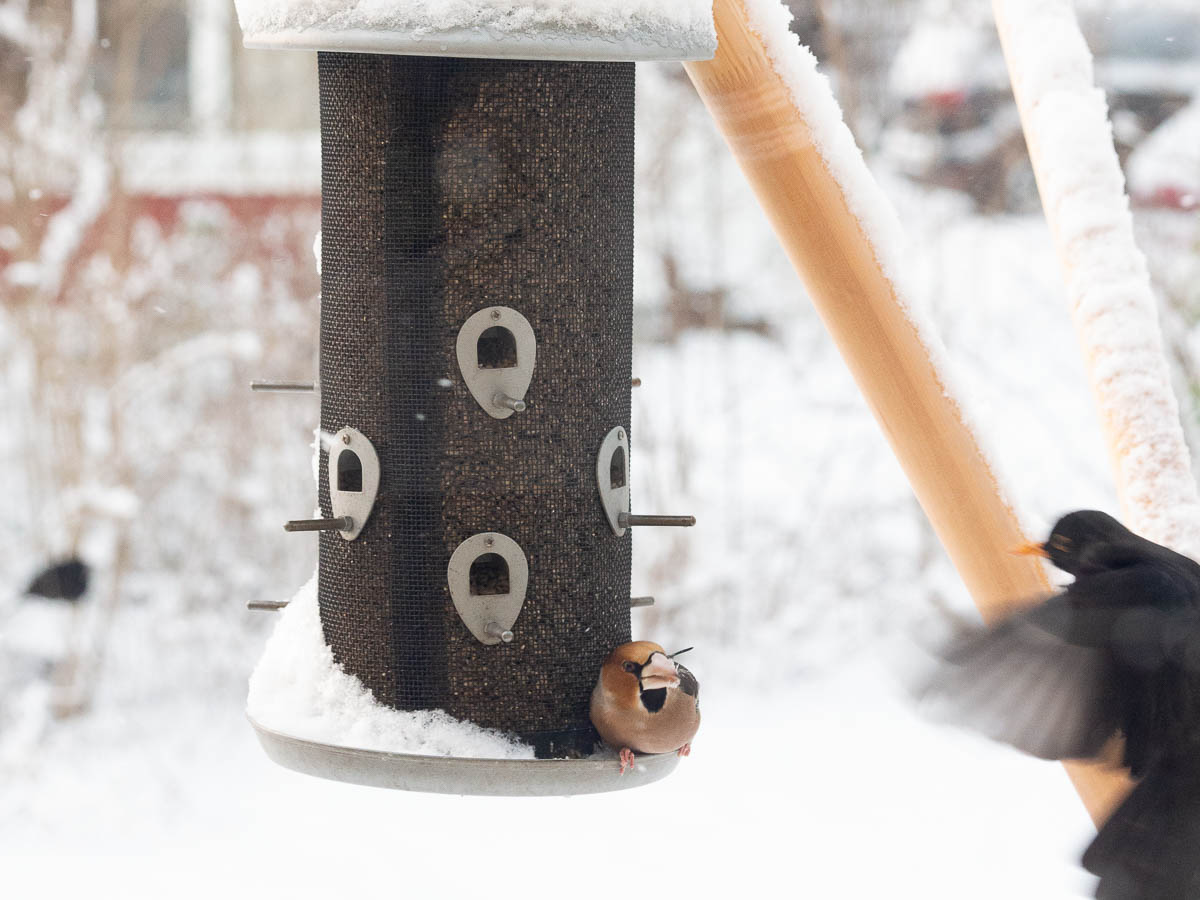
Today I saw a hawfinch here for the first time. The Swedish name stenknäck means “stone crusher” and the Estonian suurnokk means “big beak” and there’s no doubt that the names fit! According to my bird book it eats cherry pits, after crushing them with its beak. The book says it visits feeders to eat hemp seeds, but here it seems to prefer sunflower seeds.
It’s clear that there is a power hierarchy among different breeds of birds. Sometimes it correlates with size. Most smaller birds avoid jays and magpies; blue tits and great tits avoid nuthatches. But not always: the hawfinch barely needs to turn its head, and blackbirds flee.
Winter, you say? Nah. We don’t seem to be doing winters any more.
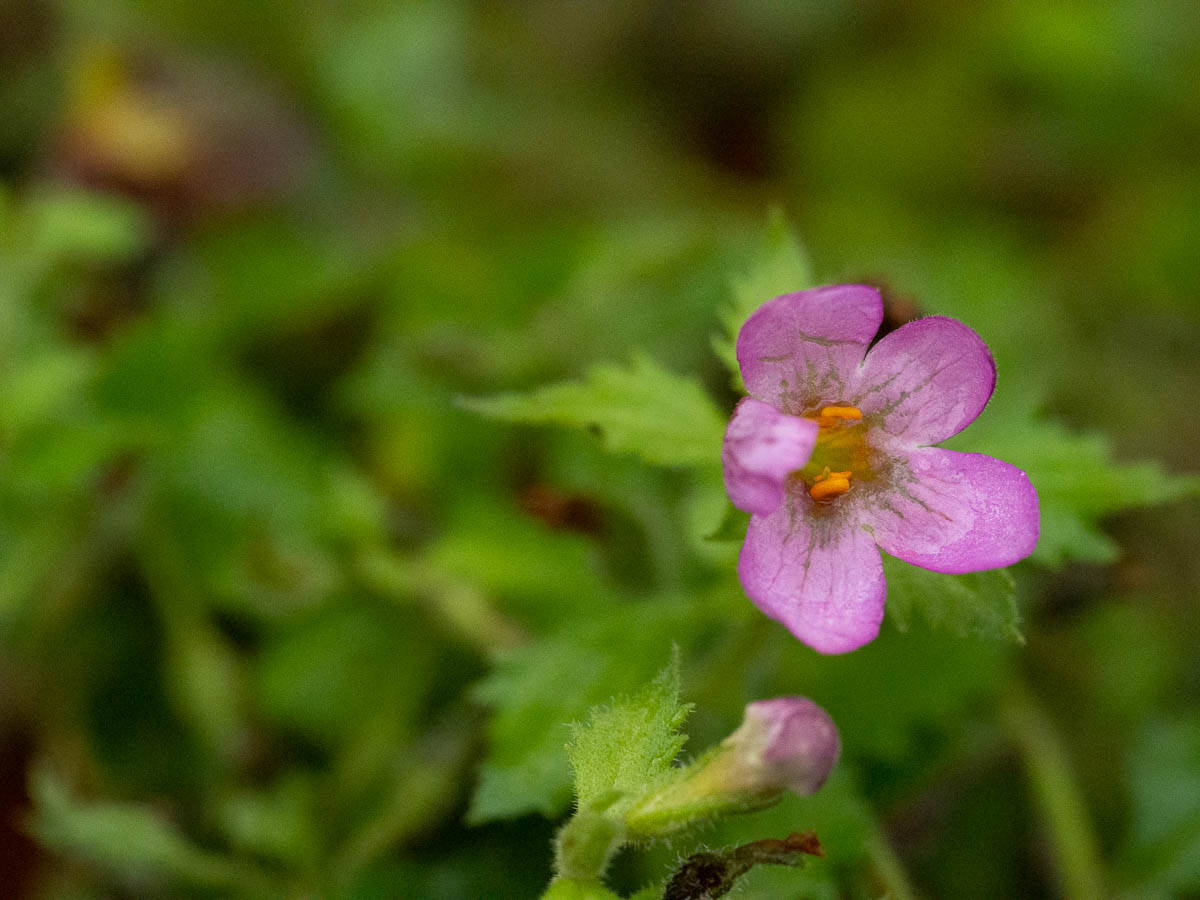
This thing has been flowering since July. We’ve had a very few frosty nights, but not enough to kill the flowers.
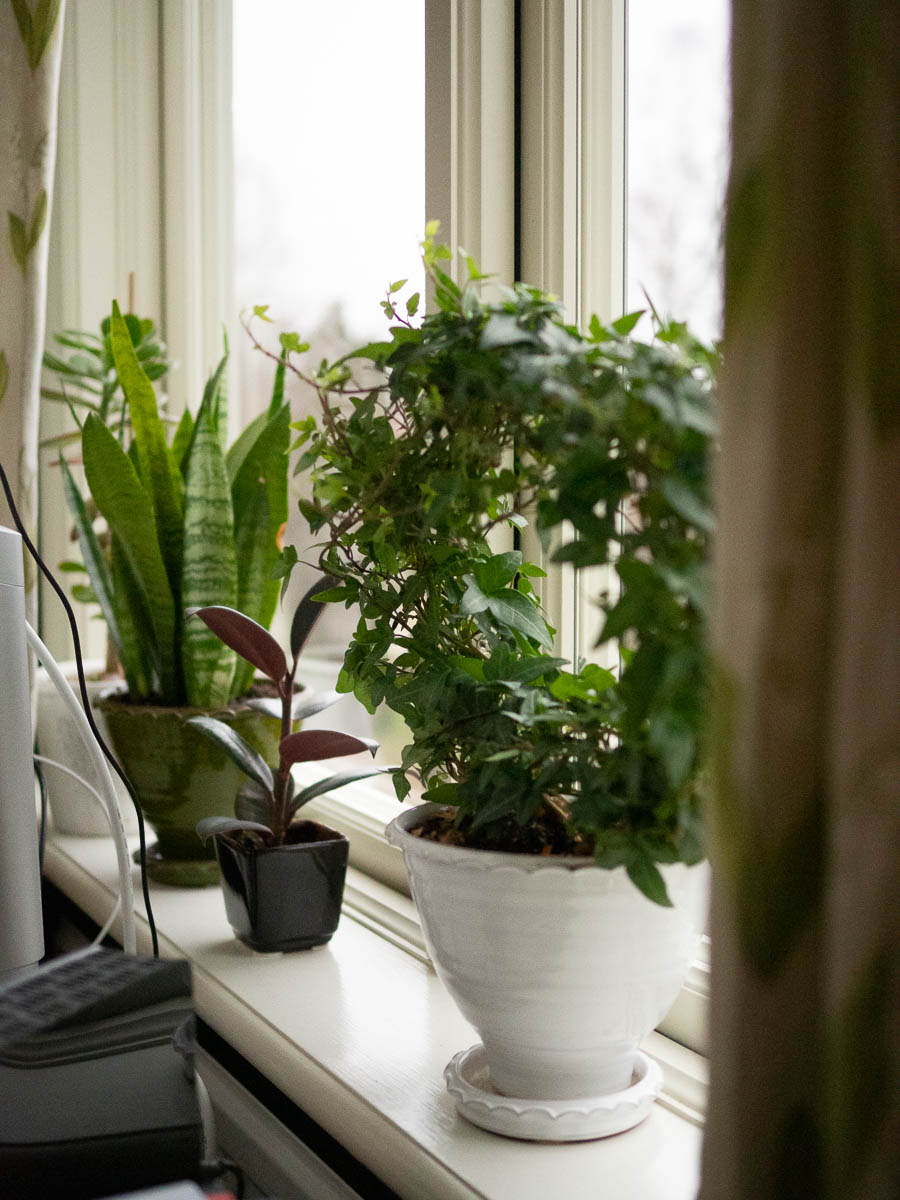
The plants in the window in my home office corner are outgrowing their space. I bought them for my large window niche at the tretton37 office, where they would have plenty of room. Now they’re squeezed onto a narrow window ledge. And since my home office is in the same room as our bedroom, we pull down the blinds every night, so the plants can’t be allowed to spread outside their narrow space. I’ve already had to move one to a different window because it grew too large. Others will soon need to follow. If not now, then in the spring, when the nights will be lighter and it will no longer be enough to pull down the blinds until they just touch the tops of the plants.
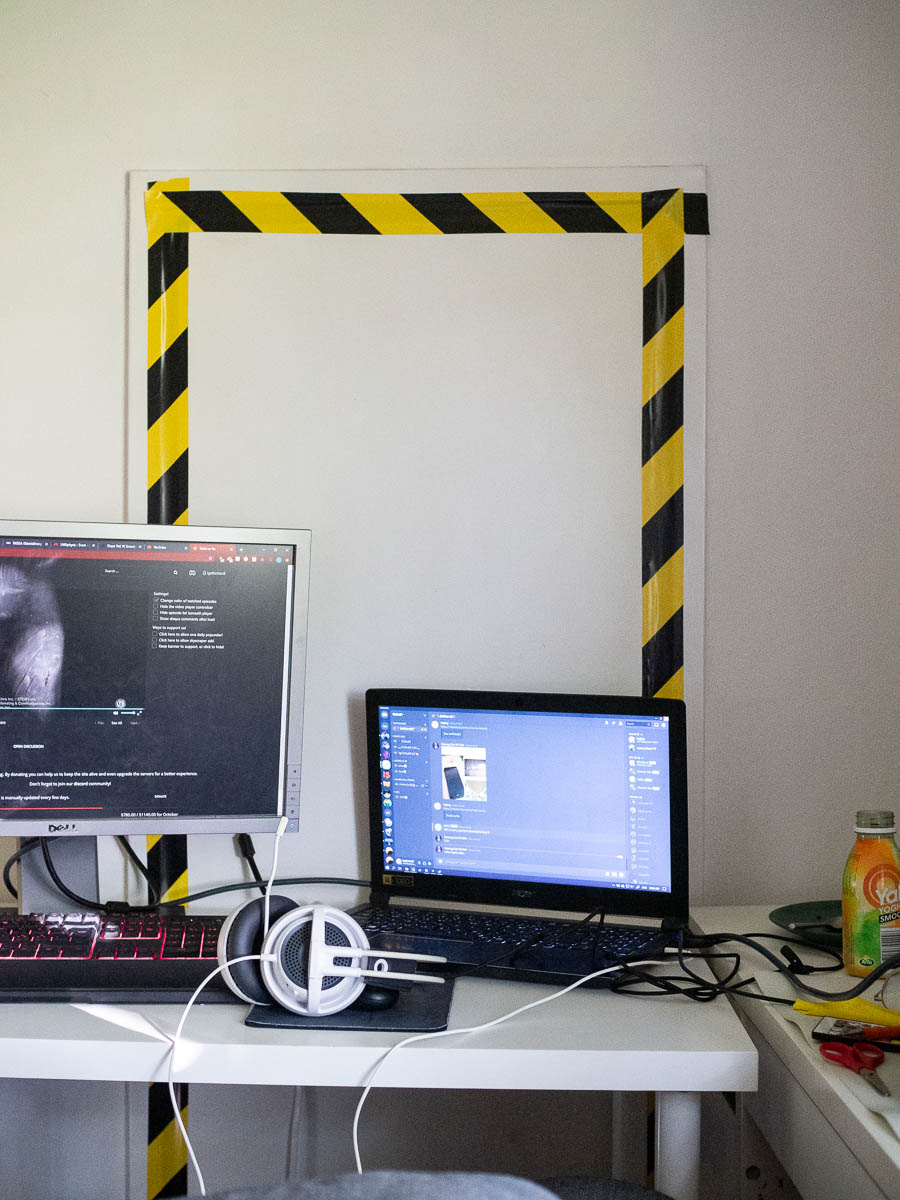
Not that their disappearance here would make much of a difference. I can barely see them behind the huge monitor that takes up much of my field of view.
The home office still feels like a semi-temporary solution. Or 25% temporary perhaps. OK for another year, but not for 10 years. I’d want to make more adjustments if this were to become permanent.
It’s hard to know how long to plan for. The coronavirus situation will resolve itself one way or another – vaccines are on their way, even if not within touching distance yet. But how much time will I be spending in an office after that?
For a very brief moment around 11 o’clock, there was sunshine. By the time I had gotten my camera and put on shoes, it had disappeared, but there was still a thinner patch of clouds and the day felt light.
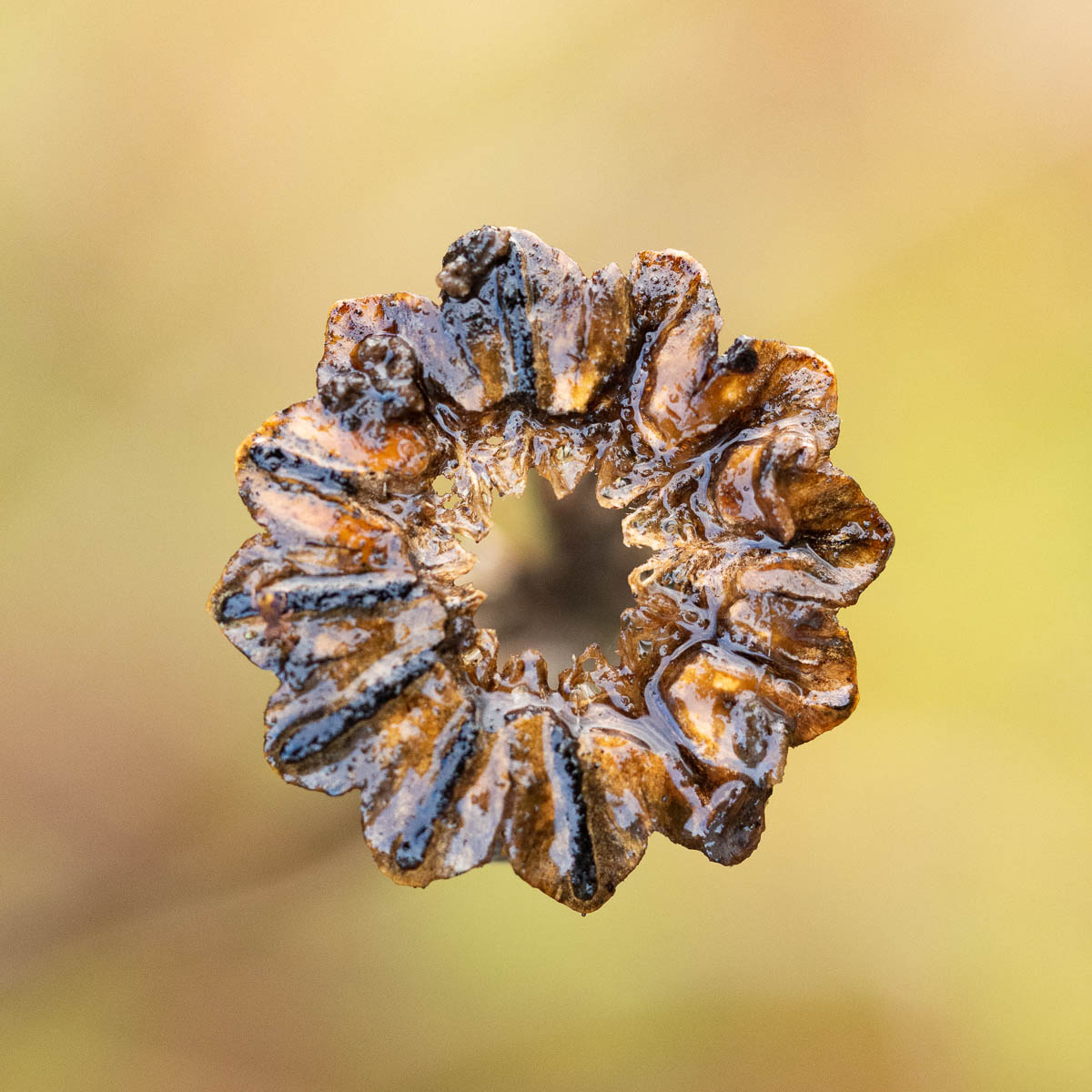
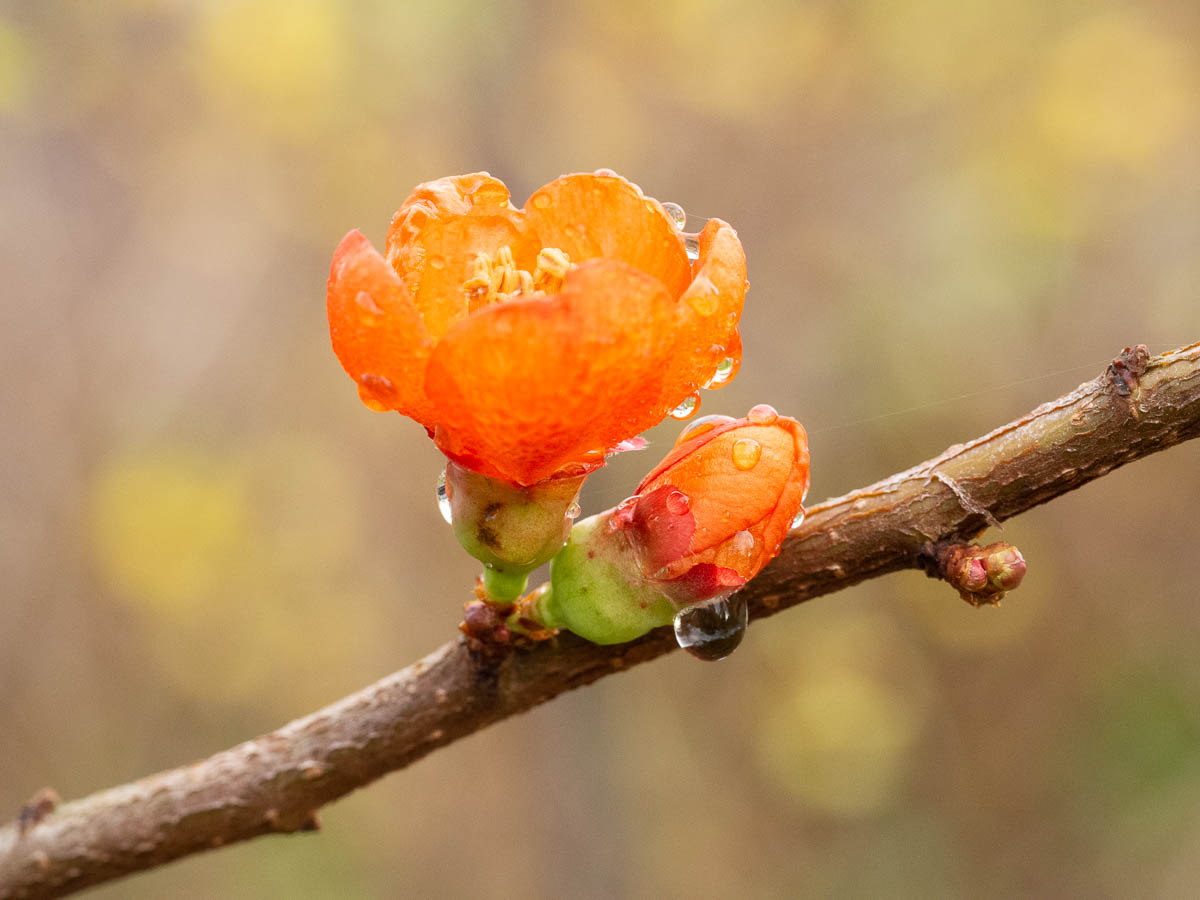
The brown things are hydrangea flowers. The round thing is a poppy seed pod. And the flowering thing is a flowering quince, confused by the unseasonably warm weather.
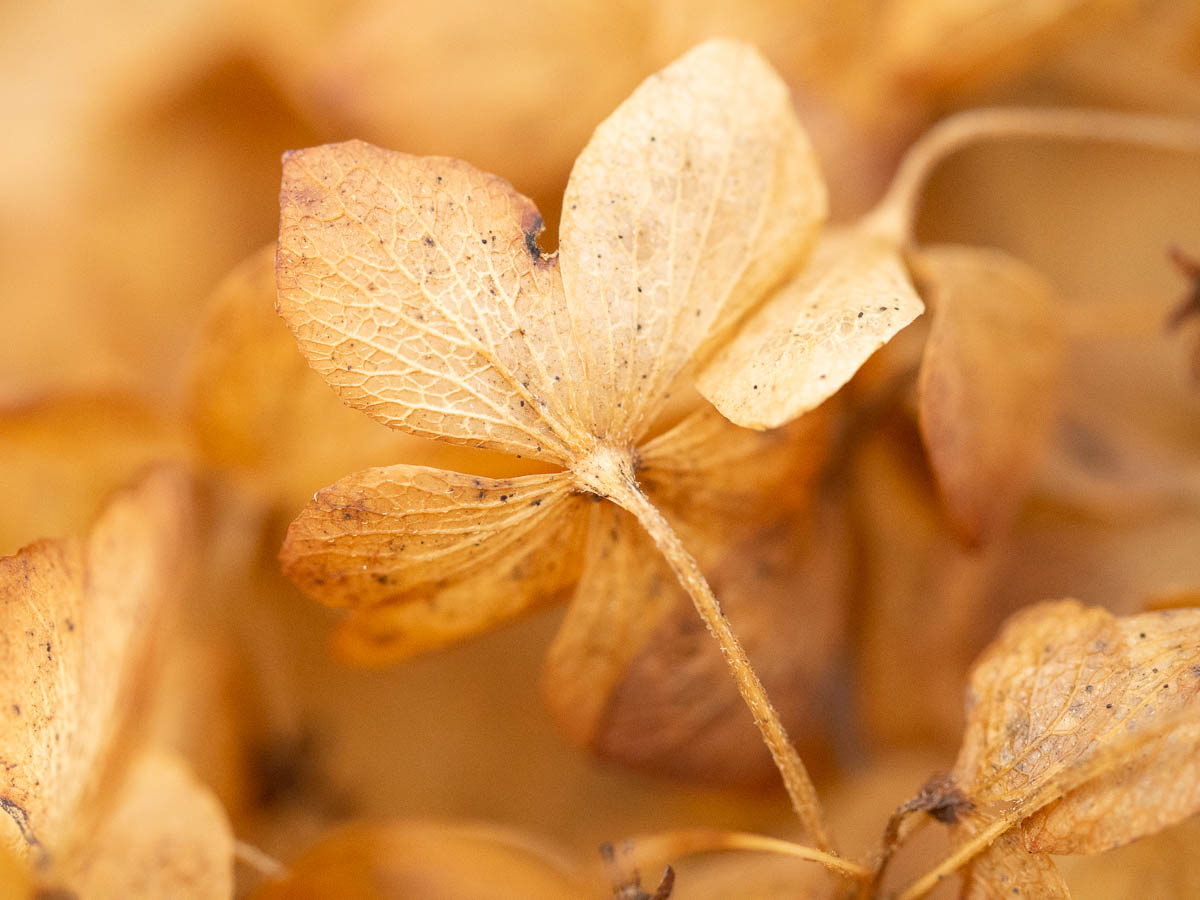
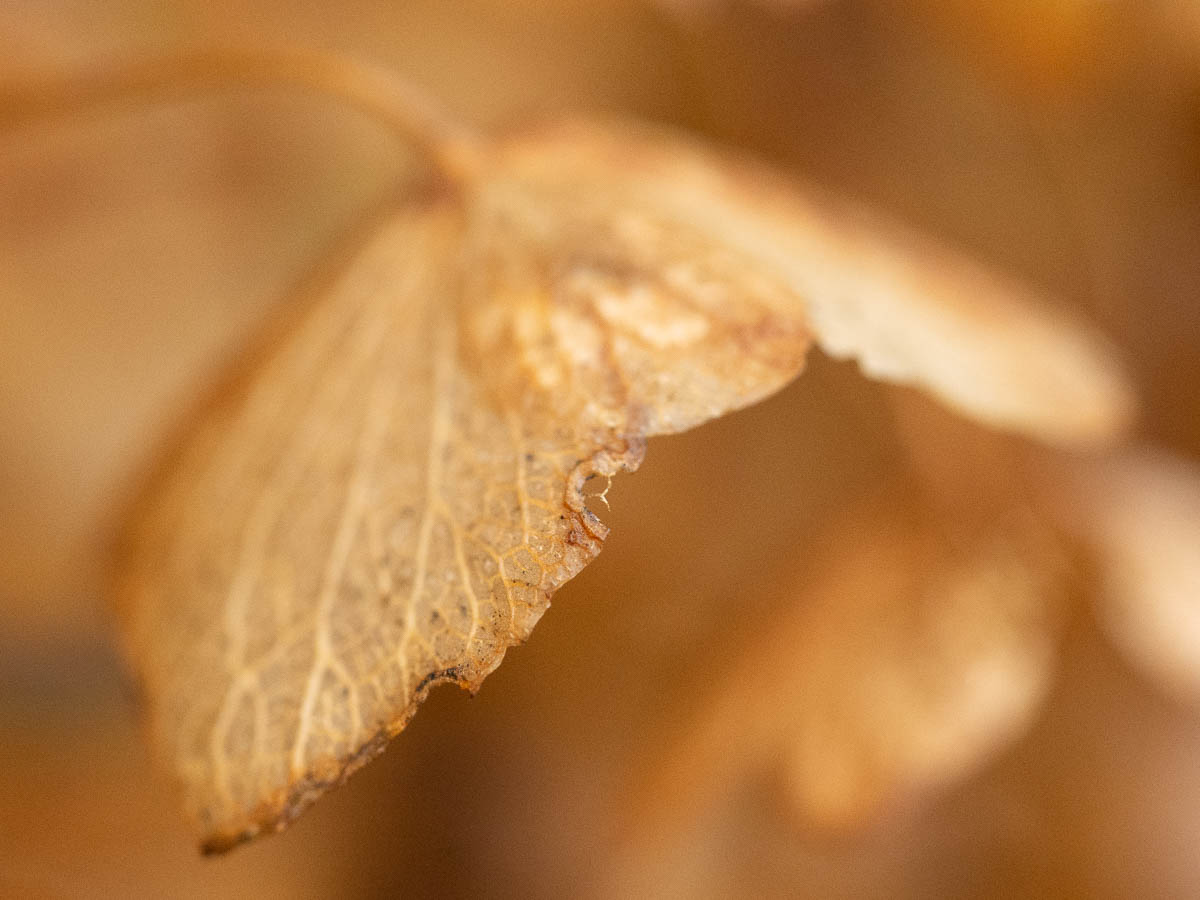
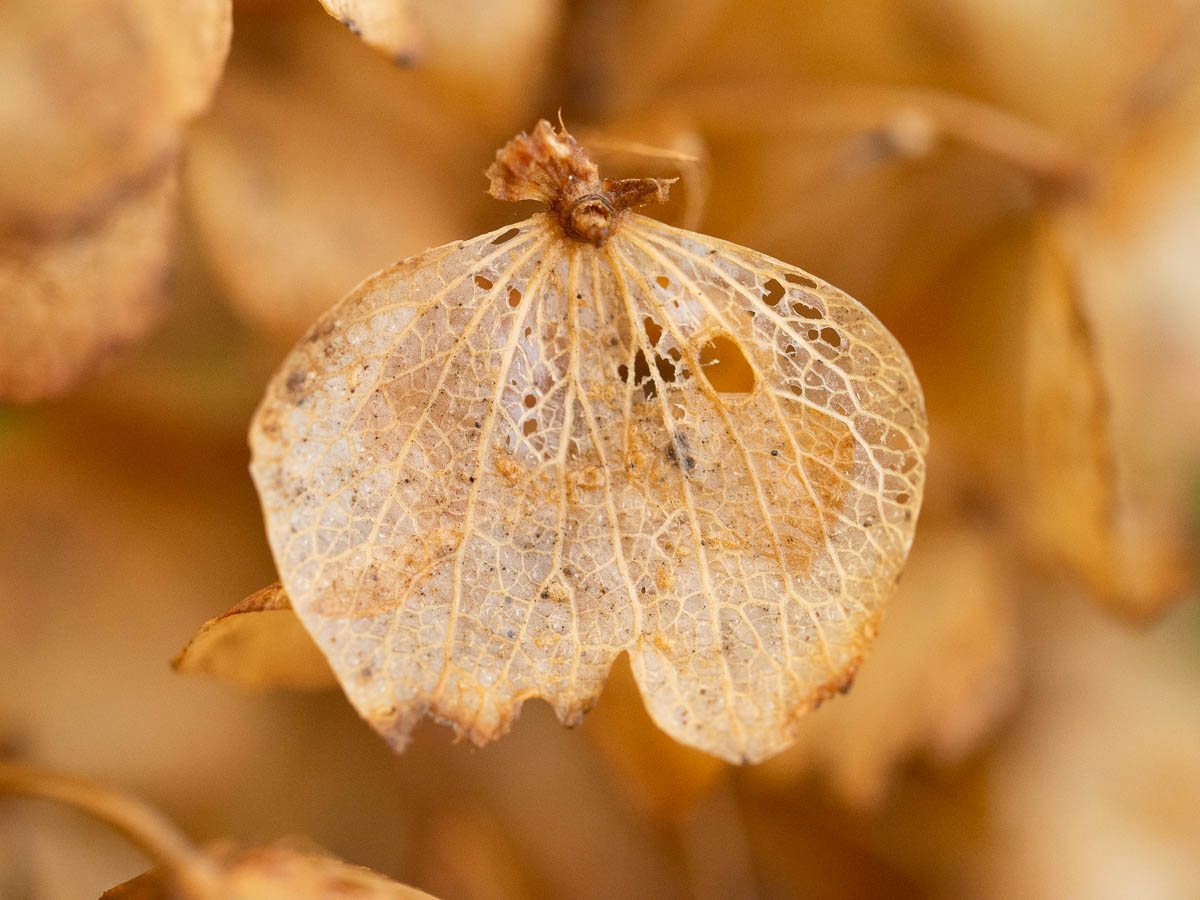
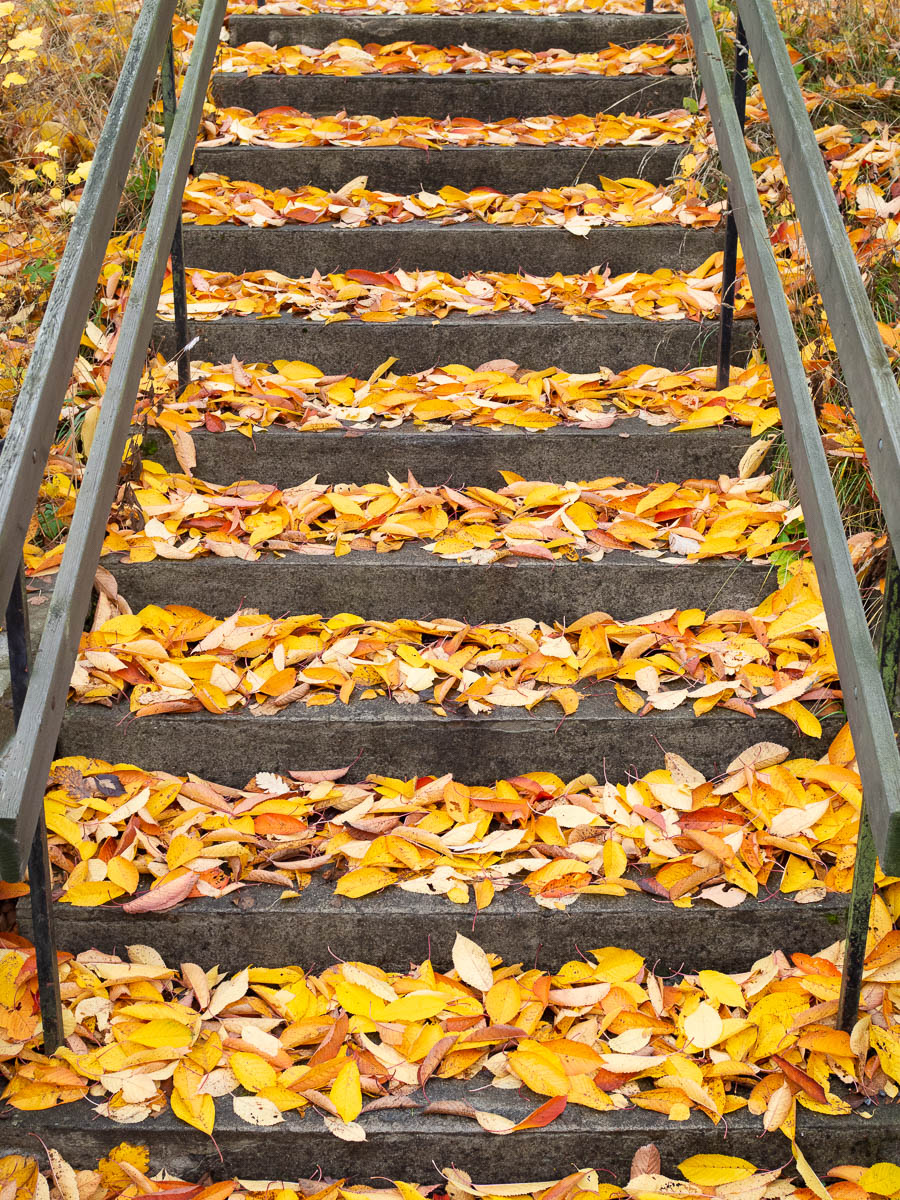
It’s leaf raking season.
Our three cherry trees dominate the garden in all ways, including in leaf production.
When we moved in I thought of them as two trees and a young one. In the 10+ years we’ve been here, the young one has doubled in height and can no longer be discounted. Initially I found it superfluous – how many cherry trees does one need in a garden, anyway? But when the old one in front of the house lost several large roots and branches (when we had to replace the incoming water pipe) I realized that it won’t last forever, and it’s not a bad thing to have another tree in reserve. Especially when it’s there for free, and all we have to do is rake the leaves away.
I’ve always suspected that the young one has grown from a root sucker from the other tree in front of the house. I’m pretty sure the previous folks living here didn’t intentionally plant it; they didn’t plant anything, apart from a badly planned hedge. But now the large tree has dropped all of its leaves, while the young one still has nearly all of its leaves, so they seem quite independent of each other after all. I would have expected them to be more co-ordinated if they shared part of the root system. But that’s just my naïve intuition, thinking of their roots as akin to a network of blood vessels. They could of course be connected anyway but just not signal each other that much.
The amount of leaves these trees produce is astounding. The tree is still full of leaves, but somehow it’s already managed to cover all the ground beneath it.
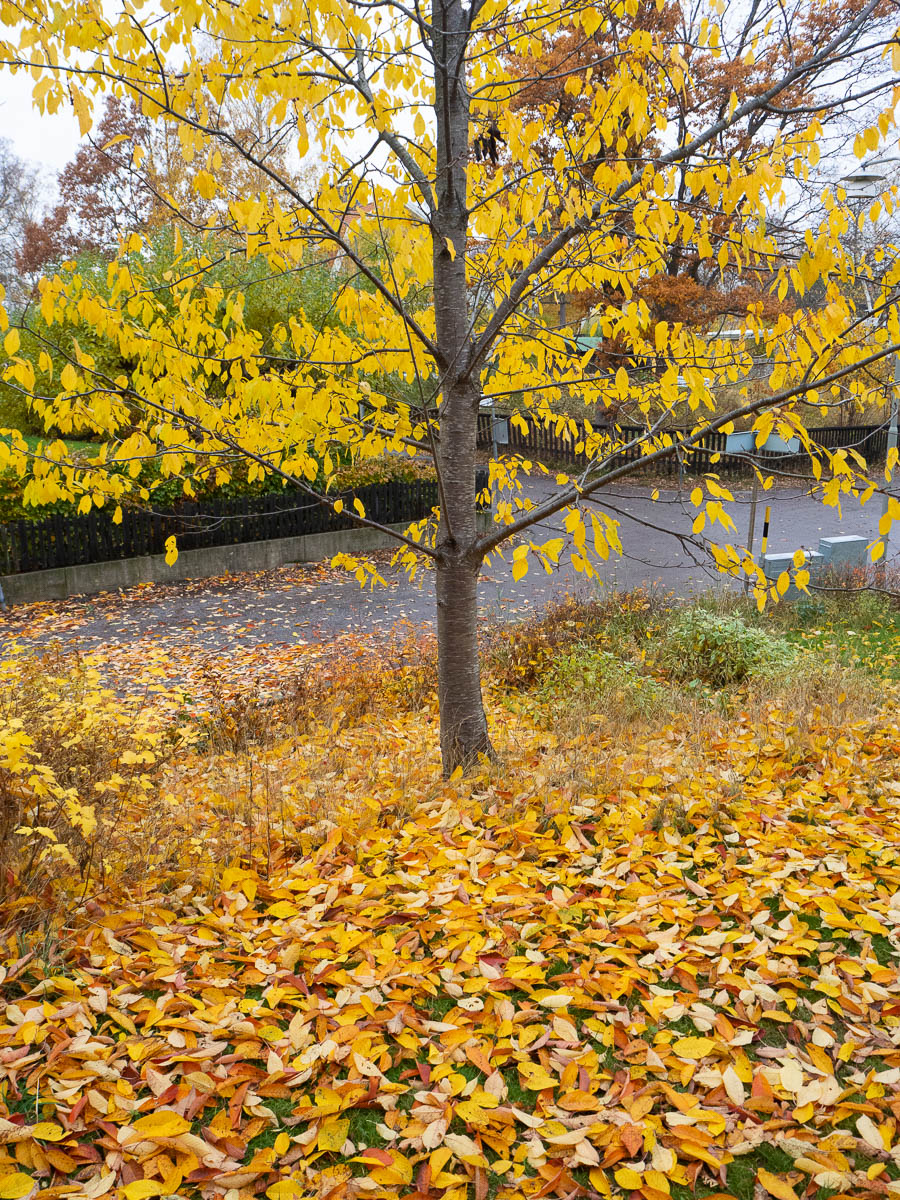
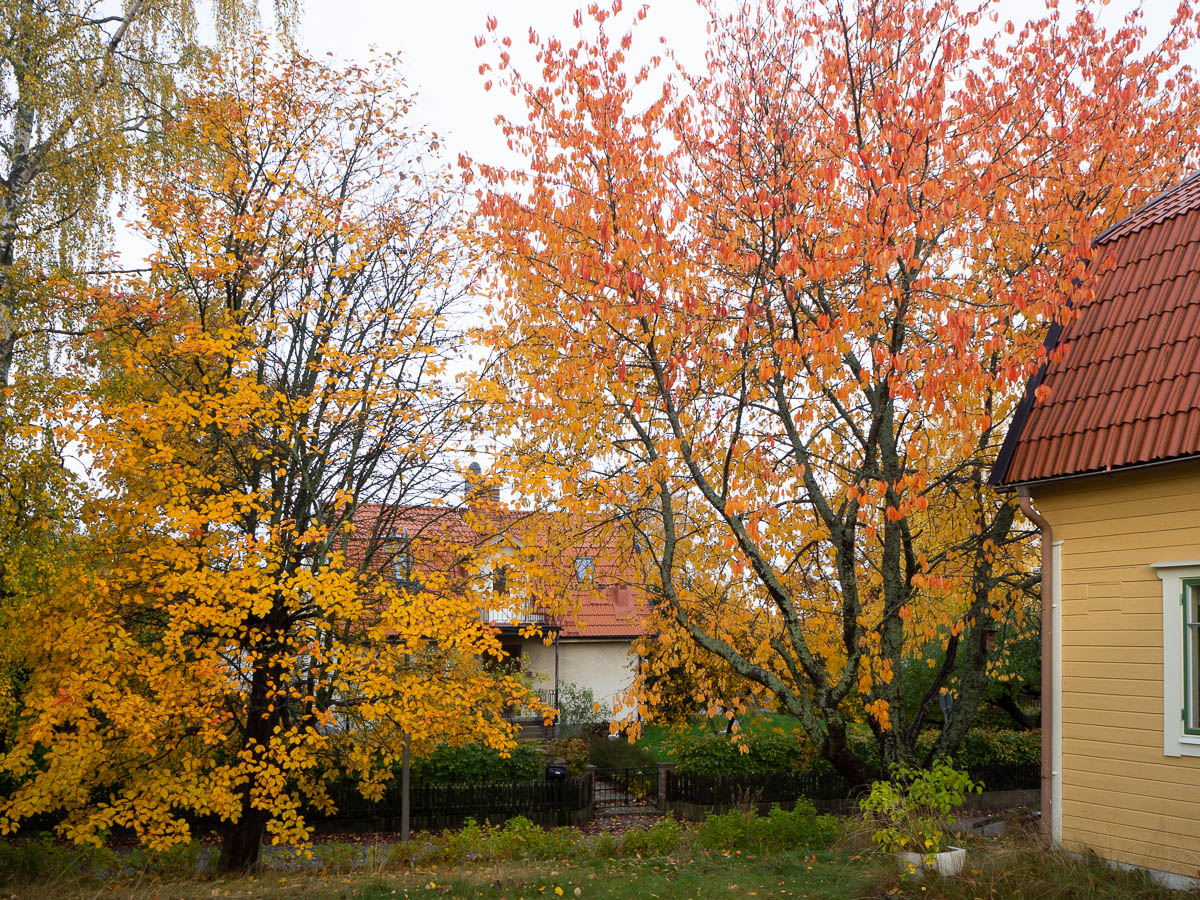
The whitebeam and the cherry in front of the house are both clad in the most brilliant, luminous autumn colours.
After a frosty night, most of the summer flowers on the deck have died. A few hardy ones are still green and even flowering, especially the snapdragon, but most look bedraggled and sad.
Today I threw them out, not only to remove the dead brown plants from my view, but also to clear the deck. One autumn I left a flowerpot out for too long in late autumn and it left a pot-shaped patch of rot in the deck boards. You’d think that it would all be equally wet anyway, but apparently not. Or maybe it is all equally wet but the bottom of the pot made for a good, protected growing ground for microorganisms. Now I’m careful to move the pots occasionally in wet weather, and to remove them completely when the season is definitely over.
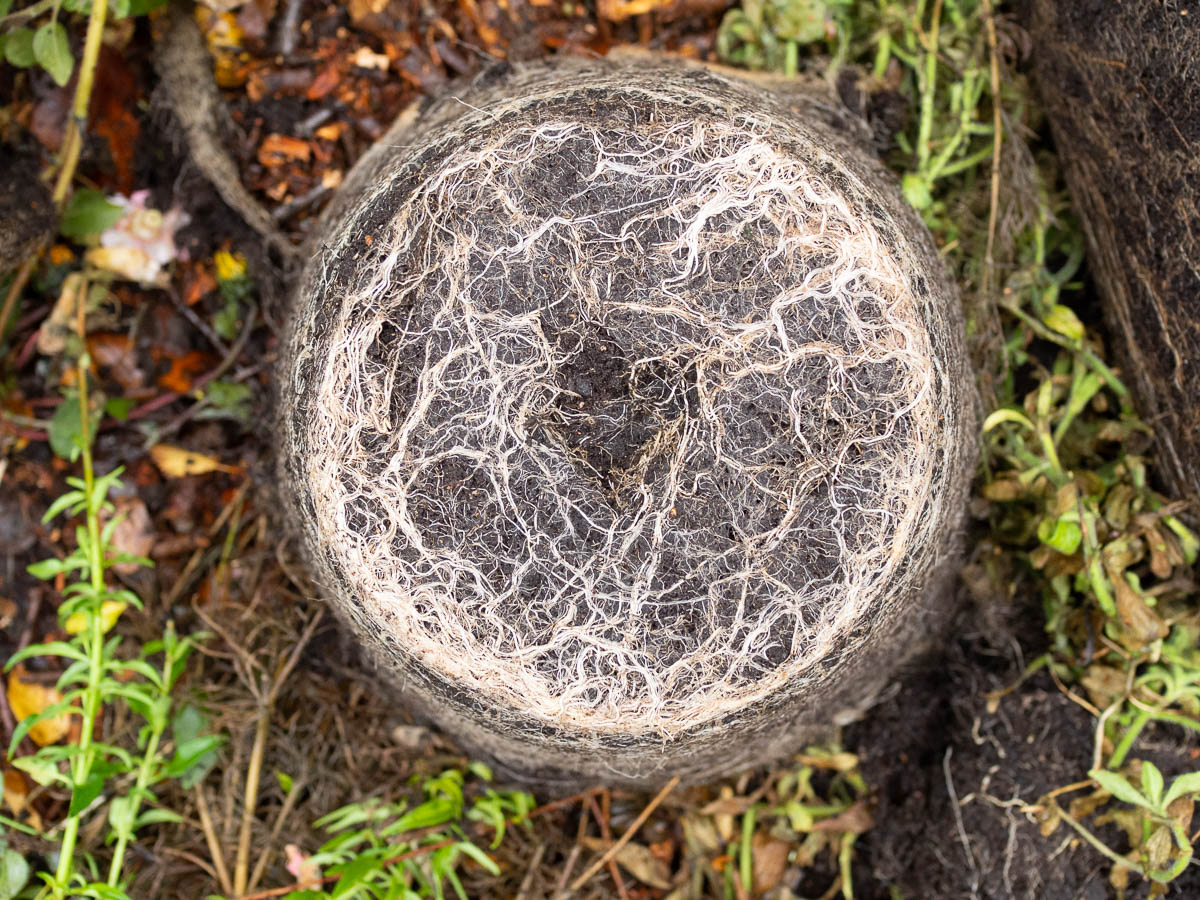
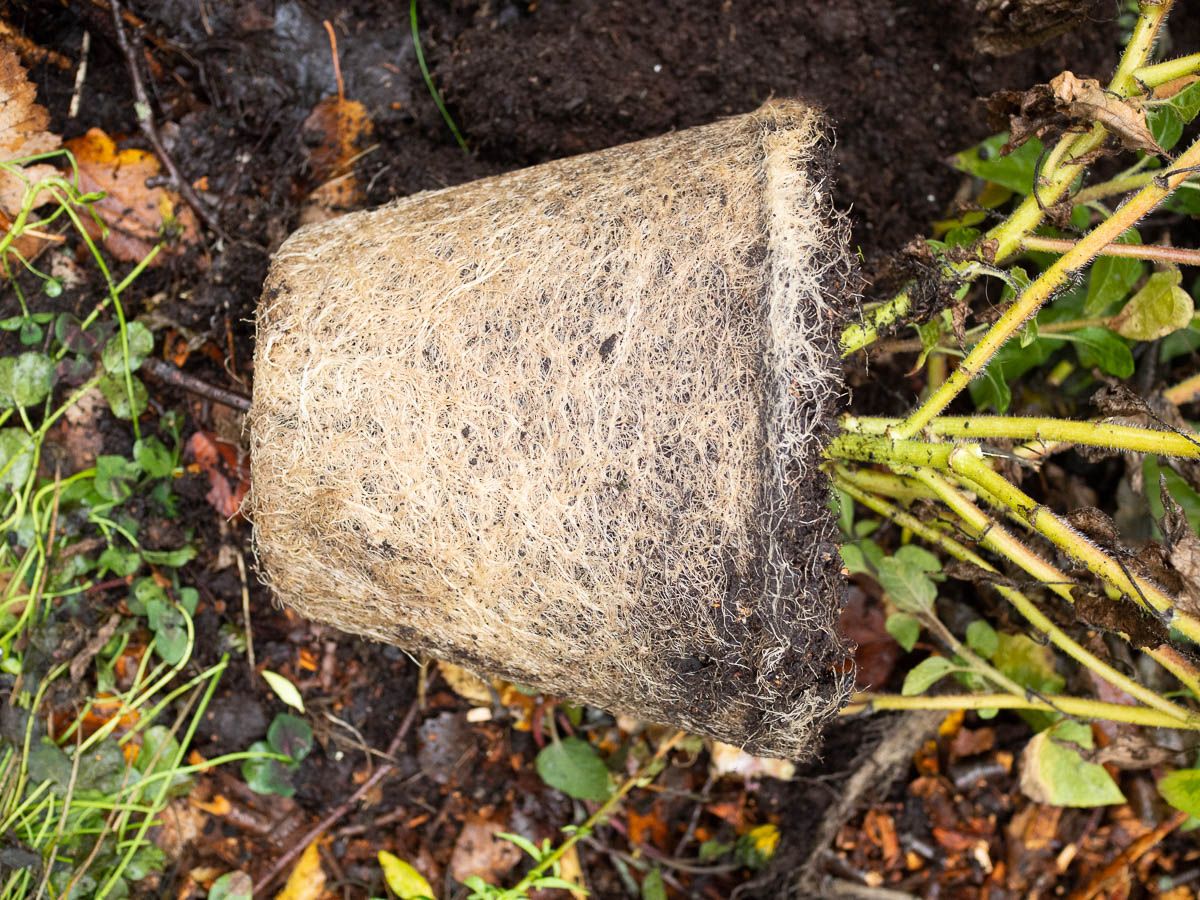
The thick tangle of roots filling most of the pots is pleasing to the eye, because it means they’ve grown well. Most pots looked like this. But there were a few where I could pull out a plant with no effort, leaving much of the soil still in the pot – their roots had barely grown since I planted them. It didn’t really come as a surprise, because the lack of growth in some of the plants was very obvious above ground as well.
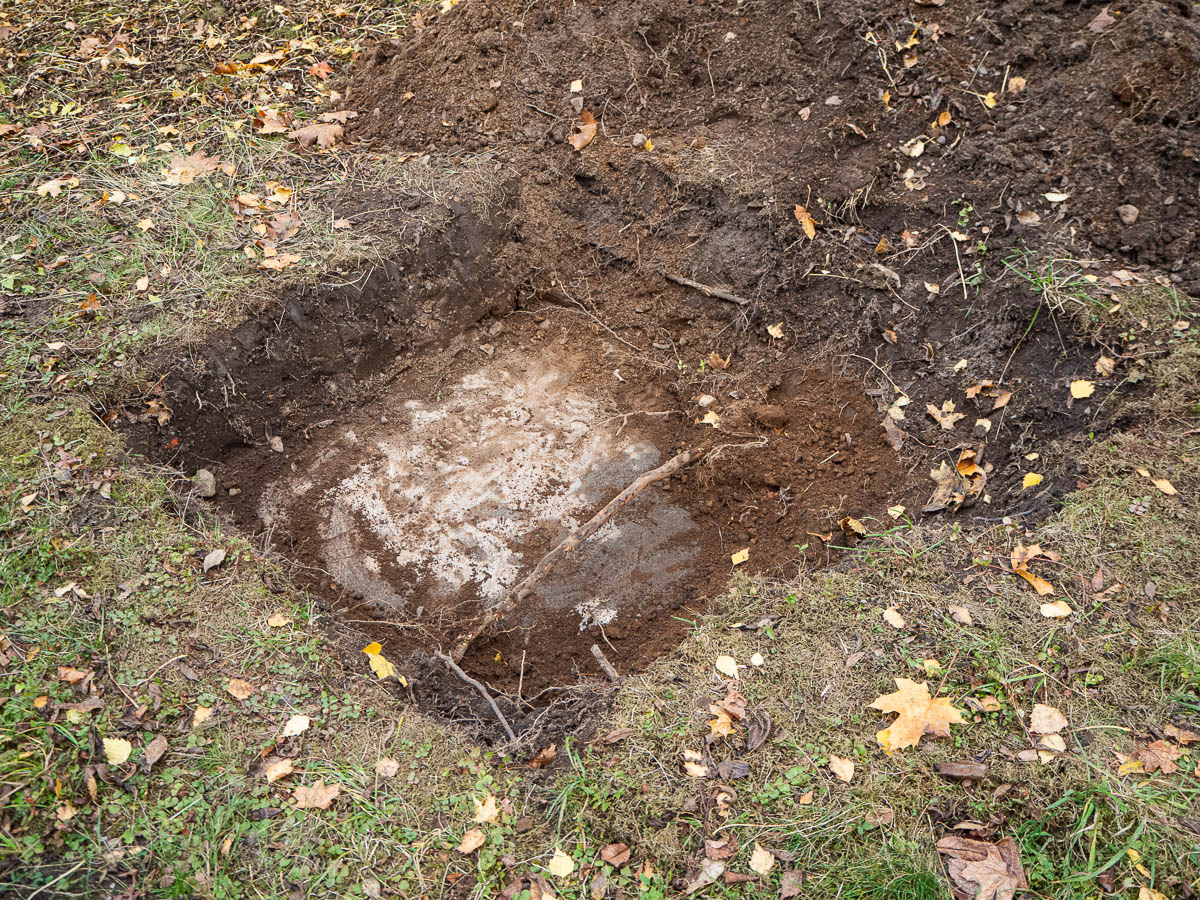
After a long delay, I’ve finally finished the hole for the plum tree.
This time of the year I just don’t have much energy, so even tasks that don’t take much time tend to not progress. But now I think I’m finally done.
The rock at the bottom really puzzles me. It feels so incredibly smooth that it’s hard to believe it has a natural origin. It feels more like a polished paving stone. But there is a slight curve to it, so I guess it’s not man-made. Weird.
Ingrid came down crying because of a sudden sharp pain in her foot. A minute later, clear signs of an insect bite appeared.
“Oh right, I’ve been having a lot of wasps in my room for the past few weeks, maybe it was one of those.”
Apparently this hadn’t struck Ingrid as significant enough to bring up, so she’s just been taking the wasps out as and when she spots them.
When Eric opened the side attic behind Ingrid’s desk, he was met by a whole bunch of wasps there. It seems we have a nest somewhere in the walls. Not for the first time – but them coming inside rather than going outside is a first.
The side attic is now closed off and all the gaps hopefully wasp-proofed. We’ll have to wait until the wasps all die for winter and then we can clean them out.
| « Older posts | Newer posts » |
