I am an underbuyer. When in doubt, it’s easier for me to decide that I don’t really need the whatever-I’m-considering. I’m more likely to feel bad about buying something that I then don’t use, than to feel bad about not buying something that I could have used.

Whenever I have to buy something expensive, I have to overcome a slight internal resistance – even though I know that we need it, and that we can afford it, and that it’s not worth buying a cheaper alternative, because you get what you pay for (most of the time).

Spending money is a little bit easier when it feels like a long-term investment, like a bicycle, or winter boots, or a computer. Even then, though, it takes a bit of an effort. The hardest for me is to buy things that seem frivolous, that I like but don’t really need. One winter scarf is perfectly enough, so even if I see another really pretty one, it’s unlikely that I will buy it.

Or fruit. There is a part of my brain that insists on telling me that apples for 19.90 SEK/kg are perfectly good fruit, though slightly boring, and there is no need to splurge on grapes for 49.90.

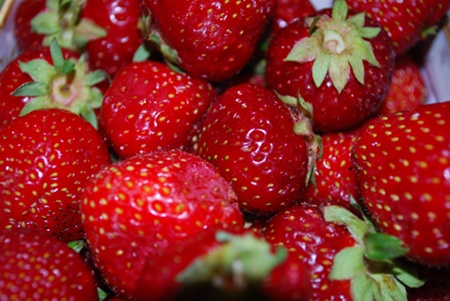
Lately, though, I have begun to train myself to ignore that part of the brain. If there’s one thing in my everyday life that I really enjoy, it is simple, fresh, good-quality food. Often when I look back at my day and think about the highlights, it’s the freshly baked bread, or the cereal with fresh strawberries, that comes to mind.

And it’s not like we cannot afford it. For various reasons, we do not spend money on a car, or eating out, or alcohol and cigarettes, or movies and such. We run a not insignificant surplus every month.

So now, when I feel like eating the season’s first Swedish strawberries, 60% more expensive than the Belgian ones, I just do it. (I’ve nothing against Belgians, but their strawberries are a poor substitute for the real thing.) When the veggie stand down at SpĂ„nga Square has in-season Pakistani mangoes at exorbitant prices, I barely hesitate. (They keep a few of them in a small box right next to the cashier, with a hand-written sign describing them as “the best fruit in the world”.)

During this pregnancy (thus far at least) I haven’t experienced anything like the absurd all-consuming hunger I felt last time around. I eat a little bit more, and need an extra snack now and again to keep my blood sugar level.

But just like last time, I want cool, light, juicy food above all. Yoghurt and fruit are especially good. Some days I notice a lovely cake or cookie somewhere, and really wish that I wanted to eat it – but when given a choice I’d much rather have some grapes. The best meal is unsweetened yoghurt mixed with some berries from the freezer, and Havre Fras (puffy oat cereal). I’d been wondering what we would use all those berries for (cause we have lots). Now I know: to build a baby!

My body never quite regained its original shape after my previous pregnancy (even though I quickly tumbled back to my original weight). And now my waist is getting rounder again. Most of my “smart casual” skirts are already unusable; the dresses still fit, and some trousers too. Time to unpack the pregnancy clothes again. How lucky that we’ve managed to time this pregnancy to match the seasonality of the previous one almost exactly!

Seen on town today, #1: the first sellers of semlor. For years they’ve started as soon as Christmas was past (just after Epiphany). This is the first time I’ve seen them advertised before the new year. What is the world coming to? I guess being first gets you at least a handful of extra customers…

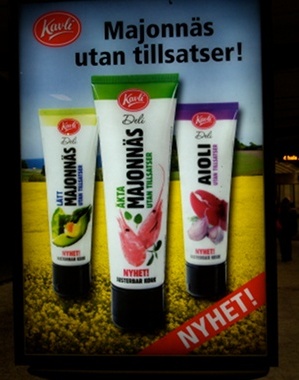
Seen on town today, #2: “Mayonnaise without additives! New!” I feel simultaneously cheered and disgusted. On the one hand I am glad that real food is making a comeback. On the other hand, isn’t it pathetic that something as basic as this is worth advertising?

Lettuce. Who on earth came up with lettuce? It is the most pointless “vegetable” on earth. It has very little flavour and hardly any nutritional value, and the energy it takes to prepare and eat it is barely recouped by digesting the stuff. It’s grass, and humans are not meant to eat grass.

Lettuce is the only thing in our weekly vegetable boxes that I really have no idea what to do with. It seems that other people consider it essential, because it’s included in every week’s box. I on the other hand find green salads totally pointless.

Is there anything else that lettuce can be used for, other than table decoration or rabbit food?

I like variety in some parts of life, and predictability in others. Food is one of those areas where I value variety. If I serve pasta two days in a row, that’s one too much.

Sometimes I feel like I’m always cooking the same stuff, again and again. Then I go search for inspiration. Cooking books sometimes help. Other times even the recipes in the books feel old and stale.

Now I’m trying something new: fuelling creativity by imposing constraints on my cooking. Namely, a vegetable subscription service from Årstiderna. Every Thursday, starting last week, a box of mixed fresh produce will arrive at our doorstep. Since I have a very strong aversion to throwing away food, I will have to come up with meals to utilize everything in that box.

Last week’s box included yellow beets, spinach, carrots, fennel (both bulb and lots of leafy “topping”), bell pepper, courgette, parsley, lettuce, broccoli, tomatoes and a giant onion.

I did actually throw out most of the fennel stalks and leaves (I tried them in a sauce but they had too little flavour and too much stringiness for my taste) and unfortunately the courgette went bad before I got around to cooking it, but I intend to find some use for all the rest. I even have a plan for the giant bunch of parsley.

An additional constraint here is limited fridge space. This time of the year we have all sorts of berries and berry products in our fridge. At one point today we had: gooseberries waiting to be baked into a cake, then some more gooseberries, blackcurrants that I will make into a soup, a large bowl of damsons (pitted and ready to become marmalade), half a damson pie, and the tail end of the previous blackcurrant soup. There is no way I can fit a crate of vegetables in there, too.

This means that I need to not only make sure to consume all these vegetables before the next box arrives – I also have to plan the meals so the most perishable items are eaten first. Which is great: half the meal planning work is already done! It’s a lot easier to come up with a meal idea when spinach is a given, than when starting from a blank slate.

We’ve already had broccoli stir fry, pasta with spinach and cheese sauce, and a fennel and carrot and apple soup. There will be pasta with parsley pesto tomorrow, and oven baked roots with chevre on Wednesday. And I guess I’ll turn the lettuce and tomatoes into a salad.

Den hemlige kocken (The Secret Cook) is about “the unknown cheating with the food on your plate”, i.e. how the food you get is not what you think you get – because of additives, or cheap ingredients replacing the real thing, or shortcuts in the production process.

I care (more than the average consumer, I believe) about what I eat: how it tastes, how it feels, how I feel after eating it, and what’s inside. As a result I do a lot of cooking from scratch so we don’t buy many food products, but we still buy dairy goods, bread and biscuits, and some cooking sauces.

It was interesting and enlightening to read about all the shortcuts and tricks and engineering feats that the food industry has come up with. The concept of producing artificial flavourings to approximate the taste of natural ones (vanillin for vanilla) was no surprise to me, and I was aware of the existence of “smoke aroma”. (Mostly because I avoid products with smoke aroma, because they have a for me unpleasant taste of meat.) But half a dozen different kinds of smoke aroma powders? Spinach to make pistachio ice cream look green? The Chorleywood Bread Process which replaces a few hours of fermentation with a few minutes of intense mechanical mixing? News to me.

But the information content of the book wasn’t as good as it could have been. Of the 263 pages of actual content (before a list of sources and an index) only 161 is actually about the main topic. The remaining 100 pages are filled with a purchasing guide, and a list of all EU approved additives, the so-called E numbers.

(The purchasing guide, by the way, is a weird mixture of instructions on how to choose broccoli, what a Jerusalem artichoke is, etc. Not extensive enough to be of real use, it’s a patchwork list of foods the author cares about.)

The body of the book has two main faults. One: it’s shallowly researched and only skims all the topics it tries to cover. 160 pages isn’t much, but these 160 contain far less actual information than they could. It’s another book written by a journalist who finds a topic he cares about, and decides to write a book without actually knowing anything about the topic, or putting much time into research. He reads some books and articles, surfs the net, interviews a handful of people, and then summarises all the juiciest bits he finds. The E-number guide is very symptomatic of his lack of real knowledge.

And two: I don’t like the author’s tone, which makes everything sound bad. His opinion seems to be that if it’s an additive, it’s got to be bad. And if it’s a modern additive that didn’t exist a hundred years ago, or if it has a long and complex name, it’s got to be even worse.

Not all additives are evil. I’m quite happy that we have additives to ensure that our food doesn’t kill us. And “thickening agents” may sound bad, but any cook would agree that adding cornstarch to thicken a sauce is perfectly OK. The real question is why the additives are used: to create a new kind of food, or to hide problems (such as adding thickening agents to make low-fat cream look creamy). It can be hard to know which is which, and the line between the two is vague.

And not all modern chemical processes make food worse. Packing food in inert gases or a protective atmosphere sounds like a perfect idea to me! I can’t think of a milder way to preserve food.

We want consistent, predictable, pretty-looking, safe food that keeps for weeks. On top of that we want food to be cheap, and most of us wouldn’t be willing to pay the extra price for real (expensive) ingredients, or the cost of food that goes bad before it’s sold. There is no way to get all of that with all-natural ingredients and without technological shortcuts.

What does annoy me is misleading labelling and marketing. The book has made me look more closely at labels. Here’s what I read on the side of a yoghurt package I have in the fridge right now:

Valio Vanilj är en utsökt och lyxig smakupplevelse som för tankarna till mormors hembakta pajer. Mjuk och krämig vaniljyoghurt med bär och frukter, precis som det smakade när vi var små.

Valio Vanilla is an exquisite and luxurious taste experience that brings to mind grandmother’s home-baked pies. Soft and creamy vanilla yoghurt with berries and fruit, just as it tasted when we were small.

And here’s the ingredient list: pasteurised milk, vanilla-berry preparation (sugar, rhubarb, water, thickening agents (modified corn starch, guar gum), aromas (vanilla, vanillin etc), acidity regulator (sodium citrate), colouring (beet red), lactase enzyme, yoghurt culture, Lactobacillus acidophilus, Bifidobacterium sp. and vitamin D.

I know for a fact that my grandmother’s pies did not contain beet juice to make them look redder, and she wouldn’t cover up a added water with guar gum.

I wish I had more room for choice when buying food. I can’t choose a more local or natural product (but with a shorter best-before period, or a higher price) because for most stuff there is no such choice in a normal supermarket. (Bread is a great example.) I can only choose between different brands of what’s really the same thing, with marginal differences. And I don’t have the time to run to 3 different shops daily to buy food.

AdLibris.
I stopped eating meat… hmm, let’s see… 16 years ago. It started out as a teenage rebellion thing (I was 15 at the time): one day I announced to my mother that I was now a vegetarian. So that was that.

Initially I stuck to it out of sheer bloody-mindedness. Being vegetarian meant being different and it was kind of cool. Then it became a habit. Then I realised that I felt better when I wasn’t eating meat.

At first I was a straightforward vegetarian, eating no part of no dead animal. At some point (I can’t remember when or why) I felt like eating seafood, so I tried that again. After a period of experimentation I concluded that while I could eat fish, I didn’t like it much any more: most often it didn’t taste good, and it felt less good than veggies. (Meat, on the other hand, I neither want to nor can eat.) The exception was raw fish: sushi tastes good, as does gravad lax.

So now I eat veggies, and very occasionally sushi – maybe once or twice a month. Cooked fish remains a backup option for those cases when the choice is between either the fish, or boiled potatoes and bread for dinner all week. (Case in point: the Canary islands.)

This whole topic comes up regularly: lunches at work, various organized events, trips etc. I say that I’m a vegetarian, and inevitably get the follow-up question: “Is fish OK?” I used to think it was a weird question to ask when someone’s just told you that they’re a vegetarian. Vegetarian means eats vegetables after all. But then again, my own answer to that question tended to be a “Well, kind of, in emergencies, but I’d rather not” so the question obviously wasn’t as absurd as it sounded. It’s semi-vegetarians like me who’ve muddled the terminology.

I could call myself a pescatarian, except that isn’t really true, because I would almost always choose a vegetarian dish over a fish dish. (Assuming the vegetarian dish does not consist solely of boiled potatoes.) And besides, I don’t think your average non-vegetarian would even understand that word.

So I think I need a new word. From now on, I’m a sushitarian.

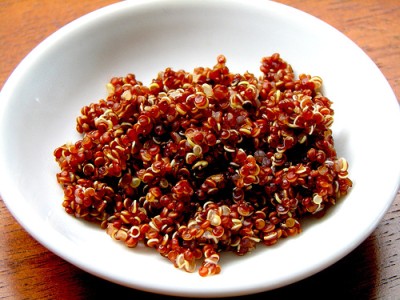
Everyone is talking about quinoa everywhere, even the NY Times. It’s the in thing to eat, apparently. There were half a dozen different varieties of quinoa on the shelf in one of the supermarkets I went to recently. (On the other hand they had no pearl barley, which is what I was really looking for.)

So I tried it. And it was like eating styrofoam. Everybody says it has a “delicious mild nutty flavour”, and I thought it had almost no flavour at all. Perhaps it tastes good when compared to parboiled white rice… But it’s got no chance in competition with thai rice, or brown rice, or pearl barley.

It gets some plus points, though, for looking like tiny worms when cooked.

Are you a quinoa fan? Am I doing something wrong?

Yo

A pleasant side effect of being child-free but not at work: restaurant lunches! I haven’t had a chance to do that very often recently. And I expect I will miss London’s wide range of restaurants, so we’ve gone out for lunch at two of my favourite places this week. Tuesday was Yo! Sushi, and today we went to Ping Pong (which is a dim sum chain).

Sushi is pretty much the only non-vegetarian food I eat by choice. Otherwise I only eat fish if there is no vegetarian option, or if it’s something particularly dull, such as a cheese omelette. I find that both fish and seafood taste and feel a lot better raw than cooked. Actually my last few meals at Yo! Sushi have been mostly vegetarian – edamame is nice, and they do nice grilled aubergines with ginger, and their tempura is great because it is served so fresh – but my favourite is their sesame seared salmon. And if you ever go to Ping Pong, don’t miss the steamed rice wrapped in a lotus leaf.

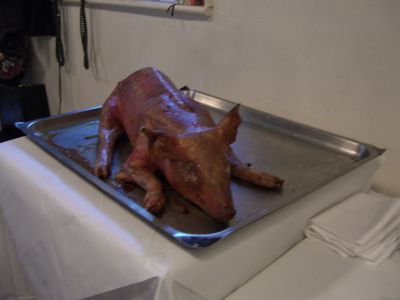
We had our Christmas lunch at work today. Here’s what the rest of the team ate:

It’s interesting. After 15 years as a vegetarian I couldn’t even see that pig as food. It didn’t look edible or smell edible at all. Not disgusting either, just not food.