A la carte at the Bergheden-Toomik residence:

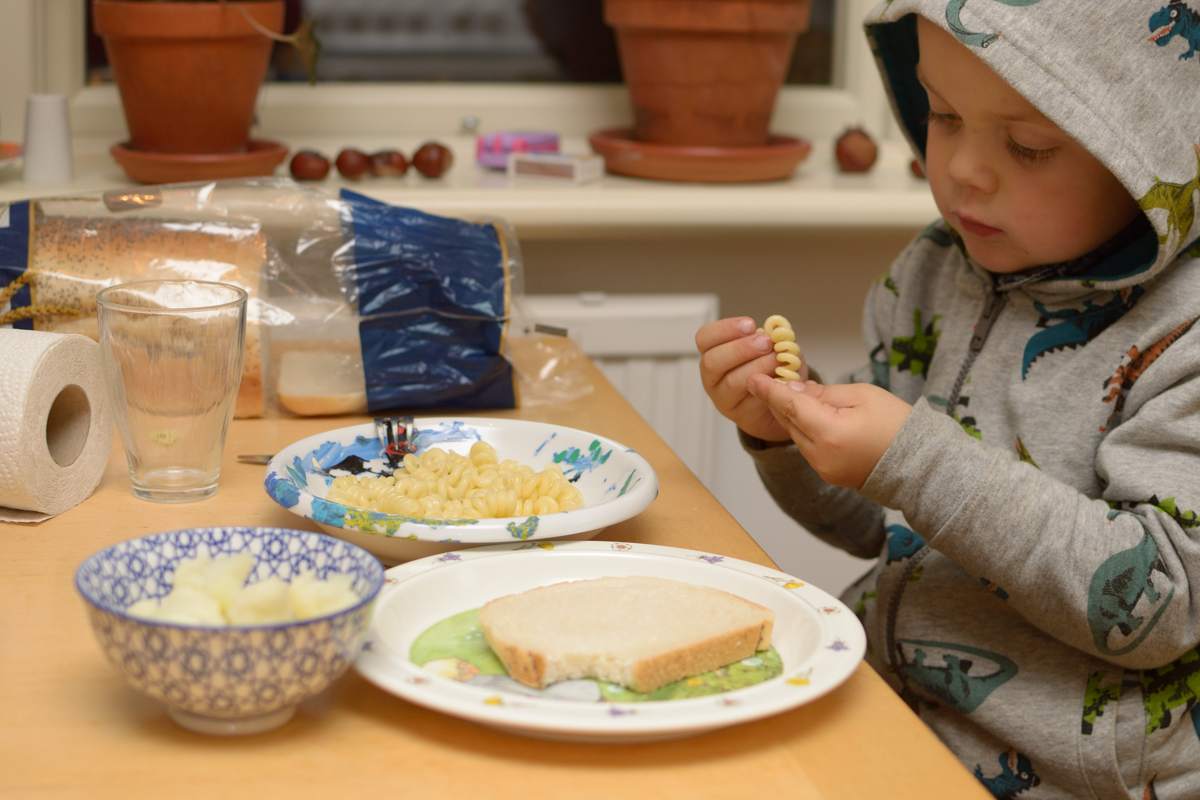
Adrian had a white dinner: pasta, a slice of white bread, and cauliflower, each on a separate plate.
I had the same pasta but with prawns, peppers and tomatoes in a creamy saffron sauce.
Ingrid made it into a three-course meal: first the pasta with ketchup, then some raw carrots, and finally the prawns on their own.


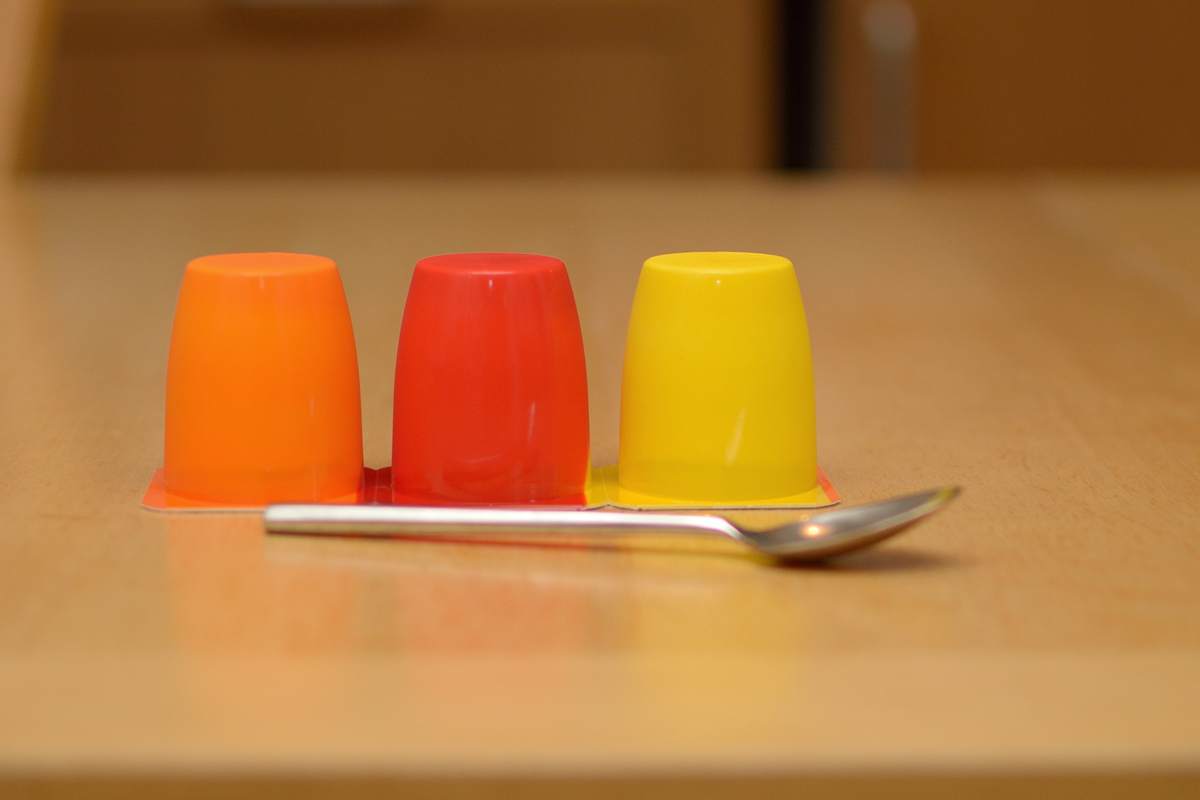
Ingrid’s preparations for an afternoon snack of yoghurt. Apricot, strawberry, banana.

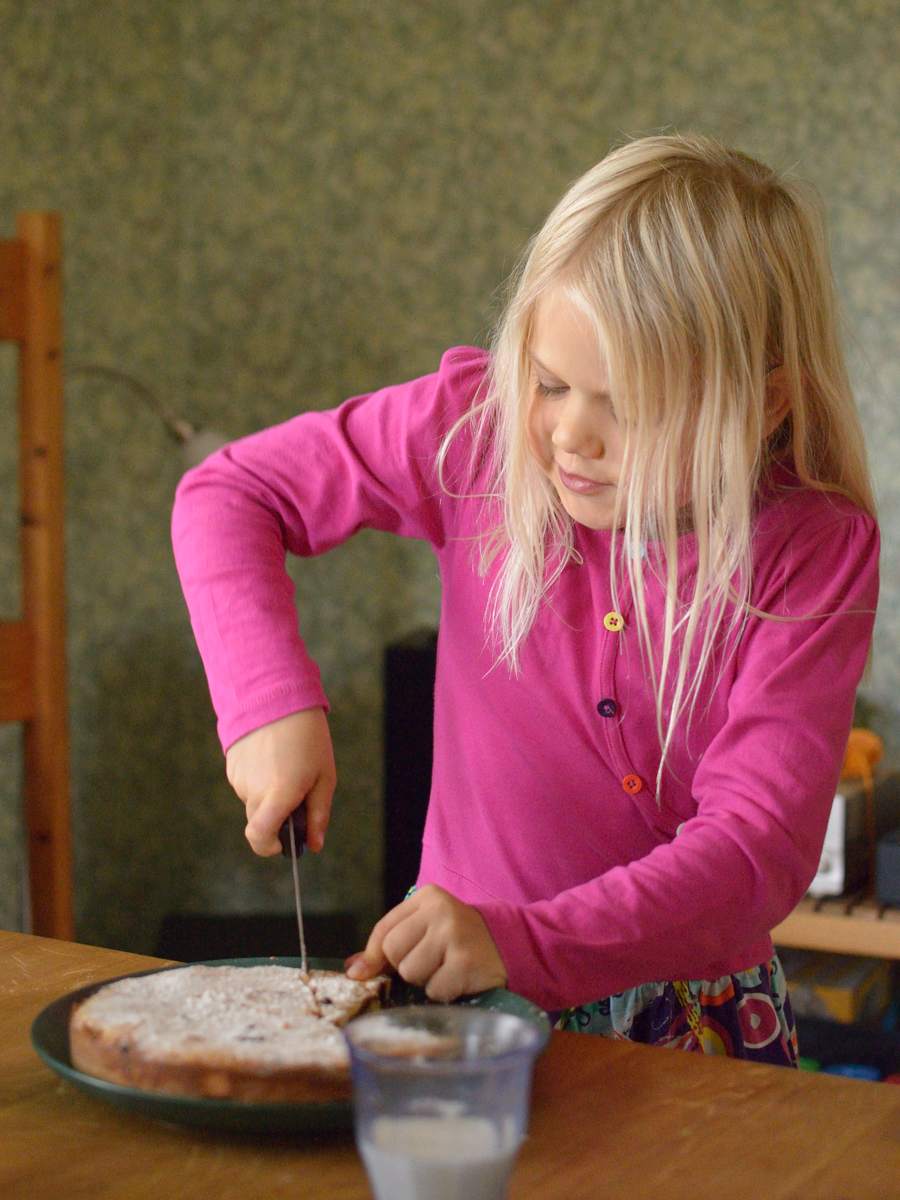
Ingrid was bored and came up with the idea of baking a cake. She didn’t want to follow a recipe, though, because then baking would have become work instead of play. Instead she made what she called a hittepå-kaka, a made-up cake.

She has a reasonably good idea of what goes into a cake batter, and roughly what the result should look like. Eggs, sugar, flour, some milk. And she wanted chocolate in it, and some coconut, too. And then Adrian tasted the batter and said it was “too sour”, meaning it didn’t have enough sugar, so she added some more. And then the finished cake needed some icing sugar on top.

The result was surprisingly good, given the amount of thought that went into it.


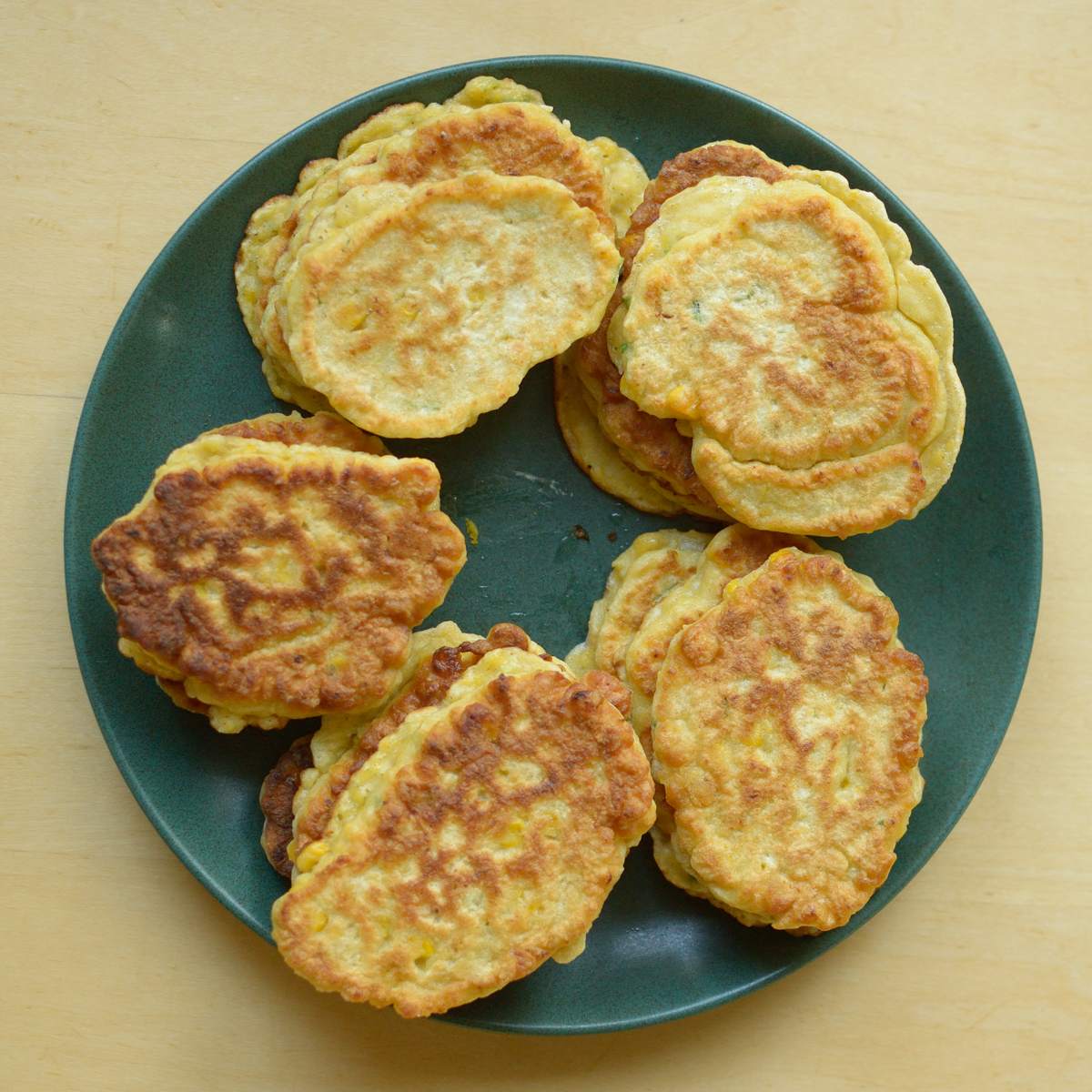
Corn fritters for dinner. Circles within circles.


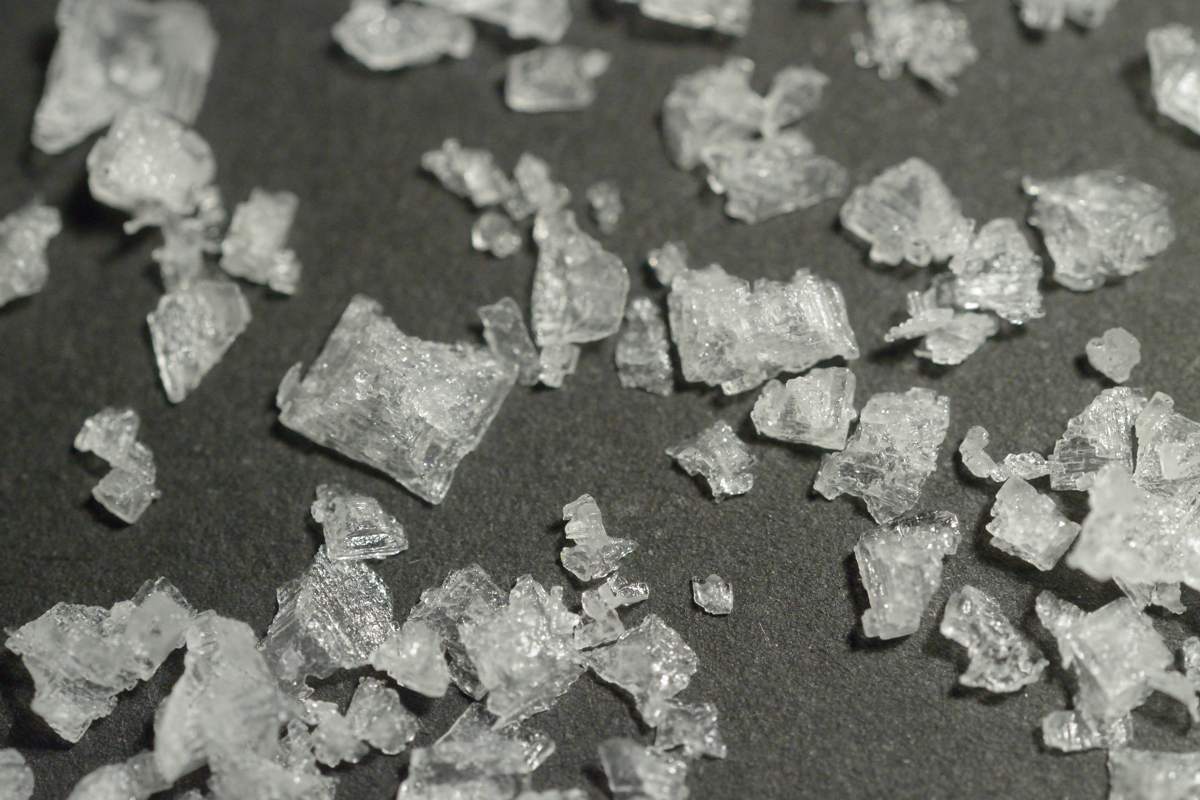
I have finally discovered flake salt.

All these years I’ve believed that salt is salt, NaCl is NaCl, and flake salt is just a marketing ploy to make people pay more. And salt grinders seemed even more ridiculous.

Then I read a magazine article about a salt (and a salt connaisseur who collected salt and owned 40 different kinds). The journalist tested various different kinds of salt and described their tastes so eloquently that he made me want to try.

So I had a mini salt tasting: table salt, coarse sea salt, and Maldon salt. What a difference! Table salt was sharp, almost bitter, aggressive. Flake salt was smooth, pleasant, mild. I put a flake of salt in my mouth and wouldn’t have said no to another. Then dipped my fingertip in table salt and it made me want to spit it out.

There are a few foods with salt as an essential component, that I used to like (years ago) but no longer do. For example, I used to like boiled eggs (with the whites pretty solid but the yolk runny or at least soft) with salt sprinkled on top. I have strong, distinct memories of loving them as a child. For years already I’ve noticed that I don’t really enjoy them as much any more. With flake salt, the magic is back – the eggs and salt taste great again!

Tomato sandwiches are another. Brown bread with lots of texture, butter, thick slices of ripe tomato, and salt and pepper on top. Just like with the eggs, I used to like them but then lost the taste for them – the salt felt like too much – and now flake salt made them taste awesome again.

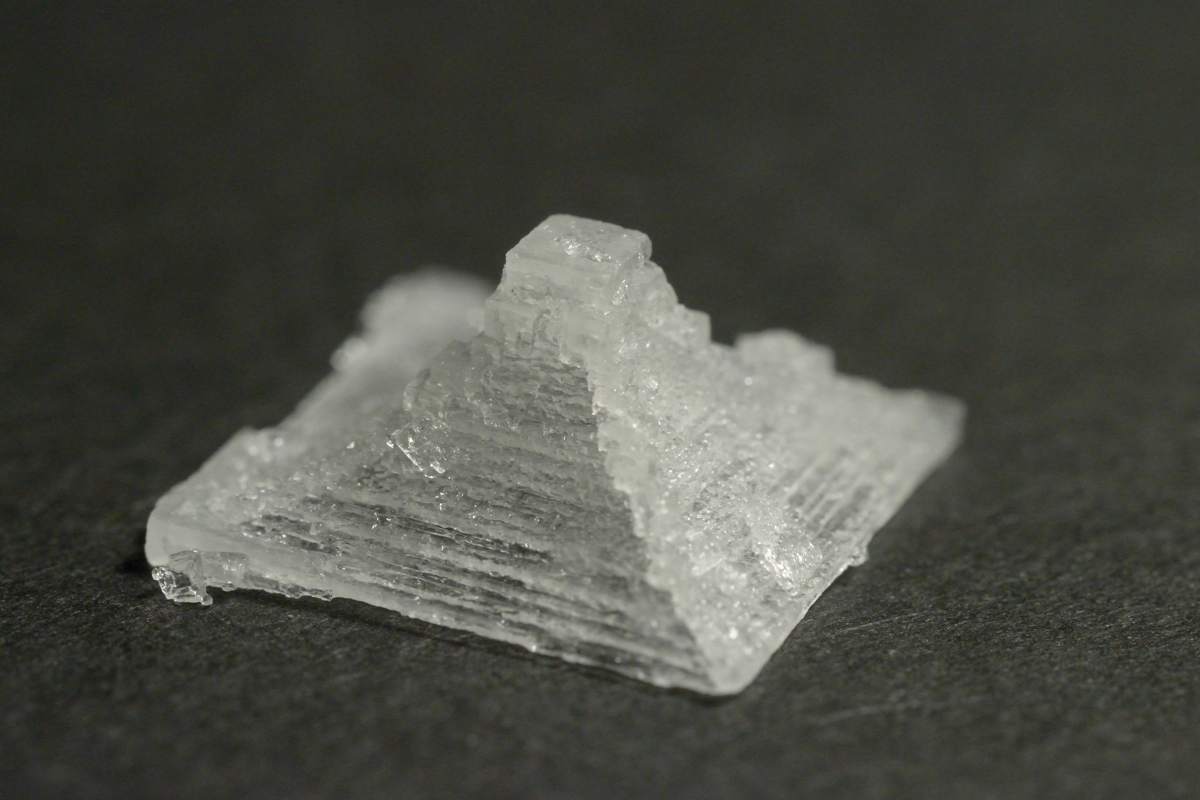
And it looks awesome, too.


We had pancakes for dinner. We do that occasionally.

Not for the first time, I wondered how people with large families or hungry teenagers (or, god forbid, both) manage to cook dinner. Today it was just me and Adrian, but when I make pancakes for the whole family, frying them can take me close to an hour. And that’s with three pans working in parallel.

Perhaps it’s like with baby-wearing. You begin early, when the baby is small, and your strength grows with the baby. Maybe my patience for making pancakes will grow in tandem with the family’s appetites.

Swedish and Estonian pancakes, by the way, are large and thin, akin to French crêpes. Savoury varieties exist and occasionally make an appearance in our home, but usually pancakes are an excuse for us to indulge in jam. We normally have a sizeable assortment of home made jams in the fridge to choose from. It is quite possible to eat your fill of pancakes and not use any jam twice. The ones in the photo are a damson and cherry jam that Eric made, and plum jam made by our friend P.

The kids often prefer even more sugary pancake toppings: honey, chocolate sauce or just plain table sugar.

Another reason to love pancakes is that they can be eaten with fingers without creating a huge mess. I like that. There is a special kind of immediacy and closeness in eating with my fingers, feeling only food and no metal in my mouth. It is a softer, more personal way to eat. Not many meals are finger-friendly; most require utensils. I also always eat sushi with my fingers, as well as tortellini and other types of filled pasta (without sauce).

Hmm. I often remind Adrian to use his fork, not his fingers – for food that I eat with a fork, like pasta and vegetables. I have a lower tolerance for sticky, greasy fingers than he does. Of course there are some societal norms here that he needs to learn, but still, perhaps I should reconsider in some cases and let him eat with his hands more often.
We had pancakes for dinner. To feed the 4 of us, I make the batter from 4 large eggs, 4 decilitres of flour, and just short of a litre of oat milk. Often I also throw in a few grated carrots as well.

I have three frying pans working in parallel and it still takes forever to fry them all. I wonder how families with teenagers manage to even fit their dinners onto the stove.

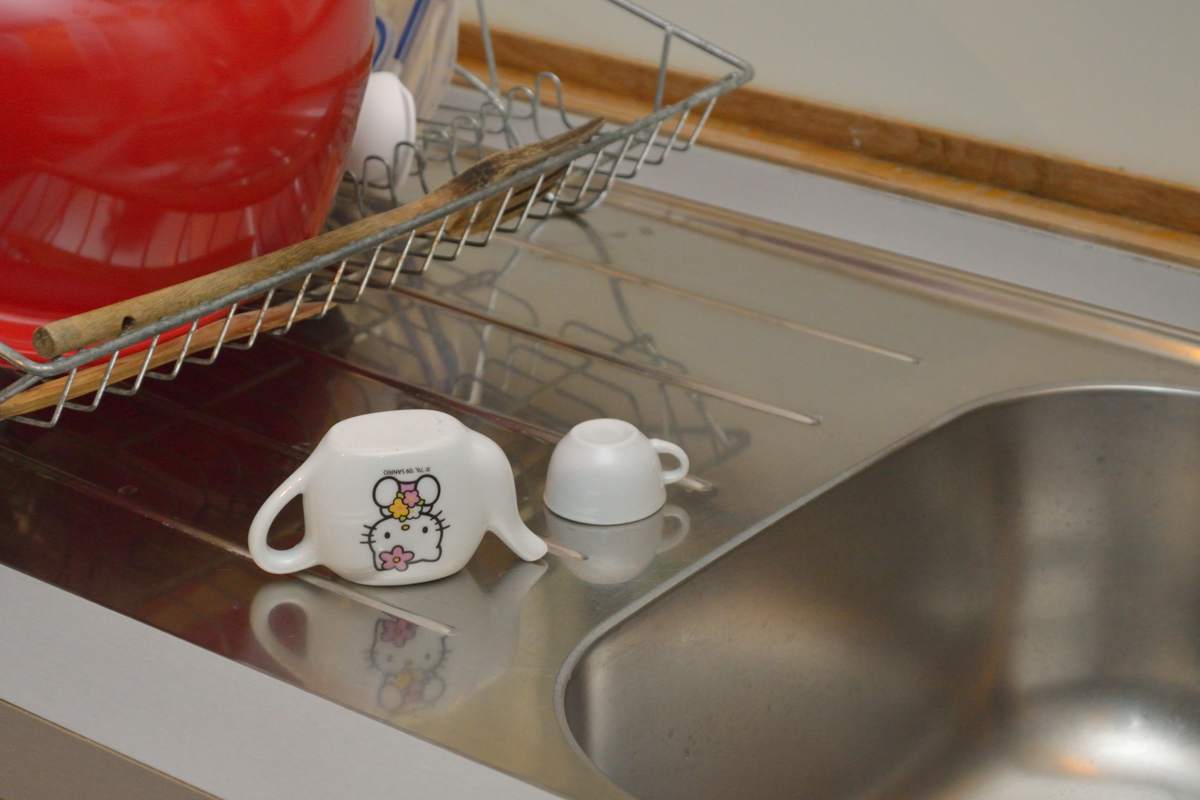
Adrian seems to think that I should learn to drink coffee: while I was making dinner he “made coffee” for me.

The ultimate crumble recipe still rules supreme. It works not only with rhubarb but also with rhubarb + raspberries, apples, apples + blackberries, plums, and probably any other fruit. (I just finished off the apple and blackberry crumble so I could wash up the pie dish for a plum crumble, which is in the oven now.)

It is easy and fast to prepare. I can make one even when the kids don’t fall asleep until 10 o’clock.

It’s a crumble rather than a pie or a cake, so the fruit is at centre stage and the crumble is there to bring out the best of the fruit.

It is both crunchy and juicy.

It is not sweet. In fact you could almost serve it for breakfast: the crumble part (i.e. not counting the fruit) contains 50g of sugar, or about 15%. Not as good as having oatmeal for breakfast, but on par with most breakfast cereals, and way better than Kellogg’s Frosties.

It has oats and seeds and almonds.

In fact the only thing missing from it, the one thing that could possibly make it better, would be chocolate. But even that would not be an obvious improvement, because it would take attention away from the fruit.

Recently we started experimenting with exposing Adrian to dairy products again. I started eating dairy of various sorts, and he had some butter on his bread.

For a while it looked like everything was OK. But after a week or two it was pretty clear to us that he was still affected. He was hyperactive, restless and had difficulty focusing on any activity. His bowel movements were weird. So it seems he still doesn’t tolerate cow milk protein.

This counts as progress, still, because the effects came later and were much more diffuse than after previous attempts.

But for now will keep his food dairy-free and limit dairy in my diet (for as long as I continue to breastfeed him, which is probably not very long). But perhaps we don’t need to be quite as strict about products that contain small amounts of milk. And I think I will allow myself to use cream and cheese when I’m cooking, and maybe the occasional piece of kohupiimakook.

Because those are the things I have missed. To put cream or crème fraîche in my soups and sauces, and cheese on oven-baked things.

Yes, I have tasted ice cream, and I have tried yoghurt again. I have put cheese on a few sandwiches. I have eaten pancakes made with cow milk instead of oat milk.

But all of these were merely nice rather than awesome. Ice cream is creamy, true, but sorbet is more flavourful. And oat milk pancakes are in no way inferior to the traditional ones.

First we made lussebullar, saffron buns. We started off making those mainstream S-shaped buns (kuse) but quickly got bored with those and switched to making B-shaped buns (lussekatt), crossed S’s (julvagn) and other such traditional shapes. (The internets seem to have only one decent image of those shapes.) Then we got tired of those as well and branched out into more creative shapes: twists and braids and spirals of twists… and palm trees and swans and snails. And then we poked in lots of raisins in them all.

Later we baked gingerbread cookies. We have dozens of cookie cutters of all kinds of shapes, so the cookies ended up quite varied. Every year I start off making different kinds of cookies but then end up making mostly Christmas trees, hearts and pigs. They offer the best combination of efficient dough use (not much scrap dough left over between them), easy handling (unlike the reindeer and men with their long fiddly legs that break off), Christmas-themed imagery, and a good shape for later decorating.

Ingrid was making buns and cookies like a pro this year: rolling, kneading, shaping, decorating… Adrian liked playing with the bun dough and adding the raisins (and eating the raisins). Otherwise he wasn’t very interested.