We had an OK cherry harvest this year but zero apples. Well, maybe there were two or three apples on the tree but nothing worth picking or eating.

Right across the street from the apple tree, the neighbours have a plum tree. This year they had a fabulous harvest. And they were doing nothing with it! They ate some but the rest was just falling on the ground and rotting.

We could not stand by idly and let that happen! We picked some for a large plum cake, and then picked some more to make plum wine, and finally when my mum heard that there were plums to be had we picked half a bucket for her as well. (With the neighbours’ invitation of course.) Now we have lots of plum cake in the freezer and two demijohns of plum wine bubbling like crazy in the laundry room.

Plum wine is a new one for us, but Eric has made apple wine several times. I’m not a wine drinker; in fact I rarely touch any alcohol at all unless it’s in a cake. But our apple wine, especially the 2013 vintage, is awesome: rich, strong and sweet. I hope the plum wine turns out equally well.


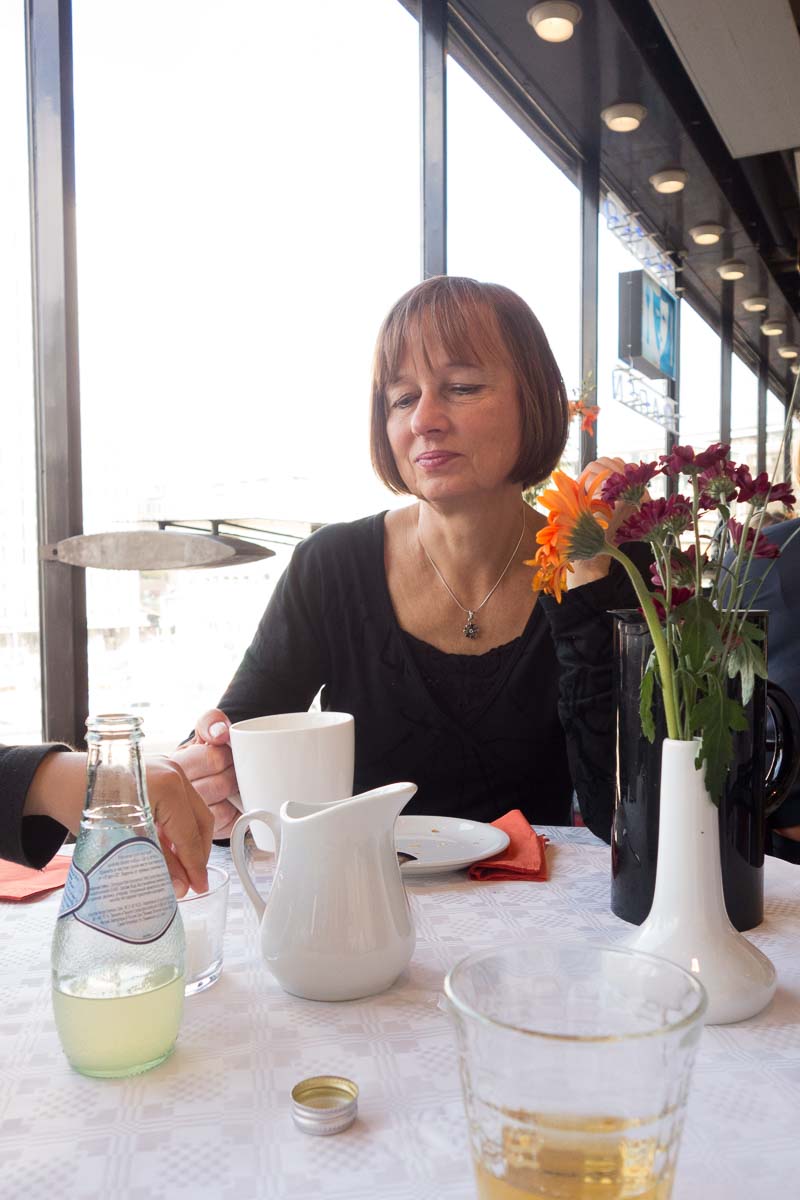
I went to the theatre with Ingrid and my mum. We had coffee and croissants during the break. My mum was less amused than I was by Ingrid’s attempts to sneak eat sugar cubes.


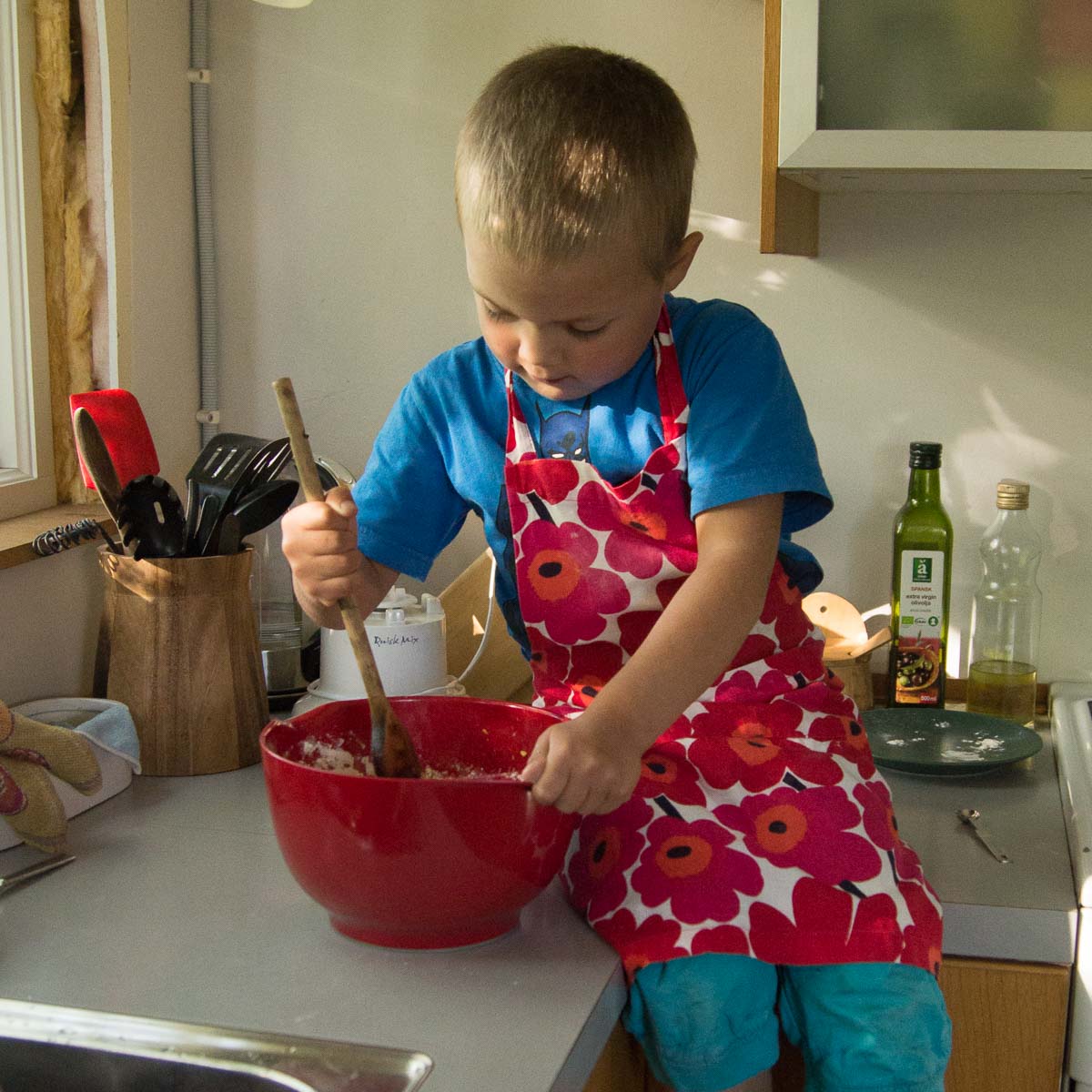
We made corn fritters.


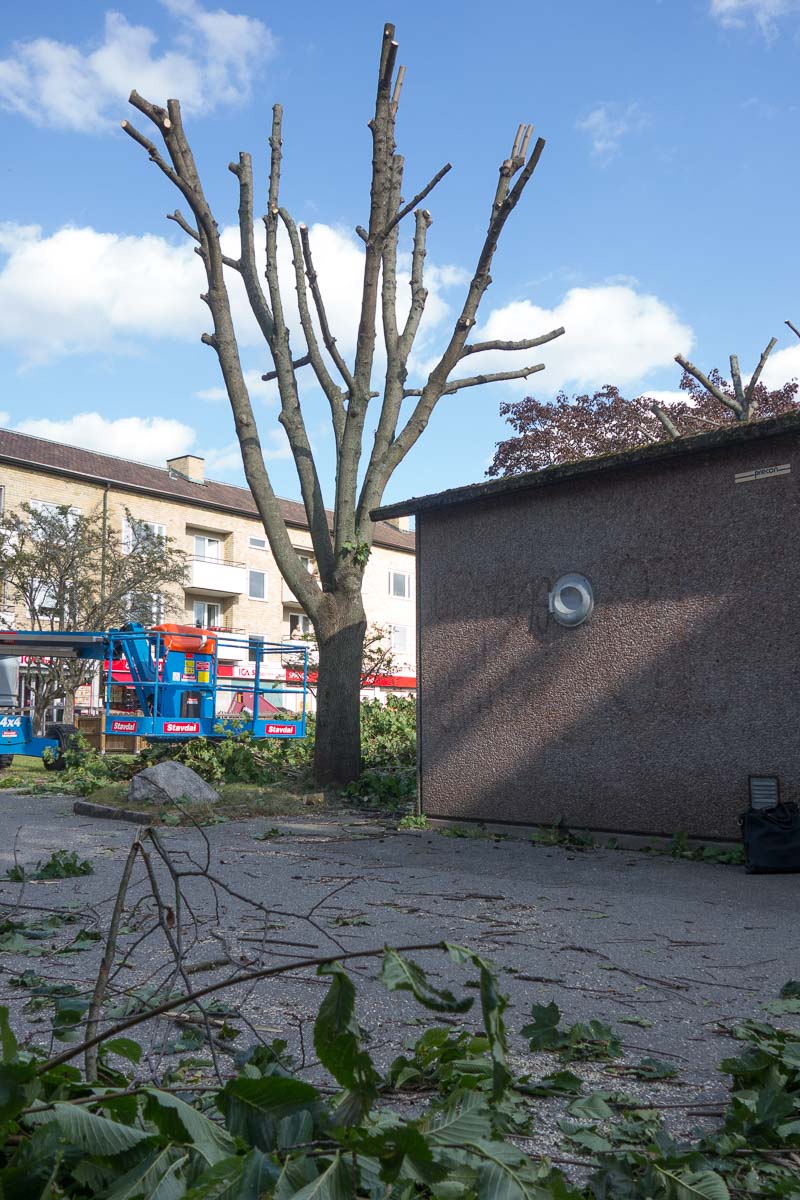
Beautiful maples mutilated in central SpÄnga.

We have some work to be done in the garden that requires a professional, with some professional machinery. I’ve been looking for contractors so that I can request bids from them. I searched at tradgardsanlaggarna.se, made a shortlist of about 8 contractors, and then looked at their web sites to confirm that they can do what we need.

Some companies have modern web sites. The tone ranges from corporate to personal, the design from boxy to modern, but they all look like they belong in the 21st century.

Other companies’ web sites inspire less confidence. One of the contractors had no web site at all and only a swipnet email address, which is sort of like a Swedish hotmail equivalent. One had a web site consisting of a single page which had been saved from Photoshop and contained their logo and an email address and nothing more.

I work with the web; I cannot help but be prejudiced against companies who in this day and age still have not understood its importance as a marketing channel. If the company’s web site is not professional, how professional are they going to be in other aspects? So there is a strong temptation to let the surface appearance affect my judgement of the company.

But I suspect that the web site is probably not at all a good predictor of a company’s ability to do a good job in the garden. I have no difficulty imagining a bunch of 50-year-old guys, in the business for 30+ years, who simply prioritise doing their job ahead of marketing the firm.

And in a way, maybe my logic should be the opposite. If a firm has a butt-ugly web site but they’re still in business after a decade or two, then obviously they’re doing something right.
We’ve been on a furniture buying splurge: some storage for the living room, to replace the messy-looking bookshelf; an armchair; doors for the cabinets in the office.

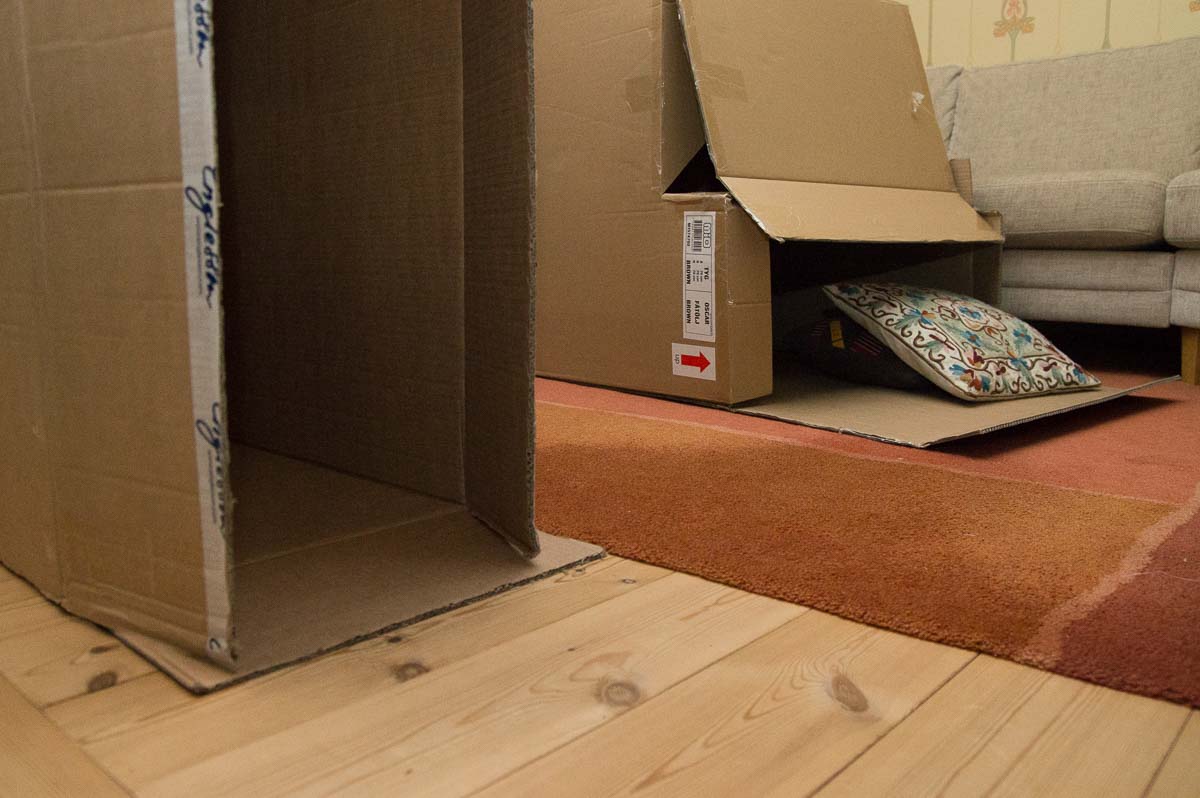
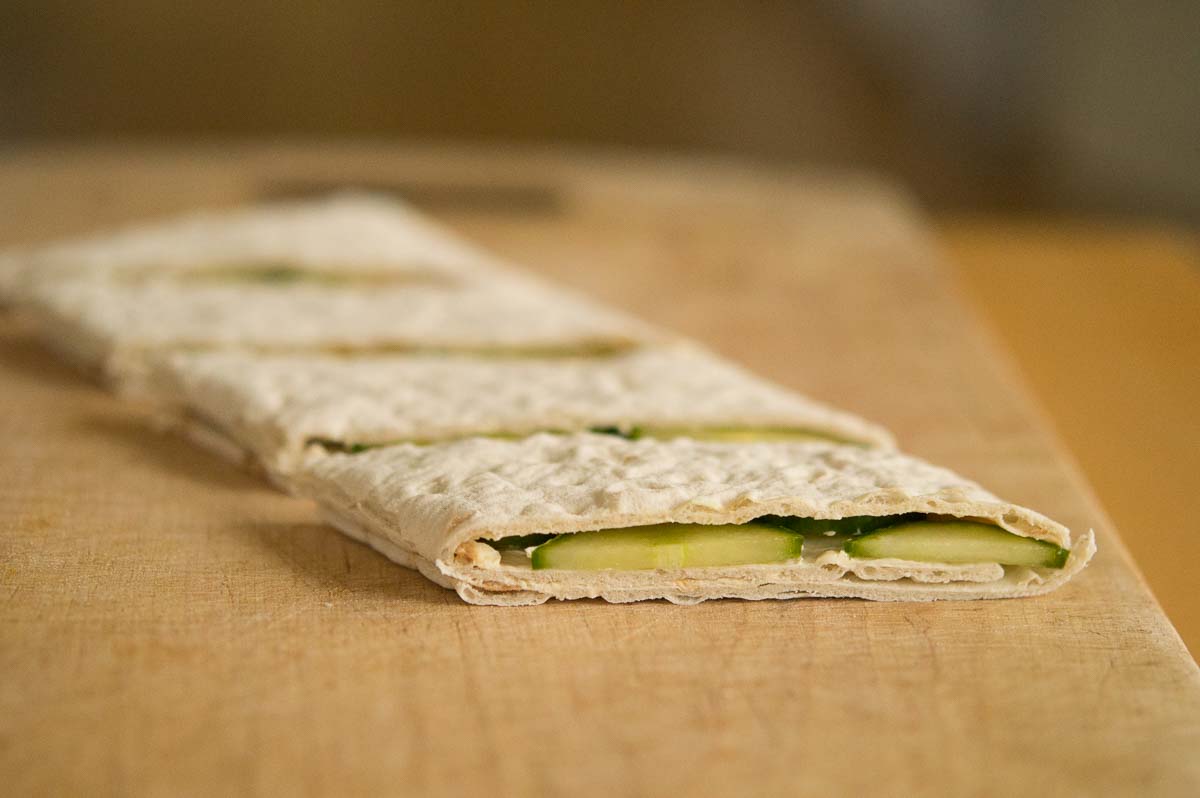
The cardboard boxes that the furniture was delivered in were quickly turned into play houses/caves, furnished with cushions. There have even been fights about who gets to be in which box.

I have cut down on browsing Facebook. I never did spend much time there but now days can pass without a single visit.

And poor Facebook immediately felt so desperately lonely. I get SOOO many emails from it now. Come back! Talk to me! Your friend posted a photo! Someone said something! And now they said something again! Please please please come back!

I am tempted to quit just to get rid of that annoying pleading.

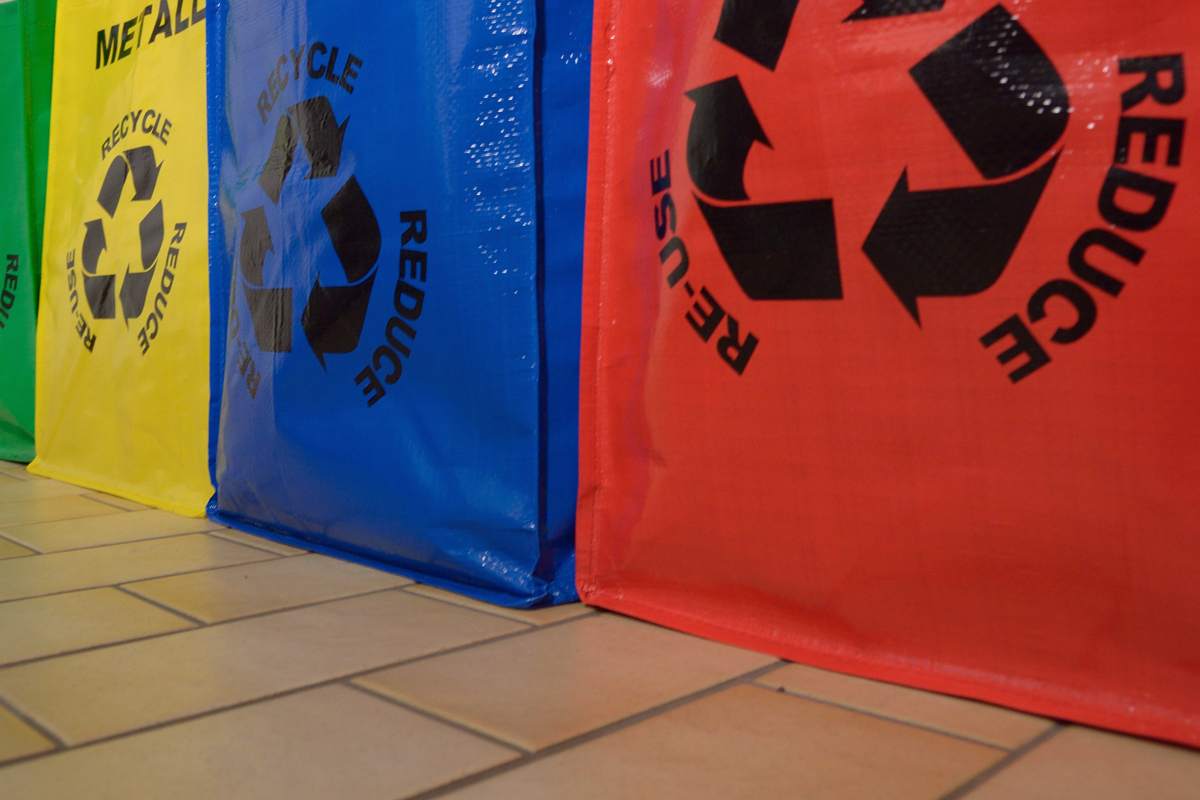
About a year ago I bought a set of recycling bags: four colour-coded bags in some kind of heavy-duty plastic weave. We found a good place for them in the laundry room, easily accessible, just next to the kitchen, which is where most of our garbage is generated. Recycling is now almost no extra effort compared to just throwing it in the trash, so I recycle almost all packaging (cardboard, plastic, glass and metal) and paper.

Our part of town also has a food waste composting scheme. We have two bins outside the house, one for mixed trash and one for food waste.

As a result of the recycling and composting, we generate almost no ordinary trash. I can’t remember when I last took out the trash. A cleaning lady cleans our house every other Tuesday and, among other things, takes out the trash – and in the two weeks between cleanings, the trash can does not fill up enough for us to empty it.

I have a Coop MedMera membership card, which I use to pay for all my daily shopping at Coop Konsum, one of our two local supermarkets. I use my Visa card for everything else, and only rarely use cash.

MedMera means roughly “and more”, so it can also be used at other shops in the Coop group, for example at the Akademibokhandeln chain of book shops. But I use almost exclusively at Coop.

So much so, in fact, that my brain has apparently decided that the MedMera card is for Coop only, and refuses to process it at other locations. It has happened me on two occasions already that I have tried to pay with it at Akademibokhandeln and been totally and completely unable to recall the PIN code, which I use daily at Coop without ever having to even think about it. The card terminal looks different and that is apparently enough to throw my brain off.

And what’s worse, not being able to remember the PIN at Akademibokhandeln also erased it from the memory slot that I use at Coop. So: I use the PIN daily for years at Coop, then tried and failed (just once!) to remember the pin at Akademibokhandeln, and the next day I could not recall it at Coop either!

(Luckily muscle memory kicked in again the day after, so I can now use the card again.)

I set out yesterday to photograph one of our cherry trees in its autumn colour. What I got is not at all what I had hoped for.

Here’s what the tree looked like a year ago, almost to the day. That was what I wanted to capture again but from a different angle. And next to it, what it looked like yesterday:

Compared to last year, the tree looks rather unimpressive. Where’s that fabulous fiery red gone? The top of the tree is already starting to look sparse so waiting will not help.

I thought that the colours we see in autumn leaves are always there, but hidden by the strong green of chlorophyll. In autumn they become visible as the chlorophyll is broken down before the leaves fall. But if that was really the case then a tree should look pretty much the same year to year.

I’d noticed already last year that there was more red on the side of the tree that faces the sun, and mostly yellow in the shadier parts. So there’s obviously some dependence on sunlight.

Now I did some reading and found out that the schoolbook explanation for autumn colours is only half of the truth at best.

The orange and yellow pigments (carotenoids) are indeed there all year round, as the schoolbooks say. But the red pigments (anthocyanins) are only produced in autumn when chlorophyll starts breaking down. And some kinds of autumn weather lead to more anthocyanins than other kinds:

The range and intensity of autumn colors is greatly influenced by the weather. Low temperatures destroy chlorophyll, and if they stay above freezing, promote the formation of anthocyanins. Bright sunshine also destroys chlorophyll and enhances anthocyanin production. Dry weather, by increasing sugar concentration in sap, also increases the amount of anthocyanin. So the brightest autumn colors are produced when dry, sunny days are followed by cool, dry nights.

(scifun.org)

Additionally I learned that anthocyanins are also the pigments in cherries, but also eggplant skin, blueberries, raspberries, blackcurrants, apples and all sorts of other red and purple fruit and vegetables. And the dependence on sunlight explains why often only one side of the apple is red while the other is greener.