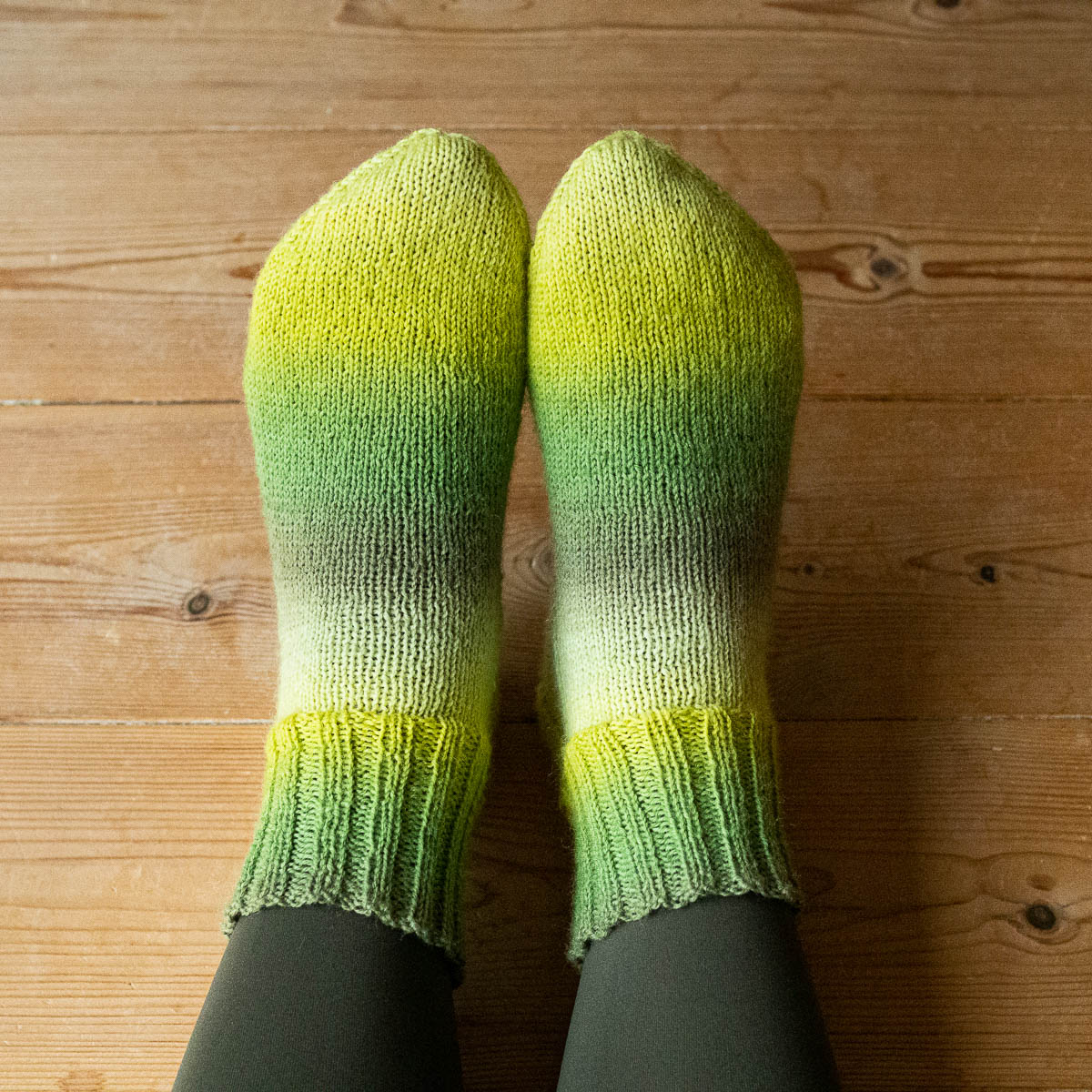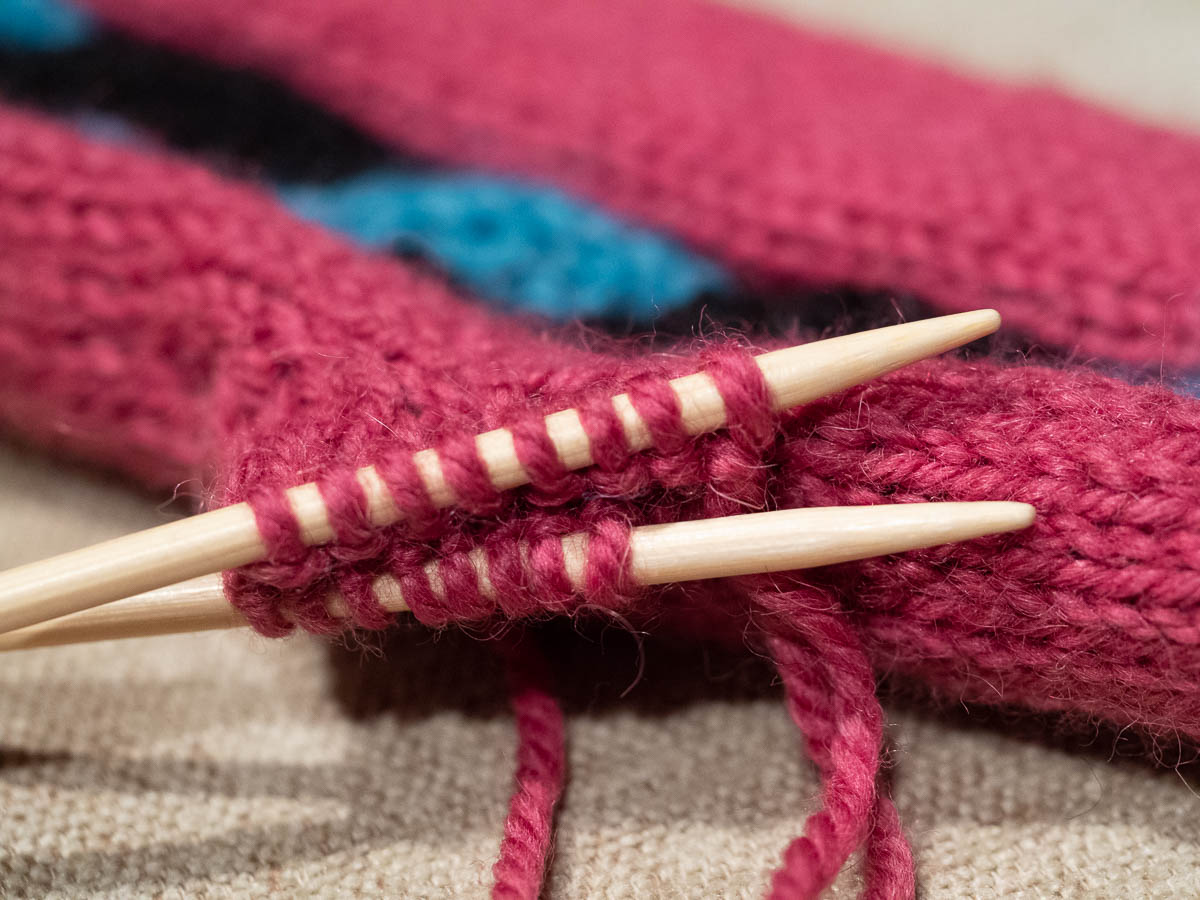
With all the meetings this week, my sock production is off the charts. I’ve already finished one pair for myself, and started on another pair for Adrian.

This is the first time I use this kind of patterned sock yarn. It’s a really clever idea: the first half of the ball of yarn has exactly the same pattern or colour gradation as the second one, and there is a short marker section in between in a totally different colour. This way you can very easily get two identical, fun socks from one ball. I like it.

This pair I haven’t even properly finished yet – I still have the ends to weave in – but I wore them anyway because today’s outfit, with a green skirt and dark green tights, called for green socks.


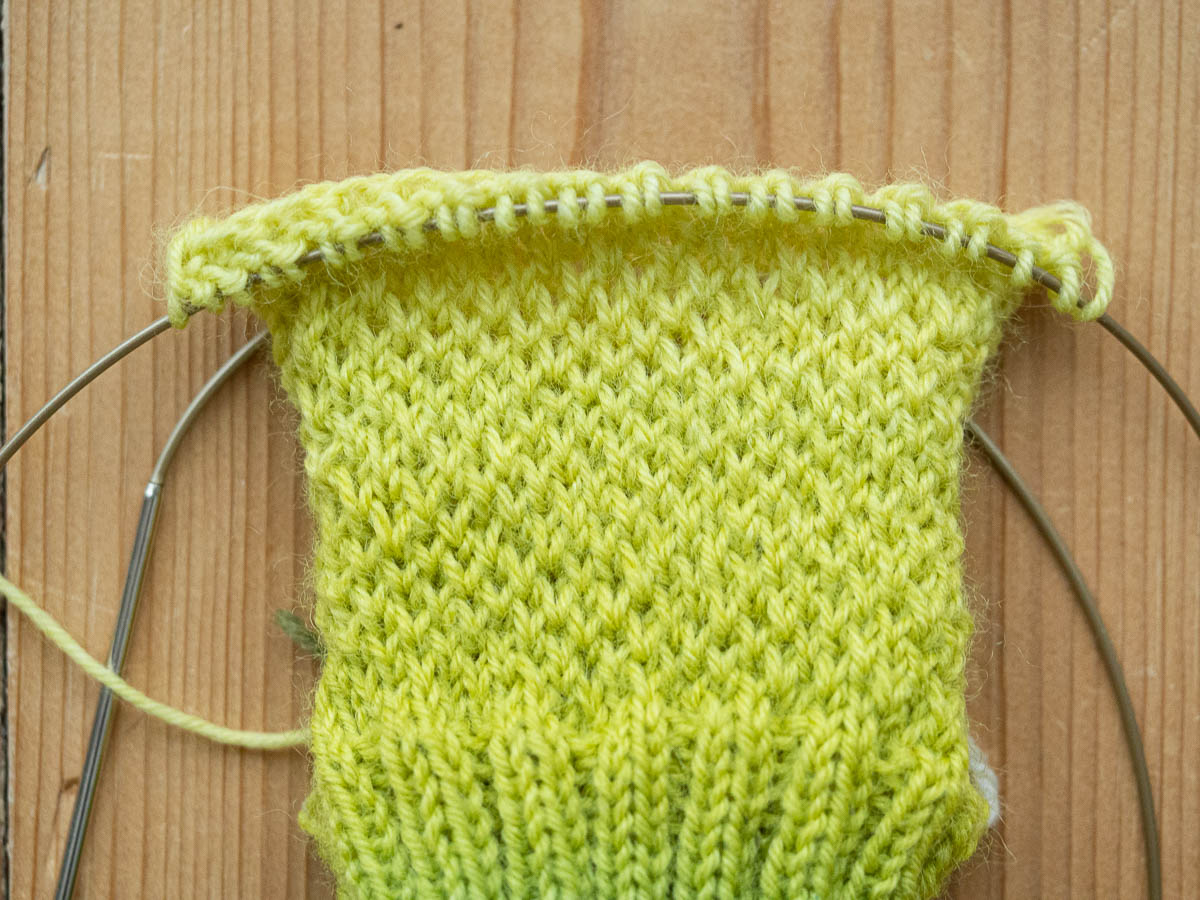
The cardigan has reach a point where I need to measure and make critical decisions to get the fit right, so I am procrastinating and avoiding the anxiety of all those decisions and knitting some socks instead. I’m trying out a new stitch for reinforcing the heels, called the Eye of Partridge stitch. A funny name for a very pretty-looking stitch!

Knitwear sizing is still hard. I knit gauge swatches and I measure and I calculate, and it still feels like hit and miss. Often the knitting behaves differently when there is more of it. With the ribbed cuff of a sock, there’s no point in making a decision about fit before there’s at least 5 or 6 cm of it. With these socks I made three starts (despite first making a swatch!) and still I’m not 100% happy with the fit. The next pair will be larger. My plan is to establish a good base pattern for this yarn weight and then just make variations of it – yarn colour, ribbing type, decorative details etc.

I thought I could give these slightly too tight socks to Adrian, who loves wool socks. It turned out that his ankle is as thick as mine, and his instep maybe even higher than mine. The only dimension where our feet differ seems to be length – his are about 2-3 cm shorter. So I guess I’ll keep these after all and wear them directly on the skin, rather than as an extra layer on cold days.

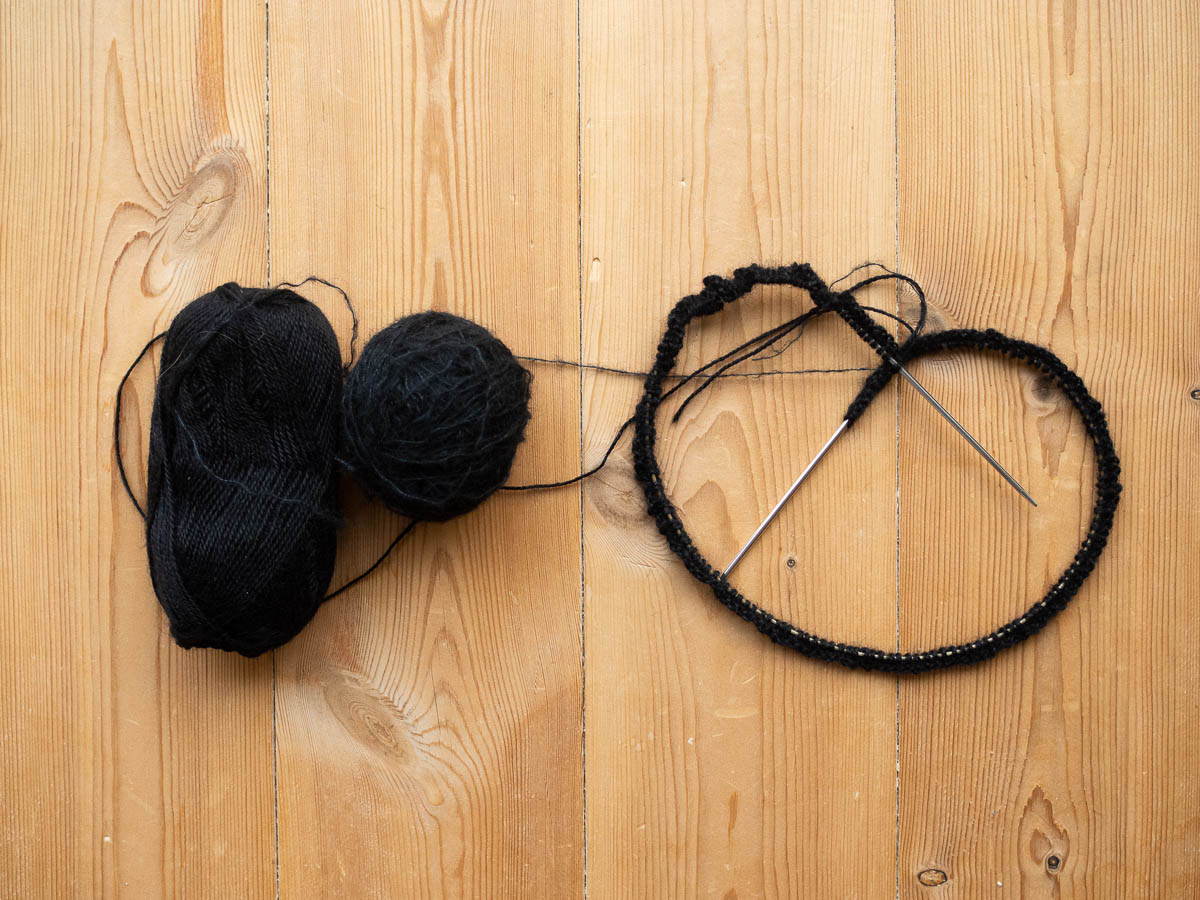
And I get the definite feeling that cardigans get narrower the longer I knit. I measured the black one when I had knit 10 cm and it was slightly loose. I put it around my waist again when I had 20 cm and it felt noticeably tighter. Perhaps the yarn’s own weight pulls it down?


You know what is more frustrating than having to rip up several days worth of knitting because you got the gauge wrong?

Having to rip up several days worth of knitting because you used the wrong yarn.

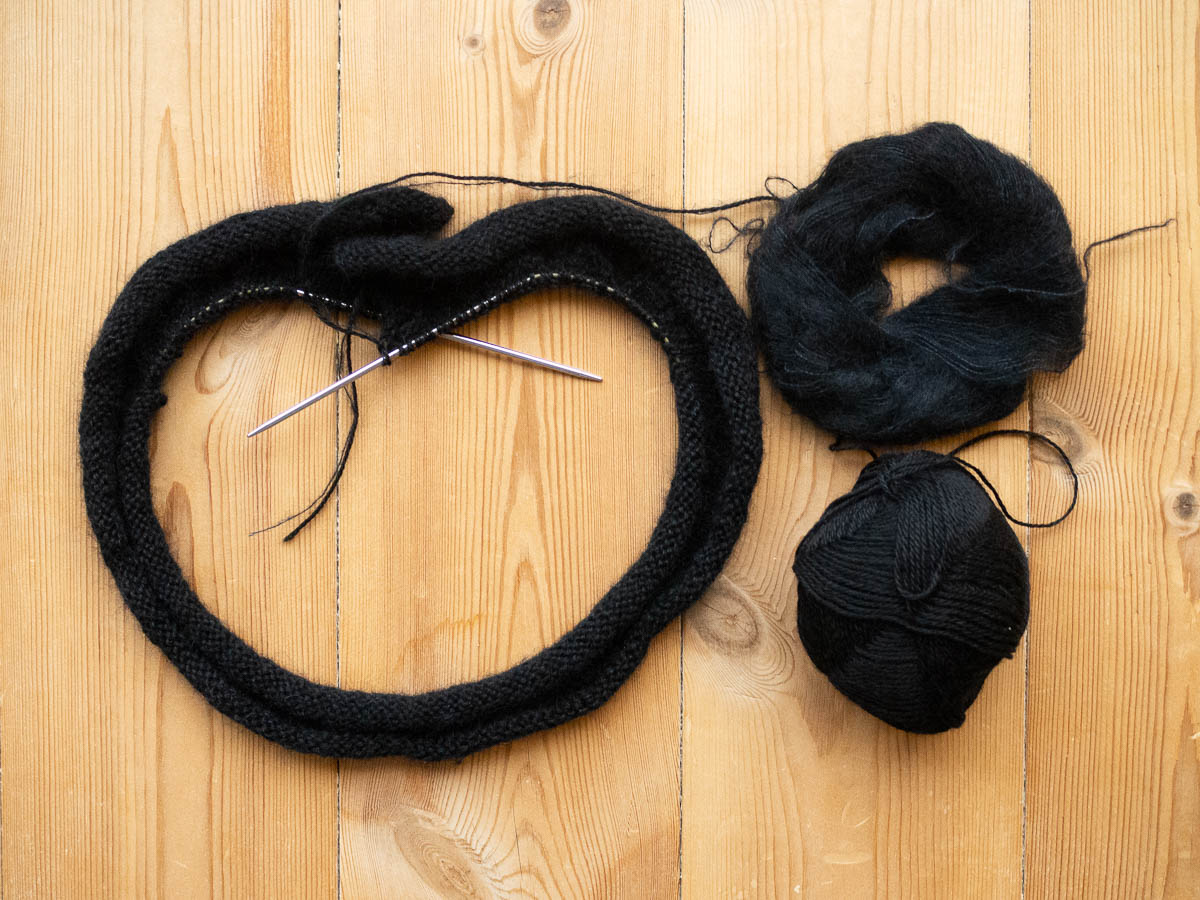
I made swatches with several different yarns and then picked one combination and ordered enough for a whole cardigan. Unfortunately the alpaca yarn I left in the knitting basket was not the one I had decided to use. And I discovered this when I had knitted most of the first ball of yarn.


With all the Christmas scarves, socks and mittens done (yes, the scarf was also a gift) I can start a new project, which will be the black cardigan I’ve been wanting to have for many months now.

Starting a large knitting project is scary. Despite all the measuring and gauge swatches, I have no real confidence in my ability to get the sizing right. Gauge swatches are so much smaller than cardigans that every measurement error gets magnified by a factor of 10.

It takes a long while for the errors to become really apparent in the real thing. Right now the cardigan is just a curled-up ribbon of knitting. If I gently pull at it a little bit in one direction, or another, its size can seem completely different.

Keep knitting and hope for the best.


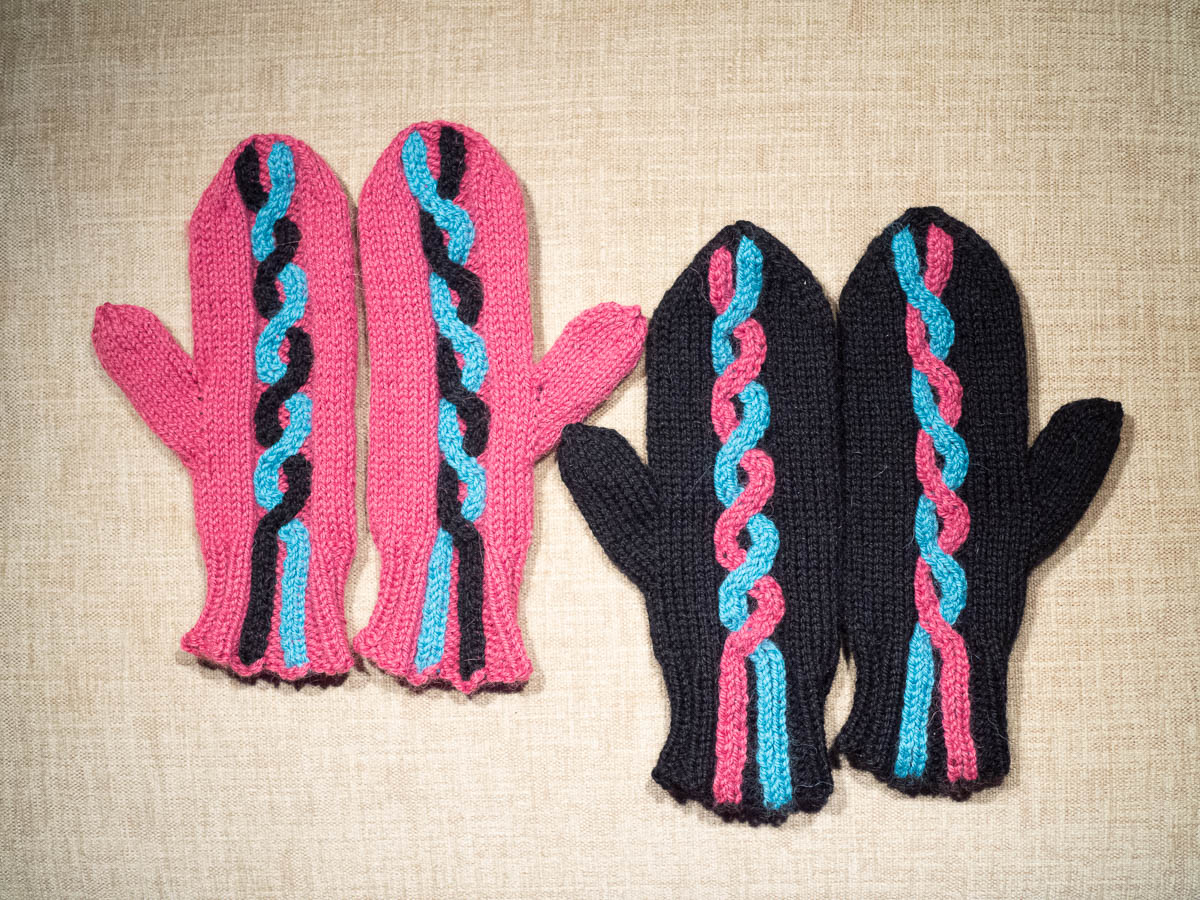
I finished the Christmas mittens in time. Now that they have been unwrapped, I can safely post full photos here!

Raspberry red for Adrian, black for Ingrid.

Funnily enough both of them like the same colour combination but with different emphasis. Adrian picked out the red and blue yarn (without knowing what they were for) and Ingrid happened to show me her favourite desktop wallpaper which was mostly black with details in the same cool red and blue tones.

Adrian immediately started using his, even before I had woven in all the yarn ends (which I didn’t do in advance because I wanted them to try them on). Ingrid hasn’t worn hers yet. Perhaps she thinks she doesn’t need mittens any more. In which case I guess hers will become Adrian’s in a few years.


Working from home, I wear woollen socks a lot more. Working in the office I’d wear indoor shoes instead but socks are so much comfier. Which leads to a lot more darning.

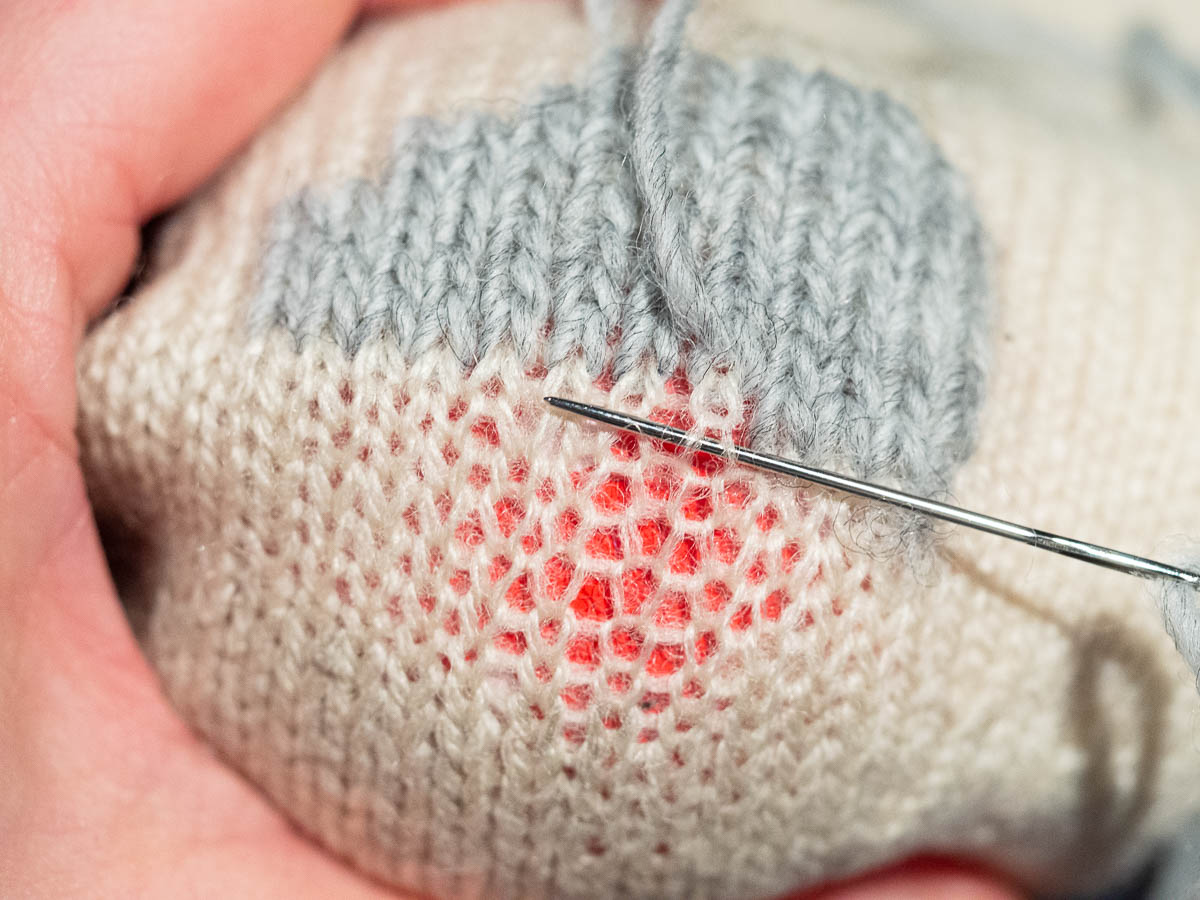
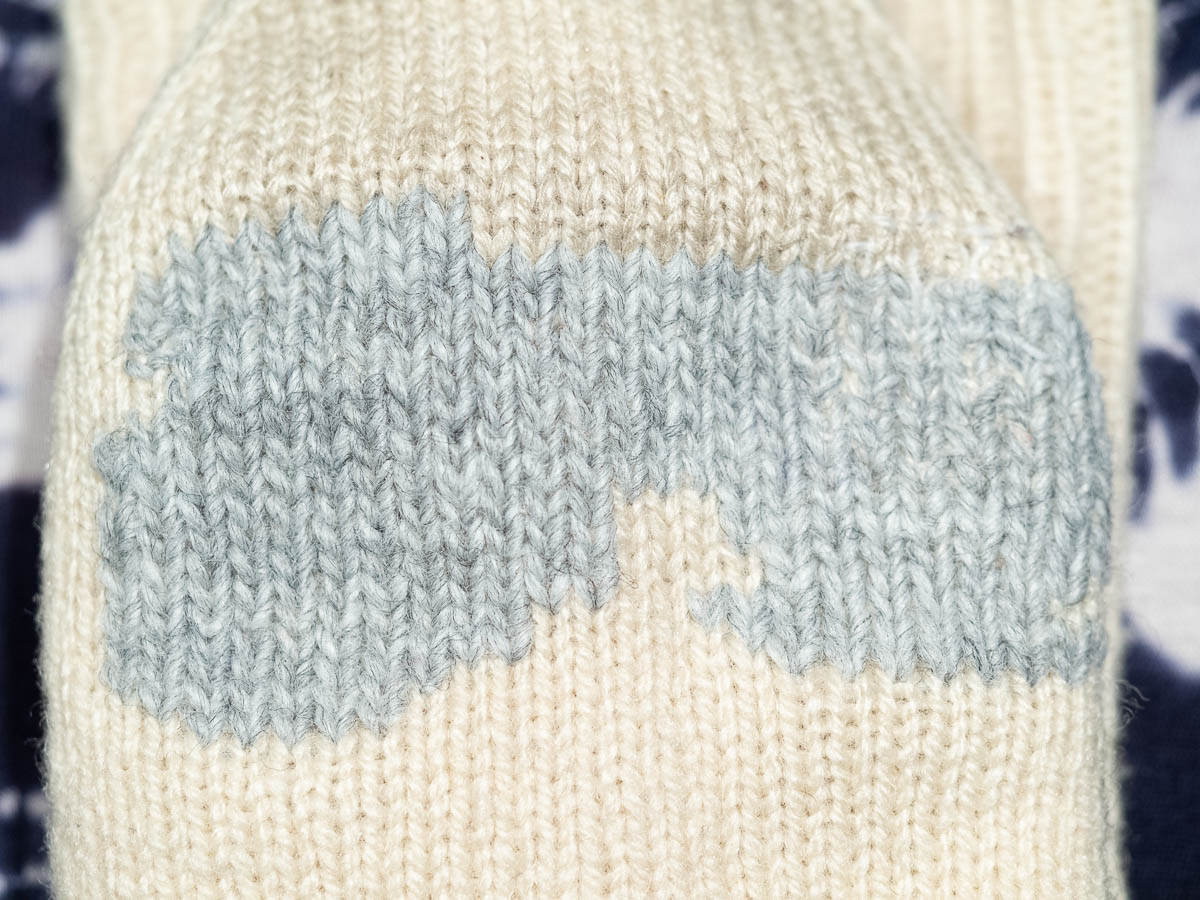
A nice thing about hand-knitted socks is that I can fix a hole before it actually becomes a hole. The yarn wears thin but still retains the knitted structure, and I can use duplicate stitch to reinforce it. On this sock my reinforcement even covers up an earlier, less-than-expert darning.

Store-bought socks have their benefits but they are usually made of such thin yarn that duplicate stitching them would take a magnifying glass and one of those surgery robots that repeat your hand movements in miniature.

This, of course, assumes that I notice the soon-to-be hole in time, and don’t procrastinate about fixing it until it does actually become a hole.


Guess who hasn’t finished the knitted Christmas presents yet…


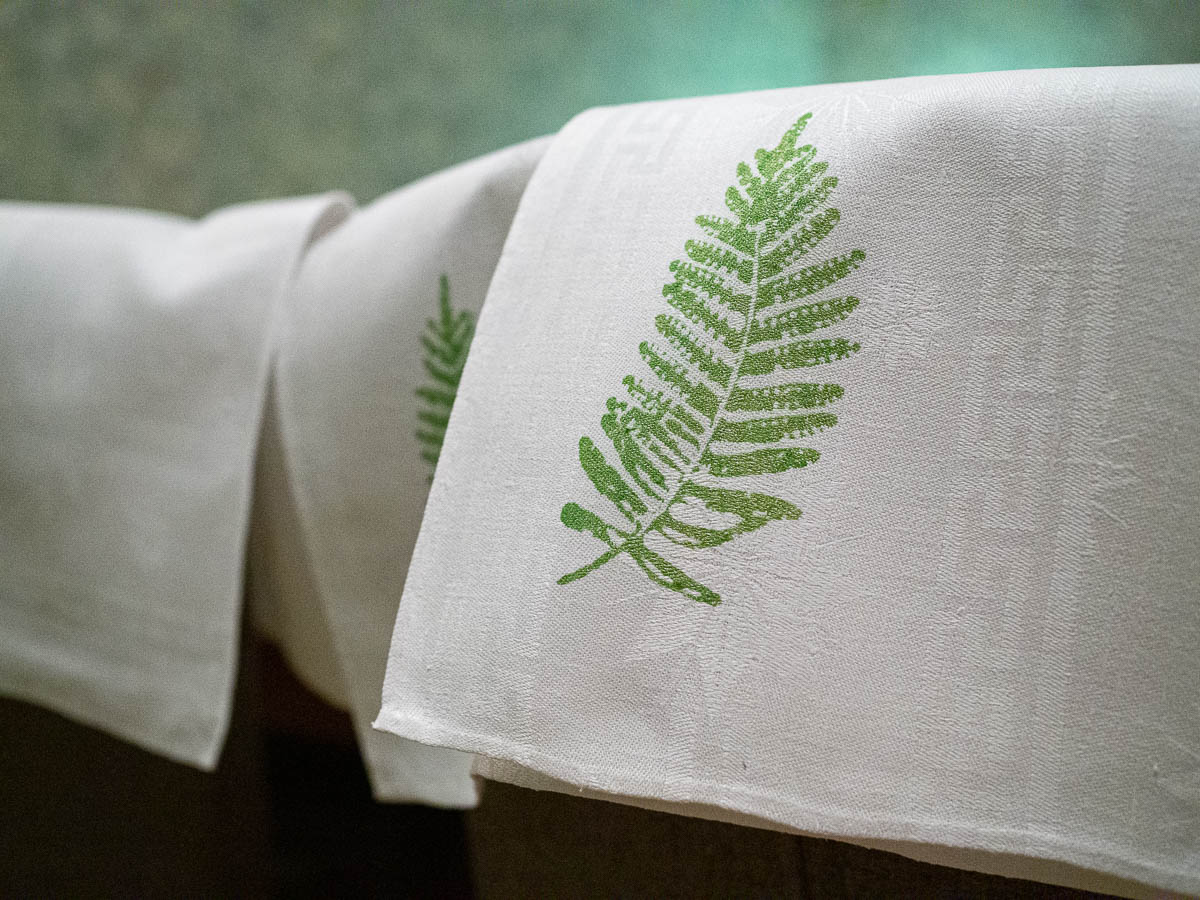
I finally finished the napkin project I started in July! One batch I embroidered already back then. The other batch I intended to decorate with prints. I ordered a nice stamp from Etsy. And then I waited. I think it took over two months for it to arrive by snail mail from somewhere Russia. In September I was busy with other things so I put the stamp away and then more or less forgot about it until now.

Now I realized that it’s time to finish the work if I want them for Christmas and New Year’s dinners. So I finally did the stamping, and then spent the rest of the evening ironing the napkins to fix the paint.

The instructions for the textile paint said to iron the fabric for 5 minutes with the iron set to “cotton”, so that’s what I did. But afterwards the fabric was yellowish where I had ironed it. (You can’t see it here because I took the photo before ironing.)

I can’t use any bleaching agents on these and the textile paint can only be washed in 40°C so I really hope the yellow goes away with just a gentle wash… Otherwise I guess we’ll call it a halo or something. A feature, not a bug.


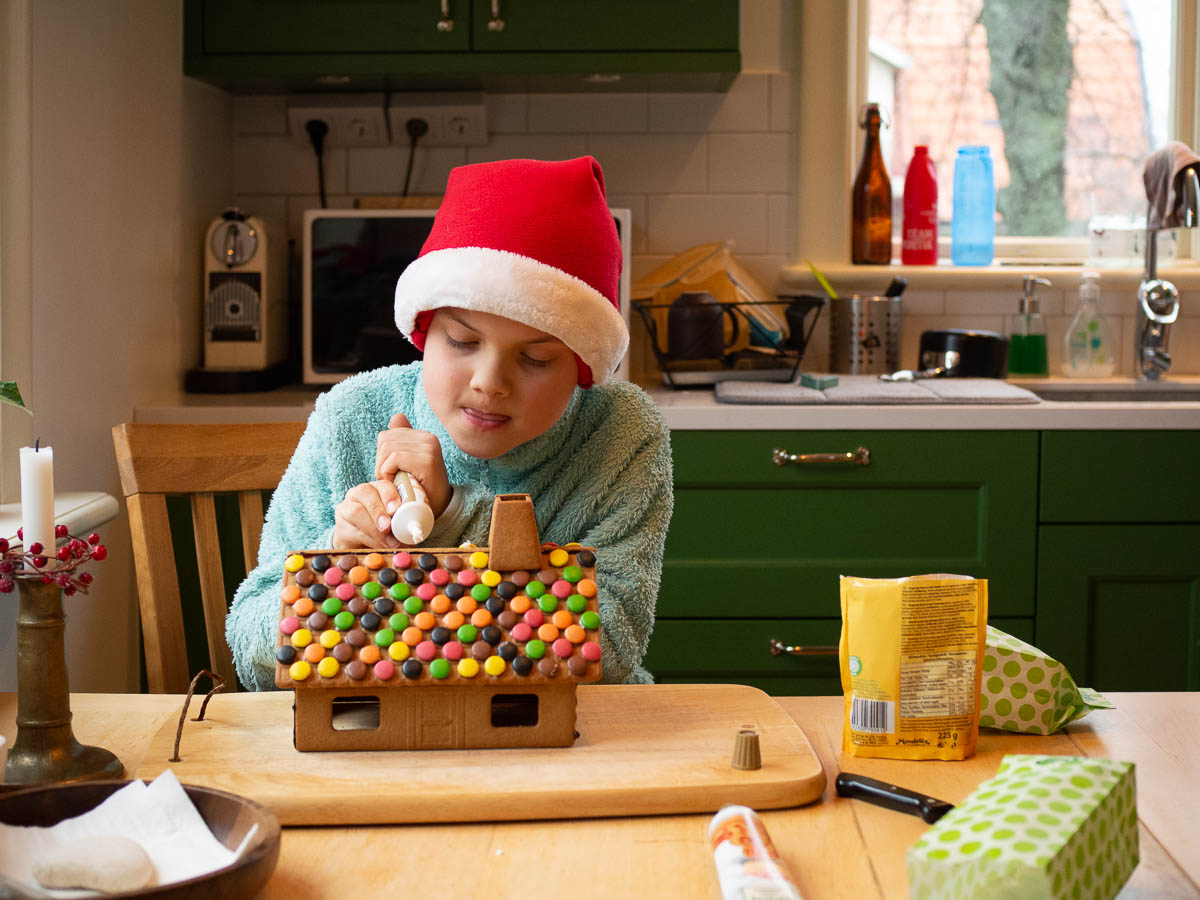
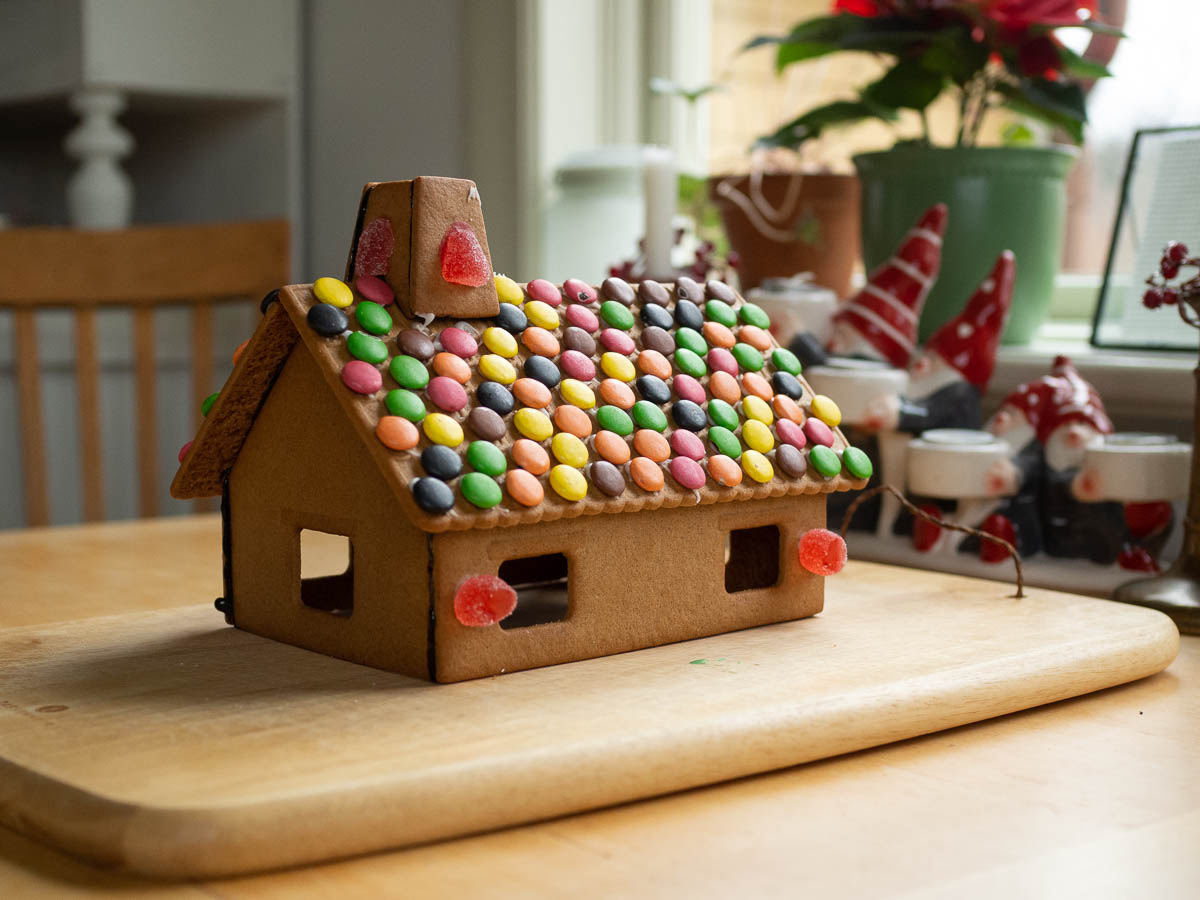
We have mixed feelings about gingerbread houses. They are fun to make and decorate, but afterwards nobody really wants to eat them. They get dusty and stale. And the store-bought gingerbread doesn’t taste very good to begin with.

Well, we can just see this as a crafts project where the materials happen to be nearly edible. You wouldn’t eat paper crafts even though you technically can, right?


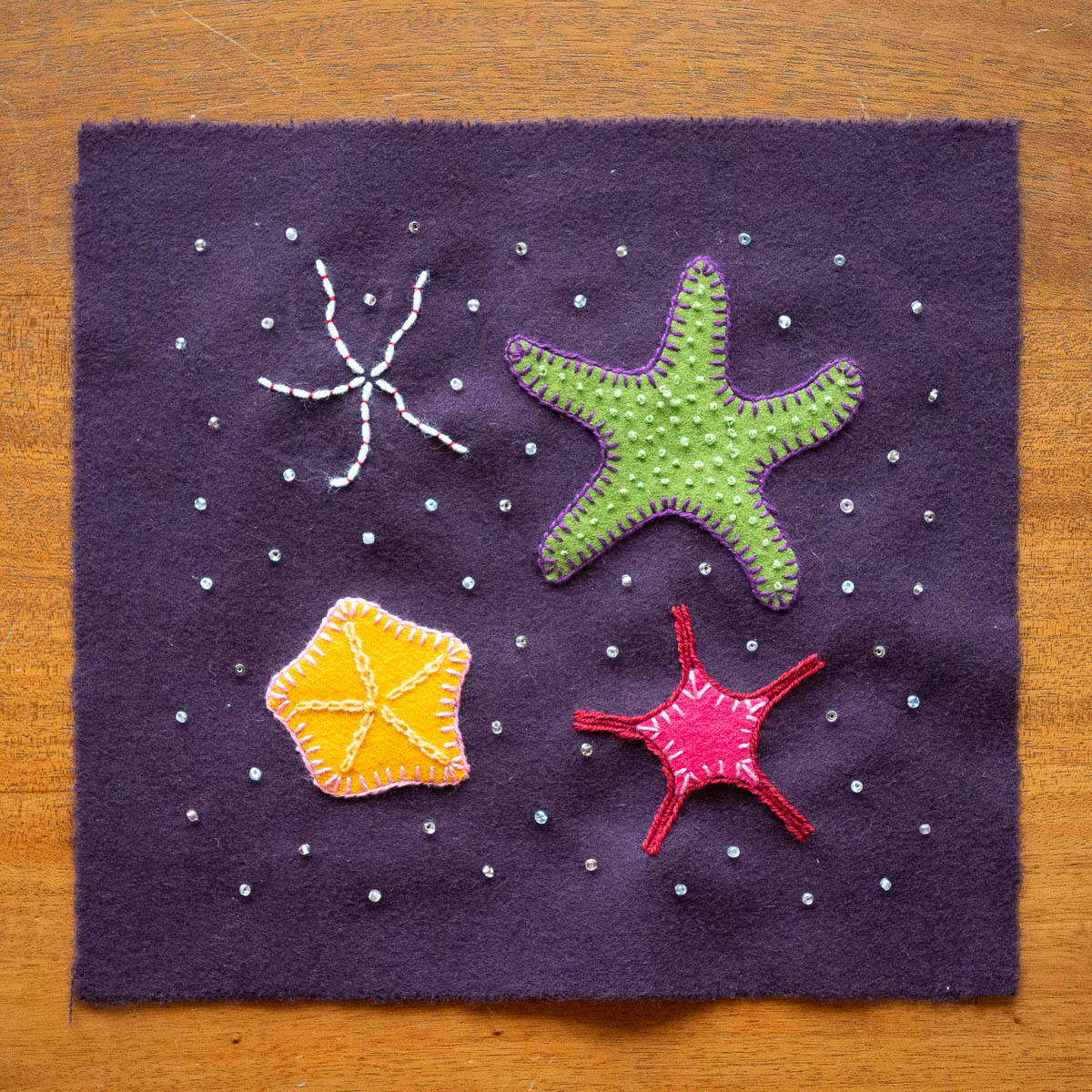
Starfishes, more or less as I had envisaged them.

The second session of the embroidery workshop will be tomorrow and will deal with finishing and making something of your embroidery. I’ve been working on mine so that I can be done with the actual embroidering by then.

Since this was supposed to be a learning opportunity, I tried to use not just familiar stitches (running stitch, whip stitch and chain stitch) but also some that I rarely use (stem stitch) and some that I have seen but never tried myself (couching and French knots).

Couching was as easy as it looked. That’s what I used for the thin white starfish with small red stitches at the top left. French knots are the small wart-like things on the green starfish. Not difficult per se, but I need more practice to get them really even and tight.

When I had finished the starfishes, I thought the design as a whole was still lacking something. I had four separate starfishes rather than one coherent design. I thought of adding seaweeds, but decided on small seed pearls. They’re like water bubbles sparkling in the sun.
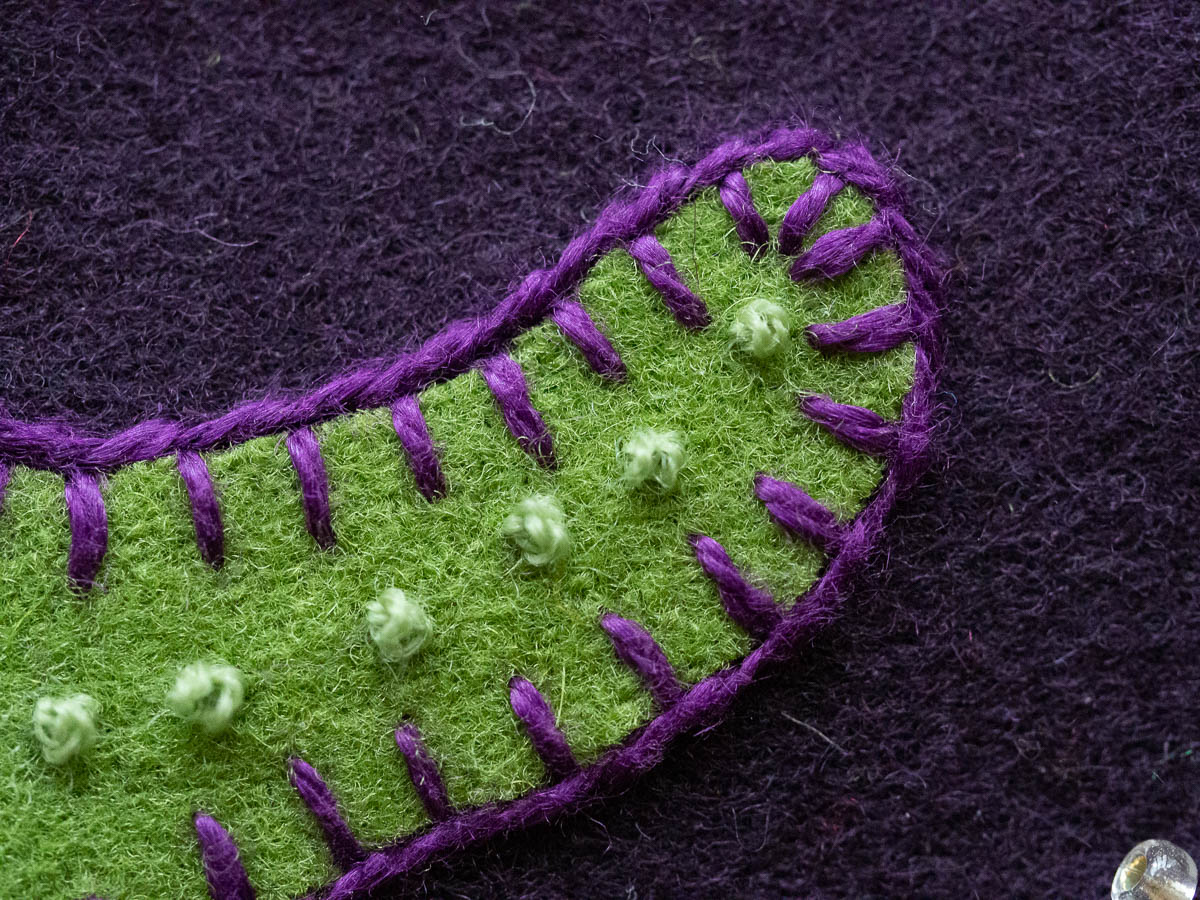
The stem stitch framing around the edges of the starfishes came out really nice, crisp and distinct. This is my new favourite technique and I don’t think I will be using blanket stitch for appliques much from now on.

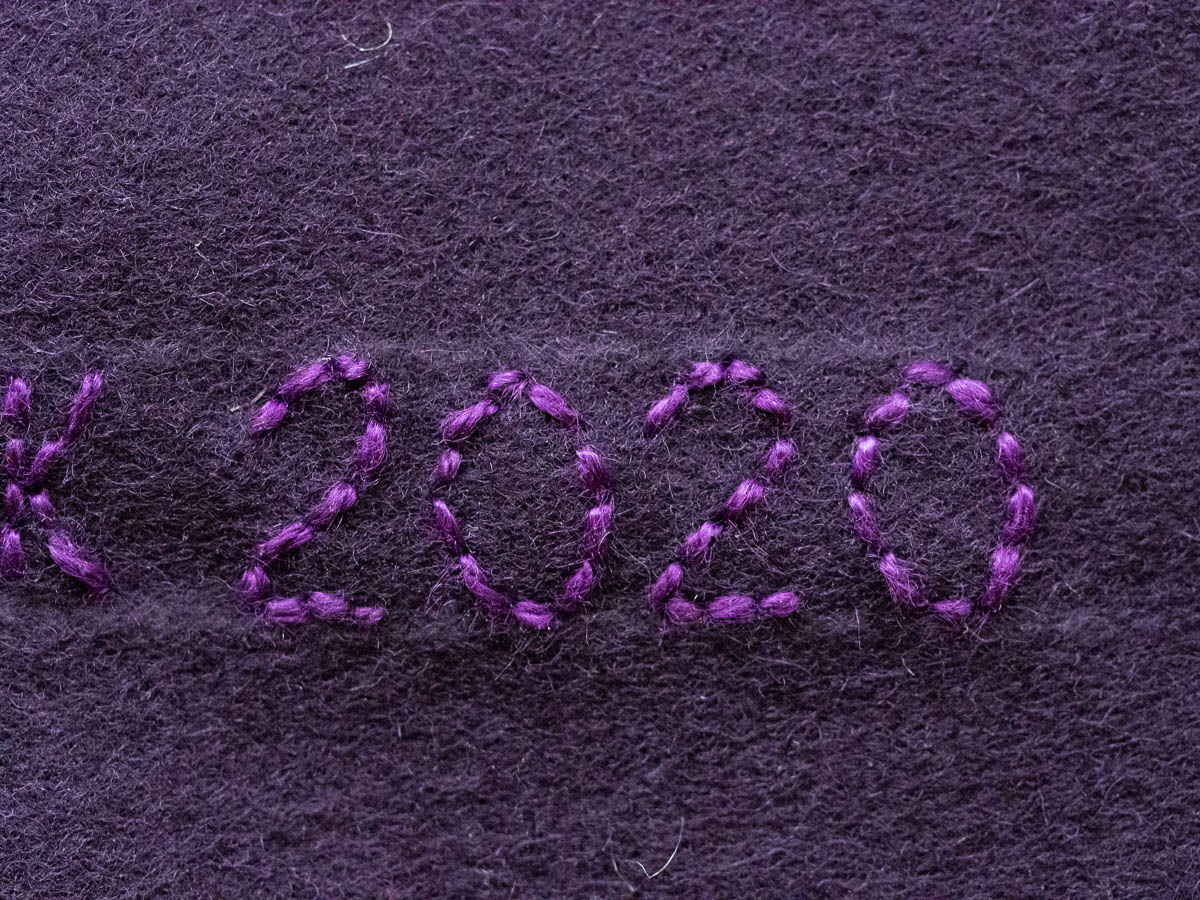
One of my embroidery books encouraged readers to sign their embroideries. It’s a tradition in older works to put the maker’s initials and the year somewhere. I saw this advice when I had already filled the background with pearls and had no suitable place for signing. But the piece of cloth that will become the back of the bag/pouch thing (which I intend to make of this) is all empty, so I decided to sign the back instead.

It’s funny to imagine someone finding this many decades from now. Maybe I’ll give it away and the recipient tires of it and gives it to charity. Maybe I die and someone inherits it and then gifts it to someone else. And then at some point someone discovers it and starts digging into its history and writes a school project about it. Or a blog post, or whatever takes the place of blog posts a hundred years from now. “The materials are of Swedish manufacture and the design is clearly inspired by Swedish traditions, but the embroidery is signed with an Estonian name, very intriguing!”